• Chicago Radio Pioneer Remembered for Her Humor, Courage and Candor Dead at 82

    Chicago Radio Pioneer Remembered for Her Humor, Courage and Candor Dead at 82

    The Plumbline of Truth

    Judy Markey Dead at 82: Chicago Radio Pioneer Remembered for Her Humor, Courage and Candor

    Judy Markey, the trailblazing Chicago broadcaster who entertained generations of listeners as one half of WGN Radio’s celebrated “Kathy and Judy” team, has died at the age of 82.

    Markey died in Switzerland on September 11 after choosing a voluntary assisted death. She had been living with a degenerative neurological condition that progressively affected her balance, movement and overall quality of life.

    After carefully considering her declining health, Markey decided that she wanted to determine when and how her life would end. Her loved ones said she remained composed and certain about her decision.

    A Pioneering Voice on Chicago Radio

    Markey became one of Chicago’s most recognizable radio personalities through “The Kathy and Judy Show,” which she presented alongside Kathy O’Malley on WGN-AM 720.

    The weekday call-in program debuted in 1989 and remained on the air until 2009. Markey and O’Malley later reunited for a weekend edition that ran from 2013 to 2017.

    Known affectionately as “The Girlfriends,” the pair made broadcasting history as Chicago’s first female radio-hosting team at a time when talk radio was overwhelmingly dominated by men.

    Their natural chemistry, lively exchanges and willingness to speak openly about everyday life attracted a devoted audience. Listeners turned to the show not only for entertainment but also for companionship and honest conversation.

    The program could move effortlessly from amusing personal stories to serious and sometimes sensitive issues. Markey and O’Malley’s candid approach helped create a community in which listeners felt comfortable sharing their own experiences.

    Read Also:  Voice of Lilo and Star of The Ring, Dies at 35

    A Writer Before Becoming a Broadcaster

    Before establishing herself on the radio, Markey worked as a syndicated columnist for the Chicago Sun-Times.

    Her newspaper columns demonstrated the same intelligence, humor and eye for ordinary human behavior that would later define her broadcasting career. She possessed a rare ability to transform simple moments into memorable stories that resonated with readers and listeners alike.

    Markey’s contribution to journalism and broadcasting earned significant recognition. She was inducted into Northwestern University’s Medill Hall of Achievement and was named among Chicago’s “One Hundred Most Influential Women” and the nation’s “Top One Hundred Talk Show Hosts.”

    Her Humor Remained Until the End

    Markey’s husband, Tom Collinger, said she faced her final months without fear. Even as her physical health deteriorated, she continued to reassure and comfort the people closest to her.

    Her trademark sense of humor also remained with her until her final moments.

    Shortly before her death, Markey ate a few bites of a Snickers bar and mentioned having a headache. When Collinger asked whether she wanted some Advil, she replied that she wanted “something a little stronger.”

    The comment drew laughter from those in the room and offered one final example of the quick wit that had delighted Chicago radio listeners for decades.

    According to Collinger, Markey believed that her life had exceeded everything she once imagined for herself. She approached its conclusion with the same honesty and determination that had characterized her career.

    Kathy O’Malley Pays Emotional Tribute

    Kathy O’Malley remembered her longtime broadcasting partner as a brilliant, funny and wise woman whose personality left a lasting impression on everyone around her.

    Read Also:  Two-Time MTV’s ‘The Challenge’ Champion Dies At 44

    “The last half of my life has been wonderfully brightened by Judy Markey,” O’Malley wrote in a moving tribute.

    She said Markey’s humor, attitude, intelligence and wisdom would remain part of her memories and those of thousands of listeners who felt a personal connection to the broadcaster, even if they had never met her.

    Family and Lasting Legacy

    Markey is survived by her husband, Tom Collinger; daughter Erin Markey; son Adam Markey; stepson Zach Collinger; stepdaughter Kate Collinger Buxton; son-in-law Pat Buxton; and two grandchildren.

    Her death marks the end of an important era in Chicago broadcasting. However, her groundbreaking career, fearless honesty and ability to find humor in the most ordinary moments will continue to be remembered.

    For the many people who welcomed Markey’s voice into their homes, cars and workplaces, she was more than a radio host. She was a trusted companion whose warmth and laughter became part of their daily lives.

  • K-Shanna McLaughlin’s Evolution: More Than a Model

    K-Shanna McLaughlin’s Evolution: More Than a Model

    Shanna McLaughlin was born on May 10, 1985, in Kissimmee, Florida. Raised in a small yet vibrant community, she developed an early appreciation for the arts, fashion, and performance. Her academic drive and creative spirit were evident from an early age. Shanna graduated from the University of Central Florida, where she earned a degree in Communications and honed her skills in media, marketing, and public speaking — foundations that would later play a vital role in her career.

    Shanna’s path to fame began with a bold entrance into the modeling world. Her classic beauty, magnetic charm, and confidence quickly caught attention. She became a popular figure in the American modeling scene, often featured in national campaigns, magazines, and promotional content. Her ability to blend elegance with approachability made her a standout among her peers.

    Video: aXis March 2009 Cover Shoot • Behind the Scenes

    In a saturated industry, Shanna distinguished herself through professionalism and consistency. Her features appeared in editorial spreads that highlighted not just her looks, but also her versatility and poise in front of the camera.

    Beyond print modeling, Shanna expanded her portfolio through numerous television and media appearances. She hosted segments, participated in reality TV opportunities, and leveraged her presence to become a recognizable figure beyond modeling. Her sharp communication skills and relatable personality helped her connect with audiences across platforms.

    Shanna gained recognition not just for appearances, but for her ability to speak on culture, entertainment, and empowerment. Her interviews and red carpet moments were marked by grace, wit, and a distinctive voice that added dimension to her public persona.

    Not one to be defined solely by modeling, Shanna pursued entrepreneurship and creative production. She worked behind the scenes as a producer and content creator, engaging in photography, visual storytelling, and branding work. Her education in communication enabled her to craft compelling narratives — not just about herself, but for brands and campaigns she supported.

    Video: Playmate Shanna McLaughlin

    As digital media began to reshape the entertainment landscape, Shanna adapted. She curated her own content, launched a personal brand, and began collaborating with artists, designers, and other influencers to build a multifaceted presence.

    In recent years, Shanna McLaughlin has aligned herself with causes related to women’s empowerment, mental health, and self-confidence advocacy. She frequently speaks about body image, identity, and overcoming personal challenges in a high-pressure industry.

    Her messages resonate with audiences who value authenticity. Shanna’s transparency and refusal to conform to outdated industry expectations have earned her respect from followers seeking role models who embrace imperfections and growth.

    Today, Shanna maintains a well-curated digital presence across platforms, including Instagram and YouTube, where she shares updates on her creative work, travel, wellness routines, and personal philosophy. Her social media is less about glamour and more about real-life insight — a balance that appeals to fans who appreciate substance over spectacle.

    Video: aXis August 2011 ’20 Coolest’ Cover Shoot & Interviews • Behind the Scenes • more at aXismag.com!

    Through consistent content and engagement, she has built a loyal community that values not only her aesthetics but also her voice and values.

    Shanna McLaughlin now lives a life that reflects balance — between work and wellness, creativity and commerce, public attention and personal privacy. She continues to work on creative projects, including independent productions, collaborative photo campaigns, and lifestyle content that reflect her evolving identity.

    She has stepped into the role of mentor as well, helping aspiring models and creatives navigate the ever-changing world of media with confidence, integrity, and clarity.

    Shanna McLaughlin’s story is one of transformation. From rising model to a multifaceted creative professional, her journey reflects resilience, reinvention, and fearless self-expression. She has proven that longevity in the public eye doesn’t depend on controversy or trend — it’s built on evolution, purpose, and the courage to redefine success on your own terms.

  • She Chose a Butterfly Tattoo After the Hardest Year of Her Life — The Emotional Reason Behind It Is Heartbreaking

    She Got a Butterfly Tattoo After the Hardest Year of Her Life — But the Reason Behind It Left Everyone Speechless

    When people first saw the small butterfly tattoo on her back, they probably thought it was simply a beautiful design.

    But for her, that little butterfly carried a story she would never forget.

    A year earlier, she had gone through the most difficult period of her life. She felt like everything she had known was slowly falling apart. There were days when getting out of bed felt impossible, and nights when she wondered if things would ever become normal again.

    Then one morning, she looked in the mirror and made a promise to herself.

    She wasn’t going to let the hardest chapter of her life become the whole story.

    She chose a butterfly because of what it represented.

    A butterfly doesn’t begin its life flying. It spends a long time hidden away, going through a transformation that nobody else can see.

    She said that was exactly how she felt.

    So she got the tattoo as a reminder that change can hurt, healing can take time, and becoming stronger doesn’t mean forgetting what you went through.

    Years later, whenever someone asks about the butterfly, she simply smiles and says:

    “It reminds me that I survived the version of myself I once thought I would never escape.”

    And suddenly, what looks like a simple tattoo becomes something much more meaningful.

    Sometimes, the smallest tattoos carry the biggest stories. 🦋❤️

    The bikini game is still dominated by Sofia Bevarly, who exudes charm, confidence, and attractiveness. She knows just how to leave her audience wanting more, as evidenced by these crazy clips.

    Video🎬👇

    Video you may like🎬👇

    Her admirers have been quick to commend her for gracefully accepting her physique and encouraging others to appreciate their own special beauty. Both on and off screen, her combination of style and warmth never fails to win people over. 

    Nicky Whelan’s commitment to fitness, health, and self-love is evident in her most recent images. She continues to be a radiant example of beauty and self-assurance, encouraging many people to be confident and at ease in their own skin.

    Video🎬👇

    Video you may like🎬👇

  • Hegseth Aide Turns In Resignation: ‘I Promised A Year’  

    Hegseth Aide Turns In Resignation: ‘I Promised A Year’  


  • While I Was Hospitalized, My Mother Chose My Sister’s Cat Over Helping With My Six-Week-Old Baby. I Quietly Ended $486,000 in Family Support—Then Grandpa Arrived With a Folder Revealing Where My Money Had Really Been Going.  

    While I Was Hospitalized, My Mother Chose My Sister’s Cat Over Helping With My Six-Week-Old Baby. I Quietly Ended $486,000 in Family Support—Then Grandpa Arrived With a Folder Revealing Where My Money Had Really Been Going.  

    The first time my mother phoned me after my car accident, she didn’t ask if I was able to breathe.

    She didn’t ask about my fractured ribs, my !njured lung, or the six-week-old granddaughter she had declined to babysit.

    Instead, she shouted through the phone.

    “Naomi, what have you done to our money?”

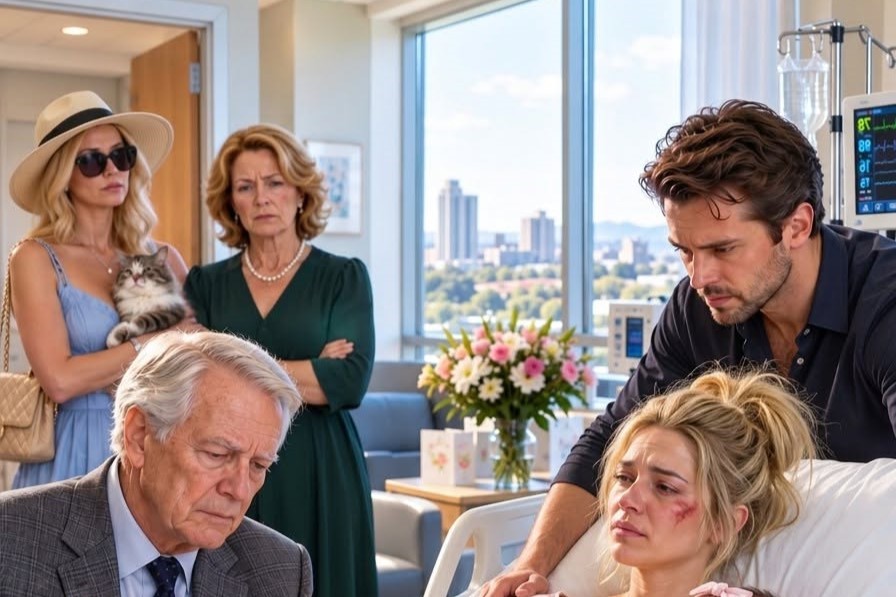
    I was resting in a hospital bed, holding my daughter close to my chest with my uninjured arm. My husband, Marcus, stood next to me, looking like he hadn’t slept properly in days.

    And my grandfather was sitting opposite us, holding a manila folder containing the biggest secret of my life.

    “Your money?” I repeated.

    “Don’t play games with me! The mortgage payment didn’t go through, Kendra’s card was declined, and your father says the medical account is empty!”

    I glanced at Grandpa.

    He quietly shook his head.

    Then he whispered five words that sent a chill through me.

    “Ask her whose house it is.”

    I didn’t understand what he meant.

    Not yet.

    But before that conversation was over, I would discover that my mother hadn’t simply redirected nearly half a million dollars from me.

    She had also been hiding something my grandmother left behind.

    Something that should have transformed my life nine years earlier.

    And when the truth finally surfaced, my mother would find herself pleading with the very daughter she had abandoned.

    Three days earlier, a delivery truck had gone through a red light on King Street and cr@shed into the driver’s side of my car.

    I remembered the horn.

    The frightening flash of headlights.

    Then the noise of metal crumpling around me.

    When I woke up, I was in the hospital with three fractured ribs, an !njured lung, and my right arm inside a cast.

    Every breath felt like intense pressure pushing between my ribs.

    But the physical pa!n wasn’t what worried me most.

    My daughter, Nia, was only six weeks old.

    She was home with our sitter, who had already remained three hours beyond her scheduled time and needed to leave.

    Marcus was stranded at an airport six hours away, desperately searching for another available flight.

    Naturally, he contacted my mother.

    Valerie Whitaker lived twenty minutes from our home. She was retired, owned a perfectly dependable car, and frequently complained that we didn’t bring Nia over to visit enough.

    Marcus explained the acc!dent.

    He told her I was hospitalized and that our daughter needed someone to hold her, warm her bottles, and change her diapers until he could return home.

    My mother declined.

    My younger sister, Kendra, was enjoying a Caribbean cruise, and Mom had promised to care for her cat.

    When Marcus asked her to reconsider, she said something I would always remember.

    “Your sister never has these emergencies. Naomi always lands on her feet.”

    I didn’t yell when Marcus told me.

    I didn’t cry.

    I simply contacted Bright Harbor Care, the emergency infant care agency we had researched before Nia was born.

    A woman named Marisol answered.

    Forty-two minutes later, she sent me a photograph of my daughter sleeping peacefully inside her bassinet.

    Only then did I open my banking app.

    Four automatic transfers appeared across the screen.

    Mortgage Support.

    Medical.

    Household.

    Loan K.

    Together, they totaled $4,500 every month.

    For nine years, I had helped my parents cover their mortgage, medical costs, and household expenses while also supporting Kendra.

    Nine years. $486,000.

    I canceled every transfer.

    For the first time in my adult life, I didn’t feel guilty.

    The following morning, Marcus finally arrived with Nia.

    He carefully placed her against my chest, and I cried harder than I had since the acc!dent.

    “I have you,” he whispered.

    I believed him.

    But our peaceful moment ended when someone knocked on the hospital room door.

    My grandfather was standing outside.

    He was seventy-eight years old, with silver hair, a slightly curved back, and the kind of serious expression that always made me feel like I was about to hear difficult news.

    He carried a thick manila folder.

    “Grandpa?”

    He stepped inside and shut the door.

    “I heard what your mother did,” he said.

    “I don’t want to talk about her.”

    “I know, sweetheart. But there’s something you need to see.”

    He pulled a chair next to my bed and opened the folder.

    The first document was a mortgage satisfaction statement.

    I immediately recognized my parents’ address.

    I stared at the date.

    Six years earlier.

    “What’s this?”

    Grandpa looked directly at me.

    “Your parents paid off their mortgage six years ago.”

    I shook my head.

    “That’s impossible. I’ve been sending Mom mortgage payments every month.”

    “I know.”

    He placed another document onto the table.

    Their medical debts were settled.

    My father’s prescriptions were covered through insurance.

    Their primary savings account contained more than $300,000.

    I suddenly felt sick.

    “Then where has all my money been going?”

    Grandpa opened the folder to a different page.

    There was Kendra’s name.

    A luxury condominium.

    A new car.

    Thousands of dollars toward credit card payments.

    Marcus leaned closer.

    “Are you telling me Naomi paid for all this?”

    “Not directly,” Grandpa said. “Valerie controlled the accounts. But yes, a substantial amount of Naomi’s money was used to support Kendra.”

    I looked toward my sleeping daughter.

    We had purchased her nursery furniture secondhand because I wanted to remain careful with our savings.

    Meanwhile, my sister was vacationing in the Caribbean.

    But Grandpa still wasn’t finished.

    He removed an older legal document.

    “Your grandmother left you something before she died. Your mother was supposed to tell you when you turned twenty-five.”

    I stared at him.

    “What did Grandma leave me?”

    Grandpa turned the final page toward me.

    And suddenly, everything I believed I understood about my family began to unravel.

    My grandmother, Evelyn Whitaker, had been the strongest woman I had ever known.

    She owned several rental properties, worked well into her seventies, and believed that a woman should always have enough money to leave any situation that diminished her.

    When I was young, she used to slip ten-dollar bills inside my birthday cards.

    “Put half away,” she would say. “You never know when you’ll need to choose yourself.”

    She d!ed when I was twenty-four.

    My mother told me Grandma had left behind a modest inheritance, most of which went toward medical expenses and settling her estate.

    I never questioned it.

    Grandpa turned the document toward me.

    It was a trust document.

    At the top, I saw my complete legal name.

    Naomi Evelyn Brooks.

    Below that was a list of assets.

    A twelve-unit apartment building.

    An investment account.

    And a residential property located on Willow Lane.

    My parents’ address.

    I stopped breathing for a second.

    “Grandpa, why is Mom’s house listed here?”

    His eyes filled with tears.

    “Because it belongs to the trust your grandmother established for you.”

    I stared at him.

    “That doesn’t make sense.”

    “Your grandmother wanted you to have financial stability. She placed the property and several other assets into a trust. Your mother was supposed to manage it until you turned twenty-five.”

    I looked at the date.

    My twenty-fifth birthday.

    Nine years earlier.

    “Then what happened?”

    Grandpa pulled out another page.

    It contained a declaration stating that I had voluntarily extended my mother’s authority to administer the trust.

    At the bottom was my signature.

    Except it wasn’t.

    The handwriting resembled mine at first glance, but I noticed the difference immediately.

    The loop on the N.

    The angle of the B.

    My grandmother had taught me cursive herself.

    “I never signed this.”

    Grandpa shut his eyes.

    “I know.”

    Marcus picked up the document.

    “Is this signature false?”

    Grandpa nodded.

    “I believe so. And I have reason to believe your mother used it to maintain control of the trust long after she was supposed to transfer authority to you.”

    I felt as if the hospital bed had disappeared beneath me.

    For nine years, I had worked overtime to help support my parents.

    I had postponed vacations, delayed repairs to our house, and worried about whether we could afford to give Nia everything she deserved.

    All that time, my grandmother had left me assets I never even knew existed.

    And my mother had kept them from me.

    “Why are you telling me now?” I whispered.

    Grandpa looked toward the window.

    “Because I should have told you years ago.”

    Grandpa admitted that he had questioned my mother about the trust several times.

    Each time, Valerie insisted everything had been properly handled.

    She claimed I wanted her to keep managing the assets because I didn’t understand investments.

    When Grandpa asked to review the paperwork, she showed him the signed declaration.

    He had believed her.

    At least, he said, he had chosen to.

    “Your grandmother trusted Valerie with the administration,” he explained. “I knew the general terms, but I wasn’t the acting trustee. I should have insisted on speaking with you directly.”

    “Yes,” I said quietly. “You should have.”

    He lowered his head.

    I loved my grandfather.

    But I wasn’t going to pretend that his silence hadn’t cost me years of my life.

    “When did you realize something was wrong?”

    “About two months ago. Your mother mentioned that she wanted to sell the apartment building. She claimed the trust remained under her control.”

    He reached for another document.

    “I asked for an updated accounting. She refused.”

    That refusal prompted him to contact the attorney who had helped my grandmother create the trust.

    The attorney had retired, but his former partner agreed to examine the records.

    They discovered discrepancies.

    Missing distributions.

    Unexplained transfers.

    Documents that appeared to contain my signature without my knowledge.

    Then Grandpa heard about my accident.

    He called my mother to ask whether someone was taking care of Nia.

    When she told him she couldn’t leave Kendra’s cat, he asked why she hadn’t contacted a neighbor or arranged for somebody else to help.

    Her response was simple.

    “Naomi can afford to hire someone.”

    Grandpa looked at me.

    “That’s when I realized I couldn’t wait another day.”

    I leaned back against my pillow.

    My entire body hurt.

    But I suddenly understood that the physical injuries would heal much sooner than the damage my family had caused.

    My mother called again that afternoon.

    I placed her on speaker.

    “Naomi, I’ve been trying to reach you!”

    “I’m in the hospital, Mom.”

    “I know that. But we have a serious problem.”

    Marcus folded his arms.

    “What problem?”

    “The transfers! You canceled them!”

    “Yes.”

    “You can’t just stop supporting your family without warning!”

    I looked at Nia.

    “Apparently, I can.”

    My mother made an irritated sound.

    “Kendra is stranded on that cruise with a card that doesn’t work. Do you understand how embarrassing that is?”

    “Did you tell her I was in a car acc!dent?”

    Silence.

    “Mom?”

    “Of course I did.”

    “Did you tell her Nia had nobody to care for her?”

    “Don’t exaggerate. The sitter was there.”

    “She had to leave.”

    “Well, obviously, you found someone.”

    Marcus reached for my hand.

    I looked toward Grandpa.

    He gave me a small nod.

    “Mom, I have a question.”

    “What?”

    “Who owns your house?”

    The silence changed.

    It became heavier.

    “What kind of question is that?”

    “A simple one.”

    “Your father and I have lived here for thirty years.”

    “That’s not what I asked.”

    My mother lowered her voice.

    “Who have you been talking to?”

    I felt my pulse quicken.

    “Grandpa is here.”

    For several seconds, she remained silent.

    Then she spoke in a tone I had never heard before.

    “Put your grandfather on the phone.”

    Grandpa leaned forward.

    “Hello, Valerie.”

    “You had no right.”

    “Naomi has every right to know what Evelyn left her.”

    My mother inhaled sharply.

    Then she said something that made my grandfather’s face turn pale.

    “If you show her everything, she’ll find out what you did, too.”

    The call disconnected.

    For a long moment, nobody moved.

    I stared at Grandpa.

    “What did she mean?”

    He rubbed his forehead.

    “Naomi, there’s something else I need to explain.”

    My stomach tightened.

    He admitted that, after my grandmother died, he had agreed to allow Valerie to manage the trust because he was struggling with grief.

    He knew the trust was supposed to transfer to me at twenty-five.

    But when that birthday arrived, Valerie showed him the declaration carrying what appeared to be my signature.

    He had accepted it.

    Later, when he discovered that Kendra was living in a condominium purchased with money connected to the trust, he confronted my mother.

    She told him I had approved the arrangement.

    Instead of asking me directly, he believed her again.

    “I was afraid of tearing the family apart,” he whispered.

    I looked at him.

    “So you let Mom tear my life apart instead.”

    He didn’t defend himself.

    And somehow, his silence gave me the only answer I needed.

    I asked Marcus to take Nia for a walk along the hallway.

    Then I called the attorney whose name appeared on the documents.

    Her name was Elena Park.

    She listened carefully while I explained everything Grandpa had shown me.

    When I finished, she said, “Naomi, I want you to understand something. A signature that wasn’t authorized does not become valid simply because someone relied on it for years.”

    “What can I do?”

    “First, preserve every document and every financial record. Then we’ll determine what the trust actually owns, what was distributed, and who authorized those distributions.”

    “Can my mother sell the apartment building?”

    “Not if we establish that she lacks the authority to do so.”

    I looked toward my grandfather.

    “And the house?”

    Elena paused.

    “We need to examine the trust agreement and the recorded deed. But from what you’ve described, your mother may have been living in trust-owned property while telling you that you were paying its mortgage.”

    I closed my eyes.

    For nine years, I had been helping my mother pay for a house she didn’t personally own.

    A house that had been part of my inheritance all along.

    Marcus brought Nia back just as my father called.

    Raymond Whitaker was a quiet man.

    He had spent most of my childhood sitting at the kitchen table reading his newspaper, rarely raising his voice.

    I used to believe his silence meant he was kind.

    Now I wondered whether silence was simply easier than choosing a side.

    “Naomi?” he said.

    “Hi, Dad.”

    “I heard your grandfather came to see you.”

    “Yes.”

    A long pause.

    “Your mother is very upset.”

    I looked toward the ceiling.

    “I’m sure she is.”

    “She says you’re trying to take the house.”

    “Do you know who owns it?”

    He didn’t answer.

    “Dad?”

    “I knew your grandmother left you some property.”

    “Some property?”

    “Naomi, please understand. I never handled the finances.”

    “But you knew Mom was receiving $4,500 from me every month.”

    “She said you wanted to help.”

    “Did you believe I wanted to pay your mortgage even after it was already paid off?”

    His breathing became audible.

    Then he said, “Your mother told me you knew.”

    That sentence hurt more than I expected.

    My father had accepted money from me for nine years without once confirming whether I understood what I was paying for.

    “Did you ever ask me?”

    “No.”

    “Then you didn’t know, Dad. You chose not to know.”

    He started crying.

    I hated hearing it.

    For years, his tears had been the quickest way to make me reach for my checkbook.

    But that day, I allowed him to cry.

    And I didn’t offer him a single dollar.

    Two days later, Elena obtained the trust’s original records.

    I was still hospitalized, but Marcus joined the meeting by video while Grandpa sat next to me.

    The findings were worse than I had imagined.

    The apartment building had generated rental income for years.

    Some of that money had been legitimately used for maintenance, taxes, and repairs.

    But significant amounts had been transferred into accounts controlled by my mother.

    There were payments toward Kendra’s condominium.

    Vehicle expenses.

    Personal purchases.

    And transfers that Elena couldn’t yet explain.

    The disputed declaration had been used to justify my mother’s continued control of the trust after my twenty-fifth birthday.

    “What happens now?” I asked.

    “We’re preparing a petition asking the court to recognize your authority as the successor trustee and require a complete accounting. We’re also requesting temporary restrictions on any sale or transfer of the trust’s property.”

    I hesitated.

    “What about the $486,000 I sent personally?”

    “That is separate from the trust assets. We’ll review those transfers and the representations your parents made when requesting them.”

    The amount seemed almost impossible to comprehend.

    My mother hadn’t simply received the money I earned. She had also withheld the financial security my grandmother had created for me.

    Elena warned me that recovering the assets could take time.

    Properties might have liens.

    Accounts might have been depleted.

    Some money might be impossible to recover.

    But I no longer cared about restoring every penny.

    I wanted the truth.

    And I wanted to make sure my daughter would never grow up believing that love meant allowing other people to take advantage of her.

    On the fourth day, Kendra returned from her cruise.

    She came directly to the hospital.

    She entered my room wearing oversized sunglasses and carrying a designer handbag I suddenly suspected I had indirectly helped pay for.

    “Naomi, what the hell is going on?”

    Marcus stood beside my bed.

    “Your sister just had a serious acc!dent.”

    Kendra removed her sunglasses.

    “And I’m sorry about that, obviously. But Mom says you’re trying to destr0y the family.”

    I looked directly at her.

    “Did Mom tell you what happened?”

    “She said you’ve been raising questions about Grandma’s money.”

    “Did she tell you I’ve been sending her $4,500 every month?”

    Kendra blinked.

    “What?”

    “Nine years, Kendra. Almost half a million dollars.”

    Her expression shifted.

    “That’s impossible.”

    “Why?”

    “Because Mom said the family account came from Grandma’s estate.”

    I stared at her.

    Kendra slowly lowered herself into a chair.

    “She told me Grandma left money for both of us. She said she managed the investments and gave me distributions from my share.”

    I studied her face.

    For the first time, she looked genuinely alarmed.

    “Did you ever see the trust documents?”

    “No.”

    “Did you ever ask?”

    She lowered her eyes.

    “No.”

    I thought about her voicemail from the cruise.

    Her frustration over the declined card.

    Her complete failure to ask whether I was okay.

    “Kendra, when your card stopped working, you called Marcus to complain. You didn’t even ask how I was.”

    Her eyes filled with tears.

    “I thought you were okay.”

    “You didn’t ask.”

    She looked toward Nia.

    Then she whispered, “I’m sorry.”

    I wanted to believe her.

    But I had spent my entire life accepting apologies before anyone had done the work necessary to change.

    So I remained silent.

    The following morning, my mother arrived at the hospital.

    She was beautifully dressed, with her hair perfectly arranged and a pearl necklace resting against her collarbone.

    She carried a bouquet of white roses.

    The moment she noticed Marcus, she stopped.

    “I’d like to speak to my daughter alone.”

    “No,” I said.

    Her eyes narrowed.

    “Naomi, don’t be difficult.”

    “Marcus stays.”

    She placed the flowers on the table.

    “I came because I’m worried about you.”

    I looked toward the roses.

    “Are you?”

    “Of course I am. You’re my daughter.”

    “Then why didn’t you come when I was first admitted?”

    She pressed her lips together.

    “We’ve been through this.”

    “No. You’ve avoided answering it.”

    “Kendra needed me to take care of her cat.”

    “And Nia needed someone to take care of her.”

    “Your daughter was perfectly safe.”

    “Because I hired someone.”

    My mother sighed.

    “Naomi, you’re turning one unfortunate misunderstanding into a family crisis.”

    I reached for the folder.

    Her expression changed immediately.

    I pulled out the disputed declaration.

    “Did I sign this?”

    She glanced toward Marcus.

    “Where did you get that?”

    “Answer me.”

    “Your grandmother wanted me to manage the estate.”

    “Did I sign this?”

    She folded her arms.

    “You don’t remember everything that happened nine years ago.”

    My voice became quieter.

    “I remember my own signature, Mom.”

    Her face hardened.

    “You have no idea what it took to keep this family together.”

    “Then explain it.”

    She looked straight at me.

    “Your sister needed help. Your father needed stability. You had a good job and a husband who supported you. Was I supposed to let Kendra struggle while you lived comfortably?”

    For a moment, I couldn’t respond.

    Then I asked the question that had been haunting me.

    “Why was it always my responsibility to make sure Kendra never struggled?”

    My mother looked away.

    And that was when I finally understood.

    She wasn’t sorry about what had happened.

    She was angry that I had stopped providing support.

    Elena obtained a court order temporarily limiting the transfer of the trust’s major assets while the dispute was being reviewed.

    My mother received the documents at home.

    Within an hour, she called Marcus.

    Then Kendra.

    Then my father.

    By evening, she had told half the family that I was trying to leave two elderly people without a home.

    My aunt Denise called me from Ohio.

    “Naomi, sweetheart, I know you’re upset, but surely there’s another way.”

    I was sitting on our couch, finally home from the hospital, with Nia sleeping peacefully in her bassinet.

    “Did Mom tell you I was paying toward a mortgage that had already been settled?”

    Denise went quiet.

    “Did she tell you Grandma left me the house?”

    Another silence.

    Then she said, “No.”

    “Did she tell you she refused to care for Nia after my acc!dent?”

    My aunt inhaled sharply.

    “She said Marcus had everything under control.”

    “He did. After we paid for emergency infant care.”

    Denise sighed.

    “I think I need to speak to your mother.”

    “You should.”

    I ended the call and placed my phone down.

    Marcus appeared in the doorway.

    “You okay?”

    I looked toward Nia.

    “I keep thinking about all the times I apologized for not sending more.”

    He sat beside me.

    “You didn’t know.”

    “But I knew something wasn’t right.”

    He took my hand.

    “You were trying to help people you loved.”

    I leaned against him.

    For years, I had confused being needed with being loved.

    Now I was finally beginning to understand the difference.

    Two weeks later, my father asked to meet with me.

    He arrived at our house carrying a cardboard box.

    Inside were old bank statements, mortgage letters, and several envelopes addressed to my mother.

    “I found these in the filing cabinet,” he said.

    I looked through them.

    There were years of records documenting transfers from my personal account into the household account.

    Then I discovered something else.

    A handwritten ledger.

    Every month, my mother had recorded my payments.

    Beside several entries, she had written notes.

    “N—mortgage.”

    “N—medical.”

    “N—household.”

    And beside the money sent for Kendra, she had written:

    “K—personal.”

    Dad sat across from me.

    “I didn’t understand how much she was receiving.”

    I looked at him.

    “You understood enough to allow it to continue.”

    He nodded.

    Then he said something that surprised me.

    “I’m not asking you to forgive me.”

    For the first time, I saw him as he truly was.

    Not a helpless older man.

    Not the innocent parent I had spent years trying to protect.

    Just a person who had made choices and now had to live with them.

    “I don’t know what happens between us,” I said.

    “I understand.”

    He stood to leave.

    Then he turned back.

    “Your grandmother loved you very much.”

    My eyes filled.

    “I know.”

    He hesitated.

    “She would have been proud of you for standing up for yourself.”

    After he left, I cried.

    Not because I believed everything could be repaired.

    But because I finally understood that loving someone didn’t require pretending they hadn’t caused you pain.

    The legal process moved slowly.

    But the financial records continued revealing new details.

    Kendra’s condominium had been purchased using a combination of funds from the trust and money my mother had transferred from the accounts I supported.

    Her car had been paid for through the same network of accounts.

    Meanwhile, the investment account my grandmother left me had been repeatedly reduced.

    Elena explained that some of the transactions could potentially be challenged and that my mother might be responsible for restoring trust funds that had not been properly used.

    I asked whether Kendra could keep the condominium.

    “That depends on the ownership records, the source of the purchase funds, and what the court determines,” Elena replied. “We’re not going to make assumptions before reviewing everything.”

    Kendra called me that evening.

    She sounded different.

    Quieter.

    “I met with Elena,” she said.

    “I know.”

    “Mom wasn’t truthful with me about Grandma’s money.”

    “Yes.”

    “I thought the condominium was bought with my inheritance.”

    I looked at the rain sliding down our kitchen window.

    “Kendra, I believe you didn’t know where every dollar came from. But you knew I was helping Mom and Dad.”

    She swallowed.

    “Yes.”

    “And you never once asked whether I needed help.”

    “I know.”

    There was a long silence.

    Then she said, “I want to make things right.”

    I didn’t know whether she could.

    But for the first time in our lives, she wasn’t asking me to solve a problem for her.

    She was offering to accept responsibility for one.

    A month after the accident, Grandpa came to visit.

    He brought a small wooden box.

    “Your grandmother kept this in her bedroom,” he said.

    Inside were photographs, birthday cards, and a tiny silver bracelet I remembered wearing as a child.

    At the bottom was an envelope.

    My name was written across the front.

    Grandpa handed it to me.

    “She wrote this before she d!ed.”

    I opened it carefully.

    My grandmother’s handwriting covered three pages.

    She wrote about the day I was born.

    About teaching me how to ride a bicycle.

    About the first summer I spent helping her collect rent from tenants who always invited us inside for lemonade.

    Then I reached a paragraph that made me stop.

    “My darling Naomi, I hope you never mistake your ability to carry other people for an obligation to carry them forever.”

    I pressed the letter against my chest.

    Grandma had recognized something in our family long before I understood it.

    She knew my mother favored Kendra.

    She knew I was the dependable daughter, the one who rarely complained and always volunteered to help.

    That was why she had created the trust.

    She wanted me to have something nobody could simply claim because they believed they needed it more.

    At the end, she wrote:

    “One day, you may have a family of your own. When that day comes, remember that your children deserve to see you loved, not merely useful.”

    I cried until Marcus came looking for me.

    I told him what the letter contained.

    Then I looked toward Nia.

    And I knew exactly what I needed to do.

    The next time my mother called, I answered.

    She sounded exhausted.

    “Naomi, the lawyers are saying I may have to leave the house.”

    “The house belongs to the trust.”

    “But I’ve lived here for thirty years.”

    “I know.”

    “Where am I supposed to go?”

    I thought about that hospital room.

    The pain inside my chest.

    The overwhelming fear of knowing my newborn needed someone and that the person I had supported for nine years wouldn’t give her a single evening.

    Then I said, “You have more than $300,000 in savings, Mom. You have options.”

    She started crying.

    I listened.

    Eventually, she whispered, “How can you be so cold to your own mother?”

    I closed my eyes.

    “I’m not refusing to help you because you’re unimportant. I’m refusing to let you keep hurting me because I’m important, too.”

    She hung up.

    I didn’t call back.

    Over the following weeks, Elena worked alongside a forensic accountant to reconstruct the trust’s financial history.

    My mother eventually agreed to a court-supervised settlement rather than continue disputing documents that increasingly conflicted with her explanations.

    She gave up her claim to control the trust.

    The settlement required her to provide a complete accounting and restore certain funds using available personal assets.

    The question involving the house was more complicated.

    Grandpa had lived there with my mother for decades.

    My father still lived there.

    And my grandmother’s trust agreement contained provisions I hadn’t fully understood when I first read it.

    Elena asked Marcus and me to come to her office.

    She said there was one final document we needed to examine.

    The office was quiet when we arrived.

    Elena had arranged several folders across the conference table.

    Grandpa was already there.

    So was my father.

    I stopped at the doorway.

    “What’s going on?”

    Elena stood.

    “Naomi, we completed the review of the original trust documents.”

    I sat down.

    Marcus placed Nia’s car seat next to my chair.

    Elena opened a folder.

    “Your grandmother created the trust primarily for your benefit. She placed the apartment building, investment assets, and Willow Lane property into it.”

    “I know.”

    “But the trust also includes a separate provision addressing what happens to the Willow Lane property when you have a child.”

    I looked at her.

    “What kind of provision?”

    She turned the document toward me.

    My grandmother had specified that, upon the birth or adoption of my first child, the Willow Lane property would be transferred into a separate trust for that child’s benefit.

    I stared at the page.

    “Are you saying the house belongs to Nia?”

    “Under the trust’s terms, the property is to be held for her benefit, with you serving as trustee.”

    I looked down at my daughter.

    She was sleeping peacefully, one tiny fist tucked beneath her cheek.

    Elena continued.

    “Your grandmother wanted your children to have the same financial security she intended for you. She structured the trust so the family home would eventually support the next generation.”

    I swallowed.

    “So Mom has been living in a house intended for my daughter?”

    “At this point, the property is still titled in the original trust while the required transfer is completed. But yes, Nia is the intended beneficiary of that property.”

    I couldn’t speak.

    The grandmother who passed away before Nia was born had made certain that my daughter would someday have a home.

    And the woman who declined to hold Nia for a single night had been living inside it.

    My mother had chosen Kendra’s cat over the baby whose trust was about to hold the property providing the roof over her head.

    But Elena wasn’t finished.

    She reached for another envelope.

    “There’s something your grandmother wanted you to receive when you became a mother.”

    Grandpa leaned forward.

    “I didn’t know about this letter until Elena found it with the original documents.”

    The envelope had yellowed with age.

    My name was written across the front.

    Beneath it, Grandma had written:

    “To be opened when Naomi welcomes her first child.”

    My hands trembled.

    I carefully unfolded the paper.

    The opening paragraph congratulated me on becoming a mother.

    Grandma wrote about how deeply she wished she could hold my baby.

    She hoped I would recognize something of her in my daughter’s smile.

    Then I reached the final paragraph.

    “I am leaving the Willow Lane house for your child because I want you to know that family should be a place of safety, not a debt that must be repaid.”

    I stopped reading.

    Tears dropped onto the page.

    Marcus wrapped his arm around me.

    I continued.

    “If anyone ever tells you that you must sacrifice your own child’s security to prove your love for them, remember this: you are allowed to say no. You are allowed to protect the life you have built. And you are allowed to stop giving without becoming a bad daughter.”

    I pressed my hand against my mouth.

    Grandma had written those words years before my accident.

    Years before Nia was born.

    Years before my mother declined to help with her.

    Yet somehow, they were exactly what I needed to hear.

    I looked toward Grandpa.

    “Did she know?”

    He shook his head.

    “She didn’t know what Valerie would do. But she knew you spent your life trying to make everyone happy.”

    He smiled sadly.

    “She wanted you to have the freedom to choose differently.”

    I looked at my daughter.

    And for the first time, I understood that protecting my own family wasn’t a betrayal of the people who raised me.

    It was an expression of love.

    Six months after the accident, the trust dispute was formally resolved.

    My mother no longer controlled the assets my grandmother had left for me.

    The apartment building was placed under professional management while I learned how to oversee the trust.

    The investment accounts were independently reviewed.

    And the Willow Lane property was transferred into the separate trust established for Nia’s benefit.

    My parents were not required to leave immediately.

    After consulting Elena, I arranged a written occupancy agreement giving them a reasonable amount of time to find another home.

    I wasn’t looking for revenge.

    But I was no longer willing to finance their lifestyle or pretend that their needs automatically mattered more than my daughter’s future.

    My father eventually moved into a small apartment.

    My mother moved in with Kendra.

    It wasn’t the arrangement either of them had wanted.

    But for once, they needed to solve their own problems.

    Kendra sold her car and began working with a financial counselor.

    She also started making payments toward the restitution arrangement associated with the condominium.

    We didn’t suddenly become close.

    Trust doesn’t return simply because someone offers an apology.

    But she began visiting Nia without asking for money, favors, or assistance with another crisis.

    And sometimes, that was enough.

    On Nia’s first birthday, we held a small celebration in our backyard.

    Marcus hung pink and white decorations from the trees.

    Grandpa brought a stuffed rabbit almost as large as Nia herself.

    Kendra arrived carrying a handmade birthday cake.

    My father came with a small wrapped present and asked whether he could hold his granddaughter.

    I said yes.

    My mother wasn’t there.

    She had sent a card.

    Inside, she wrote that she hoped we could eventually leave the past behind us.

    I placed it inside a drawer.

    Maybe one day we would build a different relationship.

    Maybe we wouldn’t.

    But I was finally comfortable accepting the possibility that forgiveness and reconciliation were not the same thing.

    After everyone left, Marcus and I sat together on the porch while Nia slept upstairs.

    He handed me a glass of lemonade.

    “Do you ever think about how different everything could have been?”

    “Every day.”

    “Do you regret canceling the transfers?”

    I looked at him.

    “Not for a second.”

    He smiled.

    Then he asked, “What are you thinking about?”

    I watched the final sunlight disappear behind the trees.

    “Grandma.”

    Marcus squeezed my hand.

    “She would have loved Nia.”

    “I know.”

    But there was still something about Grandma’s letter that remained in my thoughts.

    She had written that family should be a place of safety.

    And I finally understood exactly what she meant.

    Three months later, I visited the apartment building my grandmother had left me.

    For years, the property had existed only as a line in a document I had never been allowed to see.

    Now I walked through its hallways, meeting tenants and hearing their stories.

    One resident was a single mother raising two young children.

    Another was a retired schoolteacher.

    A third had recently left a difficult relationship and was rebuilding her life.

    I realized that my grandmother’s gift could do more than provide financial support for my family.

    It could help create stability for other people, too.

    After reviewing the finances with our property manager, I designated one vacant unit for a partnership with a local organization that supported mothers facing housing emergencies.

    I wanted women who had nowhere else to go to have a safe place to stay.

    The first resident moved in that fall.

    She arrived with a toddler, two suitcases, and the exhausted expression of someone who had spent far too long living with uncertainty.

    When I handed her the keys, she began crying.

    “I don’t know how to thank you.”

    I smiled.

    “You don’t owe me anything.”

    She looked at me with disbelief.

    And in that moment, I understood the difference between helping someone because you care about them and helping because you’ve been taught that their happiness is your responsibility.

    Real kindness doesn’t require the person receiving it to give up their independence.

    A year after the accident, I returned to King Street.

    Not because I wanted to relive what happened.

    But because I had an appointment nearby, and it was the first time I had driven through that intersection since the crash.

    The traffic light turned red.

    I stopped.

    For a moment, I remembered the impact.

    The darkness.

    The fear that I might never see my daughter again.

    Then I thought about everything that happened afterward.

    The canceled transfers.

    The hospital room.

    My grandfather’s folder.

    The grandmother who had cared enough to protect a future she would never personally witness.

    And the little girl waiting for me at home.

    I had once believed that being strong meant carrying everyone else’s burdens without complaining.

    Now I understood differently.

    Being strong meant recognizing when it was time to put those burdens down.

    The light turned green.

    I drove home.

    That evening, Nia was learning how to walk.

    She held onto the edge of the couch, wobbling on her tiny legs while Marcus crouched several feet away.

    “Come on, sweetheart,” he encouraged. “You’ve got this.”

    She took one step.

    Then another.

    Then she let go.

    For three wonderful seconds, she walked completely on her own.

    And then she tumbled directly into Marcus’s arms.

    He lifted her into the air, laughing.

    I laughed so hard that tears filled my eyes.

    Nine years of my life had been spent trying to keep my mother happy.

    But this was the moment I would remember.

    My daughter’s first steps.

    My husband’s laughter.

    Our home.

    Our peace.

    Everything I had nearly overlooked while trying to hold everyone else together.

    Later, after Nia fell asleep, I sat beside her crib and opened Grandma’s letter one final time.

    I read the last sentence aloud.

    “When the day comes that you must choose between being the daughter everyone expects and the mother your child deserves, I hope you choose the life you want to give her.”

    I carefully folded the letter and placed it inside the keepsake box we had started for Nia.

    One day, when she was old enough, I would tell her about her great-grandmother.

    About the house she left for her.

    About the family secrets that nearly changed everything for us.

    And about the night her mother lay in a hospital bed, unable to breathe without discomfort, and finally learned how to say no.

    But I would also tell her something else.

    Something more important than the inheritance, the money, or the house.

    She would never need to earn my love by making herself useful.

    She would never need to sacrifice her happiness simply to prove she belonged.

    And if she ever found herself alone, frightened, or urgently needing help, she would know that I would come.

    Not because I expected something in return.

    Not because she owed me.

    But because she was my daughter.

    And because love, genuine love, should never arrive with an invoice.

    I kissed her forehead.

    Then I turned off the light.

    For the first time in my life, I was no longer trying to be the daughter who could carry everyone.

    I was finally free to become the mother my own daughter deserved.

  • My 13-Year-Old Hid His Dishwashing Job From Me, but One Phone Call From His Boss Changed Everything  

    My 13-Year-Old Hid His Dishwashing Job From Me, but One Phone Call From His Boss Changed Everything  

    My thirteen-year-old son, Evan, had been dreaming about the same bicycle for months.

    Every time we drove past the sporting-goods store on Route 9, he would turn toward the window.

    Matte black frame.

    Orange lettering.

    He knew the gears.

    The model.

    Even the price down to the last cent.

    But there was one thing he never did.

    He never asked me to buy it.

    That was Evan.

    So when he came into the kitchen one evening standing unusually straight, like he had practiced what he wanted to say, I already suspected something was coming.

    “I got a job.”

    I looked up.

    “A job?”

    “At Sal’s diner on Cherry Street. Saturdays. Washing dishes.”

    He hesitated.

    “I want to buy the bike myself.”

    I smiled.

    “You don’t have to do that. We can save for it together.”

    He immediately shook his head.

    “No. I want to earn it.”

    Then he explained that Sal would pay him cash every Saturday.

    He had already accepted.

    That probably sounds like a normal thirteen-year-old wanting independence.

    But to understand what happened later, you need to understand Evan.

    His father, Marcus, had died three years earlier.

    Suddenly.

    One of those medical emergencies that gives a family no warning and no proper goodbye.

    One day Marcus was standing in our driveway showing Evan how to change a tire.

    Less than two weeks later, I was wearing black and accepting casseroles from neighbors while my ten-year-old son squeezed my hand so tightly it hurt.

    Evan changed after that.

    Not in the way people usually imagine grief changing a child.

    He didn’t become angry.

    He didn’t act out.

    He became responsible.

    Too responsible.

    He started taking out the trash without being asked.

    If he noticed I was exhausted, he would make himself a sandwich instead of asking what was for dinner.

    At birthdays and Christmas, he stopped requesting gifts.

    “I’m good, Mom.”

    “I don’t need anything.”

    At first, I thought he was simply growing up.

    Later, I understood.

    At ten years old, Evan had silently decided that he was now the man of the house.

    He had seen me crying in the kitchen when I thought he was asleep.

    He had seen me shifting bills around the table, trying to make the numbers work.

    And somewhere inside that little boy, he had made a decision.

    I will not become another thing Mom has to worry about.

    So when he said he wanted to work for his own bike, it sounded exactly like him.

    “All right,” I said. “But school comes first. If the job becomes too much, you tell me.”

    “Deal.”

    He grinned and hugged me.

    And for one second, all I could think was:

    Marcus, you should see him.

    Every Saturday after that, Evan left home wearing his oldest jeans and worn sneakers.

    He came back smelling like dish soap, fryer oil, coffee, and syrup.

    His hands became red and dry from hours in hot water.

    Sometimes, while eating dinner, he would flex his fingers and wince.

    “How much have you saved?” I would ask.

    “Almost enough.”

    At first, that made sense.

    One month passed.

    Then two.

    Then three.

    Then five.

    Still no bike.

    That was when I started quietly doing the math.

    Evan had told me Sal paid around sixty dollars every Saturday.

    Even accounting for the occasional missed shift, he should have earned well over a thousand dollars.

    The bike cost about six hundred.

    He should have been riding it months ago.

    So where was it?

    And where was all his money going?

    At first, I came up with harmless explanations.

    Maybe he had changed his mind and wanted something more expensive.

    Maybe there was a girl.

    Maybe he was secretly buying me something and didn’t want to ruin the surprise.

    Thirteen-year-old boys were allowed to have secrets.

    I kept reminding myself of that.

    Then the strange things started.

    One night, I got up for water and passed Evan’s bedroom.

    His door was cracked open.

    The light was still on.

    I glanced inside.

    He was sitting on the floor beside his bed.

    Counting money.

    A lot of money.

    Bills were spread across the carpet in front of him.

    He was counting them carefully under his breath.

    Something about it immediately made me uneasy.

    Then he looked up and saw me.

    Fear flashed across his face.

    Real fear.

    He grabbed every bill, shoved everything into his backpack, zipped it closed, and hugged the bag against his chest.

    “Mom. Hey.”

    I stood in the doorway.

    “What’s all that money?”

    “My bike money.”

    “That looked like quite a lot of bike money.”

    “It isn’t.”

    He laughed awkwardly.

    “Sal pays me in small bills, so it looks like more than it is.”

    Then he said those same two words.

    “Almost there.”

    I knew something was wrong.

    I just didn’t know what.

    And I wasn’t ready to accuse my grieving thirteen-year-old of something when I didn’t even know what I was accusing him of.

    “Okay.”

    I stepped back.

    “Don’t stay awake too late.”

    “I won’t.”

    But I barely slept.

    A few weeks later, things got worse.

    Evan normally came home from the diner by six-thirty.

    That Saturday, seven o’clock passed.

    Then seven-thirty.

    His phone went straight to voicemail.

    By eight, I was pacing the kitchen imagining every terrible thing that could happen to a thirteen-year-old walking home after dark.

    Then the back door finally opened.

    I took one look at him and froze.

    His sneakers were covered in mud.

    His jeans were filthy.

    The shoulder of his jacket was ripped.

    There was a scrape along the side of his face.

    “Evan!”

    He avoided my eyes.

    “What happened?”

    “Nothing. I fell.”

    “You fell?”

    “Near the creek.”

    He tried to walk past me.

    “I slipped on the bank. It’s not a big deal.”

    “Come here. Let me see your face.”

    “I’m fine, Mom.”

    He pulled away.

    Something about the scene didn’t make sense.

    That didn’t look like one simple fall.

    It looked like a struggle.

    Then I asked the question that kept me awake for days afterward.

    “Where’s your paycheck?”

    Evan stopped moving.

    He stared down at his muddy shoes.

    “I put it somewhere safe.”

    My stomach tightened.

    “Where?”

    “It’s safe, Mom. That’s all.”

    “What does that mean?”

    He looked exhausted.

    “Can I please just take a shower?”

    Then he went upstairs.

    A minute later, I heard the water running.

    I stood alone in the kitchen with my hand over my mouth.

    By then, all those innocent explanations I had invented were beginning to collapse.

    A secret gift didn’t explain torn clothing.

    A crush didn’t explain hidden cash and fear.

    Something was happening.

    Either someone was doing something to Evan…

    or Evan was involved in something I didn’t understand.

    And then the thought came.

    The one I hated myself for having.

    What if my son had gotten involved with something dangerous?

    What if the diner job was only part of the story?

    What if an older teenager or adult had pulled him into something illegal?

    Drugs.

    Stealing.

    Anything.

    He was thirteen.

    Fatherless.

    Trying too hard to act grown.

    Wasn’t that exactly the kind of kid people targeted?

    I hated myself for thinking it.

    But fear has a way of writing the darkest story possible when you don’t know the truth.

    That night, I decided I was going to confront him.

    No more “almost there.”

    No more vague answers.

    I was going to sit him down and make him tell me everything.

    I never got the chance.

    Two days later, Sal called me.

    I was at work when my phone rang.

    Unknown number.

    “Hello?”

    “Is this Evan’s mother?”

    The man sounded older.

    Rough voice.

    Not unfriendly.

    “Yes. Who is this?”

    “This is Sal. I own the diner where Evan works.”

    My stomach immediately tightened.

    Then he said:

    “I need to speak with you about your son.”

    Every fear I had been carrying rushed back at once.

    “Did he do something wrong?”

    There was a long silence.

    Sal finally answered.

    “I honestly don’t know how to answer that.”

    “What does that mean?”

    Another pause.

    Then he asked:

    “Do you know what Evan does with every paycheck I give him?”

    My mouth went dry.

    “He’s saving for a bicycle.”

    “That’s what he told you?”

    “Yes.”

    Sal exhaled.

    “Ma’am, you should probably sit down.”

    I grabbed the edge of my desk.

    “Why?”

    “Because everything that boy has told you about that money is a lie.”

    My knees went weak.

    The bike.

    The savings.

    Almost there.

    Months of lies.

    “What is he doing?”

    My voice barely came out.

    “Sal, please. What is my son doing with the money?”

    Then I heard shouting in the background.

    A voice I recognized instantly.

    Evan.

    But not the calm, mature voice he used around me.

    He sounded terrified.

    “Please, Sal! Don’t tell my mom!”

    Then another voice shouted.

    An adult man.

    Something crashed.

    Glass or dishes hit the floor.

    “Evan?!”

    I stood so quickly my chair rolled backward.

    “What’s happening? Sal!”

    He came back on the line breathing hard.

    “Ma’am, you need to get here.”

    “What happened?”

    “Your son tried to do it again, and this time—”

    He stopped.

    “Just get here. Right now.”

    The line went dead.

    I barely remember the drive.

    I left work without my coat.

    I ran red lights.

    I prayed out loud.

    Please, God.

    Not Evan.

    You already took Marcus.

    Please don’t take my son too.

    Sal’s words kept repeating in my head.

    He tried to do it again.

    Do what?

    Steal?

    Had Evan been taking money from the register?

    Was that where all the cash came from?

    Had someone caught him?

    Was he hurt?

    Was the crash I heard his body hitting something?

    By the time I reached the diner, I had imagined every possible nightmare.

    I pulled into the parking lot, jumped from the car, and ran inside.

    Then I saw Evan.

    My knees almost gave out.

    Because everything I had imagined was wrong.

    Completely wrong.

    My son was standing in the middle of the diner.

    He wasn’t seriously hurt.

    But he was crying.

    Evan almost never cried.

    He hadn’t cried in front of me since his father’s funeral.

    Yet there he was with tears pouring down his face.

    In his hands was a fistful of cash.

    He was trying to hand it to a woman sitting in a booth.

    She was crying too.

    On the table in front of her were some papers.

    Prescription bottles.

    And a child’s drawing.

    Sal stood between them.

    A tray of broken dishes was scattered across the floor.

    That was the crash I had heard.

    Just dishes.

    I gripped the edge of a table.

    “Evan?”

    He turned.

    The second he saw me, his face collapsed.

    “Mom.”

    He started sobbing harder.

    “I’m sorry.”

    I rushed toward him.

    “Sorry for what? What happened?”

    “I didn’t want you to know.”

    “Know what?”

    Then Sal stepped forward.

    He looked exhausted.

    His eyes were wet too.

    “I think my phone call gave you the wrong impression.”

    I stared at him.

    “I’ve been trying to figure out how to tell you for weeks.”

    He placed one hand gently on Evan’s shoulder.

    “Your son hasn’t done anything bad.”

    I looked at Evan.

    Then at the crying woman.

    Sal continued.

    “He’s been doing something I’ve never seen most adults do.”

    “I don’t understand.”

    Sal took a breath.

    “Every Saturday, Evan works in my kitchen.”

    I nodded.

    “I pay him sixty dollars.”

    “Yes.”

    “And every Saturday, immediately after I give him the money, do you know what he does?”

    I slowly shook my head.

    Sal looked toward the woman in the booth.

    “He gives it away.”

    For a moment, I couldn’t speak.

    The woman’s name was Carla.

    She had two young children.

    A boy around six.

    A little girl around four.

    Her husband had left.

    She had lost her job.

    She had fallen behind on rent.

    One of her children had asthma, and even keeping his inhaler filled had become difficult.

    Carla sometimes brought the children to Sal’s diner because it was warm.

    Sal would quietly give them fries or something small to eat without charging them.

    Evan noticed.

    Of course he noticed.

    He noticed everything.

    He saw Carla counting coins before ordering.

    He saw her splitting a single plate between two children.

    He heard the boy coughing.

    And most importantly, he recognized the expression on Carla’s face.

    He had seen it before.

    On me.

    After Marcus died.

    Evan knew exactly what fear looked like on a parent who was trying desperately not to let a child see it.

    So one Saturday, months earlier, Sal handed Evan his paycheck.

    And instead of putting it in his pocket, Evan walked over to Carla’s table.

    He placed all sixty dollars in front of her.

    “This is for your kids.”

    She tried to refuse.

    He walked away.

    The following Saturday, he did it again.

    And again.

    Every Saturday.

    For six months.

    My thirteen-year-old son had been standing over a sink washing greasy plates until his hands cracked…

    then giving every dollar he earned to a struggling mother and her two children.

    There was never going to be a bicycle.

    The bicycle had been his cover story.

    The money I saw in his bedroom?

    He had been counting it because he was making sure Carla had enough.

    Sometimes, Sal explained, Evan even added money from his allowance.

    Especially when the little boy needed his inhaler.

    Then another memory hit me.

    “The torn jacket.”

    Evan lowered his head.

    “And the mud. What happened?”

    He wiped his face.

    “There were some older boys near the creek.”

    My stomach dropped.

    “They saw me giving Carla money through the diner window once.”

    I stared at him.

    “They thought I carried cash every Saturday.”

    He swallowed.

    “That night they waited for me.”

    My hands went cold.

    “They tried to take the money?”

    Evan nodded.

    “I ran.”

    He pointed toward his jacket.

    “I fell climbing up the creek bank. That’s how this ripped.”

    “And your face?”

    “Same thing.”

    I could barely breathe.

    “But you said your paycheck was somewhere safe.”

    “It was.”

    His voice became quieter.

    “I still had the money.”

    He looked toward Carla.

    “I gave it to them the next week.”

    I covered my mouth.

    My child had been chased.

    He had fallen.

    Come home muddy and scraped.

    And said nothing.

    Because he was afraid that if I knew, I would make him stop helping Carla.

    “Why?”

    My voice broke.

    “Why didn’t you tell me?”

    Evan started crying again.

    “Because you would’ve stopped me.”

    I opened my mouth.

    Then closed it.

    Because he was right.

    “We don’t have a lot either,” he continued. “I knew you’d say we couldn’t afford to give away money.”

    His voice shook.

    “But they had less.”

    Then he looked at me.

    “And I remember, Mom.”

    “Remember what?”

    “After Dad died.”

    Everything inside me went still.

    “I remember you crying when you thought I was asleep.”

    My eyes filled with tears.

    “I remember when the power almost got shut off.”

    “Evan…”

    “I remember Mrs. Delgado bringing us groceries.”

    He wiped his eyes.

    “And that lady from church paying the heating bill.”

    I remembered every single thing.

    Those first months after Marcus died had been terrifying.

    And strangers had helped us survive them.

    Evan looked toward Carla.

    “When I saw them, they looked like we did.”

    His voice cracked.

    “And I had money.”

    He shrugged helplessly.

    “So I thought maybe I could be the person who helped this time.”

    I was crying openly now.

    “I did want the bike,” he admitted.

    Then he looked at his cracked hands.

    “But this mattered more.”

    And then he said the words that brought me completely undone.

    “Dad would’ve done it.”

    I stared at him.

    “You always told me Dad helped everybody.”

    He sniffed.

    “You said he would give somebody his coat if they needed it.”

    His lower lip trembled.

    “So I thought… if I can’t have Dad anymore, maybe I can at least be like him.”

    I sank into the nearest chair.

    “I’m sorry I lied.”

    He looked so young in that moment.

    Thirteen.

    Not the little man he tried so hard to be.

    Just my child.

    “I just wanted to be like Dad.”

    I crossed the diner and pulled him against me.

    I held him tighter than I had held him in years.

    “I’m not angry.”

    He cried into my shoulder.

    “I’m so proud of you.”

    I kissed his hair.

    “Do you hear me?”

    He nodded.

    “I have never been prouder of anyone in my life.”

    Carla eventually came over.

    She was crying too.

    She told me she had tried repeatedly to refuse Evan’s money.

    Every week she told him to keep it.

    Buy the bicycle.

    Save it.

    Spend it on himself.

    But Evan would simply leave the cash on her table and immediately return to the kitchen to wash dishes before she could give it back.

    His money had helped keep her lights on.

    Bought groceries.

    Paid for medication.

    Kept her child’s inhaler filled.

    Sal finally explained why he had called.

    He had watched this happen for months.

    He admired Evan.

    But after the older boys began targeting him, Sal knew the situation had gone too far.

    That afternoon, Carla had learned about the incident near the creek.

    She refused to accept another dollar from Evan.

    Evan insisted.

    Carla pushed the money back.

    Evan pushed it toward her again.

    Their emotional argument escalated.

    Someone bumped a tray.

    Dishes crashed.

    That was what I heard on the phone.

    When Sal said Evan had “tried to do it again,” he meant Evan was once again trying to give away his entire paycheck.

    Sal shook his head.

    “In forty years of running this place, I’ve never seen anything like that kid.”

    Then he looked at me.

    “And I figured the woman who raised him deserved to know.”

    In the weeks that followed, things changed.

    Carla and her children became part of our lives.

    But I quickly realized she didn’t need to survive forever on a thirteen-year-old boy’s Saturday wages.

    She needed stability.

    And by then, three years after Marcus’s death, I had finally reached a place where I could help.

    I knew people.

    I made phone calls.

    A friend helped Carla get a proper job.

    I helped her understand some benefits and assistance programs she qualified for.

    Within a couple of months, she was caught up on rent.

    Her son’s inhaler was no longer something she had to choose instead of groceries.

    And Evan?

    Sal gave him a raise.

    But he also gave him advice.

    “You can help whoever you want,” Sal told him. “You earned the money.”

    Then he pointed at Evan.

    “But next time someone comes after you, you tell somebody.”

    Evan nodded.

    “You don’t have to carry everything yourself.”

    Sal smiled.

    “Even people with big hearts need backup.”

    Carla refused to take another paycheck from Evan once she was back on her feet.

    So naturally, Evan found another way to help.

    He started volunteering at a downtown shelter on Sundays.

    He still gives away part of what he earns.

    The difference is that he doesn’t hide it anymore.

    Sometimes I go with him.

    And that bicycle?

    The matte black one with orange lettering that started this entire story?

    I bought it for his birthday.

    A few months after the day at the diner.

    When he realized what the gift was, he started crying.

    “Mom, you didn’t have to do this.”

    “I know.”

    He looked confused.

    I smiled.

    “That’s the point.”

    Then I told him something Marcus used to believe.

    “You don’t help someone because you have to.”

    “You help because you can.”

    Evan rides that bike to the shelter every Sunday.

    Sometimes people ask me whether I regret the months I spent worrying.

    I don’t know.

    I was terrified.

    For months, I had imagined increasingly dark explanations for my son’s behavior.

    I convinced myself he might be stealing.

    Getting pulled into something dangerous.

    Becoming someone I no longer recognized.

    I was wrong about almost everything.

    Except one thing.

    Marcus’s death had changed him.

    I simply misunderstood the direction.

    I thought grief might be pulling my boy toward something dark.

    Instead, it had made him more sensitive to other people’s darkness.

    He knew what drowning looked like because he had once been drowning too.

    And when he saw another family struggling in the same water, he didn’t look away.

    He reached out.

    For three years after Marcus died, I thought my job was to teach Evan how to survive grief.

    How to stay strong.

    How to keep moving forward.

    But somewhere along the way, he learned something I never consciously taught him.

    He took the worst thing that had ever happened to him and turned it into compassion.

    Into awareness.

    Into an instinct for noticing the person everyone else walks past.

    His father had been like that too.

    Marcus would help anyone.

    And apparently, so would his son.

    Sometimes I look at Evan riding that black-and-orange bicycle down the street toward the shelter and think about Marcus.

    I hope somehow he can see him.

    The boy we made.

    Thirteen years old.

    Hands still rough from washing dishes.

    A heart far bigger than I ever realized.

    Evan told me he did everything because he wanted to become like his father.

    But watching him now, I think the truth is simpler.

    He already has.

  • BREAKING NEWS : 30 minutes ago in New York…  

    BREAKING NEWS : 30 minutes ago in New York…  

    For most of his life, Barron Trump has existed in a strange space between visibility and privacy. He is one of the most recognizable last names in the world, yet he has largely remained silent, shielded, and deliberately out of reach. Now, at 18, as he steps into adulthood, what’s becoming clear isn’t a shocking revelation or dramatic confession—but something far simpler and far more telling.

    Born on March 20, 2006, in Manhattan, Barron is the only child of Melania Trump and Donald Trump. From the beginning, his upbringing differed sharply from that of many political children. Melania took on the primary role in raising him, and by nearly every account, she did so with an almost singular focus on discipline, manners, and restraint.

    Despite being born into immense wealth and global attention, Barron was not raised to perform for the public. Melania has said repeatedly that her priority was giving her son as normal a childhood as possible under highly abnormal circumstances. That meant limiting media exposure, insisting on privacy, and emphasizing personal responsibility over privilege.

    Barron’s education followed that same philosophy

    He attended Columbia Grammar & Preparatory School in New York, later moving to St. Andrew’s Episcopal School in Maryland during his father’s presidency, and eventually graduating from Oxbridge Academy in Florida in 2024. These were not choices made for headlines, but for stability.

    Each transition was handled quietly, with minimal public comment and no effort to brand him as a political figure-in-training.

    Those who have encountered Barron in academic or social settings often describe him in similar terms: polite, reserved, observant. He is multilingual, fluent in English and Slovenian, with knowledge of French as well—a reflection of Melania’s insistence on cultural grounding and education. Language, in their household, wasn’t a status symbol.

    It was a tool.

    Sports have played a steady role in his life, but again, without spectacle. Barron has shown particular interest in tennis, golf, and soccer. His involvement with D.

    C. United’s youth academy during his years in Washington drew some attention, but even then, he was rarely highlighted. He trained, practiced, and competed like any other teenager on the field.

    No press conferences. No endorsements. No social media presence curated for public consumption.

    Golf, especially, became a point of connection

    Golf, especially, became a point of connection. Observers have noted that when Barron appears alongside Donald Trump at events, he is attentive but not performative—present without seeking the spotlight.

    One detail the public has never been able to ignore is his height. At approximately 6’7”, Barron stands out immediately. Cameras have lingered on him for years, sometimes uncomfortably so, as if physical stature alone were a statement.

    But his response to that attention has been consistent: he does not engage with it. His style reflects that same approach—clean, understated, favoring sneakers and simple clothing over flashy labels.

    There is no attempt to signal rebellion or ambition through appearance. If anything, Barron’s presentation suggests intentional neutrality. He dresses like someone who does not want his clothes to speak louder than he does.

    What many people “suspected” for years is not that Barron would eventually make a bold declaration, but that he would choose a path defined by distance from the noise

    And now, at 18, that suspicion appears confirmed—not through words, but through behavior.

    He has not launched a public platform. He has not given interviews. He has not positioned himself as a political heir or cultural counterpoint.

    In an era where visibility is often mistaken for relevance, Barron’s restraint feels almost radical.

    That restraint is not accidental. It is the result of deliberate parenting and personal temperament aligning in the same direction. Melania Trump has been explicit about one thing above all else: her son was never meant to be shaped by public opinion.

    He was meant to be shaped by values.

    Those values—privacy, discipline, self control—are now visible in how Barron navigates adulthood

    He does not reject his background, but he does not exploit it either. He seems to understand that silence can be a form of agency, and that choosing when not to speak can be just as powerful as speaking at all.

    There is also a broader context worth acknowledging. Growing up under constant scrutiny leaves marks. Barron spent formative years being discussed, photographed, and speculated about without ever consenting to that attention.

    The fact that he has emerged from that experience without obvious bitterness or performative rebellion suggests something important: he was protected when it mattered most

    At 18, Barron Trump has not “admitted” anything in the traditional sense. What he has done is confirm, quietly and consistently, that he is not interested in being a spectacle. He is not chasing validation, nor is he trying to correct narratives.

    He is simply living his life on his own terms.

    In a media culture addicted to exposure, that choice stands out

    Whether Barron eventually steps into public life or continues to remain private is still unknown. What is clear now is that he is not rushing toward either option. He appears content to build an identity that exists beyond headlines, shaped more by intention than expectation.

    Sometimes, the most revealing statement a public figure can make is not spoken aloud.

  • My Son Told Me to See How Long I’d Last Without His Money. By Sunrise, the Bank Froze His Company and Exposed the Secret My Husband Had Hidden for Nine Years.  

    My Son Told Me to See How Long I’d Last Without His Money. By Sunrise, the Bank Froze His Company and Exposed the Secret My Husband Had Hidden for Nine Years.  

    The morning after my son told me to leave the house I owned, his banker called before I had even finished my first cup of coffee.

    Ryan was standing at the kitchen island in an expensive navy jacket, scrolling through his phone while his wife, Claire, complained about a florist delivering the wrong shade of ivory roses for one of their upcoming weddings.

    Everything looked painfully ordinary.

    Sunlight across the counters.

    Coffee brewing.

    The washing machine thumping upstairs.

    And less than twelve hours earlier, my thirty-eight-year-old son had handed me a brochure for senior apartments and told me I had thirty days to move out of my own home.

    Then he had laughed.

    “Let’s see how long you manage without my money.”

    I was sixty-six.

    And strangely enough, I had slept very well.

    Ryan’s phone rang at 7:43 that morning.

    He glanced at the screen.

    His expression changed.

    “The bank.”

    Claire stopped talking.

    Ryan answered.

    “Morning, Daniel.”

    He listened.

    Then frowned.

    “What do you mean?”

    Another pause.

    “No. That’s impossible.”

    He walked away from the island.

    I continued spreading marmalade across my toast.

    “What triggered it?” Ryan demanded.

    His voice became louder.

    “The whole credit line?”

    Claire stood.

    “What happened?”

    Ryan raised one finger, telling her to wait.

    Then he listened again.

    The color slowly disappeared from his face.

    Finally, he turned toward me.

    “Her?”

    I took another sip of coffee.

    A few seconds later, he ended the call.

    Nobody spoke.

    Then Ryan whispered,

    “Mom… what did you do?”

    I placed my cup down.

    “Nothing I wasn’t entitled to do.”

    Claire frowned.

    “What does that mean?”

    Ryan stared at me.

    “They froze the company’s revolving credit line.”

    “That sounds unfortunate.”

    “Unfortunate?”

    His hand struck the counter.

    “Payroll is Friday! We have three weddings this weekend. Food deposits, transportation, lighting, linen rentals—everything depends on that line.”

    Claire looked between us.

    “Why would Eleanor have anything to do with your company credit?”

    Ryan didn’t answer immediately.

    That told me something.

    Claire didn’t know everything.

    Finally, he said, “When Dad and Mom helped me start the company, they guaranteed some of the financing.”

    Claire turned toward me.

    “How much?”

    “The original facility was two hundred thousand dollars,” Ryan said.

    Her eyes widened.

    “Two hundred thousand?”

    “It was years ago.”

    “And your mother can just cancel it?”

    “I didn’t cancel anything,” I said.

    Ryan glared at me.

    “Daniel said the guarantor withdrew support yesterday.”

    “I called my adviser after dinner.”

    “You called him last night?”

    “At 8:42.”

    “You couldn’t even wait until morning?”

    I looked directly at him.

    “You gave me thirty days to leave my home. I thought it would be irresponsible to leave our financial relationship unclear.”

    Claire let out a humorless laugh.

    “This is revenge.”

    “No.”

    I folded my napkin.

    “Revenge would have been calling the bank before dessert.”

    Ryan began pacing.

    “You don’t understand how business works.”

    “I understand guarantees perfectly well.”

    “You’re willing to destroy my company because we asked you to move?”

    “No.”

    I looked at him.

    “For eight years, you’ve told people that your company was strong enough to support me. Surely it can survive one morning without my support.”

    Claire’s mouth opened.

    No words came.

    Then I reached into the drawer beside me and removed another envelope.

    I slid it across the counter.

    Ryan stared.

    “What’s this?”

    “Something you should read.”

    He opened it.

    The first page was a certified copy of the deed to 214 Hawthorne Lane.

    My house.

    He glanced over it.

    “So?”

    “Keep reading.”

    The next document was a letter from my attorney confirming the property belonged solely to Eleanor Margaret Bennett.

    No mortgage.

    No co-owner.

    No transfer.

    No tenancy agreement giving Ryan or Claire any permanent interest.

    Nothing.

    Ryan looked up.

    “I know the house is technically in your name.”

    Technically.

    One little word carrying eight years of entitlement.

    “Technically?”

    “You know what I mean.”

    “I think I’m beginning to.”

    Claire crossed her arms.

    “Ryan has paid the property taxes.”

    “Yes.”

    “And repairs.”

    “Yes.”

    “And landscaping.”

    “Yes.”

    I gestured around the large kitchen.

    “And in exchange, the two of you have lived in a five-bedroom home for eight years without paying rent.”

    Claire stiffened.

    “That was a family arrangement.”

    “Exactly.”

    “So don’t suddenly turn it into a transaction.”

    I smiled slightly.

    “Claire, you’ve spent eight years doing exactly that.”

    I pointed toward the last page.

    It was formal notice ending their permission to live in my home.

    Thirty days.

    The same deadline Ryan had given me.

    His eyes widened.

    “You’re evicting us?”

    “No.”

    I held his gaze.

    “I’m giving you options.”

    For the first time since my husband Thomas died, I watched Ryan’s own words land on him instead of me.

    “You planned this?”

    “You told me you wanted the house to yourselves. I’m simply correcting the misunderstanding.”

    Claire stepped forward.

    “You cannot force us out.”

    “My lawyer disagrees.”

    “We improved this property.”

    “You installed a wine refrigerator, changed some curtains and remodeled my bedroom.”

    Ryan flinched.

    Perhaps he had suddenly remembered whose bedroom it had originally been.

    Claire stared at me.

    “You’re acting like a completely different person.”

    “No.”

    I stood.

    “You’re finally meeting the person I was before the two of you decided I was helpless.”

    Then the doorbell rang.

    My daughter Megan stood outside.

    She stepped into the kitchen and looked around.

    “What happened?”

    Ryan pointed toward me.

    “She pulled the company guarantee.”

    Megan blinked.

    “You had Mom guaranteeing your business?”

    “Dad was involved too.”

    “Dad is dead.”

    “Megan—”

    She looked at her brother.

    “For years, you’ve been telling everyone that you financially support Mom, while Mom has been backing your company?”

    Ryan said nothing.

    Megan laughed in disbelief.

    “That is unbelievable.”

    Claire snapped, “You don’t understand.”

    “I understand that Ryan has spent years pretending he carried Mom while standing on her shoulders.”

    “Megan.”

    I said her name quietly.

    She stopped.

    Ryan turned toward me.

    “Can you put the guarantee back?”

    “No.”

    “Mom.”

    “You said you wanted financial independence.”

    “That isn’t what I meant.”

    “It is precisely what you meant.”

    His phone rang.

    Operations manager.

    Then accountant.

    Then another employee.

    By nine o’clock, panic was moving through Bennett Premier Events.

    But the frozen credit line was only the beginning.

    At 11:15, Daniel Harper from First Ohio Commercial Bank called me personally.

    “Mrs. Bennett?”

    “Yes.”

    “We need to meet.”

    “About Ryan’s credit facility?”

    There was a pause.

    “About considerably more than that.”

    His tone made me uneasy.

    “When?”

    “As soon as possible.”

    I looked across the kitchen.

    Ryan was pretending not to listen.

    “Two o’clock?”

    “That works. And Mrs. Bennett?”

    “Yes?”

    “Please bring identification.”

    My hand tightened around the phone.

    “Why?”

    Another pause.

    “Because we have several documents here that appear to carry your signature.”

    At two o’clock, Megan and I arrived at the bank.

    Ryan and Claire came separately.

    Daniel met us in a private conference room.

    Beside him sat a woman from compliance and a lawyer representing the bank.

    That was when Ryan stopped looking angry.

    He started looking frightened.

    Daniel placed a folder on the table.

    “Mr. Bennett, the bank has temporarily restricted several company facilities while we conduct a review.”

    Ryan leaned forward.

    “You froze working capital because my mother withdrew a guarantee?”

    Daniel looked at him.

    “No.”

    The room went still.

    “Then why?”

    Daniel opened the folder.

    “Three weeks ago, Bennett Premier Events submitted an application to increase its revolving credit facility from four hundred thousand dollars to 1.2 million.”

    I stared at Ryan.

    “One point two million?”

    His expression suggested he was as shocked as I was.

    “What?”

    Daniel continued.

    “The application was supported by additional collateral.”

    Claire’s face changed.

    Megan saw it.

    So did I.

    Ryan looked at the banker.

    “What collateral?”

    Daniel slid a document across the table.

    At the top was my address.

    214 Hawthorne Lane.

    My home.

    Appraised value: $917,000.

    Below that appeared my name.

    And at the bottom—

    my signature.

    Except I had never signed it.

    I stared at the page.

    “That isn’t mine.”

    Daniel nodded.

    “That is why compliance is involved.”

    Ryan turned toward his wife.

    “What is this?”

    Claire stared at the paper.

    “I don’t know.”

    Daniel placed another document beside it.

    A limited power of attorney.

    Supposedly signed by me.

    Supposedly giving Ryan’s company permission to pledge my property as collateral.

    Again, my signature appeared at the bottom.

    And beneath it was a notary seal.

    Megan leaned closer.

    “Oh my God.”

    The notary was Charles Whitmore.

    Claire’s father.

    The same man who had been sitting at my dinner table the night before while Ryan told me I should move into senior housing.

    Ryan stared at Claire.

    “Your father notarized this?”

    “My dad notarizes documents all the time.”

    “With Mom’s signature?”

    “I don’t know anything about this.”

    Daniel remained calm.

    “There’s more.”

    He slid another page toward us.

    A quitclaim deed.

    According to that document, six months earlier, I had transferred my house into an entity called Hawthorne Family Holdings LLC.

    I had never heard of it.

    Ryan stared.

    “What the hell is this?”

    Daniel looked toward Claire.

    “Our records identify you as the managing member of Hawthorne Family Holdings.”

    Ryan stopped moving.

    Claire went pale.

    “You own that company?” he asked.

    “It isn’t what you think.”

    Megan muttered, “That sentence is rarely followed by good news.”

    Claire ignored her.

    “Ryan, listen.”

    He pulled away.

    “Did you transfer my mother’s house?”

    “No.”

    “Then why does your company appear on the deed?”

    “It was supposed to be temporary.”

    I finally spoke.

    “What was temporary?”

    Claire looked at me.

    “The financing structure.”

    Ryan stood.

    “What financing structure?”

    Daniel raised a hand.

    “Please remain seated.”

    Ryan ignored him.

    “Did you forge my mother’s signature?”

    “Ryan—”

    “Did you?”

    Claire’s expression broke.

    “You said we needed the expansion!”

    “I said we needed another venue!”

    “And the bank wouldn’t lend us enough!”

    “So you used my mother’s house?”

    “I didn’t steal anything!”

    The words echoed across the conference room.

    Claire immediately realized what she had said.

    She lowered her voice.

    “I was solving a problem.”

    I looked at her.

    “My house was your solution?”

    “You weren’t using half of it.”

    That sentence hurt more than everything else.

    Because it was honest.

    That was how Claire viewed my life.

    Unused bedrooms.

    Unused equity.

    Unused space.

    An aging widow sitting on valuable property.

    Not a mother.

    Not the woman whose husband had carried her through that front door almost forty years earlier.

    Just an asset.

    Ryan slowly sat back down.

    “Did your father know?”

    Claire looked away.

    That was enough.

    Charles had known.

    His silence at dinner suddenly made sense.

    Daniel closed the folder.

    “The bank has referred several documents for further investigation.”

    Claire stood.

    “I want a lawyer.”

    The bank’s counsel finally spoke.

    “That would be advisable.”

    Ryan buried his face in his hands.

    I expected to feel satisfaction.

    Instead, I felt tired.

    Because beneath the expensive jacket and the arrogance, he was still my son.

    The boy Thomas once carried around the house at three in the morning because colic wouldn’t let him sleep.

    The teenager who secretly filled my gas tank before leaving for college.

    Somewhere along the way, that boy had become a man who interpreted kindness as weakness.

    And perhaps I had contributed by shielding him from too many consequences.

    But Daniel wasn’t finished.

    “Mrs. Bennett, there’s another matter.”

    He pulled out an old document with a faded blue cover.

    Bennett Premier Events Operating Agreement.

    Dated seven years earlier.

    Thomas had still been alive.

    My chest tightened when I saw his signature.

    Daniel said, “The bank has always treated your involvement primarily as a guarantor arrangement.”

    “That’s what it was,” Ryan said.

    Daniel looked at him.

    “No.”

    Ryan stared.

    Daniel turned several pages.

    “The original two hundred thousand dollars wasn’t simply a guarantee.”

    I looked down.

    And suddenly I remembered.

    Ryan at twenty-nine.

    Sitting at our kitchen table.

    Excited about transforming his small catering business into a full event company.

    Thomas working with lawyers for weeks.

    Papers everywhere.

    Ryan joking that nobody actually read operating agreements.

    I had left the details to Thomas.

    Then Thomas died years later—suddenly, while tending the roses.

    The paperwork disappeared into boxes.

    Daniel pointed toward a paragraph.

    “The original capital contribution came from the Thomas and Eleanor Bennett Family Trust.”

    Ryan frowned.

    “So?”

    “In exchange, the trust received a fifty-two percent membership interest.”

    Nobody spoke.

    Daniel continued.

    “Ryan retained forty-eight percent and full authority over day-to-day operations.”

    Ryan’s face went blank.

    “That’s wrong.”

    “It isn’t.”

    “My parents loaned me that money.”

    “The trust funded the company.”

    “As a loan.”

    “No.”

    Daniel turned the document around.

    “Your signature is here.”

    Ryan stared at it.

    Megan whispered his name.

    He shook his head.

    “Dad told me the company was mine.”

    “Operationally, it was yours,” Daniel said. “Legally and economically, the family trust remained majority owner.”

    Claire sat strangely still.

    And suddenly I understood.

    I looked at her.

    “You knew.”

    Everyone turned.

    Claire said nothing.

    “You knew about this agreement.”

    “No.”

    “Yes.”

    Her face answered before her mouth did.

    Ryan stared at her.

    “How long?”

    “Ryan…”

    “How long have you known?”

    She swallowed.

    “A year.”

    His chair scraped backward.

    “A year?”

    “I found copies in your office.”

    “And you didn’t tell me?”

    “I was trying to fix it.”

    Megan understood first.

    “That’s why she wanted the house.”

    Claire glared at her.

    Megan turned toward me.

    “Mom, if Claire knew you controlled the majority of the business through the trust, she couldn’t fully control the company as long as you were involved.”

    Daniel reluctantly nodded.

    “The proposed refinancing included documents reorganizing several ownership interests.”

    Ryan looked sick.

    “Into what?”

    The compliance officer answered.

    “Certain trust-held interests would have been transferred into a new holding company following the refinancing.”

    “Which holding company?”

    Nobody needed to say it.

    Hawthorne Family Holdings.

    Claire’s company.

    Ryan turned toward his wife.

    “You were trying to take the company too?”

    “I was protecting us!”

    “From Mom?”

    “From uncertainty!”

    Claire stood.

    Tears filled her eyes.

    “You’ve spent years pretending you built this empire alone, Ryan. But your parents were underneath everything. The house. The money. The guarantees. Every expansion.”

    “My father is dead.”

    “And she isn’t!”

    The words exploded through the room.

    Silence followed.

    Claire looked directly at me.

    “I was tired of living inside somebody else’s life.”

    I held her gaze.

    “So you tried to take mine.”

    “I tried to secure our future.”

    “With my signature?”

    Nothing.

    “With my home?”

    Nothing.

    “With Thomas’s share of Ryan’s company?”

    Her expression hardened.

    “You already had enough.”

    Something inside me became perfectly calm.

    For years, I had wondered whether I was selfish for holding onto such a large house.

    Whether growing older meant making myself smaller.

    Taking up less space.

    Needing less.

    Speaking less.

    Giving younger people whatever they wanted.

    Now the answer was obvious.

    Age does not make another person entitled to your life.

    I turned toward Daniel.

    “What can the majority owner do?”

    “Several things.”

    Ryan looked at me.

    “You’re the majority owner.”

    “Apparently.”

    His voice became quiet.

    “You can remove me.”

    Daniel answered.

    “Under the operating agreement, the trustee can replace the managing member following certain financial misconduct or covenant breaches.”

    Ryan looked devastated.

    “But I didn’t forge those papers.”

    “I know,” I said.

    He blinked.

    I turned toward Claire.

    “I believe Ryan has been arrogant. Cruel, even. He was perfectly willing to throw his mother out of her own home.”

    Ryan flinched.

    “But I don’t believe he knew you forged my signature.”

    Claire scoffed.

    “You can’t know that.”

    “Yes, I can.”

    I reached into my handbag and removed a little notebook.

    My household ledger.

    Claire almost laughed.

    Then I opened it.

    “I have kept financial records since 1987.”

    Ryan knew.

    Megan knew.

    Thomas used to tease me about it.

    Insurance.

    Taxes.

    Repairs.

    Contractors.

    Bank meetings.

    Major purchases.

    Everything dated.

    Everything written down.

    Six weeks earlier, a property-tax notice had arrived.

    It listed the owner of my house as Hawthorne Family Holdings LLC.

    I initially assumed it was a clerical error.

    Then I called the county recorder.

    The clerk told me my house had been transferred.

    I contacted my attorney.

    He told me not to confront anyone.

    So for six weeks, we collected documents.

    County filings.

    Bank records.

    Corporate registrations.

    Notary logs.

    And during that time, I watched Ryan.

    Because there was one thing I needed to know.

    Was my son stealing from me too?

    Ryan stared at me.

    “You knew before dinner last night?”

    “Yes.”

    His face crumpled.

    “Then last night was a trap?”

    “No.”

    I closed the ledger.

    “It was an answer.”

    He stared.

    “If you had defended me—if you had said, ‘This is Mom’s home and she can stay as long as she wants’—I would have known Claire acted without you.”

    He looked down.

    “But you didn’t.”

    My voice began to shake despite everything.

    “You sat in your father’s chair and laughed while giving me brochures for a studio apartment.”

    “Mom…”

    “You may not have known about the forged documents.”

    I swallowed.

    “But you knew exactly what you were doing to me.”

    That broke him.

    Ryan began crying.

    Not quietly.

    Not elegantly.

    He bent forward, covering his face with both hands.

    Claire watched him with something close to disgust.

    That told me a great deal about their marriage.

    The investigation lasted nine months.

    Claire’s father lost his notary commission almost immediately.

    Later came charges connected to forged documents, fraudulent filings and the attempted financing scheme.

    Claire claimed Ryan had verbally approved everything.

    Investigators found no proof supporting that claim.

    Their marriage ended before the case did.

    The fraudulent deed was voided.

    214 Hawthorne Lane returned to exactly where it had always belonged.

    Me.

    Ryan moved into a modest two-bedroom rental.

    I considered giving him a brochure for senior living.

    I resisted.

    He sold the luxury SUV.

    Then one of the company vans.

    Then several expensive watches.

    For the first time, my son learned that appearing wealthy and actually being financially secure were very different things.

    I didn’t destroy Bennett Premier Events.

    Everyone expected me to.

    Even Ryan.

    Instead, I temporarily removed him as managing member.

    I promoted Javier Morales, Ryan’s longtime operations director.

    Javier knew the company from the inside.

    He knew the employees.

    He knew the vendors.

    He knew exactly how many events the business could handle without borrowing money merely to appear bigger.

    Within six months, expenses fell twenty-one percent.

    Revenue barely changed.

    That told us everything.

    Ryan had built the company around prestige.

    Javier rebuilt it around profit.

    Eventually, Ryan returned three days a week.

    Not as CEO.

    As an account manager.

    The first time I saw my son carrying folding chairs after an event, I almost cried.

    He noticed me watching.

    For a second, embarrassment crossed his face.

    Then he smiled.

    “Apparently these things don’t move themselves.”

    “No,” I said.

    “They never did.”

    Our relationship did not repair itself overnight.

    Real forgiveness rarely works that way.

    It was slow.

    Awkward.

    Sometimes almost boring.

    It showed up in little things.

    Ryan calling before visiting.

    Ryan asking instead of telling.

    Ryan paying rent when he briefly stayed with me again and refusing to accept the checks back.

    Ryan apologizing to Megan.

    Ryan spending two hours sitting beside Thomas’s grave.

    Almost a year after that terrible dinner, he came over carrying groceries.

    I raised an eyebrow.

    “I bought them,” he said.

    “Oh?”

    “And I’m not going to tell anyone.”

    I laughed harder than I had in months.

    Then his expression became serious.

    “Mom?”

    “Yes?”

    “I thought paying bills made me important.”

    I waited.

    “After Dad died, I think I needed to believe I had become the man of the family.”

    “You already were a man in this family.”

    “I didn’t feel like one.”

    He looked toward the window.

    “So I turned helping you into proof that you needed me.”

    I didn’t interrupt.

    He needed to hear himself say it.

    Finally, he looked at me.

    “I’m sorry.”

    This time, I believed him.

    Then, two weeks later, my attorney Malcolm Reeves called.

    “Eleanor, we found something.”

    By that point, those words frightened me.

    “What now?”

    “A letter.”

    “From whom?”

    “Thomas.”

    I stopped breathing.

    The following morning, Malcolm arrived holding an envelope yellowed around the edges.

    Across the front was my husband’s handwriting.

    For Eleanor, when the company arrangement finally matters.

    My hands shook.

    Thomas had written it shortly after helping Ryan start the company.

    The opening line made me laugh through my tears.

    My darling Eleanor,

    If you are reading this, either I have become unusually organized in my old age, or something has gone wrong.

    That was Thomas.

    Even dead, he could still make me laugh.

    Then the letter became serious.

    Ryan desperately wants to succeed. I love that about him.

    But sometimes our son mistakes help for approval.

    Sometimes he believes that because someone supports him, they must support every decision he makes.

    That is why I insisted the trust retain control of the company.

    Not because I want to control Ryan.

    Because one day he may need somebody who loves him enough to tell him no.

    I stopped reading.

    Megan sat beside me.

    Ryan was across the room.

    I had asked him to come.

    He was already crying.

    I continued.

    If Ryan becomes the man I believe he can become, give him whatever you believe is right.

    But never give him your dignity.

    Never trade your home, your independence or your peace simply to make one of our children comfortable.

    We spent our lives teaching them to stand on their own feet.

    Never let either of them confuse standing beside you with standing on top of you.

    I pressed the page to my lips.

    Then came the part none of us expected.

    Thomas wrote that the trust’s fifty-two percent interest in Bennett Premier Events had never automatically been intended for Ryan.

    Ryan would inherit plenty elsewhere.

    The company, Thomas wrote, had been built by many hands.

    Perhaps one day the people doing the actual work should own it.

    Three weeks later, I gathered the company employees in the downtown tasting room.

    Javier.

    Chefs.

    Drivers.

    Servers.

    Bookkeepers.

    Event coordinators.

    People who had worked weddings until two in the morning and returned early the next day to unload chairs.

    Ryan stood near the back beside Megan.

    I stepped forward.

    “For seven years, the Thomas and Eleanor Bennett Family Trust has owned fifty-two percent of this company.”

    Several employees looked stunned.

    “As of this morning, it no longer does.”

    Ryan looked at me.

    Then I smiled at the employees.

    “It belongs to you.”

    For a moment, nobody understood.

    Then I explained.

    We had created an employee ownership trust.

    The controlling stake would now be held for the benefit of qualified long-term employees.

    Not Ryan.

    Not Megan.

    Not me.

    The people who actually built the company every day.

    One server began crying.

    A driver whispered, “No way.”

    Javier covered his mouth.

    Ryan simply watched.

    After everyone left, he approached me.

    “You gave it away.”

    “No.”

    I looked around the empty room.

    “I put it where your father suggested it might belong.”

    “What happens to my forty-eight percent?”

    “That remains yours.”

    His eyebrows lifted.

    “You aren’t taking it?”

    “It was never mine.”

    He laughed quietly.

    “That never stopped Claire.”

    “No.”

    He glanced toward the doorway where employees were still celebrating.

    “Dad planned this?”

    “No.”

    I folded Thomas’s letter.

    “Your father gave me a choice.”

    I looked at Ryan.

    “And I made it.”

    We drove back to Hawthorne Lane together.

    Thomas’s roses were blooming.

    I had almost torn them out the year after he died because looking at them hurt too much.

    I was grateful I hadn’t.

    Before leaving, Ryan stopped beside the front door.

    “Mom?”

    “Yes?”

    “I keep thinking about what I said at dinner.”

    “So do I.”

    He looked embarrassed.

    “I told you to see how long you could survive without my money.”

    “I remember.”

    He hesitated.

    “How much of what I thought belonged to me was actually yours?”

    I considered the question.

    The house.

    The guarantee.

    The majority share.

    Eight years of free housing.

    Thomas’s planning.

    My patience.

    Then I smiled.

    “That’s the wrong question.”

    “What’s the right one?”

    I stepped inside the house Thomas and I had purchased almost forty years earlier.

    “The right question is whether you finally understand that helping another person does not make you their owner.”

    Ryan nodded.

    “I do.”

    Then he began laughing.

    “What?”

    “The bank call.”

    “What about it?”

    “All this time, I thought you froze my company because I threatened to stop supporting you.”

    “I only removed my guarantee.”

    “The investigation froze everything else.”

    “Exactly.”

    He stared at me.

    Then laughed even harder.

    For the first time in years, my son was laughing at himself instead of someone else.

    I laughed too.

    Ryan had spent years telling people I survived because of him.

    Claire had nearly risked everything trying to gain control of property she believed I was too old to manage.

    And even I had begun wondering whether perhaps I was becoming a burden.

    But the truth had been remarkably simple.

    The house had always been mine.

    The financial support underneath Ryan’s company had come from Thomas and me.

    The controlling interest had belonged to our trust.

    The son who challenged me to survive without his money had unknowingly spent much of his adult life building success on ours.

    But that wasn’t the most important part.

    Thomas had not kept control because he distrusted Ryan.

    He kept it because he trusted me.

    He trusted that when the moment came, I would know whether to hold on or let go.

    And when that moment arrived, I didn’t use the power to punish my son.

    I used it to make sure no single person could ever control everyone else that way again.

    Not Ryan.

    Not Claire.

    Not even me.

    Ryan kept his forty-eight percent.

    The employees received the controlling stake.

    Megan wanted nothing except peace.

    Claire lost control of the house she had tried to claim, the company she had tried to reorganize, and eventually the marriage she had treated like another business acquisition.

    And me?

    I stayed at 214 Hawthorne Lane.

    In my own bedroom.

    Upstairs.

    The room Claire once said had “better natural light.”

    I returned Thomas’s photograph to the dresser.

    Opened the windows.

    Brought his reading chair out of storage.

    And one Sunday evening, I sat beside the window with my household ledger in my lap while the last sunlight settled over Thomas’s roses.

    At the bottom of that week’s page, beneath groceries, electricity and a donation to the food pantry, I wrote one final entry.

    Not an expense.

    Not income.

    Just six words.

    My life belongs to me again.

    Then I closed the book.

  • At Thanksgiving, dad said the family would be better off without me, but after I quietly sold the house I had been paying for and canceled dinner, the note I left behind changed everything…  

    At Thanksgiving, dad said the family would be better off without me, but after I quietly sold the house I had been paying for and canceled dinner, the note I left behind changed everything…  

    At Thanksgiving, Dad said the family would be better off without me, but after I quietly sold the house I had been paying for and canceled dinner, the note I left behind changed everything…

    Dad waited until everyone had raised their glasses before speaking.

    “The best Thanksgiving gift you could give this family,” he announced, “would be to disappear from it.”

    For a moment, nobody moved.

    Then my brother Jason laughed.

    My aunt lowered her eyes to her plate.

    My stepmother, Diane, smiled into her wine like she’d finally gotten the ending she wanted.

    I stood at the head of the table inside the house I’d paid for.

    Not helped pay for.

    Paid for.

    Five years earlier, Dad had called me crying because the bank was preparing to foreclose on the old family home. Jason had “business debts.” Diane had “medical expenses.” Dad said losing the house would destroy him.

    So I bought it.

    I paid off the mortgage and back taxes, replaced the furnace, and let Dad stay rent-free because he’d made one promise.

    “This will always be your home too.”

    Now twelve people sat beneath the chandelier I’d installed, eating food I’d bought, while my father told me to disappear.

    I set down my fork.

    “Is that really what you want?”

    Diane answered first.

    “Don’t make this dramatic, Emily. You’ve never fit here. You’re always keeping score.”

    Jason smirked.

    “She thinks paying a few bills makes her queen.”

    A few bills.

    I scanned the dining room.

    The roof: mine.

    The property taxes: mine.

    The insurance: mine.

    Even the turkey came from a grocery account linked to my card.

    Dad leaned back.

    “Maybe it’s time you built a life somewhere else and stopped holding things over us.”

    Something inside me went completely still.

    Not broken.

    Finished.

    I smiled.

    “Okay.”

    Jason blinked.

    “Okay?”

    “You want me gone. I can respect that.”

    Diane’s expression shifted for half a second.

    She’d expected tears.

    An argument.

    Maybe another excuse to call me unstable.

    Instead, I stood, carried my plate to the kitchen, and opened my phone.

    At 6:42 p.m., I texted my realtor.

    At 6:48, I canceled the catering order for the family Christmas party.

    At 7:03, I emailed my attorney.

    At 7:15, I scheduled every utility under my name to end when the sale closed.

    Nobody noticed.

    They were too busy laughing in the dining room.

    Three days later, I accepted an all-cash offer from a couple who’d been trying to buy the property for two years.

    Closing was set for December 20.

    The following Saturday, I packed my belongings before sunrise.

    I left one envelope on the kitchen counter.

    Inside was a single note.

    You asked me to disappear.

    So I took my house with me.

    Dad called seventeen times before noon.

    I answered the eighteenth.

    “What did you do?” he shouted.

    I sat in my car outside my new apartment, watching rain streak down the windshield.

    “I left,” I said.

    “The realtor is here!”

    “Yes.”

    “She says the house is under contract.”

    “Yes.”

    His voice cracked.

    “You can’t sell our home.”

    “It isn’t your home, Dad. It’s mine.”

    Silence.

    Then Diane grabbed the phone.

    “You vindictive little—”

    I ended the call.

    An hour later, Jason texted me a legal threat.

    I forwarded it to my attorney.

    By Monday, everyone knew.

    Aunt Carol called first, not to apologize, but to ask where Christmas dinner would happen now.

    I almost laughed.

    “There won’t be one.”

    “But you already booked everything.”

    “I canceled it.”

    Her disappointment sounded more offended than Dad had when he told me to disappear.

    That was when I finally understood something painful.

    They didn’t miss me.

    They missed what I provided.

    The house.

    The dinners.

    The repairs.

    The emergency loans.

    The person who quietly fixed every problem, then accepted being treated like a guest.

    Dad came to my apartment that evening.

    “You should have warned us,” he said.

    “I asked if you meant it.”

    He looked away.

    “That was anger.”

    “No. That was honesty.”

    He sat on the edge of the chair.

    “Where are we supposed to go?”

    “You have five weeks before closing. The realtor gave you the same notice she gave me.”

    Panic filled his eyes.

    Jason had nowhere suitable.

    Diane’s sister refused to take them.

    Then he said the one sentence that nearly pulled me backward.

    “Your mother would be ashamed of you.”

    I stared at him.

    My mother had died twelve years earlier.

    And suddenly I remembered the box of papers she’d left me.

    The one Dad had begged me never to open.

    That night, I opened my mother’s box.

    Inside were old statements and a letter addressed to me.

    Her handwriting shook me before I read a word.

    Emily,

    If your father ever makes you feel responsible for keeping this family together, remember that you are my daughter, not their safety net.

    I read that sentence three times.

    Then I found the final document.

    Years before she died, Mom had left me a small investment account Dad never knew existed.

    That money was how I’d managed to save the house.

    Not Dad’s sacrifice.

    Not Jason’s help.

    Mine.

    The next morning, Dad returned with Diane and Jason.

    This time, I let them talk.

    Jason demanded I cancel the sale.

    Diane called me selfish.

    Dad said family should forgive family.

    When they finished, I placed Mom’s letter on the table.

    Dad recognized the handwriting instantly.

    His face changed.

    “She knew,” I said. “She knew exactly what this family would turn me into if I kept rescuing everyone.”

    Dad read the first paragraph and sat down.

    For once, Jason had nothing clever to say.

    I did not cancel the sale.

    The house closed on December 20.

    Dad rented a small apartment with Diane. Jason moved in with a friend. Christmas dinner happened without me at a restaurant they complained was too expensive.

    I spent Christmas Eve with two close friends and nobody asking me to prove I belonged.

    Months later, Dad sent me a letter.

    No excuses.

    No demands.

    Only an apology.

    I didn’t rush back.

    I answered once.

    I told him forgiveness was possible.

    Access was not automatic.

    The house money went into savings, retirement, and a small cabin near the lake my mother loved.

    On my first Thanksgiving there, I cooked for six people who brought food, washed dishes, and stayed because they wanted to be there.

    Before we ate, I looked around the table.

    Nobody asked me to disappear.

    Nobody needed my wallet.

    For the first time in years, I understood the difference between being useful and being loved.

  • My sister cut down three trees on my property, then laughed in my face. “Claire, you rent. Stop acting like you own the neighborhood.” I took photos of every stump and said only, “You’ll find out.”     

    My sister cut down three trees on my property, then laughed in my face. “Claire, you rent. Stop acting like you own the neighborhood.” I took photos of every stump and said only, “You’ll find out.”    


    My sister cut down three trees on my property, then laughed in my face. “Claire, you rent. Stop acting like you own the neighborhood.” I photographed every stump and said only, “You’ll find out.” Two nights later, I entered her crowded housewarming party carrying a legal folder. When my father opened the first document, his smile disappeared. Then my attorney revealed who actually owned the road behind their house…

    The morning my parents bought my dream house for my sister, they called to make sure I knew exactly what they had taken from me.

    They had no idea I already owned the house next door.

    Two years earlier, I had stood outside the white-brick colonial on Hawthorne Lane and whispered, “One day, I’m going to live here.”

    It had blue shutters, a massive oak tree, and a sunroom that glowed gold every evening. I saved the listing photos and followed every renovation.

    My mistake was telling my family how much I loved it.

    They remembered.

    Eventually, they weaponized it.

    At Sunday dinner, Dad slid a glossy real-estate brochure across the table.

    “Closed Friday,” he announced. “Cash.”

    My younger sister, Lauren, raised her wineglass.

    “To finally getting the house Claire has been obsessing over.”

    Mom laughed.

    I looked from one face to another.

    “You bought it for Lauren?”

    “Well,” Dad said, leaning back smugly, “Lauren and Mason are building a future. They need space.”

    Lauren smiled. “And some of us don’t spend ten years waiting for life to happen.”

    The cruelty was familiar.

    I had always been the dependable daughter—the one who paid her own tuition, worked weekends, never borrowed money, and never called my parents to fix my problems.

    Lauren cried, demanded, borrowed, and received.

    Somehow, my independence had become evidence that I deserved nothing.

    Mason leaned across the table.

    “You should visit sometime, Claire. Assuming it isn’t too painful.”

    I nearly laughed.

    Because twenty-six days earlier, I had closed on 18 Hawthorne Lane—the larger stone house directly next door.

    It came with almost an acre more land, a renovated guest cottage, and something much more important.

    The private access road behind both properties belonged entirely to mine.

    I had bought the house through an LLC my attorney created. My family still thought I was a midlevel consultant renting a townhouse across the city.

    They didn’t know I had recently sold my minority stake in a software company.

    They definitely didn’t know how much it had paid me.

    So I carefully folded Lauren’s brochure.

    “Congratulations.”

    Her smile faltered.

    “That’s it?”

    “That’s it.”

    Dad chuckled. “Good. Maybe this teaches you something. If you really want something, Claire, you don’t sit around dreaming about it.”

    I stood and put on my coat.

    What none of them understood was that their victory had come almost a month too late.

    While they celebrated taking my dream from me, I was already sleeping beneath my own roof beside it.

    At the doorway, I glanced back at Dad.

    “I learned that lesson a long time ago.”

    Part 2

    Three days later, Lauren posted a photo of movers outside her new house in the family group chat.

    Dreams really do come true.

    Then another message appeared.

    Some people just dream too small.

    I muted the chat.

    That afternoon, my attorney, Daniel Cho, sat across from me at the marble island in my new kitchen while contractors finished installing shelves in my study.

    Through the window, I could see Lauren directing movers next door.

    Daniel glanced toward her property.

    “They still don’t know?”

    “No.”

    He opened a folder.

    “Then they also don’t know their closing attorney missed something important.”

    I already knew.

    For fifteen years, the previous owner of Lauren’s house had used the rear lane for deliveries, landscapers, and access to the detached garage.

    But there was never an easement.

    It was a personal, nontransferable license granted by the former owner of my property.

    When Lauren bought the house, that permission expired.

    She still had a narrow front driveway.

    But large vehicles couldn’t reach the garage without crossing my land.

    I had no intention of objecting to normal neighborly access.

    Then Lauren made it personal.

    The next morning, chainsaws woke me.

    I ran outside.

    A landscaping crew stood in my side yard.

    Three young dogwood trees were already lying on the grass.

    “What are you doing?”

    The foreman pointed toward Lauren.

    “She said this strip belonged to her family.”

    Lauren stood beside her pool fence in designer sunglasses.

    “You told them to cut my trees?”

    She lowered her glasses.

    “Your trees?”

    “Yes.”

    She laughed.

    “Claire, you rent. Stop acting territorial because you’re jealous.”

    Mason appeared carrying coffee.

    “This obsession with our house is getting creepy.”

    I stared at him.

    “Who told you I rent?”

    “Mom,” Lauren replied. “She said you moved somewhere nearby. Probably so you could stare at my place.”

    I photographed every stump.

    Then I called the landscaping company and told them to leave my property immediately.

    Lauren crossed her arms.

    “Or what?”

    I looked straight at her.

    “You’ll find out.”

    That night, Dad called.

    “You embarrassed your sister.”

    “She destroyed property.”

    “She said you’re threatening to block their access road.”

    “I’m protecting what I own.”

    Dad sighed.

    “This is why people find you difficult, Claire. Everything becomes a competition.”

    I looked around my living room—my fireplace, my bookshelves, my keys beside a deed bearing my name.

    “No,” I said softly. “Only when someone mistakes my patience for permission.”

    Two days later, Lauren held a housewarming party.

    My parents came.

    Mason’s parents came.

    Cousins, coworkers, and neighbors filled the backyard.

    At six-thirty, Lauren texted me.

    You should come. It might help you accept reality.

    I changed into a black dress, picked up Daniel’s folder, and walked outside.

    I didn’t enter through Lauren’s front gate.

    I crossed my own garden.

    Then walked straight into her party from the property next door.

    Part 3

    Lauren noticed me immediately.

    She raised her champagne glass.

    “Look who finally came to admire my house.”

    Several guests laughed.

    Dad pointed toward the driveway.

    “Claire, use the front entrance like everybody else.”

    “I did use my entrance.”

    Silence spread through the party.

    Mason frowned.

    “What are you talking about?”

    I handed Daniel’s folder to Dad.

    He opened it.

    His smile vanished.

    Lauren snatched away the first document.

    Her eyes raced across the deed before stopping on my name.

    “No.”

    “Yes.”

    I pointed toward the stone house beside hers.

    “I own number eighteen.”

    Mom stared through the trees.

    “That house?”

    “And the land behind yours.”

    Mason went pale.

    He had already spent nearly eighty thousand dollars converting their detached garage into a luxury short-term rental.

    Contractors had been using my lane for weeks.

    His permit application listed that rear lane as permanent service access.

    Daniel stepped beside me.

    “It isn’t.”

    Mason swallowed.

    “We have an easement.”

    “You had a personal license from the previous owner,” Daniel said. “It expired when ownership changed.”

    Lauren slammed the deed onto the patio table.

    “You did this deliberately!”

    “I bought my house before I knew you were buying yours.”

    “Then give us access!”

    “I might have considered that before you cut down my trees, trespassed repeatedly, and laughed in my face.”

    Dad stepped forward.

    “Claire, stop being childish. We’re family.”

    I looked at him.

    “Family was your excuse when you gave Lauren everything. Now suddenly you want it to be my obligation.”

    Mason snapped, “You can’t destroy our investment over three stupid trees.”

    I smiled.

    “That sentence is exactly why I’m not negotiating tonight.”

    Daniel handed him another envelope.

    Inside was formal notice terminating unauthorized access.

    Photographs documenting repeated trespasses.

    And an arborist’s report valuing replacement, restoration, and related damage at more than twelve thousand dollars.

    Then Daniel delivered the news that finally erased the arrogance from Mason’s face.

    “Your lender has also paused the remaining construction draw while it reviews whether the rental conversion has legally sufficient access.”

    Mason’s champagne glass slipped from his hand.

    It shattered across the patio.

    Lauren spun toward Dad.

    “Fix this!”

    For once, Dad had nothing to say.

    The following month was ugly.

    Lauren sent threats.

    Mom accused me of “destroying the family.”

    Dad offered to buy a permanent easement for almost nothing.

    I refused.

    Everything went through attorneys.

    Eventually, Lauren and Mason paid for the landscaping damage, restoration costs, and legal fees.

    Without dependable rear access, their garage conversion became much more expensive than expected, so they abandoned it.

    My parents had already poured far more of their savings into Lauren’s house than they had admitted.

    This time, they refused to fund another rescue.

    Six months later, a tall privacy hedge separated our properties.

    My house became everything I had wanted.

    Quiet mornings in the sunroom.

    Dinner beneath the oak.

    A home bought with money I had earned and choices nobody else controlled.

    Lauren eventually sold the house after she and Mason separated under the strain of debt, resentment, and endless blame.

    On moving day, she stood beside the truck and looked toward my porch.

    “You won,” she said bitterly.

    I shook my head.

    “No. I just stopped letting you decide what winning looked like.”

    She had no answer.

    I went inside, poured myself coffee, and watched the moving truck disappear beyond the trees.

    Then I softly closed the door behind me.

    For the first time in my life, nobody in my family had the power to decide which dreams I was allowed to keep.