• For 4 years my parents told everyone I “disappeared” after I stopped sending money home. Then they sent my brother to track me down.  

    For 4 years my parents told everyone I “disappeared” after I stopped sending money home. Then they sent my brother to track me down.  

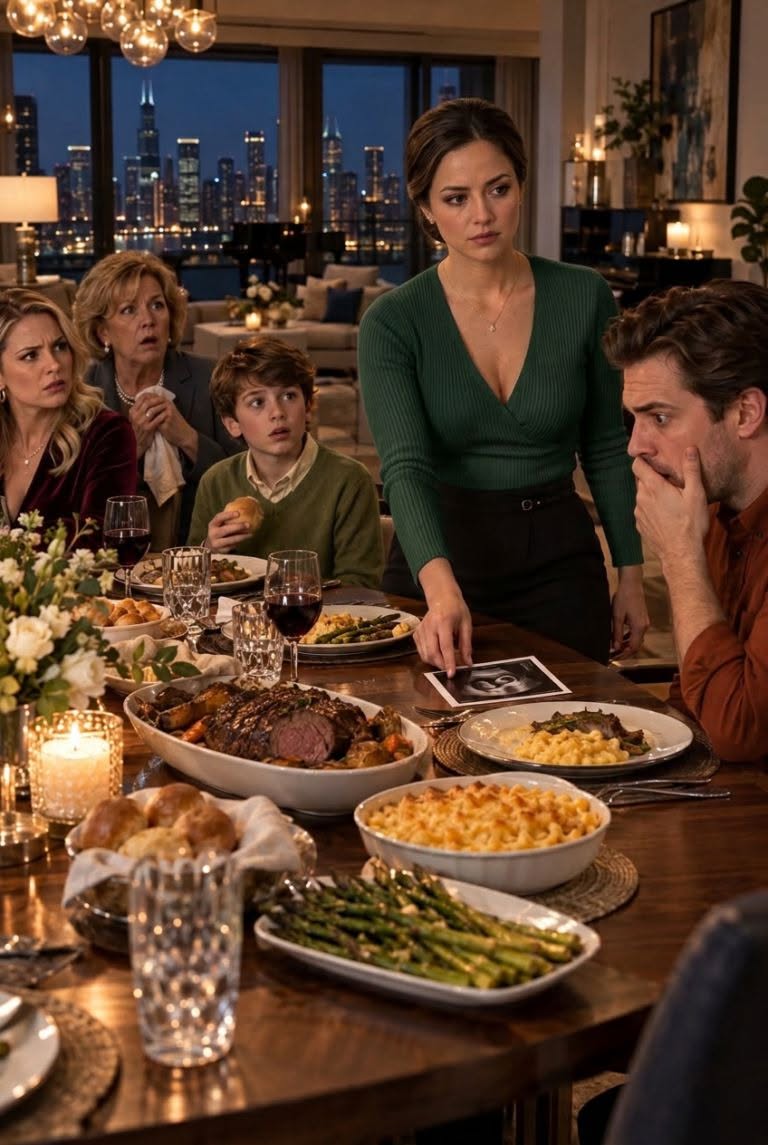
    For 4 years my parents told everyone I “disappeared” after I stopped sending money home. Then they sent my brother to track me down. He knocked, looked past me, and went pale. He backed down the steps, phone at his ear: “Mom, you need to see this. She never told us…”

    There’s a house in Asheville, North Carolina, with a robin’s-egg blue front door. I painted it myself the week we moved in—three coats with a cheap brush in good light. The final coat went on the day I stopped apologizing.

    Inside lives my three-and-a-half-year-old daughter, Marin, who believes pancakes are a food group. I work twelve-hour shifts in the intensive care unit downtown, sometimes sixteen. I can recite eight patients’ medication schedules from memory and still forget to eat lunch.

    I’ve watched people pass quietly.

    My family taught me how.

    That’s a joke I only make while driving home alone, where nobody has to decide whether to laugh.

    Our life is small and intentional.

    Daycare. Work. Pancakes. The library on Saturdays.

    First there was rent. Then somehow a mortgage.

    I painted every wall myself, but the front door was the only color I agonized over. Blue like the sky at the end of a night shift, when the world is quiet and briefly feels like it belongs to you.

    For four years, nobody from Dayton, Ohio, had crossed that threshold.

    That was deliberate.

    It was also not the story my family told.

    They said I disappeared.

    Here’s the problem with that word.

    Disappeared is passive.

    Fog disappears.

    Keys disappear.

    The word erases whoever did the erasing.

    What actually happened was simpler.

    I stopped sending money home.

    My family stopped being able to see me.

    The money is where this story begins.

    It isn’t where it ends.

    If I’m being exact—and nurses are trained to be exact—it started ten years earlier with an envelope at my nursing-school graduation dinner.

    I was twenty-four, the first Ives to finish college. I had paid for my degree with loans and double shifts at a diner.

    My mother, Carol, held dinner at our house in Dayton.

    Pot roast. A folding table pushed against the kitchen table. A sheet cake with my name spelled correctly. My diploma propped beside the gravy boat like an honored guest.

    My father, Ray, said grace.

    Danny, nineteen at the time, ate most of the cake.

    For about two hours, I was the pride of that kitchen.

    I would have done almost anything to stay that way.

    Remember that.

    My mother did.

    After dinner, she slid a cream-colored envelope across the table. My name was written on it in the tidy handwriting she used for church bulletins.

    I assumed it was a card.

    It was empty.

    “For the house,” she said, patting my hand. “You’re the one who made it out.”

    She said it warmly, almost casually, like passing down a family recipe.

    Nobody at the table reacted.

    Dad stared into his coffee.

    Danny looked at the cake.

    I laughed because I thought I understood.

    One envelope.

    One favor.

    The least I could do.

    New nurses made decent money. Their furnace was old. I had made it out.

    So I filled the envelope from my first paycheck and mailed it back.

    The following month, another envelope arrived at the apartment I shared with two other nurses.

    Same handwriting.

    Same expectation.

    Then another.

    Nobody asked aloud again.

    The asking had already happened once at a celebration in front of witnesses, wrapped in pride.

    That envelope had never been intended as a one-time favor.

    It was a subscription.

    I simply hadn’t read the terms because I’d been taught to call those terms love.

    By my second year, I switched us to Zelle because mailing envelopes had become ridiculous.

    On the first of every month, money left my account before sunrise.

    Usually $1,400.

    Sometimes $2,000.

    There was always another emergency.

    A furnace.

    Dad’s truck transmission.

    A roof after a hailstorm.

    I paid for that roof and felt proud.

    A daughter keeping rain off her father’s head from three states away.

    Then Danny needed a used Honda because his job required a car.

    Christmas money came on top.

    So did birthdays and Easter.

    On my side of the ledger, the money looked like night differential and holiday pay.

    Six straight Christmases at work because Christmas paid double.

    I became the nurse who never refused overtime.

    My coworkers assumed I was saving for something.

    I was.

    I just couldn’t have told them what.

    I kept the total in a notebook down to the dollar.

    Not because I expected repayment.

    Because numbers were the only thing in my family that stayed still.

    Words like borrow, help, and just this once changed shape depending on who was speaking.

    Numbers didn’t.

    By year six, the total had reached six figures.

    I’ll tell you the exact number later.

    I have spoken it aloud exactly once.

    When you hear where, you’ll understand why once was enough.

    And about that roof.

    A year after the hailstorm, Danny sent a Thanksgiving photo. In one corner, I could still see a blue tarp covering part of the house.

    I told myself contractors were slow in Ohio.

    I told myself many things then.

    It was cheaper than asking my mother questions.

    Back then, I believed I couldn’t afford the answers.

    Around that time, the east entrance of my hospital needed rebuilding.

    The man doing the work was Caleb Brand.

    Twenty-eight.

    A builder.

    Always with sawdust somewhere in his hair.

    One morning after my shift, he stopped me outside and asked:

    “What railing height worked best for patients who’d just relearned to walk?”

    Half asleep, I gave him the rehab unit measurements from memory.

    He wrote them down as though they mattered.

    Then he rebuilt the entrance better than the blueprints required.

    Afterward, he asked me to breakfast because dinner, as he pointed out, happened in the middle of my night.

    For three years, he packed my lunches and labeled them by shift.

    When he proposed, there was no diamond.

    He tied a brass key to a ribbon.

    It belonged to a sagging little fixer-upper he’d made an offer on, with a porch where he said he planned to drink coffee until he was ninety.

    A house key instead of a ring.

    I said yes to the key.

    I took Caleb to Dayton once.

    My mother asked his hourly wage before she asked his middle name.

    Then whether builders received benefits.

    Then who carried his health insurance.

    He answered everything with his usual patience.

    On the drive home, he said:

    “Your mom sure loves numbers.”

    He had no idea how right he was.

    I didn’t tell him because I still hadn’t let myself count what those numbers meant.

    That night, while he slept, my phone lit up.

    My mother.

    “He seemed steady, honey. Also, a small loan this month. Don’t tell your father.”

    I stared at the message for a long time.

    Apparently even my engagement had a price of admission.

    I paid it.

    I need to be honest about that.

    For six years, I always paid.

    That fall, flu season hit early and hard.

    Half my unit was gone, and those of us left worked brutal hours.

    After one sixteen-hour shift, I slept through an alarm for the first time in my adult life.

    I woke on the fourth of the month.

    The transfer went out three days late.

    Three days.

    I remember pressing send and thinking nobody would even notice.

    My phone rang at seven the next morning.

    My mother didn’t yell.

    I almost wish she had.

    Her voice was flat and efficient, like a bill.

    The mortgage had been due.

    She’d had to move money around in front of my father.

    It had been humiliating.

    Then she said the sentence I carried for the next five years.

    “You don’t get to be tired. You’re the one who made it.”

    I stood in my kitchen wearing scrubs I’d had on so long the fabric felt soft.

    I looked down at my hands.

    And apologized twice.

    She accepted once.

    I promised to set up an automatic transfer so it would never happen again.

    She said that would be best.

    Then we hung up like a bank and its customer.

    What embarrasses me now isn’t that she said it.

    People reveal themselves all the time.

    That part costs nothing.

    What shames me is that I spent the drive to work agreeing with her.

    Planning better alarms.

    Better systems.

    Ways to make sure my exhaustion never inconvenienced anyone again.

    I was twenty-nine, apologizing for sleeping after spending the night keeping strangers alive.

    It would take something catastrophic to make me finally put the phone down.

    Life had one ready.

    It was a Tuesday in November.

    I was midshift when the charge nurse came looking for me.

    I knew before she spoke.

    I’ve been the person who goes looking for families.

    A scaffold had failed on a commercial job downtown.

    A cable that inspection paperwork said was fine.

    Caleb Brand, thirty-one years old, was gone before the ambulance reached the second light.

    I’ve watched critically ill strangers receive more ceremony than the universe gave the man who used to label my lunches.

    Eight builders from his crew carried him at the funeral in borrowed ties, crying openly.

    My family didn’t come.

    Seven hours, they said, was too far.

    They sent carnations with a card signed to the Ives family in my aunt Sharon’s handwriting.

    Meaning my mother had delegated the flowers.

    Four days after the funeral, she texted:

    “So sorry about everything, honey. Will this month’s transfer be late with all this going on?”

    I was standing inside Caleb’s closet holding one of his flannel shirts.

    It still smelled like cut lumber.

    I sent the money on time.

    I’m not proud of that.

    Grief makes you obedient before it makes you anything else.

    Two weeks later, I fainted at work.

    My friend Dena marched me to the drugstore.

    In a fluorescent bathroom, two pink lines appeared.

    Night shifts had wrecked my cycles for years.

    I had assumed stress explained the rest.

    The ultrasound said sixteen weeks.

    I did the math alone in a dark room with cold gel on my stomach.

    Five months from becoming somebody’s mother.

    One phone call from becoming nobody’s daughter.

    I didn’t know that second part yet.

    I found out on a Sunday.

    I planned the call carefully.

    Like medication administration.

    Sequence. Dose. No surprises.

    In the shower, I rehearsed.

    Mom, Caleb passed away.

    Mom, I’m pregnant.

    Mom, the doctor says my blood pressure is dangerous and I have to stop sending money and keep every dollar and every heartbeat calm.

    Three facts.

    Simple.

    True.

    But in what order do you give your mother a death, a grandchild, and a boundary?

    I chose wrong.

    I led with the boundary.

    She answered on the second ring.

    “Mom, I have to stop sending money.”

    That was all I got out.

    The line erupted.

    Ungrateful.

    After everything they had done.

    The mortgage.

    My father’s heart.

    Who did I think had paid for my ambition?

    Then the call ended.

    I dialed again.

    Voicemail.

    Again.

    Voicemail.

    I sat on the bathroom floor with everything I had never been allowed to say—Caleb, the baby—lodged inside me like swallowed glass.

    That week, my blood pressure earned me a specialist.

    The specialist talked about preterm risk and treated stress like a controlled substance.

    Reduce it or spend the pregnancy in bed.

    So I tried one last door.

    My father.

    I could hear his radio in the garage when he answered.

    “Dad, please. Something’s happened.”

    Ray Ives, the man who once drove four hours for one of my choir concerts, answered quietly:

    “Don’t upset your mother.”

    Not:

    What happened?

    Not:

    “Are you okay?”

    Every road into that family ran through Carol.

    Carol had closed the road.

    I set my phone face down on the counter.

    I stopped picking it up.

    They could have asked one question.

    Any question.

    They never did.

    Seven hours north, my mother started telling a different story.

    It just wasn’t mine.

    If you’ve ever been the family ATM, the person they remember on the first of the month and forget on your birthday, tell me in the comments where you’re watching from. I read everyone. It reminds me none of us were ever as alone as they made us feel.

    You need to understand how the word disappeared was created.

    Nobody in my family told the kind of lie you could quote cleanly.

    It began with my aunt Sharon, my mother’s sister and unofficial broadcasting department.

    Two months after that phone call, Sharon posted on Facebook:

    “Praying for my sister through a heartbreaking season. Some children forget the people who raised them.”

    No name.

    None was needed.

    Then came coffee hour at First Grace, the small Dayton church where my mother had run the women’s committee since before I could walk.

    Someone asked where I had been because I’d missed the harvest dinner.

    According to what Danny later told me, my mother stared down at her shoes.

    She let the silence sit long enough to spoil.

    Then she touched her eyes with a tissue and said:

    “We don’t really know anymore.”

    Technically true.

    She didn’t know because she had hung up before knowing was possible.

    That was the genius of it.

    By the next coffee hour, someone in the choir was saying I had disappeared.

    My mother never corrected her.

    And in a small church, something left uncorrected becomes scripture by Christmas.

    My mother never had to lie.

    She simply declined to provide the truth, cried at the right moments, and allowed two hundred well-meaning people to write the rest.

    In the only court that mattered to her—the one meeting every Sunday—her grief became evidence.

    The absent daughter was tried without ever being called.

    I knew none of this then.

    I was seven hours south, watching my ankles swell and counting down toward delivery.

    Danny told me the details years later at my own kitchen table, ashamed.

    But keep this with you through the next part.

    While I was learning to become a mother, my mother was teaching an entire congregation that I had vanished.

    So let me answer the question I opened with.

    Why did I really stop sending money?

    Not spite.

    Not revenge.

    The explanation fits in one sentence.

    I had one salary, one dangerous blood-pressure reading, one baby coming, and nobody left to split the world with.

    That was it.

    That was the scandal.

    During the final months of pregnancy, I built a quiet life.

    I assembled a crib alone while watching an instructional video propped on a paint bucket.

    Dena covered my worst shifts and told the unit manager I needed light duty before I had the nerve to ask.

    The money that used to leave my account on the first stayed.

    It became a car seat.

    A cushion for maternity leave.

    And the final piece of a down payment on a little brick house in West Asheville.

    At first, seeing my own money stay in my own account felt obscene.

    Almost selfish.

    That’s what six years of envelopes will do to your arithmetic.

    I moved into the house eight months pregnant, with Dena carrying anything heavier than a lamp.

    Before unpacking the kitchen, I painted the front door blue.

    That same month, I wrote one letter by hand to my grandmother June—my father’s mother, and the only person in that family I still believed might prefer a hard truth to a comfortable story.

    I wrote everything.

    Caleb.

    The scaffold.

    The pregnancy.

    The transfers.

    The phone call.

    I told her my mother had ended the conversation before it even began.

    I gave June my new Asheville address.

    She was the only person in Ohio who got it.

    I asked for nothing.

    Just that she know.

    Then I watched the mailbox.

    Two weeks.

    Six.

    My ankles swelled.

    The baby dropped.

    Nothing came.

    I told myself the letter had been lost.

    The alternative—that even June now believed them—was too heavy.

    So I left it alone.

    I had other things to carry.

    Marin Brand Ives arrived on an April morning three weeks early and completely unimpressed by the drama surrounding her.

    My blood pressure held.

    Barely.

    The delivery was fast.

    My daughter has never waited politely for anything.

    I hope she never learns.

    Dena stood where family should stand.

    She held my hand through the hardest hour and narrated the whole thing like a golf announcer until I laughed.

    When it was over, she cut the cord because someone who loved us should.

    Then they placed six pounds of furious black-haired girl on my chest.

    I want to tell you something about myself.

    At work, I was famous for not crying.

    Six years of codes, final breaths, and families folding in half in hospital corridors.

    I stayed calm because somebody in the room always had to.

    That nurse cried.

    Not delicately.

    The kind of crying that startles medical staff.

    Because she was here.

    Because she was safe.

    Because the two people who should have been pacing the waiting room with terrible gas-station coffee had no idea she existed.

    One because he was gone.

    The other because she had hung up before I could tell her.

    We named her Marin.

    Years earlier, Caleb had tried the name aloud on the porch of the fixer-upper he never got to buy.

    When he reached that one, he grinned and said:

    “Her, someday.”

    So the name had always belonged to her.

    It took a lawyer and a patient stack of documents, but Caleb’s name is on the birth certificate of the daughter he never met.

    And the brass key he gave me instead of an engagement ring now hangs in a little frame beside our blue door.

    I came home with Marin four days later.

    Then I did the thing my family would eventually call disappearing.

    I lived.

    Here is four years of peace compressed into a night-shift handoff.

    You breathe surprisingly well once you stop financing another household.

    The mortgage became easier each year.

    The dogwood in the yard grew taller.

    My daughter learned to walk on a sloping West Asheville street.

    The door stayed blue.

    Touched up every spring.

    Never changed.

    When Marin started preschool, I moved to day shifts.

    I learned how to make pancakes shaped like mildly terrifying dinosaurs.

    Dena became Marin’s godmother and then something simpler.

    Family.

    The kind you choose awake.

    Every December, I sent exactly one thing north.

    A Christmas card to June.

    Marin’s school photo inside.

    My return address clearly printed.

    No phone number.

    No request.

    One card every year into the silence because some part of me refused to let the road disappear entirely.

    I never knew whether June read them.

    I didn’t know if she believed my mother’s version.

    I would eventually get that answer.

    It would be hiding inside a sewing box.

    But I’m getting ahead of myself.

    What matters about those peaceful years is quieter.

    At some point, I stopped flinching when my phone rang on the first of the month.

    I stopped mentally drafting apologies.

    Being needed is not the same as being loved.

    It took me thirty years to learn the difference and four more to believe it.

    Marin will learn it for free.

    I thought that chapter was finished.

    I thought peace was something you got to keep.

    Then, one Tuesday in September, somebody knocked on my blue door.

    To understand that knock, you need to know what had been happening back in Dayton.

    Over four years, the word disappeared had gathered entire stories around itself.

    One version said I had gotten involved with substances.

    Whispered, never confirmed.

    Another suggested some controlling boyfriend had isolated me from everyone.

    That one would almost be funny if it weren’t so ugly.

    My mother presided over every theory in the same way.

    Never confirming.

    Never denying.

    Maintaining the soft glow of martyrdom.

    The sorrowful queen of every church casserole line.

    That story cost her nothing.

    It paid her weekly.

    It might have continued forever except June developed pneumonia.

    She was eighty-two now.

    Twice hospitalized.

    Home on oxygen.

    Suddenly aware that time was a finite thing.

    And June, after four years of staying mostly quiet, finally stopped cooperating.

    At a Sunday dinner, in front of the family, she said:

    “Bring me Tori or bring me a phone. But I am not dying politely in a house full of liars.”

    Danny swears someone’s fork stopped halfway to their mouth.

    Now notice what my mother needed.

    Not her daughter.

    She had had four years to want me.

    What she needed was to produce me publicly.

    A rescue.

    The lost lamb returned.

    The mother vindicated.

    Her original story preserved.

    Within a week, Danny—twenty-nine, working delivery routes and still living in our parents’ basement—was handed an Asheville address written in my mother’s familiar handwriting.

    He didn’t ask where she got it.

    He admitted that later at my kitchen table.

    “I didn’t ask, Tori. I should have.”

    Remember that.

    It mattered.

    He drove seven hours with the radio off.

    And on a Tuesday afternoon in September, he knocked on my door.

    Which brings us back to the apple slices.

    The knock was soft.

    Almost uncertain.

    I wasn’t expecting anyone.

    Through the front window, I saw part of a tall man in a delivery-company polo shifting his weight on my porch.

    It took a second to recognize him.

    Then another to breathe.

    Danny.

    Four years older around the eyes.

    My little brother standing on the far side of my blue door with my past in his pocket.

    My hand stayed on the latch for three seconds.

    In medical emergencies, I’ve timed worse choices.

    Three seconds can be long.

    In the first, I considered remaining silent until he left and then shaking alone inside my own house.

    In the second, I imagined opening the door six inches, giving him nothing, sending him home, then spending every Tuesday expecting another knock.

    In the third, something became very clear.

    I had done nothing wrong.

    I had built this house, this life, and this child from honest work and grief.

    I was finished conducting my life through cracks in doors.

    Hiding was the last part of my mother’s story I was still performing.

    So I opened the door completely.

    “Hi, Danny,” I said.

    And watched four years hit my brother’s face.

    His mouth opened.

    Then came the sound from behind me.

    Bare feet racing over hardwood.

    My entire hidden life arriving in the hallway.

    “Mommy, who is it?”

    Here’s what Danny saw.

    A three-and-a-half-year-old girl skidding into the hall in dinosaur socks.

    Black hair.

    Deep-set eyes.

    The Ives chin.

    My grandmother June’s face from every old Dayton family photograph, suddenly three feet tall and asking who was at the door.

    Danny made a sound like the air had been knocked out of him.

    Then his eyes moved past her.

    Down the hallway.

    Toward the wall I barely noticed anymore.

    Caleb’s photograph, funeral ribbon still folded over one corner.

    The ultrasound framed beside it.

    A photo Dena had taken of me eight months pregnant, standing alone in front of a half-painted blue door with a roller in my hand.

    I watched my brother solve the puzzle nobody had ever let him see.

    Four years of family mythology collapsed in four seconds.

    His face went white.

    He stepped backward off the porch.

    His phone was already against his ear.

    Then I heard the sentence from the beginning.

    “Mom, you need to see this. She never told us…”

    He stopped.

    Because there was no way to finish it without accusing someone.

    And he was only beginning to understand who deserved the accusation.

    Danny lowered the phone.

    Then my little brother sat on my porch steps and cried into his hands.

    I brought him inside.

    What else was there to do?

    He stayed at my kitchen table for two hours.

    Then he asked the question nobody in the Ives family had ever asked.

    “How did he die, Tori?”

    And he listened to the entire answer.

    When he left, he placed a cream-colored envelope carefully on the porch railing.

    My name.

    My mother’s handwriting.

    Inside was a printed invitation.

    Homecoming Sunday.

    October 12.

    First Grace Church.

    All are welcome home.

    “She wants you there,” Danny said. “She’s going to fix this, Tori.”

    “Fix it? How?”

    He stared down at his shoes.

    He didn’t know.

    I did.

    Danny had barely left my street when the family found my number.

    That evening, a cousin added me to the family group chat as though I’d merely been away for a weekend.

    By two in the morning, forty-one messages filled the thread.

    I lay in bed with the screen lighting the ceiling and watched my mother’s story change shape.

    The earliest messages almost sounded human.

    She’s alive.

    Oh my gosh.

    Is that really her house?

    Then around midnight, a new version arrived fully formed.

    My mother didn’t have to type it herself.

    You could recognize her authorship anyway.

    She hid a child from us.

    Four years.

    Her own mother.

    Then Sharon appeared in all caps.

    “We deserve answers.”

    Someone posted hearts under a description of the niece nobody had met.

    Overnight, I had transformed from the daughter who disappeared into the daughter who deceived.

    Same jury.

    Different charge.

    The family story could survive anything except becoming mine.

    Here’s the detail I still keep.

    Forty-one messages.

    I read every one twice while Marin slept upstairs.

    Not one asked about the man in the funeral photograph.

    Not one asked his name.

    How he died.

    How I had carried his child alone through the worst year of my life.

    Grief had no place on the family ledger.

    It had no monetary value.

    I put the phone in a junk drawer and went to sleep.

    The next evening, my mother called.

    Almost four years since the dial tone.

    I answered.

    I’m still not sure whether I regret it.

    She was crying before I finished saying hello.

    To be fair, my mother’s tears are real.

    Like stage rain is real.

    Actual water.

    Carefully timed.

    “My baby,” she kept saying. “My baby had a baby.”

    I stood at the kitchen window watching Marin collect acorns and waited.

    Finally, I said the only thing that mattered.

    “You could have known her since the day she was born, Mom. All you had to do was let me finish one sentence.”

    Silence.

    Then I could almost hear the recalculation.

    Her grief switched tracks.

    And my mother, suddenly composed, made an offer.

    “Come to homecoming, sweetheart. Stand with me. I’ll tell everyone you were sick. You were, weren’t you? With your blood pressure. A sick girl who couldn’t reach out isn’t a scandal, honey. It’s a testimony. No one ever has to know about the money.”

    For a few seconds, I said nothing.

    I was almost impressed.

    Notice what that proposal accomplished.

    It turned my disappearance into illness.

    Transformed four years of erasure into a redemption story starring her.

    And permanently buried the money, the six years, the actual reason for everything, beneath a church carpet—with my cooperation.

    She wasn’t apologizing.

    She was offering me a better-produced lie and a supporting role.

    She didn’t want her daughter back.

    She wanted control of the story.

    “I’ll think about it,” I said.

    After hanging up, I stood shaking in my kitchen.

    Not with fear.

    With recognition.

    Two nights later, an unfamiliar Ohio number called.

    Then a voice I hadn’t heard in four years said my name as if it had never doubted me.

    My grandmother June.

    Danny had given her my number.

    For once, that address slip had done something useful.

    I sat down on the kitchen floor.

    June filled the silence.

    She had received my letter four years earlier.

    All of it.

    She had read every Christmas card.

    Every school photo.

    And she had kept them somewhere safe.

    I would soon learn where.

    “Why didn’t you write back?” I asked.

    I hated how small my voice sounded.

    Thirty-four suddenly becoming eight.

    “Look at my hands, child,” she said, dry as toast. “They shake like a paint mixer. And a letter leaving this family gets read at more checkpoints than a prisoner of war’s.”

    Then her voice changed.

    Quiet.

    Level.

    Like testimony.

    “I want you to hear this from me while I can still say it plain. I never believed the word disappeared. Not for one day. People don’t disappear, Tori. They get erased. And I have sat at that woman’s table the better part of 40 years watching who holds the eraser.”

    I covered my mouth.

    For four years, I had insisted I didn’t need anyone in Ohio to believe me.

    You can survive believing that.

    You simply don’t know how heavy it was until somebody finally lifts it off you.

    Then June returned to her usual briskness.

    “Now,” she said, “I’m told there is a girl at your house with my face on her. Bring her to me while these eyes still work. Not for a show. For a Saturday.”

    That decided it.

    Almost.

    Because you already know it didn’t stay only a Saturday.

    Before I tell you what happened inside that church, ask yourself this.

    If the people who erased you invited you into a room where everyone believed their version, would you walk inside?

    Type yes or no in the comments.

    By the end, you’ll know exactly what I chose.

    At first, I chose not to attend homecoming.

    I wanted nothing to do with my mother’s stage, her lost-lamb performance, or two hundred people who had already served as jurors.

    I wanted something much smaller.

    June’s porch.

    Marin on it.

    The two of them sharing one October afternoon before my grandmother’s eyesight or lungs failed.

    So I planned the visit the way I plan a night shift.

    Tight.

    Timed.

    Minimal exposure.

    Drive north Friday after work.

    Seven hours without a child.

    Closer to nine with a three-year-old.

    Motel on the far side of Dayton.

    Two beds.

    Free waffles.

    Paid in advance.

    Saturday entirely at June’s house.

    Phones down.

    Sunday morning, gone before First Grace began its first hymn.

    By the time the fellowship hall coffee started, we would already be on the interstate.

    Thirty-six hours.

    In and out.

    My mother could perform homecoming without its main character.

    Let her improvise.

    She was good at that.

    The night before we left, Dena watched me pack.

    “And when your mother finds out you’re in town?” she said. “Dayton’s a small pond, Tori. Casserole travels faster than light there.”

    “Then I’ll be on the interstate before it cools,” I said.

    We laughed.

    I almost believed it.

    I strapped Marin into the car and tucked the cream church invitation into my bag.

    Not because I planned to use it.

    I simply wanted to know where it was.

    It was a good plan.

    It lasted one afternoon.

    June’s house stood three blocks off the state route.

    It looked smaller than I remembered, the way childhood houses always do.

    She was on the porch before I switched off the engine.

    Eighty-two.

    Oxygen line over her ears.

    Standing even though standing clearly cost her something.

    I lifted Marin from the car.

    My daughter, normally suspicious of mail carriers, marched directly up the porch steps.

    June put both shaking hands around Marin’s face and stared.

    “There you are,” she said.

    To Marin.

    To me.

    Maybe to several generations at once.

    Inside, we had exactly the Saturday I wanted.

    Soup beans.

    Cornbread.

    A soap opera June narrated like a horse race.

    Later, she asked Marin to bring her sewing box.

    A battered old tin I remembered from childhood.

    She told her to look underneath the thread.

    There they were.

    Every Christmas card I had mailed.

    Rubber-banded together.

    The edges softened from being read.

    My daughter’s whole life held together under buttons and thread.

    Hidden.

    That was the word doing all the work.

    “Why under the thread, Grandma?” I asked.

    I already knew something bad was coming.

    June looked straight at me.

    “Because your mother found them last Christmas at my kitchen table looking for a scissors. She read every one. She put them back where they were, and she never said a word of it to me or anybody.”

    Last Christmas.

    Ten months earlier.

    My mother had known my Asheville address for ten months while her church continued praying for its missing daughter.

    She hadn’t needed to find me.

    She needed me to remain lost.

    I was worth more to her missing.

    That was when the small-town machinery started moving.

    Around four, a Buick pulled up outside.

    Aunt Sharon stepped out carrying a casserole dish she claimed she was returning.

    June muttered that Sharon had been holding the dish since Easter.

    She had heard June had company.

    She came to inspect what kind.

    What kind was three and a half years old, sitting on the porch teaching a doll to count acorns.

    I watched Sharon’s face.

    First calculation.

    Then appetite.

    She stayed less than ten minutes.

    On the way out, she hugged me with the intensity of someone gathering information and said:

    “You look wonderful. She’s just precious. Your mama must be over the moon.”

    Then the Buick disappeared with purpose.

    By dinner, Danny texted.

    The church knew.

    The child.

    The visit.

    June’s porch.

    And that evening, at the homecoming-eve potluck, my mother stood before the fellowship hall and made an announcement.

    Danny was there.

    He later repeated it nearly word for word.

    “God has brought my lost lamb home to Ohio. My daughter is here with my grandbaby, and this Sunday she will stand before this congregation, and this family will be made whole in the sight of the Lord.”

    They applauded.

    Actual applause.

    Two women cried.

    I read Danny’s message sitting on a motel bed while Marin slept eight feet away.

    What I felt first wasn’t anger.

    It was vertigo.

    In one afternoon, my mother had written me into a performance I had explicitly declined.

    She had promised an audience a lead actor who had never agreed to appear.

    Curtain in fifteen hours.

    Then somebody knocked on the motel door.

    Danny.

    Still dressed from the potluck.

    Holding a spiral notebook as if it were dangerous.

    Our mother’s household ledger.

    Decades of tidy columns.

    The same books I watched her total at the kitchen table as a child.

    Danny had found it months earlier while searching for June’s Medicare paperwork.

    He’d been carrying what he discovered ever since.

    He opened it to the years I had funded.

    “You should see where it went,” he said.

    So I looked.

    The roof first.

    The famous hailstorm roof.

    One entry.

    Patch materials: $340.

    Labor: Ray and Danny.

    My father and brother had repaired it themselves while I continued sending $1,400 month after month.

    Then came the real destinations.

    First Grace Building Fund.

    Carol Ives.

    Benevolence committee.

    Carol Ives.

    Women’s retreat sponsorship.

    Fellowship hall ovens.

    Youth van repairs.

    Carol Ives.

    Again.

    Again.

    Again.

    Then loans to Sharon’s son for a transmission.

    A cousin’s security deposit.

    Money never repaid, but always recorded.

    Every person remaining in debt to my mother.

    My money had not been keeping my parents afloat.

    It had been buying my mother status in a very small kingdom.

    I leaned back.

    For the first time in years, the anger I should have felt stood up inside me.

    Then Danny opened older pages.

    1989.

    Wedding ring pawned.

    Mama’s back rent.

    A tiny amount by today’s standards.

    A heartbreaking one.

    My mother had been twenty-four, eight months married.

    She had sold her own wedding ring to pay her parents’ debts.

    Nobody had repaid her either.

    “She’s not spending your money, Tori,” Danny said quietly. “She’s paying a debt she thinks every daughter owes.”

    It excused nothing.

    It made the whole thing sadder.

    Understanding someone does not mean volunteering to remain their currency.

    But it took revenge out of the equation.

    Whatever came next, I didn’t want to beat my mother.

    “The Honda was your money,” Danny added at the door, wincing. “I’m paying it back.”

    “The car was a gift,” I said.

    Gifts had never been what hurt.

    I didn’t sleep.

    A water stain on the motel ceiling looked exactly like Ohio.

    I stared at it and ran through every possibility.

    Leave at dawn.

    Skip church.

    Let my mother explain my absence however she wanted.

    She would.

    I could already imagine the sermon about a prodigal too ashamed to face the light.

    Or I could sit quietly in a back pew.

    Smile.

    Become an exhibit.

    Purchase peace at the same old exchange rate.

    Then, from Marin’s bed, half asleep:

    “Mommy, do I have a grandma?”

    She had met June.

    Great-grandma made sense.

    But children listen even when adults assume words are sailing over their heads.

    Somewhere in her little mind, she had noticed a blank space.

    I lay there in the dark and didn’t answer.

    The silence sounded enormous.

    And suddenly I understood.

    If I stayed silent, the silence wouldn’t remain mine.

    My mother would fill it exactly as she had filled the previous four years.

    Someday Marin might sit in another kitchen hearing that her mother had disappeared.

    Had hidden.

    Had been too ashamed to face decent people.

    Silence had protected me.

    Now it would become my mother’s raw material.

    I got up.

    Went into the bathroom.

    Under the thin motel light, I took out the cream envelope.

    Homecoming Sunday.

    All are welcome home.

    That word.

    Welcome.

    Behind me, Marin shifted in bed.

    And quietly, to nobody in particular, I said it.

    I decided to go to church.

    Let me tell you how I prepared because it matters.

    I did not print bank statements.

    Six years of transfers were sitting in a file cabinet seven hours away in Asheville.

    I left them there.

    I wasn’t going into a church waving evidence like a process server.

    Paper was my mother’s language.

    Ledgers.

    Envelopes.

    Receipts against the soul.

    I was done speaking it.

    I didn’t write a speech.

    When I read from notes, I sound like a discharge summary.

    Besides, I had been carrying the truth word for word for four years.

    Every night shift had been rehearsal.

    Every first of the month.

    Every Christmas card.

    Instead, I did ordinary things.

    Ironed my navy dress with a motel iron that barely worked.

    Braided Marin’s hair.

    Let her pick the ribbon.

    Orange.

    She was right.

    Light lipstick.

    Then I took Caleb’s brass key from my bag and slipped it into my dress pocket.

    Nobody would see it.

    It was ballast.

    I texted Danny.

    “Front pew for Grandma. Aisle end near the fans. She overheats. Marin and me right behind her.”

    He replied quickly.

    “Done. And Tori. I’m glad.”

    Before leaving, I sat on the motel bed and checked my pulse against my watch because I’m a nurse and habit survives everything.

    Steady.

    That might be the strangest detail from the whole morning.

    I wasn’t bringing evidence.

    I was bringing myself.

    That was the one thing none of them had planned for.

    First Grace seats around two hundred.

    That Sunday, every seat was filled.

    Extra folding chairs.

    Cars on the lawn.

    A paper banner over the doors.

    Welcome home.

    Hand-cut letters.

    Ceiling fans moving two hundred bulletins like slow applause.

    We entered during the second hymn.

    June sat on the aisle in the front pew, oxygen line and Sunday pearls.

    Marin and I sat directly behind her.

    My daughter carried a doll and wore her orange ribbon.

    Half the sanctuary turned around.

    Faces I had known since childhood.

    The looking had a temperature.

    My father stood against the rear wall holding his cap in both hands like he always did at funerals.

    Then there was my mother.

    Lavender dress.

    Handkerchief she didn’t need.

    Microphone.

    After the offering, she stepped to the pulpit.

    The microphone squealed.

    She waited calmly.

    She was good.

    I want that recorded.

    She thanked God for seasons of sorrow that become joy.

    At carefully measured intervals, the handkerchief touched dry eyes.

    “My lost lamb,” she said, “has come home.”

    Then she turned.

    Found me in the second row.

    Extended the microphone like a communion plate.

    And delivered the line she had written for both of us.

    “Tori, baby, come up here and give thanks with me.”

    Two hundred faces turned.

    Fans spun overhead.

    A pew creaked behind me.

    And there it was.

    The choice.

    Stay seated.

    Smile.

    Wave.

    Drive home.

    Allow her story to harden over my life and eventually over my daughter.

    Or stand.

    And destroy the last bridge still carrying my name.

    The one labeled daughter who might someday come home.

    There would be no third option after this.

    I looked at June.

    My grandmother gave the smallest nod.

    I released the pew.

    I stood.

    I did not take the microphone.

    First Grace was built in 1921.

    Back then, rooms were built to carry voices.

    A calm voice carries well.

    I stood at the front with my hands empty.

    And somehow, I wasn’t afraid.

    Ten years in intensive care teaches you what an actual emergency feels like.

    This wasn’t one.

    This was only the truth.

    At last, in a room with good acoustics.

    “I didn’t disappear,” I said. “I stopped paying. For 6 years in my family, those were the same thing.”

    The fans became the loudest sound in the building.

    Somewhere, a bulletin slipped to the floor.

    “$100,000. That’s not a figure of speech. I kept the total. You may check my math with anyone here who ever borrowed from it.”

    I watched the number arrive in two hundred faces.

    Several people in the middle rows froze.

    Transmissions.

    Deposits.

    Old loans.

    I didn’t linger on them.

    I hadn’t come for them.

    “The year I quote-unquote disappeared, I buried the man I loved and delivered our daughter alone. Nobody asked. One question would have found me.”

    Then I turned toward my mother.

    The last sentence belonged to her.

    I gave back what she had given me five years earlier.

    “I was allowed to be tired, Mom. Just never here.”

    The handkerchief dropped.

    My mother, who had maintained perfect sorrow for four years, lost the rhythm.

    “How dare you?” she said.

    The word broke halfway through.

    The microphone amplified it.

    Harsh.

    Electric.

    Too loud.

    She was shaking.

    I wasn’t.

    That isn’t bragging.

    I had been practicing calm since nursing school.

    She had been practicing audiences.

    Only one skill works after the script ends.

    I never raised my voice.

    In a room designed for echoes, quiet can be the loudest thing you bring.

    Here is what the truth cost.

    The congregation divided almost visibly.

    Some faces softened.

    Others hardened.

    And some of the hard ones belonged to people I once loved.

    Mrs. Hartwell, who taught me music in third grade, stared at her hands.

    A deacon who used to give us butterscotch candies slowly shook his head.

    In his version, I would remain the shame.

    Nothing I could show him would change that.

    That is the tax nobody warns you about.

    Truth doesn’t convince everybody.

    It only stops the lie from being unanimous.

    And something else ended in that room.

    The daughter who might someday come home.

    The girl who still imagined being forgiven back into holidays, restored through some future miracle of her mother’s generosity.

    That Tori ended when I stood.

    I ended her myself.

    I knew I would grieve her later.

    I stood anyway.

    She had cost too much and paid nothing back that could be spent.

    Then I did the only thing I had truly come to do.

    I returned to the pew.

    Took Marin’s hand.

    Led her to June in full view of two hundred people who had spent four years praying for a missing woman who had never been missing.

    “Marin,” I said, “this is your great-grandmother, June. She’s the reason I still believe in family.”

    June placed both shaking hands around Marin’s small face.

    Her own face, made new.

    The entire church watched a great-grandmother finally meet the child they had been told was hidden from them.

    Even some hard faces softened.

    Some things outrank a narrative.

    Not many.

    That did.

    Then I lifted Marin into my arms.

    Nodded to Danny to help June.

    And walked down the center aisle of First Grace for the last time.

    Past Sharon, staring at the number I had spoken as though it still hovered in the air.

    She knew which pieces of it had her family’s name attached.

    Past rows of people deciding which version of the story they would keep forever.

    My mother stepped away from the pulpit as I reached her.

    And here is the strangest mercy of that day.

    She lowered the microphone.

    What she said next was only for me.

    No audience.

    For perhaps the first time in forty years, my mother said something unscripted.

    “Everything I did, I did for this family.”

    She believed it.

    That is what makes it sad.

    I could see all the way back through the sentence to a twenty-four-year-old woman in a pawn shop placing her own wedding ring beneath the glass to pay her parents’ rent.

    Learning what she thought daughters were for.

    I stopped.

    One arm holding the granddaughter she had traded for a story.

    Then I answered quietly.

    “Being needed is not the same as being loved, Mom. I hope one day somebody loves you for free.”

    Her face changed in a way I had never seen.

    I didn’t stay to identify it.

    I kept walking.

    The ushers opened the double doors.

    October air rushed inside.

    Cold.

    Clean.

    Indifferent.

    Gold.

    Marin squinted at me from my hip.

    “Is church over?” she asked.

    “Ours is,” I said.

    And we walked into the sun.

    We were nearly at the car when I heard someone running across gravel.

    Danny.

    Tie loose.

    Breathless.

    He had left June by the car with the heater running.

    He stopped in front of me with his hands open.

    He did not defend our mother.

    That deserves to be recorded.

    He did not say she meant well.

    He did not say you know how she is.

    He didn’t use any of the sentences that had upholstered my childhood.

    He had stopped carrying her messages the day he sat crying on my porch.

    He looked at Marin, already falling asleep against my shoulder.

    Then he asked something nobody else in my family ever had.

    “Can I come see her? No envelopes. Just an uncle.”

    Just an uncle.

    Twenty-nine years old.

    The bravest sentence an Ives had spoken in years.

    “Sundays,” I said. “Bring nothing.”

    He nodded like I had handed him something valuable and breakable.

    Because I had.

    We reached the interstate before the church potluck casseroles were uncovered.

    Nobody followed us.

    Nobody had to.

    That part was finished.

    Six weeks later, on a warm Saturday in November, June sat on my Asheville porch.

    Danny had driven her seven hours and she spent most of the trip informing him that his taste in radio was criminal.

    Her sewing box rested on her lap.

    She was teaching Marin to thread a needle.

    Four hands shaking for different reasons.

    When they finally got the thread through, both of them cheered like a stadium.

    My mother’s letter had arrived the Tuesday before.

    Three handwritten pages.

    Her version.

    A season of trials.

    A daughter confused by grief.

    Scripture about honoring your parents.

    And the word sorry appearing exactly zero times in any sentence that carried weight.

    I read it once.

    Put it in a drawer.

    Went back to cooking dinner.

    It hurt less than I had expected.

    That was the real miracle.

    Not that it stopped hurting.

    That the wound was no longer load-bearing.

    News from Dayton came through Danny now.

    He calls every Sunday by video so Marin can show him whatever frightening dinosaur pancake I made.

    Our mother stepped away from the church treasurer position, officially for health reasons.

    A few relatives who had borrowed money started quietly slipping small bills to June.

    She takes them without comment and spends them on yarn.

    Sharon still calls cousins on the first of every month.

    The machine continues.

    It just operates without me inside it.

    My father sent one card.

    Inside, written in pencil:

    “I’m sorry I looked away.”

    I kept it.

    I haven’t answered yet.

    Some doors need more than one coat.

    I’m allowed to take my time now.

    That is part of the point.

    Yesterday, Marin and I touched up the blue door again.

    She had her own tiny brush.

    By the time we finished, paint was on her nose, the dogwood, and somehow the cat.

    The color is called Curis House Sky.

    Marin calls it ours.

    If you have to pay to stay in someone’s story, walk out and write your own.

    The people who love you will read every page for free.

    That’s my story.

    Four years of silence.

    One knock on a blue door.

    And ninety seconds inside a church that finally heard the truth.

    If this reminded you of an envelope you keep filling for people who never ask how you are, take that as your sign.

    And if someone you love needs to hear this, share it with them.

  • On My 60th Birthday, My Daughter Told Me I Was a Burden and Said She’d Keep My House After Sending Me to Senior Living. I Stayed Calm, Reached Into My Purse, and Placed One White Envelope on the Table.     

    On My 60th Birthday, My Daughter Told Me I Was a Burden and Said She’d Keep My House After Sending Me to Senior Living. I Stayed Calm, Reached Into My Purse, and Placed One White Envelope on the Table.    


    On my sixtieth birthday, my daughter stared directly into my eyes across a plate of untouched pasta and told me I had become a burden.

    What she didn’t realize was that I had spent the past six months preparing for precisely that moment.

    And what her husband didn’t realize was that before the evening ended, the white envelope tucked inside my purse would cost him much more than a house.

    “Honestly, Mom,” Sarah said, keeping her voice low as if she were doing me a favor, “we only let you stay with us because your pension helped cover expenses.”

    Her husband, Greg, sat next to her.

    He didn’t seem embarrassed. He seemed relieved.

    Sarah took a breath.

    “But things are different now. We need the space. Greg needs a proper home office, and… well… you’re becoming a burden.”

    There it was.

    Burden.

    One word.

    Six letters.

    Enough to erase sixty years of being her mother.

    I lowered my eyes toward the small candle flickering beside my birthday dessert.

    The waitress had brought tiramisu with one candle in it twenty minutes earlier. Sarah had snapped a picture for social media.

    “Happy birthday to the strongest woman I know,” she’d written.

    Then she put away her phone and told me she wanted me gone.

    “We’ve been researching senior communities,” Sarah continued. “Some of them are actually nice.”

    Greg finally spoke.

    “You might be happier around people closer to your own age.”

    I studied him.

    Three years earlier, that same man had stood on my front porch holding two suitcases and crying because he couldn’t afford another month of rent.

    Now he was explaining where I should spend my later years.

    Sarah reached across the table.

    “We’ll keep the house, obviously.”

    That nearly made me laugh.

    “Obviously?” I asked.

    She looked surprised that I had spoken.

    “Well… yes.”

    “And why exactly is that obvious?”

    Greg sighed.

    “Come on, Linda.”

    My name sounded unpleasant in his mouth.

    “We’ve taken care of the place for years.”

    I glanced toward him.

    “You mow the lawn twice each month.”

    His jaw tightened.

    Sarah quickly jumped in.

    “What Greg means is that this has become our home too.”

    “No,” I said calmly.

    Neither of them answered.

    I took a drink of water and repeated myself.

    “No. It became convenient for you. That’s different.”

    Greg leaned backward.

    “This is exactly what we wanted to avoid. Drama.”

    I almost smiled.

    If only he knew.

    I had spent decades avoiding drama. I had remained polite through grief, debt, loneliness, disappointment, and disrespect.

    But eventually I learned something I wished someone had explained to me at thirty.

    Peace and surrender are not the same thing.

    And I had surrendered enough.

    The house Sarah and Greg were discussing as though it were an inheritance they had already received was a four-bedroom brick colonial on Maple Ridge Drive.

    My husband, Michael, and I purchased it when we were twenty-nine.

    The kitchen had avocado-green counters. The roof leaked above the upstairs hallway. The backyard was mostly covered with weeds.

    We loved every part of it.

    Michael rebuilt the back deck himself.

    I painted Sarah’s nursery soft yellow before she was born.

    There were pencil marks along the pantry door recording her height from age three through sixteen.

    When Michael passed from a heart attack seven years before my sixtieth birthday, I considered selling.

    I couldn’t.

    Too much of him remained there.

    His old workshop still smelled slightly of cedar.

    His coffee mug stayed in the back of the kitchen cabinet.

    Sometimes, during cold mornings, the heating pipes knocked in exactly the same rhythm they had while he was alive.

    It seemed ridiculous, but occasionally I would whisper, “Morning, Mike.”

    Then three years after his passing, Sarah called me crying.

    Their rent had increased.

    Greg had lost money in what he called an “investment opportunity.”

    They were six weeks behind on bills.

    “Just temporary,” Sarah promised.

    I remember tightening my grip around the phone.

    “How temporary?”

    “Maybe six months.”

    I should have listened to the knot in my stomach.

    Instead, I trusted my daughter.

    “Come home,” I told her.

    For the first several months, things were almost pleasant.

    Greg mowed the lawn.

    Sarah prepared dinner on Tuesdays and Thursdays.

    They covered the electric bill.

    Greg fixed a broken cabinet hinge without being asked.

    I thought having people around the house might actually be good for me.

    Then little things changed.

    Sarah asked whether they could use the master bedroom.

    “You don’t really need that much space,” she said.

    I did not want an argument.

    So I moved into the guest bedroom.

    Then Greg purchased a treadmill.

    It went inside my garage.

    Then came a weight bench. Then dumbbells. Then shelves filled with protein powder.

    My Buick moved outdoors.

    When I complained about scraping ice from my windshield one January morning, Greg shrugged.

    “It’s simply more practical this way.”

    Practical became their favorite word whenever they wanted something that belonged to me.

    My cabinet space was impractical. My furniture was impractical. My Christmas decorations were impractical. My gardening tools were impractical.

    Eventually, according to them, I became impractical too.

    The first moment I truly realized how far things had gone came on a Thursday morning.

    I walked downstairs and discovered Sarah throwing out my baking pans.

    Not inexpensive pans.

    Old aluminum ones, darkened after thousands of cookies.

    My mother had given them to me.

    I had taught Sarah to bake chocolate-chip cookies on them when she was eight.

    “What are you doing?”

    She hardly looked up.

    “Decluttering.”

    I pulled one from the garbage.

    “These belonged to Grandma.”

    “Mom, they’re disgusting.”

    “They’re seasoned.”

    “They’re ancient.”

    She pointed toward the cabinet.

    “My juicer needs room.”

    Something inside me shifted.

    But I returned the pan to the trash.

    Not because she was correct.

    Because I suddenly wanted to discover how far she would go if I stopped resisting.

    I learned quickly.

    Several weeks later, Sarah placed cleaning supplies on the kitchen counter.

    “Greg’s boss is coming over tonight,” she said.

    “All right.”

    “Could you vacuum downstairs?”

    I stared at her.

    She continued scrolling through her phone.

    “And maybe stay upstairs while he’s here.”

    “Why?”

    She paused.

    “We’re discussing business.”

    “In my dining room?”

    Her cheeks turned red.

    “Mom, please don’t make this difficult.”

    That evening, I heard voices downstairs.

    Greg sounded different when his boss was around.

    Louder. Confident.

    I heard him say, “Yeah, we’ve put a lot into the property.”

    Then:

    “Best decision we ever made.”

    I nearly opened my door.

    Instead, I stayed upstairs.

    At ten-thirty, after everyone had left, I went downstairs for water.

    Greg was placing wine glasses into the dishwasher.

    “How did dinner go?”

    “Great.”

    “What did you tell your boss about the house?”

    His hand froze.

    “What?”

    “I heard you talking.”

    He shrugged.

    “I told him we live here.”

    “No. You said you’ve put a lot into the property.”

    His expression hardened.

    “You were listening?”

    “I was walking toward the bathroom, Greg. These walls aren’t soundproof.”

    He laughed once.

    “You’re paranoid.”

    Then he walked away.

    I didn’t realize it then, but that dinner would eventually ru!n him.

    Months passed.

    Greg lost another job.

    My pension began paying for groceries again.

    Then the property taxes.

    Then the internet. Then insurance.

    When Greg found a position with Archer Financial Development, somehow the bills remained mine.

    The first time I refused Sarah’s request for another seven hundred dollars, she followed me down the hallway.

    “We need it.”

    “For what?”

    “House expenses.”

    “Which expense?”

    Her voice became sharper.

    “Why do I need to give you an itemized list?”

    “Because you’re asking me for money.”

    She stared at me.

    Then came the sentence I would never forget.

    “You can’t just live here for free.”

    I actually turned around to make certain she was talking to me.

    “What did you say?”

    “We provide a roof over your head, Mom.”

    The hallway suddenly became very quiet.

    I looked toward the framed photograph beside her shoulder.

    Michael and me on our twenty-fifth anniversary.

    My husband had been laughing about something.

    I could almost hear him.

    I turned back toward Sarah.

    “You’re right.”

    She blinked.

    “What?”

    “We should reconsider the arrangement.”

    Her expression softened.

    Then she smiled.

    A small, victorious smile.

    That smile changed everything.

    Because at that moment I realized my daughter no longer saw generosity.

    She saw weakness.

    And the only person who could stop it was me.

    The following morning, I opened another bank account.

    My pension went there.

    I changed every password.

    I gathered my tax documents, Social Security records, property deed, insurance policies, and financial statements.

    Then I rented a safe-deposit box.

    It seemed excessive. Until I noticed something was missing.

    My original house deed.

    I searched twice.

    Then three times.

    I knew exactly where I had stored it.

    A locked filing cabinet inside Michael’s old office.

    The lock showed no signs of damage.

    But the deed had disappeared.

    I didn’t confront anyone.

    Instead, I made my first professional phone call.

    The attorney I had originally used after Michael died had retired.

    His office referred me to a man named Thomas Reed.

    Thomas was in his late fifties, quietly spoken and almost annoyingly patient.

    We met inside a coffee shop because I didn’t want Sarah or Greg seeing an attorney arrive at the house.

    I explained everything.

    Thomas listened.

    Then he asked, “Who has access to your personal documents?”

    “My daughter.”

    “And her husband?”

    “They live there.”

    “Do either of them know your Social Security number?”

    My stomach tightened.

    “Probably.”

    He leaned back in his chair.

    “Linda, I don’t want to worry you. But we need to review the county records and your credit immediately.”

    Three days later, he called me.

    His voice sounded different.

    “Can you meet me?”

    “What happened?”

    “I’d rather show you.”

    At the coffee shop, he placed several documents across the table.

    The first was a copy of an application for a home-equity line of credit.

    Two hundred and forty thousand dollars.

    My house was named as collateral.

    I stared at the signature.

    My name.

    Not my handwriting.

    “That was forged.”

    “I know.”

    “How?”

    “We compared the signature with your previous filings.”

    My hands turned cold.

    Then Thomas flipped the page.

    There was another signature.

    Sarah’s.

    Listed as a witness.

    My throat tightened.

    For several moments, I couldn’t speak.

    “My daughter signed this?”

    “Possibly.”

    “Possibly?”

    “Her signature could have been forged as well.”

    That should have reassured me.

    It didn’t.

    Thomas tapped another document.

    The application named Greg’s employer.

    Archer Financial Development.

    Then he said something that made the room seem to shift.

    “There’s more.”

    Apparently, Greg had presented himself to people at work as a partial owner of my house.

    Even worse, he had tried to use the property as proof of personal assets while seeking funding for a private investment.

    “How much?”

    “Nearly half a million dollars.”

    I leaned back.

    Suddenly, I remembered that dinner.

    His boss downstairs.

    Greg talking about how much “we” had invested in the property.

    “Thomas,” I whispered, “his boss has been inside my house.”

    Thomas’s expression sharpened.

    “When?”

    I explained.

    For the first time, he appeared genuinely concerned.

    “Don’t confront Greg.”

    “I wasn’t planning to.”

    “Good.”

    “What should I do?”

    Thomas closed the folder.

    “We let him believe you know nothing.”

    That was when I started packing.

    Not quickly. Moving quickly attracts attention.

    My winter clothes disappeared first.

    Then photo albums. Michael’s watch. My jewelry. The china. Books. Family documents.

    When Sarah noticed some dishes were missing, I smiled.

    “Decluttering.”

    Greg laughed.

    “About time.”

    Then he pointed toward my bedroom closet.

    “Clear that out too. I could use the space for my golf clubs.”

    “I’ll work on it.”

    He grinned.

    He believed I was obeying.

    In reality, I was carefully removing my life from that house before he had another opportunity to take advantage of it.

    Thomas contacted the appropriate authorities.

    The bank froze the unauthorized loan application.

    Then something unexpected happened.

    Greg’s boss, Daniel Archer, contacted Thomas.

    He had discovered inconsistencies in the financial information Greg had submitted to the company.

    Apparently, Greg had been requesting an internal investment advance from Archer Financial.

    The house was listed among the assets he claimed.

    When Daniel reviewed the county records, only one name appeared.

    Mine.

    Daniel remembered seeing me upstairs during that dinner.

    Greg had casually introduced me as “Linda, who’s staying with us.”

    Not his mother-in-law. Not the homeowner.

    Someone staying with them.

    Daniel wanted to speak with me.

    I nearly refused.

    Thomas convinced me otherwise.

    We met at Daniel’s office.

    Daniel Archer was a tall man in his early sixties with tired eyes and the kind of expensive suit that never needed to advertise itself.

    “I owe you an apology,” he said.

    “For what?”

    “I sat at your dining table while one of my employees falsely claimed ownership of your house.”

    “You didn’t know.”

    “No. But I should have questioned him sooner.”

    Then he surprised me.

    “I realize this isn’t why we’re meeting, but are you planning to keep the property?”

    I looked toward Thomas.

    He seemed equally confused.

    “I don’t know.”

    Daniel nodded.

    “My wife and I have been searching for a house for our oldest daughter. She lives three streets away.”

    I laughed.

    “You want to buy mine?”

    “If you decide to sell it.”

    I returned home thinking about that question.

    Sell?

    For months, I had been trying to protect my house.

    But late that evening, I stood in the kitchen and looked around.

    The place no longer felt like mine.

    Not because Sarah and Greg had won.

    Because the chapter of my life that belonged there had ended years ago.

    Michael was gone. Sarah had changed.

    I had spent too much time protecting walls simply because they contained memories.

    Memories, I realized, didn’t need bricks.

    The following morning, I called Thomas.

    “Find out what Daniel is willing to offer.”

    His offer came in high.

    Cash.

    Quick closing.

    No repairs requested.

    I accepted.

    And told no one.

    The week before my birthday, Sarah suddenly became unusually affectionate.

    “Let’s take you somewhere nice,” she said.

    “Why?”

    “Because you’re turning sixty.”

    Greg smiled from behind his laptop.

    “We should celebrate.”

    I knew what they were planning.

    Thomas had already warned me.

    Greg had been researching senior living communities.

    Not for my benefit.

    For leverage.

    Apparently, he believed that if I moved out voluntarily, it would make his claim of controlling the property easier to maintain.

    The closing took place two days before my birthday.

    I signed the final documents.

    The money reached my account the following morning.

    I immediately transferred most of it into an investment account and a trust Thomas had helped me establish.

    When I returned home, Sarah was making coffee.

    She never asked where I had gone.

    By then, my bedroom was nearly empty.

    On the evening of my birthday, Greg stood in my doorway.

    “Wow. You really took this decluttering thing seriously.”

    I closed my purse.

    Inside was the closing packet.

    “I’m learning how to let things go.”

    He laughed.

    “Good for you.”

    Those words remained with me all evening.

    Good for you.

    He had no idea.

    At the restaurant, Sarah finished explaining why I should move into senior living.

    Greg told me they would keep the house.

    I allowed the silence to linger.

    Then I reached inside my purse.

    I placed a white envelope on the table.

    Sarah looked down at it.

    Greg’s expression shifted.

    “What is that?” he asked.

    “Something you need to read.”

    Sarah opened it.

    Her eyes traveled across the page.

    At first, confusion.

    Then disbelief.

    Then alarm.

    Greg grabbed it.

    The color left his face.

    “You sold the house?”

    “Yes.”

    “You can’t do that.”

    “I already did.”

    Sarah stared at me.

    “But we live there.”

    “You live in a house that belonged to me.”

    Greg dropped the paper onto the table.

    “This is unbelievable.”

    Several people nearby glanced over.

    He lowered his voice.

    “You can’t make a decision like this without discussing it with us.”

    That time, I laughed.

    Not loudly. Just enough.

    “Greg, you attempted to borrow money against my home without discussing it with me.”

    The color disappeared from his face.

    Sarah froze.

    “What?”

    Greg looked toward her.

    Then back at me.

    “I don’t know what you’re talking about.”

    I reached into my purse again.

    The second document landed beside his wineglass.

    The unauthorized home-equity application.

    Sarah leaned closer.

    Her eyes found the witness signature.

    “That’s my name.”

    “Yes.”

    She stared at the page.

    “I didn’t sign this.”

    Greg swallowed.

    “Sarah—”

    “I did not sign this.”

    Her voice grew louder.

    Several diners turned toward us.

    Greg leaned closer to her.

    “Keep your voice down.”

    “When did you do this?”

    “It isn’t what it looks like.”

    I had heard that sentence before.

    Everyone has.

    It almost always means something is exactly what it appears to be.

    Sarah grabbed the document.

    “You signed my name?”

    “Sarah, listen.”

    “You signed Mom’s name?”

    Greg pushed his chair backward.

    “We are not doing this here.”

    I stayed seated.

    “Yes,” I said. “We are.”

    His eyes met mine.

    For the first time since moving into my house, Greg seemed genuinely unsettled by me.

    “You’ve been digging through my private business.”

    “My house isn’t your private business.”

    “I was trying to solve our problems.”

    “By using my property without permission?”

    “I wasn’t taking anything!”

    Sarah stared directly at him.

    “Then what exactly were you doing?”

    Greg rubbed both hands across his face.

    “Trying to put us in a better position.”

    “You applied for two hundred and forty thousand dollars against Mom’s house.”

    “I planned to repay it.”

    “With what?”

    “My investments.”

    I watched Sarah’s expression fall.

    She had heard that word before.

    Investments.

    The same word that had brought them to my front door three years earlier.

    Greg pointed toward me.

    “You think she’s completely innocent? She’s controlled us with money for years.”

    I almost admired the nerve.

    “Controlled you?”

    “Yes!”

    His voice carried across the restaurant.

    “You sit on that pension and that house while we’re trying to build our future.”

    I leaned closer.

    “Greg, my pension covered your groceries while you were unemployed.”

    “You always hold that over us.”

    “I never brought it up until tonight.”

    He opened his mouth.

    No words came.

    Then Sarah quietly asked, “Who bought the house?”

    Greg looked down.

    At the bottom of the closing statement, printed in small letters, was the buyer’s name.

    Archer Residential Holdings LLC.

    His eyes stopped moving.

    Sarah frowned.

    “Archer?”

    Greg slowly raised his head.

    “No.”

    I remained silent.

    His chair scraped against the floor as he pushed backward.

    “No.”

    Sarah looked from him to me.

    “What?”

    Greg’s voice dropped until it was almost a whisper.

    “Daniel Archer.”

    I nodded.

    “Your boss.”

    The restaurant seemed to vanish around him.

    He stared at me as though I had completely blindsided him.

    “You sold the house to my boss?”

    “His family made a fair offer.”

    Sarah covered her mouth.

    Greg stood up.

    “You planned all of this.”

    “Yes.”

    “For how long?”

    “Long enough.”

    “You spiteful—”

    “Sit down, Greg.”

    The voice wasn’t mine.

    A man had spoken from behind him.

    Greg turned around. Daniel Archer stood near the hostess station. Thomas was beside him. Greg’s face turned pale.

    “Daniel?”

    Daniel walked toward our table.

    “I think you should sit down.”

    “What are you doing here?”

    Daniel’s expression remained cold.

    “Linda invited me.”

    That wasn’t completely true.

    Thomas had.

    But I appreciated the effect.

    Greg looked toward Thomas.

    “Who is he?”

    “My attorney,” I said.

    Thomas corrected me.

    “Among other things.”

    Greg frowned.

    Thomas reached inside his jacket and placed a business card on the table.

    Sarah read it.

    Then looked toward me.

    It didn’t simply identify him as an attorney.

    Thomas had spent twenty-eight years working as a federal financial-crimes prosecutor before moving into private practice.

    He now consulted with banks and investigators on suspected fraud cases.

    Greg stared at the card.

    “What is this?”

    Thomas replied calmly.

    “It’s the point where you should probably stop talking.”

    Greg didn’t stop talking.

    People like Greg rarely do.

    They believe words can save them because words have saved them before.

    First, he called everything a misunderstanding.

    Then an accounting mistake. Then a business strategy. Then he blamed Sarah.

    “She knew we needed money.”

    Sarah stared at him.

    “I knew we had debt. I didn’t know you were signing other people’s names.”

    “You benefited from everything!”

    “From what?”

    His mouth closed.

    Too late.

    Thomas leaned closer.

    “Everything?”

    Greg glared at him.

    Thomas continued.

    “Would that include the three credit cards opened using Sarah’s Social Security number?”

    Sarah’s expression changed.

    “What credit cards?”

    Greg’s eyes shifted.

    That was enough.

    She whispered, “Greg?”

    I felt something inside me sink.

    Thomas had told me earlier that day they had discovered suspicious accounts connected to Sarah.

    We hadn’t known whether she was involved.

    Now we did.

    Or at least we understood enough.

    “You opened credit cards under my name?”

    Greg shook his head.

    “No.”

    Daniel spoke.

    “Our internal audit identified payments from company funds going toward two of those accounts.”

    Sarah stood so quickly that her chair nearly tipped over.

    “What did you do?”

    Greg reached for her arm.

    “Sit down.”

    She pulled away.

    “Don’t touch me.”

    Everyone in the restaurant was watching by then.

    The perfect birthday dinner had turned into a very public unraveling.

    Greg looked directly at me.

    “You caused this.”

    “No,” I said.

    “I finally stopped protecting you from the consequences of your own choices.”

    He grabbed his coat.

    “I’m leaving.”

    Thomas didn’t stop him.

    Neither did Daniel.

    Greg headed toward the door.

    Then stopped.

    Two men dressed in plain clothes had entered the restaurant.

    One of them stepped forward.

    “Gregory Mason?”

    Greg froze.

    I closed my eyes.

    Despite all my preparation, that moment didn’t feel victorious.

    It felt sad.

    Twenty years earlier, Sarah had brought Greg home from college for Thanksgiving.

    He had been nervous.

    Polite.

    He brought me flowers.

    I had liked him.

    Somewhere between that young man and the person standing near the restaurant door, something had changed.

    Greed, perhaps. Entitlement. Fear.

    Or maybe those qualities had always been there.

    One investigator showed his badge.

    “We need to speak with you regarding suspected identity theft, bank fraud, and falsified financial documents.”

    Greg turned toward Sarah.

    “Don’t say anything.”

    She looked at him as though she were seeing a stranger.

    Then he looked toward me.

    His anger disappeared.

    “Linda.”

    I hated the desperation in his voice.

    “Please.”

    I remained silent.

    The investigators accompanied him outside.

    The door closed behind them.

    My daughter sank back into her chair.

    For the first time that evening, she began to cry.

    Not dramatic tears. Not angry tears.

    The kind that made her shoulders tremble.

    “I didn’t know.”

    I believed her.

    About the fr@ud.

    But not about everything else.

    I reached across the table and placed my hand over hers.

    She held mine tightly.

    “Mom, I swear I didn’t know.”

    “I know.”

    She looked up at me.

    “Then you’re not angry with me?”

    There it was.

    The question she had been asking her entire life in different ways.

    Can I hurt you and still be forgiven? Can I take from you and still be loved? Can I come home again?

    “I am angry,” I said.

    Her fingers loosened.

    “You called me a burden.”

    Her expression crumpled.

    “I was frustrated.”

    “You told me you were keeping my house.”

    “Greg had been saying—”

    “No.”

    My voice remained gentle.

    That somehow made it harder.

    “Don’t give him responsibility for your part.”

    She fell silent.

    “Greg signed your name. Greg lied. Greg committed fr@ud. But Greg didn’t throw away Grandma’s baking pans.”

    She lowered her eyes.

    “Greg didn’t tell me to stay upstairs during dinner.”

    Her tears dropped onto the tablecloth.

    “Greg didn’t tell me you were providing a roof over my head.”

    “Mom—”

    “You did those things, Sarah.”

    For several moments, neither of us spoke.

    Then she whispered, “I’m sorry.”

    I believed that too.

    But an apology cannot turn back time.

    I gently squeezed her hand.

    “I love you.”

    Her eyes lifted with hope.

    Then I continued.

    “But you’re not coming with me.”

    The hope v@nished.

    “Where am I supposed to go?”

    I almost smiled at the pa!nful symmetry.

    “I don’t know.”

    She stared at me.

    “That sounds cru:el.”

    “It feels cru:el when someone says it to you, doesn’t it?”

    Her face flushed.

    I immediately regretted how sharp the words sounded.

    But I didn’t take them back.

    “You’re forty-one years old, Sarah. You have a job. You have savings.”

    “Not much.”

    “You’ll work it out.”

    She shook her head.

    “I can’t believe you’re doing this.”

    That sentence hurt more than burden.

    Because some part of her still believed being her mother meant rescuing her forever.

    I reached for my purse.

    “I’ve spent forty-one years catching you.”

    She became still.

    “You need to discover whether you can stand on your own.”

    I moved out two days later.

    Daniel Archer gave Sarah thirty days before his daughter took possession.

    More generous than he was legally required to be.

    Sarah rented a modest apartment on the other side of town.

    Greg lost his job immediately.

    The investigation into financial misconduct expanded.

    Eventually, he pleaded guilty to several charges involving identity theft, fraudulent loan applications, and improper use of company funds.

    I didn’t attend the sentencing.

    Sarah did.

    She filed for divorce before it took place.

    For almost four months, she and I hardly spoke.

    Then, on a rainy Thursday, she sent me a text.

    Coffee?

    Nothing more.

    I almost said no.

    Then I went.

    She looked different.

    No costly highlights. No designer purse. No anger.

    She wore a blue sweater and looked completely exhausted.

    “I got another job,” she said.

    “Doing what?”

    “Three evenings a week at a bookstore.”

    I smiled.

    “You always loved bookstores.”

    “I forgot.”

    That sentence stayed with me.

    She wrapped both hands around her coffee cup.

    “I’ve started seeing a therapist.”

    “Good.”

    “She asked why I believed your money would eventually belong to me.”

    I raised an eyebrow.

    “What did you tell her?”

    “That I didn’t know.”

    She looked out through the window.

    “Then I realized that I did.”

    I waited.

    “Because Dad always said everything he was building was for us.”

    My throat tightened.

    Michael had said that.

    He had meant love.

    Security. Education. A safe childhood.

    Somehow, Sarah had interpreted it as ownership.

    “I believed that because I was your daughter, your house already partly belonged to me.”

    She swallowed.

    “I hate admitting that.”

    “That’s probably exactly why you need to.”

    She gave me a sad smile.

    Then she reached across the table.

    “I am sorry.”

    This time, there were no excuses.

    No Greg. No stress. No explanations.

    Just four words.

    “I treated you terribly.”

    Something inside me softened.

    Not enough to erase what had happened.

    But enough to imagine a future.

    “I forgive you,” I said.

    She began to cry.

    “But forgiveness doesn’t mean returning to the way things were.”

    She nodded.

    “I know.”

    And I think she finally understood.

    By summer, my new life had found its rhythm.

    I bought a smaller house near the coast.

    Two bedrooms.

    One floor.

    A wide porch.

    Enough yard space for tomatoes.

    Not enough room for anyone to install a home gym without asking me first.

    I hung Michael’s photograph beside the kitchen.

    I unpacked my mother’s old baking pans.

    Yes.

    I had rescued them from the garbage that afternoon.

    Sarah visited occasionally.

    She always called beforehand.

    She brought groceries.

    Not because I needed them.

    Because she finally understood the difference between contributing and feeling entitled.

    One Sunday afternoon, nearly a year after my birthday, Thomas arrived unexpectedly.

    He carried a thick folder.

    “You’re supposed to be retired from my drama,” I told him.

    He laughed.

    “Almost.”

    We sat together on the porch.

    “What is it now?”

    “Greg’s case is completely resolved.”

    “I thought that happened months ago.”

    “The criminal part.”

    He handed me the folder.

    “This is something different.”

    Inside were documents from Michael’s estate.

    I frowned.

    “I’ve already seen all of these.”

    “Not everything.”

    He pulled out an old envelope.

    Michael’s handwriting appeared across the front.

    For Linda, if the house is ever sold.

    My hands began trembling.

    “Where did you find this?”

    “Your late husband’s original estate attorney discovered it in archived storage. It had been attached to an old trust document but was filed incorrectly.”

    I stared at Michael’s handwriting.

    Seven years gone.

    Suddenly present again in blue ink.

    “Open it,” Thomas said.

    I did.

    Inside was a letter.

    Linda,

    If you’re reading this, you finally sold Maple Ridge.

    Good.

    I laughed through my tears.

    That sounded exactly like him.

    I had told him a hundred times that I would die in that house.

    He always replied, “It’s a house, Lin. Don’t make it into a museum.”

    I continued reading.

    There was something more.

    Years before his death, Michael had invested a small amount of money with an old college friend who was starting a technology company.

    He had mentioned it once.

    I remembered teasing him about wasting five thousand dollars.

    According to the letter, he had placed the shares inside a trust.

    I looked at Thomas.

    “What happened to the company?”

    He smiled.

    “That’s why I came.”

    The company had been acquired twice.

    Then merged.

    Then gone public.

    Michael’s original shares had multiplied, split, and increased significantly in value.

    Because the trust had never been accessed, it had never appeared among my ordinary accounts.

    Thomas turned the final page toward me.

    I saw the number.

    Then looked at it again.

    $3,842,611.

    I laughed.

    Not because anything was funny.

    Because my mind couldn’t process the number.

    “That can’t be right.”

    “It is.”

    “Three million?”

    “Almost four.”

    I leaned backward.

    For three years, Greg had pressured me over my pension.

    Sarah had argued with me about grocery money.

    They had tried to claim a fully paid suburban house.

    And throughout all of it, an untouched trust worth nearly four million dollars had been sitting quietly under my name.

    Thomas smiled.

    “Michael’s instructions stated that you would receive full discretionary access after either your seventieth birthday…or the sale of Maple Ridge.”

    My hand went to my mouth.

    Selling the house had unlocked the trust.

    I looked toward the ocean.

    Michael had planned it intentionally to give me freedom.

    His final sentence explained everything.

    Linda, if you’re still holding on to that house, you’re probably holding on to me too. Sell it when you’re ready. Then go live.

    I cried harder than I had at his funeral.

    I didn’t tell Sarah about the money right away.

    That decision surprised even me.

    Not because I wanted revenge.

    Because I needed to know whether her change was genuine.

    Months went by.

    Sarah continued working.

    She paid down the debts Greg had left behind.

    She never asked me for money.

    On my sixty-first birthday, she drove out to the coast.

    She handed me a small box.

    Inside were two baking pans.

    Brand-new ones.

    I laughed.

    “They’re not Grandma’s.”

    “I know.”

    She smiled.

    “These belong to me.”

    “For what?”

    “So maybe you can teach me again.”

    We baked chocolate-chip cookies that afternoon.

    Some burned.

    Some were still raw.

    It was perfect.

    After dinner, we sat on the porch and watched the sky turn orange.

    Sarah looked toward me.

    “I’ve been offered a promotion.”

    “That’s wonderful.”

    “It would mean moving to Chicago.”

    My heart sank.

    “What are you going to do?”

    “I think I’m going to accept it.”

    I smiled.

    “Good.”

    “You think so?”

    “I think you should build something that belongs to you.”

    She grew quiet.

    Then she said, “Mom?”

    “Yes?”

    “When you eventually sell this house or… you know…”

    “Die?”

    She laughed awkwardly.

    “Could we maybe not call it that?”

    “What would you prefer?”

    “Leave the planet?”

    I laughed.

    “All right.”

    Then she became serious.

    “I don’t want to know what I’m getting.”

    I stared at her.

    She continued.

    “I don’t want to live that way anymore. Counting what belongs to somebody else.”

    That was the moment I knew I had my daughter back.

    Not the girl she used to be.

    Someone better. Someone who had finally looked at herself clearly and chosen to change.

    I went inside.

    From the desk drawer, I pulled out an envelope.

    Not white this time.

    Blue.

    I handed it to her.

    She stared down at it.

    “Oh, God. What now?”

    “Open it.”

    She unfolded the paper.

    Her eyes widened.

    Then widened again.

    “Mom…”

    The trust balance appeared at the top.

    She stared at me.

    “Is this real?”

    “Yes.”

    “You had four million dollars?”

    “I didn’t know about it until last year.”

    She sank back into her chair.

    Then, unexpectedly, she burst out laughing.

    “What?”

    “Greg.”

    I started laughing too.

    “He was trying to take the house.”

    “I know.”

    “For two hundred and forty thousand dollars.”

    “I know.”

    She covered her face with both hands.

    “He had absolutely no idea.”

    “No.”

    Then Sarah lowered the document.

    “What are you going to do with the money?”

    I looked out across the water.

    Thomas and I had already put everything in place.

    Half of Michael’s trust would remain mine for the rest of my life.

    The other half had been used to create something new.

    A nonprofit legal and housing program supporting older adults facing financial exploitation by relatives.

    We called it The Second Door Foundation.

    Sarah read through the paperwork.

    Her eyes filled with tears.

    “You’re giving away half of it?”

    “I’m putting it somewhere it can make a difference.”

    She nodded.

    “What happens to the rest someday?”

    I smiled.

    “That depends.”

    “On what?”

    “On whether you continue becoming someone your father would recognize.”

    She swallowed.

    “Fair.”

    Then she reached the final page.

    And froze.

    “What is this?”

    I leaned back.

    That was the last surprise.

    The Second Door Foundation had recently purchased its first residential property.

    A four-bedroom brick colonial.

    On Maple Ridge Drive.

    My former house.

    Sarah stared at the address.

    “No.”

    I smiled.

    “Yes.”

    Daniel’s daughter had lived there for less than a year before her husband accepted a job opportunity overseas.

    Daniel contacted me first.

    The foundation purchased the property.

    Beginning the following month, it would provide temporary housing for older women experiencing financial exploitation by adult children, caregivers, or other relatives.

    Sarah’s eyes filled again.

    “Dad’s house?”

    “Our house.”

    She stared at the photograph attached to the documents.

    The same front porch. The same windows. The same maple tree.

    But beside the walkway stood a new sign.

    THE SECOND DOOR HOUSE.

    Sarah whispered, “The room Greg wanted to turn into his office…”

    “Will become a bedroom.”

    “For someone who needs it?”

    “Yes.”

    She laughed while tears ran down her face.

    Then she looked at me.

    “That might be the boldest thing you’ve ever done.”

    I smiled.

    “I prefer practical.”

    She groaned.

    “Oh, Mom.”

    I looked toward the water and thought about Michael.

    The house I had once been terrified of losing had become something neither Greg nor Sarah nor even I could ever have imagined.

    A place where frightened women could arrive carrying suitcases. A place where someone would open the door and say:

    You’re safe. You can stay.

    We’ll help you decide what comes next.

    The same words I had once offered my daughter.

    Only this time, there would be boundaries.

    Lawyers.

    Counselors.

    Secure financial records.

    And nobody would confuse kindness with surrender.

    A year earlier, Sarah had taken me to dinner believing she was moving an older woman out of a house she no longer needed.

    Greg had believed my pension made me useful.

    Then inconvenient. Then unnecessary.

    They believed my silence meant weakness. They had misunderstood everything. They were wrong about the house.

    Wrong about the money. Wrong about the unauthorized documents. Wrong about how much I knew.

    Most of all, they were wrong about what can happen when a woman spends years being underestimated.

    I didn’t ru!n Greg.

    I simply stopped shielding him from the consequences of the choices he had made.

    I didn’t a.ban.don my daughter.

    I stopped loving her in a way that required me to abandon myself.

    And I didn’t lose my home.

    I finally understood what Michael had understood all along.

    A home isn’t simply where your furniture sits.

    It isn’t the name written on a deed.

    It isn’t even the building where your memories were created.

    Home is the place where you are free to remain completely yourself.

    Sarah rested her head against my shoulder.

    For the first time in years, I didn’t feel used.

    I didn’t feel responsible for solving anything.

    I didn’t feel like someone’s pension, babysitter, housekeeper, landlord, inheritance, or burden.

    I was simply her mother.

    And I was myself.

    As the sun disappeared beyond the water, Sarah whispered, “Happy birthday, Mom.”

    I smiled.

    “My birthday was last week.”

    “I know.”

    “Then why are you saying it now?”

    She squeezed my hand.

    “Because I think this is the first year you truly started living again.”

    I looked at Michael’s old letter resting on the table.

    Then at the paperwork for the Second Door House. Then at my daughter.

    For once, she was completely right.

  • Returning home several hours early on Christmas, I froze when I saw my 10-year-old daughter trapped inside her medical brace, secured with a padlock. My wife laughed, “Bad children have to be disciplined. Look at her now, obedient as a dog,” and refused to unlock it.  

    Returning home several hours early on Christmas, I froze when I saw my 10-year-old daughter trapped inside her medical brace, secured with a padlock. My wife laughed, “Bad children have to be disciplined. Look at her now, obedient as a dog,” and refused to unlock it.  

    Part 1: The Cold Homecoming


    There is an agonizing, suffocating reality that combat veterans understand better than anyone else: the deepest, most terrifying silence is not found on the battlefield. The silence of a warzone is always vibrating with the imminent threat of incoming mortar shells or sudden ambushes, making it a functional noise that a trained soldier can process and fight against. The truly terrifying silence is the one you find in the place where you are supposed to be safe, the eerie and hollow quiet of a home that has been invaded by a monster while you were looking the other way.

    My name is Alexander Hayes. To the residents of our affluent suburb in Minneapolis, Minnesota, I was merely a quiet, unassuming widower who worked as a high level, international corporate security consultant. I spent long months overseas, ensuring the safety of fragile supply chains and high profile executives in extremely hostile territories.

    The truth, buried deep beneath layers of federal classification, was that I was a decorated special operations veteran who had spent a decade neutralizing high value targets in the most volatile regions on earth. I had retired from active duty to raise my daughter, Clara, after my first wife passed away from a sudden brain aneurysm when Clara was only three years old.

    However, a single father who travels constantly for grueling, classified contract work to pay exorbitant medical bills needs a reliable partner. Clara suffered from a severe spinal condition that required constant medical supervision and a rigid, custom molded thoracic brace that she had to wear for twelve hours every day.

    I needed someone who could provide stability, so I married Victoria. She was a beautiful, charming, and impeccably dressed woman who volunteered at Clara’s elementary school. She radiated maternal warmth and embraced Clara’s complex medical needs with apparent eagerness.

    “I will manage the doctors, handle the physical therapy sessions, and keep the household running smoothly while you are deployed,” Victoria had promised me with a reassuring smile before my last deployment. “You just focus on staying safe over there so you can come home to us.”

    “Thank you, Victoria,” I had replied, pulling her into a warm embrace. “Knowing you are here with Clara gives me complete peace of mind while I am halfway across the world.”

    I believed her completely, convinced that I had finally secured a safe and loving sanctuary for my child. I thought my prolonged absences were justified because I was providing my family with absolute financial security and a life of modern luxury.

    It was Christmas Eve, and the severe Midwestern blizzard was falling in thick, blinding sheets across our quiet Minneapolis neighborhood. I had spent the last four months in a sweltering, highly hostile operational zone in the Middle East, managing a complex extraction mission. I had survived the dust, the constant gunfire, and the physical exhaustion entirely on the dream of coming home early to surprise my ten year old daughter and my wife.

    I parked my rental SUV a block away from the house to keep the surprise intact, walking through the driving snow until I reached our front porch. I quietly unlocked the heavy oak front door, my heart pounding with joyous anticipation as I set my heavy canvas duffel bag down near the entrance.

    I crept through the grand foyer holding a beautifully wrapped gift containing a rare vintage book that Clara had been begging to own for months. I fully expected the house to smell of pine needles, warm cinnamon, and roasting meat, accompanied by the sound of holiday movies playing loudly on the living room television.

    Instead, the residence was eerie, dark, and oppressively silent. The only sound breaking the unnatural quiet was the faint, rhythmic clinking of a wine glass, followed by a sharp, cruel, and entirely unfamiliar laugh echoing from the formal living room.

    I stepped silently onto the plush carpet of the hallway, moving with the trained, absolute silence of a ghost as I approached the open archway. Victoria was pacing back and forth near the roaring fireplace, wearing an expensive silk robe while swirling a dark red liquid in a crystal glass. She was speaking loudly on her phone, her tone dripping with a venomous arrogance that I had never heard her use before.

    “Oh, please, she is completely fine,” Victoria sneered into the receiver, rolling her eyes dramatically. “Bad children have to be disciplined properly. Her father completely spoils her, and she actually thinks she can run this house when he is gone.”

    I froze in the shadowy hallway, my brow furrowing in profound confusion as I listened to her cruel words.

    “I am telling you, this strict method works like a charm,” Victoria laughed, taking a slow sip of her drink. “Look at her right now, she is as obedient as a trained dog.”

    I stepped fully into the archway, my eyes adjusting to the dim, flickering light of the hearth. The blood in my veins instantaneously turned to glacial ice, and the air was violently sucked from my lungs.

    Lying on the cold, polished hardwood floor, shoved into the dark corner of the room far away from the warmth of the fire, was my ten year old daughter. Clara was trembling violently, her face deathly pale and streaked with silent, exhausted tears.

    She was encased in her rigid plastic thoracic medical brace, but the heavy velcro straps had not just been tightened. They had been aggressively and maliciously bound together with heavy duty industrial zip ties, and woven directly through the primary buckle was a heavy, solid brass padlock.

    She was completely trapped, physically unable to sit up, bend, or take a deep breath. She was pinned to the floor like an animal, weeping silently because she knew that crying out loud would only invite more physical punishment.

    Victoria took another casual sip of her wine, chatting idly about an upcoming country club luncheon, entirely unaware that the trained operative standing ten feet away had just shifted from a joyful father into a lethal predator.

    Part 2: The Fracture

    There is a precise moment in a hostage situation where negotiation ceases to be a viable tactical option. The parameters of reality shift instantly from a domestic dispute into a high stakes, life or death extraction.

    I dropped the wrapped Christmas gift, letting the heavy book hit the hardwood floor with a loud, resounding thud. Victoria whipped around, startled by the sudden noise, and the crystal wine glass slipped from her fingers, shattering violently across the floor as the dark red liquid pooled like blood across the wood.

    “Alex! My God, you are home early!” Victoria gasped, her eyes widening in absolute shock as she stared at me.

    The transition in her behavior was instantaneous and sickening. Her face morphed from a mask of cruel arrogance into a flawless display of panicked innocence as she stepped carefully over the broken glass with her hands outstretched.

    “Darling, it is really not what it looks like!” Victoria cried out, her voice pitching high with manufactured desperation. “Clara was having a violent, terrible meltdown! She was thrashing around on the floor, and I was terrified she was going to permanently damage her spine! I had to secure the brace tightly for her own safety while I called the doctor!”

    I did not blink, nor did I utter a single word in response to her lies. I moved past my wife as if she were an invisible obstacle, dropping heavily to my knees beside my daughter. Clara’s breathing was shallow and ragged, her bloodshot eyes locking onto my face with a mixture of terror and overwhelming relief.

    “Daddy,” she whimpered, her voice barely a raspy breath.

    “I have got you, sweetheart,” I whispered fiercely, my fingers moving rapidly over the rigid plastic casing. “I am right here, and you are safe now.”

    I yanked hard at the heavy brass padlock, realizing immediately that the thick metal shackle would not yield to raw physical strength. If I attempted to force the lock or cut the thick plastic zip ties with a field knife in the dim light, I risked severely injuring her already fragile spine, meaning I could not safely extract her inside this room.

    Without saying another word, I stood up and ripped off my heavy, fleece lined waterproof trench coat. I knelt back down and wrapped the massive, warm garment securely around my rigid, weeping child, swaddling her against the winter cold. I carefully slid my arms beneath her bound body, lifting her entirely into my chest.

    “Alex, where are you going with her?!” Victoria shrieked, panic bleeding through her fake concern as she realized she was losing control of the situation. She lunged forward, grabbing my arm tightly. “You cannot take her out into a blinding blizzard! She needs to stay right here! Let me call the paramedic team!”

    I stopped in my tracks, turning my head slowly to look directly at the woman I had married. My eyes burned with a suppressed, apocalyptic fury that caused the temperature in the room to plummet.

    “If you are still inside this house when I get back,” I whispered, my voice a flat rumble that vibrated through the air, “I will end your life myself.”

    Victoria physically recoiled, her hand dropping from my sleeve as if she had been burned by hot iron. She stumbled backward with her face completely drained of color, finally recognizing the dangerous operative sleeping beneath the quiet facade of the man she thought she had manipulated.

    I turned my back on her, kicked the front door wide open, and ran out into the howling storm while shielding Clara with my body. I placed her carefully into the passenger seat of my rental SUV, cranked the interior heat to maximum, and drove rapidly through the snow covered streets toward the medical center.

    Twenty agonizing minutes later, I burst through the sliding glass doors of the Emergency Department carrying my bound daughter.

    “I need a trauma team and industrial cutting shears immediately!” I roared, my voice cutting through the busy noise of the ER.

    The triage nurses took one look at the terrified father holding a child locked in a modified restraint device and swarmed our gurney, rushing us straight into a private trauma bay. Two nurses used heavy industrial trauma shears to violently slice through the thick plastic zip ties and straps, bypassing the padlock entirely until the rigid brace sprang open with a loud crack.

    Clara took a massive, shuddering breath, her lungs finally able to expand fully as she sobbed into my chest. As the medical team pulled the heavy plastic shell away from her body, a small object tumbled from beneath her shirt, hitting the linoleum floor with a sharp metallic clink.

    I reached down and picked up the item, revealing a small, inexpensive silver locket attached to a broken chain.

    “Open it, Daddy,” Clara rasped, her voice dry and raw from hours of silent crying.

    I popped the cheap clasp open, expecting a family photograph, but tucked securely inside the metal casing was a microscopic high capacity memory card.

    “I bought it online with my allowance money a few months ago,” Clara whispered, her eyes meeting mine with profound maturity. “I knew nobody would ever believe a kid over an adult, so I recorded everything she did when you were gone.”

    “You were so brave, Clara,” I said, my voice trembling as I stroked her hair. “You did the right thing.”

    “Now you need to call the police,” Clara added in a quiet whisper. “Show them what she did.”

    I slid the tiny card into the encrypted port of my smartphone, entirely unaware of the severe betrayals I was about to uncover.

    Part 3: The Ghost’s Ledger

    When you look into the abyss, you expect to find terrifying monsters, but you never expect to find the face of the woman who kissed you goodbye before your flight.

    I sat in the dim light of the hospital room while Clara finally fell into a deep, exhausted sleep, her small hand gripping my fingers tightly even in her dreams. I pulled out my phone and accessed the security files stored on the memory card.

    There were dozens of video clips, all timestamped over the past three months. Clara had hidden a microscopic camera in the corner of the living room disguised inside a bookshelf, angled perfectly to capture the main living space.

    I pressed play on the most recent file, watching grainy video footage accompanied by crystal clear audio. It showed Victoria towering over Clara, violently shoving my daughter into the kitchen corner and screaming at her for leaving a water glass on the counter. It systematically documented daily psychological abuse, the withholding of meals, and constant verbal degradation.

    However, it was a recording from two weeks prior that caused my blood to run cold. The video captured Victoria lounging on the living room sofa while drinking wine, speaking loudly on speakerphone to her personal associate.

    “I am telling you, Brenda, if his security convoy hits an explosive device over there, I am completely set for life,” Victoria’s recorded voice laughed, filling the quiet hospital room with a chilling sound. “Between his government payout and his corporate life insurance policies, it comes out to over four million dollars.”

    “Are you sure you can handle taking care of the kid until then?” the voice on the speakerphone asked.

    “I am just playing the waiting game for the payout,” Victoria replied coldly, swirling her wine. “The exact second I receive that insurance check, I am placing the crippled brat into a cheap state care facility, selling this massive estate, and moving straight to the coast.”

    The video showed Victoria standing up, walking over to where Clara was sitting at the dining table trying to complete her schoolwork. Victoria grabbed the back of the medical brace and violently tightened the straps far past their designed limit until Clara gasped sharply in pain.

    “Learn to stay out of my sight until your father comes home in a box,” Victoria hissed directly into the child’s ear before walking away.

    I paused the playback, sitting in absolute silence inside the dark room. I did not throw the device against the wall, nor did I break down in visible rage. My mind shifted completely out of grief and into a state of tactical planning.

    Victoria was not merely an abusive stepmother; she was an active predator praying for my death in a combat zone to collect a multi million dollar payout. I had no intention of filing standard divorce paperwork, as legal negotiations were far too lenient for the severity of her actions.

    I immediately forwarded the encrypted video files, audio transcripts, and digital metadata directly to two specific contacts in my phone directory. The first was a senior prosecutor in the Department of Justice who owed me his life after a high risk extraction operation in South America. The second was the local Chief of Police, a former military officer who had served under my direct command years ago.

    “Alex, I just reviewed the files you sent over,” Chief Thomas stated when he answered my call a moment later. “This is sickening. Where are you right now?”

    “We are at the regional hospital,” I answered calmly. “Clara is safe and receiving treatment.”

    “My officers are already responding to your residential address, but we will secure the medical building as well,” Chief Thomas assured me. “She will not get away with this.”

    As I ended the call and looked through the glass window of the pediatric unit, I saw the automatic sliding doors at the front entrance open wide. Victoria rushed into the main lobby, looking like a masterpiece of manufactured panic. She was crying hysterically, clutching a tissue to her face, frantically asking the desk clerk where her daughter was while claiming her husband was suffering from a violent, combat induced mental breakdown.

    She was attempting to control the narrative by framing me as unstable, hoping to secure her legal standing before the authorities arrived. I stood up from my chair, hardened my resolve, and walked out of the room to confront her publicly.

    Part 4: The Public Execution

    There is an intoxicating delusion that accompanies a narcissist executing an elaborate lie. They believe their performance is flawless and their tears are entirely convincing, completely unaware that the audience holds the absolute truth.

    I walked down the brightly lit corridor toward the main lobby where Victoria was standing near the security desk, clinging desperately to the arm of a seasoned police sergeant who had just arrived on site.

    “Officer, you have to understand that my husband just returned from a warzone!” Victoria wailed loudly, her voice echoing across the waiting room. “He is having a violent psychotic breakdown! He ripped Clara out of my arms and ran into a snowstorm! I only secured her brace because she was thrashing around and hurting herself!”

    The police sergeant patted her shoulder cautiously, looking up as my heavy boots approached down the hallway. He rested his hand on his utility belt, narrowing his eyes to assess my presence.

    “Sir, I need you to stop right there,” the sergeant ordered firmly, stepping slightly in front of Victoria. “Keep your hands visible where I can see them. Are you Alexander Hayes?”

    “I am,” I replied, keeping my voice steady, clear, and devoid of anger as I stopped ten feet away.

    Victoria pointed a shaking finger at me from behind the officer. “Arrest him right now! He is dangerous and threatened to kill me at the house!”

    “I am completely sane, Sergeant,” I stated clearly, addressing the officer directly. “I am a retired military officer and a corporate security consultant. I have no history of psychological disorders.”

    I took a slow step forward, maintaining absolute composure.

    “However, my wife is an exceptionally skilled lie craftsman,” I continued cold temperedly. “And fortunately, my ten year old daughter is far cleverer than she anticipated.”

    “Do not listen to his lies!” Victoria shouted, clutching her chest. “He is completely delusional!”

    “I do not need to argue,” I said calmly, pulling my smartphone out and setting the audio output to maximum volume. “I will simply let the recordings speak for themselves.”

    I tapped the screen and played the primary audio file, allowing the high definition recording to blast through the quiet hospital lobby.

    “I am telling you, Brenda, if his security convoy hits an explosive device over there, I am completely set for life,” Victoria’s recorded voice echoed clearly off the tiled walls.

    The fake tears on Victoria’s face vanished instantly, and the color drained from her skin, leaving her looking pale and terrified as she stumbled backward. The recording continued without interruption.

    “The exact second I receive that insurance check, I am placing the crippled brat into a cheap state care facility and selling this massive estate,” the recording declared.

    The sergeant’s protective posture toward Victoria evaporated immediately. He stepped away from her, staring at the woman with unadulterated disgust as the video concluded with the clear audio of Victoria violently tightening the plastic brace while Clara gasped in pain.

    “Learn to stay out of my sight until your father comes home in a box,” the recorded voice finished.

    The audio file ended, leaving an absolute, heavy silence throughout the entire lobby area.

    “You absolute monster,” a nearby medical staff member whispered, glaring at Victoria in total disgust.

    I lowered the device, locking my eyes onto my trembling wife.

    “You were waiting for an insurance payout from a combat zone, Victoria?” I asked quietly, my voice carrying total finality. “You wanted to profit from my death?”

    “Alex, please, that was just a terrible joke!” Victoria stammered, shaking her head frantically as her narrative collapsed entirely. “I did not mean any of those words!”

    “You are about to find out how the legal system deals with child abuse and financial fraud,” I stated.

    Panicking entirely, Victoria turned and attempted to sprint toward the automatic exit doors to flee into the night, but she did not make it far. The police sergeant lunged forward, grabbing her arm securely, spinning her around, and pressing her against a nearby support pillar.

    “Victoria Hayes, you are under arrest for aggravated child abuse, criminal endangerment, and fraud,” the sergeant barked, pulling her arms behind her back.

    The sharp, heavy metallic clicking of handcuffs ratcheting tightly around her wrists echoed down the hallway, signaling the definitive end of her freedom.

    Part 5: The Purge and the Promise

    When a parasite is removed from a household, the trauma requires time to heal, but the recovery process begins immediately as the family rebuilds on a foundation of truth.

    “Alex, please talk to them! I was just overwhelmed and drinking too much wine!” Victoria shrieked hysterically, thrashing against the officers as they led her toward the exit doors. “I am your wife! You cannot let them do this to me!”

    I stood completely still, watching the struggling woman face the immediate consequences of her actions without feeling a shred of pity or regret for the destruction of our marriage.

    “You were a predator in my home,” I said quietly, ensuring only she could hear my final words to her. “And you will spend the coming years in a space far more confined than the brace you locked my daughter into.”

    “Take her away,” the sergeant instructed his deputy, guiding her out into the freezing night toward the waiting patrol vehicle.

    I turned my back on the commotion and walked away, navigating the quiet corridors back to the pediatric recovery unit. I pushed open the door to Clara’s room, finding her sitting up in the hospital bed propped against several soft pillows while eating a warm meal provided by the staff. The rigid plastic brace had been removed completely, and the terror that had clouded her expression for months was finally gone.

    I walked over to the bed, dropping my disciplined composure entirely as I sat down beside her. I pulled my daughter into a gentle, protective hug, burying my face in her shoulder as tears of relief finally spilled over.

    “I am so sorry I was not there to protect you, Clara,” I sobbed softly into her hair. “I am so sorry I left you alone with her.”

    Clara wrapped her small arms tightly around my neck, holding on with impressive strength.

    “You came back for me, Daddy,” Clara whispered softly. “You saved me, and that is all that matters.”

    I pulled back slightly, looking into her clear blue eyes with absolute determination.

    “I am never leaving you again, sweetheart,” I promised her firmly. “I am submitting my permanent retirement papers to my firm first thing tomorrow morning. My work overseas is completely finished, and I am staying right here with you.”

    The legal fallout for Victoria was swift and relentless over the following months. During the preliminary hearings, my contact from the Department of Justice presented the clear video files detailing the physical abuse alongside the recorded evidence of her financial motives.

    The presiding judge denied bail entirely, remanding Victoria to the regional correctional facility to await trial. Facing overwhelming digital evidence and eyewitness testimony from medical professionals, her legal team advised her to accept a direct plea agreement.

    She pleaded guilty to felony child abuse, domestic endangerment, and attempted wire fraud, resulting in a fifteen year sentence at a high security state correctional facility. Furthermore, the asset division proceedings stripped her of any claim to our estate or financial accounts, leaving her completely broke and incarcerated.

    Part 6: The Star on the Tree

    Time acts as a reliable restorer of peace, removing toxic influences while allowing love and resilience to flourish.

    It is exactly one year later on Christmas Eve, and our suburban Minneapolis home is filled with the pleasant aroma of roasted turkey, fresh pine, and warm cocoa. Outside, a gentle snow falls softly across the yard, contrasting the cozy warmth inside our living room where a bright fire crackles in the hearth.

    At forty five years old, I have built a completely new life centered around my daughter. I retired from overseas security contracting and launched a successful local cybersecurity firm, allowing me to set my own schedule and remain home every single evening for dinner and homework.

    According to public court records, Victoria remains incarcerated, serving the first phase of her fifteen year sentence after all her formal appeals were summarily dismissed. Her name is never uttered within our household, as she has been completely removed from our lives.

    Across the room, Clara is moving joyfully to holiday music playing softly in the background. At eleven years old, her posture is straight and healthy; following dedicated physical therapy and a successful, minimally invasive medical procedure funded by my retirement package, she no longer requires any medical brace.

    Wearing a festive red dress, she looks vibrant, happy, and entirely secure, the former look of quiet fear completely replaced by genuine confidence. She walks over to the large Christmas tree standing in the corner, holding a bright silver star ornament in her hands.

    “Can you help me reach the top branch, Dad?” she asks with a bright smile.

    “Of course I can, sweetheart,” I reply, setting my cocoa mug down on the table.

    I walk over, easily lifting my growing daughter up so she can carefully place the glittering star on the very top branch of the tree. Holding her securely, I realize that no physical restraint or protective gear can ever match the strength of an absolute, unwavering commitment to protect the child you love.

    THE END.

  • Melania Trump made the accusation ahead of her husband Trump’s ina:uguration earlier this year  

    Melania Trump made the accusation ahead of her husband Trump’s ina:uguration earlier this year  

    Melania Trump made the accusation ahead of her husband Trump’s ina:uguration earlier this year

    While Donald Trump was preparing to retake office as the 47th President of the United States, his wife, Melania Trump, shared some sh0cking comments about her previous experience moving into the White House.Yet it’s comments she made earlier this year about the Obama family which have seemingly resurfaced once again, and she didn’t hold back.


    Melania Trump has been pretty busy as of late – whether that’s partaking in her second state visit to the UK earlier this month donning her absolutely massive hat, spawning conspiracy theories around body doubles and ‘stealing the show’ during Trump’s lengthy address to the UN this week.Prior to her second stint as first lady, Melania sat down for an interview with Fox & Friends, where she opened up about the challenges she faced back in 2016.


    Back in January, Melania Trump was set to return to Washington, DC, with her husband being officially sworn back in on the 20th.The inauguration itself featured performances from the likes of Lee Greenwood, Carrie Underwood, and even The Village People.“The first time was challenging”, she admitted.“We didn’t have much of the information. The information was… upheld for us from previous administration. But, this time, I have everything!”
    Michelle Obama, Melania Trump, Donald Trump, or Barack Obama (Kevin Dietsch/Pool/Bloomberg/Getty Images)

    Melania’s remark appeared to be directed at the Obama family, who handed over the White House to the Trumps in January 2017.


    This is not the first time Melania has criticised the outgoing administration for allegedly making things difficult.

    In her memoir, she claimed: “It is customary for the incoming first family to start the moving process when the outgoing first family leaves for the holidays in December. Sadly, our team did not receive the access we had requested to visit the White House residence in December.”


    According to her account, the Trumps allegedly received no response for weeks in spite of reaching out to arrange a convenient time.

    Melania added: “When we finally received the information, it was filled with errors. This delayed the planning process, and I was only able to begin renovations… once we were already in the White House. Those three weeks would have been crucial for … starting preparations.”

    Her comments stand in contrast to what Obama’s wife Michelle has previously shared.

    Michelle Obama & Melania Trump arrive at a tribute service for former US first lady Rosalynn Carter (ANDREW CABALLERO-REYNOLDS/POOL/AFP via Getty Images)

    In her best-selling memoir Becoming, the former First Lady said that she had reached out to Melania to offer her support, just as Laura Bush had once done for her. Michelle then told ABC News that Melania never took her up on the gesture.

    At the time, Melania’s communications director Stephanie Grisham addressed the situation in a statement to CNN, insisting the first lady did not need any guidance from Michelle.

    She wrote: “Mrs. Trump is a strong and independent woman who has been navigating her role as First Lady in her own way.

    “When she needs advice on any issue, she seeks it from her professional team within the White House”.

    In spite of the tensions surrounding her first stay, Melania confirmed she’d be based at the White House during her husband’s second term, while also spending time in New York and Palm Beach.

    She clarified: “My first priority is, you know, to be a mom, to be a First Lady, to be a wife. And once we are in on Jan. 20, you serve the country.”………

  • I walked into the hospital alone to give birth, carrying one suitcase, one worn sweater, and seven months of heartbreak. Hours later, when my son was finally born healthy, the attending physician looked at him—and suddenly began to cry.  

    I walked into the hospital alone to give birth, carrying one suitcase, one worn sweater, and seven months of heartbreak. Hours later, when my son was finally born healthy, the attending physician looked at him—and suddenly began to cry.  

    What he recognized on my baby’s face was tied to a secret I never knew existed.

    PART 1


    I walked into the hospital alone to give birth, carrying one suitcase, one worn sweater, and seven months of heartbreak. Hours later, when my son was finally born healthy, the attending physician looked at him—and suddenly began to cry. What he recognized on my baby’s face was tied to a secret I never knew existed.

    My name is Evelyn.

    That Tuesday morning was cold enough to sting my cheeks as I crossed the Chicago hospital entrance by myself.

    No husband.

    No family.

    No friend holding my hand.

    At reception, the nurse smiled kindly. “Will your husband be joining you later?”

    I forced a smile. “Yes. He should be here.”

    It was a lie.

    Julian Vance had disappeared seven months earlier, the same night I told him I was pregnant. There had been no screaming match. No dramatic goodbye. He packed a bag, said he needed time, and walked out.

    For weeks, I cried myself to sleep. Eventually, I stopped. Not because I forgave him—I was simply too exhausted to keep falling apart. I rented a tiny room, worked double shifts at a diner, and saved every dollar I could.

    Every night, I placed both hands over my growing stomach. “I’m here,” I whispered. “I’m not leaving you.”

    When labor started, it came earlier than I expected. Twelve brutal hours followed. Each contraction tore through me until I could barely breathe. Nurses coached me while I gripped the bedrails and repeated the only prayer I could manage: “Please let my baby be okay.”

    At exactly 3:17 p.m., I heard him cry—a strong, furious little cry. I collapsed against the pillow with tears streaming down my face. For once, they were happy tears.

    “Is he okay?” I asked.

    A nurse wrapped him carefully in a blanket. “He’s perfect.”

    My whole body shook with relief. She was about to place him against my chest when the attending physician stepped into the room.

    Dr. Arthur Vance.

    I knew the name immediately. Everyone did. He was an exceptionally experienced, highly respected chief of medicine, famous around the hospital for never losing his composure.

    He glanced at my chart. Then at my son.

    And froze.

    The change in his face was immediate. His skin went pale. His lips parted. One hand began to tremble.

    The nurse stopped moving. “Doctor?”

    He didn’t answer. He kept staring at my baby. Then something even stranger happened—his eyes filled with tears.

    I stared at him, confused. “Is something wrong?”

    He shook his head quickly. “No.” But his voice cracked. “No, he’s healthy.”

    “Then why are you crying?”

    He stepped closer. Slowly. Like he was afraid the baby might disappear if he moved too fast. The room had gone completely silent. Every nurse was watching him now.

    Dr. Vance stared at my son’s face. Then at his tiny hand. Then back at me.

    “Who is the father?”

    My chest tightened. “Julian Vance.”

    The doctor stopped breathing. For one terrifying second, I thought he might collapse.

    “You said Julian?”

    “Yes.”

    His eyes closed. A tear slipped down his cheek.

    I looked around the room. “What is happening?”

    No one answered. Dr. Vance opened his eyes and looked at the baby again with an expression I couldn’t understand: Grief. Shock. Recognition.

    Then he whispered something so softly I almost missed it.

    “Oh, God…”

    I tightened my arms around my son. “Doctor, what do you know?”

    He looked directly at me, and in that moment, I realized his reaction had nothing to do with medicine. He knew Julian. Or he knew something about him—something important, painful, and never told to me.

    Dr. Vance pulled a chair beside my bed. His hands were still shaking.

    “Evelyn,” he said quietly, “there’s something you need to know about your baby’s father.”

    PART 2

    Dr. Arthur Vance sat beside my hospital bed without speaking for several seconds.

    Outside the window, late-afternoon light spread across the roofs of the city in a thin silver haze. Somewhere down the hall, a cart squeaked over polished floors. A nurse spoke softly behind the curtain of the next room.

    Inside mine, everything seemed suspended. My son slept against my chest, completely unaware that a stranger had just looked at him as if he had opened a door to the past.

    I studied Dr. Vance carefully. “You said there was something I needed to know about Julian.”

    He nodded, but the movement was slow. “Yes.”

    “What?”

    He looked down at his hands. “Julian is my son.”

    My breath caught in my throat. “Your… your son? Julian never told me he had family in Chicago. He told me he was an orphan.”

    Arthur let out a ragged sigh, wiping a hand across his face. “Julian hasn’t spoken to me in eight years, Evelyn. When his mother, Nora, passed away, Julian blamed me for her death. I was performing surgery in another state when her heart failed, and no matter how many times I explained it, he couldn’t forgive me for not being in the room. He wiped his hands of the family, changed his life, and disappeared.”

    “Why did he walk out on me?” I asked, tears stinging my eyes. “Why would he abandon his own child?”

    Arthur reached out, his thumb gently smoothing over my baby’s tiny, closed fist.

    “Look at his right wrist, Evelyn,” Arthur whispered, his voice trembling with emotion.

    I shifted the blanket slightly. On the inside of my son’s tiny wrist was a small, distinct, strawberry-shaped birthmark.

    Arthur’s eyes welled with fresh tears. “My late wife, Nora, had that exact same mark. So did Julian. And so did my eldest son, Thomas.”

    I frowned. “Julian never mentioned a brother named Thomas.”

    Arthur looked at me with deep, sacred grief. “Because Thomas died of a rare congenital heart condition when he was three years old. Julian was only five at the time, but the trauma broke our family. Julian spent his entire youth terrified that if he ever had a child, he would pass down the exact same fatal flaw.”

    The realization hit me like a physical blow.

    The night I told Julian I was pregnant, he hadn’t walked out because he was cruel or indifferent. He had panicked. The ghost of his lost brother and the terror of losing a child had sent him spiraling into the dark.

    “Julian thought he was protecting you from heartbreak,” Arthur said softly. “He believed he was cursed.”

    Suddenly, the hospital room door pushed open.

    Standing in the doorway, soaked from the autumn rain, wearing a rumpled coat and holding a battered duffel bag, was Julian Vance.

    PART 3

    Julian stopped dead in his tracks.

    His hair was messy, his eyes bloodshot, and his face hollowed by seven months of exhaustion. He looked at me, then at the baby in my arms, and finally at his father sitting by my bed.

    “Dad?” Julian rasped, his voice cracking.

    Arthur stood up slowly from his chair. The eight years of silence between them seemed to evaporate into the quiet hospital air.

    “Julian,” Arthur said, his tone carrying no anger—only profound, fatherly grace. “You ran away from a shadow, son. You didn’t stay long enough to check the truth.”

    Julian took a hesitant step into the room, his hands trembling. “What truth?”

    Arthur pulled up my baby’s medical chart and handed it to Julian. “I ran a complete pediatric cardiac panel the moment he was delivered. Your son’s heart is completely healthy, Julian. Strong, clear, and perfect. The genetic marker that affected Thomas was cleared two generations ago. There is no curse.”

    Julian dropped his duffel bag to the floor. Tears spilled down his cheeks as he stared at the chart, then raised his eyes to meet mine.

    “Evelyn…” Julian choked out, sinking to his knees beside my bed. “I’m so sorry. I was terrified… I was so afraid I would bring death into our lives that I acted like a coward. I’ve spent every single day of the last seven months sitting in a motel two miles away, working double shifts to send anonymous cashier’s checks to your diner manager so you’d have money.”

    I looked down at him. The anger that had sustained me through seven months of cold shifts and quiet crying melted away, replaced by the deep, unshakeable truth of what stood before us.

    He hadn’t left out of greed or malice. He had left out of a broken, misguided fear—and he had stayed close enough to quietly protect me from afar.

    I reached out my hand, placing my palm gently against his cheek.

    “You don’t have to protect us from a distance anymore, Julian,” I whispered. “He’s here. And he needs his father.”

    Julian pressed his face into my hand, weeping openly, before turning to look at our son. He reached out a trembling finger, and the baby instinctively opened his tiny hand, wrapping his fingers tightly around his father’s thumb—showing the exact same birthmark on both of their wrists.

    Arthur stepped beside us, laying a warm, protective hand on his son’s shoulder and another on mine.

    “His name is Nora,” I said softly, looking at Arthur. “If that’s okay with both of you.”

    Arthur let out a soft, emotional laugh, tears shining in his eyes. “It is perfect, Evelyn. Absolutely perfect.”

    FINAL PART

    Six months later, the spring sun shone bright and warm over the backyard garden of Arthur Vance’s home in suburban Chicago.

    The air smelled of fresh clover, blooming hydrangeas, and warm cedar smoke from the patio grill.

    Sitting in a comfortable armchair under the shade of a large oak tree was Arthur, holding six-month-old little Nora on his lap. The baby was laughing, clapping his hands as Arthur bounced him gently to the rhythm of an old nursery rhyme.

    Julian walked out onto the patio carrying a tray of iced tea, looking completely transformed. The hollow, haunted look in his eyes was gone, replaced by a deep, quiet strength and steady joy. He walked over to where I was sitting on the wooden bench, setting a glass beside me and kissing the top of my head.

    “How’s the master’s thesis coming, Mom?” Julian smiled, pulling me close against his side.

    “It’s coming along great,” I laughed, taking a sip of tea. “Now that your father insists on babysitting four afternoons a week, I actually have time to finish my degree.”

    “He isn’t babysitting, Evelyn,” Arthur called out warmly from his chair, tickling the baby’s tummy until little Nora let out a bright squeal. “He’s bonding with his grandson. There’s a distinct medical difference.”

    We all laughed, the sound carrying easily across the sunlit garden.

    Looking at my husband, my son, and my father-in-law, I remembered the freezing Tuesday morning when I had walked into the hospital with one suitcase, one worn sweater, and seven months of heartbreak. I had believed I was walking into the world entirely alone.

    I had never anticipated that the very room where I thought my story was breaking apart was actually the place where an entire broken family would be put back together.

    Julian sat beside me on the bench, wrapping his arm around my shoulders and taking my hand into his broad, strong palm.

    “Thank you for not giving up on me, Evelyn,” Julian whispered softly, looking over at our son laughing in his grandfather’s arms.

    I leaned my head against his shoulder, squeezing his hand back.

    “We’re home, Julian,” I smiled, looking up at the clear blue sky. “All of us.”

    The late-afternoon sun dipped below the canopy of the oak trees, painting the garden patio in warm ribbons of amber and soft violet. A gentle spring breeze rustled through the hydrangeas, carrying the sweet scent of night-blooming jasmine across the lawn.

    Inside the sunroom overlooking the yard, Arthur Vance sat at his mahogany desk, carefully framing a fresh photograph.

    In the picture, taken just three months prior, three generations of Vance men stood on the hospital steps under a clear blue sky: Arthur holding little Nora in a crisp white baptism gown, with Julian standing beside them, his arm wrapped tightly around Evelyn’s waist.

    Arthur set the silver frame on his desk beside an older, black-and-white portrait of his late wife, Nora. He ran his thumb gently over the glass, a quiet, sacred smile touching his lips.

    “We brought them home, my love,” Arthur whispered softly into the quiet room. “Your strength lives on in both of them.”

    The sunroom door clicked open, and Julian walked inside carrying two glasses of dark amber bourbon over ice. He had swapped his working clothes for a soft sweater, his posture fluid, relaxed, and entirely unburdened. The phantom guilt that had haunted his footsteps for eight years had finally been laid to rest.

    “Mom would have loved her namesake,” Julian said gently, handing his father a glass and taking a seat in the leather armchair across from the desk.

    “She would have adored him,” Arthur agreed, taking a slow sip of his drink. “And she would have been immensely proud of you, Julian. It takes a remarkable amount of courage to step out of the shadows and face the things that terrify us most.”

    Julian looked down at his glass, the ice clinking softly against the crystal.

    “I spend a lot of nights thinking about that Tuesday morning,” Julian murmured, his voice thick with emotion. “I was sitting in that rundown motel two miles from the hospital, holding two hundred dollars I had saved from my night shift, completely paralyzed by fear. I almost let my own cowardice destroy the best thing that ever happened to me.”

    “Fear is a liar, Julian,” Arthur said firmly, setting his glass on the desk. “It tells us that we are destined to repeat the tragedies of our past. It makes us believe that by running away, we are protecting the people we love, when in reality, we are only robbing them of our presence. You didn’t break, son. You woke up.”

    Outside in the garden, the soft sound of laughter echoed through the open windows.

    Julian and Arthur both looked toward the yard. Evelyn was sitting on the wooden swing under the willow tree, holding six-month-old Nora in her lap. The baby was babbling happily, his tiny hands reaching up to grasp a yellow butterfly hovering near a rosebush.

    Evelyn looked up toward the sunroom, catching Julian’s eye through the glass, and offered him a radiant, beautiful smile—a smile filled with complete forgiveness, deep trust, and an unshakeable love.

    Julian felt a lump form in his throat. He stood up from his chair and set his glass on the side table.

    “Go on out there,” Arthur smiled warmly, nodding toward the garden. “A father belongs beside his family.”

    Julian walked out through the french doors, stepping into the cool, fragrant evening air. He crossed the stone patio and walked across the grass toward the willow tree.

    When Evelyn saw him coming, her eyes lit up. “Look who just learned how to wave, Julian!”

    She gently held up little Nora’s tiny right arm. The six-month-old baby looked at his father, let out a bright, gurgling laugh, and flapped his tiny hand back and forth. On the inner curve of his tiny wrist, the strawberry-shaped birthmark caught the soft golden light of the setting sun.

    Julian dropped to his knees in the soft clover beside the swing. Tears of pure, unadulterated gratitude filled his eyes as he reached out and took his son’s tiny hand into his broad palm, feeling those small fingers wrap tightly around his thumb.

    “Hey there, little man,” Julian choked out, his voice overflowing with affection.

    Evelyn leaned over, resting her forehead against Julian’s temple while little Nora babbled happily between them.

    “You know,” Evelyn said softly, her thumb brushing gently against the back of Julian’s neck, “when I walked into that hospital seven months ago with one suitcase and a broken heart, I thought I was at the very end of my life.”

    Julian raised his head, looking into his wife’s clear, dark eyes. “And now?”

    Evelyn looked around their sunlit garden—at Arthur watching them with a proud smile from the sunroom window, at the sturdy house behind them, and down at the healthy, laughing baby nestled safely between their arms.

    “Now,” Evelyn smiled, pressing a soft kiss to Julian’s lips, “I know it was just the beginning.”

    Julian pulled his wife and son close against his chest, listening to the peaceful rustle of the willow leaves above them as the first evening stars began to pinprick the darkening sky.

    The darkness that had once threatened to tear them apart was gone forever—replaced by the permanent, blinding warmth of a family restored, a child cherished, and a future built entirely on the truth.

  • My Sister-in-Law Convinced My Husband to Demand a Divorce at Dinner. I Agreed Before He Could Finish Talking—Then Three Days Later, I Stopped Paying Every Bill His Family Had Quietly Dumped on Me, Including $14,000 a Year for Her Son’s Private School.  

    My Sister-in-Law Convinced My Husband to Demand a Divorce at Dinner. I Agreed Before He Could Finish Talking—Then Three Days Later, I Stopped Paying Every Bill His Family Had Quietly Dumped on Me, Including $14,000 a Year for Her Son’s Private School.  

    The night my husband brought up divorce, I had an ultrasound photo tucked inside my pocket—and no clue that his family had been quietly taking money from me for years.

    The pot roast was still sending steam into the air when Grant finally said it.

    “I think maybe we should consider divorce.”

    For a moment, I genuinely wondered if I had heard him wrong.

    Our Lincoln Park apartment smelled of rosemary and red wine. Homemade macaroni and cheese sat beside roasted asparagus. My mother-in-law, Diane, kept folding her napkin into smaller squares. Twelve-year-old Tyler was reaching across the table for another dinner roll.

    And Grant’s sister Melissa was sitting on our couch with her phone in hand, acting as though she hadn’t spent the previous twenty minutes steering her brother toward this exact conversation.

    I had been in the kitchen since four.

    Not because Grant’s family deserved a three-hour roast.

    Because I was nine weeks pregnant.

    A bottle of sparkling cider was hidden behind the milk in the refrigerator.

    Inside my cardigan pocket was an ultrasound photograph, already creased white at one corner from the number of times I had taken it out and looked at it.

    I had gone to the appointment by myself because Grant said an important client meeting couldn’t be rescheduled.

    When Dr. Laura Bennett turned the monitor toward me and showed me the tiny flicker of a heartbeat, I cried so hard she passed me tissues twice.

    All afternoon, I had imagined how I would tell Grant after dinner.

    Just the two of us.

    Something quiet.

    Maybe we would cry.

    Maybe we would laugh.

    Maybe he would put his hand over mine while we stared together at that impossibly small image.

    Instead, Melissa showed up at five-thirty without bothering to knock.

    She tossed her coat over the armchair I had told her at least twelve times not to use as a coat rack.

    Tyler immediately opened our refrigerator.

    Diane settled herself at the kitchen island and informed me that I had cut the carrots too thick.

    Then Grant came through the door.

    Melissa reached him before I did.

    “I’m worried about you,” she said.

    That was Melissa’s special voice whenever she wanted something from her brother—gentle, injured, concerned.

    I was draining the asparagus when I heard her continue.

    “Rachel ordered three packages this month. You work constantly, and she just keeps spending.”

    The packages contained prenatal vitamins, loose-fitting jeans, and a pregnancy book.

    Every one of them had been paid for from my own personal account.

    Grant appeared in the kitchen with his tie loosened.

    “What did you buy?”

    I looked at him.

    “Things I needed.”

    “Three boxes of things you needed?”

    “They were personal items.”

    Melissa laughed from the living room.

    “What is she doing? Preparing to announce another emergency so you’ll feel guilty?”

    No one laughed with her.

    But no one told her to stop, either.

    Diane gave me the patronizing smile she used so often.

    “Rachel, sweetheart, nobody is accusing you. We’re simply saying Grant supports a lot of people. We all need to be mindful.”

    That nearly made me laugh.

    Grant wasn’t supporting those people.

    I was.

    For the past three years, I had been paying Tyler’s private-school tuition because Melissa was always supposedly “between opportunities.”

    Fourteen thousand dollars a year.

    I had covered several of Melissa’s insurance premiums.

    Twice, I had paid for repairs to Diane’s car.

    I routinely bought enough weekend groceries to somehow feed Grant’s entire family.

    Every time Grant promised that he would “sort things out later,” I quietly stepped in because I hated confrontation and believed that helping was simply part of being married.

    But later never arrived.

    Over time, I had turned into the person who solved every problem before anyone else had to experience discomfort.

    And somehow, I was now the irresponsible spender.

    Grant sat down, sliced into the roast, and after a while said, “Maybe we should separate your spending from the family budget.”

    “That’s fine.”

    His eyes flicked toward Melissa.

    Only for a second.

    But I noticed.

    Then he put down his fork.

    “Actually, maybe we need to talk about whether this whole arrangement is working.”

    The room suddenly felt smaller.

    Even Tyler stopped chewing.

    Then Grant said the word.

    Divorce.

    Melissa immediately dropped her gaze to her phone.

    Just not quickly enough.

    I caught the satisfaction crossing her face.

    Something inside me became unexpectedly still.

    I thought about Wisconsin.

    My old apartment in Appleton.

    My career as a logistics coordinator.

    The promotions I had given up when Grant received his Chicago opportunity because his career supposedly offered greater “long-term potential.”

    I remembered every holiday I had hosted.

    Every expense I had covered.

    Every insult I had ignored.

    Every time Grant brushed off his sister’s behavior with, “That’s just Melissa.”

    And suddenly, anger disappeared.

    All I felt was tired.

    “Okay,” I said.

    Grant blinked.

    “Okay?”

    “If you want a divorce, okay.”

    Melissa’s head lifted sharply.

    Diane went completely still.

    Grant laughed nervously.

    “Rachel, I said we should discuss it.”

    “You already did.”

    My fingers brushed the ultrasound photo inside my pocket.

    For one second, I considered leaving it there.

    But I had already carried enough for this family.

    Their expenses.

    Their excuses.

    Their discomfort.

    I refused to carry one more truth alone.

    I took out the ultrasound and set it beside Grant’s dinner plate.

    “I’m nine weeks pregnant.”

    All the color disappeared from his face.

    Melissa stared down at the photograph.

    “You’re lying.”

    I met her eyes.

    “Dr. Laura Bennett at Northwestern can confirm it if Grant requires confirmation.”

    “Rachel—”

    “I wanted to tell you tonight.”

    The entire room remained frozen.

    Then Diane whispered, “Oh, dear God.”

    At the time, I assumed she was simply shocked by the pregnancy.

    Months later, I understood that Diane had not been shocked.

    She had been frightened.

    Grant left the apartment that night.

    Not for good, according to him.

    He simply needed “space to think.”

    Apparently, his mother’s guest room was the ideal place to decide whether staying married to his pregnant wife was worthwhile.

    I didn’t try to stop him.

    Once the apartment door shut behind him, the silence was so complete that I could hear the refrigerator running.

    I went back into the dining room.

    Five plates.

    Half a pot roast.

    One ultrasound nobody had touched.

    I lowered myself into a chair and cried.

    Not loudly.

    Not dramatically.

    Just quietly.

    The kind of crying that happens when your body finally realizes it no longer needs to pretend everything is fine.

    Eventually, I picked up the ultrasound, wiped a drop of water from the corner, and placed it inside the kitchen drawer where we kept important papers.

    The next morning, Grant texted me.

    I need a few days.

    I answered:

    Take them.

    Melissa sent me six messages.

    I blocked her.

    By day three, grief had begun transforming into something more useful.

    Clarity.

    I made myself coffee, opened my laptop, and started going through every automatic payment coming out of my personal savings.

    Melissa’s insurance.

    Canceled.

    Diane’s monthly “car contribution.”

    Canceled.

    The premium grocery subscription delivered to Diane’s home.

    Canceled.

    Then I reached the biggest recurring payment.

    BRIGHTON ACADEMY FAMILY SERVICES — $1,166.67 per month.

    Fourteen thousand dollars annually.

    Tyler’s tuition.

    My finger paused over the trackpad.

    Tyler wasn’t responsible for his mother’s behavior.

    That was the reason I had kept paying for three years.

    But Melissa had accepted $42,000 from me while simultaneously telling Grant that I was irresponsible with money.

    I clicked.

    CANCEL RECURRING PAYMENT.

    For the first time in years, it felt as though I had shut a door instead of standing there holding it open for everyone else.

    My phone began ringing the following afternoon.

    Melissa.

    Again.

    Then again.

    Eleven calls within two hours.

    Diane left three voicemails.

    Then Grant texted.

    What did you do?

    I stared at those words.

    Not How are you?

    Not Are you feeling okay?

    Not even Can we talk about the baby?

    What did you do?

    Before I could answer, someone started pounding on the apartment door.

    “Rachel!”

    Melissa.

    Naturally.

    I walked over and looked through the peephole.

    Then I stopped.

    Melissa had brought someone with her.

    Standing beside her was a tall man with graying brown hair whom I hadn’t seen in nearly four years.

    Jason Hale.

    Tyler’s father.

    Melissa’s ex-husband.

    I opened the door but kept the security chain attached.

    “Why are you here?”

    Jason looked uneasy.

    Melissa looked furious.

    “You canceled Tyler’s tuition!”

    “Yes.”

    “You can’t do that!”

    “I just did.”

    Jason turned toward her.

    “Wait.”

    Melissa’s face shifted.

    It was subtle, but I saw anger give way to fear.

    Jason looked at me.

    “What tuition?”

    Silence.

    He asked again.

    “What tuition are you paying?”

    I frowned.

    “Tyler’s. Brighton Academy. Fourteen thousand a year.”

    Jason became completely motionless.

    Then he gave a small, stunned laugh.

    “Rachel, I pay Tyler’s tuition.”

    Melissa’s face went pale.

    I looked between the two of them.

    “What?”

    “Every semester,” Jason explained. “It’s in our divorce agreement. Tuition, books, activity fees. I pay the school directly.”

    “That’s not true,” Melissa snapped.

    Jason took out his phone.

    “Would you like me to show her the statements?”

    “Jason, this is none of your business.”

    “It became my business when you called me an hour ago demanding that I replace the money Rachel ‘took away.’”

    My stomach dropped.

    I removed the chain.

    “Come inside.”

    Melissa caught Jason by the arm.

    “We’re leaving.”

    He pulled free.

    “No. We’re not.”

    Ten minutes later, all three of us were sitting around the same table where Grant had asked me for a divorce.

    Jason logged into Brighton Academy’s billing portal.

    The records were right there.

    Tuition paid in full.

    Year after year.

    By Jason.

    I opened my own account and showed him the payments leaving my savings.

    He frowned.

    “That isn’t the school’s billing name.”

    “What?”

    “Brighton doesn’t process through ‘Brighton Academy Family Services.’ They use an educational payment company.”

    My hands began to shake.

    “But this account was given to me by Melissa.”

    Jason turned toward his ex-wife.

    Melissa stood up suddenly.

    “I’m not sitting here while you two gang up on me.”

    “Sit down,” Jason said.

    It was the first time I had ever heard him raise his voice.

    Melissa sat.

    I found the original payment instructions.

    Three years earlier, Melissa had emailed me the routing information.

    I had never questioned it.

    Why would I have?

    The document even carried Brighton Academy’s logo.

    Jason stared at the page.

    “That logo is old.”

    “What?”

    “They changed it before Tyler enrolled.”

    Cold spread through my body.

    I turned toward Melissa.

    “Where did my money go?”

    She crossed her arms.

    “You agreed to help.”

    “That wasn’t my question.”

    “It went toward Tyler.”

    “Where?”

    “Expenses.”

    “Which expenses?”

    “Do you know how much it costs to raise a child?”

    Jason gave a humorless laugh.

    “I pay child support too.”

    Melissa glared at him.

    Suddenly, dozens of old conversations replayed in my mind.

    Tyler needs this.

    Tyler’s school requires that.

    The insurance increased.

    Mom’s car broke down.

    Every crisis always came with a precise dollar amount.

    And every crisis ended with me paying it.

    I looked again at my banking history.

    “Forty-two thousand dollars, Melissa.”

    She stayed silent.

    “Where is it?”

    “I don’t have to explain myself to you.”

    “You absolutely do.”

    Then Jason pointed toward the transfer information.

    “What’s MDM?”

    I leaned closer.

    Below the processor details was the receiving entity:

    MDM FAMILY SERVICES LLC.

    My heartbeat accelerated.

    I recognized those initials.

    Melissa.

    Diane.

    Mercer.

    Grant returned to the apartment that evening.

    I was already waiting for him.

    Melissa had eventually left after threatening to contact an attorney.

    Jason stayed long enough to email me copies of his tuition records.

    Before he walked out, he said something I couldn’t get out of my head.

    “Rachel, I always wondered why Melissa suddenly stopped asking me for extra money three years ago.”

    Three years.

    Exactly when I had started “helping.”

    Grant stepped into the apartment carefully.

    “We need to talk.”

    “Yes.”

    His gaze moved toward the dining table.

    My laptop was open.

    Bank statements covered nearly half the surface.

    Something shifted in his expression.

    Barely.

    But I noticed.

    “Do you know what MDM Family Services is?” I asked.

    “No.”

    The answer came too quickly.

    I stood up.

    “Try again.”

    “I said no.”

    “Jason pays Tyler’s tuition.”

    Silence.

    “Did you know that?”

    Grant rubbed the back of his neck.

    “Rachel—”

    That was enough.

    Something inside me seemed to break with such precision that I barely felt pain.

    “You knew.”

    “I knew Jason contributed.”

    “He pays all of it.”

    “I didn’t know that.”

    “You let me pay fourteen thousand dollars every year.”

    “I thought Melissa was using it for Tyler.”

    “You thought?”

    “She was struggling.”

    “So you lied to me.”

    “I didn’t lie.”

    “You watched me transfer money for fake tuition.”

    “I never asked you to do that.”

    A laugh escaped me.

    “No. You just told me your nephew might have to leave his school if your sister couldn’t find help.”

    Grant sat down.

    “That’s not the same thing.”

    “It is when you already knew the tuition was covered.”

    His jaw tightened.

    “You’re making this uglier than it is.”

    I simply stared at him.

    Then, mentally, I heard the voice of my lawyer.

    Except I didn’t actually have one yet.

    That changed the next morning.

    Naomi Park’s office looked out over the Chicago River.

    She appeared to be about five years older than me, dressed in a navy suit, and she listened to my entire story without interrupting.

    The pregnancy.

    The dinner.

    The fake tuition.

    The transfers.

    Grant admitting what he knew.

    When I finally finished, she folded her hands together.

    “First, stop discussing money with his family.”

    I nodded.

    “Second, do not delete anything.”

    I nodded again.

    “Third, I want a forensic accountant to review every transfer you’ve made that involved Grant’s relatives.”

    I swallowed.

    “You think there’s more?”

    Naomi paused before answering.

    Then she pulled my laptop toward herself.

    “People who invent fake educational billing entities rarely do it once.”

    That sentence changed the direction of everything.

    The forensic accountant was named Elliot Crane.

    Within one week, he uncovered patterns I had completely missed because I had always viewed those payments as family emergencies instead of financial transactions.

    Melissa’s supposed “insurance premiums” had gone to MDM.

    Several of Diane’s alleged “car repairs” had also gone there.

    Transfers Grant had described as reimbursements for family trips ended up at MDM too.

    Even two payments I believed were emergency dental bills had moved through the same company.

    The total taken from my premarital savings was $86,430.

    I stared at the figure three separate times.

    “Can we recover it?”

    “Maybe,” Naomi replied.

    But Elliot still looked concerned.

    “There’s something else.”

    He enlarged one of the banking records.

    MDM had been sending money every month into a second account.

    MERCER FAMILY TRUST ADMINISTRATION.

    I looked at Grant.

    Or rather, at his family name.

    “What family trust?”

    Naomi turned toward me.

    “You didn’t know there was one?”

    “No.”

    Grant had occasionally mentioned that his father left behind “some investments” after his death.

    Never once had he called it a trust.

    Elliot leaned back.

    “This isn’t a small account.”

    “How large?”

    “I don’t know yet.”

    We needed a subpoena to learn the answer.

    By that point, Grant had officially filed for divorce.

    The petition described our marriage as “irretrievably broken.”

    Reading those words hurt more than hearing the word divorce across the dinner table.

    But attached to Grant’s filing was a financial disclosure containing something his family had never expected me to examine closely.

    A trust.

    The Edward Mercer Family Trust.

    Its initial value when Edward Mercer died:

    $3.4 million.

    Its current reported value:

    $2.1 million.

    Diane Mercer was the trustee.

    I immediately called Naomi.

    “There’s more than a million dollars missing.”

    “Not necessarily. Investments fluctuate. Distributions happen.”

    “To whom?”

    “That,” she replied, “is exactly what we’re going to find out.”

    Grant arrived at the apartment two nights later.

    He looked exhausted.

    “Why are you investigating my father’s trust?”

    I folded my arms.

    “Why didn’t you tell me it existed?”

    “It wasn’t relevant to our marriage.”

    “Your mother was depositing my money into it.”

    He stopped moving.

    That got his attention.

    “What?”

    “You heard me.”

    “That makes no sense.”

    “For once, I agree.”

    Grant walked toward the window.

    I studied him.

    For the first time since the dinner, his confusion seemed authentic.

    “You really didn’t know?”

    He looked out at the city.

    “My father set that trust up before he died. Mom manages it. I can’t access the principal yet.”

    “Why?”

    He hesitated.

    “Conditions.”

    “What conditions?”

    “I don’t remember all the legal language.”

    “Try.”

    Grant turned back toward me.

    “The main distribution happens after I have a child.”

    Every hair on my arms stood up.

    Without thinking, I placed a hand over my stomach.

    Grant noticed.

    “So your mother controls millions until you become a father.”

    “Basically.”

    “And three days after I announce I’m pregnant, your sister is screaming because I stopped sending money.”

    The color disappeared from Grant’s face.

    Neither of us spoke for several seconds.

    Then I asked him something else.

    “Did Melissa know I was pregnant before dinner?”

    “No.”

    “Are you sure?”

    “Yes.”

    But I thought about those packages.

    Prenatal vitamins.

    Loose jeans.

    The pregnancy book.

    Melissa had been inside our apartment several times that week.

    She routinely opened cabinets, shifted our mail around, and touched things that didn’t belong to her.

    One of the packages had been delivered while I was grocery shopping.

    When I came home, it was already inside the foyer.

    I had assumed Grant brought it in.

    He hadn’t even been home.

    I looked at him.

    “Ask your sister what she saw inside my package.”

    Melissa denied knowing anything.

    Then denied it a second time.

    Eventually, Jason helped us discover what had happened.

    Tyler had taken a photo on his phone the afternoon Melissa discovered my pregnancy book.

    He had been photographing their dog near our couch.

    In the background, Melissa was visible.

    The pregnancy book was in her hands.

    The timestamp showed that the picture had been taken six days before the dinner.

    When Naomi confronted Melissa’s lawyer with that evidence, her story began to unravel.

    Melissa finally admitted she had told Diane.

    Still, she insisted the divorce discussion had nothing to do with the pregnancy.

    According to her, Diane had only remarked that Rachel was “probably going to trap Grant with a baby.”

    Grant demanded to know why his own mother had spoken about his unborn child like that.

    Diane refused to explain herself.

    Then the trust paperwork arrived.

    And all of us finally understood.

    Edward Mercer had included an unusual clause.

    Diane could continue acting as trustee for as long as Grant remained childless.

    But once Grant had a living child, control of the trust would automatically transfer to an independent corporate trustee—and a complete forensic audit of Diane’s management would be mandatory.

    Not something anyone could decline.

    Mandatory.

    The accountant would have to examine every withdrawal, reimbursement, loan, and related-party transaction made since Edward’s death.

    Diane had never been frightened of my baby.

    She had been frightened of the audit my baby would cause.

    I sat in Naomi’s conference room staring at the language.

    “So she wanted us divorced.”

    Naomi kept reading.

    “More than that.”

    She pointed lower on the page.

    Edward had considered the possibility that Grant might divorce before becoming a parent.

    The audit requirement still applied to any biological child Grant legally acknowledged.

    Divorce made no difference.

    I nearly laughed.

    “So her plan wouldn’t even have worked.”

    Naomi’s expression tightened.

    “It would have if Grant denied paternity long enough to delay the triggering event.”

    My stomach turned.

    Suddenly Melissa’s immediate response when I showed the ultrasound—

    You’re lying—

    didn’t feel spontaneous.

    Neither did Diane’s horrified whisper.

    Oh, dear God.

    They had not been reacting to a pregnancy.

    They were reacting to a countdown.

    The forensic audit lasted seven weeks.

    Those seven weeks tore Grant’s family apart.

    Diane had been taking money out of the trust for years.

    Never millions in a single transaction.

    Instead, she withdrew amounts small enough to attract less attention.

    Twenty thousand.

    Thirty-five thousand.

    Eight thousand.

    A “property maintenance expense.”

    A “family investment.”

    A “temporary loan.”

    A “beneficiary reimbursement.”

    Dozens of payments had gone to Melissa.

    Some cleared credit-card debt.

    Some paid for vacations.

    One financed the down payment on her SUV.

    And whenever the trust’s balance dropped lower than Diane wanted before quarterly statements were prepared, she used MDM Family Services to move outside money back into the account.

    Including mine.

    Without realizing it, I had been helping Diane disguise her own theft.

    And I wasn’t the only one.

    Other relatives had been given similar stories.

    Medical emergencies.

    Tuition.

    Repairs.

    Short-term loans.

    Diane had built an entire financial system around other people’s guilt.

    Questionable withdrawals eventually exceeded $640,000.

    Melissa had personally benefited from more than $110,000.

    When Grant saw the results of the audit, he vomited in Naomi’s office bathroom.

    Part of me felt sorry for him.

    Then I reminded myself that he had known enough about the fake tuition to let me continue paying it.

    Compassion did not cancel accountability.

    “I didn’t know about the trust theft,” he told me afterward.

    “I believe you.”

    Relief passed across his face.

    Then I added:

    “But you knew enough.”

    His expression collapsed again.

    “You knew Jason contributed to school. You knew Melissa manipulated me. You knew I’d given up my career. And when your sister told you I bought three packages, you interrogated me.”

    “I was angry.”

    “You were comfortable.”

    He stared at me.

    “That’s worse, Grant. You were comfortable letting me carry everything because it meant you never had to confront them.”

    His eyes filled with tears.

    “What do you want me to say?”

    “The truth.”

    “I’m sorry.”

    “I believe that too.”

    “Can we fix this?”

    I looked at the man I had once imagined surprising with an ultrasound beside two glasses of sparkling cider.

    Then I shook my head.

    “Some things can be forgiven without being rebuilt.”

    Diane was removed as trustee.

    The MDM accounts were frozen.

    Suddenly Melissa’s lawyer became highly interested in discussing settlement terms.

    Jason opened a separate case to determine whether any child-support reimbursements had also been misrepresented.

    And for the first time, Melissa stopped contacting me.

    Then something happened that I hadn’t expected.

    Tyler sent me a letter.

    It arrived in a plain envelope with my name written in twelve-year-old handwriting.

    Dear Aunt Rachel,

    Dad said grown-up money problems aren’t my fault. I know you paid for things because you cared about me. I’m sorry Mom was mean to you. I hope the baby likes macaroni and cheese.

    That letter made me cry harder than the divorce papers ever had.

    I wrote back.

    None of this was ever your fault.

    That mattered to me.

    Because cutting Melissa out of my life did not mean her child needed to become collateral damage.

    At twenty-one weeks, I found out I was expecting a girl.

    My friend Claire came to the appointment with me.

    Grant asked whether he could attend later appointments.

    I told him he could, provided he respected my boundaries.

    To his credit, he did.

    He began therapy.

    Instead of continuing to stay with Diane, he rented his own apartment.

    During the trust investigation, he testified honestly even when the truth harmed Melissa.

    He apologized to Jason.

    And he apologized to me repeatedly.

    I never told him reconciliation was possible.

    But eventually, I no longer needed to think of him as a monster.

    Not every marriage ends because one person is cruel or evil.

    Some marriages end because one person spends years refusing to protect the relationship from everyone outside it.

    Grant’s failure was quieter than Diane’s theft.

    But it damaged us just as deeply.

    Meanwhile, another part of myself began returning.

    My career.

    My former supervisor in Wisconsin, Martin Keller, contacted me after Claire mentioned that I was considering going back to work.

    The logistics company had recently expanded into Illinois.

    They needed a regional operations director.

    “You were the best coordinator I ever had,” Martin said.

    “I’ve been gone six years.”

    “And?”

    “I’m pregnant.”

    “And?”

    For the first time in days, I smiled.

    “Are you offering me a job?”

    “I’m asking whether you want your career back.”

    I didn’t hesitate.

    “Yes.”

    By the time I reached seven months pregnant, the divorce was almost finalized.

    Naomi managed to negotiate repayment of every dollar we could directly trace back to my premarital savings.

    Diane had to sell property.

    Melissa sold her SUV.

    The trust separately pursued the remaining losses.

    I didn’t become wealthy.

    I became whole again.

    Those were very different things.

    Then Naomi called me on a Thursday afternoon.

    “Can you come in?”

    “What happened?”

    “There’s another document.”

    I almost laughed.

    By then, legal documents had already destroyed half my year.

    “What kind?”

    “A sealed amendment to Edward Mercer’s trust.”

    I stopped by her office after work.

    Grant was already there.

    The independent trustee was there too.

    An older attorney named Samuel Brooks placed a cream-colored envelope on the table.

    “This was held by Edward Mercer’s estate attorney,” he explained. “It was to be opened only if Diane was removed for misconduct.”

    Grant stared at him.

    “My father expected this?”

    Samuel answered carefully.

    “Your father feared it was possible.”

    He opened the amendment.

    Edward had signed it eleven months before he died.

    Diane had apparently never known the document existed.

    Samuel began reading aloud.

    If Diane was removed for intentionally misusing trust assets, she would lose all trustee compensation and every future discretionary benefit.

    Melissa would also lose access to discretionary distributions if she had knowingly participated.

    Grant leaned back in his chair.

    “Okay.”

    But Samuel kept reading.

    There was another provision.

    And my name was in it.

    Rachel Mercer.

    I stared at the document.

    “That has to be a mistake.”

    Grant looked just as surprised.

    Samuel shook his head.

    “It isn’t.”

    Edward had drafted the amendment after a Christmas dinner four years earlier.

    I remembered that evening.

    Diane and Melissa had gotten into an argument about money.

    Grant had disappeared into the den.

    I had remained in the kitchen helping Edward wash dishes because his arthritis was bothering him.

    At one point, he had said something I had almost forgotten.

    You notice who needs help before they ask.

    Apparently, he had been paying attention too.

    According to the amendment, if Diane were ever removed for financial misconduct, an independent trustee had to calculate everything that had been misappropriated and restore it to the trust.

    Then came the clause none of us expected.

    Any personal funds contributed by Rachel Mercer to support Mercer family members under materially false representations were to be treated as debts owed directly by the trust beneficiaries who received the benefit—and repaid before any future discretionary distribution.

    Grant stared at Samuel.

    “My father protected Rachel?”

    “He attempted to protect anyone the family might pressure into subsidizing obligations that belonged to the trust or its beneficiaries.”

    Naomi looked toward me.

    “This gives us a stronger recovery position than we thought.”

    My head was spinning.

    But that still wasn’t the final surprise.

    Samuel turned to the next page.

    “When Edward wrote this, Grant and Rachel had been married two years.”

    Grant nodded.

    Samuel looked straight at him.

    “Your father also changed the successor beneficiary structure.”

    Grant frowned.

    “What does that mean?”

    “If Grant had a child, the child would become the primary remainder beneficiary after Grant.”

    My hand moved instinctively to my stomach.

    My daughter.

    Samuel continued.

    “But if a trustee was removed for intentional financial misconduct before the child’s birth, Edward directed that the amount proven to have been misappropriated would be restored from the responsible beneficiaries’ future shares, not from the child’s share.”

    For years, Melissa and Diane had taken money while assuming the trust ultimately belonged to them as much as anyone else.

    It didn’t.

    They had not simply stolen money.

    They had been stealing from their own futures.

    And because the investigation started before my daughter was born, the amendment permanently assigned the losses to Diane’s and Melissa’s interests.

    Grant sat there in silence.

    Then he began laughing.

    There was nothing happy about it.

    It was the kind of laughter that escapes when reality becomes too absurd to process normally.

    “My mother tried to get me divorced because she thought Rachel’s baby would expose her.”

    Samuel nodded.

    “And by pushing the divorce filing, she created court-ordered financial disclosures that exposed the trust months earlier than the birth would have.”

    Nobody spoke.

    That was the final piece.

    Diane’s attempt to protect herself had caused the exact investigation she had been trying to avoid.

    My daughter, Emma, arrived on a rainy Tuesday morning.

    Seven pounds, one ounce.

    Dark hair.

    Very loud lungs.

    Perfect.

    Grant was at the hospital.

    Claire was there too.

    Melissa was not.

    Neither was Diane.

    That boundary stayed in place.

    When the nurse laid Emma against my chest, the rest of the world suddenly felt small.

    The money.

    The divorce.

    The apartment.

    Every argument.

    All of it.

    Emma opened a tiny hand and curled her fingers around mine.

    I whispered, “You have no idea what you started.”

    Grant heard.

    He smiled sadly.

    “She saved us.”

    I looked at him.

    “No.”

    He seemed surprised.

    I kissed our daughter’s forehead.

    “She exposed what was already broken.”

    There was a difference.

    Six months later, I moved into a smaller apartment closer to the office.

    It wasn’t glamorous.

    There was no skyline view.

    But every bill belonged to me.

    Every bag of groceries was mine.

    Every choice was mine.

    Grant and I eventually created a careful co-parenting routine.

    He never again asked me to reconcile.

    Perhaps he finally understood that genuine remorse did not automatically entitle someone to another chance.

    Eventually, Melissa pleaded guilty to a reduced financial fraud charge connected to the false billing documents and agreed to pay restitution.

    Diane’s case dragged on longer.

    She fought every allegation.

    But eventually, the forensic records defeated her.

    The last time I saw her was outside a hearing.

    She looked older than I remembered.

    Smaller too.

    “Rachel,” she called.

    I stopped walking.

    She approached me.

    “You destroyed this family.”

    Years earlier, those words would have devastated me.

    Instead, I looked at her calmly.

    “No, Diane.”

    Her expression hardened.

    “You had everyone investigating everyone. Jason. Grant. Attorneys. Accountants. You turned my children against me.”

    “I canceled one payment.”

    She stared at me.

    I almost smiled.

    “Fourteen thousand dollars a year.”

    Then I walked away.

    Because she was never going to understand.

    I had not dismantled her system.

    I had simply stopped paying for it.

    One year after the dinner that changed everything, I sat at my kitchen table after putting Emma to sleep.

    My laptop was open in front of me.

    A promotion offer waited in my inbox.

    Regional vice president.

    I thought about who I had been before moving to Chicago.

    A woman who believed love meant making herself easy to accommodate.

    A woman who had left behind work she loved because another person’s future had supposedly mattered more.

    A woman who paid everybody else’s expenses and then apologized whenever she bought anything for herself.

    As I sat there, I noticed an old envelope tucked inside the desk drawer.

    The ultrasound photograph.

    The same image I had placed next to Grant’s plate on the night he asked for a divorce.

    The white crease still crossed one corner.

    I lifted the picture beneath the kitchen light.

    Once, that tiny image had felt like proof that my entire life was falling apart.

    My marriage.

    My security.

    The family I believed I belonged to.

    Instead, it had marked the beginning of something else.

    My phone vibrated.

    A message from Grant.

    Emma finally fell asleep. She threw peas at me tonight. Impressive distance.

    I laughed.

    Then another message arrived.

    Jason this time.

    A picture of Tyler proudly holding a science-fair ribbon.

    He wanted Aunt Rachel to see.

    I replied with three heart emojis.

    My life had become strange.

    Complicated.

    Nothing like the future I had once pictured.

    And far more honest.

    I looked down at the ultrasound again.

    For years, Grant’s family had gradually convinced me that being a good person meant accepting whatever they placed in my hands.

    Bills.

    Guilt.

    Responsibility.

    Silence.

    But the most costly thing I ever gave them was never money.

    It was unrestricted access to me without consequences.

    That night at dinner, Grant believed he was ending our marriage.

    Melissa believed she was finally removing the woman she could never completely control.

    Diane believed she was buying herself enough time to hide what she had done.

    None of them realized what was actually beginning.

    The moment I said “Okay” was the first moment I stopped negotiating against my own interests.

    Canceling Tyler’s fake tuition payment did not make me cruel.

    Following the money did not make me vindictive.

    Leaving Grant did not make me disloyal.

    It meant I had finally understood that generosity without boundaries eventually becomes permission.

    I placed the ultrasound photograph inside a small wooden box with Emma’s hospital bracelet and her first pair of socks.

    Then I closed the lid.

    The next morning, I accepted the promotion.

    Three weeks later, another envelope arrived in the mail.

    It contained the final accounting prepared by the independent trustee.

    Most of the pages were filled with numbers.

    Restitution.

    Recovered money.

    Adjusted beneficiary interests.

    Then I noticed a handwritten note attached to the final page.

    It had been copied from Edward Mercer’s original estate records.

    Samuel had discovered it tucked behind the trust amendment.

    Only one sentence had been written there.

    Edward had written it years before any of this happened:

    “If Rachel is ever made to believe she takes more from this family than she gives, someone has forgotten to do the math.”

    I read the sentence twice.

    Then I sat down.

    For the first time since that awful dinner, I cried because of something that didn’t hurt.

    Behind me, Emma babbled from her high chair.

    Morning sunlight stretched across the kitchen floor.

    And suddenly I understood the strangest part of everything.

    The person in Grant’s family who had protected me most had not been my husband.

    It had been his dead father.

    A man who, somehow, had recognized the truth long before I did.

    I folded the note carefully and placed it beside the ultrasound.

    Then I lifted my daughter from her chair.

    Outside, Chicago was beginning another ordinary morning.

    Cars moved through the streets.

    People hurried beneath umbrellas.

    Emma rested her cheek against my shoulder.

    I kissed the top of her head and whispered the lesson I hoped she would never need to learn the way I had.

    “Being loved should never require you to disappear.”

    And somewhere else in the city, the people who had once relied on my silence were still repaying every dollar they had assumed I would never question.

    The divorce they had wanted became reality.

    The money they had hidden was uncovered.

    The woman they assumed would fall apart went back to work, became a mother, and rebuilt her life.

    And the baby they had considered a threat?

    She slept peacefully every night, unaware that before she had ever drawn her first breath, her existence had exposed an entire empire of lies.

  • My mother shut me inside a room with five powerful lawyers and expected me to sign away everything my father had left behind. What she didn’t know was that I was nothing like the ordinary government employee my family had always assumed I was.  

    My mother shut me inside a room with five powerful lawyers and expected me to sign away everything my father had left behind. What she didn’t know was that I was nothing like the ordinary government employee my family had always assumed I was.  

    PART 1: THE AMBUSH AT NEWPORT


    My mother locked me in a room with five high-powered attorneys and expected me to sign away everything my father had left me. What she did not know was that I was not the ordinary federal worker my family had always dismissed me as. I was Colonel Alyssa Prescott, commander of a specialized military intelligence unit, and while she thought she was cornering a grieving daughter, I was quietly counting the five lawyers around the table and waiting for them to discover that I had prepared a trap of my own.

    “Sign here and stop acting like your father loved you more than the rest of us,” my mother said.

    Those were Florence Prescott’s first words when I walked into our family estate in Newport, Rhode Island, three weeks after my father’s funeral. That morning, her text message had arrived just as I was leaving a classified briefing at the Defense Department: “Come over tonight. Family meeting. We need to settle your father’s estate.”

    My father, Gregory Prescott, had died suddenly of a heart attack at sixty-seven. He had been a quiet businessman who preferred notebooks and late-night accounting to expensive parties, yet he had quietly built a fortune that included two commercial properties, shares in a regional construction enterprise called Prescott Regional Builders, investment portfolios, and my grandmother’s historic Providence home.

    Since the funeral, my mother had repeated the exact same lines. “You do not need that much, Alyssa. Lucas is trying to build a business, and a good daughter thinks about her family.”

    They still saw me as the stubborn daughter who had joined the armed forces instead of marrying into wealthy East Coast society. Nobody ever bothered asking what I actually did for a living.

    They had no idea I had spent years in military intelligence, sitting across from nervous generals, federal prosecutors, and powerful executives who understood that every word spoken in a room could have massive consequences. Yet inside my mother’s house, they still treated me like the seventeen-year-old girl they believed they could corner whenever they pleased.

    I arrived wearing black trousers and a crisp white blouse, with my hair pulled into a neat knot. My dress uniform remained inside a garment bag in my car, waiting on the front seat.

    The moment I entered the house, something felt deeply wrong. Three black SUVs were parked outside in the driveway, and instead of relatives, five strangers sat around the mahogany dining table with leather briefcases, legal pads, and an open laptop.

    Five attorneys were waiting for me.

    “I am so glad you came, sweetheart,” my mother said with a cold smile that never reached her eyes.

    “Who are these people?” I asked, looking across the long table.

    “These are professionals who are helping us settle this matter like civilized adults,” she replied smoothly.

    My stepfather, Christopher, stood right beside the bay window near the entrance. Lucas, my half-brother, stared down at his phone while repeatedly glancing toward me with visible tension.

    One attorney immediately stood up from his chair. “Colonel Prescott, please take a seat.”

    My mother visibly flinched at the sound of my official rank. “She is not here as a colonel today. She is here as a daughter.”

    “I am not sitting down yet,” I told them directly.

    A thick paper folder slid across the smooth polished table directly toward me.

    The title printed across the front read: SURRENDER OF INHERITANCE RIGHTS AND WAIVER OF TESTAMENTARY CLAIMS.

    I almost laughed at the sight of it. “That is an impressive title for a document that demands I give away everything Dad left me.”

    “Your father was not thinking clearly at the end of his life,” my mother snapped back immediately.

    “He signed his official will right before a licensed notary,” I reminded her.

    “Notaries make mistakes all the time,” Christopher added from his spot by the window.

    Then Lucas stepped forward to join the conversation. He told me all about his high-end restaurant chain, his mounting debts, his stressed employees, and his sudden expansion plans. “You have a secure government salary, great benefits, and a military pension, so what do you even need these properties for?”

    “I need them because Dad left them directly to me,” I said.

    My mother slammed her palm flat against the mahogany table.

    “Do not be so selfish! Your father spoiled you your entire life, and it is finally time you did something useful for this family!” she yelled.

    I slowly looked around the entire room to take in every detail.

    There were five lawyers at the table, Christopher was blocking the door, and Lucas was positioned right between me and the hallway while my mother watched me, waiting for fear to finally appear on my face.

    Instead, I counted the lawyers sitting around the table once again.

    One. Two. Three. Four. Five.

    Then I smiled.

    Because while my mother had spent three whole weeks preparing this sudden ambush, she had made one enormous mistake.

    She knew I wore a military uniform to work.

    She just had no idea what that uniform actually meant.

    And she certainly did not know what kind of evidence I had prepared long before walking through her front door.

    PART 2: THE UNEXPIRED CLAUSES

    I kept smiling at them.

    I was not smiling because I enjoyed watching my mother lose her patience so quickly.

    I was not smiling because five corporate attorneys intimidated me less than she had hoped.

    And I was certainly not smiling because I intended to use my official military rank to frighten anyone sitting in that dining room.

    The absolute truth was much simpler than that.

    For most of my adult life, ordinary people had completely misunderstood what military intelligence work actually taught you. They always imagined secret night missions, coded text messages, and high-stakes dramatic confrontations.

    Most of the real work was much quieter than that.

    Most of the real intelligence work was much quieter.

    It was about listening carefully.

    It was about watching human behavior.

    It was about letting people become comfortable enough to make crucial mistakes on their own.

    My mother had already made several major errors before I even sat down.

    Her first mistake was inviting five corporate attorneys instead of just one family lawyer.

    Her second mistake was placing Christopher near the door to try and block my exit.

    Her third mistake was assuming that my grief over Dad had made me careless about my business.

    However, her biggest mistake of the night was the folder sitting right in front of me on the table.

    I had actually seen a key part of that folder before.

    I had not seen the waiver document itself.

    I had seen the signature page tucked right behind it.

    A pale yellow divider tab was sticking out beneath the heavy stack, and in the bottom right corner I could clearly see four handwritten numbers.

    The numbers were 0417.

    0417 was my father’s birthday, April seventeenth.

    Gregory Prescott had used those exact four digits for only one specific purpose in his life.

    It was his private document indexing system for all important files.

    My smile disappeared completely from my face.

    “Where did you get this paper?” I asked quietly.

    My mother folded her arms tightly across her chest. “I got it directly from your father’s personal records.”

    “Which records are you talking about?” I pressed.

    “That is absolutely none of your concern,” she answered sharply.

    One of the senior attorneys shifted uncomfortably in his leather chair.

    That subtle movement told me everything I needed to know.

    I looked straight at him. He wore a sharp gray suit, a deep red tie, and looked to be in his late fifties. He was the only lawyer in the room who had not touched the physical waiver document since I arrived.

    “What is your name?” I asked him directly.

    He hesitated for a second before answering. “My name is legal counsel Raymond Cross.”

    “And who retained your professional services, Mr. Cross?”

    “My law firm was contacted regarding certain complex estate matters,” he stated cautiously.

    “Contacted by whom?” I asked.

    Florence spoke up quickly to answer for him. “By me, of course.”

    Raymond’s eyes flicked sideways toward her for a split second.

    That reaction was very interesting to me.

    I took a step closer to the long mahogany table. “Then why did you address me as Colonel Prescott the moment I walked into this house?”

    Silence filled the dining room.

    My mother’s face tightened up instantly.

    Raymond slowly removed his reading glasses from his face. “I called you Colonel Prescott because your father always referred to you by that title during our meetings.”

    Nobody in the room moved an inch.

    Lucas finally looked up from his mobile phone.

    Christopher straightened his posture by the window.

    My mother’s facial expression changed so quickly that most normal people would have completely missed the subtle shift.

    I did not miss it at all.

    There it was right on her face.

    It was pure fear.

    It was small, sharp, and gone in less than a second.

    However, there was no denying that it had been there.

    I pulled out the heavy wooden chair at the far end of the table and finally sat down.

    “Now we can actually talk,” I said calmly.

    Florence snapped at me immediately, “We have been trying to talk to you all evening!”

    “No, you have been trying to force a signature out of me,” I replied.

    I opened the thick paper folder sitting in front of me.

    The first twelve pages were exactly what the heavy title suggested.

    It was a complete legal waiver.

    If I signed my name to those pages, I would willingly relinquish all my legal claims to the Providence house, my father’s majority shares in Prescott Regional Builders, two commercial shopping plazas, and several lucrative investment accounts.

    In exchange for all that property, I would receive a simple family settlement payment of two hundred fifty thousand dollars.

    My father’s total estate was valued at well over thirty million dollars.

    Lucas exhaled loudly with intense impatience. “Alyssa, you do not even care about having lots of money!”

    “That is usually what people say right before they try to take yours,” I reminded him.

    “I am being serious here,” Lucas insisted. “What on earth are you going to do with a regional construction company anyway?”

    “I will do whatever the rightful, lawful owner decides to do with it,” I answered.

    “You are being completely impossible,” he muttered under his breath.

    I turned another heavy page in the folder.

    Then I turned another one.

    Right behind a yellow divider sat a clear photocopy of a document titled: SUPPLEMENTAL TESTAMENTARY INSTRUCTION.

    My heartbeat actually slowed down right then.

    It did not accelerate at all.

    It slowed down to a steady rhythm.

    That was exactly what always happened to me whenever I became completely focused on an operation.

    The page featured my father’s clear signature right at the bottom.

    It read Gregory M. Prescott.

    It was officially dated nine months prior.

    It carried two witness signatures alongside an official notary seal.

    One specific paragraph near the middle was clearly highlighted in bright blue ink.

    I read through the paragraph twice to be completely certain.

    Then I looked up directly at Raymond Cross. “You already knew this page was inside this file.”

    “Yes, I did,” Raymond answered firmly.

    My mother stood up so fast that her heavy dining chair scraped loudly against the hardwood floor. “This whole document is completely irrelevant!”

    “Sit down right now, Florence,” Raymond said in a commanding tone.

    The entire dining room froze in total shock.

    Nobody ever spoke to my mother in that tone of voice.

    Especially not hired professionals whom she was paying out of her own pocket.

    Her face drained of color until it was completely white. “What did you just say to me?”

    “I told you to sit down,” Raymond repeated without flinching.

    She stared at him in complete disbelief.

    Raymond reached down into his leather briefcase on the floor.

    Christopher moved away from his blocking position near the bay window.

    Lucas finally put his mobile phone face down on the table.

    The other four corporate attorneys exchanged deeply uneasy glances with one another.

    Suddenly, the whole situation became crystal clear to me.

    These five attorneys were not working as a unified team.

    At least, not all of them were aligned with my mother.

    Raymond placed a heavy, sealed white envelope directly onto the mahogany table.

    My name was written across the front of the envelope in thick black ink.

    It read ALYSSA.

    It was written in my father’s unmistakable handwriting.

    For the very first time that evening, something hit me much harder than simple anger.

    It was overwhelming grief.

    His handwriting had become slightly crooked toward the final months of his life.

    I instantly recognized the heavy downward stroke he always made on the capital letter A.

    I reached across the table to grab the sealed envelope.

    My mother snatched it off the table before my fingers could touch it. “No!”

    Raymond immediately stood up tall. “Mrs. Prescott, hand that over.”

    “This is my personal house!” she shouted back at him.

    “That envelope is not your legal property,” Raymond stated coldly.

    Florence clutched the heavy envelope tightly against her chest. “You people have absolutely no idea what Gregory was really like during those final months of his life!”

    “I know exactly what he was like during those months,” Raymond replied smoothly. “I personally met with him six separate times.”

    My mother’s tight grip on the paper visibly stiffened.

    My eyes narrowed as I looked at the attorney. “You met with him six times?”

    “Yes, Colonel Prescott.”

    “Why did he meet with you?” I demanded.

    Raymond looked directly into my eyes. “Because your father firmly believed that someone was actively attempting to gain total control of his financial estate before he died.”

    Lucas swore quietly under his breath.

    Christopher shook his head and said, “This is completely ridiculous.”

    Raymond totally ignored Christopher and continued talking to me. “Gregory first contacted my legal firm eleven months ago because he was deeply concerned about unauthorized financial transfers from one of his primary investment accounts.”

    Florence let out a loud, sudden laugh that sounded completely forced. “Gregory was just becoming hopelessly paranoid in his old age!”

    Raymond kept speaking in a calm tone. “He was also very concerned that complex legal documents were being presented to him for signature without proper or full explanation.”

    My mother’s face hardened into a mask of rage. “You better watch your mouth, Mr. Cross.”

    “No,” I interrupted quietly. “Let the man finish what he has to say.”

    Raymond nodded politely toward me. “Your father specifically asked my firm to conduct a limited, independent audit of his assets. What we uncovered during that review concerned him so deeply that he chose to revise significant portions of his primary estate plan.”

    Lucas took a step toward the table. “What kind of unauthorized transfers are you talking about?”

    Nobody answered his question immediately.

    Lucas turned to look directly at our mother. “Mom? What is he talking about?”

    Florence suddenly threw the sealed envelope back onto the table. “This whole thing is just dramatic theater! Gregory always loved making Alyssa feel extra special!”

    That particular insult hurt me more than I wanted to admit out loud.

    It hurt because it was the exact same weapon she had used against me my entire life.

    When Dad showed up early to my high school graduation to save good seats, she told everyone I was his absolute favorite.

    When he drove out to visit me during military officer training, she claimed I was just playing soldier for his amusement.

    When he called me every single Sunday afternoon regardless of where I was deployed around the world, she claimed I was the only child he actually bothered to care about.

    My mother had spent decades turning his natural fatherly affection into a cruel public accusation.

    I reached out and broke the paper seal on the envelope.

    Inside were three folded pages.

    The very first page was a personal letter.

    It read: Alyssa, if you are reading this letter inside a room full of people insisting that family loyalty requires you to give up your rights, then unfortunately my worst suspicions were entirely correct.

    My throat felt tight, but I kept reading every word carefully.

    Do not sign a single paper presented to you by Florence, Christopher, or Lucas regarding my estate until Raymond Cross has fully completed the legal process we established together.

    I looked up from the page for a second.

    Lucas’s mouth hung wide open in complete shock. “What the hell is this?”

    Florence suddenly lunged across the table toward me.

    I raised my right hand firmly in the air. “Do not come any closer.”

    Something in the tone of my voice stopped her dead in her tracks.

    It was not my military rank or any deliberate attempt at intimidation.

    It was total certainty.

    I turned my attention back to the letter and read on.

    You will undoubtedly be accused of being selfish and uncaring. You will be told that Lucas desperately needs financial support for his business ventures. You will likely hear that because you have a stable government job, you deserve much less than the others. I know these arguments well because I have already sat through them myself.

    Lucas turned his head to stare at our mother. “He already heard those exact arguments from you?”

    Her cold eyes stayed fixed entirely on me without answering him.

    I flipped to the second page of my father’s letter, which was much shorter.

    Your mother explicitly asked me to transfer the historic Providence property directly to Lucas. I flatly refused her request. Christopher then proposed that I pledge one of our commercial construction buildings as financial collateral for Lucas’s restaurant expansion project. I refused that request as well. Shortly after those refusals, suspicious financial activity began appearing across accounts where it did not belong.

    I stopped breathing for a brief moment.

    Raymond spoke up gently from across the table. “Please keep reading, Colonel.”

    I continued reading the text.

    I do not know how far this deceptive scheme truly extends. I do know that I made significant mistakes by constantly trying to avoid family conflict for far too long. That passive approach officially ends right now.

    The final page contained only three short sentences.

    Trust Raymond Cross completely. Trust my original financial ledgers over anything else. And when someone tries to tell you that the Providence house is merely sentimental property, ask them why they already tried to sell it behind my back.

    The dining room completely erupted into noise.

    Lucas was the first one to yell out loud. “Tried to sell it? Who tried to sell Grandma’s house?”

    Christopher let out a loud curse.

    Florence pointed an angry finger directly at Raymond. “This is strictly privileged client material!”

    “No, Mrs. Prescott,” Raymond stated firmly. “It is not privileged to you.”

    “What does that even mean?” Lucas demanded, looking frantically between everyone in the room.

    I turned my head toward my half-brother. “It means Dad found out that someone attempted to sell Grandma’s historic home while he was still alive.”

    “That makes zero sense,” Lucas argued. “He was the sole legal owner of that property.”

    “Exactly my point,” I said coldly.

    My mother quickly grabbed her mobile phone off the polished tabletop. “I am calling my personal lawyer right this instant!”

    One of the four corporate attorneys sitting near her cleared his throat awkwardly. “Florence, I am your hired attorney.”

    She glared at the man. “Then do something to stop this right now!”

    The attorney slowly closed his yellow legal pad. “Florence, I strongly advise that we pause this meeting immediately.”

    “No!” she yelled back.

    “Florence—”

    “Nobody is leaving this room!” she screamed.

    That sentence came out of her mouth way too fast and far too loud.

    Suddenly, everyone in the room noticed what I had spotted the moment I walked through the door.

    Christopher was standing near the only interior door leading to the hallway.

    Lucas was positioned near the main corridor.

    The heavy glass French doors leading to the outdoor patio were securely locked from the inside.

    My mother was standing directly between me and the main foyer.

    One of the younger corporate attorneys stood up from his chair. “I am leaving this house right now.”

    Christopher did not move away from the doorway.

    The attorney glared at him with intense irritation. “Step aside, sir.”

    Christopher hesitated for a moment before finally stepping out of the way.

    I watched my mother’s chaotic reaction carefully. “That was your next major mistake, Florence.”

    Her head snapped toward me in anger. “What on earth are you talking about?”

    “You invited independent legal witnesses into this house to watch you corner me,” I explained clearly.

    “They are high-priced lawyers on my payroll!” she snapped.

    “Exactly,” I said. “And they care far more about their legal licenses than your personal schemes.”

    I pulled my primary mobile phone out of my pocket and set it gently on the table.

    The screen was lit up, showing an active audio recording application that had been running the entire time.

    Florence let out a bitter laugh. “You think secretly recording your own family members makes you clever?”

    “I know that Rhode Island operates under one-party consent laws for in-person audio recordings when individuals are legally present,” I replied smoothly. “Besides, I am not relying solely on this recording to expose what happened here.”

    Her confident expression shifted into confusion.

    I reached into my leather handbag and removed a second mobile phone, setting it right next to the first one.

    Then I pulled out a small black leather notebook and set it down as well.

    Lucas stared at the items on the mahogany surface. “What is all that stuff?”

    “This is my operational preparation,” I told him directly.

    My mother’s face tightened up once again. “You actually came to my home planning this whole setup?”

    “I came here expecting heavy pressure,” I corrected her. “The fraudulent documents on this table are entirely your own contribution.”

    I opened the small black notebook to a marked page.

    Three weeks ago, right after my father’s funeral, his longtime certified public accountant, Daniel Mercer, had reached out to me.

    He had not made any dramatic accusations over the phone.

    He did not need to do anything like that.

    He had simply told me, “Your father explicitly instructed me that if anything happened to him unexpectedly, I was to pass along a single instruction to you.”

    “What instruction was that?” I had asked Daniel.

    “He said to check the official tax records on the Providence property before discussing any division of the estate.”

    So I had checked those records immediately and quietly.

    The historic Providence house carried no active mortgage, no tax liens, and no recorded ownership disputes.

    However, seven months prior, a private title company had suddenly ordered a preliminary ownership report on the property.

    Three days after that report was generated, a high-end luxury real estate broker in the area had prepared an off-market property valuation.

    Two weeks later, a complete draft purchase agreement had been crafted for the estate.

    The listed seller on the contract was Gregory Prescott.

    Except my father had never signed his name to that contract.

    The real estate broker’s official correspondence had been conducted entirely with someone claiming to act as his legal representative.

    That person was Florence Prescott.

    It was my mother.

    I looked up from my notebook and looked her dead in the eye. “You tried to put Grandma’s house on the market.”

    She shook her head instantly without hesitation. “No, I did not.”

    I slid a stack of printed emails across the mahogany table.

    Her lead attorney picked up the printed papers first.

    As his eyes scanned the text, his face changed dramatically.

    Lucas leaned over the attorney’s shoulder to read the emails. “Mom? Is this real?”

    “It was just a preliminary property appraisal!” she claimed defensively.

    “No,” I stated firmly. “A routine appraisal does not come with a fully drafted real estate purchase agreement.”

    Christopher took a step forward from the wall. “Gregory explicitly asked us to explore market options for that property!”

    “Then show me the written documentation where he authorized you to do that,” I challenged him.

    Total silence fell over the room.

    “That is exactly what I thought,” I said quietly.

    Florence’s attorney slowly lowered the stack of printed emails. “Florence, did you actually send these email instructions?”

    She turned on her own lawyer with rage. “Those communications were completely preliminary!”

    “That was not my question, Florence,” he insisted sternly.

    She closed her mouth and said nothing.

    Raymond opened his own thick briefcase and pulled out another folder. “Gregory discovered the unauthorized attempted sale of the property eight months ago.”

    My chest felt tight as I absorbed that news. “He knew about it back then?”

    “Yes, he did,” Raymond confirmed.

    “Why on earth didn’t he tell me about it?” I asked.

    “Because he knew you were deployed overseas on an active intelligence assignment at the time, and he refused to distract you from your duties.”

    That was so typical of my father.

    It was infuriatingly typical of the man he was.

    He always tried to protect everyone around him, carry every heavy burden alone, and only speak up when a complete disaster became totally unavoidable.

    Raymond continued detailing the timeline. “He successfully blocked that real estate transaction. Immediately after doing so, he began reviewing other financial activities across his accounts.”

    “What other activities did he find?” I asked.

    Raymond looked over at Florence’s lead attorney. “Perhaps now would be an appropriate time for your client to answer that question directly.”

    My mother let out another forced laugh. “You are all standing here acting as if I stole millions of dollars!”

    Nobody around the table made a sound.

    That complete lack of reaction frightened her far more than a direct verbal accusation ever could.

    Lucas turned around to face her. “Did you steal money from Dad, Mom?”

    “Of course I did not!” she yelled back.

    “Then what financial activities is he talking about?” Lucas demanded.

    Florence looked over at Christopher instead of answering her son.

    That silent glance was the only answer anyone needed.

    Christopher’s jaw flexed tightly. “Gregory made large financial decisions for the entire family unit. Sometimes Florence simply helped him execute those financial choices.”

    Raymond pulled a fresh document from his file. “She executed those choices using a durable power of attorney that had been formally revoked.”

    Every single attorney sitting in that room went completely still.

    I leaned forward over the table. “Say that again, Raymond.”

    “Your father granted Florence a very limited financial power of attorney while he was undergoing surgery four years ago,” Raymond explained clearly. “He formally revoked that legal authority eleven months later.”

    My mother cut in fiercely. “He explicitly told me verbally that I could still handle those matters!”

    “He told you that verbally?” Raymond asked with obvious skepticism.

    “Yes, he did!” she insisted.

    Raymond nodded his head once. “How remarkably convenient.”

    Christopher took an aggressive step toward Raymond. “You need to watch your mouth and your tone right now.”

    I stood up tall from my chair.

    Christopher stopped dead in his tracks.

    It was not because of any military uniform, as I was not wearing one.

    It was not because of my official title as a colonel.

    It was because, for the first time all evening, he realized I was not isolated or helpless.

    There were five legal professionals watching everything unfold.

    Hard physical evidence sat directly on the mahogany table.

    And whatever false story my mother had fed everyone was rapidly collapsing into dust.

    I turned my attention back to Raymond. “How much money are we talking about?”

    He did not pretend to misunderstand my question. “We have currently identified approximately two point eight million dollars in total transactions that require immediate legal explanation.”

    Lucas stumbled backward against the wall in complete shock. “What did you just say? Two point eight million?”

    Florence screamed out, “That money belonged to this family!”

    “Those funds were drawn from Gregory’s private personal accounts,” Raymond corrected her firmly.

    “We were legally married!” she shouted.

    “Some funds were marital assets, but others were strictly separate property or belonged to corporate entities,” Raymond noted.

    Christopher spoke up quickly to cover himself. “Those transactions were legitimate business expenses!”

    Raymond pulled out another printed sheet. “Then perhaps you can explain to us why six hundred thousand dollars was transferred from Prescott Regional Builders directly into a private consulting firm registered under your name, Christopher.”

    Christopher completely froze.

    There it was right out in the open.

    It was the first major structural crack in their defense.

    Lucas looked back and forth between Christopher and our mother. “Christopher? Is that true?”

    “Stay out of this right now, Lucas!” Christopher snapped.

    “No, I will not stay out of it!” Lucas yelled back. “You told me Dad personally approved funds to help launch my restaurant expansion!”

    Nobody in the room said a single word.

    The expression on Lucas’s face changed entirely.

    He stared directly at our mother. “You told me Dad was actively investing in my business.”

    Florence looked furious that she was being cornered. “He fully intended to invest in your business!”

    “That is not what I asked you!” Lucas shouted, his voice cracking with emotion.

    “You desperately needed the money for your company!” she yelled back.

    My half-brother’s face went entirely pale. “How much?”

    “Lucas, please—”

    “How much of the capital currently sitting in my restaurant accounts came from Dad without his knowledge or permission?” he demanded.

    My mother’s silence gave him the horrible answer he dreaded.

    Lucas sank heavily into one of the empty dining chairs.

    For the very first time in my life, I did not see the arrogant younger brother who constantly mocked my government salary and military service.

    I saw a young man realizing that his whole life’s work and success might have been built entirely on stolen money he had no legal right to touch.

    “I had no idea,” Lucas whispered softly to himself.

    I actually believed him.

    It was not because I trusted my brother’s character.

    It was because genuine shock is almost impossible to fake when your ego is being completely shattered in real time.

    Florence took a step toward him. “Everything I did, I did entirely for you, Lucas!”

    He looked up at her with hollow eyes. “That does not make what you did legal, Mom.”

    Her face instantly hardened into a glare. “You ungrateful, pathetic child.”

    And right there sat the real Florence Prescott.

    She used affection as psychological leverage.

    She used money as a tool for total control.

    She used maternal sacrifice as an emotional weapon.

    Lucas stared at her for several long seconds without saying a word.

    Then he slowly stood up, walked around the table, and placed himself on the far side of the room.

    He moved completely away from her.

    It was a small physical movement.

    Yet my mother clearly viewed it as the ultimate personal betrayal.

    “Are you actually taking her side over mine now?” she demanded.

    “I am not taking anyone’s side,” Lucas answered quietly.

    “You were always so weak,” she spat at him.

    I almost let out a laugh at the absolute cruelty of her words.

    One minute he was the beloved child she had committed massive financial fraud for, and the next minute he was weak simply because he dared to ask logical questions.

    Raymond turned his attention back to me. “Your father fully anticipated that this process would become extremely contentious.”

    “I gathered that much,” I said.

    “There is still more evidence,” Raymond added.

    Of course there was more.

    With my father, there was always more thorough preparation behind the scenes.

    Raymond reached inside his jacket and pulled out a small brass key.

    My breath caught in my throat the moment I saw it.

    I recognized that key immediately.

    It belonged to Dad’s private downtown office downtown on Westminster Street.

    It unlocked the lower filing cabinet beneath his heavy wooden drafting table.

    “Did he leave that key specifically for me?” I asked softly.

    “For you alone, Colonel,” Raymond confirmed.

    My mother suddenly surged forward toward the table. “That filing cabinet was completely emptied weeks ago!”

    Raymond looked right at her. “No, Mrs. Prescott, it was not.”

    She stopped moving forward.

    Her confidence faltered just slightly.

    It was a tiny shift, but I noticed it right away.

    So did Raymond.

    Raymond continued explaining. “The specific cabinet you emptied was merely a decoy your husband set up.”

    My father had spent his whole life building a success in the construction industry.

    People always assumed that expertise meant understanding concrete, steel framing, building permits, and vendor contracts.

    They completely forgot that master builders understood structural space better than anyone.

    They understood hidden spaces, false walls, double-backed panels, and secret compartments that nobody would ever notice unless they knew exactly where to press.

    I closed my fingers tightly around the cold brass key. “When can I access that cabinet?”

    “You can access it right now,” Raymond replied.

    He gestured toward his open laptop sitting on the table. “My senior associate is standing inside your father’s office at this very moment.”

    My mother’s head snapped toward the computer screen. “What are you talking about?”

    Raymond pressed a function key on his keyboard.

    The screen immediately transitioned to a live video feed.

    A young female associate was standing inside my father’s private office directly beside his drafting table.

    Two high-definition video cameras were clearly visible mounted on stands behind her.

    A uniformed private security officer was also standing near the doorway.

    Florence went completely still as she watched the screen.

    The female associate spoke clearly through the laptop speakers. “Mr. Cross? Colonel Prescott? Can you hear me?”

    “I can hear you clearly,” I answered.

    “I have the lower filing cabinet in direct view,” she stated.

    Raymond nodded at the camera. “You may proceed now.”

    The associate inserted a duplicate brass key into the lock and turned it.

    She pulled open the heavy lower drawer.

    Then she reached inside and removed the flat bottom panel of the drawer entirely.

    Beneath that panel lay a narrow, hidden steel compartment built directly into the furniture frame.

    It was classic Gregory Prescott work.

    I could almost hear his quiet voice in my mind saying, Never trust a cabinet design that wastes six full inches of depth.

    The associate reached into the compartment and lifted out three bound ledger books.

    She also retrieved a USB flash drive, a sealed heavy document pouch, and a small digital audio recorder.

    My mother whispered a single word under her breath. “No.”

    Nobody in the room missed her reaction.

    Raymond looked over at her. “Do you recognize those specific materials, Mrs. Prescott?”

    She took a slow step backward.

    Christopher spoke up loudly. “This is completely absurd! Those items could belong to anyone or contain anything!”

    The associate held up the first bound ledger to the camera lens.

    Raymond instructed her, “Please turn to the page marked with the red tab.”

    She flipped the ledger open to the tab.

    Handwritten entries filled every line of the paper.

    There were dates, exact monetary amounts, bank account numbers, and initials.

    A margin note in my father’s handwriting read: F.P. requested major account transfer. Refused. Check balances on Monday.

    Another note read: R.B. presented vendor invoice. Company inactive upon verification.

    Then a third note read: L. restaurant funding proposed. Refused until fully audited projections provided. Florence extremely angry.

    Lucas covered his mouth with both hands in horror.

    My mother looked as though she wanted to grab the laptop and smash it against the floor.

    The associate opened the heavy document pouch next.

    Inside was a fully notarized legal affidavit.

    Raymond read the official heading printed across the top aloud. “Statement of Gregory M. Prescott Regarding Suspected Misuse of Financial Authority.”

    Absolute silence gripped the dining room.

    My father had not merely suspected their fraudulent actions.

    He had systematically documented every single detail over many months.

    He logged date after date, transaction after transaction, and conversation after conversation.

    He had even listed specific documents that he believed had been illegally copied from his home office.

    Including his revoked power of attorney document.

    Christopher suddenly turned around and began walking rapidly toward the main hallway door.

    One of the corporate attorneys quickly moved out of his path.

    Nobody physically blocked him from walking away.

    I did not need anyone to physically restrain him.

    “Christopher,” I called out in a calm voice.

    He paused near the door and looked back. “What?”

    “If you walk out that door, make sure you keep your mobile phone fully charged,” I told him.

    He frowned. “Why should I do that?”

    “Because the next person who calls your number will want to know your exact location,” I stated matter-of-factly.

    The color drained from his face.

    My mother stared at me with pure hatred. “What did you just do, Alyssa?”

    “I did nothing dramatic at all,” I replied.

    I closed the thick folder sitting in front of me.

    “Yesterday afternoon, Raymond Cross formally submitted the complete financial audit to the appropriate civil attorneys and forensic accounting investigators,” I explained.

    Raymond corrected my statement slightly. “And early this morning, after key bank records were fully verified, outside legal counsel made the mandatory regulatory notifications concerning potentially unauthorized corporate transfers.”

    Christopher looked as if he might pass out right there. “You reported me to corporate investigators?”

    “I submitted verified financial records,” Raymond stated calmly. “Independent authorities will determine what legal actions those records require.”

    That explicit distinction was crucial.

    There were no wild threats made.

    There was no ridiculous military arrest scenario.

    There was no abuse of my official intelligence authority.

    There were only legal documents, forensic auditors, official courts, and cold evidence.

    It was the quiet work that truly mattered.

    My mother pointed an accusing finger at me. “This is exactly what you wanted all along!”

    “No, it isn’t,” I answered.

    “You have always hated this family!” she yelled.

    “No, I haven’t,” I said quietly.

    “You have always believed you were so much better than the rest of us just because you wear that government uniform!” she screamed.

    That particular accusation almost made me lose my temper.

    Almost.

    Instead, I looked at her with total clarity. “I deliberately hid my official promotion to full colonel from you for four months because I knew exactly how you would react to it.”

    She blinked in surprise.

    “You would either dismiss my achievement entirely, or you would try to use it to brag to your friends whenever it made you look important,” I told her truthfully.

    Her lips parted slightly, but no words came out.

    “You never once asked me what kind of intelligence unit I commanded,” I continued. “You never asked why I had to miss Christmas two years ago. You never asked why Dad flew all the way down to Virginia just to have a thirty-minute breakfast with me after my promotion ceremony.”

    I paused for a second to catch my breath.

    “You only ever asked me how much money the federal government paid me each month.”

    Lucas lowered his eyes to the floor in shame.

    My mother’s loud voice dropped down to a harsh whisper. “Gregory turned you against me.”

    “No, he didn’t,” I replied. “Dad spent his entire life trying to stop the rest of us from turning against one another.”

    I picked up my father’s handwritten letter and looked at the handwritten words once more. “That may very well have been his biggest mistake in life.”

    Florence’s lead attorney quietly pushed the inheritance waiver document as far away from himself as possible on the table. “We are certainly not proceeding with the execution of this document tonight.”

    My mother glares at him in disbelief. “I am the one paying your legal fees!”

    “Yes, you are,” the attorney acknowledged. “And as your legal representation, I am formally advising you not to sign or present this paper.”

    “Then you are fired right now!” she screamed at him.

    He picked up his leather briefcase and stood up. “That is likely a very wise decision for both of us.”

    The second corporate attorney immediately closed his briefcase and stood up as well.

    Then the third attorney followed suit.

    Then the fourth.

    My mother watched in total shock as four extremely expensive corporate lawyers abandoned her table in under sixty seconds.

    Only Raymond Cross remained seated.

    Five attorneys had walked into her carefully planned ambush.

    Four of them had realized they were given an incomplete and dangerous story.

    And the fifth attorney had never belonged to her in the first place.

    The overall irony of the situation was almost perfect.

    Almost.

    Then the female associate’s voice came through the laptop speakers again. “Mr. Cross, there is one final item inside the steel compartment.”

    Raymond turned back to the screen. “What is it?”

    She held up a plain white paper envelope to the camera lens.

    Unlike the letter meant for me, this envelope was not addressed to my name.

    Written across the front were the words: FOR FLORENCE ONLY IF SHE DENIES EVERYTHING.

    My mother completely stopped breathing.

    Even Christopher turned back around from the hallway to look.

    Raymond met my eyes. “Your father authorized the release of this item if specific conditions were met tonight.”

    “Were those conditions met?” I asked.

    Raymond looked over at Florence’s pale face. “Yes, they were.”

    The associate opened the envelope on camera.

    Inside was a typed paper transcript and a small digital memory card.

    My mother suddenly screamed at the laptop screen, “Turn that off right now!”

    It was far too late for that.

    Raymond had already inserted a duplicate audio file into his laptop and hit play.

    My father’s clear voice suddenly filled the entire dining room.

    He sounded physically weak and tired, but his voice was unmistakable.

    “Florence, I am asking you one final time. Did you personally authorize that wire transfer?” he asked on the recording.

    My mother’s recorded voice answered him instantly. “It was only a temporary arrangement, Gregory!”

    “Was that transfer sent directly to Christopher’s business account?” Dad asked.

    “We desperately needed financial flexibility!” she argued.

    “I explicitly told you no!” Dad stated firmly.

    “You say no to absolutely everything that could help Lucas succeed!” she yelled back.

    “That money legally belongs to Prescott Regional Builders!” Dad insisted.

    “You own Prescott Builders!” she claimed.

    “The corporate shareholders own Prescott Builders!” Dad corrected her.

    Then Christopher’s recorded voice came through the speaker. “Gregory, please do not make this into a much bigger issue than it needs to be.”

    My father’s recorded voice responded with anger. “You used a revoked power of attorney to move those funds, Christopher.”

    My mother snapped back at him on the tape. “Then maybe you shouldn’t have revoked it behind my back without telling me first!”

    The audio recording cut off completely.

    Nobody in the room moved or made a sound.

    Lucas looked physically sick to his stomach.

    Christopher stared blankly at the floorboards.

    My mother looked at the laptop as if the machine had personally betrayed her trust.

    Raymond spoke very quietly into the silence. “There are forty-seven additional minutes of audio recordings stored on that drive.”

    She whispered in shock, “He secretly recorded me?”

    “He began recording conversations after discovering major financial irregularities across his primary accounts,” Raymond explained.

    “He was my legally wedded husband!” she cried out.

    “And he was clearly very frightened of what you were doing,” Raymond added.

    That single sentence broke something deep inside me.

    It did not break anything in my mother.

    It broke something in me.

    Until that exact moment, I had truly believed that my father’s extreme secrecy was just a clever legal strategy.

    Now I finally understood that a large part of his secrecy had been driven by genuine fear.

    My father had been terrified of what his own wife and her partner were doing behind closed doors.

    Wait.

    A specific detail suddenly did not align in my mind.

    A timeline was off.

    I looked directly at Raymond. “Wait a minute.”

    He met my gaze.

    I looked over at Christopher, and then back at Florence.

    “My father was still legally married to you when some of these initial financial transfers began, wasn’t he?” I asked.

    “Yes, he was,” Raymond answered for her.

    “Then why was Christopher already heavily involved in my father’s recorded private financial arguments?” I asked.

    Florence went totally rigid.

    Lucas frowned in confusion.

    I continued piecing the timeline together out loud. “Christopher officially became your personal financial adviser after Dad died three weeks ago.”

    Nobody answered my statement.

    My skin went ice cold as the reality set in.

    “But he was secretly managing your finances long before Dad passed away,” I stated.

    Christopher spoke up first to defend himself. “Close family friends help each other out all the time.”

    Raymond opened another file on his computer. “That specific question is thoroughly addressed in your father’s notarized affidavit.”

    I stared at Raymond. “What question?”

    “The exact length of time Mr. Christopher Bell had been secretly involved in managing financial matters with Florence,” Raymond replied.

    Lucas whispered softly, “Oh my God.”

    My mother backed up until her shoulders hit the wall.

    Suddenly, the fought-over inheritance was no longer the ugliest secret hidden inside that house.

    Raymond read directly from my father’s sworn statement. “On March eleventh, I uncovered a series of recurring phone calls between Florence and Christopher Bell concerning company asset valuations. Florence claimed Christopher was merely acting as an informal adviser. I later discovered he had personally drafted complex financial projections involving real estate property I had explicitly refused to put on the market.”

    Christopher insisted loudly, “That proves absolutely nothing illegal!”

    Raymond kept reading the text smoothly. “On April second, I directly confronted Florence regarding text messages in which she and Christopher discussed how core assets could be swiftly repositioned if I were to be formally declared medically incapable.”

    Lucas stared at our mother in complete horror. “What did you just say? Medically incapable?”

    My stomach twisted into a tight knot. “Medically incapable?”

    Raymond nodded his head slowly. “Your father had a history of hypertension and cardiac issues, but he was nowhere near a state of medical incapacity.”

    Suddenly, I remembered several conversations from the past year.

    I vividly remembered my mother telling various relatives during my father’s final months that Dad was slowing down significantly.

    She kept telling people that his memory was not what it used to be.

    She kept claiming that she had been forced to start handling more of his personal affairs.

    It had been a deliberate narrative.

    She had built it slowly, piece by piece.

    I looked at her with disgust. “You were actively preparing to claim he was mentally unfit to manage his own estate.”

    “No, I was not!” she denied frantically.

    Raymond slid a series of printed text messages across the table.

    This time, my mother did not even bother reaching for the papers.

    I picked them up and read them immediately.

    The text from Christopher read: We need explicit physician language regarding his mental state before any major assets can be moved.

    Florence’s reply read: He trusts Dr. Keller completely. I will handle setting up that medical narrative.

    Christopher’s reply read: Once his incapacity is officially documented, we can restructure the corporate holdings freely.

    Florence’s text read: What about Alyssa?

    Christopher’s reply read: She is deployed away on duty and never around anyway.

    My hand tightened around the paper until it crumpled in my grip.

    Lucas read the printed text over my shoulder, his face crumpling in emotional pain. “She is never around anyway,” he repeated quietly.

    I looked directly into my mother’s eyes. “That was your grand master plan?”

    “No!” she cried.

    “You deliberately counted on my military deployments keeping me far away,” I said.

    “No, that is not true!” she screamed.

    “You counted on me being too far away to notice what you were doing to Dad!” I raised my voice.

    “I was trying to protect this entire family!” she yelled back.

    “Protect us from Dad?” I asked incredulously.

    “Protect us from losing everything we had!” she screamed at the top of her lungs.

    There it was.

    The absolute truth had finally escaped her mouth before she could stop it.

    Raymond leaned forward over his laptop. “Losing everything to what, Mrs. Prescott?”

    Florence instantly realized the massive mistake she had just made.

    Christopher closed his eyes in defeat.

    Lucas whispered, “Mom? What were you losing money to?”

    Her proud posture completely collapsed.

    For the very first time that evening, Florence Prescott looked like an old, broken woman.

    She did not look innocent or defeated.

    She just looked exhausted.

    “Christopher made some very investments,” she admitted in a tiny voice.

    Christopher’s head snapped toward her in anger. “Florence! Shut up!”

    She completely ignored him and kept talking. “They were very bad financial investments.”

    “How bad were they?” I demanded to know.

    She swallowed hard before answering. “We lost millions of dollars.”

    Lucas stared at Christopher with pure hatred. “You were completely broke?”

    Christopher said nothing at all.

    My mother continued her confession. “He promised me he could recover all the lost money quickly.”

    “Recover it using Dad’s private money,” I said.

    “Using money that Gregory was not even actively using!” she shouted defensively.

    I let out a single, bitter laugh.

    I could not help myself.

    It was not because anything about the situation was funny.

    It was because her sense of unearned entitlement was so absolute and complete.

    She genuinely believed that any money my father was not actively spending somehow belonged to her to cover up crimes.

    “What about Grandma’s Providence house?” I asked.

    “Selling that property would have covered most of the immediate investment debt,” she confessed.

    “And the illegal corporate transfers from Prescott Builders?” I pressed.

    “Those were meant to be temporary loans!” she claimed.

    “And the sickening attempt to have Dad declared medically incompetent?” I asked.

    Tears finally began streaming down her face. “I was completely desperate, Alyssa!”

    I looked at her for a long, quiet moment. “You were not desperate, Florence. You were extremely organized.”

    That statement landed much harder on her than my anger did.

    Desperate people act erratically and make frantic, panic-driven mistakes.

    Desperate people do not systematically coordinate with high-priced lawyers, order title searches, draft financial projections, utilize revoked powers of attorney, build fake medical narratives, and execute months of strategic planning.

    PART 3: THE AFTERMATH & TRUTH

    Lucas slowly backed away from her until he reached the far wall.

    Suddenly, my secondary mobile phone vibrated silently on the table.

    A single text message had arrived on the screen.

    I picked it up and read the text carefully.

    Raymond watched my reaction. “What does the message say, Colonel?”

    I turned the phone screen toward him so he could read it.

    It was a text from Daniel Mercer, my father’s accountant.

    The message read: GREGORY’S FINAL RESTORATION ESCROW HAS BEEN OFFICIALLY RELEASED. CHECK IN WITH RAYMOND CROSS IMMEDIATELY.

    Raymond’s neutral facial expression shifted slightly. “Oh, I see.”

    My mother noticed the subtle shift instantly. “What is it now?”

    I looked over at Raymond. “What final restoration escrow is Daniel talking about?”

    Raymond exhaled a long breath. “Your father created one additional, highly specialized legal trust before he passed away.”

    “Another inheritance for the family?” Lucas asked from across the room.

    “Not exactly,” Raymond answered.

    He pulled one final document envelope from his deep briefcase.

    This envelope carried no dramatic handwritten notes across the front.

    It simply bore a formal legal label: THE PRESCOTT CONTINGENT RESTORATION TRUST.

    Raymond opened the file and explained the terms.

    My father had fully anticipated that a massive amount of corporate money might already be stolen and gone by the time anyone discovered the truth.

    So he had built a brilliant protective legal mechanism to handle that exact scenario.

    Over the final eight months of his life, Gregory Prescott had quietly liquidated several of his most valuable personal investments and moved those cash proceeds directly into an independent trust fund.

    He did not build that trust fund for me.

    He did not build it for Lucas either.

    He built it entirely for Prescott Regional Builders and its workers.

    The trust was designed to cover employee pension obligations, outstanding vendor contracts, and monthly payroll protections.

    If unauthorized financial transfers ever placed the construction company at risk of collapse, the trust would automatically release enough emergency capital to stabilize operations while legal recovery proceedings took place.

    The total amount stored in that trust was three point one million dollars.

    It was almost the exact sum of money that had been stolen from the company accounts.

    Lucas sat down hard in a nearby chair. “He personally replaced all the stolen money?”

    “No,” Raymond corrected him firmly. “He protected the company and its innocent workers.”

    I understood that critical distinction immediately.

    My father had not covered up their financial crimes.

    He had simply protected innocent, working-class people from suffering the devastating consequences of their greed.

    My eyes burned with fresh tears.

    That was the real Gregory Prescott.

    Even while uncovering shocking betrayal inside his own home, he was thinking about the livelihoods of payroll clerks, construction site workers, and everyday families.

    He was thinking about people whose names my mother likely never even bothered to learn.

    My mother stared at the trust documents on the table. “So there is technically no real financial loss to the company then.”

    Raymond’s expression turned remarkably cold. “That is absolutely not what this legal document means, Mrs. Prescott.”

    “But the missing money has been restored!” she argued stubbornly.

    “No,” Raymond stated firmly. “Your late husband was forced to use his private personal assets to prevent working families from suffering while your illegal transfers are formally investigated by authorities.”

    She actually looked relieved by his explanation.

    That pathetic reaction was the exact moment when Lucas finally broke down completely.

    “You still do not understand a single thing you did wrong!” he yelled at her.

    Florence turned her head toward him in anger.

    Lucas stood on the far side of the room with tears streaming down his face. “Dad was spent his final dying months quietly cleaning up your massive messes!”

    Florence lunged forward and slapped him hard across the face.

    The sharp sound of her hand hitting his skin cracked through the quiet dining room.

    Nobody moved an inch.

    Lucas slowly raised his hand to touch his red cheek.

    Then he let out a small, broken laugh. “Thank you for doing that, Mom.”

    My mother stared at him in confusion. “Thank you for what?”

    “Thank you for finally making this choice so easy for me,” he answered quietly.

    He reached into his jacket, pulled out his mobile phone, and opened a saved email.

    He placed the phone directly onto the mahogany table for everyone to see.

    It was an email sent two days prior from Florence to Lucas.

    The subject line read: Alyssa Meeting Strategy.

    The message text read: Just make sure you keep her emotional during the meeting. Once she signs the waiver, Christopher can move the Providence property immediately. Do not mention any of the older account transfers to her under any circumstances. She does not understand complex business matters anyway.

    My mother’s entire face collapsed in terror as she saw the text.

    I looked over at my half-brother. “You had this email the whole time?”

    He nodded his head slowly. “I have had it since Tuesday morning.”

    “Why didn’t you forward this to me right away?” I asked him gently.

    His jaw tightened as he fought back tears. “Because until ten minutes ago, I genuinely believed she was talking about standard, legal estate transfers.”

    He looked directly at Florence with deep pain in his eyes. “I thought we were just putting pressure on Alyssa because you honestly believed Dad’s will was unfair to the rest of the family.”

    His voice cracked completely on the next sentence. “I had no idea about the stolen millions or the attempt to declare him incompetent.”

    Lucas tapped his phone screen to forward the email.

    He sent it directly to my email address, to Raymond Cross, and to his own personal attorney.

    Then he reached down, picked up his heavy winter jacket, and pulled it on. “I am completely done with this family.”

    My mother reached her hands out toward him in desperation. “Lucas, please don’t leave me!”

    He took a step back from her touch. “Do not touch me.”

    That single word was completely final.

    Florence slowly turned her gaze toward me next.

    For a second, I fully expected another wild outburst of rage from her.

    Instead, she whispered in a defeated tone, “You have won, Alyssa.”

    I shook my head slowly at her. “This was never a competition or a contest, Mom.”

    “You get the properties, the construction company shares, and all the money,” she said bitterly.

    “No,” I corrected her. “I have hard evidence and legal documents.”

    “You have everything Gregory wanted you to have!” she spat out.

    “No, I don’t,” I replied softly.

    I picked up my father’s handwritten letter off the table. “I have undeniable proof that my father spent the final year of his life terrified that his own family would tear apart everything he built.”

    My voice almost broke on the final words. “That is not winning anything.”

    Nobody in the room said another word.

    Outside the house, the quiet sound of tires rolling slowly over the gravel driveway could be heard.

    Christopher turned his head to look out the front bay window.

    Two dark sedans had just pulled up directly behind the three parked SUVs.

    They were not military vehicles, and there was no dramatic raid taking place.

    They contained independent financial investigators and outside legal counsel associated with the corporate review.

    Everything was unfolding exactly as the legal process dictated.

    Christopher looked over at me with realization. “You arranged for them to come here tonight.”

    “No, I didn’t,” I answered smoothly.

    Raymond closed his briefcase with a loud snap. “Mr. Bell, certain verified corporate records triggered mandatory legal obligations completely independent of Colonel Prescott.”

    Christopher’s eyes remained locked on mine.

    For the very first time all evening, he seemed to finally understand that my so-called ambush had not involved armed soldiers surrounding the estate.

    It had not involved secret intelligence agents or abusing my official rank.

    It had involved thorough, undeniable preparation.

    I had walked through her front door fully prepared for an emotional confrontation.

    Dad had spent months carefully preserving key physical evidence.

    Raymond had maintained meticulous, independent legal records.

    Daniel Mercer had protected the integrity of the accounting ledgers.

    And Florence had foolishly supplied the final missing pieces of the puzzle herself.

    The front doorbell rang loudly through the house.

    Nobody made a single move toward the foyer to answer it.

    My mother sat down slowly in a dining chair at the head of the table.

    Her entire kingdom had not collapsed because I held a higher military rank than she could control.

    It had collapsed because paper records remembered the exact truths that selfish people wished everyone would forget.

    I gathered my father’s handwritten letters off the table.

    As I picked up the final sheet, I suddenly noticed something written on the back of the page.

    There was a line written in light pencil.

    It was tiny and almost invisible at first glance.

    I turned the paper over to read it.

    My breath stopped in my chest.

    It read: Alyssa, if matters ever reach this point, there is one last thing you need to know.

    I read through the pencil strokes as quickly as I could.

    Do not keep the Providence house simply because I chose to leave it to you in my will. Keep that house only if you truly want it for yourself. And please do not spend your whole life trying to protect what I built. Build something magnificent of your own creation.

    I pressed my lips tightly together to keep from sobbing out loud.

    Directly below those words sat one final handwritten sentence.

    Also, the loose floorboard in the upstairs study still squeaks loudly. I never got around to fixing it because when you were nine years old, you hid your terrible school report card under it and foolishly thought I didn’t know it was there.

    A sudden laugh escaped my lips.

    It was a real laugh.

    It was small, painful, and absolutely perfect.

    My mother stared at me in confusion. “What on earth are you laughing at?”

    I folded the paper carefully and slipped it into my pocket. “Nothing you would ever be capable of understanding, Florence.”

    I turned around and walked out of the dining room into the hallway.

    This time, nobody made any attempt to block my path to the front door.

    Behind me, I could hear lawyers speaking in low, serious tones.

    Raymond was calmly answering questions from the arriving investigators.

    Lucas stood silently near the hallway window, looking out into the cold night.

    Christopher was staring blankly at the investigators entering the house.

    And Florence remained seated at the head of the long table where she had planned to force me into surrendering my life’s inheritance.

    The unsigned waiver document still lay flat on the table in front of her.

    It was completely useless.

    I paused at the front door frame and turned back one last time.

    My mother raised her cold eyes to meet mine.

    For thirty years of my life, I had desperately wanted something meaningful from Florence Prescott.

    I had wanted her approval, her genuine respect, or a sincere apology.

    I had wanted some tiny sign that underneath all the constant competition and need for control, she viewed me as her daughter rather than an opponent she had failed to break.

    Standing in that doorway, I realized I no longer needed any of those things from her.

    “Mom,” I called out gently.

    Her gaze lifted to mine.

    “Dad did not leave me more in his will because I was his favorite child,” I said clearly.

    Her mouth tightened into a bitter line.

    “He left me the responsibility of his estate because he knew I was the only one who would ask hard questions before signing papers,” I told her.

    I looked around at the empty and occupied chairs surrounding her dining table.

    “And tonight, you proved him completely right,” I said.

    Then I turned my back and walked out of the house.

    The cold night air hit my face as I stepped onto the porch.

    My military dress uniform was still hanging neatly inside the garment bag on the back seat of my car.

    I opened the car door and looked at the gold colonel insignias pinned to the fabric.

    Colonel Alyssa Prescott.

    Commander.

    Military Intelligence.

    It was the complete identity that my family had never bothered to understand or respect.

    Yet for once in my life, I did not need to wear the uniform to feel strong.

    I left the uniform tucked safely inside the garment bag.

    Three months later, my father’s estate officially entered formal administration under independent judicial supervision.

    All disputed account transfers were completely frozen and audited by forensic professionals.

    Prescott Regional Builders remained fully operational without missing a single payroll, funded entirely by my father’s contingent restoration trust.

    Lucas fully cooperated with the financial investigation from day one and voluntarily separated his restaurant business from any disputed funding until legal ownership could be resolved.

    Christopher’s private consulting firm became a primary focus of the corporate fraud investigation.

    My mother attempted to legally challenge key portions of Dad’s revised estate plan.

    She had every legal right to pursue that challenge in court.

    However, she was forced to do so in an open courtroom using verified evidence.

    She could no longer do it behind locked doors with forced signatures.

    As for me?

    I decided to keep the historic Providence house.

    I did not keep it simply because my father told me to in his letter.

    The very first weekend after the initial estate hearing concluded, I drove out to Providence alone.

    The old house smelled exactly the way I remembered it smelling as a child.

    It smelled of old polished wood, faint dust, and warm coffee trapped deep within the plaster walls from forty years of family mornings.

    I walked upstairs to my father’s study on the second floor.

    I found the loose floorboard near the drafting table and pried it open.

    I honestly expected to find nothing beneath it.

    Perhaps an old report card from my childhood or a forgotten note.

    Instead, tucked neatly beneath the floorboard sat a small, dusty metal box.

    My heart began pounding rapidly against my ribs.

    I opened the box and found a single photograph stored inside.

    It was a picture of Dad and me from decades ago.

    I was nine years old in the photo, missing one of my front teeth, and holding a report card behind my back with a guilty smile.

    Dad was looking at the camera with a knowing grin, clearly pretending not to notice what I was hiding.

    On the back of the photograph, written in his precise hand, were twelve words.

    Alyssa always thinks the secret is whatever she hides. It never is.

    I smiled through the warm tears streaming down my cheeks.

    Beneath the photograph lay another small piece of folded paper.

    I opened it up and read the single written sentence.

    The real secret in life is whether you become someone who can face the absolute truth when it is finally uncovered.

    I sat on the cold wooden floor of the study for a very long time.

    Then I finally understood the truth.

    My father’s ultimate gift to me had never been the historic Providence house.

    It was not his majority shares in the construction enterprise.

    It was not the investment portfolios or the money.

    It was not even the overwhelming evidence that saved his estate from ruin.

    It was the one profound lesson that my mother had never managed to learn in her lifetime.

    Real power was not about controlling every person in the room.

    Real power was not about having five corporate attorneys sitting at your table.

    Real power was not about blocking doorways, rewriting family history, or forcing someone to sign away their rights because you assumed they were too frightened to fight back.

    Real power was being completely willing to uncover the absolute truth, even when that truth destroyed the pleasant version of your family that you desperately wanted to believe in.

    My mother had locked me in that dining room because she genuinely believed that was where she held every advantage over me.

    She believed I was completely surrounded and helpless.

    She saw five attorneys, a stepfather blocking the door, a brother by my side, and a grieving daughter standing alone against her entire family.

    What Florence Prescott never understood was that I had spent my entire adult career learning something far more valuable than how to give orders to people.

    I had learned how to wait patiently.

    I had learned how to listen carefully to what people were really saying.

    I had learned how to document every detail accurately.

    And I had learned how to let someone believe they held total control of the room until they finally revealed every single secret they were desperately trying to hide.

    That night in Newport, my mother counted five corporate attorneys and saw a powerful army at her command.

    I counted five corporate attorneys and saw five independent witnesses to her collapse.

    And by the time she finally realized the massive difference between those two things, the only signature left on the table that actually mattered was my father’s.

    THE END.

  • I entered the Virginia courtroom in my old Navy SEAL uniform, silencing everyone. Dad chuckled, Mom looked embarrassed, but Judge Simmons froze, his hand trembling. “My God,” he whispered. “Is that really her standing there?”  

    I entered the Virginia courtroom in my old Navy SEAL uniform, silencing everyone. Dad chuckled, Mom looked embarrassed, but Judge Simmons froze, his hand trembling. “My God,” he whispered. “Is that really her standing there?”  

    “Yes.”

    My father shifted uncomfortably in his chair.

    Mom’s expression changed too.

    Barely.

    But I noticed.

    Judge Simmons leaned back slowly.

    For the first time since I had entered the courtroom, he no longer looked like a judge listening to an ordinary property dispute.

    He looked like someone who had just seen a piece of his past walk through the door.

    “I knew your grandfather.”

    Dad gave a short, disbelieving laugh.

    “You knew my father?”

    Judge Simmons turned toward him.

    “Yes, Mr. Carter.”

    The amusement vanished from Dad’s face.

    The judge removed his glasses.

    “In 1974, I was nineteen years old and serving aboard the USS Lexington. William Carter was my chief.”

    My breath caught.

    Nobody in the courtroom moved.

    Then Judge Simmons looked directly at me.

    “He saved my life.”

    Those words seemed to affect everyone differently.

    Dad looked annoyed.

    Mom looked confused.

    And I felt grief rise in my chest so suddenly that I almost couldn’t breathe.

    The kind of grief that stays hidden for years until one sentence unlocks it.

    Judge Simmons continued.

    “There was a fire in the engine room. A hatch jammed, and I was trapped. Your grandfather went back after everyone else had been ordered out.”

    His voice softened.

    “He was injured getting me out.”

    Immediately, I remembered the scars on Grandpa’s shoulder.

    When I was little, I once asked where they came from.

    He smiled and told me he had lost an argument with a stove.

    I had believed him.

    Judge Simmons lowered his gaze to the document on his desk.

    “So when I saw William Carter’s notarized signature in this property file, I recognized it.”

    Dad cleared his throat.

    “Well, then you understand. Dad always wanted the farmhouse to stay with the family.”

    “No.”

    The judge’s tone sharpened.

    “I understand something very different.”

    He lifted the document.

    “This is not William Carter’s signature.”

    Dad went completely still.

    Mom whispered, “Robert…”

    He turned toward her immediately.

    “Don’t.”

    One word.

    That was all it took.

    Something inside me shifted.

    I looked at the judge.

    “What exactly is that document?”

    “A quitclaim deed filed six months ago.”

    For a second, I thought I had misunderstood him.

    “A what?”

    “A deed claiming that you transferred partial ownership of the farmhouse to your parents.”

    My stomach dropped.

    “I never signed anything.”

    “I know.”

    Dad abruptly stood.

    “This is absurd.”

    The bailiff stepped closer.

    Judge Simmons lifted one hand.

    “Sit down, Mr. Carter.”

    Dad hesitated before finally lowering himself back into the chair.

    His lawyer, Mr. Halvorsen, had looked bored through most of the hearing.

    He wasn’t bored anymore.

    He leaned toward my father.

    “Robert,” he whispered, “you told me she signed that document.”

    Dad ignored him.

    I looked back toward the judge.

    “When was I supposedly supposed to have signed it?”

    “March eighteenth.”

    A strange laugh escaped me.

    Not because anything was funny.

    Because the date made the entire thing impossible.

    “Your Honor, on March eighteenth, I was at Walter Reed.”

    The judge’s eyes sharpened.

    “Can you prove that?”

    “Yes.”

    I opened the leather folder I had brought with me.

    My parents watched carefully as I removed several documents.

    Medical records.

    Travel reimbursement paperwork.

    And an appointment schedule.

    “My reconstructed knee had started failing again. I was admitted on March seventeenth and discharged on the twentieth.”

    Judge Simmons reviewed everything.

    Halvorsen closed his eyes.

    Dad’s jaw tightened.

    Mom was no longer looking at me.

    She was staring at my father.

    The judge handed the records toward the clerk.

    “Mark these as Defense Exhibits One through Three.”

    I should have felt victorious.

    Instead, I felt uneasy.

    Because this was bigger than I had expected.

    My parents had spent years criticizing my career.

    Ignoring my choices.

    Acting as if I had disappointed them.

    But fabricating ownership of a house?

    That was something else entirely.

    That wasn’t resentment.

    That was desperation.

    Judge Simmons seemed to reach the same conclusion.

    “Mr. Carter, who prepared this deed?”

    Dad folded his arms.

    “I don’t remember.”

    His own attorney stared at him.

    “You don’t remember?”

    “No.”

    The judge turned another page.

    “It was prepared by Barton Legacy Services.”

    Silence.

    Then my mother spoke.

    Very softly.

    “Robert.”

    Dad stared ahead.

    Mom’s voice trembled.

    “You told me Barton was handling the property taxes.”

    He said nothing.

    “You told me the forms I signed were tax paperwork.”

    “Margaret, stop talking.”

    She physically recoiled.

    I had seen that look before.

    Not on my mother.

    On people who suddenly realized the person sitting beside them had lied far more deeply than they understood.

    Judge Simmons leaned forward.

    “Mrs. Carter, what did you sign?”

    Mom opened her mouth.

    Before she could answer, Dad reached over and grabbed her wrist.

    The bailiff moved instantly.

    “Sir.”

    Dad let go.

    Mom rubbed her wrist.

    I had seen my father angry before.

    Controlling.

    Dismissive.

    Certain.

    But afraid?

    Never.

    Until that morning.

    Judge Simmons’ voice turned cold.

    “Mrs. Carter?”

    She swallowed.

    “Robert brought papers home around February. He said Evelyn had ignored notices for years and that we needed to establish that we had been maintaining the property.”

    I stared at her.

    “That isn’t true.”

    She looked at me.

    For the first time that day, there was no judgment in her face.

    “I know.”

    Those two words hurt more than I expected.

    She knew.

    Maybe not everything.

    But enough.

    Judge Simmons continued.

    “What did your husband tell you the documents would accomplish?”

    “He said they would protect the farmhouse from being taken by the county.”

    Dad shook his head.

    “She doesn’t understand financial matters.”

    Mom turned toward him.

    The pearls around her neck shifted with the motion.

    “No, Robert.”

    Her voice steadied.

    “I understand when I’ve been lied to.”

    The room went silent.

    Judge Simmons looked at Halvorsen.

    “Counsel, did you prepare or file this deed?”

    “Absolutely not, Your Honor.”

    “Did you independently verify ownership before bringing this petition?”

    Halvorsen hesitated.

    “My client gave me what appeared to be a legally recorded deed.”

    The judge’s expression told him exactly what he thought of that answer.

    Halvorsen straightened.

    “I may need to reconsider my representation.”

    Dad spun toward him.

    “You work for me.”

    “I work within the law.”

    That sentence broke whatever restraint my father had left.

    His palm slammed against the table.

    “This house belongs to this family!”

    I stared at him.

    “It belongs to me.”

    “You abandoned it!”

    “I served overseas.”

    “You chose that!”

    His voice echoed through the courtroom.

    And suddenly, there it was.

    The real dispute.

    Not taxes.

    Not maintenance.

    Not inheritance paperwork.

    Me.

    The life I had chosen.

    The fact that I had left.

    His inability to forgive me for becoming someone he hadn’t selected.

    “You chose strangers over your own family,” he said.

    Every eye in the courtroom turned toward me.

    Twelve years earlier, those words would have destroyed me.

    That morning, they didn’t.

    I straightened.

    “The people I served with stopped being strangers the first time one of them risked their life beside me.”

    Dad laughed bitterly.

    “There. Exactly. That’s what I mean.”

    “No.”

    I looked directly at him.

    “What you mean is that I became somebody you couldn’t control.”

    His face hardened.

    Mom whispered my name.

    I didn’t stop.

    “You didn’t hate the Navy because it took me away. You hated it because, for the first time, you couldn’t decide what I wore, where I went, or who I was supposed to become.”

    “Enough.”

    “No.”

    My voice stayed calm.

    That made it stronger.

    “You told me Grandpa was ashamed of me.”

    Dad froze.

    Mom looked down.

    “You told me he believed women didn’t belong in combat.”

    Silence.

    “I believed you for years.”

    Judge Simmons had been watching my father closely.

    Then his expression changed.

    “Commander Carter.”

    I turned toward him.

    “Your grandfather was proud of you.”

    I couldn’t speak.

    The judge opened another section of the file.

    “This court received supplemental probate materials from the attorney who handled William Carter’s estate.”

    Dad suddenly stood again.

    “This has nothing to do with the property petition.”

    Judge Simmons snapped his gaze toward him.

    “Sit down.”

    This time, Dad obeyed immediately.

    The judge lifted a yellowed envelope.

    “Your grandfather left a sealed letter with instructions that it be opened if ownership of the farmhouse was ever challenged by an immediate family member.”

    My heartbeat seemed to stop.

    Dad went pale.

    And that told me something else.

    He knew the letter existed.

    Judge Simmons looked at me.

    “Would you like the letter read into the record?”

    I nodded.

    “Yes, Your Honor.”

    The clerk carefully opened the envelope.

    Inside were three old pages covered in Grandpa’s handwriting.

    The first sentence nearly broke me.

    “To my granddaughter Evelyn,

    If you are hearing this, then I am gone, and someone in this family has forgotten that love does not mean possession.”

    I closed my eyes.

    For one second, I was ten years old again.

    Sitting on Grandpa’s porch.

    Drinking lemonade.

    Listening to him tell me that fear was useful only if it taught you where to place your next step.

    The clerk continued.

    “You were twelve when you told me you wanted to serve. Your father called it a phase. Your mother said you would grow out of it.

    I knew better.

    You have my stubbornness.

    Try to use it better than I did.”

    A faint laugh moved through the courtroom.

    I barely heard it.

    I was watching Dad.

    He looked sick.

    The letter continued.

    “The farmhouse belongs to you because you understood what it meant before anyone explained what it was worth.

    You helped me fix the fence.

    You slept on the porch during thunderstorms because you said the house sounded lonely.

    When my legs began failing, you drove out every Sunday and cleaned gutters while your father kept telling me he was too busy.”

    Dad’s face reddened.

    Then came the line that silenced the courtroom.

    “Robert will be angry.”

    Nobody moved.

    “If he ever tells you I wanted him to have this house, he is lying.”

    Dad shot to his feet.

    “That’s enough!”

    The bailiff stepped between him and the bench.

    Judge Simmons didn’t flinch.

    “Continue.”

    The clerk kept reading.

    “My son measures inheritance in dollars.

    You measure it in memory.

    That is why the property goes to you alone.”

    I felt tears gathering.

    Then the letter changed direction.

    “But there is something else you need to know.”

    The clerk paused.

    My father closed his eyes.

    Mom whispered, “Robert… what did you do?”

    The next paragraph began.

    “Under the floorboards of the workshop, beneath the old steel cabinet, there is a lockbox.”

    My stomach tightened.

    I knew exactly which cabinet Grandpa meant.

    Green steel.

    Rust along one corner.

    He never allowed anyone to move it.

    The clerk continued.

    “Inside are records connected to Carter Marine & Supply, the company I started before Robert assumed control of its accounts.

    If those papers are still there, protect them.

    I have reason to believe money was removed without my authorization during the final four years of my life.”

    Whispers spread throughout the courtroom.

    Dad looked as if the floor had disappeared beneath him.

    Judge Simmons struck the gavel.

    “Order.”

    Mom had gone completely pale.

    “Company money?”

    Dad muttered through clenched teeth.

    “My father was confused near the end.”

    I stared at him.

    “Grandpa was not confused.”

    “You weren’t here.”

    “I called him every week.”

    “You called him.”

    His bitterness sharpened.

    “I was the one who stayed.”

    “And apparently the one taking money from him.”

    Judge Simmons immediately warned me.

    “Commander Carter.”

    I stopped.

    Dad pointed at the letter.

    “A dead man’s suspicion proves nothing.”

    Judge Simmons nodded.

    “That is correct.”

    For the first time in several minutes, my father looked relieved.

    Then the judge added:

    “But the apparently falsified deed in this case is evidence.”

    The relief disappeared.

    Judge Simmons turned to the clerk.

    “Contact the Commonwealth’s Attorney’s Office.”

    Halvorsen stood immediately.

    “Your Honor, I move to withdraw as counsel.”

    Dad stared at him.

    “You coward.”

    “I was hired for a property dispute, Mr. Carter. Not potential allegations involving forged documents.”

    My father looked around the courtroom.

    And suddenly I understood what had gone wrong with his plan.

    He had entered that courtroom expecting everyone to remain predictable.

    Mom would support him.

    His lawyer would protect him.

    I would stay quiet.

    The judge would see an ordinary family disagreement.

    His entire plan depended on everyone continuing to play the roles he had assigned them.

    But I wasn’t that daughter anymore.

    Judge Simmons looked toward me.

    “Commander Carter, I am suspending this civil matter pending an investigation into the deed.”

    “What happens to the farmhouse?”

    “The title that existed before the disputed transfer remains relevant. Based on the probate documents before the court, you appear to hold sole ownership.”

    He paused.

    “But I strongly recommend securing the property immediately.”

    Dad gave a thin, desperate laugh.

    “You think she deserves it because she wore a uniform?”

    Judge Simmons stared at him.

    “No.”

    Then he looked at me.

    “She owns it because your father gave it to her.”

    That should have ended everything.

    It didn’t.

    Not even close.

    By three that afternoon, I was driving toward the farmhouse.

    Knox sat in the back seat.

    My hands were still shaking.

    Not because of court.

    Because of Grandpa’s letter.

    The workshop stood behind the house beneath weeds and overgrown branches.

    Then I noticed something.

    The padlock was new.

    I had visited the property two days earlier.

    The old lock had been brass.

    This one was silver.

    Someone had changed it.

    I called the sheriff.

    Twenty minutes later, Deputy Aaron Blake arrived.

    Tall.

    Quiet.

    Former Army.

    He studied the lock.

    “You own this building?”

    “Yes.”

    “Do you have proof of title?”

    I handed him the documents.

    After checking them, he cut the lock.

    The workshop door opened with a groan.

    Dust floated through the afternoon sunlight.

    Grandpa’s tools were still lined along the walls.

    But the green cabinet had moved.

    Only a few inches.

    That was enough.

    Someone had been there.

    We shifted it aside.

    Fresh scratches marked the floorboard underneath.

    Deputy Blake knelt.

    “Someone has already opened this.”

    He lifted the board.

    The compartment beneath it was empty.

    No lockbox.

    Nothing.

    My stomach dropped.

    Then my phone rang.

    Mom.

    For a moment, I considered ignoring it.

    Instead, I answered.

    “Evelyn.”

    Her voice was barely above a whisper.

    “Where are you?”

    “At home.”

    “Where’s Dad?”

    Silence.

    Then she answered.

    “He left the courthouse before I did.”

    I looked at the empty space beneath the floor.

    “Mom, did Dad know about Grandpa’s lockbox?”

    Another silence.

    Longer this time.

    “Yes.”

    My jaw tightened.

    “How?”

    “I heard them arguing once.”

    “Who?”

    “Your grandfather and your father.”

    “When?”

    “A few months before William died.”

    I closed my eyes.

    “What were they arguing about?”

    “Money.”

    Of course.

    Then she added:

    “Your grandfather kept saying, ‘Put it back before Evelyn finds out.’”

    My eyes opened.

    “Before I found out?”

    “I didn’t understand what he meant.”

    “What did Dad say?”

    Her breathing changed.

    “He said you were never coming home.”

    I looked at Deputy Blake.

    He had heard enough to understand what was happening.

    “Mom, listen to me carefully. Don’t call Dad. Don’t warn him. If he contacts you, save every message.”

    Then she started crying.

    I had heard my mother cry at funerals.

    At weddings.

    After her sister died.

    But never because of my father.

    “I thought he was trying to protect us,” she whispered.

    I stared at the empty compartment.

    “So did I.”

    That evening, investigators obtained a warrant.

    My father was found roughly forty miles away at a storage facility outside Suffolk.

    Unit 118.

    Registered under Carter Marine & Supply.

    Inside were decades of company records.

    Tax ledgers.

    Bank statements.

    Corporate seals.

    And Grandpa’s steel lockbox.

    But the box itself wasn’t what changed everything.

    It was what investigators found inside.

    Copies of checks.

    Hundreds of them.

    Transfers from Carter Marine into private accounts.

    Dad’s accounts.

    Some went back nearly twenty years.

    There were letters from accountants.

    Warnings.

    Internal memos.

    And one document had my name printed across the top.

    EVELYN CARTER TRUST.

    I stared at it.

    “What is this?”

    Detective Ruiz, who had taken over the financial side of the investigation, examined the paperwork.

    “It appears your grandfather created a trust for you.”

    “I never knew.”

    “It was funded with company shares and money from a land sale.”

    “How much?”

    He hesitated.

    “When it was created? Roughly eight hundred thousand dollars.”

    I had to sit down.

    “Eight hundred thousand?”

    “That was years ago.”

    He turned another page.

    “If left untouched, it likely would have grown considerably.”

    “If?”

    He looked at me.

    “There are withdrawal records.”

    My throat tightened.

    “Who made them?”

    He didn’t need to answer.

    The signatures did.

    Robert Carter.

    My father.

    Again.

    Again.

    Again.

    At first, the withdrawals were smaller.

    Ten thousand.

    Fifteen thousand.

    Then larger.

    Fifty.

    Seventy-five.

    One hundred thousand.

    Year after year.

    Always labeled management expenses.

    Always authorized by him.

    Grandpa eventually discovered what had been happening.

    He began documenting everything.

    Then he died.

    And apparently my father assumed the evidence had died with him.

    “How much is missing?”

    Ruiz closed the folder.

    “We’re still calculating.”

    “How much?”

    He looked at me.

    “Potentially more than two million dollars.”

    A broken laugh escaped me.

    Dad hadn’t brought me to court because he desperately wanted the farmhouse.

    The farmhouse was the doorway.

    He needed ownership.

    Access.

    Control.

    If the property became his, he could search it.

    Remove records.

    Maybe claim Grandpa had authorized everything.

    For years, Dad had called me selfish for leaving home.

    Meanwhile, he had allegedly been taking from both the father who raised him and the daughter he accused of abandoning the family.

    Three weeks later, the civil hearing resumed.

    This time, I didn’t wear my uniform.

    I wore a simple navy suit.

    Mom sat alone on the other side of the room.

    Dad wasn’t beside her.

    He entered separately with a criminal defense attorney.

    He looked older.

    Smaller somehow.

    Not because prison had changed him.

    He hadn’t been convicted of anything yet.

    But because certainty had disappeared from his face.

    Judge Simmons reviewed what investigators had uncovered.

    The disputed deed had apparently been created using a scanned version of my signature from an old insurance document.

    The notary stamp had been falsified.

    Barton Legacy Services was linked to one of Dad’s former business associates.

    The supposed unpaid tax problem was also false.

    Every property tax bill had been paid from my military credit union account.

    Twelve years.

    Not one missed payment.

    When Judge Simmons asked whether my parents intended to continue the claim, Dad’s new attorney stood.

    “No, Your Honor.”

    The judge looked toward Mom.

    “Mrs. Carter?”

    She shook her head.

    “No.”

    Her voice was barely audible.

    “I withdraw everything.”

    Dad turned toward her.

    “You don’t get to do that.”

    Mom looked at him.

    And for once, she didn’t shrink.

    “Yes, Robert.”

    She held his gaze.

    “I do.”

    Judge Simmons dismissed the property petition with prejudice.

    Then he did something unexpected.

    “Commander Carter, approach.”

    I walked toward the bench.

    My limp was worse that morning.

    Rain always aggravated my knee.

    Judge Simmons waited until I stood in front of him.

    Then he reached under the bench and produced a small black-and-white photograph.

    Two young sailors stood aboard a ship.

    One was Judge Simmons.

    The other was Grandpa.

    I covered my mouth.

    “He gave me this before we were transferred,” the judge said.

    I turned it over.

    On the back, in Grandpa’s handwriting, were six words.

    For the days you choose courage.

    I stared at them.

    Judge Simmons spoke softly.

    “Your grandfather talked about you long before you joined the service.”

    My eyes burned.

    “What did he say?”

    The judge smiled.

    “He said his granddaughter was going to make a lot of insecure men very uncomfortable.”

    I laughed.

    Several people in the courtroom did too.

    Even Mom smiled through her tears.

    Dad didn’t.

    I turned to leave.

    “Evelyn.”

    His voice stopped me.

    I faced him.

    For one ridiculous second, some old part of me still expected an apology.

    Instead, he said:

    “You think you won?”

    I looked at him.

    “No.”

    He seemed confused.

    “I think Grandpa won.”

    Dad’s expression tightened.

    “Because he knew exactly who you were.”

    That was the last thing I said to my father in that courtroom.

    The criminal case took months.

    I testified once.

    Mom testified twice.

    The owner of Barton Legacy Services eventually cooperated.

    Investigators found far more than the missing trust money.

    Dad had moved funds from Carter Marine.

    Company records had been manipulated.

    Several documents appeared to contain authorizations using Grandpa’s name.

    The amount connected to my trust alone eventually exceeded $2.4 million.

    Some money was recovered.

    Some wasn’t.

    Eventually, I stopped asking for the exact number.

    The money wasn’t what kept me awake.

    What haunted me was knowing Grandpa had discovered what was happening.

    He knew he was dying.

    He knew something was wrong.

    And rather than spend his final months fighting, he created a trail.

    A letter.

    A lockbox.

    Records.

    A way for the truth to survive after he was gone.

    Eventually, Dad pleaded guilty to several fraud-related charges.

    Mom sold their house.

    For the first few months afterward, she and I barely spoke.

    Then one afternoon, she drove to the farmhouse.

    I was replacing boards on the porch.

    Knox slept beneath the old oak tree.

    Mom stood at the end of the driveway for several minutes before finally walking toward me.

    “I brought something.”

    She handed me a cardboard box.

    Inside were old family photographs.

    Grandpa’s pocketknife.

    My childhood report cards.

    And a cassette tape.

    “What is this?”

    “I found it behind some books.”

    One word had been written across the label.

    EVELYN.

    I found an old cassette player in the workshop.

    Mom sat beside me.

    I pressed play.

    Static filled the room.

    Then Grandpa’s voice came through.

    Older.

    Weaker.

    But unmistakably his.

    “Well, Evie, if you’re listening to this, then I probably lost my argument with time.”

    I started crying before he finished the sentence.

    Mom covered her mouth.

    Grandpa chuckled on the recording.

    “You always hated when I got sentimental, so I’ll make this short.”

    He didn’t.

    The tape lasted eleven minutes.

    He talked about the farmhouse.

    About Grandma.

    About the Navy.

    About how afraid he had been the first time he shipped out.

    Then his voice became more serious.

    “Your father thinks courage means refusing to give up your ground.”

    I leaned forward.

    “He’s wrong.”

    The workshop became perfectly still.

    “Sometimes courage means leaving people you love because staying would mean becoming the person they demand you be.”

    Mom began crying beside me.

    “And sometimes courage means returning after those people have hurt you—not because they automatically deserve forgiveness, but because you deserve to know the truth.”

    I closed my eyes.

    Grandpa inhaled slowly on the tape.

    “If Robert ever tells you I was ashamed of your service, don’t believe him.”

    My hands started trembling.

    “I bragged about you to anyone willing to listen.”

    A laugh broke through my tears.

    “Probably embarrassed half the county.”

    Another dry chuckle came from the speaker.

    “Your grandmother would have embarrassed the other half.”

    Then came the part I would remember for the rest of my life.

    “Uniforms come off, Evelyn.

    Medals eventually go into boxes.

    Rank disappears when all the paperwork is finished.”

    His voice softened.

    “What remains is who you were when nobody could reward you for doing the right thing.”

    I looked down at my damaged knee.

    My hands.

    The workshop Grandpa had built.

    “If I left you the house, it wasn’t because you became a warrior.”

    A pause.

    “I left it to you because you already were one.”

    The tape clicked.

    Then stopped.

    Neither Mom nor I spoke for a long time.

    Eventually, she whispered:

    “I was wrong.”

    I looked at her.

    “About what?”

    “You.”

    Her voice broke.

    “About everything.”

    I waited.

    She forced herself to meet my eyes.

    “I let your father convince me that loving him meant always agreeing with him.”

    That admission couldn’t return the years we had lost.

    It couldn’t erase the messages she had ignored.

    Her silence.

    The empty seat at my graduation.

    But unlike Dad, she wasn’t asking me to pretend none of it happened.

    So I nodded.

    “Then don’t do that anymore.”

    She cried harder.

    Six months later, I moved into the farmhouse.

    Not because the court had awarded it to me.

    It had legally been mine all along.

    I moved in because, for the first time, I actually wanted to live there.

    I repaired the porch.

    Repainted the siding.

    Saved the old oak tree.

    Inside the workshop, I hung Grandpa’s Navy photograph beside a photograph of my own team.

    Lewis’s folded flag remained in my bedroom.

    My medals stayed packed away.

    Grandpa was right.

    They belonged in a box unless I needed them to remember something.

    One spring morning, I was drinking coffee on the porch when Knox suddenly lifted his head.

    A car had stopped at the end of the driveway.

    Mom stepped out.

    She was holding gardening gloves.

    No pearls.

    No carefully arranged posture.

    Just gloves.

    She pointed toward the azaleas.

    “Those look terrible.”

    I stared at her.

    Then laughed.

    “They were worse before.”

    She climbed the steps.

    “Your grandfather would complain.”

    “He complained about everything.”

    “He enjoyed complaining.”

    We stood there quietly.

    Two women who had wasted too many years allowing one man to define the distance between them.

    Then I handed her pruning shears.

    We worked until noon.

    A week later, a letter arrived from Judge Simmons.

    Inside was a copy of the photograph he had shown me in court.

    Grandpa’s original words were still written on the back.

    Beneath them, the judge had added one more sentence.

    Your grandfather was right about you.

    I looked at it for a long time.

    Then I put the photograph into a frame.

    Not beside my medals.

    Beside the farmhouse deed.

    Because by then, I understood that the courtroom had never truly been about property.

    Dad believed the house mattered because of what someone might pay for it.

    Grandpa believed it mattered because of what it remembered.

    And I finally understood why he chose me to keep it.

    The farmhouse had survived storms.

    Neglect.

    Betrayal.

    Years of silence.

    People had tried to claim it.

    Rewrite its history.

    Take pieces that had never belonged to them.

    But it was still standing.

    So was I.

    And on quiet mornings, when sunlight came through the repaired porch railing and Knox slept beneath the oak tree, I could almost hear Grandpa again.

    Not telling me to fight.

    Not asking me to prove anything.

    Just reminding me of something my parents had spent twelve years refusing to understand.

    Leaving home had never meant that I abandoned my family.

    Sometimes leaving is how you save yourself from becoming what your family expects.

    And coming back?

    Coming back was how I finally reclaimed everything they had tried to convince me I never deserved.

    My name.

    My grandfather’s truth.

    My home.

    And, finally, my own life.

  • My Husband Packed Up Everything He Bought After Listening to His Mother, and I Let Them Think They Had Won   

    My Husband Packed Up Everything He Bought After Listening to His Mother, and I Let Them Think They Had Won   

    There is a kind of silence people often confuse with surrender.

    It is not the silence of someone who has nothing to say.

    It is the silence of someone who already understands where the situation is heading—and knows that interrupting it too soon would only prevent the truth from revealing itself.

    I lived with that kind of silence for eight years.

    My name is Rachel Vance.

    I’m thirty-four years old, and I work as a licensed CPA specializing in forensic accounting.

    For nearly a decade, my job has been to look at numbers, financial records, transfers, accounts, and patterns—and figure out what those numbers are really saying.

    More importantly, I know how to recognize when numbers are being arranged to hide the truth.

    That detail matters.

    Because for eight years, my mother-in-law built an entire story about me.

    And eventually, my husband believed it.

    Her name was Lucia Vance.

    She was sixty-two, and she had raised my husband, Felix, mostly on her own after his father left when Felix was eleven.

    Lucia had survived difficult years.

    She had worked hard.

    She had sacrificed.

    And somewhere along the way, sacrifice became inseparable from love in her mind.

    Felix became the center of her life.

    She loved him fiercely.

    For many years, taking care of him had been the most important thing she did.

    In many ways, that made Felix a good man.

    He was responsible.

    Dependable.

    Kind.

    He believed that showing up, working hard, and doing the right thing would eventually make everything okay.

    But Felix had one enormous weakness.

    He could never see his mother objectively.

    It wasn’t because Lucia hid who she was.

    It was because questioning her had always come with an emotional price Felix had learned not to pay.

    I understood that early.

    I understood it during the first year we were together.

    And for a long time, I convinced myself I could live with it.

    Until I couldn’t.

    Felix and I had met eleven years earlier at a professional conference.

    His company was a client of the accounting firm where I was working as a young associate.

    Felix was thirty.

    I was twenty-three.

    He worked in marketing and had something I liked immediately: genuine curiosity.

    When he asked a question, he listened to the answer.

    And when you spoke, he remembered.

    Three weeks after the conference, he called my firm and asked to speak with the associate he had met who specialized in forensic work.

    He claimed he had another question.

    He didn’t.

    He wanted to ask me to dinner.

    I said yes.

    Within six months, we were serious.

    Within a year, we lived together.

    Three years after meeting, we got married.

    And despite everything that happened later, I want to make something clear.

    For most of our marriage, Felix was a good husband.

    He helped.

    He listened.

    He participated in our life instead of simply occupying it.

    He loved cooking, which was convenient because I didn’t.

    He handled the cars because I hated dealing with maintenance.

    And he could usually tell when something was bothering me before I said anything.

    But whenever Lucia applied pressure, Felix lost his balance.

    And Lucia had been applying pressure from almost the beginning.

    Never dramatically.

    She wasn’t the type to walk into a room and openly announce that she hated her daughter-in-law.

    Lucia preferred something quieter.

    Questions disguised as concern.

    Observations that sounded innocent until you thought about them later.

    Compliments with little blades hidden inside them.

    The first time she asked what I did for work, I explained that I worked in accounting.

    She tilted her head.

    “So you’re not really an accountant yet?”

    “I’m an associate,” I replied. “I’m working toward my CPA.”

    “Felix was already a manager at your age.”

    “Yes.”

    “You probably make quite a bit less than him, then.”

    “For now.”

    She smiled.

    It wasn’t a warm smile.

    It was the expression of someone who had just obtained the information she wanted.

    At the time, Lucia wasn’t entirely wrong.

    Felix did earn more than me.

    He was older.

    He had more years in the workforce.

    And his career had progressed faster at that stage.

    I was still building mine.

    But Lucia looked at the temporary income gap and turned it into something permanent in her mind.

    Rachel earns less.

    Therefore, Rachel contributes less.

    Eventually, that evolved into:

    Rachel contributes nothing.

    The interesting thing was that the income gap didn’t stay.

    By our fourth year of marriage, I was earning slightly more than Felix.

    By year six, I was earning considerably more.

    Forensic accounting had become a highly profitable specialty for me, and my experience had reached the point where clients were willing to pay very well for it.

    I never told Lucia.

    I never corrected her.

    By then, she had already built her version of our marriage.

    In Lucia’s version, Felix provided everything and I simply benefited.

    It was completely false.

    But I had learned something about Lucia.

    Facts didn’t change her narratives.

    She changed facts to fit her narratives.

    If she discovered I earned more than Felix, she wouldn’t suddenly say, “I was wrong about Rachel.”

    She would simply find a new reason why my higher income was somehow suspicious, selfish, threatening, or inappropriate.

    So I stopped trying to correct her.

    Instead, I started documenting.

    And that brings me to the house.

    The house became the most important financial fact in everything that followed.

    Felix and I bought it during the second year of our marriage.

    It was a three-bedroom home built in the 1960s in a neighborhood I had researched carefully.

    Nothing extravagant.

    Nothing designed to impress people.

    Just a solid house with good bones, tasteful renovations, a large backyard, and strong long-term potential.

    I had analyzed property values, neighborhood development, projected growth, and comparable sales.

    My conclusion was simple.

    Buy here.

    Wait.

    The property would appreciate.

    Felix loved it immediately.

    He loved the kitchen.

    He loved the yard.

    Mostly, he loved that it felt like a real home.

    We put in an offer.

    Both of us had savings.

    We combined money for the down payment.

    The mortgage was placed in both names.

    That was what Felix understood.

    But there was another important piece.

    The year before we bought the house, my grandmother had died and left me an inheritance.

    It wasn’t enough to make me wealthy.

    But it was meaningful.

    My grandmother had lived carefully and saved for most of her life.

    Before she died, she divided her money among her three grandchildren.

    Along with the inheritance, she left each of us a letter.

    Mine said:

    Rachel, you have always been the one who thinks ahead. Use this to build something that lasts.

    I never forgot those words.

    So I used part of the inheritance to reduce the mortgage principal.

    Then, whenever my own income allowed, I made additional principal payments.

    Every payment came from my account.

    Every transaction was documented.

    Every transfer could be traced.

    I organized everything exactly the way a forensic accountant would.

    By the third year of the mortgage, I had paid substantially more toward the principal than Felix.

    By year five, my documented financial contribution represented sixty-three percent of the equity.

    Nothing about this was illegal.

    Nothing was hidden from the financial institutions.

    Nothing was falsified.

    The records were clear.

    Felix simply never looked at them.

    Early in our marriage, we had divided financial responsibilities.

    Felix handled ordinary household expenses and the shared checking account.

    I managed the mortgage.

    It made sense.

    Numbers were my profession.

    He trusted me.

    And I never violated that trust.

    I paid exactly what I was supposed to pay.

    Then I paid more.

    What I didn’t do was announce every extra payment.

    I didn’t come home and say, “Felix, today I paid another twenty thousand dollars toward our principal.”

    I simply kept records.

    Because Lucia’s story was still developing.

    And by the sixth year of our marriage, I knew where that story was heading.

    Felix had started bringing her words home.

    At first, occasionally.

    Then more frequently.

    Questions about whether our financial arrangement was fair.

    Comments about how much pressure he carried.

    Remarks about what I contributed.

    They didn’t sound like Felix.

    They sounded like Lucia speaking through him.

    That was when I understood something painful.

    Eventually, Lucia was going to try to convince her son that he should leave me.

    And she would use the story she had repeated for years:

    Rachel contributes nothing.

    Felix pays for everything.

    And Felix—who had spent his entire life avoiding emotional conflict with his mother—might believe her.

    So while Lucia built her narrative, I built something else.

    A record.

    Mortgage payments.

    Renovations.

    Transfers.

    Receipts.

    The kitchen backsplash I paid for.

    The landscaping.

    The roof repair.

    Household expenses.

    Every dollar.

    Every transaction.

    Every piece of evidence.

    I also kept records of my income.

    Year by year.

    Month by month.

    How much Felix earned.

    How much I earned.

    How much each of us contributed.

    By year six, the difference was significant.

    The story Lucia had created wasn’t merely exaggerated.

    It was mathematically false.

    During the seventh year of our marriage, I scheduled a private consultation with a family attorney.

    Her name was Diana Cho.

    She had practiced family law for twenty years.

    I brought her everything.

    Mortgage statements.

    Bank records.

    Property documents.

    Income statements.

    Receipts.

    Renovation invoices.

    She spent a long time reading.

    Then she looked at me.

    “You’ve done something like this before.”

    “I’m a forensic accountant.”

    “That explains it.”

    She continued studying the documents.

    “This is extremely thorough.”

    Then she leaned back.

    “Rachel, what exactly are you preparing for?”

    “The possibility that my husband gets convinced to leave me.”

    “By his mother?”

    “Yes.”

    “And you’re worried about the house.”

    “Yes.”

    She reviewed the equity calculations again.

    “With this documentation, you’re in a strong position.”

    I said nothing.

    “The financial contributions are very clear. You’ve paid most of the principal. You’ve managed the mortgage. Your records are excellent.”

    Then she asked the obvious question.

    “Why haven’t you shown this to Felix?”

    “Because eventually anything I tell Felix becomes something Lucia knows.”

    “And if she knows?”

    “She changes the story.”

    Diana studied me.

    “So you’re waiting for her to act.”

    “Yes.”

    “And when she does?”

    “The records speak.”

    She stared at me for several seconds.

    “That is either extremely intelligent or incredibly lonely.”

    “It’s both.”

    She nodded.

    “I imagine it is.”

    Before I left, she gave me her direct number.

    “When it happens,” she said, “call me that day.”

    So I waited.

    Our eighth year of marriage arrived.

    By then, Lucia’s voice had become almost constant in our home.

    Sometimes I challenged Felix.

    Sometimes I didn’t.

    The sentence that hurt most came one evening when he looked at me and said:

    “Sometimes I honestly wonder what you bring to this marriage besides spending the money I earn.”

    I didn’t answer.

    I looked at the man I had loved for more than a decade.

    Then I thought about my income.

    My mortgage payments.

    The house.

    My records.

    Diana Cho.

    And sixty-three percent of the equity.

    Felix mistook my silence for defeat.

    It wasn’t.

    A few months later, Lucia asked him to spend the weekend at her house.

    She said she was doing renovations and needed help.

    Felix went Friday evening.

    He returned Sunday.

    The moment he walked through the door, I knew something had changed.

    He stood in the living room and said:

    “My mom finally helped me understand that I’ve wasted eight years with someone who contributes nothing.”

    Then he told me he was leaving.

    And he started listing what he planned to take.

    The television.

    The sofa.

    The dining room set.

    The expensive appliances.

    The sound system.

    The bedroom furniture.

    Everything he said he had purchased.

    “I have the receipts,” he told me. “Those things are mine.”

    “All right.”

    He stared.

    Apparently, he had prepared for crying.

    Or screaming.

    Or pleading.

    Instead, I gave him two words.

    “All right.”

    “That’s it?”

    “You can take the things you paid for.”

    “I’m taking everything.”

    “You’re taking what you paid for.”

    “That is everything.”

    “All I said was all right.”

    Lucia arrived the next morning with a moving truck.

    She walked into my house looking like a woman arriving to collect a prize she had spent years earning.

    She inspected rooms.

    Pointed at furniture.

    Directed the movers.

    Then, while they carried our belongings outside, she finally said what she had apparently been waiting years to say.

    “Maybe if you had been a better wife instead of living off my son, you wouldn’t be losing everything.”

    I didn’t argue.

    She walked across floors I had helped pay for.

    Through rooms I had renovated.

    Past the kitchen improvements I had funded.

    Inside the house whose mortgage I had largely paid.

    And she had absolutely no idea.

    She didn’t know about the equity.

    She didn’t know about my salary.

    She didn’t know about Diana Cho.

    She didn’t know about the records.

    She only knew the version of the story she had told herself for eight years.

    The truck was loaded.

    At the front door, Felix turned toward me.

    “I hope someday you find someone who deserves what you have.”

    He wasn’t being cruel.

    He genuinely thought he was offering me kindness.

    “I’ll be fine,” I said.

    He nodded.

    He climbed into the truck.

    Lucia sat in the passenger seat.

    And they drove away.

    I stood alone inside the nearly empty house.

    The rooms were quiet.

    The furniture was gone.

    But the house remained.

    I pulled out my phone.

    And I called Diana.

    She answered on the second ring.

    “It happened.”

    “When?”

    “They just drove away.”

    There was a pause.

    Then:

    “Good.”

    Another pause.

    “Rachel, are you okay?”

    “Yes.”

    “Do you have everything ready?”

    “Yes.”

    “Come to my office tomorrow at nine.”

    “I’ll be there.”

    “We’re going to handle this properly.”

    The next morning, I arrived at nine.

    By ten, Diana had begun sending letters.

    The first went to Felix.

    The letter stated that financial records showed Rachel Vance had made approximately sixty-three percent of the documented contributions toward the equity of the marital home.

    Attached were records showing payments for renovations and property improvements.

    The letter explained that if the separation proceeded, I intended to seek possession of the house.

    Then came another number.

    My annual income.

    For the previous tax year, I had earned roughly two and a half times what Felix earned.

    Diana deliberately included it.

    “He believes her story,” she said.

    “The story says you depend on him financially. One number destroys that story faster than ten pages of argument.”

    The letter also informed Felix that any furniture or appliances removed from the marital home could be subject to valuation and accounting during a separation.

    We didn’t demand anything back.

    We didn’t threaten.

    We simply documented reality.

    Four hours after Felix received the letter, my phone rang.

    “Rachel.”

    He said my name differently.

    Like someone whose understanding of his own life had just shifted.

    “I didn’t know.”

    “I know.”

    “The income number…”

    “Yes?”

    “Is that actually what you make?”

    “Yes.”

    “For how long?”

    “Several years.”

    Silence.

    “Why didn’t you tell me?”

    I almost laughed.

    “When exactly would I have told you?”

    “What do you mean?”

    “You spent two years coming home repeating your mother’s opinions about what I contributed. During which one of those conversations was I supposed to present you with my financial statements?”

    He didn’t answer.

    Finally:

    “I thought the firm wasn’t doing well.”

    “No.”

    “I thought you were struggling.”

    “No.”

    “Mom kept saying…”

    “I know what your mother kept saying.”

    Another silence.

    “So she was wrong.”

    “Yes.”

    Then he asked about the house.

    “Diana’s letter says you’re keeping it.”

    “That is what I intend to do.”

    “And sixty-three percent…”

    “Documented.”

    “I had no idea.”

    “I know.”

    “You were paying all that?”

    “Yes.”

    “While I was saying you contributed nothing.”

    “Yes.”

    “Because my mother said…”

    “Yes.”

    His voice changed.

    “I need to call you back.”

    An hour later, Felix called again.

    This time, he sounded shaken.

    “I talked to my mother.”

    I waited.

    “She knew.”

    “Knew what?”

    “About your income.”

    I stopped moving.

    “What?”

    “She has a friend with connections in the financial industry. Not at your firm, but apparently close enough that she had some idea what you earned.”

    I said nothing.

    Felix continued.

    “She knew you were making good money.”

    “And?”

    “And she kept telling me you contributed nothing.”

    The silence on my end seemed to make him hear his own words more clearly.

    “Rachel…”

    “Yes?”

    “What does that mean?”

    “You tell me.”

    He was quiet for a long time.

    Finally, he whispered:

    “She was trying to end my marriage.”

    “Yes.”

    “With information she knew wasn’t true.”

    “Yes.”

    “She wanted me out of the house.”

    “She wanted you back.”

    Another silence.

    “That’s what this was about?”

    “That’s what I believe.”

    “She lied because she wanted me back?”

    “Yes.”

    “I don’t know if that makes it better or worse.”

    “Neither do I.”

    Then Felix asked a question that mattered more than any financial number.

    “What do you want?”

    “The house.”

    “I know. I mean from me.”

    I sat down.

    “What do you want from us?” he asked.

    I thought about eight years.

    The good years.

    The ordinary mornings.

    The dinners.

    The trips.

    The laughter.

    The arguments.

    The way he had once listened to me before his mother’s voice gradually became louder.

    “I want you to understand what happened.”

    “I do.”

    “No. I want you to really understand it.”

    He waited.

    “And then I want you to decide whether you are capable of being married to me.”

    “I love you.”

    “That’s not what I asked.”

    Silence.

    “Marriage isn’t only loving someone, Felix. It’s choosing the marriage when pressure comes.”

    “Choosing you over my mother.”

    “That is not what I said.”

    “Isn’t it?”

    “No. I’m not asking you to abandon your mother. I’m asking whether you can protect your marriage when someone outside it pressures you.”

    He took a long breath.

    “I don’t know.”

    That answer, strangely, was the first honest one I had heard from him in a long time.

    “I thought I could,” he continued. “Clearly, I couldn’t.”

    “Then figure it out.”

    “Are you filing for divorce?”

    “Not yet.”

    “Why?”

    “Because I want to know who you are when your mother’s voice isn’t telling you who to be.”

    “You’re giving me that chance after everything?”

    “Yes.”

    “Why?”

    “Because eight years still happened.”

    He said nothing.

    “The marriage was good for most of those years,” I continued. “That was real too.”

    “I might not become the person you need.”

    “I know.”

    “But you want to find out.”

    “Yes.”

    Three days passed.

    Felix moved out of Lucia’s house and into a hotel.

    During those three days, he confronted his mother.

    Later, he told me the conversation.

    “You lied to me about my wife,” he had said.

    Lucia responded:

    “I was protecting you.”

    “From what?”

    She couldn’t answer.

    Because the honest answer would have been ugly.

    From the marriage I didn’t choose for you.

    From the life you created without me.

    From the woman I decided didn’t deserve the position I once held in your life.

    Instead, Lucia simply repeated:

    “I was protecting you.”

    When Felix called me after those three days, he sounded exhausted.

    “I know she loves me,” he said.

    “I know.”

    “She has always loved me.”

    “Yes.”

    “But I think she loves me more than she knows how to love properly.”

    I didn’t respond immediately.

    “And that kind of love can still destroy things,” he added.

    “Yes.”

    Then he said:

    “I want to come home.”

    I stayed silent.

    “If you’ll let me.”

    He quickly continued.

    “Not because of the house. I understand the house. The house is yours. I mean home as in… you.”

    I closed my eyes.

    “Felix.”

    “Yes?”

    “There is something you need to understand first.”

    “Okay.”

    “The way I acted for eight years—the silence, the patience—that wasn’t weakness.”

    “I know.”

    “I need you to know it, not just say you understand it.”

    “You were preparing.”

    “Yes.”

    “The entire time.”

    “Yes.”

    “You let her keep talking.”

    “Yes.”

    “Because you knew where it might end.”

    “I suspected where it might end.”

    “And you were ready.”

    “Yes.”

    He was quiet.

    “I’ve spent three days thinking about what kind of person I am when her voice isn’t in my head.”

    “And?”

    “I realized I spent years with one of the most capable people I’ve ever known while allowing someone else to convince me you were useless.”

    I said nothing.

    “I believed it because questioning my mother was harder.”

    That was the truth.

    “And that’s on me,” he said. “Not her.”

    I finally answered.

    “Yes.”

    “I allowed her story to become mine because challenging it would have cost me emotionally.”

    “Yes.”

    “I’m willing to pay that cost now.”

    He paused.

    “If you’ll let me try.”

    I didn’t answer immediately.

    Then I asked:

    “What about the furniture?”

    “I’ll replace all of it.”

    “That’s not what I mean.”

    “What do you mean?”

    “Do you understand what taking the furniture represented?”

    Felix went quiet.

    Then he answered.

    “It represented the idea that you had nothing.”

    “Yes.”

    “That everything was mine.”

    “Yes.”

    “And therefore, in her mind, everything could be taken from you.”

    “Yes.”

    “She wanted you standing in an empty house believing she had stripped you of everything.”

    “Yes.”

    “And you let the truck leave anyway.”

    “Yes.”

    “Because the furniture wasn’t the house.”

    “No.”

    “It wasn’t.”

    His voice cracked slightly.

    “Rachel, I’m sorry.”

    For the first time, the apology didn’t sound rehearsed.

    It didn’t sound like something spoken because the situation required it.

    It sounded like understanding.

    “I know,” I said.

    “Can I come home?”

    “Yes.”

    “Really?”

    “Yes.”

    “After everything?”

    I almost smiled.

    “Felix, I’m a forensic accountant.”

    He laughed once, nervously.

    “I spent eight years building a record. If I had already decided there was no possibility of you coming home, you wouldn’t be asking.”

    “You expected all of this?”

    “I prepared for the possibility.”

    “That’s different.”

    “Yes.”

    “You didn’t want it to happen.”

    “No.”

    “But you were ready.”

    “Yes.”

    “And you waited because if you had directly fought my mother, I would have defended her.”

    “Yes.”

    “I would have made you the enemy.”

    “Yes.”

    “So you let her keep going.”

    “Yes.”

    “Until the facts stopped her.”

    “Exactly.”

    Felix returned home.

    That did not magically repair our marriage.

    Real damage doesn’t disappear because someone finally understands how it happened.

    We had long conversations.

    Painful ones.

    Uncomfortable ones.

    Felix told me he couldn’t simply cut his mother out of his life.

    “I’m not asking you to.”

    “What she did was wrong.”

    “Yes.”

    “She deliberately interfered.”

    “Yes.”

    “And I allowed her to.”

    “Yes.”

    “I can’t undo that.”

    “No.”

    “But I can make different choices from now on.”

    “Yes.”

    “When she pushes, I have to tell her where the line is.”

    “Yes.”

    “Even when it’s difficult.”

    “It will be difficult.”

    “I know.”

    Then he admitted something I think he had avoided admitting his entire life.

    “I’ve spent forty years avoiding difficult conversations with my mother.”

    I looked at him.

    “That’s probably true.”

    One night he asked:

    “How did you know waiting would work?”

    “I didn’t.”

    “But you built all those records.”

    “Yes.”

    “How did you know to do that?”

    “Because records matter.”

    “In what way?”

    I thought about it.

    “A record matters when somebody tells a story that isn’t true.”

    He waited.

    “And eventually, you need something stronger than another story to show what actually happened.”

    “So you always knew you could prove it.”

    “Yes.”

    “You weren’t scared?”

    “I was terrified.”

    “For eight years?”

    “For eight years.”

    “Then how were you patient?”

    “Fear and patience can exist at the same time.”

    He considered that.

    Then nodded.

    “Yes,” he said.

    “They can.”

    Six months later, Diana Cho sent me a message.

    She wanted to know how things had turned out.

    I called her.

    When I explained that Felix and I were still together, she sounded surprised.

    “That isn’t the result I usually see.”

    “I know.”

    “Most people in your position confront the problem much earlier.”

    “I know.”

    “They show the evidence sooner.”

    “That would have meant fighting Lucia.”

    “Yes.”

    “And if I fought her directly, Felix would have defended her.”

    Diana was quiet.

    “So instead, you waited until she made herself the problem.”

    “I waited until the facts became impossible to avoid.”

    “There is a distinction.”

    “Yes.”

    “What is it?”

    “When you fight someone, you create an argument.”

    She listened.

    “And arguments can always be argued against.”

    “Yes.”

    “But facts that are properly documented don’t need me to defend them.”

    Diana laughed softly.

    “No,” she said. “They don’t.”

    Then she asked:

    “What does Lucia say now?”

    I thought about the woman who had spent eight years constructing a story about me.

    The woman who had driven away in that moving truck believing she had finally won.

    “She doesn’t say much.”

    “Did she apologize?”

    “No.”

    “Do you think she ever will?”

    “Probably not.”

    “What does she say about what happened?”

    “She still says she was trying to protect her son.”

    Diana sighed.

    “That is probably the explanation she’ll keep.”

    “Yes.”

    “Are you okay with that?”

    I thought for a moment.

    “I’m okay with knowing who she is.”

    That was the difference.

    I had never needed Lucia to like me.

    I had needed to understand what I was dealing with.

    Knowledge changed the situation.

    Even when that knowledge was painful.

    Especially then.

    When I ended the call, I looked around my house.

    The rooms were furnished again.

    Some of the pieces were the same.

    Others were new.

    Felix had replaced everything he had taken.

    He didn’t do it because I demanded reimbursement.

    He did it because he wanted the act itself to mean something.

    “I took these things because I believed you had nothing,” he told me.

    “I want to put them back now that I understand what you actually built.”

    I looked around the house.

    Years earlier, my grandmother had told me to use her inheritance to build something that lasted.

    The house had lasted.

    The financial record had lasted.

    And somehow, after being stripped down and rebuilt around the truth, the marriage was still there too.

    I don’t know what will happen ten years from now.

    Nobody does.

    But our marriage now rests on something it didn’t rest on before.

    Reality.

    Not Lucia’s version.

    Not Felix’s assumptions.

    Not my silence.

    Reality.

    For eight years, people thought my patience meant I was powerless.

    Lucia believed it.

    Eventually, even my husband believed it.

    But patience and weakness were never the same thing.

    Sometimes patience means you are watching.

    Sometimes it means you are preparing.

    Sometimes it means you understand that fighting too early will only give the lie more room to survive.

    And sometimes you wait because you know that eventually, the story people have been telling will collide with the record of what actually happened.

    I spent eight years waiting for that collision.

    When it finally came, I didn’t have to scream.

    I didn’t have to beg.

    I didn’t have to convince anyone.

    I simply opened the file.

    And let the truth speak for itself.

  • My Sister Ordered a $185 Wagyu Steak While My Eight-Year-Old Son Got Only a Tiny Salad. My Father Told Me Not to Cause Trouble—Until I Asked for the Final Bill and Revealed Who Had Been Paying for Six Years.  

    My Sister Ordered a $185 Wagyu Steak While My Eight-Year-Old Son Got Only a Tiny Salad. My Father Told Me Not to Cause Trouble—Until I Asked for the Final Bill and Revealed Who Had Been Paying for Six Years.  


    My sister sliced into a $185 wagyu steak while my eight-year-old son moved dry lettuce around a saucer.

    “Eat your salad, Noah,” Vanessa said gently. “Your mom should have told us you were coming.”

    My father looked at me as though I had done something wrong.

    “This is exactly why people get tired of you, Claire,” he said. “You always create problems.”

    The private dining room fell silent.

    I stared at the tiny plate sitting before my child.

    Three wilted leaves.

    No dressing. No bread. No chicken.

    Not even the mashed potatoes every other kid at the table had received.

    Across from him, Vanessa’s twins were eating filet, truffle fries, and chocolate milk from crystal glasses.

    Noah looked at me with embarrassed eyes and whispered, “It’s okay, Mom. I’m not that hungry.”

    That was the lie that changed everything.

    He was hungry. I knew because he had skipped lunch after school for this dinner, the one my father called “a celebration of family unity.” He had asked whether Grandpa would finally sit beside him. He had worn his little blue blazer because he wanted to look nice.

    For three years, since my husband passed away, my family had treated my son like a reminder they preferred avoiding.

    Vanessa said Noah made dinners “heavy” because people felt uncomfortable mentioning his father.

    Dad said I needed to stop centering grief.

    Mom said Vanessa had small children too and I should not expect special treatment.

    Special treatment meant basic kindness.

    Tonight was my father’s retirement dinner at Maison Hart, the most expensive restaurant in the city. Vanessa arranged the menu. I paid the deposit because Dad said his pension paperwork was delayed.

    Then Vanessa informed me of the restaurant I was attending alone.

    When I arrived with Noah, she smiled too brightly.

    “Oh,” she said. “You brought him.”

    The server paused, asked about adding another full meal, and Vanessa waved one hand. “Just bring him a side salad. Kids waste food anyway.”

    I waited for my father to correct her.

    Instead, he lifted his wineglass.

    Now the server returned carrying another sizzling steak for Vanessa’s husband. Noah’s stomach made a quiet sound. He pressed one hand against it, em.bar.ras.sed.

    Something inside me became completely calm.

    I stood.

    Vanessa rolled her eyes. “Please don’t start.”

    Dad said sharply, “Sit down, Claire.”

    I looked at the server. “Before dessert, could you please bring the manager and the final bill?”

    Vanessa laughed. “What, are you going to complain about lettuce?”

    “No,” I said, reaching into my bag. “I’m going to announce who has been paying for every meal in this family for six years.”

    Vanessa’s fork stopped halfway to her mouth.

    My father’s expression tightened. “Claire, not here.”

    “Yes,” I said. “Here.”

    The manager entered, carrying the leather bill folder. Behind him came the same server who had seemed uncomfortable when Noah’s salad arrived.

    I took the folder from my bag and placed six years of bank records across the white tablecloth.

    “Dad, when you retired early, you told everyone Vanessa and her husband had been helping you,” I said. “That was a lie.”

    Vanessa whispered, “You’re embarrassing him.”

    “No,” I said. “You used him.”

    My father looked away.

    I turned toward the manager. “Could you confirm whose card paid tonight’s deposit?”

    He checked the file. “Claire Morgan.”

    “And who approved the private room minimum?”

    “Claire Morgan.”

    Vanessa’s husband, Eric, shifted uncomfortably in his seat.

    I opened another page. “Mortgage rescue transfer. Medical premiums. Car insurance. Property taxes. Holiday dinners. School fees for Vanessa’s twins. All paid by me, while Vanessa told relatives I was unstable and broke.”

    Mom whispered, “Claire, stop.”

    I looked at her. “You watched my son eat leaves while everyone else ate steak.”

    The server stepped forward quietly. “For what it’s worth, ma’am, I was told the child was not part of the party.”

    Noah lowered his head.

    That was when Eric muttered, “Vanessa said Claire’s kid didn’t deserve a full plate if she wasn’t paying her share.”

    The room became silent.

    Vanessa turned toward him. “Shut up.”

    I pulled one final document from my bag.

    It was the trust statement from my late husband’s life insurance, the fund I had used to prevent my parents from losing their home after Dad’s unsuccessful investments.

    “This money was meant for Noah,” I said. “I helped you because you were family.”

    Then I looked directly at my father.

    “But if blood relatives come before my child, ask Vanessa to cover your retirement from now on.”

    Dad’s hand trembled around his glass.

    Then the manager placed the final bill before him.

    My father stared at the bill as though it had spoken.

    Fourteen thousand dollars.

    The room fee, the tasting menu, the wine pairings, the extra wagyu, the floral charge because “retirement deserved elegance.”

    Dad looked toward Vanessa. “You said you handled this.”

    Vanessa’s face reddened. “Claire always pays. That’s what she does.”

    There it was.

    Not gratitude.

    Expectation.

    I took Noah’s salad plate away and handed it to the server. “Please bring him the steak dinner my deposit has already paid for.”

    The server nodded. “Right away.”

    My father finally looked at my son. At the too-small plate, the blazer sleeves he kept pulling down, the quiet em.bar.rass.ment visible on his face.

    “Noah,” Dad whispered, “I’m sorry.”

    Noah did not answer.

    I was proud of him for that.

    Vanessa dropped her napkin onto the table. “This is ridiculous. He’s a child. He doesn’t need wagyu.”

    “No,” I said. “He needed respect.”

    The manager returned with Noah’s meal and a revised payment authorization. I signed only for my portion, Noah’s meal, and the original deposit. The remaining balance stayed with my father’s table.

    Vanessa’s husband declined to cover it. Mom did not have the limit. Dad’s card was declined twice.

    For the first time in years, the people who treated my help like air had to experience the room without it.

    The next morning, I canceled every automatic transfer. Dad’s retirement club membership expired. Vanessa lost the tuition help she had called “temporary” for four years. Mom called me cruel until I sent her a photo of Noah’s salad beside Vanessa’s steak.

    She stopped mid-sentence.

    Two weeks later, Dad came to my apartment carrying groceries, not excuses. He asked to see Noah. I let Noah decide.

    My son opened the door but remained behind my leg.

    Dad knelt and said, “I forgot who needed protecting.”

    Noah looked at him for a long moment.

    Then he said, “Mom didn’t.”

    That was all the forgiveness I needed.

    I never paid to be included again.

    And the next time my family wanted a blood-only dinner, I let them enjoy exactly what they had earned.

    The bill.