• My Husband Disliked That Our Biker Neighbor Started Walking Our Little Daughter Home from School – Then Her Teacher Called Me and Said, ‘It’s About the Man Who Picks Her Up’  

    My Husband Disliked That Our Biker Neighbor Started Walking Our Little Daughter Home from School – Then Her Teacher Called Me and Said, ‘It’s About the Man Who Picks Her Up’  

    My husband couldn’t stand that our intimidating biker neighbor walked our seven-year-old home from school. I trusted Travis completely—until Emma’s teacher called me at work and said, “Come here right now. It’s about the man who picks her up.” When I reached the principal’s office, Travis wasn’t alone.

    I’d known Travis so long that I sometimes forgot how intimidating he looked to strangers.

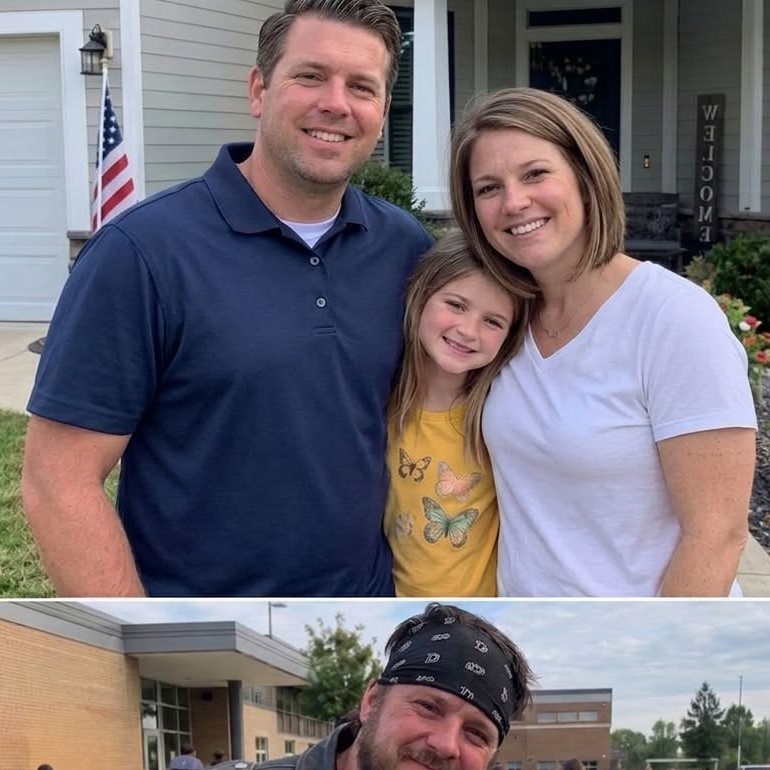
    He was thirty-six, six-foot-four, tattooed from wrists to shoulders, usually dressed in black, and played bass in a local band.

    If Travis approached you in a dark parking lot, you might cross the street.

    But I saw the man who fixed my first car for free and helped my mom after my dad died. He’d lived near my family for most of my life.

    I trusted him.

    My husband, Ryan, did not.

    The problem began when my work schedule changed.

    Our daughter, Emma, was seven and finished school at three.

    I used to leave early enough to pick her up, then complete my work from home. After transferring departments, that was no longer possible.

    Ryan worked across town and rarely got home before six.

    For two weeks, we survived on after-school care, favors from other parents, and what little patience I had left.

    One night, Ryan said, “Maybe Melissa can handle it?”

    I stared at him. He stared back.

    Then we both said, “No.”

    Emma adored Ryan’s sister, Melissa.

    Unfortunately, Melissa could be forty minutes late because she’d stopped for coffee while already running late.

    There was also the babysitting incident.

    Melissa had let Emma watch IT because, according to Melissa, Emma had promised she “wouldn’t get scared.”

    Emma slept between Ryan and me for four nights and still deeply distrusted balloons.

    So we kept searching.

    Then one afternoon, Travis found me beside my car in the driveway, complaining to my mother on the phone about after-school care.

    After I hung up, he leaned against his fence.

    “What time does Emma get out?”

    “Three.”

    “My rehearsal finishes at two-thirty on Tuesdays through Fridays. Place is two blocks from her school. I can walk her home.”

    I laughed. “You want to pick up a seven-year-old from elementary school dressed like that?”

    He glanced at his leather vest.

    “Good point. I’ll wear a tiara.”

    I smiled for what felt like the first time all week.

    We handled everything properly. The school copied his ID, I completed the authorization forms, and Travis was officially added to Emma’s pickup list.

    Emma thought it was the greatest thing that had ever happened to her.

    Ryan did not.

    “I don’t want our daughter depending on some biker every afternoon,” he said the first night.

    I was washing dishes. “He’s not some biker. He’s Travis.”

    “I know who he is.”

    “Then what’s the problem?”

    Ryan’s jaw tightened.

    “You trust people too easily.”

    I told myself he was simply an overprotective father. Emma was our only child, and Ryan worried about everything from strangers to school buses.

    So I let it go.

    For three weeks, everything went smoothly.

    Every afternoon, Travis walked Emma home.

    Every afternoon, she was there when I returned.

    She loved those walks and talked about them constantly at dinner.

    “Travis showed me how motorcycle engines work.”

    “Travis says crows remember faces.”

    “Travis knows how to whistle with two fingers.”

    Then, on a Tuesday, everything changed.

    I was at my desk when my phone rang.

    “Ma’am, can you come to school right now?”

    I stood immediately. “Is Emma okay?”

    There was a pause.

    “Emma is okay…” Then her voice dropped. “It’s about the man who picks her up.”

    Every warning Ryan had given me rushed back at once.

    I barely remembered the drive. By the time I reached the school, my hands ached from gripping the steering wheel.

    Emma’s teacher met me near the front office.

    “Come with me. The principal will explain.”

    That only made my fear worse.

    She opened the office door.

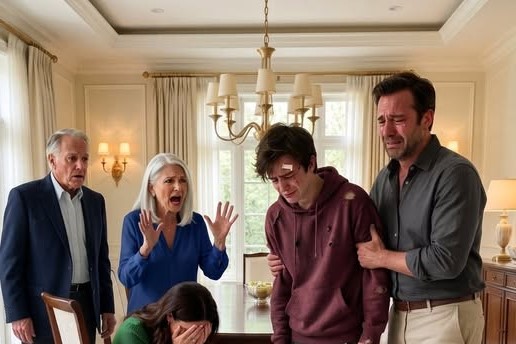
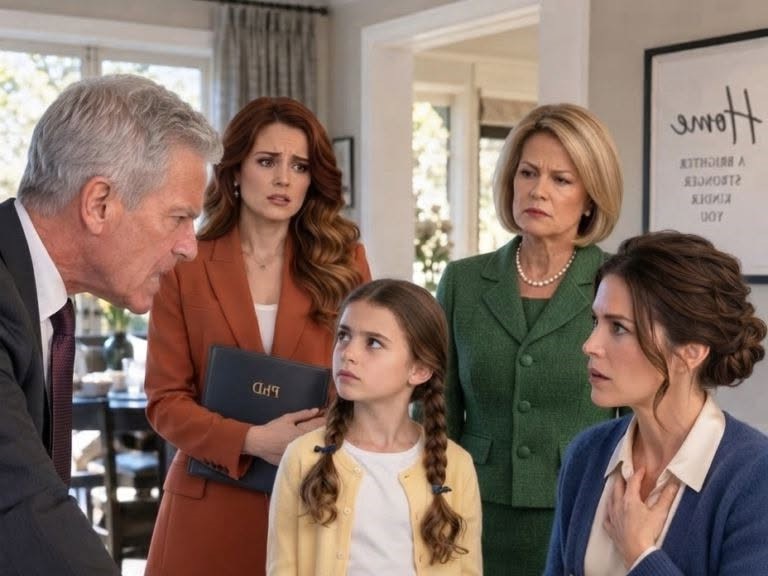
    Emma was inside with Travis—and someone I never expected to see there.

    Melissa.

    The principal sat behind his desk.

    Emma looked furious and close to tears. Travis stood in the corner with his arms crossed, angrier than I’d seen him in years.

    I went straight to Emma.

    “Baby, are you okay?”

    She wrapped both arms around me. “I’m fine.”

    I looked at Travis. “What happened?”

    The principal stood. “Ma’am, there seems to be some confusion about pickup today. Your sister-in-law arrived to collect Emma this afternoon.”

    I turned toward Melissa.

    She raised both hands. “Ryan told me to.”

    The principal continued.

    “She told our staff that Emma’s father had authorized her pickup. Emma refused to leave with her. Shortly afterward, Mr. Travis arrived for his regular pickup.”

    “They didn’t know who they were supposed to release her to, so I asked them to call you.”

    The principal nodded. “Which is what we did.”

    A headache began forming behind my eyes.

    “I never approved you picking her up. I don’t understand why you’re here.”

    “What?”

    Melissa’s expression changed.

    “I didn’t know anything about this, Mel.”

    “Ryan said you did. He told me you guys decided Travis wasn’t picking her up anymore.”

    Anger replaced my fear almost instantly. “We didn’t decide anything.”

    Melissa looked genuinely hurt. “Why would he tell me you did?”

    I had no answer.

    Whatever Ryan feared, he’d gone behind my back to act on it.

    Emma tugged my sleeve.

    “I want to stay with Travis.” She stared at the floor. “I trust Travis. I don’t trust Daddy anymore.”

    Everything inside me stopped.

    “What?”

    Emma’s eyes filled. “I don’t trust Daddy.”

    I looked at Travis.

    His expression told me he knew more.

    “Why would my daughter say that?”

    Travis glanced toward Emma. “Talk to Ryan.”

    My temper snapped.

    “No. If you know something about my daughter, you tell me.”

    His jaw tightened.

    “She told me something on our walks. I talked to Ryan about it.”

    “You talked to my husband about my daughter?”

    “Yes.”

    “And neither one of you thought I should know?”

    “I thought he was going to handle it.”

    I could barely process what I was hearing.

    “Handle what?”

    Travis shook his head. “Talk to Ryan first. Then if you still want to talk to me, we will.”

    For a moment, I hated him too.

    Apparently, two men had been discussing my child while I remained completely unaware.

    I took Emma home.

    Ryan came through the door shortly after six. I was already in the kitchen.

    He saw my face and stopped.

    “Why was Melissa at Emma’s school today?”

    Ryan slowly put down his keys. “I changed the arrangement.”

    “Without telling me?”

    “You weren’t listening.”

    I stared at him. “So you lied to your sister and told her we both agreed?”

    “I didn’t want to drag her into an argument.”

    “You dragged her into our daughter’s school instead.”

    He rubbed his face. “I don’t trust Travis.”

    “Why?” I threw my hands up. “Give me a reason.”

    He stayed silent.

    I stepped closer.

    “You changed Emma’s routine without telling me. You lied to Melissa. You created conflicting pickup instructions. Emma was standing at school today wondering which adult she was supposed to believe.”

    “I was trying to protect her.”

    “From what?”

    “From him.”

    “What has he done?”

    Ryan said nothing.

    Then I said, “Emma told me she doesn’t trust you anymore.”

    His face went pale. “She said that?”

    “Yes.”

    “She’s seven. She doesn’t understand what she’s saying.”

    “Don’t decide she doesn’t mean it because you don’t like hearing it.”

    He went still.

    I asked, “What did Travis confront you about?”

    Ryan’s eyes shifted.

    “He stuck his nose into our parenting.”

    “How?”

    “Do you always have to do that?” Ryan snapped. “Is it really asking so much to expect you to trust me, your husband?”

    I stared at him for a long moment.

    Then I pulled out my phone and called someone.

    “I need you to come over, please. Now,” I said.

    I hung up.

    “Who was that?” Ryan asked, his voice laced with urgency.

    “Someone who I hope will give me the answers you won’t.”

    —

    Ten minutes later, Travis stood inside our doorway while Ryan glared at him.

    I folded my arms.

    “Tell me what Emma told you.”

    He looked uncomfortable. “She started asking why Ryan didn’t like me.”

    Ryan scoffed.

    Travis ignored him. “At first I told her adults don’t always get along. Then she said Ryan kept asking her questions about me.”

    I looked at my husband. “What questions?”

    Travis answered.

    “Whether I ever took her somewhere else. Whether I bought her things. Whether I let her do things you wouldn’t allow. Whether I told her to keep secrets.”

    My stomach tightened.

    Ryan said, “Those are normal questions.”

    “The questions weren’t the problem,” Travis replied. “At least, not the first time you asked them, but then you kept pushing after she answered you.”

    I looked at Ryan. He wouldn’t meet my eyes.

    Travis continued. “She told me you kept bringing it up. Eventually you told her, ‘You don’t have to protect Travis. You can tell me if he hurt you.’”

    My chest tightened. “Ryan… what the heck?”

    He turned toward me.

    “I was making sure!”

    Travis’s voice hardened. “She said, ‘Daddy keeps asking like I’m saying it wrong.’”

    I covered my mouth. Suddenly, Emma’s behavior made sense.

    Travis continued.

    “I talked to him a few days ago. Told him if he had a problem with me, he should talk to me. Stop putting Emma in the middle.”

    Ryan laughed bitterly. “You told me how to parent my daughter.”

    “I told you to stop making her think she’s lying because she won’t give you the answer you want.” Travis glanced between us. “He said he’d handle it.”

    And Ryan’s solution had been to remove Travis.

    Ryan pointed at him. “This proves exactly what I’ve been saying. Why is my seven-year-old discussing me with you?”

    Travis stared at him. “Because you kept asking her about me.”

    Ryan fell silent.

    But the real question remained.

    What was he actually afraid of?

    I turned to Travis. “You should have told me.”

    He nodded immediately.

    “You’re right. I thought he’d fix it,” Travis said. “I was wrong.”

    Ryan began pacing.

    “You don’t understand.”

    “What don’t I understand?” I asked.

    He turned toward me.

    “He’s always there.” Ryan’s words came faster. “Your car broke down when you were a teenager? Travis fixed it. Your dad died? Travis helped your mom. Something breaks? Travis can fix it. You need help with Emma? Travis is available.”

    His face twisted.

    “Every time I can’t be there, somehow HE is.”

    Ryan glanced at Travis before looking back at me.

    “Sometimes I think you’ve been in love with him this whole time.”

    The room fell silent.

    Even Ryan seemed stunned by what he’d said.

    At last, I understood.

    “You’re jealous of him.”

    Ryan stared at me.

    “No. This is about Emma.”

    “No, it isn’t. Because if it were about Emma, you wouldn’t replace a reliable, authorized adult with someone we already agreed couldn’t manage regular pickup. You wouldn’t question Emma until she felt like she was lying.”

    Ryan’s face fell. He sank into a kitchen chair as if his legs had stopped working.

    For a long moment, nobody spoke.

    Then he said quietly, “I hate hearing her talk about him.”

    I waited.

    “I get home late. She’s already eaten half the time. She tells me Travis showed her something, Travis taught her something, Travis said something funny.” He swallowed. “I feel like I’m missing everything.”

    His voice cracked. “And he’s just… there.”

    My anger faded, but the hurt remained.

    Travis shifted beside the doorway.

    “She talks about you the whole walk,” he said. “What you taught her. What you packed in her lunch. Last Thursday, she wished you were outside school because she wanted to show you some stupid leaf she’d found.”

    “It wasn’t stupid,” Emma called from the hallway.

    We froze.

    She stood there in her pajamas.

    Ryan’s face crumpled. He moved toward her but stopped several feet away.

    “Em. I’m sorry. You told me the truth, and I should have listened.”

    Emma didn’t run into his arms.

    She simply nodded.

    It hurt him. I think it needed to.

    An apology was only the beginning.

    I looked at Ryan. “And this doesn’t happen again. You don’t change Emma’s arrangements behind my back, and you don’t keep questioning her until she gives you the answer you want. If you’re worried, you come to me — not our seven-year-old.”

    Ryan nodded. “You’re right.”

    The next day, Ryan went to the school.

    He told the principal that Travis had done nothing wrong and admitted he’d caused the confusion by changing the plan without telling me.

    He apologized to Melissa, then went alone to Travis’s house. When he returned, he told me he’d apologized there too without blaming anyone else.

    Travis didn’t resume pickup immediately.

    He said Emma needed a few days without adults turning the school gate into a battlefield.

    For the next week, Ryan and I rearranged our schedules.

    On Friday, he left work early and picked Emma up himself. When they came home, she talked nonstop about their walk.

    Ryan looked at me over her head, shame still visible on his face, but relief was there too.

    A few weeks later, we added Travis back to the pickup list.

    There had never really been a competition except the one Ryan had created in his own mind.

    Things between Ryan and me are still complicated.

    Trust doesn’t repair itself just because someone finally admits the truth. But now he’s listening to Emma instead of questioning her until she gives him the answer he expects.


  • Mature Women Are Challenging Old Beauty Standards — And Changing How Aging Is Seen–Story4

    Why Mature Women Are Redefining Modern Ideas of Beauty

    A Changing Narrative About Age and Beauty

    A quiet shift is taking place in how beauty is seen on beaches, resorts, and sunny coastlines around the world. For years, mainstream culture promoted the idea that confidence and style belonged mainly to youth, pushing older women toward invisibility through outdated expectations.

    That perspective is now fading. Today, more mature women are stepping forward with confidence, choosing swimwear that reflects comfort, personality, and self-respect. In doing so, they are reshaping what it truly means to feel beautiful at any stage of life.

    Confidence That Comes With Life Experience

    When a mature woman walks along the shoreline with confidence, she carries more than just her belongings—she carries her story. Years of experience, challenges overcome, and personal growth all contribute to a presence that is grounded and authentic.

    This kind of confidence is not about comparison. It is about acceptance. It reflects a deeper understanding that beauty is not limited by age, but enriched by life lived fully.

    Breaking Free From Outdated Beauty Standards

    For decades, beauty standards were narrowly defined, often focusing on youth as the only acceptable form of attractiveness. Today, those ideas are being challenged more openly than ever before.

    Mature women in swimwear help redefine this narrative simply by existing confidently in their own skin. They demonstrate that beauty does not disappear with age—it evolves. It becomes more expressive, more individual, and more meaningful.

    Inspiring Across Generations

    This shift in visibility has an impact that reaches beyond the individual. Younger generations observing this confidence gain a healthier perspective on aging. Instead of seeing it as something to fear, they begin to see it as a natural and empowering stage of life.

    At the same time, many older women find encouragement in this growing representation. It reinforces the idea that they are not expected to fade into the background, but instead can continue to enjoy life, freedom, and self-expression without restriction.

    Authenticity Over Perfection

    One of the most powerful aspects of this change is the move away from unrealistic perfection. Rather than chasing impossible standards, more women are embracing authenticity.

    Natural features, personal style, and lived-in confidence are replacing filtered ideals. This shift highlights a simple truth: real beauty is not about perfection, but about being genuine and comfortable in your own identity.

    Freedom of Personal Expression

    Choosing swimwear becomes less about expectation and more about individuality. Whether it is a classic design or something more vibrant, the decision reflects personal comfort rather than outside approval.

    This freedom of choice represents something larger—a release from pressure and a return to self-expression without judgment.

    Redefining Beauty at Every Age

    True beauty is not defined by age, size, or trends. It is reflected in confidence, self-respect, and the way a person carries themselves through life.

    As more women embrace this mindset, the definition of beauty continues to expand. It becomes more inclusive, more realistic, and far more empowering.

    A Lasting Message of Confidence

    The growing presence of confident, mature women in swimwear is more than a visual change—it is a cultural one. It encourages people everywhere to rethink how they view aging and self-worth.

    Confidence does not disappear with time; it deepens. And in that growth, it becomes even more powerful.

    Final Thoughts

    This quiet transformation reminds us that every stage of life deserves to be seen, valued, and celebrated. Beauty is not confined to youth—it evolves, strengthens, and continues to shine in new ways.

    If this perspective resonates with you, share your thoughts and join the conversation about what true confidence and beauty mean today.

    British TV Favorite Enjoys a Peaceful Day by the Sea — Can You Recognize Her?

    British TV Personality Enjoys a Relaxing Day by the Sea in a Sunny Beach Photo!: Can You Recognize Her?

    With the ocean stretching behind her and the Sydney sun overhead, the woman in these beach photographs looks completely at ease. Away from television studios, red carpets and formal public appearances, British TV personality Penny Lancaster was photographed enjoying a relaxed day at Bondi Beach during a family trip to Australia in March 2023.

    The former model and Loose Women personality had accompanied her husband, Sir Rod Stewart, during the Australian leg of his tour. On March 31, Lancaster spent time at the famous Sydney beach with their sons Alastair and Aiden, creating a very different scene from the concerts and celebrity events surrounding the family’s visit.

    Penny Lancaster at the beach in Australia in 2023
    Supplementary image of Penny Lancaster during the same Australian beach outing. This image is not hosted by the Beaware source article.

    A Low-Key Day at Bondi Beach

    Lancaster was photographed walking along the sand in a colorful patterned two-piece swimsuit and oversized sunglasses. Her blonde hair was loose in the sea breeze, and the overall mood was far removed from the polished styling usually associated with celebrity appearances.

    Reports from the time said her sons changed into wetsuits and headed into the water for surfing, while Lancaster watched from the shore. She later added a pink-and-black patterned cover-up while taking a break from the sand. It was a simple family beach day, but the images quickly attracted attention because Lancaster is familiar to British audiences from several very different chapters of her public life.

    More Than a Familiar Television Face

    For many viewers in the UK, Lancaster is closely associated with ITV’s Loose Women. ITV’s own biography notes that she began her career in fashion after studying at the London College of Fashion, working as a model for more than a decade before developing an interest in photography and moving behind the camera.

    Television eventually became another major part of her career. She competed in the fifth series of Strictly Come Dancing and later became a familiar contributor to Loose Women, first appearing on the programme in 2014. Her TV work has also included appearances on programmes such as Celebrity MasterChef and The One Show.

    That varied career is one reason an ordinary beach photograph can make Lancaster look surprisingly different from the version viewers may remember from daytime television. Without studio lighting, a panel desk or a formal outfit, the outing shows her in a much more casual setting.

    Penny Lancaster serving as a City of London Police special constable
    Supplementary image showing another side of Penny Lancaster’s public life as a City of London Police special constable. This image is not from the Beaware source article.

    From Fashion and Television to Police Work

    Lancaster’s career took an unusual turn after she appeared in the Channel 4 programme Famous and Fighting Crime in 2019. The experience inspired her to pursue police work more seriously. She later trained with the City of London Police and took the oath to serve as a special constable in 2021.

    Her police role has brought her into public view in circumstances very different from modelling or entertainment. She has spoken about the sense of purpose she found in the work, and she was photographed on duty during major national events. The contrast between those images and the sunny Bondi photographs highlights just how many different roles she has occupied during her career.

    The Family Was in Australia for Rod Stewart’s Tour

    The Bondi outing took place while Sir Rod Stewart was touring Australia. Contemporary reports said Lancaster and the couple’s sons travelled with him, giving the family opportunities to spend time together between performances. Stewart’s Australian dates during that period also featured Cyndi Lauper and Jon Stevens as special guests.

    The beach photographs arrived near the end of the Australian leg before the tour continued to New Zealand. For Lancaster, the trip therefore mixed the fast pace of touring life with quieter family moments away from venues and backstage activity.

    She and Stewart have been married since 2007 and share two sons. ITV’s biography of Lancaster says the pair first met in 1999, years before their wedding. Their relationship has remained one of the most recognizable long-running partnerships linking British television and rock music.

    Why Candid Celebrity Photos Feel So Different

    Part of the appeal of photographs like these is their ordinariness. Lancaster was not posing at an awards ceremony or appearing on a television set. She was walking on the beach, watching her children surf and enjoying warm weather during a family trip.

    That kind of setting can make even a very familiar public figure look different at first glance. Clothes, hairstyle, lighting and context all shape recognition. Someone viewers associate with a studio panel can suddenly seem almost anonymous when photographed in swimwear on a beach thousands of miles away.

    The images also capture a specific moment in time. In March 2023, Lancaster was 52 and balancing several identities at once: former model, television personality, photographer, police special constable, wife and mother. The Bondi outing strips away most of those labels for a few hours and simply shows a family enjoying the coast.

    A Career Built on Reinvention

    Lancaster’s path has never been limited to one profession. Fashion introduced her to public life, photography allowed her to work from the other side of the lens, television gave her a new audience, and police service added a completely different form of responsibility.

    That willingness to move between worlds may explain why she remains recognizable to several generations for different reasons. Some remember the modelling years, others know her from Strictly Come Dancing or Loose Women, and more recent audiences may associate her with policing and public-service appearances.

    Seen in that context, the sunny beach photographs are more than a simple celebrity holiday moment. They offer a relaxed snapshot of a familiar British personality away from the roles that usually define her in public. And once the identity is revealed, the face becomes much easier to recognize: it is Penny Lancaster, enjoying a quiet break at Bondi Beach while her family travelled through Australia.

  • House Passes National Fraud Enforcement Division Act With Bipartisan Support  

    House Passes National Fraud Enforcement Division Act With Bipartisan Support  

    The House delivered another massive win to President Donald Trump this week.

    House lawmakers approved H.R. 9576, the National Fraud Enforcement Division Act of 2026, in a lopsided bipartisan vote Wednesday.

    The measure passed 352-72, with nine members abstaining and no lawmakers recorded as present.

    Every voting Republican supported the bill, producing 212 GOP yes votes and zero Republican opposition.

    Democrats split more sharply, with 139 voting yes, 72 voting no, and three abstaining.

    One independent also supported the measure, completing the House’s 352-vote coalition for passage.

    Republican Rep. Brad Finstad of Minnesota introduced H.R. 9576 on July 2 with Kansas Republican Rep. Derek Schmidt.

    Advertisement

    Republican Reps. Abraham Hamadeh, Harriet Hageman, and Michelle Fischbach later joined Schmidt as cosponsors.

    The legislation would place the National Fraud Enforcement Division permanently inside the Department of Justice.

    That division already exists administratively after the Justice Department established it earlier this year under President Donald Trump.

    Acting Attorney General Todd Blanche formally announced the division in April as part of a broader federal anti-fraud campaign.

    DOJ says the unit investigates and prosecutes fraud targeting taxpayer dollars, government programs, businesses, nonprofits, and private citizens.

    The division also coordinates with federal agencies and state, local, tribal, and territorial law enforcement partners.

    H.R. 9576 would convert that executive-branch structure into a statutory DOJ division created directly by federal law.

    The House-passed text places the division under the Attorney General’s authority and establishes permanent leadership for the operation.

    It creates an Assistant Attorney General for National Fraud Enforcement to head the division.

    That official would be appointed under existing federal law and designated by the president for the fraud-enforcement role.

    Advertisement

    The final House text gives the Assistant Attorney General duties prescribed by the Attorney General.

    It also extends federal political-activity restrictions to employees of the new division, paralleling those covering DOJ’s Criminal Division.

    Finstad said Minnesota’s recent fraud investigations helped demonstrate why federal authorities need a stronger permanent enforcement structure.

    “I’m proud to see my National Fraud Enforcement Division Act of 2026 pass in the House today,” Finstad said.

    He said the legislation would establish “a permanent framework to strengthen our federal fraud prosecution efforts.”

    Schmidt said fraud against federal programs and taxpayers costs Americans billions while weakening services intended for legitimate recipients.

    “Fraud targeting federal programs and taxpayers costs Americans billions,” Schmidt said after the House approved the legislation.

    Advertisement

    He called the bill “a commonsense step” toward strengthening the government’s ability to investigate and prosecute fraud.

    House Republican Conference Chairwoman Lisa McClain also praised passage while arguing weak enforcement has allowed fraudsters to exploit programs.

    “Fraudsters have gotten rich exploiting government programs and weak enforcement for far too long,” McClain said.

    McClain added that government should possess “the tools and the determination” to pursue people stealing from taxpayers.

    The Government Accountability Office has estimated federal fraud losses between $233 billion and $521 billion annually.

    That estimate used fiscal-year 2018 through 2022 data and represented roughly three to seven percent of average federal obligations.

    The watchdog has repeatedly urged stronger analytics, better data sharing and government-wide fraud-risk management.

    The House vote demonstrated broad agreement on creating that structure, despite significant Democratic opposition to the legislation.

    Advertisement

    Notably, 139 Democrats joined all voting Republicans, preventing the final tally from becoming a largely party-line outcome.

    Seventy-two Democrats opposed passage, but the official House tally itself does not explain each member’s individual reasoning.

    The measure was considered under a closed rule providing one hour of debate and one motion to recommit.

    H.R. 9576 itself produced far broader support than the procedural vote controlling how the House considered it.

    The legislation remains comparatively short, focusing on DOJ structure, leadership authority and political-activity restrictions.

    It does not create a new criminal offense, change sentencing rules or establish a separate federal fraud court.

    It also does not itself appropriate a specific dollar amount for the division in the House-passed statutory language.

    Instead, its central effect would be making the existing fraud unit a permanent component of the Justice Department.

    The Senate must still approve the legislation before it can be sent to President Trump for his signature.

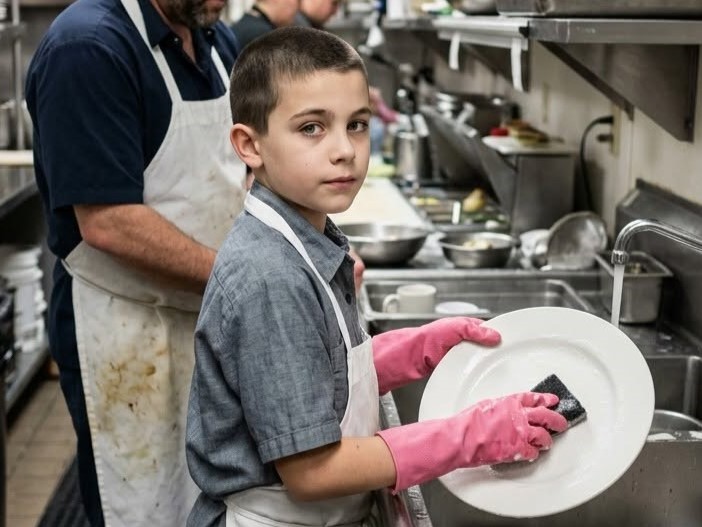
  • My 13-year-old son secretly took a job washing dishes, and I had no idea why. Then his boss called me and said, “Do you know what he does with every paycheck?! Everything that boy has told you about the money is a lie.”

    My 13-year-old son secretly took a job washing dishes, and I had no idea why. Then his boss called me and said, “Do you know what he does with every paycheck?! Everything that boy has told you about the money is a lie.”

    Part 1 of 3


    PART 1: THE BIKE THAT NEVER CAME

    My thirteen-year-old son, Evan, had been dreaming about the same bicycle for months. Every time we drove past the sporting goods store on Route 9, he would glance toward the window at the matte black frame with orange lettering, yet he never once asked me to buy it for him.

    That was simply who Evan had become after losing his father three years earlier. Marcus had died suddenly, leaving me with a ten-year-old boy who seemed to grow up almost overnight.

    Evan started noticing things children were not supposed to notice. He saw the bills stacked on the kitchen table, the nights I was too tired to cook, and the months when I quietly moved money from one payment to another just to keep everything running.

    Somewhere along the way, he decided that his job was to make my life easier rather than add another burden to it. He stopped asking for expensive gifts, handled chores without reminders, and rarely complained when money was tight.

    So when he came to me one evening and announced that he had found a Saturday job washing dishes at a diner on Cherry Street, I was surprised but not shocked. He stood unusually straight while explaining that the owner, a man named Sal, had agreed to pay him cash each week.

    “I want to buy the bike myself. I don’t want you paying for it.”

    I told him we could find another way, but Evan shook his head.

    “No. I want to earn it.”

    I agreed on one condition: school came first, and if the job became too much, he had to stop. Evan grinned, hugged me tightly, and promised he could handle it.

    Every Saturday after that, he left early wearing old jeans and worn sneakers. He returned in the evening smelling of dish soap and fryer grease, his hands increasingly red from hours in hot water.

    Whenever I asked how close he was to affording the bike, he always gave me the same answer.

    “Almost there.”

    At first, I thought nothing of it. One month became two, and I assumed Evan was being careful with his savings or wanted extra money beyond the exact price.

    Then three months passed. Then four. By the fifth month, the bike was still sitting in the store window.

    I started doing the math quietly. Evan had told me Sal paid around sixty dollars every Saturday, which meant he should have saved well over a thousand dollars by then, while the bike cost only about six hundred.

    I tried not to worry because thirteen-year-old boys were allowed to have secrets. Maybe he had changed his mind, found something else he wanted, or was planning some kind of surprise.

    Then one night, I walked past his bedroom and saw him sitting on the floor counting a thick stack of cash. There was far more money than I expected, and the moment Evan noticed me in the doorway, his expression changed from concentration to unmistakable fear.

    He gathered the bills quickly and shoved them into his backpack.

    “What’s all that money?”

    “It’s just the bike money. Sal pays me in small bills, so it looks like more than it is.”

    His explanation sounded reasonable, but his voice did not. I stood there for another moment, feeling that something was wrong without knowing exactly what it was.

    A few weeks later, Evan came home almost two hours late from work. His shoes were covered in mud, his jacket was torn at the shoulder, and there was a fresh scrape along the side of his face.

    He claimed he had slipped near the creek while walking home, but the damage to his clothes looked less like a fall and more like a struggle. When I asked about that week’s paycheck, Evan lowered his eyes and became strangely quiet.

    “I put it somewhere safe.”

    That night, I lay awake staring at the ceiling. The missing bike, the hidden cash, the torn clothes, and the frightened look on my son’s face no longer felt like separate mysteries.

    For the first time, I began wondering whether the Saturday dishwashing job was hiding something much bigger.

    And I was terrified of what I might eventually discover.


    PART 2: THE PHONE CALL FROM SAL

    After Evan came home muddy and scraped, my mind began filling in the blanks with possibilities I hated. I wondered whether older kids were pressuring him, whether someone had gotten him involved in something illegal, or whether the dishwashing job had never been as simple as he claimed.

    I decided I would sit him down and demand the truth, no matter how uncomfortable the conversation became. Before I had the chance, however, my phone rang while I was at work two days later.

    “Is this Evan’s mother?”

    The voice belonged to an older man who introduced himself as Sal, the owner of the diner on Cherry Street. The moment he said Evan’s name, every fear I had been trying to control came rushing back at once.

    “Did he do something wrong?”

    Sal hesitated for several seconds before answering. When he finally spoke, he sounded less angry than genuinely uncertain about how to explain what had been happening.

    “I honestly don’t know how to answer that.”

    My stomach tightened.

    “What do you mean?”

    Another pause followed.

    “Do you know what your son does with every paycheck?”

    I told him Evan had been saving for a bicycle and that washing dishes was supposed to be how he earned the money himself. Sal released a slow breath before saying the words that immediately made my hands go cold.

    “Ma’am, you should sit down. Everything that boy has told you about the money is a lie.”

    For a moment, I could barely process what he had said. The missing bike, the cash in Evan’s bedroom, the muddy clothes, and the months of hearing “almost there” suddenly seemed to confirm every terrible suspicion I had tried to dismiss.

    “What is he doing with it, Sal? Please, just tell me.”

    Before he could answer, shouting erupted somewhere behind him. Through the phone, I suddenly heard Evan’s voice, frightened and much younger than the calm, responsible boy he always tried to be around me.

    “Please, Sal! Don’t tell my mom!”

    Another man shouted something I could not understand, followed by a loud crash and the sound of dishes striking the floor. I jumped to my feet so quickly that several coworkers turned toward me.

    “Evan? What’s happening? Sal, where is my son?”

    Sal returned to the phone breathing heavily, as though he had been trying to separate people.

    “You need to come down here right now. Your son tried to do it again, and this time things got out of hand.”

    The call ended before I could ask what “it” meant.

    I left work without my coat and drove toward the diner with every possible nightmare competing inside my head. I wondered whether Evan had been stealing, fighting, or handing money to someone who had manipulated him, and the torn jacket from a few weeks earlier suddenly felt connected to something much darker.

    By the time I reached Cherry Street, I had convinced myself that my son might be in serious trouble. I rushed through the diner door expecting police, blood, or evidence that the boy I thought I knew had become involved in something dangerous.

    Instead, I found Evan standing in the middle of the restaurant with tears streaming down his face. He was holding a fistful of cash toward a woman sitting in a booth, while Sal stood between them and a broken tray of dishes lay scattered across the floor.

    On the table beside the woman were prescription bottles, official-looking papers, and a child’s drawing. Nothing about the scene made sense, but Evan’s face crumpled the moment he saw me.

    “Mom, I’m sorry. I didn’t want you to find out.”

    I stepped closer, terrified but completely confused.

    “Find out what?”

    Sal rested a hand gently on Evan’s shoulder and looked at me with tears in his own eyes. His next words changed everything I thought I knew about the past six months.

    “Your son hasn’t been doing anything wrong. Every Saturday I pay him sixty dollars, and the second I put that money in his hand, he gives it away.”


    PART 3: WHERE EVERY PAYCHECK WENT

    For several seconds, I could only stare at Sal because his answer made less sense than every terrible explanation I had imagined on the drive over. Evan had spent six months lying about saving for a bicycle, but the truth was not that he was stealing money or getting involved with the wrong people.

    He was giving every paycheck away.

    The woman sitting in the booth was named Carla, and she had two young children, a six-year-old boy and a four-year-old girl. Her husband had left, she had lost her job, and she had fallen behind on rent while also struggling to afford medication for her son’s asthma.

    Sal had quietly been helping whenever he could by giving the children food and letting the family stay inside the warm diner without expecting them to order much. Evan had noticed them almost immediately because he recognized the same expressions he had seen on my face after Marcus died.

    One Saturday, after Sal handed Evan his sixty-dollar paycheck, Evan walked directly to Carla’s booth and placed every dollar on the table.

    “This is for your kids.”

    Carla tried to refuse, but Evan would not take the money back. The following Saturday, he did the same thing, and then repeated it week after week for almost six months.

    Suddenly, every strange detail made sense.

    The money I had seen scattered across Evan’s bedroom floor had not been secret savings for himself. He had been counting it carefully to make sure there was enough for Carla’s children, sometimes adding money from his own allowance when her son needed another inhaler.

    Then I remembered the night he had come home with mud covering his shoes, a torn jacket, and a scrape across his face. When I asked what had happened that night, Evan wiped his cheeks and finally told me the truth.

    “There were some older kids near the creek. They saw me give Carla money once, so they figured I always carried cash.”

    The boys had waited for him after work and tried to take that week’s paycheck. Evan ran rather than give it up, slipped while climbing the muddy creek bank, tore his jacket, and managed to escape with the money still in his possession.

    “I told you I put it somewhere safe. I did. I gave it to Carla the next week.”

    My stomach twisted as I realized how much danger he had hidden from me. He had been chased, frightened, and injured while protecting money that was not even meant for himself, yet he had come home and lied because he knew I would make him stop if I discovered what was happening.

    I looked at my thirteen-year-old son standing there with cracked hands from months of dishwashing and tears still running down his face. Pride and fear collided inside me so hard that I could barely speak.

    “Why, Evan? Why didn’t you tell me any of this?”

    He lowered his eyes before answering. When he finally spoke, six months of secrets seemed to come out with every word.

    “Because I knew you’d tell me we couldn’t afford to give money away. And you would’ve been right, Mom.”

    He gestured toward Carla and the prescription bottles on the table.

    “But they had less than we did.”

    Evan told me he still remembered the months after his father died, including the nights he heard me crying when I thought he was asleep. He remembered almost losing our electricity, neighbors bringing us food, and a woman from church quietly paying our heating bill when I had nowhere else to turn.

    “People helped us when we were drowning. When I saw Carla and her kids, I knew what that looked like.”

    By then, I was crying too.

    “I had money I could give them. I wanted to be the person for them that other people were for us.”

    Then Evan looked directly at me, and what he said next broke through the last piece of composure I had left.

    “Dad would’ve done it.”

    PART 4: THE REASON HE KEPT IT SECRET

    Evan wiped his face with the sleeve of his torn jacket and tried to explain why Marcus had been on his mind every time he handed Carla his paycheck. He remembered me telling him that his father had always been the kind of man who would help a stranger without waiting to be asked.

    “Dad would’ve done it. You always said he’d give someone the coat off his back.”

    His voice broke as he looked at me.

    “If I can’t have him here anymore, I thought maybe I could at least be like him.”

    That was the moment I stopped trying to hold myself together. I crossed the diner, wrapped my arms around my son, and held him tighter than I had since the day we buried his father.

    “I’m not angry with you. I’m proud of you, Evan. I have never been more proud of anyone in my life.”

    Carla began crying again from the booth, and when she finally joined us, she explained that she had tried repeatedly to refuse Evan’s money. Every Saturday, she told him to keep his paycheck and save for the bicycle he supposedly wanted, but Evan would leave the cash on the table and hurry back to the kitchen before she could return it.

    The money had kept her electricity on and helped pay for her son’s asthma medication. On more nights than she could count, it had also meant the difference between her children eating dinner and going to bed hungry.

    Sal had known what Evan was doing for months. He admitted that he struggled with whether to contact me because Evan had begged him not to interfere, but the incident with the older boys convinced him that the secret had become too dangerous.

    That afternoon had finally forced Sal to make the call. Carla had learned that Evan had been chased over the money and refused to accept another paycheck, while Evan insisted she take it anyway.

    Their disagreement became emotional enough that a tray of dishes was accidentally knocked onto the floor. That was the crash I had heard through the phone, and Sal had been trying to calm everyone down when he told me to come immediately.

    “In forty years of running this diner, I’ve never seen anything like what your son has done.”

    Sal looked at Evan before turning back to me.

    “I figured his mother deserved to know what kind of boy she raised.”

    His words made me think again about the sentence that had terrified me over the phone. Sal had told me that everything Evan said about the money was a lie, and I had immediately imagined the worst possible version of my son.

    The bike had indeed been a lie, but not for the reason I feared. Evan had invented that story because he knew I would try to protect him by telling him to stop giving away money we could barely afford to spare.

    Over the following weeks, I realized that Evan should never have been carrying Carla’s entire problem on his thirteen-year-old shoulders. His compassion was extraordinary, but what Carla needed was not a child sacrificing every Saturday paycheck forever.

    She needed a way back onto solid ground.

    I had spent three difficult years rebuilding my own life after Marcus died, and during that time people had helped me navigate jobs, bills, benefits, and emergencies I did not understand. Now I realized it was my turn to do the same thing for someone else.

    I started making phone calls.

    Through a friend, I helped Carla find steady work and showed her how to apply for assistance programs she had never known were available. Within a few months, she was current on her rent, and buying her son’s inhaler no longer meant deciding what her children would have to go without.

    Carla finally refused to accept another dollar from Evan.

    For the first time in six months, my son was allowed to keep his own paycheck.

    But knowing Evan, I should have realized that did not mean he was finished helping people.


    PART 5: THE BOY ON THE BLACK BIKE

    Once Carla was back on her feet, she refused to accept any more money from Evan. Sal gave him a small raise and told him that generosity was admirable, but carrying every problem alone was not.

    “Big hearts still need backup. If someone comes after you again, you tell an adult. You don’t have to handle everything yourself.”

    Evan promised he would, and for once, I believed he understood that asking for help did not make him weak. What surprised me was that keeping his paycheck did not suddenly turn him into a different child.

    A few weeks later, he found a shelter downtown that needed volunteers on Sundays. He started helping there whenever he could and still gave away part of what he earned, only now he did it openly, with me knowing where the money went and sometimes helping him decide how much he could reasonably afford to give.

    Watching him taught me something I had not understood before. Evan’s kindness was not a temporary reaction to Carla’s situation; it had become part of how he moved through the world after losing his father.

    A couple of months later, Evan’s birthday arrived. I drove to the sporting goods store on Route 9 and bought the matte black bicycle with orange lettering that had started the entire story.

    When he saw it waiting for him, he stood completely still. Then his eyes filled with tears.

    “Mom, you didn’t have to do this.”

    “I know.”

    I smiled at him.

    “That’s the point. Your dad understood that too. You don’t help someone because you have to. You help because you can.”

    Evan hugged me so tightly that for a moment I could almost feel Marcus standing there with us. The bike had once represented something Evan thought he needed to earn entirely by himself, but by then it meant something different to both of us.

    He rides that bicycle to the shelter almost every Sunday now. Sometimes I watch him leave with a backpack over his shoulders and think about how terrified I was during those months when I did not know where his money was going.

    I had built an entire dark story in my head about my son. I imagined older boys pulling him into trouble, stolen money, dangerous secrets, and every nightmare a widowed mother can create when her child starts acting differently.

    I had been wrong about almost everything.

    The one thing I understood correctly was that Marcus’s death had changed Evan. What I failed to see was that the loss had not pulled him toward something darker; it had made him more sensitive to other people who were struggling.

    He knew what fear looked like because he had watched it on my face after his father died. He knew what it felt like when bills piled up, when strangers quietly helped, and when someone stepped into your life at exactly the moment you thought you were alone.

    That experience became a kind of radar in him.

    When Evan looked at Carla and her children, he did not see strangers. He recognized the version of us that had once needed help.

    I spent years trying to teach my son how to survive losing his father. Without realizing it, he had taken that loss and turned it into compassion.

    Sometimes I think about Marcus and hope, wherever he is, he can see the boy we raised. I hope he sees Evan riding that black bicycle across town, using his cracked hands and his own money to help people he could easily ignore.

    Evan once told me he was only trying to become like his dad.

    The truth is, I think he already has.

  • I came home three hours early and found my sick mother cooking over a hot stove while trying to care for my two-year-old twins. One child was shaking in her arms. The other was clinging to her leg. In the living room, my husband and his mother sat comfortably, treating her like a servant. I was ready to leave quietly with my children. Then I saw the bruises on my mother’s face and arms. That was when I opened the gates to the mansion across the street—the one they never knew I owned.

    I came home three hours early and found my sick mother cooking over a hot stove while trying to care for my two-year-old twins. One child was shaking in her arms. The other was clinging to her leg. In the living room, my husband and his mother sat comfortably, treating her like a servant. I was ready to leave quietly with my children. Then I saw the bruises on my mother’s face and arms. That was when I opened the gates to the mansion across the street—the one they never knew I owned.

    Part 1 of 3

    I came home three hours early and found my sick mother cooking over a hot stove while trying to care for my two-year-old twins. One child was shaking in her arms. The other was clinging to her leg. In the living room, my husband and his mother sat comfortably, treating her like a servant. I was ready to leave quietly with my children. Then I saw the bruises on my mother’s face and arms. That was when I opened the gates to the mansion across the street—the one they never knew I owned.

    Part 1: The House Across the Street

    Inside the mansion, the silence felt unreal. No television. No shouting. No Ryan demanding service.
    Oliver looked up at me. “Mommy, are we staying here?” “Yes,” I whispered. “For as long as we need.”
    Margaret sank onto a bench, gray with pain and fear. I settled the twins with cartoons, then returned to her. “Mom, I need the truth.” She tried to protect my marriage, but I stopped her.
    “Ryan is their father,” she whispered. “And you are my mother.”
    Finally, she rolled up her sleeve. Finger-shaped bruises circled her wrist, and older yellow marks spread above them. Vivian had grabbed her after Emma spilled juice. Ryan saw it and later told Margaret not to tell me, warning that if she upset me during my trip, he would make sure she never saw the twins again.
    Then I asked if Ryan had ever touched her himself. She answered too quickly: “No.” “Mom. Look at me.” She touched her cheek. “He pushed me once.”
    The words hollowed me out. Two nights earlier, after Vivian complained dinner was late, Margaret told Ryan she was not his servant. He told her to stop disrespecting his mother, grabbed her shoulder, and she stumbled into a cabinet. My husband had put his hands on my mother.
    My phone rang. Ryan. I declined.
    Messages followed: Open the gate. We need to talk. You can’t take my children. Stop being dramatic. Then came the message that made my hand shake: You’ll regret this.
    At the gate camera, Ryan stood with Vivian, shouting for entry. I told them the children were safe. Vivian screamed that the mansion was theirs.
    “No,” I said. “It was bought through a private trust created before my marriage.”
    Ryan’s expression changed instantly. “You never told me you had a trust. How much money is in it?”
    Not: Are the children okay? Not: Is Margaret hurt? Only money.
    I shut off the intercom.

    My flight from New York landed early, so I decided to surprise my twins, Oliver and Emma, and my mother, Margaret.

    Instead, I walked into a nightmare.

    “Your mother came here to work, not to rest,” my mother-in-law, Vivian, shouted from the living room. “She can sit after dinner is done.”

    I froze in the doorway.

    Vivian was stretched across the sofa, pointing toward the kitchen like my mother was hired help. My husband, Ryan, sat beside her watching television, beer in hand, phone in the other.

    Then I heard Emma crying.

    I rushed into the kitchen.

    My mother stood over a steaming pot, holding Emma against her chest while stirring with her other hand. Oliver clung to her leg, frightened and exhausted. Margaret’s face was pale. Sweat had soaked through her blouse. Her swollen fingers could barely hold the spoon.

    She had severe rheumatoid arthritis. Some mornings, she could hardly walk without help.

    “Mom, what are you doing?”

    Margaret looked down. “Vivian wanted roast beef. She also asked me to change the sheets, wash Ryan’s trousers, and iron his shirts.”

    I reached for Emma, but my mother flinched.

    That was when I saw the bruise on her cheek.

    More marks covered her wrist and forearm.

    “Who did this to you?” I asked, my voice shaking.

    Margaret pulled down her sleeve. “I fell.”

    But she would not meet my eyes.

    From the living room, Vivian yelled, “Tell her not to burn the meat again!”

    Ryan laughed. “And she still hasn’t finished my laundry.”

    Something inside me went cold.

    For seven years, I had paid the mortgage, bought the cars, funded vacations, and covered Vivian’s medical bills. Ryan lived like a wealthy man because I allowed him to.

    And while I was away, they had humiliated the woman who sold her land to put me through college.

    I picked up my mother’s suitcase, lifted Oliver into my arms, and took Emma from her.

    “We’re leaving.”

    Vivian stormed in. “She isn’t finished.”

    Ryan blocked the door. “Apologize to my mother and get back in that kitchen.”

    I opened the home-control app.

    Electricity: disabled.

    Water supply: locked.

    Cards: revoked.

    The television died. The lights went out. Ryan’s phone buzzed with cancellation alerts.

    “What did you do?” he shouted.

    “I gave you back the life you can afford.”

    Then I walked out with my mother and children, crossed the street, and stopped before the largest mansion in the neighborhood.

    I pressed my thumb to the scanner.

    The gates opened.

    Ryan ran after us barefoot. “How do you have access to that house?”

    I turned as the gates closed between us.

    “Because I bought it three years ago. It’s fully paid off. And your name isn’t on one document.”

    Part 2: The Bruises

    Inside the mansion, the silence felt unreal. No television. No shouting. No Ryan demanding service.

    Oliver looked up at me. “Mommy, are we staying here?” “Yes,” I whispered. “For as long as we need.”

    Margaret sank onto a bench, gray with pain and fear. I settled the twins with cartoons, then returned to her. “Mom, I need the truth.” She tried to protect my marriage, but I stopped her.

    “Ryan is their father,” she whispered. “And you are my mother.”

    Finally, she rolled up her sleeve. Finger-shaped bruises circled her wrist, and older yellow marks spread above them. Vivian had grabbed her after Emma spilled juice. Ryan saw it and later told Margaret not to tell me, warning that if she upset me during my trip, he would make sure she never saw the twins again.

    Then I asked if Ryan had ever touched her himself. She answered too quickly: “No.” “Mom. Look at me.” She touched her cheek. “He pushed me once.”

    The words hollowed me out. Two nights earlier, after Vivian complained dinner was late, Margaret told Ryan she was not his servant. He told her to stop disrespecting his mother, grabbed her shoulder, and she stumbled into a cabinet. My husband had put his hands on my mother.

    My phone rang. Ryan. I declined.

    Messages followed: Open the gate. We need to talk. You can’t take my children. Stop being dramatic. Then came the message that made my hand shake: You’ll regret this.

    At the gate camera, Ryan stood with Vivian, shouting for entry. I told them the children were safe. Vivian screamed that the mansion was theirs.

    “No,” I said. “It was bought through a private trust created before my marriage.”

    Ryan’s expression changed instantly. “You never told me you had a trust. How much money is in it?”

    Not: Are the children okay? Not: Is Margaret hurt? Only money.

    I shut off the intercom.


    Part 3: The Letter My Father Left

    I led Margaret to a guest suite and told her she could stay as long as she wanted. She said she did not want to be a burden.

    “You sold your farmland so I could attend college,” I reminded her. “You worked two jobs. You wore the same winter coat for nine years because tuition was due.”

    She smiled faintly.

    “You remember too much.”

    “I remember everything.”

    Then she said, “So do I.”

    Before I could ask what she meant, the mansion alarm sounded.

    Someone had entered with an authorized access code.

    Only three people had private access: me, the property manager, and my late father’s attorney.

    At the front door stood Thomas Hale, my father’s lawyer for more than twenty-five years.

    The moment he saw Margaret’s bruises, his face changed.

    “Oh, Margaret.”

    “You knew?” she whispered.

    “I knew this day might come,” he said.

    He opened his briefcase and removed sealed folders. One old envelope had my name written in my father’s handwriting.

    Beneath it were six words:

    If Margaret is ever hurt, open this.

    Thomas said my father had not created the trust only to protect my inheritance.

    He created it to protect my mother.

    Then he showed me a property transfer dated twenty-eight years earlier.

    The name at the top was Vivian Bennett.

    My mother-in-law.

    A faded photograph was attached. It showed my father, my mother, a younger Vivian, and a man named Samuel Bennett—Vivian’s first husband.

    On the back, my father had written:

    Margaret must never be left alone with them again.

    Then I learned the truth: Margaret had known Vivian before I married Ryan. Vivian had pretended not to recognize her.

    Samuel once worked for my father.

    He disappeared after money vanished from the company.

    And Vivian had been connected to it.

    Part 4: The Vault Beneath the Mansion

    Thomas revealed that Ryan had not met me by accident. Years earlier, Vivian had referred him to the consulting firm where I worked.

    Every memory of our marriage rearranged itself.

    The “chance” meeting.

    The charming smile.

    The fast romance.

    The questions about my father’s money.

    Then Ryan texted a photo from our old house.

    He was inside my study, beside the safe where I had once kept financial documents.

    You should have told me what your father left you.

    Another message followed.

    Mom says it belongs to us.

    I opened my father’s letter again and saw one underlined sentence:

    Vivian was never interested in our money. She was looking for what Samuel hid.

    At that moment, the mansion alarm screamed.

    BASEMENT VAULT: ACCESS ATTEMPT.

    No one knew there was a basement vault.

    No one except my father.

    And apparently Vivian.

    Then the screen changed.

    Access code accepted.

    A lock opened somewhere beneath the house.

    Margaret whispered, “There’s something about this mansion your father never told you.”

    The vault cameras went dark. Security arrived, and we went downstairs.

    The vault door stood open.

    Someone had escaped through an old service tunnel.

    Inside the vault was a wooden box, a photograph of Samuel with my father, and a message on the back:

    Samuel knows where Vivian put it.

    Then Ryan sent a photo of Vivian holding a black metal case.

    You should have opened the vault sooner.

    Ask your mother what Samuel stole.

    Margaret finally told the truth.

    Samuel did not steal from my father.

    Vivian did.

    She framed Samuel using hidden transfers and forged authorizations. Samuel discovered it and planned to expose her.

    But one original document disappeared.

    The case Vivian now held might contain it.

    Part 5: The Recording

    Inside the wooden box were old cassette tapes. One was labeled:

    Vivian — Night Samuel Disappeared.

    We found a cassette player and listened.

    My father’s voice filled the room, followed by Samuel’s.

    Samuel told my father to protect Margaret.

    Then Vivian’s younger voice erupted. She accused Samuel of trying to take documents that belonged to Ryan’s future.

    Samuel called them stolen.

    My mother’s younger voice appeared too.

    I had been there that night.

    I was three years old.

    Then Vivian said something that made the room stop.

    “If you walk out with those papers, I’ll tell everyone who Ryan’s real father is.”

    I stared at my mother.

    The recording cut off.

    The rest had been erased.

    Margaret finally confessed that years before I was born, during a brief separation, my father had made one terrible mistake with Vivian. Vivian later claimed Ryan was his child and insisted he owed Ryan part of the Whitmore fortune.

    But later genetic testing proved Ryan was Samuel’s biological son.

    Vivian had lied for years.

    She had used the possibility as leverage. She believed Ryan had a claim on my father’s company, and when Samuel tried to expose her fraud, he vanished.

    Then Ryan sent a location pin.

    Come alone if you want the truth about Samuel.

    It was an abandoned Whitmore Construction warehouse.

    I knew it was probably a trap.

    But I also needed to know whether Ryan was part of Vivian’s scheme—or another person she had manipulated.

    Part 6: The Man Who Vanished

    Security followed at a distance as I drove to the warehouse.

    Ryan waited inside, exhausted and shaken.

    The black case sat on a table.

    Inside were the genetic report and Samuel’s signed statement.

    Ryan had just learned the truth: Vivian had built his childhood around a lie. She told him my father abandoned him. She told him Samuel was not his father.

    “She lied,” I said.

    He pushed another document toward me.

    Samuel’s statement described Vivian’s hidden accounts, forged transfers, and plan to claim my father had promised ownership to Ryan.

    Then came the final paragraph.

    If anything happens to me, Vivian should not be blamed. I am leaving voluntarily.

    Samuel had not died.

    He had disappeared on purpose because his signatures were on transactions Vivian manipulated. He abandoned his car, changed his name, and started over.

    Then a voice came from the dark.

    “I am.”

    An older man stepped beneath the warehouse light.

    Silver beard.

    Gray eyes identical to Ryan’s.

    Ryan whispered, “Dad.”

    Samuel admitted he had left out of fear, then built another life with a wife, daughters, and grandchildren. Vivian had found him six months earlier and wanted the original statement.

    When he refused, she went after Margaret because she believed Margaret knew where my father stored copies.

    Vivian had not only been cruel to my mother.

    She had been using her to search the house.

    Samuel handed over a flash drive with copies of everything. Investigators arrived, and Vivian eventually entered a plea for financial crimes. The harm to Margaret was documented separately.

    Ryan cooperated.

    He did not protect his mother.

    That mattered.

    But it did not erase what he had done.

    Part 7: The Mother I Never Knew

    Weeks later, Thomas uncovered another secret in my father’s trust.

    He had quietly repurchased the farmland Margaret sold for my college tuition and left it to her. The land had grown valuable, with part of it leased to a renewable-energy company.

    Margaret cried when she saw the deed.

    “I thought I lost this forever.”

    “You gave it away for me,” I said.

    “I’d do it again.”

    Life began to settle.

    Ryan started therapy, found work, repaid what he could, and showed up consistently for the twins. He apologized to Margaret without asking her to comfort him. The divorce papers remained unsigned, not because I had chosen reconciliation, but because I refused to decide under pressure.

    Then Samuel sent a photograph.

    It showed the old farmhouse, my father, Margaret, Samuel, Vivian—and another young woman holding a baby.

    On the back, Samuel had written:

    Ask Margaret who Miriam is.

    Margaret finally told me.

    Miriam was her sister.

    And the baby was me.

    Margaret had not given birth to me.

    Miriam had.

    She was nineteen, frightened, and alone. My father legally adopted me when I was two, and Margaret raised me as her own.

    Miriam was still alive in California.

    I did not speak to Margaret for two days.

    Not because I hated her.

    Because love and betrayal were colliding inside me.

    On the third day, she left an address outside my room.

    I flew to Santa Barbara and met Miriam.

    She cried when she saw me.

    “You look like your father.”

    My biological father, Jonathan Hale, had never known about me until recently. He lived thirty minutes away.

    I met him too.

    He did not reach for me. He simply said, “I’m sorry I didn’t know.”

    I believed him.

    That mattered.

    Part 8: The House That Became a Home

    One year after I came home early from my business trip, we gathered again at the old house where everything had begun.

    But it was different now.

    The living room where Vivian once ordered Margaret around had warm white walls, children’s drawings, and quiet sunlight. Margaret had turned one room into a reading space for neighborhood children. The kitchen had lower counters and easy-grip handles for her arthritis.

    She was cooking because she wanted to.

    Not because anyone demanded it.

    Ryan arrived with groceries and put them away without being asked. Change had not come through promises. It came through repetition: therapy, accountability, patience, and apologies without expectation.

    I eventually signed the divorce papers.

    The old marriage needed to end before anything new could begin.

    Six months later, Ryan and I began dating slowly.

    Coffee.

    Walks with the twins.

    Separate homes.

    Clear boundaries.

    He never asked when I would take him back.

    That was part of why I kept choosing to see him.

    On Margaret’s birthday, the complicated family gathered at the restored farmhouse. Samuel came. Miriam came. Jonathan came. Thomas came without any envelopes, which I appreciated.

    Ryan handed me a small silver pendant with four stones around a tiny tree.

    “One for you. One for Margaret. One for Oliver. One for Emma.”

    “And you?” I asked.

    He smiled.

    “I’m not asking to be included automatically.”

    For once, he understood.

    Later, Thomas gave me one final letter from my father.

    Family is not defined by who owns you, who gave birth to you, or whose name is beside yours. Family is whoever protects your heart without demanding possession of it.

    I looked across the field.

    Margaret was laughing with Miriam. Jonathan was teaching Oliver to fly a kite. Emma slept against Margaret’s shoulder. Ryan stood nearby, not asking for anything he had not earned.

    For years, secrets had shattered us.

    But truth had made room for a larger family.

    The mansion was only property.

    The money was only money.

    The real inheritance was this:

    Nobody is entitled to another person’s love, labor, silence, forgiveness, or future.

    Love must be chosen.

    Respect must be practiced.

    And home must be a place where nobody is afraid of the people inside it.

  • My Wealthy Sister Gave Mom $20 for Her 70th Birthday and Said, ‘At Her Age, She Doesn’t Need Much’ – Then I Got an Idea for Her Gift  

    My Wealthy Sister Gave Mom $20 for Her 70th Birthday and Said, ‘At Her Age, She Doesn’t Need Much’ – Then I Got an Idea for Her Gift  

    My sister showed up to Mom’s 70th birthday carrying a designer handbag that probably cost more than several months of my car payments.

    Melissa had always been the successful one in the family.

    Big house.

    Luxury vacations.

    A husband who owned several dental clinics.

    So naturally, I expected her to make a big production out of Mom’s birthday gift.

    Instead, she opened her expensive purse, pulled out a twenty-dollar bill, slipped it into a birthday card, and handed it across the table.

    Then she laughed.

    “At her age, she doesn’t really need much.”

    Mom smiled politely.

    “Thank you, sweetheart.”

    But I noticed what she did next.

    She folded the card quickly and slid it beneath her plate.

    Something about that small movement bothered me.

    Not because twenty dollars wasn’t enough.

    It wasn’t about the amount.

    It was about everything Mom had done for Melissa over the years.

    Mom had babysat Melissa’s children without ever accepting payment.

    She had cooked dinners when Melissa worked late.

    She had helped whenever the family needed something.

    And years earlier, when Melissa and her husband were trying to buy their first home, Mom had even dipped into her retirement savings to help them.

    So hearing Melissa joke that a seventy-year-old woman “didn’t need much” made my blood boil.

    I almost confronted her right there at the table.

    Then I remembered something.

    A wooden box in Mom’s bedroom.

    Months earlier, while helping her clean out a closet, I had seen what was inside.

    Old report cards.

    Childhood drawings.

    Photographs.

    Hospital bracelets.

    Mother’s Day cards.

    And two small notebooks filled with dates and numbers I hadn’t understood.

    Suddenly, I had an idea.

    “Mom,” I said, “I actually forgot your real present at home. Can we do gifts again tomorrow?”

    Melissa laughed.

    “You forgot her birthday present?”

    I ignored her.

    The following afternoon, everyone came back for leftover cake.

    This time, I placed a large wrapped box in front of Mom.

    Melissa leaned back with an amused expression.

    Mom opened it.

    Inside was a scrapbook I had made using copies of the things she had saved from our childhood.

    Old photographs.

    Little handwritten notes.

    Mother’s Day cards.

    Drawings.

    Memories from decades ago.

    Mom covered her mouth.

    “Oh, Amanda…”

    She slowly turned the pages.

    Then she reached the final section.

    Her smile vanished.

    I hadn’t intentionally placed anything shocking there.

    I had simply copied one page from the old notebook because I thought it was part of our family history.

    Melissa suddenly stood.

    “Where did you get that?”

    I looked at her.

    “Mom’s box. Why?”

    She grabbed the scrapbook and flipped through the pages.

    Then she froze.

    Her eyes locked onto one handwritten date.

    Mom’s face went pale.

    Without saying anything, she pushed back her chair and walked toward her bedroom.

    Seconds later, she returned holding a small brass key.

    Melissa immediately stood.

    “Mom, don’t.”

    Mom ignored her.

    She walked into the bedroom and knelt beside the locked bottom drawer of her dresser.

    Melissa rushed forward.

    “Don’t open that!”

    I caught her by the arm.

    “What is wrong with you?”

    “Nothing. Amanda, stay out of this.”

    “You just tried to stop Mom from opening her own drawer.”

    “I wasn’t going to hurt anyone.”

    Then Mom looked up.

    “Melissa.”

    There was something in her voice that made both of us stop.

    She unlocked the drawer.

    Inside were old folders, envelopes, bank statements, and a checkbook.

    Nothing looked particularly dramatic.

    Mom pulled out one folder.

    “Here.”

    I opened it.

    The first document showed a bank transfer from fourteen years earlier.

    The amount immediately caught my attention.

    $35,000.

    I looked at Mom.

    “Was this for Melissa’s house?”

    Mom nodded.

    I already knew she had helped Melissa and her husband with their down payment.

    I just hadn’t realized how much.

    Then I noticed something else.

    Beside the transfer was a handwritten date.

    It matched the date from Mom’s notebook.

    And beside that was another date almost three years later.

    “What’s this?”

    Melissa answered before Mom could.

    “That was when I was supposed to repay her.”

    I stared at her.

    “You borrowed thirty-five thousand dollars?”

    “It wasn’t exactly like that.”

    “There’s an amount and a repayment date. That sounds pretty much like a loan.”

    Mom touched my shoulder.

    “Amanda.”

    But I had already pulled out another document.

    $18,000.

    Different year.

    Different repayment date.

    “What was this?”

    Melissa crossed her arms.

    “We were struggling then.”

    “Your husband owned a dental clinic.”

    “One clinic. And it was barely surviving.”

    Then I found another transfer.

    $12,500.

    Then another.

    $27,000.

    I grabbed Mom’s notebook again.

    Suddenly, all those strange columns of numbers made sense.

    Every figure corresponded to money Mom had given Melissa.

    I sat on the edge of the bed and started matching the dates.

    “Stop,” Melissa said.

    I kept going.

    One transfer happened around the time her second child was born.

    Another appeared shortly before her husband opened his second clinic.

    I remembered that year.

    Melissa had spent months talking about how stressful the expansion was.

    Mom, meanwhile, had decided her twelve-year-old car could somehow last “a few more years.”

    Another payment came during the year Mom canceled a vacation with friends because she said traveling was too expensive.

    I looked at her.

    “Mom, how much money did you give Melissa?”

    She hesitated.

    “I’d have to calculate it.”

    “I won’t.”

    I opened the calculator on my phone.

    Melissa stepped toward me.

    “Amanda, don’t.”

    That only made me more determined.

    I added every amount.

    Then checked the total.

    Twice.

    Three times.

    Finally, I looked up.

    “One hundred thirty-seven thousand five hundred dollars.”

    Nobody spoke.

    My eyes went to Melissa.

    Her designer purse was downstairs on Mom’s dining table.

    The same purse she had spent ten minutes bragging about the day before.

    And inside Mom’s birthday card was twenty dollars.

    “You owe Mom $137,500?”

    “No.”

    I actually laughed.

    “No?”

    “That’s not what this is.”

    “There are repayment dates beside every single amount.”

    “Mom never expected me to repay everything.”

    “How convenient.”

    “It’s true.”

    I turned toward Mom.

    “Is she telling the truth?”

    Mom sat beside me.

    “Yes.”

    That answer stopped me cold.

    “What?”

    “I never really expected Melissa to pay all of it back.”

    I stared at the documents.

    “Then why write everything down?”

    Mom took the notebook from my hands.

    “Because I needed to remember how much she had already received.”

    “For what?”

    She looked at me.

    “For you.”

    I couldn’t speak.

    Mom turned several pages.

    There was my name.

    And beneath it?

    Almost nothing.

    “I don’t understand.”

    Mom sighed.

    “Melissa needed help sooner than you did. You didn’t. But that doesn’t mean one daughter should eventually receive more than the other.”

    Melissa slowly sat beside the window.

    Mom continued.

    “Some of these began as loans. Melissa always told me she would pay me back once they were doing better.”

    “But you never made her.”

    “No.”

    “Why?”

    Mom looked genuinely confused by my question.

    “Because eventually I didn’t need her to.”

    “That’s not the point.”

    “It is to me.”

    She closed the folder.

    “I have two daughters. Whatever I leave someday will ultimately be divided between both of you anyway. Melissa needed part of hers earlier, so I gave it to her earlier.”

    I looked down at the notebook.

    “Then why keep records?”

    “So that when the time comes, what Melissa has already received can be taken into account. You would receive an equivalent amount first. Whatever remains after that gets divided between you.”

    For several seconds, the only sound in the room was the hallway clock.

    I had opened that drawer expecting proof that Melissa had taken advantage of Mom.

    Instead, I had discovered that Mom had quietly been planning for both daughters all along.

    “I don’t want $137,500,” I said.

    Mom smiled gently.

    “I know.”

    “That isn’t why I’m angry.”

    “I know that too.”

    Then I looked at Melissa.

    “Did you know?”

    “Know what?”

    “That Mom considers all this part of what you would eventually inherit?”

    Melissa didn’t answer.

    “Melissa.”

    “Yes.”

    My anger returned instantly.

    “You knew?”

    “Mom told me.”

    “So you knew she had already given you more than a hundred thousand dollars. And yesterday, for her seventieth birthday, you handed her twenty dollars and joked that she didn’t need much?”

    “Amanda, this isn’t about twenty dollars.”

    “You’re right. It isn’t.”

    Mom stood.

    “Enough.”

    “No, Mom.”

    I turned toward her.

    “How many times have you told me something was too expensive?”

    “I never said I couldn’t afford anything.”

    “You said it wasn’t worth spending the money.”

    “Sometimes it wasn’t.”

    “Your old car was falling apart before you finally replaced it.”

    “It still ran.”

    “You canceled the trip with your friends.”

    “I didn’t care that much about going.”

    “You always say that.”

    Mom’s face changed.

    She didn’t look angry.

    She looked sad.

    “Amanda, I chose what to do with my money.”

    That silenced me.

    “I wasn’t tricked,” she continued. “Melissa didn’t steal from me. I helped my daughter because I wanted to.”

    Melissa looked up.

    Mom continued.

    “I was proud when they bought their first house. I was proud when the clinics became successful. I loved watching my grandchildren while Melissa worked. Don’t turn things I was happy to give into something ugly simply because you’re angry.”

    I sat down.

    She was right.

    I wanted Mom to be angry because I was angry.

    But those were two different things.

    Still, there was one question I couldn’t let go.

    I looked toward the scrapbook lying on the dresser.

    “Then why did you hide Melissa’s birthday card under your plate yesterday?”

    Mom froze.

    Melissa turned toward her.

    “Mom?”

    Mom started putting documents back into the folder.

    “It was nothing.”

    “No,” I said gently. “That’s what you always say.”

    She gave me a warning look.

    I lowered my voice.

    “Did what Melissa said hurt you?”

    Mom didn’t answer.

    Melissa stood.

    “Mom, I was joking.”

    “I know.”

    “I didn’t mean anything by it.”

    “I know that too.”

    Mom closed the drawer.

    Then she looked directly at Melissa.

    “It wasn’t about the twenty dollars.”

    Melissa visibly relaxed.

    Mom noticed.

    “Don’t look relieved.”

    Melissa’s expression disappeared.

    “You could have given me nothing,” Mom continued. “You could have written ‘Happy Birthday’ on a scrap of notebook paper and I would have loved it.”

    “Then what did I do?”

    Mom’s voice became quiet.

    “You said, ‘At her age, she doesn’t need much.’”

    Melissa stared at her.

    “I was joking.”

    “I know.”

    “Then why are you upset?”

    Mom took a long breath.

    “Because I’m seventy, Melissa.”

    She paused.

    “I’m not finished.”

    Nobody moved.

    “I still like things. I still want to travel. I still get excited about plans. I still want people to think about me sometimes.”

    Melissa’s eyes filled with tears.

    Mom continued.

    “I spent years telling both of you not to worry about me. Maybe I did that too well.”

    Melissa wiped beneath one eye.

    “I didn’t mean you weren’t worth anything.”

    “I know you didn’t.”

    Mom’s voice trembled slightly.

    “But for one moment yesterday, that’s how it felt.”

    Melissa sat down.

    And for the first time since Mom opened the drawer, she stopped defending herself.

    Her eyes drifted toward the scrapbook.

    She picked it up.

    Several pages had bent when she grabbed it earlier.

    She carefully flattened one with her palm.

    It contained a Mother’s Day card Melissa had made when she was seven.

    The handwriting was crooked.

    She had drawn Mom with purple hair because apparently we had owned only a handful of crayons.

    Melissa laughed through her tears.

    “You kept this?”

    “Of course.”

    She turned another page.

    A paper flower.

    A photograph of the three of us wearing matching pajamas.

    A note I had written apologizing for breaking a lamp after blaming the cat.

    Then she found a tiny folded card she had made as a teenager.

    There was nothing expensive in the scrapbook.

    Most of it was paper.

    Some of it was barely recognizable anymore.

    Mom had saved every piece.

    Melissa looked at the pages for a long time.

    Then her eyes moved toward the twenty-dollar bill still sticking out of yesterday’s birthday card.

    “I understand.”

    Mom sat beside her.

    Melissa shook her head.

    “No. I really understand.”

    Then she looked at me.

    “I didn’t want you finding those financial records because I knew what you would think.”

    “What?”

    “That everything I have happened because Mom paid for it.”

    “I don’t think that.”

    “I thought you would.”

    Her voice became quieter.

    “Every time Mom helped us, I told myself it was temporary. Then our situation improved and she kept telling me to forget about paying her back.”

    She paused.

    “After a while…”

    “After a while what?”

    Melissa looked at Mom.

    “I stopped thinking about what helping us cost her.”

    Mom reached for her hand.

    Melissa started crying.

    “That’s horrible.”

    “It’s honest,” Mom said.

    Melissa shook her head.

    “You made receiving help so easy.”

    Mom gave a sad smile.

    “Maybe that was my mistake.”

    “No.”

    Melissa squeezed her hand.

    “It was mine.”

    She looked around Mom’s bedroom.

    The older furniture.

    The curtains Mom had repaired rather than replace because they were “still perfectly good.”

    “I kept hearing you tell us you didn’t need anything,” Melissa said. “Eventually, I started believing you.”

    She swallowed.

    “Not just about money. About everything.”

    Mom squeezed her hand.

    “I’m sorry,” Melissa said.

    “Not because I gave you twenty dollars.”

    She wiped her face.

    “I’m sorry because I started believing that since you never asked me for anything, there was nothing you needed from me.”

    Mom pulled her into a hug.

    I turned away for a moment because suddenly I was crying too.

    When I looked back, Melissa had opened the scrapbook again.

    Near the beginning was an old photograph of Mom beside a lake.

    She looked maybe twenty-five.

    Her shoes were in one hand.

    Her jeans were rolled above her ankles.

    She was laughing.

    Melissa touched the photograph.

    “Where was this?”

    Mom smiled.

    “Lake Briar.”

    “You used to talk about that place.”

    “I still do.”

    “I thought you hadn’t been there since we were little.”

    “I haven’t.”

    Melissa studied her.

    “Do you still want to go?”

    Mom blinked.

    “What?”

    “To the lake. Do you still want to go back?”

    A slow smile spread across Mom’s face.

    “Of course I do.”

    Melissa nodded.

    “Then let’s go.”

    Mom laughed.

    “All of us?”

    Melissa looked at me.

    “If Amanda can tolerate me for a weekend.”

    “I’ll think about it.”

    She rolled her eyes.

    And somehow, for the first time that afternoon, everything felt normal again.

    Later, just before we left, I watched Mom return all the financial documents to the drawer.

    Then she locked it.

    “You’re still keeping records?” I asked.

    “Absolutely.”

    I smiled.

    “You really plan to make everything equal?”

    She slipped the brass key into her pocket.

    “As equal as I possibly can.”

    I hugged her.

    For years, I had assumed Mom lived modestly because she simply didn’t want much.

    Melissa had apparently believed the same thing.

    We were both wrong.

    Mom wanted plenty.

    She wanted trips.

    Memories.

    Attention.

    Things to look forward to.

    She had simply spent decades putting her daughters’ needs ahead of her own.

    And somewhere along the way, Melissa had mistaken Mom’s generosity for proof that Mom needed nothing in return.

    In the end, the twenty-dollar bill was never the real problem.

    It was the sentence Melissa used to explain it.

    “At her age, she doesn’t need much.”

    Because turning seventy didn’t mean Mom needed less love.

    Less thought.

    Less joy.

    Or fewer reasons to look forward to tomorrow.

  • “There are no maids in this house,” I told my mother-in-law after a week of criticizing my cooking, moving my things, and teaching me how I should take care of her son.  

    “There are no maids in this house,” I told my mother-in-law after a week of criticizing my cooking, moving my things, and teaching me how I should take care of her son.  

    “I didn’t come here to ask permission every time I touch something, Chloe. Justin is my son. I know exactly how he likes to live.”

    My mother-in-law, Virginia, said that only four days after moving into our house.

    But what bothered me most was not her tone.

    It was my husband.

    Justin sat at the kitchen table staring into his coffee as though keeping his eyes down would somehow make the argument disappear.

    The whole situation had actually started innocently.

    Virginia and my father-in-law, Walter, lived several hours away in Bakersfield.

    Virginia had been waiting months for a series of medical appointments in Sacramento.

    When the appointments were finally scheduled across several weeks, Justin suggested that his parents stay with us.

    “We have an empty guest room,” he said. “Why should they spend thousands on hotels?”

    I agreed immediately.

    It seemed completely reasonable.

    I wanted them to feel welcome.

    Before they arrived, I washed fresh sheets, cleared space in the closet, stocked the bathroom with new towels, and even baked an apple pie.

    I truly wanted the visit to go well.

    Virginia entered our home that first afternoon and immediately began inspecting everything.

    She stopped beside the living room window.

    “Did you choose these curtains?”

    “Yes.”

    She touched the fabric.

    “They make the room terribly dark. I would have picked something lighter.”

    I smiled.

    Then she tried the pie.

    She chewed slowly.

    “It’s decent.”

    I waited.

    “But it could use more spice.”

    Walter immediately asked for a second slice.

    That helped.

    Before the evening ended, I decided to set one simple boundary.

    “I really want you both to feel comfortable here,” I said. “Please use the kitchen, make yourselves at home. I only ask that we respect each other’s routines while you’re staying.”

    Virginia raised one eyebrow.

    “Of course. We’re guests. We didn’t come here to run your household.”

    I smiled.

    “Perfect.”

    Justin said nothing.

    By the next morning, the salt shaker had moved.

    So had my kitchen towels.

    And several knives.

    Two days later, I found my expensive nonstick skillet covered in deep scratches.

    “Virginia, did you clean this earlier?”

    “Yes. It was filthy.”

    “You used the metal scrubber?”

    “Obviously.”

    I took a breath.

    “You really can’t use that on nonstick cookware. It damages the coating.”

    She laughed.

    “My goodness, Chloe. Apparently washing a pan requires advanced training in this house.”

    I set the ruined skillet aside without responding.

    Then came dinner.

    Every evening became a performance.

    I cooked grilled chicken, vegetables, fish, potatoes, pasta salads.

    Virginia always found something wrong.

    One night, she looked at Justin’s plate and sighed.

    “My poor son. You look so thin.”

    Justin glanced down at himself.

    “Mom, I’ve actually gained weight.”

    “That’s probably bloating from all these vegetables.”

    I slowly placed my fork on the table.

    “Virginia, if you prefer something else, you’re welcome to cook anything you like.”

    Her expression changed instantly.

    “We’re guests. I’m certainly not going to invade your kitchen.”

    “Cooking isn’t invading my kitchen.”

    She stared at me.

    “But criticizing every meal I make is starting to feel like invading my home.”

    Later that night, Justin followed me into the bedroom.

    “Can you please try to ignore some of it?”

    I turned toward him.

    “Why?”

    “She’s my mother. She’s always been like this.”

    “That doesn’t make it okay.”

    “I just want everyone to get along.”

    “So do I.”

    I folded my arms.

    “That’s why I’m setting boundaries now instead of exploding later.”

    Justin sighed.

    For two days, Virginia stopped criticizing my cooking.

    I actually thought she might have understood.

    Then Thursday afternoon, I passed the guest room and heard her on the phone.

    “You absolutely have to come Saturday, Brenda.”

    I stopped walking.

    “You need to see how these young people live.”

    There was a pause.

    Then Virginia lowered her voice.

    “No, don’t bring food. I want you to taste what Chloe serves.”

    I stood motionless in the hallway.

    That was when I realized this was no longer about preferences.

    Virginia wanted an audience.

    Saturday morning, I woke early.

    If she wanted to put me on display, fine.

    I went to the market and bought pork loin, fresh herbs, tomatoes, bread, cheese, and salmon.

    I marinated the meat with garlic, rosemary, black pepper, and orange.

    I prepared appetizers and salad.

    Nothing extravagant.

    Just a good meal.

    Virginia’s sister Brenda arrived with her husband Frank around two.

    Brenda could not have been more different from Virginia.

    She hugged me the second she walked inside.

    “This house is beautiful! And whatever you’re cooking smells incredible.”

    Virginia sat on the couch with her mouth pressed into a thin line.

    Justin entered the kitchen while I checked the roast.

    “Everything smells amazing.”

    “It’s pork, not a miracle.”

    He laughed.

    “My mother has been staring at this kitchen like you’re taking an exam.”

    “That sounds accurate.”

    During appetizers, Brenda praised the presentation.

    “These look like something from a restaurant.”

    Virginia said nothing.

    When I brought out the pork roast, Justin inhaled dramatically.

    “That should be illegal.”

    I noticed Virginia’s jaw tighten.

    And suddenly I understood.

    This had never been about my food.

    She didn’t like watching Justin praise me.

    She didn’t like Brenda admiring me.

    She didn’t like that this was my home.

    My kitchen.

    My routines.

    My marriage.

    She wanted to feel like the woman in charge of Justin’s life.

    We sat down.

    Virginia cut off a tiny piece of pork.

    She chewed slowly.

    Once.

    Twice.

    Three times.

    Then she dropped her fork.

    “This is extremely tough.”

    Nobody answered.

    She continued.

    “It’s like chewing shoe leather. My mother knew how to cook meat properly. She used to let it cook for hours until it fell apart.”

    I felt the insult immediately.

    Not because I doubted the food.

    Because I knew exactly what she was doing.

    Then Virginia looked toward Justin.

    “Of course, when you’re a guest in someone else’s home, you simply eat whatever they give you.”

    That was enough.

    Something inside me became completely calm.

    I stood up.

    Walked around the table.

    Picked up Virginia’s plate.

    Her eyes widened.

    “What are you doing?”

    “One moment.”

    I carried the plate into the kitchen.

    Set it on the counter.

    Then returned to my chair.

    Virginia stared at the empty space in front of her.

    “You took away my dinner?”

    “Yes.”

    “Are you serious?”

    “You just said it tastes like shoe leather. I’d hate for you to suffer through it.”

    Her face reddened.

    “You’re punishing me in front of my son.”

    “No.”

    I looked directly at her.

    “I’m taking you seriously.”

    Justin’s knee bumped mine nervously under the table.

    I continued.

    “I respect you because you’re Justin’s mother and a guest in this house. But I’m not going to sit at my own table while you deliberately humiliate me.”

    “I was telling the truth!”

    Before I could answer, Brenda cut a large piece of pork and ate it.

    She chewed.

    Then looked at Virginia.

    “Mine is perfectly tender.”

    Frank nodded.

    “So is mine.”

    Justin took another bite.

    “Mom, it’s cooked really well.”

    Virginia went pale.

    Then Brenda placed down her fork.

    “And since we’re being honest, Virginia, you told me yesterday that you invited me because Chloe needed someone to teach her how to run a home.”

    The room went silent.

    Justin slowly turned toward his mother.

    Virginia glared at Brenda.

    “That was a private conversation.”

    “Then maybe you shouldn’t have invited me here to participate in some ridiculous setup.”

    Virginia slammed her hand against the table.

    “Justin!”

    He looked up.

    “Are you really going to sit there while your wife and my own sister attack me?”

    Everyone looked at him.

    Virginia clearly expected him to defend her.

    I said nothing.

    Because for the first time, Justin could not hide behind coffee cups, sighs, or silence.

    He had to choose what kind of husband he wanted to be.

    For several seconds, nobody spoke.

    Then Justin looked at his mother.

    “Mom, Chloe isn’t disrespecting you.”

    Virginia blinked.

    “Excuse me?”

    “You heard me.”

    “So I’m the problem now?”

    “I’m saying what happened.”

    His voice remained calm.

    “You intentionally insulted Chloe in front of everyone.”

    “The meat was tough.”

    Brenda glanced at her empty plate.

    “Then apparently my teeth are unusually powerful.”

    Frank tried not to laugh.

    Justin continued.

    “Since you arrived, Chloe has done everything she can to make you comfortable. She prepared your room, rearranged her schedule, cooks after working all day, and every day you find something wrong.”

    Virginia stared at him like he had betrayed her.

    “I raised you.”

    “I know.”

    His voice softened.

    “And I love you.”

    Then he added,

    “But raising me doesn’t give you permission to come into our home and treat my wife like she has to pass some test.”

    I felt something inside me finally release.

    Virginia leaned back dramatically.

    “Well, clearly I’m not wanted here.”

    There it was.

    The familiar move.

    Turn a boundary into rejection.

    “No one said you’re unwanted,” I said.

    She looked at me.

    “You are welcome to stay here.”

    I paused.

    “As long as you respect that it is our home.”

    “You have quite a difficult personality.”

    “In my own home, I stand up for myself.”

    Brenda laughed.

    “Oh, Virginia, stop pretending this is new. You did the same thing with Mom.”

    “Stay out of this.”

    “You invited me into it.”

    Then Walter finally spoke.

    “That’s enough, Virginia.”

    The entire table turned toward him.

    Walter rarely raised his voice.

    He didn’t need to.

    Virginia looked hurt.

    “You too?”

    “I’m not against you.”

    He looked at her steadily.

    “But you’ve been looking for arguments since we arrived.”

    Virginia stood.

    Said nothing.

    Walked straight to the guest room.

    The door closed behind her.

    Silence.

    Then Brenda pointed toward the platter.

    “So… can I have another piece before this officially turns into a funeral?”

    Everyone laughed.

    Even Justin.

    Later, Brenda helped me clear the dishes.

    “Don’t feel guilty.”

    “I don’t.”

    “Good.”

    She lowered her voice.

    “My sister has always done this when she thinks another woman is taking over a role she believes belongs to her.”

    That sentence explained everything.

    The curtains.

    The salt.

    The pan.

    The food.

    It was territory.

    Virginia was struggling with the fact that her son had built a life that no longer revolved around her.

    After Brenda and Frank left, Justin brought some glasses into the kitchen.

    He hesitated.

    “Taking her plate away might have been a little intense.”

    I looked at him.

    “What should I have done instead?”

    “I don’t know.”

    “I ignored her for a week.”

    He looked down.

    “I didn’t scream. I didn’t insult her. I removed food she claimed was disgusting.”

    “I know.”

    “And please don’t tell me anymore that ‘she’s just like that.’”

    Justin looked up.

    “Why?”

    “Because when you say that, what you’re actually asking is for me to tolerate her behavior so you don’t have to deal with it.”

    That landed.

    He went quiet.

    “I love you,” I said. “I don’t want your mother to become something we resent each other over.”

    “Neither do I.”

    “Then don’t make me defend myself alone.”

    Justin rubbed his face.

    Then nodded.

    “You’re right.”

    He looked genuinely ashamed.

    “I should have spoken up days ago.”

    Virginia didn’t come out for dinner that night.

    The next morning, I expected icy silence.

    Instead, she entered the kitchen wearing her robe and quietly sat down.

    “Good morning.”

    “Morning.”

    I poured her coffee.

    She accepted it.

    No criticism.

    She ate breakfast.

    No comments about salt.

    No inspection of the sink.

    It was the most peaceful morning we had shared since she arrived.

    Over the next two weeks, something changed.

    Virginia focused on her medical appointments.

    She stopped rearranging the kitchen.

    She left the salt exactly where I kept it.

    One evening, after an exhausting day at work, I opened the front door and smelled onions, garlic, and chicken.

    I walked into the kitchen.

    Virginia was wearing my apron.

    “I made breaded chicken cutlets and mashed potatoes.”

    I stared at her.

    “I asked Justin before using the meat.”

    I smiled.

    “Thank you. I’m exhausted.”

    She glanced over.

    “Just promise you won’t confiscate my plate if you don’t like them.”

    I burst out laughing.

    “That depends entirely on how much salt you used.”

    She laughed too.

    Dinner was excellent.

    “These are really good.”

    Virginia looked pleased.

    “Just an old family recipe.”

    Justin looked between us.

    “I can’t believe we survived.”

    We did not suddenly become best friends.

    That would have been unrealistic.

    Virginia was still opinionated.

    So was I.

    But now there was respect.

    She asked before changing things.

    I stopped automatically assuming every suggestion was criticism.

    When the time came for Virginia and Walter to return to Bakersfield, Justin took their luggage downstairs.

    Virginia and I stood alone in the living room.

    “Thank you for letting us stay here.”

    “You’re welcome.”

    She looked around the room.

    Then at me.

    “You are a very strong woman.”

    “I’ve heard that.”

    “When I first arrived, I thought you were too sensitive.”

    I smiled.

    “And I thought you came here planning to reorganize my entire life.”

    She sighed.

    “Maybe I did.”

    I laughed.

    Virginia looked toward the hallway.

    “It’s hard.”

    “What is?”

    “Realizing your son has another home.”

    Her voice softened.

    “For years, I decided things for Justin. What he ate. What he wore. How things were done. Somewhere along the way, I forgot that he grew up.”

    I nodded.

    “I can understand that transition being difficult.”

    She smiled faintly.

    “When you took my plate away, I was furious.”

    “I noticed.”

    “Walter told me later that if I kept treating people like that, eventually no one would want us around.”

    “Walter is wise.”

    Virginia chuckled.

    “After forty years, he finally learned when to speak.”

    Justin came back for the last bags.

    Before Virginia walked out, she touched my arm.

    “Take care of this home.”

    “I will.”

    “And take care of my son.”

    I smiled.

    “We take care of each other.”

    She studied me.

    Then nodded.

    “That’s the right answer.”

    After they left, I closed the front door and felt like I could finally breathe again.

    Justin returned upstairs a few minutes later.

    “My mom said something before she got into the car.”

    “What?”

    He put his arms around me.

    “She told me I’m lucky I married you.”

    I smiled.

    “And what did you say?”

    “That I already knew.”

    He kissed my cheek.

    “Even if I occasionally act like an idiot.”

    I looked around the living room.

    The dark curtains were still there.

    The salt shaker was in the right place.

    The scratched skillet sat unused in the cabinet.

    Nothing dramatic had changed.

    And yet everything had.

    I had spent years believing boundaries damaged relationships.

    What I learned was the opposite.

    Healthy boundaries reveal whether a relationship is capable of respect.

    Several months later, Virginia called before another medical appointment in Sacramento.

    This time, she asked,

    “Chloe, would it be all right if Walter and I stayed with you again?”

    Not assumed.

    Asked.

    I smiled.

    “We’d be happy to have you.”

    And I meant it.

    Because this time, everyone understood something that should have been clear from the beginning.

    Love does not require surrendering your dignity.

    Family does not mean unlimited access to someone else’s home.

    And respect works only when everyone at the table understands where the lines are.

  • Congresswoman Simon Ceremonially Sworn in by Vice President Kamala Harris  

    Congresswoman Simon Ceremonially Sworn in by Vice President Kamala Harris  

    Washington, D.C. – Last week, on January 7, 2025, Congresswoman Lateefah Simon (D-CA-12) was ceremonially sworn in by her longtime mentor and friend, Vice President Kamala Harris. Vice President Harris and Congresswoman Simon have shared a decades-long friendship and professional relationship, grounded in their shared commitment to public service.

    Congresswoman Simon was joined by her friends and family in the Vice President’s ceremonial office in the United States Senate for the swearing-in ceremony

    “I am so honored to have my mentor and former boss, Vice President Kamala Harris. Since our time together in the District Attorney’s office in San Francisco, the Vice President has played an integral role in shaping my public service career, and I have learned so much from her. She has also paved the way for women across the nation like me who aspire to serve their country at the highest levels. It was a special moment to stand with her today, look her in the eye, and begin my journey as the Congresswoman for California’s 12th District.”

    Image
    Congresswoman Simon with Vice President Harris in her ceremonial swearing-in

    Vice President Harris and Congresswoman Simon first met in the late 1990s, when Vice President Harris served as an Assistant District Attorney in San Francisco and Congresswoman Simon worked for the Young Women’s Freedom Center. In 2005, then-District Attorney Harris recruited Congresswoman Simon to head the “Back on Track” program. “Back on Track” offered first-time, nonviolent offenders alternatives to incarceration – providing a second chance for participants. The program became a nationally recognized initiative and the basis for multiple programs across the nation.

    Congresswoman Simon represents California’s 12th Congressional District, which includes the following cities: Alameda, Albany, Berkeley, Emeryville, Oakland, Piedmont, and parts of San Leandro.

  • My parents left my injured son alone after a car crash because they were desperate to keep my sister from taking the blame.  

    My parents left my injured son alone after a car crash because they were desperate to keep my sister from taking the blame.  

    The call came at 9:17 on a rainy Friday night.

    My father, Richard, said there had been an accident outside Springfield, Missouri. His voice sounded strangely calm.

    “Evan’s hurt,” he told me. “But don’t panic.”

    Evan was my sixteen-year-old son.

    I was already grabbing my keys.

    “What happened?”

    There was a pause.

    Then my father said, “Your sister was driving.”

    My stomach dropped.

    My younger sister, Melissa, had lost her license six months earlier after a DUI. She wasn’t supposed to be driving.

    I headed toward County Road 14 while calling 911. Dispatch said no crash had been reported.

    That made no sense.

    When I arrived twenty minutes later, my parents’ SUV sat crooked beside a drainage ditch. The front passenger side was destroyed.

    Evan lay on the wet grass.

    Blood covered one side of his face.

    He was barely conscious.

    “Dad,” he whispered when he saw me.

    I dropped beside him.

    His breathing sounded wrong.

    My mother, Diane, stood near the SUV with Melissa.

    Neither was helping him.

    “What the hell are you doing?” I shouted.

    Mom folded her arms.

    “Lower your voice.”

    “Why didn’t you call an ambulance?”

    Melissa started crying.

    Dad approached me. “We needed time to figure this out.”

    I stared at him.

    “Figure what out?”

    Mom answered.

    “If the police come now, Melissa goes to jail.”

    I looked at my son bleeding in the rain.

    Then at her.

    “And that matters more than Evan?”

    Mom gave a short, bitter laugh.

    “Let him bleed. One less problem for this family.”

    For several seconds, nobody moved.

    Even Melissa stopped crying.

    My mother seemed to realize what she had said, but she didn’t apologize.

    I called 911 again and put the phone on speaker.

    Dad’s face went pale when the dispatcher said officers were already coming.

    A passing truck driver had seen the wreck from the highway and reported it.

    Melissa suddenly grabbed my arm.

    “Daniel, please. Tell them Dad was driving.”

    I pulled away.

    “No.”

    Mom stepped closer.

    “You don’t understand what this will do to your sister.”

    I looked down at Evan.

    His eyes were closing.

    Then I noticed something beside the crushed passenger door.

    A phone.

    Evan’s phone.

    The screen was cracked, but it was still recording.

    A red timer kept counting.

    My mother followed my gaze.

    Her expression changed instantly.

    She understood.

    Everything she had just said was recorded.

    And through the rain, blue lights appeared in the distance.

    The first ambulance arrived less than three minutes later.

    Two paramedics rushed to Evan while a sheriff’s deputy ordered everyone else away from the SUV.

    I stayed beside my son until a paramedic gently pushed me back.

    “We need room, sir.”

    Evan had a fractured collarbone, two broken ribs, a deep cut above his ear, and signs of internal bleeding. The paramedics stabilized his neck and loaded him onto a stretcher.

    I rode with him in the ambulance.

    Behind us, I saw Melissa talking to Deputy Harris with my father close beside her.

    Mom stared at Evan’s phone in my hand.

    She looked terrified.

    At the hospital, doctors rushed Evan into surgery.

    A trauma surgeon told me his spleen had ruptured.

    Another thirty minutes without treatment, he said, could have changed everything.

    I sat alone in the waiting room, covered in my son’s blood.

    At 11:06 p.m., Deputy Harris arrived.

    He asked to speak privately.

    I handed him Evan’s phone.

    “There’s a recording on there.”

    He listened silently.

    The video had started moments before the crash because Evan was filming himself complaining about Melissa’s driving.

    Her voice was clear.

    “You’re such a baby. I’m barely over the limit.”

    Then Evan said, “You don’t even have a license.”

    Melissa replied, “Mom said nobody cares.”

    Seconds later, the car swerved.

    Screaming.

    Impact.

    The camera went dark.

    But it kept recording.

    For the next twenty-seven minutes, it captured every conversation near the wreck.

    My father telling Melissa to move away from the driver’s side.

    My mother telling Dad to wipe the steering wheel.

    Melissa asking if Evan was going to die.

    Dad saying, “He’ll be fine. We need to protect you first.”

    And finally, Mom.

    “Let him bleed. One less problem for this family.”

    Deputy Harris stopped the video.

    His expression had changed.

    “Did you know they were trying to stage the scene?”

    “No.”

    He nodded slowly.

    “Your father told the first responding officer he was driving.”

    I laughed once, though nothing was funny.

    The lie lasted less than an hour.

    The truck driver who reported the crash had a dashboard camera.

    His footage showed Melissa climbing from the driver’s door.

    By 1:30 a.m., Melissa was arrested on suspicion of driving while revoked, reckless driving causing serious bodily injury, and leaving an injured person without reasonable assistance.

    My father was questioned for making a false statement.

    Mom refused to speak without a lawyer.

    At 3:12 a.m., the surgeon finally came out.

    Evan had survived.

    He would recover.

    But the doctor warned that emotional recovery might take much longer.

    When I entered his room the next morning, Evan looked smaller than I had ever seen him.

    He opened his eyes.

    “Did Grandma really say that?”

    My chest tightened.

    He had heard everything.

    He had lain conscious on the ground while they discussed whether protecting Melissa mattered more than saving him.

    “Yes,” I said.

    Evan looked toward the window.

    After a long silence, he whispered, “I don’t want to see them again.”

    “You don’t have to.”

    That afternoon, Mom called seventeen times.

    I ignored every call.

    Then she texted.

    You’re destroying this family over one mistake.

    I stared at the words.

    One mistake.

    Melissa driving illegally.

    The crash.

    The delay.

    The lies.

    Staging the scene.

    Leaving Evan bleeding.

    Mom laughing while he lay there.

    That wasn’t one mistake.

    It was a series of choices.

    And for the first time, I decided my parents would live with the consequences of theirs.

    Evan spent nine days in the hospital.

    During those nine days, my parents went from frightened to convinced they were the victims.

    Mom started with long texts.

    She said I was “letting anger cloud my judgment.”

    She said Melissa had always been fragile.

    She reminded me that my sister had struggled after her divorce, lost her job, drank too much, and had already suffered enough after her DUI.

    Not once did she ask how Evan was doing.

    Not once.

    Dad tried another approach.

    He called from a number I didn’t recognize.

    When I answered, he immediately said, “Before you hang up, listen.”

    I nearly hung up anyway.

    “Daniel, your mother said something horrible. Nobody is defending that.”

    “You both left Evan on the ground.”

    “We were in shock.”

    “You weren’t in shock when you wiped down the steering wheel.”

    Silence.

    It was the first time I directly confronted him about the recording.

    Dad sighed.

    “I made a bad decision.”

    “You made several.”

    “I was trying to keep Melissa out of prison.”

    “And if Evan died?”

    “He didn’t.”

    Those two words changed something in me.

    He didn’t.

    As if that erased what they had done.

    As if survival turned cruelty into a misunderstanding.

    I hung up.

    A week later, investigators told me they had more evidence.

    Melissa’s phone records showed messages with Mom less than an hour before the crash.

    Melissa: I’m taking Dad’s SUV. Don’t tell Daniel.

    Mom: Just be careful.

    Melissa: If I get stopped I’m screwed.

    Mom: You won’t.

    That destroyed Mom’s claim that she hadn’t known Melissa was driving.

    She knew.

    Worse, she encouraged her not to worry.

    There were also photos from after the crash.

    The truck driver who stopped was Aaron Bell. He had parked about sixty yards away because the shoulder was too narrow.

    Before approaching the wreck, he took pictures with his phone.

    One showed Dad leaning into the driver’s side of the SUV.

    Another showed Melissa standing with Mom several yards away.

    A third showed Evan alone on the ground.

    The timestamps mattered.

    They were taken eleven minutes before I arrived.

    Eleven minutes.

    Eleven minutes while my son was badly injured and, as surgeons later told me, every delay increased the chance that his internal bleeding could become fatal.

    Aaron eventually contacted me.

    He didn’t apologize because he had nothing to apologize for.

    Instead, he said, “I wish I’d gotten there faster.”

    I told him the truth.

    “You’re the reason police came.”

    He had seen the wrecked SUV from the highway and called emergency services before pulling over.

    My parents hadn’t known.

    That call probably saved Evan’s life.

    Three weeks after the crash, Evan came home.

    He moved slowly.

    He needed help showering.

    He slept downstairs because climbing the stairs hurt too much.

    At night, he sometimes woke breathing hard.

    He rarely discussed the crash.

    But one evening at dinner, he asked me something.

    “Why does Grandma hate me?”

    I put down my fork.

    “She doesn’t get to decide what you’re worth.”

    “That’s not what I asked.”

    He was right.

    He deserved an answer, not a speech.

    “I don’t think this started with you,” I said.

    Evan watched me carefully.

    I continued.

    “Your grandmother has spent years protecting Melissa from consequences. She protected her when she skipped school. When she stole money from Grandpa. When she got arrested for shoplifting. When she got her DUI. Eventually, protecting Melissa became more important than being fair to anyone else.”

    “Even me?”

    “Yes.”

    It hurt to say.

    But lying would hurt more.

    Evan nodded.

    “Okay.”

    That conversation forced me to face something I had avoided for years.

    Melissa had always been the center of our family.

    As children, I was expected to be responsible because Melissa was “sensitive.”

    If she broke something, I should have watched her.

    If she insulted someone, she was upset.

    If she borrowed money and never returned it, she was struggling.

    When I married my wife, Rachel, Mom complained I was abandoning the family.

    When Evan was born, my parents loved being grandparents, but even that somehow revolved around Melissa.

    If Melissa needed help moving, Evan’s birthday dinner could wait.

    If Melissa needed money, my parents suddenly couldn’t afford Christmas gifts.

    I accepted it for years because keeping the peace seemed easier.

    Rachel saw it more clearly.

    She died from breast cancer when Evan was twelve.

    A few months before she died, she said something I never forgot.

    “Your parents don’t keep peace, Daniel. They keep Melissa comfortable.”

    At the time, I thought Rachel was being harsh.

    Four years later, standing beside my injured son, I finally understood exactly what she meant.

    The criminal case moved slowly.

    Melissa’s lawyer initially argued that the crash caused panic and confusion.

    Then prosecutors introduced Evan’s recording.

    The defense changed strategy.

    Melissa eventually accepted a plea agreement.

    She pleaded guilty to felony driving while revoked resulting in serious injury and reckless operation.

    Additional charges for failing to render timely assistance were reduced under the agreement.

    At sentencing, Melissa cried.

    She told the judge she loved Evan.

    She said she had made “the worst mistake of my life.”

    Evan chose not to attend.

    I did.

    Mom sat behind Melissa.

    Dad sat beside her.

    Neither looked at me.

    The prosecutor played part of the recording.

    Not Mom’s comment.

    The judge had already reviewed all the evidence.

    Instead, the prosecutor played Melissa saying, “Don’t call anyone yet. Please.”

    Then Dad saying, “We need a story.”

    The courtroom went silent.

    Melissa received a prison sentence followed by supervised release.

    It wasn’t the maximum.

    It wasn’t the minimum either.

    When deputies led her away, Mom started sobbing.

    She turned to me for the first time.

    “Are you happy now?”

    I didn’t answer.

    No answer mattered.

    Outside the courthouse, Dad approached me.

    He looked ten years older.

    “Your mother wants to see Evan.”

    “No.”

    “Daniel.”

    “No.”

    “She’s still his grandmother.”

    “That doesn’t give her access to him.”

    Dad lowered his voice.

    “She regrets what she said.”

    “She regrets that it was recorded.”

    He flinched.

    Maybe that was unfair.

    Maybe not.

    Either way, I no longer cared to debate intention.

    Evan was the one lying in the rain.

    Evan was the one listening while adults debated whether his life was inconvenient.

    Evan had earned the right to decide who entered his life afterward.

    Several months passed.

    His ribs healed.

    His collarbone healed.

    The scar near his ear faded from angry red to pale pink.

    The emotional wounds healed more slowly.

    He started therapy.

    At first, he hated it.

    Then one afternoon he came home and said, “I think I understand something.”

    “What?”

    “I kept thinking Grandma said that because I did something wrong.”

    My throat tightened.

    “And now?”

    “Now I think she said it because something is wrong with how she thinks about family.”

    I nodded.

    “That sounds possible.”

    He looked at me.

    “I still don’t want to forgive her.”

    “You don’t have to decide anything right now.”

    That became our rule.

    No forced forgiveness.

    No forced reconciliation.

    No pretending.

    Almost ten months after the crash, Mom came to our house.

    She didn’t call first.

    I saw her through the living room window.

    She stood on the porch holding a large envelope.

    Evan was upstairs.

    I stepped outside and shut the door behind me.

    “You need to leave.”

    “I brought something for him.”

    “What?”

    She handed me the envelope.

    Inside was a letter.

    Eight pages.

    I didn’t read it.

    “I’ll tell him you brought it.”

    Her eyes filled.

    “Daniel, I know what I said.”

    “Yes.”

    “I hear it in my head every night.”

    I said nothing.

    She looked toward the house.

    “I didn’t mean it.”

    “You said it.”

    “I was angry.”

    “At a bleeding sixteen-year-old?”

    She looked down.

    “No.”

    “Then who were you angry at?”

    She waited several seconds.

    “You.”

    That surprised me.

    “Why?”

    “Because you were going to call the police. Because I knew you wouldn’t protect Melissa.”

    There it was.

    Not confusion.

    Not shock.

    Not panic.

    A belief.

    Protecting Melissa was a duty.

    I had broken that duty by choosing my son.

    Mom wiped her eyes.

    “I realize how insane that sounds now.”

    I studied her.

    For the first time, she wasn’t defending herself.

    But regret didn’t restore trust automatically.

    “I hope you mean that.”

    “Can I see Evan?”

    “No.”

    Her face tightened.

    “Not even for five minutes?”

    “No.”

    “When?”

    “That’s his decision.”

    She nodded slowly.

    Then left.

    That night, I told Evan she had come.

    I gave him the unopened letter.

    He stared at it.

    “You didn’t read it?”

    “No.”

    “Why?”

    “Because it’s addressed to you.”

    He turned the envelope over.

    Then put it in a drawer.

    Weeks passed.

    He didn’t open it.

    Months passed.

    Still unopened.

    On the crash’s anniversary, Evan asked to visit the site.

    I didn’t understand why, but agreed.

    County Road 14 looked ordinary in daylight.

    No wrecked SUV.

    No police tape.

    No blood.

    Just grass, asphalt, and a shallow drainage ditch.

    Evan stood near where he had lain.

    He was seventeen now.

    Taller.

    Stronger.

    He stared at the ground.

    “I remember hearing Grandma.”

    I waited.

    “I remember thinking you weren’t coming.”

    “I was coming.”

    “I know.”

    He looked toward the highway.

    Then smiled faintly.

    “That truck driver came.”

    “Yes.”

    “And you came.”

    “Yes.”

    He exhaled.

    “That’s enough.”

    Three months later, he opened Mom’s letter.

    He read it alone.

    Then came downstairs and handed it to me.

    “You can read it now.”

    I did.

    Mom apologized.

    Not perfectly.

    She still explained too much in places.

    She wrote about fearing for Melissa.

    About panic.

    But halfway through, she finally wrote something I had never heard her admit.

    I chose Melissa over you.

    There is no excuse for that.

    Evan told me he wasn’t ready to see her.

    He might never be.

    But he wanted to reply.

    His response was only four sentences.

    Grandma,

    I survived.

    I remember what you said.

    I’m building a life where I don’t have to prove I deserve to be protected.

    If I ever want contact again, I’ll be the one to decide.

    He mailed it himself.

    My parents stopped visiting after that.

    Dad occasionally sent birthday cards.

    Mom sent nothing.

    Melissa remained in prison.

    Relatives told me she blamed me for “turning everyone against her.”

    I didn’t respond.

    There was nothing left to argue about.

    Evan graduated high school the following spring.

    At the ceremony, he crossed the stage while I stood in the crowd clapping until my hands hurt.

    Rachel should have been there.

    I thought about her.

    About that rainy road.

    About how close I had come to losing the last person in the world who carried part of her with him.

    After the ceremony, Evan found me outside the stadium.

    He still wore his graduation gown.

    He hugged me.

    “Dad?”

    “Yeah?”

    “You know what I remember most about that night?”

    I expected him to mention my mother.

    Instead, he said, “You showed up.”

    For a second, I couldn’t speak.

    He smiled.

    “That’s what matters now.”

    We walked toward the parking lot together.

    Behind us, families took pictures, laughed, and called names across the crowd.

    Life hadn’t returned to what it was before the crash.

    It never would.

    But maybe that wasn’t the goal.

    The goal was to build something better than before.

    Something where love wasn’t measured by who could be protected from consequences.

    Something where being family didn’t mean accepting betrayal.

    Something where Evan never again had to wonder whether his life mattered.

    And that began the night everyone else chose silence—

    and I chose my son.

  • The moment I paid off my $100,000 house debt, Mom called: “Your sister earned her PhD. Give her the house as a graduation gift.” Dad added coldly: “She’s the hope of this family.  

    The moment I paid off my $100,000 house debt, Mom called: “Your sister earned her PhD. Give her the house as a graduation gift.” Dad added coldly: “She’s the hope of this family.  

    After ten brutal years of double shifts, sore feet, and saying no to almost everything I wanted, I finally paid off the mortgage on my little house. I cried when I saw the zero balance. For exactly forty-two seconds.

    Then my mother called.

    “Your sister Chloe just earned her PhD,” Eleanor announced, sounding less like a proud mother and more like someone issuing a legal order. “Since your house is finally paid off, your father and I have decided you’ll transfer it to her as a graduation gift.”

    For a moment, I honestly thought I had misunderstood.

    “What?”

    “She needs a proper home,” Mom continued. “Somewhere respectable where she can entertain colleagues.”

    I stared around the kitchen.

    The same kitchen where I had clipped coupons.

    The same table where I had fallen asleep after late shifts.

    The same house I had spent ten years fighting to keep.

    “You want me to give Chloe my house?”

    “Don’t make this difficult.”

    “I worked two jobs for a decade to pay for this place. Where exactly are Nora and I supposed to live?”

    That was when my father grabbed the phone.

    “Stop being selfish,” he snapped. “Chloe is a doctor. She is the future of this family. You’re a waitress.”

    My chest tightened.

    He wasn’t finished.

    “She’s the one we’re proud of. You’ve always been the disappointment.”

    I closed my eyes.

    Some insults hurt even when you’ve heard versions of them your entire life.

    “We’ll be there tomorrow morning at ten,” Dad continued. “We’ll bring the transfer papers. You’ll sign the deed, hand over the keys, and stop making a scene.”

    Then he hung up.

    I stood there staring at my phone.

    Ten years.

    Ten years of working until my legs ached.

    Ten years of missing weekends.

    Ten years of scraping together mortgage payments.

    And my parents had just decided the reward belonged to Chloe.

    A small hand covered mine.

    My eleven-year-old daughter Nora stood beside me.

    Unlike me, she didn’t look shocked.

    She looked almost calm.

    Too calm.

    “Let them come, Mom.”

    I looked at her.

    “Nora—”

    “Seriously. Let them come.”

    Something in her expression made me pause.

    Then she added,

    “The timing is actually perfect.”

    The next morning, my parents arrived exactly when they said they would.

    Chloe came with them.

    Dad walked into my kitchen and slapped a thick legal folder onto the counter.

    “Sign.”

    I looked down at the quitclaim deed.

    He had already filled in most of the paperwork.

    “You actually prepared this.”

    “Enough drama, Evelyn.”

    Chloe leaned against the counter scrolling through her phone, barely bothering to look at me.

    Mom stood beside her like a proud bodyguard.

    Dad tapped the signature line.

    “Sign the house over to your sister.”

    Then Nora spoke from the living room.

    “No one is signing anything.”

    Everyone turned.

    My eleven-year-old daughter stood straight beside the television.

    Dad frowned.

    “This is an adult conversation.”

    Nora ignored him.

    “If Aunt Chloe is going to receive a house as a reward for graduating, shouldn’t she have actually graduated first?”

    Chloe’s head snapped up.

    Mom blinked.

    Dad stared at Nora.

    “What are you talking about?”

    Nora picked up a remote.

    “I’m talking about the fact that Aunt Chloe hasn’t been enrolled at her university for over three years.”

    For the first time since walking into my home, Chloe stopped looking smug.

    Her fingers froze around her phone.

    Dad took a step forward.

    “What did you just say?”

    Nora looked directly at her aunt.

    “I think there are a few files everyone should see.”

    Chloe’s face changed.

    Not confusion.

    Fear.

    Pure fear.

    Dad saw it too.

    “What kind of nonsense are you making up?” he demanded.

    Nora remained completely calm.

    “Aunt Chloe, last week you told Grandma and Grandpa that you spent Tuesday defending your doctoral thesis in molecular biology.”

    Chloe immediately snapped,

    “Because I did.”

    “You also told them you spent the previous four nights working in the research archive.”

    “Yes.”

    Nora tapped a button.

    An image appeared on the television.

    At first, I didn’t understand what I was looking at.

    Then I saw Chloe.

    She was on the deck of a luxury yacht.

    Bright swimwear.

    A drink in her hand.

    Ocean behind her.

    The image had been captured in the background of a public social-media post.

    A date and location appeared beside it.

    Tuesday.

    Dubai.

    The exact day Chloe claimed she had been inside a university auditorium defending her thesis.

    Mom went pale.

    Chloe exploded.

    “That’s fake!”

    Nora didn’t react.

    “The timestamp isn’t fake.”

    “You edited it!”

    “The geolocation data agrees with the timestamp.”

    Chloe took an angry step forward.

    Nora simply moved behind the coffee table and pressed another button.

    A new screen appeared.

    This time it showed university records.

    Chloe’s full name.

    Student ID.

    Former graduate program.

    Then, at the top, in unmistakable lettering:

    ACADEMIC STATUS: PERMANENTLY EXPELLED.

    Mom made a sound like she had forgotten how to breathe.

    Dad moved closer to the screen.

    Underneath were the details.

    Reason:

    Repeated unexcused absences.

    Failure to meet academic requirements.

    Effective date:

    Three years earlier.

    The room became completely silent.

    Mom clutched the pearls around her neck.

    “Chloe.”

    My sister didn’t answer.

    “Tell me this is wrong.”

    Chloe’s eyes filled with tears.

    For three years, she had been pretending to be a doctoral student.

    During those same three years, my parents had been giving her money.

    A lot of money.

    Tuition.

    Laboratory fees.

    Research expenses.

    Travel.

    Special academic programs.

    Every time Chloe asked, they paid.

    They had dipped into their retirement savings because they believed they were investing in the brilliant daughter who was going to make the family proud.

    There had been no tuition.

    No research.

    No thesis.

    Much of the money had gone toward luxury trips, designer clothes, expensive hotels, and the lifestyle Chloe displayed online.

    She had created fake report cards.

    Fake university letters.

    Fake progress updates.

    Mom’s face crumpled.

    Dad stared at Chloe like he no longer recognized her.

    Then Nora said,

    “There’s more.”

    Chloe looked at her.

    “Stop.”

    Nora clicked again.

    A series of financial transfers appeared.

    For the previous eighteen months, Chloe had been moving large amounts of my parents’ money into a company connected to her ex-husband, Julian Vance.

    At first, Mom seemed confused.

    Dad was the one who understood.

    “Our retirement accounts.”

    His voice came out as a whisper.

    Nora nodded.

    The transfers were designed to move money into accounts controlled by Julian before Chloe’s lies collapsed.

    Dad sank into a chair.

    “How much?”

    Nora looked at me.

    Enough.

    More than enough.

    Then the doorbell rang.

    Nobody moved.

    Except Nora.

    She walked to the front door and opened it.

    A man in a dark suit stood outside with two uniformed officers.

    Arthur Vance.

    Julian’s uncle.

    He had also been my late husband’s uncle and had stayed in touch with Nora and me after my husband passed away.

    Arthur was a corporate attorney.

    And unlike the rest of the Vance family, he had never trusted Julian.

    “Good morning,” he said.

    Then he stepped inside.

    “I’m representing Evelyn in this matter.”

    Chloe’s face drained of color.

    Arthur continued.

    “The university has also submitted documentation regarding fraudulent academic credentials. The financial evidence has been forwarded to investigators.”

    One of the officers moved closer.

    Arthur looked at Chloe.

    “You are under investigation for financial fraud, theft, forged records, and the attempted transfer of assets through accounts connected to Julian.”

    Chloe screamed.

    Then everything happened very quickly.

    The officers approached her.

    She started yelling at Mom and Dad.

    “Help me!”

    Neither moved.

    Then Chloe said something that turned every head in the room.

    “It was Julian’s idea!”

    Arthur’s expression hardened.

    Chloe kept talking.

    “He said we needed more money. He said Evelyn’s house would solve everything!”

    I stared at her.

    My house.

    So that was why my parents had suddenly decided Chloe “needed” it.

    She had not merely accepted their favoritism.

    She had been planning to use it.

    Mom turned toward me.

    Her eyes were red.

    “Evelyn, please.”

    I stepped back before she could touch me.

    “She’s your sister.”

    I looked at the deed still sitting on my kitchen counter.

    Then I picked it up.

    Dad watched.

    Mom watched.

    Chloe watched.

    I tore it in half.

    Then again.

    And let the pieces fall onto the floor.

    “You called me a failure.”

    Dad lowered his eyes.

    “You told me Chloe was the pride of this family because she had a title you never even bothered to verify.”

    No one spoke.

    “I spent ten years earning this house honestly. I worked until my feet hurt. I missed weekends with my daughter. I did everything without asking you for anything.”

    Mom started crying.

    “You were willing to take the one thing I built and hand it to someone who had been stealing from you for years.”

    “Evelyn—”

    “No.”

    I looked at both of them.

    “You came into my home with legal papers and ordered me to leave.”

    Dad looked suddenly much older.

    “We didn’t know.”

    “You didn’t want to know.”

    That hurt him.

    Good.

    “You knew one daughter worked two jobs for ten years. You knew the other constantly needed money. You simply decided Chloe’s story mattered more because you liked the way it sounded.”

    Arthur stepped beside me.

    I pointed toward the door.

    “Get out.”

    Dad swallowed.

    “Evelyn, please.”

    “Leave my house before Arthur starts discussing whether your attempt to force this transfer qualifies as extortion.”

    That did it.

    They left.

    For the first time in my life, neither of my parents got the last word.

    Six months later, I sat on my porch with Arthur drinking coffee.

    He handed me a folder.

    “The final court orders.”

    I opened it.

    Chloe had pleaded guilty to the major fraud and theft charges.

    She received a five-year prison sentence and was ordered to repay what she could.

    Investigators had recovered a large portion of my parents’ money from accounts connected to Julian.

    Julian was facing separate federal charges related to the laundering scheme.

    “And my parents?”

    Arthur sighed.

    “They sold their large house.”

    I looked at him.

    “They had to downsize after the legal fees and financial losses.”

    I felt no satisfaction.

    But I didn’t feel guilty either.

    “They tried to contact Nora again,” Arthur added.

    My expression hardened.

    “I handled it. The protective order is now permanent.”

    I looked across the yard.

    Nora was sitting beneath the large oak tree reading a science book that looked far too advanced for an eleven-year-old.

    She seemed peaceful.

    Safe.

    For years, my parents had convinced me that Chloe was the successful daughter.

    The brilliant one.

    The child worth investing in.

    And I was the waitress.

    The disappointment.

    The one who should sacrifice.

    It took me far too long to understand something simple.

    I had paid off a house while raising a child alone.

    I had worked double shifts for ten years.

    I had built a stable life without family money, titles, or applause.

    There had never been anything shameful about that.

    My parents arrived that morning expecting the same daughter they had spent decades training to obey them.

    What they failed to understand was that I had changed.

    And they had underestimated Nora completely.

    I walked across the grass and sat beside my daughter.

    “Thanks, kiddo.”

    Nora smiled.

    “For what?”

    “You know exactly what.”

    She closed her book.

    “I told you.”

    “Told me what?”

    “Nobody takes our house.”

    I wrapped my arm around her.

    Months later, the final financial cases were settled.

    Arthur confirmed that every legitimate claim against my property had been dismissed.

    The deed remained entirely in my name.

    Chloe began serving her sentence.

    Julian continued fighting his federal case.

    My parents moved into a much smaller apartment.

    For a while, Mom kept calling Arthur’s office asking him to arrange a meeting with me.

    She told his staff she wanted the family to “start over.”

    I declined every request.

    Eventually, the calls stopped.

    What surprised me most was how little satisfaction I felt about their downfall.

    I had imagined for years that if my parents ever understood how badly they had treated me, I would feel vindicated.

    Instead, I felt peaceful.

    Their approval simply stopped mattering.

    One afternoon, Arthur came by with the final property records.

    “Everything is clean,” he told me. “Your house is yours. No liens. No outstanding claims. Nothing anyone can use against it.”

    I smiled.

    “Good.”

    After he left, I walked into the yard.

    Nora sat at a table with her laptop open beside several coding books.

    She looked up.

    “Everything done?”

    “Everything.”

    “The house?”

    “Ours.”

    “Forever?”

    I sat beside her.

    “As close to forever as paperwork can make it.”

    Nora leaned her head against my shoulder.

    “Good.”

    Then she repeated the same words she had said months earlier.

    “Nobody touches our home.”

    I kissed the top of her head.

    Ten years of double shifts had given me more than a paid-off mortgage.

    I had built a place where my daughter never had to wonder whether she belonged.

    A place nobody could demand from us because they believed somebody else deserved it more.

    For most of my life, I had mistaken obedience for love.

    I thought belonging meant sacrificing whatever my family demanded.

    Chloe’s success was celebrated.

    My survival was dismissed.

    But when my parents walked into my home expecting me to surrender everything, the truth finally became impossible to ignore.

    I was never the failure.

    And my home was never theirs to give away.

    The long years of being treated like the expendable daughter were over.

    The house was ours.

    The life inside it was ours.

    And for the first time, so was my peace.