Author: Ordinary

  • For 8 years, my parents made me leave the house every time my brother brought his fiance over; Mom said, “She comes from a good family, don’t embarrass us”; Dad added, “Just disappear for the weekend”;  

    For 8 years, my parents made me leave the house every time my brother brought his fiance over; Mom said, “She comes from a good family, don’t embarrass us”; Dad added, “Just disappear for the weekend”;  


    For 8 years, my parents made me leave the house every time my brother brought his fiance over; Mom said, “She comes from a good family, don’t embarrass us”; Dad added, “Just disappear for the weekend”; I did; then one weekend, I never came back; it took them four years to find out where I went.

    My mother called what happened “your situation,” like it was a stain she hoped nobody would notice.

    Two days before the first Easter visit, I came into the hallway and noticed six family pictures missing from the wall.

    Mom said the frames were being updated.

    The only photo of me left was my junior-year portrait, centered on the living-room shelf beside a white candle.

    “It’s for Easter,” she said.

    As she spoke, she quietly slid my seven-day pill organizer from beside the toaster into the silverware drawer.

    “Mitch is bringing someone home this weekend. Her name is Avery Lockheart. Her people are Mountain Brook.”

    Mountain Brook was twenty minutes from Hoover, but to Mom it might as well have been another country.

    “That family has been through a terrible loss,” she added. “They don’t need to walk into ours.”

    I thought she meant me.

    She did.

    Mitch came home from Tuscaloosa Friday night. He was twenty, studying engineering at Alabama, and still the only person who called me Stace.

    He stood in my doorway while I packed a duffel bag.

    “I’m sorry about all this, Stace.”

    I assumed he meant our parents.

    “Sorry for what?”

    But he had already walked away.

    The next morning, Dad placed my keys beside the sink. At 10:59, I backed out.

    In the mirror, I watched Mitch’s Jeep turn onto our street with a laughing girl beside him.

    She never saw me.

    That was the point.

    I drove forty-five minutes south to Ruth Tidwell’s peach farm in Chilton County.

    Her granddaughter Casey had been my best friend since high school. Ruth took one look at my bag and didn’t ask about February.

    “Hands first,” she said. “Questions can wait till supper.”

    She put me to work thinning peaches.

    A tree sets more fruit than it can carry. If you don’t remove enough, the branches strain under small, hard peaches until something breaks.

    By noon, green fruit covered the ground.

    Late that afternoon, Ruth showed me a tree everyone thought had died during the January freeze.

    She scraped a twig with her thumbnail.

    Under the gray bark was bright green.

    “Scratch test,” she said. “Brown means dead. Green means she’s living.”

    Then she released the twig.

    “Green underneath. She’s just been through a winter.”

    I carried that image home Sunday night.

    The house smelled of ham and lilies. The candle beside my portrait had burned halfway down.

    That summer, Mom began calling Avery Mitch’s fiance even though he wouldn’t propose for years.

    And our house developed rules.

    In May, Mom put a keyed lock on the outside of my bedroom door.

    She claimed it was so Avery wouldn’t accidentally enter my messy room.

    My room was the neatest in the house.

    The key stayed on Mom’s ring. If she wasn’t home, I couldn’t enter my own bedroom.

    My toothbrush moved to a zip-top bag in my car.

    My mail disappeared before visits.

    My car couldn’t be parked outside because someone might ask who owned it.

    The texts arrived before every visit.

    “Every weekend be gone by 11.”

    Sometimes noon.

    For one Fourth of July, 9 a.m.

    I began recording each forced departure in a yellow notebook.

    Easter became number one.

    When I turned twenty, Mom began charging me $400 a month for room and board.

    I was paying rent for a house I regularly wasn’t allowed to occupy.

    After two years, I finally asked what Avery thought about me.

    Mom answered immediately.

    “She thinks you live in Atlanta. You work there. You’re very busy.”

    Then she handed me a dish.

    “Don’t make me a liar.”

    I believed her because it explained everything.

    Years later, I learned that wasn’t the lie at all.

    Mom never asked where I spent those weekends.

    Usually, I went south.

    Ruth eventually kept a cot for me beside her kitchen and two of my shirts in the closet.

    During winter, she taught me grafting.

    A graft joins living wood. The green layer beneath the bark must meet cleanly on both pieces or the graft won’t heal.

    My first winter, nine of ten apple grafts took.

    Ruth said almost nothing, which from her was high praise.

    I remembered something my horticulture teacher, Mr. Witcom, had once told me.

    “You’ve got grafter’s hands.”

    Ruth’s eyesight was weakening, so I helped write letters to her old friend Ingred Zberg, who owned an orchard in Washington.

    One reply came addressed to Ruth.

    “Ruth tells me nine out of 10 took. Whoever did those graphs has good hands. April up here is worth seeing.”

    Ruth placed her late husband’s grafting knife beside my plate.

    I tucked Ingred’s letter into my yellow notebook behind the tally marks.

    It was the first invitation I had received in two years.

    During the week, I worked at a garden center in Hoover. I’d started bagging mulch at nineteen and eventually managed the woody plant lot.

    Contractors asked for me by name.

    My family knew none of it.

    One night Dad asked:

    “You still at that feed store?”

    “It was not a feed store,” I said. “Yes.”

    After the hospital, Mom had also convinced me to delete my social-media accounts “for your own good.”

    I thought she was protecting me.

    Later, I understood whose privacy she was protecting.

    By the end of 2017, my notebook held one hundred tally marks.

    One hundred weekends gone.

    Nobody had ever asked where.

    The first crack appeared after my grandmother June died in March 2018.

    Avery was coming to the funeral with Mitch, so I wasn’t allowed at the church service.

    “You can come to the graveside,” my mother told me. “Family only. After Avery leaves, stand in the back.”

    After the service, someone handed me an obituary.

    It listed June as survived by one daughter, Lynette, and one grandson, Mitchell.

    Not me.

    If my family truly claimed I lived in Atlanta, I should have been there.

    Another woman stood apart from everyone that day, beside a group-home van.

    She stared at Mom through the entire service.

    As we headed toward the cars, she whispered:

    “Linny?”

    Mom kept walking.

    “Who is that?” I asked once we were in the car.

    “Nobody. Somebody from mama’s old church. Get in the car.”

    We were already inside.

    Dad suddenly claimed he had forgotten his sunglasses and walked back toward the grave.

    He returned four minutes later without sunglasses.

    During the drive home, Mom hummed Blessed Assurance repeatedly.

    She only hummed when frightened.

    A year and a half later, Avery walked into my garden center.

    I recognized her immediately from years of family photos.

    She had never seen me.

    “I need a dogwood,” she said. “A really good one. It’s for our church’s memorial garden. My boyfriend’s family lost someone. Every Easter, my mom reads the names at sunrise, and I want this to be something she’s proud of.”

    I assumed she meant Grandma.

    I helped her choose a Cherokee Princess dogwood with a clean graft union.

    On the tag, I wrote what I wrote on every tree.

    “Graft is good. Water deep the first summer. She’ll bloom.”

    At the gate, Avery looked at me strangely.

    “You look like someone I should know,” she said.

    It was the closest I came to telling her.

    Instead, I sold her a tree.

    That Christmas, Mitch proposed.

    Mom texted me:

    “Wedding is June 13th. Keep that weekend free.”

    It took me a day to understand that “keep that weekend free” meant I wasn’t invited.

    I confronted her.

    “It’s not the right time for you to be there.”

    I still didn’t know why.

    Then the pandemic arrived, and for eight weeks in 2020 everyone was forced to stay home.

    For the first time in years, so was I.

    One Sunday, Avery called on FaceTime while I was making lunch.

    Mom saw me behind her and covered the phone.

    “Out of frame,” she mouthed.

    I carried my plate to the one corner the camera couldn’t see and ate standing up while Mom chatted with a woman who believed I lived in Atlanta.

    The wedding was postponed twice before settling on October 8th, 2022.

    Mom texted:

    “New date, October 8th, 2022. Keep it free.”

    By Easter 2021, my parents had begun attending the Lockhearts’ sunrise service.

    “Sunrise service with the Lockheart Sunday, be gone Friday.”

    People ask why I didn’t leave sooner.

    The answer was insurance.

    My medication and therapist were covered by Dad’s employer plan. The garden center offered none.

    Mom reminded me whenever I resisted.

    “You’re on our insurance until you’re 26. Our house, our rules.”

    When I turned twenty-six, I finally bought my own marketplace coverage.

    The card had only my name on it.

    Still, I stayed.

    That Thanksgiving, I returned from Ruth’s and found all my medication moved into my locked bedroom.

    “Keep your medicine in your room,” she said. “People use that bathroom.”

    People had used that bathroom for seven years.

    My newest bottle, dated that October, was now hidden behind a door only Mom could unlock.

    I thought she feared the medication.

    I couldn’t imagine what else frightened her.

    In January 2022, another box of cuttings arrived from Ingred.

    Ruth copied Ingred’s number onto a paper towel.

    “You call her,” she said. “I’m tired of being the middleman.”

    I called.

    Ingred skipped the pleasantries.

    “So you’re the hands,” she said. “The offer stands. April, bring gloves.”

    I told her I would think about it.

    Three months later, the Easter text arrived.

    “Lock hearts for supper Saturday. Sunrise service Sunday, be gone by 10:00.”

    The visits now included Avery’s parents too.

    Mom called them:

    “Our church friends now.”

    On Saturday morning, I left at 9:40.

    Tally mark 211.

    April 16th, 2022.

    That evening at Ruth’s, I opened my pill organizer.

    Saturday was empty.

    The bottles were inside my locked bedroom.

    Ruth watched me.

    “Go get what’s yours,” she said. “Then come straight back.”

    I drove home near ten.

    The Lockhearts’ Suburban was still in the driveway.

    I parked down the block and approached the house from the dark side yard.

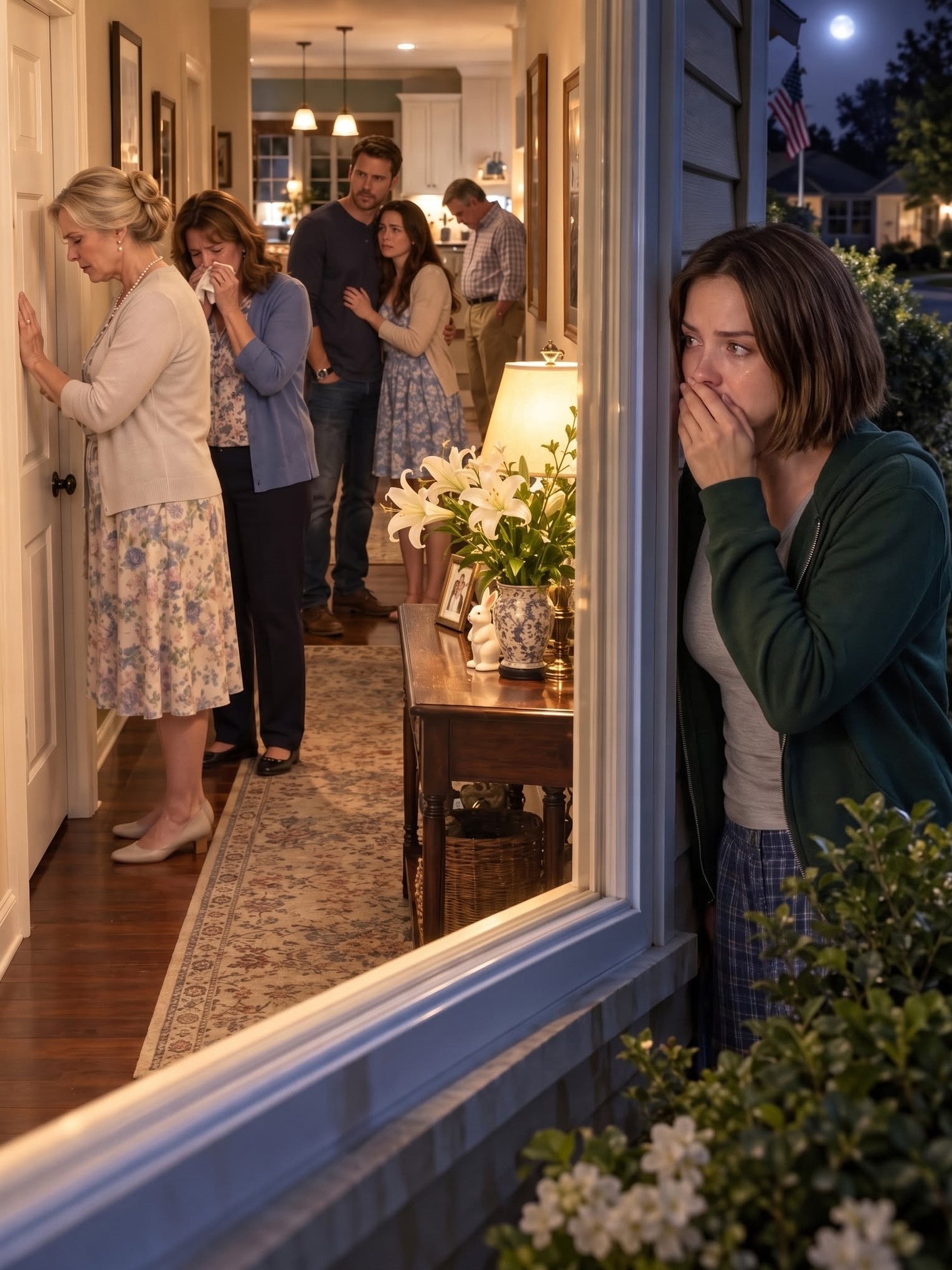
    The hallway window near my bedroom was cracked open.

    Suzanne Lockheart stood outside my door.

    Mom was beside her holding a tissue.

    Avery clung to Mitch.

    Dad stood near the kitchen looking at the floor.

    Suzanne touched my door.

    “May I?”

    Mom nodded.

    Suzanne laid her palm against the wood and bowed her head.

    Mom dabbed at her eyes.

    “I still can’t bring myself to open it.”

    I stood outside watching a stranger pray over my bedroom door.

    You don’t touch a door like that unless you believe whoever belongs behind it will never return.

    After they left, I waited until the house went dark.

    Near midnight, I entered through the back.

    On the dining table sat a framed photograph of a blooming dogwood.

    At its base was a granite memorial stone.

    In loving memory of Anastasia Dunaway, 1995 2014.

    She is not dead but sleepeth.

    A card read:

    8 We’ll read her name at sunrise. S.

    Then I saw the white nursery tag hanging from the tree.

    My handwriting.

    The same tree I had sold Avery.

    Everything rearranged itself at once.

    The burned candles.

    The obituary that omitted me.

    “My boyfriend’s family lost someone.”

    “It’s not the right time for you to be there.”

    The locked bedroom nobody could supposedly bear to open.

    Mom had never told Avery I lived in Atlanta.

    She had let her entire family believe I was dead.

    And I had personally selected my own memorial tree.

    I sat in Mom’s chair until the refrigerator had cycled twice.

    Then I stood.

    Her keys were beside the coffee maker.

    I opened my bedroom and packed one bag.

    Medication.

    Birth certificate.

    Ruth’s grafting knife.

    The yellow notebook.

    Everything else belonged to the girl they had invented.

    I left the bedroom door wide open, lamp burning, key in the lock.

    They claimed they couldn’t bear to open it.

    I made sure they would have to look inside.

    Then I called Ruth.

    “Then go see April,” she said.

    I drove northwest.

    Near Memphis, with dawn beginning to rise, I sent my parents the only message they would receive from me for years.

    “I’m alive. Don’t look for me.”

    It was the first truthful sentence my family had said about me in eight years.

    I drew a line beneath tally mark 211.

    While I crossed the Mississippi, my mother was at sunrise service listening to my name among the dead.

    I wouldn’t learn that until years later.

    It took four days to drive roughly 2,500 miles.

    I finally called Ingred from Oregon.

    “Come straight to the packing shed,” she said. “I’ll put the coffee on.”

    I reached Soulberg Orchards on April 20th, 2022.

    One hundred forty acres above the Columbia River.

    Ingred studied my hands before my face.

    Within a week, I had a new bank account, phone number, and bunk with the seasonal crew.

    When I closed my old bank account, one thought stayed with me:

    Nobody in Washington had ever been told I was dead.

    The apples were blooming.

    I started around $17 an hour.

    “I’ve seen pictures of your grafts,” Ingred told me on my first morning in the Rose. “I haven’t seen your thinning. Show me.”

    Ruth called that week.

    “Your mother called me,” she said. “She didn’t ask where you were. She asked if you’d said anything to anybody.”

    That was the entire search.

    I finally understood why.

    You can’t ask people to help find a daughter you’ve spent years declaring dead.

    One man on my crew bet twenty dollars I wouldn’t last until August.

    At least he said it to my face.

    By June, Ingred moved me into an old trailer overlooking the Honey Crisp block.

    On October 8th, 2022, I was picking Golden Delicious from a ladder.

    My brother was getting married in Alabama.

    The old text still sat on my phone.

    “Keep October 8th free.”

    That night, I checked an old email account.

    Mitch had written:

    “Thank you for staying away today.”

    My absence had become my wedding gift.

    A month later, Ingred offered me a year-round job with health insurance.

    I found a therapist.

    Then Ingred showed me nine acres of old Red Delicious trees that no longer produced enough to justify keeping.

    “Next spring, we cut these down to stumps and graft cosmic crisp onto them,” she said. “Top working. The roots are good. The variety is done.”

    She kicked one trunk.

    “Rootstock decides how big. Scion decides what.”

    Then she gave me a twelve-person crew and told me the block was mine.

    It was the first time anyone had trusted me with something because of what I could do.

    In spring 2023, we cut the old trees down and grafted Cosmic Crisp onto the surviving roots.

    One day, a lift jammed with me ten feet above the ground.

    The mechanic was Callum Reed.

    He fixed it in six minutes, then watched me finish the row.

    “You check everything twice,” he said.

    “Once for the tree, once for me.”

    By June, 94% of our grafts had taken.

    I wrote that number in the front of my yellow notebook.

    For once, a number recorded something I had created rather than endured.

    That fall, I enrolled in a tree-certification program and needed a recommendation.

    I emailed Mr. Witcom.

    He replied within an hour.

    “Anastasia. I always figured those hands would end up somewhere. Letters attached. Proud of you.”

    He became the only thread connecting me to Alabama.

    In January 2024, a severe freeze hit the valley.

    Afterward, I tested a hundred young grafts.

    Thirty-eight were brown.

    That night, I nearly called Mom.

    Instead, I called Ruth.

    “Well, you know what to do in April.”

    The next morning, Ingred walked the block with me.

    “Frost doesn’t care who grafted it,” she said. “It’s not a report card.”

    That spring, I grafted the losses again.

    Thirty-eight had died.

    I kept scratching until I found green.

    In spring 2025, Ingred promoted me to assistant orchard manager.

    Crew schedules.

    Spray records.

    Budgets.

    Frost alarms at three in the morning.

    It also meant my photograph appeared on the orchard website.

    I hadn’t put my face online since I was eighteen.

    “People should know who runs my trees,” Ingred said.

    By then, Callum and I had started eating dinner together after my Thursday therapy appointments.

    Neither of us named it.

    It was the first real thing in my life that didn’t require a label.

    My picture sat online almost a year before my family discovered me.

    They found me because of a scholarship.

    In February 2026, Suzanne Lockheart decided to create a $2,000 annual horticulture scholarship at Hoover High in memory of the girl she believed had died.

    Mom tried to stop it.

    “I’d rather keep it quiet,” she said.

    Suzanne answered:

    “She deserves to be said out loud.”

    The school foundation sent the form to the horticulture teacher.

    Mr. Witcom read my name.

    Then the dates.

    Then he remembered the recommendation he had written for me in Washington in 2023.

    He called Dad.

    “Mr. Done away. I wrote your daughter a recommendation letter in 2023. Is there some kind of mistake?”

    After a long silence, Dad answered:

    “Give us until Easter.”

    Mr. Witcom agreed to delay the scholarship.

    That night, Mitch searched my name online.

    Four years after I left.

    It took him twenty minutes to find me once he finally decided to look.

    I knew none of this until an email arrived from Mr. Witcom.

    “I may have told your father something you didn’t want him to know. I’m sorry. Are you all right?”

    At seven that morning, the orchard office phone rang.

    Ingred answered and handed me the receiver.

    “Your mother,” she said.

    I took it.

    “Anastasia.”

    Her voice sounded exactly the same.

    No hello.

    No question about the past four years.

    “I need you to call Suzanne Lockheart.”

    Mom already had a story prepared.

    According to her new version, I had left in 2014 after “your situation.” They hadn’t known whether I was alive. Suzanne had misunderstood because everyone was too heartbroken to correct her.

    All I needed to do was confirm it.

    “Tell her you left in 2014 and we didn’t know if you were alive. That’s all,” she said. “Then come home for Christmas.”

    Christmas.

    She offered it like a reward.

    “You are always so good at disappearing,” she said. “I just need you to do it one more time.”

    My yellow notebook sat inside my jacket.

    Two hundred eleven dated tally marks beginning in 2014 and ending in 2022.

    “I’ll think about it,” I said.

    Mom needed a daughter who had vanished in 2014.

    My notebook said otherwise.

    Let me ask you something before I tell you what I did.

    If the people who erased you suddenly needed you to confirm their version, would you do it to keep the piece?

    Tell me in the comments.

    Two days later, a message arrived through the orchard website.

    “It’s Mitch. Please call me. Not mom’s number. Mine.”

    I called that night.

    For a while, neither of us knew what to say.

    Then his voice broke.

    “It was me, Stace,” he said. “I said it first.”

    In March 2014, he had been dating Avery for six weeks.

    One night, she told him about her brother Trip, who had died in a car accident before graduation.

    She described how people treated her afterward.

    And Mitch, whose sister had recently been hospitalized, told her:

    “We lost my sister in February.”

    “I meant the hospital,” he told me. “I meant we lost you the way you were.”

    “She started crying and held on to me, and she said it was the first time anybody understood. I couldn’t take that away from her.”

    He didn’t correct Avery the next morning.

    By Easter, Mom knew.

    She chose to protect the lie.

    Mitch said she told him:

    “People understand grief.”

    Then he asked me to support the new version.

    “Mom’s version would work,” he said finally. “You left. Nobody knew. Avery would be hurt, but she’d forgive something like that. Please, Stace.”

    His marriage depended on it.

    So did his job with Avery’s father.

    Then he told me what happened the morning I escaped.

    Mom found my bedroom door wide open and read my text.

    She stood there.

    Then got dressed for sunrise service.

    “She went?” I asked.

    “We all went,” Mitch said.

    Afterward, she told Suzanne she had finally found the courage to open my room.

    Suzanne cried with her while the church watched.

    I had left the door open to expose the lie.

    Mom turned it into another performance.

    Dad called Saturday.

    He didn’t begin with an apology.

    Instead:

    “Your mother had a sister,” he said. “Her name was Rosalind.”

    Rosalind was four years older than Mom.

    At twenty, she developed schizophrenia and entered the state psychiatric hospital.

    My grandparents moved to Hoover and told their new church that Rosalind had “gone home to the Lord.”

    Mom was sixteen.

    “In your grandmother’s house, grief was something people brought casserles for,” my father said. “Sickness was something they whispered about.”

    I immediately remembered the woman beside the van at Grandma’s funeral.

    Dad continued.

    “Lenny, I didn’t forget my sunglasses that day,” he said. “I went back to give her my phone number. I’ve been visiting her once a month ever since. Your mother thinks I have branch meetings in Tuscaloosa.”

    Then:

    “Your mother learned it from hers. That’s not an excuse. It’s just where it came from.”

    For the first time, I understood Mom.

    Understanding wasn’t forgiveness.

    It was recognition.

    Dad continued.

    “There’s one more thing,” he said.

    “After you left, I checked your account. The last transaction was a gas station in Cheyenne.”

    I waited.

    “I saw Cheyenne,” he said. “I didn’t look after that.”

    My father was a bank manager.

    He could have found me.

    He chose not to.

    Before hanging up, he added:

    “Rosalyn’s visiting hours on Fridays are 10 to noon.”

    That Monday, I asked Ingred for Easter week off.

    Bloom was approaching, and orchard managers were supposed to stay nearby.

    Ingred looked at the calendar.

    “Go,” she said. “The trees will wait 11 days, not 12.”

    I booked the flight.

    Then I texted Mitch.

    “You have until Saturday night to tell Avery yourself.”

    He didn’t respond.

    Mom wanted me to call Suzanne.

    I decided to meet her instead.

    Casey picked me up at Birmingham airport.

    At the farm, eighty-year-old Ruth waited on the porch.

    She looked at me and repeated the first words she had said years earlier.

    “Hands first. Questions can wait.”

    Good Friday morning, I visited Rosalind.

    She was sixty-three, with Mom’s cheekbones and an easier laugh.

    Beside her bed was a photo of Mom as a teenager.

    “That’s Linny,” she said, following my eyes. “Before.”

    Dad had told her I was coming.

    She had prepared a folder.

    Inside was an old church bulletin announcing that the Hadley family gave thanks for the life of their daughter Rosalind, who had gone home to the Lord.

    “They told the new church, ‘I went home to the Lord,’” she said. “Mama kept the bulletin in her Bible. Your daddy found it when he cleaned out her house, and he brought it to me because it’s mine.”

    She studied me.

    “You look like Linny before she got scared. She used to hum when she was scared. Blessed Assurance. Every time Daddy’s truck came up the drive.”

    I told her about my memorial stone and tree.

    She listened.

    When I finished, she asked:

    “Is Lenny coming?”

    I didn’t answer.

    That afternoon, I drove to Mountain Brook.

    Suzanne was behind the church preparing the memorial garden.

    The dogwood I’d sold Avery was blooming above the stone bearing my name.

    Suzanne looked up.

    Recognition arrived slowly.

    “Anastia,” she said.

    “Yes, ma’am.”

    We walked to her house.

    I told her everything.

    The hospital.

    The first weekend.

    The locked room.

    The notebook.

    Then I placed the yellow notebook on her kitchen table.

    She read every dated tally mark.

    “That was a birthday supper,” she said.

    “That was the 4th of July.”

    She turned another page.

    “That was the weekend we brought the tree photos over.”

    Eventually, she reached number 211.

    April 16th, 2022.

    “That was the night I touched your door.”

    “I know,” I said. “I was outside the hall window.”

    Suzanne covered her mouth.

    Then she asked about the tag still hanging on the memorial tree.

    “‘She’ll bloom,’” Suzanne said. “It was the last thing anyone had written for her.”

    “I wrote it,” I said. “I wrote it on every tree.”

    My phone buzzed.

    Mom.

    “Don’t do this to your brother.”

    I turned it facedown.

    Suzanne asked:

    “What do you want, Anastasia?”

    I knew the cost of every choice.

    If I remained silent, the scholarship would disappear quietly.

    Mitch’s marriage could survive.

    Mom’s story would stand.

    Maybe I’d even get a Christmas invitation.

    As long as I never told the truth.

    If I spoke, I might lose my family permanently.

    Suzanne looked toward the memorial programs.

    “Every Easter I read the names of people who can’t be here,” Suzanne said. “None of them has ever shown up.”

    I thought of the stone and eight years spent disappearing.

    “Then don’t read mine,” I said.

    She nodded.

    Saturday night, Mitch finally texted.

    “I told her.”

    Thirty minutes later, Avery contacted me.

    “This is Avery. I saw a bottle in your parents’ bathroom at Thanksgiving in 2021. It had your name on it and a date from that October. I let him tell me it was old. Come to sunrise.”

    I read it three times.

    Now I understood what Mom had feared that Thanksgiving.

    Not my medicine.

    The date on the bottle.

    Easter morning, the church garden was cold and blue before sunrise.

    Around eighty chairs faced the brick wall.

    The dogwood was covered in white blossoms.

    My memorial stone remained underneath it.

    The nursery tag still hung from a branch.

    Ruth, Casey, and Mr. Witcom sat in the back.

    I remained standing beside the tree.

    My parents entered.

    Dad saw me first and stopped.

    Mom took two more steps before noticing me.

    I watched her calculate who was there and what story might still survive.

    She crossed the grass.

    “What are you doing here?” she whispered.

    “Standing where you can see me.”

    Avery sat in the front row beside her father.

    Mitch sat nearby, one empty seat separating him from his wife.

    At 6:30, Suzanne stepped to the lectern.

    She read each memorial name slowly.

    Somewhere among the chairs, Mom began humming Blessed Assurance.

    Suzanne reached the end and folded her paper.

    “This tree was planted for a young woman we believed we had lost,” she said. “She is here this morning, and I’ve asked her to read one name for me.”

    I approached.

    Suzanne handed me an index card.

    I hadn’t prepared a speech.

    I wasn’t there to accuse anyone.

    I was there to read the name of the eighteen-year-old boy whose mother had unknowingly grieved me alongside him for eight years.

    “Thomas Lockheart III,” I read. “Trip.”

    Then I stepped back.

    Suzanne finished the service.

    She didn’t need to explain anything else.

    People began understanding in fragments.

    A woman beside Mom quietly moved her chair away.

    Others stared between me and the memorial stone.

    After the service, Mom approached Suzanne.

    “Suzanne, I never said she died.”

    Suzanne’s expression was worse than anger.

    It was accuracy.

    “No,” she said. “You just let me grieve her.”

    Mom looked at me.

    I knew what she wanted me to say.

    That I left in 2014.

    One sentence could preserve the story.

    I didn’t say it.

    Instead, I reached for the dogwood branch and scratched the bark.

    Green.

    Avery appeared beside me.

    She looked at the nursery tag, then my hands.

    Recognition finally completed itself.

    “You sold me this tree,” she said.

    “I checked the graft.”

    Behind us, an older man approached Dad.

    “Glenn,” he said, “who is this young lady?”

    Dad looked at Mom.

    Then at me.

    It took him eight years and four more.

    “That’s my daughter,” he said.

    Mom picked up her purse and left through the side gate.

    Dad eventually followed.

    For eight years, Mom had decided when I was allowed to be visible.

    That morning, she was the one who disappeared first.

    Two weeks later, the church removed my memorial stone.

    Suzanne asked what I wanted done with it.

    “Send it to my mother,” I said.

    She did.

    Dad later texted:

    “It’s in the garage, face to the wall. The tree stayed.”

    Suzanne also asked whether I wanted the dogwood removed.

    I told her no.

    It was a good tree.

    I had chosen it myself.

    I returned to Washington on the twelfth day, exactly as promised.

    The orchard bloomed three days later.

    The king blossoms opened first.

    I stood with Callum among the Cosmic Crisp trees we had grafted onto old roots.

    Mitch and Avery separated briefly after Easter, then began marriage counseling.

    I don’t know what will happen between them.

    Neither do they.

    Avery sometimes texts me about plants.

    It feels like the possibility of a beginning.

    Mitch calls every Sunday.

    I answer about one call in three.

    The first time I answered, he didn’t offer another polished apology.

    Instead, he said:

    “I don’t know how to be your brother yet. I’d like to learn.”

    Mom still hasn’t apologized.

    I no longer organize my life around waiting for one.

    But in May, Dad drove her to Tuscaloosa.

    She spent forty minutes with Rosalind.

    That night, Mom texted me.

    “Roz says, ‘You came to see her. Thank you.’”

    It was the first time she had ever thanked me for something other than leaving.

    Suzanne calls occasionally.

    She asks about the orchard, frost, and whether I’m eating.

    She is one of the few people from Alabama who asks questions and actually waits for my answer.

    The scholarship survived.

    Suzanne renamed it for Trip and expanded it to seniors who work with their hands—in soil, wood, or engines.

    At Mr. Witcom’s final awards night, it went to a girl who had grafted her first apple tree that spring.

    He emailed me a photo.

    “Good hands,” he wrote.

    Nothing more was necessary.

    At the end of May, I was thinning Honey Crisp apples when Casey sent me a photograph.

    Rows of small pots sat beneath a mist bench in Ruth’s greenhouse.

    Each contained a cutting.

    With Suzanne’s permission, Casey had taken softwood cuttings from the memorial dogwood.

    My tree.

    The one planted for my supposed death.

    It was too early to know if they would root.

    But Casey wrote:

    “Every one of them is still green.”

    That night, I opened the yellow notebook.

    Two hundred eleven tally marks.

    One date beside each.

    A straight line beneath the last.

    I haven’t added another number.

    I don’t count that way anymore.

    Below the line, I wrote one word.

    Green.

    I spent eight years learning how to leave rooms quietly, on time, without being asked twice.

    I thought disappearing was simply what I was good at.

    It turned out I had only never found the right ground.

    For eight years, they decided when I disappeared.

    Now I decide where I grow.

    If you’ve ever had to decide whether to keep a family’s story standing or step into the light yourself, tell me what you chose.

    And if this story found you, subscribe because there are more like
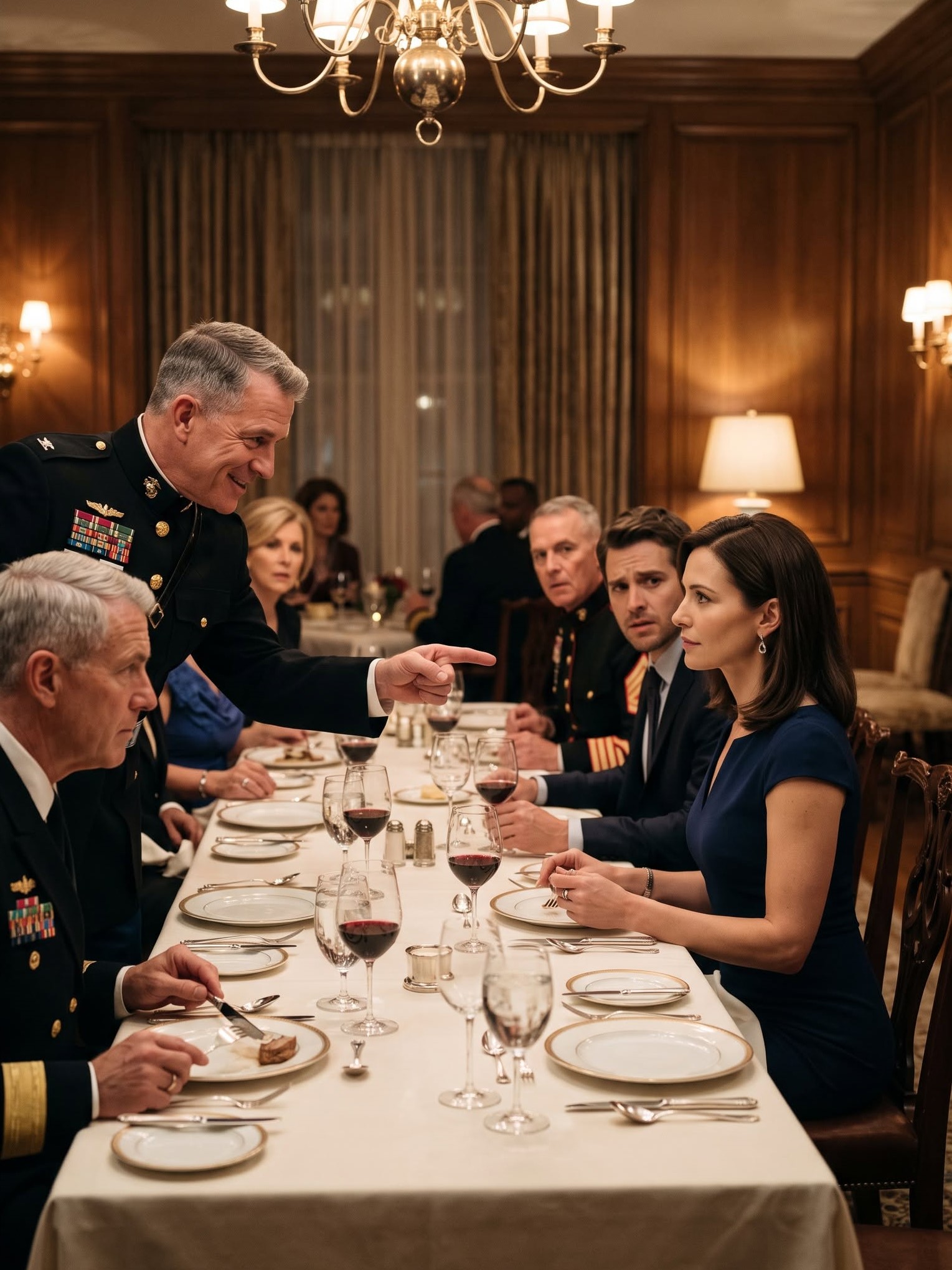
  • I spent an entire birthday dinner listening to a decorated Marine colonel laugh at the idea that a quiet woman like me could be a real Navy pilot. My boyfriend’s family watched as he questioned my service and demanded proof. I refused to give him any. Then the retired four-star admiral at the head of the table set down his fork and asked for my call sign—and the colonel’s smile disappeared.

    I spent an entire birthday dinner listening to a decorated Marine colonel laugh at the idea that a quiet woman like me could be a real Navy pilot. My boyfriend’s family watched as he questioned my service and demanded proof. I refused to give him any. Then the retired four-star admiral at the head of the table set down his fork and asked for my call sign—and the colonel’s smile disappeared.

    Part 1 of 3

    Part 1: The Dinner That Became an Interrogation

    When Ethan Brooks first took me home to meet his family, he warned me that dinner with his father could feel like a military briefing. Retired Admiral William Brooks welcomed me politely, but his gaze lingered when Ethan mentioned my engineering degree and I casually referred to Pensacola. I suspected he recognized something. Still, he asked no questions, and I was grateful.

    I was thirty-six, quiet by nature, and accustomed to people making assumptions. When I said I worked for the Navy, they imagined an office. If I mentioned aviation, they assumed logistics or contracting. Almost no one pictured me flying military aircraft, and years earlier I had stopped correcting them.

    Ethan knew I was a pilot, but even he knew only the ordinary parts of my career. Certain missions remained classified; others were memories I refused to turn into dinner-table entertainment. His sister Natalie seemed to understand. Over coffee a few weeks later, she asked what I really did.

    “I fly.”

    “Military aircraft?”

    “Yes.”

    “What kind?”

    “The kind I don’t discuss over coffee.”

    She accepted the answer, then quietly said, “Dad knows something about you.”

    For the next three months, Admiral Brooks continued watching without exposing me. I began to relax—until Ethan invited me to his father’s seventieth-birthday dinner in Washington. The private room was crowded with retired officers, commanders, and their spouses. Shortly after we arrived, a broad-shouldered guest with a glass of bourbon approached us.

    “Claire, meet Colonel Richard Coleman,” Ethan said. “He’s an old friend of Dad’s.”

    Coleman looked me over as if assigning me a category.

    “What do you do, Claire?”

    “I fly for the Navy.”

    His eyebrows rose, followed by a knowing smile. I recognized it immediately: the expression of a man who had already decided my answer could not be true.

    Across the table, Admiral Brooks silently watched us. Coleman had no idea that the quiet woman he was preparing to challenge had once made a decision over black water that had reached the admiral’s desk years earlier.

    And before Coleman asked his next question, I knew dinner was about to become an interrogation.

    Part 2: Prove It

    Coleman began politely, asking whether I flew helicopters, fixed-wing aircraft, or carrier missions. I answered only what I wished to share, and every restrained response made him more certain I was hiding inexperience rather than protecting private information.

    When retired Captain Thomas Reed mentioned a dangerous rescue during severe weather, Coleman interrupted him. “Weather only frightens pilots who don’t trust their training.”

    The remark pulled me back to black water, violent rain, failing visibility, and two voices fading through static. I kept my expression neutral.

    Coleman asked about my flight hours, deployments, and operational history. Then he announced that I did not carry myself like the combat aviators he knew. Natalie challenged him, while Ethan’s patience visibly thinned.

    Finally, Coleman addressed the table instead of me. “Maybe she flies support. Maybe she’s a reservist. I’m only saying the person doesn’t match the story.”

    Then he smiled sympathetically. “Sweetheart, nobody expects you to impress us.”

    Ethan started to rise, but I touched his knee. Coleman wanted me angry because anger would make his behavior seem justified. I refused to give him that advantage.

    After another round of questions, I set down my fork. “You’ve asked me eleven things and listened to none of my answers. You compared each one to what you wanted to hear, then treated the difference as evidence.”

    His expression hardened.

    “You say you aren’t accusing me of lying,” I continued. “Yet that is exactly what you’ve done. If you intend to accuse me, Colonel, have the discipline to say it clearly.”

    Coleman leaned forward. “Fine. Name one aircraft, one unit, or one deployment. Prove you are what you claim.”

    I resumed eating.

    “You won’t answer?”

    “No.”

    “Why?”

    “Because you’re not entitled to an answer. I’m accountable to my chain of command, and you are not part of it.”

    He demanded my call sign next. Ethan stood and ordered him to stop, but I gently pulled him back down.

    Then Admiral Brooks placed his fork beside his plate. The quiet metallic sound silenced the room.

    He looked directly at me.

    “Claire,” he asked calmly, “what is your call sign?”

    Part 3: Lantern

    Admiral Brooks had not exposed me or ordered me to answer. He had given me a choice after months of protecting my privacy.

    That earned the truth.

    “Lantern.”

    Recognition immediately crossed his face.

    “Meridian,” he said.

    Coleman’s smile vanished. He had helped brief part of the after-action review and knew exactly what that name meant.

    Admiral Brooks briefly explained that two naval officers had gone into the Atlantic during a failed extraction. A brutal storm had reduced visibility to almost nothing, and several aircraft had been redirected because reaching the recovery point was considered too dangerous.

    “One crew continued,” he said.

    Coleman stared at me. “That was you?”

    “I was the aircraft commander.”

    “And the pilot who made the final approach,” Admiral Brooks added.

  • How Teachers Can Make Individualized Education Plans More Effective

    How Teachers Can Make Individualized Education Plans More Effective

    In the ever-evolving landscape of education, the importance of individualized education plans (IEPs) has become increasingly clear.

    These tailored strategies are designed to support students with unique learning needs, ensuring they receive the attention and resources necessary to thrive.

    However, the effectiveness of an IEP is often determined by how well teachers implement and adapt these plans. Here, we explore gentle yet impactful ways educators can enhance the effectiveness of IEPs, fostering an environment where every student can flourish.

    A nurturing approach to understanding students

    At the heart of a successful IEP lies a deep understanding of each student’s strengths, challenges, and aspirations. Teachers can create a more effective plan by taking the time to connect with their students personally. This connection fosters trust and opens the door for honest communication. By engaging in conversations about their interests, learning styles, and even their fears, teachers can gain invaluable insights. This personalized approach not only enriches the IEP but also helps students feel seen and valued.

    Incorporating student voice into the plan

    Empowering students to participate in their own educational journey can transform the way they perceive learning. When teachers invite students to share their thoughts on their IEP goals and strategies, it instills a sense of ownership. Students are more likely to be motivated and engaged when they feel their opinions matter. This collaborative spirit can be as simple as asking them about their preferred learning methods or what they hope to achieve. By fostering this dialogue, teachers can create a plan that resonates more deeply with the student’s aspirations.

    A small shift toward balance

    One of the common challenges with IEPs is the tendency to focus solely on deficits. While it’s essential to address areas of difficulty, teachers can enhance their plans by also emphasizing strengths. By highlighting what students do well, educators can create a more balanced approach that builds confidence. This shift in perspective can be as simple as incorporating activities that showcase a student’s talents or interests. Celebrating small victories not only boosts morale but also encourages students to embrace challenges with a positive mindset.

    Creating a supportive network

    An effective IEP doesn’t exist in isolation; it thrives within a supportive network of educators, parents, and specialists. Teachers can enhance the effectiveness of IEPs by fostering collaboration among these stakeholders. Regular meetings and open lines of communication ensure that everyone is on the same page and working toward common goals. When parents are involved and informed, they can reinforce strategies at home, creating a seamless experience for the student. This collective effort not only strengthens the IEP but also cultivates a sense of community around the student’s learning journey.

    Flexibility is key

    The beauty of an individualized education plan lies in its adaptability. Teachers who embrace flexibility can respond to the evolving needs of their students more effectively. Regularly reviewing and adjusting the IEP allows for a more personalized approach to learning. If a particular strategy isn’t working, it’s perfectly okay to pivot and try something new. This fluidity in planning empowers both teachers and students, creating an environment where experimentation is encouraged, and learning can thrive.

    Integrating technology thoughtfully

    In today’s digital age, technology can play a significant role in enhancing the effectiveness of IEPs. Teachers can explore various tools and resources that cater to different learning styles and needs. From interactive apps to assistive technology, the possibilities are vast. However, it’s essential to choose tools that align with the specific goals of the IEP and the student’s preferences. Thoughtful integration of technology can provide engaging and personalized learning experiences that captivate students and support their growth.

    Fostering emotional well-being

    A critical aspect of learning is emotional well-being. Teachers can enhance IEP effectiveness by incorporating strategies that promote a positive emotional climate in the classroom. Simple practices such as mindfulness activities, social-emotional learning exercises, or creating a safe space for expression can make a substantial difference. When students feel emotionally supported, they are more likely to engage with their learning and take risks. This sense of security can be a powerful catalyst for growth, making the IEP a more effective tool.

    Encouraging peer interactions

    Social skills are often a vital part of a student’s development, and IEPs can be enhanced by incorporating opportunities for peer interactions. Teachers can create group activities that allow students to collaborate, share ideas, and learn from one another. These experiences not only support academic growth but also foster essential social connections. By encouraging students to work together, teachers can help them build relationships and develop important life skills that extend beyond the classroom.

    Celebrating progress, not just outcomes

    The journey of learning is filled with ups and downs, and it’s essential to celebrate progress along the way. Teachers can enhance IEP effectiveness by recognizing and acknowledging small achievements, rather than solely focusing on end goals. This celebration of progress helps students understand that learning is a continuous process. By highlighting their efforts and improvements, educators can boost students’ confidence and motivation, reinforcing the idea that every step forward is meaningful.

    In closing, enhancing the effectiveness of individualized education plans involves a delicate blend of understanding, collaboration, flexibility, and emotional support. By nurturing connections with students, embracing their voices, and fostering a supportive environment, teachers can create a space where every learner can thrive. As we continue to navigate the complexities of education, let us remember that the heart of teaching lies in the relationships we build and the individualized approaches we take. Through these gentle yet impactful strategies, we can empower our students to reach their fullest potential and embrace the joy of learning.

  • “You have exactly 30 minutes,” I said. “To pack up your tape and get out of my house before I call the police for a home invasion.”  

    “You have exactly 30 minutes,” I said. “To pack up your tape and get out of my house before I call the police for a home invasion.”  

    I came home after 8 weeks at sea and found my pregnant sister turning my house into her nursery; my mom said, “You don’t need all this space”; her husband was already measuring my walls like they owned the place; I stayed calm and said, “Get out before I call the police”; the room went silent.

    I dropped my olive-green deployment bag in the hallway and immediately noticed my framed Coast Guard commendation leaning against the wall instead of hanging where I’d left it.

    Someone hadn’t just visited my house.

    They had settled in.

    The kitchen sink held dirty dishes, a glass crusted with pink protein powder, and takeout beside my coffee machine. My knife block had been shifted six inches. Ultrasound photos covered my refrigerator beneath decorative lemon magnets.

    Upstairs, the smell of primer, paint, and lavender grew stronger near the guest room.

    Harper stood on a step stool in one of my old college T-shirts, taping the trim while occasionally resting a hand on her stomach.

    Chase stood by the window with a laser measurer.

    “If we rotate the crib diagonally, we can fit the changing table near the closet.”

    They didn’t notice me until Harper heard my bag hit the hardwood.

    “Oh, good. You’re back.”

    She stepped down without a trace of guilt.

    “Chase thinks the gray is too cold for a nursery,” she said. “But we need to start moving our boxes in by Friday.”

    My bookshelves, logistics manuals, deployment binders, and desk were still there, but half the room was covered in paint samples.

    Morning fog. Soft willow. Baby cloud.

    I hadn’t even unpacked, and they were already redesigning my house.

    Chase gave me a tight smile.

    “Good to see you, Naomi,” he said. “We figured it made more sense than throwing money away downtown.”

    Their downtown apartment cost more than my mortgage, largely because Chase loved expensive cars and the appearance of success. The Rolex on his wrist fit the pattern perfectly. Last Thanksgiving, he had lectured my father about cryptocurrency while borrowing valet money from Harper.

    I set my coffee mug on the dresser.

    Nobody spoke.

    I looked at his laser measure, the open paint cans, and the moving boxes labeled Baby Sterling Nursery.

    Harper crossed her arms.

    “You have plenty of room,” she said. “And mom said you’d probably be deploying again next year anyway.”

    Mom.

    Evelyn Vance had been reallocating my life to Harper since childhood. My bedroom became Harper’s dance room because I was supposedly more mature. My first car became Harper’s emergency transportation. Even my promotion dinners somehow became celebrations of Harper.

    The perfectly measured tape line across my wall told me this wasn’t impulsive. They had planned it while I was offshore.

    Chase pocketed the laser measure.

    “We’re family,” he said carefully. “Nobody’s trying to make this weird.”

    I pulled out my phone.

    Harper frowned.

    “What are you doing?”

    “You have exactly 30 minutes,” I said. “To pack up your tape and get out of my house before I call the police for a home invasion.”

    Silence.

    The kind that comes when people realize the rules they depended on may no longer apply.

    Harper gave a nervous laugh.

    “You’d be serious.”

    I checked my phone.

    6:24 a.m.

    “I’m very serious.”

    Chase studied me, trying to decide whether I was bluffing.

    I wasn’t.

    Eight weeks coordinating emergency fuel logistics during tropical storms had taught me that calm didn’t mean weak.

    Sometimes it meant prepared.

    Harper’s expression hardened.

    “You’d really throw out your pregnant sister.”

    I lifted my coffee.

    “How exactly your pregnancy became my mortgage,” I said, “is still a little unclear to me.”

    Nobody answered.

    That told me enough.

    Have you ever worked so hard for something that your family started treating it like community property? If your relatives walked into your house and acted like ownership was optional, what would you have done?

    Comment below and subscribe if you like stories where dignity matters more than keeping fake peace.

    The sound of Chase throwing the tape measure into his bag stayed in my head all week.

    By Sunday evening, I was at my parents’ dining table.

    Mom always used noise to disguise tension—ice rattling in glasses, timers, soft music. If the house sounded busy enough, she seemed to believe nobody would notice the conflict.

    She had made braised short ribs, my childhood favorite, which usually meant a celebration or an apology she didn’t want to voice.

    Chase’s Mercedes and Harper’s Lexus were already outside when I arrived at 5:52 p.m.

    Mom kissed my cheek and handed me wine before I removed my coat.

    “You look tired,” she said.

    “I just got back from deployment.”

    “Well, don’t talk about storms during dinner. Harper’s stress levels affect the baby.”

    Of course.

    The dining room looked almost unchanged from twenty years earlier.

    Thomas, my father, sat quietly at the far end. His preferred approach to family conflict was waiting for it to pass without requiring him to participate.

    Harper wore beige. Chase stood and shook my hand.

    “Naomi,” he said. “Good to see you.”

    His watch had changed. Cheaper this time, but still designed to project success.

    Dinner began stiffly.

    Nobody mentioned my house or Harper’s attempted move-in.

    Instead, Mom filled plates and criticized my lifestyle.

    “You’re too skinny. You work too hard. You need softer lighting in your kitchen.”

    I let her talk.

    Halfway through dinner, Chase cleared his throat and adjusted his watch.

    “Our apartment downtown has gotten a little tight lately,” he said casually.

    Harper smiled beside him.

    “Babies absorb energy,” Chase continued. “And honestly, the city environment just feels stifling.”

    Their building had a rooftop pool, concierge, and valet parking.

    Mom jumped in.

    “Well, Naomi has all that space,” she said brightly. “Four bedrooms for one person is excessive when you think about it.”

    I sipped my wine.

    Harper looked directly at me.

    “Dad said you might deploy again next year.”

    Thomas didn’t deny it.

    “You don’t even use all that space,” Harper continued. “We need your house for the baby.”

    Not could we stay temporarily.

    Not could we discuss it.

    Need.

    Mom smiled as though the outcome had already been decided.

    Naomi would give in.

    Naomi always did.

    I looked around the table.

    Three people waiting for compliance.

    One man staring at his plate.

    Finally, I wiped my mouth.

    “How exactly does that concern me?”

    The room went silent.

    Mom blinked.

    “Naomi.”

    “No,” I said calmly. “I’m trying to understand the logic here.”

    Harper stiffened.

    “You know what? Forget it.”

    “No, seriously.”

    I put down my napkin.

    “You two chose an apartment you can’t afford. You’re having a baby you apparently don’t have room for. And somehow this becomes my emergency.”

    Chase shifted.

    “It’s about family.”

    “Interesting,” I said, “because usually when people want something from me, they ask before painting my walls.”

    Dad briefly looked up, then back down.

    Harper’s eyes filled with tears.

    “I cannot believe you hate this baby already.”

    She had skipped straight from disagreement to accusing me of hating her unborn child.

    Mom immediately reached for her hand.

    “Sweetheart, calm down.”

    “No,” Harper said, voice cracking dramatically. “She’s acting like we’re strangers.”

    Strangers usually respected boundaries better.

    I stood, took a folded $20 bill from my jacket, and placed it beside the wine.

    “For dinner,” I said.

    Mom stared at it.

    “Naomi, sit back down.”

    I was already leaving.

    Behind me, Harper cried louder. Chase muttered something.

    Dad remained silent.

    Outside, the cold air cleared my head.

    For the first time all week, I wasn’t tired.

    I was alert.

    Sunday dinner had revealed something important.

    Harper and Chase weren’t embarrassed.

    They were urgent.

    Embarrassed people soften requests and negotiate.

    Urgent people jump directly to entitlement because time is running out.

    At 7:12 the next morning, I sat at my kitchen counter with coffee and two laptops.

    The smell of paint still lingered upstairs.

    I stopped treating the situation like family drama.

    I treated it like an audit.

    County property records.

    Credit monitoring.

    State business registrations.

    My house showed no ownership changes or unauthorized liens.

    Then I found several financial verification requests connected to my address while I’d been deployed.

    They traced back to Sterling Auto Consulting LLC.

    Chase’s company.

    Beneath the registration was a commercial loan application filed nineteen days earlier.

    Collateralized residential stability verification.

    Primary residence: Naomi Vance property address.

    I read it three times.

    Chase had listed my house as his current residence.

    The requested loan amount was 85,420,000 in commercial expansion funding and delinquent balance consolidation.

    The nursery suddenly made sense.

    His business showed declining revenue, debt restructuring, vehicle inventory losses, and two late commercial lease payments.

    The baby wasn’t why they needed my house.

    The baby was packaging.

    A credit activity report exposed something else.

    Three pieces of certified mail had been signed for while I was offshore.

    Not by me.

    By Evelyn Vance.

    My mother.

    One came from Ridgeway Commercial Lending, another from a collections attorney, and the third from North Harbor Financial Compliance Services.

    She had received financial correspondence tied to my property and said nothing.

    I kept digging.

    Chase had filed business renewals late twice in eighteen months, and financing was already attached to company inventory.

    His commercial loan showed unstable debt-to-income, insufficient liquidity, and conditional approval pending residential verification.

    If he could establish stable housing tied to collateral support, he could secure the loan.

    My house wasn’t convenient.

    It was financially necessary.

    Suddenly, Sunday dinner looked like theater.

    Harper rubbing her stomach.

    Mom discussing the baby.

    Chase talking about suburban stability.

    Nobody mentioned the financial crisis underneath it.

    Mom’s texts looked different now.

    Hope you girls can work something out.

    Harper is under so much stress.

    Family supports family.

    Never permission.

    Never ownership.

    In her mind, my house had already been reassigned.

    If Chase was desperate enough to falsify residency information, I needed protection before he escalated.

    I made a list.

    Locksmith.

    Security cameras.

    Mailbox protection.

    Attorney consultation.

    Credit freeze.

    My sister wasn’t simply asking for a place to live anymore.

    They were trying to use my house as a flotation device.

    I spent Tuesday changing every password tied to my banking, utilities, mortgage, and security accounts.

    By Wednesday, I had pages of notes and three hours of sleep.

    I didn’t call Mom.

    There was nothing useful to discuss.

    Instead, I hired Falcon Ridge Security Solutions.

    Victor arrived Thursday morning carrying equipment cases and walked through the house as I explained.

    “No restraining order yet?” he asked.

    “Not yet.”

    “Family?”

    “Unfortunately.”

    He nodded.

    By 10:47 a.m., every exterior lock was off the doors and cameras were being installed around the property.

    For the first time, the house felt entirely mine.

    No spare keys circulating through the family.

    No emergency access for Mom.

    No assumptions.

    Victor showed me the biometric deadbolt.

    “Thumbrint access only,” he said. “You can authorize temporary users through the app.”

    I laughed.

    “My mother’s going to hate this.”

    “She’ll survive,” he said.

    At 1:18 p.m., I removed Mom from the old security system and garage keypad.

    Thirty years of automatic access disappeared with one click.

    Victor finished and gave me one final instruction.

    “Anybody shows up unwanted,” he said, “don’t argue through the door. Cameras do the talking for you.”

    I signed the $4,217.83 invoice and went to work downtown.

    That afternoon, my phone vibrated.

    Motion alert.

    Front driveway.

    A rented U-Haul rolled into my driveway through heavy rain.

    Harper climbed out first.

    Chase followed.

    The truck was packed with furniture, clothes, bins, and blankets.

    They actually intended to move in.

    From my office, I watched Chase approach the front door with the old key Mom had obviously given him.

    He inserted it.

    Turned it.

    Nothing.

    Tried again.

    Nothing.

    Harper came up behind him.

    “What’s wrong?”

    “The lock changed.”

    “No, it didn’t.”

    “It literally did.”

    She tried the key herself.

    Still nothing.

    Rain soaked them.

    “You have got to be kidding me.”

    Harper started pounding on the door.

    “Naomi!”

    Bang. Bang. Bang.

    “I know you were doing this.”

    A neighbor’s curtain moved across the street.

    I activated the audio feed.

    “You are seriously making a pregnant woman stand outside in this weather,” she screamed.

    I pressed the intercom.

    Both froze.

    “You have 5 minutes to remove that truck from my property before I have it towed at your expense.”

    Harper stared into the camera.

    “You can’t do this to family.”

    Chase moved closer.

    “Naomi, let’s just talk like adults.”

    The man falsifying residency documents suddenly wanted adult conversation.

    “I’m starting the tow request in 4 minutes,” I said calmly.

    Then Mom’s car pulled in behind the U-Haul.

    Of course.

    She called six times afterward.

    I ignored every call.

    When private guilt failed, she changed tactics.

    Monday morning, I received an expensive cream invitation to Harper Sterling’s baby shower at Ashton Gardens Country Club.

    At the bottom, Mom had handwritten that Harper needed her sister.

    I almost threw it away.

    Then Thomas called.

    “You should probably come,” he said quietly.

    “Why?”

    After a pause, he answered.

    “Your mother’s been telling people you worked things out.”

    I leaned back.

    “What exactly does worked things out mean?”

    Another pause.

    Then she told everyone, “You’re making an announcement about the house.”

    Mom had turned a baby shower into a real-estate press conference.

    So I went.

    Saturday was cold and bright. Ashton Gardens looked exactly like the kind of place people with hidden debt wanted life to look.

    Stone entrance.

    Perfect hedges.

    White flowers.

    Valet parking.

    I arrived at 12:56 p.m. in dark Coast Guard dress slacks and a fitted black blazer.

    No gift.

    No pastel colors.

    Just a heavy manila folder.

    Inside were loan records, debt notices, residency-fraud documentation, apartment delinquency reports, and eviction warnings from Crestview Luxury Residences.

    Harper and Chase were 93 days behind on rent.

    The ballroom held around forty guests.

    Harper sat near the gifts in pale pink.

    Mom hurried toward me the moment she saw me.

    “Oh, good,” she said breathlessly. “You came.”

    “I said I would.”

    She noticed the folder.

    “What’s that?”

    “Paperwork.”

    Across the room, Chase stood beside his parents, Richard and Linda Sterling.

    Everything around us projected controlled perfection.

    Harper opened gifts.

    Mom managed conversations.

    Chase smiled too hard.

    Then Evelyn tapped her champagne glass.

    “Everyone,” she announced brightly. “Before dessert, Naomi has a very special surprise announcement about the family’s living arrangements.”

    Forty faces turned toward me.

    Harper smiled nervously.

    Chase adjusted his jacket.

    Mom looked relieved, apparently convinced public pressure would force me to cooperate.

    I picked up the folder and approached the microphone.

    “My sister wanted a stable foundation for her baby,” I said softly.

    Harper smiled too soon.

    “But a foundation can’t be built on federal wire fraud.”

    The room froze.

    Even the music stopped.

    I opened the folder and laid the first documents on the gift table.

    Commercial loan application.

    False primary residence.

    Delinquent debt.

    “The document shown here,” I continued calmly, “lists my property as collateral support for an $85,000 commercial rescue loan filed without my authorization.”

    Nobody moved.

    I produced another page.

    “This one shows Sterling Auto Consulting currently carrying over $120,000 in combined commercial and personal debt.”

    Harper went pale.

    Then came the eviction notice.

    Balance due: $14,88217.

    “They’re also being evicted,” I said.

    The room fell silent again.

    Chase looked gray and cornered.

    Harper whispered his name, but he had no performance left.

    A baby shower had become an accounting session.

    Guests began backing away quietly. Nobody touched the $3,000 dessert spread.

    Richard Sterling pulled his wife closer.

    Linda stared at the eviction notice.

    “This can’t possibly be accurate,” she whispered.

    Harper sat frozen among the gifts while Chase attacked his phone, probably calling lawyers or lenders.

    Mom finally reached me.

    “Naomi,” she hissed quietly. “What have you done?”

    I gathered the remaining documents.

    “I exposed it.”

    “This was a baby shower.”

    “No,” I said. “It was a pressure campaign with cupcakes.”

    Mom looked around in horror as guests left.

    Public embarrassment frightened her more than the financial records.

    Behind us, Harper stood shakily.

    “Mom,” she whispered.

    For once, she didn’t sound theatrical.

    She sounded scared.

    Chase stormed toward me.

    “What is wrong with you?” he snapped at me.

    The polished businessman had disappeared.

    “You could handle this privately.”

    I met his eyes.

    “You committed loan fraud privately.”

    His face darkened, but the room full of witnesses kept him contained.

    Mom stepped between us.

    “Everybody just calm down.”

    Harper’s crying changed.

    It was no longer performative.

    “Chase,” she whispered. “Tell me this isn’t real.”

    He didn’t answer.

    That told her enough.

    “You said the business was fine.”

    “It was supposed to recover.”

    “Supposed to?”

    Guests kept leaving.

    Then Mom grabbed my arm.

    “Please,” she said.

    The polish was gone.

    “Please just sign the house over temporarily so the bank backs off. Chase could go to prison.”

    Finally.

    The real request.

    Not a nursery.

    Not family togetherness.

    Asset stabilization.

    “Family sacrifice for each other.”

    I looked at the same hands that had signed for my mail and given Chase my key.

    Mom genuinely believed removing consequences from Harper’s life was love.

    Every crisis had followed the same pattern.

    Harper struggled.

    Naomi fixed it.

    I looked at Mom.

    “You spent 30 years teaching Harper she never had to earn anything,” I said.

    Her face crumpled.

    “You didn’t protect her, Mom. You just made her incompetent.”

    Behind her, Harper covered her mouth and cried.

    Chase argued into his phone near the windows.

    “No, listen to me. If they freeze the application before underwriting clears—”

    Then he went silent and lowered the phone.

    Whatever he’d heard ended the fantasy.

    No miracle investor.

    No easy recovery.

    Just debt, legal consequences, and a baby arriving in five months.

    Harper sank into a banquet chair surrounded by gifts.

    For the first time, nobody was stepping in fast enough to rescue her.

    Part of me felt sorry for her.

    Not enough to surrender my house, but enough to recognize she had spent her life inside a system designed to shield her from consequences.

    I lifted the folder.

    “The house is mine,” I said calmly.

    I looked at Chase.

    “The dead is yours.”

    Then Harper.

    “Welcome to adulthood.”

    Nobody answered.

    The last guests hurried out as the illusion collapsed.

    Chase stayed by the windows staring at his phone. Harper sat beside the gift table with one hand on her stomach.

    Mom still gripped my arm.

    “Naomi,” she whispered again, voice cracking harder this time. “Please.”

    Then she turned toward Dad with sudden hope.

    Thomas had spent thirty years choosing silence over confrontation.

    “Tom,” Evelyn snapped sharply. “Do something.”

    He stood near the ballroom entrance, watching as usual.

    Mom pointed toward me.

    “Fix.”

    Not help.

    Fix.

    As though I were responsible for repairing the damage because I refused to finance it.

    Thomas finally walked toward Chase and picked up one of the documents.

    He read quietly while the remaining staff cleared plates.

    Chase tried.

    “Tom, I can explain.”

    Dad kept reading.

    “The market shifted unexpectedly,” Chase continued quickly. “We just needed temporary stability until inventory moved again.”

    Thomas looked up.

    “Did you use my daughter’s address on a federal loan application?”

    Chase hesitated.

    That hesitation was enough.

    Mom snapped.

    “Oh, for God’s sake. This isn’t helping.”

    She rushed toward Thomas.

    “We can still solve this if Naomi just cooperates for once in her life.”

    Cooperates.

    I had bought my house alone at twenty-nine after years of deployments and twelve-hour logistics shifts while Harper and Chase hid eviction notices behind baby-shower invitations.

    Yet somehow I was difficult.

    Mom grabbed Dad’s arm.

    “You need to make her understand what family means.”

    Thomas removed his glasses and folded them.

    For the first time, he looked too exhausted to keep pretending.

    Mom’s voice sharpened.

    “Thomas, say something.”

    Finally, he did.

    “She’s not fixing this, Eevee.”

    Mom froze.

    Thomas looked at the paperwork, then Chase, then his wife.

    Because I hadn’t created the problem.

    Her face collapsed.

    Thirty years of family structure cracked in one sentence.

    Harper cried quietly behind us.

    Thomas turned toward Chase.

    “Get out of my sight,” he said quietly.

    Chase blinked.

    “Tom—”

    “Before I call the police myself.”

    Chase stepped backward.

    For the first time, he looked genuinely afraid.

    Harper wouldn’t even look at him.

    There was no longer a family shield standing between him and the consequences.

    No Evelyn managing the problem.

    No access to my house.

    No stable image to hide behind.

    He grabbed his coat and left.

    The ballroom doors closed behind him.

    Dad stood staring at them, looking like a man finally understanding the price of decades of silence.

    The federal investigation began three weeks later.

    No dramatic raids.

    Just paperwork, certified mail, and phone calls.

    One Tuesday at 11:43 p.m., Chase left me a voicemail.

    “Naomi, listen. Okay, this thing got bigger than I expected.”

    He sounded exhausted.

    “They’re asking questions about residency verification now,” he continued. “If you could just confirm—”

    I deleted it before he finished.

    The next morning, I blocked his number.

    Harper moved back into my parents’ house two days after the investigation became official because Crestview finally filed the eviction.

    I heard updates mostly through Thomas.

    “Harper’s staying in her old room,” he told me one evening.

    I pictured the pale-yellow walls from high school, except now there were baby brochures and legal notices instead of prom magazines.

    Chase stopped visiting after his second meeting with federal investigators.

    Mom still defended him at first.

    “He was under pressure.”

    “The economy hurt everyone.”

    “He made mistakes because he wanted to provide.”

    That last excuse bothered me most.

    Eventually, once attorneys started using phrases like document falsification and financial misrepresentation, even Mom struggled to maintain the story.

    One Sunday, Dad called.

    “Your mother keeps saying she doesn’t understand how this happened.”

    “And?”

    He paused.

    “Then I think she’s starting to realize it didn’t happen suddenly.”

    That was probably the most direct criticism of Mom I had ever heard from him.

    I never returned to my parents’ house after the shower.

    I didn’t need another family summit disguised as dinner.

    Some relationships don’t end in explosions.

    They end in clarity.

    By early November, my guest room was mine again.

    Gray walls.

    Books back on the shelves.

    Deployment files organized.

    No nursery samples.

    No decorative lemons.

    I stood there one rainy evening with coffee and noticed how different the same room felt.

    Not necessarily happier.

    Just honest.

    Boundaries don’t always feel warm.

    Sometimes they feel quiet.

    Sometimes they feel lonely for a while.

    But they also let you sleep peacefully inside your own home.

    One Thursday morning around 8:20, a handwritten envelope from my parents arrived.

    I made coffee before opening it.

    The letter was careful rather than truly accountable.

    They said things had become painful, that they loved both daughters, that mistakes had been made, and that family should find a path forward.

    No direct acknowledgment of the house.

    No acknowledgment of the intercepted mail.

    I read it once, folded it, and dropped it into recycling.

    I wasn’t angry.

    I was finished.

    That surprised me.

    Outside, rain moved through the neighborhood while the kitchen smelled like coffee again.

    Home.

    Not guilt.

    Not obligation.

    Mine.

    I rested a hand on the biometric deadbolt and turned it.

    A clean click echoed through the house.

    That was when I understood something Mom never had.

    Love without boundaries becomes permission.

    Permission eventually becomes entitlement.

    Nobody gave me that house.

    Nobody rescued me into stability.

    I built it through deployment checks, missed holidays, long shifts, and years of discipline.

    For the first time, it felt completely secure.

    Not because the locks had changed.

    Because I had.

    A few weeks later, I realized the betrayal itself wasn’t what remained with me.

    The clarity was.

    For years, I thought my family respected me because I was responsible.

    In reality, they relied on me because I was responsible.

    Those aren’t always the same thing.

    When you become the stable person in a family, your competence can start feeling like public infrastructure.

    Your money becomes family money.

    Your time becomes availability.

    Your calm becomes storage for everyone else’s chaos.

    Then the moment you protect yourself, you’re suddenly selfish or difficult.

    Looking back, nobody ever respectfully asked for my house.

    Mom framed taking it as sacrifice.

    Harper framed it as compassion for the baby.

    Chase framed it as practicality.

    Different packaging.

    Same entitlement.

    Family manipulation rarely introduces itself honestly.

    Nobody says, “I’d like to financially exploit you now.”

    Instead, it sounds softer:

    “Family helps family.”

    “You have more than enough.”

    “Why are you making this difficult?”

    “You’d really do this to us.”

    Guilt works because decent people don’t want to hurt others. Responsible people are especially vulnerable because they’re accustomed to solving problems.

    I’d seen it during deployment. One man nearly emptied his retirement account rescuing his brother after a failed business. Six months later, the brother needed help again, then again, until both were struggling.

    You cannot build stability for someone committed to avoiding accountability.

    Eventually, rescue becomes maintenance.

    And maintenance can destroy the rescuer too.

    That changed how I viewed Harper.

    I didn’t hate her.

    I was frustrated and disappointed, but I also understood she had spent her entire life inside a system where consequences disappeared before fully reaching her.

    Late rent became Mom’s emergency.

    Bad decisions became family discussions.

    Financial irresponsibility became stress.

    Mom believed she was protecting Harper.

    In reality, she protected her from developing competence.

    Repeated rescue can create dependency disguised as confidence.

    That’s why boundaries matter.

    Protecting your peace isn’t cruelty.

    Refusing to repeatedly finance another adult’s mistakes isn’t cruelty.

    Owning the life you built isn’t cruelty.

    You can say no without presenting a courtroom defense.

    I also learned to slow everything down whenever money and emotion appear together.

    Read documents.

    Verify records.

    Protect your credit.

    Urgency makes people easier to pressure.

    Facts slow manipulation down.

    Once I saw the paperwork, my guilt disappeared because I was no longer debating feelings.

    I was looking at reality.

    Another lesson was my father.

    He believed staying quiet preserved peace.

    It didn’t.

    Silence merely allowed dysfunction to continue until the consequences became too large to ignore.

    That’s how many unhealthy families operate.

    One person creates chaos.

    Another enables it.

    Everyone else adapts.

    Eventually, dysfunction begins to feel like tradition.

    After everything ended, my quiet house initially felt lonely.

    No calls from Mom.

    No guilt texts.

    No emergencies after work.

    Then one morning, I realized it wasn’t loneliness.

    It was safety.

    People raised around chaos can struggle to recognize peace because peace feels unfamiliar.

    My house was calm because nobody inside it was trying to take something from me.

    That was worth the discomfort required to establish boundaries.

    The experience also taught me that manipulation isn’t always loud.

    Sometimes it hosts dinner, asks whether you’ve eaten, hugs you in public, then softly pressures you to sacrifice something important.

    Mom wasn’t a cartoon villain plotting in darkness.

    She genuinely believed preserving the appearance of a happy family was love.

    That was precisely the problem.

    Once appearances matter more than truth, destructive choices can be rationalized as care.

    Our family had always followed the same structure.

    Harper created chaos.

    Mom softened the consequences.

    Dad avoided conflict.

    I cleaned everything up.

    Everybody had a role.

    Mine was stability.

    Many families don’t solve dysfunction.

    They organize around it.

    The reliable child pays, stays calm, and absorbs pressure because everyone assumes they can handle more.

    That role can consume you if you never step outside it.

    Mom called it keeping the peace.

    But in our family, peace meant I quietly absorbed discomfort so everyone else avoided consequences.

    That wasn’t peace.

    It was maintenance.

    Eventually, flexibility becomes expectation.

    Expectation becomes entitlement.

    Chase taught me something else about appearances.

    He spent years building the image of stability instead of stability itself.

    Luxury apartment.

    Designer watches.

    Tailored suits.

    Business talk.

    Behind it were late payments, commercial debt, and eviction notices.

    Real stability is usually boring.

    Budgets.

    Paperwork.

    Long hours.

    Delayed purchases.

    Credit built slowly.

    Those choices aren’t impressive online, but they’re often the difference between peace and panic later.

    Chase performed confidence because performance was all he had left.

    That’s why documentation mattered.

    Facts stabilized the situation.

    When emotions are high, verify before reacting.

    Check records.

    Read contracts.

    Protect your identity.

    Slow the decision down.

    Manipulation thrives on urgency.

    Calm makes control harder.

    My family expected guilt and an emotional reaction.

    Instead, I checked the paperwork.

    The performance ended quickly.

    I also learned that some relationships only work while one person keeps sacrificing.

    Healthy relationships can survive boundaries.

    Exploitative ones often cannot.

    The moment I protected my house, I became cold and selfish in their eyes—not because I had suddenly become a worse person, but because my boundaries disrupted a system that benefited them.

    That reaction mattered.

    So did the difference between kindness and access.

    You can love someone without financing them.

    You can wish relatives well without giving them your house keys.

    You can care about family while protecting your future.

    That’s not cruelty.

    That’s adulthood.

    Too many responsible adults exhaust themselves trying to earn love through sacrifice.

    Eventually, dignity has to matter more than approval.

    Months later, sitting alone in my living room near midnight, I finally admitted that this story had never really been about the house.

    The house exposed the system.

    That system existed before Chase and his expensive watches, before Harper’s nursery plan, before Mom treated my mortgage like a family resource.

    The conflict simply forced everyone’s roles into the open.

    Being the responsible child had shaped me more than I realized.

    I became hyper-independent.

    I solved problems automatically.

    I stayed calm because somebody had to.

    Eventually, I confused usefulness with value.

    For years, saying no made me feel selfish.

    That mindset nearly cost me my house.

    I began thinking of it as emotional debt.

    Some families raise one person to feel permanently responsible for everyone else’s comfort.

    The fixer.

    The stable one.

    The person who absorbs pressure.

    Stopping that role produces guilt, but guilt isn’t always evidence that you’re wrong.

    Sometimes it only means you’ve stopped obeying an unfair expectation.

    Once I understood that, I noticed how often people confuse love with access.

    Stop giving money and they say you changed.

    Stop solving emergencies and they say you’re cold.

    Stop sacrificing your peace and they call you difficult.

    Sometimes people are attached to your usefulness more than your well-being.

    Harper was another example of what repeated rescue can create.

    For most of my life, I saw her as spoiled.

    Later, I realized she was also unprepared.

    There’s a difference.

    Someone who has always been cushioned from consequences can panic when that protection disappears.

    Watching Harper discover how fragile her life really was hurt more than I expected.

    I didn’t regret exposing Chase.

    I would do it again.

    But I realized she genuinely hadn’t understood how unstable everything was.

    I still hope she grows.

    I hope motherhood makes her stronger and more capable.

    But hoping someone improves doesn’t require sacrificing yourself to protect them from the lesson.

    Compassion doesn’t require self-destruction.

    You’re allowed to care about someone without drowning beside them.

    And there are practical lessons too.

    Understand your finances.

    Monitor your credit.

    Read contracts.

    Check property records.

    Protect identity documents.

    Don’t give unlimited access to accounts, legal information, or property merely because someone shares your last name.

    Trust can create blind spots.

    Patterns matter too.

    Manipulation rarely appears overnight.

    Usually there are years of smaller irresponsibilities, repeated excuses, financial chaos, and charm before the damage becomes impossible to hide.

    If someone repeatedly creates instability, you do not automatically become responsible for repairing it.

    The greatest surprise afterward was how peaceful life became once I stopped chasing approval.

    Some relatives still think I was too harsh.

    That’s fine.

    People who benefited from weak boundaries often resent stronger ones because their access changes.

    At first, protecting your peace can feel lonely.

    Then the loneliness fades.

    What remains is stability.

    Real stability.

    The kind you can actually sleep inside.

    If there’s one thing I hope people take from this story, it’s that self-respect isn’t cruelty, boundaries aren’t betrayal, and protecting the life you worked to build isn’t selfish.

    It makes you an adult.

    So if you’re listening to this right now as somebody who has spent years carrying responsibilities that were never supposed to belong to you, maybe this is your reminder to finally put some of that weight down.

    You don’t have to destroy yourself just to prove you love people.

    And if this story meant something to you, subscribe to the channel.

    There are a lot of people out there silently carrying emotional debts they never actually owed.

    Sometimes hearing the truth out loud is the first step toward finally letting yourself live differently.

  • My Brother-in-Law Threw My Parents Out of Their Beach House, Then One Detail About the Deed Changed Everything  

    My Brother-in-Law Threw My Parents Out of Their Beach House, Then One Detail About the Deed Changed Everything  

    Before that summer, I had seen my father cry only twice in my entire life. The first time was when his father di3d.

    I was seven.

    Dad stood beside the woodpile in our backyard with his back toward the house, his shoulders moving in a way I had never seen before.

    Mom rested her hand on my head.

    “Leave him alone, Lucas. Some things a man has to do by himself.”

    The second time was when I graduated from Oregon State.

    Dad sat high in the stadium bleachers wearing the only decent jacket he owned—a brown corduroy one with patches on the elbows.

    When they called my name, I looked up and caught him wiping his face with a handkerchief.

    Afterward, he didn’t hug me.

    Sinclair men weren’t very good at hugging back then.

    He simply gripped my hand tightly.

    “Good job, son.”

    Then he walked quickly toward the parking lot before I could see his eyes again.

    The third time he cried happened decades later.

    On a gray June morning in Cannon Beach, Oregon.

    And it happened when I placed a set of house keys into my mother’s hand.

    My parents are Samuel and Irene Sinclair.

    Dad spent forty-three years working at a paper mill in Longview, Washington.

    He started at nineteen sweeping floors.

    He retired as a shift supervisor.

    In forty-three years, he missed eleven days.

    Nine were when my mother had surgery.

    The other two were the days my sister and I were born.

    Mom worked at the front desk of the local public library for thirty-one years.

    She knew nearly every regular.

    She knew which elderly men came every morning because they were lonely.

    She knew which children stayed after school because nobody was waiting for them at home.

    She kept granola bars underneath the desk for those kids.

    Bought them with her own money.

    Never told anyone.

    That was my parents.

    Quiet.

    Hardworking.

    Never asking for anything.

    We grew up in a small blue house on Alder Street.

    Two bedrooms.

    One bathroom.

    My older sister, Fiona, had the second bedroom.

    I slept on a fold-out couch in the den until I was fourteen.

    Then Dad spent an entire summer finishing the attic himself so I could finally have a room.

    Dad drove the same brown Ford truck for twenty-two years.

    Rust eventually ate holes through the rear wheel wells.

    You could literally see the road through part of the passenger-side floor.

    When I asked why he didn’t buy another truck, he gave me the answer he gave for almost everything.

    “This one still runs.”

    That was his philosophy.

    If something worked, you kept it.

    If it broke, you fixed it.

    If it couldn’t be fixed, you figured out how to live without it.

    Every summer, families around us went somewhere.

    Disneyland.

    Yellowstone.

    Hawaii.

    We never did.

    “Maybe next year,” Dad always said.

    Next year never came.

    I didn’t understand why until I was older.

    Every dollar my parents didn’t spend on vacations went into two savings accounts.

    One for Fiona.

    One for me.

    College.

    Fiona attended the University of Washington.

    I went to Oregon State.

    My parents paid most of the cost for both of us.

    They never told us how much.

    Never once acted as if we owed them anything.

    The summer after graduation, I accidentally discovered the truth.

    I was searching Dad’s filing cabinet for my birth certificate when I found the statements.

    I sat on the floor and added everything up.

    My parents had spent nearly twenty years of savings on our education.

    Then I found another folder.

    On the front, in Mom’s handwriting, was one word:

    **SOMEDAY.**

    Inside were old real-estate listings clipped from newspapers.

    Small cottages in Seaside.

    Manzanita.

    Cannon Beach.

    Some dated back to the 1990s.

    On one faded clipping showing a little gray house near the ocean, Mom had circled the porch and written:

    **Sam, look at that view.**

    That was when I understood.

    My parents had once planned to retire near the coast.

    And they had spent their someday on us.

    I quietly put the folder back.

    I never told them I had seen it.

    But I never forgot.

    Years passed.

    I’m forty-four now.

    When I was twenty-nine, I started a logistics company with a used box truck and a bank loan.

    Today we move freight throughout the West Coast.

    More than three hundred employees.

    Warehouses in Portland, Sacramento, and Tacoma.

    I’m not television-billionaire rich.

    But I’ve done well.

    Very well.

    For years, I tried to give my parents money.

    They refused.

    “Everything we need is already here,” Dad would say.

    I offered him a new truck.

    “The old one still runs.”

    I offered to pay off their mortgage.

    “Almost finished anyway.”

    I offered Hawaii.

    Dad claimed he hated flying.

    He had never actually been on an airplane.

    Mom eventually told me,

    “Lucas, we didn’t raise you so you could repay us. We raised you so you could have a good life. Go live it.”

    Then, two years ago, Dad was diagnosed with Parkinson’s disease.

    It began with a tremor in his right hand.

    Small at first.

    A coffee cup.

    A page turning.

    He tried hiding it.

    Mom noticed.

    Then I noticed during Thanksgiving when he struggled to carve the turkey.

    The neurologist told us it was still early.

    Medication could help.

    Dad could have many good years.

    But eventually his balance, walking, and possibly his speech would become more difficult.

    Dad accepted the diagnosis the same way he accepted everything.

    Quietly.

    In the hospital parking lot, he said,

    “Well, I guess being a brain surgeon is off the table.”

    Mom laughed.

    Then cried during the drive home.

    Dad held her hand with his trembling right hand.

    That was the moment I decided.

    They had given up their someday for me.

    I was going to give it back while Dad could still walk on the beach.

    It took four months.

    I toured forty-one properties along the Oregon coast.

    Then my realtor showed me a house in Cannon Beach.

    Cream-colored exterior.

    White trim.

    Gray roof.

    Two stories, but importantly, the main bedroom and bathroom were downstairs.

    Dad wouldn’t need stairs later.

    A wraparound porch ran along three sides.

    Beyond it were dunes.

    Sea grass.

    Sand.

    And the Pacific Ocean.

    From the porch you could see Haystack Rock.

    I stood there in the cold March wind and remembered Mom’s handwriting on that yellow newspaper clipping.

    **Sam, look at that view.**

    The house cost $425,000.

    I paid cash.

    But I made one important decision.

    I kept the legal title in my name.

    My attorney, Naomi Reyes, recommended it.

    She had handled my company’s legal matters for twelve years and had never given me bad advice.

    “Your father has a progressive neurological disease,” she said. “Your mother is getting older. They’re kind people, Lucas. Trusting people. That can make them vulnerable.”

    “A scammer. A contractor. Even a relative could pressure them.”

    I told her my family wasn’t like that.

    She gave me a look.

    “Every family says that. Until something happens.”

    So we created an arrangement.

    I remained the legal owner.

    My parents received a written lifetime right to live there.

    No rent.

    No conditions.

    Nobody could sell the property.

    Mortgage it.

    Transfer it.

    Or remove them.

    Not even me.

    The house would always be available to them.

    I handled taxes and insurance.

    Their only responsibility was to live there.

    I placed the original deed and agreement inside a sealed folder bearing the county recording stamp.

    Then I locked it inside the bottom drawer of a small antique writing desk by the front windows.

    I kept the key.

    I remember thinking:

    **We’ll never need this.**

    I was wrong.

    My parents’ fiftieth wedding anniversary fell on June 14.

    Fiona wanted a large celebration.

    Hall.

    DJ.

    Two hundred guests.

    “Our parents would hate that,” I told her.

    She wanted to know what my better idea was.

    I didn’t tell her.

    Maybe I should have.

    On the morning of their anniversary, I picked Mom and Dad up from the blue house on Alder Street.

    I told them we were taking a drive.

    “To the ocean?”

    Dad raised an eyebrow.

    “On a Thursday?”

    “It’s your anniversary. The ocean works on Thursdays.”

    The drive took almost two hours.

    The sky was gray.

    Typical Oregon coast.

    When I pulled into the driveway, Dad looked toward the house.

    “Who lives here?”

    I didn’t answer.

    I got out.

    Opened Mom’s door.

    Then pulled a silver key ring from my pocket.

    Two keys.

    A little brass seashell charm.

    I placed them in Mom’s palm.

    “Happy anniversary, Mom.”

    Then I looked toward Dad.

    “Happy anniversary. Welcome home.”

    Mom stared at the keys.

    Then at the house.

    Then at me.

    “Lucas… what did you do?”

    “I bought you your someday.”

    For several seconds, she didn’t understand.

    Then suddenly she did.

    Her hand covered her mouth.

    “The folder.”

    I smiled.

    “You found the folder.”

    “Twenty-two years ago.”

    She began crying.

    No cameras.

    No speeches.

    No giant party.

    That wasn’t who my parents were.

    Dad slowly climbed out of the car using his cane.

    He walked toward the porch.

    One step at a time.

    Then around to the side facing the ocean.

    He placed both weathered hands on the white railing.

    His right hand trembled.

    He tightened his grip.

    And stared across the dunes toward Haystack Rock.

    Mom walked up behind him.

    She rested one hand on his back.

    “Sam.”

    He turned slightly.

    “Look at that view.”

    That was the third time I saw my father cry.

    For the next three weeks, my parents sounded happier than they had in years.

    Mom called every evening.

    She told me about tide pools.

    Puffins.

    A bakery selling marionberry scones.

    A seal sleeping on the beach.

    “Your father walks every morning,” she told me.

    “Down to the water and back.”

    “The doctor says walking is good for him.”

    I asked whether Dad was careful.

    “We hold hands.”

    She laughed.

    “Fifty years together and we’re walking on the beach holding hands like teenagers.”

    Once, Dad took the phone.

    He hated phones.

    He said exactly three sentences.

    “The porch is good.”

    “I watch the sunset every night.”

    “Thank you, son.”

    Those words mattered more to me than anything my company had ever earned.

    Then Fiona arrived.

    My sister is three years older.

    We were close as children.

    She taught me to ride a bicycle.

    Defended me at school.

    But somewhere during adulthood, something changed.

    Fiona became a dental hygienist.

    She worked hard.

    Made decent money.

    Then she married Gregory Halvorsen.

    Gregory sold real estate.

    Or tried to.

    He was always talking about his next big transaction.

    His next investment.

    His next opportunity.

    He drove an enormous black pickup and wore expensive sunglasses.

    At family gatherings, he called me “the trucker.”

    Even though I hadn’t personally driven a truck for years.

    “How’s the trucking business, trucker?”

    My parents never said they disliked him.

    But I could tell.

    Fiona and Gregory had two sons.

    Owen, sixteen.

    Quiet and serious.

    Caleb, fourteen.

    Funny and energetic.

    Over the years, Fiona called less often.

    And when she did call, she usually needed help.

    Roof repairs.

    Braces.

    Gregory’s truck payment.

    I helped.

    She was my sister.

    When she discovered I had purchased the beach house, she called immediately.

    “A beach house?”

    “You bought Mom and Dad a house in Cannon Beach?”

    “For their anniversary.”

    “How much?”

    “Why does that matter?”

    Her voice tightened.

    “You didn’t include me.”

    I tried explaining.

    She interrupted.

    “You didn’t even think about me.”

    Then hung up.

    Two weeks later, Mom called.

    “Your sister is visiting.”

    Fiona, Gregory, and the boys were coming for a few days.

    Mom sounded delighted.

    I thought nothing of it.

    Why would I?

    My sister was visiting our parents.

    Then a few days became a week.

    A week became two.

    Mom’s evening calls became shorter.

    She sounded tired.

    “When are they leaving?” I asked.

    “Soon.”

    Apparently Gregory was experiencing a “slow period” in real estate.

    Near the end of the second week, Dad got on the phone.

    “Gregory’s asking questions about the house.”

    “What questions?”

    “Value.”

    “Taxes.”

    “Whether it’s paid off.”

    I told him Gregory could call me.

    He never did.

    Then Mom stopped calling.

    Three days.

    Four.

    Five.

    I called her.

    Voicemail.

    I called the house.

    No answer.

    Then I called Fiona.

    “Mom’s fine.”

    Too quick.

    “She’s busy.”

    “Why isn’t she answering?”

    “Maybe she lost her phone. She’s seventy-three, Lucas.”

    “My mother has never lost her phone.”

    Fiona became defensive.

    “People get old. Dad is sick. Mom’s getting forgetful. Maybe you’d know if you were ever actually around.”

    Then she hung up.

    I was sitting in my Portland office when an unfamiliar number texted me.

    **Uncle Lucas, this is Owen. Please don’t tell Dad I texted you. Something is wrong. Dad keeps yelling at Grandpa. Grandma is scared. I don’t know what to do.**

    Everything inside me went cold.

    Before I could answer, Mom called.

    “Mom?”

    For several seconds, all I heard was breathing.

    Then her voice came through barely above a whisper.

    “Lucas…”

    “Sweetheart…”

    “Maybe you should come.”

    I heard a man shouting somewhere behind her.

    Then the call disconnected.

    I canceled my meeting.

    Grabbed my keys.

    Started driving toward Cannon Beach.

    On the highway, I texted Owen.

    **I’m coming. Stay near Grandma and Grandpa. You did the right thing.**

    He responded immediately.

    **Hurry.**

    Then I called Naomi.

    The moment I explained what was happening, her tone changed.

    “Where’s the deed?”

    “In the house.”

    “Locked in the writing desk.”

    “I have the key.”

    “Good.”

    Then she warned me.

    “If anyone has tried getting your parents to sign something, don’t let anyone destroy or remove it.”

    I asked why anyone would do that when my parents didn’t own the house.

    Her answer stayed with me.

    “People who don’t know who owns the house often assume it belongs to whoever looks weakest.”

    By coincidence, Naomi was working in Astoria.

    She could reach Cannon Beach quickly.

    “Call me when you arrive.”

    I reached the house at 3:40.

    Gregory’s giant pickup was parked sideways across the garage doors.

    Wet towels covered the porch railing.

    Coolers.

    Beach chairs.

    A boogie board crushed Mom’s flowers.

    One front window was cracked.

    Loud music shook the walls.

    Then I heard Gregory shouting.

    I opened the front door.

    Mom stood near the staircase with a kitchen towel pressed against her mouth.

    Her eyes were red.

    Dad stood by the entry table.

    His cane was lying on the floor several feet away.

    His whole body was shaking.

    Not just the Parkinson’s tremor in his hand.

    Everything.

    At his feet was a cardboard banana box.

    Inside were his clothes.

    His medication organizer.

    His reading-glasses case.

    And the framed photograph from the night we celebrated their anniversary.

    The glass had cracked.

    Gregory stood inches from my father.

    “This is my house now, old man.”

    “You and Irene need to pack your things and leave.”

    Fiona stood nearby holding one of Mom’s wedding crystal glasses filled with white wine.

    And then my sister laughed.

    “Dad, stop being dramatic.”

    “You and Mom don’t need this much space.”

    “Gregory and I have children.”

    “Lucas won’t care.”

    Gregory kicked the box.

    It slid into Dad’s shoes.

    The photo fell.

    My father looked down at it.

    He didn’t argue.

    That hurt more than anything.

    This was the man who worked forty-three years.

    Who drove a rusted truck so his children could attend college.

    Who skipped vacations for twenty years.

    Who built me an attic bedroom with his own hands.

    And he stood inside the house I had bought for him looking like someone caught trespassing.

    I shut the front door.

    Then walked into the kitchen and turned off the speaker.

    The music stopped.

    Fiona’s smile vanished.

    Gregory turned around.

    “Lucas,” Fiona said quickly. “Good. We were going to call you.”

    “Were you?”

    “We need to discuss arrangements.”

    Gregory crossed his arms.

    “Hey, trucker. This is family business.”

    I looked down at Dad’s box.

    “It certainly is.”

    I picked up Dad’s cane.

    Placed it in his hand.

    Then adjusted his glasses.

    “You okay, Dad?”

    He nodded.

    Barely.

    Then I turned around.

    “Someone want to explain?”

    Fiona began describing how Mom and Dad supposedly couldn’t manage such a large property anymore.

    Dad’s Parkinson’s.

    Mom’s age.

    Maintenance.

    Gutters.

    Deck staining.

    All the practical reasons.

    Then she revealed their solution.

    A senior living facility in Bend.

    “Pine Ridge.”

    “It’s very nice.”

    I asked what it cost.

    Fiona hesitated.

    “Their savings should cover it for a while.”

    Their savings.

    Roughly $380,000.

    Nearly everything my parents had accumulated after putting my sister and me through school.

    “And you would live here?”

    “We would take care of the house,” Gregory said.

    “For the family.”

    Then he made the mistake that changed everything.

    He picked up a manila folder.

    “We already have the paperwork.”

    He waved it at me.

    “Samuel just needs to sign.”

    My mother shook her head slightly.

    No.

    Dad looked at me.

    And suddenly I understood.

    Gregory and Fiona hadn’t merely overstayed.

    They had been trying to pressure my parents into signing documents.

    Possibly for days.

    That explained Mom’s missing phone.

    The silence.

    The fear.

    The box.

    I extended my hand.

    “Give me the folder.”

    Gregory pulled it toward his chest.

    “You don’t need to see it.”

    “I think I do.”

    “This is between us and your parents.”

    “They’re adults.”

    “They can sign whatever they want.”

    “You’re not their guardian.”

    That was when I smiled.

    Nothing was funny.

    Dad was shaking.

    Mom was crying.

    But Gregory still believed he was negotiating with the frightened son of two elderly homeowners.

    He had no idea that I legally owned every inch of the house.

    “Interesting.”

    I looked at him.

    “Tell me again whose house this is.”

    Gregory’s jaw tightened.

    “Ours.”

    “Now.”

    I took out my phone.

    Made one short call.

    “Come inside.”

    Then I walked to the antique writing desk.

    Unlocked the bottom drawer.

    Removed the sealed property folder.

    I broke the seal.

    Pulled out the deed.

    Placed it on the table beside Dad’s box.

    Fiona leaned over.

    Her eyes moved down the page.

    Property description.

    Parcel number.

    Recording date.

    Then owner:

    **Lucas Samuel Sinclair.**

    Her face turned white.

    Gregory went silent.

    “That’s impossible.”

    “Irene said it was a gift.”

    “It was.”

    I pointed toward my parents.

    “I gave them the right to live here for the rest of their lives.”

    “No rent.”

    “No conditions.”

    “No one can remove them.”

    Then I tapped the deed.

    “But I kept ownership.”

    “For exactly this reason.”

    Gregory slowly looked down at the documents he had brought.

    Whatever scheme he believed he had constructed was collapsing.

    Then the front door opened.

    Naomi Reyes walked inside carrying a leather briefcase.

    She looked once around the room.

    Dad.

    Mom.

    The box.

    The broken picture.

    The wineglass.

    Then she noticed the folder in Gregory’s hands.

    “Nobody touch that folder.”

    Gregory went pale.

    Naomi identified herself as my attorney.

    Then advised him to place the documents on the table.

    He eventually did.

    She examined the first paper.

    A quitclaim deed.

    It attempted to transfer my parents’ interest in the property to Fiona and Gregory for ten dollars.

    Signature spaces remained blank.

    “This document accomplishes nothing,” Naomi said.

    “They don’t own the property.”

    “But it tells me what you believed you were doing.”

    The second document was much worse.

    A durable power of attorney.

    It gave Fiona control over Mom and Dad’s finances.

    Investments.

    Medical decisions.

    Living arrangements.

    Naomi became very serious.

    Then came the third document.

    An application to Pine Ridge Senior Living.

    Already completed.

    Under reason for placement:

    **Progressive cognitive and physical decline. Family unable to provide care.**

    Under payment:

    **Resident savings — approximately $380,000. Managed by Power of Attorney.**

    Attached was a handwritten note:

    **Mobile notary booked — Friday 10 a.m. Get Sam to sign tonight. Irene will follow.**

    Naomi looked at Fiona.

    “Does your father have cognitive impairment?”

    Fiona said nothing.

    “I’ve spoken with Samuel recently,” Naomi continued.

    “He has Parkinson’s disease.”

    “His body is affected.”

    “His mind is not.”

    Then she asked my parents directly whether anyone had pressured them.

    Mom began crying.

    Dad placed his trembling hand on her arm.

    “Tell her, Reenie.”

    Mom finally spoke.

    Gregory had taken her phone five days earlier.

    He told her she was calling me too often.

    He warned that if they refused to sign, he would tell doctors Dad was incapable of caring for himself.

    He threatened that Dad could be placed somewhere Mom couldn’t visit.

    But if they signed?

    “At least you can go together.”

    I took one step toward Gregory.

    Naomi immediately placed her hand against my chest.

    “Lucas.”

    “Don’t.”

    I stopped.

    Mom then explained how she managed to call me.

    Owen had taken her phone from Gregory’s truck while he was showering.

    “Call Uncle Lucas, Grandma.”

    Owen had also texted me himself.

    Gregory turned toward his sixteen-year-old son.

    “You went through my truck?”

    Owen stood.

    His hands shook.

    “Yeah.”

    “And I texted Uncle Lucas.”

    “You were yelling at Grandpa.”

    “He’s sick, Dad.”

    Then he looked at Fiona.

    “And Mom just stood there.”

    Gregory ordered him to sit down.

    Owen didn’t.

    “No.”

    Twelve minutes later, a sheriff’s vehicle arrived.

    Deputy Hanna Lindqvist listened to Naomi.

    Inspected the deed.

    The documents.

    The box.

    Then looked directly at Gregory.

    “The property owner has asked you to leave.”

    Gregory protested.

    “This is my wife’s parents’ house.”

    “No, sir.”

    “You were guests.”

    “The residents and owner have revoked that permission.”

    “At this point, remaining here would be trespassing.”

    Then she addressed the attempted coercion involving elderly adults.

    She told Gregory a report would be filed with Adult Protective Services.

    Gregory finally turned toward Fiona.

    “Get the boys.”

    She didn’t move.

    “Fiona. Now.”

    She looked at Owen.

    Caleb.

    Our father.

    Then at Gregory.

    “No.”

    He blinked.

    “What?”

    “I’m not going with you.”

    Not that night.

    Maybe not ever.

    Gregory eventually walked out alone.

    Afterward, the deputy took my parents’ statements.

    Slowly.

    Gently.

    Before leaving, she crouched beside Dad.

    Her own father had lived with Parkinson’s disease.

    “You did well today, Mr. Sinclair.”

    “You didn’t sign.”

    Dad looked down.

    “I almost did.”

    “I had the pen in my hand.”

    “But you didn’t.”

    “No.”

    “I didn’t.”

    That evening, Naomi took the documents with her.

    Before leaving she told me,

    “You were right to keep the title.”

    I admitted that sometimes I had felt guilty.

    As though protecting the property that way meant I didn’t trust my own family.

    “Don’t feel guilty.”

    “Sometimes loving people means making it impossible for someone else to take advantage of them.”

    “That isn’t coldness.”

    “It’s a lock on a door.”

    Fiona stayed behind.

    I found her sitting on the porch overlooking the ocean.

    Eventually, she told me the truth.

    She and Gregory had lost their house in Bend two months earlier.

    Foreclosure.

    Gregory hadn’t sold a property in more than a year.

    Credit cards.

    Loans.

    A secret second mortgage.

    They had spent weeks living in a motel before coming to Cannon Beach.

    The boys thought it was a vacation.

    “Why didn’t you tell me?”

    Fiona laughed bitterly.

    Tell Lucas?

    The successful younger brother?

    The one who built a company and bought their parents a beach house in cash?

    She confessed she had become jealous.

    Humiliated.

    When I bought the house without involving her, it became another reminder that she felt like the sibling who needed help.

    When Gregory suggested staying at the coast, she knew what he was thinking.

    She pretended not to.

    Then he asked questions about the property.

    She ignored it.

    Then he began discussing assisted living.

    She told herself our parents genuinely needed help.

    Then he took Mom’s phone.

    And Fiona still did nothing.

    “Because if I challenged him, he would turn on me.”

    “And we had nowhere else to go.”

    I asked whether Gregory had ever hurt her or the boys.

    She stared at the ocean.

    “Never with his hands.”

    That told me enough.

    “I’m sorry,” she whispered.

    “I don’t know who I became.”

    “I stood there drinking Grandma’s wine while Dad was shaking.”

    “I don’t want to be that person.”

    “Then don’t be.”

    She said it wasn’t that simple.

    I agreed.

    “But tonight, Gregory told you to leave with him.”

    “And you said no.”

    “That’s a beginning.”

    She looked toward the house.

    “Owen said no first.”

    “He’s a good kid.”

    “He’s like Dad,” she whispered.

    “Quiet.”

    “Until suddenly he says the one thing everybody else is afraid to say.”

    Later that night, I found Dad sitting alone on the porch.

    Blanket across his legs.

    Moonlight over the Pacific.

    I sat beside him.

    After a long silence, he spoke.

    “I’m ashamed.”

    “You have nothing to be ashamed of.”

    He disagreed.

    Once, he had been a man who stood up to anyone.

    Now his hands shook.

    He couldn’t even hold a coffee cup steadily.

    Gregory had yelled at him inside his own home.

    And Dad had looked at the floor.

    “You didn’t sign,” I reminded him.

    “I almost did.”

    “But you didn’t.”

    “For two weeks, they pressured you.”

    “Threatened you.”

    “Took Mom’s phone.”

    “And you still didn’t sign.”

    “That’s strength.”

    Dad stared toward the water.

    Then told me something I’ll never forget.

    When Mom called me and whispered, “Maybe you should come,” those had actually been Dad’s words.

    He had told her to call.

    “That was the first time in my life I ever asked anyone for help.”

    His father had raised him to believe a man should handle everything himself.

    Never ask.

    Never depend on anyone.

    Dad had lived that way for seventy-five years.

    But standing beside that cardboard box, he realized something.

    If he didn’t ask for help, he might lose everything.

    His house.

    His wife.

    The view.

    “So I asked.”

    “And you came.”

    “I’ll always come.”

    Dad nodded.

    “I know that now.”

    Then he asked me to promise him something.

    “When your turn comes.”

    “When you’re old.”

    “When your hands shake.”

    “When somebody is standing in your front hall making you afraid.”

    “Ask.”

    “Ask early.”

    “Don’t wait until you’re standing next to a box.”

    I took his shaking hand.

    “I promise.”

    A year has passed.

    Gregory never returned to Cannon Beach.

    Adult Protective Services investigated.

    Ultimately, prosecutors did not bring charges because my parents had never actually signed the documents and no money had been taken.

    But there is now a record.

    And a protective order preventing Gregory from approaching my parents or their home.

    Fiona filed for divorce.

    She and the boys lived with me for several months while she rebuilt her life.

    She eventually found work.

    Rented a small apartment.

    Two bedrooms.

    The boys share one.

    Fiona sleeps on a fold-out couch.

    “Just like you did before Dad built the attic.”

    She goes to counseling.

    Every Tuesday.

    She and Dad talk every Sunday.

    At first she cried through most of the calls.

    Now she mostly tells him about Owen and Caleb.

    Dad forgave her.

    “She’s my daughter.”

    “She made a terrible mistake.”

    “I’ve made some too.”

    Then he added:

    “But forgiving someone doesn’t mean you stop paying attention.”

    Owen is seventeen now.

    He says he wants to become a social worker.

    Specifically with Adult Protective Services.

    “Somebody has to notice when grandparents suddenly stop calling.”

    Dad’s Parkinson’s has progressed.

    He uses a walker more often.

    His voice is quieter.

    His hands shake more.

    But he still walks on the beach.

    Every morning.

    Mom beside him.

    A physical therapist helping several days a week.

    I visit every other weekend.

    We sit on the porch together.

    Sometimes we talk.

    Mostly we watch the ocean.

    Last month was Mom and Dad’s fifty-first anniversary.

    No huge party.

    They still hate those.

    Just family.

    Fiona came with the boys.

    When she arrived, she sat in her car for a long time.

    Eventually, she climbed the porch steps.

    Dad waited at the top with his walker.

    “Hi, Daddy.”

    He stared at her.

    Then released one hand from the walker.

    His arm trembled as he extended it toward her.

    Fiona climbed the final steps and walked into his embrace.

    My father—the man who rarely hugged anyone—held his daughter.

    “I’m sorry,” she kept saying.

    “I know, Fee.”

    “I know.”

    That evening Mom brought out the four crystal glasses.

    The same ones Fiona had once used during that terrible afternoon.

    This time, Mom filled them with sparkling cider.

    One for Dad.

    One for Fiona.

    One for me.

    One for herself.

    We stood on the porch while the sun disappeared over the Pacific.

    “To fifty-one years,” Mom said.

    We raised our glasses.

    Then Dad lifted his trembling hand.

    Cider spilled slightly over the rim.

    “To Lucas.”

    His voice was quiet but steady.

    “Who gave us our someday.”

    “And made sure nobody could take it away.”

    I couldn’t think of anything to say.

    Then Dad turned toward Fiona.

    “And to Fiona.”

    “Who came back.”

    She started crying.

    Then Dad looked toward Owen.

    “And Owen.”

    “Who said no first.”

    Owen stared at his shoes.

    “It wasn’t that big a deal, Grandpa.”

    Dad shook his head.

    “It was the biggest deal.”

    “You were sixteen.”

    “You stood up to your own father because you knew something was wrong.”

    “Do you know how long it took me to learn how to do that?”

    “Seventy-five years.”

    We drank our cider.

    Watched the sun disappear behind the ocean.

    Nobody needed another speech.

    People sometimes ask why I kept the beach house in my own name.

    “Didn’t you trust your parents?”

    Of course I trusted them.

    Completely.

    What I didn’t trust was the world around them.

    Dad was becoming physically vulnerable.

    Mom was getting older.

    Both of them were the kind of people who would surrender almost anything rather than create conflict.

    Quiet people can be easy to pressure.

    Not because they’re weak.

    My father is the strongest person I know.

    But because they have spent their lives making space for everyone else.

    So I made sure that even if Dad looked at the floor—

    Even if Mom was too frightened to argue—

    Even if someone placed documents and a pen in front of them—

    Nobody could take away the one thing I had finally been able to give them.

    Their someday.

    Dad taught me most of what I know without ever giving speeches.

    He taught me by building an attic bedroom.

    Driving a rusted truck.

    Skipping vacations.

    Working forty-three years.

    Standing in a hallway with shaking hands and refusing to sign.

    And that night on the porch, holding my hand, he taught me one final thing.

    Ask for help.

    I’m forty-five now.

    My hands don’t shake.

    Not yet.

    Maybe they never will.

    But if the day comes when I need someone beside me, I know exactly what I’ll do.

    I’ll ask.

    Early.

    Before I’m standing beside a box.

    I promised my father.

    And Sinclair men keep their promises.

  • My stepmother thought I was br0ke, so she treated me like her personal baggage handler and laughed as she sent me to Economy. Then the aircraft stopped taxiing, and the captain came looking for me.  

    My stepmother thought I was br0ke, so she treated me like her personal baggage handler and laughed as she sent me to Economy. Then the aircraft stopped taxiing, and the captain came looking for me.  

    The plane had already started taxiing when the engines suddenly dropped, the brakes hissed, and the captain stepped out of the cockpit asking for me by name.

    That was the exact moment my stepmother’s confident smile disappeared in first class.

    Two hours earlier, Patricia had shoved her crocodile handbag into my arms at Terminal 4 as if I worked for the airport.

    “Careful with that, Nora,” she said, diamonds flashing under the terminal lights. “That bag costs more than your apartment.”

    My father looked away.

    That hurt more than anything Patricia said.

    Not her tone.

    Not my stepbrother Mason’s smug laugh.

    Not even the way his fiancée recorded me struggling with three designer suitcases and two garment bags.

    What hurt was watching my father pretend he hadn’t heard any of it.

    We were flying from New York to Aspen for Mason’s engagement weekend.

    Patricia had planned the whole thing like a royal event.

    A private chalet.

    A celebrity chef.

    Snowmobile photos.

    And a family announcement that Mason would soon join my father’s investment firm as a “future partner.”

    I had only been invited at the last minute.

    Invited.

    Not wanted.

    Three days earlier, Patricia had called and sighed,

    “Your father insists you come. Just please don’t make things uncomfortable by talking about your little career problems.”

    My “career problems” were what she called the two years after my mother died.

    The years when I sold my condo.

    Stopped attending family dinners.

    And stopped correcting people when they assumed I had run out of money.

    At check-in, Patricia collected four first-class boarding passes from the agent.

    Then she handed me mine.

    31B.

    Economy.

    I looked at her.

    “Economy?”

    Mason grinned.

    “Come on, Nora. Builds character.”

    Patricia leaned closer.

    “First class is for people who contribute. You can still help with the luggage.”

    The gate agent glanced at me.

    Her eyes paused on my last name.

    Maybe she recognized more than that.

    I gave her the slightest shake of my head.

    Not yet.

    So I carried their bags.

    I lifted Patricia’s coat into the overhead compartment.

    Made sure Mason’s tuxedo bag lay flat so it wouldn’t wrinkle.

    And smiled when Patricia loudly told another passenger,

    “Nora has always been very useful when expectations are realistic.”

    Then I walked back to seat 31B.

    No one noticed the small silver aviation emblem inside my passport wallet.

    No one noticed the message glowing on my phone.

    **Bennett Aero Holdings: Board confirmed. Authority transfer effective immediately.**

    And no one sitting in first class understood that the airline they were mocking me on had just come under my control.

    The woman in 31A handed me a tissue before I even realized my hands were shaking.

    “Family?” she asked.

    “Unfortunately.”

    She gave me a sad smile.

    “They always know exactly where to hurt you.”

    I looked toward the curtain separating us from first class.

    Patricia’s laughter floated back.

    After my mother died, Patricia married my father within ten months.

    Then she slowly rearranged everything.

    The house.

    The holidays.

    The family story.

    My mother’s photographs disappeared into storage.

    My father’s will changed.

    Mason became “the son who stayed.”

    I became “the difficult daughter who left.”

    But I hadn’t disappeared because I failed.

    I left because my mother’s aviation company was quietly bleeding from the inside.

    And I found the leak.

    Bennett Aero Holdings leased aircraft, financed regional carriers, and controlled a major stake in Silverline Airways.

    The very airline we were sitting on.

    My mother had built Bennett Aero before she ever married my father.

    After she died, Patricia assumed my father controlled everything.

    She had never bothered to read the trust documents.

    My mother had left voting control to me.

    For two years, I worked quietly with lawyers, auditors, and federal investigators.

    We uncovered inflated vendor contracts.

    Luxury vacations billed as “business development.”

    Mason’s ski trips hidden under fake consulting expenses.

    Patricia’s shopping deliveries labeled as “executive equipment.”

    This Aspen trip was supposed to be the final test.

    I deliberately allowed Patricia one more chance to use the company account.

    I wanted to see how far she would go.

    She went all the way.

    My phone buzzed.

    **Unauthorized upgrades confirmed. Executive account used. Passenger Patricia Vale checked nine bags under corporate exemption. One bag flagged for undeclared restricted battery packs. Captain notified.**

    I closed my eyes.

    Of course.

    Patricia had handed me the bag containing the problem.

    A flight attendant stopped beside my row.

    “Ms. Bennett?”

    Several passengers looked over.

    “Yes?”

    “The captain has asked that you remain available. There may be a short delay.”

    From first class, Mason called back,

    “Problem back there?”

    Then Patricia’s voice followed.

    “Nora, please don’t embarrass us. Whatever happened, just apologize.”

    Heads turned.

    I felt heat rise in my face.

    But my voice stayed calm.

    “I haven’t done anything.”

    Patricia pulled the curtain aside herself.

    She still had a champagne glass in one hand.

    “You were handling the luggage. If you misplaced something, just admit it.”

    Mason laughed.

    “Maybe economy was too much for her.”

    Then the plane stopped.

    Completely.

    The engines dropped to a low rumble.

    Outside, runway lights burned against the winter darkness.

    A moment later, the cockpit door opened.

    The captain stepped into the cabin.

    Behind him came the lead flight attendant and a ground security officer.

    The entire plane went silent.

    The captain held a tablet.

    “Ms. Nora Bennett?”

    I stood.

    Patricia immediately started talking.

    “Captain, whatever she did, I’m sure—”

    He didn’t even look at her.

    “Ms. Bennett,” he said clearly, “Operations has confirmed your authority as controlling owner representative of Silverline Airways. We require your direction regarding a corporate fraud matter and a safety violation connected to this flight.”

    Mason’s champagne glass slipped from his hand.

    It shattered against the floor.

    For one perfect second, no one breathed.

    Then Patricia laughed.

    It was thin.

    Forced.

    Almost desperate.

    “Owner representative? Her?”

    She pointed toward me.

    “Captain, there has obviously been some mistake. Nora can barely afford rent.”

    I stepped into the aisle.

    “There’s no mistake.”

    The captain handed me the tablet.

    The screen showed every charge Patricia had placed on the executive account.

    Four first-class tickets.

    Luxury baggage exemptions.

    Special handling fees.

    Private transfers.

    A chalet catering deposit.

    Mason’s so-called “corporate leadership retreat.”

    Total:

    **$186,420.**

    The security officer spoke next.

    “One checked suitcase also contains undeclared high-capacity lithium battery packs and commercial recording equipment. It was tagged under Ms. Bennett’s name after being transferred at the counter.”

    My father finally stood.

    His face had gone pale.

    “Nora… what is this?”

    I looked at him.

    For a second, all the old hurt nearly came back.

    “This is what happens when you let someone erase your daughter because her silence is convenient.”

    Patricia snapped,

    “Don’t you dare speak to your father that way.”

    I turned toward her.

    “You put restricted equipment under my name. You used my mother’s company account. And you humiliated me in front of an entire cabin because you assumed being quiet meant being powerless.”

    Mason forced a smirk.

    “Come on. This is obviously a misunderstanding.”

    I tapped the tablet.

    “No. It’s a pattern.”

    His smile faded.

    “Eighteen months of unauthorized travel. False consulting expenses. Personal luxury purchases billed as aviation costs. My legal team sent the final report to the board this morning.”

    Patricia went pale.

    My father gripped the seatback.

    “The board?”

    “Yes.”

    I looked directly at him.

    “The Bennett board removed you as advisory trustee at noon.”

    Then I looked at Mason.

    “Your position with the investment firm has been suspended pending review.”

    Then Patricia.

    “Your corporate access has been revoked.”

    Finally, I glanced toward the captain.

    “And this aircraft will not depart with passengers connected to an active safety violation.”

    The captain gave a single nod.

    Security stepped forward.

    Patricia clutched the pearls at her neck.

    “You cannot remove us from first class!”

    I kept my voice quiet.

    “No. But the captain can remove you from the airplane.”

    Mason exploded.

    “You set us up!”

    I looked at him.

    “No. I gave you another opportunity and watched what you did when you thought nobody important was paying attention.”

    That was when the mood in the cabin changed.

    The passengers who had looked at me with pity were now staring at Patricia.

    My father stepped into the aisle.

    “Nora, please. We can discuss this at the chalet.”

    “There is no chalet.”

    He froze.

    “I canceled the company payment.”

    Patricia made a strangled sound.

    Security escorted them off the plane.

    Mason shouted about lawyers.

    Patricia insisted she had been framed.

    My father walked behind them in silence.

    He somehow looked smaller than I remembered.

    When they were gone, the captain turned toward me.

    “Ms. Bennett, we now have an open seat in first class.”

    I looked back at 31B.

    Then toward the front cabin.

    “No.”

    The captain raised an eyebrow.

    “Give it to someone who’s traveling home for a reason that actually matters.”

    The woman from 31A covered her mouth when the flight attendant moved her forward.

    Six months later, Patricia pleaded guilty to corporate fraud and was ordered to pay restitution.

    She sold most of the jewelry she once loved flashing in my face.

    Mason lost his promotion.

    His fiancée left.

    And the doors my mother’s name had once opened for him quietly closed.

    My father sent letters.

    I never answered them.

    I spent that winter rebuilding Silverline with people I trusted.

    And whenever I flew after that, I carried my own bag.

    Not because anyone expected me to.

    Because peace feels a lot lighter when no one else thinks they own your hands.

  • I inherited my grandparents’ $1.2 million property, cleared every debt, and secured the deed. Then my brother arrived with Mom and a fake lawyer. Two days later, movers came—only to find police and my attorney waiting.  

    I inherited my grandparents’ $1.2 million property, cleared every debt, and secured the deed. Then my brother arrived with Mom and a fake lawyer. Two days later, movers came—only to find police and my attorney waiting.  

    Have you ever felt like you were the only normal person in a family full of people convinced they deserved starring roles in a drama no one else agreed to be part of?

    That’s basically my life.

    My name is Evan.

    I’m thirty-three, single, and painfully ordinary.

    I work from home often enough that I’ll wear the same hoodie for three days straight. I know the name of my barista’s dog, and I’ve never posted a single thing on Instagram.

    Yet somehow, I ended up trapped in a real-life family disaster involving police officers, lawyers, fake legal papers, a lawsuit, and a betrayal I still sometimes struggle to believe actually happened.

    I never asked for any of it.

    All I did was inherit my grandparents’ house and try to respect what they wanted.

    Apparently, once money enters the picture, blood doesn’t always mean much.

    Let me start from the beginning.

    My grandparents, Henry and Margaret, were old-school in the best possible way.

    They were married for fifty-seven years, raised three children, worked hard their entire lives, and almost never missed Sunday church.

    For more than forty years, they lived in the same two-story colonial house.

    Even after I became an adult, stepping through the front door still brought back the same smells—cinnamon rolls, old wood, furniture polish, and whatever Grandma happened to be cooking.

    The house was never just property to me.

    It was memory.

    Tradition.

    Safety.

    It was where I spent almost every Christmas morning until I was twenty-five.

    It was where Grandpa taught me how to change a flat tire.

    It was where Grandma taught me how to make lasagna from scratch.

    More importantly, it was the one place where I could escape the chaos that seemed to follow the rest of my family.

    Because my mother and brother did not exactly inherit my grandparents’ sense of loyalty.

    My mother, Diane, has always been complicated.

    She had a talent for making you feel responsible for almost anything, even when logic said otherwise.

    She wasn’t physically cruel.

    Emotionally, though?

    She could play guilt like a concert violinist.

    My father left when I was ten, and somehow she managed to make me feel as though I had played a role in destroying the marriage.

    Then there was my older brother, Caleb.

    The golden child.

    Caleb could do almost anything wrong and somehow emerge as the victim.

    When he dropped out of college after two semesters, Mom insisted it was because conventional education couldn’t handle someone as intelligent as him.

    When he wrecked her car after a night of drinking, she replaced it.

    Meanwhile, I once got grounded because I forgot to put the cap back on the toothpaste.

    I learned young that I wasn’t really part of their little alliance.

    Oddly enough, I never cared that much.

    Because I had my grandparents.

    They saw me.

    When they died within six months of each other, it wrecked me.

    Grandma passed first, quietly in her sleep.

    Grandpa followed not long afterward.

    People said he simply didn’t know how to keep living without her.

    At the funerals, Mom and Caleb performed grief like they were competing for an award.

    Crying.

    Clinging to each other.

    Telling anyone who would listen how devastating the loss was.

    I watched from a few rows back and tried not to say anything.

    Because when Grandma was sick, I had been the one taking her to appointments.

    I picked up prescriptions.

    I sat with her.

    I helped Grandpa understand bills when things became overwhelming.

    Mom and Caleb sent flowers.

    I showed up.

    That had always been the difference.

    A few weeks after Grandpa’s funeral, his attorney called me to discuss the will.

    I expected something sentimental.

    Maybe Grandpa’s watch.

    An old photograph.

    A small keepsake.

    I definitely wasn’t expecting the house.

    But that was exactly what he had left me.

    Not divided between family members.

    Not placed in some complicated trust.

    The entire property, worth around $1.2 million once the land and location were taken into account, had been left solely to me.

    There was only one complication.

    Grandpa had an old line of credit tied to the property from home repairs and medical expenses.

    Otherwise, the transfer was clear.

    At first, I was stunned.

    Then guilt arrived almost immediately.

    I could already hear Mom in my head.

    “How can you keep the whole thing? What about Caleb? What about the rest of the family?”

    Grandpa’s attorney must have seen the hesitation on my face.

    He leaned forward and told me something I would never forget.

    “Your grandfather said you were the only one who consistently showed up. He believed you would protect the house and respect what it meant.”

    That settled something inside me.

    So I did exactly that.

    I didn’t sell.

    I didn’t brag.

    I quietly transferred the deed into my name.

    I paid off the remaining debt using my savings and money Grandpa had left in another account.

    I kept the taxes current.

    Paid the insurance.

    Repainted the fence.

    Resealed the driveway.

    Handled every boring responsibility that came with owning an old house.

    About a month later, I moved in.

    Not because I wanted to show anyone that I had “won.”

    It simply felt right.

    Keeping the house alive felt like another way of keeping part of my grandparents alive.

    I didn’t immediately tell my family what the will said.

    It wasn’t the kind of conversation I wanted to casually drop over Sunday dinner.

    For a while, they didn’t ask.

    Caleb apparently assumed the estate was still in probate and that the house would eventually be divided among us.

    I never corrected him.

    I thought eventually we would sit down like adults and discuss what Grandpa had actually decided.

    Legally, everything was already settled.

    Emotionally, though, I knew it would be a disaster.

    I just underestimated how bad.

    Because Mom and Caleb did not wait for facts.

    They created their own.

    It began with small comments.

    One afternoon I mentioned repainting the upstairs bedroom.

    Mom frowned and said,

    “Don’t spend too much. We’ll probably redo everything properly when we sell.”

    I stared at her.

    “Sell?”

    She looked at me as though I was slow.

    “The house. Obviously we’ll all need to agree on a buyer, but it’s worth a fortune. Don’t get too attached.”

    I almost told her the truth right then.

    Instead, I changed the subject.

    Part of me hoped she would eventually ask what Grandpa had actually written in the will.

    She never did.

    Neither did Caleb.

    They simply assumed.

    Then they started coming around more frequently.

    Caleb began visiting once or twice a week.

    At first, he pretended he was just checking on me.

    Soon he was walking through the house criticizing everything.

    “That paint color will hurt resale.”

    “You shouldn’t replace those cabinets yet.”

    “You need to think about the investment value.”

    One day he brought his girlfriend.

    I caught her taking selfies in the living room.

    She laughed and said,

    “This light is going to look amazing once we open up this wall. I already made a Pinterest board for the renovation.”

    They spoke as though I were temporarily occupying their future property.

    Mom did the same thing in her own way.

    She started bringing boxes of junk from her apartment and leaving them in my basement.

    “These belong here,” she said.

    “It’s the family house.”

    Then one afternoon, I found Caleb in the garage with a tape measure.

    He was taking measurements and typing notes into his phone.

    “What are you doing?”

    He barely looked up.

    “Thinking about converting this into a studio. Maybe a guest house. Grandpa had good bones here, but the place needs to be modernized.”

    Then he smiled.

    “Don’t worry. You can keep your room for now.”

    My room.

    In the house I legally owned.

    I didn’t answer him.

    I walked inside and locked the door after he left.

    My hands were shaking.

    That was the moment I realized this wasn’t simply about confusion over the estate.

    They didn’t see me as the owner.

    They didn’t see me as the grandson who had cared for Grandma and Grandpa.

    They saw me as an inconvenience.

    A temporary obstacle between them and money.

    I knew I would eventually have to explain the truth.

    What I didn’t know was that I would also have to defend it.

    A few days later, Mom sent me a strange text.

    Don’t be surprised if things move quickly now. Just cooperate. It’ll be easier for everyone.

    I replied with a question mark.

    She never answered.

    The message bothered me all night.

    The next morning, I walked through the house looking at old family photographs.

    One showed me at seven years old, missing a front tooth and sitting on Grandpa’s lap while Grandma fixed my crooked bow tie.

    Caleb stood in the corner looking bored.

    Even back then, we were different.

    At exactly 11:42 the following morning, the doorbell rang.

    Caleb stood outside.

    Mom was behind him.

    And beside them was a man in a cheap suit carrying a manila folder.

    He looked more like someone playing an attorney on television than an actual lawyer.

    Caleb smiled.

    “Morning.”

    I stared at them.

    “What is this?”

    Mom stepped forward.

    “We didn’t want it to come to this, Evan, but you left us no choice.”

    The man cleared his throat.

    “Mr. Thatcher, I’m here representing the Thatcher family estate and facilitating a transfer of possession.”

    He handed me the folder.

    Inside were a few loosely stapled pages full of generic legal language.

    One page said NOTICE TO VACATE.

    Another was called a provisional asset agreement.

    Caleb’s name had been handwritten into a section labeled new tenant.

    I looked at the papers.

    Then at them.

    “What is this?”

    Mom clicked her tongue.

    “Don’t make this difficult. The house is being returned to the family like it should have been. The will was unfair. We consulted someone and discovered we have more rights than we realized.”

    She nodded proudly toward the fake attorney.

    Caleb grinned.

    “You’ll be out by the weekend.”

    For a second, the entire thing felt surreal.

    They had apparently convinced themselves that showing up with fake-looking paperwork would frighten me out of my own property.

    I didn’t yell.

    I didn’t argue.

    I simply handed the folder back to Caleb.

    “You might want to check whose name is actually on the title.”

    He laughed.

    “What title?”

    I walked into Grandpa’s old office and returned with the certified deed.

    County stamp.

    Transfer date.

    My legal name printed clearly across the document.

    I handed it to their so-called attorney.

    His face changed almost immediately.

    He flipped through the pages.

    “This is…”

    He looked at Mom.

    She snatched it out of his hands.

    “This isn’t final.”

    “Yes, it is.”

    “You can’t just—”

    “It’s legally binding.”

    My hands were trembling now, but I kept my voice even.

    “If you want to challenge Grandpa’s will, go ahead. But you are not evicting me from my own house.”

    Silence filled the porch.

    Eventually Caleb muttered,

    “You always were a selfish little freak.”

    Then they left.

    No apology.

    No attempt to discuss it.

    Just anger.

    I hoped that would be the end.

    It wasn’t.

    Two days later, I came home from the grocery store and found a moving truck in my driveway.

    Two workers were unloading boxes labeled CALEB—STUDIO EQUIPMENT.

    I honestly thought they had the wrong address.

    Then I saw Caleb sitting on my porch swing, wearing sunglasses and drinking iced coffee like he owned the place.

    “What are you doing?”

    He barely looked up.

    “Taking what’s mine.”

    One of the movers looked at me.

    “You’re the property owner?”

    “Yes.”

    I pointed toward the truck.

    “Put everything back. He doesn’t live here.”

    The mover looked uncomfortable.

    “We already unloaded half of it.”

    “I don’t care. He’s trespassing.”

    Caleb stood.

    “You think having your name on a piece of paper makes you king? Mom and I were part of this family long before you started sniffing around Grandpa.”

    I stared at him.

    “You barely visited them in the hospital.”

    “That’s not the point.”

    It absolutely was.

    I walked into the house, locked the door, and called police.

    They arrived within twenty minutes.

    The movers were told to stop.

    Caleb proudly produced the same ridiculous paperwork from before.

    The officer glanced at it and said,

    “Sir, this appears to have been downloaded from a free template website. It isn’t enforceable.”

    Caleb started arguing.

    The officer warned him.

    Finally, Caleb left with the movers.

    Before getting into his car, he shouted,

    “You just made a big mistake, Evan.”

    I stood in the driveway long after they disappeared.

    My chest felt tight.

    My heart wouldn’t slow down.

    Inside, I sat on the floor beneath my grandparents’ old clock and finally understood what was happening.

    They didn’t merely want the house.

    They wanted to erase me from the story of it.

    They wanted to rewrite history so they were the loving heirs and I was some opportunist standing in the way.

    Worst of all, Mom seemed to believe her own version.

    The woman who had raised me no longer looked at me like her son.

    She looked at me like an obstacle.

    The next day, I called an actual lawyer.

    His name was Jared Lancing.

    Tall.

    Sharp suit.

    Quiet voice.

    He spoke with the precision of a surgeon.

    Jared reviewed everything.

    The will.

    The deed.

    The fake eviction attempt.

    The moving truck.

    Then he looked at me.

    “You’re legally secure. They’re bluffing, and they’re doing it badly. But if you want this to stop, we should create a paper trail now.”

    He recommended filing a protective order related to property harassment and notifying the county recorder’s office that there might be fraudulent claims involving the house.

    “What happens if they keep escalating?” I asked.

    Jared didn’t hesitate.

    “Then we’ll have evidence showing a pattern.”

    I followed his advice.

    Within days, local police were aware of the dispute and had begun occasionally checking the property.

    I didn’t tell Mom or Caleb.

    Let them believe I was still the quiet younger brother who would eventually cave.

    I had had enough.

    Four days later, they returned.

    Again.

    This time, they brought backup.

    I was eating leftover Thai food and watching an old episode of Frasier when I heard tires on the gravel.

    I looked through the window.

    Another moving truck.

    Caleb’s Mustang.

    A silver sedan.

    Mom stepped out wearing sunglasses even though the sky was cloudy.

    Beside her was Uncle Frank.

    I hadn’t seen him in years.

    Frank was Grandpa’s younger brother.

    When I was a kid, he was the “fun uncle.”

    He gave me a Game Boy.

    Let me watch movies I wasn’t supposed to see.

    But as I got older, I learned the charm hid something else.

    He had burned bridges all over the family.

    Shady loans.

    Questionable business schemes.

    Once, he even tried selling one of Grandma’s antique jewelry boxes and claimed she had given him permission.

    After that, he practically vanished.

    Now he was standing on my porch.

    I didn’t open the door.

    Caleb rang twice.

    Then pounded on it.

    My phone buzzed.

    Mom had texted.

    Come outside. Let’s make this easy.

    Easy.

    As though this mess were somehow mine to fix.

    I called Jared.

    “They’re back.”

    “Who?”

    “Mom. Caleb. Uncle Frank. Another truck.”

    There was a short pause.

    “Call police. I’m coming over. Do not open that door.”

    So I stayed inside.

    Through the glass, I heard Caleb shouting.

    “You’re squatting in a family asset! You’re going to lose everything if you keep this up!”

    Mom joined in.

    “We’ll tell the court how you manipulated Grandpa. We’ll tell them you isolated him.”

    That almost made me laugh.

    I had spent countless nights in the hospital with Grandpa.

    Mom had spent some of those same weeks posting inspirational quotes from wellness retreats.

    Then Frank tried a softer approach.

    “Come on, kid. You don’t want a war with family. Walk away and we’ll let you keep part of the inheritance.”

    Let me.

    Keep part of my own inheritance.

    The whole thing felt like a terrible play.

    The police arrived about twelve minutes later.

    Officer Reigns had already dealt with Caleb once.

    He stepped out of his cruiser and said,

    “I need everyone off the property.”

    Mom immediately changed tone.

    “This is a family matter, officer. We have legal papers.”

    He sighed.

    “Ma’am, I’ve seen those papers. The deed is in Evan’s name. You are currently trespassing. Please leave.”

    Frank backed down first.

    Caleb muttered something.

    Mom turned toward the front door.

    “You’ll regret this, Evan! Families don’t forget betrayal!”

    Then they finally left.

    That one broke something in me.

    I thanked the officer.

    Waited until everyone disappeared.

    Locked the door.

    Then I collapsed emotionally.

    I sat on the kitchen floor and cried harder than I had in years.

    Not because of the house.

    Because I finally understood I had lost the family I kept hoping existed.

    Somewhere inside me, I had always believed Mom might eventually care more about me than the money.

    That Caleb might calm down.

    That if I explained enough, they would understand.

    That illusion died on my kitchen floor.

    For two days, I barely left the house.

    I ignored messages.

    Ignored work.

    Barely slept.

    The house suddenly felt enormous.

    Every family photograph seemed to remind me that the people outside wanted the building more than they wanted me.

    Around three in the morning on the third night, I wandered into Grandpa’s study.

    I sat in his old leather chair and opened a photo album.

    Fishing trips.

    Birthdays.

    Christmas mornings.

    Grandma smiling.

    Grandpa holding a giant fish.

    Me sitting beside them.

    Inside the front cover, Grandpa had written:

    To Evan, may this house always be a home.

    I cried again.

    But this time, the feeling was different.

    It wasn’t despair.

    It was clarity.

    I remembered why my grandparents had trusted me.

    Not because I was smarter.

    Not because I was somehow morally superior.

    Because I had shown up.

    I sat beside Grandma even on days she forgot who I was.

    I helped Grandpa walk through his garden when his body was failing.

    I was present.

    They hadn’t left me the house as a prize.

    They had left it to the person they trusted to care for it.

    The next morning, I started rebuilding my life.

    First, I changed every lock.

    Then I upgraded the alarm.

    Installed cameras.

    Motion lights.

    A smart doorbell.

    Nothing dramatic.

    Just practical steps.

    Then I focused on work.

    I had been freelancing in digital marketing for years, but I’d gotten comfortable.

    I contacted old clients.

    Pitched new ones.

    Within a week, I landed two new contracts.

    One nearly doubled my monthly income.

    Money meant choices.

    And after weeks of feeling powerless, choices felt important.

    Jared drafted a cease-and-desist letter making it clear that further harassment could lead to litigation.

    Then I started doing something even more important.

    Living.

    I joined a gym.

    Signed up for a cooking class.

    Reconnected with my college friend Marcus.

    He dragged me to trivia nights and weekend hikes.

    I started saying yes to invitations.

    Especially when part of me wanted to hide at home.

    Slowly, the house changed too.

    I painted the living room a soft gray Grandma would have liked.

    Planted herbs outside.

    Basil.

    Mint.

    Rosemary.

    I adopted a three-legged mutt named Tucker.

    Tucker barked like a security alarm every time anyone came near the property.

    He slept at the foot of my bed and snored like an old tractor.

    For the first time since the inheritance drama started, I felt peaceful.

    Then a certified envelope arrived.

    Inside was a letter from a real law firm.

    Caleb and Mom were challenging the will.

    They claimed Grandpa had been manipulated.

    They claimed I had isolated him.

    They demanded the house, its contents, and even back rent for the time I had supposedly denied them access to “family property.”

    Now it was official.

    They were suing me.

    I called Jared.

    “They filed.”

    “I figured they might.”

    “What now?”

    His answer was simple.

    “Now we respond.”

    I barely slept that night.

    But fear wasn’t the main reason.

    Something had finally become crystal clear.

    They had chosen court.

    That meant facts would matter.

    Documents would matter.

    Dates would matter.

    Evidence would matter.

    No more emotional arguments.

    No more Mom rewriting history at the dinner table.

    No more Caleb shouting louder and assuming that made him right.

    I turned Grandpa’s old oak desk into an evidence station.

    The will.

    The deed.

    Tax receipts.

    Insurance records.

    Medical paperwork.

    Hospital visits.

    Text messages.

    Emails.

    Voicemails.

    Everything went into folders.

    Then Jared and I met.

    He reviewed the case for hours.

    Finally, he leaned back.

    “They don’t have much.”

    “That’s good.”

    “It’s better than good. Their claims create opportunities for us.”

    He wanted Caleb’s financial records.

    If Caleb truly believed he owned part of the property, had he ever declared it as an asset?

    Paid taxes?

    Paid insurance?

    Contributed to maintenance?

    Of course not.

    Then Jared pulled out Grandpa’s hospital records.

    I had been listed as the primary emergency contact.

    I had signed treatment paperwork.

    Mom and Caleb had barely appeared during his final weeks.

    “We can get witnesses,” Jared said.

    The hospice nurse remembered me.

    So did staff at the hospital.

    Then Jared mentioned something I had never heard about.

    “A video.”

    “What video?”

    He almost smiled.

    “The attorney who prepared your grandfather’s will called me. Apparently Henry recorded a statement when he signed the final version.”

    My throat went dry.

    We went to the estate attorney’s office that afternoon.

    David Goldstein was in his late sixties with wire-rimmed glasses and an office that looked untouched since the 1980s.

    He removed an old USB drive from a drawer.

    “Henry told me that if anyone ever challenged his decision, this should explain things.”

    He plugged it in.

    Grandpa appeared on the screen.

    He looked frail.

    But his eyes were completely clear.

    “If you’re watching this,” he began, “then something has probably gone wrong.”

    He explained that he was mentally competent.

    That he understood the will.

    That no one had pressured him.

    Then he said the words I will never forget.

    “I’m leaving the house to Evan. Only Evan.”

    He paused.

    “Not because he asked for it. He never did. Because he was the person who kept showing up.”

    Then he addressed Mom.

    And Caleb.

    He said they had chosen not to be present when Grandma and Grandpa needed them.

    He said Caleb needed to find his own path.

    And that the house belonged to the person he trusted.

    When the screen went dark, I realized I was crying.

    “Can that be used in court?”

    Goldstein looked at Jared.

    Jared nodded.

    “Absolutely.”

    From that point on, I stopped feeling like I was defending myself.

    I was documenting the truth.

    We created a timeline of everything.

    The fake legal papers.

    The first moving truck.

    The police report.

    The second confrontation.

    Mom’s texts.

    Caleb’s threats.

    Even an incident at a grocery store where he told me I was “squatting in his inheritance.”

    Then I contacted people who had known my grandparents.

    Neighbors.

    Church friends.

    Their gardener.

    The hospice nurse.

    Stories poured in.

    One neighbor still had a note from Grandma mentioning that I had brought her tulips.

    Their gardener remembered Grandpa talking about me.

    Little things.

    Nothing dramatic.

    But together they painted a picture.

    A life.

    A relationship.

    Meanwhile, Mom’s new attorney offered a settlement.

    Equal distribution of the estate if I moved out within thirty days.

    Jared responded with one sentence:

    My client declines.

    Two days later, Mom left me a voicemail.

    Her voice was cold.

    “You think you’re better than us. You aren’t. You’re just hiding behind paperwork. Enjoy that empty house because no one will visit you when you’re old.”

    I didn’t call back.

    I forwarded the message to Jared.

    Another piece of evidence.

    The court hearing was scheduled three weeks later.

    I wore Grandpa’s navy suit.

    The same suit he wore in the video.

    It had to be tailored slightly, but I kept his little silver eagle pin on the lapel.

    Jared met me on the courthouse steps.

    “You ready?”

    I nodded.

    “Yes.”

    Inside, Mom and Caleb sat beside their attorney, Gregory Shaw.

    He looked extremely confident.

    The judge was Judge Kayla Stinson.

    Short gray hair.

    Direct manner.

    The kind of person who looked like she had heard every bad excuse imaginable.

    Mom’s attorney spoke first.

    He argued that Grandpa had been emotionally manipulated.

    That I had isolated my grandparents.

    That Mom and Caleb had been unfairly excluded from the estate.

    Then Jared stood.

    He didn’t raise his voice.

    He simply said we would provide medical records, financial records, witness testimony, and a direct statement from Grandpa explaining exactly why the property had been left to me.

    The case unfolded over several hours.

    First came the paperwork.

    The will.

    The notarized deed.

    The debt payoff.

    The tax records.

    Every document matched.

    Then Caleb testified.

    He described himself as a devoted grandson who had unfortunately been unable to visit often because of work and personal struggles.

    He claimed I had intentionally damaged his relationship with Grandpa.

    Jared let him talk.

    Then cross-examination began.

    “What was the final medication prescribed to your grandfather?”

    Caleb blinked.

    “I don’t remember.”

    “What was the name of his primary physician?”

    “I don’t know.”

    “Who was his hospice nurse?”

    Silence.

    Jared remained calm.

    “You testified that you had an extremely close relationship with him. Yet you cannot identify any of the people responsible for his care during his final months?”

    Caleb looked toward his lawyer.

    Then came Anna.

    Grandpa’s hospice nurse.

    She spoke quietly.

    “Evan was there constantly. He took notes. Asked questions. Brought his grandfather coffee. Brought his grandmother crossword books.”

    Jared asked,

    “How often did you see the rest of the family?”

    She paused.

    “I don’t remember seeing them during that period.”

    Then the video played.

    Grandpa’s face appeared on the courtroom monitor.

    The room became completely silent.

    He explained everything.

    His mental state.

    His decision.

    Why he trusted me.

    Why he was leaving me the house.

    When the video finished, even the judge remained silent for several seconds.

    Then she said,

    “That is highly relevant evidence.”

    But Jared wasn’t finished.

    He presented Mom’s messages.

    The fake notices.

    The police reports.

    Photographs of damage from Caleb’s attempted move.

    The invoices.

    The threatening messages.

    Then Jared filed a counterclaim based on harassment, property interference, legal expenses, and related damages.

    Mom’s attorney objected.

    The judge called a recess.

    Mom stormed into the hallway.

    Caleb followed her.

    I stayed in my seat.

    Ten minutes later, everyone returned.

    Judge Stinson reviewed her notes.

    Then she spoke.

    There was no persuasive evidence Grandpa had been pressured.

    The will was valid.

    The deed was valid.

    The house legally belonged to me.

    Mom’s attorney tried one last request.

    “Would the court consider some form of shared asset compromise?”

    The judge cut him off.

    “No.”

    Then she addressed Mom and Caleb.

    Their repeated attempts to interfere with the property, misrepresent ownership, and harass me had created unnecessary legal costs.

    The court awarded damages of $41,500.

    Slightly less than Jared had requested.

    Far more than I ever expected.

    Then the judge closed the case.

    It was over.

    Caleb later tried delaying payment.

    Jared began the process of wage garnishment.

    Mom sent one final message.

    You turned your back on your family. Enjoy the house. Alone.

    I never answered.

    Not because I hated her.

    Because I was finally tired of explaining myself.

    And she had been wrong about one thing.

    I wasn’t alone.

    I had Marcus.

    I had neighbors who had quietly supported me through everything.

    I had Anna.

    I had Tucker snoring under my desk.

    And I had peace.

    That weekend, I invited a few people over for dinner.

    Nothing fancy.

    Six people.

    Marcus brought wine.

    Anna came with her husband.

    Jared stopped by with his wife and child.

    We grilled in the backyard beneath string lights I had finally installed.

    At one point, I looked around.

    People laughing.

    Food on the table.

    Tucker begging for scraps.

    Warm light across the yard.

    And I realized something.

    The house finally felt like a home again.

    Not because everything had returned to the way it was when Grandma and Grandpa were alive.

    It never could.

    This was different.

    A new home built on old memories and new relationships.

    Later that night, after everyone left, I locked the doors and turned off the lights.

    As I passed Grandpa’s study, I stopped.

    His photograph sat on the shelf.

    I looked at it and smiled.

    “You were right,” I whispered.

    “They didn’t win.”

    Then I went upstairs.

    For the first time in a very long time, the hallway felt quiet instead of threatening.

    The house was peaceful.

    The future felt like mine.

    And that night, I slept without checking the windows.

  • They Told Me the $7,000 Repair Bill Was My Problem, but They Weren’t Ready for What I Did Next  

    They Told Me the $7,000 Repair Bill Was My Problem, but They Weren’t Ready for What I Did Next  


    The sign above my garage says **CRAIG’S AUTO REPAIR** in uneven red letters.

    My sons painted it.

    Rick was seven.

    Noah was four.

    I bought a sheet of plywood, two cans of paint, and laid everything across a pair of sawhorses in the empty garage.

    I penciled the letters.

    The boys filled them in.

    Noah painted the C in CRAIG’S and went outside the lines in every direction.

    There’s still a red handprint in one corner where he leaned against the board before the paint dried.

    Rick painted almost everything else.

    Very carefully.

    Tongue sticking out of the corner of his mouth.

    He accidentally painted the P in REPAIR backward.

    When he noticed, he cried.

    So I told him we would fix it.

    We painted over it in white and tried again.

    If you stand close enough today, you can still see the ghost of that backward P underneath the correct one.

    I could have paid someone to make a professional sign.

    Metal.

    Lights.

    Perfect lettering.

    I never wanted one.

    Every morning at 6:30, when I unlock the garage, I look up at that crooked sign.

    And I remember exactly why I’m there.

    My name is Craig.

    I’m thirty-eight.

    I’ve been fixing cars since I was fourteen, when my uncle started letting me hang around his shop in Dayton, Ohio, handing him tools.

    I met Laura when I was twenty-three.

    She worked at a coffee shop across from the dealership where I was a mechanic.

    I started buying a large black coffee every morning even though I didn’t need it.

    Mostly because I liked hearing her laugh.

    Laura had one of those laughs that filled an entire room.

    That was the first thing I loved about her.

    It took me four months to ask her out.

    She said yes before I finished the sentence.

    We were together eleven years.

    Married nine.

    We had two boys.

    Rick, quiet and precise, loved building model cars and refused to accept a crooked decal.

    Noah was the opposite.

    Loud.

    Wild.

    Always running.

    And he laughed exactly like his mother.

    For a long time, we were happy.

    I still believe that.

    We had a small house with a large backyard.

    Sunday pancakes.

    Summer trips to the lake.

    A dog named Biscuit who once ate an entire birthday cake while we were singing to Rick in another room.

    We didn’t have luxury.

    But we had enough.

    The problem was that Laura had spent her childhood promising herself “enough” would never be enough.

    She grew up poor.

    Her father left.

    Her mother worked two jobs.

    Once, she told me that as a girl, she used to stand outside the big houses on the north side at Christmas and stare through their windows.

    She promised herself she would live in one someday.

    I made decent money at the dealership.

    Not wealthy.

    But stable.

    Our bills were paid.

    We took vacations.

    The boys had what they needed.

    Laura wanted more.

    “You could’ve become a manager by now,” she would say.

    “You could open your own shop. Do something bigger. You’re incredibly good with cars, Craig, and you just keep fixing them for somebody else.”

    “I like fixing cars.”

    “That’s not the point.”

    I never completely understood what the point was.

    Then Brent Harlow came back into my life.

    Brent and I had gone to high school together.

    At sixteen, he drove a brand-new black BMW because his father owned several dealerships in the county.

    He played lacrosse.

    Wore sunglasses indoors.

    Called everyone “bro.”

    He was never especially cruel to me.

    I simply wasn’t important enough for him to notice.

    Years later, I ended up working at one of his father’s dealerships.

    Brent went to college, returned home, and eventually took over the family operation.

    Six dealerships.

    Lakefront mansion.

    Private dock.

    More expensive cars than anyone needed.

    Laura met him at the dealership Christmas party.

    I introduced them.

    “Brent and I went to school together.”

    He shook my hand.

    “Craig! You’re still working here? That’s awesome. Somebody has to keep the place running, right?”

    Laura laughed at his joke.

    Eight months later, she stood in our kitchen with a suitcase beside the door.

    “I’m in love with Brent.”

    I remember holding a dish towel.

    The boys were asleep upstairs.

    I couldn’t move.

    “Laura, we have two children.”

    “I know.”

    Then she said Brent could give them things I never could.

    A house on the lake.

    Private schools.

    Real vacations.

    Not some inexpensive cabin without air conditioning.

    “They like the cabin.”

    “They’re children, Craig. They don’t know any better.”

    Then she looked at me with something worse than anger.

    Pity.

    “You’re going nowhere in life.”

    She told me I would spend the next twenty years repairing other people’s cars for ordinary wages.

    That I would never make real money.

    Never become anyone important.

    Then she picked up her suitcase.

    “I deserve more.”

    She left.

    I sat on the kitchen floor until sunrise.

    The divorce took almost a year.

    Laura had Brent’s lawyers.

    I had an inexpensive attorney who occasionally forgot my sons’ names.

    Laura got primary custody.

    I got every other weekend and Wednesday dinners.

    Then I lost my job.

    Brent’s father owned the dealership.

    Six weeks after Laura moved into the lake house, my manager called me into the office and announced a “restructuring.”

    They suddenly didn’t need me anymore.

    Eleven years of work.

    Never late.

    No complaints.

    Gone.

    I knew why.

    I ended up in a tiny apartment above a pizza place thinking about what Laura had said.

    Maybe she was right.

    Maybe I really was going nowhere.

    Then I thought about Rick and Noah.

    And I decided they would never watch me prove her right.

    I took everything I had left.

    My share from the sale of our house.

    Retirement savings.

    A little inheritance from my uncle.

    And I rented an old two-bay garage on Linden Avenue.

    It sat between a laundromat and an abandoned video store.

    The roof leaked.

    The hydraulic lift barely worked.

    The office was barely large enough for a desk.

    I repaired the roof myself.

    Fixed the lift.

    Bought secondhand tools.

    Then one Saturday, Rick and Noah painted the sign.

    The first year nearly destroyed me.

    Some weeks I had two customers.

    Some weeks none.

    I lived on peanut butter sandwiches.

    There were nights I slept in the garage because heating my apartment cost too much.

    But slowly, people started hearing about me.

    The mechanic on Linden Avenue who wouldn’t sell you a transmission when you needed a twenty-dollar part.

    The guy who let people pay in installments when money was tight.

    By year two, I had a waiting list.

    I hired Marcus, a nineteen-year-old kid who’d struggled in school but could hear an engine once and know what was wrong with it.

    I bought another lift.

    The shop started surviving.

    I still didn’t have much money.

    But I had the garage.

    And I had Rick and Noah every other weekend.

    And Wednesdays.

    Laura knew those days were everything to me.

    So she learned how to use them.

    The first time, she called because she wanted me to pick up Brent’s dry cleaning before collecting the boys.

    “No.”

    “Then maybe the boys should stay home this weekend.”

    I picked up the dry cleaning.

    Another time, she expected me to leave work in the middle of the day to take Noah to the dentist because she had a tennis lesson.

    I said I had three cars on lifts.

    She reminded me how unfortunate it would be if the boys suddenly couldn’t visit.

    I closed the shop for two hours.

    It continued.

    Fix something at the lake house.

    Change her oil for free.

    Take their dog to the veterinarian.

    Lend her money.

    And every time I resisted, she found a different way to say the same thing.

    **It would be a shame if you didn’t see the boys.**

    I asked my lawyer whether she could actually do that.

    “Technically, no.”

    Then came the qualification.

    If she started claiming I had missed pickups, or the boys didn’t want to visit, or there were “concerns,” things could get complicated.

    Brent had money for lawyers.

    My attorney told me to keep my head down.

    So I did.

    For two years.

    Then Laura brought me the Mercedes.

    She arrived at the shop on a Saturday morning.

    I was underneath a Ford Explorer when Marcus called me.

    Laura stood in the open garage doorway wearing sunglasses and a white tennis skirt.

    Behind her was a tow truck.

    On it sat Brent’s black Mercedes.

    The entire front end was destroyed.

    Crushed hood.

    Missing bumper.

    Damaged headlight.

    Bent front wheel.

    Cracked windshield.

    “What happened?”

    “I hit a deer.”

    I had repaired plenty of cars that hit deer.

    That Mercedes hadn’t hit a deer.

    She tossed the keys onto my desk.

    “I need it Friday.”

    I looked at the damage.

    “Laura, this could take more than a week. I have customers already scheduled.”

    “Cancel them.”

    “I can’t. They need their cars.”

    She removed her sunglasses.

    “Rick and Noah are supposed to stay with you this weekend.”

    My stomach tightened.

    “It would be a shame if they couldn’t.”

    I stared at her.

    “You’d keep my children away from me over a car repair?”

    She moved closer.

    “Don’t make me prove it.”

    Then I asked the obvious question.

    “Why bring it here? Brent owns six dealerships. They all have body shops.”

    Something changed in her expression.

    Only for a moment.

    “Because you’re cheap.”

    Then she added that Brent didn’t want employees at his dealerships gossiping about his wife’s wreck.

    “Friday. Five o’clock.”

    The tow truck unloaded the Mercedes.

    Marcus stood beside me, staring at the damage.

    “Boss?”

    “Yeah?”

    “That wasn’t a deer.”

    “I know.”

    I worked on that Mercedes for six days.

    I postponed customers.

    Lost two jobs.

    Ordered nearly four thousand dollars in parts on the shop credit card.

    Marcus and I worked until midnight.

    Then we started finding things.

    First came silver paint embedded in the damaged bumper.

    The Mercedes was black.

    Deer aren’t silver.

    Then I found part of an orange reflector behind the radiator.

    Along with a bent piece of metal post.

    Then I opened the rear door.

    And found Noah’s booster seat.

    Blue and gray.

    Cartoon shark on the back.

    I had bought it myself.

    The plastic shell was cracked along one side.

    I sat on the floor holding it.

    Then I reached underneath.

    My fingers touched something hard.

    A little green plastic T. rex.

    One arm chewed off.

    Chompy.

    Noah’s favorite dinosaur.

    He had carried that thing everywhere since he was two.

    He couldn’t sleep without it.

    I sat on the shop floor holding my son’s broken car seat and his toy dinosaur.

    Marcus found me.

    “Boss? You okay?”

    I held up Chompy.

    Then said the words I had been afraid to say.

    “The boys were in the car.”

    The following morning, I borrowed diagnostic equipment from an old friend who worked in accident reconstruction.

    The Mercedes had an event data recorder.

    A black box.

    It stored information from the seconds before a serious collision.

    Speed.

    Braking.

    Seatbelts.

    Occupancy.

    I connected the equipment.

    The crash happened Saturday, September 7.

    1:42 in the morning.

    The Mercedes had been traveling fifty-eight miles per hour.

    The road’s speed limit was thirty-five.

    The brakes were applied half a second before impact.

    The driver’s seatbelt was buckled.

    So was the front passenger’s.

    And two rear seatbelts were buckled.

    Both back seats occupied.

    I stared at the screen.

    That had been Laura’s weekend with the boys.

    At 1:42 in the morning, my children had been sitting in the back of a Mercedes traveling fifty-eight in a thirty-five.

    The car had hit something silver.

    And something with an orange reflector.

    No police report.

    No insurance claim.

    Nothing.

    That was why the car had come to me.

    On Wednesday night, I picked up the boys for dinner.

    We went to our usual diner.

    Noah talked constantly.

    Rick barely touched his grilled cheese.

    When Noah stepped away, I reached into my pocket.

    I placed Chompy on the table.

    Rick’s face went white.

    “Where did you find him?”

    He told me Noah had been crying every night because their mother said Chompy was gone forever.

    “I found him in Mom’s car.”

    Rick’s lip started trembling.

    I kept my voice gentle.

    “You’re not in trouble. Neither is Noah. But I need you to tell me what happened.”

    Rick looked around.

    Then whispered,

    “Brent said we couldn’t tell.”

    He said Brent warned him that if he talked, I would get angry and stop being allowed to see them.

    I felt my hands shake.

    “That isn’t true. Nothing you tell me will ever make me stop seeing you.”

    And then my eight-year-old told me everything.

    There had been a party.

    Adults were drinking.

    The boys had been downstairs watching movies.

    After one in the morning, Laura woke them.

    Brent had been drinking.

    Rick remembered the bottle.

    He remembered Laura telling Brent to stop.

    He remembered Brent laughing and insisting he had driven the lake road a million times.

    Then the car started going too fast.

    Noah became frightened.

    The Mercedes left the road.

    There was a huge impact.

    They hit a mailbox.

    Then a silver car parked in a driveway.

    Someone inside the house turned on a light.

    Brent backed up.

    And drove away.

    “Did anyone get hurt?”

    Rick told me Noah’s booster seat broke and he hit his face against the door.

    His lip bled.

    Laura told the boys that if anyone asked, Noah had fallen from the swings.

    I remembered the scab.

    I remembered believing her.

    Then Noah returned to the table.

    He saw Chompy.

    The scream he made was pure joy.

    He ran across the diner, hugged that tiny dinosaur against his face, laughed and cried at the same time.

    I picked him up.

    Rick looked at me.

    “Dad, are you mad?”

    “Not at you.”

    I got them home exactly on time.

    When Laura opened the door and saw Chompy in Noah’s hands, her face changed.

    “Where did he get that?”

    “Found it.”

    “In the shop.”

    She looked at me.

    I looked at her.

    Neither of us said anything else.

    The next morning, I called an old friend.

    Denise Okafor.

    We had been in shop class together in high school.

    She eventually went to law school and became a family attorney.

    I told her everything.

    The Mercedes.

    The paint.

    The reflector.

    The booster seat.

    Chompy.

    The crash data.

    Rick’s account.

    She became very quiet.

    Then she said,

    “Stop working on that car.”

    She told me not to throw away a single damaged part.

    Fortunately, I hadn’t.

    The hood.

    Bumper.

    Radiator.

    Wheel.

    Everything was still stacked in the shop.

    “You need to call the police.”

    So I did.

    Detective Lorraine Ramirez came to my garage with a crime-scene technician.

    They photographed everything.

    The silver paint.

    The orange reflector.

    The car seat.

    The crash data.

    Then Ramirez made a call.

    When she returned, she told me there had indeed been a report.

    At 1:45 that morning, a homeowner on Lakeshore Drive had reported someone hitting his mailbox and a parked silver Honda Accord.

    He saw a dark sedan reverse and speed away.

    The Honda had been totaled.

    Its owner was seventy-four.

    His wife needed dialysis several times a week.

    Since the crash, he had been driving her to appointments in a borrowed vehicle.

    Then Ramirez told me investigators had found a small amount of blood near the road.

    “My son,” I said.

    “Noah cut his lip.”

    The detective took the crash module, the booster seat, and several damaged components as evidence.

    Then she surprised me.

    “Finish repairing the car.”

    I stared at her.

    She explained that Laura and Brent couldn’t know the police were investigating yet.

    If they became suspicious, they might hide evidence.

    Or disappear.

    Children’s Services would quietly check on the boys.

    Denise suggested one more thing.

    A standard release form.

    But she added a sentence.

    It stated that the customer acknowledged all removed damaged components, including the crash module and stored data, had been retained by the shop and released to law enforcement where required.

    Everything in that sentence was true.

    Friday came.

    Laura arrived at exactly five.

    She brought Brent.

    He inspected the Mercedes like he was looking for reasons to insult my work.

    He ran a finger along the perfectly matched paint.

    Then wiped that finger on my shirt as if I were a rag.

    He complained about a panel gap that wasn’t uneven.

    Laura said the paint looked cheap.

    Then Brent picked up my invoice.

    **$7,018.**

    He laughed.

    Dropped it onto the oily floor.

    “We’re not paying.”

    Then he said I should consider the experience compensation enough.

    After all, now I could tell customers I had worked on a Mercedes.

    Marcus stood behind me with his fists clenched.

    I signaled for him to stay calm.

    Then Laura stepped closer.

    “And Craig, if you cause trouble about this, you won’t see the boys for a while.”

    I looked at her.

    Then at Brent.

    I thought about the cracked booster seat.

    Noah’s lip.

    Rick being told the accident was his fault if he talked.

    And I smiled.

    “Okay.”

    Their smiles widened.

    Brent laughed.

    “That’s it?”

    “That’s it.”

    Then I held out the release form.

    “I just need both signatures confirming you inspected the repairs and accepted the vehicle.”

    Brent signed without reading.

    Laura did the same.

    Neither noticed the sentence above their signatures.

    They drove away laughing.

    Marcus looked at me.

    “You just let them leave owing you seven thousand dollars.”

    “I know.”

    “How are you going to pay for all those parts?”

    “I don’t know.”

    Then I picked the invoice off the floor.

    “The seven thousand doesn’t matter anymore.”

    At 5:03 the next morning, my phone rang.

    Laura was screaming.

    Police had arrived before dawn.

    Brent had been taken into custody.

    The Mercedes was being seized as evidence.

    Children’s Services was coming.

    “You did this!”

    She screamed that I had promised not to create trouble.

    “No,” I said quietly. “I said okay about the seven thousand dollars.”

    Then I told her everything I had found.

    The car seat.

    Chompy.

    The silver paint.

    The mailbox reflector.

    The crash data.

    Rick’s account.

    Then I reminded her about the release she had signed.

    “You used our signatures?”

    “No.”

    I looked out into the dark street.

    “I used the truth. You just didn’t read it.”

    Then she started crying.

    “How could you do this to me?”

    “I didn’t do it to you.”

    I thought about Rick and Noah.

    “I did it for them.”

    The investigation moved forward.

    Brent faced charges connected to impaired driving, leaving the scene, and putting the children at risk.

    Children’s Services investigated the household.

    Then Denise filed an emergency motion in family court.

    Nine days later, we stood before a judge.

    The judge asked Laura directly whether she knew Brent had been drinking before he drove the boys home.

    After a long silence, Laura admitted she did.

    She admitted she should have called a cab.

    Stayed at the party.

    Done anything except get into the car.

    Then she admitted telling Noah to say he had hurt his lip on the playground.

    And finally, she admitted bringing the Mercedes to me because she knew she could pressure me by threatening my time with the boys.

    The judge changed custody.

    I became their primary parent.

    At first temporarily.

    Later permanently.

    Laura received visitation.

    Eventually, the same kind of schedule I had lived with for two years.

    Every other weekend.

    Wednesday dinners.

    The boys moved in with me in November.

    I couldn’t keep them in my tiny apartment above the pizza shop.

    So I rented a small house three blocks from the garage.

    Nothing fancy.

    Two bedrooms.

    Tiny backyard.

    An oven that only worked properly on one side.

    The boys wanted bunk beds.

    The first night, Noah looked around.

    “Is this ours?”

    “It’s ours.”

    “Forever?”

    “Forever.”

    He placed Chompy on the windowsill.

    “To keep watch.”

    The garage nearly failed that winter.

    I still owed thousands for the Mercedes parts.

    I had lost customers and work.

    Then Ernesto Delgado came into my shop.

    He was the owner of the silver Honda.

    The man whose mailbox Brent had hit.

    He told me the detective had explained what I had done.

    Then he placed an envelope on my desk.

    I tried to refuse.

    He stopped me.

    “It isn’t charity.”

    His sister-in-law needed a transmission.

    His grandson had a Honda with a check-engine light.

    And his church needed an honest mechanic.

    “Consider it a deposit.”

    Inside was two thousand dollars.

    Then customers started arriving.

    One after another.

    “Ernesto sent me.”

    By spring, my waiting list stretched three months.

    I hired two more mechanics.

    Paid off the credit card.

    Gave Marcus a raise.

    And rented the empty video store next door as a third repair bay.

    The newspaper eventually covered the accident.

    Buried in the article was a paragraph explaining how an independent mechanic had discovered evidence during a repair and contacted authorities.

    The morning after the article ran, my phone barely stopped ringing.

    Through all of it, the old plywood sign stayed above the garage.

    Smudged C.

    Ghost of a backward P.

    Still exactly where it belonged.

    Laura’s life changed too.

    Her marriage to Brent eventually ended.

    She moved into a small apartment.

    Got a regular job.

    Months later, she returned to my garage.

    No sunglasses.

    No expensive tennis outfit.

    Just jeans and a gray T-shirt.

    She looked tired.

    More like the woman I had once known.

    “I came to apologize.”

    She apologized for leaving.

    For telling me I was going nowhere.

    For using the boys to control me.

    For everything.

    Then she admitted something.

    She had spent her childhood terrified of being poor again.

    When Brent offered the lake house, money, and status, she grabbed them so tightly that she stopped noticing what she was sacrificing.

    She cried.

    Then placed an envelope on my desk.

    Eight hundred dollars.

    “It isn’t seven thousand. But it’s everything I’ve saved. I’ll pay fifty dollars a month until it’s done.”

    I almost told her to keep it.

    Then I thought of Rick.

    Rick notices whether people keep promises.

    So I accepted it.

    “Fifty dollars. On the first.”

    “Not the second?”

    “Not the second.”

    She smiled.

    “Agreed.”

    A year and a half later, she still hasn’t missed one.

    She writes the boys’ names on every envelope.

    I don’t spend the money.

    I put it into savings accounts for Rick and Noah.

    Laura hasn’t missed a weekend either.

    Or a Wednesday.

    She arrives exactly on time.

    Rick eventually talked to her about the accident.

    One evening, after returning from her apartment, he sat beside me.

    “She apologized.”

    I nodded.

    “She said she should have protected us.”

    Then he looked at me.

    “I told her it was okay because you did.”

    I couldn’t answer for a moment.

    Then he asked something else.

    “When Mom and Brent refused to pay you and were saying all those mean things, you just said ‘okay.’ Weren’t you mad?”

    “I was so angry I could feel it in my boots.”

    “Then why did you say okay?”

    I thought about it.

    “Because by then, I had already decided what mattered.”

    The money didn’t matter.

    The insults didn’t matter.

    The Mercedes didn’t matter.

    Rick and Noah mattered.

    “I knew that by the next morning, you two were going to be safer.”

    Rick considered that carefully.

    “So ‘okay’ was like a plan.”

    I smiled.

    “Yeah.”

    “Okay was like a plan.”

    Last Saturday, Noah came with me to the garage.

    He’s six now.

    He carried around a wrench and pretended to check tire pressure.

    Around noon, a young woman pulled into the lot in an old Honda Civic with smoke coming from under the hood.

    She had a baby in the back seat.

    She looked close to tears.

    “I don’t have much money. I just need the car to get to work Monday.”

    Noah walked over holding his wrench.

    “My dad can fix anything.”

    Then he added proudly,

    “And sometimes he doesn’t make people pay much if they don’t have money. He just says okay and fixes it.”

    The woman laughed.

    She looked at me.

    “Is that true?”

    I looked at Noah.

    Tiny pale scar on his lip.

    Chompy sticking out of his overalls pocket.

    “Pretty much. Pull into bay two.”

    It was only a cracked radiator hose.

    Twenty minutes.

    About forty dollars in parts.

    I charged her ten.

    Before leaving, she looked up at the garage sign.

    “Who painted that?”

    “Me and my brother,” Noah said proudly. “I did the C. I went outside the lines.”

    “It’s beautiful.”

    “I know.”

    After she drove away, Noah looked up at me.

    “Why did you only charge her ten dollars?”

    “Because she needed the money more than I did.”

    “Like Mom and Brent?”

    I knelt beside him.

    “No.”

    “They had money. They just didn’t think my work was worth paying for.”

    I pointed toward the road where the woman had driven away.

    “She didn’t have much money. But she knew the work had value.”

    Noah thought about that.

    Then he nodded.

    “Okay.”

    I smiled.

    “Okay?”

    He picked up his wrench.

    “Rick says okay is like a plan.”

    I laughed and lifted him onto my shoulders.

    “Yeah, buddy.”

    “Okay is like a plan.”

    We stood beneath that old plywood sign watching traffic pass along Linden Avenue.

    Years ago, Laura told me I was going nowhere in life.

    She was wrong.

    Every morning at 6:30, I know exactly where I’m going.

    Every Wednesday at 5:30, I know exactly where I need to be.

    And every night, I go home to a little house on Elm Street where a one-armed green dinosaur keeps watch from the windowsill.

    That isn’t nowhere.

    That’s home.

  • My father told me not to come home for Christmas because my Army career might “overshadow” my stepbrother’s promotion. So I quietly canceled my flight  

    My father told me not to come home for Christmas because my Army career might “overshadow” my stepbrother’s promotion. So I quietly canceled my flight  

    My father disinvited me from Christmas with the same flat, professional tone he used when dismissing employees.

    “Don’t come home, Leah,” he said. “Your Army career could take attention away from Bryce’s promotion.”

    For three full seconds, I sat frozen on the edge of my barracks bed.

    My dress uniform hung beside me.

    My flight confirmation glowed on my phone.

    And some small, foolish part of me still expected Dad to laugh and tell me he was kidding.

    He didn’t.

    Behind him, I could hear my stepmother, Celeste, moving ornaments around.

    “Tell her not to take it personally,” she called.

    Then Bryce laughed.

    My stepbrother had always laughed like a man checking the balance of an account that belonged to someone else.

    “It’s Christmas,” I said softly.

    “It’s also Bryce’s evening,” Dad replied. “Regional Vice President at thirty-one. That’s important. Your medals, your uniform, everything you’ve done… people tend to make a big deal out of it.”

    “Everything I’ve done,” I repeated.

    Dad sighed.

    “Don’t make this dramatic. You know how people look at you now. Like you’re the one who really made something of yourself. Bryce worked hard for this promotion.”

    I almost laughed.

    Bryce’s version of “working hard” had included losing two major contracts, blaming one of his assistants, and using photographs from my deployments in Mercer Logistics newsletters beneath the slogan Serving Those Who Serve.

    I almost reminded Dad that I had stopped asking him for money the day I turned eighteen.

    Bryce, meanwhile, was still cashing checks from a company office funded partly through my late mother’s trust.

    Instead, I looked at the silver bars pinned to my uniform.

    “Understood.”

    Dad went quiet.

    He had always hated that word when I used it.

    It sounded too disciplined.

    Too final.

    “Leah—”

    “Merry Christmas, Dad.”

    I ended the call before my voice had a chance to betray me.

    Then I canceled my flight to Virginia, messaged my commander, and volunteered for overnight duty at Fort Mason’s emergency operations center.

    A major winter storm was moving in.

    Half the staff had families waiting for them.

    I didn’t.

    At 1900 hours, I entered the operations center carrying coffee, my hair pulled into a tight bun, my expression calm in the way the Army had trained me to be.

    My phone kept vibrating.

    Celeste: This is for the best. Don’t make your father feel guilty.

    Bryce: Try not to invade the North Pole, Captain Spotlight.

    I turned the phone face down.

    What none of them knew was that two weeks earlier, a civilian attorney had contacted me regarding my late mother’s trust.

    What none of them knew was that Mercer Logistics did not belong entirely to my father.

    And what Bryce definitely did not know was that the promotion he was celebrating had put him directly in the path of a federal audit from which I had already formally removed myself.

    By eight-thirty that evening, my father’s house was packed with people who spoke constantly about charity while thinking almost exclusively about investments.

    I knew because Celeste posted a photo in the family group chat.

    A crystal-covered Christmas tree.

    A hired pianist.

    A champagne tower.

    Bryce standing in a navy suit, holding a glass like royalty receiving applause.

    Her caption read:

    Our rising star.

    Then came a video.

    Dad stood in the great room beside Bryce with one hand resting proudly on his shoulder.

    “My son earned this,” he announced.

    People applauded.

    “Bryce understands loyalty. He understands family. Some people chase uniforms and headlines. Bryce built something real.”

    A few guests laughed politely.

    I watched the clip once.

    Then I deleted it.

    Across the operations center, Sergeant Kim looked up from a weather monitor.

    “Captain Mercer, state police are requesting military support. Multi-car pileup on Route 17. Fuel tanker jackknifed. Civilian bus trapped behind it.”

    I stood.

    “How many on the bus?”

    “Twenty-six children. Church choir returning from a pageant. Local county units are blocked by the same wreck.”

    Everything around me suddenly sharpened.

    “Put aviation on standby,” I said. “Call the gate. I want two Humvees, medics, thermal blankets, and emergency kits. Notify command that we’re supporting civil authorities under emergency protocol.”

    For the next hour, Christmas stopped existing.

    There was only wind hammering the building, radios firing off coordinates, and my own voice staying steady while the storm tried to turn a highway into a disaster.

    At 2140, I rode out with the convoy.

    Snow slammed against the windshield like handfuls of salt.

    Red emergency lights blurred through the darkness.

    When we reached the crash site, the bus leaned dangerously toward the shoulder.

    Its windows were fogged.

    Children inside were pressing their hands against the glass.

    Thirty yards away, the damaged tanker hissed.

    A state trooper grabbed my sleeve.

    “Captain, if that fuel line ruptures—”

    “I know.”

    I pulled on my gloves.

    “We move them now.”

    We forced open the rear emergency door.

    The first child who came out had no shoes.

    Another little girl was crying because she couldn’t find her inhaler.

    A boy with blood running from a small cut on his forehead looked up at me and asked whether Santa knew where he was.

    “He knows,” I told him while wrapping him in my coat.

    “But tonight, he sent us.”

    A news van had become trapped behind the accident.

    The crew started filming because that was their job.

    I barely noticed.

    I was too busy carrying a little girl named Maddie through snow that reached almost to my knees.

    She clutched my dog tags in one tiny hand.

    “Are you a real soldier?” she whispered.

    “Real enough,” I said.

    Back at Dad’s house, Bryce was apparently preparing his toast.

    Celeste sent another message.

    Everyone understands why you stayed away. Please don’t make tomorrow uncomfortable.

    Then Dad texted.

    Proud of Bryce tonight. You could learn something about grace.

    I stood beside an ambulance with my face numb from the cold and my uniform soaked through, watching the final child being loaded safely inside.

    I replied with one sentence.

    I already did.

    At 10:07 p.m., every television inside my father’s great room showed my face.

    I learned that from Aunt Marjorie.

    She called me crying before the ambulances had even left the scene.

    “Leah,” she whispered. “The news… sweetheart, they’re all watching.”

    The national broadcast showed a highway buried beneath snow.

    Soldiers carrying children.

    Emergency lights flashing through the storm.

    And me kneeling beside a stretcher with ice frozen into my hair.

    The anchor’s voice came through my aunt’s trembling phone.

    “Army Captain Leah Mercer, the officer coordinating the rescue, helped evacuate all twenty-six children and four other civilians before the damaged fuel tanker caught fire. Officials say the unit’s rapid response prevented what could have become a mass-casualty incident on Christmas Eve.”

    Behind Aunt Marjorie, I heard silence.

    Not ordinary silence.

    The kind that follows when an entire room realizes a story has suddenly changed.

    Then Bryce’s voice cut through.

    “Turn it off.”

    Aunt Marjorie spoke again.

    “Richard, didn’t you tell everyone Leah chose not to come?”

    My father answered sharply.

    “This is not the time.”

    But it was exactly the time.

    The following morning, I woke up to forty-seven missed calls.

    At noon, Dad texted.

    We need to get ahead of this before people misunderstand what happened.

    I called him from my office on speaker.

    My attorney, Ms. Alvarez, sat across from me with documents from my mother’s trust spread across the desk.

    “Misunderstand what?” I asked.

    “That you were excluded,” Dad said quickly. “That Bryce’s speech was somehow—”

    “Cruel?” I suggested.

    Bryce interrupted.

    “Don’t pretend you’re innocent. You knew those cameras were there.”

    “I knew those children were there.”

    “You always do this,” he snapped. “You make everyone else look small.”

    Ms. Alvarez slid a document toward me.

    I signed it.

    “No,” I said calmly. “You managed that yourselves.”

    Dad exhaled hard.

    “Leah, stop this. Family forgives.”

    “Family doesn’t use my deployment photos to win veteran-related contracts.”

    Silence.

    “Family doesn’t exaggerate hiring numbers.”

    Bryce stopped breathing loudly into the phone.

    “Family doesn’t promote an unqualified executive three days before an audit and assume my last name will make investigators hesitate.”

    Bryce said nothing.

    Dad did.

    “You have absolutely no idea what you’re talking about.”

    “I do.”

    I looked down at my mother’s signature on the trust paperwork.

    “That’s why I formally recused myself and reported the conflict.”

    Another silence.

    “Independent auditors already have the files.”

    I paused.

    “So does the board.”

    Dad’s voice changed.

    “Leah…”

    “And as of this morning, I control Mom’s voting shares.”

    For the first time, neither of them had an answer.

    By New Year’s, Bryce’s promotion had been withdrawn.

    By February, Mercer Logistics had lost its pending federal contracts and entered supervised restructuring.

    Bryce resigned before the board could dismiss him.

    Dad stepped down as CEO after auditors referred several irregularities for further federal investigation.

    Celeste eventually sold the lake house she had loved showing off online.

    Three months later, one of the rescued children mailed me a drawing made with crayons.

    It showed a soldier standing in falling snow.

    Underneath, in uneven handwriting, she had written:

    Thank you for coming.

    I framed that picture.

    Not the newspaper coverage.

    Not the commendation.

    Not even the apology my father eventually sent.

    The following Christmas Eve, I sat alone in my small apartment with takeout noodles, a simple tree glowing in the corner, and my phone switched to silent.

    No speeches.

    No competition.

    No one measuring one person’s success against another’s.

    Just peace.

    And for the first time in years, home felt less like a place I had been denied—

    and more like a place I had finally chosen for myself.

  • I came home after two years away and found my ex-wife carrying my mother in her arms—while my current wife had just texted me, “Your mom is perfectly fine.”  

    I came home after two years away and found my ex-wife carrying my mother in her arms—while my current wife had just texted me, “Your mom is perfectly fine.”  

    I didn’t argue. I took my mother somewhere safe, then opened a folder I had hidden beneath the bed. Inside was a power of attorney for a house worth nearly $7 million—and a signature my mother swore she had never signed. I stared at that signature for a long moment. Then I noticed one detail on the final page that made my bl00d run cold.

    Part 1

    “Don’t take me to that house, Gabriel… if she finds out where I am, she’s going to finish what she started.”

    Those were the first words my mother said to me after nearly two years apart.

    That afternoon, I had just returned home to Chicago after working for months on a construction contract in Minneapolis. I stepped off the train near the old station carrying my duffel bag and a gift bag packed with things for my mother: fresh bakery bread, a tin of chamomile tea, and a thick wool cardigan because she was always complaining about the cold lake breeze.

    I imagined her scolding me for taking so long to come back.

    But two blocks from the station, I saw a woman walking slowly through the rain-soaked street.

    She was carrying an elderly woman on her back.

    The woman was wearing a frayed brown coat, her jeans splattered with mud, holding a pharmacy bag in one hand. The old woman on her back had her right leg bandaged from knee to ankle.

    Something about the sight felt sickeningly familiar.

    I quickened my pace.

    Then the woman turned her head.

    My stomach dropped straight to the floor.

    It was Maya.

    My ex-wife.

    The woman I had accused two years earlier of being selfish, money-hungry, and cruel to my mother. The woman I had divorced, convinced she was trying to drive a wedge between my family and me just to get her hands on the suburban home my father had left us.

    “Maya?!”

    She froze.

    When I saw the face of the fragile woman on her back, the gift bag slipped from my fingers and hit the wet sidewalk.

    “Mom?”

    My mother, Eleanor, looked like she had aged fifteen years. She was so thin I barely recognized her. Her lips were cracked, her cheeks hollowed out, and deep, yellowish bruises covered both of her wrists.

    I rushed toward them. “What happened?! Why are you like this? How long have you been sick?!”

    Mom didn’t answer. I reached out to lift her off Maya’s back and carry her to a cab, but Mom clung desperately to Maya’s neck, weeping.

    “I don’t want to go back,” Mom whimpered.

    I stood frozen in the rain. “Go back where?”

    Tears streamed down her sunken cheeks. “To the house.”

    That house had been her home for over thirty years.

    Then I asked the first thing that came to my mind: “Where is Chloe?”

    Chloe was my current wife. The woman I had left in charge of taking care of Mom while I was working out of state.

    Maya lowered her eyes. “We can’t talk here on the street, Gabriel.”

    I looked at the pharmacy bag in Maya’s hand and pulled out one of the discharge papers tucked inside.

    Mercy General Hospital.

    Patient: Eleanor Martinez.

    Admit Date: Seventeen days ago.

    I pulled out my phone with shaking hands.

    Three days ago, Chloe had texted me:

    “Mom is doing fantastic today! She even went out to water the flowers on the porch.”

    Five days ago, I had received a text from my mother’s cell phone:

    “Don’t worry about me, sweetheart. Focus on your work.”

    I held the screen in front of my mother’s face.

    Mom stared at the text messages with an expression I will never forget.

    “I didn’t write that,” she whispered, trembling.

    An icy chill ran straight down my spine. “Then who has your phone?”

    Mom began to shake uncontrollably. Maya held her tighter, supporting her frail weight. “Later, Gabriel. Not here.”

    “Later after what?!”

    Mom squeezed Maya’s hand and whispered into her shoulder, “Please don’t tell Chloe where I am.”

    The air left my lungs completely.

    Maya ended up leading us to a cramped, basement studio apartment in a working-class neighborhood on the outskirts of the city.

    Inside, there was a single twin bed, two thin foam mattresses rolled against the wall, and dozens of prescription bottles cluttering a plastic folding table.

    “Mom lives here?” I asked, staring at the room in utter disbelief.

    “For almost three months,” Maya said quietly.

    “With you?”

    Maya nodded.

    I looked at the two foam mats on the floor. “Where do you sleep?”

    “On the floor.”

    On the plastic table lay a stack of medical bills totaling nearly fifteen thousand dollars.

    “Who paid for all this?” I asked.

    Maya kept her back turned as she set Mom down gently on the bed. “I did.”

    That was when I noticed her hand. She was no longer wearing the thin silver band she had kept even after our divorce.

    “Where’s your ring, Maya?”

    Her silence was my answer.

    “You sold it,” I said, my voice cracking. “When Mom went into the hospital.”

    The woman I had spent two years calling a gold-digger had sold the last keepsake of our marriage to save my mother’s life.

    Eleanor began to sob quietly on the bed. “Gabriel… Maya didn’t find me sick in a hospital. She got me out of that house.”

    Mom slowly pulled back her sleeve, revealing a deep, dark purple bruise wrapped around her wrist like a handcuff.

    “She rescued me.”

    My blood ran cold. “Rescued you from who?”

    Mom closed her eyes, tears leaking through her eyelashes. “From Chloe… and Marcus.”

    Marcus.

    My cousin. The man I had called a brother for twenty years.

    Maya looked at me with cold, unyielding eyes. “And if you think this started when you left for Minneapolis, Gabriel, you’re dead wrong.”

    She walked over to a metal lockbox hidden beneath the twin bed and pulled out a thick blue folder.

    “It started before our divorce.”

    When I saw what was inside that folder, I realized that everything I thought I knew about my own family was a lie—and the nightmare was only beginning.

    Part 2

    Maya laid the blue folder on the folding table. Inside were copies of the deed to my mother’s house, bank transfer receipts, and a power-of-attorney document signed almost a year ago.

    The designated power of attorney was Marcus.

    “This makes no sense,” I said, my hands shaking as I flipped through the pages. “Mom would never sign over control of the house to Marcus.”

    From the bed, Eleanor spoke softly: “Because I never did.”

    A sickening hollow opened in my chest. The property was appraised at nearly seven hundred thousand dollars—the only real asset my father had left behind when he passed away.

    I examined the signatures. One looked like my mother’s.

    Too much like it. But there were tiny, unnatural breaks in the pen strokes.

    Maya pointed to the date at the top of the page. “On that exact date, your mom was admitted to the urgent care clinic for a severe respiratory infection. I have the medical records right here.”

    I stared at Maya. “How did you get all of this?”

    “Because I started digging the moment I found her three months ago.”

    “Why didn’t you call me?!” I demanded.

    “Because she begged me not to,” Maya replied, glancing at my mother.

    Mom lowered her head. “I was terrified you’d come home and confront Marcus alone, Gabriel. He knew your work schedule, your job sites, everything. He threatened me.”

    I ran my hands over my face, fighting a wave of nausea.

    For months, I had spoken to Chloe almost every single night on the phone. Not once had her voice betrayed a single hint that anything was wrong.

    “Then… who was texting me from Mom’s phone?” I asked.

    Mom swallowed hard. “Chloe took it from me months ago. She said I was ‘confused.’ She said I was bothering you while you were trying to work. Then she just started answering for me.”

    Maya pulled out another piece of paper—a printed thread of text messages between Marcus and Chloe from two years ago, right around the time my marriage to Maya collapsed.

    In one text, Chloe wrote:

    “Gabriel already thinks Maya is after his mother’s house.”

    Marcus responded:

    “Keep feeding him that. As long as Maya is in that house protecting Eleanor, we can’t touch anything.”

    I couldn’t breathe.

    Two years ago, Marcus had come to my garage, acting like a concerned cousin, telling me that Maya was asking too many questions about my father’s estate. Chloe—who was just a close family friend at the time—had shown me doctored text screenshots where Maya supposedly complained that my mother was going to be a “financial burden” on our future.

    I had never verified a single thing.

    I had believed them. I hadn’t believed my wife.

    I looked at Maya, my chest aching. “They set you up.”

    Maya didn’t answer immediately. “I don’t know how far Chloe planned things back then. But Marcus needed me gone. Because I was the first one who noticed financial discrepancies in your father’s old accounts.”

    Maya opened the folder further, pulling out an old real estate contract dated eight years back, bearing my father’s signature alongside a dollar figure I had never seen in my life.

    “The seven-hundred-thousand-dollar house wasn’t the main goal, Gabriel,” Maya said quietly. “It was just the key to something much bigger.”

    Part 3

    The document was an old purchase agreement for a commercial lot near the edge of the city that had belonged to my father and his late brother—Marcus’s father.

    I thought the lot had been sold years ago to pay off my father’s medical bills. That was what Marcus had always told me.

    It wasn’t true.

    My father had retained his half-ownership. Over the last decade, high-end commercial developments had sprung up all around it. The lot was now worth millions.

    “Why didn’t I know about this?” I asked, my voice barely a whisper.

    Mom took a slow, painful breath. “Your father wanted to surprise you once you paid off your first truck loan. But he passed away before he could. I kept the paperwork in my cedar chest because I didn’t understand how to handle the estate.”

    Maya continued: “Marcus knew. But to sell or develop that land, he needed full legal authority over your father’s half of the estate. And as long as I was married to you, I kept reviewing bank statements and asking why Marcus kept stopping by with documents for your mom to sign.”

    A memory hit me like a physical blow.

    Two years ago, Maya had come home furious one evening.

    “Gabriel, your cousin is asking your mother to sign papers without explaining what they are!”

    I hadn’t even looked up from my phone.

    “Marcus is just helping her with taxes, Maya. Stop looking for drama.”

    “Gabriel, listen to me! He’s taking advantage of her!”

    “The only person obsessed with my family’s money in this house is you!”

    Maya had slept on the couch that night. Three months later, our divorce was finalized.

    I had walked away thinking I was the victim protecting my mother. Instead, I had driven away the only person standing between my mother and a pair of predators.

    “I’m going to the house tomorrow,” I said, my jaw tightening.

    “Don’t go alone,” Maya warned.

    I didn’t. I called an estate attorney that night, gathered our neighbor as a neutral witness, and went straight to my father’s house the next morning.

    Chloe opened the door. When she saw me standing on the porch next to Maya and an attorney, her face drained of all color.

    “Gabriel…? What is she doing here?”

    I walked past her without a word.

    The metal fireproof box where Mom kept her personal papers was gone from her closet. The drawers were torn apart. In a side table, we found practice sheets where someone had attempted to forge my mother’s cursive signature dozens of times.

    When Marcus arrived an hour later, expecting to meet Chloe, he walked straight into a room with my attorney recording everything.

    He tried to play the arrogant cousin. He tried to claim Mom was “senile” and “confused.”

    Then my attorney played the security footage Maya had recovered from Mom’s home system—footage showing Marcus leaning over my mother in her living room, grabbing her arm, and forcing a pen into her hand while Chloe picked up her personal documents.

    When the police arrived, Chloe broke down crying, placing all the blame on Marcus. Marcus turned on Chloe, revealing that she had been using my mother’s credit cards for months while keeping her isolated in the house.

    The legal fallout took months. There were depositions, police interviews, forensic audits, and formal criminal charges filed for elder abuse, fraud, and forgery.

    Chloe and I were divorced within ninety days. Marcus faced felony indictments.

    But none of that fixed the damage done.

    Mom stayed in a small, ground-floor apartment I rented near a physical therapy clinic. She refused to go back to the old house.

    Maya came over every single morning before work to help Mom with her physical therapy exercises, bring her fresh fruit, and make her chamomile tea.

    One afternoon, I caught Maya combing Mom’s hair by the window.

    I stood in the doorway, my heart heavy with an unbearable weight of shame.

    “Maya…”

    She turned around. “Yeah?”

    “I need to apologize to you. For everything.”

    “You don’t have to do that, Gabriel.”

    “I do,” I said, stepping into the room, tears burning my eyes. “When you tried to save my mom, I called you greedy. When you tried to warn me, I chose to believe doctored texts instead of the woman I slept beside for eight years. I destroyed our marriage.”

    Maya kept her eyes on mine. She didn’t yell. She didn’t throw things. She just let two quiet tears fall down her cheeks.

    “Do you know what hurt the most, Gabriel?” she asked softly. “It wasn’t the divorce. It was realizing that after eight years together, you believed I was capable of hurting your mother for a piece of real estate.”

    I had no answer. Because she was right.

    I paid back every single penny Maya had spent on Mom’s medical bills. She tried to refuse it, but I insisted until she accepted.

    I tried to buy her a replacement ring—a better one.

    Maya smiled sadly and shook her head. “No, Gabriel. That ring belonged to a different life.”

    Months have passed since that day.

    Mom’s health has slowly improved. She’s walking without a cane now, her laughter back in her voice.

    Maya still visits her every week. They cook together, sit on the porch, and talk for hours.

    Sometimes I sit at the kitchen table and watch them.

    People ask me if Maya and I are getting back together. I tell them the truth: I don’t know. Life isn’t a movie where a single apology erases two years of deep wounds. Maya is learning to trust again, and I am learning that real love requires listening before reacting, and protecting the people who actually stand by you.

    If she chooses to move on with her life, I will accept it. Because an apology acknowledges the harm you caused—it doesn’t entitle you to be forgiven on your own timeline.

    The old house is being sold. The commercial lot is settled. But the most valuable lesson of my life wasn’t found in a property deed or a bank account.

    It was realizing that sometimes, the person who leaves isn’t the one who stopped loving you.

    Sometimes, it’s just the person who grew tired of begging you to believe them.