Author: Ordinary

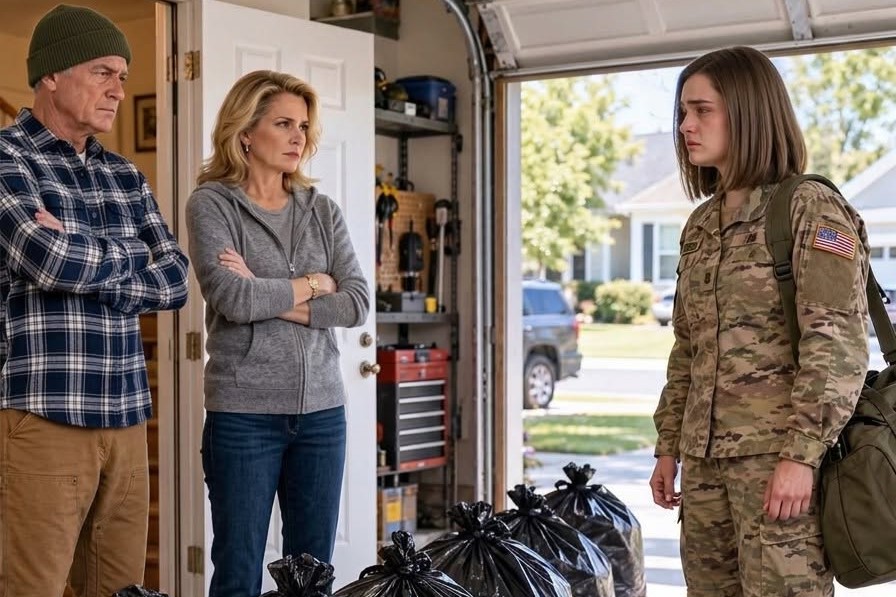
  • I came home from military training and the first thing I saw was the bruises around my mother’s neck. “Please… don’t ask,” she whispered after two years of hiding the truth from me.  

    I came home from military training and the first thing I saw was the bruises around my mother’s neck. “Please… don’t ask,” she whispered after two years of hiding the truth from me.  

    I simply nodded, pulled out my phone, and started documenting everything. That night, I discovered a deadbolt installed on the outside of her bedroom door—and from that moment on, nothing would ever be the same.

    Part 1

    “If you ask me about that bruise again, I swear to God you’re going to regret it,” Mark sneered from the kitchen doorway, glaring first at my mother, then at me, as if he owned the very air in the house.

    I had just arrived back home in San Antonio after nearly three months away for an advanced Army leadership course at Fort Sam Houston. I hadn’t called ahead because I wanted to surprise my mom, Sarah. The whole drive over, I had pictured her laugh, her warm hug, the smell of her cooking.

    Instead, the first thing I noticed when I stepped into the hallway was the padlock.

    It was installed on the outside of her bedroom door.

    Then I noticed the silk scarf wrapped tightly around her neck on a ninety-degree Texas afternoon. Beneath her collarbone was the faded yellowing shadow of an old impact, a purple ring around her left wrist, and a small split on her bottom lip covered in thick concealer.

    “I tripped on the porch steps,” she said before I could even ask. “I was being clumsy.”

    My mother had never been able to lie to me. That afternoon, she lied with terrifying, practiced perfection.

    My name is Major Valeria Mendoza. I’ve served ten years in the U.S. Army. My military training had taught me one fundamental rule before entering any hostile zone: observe, assess, and gather intelligence before you react. So I didn’t push. I sat at the kitchen table, drank coffee with her, and let my eyes quietly map the house I grew up in.

    There was a patch of dry-wall paste poorly covering a fist-sized dent near the hallway. The framed portrait of my late father was gone from the mantelpiece. The keys to my mother’s sedan were clipped to Mark’s belt loop. And every time a truck rumbled down the street outside, her shoulders winced.

    Mark Salgado had entered her life two years after my dad passed away. At first, he seemed harmless—the kind of neighbor who brought over fresh pastries and fixed a leaky faucet. I rarely saw him because I was stationed away.

    My father had built this house brick by brick through thirty years of hard work. The wooden porch swing was the same one he had built when I was in middle school, and my mother still tended a bougainvillea bush he had planted after his diagnosis because she said something of him needed to keep growing. Hearing Mark refer to it as “my house” stirred a cold, fierce rage in my chest that required every ounce of my military discipline to suppress.

    That night, after Mark fell asleep, my mother crept into my old childhood bedroom.

    “Please don’t do anything reckless, Val,” she whispered, her voice trembling in the dark.

    Then she told me everything: the complete control of her bank accounts, the relentless verbal threats, the physical shoves, the days he confiscated her phone, the hidden car keys, and the exterior padlock on her door “so she could learn to calm down.” Mark had spent months repeating that the house was legally his now, and that if she ever called the police, she would wind up on the street.

    I pulled her into a tight, protective embrace.

    “Mom, pack a small duffel bag,” I whispered into her hair. “Tonight, you’re sleeping at a hotel across town. Tomorrow morning, I’m coming back here alone.”

    “Why?”

    “So he thinks he won.”

    I returned to the house the following morning. I casually told Mark that my mother had gone to stay with a church friend for a few days because she was being “overly sensitive.”

    He smirked. That smirk was his fatal mistake.

    He immediately began boasting about how “a woman needs to learn her place” and how Sarah made a mountain out of every molehill. While he talked, I left my personal cell phone sitting face-down on the granite counter, silently recording every word.

    When he stepped out to the backyard, I went straight to the hall closet where my mother kept old holiday decorations. Tucked beneath a stack of dusty boxes at the very back, I found an old iPhone everyone assumed had been lost a year ago.

    I plugged it into a portable charger. It powered on.

    Inside the photo gallery were timestamped pictures of severe contusions spanning eighteen months, frantic text messages containing explicit threats, and a twenty-two-second voice memo. In the audio recording, a heavy thud was followed by my mother’s pleading voice: “Please, Mark. Not again.”

    I stood motionless in the closet, my jaw set, feeling the cold certainty of what had to be done.

    When Mark walked back inside, I picked up my phone and gave him a calm, pleasant smile. “See you tomorrow, Mark.”

    He let out a dismissive laugh. He had no idea he had just handed me his own recorded admissions, his violent threats, and eighteen months of irrefutable evidence.

    And he had even less of an idea of what was about to hit him.

    Part 2

    I didn’t report back to base that afternoon. I checked my mother into a quiet hotel off the highway near New Braunfels, then spent four hours organizing duplicate copies of every photo, text log, audio file, and medical timestamp into a master file.

    I wasn’t planning a confrontation; I was building an airtight case that would hold up in court when Mark inevitably tried to paint my mother as unstable.

    I started with the neighbors.

    Mr. Henderson, a retired mechanic who lived three doors down, lowered his eyes when I asked if he had ever heard shouting coming from the house.

    “More times than I care to admit, Major,” he confessed quietly. “Twice I picked up the phone to call 911. Mark always came over later and said your mom suffered from panic attacks. God forgive me for believing him.”

    Next, I uncovered something far worse. Mark had two formal long-term relationships before meeting my mother.

    His first ex-partner, Gabriela, had filed a temporary restraining order five years ago before suddenly dropping the court proceedings. I tracked her down, and she agreed to meet me at a diner in San Marcos.

    When I slid a picture of Mark across the laminate table, her face hardened. “Is he hurting her too?”

    I told her what I had found.

    “He’ll never stop,” Gabriela said softly, her eyes filled with old pain. “He just rotates victims.”

    Gabriela explained that she had dropped her restraining order because Mark spent weeks alternating between tearful apologies and terrifying threats. One day he swore he’d go to counseling; the next he reminded her he could ruin her financially. For years, she had carried the shame of walking away. When I told her that the blame rested entirely on the man who chose to abuse women, she sat in silence for a long moment, then offered to submit a formal affidavit to prosecutors if my mother proceeded.

    His second ex-girlfriend, Lorena, had moved out of state and cut ties entirely.

    This wasn’t a sudden domestic dispute. It was a documented, repeating pattern of abuse.

    I retained a veteran family law attorney, Mariana Rios, who specialized in high-conflict domestic violence cases. I handed her the master file, making it explicitly clear that I had not used military databases, government resources, or my rank to gather the information.

    Mariana reviewed the evidence, her expression growing darker with every page.

    “We have more than enough to go to the District Attorney and obtain an emergency protective order,” Mariana told us. “But prepare yourselves: once Mark realizes Sarah isn’t coming back quietly, he will escalate.”

    We filed the petition, and a specialized victim protection unit was assigned to the case. A detective named Lucía Ortega coordinated a law-enforcement escort for my mother to return to the house solely to retrieve her legal documents, medications, and clothes.

    Over the next three days, Mark bombarded my mother’s phone with over a hundred messages.

    First came the faux concern. Then the insults. Then explicit text threats stating that if she stepped foot “on his property,” she would regret it. He threatened to throw all her belongings into the driveway and put her dog down.

    Every single message was saved and uploaded to our legal cloud server.

    At night, my mother would flinch every time her phone buzzed, setting it face-down on the nightstand. I didn’t tell her not to be afraid; the fear was real. I simply reminded her that she wasn’t alone anymore, and that every threat Mark sent was another nail in his legal coffin.

    On Friday afternoon, my mother pulled up to the driveway. An advocate from the victim services unit rode in the passenger seat. I was parked half a block away in an unmarked vehicle. Two local police cruisers waited around the corner.

    Mark stormed out of the front door before my mother had even turned off the ignition.

    He immediately began screaming obscenities at her.

    My mother rolled down her window slightly. “I’m only here to get my clothes and my papers, Mark.”

    He marched up to the driver’s side, grabbed her by the forearm through the open window, and when she tried to pull back, he yanked the door open and shoved her violently against the frame.

    The police cruisers pulled into the driveway within three seconds, sirens blaring.

    Mark’s face transformed from rage to complete bewilderment.

    “Officers! Thank God you’re here!” Mark shouted, holding his hands up defensively. “This woman came onto my property causing a massive scene!”

    Detective Ortega stepped out of her vehicle, looking at my mother first. “Ma’am, do you need medical assistance?”

    Mark interrupted loudly, “I didn’t even push her that hard!”

    An icy silence fell over the driveway.

    Detective Ortega turned her head slowly to stare at him. “Sir, you just confessed on my body camera to physically pushing her.”

    For the first time since I had met him, the arrogant smirk vanished from Mark’s face completely.

    The officers placed him in handcuffs as neighbors gathered on their porches to watch.

    As he was being led to the back of the squad car, his eyes found mine standing on the sidewalk. “I’ll be out by tonight!” he sneered through the window. “And then you’ll find out who you’re dealing with!”

    I didn’t say a word. The detective’s body camera captured every syllable of his threat.

    That evening, my attorney called my cell phone.

    “Valeria, we found Lorena,” Mariana said. “And she wants to testify.”

    I stood by the window, watching the sun set over Texas, realizing that Mark’s carefully constructed world was about to be completely dismantled.

    Part 3

    Mark posted bail the following afternoon, subject to strict release conditions and a temporary protective order forbidding him from coming within five hundred feet of my mother. When Sarah heard he was out, the color drained from her face.

    “So nothing has changed,” she whispered, staring at her hands.

    “Everything has changed, Mom,” I told her firmly. “It’s no longer your word against his.”

    Lorena, Mark’s second ex-partner, had remarried and spent years trying to forget he existed. But when my attorney explained that another woman was trapped in the exact same nightmare, she agreed to submit a sworn statement. She detailed the exact same cycle: jealousy disguised as protectiveness, financial control, phone monitoring, social isolation, and eventual physical violence.

    Gabriela submitted her affidavit the same day.

    The first time all three women spoke on a group call, I stepped out onto the balcony. That conversation didn’t belong to me.

    An hour later, I walked back inside to find my mother wiping tears from her eyes.

    “For two years, I convinced myself that I was pushing his buttons,” Sarah choked out. “I thought if I spoke less, stayed home, cooked what he liked, he’d calm down.”

    I sat beside her. “And now?”

    “Now I know he was doing this long before he ever met me.”

    She didn’t sound relieved. She sounded furious. It was the first time in two years I had seen her direct her anger at him instead of blaming herself.

    The District Attorney’s office assembled a comprehensive felony indictment: medical records, photos, audio files, text logs, neighbor statements, and prior domestic violence affidavits. They also documented the exterior padlock on the bedroom door and the old cell phone containing the recorded assault.

    One of the most critical pieces of evidence was the recording I had made on my phone during my first morning back. Mark’s own voice echoed clearly, stating that “a woman needs discipline,” that Sarah was “overly emotional,” and that no court was ever going to remove him from a house that he claimed was already his.

    When my attorney pulled the county property records, another massive lie unravelled.

    The house had never been legally transferred to Mark.

    It remained entirely in my mother’s name under the estate deed left after my father’s death. Mark had taken copies of property tax receipts, forged basic administrative forms, and repeated a lie so many times that my mother had simply surrendered and believed him.

    “He showed me papers and told me I had signed over the deed,” Sarah whispered, shaking her head in disbelief.

    “Paying a utility bill or holding a copy of a deed doesn’t make someone an owner, Sarah,” Mariana explained gently.

    My mother covered her face with her hands.

    Sometimes, abuse doesn’t require iron bars. It just requires convincing someone that the door can’t be opened.

    With the protective order enforced, we returned to the house with a police escort to officially reclaim her property. My mother stopped in front of the fireplace mantel where my dad’s photo used to sit.

    We found the framed portrait wrapped in a dirty towel inside a cardboard box in the garage.

    “He told me it was time I stopped living with dead men,” she whispered, hugging the frame to her chest.

    Over the next few weeks, Mark tried to regain control using third parties. He called distant relatives, claiming it was a “family misunderstanding,” and tried to pressure a neighbor to intervene. Then he made another massive

    Mark subtly hinted that it would be a “shame” if Mr. Henderson’s auto shop faced local zoning issues for getting involved in private matters.

    Mr. Henderson recorded the call and handed it straight to Detective Ortega.

    Attempting to intimidate a state witness escalated Mark’s charges significantly.

    The legal process was slow and grueling—pre-trial hearings, depositions, protective order renewals, and endless paperwork. But my mother was changing day by day.

    During one of those weeks, she confessed that for over a year, she had slept fully clothed in case she had to run out into the night. She had hidden two hundred dollars inside a pillowcase and kept a spare copy of her driver’s license buried in a potted plant on the back porch. Hearing that broke my heart, but it also made me realize something vital: she had been trying to survive and escape long before I ever walked through that door.

    She began attending a support group at a local women’s shelter. She changed her phone number. She reconnected with two lifelong friends whom Mark had forbidden her from seeing. One evening, they came over to her hotel suite with a hot casserole and stayed past midnight talking and laughing.

    Hearing my mother laugh again—really laugh—was a sound I hadn’t heard in years.

    By the time the trial date arrived, Sarah was no longer the broken woman I had found hiding bruises under a silk scarf. She was still anxious, but she knew her fear was no longer a sentence she had to accept.

    Mark arrived at the courthouse wearing a gray suit, his hair neatly combed, putting on the performance of a respectable businessman. His defense team tried to paint my mother as bitter and bitter, and portrayed me as an overbearing military officer who had orchestrated a personal vendetta.

    When I took the witness stand, I laid out the facts with military precision.

    I didn’t use military assets. I didn’t pull favors. I didn’t threaten Mark. I didn’t touch him. I observed a crime, recovered an old phone, interviewed witnesses, saved recorded communications, hired legal counsel, and turned everything over to civil authorities.

    “Major Mendoza, why didn’t you confront Mr. Salgado immediately on the day you arrived?” the defense attorney asked.

    “Because for two years, my mother was told that no one would ever believe her,” I testified calmly, looking directly at the jury. “I wanted to ensure that when she finally spoke, the physical evidence was so overwhelming that no one could ever call her a liar again.”

    Then Mr. Henderson testified. Then Gabriela took the stand.

    When Lorena appeared via video link from out of state, I saw Mark fidget nervously in his chair, his composure cracking.

    But the definitive blow came when the prosecutor played the audio recordings in open court.

    Not the polished man sitting at the defense table, but the man in the kitchen—the arrogant voice declaring that Sarah was too sensitive, that women needed discipline, that his past relationships had all ended because the women were “crazy.”

    Mark dropped his head, staring at the floor.

    Then came the audio file from the old iPhone. The sound of a heavy blow. The silence. And my mother’s small, trembling voice: “Please, Mark. Not again.”

    My mother closed her eyes. Gabriela, sitting behind her in the gallery, reached forward and took her hand. Sarah squeezed it tightly.

    That single gesture captured everything. Mark had spent years isolating women, making them feel entirely alone. Now, three of them stood united by the truth he had tried so desperately to bury.

    The jury returned a unanimous guilty verdict on charges of felony domestic assault, witness intimidation, and unlawful restraint. The judge sentenced Mark to a significant prison term, ordered full financial restitution, and issued a permanent, lifetime protective order.

    The house was never his. He was escorted from the courtroom in handcuffs, his arrogance completely shattered.

    The day we finally moved my mother back into her home permanently, she stood in the hallway staring at the metal padlock still bolted to her bedroom door frame.

    “Take it off, Val,” she said.

    I grabbed a screwdriver from my toolbox. “I’ll handle it.”

    “No,” Sarah said firmly, taking the tool from my hand. “I want to do it.”

    She knelt down and began unfastening the screws. One was rusted, requiring several minutes of effort, but she didn’t stop until the metal hardware clattered onto the hardwood floor. She picked up the lock, holding it in her hand.

    “He told me this was for my own protection when I got hysterical,” she murmured.

    “And what do you say now, Mom?”

    She looked up at me, her eyes clear and sharp. “I say a door that only someone else can unlock isn’t a door. It’s a cage.”

    She threw the padlock directly into the trash can.

    A few months later, she decided to sell the house. Not because Mark had taken it from her, but because she didn’t want her future framed by the walls of her past. She purchased a sunlit, single-story bungalow in a quiet neighborhood near a local park and a bakery.

    My father’s picture was placed prominently on the mantle in her new living room—not as a monument to grief, but alongside recent photos of our family at the beach.

    The night before my leave ended and I had to report back to my unit, my mother stood on her new back patio, looking up at the stars.

    “You know, Val,” she said softly, turning to me. “You think you saved me.”

    I smiled. “Maybe a little bit.”

    “You helped me,” she corrected gently, taking my hands into hers. “But I was the one who walked out of that house. I was the one who stood on that witness stand. I was the one who took that lock off the door.”

    She was entirely right.

    For months, I had viewed the situation as a military operation: secure the target, gather intelligence, execute the plan. But my mother wasn’t a mission to be completed. She was a survivor reclaiming the strength that had been stolen from her piece by piece.

    Mark had assumed she was completely alone. That was his greatest mistake.

    He didn’t account for a daughter who knew how to observe before striking, a neighbor who refused to look the other way any longer, an attorney who fought for justice, and two women from his past who refused to let another victim suffer in silence.

    Real strength isn’t about matching violence with violence. Sometimes, the most devastating thing you can do to a bully is to stop letting his lies work.

    Mark spent years convincing the women in his life that they were helpless, that no one would believe them, and that he held all the power.

    He was wrong. My mother held the power all along.

    And the last time I watched her close the front door of her new home, there was no lock on the outside.

    Just a simple deadbolt—and the key was in her hand.

  • My flight attendant wife had to work on our anniversary, so I secretly booked a seat on the same flight to surprise her, but then the pilot made an announcement that left me completely frozen.  

    My flight attendant wife had to work on our anniversary, so I secretly booked a seat on the same flight to surprise her, but then the pilot made an announcement that left me completely frozen.  

    PART 1: THE FAREWELL FLIGHT


    Patrick boarded his flight expecting to surprise his wife on their anniversary, never imagining that before the plane even reached its destination, a pilot’s announcement would expose a secret that would tear their marriage apart.

    For twelve years, my wife, Penelope, and I had built our marriage around departures from plans we swore we would keep, only to change them because the weather over Atlanta had turned dangerous, or because her crew had been reassigned, or because a connection in Phoenix had fallen apart.

    When you marry a flight attendant, you learn very quickly that time together is rarely simple, so you take whatever moments you can get and eventually stop treating calendars like promises.

    “Our marriage definitely has more layovers than most flight plans,” Penelope used to joke whenever we had to reschedule a date night.

    “That just means we get extra destinations,” I would reply, wrapping my arms around her waist as she packed her luggage.

    The truth was, our relationship had plenty of romance, but we just had to work harder than most couples to keep it alive. We celebrated birthdays over spotty video calls interrupted by terrible airport Wi-Fi, and we ate anniversary dinners at ten o’clock at night because her flight had been delayed for hours. Once, we even celebrated Christmas morning with Penelope still in uniform, kissing me at the front door before rushing back to the airport terminal.

    “I promise I will make it up to you next year, Patrick,” she whispered that morning while adjusting her blue scarf.

    “You don’t have to apologize,” I said softly, kissing her forehead before she stepped out. “Just fly safe and come back to me.”

    None of those constant delays ever made me love her less, and if anything, it made me admire her dedication even more. But there was one heavy thing that the endless miles and unpredictable schedules could never make easier.

    We desperately wanted a child, and that desire had quietly lived inside our marriage for years. At first, it was simple hope that felt bright, innocent, and deeply exciting.

    Then it gradually turned into tracking calendars stuck to the refrigerator, ovulation kits cluttering the bathroom drawer, specialist appointments, blood tests, invasive procedures, hormone injections, and long, silent drives home from fertility clinics.

    Eventually, our struggle became a kind of quiet grief that was difficult to explain because no one had actually died, yet something vital inside us seemed to die over and over again with every single negative test result. We tried IVF twice with high hopes. The first time, Penelope bought a tiny pair of white baby socks right before the embryo transfer took place.

    “Look at these, Patrick,” she said, holding them up with a bright, hopeful smile. “I just want to believe early this time.”

    “They look perfect,” I replied, squeezing her hand tightly. “This is going to work out for us.”

    The second time, however, she didn’t buy anything at all. Both attempts failed completely, leaving us spiritually exhausted and financially drained. After that came even more tests, more specialists, and expensive consultations where doctors spoke about percentages and probabilities as though numbers could make heartbreak feel less personal.

    “Conceiving naturally is highly unlikely for you two,” the fertility doctor explained calmly during our final consultation. “The probability is almost zero at this point.”

    I watched Penelope absorb that news like someone standing completely motionless under a blast of freezing rain. She didn’t break down in the office, but instead politely thanked the doctors before walking out beside me in absolute silence. A few months before our tenth anniversary, she finally sat me down and confessed that she was ready to stop trying.

    “I am so tired, Patrick,” she whispered one night while lying beside me and staring at the ceiling. “I am tired of building my whole future around what never happens.”

    “Then we stop,” I replied softly, reaching for her trembling hand. “We don’t have to fight this battle anymore.”

    And just like that, we stopped trying to become parents. Two years later, Penelope surprised me with another unexpected confession while we were making coffee in the morning.

    “I think I want to leave the airline,” she announced, watching my expression carefully.

    My wife had spent so many years in the air that I could barely picture her life on the ground full time.

    “Are you completely sure?” I asked, setting my mug down on the counter. “You have dedicated your whole youth to flying.”

    “I want a quieter life with you,” she said with a small smile. “Maybe that is enough now, and I will figure out the rest later.”

    Her retirement paperwork went through faster than either of us expected, leaving her with just one final rotation and one final flight. Then she would be completely finished with jump seats, jet lag, and schedules printed weeks in advance. She would be finished with missing birthdays and postponed anniversaries, which was fitting because her final flight was scheduled to land on our anniversary.

    “I am so sorry, Patrick,” she said the night before her flight, hanging up her uniform for the last time. “Twelve years married, and somehow I still managed to spend our anniversary in the air.”

    “You are coming home the very next day,” I kissed the back of her neck reassuringly. “We can celebrate then, so do not worry about it.”

    “Okay,” she smiled softly. “We will do a proper dinner tomorrow night.”

    I agreed, but secretly I had already decided that tomorrow was not going to be an ordinary day. This was her last flight, it was our anniversary, and it marked the end of an entire chapter of our lives, so I wanted to make it deeply memorable. Penelope had spent years surprising other people by arranging birthday treats for nervous children, remembering passengers’ names, and upgrading honeymoons whenever she could. For once, I wanted her to be the person receiving the surprise instead of giving it. I secretly booked a seat on the exact flight she was working, imagining her spotting me halfway through boarding and laughing.

    “She will probably call me an idiot,” I murmured to myself while checking in at the gate, feeling a wave of excitement.

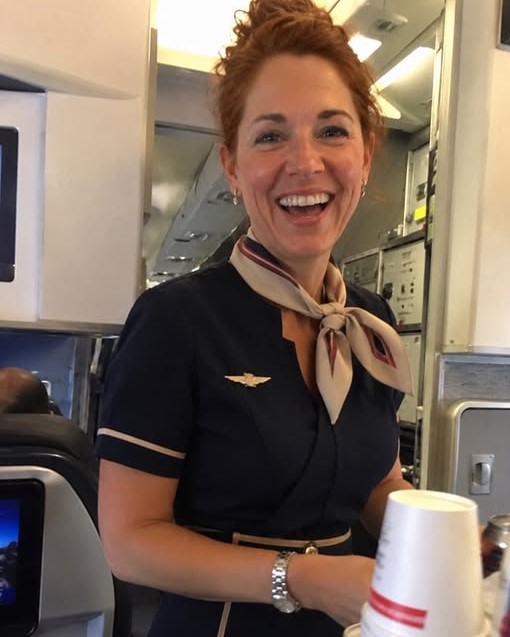
    When I boarded the plane, I spotted her almost immediately near the front of the cabin. She was helping a senior passenger wrestle an oversized carry-on bag into the overhead compartment. Her hair was neatly pinned up, her lipstick was understated, and her posture was perfect in that unmistakable way flight attendants learn after years of moving through crowded cabins. Even after twelve years, seeing Penelope in her sharp uniform still made my heart skip a beat. She was beautiful, capable, confident, and completely herself, and she had not noticed me yet. I kept my head down and walked toward my seat with a private grin that made me feel like a teenager. After everyone had boarded and the cabin doors closed, I finally looked up directly at her. Penelope turned, and our eyes met across the aisle. For one second, she looked completely stunned, and then her entire face lit up with joyful shock.

    “You idiot,” she mouthed silently, shaking her head.

    I grinned back like a complete fool, enjoying every second of her reaction. One of the other flight attendants looked between us, realized what was happening, and tried to hide a warm smile.

    “Is that your husband?” the colleague whispered playfully to Penelope.

    “Yes, he is completely out of his mind,” Penelope replied with a huge laugh.

    A few minutes later, the aircraft pushed away from the gate as the engines came alive and the safety demonstration began. The captain welcomed everyone aboard in the usual calm voice that passengers usually half-hear and half-ignore, but I barely listened because I could not stop watching Penelope move through the cabin one last time. She was doing all the ordinary tasks she had performed thousands of times before, but suddenly every little movement seemed touched by the emotional knowledge that this was the end of her career.

    “Before we depart today,” the captain’s voice suddenly echoed through the intercom system.

    Several passengers looked up from their phones in curiosity.

    “I would like to recognize someone very special who is working on today’s flight,” the captain continued smoothly.

    Penelope stopped walking in the aisle and slowly turned toward the cockpit door with a surprised look.

    “I assume her team organized a surprise farewell announcement,” I thought to myself, leaning back in my seat with a smile.

    “Today marks the final flight of a crew member who has spent years keeping passengers safe while quietly carrying a burden almost no one on this aircraft knows about,” the captain said warmly.

    Penelope went completely pale, clearly uncomfortable with being singled out in front of a full flight. Something tightened uncomfortably in my stomach as I watched her facial expression change.

    “But today, we are celebrating more than just her retirement,” the captain announced, his voice filled with genuine excitement. “Earlier today, our medical department received the results of routine health tests Penelope completed before the flight, and I am delighted to share that our wonderful Penelope is expecting a baby!”

    PART 2: THE CRUMBLING FAITH

    The cabin immediately erupted into loud applause, enthusiastic gasps, and joyous cheers from strangers.

    “Oh my God, that is so wonderful for her!” a woman sitting across the aisle exclaimed, clapping her hands together.

    For ten shining seconds, an entire cabin full of passengers celebrated what they believed was the happiest news imaginable. Penelope stood motionless in the aisle, crying softly with her hand covering her mouth as she looked completely overwhelmed. But I was not celebrating at all, and instead sat completely rigid in my seat as a terrible memory flooded my mind.

    “You cannot father a biological child,” a doctor had told me years earlier during one of our solo fertility checks.

    It was not technically impossible, the specialist had explained back then, but it was so extremely unlikely that we should never treat it as a realistic hope. I had gone through that extra testing quietly because I thought that if there was devastating news, I would rather absorb it myself first before hurting my wife. By the time I received those results, Penelope was already drowning in her own deep pain from another failed cycle, so I could not bring myself to add my bad news to her heavy burden.

    “I will just take this secret to my grave,” I had reasoned cowardly back then, convincing myself that protecting her meant staying silent.

    Now, sitting on that plane while strangers applauded her pregnancy, the horror of the situation hit me like a physical blow. If I was effectively infertile, then the baby she was carrying could not possibly be mine. Penelope came down the aisle after takeoff, her eyes still wet with emotional tears as her trembling smile reached toward me.

    “Can you even believe this news, Patrick?” she whispered softly, squeezing my shoulder gently.

    I stared down at her hand touching me, feeling a cold sensation of horror creeping through my entire body.

    “Who are you really?” I thought in utter anguish, unable to process the betrayal taking root in my mind.

    When the plane finally landed, the ground crew had prepared a small celebration at the gate with beautiful flowers and warm hugs. Penelope looked radiant, while I must have looked like a ghost standing silently in the background.

    “Patrick, what on earth is wrong with you?” Penelope asked sharply once we finally reached the quiet privacy of the parking garage.

    “Are you not happy about this?” she continued, looking deeply hurt by my silence. “We have been trying for more than ten years for a child.”

    “Who is the father, Penelope?” I demanded, the toxic suspicion finally bursting out of me.

    I watched the joy instantly drain from her face so quickly that it felt almost violent.

    “What did you just ask me?” she gasped, stepping back as if I had physically struck her.

    “I asked you who the father is,” I repeated coldly, completely trapped inside my own worst nightmare. “The child cannot be mine.”

    “Are you serious right now?” she whispered, her voice trembling with disbelief and rising anger. “How could you say something so horrible to me?”

    “Because I know for a fact it is impossible!” I shouted, completely consumed by humiliation and grief. “Just tell me the truth!”

    “I am not lying to you, Patrick!” she cried out, tears spilling down her pale cheeks. “I have never been with anyone else!”

    “Then explain how this happened!” I yelled back, refusing to listen to her desperation.

    “I do not even know how to answer that because I have been faithful to you for twelve years!” she sobbed, holding her stomach defensively.

    We drove home in complete, agonizing silence, and the days that followed were even worse than that initial drive. I asked horrible questions that should never be asked of someone you love, tearing down every piece of trust we had built.

    “Was it someone from the airline staff?” I asked bitter questions while she sat at the kitchen table. “Is that why you were so eager to retire all of a sudden?”

    “There was no one else, Patrick,” she repeated quietly every single day, her eyes hollow with deep exhaustion. “I have never betrayed you.”

    On the third day of our living nightmare, Penelope stood in the kitchen with both hands braced against the marble counter, clearly exhausted by the early stages of pregnancy.

    “You either believe me, or you don’t,” she said in a hollow voice, looking directly into my eyes. “And if you don’t, I cannot force you anymore.”

    Because I was so utterly convinced by my old secret medical test, I never even asked for a DNA test, which remains one of my greatest regrets. Instead of searching for the logical truth, I jumped straight from fear to accusation, letting my foolish pride dictate my actions. A week later, I packed a bag and moved out of our house, and Penelope was too broken to fight to keep me there. I relocated to my old hometown near Columbus, renting a small room above a local hardware store from a quiet landlord.

    “Staying for long?” the landlord asked as I carried my single suitcase upstairs.

    “I don’t know,” I replied quietly, staring at the floor. “As long as it takes.”

    Some nights I drank far too much alcohol, and every night I slept terribly, constantly replaying the pilot’s announcement until the words felt carved into my brain. Months passed in a miserable haze, and around her seventh month of pregnancy, I found myself aimlessly driving past the fertility clinic where I had taken my original test years ago. A sudden, restless urge pushed me to park the car and step inside the familiar lobby.

    “I want to retake the full fertility panel,” I told the receptionist at the front desk, handing over my identification.

    “We can get your bloodwork and sample processed today,” she replied politely, scheduling the appointment immediately.

    A few days later, I returned to pick up the official results, fully expecting them to confirm my permanent infertility. But when the doctor handed me the folder, my eyes scanned the numbers in complete shock.

    “These metrics are completely normal,” the doctor stated casually, pointing at the chart. “You have excellent fertility levels.”

    “That is impossible!” I shouted, my hands shaking uncontrollably with sudden rage. “Your clinic told me years ago that I was virtually sterile!”

    I demanded to speak with the management, causing a scene until a senior administrator escorted me into a private conference room to review the archived files. Nearly an hour passed before the administrator walked back into the room with a grave expression on his face.

    “Mr. Patrick, we have discovered a catastrophic administrative error from six years ago,” the administrator explained in a trembling voice. “Your lab results were accidentally swapped with another patient who has an almost identical name and was tested on the exact same morning.”

    “Are you telling me that my original results were completely wrong?” I asked, my voice dropping to a terrified whisper.

    “Yes, sir,” the doctor confirmed softly. “You were completely healthy all along. It is entirely possible for you to father a biological child.”

    PART 3: THE LONG ROAD HOME

    That single sentence completely shattered my entire world, leaving me gasping for air in that cold office.

    “My wife never cheated on me,” I realized with a horror so profound it threatened to crush my chest. “She got our miracle, and I called her a liar and abandoned her.”

    I stormed out of the clinic with all the corrected medical documents in my hand, sitting in my car for nearly an hour while weeping uncontrollably over my own monstrous foolishness. I tried calling Penelope three times, but she didn’t answer her phone, so I drove to her obstetrician’s office in Minneapolis, knowing she had a routine checkup scheduled that afternoon. When she finally walked out of the medical building holding a yellow folder over her swollen bump, she froze upon seeing me waiting by her car.

    “What are you doing here, Patrick?” she asked, her voice cold and guarded.

    “Please, Penelope, just hear me out for five minutes,” I begged, taking a step forward.

    “No, you don’t get to show up after seven months of absolute silence,” she said angrily, reaching for her car door handle.

    “I have proof that I was wrong about everything!” I shouted desperately, holding out the white envelope containing the clinic’s admission of error.

    “I already knew I was innocent from day one,” she replied coldly. “I don’t need a piece of paper to prove my honesty.”

    “Please, just let me explain what happened,” I pleaded, tears streaming down my face. “I am begging you.”

    She looked at my desperate state, let out a heavy sigh, and unlocked the passenger door without saying another word. We sat inside her quiet car, and I laid out the entire devastating truth, confessing about the secret test I took years ago, the swapped paperwork, the recent retest, and the clinic’s horrific mistake.

    “So let me get this straight,” Penelope said quietly after I finished talking. “You assumed I was an adulterer because of a secret medical result you hid from me for years?”

    “Yes,” I admitted, unable to look her in the eye.

    “And even though I swore on my life that I was faithful, you chose to believe a piece of paper over my word?” she asked, her voice trembling with intense emotional pain.

    “I was a complete coward, Penelope,” I wept openly. “I didn’t trust you, and I ruined everything.”

    “You abandoned me when I was terrified, sick, and carrying the baby we prayed for,” she said softly, wiping tears from her face. “The clinic made a mistake, but you chose to leave me.”

    “I am so deeply sorry,” I sobbed, feeling the full, unbearable weight of my betrayal.

    “I believe your story about the lab mix-up,” she continued after a long, heavy silence. “But forgiveness is not something I can just hand to you overnight.”

    “I understand,” I replied softly.

    “You are not moving back into our house,” she stated firmly, looking out the windshield. “However, this is your biological daughter, and I will not rob her of a father because of your terrible mistake. You can be involved in her life as much as you want.”

    The next day, I rented a small apartment ten minutes away from her house and dedicated every single waking hour to being useful to her. I showed up every day to build the crib, babyproof the cabinets, paint the nursery in light yellow and navy blue, carry heavy groceries, and assemble baby bottles at her kitchen table.

    “Do you need me to rub your feet today?” I asked gently one evening while she sat exhausted on the sofa.

    “Yes, please,” she replied softly, placing her swollen feet on my lap.

    Some days she spoke to me with gentle kindness, while other days she barely acknowledged my presence at all, but I accepted both without a single complaint because I knew I had to earn back every fraction of her trust. Late one night at 2:14 in the morning, my phone rang on the nightstand, and I snatched it up instantly.

    “Patrick, my water just broke,” Penelope said calmly over the line.

    “I am on my way right now!” I shouted, throwing on my clothes and driving over in under ten minutes.

    At the hospital in Minneapolis, Penelope was incredibly brave, holding my hand tightly and crushing my fingers through every agonizing contraction. At 5:30 in the morning, our beautiful baby girl was finally delivered into the world, crying loudly as the nurses wrapped her in a warm blanket.

    “She is perfect, Penelope,” I whispered, tears blurring my vision as I placed our baby gently into her arms.

    “Welcome to the world, Amanda,” Penelope murmured softly, kissing the baby’s tiny forehead while I stood beside them, overwhelmed with gratitude.

    Before we were discharged from the hospital, Penelope watched Amanda sleeping peacefully in her bassinet and turned to look at me directly.

    “You disappointed me in a way I don’t think I’ll ever completely forget,” she said in a quiet, serious tone.

    “I know, and I will spend my whole life making it up to you,” I promised earnestly.

    “I have decided to forgive you, Patrick,” she said gently, reaching out to touch my arm. “You can move back home, but we have a long way to go to rebuild our marriage.”

    Over the following months, we filed a major lawsuit against the fertility clinic to ensure their horrific record-keeping error would never destroy another family’s life. The financial settlement was substantial, allowing Penelope to finally fulfill her lifelong dream of opening a small pastry shop called Sweet Horizons Bakery.

    “Look at mommy making the fruit tarts,” I whispered to Amanda as I held her behind the counter, watching Penelope interact happily with customers in her sunlit shop.

    On our thirteenth anniversary, we celebrated quietly at home while Amanda slept peacefully in her nursery upstairs. Penelope lit a single candle on a small cake she had baked herself, setting it on the table between us.

    “Thirteen years together,” Penelope said with a warm, genuine smile, taking my hand across the table.

    “And I am never letting you go again,” I replied softly, squeezing her hand tightly.

    Our love was no longer the simple, untouched romance we started with years ago, but something scarred, resilient, and carefully rebuilt piece by piece, making it feel immeasurably more precious than ever before.

    THE END.

  • On the Way Home from Kindergarten, My Grandson Told Me Mom and Dad Had a Secret Even the Cops Couldn’t Know About – I Laughed at First, but by the Time He Finished, I Raced to My Daughter’s House

    On the Way Home from Kindergarten, My Grandson Told Me Mom and Dad Had a Secret Even the Cops Couldn’t Know About – I Laughed at First, but by the Time He Finished, I Raced to My Daughter’s House

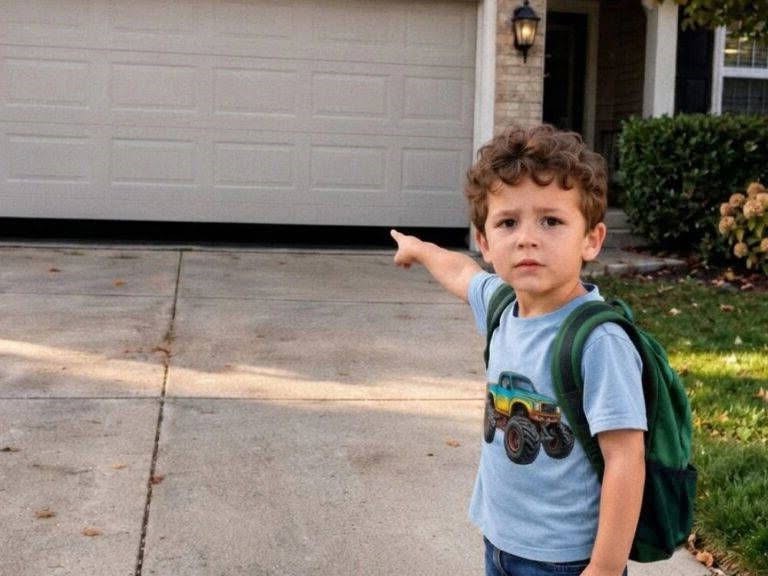
    My five-year-old grandson whispered that his parents were hiding something in the garage.

    So I turned the car around.

    I expected a harmless surprise.

    Maybe a birthday gift.

    Maybe some half-finished project they didn’t want me to see yet.

    Instead, what I found in that garage pulled me straight back into a part of my life I had buried for forty years.

    I picked Noah up from kindergarten a couple of afternoons each week and brought him to my house until his parents finished work.

    Those drives were some of my favorite times with him.

    Noah could talk endlessly.

    Dinosaurs.

    Classroom drama.

    What someone had packed for lunch.

    Which kid had cried at recess.

    That afternoon, he was strapped into his car seat when his voice suddenly dropped to a whisper.

    “Grandma, I’m going to tell you a secret.”

    I smiled at him through the rearview mirror.

    “Oh?”

    He leaned forward as much as the straps allowed.

    “Mom and Dad said even the police can’t know.”

    I laughed.

    “What are those two doing now?”

    But Noah looked completely serious.

    “It’s in the garage.”

    “What’s in the garage?”

    “I’m not supposed to tell you. Dad said nobody can know until it’s ready.”

    I shook my head.

    Noah had never been good at keeping surprises.

    One Christmas, he announced the contents of nearly every wrapped present before breakfast.

    “Did Dad say anything else?”

    Noah picked at the strap across his chest.

    “Mom said, ‘What are we going to do if she finds out?’”

    My smile disappeared.

    “Who is she?”

    He pointed directly at me.

    “You.”

    My hands tightened slightly around the steering wheel.

    My daughter Emma liked to joke that I could turn the smallest suspicious detail into a full investigation before anyone finished explaining.

    Maybe she was right.

    “So tell Grandma what you saw.”

    Noah described a red light glowing inside the garage.

    He had heard his parents whispering.

    He had also seen Emma carrying a package home from a flea market.

    She took it straight into the garage and told him not to touch it.

    “Did you see what was inside?”

    He shook his head.

    “They said it wasn’t ready.”

    I tried to laugh.

    Maybe it was a birthday surprise.

    Some craft project.

    Nothing serious.

    Then I remembered something.

    The week before, Emma had casually asked whether I still kept belongings from when I was young.

    “What are you thinking about, Grandma?”

    “Nothing, sweetheart.”

    But by the time I reached the road leading toward my house, I had already driven past it.

    I turned around.

    And headed directly to Emma’s home.

    When I pulled into the driveway, I saw the garage window glowing red.

    Whatever they were hiding was inside.

    I got Noah out of the car.

    Before I could knock, Emma opened the back door.

    Noah immediately announced,

    “Grandma came to see the garage.”

    Emma looked at me.

    “Mom, I was actually going to—”

    Too late.

    I was already walking past her.

    The red glow came from small decorative lights strung across one wall.

    Underneath them were photographs.

    Some framed.

    Others clipped along pieces of twine.

    At first, I didn’t understand what I was seeing.

    Then I recognized the young woman in the pictures.

    Me.

    Decades younger.

    Sunburned.

    Laughing.

    Looking as though life had never hurt me yet.

    Relief came first.

    There was no emergency.

    No crime.

    No reason Noah should have mentioned the police.

    It was just some elaborate birthday display.

    Then I noticed the camera sitting on the workbench.

    Small.

    Dark.

    Old.

    A faded sticker clung crookedly to one side.

    My hand started toward it.

    Then stopped.

    I knew that camera.

    For forty years, I had told people I lost it.

    I had repeated that story so many times that even I had almost stopped questioning it.

    Seeing the camera again made that old explanation suddenly feel fragile.

    “Where did you get this?”

    Emma stepped into the garage behind me.

    “I found it at a flea market.”

    I stared at her.

    “The man selling it was getting rid of old things after retirement,” she continued. “I remembered you talking about the camera you lost.”

    “You bought it?”

    “Yes.”

    “And then?”

    Emma hesitated.

    “He told me there was undeveloped film inside.”

    My stomach tightened.

    “So you developed it.”

    She nodded.

    “I thought you’d want to see the photographs.”

    I looked at the wall.

    “You developed film from my old camera, printed the pictures, and displayed them without asking me?”

    Emma’s smile disappeared.

    “You always sounded sad when you talked about losing it.”

    “I said I lost it.”

    The words came out sharper than I intended.

    Emma went quiet.

    There were parts of my past I had spent decades packaging into neat little stories.

    This was one of them.

    I didn’t appreciate seeing it ripped open and decorated with string lights.

    “Who sold you the camera?”

    “Mom—”

    “Who?”

    Emma took a breath.

    “He became interested when I told him it might have belonged to you.”

    My stomach tightened further.

    “He asked if he could meet you.”

    I stared at her.

    “And you said yes?”

    “I thought maybe you knew each other.”

    She hesitated.

    “So I invited him to dinner.”

    “You invited some man I’ve never met to dinner because he sold you an old camera?”

    “I thought you might actually have known him.”

    Emma lowered her voice.

    “And honestly, you spend so much time taking care of everyone else. I thought maybe having someone new to talk to might be good for you.”

    I stared at her.

    She quickly added,

    “I’m not trying to find you a husband.”

    Then she gave me an awkward smile.

    “I was just trying to be your wingman.”

    “You decided to play matchmaker with a stranger?”

    “I thought you might know him.”

    “That wasn’t your decision to make.”

    I looked back toward the photographs.

    “You took something personal, opened it, put it on display, and invited the man who sold it here before telling me anything.”

    Emma’s face reddened.

    She glanced toward the kitchen, where Noah was humming to himself.

    Then she said quietly,

    “You’re right. I should have asked.”

    “I don’t want to meet him.”

    The doorbell rang.

    Emma and I both froze.

    She opened the door before I could stop her.

    An older man stood outside carrying a paper bag.

    His hair was silver now.

    Time had carved deeper lines around his eyes.

    But not enough to prevent me from recognizing him instantly.

    I stared.

    “Stephen.”

    His expression changed.

    “Alana.”

    Forty years disappeared in a second.

    “You still have a remarkable talent for appearing after I’ve already made up my mind.”

    He glanced toward the garage.

    “I knew this might be awkward.”

    “Awkward?”

    I folded my arms.

    “Is that what we’re calling it?”

    Emma stepped between us.

    “I invited him, Mom.”

    “I know.”

    I looked directly at Stephen.

    “I’m sure you still know how to make yourself sound reasonable.”

    He lowered the paper bag.

    “I came because I wanted to return something that belonged to you.”

    “You already sold it.”

    “I didn’t know you would want it.”

    A bitter laugh escaped me.

    “You never understood what I wanted.”

    Then I started pulling photographs from the wall.

    Stephen watched.

    “Alana.”

    “Don’t.”

    “Please look at the pictures in order.”

    “I don’t need you telling me what to do.”

    “I know.”

    His voice was calm.

    Then he looked toward Emma.

    “Would you mind if I showed her something?”

    Emma looked at me.

    I hated that she was waiting for permission.

    And hated even more that part of me wanted to know.

    “Fine.”

    Stephen entered the garage.

    He kept his distance.

    Then he pointed toward one photograph near the corner.

    I recognized it immediately.

    Stephen was leaning toward my friend Selena.

    Their faces were close.

    From that angle, it looked exactly like they were kissing.

    My stomach tightened.

    “That one.”

    Stephen nodded.

    “I thought so.”

    “What exactly did you think?”

    “That you’d see it now and think exactly what you thought forty years ago.”

    I stared at him.

    “You expect me to remember one photograph after forty years?”

    “I hoped you might remember what happened after you saw it.”

    Unfortunately, I remembered everything.

    The humiliation.

    The anger.

    Stephen reaching for my hand.

    Me pulling away.

    Me refusing to hear any explanation.

    I had been twenty-five.

    And absolutely convinced that being certain meant being right.

    I saw that one photograph.

    Then I walked out.

    I left the camera behind.

    Later, I told everyone I had lost it.

    “You never let me explain,” Stephen said.

    He pointed toward the next picture.

    “Look.”

    The following photograph showed Selena laughing.

    Our friend Carl stood beside her with his arm around her shoulders.

    Then another.

    Stephen between them.

    Everyone smiling.

    Another showed Selena leaning against Carl while Stephen reached toward her plate for food.

    Then another.

    And another.

    The entire sequence was ordinary.

    Friends at a picnic.

    Laughing.

    Eating.

    Messing around.

    One frozen moment had made it look like something completely different.

    I felt foolish.

    “You took all these that same day?”

    “Most of them.”

    Stephen looked toward the old camera.

    “The film was still inside.”

    He continued.

    “I tried to explain. I thought if I could get you to see the rest of the pictures, you’d understand.”

    “But you didn’t.”

    “You told me never to come after you.”

    I opened my mouth.

    Then stopped.

    Because I remembered saying it.

    And the embarrassing truth was that although I had meant the words in that moment, some part of me had also expected Stephen to know I didn’t really mean them.

    “You could have called.”

    “I tried once.”

    He spoke without anger.

    “You had moved.”

    Then he added,

    “You made it clear you didn’t want me finding you.”

    His eyes met mine.

    “Eventually, I decided I had to stop turning your no into a maybe.”

    That silenced me.

    For years, people had joked about how quickly I made decisions.

    I treated it like a personality quirk.

    Standing in front of those photographs, I realized a quick judgment could sometimes become a life sentence.

    Emma eventually convinced us to sit down.

    Dinner had already grown cold.

    We moved into the dining room.

    For several minutes, nobody seemed to know what to say.

    Then Emma asked,

    “How long ago did you two know each other?”

    Stephen didn’t answer immediately.

    He was staring at her.

    At her eyes.

    Her expression.

    Something shifted on his face.

    “How old are you, Emma?”

    She frowned.

    “Forty.”

    Stephen went completely still.

    His eyes moved from Emma to me.

    Then back.

    “Alana.”

    His voice changed.

    “We broke up forty years ago.”

    “I know.”

    He took a slow breath.

    “I don’t want to assume anything.”

    His fingers tightened around the chair.

    “And I know I probably have no right to ask this after all these years.”

    Then he looked at Emma again.

    “But could she be my daughter?”

    The room went silent.

    Emma stared at me.

    And suddenly the secret I had carried for four decades was no longer mine alone.

    “I found out I was pregnant several weeks after I left you,” I said.

    Stephen’s face lost its color.

    “I was already pregnant when I walked away.”

    His hand dropped from the chair.

    “Why didn’t you tell me?”

    Because I had been angry.

    Because I had been proud.

    Because I had convinced myself he had betrayed me.

    And because admitting I might have been wrong seemed impossible.

    “I thought you wouldn’t want to hear from me.”

    My voice became quieter.

    “I thought you would dismiss everything.”

    I swallowed.

    “But that doesn’t excuse it.”

    I looked at Stephen.

    “I should have given you the opportunity to decide for yourself.”

    Emma was staring at me now.

    “You knew he might be my father?”

    “I knew the timing.”

    “And you never told me?”

    “I didn’t know whether he would want to be involved.”

    Emma’s expression hardened.

    “You decided that for both of us.”

    There was no defense.

    She was right.

    For once, I didn’t rush to justify myself.

    I didn’t interrupt.

    I waited.

    Emma folded her arms.

    “I need a minute.”

    Stephen nodded.

    “You don’t have to decide anything right now.”

    His voice was gentle.

    “I’m not asking you to call me Dad.”

    He paused.

    “I just wanted to know.”

    Emma studied him for a long time.

    Then finally said,

    “I want to have dinner.”

    She looked at both of us.

    “But I’m asking the questions.”

    We moved back toward the dining room.

    The food sat untouched.

    No one seemed hungry anymore.

    I pulled out a chair for Emma.

    Then caught myself before telling her where to sit.

    For forty years, I had made decisions for other people because I believed I knew what was best.

    That evening, for the first time, I stopped.

    I looked at my daughter.

    And asked,

    “Where would you like to begin?”

  • At my father’s funeral, my husband leaned in and said my inheritance could finally erase his family’s debts. His mother had already chosen a $600,000 house she expected me to fund. I said nothing.  

    At my father’s funeral, my husband leaned in and said my inheritance could finally erase his family’s debts. His mother had already chosen a $600,000 house she expected me to fund. I said nothing.  

    My father had barely been laid to rest when my husband began talking about how to spend his money.

    Standing beside Dad’s coffin beneath a gray, rain-heavy sky, Ethan leaned toward me and whispered, “At least now your inheritance can finally solve some of this family’s problems.”

    I kept my eyes on the casket.

    Something inside me became completely still.

    Ethan’s mother, Marjorie, stood nearby pressing a lace handkerchief to eyes that were perfectly dry. During the funeral, she had sobbed louder than almost anyone, which was interesting considering she had once described my father as “a stubborn mechanic sitting on property he never deserved.”

    Now, with a diamond bracelet sparkling on her wrist, she accepted condolences as though they were gifts meant for her.

    “You poor dear,” she told one of Dad’s longtime church friends. “Lydia is heartbroken, naturally. But George was always practical. He would want his estate handled sensibly.”

    Sensibly.

    I already knew what that word meant to Marjorie.

    It meant paying off Ethan’s brother Caleb’s failing restaurant.

    It meant clearing Marjorie’s credit card balances.

    And apparently, it meant buying the $600,000 colonial home she had already toured twice.

    A house with white columns, black shutters, and a glass sunroom Marjorie had called “perfect for starting over.”

    I knew because I had seen the real-estate listing open on Ethan’s laptop the night before the funeral.

    He hadn’t even tried to hide it.

    At the luncheon afterward, Ethan lowered himself into the chair beside me while relatives laughed and talked near the buffet.

    “The will reading is tomorrow at ten,” he said quietly. “Please don’t embarrass me by falling apart.”

    I slowly turned toward him.

    “My father died four days ago.”

    “And my family has been drowning in debt for years.”

    His smile remained pleasant because people were watching us.

    Beneath the table, his fingers closed hard around my wrist.

    “You’re my wife,” he murmured. “What belongs to you belongs to us.”

    Marjorie appeared at my other side, wrapped in perfume that smelled like powder and roses.

    “Sweetheart,” she said gently, “grief can make women impulsive. Let Ethan manage the financial decisions for a while.”

    I looked from her hand patting my shoulder to Ethan’s fingers still gripping my wrist.

    For three years, they had mistaken my silence for weakness.

    Because I kept the books for Dad’s auto-supply business, wore inexpensive clothes, and drove his old blue pickup, they assumed I knew nothing about contracts, debt, investments, property, or manipulation.

    Dad had known better.

    And more importantly, he had known exactly what kind of people they were.

    Two months before his heart finally gave out, Dad asked me to bring him every bank statement, deed, business record, and security file connected to the company.

    Then he placed his old phone in my hand.

    “If I’m gone before I finish this,” he said, “give that phone to Martin Shaw. Not Ethan. Not his mother. Martin.”

    Martin Shaw was Dad’s attorney.

    So at the luncheon, I calmly pulled my wrist from Ethan’s hand, folded my napkin, and stood.

    “I’ll be there at ten.”

    Ethan smiled.

    He thought I had surrendered.

    That was his first mistake.

    By the next morning, Marjorie was already dressing for the life she believed my inheritance would buy her.

    She arrived at Martin Shaw’s office wearing cream wool and pearls, looking less like a woman attending a will reading and more like someone preparing to sign papers at a country club.

    Ethan wore the watch I had bought him years earlier, back when I still believed ambition and cruelty were two different things.

    Caleb came too.

    He smelled of expensive cologne and nervous sweat.

    He gave me a small nod, the kind someone might give a loan officer before asking for money.

    Martin’s conference room overlooked Main Street.

    Rain tapped steadily against the windows.

    Dad’s absence seemed to occupy a chair of its own.

    Marjorie placed a thick folder on the table.

    Inside were glossy photographs of the colonial house.

    White pillars.

    Dark shutters.

    A massive kitchen.

    A sunroom overlooking acres of landscaped property.

    “I realize this is a sensitive time,” she said, without sounding sensitive at all, “but planning ahead is healthy. George had no other children. Lydia certainly won’t need every piece of property he owned.”

    She glanced at me.

    “A grieving woman needs support, not financial burdens.”

    Under the table, Ethan pressed his hand against my knee.

    “Say something supportive,” he muttered.

    I looked directly at him.

    “I support my father’s wishes.”

    His expression hardened.

    Martin entered carrying a leather folio and a cardboard box.

    He took his seat at the head of the table.

    “Before we begin,” he said, “everyone should understand that this proceeding is being recorded.”

    Caleb shifted in his chair.

    “Why would it need to be recorded?”

    “Standard precaution in estates where disputes may arise.”

    Ethan gave a short laugh.

    “Disputes? There’s nothing to dispute.”

    Martin looked at me.

    I gave him a slight nod.

    He opened the folio.

    “George Harper executed his final will six weeks ago. It was properly witnessed and notarized, and it includes documentation from his physician confirming that he was mentally competent at the time.”

    Nobody moved.

    Martin continued.

    “The will places Harper Auto Supply, Mr. Harper’s residence, farmland, investment accounts, and liquid assets into the Harper Family Protection Trust.”

    Ethan’s face brightened.

    “With Lydia Harper Reeves named sole beneficiary and trustee.”

    Ethan leaned back with satisfaction.

    “My wife. Exactly.”

    Martin looked at him.

    “No, Mr. Reeves. Not exactly.”

    The entire room seemed to change.

    Martin turned another page.

    “The trust contains a marital protection provision.”

    Ethan stopped smiling.

    “No trust assets may be transferred, pledged, used as collateral, gifted, borrowed against, or applied toward debts belonging to Ethan Reeves, Marjorie Reeves, Caleb Reeves, or any company or financial entity connected to them.”

    Caleb went pale.

    Marjorie straightened in her chair.

    “That is completely unreasonable.”

    “It is very precise,” Martin replied.

    Ethan’s hand tightened against my knee.

    He turned toward me.

    “You knew about this?”

    “Yes.”

    For the first time, I allowed him to see the version of me Dad had always known.

    Not the wife who apologized for speaking too loudly.

    Not the woman who kept peace simply because everyone else demanded it.

    The woman who had spent twelve years balancing company accounts, negotiating supplier agreements, checking contracts, and noticing when one missing receipt told a larger story.

    “You should have told me,” Ethan whispered.

    I held his gaze.

    “You should have told me your mother was scheduling inspections on a house she planned to buy with money that never belonged to her.”

    Marjorie snapped the real-estate folder closed.

    “You selfish little widow-in-waiting.”

    Martin’s pen stopped moving.

    “Mrs. Reeves, I suggest you choose your words carefully.”

    But arrogance had already taken control of the room.

    Ethan stood.

    “Lydia was emotionally unstable after George became ill,” he said. “I handled things for her. George trusted me.”

    Martin glanced toward the cardboard box.

    “That statement,” he said, “brings us to Mr. Harper’s final instruction.”

    Martin reached into the box and placed Dad’s old phone on the conference table.

    The corner of the case was still cracked.

    I kept my hands folded in my lap.

    Ethan stared at the phone as though something from the grave had just appeared in front of him.

    Marjorie frowned.

    “What is that?”

    “Mr. Harper instructed me to play an audio recording before any further discussion regarding control of his estate.”

    Ethan’s chair scraped violently against the floor.

    “No.”

    Martin looked at him.

    Then he pressed play.

    For several seconds, there was only static.

    Then Ethan’s voice filled the room.

    “The old man probably won’t make it another year. Once Lydia inherits, I’ll get her to transfer the farmland first.”

    Marjorie’s recorded laughter followed.

    “And if she refuses?”

    “She won’t. She still thinks love means doing what she’s told.”

    Nobody moved.

    Ethan shot to his feet.

    “Turn that off!”

    Martin paused the recording.

    “Sit down, Mr. Reeves.”

    “That was private.”

    “It was recorded in George Harper’s office,” Martin said. “On his personal phone. Mr. Harper was present during the conversation.”

    Then he pressed play again.

    Caleb’s voice came through the speaker.

    “My restaurant debt gets cleared. Mom gets the house. Ethan, you said Lydia signs whatever you put in front of her.”

    Then Ethan answered.

    “After the funeral, she’ll be too broken to fight us.”

    A few seconds later, Dad’s weak voice came through.

    “Ethan… did you marry my daughter because of my money?”

    Silence.

    Then Ethan replied,

    “George, don’t make this dramatic.”

    Martin stopped the recording.

    Ethan turned toward me.

    The charming expression he had worn for years was gone.

    “Lydia, listen to me. Your father misunderstood everything.”

    I shook my head.

    “No. He finally understood everything.”

    I picked up the folder beside me and slid it across the table.

    Inside were copies of credit applications opened with my forged signature.

    Emails Ethan had exchanged with a property appraiser.

    Messages from Marjorie referring to me as “the key to the Harper vault.”

    Ethan stared at the pages.

    “Where did you find these?”

    “Our printer.”

    I turned another page.

    “Our shared cloud storage.”

    Then another.

    “You would be surprised how useful transparency becomes when someone assumes you’ll never bother looking.”

    Martin placed another document on the table.

    “Mrs. Reeves filed a police report this morning regarding the suspected forged documents. She has also filed a petition to freeze any questionable access connected to the estate or trust.”

    Marjorie shot to her feet.

    “You ungrateful girl! After everything this family has done for you?”

    I gave a small laugh.

    “You offered me control and called it love.”

    Ethan stepped toward me and reached for my arm.

    Before he could touch me, the conference-room door opened.

    Two officers entered.

    Martin remained calm.

    “Mr. Reeves, I would recommend speaking with legal counsel before making any further statements.”

    Ethan’s face turned red as the officers guided him toward the hallway.

    “She owes me!” he shouted. “I’m her husband!”

    I looked at him one last time.

    “No, Ethan.”

    My voice was steady.

    “You were my father’s final warning.”

    Six months later, Harper Auto Supply had a new accountant and no member of the Reeves family anywhere near its financial records.

    Caleb’s restaurant collapsed under bankruptcy proceedings.

    Marjorie sold much of her jewelry to cover legal expenses and moved into a modest condominium.

    After investigators confirmed the forged documents, Ethan eventually entered a guilty plea.

    I kept Dad’s old phone in the top drawer of his desk at the shop.

    Some mornings, I arrived before sunrise.

    I unlocked the doors, switched on the lights, started the coffee, and stood quietly among the familiar smell of rubber, wood, oil, and dust.

    Dad’s money remained protected.

    His land remained protected.

    And after years of allowing other people to decide what my silence meant, something else finally belonged to me again.

    My own life.

  • I came home from New York three days early—and found my husband in bed, cradling a baby who had the exact same birthmark I was born with.  

    I came home from New York three days early—and found my husband in bed, cradling a baby who had the exact same birthmark I was born with.  

    He looked at me as if nothing was wrong and whispered, “I thought I was protecting you.” I didn’t scream. I didn’t ask questions. I put his suitcase by the front door and told him to leave. Then I spotted an envelope on the table from the baby’s mother…

    Part 1

    I returned from New York three days earlier than planned and stood frozen in utter disbelief as I found my husband sleeping in our bed beside an infant I had never seen before.

    I was still wearing the soft blue dress from my business dinner. My suitcase rested near the bedroom doorway of our coastal home in Miami. I had changed my flight to surprise Alex after nearly two weeks apart.

    Instead, I was the one left entirely shattered.

    The baby was wrapped in a lavender blanket, sleeping soundly against Alex’s bare chest. On the nightstand sat baby bottles, a box of formula, diapers, and a portable bassinet set up in the corner.

    I pressed my hand over my mouth to keep from screaming.

    Alex opened his eyes. When he saw me standing there, he didn’t ask why I was home early.

    The color drained completely from his face. “Lucia…”

    I couldn’t speak. My eyes were fixed on the skin just below the baby’s left ear.

    There, distinct and unmistakable, was a small, reddish crescent-shaped birthmark.

    I had the exact same mark.

    My mother used to kiss it when I was a little girl, calling it “the angel’s footprint.” Over the years, it had faded slightly, but it remained clearly visible in all my childhood photos.

    I took a slow, agonizing step forward.

    I looked at the baby’s nose. The shape of his top lip. His chin.

    The floor felt as if it were tilting beneath my feet. “Why does that baby look like me?”

    Alex sat up slowly, cradling the infant with a practiced ease that made my chest ache with a fresh wave of betrayal. “It’s not what you think.”

    “You’ve spent years telling me we would never have secrets,” I whispered, my voice dangerously quiet. “You have a newborn in our bed, Alex. I think we’re well past the ‘it’s not what it looks like’ phase.”

    “I wasn’t unfaithful to you,” Alex pleaded.

    I let out a cold, bitter laugh. “And am I supposed to thank you for that?”

    The baby stirred, whimpering softly. Alex rocked him gently. “His name is Leo.”

    “I didn’t ask his name. I asked who he is.”

    Alex remained silent for several agonizing seconds. “His mother’s name was Sara. Sara Vidal.”

    I didn’t recognize the name. “Who was she?”

    “My foster sister.”

    I frowned. Alex had grown up in the foster care system in Chicago before making a life for himself at eighteen. In nine years of marriage, he had always maintained that he kept no ties with anyone from that era of his life.

    “You told me you were completely alone.”

    “I was.”

    “Don’t play word games with me, Alex.”

    Alex lowered his gaze. He explained that Sara had lived in the same foster home with him for four years until social services separated them. For over a decade, they had no contact.

    Until eleven months ago.

    A cold shiver ran down my spine. “Eleven months ago?”

    Alex nodded. “She tracked me down.”

    “And you decided to keep her a secret from me?”

    He looked down at the sleeping infant. “Sara passed away five days ago following an accident. Leo had no one else. She had named me his emergency guardian.”

    For a brief, flickering instant, part of my rage yielded to grief. A motherless child. A man caught in a tragedy.

    Then my eyes fell back on that crescent birthmark. “That still doesn’t explain why he looks like me.”

    Alex closed his eyes. When he opened them, I saw something far worse than guilt in his expression.

    I saw absolute terror.

    “Sara didn’t just reach out to me because we grew up together,” Alex confessed, his voice barely audible.

    “Then why?”

    Alex pressed the baby closer to his chest. “Because she knew something about your mother, Carmen.”

    I stopped breathing. My mother, Carmen, had passed away six years ago.

    “What could a stranger possibly know about my mother?”

    Alex hesitated, swallowing hard. “That Carmen wasn’t your biological mother.”

    I felt the entire foundation of my existence shatter into pieces.

    And Alex was only just getting started.

    Part 2

    I shook my head in disbelief. I had photos of Carmen pregnant. I still kept her hospital bracelet in my jewelry box.

    Alex explained that Carmen’s baby had been stillborn. During those tragic days in the hospital, Carmen met Elena Vidal—a scared seventeen-year-old girl who had just given birth and had been abandoned by her family. Months later, Carmen and her husband, Javier, quietly finalized an independent adoption of Elena’s daughter.

    Me.

    “Sara was Elena’s second child,” Alex said softly.

    I went entirely still. “Then Sara was…”

    “Your biological half-sister.”

    Leo began to cry. Without thinking, I extended my arms. Alex handed the baby over, and the moment the infant felt my chest, he settled down.

    That natural connection hurt worse than any explanation.

    Eleven months ago, after suffering a devastating miscarriage we had prayed to avoid, I had spent weeks believing my body had failed me. While I cried myself to sleep at night, Alex was already meeting with Sara in secret.

    “You stole eleven months with my sister from me,” I choked out.

    Alex bowed his head. “I thought I was protecting you.”

    “You had no right to decide what truth I could handle!”

    Then another sickening realization hit me. “Is that why you canceled our second meeting with the adoption agency?”

    Alex’s silence confirmed my suspicion.

    “Sara was already pregnant,” he admitted quietly. “I thought… I thought Leo might end up needing us.”

    A cold, unyielding wall rose inside me. “You rearranged my entire life without ever asking me.”

    Alex reached into his coat pocket and pulled out a thick linen envelope. My name was written across the front in a delicate script.

    “Sara left this for you,” he whispered.

    I took the letter with shaking hands. I set Leo gently into the portable bassinet, packed Alex’s suitcase, and set it firmly by the front door.

    “Take your things and leave,” I said.

    When the door closed behind him, I broke the seal on the envelope. The very first sentence read:

    Lucia, if you are reading this, it means I was too late.

    Part 3

    I sat on the edge of the bed as the moonlight streamed through the patio doors, reflecting off the ocean waves outside.

    The letter trembled in my hands.

    Sara wrote that she had discovered my existence after her own mother, Elena, passed away, leaving behind a box of old documents—childhood photos of me, letters written by Carmen, and an unfiled birth certificate copy.

    For years, Sara had observed my life from afar. She saw me graduate, saw me marry Alex, and watched me rise through the ranks to become one of the youngest corporate executives at a national hotel group.

    She had written dozens of messages she never sent.

    Until she recognized Alex in a social media photo. The boy she had shared a broken childhood with in foster care was now married to her biological sister.

    Sara reached out to him. And according to the letter, Alex had wanted to tell me the truth right away.

    It was Sara who begged for time. A week. Then another. Then came my miscarriage.

    Sara described how Alex had called her from the hospital parking lot, weeping harder than she had ever heard a grown man cry.

    “He said you had just lost the baby, and he couldn’t break your heart again on the exact same night. I agreed with him. We both convinced ourselves that silence was love. Now I know it was cowardice.”

    I closed my eyes. It didn’t erase Alex’s betrayal, but it altered its shape. He hadn’t fabricated the lie out of malice. He had committed a deeply human, terrifying error: he had convinced himself that loving someone gave him the authority to measure how much pain they were allowed to feel.

    I kept reading.

    The final pages were written in faint, trembling handwriting. Sara explained that after Leo’s birth, doctors had diagnosed her with a congenital heart defect—one that might be hereditary on our mother’s side.

    She begged me to get checked.

    “Even if you feel completely healthy. Even if you think your fatigue is just work stress. Please get tested.”

    I immediately recalled the dizzy spells I had experienced in New York—the sudden heart palpitations I had written off as corporate stress.

    At 8:15 the next morning, I booked an urgent appointment with a cardiologist.

    Two days later, the tests revealed a mild, manageable cardiac arrhythmia that could easily be controlled with medication and routine monitoring, but could have been dangerous if left undetected.

    Sitting in my car after the appointment, I wept for nearly an hour. Sara—a sister whose voice I had never once heard—had just saved my life.

    I didn’t forgive Alex immediately. I asked him to stay in a short-term rental nearby, establishing one non-negotiable boundary: he would never make a decision on my behalf again.

    Over the next few weeks, our communication was stripped down to logistics: formula schedules, pediatrician visits, legal guardianship paperwork, and Leo.

    I had feared I wouldn’t be able to look at the infant without remembering the betrayal. The opposite happened.

    Every morning, I looked forward to hearing his soft coos from the nursery. I learned which lullaby soothed him to sleep. I discovered he hated wearing socks, laughed when someone sneezed, and gripped my index finger as if terrified I might vanish.

    By week six, I couldn’t imagine my home without him.

    And that made everything more complicated, because Alex was the one who had brought Leo into my life. I loved the child, but I still resented the deception.

    One afternoon, my executive assistant called me. “Lucia, a celebrity gossip site just published photos of Alex carrying a baby outside a medical clinic. They’re claiming he has a secret child.”

    Within hours, the story went viral in corporate circles. The next morning, I was summoned to an emergency meeting with my board of directors.

    For years, I had closed multi-million-dollar real estate deals without batting an eye. But that morning, my hands shook beneath the boardroom table.

    “We need to know if that child is Alex’s biological son,” the board chairman demanded.

    “He is not,” I answered firmly.

    “Then we need an explanation.”

    I looked at the nine board members sitting around the table. I thought of Sara—a woman whose entire existence had been buried in silence and fear. I refused to let Leo grow up as a whispered scandal.

    “He is my nephew,” I said clearly. “I recently learned I was adopted. His mother was my biological sister. She passed away, and my husband and I are taking full legal custody.”

    The chairman cleared his throat nervously. “Perhaps it would be best if you took a temporary leave of absence until the media noise clears.”

    I met his eyes with icy resolve. “My family structure has expanded. My executive capability has not. We will issue a concise statement protecting the child’s privacy, and then I will return to my desk.”

    I stood up and walked out of the room without waiting for permission.

    When I returned home that evening, a courier had delivered a wooden box from the attorney handling Sara’s estate. Inside were old photographs, journals from Elena, and a yellowed envelope addressed in my mother Carmen’s handwriting:

    For Lucia, when the truth finally finds you.

    I opened it at the kitchen island. Carmen admitted she had intended to tell me about the adoption when I turned eighteen. But Javier had passed away shortly before, then I went through a painful breakup, and then Carmen fell ill. Every year brought a new excuse to postpone the truth.

    “Silence felt like protection at first,” Carmen had written. “In time, I realized it was only my own fear.”

    It was the exact same mistake Alex had made. Different decades, same invisible rationale: I’m doing this for you.

    Then came the final revelation that turned everything upside down.

    Elena hadn’t chosen Carmen and Javier at random. My biological father had been Nicolas—Javier’s younger brother.

    My supposed uncle.

    I read the paragraph three times. Nicolas was twenty-three when he had a brief relationship with the younger Elena. Before he could take responsibility for the pregnancy, he died in a boating accident. When Javier and Carmen found out, they stepped in, supported Elena, and eventually adopted the baby girl.

    Javier—the man I had called Dad my entire life—was also my biological uncle.

    That was why certain family resemblances had always lined up so seamlessly. I hadn’t been an outsider brought into a strange family; I had been born into the very branches of it.

    At the bottom of the box was a note containing the phone number of the only living person who knew the full story: Adela, Javier and Nicolas’s older sister, who had stopped attending family gatherings when I was seventeen.

    I dialed the number. An elderly woman answered.

    “Aunt Adela?” I whispered.

    Silence stretched over the line, followed by a soft, trembling sob. “Lucia… you finally know.”

    Adela explained that after Javier died, she had begged Carmen to tell me the truth. When Carmen refused, Adela cut ties, unable to participate in the lie.

    “I thought walking away was better than living a lie,” Adela wept. “Forgive me.”

    I sat on the floor, surrounded by old letters. Yet another person who had chosen silence on my behalf.

    “I don’t even know who my parents are anymore,” I murmured.

    Adela’s response came without hesitation. “They are all part of you, sweet girl. Nicolas gave you life. Elena brought you into the world. Javier raised you. Carmen was the one who stayed up with you when you had a fever and held you when your heart was broken. You don’t have to erase one to honor another.”

    Over the next year, Alex and I entered intensive marriage counseling.

    There were no grand speeches or sudden fixes. Alex learned the hard lesson of asking instead of deciding. I learned that forgiveness wasn’t about pretending the hurt never happened, but choosing how to move forward together.

    We finalized Leo’s permanent legal adoption. In his nursery, we framed photos of everyone who formed his story: Sara holding him, Elena as a young woman, Carmen laughing at a family dinner, and Javier teaching me how to ride a bike.

    We hid nothing. When Leo was old enough, he would know every name, every story, and every truth.

    A year later, we traveled to Chicago to lay flowers at Sara’s memorial site.

    I carried Leo to the stone marker, letting the toddler touch the smooth granite with his small hand. I gently brushed the reddish crescent birthmark beneath his ear—the tiny mark that had brought down thirty-five years of hidden secrets.

    Alex stepped up beside me, wrapping his arm around my waist, waiting quietly instead of speaking for me.

    I looked at my husband, then down at our son, feeling the cool autumn breeze sweep across the quiet park. The damage of the past was real, but so was the love we were building on the truth.

    And for the first time in my life, every single choice was entirely my own.

  • After returning home from a 9-month deployment, I found all my belongings stuffed into trash bags inside my own house  

    After returning home from a 9-month deployment, I found all my belongings stuffed into trash bags inside my own house  

    I finished tying the garbage bag and turned toward them.

    Evelyn stood there in her usual pressed blouse as if she had somewhere important to be. My dad, Richard, stood behind her with his arms crossed, posture straight, still carrying himself like the colonel title had never retired with him.

    Neither was smiling.

    “You’re back earlier than we expected,” Evelyn said.

    I blinked slowly.

    “I told you my return date,” I said.

    She waved that away like deployment schedules and time zones were optional suggestions.

    “Well, things changed.”

    Of course they had.

    I lifted one of the garbage bags slightly.

    “Yeah,” I said. “I can see that.”

    Richard stepped forward, not aggressively, just enough to take up space.

    “We needed to make some adjustments while you were gone.”

    Adjustments.

    That word carried a lot of weight in this house.

    I looked past them into the living room. The furniture had been rearranged. New throw pillows. A framed photo I didn’t recognize.

    None of it was mine.

    “Where’s Chloe?” I said.

    Evelyn finally smiled.

    “Oh, she’s here upstairs resting.”

    Resting.

    That told me enough.

    “And Vance?” I asked.

    “Moved in.”

    My duffel still sat on the porch behind me like it hadn’t gotten the message.

    “And my room?” I asked.

    Evelyn tilted her head like she was explaining something obvious.

    “Well, honey, Chloe needed the master suite.”

    Of course she did.

    “She’s been under a lot of stress,” Evelyn continued. “You know how sensitive she is.”

    Yeah.

    Sensitive enough to need a king-size bed that wasn’t hers.

    I nodded once.

    “So, where am I sleeping?”

    Richard answered.

    “You’ve got options,” he said.

    Options.

    “The basement is available,” he added.

    They had moved in last month.

    Not visiting.

    Not temporarily.

    Moved in.

    “Or you can head back to the barracks on base. Might be easier with your schedule anyway.”

    I stared at him.

    An unfinished basement with a cold concrete floor and half-installed drywall, or return to base like deployment had never ended.

    Those were my options.

    Evelyn stepped closer, using her soft public voice.

    “We just thought it made more sense,” she said. “You’re single. You’re gone half the time. You don’t need all this space.”

    There it was.

    No guilt or hesitation, only certainty, as though they had justified this decision repeatedly before I ever got home.

    “Be a good sister for once,” Evelyn added.

    And there was the role I had played my whole life.

    The reliable one.

    The one who adjusted.

    The one who made everything work.

    They expected an argument.

    I gave them none.

    Instead, I walked between them.

    Richard shifted slightly, maybe expecting me to go upstairs and make a scene.

    I didn’t.

    I passed the living room and kitchen and went straight to the basement.

    The air grew colder as I descended.

    Same unfinished walls.

    Same dust and old paint.

    Nothing had changed because no one cared enough to change it.

    Behind several storage bins, I knelt beside a floor panel that didn’t quite match the others.

    Still there.

    Good.

    I lifted it carefully.

    The safe sat exactly where I had left it.

    Digital keypad.

    No scratches.

    No sign anyone had touched it.

    They hadn’t looked.

    They didn’t know.

    I entered the code.

    Click.

    Inside, protected by a waterproof sleeve, was one folder.

    I opened it.

    The original deed.

    Still crisp.

    Still untouched.

    Not in Richard’s name.

    Not in some shared family trust.

    Mine.

    Transferred years earlier, quietly and legally, protected through layers they had clearly never bothered to understand.

    My grandfather had made sure of that.

    A general didn’t leave loose ends.

    My heartbeat steadied.

    Upstairs, I heard movement and laughter.

    They thought this house belonged to them.

    They thought I was the one who no longer belonged.

    I looked at the deed and smiled.

    Barely.

    They had no idea what they had done.

    I kept the folder beside me and pulled my laptop from my duffel.

    If they wanted to play house, I was going to check the rest of my life.

    The laptop screen lit the concrete floor.

    I connected to the Wi-Fi.

    Same password.

    Of course.

    Nothing in this house changed unless it benefited Chloe.

    I logged into my military banking portal.

    Before the dashboard even finished loading, something felt wrong.

    Experience teaches you not to ignore that feeling.

    Then the balance appeared.

    Wrong.

    Not slightly off.

    Wrong.

    Hazardous-duty pay gone.

    Deployment bonuses gone.

    Not pending.

    Not delayed.

    Gone.

    “Okay,” I muttered.

    No panic.

    Assessment.

    I opened the transaction history.

    Multiple transfers.

    Clean.

    Structured.

    Whoever had done this knew when I was deployed, when communication was unreliable, and when I had almost no oversight.

    I opened the first large withdrawal.

    Domestic wire.

    Then another.

    Then another.

    Different amounts.

    Same pattern.

    I pulled out a notebook and recorded dates, transaction numbers, and amounts.

    This wasn’t emotional anymore.

    It was a problem.

    Problems could be documented.

    I traced the destination accounts until one connected to Evelyn.

    I checked twice.

    Same routing number.

    Same bank.

    Same name.

    “Of course,” I whispered. “Of course, it was her.”

    Then I checked login records.

    Every login leaves a footprint.

    There were account accesses from my home while I was halfway around the world.

    Same device signature.

    Same location.

    No attempt to hide it.

    They had simply assumed I would never check.

    Then I found a document uploaded three months earlier.

    Power of attorney.

    My name at the top.

    Evelyn listed as authorized agent.

    My signature at the bottom.

    Except it wasn’t mine.

    It resembled mine enough to fool someone unfamiliar with it, but the pressure and flow were wrong.

    Copied.

    Not written.

    There was a witness signature and notary stamp too.

    Official-looking.

    Which made it worse.

    This wasn’t simply theft.

    It had been planned, documented, and filed.

    I returned to the transactions and totaled them twice.

    $45,000.

    The money mattered.

    But the access, intent, and forged paperwork mattered more.

    I followed the trail beyond Evelyn’s account.

    Large credits.

    Irregular payments.

    Then I saw the name attached to the debts.

    Vance.

    I stared at the screen and laughed once.

    Sharp.

    Of course.

    Lieutenant Vance.

    Perfect uniform.

    Perfect posture.

    Always talking about integrity and career progression.

    Meanwhile, he was buried in gambling debt severe enough to require $45,000 to disappear quietly.

    Debt that could destroy his security clearance.

    And his career.

    Everything clicked.

    Evelyn hadn’t stolen from me for herself.

    She had done it to protect Vance.

    To protect Chloe’s perfect life.

    At my expense.

    I closed my eyes briefly and locked the facts into place.

    Federal wire fraud.

    Identity theft.

    Forgery.

    And an active-duty officer.

    Vance wasn’t simply a man with bad habits anymore.

    He was a liability in uniform.

    I documented everything.

    Screenshots.

    Transaction logs.

    IP records.

    Copies of the forged power of attorney.

    Everything duplicated and organized.

    Then I connected my portable printer.

    The pages came out one by one.

    $45,000.

    Forged authorization.

    A paper trail running through my mother and directly to my sister’s husband.

    I aligned the pages and slid them into the tactical folder I normally used for deployment briefings.

    Appropriate.

    Upstairs, they still thought this was about a bedroom.

    About me being difficult.

    It wasn’t.

    This was evidence.

    And I knew where evidence belonged.

    I packed the laptop and went upstairs.

    Before reaching the top, I smelled barbecue.

    Then came laughter and clinking glasses.

    I opened the door.

    They were hosting a party in my backyard.

    String lights.

    Folding tables.

    A full barbecue spread.

    Officers everywhere.

    Captains.

    A major I recognized.

    Even a lieutenant colonel near the cooler.

    I hadn’t been home twelve hours, and somehow I was the guest.

    Evelyn moved through the crowd effortlessly, touching shoulders, smiling warmly, laughing at exactly the right moments.

    Perfect.

    Always perfect.

    “Harper,” she called loudly enough to turn heads.

    Performance time.

    I walked forward calmly.

    Every person who looked at me seemed to perform the same quick assessment.

    Posture.

    Expression.

    Condition.

    They were trying to match me to whatever version of me they had already heard about.

    Evelyn gave me a quick hug.

    Too quick to mean anything.

    “We’re so proud of you,” she said just loud enough for the nearby group to hear.

    I didn’t hug her back.

    “Didn’t know I was getting a welcome party,” I said.

    Her smile tightened.

    “Oh, it’s just a small thing. You know how your father likes to keep connection strong.”

    Translation: this wasn’t for me.

    Across the yard, Vance stood near the grill, laughing too loudly and networking like his career depended on it.

    Beside him stood Chloe.

    New dress.

    Perfect hair.

    Perfect makeup.

    And an expensive designer watch on her wrist.

    I looked at it half a second longer than necessary.

    She noticed.

    Her smile widened, and she lifted her wrist while adjusting her hair to make sure I saw it.

    Message received.

    I walked past her.

    “Captain Harper.”

    I turned.

    Major Collins.

    I had met him once during a logistics briefing.

    “Sir,” I said with a nod.

    “Welcome back,” he said. “Heard you had a rough deployment.”

    “Nothing I couldn’t handle.”

    Before he could continue, Evelyn appeared beside us.

    “Oh, she’s being modest,” she said with a soft laugh. “It’s been difficult.”

    I didn’t look at her.

    “She’s had a lot of stress,” Evelyn continued. “We’re just trying to give her space to adjust.”

    Major Collins shifted slightly.

    Tiny movement.

    But I noticed.

    This was how Evelyn worked.

    Not accusations.

    Suggestions.

    Plant the idea first, then let everything I did afterward be interpreted through it.

    “I’m fine,” I said.

    Simple.

    Direct.

    Evelyn smiled as though my answer proved her point.

    “Of course you are, honey,” she said gently. “We all just want what’s best for you.”

    Concern used as control.

    I took a sparkling water from the table.

    No alcohol.

    I wanted a clear head.

    As I moved around the yard, I listened.

    Richard mentioned I might need time.

    Combat zones changed people.

    Good thing I had family.

    Every comment carefully framed.

    By the time I told anyone the truth, they wanted everyone prepared to question it.

    Smart.

    Almost impressive.

    I stopped near the grill.

    Vance looked up.

    “Hey Harper,” he said like we were old friends. “Good to see you back.”

    “Lieutenant.”

    His smile twitched.

    Rank mattered to men like him.

    “How is overseas?” he asked.

    “Hot,” I said.

    He laughed too loudly.

    “Yeah, I bet. Nothing like being back home though, right?”

    I looked directly at him.

    “Depends on the home.”

    His smile remained, but his eyes changed.

    Chloe moved beside him and slipped her arm through his.

    “We made your room really nice,” she said. “I think you’ll like the basement once it’s finished.”

    Once it was finished.

    They already had future plans for my house.

    I took another drink without answering.

    Across the yard, Richard watched me.

    He nodded toward the side of the house.

    Private conversation.

    Of course.

    I followed him.

    “You need to handle something tomorrow,” he said immediately.

    No greeting.

    Just an order.

    “What kind of something?”

    “A transfer,” he said. “Paperwork. Simple.”

    I already knew where this was going.

    “Transfer of what?”

    “The house.”

    There it was.

    “Chloe needs stability,” he continued. “You’re not here enough to justify holding on to a property like this.”

    Holding on to.

    Interesting.

    “I’m here now,” I said.

    He ignored that.

    “You’ll go down to the office tomorrow,” he said. “Sign the documents. Make it official.”

    Not a request.

    “And if I don’t?”

    His tone shifted.

    “I still have connections,” he said. “People who remember what I’ve done, who I’ve helped.”

    The old colonel emerged.

    “You’re up for major soon,” he added. “It would be a shame if something complicated that process.”

    I looked at him carefully.

    This wasn’t family.

    It was leverage.

    Pressure.

    Control.

    Same tactics.

    Different battlefield.

    He still thought he was in command.

    I let the silence sit.

    Then I smiled.

    “I’ll make sure the paperwork is handled exactly as it should be, Dad.”

    He searched my face for resistance.

    Found none.

    “Good,” he said.

    Then he walked away.

    I stayed there, listening to the party.

    Chloe still displaying the watch.

    Vance still networking.

    Evelyn still smiling as though everything was under control.

    My smile stayed.

    Through sunset.

    Through the guests leaving.

    Through the night.

    And into the fluorescent-lit JAG office early Monday morning.

    I carried my folder under one arm.

    Clean floors.

    Quiet halls.

    No emotion.

    Perfect.

    A specialist checked me in, and two minutes later I sat across from Captain Morales.

    Sharp eyes.

    No small talk.

    “You said this was urgent,” she said.

    I slid the folder toward her.

    “It is.”

    She started with the bank records, then the IP logs, then the power of attorney.

    I let her read.

    Her expression barely changed until she reached the forged signature.

    “That’s not yours,” she said.

    “No,” I replied.

    She continued.

    “45,000,” she said. “Transferred while you were deployed.”

    “Yes, ma’am.”

    “And this individual, Vance, he’s active duty lieutenant.”

    She leaned back.

    “All right,” she said. “This is already bad.”

    I knew it got worse.

    “I need to bring in someone else,” she said. “This overlaps with civilian property law if there’s more tied to it.”

    “Call him,” I said.

    Ten minutes later, I sat with a civilian real-estate attorney in his mid-fifties.

    Mr. Dalton.

    Direct.

    No wasted words.

    “Captain,” he said, “Let’s see what we’re dealing with.”

    Morales handed him the folder.

    Dalton moved through it quickly, focusing less on the fraud and more on where it led.

    Then he stopped.

    “Hold on,” he muttered.

    He pulled out a document I hadn’t seen.

    “That yours?” he asked.

    Purchase agreement.

    My address.

    My house.

    Buyer: private development firm.

    Sale price: $650,000.

    “Where did you get this?” I asked.

    “Pulled from preliminary filings,” he said. “This was submitted for processing last week.”

    Last week.

    While I was overseas.

    Seller: Richard.

    Signature: Richard.

    Co-signed by Evelyn.

    Then an attached deed bearing my name and another forged signature.

    Cleaner than the power of attorney.

    Still wrong.

    “They don’t own this property,” Dalton said.

    “I do,” I replied.

    “Through what structure?”

    “A revocable trust,” I said. “Transferred by my grandfather.”

    His attention sharpened.

    “Is it recorded?” he asked.

    “Not at the county level,” I said. “Protected. Private.”

    Dalton nodded.

    “Then they assumed it was still part of the estate,” he said. “Thought they could transfer it clean.”

    “They didn’t check.”

    “They didn’t know what to check,” he corrected.

    Fair.

    Morales leaned forward.

    “So they forged a deed,” she said. “Attempted to sell a property they don’t legally own while also committing financial fraud using a forged power of attorney.”

    Dalton whistled quietly.

    “That’s not a mistake,” he said. “That’s a pattern.”

    Exactly.

    “They planning to pocket the money?” he asked.

    I pictured Chloe’s watch and the way she had told me they made my room nice.

    “Yes,” I said.

    “All of it?”

    I nodded.

    “All right,” he said. “Then we don’t warn them.”

    Morales agreed.

    I leaned forward.

    “What’s the fastest way to stop this?”

    Dalton answered immediately.

    “Lis pendens,” he said.

    A formal notice of legal dispute tied to the property.

    Once filed, the transaction stopped.

    No sale.

    No clean title.

    No access to the property until the dispute was resolved.

    “And the trust?” Morales asked.

    “We record it,” Dalton said. “Public record. That kills their claim completely.”

    “Do it.”

    If we moved quickly, everything could be filed when the county clerk opened at eight the next morning.

    “I’ll be there,” I said.

    Morales closed the folder.

    “I’m opening an official report on the financial side,” she said. “This will trigger an investigation into Vance’s conduct under UCMJ.”

    “Understood.”

    She studied me.

    “You’re handling this well,” she said.

    “I’ve had worse problems.”

    That earned a small smile.

    The meeting ended in under an hour.

    No drama.

    Only process.

    At eight the next morning, Dalton was already waiting at the county clerk’s office with coffee and paperwork.

    “You’re on time,” he said.

    “I don’t miss deadlines.”

    We filed the lis pendens.

    Stamped.

    Recorded.

    Then the trust documentation.

    Public record.

    Permanent.

    Dalton handed me the receipt.

    “That’s it,” he said. “They’re done.”

    The pages weighed almost nothing.

    But they carried everything.

    “Now we wait,” he said.

    I had no problem waiting.

    By late afternoon, my phone buzzed.

    Unknown number.

    Then a voicemail.

    Richard.

    “Who the hell is this developer talking about?” his voice snapped through the speaker. “They’re saying there is a legal dispute on the property. That the title is invalid. What did you do?”

    I listened without replying.

    “You need to call me back now.”

    The message ended.

    I could picture him pacing the living room, trying to understand how a deal he believed was finished had collapsed.

    In his mind, the paperwork was signed.

    The sale was secure.

    The money was practically his.

    Now the developer was telling him the property wasn’t his, the transfer was invalid, and the documents exposed him.

    Another message arrived.

    This time I answered.

    “Harper,” I said.

    “What did you do?” he demanded.

    “I handled the paperwork,” I said.

    Silence.

    “What paperwork?”

    “The kind that reflects reality,” I said.

    His breathing quickened.

    “Don’t play games with me,” he snapped. “This developer is threatening legal action. He’s saying fraud. Breach of contract. I don’t even understand what he’s talking about.”

    “You should read what you signed,” I said.

    “I know what I signed,” he shot back.

    “No,” I said. “You thought you did.”

    Silence again.

    For once, he had no control.

    “I’ll deal with this,” he said finally. “Just stay out of it.”

    “Too late,” I said.

    Then I hung up.

    I knew what came next.

    Confusion.

    Panic.

    Anger.

    Richard didn’t process losing control quietly.

    He escalated.

    That evening, I returned to the house.

    All four of them were waiting in the living room.

    Richard paced near the center, jacket off, shirt wrinkled.

    Vance stood by the window with his arms crossed.

    Evelyn sat composed.

    Chloe looked ready to cry.

    The door clicked shut behind me.

    “Harper,” Richard snapped.

    “I’m here.”

    He stepped forward.

    “What did you do?”

    Same question.

    Different fear underneath.

    “We were trying to make a practical decision for the family.”

    I looked at Evelyn.

    “For the family,” I repeated.

    Chloe let out a shaky breath.

    “This is unbelievable,” she said. “You come back and just destroy everything over a house.”

    There it was.

    Shrink it down.

    Make it sound petty.

    Richard moved closer.

    “We need to fix this,” he said. “Now.”

    “How?”

    He wanted my deployment money.

    My military savings.

    Evelyn softened her voice.

    “Harper, listen,” she said. “We can resolve this cleanly. You cover the financial gap. We finalize the transfer to Chloe and everyone moves on.”

    There it was.

    The full plan.

    Use my money to rescue the fraudulent deal.

    Then give Chloe the house anyway.

    “We want to stabilize the situation,” she said.

    Of course.

    Chloe sniffed.

    “I can’t believe you’re doing this,” she said. “You’ve always been like this. Selfish.”

    Richard let the accusation stand.

    I reached into my pocket, tapped my phone, and stopped the recording.

    The room went silent.

    Evelyn sat straighter.

    Chloe stared.

    Vance’s jaw tightened.

    “We need to talk.”

    I set my keys on the table and turned toward them.

    “I handled the paperwork,” I said.

    Richard’s jaw tightened.

    “Don’t say that like it’s nothing,” he snapped. “This developer is threatening to sue us for fraud. Deployment pay. Use it.”

    I held his gaze.

    “Use it for what?”

    “To settle this?” he snapped. “Pay off the developer. Make this go away.”

    “You signed the contract,” I said. “Not me.”

    His face flushed.

    “This affects all of us,” he shot back. “You’re part of this family.”

    Family.

    Again.

    “You want me to pay for your fraud?” I said. “And then sign over the house.”

    Evelyn didn’t flinch.

    “Everything has to be about you.”

    $45,000 gone.

    A forged deed.

    An illegal sale.

    And somehow I was selfish.

    Vance finally spoke.

    “You’re making this worse than it needs to be,” he said, low and controlled. “This can still be handled quietly.”

    I looked at him.

    “Really?” I asked. “You mean before your command finds out?”

    His silence was enough.

    Richard stepped closer.

    “You’re going to fix this,” he said. “That’s not a request.”

    “And if I don’t?”

    Evelyn stood slowly.

    No soft tone.

    No smile.

    “Then you are no longer our daughter.”

    Their final leverage.

    The threat they thought still worked.

    I looked at each of them and memorized the certainty on their faces.

    Then Richard noticed my phone.

    “What is that?”

    I raised it.

    “20 minutes,” I said. “Everything you just said.”

    Evelyn’s face changed.

    “You’ve been recording us,” Chloe snapped.

    “Yes.”

    Vance’s jaw tightened.

    “Delete it,” he said.

    I ignored him and stepped forward.

    “You have exactly seven days to vacate my property.”

    No one moved.

    “After that,” I continued. “You’re trespassing.”

    Richard blinked.

    “This is my house,” he said.

    “No,” I said. “It’s not.”

    Evelyn stepped forward.

    “Harper.”

    I cut her off.

    “You forged documents,” I said. “You stole money. You tried to sell something you don’t own.”

    Each fact stood alone.

    “I’m done negotiating.”

    That was when the shift happened.

    Chloe looked toward Richard, then Evelyn, waiting for one of them to fix it.

    They couldn’t.

    I turned toward the door.

    “Seven days,” I repeated.

    Then I left.

    No shouting followed me.

    Only silence.

    I drove to a hotel.

    Check-in took less than five minutes.

    Credit card.

    ID.

    Room key.

    Simple.

    Quiet.

    Temporary.

    I blocked every number.

    Richard.

    Evelyn.

    Vance.

    Chloe.

    Then I set a reminder.

    Seven days.

    After that, I opened my laptop.

    There were still financial connections I had maintained for the family because making their lives easier had become automatic.

    First was car insurance.

    Family policy.

    Four vehicles.

    My account.

    Autopay.

    I turned it off.

    No warning.

    Then the cell-phone plan.

    Four lines.

    Unlimited service.

    International coverage.

    Paid by me.

    Autopay canceled.

    My card removed.

    Utilities weren’t mine.

    There was no mortgage.

    That almost made me smile.

    They had tried to sell a debt-free house they never owned.

    I stopped there.

    The goal wasn’t chaos.

    It was separation.

    The next morning, I put on my uniform and went to work.

    Captain Morales was waiting.

    “You ready to file?” she asked.

    “Yes, ma’am.”

    She handed me the official report covering fraud, identity theft, and financial misconduct involving an active-duty service member.

    Vance.

    I read every detail.

    Every number.

    Then signed.

    “That’s it,” she said.

    “What happens next?”

    “His command is notified,” she said. “Investigation opens immediately. His security clearance will be suspended pending review.”

    I thought of Vance at the barbecue, laughing as though his future were guaranteed.

    Not anymore.

    “Understood.”

    Morales watched me.

    “You’re sure you want to go this route?” she asked.

    “They already chose the route,” I said.

    She nodded.

    “Fair enough.”

    Two days later, the first crack appeared.

    My hotel phone received repeated calls from an unknown number.

    I ignored them.

    Eventually I listened to the voicemail.

    Chloe.

    Crying for real now.

    “Harper, you need to call me,” she said. “Something’s wrong with the cards. They’re all getting declined. I don’t know what you did, but this isn’t funny.”

    Delete.

    This wasn’t a negotiation.

    Day three, Richard left another message.

    “The insurance company called,” he said. “Our coverage is being reviewed. You need to fix this.”

    He still believed something had malfunctioned.

    That I would step in and repair it.

    Delete.

    Day four brought silence.

    That meant they were trying to patch things themselves.

    Good.

    Day five brought the real consequence.

    I was on base near the formation area when an officer approached Vance.

    Command presence.

    Direct movement.

    No warning.

    The officer said something brief.

    Vance immediately stiffened.

    Then he stepped out of formation and followed.

    Everyone remained still.

    You don’t get removed that way over something minor.

    Later that afternoon, confirmation came through proper channels.

    Security clearance suspended.

    Effective immediately.

    Investigation pending.

    Fast.

    But fraud connected to financial activity during a deployment moved quickly for a reason.

    Day six was silent.

    Then at two in the morning, my phone rang.

    Blocked number.

    I answered without speaking.

    Chloe exploded.

    “What did you do?”

    No greeting.

    Pure panic.

    “He’s being investigated,” she screamed. “They pulled him out of formation, Harper. They’re talking about court martial. Do you understand that?”

    I let her continue.

    “We have no money,” she said. “The cards don’t work. The insurance is messed up. Everything is falling apart, and this is your fault.”

    My fault.

    Of course.

    “You need to fix this,” she said. “Right now. Call whoever you called. Stop whatever you started.”

    I stared at the ceiling.

    “You should have stayed out of my bedroom.”

    Silence.

    Immediate.

    Sharp.

    She had nothing.

    I ended the call and went back to sleep.

    By morning, their desperation was obvious.

    Money disappearing.

    Protection gone.

    Reputation cracking.

    And they couldn’t reach me.

    People like Evelyn don’t accept that quietly.

    If they can’t control events, they control the narrative.

    I knew where she would go next.

    The biggest stage available.

    The place where image mattered most.

    The brigade ball.

    I adjusted my dress uniform before leaving.

    Sharp lines.

    No wrinkles.

    Everything exactly where it belonged.

    The ballroom was already full.

    Officers.

    Spouses.

    Command staff.

    Every meaningful rank represented.

    I moved through the room like I belonged there because I did.

    At the VIP section, the base commander looked up.

    “Captain Harper,” he said. “Good to see you back.”

    “Sir.”

    We shook hands.

    “Join us.”

    I sat beside him.

    Conversation stayed professional.

    Operations.

    Deployment rotations.

    Nothing personal.

    But awareness sat underneath it.

    News traveled fast, especially when money, misconduct, and an active-duty lieutenant were involved.

    No one asked me directly.

    Professionals watched.

    Then the atmosphere shifted.

    Fast footsteps crossed the polished floor.

    Then a voice.

    “Harper.”

    Evelyn.

    I turned.

    She crossed the ballroom in formal clothes as though she belonged there.

    Richard behind her.

    Chloe gripping his arm, eyes red, makeup disturbed just enough.

    Vance followed in uniform, tense and visibly uncomfortable.

    They walked directly to the commander’s table.

    Every person nearby could see.

    Evelyn raised her voice.

    “You need to explain yourself.”

    The table fell silent.

    The commander watched.

    Evelyn turned slightly toward him.

    “I’m so sorry to bring this here,” she said, voice trembling. “But I don’t know what else to do.”

    Victim first.

    Accusation next.

    “She’s trying to throw her own family out on the street,” Evelyn continued louder now. “My daughter is pregnant and she’s being evicted from her home.”

    Low murmurs spread through the room.

    Chloe sobbed on cue.

    “And she’s taken money, our money, and cut us off completely,” Evelyn added. “I don’t even recognize her anymore.”

    I stayed seated.

    No reaction.

    No defense.

    This was exactly what I expected.

    Public pressure.

    Social leverage.

    They thought if they made it loud enough, I would fold.

    The commander finally spoke.

    “Captain Harper,” he said, calm and even. “Is there something you’d like to address?”

    I stood slowly.

    Opened my clutch.

    Removed a plain manila folder.

    Then placed it on the table.

    No speech.

    Evidence.

    He opened it.

    Bank statements.

    Transaction logs.

    The forged power of attorney.

    The quitclaim deed.

    Official legal notice.

    Active JAG investigation.

    He read each page carefully.

    Then he looked up.

    Not at me.

    At Richard.

    His expression hardened.

    “Colonel,” he said. “Retired or not.”

    Richard straightened automatically.

    “Sir.”

    “You attempted to sell property you do not legally own,” the commander said, “using falsified documentation.”

    Silence.

    “You also appear to be connected to financial fraud involving a service member under my command.”

    No one moved.

    Vance went pale.

    The commander turned his head.

    “MP.”

    Two military police officers moved immediately.

    Within seconds, they reached Vance.

    “Lieutenant, you need to come with us.”

    He didn’t resist.

    Chloe grabbed his arm.

    “What’s happening?” she cried.

    No one answered.

    The MPs escorted him through the ballroom.

    Hundreds of eyes followed.

    No whispers.

    Only silence.

    Evelyn’s composure cracked.

    Richard had nothing to say.

    The commander stood.

    “This is not the place for this,” he said. “But it will be handled.”

    Handled.

    A word with weight.

    He returned my folder.

    “Thank you, sir.”

    Evelyn opened her mouth.

    Then closed it.

    For the first time, her voice didn’t matter.

    Staff members calmly guided the family out.

    No second performance.

    I sat back down and took a drink.

    Slowly, the room returned to normal.

    That was what systems did.

    They absorbed disruption and continued.

    I didn’t stay long.

    I walked to my car without looking back.

    Their image was gone.

    Their control was gone.

    Their leverage was gone.

    By morning, there would be no version of the story they could easily rewrite.

    Day seven arrived before sunrise.

    I stood on the porch while the street remained quiet.

    Behind me, the house was exactly as it should be.

    Clean.

    Silent.

    Mine.

    On the lawn were six black garbage bags.

    Neat.

    Tight.

    Sealed.

    I hadn’t thrown or broken anything.

    Clothes.

    Shoes.

    Personal items.

    Everything handled better than they had handled mine.

    Two military police officers waited beside the driveway along with a county sheriff.

    He checked his watch.

    “Any minute now,” he said.

    Ten minutes later, Richard’s car pulled into the driveway.

    Richard got out first.

    Then Evelyn.

    Then Chloe.

    No Vance.

    Of course not.

    Chloe froze when she saw the bags.

    Confusion became anger, then fear.

    “What is this?” she said.

    I didn’t answer.

    Richard moved toward the house.

    “What did you do?” he demanded.

    Same question.

    Different ending.

    The sheriff stepped in.

    “Sir,” he said calmly. “I’m going to need you to stop right there.”

    Richard kept moving another step.

    “I’m not stopping on my own property,” he snapped.

    The sheriff remained calm.

    “Actually,” he said, taking out a document. “You are.”

    He handed Richard the papers.

    Richard read.

    For once, he had no immediate response.

    Official eviction notice.

    Stamped.

    Legal.

    Attached documentation connected to the fraud case and multiple counts.

    Evelyn stepped closer.

    “Let me see that,” she said.

    Richard handed it over.

    Her composure lasted seconds longer.

    “This is ridiculous,” she said. “There’s been a misunderstanding.”

    “No, ma’am,” the sheriff replied. “There hasn’t.”

    Simple.

    Final.

    Chloe stepped forward.

    “You can’t just throw us out,” she snapped. “We live here.”

    I finally answered.

    “No,” I said. “You don’t.”

    All three turned toward me.

    Richard stepped forward.

    “This isn’t over,” he said.

    “It is,” I replied.

    Evelyn tried another approach.

    No audience.

    No performance.

    Only desperation.

    “Harper,” she said softly. “We can fix this.”

    I said nothing.

    “We made mistakes,” she continued. “But this, this is too far. We’re still your family.”

    Family.

    Again.

    I looked at her.

    No control left.

    No strategy.

    Just fear.

    “I gave you seven days,” I said.

    She stepped closer.

    “Please,” she said.

    That word didn’t fit her.

    “Not after everything. Not after the lies, the theft, the setup.”

    Chloe started crying again.

    This time it wasn’t controlled.

    It was messy and real.

    “Where are we supposed to go?” she said.

    I didn’t answer.

    That question wasn’t mine to solve.

    It never was.

    Richard clenched his jaw, trying to find something left to stand on.

    There wasn’t anything.

    The sheriff stepped forward.

    “You need to collect your belongings and vacate the property,” he said. “Now, no room for debate. No room for delay.”

    Evelyn looked at me one last time, searching for hesitation.

    She found none.

    I stepped inside and closed the door.

    The lock clicked.

    Final.

    I didn’t watch them leave.

    I went into the kitchen and made coffee.

    Simple.

    Routine.

    Normal.

    I carried the mug into the living room and sat down.

    Sunlight came through the windows, clean and uninterrupted.

    For the first time in a long time, there was no pressure behind the quiet.

    Only space.

    The aftermath came quickly.

    Vance’s court-martial proceedings started fast.

    Fraud tied to financial misconduct.

    Security clearance gone.

    Career over.

    Discharge followed.

    Not honorable.

    Not even close.

    Richard no longer had a uniform to protect him.

    But reputation still mattered.

    Once his cracked, the damage spread.

    Calls stopped.

    Invitations disappeared.

    People who once wanted to stand beside him suddenly had somewhere else to be.

    Evelyn lost the perfect image and the control she had spent years maintaining.

    And Chloe faced reality hardest.

    No house.

    No safety net.

    No credit.

    No access.

    She got a retail job at minimum wage.

    For the first time in her life, she had to show up and earn something.

    I didn’t interfere.

    I didn’t monitor them.

    That chapter was closed.

    I took another sip of coffee.

    People think blood means loyalty.

    That family is automatic, permanent, untouchable.

    It isn’t.

    Family is built, maintained, earned.

    And when it becomes something that only takes, cutting access isn’t necessarily betrayal.

    Sometimes it is survival.

    I looked around the room.

    My house.

    Not theirs.

    Never was.

    And I didn’t feel guilty.

    But once the noise disappeared, another truth became harder to ignore.

    Situations like mine rarely begin with one enormous betrayal.

    They build slowly.

    Quietly.

    Almost politely.

    I didn’t wake up one morning and suddenly become the person my family exploited.

    I let small things pass repeatedly because dealing with them seemed harder than keeping the peace.

    Because they were family.

    Because I believed being reliable meant something.

    It did.

    Just not what I thought.

    It made me predictable.

    They knew I would cover the bill.

    Fix the problem.

    Stay quiet.

    Adjust.

    That wasn’t love.

    That was convenience.

    I didn’t see it clearly until I stood in my garage looking at my life packed into garbage bags.

    That wasn’t where the problem started.

    It was where the problem became impossible to ignore.

    The signs had existed for years.

    Being “the bigger person” can feel like maturity.

    Sometimes it is.

    But there is a line.

    If you never define it, someone else eventually will.

    And they probably won’t define it in your favor.

    I hadn’t created real boundaries.

    I told myself I was being supportive.

    Understanding.

    A good daughter.

    A good sister.

    What I was actually doing was teaching them that whatever happened, I would adjust.

    I would absorb the impact.

    I would keep showing up.

    No consequences.

    That wasn’t simply a family dynamic.

    It had become a system.

    And I was the resource keeping it running.

    That was difficult to admit.

    But it was true.

    Betrayal rarely arrives in one moment.

    It comes in layers.

    A comment you ignore.

    A favor that becomes routine.

    A small boundary crossed because confronting it seems petty.

    Then another.

    Eventually, behavior that once would have shocked you becomes normal.

    They could call me family while treating me like an option.

    Those things were never mutually exclusive.

    And if I continued giving without limits, they would continue taking.

    Not necessarily because every person involved had to be purely evil.

    Because the arrangement worked for them.

    That was the uncomfortable truth.

    The $45,000 wasn’t even what shocked me most.

    Neither was the attempted sale.

    What stayed with me was how reasonable it all seemed to them.

    The way decisions about my life were made without me.

    The way my money became shared whenever it benefited them.

    The way Chloe’s problems became emergencies while mine were simply things I was expected to handle.

    No discussion.

    No balance.

    Only expectation.

    And I had played my role perfectly.

    We talk endlessly about what others do to us.

    We talk less about what we repeatedly tolerate because tolerance can feel like strength.

    A favor becomes an expectation.

    The expectation becomes a responsibility.

    Then the responsibility becomes an obligation you never agreed to.

    Before you realize it, you’re no longer participating in the relationship.

    You’re supporting it.

    That was why taking the house felt normal to them.

    Years of unchecked behavior had taught them I would always step in before consequences arrived.

    So they stopped preparing for consequences.

    They expected rescue.

    That is where respect begins disappearing.

    Quietly.

    Gradually.

    Until one day it is gone.

    Here’s what I learned.

    Being needed is not the same as being valued.

    People can depend on you without respecting you.

    They can rely on you while taking advantage of everything you provide.

    The only part of that pattern I could directly control was my participation in it.

    I couldn’t force them to respect me.

    I couldn’t make them value me.

    But I could decide what behavior I tolerated.

    What access they received.

    When enough was enough.

    And when I finally reached that point, I didn’t need an explosive confrontation.

    I simply stopped.

    Stopped explaining.

    Stopped fixing.

    Stopped paying.

    Stopped absorbing.

    That changed everything.

    When the person holding a dysfunctional system together steps away, the system starts failing.

    The people benefiting from it become confused.

    Then frustrated.

    Then desperate.

    Often not because they suddenly understand how much they valued you.

    Because they understand how much you were doing for them.

    There is a difference.

    Once I saw that, I couldn’t unsee it.

    If you’re always the one adjusting, giving, cleaning up, or making excuses for everyone else, that discomfort you feel matters.

    Sometimes it is your boundary trying to exist.

    Ignoring it doesn’t make the problem disappear.

    It only makes the eventual lesson more expensive.

    Mine cost money.

    Trust.

    Time.

    Peace.

    And a family relationship I had spent years trying to preserve.

    But taking control didn’t happen in one dramatic moment.

    It started when I stopped reacting emotionally.

    That distinction mattered.

    When I walked into my house and found my belongings in garbage bags, I had two choices.

    React.

    Or assess.

    Most people react.

    My training taught me to assess.

    In my work, emotional reactions can get people hurt.

    You slow down.

    Gather information.

    Understand the situation.

    Then move.

    So I didn’t scream in the garage.

    I didn’t fight about the bedroom.

    I went to the basement.

    Checked the deed.

    Opened my laptop.

    Found the facts.

    That was the first shift.

    I stopped treating it purely as a family dispute and started treating it as a situation that needed to be handled correctly.

    The second shift was communication.

    I stopped telling them everything.

    Not because silence automatically makes someone powerful, but because explaining what you know to people already manipulating you gives them information they can use.

    While they talked, I collected.

    Bank records.

    IP logs.

    Legal documents.

    Signed filings.

    Things that could be verified.

    Opinions can be dismissed.

    Records are harder to dismiss.

    Once I had documentation, I didn’t need to convince anyone emotionally.

    The third shift was giving up the need for confession or closure.

    Most people confronting someone who wronged them want acknowledgment.

    They want the other person to say:

    Yes, I did it.

    Yes, you were right.

    Yes, I hurt you.

    I stopped needing that.

    Their admission wouldn’t change the facts.

    I needed the truth documented.

    After that, everything became procedural.

    File the report.

    Record the trust.

    Submit the evidence.

    Protect the property.

    Each action was simple on its own.

    No argument required.

    That taught me something else.

    Systems exist for situations where emotions distort reality.

    Legal systems.

    Military systems.

    Financial systems.

    When functioning correctly, they care about documentation, accuracy, timelines, and proof.

    They don’t care that someone says, “But we’re family.”

    They don’t care that someone calls you selfish because you refuse to pay for their choices.

    That can feel cold.

    But structure is useful when guilt and obligation are being weaponized against you.

    My family’s entire argument depended on emotion.

    “Be a good sister.”

    “We’re family.”

    “You owe us.”

    None of those statements changed who owned the house.

    None changed the forged signature.

    None erased the $45,000.

    Facts stripped away the emotional camouflage.

    The fourth shift was timing.

    I didn’t reveal everything the moment I discovered it.

    I waited.

    I let them continue moving forward with their plan.

    The further they went, the more exposed they became.

    That can be difficult.

    People want to react immediately.

    But timing matters.

    They continued the property transfer because they believed no one would challenge them.

    That created documentation.

    They pressured me directly.

    That created a recording.

    Vance continued behaving as though his career couldn’t be touched.

    Then the investigation reached command.

    At the brigade ball, Evelyn tried to turn the situation into a public story about a cruel daughter abandoning her pregnant sister.

    By then, I had facts ready for the same audience she had chosen.

    None of that was random.

    It was timing.

    And the final shift was the hardest.

    I stopped saving them.

    For years, that was what I had been doing.

    Covering bills.

    Removing obstacles.

    Fixing problems.

    Softening consequences.

    I had called it support.

    Sometimes it was.

    But constant rescue also prevented the people around me from facing what their choices actually cost.

    When I stepped away, everything collapsed quickly.

    Not because I created their problems.

    Because I stopped preventing those problems from reaching them.

    That distinction mattered.

    Someone else’s consequences are not automatically yours to carry because you love them.

    You are not responsible for solving every problem you didn’t create.

    You don’t have to destroy your own stability to keep another adult comfortable.

    That isn’t loyalty.

    It is self-neglect.

    If I reduced everything I learned to a process, it would be simple.

    Stop reacting long enough to think.

    Get the facts.

    Document what matters.

    Use the legal, professional, or financial systems available to protect yourself.

    Be patient enough to act at the right time.

    Then let consequences happen.

    Even when watching them is uncomfortable.

    That is where real change becomes possible.

    For them.

    And for you.

    When it was over, I didn’t feel victorious.

    That surprised me.

    After the house, investigation, public confrontation, and eviction, I expected some emotional high.

    There wasn’t one.

    I sat in the same living room, in the same chair, on another quiet morning.

    What I felt was clarity.

    Clarity isn’t loud.

    It is still.

    For the first time in years, I wasn’t waiting for a crisis.

    I wasn’t anticipating another call asking me to solve something.

    I wasn’t bracing for another problem that somehow belonged to me.

    There was simply space.

    And in that silence, I realized something.

    I didn’t lose my family in seven days.

    I stopped pretending I had the kind of family I thought I did.

    That was harder to accept than losing money.

    Most of us grow up hearing that family is permanent.

    You stay.

    Forgive.

    Work things out.

    Maintain the connection.

    Those ideas sound good until one person carries most of the weight.

    Until connection becomes obligation.

    Until love requires constant self-erasure.

    For a long time, I feared walking away would prove I was the difficult one.

    Cold.

    Selfish.

    Disloyal.

    That I would be responsible for breaking the family apart.

    But a relationship that works only while one person sacrifices themselves was already broken.

    Staying longer doesn’t automatically repair it.

    Sometimes it only delays the damage.

    I didn’t leave because I hated them.

    I left because trust was gone.

    Respect was gone.

    Without those, all we had left was habit.

    And habit wasn’t enough.

    Boundaries would have been easier if I had built them much earlier.

    Instead, I made exception after exception.

    I told myself each was temporary.

    Small.

    Not worth a fight.

    But people adapt quickly to what you repeatedly allow.

    First they appreciate it.

    Then expect it.

    Then depend on it.

    Eventually, they may demand it.

    And when you finally say no, your refusal feels like the disruption.

    But setting a boundary isn’t creating the problem.

    Sometimes it is finally interrupting a pattern that should have stopped years earlier.

    Boundaries don’t automatically drive healthy people away.

    They reveal which relationships only worked because you had none.

    That truth can hurt.

    But it can also be freeing.

    Once I understood it, I stopped negotiating my value.

    Stopped explaining why basic respect should matter.

    Stopped proving myself to people who benefited from me accepting less.

    Most importantly, I stopped staying in situations that cost me more than they gave.

    Walking away didn’t mean I stopped caring.

    It meant I finally included myself among the people I was willing to protect.

    Once that happened, I couldn’t return to the old version of myself.

    I saw things differently.

    Moved differently.

    Chose differently.

    And yes, life became quieter.

    Some relationships don’t survive when the person who always gives starts requiring balance.

    Those relationships fall away.

    Not necessarily because you pushed them away.

    Sometimes because they only functioned with the version of you that never said no.

    That silence isn’t always loss.

    Sometimes it creates room for something healthier.

    Peace.

    Clarity.

    Control over your own life.

    Self-respect.

    Those things became more valuable to me than approval or keeping relationships alive at any cost.

    So when I think back to that first moment with the garbage bags, I don’t see the beginning anymore.

    I see the final warning.

    The pattern had existed long before that day.

    I simply couldn’t ignore it anymore.

    And if any of this feels familiar—if you’re always the one adjusting, fixing, paying, or making everything work—there is one question worth asking yourself.

    Are the people around you there because they truly value you?

    Or because they have never had to learn how to live without everything you provide?

    The answer matters.

    Mine changed everything.

  • I was just about to enter my fiancé’s family dinner when I heard his mother laughing. “Once you marry her, you can fix the mistake.” Then Arthur replied, “She has no money, no connections—she’s easy.”  

    I was just about to enter my fiancé’s family dinner when I heard his mother laughing. “Once you marry her, you can fix the mistake.” Then Arthur replied, “She has no money, no connections—she’s easy.”  

    I was about to enter my fiancé’s family dinner when I heard his mother laugh, “Once you marry her, you can fix the mistake.” Then Arthur said, “She has no money, no connections—she’s easy.” I stood outside holding their anniversary gift and smiled. They thought I was a poor woman desperate to join their family. They had no idea I owned the company that could save theirs.

    I was only ten steps from the restaurant door when I heard my fiancé’s mother laughing.

    “Don’t worry, Arthur. Once you marry her, you can fix the mistake.”

    I froze, still holding the anniversary gift I had brought for his parents.

    Through the partially open private dining room door, Arthur replied quietly, “I know. She’s sweet, but she has no money, no connections, nothing. I’m not marrying her for status.”

    His father snorted.

    “Then why marry her at all?”

    Arthur laughed.

    “Because she’s easy.”

    Amused murmurs filled the room.

    I stood motionless in the hallway.

    Six months.

    That was how long we had been together.

    Six months of quiet dinners, weekend walks, morning coffee, and Arthur telling me how much he loved that I was “simple.”

    He thought I was an operations consultant for a small company.

    Technically, I was.

    I simply hadn’t mentioned that the company belonged to me.

    Eight years earlier, Northbridge Logistics Solutions began with three employees in a rented office.

    Now it was worth slightly more than $38 million.

    I owned 71 percent.

    Arthur knew none of that.

    I kept my wealth private because my previous relationship changed the moment my ex learned my net worth. Conversations became investment opportunities, vacations became expectations, and somehow every disagreement led back to my money.

    With Arthur, I wanted to discover who he was before revealing what I had.

    Now I knew.

    His mother continued speaking inside.

    “She’ll be useful. Quiet girls usually are. And after the wedding, maybe she can help with your father’s accounts.”

    Arthur said, “She already thinks my family is successful. Let her keep thinking that.”

    His sister laughed.

    “Just make sure she signs whatever Dad’s lawyer gives her.”

    That changed everything.

    I quietly walked away and entered the restroom, staring at myself in the mirror.

    I should have been crying.

    Instead, I pulled out my phone and texted my attorney, Nina.

    Need a background check on Arthur Wells and his family. Urgent. Financials too.

    Then I called my CFO.

    “Marcus, remember Wells Development?”

    He went quiet.

    “The company trying to refinance the Briarwood project?”

    “Yes.”

    “You told me their numbers looked weak.”

    “They are.”

    I studied my reflection.

    “Don’t approve anything tonight. No commitment, no letter of intent.”

    He paused.

    “Why?”

    “Because I just discovered who Arthur Wells really is.”

    I put away my phone, touched up my lipstick, and walked into the dining room smiling.

    Arthur immediately stood.

    “There she is.”

    His mother studied my modest black dress from top to bottom.

    “Oh,” she said. “Very… simple.”

    I smiled.

    “Thank you.”

    Arthur kissed my cheek.

    He had no idea what I had overheard.

    For the next two hours, I let him keep believing that.

    Part 2

    Dinner was almost impressive in its cruelty.

    Arthur’s mother, Evelyn, asked where my parents lived.

    “Kansas,” I said.

    “Small town?”

    “Yes.”

    She nodded sympathetically, as though poverty were an illness.

    Arthur’s father, Charles, asked, “And your consulting work—does it pay reliably?”

    “Enough.”

    Arthur smiled.

    “She doesn’t care about money.”

    “No,” I said. “I care about character.”

    Something flickered in his eyes for half a second.

    Then he laughed.

    “So serious.”

    His sister, Madison, spent twenty minutes discussing her new apartment before noticing my handbag.

    “That brand is cute,” she said. “Is it vintage?”

    “It’s old.”

    I didn’t mention that it had been custom-made in Milan.

    During dessert, Charles turned the conversation to business.

    “Our family company is expanding aggressively,” he announced.

    Arthur leaned back proudly.

    “We’re closing a major financing deal soon.”

    I slowly raised my wineglass.

    “With whom?”

    Arthur grinned.

    “Northbridge Capital Partners.”

    I almost laughed from disbelief.

    Northbridge Capital Partners was the investment division I had founded two years earlier.

    Charles continued, “Their founder is notoriously private, but once they approve us, we’ll be positioned for huge growth.”

    “Sounds important,” I said.

    “It is,” Evelyn replied. “That kind of world is probably difficult to understand if you didn’t grow up around business.”

    Arthur squeezed my hand beneath the table.

    I nearly laughed again.

    At 9:17 p.m., my phone vibrated.

    Nina.

    I excused myself.

    Her message contained four attachments.

    The Wells family business was in even worse condition than I expected.

    Wells Development had overextended itself. Two projects were delayed, and one lender had already rejected refinancing.

    Their proposed Northbridge deal wasn’t financing for expansion.

    It was keeping them alive.

    Then I found the second surprise.

    Arthur had personally guaranteed several company debts.

    Without refinancing, he could face millions in exposure.

    I stared at my screen.

    They weren’t simply hiding their financial problems from the supposedly poor woman Arthur planned to marry.

    They intended to bring me into that mess without telling me.

    Nina called.

    “There’s more,” she said.

    “What?”

    “Your fiancé met with a family attorney three weeks ago. They drafted a prenup.”

    “That’s normal.”

    “This one isn’t.”

    She explained the terms.

    The agreement tried to classify nearly all future income connected to Wells family businesses as separate property while using broad language to make household liabilities shared.

    It was aggressive.

    And heavily one-sided.

    I returned to dinner.

    Arthur smiled.

    “Everything okay?”

    “Perfect.”

    Charles raised his glass.

    “To family.”

    I lifted mine.

    “To transparency.”

    Evelyn looked at me strangely.

    Then Arthur reached inside his jacket.

    “I actually have something.”

    He removed a folder.

    My pulse stayed steady.

    “My parents think we should handle some practical things before the wedding.”

    He pushed it toward me.

    The prenup.

    Madison smiled.

    “Nothing romantic about paperwork, right?”

    Arthur touched my wrist.

    “Just sign it when you’ve had time. Standard stuff.”

    I opened the folder, slowly reviewed several pages, then closed it.

    “Sure.”

    Evelyn visibly relaxed.

    That was when I realized how completely they believed they had found the perfect victim.

    They had no idea their financial future was already sitting in my inbox.

    Or that I controlled whether it survived.

    Part 3

    The following Monday, Arthur called six times before noon.

    I answered the seventh call.

    “Hey,” I said calmly.

    His voice was tense.

    “Did you hear anything strange about Northbridge?”

    “No. Why?”

    “Our financing meeting got canceled.”

    “That sounds inconvenient.”

    “Very.”

    Voices murmured behind him.

    Then Charles took the phone.

    “Claire, Arthur says you work in consulting. Do you know anyone in finance?”

    I looked through the window of my forty-second-floor office.

    “A few people.”

    “Northbridge pulled out without explanation.”

    “I’m sure they had a reason.”

    Silence followed.

    That evening, Arthur arrived at my apartment furious.

    “This could destroy my father’s company.”

    “I’m sorry.”

    “You don’t sound sorry.”

    I folded my hands.

    “Sit down.”

    He stared at me.

    “What?”

    “Sit.”

    For the first time since we met, Arthur obeyed without arguing.

    I put the prenup on the table.

    Beside it, I placed another folder containing debt summaries, project exposure reports, and the refinancing proposal.

    The color disappeared from Arthur’s face.

    “Where did you get these?”

    “Through my business.”

    He frowned.

    “What business?”

    I slid one last document across the table.

    Northbridge Logistics Solutions.

    Founder and majority shareholder: Claire Bennett.

    Arthur stared at my name.

    Then me.

    Then the document again.

    “No.”

    “Yes.”

    His mouth fell open.

    “You own Northbridge?”

    “I own the company that owns Northbridge Capital Partners.”

    Arthur jumped up so quickly his chair scraped backward.

    “You knew?”

    “I heard you at the restaurant.”

    His expression changed.

    I repeated his own words quietly.

    “‘She’s sweet, but she has no money, no connections, nothing.’”

    His face went white.

    “Claire—”

    “And your mother said I’d be useful.”

    “That was just—”

    “Your sister said I should sign whatever your father’s lawyer gave me.”

    He fell silent.

    I pushed the prenup toward him.

    “You weren’t marrying a poor woman.”

    He swallowed.

    “You were marrying someone you thought you could control.”

    Silence filled the apartment.

    Then Arthur’s phone rang.

    Charles.

    He ignored it.

    It rang again.

    And again.

    Finally, Arthur answered.

    His father was shouting loudly enough for me to hear.

    “Our lender just froze discussions! What did you do?”

    Arthur looked at me.

    I remained silent.

    Charles continued.

    “Northbridge withdrew completely!”

    Arthur lowered his voice.

    “Dad… Claire owns Northbridge.”

    Silence.

    Even from across the phone, I could feel the shock.

    Then Charles finally spoke.

    “What?”

    Arthur closed his eyes.

    I removed my engagement ring and set it beside the prenup.

    “The wedding is off.”

  • My parents told me to empty my farmhouse so they could welcome 40 anniversary guests. I reminded them that my daughter had just come home after a bone-marrow transplant and needed to avoid large crowds. Mom calmly replied, “Lock her upstairs.” I agreed. But when they arrived Saturday, the sheriff was waiting beside the front gate.  

    My parents told me to empty my farmhouse so they could welcome 40 anniversary guests. I reminded them that my daughter had just come home after a bone-marrow transplant and needed to avoid large crowds. Mom calmly replied, “Lock her upstairs.” I agreed. But when they arrived Saturday, the sheriff was waiting beside the front gate.  

    When my mother told me to keep my twelve-year-old daughter upstairs while forty guests celebrated directly beneath her bedroom, something inside me suddenly became completely calm.

    “All right,” I said.

    Mom heard surrender.

    What she didn’t realize was that I planned to clear the farmhouse exactly as she had instructed.

    By Friday evening, the folding tables my parents had stored inside the barn were gone.

    The anniversary decorations were gone.

    So were the champagne cases and every item of clothing they had left behind in the guest rooms.

    I carefully packed everything and transferred it into a rented storage unit under my father’s name.

    Then I changed the gate code, replaced the outside locks, and placed a signed no-trespassing notice beside the entrance.

    The farmhouse belonged to me.

    Not “the family.” Not my parents’ retirement retreat.

    Mine.

    Seven years earlier, I had purchased it from my late grandmother for its professionally appraised value.

    My parents had declined to buy it because they believed the plumbing was outdated and the surrounding twenty acres had little value.

    Only after I renovated everything did they begin referring to it as “our farmhouse.”

    At nine Saturday morning, tires rolled noisily along the gravel road.

    Three chartered buses followed my parents’ silver Cadillac.

    Behind them arrived a catering van, a florist, and a string quartet.

    Waiting beside the locked front gate was Sheriff Daniel Brooks.

    I watched through the living-room window while Lily rested in the sanitized room behind me.

    She had returned home from a bone-marrow transplant just eleven days earlier.

    Her doctors had warned us that even an ordinary infection could become extremely serious.

    My mother stepped from the Cadillac wearing an ivory dress and marched directly toward the gate.

    “Why is the gate locked?” she demanded.

    Sheriff Brooks raised the trespass notice.

    “Mrs. Carter, the property owner has withdrawn permission for you and your guests to enter.”

    “I am her mother.”

    “That does not make you the owner.”

    My father pointed toward the farmhouse.

    “Emily agreed to clear the place.”

    That was when I stepped onto the porch.

    “I did,” I said.

    “I cleared it of everything belonging to you.”

    Guests were already climbing down from the buses.

    Mom stared at me through the iron gate, and then I recognized the familiar smile I had known my entire life—the expression that always meant she believed public embarrassment would eventually convince me to cooperate.

    “You are embarrassing yourself,” she said.

    “Open the gate.”

    “No.”

    She gripped the iron bars and began insisting that family property could not simply be taken away by an ungrateful daughter.

    Sheriff Brooks calmly asked her to step back.

    Instead, she reached through the gate and began entering the access code she had used for years.

    It didn’t work.

    Then I noticed movement upstairs.

    Lily stood behind the window, pale and uneasy, with her medical mask covering her face.

    Mom looked toward her.

    “See?” she called.

    “She’s already upstairs.

    There’s no problem.”

    Even Sheriff Brooks became silent.

    I looked at Lily, then turned back toward my mother.

    I had spent eleven days carefully evaluating every possible risk around my daughter, trying to protect a body that had already endured more than any twelve-year-old should have to experience.

    And my mother stood outside treating Lily’s recovery like an inconvenience interfering with her anniversary celebration.

    So I took out my phone.

    There was one thing Mom didn’t realize I had saved: the voicemail she had left the previous night.

    I pressed play.

    “If Emily resists,” my mother’s recorded voice said, “we’ll go in through the kitchen.

    She won’t make a scene in front of everyone.”

    Sheriff Brooks slowly turned toward her.

    Sheriff Brooks slowly turned toward her, and for a long moment nobody standing along that gravel road made a sound.

    Not the guests gathered beside the buses.

    Not the florist, who held a bucket of white roses against her hip like something she had suddenly forgotten where to place.

    Not even the breeze that had been moving the maple leaves along the fence line throughout the morning.

    There was only my mother’s recorded voice, faint and metallic through my phone speaker, lingering in the chilly air.

    She won’t make a scene in front of everyone.

    I didn’t stop the recording there.

    I had listened to it enough times the previous night to know there was more, and I wanted every person standing beside that gate to hear what followed.

    “Richard, bring the toolbox from the trunk, just in case,” my mother’s voice continued.

    “It’s my mother’s house.

    Nobody is going to keep me out of my own mother’s house.”

    A click.

    Then silence.

    I lowered my phone.

    My hand remained steady.

    I remember being slightly surprised by that.

    “Mrs. Carter,” Sheriff Brooks said, using the same measured tone he might have used while requesting a driver’s license, “is that your voice?”

    My mother raised her chin.

    “That is a private message between a mother and her daughter.

    It’s being played out of context.”

    “Out of context.” He nodded slowly, apparently considering the phrase carefully.

    “Ma’am, I’ve worn this badge for thirty-one years.

    I can’t think of a context that turns ‘go in through the kitchen’ into anything other than what it sounds like.”

    Someone beside the buses quietly cleared their throat.

    A man wearing a gray suit suddenly became extremely interested in looking at his shoes.

    Sheriff Brooks raised the notice again, this time where the gathered guests could clearly see it.

    “Let me make this plain for everyone, so nobody is confused later.

    On Thursday afternoon I went to the county recorder’s office and pulled the deed myself.

    Emily Carter is the sole owner of this property.

    She has been for seven years.

    Hers is the only name on it.

    The notice on this gate is lawful and valid.

    If anyone crosses this line without her permission, that’s criminal trespass.

    And if anyone were to climb in through a kitchen window—” He glanced toward the phone in my hand.

    “—that becomes a good deal more serious than trespass.”

    “You would not arrest a sixty-six-year-old woman in front of her friends,” my mother said.

    “I’d much rather not,” he replied.

    “But I would.”

    She stared directly at him.

    I had watched my mother challenge waiters, contractors, school principals, and once, memorably, the chairwoman overseeing a church bake sale.

    I had never watched her confront someone who simply looked calmly back.

    “Diane,” my father said softly.

    “Let’s go.”

    “Don’t you dare, Richard.”

    That was how things had always worked.

    My father, tall and stooped and gentle, had spent forty years believing peace and silence were essentially the same thing.

    He was the kind of man who apologized to furniture whenever he accidentally bumped into it.

    He had never once, throughout my entire life, directly told my mother no.

    I walked down the porch steps and along the front path, stopping a full ten feet away from the gate.

    I was wearing a mask.

    I hadn’t stood within arm’s reach of a crowd for more than two months, and I wasn’t going to begin now.

    In my hand was a cream-colored envelope.

    I passed it to Sheriff Brooks, and he carried it through the iron bars to my father.

    “Everything you left at the farmhouse is in Unit 214 at Harmon Road Self Storage,” I said.

    “The unit is rented in Dad’s name and paid through next August.

    The key is in there, along with a typed inventory.

    Every box is labeled.

    I hung Mom’s coats on a garment rack so nothing would wrinkle.

    The champagne is on the north wall, in the shade, because I didn’t want it to spoil.”

    My father opened the envelope.

    He studied the key, then the receipt, then the inventory—three tidy pages, single-spaced.

    Then he looked toward me over the top of them, and something crossed his expression that I couldn’t quite identify.

    “You did all of this by yourself,” he said.

    “It was a long week.”

    “You put our things in a storage unit,” my mother said, as though I had abandoned them somewhere outside.

    “I put them in a clean, dry unit with a lock and a roof, Mom.

    I’m not trying to take anything from you.

    I’m trying to keep Lily safe.”

    “You planned this.”

    “I planned for my daughter,” I said.

    “You planned for forty guests. We were always going to end up in different places.”

    My mother wrapped both hands tightly around the iron bars.

    Her wedding ring clicked softly against the metal.

    “Open.

    This.

    Gate.”

    Throughout my life, whenever my mother used that voice, I had usually given in.

    I’d been doing it since I was six years old. In the afternoon I asked why my brother Mark could leave the table while I couldn’t, and she’d answered, Emily, we don’t make scenes in this family.

    It had become the Carter family motto, practically worthy of being stitched onto a decorative pillow.

    Don’t make a scene. Don’t be difficult. Don’t be a burden.

    Smile, pass the potatoes, and quietly swallow whatever you’re feeling until eventually it disappears.

    But eleven days earlier I had stood in a hospital corridor at three in the morning, listening to the quiet electronic chirping of a machine watching over my child, and I had learned there were two different kinds of silence.

    There’s the silence of someone who has stopped speaking up.

    And there’s the silence of someone who has finally decided.

    “No, Mom,” I said.

    She turned toward the guests, and the smile she produced now was one I had witnessed at countless dinner parties.

    Bright, brittle, and directed like a spotlight.

    “Everyone, I am so sorry for this.

    Emily is under enormous stress.

    She hasn’t been herself since Lily got sick.

    We’ll sort this out in a moment, and in the meantime, if you’d all just wait on the buses—”

    “Mrs. Carter,” Sheriff Brooks said mildly, “with respect, your daughter is the calmest person on this road.”

    Nobody laughed.

    But I noticed several faces in the crowd twitch, like people trying extremely hard not to react.

    That was when my brother Mark appeared from behind the second bus carrying a garment bag over one arm.

    He had flown in from Denver the previous night.

    Mom had instructed him to rest at a hotel and “let the women handle the setup,” meaning he had learned about the previous two weeks the same way everyone else in our family had: through my mother’s version.

    He stopped when he noticed the sheriff.

    Then the gate.

    Then me, standing ten feet away wearing a mask.

    “Em? What’s going on?”

    “Ask Mom about Lily,” I said.

    “Lily’s better.” He glanced from me toward her.

    “Mom, you told me she was on the mend.

    You said her doctors were thrilled.”

    “She is on the mend,” my mother replied.

    “Mark.” I kept my voice steady.

    “Eleven days ago Lily came home from the transplant unit.

    Right now her immune system is about as strong as a newborn’s.

    The doctors say it will take a year, maybe longer, for it to rebuild.

    One cold from one of your guests could put her back in intensive care.

    Or worse.”

    The crowd shifted uneasily.

    Someone toward the back murmured, “Transplant?” as though it were a word from a language they had previously heard only on television.

    A woman moved forward from the middle of the group.

    She was small and square-shouldered, with cropped white hair and a purse tucked beneath one arm like a football.

    Bev Lindstrom.

    She had sat two pews behind my mother at church for thirty years and had brought me a casserole when Lily received her diagnosis.

    “Diane,” she said.

    “Tell me you didn’t.”

    “I didn’t do a single thing, Bev.

    Nobody was going near the child.

    She would have stayed upstairs with the door shut, like anyone with a sniffle.”

    “A sniffle.” Bev lowered her voice, which somehow made her words sound even stronger.

    “I worked thirty-four years on a pediatric oncology floor.

    Do you know what we did with visitors who had a sniffle? We turned them around at the elevator.

    Every single time.

    And you wanted to put forty people—half of them over sixty, several of them coughing—under a bone-marrow patient’s bedroom floor.”

    “Nobody is coughing,” my mother said, at precisely the moment somebody among the guests coughed.

    It was a small, dry, almost apologetic cough.

    A man standing near the front, whose name I didn’t recognize, turned pink all the way to his ears.

    “Sorry,” he murmured.

    “I’ve had this tickle since Wednesday.”

    A young mother holding a toddler against her hip quietly stepped backward twice, then twice again, settling the child’s head against her shoulder almost protectively.

    The man with the tickle glanced around at all the people watching him.

    “I’ll, uh.

    I’ll wait on the bus.”

    “Nobody needs to wait on any bus!” my mother said.

    “You are all acting as though I intended harm.

    I intended a celebration.

    Forty years of marriage, forty years, and now I’m standing in a driveway being accused of—”

    “I told her.” I spoke quietly, but the words interrupted her with surprising sharpness.

    “I told you in July, Mom, when the transplant was scheduled.

    I told you in August, from the hospital.

    I told you eleven days ago, on the phone, when you called to say you were holding your anniversary at my house.

    I texted you the discharge instructions. I emailed you the transplant team’s letter. I said the words ‘she can’t be around crowds’ so many times that eventually they barely sounded real.”

    “She did,” came a quiet voice.

    Everyone turned around.

    It was my father.

    He was still holding the envelope.

    His shoulders, always slightly rounded, appeared to have dropped another inch.

    “Emily did tell us, Diane,” he said.

    “More than once.”

    My mother stared at him as though the gate itself had suddenly spoken.

    “Richard.”

    “She did,” he repeated, and it was the first time in my life I had heard him finish that kind of sentence without adding but.

    The silence afterward seemed to press against my ears.

    And within that silence, from somewhere above us, came the small, unmistakable click of a window latch.

    Everyone looked up.

    Lily had apparently been at the second-floor window the entire time.

    She must have awakened when the buses arrived.

    Her old bedroom offered the clearest view of the driveway, and I had spent the previous eleven days helping her from bed to chair to bath without once considering that a twelve-year-old wearing a mask and carrying a curious mind might slowly make her way up the back stairs on her own unsteady legs, one hand against the wall, simply to discover what all the noise was about.

    She looked incredibly small in that window.

    Her skin had the faint, delicate appearance it had developed after her treatment.

    Her mask rested high beneath her eyes, and the knitted cap I had bought her sat crooked over the soft peach fuzz that was slowly, stubbornly returning.

    She wasn’t waving.

    She was watching the crowd with an expression I recognized immediately, the cautious, observant look she had learned during her time in the hospital.

    It was the expression of a child who had discovered that when adults became loud, someone usually ended up upset.

    She disappeared from the window.

    “Lily,” I whispered, although of course she couldn’t hear me.

    “Where’d she go?” someone asked.

    A long minute passed.

    My heart began climbing toward my throat.

    Then she appeared again, and this time she carried her sketchbook.

    Lily drew constantly—mostly horses, along with the barn cats, and recently a collection of small, determined owls.

    She had used her thick black marker to write across the first page.

    She pressed it against the window using both hands.

    HI GRANDMA.

    HI GRANDPA.

    Someone among the guests made a quiet sound.

    She turned the page.

    She had drawn a crooked little cake in one corner, covered with candles.

    She’d apparently tried to draw forty, I think, but stopped around thirty-one and simply added a swirl of frosting instead.

    HAPPY ANNIVERSARY!

    Beside me, I heard Bev Lindstrom whisper, “Oh, honey,” in a voice that seemed to have almost no breath behind it.

    Lily turned another page.

    This one took longer.

    I could see her, small and pale behind the glass, carefully moving the marker in large capital letters, and when she finally raised the page toward the window, her hands trembled slightly from the effort required to hold it there.

    I’M SORRY I CAN’T COME DOWN. I WOULD IF I COULD.

    I placed my hand over my mask. I want you to understand something.

    Lily had never heard the words lock her upstairs. I had made absolutely certain of that.

    I had taken my mother’s call inside the pantry with the door closed, and I hadn’t repeated those words to anyone, not even quietly to myself afterward.

    So my daughter, who had endured needles, radiation, thirty-one nights inside an isolation room, and treatment complications that had sometimes made even swallowing difficult, had watched a caravan of buses arrive outside her home, realized on her own that there would be a celebration she couldn’t attend, and decided that the kind thing to do was apologize for it.

    She turned to the final page.

    There were no words on this one.

    It showed a single heart, colored deeply in red, with the marker pressed so firmly that the ink had soaked through onto the next sheet.

    Nobody spoke.

    My father removed his hat.

    He did it slowly, almost like someone entering a church.

    Then he walked toward the iron bars, gently rested his forehead against them, and lifted one hand.

    Upstairs, Lily raised her own hand and waved.

    He waved back.

    His shoulders trembled.

    And my mother, who had apparently been preparing to speak, who had drawn a breath as though another sentence was coming, suddenly became completely still.

    Her mouth remained slightly open.

    Her ivory dress suddenly seemed too bright and too formal, almost like a costume prepared for a performance that had ended without her.

    “Oh,” she said, extremely quietly.

    I had never heard my mother sound so small.

    “She’s twelve,” she said, seemingly to nobody.

    “She’s only twelve.”

    “Yes,” said someone behind her.

    “She is.”

    Ruth Delaney was seventy years old and had never been intimidated by her younger sister.

    She stepped forward from the crowd wearing a navy dress and practical shoes, her silver hair pinned neatly back, while her husband Gene followed anxiously two steps behind.

    She was my mother’s older sister, my Aunt Ruth, the woman who mailed birthday cards containing actual handwritten letters, the woman who had driven four hours to sit beside me in the hospital cafeteria during Lily’s first week there and had said almost nothing, simply holding my hand until it stopped trembling.

    “Diane,” she said.

    “Look at me.”

    “Ruth, not now.”

    “Now.” Ruth reached forward and gently but firmly guided my mother’s chin until Mom had no choice but to face her.

    “Do you understand what you did this week? Do you understand what you asked of that child’s mother?”

    “I asked her to make room for her family.”

    “You asked her to keep a medically vulnerable twelve-year-old upstairs while forty people ate and drank and celebrated underneath her.” Ruth never raised her voice.

    She didn’t need to.

    “Diane.

    Diane. Forty people.

    This house.

    A twelve-year-old girl upstairs.”

    Something changed slowly across my mother’s face, as though all the certainty had gradually drained from her at once.

    “That is not the same,” she whispered.

    “Isn’t it?”

    “Ruth, don’t.”

    “I have said don’t for fifty-four years,” Ruth replied.

    “I’m finished.”

    I didn’t understand.

    I glanced at Mark, who could only shrug helplessly.

    I looked toward my father, and he had closed his eyes, almost as though preparing himself for something he had expected for many years.

    Ruth turned toward the crowd, then toward me, and took a long breath.

    “Our little sister was named Annie,” she said.

    “She was eight.

    She had leukemia.

    It was 1972, and there wasn’t much doctors could offer a child with what she had.

    She passed away in a hospital in Columbus that spring.

    Mama brought her home afterward, and the funeral reception was held right here, in this house, inside that front parlor.”

    I felt the world shift beneath me.

    “Forty people came.

    Neighbors. Church folks. Cousins.

    They filled the kitchen and the dining room and the porch and the yard, and there were casseroles on every surface, and everyone was trying to be kind.

    And Mama, who was overwhelmed, who could barely remain standing, who had no idea how to comfort a grieving twelve-year-old when she could barely support herself, said to Diane, ‘Go upstairs, honey.

    Stay in your room.

    We don’t want to make a scene.’”

    My mother made a small sound.

    “She sat at the top of the stairs,” Ruth continued.

    “For six hours.

    I know because I checked on her.

    I was sixteen and supposed to be helping, and I kept slipping away to look.

    She sat at the top of those stairs wearing her good black dress with her knees pulled against her chest, and she listened to forty people downstairs saying her little sister’s name.

    She never came down.

    Nobody invited her to.

    She never cried in front of anyone again.”

    The entire road had become silent.

    “I don’t think she has cried since,” Ruth said.

    “Not once.

    I don’t think she remembers how.

    And I think that when she looked at Emily, and at Lily, and at this house, she didn’t simply see a sick child.

    She saw something she herself had never been allowed to face.

    And she responded in the only way she had ever been taught.”

    My mother had lowered herself onto the running board of the Cadillac.

    I hadn’t even noticed when it happened.

    One moment she had been standing, and the next she was sitting on the chrome step, her ivory skirt spreading across the gravel, both hands pressed against her mouth.

    “I was twelve,” she said through her fingers.

    “Nobody asked me.

    Nobody ever asked.”

    I stood behind that gate with the wind against my face and a hundred different emotions pulling me in opposite directions.

    I want to be clear about something.

    I didn’t feel victorious.

    I had spent five days imagining this moment, practicing what I would say, picturing myself standing firmly while my mother finally, finally understood what she had done.

    In none of those imagined versions had she looked like this.

    Small.

    Gray at the temples.

    Sixty-six years old, sitting beside the gravel in a beautiful dress, with the grief of a twelve-year-old girl finally surfacing fifty-four years later.

    Every part of me wanted to open the gate and wrap my arms around her.

    And I couldn’t.

    Not because I wanted to punish her.

    Because Lily was upstairs, because Lily’s blood counts remained fragile, and because what I finally understood while standing there was that someone’s old pain can help explain their choices without making those choices acceptable.

    Both things can be true at once.

    Both need to be true, or neither really means anything.

    “Mom,” I said.

    She looked up at me.

    Her mascara had begun to run.

    “I’m sorry,” I said.

    “I’m so sorry about Annie. I’m sorry about that day. I’m sorry nobody sat on those stairs with you. If I could go back and sit beside that little girl, I would.”

    She stared at me.

    “But you don’t get to give Lily the same staircase,” I said.

    “I love you.

    And I won’t do that.

    Not to protect the party, not to preserve the peace, not for anybody.

    Not even you.”

    The wind moved softly through the maple trees.

    Somewhere among the guests, a woman quietly cried into a tissue.

    My mother lowered her head, her shoulders beginning to tremble, and for the first time in my entire life I watched the woman who had always told me we don’t make scenes finally have one, right there before forty guests, a sheriff, and three chartered buses.

    It wasn’t a graceful scene.

    It was emotional and unfiltered, and it continued for quite some time.

    And somehow, it was the most genuine thing I had ever watched her do.

    The following hour felt like something I was observing from far away.

    My father knelt beside my mother on the gravel and placed an arm around her, and she turned her face against his shoulder while he simply held her.

    He didn’t say anything. He didn’t attempt to solve anything.

    For a man who had spent forty years quietly leaving difficult rooms, watching him remain there was remarkable.

    Sheriff Brooks discreetly stepped away and allowed them the moment.

    He walked toward his cruiser, spoke briefly over the radio, then returned carrying his hat in his hands.

    “Ma’am,” he said quietly to me.

    “I’ll be documenting what happened this morning.

    The written trespass warning will remain in my file.

    It’s a formality.

    I don’t expect we’ll need it.”

    “I don’t want to press charges,” I said.

    “I never did.

    I only wanted her to stay outside.”

    “I know.” He offered a small, weary smile.

    “I figured.

    That’s why I came personally instead of sending a deputy carrying a clipboard.”

    It was Ruth who organized the guests.

    I think she had been waiting fifty-four years to become useful in precisely this way.

    She clapped her hands once, and the murmuring crowd became quiet like a classroom full of schoolchildren.

    “All right, everyone.

    Listen up.

    There will be no party at this farmhouse today.

    That’s settled.

    But there are forty people standing on this road who traveled a long way to celebrate forty years of my sister’s marriage, and I’ll be darned if we let that go to waste.”

    “Where?” somebody called.

    “The Maple Ridge Grange Hall on Route 9.

    It has a full kitchen and enough seating for a hundred.”

    “It’s booked most weekends,” Gene said uncertainly.

    Sheriff Brooks cleared his throat.

    “My wife is the Grange secretary.

    If it’s available, and I’d bet a week’s pay it is on a Saturday morning during the off-season, she’ll have those doors open in fifteen minutes.” He was already reaching for his phone.

    The caterer had remained beside her van throughout everything, a broad-shouldered woman named Patrice with flour on her forearms and the patient expression of someone who had witnessed nearly every variety of complicated family gathering.

    She lifted one hand.

    “Ma’am, I’ve got enough food for sixty people in that van.

    It’s prepaid.

    We can serve it wherever you want.”

    “Sixty,” Ruth said thoughtfully.

    “And how many people are here?”

    “Forty-one, including the driver.”

    “So there’s plenty left over.” Ruth turned toward me, and I recognized the question in her expression before she even asked.

    “Emily.

    When Lily was in the hospital.

    Where did you sleep?”

    I blinked.

    “In the family house across the street.

    It’s a—it’s a place where parents stay.

    There were a lot of us.

    They have a kitchen, bedrooms, and a large living room where everyone sits together at night.

    For the first month I mostly slept in a recliner near the transplant waiting area, and when I couldn’t manage that anymore, I stayed at the house.” My voice caught slightly.

    “There was a woman who cooked every Wednesday.

    I practically lived on her lasagna for five weeks.”

    “Patrice,” Ruth said.

    “Could you take twenty meals across the county line, to the family house near the children’s hospital, and leave them at the front desk with a note?”

    Patrice’s eyes brightened.

    “I can do that.

    I’d be honored to.”

    “Then we’ll do that as well,” Ruth said.

    “Everything that doesn’t fit at the Grange can go to the parents who might otherwise be eating vending-machine crackers tonight.” She turned around.

    “Diane? Is that all right with you?”

    My mother, still leaning against my father’s shoulder, nodded once.

    She didn’t raise her head.

    But she nodded.

    Something inside my chest, something old and tight and exhausted, loosened just a little.

    The guests slowly began returning toward the buses.

    Some stopped beside the gate along the way.

    Bev Lindstrom paused directly in front of me and, with her purse still tucked beneath one arm, said, “Emily, you call me.

    Any time.

    Day or night.

    I’m retired, I’m bored, and I know more about central lines than half the doctors I’ve met.” Then she gently patted the iron bar as though it were my hand before continuing down the road.

    The young mother carrying the toddler silently mouthed Thank you and offered me a small, uncertain smile.

    A man I didn’t recognize murmured, “I’m so sorry,” before walking on.

    Then a young man wearing a black jacket and carrying a violin case hesitated near the fence.

    He couldn’t have been older than twenty-five.

    Behind him stood three other musicians holding instrument cases, all wearing the careful, uncomfortable expressions of people who had somehow wandered into the wrong scene of a play.

    “Ma’am?” he said.

    “I’m Theo.

    We’re the quartet.”

    “I remember,” I replied with a shaky laugh.

    “You were supposed to play underneath my daughter’s window.”

    His face reddened.

    “That’s, um.

    That’s actually what I wanted to ask about.

    We’ve already been paid, and we’re supposed to go over to the Grange now, but—would it be all right if we played one piece? Just one.

    For her.

    From the road.

    We’d stay well back.”

    I looked at him.

    Then I looked toward the cellist beside him, a gray-haired woman quietly wiping her eyes with the back of one hand.

    “She’d love that,” I said.

    They arranged themselves beside the road in the tall, dry grass.

    No music stands, no chairs.

    The cellist simply sat on her instrument case.

    Theo tucked the violin beneath his chin, looked toward the second-floor window, and when he noticed the small pale figure behind the glass, he gave a tiny bow.

    They played “Simple Gifts.”

    If you’ve never heard it—a simple old tune, older than the barn itself, a Shaker melody about humility and finding where you belong—I can only describe it as the kind of music that sounds like sitting on a porch swing at the end of the day.

    It floated across the field, gentle and sweet and unhurried.

    I looked upward.

    Lily had pressed her palm flat against the window.

    She didn’t move.

    She simply stood there with one hand against the glass and her forehead resting lightly beside it, and I understood that she was listening with her entire body, the way someone listens after spending a very long time quietly inside a small room.

    The guests remained along the roadside.

    Nobody spoke.

    Even the bus drivers had switched off their engines.

    When the final note disappeared, nobody applauded.

    Somehow, applause didn’t feel appropriate.

    Instead, one after another, every person standing along that road lifted a hand toward Lily’s window, held it there briefly, then lowered it.

    Lily waved back using both hands.

    And that was when I finally cried.

    Ten feet inside my own gate, wearing a mask, with my brother’s arm around my shoulders and my father watching through the iron bars with an expression I knew I would remember for the rest of my life.

    My mother remained inside the Cadillac as the buses drove away.

    I could see her through the window as they turned toward the road.

    She wasn’t watching me.

    She was looking toward the farmhouse, toward the second-floor window, slowly raising one trembling hand from the dashboard.

    Lily noticed her.

    And Lily waved.

    I carried Lily downstairs before lunch, prepared a bowl of plain rice and soft-boiled egg, and sat on the edge of her bed inside the sanitized room while she slowly picked at it.

    “Are they mad?” she asked.

    “Grandma and Grandpa?”

    “No, sweetheart.”

    “Grandma looked sad.”

    “She was sad,” I said.

    “But not because of you.

    Not because of anything you did.

    Grandma was remembering something painful from a very long time ago, when she was around your age.”

    Lily moved her spoon through the bowl.

    She stayed quiet for a moment.

    Then she said, “I made the signs because of the hospital.”

    “The hospital?”

    “When I was in the isolation room, the people who couldn’t come inside would stand at the window and hold up signs.

    Remember? Nurse Jenna’s kids made one.

    And the girls from my class drew that big poster.” She nudged the rice with her spoon.

    “It was the best part.

    It’s weird, but it was.

    Even though they couldn’t come in, I still felt like they were there.”

    I couldn’t answer.

    “So I thought maybe Grandma and Grandpa could feel that way too.” She looked up at me from above her bowl.

    Her eyes seemed enormous in her thin face, dark as coffee, and completely free of blame.

    “You can still be together through a window, Mom.

    It’s just slower.”

    “Where did you learn to be so wise?” I whispered.

    “From you,” she replied, then returned to her rice as though she hadn’t said anything remarkable at all.

    I remained there for a long while afterward, holding a bowl containing cold egg, thinking about my grandmother.

    Josephine Whitaker had lived in this farmhouse for sixty-one years.

    I remembered her as a tiny woman with weathered hands and an endless supply of butterscotch candies.

    Every evening during my childhood summers she switched on the porch light at dusk, and every morning she switched it off again.

    Whenever I asked why she left it glowing throughout the night, she always gave me exactly the same answer.

    “In case somebody needs to find their way home, Emmy.”

    I had always assumed it was simply a habit.

    Now, sitting there in the fading afternoon light, I wondered whether it had actually been something closer to a prayer.

    She had sold me the farmhouse for its full appraised value, not one penny less, because she believed gifts came with strings and didn’t want anyone in the family claiming I had taken advantage of her.

    My mother had wanted the farmhouse herself.

    For years, I had assumed it was simply about possession.

    It had never occurred to me that someone might desperately want a house because it contained the only place where her little sister had ever lived.

    At six that evening, as the setting sun turned orange beyond the north field, the porch light automatically clicked on, exactly as it always did at dusk, and I looked through the kitchen window and noticed a figure standing outside the gate.

    It was my father.

    Alone.

    He was standing there in his shirtsleeves.

    His tie was gone.

    He held his hat before him with both hands, and for the first time I could remember, he looked like a man who had absolutely no idea what to do with himself.

    I put on a clean mask, took my phone in case the nurse called, and walked along the path.

    I stopped ten feet away from the gate.

    “Hi, Dad.”

    “Hi, sweetheart.” His voice sounded rough.

    “The lunch went fine.

    Everyone ate.

    Bev cried through nearly all of it, and Ruth made a toast.

    The twenty meals went to the family house.

    I drove them there myself, and the woman at the front desk cried, too.

    We all cried.

    It was a very emotional lunch.”

    I smiled beneath my mask.

    “How’s Mom?”

    “She’s staying at Ruth’s.

    She hasn’t said much since the buses left.” He slowly turned his hat in his hands.

    “Ruth put her in the guest room and left a sandwich outside her door.”

    We remained there.

    The porch light hummed softly.

    A barn owl called somewhere near the creek.

    “Emily,” he said.

    “There’s something I need to tell you, and I don’t want you to say anything until I’m finished.

    Can you do that?”

    “Okay.”

    He took a deep breath.

    “In April, after Lily was admitted, I drove to the hospital.

    By myself.

    I didn’t tell your mother.

    I told her I was going to the hardware store.”

    I stared at him.

    “I made it as far as the parking garage,” he continued.

    “I sat inside the car for three hours.

    I could see the building from where I was.

    Sixth floor, the children’s wing.

    I kept telling myself I would go upstairs.

    I’d walk in and hug you and tell you how proud I was of how strong you were being.” His jaw tightened.

    “And I couldn’t make myself move.

    Your mother had told me that morning you were being dramatic.

    That you were making too much of everything and we’d only make things harder by showing up.

    And I believed her, or maybe I allowed myself to believe her, because believing her was easier than going upstairs and seeing my granddaughter in a hospital bed.”

    “Dad—”

    “I’m not finished.” He wiped his face using his sleeve.

    “Before I left, I stopped at the gift shop.

    I bought a bear.

    A brown one, wearing a little blue vest.

    And on my way out I walked to the nurses’ station and left it there, with a card, and I never told anybody who had sent it.”

    Everything around me suddenly seemed completely still.

    “It said, Be brave.

    Somebody is thinking of you.

    A friend,” my father said.

    “That was all I could manage.

    God help me, that was all I could manage.”

    I covered my mouth with one hand.

    Because I knew that bear.

    His name was Barnaby.

    He had been sitting beside Lily’s pillow for six months. He had stayed beside her through treatment, the transplant, and the difficult weeks when she barely felt like speaking.

    She pressed him against her cheek every night.

    She called him her anonymous friend.

    She had been convinced he came from a hospital volunteer, some thoughtful stranger, and she had wanted desperately to write that person a thank-you note.

    I had promised her we would eventually discover who it was.

    I had studied that card fifty times.

    It was written in careful block capitals, the same kind of handwriting used to label every jar of screws inside a garage.

    I had known that handwriting throughout my childhood.

    I had simply never allowed myself to connect the two things.

    “It was you,” I said.

    “It was me.”

    I stood beneath the humming porch light as dusk slowly turned blue around us, and I cried quietly this time, the way you cry when something that has been damaged for years finally begins repairing itself around the edges.

    “She named him Barnaby,” I said.

    “She sleeps with him every night.”

    My father bent forward, right there on the gravel, and rested his forehead against the iron gate.

    I don’t know how long he remained that way.

    I only know that when I finally moved, I didn’t walk toward the gate to unlock it.

    I walked over to place my hand through the bars, and he held it between both of his, and we remained that way for a while, a father and daughter separated by a locked gate with something warm, finally, passing between them.

    “I’m not asking you to forgive me,” he said.

    “I haven’t earned that yet.

    I just want to know what I’m supposed to do.

    Tell me how to become someone she can be proud of.

    Tell me what to do, and I’ll do it.”

    I considered his words.

    I gave the question the honest weight it deserved.

    “Learn,” I said.

    “Not for me.

    For her.

    Ask the transplant team what she needs.

    Get every vaccine they recommend, and don’t visit if you have even the slightest scratchy throat.

    For now, visits are outside only, and they’re short.

    If Lily is having a difficult day, we cancel, and you don’t argue.”

    “Yes.”

    “And Dad,” I said.

    “You can’t repair this with a check.

    I know that’s sometimes how you show love.

    It won’t work here.”

    He gave a small, unsteady laugh.

    “I don’t have a check large enough.”

    “No,” I said.

    “But you have Sundays.”

    He looked toward me.

    “If you want them,” I said.

    “Come Sunday.

    Bring a folding chair.

    Sit outside in the yard, wearing your coat and your mask.

    Lily can sit on the porch swing, if she feels well enough.

    She likes crosswords.”

    My father, who was sixty-eight years old and hadn’t cried in front of me since my grandmother’s funeral, stood in my driveway and cried openly.

    “I would like that very much,” he said.

    He came the following Sunday, and the Sunday after that.

    He arrived at exactly two o’clock, wearing a heavy wool coat, carrying a folding chair beneath one arm and a sealed thermos of cocoa beneath the other.

    He’d received his flu shot and booster and brought a letter from his doctor.

    He had printed the transplant team’s visitor guidelines and highlighted sections using three different colors.

    He positioned his chair at the far end of the yard, a full twenty feet from the porch, and when Lily appeared wrapped in blankets, he waved like someone welcoming a long-awaited ship home.

    They worked on crosswords.

    He read the clues across the lawn and she called the answers back, and I listened through the kitchen window, drying dishes I had already dried, while my father’s voice became steadier and hers gradually became stronger.

    By the third Sunday, she was correcting him.

    “No, Grandpa, it’s eleven letters.

    ‘Steadfast.’ It can’t be ‘stubborn.’”

    “Well, that’s just plain rude, kiddo.

    I have been stubborn my whole life.

    I’m an expert.”

    “It’s unwavering, Grandpa.”

    “Huh,” my father said.

    “So it is.”

    Meanwhile, my mother stayed away.

    I waited for her.

    I won’t pretend otherwise.

    The first Sunday I caught myself looking toward the gate every few minutes.

    The second Sunday I stopped pretending I wasn’t doing it.

    By the third, that hope had settled into something quiet and uncomfortable, like a bruise you keep touching just to discover whether it still hurts.

    Then, on the fourth Sunday, my father unbuttoned his coat and pulled a thick envelope from an inside pocket.

    “This is for Lily,” he said.

    He extended it toward me across the porch railing, keeping his arm fully outstretched, exactly as I had requested.

    “From your mother.

    She wrote it three times and threw away the first two.

    She doesn’t know I’m bringing it.

    Or maybe she does, and she simply pretended not to notice when I took it from the kitchen table.” He paused.

    “Read it first, if you want.

    It’s your decision.”

    I did read it first.

    I sat on the bottom porch step with the pages in my gloved hands beneath the thin autumn sunlight while Lily slept inside.

    It was four pages long.

    My mother’s handwriting had always been elegant and almost forceful, but the words across these pages were uneven, and there were places where the ink had blurred and remained that way.

    She didn’t begin with an apology.

    She began with a name.

    Dear Lily,

    I want to tell you about my sister.

    She told Lily about Annie.

    About a little girl with a gap between her front teeth and a laugh like a bird, who had taught my mother how to whistle using a blade of grass.

    She described the winter Annie became ill, the long drives to Columbus, and the sound of the screen door closing on the day the family returned home without her.

    She wrote about the funeral and the staircase.

    I was twelve, she wrote.

    The same age you are now.

    I sat on the top step in my black dress, and I listened to everyone I knew tell my mother how sorry they were, and not one of them thought to come upstairs and ask how I was.

    I decided that day that I would never become a burden to anyone, and I would never allow anyone to see me feeling sad.

    I believed that was strength.

    It wasn’t strength, Lily.

    It was a locked door.

    And I spent fifty-four years standing behind it.

    Then I looked at you, so brave and going through so much, and I failed to see a little girl who needed protection.

    I saw a staircase.

    And I repeated the same mistake that had once been made with me.

    I am not writing to ask for forgiveness.

    That would be too easy, and you’re far too smart for easy.

    I am writing because you deserve to know the truth, and because you told me, through that window with your black marker and your kind heart, that you were sorry you couldn’t come downstairs.

    Sweet girl.

    You have absolutely nothing to apologize for.

    Nothing.

    I was the one who should have climbed those stairs a very long time ago.

    If you ever want to write back, I will read every word.

    If you never do, I will understand.

    Your Grandma Diane

    I read the letter twice.

    Then I folded it carefully and remained completely still, with the porch light not yet glowing and the autumn wind moving gently through the maple trees, thinking about a twelve-year-old girl sitting on a staircase who had waited fifty-four years for someone to finally sit beside her.

    That evening, after Lily woke up, I handed her the letter.

    She read it carefully at the kitchen table, her mask lowered briefly, because we had cleaned the pages beforehand and I had decided she was old enough to make her own choice about what she was ready to hear.

    She read every word.

    Then she read it once more.

    Afterward, she went to get her sketchbook and her box of markers, and she sat there quietly for two hours.

    What she wrote was brief.

    I’ll tell you exactly what it said, because she showed it to me afterward.

    Dear Grandma Diane,

    I’m sorry about Annie.

    I would have liked her.

    I think we would have drawn together.

    You were twelve when it happened, and I’m twelve too, so I think we understand each other.

    I want you to know I’m not mad.

    I was scared, but I’m not now.

    I think you were scared too, for a long time.

    You can come see me when the doctors say it’s okay.

    I’ll be on the porch.

    I’ll wave first.

    Love, Lily

    P.S.

    I drew you a picture of Annie.

    I hope I got the gap in her teeth right.

    She had.

    I have absolutely no idea how.

    But somehow, she had.

    Attached behind the letter was a small pencil drawing of a smiling little girl with a gap between her front teeth, whistling through a blade of grass, sitting on the top step of a staircase, beside a twelve-year-old girl wearing a black dress.

    When my father collected it the following Sunday, he held the drawing between both hands for a long moment.

    “I’ll take it to her,” he said.

    His voice broke slightly.

    “I think she’s going to need to sit down.”

    She came on a Wednesday.

    Not on Sunday. Not accompanied by my father, or Ruth, or any kind of plan.

    She came by herself, at six in the morning, wearing a plain gray coat, without makeup or pearls.

    I noticed the Cadillac through the kitchen window, parked unevenly along the shoulder of the road.

    Then I saw her, small and straight-backed, standing outside the gate.

    She wasn’t holding the bars.

    She had stopped about a foot away, her hands folded together in front of her and her chin lowered.

    I put on my mask.

    I didn’t rush.

    When I reached the gate, we looked at one another across ten feet of gravel, and for a long moment neither of us spoke.

    She had lost some weight.

    There were dark shadows beneath her eyes, and her hair, usually immaculate, was pulled back with a simple clip.

    “Emily,” she said.

    “Mom.”

    “I don’t want to come inside.” Her voice sounded raspy, almost as though she hadn’t used it much.

    “I just want to say a few things, and I’d like you to let me finish them.

    Is that all right?”

    I nodded.

    She took a breath.

    “I called Dr. Okafor’s office,” she said.

    “I told the receptionist I was Lily’s grandmother, and that I’d made a serious mistake, and that I needed to learn.

    She connected me with the social worker.

    I took the caregiver class on Tuesday evenings.

    Three of them.

    I was the only grandmother there who wasn’t actually a caregiver, and the only person who didn’t have to attend.

    I sat in the back, and nobody knew who I was.” She took another breath.

    “I learned what neutropenia means.

    I learned what happens when the immune system has to rebuild itself.

    I learned that even something seemingly minor can create serious complications for a child recovering from a transplant.

    I learned—”

    She stopped.

    Her lips pressed tightly together, and for a moment I wondered whether she would be able to continue.

    “I learned that I could have put her in terrible danger,” she said.

    “That’s what I learned.

    Not intentionally.

    But I would have brought forty people into that house, and one of them might have carried something, and I could have been standing outside in my dress, pouring champagne, while my granddaughter ended up back in intensive care.”

    “Mom.”

    “Please let me finish.”

    I closed my mouth.

    “I’ve started seeing a counselor,” she said.

    “Twice so far.

    She’s a woman in Lancaster who works with people my age.

    She asked me what I wanted from our sessions, and I told her I didn’t know how to feel things anymore.

    That I’d shut something away when I was a girl, and I didn’t know how to find the switch again.” A short, watery laugh escaped her.

    “She said that was a very good place to begin.”

    The porch light was still glowing behind me, faint against the approaching dawn.

    I hadn’t switched it off yet.

    “I’m not going to pretend I was a wonderful mother,” my mother said.

    “I wasn’t.

    I was a mother who was so frightened of falling apart that she turned herself into a wall, and then became angry with everyone who couldn’t get through it.

    You.

    Your brother.

    Your father.

    I told myself it was discipline.

    It was fear.

    I don’t know how to repair forty years of that, Emily.

    I don’t think I can.

    But I can stop repeating it, starting today.

    And I can begin again, slowly, if you’ll allow me.”

    Then she looked directly at me, and her eyes were wet.

    “I’m not asking you to forgive me,” she said.

    “I’m asking you to let me earn my way back.”

    I remained there for a while in the cold blue morning light.

    Somewhere across the field, a mourning dove began its soft, repeating call.

    I thought about my grandmother, her butterscotch candies, and that porch light glowing throughout the night.

    In case somebody needs to find their way home, Emmy.

    “Mom,” I said.

    “You came here at six in the morning, alone, without even buttoning your coat properly, just to tell me the truth.”

    She looked downward.

    She hadn’t noticed.

    The top button was still undone.

    “That’s not nothing,” I said.

    “It’s actually everything.

    It’s the only thing I ever wanted.”

    Her mouth trembled.

    “But I can’t open the gate,” I said gently.

    “Not yet.

    Lily’s numbers aren’t ready.

    When the doctors say we can, I will.

    And I want you to understand that when we do, it won’t be because you earned it like some kind of prize.

    It’ll be because you’ve already begun doing the work, and I can see that.

    Do you understand the difference?”

    “I think so,” she said.

    “It isn’t a test.”

    “It’s not a test.

    It’s a road.”

    She nodded slowly.

    Tears were running freely down her face now, and she didn’t wipe them away.

    She simply allowed them to fall, and something about watching her do that made my own throat tighten.

    “Sunday,” I said.

    “Two o’clock.

    Dad will bring an extra chair.”

    “I’ll bring the cocoa,” my mother said, and the smile she gave me then was one I hadn’t seen since I was a very small child—gentle and crooked and slightly uncertain.

    Two months later, on a bright Saturday covered in hard frost the week before Thanksgiving, Lily reached her hundredth day.

    If you’ve never heard of Day 100, I wouldn’t expect you to.

    Before the transplant, neither had I.

    It’s an important milestone for bone-marrow patients. It’s the first major checkpoint, when the most delicate early period has passed and the new cells have had time to settle in.

    It isn’t the end of the journey.

    Lily’s doctors had made that very clear.

    She would still need medication, regular monitoring, and careful living for at least another year.

    But Day 100 meant something.

    It meant she had reached this point.

    Dr. Okafor gave us permission to hold a small outdoor gathering.

    Thirty minutes.

    No more than six guests.

    Everyone fully vaccinated, completely symptom-free, masked, and remaining at least ten feet away.

    “You’re sure?” I had asked in her office when she gave us permission.

    “Absolutely sure?”

    “I’m sure,” she said.

    “It’s a good day for it.

    She’s earned a celebration.”

    We spent the entire week preparing.

    Lily wanted lanterns, so we made paper ones together around the kitchen table, dozens in every possible color, and my father hung them along the porch railing in one long, uneven, wonderful line.

    Ruth sent over a case of hand warmers.

    Mark, who had flown in Thursday and slept on the sofa like a college student, spent Friday afternoon hanging a banner Lily had painted herself.

    It read, in bright, crooked letters: HAPPY 40TH ANNIVERSARY (SORT OF!) AND HAPPY DAY 100 TO ME.

    Sunday crosswords had gradually become Wednesday crosswords, and then Thursday crosswords, and by then my father had visited the farmhouse fourteen times.

    My mother had joined him for eleven of them.

    Sometimes she sat beside him, quiet and straight-backed inside her coat, and sometimes she brought a book and read aloud to Lily from across the yard, using a slow, warm voice I couldn’t remember hearing when I was little.

    Once, during the second week, she made Lily laugh so hard that Lily had to cover her mask with one hand.

    I heard that laugh from the kitchen, bright and slightly rusty and wonderful, and I had to put down the pot I was carrying and lean against the counter until my tears passed.

    On the morning of the celebration, I woke before sunrise.

    Everything was completely still.

    Frost covered the north field, turning the remaining stubble silver.

    I went downstairs, made coffee, and stood beside the kitchen window, watching the sky change from black to gray and finally to the pale gold of a winter sunrise.

    The porch light remained on, as always, a small warm circle against the dawn.

    At one o’clock, an old Cadillac slowly traveled up the gravel road, followed by Ruth and Gene’s sedan and a small blue rental car with Mark behind the wheel.

    Then came a little van I didn’t recognize, with a magnet on its side reading Bev’s Deli & Delivery.

    “She retired last spring,” Ruth explained later.

    “Bev got bored and started a catering side business.

    Terrible for her cholesterol, wonderful for everyone else.”

    I stood on the porch wearing my good wool coat and holding my phone.

    Lily sat on the porch swing at the far end, wrapped inside three blankets and wearing a knitted cap, with Barnaby resting in her lap in his little blue vest.

    She wore a colorful mask.

    She could barely contain her excitement.

    The Cadillac stopped outside the gate.

    My father stepped out first.

    Then came my mother, wearing a soft green dress beneath a wool coat, her hair loose around her shoulders for the first time in years.

    She didn’t reach for a compact or adjust her collar.

    She simply stood on the gravel road, looking toward the gate.

    She hadn’t crossed through it since the morning Sheriff Brooks had stood there.

    The gate remained closed.

    It had stayed closed for two months.

    I lifted my phone and typed a short message.

    I watched my mother’s phone illuminate in her hand.

    She looked down.

    She read the message.

    Then she raised her eyes toward me across the lawn, and I saw her lips form the words.

    Are you sure?

    I nodded.

    I had changed the gate code four times since that Saturday morning.

    It had remained unchanged for two weeks, until Dr. Okafor finally said the words outdoor gathering, and then I changed it one more time.

    The message displayed on her phone read:

    The new code is the day of Lily’s transplant.

    The day her new cells came home.

    You know the date.

    She knew it.

    I could see that immediately in her expression.

    She had kept the date circled on a calendar in her kitchen since August, my father had told me.

    She had never once mentioned it.

    My mother slowly raised a trembling hand toward the keypad.

    It was the same keypad she had pressed angrily that September morning, completely certain she should be allowed inside, only to receive silence in return.

    She entered the four digits carefully, one at a time.

    There was a quiet electronic chime.

    Then came the click of the lock and the low, gentle hum of the gate moving inward, almost as naturally as breathing.

    My mother remained there with one hand still suspended in the air.

    She looked at the open gate.

    Then she looked at me.

    And with a soft, amazed sound somewhere between laughter and tears, she called loudly enough for the wind to carry her voice across the entire yard:

    “It works.”

    “It works, Mom,” I called back.

    “Come on in.”

    My parents walked up the path together, side by side, my father’s arm linked through my mother’s.

    Ruth and Gene followed behind them, then Mark, and Bev carrying a foil-covered tray.

    We had marked the safe distance across the yard using twelve little flags Lily had decorated, each one painted with a tiny owl.

    Everyone stopped exactly where they were supposed to.

    My mother reached the final flag, the one closest to the porch.

    She stopped there.

    Ten feet from the swing.

    Her eyes filled again.

    Lily raised one hand and waved.

    “I said I’d wave first,” she said, in the clear, confident voice of a girl who had learned how to communicate from behind glass.

    “So.

    Hi, Grandma.”

    “Hello, Lily,” my mother whispered.

    And then she did something none of us expected.

    She sat down.

    Right there on the cold, frosted grass, wearing her good green dress, in the middle of the front yard, ten feet away from the swing.

    She folded her legs underneath herself like a young girl.

    She looked toward her granddaughter and said:

    “I’ve been wanting to sit beside someone on a staircase for fifty-four years.

    I hope the grass counts.”

    Lily considered the question seriously.

    “The grass counts,” she said.

    My father lowered himself beside my mother.

    Then Ruth, with a quiet “oof,” settled onto the grass with Gene helping steady her.

    Mark dropped down cross-legged.

    Bev, still carrying her tray, shrugged, placed it on the ground, and sat as well.

    And I stood on the porch looking at my family, every one of them sitting in a loose, laughing circle across the frosted lawn, bundled in coats and masks, ten feet apart yet somehow closer together than we had been in forty years.

    We had thirty minutes.

    We used every single one.

    Bev’s deli tray contained tiny sandwiches cut into perfect triangles and several thermoses of cocoa she had sealed herself, all still warm.

    Mark distributed everything.

    My father delivered Lily’s plate using a long-handled tray he had constructed from a garden tool and a cake pan, allowing her to reach it without anyone moving closer.

    It was, quite frankly, the most ridiculous invention I had ever seen, and Lily laughed until tears appeared in her eyes.

    “Grandpa, that is so dorky.”

    “Thank you, sweetheart.

    I built it in three afternoons.”

    Theo had wanted to come too, but the doctor had limited us to six guests, so he did exactly what he had done before.

    He positioned himself beside the road, about thirty yards away, carrying nothing except his violin, and quietly played while we ate.

    He began with “Simple Gifts,” and Lily smiled and waved toward him across the field.

    Then he played something slow and warm, followed by something quick and playful that made Ruth clap along.

    At ten minutes before two, my mother stood.

    She brushed the frost from her skirt and turned toward the porch, and for a moment I expected some kind of grand speech.

    My mother had always appreciated a good speech.

    Instead, she simply folded her hands in front of herself and spoke in an ordinary, unpolished voice.

    “Forty years ago,” she said, “I stood inside a church and promised to love your grandfather in sickness and in health.

    I said those words, and I believed I understood them.

    I thought they meant bringing casseroles and remembering medication schedules.”

    My father, sitting beside her, smiled crookedly toward the grass.

    “It took a twelve-year-old girl to teach me what they really mean,” she continued.

    “It means you show up.

    Even when you’re frightened.

    Even when you don’t know how.

    Especially when you don’t know how.” Her voice trembled, and she allowed it to.

    “It means you don’t send someone upstairs.

    And if somebody has already been sent there, you go looking for them.

    You climb the stairs, sit beside them, and stay.”

    She looked directly at Lily.

    “You were the bravest person on that road that morning,” my mother said.

    “You were braver than the sheriff and braver than I was.

    You held up a sign saying you were sorry, and I had never felt so ashamed of myself or so proud of someone at exactly the same time.

    I don’t know how I ended up with a granddaughter like you.

    I don’t think I deserve you.

    But I’m going to spend the rest of my life trying to become worthy of knowing you.”

    There wasn’t a dry eye anywhere on that lawn.

    Ruth was openly crying.

    Gene handed her a handkerchief and, when she finished with it, pulled out another and kept it ready.

    Mark had one sleeve pressed against his face.

    Lily set down her cocoa.

    She slowly stood, holding the porch railing for support, and adjusted her mask slightly higher.

    “I have something,” she said.

    “It’s not a speech.

    It’s a drawing.”

    She reached beneath the swing and pulled out her sketchbook.

    She raised it, and something caught inside my chest because I hadn’t seen this drawing before.

    It covered an entire page, carefully finished in colored pencil.

    It showed our farmhouse.

    She had captured everything—the white boards, green shutters, wraparound porch, the barn beyond it, and the maple trees lining the driveway.

    In the second-floor window, a tiny girl was waving.

    On the porch, a woman stood holding a glowing lantern.

    Across the yard, six little figures sat together in a circle.

    And above the door, drawn carefully in yellow, was the porch light.

    Its long, warm beam stretched across the entire page, down the steps, over the lawn, through the open gate, and along the road until the road disappeared.

    Underneath, in neat capital letters, she had written:

    EVERYBODY GETS TO COME HOME.

    For a long moment, nobody said anything.

    My father removed his glasses and pressed the heel of his hand gently against his eyes.

    Ruth had stopped even attempting to remain composed.

    And my mother, who had spent fifty-four years living behind an emotional locked door, stood on the frosted grass with both hands covering her mouth and finally allowed every feeling to come without trying to hide it.

    I walked down the porch steps.

    I went to the very edge of the flagged boundary, ten feet away from my mother, and stopped exactly where I was supposed to.

    “Mom.”

    She looked toward me.

    “Welcome home,” I said.

    She opened her arms.

    I couldn’t move closer, and she understood why.

    So she simply kept her arms open, and I opened mine as well, ten feet of cold, bright air separating us.

    We remained that way for a while, like two people embracing from opposite sides of a river.

    It was, I think, the most complete hug we had ever shared.

    The celebration ended at exactly two o’clock because that was what the doctor had instructed, and because all of us had finally learned that boundaries were not necessarily walls.

    Sometimes they were simply the shape love took when love needed to be careful.

    The guests returned toward the gate in twos and threes.

    My father lingered at the back of the group and turned for one final look at the farmhouse.

    His eyes traveled toward the second-floor window, then the porch swing, then the ridiculous banner still fluttering in the breeze.

    “Emily,” he said.

    “Yes, Dad?”

    “Your grandmother would have liked this.”

    “She’d have brought butterscotch candies.”

    “She would have,” he said.

    “Fistfuls.”

    I laughed.

    He laughed too.

    And I realized I couldn’t remember the last time we had laughed together that way.

    Just two people who had managed to find each other again on the other side of something difficult.

    After everyone left, I sat beside my daughter on the porch swing while the paper lanterns moved gently overhead.

    The sun had lowered into the trees, turning the yard amber, while the deepening frost began sparkling in the fading light.

    “Mom?” Lily said.

    “Yes, sweetheart?”

    “Are we going to keep the gate code the same?”

    I considered it.

    “For now.”

    “Good.” She gently rested her head against my shoulder, careful of her mask.

    “Because I want Grandma to remember that she knows it.”

    I wrapped one arm around her.

    I remained there for a long time in the final light, thinking about all the ways everything might have unfolded differently.

    About a voicemail I had nearly deleted.

    About a sheriff who chose to come personally to the gate instead of sending someone else with paperwork.

    About a violin playing beside a country road, a brown bear wearing a blue vest, and a twelve-year-old girl who had held up a sign through a window because she believed she was the person who needed to apologize.

    I thought about my grandmother, who had kept a porch light glowing every night of her life without ever fully explaining why.

    Now I understood.

    The farmhouse belonged to me.

    I had purchased it, renovated it, and protected it, and nobody could take that away from me.

    That was true, and it mattered, and I would never apologize for protecting what was mine.

    Sometimes love means standing behind a locked gate with the deed in one hand and your child in your heart, saying no as many times as necessary.

    But a deed is still only paper.

    A house is still only wood and nails.

    What creates a home is the light you leave burning, the person willing to walk toward it with honesty, and the family that learns to sit beside one another on the stairs instead of leaving someone there alone.

    At dusk, the porch light switched on automatically, exactly as it always did.

    Lily had fallen asleep against my shoulder, one arm wrapped around Barnaby, her breathing soft and steady behind her mask.

    Farther down the road, the Cadillac’s taillights were just disappearing beyond the hill.

    I knew my mother was sitting in the passenger seat with my father holding her hand, and I knew, with a certainty I couldn’t have explained to anyone, that she was looking through the window toward the warm yellow porch light, watching it become smaller and smaller behind her.

    It would remain on throughout the night.

    It always did.

    In case somebody needs to find their way home.
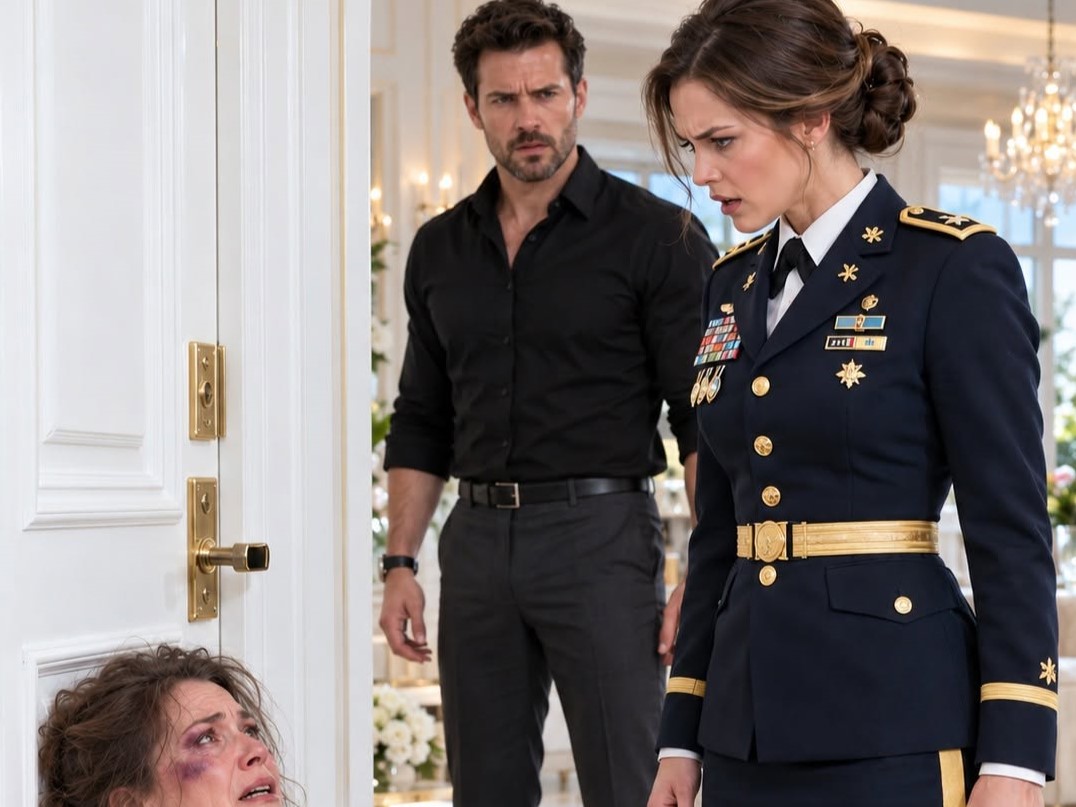
  • My mother gripped my wrist inside the attorney’s office and whispered, “If you get one dollar from her estate, I will ruin your life.” She thought she had already won. She didn’t know that six months earlier, my dying grandma called me and said, “Whatever happens, I’ve already taken care of it. Just keep the porch light on.”

    My mother gripped my wrist inside the attorney’s office and whispered, “If you get one dollar from her estate, I will ruin your life.” She thought she had already won. She didn’t know that six months earlier, my dying grandma called me and said, “Whatever happens, I’ve already taken care of it. Just keep the porch light on.”

    My mother gripped my wrist inside the attorney’s office and whispered, “If you get one dollar from her estate, I will ruin your life.” She thought she had already won. She didn’t know that six months earlier, my dying grandma called me and said, “Whatever happens, I’ve already taken care of it. Just keep the porch light on.”

    **PART 1: THE THREAT AND THE LAST CALL**

    “If you get one dollar from my mother’s estate, I will ruin your life.”

    My mother whispered it while squeezing my wrist under the table in Attorney Silas Thorne’s office. To anyone else, Diane Miller looked like the perfect grieving daughter in her black dress and pearls, dabbing her eyes. To me, she looked exactly like she did when she told me I wasn’t welcome home for Christmas.

    My name is Sarah Miller. I’m 29, I teach second grade in Savannah, Georgia, and to understand why my own mother was threatening me before my grandmother’s will was even read, you have to go back six months.

    It started with the last call I ever got from my Grandma June.

    It was a Tuesday afternoon in September. I was at my desk grading spelling tests next to a cold cup of coffee when my phone rang. Grandma’s voice was weaker than I’d ever heard it.

    “Sarah-bug, listen to me carefully. Whatever happens, I’ve already taken care of it. Promise me you’ll remember that. And keep the porch light on, okay?”

    “Keep the porch light on?” That was what she’d always told me as a kid when I was scared to sleep over at her old house in Charleston. She would leave that little yellow porch light on all night.

    Before I could ask what she meant, she changed the subject and started asking about my kids at school.

    That was Grandma June. She always made the scary things feel smaller.

    The next morning, I tried to call her back. My mother answered.

    “My mother is resting. You are not to call again.”

    She hung up.

    I called eleven more times that week. Straight to voicemail. Or my mother picking up and hanging up. After eight days, I drove two hours to Grandma’s house in the historic district. The curtains were closed. The porch was dark.

    My stepfather, Tom, opened the door two inches.

    “Your mother said she can’t have visitors right now.”

    “She’s my grandma. I just want five minutes.”

    “Don’t add stress to her condition.”

    He closed the door. I heard the deadbolt slide. Upstairs, the light was on in Grandma’s bedroom.

    That’s when I knew my mother wasn’t protecting Grandma from visitors. She was protecting everyone else from whatever Grandma might say.

    Every Sunday after that, I mailed Grandma a handwritten card. Just small stories about my classroom. I knew my mother got the mail first, but I mailed them anyway.

    For two months, I heard nothing. Then one night, an unknown number texted me: *Your grandma was moved to palliative care in Beaufort. – A friend.*

    I drove there immediately. The receptionist checked her list.

    “I’m sorry, honey. You’re not on the approved visitor list. Mrs. Diane Miller left very strict instructions.”

    Two weeks later, my mother called at 7 a.m.

    “June passed. Funeral is Thursday.”

    At the cemetery, while everyone was leaving, one of Grandma’s hospice nurses came up to me quietly.

    “Your grandma talked about you every single day.”

    For the first time, I knew she never thought I abandoned her.

    Someone just made sure we couldn’t reach each other.

    A week later, I walked into Attorney Thorne’s office. Before I could sit, my mother grabbed my wrist.

    “If you get one dollar from my mother’s estate, I will ruin your life.”

    For the first time since Grandma died, I looked her straight in the eyes.

    **PART 2: THE WILL MY MOTHER NEVER EXPECTED**

    Attorney Thorne’s office was on the second floor of an old brick building downtown. My mother was already seated, wearing Grandma June’s pearl earrings, even though the will hadn’t been opened yet.

    Thorne started reading the original will from 2019. House, savings, jewelry, everything left to my mother, Diane, as the only child, to distribute as she saw fit.

    My mother smiled at me.

    “See? My mother knew who was really there for her.”

    Then she stood up and gave a speech. About how she had sacrificed everything, slept on the floor next to Grandma’s bed for months, how I hadn’t visited once in three months.

    Every word was a knife, because she was using the isolation she created as proof that I didn’t care.

    Then I noticed it.

    Attorney Thorne hadn’t closed the file. Under the first stack, there was a second folder with a bright red clip.

    My mother saw it too. Her smile faded.

    “Is there anything else?”

    “There is,” Thorne said.

    He opened the red folder.

    “This office also received an amendment and an irrevocable trust, signed four days before Evelyn June Miller’s death.”

    The color drained from my mother’s face.

    “The trust names Sarah Anne Miller as the sole beneficiary of all savings and the property at 14 Legare Street.”

    Anne was Grandma June’s middle name. She had given it to me.

    My mother shot up so fast her chair screeched.

    “That’s impossible! She was sedated! She couldn’t have signed anything!”

    “The signature was witnessed by a certified hospice nurse and validated by a licensed mobile notary,” Thorne said calmly.

    Then he looked at the door.

    A woman walked in.

    It was the nurse from the cemetery.

    **PART 3: THE TRUTH JUNE PROTECTED**

    “My name is Megan,” she said. “Your grandmother knew exactly what she was signing. And she asked me to tell the truth if anyone questioned it.”

    My mother tried to interrupt, but no one listened to her anymore.

    Megan explained everything. How my mother had taken Grandma’s phone, blocked my calls, pressured her to sign papers when she was too weak to argue.

    Then Thorne took out a photocopy from the red folder. It wasn’t a legal paper. It was a page from Grandma’s journal.

    He read aloud:

    *“Diane hasn’t let Sarah visit me in over two months. She took my phone while I was sleeping. I’m tired, but I am not confused.”*

    And the last line, written to me:

    *“My granddaughter is the only person who has ever loved me without expecting anything in return.”*

    The final entry was a letter directly to me.

    *“Sarah-bug, if you’re reading this, my plan worked, so don’t be sad. And keep the porch light on.”*

    My mother’s hands were shaking.

    “You manipulated her!” she pointed at me.

    I finally spoke, without raising my voice.

    “I didn’t speak to her for three months because you made sure I couldn’t, Mom.”

    No one argued with me. The diary, the trust, Megan’s testimony, and the notary had already answered every question.

    I stood up.

    “I’m not going to fight you. Grandma already made her decision. I accept the trust. And I want the locks on the house changed today.”

    **PART 4: THE HOUSE THAT STILL REMEMBERED ME**

    The consequences for my mother were quiet. Tom left once he realized there was no inheritance to protect. People in town who had believed her version started calling me to apologize.

    One longtime family friend said, “June kept every Sunday card you mailed. She kept them in a wicker basket beside her bed.”

    I cried harder than I did at the funeral.

    She had received them. She knew.

    The first time I went back to 14 Legare Street alone, I stood on the porch for ten minutes before I could unlock the door. It smelled like old books, lemon polish, and that faint smell of her lavender lotion.

    In her bedroom closet, I found fourteen journals stacked neatly.

    And in the hall closet, that wicker basket. Inside were all 14 of my Sunday cards. Unopened, but smoothed out and saved. The envelopes were worn from being held.

    And in the kitchen freezer, just like she said on the phone, were a dozen small containers, each labeled in her shaky handwriting: *Sarah – chicken pot pie – for when you work late.*

    She had been preparing for me, even when she couldn’t get up.

    **PART 5: THE VOICE I FINALLY CHOSE TO KEEP**

    I live in that house now.

    Not because I wanted to win against my mother. I live here because for the first time since she died, the house feels like her again, not like the place I was locked out of.

    Every evening, I sit on the front porch swing with one of her journals in my lap. I turn on that little yellow porch light, even though it’s still daylight.

    For years, I thought “Keep the porch light on” was just about being scared of the dark.

    Now I understand. She wasn’t telling me that people would always treat me fairly. She was teaching me not to let anyone turn my light off.

    My mother still emails asking if we can “start over.” I don’t answer. Some apologies don’t rebuild trust. They just reopen the wound.

    Last night I sat alone on the swing. The oak trees were moving in the wind. The house behind me was quiet, and the porch light was warm over my head.

    I opened her last journal again.

    *“If you’re reading this, my plan worked, so don’t be sad. And keep the porch light on.”*

    This time, I didn’t cry.

    I just looked out at the street and finally understood what she left me was bigger than a house.

    She left me proof that I was loved, believed, and remembered, even when someone else tried to convince me otherwise.

    For a long time, I thought of myself as the granddaughter who was kept away.

    Now I remember myself as the granddaughter who never stopped trying to come home.

    And when her words come back to me, they no longer sound like a warning.

    They sound like permission.

    Keep the porch light on.

    This time, I finally listened.

  • My 13-Year-Old Son Told Me He Was Saving Every Paycheck for a Bicycle.

    My 13-Year-Old Son Told Me He Was Saving Every Paycheck for a Bicycle.

    I believed him.

    Every Saturday, he went to a local diner, washed dishes for hours, and came home with red, cracked hands smelling like soap and fryer oil.

    He never complained.

    He only kept saying the same thing:

    “Almost there, Mom.”

    But after months passed and there was still no bicycle, I began to wonder where all his money was going.

    Then one night, I caught him sitting on his bedroom floor, quietly counting a large stack of cash.

    The moment he saw me, he quickly hid it.

    A few weeks later, he came home late, covered in mud, with a torn jacket and a scrape on his face.

    When I asked what happened, he simply said:

    “I fell.”

    I wanted to believe him.

    Then he gave me another strange answer when I asked about his paycheck.

    “I put it somewhere safe.”

    Something wasn’t right.

    Two days later, the owner of the diner called me.

    His voice immediately made my heart sink.

    “Is this Evan’s mother?”

    “Yes. Why?”

    “I need to talk to you about your son.”

    I asked if Evan had done something wrong.

    There was a long silence.

    Then Sal asked me a question that completely changed everything:

    “Do you know what Evan does with every paycheck I give him?”

    I told him the story I had believed for months.

    “He’s saving for a bicycle.”

    Sal sighed.

    “Ma’am… you should probably sit down.”

    Then he said:

    “Everything that boy has told you about that money is a lie.”

    My heart stopped.

    The bicycle.

    The secret cash.

    The late nights.

    The torn clothes.

    The mysterious paychecks.

    I thought my son might be hiding something terrible from me.

    I had no idea the truth would break my heart for a completely different reason.

    Because when I finally arrived at the diner, I found Evan standing there with tears running down his face…

    and every dollar he had earned was in his hands.

    But he wasn’t keeping it.

    He was trying to give it away.

    And what I learned about why he had been doing it for six months completely changed the way I saw my son.

    The truth behind Evan’s secret was something I never could have imagined.

    Read the full story to the end. ❤️