Author: Ordinary

  • My Wife Married Me During the Final Week of Her Life, Then Her Lawyer Read Her Will and I Finally Understood Why She Had Been So Determined to Have That Ceremony   

    My Wife Married Me During the Final Week of Her Life, Then Her Lawyer Read Her Will and I Finally Understood Why She Had Been So Determined to Have That Ceremony  

    I knew Chloe was sick when we met. I knew she had a rare autoimmune disease, and I knew there were hospital visits, treatments, medications, and days when she could barely get out of bed. What I didn’t understand was how bad it really was. We were 27 when we met during a hot summer in Minneapolis, and at that age, I honestly believed people like us didn’t die. Not yet, not people who still had plans, and certainly not people who laughed too loudly, made stupid jokes, and argued over what to order for dinner. At least, not in my world.

    Chloe had a way of making me believe that too. She joked about hospital gowns, named her IV pole Barney, and whenever nurses asked her to rate her pain from one to ten, she’d look them straight in the eye and ask, “Emotionally or physically?” Three weeks into dating, I accidentally typed “Clover” instead of “Chloe” in a text message, and she never let me forget it.

    “You realize clover is literally just lawn weed?” she complained over the phone.

    “Neither is your attitude very polite,” I replied with a grin.

    “I’m seriously reconsidering this relationship,” she teased.

    “You’d miss me too much,” I said.

    “Unfortunately, you might be right,” she muttered.

    I loved her before I fully understood how frightened I was of losing her. As the months passed, Chloe’s condition gradually became worse, but I stayed. I drove her to treatments, sat beside her during appointments, and held her hand when she was scared. Eventually, hospital cafeterias became more familiar to me than actual restaurants. I knew which parking garage elevator was always broken, and I learned how to sleep sitting upright in uncomfortable chairs.

    I learned that when Chloe was nauseated, she wanted silence, but when she was in pain, she wanted conversation. So I learned how to talk about absolutely nothing, including movies, food, people we’d seen in the hallway, and the weather. Anything that could make the minutes move a little faster worked wonders. Eighteen months after we met, I proposed. It wasn’t elaborate, without a fancy restaurant or a carefully planned surprise. We were sitting on the floor of my apartment eating takeout from a local diner because Chloe had been discharged from the hospital that afternoon and didn’t have enough energy to sit at the table.

    I pulled out a ring from my pocket. She stared at it, looked at me, and then started crying uncontrollably. I thought that meant yes, but it didn’t.

    “No,” she said through her tears.

    I actually laughed out loud in confusion. “No?”

    “I can’t marry you, Lucas,” she cried, wiping her cheeks.

    “You can,” I told her gently. “I checked the law, and it’s completely legal.”

    “Lucas, listen to me,” she said, shaking her head.

    “What is it?” I asked.

    She pushed the ring box back toward me across the carpet. “I love you too much to do this.”

    “That is an extremely confusing reason to reject someone,” I told her softly.

    But she explained her reasoning. She didn’t want to make me a widower, and more than that, she was terrified that marrying her would leave me buried under medical bills and debt after she was gone. I told her we’d talk to lawyers, but she firmly refused. Six months later, I proposed again, and she said no. I asked again on our third anniversary, and she said no. Once, I even proposed jokingly in the frozen food aisle of a grocery store, and she threw a bag of frozen peas straight at my chest.

    Eventually, I stopped asking. I didn’t stop because I stopped wanting Chloe to be my wife, but because I understood something important. Loving Chloe meant learning that sometimes pushing wasn’t devotion, and sometimes it was just pushing.

    Part 2

    By the time I was 31, our entire life revolved around her illness. There were good months, bad months, and eventually, there were months I stopped trying to describe to anyone. I reduced my hours at work, we canceled trips, and I drained most of my savings without telling Chloe. I didn’t do it because she asked me to, but because there was always something to pay for. There was always a medication insurance wouldn’t fully cover, a hotel near a specialist, transportation, food, lost work, or unexpected bills.

    I had once planned to use that money as a down payment on a house, and Chloe knew that. She hated knowing it with every fiber of her being.

    “You’re spending your whole future on me,” she told me one evening.

    “You are in my future,” I answered without hesitation.

    “You know what I mean, Lucas,” she whispered.

    I did, but I just didn’t want to admit it. Then, four years after we met, doctors recommended a major surgery. It was complicated, and while experimental wasn’t quite the right word, reassuring definitely wasn’t either. There was a chance the procedure could dramatically improve Chloe’s condition, but there was also a chance her body wouldn’t tolerate it. The week before the operation, I noticed something different about her because she was unusually quiet.

    I was sitting beside her hospital bed, absentmindedly peeling the label from a water bottle, when she reached for my hand.

    “Lucas,” she called softly.

    “Hmm?” I looked up.

    “Marry me,” she said.

    She was completely serious. I blinked in disbelief.

    “Yes, I just got proposed to by a woman,” I joked, trying to lighten the heavy mood.

    She rolled her eyes at me. “That’s your response?”

    “I’m processing the moment,” I said.

    “Process faster, please,” she requested.

    I leaned closer to her bed. “Clover, I’ve asked you approximately 400 times.”

    “Five times,” she corrected.

    “You counted them?” I asked, surprised.

    “Obviously I did,” she replied.

    “What changed your mind?” I asked gently.

    She looked down at our joined hands. “Look, I might not make it out of this surgery,” she said honestly.

    My heart dropped to the floor. “Don’t say that.”

    “Lucas, listen to me,” she insisted.

    “You’re coming out of surgery,” I asserted firmly.

    “Probably,” she allowed.

    “You will,” I insisted.

    “And if I don’t, I want to die as your wife, not your girlfriend,” she whispered, looking into my eyes.

    Something inside me broke at those words. “Don’t talk like that, Chloe.”

    “And if I do survive, we’ll have gotten married anyway, which seems efficient,” she added with a small smile.

    I laughed, then I started crying, and so did she.

    “Is that a yes?” she asked softly.

    “You’ve made me wait four years, so I need time to think,” I teased through my tears.

    She stared at me intensely. I lasted about three seconds before folding.

    “Yes,” I said.

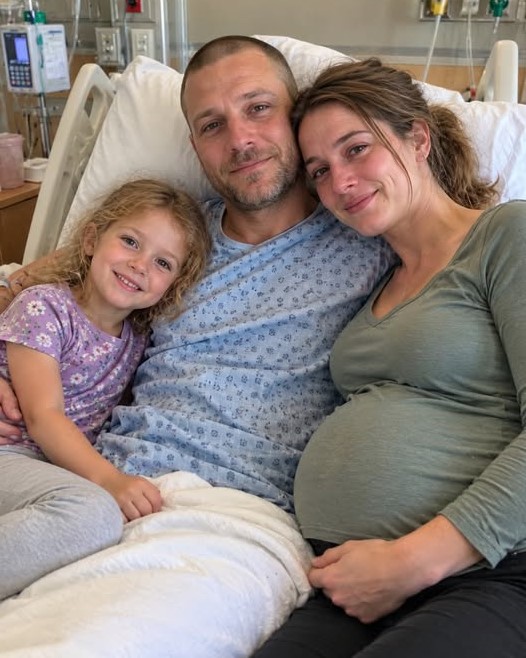
    And that was how we got married. We threw the lamest, most beautiful hospital wedding imaginable. Our parents came, a few close friends came, and even a couple of doctors and nurses we’d grown close to over the years stood there with us. There were no expensive flowers, no ballroom, no elaborate decorations, and no first dance. One nurse found a white ribbon in the gift shop and tied it around Chloe’s bed rail, while my mother brought a grocery store cake. Across the top, in bright blue icing, were the words: “CONGRATULATIONS CHLOE AND LUCAS.”

    The icing was so bright it practically stained everyone’s teeth blue. Chloe wore a simple white cardigan over her hospital gown, and I wore the only suit I owned. When I saw her, I started crying before the ceremony had even begun.

    “Oh, stop crying,” she whispered smilingly.

    “You’re beautiful,” I managed to say.

    “I have compression socks on underneath,” she pointed out.

    “Very bridal,” I countered.

    “Shut up,” she chuckled softly.

    Everyone laughed at our exchange, and then we promised ourselves to each other in front of about twenty people. When it was time for the rings, Chloe’s hands were swollen from medication, so the nurse helped us choose a slightly larger band. I slipped it onto her finger, and she stared at it for a long moment before looking up at me.

    “My husband,” she said softly.

    “My wife,” I replied.

    She smiled brightly. “Clover.”

    “Don’t ruin this moment,” I warned playfully.

    Everyone laughed again, and for maybe twenty minutes, something extraordinary happened. Chloe wasn’t a patient, I wasn’t a caregiver, and we weren’t thinking about medications, doctors, surgeries, hospital rooms, or possible outcomes. We were newlyweds, and that was all that mattered.

    Part 3

    Six days later, Chloe went into surgery wearing that ring. I kissed her gently on the forehead before they wheeled her away down the hallway.

    “I’ll see you afterward,” I told her firmly.

    “You better,” she replied with a weak grin.

    “I mean it,” I added.

    “So do I,” she said.

    Those were the last words we ever said to each other. The surgery didn’t go the way we’d prayed it would, as there were complications, followed by even more complications. There are hours from that day I still can’t reconstruct properly in my mind. I remember a doctor speaking, I remember Chloe’s mother screaming in pain, I remember my father holding my shoulders, and I remember someone putting a cup of water into my hand. I remember staring at a clock on the wall and wondering how it could possibly keep moving while my entire life had stopped completely.

    Chloe was 31, and she had been my wife for exactly six days. She was buried wearing our wedding ring. The following weeks are difficult for me to remember clearly. People brought casseroles, but I forgot to eat them. Friends called, but I just watched the phone ring on the table. I slept on the couch because our bed still smelled like her shampoo, and everything in the house reminded me of her presence, including her favorite mug, her clothes, her books, and the little things she’d left in random places without thinking.

    Then, one afternoon, Chloe’s family lawyer called me unexpectedly. He wanted to talk to me about a will she’d written before she died. His name was Mr. Harrison, an older gentleman with a warm tone over the phone.

    “I think you should sit down, Lucas,” he said gently.

    So I obeyed his advice. If a sad old lawyer tells you to sit down before reading your dead wife’s will, you sit down immediately. I perched on the edge of my kitchen counter, holding an unopened packet of instant ramen in one hand and my phone in the other. There was a long pause on the line before Mr. Harrison sighed deeply.

    “I guess it makes sense now why she wanted to marry you,” he said with a sad little chuckle.

    My stomach tightened instantly. “What do you mean by that?”

    I heard papers rustling on his end of the call. Then he spoke quietly into the receiver.

    “Here’s what she wrote in her own words,” he explained. He cleared his throat before reading aloud. “To my husband, Lucas, who spent years trying to give me more time when there was none left to give, I leave everything that remains of mine. And before he gets angry with me for keeping this from him, please tell him to keep reading.”

    I stood up straight. “What is this?”

    “Keep listening, Lucas,” Mr. Harrison urged gently.

    He then explained something I had never known about her family background. Chloe’s grandfather had created a family trust decades earlier, and while it wasn’t enormous, it wasn’t small either. Chloe had inherited an interest in it when her grandfather died, but she had barely touched the money. I hadn’t even known it existed at all.

    “How much are we talking about?” I asked nervously.

    Mr. Harrison hesitated for a second before answering. “After taxes, existing distributions, and other obligations, Chloe’s share and a spousal survivorship benefit came to a little over $400,000.”

    I nearly dropped the phone on the floor. “No way.”

    “Lucas, listen,” he said.

    “No, that’s impossible,” I argued. “She didn’t have $400,000.”

    “Not personally,” he corrected. “Most of it remained inside the trust structure.”

    My deep grief suddenly found room for a new emotion, which was overwhelming anger.

    “She watched me empty my savings,” I said bitterly.

    “Lucas, please,” he tried to calm me.

    “She watched me worry endlessly about rent every month,” I continued, my voice shaking.

    “Keep listening to the letter,” he advised.

    “I sold my car to pay for her care!” I yelled into the phone.

    “I know you did,” he answered softly.

    “How could she keep this secret?” I demanded.

    “Because she couldn’t simply access all of it whenever she wanted,” he explained carefully.

    That sentence stopped my tirade immediately. Mr. Harrison explained that the trust had strict distribution rules attached to it. Chloe received limited payments for specific purposes, but the principal remained strictly protected by the trustees. Her medical expenses didn’t qualify for unrestricted withdrawals under the terms, and if she died unmarried, her remaining interest would automatically revert to other family members. However, the trust contained an old survivorship provision where a legal spouse could inherit her remaining share entirely.

    I slowly sat back down on the counter stool. “So she married me just for the trust?”

    Mr. Harrison was quiet for a moment. “No,” he finally said. “I think she married you because she loved you deeply. But I think the trust explains why she finally allowed herself to accept your proposal.”

    He resumed reading her written words to me. “You’re angry now, aren’t you?”

    I laughed once, though it was a horrible, bitter little sound.

    Mr. Harrison continued reading. “I can see your face right now, Lucas. You’re probably doing that thing where your jaw moves before you start arguing. Please don’t argue with a dead woman because it’s embarrassing for both of us.”

    I covered my mouth with my hand. That was Chloe, completely and unapologetically herself.

    “I didn’t tell you about the trust because you would have done something stupid and noble,” her letter continued. “You would have tried to find a way to use it for another experimental treatment. You would have spent another year fighting paperwork instead of sleeping, and you would have turned every dollar into another way to keep me here.”

    I closed my eyes tightly. She was right, and she had known exactly what I would have done.

    Part 4

    Mr. Harrison read the next section of the letter in his calm voice. “You sold your car, you emptied the house fund, and you turned down the promotion in San Diego because I couldn’t move away from my doctors. You kept telling me none of that mattered because we’d do those things later.”

    I lowered my forehead into my hand as tears welled up. San Diego was my dream job, and I had turned it down in less than an hour without hesitation. Chloe had cried for two straight days afterward because of my decision.

    The letter continued reading. “There is no later for me, but there is still a later for you.”

    Mr. Harrison’s voice became noticeably quieter as he read the next instructions. “Buy the house. Not some sensible condo you secretly hate, but buy the stupid old house with the wrap-around porch you’ve been talking about since we first met. Fix the wooden floors, get the dog I said we couldn’t have because I was allergic, take the job if another opportunity comes, and travel somewhere that doesn’t have a hospital cafeteria.”

    I laughed softly through my tears at her list. Then came the line that only Chloe could have written.

    “And please eat something that isn’t instant ramen,” he read.

    I looked down at my hand, where the unopened packet of instant ramen was still sitting. That detail nearly destroyed me emotionally.

    Mr. Harrison laughed softly over the phone line. “She truly knew you well, Lucas.”

    “Yeah, she really did,” I whispered back.

    He continued reading her letter aloud. “I said no every time you proposed because I thought refusing was how I protected you from my reality. Then I realized I had spent years deciding what sacrifices you were allowed to make, just as you spent years deciding which sacrifices were worth making for me. We were both stubborn, but you were just louder about it.”

    I wiped my face with my sleeve as he continued.

    “So yes, I wanted to die as your wife, and that part was completely true,” he read. “It was the truest thing I’ve ever wanted in my life. But I also wanted my last decision to give something back to the man who gave me everything he could.”

    Mr. Harrison’s voice broke slightly before he read the final paragraph. “Six days isn’t much of a marriage, Lucas. But you were my family long before somebody signed an official certificate saying so. Use what I left you to build the life I couldn’t stay for, because that’s not abandoning me, that’s taking me with you somewhere better. I love you, I’m sorry, and yes, Clover still isn’t funny.”

    Mr. Harrison stopped reading, and neither of us spoke for a long while.

    “There’s more formal legal language, but that’s the personal message she wanted you to hear,” he said gently.

    I stared at the ramen packet in my hand, then threw it across the kitchen floor. I didn’t throw it because of the ramen, but because she had planned all of this in secret. She had arranged the appointment with Mr. Harrison, written the will, and finally accepted the marriage. She had been lying in a hospital bed preparing for a dangerous surgery, yet she was still thinking about whether I would ever buy a house.

    I was furious with her for days afterward, because grief does strange things to anger. I yelled at her while driving down the highway, and I argued with her in the shower.

    “You should’ve told me!” I shouted at the empty room.

    Silence was my only response.

    “You don’t get to decide what’s best for my life!” I yelled.

    More silence followed. Eventually, I remembered that Chloe had said essentially the same thing about my choices. Slowly, I understood her perspective. She hadn’t hidden a fortune while I struggled, because most of that money had never been accessible to us during her care. The part that mattered only became mine because I officially became her husband. She hadn’t married me to make me rich, but because becoming my wife no longer felt to her like leaving me with a heavy burden. It meant she could leave me with a future instead.

    I didn’t touch the inherited money for almost a full year. Then, one Sunday afternoon, I drove past an old house that was listed for sale in a quiet neighborhood. It had peeling paint, crooked shutters, and a massive porch that wrapped around the entire front side. I pulled my car over to the curb, and I could almost hear Chloe’s voice in my head saying that it was too much maintenance, too much work, and too much money.

    I bought the house three months later anyway. I fixed the hardwood floors, painted the kitchen walls, and eventually got a shelter dog with one floppy ear. He immediately destroyed a sofa cushion that Chloe would have loved, and I named him Barney after her IV pole.

    It’s been four years now since she passed. Her wedding ring sits beside mine in a small wooden box in my bedroom. Sometimes people hear that Chloe and I were married for only six days, and I can see their faces change with pity. They don’t know what to say to me, but I know what to say. We weren’t together for only six days, we were married for six days, and there is a massive difference between the two. The ceremony didn’t create what we shared, but simply gave Chloe one final way to name our bond.

    For years, I thought I was the only one taking care of her by driving to appointments, waiting in hospital rooms, paying bills, and holding her hand. But that hospital wedding taught me something I didn’t understand until Mr. Harrison read her words aloud. Chloe had been taking care of me too, even while she was dying, and even when I couldn’t see it.

    The last thing my wife gave me wasn’t money, a house, or six days of marriage. It was permission to stop measuring my love for her by how miserable I remained without her, and permission to have a future without pretending that having a future meant I had forgotten our past. I still talk to her sometimes, usually when something breaks around the house.

    “You wanted me to buy this place,” I’ll say while staring at a leaking pipe.

    And somewhere in my mind, I can hear her clear response. “No, you wanted the stupid porch.”

    She’s right about that, just like she usually was.

    THE END.

  • My husband invited his ex-wife to his birthday because she was “still family”

    My husband invited his ex-wife to his birthday because she was “still family”

    “How could you do this?” Mark shouted.

    The entire dining room fell silent.

    Not the uncomfortable silence people make when they don’t know what to say.

    Not the polite silence of guests trying to avoid getting involved.

    This was the kind of silence that settles over a room when everyone realizes they are watching a marriage split open right in front of them.

    Mark stood at the head of the table, his face burning red, one hand wrapped tightly around the back of his chair.

    Claire was still sitting beside him.

    In the seat that had been mine.

    Her wineglass hovered halfway between the table and her mouth.

    Beside every dessert plate was a small ivory envelope.

    One for every guest.

    One for Mark.

    And one for Claire.

    I rested my palm against my stomach.

    Our baby moved softly beneath my hand.

    That tiny kick steadied me.

    “I’m sorry,” I said evenly. “Which part exactly are you angry about?”

    Mark stared at me.

    “You know exactly what I mean.”

    I glanced around the table.

    Rachel, his sister, was staring down at the envelope in front of her.

    Daniel had already opened his.

    Elaine, Mark’s mother, had one hand pressed over her mouth.

    Claire was the only person who still seemed amused.

    Barely.

    Because she hadn’t opened her envelope yet.

    “Go ahead,” I said to her.

    Her expression shifted.

    “Open it.”

    Mark brought his palm down against the table.

    “No one opens another envelope.”

    Daniel looked up.

    “Little late for that.”

    Mark turned sharply toward him.

    Daniel lifted the photograph from inside his envelope.

    Naturally, it was only a copy.

    The originals were somewhere Mark would never find them.

    The photograph showed Mark standing outside a hotel with Claire.

    It wasn’t from years ago.

    It wasn’t from when they had been married.

    It had been taken three weeks earlier.

    Claire’s hand rested against his chest.

    Mark had both arms around her waist.

    And they were kissing.

    A timestamp appeared across the bottom of the image.

    No one spoke.

    Claire slowly lowered her glass.

    Something changed in Mark’s face.

    It wasn’t embarrassment.

    It wasn’t remorse.

    It was calculation.

    And somehow that frightened me more than rage would have.

    His eyes settled on me.

    “Where did you get that?”

    A short laugh escaped me.

    Colder than I intended.

    “That’s what you want to ask?”

    “You’ve been spying on me?”

    “Mark…” Rachel whispered.

    He ignored her completely.

    His eyes never left mine.

    “Did you follow me?”

    “No.”

    “Then who took the picture?”

    I pulled out the chair at the opposite end of the table and sat.

    Apparently that was my place now.

    “The hotel sent me a receipt.”

    Claire glanced at Mark.

    It lasted barely a second.

    But I caught it.

    And that was the first time I realized something important.

    Claire didn’t know everything either.

    Mark had been lying to both of us.

    “The room was charged to our joint card,” I continued. “You told me you were meeting with a supplier.”

    Mark shook his head immediately.

    “That doesn’t prove anything.”

    “I thought the same thing.”

    He blinked.

    Several guests shifted uncomfortably.

    The tension in the room seemed to tighten by the second.

    “So I called the hotel,” I continued. “They couldn’t tell me much because of privacy rules. Fair enough. But then I found something else.”

    I reached into the folder beside me.

    Claire had gone pale.

    Mark’s voice dropped.

    “Stop.”

    For the first time that evening, he wasn’t shouting.

    I met his gaze.

    “No.”

    I placed another document on the table.

    “A parking charge.”

    Daniel leaned forward.

    “At the same hotel?”

    “The same hotel. The same day.”

    Mark let out a frustrated breath.

    “Congratulations. You discovered that I met Claire for coffee.”

    Claire turned toward him.

    “Coffee?”

    That one word shifted everything.

    Mark looked at her.

    Claire narrowed her eyes.

    “You told me you booked the room because you wanted somewhere private for us to talk.”

    Elaine whispered, “Oh my God.”

    Mark snapped toward Claire.

    “Could you not?”

    I nearly smiled.

    There it was.

    The first fracture in the united front I had imagined for weeks.

    Every time I pictured confronting them, I imagined Mark and Claire standing together.

    Confident.

    Calm.

    Almost smug.

    I imagined Claire defending him.

    I imagined him defending her.

    I imagined both of them making me question whether I had misunderstood everything.

    But I had underestimated Mark.

    His loyalty wasn’t to Claire.

    It certainly wasn’t to me.

    Mark was loyal only to Mark.

    Claire looked at me.

    “What exactly is all of this supposed to prove?”

    “The answer to a question.”

    “What question?”

    “Whether I’m insecure.”

    She stared at me.

    I continued.

    “Earlier tonight, you asked if I was really so insecure that I needed to sit beside my own husband at his birthday dinner.”

    Her jaw tightened.

    “So I decided I should stop being insecure and start getting informed.”

    Mark laughed bitterly.

    “This is insane.”

    “No. Insane was spending seven months trying to become the perfect wife for a man who kept comparing me to his ex.”

    “You’re twisting things.”

    “Claire always warmed the plates.”

    Mark froze.

    “Claire never bought that brand.”

    Rachel turned toward him.

    “You actually said things like that?”

    I kept going.

    “Claire organized the pantry better.”

    Mark dragged both hands over his face.

    “For God’s sake.”

    “Claire kept the bathroom cleaner.”

    “Enough.”

    “Claire knew exactly how you liked your shirts folded.”

    “I said enough!”

    “And tonight…”

    I leaned toward him.

    “You told your pregnant wife, in front of a house full of guests, that your ex-wife had managed the household better than she did.”

    Mark looked around the table.

    For the first time, he appeared to realize that nobody was supporting him.

    So he did what people like Mark always seem to do when the truth stops being convenient.

    He changed the subject.

    “You humiliated me on my birthday.”

    I stared at him.

    And then I laughed.

    I honestly couldn’t help myself.

    The audacity was almost impressive.

    “You invited your ex-wife into our home. You let her take my seat beside you. You let her insult me. You compared me to her the entire evening. And somehow the problem is that I ruined your birthday?”

    Elaine lowered her gaze.

    Rachel said quietly, “Mark, she’s right.”

    “Stay out of it.”

    “You made it everyone’s business.”

    Mark shoved his chair backward and stood.

    “This party is finished.”

    No one protested.

    Guests began collecting coats, handbags, and phones.

    A few stopped to hug me before leaving.

    Daniel placed a reassuring hand on my shoulder.

    Rachel stayed a little longer.

    “Call me,” she whispered.

    Mark heard her.

    His face hardened.

    Rachel looked at him, then back at me.

    The disappointment in her expression seemed to hurt him more than anger would have.

    Eventually, the front door shut.

    Only four of us remained.

    Mark.

    Claire.

    Elaine.

    And me.

    Elaine stood near the doorway, twisting the strap of her handbag around her fingers.

    “I think I should leave too.”

    “Mom, stay.”

    She shook her head.

    “No.”

    His expression softened.

    “Please.”

    But Elaine looked at me instead.

    “I’m sorry.”

    I hadn’t expected that.

    I nodded.

    Then she walked out.

    The lock clicked behind her.

    Three people were left.

    The house suddenly seemed enormous.

    Claire pushed herself away from the table.

    “This whole thing is ridiculous.”

    I studied her face.

    “Which part?”

    She glared at me.

    “You enjoyed humiliating us.”

    “No. I enjoyed learning that I hadn’t imagined any of it.”

    “We kissed once.”

    Mark turned toward her.

    “Claire.”

    “What?”

    “Stop talking.”

    She rose.

    “No. You don’t get to tell me what to do anymore.”

    For a moment, I almost disappeared from their awareness as they turned on each other.

    Oddly enough, it helped.

    People reveal extraordinary things when they forget someone else is listening.

    Claire folded her arms.

    “You told me your marriage was basically over.”

    My stomach tightened.

    Mark’s eyes widened.

    “I never said that.”

    “Yes, you did.”

    “I said we were having problems.”

    “You said you felt trapped.”

    There are words that hurt.

    And then there are words that pass straight through hurt and become something colder.

    Something clearer.

    A decision.

    I looked at Mark.

    “Trapped?”

    He turned toward me.

    “She’s exaggerating.”

    Claire gave a sharp laugh.

    “Oh, so now I’m exaggerating?”

    Mark stepped toward her.

    “Go home.”

    “Don’t touch me.”

    “I’m not touching you.”

    “You used me.”

    “That isn’t what happened.”

    Claire pointed toward him.

    “You told me she got pregnant and everything happened too quickly.”

    My hand immediately moved to my stomach.

    Mark looked at me.

    His expression shifted.

    For the first time that night, I saw real fear.

    Not fear that he might lose me.

    Fear that he might finally face consequences.

    “I never said the pregnancy was a mistake,” he rushed out.

    Claire’s expression hardened.

    “You told me you weren’t even sure the baby had been planned.”

    The room seemed to tilt.

    I grabbed the edge of the table.

    The baby had been planned.

    We had talked about it.

    We had hoped for it.

    Mark had held me when the test came back positive.

    He had cried.

    He had kissed my stomach when there was still nothing there to see.

    He had told me he was the luckiest man alive.

    Now I couldn’t stop wondering which Mark had been real.

    Maybe none of them.

    “Get out,” I said.

    Mark stepped toward me.

    “Listen to me.”

    “Both of you.”

    Claire picked up her purse.

    “Gladly.”

    She walked toward the entrance.

    Then stopped.

    She turned to face me.

    For the first time since she arrived, there was no smug smile.

    Only anger.

    And something strangely close to humiliation.

    “I didn’t know.”

    I remained silent.

    “He told me you two hardly spoke anymore.”

    Mark scoffed.

    “Claire, don’t pretend you’re innocent.”

    She spun toward him.

    “You invited me tonight!”

    “You showed up three hours early!”

    “Because you told me to!”

    I looked at Mark.

    He looked away.

    Claire laughed bitterly.

    Then she turned back to me.

    “He said he wanted you to see how well we still got along.”

    That hurt differently.

    Not because I felt jealous.

    Because suddenly I understood why the evening had unfolded the way it had.

    None of it had been accidental.

    The blue vase.

    The cupboards.

    My chair.

    Every comment.

    Mark had wanted a comparison.

    He had wanted me uncomfortable.

    Maybe he wanted me competing with Claire.

    Maybe he wanted Claire competing with me.

    Perhaps some men don’t need love nearly as much as they need two women circling around them.

    I walked to the door and opened it.

    Claire left without another word.

    Now Mark and I were alone.

    For several seconds, neither of us spoke.

    Finally, he said, “You completely overreacted.”

    I closed my eyes.

    Of course.

    It was so predictable that it almost felt comforting.

    When I opened them again, he was studying me carefully.

    “You kissed her.”

    “One mistake.”

    “You booked a hotel.”

    “We talked.”

    “In a hotel room.”

    “Yes.”

    “You told her our marriage was collapsing.”

    “I was venting.”

    “You said you were trapped.”

    “I was frustrated.”

    “You told her our baby might not have been planned.”

    “I phrased things badly.”

    I nodded slowly.

    Mark seemed to interpret that as progress.

    For a second, I almost felt sorry for him.

    Almost.

    “I need you to leave.”

    His face changed.

    “What?”

    “Tonight.”

    “This is my house.”

    I had been waiting for those exact words.

    I walked toward the sideboard and picked up another envelope.

    This one had no name written across the front.

    I handed it to him.

    “What is this now?” he muttered.

    “Your second birthday surprise.”

    He ripped the envelope open.

    Then stopped.

    Inside was a copy of the property deed.

    His eyes darted across the document.

    “What is this?”

    “You know exactly what it is.”

    His voice rose.

    “This house belongs to you?”

    “To me and my father’s trust.”

    Mark stared at me.

    Before we married, he knew the house had been in my family.

    What he apparently never understood was that ownership had never been transferred into both our names.

    He had simply assumed it had.

    And I had never corrected him because I never imagined the distinction would matter.

    “You always said this was our home.”

    “It was.”

    “Was?”

    I looked around the dining room.

    At the flowers Claire had rearranged.

    At the chair she had taken.

    At the table where my own husband had spent the evening making me feel like a guest in my own house.

    “Now it’s my house.”

    Mark actually laughed.

    “You can’t just kick me out.”

    “I’m asking you to leave voluntarily tonight.”

    “And if I refuse?”

    “My lawyer has already explained exactly what happens next.”

    His expression froze.

    “Your lawyer?”

    That was the moment he finally understood.

    Nothing about tonight had been spontaneous.

    I hadn’t discovered the photograph the day before.

    I had known for eleven days.

    Eleven mornings eating breakfast across from him.

    Eleven evenings listening while he talked about plans for his birthday.

    Eleven days letting him kiss my cheek before leaving for work.

    Eleven days pretending I hadn’t noticed how often he checked his phone.

    And during those eleven days, I had been meeting with an attorney.

    Copying financial records.

    Changing passwords.

    Photographing statements.

    Moving family heirlooms to my sister’s home.

    Protecting everything I still had the ability to protect.

    Mark whispered, “You planned this.”

    “Yes.”

    “You set me up.”

    “No.”

    I shook my head.

    “You did that yourself. I simply stopped protecting you from the consequences.”

    He began pacing.

    “This is unbelievable.”

    I didn’t respond.

    He picked up one of the photographs from the table.

    “You printed copies? You gave these to my entire family?”

    “Yes.”

    “That’s vindictive.”

    “Maybe.”

    He blinked.

    Apparently he hadn’t expected me to admit it.

    I no longer cared about proving that I was morally superior.

    For months, I had tried to be the reasonable wife.

    The calm wife.

    The understanding wife.

    The confident wife.

    And every version of me had still been measured against Claire.

    I was finished performing.

    Mark dropped heavily into a chair.

    For the first time, he looked exhausted.

    “You’re pregnant.”

    “I’m aware.”

    “You need me.”

    The words came automatically.

    With absolute confidence.

    He genuinely believed them.

    I stepped closer.

    “No, Mark.”

    My voice remained soft.

    “That’s what you needed to believe.”

    He looked up.

    “We can fix this.”

    I almost asked which part he meant.

    The kiss?

    The lies?

    The hotel?

    Claire?

    The constant comparisons?

    Or simply the fact that I had finally caught him?

    Instead, I asked something else.

    “Why did you marry me?”

    His expression softened.

    “Because I love you.”

    “Try again.”

    “I do love you.”

    “Then tell me why you married me.”

    He stared at the tabletop.

    Several seconds passed.

    Then he said something I knew I would remember for the rest of my life.

    “You made everything easier.”

    I waited.

    Mark rubbed his forehead.

    “With Claire, everything was complicated. We argued constantly. Every decision turned into a fight. You were different.”

    Different.

    The word hung between us.

    “What does different mean?”

    “You were warm.”

    “Meaning?”

    “You trusted me.”

    There it was.

    Mark hadn’t loved the fact that I trusted him.

    He loved what my trust allowed him to get away with.

    “You didn’t question every little thing,” he continued. “You didn’t turn every disagreement into some huge battle.”

    “So you married me because I was convenient.”

    “That isn’t what I said.”

    “But Claire wasn’t convenient.”

    “She challenged everything.”

    “And you missed that.”

    “No.”

    “You missed her.”

    “No.”

    “You kissed her.”

    Mark suddenly stood.

    “I MADE ONE MISTAKE!”

    I flinched.

    Not because I was frightened of him.

    Because of how loud he was.

    He noticed.

    His anger disappeared instantly.

    “Please.”

    He stepped closer.

    “Please don’t make decisions while you’re emotional.”

    Something inside me became perfectly still.

    “While I’m emotional?”

    “You’re pregnant. Everything feels more intense right now.”

    I stared at him.

    Then a voice came from behind us.

    “That excuse didn’t work on me either.”

    Mark went completely pale.

    I turned around.

    Claire was standing in the doorway.

    I hadn’t heard her return.

    Her phone was in her hand.

    Mark’s expression tightened.

    “What are you doing back here?”

    “I forgot my coat.”

    She raised the phone slightly.

    “And then I remembered something else.”

    Mark stared at the screen.

    For the first time that entire night, I saw true panic on his face.

    Not embarrassment.

    Not anger.

    Panic.

    “Claire,” he warned.

    She narrowed her eyes.

    “You should tell her.”

    “Get out.”

    “Tell me what?” I asked.

    Mark moved between us.

    “Nothing.”

    Claire laughed once.

    “You are unbelievable.”

    “What does she mean?”

    Mark turned toward me.

    “She’s only trying to make everything worse.”

    Claire unlocked her phone.

    “I still have the messages.”

    Mark moved toward her quickly.

    Not violently.

    But quickly enough that she stepped backward.

    “Don’t.”

    I looked between them.

    “What messages?”

    Claire swallowed.

    All the confidence she had displayed earlier had disappeared.

    This wasn’t the woman who had walked into my kitchen and rearranged my table.

    She looked genuinely shaken.

    “He contacted me before your wedding.”

    My mouth went dry.

    “How long before?”

    “Three days.”

    “She’s lying!” Mark shouted.

    Claire ignored him.

    “He asked whether I thought divorcing each other had been a mistake.”

    I stared at her.

    “I told him it was too late.”

    “Claire—”

    “He said getting married didn’t necessarily mean forever.”

    A cold sensation moved through my body.

    I turned toward Mark.

    He shook his head.

    “She’s twisting old conversations.”

    Claire held out the phone.

    “I kept everything.”

    Mark reached for her wrist.

    “Give me the phone.”

    “Mark!” I shouted.

    He released her immediately.

    Claire moved away from him.

    Her hand was shaking.

    Then she scrolled again.

    “There’s more.”

    I didn’t want there to be more.

    I wanted the floor beneath me to disappear.

    I wanted to return to that morning when I had been choosing flowers and believing the worst thing I would endure that day was my husband’s ex-wife making sarcastic comments in my kitchen.

    But Claire continued scrolling.

    “He contacted me again after your honeymoon.”

    I looked at Mark.

    “And after you announced the pregnancy.”

    My stomach twisted.

    Mark spoke quietly.

    “Enough.”

    Claire stopped scrolling.

    Then looked at me.

    The silence between us became almost unbearable.

    “What?” I asked.

    She hesitated.

    And somehow that hesitation frightened me more than anything else she had revealed.

    “What happened after we announced the pregnancy?”

    Slowly, Claire turned the screen toward me.

    There was a message from Mark.

    It had been sent two days after we told his family we were expecting a baby.

    I read the message once.

    Then again.

    My fingertips went numb.

    It said:

    *I need to know if you still have the paperwork from the clinic.*

    For several seconds, the words meant nothing to me.

    “What clinic?”

    Claire looked at Mark.

    He said nothing.

    I looked back at her.

    “What clinic?”

    Her face became pale.

    “You don’t know.”

    It wasn’t even a question.

    I could hear my own heartbeat pounding inside my ears.

    “Know what?”

    Mark stepped toward me.

    “We are not doing this tonight.”

    I backed away.

    “Doing what?”

    Claire lowered her voice.

    “When Mark and I were married, we tried to have a baby.”

    I already knew that.

    Mark had told me.

    He said it simply hadn’t worked.

    He said life sometimes chose a different path for people.

    Claire continued.

    “We went to a fertility clinic.”

    My eyes moved toward Mark.

    He stared at the floor.

    “Mark froze genetic material.”

    The entire room seemed to contract around me.

    “I don’t understand.”

    Claire looked disturbed.

    “Neither did I when he suddenly started asking me about those records again.”

    I looked at Mark.

    “Why were you asking for them?”

    He didn’t answer.

    “Mark.”

    Nothing.

    I moved closer.

    “Why were you asking your ex-wife for fertility clinic records after I became pregnant?”

    His face had gone gray.

    Claire spoke again.

    “I asked him the exact same thing.”

    She scrolled through her messages.

    “And he answered me.”

    Mark stepped toward her.

    “Claire, don’t.”

    This time, there was no anger in his voice.

    Only fear.

    She looked directly at him.

    “You used both of us.”

    “Stop.”

    “You lied to her.”

    “Claire.”

    “And you lied to me.”

    “STOP!”

    His voice echoed through the house.

    The baby kicked again.

    Harder.

    I pressed both palms against my stomach.

    Claire turned the phone toward me.

    My eyes landed on the message.

    I read the first sentence.

    Then the next.

    Suddenly, breathing became difficult.

    I knew I needed to sit.

    I knew I should call someone.

    I knew there had to be some explanation for what I was seeing.

    But sometimes your mind recognizes catastrophe before it fully understands why.

    This was one of those moments.

    The message said:

    *If the dates match, there could be a legal problem. I need the old embryo records before she discovers anything.*

    I slowly raised my eyes to Mark.

    “Old embryo records?”

    He remained silent.

    Claire looked horrified too.

    And that was when I realized something else.

    Whatever secret Mark was hiding, Claire didn’t fully understand it either.

    My voice came out barely above a whisper.

    “What did you do?”

    Mark moved toward me.

    I stepped back immediately.

    “Don’t touch me.”

    “I can explain.”

    “You’d better.”

    His mouth opened.

    Before he could speak, his phone began ringing.

    All three of us froze.

    Mark pulled it from his pocket.

    The screen displayed:

    **UNKNOWN NUMBER**

    He declined the call.

    Almost immediately, the phone rang again.

    Claire stared at him.

    “Who is calling you?”

    “No one.”

    It rang for a third time.

    I don’t know exactly why I moved.

    Instinct, perhaps.

    Before Mark could reject the call again, I took the phone from his hand and answered.

    “Hello?”

    For a second, there was silence.

    Then a woman spoke.

    Her voice was professional.

    Careful.

    “May I speak with Mr. Mark Ellison?”

    “Who is calling?”

    A brief pause.

    “This is Dr. Voss’s office.”

    Mark snatched the phone from my hand.

    But he was too late.

    I had already seen his face.

    And at the exact same moment, Claire whispered:

    “Dr. Voss?”

    Mark ended the call.

    I turned toward her.

    “You know that name?”

    Claire nodded slowly.

    “That was our fertility doctor.”

    Everything around me seemed to disappear.

    Mark took a step backward.

    For the first time since I had known him, he looked like a man who had finally run out of places to hide.

    I stared at the husband I thought I understood.

    The man who kissed my forehead each morning.

    The man who had assembled our baby’s crib with his own hands.

    The man who cried the first time we heard the heartbeat.

    And suddenly, one question drowned out every other thought.

    “Mark…”

    My voice trembled.

    He closed his eyes.

    I placed one hand over my stomach.

    “What exactly did you do before I became pregnant?”

    His eyes opened.

    The fear inside them answered me before his mouth ever did.

    But when he finally whispered the truth, it was worse than anything I had imagined.

    Far worse.

    Because the moment he said it, Claire’s phone slipped from her hand.

    And I realized that whatever had happened between Mark and Claire might not have been the darkest secret in my marriage.

    Not even close.

  • I woke up alone in our hotel room in Bangkok. My husband, his mother, my phone, passport, and flight home had all disappeared. On the pillow, Ethan had left one note: “Figure it out yourself.”  

    I woke up alone in our hotel room in Bangkok. My husband, his mother, my phone, passport, and flight home had all disappeared. On the pillow, Ethan had left one note: “Figure it out yourself.”  

    I woke up alone in our Bangkok hotel room. My husband, his mother, my phone, passport, and flight home were all gone. On the pillow, Ethan had left a note: “Figure it out yourself.” His mother added, “Let’s see who comes looking for you now.” I didn’t cry. I went to the hotel phone, dialed a number they never knew I had, and said, “Blue Lantern.” That was when their real trouble started.

    I woke in our Bangkok hotel room to a silence so complete it felt deliberate. My husband, his mother, and his sister were gone—along with my phone, passport, wallet, and flight home.

    A folded note sat on Ethan’s pillow.

    Figure it out yourself.

    Beneath it, in Susan’s sharp handwriting: Let’s see who comes looking for you now.

    For several seconds, I couldn’t breathe.

    The previous night, we’d had dinner overlooking the river. Susan spent half the meal calling me “too independent,” while Ethan complained that I embarrassed him by keeping my finances separate.

    “You’re married,” he had said. “There shouldn’t be secrets.”

    There weren’t. There were boundaries. Apparently, they found that distinction offensive.

    I searched the room. My suitcase was still there, but the document pouch was empty. The hotel confirmed Ethan had checked out at 5:40 a.m. with two women. My return reservation had been canceled online shortly afterward.

    The front-desk manager, Mali, noticed my expression and quietly asked, “Are you safe?”

    “I don’t know yet.”

    Her expression immediately changed. She moved me behind the desk, contacted hotel security, and offered me a landline.

    Ethan expected me to panic. He expected tears, begging, maybe even a humiliating call to his mother asking for my passport.

    Instead, I dialed a number I’d memorized six years earlier.

    A calm voice answered. “Sterling Private Client Security.”

    “My name is Claire Morgan.”

    “Verification phrase?”

    I looked through the glass doors at Bangkok traffic moving beneath the morning sun.

    “Blue Lantern.”

    The operator paused.

    “Emergency protocol active. Are you under coercion?”

    “Yes.”

    “Are your identity documents compromised?”

    “Yes.”

    “Do you authorize full containment?”

    “Yes.”

    “Confirmed.”

    What Ethan didn’t know was that Blue Lantern wasn’t simply a lost-card code. It froze my private accounts against outside transfers, suspended every secondary card, blocked trusted-device access, alerted my attorney, and triggered an enhanced review of any business exposed to my assets or guarantees.

    That last part mattered.

    Two years earlier, I had quietly guaranteed a $1.4 million credit facility that saved Ethan’s family import company from collapse.

    Susan called it “their bank relationship.”

    Ethan called it proof he was a brilliant businessman.

    Neither knew I was the guarantor.

    Mali returned with hotel security.

    “Tourist police are coming.”

    I nodded.

    The fear hadn’t disappeared. But something colder had taken its place.

    Ethan thought he had stranded me in Thailand.

    Instead, he had stranded himself inside a financial system that had just begun asking questions.

    By noon, the hotel had preserved hallway footage showing Ethan leaving with my handbag and document case. Tourist police took my statement, while the U.S. consular section explained how to replace my passport. Sterling arranged temporary funds, secure transportation, and a new phone after confirming my identity through backup records.

    At 1:18 p.m., Ethan finally called.

    “Having fun?”

    I could hear the smirk in his voice.

    “Where is my passport?”

    “Safe.”

    “That wasn’t the question.”

    Susan grabbed the phone. “Maybe now you’ll learn gratitude. Ethan has carried you for years.”

    I nearly laughed.

    “Where are you?”

    “None of your business.”

    The call ended.

    They were already at the airport.

    I knew because my security team could see attempted transactions on Ethan’s supplemental card.

    Duty-free purchase.

    Declined.

    Airport lounge.

    Declined.

    Restaurant.

    Declined.

    At 2:03 p.m., Ethan called again.

    “What did you do to the cards?”

    “I protected my accounts.”

    “Your accounts? Those are household cards.”

    “They’re supplemental cards on my credit line.”

    Silence.

    He had never bothered reading the paperwork.

    “Claire, unlock them.”

    “No.”

    “We need to get home.”

    “So did I.”

    He swore. Susan yelled in the background, “Tell her to stop being childish!”

    I ended the call.

    That should have been enough.

    It wasn’t.

    At 3:40 p.m., my attorney, Rachel Kim, called.

    “Blue Lantern triggered a linked-exposure review.”

    “And?”

    “Ethan’s family company breached two covenants last quarter. They moved funds to an affiliated company and failed to disclose it.”

    I closed my eyes.

    The loan wasn’t mine, but my guarantee had helped the bank extend favorable credit. The agreement also gave me notice rights when serious borrower violations occurred.

    Rachel continued.

    “There’s more. Someone attempted to reset access to your investment portal this morning from a device registered to Ethan.”

    My stomach went cold.

    “What did he try to access?”

    “Your portfolio.”

    That turned cruelty into evidence.

    I authorized Sterling to preserve every login record and instructed Rachel to tell the bank my guarantee was under review because of suspected unauthorized access and borrower misconduct.

    I didn’t demand repayment.

    Not yet.

    I wanted facts.

    By evening, Ethan and his family had reached Singapore on tickets purchased by Susan.

    They thought they’d escaped.

    Then Ethan messaged me from a new number.

    Stop overreacting. We’ll discuss this when you get home.

    I forwarded it to Rachel.

    Underneath, I typed:

    Schedule the borrower review for Monday.

    Five minutes later, she replied.

    Done.

    Ethan believed he had abandoned a helpless wife thousands of miles from home.

    Instead, he had handed a compliance attorney, a bank, and a fraud team a perfectly documented timeline.

    They had targeted the wrong woman.

    And Monday morning, they were going to meet her professionally.

    I returned home three days later with an emergency passport, police report, preserved hotel footage, and a new phone.

    Ethan was waiting in our kitchen.

    Susan sat beside him.

    Neither apologized.

    Ethan pointed toward a chair. “Sit down.”

    I stayed standing.

    “You’ve caused a financial disaster over a family disagreement,” he said.

    “A family disagreement?”

    Susan rolled her eyes. “We taught you a lesson.”

    “You stole my passport.”

    “We were going to return it.”

    “You canceled my flight.”

    “You’re capable,” she said. “You always say that.”

    I placed the police report on the counter.

    Then Rachel walked through the front door.

    Ethan’s expression shifted.

    “Why is she here?”

    “Because this stopped being a marriage conversation when you tried accessing my investments.”

    Rachel placed three folders on the island.

    The first revoked Ethan’s supplemental cards and removed him from every account I controlled.

    The second documented the attempted account reset.

    The third contained the bank’s covenant-review notice for Morgan-Pierce Imports.

    Susan grabbed it.

    “What is this?”

    Rachel answered calmly.

    “The company’s credit facility is supported by Claire’s personal guarantee.”

    Susan stared at me.

    “No.”

    “Yes.”

    Ethan found the number.

    “One point four million?”

    “You told everyone the bank believed in you,” I said. “The bank believed in my balance sheet.”

    His expression twisted.

    “You deceived us.”

    “I saved your company anonymously because you told me two hundred employees would lose their jobs.”

    Rachel opened another page.

    “The bank is requiring disclosure of related-party transfers and replacement collateral. Claire is also withdrawing her guarantee at the earliest contractual date.”

    Ethan stepped toward me.

    “You can’t do that.”

    “I already did.”

    His arrogance finally broke.

    “If they reduce the facility, we’ll have to sell assets.”

    “Then sell them.”

    The later investigation uncovered improper transfers to a side company controlled by Ethan and his cousin. The bank tightened its terms and required additional collateral. To stabilize cash flow, the family sold a vacation property and part of its investment portfolio.

    Ethan lost his executive position after the other shareholders discovered why the financing had come under review.

    Then I filed for divorce.

    The hotel footage, police report, attempted unauthorized account access, and Ethan’s messages didn’t automatically decide everything. But together, they made his actions impossible to dismiss as a misunderstanding.

    Eight months later, I lived in a bright apartment with enormous windows and no one monitoring my money.

    Morgan-Pierce survived under professional management.

    Susan sold the lake house she once used as proof of her superiority.

    Ethan took a sales job elsewhere.

    One evening, Rachel asked if I regretted activating Blue Lantern.

    I looked at my new passport beside a ticket to Chiang Mai.

    “No.”

    They had abandoned me in Thailand to prove nobody would come looking for me.

    They were right about one thing.

    Nobody needed to.

    I knew exactly how to find myself.

  • My husband hid me at his company party because he was ashamed of my cheap dress… then his billionaire boss saw my necklace, dropped to his knees, and revealed a 30-year-old secret that destroyed my husband’s career.

    My husband hid me at his company party because he was ashamed of my cheap dress… then his billionaire boss saw my necklace, dropped to his knees, and revealed a 30-year-old secret that destroyed my husband’s career.

    Part 1 of 3

    The night Julian Whitmore ordered his wife to hide in the darkest corner of the ballroom, Elena Vance was wearing a very simple dress.

    It was navy blue, plain fabric, no designer label, with a tiny stitch near the hem she had repaired herself that afternoon while sitting at the kitchen table. The dress probably cost less than ten percent of what the wealthy women at the gala had spent on their shoes alone.

    But it was clean.

    Carefully pressed.

    And to Elena, it carried the memory of the woman who had raised her.

    Mrs. Rosa Bennett.

    The kindhearted widow from South Dallas who sold tamales, sweet bread, and homemade hot chocolate from a tiny food cart after nobody else wanted an orphaned little girl found alone thirty years earlier.

    Julian glanced at Elena with visible irritation before tossing the keys of his imported black Aston Martin to the valet outside the historic Arlington Manor Hotel in downtown Dallas.

    His expression carried the same cold embarrassment he always showed whenever Elena reminded him of where she came from.

    “Please, Elena,” he muttered while adjusting his gold Rolex nervously. “Tonight is critical for my future. The board is here. Investors are here. Senators, CEOs… and most importantly, my boss.”

    “I know,” she said softly, trying to smile. “That’s why I came. To support you.”

    Julian let out a humorless laugh.

    “You don’t understand. That dress…” He lowered his voice. “You look like catering staff.”

    The words landed like ice water down her spine.

    It wasn’t the first time.

    When they met, Elena worked filing paperwork at a nonprofit health clinic in Oak Cliff. Julian had arrived for a public donation event. He was charming then—attentive, warm, saying he was tired of fake wealthy women and loved Elena’s simplicity.

    She believed him.

    But after the wedding, the insults slowly began.

    “Talk less at dinners.”

    “Don’t mention growing up poor.”

    “That accent makes people uncomfortable.”

    And tonight, beneath the glowing chandeliers of the grand ballroom, he finally said the cruelest thing of all.

    “Stay near the kitchen or the restrooms,” he whispered sharply. “Do not introduce yourself as my wife tonight. If anyone asks, tell them you work for the event.”

    Elena stood frozen.

    Around her neck hung an old silver necklace she instinctively clutched whenever she felt small. It was shaped like half a sun, handcrafted decades earlier.

    Mrs. Rosa had given it to her before dying.

    “You were found after a terrible fire thirty years ago,” she had confessed weakly from her hospital bed. “You had a burn scar on your collarbone… and this necklace clutched in your tiny hand.”

    Those were the only clues Elena had ever had about her past.

    Inside the ballroom, Julian transformed into the perfect executive.

    He smiled.

    Shook hands.

    Laughed loudly with men worth billions.

    Elena obeyed quietly, standing near the dessert table while pretending not to notice her husband avoiding eye contact with her entirely.

    Then suddenly, the entire room fell silent.

    The Whitmore Corporation’s owner had arrived.

    Richard Kensington.

    The seventy-two-year-old billionaire telecommunications titan whose approval could build careers—or destroy them overnight.

    Richard entered with commanding authority beside his older sister, Eleanor Kensington. Security guards followed several steps behind them.

    Julian nearly tripped rushing over.

    “Mr. Kensington,” he said breathlessly. “What an incredible honor.”

    Richard shook his hand without warmth.

    “I was told you brought your wife tonight.”

    Julian visibly stiffened.

    “Yes, sir. She’s… around somewhere. She’s shy. Not used to this world.”

    With an irritated gesture, he motioned Elena forward.

    She approached slowly, shoulders straight despite the humiliation burning inside her.

    “Elena, this is Mr. Kensington,” Julian said quickly. “Elena is… helping with the event.”

    Elena extended her hand politely.

    Richard never took it.

    Instead, his eyes locked onto the necklace around her throat.

    The color drained from his face instantly.

    Beside him, Eleanor gasped and covered her mouth with both hands.

    Julian laughed nervously.

    “Oh, ignore that old thing,” he said, grabbing Elena’s arm roughly. “I keep telling her not to wear flea-market junk to formal events. Go stand back in the corner, Elena. You’re embarrassing me.”

    No one in the ballroom could have imagined the disaster about to explode.

    Richard Kensington’s voice thundered through the room.

    “Take your hands off her. Now.”

    The ballroom went dead silent.

    Julian released Elena immediately.

    “Sir, I—”

    Richard ignored him completely.

    Slowly, the billionaire stepped closer to Elena. His eyes glistened with tears.

    “That necklace…” he whispered shakily. “Where did you get it?”

    Elena swallowed hard.

    “It belonged to the woman who raised me,” she answered carefully. “She found me after a car fire thirty years ago near Fort Worth. I had a fever, a burn scar, and this necklace.”

    Eleanor let out a broken sob.

    With trembling fingers, she pulled a gold chain from beneath her blouse.

    Hanging from it was the other half of the exact same silver sun.

    The two pieces matched perfectly.

    Gasps rippled through the ballroom.

    Julian forced out another nervous laugh.

    “Sir, with all respect, you can buy similar necklaces anywhere—”

    “Shut up,” Eleanor snapped.

    Then she turned the necklace over carefully.

    “There’s an inscription on the back.”

    Richard’s hands shook violently as Elena allowed him to examine it.

    Faded by time, but still visible, were the engraved initials:

    E.K. — My light always returns.

    Richard closed his eyes.

    Then the most powerful man in the room dropped to his knees before the woman in the cheap blue dress.

    “Elizabeth,” he choked out through tears. “My daughter… my little Elizabeth.”

    The ballroom erupted into stunned whispers.

    Elena felt the floor disappear beneath her.

    For thirty years, she had lived with a hole inside her life no answer could fill.

    Now suddenly, the impossible stood in front of her crying.

    Eleanor could barely speak.

    “The accident…” she sobbed. “We were told nobody survived. We buried an empty coffin and mourned you for thirty years.”

    Richard looked at Elena like he was terrified she might vanish again.

    “I spent ten years searching for you,” he whispered. “Private investigators. Police. Hospitals. I never stopped hoping.”

    Julian’s entire expression changed instantly.

    The humiliation vanished.

    Greed replaced it.

    “Baby!” he exclaimed suddenly, trying to wrap an arm around Elena’s waist. “I always knew there was something extraordinary about you! Mr. Kensington, I swear I treated her like a queen all these years.”

    Elena stepped away from him in disgust.

    “Don’t touch me.”

    Julian blinked rapidly.

    “Elena, sweetheart, emotions are running high—”

    “No,” she interrupted coldly. “For the first time in five years, I see clearly.”

    The room was completely silent now.

    “You told me an hour ago to hide near the bathrooms because you were ashamed of me,” she continued. “You spent years mocking the woman who fed me when I had nothing. You treated my past like something dirty.”

    Julian’s face turned pale.

    “But now that I’m your boss’s daughter, suddenly I’m worthy?”

    Investors nearby exchanged disgusted looks.

    “Elena, don’t do this publicly—”

    “You love status,” she said sharply. “Not me.”

    Richard Kensington slowly rose to his feet.

    When he turned toward Julian, his face had become pure ice.

    “You are fired effective immediately,” he said quietly. “And if you’re smart, you’ll disappear from my sight before I decide to ruin the rest of your life too.”

    Julian looked like he might collapse.

    That night, Elena left through the front entrance of the hotel beside her biological father.

    Not hidden.

    Not ashamed.

    And not alone anymore.

    Months later, DNA tests confirmed everything.

    Investigators uncovered a horrifying truth: the car crash thirty years earlier had not been accidental. A business rival had sabotaged the vehicle, and amid the chaos, Elena had disappeared into the public hospital system unnoticed.

    Her adoptive mother had saved her life.

    The divorce from Julian took less than three weeks.

    Elena didn’t ask for money.

    She didn’t need revenge.

    Julian’s reputation destroyed itself. No major company in Texas wanted to hire the man who publicly humiliated the missing heiress of the Kensington empire.

    Six months later, Elena stood beside Richard at Mrs. Rosa Bennett’s grave in South Dallas.

    Richard placed white roses gently against the headstone.

    “Thank you,” he whispered emotionally. “For loving my daughter when I couldn’t.”

    Elena wore the same navy-blue dress from the gala.

    And around her neck, the silver sun necklace was finally whole again.

    Weeks later, she launched the Rosa Bennett Foundation, an organization helping women escape financial and emotional abuse.

    At the grand opening, surrounded by hundreds of guests and reporters, Elena wore no diamonds.

    Only the restored silver necklace.

    When she stepped to the microphone, the room fell silent.

    “For years,” she said calmly, “someone tried to convince me that my worth depended on money, status, and where I came from.”

    Her voice never shook.

    “He told me to hide because he was embarrassed by my clothes and my roots. But I learned something important: dignity isn’t inherited through a last name. It isn’t bought with wealth. And it cannot be destroyed by humiliation.”

    Many people in the crowd were crying now.

    Elena smiled softly.

    “Sometimes life allows people to break you publicly… only so the world can witness how powerfully you rise afterward.”

    As she stepped away from the stage, a woman in worn-out clothes approached her with tears streaming down her face.

    “Because of your story,” the woman whispered, “I finally found the courage to leave my husband.”

    Elena hugged her tightly.

    Because her story hadn’t truly begun in the shadows of that ballroom.

    It began the moment she stopped believing she needed permission to stand in the light.

  • I Gave $10.5 Million to Two of My Daughters and Left My Middle Daughter Nothing. Years Later, When I Needed Help, the Two I Rewarded Made Excuses—While the Daughter I Had Pushed Away Answered My Fifteenth Call With Four Words That Sent Me Straight to Atlanta to Find Her.  

    I Gave $10.5 Million to Two of My Daughters and Left My Middle Daughter Nothing. Years Later, When I Needed Help, the Two I Rewarded Made Excuses—While the Daughter I Had Pushed Away Answered My Fifteenth Call With Four Words That Sent Me Straight to Atlanta to Find Her.  

    I gave two of my daughters more than ten million dollars, while my middle daughter received nothing from me.

    When the day came that I needed to discuss who might care for me, I called her fifteen times before she finally answered and asked, “Sorry, may I ask who’s calling?”

    My name is George Miller, I’m seventy-three years old, and I live in Phoenix.

    One year earlier, I had sold two properties: the home I inherited from my parents and a modest apartment I purchased years ago while working as a carpenter.

    Those sales brought me ten point five million dollars.

    I gave five point two million to my oldest daughter, Samantha, and five point three million to my youngest, Chloe. My second daughter, Hannah, received nothing at all.

    At the time, I truly believed I had made the correct decision.

    Samantha had spent years living quietly while working at a local municipal office. Chloe had married a businessman and often told me she needed financial security in case her family ever faced difficult times.

    Hannah, however, had chosen a path completely different from what I had imagined for her.

    After high school, I encouraged her to pursue accounting, finance, or computer science.

    Instead, she quietly changed her application and moved to Atlanta to study document conservation and restoration.

    “Are you really planning to spend your entire life repairing pieces of old paper?” I asked sharply during our last serious argument.

    Her eyes filled with tears as she tried to explain her decision.

    “Dad, you simply don’t understand how much this means to me,” she said quietly.

    I never forgot those words, and I certainly never forgot my own harsh reply.

    “Then choose whatever life you want, but don’t expect anything from this household again,” I answered angrily.

    Ten years passed after that conversation, and during that entire decade, we hardly spoke.

    That was why, when my arthritis became more serious and getting out of bed without assistance grew increasingly difficult, I invited all three daughters to lunch.

    That morning, I prepared roast beef, mashed potatoes, fresh green beans, cooked chicken, and the chocolate pudding they had loved when they were little.

    Samantha arrived exactly on time, with Chloe following soon afterward.

    Hannah’s chair at the dining table remained completely empty.

    “Would you like me to try calling her again?” Samantha asked while looking toward the vacant chair.

    I reached for the telephone myself and dialed Hannah’s number.

    I tried once, then five times, then ten, until finally making my fifteenth call. On that fifteenth attempt, she answered.

    “Hello?” Hannah said through the slightly unclear connection.

    “Hannah!” I said quickly into the receiver.

    A long silence followed from the other end before she finally responded.

    “Sorry, may I ask who’s calling?” she asked evenly.

    Her question left me completely stunned.

    “It’s your father!” I replied, unable to hide my emotion.

    Another uncomfortable silence followed before she finally spoke.

    “Oh. What happened?” she asked in a distant voice.

    I explained that I wanted everyone together so we could decide who might help care for me now that walking and daily activities were becoming increasingly difficult.

    Her response remained calm and detached.

    “I can’t travel right now because I’m working, but I can transfer whatever amount I’m legally expected to contribute toward your monthly expenses,” Hannah explained firmly.

    “Is that really everything you want to say?” I asked as frustration rose inside me.

    “For the moment, yes, because I need to return to my laboratory,” she replied before ending the call.

    Frustrated, I placed my hand heavily against the dining table.

    Then I turned toward the two daughters who had received millions of dollars from me.

    “All right. If Hannah doesn’t want to be involved, which one of you is willing to let me stay in your home?” I asked.

    Samantha immediately lowered her eyes toward her plate.

    “Dad, my son is preparing to start college, and our house simply doesn’t have enough space,” she explained quietly.

    Chloe quickly offered her own reason.

    “My husband’s business is going through a really difficult period right now, and besides, Samantha lives much closer to you,” she said.

    “So the two of you are simply passing the responsibility back and forth?” I asked while looking between them.

    Neither daughter answered.

    I stared at the table covered with untouched food and felt deeply embarrassed.

    The two women who had received my entire fortune were finding reasons they could not care for me, while the daughter who received nothing had at least offered to contribute toward my necessary expenses.

    I barely slept that night.

    Before sunrise, I packed my belongings into one suitcase because I had decided to travel to Atlanta.

    I wanted to stand face-to-face with Hannah and ask how she could possibly have forgotten the sound of her own father’s voice.

    I never imagined that what I discovered there would completely change how I saw everything.

    I took an early morning bus from Phoenix toward Atlanta.

    All I really knew was that Hannah worked at a specialized historical document preservation center, although I understood almost nothing about what she actually did.

    For years, I had dismissively described her career as repairing old books.

    After arriving in the city, I took a taxi to the address. When the driver heard my destination, he glanced at me through the rearview mirror with visible surprise.

    “Are you visiting somebody who works at that center?” the driver asked curiously.

    “I’m going there to see my daughter,” I answered simply.

    “She must be exceptionally talented. They don’t hire just anyone there,” he explained.

    “They restore priceless archives, rare manuscripts, and historical documents that can be worth more than entire houses.”

    For the rest of the drive, I said almost nothing.

    The facility stood behind enormous oak trees, far from the traffic and noise of the main roads.

    At reception, I asked whether I could speak with Hannah Miller.

    A man who appeared to be in his late fifties soon came out and greeted me warmly.

    “Are you Mr. George Miller?” he asked with a friendly smile.

    The question surprised me completely.

    “Yes, that’s me,” I replied uncertainly.

    “My name is Dr. Robert Hayes. I’m the director of this department, and Hannah has spoken about you many times,” he explained.

    That surprised me even more.

    “She’s talked about me?” I asked, hardly believing him.

    “She has told us that you were one of the finest carpenters and woodworkers in your city,” he replied warmly.

    A heavy feeling formed in my throat.

    Dr. Hayes brought me into his office and began describing things that made me feel as though he were discussing someone I had never known.

    Hannah was far from an ordinary employee. She was actually one of the organization’s leading specialists.

    She had developed innovative methods for stabilizing severely deteriorated paper and led complex projects restoring centuries-old manuscripts that international experts had previously considered beyond recovery.

    “She’s currently working on an extraordinary historical piece,” Dr. Hayes explained while leading me through a hallway.

    “We can’t enter the sterile laboratory itself, but you’re welcome to watch her from the observation gallery upstairs.”

    I climbed the stairs alone.

    Beyond a large glass panel, I saw my daughter standing beside a long workstation.

    She wore a white laboratory coat, protective mask, and gloves.

    Spread before her was an ancient document marked with deep cracks, dark stains, and several missing sections.

    Three senior specialists stood nearby, carefully watching everything she did.

    Hannah lifted a tiny pair of tweezers, gently positioned a microscopic paper fiber, and then used a fine brush to apply a delicate solution.

    Everyone remained completely silent while waiting for her next instruction.

    The woman standing there was certainly not merely putting old papers together.

    She worked with the same careful concentration I had shown forty years earlier whenever I spent entire evenings adjusting a difficult wooden joint until everything aligned perfectly.

    Then the truth suddenly became obvious to me.

    Hannah and I were exactly the same kind of person.

    I had dedicated my working life to wood, while she had dedicated hers to paper and history.

    For an entire decade, I had rejected the very quality that made my daughter so much like me.

    I slowly returned downstairs, my legs feeling unusually weak.

    Once we reached his office again, Dr. Hayes told me something that affected me even more deeply.

    “Hannah often says she chose this profession because of you,” he told me gently.

    “As a child, she watched you transform d@maged wood into beautiful furniture. She wanted to do something similar for historical documents that had been d@maged by time.”

    I covered my face with my unsteady hands.

    Moments later, the office door opened and Hannah walked inside.

    “Dad? What are you doing here?” she asked, clearly surprised.

    I slowly rose from the chair.

    “I came because I need to ask you to forgive me,” I managed to say.

    Before Hannah could answer, my mobile phone suddenly began ringing inside my pocket.

    I pulled it out and saw Chloe’s name on the screen.

    “Dad! We just discovered who Hannah really is!” Chloe exclaimed through the phone.

    “She’s the famous restoration expert who signs her important projects as H. Miller, and apparently her latest project received one hundred million dollars in funding!”

    Hannah calmly held her hand out toward me.

    “Give me the phone, Dad,” she said quietly.

    I handed it over without hesitation.

    As she began speaking with her sister, I realized that ten years of hidden family resentment and misunderstanding were finally about to come into the open.

    “Yes, Chloe, it’s me,” Hannah said calmly into the telephone.

    Chloe immediately began speaking so quickly that she barely paused between sentences.

    “You’re connected to a hundred million dollars and you never told us anything?” Chloe demanded.

    “We’re your family, Dad is sick, and you could easily arrange professional care, find him a comfortable home, and maybe help the rest of us too!”

    Hannah briefly closed her eyes and collected herself.

    “First, that one hundred million dollars isn’t mine,” she explained firmly.

    “It is an institutional grant specifically allocated to research, laboratory equipment, document conservation, and training future specialists across several years. Every dollar is carefully monitored and audited.”

    Chloe became silent.

    “Second, my responsibility toward Dad has absolutely nothing to do with that research grant,” Hannah continued.

    “I will still contribute whatever is necessary to make sure he receives appropriate medical care.”

    “But we’re sisters!” Chloe protested.

    Hannah responded before Chloe could continue.

    “Were we sisters when Dad excluded me from the inheritance and neither you nor Samantha said anything?” she asked quietly.

    My stomach tightened as I listened.

    “And do you remember why I left home?” Hannah continued.

    “Dad told me clearly that if I followed this career, I shouldn’t expect to be welcomed back.”

    I could not bring myself to raise my eyes toward her.

    I had spoken those words, yet over the years, I had rewritten the memory in my own mind, convincing myself Hannah had left because she was stubborn.

    The truth was far more uncomfortable: my own words had pushed her away.

    Chloe quickly tried to redirect the discussion.

    “That happened years ago. Right now, Dad needs help,” she said.

    “Dad will stay with me for now, so you don’t have to worry about that,” Hannah replied before ending the call.

    The office became completely quiet.

    “Hannah…” I said softly, unsure where to begin.

    “You don’t need to explain everything today,” she answered without anger.

    Somehow, her calmness affected me more deeply than anger would have.

    Hannah arranged for me to temporarily stay in a small apartment the research center maintained for visiting scholars.

    It was modest, containing one bedroom, a living room, a tiny kitchen, and long shelves filled with books about chemistry, history, and paper science.

    During my first week, we barely spent any time together.

    I ate breakfast alone because Hannah left for the laboratory early each morning and frequently did not return until after eleven at night.

    Whenever we happened to meet inside the apartment, she asked ordinary questions.

    “Have you eaten dinner yet, Dad?” she would ask.

    “Yes, I ate earlier,” I would answer.

    “Did you remember your daily medication?” she would ask afterward.

    “Yes, I took it on time,” I would reply.

    And that was usually where our conversations ended.

    Hannah remained polite, thoughtful, and consistently helpful, but there was still an obvious emotional distance between us, almost as though I were simply another visiting guest.

    Not long afterward, Samantha and Chloe began calling constantly.

    At first, both claimed they were checking on my health, but their conversations soon shifted toward other concerns.

    “Dad, could you ask Hannah whether she might recommend my husband’s company for a contract?” Samantha asked one afternoon.

    “His business could probably provide materials for her laboratory.”

    The following day, Chloe called with an even more direct request.

    “Ask her whether there’s a job for me at the center,” Chloe suggested. “They manage huge projects, so surely there must be some position available.”

    Their behavior em.bar.ras.sed me deeply.

    One Sunday morning, while Hannah worked on her computer in the living room, Chloe called again. While answering, I accidentally activated the speaker.

    “Have you spoken with her about us yet?” Chloe asked loudly.

    “She can’t keep every opportunity to herself! If she gets the best opportunities, surely the rest of the family deserves some consideration too!”

    Hannah raised her eyes from the computer and looked directly at me.

    “Let her continue, Dad,” she said quietly.

    Chloe continued describing her problems until Hannah finally joined the conversation.

    “Do you really want to discuss finances, Chloe?” Hannah asked evenly. “Then we can discuss them now.”

    The change in Hannah’s voice immediately made Chloe stop.

    “You and your husband currently owe nearly eight hundred thousand dollars, and your bank has already begun foreclosure proceedings involving your house,” Hannah explained calmly.

    The line became completely silent while I stared at Hannah in disbelief.

    “And Samantha’s husband is currently facing an investigation involving serious tax irregularities,” Hannah continued.

    “A large portion of the money Dad gave her has already been used trying to address those debts.”

    I sat motionless.

    Neither of my daughters had ever told me about the extent of their financial problems.

    “How could you possibly know all that?” Chloe asked nervously.

    “Because when both of you began repeatedly pressuring Dad about my project funding, I hired professionals to make sure nobody could use family connections to influence my laboratory,” Hannah replied firmly.

    “You need to address your own financial problems. I won’t pay those debts.”

    She ended the conversation.

    That evening, an uncomfortable truth became impossible for me to ignore.

    I had divided my wealth believing I was rewarding the daughters who had made the right choices, yet Samantha and Chloe had simply absorbed the lesson I had taught them: that family responsibility and affection could be measured through money.

    Hannah alone had refused to live by that rule, and I had punished her for it.

    Over the following days, I started reading some of the technical books from Hannah’s shelves.

    I understood barely half of the scientific terminology, but I discovered that preserving an ancient document required detailed knowledge of fibers, inks, humidity, acidity, and compatibility between different materials.

    I also learned that one careless repair could permanently d@mage an irreplaceable historical object.

    One afternoon, I passed Hannah’s open bedroom door and noticed her participating in a video conference with an elderly white-haired scholar.

    Together, they moved comfortably between Italian and English.

    After she closed the laptop, I approached her.

    “Who was the gentleman you were speaking with?” I asked.

    “That was Professor Lorenzo Rossi,” she replied. “He was one of my main mentors during my advanced studies in Rome.”

    I suddenly understood how much of her adult life I had missed.

    “I never knew you lived and studied in Rome,” I admitted.

    She gave me a small, somewhat sad smile.

    “We weren’t really speaking during those years, Dad,” she reminded me.

    There was no accusation in her voice.

    She was simply stating the truth.

    I lowered myself into the chair opposite her.

    “Do you hate me because of what I did?” I asked carefully.

    Hannah remained silent for a long moment before answering.

    “No, Dad. I don’t hate you,” she said gently.

    “Then what do you feel when you look at me?” I asked.

    “Sadness,” she answered quietly.

    The answer went straight through me.

    “Sadness for me?” I asked.

    “Sadness that someone as gifted with his hands as you couldn’t recognize that same passion in his daughter simply because she chose paper instead of wood,” Hannah explained.

    I lowered my head because I could no longer comfortably meet her eyes.

    Then she told me something about her childhood that I had never known.

    When Hannah was nine, I gave her a little leather dictionary.

    One afternoon, she accidentally dropped it into a muddy puddle.

    Afraid that I would be disappointed because she had damaged my gift, she carefully separated the wet pages, experimented with cooked rice as an adhesive, and pressed the book overnight between two wooden boards inside my workshop.

    “That was my first restoration project,” Hannah said with a small smile.

    “My whole career began inside your workshop.”

    My eyes filled with tears as I listened.

    “I chose this field because I admired you so much, Dad,” she continued.

    “I grew up watching you rescue damaged doors, broken tables, and discarded pieces of walnut that everyone else considered useless.”

    “I believed your hands could give almost anything another life, and I thought you would be the first person who understood what I wanted to do.”

    Her words finally broke through every excuse I had carried for years.

    I had not merely misunderstood my daughter’s profession. I had discouraged the dream of the child who had once admired me more than anyone else.

    “Please forgive me, Hannah,” I said through my tears.

    For perhaps the first time in my life, I was not apologizing merely because I wanted relief from guilt.

    I apologized because I finally understood how deeply my choices had affected her.

    Hannah did not wave the apology away or tell me that nothing had happened.

    Instead, she looked at me quietly.

    “Tomorrow morning, I’d like to take you somewhere,” she said.

    The following day, Hannah drove us toward our home region to visit the cemetery where her mother, Margaret, was buried.

    For many years, grief and regret had made it difficult for me to visit the grave.

    From her car, Hannah retrieved white daisies, fine brushes, and several soft cloths.

    She carefully cleaned the gravestone using the same patience and precision I had seen through the observation window at her laboratory.

    “Mom always loved these flowers,” Hannah said while arranging the daisies beside the stone.

    “She used to say they looked simple, but they could survive almost any difficult weather.”

    I stood quietly beside her.

    Then Hannah removed a cloth-wrapped object from her bag and placed it in my hands.

    It was the childhood dictionary, now beautifully restored with clean pages, repaired edges, and a carefully finished binding.

    On the first page, Hannah had written one word in elegant handwriting: Origin.

    “Whenever work becomes overwhelming, I look at this book,” she explained.

    “It reminds me of your workshop, the smell of sawdust, all your hand tools, and the phrase you always used to tell us.”

    The old words returned to me before Hannah could repeat them.

    “A good piece of work should never bring shame to your hands or your conscience,” I said softly.

    Hannah smiled.

    “Exactly, Dad.”

    Standing there beside Margaret’s grave, I finally allowed myself to cry without trying to hide it from my daughter.

    Hannah’s eyes filled with tears too.

    “I never stopped being proud of you,” she whispered.

    Then she took out her phone and showed me a photograph of an old wooden desk featuring intricate joinery and a tiny carved orchid in one corner.

    I recognized it immediately.

    Thirty years earlier, I had built that exact desk for a professor at a local university.

    “He became my academic advisor in college,” Hannah explained with a warm smile.

    “The first time I entered his office and saw that desk, I told him my father had built it and that he was the best carpenter in the world.”

    I stared at the photograph in silence.

    For years, I had imagined Hannah might be embarrassed by me, when in reality she had carried my name proudly through her life.

    I was the one who had failed to show that same pride toward her.

    Not long after our cemetery visit, I became ill with a fever, exhaustion, and elevated blood pressure.

    Hannah immediately took several days away from the laboratory to help me recover.

    She prepared chicken soup, kept track of my medication schedule, and walked beside me while I slowly regained my strength.

    We did not suddenly become a perfect family. Too many years had passed for that.

    But the wall separating us gradually became smaller with every passing day.

    One month later, Professor Rossi traveled to Atlanta for an international academic conference, and Hannah invited me to attend her keynote presentation.

    I sat proudly near the back of the auditorium while Hannah addressed some of the world’s leading restoration specialists.

    She presented her research with a confidence and authority I had never witnessed before.

    When the presentation ended, she remained for nearly another hour answering detailed questions from the audience.

    Watching her from across that auditorium, I felt an overwhelming sense of pride and thought, That truly is my daughter.

    Afterward, Hannah brought Professor Rossi over and introduced us.

    “This is my father, George,” Hannah said with a smile.

    Professor Rossi warmly shook my hand and spoke with assistance from a translator.

    “Now I understand where Hannah developed such extraordinary skill,” he said.

    “She often describes you as the man who taught her that restoring something damaged can be one of the greatest expressions of care.”

    I briefly turned away so I could wipe the tears from my eyes.

    Several days later, I decided to return to my home city because I did not want to become a permanent responsibility in the independent life Hannah had worked so hard to build.

    At the bus station, Hannah attempted to give me a financial card.

    “Dad, please take this. You can use it to arrange assistance or find a comfortable senior living community,” she said gently.

    I shook my head and carefully pushed her hand back.

    “No, Hannah,” I answered.

    “Dad, please allow me to help you,” she insisted.

    “Let me finally do at least one thing properly as your father,” I replied, reaching inside my coat and removing a cloth-wrapped object.

    During the weeks I had spent in Atlanta, I had purchased several basic carving tools and secretly worked in my spare room.

    I handed Hannah a polished wooden bookmark with a small daisy carefully carved into its top.

    She held the bookmark between both hands.

    “It’s beautiful,” she whispered.

    “It isn’t perfect, but I made it with the right intentions,” I said with a smile.

    “A good piece of work should never bring sh@me to your hands or your conscience. It took me seventy-three years to understand that the same rule applies to fatherhood.”

    Hannah stepped closer and wrapped her arms around me.

    The embrace lasted only a short time, yet after ten years of distance, it meant more to me than every million dollars I had ever given away.

    When I returned home, I sold the large workshop equipment that I could no longer safely operate and moved into a comfortable senior living residence.

    I never gave Samantha or Chloe additional money to solve their financial difficulties, not because I hated them, but because I finally understood that repeatedly rescuing them financially would not help them grow, nor would it make me a better father.

    Hannah started calling me every Sunday evening.

    Our conversations did not need to be long for us to feel connected.

    Sometimes she sent photographs of historical manuscripts her team had successfully restored, while I sent her sketches of complicated wooden joints I still remembered from my years as a carpenter.

    Several months later, a package arrived containing a historical book about traditional woodworking craftsmanship.

    Inside the front cover was a photograph of the ancient manuscript Hannah and her laboratory team had successfully preserved.

    On the back, she had written a short message: For Dad. Some things can never return completely to what they once were, but that doesn’t mean they cannot continue beautifully.

    I placed that photograph on the nightstand beside my bed.

    For years, I had thought Hannah devoted her life simply to repairing old pieces of paper.

    Eventually, I understood how mistaken I had been.

    She preserves human memory and protects precious things others might otherwise consider permanently lost. In some ways, she did something similar for me.

    She never erased the old hurt I had caused, and she never pretended those ten years of distance had not happened.

    Instead, she accepted what remained of our relationship and patiently helped us rebuild it piece by piece.

    Perhaps that is one of the hardest lessons to learn when you grow old: some mistakes cannot be repaired with money, certain words leave lasting memories, and sometimes children do not need our wealth at all.

    What they need is for us to recognize who they truly are while there is still time.

    I gave away ten point five million dollars believing money would provide security for my later years, only to discover that the daughter who received nothing was the one who had never wanted my fortune.

    What she had wanted from me was far less expensive, yet much harder for a proud father to offer: understanding.

    Now, whenever people at my senior residence ask which of my three daughters followed in my profession, I always give them exactly the same answer.

    “My daughter Hannah,” I tell them proudly.

    Sometimes they look confused and ask, “Is she a carpenter too?”

    I smile and answer, “No. She works with things far more fragile than wood.”

    Then I think about the two of us: a gifted daughter who learned how to preserve torn pages, and an aging father who eventually discovered that relationships, too, can sometimes be carefully restored.

  • After Thanksgiving, I found a $2,342 charge on my card. Dad grinned and said, “Since you don’t have kids, you should help those who do.”    

    After Thanksgiving, I found a $2,342 charge on my card. Dad grinned and said, “Since you don’t have kids, you should help those who do.”    

    My parents secretly used my credit card to spend $2,342 on new furniture, a giant television, and things for my sister’s children.

    When I confronted them, Dad laughed and said, “You don’t have a wife or kids, Mark. Why shouldn’t you help the people who actually have families?”

    My sister rolled her eyes.

    “It’s not a big deal. Stop being dramatic.”

    I didn’t argue.

    I simply smiled and said,

    “Then you’re going to love what happens next.”

    By the following morning, my phone was flooded with missed calls. And when a photograph of a foreclosure warning appeared on my screen, I realized the furniture was only the beginning.

    My name is Mark. I’m thirty-two years old, and for as long as I can remember, I’ve been the person my family called whenever something went wrong.

    The dependable oldest son.

    The responsible brother.

    The emergency contact.

    The person who showed up with a solution, a ride, a credit card, or a check.

    Usually, it was the check.

    I work in IT and live alone in a comfortable but ordinary apartment in Denver.

    I don’t own a luxury car.

    I don’t spend thousands on designer clothes.

    I don’t have children.

    But I’ve worked hard, lived carefully, and managed to build a little financial security.

    Unfortunately, my parents discovered that years ago.

    And over time, they stopped seeing my savings as something I had earned.

    They started treating it as the family’s emergency fund.

    Thanksgiving at my parents’ house had always been an uncomfortable tradition.

    There were smiles.

    Polite conversations.

    Compliments that sounded more like criticism.

    And the usual reminders about how fortunate I was compared with my siblings.

    My younger sister, Rachel, was raising three children on her own.

    She moved between jobs and relationships, and whenever something fell apart, my parents expected someone else to help her recover.

    That someone was usually me.

    My younger brother, Eric, was permanently chasing his next business idea.

    Every few months, he had a new startup.

    A new opportunity.

    A new explanation for why the previous one hadn’t worked.

    Then there were my parents, Karen and Jeff.

    They had spent years supporting my siblings’ decisions while treating my boundaries as optional.

    That Thanksgiving, I noticed something unusual as soon as I entered their living room.

    Everything looked new.

    A huge sectional sofa.

    Expensive curtains.

    A seventy-two-inch television.

    Even the layout had changed.

    Rachel was enthusiastically showing everything off.

    Mom kept saying how grateful they were to have such a beautiful home.

    I looked around and wondered how two retired people suddenly had the money for all of it.

    But I didn’t ask.

    I had learned that asking financial questions at my parents’ house usually ended with someone accusing me of being judgmental.

    We ate the usual dry turkey and boxed stuffing.

    I endured the familiar comments about my lifestyle.

    Then I left early, claiming I had work the next morning.

    Still, something about that living room bothered me.

    I couldn’t explain it.

    Not yet.

    Three days later, on Sunday evening, I opened my credit card account.

    It was something I did regularly.

    Usually, I checked for grocery purchases, gas, or subscription charges.

    That night, one transaction made me stop scrolling.

    $2,342.

    A furniture retailer I had never visited.

    I clicked the transaction.

    The purchase details appeared.

    One large sectional.

    A television.

    Curtains.

    A children’s bunk bed.

    Delivery and installation.

    I stared at the screen.

    Suddenly, Thanksgiving made perfect sense.

    I called the retailer.

    A cheerful employee confirmed the order and delivery date.

    Then she told me who had signed for everything.

    My father.

    At first, I thought there had to be some misunderstanding.

    Then I remembered.

    Two years earlier, Dad had undergone surgery.

    My parents were struggling with grocery bills and medications.

    They asked whether I could let him use one of my cards temporarily.

    I added him as an authorized user.

    I intended to remove that access once things stabilized.

    But I forgot.

    Apparently, Dad hadn’t.

    The following afternoon, I drove to my parents’ house without calling first.

    The moment I stepped into the living room, I knew.

    My credit card had paid for every expensive new item sitting in front of me.

    Mom barely reacted when she saw me.

    Rachel continued talking on speakerphone.

    Dad turned toward me with a beer in his hand and a wide grin.

    “Hey, Mark! What do you think?”

    He gestured proudly toward the television.

    “Pretty nice, huh?”

    I looked at him.

    “Did you put all of this on my credit card?”

    He laughed as though I’d asked something ridiculous.

    “Well, you don’t have a wife or kids. We figured you might as well help the people in this family who do.”

    For several seconds, I said nothing.

    I looked toward Mom.

    She appeared completely comfortable.

    Rachel gave an irritated sigh, as though my arrival had interrupted something important.

    Nobody apologized.

    Nobody offered to reimburse me.

    Nobody even looked embarrassed.

    Then I laughed.

    Just once.

    Not because it was funny.

    Because I couldn’t believe how casually they admitted it.

    “Okay,” I said.

    Dad smiled.

    Then I added,

    “You’re going to enjoy what comes next.”

    Nobody asked what I meant.

    Rachel waved one hand.

    “Seriously, Mark? It’s just a little help. Don’t turn it into some huge thing.”

    A little help.

    Two thousand three hundred forty-two dollars.

    Taken without asking.

    I looked around the room one final time.

    Then I left.

    That evening, I sat alone in my apartment with my laptop open.

    The television was on, but the sound was muted.

    I started reviewing my finances.

    At first, I only wanted to see whether Dad had used the card for anything else.

    What I found was far worse.

    There were recurring expenses I hadn’t noticed.

    Subscriptions.

    Online shopping orders.

    Car-related payments.

    Household purchases.

    Then I discovered a $600 loan connected to my name.

    I didn’t remember applying for it.

    There were also documents showing that my credit had been involved in refinancing my parents’ vehicle.

    Some paperwork appeared to contain my signature.

    I vaguely remembered Dad pushing documents toward me during family visits.

    “Just sign here, son. It’s routine.”

    Back then, I trusted him.

    I didn’t always read every page.

    Now I wished I had.

    I kept searching.

    There was a family credit line that still had active charges.

    Payment arrangements connected to accounts I rarely used.

    And a collection of expenses I had been covering long after the supposed emergencies had ended.

    I didn’t explode.

    I didn’t call my father and start shouting.

    I became systematic.

    First, I reviewed the shared card and stopped the payments I was authorized to control.

    Then I contacted the credit card company and removed Dad as an authorized user.

    I flagged the questionable loan and requested an investigation into how it had been opened.

    I documented every suspicious transaction.

    Every date.

    Every amount.

    Every account.

    By midnight, my dining table was covered with notes.

    Then I checked an old email account I barely used anymore.

    Inside was a utility statement addressed to my parents.

    The payments were still linked to my banking information.

    I stared at it.

    Apparently, even their ordinary household expenses had become my responsibility.

    I checked the accounts I had originally agreed to pay.

    Electricity.

    Water.

    Gas.

    Internet.

    One by one, I ended the automatic payments funded by my accounts.

    Then I closed my laptop.

    For the first time in years, I went to bed knowing I had stopped agreeing to pay for expenses nobody had even bothered to discuss with me.

    By morning, the calls began.

    Rachel called first.

    Then Mom.

    Then the house phone.

    I let everything go to voicemail.

    Soon the text messages arrived.

    “Mark, something is wrong with the payments.”

    “Did you change something?”

    “The mortgage website says we’re late.”

    “The bank called about that loan.”

    “What is going on?”

    Then Dad sent a message.

    You’re crossing a line. Stop acting like a child and take responsibility for your family.

    I stared at those words.

    Responsibility.

    Apparently, he believed taking responsibility meant continuing to let him use my money without permission.

    I didn’t answer.

    By noon, my phone showed seventy-four missed calls.

    Then a message arrived from a number I didn’t recognize.

    It contained a photograph.

    An envelope was taped to my parents’ front door.

    Across the front were the words:

    FINAL NOTICE BEFORE FORECLOSURE.

    My stomach tightened.

    I didn’t smile.

    I didn’t celebrate.

    I simply stared.

    Because until that moment, I hadn’t understood just how much of their financial life I had been holding together.

    And this was far from over.

    I ignored the angry messages.

    The guilt trips.

    The accusations.

    The repeated claims that everything was a misunderstanding.

    For once, I wasn’t interested in arguing about whether I was a good son.

    I wanted facts.

    And I wanted my financial life back.

    The next day, relatives started calling.

    My cousin Ashley, who usually only contacted me when she needed a favor.

    Aunt Mara, who had never shown much interest in me unless my parents were upset about something.

    Suddenly, they all wanted to discuss a “family misunderstanding.”

    They offered to mediate.

    They encouraged me to be reasonable.

    They reminded me that my parents were getting older.

    I recognized the pattern immediately.

    My parents had begun telling everyone their version of events.

    Mark is overreacting.

    Mark is confused.

    Mark has changed.

    Mark is going through something.

    They had used similar explanations when I moved out at nineteen.

    They used them again when I refused to cosign Rachel’s second apartment lease.

    That time, Rachel posted online about how her brother had abandoned her.

    This time, I refused to participate.

    Instead, I called an attorney.

    I explained the charges, the loan, the credit accounts, and the documents I wasn’t sure I had properly authorized.

    He listened carefully.

    Then he helped me build a plan.

    Protect my credit.

    Notify the credit bureaus.

    Document potential identity misuse.

    Review every financial agreement connected to my family.

    And stop signing anything without reading it completely.

    We discovered that my credit was connected to more of my parents’ financial arrangements than I realized.

    The vehicle refinancing was one problem.

    The mortgage paperwork raised another.

    During an earlier refinancing attempt, I had apparently been listed in a backup guarantor role.

    I had never understood the extent of that arrangement.

    Now, with questionable activity being flagged, the lenders wanted answers.

    The house itself was already behind on payments.

    My parents had been spending money on new furniture while relying on a complicated collection of credit arrangements and assistance from me.

    I began to understand something.

    My family wasn’t experiencing one emergency.

    They had built an entire lifestyle around the assumption that I would always absorb the financial consequences.

    Every Christmas I paid for.

    Every phone upgrade.

    Every grocery bill.

    Every time Rachel needed something for the children.

    Every time Eric had another opportunity that required an investment.

    Dad used to joke that I was the family’s safety net.

    “If we fall, Mark catches us.”

    For years, I had laughed along.

    Now I realized he had meant it.

    A week later, Mom left a voicemail.

    Her voice was shaking.

    “Mark, sweetheart, we didn’t know you would take this so far.”

    She paused.

    “The electricity situation is still a mess. We might lose the house. Your father is furious, and Rachel has been crying all day.”

    Then came the familiar appeal.

    “Please call us. We can work this out. We’re family.”

    I saved the voicemail.

    I didn’t call back.

    That evening, Rachel sent another message.

    Thanks for ruining everything. My kids don’t even have reliable internet for school. You’re heartless over a few dollars.

    A few dollars.

    $2,342 in furniture.

    An unauthorized loan.

    Questionable credit arrangements.

    Years of financial support that had gradually become an entitlement.

    And somehow, I was the selfish one.

    I started typing a long response.

    I listed the charges.

    The loans.

    The account access.

    The payments.

    Then I stopped.

    They already knew what they had done.

    They simply didn’t believe I had the right to stop them.

    So I deleted the explanation.

    And sent Rachel three words.

    Ask your lawyer.

    It was the final message I sent directly to any of them.

    But the confrontation wasn’t finished.

    A few days later, Rachel appeared outside my apartment.

    No warning.

    No appointment.

    I saw her through the peephole.

    Her eyes were red.

    She was holding a thick stack of papers.

    I didn’t open the door.

    She knocked harder.

    Then she shouted my name.

    When that didn’t work, she slid a folded bill beneath the door.

    It was from the furniture company.

    The financing information still pointed toward me.

    Across the top, Rachel had written in large red letters:

    FIX THIS.

    I photographed the document and forwarded it to my attorney.

    Then I contacted the retailer and provided the details of my dispute, including the delivery information and the documentation already submitted.

    I wanted the company to investigate and establish who was responsible.

    Afterward, I shredded Rachel’s handwritten note.

    That night, Dad sent me an email.

    No subject.

    Only one sentence.

    You’ve made enemies out of your own blood. Good luck sleeping at night.

    I read it twice.

    Then I went to bed.

    And I slept better than I had in years.

    Three days passed.

    No calls.

    No knocks.

    No angry voicemails.

    The quiet felt strange.

    At first, I almost missed the constant interruptions.

    For years, somebody in my family had needed something nearly every day.

    Now my phone was silent.

    I knew better than to assume they had accepted my decision.

    When direct pressure didn’t work, my family usually looked for another way to regain control.

    I spent those quiet days rebuilding my finances.

    I closed unnecessary accounts.

    Changed banking arrangements.

    Added transaction alerts.

    Reviewed old passwords.

    And eventually changed my phone number.

    I had resisted doing that for years.

    It felt extreme.

    But the difference was immediate.

    No surprise requests during lunch.

    No late-night emergencies.

    No messages about a bill someone forgot to pay.

    For the first time, I could make it through an ordinary day without wondering which relative would need my money next.

    Then my employer’s HR department called.

    Someone had submitted an anonymous complaint accusing me of financial misconduct involving company funds.

    The allegations were false.

    HR had already identified reasons to question the report.

    Still, they needed to document the situation.

    I explained that I was dealing with a family-related financial dispute and had already retained legal counsel.

    The timing concerned me.

    But I couldn’t prove who made the complaint.

    So I didn’t make accusations.

    I documented the call.

    Then I informed my attorney.

    The following day, we prepared formal letters instructing my parents and Rachel to stop harassing me or contacting me through third parties.

    I sent them through the appropriate channels.

    I wasn’t interested in another shouting match.

    I wanted everything recorded.

    During another review of my financial records, I found something important.

    Years earlier, my parents had used a shared online document platform while refinancing their house.

    Some of the folders were still accessible through my old account.

    Inside were loan applications.

    Credit authorizations.

    Utility statements.

    Incomplete paperwork.

    And records involving my own personal financial information.

    As I examined the documents, I began finding connections between my credentials and credit arrangements I had never fully understood.

    I stopped trying to untangle everything myself.

    I preserved the relevant records and gave them to my attorney for review.

    Soon afterward, a representative from the mortgage lender contacted me.

    His name was Tom.

    He explained that irregularities had appeared during the review of my parents’ financing.

    He wanted to understand why certain documents contained my banking information even though I wasn’t listed as a party on the current mortgage.

    I told him what I knew.

    Carefully.

    Professionally.

    Without guessing.

    Then I offered to provide the records I had preserved.

    He accepted.

    By the following week, the lender had opened a more extensive review.

    The refinancing arrangements were under scrutiny.

    Possible identity misuse had become part of the investigation.

    The financial situation was much more serious than my parents’ original messages had suggested.

    And I still hadn’t spoken directly to them.

    Then, late one evening, a message arrived on my new number.

    It came from an unknown contact.

    There were no words.

    Just a photograph.

    A small wooden box sat on my parents’ porch.

    My childhood dog’s name was written across it.

    Max.

    He had di3d two years earlier.

    Beneath the box was a piece of cardboard.

    Someone had written:

    IS THIS WHAT YOU WANTED?

    I stared at the photograph.

    Max had been the one uncomplicated source of affection in that house.

    He didn’t care whether I earned more than my siblings.

    He didn’t need loans.

    He didn’t expect me to solve every problem.

    He had simply loved me.

    Seeing his memory used as another attempt to make me feel guilty was painful in a way the financial arguments hadn’t been.

    I didn’t respond.

    I saved the message.

    Then I forwarded it to my attorney.

    I was finished allowing my family to turn things I loved into tools for controlling me.

    The following morning, I reviewed another set of records concerning my parents’ property.

    Their home was governed by a strict homeowners association.

    Years earlier, while helping them financially, I had received copies of notices regarding missed dues and other property issues.

    I gathered the records I still had and submitted the relevant information through the association’s formal process.

    I made no claims I couldn’t support.

    I simply provided what I knew.

    Then I stepped back.

    The larger financial investigation continued.

    Two weeks later, my attorney called.

    The mortgage review had reached a significant conclusion.

    The records indicated serious irregularities in the refinancing process.

    Questionable signatures.

    Inconsistent authorizations.

    Income information that didn’t match supporting documentation.

    According to the findings relayed to us, my father was connected to the disputed paperwork.

    The lender considered the loan arrangement in breach.

    Unless the outstanding financial obligations were resolved within the required period, foreclosure proceedings would continue.

    My parents didn’t have the money.

    I sat silently after the call.

    For months, I had imagined what it would feel like when the truth finally came out.

    I thought I might feel victorious.

    Instead, I felt exhausted.

    And strangely free.

    The house had been held together by a combination of financial arrangements my parents could no longer sustain.

    They had enjoyed the appearance of comfort.

    But behind the expensive furniture and enormous television, everything had been unstable.

    Once the financial records were examined, that instability could no longer be hidden.

    Then Mom sent a letter.

    Four handwritten pages.

    Her familiar blue ink.

    The same careful handwriting she used for birthday cards and Christmas notes.

    I recognized it before I opened the envelope.

    The letter began with disappointment.

    Then guilt.

    Then anger.

    She accused me of humiliating the family.

    She said the neighbors were talking.

    She blamed me for the difficulties Rachel’s children were experiencing.

    She wrote that my father might lose the home he had spent years trying to preserve.

    Then came the sentence that hurt most.

    After everything we’ve done for you—raising you, feeding you, giving you a roof over your head—you repay us by acting like a stranger. You’re lucky we allowed you to belong to this family at all.

    I read it slowly.

    Then I read it again.

    For most of my life, I had believed that being a good son meant proving I deserved my place in the family.

    By paying.

    Helping.

    Fixing.

    Rescuing.

    Now Mom had finally put that arrangement into words.

    My place had always been conditional.

    I folded the letter.

    Placed it in my filing cabinet.

    And didn’t answer.

    Instead, I prepared a detailed personal statement for the lender.

    My attorney helped me organize the facts concerning the use of my identity and financial information.

    I wanted the official record to be clear.

    Then local real estate notices began appearing.

    One online report listed a familiar address among properties facing foreclosure.

    My parents’ house.

    The beautiful furniture was still there.

    The television was still there.

    But the home itself was slipping away.

    Rachel posted an angry message on Facebook.

    It was long.

    Emotional.

    Full of accusations about betrayal.

    She claimed that some people would rather watch their own family become homeless than forgive a small mistake.

    A few relatives sympathized.

    Others started asking uncomfortable questions.

    One cousin wanted to know why Rachel thought using another person’s credit without permission was acceptable.

    An uncle asked why the family had always treated Mark as its backup financial plan.

    Rachel deleted the post.

    But not before I saved a copy.

    Then the final voicemail came.

    Dad.

    His voice sounded completely different.

    No confidence.

    No threats.

    No lectures about responsibility.

    Just exhaustion.

    “Mark, I know you’re angry with me.”

    He paused.

    “I made mistakes. We all did.”

    Then he said something I hadn’t expected.

    “The house is gone.”

    His breathing sounded uneven.

    “Rachel moved in with Mara and your mother. She barely speaks to me now.”

    Another pause.

    “I don’t know what else to say.”

    Then, quietly:

    “If there’s any part of you that still cares, please call.”

    I sat with the phone in my hand.

    I didn’t call back.

    Not because I hated him.

    I didn’t.

    Hatred requires energy.

    It requires staying emotionally attached to the person who hurt you.

    What I felt was something quieter.

    Distance.

    The release of a responsibility I had carried for most of my adult life.

    For years, I had been trying to prevent a family from falling apart financially.

    I had worked harder.

    Saved more.

    Given more.

    Signed more paperwork.

    Covered more bills.

    And every time I rescued them, they became less willing to change.

    Now they were finally facing consequences I couldn’t erase with another payment.

    And I was still standing.

    A month later, the house appeared on a bank-owned property listing.

    I drove past it once.

    Not to celebrate.

    I just wanted to see it.

    The front lawn was overgrown.

    The windows were empty.

    Unread mail crowded the mailbox.

    A foreclosure notice was visible near the front entrance.

    The house looked smaller than I remembered.

    I sat in my car for a minute.

    I thought about Thanksgiving.

    The enormous television.

    Rachel proudly showing off the new furniture.

    Dad laughing as he explained why my money should belong to everyone.

    Then I drove away.

    That evening, I opened a folder on my laptop.

    It was called:

    Denver Plans.

    I had created it years earlier.

    Inside were listings for condominiums.

    Cooperative apartments.

    Small investment properties.

    Places I had dreamed of owning but never seriously considered buying.

    Every time I got close to saving enough, another family emergency appeared.

    Rachel needed help.

    Dad needed a payment.

    Eric had a business idea.

    Mom was worried about a bill.

    There was always a reason to postpone my own future.

    But now there wasn’t.

    For the first time, I wasn’t just browsing.

    I was ready to buy.

    Three months later, I moved into a quiet building with warm brick walls, polished wooden floors, and a view of the Denver skyline.

    The furniture was mine.

    I chose every piece.

    The walls were decorated the way I liked.

    No one criticized my decisions.

    No one asked why I could afford something nice while another family member struggled.

    I began hosting holidays on my own terms.

    Sometimes I invited friends.

    Sometimes I cooked dinner for one and enjoyed the silence.

    The people who came into my home were there because they wanted to spend time with me.

    Not because they needed access to my wallet.

    Nobody demanded money.

    Nobody treated my success like a debt I owed them.

    Nobody made me feel guilty for having financial stability.

    For the first time in my adult life, I wasn’t the designated rescuer.

    I wasn’t the emergency fund.

    I wasn’t the person expected to repair everyone else’s mistakes.

    I had spent years hearing that I was lucky because I had a steady career, savings, and no children.

    But luck had very little to do with it.

    I had worked for what I had.

    And I finally understood that being financially secure did not obligate me to surrender that security to anyone who demanded it.

    Not even family.

    Especially when they believed love meant unlimited access to my money.

    Looking back, the turning point wasn’t the foreclosure.

    It wasn’t the investigation.

    It wasn’t even the discovery of the loan.

    It was the moment my father stood in that newly furnished living room, holding a beer and smiling as he explained why I should pay for everyone else’s comfort.

    He believed my life belonged to the family because I had fewer obligations than my siblings.

    I had accepted that reasoning for years.

    But he was wrong.

    My future mattered too.

    My work mattered.

    My savings mattered.

    My boundaries mattered.

    And I didn’t need to become a husband or a father before I was allowed to build a life of my own.

    That night, when I found the $2,342 charge, I thought I was dealing with one unauthorized purchase.

    Instead, I discovered years of assumptions hidden inside bank accounts, loans, and automatic payments.

    My parents believed I would always pay.

    My sister believed I had no right to object.

    And I had spent too long proving them correct.

    So I stopped.

    Not to destroy them.

    Not to punish them.

    But because I could no longer keep sacrificing my own future to preserve a lifestyle they refused to take responsibility for.

    Sometimes freedom begins with something dramatic.

    A confrontation.

    A confession.

    A final goodbye.

    Mine began much more quietly.

    With a credit card statement.

    A phone call to the bank.

    And the realization that I was allowed to say no.

    Now I have a home where every bill is mine because I chose it.

    Every piece of furniture is something I wanted.

    Every person who visits is someone I welcome.

    And when I close my front door at night, I know something I never felt growing up.

    Nobody else has a key to my peace.

    For thirty-two years, I thought being a good son meant catching everyone whenever they fell.

    Now I understand that sometimes the healthiest thing you can do is stop holding up people who refuse to stand on their own.

    I didn’t lose my family because I stopped paying.

    I finally discovered what our relationship had been built on.

    And once I saw it clearly, I could never go back.

    I wasn’t the family’s safety net anymore.

    I was finally free.

  • Interactive Lessons Using Tablets

    Interactive Lessons Using Tablets

    In recent years, the landscape of education has undergone a significant transformation, driven largely by technology.

    One of the most notable advancements has been the integration of tablets into the classroom.

    This shift is not merely about replacing traditional textbooks with digital screens; it represents a broader movement towards interactive learning that engages students in new and exciting ways. With a tablet in hand, students are not just passive recipients of information; they become active participants in their educational journey.

    The allure of tablets lies in their versatility. These devices offer a multitude of educational apps, interactive games, and multimedia resources that cater to diverse learning styles. For visual learners, colorful graphics and videos can make complex concepts more digestible. Auditory learners benefit from podcasts and audiobooks that bring stories and lessons to life. Meanwhile, kinesthetic learners can engage with simulations and hands-on activities that allow for experiential learning. This adaptability is one of the keys to fostering a more inclusive classroom environment where every student can thrive.

    Creating a space where learning feels less like a chore and more like an adventure is vital. Tablets facilitate this by providing instant access to a wealth of information. Gone are the days of flipping through heavy textbooks to find a single fact. With a few taps, students can dive into a sea of knowledge, exploring topics that pique their interest. This immediacy not only enhances their understanding but also encourages curiosity. When students have the freedom to explore subjects that captivate them, the process of learning transforms into a joyful exploration rather than a mundane task.

    A small shift toward balance can be achieved when educators thoughtfully integrate tablets into their lesson plans. Rather than relying solely on traditional teaching methods, teachers can use these devices to create dynamic lessons that incorporate multimedia elements. Imagine a history class where students can virtually tour ancient civilizations, or a science lesson that allows them to experiment with interactive simulations. These experiences not only make learning more engaging but also help students retain information more effectively.

    Moreover, the collaborative potential of tablets is remarkable. Many educational apps are designed for group work, allowing students to collaborate on projects in real time, even if they are seated at different tables. This fosters teamwork and communication skills, which are essential in today’s interconnected world. By working together on digital platforms, students learn to share ideas, solve problems collectively, and appreciate diverse perspectives. This collaboration can lead to deeper understanding and a sense of community within the classroom.

    It’s important to recognize that while tablets offer numerous benefits, their integration must be thoughtful and intentional. Educators play a crucial role in guiding students on how to use these devices effectively. This includes teaching them digital literacy skills, such as evaluating online sources, understanding digital citizenship, and managing screen time. By fostering a healthy relationship with technology, teachers can help students navigate the digital landscape responsibly.

    Parents also play a pivotal role in this journey. Engaging with their children’s learning experiences can strengthen the bond between home and school. By discussing what students are doing on their tablets, parents can reinforce lessons and encourage further exploration of topics. This partnership between parents and educators creates a holistic support system that nurtures students’ growth both academically and personally.

    As we embrace this digital age, it’s essential to remember that technology is a tool, not a replacement for the human elements of education. The warmth of a teacher’s encouragement, the laughter shared among classmates, and the joy of discovery are irreplaceable aspects of learning. Tablets can enhance these experiences, but they should complement, not overshadow, the connections that make education truly enriching.

    In the midst of this technological revolution, it’s worth considering the potential for mindfulness in the classroom. With the fast-paced nature of digital learning, moments of reflection can often be overlooked. Integrating brief periods of mindfulness into lessons can help students process their learning and cultivate a sense of balance. Whether it’s a few minutes of quiet reflection after an interactive lesson or a group discussion about what they’ve learned, these moments can deepen understanding and foster a sense of calm.

    Ultimately, interactive lessons using tablets have the power to reshape education in profound ways. By embracing this technology thoughtfully, we can create environments that inspire creativity, foster collaboration, and ignite a passion for learning. As educators, parents, and students navigate this exciting new terrain, the focus should remain on cultivating a love for knowledge that transcends the confines of a screen.

    As we look toward the future, the possibilities are endless. The integration of tablets into education is just the beginning of a broader movement towards personalized, engaging, and inclusive learning experiences. By working together, we can ensure that these tools serve as catalysts for growth and exploration, paving the way for a generation of curious, confident, and capable learners. It’s an exciting journey, one where the path is shaped not just by technology, but by the people who use it to foster a brighter, more connected world.

  • After my husband passed away, a nurse accidentally mentioned that a woman had been visiting him for weeks before he died. A few days later, that same woman showed up at my house and asked, “You have no idea what he left you, do you?”  

    After my husband passed away, a nurse accidentally mentioned that a woman had been visiting him for weeks before he died. A few days later, that same woman showed up at my house and asked, “You have no idea what he left you, do you?”  

    PART 1

    My name is Emily, and I was thirty-five when my husband, Nathan, was diagnosed with terminal cancer.

    At the time, I was six months pregnant with our second daughter, while our four-year-old, Sophie, was still young enough to believe that every sick person eventually got better.

    Nathan and I had been together since high school.

    He wasn’t simply my husband.

    He was the person around whom I’d built my entire adult life.

    So when doctors told us his illness was terminal, accepting it wasn’t an option.

    We fought.

    We tried every treatment available to us.

    We emptied our savings.

    I sold nearly every valuable piece of jewelry I owned.

    Eventually, I even borrowed against our house.

    None of it mattered.

    Nathan died before he ever got the chance to meet our second daughter.

    Afterward, I felt as though my entire life had collapsed overnight.

    I was pregnant.

    I had Sophie to raise.

    The medical bills were overwhelming.

    Our savings were almost gone.

    And the house now carried debt I’d taken on because I’d been desperate to buy Nathan more time.

    For months, my life had revolved around schedules.

    Medication.

    Hospital appointments.

    Insurance calls.

    Bills.

    Sophie’s preschool.

    My prenatal appointments.

    Nathan used to watch me organize everything at the kitchen table.

    “You know,” he’d once said, “the world probably won’t end if you stop planning every second.”

    I looked at him.

    “I’m pregnant, Sophie is four, and my husband has cancer. Which part exactly would you like me to stop planning?”

    He smiled weakly.

    “Maybe me.”

    “You’re the least reliable part.”

    “We’ve known each other since high school.”

    “Exactly. I have years of evidence.”

    He laughed.

    Then the laugh turned into a cough so violent he had to grip the edge of the table.

    That was how we survived those months.

    I organized.

    Nathan joked.

    And neither of us talked much about the possibility that he wouldn’t survive.

    But toward the end, something about Nathan changed.

    He started disappearing.

    Not constantly.

    Just enough for me to notice.

    One afternoon, he returned after being gone for nearly three hours.

    “Where were you?”

    “Out.”

    I stared at him.

    “You can barely make it through the grocery store without getting exhausted.”

    “I needed some air.”

    Then I noticed several folded papers sticking from his jacket.

    “What are those?”

    “Nothing.”

    “Nathan.”

    “Emily.”

    “You were also on your laptop at two in the morning yesterday.”

    He leaned over and kissed my forehead.

    “Please don’t interrogate the dying guy.”

    “I hate when you say that.”

    “I know.”

    I looked directly at him.

    “Whatever you’re doing, you can tell me.”

    His expression changed.

    For once, there was no joke.

    “I wish I could.”

    “Then tell me.”

    He looked down at the papers.

    “You already have enough to carry.”

    “That isn’t your decision.”

    “Sometimes it should be.”

    I didn’t understand what he meant.

    Then he said something that stayed with me.

    “If someone needed help tomorrow, you’d say yes before asking whether you could actually afford to help them.”

    “That sounds like a compliment.”

    “It isn’t entirely.”

    “Why?”

    “Because you don’t know how to let somebody else’s problem stay somebody else’s problem.”

    At the time, I thought he was simply worried about me.

    So I stopped asking questions.

    Nathan was dying.

    If there was some small corner of his life he wanted to keep private, I decided he deserved it.

    After his death, that decision haunted me.

    Five weeks later, Nathan’s condition deteriorated rapidly.

    I sat beside his hospital bed holding his hand.

    “You look scared,” he whispered.

    “So do you.”

    “I’m allowed.”

    “So am I.”

    He almost smiled.

    “You’re going to be okay.”

    “Don’t say that.”

    “You will.”

    “No, Nathan.”

    His fingers tightened weakly around mine.

    “Promise me you’ll keep going.”

    “I don’t know how.”

    “You’ll figure it out.”

    He closed his eyes.

    “You always do.”

    Those were the last clear words my husband ever said to me.

    Three days after his funeral, I sat at our kitchen table staring at bills.

    Funeral expenses.

    Medical debt.

    Two overdue notices.

    And the loan against our home.

    A woman from the bank explained what I already knew.

    “There isn’t enough remaining to cover next month.”

    “I know.”

    “Do you have other savings?”

    “We spent everything.”

    “Anything valuable you could sell?”

    “I already sold my jewelry.”

    She hesitated.

    “For his treatment?”

    “Yes.”

    “And you borrowed against the house?”

    I nodded.

    When someone offers you one more treatment that might save the person you love, you don’t stop to calculate whether hope fits into your budget.

    But when hope disappears, the bills don’t disappear with it.

    A week later, I returned to the hospital to collect Nathan’s belongings.

    A nurse named Melissa met me.

    “I’m so sorry, Emily.”

    “Thank you.”

    She handed me a bag.

    Inside were Nathan’s watch, charger, toiletries, a paperback he’d never finished…

    And a gray women’s cardigan.

    I stared at it.

    “This isn’t mine.”

    Melissa frowned.

    “I thought it belonged to the woman who visited him.”

    I froze.

    “What woman?”

    Her face immediately changed.

    “I assumed she was family.”

    “Nathan didn’t have family.”

    He’d grown up in foster care after losing his parents.

    As far as either of us knew, there was nobody left.

    Melissa looked uncomfortable.

    “I’m sorry. I probably shouldn’t have assumed.”

    “How often was she here?”

    “Several times.”

    “How many?”

    “I don’t remember exactly. But during his last few weeks… fairly often.”

    My stomach turned.

    “What did she look like?”

    “Dark hair. Maybe early forties.”

    “What did they do?”

    “Mostly talked.”

    “That’s all?”

    “There were usually documents around them.”

    Documents.

    Immediately, I remembered the papers hidden inside Nathan’s jacket.

    My mind went somewhere I didn’t want it to go.

    Another woman.

    Secret meetings.

    Late-night computer sessions.

    Three-hour disappearances.

    Had my husband been having an affair while I was pregnant?

    I hated myself for even thinking it.

    But once the thought appeared, I couldn’t make it disappear.

    After speaking with hospital staff, I eventually saw footage that confirmed the woman existed.

    There she was.

    Walking into Nathan’s room carrying a folder.

    Another clip showed her returning.

    In one recording, she appeared to be crying.

    I’d never seen her before in my life.

    For the next three days, I barely slept.

    Every unexplained absence Nathan had made suddenly seemed suspicious.

    Every private phone call.

    Every hidden document.

    Every time he’d told me not to worry.

    One night, lying awake at two in the morning, I whispered into the darkness:

    “Were you cheating on me?”

    There was something uniquely horrible about being angry at someone who could no longer answer you.

    Then, three evenings later, someone knocked on my door.

    Sophie was sitting at the kitchen table coloring.

    “Mommy, who’s here?”

    “I don’t know, sweetheart.”

    I opened the door.

    And my entire body went cold.

    It was her.

    The woman from the hospital footage.

    She looked exhausted.

    Her dark hair was pulled loosely behind her shoulders, and her eyes were red as though she’d been crying.

    She held a sealed envelope against her chest.

    “Are you Emily?”

    “Who are you?”

    “My name is Rebecca.”

    “Why were you visiting my husband?”

    She extended the envelope.

    “Nathan asked me to give this to you.”

    “That wasn’t my question.”

    “I know.”

    “Were you having an affair with him?”

    Her eyes widened.

    “No.”

    “Then why were you secretly meeting him?”

    She looked down at the envelope.

    “He made me promise not to give you this until after he died.”

    My hands began shaking.

    “What is it?”

    Rebecca studied my face.

    Then she asked something that frightened me more than anything the nurse had told me.

    “So… you really don’t know what he left you?”

    I took the envelope.

    Nathan’s handwriting covered the first page.

    I recognized it instantly…

    PART 2

    Emily,

    I’m sorry you’re finding out this way.

    There’s a five-year-old boy named Caleb.

    You don’t owe him anything. You don’t have to become involved. If you want to stop reading and walk away, you can.

    But if you find him, you’ll understand why I couldn’t.

    I’m sorry I never told you.

    I read those words twice.

    Then a third time.

    I looked up.

    “Who is Caleb?”

    Rebecca said nothing.

    My heart started pounding.

    “Is he your son?”

    “No.”

    “Is he Nathan’s?”

    She looked away.

    “Oh my God.”

    “Emily—”

    “Were you sleeping with my husband?”

    “No.”

    “Then tell me who this child is!”

    “I can’t.”

    I actually laughed.

    Not because anything was funny.

    Because the situation was becoming absurd.

    “You show up at the home of a pregnant widow with a secret letter from her dead husband telling her to find a five-year-old boy, and now you’re telling me you can’t explain who he is?”

    “Nathan wanted you to choose whether you wanted the answer.”

    “Why?”

    “Because once you know, you can’t unknow it.”

    I stared at her.

    “Stop speaking in riddles.”

    She flinched.

    Then finally, she told me something useful.

    “Nathan and I knew each other as children.”

    “What?”

    “We grew up in the same foster-care system.”

    I stopped breathing for a second.

    Nathan almost never discussed that part of his childhood.

    “You knew him back then?”

    “Yes.”

    “And now?”

    “I work with children and families connected to the system.”

    “Is that why you were meeting him?”

    Rebecca nodded.

    “I was helping Nathan locate Caleb and understand what options were available.”

    “Then tell me whose child Caleb is.”

    “I promised Nathan I wouldn’t.”

    “That makes no sense.”

    “He didn’t want to put another responsibility on you immediately after his death.”

    “Did Nathan have another family?”

    Rebecca remained silent.

    I felt sick.

    “That’s a yes.”

    “No. It means I promised not to answer that question.”

    Then she left.

    By the time the door closed, I was convinced of one thing.

    My husband had another son.

    The next morning, I opened Nathan’s laptop.

    His password had changed.

    I tried birthdays.

    Anniversaries.

    Nothing worked.

    Then I typed the date Nathan and I first met.

    The screen unlocked.

    Despite everything, I muttered:

    “Seriously, Nathan?”

    I started searching.

    Eventually, one name appeared repeatedly.

    CALEB R.

    Then I found payments.

    Legal expenses.

    Childcare costs.

    And something labeled:

    CALEB TRUST.

    My stomach dropped.

    “You created a trust for him?”

    Then I found insurance documents.

    Nathan had made arrangements for Sophie.

    For our unborn daughter.

    For me.

    But Caleb had clearly mattered enough for Nathan to create separate financial arrangements too.

    Then I found maps.

    One address appeared repeatedly.

    It was about forty minutes away.

    I called Rebecca.

    “I found the trust.”

    Silence.

    “Emily—”

    “I’m going to the address.”

    “Please don’t go there angry.”

    “So Caleb IS Nathan’s son.”

    “I didn’t say that.”

    “You didn’t need to.”

    “Whatever you believe Nathan did, Caleb didn’t do anything.”

    “I would never blame a child.”

    “I know.”

    “Then why are you protecting this secret?”

    “I’m not protecting Nathan. I’m protecting Caleb.”

    I drove there convinced I was about to meet living proof that my marriage had been built on a lie.

    The address belonged to a foster family.

    A woman named Diane answered the door.

    When I introduced myself, her expression changed immediately.

    “Nathan’s wife?”

    “You knew him?”

    “He visited Caleb.”

    My knees almost buckled.

    “Can I see him?”

    She hesitated before letting me inside.

    A little boy was sitting on the floor building a wooden train track.

    He looked up.

    Dark eyes.

    Brown hair.

    A stubborn little cowlick.

    I grabbed the back of a chair.

    “Oh my God.”

    Diane stepped toward me.

    “Are you okay?”

    “He looks like Nathan.”

    She said nothing.

    “He’s Nathan’s son, isn’t he?”

    “I honestly don’t know.”

    Then Caleb looked at me.

    “I know you.”

    My heart stopped.

    “You know me?”

    “Nathan showed me your picture.”

    “He did?”

    “And Sophie’s.”

    “What did he tell you?”

    “That Sophie likes dinosaurs.”

    Despite everything, I smiled.

    “She does.”

    “And you make pancakes on Sundays.”

    My smile disappeared.

    Nathan had been talking about us.

    Here.

    To this child.

    I asked Diane who else had visited with Nathan.

    “Sometimes an older woman came with him. Mrs. Whitmore.”

    That name appeared in Nathan’s records.

    I called her immediately.

    Two hours later, I was sitting in an eighty-year-old woman’s living room.

    Mrs. Whitmore placed an old photograph on the table.

    Two boys stood beside each other.

    She pointed toward the taller one.

    “That’s Nathan.”

    I looked at the other boy.

    “And him?”

    “Samuel.”

    “Who is Samuel?”

    She looked directly at me.

    “Nathan’s brother.”

    I stared at her.

    “Nathan didn’t have a brother.”

    “Yes, he did.”

    “No. Nathan believed he had no family.”

    “Because he never knew.”

    My hands tightened around the photograph.

    Mrs. Whitmore explained that after their parents died, Nathan and Samuel had entered care.

    They’d been separated.

    Different placements.

    Incomplete records.

    Administrative mistakes.

    Eventually, all connection between them disappeared.

    Nathan grew up believing he was alone.

    “He only discovered Samuel existed last year?” I asked.

    “Yes.”

    “Did he find him?”

    Mrs. Whitmore lowered her eyes.

    “He tried.”

    Something in her expression told me the answer before she spoke.

    “Samuel had already died.”

    I immediately pictured Caleb.

    “No…”

    Mrs. Whitmore looked at me.

    “Caleb is Samuel’s son.”

    I couldn’t speak.

    “Then Nathan wasn’t his father?”

    “No.”

    I looked again at the photograph.

    Two brothers.

    Separated as children.

    One growing up never knowing the other existed.

    “He spent his entire life believing he had nobody.”

    Mrs. Whitmore nodded.

    “And when he finally discovered his brother… Samuel was already gone.”

    “Yes.”

    “But Caleb wasn’t.”

    Exactly.

    Suddenly, every secret meeting looked different.

    Every hidden document.

    Every unexplained drive.

    Every late night on the laptop.

    Nathan hadn’t been hiding another family he’d created.

    He’d been trying to save the only piece of the family he’d lost.

    That evening, Rebecca came to my house again.

    This time, I let her inside.

    “Why didn’t he tell me?”

    She looked at my pregnant stomach.

    “You really don’t know?”

    “I want to hear it.”

    “He watched you sell your jewelry.”

    “That was my choice.”

    “You borrowed against your home.”

    “My choice too.”

    “You were pregnant, raising Sophie, taking Nathan to treatment, fighting with insurance companies, barely sleeping and drowning financially.”

    “So?”

    “So Nathan knew exactly what would happen if he told you about Caleb.”

    “What?”

    “You’d help.”

    I stared at her.

    “You would’ve said yes before asking whether you could handle another responsibility.”

    Nathan’s words came rushing back.

    You never know when to let someone else be the problem.

    “He knew I’d want to take Caleb.”

    Rebecca nodded.

    “He was afraid you’d sacrifice even more.”

    “Then why leave me the letter?”

    “Because telling you Caleb existed was different from deciding Caleb’s future for you.”

    I wiped my eyes.

    “He still should’ve told me.”

    “Yes.”

    “I can understand why he did it without believing he was right.”

    “Yes.”

    “And the trust?”

    “Some of that money came from Samuel’s estate. Nathan also made sure your benefits were protected.”

    I laughed through my tears.

    “He made spreadsheets, didn’t he?”

    Rebecca smiled.

    “So many spreadsheets.”

    For the first time since Nathan died, I laughed without immediately feeling guilty afterward.

    I wasn’t ready to promise Caleb anything.

    But I was finally ready to ask what might be possible.

    Over the following weeks, I spoke with his caseworker.

    I met repeatedly with Diane.

    I talked with an attorney.

    One question kept coming up.

    “Can you realistically afford another child?”

    “Not right now.”

    The attorney nodded.

    “Good.”

    I frowned.

    “That’s a strange response.”

    “It means you’re thinking before making promises.”

    That stayed with me.

    One evening, I visited Nathan’s grave.

    I placed the old photograph of him and Samuel beside the headstone.

    “You found your brother too late,” I whispered.

    My hand rested against my stomach as our daughter kicked.

    “But you found Caleb.”

    I smiled through my tears.

    “And now I found him too.”

    Then I looked at Nathan’s name carved into the stone.

    “But I’m doing this my way.”

    Because that was what my husband had really left me.

    Not a secret son.

    Not another burden.

    Not an obligation I had to accept because he was gone.

    He’d left me a choice.

    The guardianship process is still moving forward.

    I don’t know exactly what our family will look like a year from now.

    Caleb visits us regularly now.

    Sophie adores him.

    And for once in my life, I don’t have every step planned.

    Strangely, I’m okay with that.

    I couldn’t give Nathan back the brother he never got the chance to know.

    But maybe I could make sure the family he’d spent his whole life searching for wasn’t lost a second time.

  • I am sixty-five years old. I have been divorced for five years. When my former husband left, he handed me a bank card with $3,000 on it. I never spent a single dollar. Five years later, when I finally walked into the bank to withdraw the money… my whole body went still.  

    I am sixty-five years old. I have been divorced for five years. When my former husband left, he handed me a bank card with $3,000 on it. I never spent a single dollar. Five years later, when I finally walked into the bank to withdraw the money… my whole body went still.  

    I am sixty-five years old.

    My husband walked away five years ago, leaving me a bank card containing three thousand dollars that I promised myself I would never use.

    When I finally entered the bank five years later to withdraw that money, my entire body went still.

    After thirty-seven years of marriage, Gregory left me like someone setting aside an old coat he no longer wanted.

    The day our divorce became final at a courthouse in Minneapolis, he placed a smooth plastic bank card into my hand.

    “Take it. That should be enough to help you manage for a little while,” he whispered in a voice so calm that somehow it made everything hurt even more.

    I looked at his composed face and refused to let a single tear fall in front of him. I would rather have hidden every ounce of pa!n than show him my shattered spirit right there in the hallway.

    I tucked the card into my handbag and watched Gregory disappear along the corridor without turning back. It felt as though I were something he had already left behind long ago.

    Afterward, I rented a tiny studio apartment in Baltimore with dark water marks across the ceiling and a loose window frame that allowed every freezing winter draft inside.

    I cleaned strangers’ kitchens until my knees ached. I watched cars outside a neighborhood pharmacy for cash on bitterly cold nights.

    I collected glass bottles and aluminum cans whenever there was almost nothing remaining in the cupboard except salt and tea bags.

    “Are you eating enough tonight, Mom?” my eldest daughter would ask on the phone, her voice filled with concern.

    “I am doing perfectly fine, sweetheart. I have plenty of soup in the kitchen,” I would answer, learning the quiet art of hiding hardship to protect my family.

    Some evenings, I went to bed hungry because I desperately needed the little food I had to stretch another day.

    Still, despite the cold and my empty stomach, I never used Gregory’s card. Part of it was pride, but most of it was lingering anger.

    Those three thousand dollars felt like a pa!nfully insulting price placed on almost four decades of my life.

    Spending that money felt like accepting that everything I had invested in our marriage could somehow be reduced to one final, uncomfortable favor.

    The following five years were not kind to my aging body.

    My children helped whenever possible, but they carried their own serious responsibilities, mortgage payments, and growing families to support.

    Whenever they asked how I was managing, I simply smiled and said, “I am doing quite well on my own.”

    Then, several days ago, everything suddenly changed when I fainted outside my front door.

    At the neighborhood clinic, the doctor reviewed my test results with a concerned expression before looking directly into my exhausted eyes.

    “You cannot continue postponing your medical treatment, Mrs. Gable. If you delay this much longer, your condition could become considerably more serious,” he warned me firmly.

    That evening, I opened the dusty shoebox where I had kept Gregory’s card beneath layers of old letters.

    I held the card beneath the bright fluorescent kitchen light, noticing the worn edges that seemed to have aged along with me.

    “It is only three thousand dollars, but perhaps it will cover the hospital deposit and several prescriptions,” I whispered into the quiet room.

    The next morning, I walked three blocks toward the nearby bank branch.

    The air inside smelled of cool air conditioning and fresh floor cleaner, while everyone around me appeared polished, confident, and completely comfortable.

    I stood before the teller counter in my carefully mended shoes, holding my stitched handbag, and pushed the card across the granite counter.

    “I would like to withdraw everything from this account, please,” I said softly.

    The young teller smiled courteously and entered the card information into her computer. Suddenly, her fingers became still above the keyboard.

    She entered the sequence once more, and her pleasant expression gradually shifted into obvious confusion.

    “Is something wrong with the card?” I asked, feeling my heart begin beating faster inside my chest.

    “Ma’am, there is not three thousand dollars in this account,” she answered, looking toward me with widened eyes.

    For one terrible second, I thought Gregory had deceived me and left me with absolutely nothing. My chest tightened so sharply that I struggled to steady my breathing.

    “Then how much money remains in there?” I finally asked, my voice shaking with uncertainty.

    Instead of answering directly, the teller lifted her desk phone and spoke in quiet, urgent tones.

    One minute later, a tall woman wearing a navy suit walked quickly from a back office. She was the branch manager, and in her hand rested a thick, sealed white envelope bearing my full name across the front.

    “Mrs. Gable? Would you please come into my office with me?” the manager asked, her voice unexpectedly gentle and careful.

    That was the precise moment I realized Gregory had not merely misled me on the day our marriage ended.

    Whatever he had arranged had been waiting inside that bank for five long years.

    When the manager placed that heavy envelope carefully into my hands, my knees nearly weakened beneath me.

    Gregory and I married in June of 1982 inside a small brick church in Columbus, surrounded by seventy-three guests who witnessed our hopeful beginning.

    I was twenty-eight years old, and he was thirty.

    We were young, optimistic, and completely certain that the future was something we could create with our own hands.

    “You look like an absolute dream in that dress, Shirley,” Gregory whispered while we stood at the altar, gazing at me with unmistakable affection.

    I wore a lace wedding gown that my mother had lovingly made from an old family pattern, while Gregory wore an oversized navy suit borrowed from his brother.

    His sleeves were slightly too long, but his smile was sincere and complete.

    I believed every promise he made that afternoon, and for a very long time, I had every reason to believe him.

    Through the years, our family expanded as we raised three wonderful children together.

    Patricia is forty-one now and lives in Milwaukee, raising two energetic boys with the endless devotion of a mother who rarely stops working.

    David, who is thirty-eight and lives in Omaha, once called every Sunday after the divorce, although his calls gradually became monthly check-ins as his career became busier.

    Karen, our youngest daughter at thirty-four, was the one who struggled most with the separation because she had always admired her father.

    We spent thirty-one years living inside a comfortable two-story house on Maple Street in Columbus.

    It was never a grand mansion, but it was filled with warmth, memories, and familiar creaks from the hallway floors.

    I knew which window welcomed the morning sunlight, which radiator hissed throughout winter nights, and exactly how to move the front door key so it turned properly.

    For nineteen years, I worked as a devoted dental hygienist while also managing our household.

    Meanwhile, Gregory developed a successful logistics distribution company through years of determined effort.

    Although his name appeared on the corporate registry, I spent decades running our household, organizing client dinners, and raising our children so he could concentrate on expanding the business.

    When I turned sixty, Gregory asked me to sit with him in our living room and delivered news that changed my world.

    There was no explosive argument, no dramatic shouting, and no other woman involved.

    “I need something different from my life, Shirley. I am sorry, but I am simply not willing to continue living like this anymore,” he said with carefully practiced calmness.

    “Living like what, Gregory? We have created a good, stable life together,” I replied, staring at him in complete disbelief.

    “It feels as though we are simply waiting for something to happen, and I cannot keep doing that anymore,” he explained, turning away from my tearful eyes.

    The divorce proceedings continued for eleven exhausting months.

    Ultimately, the legal process divided our assets in a way that left me with only a small portion of what we had created together over nearly four decades.

    The family home was sold, the proceeds were divided, and I decided not to spend my remaining energy pursuing costly legal battles.

    On our last day at the courthouse in Minneapolis, Gregory gave me the small plastic bank card.

    “Take it. That should be enough to help you manage for a little while,” he told me before walking completely out of my life.

    I accepted that card, boarded a city bus, and settled into a drafty studio apartment in Baltimore.

    I tucked the card inside an old cardboard box beneath decades of handwritten family letters, determined to survive without accepting his charity.

    To keep a roof above my head, I worked demanding hours cleaning expensive homes through a neighborhood agency that paid cash.

    On Tuesday evenings, I stood in the chilly parking lot of a 24-hour pharmacy, directing cars for tips until the business eventually closed.

    Whenever money became dangerously scarce, I gathered empty soda bottles along the boulevard and exchanged them for spare change.

    “Mom, please allow us to send you some extra money this month,” Patricia offered over the phone one evening.

    “Thank you, darling, but I have everything I need right here,” I insisted, protecting my fierce independence even when my pantry held little more than crackers and tea.

    Three years into my independent life, I finally secured a morning cleaning position at a nearby elementary school.

    I loved the cheerful surroundings, the smell of wax along the wooden hallways, and the joyful chatter of children arriving for their classes.

    However, years of missing meals and performing physical work gradually weakened my overall health.

    When I fainted on the concrete walkway outside my apartment building, a thoughtful neighbor called an ambulance.

    The physician at the urgent care clinic examined my weakened condition and shook his head with genuine concern.

    “Your blood pressure is extremely low, and you are severely anemic, Mrs. Gable. You need prompt medication and proper nutrition before this causes lasting health complications,” the doctor explained firmly.

    That evening, I sat beside my small kitchen table, studying the worn edges of Gregory’s bank card beneath the single overhead light.

    “Three thousand dollars will cover the first clinic visit and the prescription medications,” I thought silently, finally choosing to put aside my stubborn pride for the sake of my health.

    The following morning, I entered the comfortable bank branch in Baltimore and handed the card to the young teller, expecting to receive a modest stack of bills.

    Instead, I found myself seated inside the glass-walled office of the branch manager, staring at a thick legal envelope lying across the mahogany desk.

    “Mrs. Gable, this sealed envelope was left with specific instructions by an attorney representing Mr. Gregory Gable three months ago,” the manager explained softly.

    “What kind of instructions could he possibly have left for me after all these years?” I asked, my voice hardly louder than a whisper.

    “The instructions stated that this envelope should be delivered to you the moment you attempted to access this account for the very first time.”

    “Five years ago, the account opened with an initial deposit of three thousand dollars, but automatic monthly transfers started eighteen months later,” the manager explained.

    “How much money is currently available in this account?” I asked, holding my handbag firmly against my chest.

    The manager glanced down toward her computer screen and then looked back at me with a gentle smile.

    “The current balance in your account is two hundred and sixty-four thousand dollars,” she revealed quietly.

    I remained frozen in my chair, hearing the muffled hum of the banking floor beyond the glass walls while the entire room seemed to move around me.

    “That amount includes the original three thousand dollars, four years of recurring five thousand dollar monthly deposits, and the accumulated interest,” the manager continued, sliding the envelope gently across the desk toward me.

    With shaking fingers, I opened the large envelope and discovered two separate documents inside.

    The first was an official letter from a law firm explaining the voluntary trust arrangement Gregory had established solely for my benefit.

    The second was a handwritten letter written on personal stationery.

    I recognized Gregory’s familiar handwriting immediately, although the strokes appeared slightly shakier than I remembered from our younger days.

    Ellen,

    I want you to understand that what I told you at the courthouse was completely wrong. The amount I mentioned and the words I used came from my own shame.

    I understood even then that our divorce settlement was deeply unfair to you, considering everything you contributed to my life and business.

    However, I also knew your powerful sense of pride would make you refuse any direct financial assistance or changes to our settlement.

    I instructed my attorney to create this automatic transfer arrangement so the money could accumulate quietly until you chose to access it entirely on your own terms.

    This is not a gift, an apology, or a price placed on our past. It is simply money that you earned and genuinely deserve.

    Our daughter Karen kept me updated about your well-being throughout the years, although she knew nothing about this account.

    When she told me four days ago that you had fainted outside your apartment, I immediately contacted the bank to make certain this letter was prepared for you.

    Please use these funds to protect your health, obtain proper medical care, and stop worrying about everyday survival.

    Gregory

    I placed the letter down on the manager’s desk, tears finally running down my cheeks as five years of accumulated tension slowly faded inside that quiet room.

    “Would you like us to prepare a cashier’s check today, or would you rather arrange a regular monthly transfer into your personal checking account?” the branch manager asked gently.

    “I would like a cashier’s check for ten thousand dollars today to cover my medical needs, and we can establish automatic monthly transfers for the remaining balance,” I replied.

    For the first time in years, I felt an enormous weight finally lift from my chest.

    After walking out of the bank, I stood beneath the sunlight in the parking lot and called my daughter Karen’s phone number.

    “Mom! Are you feeling alright today? I have been worried about you all morning,” Karen answered on the very first ring.

    “I am standing outside the bank right now, Karen. I know you talked with your father about my health,” I said calmly.

    There was a lengthy pause on the line before Karen answered again, her voice filled with emotion.

    “I am so sorry, Mom. I knew absolutely nothing about a bank account or money.”

    “I was simply terrified when you fainted, and when Dad called to ask about you, I told him everything because I hoped he might somehow find a way to help,” she explained.

    “I am not upset with you at all, sweetheart. Actually, I am deeply thankful that you cared enough to say something,” I reassured her gently.

    “Can I please drive over and meet you at the medical center for your appointment this afternoon?” Karen asked eagerly.

    “I would really love that. Let us have a proper lunch together after the doctor finishes,” I agreed, smiling for the first time in several days.

    An hour later, Karen joined me inside the clinic waiting room and wrapped her arms around me in a warm embrace.

    After the doctor reviewed my updated treatment plan and adjusted my medications, Karen and I walked along the street toward a comfortable neighborhood cafe.

    “So, are you finally going to explain what actually happened inside that bank office?” Karen asked while the waitress placed two generous bowls of fresh soup and warm bread before us.

    “Your father created an automatic trust account five years ago that eventually grew to two hundred and sixty-four thousand dollars because I was too stubborn to use the original card,” I explained before taking a bite of food.

    Karen stared at me in complete disbelief, her fork suspended in mid-air while she tried to process the remarkable story.

    “So your incredible pride actually allowed that money to grow into a substantial safety net for your retirement,” she observed with a mixture of amazement and relief.

    “Yes, but it also meant I spent five years living inside a cold apartment and missing meals while the money was sitting only three blocks away,” I reflected quietly.

    “Mom, you never need to pretend that you can handle absolutely everything alone ever again.”

    “You can finally rest, care for your body, and live comfortably,” Karen said, reaching across the table and taking my hand.

    After we finished our meal, I visited the local pharmacy to collect all my prescriptions without worrying about their total cost.

    I returned to my apartment that evening, turned up the heating unit, and prepared a complete, nourishing dinner inside my kitchen.

    The following morning, I called the phone number printed on the legal documents to speak with Gregory’s attorney, a woman named Beverly Vance.

    “Good morning, Ms. Vance. This is Shirley Gable calling about the trust arrangement,” I said clearly.

    “Good morning, Mrs. Gable. I am very glad to hear from you.”

    “Everything inside that account legally belongs to you, with absolutely no conditions attached,” Ms. Vance confirmed professionally.

    “May I ask how Gregory has been doing lately?” I asked quietly, guided by a brief moment of curiosity.

    “Mr. Gable was diagnosed with a serious health condition several years ago, but he is currently managing his treatment as carefully as possible,” Ms. Vance shared gently.

    “Thank you for handling this for us, Ms. Vance. I truly appreciate your assistance,” I said before ending the call.

    I sat beside my apartment window, watching the warm morning sunlight spread throughout the room while the old window frame rattled gently in the breeze.

    I understood that money could never erase the difficulties of the previous five years or restore the decades of marriage that had ended inside a courthouse hallway.

    However, as I looked toward what came next, I realized that I was no longer frightened of the days ahead.

    And for the very first time in a very long time, I truly believed I was going to be okay.

  • A Six-Year-Old’s Simple Wheelbarrow Trip Revealed a Crisis  

    A Six-Year-Old’s Simple Wheelbarrow Trip Revealed a Crisis  

    A Six-Year-Old’s Simple Wheelbarrow Trip Revealed a Crisis No One in the Family Knew About—And What His Parents Discovered That Day Changed Everything They Thought They Knew

    The first line stopped the responder cold. He glanced at his partner, lifted the radio from his shoulder, and reported what the mother had written before either tried to interpret it.

    The note began with five words that changed the entire emergency: “I’ve been blacking out again.”

    Below, in uneven handwriting, the mother wrote that the twins’ papers were in the diaper bag, the house key stayed with her oldest child, and if she couldn’t wake up, the babies needed help first.

    The final line was simpler.

    “Please keep them together.”

    The responder read it twice.

    Until then, they knew only what the six-year-old girl could explain: Mommy had been sleeping for three days, the babies were getting quieter, and nobody else was in the house.

    Now they knew the mother had realized something was wrong before collapsing beside the bed.

    She had tried to leave instructions.

    She simply hadn’t stayed conscious long enough to follow them herself.

    The crew radioed the new information ahead while continuing treatment. One responder found the diaper bag exactly where the note said it would be. Inside were ordinary newborn supplies and papers confirming who the babies were and that the woman on the floor was their mother.

    Nothing in the room suggested someone planned to disappear.

    A half-finished cup of water sat nearby. Laundry waited in a basket. Newborn blankets were folded over a chair. A few groceries remained on the kitchen counter.

    It looked like a home where someone expected to stand up again in a few minutes.

    She simply hadn’t.

    When the ambulance finally left the house, the small key the girl had surrendered at the emergency room remained with the paramedic who had opened the door.

    He kept it carefully separate from the rest of his equipment.

    Back at the hospital, the girl moved her chair as close as nurses allowed to the hallway leading toward the twins.

    She accepted water after a nurse promised nobody would forget her mother.

    Food was harder.

    An unopened sandwich sat beside her as she watched every pair of scrubs passing the doorway.

    Whenever someone came through quickly, she straightened.

    When they continued past her, she settled back again.

    One nurse finally crouched beside her and asked whether her hands hurt.

    The girl looked down as if she had forgotten she had hands.

    Her palms were red from gripping wheelbarrow handles for miles.

    “A little,” she admitted.

    The nurse brought a cool cloth and gently wrapped each palm.

    The girl tolerated it for less than a minute before asking the same question again.

    “Did they find Mommy?”

    “They found her.”

    “Is she coming?”

    “Yes.”

    That answer changed her posture.

    Not dramatically.

    She didn’t cheer or burst into tears.

    She simply leaned back against the chair for the first time since arriving.

    Minutes later, the sound of an incoming ambulance echoed through the emergency department.

    The girl stood so quickly that the unopened sandwich slid from her lap.

    A nurse caught it.

    “Is that her?”

    Nobody wanted to promise something they couldn’t confirm.

    Then the paramedic who borrowed the key appeared at the far end of the hall.

    He was walking now instead of running.

    The girl recognized him immediately.

    Her eyes dropped to his hand.

    He understood.

    He reached into a secure pocket and took out the small house key on its string.

    “We brought your mom,” he told her. “And I brought this back too.”

    She took the string with both hands.

    “Did it work?”

    “It worked.”

    She put the key around her neck again.

    Then she asked the question nobody in the hallway was ready for.

    “Did Mommy wake up?”

    Not yet.

    The medical team was already treating her, concerned that a serious post-childbirth complication had worsened while she went without enough fluids or proper care.

    The important thing, a nurse explained carefully, was that her mother was alive and finally somewhere people could help.

    The girl nodded.

    She understood “alive.”

    That was enough for now.

    The twins were receiving care too.

    One arrived weaker than the other, matching what the girl had noticed at home when one baby became frighteningly quiet.

    Both needed close monitoring, warmth, fluids, and feeding support, but the early updates were cautiously encouraging.

    Staff kept them near each other whenever care allowed, just as the girl had requested and as the mother’s note asked.

    When a nurse told her, the six-year-old stared at the floor for several seconds.

    “Mommy wrote that?”

    “She did.”

    “Before she went to sleep?”

    The nurse chose her words carefully.

    “Before she got too sick to wake up.”

    That distinction mattered.

    For three days, the girl had believed her mother was sleeping in a way she couldn’t understand.

    She tried water.

    She tried cereal.

    She shook her shoulder.

    She stayed close because children are taught not to leave home alone, not because she understood waiting could become dangerous.

    When one twin became too quiet, that rule finally lost to a stronger instinct.

    Get help.

    Hospital staff gradually learned how she had managed those days alone.

    She stayed near the babies because that was what she had seen her mother do.

    She used supplies she recognized and copied the small routines she remembered.

    When hungry, she ate whatever she could reach without using the stove.

    At night, she stayed close enough to hear the twins.

    She checked her mother repeatedly.

    The details didn’t make the adults admire the situation.

    They made it harder to hear.

    A six-year-old shouldn’t have needed to decide whether a newborn was breathing normally.

    She shouldn’t have had to calculate whether she could push two babies down a road alone.

    She shouldn’t have needed to remember which turns led toward a hospital.

    But she did.

    And when the moment came, she moved.

    That afternoon, a hospital social worker met with the medical team to plan what would happen if the mother remained hospitalized.

    The conversation was practical.

    Who could safely stay with the girl?

    Who could help once the babies were ready to leave?

    Was there a relative, friend, neighbor, or trusted adult the mother normally relied on?

    The girl knew people by first names and relationships, not phone numbers.

    She knew who sometimes brought groceries.

    She knew who her mother called when something broke.

    She knew there was an aunt whose distance made visits special.

    Piece by piece, using the mother’s papers and phone once it was found, the adults built a safe plan.

    Nobody asked the six-year-old to solve another problem.

    For the first time in three days, the next decision belonged to adults.

    Late that evening, the girl was allowed to see her mother from the doorway while a nurse stayed beside her.

    The woman looked smaller in the hospital bed than she had on the floor at home.

    Tubes, blankets, monitors, and people checking things filled the room.

    The girl understood one thing.

    Her mother’s chest was moving.

    She watched it rise.

    Then fall.

    Then rise again.

    “She’s breathing,” she whispered.

    “Yes,” the nurse said.

    The girl stood there a little longer, then turned away.

    She didn’t ask to touch anything.

    She didn’t ask anyone to wake her mother.

    She had spent three days trying that herself.

    Now she let the hospital try.

    The next morning brought the first major change.

    Her mother opened her eyes.

    At first, she could answer only simple questions.

    She knew she was in a hospital.

    She knew she had newborn twins.

    She knew her older daughter was nearby.

    What she didn’t understand was how much time had passed.

    When a clinician told her, she stared.

    “Three days?”

    Her voice was barely audible.

    Then her eyes widened.

    “The babies.”

    He told her they were alive and receiving care.

    She tried to sit up.

    Staff stopped her almost immediately.

    “My daughter?”

    “She’s safe too.”

    That was when the mother began crying.

    Quietly at first.

    Not because the news was bad.

    Because she had finally heard enough good news to understand what could have happened.

    The six-year-old was brought in once staff decided her mother was stable enough for a short visit.

    The girl entered slowly.

    Despite the urgency she had shown pushing the wheelbarrow, she now seemed unsure what she was allowed to do.

    Her mother lifted one hand from the blanket.

    That was enough.

    The girl crossed the room and carefully pressed herself against the side of the bed.

    Her mother touched the back of her sweatshirt.

    Neither spoke for several seconds.

    Then the child pulled away.

    “I took the babies.”

    Her mother looked confused.

    “Where?”

    “Here.”

    The mother stared at her.

    A nearby nurse explained the rest in as few words as possible.

    The wheelbarrow.

    The walk.

    The emergency room.

    The key.

    By the time she finished, the mother’s hand covered her mouth.

    “You pushed them here?”

    The girl nodded.

    Then came the fear she had apparently carried since the ambulance arrived.

    “Are you mad?”

    Her mother immediately shook her head.

    “No.”

    “I left the house.”

    “I know.”

    “You said I wasn’t supposed to.”

    Her mother’s expression tightened.

    Sometimes a rule that once made perfect sense becomes useless in the face of something larger.

    She reached for her daughter’s hand.

    “You were supposed to get help if you were in danger.”

    The girl studied her.

    “We were?”

    “Yes.”

    “All of us?”

    “All of you.”

    The answer seemed to settle something the child hadn’t known how to ask.

    Then she touched the key hanging against her sweatshirt.

    “He gave it back.”

    Her mother looked at the string and briefly closed her eyes.

    She remembered writing the note.

    She remembered feeling faint more than once after returning home with the twins.

    She remembered telling herself to stand up, drink water, make a call, do one more thing.

    Then there was nothing until the hospital.

    The note hadn’t been a grand plan.

    It was the hurried thinking of an exhausted mother who knew she was getting worse and tried to leave breadcrumbs in case she couldn’t finish what she started.

    The key was one.

    Her daughter had turned it into something else.

    Not a rule about keeping the house locked.

    A way to let help in.

    The mother remained hospitalized while recovering.

    The twins improved steadily enough that the worst possibilities began to fade.

    Their older sister became familiar to the nurses, though staff worked hard to return her to the role she should have had all along.

    Child.

    Someone brought crayons.

    Someone found a children’s movie.

    She finally ate the sandwich she had refused, then asked for another snack an hour later.

    When she tried checking whether the babies needed anything, a nurse gently redirected her.

    “We’ve got them.”

    The girl frowned, as though surrendering responsibility was harder than taking it.

    “Both?”

    The nurse smiled.

    “Both.”

    The same answer that convinced her to release the wheelbarrow handles finally persuaded her to leave the nursery for a while.

    Over the following days, the adults focused on the less dramatic work that made going home possible.

    A relative came to stay.

    Meals were arranged.

    The mother received clear follow-up instructions and a plan for what to do if symptoms returned.

    Emergency numbers were made easy to reach, and everyone ensured the six-year-old would not become the family’s backup adult simply because she had handled an impossible situation once.

    That mattered deeply to her mother.

    When visitors called the girl brave, the mother never disagreed.

    But she refused to let bravery become an excuse to expect more from her.

    “She saved us,” she told one person quietly. “Now she gets to be six.”

    The wheelbarrow eventually came home too.

    A responder arranged for it to be moved from the emergency entrance once staff no longer needed it to understand how the babies arrived.

    For a while, it sat beside the house exactly where someone had left it.

    The girl didn’t touch it.

    Neither did her mother.

    Seeing the metal handles was enough to bring back the hospital doors, towels, tiny sounds inside, and the miles a child somehow covered because staying home finally frightened her more than leaving.

    Weeks passed.

    The twins grew stronger.

    The mother’s steps became steadier.

    The house filled again with ordinary noises: bottles being washed, laundry running, someone searching for a missing sock, a baby protesting a diaper change, the older girl asking for a snack five minutes after saying she was full.

    Those sounds mattered more than anyone expected.

    They meant nobody was lying beside a bed while a six-year-old tried to decide whether nighttime had lasted too long.

    One afternoon, the mother found her daughter standing near the wheelbarrow.

    Both hands were on the handles.

    For one second, the mother froze.

    Then she saw what was inside.

    Not babies.

    A bag of potting soil, small gardening gloves, and a plastic watering can.

    The girl looked at her.

    “Can I use it?”

    Her mother swallowed.

    “For the yard?”

    “Yeah. It’s easier than carrying the bag.”

    The mother walked over and tested one handle with her palm.

    Then stepped aside.

    “Okay.”

    The girl pushed.

    The wheel squeaked once.

    Her mother flinched before she could stop herself.

    The girl heard it too.

    She paused and looked back.

    Her mother could have taken the handles.

    Instead, she nodded toward the yard.

    “Go ahead.”

    So the six-year-old pushed the wheelbarrow across the grass, this time carrying dirt instead of newborns, moving only a few yards while her mother watched from the porch.

    The key still hung on its piece of string, but no longer around the child’s neck.

    It had been moved to a hook beside the front door where adults could reach it.

    That was where it belonged.

    The wheelbarrow belonged in the yard.

    The babies belonged in safe arms.

    And the little girl who had carried an adult-sized responsibility for three days was finally free to leave both hands empty whenever she wanted.