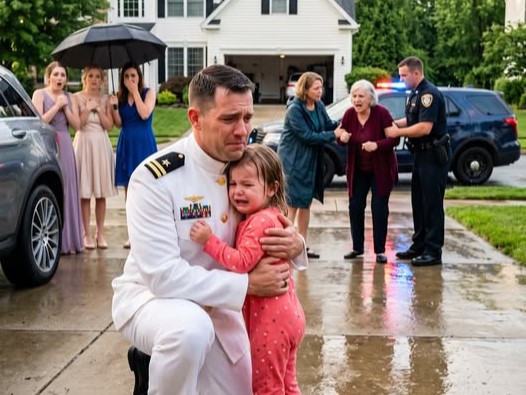
Author: Ordinary

  • “You have exactly 30 minutes,” I said. “To pack up your tape and get out of my house before I call the police for a home invasion.”  

    “You have exactly 30 minutes,” I said. “To pack up your tape and get out of my house before I call the police for a home invasion.”  

    I came home after 8 weeks at sea and found my pregnant sister turning my house into her nursery; my mom said, “You don’t need all this space”; her husband was already measuring my walls like they owned the place; I stayed calm and said, “Get out before I call the police”; the room went silent.

    I dropped my olive-green deployment bag in the hallway and immediately noticed my framed Coast Guard commendation leaning against the wall instead of hanging where I’d left it.

    Someone hadn’t just visited my house.

    They had settled in.

    The kitchen sink held dirty dishes, a glass crusted with pink protein powder, and takeout beside my coffee machine. My knife block had been shifted six inches. Ultrasound photos covered my refrigerator beneath decorative lemon magnets.

    Upstairs, the smell of primer, paint, and lavender grew stronger near the guest room.

    Harper stood on a step stool in one of my old college T-shirts, taping the trim while occasionally resting a hand on her stomach.

    Chase stood by the window with a laser measurer.

    “If we rotate the crib diagonally, we can fit the changing table near the closet.”

    They didn’t notice me until Harper heard my bag hit the hardwood.

    “Oh, good. You’re back.”

    She stepped down without a trace of guilt.

    “Chase thinks the gray is too cold for a nursery,” she said. “But we need to start moving our boxes in by Friday.”

    My bookshelves, logistics manuals, deployment binders, and desk were still there, but half the room was covered in paint samples.

    Morning fog. Soft willow. Baby cloud.

    I hadn’t even unpacked, and they were already redesigning my house.

    Chase gave me a tight smile.

    “Good to see you, Naomi,” he said. “We figured it made more sense than throwing money away downtown.”

    Their downtown apartment cost more than my mortgage, largely because Chase loved expensive cars and the appearance of success. The Rolex on his wrist fit the pattern perfectly. Last Thanksgiving, he had lectured my father about cryptocurrency while borrowing valet money from Harper.

    I set my coffee mug on the dresser.

    Nobody spoke.

    I looked at his laser measure, the open paint cans, and the moving boxes labeled Baby Sterling Nursery.

    Harper crossed her arms.

    “You have plenty of room,” she said. “And mom said you’d probably be deploying again next year anyway.”

    Mom.

    Evelyn Vance had been reallocating my life to Harper since childhood. My bedroom became Harper’s dance room because I was supposedly more mature. My first car became Harper’s emergency transportation. Even my promotion dinners somehow became celebrations of Harper.

    The perfectly measured tape line across my wall told me this wasn’t impulsive. They had planned it while I was offshore.

    Chase pocketed the laser measure.

    “We’re family,” he said carefully. “Nobody’s trying to make this weird.”

    I pulled out my phone.

    Harper frowned.

    “What are you doing?”

    “You have exactly 30 minutes,” I said. “To pack up your tape and get out of my house before I call the police for a home invasion.”

    Silence.

    The kind that comes when people realize the rules they depended on may no longer apply.

    Harper gave a nervous laugh.

    “You’d be serious.”

    I checked my phone.

    6:24 a.m.

    “I’m very serious.”

    Chase studied me, trying to decide whether I was bluffing.

    I wasn’t.

    Eight weeks coordinating emergency fuel logistics during tropical storms had taught me that calm didn’t mean weak.

    Sometimes it meant prepared.

    Harper’s expression hardened.

    “You’d really throw out your pregnant sister.”

    I lifted my coffee.

    “How exactly your pregnancy became my mortgage,” I said, “is still a little unclear to me.”

    Nobody answered.

    That told me enough.

    Have you ever worked so hard for something that your family started treating it like community property? If your relatives walked into your house and acted like ownership was optional, what would you have done?

    Comment below and subscribe if you like stories where dignity matters more than keeping fake peace.

    The sound of Chase throwing the tape measure into his bag stayed in my head all week.

    By Sunday evening, I was at my parents’ dining table.

    Mom always used noise to disguise tension—ice rattling in glasses, timers, soft music. If the house sounded busy enough, she seemed to believe nobody would notice the conflict.

    She had made braised short ribs, my childhood favorite, which usually meant a celebration or an apology she didn’t want to voice.

    Chase’s Mercedes and Harper’s Lexus were already outside when I arrived at 5:52 p.m.

    Mom kissed my cheek and handed me wine before I removed my coat.

    “You look tired,” she said.

    “I just got back from deployment.”

    “Well, don’t talk about storms during dinner. Harper’s stress levels affect the baby.”

    Of course.

    The dining room looked almost unchanged from twenty years earlier.

    Thomas, my father, sat quietly at the far end. His preferred approach to family conflict was waiting for it to pass without requiring him to participate.

    Harper wore beige. Chase stood and shook my hand.

    “Naomi,” he said. “Good to see you.”

    His watch had changed. Cheaper this time, but still designed to project success.

    Dinner began stiffly.

    Nobody mentioned my house or Harper’s attempted move-in.

    Instead, Mom filled plates and criticized my lifestyle.

    “You’re too skinny. You work too hard. You need softer lighting in your kitchen.”

    I let her talk.

    Halfway through dinner, Chase cleared his throat and adjusted his watch.

    “Our apartment downtown has gotten a little tight lately,” he said casually.

    Harper smiled beside him.

    “Babies absorb energy,” Chase continued. “And honestly, the city environment just feels stifling.”

    Their building had a rooftop pool, concierge, and valet parking.

    Mom jumped in.

    “Well, Naomi has all that space,” she said brightly. “Four bedrooms for one person is excessive when you think about it.”

    I sipped my wine.

    Harper looked directly at me.

    “Dad said you might deploy again next year.”

    Thomas didn’t deny it.

    “You don’t even use all that space,” Harper continued. “We need your house for the baby.”

    Not could we stay temporarily.

    Not could we discuss it.

    Need.

    Mom smiled as though the outcome had already been decided.

    Naomi would give in.

    Naomi always did.

    I looked around the table.

    Three people waiting for compliance.

    One man staring at his plate.

    Finally, I wiped my mouth.

    “How exactly does that concern me?”

    The room went silent.

    Mom blinked.

    “Naomi.”

    “No,” I said calmly. “I’m trying to understand the logic here.”

    Harper stiffened.

    “You know what? Forget it.”

    “No, seriously.”

    I put down my napkin.

    “You two chose an apartment you can’t afford. You’re having a baby you apparently don’t have room for. And somehow this becomes my emergency.”

    Chase shifted.

    “It’s about family.”

    “Interesting,” I said, “because usually when people want something from me, they ask before painting my walls.”

    Dad briefly looked up, then back down.

    Harper’s eyes filled with tears.

    “I cannot believe you hate this baby already.”

    She had skipped straight from disagreement to accusing me of hating her unborn child.

    Mom immediately reached for her hand.

    “Sweetheart, calm down.”

    “No,” Harper said, voice cracking dramatically. “She’s acting like we’re strangers.”

    Strangers usually respected boundaries better.

    I stood, took a folded $20 bill from my jacket, and placed it beside the wine.

    “For dinner,” I said.

    Mom stared at it.

    “Naomi, sit back down.”

    I was already leaving.

    Behind me, Harper cried louder. Chase muttered something.

    Dad remained silent.

    Outside, the cold air cleared my head.

    For the first time all week, I wasn’t tired.

    I was alert.

    Sunday dinner had revealed something important.

    Harper and Chase weren’t embarrassed.

    They were urgent.

    Embarrassed people soften requests and negotiate.

    Urgent people jump directly to entitlement because time is running out.

    At 7:12 the next morning, I sat at my kitchen counter with coffee and two laptops.

    The smell of paint still lingered upstairs.

    I stopped treating the situation like family drama.

    I treated it like an audit.

    County property records.

    Credit monitoring.

    State business registrations.

    My house showed no ownership changes or unauthorized liens.

    Then I found several financial verification requests connected to my address while I’d been deployed.

    They traced back to Sterling Auto Consulting LLC.

    Chase’s company.

    Beneath the registration was a commercial loan application filed nineteen days earlier.

    Collateralized residential stability verification.

    Primary residence: Naomi Vance property address.

    I read it three times.

    Chase had listed my house as his current residence.

    The requested loan amount was 85,420,000 in commercial expansion funding and delinquent balance consolidation.

    The nursery suddenly made sense.

    His business showed declining revenue, debt restructuring, vehicle inventory losses, and two late commercial lease payments.

    The baby wasn’t why they needed my house.

    The baby was packaging.

    A credit activity report exposed something else.

    Three pieces of certified mail had been signed for while I was offshore.

    Not by me.

    By Evelyn Vance.

    My mother.

    One came from Ridgeway Commercial Lending, another from a collections attorney, and the third from North Harbor Financial Compliance Services.

    She had received financial correspondence tied to my property and said nothing.

    I kept digging.

    Chase had filed business renewals late twice in eighteen months, and financing was already attached to company inventory.

    His commercial loan showed unstable debt-to-income, insufficient liquidity, and conditional approval pending residential verification.

    If he could establish stable housing tied to collateral support, he could secure the loan.

    My house wasn’t convenient.

    It was financially necessary.

    Suddenly, Sunday dinner looked like theater.

    Harper rubbing her stomach.

    Mom discussing the baby.

    Chase talking about suburban stability.

    Nobody mentioned the financial crisis underneath it.

    Mom’s texts looked different now.

    Hope you girls can work something out.

    Harper is under so much stress.

    Family supports family.

    Never permission.

    Never ownership.

    In her mind, my house had already been reassigned.

    If Chase was desperate enough to falsify residency information, I needed protection before he escalated.

    I made a list.

    Locksmith.

    Security cameras.

    Mailbox protection.

    Attorney consultation.

    Credit freeze.

    My sister wasn’t simply asking for a place to live anymore.

    They were trying to use my house as a flotation device.

    I spent Tuesday changing every password tied to my banking, utilities, mortgage, and security accounts.

    By Wednesday, I had pages of notes and three hours of sleep.

    I didn’t call Mom.

    There was nothing useful to discuss.

    Instead, I hired Falcon Ridge Security Solutions.

    Victor arrived Thursday morning carrying equipment cases and walked through the house as I explained.

    “No restraining order yet?” he asked.

    “Not yet.”

    “Family?”

    “Unfortunately.”

    He nodded.

    By 10:47 a.m., every exterior lock was off the doors and cameras were being installed around the property.

    For the first time, the house felt entirely mine.

    No spare keys circulating through the family.

    No emergency access for Mom.

    No assumptions.

    Victor showed me the biometric deadbolt.

    “Thumbrint access only,” he said. “You can authorize temporary users through the app.”

    I laughed.

    “My mother’s going to hate this.”

    “She’ll survive,” he said.

    At 1:18 p.m., I removed Mom from the old security system and garage keypad.

    Thirty years of automatic access disappeared with one click.

    Victor finished and gave me one final instruction.

    “Anybody shows up unwanted,” he said, “don’t argue through the door. Cameras do the talking for you.”

    I signed the $4,217.83 invoice and went to work downtown.

    That afternoon, my phone vibrated.

    Motion alert.

    Front driveway.

    A rented U-Haul rolled into my driveway through heavy rain.

    Harper climbed out first.

    Chase followed.

    The truck was packed with furniture, clothes, bins, and blankets.

    They actually intended to move in.

    From my office, I watched Chase approach the front door with the old key Mom had obviously given him.

    He inserted it.

    Turned it.

    Nothing.

    Tried again.

    Nothing.

    Harper came up behind him.

    “What’s wrong?”

    “The lock changed.”

    “No, it didn’t.”

    “It literally did.”

    She tried the key herself.

    Still nothing.

    Rain soaked them.

    “You have got to be kidding me.”

    Harper started pounding on the door.

    “Naomi!”

    Bang. Bang. Bang.

    “I know you were doing this.”

    A neighbor’s curtain moved across the street.

    I activated the audio feed.

    “You are seriously making a pregnant woman stand outside in this weather,” she screamed.

    I pressed the intercom.

    Both froze.

    “You have 5 minutes to remove that truck from my property before I have it towed at your expense.”

    Harper stared into the camera.

    “You can’t do this to family.”

    Chase moved closer.

    “Naomi, let’s just talk like adults.”

    The man falsifying residency documents suddenly wanted adult conversation.

    “I’m starting the tow request in 4 minutes,” I said calmly.

    Then Mom’s car pulled in behind the U-Haul.

    Of course.

    She called six times afterward.

    I ignored every call.

    When private guilt failed, she changed tactics.

    Monday morning, I received an expensive cream invitation to Harper Sterling’s baby shower at Ashton Gardens Country Club.

    At the bottom, Mom had handwritten that Harper needed her sister.

    I almost threw it away.

    Then Thomas called.

    “You should probably come,” he said quietly.

    “Why?”

    After a pause, he answered.

    “Your mother’s been telling people you worked things out.”

    I leaned back.

    “What exactly does worked things out mean?”

    Another pause.

    Then she told everyone, “You’re making an announcement about the house.”

    Mom had turned a baby shower into a real-estate press conference.

    So I went.

    Saturday was cold and bright. Ashton Gardens looked exactly like the kind of place people with hidden debt wanted life to look.

    Stone entrance.

    Perfect hedges.

    White flowers.

    Valet parking.

    I arrived at 12:56 p.m. in dark Coast Guard dress slacks and a fitted black blazer.

    No gift.

    No pastel colors.

    Just a heavy manila folder.

    Inside were loan records, debt notices, residency-fraud documentation, apartment delinquency reports, and eviction warnings from Crestview Luxury Residences.

    Harper and Chase were 93 days behind on rent.

    The ballroom held around forty guests.

    Harper sat near the gifts in pale pink.

    Mom hurried toward me the moment she saw me.

    “Oh, good,” she said breathlessly. “You came.”

    “I said I would.”

    She noticed the folder.

    “What’s that?”

    “Paperwork.”

    Across the room, Chase stood beside his parents, Richard and Linda Sterling.

    Everything around us projected controlled perfection.

    Harper opened gifts.

    Mom managed conversations.

    Chase smiled too hard.

    Then Evelyn tapped her champagne glass.

    “Everyone,” she announced brightly. “Before dessert, Naomi has a very special surprise announcement about the family’s living arrangements.”

    Forty faces turned toward me.

    Harper smiled nervously.

    Chase adjusted his jacket.

    Mom looked relieved, apparently convinced public pressure would force me to cooperate.

    I picked up the folder and approached the microphone.

    “My sister wanted a stable foundation for her baby,” I said softly.

    Harper smiled too soon.

    “But a foundation can’t be built on federal wire fraud.”

    The room froze.

    Even the music stopped.

    I opened the folder and laid the first documents on the gift table.

    Commercial loan application.

    False primary residence.

    Delinquent debt.

    “The document shown here,” I continued calmly, “lists my property as collateral support for an $85,000 commercial rescue loan filed without my authorization.”

    Nobody moved.

    I produced another page.

    “This one shows Sterling Auto Consulting currently carrying over $120,000 in combined commercial and personal debt.”

    Harper went pale.

    Then came the eviction notice.

    Balance due: $14,88217.

    “They’re also being evicted,” I said.

    The room fell silent again.

    Chase looked gray and cornered.

    Harper whispered his name, but he had no performance left.

    A baby shower had become an accounting session.

    Guests began backing away quietly. Nobody touched the $3,000 dessert spread.

    Richard Sterling pulled his wife closer.

    Linda stared at the eviction notice.

    “This can’t possibly be accurate,” she whispered.

    Harper sat frozen among the gifts while Chase attacked his phone, probably calling lawyers or lenders.

    Mom finally reached me.

    “Naomi,” she hissed quietly. “What have you done?”

    I gathered the remaining documents.

    “I exposed it.”

    “This was a baby shower.”

    “No,” I said. “It was a pressure campaign with cupcakes.”

    Mom looked around in horror as guests left.

    Public embarrassment frightened her more than the financial records.

    Behind us, Harper stood shakily.

    “Mom,” she whispered.

    For once, she didn’t sound theatrical.

    She sounded scared.

    Chase stormed toward me.

    “What is wrong with you?” he snapped at me.

    The polished businessman had disappeared.

    “You could handle this privately.”

    I met his eyes.

    “You committed loan fraud privately.”

    His face darkened, but the room full of witnesses kept him contained.

    Mom stepped between us.

    “Everybody just calm down.”

    Harper’s crying changed.

    It was no longer performative.

    “Chase,” she whispered. “Tell me this isn’t real.”

    He didn’t answer.

    That told her enough.

    “You said the business was fine.”

    “It was supposed to recover.”

    “Supposed to?”

    Guests kept leaving.

    Then Mom grabbed my arm.

    “Please,” she said.

    The polish was gone.

    “Please just sign the house over temporarily so the bank backs off. Chase could go to prison.”

    Finally.

    The real request.

    Not a nursery.

    Not family togetherness.

    Asset stabilization.

    “Family sacrifice for each other.”

    I looked at the same hands that had signed for my mail and given Chase my key.

    Mom genuinely believed removing consequences from Harper’s life was love.

    Every crisis had followed the same pattern.

    Harper struggled.

    Naomi fixed it.

    I looked at Mom.

    “You spent 30 years teaching Harper she never had to earn anything,” I said.

    Her face crumpled.

    “You didn’t protect her, Mom. You just made her incompetent.”

    Behind her, Harper covered her mouth and cried.

    Chase argued into his phone near the windows.

    “No, listen to me. If they freeze the application before underwriting clears—”

    Then he went silent and lowered the phone.

    Whatever he’d heard ended the fantasy.

    No miracle investor.

    No easy recovery.

    Just debt, legal consequences, and a baby arriving in five months.

    Harper sank into a banquet chair surrounded by gifts.

    For the first time, nobody was stepping in fast enough to rescue her.

    Part of me felt sorry for her.

    Not enough to surrender my house, but enough to recognize she had spent her life inside a system designed to shield her from consequences.

    I lifted the folder.

    “The house is mine,” I said calmly.

    I looked at Chase.

    “The dead is yours.”

    Then Harper.

    “Welcome to adulthood.”

    Nobody answered.

    The last guests hurried out as the illusion collapsed.

    Chase stayed by the windows staring at his phone. Harper sat beside the gift table with one hand on her stomach.

    Mom still gripped my arm.

    “Naomi,” she whispered again, voice cracking harder this time. “Please.”

    Then she turned toward Dad with sudden hope.

    Thomas had spent thirty years choosing silence over confrontation.

    “Tom,” Evelyn snapped sharply. “Do something.”

    He stood near the ballroom entrance, watching as usual.

    Mom pointed toward me.

    “Fix.”

    Not help.

    Fix.

    As though I were responsible for repairing the damage because I refused to finance it.

    Thomas finally walked toward Chase and picked up one of the documents.

    He read quietly while the remaining staff cleared plates.

    Chase tried.

    “Tom, I can explain.”

    Dad kept reading.

    “The market shifted unexpectedly,” Chase continued quickly. “We just needed temporary stability until inventory moved again.”

    Thomas looked up.

    “Did you use my daughter’s address on a federal loan application?”

    Chase hesitated.

    That hesitation was enough.

    Mom snapped.

    “Oh, for God’s sake. This isn’t helping.”

    She rushed toward Thomas.

    “We can still solve this if Naomi just cooperates for once in her life.”

    Cooperates.

    I had bought my house alone at twenty-nine after years of deployments and twelve-hour logistics shifts while Harper and Chase hid eviction notices behind baby-shower invitations.

    Yet somehow I was difficult.

    Mom grabbed Dad’s arm.

    “You need to make her understand what family means.”

    Thomas removed his glasses and folded them.

    For the first time, he looked too exhausted to keep pretending.

    Mom’s voice sharpened.

    “Thomas, say something.”

    Finally, he did.

    “She’s not fixing this, Eevee.”

    Mom froze.

    Thomas looked at the paperwork, then Chase, then his wife.

    Because I hadn’t created the problem.

    Her face collapsed.

    Thirty years of family structure cracked in one sentence.

    Harper cried quietly behind us.

    Thomas turned toward Chase.

    “Get out of my sight,” he said quietly.

    Chase blinked.

    “Tom—”

    “Before I call the police myself.”

    Chase stepped backward.

    For the first time, he looked genuinely afraid.

    Harper wouldn’t even look at him.

    There was no longer a family shield standing between him and the consequences.

    No Evelyn managing the problem.

    No access to my house.

    No stable image to hide behind.

    He grabbed his coat and left.

    The ballroom doors closed behind him.

    Dad stood staring at them, looking like a man finally understanding the price of decades of silence.

    The federal investigation began three weeks later.

    No dramatic raids.

    Just paperwork, certified mail, and phone calls.

    One Tuesday at 11:43 p.m., Chase left me a voicemail.

    “Naomi, listen. Okay, this thing got bigger than I expected.”

    He sounded exhausted.

    “They’re asking questions about residency verification now,” he continued. “If you could just confirm—”

    I deleted it before he finished.

    The next morning, I blocked his number.

    Harper moved back into my parents’ house two days after the investigation became official because Crestview finally filed the eviction.

    I heard updates mostly through Thomas.

    “Harper’s staying in her old room,” he told me one evening.

    I pictured the pale-yellow walls from high school, except now there were baby brochures and legal notices instead of prom magazines.

    Chase stopped visiting after his second meeting with federal investigators.

    Mom still defended him at first.

    “He was under pressure.”

    “The economy hurt everyone.”

    “He made mistakes because he wanted to provide.”

    That last excuse bothered me most.

    Eventually, once attorneys started using phrases like document falsification and financial misrepresentation, even Mom struggled to maintain the story.

    One Sunday, Dad called.

    “Your mother keeps saying she doesn’t understand how this happened.”

    “And?”

    He paused.

    “Then I think she’s starting to realize it didn’t happen suddenly.”

    That was probably the most direct criticism of Mom I had ever heard from him.

    I never returned to my parents’ house after the shower.

    I didn’t need another family summit disguised as dinner.

    Some relationships don’t end in explosions.

    They end in clarity.

    By early November, my guest room was mine again.

    Gray walls.

    Books back on the shelves.

    Deployment files organized.

    No nursery samples.

    No decorative lemons.

    I stood there one rainy evening with coffee and noticed how different the same room felt.

    Not necessarily happier.

    Just honest.

    Boundaries don’t always feel warm.

    Sometimes they feel quiet.

    Sometimes they feel lonely for a while.

    But they also let you sleep peacefully inside your own home.

    One Thursday morning around 8:20, a handwritten envelope from my parents arrived.

    I made coffee before opening it.

    The letter was careful rather than truly accountable.

    They said things had become painful, that they loved both daughters, that mistakes had been made, and that family should find a path forward.

    No direct acknowledgment of the house.

    No acknowledgment of the intercepted mail.

    I read it once, folded it, and dropped it into recycling.

    I wasn’t angry.

    I was finished.

    That surprised me.

    Outside, rain moved through the neighborhood while the kitchen smelled like coffee again.

    Home.

    Not guilt.

    Not obligation.

    Mine.

    I rested a hand on the biometric deadbolt and turned it.

    A clean click echoed through the house.

    That was when I understood something Mom never had.

    Love without boundaries becomes permission.

    Permission eventually becomes entitlement.

    Nobody gave me that house.

    Nobody rescued me into stability.

    I built it through deployment checks, missed holidays, long shifts, and years of discipline.

    For the first time, it felt completely secure.

    Not because the locks had changed.

    Because I had.

    A few weeks later, I realized the betrayal itself wasn’t what remained with me.

    The clarity was.

    For years, I thought my family respected me because I was responsible.

    In reality, they relied on me because I was responsible.

    Those aren’t always the same thing.

    When you become the stable person in a family, your competence can start feeling like public infrastructure.

    Your money becomes family money.

    Your time becomes availability.

    Your calm becomes storage for everyone else’s chaos.

    Then the moment you protect yourself, you’re suddenly selfish or difficult.

    Looking back, nobody ever respectfully asked for my house.

    Mom framed taking it as sacrifice.

    Harper framed it as compassion for the baby.

    Chase framed it as practicality.

    Different packaging.

    Same entitlement.

    Family manipulation rarely introduces itself honestly.

    Nobody says, “I’d like to financially exploit you now.”

    Instead, it sounds softer:

    “Family helps family.”

    “You have more than enough.”

    “Why are you making this difficult?”

    “You’d really do this to us.”

    Guilt works because decent people don’t want to hurt others. Responsible people are especially vulnerable because they’re accustomed to solving problems.

    I’d seen it during deployment. One man nearly emptied his retirement account rescuing his brother after a failed business. Six months later, the brother needed help again, then again, until both were struggling.

    You cannot build stability for someone committed to avoiding accountability.

    Eventually, rescue becomes maintenance.

    And maintenance can destroy the rescuer too.

    That changed how I viewed Harper.

    I didn’t hate her.

    I was frustrated and disappointed, but I also understood she had spent her entire life inside a system where consequences disappeared before fully reaching her.

    Late rent became Mom’s emergency.

    Bad decisions became family discussions.

    Financial irresponsibility became stress.

    Mom believed she was protecting Harper.

    In reality, she protected her from developing competence.

    Repeated rescue can create dependency disguised as confidence.

    That’s why boundaries matter.

    Protecting your peace isn’t cruelty.

    Refusing to repeatedly finance another adult’s mistakes isn’t cruelty.

    Owning the life you built isn’t cruelty.

    You can say no without presenting a courtroom defense.

    I also learned to slow everything down whenever money and emotion appear together.

    Read documents.

    Verify records.

    Protect your credit.

    Urgency makes people easier to pressure.

    Facts slow manipulation down.

    Once I saw the paperwork, my guilt disappeared because I was no longer debating feelings.

    I was looking at reality.

    Another lesson was my father.

    He believed staying quiet preserved peace.

    It didn’t.

    Silence merely allowed dysfunction to continue until the consequences became too large to ignore.

    That’s how many unhealthy families operate.

    One person creates chaos.

    Another enables it.

    Everyone else adapts.

    Eventually, dysfunction begins to feel like tradition.

    After everything ended, my quiet house initially felt lonely.

    No calls from Mom.

    No guilt texts.

    No emergencies after work.

    Then one morning, I realized it wasn’t loneliness.

    It was safety.

    People raised around chaos can struggle to recognize peace because peace feels unfamiliar.

    My house was calm because nobody inside it was trying to take something from me.

    That was worth the discomfort required to establish boundaries.

    The experience also taught me that manipulation isn’t always loud.

    Sometimes it hosts dinner, asks whether you’ve eaten, hugs you in public, then softly pressures you to sacrifice something important.

    Mom wasn’t a cartoon villain plotting in darkness.

    She genuinely believed preserving the appearance of a happy family was love.

    That was precisely the problem.

    Once appearances matter more than truth, destructive choices can be rationalized as care.

    Our family had always followed the same structure.

    Harper created chaos.

    Mom softened the consequences.

    Dad avoided conflict.

    I cleaned everything up.

    Everybody had a role.

    Mine was stability.

    Many families don’t solve dysfunction.

    They organize around it.

    The reliable child pays, stays calm, and absorbs pressure because everyone assumes they can handle more.

    That role can consume you if you never step outside it.

    Mom called it keeping the peace.

    But in our family, peace meant I quietly absorbed discomfort so everyone else avoided consequences.

    That wasn’t peace.

    It was maintenance.

    Eventually, flexibility becomes expectation.

    Expectation becomes entitlement.

    Chase taught me something else about appearances.

    He spent years building the image of stability instead of stability itself.

    Luxury apartment.

    Designer watches.

    Tailored suits.

    Business talk.

    Behind it were late payments, commercial debt, and eviction notices.

    Real stability is usually boring.

    Budgets.

    Paperwork.

    Long hours.

    Delayed purchases.

    Credit built slowly.

    Those choices aren’t impressive online, but they’re often the difference between peace and panic later.

    Chase performed confidence because performance was all he had left.

    That’s why documentation mattered.

    Facts stabilized the situation.

    When emotions are high, verify before reacting.

    Check records.

    Read contracts.

    Protect your identity.

    Slow the decision down.

    Manipulation thrives on urgency.

    Calm makes control harder.

    My family expected guilt and an emotional reaction.

    Instead, I checked the paperwork.

    The performance ended quickly.

    I also learned that some relationships only work while one person keeps sacrificing.

    Healthy relationships can survive boundaries.

    Exploitative ones often cannot.

    The moment I protected my house, I became cold and selfish in their eyes—not because I had suddenly become a worse person, but because my boundaries disrupted a system that benefited them.

    That reaction mattered.

    So did the difference between kindness and access.

    You can love someone without financing them.

    You can wish relatives well without giving them your house keys.

    You can care about family while protecting your future.

    That’s not cruelty.

    That’s adulthood.

    Too many responsible adults exhaust themselves trying to earn love through sacrifice.

    Eventually, dignity has to matter more than approval.

    Months later, sitting alone in my living room near midnight, I finally admitted that this story had never really been about the house.

    The house exposed the system.

    That system existed before Chase and his expensive watches, before Harper’s nursery plan, before Mom treated my mortgage like a family resource.

    The conflict simply forced everyone’s roles into the open.

    Being the responsible child had shaped me more than I realized.

    I became hyper-independent.

    I solved problems automatically.

    I stayed calm because somebody had to.

    Eventually, I confused usefulness with value.

    For years, saying no made me feel selfish.

    That mindset nearly cost me my house.

    I began thinking of it as emotional debt.

    Some families raise one person to feel permanently responsible for everyone else’s comfort.

    The fixer.

    The stable one.

    The person who absorbs pressure.

    Stopping that role produces guilt, but guilt isn’t always evidence that you’re wrong.

    Sometimes it only means you’ve stopped obeying an unfair expectation.

    Once I understood that, I noticed how often people confuse love with access.

    Stop giving money and they say you changed.

    Stop solving emergencies and they say you’re cold.

    Stop sacrificing your peace and they call you difficult.

    Sometimes people are attached to your usefulness more than your well-being.

    Harper was another example of what repeated rescue can create.

    For most of my life, I saw her as spoiled.

    Later, I realized she was also unprepared.

    There’s a difference.

    Someone who has always been cushioned from consequences can panic when that protection disappears.

    Watching Harper discover how fragile her life really was hurt more than I expected.

    I didn’t regret exposing Chase.

    I would do it again.

    But I realized she genuinely hadn’t understood how unstable everything was.

    I still hope she grows.

    I hope motherhood makes her stronger and more capable.

    But hoping someone improves doesn’t require sacrificing yourself to protect them from the lesson.

    Compassion doesn’t require self-destruction.

    You’re allowed to care about someone without drowning beside them.

    And there are practical lessons too.

    Understand your finances.

    Monitor your credit.

    Read contracts.

    Check property records.

    Protect identity documents.

    Don’t give unlimited access to accounts, legal information, or property merely because someone shares your last name.

    Trust can create blind spots.

    Patterns matter too.

    Manipulation rarely appears overnight.

    Usually there are years of smaller irresponsibilities, repeated excuses, financial chaos, and charm before the damage becomes impossible to hide.

    If someone repeatedly creates instability, you do not automatically become responsible for repairing it.

    The greatest surprise afterward was how peaceful life became once I stopped chasing approval.

    Some relatives still think I was too harsh.

    That’s fine.

    People who benefited from weak boundaries often resent stronger ones because their access changes.

    At first, protecting your peace can feel lonely.

    Then the loneliness fades.

    What remains is stability.

    Real stability.

    The kind you can actually sleep inside.

    If there’s one thing I hope people take from this story, it’s that self-respect isn’t cruelty, boundaries aren’t betrayal, and protecting the life you worked to build isn’t selfish.

    It makes you an adult.

    So if you’re listening to this right now as somebody who has spent years carrying responsibilities that were never supposed to belong to you, maybe this is your reminder to finally put some of that weight down.

    You don’t have to destroy yourself just to prove you love people.

    And if this story meant something to you, subscribe to the channel.

    There are a lot of people out there silently carrying emotional debts they never actually owed.

    Sometimes hearing the truth out loud is the first step toward finally letting yourself live differently.
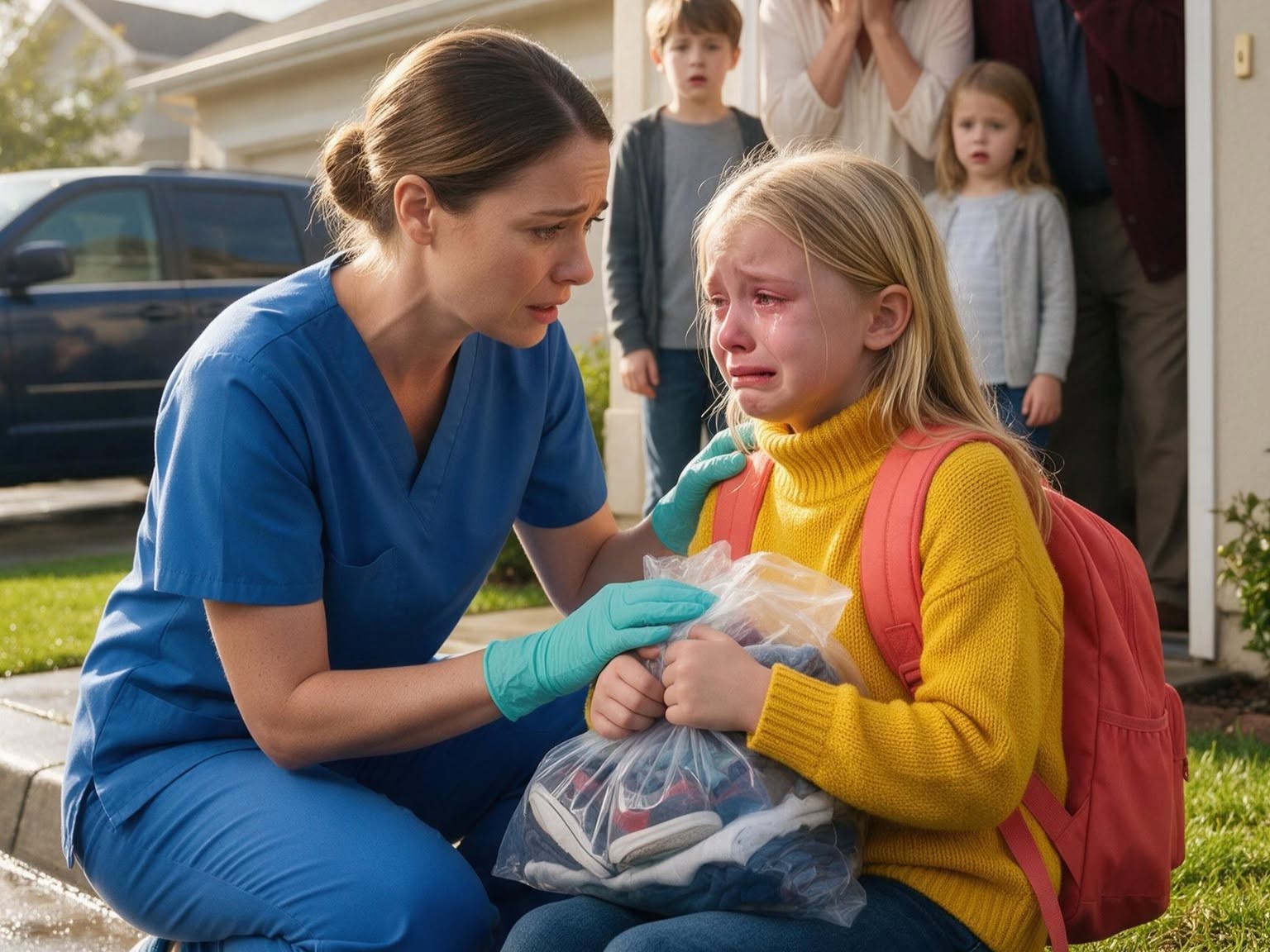
  • At 12:43 AM, my weeping daughter called from the curb: ‘Grandpa threw all my stuff out to make room for my cousin, and Dad just stood there.’ Leaving my ER shift immediately, I raced home only to face my father-in-law’s sneer: ‘We call the shots in this house.’ The arrogant freeloaders thought they had us beaten. But the moment I slammed the sole-ownership deed onto the table, my ruthless midnight eviction of the entire in-law family began.  

    At 12:43 AM, my weeping daughter called from the curb: ‘Grandpa threw all my stuff out to make room for my cousin, and Dad just stood there.’ Leaving my ER shift immediately, I raced home only to face my father-in-law’s sneer: ‘We call the shots in this house.’ The arrogant freeloaders thought they had us beaten. But the moment I slammed the sole-ownership deed onto the table, my ruthless midnight eviction of the entire in-law family began.  

    At 12:43 AM, my weeping daughter called from the curb: ‘Grandpa threw all my stuff out to make room for my cousin, and Dad just stood there.’ Leaving my ER shift immediately, I raced home only to face my father-in-law’s sneer: ‘We call the shots in this house.’ The arrogant freeloaders thought they had us beaten. But the moment I slammed the sole-ownership deed onto the table, my ruthless midnight eviction of the entire in-law family began.

    Part 1. The Midnight Call

    At 12:43 a.m., my sixteen-year-old daughter, Emma, called me from the curb outside our own house.

    “Grandpa said my room belongs to Olivia now,” she whispered.

    I was working a night shift as an ER nurse at Portland General, still wearing one blue glove in the medication room. Behind Emma’s voice, I heard rain, passing tires, and the thin crinkle of a plastic grocery bag.

    Inside the bag were her pajamas, backpack, and schoolbooks. My mother-in-law, Marlene Hart, had packed them and told Emma she was being dramatic.

    When I asked where her father was, Emma said Daniel was standing on the porch and “didn’t want to get in the middle.”

    That sentence told me everything.

    I sent Emma to Mrs. Ellis next door, handed off my patients, and drove home through freezing rain.

    When I arrived, Gerald and Marlene Hart stood in my foyer like they owned the place. Behind them, my seventeen-year-old niece, Olivia, clutched Emma’s favorite comforter. Daniel stood by the stairs, pale and silent.

    Marlene announced that Olivia needed stability and Emma could stay with friends for a few days.

    “In her own house?” I asked.

    Gerald claimed Daniel’s name was on the mailbox and that his parents had a right to make family decisions.

    “His name is on the mailbox,” I said. “Not on the deed.”

    Then I pulled out the documents my father had left me: deed, mortgage release, tax records. Every page carried one name.

    Rachel Moore.

    Not Hart.

    This was my house. My father had bought it before I met Daniel. I had allowed Gerald and Marlene to stay after their condo flooded and allowed Olivia to stay after her mother’s rehab placement.

    I had never given them permission to evict my daughter from her own bed.

    Part 2. The CPS Letter

    While waiting for police, I found a crumpled letter from Child Protective Services buried near the recycling bin. It was addressed to Gerald and Marlene.

    Olivia’s mother had not simply entered rehab. She had relapsed, disappeared from her halfway house, and was facing termination of parental rights.

    The highlighted section explained everything: before Gerald and Marlene could gain permanent custody, CPS needed to inspect the proposed home and confirm Olivia had adequate, private, permanent sleeping quarters.

    Emma’s room was the largest bedroom in the house.

    They were not being generous.

    They were staging my home to pass inspection, gain custody of Olivia, and secure the monthly state stipend that came with it.

    When Officer Nolan Pierce arrived, I gave him my ID, the deed, and the property tax records. Then I pointed to Emma’s grocery bag on the floor.

    Daniel admitted the situation had “got complicated.”

    “No,” I said. “It did not.”

    Because Gerald and Marlene had lived there for more than two months, the officer said I needed a formal eviction to remove them. But he made one thing clear: they had no right to lock a minor out of her legal residence.

    Emma returned to her room that night.

    I changed her sheets myself.

    “I didn’t do anything wrong,” she whispered.

    “No, sweetheart. You didn’t.”

    Then she said the sentence I could not soften.

    “Dad didn’t stop them.”

    “I know,” I answered.

    The next morning, I called a lawyer, changed the Wi-Fi password, and served Gerald and Marlene a thirty-day notice to vacate.

    Part 3. The Fake Roof Claim

    I expected tears, rage, and guilt trips.

    Instead, Gerald smiled.

    Two hours later, a courier delivered a lawsuit and a mechanic’s lien. Gerald claimed he had paid fifteen thousand dollars for my roof ten years earlier, giving him an “equitable interest” in the property. His lawyer warned that any eviction would be blocked while ownership was disputed.

    They were holding my house hostage.

    When Daniel read the papers, he hesitated.

    “Maybe we just let them stay until the condo—”

    “They are not waiting for the condo,” I snapped, showing him the CPS letter. “They are stealing Emma’s room to pass a custody inspection.”

    Daniel went pale but still said he remembered his father writing the roofing check.

    That hurt worse than the lawsuit.

    Gerald had not paid for the roof. My father had. Gerald had only handed the check to the contractor because my dad was in the hospital.

    My lawyer, Nora Whitfield, explained the strategy clearly. Gerald’s lien was weak, but his ownership claim could stall eviction long enough for the CPS inspection.

    To beat him, I needed proof that my father’s money had funded the roof.

    So I searched the attic for days between exhausting hospital shifts, digging through old tax boxes and bank papers while Gerald and Marlene launched a campaign inside the house. Marlene cried loudly whenever Emma passed by. Gerald called relatives from the porch, claiming I was throwing elderly family and an orphaned child onto the street before the holidays.

    Then Marlene crossed another line.

    Part 4. Emma Speaks

    One night, I found Marlene spreading glossy photographs across the dining table.

    They were pictures of Emma’s bedroom: her closet, drawers, desk, clothes, and private belongings.

    Marlene said she was documenting how selfish Emma was because Olivia owned almost nothing while Emma had a full room.

    Emma walked in and froze.

    Marlene looked straight at her and said people who had more needed to share.

    I gathered the photos, ripped them in half, and threw them away.

    Then Emma finally spoke.

    She said she had offered Olivia half her closet, given her a blue coat, let her use her laptop, and moved her art supplies so Olivia could have desk space.

    “I didn’t say no to sharing,” Emma said. “I said no when Grandma told me to sleep on a broken couch in the basement because my room was more useful to her plans.”

    Olivia, who had been listening from the hallway, burst into tears and ran upstairs.

    Four days later, I found what I needed: a carbon copy of my father’s cashier’s check to the roofing company and a matching withdrawal slip from his savings account.

    I sent it to Nora.

    Her reply came minutes later: the lien was dead, the lawsuit was frivolous, and she was filing for emergency expedited eviction based on harassment and fraud.

    Part 5. The Fake Heart Attack

    When the expedited order came through, I entered the kitchen and dropped it beside Gerald’s plate.

    “You have two hours to pack. The sheriff arrives at noon.”

    Gerald panicked and looked to Daniel.

    “Son, you aren’t going to let her do this.”

    Before Daniel could answer, Marlene dropped to the floor, clutching her chest and screaming that the stress was killing her.

    Daniel grabbed his phone to call 911.

    I told him to put it down.

    I had worked fourteen years in emergency medicine. I knew what a heart attack looked like. I also knew what bad acting looked like.

    I checked Marlene’s pulse. It was strong, regular, and normal. Her skin was warm and dry. Her lips were pink. There was no sign of cardiac distress.

    Then I told her exactly what would happen if she forced an ambulance call: paramedics would document that she was medically stable and that the episode appeared staged to delay a legal eviction.

    Her fake gasping stopped immediately.

    Daniel saw it.

    For the first time, he understood that his parents had lied about the room, lied about the roof, and were now using his fear to keep control.

    “I froze,” he whispered.

    “Yes,” I said. “And Emma paid for it.”

    That was the moment Daniel finally stepped forward.

    He told his parents they had one hour to pack. If they were not gone by noon, he would help the sheriff carry their bags to the curb.

    When Gerald tried to intimidate him, Daniel did not step back.

    “If you contact Emma without permission or spread another lie about my wife,” he said, “we will bury you in court.”

    The word “we” changed the room.

    I did not forgive him in that moment.

    But for the first time, he stood between his parents and the hallway leading to our daughter’s room.

    Part 6. Olivia’s Choice

    Gerald and Marlene left without saying goodbye.

    Olivia was the last to go.

    She stood near the front door in her thin jacket, then looked up at Emma on the stairs.

    “I really am sorry,” she said.

    Emma nodded.

    Then Olivia handed her a folded paper through the banister.

    It was a copy of her school registration form. She had listed her Aunt Hannah’s address in New Hampshire as her permanent residence—not our house.

    CPS would see it on Monday.

    Olivia had destroyed her grandparents’ custody scheme from the inside.

    “I hope nobody ever makes you feel like you have to disappear again,” she whispered before leaving.

    That evening, I took Emma to buy a heavy brass lock for her bedroom door.

    Daniel installed it himself. When he finished, he handed Emma the new key.

    “I should have protected you that night,” he said.

    Emma took the key.

    “Yeah. You should have.”

    He apologized.

    She did not hug him. She did not say it was okay, because it was not. But she kept the key on her bedside table and did not ask him to leave.

    It was a beginning.

    Part 7. The Boundary Becomes Real

    Relatives soon flooded our phones with messages about forgiveness and family unity.

    I ended it with one mass email. I attached the police timeline, the fraudulent lien, and one sentence:

    Emma was locked out of her legal residence in freezing rain at midnight so her room could be used to commit state fraud. Any version that leaves that out is a lie.

    The messages stopped.

    Thanksgiving was quiet. Just the three of us, store-bought pie, and no one demanding anything. Emma wore her new room key on a silver chain—not because she feared us, but because it reminded her that her boundaries were finally real.

    Daniel began intensive therapy. In January, he wrote Emma a letter admitting his failure as a father without asking for forgiveness. She kept it in her desk drawer.

    By spring, Gerald and Marlene’s custody bid collapsed, helped by Olivia’s address change. Olivia moved to New Hampshire with Aunt Hannah. Gerald and Marlene sold their condo and moved away, blaming the weather instead of the bridges they had burned.

    A year later, I came home from a hospital shift and saw Emma sitting on the curb.

    For one breathless second, I was back at that terrible night.

    Then I saw her sketchbook.

    She was drawing our house, especially her second-story bedroom window.

    “That night felt like the end of the world,” she said. “Now it feels like the night we figured out who was actually going to show up for me.”

    I looked at the house my father had left me, the room my daughter had reclaimed, and the husband inside learning to become a shield instead of a shadow.

    For once, no one in that house was waiting to take anything from her.

  • I came home without warning and found my daughter alone in the ICU, fighting for her life. While she lay there, my husband was on a luxury yacht with another woman, completely unaware of what was happening.  

    I came home without warning and found my daughter alone in the ICU, fighting for her life. While she lay there, my husband was on a luxury yacht with another woman, completely unaware of what was happening.  

    I didn’t call my husband. I didn’t beg him to come back. I didn’t explain a thing. I simply froze every credit card he had. Within an hour, my phone exploded with calls. 99 missed calls. He finally realized something was terribly wrong.

    PART 1

    The metallic click of the mechanical ventilator was the only sound piercing the deathly silence of the Pediatric ICU at the hospital.

    In front of me, the tiny hand of my twelve-year-old daughter, Chloe, lay lifeless beneath the harsh, cold fluorescent lights, trapped in a labyrinth of IV lines.

    The second sight ripped my soul to shreds: the leather armchair beside her bed was completely empty.

    “She suffered a fulminant anaphylactic shock; her airways closed off entirely,” the attending physician explained, his face grim. “Two more minutes and we wouldn’t have been able to save her. We tried locating your husband eleven consecutive times, but there was no response.”

    I gripped the stainless-steel bed rail until my knuckles turned white. “Who brought her in? Where is my husband?”

    “Her nanny. She arrived with the girl in her arms in a taxi.”

    I immediately dialed Rosa.

    The woman’s voice broke into stifled sobs on the other end:

    “Mrs. Vance… Grant promised he would take Chloe out for lunch. But he left alone before eleven. Then Chloe called me from the kitchen floor… saying she couldn’t breathe. He left her completely alone in the house…”

    I bent over the bed and pressed my little girl’s freezing hand against my cheek.

    At that exact second, my phone vibrated in my coat pocket.

    It was a screenshot urgently sent by my chief of staff. I opened it.

    Grant was posing barefoot on the teak deck of The Sovereign—the 130-foot luxury yacht I had bought exclusively using my family inheritance. He was holding a crystal flute of French champagne, pressed against the body of a young blonde woman with a dazzling smile.

    The caption at the bottom turned my blood to absolute ice:

    “Best surprise getaway of my life! Thanks for spoiling me so much, G.”

    My daughter was fighting for every single breath, hooked up to life support.

    And my husband was sailing peacefully across the water, living a life of luxury funded entirely by my money.

    I didn’t cry. My grief instantly crystallized into a lethal, surgical coldness.

    I opened the banking app for my corporate holdings and wiped out every unlimited credit card linked to his name with a single tap. Then I placed a direct call to the marina captain.

    “This is Evelyn Vance, sole owner of the yacht The Sovereign,” I instructed, my voice dripping with ice. “Immediately freeze all fuel deliveries, maintenance, and remote satellite support. Without my notarized authorization, not a single drop of diesel goes into that vessel.”

    “Understood, Mrs. Vance. The shutdown order is immediate.”

    Barely forty minutes passed before my phone began vibrating frantically on the side table.

    Grant’s text messages flooded my screen in desperate, frantic bursts:

    “Evelyn! Every single one of my cards is being declined! What the hell are you doing?! The captain says we’ve been cut off from fuel and we’re dead in the water! Fix this right now!”

    I looked away from the screen and gently stroked Chloe’s forehead, brushing a strand of hair from her face.

    Then I fixed my eyes on the incoming calls that kept ringing without pause.

    Grant still believed this was a simple fit of jealousy or a marital spat.

    He had no idea that being stranded in the middle of the ocean without a single dime… was merely the prologue to his absolute destruction.

    PART 2

    “Evelyn! What the hell is going on?!”

    Grant’s voice exploded through the receiver. It was a frantic, muffled whisper loaded with agitation, accompanied by the heavy, thumping bass of club music and the clinking of fine glassware.

    “Every single one of my cards is being declined!” Grant hissed, panic and deep narcissistic shame oozing through the line. “I’m sitting at Carbone in Miami with six people, and the waiter is staring at me like I’m a common criminal! They’re threatening to call the police over the bill! Did you mess with the accounts again? Is there a fraud alert?!”

    He was furious. He wasn’t calling to check on me. He wasn’t calling to ask how his family was doing. He was entirely consumed by the public humiliation of his own fraudulent lifestyle collapsing.

    “I blocked them, Grant,” I said simply, my voice barely above a whisper.

    The blasting club music in the background seemed to instantly fade away, leaving a heavy, suffocating silence on the line.

    “Have you lost your damn mind?!” Grant roared, instantly regaining his arrogance as he tried to aggressively intimidate me into submission. “Unblock them right now, Evelyn! I’m entertaining key potential clients for the firm down here! This is business! You’re making me look like a joke in front of investors! Stop acting like a controlling psychopath and reactivate those damn cards right now!”

    He lied as naturally as he breathed. He lived on lies. He had built his entire reality upon them.

    I looked down at the thick plastic tube running down my twelve-year-old daughter’s throat.

    “Who’s the potential client, Grant?” I asked, my voice turned to pure, absolute, glacial ice. “Is it the blonde in the red bikini standing on the bow of my boat? Or did you buy that eighteen-thousand-dollar diamond bracelet at the jeweler’s this afternoon for yourself?”

    The silence on the other end of the line became absolute, terrifying, and heavy with guilt. His facade as a powerful executive shattered into a million unfixable pieces.

    “Evie…” Grant stammered, his voice cracking, rising into a pathetic, high-pitched whimper. “I… I can explain. It’s not what it looks like. We were just… it was a networking event…”

    PART 3

    “A networking event?” I asked softly. “Is that what you call leaving your twelve-year-old daughter on the floor of our house to choke to death while you took my yacht out to party?”

    Silence. Total, suffocating silence.

    “Evelyn… what are you talking about?” Grant’s voice trembled, a genuine edge of panic finally creeping in. “Chloe is fine. She was at home with Rosa—”

    “Rosa was the one who found her,” I interrupted, my tone dead calm. “She found Chloe lying on the kitchen floor, suffocating because her airway completely closed up from an anaphylactic shock. You promised her you’d take her out for lunch. Instead, you walked out the door at eleven to catch a flight to Miami with your mistress, leaving a sick child completely alone.”

    “I… I thought Rosa was coming early!” Grant stammered frantically. “Evelyn, I swear, I didn’t know—is she okay?! Where is she?!”

    “She’s in the Pediatric ICU,” I said, looking at the heart monitor tracking her weak, steady pulse. “She survived. No thanks to you. The doctors said two more minutes without medical intervention and she would have suffered irreversible brain damage. Or died.”

    “My God… Evie, I’m coming home right now. I’ll take the first flight back—”

    “You’re not coming home, Grant.”

    “Evelyn, please! Don’t do this! I made a mistake, I was stupid, but Chloe needs her father—”

    “Chloe doesn’t have a father,” I cut him off, every word deliberate and heavy as lead. “She has a donor who abandoned her for champagne and a blonde in Miami. And as of twenty minutes ago, you no longer have a home, a career, or a dime to your name.”

    “What… what do you mean?” he gasped, his breath hitching.

    “The house in Greenwich is in my name. The firm’s startup capital was funded entirely by my trust. By the time you land in New York—if you can even afford a plane ticket after I froze every joint account and corporate card—my legal team will have filed for an emergency divorce, full custody, and a temporary restraining order.”

    “Evelyn, you can’t do this to me!” Grant screamed into the phone, the sound of waiters shouting in the background as the restaurant manager demanded payment. “I built that firm! You can’t just strip me of everything!”

    “I didn’t strip you of anything, Grant. I just stopped funding your lies.”

    I didn’t wait for him to respond. I hung up the phone and muted it completely.

    EPILOGUE: THE WEIGHT OF AIR

    Six months after the sterile hum of the Pediatric ICU was replaced by the rustle of autumn leaves outside our Greenwich home, October brought a crisp, clean air that felt almost sacred.

    Lucía was sitting at the wooden table on our glass-enclosed back porch, her dark hair pulled up into a high ponytail, sketching the changing colors of the oak trees in the yard. The pale blue ring around her neck—the fading ghost of the severe allergic reaction—was almost entirely gone. Her lungs were strong again. Her laughter no longer carried that brittle, guarded edge that had defined her childhood.

    I set a warm cup of chamomile tea beside her drawing pad, wrapping my cashmere cardigan tighter around my shoulders as I looked out at the estate.

    “Mom,” Lucía murmured, her eyes fixed on the bold orange stroke of her pastel pencil. “Is he ever coming back here?”

    It was the first time she had brought up her father in over two months.

    “No, sweetie,” I answered softly, kneeling down so I was at eye level with her. “He isn’t.”

    Lucía held her pencil still for a second. “Good,” she whispered, taking a quiet, deep breath. “Because I can breathe better when he isn’t in the house.”

    Her words hit me harder than any legal document or corporate betrayal ever could. For twelve years, I had convinced myself that keeping Grant around—maintaining the illusion of a wealthy, complete family—was a sacrifice I was making for my daughter’s benefit. I had turned a blind eye to his late nights, his arrogance, and his reckless spending because I thought a father’s presence was an essential pillar of a child’s life.

    I hadn’t realized that his presence was actually suffocating her.

    My chief of staff, Marcus, stepped quietly onto the porch, carrying a leather briefcase under his arm. He gave Lucía a warm nod before motioning toward my study.

    “I’ll be right back, honey,” I kissed the top of my daughter’s head and walked inside.

    Marcus opened the briefcase on my mahogany desk, pulling out three crisp white documents bearing the seal of the New York Supreme Court, along with a thick financial ledger.

    “The final signatures came through from Grant’s appointed counsel this morning, Evelyn,” Marcus reported, his tone formal and efficient. “The divorce decree is absolute. Full legal and physical custody of Lucía remains exclusively yours. Grant waived all future claims to the Greenwich estate, the Mediterranean properties, and the family trust funds.”

    “Did he try to push for an alimony settlement?” I asked, sitting down behind the desk.

    “He tried,” Marcus said with a faint, grim smile. “His attorney filed a motion claiming ‘severe financial hardship and career displacement.’ But when our legal team presented the certified ICU admission logs, the toxicology report, Rosa’s sworn deposition, and the itemized credit card receipts from his weekend in Miami, the judge threatened his lawyer with sanctions for frivolous filing. Grant signed the unconditional waiver within forty-eight hours.”

    I ran my fingers over the textured paper of the court order. “Where is he now?”

    Marcus pulled out a short private intelligence summary.

    “The Miami scandal broke wide open across the financial sector. When news hit the board of Vance Capital that Grant had abandoned his dying daughter to charter a luxury yacht on stolen company credit, every major investor pulled their funds overnight. The firm collapsed within three weeks. His name is radioactive in wealth management.”

    He turned the page. “According to our trackers, he’s currently renting a basement studio in Hoboken, New Jersey. He took a commission-only job at a mid-level insurance firm. His luxury cars were repossessed by the lender last month, and The Sovereign has been officially transferred back to your personal maritime registry in Monaco.”

    I closed the folder slowly.

    For months, I had imagined how I would feel when the hammer finally fell—whether I would feel a sense of vindictive joy, a cold triumph, or the satisfaction of seeing a narcissist brought to his knees.

    Instead, I felt a profound, absolute zero.

    Grant Vance hadn’t been destroyed by me. I hadn’t plotted a complex revenge or set a trap. I had simply stopped holding him up. The moment I withdrew my money, my influence, and my silence, the hollow facade he had built simply folded under the weight of its own emptiness. He had spent his entire life mistaking my love for weakness, never realizing that the power he claimed as his own was merely an echo of mine.

    “Are there any pending calls from his counsel?” I asked.

    “One,” Marcus replied. “He sent a formal request asking if he could schedule a brief, supervised phone call with Lucía for her upcoming thirteenth birthday.”

    I stood up from the desk and walked over to the French doors leading out to the porch, where my daughter was leaning over her sketchbook, humming a soft tune under her breath.

    “Tell his lawyer no,” I said quietly. “A man who left his daughter on a kitchen floor to choke doesn’t get to wish her a happy birthday.”

    “Understood, Evelyn.”

    That evening, as the sun dipped behind the rolling hills of Connecticut, casting long golden shadows across the lawn, Lucía and I sat together on the front steps. Rosa brought us a tray of roasted chestnuts and hot chocolate, smiling warmly as she set it down between us.

    Lucía took a sip from her mug, leaning her head gently against my shoulder.

    “Mom?”

    “Yes, sweetie?”

    “Are we going to be okay? Just the two of us?”

    I looked down at her—at her bright, clear eyes, her flushed cheeks, and the easy, unburdened way her chest rose and fell with every breath.

    “We aren’t just going to be okay, Lucía,” I wrapped my arm tightly around her shoulders, pulling her close. “We’re finally free.”

    And as the autumn wind swept through the trees, carrying away the last remnants of the past, my daughter took a long, deep breath of the fresh evening air—and smiled.

  • My Stepmother Gave Me 48 Hours to Leave My Own Home So Her Son Could “Start a Real Family.” I Simply Said, “Okay,” and Packed Everything I Owned. When She Returned Expecting a Fully Furnished Mansion, She Found Empty Rooms—and Finally Learned Who Had Been Paying $12,000 Every Month.  

    My Stepmother Gave Me 48 Hours to Leave My Own Home So Her Son Could “Start a Real Family.” I Simply Said, “Okay,” and Packed Everything I Owned. When She Returned Expecting a Fully Furnished Mansion, She Found Empty Rooms—and Finally Learned Who Had Been Paying $12,000 Every Month.  

    Something in his voice told me that neither of them fully understood the situation yet.

    “Fine. Send Mom enough money to get the house running properly again. Fifty thousand should cover the furniture and everything else.”

    I actually stared at the phone.

    “Fifty thousand?”

    “You earn good money, Carla.”

    Behind him, I heard Patricia say, “Just tell her to send it.”

    That was the moment I opened my laptop.

    The spreadsheet was exactly where I had left it.

    Thirty-six monthly transfers filled the screen in perfectly ordered rows.

    $12,000.

    Again and again.

    I could hear Canton continuing through the phone, explaining everything his mother supposedly “needed.”

    I stopped listening.

    Instead, I opened the estate records, the mortgage statements, the utility history, and the financial folder Patricia had never once bothered to examine.

    Then I said calmly, “Canton, before you ask me for another dollar, there’s something you and your mother probably need to understand about that house.”

    The other end became silent.

    I could hear Patricia stepping closer to the phone.

    I placed my hand beside the first statement and began reading the numbers she had spent three years never questioning…

    “You have until Thursday at six to move your belongings out of the main bedroom, Carla.”

    Patricia’s palms came down flat against the mahogany dining table, causing the crystal vase between us to tremble slightly against its polished base.

    Outside, rain traced silver lines down the tall windows. The old maples along the driveway swayed in the wind, and somewhere deeper inside the house the heating system clicked on with the familiar mechanical hum I knew better than anyone because I was the person paying that bill every month.

    I held my teacup halfway toward my mouth.

    Patricia remained standing.

    “Canton and Melanie are moving in Friday morning,” she continued. “They’re seriously discussing starting a family, and this house needs to function for a proper family now.”

    For several seconds, I simply stared at her.

    Then I lowered the porcelain cup onto its saucer.

    The quiet click sounded unusually loud.

    “This house has five bedrooms,” I said. “Canton and Melanie already have a three-bedroom apartment. Why exactly do they need my bedroom?”

    Patricia leaned toward me across the table.

    “Because Canton is my son.”

    Her tone suggested that statement should have ended the conversation.

    “He deserves room. He deserves stability. He deserves to raise his future children somewhere like this instead of throwing money away on an apartment downtown.”

    “And I don’t deserve room?”

    “You’re thirty-one years old, Carla.”

    “I know.”

    “You’re unmarried. You work constantly. Half the time you’re traveling. You’ve lived here for three years without creating a life of your own.”

    I looked around the formal dining room.

    The room stretched nearly twenty feet, with original crown molding and two arched entrances opening into the foyer. I had purchased the table. I had also bought the chandelier above it, the sideboard against the far wall, the rug beneath Patricia’s shoes, and the crystal vase that was still faintly trembling between us.

    Patricia followed my eyes and apparently misunderstood what I was thinking.

    “You’ve had more than enough time here,” she said. “It’s time to allow somebody else a turn.”

    A turn.

    As though the house were some vacation property.

    I folded my hands quietly in my lap.

    “When exactly do you expect me to leave?”

    Her eyebrows rose slightly. I think she had prepared herself for tears, shouting, perhaps even a long disagreement she could later describe to Canton as evidence that I was difficult.

    “Thursday evening. Six o’clock.”

    It was Tuesday.

    “You’re giving me forty-eight hours.”

    “That is plenty of time for one person.”

    “What happens Friday?”

    “Canton’s moving truck arrives at eight.”

    “And you’ve already organized everything?”

    “Of course.”

    Without speaking to me.

    She didn’t say those words because she clearly didn’t believe she needed to.

    I turned toward the rain-covered windows.

    Grand View Heights had changed considerably since my father purchased the property almost twenty years earlier. The road beyond the stone wall had once contained older houses and vacant lots. Now there were coffee shops, restored historic homes, expensive townhouses, and restaurants where reservations vanished a week ahead.

    The estate itself had increased in value every year.

    That was one reason I had refused to allow it to deteriorate after my father died.

    Patricia had no idea what that choice had cost me.

    She also had no idea what would happen once I stopped making it.

    “Did you hear me?” she asked.

    I looked back at her.

    “Yes.”

    “Good. I don’t want any misunderstanding later.”

    “There won’t be one.”

    Something about my voice made her pause.

    Only for a moment.

    Then her mouth formed the smallest satisfied smile.

    “Thursday. Six.”

    “Understood.”

    I lifted my tea once more.

    “I’ll be completely packed and gone.”

    Patricia visibly relaxed.

    “Good.”

    She adjusted the sleeve of her cream sweater.

    “I’m glad you’re finally being realistic about your position in this family.”

    That was the sentence I remembered afterward.

    Not the deadline. Not the bedroom. Not even the announcement that her son would be replacing me.

    My position in this family.

    Patricia left the dining room a minute later, already reaching for her phone.

    I heard her walking upstairs.

    Then her voice floated faintly down from the second floor.

    “She agreed,” she said cheerfully. “I told you she would.”

    I remained alone at the table until her footsteps finally disappeared.

    Then I opened my laptop.

    My name is Carla Vogel.

    At thirty-one, I worked as a senior director of global logistics for an international supply-chain company, which sounded considerably more glamorous than it normally was.

    Most days consisted of container schedules, freight agreements, warehouses, conference calls across different time zones, spreadsheets containing more rows than any reasonable person should see before breakfast, and fixing expensive problems before senior executives realized those problems existed.

    I had spent ten years becoming exceptionally good at one thing.

    Knowing exactly what moved where, who paid for it, what happened when it stopped moving, and how quickly an entire system could fail when everyone assumed somebody else was carrying the weight.

    Apparently, my family had forgotten that.

    My father married Patricia in 2018.

    I was twenty-six then and already living mostly according to my own schedule. I never expected Patricia to become another mother to me, and she never pretended that was what she wanted.

    We remained polite.

    That worked.

    She enjoyed charity lunches, interior-design magazines, spa weekends, and entertaining guests inside my father’s enormous dining room.

    My father enjoyed making her happy.

    I loved him enough not to question their arrangement.

    Canton, Patricia’s son from her first marriage, was twenty-nine when our parents married. He was outgoing, handsome, and charming in that effortless way of men who had rarely been required to sit with the consequences of a poor decision.

    He tried real-estate photography.

    Then online retail.

    Then a specialty coffee company.

    Then something involving imported exercise equipment.

    Every new business appeared with a logo, a social-media account, and an announcement that this one was finally going to change everything.

    None lasted particularly long.

    Melanie married him five years later.

    She was quieter than Canton, stylish, intelligent, and increasingly exhausted by financial uncertainty.

    I liked her, although we were never especially close.

    Then my father died in 2023.

    The loss happened so suddenly that I spent the first month afterward walking through rooms without remembering why I had entered them.

    The estate became the final physical thing that still made me feel connected to him.

    His reading glasses remained inside the library drawer.

    His old gardening gloves still hung from a hook beside the mudroom.

    A faded photograph of the two of us from my college graduation remained on his desk.

    For months, I couldn’t bring myself to move it.

    Then the financial documents arrived.

    My father had been successful, but his final years were considerably more complicated than anyone had understood.

    There were business obligations.

    Property taxes.

    Outstanding medical expenses.

    Insurance complications.

    A substantial mortgage still connected to the estate.

    The life-insurance money Patricia believed would preserve everything had already been absorbed by expenses related to my father’s final years and other obligations he had left behind.

    The house required approximately twelve thousand dollars each month simply to remain financially stable.

    Seven thousand five hundred covered the mortgage.

    The remaining forty-five hundred paid property taxes, insurance reserves, utilities, landscaping, pool maintenance, heating, repairs, and security services.

    Patricia couldn’t cover it.

    Canton couldn’t cover it.

    I could.

    At first, I convinced myself the arrangement would be temporary.

    Six months.

    Perhaps twelve.

    Just enough time for the estate matters to settle and for everyone to make sensible decisions without grief directing them.

    I established an estate operating account and arranged a recurring transfer from my salary.

    Twelve thousand dollars.

    Every month.

    The first transfer hurt.

    The second irritated me.

    By the tenth, it had become routine.

    By the thirty-sixth, nobody except me seemed to remember that it existed.

    Patricia never asked how the mortgage was getting paid.

    I assumed she understood.

    That assumption became one of the strangest mistakes I had ever made.

    Apparently, she believed some large trust was quietly maintaining the property.

    There wasn’t.

    The house remained warm because I covered the heating bill.

    The pool stayed blue because I paid the maintenance company.

    The lawns remained trimmed because I paid the landscapers.

    The mortgage remained current because twelve thousand dollars disappeared from my account every month before I could think about everything else I might have done with that money.

    I never announced any of it.

    My father disliked conversations about money.

    He used to say that if you helped someone only because you wanted them to admire your generosity, then you weren’t really helping them; you were purchasing applause.

    I had believed him.

    So I remained quiet.

    Unfortunately, silence gives people space to create their own explanation.

    Patricia’s explanation was that the estate somehow supported itself.

    Gradually, her behavior changed.

    During the first year after Dad died, she still occasionally thanked me for taking care of paperwork.

    During the second year, she started referring to the estate as “my house.”

    By the third, she behaved as though I were a long-term guest she had generously allowed to remain.

    If I returned home after nine, she would sigh and say, “Some people still keep normal hours.”

    If a conference call started early, she complained that my voice traveled through the hallway.

    When I replaced the aging refrigerator with a new model, she criticized its finish.

    When I purchased a new sectional for the living room, she told visitors she had “finally updated the space.”

    When I installed a modern security and climate-control system following several neighborhood break-ins, she spent an entire dinner explaining to Canton how much safer she had made the property.

    I ignored it.

    Then I ignored the next thing.

    And the next.

    Canton began visiting almost every weekend.

    Sometimes Melanie accompanied him.

    Sometimes he arrived alone.

    He used the pool, cooked on the outdoor grill, left damp towels across patio chairs, parked wherever he pleased, and once brought six friends over without mentioning it to me.

    Patricia called it family time.

    I called a cleaning company Monday morning and covered the bill.

    The mistake belonged partly to me too.

    Every time I avoided confrontation, I taught them that I would quietly absorb the inconvenience.

    By Tuesday afternoon, when Patricia ordered me to leave, that lesson had become complete.

    I logged into the estate operating account.

    The latest transfer had cleared eleven days earlier.

    Balance after scheduled payments: $1,284.19.

    The next twelve-thousand-dollar transfer was scheduled for the first day of the following month.

    I moved the cursor over it.

    Cancel recurring transfer.

    A confirmation window appeared.

    Are you sure?

    I stared at the question.

    For three years, I had protected my father’s home because I believed preserving it meant preserving some part of him.

    But my father had never asked me to transform myself into the estate’s invisible financial machinery.

    He certainly had never asked me to financially support Patricia while she pushed me out of it.

    I clicked confirm.

    The recurring transfer vanished.

    I leaned back.

    The house itself did not change.

    Rain kept tapping against the windows.

    The heating system kept humming.

    Somewhere upstairs, Patricia laughed while talking on her phone.

    But for the first time in thirty-six months, the house had a financial future that no longer automatically depended on me.

    Next, I opened the household services folder.

    Electricity account.

    My name.

    Water account.

    My name.

    Internet.

    My name.

    Security monitoring.

    My name.

    Pool maintenance.

    My name.

    Landscaping contract.

    My corporate rewards card.

    I didn’t cancel everything impulsively out of anger.

    I contacted each provider.

    I explained that I would be leaving the property Thursday and wanted services connected to my personal accounts ended or transferred according to their policies.

    Some services could be discontinued.

    Others required the next resident to create a new account.

    That was perfectly fine.

    I scheduled my responsibility to finish late Thursday afternoon.

    Then I opened another folder.

    Receipts.

    My father had once joked about my habit of keeping every receipt.

    “You could reconstruct your entire life from a spreadsheet,” he said.

    Back then, I laughed.

    Now I realized he had been right.

    Televisions.

    Mine.

    Living-room sectional.

    Mine.

    Dining table.

    Mine.

    Washer and dryer.

    Mine.

    Kitchen refrigerator.

    Mine.

    Coffee system.

    Mine.

    Artwork.

    Mine.

    Home-office equipment.

    Mine.

    Smart-home hubs.

    Mine.

    Outdoor furniture.

    Mine.

    Nearly every major item had been purchased after my father’s death because older things had broken or required replacement.

    I owned almost everything Patricia assumed came with the house.

    I called a freight company our business regularly used for corporate relocations.

    The operations manager, Luis, immediately recognized my voice.

    “Carla? This is unexpected.”

    “I need a residential move.”

    “You?”

    “Yes.”

    “When?”

    “Thursday morning.”

    He laughed once.

    “That’s very short notice.”

    “I know.”

    “How much stuff?”

    I looked through the doorway toward the living room.

    “More than one apartment.”

    By the time we ended the call, three trucks and eight movers were scheduled for Thursday at nine.

    I asked Luis for full inventory documentation.

    Photographs before removal.

    Item numbers.

    Protective wrapping.

    Signed condition reports.

    Nothing disconnected that legally belonged to the property.

    Nothing moved unless I could document ownership.

    His tone became serious immediately.

    “Understood.”

    When I shut the laptop, Patricia came downstairs.

    She had changed her clothes.

    “You’re still sitting there?”

    “Just organizing logistics.”

    “I told Canton you agreed.”

    “I did.”

    “He and Melanie are thrilled.”

    “I’m sure.”

    “They’re planning to use the main bedroom.”

    “I assumed they would.”

    “The smaller bedroom next to it can become a nursery.”

    I looked at her.

    “They aren’t expecting a baby yet.”

    “They’re planning.”

    “Right.”

    She headed toward the kitchen, then paused.

    “You honestly aren’t upset?”

    I considered giving her a different answer.

    Instead, I said, “I think you’ll understand exactly how I feel by Friday.”

    She smiled.

    “I’m glad.”

    She had completely misunderstood me.

    Wednesday morning, Patricia left early.

    A suitcase was waiting beside the front door when I came downstairs.

    She wore sunglasses despite the cloudy sky and carried a cream-colored overnight bag.

    “Melanie and I are staying overnight at Havenbrook Spa,” she said.

    “Celebrating?”

    She smiled.

    “A new chapter.”

    “For the house?”

    “For the family.”

    I poured myself coffee.

    “What time are you coming back?”

    “Friday morning. Canton wants all of us to arrive together.”

    “So you won’t be here Thursday?”

    “No.”

    That made everything considerably simpler.

    She lifted her bag.

    “Please make sure all your belongings are gone. I don’t want Canton’s movers having to navigate around boxes.”

    “I promise.”

    She paused at the doorway.

    “And Carla?”

    “Yes?”

    “Leave your key on the entry table.”

    I met her eyes.

    “I’ll handle everything.”

    The door shut behind her.

    I waited until her car vanished down the driveway.

    Then I walked into the dining room.

    The estate felt strangely quiet.

    I opened Dad’s old sideboard and took out one framed photograph.

    Dad and me, standing beside his worn fishing boat when I was twelve.

    My hair was blowing across my face. He had one arm around my shoulders and was laughing at something beyond the camera.

    That photograph went into my personal bag.

    So did his reading glasses.

    His handwritten recipe cards.

    A watch he had given me after graduation.

    The few belongings that truly mattered had almost no monetary value.

    That realization felt important.

    Thursday morning arrived clear and cold.

    At 8:47, the first truck entered the driveway.

    Two more followed behind it.

    Luis arrived in the passenger seat of the second vehicle carrying a clipboard.

    “You really weren’t kidding.”

    “No.”

    He studied the estate.

    “This is going to take all day.”

    The crew assembled in the foyer.

    I had printed every receipt and organized the property room by room.

    “No built-ins,” I said. “Nothing permanently attached. Anything questionable stays here.”

    Luis nodded.

    “We’ll document everything.”

    The work began upstairs.

    My bedroom came first.

    Clothing racks.

    The bed frame I had purchased two years earlier.

    Mattress.

    Nightstands.

    Reading chair.

    Floor lamp.

    Artwork.

    Then the guest rooms.

    Then my office.

    I stood in the hallway holding my laptop, checking inventory numbers as every tagged item went past.

    At 10:15, the first television was wrapped.

    At 10:40, the living-room sectional disappeared section by section.

    By eleven, Patricia’s carefully arranged sitting room had become one enormous rectangle of faded rug marks and sunlight.

    Without the furniture, the acoustics changed.

    Voices traveled.

    Footsteps echoed.

    Every item that disappeared made the building feel less like a home and more like what it truly was.

    Walls.

    Floors.

    A roof.

    An expensive structure waiting for somebody to support it.

    Around noon, one of the movers gestured toward the dining table.

    “This too?”

    I stared at the mahogany surface.

    The same place Patricia’s palms had landed forty-eight hours earlier.

    “Yes.”

    The crystal vase remained in the middle.

    “That stays?”

    I checked my documentation.

    It had belonged to my father.

    “Wrap it separately.”

    Moving the dining table required four men.

    As they carried it through the foyer, I remembered the quiet sound of my teacup meeting its saucer.

    I felt no satisfaction.

    Only clarity.

    At 1:30, the premium washer and dryer were disconnected.

    At two, technicians began removing my smart-home devices and personal monitoring equipment.

    At 2:45, the kitchen refrigerator was carefully rolled away from the wall.

    The cabinetry behind it had never been finished.

    Without the appliance, the kitchen suddenly appeared incomplete.

    One of the movers gave a quiet laugh.

    “This place is going to surprise someone.”

    I looked toward him.

    “Probably.”

    By four, almost everything I had purchased was gone.

    I walked slowly through the estate.

    The living room held only Patricia’s small side chair, an old console table that had belonged to Dad, and two lamps she had bought herself.

    The dining room stood empty except for the chandelier.

    The kitchen still had cabinets, countertops, the stove, sink, and built-in fixtures belonging to the property, but the refrigerator, coffee system, stools, and movable appliances were gone.

    My bedroom was completely bare.

    The guest rooms resembled vacant hotel rooms.

    Canton would certainly have plenty of space.

    At 4:35, Luis handed me the completed inventory packet.

    “Everything is accounted for.”

    “Thank you.”

    “You know where everything’s going?”

    I had rented a two-bedroom high-rise condo downtown.

    Compared with the estate, it was smaller by an almost ridiculous amount.

    But it also had twenty-four-hour security, underground parking, floor-to-ceiling windows, and absolutely nobody living there who could tell me which bedroom I was permitted to use.

    “Storage first. The essentials go to the condo.”

    Luis nodded.

    He glanced back toward the house.

    “Family situation?”

    I gave him a weary smile.

    “Logistics.”

    He understood enough not to ask anything else.

    At 4:55, I stood on the stone front patio carrying one rolling suitcase and my laptop bag.

    The property stretched behind me beneath a pale winter sky.

    For one moment, I imagined Dad standing beside the garden.

    Not literally.

    Memory does that when you’re leaving a place that has held too much of your life.

    He used to step outside before breakfast in worn loafers with coffee in his hand.

    He would inspect plants he understood nothing about, complain about the weather as though responsible people could have prevented it, then walk back inside and ask whether I wanted eggs.

    I touched the doorframe.

    “I tried,” I whispered.

    Then I shut the door.

    I didn’t leave my key on Patricia’s entry table.

    My attorney had advised me not to give up access until the ownership and estate issues were formally resolved.

    Instead, I documented the condition of the property, locked the door, and drove away.

    At five, the service transitions I had arranged began.

    My account responsibility ended.

    The security monitoring registered under my name went offline.

    Several smart-home services stopped working because I had removed the equipment that belonged to me.

    Electricity and water required activation under new accounts.

    Patricia would need to arrange that herself.

    I drove downtown through the evening traffic.

    My new building smelled faintly of fresh paint and scented lobby candles.

    The front-desk clerk handed me an envelope containing two key fobs and instructions for parking.

    “Welcome home, Ms. Vogel.”

    The words nearly stopped me.

    Home.

    My condo was mostly empty.

    One truck had delivered the essentials earlier: bed, sofa, kitchen table, office equipment, clothes, coffee machine.

    Everything else would remain in climate-controlled storage until I decided what I wanted to keep.

    I stood beside the windows while the city lights appeared below.

    The estate had a grand staircase.

    My condo had a view.

    The estate had five bedrooms.

    My condo had peace.

    I ordered Thai food from the restaurant downstairs, opened a bottle of sparkling water, and switched my phone to Do Not Disturb.

    For the first time in years, nobody needed anything from me.

    Friday morning at 7:32, my phone started vibrating across the kitchen island.

    I was already awake.

    Old work habits.

    Coffee steamed beside my laptop.

    The first missed call came from Patricia.

    The second was Canton.

    Then Patricia again.

    Then Melanie.

    Then Canton.

    A message appeared.

    CALL ME NOW.

    Another followed.

    WHAT DID YOU DO?

    Then another.

    EVERYTHING IS GONE.

    I took a slow sip of coffee.

    At 7:46, I answered Patricia’s next call.

    Her voice filled the kitchen before I even managed to say hello.

    “Carla, what happened to this house?”

    I placed the phone on speaker beside my mug.

    “Good morning, Patricia.”

    “Do not ‘good morning’ me. Where is everything?”

    I looked out across the city.

    “What exactly do you mean?”

    “The furniture. The televisions. The refrigerator. The dining room is empty. Half the house looks abandoned.”

    “I packed.”

    Silence followed.

    “You what?”

    “You told me to remove my belongings before Thursday at six.”

    “The sofa was not a personal belonging.”

    “Yes, it was.”

    “The refrigerator?”

    “Mine.”

    “The washer?”

    “Mine.”

    “The dining table?”

    “Mine.”

    I could hear her breathing.

    “You took the entire dining table?”

    “I bought it.”

    “Carla, that table belonged with this house.”

    “No. Dad’s old table belonged to the house. You asked me to replace it after he died because you said it looked outdated.”

    She fell silent.

    I remembered that afternoon perfectly.

    Patricia standing in the showroom beside the mahogany table, running her hand over its polished surface.

    “This would look beautiful at Thanksgiving.”

    The price had been $8,200.

    I paid for it.

    Over the phone, Patricia said, “What happened to the utilities?”

    “I ended the accounts registered in my name.”

    “You ended them?”

    “I don’t live there anymore.”

    “You cannot leave us without services.”

    “I didn’t. You can establish accounts under your own name.”

    Another voice sounded in the background.

    Canton.

    “Give me the phone.”

    There was a rustling sound.

    Then his voice came through.

    “Carla.”

    “Morning.”

    “This isn’t amusing.”

    “I agree.”

    “My moving truck is sitting outside.”

    “I know you scheduled it for eight.”

    “Mom told me this house was ready.”

    “It’s empty and ready.”

    “You know exactly what I mean.”

    “Yes.”

    He lowered his voice.

    “Bring everything back.”

    “No.”

    “Carla.”

    “No.”

    “You can’t simply empty a family property because you’re upset.”

    “Which item exactly do you believe belongs to your family?”

    “The furniture.”

    “The receipts are in my name.”

    “The appliances.”

    “The receipts are in my name.”

    “The security system.”

    “My contract. My equipment.”

    He paused.

    “Fine. Then send Mom enough money to replace everything.”

    For a second, I wondered whether I had heard him correctly.

    “How much?”

    “Fifty thousand should at least get things started.”

    For the first time that morning, I laughed.

    Not loudly.

    Only once.

    Canton clearly didn’t appreciate it.

    “What exactly is so funny?”

    “You.”

    “Excuse me?”

    “You’re standing inside a house you’ve never financially supported, asking me for fifty thousand dollars because I removed property I purchased after your mother told me to leave.”

    “This is Mom’s house.”

    “No.”

    That single word stopped him.

    “What?”

    “This is the part none of you ever bothered to understand.”

    I pulled my laptop closer.

    The estate spreadsheet was already open.

    Thirty-six monthly transfers covered the screen.

    “You believe Patricia has been paying for that house?”

    “She owns it.”

    “That wasn’t what I asked.”

    Silence.

    I continued.

    “The mortgage alone costs seventy-five hundred dollars every month.”

    Canton said nothing.

    “Property taxes, insurance reserves, utilities, landscaping, pool maintenance, repairs, and security add roughly another forty-five hundred.”

    “So?”

    “So that makes twelve thousand dollars every month.”

    “Dad left money.”

    “No. My father’s remaining insurance proceeds and liquid assets were absorbed by obligations connected to his final years and the estate.”

    Patricia’s voice came faintly through the speaker.

    “That isn’t true.”

    “It is.”

    Apparently, she took the phone back.

    “Your father made arrangements.”

    “He left obligations.”

    “No. There was supposed to be a trust.”

    “There was no unlimited household fund, Patricia.”

    Her voice grew quieter.

    “Then how has the mortgage been getting paid?”

    I looked at the spreadsheet.

    “By me.”

    Nobody spoke.

    “For thirty-six months.”

    Still silence.

    “I’ve transferred twelve thousand dollars into the estate operating account every month since Dad died.”

    Patricia finally whispered, “Twelve thousand?”

    “Yes.”

    “Every month?”

    “Yes.”

    “That can’t be possible.”

    I slowly turned my coffee cup between my hands.

    “I can send you the statements.”

    “You never told me.”

    “You never asked.”

    “I thought—”

    “I know what you thought.”

    I heard movement in the background.

    Maybe Canton walking through the empty foyer.

    Maybe Melanie opening the cabinets.

    Patricia said, “You’re telling me you paid for everything?”

    “Almost everything required to keep the property operating.”

    “Why?”

    That question hurt more than I expected.

    “For Dad.”

    Her voice softened.

    “Then you understand why we have to preserve his home.”

    “I did preserve it.”

    “Then continue doing it.”

    There it was.

    No apology.

    No acknowledgment.

    Only expectation.

    I looked at my laptop.

    Thirty-six transfers.

    $432,000.

    Not including furniture.

    Not including emergency maintenance.

    Not including the roof repairs two summers earlier.

    Not including the security improvements.

    Not including the appliances.

    More than four hundred thousand dollars had quietly disappeared from my life while Patricia assumed it had simply come from nowhere.

    “I cancelled the recurring transfer Tuesday.”

    The silence immediately changed.

    “You did what?”

    “The monthly transfer has been cancelled.”

    “Carla.”

    “The estate operating account is essentially empty after this month’s expenses.”

    Her breathing quickened.

    “What about the mortgage?”

    “The next payment is due.”

    “When?”

    “Today.”

    Canton said something in the background that I couldn’t understand.

    Patricia lowered her voice.

    “You need to pay it.”

    “No.”

    “This is your father’s house.”

    “It was my father’s house.”

    “You just told me you did all of this for him.”

    “I did.”

    “Then how can you simply let it go?”

    I closed the spreadsheet.

    “Because Dad is gone, Patricia.”

    The sentence left both of us quiet.

    For three years, I had avoided saying it that directly.

    “He is gone,” I repeated. “And I can’t continue paying twelve thousand dollars every month to preserve a building for people who consider my presence there an inconvenience.”

    “Carla, I was upset on Tuesday.”

    “You gave me a deadline.”

    “I didn’t know about the finances.”

    “That isn’t the same as being forced into making the decision.”

    “We can change the arrangement.”

    I nearly smiled.

    “What arrangement?”

    “You can move back.”

    “No.”

    “You can keep your room.”

    “My room?”

    “The main bedroom.”

    “How generous.”

    “Don’t do that.”

    “Do what?”

    “Make me sound awful.”

    “I’m simply repeating what you offered.”

    Her voice tightened.

    “Canton doesn’t have seventy-five hundred dollars.”

    “That sounds like something Canton should have considered before scheduling a moving truck.”

    “He believed the house was secure.”

    “So did you.”

    Melanie said something in the background.

    Then Canton took the phone again.

    “Okay. Everyone needs to calm down.”

    I leaned back.

    “I am calm.”

    “We can work this out.”

    “Good.”

    “We need you to restart the transfers for a few months.”

    “No.”

    “Carla, be reasonable.”

    I stared down at the city below.

    That word.

    Reasonable.

    People often use it when what they really mean is convenient for me.

    “I have been reasonable for three years.”

    “You earn good money.”

    “My income is not an estate plan.”

    “Nobody said it was.”

    “You’re asking me to finance the estate.”

    “Temporarily.”

    “For how long?”

    Silence.

    “Three months?”

    “And after those three months?”

    “We’ll work something out.”

    “You’ve already had thirty-six months.”

    That ended the discussion.

    For the first time, I heard Melanie clearly.

    “Canton.”

    Her voice was quiet.

    “What?”

    “Can I speak with you?”

    “Not now.”

    “Yes. Now.”

    They moved away from the phone.

    Patricia came back on.

    “Carla, please.”

    I closed my eyes.

    It was the first time I could remember Patricia using that word with me.

    Please.

    “I only have eleven hundred dollars in checking,” she said.

    I remained silent.

    “The utility companies are asking for deposits.”

    “They probably are.”

    “We need groceries. We need heat. Canton already paid for the moving truck.”

    “I understand.”

    “No, you don’t.”

    “I understand completely.”

    Her voice cracked.

    “You’re leaving me with nothing.”

    That was the moment I finally stopped shielding her from the reality.

    “No, Patricia. Dad left you a house with financial obligations. I spent three years making those obligations invisible.”

    She began crying quietly.

    Not dramatically.

    Somehow, that made it harder.

    I looked at the photograph sitting beside my laptop.

    Dad and me beside the fishing boat.

    For one second, I wanted to fix everything.

    Open my banking account.

    Send the mortgage payment.

    Restore the services.

    Convince myself I would solve the larger problem next month.

    That was the habit.

    That was exactly how three years had disappeared.

    Then I remembered her palms striking the table.

    Thursday.

    Six o’clock.

    Your place in this family.

    “I’m not sending any more money,” I said.

    “Please come back.”

    “No.”

    “Canton can remain at his apartment.”

    “I’m sure he can.”

    “You can have the whole upstairs wing.”

    “I already have another place to live.”

    “Where?”

    “That isn’t important.”

    There was a long silence.

    Then she whispered, “What am I supposed to do?”

    I looked around my peaceful condo.

    For the first time in three years, that question did not automatically become my problem to solve.

    “Call the lender,” I said. “Contact a financial adviser. Read through the estate documents. Decide what you can realistically afford.”

    “And if I can’t afford it?”

    “Then something about the house has to change.”

    She understood.

    Perhaps for the first time.

    “I could sell it?”

    “Yes.”

    “But it belonged to your father.”

    “It did.”

    “You’re actually willing to let it go?”

    I looked again at his photograph.

    “I’m finally willing to understand that Dad was never the house.”

    Patricia started crying harder.

    I didn’t immediately end the call.

    I gave her the lender’s number.

    I told her where she could find the estate documents.

    I explained which maintenance invoices were approaching their due dates.

    Then, when she began asking whether I could at least pay for one more month, I stopped her.

    “No.”

    “Carla—”

    “No.”

    Another silence.

    Then I said, “I hope you work it out.”

    I ended the call.

    I didn’t block anyone that morning.

    I almost did.

    Instead, I muted the family conversation.

    There was a difference.

    I was no longer interested in dramatic reactions.

    I wanted boundaries that would still feel reasonable after my anger disappeared.

    By Friday afternoon, Patricia had contacted the lender.

    By Monday, she had spoken with a financial adviser.

    On Tuesday, my attorney called me.

    “Patricia finally went through the estate numbers.”

    “How did that go?”

    “She cried.”

    I looked through my office window.

    “I expected that.”

    “She wants to sell.”

    That surprised me.

    “That quickly?”

    “She doesn’t have a realistic alternative unless Canton takes responsibility for the payments.”

    “And?”

    My attorney laughed quietly.

    “He can’t.”

    Of course he couldn’t.

    Canton and Melanie returned to their apartment Friday afternoon.

    Their moving truck never unloaded.

    Patricia remained at the estate for another week while temporary utility arrangements were established.

    Then she moved into a furnished rental.

    The property was listed for sale.

    The first offer came in lower than she expected.

    She declined it.

    The second offer was even worse.

    The estate was beautiful but costly to maintain, and several postponed repairs reduced its market value.

    Three years of my financial support had protected Patricia from understanding how much a wealthy-looking property could actually cost.

    Now every inspection placed those numbers directly in front of her.

    Roof repairs.

    Drainage.

    Pool equipment.

    Exterior stonework.

    Taxes.

    Insurance.

    Mortgage payoff.

    Maintenance.

    She called me once after receiving an inspection report.

    “Did you know about all of this?”

    “Yes.”

    “How?”

    “I paid the bills.”

    She became silent.

    A week later, she sent me a photograph.

    It showed a pile of statements spread across the old kitchen counter.

    I recognized my monthly transfers highlighted in yellow.

    Thirty-six lines.

    Twelve thousand.

    Twelve thousand.

    Twelve thousand.

    Again and again.

    Her message underneath contained only six words.

    I truly did not know, Carla.

    I stared at the message.

    Then I typed:

    I know.

    I deleted it.

    I typed another response.

    That was part of the problem.

    I deleted that too.

    Finally, I wrote:

    Now you do.

    She didn’t respond.

    The estate sold three months later.

    After the mortgage, taxes, outstanding property costs, fees, and remaining obligations were settled, Patricia received less than eighteen thousand dollars.

    Not nothing.

    But nowhere close to the fortune she had imagined surrounding her.

    She rented a modest one-bedroom apartment about twenty minutes from Canton.

    I saw it once in a picture.

    Beige carpet.

    White kitchen cabinets.

    A narrow balcony large enough for two chairs.

    It looked perfectly comfortable.

    Just not luxurious.

    Canton struggled with the realization that there was no inheritance waiting behind Patricia’s lifestyle.

    For years, he had talked about the estate as though eventually it would simply become his.

    Apparently, he had made financial choices based on that belief.

    Melanie had too.

    Six months after the sale, she temporarily moved into her sister’s house.

    I heard through relatives that she and Canton were “taking some space.”

    I didn’t celebrate.

    That surprised certain people.

    They expected me to enjoy seeing the consequences unfold.

    I didn’t.

    I simply stopped rescuing anyone from them.

    That alone was new enough.

    As for my own finances, the difference was almost unbelievable.

    The first month without the estate transfer, twelve thousand dollars stayed in my account.

    I stared at the balance as though the bank had made a mistake.

    The second month, another twelve thousand remained.

    Then another.

    I increased my retirement contributions.

    Expanded my investment portfolio.

    Built a larger emergency reserve.

    Took my first vacation in four years without carrying my work laptop to dinner.

    Eventually, I purchased a penthouse overlooking the water.

    Not because I needed anything impressive.

    Because I loved the windows.

    Because morning sunlight crossed the kitchen at seven thirty.

    Because the building handled the maintenance.

    Because when I locked my door at night, nobody else had a key unless I wanted them to.

    The mahogany dining table came out of storage.

    It barely fit.

    Luis’s crew assembled it again beside the windows.

    After they left, I placed Dad’s crystal vase in the middle.

    For a long moment, I simply stood there looking at it.

    Same table.

    Same vase.

    Entirely different life.

    One Sunday afternoon, almost a year after Patricia told me to leave, she called.

    I nearly allowed it to go to voicemail.

    Then I answered.

    “Hi.”

    Her voice sounded quieter than I remembered.

    “Carla.”

    “Yes?”

    “I found something.”

    “What?”

    “Your father’s old notebook.”

    I sat down.

    “What notebook?”

    “The brown leather one from his office.”

    I recognized it immediately.

    Dad used it for everything.

    Phone numbers.

    Restaurant recommendations.

    Measurements.

    Business ideas.

    Random lists.

    He had misplaced it several months before he died.

    “I thought it was gone.”

    “It was in the bottom drawer of his desk.”

    I remained silent.

    “There’s something inside about you.”

    My throat tightened.

    “What?”

    “I think you should have it.”

    Two days later, an envelope arrived.

    Inside was the notebook.

    No letter from Patricia.

    No explanation.

    I opened it at the dining table.

    Dad’s handwriting covered the pages in blue ink.

    Most of it was ordinary.

    A contractor’s phone number.

    A reminder to renew a policy.

    A Christmas gift list.

    Then, near the back, I discovered an entry dated seven months before his death.

    Carla worries too much about everyone else.

    I stopped breathing for a moment.

    Below it, he had written:

    She believes being capable means she should always be the person who fixes things. I hope she learns that helping people and carrying them are not the same thing.

    I read those lines three times.

    Then I laughed.

    Then I cried.

    Dad had understood the problem before I ever did.

    Maybe he had always understood me better than I understood myself.

    I carried the notebook over to the windows.

    The water beyond the glass shimmered beneath the late-afternoon sunlight.

    For three years, I had convinced myself I was honoring my father by preserving his house exactly as he had left it.

    But that house had never been his true legacy.

    The notebook came closer.

    His voice.

    His values.

    His concern that I might spend my entire life solving problems nobody had ever asked me to carry.

    I returned to the table and placed the notebook beside the crystal vase.

    My phone buzzed.

    A message from Patricia.

    I hope you found the page.

    I stared at it for a long moment.

    Then I answered.

    I did. Thank you for sending it.

    Three dots appeared.

    Disappeared.

    Appeared again.

    Finally, another message arrived.

    I owe you an apology.

    That was all.

    No explanation.

    No request.

    No attempt to force herself back into my life.

    Simply an apology.

    I placed the phone down.

    I didn’t forgive everything in that moment.

    Life rarely resolves itself so neatly.

    But something inside me relaxed.

    Months later, Patricia and I met for coffee.

    Neutral territory.

    A small neighborhood café.

    She arrived early.

    That alone was unusual.

    When I sat down, she wrapped both hands around her cup.

    “I was awful to you.”

    I didn’t rescue her from saying it.

    She continued.

    “I genuinely believed the house was secure. I thought your father had left enough money. When you never complained, I assumed you stayed there because it benefited you.”

    “It did benefit me.”

    She looked surprised.

    “It was my home too.”

    She slowly nodded.

    “I forgot that.”

    “Yes.”

    “I started believing everything was mine.”

    “Yes.”

    “And Canton encouraged me.”

    I raised one eyebrow.

    She stopped herself.

    “No.”

    She shook her head.

    “That was me trying to give some of the responsibility to him.”

    For the first time, I smiled slightly.

    “At least you caught yourself.”

    “So did my therapist.”

    That honestly surprised me.

    “You’re seeing someone?”

    “Once a week.”

    She looked embarrassed.

    “Apparently, I have some problems with control.”

    I took another sip of coffee.

    “I had noticed.”

    She laughed despite herself.

    The moment was small.

    Human.

    Not reconciliation.

    But not conflict either.

    “Canton barely talks to me anymore,” she said.

    “I’m sorry.”

    “He believes I ruined his inheritance.”

    “There wasn’t an inheritance.”

    “I know.”

    She looked through the café window.

    “That may be the hardest part for him to accept.”

    “And Melanie?”

    “They’re trying counseling.”

    I nodded.

    Patricia looked directly at me.

    “I used to think you were cold.”

    “I know.”

    “You weren’t.”

    “No.”

    “You were exhausted.”

    That sentence almost broke me.

    I lowered my eyes toward my coffee.

    “Yes.”

    She nodded.

    “I’m sorry I contributed to that.”

    This time, I believed her.

    Not because tears appeared in her eyes.

    Not because she sounded remorseful.

    Because afterward, she asked me for nothing.

    No money.

    No access.

    No invitation.

    No solution.

    We finished our coffee.

    Then we went our separate ways.

    That evening, I returned home and made dinner.

    Nothing complicated.

    Salmon.

    Roasted vegetables.

    A glass of wine.

    I ate at the mahogany table.

    Dad’s notebook rested inside the sideboard.

    The crystal vase held white tulips.

    Outside, the city gradually settled into evening.

    My mortgage was smaller than the estate’s.

    My utility costs were predictable.

    My home required no landscaping crew, no pool company, no private security contractors, no twelve-thousand-dollar monthly sacrifice disguised as family loyalty.

    I checked my accounts.

    Everything was exactly where I expected it to be.

    Then I put my phone aside.

    For years, I had believed financial independence meant earning enough money that nobody could control me.

    I had been mistaken.

    I earned plenty and still allowed obligation to control almost every important decision.

    Real independence began when I stopped believing that capability automatically created responsibility.

    I could afford the estate.

    That didn’t mean I was obligated to finance it.

    I could rescue Patricia.

    That didn’t mean I should.

    I could absorb Canton’s mistakes.

    That didn’t make those mistakes mine.

    The most expensive thing I had ever given my family wasn’t four hundred thousand dollars.

    It was the illusion that my support required nothing from them.

    No gratitude.

    No planning.

    No responsibility.

    No respect.

    Once I removed that illusion, everyone had to face their own life.

    Including me.

    Before going to bed, I walked past the dining room.

    Rain had started tapping gently against the windows.

    For a moment, I was back inside the estate.

    Patricia’s palms against the table.

    The crystal vase trembling.

    Thursday.

    Six o’clock.

    Make room for a real family.

    I rested my hand against the back of one dining chair.

    Then I smiled.

    She had told me to pack everything that belonged to me.

    In the end, that was exactly what I did.

    I took the furniture.

    I took the accounts.

    I took the responsibility I had carried for years and finally put it down.

    And, most importantly, I took my life with me.

  • At 30,000 feet, my doorbell camera went off. I opened the live video to a nightmare: my mother-in-law pulling my daughter across the driveway by her hair while my wife casually filmed and laughed. Her sisters were dumping liquids

    At 30,000 feet, my doorbell camera went off. I opened the live video to a nightmare: my mother-in-law pulling my daughter across the driveway by her hair while my wife casually filmed and laughed. Her sisters were dumping liquids

     on my sobbing child. I immediately rerouted my private jet, radioed my old military unit, and 3 hours and 41 minutes later, absolute chaos arrived at their doorstep.

    At 30,000 feet, my doorbell camera went off. I opened the live video to a nightmare: my mother-in-law pulling my daughter across the driveway by her hair while my wife casually filmed and laughed. Her sisters were dumping liquids on my sobbing child. I immediately rerouted my private jet, radioed my old military unit, and 3 hours and 41 minutes later, absolute chaos arrived at their doorstep.

    1. The Camera Alarm

    At thirty thousand feet, Colonel Elias Reed was reviewing classified deployment files when his personal phone flashed with a security alert from his home in Fairfield. At first, he assumed it was a delivery or a neighborhood animal. Then the second alert opened the live front-door camera.

    His eight-year-old daughter, Lily, was on the driveway in her pajamas, terrified and trying to get away while her grandmother, Marlene, dragged her across the concrete. Marlene shouted for Lily to scream for her father and mocked the idea that he could come home to save her.

    Elias’s wife, Claire, stood nearby filming with her phone and smiling. Around them, Claire’s sisters—Tessa, Brooke, and Natalie—circled Lily like they were performing some cruel joke. Brooke held a red fuel can and poured a strong-smelling liquid onto Lily’s clothes, making the child believe she was in terrible danger.

    Elias ordered the pilot to divert immediately to the nearest military airfield. When the pilot hesitated, Elias displayed his command authorization and declared an emergency domestic threat involving his minor daughter.

    Then he called Garrett Stone, his former special operations chief, and sent him the live feed, gate codes, floor plan, and custody documents. Next, Elias contacted local police, his family attorney, child protective services, and his neighbor, Mrs. Archer.

    Mrs. Archer answered in tears. She had heard Lily screaming and said the women had just dragged her inside.

    As the aircraft banked toward Connecticut, Elias understood that the war he thought he had left overseas had followed him home.

    2. The House Under Siege

    Three hours later, Elias landed at Bradley Air Force Base. Garrett met him on the tarmac beside two black SUVs and told him the women were still inside the house. Worse, parts of the video had already been posted online by Claire’s family.

    With police clearing intersections, Elias reached Oak Ridge Lane in record time. The quiet neighborhood looked untouched, but his house was surrounded by police, crime-scene tape, and officers taking statements.

    Lieutenant Harris stopped him at the walkway and warned him to remain calm. Elias asked only one question: where was Lily? Harris confirmed she was alive, conscious, and being checked by paramedics.

    Then Lily’s voice called from inside.

    Elias pushed past the officers and entered the house.

    Lily sat on the living-room sofa wrapped in an emergency blanket, shaken and crying. When she saw him, she ran into his arms and told him she had screamed as loudly as she could. Elias held her and promised he had heard her.

    Claire stood near the fireplace, still angry rather than sorry. Marlene was handcuffed in a dining chair, and the three sisters were lined against the wall as officers searched their bags.

    When Lily whispered that her mother had laughed at her, the entire room went silent.

    Elias ordered every phone, tablet, online account, and recording device seized as evidence. Claire tried to dismiss the event as a “practical joke.”

    Elias looked at her and said he did not need to destroy her life. She had already done it on camera.

    Then he carried Lily out of the house.

    3. The Neighbor’s Refuge

    Elias did not keep Lily in the house that night because she asked to leave. She said she did not want to stay anywhere that smelled like them.

    He took her across the lawn to Mrs. Archer’s home. The elderly neighbor had prepared a blanket, cocoa, and an orange stuffed cat for Lily. The child curled against Elias, clutching the toy and his sleeve while police continued collecting evidence across the street.

    Mrs. Archer had not stayed silent. She called emergency services twice, recorded the incident from her window, and shouted for the women to stop even after Marlene threatened her.

    Detective Rowan Price interviewed Elias and documented the family history. There had been no previous incident that severe, but the house had grown toxic. Claire resented Elias’s military promotion. Marlene complained that Lily was too attached to her father. Claire’s sisters mocked Lily for being quiet, liking science, and playing chess with Elias.

    A child services representative arrived that night with emergency paperwork. Claire was barred from contacting Lily until a judge reviewed the case.

    When Lily asked whether her mother was coming back, Elias told her no one would be allowed near her unless a judge said it was safe. Lily then revealed that Claire had called her a liar and said no one would believe her.

    Elias answered clearly: Mrs. Archer believed her, the police believed her, the doctors believed her, and he would always believe her.

    4. The Messages They Deleted

    By midnight, Claire, Marlene, Tessa, Brooke, and Natalie had all been taken to the police station. The first charges included child endangerment, assault, unlawful restraint, harassment, and evidence tampering.

    Forensics later proved the liquid was not gasoline but a harsh-smelling mixture meant to terrify Lily. Legally, that changed the charges. Emotionally, it changed nothing for the child who had believed she was in danger.

    Claire’s attorney tried to control the story. First, he called it family discipline gone wrong. Then he claimed Elias had altered the video with military technology. Finally, Claire insisted she had been forced to record by her mother.

    That lie collapsed when Detective Price recovered a deleted group chat.

    The messages showed the plan had begun two weeks earlier. Marlene said Lily needed to learn her father could not always protect her. Tessa said the scene should look dramatic because Elias checked the cameras. Brooke said Claire should record it to prove she was standing up to him.

    Then came Claire’s own message: she was tired of coming second to a child.

    That sentence became the center of the case.

    5. The Family Court Order

    At the emergency family court hearing, Elias sat in uniform beside his attorney, Mara Ellis. Across from him, Claire tried to appear like a heartbroken mother.

    Her attorney argued that she had been overwhelmed by family pressure. Judge Irene Lowell rejected that framing immediately. A terrified child being mocked, filmed, and harmed by adults was not a household dispute.

    After reviewing the unedited footage, the judge granted Elias temporary sole physical and legal custody. Claire was forbidden any direct or indirect contact with Lily. Marlene and the sisters were ordered to stay far away from Lily, her school, and the home. Claire had to surrender her keys, remove her belongings under police supervision, and preserve all digital accounts.

    When Claire cried that Elias was taking her daughter away, he corrected her.

    He was keeping Lily safe from her.

    The public fallout was swift. Claire lost her job. Tessa lost clients. Brooke’s engagement ended. Natalie disappeared from social media. Marlene was removed from her community leadership role. Their own decision to share the videos had exposed them.

    But Elias knew public disgrace would not heal Lily.

    Healing meant hallway lights at night, careful footsteps before entering rooms, patient answers when Lily asked whether he would leave again, and the daily work of making home feel safe.

    So he requested emergency leave, a local reassignment, and an end to his active command track.

    His general warned him that he was walking away from a major career path.

    Elias understood.

    His daughter needed him more.

    6. Rebuilding the House

    After Claire removed her belongings, Elias changed the house itself.

    He replaced the security system with one Lily could see and understand, not to make her fear danger, but to give her control. He repainted her room warm yellow. He removed photographs and objects tied to Claire, Marlene, and the sisters.

    One rainy afternoon, Lily found an old wedding photo of Elias and Claire. Elias asked what she wanted to do with it. Lily decided they should put it in a box—not destroy it, but not display it anymore.

    That became the rule of the house: Lily’s safety and voice mattered.

    The criminal proceedings took eight months. Claire’s attorney argued that she had not personally struck Lily and had merely recorded the incident. The prosecutor responded by playing the video, showing the group chat, and calling Lily’s psychologist to explain the emotional damage.

    At sentencing, Elias spoke directly to the court. He said the women had targeted Lily’s trust, tried to make her feel alone, and failed. Instead, Lily learned that when she called for help, the people who loved her would come.

    Marlene received a substantial sentence for her direct role. Claire received probation, required counseling, restricted parental rights, and a permanent no-contact order. The sisters received probation, community service, and strict restrictions.

    Their influence over Lily’s life ended.

    7. The New Circle

    One year later, Lily turned ten.

    She did not want a huge party. She asked for chocolate pancakes, a white-frosted cake, and a small dinner with the people who had shown up for her: Mrs. Archer, Garrett, Detective Price, Attorney Mara Ellis, and her father.

    Elias gave her a telescope. After dessert, Lily carried it to the patio and aimed it at the moon.

    She asked whether cruel people could ever become good.

    Elias told her some people can change, but regret does not automatically earn access back into someone’s life. Forgiveness can help a person stop carrying anger, but boundaries keep them safe.

    Lily understood.

    Then she admitted that on the night of the attack, she had feared Elias was too far away to help her.

    He knelt beside her and told her he could not always be in the same room, but she would never face danger alone again. She had a circle now: neighbors, friends, investigators, teachers, lawyers, and a father who would answer when she called.

    Lily hugged him and said she was glad he came home.

    Elias knew he had not prevented the first moments of fear. He would always regret that. But he had returned in time to make her world safe again.

    Inside the house, between Lily’s school certificates and new family photographs, sat the orange stuffed cat Mrs. Archer had given her that night.

    Lily kept it there.

    And no one ever tried to take it away.

  • My adoptive mom laughed to her wealthy guests at the $17 million lake house: “She’s just my husband’s charity project.” My sister added, “We don’t include her in family decisions.”  

    My adoptive mom laughed to her wealthy guests at the $17 million lake house: “She’s just my husband’s charity project.” My sister added, “We don’t include her in family decisions.”  

    My adoptive mom laughed to her rich guests at the $17 million lake house: “She’s just my husband’s charity project.” My sister added, “We don’t include her in family decisions.” Then their lawyer looked at me, froze, and said: “Wait… she’s the owner?”

    The woman once got locked out of her own Mercedes because she didn’t know how the key fob worked. Nobody noticed me come in.

    Being invisible in the right family was less painful once I stopped trying to earn visibility. I stepped into the hallway beside the dining room just as Diane’s voice floated across the house. Oh my god, Chloe.

    Honey, sit on this side. The lighting is much better for photos, of course. Then I heard a man ask, “So where’s your other daughter tonight?” Marcus’s parents.

    I recognized the voice from the engagement party two years earlier. Richard Sterling commercial reals estate investor. Permanent expression of a man smelling expired milk. Diane laughed softly.

    Not nervous, not uncomfortable, dismissive. Oh, Elena, she said, “She’s just Arthur’s little charity project.” A few people chuckled politely. My fingers stopped moving on the duffel strap.

    She’s not family, so we don’t involve her in estate planning. Like I was an awkward tax situation. Nobody defended me.

    Not Chloe, not Marcus, not the Sterings. I heard silverware clink against China. Someone asked for more pinn noir. Then Marcus laughed and said, “Ellanena is more comfortable blowing things up than managing assets.” Anyway, that got a bigger laugh.

    Which was funny because two months earlier, I’d supervised a 12.8 million military infrastructure operation without losing a single soldier or contractor. Meanwhile, Marcus once accidentally overdrafted his own business account, buying a boat named Financial Freedom. I stared at the hardwood floor for maybe 3 seconds. Not devastated, not shocked, just tired in a specific way.

    Arthur adopted me when I was four years old. He never called me adopted. Never once.

    Diane always found subtle ways to remind me. Different Christmas gifts, different rules, different expectations. When Chloe crashed her BMW at 19, Diane called it a learning experience. When I got a B+ in chemistry at 16, Diane asked if community college would be more realistic for someone like me.

    Arthur noticed all of it. He just rarely fought her. That used to make me angry when I was younger.

    Inside the dining room, Diane spoke again. I mean, Arthur had a good heart, sometimes too good. Another small laugh. That was when I moved.

    Not dramatic movie quiet, real quiet. Forks stopping halfway to mouths, eyes shifting, people recalculating themselves in real time.

    Kloe looked annoyed first, then nervous. Marcus resembled a man realizing his joke had survived 14 seconds too long. I stopped beside the end of the table and placed my duffel bag gently on the hardwood floor.

    Then I smiled. Not a fake smile. Not an angry smile either.

    Nobody spoke. Even the servers froze., Diane cleared her throat and stood too quickly from her chair.

    “Elena,” she said. “We didn’t know you were already here.”

    “I know,” I replied.

    “That was it. Two words.” But Chloe reached for her wine glass like she needed emotional support from fermented grapes. Not near Diane, not near Chloe.

    I sat beside the windows facing the lake. The same lake Arthur used to take me fishing on at 5:30 in the morning before the rest of the house woke up. A server approached me.

    “Would you like red wine or white?”

    “I’ll take coffee,” I said.

    Marcus blinked.

    “At dinner,” I looked at him briefly.

    “I’ve been awake since yesterday morning, Marcus. Some of us work for a living.”

    A few people coughed into their napkins, trying not to laugh. Maybe I came home paying attention.

    Comment below. And if you believe dignity matters more than blood, subscribe to the channel. I finished my second cup of coffee while standing barefoot in Arthur’s old kitchen at 6:18 the next morning.

    The lake outside the windows looked still. The right house always sounded different before Diane woke up. Queer more honest.

    I slept maybe 4 hours in one of the guest rooms upstairs.

    I opened the refrigerator looking for creamer and found six bottles of champagne, imported cheese, and one expired carton of almond milk. Classic Diane priorities. I was pouring coffee when walked into the kitchen wearing silk pajamas that probably cost more than my monthly truck payment.

    “You’re up early,” she said.

    “I was in a desert for 14 months. My body still thinks sleeps is optional.”

    She ignored that and opened her phone. Chloe treated eye contact the same way vampires treated sunlight. About 30 seconds later, Diane entered wearing an ivory cashmere robe with her hair done at 6:30 in the morning like Fox News might interview her unexpectedly beside the toaster.

    Good, she said. You’re both here.

    That tone, the same tone bank managers use before denying loans. I took another sip of coffee. Diane nodded toward the kitchen island.

    Sit down, Elena. We need to discuss something important regarding the family.

    Interesting choice of wording after declaring I wasn’t family 12 hours earlier. Chloe slid a thick folder across the marble countertop toward me.

    Heavy paper, professional binding, gold tab dividers, expensive. Now that I was paying attention, the signs were obvious.

    The Rolex was gone. So was the least Aston Martin from last Christmas. Interesting. Diane folded her hands together.

    Marcus has an extraordinary opportunity, she announced. He’s expanding Sterling urban development into mixeduse commercial properties, Diane continued.

    I nearly smiled into my coffee. Chloe jumped in.

    The lender just needs stronger collateral partners temporarily. It’s procedural.

    I opened the folder. Inside sat a commercial loan guarantee agreement totaling $4 million through Ridgemont Capital Bank.

    There was also an ownership transfer clause tied to Wright Industrial Holdings, my supposed 15% passive share, minor business, regional construction company. Estimated annual revenue around $2.3 million. I kept reading and reading.

    Then I reached page 17. Debt restructuring disclosures, outstanding private liabilities, personal guarantees. Advised stopped briefly on one number 3,819.76.

    Jesus, not expansion debt, survival debt. Marcus wasn’t building anything. He was drowning while wearing Italian loafers. I flipped another page.

    Missed interest payments, default warnings, asset overvaluation concerns. This wasn’t investment paperwork. This was a financial trap. And they wanted me taking the impact.

    Diane mistook my silence for hesitation. Alina, she said.

    Family support each other during strategic moments?

    I looked up.

    Strategic moments?

    Marcus cleared his throat.

    The market slowed unexpectedly.

    The market? I asked. Or the fact you bought 12 condo lots outside Richmond at peak pricing using adjustable rate commercial leverage.

    Nobody spoke. That got their attention. Marcus blinked hard.

    How do you know that?

    I can read.

    Chloe crossed her arms.

    You always do this.

    Do what?

    Act superior because you were in the military.

    I stared at her briefly.

    No, Chloe, I act concerned when somebody with the financial instincts of a raccoon near a casino asks me to cosign $4 million.

    Marcus’ face tightened. Diane stepped in quickly.

    This attitude is why Arthur worried about you fitting into this family socially.

    That almost made me laugh. Arthur spent most family dinners silently drinking bourbon and watching Marcus explain basic economics incorrectly. I looked at the contract.

    Then I noticed the final clause. If the loan defaulted, my ownership share absorbed primary recovery exposure before Sterling Urban Development Assets. There it was, the decisive clause, not support, sacrifice. They wanted me acting as financial shield while Marcus escaped the wreckage.

    I leaned back slightly in the chair. Then Diane said it the sentence she probably rehearsed beforehand.

    You owe this family, Elena.

    I looked at her calmly.

    For what?

    For taking a stray in.

    Nobody moved, not even Chloe. But she kept going anyway.

    We fed you, educated you, gave you opportunities you never would have had.

    I nodded.

    Arthur did.

    That sharpened the room instantly. Marcus looked down at the counter. Chloe looked furious. Diane looked personally insulted by reality.

    I reached for the pen sitting beside the paperwork. All three of them visibly relaxed. They always mistook patience for surrender.

    I uncapped the pen. Read the signature line once more and slid the contract back across the marble island.

    No, just one word.

    Soft, flat, final, Marcus muttered.

    Jesus Christ.

    Chloe exploded first.

    Are you serious right now?

    Diane’s face turned cold.

    If you refuse to help this family, she said, then maybe it’s time we formally reconsider your place in it.

    There it was, the real conversation. Not money, not business. Punishment. I stood from the chair and picked up my coffee mug.

    Diane continued, “You will not attend the right heritage gala next week, and if necessary, I’ll make your separation for this family official.”

    Then I set the mug gently into the sink.

    If you want to disown me, I said, “Do it in writing.”

    You could hear Chloe inhale. And somewhere deep in the house, Marcus’ phone started ringing again. I kept staring at the rain collecting on my windshield for almost 10 minutes after leaving the lakehouse.

    Like a slot machine from hell. Three voicemails, two texts.

    Let’s solve this like adults.

    I deleted everything without opening them. Then I reached into the side pocket of my duffel bag and pulled out the envelope Arthur gave me 6 days before he died. I hadn’t opened it yet.

    Arthur had always been solid. Even quiet people usually carry some kind of gravity around them.

    “Open this if Diane ever asks you for money,” he told me.

    Now, I sat in my truck outside a gas station off Route 17, reading his handwriting while rain tapped softly against the glass.

    Elena, if you’re reading this, then I waited too long to handle something myself. Go see Victor. Don’t tell Diane first. And don’t sign anything.

    The address was handwritten underneath. No explanation, no emotional speech. Classic Arthur.

    The drive took about 40 minutes west through two-lane roads lined with soaked pine trees in old farmland. Northern Virginia gets weirdly beautiful once you leave the rich zip codes behind.

    The hallway lights flickered when I walked upstairs carrying my duffel bag. Victor opened the office door before I knocked.

    About time, he said.

    He was 65, lean, silverhaired, and looked permanently irritated by modern technology. Arthur used to call him the last honest lawyer in Virginia. Victor glanced at my bag.

    You look tired.

    I just got back from the Middle East.

    Victor nodded once and somehow this is still probably more stressful.

    Fair point.

    His office looked frozen in 1997. Metal filing cabinets, framed navy certificates, massive wooden desk covered in organized paper stacks. No trendy minimalist nonsense. A real office for real problems.

    Victor handed me black coffee in a chipped mug that said World Ostri. Then he walked to a tall gray safe bolted into the wall behind a bookshelf.

    “You know why Arthur hired me instead of Diane’s attorneys?” he asked while turning the lock.

    “Because you’re cheaper.”

    Victor snorted.

    “Because I don’t care about rich people’s feelings.”

    The safe clicked open. Inside sat several thick folders, a locked cedar box, and a stack of certified legal binders. Victor carried everything to the desk. Then he looked at me.

    Your father knew what Diane was.

    That landed harder than I expected. Not because it surprised me. Because somebody said it plainly.

    Victor slid a folder across the desk. Arthur started documenting financial concerns 3 years ago after Diane attempted to restructure several property assets without disclosure. I opened the file.

    Inside SAT, copies of bank statements, rental agreements, internal emails, and notorized legal notes, amounts, signatures. Arthur had tracked everything.

    Diane believed Arthur’s cancer treatments made him less attentive. Big mistake.

    I almost smiled. Arthur noticed everything. Victor flipped to another document.

    Marcus Sterling entered private debt restructuring 18 months ago.

    That matched what I saw in the kitchen. Arthur found out shortly before his second surgery.

    Of course, she did. Marcus wasn’t a husband to Diane. He was a LinkedIn profile with teeth.

    Victor opened one of the certified binders and removed a sealed document with gold notoriization stamps along the bottom. Then he stopped talking. The room felt smaller. Even the rain outside seemed quieter.

    Victor placed the document in front of me.

    Arthur amended the trust before he died.

    I looked down at the title page.

    Irrevocable property trust transfer.

    My eyes moved lower.

    Property designation, Right Lake estate.

    I blinked once, then read it again slower, maybe three times. Victor leaned back in his chair.

    The lakehouse is yours, Elena.

    Everything shifted positions.

    Victor pointed toward the final transfer page.

    Arthur moved the property entirely into the trust 18 months ago., Diane was never informed.

    I looked at the valuation paperwork attached behind it.

    Current assessed market value 17,240,000 Jesus Christ.

    the estate, the main house, boat dock, guest houses, lake access properties, all of it, mine.

    Victor slid another folder toward me.

    And this part sat six separate short-term luxury rental agreements for the guest houses on the property. Monthly deposits, wire transfers, occupancy schedules.

    I quickly added the numbers in my head. At least $140,000, probably more, Victor answered before I asked.

    Diane and Kloe have been illegally renting portions of the property for nearly two years.

    He handed me a typed audit summary. The exact figure sat highlighted near the bottom.

    142,850 Plus 7% annual recovery interest under clause 7 of the trusted enforcement terms.

    Arthur did think of everything. I leaned back in the chair and stared at the paperwork spread across the desk. Not excited, not triumphant.

    Recognition.

    for the first time, somebody had built protection around me before damage happened. Victor watched me.

    You know what the strange part is?

    He said, “What?”

    Arthur never sounded angry when he discussed Diane.

    I frowned slightly. Victor adjusted his glasses.

    He sound he sounded disappointed as himself.

    One winter when I was 17, watching me change brake pads on my truck.

    “You learn a lot about people when money gets near them,” he told me.

    Maybe he wasn’t.

    Victor pushed the cedar box across the desk toward me.

    Arthur wanted you to have this after the trust activated.

    I recognized it. Arthur built it by hand years ago in the workshop behind the lakehouse. Walnut corners, cedar panels, slight scratch near the hinge where I dropped it, helping him carry tools once. I rested my hand lightly on the lid.

    Then Victor said the sentence that changed the shape of the conflict sitting in front of me.

    Diane is currently trying to leverage the lakehouse as collateral for Marcus’ recovery financing.

    I looked up sharply. Victor nodded once.

    She doesn’t know she doesn’t own it.

    Outside the office, thunder rolled softly across the sky while I stared down at the trust documents. And for the first time since coming home, I understood something important. I wasn’t trapped inside Diane’s game anymore.

    I was holding the board.

    I spread every document across the motel bed in Fredericksburg at 11:43 that night. Trust papers, audit summaries, property transfers, Marcus’ debt disclosures.

    The television mounted near the ceiling played a cooking competition at low volume while I sat cross-legged with a yellow legal pad and three black pens.

    It’s about predictably predictable once panic entered the system. I started building timelines.

    Marcus’ private restructuring filings dated back 18 months. Unauthorized rental deposits started 22 months earlier. Diane increased Gala fundraising activity 6 months ago. Three venture capital firms confirmed attendance for next Saturday night.

    Interesting. interesting.

    Victor emailed me additional records around midnight.

    Subject line. You’re going to love this.

    Inside sat copies of preliminary financing proposals Marcus pitched to investors, projected collateral, right lake estate. I leaned back in the motel chair.

    That idiot.

    Marcus wasn’t just lying socially anymore. He was actively leveraging property he did not own while attempting to secure emergency capital against it. That crossed from embarrassing into federal territory frighteningly fast.

    I called Victor.

    You saw it? He asked.

    Marcus listed the estate as secured collateral.

    Correct.

    Does Diane know?

    Victor laughed softly.

    Oh, she knows.

    That changed things. I stared out the motel window toward the dark highway briefly.

    You think they’re desperate enough to sign before verifying ownership?

    Victor didn’t even hesitate.

    Elina, wealthy people skip due diligence every day if somebody serves enough wine first.

    Fair point. I rubbed my eyes.

    So, what do we do?

    Victor stayed calm.

    We I almost smiled. You know what I mean?

    Yes, he said. I do.

    Then his tone sharpened slightly.

    You do nothing emotional. That’s what you do.

    Paperwork does not.

    By 2:15 a.m., I had a full sequence mapped out. Step one, file notice of ownership enforcement with the county clerk. Step two, trigger trust audit activation under clause 7. Step three, prepare financial recovery demand for unauthorized rental income. Step four, wait.

    No threats, no dramatic confrontations, no warning shots.

    Nobody there cared about wealth. That’s the beautiful thing about county offices.

    A billionaire and a guy arguing about fishing. Permits both take numbers and wait under fluorescent lighting together.

    I filed the notice of default enforcement at 9:26 a.m. Three certified copies, one trust verification packet, one preliminary audit request.

    Thunk, thunk, thunk.

    Years of Diane’s social posturing reduced to office noises and carbon paper. Honestly, it was beautiful.

    Marcus wasn’t trying to save his company anymore. He was trying to survive one more week. There’s a difference. One is strategy. The other is drowning politely in expensive shoes.

    Nobody stopped me entering the property, which made sense.

    Technically, they worked for me.

    That thought still felt strange. She noticed me.

    Her smile looked professionally manufactured.

    “Elina,” she said. “I wasn’t expecting you back today.”

    I live here.

    The smile twitched slightly.

    “Tiny victories matter.”

    Marcus stood near the bar, speaking into an earpiece while swel pretending not to sweat through a $4,000 jacket. Meanwhile, Chloe argued with an event planner about candle height.

    I walked past all of them toward Arthur’s old workshop behind the garage. Nobody followed me.

    The workshop smelled the same. Cedar wood, motor oil, dust.

    I opened the cedar box Victor gave me and placed the trust documents inside. The wood felt smooth beneath my hands. Arthur built this box the summer I turned 15. After teaching me how to measure lumber properly.

    Slow is smooth, he used to say. Smooth becomes fast.

    Military instructors later repeated almost the exact same thing.

    My phone buzzed 407 p.m. unknown number. I answered.

    Lieutenant Wright, a man asked.

    Yes, this is Eastern Courier Services. I have certified legal delivery for Elena Wright.

    interesting.

    The courier arrived 20 minutes later wearing a navy polo shirt and carrying a flat legal envelope. Diane watched from the front porch while he approached me near the driveway. That alone told me what this was.

    The courier checked my ID, then handed over the signature tablet.

    Restricted legal correspondence, he explained.

    I signed calmly. The guy glanced awkwardly between me and Diane, standing near the front entrance, pretending not to stare.

    I opened the envelope beside my truck. Inside sat notorized legal stationary from Dian’s attorney.

    Formal family separation not Jesus Christ.

    Even her cruelty sounded country club expensive.

    There was even a line about protecting family reputation and legacy. I laughed, not loudly, just enough for the courier to glance back nervously before driving away.

    Diane crossed her arms from the porch.

    “Well,” she called out coldly. “You asked for it in writing.”

    I looked at the letter again, then folded it, not angry, not hurt.

    I walked back toward the workshop without answering her.

    Diane had just formally banned the legal owner of the estate from attending her own gala.

    I adjusted the cuff of my army dress blues in the truck mirror at 6:41 p.m. while rainwater slid down the windshield. Probably because tonight they weren’t decoration.

    They were evidence. Evidence that at least one person in the Wright family earned what they wore.

    Valet attendants moved cars non-stop down the circular driveway while guests in tuxedos and designer gowns drifted inside under white string lights.

    200 People easy, maybe more.

    Diane loved large audiences for emotional performances. Smaller groups increased the risk of followup questions. I watched a Bentley pull up beside the entrance while stepped out wearing loafers with no socks despite the 48° weather.

    Rich men will sacrifice circulation for aesthetics.

    My phone buzzed once in the cup holder.

    “Victor, you ready?” he asked.

    “I was in Baghdad during mortar season,” I replied.

    Victor chuckled softly.

    “Fair enough.”

    Then his voice sharp.

    “Remember, do not improvise emotionally. I know. No yelling, no speeches. The paperwork kill them.”

    I hung up and reached over to the passenger seat where Arthur’s cedar box rested beneath the folded trust documents.

    I stepped out of the truck at 7:2 p.m. Cold air hit. The valet near the entrance glanced toward me automatically before straightening fast when he saw the uniform.

    That happens sometimes with military dress uniforms.

    I walked up the stone pathway while music drifted from inside the estate. Jazz quartet tonight. Diane always picked music that sounded expensive but emotionally vacant through the massive front windows.

    Inside the ballroom, servers carried crystal trays filled with champagne beneath giant floral arrangements.

    Nobody stopped me at the entrance. That part almost made me laugh. The legal owner of the estate did not require a plus one.

    I stepped into the foyer., conversations nearby slowed.

    Polished black shoes, service ribbons, combat insignia, no fake luxury branding, no performance, just earned weight. One older man near the staircase, straightened instantly when he saw me.

    Retired military. You can always tell. Posture recognizes posture before words happen.

    Inside the ballroom, Diane stood on stage beneath a massive chandelier holding a champagne glass while giving one of her theatrical speeches.

    And family legacy is not simply about wealth, she said emotionally. It’s about building something meaningful for future generations.

    Jesus Christ. I nearly admired the commitment to fiction.

    Then Diane continued, “And tonight is especially meaningful because Arthur devoted his life to creating opportunities for this family.”

    That word again, family.

    Interesting timing.

    I walked forward,. The ballroom doors opened wider behind me with a low creek from the heavy oak hinges. That sound carried farther than expected.

    Heads turned one after another across the room. Conversation stopped in ripples. Not dramatic movie ripples. Real ones.

    Confused pauses, people lowering glasses, fork stopping. Then something unexpected happened. Three men near the center table stood up.

    Military, one active duty colonel, two retired Marines from the posture alone. Instinct. They saw the uniform before they saw me.

    Within seconds, half the room had gone silent.

    Diane looked toward the entrance and I watched the exact moment blood drained from her face.

    Marcus turned next. His expression collapsed almost. That told me everything I needed to know.

    He recognized the danger before Diane did. Smart enough to panic. Not smart enough to avoid earning it.

    I kept walking across the ballroom floor while heels clicked softly behind me and whispers spread through the crowd.

    Who is that?

    Isn’t that Elena?

    I I thought she wasn’t coming.

    Oh, I was definitely coming.

    Diane recovered just enough to force a smile toward the guests. Then she snapped toward two private security guards near the back wall.

    Remove her, she hissed, not loud enough for the room, loud enough for them.

    The guards approached. Both men looked deeply uncomfortable already. One stopped about 6 feet from me.

    “Mom,” he said. “I think there may be some confusion.”

    “There’s no confusion,” Diane interrupted sharply from the stage. “She was not invited.”

    That landed hard in the silence.

    “Not invited.”

    Again, interesting pattern.

    I stopped walking at the exact center of the ballroom beneath the chandelier Arthur imported from Italy 20 years earlier because Diane once claimed Virginia chandeliers looked emotionally middle class. the room watched, champagne glasses frozen midair, investors staring, servers motionless.

    Then I spoke calmly, clear voice, no shaking, no anger.

    I am not a guest, Diane.

    You could hear the lake water moving faintly outside the windows. The security guards glanced nervously between us.

    Then I finished the sentence.

    I am the landlord.

    Dead silence. Absolute, total.

    One investor near the front laughed once cuz he thought it was a joke. Marcus did not laugh.

    And Diane, Diane stared at me with the exact expression people get when reality arrives 15 minutes earlier than expected.

    Marcus moved first, not Diane.

    when I said, “I am the landlord,” Marcus set his champagne glass down so quickly it tipped sideways against the cocktail table. A few drops splashed across his sleeve. He didn’t even notice.

    Chloe did. And Kloe lost her mind.

    “Oh my god,” she snapped, laughing too loudly. “Ellina, stop. Seriously, this is embarrassing.”

    Nobody joined her laughter. Bad sign.

    She pointed toward me from the stage like I was some drunk relative ruining Thanksgiving.

    You’re delusional.

    Still, nobody laughed.

    Then I gave a small nod. Nothing dramatic, just a signal.

    The AV technician froze for half a second before pressing a button on his control panel. Behind Diane, the massive projection screen flickered softly to life. The ballroom lighting dimmed automatically and the wall displayed a scanned legal document with Bright County certification stamps across the bottom.

    Iravak Cobble trust property transfer of owner of record.

    Elina Mary Wright property right lakes estate current assessed value 17,240,000.

    You could hear people stop breathing.

    Turned around toward the screen, her face emptied. No performance left, no social mask, just raw confusion trying to survive reality.

    Marcus whispered like he already knew it was over.

    One of the investors near the front stepped closer to the screen. Older man, blue tie. Probably private equity.

    Is this authentic? He asked.

    I opened the cedar box in my hands and removed the certified copies.

    County filed 3 days ago, I replied calmly. Verification numbers are public record.

    Victor had taught me something important yesterday. When exposing dishonest people, never oversell. Truth already sounds insane enough.

    The investor took the paperwork from me. Another man joined him, then another, and the ballroom transformed from gala to financial investigation scene in under 30 seconds.

    People started checking phones, whispering, moving.

    Diane snapped out of her paralysis.

    “This is ridiculous,” she said sharply.

    “Arthur would never.”

    “He did,” I interrupted calmly.

    Then I nodded toward the screen again. The slide changed. Now the audit summary appeared.

    Line items. Wire transfers. Dates.

    Every illegal guest house rental Diane and Khloe collected over the last 2 years sat glowing 30 ft tall behind them.

    Unauthorized rental income $142,850 recovery interest 7% annually under clause 7 enforcement. Total liability pending audit completion $153,44182.

    To a woman near the back muttered.

    Jesus Christ.

    Reasonable reaction.

    Chloe stepped toward the screen in panic.

    That’s fake.

    I looked at her.

    You deposited the February Aspen rental payment at 9:14 a.m. on March 2nd into your personal truest account.

    Chloe stopped moving. The room did too.

    Then I added for $8700.

    Now she looks scared. Not angry. Scared.

    Marcus walked toward me fast.

    “Elina,” he hissed under his breath, trying to smile for the crowd. “We can discuss this privately.”

    “No,” I said.

    He lowered his voice further.

    “You’re destroying everything.”

    That almost made me laugh. Marcus talked about his company the same way gamblers talk about systems. Like collapse was a temporary misunderstanding.

    I looked at him evenly.

    You used property you didn’t own as collateral.

    That’s not what happened.

    I tilted my head slightly.

    You listed the estate in your Ridgemont recovery proposal.

    His jaw tightened instantly. One of the investors overheard that sentence, then another.

    Then the room shifted again fast. That’s the thing about wealthy investors. They don’t panic emotionally. They retreat mathematically.

    The venture capital partner in the blue tie handed Marcus’ proposal folder back to him like it contained something dangerous.

    We’re done here, he said flatly.

    Another investor spoke after.

    You represented this estate as secured leverage.

    Marcus opened his mouth. Nothing came out because there was nothing left to say.

    Diane stepped forward.

    This is a misunderstanding created by grief, she announced desperately. Elena has been under extreme stress since deployment.

    Ah, yes. The classic rich person defense strategy. Call the woman emotional after she arrives with paperwork.

    I reached into the cedar box again and removed another document.

    Summary. Sterling Urban Development outstanding liabilities 3,842,11976 missed restructuring payments. Three pending recovery actions. Two projected insolveny window 46 days.

    I handed copies to the nearest investors. One younger banker scanned the page for maybe 5 seconds before whispering, “Oh, this company is dead.”

    Marcus heard him. Everybody did. And something inside Marcus cracked.

    You don’t understand, he shouted.

    Wrong move. wrong move.

    Marcus ran both hands through his hair.

    I had deals lined up. The market shifted. We just needed short-term stabilization.

    No, I said calmly. You needed someone else to absorb the impact.

    When everything collapsed, the room is silent. Diane looked physically unsteady now.

    And behind them, Arthur’s lakehouse towered over the ballroom, the way it always had. Only now everybody understood something different.

    The Wright family empire wasn’t elegant. It was leveraged. Fake stability held together by borrowed appearances and illegal assumptions.

    One investor closed his folder. Another walked toward the exit without even collecting his coat. Then another and another.

    No screaming, no dramatic music, just silence and consequences.

    Honestly, that was the crulest part. Nobody looked shocked anymore. They looked embarrassed for ever believing him.

    Diane whispered my name.

    Elena, softly.

    Not commanding this time, not superior, just stunned.

    Arthur didn’t accidentally leave me protected.

    He planned this.

    I watched the last investor leave at 8:34 p.m.

    That’s how rich panic works. Polite, fast, cowardly.

    The ballroom looked different now. Half empty champagne glasses sat abandoned across tables covered in white linen.

    Nobody wanted to make eye contact anymore. Not with Marcus. Not with Diane. Definitely not with me.

    Marcus stood near the back bar, staring at his phone while call after call rolled in. His hands shook visibly. At one point he tried calling someone himself.

    “Pick up,” he muttered under his breath. “Come on, pick up.”

    Nobody did. Of course they didn’t. A drowning man only attracts lifeguards in movies. In real life, he attracts distance.

    Chloe sat frozen in a ballroom chair beside the stage with mascara streaking down one side of her face.

    Artificial lighting helps.

    And Diane.

    Diane stood alone near the podium Arthur paid to import from Charleston 23 years ago because she once said local podiums looked municipal. The woman had opinions about podiums.

    Meanwhile, her entire life just collapsed beside a shrimp tower. Funny world.

    I closed the cedar box and walked toward the stage. Every heel click and dress shoe scrape echoed through the ballroom now that the crowd noise was gone.

    Nobody stopped me. Nobody even spoke.

    Then Diane moved fast. Too fast.

    Then I saw her face clearly.

    No makeup performant troll. Just panic. Real panic.

    Alina, she said sharply, almost breathless.

    Please.

    That word sounded strange coming from her.

    Please.

    I kept walking. Diane followed me another few steps before her heel caught awkwardly against the carpet edge.

    A few servers gasped softly. Kloe stood up.

    “Mom!”

    But Diane barely heard her.

    “I did my best,” she said.

    I stopped moving. Not because the words hurt. Because they sounded rehearsed.

    Not rehearsed tonight. Rehearsed internally for years.

    I took you in, Diane whispered. I raised you.

    Behind her, Marcus was still staring at his phone like debt collectors might disappear if ignored aggressively enough.

    Second grade school talent show. I played violin badly for 3 minutes while Khloe sang Christina Aguilera in a rhinestone outfit. Diane spent two months bragging about.

    Afterward, Diane bought Chloe flowers. She told me my posture was improving.

    That pretty much summarized our relationship.

    I did my best, Diane repeated again, crying harder now.

    The strange thing was part of me believed she meant it.

    I didn’t feel rage anymore.

    I walked past Diane without speaking and stepped onto the stage. The ballroom stayed silent except for soft crying near the tables.

    Not from me, from Chloe, which surprised me a little.

    I placed Arthur’s cedar box onto the podium, the same podium Diane used 20 minutes earlier to perform Family Legacy, like Community Theater for Billionaires.

    Then I opened the lid. Inside sat the documents neatly sacked beneath Hoff Arthur’s handwritten letter.

    I unfolded it, and somewhere near the back of the ballroom, somebody turned off the remaining music.

    Still calm, still steady.

    When Arthur gave me this letter, I said, “He told me to open it if Diane ever asked me for money. Nobody moved.”

    Then I started reading.

    Elina, if you’re hearing this read aloud someday, then I failed to protect you properly while I was alive.

    Diane covered her mouth instantly. I kept going.

    I spent too many years convincing myself that keeping peace inside the house mattered more than confronting the truth inside it.

    The ballroom felt impossibly still now. Even Marcus stopped looking at his phone.

    Not loud, permanent.

    Chloe started crying harder.

    I lowered the lesser slight. Arthur’s handwriting shook near the bottom where the cancer treatments weakened him. But the final line stayed clear.

    Blood does not build family. Character does. And Elena already became the strongest person in this house long before anybody noticed.

    Silence. Pure silence.

    I folded the letterfully and placed it back into the cedar box. Then I looked at Diane again.

    She still sat on the ballroom floor, staring upward at me with swollen eyes and trembling hands.

    “For the first time in my life, she looked small. Not socially small, human small.”

    And that almost made me sad. Almost.

    You didn’t disown me, Diane,” I said.

    My voice echoed lightly through the ballroom.

    You just legally absorbed all of Marcus’ debt and handed me the perfect shield.

    I watched the sentence land across her face in real time. Confusion first, then realization, then absolute horror.

    Because,, Diane understood what Arthur had done.

    The trust protected me from every liability tied to the estate. But her notorized downment letter that severed me legally from all remaining family financial exposure tied to Marcus and Kloe.

    She thought she removed me from the collapse. Instead, she trapped at herself inside it alone.

    Marcus whispered, “Oh my God,” softly, like a man understanding the size of the hole beneath his feet.

    And somewhere outside beyond the ballroom windows, thunder rolled across the lake Arthur left behind for me.

    The federal investigators arrived 11 days later. Not dramatic. No armored trucks, no agents crashing through windows, just two dark sedans pulling into the circular driveway at 8:13 on a Tuesday morning while landscapers trimmed hedges beside the lake.

    That was probably the funniest part. The hydrangeas still looked incredible.

    Marcus tried acting confident at first.

    Unfortunately for Marcus, wire fraud investigators tend to prefer documents over confidences. And there were many documents. The Ridgemont proposals, the property representations, the forged collateral, the email chains.

    Turns out sending fraudulent financial statements electronically creates a surprisingly traceable trail. Who knew?

    By week three, Sterling Urban Development collapsed. Employees stopped showing up. Projects froze. Subcontractors filed claims.

    Honestly, fair.

    Marcus eventually accepted a federal plea negotiation after his attorneys realized the paper trail was basically gift wrapped.

    That feeling passed quickly.

    The fallout around Diane moved slower.

    First comes distancing, then silence. Then sudden scheduling conflicts from friends who previously called three times a day.

    Country club memberships became under Ryu. Charity boards replaced her. Dinner invitations disappeared.

    Nobody announced it publicly. That’s not how old money circles work. They erase you politely.

    One afternoon about 2 weeks after the gala, I found Diane sitting alone in the breakfast room staring at the lake without makeup for maybe the first time in my entire life. She looked older, not physically, structurally, like the scaffolding holding her together got removed.

    I never thought Arthur would do this, she said.

    I stood near the coffee machine filling my mug.

    He didn’t do this to you.

    That hurt more than yelling would have. Because deep down Diane knew something terrible.

    Arthur didn’t destroy her life. He just stopped protecting her from the consequences of it.

    The court approved property enforcement order gave Dant and Chloe 30 days to vacate the estate.

    Victor handled everything professionally. No cruelty. No revenge games. Just paperwork.

    Always paperwork.

    By the fourth week, moving trucks lined the driveway nearly every day. Workers carried out imported furniture Diane once bragged about endlessly.

    Italian dining sets, French mirrors, custom velvet chairs nobody was comfortable sitting in.

    At one point, two movers spent 40 straight minutes trying to remove a marble sculpture bought because a lifestyle influencer called it quiet luxury. The thing weighed 600 lb and resembled a depressed egg.

    Arthur would have hated it.

    I stayed out of the way during the move out.

    No fake laughter, no performative hosting, no endless conversations about appearances, just wind near the lake, floorboards settling, coffee brewing in the mornings.

    On the final day, rainclouds hung low over the water while movers loaded the last truck around noon.

    No jewelry, no designer coat, no audience.

    The chandeliers, the staircase, the lake beyond the windows.

    Then she faced me.

    Instead, she asked, “Where are we supposed to go?”

    That question hung in the air longer. Because, she didn’t sound manipulative. She sounded old.

    But the bitterness wasn’t there anymore. That surprised me most.

    People think revenge creates peace. Usually it doesn’t. It just transfers pain around the room.

    But this this felt different. Not victory. Correction.

    I took a slow sip of coffee while rain tapped softly against the windows. Then I answered her. Soft voice. No anger.

    That’s a family matter, Diane.

    She closed her eyes and I finished the sentence.

    As you pointed out, I’m not family.

    Diane looked down at the floor after that. Not dramatic crying this time. No collapse, just silence.

    She nodded once, small.

    Then she walked outside toward the driveway where Kloe waited beside the last remaining SUV. Neither of them looked back again.

    I closed the heavy front door behind them, and the lock clicked cleanly into place.

    Properly.

    A month later, contractors started renovating the east guest wing. Nobody at airports as notices.

    I used part of the estate trust to establish the Arthur Wright Foundation for transitioning veterans. Victor handled the legal structure. Apparently, angry lawyers become extremely efficient nonprofit advisers once emotionally invested.

    The first group arrived in early spring. Six veterans, three women, three men.

    One former combat medic stood on the back porch staring across the lake one morning while holding coffee in both hands.

    Feels weird here, he admitted. How quiet.

    I understood what he meant. But eventually your nervous system learns the difference.

    The lake stretched still beneath the sunset.

    No galla lights, no fake speeches, no performance, just calm water moving softly beneath the fading sky.

    Arthur used to tell me something while fishing here early in the mornings.

    Strong foundations don’t make noise, he’d say.

    for the first time, I understood what he meant.

    Peace is not something people give you. Sometimes you build it yourself.

    I used to think the worst thing Diane ever called me was charity project. It wasn’t.

    It was realizing I spent most of my life trying to earn comfort from people who only respected usefulness.

    That changes you. You become hyper competent, hyperindependent, easy to rely on, and exhausted.

    “Did your family hate you?” he asked. “Or did they just need you small?”

    That question stayed with me longer. They just need you uncertain enough to stay controllable.

    There’s a difference.

    Diane liked me most when I apologized quickly. When I stayed quiet, when I accepted less. When I worked harder for smaller emotional rewards than Chloe ever had to.

    many people do, especially responsible kids, especially adopted kids, military kids, oldest daughters, caretakers.

    You grow up thinking love is something you earn through usefulness.

    So you become the stable one, the reliable one, the calm one, the one solving emergencies at 20 a.m. while everybody else creates them.

    They start seeing you as infrastructure.

    That’s why Diane was shocked when I said no.

    I learned something ugly after the gala.

    There’s hierarchy, image management, debt collection, punishment for non-compliance.

    One woman wrote me after hearing the story and said, “My mother paid for my college, so now she thinks she owns every decision I make.”

    I understood that.

    Manipulative people love converting kindness into lifelong leverage.

    That was not generosity.

    Generosity does not keep receipts forever.

    Diane used to do this thing whenever guests visited the house.

    And I used to laugh politely through it because confronting her felt exhausting.

    We are not calm because nothing hurts us.

    There’s a difference.

    It doesn’t.

    Sometimes endurance just means you stayed in damaging environments longer than necessary because leaving felt emotionally complicated.

    That realization changed my entire life. The military helped me understand that better than therapy ever could.

    You reinforce it properly or you stop crossing it.

    Simple.

    But people will stay inside collapsing family systems for decades because guilt sounds holier than self-respect.

    You are the one apologizing first, checking in first, fixing everything first.

    And when you stop, the relationship collapses. That should tell you something important.

    Healthy relationships do not require one person carrying everything constantly to keep peace alive.

    Arthur understood that too late.

    He did love me deeply.

    Arthur spent years trying to manage Diane instead of confronting her. I understand why now.

    Conflict exhausted him. many good men confuse peacekeeping with protection.

    But if you stay silent while someone gets diminished repeatedly, eventually your silence becomes part of the environment hurting them.

    I had to learn how to hold both truths at once. Arthur loved me. Arthur also waited too long.

    Mature healing usually looks like that.

    And if I can give you one practical piece of advice from everything that happened, it’s this.

    Slow down when pressure increases.

    Seriously, when somebody says, “Sign this now. Trust me. Don’t overthink it.” Family shouldn’t need paperwork.

    Slow down.

    Marcus and Diane both depended on urgency. Urgency creates emotional fog. Documentation destroys it.

    Red Condet.

    Protect your name legally. Never cosign panic. And emotionally, learn the difference between guilt and responsibility.

    That lesson alone would save some people 10 years of suffering.

    I spent most of my life believing being needed meant being valued. It doesn’t.

    That’s not love. That’s outsourcing emotional labor.

    I think she spent her whole life terrified of losing status, control, image, approval.

    People like that usually become emotionally dangerous because appearances matter more to them than honesty.

    I just stopped volunteering for the role.

    That’s what changed everything. Not revenge, not money, not the house.

    Boundaries. Real boundaries.

    The kind that remain firm even when people cry, guilt you, shame you, or call you selfish for protecting yourself.

    They were simply difficult to manipulate twice.

    I thought winning would feel louder.

    After the gala, after the instigations, after Diane and Chloe left, I expected some giant emotional payoff.

    Something cinematic. Maybe relief crashing over me all at once. Maybe anger disappearing. Maybe some dramatic sense of closure.

    Instead, what I noticed was that I heard the refrigerator humming at night.

    That’s not a metaphor. I mean, literally.

    There was always emotional static underneath everything.

    Judgement, monitoring, tension, even when nobody was arguing, especially when nobody was arguing.

    You learn how to measure moods before you walk into rooms.

    You listen for cabinet doors closing too hard. You track footsteps unconsciously. You become emotionally bilingual in conflict before you even realize it.

    Then one day, the tension disappears and your body doesn’t know what to do with the absence.

    A few weeks after Diane moved out, I woke up at 4:52 in the morning because I thought I heard someone angry downstairs. I walked halfway through the house before realizing there was no fight happening.

    It was just the ice maker dropping cubes into the freezer tray.

    That’s how deeply stress rewires people.

    Because people hear stories like mine and think, “Well, you won. Good.”

    Yeah, technically.

    But winning against people you once loved still leaves bruises nobody sees.

    I didn’t miss the manipulation. I didn’t miss the tension.

    The fantasy that maybe one day it would become safe.

    That realization hurts in a adult way, especially if you spent years being the understanding one.

    Former Navy corman, quiet guy, could fix literally anything with duct tape and profanity.

    He looked out across the lake and asked, “Does it ever feel weird not defending yourself all the time anymore?”

    I laughed because that was it.

    Peace felt suspicious at first.

    That’s another thing tox.

    So if some of you struggle relaxing, if you overexlain harmless decisions. If you panic whenever someone sounds slightly disappointed, you may not be too sensitive.

    You may just be emotionally overtrained from years of survival mode.

    That changes how you move through life. And one lesson I had to learn the hard way was this.

    Stop overexlaining boundaries to people committed to misunderstanding them.

    Seriously, you do not need 12 PowerPoint slides explaining why basic respect matters. Healthy people adjust when you communicate clearly.

    There’s a difference.

    No, because understanding was never the issue.

    Control was.

    That realization freed me more than the inheritance ever did.

    And let me say something else some of you probably need to hear.

    Distance is not cruelty. Sometimes distance is the first healthy thing you’ve done in years.

    many people stay emotionally trapped because they confuse access with compassion.

    You can forgive someone and still stop handing them the keys to your nervous system. You can love someone and still recognize they damage your peace consistently.

    You can feel empathy for somebody’s pain without volunteering to become its permanent storage unit.

    That one helped, too.

    And weirdly enough, emotional life works similarly.

    Listen to it.

    Another thing I learned after all this was how much money distorts family dynamics when emotional maturity is missing.

    It doesn’t.

    Paperwork is not cold. Sometimes paperwork is the only reason your future survives somebody else’s bad decisions.

    The older I get, the more I realize stability is one of the highest forms of love a person can offer.

    Not gifts, not speeches, not image, stability, safety, consistency, calm.

    Not wealth, not revenge, safety.

    And if you grew up emotionally unstable, safety feels almost luxurious at first.

    No yelling, no manipulation, no pressure to perform. Just peace existing without conditions attached to it.

    Honestly, that still feels unfamiliar sometimes. But unfamiliar does not mean wrong.

    Sometimes it just means your life is becoming healthier than what trained you.

    I used to think survival automatically meant healing. It doesn’t.

    Survival just means the fire stopped spreading. Healing is what happens afterward when you decide what gets rebuilt.

    That took me longer to understand than I expected.

    About 4 months after the gala, the east side guest wing reopened after renovations. Nothing flashy. No luxury spa nonsense.

    Just clean rooms, quiet spaces, good coffee, and enough privacy for people to breathe again.

    The first veterans arrived on a cold Monday morning around 9:15. Duffel bags, tired eyes, polite silence.

    I recognized all of it. One guy stood near the parking area for almost 10 minutes before coming inside.

    Former Marine infantry, 31 years old, tattoos, back injury, divorce papers still sitting in his truck glove compartment.

    He kept apologizing for small things that didn’t require apologies.

    Another veteran, former Army medic, slept nearly 14 straight hours her second night here. When she woke up, she looked embarrassed.

    No, she was more safe than she thought.

    There’s a difference.

    That became the strange heartbeat of the retreat.

    One afternoon, I walked down to the dock and found two veterans repairing loose boards without being asked.

    One of them looked up at me and shrugged.

    “Couldn’t sleep,” he said. “Doc, bothering you a little bit?”

    I nodded.

    “Carry on.”

    That was enough.

    And before anybody twists that statement around, no, I’m not anti- therapy.

    It’s not always crying and inspirational speeches.

    That matters more than people realize.

    “You ever get angry?” he asked. “That you had to become this strong just to survive your own life?”

    That question hit harder than he probably intended because yes, yes.

    Some people get to grow gradually.

    Some people become emotionally self-sufficient at 13 because nobody reliable is coming. That changes your wiring permanently.

    Which sounds admirable until you realize hyperindependence is often just unattended emotional exhaustion wearing work boots.

    And honestly, I understand why some people do.

    Pain wants somewhere to live.

    After everything with Diane and Marcus collapsed, I had every opportunity to become obsessed with revenge permanently.

    many people accidentally build identities around what hurt them.

    That’s when I realized something important.

    Pain either becomes poison or purpose.

    Usually, not both.

    The retreat changed that for me. Life is not a Disney movie.

    But purpose reorganizes pain differently.

    That matters.

    Arthur understood that too.

    Construction company, the estate, the workshop, the foundation. Creation kept him emotionally alive.

    And now I understand why.

    Because destruction is easy. Anybody can burn relationships down. Anybody can stay angry forever. Anybody can become cynical.

    Building something stable after chaos, that takes discipline. That takes character.

    many viewers ask whether I ever forgave Diane. Honestly, I think people misunderstand forgiveness.

    Forgiveness is not pretending somebody treated you well. It is not reopening doors that damaged you repeatedly. And it definitely does not mean allowing continued access to your peace.

    I don’t spend my days hating Diane, but I also don’t rewrite reality to make other people comfortable.

    By then, the lesson belongs to them, not you.

    And if I can leave you with one real piece of advice after this entire story, it’s this.

    Build a life that does not depend on approval from people committed to misunderstanding you.

    Learn skills. Protect your finances. Protect your peace.

    Choose relationships where respect exists without constant negotiation.

    And please understand something important.

    Quiet confidence changes everything.

    Not loud confidence, not performative confidence. Quiet confidence.

    The kind where you stop explaining yourself unnecessarily.

    The kind where you realize being alone is often less painful than being emotionally managed by the wrong people.

    That kind of peace changes your entire nervous system.

    This morning, I woke up around 5:40 before sunrise and walked onto the back porch with coffee while fog rolled softly across the lake.

    A new group of veterans arrived yesterday evening. Their trucks sat parked near the east guest wing while lights glowed through the windows.

    No yelling, no manipulation, no performances, just people trying to rebuild themselves.

    And I realized something simple.

    Everything in my life changed when I stopped asking people for permission to protect my dignity.

  • For three years, I believed my wife had abandoned me for another man, until I saw her on a sunlit terrace, holding a little boy with my eyes. She trembled, “Your mother told me you were dead… then hid every letter.” My son reached for me as the lie finally cracked. I smiled at the mansion behind us and whispered, “Then tonight, she answers.” But revenge was only beginning.  

    For three years, I believed my wife had abandoned me for another man, until I saw her on a sunlit terrace, holding a little boy with my eyes. She trembled, “Your mother told me you were dead… then hid every letter.” My son reached for me as the lie finally cracked. I smiled at the mansion behind us and whispered, “Then tonight, she answers.” But revenge was only beginning.  

    PART 1

    For three years, I hated my wife for leaving me broken in a hospital bed—until I saw her on a sunlit terrace holding a little boy with my eyes. The moment he reached for me, every lie my mother had built began to bleed.

    Chloe froze first.

    She stood outside a coastal hotel, the sea shining behind her, one arm wrapped protectively around the child on her hip. Her face had changed—thinner, paler, older with pain—but her eyes were the same eyes I had dreamed about during every sleepless night I pretended not to miss her.

    “Daniel?” she whispered.

    I almost laughed. Almost.

    Three years ago, after the car accident, I woke up to my mother sitting beside my bed, dressed in black silk, her pearls perfect, her grief rehearsed.

    “Chloe left,” Vivian Hale had said, smoothing my blanket like I was a child. “She signed the papers while you were unconscious. She chose another man. Forget her.”

    I had believed it because I was weak then. My leg was shattered, my company position gone, my memory full of holes, and my mother controlled every visitor, every call, every document placed before me.

    Now Chloe’s lips trembled.

    “You’re alive,” she said.

    The boy stared at me with my gray eyes and Chloe’s soft mouth. “Mommy, who is that?”

    My chest cracked open.

    Chloe clutched him tighter. “Your mother told me you died. She sent ashes, Daniel. She sent a death certificate. I wrote to you for months before that. Then the letters came back unopened.”

    I stepped closer, slowly, afraid one wrong move would make this miracle disappear.

    “What’s his name?” I asked.

    Her tears fell. “Noah.”

    My son.

    The words hit harder than the crash ever had.

    Noah reached one small hand toward my tie. “You look sad.”

    I took his fingers in mine, and something cold woke inside me—not rage, not yet. Rage was loud. This was quieter. Cleaner.

    Behind us, on the hill, stood my mother’s villa, white and arrogant above the sea. She was hosting a charity dinner tonight, smiling for cameras, pretending her family was flawless.

    Chloe saw where I was looking. “Daniel, don’t. She has lawyers. Money. Everyone believes her.”

    I smiled without warmth.

    “She has my name,” I said. “Not my power.”

    Chloe blinked.

    For three years, my mother thought I had been healing in silence.

    She had no idea silence was where I learned how to destroy her.

    Part 2

    I took Chloe and Noah to my private suite under a different reservation, one my mother’s security would never connect to me. Chloe sat on the sofa, knees locked together, while Noah slept in the bedroom after asking if I would still be there when he woke.

    That question almost ruined me.

    Chloe opened a worn leather folder from her bag. “I kept everything. Your mother’s letters. The death certificate. The returned envelopes. The check she offered me if I agreed never to contact the Hale family again.”

    “She paid you?”

    “She tried.” Chloe’s voice hardened. “I threw it back at her. Then she had me removed from the hospital. Her guards said I was upsetting your recovery. Two weeks later, she sent a lawyer who told me you had died from complications.”

    I turned the forged certificate in my hand.

    My mother had used our family seal.

    Arrogant. Careless. Too sure I would never look.

    “She also told me you signed divorce papers before the accident,” Chloe said. “That you never wanted the baby.”

    My jaw tightened. “I never knew there was a baby.”

    “I was eight weeks pregnant.”

    For a moment, I couldn’t breathe.

    Then my phone buzzed.

    Vivian.

    I answered.

    “Daniel,” my mother said smoothly, “you vanished from the luncheon. Cassandra is embarrassed. Her father is considering withdrawing from the merger if you continue behaving like a grieving dog.”

    Cassandra Whitmore. The heiress my mother had been pushing at me for six months.

    “I’ll be at dinner,” I said calmly.

    “Good. Wear the navy suit. You look respectable in it.”

    I looked at Chloe, at the pain my mother had manufactured, at my sleeping son beyond the door.

    “I’ll wear black.”

    There was a pause. “Don’t be dramatic.”

    “Tonight deserves it.”

    I ended the call.

    Chloe searched my face. “What are you going to do?”

    “What I should have done three years ago. Read the fine print.”

    At seven, I arrived at the villa alone.

    Music floated through the marble halls. Champagne flashed. Politicians, bankers, and board members stood beneath chandeliers while Vivian moved among them like royalty. She smiled when she saw me.

    “There’s my son,” she announced loudly. “Finally learning duty.”

    A few guests chuckled.

    Cassandra leaned in and kissed my cheek. “Your mother says you’re ready to stop living in the past.”

    “She says many things,” I replied.

    Vivian’s smile sharpened. “Careful, darling. You still rely on this family.”

    I let the insult land.

    For years, she had called me fragile. Damaged. Too emotional to lead. She had convinced the board I needed rest while she quietly transferred authority to herself.

    But my grandfather had never trusted Vivian.

    And after the accident, while she counted me out, his sealed trust had activated: if I survived incapacity and produced evidence of family fraud, controlling voting shares reverted directly to me.

    My investigators had already found hospital logs, bank transfers, forged signatures, and the clerk who filed my fake death certificate.

    Chloe’s folder was the final blade.

    At dinner, Vivian raised her glass. “To family loyalty.”

    I lifted mine.

    “To truth,” I said.

    Her eyes narrowed.

    The doors opened behind her.

    Chloe walked in wearing a simple black dress, holding Noah’s hand.

    The room fell silent.

    My mother’s glass slipped slightly in her fingers.

    For the first time in my life, Vivian Hale looked afraid.

    Part 3

    Vivian recovered quickly. Predators always do.

    “This woman is unstable,” she said, smiling at the guests as if Chloe were a stain on the carpet. “Security, escort her out.”

    No one moved.

    Because my security team had already replaced hers.

    I stood.

    “No,” I said. “She stays.”

    Cassandra’s father frowned. “Daniel, what is this?”

    “A family matter,” Vivian snapped.

    “A criminal one,” I corrected.

    The chandeliers glowed above us. The sea beat softly against the cliffs below. Every powerful person my mother had spent years impressing watched as I placed Chloe’s folder on the dining table.

    Vivian laughed once. “Papers? That’s your grand revenge?”

    “No. Evidence is.”

    The large screen at the end of the room lit up.

    First came the hospital footage: Chloe, pregnant and crying, blocked by two Hale guards while my mother stood behind them, cold as marble.

    Then bank records appeared.

    Payments to a hospital administrator. Payments to a county clerk. Payments to a private courier who delivered forged legal documents.

    Vivian’s face emptied.

    I clicked again.

    Her voice filled the room from a recorded call.

    “Make sure Chloe believes he died. If she contacts him, ruin her. The child must never reach Daniel. That trust cannot pass to an outsider’s bloodline.”

    Gasps moved like wind through the guests.

    Chloe covered Noah’s ears, but her chin lifted. She wasn’t trembling anymore.

    Cassandra stepped away from me as if fraud were contagious.

    Vivian whispered, “You recorded me?”

    “No,” I said. “Your clerk did. When you stopped paying him.”

    A man near the doorway raised his badge. “Vivian Hale, we need you to come with us.”

    Her eyes flashed to me. “You ungrateful boy. Everything I did was for this family.”

    “You stole my wife. You stole my son. You stole three years.”

    “I protected your legacy!”

    “No,” I said quietly. “You protected your control.”

    My attorney stepped forward and opened a second folder.

    “As of this evening,” he announced, “Daniel Hale has invoked the fraud clause of the Hale Trust. Vivian Hale is removed from all executive authority. Her voting rights are suspended pending civil action. The board has already received certified copies.”

    A board member stood. Then another.

    No one defended her.

    Vivian’s mask shattered. “Daniel, please.”

    That word—please—should have satisfied me more.

    It didn’t.

    I looked at Noah, half-hidden behind Chloe’s dress, staring at the grandmother who had erased him.

    “Mercy,” I said, “is letting the courts decide.”

    They led my mother out through the same marble hall where she had once told me Chloe had abandoned me. Cameras outside caught everything. By midnight, the Hale Foundation froze her accounts. By morning, the merger collapsed, Cassandra’s family withdrew, and every newspaper carried the story of Vivian Hale’s forged death scheme.

    Six months later, Chloe and I stood on the terrace of a smaller house by the sea. No marble. No guards. No lies.

    Noah ran between us, laughing, his little hands sticky with orange juice.

    Chloe leaned against my shoulder. “Do you ever regret not destroying her harder?”

    I watched the sun rise over the water.

    Vivian was awaiting trial, disgraced, stripped of power, and abandoned by the society she worshiped.

    “No,” I said, lifting my son into my arms. “She wanted a legacy.”

    Noah pressed his forehead to mine.

    I smiled.

    “Now she gets to watch ours.”

    Epilogue: The Weight of Tomorrow

    Two years after the crystal chandeliers of the coastal villa reflected the total collapse of Vivian Hale’s empire, the autumn tide rolled quietly against the jagged cliffs below our home in Maine.

    There were no marble fountains here. No security details pacing the perimeter with earpieces, no black-tie galas, and no photographers lurking near the iron gates. The house was built of weathered cedar and fieldstone, catching the golden light of the late afternoon sun as it sank into the Atlantic.

    I stood on the timber porch, a mug of black coffee warming my hands, watching my son.

    Noah was five now. He raced across the sprawling lawn toward the shore, chasing a golden retriever puppy that barked wildly at the incoming foam. His laughter—rich, unburdened, and entirely pure—carried over the sound of the crashing waves.

    Chloe sat on the wooden steps a few feet away, her knees pulled to her chest, her dark hair catching the coastal breeze. She wore a simple cream cardigan and jeans, holding a sketchbook in her lap. Her cheeks were full again, flush with health and the quiet peace that had taken two long years to cultivate.

    She turned her head, catching me staring. A soft, knowing smile curved her lips.

    “He’s going to wear that puppy out before dinner,” she said.

    I walked over and sat down beside her, setting my mug on the step. “The puppy asked for it. He stole Noah’s boot this morning.”

    Chloe chuckled, resting her head against my shoulder. I wrapped my arm around her, pulling her close against the evening chill. Her skin smelled of salt water, cedar, and rain—the scents of our real life, far removed from the suffocating perfumes of the Hale estate.

    “Did Marcus call?” she asked softly, her voice carrying a subtle edge of caution.

    “He did,” I replied. “The court finalized the asset restructuring this morning.”

    Following Vivian’s conviction for grand larceny, forgery, and corporate fraud, the legal battle over the Hale estate had finally reached its absolute conclusion. The courts had sentenced my mother to eight years in a federal correctional facility in upstate New York. Her appeals had all been denied; her vast network of political allies and high-society friends had vanished the moment her mugshot graced the front page of every major newspaper.

    Under the fraud provisions of my grandfather’s original trust, the entirety of the Hale family assets—worth over eight hundred million dollars—had reverted to me as the sole surviving heir.

    I hadn’t kept the money.

    Over the last eighteen months, Chloe and I had systematically liquidated the vast majority of the portfolio. We dissolved the offshore holding accounts and sold off the luxury real estate, including the coastal villa where my mother had tried to erase my wife and son. We established the Archer-Hale Foundation, funneling hundreds of millions into pediatric medical care, patient advocacy programs, and legal support for families facing corporate and domestic abuse.

    I retained only controlling interest in my grandfather’s original logistics firm—the honest, hard-working core of the business before Vivian had turned it into a vehicle for her personal vanity. I ran the company remotely from a small office in town, working four days a week, home every evening by five.

    “How is she?” Chloe asked quietly. She didn’t have to say her name.

    “Marcus said she refused her visitor quota again this week,” I said, staring out at the ocean. “She told her public defender that she refuses to see anyone until she is returned to her proper position.”

    Chloe let out a long, quiet breath. “She still believes the world owes her an audience.”

    “She’s trapped in a prison of her own making, Chloe. The stone walls are just formality.”

    Vivian Hale had lived her entire life believing that legacy was measured in stone mansions, bank balances, and the terror she could inspire in the people beneath her. She had stolen three years of my life, forged my death certificate, and tried to starve my wife and child into non-existence, all to protect a throne made of paper and lies.

    Now, she sat in a sterile cell, stripped of her name, her jewels, and her power, watching from a small barred window as the world moved on without her.

    Noah ran up the porch steps, panting heavily, his gray eyes shining with excitement as he dropped a smooth, flat sea pebble into my lap.

    “Look, Daddy!” he beamed, wiping a smudge of dirt from his nose with his sleeve. “It’s shaped like a heart! I found it for Mommy!”

    Chloe smiled, taking the stone from my lap and holding it like a precious gem. “It’s the most beautiful stone in the ocean, sweetie. Thank you.”

    Noah grinned, turning his bright eyes up to mine. “Daddy, can we go look at the tide pools tomorrow? The dog wants to see the crabs!”

    I leaned down, gathering my son into my arms and hoisting him up onto my hip. He threw his arms around my neck, resting his warm forehead against mine—a daily habit that still brought a lump to my throat every single time.

    “Tomorrow morning, first thing,” I promised, ruffling his dark curls. “Now go wash your hands before dinner.”

    “Okay!” Noah wiggled down and sprinted into the house, the puppy trailing noisily behind him.

    I stood on the porch, holding out a hand to Chloe. She took it, pulling herself up, and stepped into my arms. I pulled her close, resting my chin on top of her head as the first stars began to pierce the deep violet sky over the Atlantic.

    For three years, I had lived in a dark room built by a woman who claimed to love me. I had carried the heavy, crushing weight of grief, anger, and the bitter belief that I was a man left behind.

    I had thought revenge would be the thing that healed me—that watching Vivian fall would fill the empty places in my soul.

    But standing here, feeling the steady beat of my wife’s heart against my chest and listening to my son’s laughter echo through our home, I knew the truth.

    Revenge had broken the cage. But love was what had rebuilt our lives.

    “What are you thinking about?” Chloe whispered, leaning back to look into my eyes.

    I smiled, brushing a strand of dark hair behind her ear, tracing the soft line of her cheek.

    “I was thinking that my mother wanted a legacy,” I said softly, looking back toward the warm, glowing windows of our home. “She spent her whole life tearing people apart to build one.”

    I wrapped my hand in Chloe’s, turning us toward the front door.

    “And we built ours just by coming home.”

  • I carried a baby for my sister and her husband, but the moment they saw the little girl, they broke down and said, “This is not the child we wanted.” Right then, I decided to teach them a lesson they would never forget.  

    I carried a baby for my sister and her husband, but the moment they saw the little girl, they broke down and said, “This is not the child we wanted.” Right then, I decided to teach them a lesson they would never forget.  

    Part 1: The Request


    My sister pleaded with me to carry the child she believed she could never bring into the world, and I gave her every single piece of my strength. She was right beside me at every single medical consultation, holding my hand tightly while tears of relief overflowed when she felt that tiny kick against my palm. She whispered continuously that the little soul growing inside my belly was her ultimate miracle, and for many endless months, I genuinely believed I was bestowing upon her the most profound blessing of her whole existence.

    Then came the exact moment she caught her first glimpse of the baby inside the delivery ward, stepping backward in complete terror as if staring at a nightmare. She looked at the tiny newborn and said that this was not the child they wanted, and those cold words completely shattered my reality forever.

    I used to believe that I understood every single layer of my sister’s heart and mind. Growing up in the quiet suburban neighborhoods of Columbus, Ohio, my twin sister Samantha and I were treated as two halves of a single heart, or at least that was the exact phrase our late father always loved to repeat whenever he watched us play together. Wherever Samantha wandered, I followed without a second thought, and whenever I hit rock bottom, she was always standing right there to lift me back onto my feet.

    When she needed a helping hand, I never questioned her motives or hesitated for even a single second, which was precisely the mindset I carried when she arrived at my front porch alongside her husband, Ronald, to ask for a favor that would permanently tear our lives apart. Samantha walked straight through my front entrance without bothering to knock, while Ronald trailed behind her carrying a decorated pastry box with a unusually stiff posture.

    “You look completely exhausted, Alison,” Samantha remarked gently as she rested her heavy leather handbag onto my wooden dining table.

    “I have looked completely exhausted since the late nineties,” I joked lightheartedly while pouring three fresh glasses of iced tea. “What brings you two over so unannounced today?”

    Ronald cleared his throat awkwardly, adjusting his wire-rimmed glasses before sitting down across from me with a solemn expression that immediately caught my attention. “We came here to ask you something that is incredibly vital to our future, Alison.”

    “Then go ahead and ask me,” I replied, setting the pitcher down and looking back and forth between their anxious faces.

    Samantha bit her lower lip nervously, struggling to find her voice before she finally leaned over the table to whisper her heartbreaking truth. “The fertility specialists in Cincinnati gave us their absolute final diagnosis this morning, and the results confirmed that my body simply cannot carry a pregnancy to full term.”

    “Samantha, I am so truly sorry to hear that,” I murmured softly, wrapping my arms around her trembling shoulders to offer whatever comfort I could muster.

    “I know you are,” Samantha sobbed into her hands before lifting her tear-streaked face to lock her eyes directly with mine. “However, there is still one remaining spark of hope left for us, and that hope is currently sitting directly across from me right now.”

    At first, her cryptic statement did not make any sense to my mind, but as the silence stretched across the kitchen, a sudden wave of heavy comprehension hit me square in the chest. “You are asking me to become a surrogate mother and carry your biological child inside me.”

    Ronald immediately leaned across the table and took my hands into his own, his voice cracking with intense emotion. “We would cherish and love this baby more than anything else on this entire planet, Alison, but we need your help to make it happen.”

    “Please, Alison,” Samantha whimpered, squeezing my hands with ice-cold fingers. “You are quite literally the only person on this earth that I trust with my entire heart and soul.”

    The weight of her request was unimaginably heavy on my shoulders, especially since I was already a mother to two teenage children and was rapidly approaching my late thirties rather than my early twenties. Carrying a child for nine long months was not a casual favor like looking after a family pet or helping someone move into a new house over the weekend.

    “I am so sorry, Samantha,” I said gently while pulling my hands back to my lap. “I genuinely do not think my body or my mind can go through another pregnancy right now.”

    Samantha instantly collapsed into a fit of devastating sobs, burying her face into her husband’s shoulder while her chest heaved with deep sorrow. Ronald pulled her close, offering me a tight, understanding nod even though his eyes were heavy with intense disappointment. “We completely respect your decision, Alison, and we fully understand how massive of an ask this was.”

    Part 2: The Choice

    For the next two long years, Samantha never truly let the topic fade away into the background, bringing up her deep longing for motherhood during nearly every single family dinner or weekend visit. She constantly reminded me that I was the single person in the world she trusted to carry her dream, speaking endlessly about how much it would mean to her empty household.

    Every single time she brought up the surrogate topic, I gave her the exact same polite refusal, until my resolve finally broke down during a rain-soaked Sunday afternoon in late October. Looking into my sister’s desperate eyes, I swallowed my remaining fears and uttered the exact words that would alter our destinies forever.

    “I will do it for you, Samantha,” I whispered softly, pulling her into a tight embrace.

    Samantha wept hysterically against my collarbone for what felt like an eternity, squeezing my body so tightly that I could barely draw breath into my lungs. At that precise moment, I was completely convinced that I was granting my beloved sister the ultimate miracle she had been desperately praying for.

    The initial months of the pregnancy progressed with remarkable ease, and Samantha accompanied me to every single ultrasound appointment at the local health clinic in downtown Columbus with a radiant smile. She insisted on hearing every flutter of the heartbeat through the monitor, examining every black-and-white printout with absolute obsession, and recording every minor medical detail in her leather journal.

    During the sixth month of the pregnancy, as we were relaxing on my living room sofa, the baby delivered a sharp kick against my ribs that made me gasp out loud. Samantha eagerly pressed both of her warm palms flat against my belly, her eyes sparkling with intense joy.

    “That is my beautiful little miracle moving inside there,” Samantha whispered reverently, resting her cheek against my stomach to listen closely.

    “Your miracle is kicking extremely hard today,” I laughed, placing my hand over hers. “I have a strong feeling that she is going to be quite an active little girl.”

    Samantha instantly pulled her head back and corrected me with a firm tone. “He is definitely a boy, Alison, because I have had a strong motherly intuition from the very first week.”

    “You cannot simply order a specific gender from a catalog like a piece of furniture, my sweet sister,” I chuckled softly, assuming she was merely joking around.

    A sudden, strange shadow flickered across Ronald’s face as he sat in the armchair across the room, but the uncomfortable expression vanished as quickly as it appeared when he quickly forced a smile and offered to pour us some fresh water. I definitely noticed the odd tension in the air, but I deliberately chose to brush it aside because I refused to ruin such a sweet family moment.

    However, strange little occurrences continued to happen throughout the remaining months of the pregnancy, leaving tiny red flags that I foolishly failed to piece together at the time. During the lavish baby shower that Samantha organized at a country club in suburban Dublin, Ohio, I overheard Ronald speaking hushed words on his mobile phone in the hallway.

    “If those test documents come back wrong, we are going to lose everything we have worked for, do you understand me?” Ronald hissed into the phone, his voice trembling with an intense panic that made me freeze near the doorway. “I am telling you right now that we will lose every single penny.”

    When he turned around and spotted me standing near the restroom entrance, his tense demeanor instantly melted into a smooth, relaxed smile. “Just dealing with some frustrating health insurance paperwork, Alison,” he claimed effortlessly.

    I gave him a simple nod and walked away without asking further questions, never once suspecting that I was being systematically used as an unsuspecting pawn in an elaborate financial scheme.

    Part 3: The Delivery Room

    Three short weeks after the baby shower, my water broke unexpectedly in the middle of the night, launching me into a grueling fourteen-hour labor process at Saint Luke Memorial Hospital. The labor was an agonizing cycle of physical pain, overwhelming fatigue, and intense anxiety, but everything vanished the second the delivery room filled with the sharp sound of a newborn crying.

    The attending obstetrician carefully wiped down the tiny, warm infant and gently placed her right against my exhausted chest, wrapping a soft pink blanket around her wriggling body. “You have brought a breathtakingly healthy and perfectly formed baby girl into this world, Alison.”

    I looked down into the baby’s bright dark eyes, tenderly counting each tiny finger on her hands and each miniature toe on her feet while my eyes welled up with emotional tears. “Your mother is going to completely lose her mind out of sheer joy the second she walks through that door to hold you,” I whispered softly against her forehead.

    A few minutes later, the heavy door to the delivery suite swung open, and Samantha rushed inside with Ronald trailing closely behind her heels. I grinned brightly, lifting the baby up toward them. “Come over here and say your very first hello to your gorgeous new daughter.”

    Both of them stopped dead in their tracks, freezing instantly in the center of the room as if someone had poured cold concrete over their feet. Samantha stared blankly at the pink blanket, then at my face, before lowering her gaze back toward the newborn with a look of utter bewilderment.

    Ronald’s face drained of color until his skin matched the white hospital sheets beside my bed. “Did you just say the word daughter, Alison?”

    “Yes, she is a healthy baby girl,” I replied, my cheerful smile slowly faltering as a cold knot formed deep in my stomach.

    “No, that cannot be right,” Ronald stammered out, shaking his head side to side in complete denial. “No, this entire situation is completely wrong.”

    My arms automatically pulled the baby tighter against my chest as I glared back at them. “What on earth are you two talking about right now?”

    Samantha’s affectionate expression completely vanished, replaced by an icy stare as she looked down at the tiny human being resting in my arms as if she were looking at an unwanted stray animal. She took a step backward toward the exit door and uttered the cold words that shattered my heart into a thousand pieces.

    “This is absolutely not the child that we wanted, Alison.”

    “Pardon me?” I asked, my voice barely exceeding a breath as my heart skipped a beat.

    “We were explicitly promised something entirely different,” Samantha declared coldly, turning her face toward the far wall as if looking at the baby caused her physical discomfort.

    Ronald nodded in agreement, his hands trembling as he shoved them deep into his trousers pockets. “There has clearly been a catastrophic mistake made by the fertility specialists, Alison.”

    “Will one of you please speak plainly and explain what is going on right now?” I demanded, feeling a surge of protective fury rising up within my chest.

    “We were unequivocally promised a male child,” Samantha snapped, pacing back and forth across the linoleum floor. “We needed a boy, Alison.”

    The newborn stirred against my shoulder, letting out a soft, innocent whimpering sound that made my heart ache for her. She had done absolutely nothing wrong to deserve this reaction; she was a vibrant, healthy, and completely innocent newborn child, yet the very people who had begged me for two whole years to carry her were acting as if they had received a broken package from an online retailer.

    “We simply do not want this child,” Samantha announced flatly, her voice entirely devoid of any natural maternal warmth.

    “Are you out of your mind?” I yelled, unable to comprehend the sheer cruelty of her words. “You are standing there rejecting your own flesh and blood!”

    “We will be filing a massive lawsuit against the fertility clinic first thing tomorrow morning,” Ronald added coldly, checking his wristwatch. “They guaranteed us a male embryo, so this child is entirely their legal and financial responsibility, not ours.”

    Part 4: The Abandonment

    Something deep inside my soul snapped as I listened to their cold, calculated assessment of a defenseless infant. “A mistake? You stand there talking about this innocent baby girl as if she were a defective product that you can just return to a store shelf!”

    “Alison, you simply do not comprehend the magnitude of this situation,” Ronald attempted to argue, taking another step back toward the hallway.

    “I comprehend enough to know that you two are abandoning the miracle you begged me to create!” I shouted back, gently patting the baby’s back as she began to cry from the harsh noise in the room.

    I looked down at the beautiful little girl resting against my heartbeat, and a sudden, unwavering resolve took root in my mind. “I am not going to let either of you lay a single finger on her, nor am I going to let you push her away into the system.”

    Samantha and Ronald exchanged a swift, silent glance across the room, and the sudden look that appeared on their faces sent an actual chill down my spine. It was not anger, nor was it sorrow or regret; it was pure, unadulterated relief.

    “That works out perfectly for us,” Ronald said with a firm, dismissive tone. “We have zero desire to take her home with us anyway.”

    Samantha wiped a stray, fake tear from her cheek as she turned toward the heavy exit door. “I never want to lay eyes on her ever again because she managed to ruin absolutely everything we built.”

    Ronald grabbed Samantha by her elbow and guided her quickly into the corridor outside, but my sister paused at the threshold for a brief second to look back over her shoulder. I waited in breathless suspense, desperately searching her face for any remnant of the loving sister I had grown up alongside, any hint of maternal regret, or any sudden realization of her horrific mistake.

    There was nothing behind her eyes except cold emptiness as the heavy door clicked shut behind them.

    For several agonizing seconds, the delivery room fell into a terrifying silence, broken only by the steady rhythm of the heart monitor and the baby’s soft breathing. The veteran floor nurse, who had been quietly monitoring the vital signs from the corner of the room, let out a harsh curse under her breath.

    “I have served in this maternity unit for over fifteen years,” the nurse whispered, her voice trembling with anger. “I have never in my life witnessed parents abandon a perfectly healthy newborn infant like garbage.”

    Less than twenty minutes later, a senior social worker named Sarah Jenkins arrived at my bedside alongside Dr. Miller, the attending pediatrician who had managed my delivery. They asked quiet, precise questions, recorded detailed notes in their official files, and made multiple frantic attempts to contact Samantha and Ronald over the phone, but both parents firmly refused to return to the facility.

    Sarah Jenkins closed her blue leather folder with a decisive snap and looked straight into my eyes with a compassionate expression. “Regardless of how complex this surrogacy arrangement was on paper, this baby girl cannot legally leave this hospital without a designated guardian taking full responsibility for her well-being.”

    “Then I will step up and take full legal responsibility for her,” I declared without a single shred of hesitation.

    The next forty-eight hours vanished in a blur of endless administrative paperwork, legal affidavits, and dense documents that I never imagined I would have to navigate in my entire life. The hospital’s staff attorney sat in my room, repeating the exact same cautionary sentence over and over again. “Before anyone executes permanent legal guardianship papers, we must thoroughly understand why the biological parents chose to abandon her so abruptly.”

    Part 5: The Truth Exposed

    I needed those exact answers for my own sanity, so the moment the doctors cleared me for discharge, I strapped the baby securely into her brand-new car seat and drove straight to Samantha’s suburban home in Dublin, Ohio. Carrying the infant carrier up the front steps, I rang the doorbell and waited until Ronald opened the front door.

    The moment his eyes registered my presence and fell onto the car seat in my hand, his face hardened into a scowl. “You are being remarkably foolish by bringing that child to our front porch, Alison.”

    “I was not left with much of a choice after you left her behind like trash,” I retorted sharply, pushing past him directly into the spacious foyer. “You abandoned an innocent baby, and you abandoned me after I gave you my body for nine months.”

    Samantha emerged from the adjacent kitchen holding a glass of wine, appearing entirely unbothered as if she had not spent a single second grieving her lost child.

    “I want a complete and honest explanation right now,” I demanded, setting the baby carrier down safely near the hallway table. “I do not want corporate excuses or clinic rumors; I want the absolute truth.”

    Samantha glanced nervously toward her husband, displaying the exact same evasive facial shift I had seen a thousand times during our childhood whenever she was crafting a lie. “Alison, you need to understand that this situation is extremely complicated from a financial perspective.”

    “Then make it simple for me,” I snapped back, wrapping my protective arms over the baby carrier. “Tell me why you walked away from your own flesh and blood.”

    Ronald let out a heavy sigh, pouring himself a measure of bourbon from the glass decanter on the sideboard. “Because we specifically required a male child, Alison, due to a binding legal clause in my late grandfather’s financial estate.”

    A sickening coldness settled deep within my chest as I stared at them in utter disbelief. “Are you telling me that all those desperate tears over the last two years… all those agonizing months of begging me to be your surrogate… were all driven by money?”

    Ronald took a slow sip from his glass, speaking with the cold detachment of a corporate lawyer reviewing a contract. “My grandfather established a family trust worth over twelve million dollars decades ago, but the trust agreement clearly stipulates that the vast principal can only be transferred to a direct male heir carrying our family surname.”

    Samantha lifted her chin defensively, taking a large gulp of her wine. “We paid an absolute fortune to an offshore medical facility to ensure we were implanted with a male embryo, so that child simply does not deliver the financial return on the investment we made.”

    I looked at my twin sister, but I could no longer recognize a single trace of the girl I had shared my childhood with. “You sold out your own child for a trust fund,” I whispered, tears of profound betrayal blurring my vision.

    The tiny baby inside the carrier let out a soft noise, opening her dark, bright eyes to look directly up at my face. Looking down into her innocent eyes, any remaining doubts in my mind vanished instantly into thin air.

    “Fine,” I said, my voice completely steadying. “I am keeping her.”

    Samantha let out a short, mocking laugh that sounded utterly grotesque in the grand foyer. “You cannot possibly be serious, Alison! You already have grown teenagers, you are nearly forty years old, and you are honestly going to ruin your life starting over with a baby that is not even yours?”

    “She was mine for nine long months while she grew beneath my heart,” I stated with absolute certainty. “She is mine now, and she will remain mine for the rest of my life.”

    Samantha took a step toward me, her voice rising in pitch. “Think about what you are doing to our family dynamic, Alison! Think about what this does to me! I am still your sister!”

    Then she uttered the disgusting phrase that sealed her fate forever: “Just give her up for adoption to strangers so I do not have to be forced to look at her every time I visit your house.”

    “You completely ceased being my sister the moment you assigned a price tag to a newborn baby’s life,” I replied, grabbing the handle of the infant carrier with a firm grip.

    Ronald’s jaw tightened, his voice dropping an octave as he issued a stern warning. “If you decide to keep that child, do not expect a single cent of financial support from either of us for diapers, medical bills, or food.”

    “I never asked for your blood money,” I spat back, locking eyes with my sister one last time. “I only ever wanted my sister back, but it turns out neither of you ever possessed a human soul.”

    As I turned the brass doorknob to leave, Samantha called out from behind me, her tone turning venomous. “You will live to deeply regret this decision, Alison! She is never going to thank you when she grows up and discovers the truth about how she came into this world!”

    I paused at the open doorway, letting the cool outdoor breeze wash over my face before looking back over my shoulder. “The truth she learns will be that I chose to love her unconditionally when her biological parents saw her as nothing more than a failed financial investment.”

    Part 6: A New Beginning

    I walked out into the bright afternoon sunlight, holding the baby carrier tightly against my chest while the front door of my sister’s house slammed shut behind me, permanently severing the family bond I had once considered indestructible.

    Six months later, I stood inside the Franklin County Family Court holding tiny Daisy on my hip while the legal proceedings concluded. Both Samantha and Ronald had signed away every single parental right without offering a fight after their attorneys realized that contesting the case would publicly expose their attempted trust fund scheme.

    The presiding judge looked down at the documents on her bench, then looked over her glasses at Daisy and me with a warm, empathetic smile. “This courtroom witnesses bitter custody battles every single week, but rarely do I see a case defined by such clear devotion on one side and complete abandonment on the other.”

    With a firm stroke of her pen, the judge signed the final adoption decree into law. “Congratulations, Alison, she is now legally and officially your daughter.”

    I wept tears of profound relief right there in the courtroom, holding Daisy tightly against my neck while she reached out to touch my wet cheeks with her tiny fingers.

    Three years passed by like a beautiful, quick-moving dream as our modest home in Columbus filled with bright crayon drawings, colorful stuffed animals, soft bedtime lullabies, and the sweet sound of little feet running across the wooden floors. Daisy grew into a vibrant, curly-haired toddler with an endless supply of energy and a laugh that could brighten the darkest room.

    She called me Mama, and every single time that word escaped her lips, my heart felt completely whole.

    Then, on a dreary gray afternoon in early November, an expensive black sedan pulled into my driveway, and I watched through the front window as Samantha stepped out onto the gravel. She looked shockingly thin, her cheeks appeared hollow, and dark circles were visible under her eyes even from a distance.

    I stepped out onto the covered front porch and pulled the wooden door completely shut behind me, ensuring that Daisy’s happy laughter remained safely inside the house.

    “Alison, please,” Samantha whimpered, her voice cracking as she reached the top step. “I have completely lost everything.”

    She stood there on my porch and confessed that Ronald’s grandfather’s estate trustees had caught wind of the surrogacy scandal and the deliberate attempt to engineer a male heir for the money. Within weeks of the hospital incident, the trustees froze the entire twelve-million-dollar trust fund permanently, locking Ronald out of the inheritance forever, which quickly led to a bitter divorce between them.

    “You did not lose everything, Samantha,” I said softly, looking at her without an ounce of hatred left in my heart. “You threw the only thing that mattered directly into the trash.”

    Samantha broke down into heavy sobs, burying her face in her hands. “I was sick, Alison! I was not thinking clearly back then! Ronald pressured me constantly about the inheritance money, and I let myself get carried away!”

    “You stepped away from a defenseless newborn baby in a hospital room,” I reminded her firmly. “You looked at a innocent child and declared her a mistake.”

    “I am not here to try and take her away from you,” Samantha pleaded, wiping the mascara streaks from her pale cheeks. “I just want the chance to be her aunt… I just want my sister back so we can be a real family again.”

    “We were a real family standing in that hospital delivery room three years ago,” I replied, my voice dripping with quiet sorrow. “And you chose to turn your back and walk out the door.”

    “Please, Alison, just let me see her for five minutes,” she begged, reaching her hand out toward my arm. “She is my biological blood!”

    I stepped backward, pulling my arm out of her reach. “Go home, Samantha, and live with the consequences of the choices you made.”

    She sobbed hysterically as I turned around, unlocked the front door, and stepped back into the warmth of my home. The latch clicked firmly into place behind me, serving as a final, absolute boundary between our lives.

    As I stood in the hallway, Daisy came trotting around the corner carrying a bright purple crayon like a proud trophy, shouting, “Mama, look at what I drew!”

    I scooped her up into my arms, burying my face in her soft curls while she wrapped her little arms around my neck. The twin sister who had once been half of my heart was officially gone forever, but in her place, I had been blessed with a magnificent daughter who had saved my life in ways I was still discovering every single day.

    THE END.

  • I Married a Terminally Ill Single Father After He Begged Me to Raise His Little Daughter When He Was Gone – A Year Later, She Handed Me a Box and Said, ‘Dad Asked Me to Give You This Today’  

    I Married a Terminally Ill Single Father After He Begged Me to Raise His Little Daughter When He Was Gone – A Year Later, She Handed Me a Box and Said, ‘Dad Asked Me to Give You This Today’  

    Years after I lost my husband and little girl in a car acci:dent, I never imagined I would become a mother again Then a dying father asked me to marry him and raise his six-year-old daughter.

    I thought I understood why he had chosen me.

    One year after his death, his daughter handed me a box.

    What was inside revealed a secret he had kept from me from the very beginning.

    Several years earlier, I lost my husband and my daughter, Josie, in a car accident.

    Even now, there are parts of that day I still cannot talk about.

    But one detail stayed with me.

    Josie had a stuffed rabbit she called Mr. Bunny.

    She carried him everywhere.

    To bed.

    To the grocery store.

    In the car.

    Even into the bathroom if I didn’t stop her.

    After the accident, the hospital returned a bag containing Josie’s belongings.

    I emptied it twice.

    Mr. Bunny wasn’t there.

    It made no sense that something so small bothered me so much when I had lost my entire family.

    But it did.

    Some nights I would lie awake wondering where that rabbit had gone.

    His disappearance became another piece of Josie I had failed to bring home.

    The years passed.

    I learned how to survive without pretending I had “moved on.”

    I never remarried.

    I didn’t have another child.

    Eventually, I took a housekeeping job at a hospital.

    It was simple work.

    Quiet.

    Predictable.

    For a long time, that was exactly what I needed.

    Then one afternoon, I walked into Room 412.

    That was where I met Daniel.

    He had terminal cancer.

    He was thin, exhausted, and far too young to look as tired as he did.

    He was also a widower.

    His wife had died while giving birth to their daughter, Lily.

    Lily was six years old.

    Every afternoon she appeared at the hospital carrying a backpack almost as big as she was.

    One morning, I found her standing in Daniel’s doorway holding a hairbrush.

    Her hair was completely tangled.

    Daniel sat propped against his pillows trying to help her.

    His hands were trembling too badly.

    “Sorry, sweetheart,” he said. “Daddy’s not very good at braids anymore.”

    Before I had even thought about it, I reached for the brush.

    “Give me that.”

    Lily froze.

    Then handed it over.

    She sat perfectly still while I brushed her hair and braided it neatly.

    When I finished, she touched the braid with both hands.

    “Too tight?”

    She smiled.

    “No. Just right.”

    It seemed like nothing.

    A braid.

    Five minutes of my day.

    But by lunchtime, that little girl had already found a place inside my heart.

    After that, it became routine.

    I braided her hair.

    Snuck her granola bars.

    Helped with spelling homework while Daniel slept after chemotherapy.

    Eventually, Lily started sitting in my lap during his treatments.

    And I let her.

    Daniel watched us sometimes.

    There was always something strange in his expression.

    One day, I caught him staring.

    “What?”

    He smiled faintly.

    “Nothing.”

    Then added,

    “Gratitude. And probably the morphine.”

    I thought he was simply a dying father relieved that someone cared about his child.

    Eventually, Daniel and I became close too.

    We drank tea at strange hours.

    Talked late into the night.

    One evening, I told him about my husband.

    And Josie.

    Not everything about the accident.

    I never told anyone everything.

    But enough.

    His eyes filled with tears.

    He turned toward the window.

    “I’m sorry,” he said.

    Then, after a pause,

    “That’s just… a lot to hear as a father.”

    I thought his reaction was compassion.

    I didn’t know there was more behind it.

    As Daniel grew weaker, the three of us began looking almost like a family.

    Then one afternoon, while Lily was at school, he took my hand.

    “Marry me.”

    I thought I had heard him wrong.

    “Daniel, we barely know each other.”

    “I love you.”

    His voice was weak, but certain.

    “And I’m scared.”

    He squeezed my hand.

    “More than anything, I need to know that when I’m gone, Lily will be with someone who truly loves her.”

    By then, I already did.

    So I said yes.

    We got married in his hospital room.

    I wore a simple white sundress.

    Lily wore yellow.

    She held my hand through the entire ceremony.

    Before the wedding, Daniel had already completed the legal paperwork naming me as Lily’s guardian after his death.

    Two weeks later, he was gone.

    Lily and I moved into his house.

    The silence there felt different after him.

    Heavy.

    Like the rooms were waiting for a sound that would never come.

    That first year was difficult.

    We grieved him together.

    Through burned pancakes.

    Nightmares at two in the morning.

    Random crying spells.

    But slowly, Lily and I created things that belonged only to us.

    Friday pancakes shaped like whatever animal she requested.

    A ridiculous song we made up in the car.

    Movie nights with our feet tangled together on the couch.

    She became my daughter in all the ways that mattered long before either of us knew how to describe it.

    Then came the first anniversary of Daniel’s funeral.

    Lily had been unusually quiet for several days.

    That afternoon, I was stirring soup when she walked into the kitchen carrying a small box.

    “Dad told me to give this to you today.”

    I turned around.

    “What is it?”

    “I don’t know.”

    She held it carefully.

    “Before he died, he showed me where he hid it in the back of his closet. He made me promise I wouldn’t open it until today.”

    “Okay, sweetheart.”

    She hesitated.

    “I’m supposed to tell you something too.”

    Something about her expression made the hair on my arms rise.

    “What?”

    She took a breath.

    “You still don’t know why Dad chose you.”

    I wiped my hands.

    Sat down.

    Then opened the box.

    Mr. Bunny was inside.

    A scream came out of me before I could stop it.

    I knew him immediately.

    His fur was worn thin across the stomach from years of Josie squeezing him.

    His left ear still had the crooked stitch I had sewn one night after Josie went to sleep.

    And on the tag were Josie’s initials written in green marker.

    My hands began shaking.

    I lifted the rabbit and pressed him against my face.

    Dust.

    Cedar.

    Nothing that smelled like Josie anymore.

    But it was him.

    Mr. Bunny had come back.

    Lily started crying.

    “I’m sorry! I didn’t know! Dad told me not to open it!”

    She backed toward the wall.

    That brought me back to reality.

    She was six.

    She had no idea what she had just handed me.

    “Lily.”

    I put the rabbit down.

    “Look at me.”

    She did.

    “You did nothing wrong. Nothing.”

    “Then why did you scream?”

    “Because I don’t understand how your dad had this.”

    That was when I noticed the envelope beneath the rabbit.

    My name was written across it in Daniel’s handwriting.

    I opened it.

    The paper shook in my hands.

    Daniel wrote that he had been there the day of the accident.

    He had been driving nearby.

    When he saw the wreck, he stopped.

    He called 911.

    Then ran toward the car.

    My husband was already beyond help.

    But Josie was still awake.

    Daniel stayed beside her.

    He told her an ambulance was coming.

    But in the letter, he wrote that he believed she knew she wasn’t going to survive.

    She had been holding Mr. Bunny.

    Right before the end, she gave the rabbit to him.

    And told him,

    “Make sure Mr. Bunny gets home to my mommy.”

    Daniel promised he would.

    I read that sentence again.

    And again.

    I could barely see the page.

    He wrote that he came to the funeral planning to return the rabbit.

    But when he saw me standing beside the caskets, he couldn’t do it.

    He convinced himself he would wait.

    Until I was less broken.

    Until there was a better moment.

    But time passed.

    Then, years later, I walked into his hospital room.

    At first, Daniel hadn’t recognized me.

    Then he heard my name.

    He heard me speak about my husband.

    About Josie.

    And he realized exactly who I was.

    He knew.

    All that time.

    He knew who I was.

    He knew what Mr. Bunny meant.

    And still, he said nothing.

    Daniel wrote that he kept waiting for the perfect moment to tell me.

    His illness made sure that moment never came.

    So he hid the box.

    Then told Lily to wait until one year after his death before giving it to me.

    He wanted us to have time to become a family first.

    The final line said:

    I’m sorry I failed your daughter’s promise.

    I folded the letter carefully.

    Then my grief changed.

    It became anger.

    Daniel had known.

    He had watched me braid Lily’s hair.

    Listened while I talked about Josie.

    Asked me to marry him.

    And all the while, Mr. Bunny had been hidden somewhere in his house.

    He died without telling me.

    Worse, he had placed the responsibility on Lily.

    An innocent child.

    The one person in the world I could never allow my anger to touch.

    Coward.

    That was the word that entered my mind.

    Coward.

    There were questions I would never get to ask him.

    Was Josie frightened?

    Did she ask for me?

    What were her last moments really like?

    Daniel was gone.

    There would be no confrontation.

    No explanation.

    No apology I could refuse.

    Only a stuffed rabbit that no longer smelled like the little girl who once carried it everywhere.

    Then Lily spoke.

    “Are you mad at Dad?”

    Her voice was tiny.

    She sat on the kitchen floor with her knees against her chest.

    I wanted to protect her.

    But I couldn’t lie.

    “Yes.”

    Her chin trembled.

    “But none of this is your fault. Not even a little bit.”

    She looked down.

    Then asked the question that broke me.

    “Are you going to leave me?”

    Everything inside me stopped.

    Of course.

    She had already lost her mother.

    Then her father.

    Now she had delivered something that made the last parent she had scream and cry.

    She thought she was about to lose me too.

    “No.”

    I dropped to the floor.

    “No, Lily. Come here.”

    She climbed into my lap and grabbed my shirt with both hands.

    “I’m not going anywhere.”

    I repeated it until her breathing slowed.

    But one sentence kept replaying in my mind.

    You still don’t know why Dad chose you.

    And slowly, an ugly thought formed.

    Maybe now I did understand.

    Daniel had witnessed what happened to Josie.

    He knew I had lost a child.

    Maybe he had looked at me and thought:

    There.

    A mother without a daughter.

    A daughter without a mother.

    Problem solved.

    Suddenly, every memory I had of Daniel looked different.

    How much had been love?

    How much had been guilt?

    Had he chosen me because he cared about me?

    Or because he believed my grief made me the perfect person to take Lily?

    “I think I finally understand why your dad chose me,” I whispered.

    Lily looked up.

    “But he didn’t.”

    I frowned.

    “What?”

    “Dad didn’t choose you.”

    She said it like it was obvious.

    “I did.”

    I stared at her.

    “Lily, sweetheart, what do you mean?”

    She played with the edge of her sleeve.

    “It was before you married Dad. Before he even liked you like that.”

    She explained that after I had been helping with her hair and sitting with her during Daniel’s treatments, she asked him a question.

    “Daddy, is this what having a mommy feels like?”

    I stopped breathing.

    Lily continued.

    “He asked what I meant.”

    She shrugged.

    “I told him you knew how I liked my hair. You remembered things I said. You helped when I got scared. You made sure I had things I needed.”

    Then she looked straight at me.

    “And you stayed.”

    My eyes filled.

    “What did your dad say?”

    “He asked how I felt about you.”

    “And?”

    “I told him I wanted you to keep staying.”

    She paused.

    “I told Dad I wanted you.”

    Then she smiled faintly.

    “And he said he wanted you too.”

    I covered my mouth.

    Something inside me loosened.

    I had been terrified that Daniel had selected me because I was a grieving mother with an empty place in my life.

    But that wasn’t what happened.

    Lily had begun choosing me long before Daniel’s secret connected our pasts.

    And I had been choosing her too.

    Every braid.

    Every spelling test.

    Every granola bar.

    Every nightmare.

    Every ordinary afternoon.

    Daniel’s secret had existed beside our relationship.

    But it hadn’t created it.

    I did not forgive him that day.

    He had kept Mr. Bunny hidden for years.

    He married me without telling me the truth.

    And then he left his six-year-old daughter to deliver a secret he had been too afraid to tell himself.

    I was still angry.

    But I no longer believed Lily had been handed to me as some replacement for Josie.

    She chose me first.

    And I chose her every day afterward.

    We sat together on the kitchen floor until the soup went cold.

    Eventually, Lily reached toward Mr. Bunny.

    She touched his crooked ear.

    “Who does he belong to?”

    I took a breath.

    “His name is Mr. Bunny.”

    I looked down at him.

    “He belonged to my daughter.”

    “I know you had a daughter.”

    Lily spoke carefully.

    “But I never knew her name.”

    “Josie.”

    Lily whispered it.

    “Josie.”

    Then I told her about my little girl.

    How Josie sang terribly in the car.

    How she carried Mr. Bunny everywhere.

    How she refused to eat anything green unless Mr. Bunny “tried it first.”

    Lily leaned against my shoulder and listened.

    After a while, she asked quietly,

    “So… you’re still my mommy?”

    “Yes.”

    I answered before she even finished the question.

    Her whole body relaxed against me.

    Then she looked at Mr. Bunny again.

    “Will you tell me more about Josie?”

    So I did.

    And while I talked, Lily gently stroked the rabbit’s worn fur.

    Mr. Bunny had traveled a very long way.

    Through an accident.

    Through Daniel’s guilt.

    Through years inside a hidden box.

    Through another death.

    But eventually, just as Josie had asked—

    he finally came home.

  • My Divorced Neighbor Told Me, ‘I’m Going to Take Your Husband, so You’d Better Prepare for Divorce’ – I Decided to Teach Her a Lesson in a Way Only Another Woman Could  

    My Divorced Neighbor Told Me, ‘I’m Going to Take Your Husband, so You’d Better Prepare for Divorce’ – I Decided to Teach Her a Lesson in a Way Only Another Woman Could  

    After seventeen years of marriage, I never imagined another woman would sit in my kitchen, look me straight in the eye, and calmly tell me she planned to take my husband.

    When Vanessa finally stopped pretending, I realized arguing with her would be pointless.

    So instead, I let her believe she was winning.

    My husband, Irvin, and I had been married for seventeen years when Vanessa moved into the house next door.

    She was newly divorced.

    Beautiful.

    Confident.

    And completely alone.

    At first, I actually felt sorry for her.

    I baked an apple pie as a welcome gift, helped her carry in a few boxes, and invited her over for coffee because I remembered how miserable moving could be.

    That was my first mistake.

    Within weeks, Vanessa seemed to develop a strange dependence on Irvin.

    Whenever something needed fixing, she called him.

    Not a plumber.

    Not a handyman.

    My husband.

    At first, the requests seemed harmless.

    A pickle jar she couldn’t open.

    A smoke detector battery she couldn’t reach.

    A cabinet handle that had come loose.

    Then she needed a shelf moved.

    Two days later, she wanted it moved back.

    Irvin was naturally helpful.

    He was the kind of person who stopped for stranded drivers and carried groceries for elderly neighbors without being asked.

    To him, Vanessa was simply someone adjusting to life alone.

    To me, it looked different.

    I noticed the way she watched him.

    One afternoon, I was carrying a casserole into her kitchen while Irvin tightened a cabinet hinge.

    Vanessa looked at his arms and smiled.

    “Look at those forearms. Claire is the luckiest woman on the street. Though I bet she’s too busy with all that baking to notice.”

    I ran a small bakery from our converted garage.

    I had spent six years building that business from nothing.

    Bread.

    Cakes.

    Cookies.

    One customer at a time.

    Vanessa knew exactly how much work I poured into it.

    That evening, I told Irvin what I thought.

    “She isn’t helpless.”

    He frowned.

    “What do you mean?”

    “She keeps inventing reasons to get you alone.”

    He looked surprised.

    “You think she’s flirting with me?”

    “I know she is.”

    He promised he would stop responding to every little request.

    I believed him.

    Irvin had never given me a reason not to.

    Then Vanessa removed any remaining doubt.

    A few days later, she came over while Irvin was at work.

    We were sitting at my kitchen table when she took a slow sip of coffee and smiled at me.

    “I’m going to take your husband.”

    For a second, I thought she was joking.

    I laughed once.

    She didn’t.

    “You should probably start preparing for divorce,” she added. “Men get bored after that many years.”

    I stared at her.

    “You came into my house to tell me this?”

    She shrugged.

    “I’m just being honest. Woman to woman.”

    She said it like she was warning me about bad weather.

    I stood, picked up her untouched coffee, and carried it to the sink.

    “Then woman to woman, you should go home.”

    That night, I told Irvin everything.

    His expression changed immediately.

    “She actually said that?”

    “Every word.”

    His jaw tightened.

    “Then I’m done helping her.”

    And he meant it.

    When Vanessa called about scratching sounds in her garage, he told her to contact pest control.

    When she complained about a sticking door, he sent her a handyman’s number.

    But Vanessa didn’t stop.

    She simply stopped pretending.

    Whenever Irvin worked outside, she leaned over the fence to talk to him.

    She brought homemade cookies and claimed she had made too many.

    She found reasons to touch his arm.

    And every time, Irvin stepped away.

    Then she announced a neighborhood barbecue.

    Irvin received an invitation.

    I didn’t.

    He showed it to me.

    “I’m not going.”

    I looked through the kitchen window toward Vanessa’s house.

    Then I thought about the pickle jar.

    The shelf.

    The batteries.

    Every fake little emergency she had used to borrow my husband.

    And suddenly, I had an idea.

    “Actually,” I said, “I think you should go.”

    Irvin stared at me.

    “Why?”

    “Trust me.”

    He studied my expression.

    “Should I be worried?”

    I smiled.

    “Not about me.”

    The following afternoon, Irvin went to Vanessa’s barbecue alone.

    I waited thirty minutes.

    Then I walked next door carrying a large gift box.

    The backyard was packed with neighbors holding drinks and paper plates.

    Conversations slowed when I entered through the gate.

    Irvin saw me first and immediately had to hide a smile.

    Vanessa didn’t bother hiding her irritation.

    “What are you doing here?”

    “I brought you a gift.”

    I placed the box on the patio table.

    “Go ahead. Open it.”

    Half the neighborhood was watching.

    Vanessa lifted the lid.

    Inside was a hammer.

    A screwdriver set.

    Several kinds of batteries.

    Lightbulbs.

    A jar opener.

    A basic home-repair manual.

    And a printed list of local handymen.

    Her smile vanished.

    “Now you don’t need my husband every time something breaks.”

    A nervous laugh moved through the crowd.

    Vanessa forced one of her own.

    “Oh my God, Claire. You’re being dramatic. I was joking.”

    I looked directly at her.

    “No, you weren’t. You sat in my kitchen and told me to prepare for divorce because you were going to take my husband.”

    The laughter stopped instantly.

    Vanessa turned toward Irvin as though she expected him to rescue her.

    Instead, he walked over and put his arm around me.

    “Claire’s right,” he said. “Stop calling me for things around your house. If something breaks, use one of those numbers.”

    Vanessa’s face went red.

    I didn’t make a speech.

    I took Irvin’s hand.

    And we went home.

    For about forty minutes, I felt fantastic.

    Then I started wondering what Vanessa would do after being embarrassed in front of half the neighborhood.

    I got my answer quickly.

    First came petty complaints.

    Irvin mowing the lawn at noon.

    Our trash cans supposedly being visible from the street.

    Annoying.

    But harmless.

    Then the letter arrived.

    I stood in my kitchen and read it twice.

    My home bakery had to stop operating immediately pending a compliance review.

    I had permits.

    I had passed inspections.

    But after several frantic phone calls, I discovered one problem.

    The converted garage itself had never received final approval for commercial use.

    Irvin had renovated it years earlier.

    A contractor handled the paperwork.

    Both of us had assumed everything was complete.

    It wasn’t.

    “I thought it was done,” Irvin said, staring at the letter.

    “I know.”

    That was what made Vanessa dangerous.

    She hadn’t invented the problem.

    She had found a real one.

    I had a wedding cake for sixty guests due in nine days.

    A corporate order for two hundred cookies right after that.

    Ingredients were already purchased.

    Deposits had already been used for supplies.

    And suddenly, my ovens were useless.

    That evening, Vanessa appeared on our porch carrying a bottle of wine.

    “I’ve come to make you an offer.”

    Irvin folded his arms.

    “Get to the point.”

    Vanessa looked at me.

    “Tell everyone you lied.”

    I stared at her.

    “What?”

    “Tell the neighborhood you misunderstood an innocent friendship. Admit you humiliated me because you were jealous. Then apologize publicly.”

    “No.”

    Irvin stepped forward.

    “Leave.”

    Vanessa smiled.

    “You have until tomorrow morning to reconsider.”

    She left the bottle on the railing and walked home.

    The door had barely closed when Irvin rubbed both hands over his face.

    “Don’t get angry, but maybe we should think about it.”

    I stared at him.

    “We know the truth,” he said. “She knows the truth. Why risk losing six years of your work over an apology nobody important would believe?”

    “Because if I do that, she learns she can hurt us until we say whatever she wants.”

    “And if you don’t, you could lose your business.”

    Neither of us was completely wrong.

    That was the worst part.

    The next morning, Vanessa escalated.

    Neighbors began messaging me.

    She had started sharing screenshots of conversations with Irvin.

    Can you come over? I need you.

    Give me ten minutes.

    You’re a lifesaver ❤️

    Anytime.

    Standing alone, the messages looked warm.

    Too warm.

    I never believed Irvin had cheated.

    But I was furious that he had given Vanessa so much room before finally drawing a line.

    “You knew she was flirting,” I said. “Why did you keep helping her?”

    His answer came quietly.

    “Because I had absolutely no interest in her. I thought that made it obvious.”

    “It was obvious to you. That wasn’t enough.”

    He went silent.

    Two days later, the customer who had ordered the wedding cake canceled.

    She had heard there was “trouble” with my bakery and didn’t want to risk her order.

    That was when the situation stopped being merely embarrassing.

    Vanessa was costing me money.

    That night, I placed my phone on the kitchen table.

    “We post everything.”

    Irvin frowned.

    “What?”

    “All the messages. Full screenshots. Dates. Context. Everything.”

    He shook his head.

    “And turn our marriage into neighborhood entertainment? No. We fix the garage, stabilize the bakery, and stop giving her more of our life.”

    “She already made our marriage public.”

    “Then we don’t help her make it worse.”

    I snapped.

    “Your weak boundaries are part of why we’re here. We have to fight back.”

    I regretted the words the second they left my mouth.

    Irvin looked hurt.

    “I’m not protecting Vanessa,” he said. “I’m trying to protect you. I’m the one who built that garage.”

    “And I’m the one losing customers.”

    We sat there in silence.

    Both angry.

    Both trying to protect the same life from different directions.

    Then Vanessa texted me.

    Last chance. Apologize publicly at the HOA meeting on the 14th. I’ll be expecting you.

    Irvin held out his hand.

    “Give me your phone.”

    He compared Vanessa’s screenshots with the original conversations on his own phone.

    Then he suddenly stopped.

    “Claire. Look at this.”

    Vanessa had not simply selected messages that made her look good.

    She had cropped them.

    In one conversation, she had written:

    Wish I had a man like you.

    Her screenshot ended there.

    But Irvin’s full response said:

    You’ll find one. I already have the woman I want.

    Another message from Vanessa read:

    You’re the only man I can rely on.

    She had cut off his reply again:

    You need to stop saying things like that. Claire is my wife.

    Now we had proof that she had manipulated the conversations.

    But that still didn’t solve my bakery problem.

    Vanessa could lie about Irvin and still be correct about the garage.

    That was when the answer finally became obvious.

    “I’m shutting down the garage myself.”

    Irvin stared at me.

    “That’s exactly what we’ve been trying to avoid.”

    “And that’s why she has leverage. She can only threaten us with something we’re still trying to hide from.”

    So I did the painful thing first.

    I called customers.

    Refunded the orders I couldn’t complete.

    Postponed the ones I could.

    Then I rented space in a licensed commercial kitchen across town.

    It was expensive.

    Bright.

    Smelled like industrial cleaner.

    But it was legal.

    Irvin immediately began the process of getting our garage properly approved.

    Then he placed his phone beside mine.

    “If Vanessa wants these messages discussed at the HOA meeting, we’ll bring them.”

    “All of them?”

    “All of them. No cropping.”

    When Vanessa texted,

    Are you ready to do the right thing?

    I answered with three words.

    We’ll be there.

    At the HOA meeting, Vanessa spoke first.

    She presented herself as a lonely divorced woman who had simply accepted help from a friendly neighbor before being publicly humiliated by his jealous wife.

    She mentioned my bakery violation.

    Then she mentioned the messages.

    When she finished, I stood.

    “She’s right about the garage.”

    Vanessa’s head snapped toward me.

    I continued.

    “It wasn’t approved for commercial use. That was our mistake. I stopped using it, refunded customers, rented a licensed kitchen, and started the proper approval process.”

    I looked directly at Vanessa.

    “So there’s nothing left to threaten me with.”

    She recovered quickly.

    “This isn’t about the garage. It’s about your husband leading me on.”

    I sat down.

    Irvin stood.

    “She’s partly right about me too.”

    Vanessa almost smiled.

    “I should have set stronger boundaries sooner. I kept helping after I realized she was flirting, and that was a mistake.”

    Vanessa looked triumphant.

    Then Irvin continued.

    “But being slow to draw a boundary isn’t the same thing as returning someone’s interest.”

    He displayed the full conversations.

    Everyone saw the messages Vanessa had shared.

    Then they saw the sentences she had deliberately removed.

    The room became silent.

    Vanessa’s voice shook.

    “Fine. But Claire still humiliated me publicly.”

    “I did,” I said.

    She blinked.

    “Then why are you here if you aren’t going to apologize?”

    “Because you wanted everything discussed publicly.”

    I looked around the room.

    “So we’re discussing everything publicly.”

    Vanessa looked back at me.

    “I can still report your bakery.”

    “It’s already closed until the garage receives approval.”

    Her mouth opened.

    Nothing came out.

    The meeting simply moved on.

    No applause.

    No dramatic celebration.

    Just silence.

    And somehow, that silence felt heavier than cheering ever could have.

    The neighbors who had defended Vanessa stopped doing it.

    People turned toward the next agenda item while she quietly collected her things and left.

    The months afterward weren’t magically easy.

    The temporary kitchen cost me far more than I wanted.

    Some customers never returned.

    But eventually, the garage passed inspection.

    The morning I switched the ovens back on at five in the morning, Irvin stood in the doorway holding two cups of coffee.

    He had changed too.

    He stopped automatically becoming the neighborhood handyman.

    Because he finally understood something.

    Having no romantic interest in someone wasn’t enough when that person repeatedly tested the marriage.

    Boundaries couldn’t simply exist in his head.

    They had to be visible.

    And I learned something too.

    Vanessa had almost gained control over us because we were terrified of what would happen if she exposed a real mistake.

    The moment we admitted that mistake ourselves and fixed it, she had nothing left to use against us.