Author: Ordinary

  • My husband walked into our divorce hearing holding his mistress’s hand, certain that he would take every last dollar from me and leave me with nowhere to sleep.

    My husband walked into our divorce hearing holding his mistress’s hand, certain that he would take every last dollar from me and leave me with nowhere to sleep.

    He smiled like the case was already won. What he didn’t know was that I had walked into that courtroom carrying the one piece of evidence he had never managed to erase.

    PART 1

    My name is Emily Vance. For years, I confused fear with patience, and silence with prudence. By the time we reached the family court in Chicago, Richard had already emptied our joint accounts, funneled our investments into shell companies he exclusively controlled, and filed legal documents bearing signatures that looked like mine—but weren’t.

    Still, what hurt the most wasn’t seeing him lined up with his team of high-priced lawyers.

    It was seeing her.

    Chloe walked beside him with her chin held high, wearing my grandmother’s vintage necklace around her neck: a dull gold chain holding a small, oval locket that my mother had given me right after her funeral. I had kept it tucked away in a velvet box inside our bedroom for twenty years.

    Richard followed my gaze and smiled.

    “It looks better on you,” he told Chloe, loud enough for me to hear.

    She touched the locket with two manicured fingers and sneered at me. “Some things just need a new owner.”

    I felt a sharp stab beneath my ribs, but I didn’t say a word.

    My attorney, Arthur Collins, sat beside me. He placed a weathered brown leather binder on the table—one he hadn’t opened since we walked through the doors.

    Before the judge entered, Richard leaned toward me across the aisle. “When the judge is finished with you today,” he whispered, “you’re going to be begging for change just to afford a cheap motel.”

    I didn’t raise my voice. “Good morning to you too, Richard.”

    His smile widened. He was waiting for tears. He had always relied on them.

    His legal team opened by presenting glowing psychological evaluations, altered bank statements, forged contracts, and signed affidavits. According to their version of my life, I was an unstable, paranoid woman unable to accept that my marriage was over. They claimed I had fabricated years of abuse purely out of vengeance and that my claims regarding our marital assets were the delusion of a bitter ex-wife.

    Every piece of paper seemed designed to erase another piece of who I was.

    Our home had been registered under an LLC Richard controlled. The investment portfolios were no longer in my name. Even the family business my father had built was listed as his sole property, thanks to equity transfers I had allegedly authorized.

    I recognized my name on the documents.

    I did not recognize the signatures.

    Richard watched me intently while his lawyers talked. Every so often he shifted his leg impatiently, like a man waiting for a tedious piece of paperwork to wrap up so he could claim his prize.

    “Nothing to say?” he whispered during a brief pause. “You were always so good at playing the helpless victim.”

    Chloe let out a soft giggle. “Maybe she doesn’t even realize how completely ruined she is.”

    Arthur set a calm, heavy hand over the leather folder. “Don’t give them what they want,” he murmured quietly to me.

    I nodded.

    Because for the first time in many years, Richard was completely wrong about me.

    The judge reviewed several pages, asked a few procedural questions, and finally looked up over her glasses. “Mrs. Vance, the court is ready to hear your statement.”

    I stood up.

    An immediate hush fell over the room.

    I could hear the hum of the air conditioner and the subtle creak of leather shoes in the gallery behind me. My hands were icy, but my voice didn’t waver.

    “Thank you, Your Honor.”

    Richard leaned back comfortably in his chair. Chloe crossed her legs.

    I brought my fingers to the top button of my ivory silk blouse.

    Beside me, I heard Arthur take a slow, deep breath.

    I unbuttoned my collar.

    Richard’s smile vanished.

    I undid another button. Then another.

    A quiet murmur rippled through the courtroom.

    I pulled the fabric back just enough to expose the thick, jagged scars crossing my collarbone and trailing down toward my chest. Then I carefully rolled up both sleeves. There were old, irregular marks covering my arms—some faded to a ghost-white, others darker and thicker—permanent records that no paid psychological report could ever turn into imagination.

    The judge leaned forward, her expression shifting instantly. “Mrs. Vance…”

    I placed both hands flat on the wooden rail and looked directly into Richard’s eyes.

    “Your Honor,” I said softly, “this isn’t just a divorce hearing anymore.”

    All the color drained from Richard’s face.

    Arthur finally opened the leather binder.

    Inside, there were no sentimental letters or loose photographs. There were certified public records, medical logs, dates, and a wax-sealed envelope bearing the name of a person Richard had spent years swearing would never talk.

    Richard bolted upright out of his chair. “No!” he shouted. “Your Honor, don’t listen to her!”

    His lead attorney tried desperately to yank him back down into his seat. Chloe’s hand froze against the gold locket. For the very first time, terror flashed in her eyes.

    The judge slowly removed her reading glasses. “Mr. Vance, sit down immediately.”

    Richard didn’t obey. He stared at the binder, then stared at me. And I knew, by the way his mouth opened and closed without a single sound coming out, that he recognized the name printed across that sealed envelope.

    The judge signaled to the bailiff.

    Then she uttered four words that froze every person in the room:

    “Bailiff… lock the doors.”

    The click of the deadbolt sounded tiny, almost ridiculous compared to the massive shift taking place in that room.

    Richard whipped his head around toward the exit. His first instinct was to run, but his lawyer grabbed him firmly by the forearm. “Sit down,” his attorney hissed between gritted teeth.

    The judge announced that the courtroom was going into immediate lockdown while she reviewed the newly submitted evidence, noting that law enforcement would be notified of potential criminal acts that went far beyond a standard marital dispute.

    Arthur pulled out the sealed affidavit.

    Printed across the front was the name: Teresa Salgado.

    The name hit Richard harder than a physical blow.

    Teresa had been the chief office administrator for eleven years at the company my father founded. She knew every ledger, every vendor, every capital movement, and above all, she knew the exact moment Richard began illegally seizing sole control of assets that were never his.

    A year before our divorce, Teresa had suddenly vanished from the company. Richard had told me she quit. “She had a drinking problem,” he’d lied to me back then. “It was better to let her go before she ruined things.”

    I had believed him.

    After I left Richard, Arthur tracked Teresa down in Ohio. She had never had a drinking problem. She had been threatened and coerced into signing a non-disclosure agreement after she flatly refused to forge dates on corporate transfers.

    The judge broke the notary seal and began to read.

    Arthur spoke clearly for the record: “Your Honor, Ms. Salgado has provided certified digital backups and working copies of corporate records she preserved because she feared the originals would be destroyed.”

    Richard let out a harsh, desperate laugh. “Copies?! Anyone can fake digital copies!”

    Arthur ignored him entirely, laying three independent forensic handwriting reports onto the bench.

    Each had been conducted by a different certified expert. All three compared my authentic signatures—from old passports, early mortgage documents, and tax filings—against the signatures used to liquidate my stock, authorize property transfers, and surrender my inheritance.

    Not a single expert concluded those signatures belonged to me.

    The judge looked up, her gaze cutting like steel.

    Richard spun on his attorneys. “You knew about this!” he barked.

    His lead lawyer frowned heavily. “We were never made aware of these forensic audits, Richard.”

    “Well, you know now!” he spat.

    The way he barked at them reminded me of a thousand arguments in our home. Richard never explained; he ordered. He never admitted fault; he blamed. Whenever his world cracked, the fault belonged to someone else.

    Arthur then projected a sequence of bank transfers onto the display screen. Millions of dollars had been pulled from accounts meant for our family’s living expenses and corporate maintenance, ending up in offshore entities directly controlled by Richard.

    Two transfers had funded the luxury condo Chloe lived in. Another had paid for a two-week trip to Europe. There were line items for high-end jewelry, private jets, and art acquisitions.

    “That’s my money!” Richard blurted out.

    The judge glared at him. “I have not reached a final ruling yet, Mr. Vance. But I strongly advise you to stop making public assertions regarding assets that are now the subject of a criminal fraud inquiry.”

    Chloe wasn’t smiling anymore. Her fingers crept back toward my grandmother’s locket.

    Arthur noticed the movement and gestured toward it. “Your Honor, we also request that the necklace currently worn by the third party be impounded immediately. It is cataloged as Mrs. Vance’s inherited personal property and appears on a police report of items stolen from the marital residence three months prior.”

    Chloe went rigid. She turned her head toward Richard, her voice cracking. “You told me that belonged to your mother!”

    I looked directly at her. “It belonged to my grandmother.”

    Chloe swallowed hard, color draining from her face. “I… I didn’t know.”

    Richard grabbed her shoulder roughly. “Shut your mouth, Chloe!”

    It was the exact moment Chloe realized she wasn’t sitting beside a powerful, protective millionaire—she was sitting next to a monster who had lied to her just as effortlessly as he had lied to me.

    The judge ordered the bailiff to secure the locket as evidence. When Chloe unclasped it, her hands were shaking so violently she almost dropped it. The gold medallion was placed inside an evidence bag on the table.

    I stared at it, feeling a strange, unexpected pang of sorrow. For weeks, I had imagined that getting that locket back would bring me immediate peace. But looking at it now, I realized it wasn’t the gold I was fighting for. It was the part of me that had been conditioned to believe Richard had the right to take whatever he wanted.

    Arthur opened the second section of the binder.

    My medical records.

    The first record was nine years old. “Rib contusion due to fall on stairs,” it read.

    It hadn’t been a fall.

    The next read, “Laceration caused by accidental impact with furniture edge.”

    That hadn’t been an accident either.

    There were hairline fractures, stitches, severe bruising, and emergency room notes that I had covered up with elaborate, frantic stories. Every single time, I had invented a lie to protect Richard. Because he always knew what to say when the rage passed:

    “You pushed me to this.” “I never wanted to hurt you.” “If you tell anyone, your family will realize what a mess you really are.” “Are you really going to destroy our life over one bad night?”

    A physician named Dr. Lucinda Herrera had noted six years ago that I exhibited classic signs of domestic abuse and had refused specialized support. She had also documented a detail I had suppressed: Richard had insisted on standing inside the examination room, answering questions on my behalf.

    The judge read the medical logs in total silence.

    One of Richard’s lawyers tried to intervene. “Your Honor, these records do not legally establish who caused these injuries—”

    “Correct,” Arthur interjected smoothly. “Which is why they are corroborated by admissions.”

    Richard slammed his fist onto the wooden table. “She did that to herself!”

    Time stopped.

    It was an impulsive, unscripted outburst. A cruel, desperate lie.

    And it was a sentence no one on his legal team could salvage.

    His lead attorney closed his eyes and buried his face in his hands. Chloe pulled her chair as far away from Richard as the table allowed.

    A cold calm washed over my body. Not because I was surprised, but because for the first time in my life, Richard had revealed his private toxicity to the entire world.

    “Say it again, Richard,” I said quietly.

    He glared at me, his eyes wild. “You’re crazy! You’ve always been crazy!”

    The judge slammed her gavel down with thunderous force. “Mr. Vance! One more outburst and I will have you held in contempt and removed to a holding cell!”

    Richard collapsed back into his chair, breathing heavily.

    Arthur waited for the room to settle before continuing. He submitted clinical photographs showing injuries recorded on dates that aligned with financial transfers and my absences from public events.

    Then came the audio recording.

    I had listened to the file only once before. I hadn’t wanted to hear it again.

    Richard’s voice echoed clearly through the courtroom speakers. He was talking to Teresa.

    “Get the signature overlays completed before Emily gets lawyers involved,” his recorded voice said. “Otherwise it’s going to be a headache.”

    Teresa’s voice responded, asking what would happen if I questioned the missing funds.

    Richard let out a dry chuckle. “That’s what I pay people for. If she makes noise, we make her look unhinged. Who’s going to believe her over me?”

    The judge ordered the audio stopped.

    Richard’s face was bright red. He turned to his lead counsel. “Who let that tape into this courtroom?!”

    His attorney looked at him with cold detachment. “Did you disclose this conversation to us, Richard?”

    Richard couldn’t answer.

    It was a small, decisive moment. Up until that second, his lawyers had fought for him like a fortress. From that second on, they viewed him as a massive legal liability.

    Chloe, meanwhile, looked tiny in her chair. During a brief administrative pause, she leaned toward him. “You told me those companies were legally yours.”

    “Don’t talk right now,” Richard snapped.

    “You told me Emily made all of this up!”

    “Shut up, Chloe!”

    She recoiled, snatching her arm away when he tried to grab her. “Don’t you ever touch me again.”

    I turned my head toward the window.

    For years, I had believed that if the truth ever came out, I would feel overwhelming euphoria. I had envisioned a clean, triumphant victory. But sitting there, I didn’t feel victorious.

    I felt exhausted.

    I felt deep shame for the years I had lied to doctors and friends to shield him. I felt grief for my father, who had welcomed Richard into his company with open arms.

    But beneath the exhaustion, a new feeling took root.

    Space.

    As if a room had opened up inside my chest where Richard Vance no longer held any power.

    When court resumed, the judge announced that the divorce proceedings could not move forward as a standard civil dissolution.

    She issued immediate freeze orders on all disputed accounts, domestic properties, and corporate assets, halting any further movement of funds pending a full forensic accounting audit. Furthermore, she ordered the immediate transfer of the handwriting audits, audio files, and medical records to the State’s Attorney’s Office for formal criminal investigation into forgery, grand larceny, and felony assault.

    Richard stood up again, his voice cracking. “This is insane! She’s manipulating you! She’s manipulating all of you!”

    The judge fixed him with an icy glare. “Mr. Vance, if you contend these certified documents are fraudulent, you will have every opportunity to present your defense in a criminal courtroom. But you will not intimidate Mrs. Vance in my court for one more second.”

    The word intimidate seemed to outrage him. “I have never intimidated her!”

    My arms were still bare, the scars visible under the bright lights. Nobody in the room needed to answer him.

    Richard didn’t leave the courthouse in handcuffs that afternoon—real life rarely moves that fast. But he lost something far more valuable to a man like him than temporary freedom.

    He lost total control of the narrative.

    Over the following months, the financial unraveling was methodical. Forensic accountants audited every wire transfer, shell corporation, and property deed. Teresa provided sworn testimony. Medical professionals verified emergency room entries.

    Richard tried claiming it was a conspiracy. Then he blamed his accountants. Then he insisted I had verbally authorized the transfers. Every lie contradicted the one before it.

    The fraudulent transfers were invalidated. The family business shares were legally restored to my name.

    I didn’t get every dollar back immediately, nor did I get back the decade I had lost. That was a reality I had to learn to accept. Justice couldn’t give me back the nights I had slept with one eye open, listening for his footsteps in the hallway.

    Arthur had warned me from the beginning that the evidence wouldn’t turn my past into a fairytale. He was right.

    There were hard days. Richard filed endless motions. His new criminal defense team tried to discredit Teresa. I had to sit in depositions and recount horrors I had spent years trying to bury.

    During one deposition, Richard’s lawyer asked me point-blank why I hadn’t gone to the police years ago.

    I took a breath, looked past the attorney, and met Richard’s eyes.

    “Because I was terrified,” I said clearly.

    “Terrified of what, Mrs. Vance?”

    “That no one would believe me.”

    That was what Richard had truly built. Not just an offshore web to hide money, but a psychological prison to hide me.

    Eventually, the civil court awarded me the marital home, restored my family’s corporate equity, and stripped Richard of any claim to my inheritance. The criminal charges against him for financial fraud and grand theft moved forward through the system.

    The day Arthur handed me my grandmother’s locket back inside a simple jewelry box, he smiled softly. “I thought you’d want to put it on.”

    I shook my head and unlatched the oval pendant. Inside was a tiny photograph of my grandmother as a young woman, smiling on a porch long since demolished.

    I broke down and cried—not for Richard, but for myself. For the woman who had hidden her pain, believing that being quiet was the only way to survive.

    I snapped the locket shut. “I’m going to keep it safe,” I said.

    Arthur nodded. “That counts as taking it back.”

    Chloe never reached out to me. Court filings revealed she packed her bags and moved out of the luxury condo within forty-eight hours of that first hearing. Whether she left out of fear, disgust, or the realization that Richard was a hollow fraud, I didn’t care. She had been cruel to me, yes—she had worn my grandmother’s locket to humiliate me—but my only responsibility was reclaiming my own life, not managing hers.

    The last time I saw Richard was in a courthouse corridor a year later.

    He was thinner. He wore an ill-fitting suit, and he walked completely alone.

    We passed within three feet of each other. For a split second, I saw his jaw tighten, as if he were searching for a cruel remark to make me feel small again—to call me crazy, to threaten me, to remind me of the power he used to hold.

    He didn’t say a word. He looked down at the floor and kept walking.

    I didn’t say anything either.

    Years ago, I would have thought silence meant defeat. I used to think that being strong meant screaming, fighting, and forcing him to admit what he had done.

    Now, I understand something better.

    The truth never needed Richard’s permission to exist.

    My scars were real whether he admitted to them or not. The forged signatures were fraudulent whether he called them authorizations or not. The paper trail was real. The medical files had dates.

    And I had my voice.

    I had buttoned my blouse back up on that first day in court with shaking hands, but when I walked out of that building, I was no longer the woman who had walked in. Not because I had stopped being afraid, but because I proved to myself that I could be terrified and still stand up for the truth.

    Richard had spent ten years convincing me that he owned the house, the money, the company, and the story of who I was.

    He was wrong.

    There are things no abuser can ever own: your memory, your dignity, your right to stop protecting the person who hurt you, and your power to open a folder, show the proof, and say at long last:

    This happened. And I am not hiding anymore.

  • A mother with no money agreed to care for a millionaire whom doctors said had only five days left to live.  

    A mother with no money agreed to care for a millionaire whom doctors said had only five days left to live.  

    A mother with no money agreed to care for a millionaire whom doctors said had only five days left to live. That night, exhausted, she placed her baby on his chest, and he moved his fingers. “Don’t tell anyone I woke up,” he whispered. I didn’t scream. I closed the door and stayed silent… until I discovered why his own family was in such a hurry to bury him.

    PART 1

    The man everyone expected to bury moved one hand and weakly closed his fingers around my son’s blanket.

    I froze beside the bed, certain my exhausted mind had imagined it.

    I had spent three hours pacing the maid’s quarters of that enormous Bellevue Crest estate with Theodore. He was nine months old, feverish from teething, and nothing could stop his crying. I held him, sang lullabies, and offered warm milk, but his whimpers only grew louder.

    Desperate for a change of scene, I entered Raymond Winslow’s quiet bedroom.

    The doctors said he had only days left.

    At forty-six, Raymond had built a fortune through regional transport fleets, but for nearly two months he had been bedridden, unable to speak or move. His arrogant nephew Christopher was already discussing funeral arrangements as casually as if he were booking a restaurant.

    I worked there as a live-in caregiver because I desperately needed steady income and because it was the only job that allowed Theodore to stay with me.

    That night, I sat beside Raymond to rest my aching arms. Theodore kept crying, so without thinking much about it, I gently placed him on the sick man’s chest for a few seconds.

    The baby fell asleep almost immediately.

    Then the impossible happened.

    Raymond’s fingers twitched until they touched the blue blanket.

    “Mr. Raymond?” I whispered softly into the quiet room.

    His eyelids trembled.

    One dark eye opened just enough to meet mine.

    He was conscious.

    He understood everything.

    For the rest of the night, I learned to communicate with him through eye movements. One blink meant yes. Two meant no. Looking toward the door meant someone was approaching.

    “Can you hear everything that people are saying around you?” I asked quietly.

    One slow blink.

    A chill ran through me.

    By midday, his lips could move enough to form faint words. I leaned close.

    “Christopher… he isn’t waiting for my inheritance,” he whispered weakly. “He is speeding up the process.”

    Before I could ask what he meant, footsteps echoed outside.

    Christopher entered without knocking.

    He wore a tailored gray suit, an expensive watch, and an irritated expression.

    “How is our dear patient doing today?” he asked in a casual tone.

    “There are no changes at all,” I replied immediately, keeping my voice neutral.

    He barely looked at his uncle.

    “Good. Dr. Wallace will be arriving at four o’clock. And one more thing, Nora: if your son cries like that through the night again, both of you will need to find another place to live.”

    I clenched my teeth.

    “It will not happen again, sir.”

    Christopher left.

    I waited until his footsteps disappeared.

    Raymond opened his eyes fully.

    “Do not tell him a single thing,” Raymond instructed quietly.

    I nodded.

    At exactly four, Dr. Samuel Wallace arrived with a black leather briefcase. From it, he removed a plain white box with only a handwritten chemical name on top. He filled a syringe with clear liquid and injected it directly into Raymond’s IV line.

    Ten minutes later, Raymond’s breathing changed dramatically.

    His fingers stopped responding.

    “He is fading fast now,” Dr. Wallace commented with terrifying calm as he packed his tools. “Five days left, perhaps six at the absolute most.”

    Instead of discarding the empty ampoules with the other medical waste, he carefully returned them to his briefcase.

    That night, after Theodore fell asleep, I searched online for the name I had memorized from the box.

    I read the medical description three times.

    It was a powerful paralytic capable of causing profound muscle immobility and dangerously suppressing breathing when improperly administered.

    I returned to Raymond’s room and stared at him.

    He wasn’t naturally dying.

    Someone was deliberately keeping him trapped inside his own body.

    And the man who stood to inherit the estate visited every day to ask how much time remained.

    I took Raymond’s cold hand.

    “I am not going to let them kill you,” I promised him in a low voice.

    His fingers weakly squeezed my wrist.

    In that moment, I realized I had stepped into something far more dangerous than losing a job.

    But I still had no idea what we were about to uncover.

    PART 2

    My silent war against Christopher began.

    After every visit from Dr. Wallace, I carefully monitored Raymond and followed only verified medical routines. I documented times, medication names, and changes in his vital signs. I also secretly photographed suspicious drug boxes as insurance.

    Gradually, Raymond improved.

    First he could rotate his wrist.

    Then lift his forearm.

    Four days later, he could hold his head up for several seconds.

    “There is a cell phone hidden in the bottom drawer of my desk,” he told me early one morning before the sun came up. “Nobody in this house knows it exists.”

    Behind old files, I found the device.

    Raymond dictated a phone number.

    “He is my personal attorney,” Raymond explained carefully. “He works for me, not for Christopher. He is one of the few people I still trust.”

    We sent a short message, then erased everything.

    During the day, Raymond maintained his act. Whenever Christopher entered, he let his jaw hang slightly and stared blankly at the ceiling.

    “I never imagined that acting like a helpless corpse would become such a useful skill,” Raymond whispered with a quiet smirk after one visit.

    I covered my mouth to keep from laughing.

    Two days later, however, the humor disappeared.

    I returned from buying diapers and immediately noticed someone had searched my room.

    My travel bag had been closed differently.

    Baby-food jars had moved.

    In the trash, I found two used sterile mouth-swab wrappers.

    I hurried upstairs.

    “I think Christopher took DNA samples from Theodore and perhaps from me while I was away,” I whispered in panic.

    Raymond’s expression darkened.

    “DNA testing,” he muttered under his breath.

    “Why would he do that?” I asked.

    “He wants to find something to accuse you of, or perhaps prove that you came here with some kind of premeditated scheme to manipulate me.”

    His eyes shifted toward Theodore sleeping on the bed.

    Then he asked something unexpected.

    “You have never talked about the child’s father,” he observed gently.

    Painful memories tightened my chest.

    “His name is Brandon,” I answered quietly. “He grew up moving between state foster homes, and we met when we were both working at a diner downtown. He walked out on us when Theodore was only three months old.”

    “How old is he?” Raymond pressed further.

    “He is twenty-nine years old,” I replied.

    Raymond stared at the ceiling.

    “What is going on in your mind?” I inquired.

    “It is nothing,” he claimed, though his tone suggested otherwise.

    It clearly wasn’t nothing.

    Two days later, Christopher received a courier envelope in Raymond’s study.

    I was passing with tea when I heard him shout.

    “This simply cannot be real!”

    Papers rustled violently.

    “Repeat that to me again,” Christopher demanded into his phone. “That laboratory test must be completely wrong!”

    The door flew open.

    He stormed past me and rushed to his truck.

    That night, he returned with Dr. Wallace.

    They locked themselves in the private office for almost two hours.

    When they left, I told Raymond.

    He listened, then asked to hold Theodore.

    I settled the baby on his left arm.

    “Nora, I had a son a long time ago,” Raymond revealed softly.

    I stared at him.

    “He was seventeen years old, and his mother was almost my age,” Raymond continued. “Her wealthy family sent her away out of town to hide the pregnancy, and I was told later that the baby boy ended up in an institutional facility. I spent years searching for him, but eventually I stopped looking.”

    He swallowed hard.

    “I hid behind my expanding work, and then I hid behind my money,” he confessed with deep regret.

    He looked down at Theodore.

    “If Christopher ran my DNA against the child’s sample to prove that you and I were complete strangers…”

    He didn’t finish.

    I did.

    “Brandon could be your long-lost son,” I whispered, breathless.

    Raymond closed his eyes.

    Theodore wrapped his tiny fist around one of Raymond’s fingers.

    “And this little boy could be my biological grandson,” Raymond added softly.

    The implication hit me immediately.

    Until then, Christopher had one obvious reason to want Raymond dead: the inheritance.

    Now he’d discovered a legitimate son and grandson who could destroy those plans.

    “Christopher is not going to stop now,” I warned nervously.

    “No, he will not,” Raymond agreed firmly.

    He extended his hand.

    “Hand me the hidden phone right now.”

    “Who are you planning to call?” I asked.

    For the first time since meeting him, Raymond smiled with genuine authority.

    “I am calling the people Christopher believed would never arrive in time to stop him.”

    When he told me who would enter the estate the next morning, I understood that the real battle was just beginning.

    PART 3

    At exactly 10:50 the next morning, three heavy vehicles stopped outside the gate.

    Christopher wasn’t home.

    He had left early, still convinced his uncle was completely paralyzed upstairs.

    I opened the gate.

    An elderly man carrying a thick leather folder entered, followed by a younger legal associate, two private investigators, and two uniformed law-enforcement officers who identified themselves before entering.

    The older gentleman was Harrison Vance, Raymond’s personal attorney of more than twenty years.

    “Where is Raymond?” Harrison asked, looking around the entrance hall.

    I pointed upstairs.

    “He is getting ready upstairs,” I answered.

    Harrison stared at me.

    Then came a thump from above.

    Another followed.

    Raymond appeared at the top of the staircase.

    He wore dark trousers and a crisp white shirt and leaned heavily on a polished wooden cane.

    He had spent two nights practicing the short walk from his bed to the bedroom door.

    He had never attempted stairs.

    “Mr. Winslow…” Harrison murmured in sheer astonishment.

    Raymond smiled.

    “Do not prepare my funeral just yet, Harrison,” Raymond remarked dryly.

    He descended one agonizing step at a time while I followed close enough to catch him.

    By the bottom, his shirt was drenched with sweat, but he remained standing.

    Harrison hugged him without a word.

    Raymond patted his back.

    “Business comes first, Harrison,” Raymond insisted gently. “We can allow ourselves to get sentimental later on.”

    For the next hour, everyone gathered in the library to examine photographs, medication schedules, phone logs, and medical records. Investigators had already begun formal legal requests.

    They uncovered suspicious transfers from a shell corporation controlled by Christopher to an offshore account belonging to Dr. Wallace.

    They also recovered messages in which both men discussed adjusting Raymond’s medication to prevent an unexpected recovery.

    One thing was still missing: definitive proof of exactly what had been injected and who ordered it.

    “The prosecutor’s office is currently analyzing the chemical reports,” one of the officers explained clearly. “We cannot arrest a citizen simply because we suspect his motives, so we need irrefutable evidence.”

    “Then secure the evidence properly,” Raymond demanded. “I want full justice, not a dramatic show.”

    At 12:20, tires crunched over the gravel.

    Christopher was back.

    He entered the lobby talking on his phone.

    “I need you to get over here immediately because…”

    He stopped mid-sentence.

    First he saw Harrison.

    Then the officers.

    Then me holding Theodore.

    Finally, his eyes reached Raymond.

    His uncle sat upright in his favorite armchair, free of the bed and IV monitors, hands resting firmly on his cane.

    Christopher turned white.

    “Uncle…” he stammered out.

    “Good morning, Christopher,” Raymond greeted him coldly.

    “What on earth are you doing out of your bed?”

    “That is hardly the most interesting question you should be asking right now,” Raymond replied smoothly.

    He pointed toward an empty chair.

    “Sit down.”

    Christopher didn’t move.

    “The doctor explicitly told us that you were completely incapable of movement!”

    “The doctor has made a great many false statements recently,” Raymond retorted.

    Christopher glanced toward the exit.

    An officer subtly blocked his path.

    Raymond continued.

    “A week ago, you were convinced I would be dead before Sunday arrived. Three days ago, you ordered an unauthorized genetic test without obtaining Nora’s consent. And yesterday afternoon, you received a lab result that sent you running directly to Dr. Wallace.”

    Christopher finally looked at me.

    His arrogance was gone.

    “That woman is manipulating your mind!” Christopher shouted, pointing an angry finger at me.

    “Is she really?” Raymond asked calmly.

    “She arrived here with a random child, settled into your house, and suddenly claims the boy has a direct connection to you! Can you not see what she is doing?”

    “What I see clearly,” Raymond corrected him sharply, “is that this tiny child caused me to move my fingers after I spent weeks listening to everyone debate my funeral arrangements while I lay helpless.”

    His voice lowered.

    “Including you, Christopher.”

    Christopher went silent.

    Harrison opened his folder.

    “The secondary DNA panel, conducted by an accredited independent facility, confirms a compatible biological relation between Mr. Winslow and the child,” Harrison declared. “We are currently filing legal motions to establish the exact lineage through the child’s father.”

    Christopher stepped backward.

    “That proves absolutely nothing in a court of law!”

    “It provides more than enough probable cause to ask serious questions,” Harrison countered smoothly.

    Raymond struck his cane against the floor.

    “When you received those genetic results, you had two clear choices available to you,” Raymond said quietly. “You could have walked up to my bedside and told me that we might have found my lost family, or you could have conspired with Wallace to end my life.”

    Christopher’s breathing quickened.

    “You were completely unconscious!”

    “No, I was not,” Raymond stated firmly.

    Silence filled the room.

    “I heard every single word you spoke,” Raymond added.

    Christopher’s expression collapsed.

    “I heard you ask Wallace how much longer the process would take. I heard you argue that moving me to a hospital was a bad idea because dying at home would look far more peaceful. I heard you discuss what actions to take if I regained my speech before you could get me to sign over those financial documents.”

    Christopher looked at the officers.

    “You have no legal authority to detain me here!”

    “No one is placing you under arrest at this exact moment,” the officer informed him coldly. “However, you are required to remain fully available for official questioning.”

    That frightened him more than handcuffs seemed to.

    “I am going to contact my legal team immediately.”

    He headed toward the entrance.

    Raymond didn’t stop him.

    “Christopher,” Raymond called out softly.

    His nephew turned.

    “For twenty years, I invited you to sit at my dining table because I believed you were the only real family I had left in this world,” Raymond said with heavy sorrow. “If I had passed away believing you were simply overly ambitious, I might have found a way to forgive you. But I was lying in that bed, listening to every word. You will never be able to explain that away with money.”

    Christopher left without replying.

    The consequences caught him quickly.

    Forty minutes later, after a frantic call, he attempted to flee the jurisdiction.

    The investigation moved rapidly because Dr. Wallace had made one critical mistake: he kept meticulous private records, perhaps as protection against Christopher or simply because he never expected scrutiny.

    At his clinic, investigators found records of unlisted paralytic compounds purchased outside normal pharmacy protocols and patient logs contradicting Raymond’s official charts.

    They also recovered deleted messages.

    Then came the decisive evidence.

    An audio recording.

    Christopher had secretly recorded a conversation with Wallace weeks earlier.

    Whether he wanted protection or future leverage was unclear.

    On the recording, the men explicitly discussed Raymond’s decline, methods for prolonging his paralysis, and their fear that he might regain mobility before Christopher finalized the transfer of corporate assets.

    It was no longer suspicion.

    The prosecution now had direct evidence.

    Christopher was apprehended later that afternoon after a minor highway collision. Driving too fast through heavy rain, he’d lost control on a slick turn.

    He survived with a fractured arm and severe bruising.

    Ironically, the ambulance first took him to a facility connected with the same healthcare network where Wallace practiced.

    When Christopher realized where he was, he demanded another doctor.

    Dr. Wallace was arrested hours later.

    When Harrison called with the news, Raymond listened silently.

    I expected satisfaction.

    There was none.

    “Do you not find the situation deeply ironic?” I asked gently.

    “A week ago, I might have found some dark humor in it,” Raymond admitted quietly, looking down at his worn hands.

    “Why not now?”

    “Because I raised Christopher myself,” Raymond confessed with a sigh. “He was not my biological son, but I welcomed him into my heart and home. I taught him how to navigate the business world. I solved his personal problems. I gave him financial support whenever he asked for it, and even when he did not. I genuinely believed that by doing those things, I was building a real family.”

    He looked at me.

    “Perhaps the only lesson I successfully taught him was that everything in life carries a price tag.”

    The months that followed were physically demanding.

    Raymond underwent intensive therapy to relearn basic movements: climbing stairs, buttoning shirts, holding coffee without shaking.

    Once the legal proceedings were moving forward, I planned to leave.

    One morning, I entered his study.

    “We need to have a serious conversation, Mr. Raymond,” I began.

    “Conversations starting with that tone rarely bring good news,” he noted, setting his pen down on the desk.

    “You are recovering well now,” I explained gently. “Theodore and I ought to start looking for our own place to live.”

    He immediately shook his head.

    “No, absolutely not.”

    “Mr. Raymond…”

    “First of all, stop calling me Mr. Raymond after spending three weeks watching me fake physical incompetence,” he insisted with a slight grin.

    I smiled.

    “Secondly,” he continued in a serious tone, “I have no intention of turning the incredible debt I owe you into some kind of transactional obligation. If you genuinely desire to move out, I will gladly provide whatever financial assistance you need to establish yourself wherever you choose. If you prefer to stay here and work, I will offer you a formal contract with standard compensation and normal working hours. But I am not going to buy your continued presence out of guilt.”

    His honesty disarmed me.

    “And what about Theodore?” I asked softly.

    “Theodore is an entirely separate matter,” Raymond replied smoothly.

    “What do you mean by that?”

    He opened a drawer and removed two official reports.

    The extended DNA panel confirmed with statistical certainty that Brandon, Theodore’s father, was Raymond’s long-lost biological son.

    Investigators had also found archived records from the state orphanage where Brandon grew up.

    The intake dates, entry records, and his mother’s maiden name all matched.

    “I missed out on twenty-nine years of his life,” Raymond whispered painfully.

    “He knows nothing about any of this,” I pointed out.

    “I am well aware of that.”

    “And we have no way of knowing if he will even want to know you,” I added realistically.

    “I understand that risk as well.”

    “Brandon is a very difficult man to deal with,” I cautioned him.

    “I am not an easy man to deal with either,” Raymond countered with a faint smile. “Perhaps it is a genetic trait.”

    Christopher and Dr. Wallace’s criminal trial stretched across several exhausting months, with expert testimony, forensic financial reports, witness statements, and formal hearings.

    I attended only when my testimony was required.

    Raymond attended two major sessions but stayed home when the final verdict arrived.

    Both men received substantial prison sentences for the serious crimes proven against them.

    Harrison called while Raymond was outside pruning dead branches from a citrus tree.

    “Do you want me to read you the full legal details of the verdict?” Harrison offered over the speakerphone.

    “No, that will not be necessary,” Raymond answered simply, hanging up the line.

    I sat nearby while Theodore played at my feet.

    “Is that truly the end of it?” I inquired.

    “That is the end of it.”

    “I imagined you would feel a greater sense of personal satisfaction,” I admitted.

    Raymond pushed his gardening spade into the soil.

    “The justice system exists to ensure those men cannot harm anyone else,” Raymond reflected thoughtfully. “It was never designed to give me back the precious months I lost lying in that bed.”

    He looked toward the house.

    “If I want to rebuild my life, I have to stop staring at the past and look forward.”

    Two weeks later, the investigator’s final report arrived.

    They had found Brandon.

    He lived in a midwestern industrial town and worked for a commercial maintenance contractor. He lived quietly, had no criminal record, and changed jobs frequently.

    Raymond read the report repeatedly.

    “I am going to travel there to see him in person,” Raymond announced quietly.

    “You are going yourself?” I asked in surprise.

    “Yes, I am.”

    “You could easily send him a formal letter first,” I suggested.

    “I prefer to deliver the message myself,” Raymond insisted.

    “What will you do if he refuses to open the door for you?”

    Raymond folded the paper and placed it inside his jacket.

    “Then I will accept his decision and live with it,” Raymond answered honestly. “For twenty-nine long years, I avoided searching properly because I was terrified of finding a closed door. I have already paid far too high a price for allowing fear to rule my choices.”

    I remembered the night Brandon left us.

    He hadn’t shouted or broken anything.

    He had simply looked at me and said:

    “I do not know how to be anyone’s son, and I certainly do not know how to be a father to that child.”

    Then he quietly closed the door and disappeared.

    “When he left us that night,” I told Raymond gently, “I was convinced he would never return.”

    “He may very well choose never to return to your life either,” Raymond acknowledged carefully.

    The words hurt, but at least they offered no false hope.

    “I am not going to track him down to force him into being your companion or the father you wish he were,” Raymond clarified firmly. “I am going because I am the one who owes him a lifelong explanation.”

    Three days later, Raymond left.

    He returned alone.

    I didn’t question him during dinner.

    He barely ate and spent the evening inside his study.

    The next morning, I found him watching Theodore navigate around the coffee table.

    Raymond knelt on the rug.

    “Your father makes the exact same stubborn expression when he gets frustrated,” Raymond shared with a gentle smile.

    My heart raced.

    “You actually spoke with him?” I asked, leaning forward.

    “Yes, I did.”

    “What did he say to you?”

    “Well, his initial reaction was to slam the door straight in my face,” Raymond admitted with a light chuckle.

    “I am so sorry to hear that,” I murmured softly.

    “Do not be,” Raymond replied smoothly. “Because ten minutes later, he opened the door right back up.”

    Brandon didn’t suddenly move into the estate.

    There was no cinematic reunion and no grand speech.

    He didn’t promise to transform overnight.

    Their relationship began with hesitant text messages.

    Those became short weekly calls.

    One afternoon Brandon asked about Theodore.

    Weeks later, he asked how I was doing.

    A month after that, he flew into town.

    When he first stood in the living room facing his father and young son, he spent nearly thirty minutes awkwardly fidgeting, unsure what to do with his hands.

    I felt just as uncertain.

    “I did not come back here expecting you to forgive me for walking out,” Brandon told me privately later that afternoon.

    “Good, because I have not forgotten,” I replied honestly.

    He nodded.

    “I came here because I am tired of running away from my responsibilities.”

    I didn’t forgive him completely that day.

    But I didn’t close the door either.

    By spring the following year, we gathered for Theodore’s baptism.

    Instead of renting an expensive venue, Raymond set up long wooden tables in the estate garden.

    Purple jacaranda blossoms still filled the neighborhood trees, and bougainvillea covered the stone wall.

    Theodore was now a year and a half old and had decided walking existed primarily to escape adults trying to put him in formal clothing.

    Raymond caught him near the citrus trees.

    He no longer needed his cane, though a slight limp appeared when he became tired.

    “Come back here, you little runaway heir,” Raymond laughed softly, holding the squirming child securely.

    “Please do not call him an heir,” I protested lightly from the table.

    “And why shouldn’t I?” Raymond questioned with a grin.

    “Because he is going to grow up with an impossibly inflated ego,” I teased back.

    Brandon stepped onto the lawn carrying glasses.

    “Arrogance might just be another trait that runs in the family,” Brandon joked casually.

    Raymond looked at his son.

    For several seconds, neither spoke.

    Then they laughed together.

    They didn’t fully resemble a traditional father and son yet.

    But they were learning how to become one.

    After the meal, Theodore fell asleep in Raymond’s arms.

    His cheek rested against the same spot on Raymond’s chest where I’d placed him that terrifying night when everyone thought Raymond was dying.

    Raymond immediately froze to avoid waking him.

    “Nora,” he whispered softly, afraid to make a sound. “He has fallen fast asleep.”

    “Then do not move a muscle,” I instructed with a smile.

    “I have already spent far too much of my life lying motionless,” he countered in a playful whisper.

    I looked at him, and he gave me a knowing nod.

    Across the lawn, Brandon and Harrison were planting a young sapling Raymond had bought to mark Theodore’s milestone.

    “Why are we planting yet another tree?” I inquired curiously. “This garden is already completely full of greenery.”

    Raymond looked down at the sleeping boy.

    “Anyone with enough money can purchase a grand house,” Raymond reflected quietly. “However, a true garden is planted for the generations that have not yet arrived. A person plants a small seed today without ever knowing for certain who will sit beneath its shade in the future.”

    He watched Brandon cover the roots with dark soil.

    “I wasted decades foolishly believing that leaving behind a massive financial fortune was the same thing as leaving behind something of real value,” Raymond admitted softly.

    Theodore sighed against his chest.

    Raymond stroked his hair.

    “It turns out I was completely wrong about what matters in life.”

    I sat beneath the jacaranda trees, watching two men quietly repair bonds they had lost or broken.

    Nothing had become perfect.

    I still couldn’t predict what the future held for Brandon and me.

    Raymond could never reclaim the twenty-nine years he’d lost with his son.

    Nor could he erase the knowledge that someone he loved had tried to kill him for money.

    But for the first time, I understood that family doesn’t always begin as a complete picture.

    Sometimes it forms late.

    Sometimes it arrives carrying fear, mistakes, and doors that slam before slowly opening again.

    And sometimes it begins in the dark early hours, when an exhausted mother lays her feverish baby on the chest of a man the world has already given up for dead.

    Theodore shifted in his sleep.

    Raymond looked across the patio at me.

    “Now I can finally breathe easy,” he stated with quiet peace.

    I looked around the garden, at Brandon pressing fresh soil around the sapling, then back at the estate where months earlier I’d counted footsteps in fear that someone would discover our secret.

    Nothing more needed explaining.

    “Yes,” I replied softly, taking a deep breath of the spring air. “Now we can all finally breathe easy.”

    As the breeze moved through the branches, I finally understood the legacy a person truly leaves behind.

    Not a fortune.

    Not a grand house.

    Not a famous family name.

    But the chance for those who come after us to live without fear.

  • For 15 years, my family excluded me for being “too different.” Then my uncle left me his multi-million-dollar estate because I was the only one who visited. Now they’re buried in debt, preaching “family first.” I let every call go to voicemail.    

    For 15 years, my family excluded me for being “too different.” Then my uncle left me his multi-million-dollar estate because I was the only one who visited. Now they’re buried in debt, preaching “family first.” I let every call go to voicemail.    

    I was never the favorite child. Not even remotely.

    My name is Devon. I’m thirty-one now, and for as long as I can remember, I’ve been the person in my family who never quite fit. I wasn’t rebellious. I wasn’t constantly fighting with everyone. I was simply different. Quiet when everyone else was loud. Observant when they acted without thinking. I preferred books, art, and music while my siblings preferred parties, attention, and competition. In a family that thrived on drama, I became background noise.

    I grew up in a mid-sized town where reputation seemed to matter more than reality. My parents, Linda and Ron, were well-liked. They smiled at church. Volunteered at school. Talked constantly about sacrifice and family values. But inside our house, everything revolved around comparison. My older brother Jake was the golden boy. Athletic. Popular. Confident. Always somehow right. My younger sister Emily was the baby of the family. The princess. She could make almost any mistake and still somehow become the victim. Then there was me. Devon. The quiet one. The strange one. The kid who spent too much time drawing or listening to music.

    I remember being ten years old at Jake’s birthday party. The backyard was covered with balloons and decorations. There was a rented karaoke machine. An inflatable obstacle course. Friends from school. Neighbors. Even a few teachers. I asked Mom if I could invite one friend. She looked at me like I had asked to bring a wild animal inside.

    “This is Jake’s day. Let’s not make it about you.”

    That sentence became almost a family motto. Let’s not make it about you.

    I heard it when Emily got a graduation dinner and I didn’t. I heard variations of it when I asked why I had been left out of a Christmas family photo.

    “We thought you were busy.”

    When I asked if I could display a few of my drawings at a craft fair where everyone was supporting Emily’s online business, somehow I was being selfish again. Every time I tried to take up even a little space, I was made to feel like I was taking too much.

    The strange thing was, my family wasn’t openly cruel most of the time. That almost made it worse. There weren’t constant screaming matches. There were just forgotten invitations. Half-hearted smiles. Polite indifference. Kindness that disappeared the moment I needed anything real. Eventually, I stopped expecting much.

    At eighteen, I moved out. No dramatic argument. No emotional goodbye. I packed my things and took a bus to a state college two hours away. Jake was too busy planning a fraternity trip. Emily barely looked up. Mom and Dad gave me a fifty-dollar Target gift card and joked that I shouldn’t spend it all on snacks. I thanked them and left.

    College wasn’t glamorous. But for the first time, I could breathe. I studied graphic design and worked at a bookstore café. Nobody there thought being quiet was strange. I made actual friends. People who liked me without expecting anything in return. At first, I kept waiting for some hidden condition. There wasn’t one.

    Then, when I was twenty, someone unexpected reentered my life. My uncle Ray. Ray was Dad’s older brother. Growing up, I barely knew him. He rarely attended family gatherings. He didn’t show up for holidays. I remembered only fragments from childhood. His deep voice. Long walks. The faint smell of pipe tobacco. Then one day, I received a letter. An actual handwritten letter. Ray wrote that he had heard I was in college. He said he had always thought there was a quiet strength in me. Then he added that if I ever wanted to visit, his door was open.

    He lived about three hours away in an old house near the coast. I went that weekend. His home looked like something preserved from another century. Books covered entire walls. Strange sculptures sat in corners. An old grand piano stood near the window. Ray wasn’t overly affectionate. But he was kind. We talked about books. Music. Art. He never asked me to explain why I was different from the rest of the family. He simply accepted me.

    After that first visit, I began going once a month. Sometimes we barely spoke. We sat drinking tea while reading separate books. Other times, we debated philosophy for hours or watched old movies. Slowly, Ray became the kind of family I had always wished I had.

    Meanwhile, my actual family barely noticed. Emily got married. I wasn’t invited. I found out from someone who assumed I had attended. Jake had two children before I even saw pictures of them. Mom and Dad moved to Florida without telling me. Two weeks later, I received a postcard.

    “Settled in. Hope you’re well.”

    And yet some stubborn part of me kept trying. I mailed birthday gifts. Commented on their social-media posts. Answered whenever they called. I kept thinking maybe I could eventually become easier for them to love. Maybe I was the problem. Maybe if I tried a little harder, things would change. But there are only so many times you can knock on a closed door before you finally stop.

    The last time I saw my family before everything changed was at Mom’s sixtieth birthday. Ray actually encouraged me to go.

    “People sometimes surprise you.”

    So I drove six hours. Everyone was there. Jake. Emily. Their spouses. Their children. Relatives I hadn’t seen in years. Mom greeted me with an awkward half-hug.

    “Oh wow. You actually came.”

    Jake nodded at me and went back to talking about his new car. Emily barely acknowledged me.

    I spent most of the night standing near the wall pretending to look at photographs. At one point, I overheard Emily explaining me to someone.

    “That’s Devon. He’s the artsy one, I guess. Kind of does his own thing.”

    That was apparently my role in the family story. The strange artistic relative hovering at the edge. I left after two hours. Nobody noticed. Except Ray.

    When I reached his house later, he was sitting on the porch with tea.

    “So, family reunion go well?”

    I laughed. For once, it wasn’t bitter. He handed me a mug. We sat together without saying much.

    A year later, Ray died. And everything changed. The news arrived the same way our relationship had begun. In a letter. His attorney, Franklin Pierce, informed me that Ray had passed peacefully in his sleep. The letter said Ray had spoken about me often. His final wishes were clear. I needed to contact the attorney.

    I sat staring at that page for a long time. Ray hadn’t just been my uncle. He had been the only person in my family who consistently made me feel seen. Losing him felt like losing the one safe place I had. A week later, I returned to his coastal home. Without Ray, the house felt hollow. The old clock was silent. Dust floated through the afternoon sunlight.

    Franklin met me in the parlor. He explained that Ray had arranged everything months earlier. There would be a reading of the will. But there was something unusual about it. There was only one beneficiary. Me. I stared at him.

    “Just me?”

    He nodded.

    “Your uncle was very clear. You were his only consistent visitor. His closest friend. And in his later years, the family member he trusted most.”

    Then Franklin explained what Ray had left. Everything. The coastal house. A vintage car. His art collection. Rare books. Investment accounts. Several additional properties. Apartment buildings. Commercial real estate. Trust holdings. Altogether, Ray’s estate was worth more than eight million dollars. I could barely process it. He had quietly built a fortune. And he had left all of it to me. Not Dad. Not Jake. Not Emily. Me.

    There were a few conditions related to preserving the historic property, but otherwise Ray’s wishes were straightforward. I was his sole beneficiary. It didn’t take long for my family to suddenly remember I existed.

    Jake texted first.

    “Hey bro. Heard about Uncle Ray. Crazy. We should catch up.”

    I ignored it. Then Emily contacted me for the first time in more than a year. She wrote about how much she supposedly remembered Ray. How sorry she was. How she had always thought he was “such a cool guy.” She even mentioned a childhood toy she claimed he had given her. I stared at the message. Emily had never visited Ray as an adult. Not once.

    Then my parents found out. Dad called from a number I didn’t recognize. I let it go to voicemail. Then came a text in capital letters.

    DEVON. CALL US. THIS IS IMPORTANT.

    I ignored that too. Two days later, Mom emailed me. The subject was: Let’s Talk, Devon.

    She wrote that everyone was struggling to process Ray’s will. She said she understood that Ray and I had been close. Then came the real point. They believed it was unfair that the rest of the family had received nothing. Dad was apparently especially hurt because Ray had been his brother. Mom suggested we meet and discuss what would be “fair.” They weren’t asking for everything, she assured me. Only enough to help the family. Then she finished with:

    “After all, family is everything.”

    I read that sentence three times. Then I laughed. Family is everything. This was the same woman who barely acknowledged my graduation. The same mother who once told me my lack of social skills would probably hold me back in life. The same family that could forget to invite me to weddings but suddenly remembered my phone number when eight million dollars appeared. I didn’t reply.

    A week later, Dad showed up at Ray’s house. Uninvited. I was outside looking at the overgrown garden when a rental car came up the driveway. Dad stepped out. Older now. Gray hair. Slight limp. But the same stiff posture.

    “Devon. Glad you’re here.”

    I looked at him.

    “This is my house. Of course I’m here.”

    He gave me a strained smile. Then he got to the point. Mom was worried. Emily’s business was struggling. Jake had lost his job. Things had been difficult. But we were family. And family helped one another. I let him talk. Then he said,

    “You’ve got all this now. The house. The money. You don’t need every dollar. We could use some help.”

    I stared at him.

    “So you want a handout.”

    His face tightened.

    “That isn’t what I said.”

    “It’s exactly what you said.”

    Then I finally asked the question that had been sitting inside me for years.

    “You ignored me for fifteen years. Why am I family now?”

    Dad immediately became defensive.

    “We never excluded you.”

    I almost laughed.

    “You chose to be different. You separated yourself.”

    There it was. Their favorite version of history. None of it was their fault. I had done it to myself.

    “Ray didn’t see it that way.”

    That shut him up for a moment. He stayed another ten minutes. He tried guilt. Then nostalgia. Then concern about how selfish I might look if people learned I was keeping so much money while my family struggled. Eventually, I walked him back to the driveway. Then I closed the gate.

    After that, the calls came constantly. Mom left tearful messages. Emily alternated between fake friendliness and guilt. Jake usually called late at night to tell me money had changed me. Someone even created a group chat called: Caldwell Family Reconnect. The first message was a picture of Jake’s children.

    “They miss Uncle Devon.”

    I left the chat immediately.

    Then extended relatives started appearing. A cousin I hadn’t spoken to since high school suddenly wanted funding for a music label. Another relative wanted me to co-sign a loan. It felt like I had become a walking ATM. They didn’t want me. They wanted access to what Ray had left me.

    Then Emily began changing the story publicly. She started tagging me in old family pictures.

    “Miss these days.”

    “Family is forever.”

    Then she posted a long tribute to Uncle Ray. She described imaginary walks they had taken on the beach. Deep conversations they had supposedly shared. How much he had inspired her creatively. At the end she wrote:

    “I wish I had visited more. I hope he knew how deeply I loved him.”

    But Emily had never visited him. Not once. That was when I understood what they were doing. They were rewriting history. Creating a version where they had always been a loving family and I was now the bitter relative selfishly hoarding Ray’s estate.

    For most of my life, I had been edited out of their story. Now that I held something valuable, suddenly everyone wanted to rewrite me back into it. For the first time, I didn’t feel heartbroken. I felt clear.

    Then Emily went further. A college friend called me one afternoon.

    “Devon, have you seen the fundraiser?”

    I hadn’t. Emily had started a public crowdfunding campaign claiming Mom and Dad were in danger of losing their house. The campaign implied that I had inherited millions while refusing to help my struggling parents.

    There were pictures of their Florida home. Emotional captions. Comments about medical expenses. And one sentence that turned my stomach.

    “After everything we’ve done for him, our son has abandoned us when we need him most.”

    People were sharing it. Donating. Commenting about what a terrible son I must be.

    For years, my family had behaved as if I barely existed. Now they had turned me into a public villain because I refused to finance them. That was when I stopped playing defense. I didn’t need to invent anything. I had the truth. And Ray, without realizing it, had left behind the evidence.

    While looking through his office one afternoon, I found an old folder hidden between books. Inside were letters. Bills. Medical records. Correspondence. Documents showing years of attempts by Ray to reconnect with Dad. Most had gone unanswered. One handwritten letter stood out.

    Ray had written it after learning he had heart disease. He told Dad he didn’t need money. He didn’t need anything complicated. He simply wanted to see his brother again. Dad never went. There were also records showing that years earlier, Ray had helped Dad financially. Money that was never repaid.

    There were photographs of Ray and me together. Birthdays. Holidays. Ordinary afternoons. Drawings I had made for him still hanging on the walls. I copied everything. But I didn’t post it. Not yet.

    Instead, I met Franklin again. I told him about the fundraiser and the claims my family was making. He reviewed the evidence. Then he told me something else about Ray’s estate that I hadn’t fully understood.

    Several of the apartment buildings weren’t simply investments. Ray had quietly operated them through a nonprofit housing organization. The program provided reduced-cost housing for veterans, elderly residents, and artists. Ray had also funded scholarships and coastal preservation work. And now I was the chairman.

    That changed how I saw everything. Ray hadn’t merely left me money. He had left me responsibility. A community legacy. Something worth protecting. My family wanted to turn his estate into a private family payout. Ray had spent years building something much larger than that.

    So I decided the best response wasn’t revenge. It was visibility. I contacted a local newspaper. I didn’t pitch family drama. I pitched Ray. The article focused on his philanthropic work and how I intended to continue it. There was a photograph of me standing inside his study surrounded by books. I talked about the nonprofit housing. Scholarships. The importance of preserving his estate. I didn’t mention my parents. Or Jake. Or Emily. I didn’t need to.

    Then I created a simple website documenting Ray’s legacy. Photographs. Stories. Community programs. A short video of Ray playing piano while I sketched nearby. The site began attracting attention. Local artists shared it. Residents from Ray’s housing programs left comments about how he had helped them. For the first time, people were learning who Ray actually was.

    Eventually, I wrote a piece titled:

    “When Family Doesn’t Feel Like Family.”

    I wrote about being ignored for years. About how strange it feels when people who rarely acknowledged you suddenly become interested after you inherit something valuable. I wrote about Ray. How he listened. How he never required me to perform for affection. How he taught me that family can be built through presence, not biology.

    The piece spread far beyond the small community. And then things began unraveling for my relatives. People started questioning Emily’s fundraiser. Some discovered inconsistencies. Others asked why the family claiming such a strong connection to Ray had almost no recent photographs with him.

    Then Dad and Mom threatened legal action. Not because they had any valid claim to the estate. They claimed emotional distress because I refused to share. Franklin responded with documentation showing Ray’s explicit wishes and years of unanswered attempts to reconnect. The threat disappeared quickly.

    I thought that might finally end things. It didn’t. Emily uploaded a video. She sat in her kitchen with soft lighting and sad music. She told viewers she hadn’t wanted to speak publicly. Then she claimed I had changed after inheriting Ray’s money.

    According to her, I had abandoned everyone. Mom and Dad were struggling. I could easily help them. But I refused because I was punishing the family for childhood resentments. She used old family photographs. Sad music. Carefully rehearsed tears. And for a while, it worked.

    Messages began arriving on my website. Some people called me selfish. A few blogs picked up the story.

    “The Millionaire Who Let His Parents Lose Everything.”

    For a moment, I felt like I had been dragged right back into childhood. They controlled the story. I stayed quiet. They spoke louder. Everyone believed them.

    But this time I wasn’t ten years old. And I wasn’t alone. People in Ray’s town knew the truth. His longtime housekeeper remembered exactly who visited. His neighbor had photographs of me helping Ray around the property. People from his community programs remembered me. Even Ray’s doctor had documented concerns about how isolated he was from the rest of his family.

    So I contacted them. I didn’t ask anyone to attack my relatives. I asked them to tell the truth. Ray’s housekeeper wrote publicly that in all her years working there, I had been the only relative she regularly saw. His neighbor posted photographs of me helping Ray in the garden. Another person described seeing me bring groceries during bad weather.

    Then I released my own video. No dramatic music. No crying. No filters. Just me sitting in Ray’s study. I called it:

    The Truth About My Family.

    I explained everything calmly. I showed portions of Ray’s letters. Photographs from years of visits. Records of his unanswered attempts to reconnect. Then I explained what the estate was doing now. Supporting affordable housing. Helping veterans. Funding art programs. Providing scholarships. Protecting the coastline.

    I finished with one simple truth.

    “My family ignored me for fifteen years because I was too quiet, too different, or too inconvenient. I accepted that. But when Uncle Ray—who they also ignored—left me his estate, suddenly they decided I owed them money. When I refused, they rewrote our history publicly. So this is the real history. People can decide for themselves.”

    I didn’t yell. I didn’t insult anyone. I just showed the evidence. And that was enough. The reaction changed quickly.

    People began asking Emily questions. Why had she claimed to be close to Ray when his longtime neighbors said she never visited? Why hadn’t Dad answered Ray’s letters? Why did the fundraiser imply I was financially responsible for my parents? Donors started requesting refunds. Eventually, the fundraiser disappeared.

    Jake stopped posting. Emily claimed the letters were fake. Then she claimed Ray’s neighbors were lying. By that point, almost nobody believed her.

    A larger newspaper eventually contacted me. The reporter wasn’t interested in the feud. She wanted to write about Ray’s work and what I was doing with his legacy. I agreed. The article ran under the headline:

    The Nephew Who Showed Up.

    It told Ray’s story. And mine. Not as a revenge story. As a story about presence. About the person who kept showing up when everyone else stayed away. After that, my family no longer controlled the narrative.

    I heard later that Mom and Dad eventually sold their Florida house and moved into a smaller rental. They never apologized. Mom apparently still told people she had no idea why I “hated” them. Emily’s online business struggled after the controversy. Jake eventually found another job. Neither of them contacted me again.

    And strangely, that was fine. My own life kept moving. Ray’s nonprofit expanded. We created a scholarship in his name. I helped organize local art exhibitions. I started drawing seriously again. Eventually, I published a collection of sketches inspired by the quiet rooms of Ray’s house.

    And somewhere along the way, I met Nora. She was a librarian. Quiet. Smart. Funny in a way that sneaks up on you. Her first email to me said:

    “Your uncle sounds like someone worth remembering. Also, your handwriting in those scanned letters is suspiciously neat.”

    We had coffee. Then another. Eventually, she began helping with Ray’s nonprofit too. The old house no longer feels like a monument to loss. It feels alive. Books are still everywhere. Ray’s study remains almost exactly as he left it. But the rest of the house slowly became mine.

    Sometimes, late in the evening, I sit on the porch with a glass of wine and watch the ocean. I still miss Ray. I probably always will. But I finally understand what he really gave me. It wasn’t eight million dollars. It wasn’t the property. It wasn’t the investments. It was freedom.

    For most of my life, I waited for my family to choose me. Ray taught me that I didn’t have to wait. I could choose the people who showed up. I could choose peace. And eventually, I could choose myself. They spent fifteen years treating me like I barely belonged in their story. Now I no longer need a place in it. I’m too busy writing my own.

  • My Daughter-in-Law Treated Me Like Her Personal Laundry Service, but One Day I Decided I Was Done  

    My Daughter-in-Law Treated Me Like Her Personal Laundry Service, but One Day I Decided I Was Done  


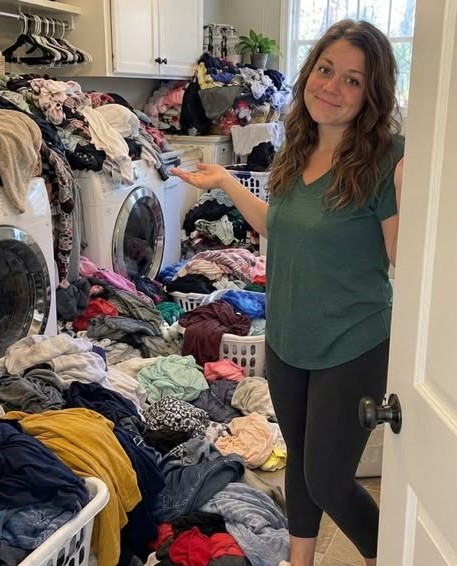
    Let me start with the washing machine.

    I bought it the year my husband, Frank, and I moved into our house on Elm Creek Road.

    It was a plain white top-loader with absolutely no personality.

    The kind of appliance you barely think about because it simply does what it is supposed to do.

    For thirty-one years, laundry was my job.

    Not because Frank and I ever sat down and divided the chores formally.

    It just happened naturally.

    He took care of the yard, repairs, the car, and everything outside.

    I handled the house.

    And I did the laundry.

    Every week.

    For thirty-one years.

    Frank’s shirts were washed, pressed, and hung.

    His socks were matched and folded.

    When our son Marcus was born, I washed his clothes too.

    Grass stains.

    Paint on sleeves.

    Socks that mysteriously entered the machine in pairs and came out alone.

    I became very good at laundry.

    I still am.

    But after three decades of doing it, I learned something.

    Laundry isn’t only laundry.

    It is attention.

    You handle the things another person wears against their skin.

    You see the evidence of their days.

    Where they have been.

    What they spilled.

    What they worked in.

    What they lived through.

    There is something intimate about caring for someone’s clothes.

    I had willingly done that for the people I loved.

    What I had never agreed to was becoming the unpaid laundry service for anyone who happened to arrive at my house with a bag.

    My name is Dorothy Calloway.

    I’m sixty-eight years old.

    My husband, Frank, died four years ago.

    My son Marcus is thirty-seven and works as a structural engineer.

    He is extremely capable professionally.

    Personally, he has always been somewhat less skilled at handling uncomfortable situations.

    I first noticed that when he was around fifteen.

    I kept hoping he would grow out of it.

    He’s still working on it.

    His wife, Vanessa, is thirty-four.

    She is a marketing director at a software company.

    Vanessa is intelligent, organized, ambitious, and very efficient.

    I respected that about her.

    The problem was that her efficiency sometimes meant finding someone else to do whatever she didn’t have time for.

    Eventually, that someone became me.

    It began with one basket.

    Marcus and Vanessa had been married six years.

    They lived about twenty minutes away and came over most Sundays with their two children.

    Lily was eight.

    Theo was five.

    Sunday dinner at Grandma’s had become part of the rhythm of our family.

    I loved it.

    I adored those children.

    Lily had Frank’s eyes and his habit of truly listening when people spoke.

    Theo had my laugh, which I considered a compliment to both of us.

    For those children, I would have done almost anything.

    One afternoon, Vanessa carried a laundry basket into the house.

    “Would you mind throwing these in with yours?”

    It seemed harmless.

    I was already doing laundry.

    One extra basket was nothing.

    So I said yes.

    The first time, it really was nothing.

    The second time, there were two baskets.

    Again, I didn’t mind.

    They were busy.

    The kids had activities.

    Life happens.

    But by the sixth or seventh time, baskets had turned into bags.

    And requests had turned into assumptions.

    Soon, Vanessa was showing up every weekend with bags of laundry and placing them beside my washing machine.

    Then she would leave with everything clean, folded, and organized.

    I noticed something.

    She never helped fold.

    And she never thanked me in a way that acknowledged the actual work.

    She would say,

    “Thanks, Dorothy.”

    But in the same tone someone might use at a drive-through window.

    Efficient.

    Quick.

    Barely looking at me.

    I also noticed that Marcus never said anything.

    That bothered me more.

    He would sit at my kitchen table eating the lunch I had prepared while his wife carried bags of laundry into my basement.

    He knew exactly what was happening.

    He simply chose not to comment.

    Silence may not be agreement.

    But when someone is being treated unfairly in front of you, silence can start to look a lot like permission.

    One Sunday, after Vanessa brought another enormous bag, I finally said something.

    “Vanessa, I’m sixty-eight. I don’t mind helping occasionally, but I’m not your laundromat.”

    I deliberately kept my voice calm.

    I wasn’t trying to start an argument.

    I was simply stating a fact.

    Vanessa laughed.

    Not cruelly.

    Almost as if she thought my complaint was slightly ridiculous.

    “You’re home all day anyway.”

    I looked at Marcus.

    He stared at his plate.

    That moment stayed with me.

    Vanessa’s comment hurt, but at least I understood it.

    In her mind, retirement meant availability.

    If I was home, then obviously I had time.

    It was a selfish way of thinking, but at least it was visible.

    Marcus’s reaction was harder.

    His wife had dismissed his mother right in front of him.

    And he looked at his plate.

    He was thirty-seven years old.

    And he looked at his plate.

    I thought about Frank.

    Frank would not have looked at his plate.

    He would have spoken quietly and calmly.

    He would have said something like,

    “My mother asked you not to bring the laundry anymore. We’ll take it home.”

    And that would have been the end of it.

    But Frank was gone.

    And Marcus had said nothing.

    I spent the next week thinking.

    Not constantly.

    But enough.

    Two questions kept returning.

    What should I do about the laundry?

    And what should I do about the deeper issue—the idea that because I was retired, my time belonged to anyone who wanted it?

    I decided to deal with the laundry first.

    One problem at a time.

    The following Saturday, Vanessa arrived with four bags.

    Four.

    More than she had ever brought before.

    Marcus carried them downstairs and lined them up beside my washing machine.

    That was apparently where his involvement ended.

    I looked at the bags.

    Then smiled.

    “Leave them downstairs.”

    Vanessa looked surprised.

    Maybe she had expected another argument.

    “Are you sure?”

    The question sounded automatic.

    “Perfectly.”

    She went back upstairs.

    I waited until everyone had settled outside.

    The afternoon was mild.

    Marcus had brought a cooler.

    The children were running around the yard.

    Vanessa was on her phone.

    I went downstairs.

    I had already decided exactly what I was going to do.

    I was going to sort the laundry.

    Not wash it.

    Sort it.

    Vanessa’s clothes in one bag.

    Marcus’s in another.

    The children’s things separated as well.

    Then I would return everything exactly as it had arrived.

    Unwashed.

    My original plan was to leave a note explaining that everyone could now take care of their own things.

    Simple.

    Calm.

    No screaming.

    No drama.

    Just a change in the arrangement.

    I opened the first bag.

    Nothing unusual.

    Then I began sorting the second.

    That was when I found the shirts.

    Men’s dress shirts.

    And they were not Marcus’s.

    I knew that instantly.

    You might wonder how.

    But when you have washed someone’s clothes for the first sixteen years of their life, you know their things.

    Marcus preferred practical clothes.

    Good quality, but nothing flashy.

    These shirts were different.

    Expensive.

    Tailored.

    Chosen by someone who cared very much about how he looked.

    I placed them aside.

    Then I found a pair of dark gray dress trousers.

    Too narrow for Marcus.

    Too short.

    There was a tailor’s label inside.

    Someone else’s trousers.

    I placed them beside the shirts.

    Then came three white button-down shirts with dry-cleaning tags attached.

    The cleaner was located across town.

    Not the place Marcus and Vanessa normally used.

    I knew because I had once driven Vanessa to collect their clothes when her car was being repaired.

    I sat back on the basement floor and stared at the pile.

    My first thought was immediate.

    Call Marcus.

    My phone was in my pocket.

    My hand actually moved toward it.

    Then I stopped.

    I thought about what would happen if I called him.

    The children were outside playing.

    Marcus was sitting in my backyard.

    It was a normal Saturday afternoon.

    And the only thing I truly knew was that I had found men’s clothes that did not belong to my son inside Vanessa’s laundry bags.

    I didn’t know why they were there.

    Of course, one explanation came to mind immediately.

    The obvious one.

    But I did not actually know.

    And once certain words are spoken, you cannot take them back.

    I thought about Frank.

    Frank would not have called Marcus from the basement without knowing the full story.

    He would have asked himself what was his business and what wasn’t.

    My business was the laundry.

    Their marriage was theirs.

    So I continued sorting.

    Vanessa’s pile.

    Marcus’s pile.

    The children’s clothes.

    And the unfamiliar men’s clothes went with Vanessa’s things because they had arrived in her bag.

    I put everything back into separate bags.

    I decided not to leave the note.

    I didn’t start the washing machine.

    Then I went upstairs and prepared dinner.

    Around six, I called everyone inside.

    Vanessa said she would grab the laundry first.

    I heard her go down the basement stairs.

    Then silence.

    A few seconds later, her voice rose sharply.

    “What did you do?”

    Then I heard Marcus heading downstairs.

    The children followed.

    I stayed in the kitchen.

    Voices floated up from below, but I couldn’t make out everything.

    A question from Marcus.

    Vanessa answering.

    Marcus speaking again, much quieter.

    I continued setting the table.

    A few minutes later, Marcus came upstairs alone.

    He stood in the kitchen doorway.

    For a moment, he looked twelve years old again.

    Confused.

    Uncertain.

    Trying to understand something he hadn’t expected to learn.

    “Mom.”

    “Dinner is almost ready.”

    “What happened with the laundry?”

    “I sorted it.”

    He stared at me.

    “I thought it would be easier if everyone’s things were separated. That way, everyone can handle their own.”

    He was quiet.

    Then he said,

    “There were clothes down there I didn’t recognize.”

    “I imagine Vanessa can explain those.”

    He looked at me carefully.

    “Did you…”

    “I sorted laundry, Marcus. That’s all I did.”

    Another silence.

    “She’s upset.”

    “I imagine she is.”

    “She says the laundry isn’t done.”

    “That’s correct.”

    I looked directly at him.

    “I told her last week that I’m not a laundromat. You heard me.”

    His eyes dropped toward the floor.

    There it was again.

    The plate.

    The floor.

    Anywhere except the uncomfortable conversation.

    For a moment, my heart hurt for him.

    He was my son.

    I wanted to protect him.

    But he wasn’t twelve anymore.

    He was thirty-seven.

    Some things he had to handle himself.

    “Go talk to your wife,” I said. “Bring the children up when you’re ready. Dinner will still be warm.”

    He went back downstairs.

    While I waited, I thought about Frank again.

    During the last year of his life, when we both understood where his illness was heading, we talked often about Marcus.

    What we loved about him.

    What worried us.

    One evening Frank said,

    “He avoids conflict.”

    “He has your calm temperament,” I replied.

    Frank shook his head.

    “No. I’m calm because most things genuinely don’t bother me much. Marcus is different. Things bother him deeply, but he says nothing.”

    He paused.

    “There’s a difference.”

    Frank was right.

    Marcus’s silence wasn’t peace.

    It was calculation.

    He was always weighing the discomfort of speaking against the discomfort of remaining silent.

    At work, that probably made him diplomatic.

    At home, it sometimes meant small problems remained untouched until they became large ones.

    The week before, he had watched Vanessa dismiss me.

    He hadn’t agreed with her.

    But speaking up felt harder than staying quiet.

    I had always believed that calculation was backwards.

    The short-term discomfort of saying something is usually much cheaper than the long-term cost of saying nothing.

    That Saturday was about to prove it.

    Ten minutes later, they came upstairs.

    Lily and Theo came first.

    Both looked confused.

    I gave them water and asked Lily about a book she had been reading.

    She immediately relaxed.

    Marcus came next.

    His expression had changed.

    He looked like someone who had discovered that a familiar place was not exactly the way he had always imagined it.

    Vanessa came last.

    She had her purse over one shoulder and all four laundry bags in her arms.

    She had carried them herself.

    “We’re going home.”

    “Stay for dinner.”

    “I don’t think—”

    “Vanessa.”

    I kept my voice calm.

    “Stay for dinner.”

    Something in my tone made her stop.

    She placed the bags down.

    Then looked at me.

    “Whatever you and Marcus need to discuss, you don’t need to solve it right now. Not in front of the children.”

    She stared at me.

    “You can eat dinner. Then you can go home and have whatever conversation you need to have after Lily and Theo are asleep.”

    I paused.

    “I noticed what I noticed. I’m not pretending I didn’t. But I’m also not interested in being the person who tears apart your family on a Saturday afternoon.”

    The kitchen became very quiet.

    Lily was watching us carefully.

    “I want dinner with my grandchildren,” I continued. “And my son. And his wife. That’s all I want from tonight.”

    Vanessa slowly put her purse on the chair.

    Then she sat down.

    Dinner was not comfortable.

    I won’t pretend otherwise.

    We ate because dinner had been made and because the children needed normalcy.

    Lily told me about a science project.

    Theo knocked over his water, which strangely became the most natural moment of the entire evening.

    Everyone reached for paper towels.

    Someone laughed.

    For a few seconds, we were simply a family again.

    Marcus spoke carefully.

    Vanessa barely spoke.

    Around eight, they prepared to leave.

    I hugged Lily and Theo.

    Marcus hugged me longer than usual.

    Then Vanessa stopped on the porch.

    “Dorothy.”

    “Vanessa.”

    She hesitated.

    “The clothes you found. I know what you’re thinking.”

    “I don’t know what I’m thinking.”

    And that was the truth.

    “I sorted the laundry. That’s all I know.”

    “It’s not what it looks like.”

    “Then explain it.”

    She looked at me.

    “To Marcus,” I added. “Not me.”

    I paused.

    “Whatever the explanation is, he needs to hear it tonight.”

    Her expression changed slightly.

    Not exactly gratitude.

    But something close.

    “Okay.”

    “Okay.”

    They left.

    Marcus called at 10:30 that night.

    I was already in bed reading.

    “Mom.”

    “Marcus.”

    “She was washing clothes for someone from work.”

    I waited.

    “A man in her office. His wife has been in the hospital for weeks. He’s handling the house and everything else alone. Apparently, he mentioned that he couldn’t even find time to get to the laundromat.”

    I stayed quiet.

    “She started taking his laundry with ours to help him.”

    “Why didn’t she tell you?”

    Marcus sighed.

    “She said she thought it would be awkward. And she didn’t think I would understand.”

    He paused.

    “She does things like this, Mom. Helps people without telling anyone. Last year she helped a coworker cover rent and I didn’t find out until much later.”

    “She’s complicated.”

    “Yes.”

    I sat with that information.

    Then Marcus asked,

    “Does that change anything?”

    “About what?”

    “The laundry.”

    I thought carefully.

    “No.”

    He was silent.

    “Vanessa helping someone whose wife is ill is kind. But bringing his laundry to my house without asking me is still wrong. Four bags of someone else’s clothes were dropped at my house as though my time belonged to everyone.”

    “I know.”

    “The clothes just don’t mean what I briefly feared they might mean.”

    “No.”

    Then Marcus said something I had waited a long time to hear.

    “I talked to her about the laundry. All of it.”

    I closed my book.

    “And?”

    “I told her what I should’ve said last week.”

    I smiled slightly.

    “How did that go?”

    “She said she honestly didn’t realize it had become a pattern. She thought you didn’t mind.”

    “That’s something she needs to work on.”

    “Yes.”

    “And you too.”

    Silence.

    “You didn’t notice either.”

    Another silence.

    “No. I didn’t.”

    “You looked at your plate.”

    “Mom…”

    “I’m not trying to punish you, Marcus. I’m naming what happened.”

    I paused.

    “You heard your wife dismiss me and chose not to say anything. Those moments seem small when they happen, but they accumulate.”

    He said nothing.

    “Your father never looked at his plate.”

    The silence on the phone changed.

    “I know.”

    “I don’t expect you to become your father. I expect you to become the version of yourself who speaks when something needs to be said.”

    “Even when it’s uncomfortable.”

    “Especially then.”

    He was quiet for a long moment.

    Then:

    “I owe you a real apology. In person.”

    “I’ll accept one.”

    “And Vanessa is calling you tomorrow.”

    “I’ll answer.”

    “Mom?”

    “Yes?”

    “I love you.”

    “I know. I love you too. Now go be with your wife.”

    He laughed softly.

    “Goodnight.”

    “Goodnight, Marcus.”

    Vanessa called the next morning at nine.

    “Dorothy.”

    “Vanessa.”

    “I wanted to explain about the clothes.”

    “Marcus already did.”

    “Oh.”

    There was a pause.

    “So you know it wasn’t…”

    “I know.”

    Another pause.

    “I also want to apologize about everything else.”

    I waited.

    “The laundry. The way it became something expected.”

    She sounded nervous.

    “I genuinely didn’t think about how much work I was giving you. I thought, you’re home anyway, you have the machine, you’re already doing laundry…”

    She stopped.

    “And I realize now that it wasn’t my decision to make.”

    “That’s correct.”

    “That isn’t an excuse. Just an explanation.”

    “I understand.”

    “I should have asked every time.”

    “Yes.”

    “And I should have helped fold.”

    That part sounded as though Marcus had mentioned it specifically.

    “Yes.”

    “I’m sorry, Dorothy.”

    Her apology was simple.

    No excuses.

    No performance.

    I let it sit for a moment.

    Then I said,

    “Can I explain something to you?”

    “Yes.”

    “You told me I’m home all day.”

    She went quiet.

    “Retired does not mean available.”

    I continued.

    “It means I finished one chapter of my working life and now I get to decide how I spend the next one.”

    I read.

    I garden.

    I take a painting class on Tuesdays.

    I have lunch with my friend Margaret on Fridays.

    I visit Frank’s grave every Thursday morning.

    “Being home doesn’t mean I’m waiting for someone to assign me a task. It means I’ve earned the right to decide what my time is for.”

    Vanessa was quiet for several seconds.

    “I never thought about it that way.”

    “I know.”

    Then she surprised me.

    “Why didn’t you say something sooner?”

    I thought about it.

    “Because you’re my son’s wife. Because I was trying to be generous. And because I let something small build into something larger.”

    Frank used to say resentment was like water behind a dam.

    A little pressure is manageable.

    But if you keep adding to it without releasing anything, eventually something breaks.

    “I waited too long. That part is mine.”

    “And sorting everything instead of talking again?”

    “I wanted to change the arrangement without turning it into another argument.”

    I paused.

    “What I found during the sorting was completely accidental.”

    “I know.”

    “Marcus told you?”

    “Yes.”

    Another pause.

    “Why didn’t you call him right away?”

    “Because it wasn’t mine to do.”

    She became quiet.

    “Whatever those clothes meant—and now I know what they meant—it was your responsibility to explain them to your husband.”

    “I thought you would use it against me.”

    “Why?”

    She didn’t answer.

    “What would I gain from destroying your marriage?”

    I continued.

    “Your children are my grandchildren. Your misery doesn’t improve my life. I want Marcus married to someone who is good to him. I want that person to be you.”

    I paused.

    “But I also want respect.”

    “It’s clear.”

    “Good.”

    Then Vanessa explained more about her colleague.

    His name was David.

    His wife had been hospitalized for eight weeks.

    He was trying to manage work, home, and everything else alone.

    Vanessa had started helping because that was simply what she did when someone needed something.

    “I’m going to organize something better,” she said. “Maybe a group from work can help with meals and other things.”

    “That sounds much more reasonable.”

    Marcus came over alone on Tuesday.

    He stood in my kitchen wearing his work clothes.

    “I’m sorry.”

    “For?”

    “For looking at my plate.”

    Despite myself, I smiled.

    “The plate thing.”

    “Yes.”

    “Sit.”

    I made coffee.

    Then I told him something about Frank.

    “Your father never once failed to support me in public during thirty-one years of marriage.”

    Marcus listened.

    “That doesn’t mean we always agreed.”

    We disagreed plenty.

    Sometimes loudly.

    But we did it later.

    Privately.

    “In front of other people, Frank never made me stand alone while someone dismissed me.”

    Marcus looked into his coffee.

    “That’s what I need from you,” I said. “Not agreement with everything I say. Just the understanding that I deserve to be treated with respect.”

    I looked at him.

    “Vanessa is your wife. I’m not asking you to choose between us. I’m asking you to remember that I’m your family too.”

    “You’re right.”

    “I know.”

    He almost laughed.

    “I also know I should have spoken about the laundry sooner. I let it become too big. That part belongs to me.”

    “The sorting was pretty effective.”

    “It was supposed to be practical.”

    “It became something else.”

    “That part wasn’t planned.”

    He looked at me.

    “I believe Vanessa about David.”

    “So do I.”

    “You do?”

    “It fits who she is.”

    I smiled slightly.

    “She helps people. That is a good quality. She just needs to stop volunteering other people’s labor while doing it.”

    Marcus laughed.

    “She said you told her retired doesn’t mean available.”

    “I did.”

    “She’s been thinking about that.”

    “Good.”

    Then Marcus said,

    “Dad would have liked how you handled this.”

    I looked down at my coffee.

    “Your father would have handled it faster.”

    Marcus smiled.

    “He would have said something immediately.”

    “Yes.”

    “But I think we would have ended up in the same place.”

    “What place?”

    “Sunday dinner.”

    He looked at me.

    “Family still together. Necessary things said. People given a chance to do better.”

    “That was what you wanted?”

    “I’m sixty-eight, Marcus.”

    I had buried my husband.

    I had lived long enough to understand that winning an argument about laundry was not what mattered most.

    “What matters is Lily telling me about her science project. Theo spilling water at dinner. All of you sitting around my table on Sunday.”

    I looked at him.

    “That’s what I was protecting.”

    Marcus was quiet.

    Then he said,

    “I love you, Mom.”

    “I know.”

    I smiled.

    “Bring everybody Sunday.”

    And he did.

    The Sunday dinners continued.

    The first few were slightly awkward.

    People chose their words carefully.

    Then the discomfort faded.

    Vanessa started helping clear the table.

    Then she started helping with dishes.

    Eventually, it stopped feeling like an apology and started feeling like participation.

    One Sunday, she asked about my painting class.

    The following week, she remembered what I had told her and asked how a particular project had turned out.

    She was paying attention.

    I noticed.

    Marcus and Vanessa eventually hired a laundry service that came every Thursday.

    It was practical.

    Sustainable.

    And required absolutely nothing from me.

    Exactly as it should.

    As for David, Vanessa organized several coworkers to help him properly.

    Meals.

    Errands.

    Practical support.

    She helped him in a way that didn’t depend on quietly transferring the work to someone else.

    I thought about everything that had happened.

    Especially those minutes in my basement when I had been looking at unfamiliar men’s clothing and creating a story in my mind.

    A story that turned out not to be true.

    It reminded me how quickly people can build certainty from incomplete information.

    And how much damage I might have caused if I had acted on that certainty immediately.

    I was grateful I hadn’t called Marcus from the basement.

    Frank would have approved of that.

    Several months later, Lily asked why the laundry bags didn’t come to Grandma’s anymore.

    “Your parents hired a service.”

    “Why?”

    “Because I told them I needed them to.”

    She thought about that.

    “Did you have to ask a lot?”

    “More than once.”

    “Was it awkward?”

    “For a little while.”

    “But now everything is okay?”

    “Better than okay.”

    Lily considered this carefully.

    “So you just had to keep saying it.”

    “Yes.”

    “And they had to listen.”

    “Exactly.”

    She seemed satisfied and returned to her book.

    I sat at the table thinking about how simple the truth sounded when an eight-year-old said it.

    You say the thing that needs to be said.

    If necessary, you say it again.

    You find a way that works.

    You give people the opportunity to hear you.

    And then, if everyone is willing to make a few changes, you sit down together on Sunday and have dinner.

    The washing machine on Elm Creek Road still works.

    Plain white.

    Top-loading.

    No personality whatsoever.

    It washes exactly what I choose to put inside it.

    Nothing more.

    Nothing less.

    And that is exactly how it should be.

  • My father tossed a $6,842 dinner bill at me in front of seventeen relatives. “Pay it. That’s the only reason we invited you.”  

    My father tossed a $6,842 dinner bill at me in front of seventeen relatives. “Pay it. That’s the only reason we invited you.”  

    My father threw a $6,842 dinner bill at me in front of seventeen relatives. “Pay it. That’s the only reason we invited you.” My sister smirked. “Be grateful we even gave you a seat.” I silently reached for my wallet—until the waiter whispered, “Ma’am, the man you asked me to call has arrived.” Dad turned toward the door, went completely pale… and suddenly stood up.

    My father threw the dinner bill across the table hard enough to knock over my water glass. “Seventeen people,” he said. “Pay it. That’s the only reason we invited you.”

    For three seconds, nobody moved.

    Then my older sister Vanessa laughed.

    We sat in the private dining room of Bellamy House, one of downtown Chicago’s most expensive restaurants. Crystal lights glowed above seventeen relatives dressed for Vanessa’s thirty-eighth birthday as if she were accepting an Oscar instead of blowing out candles.

    Vanessa raised her champagne.

    “You should be grateful we even let you sit here, Claire.”

    A few cousins snickered.

    Dad folded his arms.

    The bill sat beside my plate.

    $6,842.17.

    I looked around the table.

    Imported wine. Wagyu steaks. Lobster. Two champagne bottles costing more than my first apartment’s rent.

    Nobody looked embarrassed.

    They looked entertained.

    That was what hurt.

    For years, my family had treated me like the disappointing daughter—the quiet one who left Dad’s company after college, refused to marry someone “useful,” and supposedly spent her life doing “little accounting jobs.”

    Vanessa stayed.

    Dad rewarded her with a vice-president title at Harrington Supply Group, the family-owned building-material business our grandfather founded.

    Every Christmas, Dad praised Vanessa’s “loyalty.”

    Every Thanksgiving, he asked when I planned to do something serious with my life.

    What he never asked was what I actually did.

    I picked up the bill.

    Vanessa leaned toward her husband and whispered loudly, “Watch her check her bank balance.”

    More laughter.

    I opened my purse.

    Dad smiled.

    There it was—that smug expression I had known since childhood.

    The look that said he had won.

    Without saying a word, I reached for my wallet.

    Then the waiter leaned beside me.

    “Ma’am,” he whispered, “the person you asked me to call has arrived.”

    Dad’s smile vanished.

    I closed my purse.

    “Perfect.”

    Vanessa frowned. “Who did you call?”

    Before I could answer, the private dining room door opened.

    A silver-haired man in a charcoal suit entered carrying a leather folder.

    Dad stared at him.

    Then slowly pushed his chair back.

    He stepped into the aisle and stood.

    His face had gone pale.

    “You,” he whispered.

    The man looked directly at him.

    “Good evening, Richard.”

    Vanessa glanced between them.

    “Dad?”

    I finally smiled.

    Because my father recognized Martin Graves.

    He should have.

    Martin had spent the last six months investigating him.

    And the bill on the table was about to become the cheapest mistake my family made that night.

    “What is he doing here?” Dad demanded.

    Martin Graves was a forensic attorney specializing in corporate fraud.

    Vanessa blinked. “You know him?”

    Dad ignored her.

    He stared at me.

    “What did you do?”

    I calmly folded the restaurant bill and placed it beside my plate.

    “Nothing you didn’t make necessary.”

    Vanessa laughed nervously.

    “Oh, please. Claire hired some lawyer because Dad made her pay for dinner?”

    Martin opened his folder.

    “No, Mrs. Dalton. I’m here regarding Harrington Supply Group.”

    Silence.

    My uncle stopped chewing.

    Dad lowered his voice.

    “Not here.”

    “Actually,” I said, “here is perfect.”

    Vanessa slammed her glass down.

    “You don’t get to hijack my birthday!”

    I looked at her.

    “You hijacked something much bigger.”

    Six months earlier, my grandfather died.

    According to Dad, Grandpa had left almost everything to him, including eighty-two percent of Harrington Supply Group.

    I received nothing except a handwritten letter saying he hoped I would someday “protect what he built.”

    Dad dismissed it as sentimental nonsense.

    I didn’t.

    Grandpa had taught me bookkeeping when I was twelve. He taught me that numbers remained honest even when people didn’t.

    So I checked them.

    And found something Dad never expected me to notice.

    Three weeks before Grandpa died, forty percent of the company had supposedly been transferred into Dad’s personal holding corporation.

    The signatures looked legitimate.

    The dates looked legitimate.

    The witnesses looked legitimate.

    But one document showed Grandpa signing at 2:10 p.m. on March 14.

    At 2:10 p.m. that day, Grandpa was undergoing emergency surgery.

    He was unconscious.

    That single detail opened everything.

    Martin’s investigators uncovered altered board minutes, fake consulting invoices, hidden transfers, and nearly $1.3 million moved from company accounts into entities controlled by Dad and Vanessa.

    The color slowly drained from Vanessa’s face.

    “That’s insane.”

    Martin placed copies on the table.

    She stared at her own signature.

    Dad exploded.

    “You stole company records?”

    “No,” I replied. “I legally obtained them.”

    He pointed at me. “You left this company fifteen years ago!”

    “That’s what you told everyone.”

    I leaned back.

    “You never told Vanessa why.”

    Dad said nothing.

    So I did.

    “Grandpa gave me twenty percent of Harrington Supply Group when I turned twenty-five.”

    Vanessa froze.

    My aunt gasped.

    Dad’s eyes hardened.

    “That was temporary.”

    “No. It was equity.”

    I continued.

    “When I discovered you were overbilling suppliers, you pressured me to sign it back. I refused. You told the family I quit because I couldn’t handle responsibility.”

    Vanessa shook her head.

    “You’re lying.”

    Martin slid another document across the table.

    “My client still owns twenty percent.”

    Dad grabbed it.

    “And that means nothing.”

    I smiled.

    “It means a lot when you committed fraud against a shareholder.”

    For the first time that evening, nobody laughed.

    Dad glanced toward the door.

    “You planned this.”

    “Yes.”

    “You came to humiliate us.”

    “No.”

    I glanced at the $6,842 bill.

    “You invited me to humiliate me.”

    Then I looked directly into his eyes.

    “I just came prepared.”

    Martin reached into his folder again.

    “And there is one more matter.”

    Dad stopped breathing.

    Martin placed a court-stamped document on the table.

    “A temporary restraining order has been granted. Effective immediately, neither Richard Harrington nor Vanessa Dalton may transfer company funds, sell company assets, destroy records, or access the corporate accounting system.”

    Vanessa shot to her feet so quickly her chair fell backward.

    “You can’t do this!”

    I didn’t move.

    “I already did.”

    Dad’s face turned dark red.

    “You ungrateful little—”

    “Be careful,” Martin said quietly.

    That stopped him.

    Vanessa pointed at me.

    “This company belongs to us!”

    “No,” I replied. “It belongs to its shareholders.”

    “You’re twenty percent!”

    “Correct.”

    She gave a desperate laugh.

    “So you still can’t control anything.”

    That was when I revealed what I had saved for last.

    “You’re right.”

    I turned toward the doorway.

    “Martin wasn’t the only person I asked to come.”

    A second man entered.

    Then a woman.

    Vanessa recognized her immediately.

    “Mr. Keller? Ms. Ruiz?”

    Thomas Keller represented our uncle Stephen, who owned nine percent of Harrington Supply.

    Elena Ruiz represented the trust controlling another twenty-two percent.

    For years, Dad had controlled both through intimidation and misinformation.

    Not anymore.

    Keller placed a signed proxy agreement on the table.

    Ruiz set another beside it.

    Twenty percent plus nine percent plus twenty-two percent.

    Fifty-one.

    Dad understood before Vanessa did.

    His knees seemed to weaken.

    “No.”

    I spoke softly.

    “As of this morning, I represent the voting majority.”

    Vanessa stared at Dad.

    “Tell me she’s lying.”

    He couldn’t.

    I looked around the table.

    “These agreements don’t make me owner of everyone’s shares. They authorize me to vote them for the emergency shareholder meeting tomorrow.”

    Dad’s voice cracked.

    “You wouldn’t remove me from my own company.”

    “Our grandfather’s company.”

    His expression shifted.

    For one second, something almost human appeared beneath the arrogance.

    Fear.

    Then rage swallowed it.

    “I built that business!”

    “You stole from it.”

    “I kept this family alive!”

    “You used the company like your personal bank account.”

    Vanessa rushed toward me.

    “And what happens to me?”

    I looked at Martin.

    He answered.

    “The forensic report identifies approximately $417,000 in payments connected to entities controlled by you.”

    Vanessa fell silent.

    Her husband slowly moved his chair away from her.

    That small movement was almost crueler than anything I could have said.

    Dad pointed at the dinner bill.

    “So this is your revenge? Destroying your family over money?”

    I looked at the seventeen people who had laughed when they thought I was being humiliated.

    “No.”

    I picked up the bill.

    “This is about money.”

    I slid it toward Vanessa.

    “Your birthday. Your guests. Your bill.”

    Her mouth fell open.

    The waiter stood perfectly still, pretending not to listen.

    Dad said, “You’re pathetic.”

    I nodded toward Martin’s documents.

    “No. I’m finished being convenient.”

    The emergency shareholder meeting took place the next morning.

    Dad was removed as CEO by a fifty-one-percent vote.

    Vanessa was terminated pending investigation.

    The company fully cooperated with authorities and sued them both to recover the misappropriated funds.

    Within four months, Dad settled the civil case by surrendering several properties and a large portion of his remaining shares.

    Vanessa sold her vacation condo to cover legal expenses and restitution obligations. Her husband filed for divorce after investigators discovered she had hidden additional debt from him.

    Neither went to prison; prosecutors accepted plea agreements involving restitution, probation, financial restrictions, and permanent consequences for their professional reputations.

    I didn’t celebrate.

    I rebuilt.

    One year later, Harrington Supply posted its strongest operating profit in a decade.

    Employees received bonuses.

    Supplier contracts were renegotiated transparently.

    My uncle became chairman.

    I became CEO.

    On Vanessa’s next birthday, I sat on my balcony drinking coffee when an unfamiliar number texted me.

    You ruined everything.

    I stared at the message for a moment.

    Then deleted it.

    Because that was the difference between us.

    Vanessa still believed losing control meant losing everything.

    Dad still believed power meant making someone else feel small.

    I had learned something better.

    Peace was waking up without fear.

    Power was never needing their approval again.

    And revenge?

    Revenge was the night they invited me because they thought I would pay their bill—

    only to discover they had finally received theirs.

  • My wife was seven months pregnant when she stopped getting out of bed. My mother insisted she was hiding something, and I slowly began believing her. Then I lifted the blanket covering her legs—and froze. The person standing in the doorway knew exactly why.

    My wife was seven months pregnant when she stopped getting out of bed. My mother insisted she was hiding something, and I slowly began believing her. Then I lifted the blanket covering her legs—and froze. The person standing in the doorway knew exactly why.

    Part 1 of 3

    PART 1

    Clara was seven months pregnant when she stopped getting out of bed—or rather, Clara was seven months pregnant with their first child when she stopped leaving the mattress.

    At first, Marcus told himself it was normal.

    Pregnancy was hard. She was tired. Her body was carrying their first baby, and he wanted so desperately to believe that all she needed was rest, patience, and the small comforts he could still afford on his salary.

    They lived in a modest apartment in Chicago, the kind of place where the rumble of the L train rattled the windowpanes every twenty minutes and the smell of fresh coffee drifted up from the diner on the corner.

    It was not fancy, but it was theirs. Or at least, Marcus had always wanted Clara to feel that way.

    From the day they learned she was pregnant, he became careful about everything. Before leaving for his shift at the hardware store each morning, he placed a glass of water on the nightstand alongside fresh fruit and her prenatal vitamins. He checked the stove. He checked the deadbolt. And sometimes, before heading out the door, he left little notes on yellow sticky pads.

    Rest, my love. Our baby needs you smiling.

    Clara used to fill their apartment with life. She washed dishes while humming old classic rock songs. She scolded Marcus for leaving his boots by the front door. She laughed at the smallest, silliest things—the kind of laugh that made their small home feel warmer than it really was.

    Then, little by little, she went quiet.

    She began spending hours lying on her side, covered from her waist to her feet with a thick blue wool blanket. Whenever Marcus tried to adjust her legs or help her walk to the bathroom, her entire frame tensed as though something had terrified her.

    “I’m okay, Marcus,” she would whisper softly. “It’s just… the weight of the baby.”

    Marcus wanted to believe her. He truly did.

    But his mother, Brenda, kept feeding his doubts.

    “Marcus, that girl is hiding something,” Brenda told him repeatedly over the phone. “A pregnant woman doesn’t lie in bed covered like a corpse all day. She’s keeping something from you.”

    “She’s exhausted, Mom.”

    “I was exhausted when I raised you and your brother, and I still put dinner on the table every night,” Brenda snapped. “Don’t be naive. Women lie when they have something to hide.”

    He would get angry. Sometimes he hung up on her. He told himself not to listen. But afterward, he would find himself standing in the hallway, staring at the closed bedroom door with a knot tightening in his chest. Because no matter how much he wanted to dismiss his mother’s words, one haunting question kept returning:

    Why did Clara seem more terrified every time he came close to the bed?

    Then one Tuesday afternoon, Marcus came home early. The power had gone out at the hardware store, shutting down the registers, so he returned home three hours ahead of schedule.

    He unlocked the door expecting to find Clara resting peacefully. Instead, the apartment felt eerily still. The bowl of soup he had left for her on the kitchen table sat untouched. The glass of water was still full.

    Clara was lying in bed, staring blankly at the wall. Her eyes were rimmed with red.

    Marcus walked over and sat carefully on the edge of the mattress. “Clara,” he said gently. “Tell me the truth. What’s going on?”

    Her hands immediately clutched the blue blanket, pulling it higher. “Nothing.”

    “Don’t say nothing.” Marcus’s voice broke with worry. “You haven’t been walking right for days. You barely eat. I heard you crying in the bathroom last night.”

    Clara turned her face toward the wall, tears spilling onto the pillowcase. “Please… don’t ask me.”

    Those words cut deeper than any argument ever could.

    Before Marcus could say another word, the front door clicked open. Brenda walked in unannounced, carrying a plastic grocery bag and wearing the hard, smug expression of a woman who believed being a mother gave her permanent permission to interfere.

    She stopped dead in the bedroom doorway, crossing her arms. “All right, enough of this drama,” Brenda said sharply. “My son is working himself to the bone, and you’re lying here playing the victim.”

    Clara went deathly pale. “Please, Brenda… don’t start.”

    Brenda’s eyes narrowed. “Don’t start what? What are you hiding under that blanket?”

    Marcus stood up, stepping between them. “Mom, leave her alone. Not today.”

    “No, Marcus!” Brenda raised her voice. “You don’t want to see it because you’re blinded by love. But I have eyes!”

    Clara began to sob, shrinking back into the headboard. “Don’t touch me. Please, Brenda, don’t touch the blanket…”

    Brenda gave a bitter, mocking laugh. “See? Look at her! She’s terrified because she knows she’s caught!”

    Marcus looked at his wife weeping, then at his mother demanding answers. Fear, confusion, and every seed of doubt Brenda had planted over the past weeks twisted together in his chest. He loved Clara with every fiber of his being, but he couldn’t understand the paralyzing fear in

    “Clara…” Marcus’s voice trembled as he reached down. “Forgive me… but I need to know what’s happening.”

    “No, Marcus, please!” Clara begged, reaching for his wrists with shaking hands. “If you look… everything is going to break.”

    Marcus swallowed hard. His hands shook as he took hold of the top edge of the blue wool blanket.

    For one brief second, the entire apartment went dead silent. No L train outside. No voices in the corridor. Just Clara’s quiet, desperate weeping and Brenda standing behind him, waiting to be proven right.

    Marcus pulled the blanket back.

    And what he saw stole the air right out of his lungs.

    Clara hadn’t been hiding a secret affair. She hadn’t been hiding a betrayal.

    Covering both of Clara’s ankles were severe, horrific third-degree burns and deep, purple-black bruising that wrapped tightly around her calves. Her left ankle was swollen to twice its natural size, raw and inflamed where hot metal had burned straight through the skin.

    Marcus fell to his knees beside the bed, his mind shattering. “Oh God… Clara… Oh God, what happened to you?!”

    The person standing in the doorway didn’t flinch.

    Brenda simply took a slow step backward into the hall, her expression turning into a cold, impassive mask.

    Part 2

    “Why didn’t you tell me, Clara?” Marcus wept, pressing his forehead against her uninjured thigh, his voice barely a whisper so the sound wouldn’t carry. “Why did you let her do this to you? Why didn’t you call me? Why didn’t you scream?”

    Clara choked on a violent sob, her fingers gripping his shirt collar with desperate, white-knuckled strength.

    “She said…” Clara gasped, her chest heaving as she fought for air. “She came over every morning after you left for work… She said if I told you a single word, she would wait until you were at the store… and she would push me down the concrete stairs in the courtyard.”

    Marcus stopped breathing.

    “She said she would kill our baby, Marcus,” Clara wept, her tears soaking his shirt. “She brought your father’s old heavy clothes iron into the bedroom. She hit my legs with it when I tried to stand up… and then she plugged it in, heated it, and pressed it against my ankles. She told me if I made a sound, she’d press it to my stomach next. She said… she said you would always choose her over me. She said everyone would think I was crazy, and that she’d have me committed so she could take our child!”

    The absolute, profound evil of the revelation hit Marcus with the force of a freight train. His blood turned to pure, impenetrable ice.

    His mother hadn’t been protecting him. She had been torturing his pregnant wife in their own home, holding his unborn child hostage while weaponizing his own trust against him.

    Marcus stood up slowly. The confusion in his eyes was gone, replaced by a dark, terrifying calmness.

    Brenda was standing near the front door, reaching for her purse, her composure finally beginning to crack under her son’s gaze. “Marcus, listen to me… she’s lying! She did that to herself! She’s unhinged—”

    Marcus didn’t yell. He walked calmly to the front door, reached past her, locked the deadbolt, and slipped the key into his pocket.

    Then he pulled out his phone and dialed 911.

    “Yes, I need an immediate paramedic unit and police officers to my address,” Marcus said, his voice flat and steady, staring directly into his mother’s eyes. “My mother, Brenda Vance, has severely assaulted and tortured my seven-month-pregnant wife. She is in the apartment right now.”

    Brenda’s jaw dropped. “Marcus! Are you insane?! I’m your mother!”

    “You are a monster,” Marcus whispered. “And you are never going to touch my family again.”

    Part 3

    Within ten minutes, the apartment was filled with flashing red and blue lights. Two paramedics rushed into the bedroom with an emergency medical kit, while two Chicago police officers restrained Brenda in the living room.

    When the female paramedic carefully inspected Clara’s legs, her face hardened into pure outrage. “These are severe, infected second- and third-degree contact burns, along with deep tissue trauma. We need to transport her to the burn unit immediately to check the baby’s vitals and treat the infection.”

    Brenda shrieked from the hallway as the officers snapped handcuffs around her wrists. “Marcus! Tell them to stop! I did it for you! She was going to ruin your life! You can’t do this to your own mother!”

    Marcus didn’t even look at her as the officers led her out the door. He held Clara’s hand tightly as the paramedics loaded her onto a stretcher, whispering promises of safety into her ear all the way to the hospital.

    At the hospital, the medical team confirmed the miracle: despite the immense trauma, physical pain, and severe infection Clara had endured, their unborn baby girl was healthy and unaffected.

    While Clara underwent emergency wound care and antibiotic treatment, Marcus met with state prosecutors and child protective investigators. He handed over every piece of evidence—including the blood-stained blue wool blanket, the iron recovered by forensic technicians, and the threatening text messages Brenda had sent him over the preceding weeks attempting to turn him against his wife.

    Brenda was formally charged with aggravated domestic battery, torture, aggravated battery of an unborn child, and felony intimidation. Because of the overwhelming physical evidence and her history of threats, the judge denied bail.

    Two weeks later, Clara was discharged from the hospital in a wheelchair, her legs wrapped in clean white bandages, her skin finally recovering. Marcus took a leave of absence from work, devoting every single second of his day to nursing her back to health, changing her dressings, preparing her meals, and holding her through the late-night nightmares.

    A month after the nightmare ended, Clara went into labor.

    In a quiet, sunlit hospital room far away from his mother’s influence, Marcus held Clara’s hand as she brought their daughter into the world.

    A healthy, six-pound baby girl with

    her eyes.

    They named her Hope.

    As Marcus sat in the rocking chair by the hospital window, cradling his newborn daughter against his chest while Clara slept peacefully in the bed beside them, he looked down at the tiny hand curled around his finger.

    Brenda spent the rest of her life behind bars, permanently stripped of any legal rights or contact with her son and grandchild.

    Marcus kissed his daughter’s forehead, watching the morning sun illuminate the quiet room. He knew the scars on Clara’s legs would take time to fade, but as he looked at his wife and child, he knew the truth:

    The darkness that had threatened to destroy their home was gone forever. They were safe, they were whole, and they were finally free.

    Epilogue: The Garden on Maple Street

    Five years after the nightmare inside that small Portales-style Chicago flat, the autumn morning swept over the quiet suburb of Evanston, Illinois, painting the oak trees in brilliant strokes of crimson, amber, and deep gold.

    On the wrap-around porch of a two-story craftsman house, Marcus sat in a wooden rocking chair, holding a steaming mug of black coffee. The air carried the crisp, sweet scent of crushed fallen leaves and damp earth.

    Inside the kitchen, the soft, rhythmic hum of a Saturday morning was underway.

    Five-year-old Hope burst through the screen door, her dark curls bouncing wild around her shoulders. She wore a bright yellow cardigan over her denim overalls, her boots clacking loudly against the porch boards.

    “Daddy, look!” Hope cheered, holding up a small woven basket filled with freshly gathered acorns and brilliant red maple leaves. “Mom said I can make an autumn crown for the porch table!”

    Marcus set his coffee down and smiled, pulling his daughter onto his lap. “That is the finest leaf collection in the state, sweetie. Show me the biggest one.”

    Hope proudly held up a broad, flawless crimson leaf, holding it against the sunlight. Her dark eyes sparkled with the same bright, effortless joy that filled every room of their home. Looking at her, no one would ever guess the harrowing shadows under which she had entered the world.

    A moment later, the screen door opened again, and Clara stepped out onto the porch holding a tray with warm cinnamon rolls and fresh orange juice.

    She wore a long, floral-print cotton dress that swished gently against her ankles. To anyone looking at her today—radiant, grounded, and smiling—she was a picture of serenity.

    Only Marcus knew the story beneath her hemline.

    Underneath her soft cotton dress, the pale, faint silver scars wrapped around her ankles remained as a quiet, faded record of what she had survived. But the pain, the terror, and the paralyzing fear were gone, replaced by a profound, unshakeable strength.

    “Breakfast is served on the porch,” Clara announced, setting the tray down on the small table.

    “Pancakes next week, Mom?” Hope negotiated playfully, reaching for a cinnamon roll with sticky fingers.

    “Deal,” Clara laughed, kissing the top of Hope’s head before sitting down in the chair beside Marcus.

    Marcus reached across the small table, taking Clara’s hand into his. Her skin was warm, her grip steady. They sat together in comfortable, peaceful silence as their daughter arranged her leaves across the wooden table, humming an old song under her breath.

    Two years after Brenda’s arrest and subsequent conviction—where the judge handed down a thirty-five-year sentence without the possibility of parole—Marcus and Clara had packed up their lives and left their old apartment behind. They sold what little they owned in the city, moved to a quiet neighborhood near the lake, and built a life rooted in absolute safety.

    Marcus had taken an associate managerial position at a regional building supply firm, while Clara had returned to her passion for watercolor painting, operating a successful online studio from their home.

    They had never kept Brenda’s existence a secret, but they had stripped her of all power. In their home, Brenda Vance was not a lingering ghost; she was simply a closed chapter in a book that had moved on to far better stories. State protective orders permanently barred any communication, and Brenda’s distant relatives, appalled by her actions, had long since cut all ties with her as well.

    “What are you thinking about?” Clara asked softly, leaning her chair closer to his, her thumb gently tracing the back of his hand.

    Marcus looked from Clara’s warm, serene eyes to Hope, who was currently trying to place a crown of leaves onto the head of their sleeping golden retriever, Barnaby.

    “I was thinking about how quiet it is,” Marcus admitted, his voice thick with a quiet, profound gratitude. “For a long time… I thought peace was something we’d have to fight for every single day.”

    Clara looked out over the sunlit yard, where the golden retriever let out a lazy huff as Hope adjusted her leaf crown.

    “We did fight for it, Marcus,” Clara said softly, her voice carrying the firm, steady weight of a survivor. “You unlocked that door. You stood between us and the dark. And we earned this quiet.”

    Marcus squeezed her hand, pressing his lips to her knuckles.

    He remembered the paralyzing guilt that had consumed him in those first months—the horrific weight of knowing his own mother had brought such cruelty into their home. He had spent years making sure Clara knew she was cherished, protected, and believed. But over time, Clara had taught him something equally important: forgiveness of himself.

    “Mom! Dad! Look!” Hope shouted, clapping her hands. “Barnaby is the King of Autumn!”

    The dog sat up solemnly, wearing a lopsided ring of red maple leaves over one ear, prompting Marcus and Clara to burst into warm, genuine laughter that echoed across the quiet street.

    Later that afternoon, after Hope had run off to play in the backyard, Marcus and Clara walked down to the edge of the lawn together, watching the golden light slip slowly behind the oak trees.

    Five years ago, Marcus had lifted a blue wool blanket and faced a horrific truth that nearly shattered his world. But standing on the firm, steady ground of the life they had built together, he knew the ultimate truth of their journey:

    Monsters can inflict scars, and cruel people can try to steal your future. But when love is brave enough to see the truth, cut the ties, and protect what matters most, it builds a fortress that no darkness can ever cross again.

    Clara leaned her head comfortably against Marcus’s shoulder, wrapping her arm around his waist, as their daughter’s laughter floated across the sunlit grass—pure, safe, and entirely free.

  • My MIL Called 911 After I Refused to Let Her Move In. Then the Officer Asked Who Actually Owned the House

    My MIL Called 911 After I Refused to Let Her Move In. Then the Officer Asked Who Actually Owned the House

    Part 1 of 3

    Part 1: The Principle of Ownership


    I bought the house in 2011, long before I ever laid eyes on Mitchell.

    I want to state this clearly right at the beginning because it is an unyielding fact, and facts are the very pillars upon which this entire story eventually turned. I am a person who strongly believes in the orderly presentation of factual reality before anyone attempts to offer their own personal interpretation.

    I secured the home with a down payment that I had painstakingly saved over six grueling years of working as a logistics planner for a regional freight firm. It was a career path I had chosen at twenty-four simply because it paid exceptionally well, I happened to be remarkably good at it, and I had been raised in a household where one specific financial truth was drilled into my mind until it became bone-deep. That truth was that the person who owns the roof above their head experiences an entirely different reality than the person who merely rents it.

    My father owned a modest neighborhood hardware shop for over three decades before the economic collapse wiped him out entirely. In the long, painful years that followed, he was forced to pay monthly rent to a landlord who could hike the price whenever he felt like it, and watching my father endure that constant vulnerability instilled in me a very specific and unwavering ambition. I wanted to own the exact property where I laid my head, to have my name alone on the title, and to ensure every tax notice and insurance policy was addressed directly to Audrey Miller, because Audrey Miller was the sole individual paying for them.

    The house on Pinewood Terrace was a lovely four-bedroom modern build featuring a spacious backyard, a bright private office, and a kitchen that had been updated in the late nineties, which clearly needed a bit of work but possessed undeniable bones and natural light. I had been living there comfortably for two full years when I happened to meet Mitchell at an industry networking event, a dinner I had nearly skipped because I was exhausted and drowning in quarterly reports.

    Mitchell worked in commercial leasing, which felt slightly ironic in hindsight and perhaps should have served as a subtle warning sign, though I do not believe a person’s profession dictates their core character, only that it shows they understand the basic principles of real estate value. We dated steadily for a year and married in the summer of 2014.

    I want to describe our marriage with absolute accuracy, because accuracy is the least I owe to our history together.

    The marriage was genuinely good in many of the foundational ways that truly matter to two people building a life. Mitchell was consistently present, reliable, and possessed that easy humor typical of men who rely on sharp timing rather than deliberate material. He was incredibly generous toward those he cared about, and he loved me deeply in his own quiet way, expressing his affection through concrete actions and helpful deeds rather than elaborate declarations.

    However, the marriage was also silently organized around a specific set of unexamined assumptions that I had spent years navigating around rather than addressing directly, simply because confronting them would have sparked a friction I felt unprepared to handle. These assumptions revolved around what belonged to him, what belonged to me, what was truly shared, and who held the proper authority to draw those clear boundaries.

    Mitchell had never been added to the mortgage. This was not a hostile exclusion on my part when we married, but rather an undeniable artifact of our timeline, given that the house was already mine, the loan was halfway paid off, and adding his name had only been mentioned once during our first year together when he brought it up casually. I had made a vague comment about refinancing being a tedious, expensive process, and we simply dropped the topic and moved on without looking back.

    I had avoided returning to that conversation because deep down, I recognized that I genuinely did not want to share the title, and I allowed myself to keep that preference without fully articulating the underlying reasons to myself. I fully understand those reasons today, even if I lacked the clarity to express them back then.

    Vivian, Mitchell’s seventy-four-year-old mother, was a woman who possessed the unmistakable intensity of someone who had been formidable her entire life and viewed aging as a personal insult rather than a natural process. She was exceptionally sharp, quick-witted, and, like many mothers with an only son, viewed Mitchell’s overall happiness as the primary mission of her remaining years.

    She had always been pleasant to me on the surface, though her warmth carried a distinct conditionality that I initially attributed to her strong personality. Over time, I realized she treated me like a minor satellite orbiting the central sun that she actually adored.

    She routinely dropped casual comments whenever she visited our home.

    “You are so blessed that Mitchell provides such a comfortable lifestyle for you, Audrey,” she would say while admiring the kitchen.

    “It must be such a relief not to worry about financial burdens at this stage of your life,” she would remark over Sunday dinner.

    “I am just so immensely proud of how well my boy has built his life and taken care of his family,” she would repeat endlessly.

    I had listened to those subtle remarks for nearly nine long years, dismissing them as the harmless perspective of an older woman raised to believe that a man providing for his household was the natural order of the world. I allowed her to believe that my good fortune was entirely measured by the success of the man I had married, never once stepping in to set the record straight.

    That was my second major error. The first error was failing to have an explicit conversation with Mitchell at any point during our marriage about what it truly meant for the house to remain solely in my name, and what I expected whenever major property decisions were being considered.

    I had simply assumed that he understood the reality of the situation, and that specific failure of communication directly triggered the events of that chaotic Thursday afternoon.

    Part 2: The Sudden Arrival

    The text message arrived on my phone at precisely 4:17 PM.

    Mom is moving into the house. It is already fully decided.

    I stared down at the screen and read the sentence twice, allowing my mind that brief moment of grace to hope that the person I loved had simply typed something foolish by mistake. When the reality sank in, I immediately tapped his contact and dialed his number.

    He answered on the fourth ring, his voice sounding oddly defensive before I even spoke.

    “What exactly do you mean by already decided, Mitchell?” I asked, keeping my voice entirely level despite the sudden knot forming in my stomach.

    “She really needs a stable place to live right now, Audrey,” he replied smoothly, skipping over my actual question.

    “And when were you planning on having a conversation with me about this?” I countered, leaning back against my office desk.

    “She is my mother, Audrey, she needs help,” he said, as if that fact alone rendered all customary respect and communication completely obsolete.

    “I know perfectly well who she is, Mitchell, but that does not answer my question,” I said firmly.

    The conversation that followed devolved into that familiar, frustrating pattern where the words exchanged were ostensibly about practical logistics, but the unspoken subtext was actually about respect, boundaries, and authority within a relationship. He rattled off a long list of excuses regarding her landlord suddenly raising the rent, her intense hatred for her current apartment complex, and how her stay would be temporary.

    “Why isn’t she staying at Mallory’s house?” I asked, referring to his younger sister who lived just twenty minutes away. “Mallory has plenty of room.”

    “Mallory works from home two afternoons a week doing client consultations, so she needs her spare bedroom kept completely open for her professional obligations,” Mitchell explained without a hint of irony.

    “So let me get this straight,” I said, feeling a sudden flash of cold anger. “Mallory’s home office is protected as an absolute professional necessity, but my private workspace is treated as public housing?”

    “I am just trying to make a difficult situation work for my family, Audrey,” Mitchell pleaded, his tone sharpening.

    “You didn’t try to make it work, Mitchell. You made the executive decision entirely on your own, and now I am just finding out what my assigned role is supposed to be,” I told him coldly.

    We argued back and forth for another three minutes until I directly asked if his mother was already on her way to our driveway, at which point he abruptly hung up the phone. I immediately dialed him back, but it went straight to voicemail. I tried a second time, and once again, his automated voicemail greeted me.

    Realizing I would get no answers from him, I sat back down at my desk and forced myself to focus on my logistics reports, knowing that my corporate clients, unlike my husband, actually appreciated advance notice whenever an important structural change occurred.

    At 5:11 PM, the sound of crunching gravel announced a car pulling up into the driveway.

    I stood up from my chair, walked over to the front window, and watched as Vivian stepped out of the passenger side of a silver SUV wearing tailored white pants, a navy silk top, and massive designer sunglasses despite the heavy cloud cover. Then, Mallory stepped out from the driver’s side, and in that exact moment, I realized this was not a spontaneous impulse or a son making a hasty mistake out of love.

    This had been calculated and planned behind my back.

    Mallory immediately walked around to the trunk and unloaded a large plastic storage bin, while the open tailgate revealed three bulky rolling suitcases, two extra totes, a hanging garment bag, and, inexplicably, a potted peace lily. I stared at the green plant sitting on the driveway, realizing with a bitter touch of humor that it had received far more advance notice about its new living arrangements than I had.

    The front doorbell rang with loud, demanding taps.

    I walked down the hallway, pulled open the heavy front door, and found my mother-in-law standing on the porch with a pleasant, expectant smile plastered across her face.

    “Which bedroom did Mitchell clean out for me, dear?” Vivian asked casually, stepping forward as if to walk right past me.

    “He didn’t clean out any room, Vivian,” I said smoothly, holding my ground firmly in the center of the doorframe.

    Her smile faltered slightly, her eyebrows pulling together in immediate annoyance. “What on earth do you mean he didn’t?”

    “I mean there is no room prepared, and Mitchell had no authority to offer you one,” I explained calmly.

    Mallory marched up the porch steps carrying the heavy storage bin against her hip, letting out a dramatic sigh. “Oh, come on, Audrey, please do not start a ridiculous drama right now.”

    “I haven’t started anything, Mallory,” I replied, looking her dead in the eye. “You two are the ones standing on my front porch with an entire household of luggage without ever speaking to me.”

    “Mitchell explicitly told my mother that she could move in today, Audrey,” Mallory snapped, shifting the weight of the bin.

    “I am well aware of what Mitchell said,” I answered quietly.

    Vivian stepped closer, waving a hand dismissively toward the driveway. “Just move out of the doorway, Audrey, these bags are heavy and we need to bring them inside.”

    I remained planted exactly where I was, refusing to budge an inch. “Vivian, you are more than welcome to step inside, sit down, and have a cup of tea as a guest, but you are not moving your belongings into this house today.”

    What followed was an agonizing twenty-minute stalemate characterized by two stubborn women repeating the same core arguments in entirely different registers. Vivian spoke from a place of absolute certainty that her son’s verbal invitation constituted complete legal and moral authorization, while I spoke from an equal position of certainty that his promise was entirely meaningless without my consent.

    Mallory pulled out her smartphone, aimed the camera directly at my face, and began recording a video.

    “What exactly do you think you are doing, Mallory?” I asked, raising an eyebrow.

    “I am documenting you refusing to let an elderly woman into her own son’s home, Audrey! What are you so afraid of?” Mallory sneered from behind the screen.

    “Mostly I am just afraid of dying of sheer boredom if I am ever forced to watch that video later,” I replied coolly.

    Vivian frantically dialed Mitchell’s phone number, but it went straight to voicemail. She tried again with the exact same result, her frustration mounting by the second until she slammed her phone into her purse.

    “My son owns this entire house, Audrey, and you have no right to keep me out!” Vivian shouted, her voice echoing across the front lawn.

    The exact words to shut her down completely were sitting right on the tip of my tongue, simple, undeniable, and sharp. The house is in my name alone, Vivian. I bought it two years before I ever met your son.

    Yet, I consciously chose not to say them in that moment, and I want to be entirely honest about why I held my tongue.

    I realized that revealing the truth to Vivian right then would be correcting a massive narrative error that Mitchell should have corrected nearly a decade ago. Mitchell knew whose name was recorded on the deed, Mitchell knew who paid the property taxes every spring, and Mitchell had signed tax returns for nine years listing this exact property under my sole ownership.

    If Vivian genuinely believed that this property belonged to her son, that grand delusion had been carefully constructed by Mitchell’s persistent silence over the years. She was simply acting on the false reality her son had permitted her to believe, and I wanted Mitchell to be the person forced to dismantle it in front of everyone.

    Vivian was already punching three numbers into her phone keypad with furious precision.

    “Mom, wait, do not do that!” Mallory warned, suddenly looking nervous.

    “Who are you calling, Vivian?” I asked quietly.

    “I am calling 911 right now,” she declared loudly, holding the receiver up to her ear.

    I genuinely believed she was bluffing to intimidate me, but within seconds, she was speaking loudly to an emergency dispatcher, claiming at top volume that her vicious daughter-in-law was illegally locking her out of her son’s home and refusing to let her access her belongings.

    I remained calmly in the doorway, fully aware that every document necessary to prove my absolute authority was sitting in a neat file folder inside my office desk just thirty feet away. I had the original deed, the mortgage agreement, the tax filings, and the home insurance declarations all bearing the name Audrey Miller.

    I did not move an inch to retrieve them. I simply stood my ground on the porch and waited for my husband to arrive.

    At 5:34 PM, Mitchell’s sedan turned the corner and pulled into the driveway, and almost simultaneously, a marked police cruiser came rolling down the street with its lights flashing calmly.

    Mitchell stepped out of his vehicle, taking in the chaotic scene with wide, panicked eyes. He saw his mother standing on the porch, his sister holding a phone, the mountain of luggage sitting on the concrete, and the uniformed officer stepping out of the police cruiser.

    For the first time all day, Mitchell looked like a man who realized he had completely miscalculated the reality of his choices.

    I pulled the front door open a little wider, stepped back slightly, and waited for the truth to finally enter the room.

    Part 3: The Confrontation

    Officer Callahan stepped out of his cruiser with the weary, methodical demeanor of a man who had spent his entire career untangling dramatic domestic disputes caused by people who refused to act like sensible adults.

    Vivian immediately rushed down the porch steps toward him, waving her hands dramatically. “Officer, thank goodness you are finally here!”

    Mitchell remained frozen by his car door, his eyes darting frantically between his mother, his sister, and me, clearly running rapid mental calculations. Watching him do that made my blood run cold, not because I needed him to protect me, but because he looked like a man trying to figure out which lie would cost him the least, weighed against the uncomfortable reality of his own home.

    Officer Callahan glanced at the piles of luggage scattered across the driveway before looking down at Vivian. “Who called emergency dispatch?”

    “I did, Officer,” Vivian announced proudly, puffing out her chest. “My daughter-in-law is actively denying me entry to my son’s house!”

    Mallory stepped forward, still clutching her plastic bin. “I am a witness, Officer. She stood in the doorway and physically blocked my mother from moving her things inside.”

    Officer Callahan turned his gaze toward me, stepping closer to the porch. “Ma’am? What is your name?”

    “My name is Audrey Miller, Officer. I live here,” I stated calmly.

    He made a quick note on his clipboard. “All right. Does Mrs. Miller live at this address?” he asked, looking back at Vivian.

    “I am moving in today!” Vivian declared loudly.

    “Have you previously resided at this specific address?” Officer Callahan asked clearly.

    “No, but my son explicitly told me I could live here starting today,” she argued, pointing a finger at Mitchell.

    Officer Callahan turned his attention to Mitchell, looking him up and down. “Sir, are you the legal owner of this property?”

    The silence that followed that simple question was heavy, suffocating, and absolute. It hung over the entire driveway like a thick fog, forcing everyone present to feel the sudden, agonizing weight of truth waiting to be spoken.

    Mitchell looked at me with pleading eyes, then at his mother, and finally at Officer Callahan.

    “Audrey, can we please just stop embarrassing everybody in front of the neighbors?” Mitchell pleaded softly, his voice cracking slightly under the pressure.

    I had anticipated many possible responses from my husband in that pivotal moment. I had hoped he might say, Officer, this house belongs entirely to Audrey, I made a terrible mistake by not discussing this with her first, and I apologize for wasting your time. I had even hoped he might turn to his mother and say, Mom, I handled this completely wrong, and I need to fix it right now.

    Instead, he offered a cowardly plea to sweep the truth under the rug to save his own pride. Can we please stop embarrassing everybody.

    He did not say we handled it poorly, or that he had made a mistake. He directed the blame entirely at me, implying that my insistence on standing up for my basic rights was the true source of embarrassment.

    Officer Callahan did not budge an inch. “Sir, I still require a direct answer to my question. Are you the legal owner of this home?”

    “It is… complicated,” Mitchell stammered, looking down at his shoes.

    “No, Mitchell, it is not complicated at all,” I interrupted firmly, stepping down to the bottom porch step so everyone could hear me clearly.

    Officer Callahan looked up at me, holding his pen ready.

    “I purchased this house in 2011, two full years before I ever met Mitchell,” I explained clearly to the officer. “My name is the sole name listed on the property deed, the mortgage, and the insurance policy. Mitchell has never been added to the title, nor has he ever held ownership of this property.”

    A fresh wave of silence washed over the driveway, entirely different from the last. It was the sharp, ringing silence of complete shock.

    Vivian’s indignant expression completely collapsed, replaced by a look of sheer, panicked recalculation as her long-held belief about her son’s status vanished into thin air. Mallory slowly lowered the plastic storage bin to the concrete floor, her mouth hanging slightly open, while Mitchell stared intently at a spot on the driveway, unable to meet anyone’s gaze.

    Officer Callahan gave a single, understanding nod. “So you are the sole legal homeowner, ma’am?”

    “Yes, Officer,” I replied.

    “And you did not give permission for Mrs. Miller to establish residency here?” he continued.

    “My husband sent me a text message at 4:17 PM informing me that his mother was moving in today, claiming it was already decided,” I stated clearly for the record. “When I called him to address it, he hung up on me and refused to answer my calls. Forty-five minutes later, his family arrived with an entire SUV loaded with luggage. I offered to let them enter as guests to talk, but stated the luggage had to remain outside until my husband and I had a proper conversation. Vivian then called the police.”

    Officer Callahan turned to face Vivian, his tone firm and devoid of sympathy. “Ma’am, the legal homeowner holds the absolute right to determine who may or may not reside on their property. Your son making a promise to you without her knowledge or consent creates zero legal right for you to occupy this residence.”

    “But she is my son’s wife!” Vivian protested weakly, pointing at me. “He lives here!”

    “Yes, ma’am, he resides here, but that does not override basic property law,” Officer Callahan explained patiently. He then turned back to Mitchell. “Sir, I strongly suggest you have a private, honest conversation with your wife about how you intend to handle your family matters going forward.”

    Officer Callahan asked if anyone required further official assistance, and when no one spoke, he casually walked back to his cruiser, pulled out of the driveway, and drove down the quiet street, leaving the four of us standing in the late afternoon air.

    For a long minute, no one moved or uttered a sound.

    Mallory slowly set her phone into her pocket, staring at the ground, while Vivian slowly removed her heavy sunglasses, revealing eyes that looked suddenly vulnerable and exposed. She looked at me, then turned her sharp gaze onto Mitchell, her voice trembling slightly when she finally spoke.

    “You told me years ago that this was your house, Mitchell,” Vivian whispered, her voice laced with deep betrayal.

    “I never explicitly said those exact words, Mom,” Mitchell muttered, refusing to make eye contact.

    “You never said it wasn’t!” Vivian snapped back, her tone sharp as a razor. “You let me believe it for nine whole years!”

    Mitchell remained completely silent, unable to offer a single defense.

    I looked at the three of them standing near the luggage and felt a strange shift in the air. The heavy confrontation was over, but the actual work of repairing our broken reality was just beginning.

    “Vivian, Mallory, would you like to come inside now?” I asked quietly, keeping my tone gentle.

    Vivian looked up at me in surprise. “Inside?”

    “Yes, come inside,” I said, stepping back from the door. “We should all sit down and actually talk about this properly.”

    It was not an act of pure generosity or empty hospitality. It was the simple recognition that the difficult conversation we desperately needed to have belonged in a quiet living room with comfortable chairs and hot tea, rather than on a public driveway for the entire neighborhood to watch.

    Part 4: Unraveling the Lies

    I filled the electric kettle and placed four ceramic mugs on the kitchen counter, using the quiet ritual of making tea to gather my thoughts and center my mind before sitting down.

    Vivian sat quietly at the head of the dining table, looking smaller than usual, while Mallory sat beside her, staring blankly at the polished wood. Mitchell stood near the hallway doorway for a long moment, looking like an outsider in his own living space, before finally taking a seat across from his mother.

    I brought the tray over, placed a hot mug in front of each person, and sat down at the head of the table.

    “Mitchell, I want to say something, and I need you to listen to me completely without interrupting until I am finished,” I said calmly, looking directly into my husband’s eyes.

    Mitchell swallowed hard and nodded. “Okay, Audrey. Go ahead.”

    “This house has belonged to me for twelve years,” I began clearly. “It was mine when we met, it was mine when we married, and my name has remained the only name on the title for every single day of our marriage. You have known this absolute fact for nine years. Yet, during nine years of your mother making endless comments about how lucky I was that you provided so well for me, you never once corrected her.”

    “Audrey, please understand—” Mitchell started, but I immediately raised a hand.

    “I am not finished yet, Mitchell,” I held his gaze firmly.

    He closed his mouth and leaned back. “Okay.”

    “I do not know your exact motivations for keeping quiet,” I continued. “Perhaps you thought her comments were harmless, or perhaps you believed the distinction wasn’t significant. Or maybe, deep down, you enjoyed the false narrative where you were viewed as the sole traditional provider, because explaining that your wife owned the property before you arrived felt uncomfortable for your ego. But whatever the reason, I need you to realize that the version of our marriage your family believes in is an absolute lie.”

    Vivian turned her head slowly toward her son, her eyes wide with shock. “Mitchell… is every word of this true?”

    Mitchell stared down at his tea mug, his hands trembling slightly. “Yes, Mom. The house belongs to Audrey. I have always known that.”

    “And you never once bothered to tell me?” Vivian asked, her voice rising in disbelief.

    “It just… never seemed like a good time to bring it up,” Mitchell mumbled lamely.

    “I sat in this house for nine years making ignorant comments about your grand success, and you sat right there and let me do it!” Vivian said, slamming her palm against the table. “You made me look like a complete fool!”

    This was a reaction I had not anticipated. I had expected Vivian to double down on her defense of Mitchell, but instead, she turned her anger directly toward his deception.

    Vivian turned to face me, her expression softening into something raw and genuine. “Audrey, I owe you a deeply sincere apology.”

    I blinked, caught off guard. “For calling the police?”

    “For nine long years of condescending comments,” Vivian admitted, shaking her head in shame. “I had no idea what I was truly saying. I thought I was celebrating my son’s achievements, but I was completely erasing yours.”

    “I knew you didn’t understand the truth, Vivian,” I replied softly.

    “That does not make my behavior acceptable, Audrey,” she stated firmly. “It was ignorant and disrespectful to the incredible hard work you put into building your own life.”

    Mallory cleared her throat nervously, shifting in her chair. “I need to apologize as well, Audrey. Pulling out my phone and recording you like that was…”

    “Unnecessary?” I offered quietly.

    “It was childish and hurtful,” Mallory admitted, looking down at her hands. “I was just so desperate to help Mom find a place to stay that I let myself act like a complete idiot.”

    “I understand why you felt protective of your mother, Mallory, but trying to bully me on my own porch was never going to work,” I told her honestly.

    Mitchell looked between the three of us, his face pale as he finally faced the full weight of his actions. “I should have had a proper conversation with you about Mom weeks ago, Audrey. I was completely wrong to send that text message.”

    “Yes, Mitchell, you were,” I agreed. “You thought that if you presented it as a done deal, I would simply roll over and accept it to avoid a confrontation.”

    “I was terrified of disappointing my mother,” Mitchell confessed quietly, staring at the table. “She was crying on the phone about her rent increase, and I just wanted to fix it for her.”

    “So you chose to save face with your mother at my direct expense,” I pointed out, letting the truth sit in the room.

    Mitchell went entirely still, the flatness of that realization sinking deep into his conscience. “Yes. That is exactly what I did.”

    “And when Officer Callahan asked you who owned this house, you claimed it was complicated because you were trying to protect your own ego rather than stand by my side,” I added, refusing to soften the blow. “I wasn’t asking you to fight your mother for me, Mitchell. I was simply asking you not to abandon me in my own driveway.”

    “I am so deeply sorry, Audrey,” Mitchell whispered, tears welling in his eyes. “I have handled everything so horribly wrong.”

    Vivian looked over at her son, then turned back to me with a newfound respect in her eyes. “Audrey, if the offer still stands for me to stay in your guest room for a few weeks while Mallory and I sort out a proper apartment or look into the senior community in Oakridge, I would be immensely grateful. But only as your guest, under your rules.”

    “The offer stands, Vivian,” I replied with a subtle smile. “You are family, and despite the chaos of today, I want to make sure you have a safe, comfortable place to stay while you plan your next move.”

    Part 5: A New Foundation

    The following morning, Vivian officially moved her belongings into the back guest bedroom, the quiet room that overlooked the lush green backyard and the garden beds I had spent years cultivating.

    She placed the potted peace lily neatly on the wide wooden windowsill, where the warm morning light poured through the glass, illuminating the vibrant green leaves.

    I stood in the doorway, watching her arrange a few framed photographs on the bedside table.

    “This really is a magnificent house, Audrey,” Vivian said softly, turning to face me. “Standing in this room, looking out at that beautiful yard, I can completely understand why you chose to buy this place all those years ago.”

    “Thank you, Vivian. It took a lot of hard work, but it has always been my sanctuary,” I replied warmly.

    She walked over to the window, gazing out at the manicured lawn. “I asked Mitchell years ago why the house was registered strictly in your name, you know.”

    I froze slightly, surprised by her admission. “You did?”

    “Yes,” Vivian nodded gently. “He told me it was simply a complex tax arrangement to make accounting easier for your logistics career. I accepted his explanation because it was convenient for me to believe it, rather than asking you directly.”

    “We all accept convenient explanations when confronting the truth feels too uncomfortable,” I noted softly. “I allowed your comments to slide for nine years for the exact same reason.”

    Vivian turned around, looking at me with absolute clarity. “You built all of this with your own sweat and sacrifice, Audrey. Mitchell didn’t build this lifestyle for you. You built it, and then you graciously welcomed him into your home.”

    “Yes,” I admitted quietly. “That is the truth.”

    “He should have been bragging about how capable his wife was from day one,” Vivian stated firmly. “He should have told me every single day that he was the lucky one in this marriage.”

    “I appreciate you saying that, Vivian,” I said, feeling a strange weight lift off my shoulders.

    “Well, he is going to hear it directly from me from now on,” she added with a sharp, determined smile. “He is a good man at heart, but he clearly has a vast amount of growing up to do.”

    “We all have work to do,” I replied with a small laugh.

    She turned back to the window, pointing down at the vibrant flora along the fence line. “What did you plant out along the perimeter?”

    “The left side is an herb garden with basil, rosemary, and thyme,” I explained. “The back corner is a small vegetable patch, and the right side features the original rose bushes that were here when I bought the property. Though I admit, I have no idea how to properly care for them.”

    Vivian chuckled softly, a fond look crossing her face. “Roses require very specific pruning, my dear. Most people make the mistake of cutting them far too short because they are afraid of letting them grow wild. You have to trust that making a long, careful cut is the right choice, even when it looks wrong at first.”

    “I will definitely keep that wisdom in mind,” I said, smiling at the unspoken parallel to our own situation.

    I left Vivian to finish unpacking her things and walked down the hallway to the kitchen, where Mitchell was standing near the counter, holding a lukewarm cup of coffee. He looked up as I entered, his eyes filled with quiet uncertainty.

    “How is she settling in?” Mitchell asked softly.

    “She is doing fine,” I replied, leaning against the kitchen counter opposite him. “She is actually showing me how to properly prune the rose bushes in the backyard.”

    Mitchell let out a dry, self-deprecating laugh. “I heard what she said yesterday. About making long cuts instead of cutting things too short.”

    “It seems we have both been cutting things short to avoid doing the hard work,” I said gently.

    Mitchell set his coffee mug down and took a step toward me, looking at me with complete vulnerability. “I am going to fix this, Audrey. I am going to tell everyone the truth about this house, and I am going to ensure that every major decision we make as a couple is made together, as equal partners.”

    “That is all I have ever wanted from you, Mitchell,” I said softly, reaching out to place my hand over his. “We cannot undo the mistakes of the past nine years, but we can build something far more honest moving forward.”

    “Can we really start fresh from here?” he asked, searching my face.

    “Yes,” I replied, giving his hand a reassuring squeeze. “We can start right now.”

    He offered a soft, genuine smile—the very same warm, gentle smile that had made me fall in love with him all those years ago—and pulled me into a long, comforting embrace.

    Later that evening, after Mitchell went out to assist his mother with her remaining boxes, I stood alone in the bright kitchen, looking around at the home I had built with my own hands and saved for with my own hard-earned money.

    The house on Pinewood Terrace was mine in every legal, financial, and structural sense. But for the very first time in nine years, as I listened to the quiet hum of my family settling into the rooms around me, it finally felt like a place where absolute truth could live alongside us.

    I walked over to the sink, washed the tea mugs from our long conversation, and began preparing dinner, knowing that taking the next simple step together was the only true way forward.

    THE END.

  • Every Sunday, I Sent Mom $25 for My 8-Year-Old Daughter’s School Lunches. Then the School Called: Her Balance Was Zero. Mom Casually Said, “Your Brother Needs Gas Money.” That Night, My Daughter Told Me What She’d Been Eating—and I Opened 18 Months of Receipts.  

    Every Sunday, I Sent Mom $25 for My 8-Year-Old Daughter’s School Lunches. Then the School Called: Her Balance Was Zero. Mom Casually Said, “Your Brother Needs Gas Money.” That Night, My Daughter Told Me What She’d Been Eating—and I Opened 18 Months of Receipts.  


    Part 1: The Taste of Crackers

    For an entire week, my nine year old daughter sat inside a noisy and crowded school cafeteria with little more than the uncomfortable ache of an empty stomach.

    While I was sitting in a climate controlled office negotiating commercial insurance deductibles and believing my family was completely secure, the very people I was financially supporting were quietly leaving my child without proper meals.

    The discovery did not arrive with a dramatic confession or an emotional breakdown.

    It came at exactly five o’clock on a rainy Thursday afternoon in early May.

    I was standing in the middle of my kitchen in Boise, Idaho, still wearing my stiff blazer from work.

    The refrigerator door stood wide open, casting a pale light across three lonely yogurt cups, a half empty carton of eggs, and some dry pasta I was trying to convince myself to cook.

    At the kitchen island, my daughter, Penelope, sat with her damp backpack tucked tightly between her sneakers.

    She was nine years old, but in that particular moment, with her shoulders rounded and her chin lowered against her chest, she looked incredibly small and vulnerable.

    Her tiny fingernails were carefully peeling the paper label from an empty water bottle, tearing it into tiny uneven strips.

    My phone vibrated against the granite countertop, and the caller ID illuminated the room with the word Mom.

    I pressed the speaker button while continuing to stare into the nearly empty fridge and said, “Hello, Mom, how are you today?”

    “Rachel,” my mother, Brenda, said, her voice carrying that casual tone she always reserved for managing my life.

    “We need to adjust a couple of things moving forward regarding our daily arrangements.”

    “What things?” I asked, pulling the carton of eggs from the glass shelf.

    “The money you send for Penelope’s school lunches,” she stated simply.

    I froze immediately, and my hand hovered directly above the cardboard carton.

    Every Sunday evening, like clockwork, I electronically transferred twenty five dollars to my mother’s account, which was five dollars per school day.

    It was not a fortune, but it was a carefully calculated amount meant to cover Penelope’s breakfast.

    In the mornings I had early client meetings, a hot cafeteria lunch, and an afternoon snack before my mother picked her up.

    The memo line on my banking app was always identical, stating clearly that it was for Penelope’s school meals.

    “What about it?” I asked, a faint wave of unease moving up my spine as I placed the eggs on the counter.

    Through the phone speaker, my mother released a small and measured sigh.

    It was her familiar exhale that she always used right before announcing something deeply inconsiderate while fully expecting me to appreciate her supposed practicality.

    “Your daughter’s lunch money is now going to your brother,” she stated calmly without a single hint of hesitation.

    “Austin is unemployed right now and needs help.”

    My mouth instantly went completely dry, and across the kitchen, the crinkling sound of the plastic water bottle suddenly stopped as Penelope’s hands froze in midair.

    “What did you just say to me?” I asked, my voice dropping an octave as concern began settling in.

    “Austin needs it more right now, Rachel,” she replied with complete confidence.

    “Don’t be dramatic about this, because it is only five dollars a day, and Austin desperately needs gas money so he can drive to his job interviews.”

    My brain, which was trained by years of calculating insurance premiums and risk assessments, automatically started doing the simple math.

    There were four days last week and four days this week, making it a total of eight days.

    I slowly turned my head toward Penelope and said softly, “Bug, when was the last time you ate a hot lunch at school?”

    She did not look up at me, keeping her eyes fixed on the pile of torn paper on the counter while pulling her hands into the oversized sleeves of her sweater until her fingers completely disappeared.

    “Last Monday,” she whispered, her voice barely audible above the hum of the refrigerator.

    The air in the kitchen suddenly felt painfully cold, and my fingers grew completely numb.

    That had been nearly ten full days ago, meaning she had been going without proper meals for almost two entire school weeks.

    “They gave me milk twice,” she added, her voice trembling slightly as though she were apologizing to me for becoming an inconvenience to the school cafeteria staff.

    I left the phone resting on the counter and took a slow step toward her, asking gently, “What did you eat on all the other days, Penelope?”

    Penelope shrugged her shoulders without lifting her eyes from the granite surface and said, “Sometimes Maya would give me half of her turkey sandwich during recess.”

    A cold feeling of dread settled tightly in my stomach and left me momentarily speechless.

    My heart began hammering rapidly against my ribs, but outwardly, I remained perfectly and unusually still as the reality of the situation finally reached me.

    “What about breakfast in the mornings?” I pressed further, taking another step closer to her stool.

    “I told Grandma that I was not hungry,” she whispered softly.

    My mother’s loud voice came through the phone speaker, entirely unaware of the enormous shift that was currently happening inside my kitchen.

    “She can easily take crackers to school, Rachel, and she will be completely fine.”

    I watched my daughter physically shrink in front of me, lowering her chin closer to her collarbone as though she wanted to disappear.

    “Mom,” I said, leaning my palms flat against the cold granite counter beside the phone.

    “Penelope told you she was not eating, and she told you her cafeteria account was completely empty, so what exactly did you tell her?”

    “I told her that she needed to be flexible because family members help each other during difficult times,” Brenda replied without an ounce of concern.

    Penelope’s large brown eyes filled with heavy tears, but she kept them wide open because she was afraid that blinking would cause them to roll down her face.

    “Why didn’t you tell me about this right away?” I asked my daughter, my voice cracking with suppressed emotion.

    She swallowed hard with a small click in her throat and murmured, “Grandma said you were far too busy with work to be bothered by this.”

    “You are always busy, Rachel,” my mother chimed in, her tone immediately becoming defensive.

    “I am her grandmother, and I try to help this entire family manage every day, so I simply redirected the funds to a thirty four year old man who is having a very difficult time.”

    “You took money that was explicitly meant to put nutritious food inside my daughter’s stomach,” I stated, the heavy words tasting bitter in my mouth.

    “She did not starve to death!” Brenda snapped back through the speaker.

    That single sentence changed the entire direction of my life in an instant.

    Nothing physically exploded, and the kitchen lights did not flicker, but somewhere deep inside me, a heavy iron door seemed to close forever, ending the long era of my compliance.

    I picked up the phone from the counter and held it tightly against my ear.

    “Rachel,” my mother warned in a stern voice.

    “Do not start an argument over this because I am not in the mood to deal with it, and you always overreact whenever Austin needs a little bit of support.”

    I looked at Penelope, who was watching me with that heartbreaking expression children wear when they are trying to understand whether the adults in their lives are actually going to protect them.

    “Send me a complete list,” I said, my voice eerily calm and almost entirely devoid of emotion.

    “Send me a detailed list of every single lunch payment I transferred to you, along with every matching amount you forwarded to Austin.”

    “That is an utterly ridiculous request,” she scoffed.

    “Send it to me tonight,” I demanded firmly, “or I am completely stopping all financial support to your house starting right now.”

    “I do not report to you, Rachel!” she shouted.

    “You certainly do when you redirect money that was meant to feed my child,” I replied coldly.

    My mother released a short and highly offended laugh before saying, “Fine, go ahead and be selfish, and let us see how far that attitude gets you in life.”

    The line went completely silent as she abruptly ended the call.

    Penelope finally blinked, causing a single heavy tear to slide down her pale cheek as she asked, “Are you mad at me, Mommy?”

    I crossed the kitchen in three long strides and dropped to my knees right beside her stool, taking her small hands in mine.

    “No, baby, absolutely not, because I should have known about this and checked the online portal myself, so you should never have been put in a position where you had to hide your hunger from me.”

    “I just did not want Grandma to get in trouble,” she sobbed softly into her sweater sleeve.

    I held her small, tear stained face gently in both of my hands and encouraged her to look directly into my eyes.

    “Listen to me very carefully right now, because adults are entirely responsible for the choices they make, and your only responsibility is to tell me when you are hungry, scared, or hurt, so telling the truth is never going to get someone in trouble.”

    She nodded her head slowly as her lower lip trembled and whispered, “I was really hungry today, so I took a small pack of graham crackers from Mrs. Gable’s desk, but they were meant for emergencies, which means I stole them.”

    “This was an actual emergency,” I firmly assured her while kissing her forehead.

    I stood up immediately, grabbed my coat and car keys, and drove her straight to a local diner located only two blocks away from our house.

    She ordered chicken tenders, a mountain of hot French fries, a cup of applesauce, and a large glass of chocolate milk.

    When the waitress placed the heavy plate down on the table, Penelope began eating with an urgency that completely broke my heart.

    She ate far too quickly and nearly coughed until she realized I was watching her with tears in my eyes, at which point she immediately slowed down and looked up at me nervously.

    “You do not have to save any of it,” I told her softly, fighting back my emotions.

    “You can eat every single bite, and if you are still hungry after this, we will order another plate.”

    She nodded her head, but the newly learned uncertainty was already there, causing her to leave one single chicken tender untouched on the edge of her plate until the very end, saving it just in case the food somehow disappeared again.

    Late that night, after I tucked her into bed and listened to her breathing settle into a deep sleep, I carried my laptop to the kitchen table.

    I logged into my primary banking app and carefully reviewed the digital records.

    There were eight distinct Sunday transfers to my mother for twenty five dollars each, totaling two hundred dollars, and every single one carried the exact same memo stating that it was for Penelope’s school meals.

    Then I logged into the school district’s official cafeteria portal to check the actual account status.

    The web page loaded slowly, revealing the troubling reality of the situation, showing that no deposits had been made in eleven full school days, leaving her current balance at negative four dollars and twenty cents.

    I immediately took clear screenshots of the screen, downloaded the complete transaction history, and converted it into a PDF file.

    I saved it inside a newly created folder on my desktop named Penelope Food Fund.

    I was far from finished with my review.

    I opened the premium grocery delivery account that I had established for my parents eighteen months earlier when my father, Leonard, had retired early because of a serious back injury.

    My mother had claimed back then that money was impossibly tight, especially after my brother Austin had moved back into his childhood bedroom following his third apartment eviction.

    I clicked on the complete billing history and discovered that the previous month’s grocery total was over two thousand eight hundred dollars, while the month before that was nearly two thousand seven hundred dollars, all billed directly to my primary credit card.

    Out of sheer curiosity, I clicked on the upcoming Sunday delivery order that was already waiting inside their digital shopping cart.

    It was an astonishing list of expensive items, including four bone in ribeye steaks, three cases of premium energy drinks, two cases of imported beer, a large tub of whey protein powder for Austin, and an eighteen dollar artisan cheesecake.

    I stared at the glowing screen for a long and silent hour as the full extent of their choices slowly became impossible to ignore.

    While my young daughter was taking basic graham crackers from a teacher’s desk because she was hungry, I was actively funding my brother’s fitness routine and my parents’ expensive weekend dinners.

    I did not scream out loud, and I did not break a single glass in the kitchen.

    I methodically removed my credit card details from the system, clicked the button to cancel the scheduled delivery, and changed the account password to a complicated string of random characters.

    Then I spent the next two hours downloading eighteen complete months of grocery invoices, carefully saving every piece of documentation.

    The conflict had officially begun, and what they did not realize was that my background as an insurance agent had taught me exactly how to document everything.

    Part 2: The Architecture of Extraction

    My name is Rachel Davis, and I am thirty six years old.

    I make my living assessing financial risk, calculating loss percentages, and understanding the fine print behind human dis@sters, yet for almost a decade, I had deliberately ignored the enormous financial liability sitting directly in the middle of my own personal life.

    I am the only parent in our household who remembers the deadlines for school permission slips, schedules pediatric dental appointments, keeps track of rapidly changing shoe sizes, and knows exactly which evening is library book night.

    Penelope’s father, Marcus, lives five hours away in Salt Lake City, Utah, with his new wife and their newborn son.

    Marcus pays his court ordered child support on the first day of every month, calls Penelope every Sunday afternoon, and has her during alternating school breaks.

    We are certainly not close friends, but we have established a functional peace where neither of us ever uses our child as leverage against the other.

    My family, however, seemed to find this absence of constant drama deeply disappointing.

    My mother, Brenda, believed that every single divorce needed a clear legal villain, and because Marcus refused to play the role of the irresponsible father, communicating only through brief and polite emails, she regularly assigned that role to me instead.

    “You have always had a remarkably difficult time keeping people around you, Rachel,” she had casually told me over an expensive steak dinner that I was paying for shortly after my divorce became final.

    That was the established pattern in my family, because they could happily accept my strong work ethic, my endless financial assistance, my personal time, and my personal vehicle, but they could never accept that providing those things also gave me the right to occasionally say the word no.

    Austin was my younger brother by two years, a thirty four year old man who had been unemployed seven separate times during the previous six years alone.

    He had left a stable warehouse position because the floor manager was supposedly too strict about the digital time clock, walked away from an apprenticeship because the required uniform shirt bothered his skin, and lost a delivery driving position after using the company van to move his friend’s heavy furniture across state lines.

    Every single time something went wrong, my mother repeated the exact same familiar script, constantly telling me that he simply needed a fresh start, that the world was much too hard on him, and that family always helps family.

    The first time I clearly recognized this unhealthy pattern was three years earlier, when I had painstakingly saved twelve hundred dollars to purchase new brakes and heavy duty snow tires for my car.

    In Idaho, reliable snow tires are an essential safety measure during the difficult winter months when the roads can freeze completely.

    Mom had called me in complete panic late one evening, saying that Austin’s home electricity had been shut off entirely.

    “He has no heat in his apartment, Rachel!” she cried into the receiver.

    “He relies entirely on electric heating, which means he is going to freeze!”

    “Mom, what happened to his paycheck from the landscaping company?” I asked, staring at my own limited bank balance on the screen.

    “He has personal expenses, and I have my own expenses to worry about too.”

    “Please, Rachel, he is your only brother!” she pleaded loudly.

    Against every good instinct I had, I transferred eight hundred dollars directly to the utility company to clear the outstanding balance on his account.

    Two days later, a mutual friend sent me a clear screenshot from Austin’s social media page, showing him wearing an expensive concert wristband at an upscale downtown bar while posing beside a bottle of premium bourbon on his table.

    When I confronted my mother about the photograph, she did not apologize, but instead immediately offered another explanation.

    “He has been feeling so low lately, Rachel, so he really needed one evening out to feel like a normal person again.”

    I drove throughout the entire month of November with tires so worn that I could feel my car sliding every time I turned into my office parking lot, repeatedly telling myself that it was only a temporary sacrifice.

    The second major incident occurred when Penelope was seven years old, right when my parents had offered to watch her during spring break because my office was severely short staffed.

    I had packed her a large suitcase filled with clothes, her asthma inhalers, her favorite storybooks, and an envelope containing eighty dollars in cash labeled Penelope’s Zoo Money.

    On Wednesday afternoon that week, Mom texted me a photograph of Penelope sitting stiffly on their living room couch, watching Austin’s young son, Noah, happily driving a brand new remote control truck across the carpet.

    That evening, Penelope called me from my parents’ bathroom, her voice carrying that quiet tone she always used whenever she was trying desperately not to create any trouble.

    “Mommy,” she whispered softly through the phone.

    “What is wrong, Bug?” I asked, putting my work files aside.

    “Grandma spent my zoo money,” she admitted quietly.

    “What did she spend it on?” I asked, immediately feeling my frustration rise.

    “Noah really wanted that giant remote control truck at the toy store,” she explained.

    I closed my office door firmly and asked, “Did you guys at least get to go see the animals at the zoo?”

    “No,” she replied sadly.

    “Grandma said we needed to stay home because Noah was far too tired after playing with his new truck.”

    When I stopped at their house after work to pick Penelope up, I immediately asked for the eighty dollars back.

    My mother appeared genuinely confused by my frustration and dismissively shrugged her shoulders.

    “It all went to the kids, Rachel, so what is the big deal here?” she asked.

    “That money was specifically set aside for Penelope’s field trip,” I stated firmly.

    Mom casually waved one hand through the air and said, “Oh, come on now, because she is simply learning how to be generous with her cousins, and real family does not keep score like that.”

    People usually say family does not keep score when they are the ones consistently receiving far more than they ever return.

    I thought I could successfully control this financial imbalance if I remained relentlessly organized, so I created strict rules, clearly labeled every bank transfer, and paid Austin’s utility companies directly instead of giving him cash.

    I mistakenly believed that healthy boundaries could be built from detailed memo lines inside banking apps, but I was wrong.

    The financial burden developed slowly at first, beginning with six hundred dollars each month to assist with basic groceries while my father recovered from his back surgery.

    Then Mom added costly household cleaning products to the list, then the overall price of meat increased, then Austin moved back into their spare bedroom, and eventually Noah began staying there every single weekend.

    By the time I sat at my kitchen table that Thursday night reviewing the cumulative total, the grocery bill alone was averaging nearly twenty eight hundred dollars every month.

    I earned a respectable salary working as an insurance agent, with a base income of fifty eight thousand dollars and commercial commissions pushing my earnings higher, but my finances were not unlimited.

    After paying taxes, my mortgage, and Penelope’s personal expenses, the overwhelming weight of my family’s requests frequently left me with less than four hundred dollars in my checking account before payday, causing me to postpone my own dental appointments while continuing to pay for Austin’s organic protein powder.

    I kept tolerating the endless financial pressure primarily because my mother possessed the strongest leverage over my daily schedule, which was childcare.

    My insurance agency required me to be sitting at my desk by eight o’clock every morning, while Penelope’s elementary school did not open its doors until a quarter to eight.

    On mornings when I had early client renewal meetings, Mom would drive Penelope to school, and she would also pick her up during the afternoons, constantly reminding me of the arrangement by claiming that she and Dad were making my career possible.

    For years, I believed what she said, genuinely convinced that I could not manage without their daily assistance.

    However, as I stared at the detailed spreadsheet I had just created, showing that I had given them more than sixty seven thousand dollars during the previous eighteen months alone, that long standing belief finally collapsed.

    I closed my laptop at two o’clock in the morning.

    I had successfully canceled the grocery card and collected all the necessary information, but the hardest part still remained, because I needed to face the school staff the following morning and deal with the inevitable flood of messages that would arrive when my family woke up.

    Part 3: The Intercepted Notes

    The intense pressure began at exactly seven o’clock the following morning.

    I was standing directly behind Penelope in the main bathroom, gently brushing through her hair, when my phone vibrated loudly against the counter.

    It was Mom calling, which I immediately ignored, but two minutes later she called again, followed shortly by a call from Austin, and then another from my father.

    By twenty minutes past seven, our family group chat had filled with a continuous stream of angry text notifications.

    Mom sent a message saying, “Rachel, we need to talk like rational adults immediately so answer your phone right now.”

    Austin typed, “Did you seriously cut off the grocery card this morning? What is your major problem?”

    Dad added, “Your mother is extremely upset about this situation, so call her back this instant.”

    Mom sent another message claiming, “This sudden decision is messing with your father’s strict dietary needs.”

    I did not type a single word in response to any of their messages, choosing instead to take clear screenshots of the conversation and save them inside my documentation folder.

    At twenty three minutes past seven, my mother sent me a direct text saying, “Penelope completely exaggerated what happened because they offered her plenty of food at school.”

    I placed the hairbrush on the counter and looked at my daughter’s reflection in the mirror, asking gently, “Bug, did anyone at the school offer you a full hot lunch this week?”

    She shook her head firmly, her brown eyes widening as she answered, “No, Mommy.

    The head cafeteria lady, Mrs. Gable, said my account was completely empty, so she gave me a small carton of milk on the first day, but the next day she told me I could not get in the hot food line until I brought money from home.”

    “And what exactly did Grandma pack inside your backpack for you?” I asked gently.

    Penelope lowered her eyes toward her small hands, visibly em.bar.ras.sed as she admitted, “A four pack of saltine crackers just one time.”

    I felt a sudden wave of nausea in my stomach and said, “I am making you fresh eggs right now, because you are going to eat a big breakfast with me today.”

    Instead of using the chaotic morning drop off lane at school, I parked my Subaru inside the visitor lot and walked Penelope directly into the main office.

    The bright fluorescent lights hummed softly above us as I approached the front desk, where the office manager, Mrs. Miller, was sorting through the morning absence notes.

    “Good morning, Mrs. Davis,” she said with a warm smile.

    “How can I help you today?”

    “I need to conduct a complete review of Penelope’s cafeteria account right now,” I said, keeping my voice steady while making the seriousness of my request perfectly clear.

    Mrs. Miller typed Penelope’s name into her computer terminal, and her warm smile disappeared, quickly replaced by an expression of professional concern.

    “Oh, I see what you mean.

    Mrs. Davis, there has not been a single successful payment deposited into this account since May third, and today is already May sixteenth.”

    “I electronically transferred twenty five dollars every single Sunday to my mother,” I explained clearly while maintaining direct eye contact.

    “My mother, Brenda, handles the morning drop offs whenever I have early work meetings.”

    Mrs. Miller’s expression shifted into one of deep sympathy as she pressed a button on her keyboard, causing the office printer to begin humming.

    She removed a crisp sheet of paper from the tray and handed it directly across the counter to me.

    I studied the official printed ledger, which displayed eleven consecutive denied meal charges, three reduced price emergency milk items, and a bold note at the bottom stating that official payment deficiency notices had been sent home inside the student’s backpack on May eighth and May twelfth.

    “I never saw a single one of these warning notices,” I said, my voice dropping into a quiet whisper, “even though I carefully check her folder every single night.”

    Mrs. Miller gently pointed toward Penelope, who was staring silently at the carpeted floor, and explained, “Those notices were physically handed directly to her so she could place them inside her take home folder.”

    I turned toward my daughter, feeling my frustration overtaken by a troubling realization as I asked, “Penelope, where are those yellow warning notes from the school cafeteria?”

    “Grandma took them,” Penelope whispered softly toward her shoes.

    Goosebumps appeared across my arms, and a sudden chill moved through my entire body despite the warm office.

    “She took them directly out of your school bag?”

    “She checked my backpack as soon as I got into her car,” Penelope admitted quietly.

    “She took the yellow papers out and told me that she would handle the situation, saying I should not bother you with it because you work far too hard.”

    Mrs. Miller leaned forward over the high counter, her voice becoming gentle and protective as she asked, “Penelope, sweetie, did your grandmother specifically tell you not to tell your mother that you were going hungry at school?”

    Penelope gave one unhappy nod without raising her eyes.

    At that exact moment, I heard the heavy click of the school’s HVAC system starting overhead, a small mechanical sound that grounded me in reality and helped me remain composed in the front lobby.

    “Mrs. Miller,” I said, straightening my shoulders firmly.

    “Please print every single document connected to this account immediately, because I need to complete the paperwork to permanently remove my mother, Brenda, as an authorized contact for my daughter.”

    “We can process those forms right now,” Mrs. Miller replied, pulling a fresh stack of administrative papers from a side drawer.

    “I also want her removed from the authorized pickup list beginning today,” I added firmly.

    I signed three separate administrative forms with quick, determined strokes of my pen, adding my trusted coworker and close friend, Sarah, as my primary emergency contact while listing Marcus as an authorized secondary parent.

    I changed the online cafeteria password to a complicated code and handed Mrs. Miller my credit card to deposit three hundred dollars directly into Penelope’s lunch account.

    Before leaving the office, I looked Mrs. Miller directly in the eye and said, “I need to ask a very clear, documented question.

    Did my daughter go without a standard hot lunch for seven school days because no payments were being made?”

    Mrs. Miller hesitated for a brief moment, clearly understanding the seriousness of my question, before answering, “Our school district policy is to provide basic emergency items like milk or crackers if an account is severely overdrawn, but according to our official ledger, yes, she did not receive a standard meal for seven days.”

    “Please put that exact statement in writing and email it to my personal address,” I requested firmly.

    “I will compose that email for you right away,” she promised.

    I did not raise my voice or accuse the school staff of intentionally mistreating my child, because they were following an imperfect bureaucratic policy, so I focused entirely on collecting clear and verifiable documentation.

    I kissed Penelope on the forehead, promised to prepare her a wonderful dinner that evening, and drove directly to my insurance office.

    At four minutes past nine in the morning, while I was starting my desktop computer, my mother’s first voicemail arrived on my phone.

    “Rachel, this situation has gone entirely too far!” she shouted through the receiver.

    “The school just sent me an automated message saying my pickup privileges have been completely revoked, but you cannot simply ban me from Penelope’s life over a simple misunderstanding!”

    The second voicemail came from Austin, who said, “You know that I am out here trying my best every day, right Rachel? I desperately needed gas money to drive to a job interview, and I needed food, so Mom said you would not mind spotting me a few bucks, so call me back because you are acting completely crazy.”

    The third voicemail came from my father, stating, “Your mother simply made a difficult judgment call, Rachel, and families always share their resources, so you are tearing this entire family apart over mere pennies.”

    I saved all three audio files directly into my digital documentation folder.

    At twenty two minutes past nine, I sent my mother a short text message saying, “Send me the complete bank transfer log for the lunch money by noon today.”

    She responded almost immediately, typing, “I do not have to prove my personal accounting methods to my own daughter.”

    I typed back immediately, “Then do not ever contact me asking for my money ever again.”

    At fifteen minutes past ten, my agency manager, a sharp woman named Brenda, knocked gently on my glass office door and asked, “Are you doing alright today, Rachel? You have been staring at that same insurance deductible page for ten minutes straight.”

    I looked up at her and decided to tell her the complete truth, sharing just enough important details to explain why I might need an extended lunch break and why I had changed my emergency contacts.

    She listened to everything in complete silence, her expression becoming increasingly concerned as I spoke.

    When I finished, she did not offer any empty statements about forgiving family, nor did she tell me to calm down and focus on my brother’s emotional struggles.

    Instead, she looked directly into my eyes and said, “Rachel, document every single dollar they have ever taken from you, and do not let any of them step foot inside this office building.”

    At twenty seven minutes past twelve, my phone vibrated with an incoming text from my mother containing a screenshot of her banking history.

    It displayed a series of electronic transfers between her account and Austin’s, with amounts like seventy five dollars, fifty dollars, and twenty five dollars clearly visible, along with timestamps that perfectly matched my Sunday morning deposits.

    Below the image, she wrote, “See? The money went directly toward basic daily needs, so I have provided the proof you wanted.”

    I zoomed in closely on the screenshot and could hardly believe what I was seeing.

    One of Austin’s payment request memos clearly read Sports betting app, another read Bar tab, and a third simply stated Pay me back later.

    I replied immediately, typing, “You transferred Penelope’s food money directly to Austin for alcohol and online gambling, which your own financial records clearly confirm.”

    My mother called within seconds, and I answered while activating the recording function on my office desk phone.

    “Why did you physically take those yellow warning notices out of Penelope’s backpack?” I asked immediately, skipping the usual polite conversation.

    “I just did not want to worry you with extra stress,” she stammered, her previous confidence quickly disappearing from her voice.

    “That is not what happened,” I replied firmly.

    “You removed them because you knew you had redirected money that was specifically intended for her meals.”

    “I was going to handle the bill, Rachel!” she shouted through the speaker.

    “I was fully planning to put the money back as soon as Austin got paid!”

    “Austin does not have a job!” I responded.

    “Give me the exact date you were planning to replace that money so my daughter could eat a proper meal!”

    A heavy silence stretched across the line for several long seconds.

    “You are questioning me like I am some kind of criminal!” she finally gasped.

    “I am asking you when my young daughter was going to be able to eat a hot meal at school!” I replied.

    My mother’s tone suddenly changed, as her softer approach disappeared and her frustration became unmistakable.

    “Well, maybe she needs to learn to be a little more grateful for what she has! Some children in this world have absolutely nothing to eat, so going a few days eating crackers builds strong personal character!”

    I looked through my office window at the heavy rain striking the glass and said, “My daughter had plenty of money for food, Mom, because I provided it every week, but you gave it to a grown man.”

    “Do you honestly think you are so much better than the rest of us,” she replied sharply, “just because you sit in a fancy corporate office all day?”

    “I think Penelope deserves to eat food,” I stated clearly.

    I ended the call immediately, feeling a strange sense of calm settle over me as the image I had maintained of our family finally began falling apart.

    However, that brief sense of peace did not last long, because twenty minutes later, our front desk receptionist called my office extension, sounding deeply concerned.

    “Rachel, there is an extremely angry man standing in the main lobby demanding to see you right now, and he is being very loud.”

    I immediately stood from my desk and looked through the glass wall toward the front entrance, where I saw my brother Austin standing.

    Part 4: The Glass House Ambush

    Austin was standing directly in the center of our pristine corporate lobby, looking completely out of place in the professional surroundings.

    He was wearing faded gray sweatpants, a stained black hoodie, and a pair of pristine two hundred dollar basketball sneakers, which were the exact same shoes my mother had recently claimed his son desperately needed for the new school year.

    I quickly stepped out of my private office and intercepted him before he could continue down the main employee hallway, saying, “You need to leave this building right now, Austin.”

    He lifted his hands dramatically as if surrendering, offering a smooth and practiced smile toward our nervous receptionist.

    “Hey there, sis, we certainly do not have to make a scene here at your workplace, but you were not answering any of my phone calls.”

    “You came to my workplace simply because I stopped providing money,” I said, keeping my voice low and controlled.

    “What exactly do you want from me?”

    His smile disappeared instantly, and he leaned slightly closer, carrying the faint smell of stale beer and inexpensive cologne.

    “Mom’s grocery account is completely locked out right now, Rachel.

    They tried to place an order this morning and the system kicked them out, so they have no food at home.”

    “They received a two hundred and twelve dollar grocery delivery just four days ago,” I replied firmly, “so that food did not simply disappear.”

    “Dad needs specific high quality foods for his medical condition,” he answered sharply.

    “The Sunday cart order included four expensive ribeye steaks, two cases of beer, and a giant tub of protein powder for you,” I replied without backing down.

    “Do not use Dad’s health as a reason for me to continue buying your workout supplements.”

    Austin’s face turned red as he replied, “You always love throwing your money right in our faces, don’t you? You love making the rest of us feel like absolute peasants!”

    “I never once mentioned the cost of anything,” I answered steadily, “until you accepted money intended for my young daughter’s school meals so you could spend it at a local bar.”

    “She simply skipped a few school lunches!” he replied loudly, stepping closer.

    “Kids skip lunch all the time, but you are cutting Mom and Dad off completely just to punish me!”

    “I am stopping automatic payments from my personal bank account,” I explained clearly.

    “Keeping my own money is not a punishment being inflicted upon you. It is simply a boundary I am choosing to establish.”

    He took another step closer, entering my personal space as he said, “You owe Mom and Dad big time, Rachel.

    You owe them for watching Penelope every day, and you would be completely screwed without Mom driving her to school.”

    “I paid Mom over three hundred dollars a month for childcare while Penelope was being told to keep important information from me,” I stated firmly.

    “That entire arrangement is permanently over as of today.”

    His eyes widened in genuine surprise, revealing that he had not expected this level of resistance and apparently assumed my reaction would disappear after a short period.

    “You cannot just take Penelope away from Grandma like this, because she truly loves that kid.”

    “She cared for Penelope while allowing her meal money to be redirected toward your online sports gambling,” I stated flatly.

    “Get out of my office right now.”

    My manager, Brenda, suddenly appeared at the end of the hallway with her arms crossed over her chest, asking, “Is there a serious problem here, Rachel?”

    Austin offered another practiced smile toward her and said, “No problem at all, just a minor family misunderstanding that we are settling.”

    “No,” I corrected him loudly.

    “I asked him to leave the premises immediately, and he is refusing to comply.”

    Brenda picked up the heavy lobby phone receiver while keeping her attention fixed on Austin, stating, “I am calling building security and the police right now.”

    Austin stared at me angrily and muttered, “Are you seriously doing this to your own family over a few stupid bucks?”

    “Yes,” I replied without hesitation.

    He turned around and walked quickly through the front doors, pushing the heavy glass door with enough force that it bounced against its frame.

    At twenty minutes to six that evening, I drove to the elementary school to collect Penelope from the after school care program I had hurriedly enrolled her in earlier that morning.

    When she climbed into the back seat of my car, she looked tired but surprisingly peaceful.

    “Did you eat a good lunch today?” I asked immediately, watching her through the rearview mirror.

    She nodded eagerly and gave me a detailed report, saying, “I had square pizza, baby carrots, sliced peaches, and a carton of chocolate milk.”

    “How much of it were you able to eat?” I asked softly.

    “I ate every single bit of it,” she answered proudly, before hesitating and picking at the seam of her backpack.

    “Mommy, am I still going to Grandma’s house tomorrow morning?”

    “No, Bug,” I replied gently.

    “I enrolled you in the early morning program right here at the school, so you will eat breakfast in the cafeteria with your classmates and play in the gym until class starts.”

    “Is Grandma really mad at us?” she asked quietly.

    “She probably is,” I answered honestly.

    Penelope nodded slowly and asked, “Are you mad at me too?”

    I reached toward the rear seat and gently squeezed her knee, saying, “Never, Bug.

    Not for a single second, and especially not for being hungry.”

    Her entire small body visibly relaxed, and the tension she had been carrying across her shoulders seemed to disappear completely.

    That night, while I sat on my couch reviewing commercial insurance files, my phone vibrated constantly with incoming notifications.

    My mother sent twenty three text messages during the span of two hours, claiming that Dad’s blood pressure was rising because of my decision, that Austin was struggling emotionally, and that young Noah would notice the absence of premium groceries and feel unloved.

    She accused me of embarrassing her in front of the school staff and claimed that grandparents had legal visitation rights in our state.

    I did not respond to a single message, choosing instead to systematically capture screenshots of every text and add them to my growing collection of documentation.

    Then, at fourteen minutes past eleven that night, she sent the single text message that strengthened my decision completely.

    She wrote, “I made a necessary judgment call regarding where our family’s money was needed most at that exact moment, and quite honestly, I would do the exact same thing again.”

    I read the message twice to make certain I understood it correctly.

    My mother had just provided written confirmation that she stood by her decision to redirect money intended for my daughter’s meals.

    I took a clear screenshot, placed it directly inside the digital folder alongside the school records and grocery receipts, and finally went to sleep.

    The biggest confrontation was waiting for Sunday morning.

    Part 5: Insufficient Funds

    Sunday morning arrived beneath a crisp and clear sunrise over the city.

    I woke at seven o’clock and discovered six missed calls waiting on my phone from Mom, Dad, Austin, and then Mom again.

    At eleven minutes past seven, Dad left a frantic voicemail saying, “Rachel, your mother is heading to the grocery store right now, so you need to fix the card situation immediately before she reaches the checkout lane and stop this foolish nonsense.”

    I did not change anything.

    By forty five minutes past eight, Penelope and I were standing together in our kitchen making fresh pancakes, with her carefully measuring the flour while I sliced ripe strawberries.

    My phone rang again, displaying Mom’s number, so I allowed the call to go directly to voicemail.

    At eighteen minutes past nine, she called again, and knowing exactly where she was at that moment, I finally answered, saying, “Hello?”

    “Rachel,” she said sharply, her voice filled with anger and echoing slightly in what sounded like a large store.

    “They just declined my card at the register!”

    “That credit card belongs to me, Mom,” I stated calmly.

    “There are dozens of people standing behind me in line, Rachel!” she shouted.

    “People from our local community whom I know personally!”

    “Then I strongly suggest you step out of the checkout line,” I replied.

    “I have a completely full cart of groceries here!” she said.

    “The cashier has already scanned all four of the ribeye steaks!”

    “I canceled that grocery account on Thursday night,” I explained while flipping a pancake on the hot griddle.

    “I removed my payment details completely right after you told me that you redirected Penelope’s lunch money to Austin.”

    “You need to fix this error right now!” she demanded.

    “Open your mobile app and authorize this charge immediately!”

    “No,” I answered, the word coming out clear and final.

    Mom lowered her voice and asked, “Do you have any idea how incredibly hum!liating this is for me? Standing here at a busy register with a declined card?”

    I turned toward Penelope, who was happily arranging strawberry slices into a large smiley face across her pancake.

    “Penelope stood in her school lunch line with zero money in her account for seven consecutive days while all her friends watched,” I replied, keeping my voice steady.

    “That was deeply embarrassing for her, whereas the situation you are facing today resulted from a decision you knowingly made.”

    “That is not the exact same thing at all!” she replied angrily.

    “You are right,” I agreed.

    “Because you are a grown adult who made a choice.”

    A cashier’s polite voice sounded faintly through the phone in the background, saying, “Ma’am, do you have another form of payment today? I can suspend this transaction if you need to step aside for a moment.”

    Mom covered the microphone, but I could still hear her anxious response as she said, “Just give me one quick minute, please!”

    She came back on the line with me and pleaded, “Rachel, please, reactivate the card right now! What are your father and I supposed to eat this week?”

    “You and Dad receive a reliable monthly retirement pension,” I pointed out, “and Austin is a thirty four year old man who is fully capable of working, so all of you can buy your own groceries.”

    “You know our monthly bills!” she argued loudly.

    “We cannot afford to pay for this full cart of food!”

    “Then you should have considered that financial reality before redirecting twenty five dollars that was specifically meant to feed a nine year old child,” I replied.

    She took an uneven breath as she realized her emotional argument was no longer changing my decision, and her desperation quickly shifted into anger.

    “I am leaving this grocery store right now, and I am driving straight over to your house so we can settle this matter face to face!”

    “Do not come onto my private property,” I warned her firmly.

    “You cannot say no to your own mother!” she shouted.

    “I just did,” I said, and ended the call.

    At thirty one minutes past nine, our family group chat suddenly filled with rapid notifications across my screen.

    Mom sent a message stating, “Rachel just purposefully left me stranded and completely humiliated at the grocery store register!”

    Austin typed, “This behavior is literal financial a.b.u.s.e, Rachel, and you are seriously sick in the head.”

    Dad added, “Fix this situation right now or we are completely done as a family.”

    Aunt Linda joined the conversation, asking, “What on earth is going on here? Susan, are you doing okay?”

    Austin quickly replied to her, saying, “She cut off essential financial aid for Mom and Dad all because I borrowed twenty five dollars for gas money.”

    I stared at the screen in disbelief.

    Borrowed twenty five dollars, he claimed, ignoring the hundreds of dollars redirected over time, the unpaid school lunches, and the seven school days when my daughter had gone without a complete meal.

    I opened my phone’s file manager and selected the comprehensive PDF containing the official school ledger, screenshots of the bank transfers, eighteen months of detailed grocery receipts, and the screenshot where my mother explicitly stated that she would make the same decision again.

    I typed a single message to the entire extended family group chat:

    “The grocery funding was permanently stopped because Mom deliberately redirected money meant for Penelope’s school lunches to Austin, causing Penelope to go seven full school days without a complete meal.

    I have attached the official school records, bank transfer statements, Mom’s written confirmation, and grocery invoices totaling over forty nine thousand dollars that I have paid over the last eighteen months. I will not be discussing this matter any further, and anyone who continues bringing this topic up to me will be blocked.”

    I pressed the send button, watched the large files appear inside the group chat, and then switched my phone to silent mode.

    At twenty six minutes past ten, my Aunt Linda called my direct line, and I answered, saying, “Hello, Aunt Linda.”

    “Rachel…” Her voice trembled with obvious shock.

    “Did Penelope really go without her lunch at school?”

    “Yes, she did,” I confirmed honestly.

    “Why on earth didn’t Susan tell any of us about this?” Linda asked.

    “She explicitly told the whole family that you were just being extremely stingy with your money.”

    “She explicitly instructed Penelope to hide the truth from me,” I explained, “and she physically removed the warning notices sent home by the school cafeteria.”

    Aunt Linda remained silent for a long moment before saying, “I am looking at these bank statements you posted, along with the grocery total… over forty nine thousand dollars?”

    “Yes, Aunt Linda, that is the actual total,” I replied softly.

    “I had absolutely no idea,” she admitted quietly.

    “She told everyone in the family that you barely helped them out at all.”

    “That was her version of the situation,” I said.

    At twenty six minutes past ten, my father called my phone, and I answered, expecting the possibility of an apology, but instead he raised his voice at me for the first time in my adult life.

    “You just posted private and highly sensitive financial information inside the family group chat!” he shouted through the speaker.

    “You made your mother look completely dishonest in front of everyone!”

    “I shared official transaction records involving my own personal money,” I replied firmly, “along with her exact written text messages.

    If those records reflect badly on her choices, that is a consequence of the decisions she made.”

    “She was simply trying to help your brother!” he shouted back.

    “He is your family!”

    “She took essential food money away from my young daughter!” I replied, my voice shaking with emotion.

    “Penelope is my own flesh and blood!”

    Dad became completely silent on the line, and in the background I could hear my mother crying.

    When he spoke again, his voice was cold as he said, “You need to apologize to your mother immediately for embarrassing her like this, and we will be arriving at your house in twenty minutes to get this entire situation sorted out.”

    “Do not come to my house,” I stated firmly.

    “I am not opening the door for any of you.”

    “You cannot keep us away from our own granddaughter!” he shouted.

    I ended the call immediately, my hands trembling from the stress of the confrontation.

    I looked over at Penelope, who was sitting peacefully at the counter finishing her breakfast, completely unaware of the confrontation that might soon arrive at our home.

    I picked up my phone, called the non emergency line for the local police department, and prepared to establish one final boundary.

    Part 6: The Siege of Sanctuary

    The police dispatcher answered my call on the second ring, saying, “Police Department, how can I assist you today?”

    “Hello,” I said, forcing my voice to remain completely steady and composed.

    “I need to put an official request on record regarding a potential security issue.

    I have family members who are threatening to come to my private residence to escalate a serious financial dispute, and I have explicitly instructed them through text and phone not to come onto my property.”

    “Has there been any physical violence or direct physical thre:ats, ma’am?” the dispatcher asked, the sound of her keyboard clicking rapidly in the background.

    “No,” I answered truthfully.

    “There are no direct thre:ats of physical violence at this moment, but emotions are extremely high, and I have my nine year old child inside the home with me, so I want my clear refusal of entry documented officially.”

    She created a formal incident report and read the reference number back to me, which I carefully wrote on a yellow sticky note before placing it onto the granite kitchen counter.

    Next, I opened my laptop and composed an urgent email to the family law attorney I had retained during my divorce proceedings.

    I wrote three clear paragraphs explaining the situation, attached the official school records, and requested the immediate preparation of a formal cease and desist letter instructing my parents and brother not to contact Penelope’s school or enter my property.

    At forty three minutes past ten, I forwarded those same documents to Marcus, who called me only three minutes later.

    “Is Penelope completely alright?” he asked immediately, his voice carrying an unusual level of concern.

    “She is completely fine right now, Marcus, and she is eating breakfast,” I assured him.

    “Do you need me to drive up there right now?” he offered.

    “I can be at your house in five hours.”

    “No, I have the situation under control,” I replied calmly.

    “I just need you to send a quick email response to the school principal confirming that you fully agree with the safety restrictions I placed on my parents.”

    “I will compose and send that email right now,” Marcus promised without hesitation, before pausing as frustration entered his voice.

    “Rachel… did your mother seriously take her school lunch money just to give it to Austin?”

    “Yes, she did,” I confirmed quietly.

    He released a heavy breath over the line and said, “Put my name down to pay for half of the new after school program expenses moving forward.”

    “Marcus, you already pay your full child support every month,” I reminded him.

    “You do not have to pay extra.”

    “I know I don’t,” he answered firmly, “but put me down for half anyway, because nobody is going to leave my daughter without proper meals.”

    At six minutes past eleven, before I could even finish my cup of coffee, a series of extremely heavy knocks echoed throughout the house as someone repeatedly struck the solid oak front door.

    Penelope froze at the kitchen island, her fork stopping halfway to her mouth as her eyes widened with sudden fear.

    “Mommy… is that Grandma outside?” she whispered.

    “Yes, Bug, it is,” I answered softly, trying to remain as calm as possible.

    Another series of extremely loud knocks shook the wooden door frame, causing the heavy brass knocker to rattle against the surface.

    “Rachel!” my mother shouted from the front porch, her voice muffled through the thick wood but carrying an anxious edge.

    “Open this door right now!”

    Dad’s deep voice followed closely behind hers as he called, “We need to talk about this situation right now, Rachel, so stop avoiding us!”

    Austin shouted from the edge of the porch, saying, “You completely embarrassed all of us in front of Aunt Linda, so open the door!”

    I walked toward the island and took Penelope’s trembling hand in mine, saying softly, “Come with me into the back room, Bug.”

    I quickly led her down the hallway toward my master bedroom at the very back of the house.

    “Are they going to break our windows?” she whispered, her voice shaking as tears gathered in her eyes.

    “No, sweetie,” I reassured her, crouching down until I was directly at her eye level.

    “How do you know for sure?” she asked anxiously.

    “Because the front door is locked, all the windows are securely locked, and I am not going to open them for anyone,” I explained gently.

    “We are safe in here.”

    I turned on her favorite animated movie on the television, adjusted the volume, and handed her my noise canceling headphones, saying, “Put these on your ears, Bug, and I will be standing right outside in the hallway the entire time, so I won’t leave you.”

    She nodded and slipped the headphones over her ears, although her face remained pale from the sudden stress.

    That was the exact moment I stopped viewing the knocking at my door as simply another family disagreement.

    I looked at my young daughter sitting nervously on my bed, frightened inside the one place where she should have felt completely secure.

    My family had brought their conflict directly to my child’s home.

    I pulled my mobile phone from my pocket and dialed 911 immediately.

    “911, what is your emergency location?” the operator asked calmly.

    “I called earlier today and received an official incident report number,” I said, keeping my voice controlled.

    “The individuals I reported are currently at my home, repeatedly pounding on my front door and refusing to leave the property.”

    The loud knocking continued in the distance, and through the side window I could hear Mom shouting, “Are you actively trying to give your father a heart attack, Rachel? Open this door!”

    “Officers are currently en route to your location, ma’am,” the dispatcher assured me over the line.

    “Please keep all your doors locked and remain inside.”

    I stood firmly in the hallway, staring down the corridor toward the front entrance as the metal door handle rattled, but I did not respond to their shouting or argue back.

    Instead, I waited silently.

    Twelve long minutes passed before the flashing blue and red lights of a police cruiser reflected brightly against my living room windows.

    Part 7: The Boundary of Law

    I watched carefully through the sheer window curtains as two uniformed police officers stepped from their marked cruiser and walked across my front lawn.

    My next door neighbor, Mrs. Gable, was standing on her nearby porch holding a green watering can, watching the scene unfold with wide eyes.

    One officer, a tall man with a serious expression, immediately approached my father on the front porch steps, while the second officer walked to the door and knocked with a steady, authoritative rhythm.

    “Police department!”

    I unlocked the deadbolt and stepped onto the porch, pulling the heavy door closed behind me so nobody could see inside the house.

    The crisp morning air touched my face, but I remained composed.

    Mom immediately attempted to move toward me, her face marked by fresh tears as she cried, “Officer, she is keeping us completely away from our own granddaughter, and she is clearly not thinking rationally!”

    “Ma’am, step back immediately,” the officer instructed firmly, raising one hand to stop her movement.

    He then turned toward me and asked, “Are you the official homeowner at this address?”

    “Yes, I am Rachel Davis,” I answered clearly.

    Austin scoffed loudly from the driveway area, saying, “This is a massive waste of taxpayer money, because we are just trying to talk to my sister about a simple family misunderstanding!”

    I ignored his comment, pulled my phone from my pocket, opened the text message thread, and handed the device directly to the officer closest to me.

    “I explicitly asked them in writing not to come to my home today, which I have fully documented right here.”

    The police officer carefully read the glowing screen, adjusted his shoulder radio, and read the exact text aloud for everyone on the porch to hear.

    “‘Do not come to my house.’ Well, that instruction seems very clear to me.”

    Through the cold morning air, I watched my mother’s expression change completely as her anger disappeared and the seriousness of the situation finally seemed to register.

    That moment became one of the most significant parts of the entire ordeal.

    It did not require me to deliver a dramatic speech or participate in another argument.

    It simply required a police officer to read one plain sentence aloud and confirm that my clearly stated boundary mattered.

    “Do you want these individuals formally served with an official trespass warning for this property?” the officer asked me directly.

    “Yes, I do,” I answered without hesitation.

    Mom gasped, placing both hands against her chest as she cried, “Rachel! You cannot possibly be serious about this!”

    I maintained eye contact with the officer and said, “Yes, serve all three of them, because I want it recorded on the official police record.”

    He removed a formal notepad from his tactical vest and began completing the carbon copy trespass notices with a black pen, while my father looked down silently at the porch floor.

    Austin, however, stepped forward toward the second officer and said loudly, “You cannot legally do this to us! Grandparents have established legal rights in this state, so they have every right to see that child!”

    The second officer looked directly at Austin and stated, “Sir, family court matters have absolutely nothing to do with your legal right to remain on private property after the homeowner has explicitly ordered you to leave, so you need to step off this porch immediately.”

    Austin stopped where he was, apparently realizing that continuing the confrontation would only make the situation worse.

    Mom pointed a shaking finger toward me and yelled, “You are being completely unreasonable, Rachel! You are choosing legal paperwork over your own flesh and bl00d, and you are doing all of this just to punish us because you are bitter about your past divorce!”

    I handed the primary officer the printed PDF containing the official school ledger and my mother’s written confirmation.

    He briefly reviewed the pages, his expression shifting with surprise, before handing the documents back to me.

    “This clearly appears to be a complex civil and family dispute,” the officer stated calmly while handing the pink trespass slips directly to my father, “but the property rule is very simple.

    You have all been formally ordered to leave this address, so do not return to this property again or further legal consequences may follow.”

    Mom stared at me intensely, clearly waiting for me to give in, apologize, and ask for family peace the way I had so many times before.

    Instead, I answered her silent stare with one final sentence, saying, “You no longer have access to my daughter, my home, or my financial support, so goodbye.”

    The two officers remained standing on the lawn to make sure everyone actually left the property, and I watched through the window as Austin closed the door of his sedan with enough force to rattle the glass.

    Mom stood on the public sidewalk for several seconds before climbing into Dad’s truck, looking toward my bedroom window one final time before I reached out and pulled the living room curtain completely shut.

    That afternoon, I did not spend any time resting.

    I hired a professional locksmith who arrived at my house within the hour, replacing both exterior deadbolts and clearing the garage keypad memory before setting a new security code, thereby making the spare key my mother had kept for emergencies useless.

    I then changed all my personal banking passwords, updated my life insurance beneficiaries, and officially canceled the mobile phone plan I had been paying for on my father’s behalf, providing the phone company with thirty days written notice so he could transfer the line into his own account.

    At twenty minutes past four that afternoon, my attorney emailed me the finalized formal cease and desist letter along with the revocation of access document, and ten minutes later, I sent copies through certified mail to their home address while forwarding digital versions to their email accounts.

    The boundary was no longer an exhausting verbal disagreement, because I now had an official police report number, a detailed school file, a legal trespass notice, and certified signature receipts.

    Everything was formally documented.

    Part 8: The Feast of Freedom

    The very first week navigating daily life without my mother’s supposedly essential help was undeniably hectic and fast paced.

    I woke up at a quarter to six every single morning, giving Penelope enough time to eat a complete breakfast at our kitchen table while I answered work emails on my laptop.

    I then dropped her off at the school’s early morning care program at twenty minutes past seven, which, to my absolute surprise, cost only fifteen dollars for the entire month.

    The comprehensive afternoon program cost another two hundred and forty dollars monthly.

    For years, my mother had successfully convinced me that I could never afford professional childcare services on my salary, but I now realized that claim had kept me unnecessarily dependent on her.

    The reality was that professional care cost significantly less than a single week of groceries for my parents’ household.

    On Tuesday afternoon of that first week, Penelope came home from school clutching a small, crumpled paper bag tightly between her hands.

    “What do you have there, Bug?” I asked, helping her unbutton her winter coat in the hallway.

    “These are emergency crackers,” she explained softly.

    I felt a tight pinch in my chest as I watched her slowly walk into the kitchen and carefully place the paper bag on the bottom shelf of our food pantry.

    “I don’t need to keep them inside my school backpack anymore,” she stated, looking up at me as though seeking final confirmation.

    “No, sweetie,” I said, dropping to my knees and wrapping her in a warm hug.

    “Not anymore, and never again.”

    Still, the emotional impact of everything that had happened remained with her, as she asked to check her online lunch account balance on my phone every single morning for two straight weeks.

    I never told her that she was worrying unnecessarily, nor did I dismiss her quiet anxiety.

    Instead, I opened the mobile app each morning and showed her the glowing green balance numbers displaying two hundred and eighty six dollars, then two hundred and seventy one dollars, then two hundred and fifty six dollars.

    I understood exactly what she was doing.

    She was simply making sure that the security she had finally regained was not going to suddenly disappear again.

    On Friday afternoon, my coworker Sarah picked Penelope up from school while I finished reviewing a complicated commercial insurance policy at the office.

    When I finally arrived home, the entire house smelled wonderfully of toasted butter and melting cheddar cheese, and I discovered them making grilled cheese sandwiches while dancing to upbeat music in the kitchen.

    Penelope was laughing loudly, not with the careful and polite chuckle she had used at my parents’ house to avoid bothering Austin or waking Noah, but with a loud and genuinely joyful laugh.

    I stood quietly in the doorway, leaning against the wooden frame, and simply allowed the beautiful sound to fill the room.

    Sarah caught my eye over Penelope’s head and asked softly, “Are you doing alright, Rachel?”

    “Yes,” I answered with a genuine smile.

    “I really am.”

    The money I was no longer spending on their groceries changed our financial situation almost immediately.

    Without the weight of supporting three additional adults, I easily paid off the remaining balance on my credit card, finally scheduled the dental procedure I had postponed twice, and purchased brand new tires for my car.

    More importantly, I opened a high yield savings account dedicated entirely to Penelope, making an initial deposit of six hundred dollars, which was the estimated amount my mother had redirected from her school lunch fund during the previous semester.

    I sat Penelope down at the kitchen table and showed her the new account information, explaining, “This account is for your future, and yours alone.”

    “Can Grandma take money out of it?” she asked immediately.

    “No, she cannot,” I promised.

    “Can Uncle Austin borrow money from it?” she pressed.

    “Never,” I assured her firmly.

    “Can you take money out of it?” she asked.

    “Only if it is to buy something specifically for you, and I will always show you the official store receipt first,” I explained.

    She carefully considered my words for a long moment before smiling broadly and saying, “Okay, Mommy.”

    My parents, finally realizing that their financial support from me had permanently ended, tried three different approaches during the following months to convince me to reconsider.

    First came anger, as Mom left hostile voicemails calling me an ungrateful daughter, while Dad accused me of embarrassing them in front of the entire neighborhood.

    Austin even sent me a mobile payment request for fourteen hundred dollars with a note reading Family groceries, your fair share, which I immediately declined before blocking his account.

    Next came the apologies.

    Mom sent a lengthy email claiming she had simply been trying to keep the entire family financially stable during difficult times and that Penelope had never been in serious physical danger, expressing hope that once I calmed down, I would understand her reasoning.

    I replied only once, typing, “An apology that denies the impact of what happened is not a real apology, so do not contact Penelope again.”

    Finally came the gift.

    Three weeks after the grocery store incident, a local delivery driver arrived at my front door carrying a massive white bakery cake decorated with blue icing that read Family Forgives.

    I politely refused the delivery at the door, prompting Mom to text me from a temporary phone number to complain about the wasted money, so I blocked that number as well.

    Aunt Linda eventually informed me that Mom had started shopping for her own groceries at a local discount market while using paper coupons like everyone else.

    Austin, suddenly without the same financial support system, found a steady job with a local construction crew and managed to keep it, while Dad successfully transferred the mobile phone line into his own name and began paying the bill himself.

    Nobody was left without food, and nobody lost their home.

    The enormous c@tastrophe they had predicted would happen if I stopped paying turned out to be ordinary adult responsibility arriving in their lives.

    In late June, Penelope’s elementary school hosted an end of year community picnic on the large green field behind the building.

    Families spread large checkered blankets across the grass while children happily ran between the tables with sticky faces from fresh watermelon slices.

    I had packed a large cooler filled with food, including turkey sandwiches, fresh strawberries, pretzels, string cheese, and two large chocolate chip cookies.

    Penelope opened the cooler lid, looked at the enormous pile of fresh food, and began laughing softly, saying, “Mommy, there is so much food in here for just the two of us!”

    “I know, Bug,” I smiled back at her, “but whatever we cannot finish today, we can easily take back home with us.”

    She looked at me for a long moment, her bright brown eyes shining beneath the warm summer sun, before reaching into the cooler, grabbing a sandwich, and running off to join her friends on the grass.

    She did not check an account balance on my phone.

    She did not try to save half of her sandwich inside her pocket for later.

    And she did not ask whether the food actually belonged to her.

    I sat comfortably on our picnic blanket, lifted my face toward the warm sunshine, and watched my daughter eat her lunch without the uncertainty that had followed her during the previous weeks.

    That peace of mind was the only outcome that truly mattered to me in the end.

    I no longer needed to know whether my mother genuinely regretted her choices.

    I did not need Austin to suddenly become a completely responsible adult, and I certainly did not need the extended family group chat to decide whether I had been right.

    My young daughter was eating her food, and she knew without a shadow of a doubt that her mother would always listen when she spoke up.

    She knew that a hungry child should never feel responsible for protecting a grown adult from the consequences of that adult’s own decisions.

    Two months later, a handwritten letter from my mother arrived in my mailbox, stating that she missed Penelope terribly and claiming that all grandparents make mistakes in life, before ending with the familiar statement that we were family and that I could not erase that bond.

    I read the page once, folded it neatly along its original lines, and filed it safely inside my legal documentation folder, choosing not to send a single word in response.

    The firm boundary I had established was not a temporary punishment with an expiration date.

    It was a lasting protective decision based on everything I had carefully documented.

    My mother had demonstrated that she could see my daughter’s hunger, minimize the seriousness of the situation, conceal important information from me, and still defend the same decision afterward.

    For me, real family support should protect the most vulnerable person in the room rather than take resources away from them.

    A young child’s school meal money should never become spending money for an adult, and a mother’s silence should never be mistaken for peace when that silence teaches her daughter to quietly endure being hungry.

  • My Son’s Bride Shamed My 5-Year-Old Granddaughter at the Wedding—Then My Reception Speech Made the Whole Room Go Silent  

    My Son’s Bride Shamed My 5-Year-Old Granddaughter at the Wedding—Then My Reception Speech Made the Whole Room Go Silent  

    There is a certain kind of grief that arrives quietly.

    Not the grief that comes in hospital rooms, at funerals, or during those first terrible weeks when everyone understands that your world has changed.

    I mean the grief that waits.

    It waits until you are standing outside a church at a wedding, watching a five-year-old girl in a pink dress twirl across the parking lot because she loves the sound her shiny shoes make against the pavement.

    And then, without warning, it hits you.

    Phoebe should have been there.

    She would have straightened Margot’s dress.

    She would have taken far too many photographs.

    She probably would have disappeared into the bathroom for ten minutes to cry because her daughter looked beautiful and she felt overwhelmed by gratitude.

    But Phoebe wasn’t there.

    She would never be there again.

    Three years had passed since I buried my daughter, and I had learned not to fight those moments anymore.

    You let the grief arrive.

    You feel it.

    Then you look down at the little girl standing beside you and remember why you still have to remain present.

    Margot had been giving me reasons to stay present since the day she was born.

    At five years old, she also had very strong opinions about footwear.

    “These are the best ones,” she informed me that morning, holding up a pair of shiny black shoes with tiny buckles. “They make a good sound.”

    “They certainly do.”

    “I’m going to be in Daddy’s pictures today.”

    “You are.”

    She looked at me seriously.

    “Daddy said so.”

    “Then Daddy said so.”

    She had been excited about the wedding for two weeks.

    She told neighbors.

    She told the woman at the dry cleaner.

    She even stopped once to tell a neighbor’s dog that she was going to be in her father’s wedding photographs.

    That morning, her entire world seemed bright.

    And then someone took part of that brightness away.

    Margot is my granddaughter.

    She is Phoebe’s daughter.

    Which means, to me, she is proof that my daughter was once here, that she loved, that she created a life, and that some piece of her remained in this world.

    Margot has Phoebe’s eyes.

    Exactly.

    I notice them every time I look at her.

    She has her father Emmett’s strong little build and a fearless way of running toward things instead of away from them.

    Her laugh, however, belongs entirely to her.

    It is the kind of sound that makes everyone nearby want to protect the person making it.

    Margot lost her mother when she was only two.

    She doesn’t really remember Phoebe.

    She knows her through photographs.

    Through bedtime stories.

    Through the little comments I make whenever something reminds me of her.

    “Your mother loved this.”

    “Your mother used to say that.”

    “Your mother once did the exact same thing.”

    I never wanted Phoebe to become some mysterious figure Margot was afraid to ask about.

    I wanted her mother to remain a real person in her life.

    For three years, Emmett and I worked together to make sure that happened.

    And I was not about to let anyone undo it.

    Emmett had been twenty-eight when Phoebe died.

    They had only been married three years.

    Suddenly, he was a widower, a single father, and the son-in-law of a man who had just buried his only daughter.

    We could easily have allowed grief to separate us.

    Instead, we became closer.

    He called me when Margot was sick and he couldn’t leave work.

    I called him when something happened that Phoebe would have found funny.

    We created Sunday dinners because I once read that rituals helped grieving children, and I decided Margot deserved as many steady things in her life as possible.

    Emmett was a good father.

    He still is.

    He made mistakes, of course.

    So did I.

    There is no instruction manual for raising a little girl while everyone around her is grieving.

    But Emmett never disappeared.

    He showed up.

    He stayed.

    So when he eventually told me he had met someone, I wasn’t angry.

    We were sitting in his kitchen after Sunday dinner when he said,

    “I need to tell you something.”

    “Okay.”

    “I’ve been seeing someone.”

    He watched my face carefully.

    “How long?”

    “Three months.”

    “Tell me about her.”

    Her name was Claire.

    She taught third grade.

    She was warm, according to Emmett.

    Kind.

    Patient.

    And Margot had met her twice and seemed to like her.

    “Are you happy?” I asked.

    “I think so.”

    Then he hesitated.

    “Is that okay?”

    “Being happy is always okay. Phoebe would have wanted that.”

    I meant it.

    I never wanted Emmett to spend the rest of his life frozen inside grief.

    When he eventually decided to marry Claire, I supported him.

    I attended the wedding because I wanted their marriage to succeed.

    That needs to be understood.

    What happened later had nothing to do with jealousy over my daughter being replaced.

    It had everything to do with a five-year-old girl in shiny shoes who had spent two weeks telling everyone she was going to be in Daddy’s wedding pictures.

    I heard Claire clearly.

    The bridal suite door was slightly open.

    I had been looking for Margot, who had spent the previous hour with the bridal party because Emmett wanted her to feel included.

    Then I heard Claire say:

    “You’re not the most important girl in your dad’s life anymore. Stay out of the family photos.”

    I stopped walking.

    For a moment, there was silence.

    Then Margot came through the doorway.

    She was already crying.

    Not loudly.

    It was that quiet, confused crying children do when an adult says something hurtful and they don’t yet understand how to process it.

    She found a chair beside a window.

    Sat down.

    And stared at her shoes.

    The shoes she had been so proud of that morning.

    I needed a moment before approaching her.

    Because what she needed from me was calm.

    Not the full force of what I was feeling.

    Finally, I sat beside her and put my arm around her.

    “Peanut, I’ve got you.”

    She leaned against me.

    We stayed quiet for a while.

    Then she whispered,

    “Did I do something wrong?”

    “No.”

    “She said—”

    “I heard her.”

    Margot looked at me.

    “And she was wrong.”

    “But she’s going to be Daddy’s wife.”

    “Yes.”

    “So does that mean she’s more important now?”

    I chose my next words carefully.

    “Your father loves you in a way he loves nobody else. There is only one Margot. Nobody else can be his daughter. That place belongs only to you.”

    “Even if he has a new wife?”

    “Even if he had a hundred new wives. There would still be one place in his life shaped exactly like you.”

    She thought about that.

    Then she asked,

    “What about the pictures?”

    “You’re going to be in the pictures.”

    “How do you know?”

    “Because I’m going to make sure of it.”

    She studied my face.

    “Trust me?”

    She nodded.

    Then, a moment later, she asked if we could go outside because she wanted to hear her shoes on the pavement.

    So we did.

    She spun around the church parking lot until she was laughing again.

    And while I watched her, I started deciding what I was going to do.

    I had the entire ceremony to think.

    I sat in the third pew and watched Emmett and Claire exchange vows.

    I thought about what would feel satisfying.

    Then I thought about what would actually be right.

    Those are not always the same thing.

    Margot was the person caught in the middle.

    Whatever I did needed to protect her, not turn her father’s wedding into a battlefield.

    I thought about Phoebe.

    My daughter had never been quiet when someone she loved was being mistreated.

    But she also understood the difference between making noise and accomplishing something.

    She would have been furious.

    But I think she would have waited.

    She would have made sure Margot got into those photographs first.

    Then she would have said something.

    So that was exactly what I did.

    Before the reception, I found the wedding photographer.

    Her name was Sofia.

    I explained very simply that Margot was the groom’s five-year-old daughter and that she had been promised a place in the family photographs.

    If anyone tried to remove her, I wanted to know immediately.

    Sofia glanced toward Margot in her pink dress.

    “Absolutely,” she said. “She’s in every shot.”

    And she was.

    Margot stood beside her father.

    She held his hand.

    She smiled.

    She made silly faces after becoming bored with serious poses.

    In one photograph, Emmett picked her up and she laughed against his shoulder.

    Sofia captured it perfectly.

    I still have that photograph.

    I always will.

    Claire stood beside them.

    She smiled.

    If she noticed me watching, she didn’t show it.

    The reception was held in a restored barn decorated with string lights and round tables.

    Emmett had asked me weeks earlier to give a toast.

    I had already written one.

    It was warm.

    Appropriate.

    Something about hope, second chances, and new beginnings.

    It was a perfectly good speech.

    I didn’t use it.

    After the best man spoke, then a bridesmaid, then one of Claire’s relatives, the emcee announced my name.

    I stood.

    Margot was sitting nearby at the children’s table.

    She saw me lift my glass and immediately raised her cup of apple juice.

    For just a second, I raised mine toward her.

    Then I turned toward the room.

    “When my daughter Phoebe died, she left behind a husband who loved her and a little girl who still needed her.”

    The room became quiet.

    “Emmett, I have told you this before, but I’ll say it again. The father you have been to Margot during these last three years is something I admire deeply.”

    Then I paused.

    “I had prepared another speech for today. It was perfectly suitable. But something happened this afternoon that changed what I needed to say.”

    The room became even quieter.

    “I watched a little girl in a pink dress discover, because of something an adult told her, that maybe she didn’t matter as much as she believed she did. That perhaps she didn’t belong in the photographs she had been excited about for weeks.”

    I looked directly at Claire.

    She looked back.

    “I want everyone here to understand something about Margot.”

    Then I turned toward my granddaughter.

    “She is five years old. She lost her mother when she was two. She has already had to understand absence in a way no child that age should have to understand it.”

    Margot watched me silently.

    “She deserves to know every single day that she is loved. She deserves to know she belongs.”

    Then I looked back at Claire.

    “She deserves to be in her father’s wedding photographs. She deserves to enter this new chapter as part of the family, not as something left over from the chapter before it.”

    Nobody moved.

    “Claire, I’m going to ask something of you today, and I’m asking in front of everyone because public promises matter.”

    Claire sat completely still.

    “This little girl already lost one mother. She should never feel as though she is losing another family simply because her father remarried.”

    I paused.

    “She is in the photographs today. I made sure of that. And I hope she is in every photograph that comes afterward.”

    “Every Christmas.”

    “Every birthday.”

    “Every ordinary Tuesday.”

    “Right in the center, where she belongs.”

    I turned toward Emmett.

    “You chose someone to share your life with. I believe you chose someone capable of loving your daughter.”

    Then I raised my glass.

    “To Emmett and Claire. And to the family they are building. May there always be enough room in it for everyone who belongs.”

    I sat down.

    For three seconds, nobody said anything.

    Then the room erupted in applause.

    Later, Emmett found me outside.

    He stood beside me beneath the evening sky.

    “You heard what she said to Margot.”

    “Yes.”

    “I didn’t know.”

    “I know.”

    He remained quiet.

    Finally, he asked,

    “What am I supposed to do now?”

    “Talk to your wife.”

    “About the toast?”

    “No. About Margot.”

    I looked at him.

    “Tell her what your daughter needs. Tell her what cannot happen again.”

    “She said something awful to a five-year-old.”

    “Yes. She did.”

    Then I added something important.

    “But give her the opportunity to become better than that moment.”

    He looked at me.

    “Because the worst possible future is Margot growing up believing her stepmother resents her. What she needs is someone who chooses her.”

    “And if Claire doesn’t?”

    “Then we deal with that when it happens.”

    An hour later, Claire found me.

    I was drinking coffee and watching Margot dance barefoot on the dance floor.

    Claire sat across from me in her wedding dress.

    “You heard me,” she said.

    “Yes.”

    “Through the door.”

    “Yes.”

    She stared at her hands.

    “What I said was terrible.”

    I waited.

    “I’ve been scared,” she admitted. “I know that isn’t an excuse.”

    She explained that everyone still talked about Phoebe.

    Phoebe’s photographs were still in Emmett’s home.

    Phoebe was part of every story about Margot.

    And somewhere along the way, Claire had begun feeling as though she were competing with someone who wasn’t even alive to compete with her.

    “I took that insecurity out on a five-year-old,” she said.

    “Yes.”

    “That’s unforgivable.”

    “No,” I said. “It isn’t unforgivable. But it cannot happen again.”

    She looked toward Margot.

    “How do I fix it?”

    “Apologize.”

    “To Margot?”

    “Yes. Tomorrow. When everything is quiet.”

    I leaned forward.

    “Get down to her level. Tell her you said something wrong. Tell her you are sorry. Don’t explain it away. Don’t blame wedding stress. Just tell her you were wrong.”

    Claire nodded slowly.

    “What if she doesn’t forgive me?”

    “She probably will. Children can be incredibly generous when adults give them honest apologies.”

    Claire watched Margot dance.

    “She’s beautiful.”

    “Yes.”

    “She has her mother’s eyes.”

    “Everyone says that.”

    Claire hesitated.

    “I want to love her.”

    I said nothing.

    “I don’t know whether I’m supposed to be her mother. Maybe that isn’t what she needs. But I want to be someone good in her life.”

    “Then become that person.”

    She looked back at me.

    “It doesn’t require a title,” I continued. “It requires showing up. It requires making her feel welcome. Today was a bad beginning. It doesn’t have to determine the rest of your relationship.”

    After another pause, Claire said,

    “Your toast put me on notice in front of everyone I know.”

    “Yes.”

    “And you were right.”

    That surprised me.

    She was twenty-nine years old, sitting in her wedding dress across from a man twice her age who had just publicly confronted something she had done.

    And she was admitting it.

    That mattered.

    Then she asked me something I hadn’t expected.

    “Will you tell me about Phoebe?”

    I looked at her.

    “I’m not trying to compete with her,” Claire said. “But she’s Margot’s mother. If I’m going to be part of that little girl’s life, I think I should know who she was.”

    So I told her.

    I told her Phoebe noticed everything.

    That she made people feel seen.

    That she had strong opinions.

    That she would absolutely have interrogated Claire about her intentions toward Emmett.

    “She probably would have driven you crazy,” I said.

    Claire almost laughed.

    “And after that?”

    “If she believed you were good for Emmett and good to Margot, she would probably have become your fiercest defender.”

    “Do you think she would have thought I was good enough?”

    I considered it.

    “Today might have hurt your chances.”

    Claire lowered her eyes.

    “But Phoebe believed people could become better than their worst moment.”

    Claire looked toward Margot.

    “She’s amazing.”

    “Yes.”

    “Tell me more about her.”

    So I did.

    When the reception ended, Margot found me near the exit carrying her shoes in both hands.

    “You gave a speech.”

    “I did.”

    “About me.”

    “Partly.”

    She considered that.

    “Did it make Claire feel bad?”

    I thought before answering.

    “I think it helped her understand something.”

    Margot nodded.

    Then she asked,

    “Grandpa?”

    “Yes, peanut?”

    “Am I the most important girl in your life?”

    I crouched down until we were eye to eye.

    My knees complained.

    I ignored them.

    “You are the most important person in my life. No conditions. No exceptions.”

    “Even more than Grandma?”

    “Your grandma would want it to be you.”

    “Even more than Mom?”

    “Your mom would want it to be you too. That’s what mothers do.”

    She thought about it.

    “Okay.”

    Then she held out her hand.

    “Can we walk to the car?”

    “Of course.”

    “My shoes make a good sound in parking lots.”

    “Give them to me. You walk.”

    She handed me the shoes.

    We walked under the spring night sky.

    Halfway across the parking lot, she looked up at me.

    “Grandpa?”

    “Yes?”

    “I was in the pictures.”

    “You were.”

    “Right in the middle.”

    “Yes.”

    “You promised.”

    “I did.”

    “You were right.”

    “I usually am.”

    She gave me a sideways look.

    “Sometimes.”

    “Sometimes,” I admitted.

    The next morning, Claire apologized.

    Emmett told me afterward.

    “She got down to Margot’s level and told her she had said something wrong.”

    “What did Margot say?”

    “She said okay.”

    I smiled.

    “Then she asked Claire whether she wanted to see her shoes.”

    I laughed.

    “For twenty minutes,” Emmett added. “Claire now understands the different sounds made by patent leather, canvas, and rubber soles.”

    “That’s important information.”

    “With Margot, apparently it is.”

    Then his voice became quieter.

    “Howard?”

    “Yes?”

    “Thank you.”

    “You don’t need to thank me.”

    “I do. For making sure she was in those pictures. For being the person she knows she can count on.”

    I thought about that for a long time afterward.

    I am sixty-eight years old.

    I have buried my wife.

    I have buried my daughter.

    Loss has taught me what matters and what does not.

    What matters is a five-year-old girl in a pink dress who has already lost more than she should have.

    A little girl who deserves to dance in parking lots.

    To appear in family photographs.

    To grow up knowing there is no question about whether she belongs.

    What does not matter is whether protecting that truth made a wedding reception uncomfortable for a few minutes.

    Phoebe would have approved.

    Although knowing my daughter, she probably would have said it much louder.

    One year after the wedding, Claire sent me a photograph.

    It showed Margot at a birthday party.

    Emmett stood on one side.

    Claire stood on the other.

    Margot was right in the center.

    Laughing.

    Underneath the photograph, Claire had written:

    “Our most important girl.”

    I printed it.

    Then I placed it on my refrigerator beside an old photograph of Phoebe.

    I don’t think my daughter would have minded.

    I think she would have understood.

    I think she would have been relieved.

    And I know I was.

  • For twelve years, my hometown believed I had abandoned my family because my mother let everyone think the Navy mattered more to me. At Dad’s memorial, she ordered me to remove my uniform in front of the entire church. I nearly walked away—until a retired general stood, pulled out Dad’s final letter, and said, “Before you shame her, everyone here deserves the truth.” Then my mother’s face turned white.

    For twelve years, my hometown believed I had abandoned my family because my mother let everyone think the Navy mattered more to me. At Dad’s memorial, she ordered me to remove my uniform in front of the entire church. I nearly walked away—until a retired general stood, pulled out Dad’s final letter, and said, “Before you shame her, everyone here deserves the truth.” Then my mother’s face turned white.

    Part 1 of 3

    Part 1: The Uniform My Mother Rejected

    For twelve years, my hometown believed I had abandoned my family. My mother made certain of it.

    On the morning of my father’s memorial, I sat alone in a hotel outside Cedar Creek, Tennessee, staring at my Navy dress uniform. Every ribbon was aligned exactly, but I already knew Helen Lawson would hate seeing me wear it.

    Dad had requested it in one of his final letters: “Rachel, when they honor me, wear what you earned. Don’t wear it for them. Wear it for me.”

    The church parking lot was crowded with veterans, neighbors, and community leaders honoring retired Army Colonel Robert Lawson. To them, he was a decorated officer. To me, he was Dad—the man who taught me to change a tire and added cinnamon to pancake batter.

    I had missed his funeral six weeks earlier, but not by choice. I had been unconscious in a military hospital in Germany after being seriously injured overseas. Cedar Creek never learned that because my mother told everyone the Navy had changed me and I no longer cared enough to return.

    Conversations faded when I entered the church in uniform. My younger sister, Chloe, stared at me with tearful eyes.

    “Rachel? You came.”

    “I promised Dad I would.”

    Then my mother stepped in front of the sanctuary doors.

    “No. You are not wearing that inside. Your father’s memorial is not about you.”

    For a moment, leaving seemed easier than facing another room filled with people who believed her version of me. Then I remembered Dad’s letter.

    “I’m here because he wanted me here.”

    “Then attend dressed appropriately.”

    Dozens of people watched in silence. Before I could answer, an elderly veteran rose from the front row. His jacket carried rows of ribbons, and every head turned as he stepped into the aisle.

    I recognized retired Brigadier General Arthur Bennett, Dad’s closest friend.

    He looked at my mother, then at the medals on my uniform.

    “Helen,” he said, his voice carrying through the church, “before you tell Rachel what she has the right to wear, everyone should hear what Robert asked me to keep secret.”

    My mother’s face went white.

    That was when I realized Dad had left behind far more than one letter.

    Part 2: The Seat Dad Saved for Me

    General Bennett unfolded a sheet of Dad’s favorite yellow paper. Robert had instructed him to read it if I returned in uniform.

    Dad wrote that every missed holiday and Sunday dinner had hurt, but missing me was not the same as being disappointed. He had always respected the life I chose and wanted everyone to understand that distance had never erased my love for the family.

    “If anyone believes my daughter’s absence means she stopped caring,” he had written, “remember that love sometimes travels farther than we can see.”

    General Bennett then looked directly at me.

    “Your father said you were never meant to carry his pride as another responsibility. He was proud of you before you earned a single ribbon.”

    My tears finally came. Helen stepped aside without apologizing, and I entered the sanctuary beside Chloe.

    Dad had reserved a front-row seat for me. A white rose lay on the cushion beside a card in his handwriting:

    You made it home, sweetheart.

    During the service, photographs showed every part of his life—including one of sixteen-year-old me beside the truck where he had taught me to change a tire. Reverend Hayes spoke about Dad’s service, kindness, and belief that duty without tenderness could leave people terribly alone.

    At the reception, Michael Turner, my former prom date, told me Dad had visited the high school every Veterans Day carrying photographs of my Naval Academy graduation and life aboard ship. While Helen allowed people to believe I had rejected them, Dad had been telling students how proud he was of me.

    Later, Chloe led me outside with a cardboard box. Inside were letters Dad had written, a notebook tracking my assignments, and eleven unopened envelopes addressed to me in Chloe’s handwriting.

    One was marked:

    Rachel, I really need my big sister.

    Chloe admitted Helen had claimed I wanted no contact. In return, she had been told I was unreachable while deployed.

    “I wrote to you,” I whispered.

    “I know that now.”

    The notebook revealed Dad had eventually grown suspicious. One entry read:

    Helen says Rachel wants me to stop writing. I don’t believe it.

    A later entry said he had confronted her, but several pages immediately afterward were missing.

    The silence between Chloe and me had never been mutual.

    Someone had built it deliberately.

    Part 3: The Future My Mother Blamed Me For

    Helen found us outside carrying a slice of Dad’s favorite pecan pie. When I confronted her about Chloe’s letters, she admitted withholding them because she believed it would be easier if Chloe stopped expecting me to return.

    “Easier for whom?” I asked.

    She had no answer.

    Helen claimed every missed holiday reopened the family’s disappointment. When neighbors questioned my absence, she let them assume the Navy mattered more than they did.

    I reminded her that I had cried in airports before deployments because calling home might have made leaving impossible. Service had never stopped me from missing them.

    Helen finally asked me to visit our childhood home the following afternoon, promising there was something I needed to see.

    That evening, I read every letter in my hotel. Chloe had written about college, loneliness, her first teaching job, and how badly she wanted her sister. Dad’s later letters contained apologies for confusing peace with silence and admitting that he had helped create our distance.

    When I called General Bennett, he revealed that Helen had once received a promising hospital job in Nashville. After years of following Dad’s military assignments, it was finally her chance to build a career. Dad encouraged her, but my Naval Academy acceptance arrived at the same time.

    Helen rejected the job without telling me, then quietly blamed my departure for the future she had surrendered.

    At home the next day, she handed me the original acceptance letter. She had hidden it for three weeks because she feared everything changing at once.

    “I turned down my opportunity,” she confessed. “Then I resented you for taking yours.”

    Inside the same folder was a letter Dad had written before I left, acknowledging that my parents had made me believe I had to choose between my ambition and my family.

    Helen then placed a photograph on the table. Dad stood beside an unfamiliar woman outside a Nashville office. On the back, he had written:

    Caroline. September 18.

    It matched the date of the missing pages in his notebook.

    Dr. Caroline Brooks was the counselor Dad had contacted when he realized our family was falling apart.

    Part 4: The Truth Around Dad’s Table

    Helen admitted that Dad had found Chloe’s hidden letters seven years earlier. He wanted to tell me immediately, but she begged for time to confess herself.

    She never did, and Dad allowed the silence to continue.

    For the first time, I felt disappointed in him. He had recognized the right action but lacked the courage to take it. Loving him did not require pretending otherwise.

    Counseling eventually helped my parents understand their different reactions to my departure. Dad believed giving me independence was love. Helen believed letting me go meant she would no longer matter.

    “I needed you to say you still wanted me,” she admitted.

    “I did.”

    “I know. I couldn’t hear it unless you said it the way I expected.”

    Helen also acknowledged allowing Cedar Creek to think I skipped Dad’s funeral without caring. Grief, fear, and anger explained her behavior, but did not excuse it. I asked her to correct the lie without sharing private details about my injuries.

    That evening, Chloe joined us around the kitchen table. Inside a wooden box I had made for Dad in high school was a final letter addressed to both his daughters.

    Robert apologized for staying silent, letting Chloe believe I had forgotten her, and allowing Helen’s fear to widen the distance between us. He wrote that he could not restore the missing years, but he could leave us the truth and the freedom to decide what kind of family we wanted to become.

    “I wish he hadn’t waited so long,” Chloe whispered.

    “Me too.”

    Helen nodded. “So do I.”

    For once, nobody tried to explain away anyone else’s pain.

    Dad’s letter ended with instructions for all three of us to visit the Cedar Creek Veterans’ Center. General Bennett was waiting there with Dr. Brooks and one last project Robert had spent five years quietly building.

    Part 5: The Homecoming Project

    At the veterans’ center, General Bennett handed me a blue notebook labeled The Homecoming Project.

    Dad had designed a support program for military families struggling with deployments, separation, and difficult reunions. His plans included counseling, scholarships, community dinners, and a project called Letters Home.

    He had transformed our family’s failures into something that might prevent others from spending years believing they had lost one another.

    Dr. Brooks then gave me the original letter Dad wrote after beginning counseling seven years earlier. He admitted that my parents had raised Chloe and me to be independent, then panicked when independence took us away.

    “A strong family is not one that always stays together,” Dad wrote. “It is one that remains connected even when its members are far apart.”

    He reminded me that I had never owed them the future they imagined. Helen had also deserved a life of her own, and his failure was not helping us understand that neither choice meant less love.

    Near the end, he wrote:

    If you return, I promise to welcome you—not ask why you stayed away.

    He had died before fulfilling that promise directly, but the white rose, reserved seat, and card at the memorial had done it for him.

    I told Helen I would not move back to Cedar Creek or leave the Navy.

    “I wouldn’t ask you to,” she replied.

    Chloe suggested weekly Sunday calls with no guilt when someone had to miss one. We agreed.

    The next morning, Helen told Reverend Hayes the truth about my absence from the funeral and admitted she had been wrong to challenge my uniform. She also announced she was applying for a part-time hospital position in Nashville.

    “Do you think I’m too old to begin again?”

    “No,” I said. “I think it’s time.”

    For the first time in twelve years, I let my mother embrace me without wondering what promise she expected in return.

    Part 6: The First Letter Home

    Before returning to duty, I offered to help develop educational materials for Dad’s project. General Bennett asked whether I would write the first contribution to Letters Home.

    At the next community breakfast, I stood before local veterans and their families with a letter addressed to Dad.

    I told him I had finally returned. Cedar Creek had changed, but his boots remained beside the back door, and his favorite chair still waited in the living room.

    “I spent years believing I had to choose between the life I wanted and the family I loved,” I read. “I don’t know where the Navy will send me next, but I will stop measuring love by how often people occupy the same room.”

    I promised to call Chloe, make time for Helen, and speak important truths while I still had the chance.

    “Thank you for teaching me courage. I’m finally learning that sometimes courage means coming home.”

    When I finished, General Bennett placed one hand over his heart. One by one, everyone rose. Helen and Chloe stood together at the back, crying and smiling.

    Before I left Cedar Creek, we took a photograph on the porch. None of us was ready when the timer flashed. Chloe’s eyes were half closed, Helen was laughing, and I was looking toward them instead of the camera.

    It was perfect.

    Helen later gave me a photograph from my Naval Academy graduation. On the back, she had written:

    Always proud. Always.

    At the veterans’ center, General Bennett handed me Dad’s final envelope, labeled:

    For the next time you leave home.

    Dad urged me to do meaningful work, build a good life, call Helen when possible, and be patient with Chloe.

    His final line read:

    Coming home should never feel like passing a test. There will always be a place for you at our table.

    Part 7: Welcome to Return

    Six months later, the Homecoming Project held its first family reunion weekend. I returned to Cedar Creek on approved leave, this time wearing jeans instead of a uniform.

    Helen had begun her hospital job. Chloe was preparing for another school year, and our Sunday calls had continued despite deployments, grading papers, and conflicting schedules.

    Sometimes we discussed serious things. Often we talked about nothing.

    Those ordinary calls became my favorites because they proved we no longer needed a crisis before reaching out.

    On the final evening, we gathered around the kitchen table for Dad’s cinnamon pancakes. General Bennett brought homemade syrup and insisted his recipe deserved preservation for future generations.

    Chloe had framed the imperfect porch photograph and placed it on the mantel beside my Naval Academy graduation picture.

    Twelve years separated those images—years of missed birthdays, intercepted letters, and conversations nobody knew how to begin.

    We could not recover that time or pretend it had not happened. But Dad had taught us one final truth:

    A family does not become whole because nobody ever leaves. It becomes whole when everyone knows they are welcome to return.

    Helen looked up from the table.

    “Come sit down, sweetheart.”

    An empty chair waited beside her.

    This time, I did not hesitate.