Author: Ordinary

  • When our adopted son finally came home, the social worker handed me a black garbage bag containing everything he owned. But when I emptied it onto his new bed, something hidden beneath the last pile of clothes hit the mattress—and the moment I recognized it, my entire body went cold.

    When our adopted son finally came home, the social worker handed me a black garbage bag containing everything he owned. But when I emptied it onto his new bed, something hidden beneath the last pile of clothes hit the mattress—and the moment I recognized it, my entire body went cold.

    PART 1

    After nearly three years of applications, home inspections, interviews, paperwork, and endless waiting, eight-year-old Oliver was finally standing inside our house.

    His social worker looked exhausted. She placed a tied black trash bag in my hands and explained that it contained all of Oliver’s belongings.

    That was it. Eight years of a child’s life packed into one plastic bag.

    She checked something on her phone, gave us a few final instructions, and left.

    Oliver stayed near the entrance, staring at his worn sneakers. My husband, Julian, knelt so they were at eye level.

    “We’ve been waiting a long time for you, buddy,” he said gently. “This is your home now.”

    Oliver looked up. There was no excitement on his face, but there wasn’t exactly fear either. He simply had the guarded expression of someone much older than eight.

    “For how long?” he asked.

    My heart tightened. “For good,” Julian answered.

    Oliver studied his face. “Forever?”

    I stepped closer. “Forever,” I promised.

    Something in his expression changed. Not quite a smile, but some of the tension seemed to leave his shoulders. Then he glanced at the garbage bag in my hands.

    “Okay,” he murmured. “I guess I can unpack now.”

    Those words stayed with me. Julian took Oliver into the kitchen to make him something to eat while I carried his belongings upstairs.

    We had spent weeks preparing his bedroom: fresh sheets, a new comforter, books on the shelf, a small desk near the window, empty dresser drawers waiting for clothes that belonged to him. I wanted everything put away before Oliver came upstairs. Maybe opening a drawer and seeing his clothes neatly folded inside would help him understand that he wasn’t simply visiting—he belonged here.

    I placed the black bag on the center of his new bed, untied the knot, and carefully tipped it over. Two faded pairs of jeans fell out first, followed by a handful of oversized T-shirts, several mismatched socks, an old sweatshirt, and a worn stuffed bear whose fur had been rubbed almost flat.

    I picked up the bear gently, setting it beside Oliver’s pillow. Then I reached for the remaining clothes. I thought the bag was empty, but when I lifted the final shirt, something heavy slid from underneath it.

    Thud.

    The object landed directly in the middle of the mattress. I froze.

    Whatever it was, it definitely wasn’t a toy. I slowly moved the shirt aside, and all the warmth seemed to leave my body. My hands began trembling.

    “No…” I whispered.

    I knew that object. I had seen it before—years earlier, long before Oliver’s name had ever appeared in our adoption paperwork. I reached toward it, then stopped myself. There was no possibility I was mistaken. A tiny detail along one side confirmed it: the same hand-carved initials, the same silver compass inlay, the exact same leather casing.

    It was my brother David’s pocket watch—the one he was wearing the night he disappeared twelve years ago.

    Suddenly, I could hear Oliver and Julian laughing softly downstairs. I stared toward the bedroom doorway, then back at the object lying among Oliver’s few belongings.

    How did an eight-year-old boy in foster care come to possess a timepiece that belonged to a man who vanished over a decade ago?

    Footsteps sounded on the stairs, and Oliver appeared in the doorway holding a glass of juice. The moment he saw what I was holding, his small smile disappeared.

    “Where did you get this?” I asked softly, my voice barely audible.

    Oliver didn’t answer right away. He looked down at the floor, clutching his glass with both hands.

    “My real dad gave it to me before he died,” Oliver whispered. “He told me if I ever felt lost, to find the woman whose name was etched on the inside of the latch.”

    My breath hitched. With shaking fingers, I pressed the small release button on the side of the watch. The brass lid sprang open, revealing the delicate cursive engraving hidden beneath the cover:

    To Evelyn — Always keep finding your way home. Love, David.

    I dropped to my knees on the hardwood floor, tears spilling down my cheeks as the truth crashed over me. Oliver wasn’t just a child assigned to us through an anonymous system; he was my nephew. David had spent his final months making sure his son would eventually find his way to me.

    Oliver walked slowly across the room, setting his juice down on the nightstand, and wrapped his small arms around my neck.

    “Are you Evelyn?” he asked softly.

    “Yes, Oliver,” I sobbed, pulling him into a tight, desperate embrace. “I’m your Aunt Evelyn. And you’re finally home.”

    Part 2

    Julian ran upstairs after hearing me sob, stopping dead in the doorway as he saw us on the floor.

    “Evelyn? What happened? What’s wrong?”

    Through my tears, I held up the watch. Julian’s eyes widened in instant recognition. He knew the story of David’s disappearance—how my older brother had walked out of his apartment twelve years ago and vanished without a trace, leaving a cold case file that the police had eventually shelved.

    “David…” Julian breathed, dropping to his knees beside us. “How… how is this possible?”

    Oliver looked between the two of us, his young face solemn. He reached into the pocket of his faded jeans and pulled out a folded, yellowed envelope.

    “My dad left this in the watch case,” Oliver said softly. “He told the social worker to put it in my bag, but he said I could only read it when I met the person with the watch.”

    My hands shook as I unfolded the paper. The handwriting was unmistakably David’s—messy, fast, but filled with absolute clarity.

    Evelyn,

    If you’re reading this, it means I’m gone, but Oliver found his way to you. I knew I couldn’t trust the family courts or the state to bring him to you directly—there were people from my past who wanted to make sure my child was erased.

    After I left, I lived under a new name in rural Oregon, trying to start over. I met a wonderful woman, and we had Oliver. But when sickness caught up with us both, I spent my last months making sure my son’s legal profile would quietly trigger your adoption agency preferences. I planted the watch in his bag as my final proof.

    I never stopped loving you, Evie. Protect my boy. Give him the life we always talked about.

    Your brother, David.

    I pressed the letter to my heart, weeping openly as years of grief, confusion, and unresolved pain gave way to an overwhelming sense of closure and purpose. David hadn’t abandoned me. He had spent his final days orchestrating a miracle to save his son.

    Julian wrapped his arms around both of us, resting his forehead against mine. “We have him now, Evelyn. We’re going to protect him.”

    Part 3

    The following months were a quiet, powerful journey of healing and discovery.

    Through our adoption attorney, we petitioned the state to officially amend Oliver’s records, connecting him to his true family heritage. When the judge reviewed David’s letter, the watch, and the DNA verification results, she wept openly from the bench before granting full, permanent legal adoption and restoring Oliver’s birth surname.

    We told Oliver everything about his father—how brave David was, how much he loved music, how he used to build wooden treehouses in our backyard when we were kids, and how fiercely he had fought to make sure his son would land in safe hands.

    Oliver’s guarded, quiet demeanor slowly began to melt away.

    The bedroom we had prepared for him became a sanctuary filled with laughter, art supplies, and framed photographs of David alongside new memories of our daily life. The small stuffed bear with the uneven stitching remained on his pillow every night, sitting beside the brass pocket watch resting safely on his nightstand.

    One evening, as autumn settled over our neighborhood, Julian and I sat on the back patio watching Oliver kick a soccer ball across the grass. He was laughing—a bright, ringing sound that filled every corner of our yard.

    Julian turned to me, wrapping his arm around my shoulders. “Do you ever think about the odds? Three years of waiting, hundreds of agency files… and he ended up right here.”

    I smiled, looking up at the clear twilight sky. “David always said that no matter how far someone strays, love always acts like a compass. He built the map; Oliver just followed it.”

    Oliver ran over to the patio, out of breath, his cheeks flushed red from the cool evening air. He collapsed onto the wooden bench between us and rested his head against my arm.

    “Aunt Evelyn?” he asked softly.

    “Yes, Oliver?”

    “Do you think my dad can see us right now?”

    I smoothed back his dark curls, looking into eyes that were the exact replica of my brother’s.

    “I know he can, Oliver,” I whispered, kissing his forehead. “And I know he’s finally resting, knowing his boy is safe.”

    Oliver smiled, closing his eyes as he held my hand tightly.

    We had spent three long years waiting for a child to complete our family, completely unaware that the boy we were waiting for was the piece of my heart I thought I had lost forever twelve years ago.

    The black trash bag that had carried his belongings into our home was long gone, replaced by closets full of clothes, shelves full of books, and a future filled with unconditional love.

    Oliver wasn’t a guest in our home. He was the living promise of a brother’s eternal love—and he was finally, permanently home.

    Epilogue: The Compass Pointing Home

    Ten years after a tied black garbage bag was set onto a fresh comforter, the morning sun rose over the Puget Sound, flooding our living room with warm amber light.

    At eighteen, Oliver stood in the center of the room wearing a crisp dark suit, adjusting his tie in the reflection of the glass patio doors. He had grown so tall—taller than Julian, taller than David had been—with the broad shoulders and steady, thoughtful posture of a young man who knew exactly who he was and where he belonged.

    On the dining table behind him sat two leather suitcases, neatly packed and tagged for his afternoon flight to Boston. He had received a full academic scholarship to study architecture at MIT, fulfilling a dream he had quietly nurtured since he was a young boy sketching floor plans at his bedroom desk.

    Julian walked out of the kitchen carrying three mugs of hot coffee, setting them on the table before wrapping an arm around Oliver’s shoulders.

    “You look sharp, son,” Julian said, his voice thick with pride.

    “Thanks, Dad,” Oliver smiled, his voice deep and grounded. “I still can’t believe we’re loading the car today.”

    I stepped forward, smoothing the lapel of his jacket. Tears welled in my eyes, but they were tears of pure, unadulterated joy.

    Ten years ago, Oliver had walked into our home carrying the heavy, guarded silence of a child who believed every safety net was temporary. He had asked if he was staying for good, expecting the answer to be a lie.

    Now, standing before us as a confident, brilliant young man, the phantom shadows of foster care and uncertainty were long gone, replaced by a decade of unconditional love, stability, and belonging.

    “Before we head to the airport,” I said softly, taking his hand, “there’s something I want to give you.”

    I walked over to the wooden display cabinet near the fireplace. Resting on a velvet cushion was David’s brass pocket watch. Over the past decade, it had stayed on Oliver’s nightstand as he grew up, serving as a quiet anchor through middle school achievements, high school graduations, and late-night heart-to-heart conversations about the father he had lost too soon.

    Alongside the watch sat a small, leather-bound journal—a collection of letters, photos, and stories about David that Julian and I had compiled over the years so Oliver would always know the man whose blood ran in his veins.

    I picked up the watch and set it gently into Oliver’s open palm.

    The brass surface was polished smooth, gleam catching the morning light.

    Oliver ran his thumb over the hand-carved initials and the silver compass inlay along the casing. With a soft click, he pressed the release button, opening the lid to read the familiar inscription engraved inside:

    To Evelyn — Always keep finding your way home. Love, David.

    Oliver looked up at me, his dark eyes brimming with emotion. “Aunt Evelyn… are you sure?”

    “Your dad left that watch so you would find your way to us,” I whispered, pressing my hand over his fist. “Now it’s meant to guide you wherever you go next. No matter how far away Boston is, Oliver, this home—and our hearts—will always be your anchor.”

    Oliver swallowed hard, pulling me into a tight, fierce embrace. “I’m going to miss you both so much.”

    “We’re only a phone call and a plane ride away, buddy,” Julian said, joining the hug, his arm wrapping around both of us. “And we expect full architectural tours of the campus every time we visit.”

    Later that afternoon, after we loaded his bags into the trunk, we drove down the coastal highway toward Seattle-Tacoma International Airport.

    The autumn trees lined the road in brilliant arches of red, gold, and deep orange. Oliver sat in the passenger seat, gazing out at the familiar pine ridges and water that had framed his childhood. In his coat pocket, his hand rested over the weight of his father’s watch.

    At the departure terminal, as crowds of travelers bustled around us, Oliver pulled a small, folded envelope from his inner jacket pocket and handed it to me.

    “I wrote this last night,” he said with a shy, gentle smile. “Don’t open it until you get back home.”

    We held him tightly one last time, watching as he walked through the security line. Just before stepping out of sight, Oliver turned back, gave us a crisp wave, and flashed that bright, effortless smile that looked so much like my brother’s.

    When Julian and I returned to our quiet house that evening, the living room felt strangely still. The sun had dipped below the horizon, painting the sky in deep purples and soft twilight pinks.

    We sat together on the sofa, and I carefully unfolded the letter Oliver had left behind.

    His handwriting was neat, confident, and filled with deep warmth:

    Dear Mom and Dad,

    (I know I’ve called you Aunt Evelyn and Uncle Julian for years, but in every way that truly matters, you have been my Mom and my Dad.)

    When I stood on your porch ten years ago holding a black garbage bag, I was terrified that I was just another stop on a long, lonely road. I didn’t know if anyone would ever truly want me, or if I would ever belong anywhere.

    You didn’t just open your door that day; you opened your lives. You gave me a home, a family, and my father’s memory back. You showed me that I was never unwanted, never forgotten, and never alone.

    Dad left me a watch with a compass on it, but you were the ones who taught me how to navigate the world. Everything I am today, everything I achieve at MIT and beyond, belongs to the love you gave me.

    Thank you for keeping your promise. Thank you for making it forever.

    Love always,

    Oliver

    I pressed the letter to my chest, tears falling freely onto the paper as Julian wrapped his arms tightly around me, resting his chin on my shoulder.

    The black trash bag that had once contained an eight-year-old boy’s whole world had faded into a distant memory. In its place remained a legacy of courage, healing, and unbreakable family ties.

    David had carved a compass on a brass watch to save his son. And ten years later, that compass had led us all to the greatest gift of our lives: a young man soaring into a brilliant future, knowing he would always know the way back home.

  • My mother called crying and begged me to cover my younger brother’s $46,000 debt, so I promised to send the money by noon.     

    My mother called crying and begged me to cover my younger brother’s $46,000 debt, so I promised to send the money by noon.    


    My mother called in tears, begging me to cover my younger brother’s $46,000 debt, so I promised to send the money by noon. Then she forgot to hang up, and I heard my father say, “I told you she’d cave,” while my brother joked that I needed to feel necessary. When Mom called my million-dollar house a “consolation prize,” I finally answered from the other end of the line—and everything changed…

    My mother forgot to disconnect the call, and within a minute, I heard how my family described me when they thought I wasn’t listening.

    It began with yet another emergency involving my younger brother, Darius.

    Mom had called crying, saying he was terrified and might lose everything. Dad apparently hadn’t slept properly in days. Then came the line I’d heard my entire life whenever Darius created another disaster: “I don’t know what this family would do if we didn’t have you.”

    For years, I mistook that for love.

    So I agreed.

    Forty-six thousand dollars.

    I told Mom I’d authorize the transfer before noon the next day. Darius didn’t need to call because I understood. Everything would be fine.

    “You’re a blessing, sweetheart,” she whispered.

    I thought the conversation had ended.

    I carried my coffee toward the sink when Mom’s voice came through the speaker beneath my kitchen cabinets again.

    Except the crying had vanished.

    “So,” she said.

    Dad answered, “I told you she’d cave.”

    Then Darius laughed.

    Not nervously or guiltily.

    He laughed like someone watching his prediction come true.

    “Camille can’t help herself,” he said. “She needs to be the hero.”

    My grip tightened around the mug.

    Mom said I acted independent but was actually desperate to feel necessary.

    Then Dad added, “At least all that loneliness finally serves a purpose.”

    The mug struck the sink hard enough to chip its handle.

    I stared at my reflection in the dark patio doors while they continued talking.

    Darius said I lived alone in my “giant house” anyway and suggested someone should get something useful from all that money.

    Then Mom said the words that permanently changed something in me.

    “That million-and-a-half-dollar house is basically her consolation prize.”

    She said I’d built a beautiful life because I couldn’t build a real one.

    For several seconds, I couldn’t breathe.

    This was the same woman who posted pictures of my garden and told everyone how proud she was of her successful daughter. The same woman who kept dresses in my guest room because she liked staying over. The same woman who hosted nearly every holiday under my roof while I paid the bills and made room for everyone.

    Suddenly, every room felt different.

    The six bedrooms.

    The dining table Mom insisted had to fit the entire family.

    Dad’s favorite chair in the theater room.

    Darius’s boxes filling my garage.

    The family photographs along the hallway.

    The house hadn’t felt like home in years. I’d simply been too busy proving my generosity to admit it.

    Then Mom said she would call the next morning and tell me Darius had broken down crying when he learned the $46,000 was coming.

    That would keep me from changing my mind.

    Something inside me became completely still.

    I walked to the counter, picked up the phone, and said, “You don’t need to call tomorrow.”

    Every voice disappeared.

    Mom whispered my name.

    “Camille… how long have you been listening?”

    “Long enough.”

    She immediately tried explaining. She said I’d misunderstood. Darius told me not to turn it into something huge.

    I nearly laughed.

    Even after being caught, he still expected to control what everyone else was allowed to feel.

    “Darius,” I said, “you’re not getting the money.”

    “What?”

    “The $46,000. It’s not happening.”

    Mom gasped and said I couldn’t punish my brother because I’d overheard a private conversation.

    “A private conversation?” I asked.

    Dad finally stepped in, telling everyone to calm down.

    “I’ve been calm for most of my life, Dad,” I said. “That’s how we got here.”

    Mom began crying again.

    But for the first time, I heard the mechanics behind it. The timing. The pressure. How the tears always appeared right before she asked me to abandon myself.

    “You called my life a consolation prize,” I said.

    “I was upset,” she whispered.

    “No. You were relaxed. You thought I couldn’t hear you.”

    Dad tried redirecting the conversation toward my own flaws, saying everyone sometimes says unkind things.

    Maybe that was true.

    But there’s a difference between an imperfect sentence and a pattern.

    “You’re right,” I told him. “I’m not perfect. I’m also not financing Darius anymore.”

    My brother snapped that I thought I was better than everyone because I’d bought a mansion.

    That was when I finally explained why I’d bought it.

    “I bought it because I hoped all of you would finally look at me and see something worth celebrating.”

    Silence.

    “Tonight, I learned you only saw an address and a bank balance.”

    I ended the call.

    Standing alone in that enormous kitchen, surrounded by everything I’d spent years building, I realized I didn’t feel successful.

    I felt awake.

    The next morning, I called my closest friend, Tasha.

    She listened silently while I told her everything.

    When I finished, there was a long pause.

    Then she said four words I never expected to hear.

    “Then build an exit.”

    IF FACEBOOK BROUGHT YOU HERE, HERE’S THE CONTINUATION YOU’VE BEEN WAITING FOR. ENJOY!

    Tasha arrived about 50 minutes later with two coffees, a legal pad, and the expression she usually wore before a difficult business negotiation.

    She hugged me first.

    So tightly my knees nearly gave out.

    Then she stepped back and studied me. “Okay,” she said. “Now tell me what you actually want.”

    I looked toward the dining room.

    “I want to leave this house.”

    She waited.

    “I didn’t buy it because I loved having six bedrooms. I bought it because I thought if I built something impressive enough, they would finally respect me.”

    Tasha nodded.

    “They don’t,” I said.

    “No.”

    “They see the money. The space. The access. The place where everyone can gather. They don’t see me.”

    Tasha slowly sipped her coffee. “Then sell it.”

    The suggestion hit harder than expected.

    Sell the house.

    Darius had casually suggested the same thing, except he wanted the difference turned into something useful for the family.

    I wanted my life returned to me.

    At 9 that morning, I called my attorney, Celeste Rowan. She’d repeatedly warned that the way I handled family money and property left me vulnerable. After hearing about the call, she went silent for several seconds.

    Finally she said, “I would like the record to show that I have been waiting for this day.”

    We made a list.

    Stop the $46,000 transfer.

    Change every exterior access code.

    Disable relatives’ garage remotes.

    Inventory belongings.

    Suspend automatic payments.

    Review past transfers.

    Move important family communication into writing.

    And most importantly, stop making spontaneous loans.

    Celeste called it basic asset and boundary management.

    Tasha called it removing squatters from my nervous system.

    That afternoon, I also contacted a realtor, Marisol Vega.

    She toured the house two days later.

    We walked through the kitchen, study, dining room, and sunroom. Marisol said little until we reached the windows overlooking the garden.

    “This is a gorgeous property,” she said.

    Then she looked at me.

    “You don’t like living here.”

    I blinked. “What makes you say that?”

    “People who love their homes touch them,” she said. “They stop to look at a favorite window. They straighten something without thinking. You’ve walked through every room like we’re inspecting evidence.”

    I swallowed.

    “That might be the most accurate thing anyone has said to me all week.”

    We agreed to market the house privately at first.

    No family announcement.

    No dramatic explanation.

    Verified buyers only.

    That evening, I sent Mom one message.

    I heard the conversation after you thought the call ended.

    I will not be sending Darius any money.

    I am not discussing this tonight.

    Her replies arrived almost instantly.

    First an explanation.

    Then a claim that she’d been emotional.

    Then she said I’d misunderstood.

    Then she asked Dad to speak with me.

    Finally came the familiar plea not to destroy my brother over something she’d said.

    Not one message began with, “I’m sorry.”

    Dad called twice.

    I ignored him.

    Darius kept calling until I blocked his number.

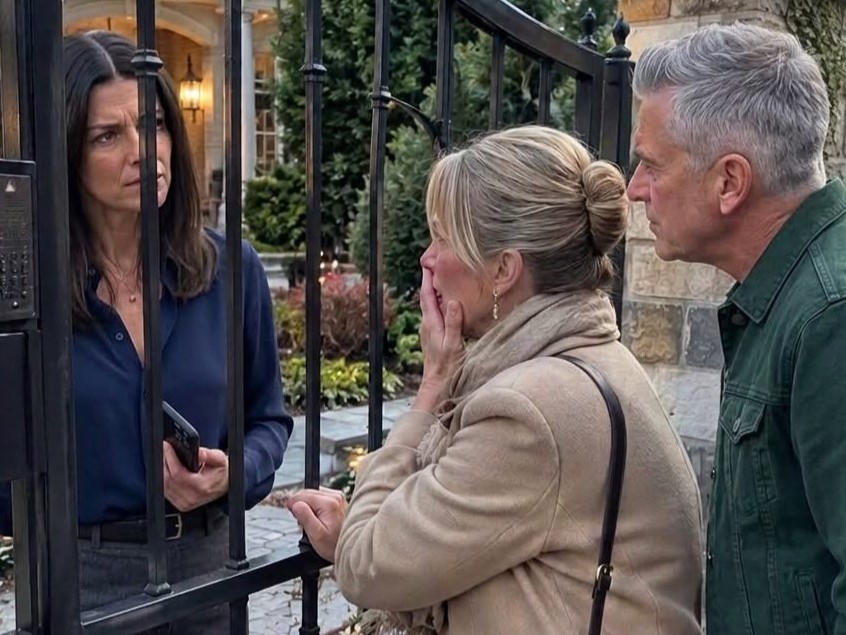
    Around seven that evening, the gate intercom buzzed.

    Mom stood outside.

    She tried the old code twice before calling.

    “Camille, the gate isn’t opening.”

    “I changed the code.”

    She stared into the camera.

    “Why?”

    “Because I changed it.”

    “Sweetheart, I’m standing outside my daughter’s house.”

    “Exactly,” I said. “My house.”

    Dad stepped into view.

    “Open the gate,” he said. “We need to discuss this like adults.”

    “No.”

    Mom started crying.

    “Can we please just come inside?”

    “No.”

    They had their own home thirty minutes away.

    When Mom asked, “Then where are we supposed to go?” I realized how completely everyone had come to believe my house belonged to the family.

    “Go home,” I said.

    Then I ended the intercom.

    They remained outside nearly half an hour before leaving.

    Once their car disappeared, I sat beside the sofa and cried.

    Not because I regretted changing the code.

    Because I finally understood how long I’d waited for permission to have boundaries.

    Tasha stayed that night.

    The next week brought calls from relatives.

    My aunt Relle called first.

    She said Mom was barely eating and there had been some misunderstanding.

    After Celeste explained that the communication system had automatically archived the call and verified the relevant metadata, I sent Aunt Relle a short recording.

    She went quiet.

    Then she said, “Baby, I’m sorry. Thank you.”

    She’d heard enough.

    The family divided.

    Some said I was being emotional.

    Some called Mom’s words a single mistake.

    Others admitted they’d always been uncomfortable with how often I was expected to fix Darius’s problems.

    Then someone discovered I planned to sell the house.

    Mom called in a panic.

    “You’re selling?”

    “Yes.”

    “Why would you do that?”

    “Because I don’t want it anymore.”

    She cried and said I was destroying everything over one conversation.

    “This is where the family gathers,” she said.

    I looked around my kitchen.

    “No,” I told her. “This is where everyone gathers while I disappear into whatever role makes the gathering possible.”

    She fell silent.

    Then she whispered, “Don’t sell your home just to hurt us.”

    “I’m not selling it to hurt you,” I said. “I’m selling it so it stops hurting me.”

    Dad later emailed, accusing me of choosing ego over blood and behaving emotionally.

    Celeste helped me respond with facts.

    I wasn’t responsible for Darius’s business obligations.

    I wasn’t responsible for maintaining property other adults had grown dependent on.

    Personal belongings could be collected by appointment.

    Future financial requests had to be made in writing and could not be assumed approved.

    Dad replied, “This is not the daughter we raised.”

    I stared at the sentence for nearly a minute.

    Then I answered:

    “You’re right.”

    And muted the thread.

    Three weeks later, Marisol called.

    A couple relocating from Colorado had made a full-price cash offer.

    Since changing the codes, the house had become strangely peaceful.

    No jackets thrown over chairs.

    No relatives opening the refrigerator without asking.

    No mother rearranging decorations.

    No father claiming the biggest chair.

    Only quiet.

    “Accept it,” I told her.

    “Are you sure you don’t want until tomorrow?”

    “I’ve been thinking about this house for years,” I said. “I just didn’t know that’s what I was doing.”

    We accepted.

    Closing was set for 32 days later.

    Ten days after that, Darius arrived with a rental truck.

    He wasn’t there for his storage boxes.

    He wanted my furniture.

    Security called from the gate.

    Through the camera, I saw him beside the truck with his arms crossed.

    He called from an unfamiliar number.

    “Camille, stop acting ridiculous.”

    “Why are you here?”

    “Mom said some things in the house should stay with family.”

    “Which things?”

    “The dining table. The theater seats. One of the guest bedroom sets. The entry mirror. Dad wants the smoker.”

    I almost laughed.

    “You came with a truck to take furniture from my house.”

    “You’re selling everything anyway.”

    “I’m selling my property. That doesn’t make it yours.”

    He called me selfish, then irrational.

    Finally he said, “You think selling this place makes you powerful? You’re still alone.”

    Once, that sentence would have destroyed me.

    It didn’t.

    “Maybe I am alone sometimes,” I said. “But I’d rather eat dinner alone than feed people who laugh at me afterward.”

    I hung up.

    Security escorted him away.

    That evening, he posted online about selfish successful people leaving others behind.

    Tasha sent me a screenshot.

    I replied with one word.

    “Predictable.”

    The final confrontation with my parents came eight days before closing.

    Mom had asked three times to meet.

    I finally agreed on three conditions: Celeste would attend, Tasha would be there, and Darius wouldn’t be invited.

    My parents arrived looking older than they had five weeks earlier.

    Mom’s eyes were swollen.

    Dad’s anger had faded into something heavier.

    They sat opposite me at Celeste’s conference table.

    Mom spoke first.

    “I’m sorry.”

    Then she continued.

    She apologized for calling me a failure.

    For mocking my life because I wasn’t married.

    For saying I needed to feel necessary.

    For laughing after accepting everything I’d given them.

    For using the thing she knew hurt me most as entertainment.

    It was her first apology without the word “but.”

    I told her I appreciated hearing it.

    Then she surprised me.

    “I was jealous,” she said.

    I hadn’t expected that.

    “Of your house. Your career. The way people listened when you spoke. How independent you became. I love benefiting from what you built, but privately I resented that you created a life bigger than anything I ever imagined for myself.”

    She lowered her eyes.

    “So I reduced it. I told myself you were lonely. I told myself the house was your consolation prize. I made what you built smaller because otherwise I had to face how much of my own life I had spent believing women shouldn’t want too much.”

    The honesty was brutal.

    But genuine.

    Dad closed his eyes.

    Then spoke.

    “I’m sorry too. For sitting there while Darius mocked you. For treating your house like it belonged to the whole family. For expecting more from you because Darius could handle less.”

    That hit harder than anything else.

    “Why?” I asked.

    He looked at me.

    “Every time I rescued him, I could pretend I hadn’t failed him as a father. Every time I asked you to carry some of it, it felt safe because you always survived.”

    I slowly leaned back.

    “My ability to survive wasn’t permission,” I said.

    “No,” he answered. “I know that now.”

    Mom reached toward my hand, then stopped halfway.

    “Can I?”

    I shook my head.

    “Not today.”

    She immediately withdrew her hand.

    That mattered.

    Then came the question I expected.

    “Are you still selling the house?”

    “Yes.”

    “Where will you live?”

    “I already bought another place.”

    It had three bedrooms, a garden, a studio, and one guest room.

    Mom noticed immediately.

    “Only one?”

    “Only one.”

    Neither of them tried negotiating after that.

    Closing day arrived on a gray Friday morning.

    I walked through the house alone.

    Most furniture had been sold, donated, or moved to storage. The family photos were gone. Mom’s dresses were gone. Darius’s boxes were gone. Dad’s blanket was gone.

    The dining room no longer had a seat of honor.

    Only open floor remained, with pale rectangles where pictures once hung.

    I stood in the kitchen where the forgotten call had changed everything.

    Then whispered, “Thank you.”

    Not to the house.

    To the accident.

    To the open line.

    To the truth arriving without permission.

    When I signed the final documents, strangers officially owned the house.

    I expected grief.

    Instead, I felt light.

    My new home was comfortable, but completely different.

    Three bedrooms.

    A garden behind the kitchen.

    A small dining area.

    A studio I actually used.

    No theater room.

    No enormous guest wing.

    No six-car driveway.

    No rooms designed for people who confused hospitality with permanent access.

    I withheld my address from my family for seven months.

    Eventually, Mom stopped seeing that as punishment and understood it as protection.

    Darius’s company failed about ten weeks after I refused the rescue money.

    Initially, he blamed me.

    Then creditors finished what denial had delayed.

    The business closed.

    Equipment was sold.

    Contracts ended.

    Without my money cushioning every impact, the company finally had to survive on its own numbers.

    My parents didn’t rescue him.

    They couldn’t.

    Eventually, Darius took a regional sales job with a building supply company.

    He hated it at first.

    Then he discovered his paycheck appeared only when he worked.

    Slowly, necessity accomplished what family indulgence never had.

    It made him less theatrical.

    A year after the phone call, he asked to meet.

    I declined.

    Another year passed.

    Then another message arrived.

    “I’m not asking for money. I want to apologize for what I said when I thought you weren’t listening.”

    I agreed to meet at Celeste’s office.

    He looked different.

    The expensive watch was gone. His clothes were simpler. He seemed tired, but somehow more real.

    He sat down.

    “I’m sorry.”

    I waited.

    “For laughing about your loneliness. For taking your help while acting like your generosity made you weak. For talking about your house like it belonged to everybody. For bringing that truck to your gate.”

    Then he admitted something else.

    “I was jealous of you.”

    “Not the house?”

    “Not really. I told myself it was the house. But you built something real. You could stand without Mom and Dad protecting you. Almost everything I tried to build depended on somebody covering the holes.”

    I listened.

    “Losing the company was humiliating,” he said. “But eventually I had to admit you didn’t make me fail.”

    “No,” I said. “I helped you postpone failing.”

    He winced.

    Then nodded.

    “I think I needed to fail earlier.”

    “I think so too.”

    He asked whether we could ever be a family again.

    “We never stopped being related,” I told him. “The question is whether being around each other can become safe.”

    He nodded.

    So I gave him the rules.

    No more money.

    No comments about my marriage, loneliness, wealth, or house.

    No sending Mom to negotiate.

    No treating invitations like access rights.

    “Okay,” he said.

    That meeting wasn’t reconciliation.

    It was a doorway with rules beside it.

    My parents changed more slowly.

    Mom eventually started therapy. Months later, she asked me to meet at a café and deliberately said, “I’m not asking where you live.”

    That detail showed me she was learning.

    We ordered tea.

    After several minutes, she said, “I’m learning something embarrassing.”

    “What?”

    “I used crying to escape accountability.”

    I nearly dropped my cup.

    She gave me a sad smile.

    “My therapist is extremely expensive.”

    This time, she cried without turning the tears into leverage.

    Then she said something that hurt more than the original insult yet somehow healed more too.

    “I don’t think I ever learned how to love you without needing something from you.”

    I looked at her.

    “Then practice today,” I said.

    So we discussed soup, weather, television, gardening, and ordinary things.

    Nothing about money.

    Nothing about Darius’s latest crisis.

    Nothing about my address.

    When we got up to leave, she thanked me for spending time with her.

    I said, “Now you understand why being seen matters.”

    Dad changed mostly through actions.

    He stopped automatically taking the most important chair at family dinners.

    When someone once said I’d become too sensitive about money, he corrected them.

    “No,” he said. “We became too comfortable expecting things from her.”

    I cried in my car after hearing that.

    Months later, he asked whether he might someday visit my home.

    “Not yet,” I told him.

    “I understand.”

    And he didn’t ask again.

    Nearly three years after the forgotten call, I invited my parents to dinner.

    Not Christmas.

    Not Thanksgiving.

    Not a birthday.

    Just an ordinary Saturday.

    Mom arrived holding flowers.

    Before entering, she asked, “May we come in?”

    That question nearly broke me.

    “Yes.”

    They stepped inside slowly.

    They didn’t open doors.

    They didn’t wander upstairs.

    They didn’t ask what anything cost.

    My dining table was round now, so nobody sat at the head.

    We ate chicken stew, herb rice, roasted carrots, and bread from a neighborhood bakery.

    After dinner, Dad collected the plates.

    Mom washed the cups.

    For once, I didn’t stop her by insisting she was a guest.

    I allowed care to move both ways.

    Later, Mom stood at the kitchen window overlooking the garden.

    “I think I finally understand why you sold the other house,” she said.

    “Do you?”

    She nodded.

    “It was crowded even when you were there alone. Too much of us lived there. Our expectations. Our things. Our entitlement.”

    I started crying.

    So did she.

    But neither of us made those tears responsible for repairing everything.

    We simply stood there.

    For once, nothing needed pretending.

    The proceeds from the large house went several directions.

    I invested a significant portion.

    Some went into my company.

    Some went to nonprofits I’d quietly supported.

    And some funded something I named the Deep Well Initiative, inspired by Grandma Evelyn’s warning that a well eventually runs dry when people only take from it.

    The project supported women who had become their families’ invisible financial infrastructure.

    Women paying debts.

    Housing relatives.

    Financing siblings.

    Covering emergencies.

    Hosting everyone.

    And still being called selfish when they finally said no.

    Tasha helped develop the financial tools.

    Celeste volunteered legal clinics.

    Eventually, Mom asked if she could help.

    My first answer was no.

    Months later, after she completed the required training, I reconsidered.

    Her first job was simply arranging chairs and preparing information folders.

    She did it quietly.

    That mattered.

    Years later, when I finally spoke publicly about the forgotten call, I changed identifying details and kept my family private.

    I told an audience that one night Mom forgot to end a call, and I heard my family describe me as lonely, desperate, and useful while discussing money I’d just promised them.

    Then I explained that I sold the house I once bought hoping it would finally make them proud.

    People assumed selling it meant I’d lost something.

    It didn’t.

    It was the first property transaction of my life that gave something back to me.

    Afterward, women approached me with their own versions of that house.

    A car everyone borrowed.

    An apartment treated like a free hotel.

    A monthly payment to a parent who criticized their career.

    A brother’s rent.

    A sister’s credit card.

    A holiday table where they paid for everything yet still felt like staff.

    I told them what I had finally learned.

    You can love people without financing every consequence of their choices.

    You can have a generous heart without leaving the door unlocked.

    And you can be lonely without allowing loneliness to become the price of belonging.

    Mom no longer has a code to my house.

    She receives invitations.

    Dad no longer assumes the most important chair belongs to him.

    Darius no longer gets emergency transfers.

    He gets birthday messages, occasional dinners, and conversations that end when disrespect begins.

    Tasha remains the person I call whenever I’m tempted to confuse guilt with obligation.

    Celeste remains the attorney whose rules helped stop our family from destroying itself.

    And me?

    I no longer live inside architecture built to impress people whose approval always came with an invoice.

    My mother forgot to disconnect a call.

    I heard her describe me as a woman who had everything except what supposedly mattered.

    So yes, I sold the house.

    But the most important things I sold were invisible.

    I sold the belief that achievement could buy tenderness from people who measured my worth by what I provided.

    I sold the stage where my family performed pride publicly while practicing contempt privately.

    I sold the idea that being necessary meant being loved.

    And with what remained, I bought quiet.

    I bought locked doors.

    I bought a round table.

    I bought mornings when my phone can ring without tightening my stomach.

    I bought a home where every room belongs first to the person who lives there.

    Today, my house has fewer bedrooms.

    Less furniture.

    Fewer people coming and going.

    But every room feels larger because I’m finally allowed to exist inside my own life.

    My name is Camille Hail.

    I once owned an enormous home filled with people who needed things from me.

    Today I live in a quieter house where people knock before entering.

    And I finally learned that peace does not need six bedrooms to feel abundant.

  • At my parents’ 30th anniversary dinner, I arrived dressed in a suit and tie—only to discover that my seat had been given to my sister’s new boyfriend. When I asked where I was supposed to sit, Mom simply said, “You didn’t bring a plus-one, so just stand for now.”  

    At my parents’ 30th anniversary dinner, I arrived dressed in a suit and tie—only to discover that my seat had been given to my sister’s new boyfriend. When I asked where I was supposed to sit, Mom simply said, “You didn’t bring a plus-one, so just stand for now.”  

    Everyone in my family loved saying the same thing: “Family always sticks together. For years, I believed it.

    Completely.

    My name is Connor. I’m twenty-seven, and I’ve always been the quiet one in my family.

    Not the favorite.

    Not the troublemaker.

    Just the dependable middle child everyone assumed would always be there.

    My older brother Zach was the brilliant one.

    My younger sister Mia was the charming one who could somehow escape every consequence.

    And me?

    I was the one who remembered birthdays.

    Showed up on time.

    Helped when someone needed money.

    Cleaned up problems without complaining.

    Basically, I was always holding the camera instead of standing in the picture.

    For a long time, I convinced myself that was fine.

    Until my parents’ thirtieth anniversary dinner.

    They planned a big celebration at an expensive restaurant.

    For once, I thought maybe I could make the evening special.

    So I withdrew $2,000 in cash and placed it inside a gold-trimmed envelope.

    I even wrote a note:

    “Thank you for keeping this family together, even when it wasn’t easy.”

    It wasn’t just money.

    It was my way of saying that despite everything, I appreciated them.

    That evening, I arrived early.

    Fresh haircut.

    Suit and tie.

    Polished shoes.

    I had even called ahead to confirm the reservation.

    But when I reached the hostess stand, the woman looked confused.

    “Oh, you’re Connor?”

    “Yes.”

    “They’ve already been seated. Table for eleven.”

    I frowned.

    “Eleven?”

    She nodded.

    As she led me through the restaurant, something in my stomach started tightening.

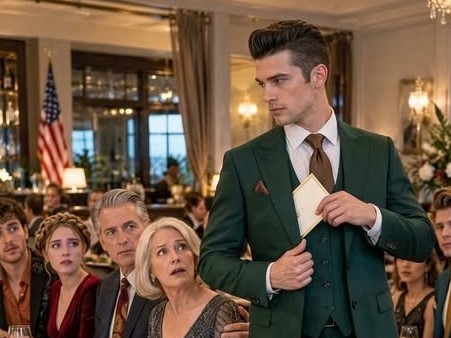
    Then I saw them.

    My entire family.

    Mom and Dad in the middle.

    Zach and his fiancée.

    Mia.

    Aunts.

    Uncles.

    Family friends.

    Every chair was occupied.

    Including the chair beside Mia.

    Sitting there was a guy I had never seen before.

    Mid-twenties.

    Rings on nearly every finger.

    Loud shirt.

    His arm casually stretched across the back of Mia’s chair.

    Everyone looked up when I approached.

    Mom gave me a small smile.

    Dad lifted his glass.

    Mia actually waved.

    “Oh, Connor,” Mom said. “We didn’t think you’d come looking so formal.”

    I looked around the table again.

    “Where am I supposed to sit?”

    Mom blinked.

    “Well… we didn’t really plan for extra guests.”

    “I didn’t bring anyone.”

    She glanced toward the stranger sitting beside Mia.

    Then back at me.

    “Well, just stand for now. Maybe the waiter can find another chair later.”

    Then people laughed.

    Not loudly.

    Just enough.

    Mia covered her mouth.

    One uncle muttered something about “poor Connor.”

    Even Dad smirked.

    And I stood there with that $2,000 envelope sitting heavily inside my jacket.

    Suddenly, it felt ridiculous.

    For years, I had trained myself not to make scenes.

    To smile.

    To let things go.

    To keep the peace.

    But something inside me finally broke.

    I reached into my jacket.

    “Actually,” I said, “I think I’ll save this for people who remember to save me a seat.”

    Then I slipped the envelope back into my pocket.

    Mom’s expression changed instantly.

    “Connor—”

    I turned toward the waiter.

    “Please remove anything that was supposed to be charged to me. I won’t be staying.”

    Behind me, chairs scraped against the floor.

    People started calling my name.

    But I walked out.

    Outside, I found a bench and sat down.

    For a while, I simply stared at the envelope.

    “For Mom and Dad. Thirty years strong.”

    That was what I had written on it.

    Then my phone started buzzing.

    Mia:

    “Come back. Don’t be dramatic. We’ll figure something out.”

    Zach:

    “Don’t make tonight about you.”

    Finally, Mom:

    “Please don’t ruin this evening for us.”

    Not one apology.

    Nobody said:

    “We should have saved you a chair.”

    Nobody asked how I felt.

    Somehow, their mistake had already become my behavior problem.

    So I didn’t answer.

    Days passed.

    Nobody called.

    The only person who reached out was my Aunt Julie, who hadn’t attended the dinner.

    She had seen photographs online and noticed I wasn’t in any of them.

    “You okay, sweetheart?”

    Eventually, I told her what happened.

    Her answer was only one sentence:

    “You’ve always been the one they take for granted.”

    I couldn’t stop thinking about it.

    Because suddenly, every little thing from the past started coming back.

    The promotion nobody acknowledged.

    The Christmas when Zach got the guest room while I slept on a couch after flying across the country.

    The speeding ticket Mia earned using my car that I ended up paying.

    All the favors.

    All the excuses.

    All the times I had told myself:

    “They didn’t mean anything by it.”

    But when you stack enough small things together, eventually you realize you weren’t occasionally overlooked.

    You were invisible.

    A week later, Mia appeared at my apartment.

    She returned a food container I had lent her weeks earlier, then walked inside holding a Frappuccino as though nothing had happened.

    “So,” she said, “are you done being dramatic?”

    I stared at her.

    “You think I’m the one being dramatic?”

    “Oh, come on. It was a seating mistake.”

    “A seating mistake?”

    I folded my arms.

    “You gave my chair to a man I’ve never met, and Mom told me to stand.”

    Mia rolled her eyes.

    “It wasn’t intentional.”

    Then she complained that I had embarrassed our parents by leaving.

    That Uncle Tom thought I was sensitive.

    That the envelope stunt was petty.

    I looked at her.

    “Do you even know what was inside the envelope?”

    She shrugged.

    “A note?”

    “Two thousand dollars.”

    Her expression changed.

    “What?”

    “I was going to give Mom and Dad $2,000 during dessert.”

    Mia went completely quiet.

    “I wanted to thank them. I had planned a little toast. I thought maybe, for once, I’d actually feel like I belonged there.”

    She looked down at her drink.

    Then she asked the question that told me everything.

    “So… you’re not giving it to them anymore?”

    I laughed.

    Not because it was funny.

    Because it was unbelievable.

    “You think they earned it?”

    “They’re still our parents.”

    “Yes,” I said. “They are.”

    She left shortly afterward.

    For once, I didn’t feel guilty when the door closed.

    Then came the moment that changed everything.

    A few days later, I opened Instagram and saw Mia posing beside a brand-new white SUV with an enormous red bow on the hood.

    The caption read:

    “When your family knows how to treat you like a queen. Thanks Mom and Dad for the early wedding gift.”

    I stared at it.

    Then I saw Mom’s comment.

    “Only the best for our girl. You’ve always made us proud.”

    That was the moment something inside me went completely still.

    The same parents who couldn’t remember to reserve me a chair had apparently found enough money to buy Mia a luxury SUV.

    I wasn’t furious.

    It was colder than anger.

    I finally understood where I stood.

    I wasn’t family in the same way everyone else was.

    I was useful.

    That realization sent me straight to my laptop.

    My family knew almost nothing about my finances.

    They assumed the promotion I received two years earlier had been some minor management position.

    It wasn’t.

    I had become a partner.

    They knew nothing about my investments.

    Nothing about the two properties I owned through an LLC.

    Nothing about the financial security I had quietly built.

    They had never asked.

    And until then, I had never needed them to know.

    But there was one thing they did know about.

    The family vacation account.

    Three years earlier, I had helped create it after one particularly expensive family trip.

    Everyone was supposed to contribute.

    At first, they did.

    Eventually, Zach and Mia stopped.

    I kept going.

    Month after month.

    Sometimes $300.

    Sometimes more.

    The balance had grown to nearly $12,000.

    So I withdrew the money I had contributed.

    A few days later, Dad texted.

    “Did you accidentally stop the deposits into the vacation fund? The account seems frozen.”

    I answered with two words.

    “No accident.”

    He responded:

    “Don’t you think that’s a little extreme?”

    Then Zach messaged me.

    Apparently, everyone had been planning a trip to Aruba.

    “We were planning.”

    I stared at those words.

    No.

    They were planning.

    I had been funding.

    That night, the weight of everything finally hit me.

    I cried harder than I had in years.

    Not because of the money.

    Because I realized how long I had believed that if I just gave enough, helped enough, showed up enough, eventually my family would treat me as though I mattered.

    The following morning, I decided to stop waiting.

    I separated my finances completely.

    Canceled family-related automatic payments.

    Removed myself from shared accounts.

    Met with a CPA.

    Cut every financial string I had been using to maintain connections nobody else seemed interested in maintaining.

    And when I finished, I felt something unexpected.

    Free.

    Over the next few months, my life changed.

    I focused on work.

    Started mentoring younger employees.

    Began helping young adults in my community understand savings, credit, and investing.

    I started putting my time and money into people who actually appreciated it.

    My mother eventually called.

    She said she missed me.

    Said things had become “strange.”

    But she still never apologized.

    Then Zach sent me a spreadsheet showing how much everyone was expected to contribute toward family Christmas gifts.

    My name already had numbers beside it.

    I closed the document.

    Instead, I donated $5,000 to a local organization helping children in foster care.

    For once, giving felt good again.

    Because nobody expected it from me.

    Months later, an invitation arrived for Mia’s engagement party.

    Lavender envelope.

    Gold lettering.

    Expensive card stock.

    Near the bottom was a small line:

    “Dinner seating limited.”

    I almost laughed.

    I didn’t RSVP.

    But I did mail Mom and Dad something.

    A gold-trimmed envelope.

    Almost identical to the one I carried to their anniversary dinner.

    This time, there was no money inside.

    Only a note.

    “I saved a seat for you. You just never looked for me.”

    I thought that would be the end.

    It wasn’t.

    My cousin Rachel called several weeks later.

    She told me Mia’s fiancé, Derek, had been asking Dad for money to fund a startup.

    Then Rachel mentioned something else.

    Apparently Mom had told relatives that Connor would probably help if they asked nicely enough.

    That was when everything clicked.

    The engagement party wasn’t just a celebration.

    They expected me to show up.

    Feel guilty.

    And finance another family project.

    This time, I wasn’t going to play along.

    So I started looking into Derek’s business history.

    Two failed companies.

    Unpaid contractors.

    Missed invoices.

    A trail of questionable decisions.

    Nothing that appeared criminal.

    But plenty that potential investors might want to know.

    And one name on the engagement-party guest list caught my attention.

    Peter Hastings.

    A wealthy investor I recognized from years earlier.

    Apparently Derek had been trying to get him involved.

    I made sure verified information about Derek’s previous businesses was available to anyone considering investing.

    Then came the engagement party.

    It was exactly what I expected.

    Expensive venue.

    String lights.

    Champagne.

    Flower walls.

    A carefully staged social-media dream.

    They had even texted me beforehand:

    “We saved you a seat.”

    This time, I went.

    And somehow, even after that message, my name card was missing when I arrived.

    The staff had to create one by hand.

    I smiled.

    Of course.

    Dinner began.

    Then the speeches.

    Eventually, Mom stood.

    She praised Mia.

    Praised Derek.

    Talked about their future.

    Then she announced something.

    “Our family is helping Derek launch his company this fall.”

    Everyone applauded.

    I sat quietly.

    Later, Mia announced a slideshow.

    Photographs began appearing on the large screen.

    Childhood memories.

    Vacation pictures.

    The proposal.

    Then things changed.

    Information about Derek’s previous failed ventures appeared.

    Business records.

    Complaints.

    Unpaid invoices.

    The room slowly became silent.

    Finally, the screen showed one last photograph.

    My parents’ anniversary dinner.

    The entire family seated around the table.

    And me standing behind them.

    No chair.

    My mother’s face turned pale.

    Derek began whispering frantically to Mia.

    The room froze.

    Then I stood.

    I didn’t shout.

    I didn’t need to.

    “I tried for years to be part of this family,” I said. “I showed up. I helped. I gave. And I kept forgiving.”

    Nobody moved.

    “But some people only notice you when they need something.”

    I turned toward my parents.

    “I brought $2,000 to your anniversary dinner because I wanted to thank you.”

    Mom stared at me.

    “You gave my seat to someone you had just met.”

    Someone in the room gasped.

    “You called me dramatic. You called me sensitive. You said I had ruined your celebration.”

    I paused.

    “But tonight isn’t about revenge.”

    I looked around the room.

    “It’s about clarity.”

    Then I turned toward Derek.

    “I looked into the business you want everyone here to support.”

    His expression went blank.

    “I didn’t invent anything. I didn’t need to. The facts already existed.”

    Then I set down my glass.

    For years, I had wanted a seat at their table.

    Not anymore.

    “I’m done asking you to save me a seat.”

    I smiled slightly.

    “I built my own table.”

    Then I walked out.

    Behind me, the room erupted into whispers.

    I never turned around.

    The next morning, my phone filled with missed calls.

    Mom.

    Zach.

    Even Derek.

    I blocked them.

    Three weeks later, Rachel told me Derek had lost several potential investors.

    My parents were struggling to cover the party expenses.

    The SUV Mia had bragged about online was eventually returned.

    But by then, none of that mattered much to me.

    I had moved on.

    Eventually, I helped create a local financial-literacy program for teenagers aging out of foster care.

    We named it:

    First Seat.

    Because everyone deserves one.

    At our first fundraiser, someone asked whether my family would be attending.

    I smiled.

    “No.”

    Then I looked around the room at the people who had chosen to be there.

    “I finally made room for people who actually see me.”

    And that was enough.

  • My surviving twin son planted lilies every year for the sister he lost at birth. On their 15th birthday, we found every flower cut down and a black box sitting in the center.  

    My surviving twin son planted lilies every year for the sister he lost at birth. On their 15th birthday, we found every flower cut down and a black box sitting in the center.  

    PART 1

    Every birthday since he was five years old, my son had planted a white daisy for the twin sister who died at birth. It had become his quiet tradition. It was his way of remembering someone he had never truly known. But on his fifteenth birthday, Mason ran into the house screaming. Every single flower in Daisy’s Garden had been cut down. And in the exact middle of the ruined dirt sat a matte black box with his name written across it.

    Then I read the note taped to the lid. Everything I thought I knew about the day my son was born suddenly felt like a complete lie. The evening before Mason turned fifteen, I found him outside in our front yard with the garden hose tangled around his bare feet. The warm summer sun was already beginning to disappear behind the tall pine trees of San Antonio.

    “You are drowning them,” I called out from the edge of the wooden porch.

    Mason glanced over his shoulder and wiped a drop of water off his cheek. “I am just watering them.”

    “There is a huge difference,” I said as I walked down the steps.

    “According to you, Mom,” he chuckled.

    “According to basic plant science,” I replied, smiling at his persistent attitude.

    He grinned and lowered the heavy plastic hose toward the grass. The little patch of bright white daisies beside our front porch had gradually become one of the most sacred places in our home. There were ten full flowers growing there by then, representing one for every birthday since Mason had been old enough to understand that his twin sister had not gotten to celebrate any birthdays with us.

    The very first daisy had gone into the rich dirt when Mason was only five years old. I could still clearly remember that painful conversation in our old kitchen.

    “Mom,” he had asked while looking up at me with huge curious eyes, “if Daisy cannot have birthdays with us, can we grow her favorite flowers instead?”

    I had smiled down at him while wiping away a tiny tear. Then I had quietly walked into the master bathroom and cried where he could never see my weakness.

    From that bittersweet day forward, every single June, Mason carefully added another flower bulb to the little patch of earth he affectionately called Daisy’s Garden. He guarded those fragile white petals as though they were precious holy relics. Neighborhood children could kick soccer balls across our green lawn without any problem. Birds could dig through the dark wood mulch looking for tiny worms. Even the occasional stray dog could wander too close to our front steps.

    However, if anyone dared to touch one of Daisy’s delicate flowers, Mason immediately transformed into a fierce security system with legs. There was only one single exception to his strict rule. Their shared birthday. Every year, Mason personally chose the best bloom in the entire garden. He would carefully cut the stem, carry it down to the sunny green lawn of Oakridge Memorial Park in suburban Phoenix, and gently lay it beside her engraved stone.

    That quiet evening before his birthday, one large white flower had already begun opening under the sunset. Mason crouched beside it and gently touched the soft edge of one pristine petal.

    “That is tomorrow’s special bloom,” he whispered with immense pride.

    My husband, Patrick, had just come outside carrying a heavy brown bag of charcoal briquettes for the grill. He stopped right beside me on the porch floorboards.

    “We know, buddy,” Patrick said softly.

    Mason looked down at the opening flower again. Then he spoke in an almost casual, reflective tone. “It is really weird being somebody’s twin when you have never actually met them in real life.”

    Patrick’s firm grip visibly shifted on the heavy paper bag. Mason continued pulling small stray weeds from the damp dirt. “I mean, everyone always says ‘your twin sister,’ but I do not remember her face at all.”

    I slowly walked down the final porch step onto the soft grass. “You were just a tiny newborn baby, honey.”

    “I know that,” Mason murmured while tossing a weed aside. Then he looked straight up into my eyes. “Do you think she knew I was right there next to her?”

    Patrick did not answer his question. I turned my head to look at my husband. He was staring intensely at the white petals with a completely blank expression.

    “Dad?” Mason asked, noticing the awkward silence.

    Patrick cleared his throat loudly. “It is getting really dark outside, buddy. Finish up your watering and head inside.”

    Mason slowly wound the green hose back onto its plastic reel and walked into the house. I deliberately waited until the screened kitchen door clicked firmly shut.

    Then I turned toward Patrick. “What was that weird reaction just now?”

    He picked up the charcoal bag from the wooden bench. “What was what?”

    “You heard what your son asked,” I insisted.

    “Nora, I honestly do not know what you want me to say to that,” Patrick sighed, looking down at his shoes.

    “The actual truth would be a wonderful place to start, Patrick,” I pressed firmly.

    He avoided my gaze entirely. “I have already told you every single thing I remember from that hospital room.”

    It was not quite an answer, and we both knew it. The only explanation I had ever been given about our daughter’s tragic death had come after I woke up from emergency sedation following the difficult delivery. Daisy had stopped breathing shortly after birth. The emergency room doctors simply could not save her fragile lungs. Patrick had handled all the paperwork and burial arrangements while I was heavily medicated.

    I had always assumed that when he said she had passed away after birth, he meant almost immediately in the delivery room. For fifteen long years, that had been Patrick’s standard way of talking about our daughter. He did it carefully and quietly, always leaving crucial details entirely unsaid. If I ever asked too many direct questions about the quiet medical center, the entire room seemed to lose all its oxygen.

    “I have already told you everything I remember,” he repeated stubbornly.

    This time, I simply could not shake the terrifying feeling that he was hiding something monumental from us. Before I could press him any further, he carried the heavy charcoal bag inside.

    PART 2

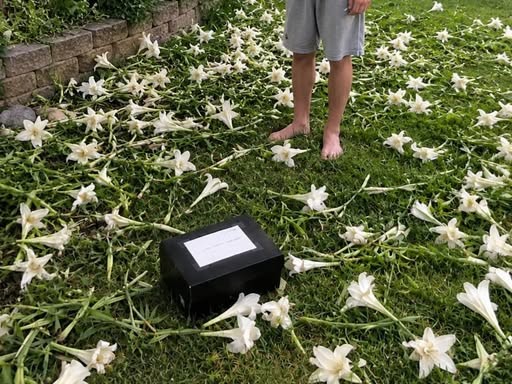
    By the next morning, the white flower Mason had chosen for Daisy was lying severed in the damp grass. So were all the other nine carefully tended flowers. I woke up abruptly to the agonizing sound of Mason screaming at the top of his lungs. I ran downstairs so quickly that I nearly missed the final wooden step. I shoved open the heavy front door and rushed out into the cool morning air.

    Mason stood completely barefoot in the front yard, wearing only his blue flannel pajama pants. His young face was entirely pale.

    “Mom!” he gasped, pointing a trembling hand toward the soil.

    I followed his horrified stare down to the ground. Every single white bloom had been cut clean off its stem. The green stems were still standing upright in the black dirt, but the lovely petals had been scattered brutally across the morning dew.

    Mason walked slowly into the center of the little garden as if he expected someone to wake him up and tell him it was all just a bad dream. “No, this cannot be happening.”

    He bent down and picked up one severed white flower with shaking hands. Then he picked up another crushed bloom. “Who would do something like this?”

    I stood there frozen, completely unable to answer him. His bright eyes rapidly filled with hot tears. “Who would do something this cruel to my dead sister?”

    That was the exact moment when I finally spotted the dark object in the dirt. A matte black box had been placed directly in the exact middle of Daisy’s Garden.

    “Mason, do not touch that,” I warned quickly.

    He was already stepping toward the mysterious box. I reached out and caught his warm wrist just in time.

    “Mom,” he pleaded, pointing down at the top lid. “It has my name written right on it.”

    A thick white envelope was taped securely across the shiny top. Written in bold black block letters were four distinct words: FOR MASON.

    I reached down and tore the envelope free from the sticky tape. Inside was a single folded sheet of white paper. The handwriting looked completely unfamiliar to me at first glance. The black letters were noticeably cramped, jagged, and uneven.

    I read the very first sentence out loud. “Your mother told you what she was told, but neither of you knows what really happened to Daisy.”

    My stomach dropped like a heavy stone into a deep well. Mason leaned closer over my shoulder to read the paper. “What does that sentence mean, Mom?”

    “I honestly do not know, honey,” I whispered.

    There was another distinct line written right underneath the first sentence. “Open the box, Mason. It is high time you finally learned the full truth.”

    Mason immediately knelt down in the damp soil. “I am opening it.”

    “Wait a second,” I said sharply, pulling his arm back slightly.

    “Wait for what?” he shouted back, his voice cracking with intense emotion.

    “I do not know, honey, but we need to be careful,” I insisted softly.

    He lifted the heavy black lid off the box anyway. Sitting right at the top inside was a tiny knitted newborn baby cap. It was soft white with a faded pink horizontal stripe running through the middle. Right beside the faded cap rested two plastic hospital identification bracelets. Beneath those items lay a folded piece of medical paper, and at the very bottom sat a small photograph lying completely face down.

    Mason reached his thumb in and picked up the first plastic hospital bracelet. He turned it over in the bright sunlight. LOGAN. His birth date was stamped clearly in black ink. Then he picked up the second faded plastic band. DAISY. The exact same birth date was printed on it, marked twelve minutes later.

    He looked up at me with raw agony in his young eyes. His trembling voice broke completely. “These belong to us.”

    I stood there utterly paralyzed, totally unable to speak a word. Mason reached deeper into the black box for the photographic print. He turned the shiny glossy paper over to face the sunlight.

    Then he let out a sharp scream that pierced the quiet morning neighborhood. “MOM!”

    I grabbed the picture directly from his trembling hand to see what had frightened him so deeply. Two tiny newborn babies were lying right beside each other beneath a patterned yellow hospital blanket. One baby was bright pink, healthy, and round-faced. The other tiny infant was much smaller, frail, and surrounded by clear medical tubing. Their tiny arms were resting close together, and one baby’s minuscule hand was tightly curled around the other’s delicate fingers.

    Mason pointed at the photograph so hard that his fingernail struck the glossy paper. “That baby right there is me.”

    I looked down at the tiny printed name labels placed right beside the sleeping infants in the crib. LOGAN. DAISY.

    I sat right down in the damp, cold lawn grass without caring about my clothes. “No, this is impossible.”

    Mason crouched right beside me on the wet lawn. “Mom, look closely, that is definitely me lying right next to her.”

    “That is…” My voice completely disappeared into a dry lump in my throat.

    “You told me I never met her, Mom,” he whispered, staring into my eyes.

    I looked back at him with total heartbreak. “I only told you what I was officially told fifteen years ago.”

    He picked up the smooth photograph again to examine the background details. “Who took this picture of us?”

    A heavy wooden side door opened quietly behind us near the garage driveway. I turned my head around fast. Patrick stood right beside the concrete garage path. He was fully dressed in brown pants and leather shoes. He looked as though he had been awake for several hours already.

    I looked from my silent husband down to the newborn photograph. Then I looked at the ruined, severed garden around our knees. Finally, I looked right back up into his cold, guilty eyes. “You did this.”

    Patrick slowly closed his eyes and took a deep, painful breath. Mason turned around very slowly on his knees. “Dad?”

    Patrick slowly walked across the green lawn toward us. Mason held up the photograph with a shaking arm. “Is that really me in this picture?”

    “Yeah, it is,” Patrick answered softly.

    “Lying right beside Daisy?” Mason pressed.

    Patrick stopped several feet away on the walkway. “Yeah, buddy.”

    “You knew about this picture all along?” Mason demanded.

    Patrick nodded his head slowly. “Yes, I knew.”

    I scrambled right to my feet, holding my body rigid. The small photograph was shaking violently in my hands. “Did you cut down all these flowers in the yard?”

    Patrick nodded again without making eye contact. I held up the crude handwritten note from the envelope. “Did you write this terrible note too?”

    “Yes, I wrote it last night,” Patrick confessed.

    Mason made a low, guttural sound of pure disbelief that I had never heard come from his throat before. “You deliberately wrecked Daisy’s entire garden?”

    “I did not dig up the living bulbs underneath the soil, buddy,” Patrick offered weakly.

    I stared at him in utter shock. “And that stupid detail is supposed to make this cruel act feel better?”

    “No, it is not,” he said flatly.

    “Then why in the world did you do this to your son?” I screamed.

    Patrick looked down at the bright white petals scattered hopelessly across the green grass. “Because every single birthday, you choose one single perfect flower for Daisy and leave all the rest buried right here.” He swallowed hard before continuing. “I wanted you both to understand that this year was not going to be another sad birthday built entirely around what she never got to experience.”

    Mason stared up at his father with pure fury. “So you wrecked all of them to make a point?”

    “I genuinely thought if I broke your repetitive annual ritual, you would finally open the box and face the truth,” Patrick explained quietly.

    I stepped immediately between my husband and my weeping son. “Then you should have simply asked him like a mature adult to break the ritual himself.” My voice shook with unfiltered rage. “You do not brutally destroy something your child loves and call that emotional healing.”

    Mason wiped his tear-stained face with both hands. “How long have you had this black box hidden from us?”

    Patrick stared down at the matte lid. “Fifteen full years.”

    “Fifteen years?” I gasped, barely able to breathe through the shock.

    He nodded silently. I held up Daisy’s tiny plastic hospital bracelet. “You had her personal baby things hidden away for fifteen whole years?”

    “Yes, I did,” he admitted.

    “And this photograph?” I demanded.

    He looked down at his shoes. “Yes.”

    “And you never showed a single thing to me?” I whispered, heartbroken.

    Patrick’s voice became noticeably quieter and raspy. “I simply could not bring myself to do it.”

    “You could not?” I repeated bitterly.

    “At first, I honestly thought showing you would destroy you emotionally, Nora,” he explained, taking a half-step forward. “You came home from Saint Jude Medical Center barely able to speak about what happened in the delivery room. Every single time I tried to bring up her name, you shut down completely.”

    “That might explain the very beginning,” I said with deep bitterness. “That does not explain fifteen long years of keeping secrets.”

    Patrick looked at the glossy photo in Mason’s hands. “After a while, telling you the truth meant admitting how long I had already kept it hidden from you. Every single year I waited just made the next year twice as hard.”

    I stared at him with complete detachment. “So you just kept making all the choices for me.”

    His sad eyes dropped toward the dirt. “Yes, I did.”

    PART 3

    Mason picked up Daisy’s tiny white baby cap from the dark box. He held the soft fabric gently in both of his hands as if it were made of delicate glass. “How long was my sister actually alive?”

    Patrick did not answer his question quickly enough. I locked my eyes onto my husband’s pale face. “Patrick, answer him right now.”

    He rubbed both of his rough palms over his tired face. “Longer than you were originally told in the hospital, buddy.”

    Mason looked completely confused by that statement. “What does that mean, Dad?”

    “She did not die immediately right after the delivery,” Patrick confessed quietly.

    I stepped much closer to him, my fists clenched tight. “How long was she alive?”

    “A few hours,” Patrick whispered.

    I stared at him in complete horror. “A few hours?”

    He nodded slowly. “Daisy did not pass away immediately after you two were born.”

    Mason looked back and forth between his parents. “You always said her lungs stopped breathing right away.”

    “She did stop breathing,” Patrick said defensively. “But it was not immediate.”

    My chest felt insanely tight, as if a heavy steel band were wrapping around my ribs. “You let me believe she passed away before I could ever hold her or know her.”

    Patrick’s eyes grew bloodshot and filled with tears. “You were extremely sick, Nora. You were bleeding badly and barely conscious for hours. Everything was happening all at once in the intensive care unit.”

    “That still does not explain why you lied to us for a decade and a half.”

    “I know that now,” Patrick admitted.

    “Then explain the whole truth right now,” I demanded.

    Patrick turned his gaze toward our son. “Not here in the yard. There is someone who was actually present in the room that night. She agreed to meet with us this morning at a quiet café in downtown Tucson.”

    Mason’s fingers tightened instantly around the tiny pink-striped cap. “Who is she?”

    “She was the head neonatal nurse who cared for both of you in the nursery,” Patrick explained calmly. “I tracked her address down several months ago. She still vividly remembered that exact night.”

  • “I went to surprise my husband at work — but his colleague asked me with tears in his eyes, “”He hasn’t told you anything, has he?””

    “I went to surprise my husband at work — but his colleague asked me with tears in his eyes, “”He hasn’t told you anything, has he?””

    Part 1 of 3

    PART 1

    Marcus and I had been married for eleven years. I had spent every one of them sharing him with that hospital.

    He was a gifted surgeon, and I was proud that my husband saved so many lives. But over the past year, I had started wrapping up his dinner before I even sat down to eat mine.

    He missed Thanksgiving, our anniversary, and our daughter’s eighth birthday.

    Sometimes he didn’t come home at all.

    “We’re short-staffed, honey. Please don’t wait up.”

    Whenever he finally crawled into bed, he looked so exhausted that I swallowed every complaint. Once, I woke to find him sitting on the edge of the mattress, his shoulders shaking.

    “Marcus?”

    He wiped his face before turning around.

    “Rough night. Go back to sleep.”

    So that Tuesday, after watching him leave with his hospital badge clipped to his pocket, I decided to surprise him.

    I packed his favorite lunch, added a slice of apple pie, and tucked a note under the fork:

    You don’t have to take care of everyone. Let me have a turn.

    I drove to the hospital, imagining how happy Marcus would be to see me.

    But the moment I arrived, something felt wrong.

    At the nurses’ station, a woman I had known for years stopped smiling the moment she saw me.

    “Is Marcus around?” I asked. “And please don’t warn him. He’ll tell me I shouldn’t have bothered.”

    She glanced at the nurse beside her.

    My smile faded.

    “Did something happen to him? Where’s Marcus?”

    Neither of them answered.

    I was starting to get angry at how strangely they were behaving when I spotted Marcus’s colleague, David, approaching me.

    His face was as white as a sheet.

    He stopped in front of me.

    “I’m so glad you’re here!” I said brightly. “Can you tell me where Marcus is?”

    David searched my face.

    Then, without warning, his eyes filled with tears.

    “He hasn’t told you anything, has he?”

    Part 2

    My blood ran cold. The lunchbox in my hand suddenly felt heavy, pulling at my shoulder as I stared at David’s trembling lips.

    “Told me what?” my voice rose, sharp and breathless. “David, what is going on? Is Marcus hurt? Did he collapse?”

    David placed a firm, trembling hand on my arm and guided me away from the busy corridor into a private consultation room. He closed the door behind us, shutting out the rhythmic hum of hospital monitors and hurrying footsteps.

    “Clara… Marcus isn’t working today,” David said softly, his voice thick with uncontained emotion. “He hasn’t been performing surgeries for six months.”

    I stared at him, letting out a hollow, incredulous laugh. “That’s impossible. He leaves every morning with his scrubs. He stays overnight for emergency calls. He was crying on the edge of our bed last week because of a bad shift!”

    “He was crying because he couldn’t bring himself to break your heart,” David whispered, pulling a thick medical file from a drawer on the side desk and sliding it toward me. “Six months ago, during a routine tremor assessment, Marcus was diagnosed with early-onset ALS. His fine motor skills in his hands began degrading rapidly.”

    The room seemed to spin violently around me. The air vanished from my lungs.

    I looked down at the folder. Inside were neurological scans, progression charts, and Marcus’s voluntary surrender of his surgical license.

    “He stepped down from the OR immediately,” David continued, tears spilling down his cheeks. “He knew he could never risk a patient’s life. But he couldn’t bear the thought of going home, looking at you and your daughter, and admitting that the man who saved everyone else was losing control of his own body.”

    “Where is he?” I choked out, tears blinding my vision as I clutched the lunchbox to my chest. “David, where is my husband right now?”

    David wiped his eyes. “He’s down in the pediatric oncology garden. He’s spent every single day of these past six months volunteering there—reading to the children, sitting with families, doing whatever he can to help without a scalpel in his hand.”

    Part 3

    I practically ran through the lower level glass doors, my heels clicking frantically against the concrete until I reached the secluded courtyard garden.

    There, sitting on a wooden bench beneath a blossoming dogwood tree, was Marcus.

    He was wearing a simple jacket over his worn blue scrubs. In his lap was a children’s storybook, and sitting beside him on the bench was a little boy with a soft knit beanie, giggling as Marcus tried to do funny cartoon voices.

    As I watched him, I saw it—the faint, involuntary twitch in his right hand as he tried to turn the thin page of the book. He paused, swallowed hard, and used his left hand to gently force the page over, keeping his warm smile fixed on the boy’s face so the child wouldn’t notice.

    He hadn’t been avoiding our family out of coldness or workaholism. He had been grieving the death of his lifelong passion in absolute solitude, spending his remaining strength bringing comfort to sick children while hiding his failing body from the people he loved most.

    “Marcus,” I sobbed out, unable to hold it in any longer.

    Marcus froze. He slowly lifted his head, his dark eyes widening in utter shock as he saw me standing at the garden entrance, holding the packed lunchbox and crying.

    “Clara…” he whispered, his voice trembling as he stood up awkwardly.

    He apologized to the little boy, set the book down, and took three hesitant steps toward me before stopping, looking at the ground like a child caught doing something wrong.

    “You weren’t supposed to find out like this,” he choked out, tears welling up in his eyes. “I wanted to give you and Lily one more normal year. I wanted you to remember me as strong, as the man who provided for you, not… not as someone who needed to be taken care of.”

    I didn’t wait for him to finish. I dropped the lunchbox onto the grass, rushed forward, and threw my arms around his neck, burying my face into his shoulder.

    He hesitated for a second, then wrapped his arms around me, holding me so tightly I could feel the desperate, ragged rise and fall of his chest as he finally let go of the burden he had carried alone for six long months.

    “You stupid, brave, wonderful man,” I sobbed into his collar. “Did you really think I only loved you because of what your hands could do in an operating room?”

    Marcus pressed his face against my hair, weeping silently. “I was terrified, Clara. I’m so scared.”

    “You don’t have to take care of everyone anymore, Marcus,” I whispered, pulling back just enough to look into his tear-stained eyes, taking his trembling right hand into both of mine and pressing it against my cheek. “Let me have a turn.”

    Final Part

    We walked out of the hospital together that afternoon, hand in hand.

    Marcus didn’t return to the hospital as a surgeon again, nor did he hide in the shadows of his own grief. That night, we sat down with our eight-year-old daughter, Lily, and explained that Daddy’s body was going to get tired a little faster now, but that our family was going to fight every single step of the journey together.

    Over the next two years, the disease took its physical toll, but it never touched the heart of our home.

    Marcus spent every single morning making breakfast for Lily, walking her to the bus stop, and being present for every recital, every anniversary, and every ordinary Tuesday evening that he had missed during his years in the OR.

    With the support of David and the hospital board, Marcus established the Hayes Patient Support Fund—a foundation that provided emotional and financial counseling to families dealing with terminal diagnoses. The surgeon who had once saved lives with a scalpel spent his remaining time saving spirits with his wisdom, empathy, and boundless love.

    One quiet autumn afternoon, as Marcus sat in his favorite armchair by the living room window wrapped in a warm blanket, watching Lily play in the falling leaves outside, he reached out his left hand and squeezed mine.

    “Thank you, Clara,” he whispered softly, his voice faint but steady.

    “For what, sweetheart?” I asked, leaning down to kiss his forehead.

    “For coming to the hospital that Tuesday,” Marcus smiled, his dark eyes filled with a profound, peaceful warmth. “You saved my life long before I ever needed saving.”

    Marcus passed away peacefully a year later, surrounded by a home filled with warmth, laughter, and an abundance of sweet memories.

    And every time I look at our daughter—now a bright, compassionate young girl who wants to study medicine—I don’t remember Marcus as the distant, exhausted surgeon who missed birthdays. I remember him as the man who held my hand, who let us love him through the dark, and who taught us that the greatest healing in the world doesn’t happen in an operating room—it happens right at home.

    Epilogue: The Garden Beneath the Dogwood

    Five years after Marcus’s passing, the early autumn sun streamed through the glass atrium of the hospital’s pediatric wing, casting long, golden geometric patterns across the freshly polished floors.

    The hospital had expanded over the years, but the quiet courtyard garden on the lower level remained untouched. The dogwood tree beneath which Marcus had sat with a children’s storybook five years ago was now tall and wide, its branches stretching proudly toward the afternoon sky.

    Beside the tree stood a simple, elegant bronze plaque, permanently mounted onto a slate pedestal:

    Dr. Marcus Vance (1981–2022)

    Surgeon, Humanitarian, Father.

    “The greatest healing in the world doesn’t happen in an operating room—it happens right at home.”

    I sat on the wooden bench beside the pedestal, holding a warm paper cup of black coffee. The cool breeze carried the familiar scent of ozone, clean cotton, and fallen leaves.

    In my lap rested a leather-bound folder detailing the annual report of the Marcus Vance Patient Support Fund.

    What had started as a small, quiet initiative in our living room during Marcus’s final months had grown into a nationwide network. The fund now supported over twelve hundred families each year—providing grants for home healthcare, covering lost wages for caregiving spouses, and placing grief counselors directly into pediatric and oncology wards across three states.

    David, now the Chief of Surgery, walked through the glass doors of the courtyard, wearing his signature navy scrubs with a lab coat thrown loosely over his shoulders. His silvering hair at the temples was the only hint that five years had swept past us.

    “I knew I’d find you down here, Clara,” David said softly, stepping onto the stone path.

    “I always stop by before the annual lecture,” I smiled, looking up as he sat beside me on the bench. “How are things upstairs?”

    “Chaotic, as usual,” David chuckled, taking a slow breath as he looked at the dogwood tree. “We had three emergency surgeries last night. I was in the OR until 4:00 AM. But every time my hands get tired, I step over to the window, look down at this garden, and remember what Marcus used to say.”

    “What was that?”

    “‘A scalpel can fix a heart, David, but only presence can comfort one,’” David quoted, his eyes shining with quiet nostalgia. “He was a better teacher in his final two years than most of us are in a lifetime.”

    “He loved this place,” I whispered, resting my hand against the cold bronze of the plaque. “He loved the kids here.”

    “Speaking of which,” David said, nodding toward the glass entrance. “Your star student is waiting in the auditorium.”

    I smiled, closing the folder and standing up.

    We walked together up the wide marble staircase to the hospital’s main auditorium. The hall was packed to capacity with first-year medical residents, nursing staff, attending physicians, and pediatric specialists.

    Sitting in the front row, wearing a crisp white coat that looked remarkably like the one Marcus used to wear, was thirteen-year-old Lily.

    She had grown so tall. Her dark, expressive eyes and steady, thoughtful smile were the spitting image of her father. For her eighth-grade honors project, she had chosen to shadow the hospital’s pediatric palliative care team, and today she was seated as the guest of honor for the annual Marcus Vance Memorial Lecture.

    When I stepped up to the podium, the room fell into a respectful, attentive silence.

    “Thank you, everyone, for being here,” I began, my voice echoing clearly through the microphone. “Five years ago, my husband, Dr. Marcus Vance, surrendered his surgical license. For a long time, he believed that without his hands, without his scalpel, and without his title as a surgeon, he had lost his purpose.”

    I looked out at the sea of white coats, meeting Lily’s bright, proud eyes in the front row.

    “Marcus spent his entire career saving lives behind closed doors in the OR,” I continued. “But it wasn’t until he stepped out of those doors—until he allowed himself to be vulnerable, to be seen, and to be cared for by the people who loved him—that he discovered his true legacy. Healing isn’t just about preserving life; it’s about honoring the time we are given with one another.”

    I held up the leather report. “Today, because of his courage to speak the truth, thousands of families no longer have to carry their darkest burdens alone in the dark.”

    The auditorium erupted into warm, sustained applause.

    After the lecture, as physicians and residents gathered around the stage to share stories of how Marcus had impacted their training, Lily walked up the steps and wrapped her arms tightly around my waist.

    “You were amazing, Mom,” she whispered into my shoulder.

    “Your dad would be so proud of you, sweetie,” I said, kissing the top of her head. “Look at you in that coat.”

    “I’m going to be a pediatric neurologist, Mom,” Lily said with absolute, quiet conviction, looking up at me. “I want to be the doctor who helps families find hope when things get scary.”

    “I know you will, Lily,” I smiled, holding her close. “I know you will.”

    Later that evening, long after the auditorium had cleared and the hospital had settled into its quiet nighttime rhythm, Lily and I walked out through the front entrance together.

    The crisp evening air hit our faces, carrying the sweet scent of autumn leaves across the quiet driveway.

    I took my daughter’s hand in mine, feeling the warmth of her grip—steady, vibrant, and full of the future.

    We didn’t look back at the hospital with sadness or regret. We looked forward, stepping into the starlight, knowing that the man who had loved us so deeply had left behind a light bright enough to guide us for the rest of our lives.

  • Fifteen minutes before leaving for the airport, my 6-year-old daughter clung to my neck and whispered: “When you travel, mom puts something in my juice and then films me.”  

    Fifteen minutes before leaving for the airport, my 6-year-old daughter clung to my neck and whispered: “When you travel, mom puts something in my juice and then films me.”  

    Chapter 1 — Fifteen Minutes

    With fifteen minutes left before the taxi arrived to take him to the airport, Marcus Vance realized that his business trip to Chicago could wait.

    His black suitcase stood near the front door of his home in Greenwich, Connecticut.

    His suit jacket was draped over one arm, his phone in the other hand, while his mind was already somewhere over the Midwest, rehearsing the presentation he had to deliver that afternoon—the slides, the numbers, and the questions the board might ask.

    In every way that mattered, he was already gone.

    That was what he would think about afterward, again and again: how close he had come to already being gone.

    Then Lily appeared barefoot from the hallway.

    She was six years old.

    At first, she said nothing.

    She simply ran toward him, wrapped both arms around his waist, buried her face against his shirt, and held on.

    “Daddy,” she said, muffled against him.

    “Don’t leave today.”

    Marcus smiled instinctively, the automatic smile of a busy parent dealing with a child’s clinginess on a morning when he needed to travel.

    “It’s only for two nights, sweetheart,” he said.

    And he might have kept smiling, kept thinking about Chicago, picked up his suitcase, and walked out the door into a very different future if his daughter had not done one small thing.

    She shook her head.

    Then she looked toward the kitchen.

    That single glance, the quick flick of a six-year-old’s eyes toward the next room, made Marcus’s smile disappear. For the first time all morning, he actually stopped, looked at his child, and listened.

    Chapter 2 — Don’t Leave Today

    There was something about the way Lily had looked toward the kitchen.

    It was not the glance of a child looking for a parent.

    It was the glance of a child checking whether she was being overheard.

    Marcus lowered his phone.

    “Lily,” he said, more carefully now.

    “What is it?”

    His daughter was still holding onto him, her face half-hidden against his shirt so whoever was in the kitchen could not see her mouth moving.

    Then she whispered the sentence that ended one version of Marcus Vance’s life and began another.

    “When you travel,” she whispered, “Sarah puts drops in my juice.”

    Marcus froze.

    Sarah had been his wife for ten months.

    “What drops?” he said, keeping his voice low, matching his daughter’s caution even though he did not yet understand it.

    “She says they’re vitamins,” Lily whispered.

    “But then I feel funny.

    I can’t sit still.

    And she starts recording me.”

    A cold weight began forming in the middle of Marcus’s chest.

    He slowly dropped to one knee so that he was eye-level with his daughter and she could see his face.

    “Recording you,” he said.

    “For what, sweetheart?”

    Lily pressed her lips together the way she did whenever she was afraid to say something aloud.

    “She says,” the little girl whispered, “that she has to show you how I act when you’re not around.”

    Chapter 3 — The Weight in His Chest

    Marcus remained on one knee, holding his daughter’s small hands and forcing himself to keep his expression calm and his voice gentle even as the weight inside his chest grew colder.

    Because he believed her.

    That was the first and most important thing, the decision on which everything afterward would depend, and it happened before Marcus had a single piece of proof.

    He did not assume Lily was exaggerating, confused, or inventing a story about a stepmother she resented.

    He looked at his frightened six-year-old daughter, whispering carefully so she would not be heard, and knew with a certainty deeper than reason that she was telling him the truth.

    Over the following weeks, he would gather footage, toxicology results, legal documents, and other evidence that would matter enormously to police and the courts.

    But that evidence was never what convinced Marcus.

    Lily had convinced him in the front hallway in less than a minute.

    And kneeling there, he understood that one of the most important things a parent could ever do was also one of the easiest things to miss: stop during an ordinary busy morning, listen to a frightened child, and believe her.

    He had been fifteen minutes and one small glance away from failing to do that.

    For the rest of his life, Marcus would think about how easily that morning could have gone another way.

    Because he had very nearly not listened.

    He wanted that understood whenever he told the story, because he did not think of himself as a hero.

    He was not a hero.

    He was a distracted, busy, ordinary father with a plane to catch and a presentation occupying his mind. When Lily first ran toward him and begged him not to leave, his automatic adult instinct had been to smile, reassure her, gently remove her arms, and go.

    That instinct was not cruel.

    It was simply what years of busy mornings trained people to do: process a child’s clinginess as a small obstacle between themselves and the door, something to soothe rather than a warning to investigate.

    If Lily had not looked toward the kitchen, if at six years old she had not thought to check whether someone was listening, Marcus might easily have followed his own instinct all the way to the airport.

    Since then, he had often thought about the children whose parents never happen to notice that glance, who reassure them and continue out the door without ever understanding what their child was trying to say.

    The margin that morning had been fifteen minutes and the movement of a little girl’s eyes.

    That was how close Lily had come to not being heard, not because her father was heartless, but because he was ordinary, and sometimes ordinary distraction is enough.

    What saved Lily was not that Marcus was an extraordinary parent.

    It was that, for one moment, he stopped moving automatically and truly saw the child standing in front of him.

    “Did Sarah say anything else to you?” he asked softly.

    And Lily, realizing that her father believed her and that there was no doubt in his face, finally began to tell him the rest.

    Chapter 4 — The Patience He Mistook

    To understand the cold spreading through Marcus’s chest, you have to understand what Sarah had entered and how completely he had trusted her.

    Marcus’s first wife, Hannah, had died four years earlier after a rapid illness took her from them within months.

    For a long time afterward, Marcus lived almost entirely for Lily.

    Work, school drop-offs, simple dinners, bedtime stories, and answering questions no little girl should have to ask so young—where her mother had gone, whether she was cold, and whether she still loved her.

    Marcus built his life around keeping his daughter afloat while somehow keeping himself afloat too.

    Then Sarah came into his life, and she seemed to understand all of it.

    She never asked Marcus to remove Hannah’s photographs.

    She never complained when Lily talked about her mother at dinner.

    Every year, she even joined Lily and her grandmother Evelyn when they went to place flowers at Hannah’s grave.

    Marcus watched all of it with enormous gratitude and mistook that patience for kindness.

    Now, kneeling in the hallway, he began to understand that it may never have been kindness at all.

    The preserved photographs, the tolerance for Lily’s grief, the visits to the cemetery—each gesture had perfectly matched what a grieving widower needed from a new partner.

    Sarah had studied what Marcus needed and became it.

    And he had never once imagined that the woman who seemed to honor his dead wife so gently might also be quietly working against his living daughter.

    Chapter 5 — Somewhere Else

    “That someday,” Lily whispered, in answer to his question, “you’ll understand I need to live somewhere else.”

    Marcus swallowed.

    “Where, sweetheart?”

    “I don’t know.

    She says if I tell you about the juice, you’ll believe her videos, and think I’m making things up.”

    Later, Marcus would realize that this was among the most disturbing details of all.

    Sarah had prepared Lily in advance to expect that her own father would not believe her.

    She had told the child that if she spoke about the juice, the recordings would be used against her.

    It was the strategy of someone who had considered the possibility of discovery and built protection against it.

    Then Lily added something Marcus had not expected at all.

    “She talks to Julian, too.”

    The name meant nothing to him.

    “Who’s Julian?”

    “A man who comes over sometimes,” Lily whispered, “when you’re away.

    They talk about Mommy’s beach house.”

    For a second, Marcus stopped breathing.

    With that sentence, the shape of the situation changed.

    This was no longer simply a cruel stepmother mistreating a child she resented.

    A man Marcus had never heard of was coming into his home while he was traveling, and he and Sarah were talking about Hannah’s beach house.

    And the beach house was not a minor asset.

    It was the center of everything.

    Chapter 6 — The Beach House

    The estate was on Martha’s Vineyard.

    It had belonged to Hannah’s grandmother, and after a complicated family trust arrangement, it was connected to a holding company whose majority shares belonged outright to Lily.

    Marcus was responsible for managing those assets carefully until his daughter reached legal age.

    The oceanfront property was worth more than six million dollars.

    “What do they say about the house, Lily?” Marcus asked, keeping his voice as light as he could.

    “Julian said they were missing two good videos,” Lily whispered.

    “Good?”

    “Good for them,” Lily said, frowning as she worked through the distinction in the painful logic of a six-year-old.

    “Bad for me.”

    And Marcus felt the pieces begin falling into place.

    The drops that made Lily behave differently.

    The recordings of that behavior.

    The stepmother telling her she might someday have to live somewhere else.

    The unknown man discussing a six-million-dollar house owned by his daughter.

    And now the missing videos—good for Sarah and Julian, bad for Lily.

    Marcus did not yet know exactly how the scheme was supposed to work.

    But he understood its general shape.

    Someone was creating a record suggesting his daughter was disturbed, difficult, perhaps unmanageable.

    Someone wanted her removed from the home.

    And someone appeared interested in the property she owned.

    His six-year-old was not merely an obstacle standing between adults and an estate.

    She was the target.

    At that exact moment, Sarah walked out of the kitchen holding a mug, a bright and easy smile on her face.

    Chapter 7 — I’ll Call You When I Land

    “Well,” Sarah said, warmly, looking down at the two of them.

    “Looks like our little girl doesn’t want to let Daddy go.”

    Marcus did one of the hardest things he had ever done.

    He smiled back.

    He stood slowly, kissed Lily on the forehead, and even leaned over to give Sarah a light kiss on the cheek, the ordinary goodbye of an ordinary husband leaving for an ordinary business trip.

    “I’ll call you when I land,” he said.

    His voice did not shake.

    His expression revealed nothing.

    Because in the seconds after Lily’s final whisper, a cold, strategic part of Marcus had taken control, a part he had not known existed.

    And it understood one thing clearly.

    Sarah could not know that he knew.

    If she suspected for even a moment that Lily had spoken to him, she might destroy evidence, change her story, move money, or perhaps even take Lily somewhere.

    Marcus’s only advantage was Sarah’s belief that everything remained hidden.

    So he protected that advantage with the performance of his life.

    He picked up his suitcase and walked through his own front door, past his smiling wife, leaving his daughter inside that house.

    It was the most frightening thing he had ever done.

    Every instinct told him to turn around, confront Sarah, take Lily into his arms, and leave immediately.

    A parent who discovers a child may be in danger wants to act visibly and at once.

    Marcus had to force himself to do the opposite.

    He had to walk calmly past the danger and temporarily leave his daughter behind while pretending nothing was wrong.

    Every step felt like betrayal.

    Some instinctive part of him insisted that a real father should not walk away from an endangered child, that he should storm into the kitchen, take Lily, and end everything there.

    But the colder part of Marcus understood something harder.

    The immediate, dramatic confrontation might feel satisfying, but it could also alert Sarah, destroy evidence, and place Lily directly in the center of a chaotic argument.

    Real protection, in this case, required him to appear to do nothing for a little longer.

    He had to trust that quietly gathering proof would protect Lily more completely than any emotional confrontation could.

    He walked out the door.

    He left his daughter there for a few more hours so he could take her away permanently.

    That walk would remain one of the hardest things he ever did.

    Sometimes protecting someone looks, for an agonizing moment, exactly like leaving them.

    Marcus walked away.

    And then he came back for her, the way he always would.

    Chapter 8 — Two Blocks Away

    Two blocks from the house, Marcus asked the driver to pull over.

    Sitting in the back seat of the stopped car on a quiet Greenwich street, he canceled his flight and made a phone call.

    Now that Sarah could not see him, his hands were no longer completely steady.

    But his mind was clear.

    He did not call the police first.

    Even in those frantic minutes, Marcus understood that storming home with accusations supported only by his daughter’s whispered story might accomplish little except to warn Sarah and place Lily in the middle of a confrontation.

    Before he made any visible move, he wanted proof.

    Evidence gathered quietly.

    Evidence that could not easily be denied or destroyed.

    He needed to know exactly what he was dealing with.

    Ninety minutes later, Marcus was not at the airport.

    He was not at the police station.

    And he had not returned home.

    He was sitting in front of a computer monitor in a quiet office, preparing to watch footage Sarah did not know still existed.

    Chapter 9 — The Footage

    Years earlier, after several break-ins in the neighborhood, a security technician named Ryan had installed part of the surveillance system in Marcus’s home.

    Marcus was not asking Ryan to hack anyone’s private account or do anything improper.

    He was simply asking to review cloud backups connected to a home network that Marcus himself paid for, owned, and managed.

    It was his system, recording his home.

    He had every right to see it.

    Ryan opened several older automatically saved files.

    At first, the first recording seemed insignificant.

    Sarah was in the kitchen preparing breakfast while Lily sat at the island.

    Then Sarah reached into the pocket of her sweater.

    She removed a small glass bottle, tipped her hand over Lily’s glass of orange juice, and slipped the bottle away again in one quick, practiced motion.

    Someone who was not specifically looking for it might have missed it completely.

    “Play that again,” Marcus said, very softly.

    Ryan replayed the recording.

    Marcus watched his wife put something into his daughter’s drink in his own kitchen.

    He did not speak.

    He barely moved.

    Something inside him that had been trusting, human, and married went permanently cold.

    Later, he would rarely describe what watching that clip felt like.

    Some things did not improve through retelling.

    He simply asked Ryan to continue.

    There was something about the way Marcus handled everything from that point forward that he later believed mattered almost as much as the evidence itself.

    At no point did he choose the loud, emotionally satisfying response.

    He did not confront Sarah the moment he discovered the recording.

    He did not call the police while shouting in rage.

    He did not break anything or create a scene she could later reinterpret.

    That restraint did not come naturally.

    At nearly every stage, Marcus wanted to explode.

    But he also understood that his anger could become useful to Sarah.

    If she had been constructing a narrative in which Marcus was an unstable, overwhelmed, grief-stricken father unable to cope, then a man who stormed through the house shouting and smashing things would be handing her material for that story.

    The most damaging thing Marcus could do to her plan was therefore the opposite of rage.

    He needed to remain calm, methodical, and completely lawful.

    Every piece of evidence properly collected.

    Every report correctly filed.

    Every action documented.

    He wanted a record so clean that Sarah, Julian, or any future attorney would have nothing to attack except the truth itself.

    That was not weakness.

    It was protection.

    Marcus wanted Lily safe permanently, not trapped for years inside a messy dispute over which adult should be believed.

    So he swallowed his anger and did the slow, patient work correctly.

    A dramatic confrontation might have made him feel better for an afternoon.

    A meticulous legal case could keep Lily safe for the rest of her life.

    He chose his daughter’s safety over his own catharsis.

    Chapter 10 — Two More Episodes

    There was a second recording.

    In it, Lily paced around the living room, visibly agitated and distressed, while Sarah followed her with a phone raised and recording.

    “Come on, Lily,” Sarah’s voice said, pleasant and coaxing.

    “Let’s make sure Daddy sees how you behave.”

    The child was crying and asking her to stop.

    Sarah continued filming.

    Marcus forced himself to watch the entire recording.

    He believed he owed it to his daughter to know exactly what had happened while he had been traveling and assuming she was safe.

    Then came the decisive file, recorded several days later.

    Sarah was pacing beside the patio doors while talking on the phone, unaware that the home surveillance system she had apparently forgotten about was capturing her words.

    “Two more episodes should be enough,” Sarah was saying into the receiver.

    She paused to listen.

    “No, Julian.

    Marcus still thinks the arrangement is meant to safeguard Lily’s inheritance.”

    Marcus lifted his head.

    Ryan reached over and paused the video.

    For a long moment, neither man spoke.

    There it was in Sarah’s own voice.

    The name Julian.

    The reference to an arrangement.

    The confirmation that Marcus was being misled about something supposedly designed to protect Lily’s inheritance.

    His wife had put something in his child’s drink, recorded what happened afterward, and was coordinating with another man as part of a larger plan.

    Sarah believed, when that recording was made, that her husband suspected nothing.

    In one respect, she was still right.

    Marcus suspected nothing anymore.

    Marcus knew.

    Chapter 11 — Grab Your Backpack

    At 1:17 that afternoon, Marcus drove back into his Greenwich driveway.

    Sarah was standing near the entrance, dressed to go out.

    Her smile disappeared the moment she saw him carrying his suitcase.

    “What are you doing back?” she said.

    “Did your flight get delayed?”

    “Meeting was canceled,” Marcus said, evenly, looking past her into the hallway.

    “Lily.

    Go grab your backpack.

    We’re going to Grandma Evelyn’s.”

    Sarah quickly stepped toward him.

    “Marcus, you can’t just disrupt her routine like this—”

    “Yes,” he said, “I can.”

    At that moment, Lily appeared from her bedroom with her small canvas backpack clutched tightly against her chest.

    Marcus took her little hand.

    Together they walked out the door, passing Sarah as she continued objecting about routines and stability.

    Marcus did not argue with her.

    He did not accuse her.

    He gave her nothing to react to and nothing that would reveal what he already knew.

    The strategy now depended on getting Lily safely away before Sarah understood that anything had changed.

    She watched them leave, still apparently believing that Marcus was simply overreacting to his daughter’s clinginess that morning.

    She had no idea that the footage had been found.

    No idea that evidence was already being gathered.

    And no idea that Marcus knew Julian’s name.

    Sarah thought she was watching a temporary disruption.

    Instead, she was watching the beginning of the end of everything she had spent a year building.

    Chapter 12 — Evelyn

    Evelyn lived less than twenty minutes away.

    When she opened the door and saw Marcus holding a suitcase in one hand and Lily gripping the other, she immediately understood that something serious had happened.

    She was Hannah’s mother.

    She had learned to recognize disaster in the faces of people she loved.

    She asked no questions in front of Lily.

    Instead, she simply opened her arms.

    “Come here, sweetheart,” she said, and Lily ran into her grandmother’s embrace and held on.

    Marcus waited until Lily had settled into the guest room, occupied with drawing at the little desk, before walking into the kitchen with Evelyn.

    “I need you to hear something.”

    He placed his phone on the counter and played the recording.

    Evelyn listened without interrupting.

    Marcus watched her expression move from confusion, to horror, and finally into a cold stillness that reminded him of Hannah whenever someone she loved was threatened.

    “Who is Julian?” Evelyn asked when the recording ended.

    Marcus had spent part of the drive searching through his own emails.

    He unlocked his phone and showed her.

    Julian Vance-Montague.

    Senior real estate consultant and managing director at Blue Horizon Asset Management.

    The same firm Sarah had recommended to Marcus four months earlier, presenting it as the ideal solution for the costly, mostly empty Vineyard estate.

    The company had sent a polished proposal for managing and renting the property.

    Fortunately, some instinct Marcus could not explain had kept him from signing it.

    It mattered more than he could express that Evelyn’s house was where he had driven first.

    When his entire world turned upside down and he needed somewhere absolutely safe for Lily while he gathered evidence, there had been no real question.

    Not a hotel.

    Not a friend’s home.

    Hannah’s mother.

    Evelyn had loved Lily before she was even born.

    She had taken her to Hannah’s grave every year and poured the love she still carried for her daughter into her granddaughter without asking for anything in return.

    Sarah had spent a year performing the role of family so convincingly that Marcus had believed it.

    But when performance fell away and Marcus needed the real thing, the difference became obvious.

    Real family was the older woman twenty minutes away who opened her arms, said come here, sweetheart, and asked no questions until the child was safely out of the room.

    Sarah had married into their family and come to betray it.

    Evelyn’s bond with Lily came through Hannah, who had already been gone four years, yet her love required no performance.

    Watching Lily disappear into Evelyn’s embrace, Marcus finally saw the difference between counterfeit devotion and the genuine article.

    He would never confuse the two again.

    Chapter 13 — Victoria Sterling

    That same afternoon, Marcus called Victoria Sterling, the family trust attorney who had handled Hannah’s estate.

    He told her only the facts he could support with evidence: Lily’s statement, the cloud footage, the glass bottle above her juice, and Sarah’s phone conversation about the holding company.

    Victoria was silent for several seconds.

    “Do not sign a single document related to that property,” she said finally.

    “I have no intention to.”

    “Marcus.” Her voice had changed.

    “Three weeks ago, my office received an inquiry requesting a formal review of that property’s administrative trust structure.”

    Marcus froze.

    “From whom?”

    “From Blue Horizon Asset Management.”

    He closed his eyes.

    “I never authorized that.”

    “I know,” Victoria said.

    “That’s why my team flagged it and put it on hold.

    But Marcus, the draft they sent along with the inquiry contained a rider clause.”

    Standing in Evelyn’s kitchen, Marcus listened as Victoria described, in precise legal terms, the mechanism that had quietly been forming around his daughter.

    And he realized Lily’s whispered warning that morning had not come a moment too soon.

    It may have come during the final window in which the plan could still be stopped.

    The scheme was not crude.

    It was patient, layered, and slow.

    Sarah had spent months assembling pieces that looked harmless when viewed separately: recommending a management company, presenting a reasonable rental proposal, gathering recordings, requesting a trust review, and inserting a rider clause.

    Each step appeared innocuous by itself.

    Together, they were approaching a conclusion.

    A few more “episodes” on video.

    Marcus’s signature on the management agreement.

    A formal recommendation that his supposedly disturbed daughter enter residential care.

    Then the rider could potentially activate, giving a secondary trustee named Sarah managerial authority over the six-million-dollar estate while Lily was somewhere else.

    From outside, it might have looked entirely legitimate.

    A troubled child.

    A devoted stepmother.

    An overwhelmed father.

    A sensible financial arrangement.

    The scheme was disguised as concern.

    And that was what made it dangerous.

    Marcus realized that it might have been weeks from completion.

    Perhaps days.

    If Lily had waited longer to speak, if Marcus had boarded a later flight without noticing her fear, or if Victoria’s office had failed to flag the inquiry, the plan might have advanced before anyone thought to question it.

    Lily’s warning had not simply been timely.

    It might have come at the last possible moment.

    A six-year-old girl found the courage to speak in the final hour, and for Marcus, the thought of how narrowly they escaped would remain terrifying.

    Chapter 14 — The Rider

    “What kind of rider?” Marcus asked.

    “It proposed transferring secondary managerial authority of the estate to an appointed third party,” Victoria said, “in the event that you became temporarily incapacitated, or if Lily was placed into full-time residential behavioral care.”

    She paused.

    “The designated secondary trustee named in that rider was Sarah.”

    For the first time that day, Marcus could not speak.

    Slowly, the entire architecture of the plan became visible.

    The document by itself would not have been enough to simply seize the house.

    There were legal and judicial safeguards.

    But the rider revealed the objective.

    What Sarah and Julian needed was a convincing story.

    They were manufacturing Lily on video into an unmanageable child with serious psychological problems, someone who supposedly needed residential treatment.

    Sarah was positioning herself as the patient, exhausted stepmother who had tried everything.

    Marcus was being framed as the grief-stricken, frequently absent father too overwhelmed to handle his daughter and willing to follow anyone who offered a solution.

    And Blue Horizon waited in the background as the reasonable financial answer to an increasingly difficult family situation.

    Every drop in the juice, every video, and every legal clause served the same script.

    The intended ending was a six-year-old sent away while the people responsible gained influence over a property worth millions.

    “We need to document everything, immediately,” Victoria said.

    “And Lily needs to be examined by an independent medical specialist.”

    Marcus looked into the living room, where his daughter was showing Evelyn one of her drawings.

    “That,” he said, “is my first priority.”

    Chapter 15 — I Believe You

    They did not return to Greenwich that night.

    Marcus sent Sarah a short message:

    Lily is staying at Evelyn’s tonight.

    We’ll talk tomorrow.

    Sarah answered within seconds:

    This is ridiculous, Marcus.

    You’re only worsening her separation anxiety.

    Don’t turn a childhood temper tantrum into a family crisis.

    A day earlier, Marcus might have interpreted those words as sincere concern from a worried stepmother.

    Now they sounded like part of the same rehearsed narrative.

    The following morning began at a pediatric clinic in Hartford.

    Marcus did not need a medical report in order to believe his daughter.

    He had believed her immediately in the hallway.

    But police, courts, and child protection authorities would need documentation that could not be dismissed.

    The examination confirmed, in careful medical language, that a sedating substance had been present in Lily’s system, one never prescribed to her and never intended to be given to a child.

    Marcus would later refuse to describe exactly what the substance was.

    The method of harming a child, he believed, did not need to become part of the story.

    What mattered was that doctors found evidence, recorded it properly, and confirmed what Lily had described.

    A quiet rage burned through Marcus as he read the report.

    But in front of his daughter, he remained composed.

    “Am I sick, Daddy?” Lily asked after the nurse left the room.

    “No, baby,” Marcus said.

    “You’re not sick at all.”

    “Then why did I feel so funny?”

    Marcus sat beside her and took her small hands.

    “Because someone put something in your drink that should never have been there,” he said.

    “The doctors are helping us now.

    And you didn’t do anything wrong.

    Not one single thing.”

    Lily stared at her lap for a moment.

    Then she asked the question that broke her father’s heart.

    “Is Sarah going to tell you I’m lying?”

    Marcus shook his head firmly and looked into her eyes.

    “You never have to worry about convincing anyone, ever again.

    I’m right here.

    And I believe you.”

    For the first time in days, a genuine six-year-old smile appeared on Lily’s face.

    Marcus would think about that question often afterward.

    It showed him how deeply Sarah’s manipulation had affected Lily.

    Even after she had spoken, been believed, moved somewhere safe, and seen doctors, she was still waiting for Sarah to appear and somehow convince everyone that she was lying.

    That was the psychological foundation Sarah had deliberately built.

    Not only false videos, but the belief inside Lily herself that her own truth would never be enough.

    She had taught the child that the adults would trust recordings before they trusted her words.

    For a six-year-old, whose world depended almost entirely on adults, that was devastating.

    The deepest damage was not simply fear of Sarah.

    It was fear that telling the truth would not help.

    Marcus could not undo the drops, the recordings, or the nights Lily had been afraid.

    But he could undo one thing.

    He could make sure his daughter knew she was no longer alone with the truth.

    I’m right here.

    I believe you.

    He watched the tension slowly leave Lily’s body as those words settled in.

    The law might eventually punish Sarah.

    But Marcus came to believe that this was the moment Lily’s healing truly began.

    Chapter 16 — Fourteen Clips

    While Evelyn stayed with Lily at the clinic, Marcus met Victoria and turned over every piece of evidence he had collected: the digital footage, the medical report, and the security backups.

    Formal reports were filed immediately with child protective services and law enforcement.

    Marcus still did not want a loud confrontation.

    He did not want screaming or broken furniture or any dramatic scene Sarah might later reshape into a different story.

    He wanted every action legally documented and difficult to challenge.

    That caution soon paid off.

    During a deeper review of the local cloud storage, Ryan recovered fourteen additional archived clips.

    Several showed Sarah and Julian together inside the Greenwich home while Marcus was away on business.

    Some of the audio was muffled, but the important exchanges were clear.

    In one recording, Julian’s voice asked, “Is he still completely oblivious?”

    Sarah replied, “Marcus is consumed with guilt over missing time with her because of work.

    If he thinks Lily needs professional help, he’ll agree to anything I suggest.”

    In another recording, the two argued over timing.

    “Once he signs off on the property management agreement, we have leverage.”

    “What if his attorney reviews it first?”

    “Then we make sure he signs the authorization before he runs it past her.”

    Marcus listened to those recordings in Victoria’s office as the remaining warmth of the previous year disappeared.

    His marriage had not simply failed.

    It may never have existed in the way he had believed.

    It had been a calculated operation against both him and his daughter.

    Two people were discussing Marcus and Lily not as family, but as problems in a plan they were trying to complete.

    Chapter 17 — Right Where I Want Him

    The most damaging file, however, had been recorded seven months earlier, when Marcus and Sarah had been married for less than ninety days.

    Sarah was sitting in the home office on a video call with Julian.

    “I can’t rush this,” she was saying into her headset.

    “He still treats everything Hannah left behind like a sanctuary.”

    Julian’s voice came through the speaker.

    “That’s why you take it slow.

    If you push too hard on the kid early on, you’ll alienate Marcus.”

    Sarah laughed quietly.

    “I’m not going to alienate him,” she said.

    “I have him right where I want him.”

    That exchange destroyed Marcus’s final lingering uncertainty.

    The scheme had not developed after the wedding because Sarah gradually became greedy or resentful.

    The planning appeared to have started far earlier.

    Victoria ordered a deeper background investigation.

    The results strengthened that conclusion.

    Three years earlier, Sarah and Julian had co-managed a small real estate company together in Boston.

    Sarah had carefully omitted that history when she later “randomly” recommended Julian’s company to Marcus.

    Blue Horizon Asset Management had been incorporated just two months before Sarah first met Marcus at a charity gala.

    Then investigators recovered an internal pitch deck from a backed-up draft folder on Sarah’s laptop.

    It contained a valuation of the Vineyard property, asset liquidity projections, trust-management weaknesses, and possible tax conversions.

    All of it had apparently been developed before Sarah ever met Lily.

    Before she first smiled at Marcus across a room.

    “She knew who I was,” Marcus said, resting his hands flat on Victoria’s conference table, “what I had, and what Hannah left behind, before she ever spoke to me.”

    Victoria maintained her professional composure.

    “The evidence strongly suggests premeditated financial fraud and child endangerment,” she said.

    “The police financial crimes unit is taking over the investigation.”

    Chapter 18 — The Fatal Misstep

    Over the next forty-eight hours, Sarah sent message after message.

    Marcus watched their tone evolve in real time as she began losing control of the situation.

    At first, the messages were affectionate.

    Then demanding.

    Finally, frantic.

    Marcus, we need to talk, one of the last ones read. You’re letting your grief ruin our marriage.

    Julian was only trying to help us secure Lily’s future.

    That message became a critical mistake.

    Marcus had never mentioned Julian’s name to Sarah.

    Not once after returning from his supposed business trip.

    He had removed Lily from the house, gathered evidence, contacted attorneys and authorities, and still said nothing about knowing a man named Julian existed.

    Part of the reason was deliberate.

    He wanted to see what Sarah might reveal herself.

    And now she had done exactly that.

    Without prompting, she named the accomplice Marcus had never told her he knew about.

    In a single careless text, she connected herself to Julian and to whatever he had supposedly been doing to “secure Lily’s future.”

    Marcus did not answer.

    He saved the screenshot directly into the legal file.

    It became another documented piece of evidence.

    Three days later, Sarah was served with an emergency restraining order barring her from the residence and prohibiting all contact with Lily.

    Chapter 19 — Zero Right

    Marcus agreed to meet Sarah one final time, but only in Victoria’s downtown office and only with his attorney present.

    Sarah arrived disheveled, dark circles beneath her eyes.

    She sat across from Marcus and tried to summon the vulnerable persona he had trusted for nearly a year.

    “I can’t believe you’re doing this to us, Marcus,” she began, her voice trembling on cue.

    “Lily has severe behavioral issues.

    You’re never home.

    I was the one trying to hold this family together.”

    Marcus remained motionless.

    “I’ve seen the video archives, Sarah,” he said.

    She froze.

    For a fraction of a second, her composure broke before she rebuilt it.

    “What videos?”

    “All of them.

    Including the video call from seven months ago, with Julian.”

    Her eyes moved toward Victoria and then back to Marcus.

    “That doesn’t prove anything.

    Julian and I have a professional history—”

    “And the drops in my daughter’s juice?” Marcus interrupted, his voice dropping to a low, lethal quiet.

    “The medical report came back positive.”

    For the first time, Sarah had no prepared answer.

    Her mouth opened, but no words came immediately.

    Then she changed tactics.

    “It was just a mild supplement, to calm her down,” she stammered.

    “She was hyperactive!

    You refused to see that she needed help!”

    Marcus leaned forward.

    “Do not ever speak my daughter’s name again.”

    Sarah began to break down.

    She moved from denial to pleading, claiming Julian had manipulated her, that the estate taxes were overwhelming, and that everything she had done was supposedly about financial stability for the family.

    Then she said the sentence that ended the discussion.

    “At the end of the day, that house was going to belong to Lily anyway!”

    Victoria slowly raised her eyes from her notepad.

    “Which is precisely why,” she said, “you had zero legal or moral right to conspire against a minor child in order to control it.”

    Sarah realized too late what she had just admitted in front of an attorney.

    The meeting ended shortly afterward.

    Marcus’s marriage was annulled on grounds of fraud.

    Law enforcement moved forward with criminal charges against both Sarah and Julian for child endangerment and financial conspiracy.

    Marcus took no pleasure in what happened next.

    Watching the woman he had married face criminal proceedings did not feel like triumph.

    It was simply the grim conclusion to the worst thing his family had experienced.

    He had loved Sarah—or at least the person she had presented herself to be—and there was a particular grief in discovering that the person you loved may never truly have existed.

    Marcus grieved the year he had spent believing in her.

    The trust he had given.

    The affection.

    The memories he now had to question.

    But he kept that grief separate from Lily.

    His daughter needed a father focused entirely on her recovery, not one consumed by his own betrayal.

    Marcus would deal with his losses privately and in his own time.

    When he was with Lily and rebuilding her life, there was room for one priority only.

    Her.

    Chapter 20 — I Knew You Would Come Back

    The months that followed were much less dramatic than anyone might have expected.

    For Lily, that quietness was a blessing.

    There were no confrontations outside school.

    No screaming arguments at the front door.

    Instead, there were depositions, forensic audits, medical evaluations, meetings with attorneys, and the slow, ordinary movement of the law.

    Meanwhile, Marcus did something he considered even more important.

    He restructured the trust governing the Vineyard property.

    An independent board of co-trustees was created, including Evelyn and an impartial court-appointed fiduciary.

    From then on, no single person—not even Marcus himself—could make major changes affecting Lily’s inheritance without additional layers of oversight.

    When Victoria asked why he would voluntarily reduce his own authority, Marcus answered simply.

    “Because someday, Lily needs to receive exactly what her mother intended for her to have.

    Uncompromised.”

    Six months later, on a clear spring afternoon, Marcus drove Lily and Evelyn to the Martha’s Vineyard estate.

    He opened the wooden shutters and let the bright Atlantic sunlight spill across the hardwood floors.

    Lily immediately ran onto the back deck overlooking the ocean, her hair blowing in the sea breeze.

    Inside, while uncovering furniture, Marcus found one of Hannah’s old sketchbooks in a drawer.

    A moment later, Lily came running inside carrying a framed photograph she had discovered.

    It showed Marcus and Hannah years earlier, sitting together on that same deck.

    “Mommy was here, wasn’t she?” Lily asked softly.

    “She loved this place,” Marcus said, kneeling beside her.

    “Is the house mine?”

    “Someday, when you’re older,” he said, “you’ll decide what you want to do with it.”

    Lily looked toward the waves.

    “I want Grandma to have the big room upstairs,” she said.

    From the kitchen, Evelyn pretended not to hear.

    She wiped a tear from her eye.

    And Marcus laughed—a genuine, easy laugh—for what felt like the first time in years.

    That evening, they ate clam chowder on the porch.

    Lily talked endlessly about her class.

    Evelyn told an embarrassing story about Hannah as a teenager.

    And Marcus felt a sense of peace returning to his life that he had once thought might be gone permanently.

    Protecting his daughter, he now understood, did not mean spending the rest of their lives suspicious of everyone.

    It meant creating a world safe enough that Lily could simply be a child again.

    Before bed, Lily placed her little canvas backpack beside the bedroom door.

    It was the same backpack she had clutched against her chest on the terrifying afternoon Marcus returned to Greenwich.

    Marcus recognized it immediately.

    “You still love that old backpack, huh?”

    “Yep.”

    “We could get you a new one for school, if you want.”

    Lily shook her head.

    “I like this one.”

    Marcus did not push.

    But Lily explained anyway.

    “It’s the backpack I grabbed,” she said, “when you came back for me.”

    Marcus stood still in the doorway.

    He suddenly understood why she would not replace it.

    To an adult, it was an old canvas backpack, worn and easily replaced.

    To Lily, it represented something much larger.

    It was the thing she had been holding during the most important moment of her young life.

    The moment her father came back through the door.

    The moment he took her hand.

    The moment he led her away from the house.

    The moment her frightened decision to trust him was rewarded.

    That backpack was physical proof of the thing a frightened child needed most to know: when she finally found the courage to tell the truth, someone came for her.

    It had been in her arms when her world changed from fear to safety.

    So to Lily, it was no longer merely a backpack.

    It was the memory of being rescued.

    Marcus could have bought her a hundred new ones.

    But none could replace what that old backpack carried.

    Children sometimes keep objects adults do not understand because adults forget how enormous certain moments feel when you are small.

    Lily had not forgotten.

    Before closing her bedroom door, she looked up at her father and said five words that affected Marcus more deeply than any betrayal, court filing, or criminal charge ever had.

    “I knew you would come back.”

    Those words stayed with him as he walked outside onto the deck.

    The ocean stretched dark beneath the moon.

    For months, Marcus had thought the nightmare was about an estate worth millions, a fraudulent contract, and a woman who had entered his life because of greed.

    But standing beneath the stars, he understood that the house, the money, Sarah, and Julian had always been secondary.

    Everything important had started with a six-year-old girl wrapping her arms around her father’s waist in the hallway and finding enough courage to whisper:

    Daddy, don’t leave today.

    And everything that saved her changed in the moment Marcus stopped, knelt down, and listened.

    Sarah had planned for almost everything.

    She had studied Marcus’s grief, his guilt, his work schedule, and his trust.

    She had anticipated the possibility that Lily might eventually speak and had tried to undermine the child’s credibility in advance.

    The scheme had been carefully constructed and had come frighteningly close to succeeding.

    But there was one variable Sarah could never fully control.

    A six-year-old girl might find the courage to tell her father the truth.

    And her father might believe her.

    That was the weakness in the entire plan.

    Sarah could manipulate documents.

    She could manipulate recordings.

    She could manipulate appearances and financial arrangements.

    But she could not fully control the trust between Marcus and Lily.

    “I knew you would come back.”

    Lily had believed that because, throughout six years of ordinary parenting—school drop-offs, dinners, bedtime stories, grief, questions, comfort—Marcus had unknowingly taught his daughter that he would be there when she truly needed him.

    He had spent years building the one protection Sarah could not purchase, forge, or plan around.

    A child who trusted her father enough to tell him the truth.

    And a father who was willing to stop and believe her.

    Everything afterward—the lawyers, the recordings, the medical testing, the investigators, and the court proceedings—was simply the machinery needed to act on what that trust had made possible.

    The property was secondary.

    The money was secondary.

    The criminals were secondary.

    It had begun with Daddy, don’t leave today.

    And it had been won in the moment Marcus knelt down to hear the rest.
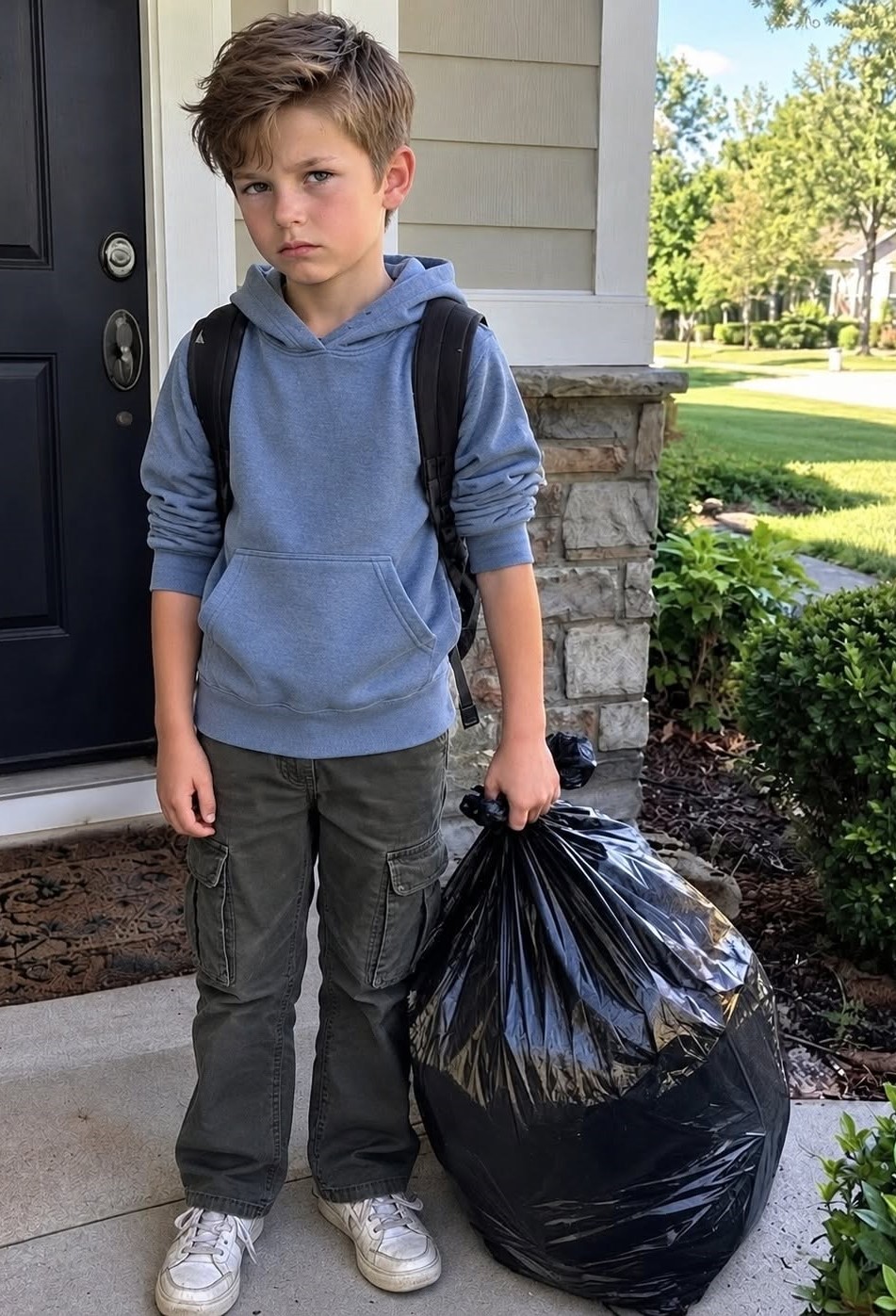
  •   Hulk Hogan’s Three Marriages: The Affair That Shattered His First, the Chaos at His Second, and the Family He Found in His Final Chapter — Photos  

      Hulk Hogan’s Three Marriages: The Affair That Shattered His First, the Chaos at His Second, and the Family He Found in His Final Chapter — Photos  

    Hulk Hogan | Source: Getty Images

    Hulk Hogan’s love life unfolded almost like another chapter of the wrestling legend’s larger-than-life story, with three marriages, two children, and a series of moments that followed him long after the cameras stopped rolling. But behind the three weddings were family fractures, unexpected relationships, and one final chapter that ended far sooner than anyone expected.

    Hulk Hogan, born Terry Gene Bollea, and Linda Hogan married in 1983, long before the wrestler became one of professional wrestling’s most recognizable figures.

    Together, they built a family that eventually became part of their public identity through the reality series Hogan Knows Best. They welcomed daughter Brooke Hogan and son Nick Hogan, with their family life playing out in front of television audiences.

    But beneath the celebrity image, the marriage was eventually coming apart.

    Hulk Hogan in his prime, circa 1985 — long before his second walk down the aisle, when his next wedding would be interrupted by an unexpected clash that brought police to the ceremony. | Source: Getty Images

    Hulk Hogan in his prime, circa 1985 — long before his second walk down the aisle, when his next wedding would be interrupted by an unexpected clash that brought police to the ceremony. | Source: Getty Images

    Hulk Hogan and Linda Hogan at a Super Bowl XLI dinner party — years before their marriage unraveled and Linda opened up about the infidelities that left her questioning what had gone wrong. | Source: Getty Images

    Hulk Hogan and Linda Hogan at a Super Bowl XLI dinner party — years before their marriage unraveled and Linda opened up about the infidelities that left her questioning what had gone wrong. | Source: Getty Images

    The Marriage That Built the Hogan Family

    Linda filed for divorce in 2007 after 24 years of marriage, and the split dragged on for nearly two years as the former couple fought over an estimated $30 million fortune. Their divorce was finalized in 2009.

    In a 2009 interview with Good Morning America, Linda said the breakdown of the marriage was not simply a consequence of their reality show. She acknowledged that infidelity played a role, while describing the emotional toll the situation took on her.

    “There were infidelities. It scared me because I thought, ‘Oh my God, is that my fault? Is he moving on? Am I just a dumb housewife? Am I too fat, am I too dumb?’ You just start doubting yourself, and that was really sad,” she said.

    Hulk Hogan and Linda Hogan at the VH1 Big in ’05 Awards in December 2005 — before their marriage ended and Linda found a surprising new romance of her own. | Source: Getty Images

    Hulk Hogan and Linda Hogan at the VH1 Big in ’05 Awards in December 2005 — before their marriage ended and Linda found a surprising new romance of her own. | Source: Getty Images

    Linda also described what life had become inside the marriage. “We all worked really hard and way too much to the point where we really didn’t have any emotion left. We were just robots functioning on a weird level,” Linda added. Hulk, meanwhile, maintained through his publicist that the marriage was already “irrevocably broken and over” when the affair occurred.

    That’s where the story took a much more personal turn.

    Hulk Hogan attends an event amid the fallout from his first marriage, as his attorney later pushed back against Linda’s claims over what she was owed after their divorce. | Source: Getty Images

    Hulk Hogan attends an event amid the fallout from his first marriage, as his attorney later pushed back against Linda’s claims over what she was owed after their divorce. | Source: Getty Images

    Brooke Hogan arrives for a television appearance as her family’s private struggles were still largely out of the spotlight — before she later revealed the woman at the center of her father’s affair. | Source: Getty Images

    Brooke Hogan arrives for a television appearance as her family’s private struggles were still largely out of the spotlight — before she later revealed the woman at the center of her father’s affair. | Source: Getty Images

    The Woman Who Changed Everything

    Years later, Brooke opened up about the family fallout in a September 2026 interview with Us Weekly, revealing that the person involved was not a stranger to the Hogan family. She said the affair was with Christiane Plante, one of her best friends.

    “A major turning point came after he slept with my friend Christiane [Plante],” Brooke, 38, exclusively told Us. “I forgive people very easily — sometimes probably too easily — and I forgave him, but something between us changed afterward. I don’t think he ever related to me in quite the same way again.”

    Christiane had previously confirmed the affair in 2008, saying that she and Hulk became involved when he and Linda privately knew their marriage was ending. Linda, for her part, had already filed for divorce by then. The fallout, however, did not end with the divorce papers. Brooke said the breakup fundamentally altered the family structure she had grown up with.

    Brooke Hogan and Hulk Hogan during a benefit concert — a family moment that came years before Brooke revealed in 2026 that her father’s affair was with one of her best friends, Christiane Plante. | Source: Getty Images

    Brooke Hogan and Hulk Hogan during a benefit concert — a family moment that came years before Brooke revealed in 2026 that her father’s affair was with one of her best friends, Christiane Plante. | Source: Getty Images

    “Then the divorce happened, and our entire family structure changed,” Brooke explained. “Over time, things became increasingly complicated until eventually the relationship I had always believed could survive anything couldn’t survive what was happening around us anymore.”

    “That’s probably the biggest thing I wish people understood about the Hogan family: Public perception reduces families into heroes and villains. Real families aren’t that simple,” she added.

    She also made clear that the family story could not be reduced to one incident. “There was also dysfunction, fear, resentment, enormous betrayal, money, fame, image management and decades of unresolved hurt all existing underneath the same roof,” Brooke claimed.

    Brooke, Nick, Linda and Hulk Hogan pose together at a benefit concert, capturing the family before Brooke later revealed how much dysfunction, resentment and unresolved hurt existed behind the scenes. | Source: Getty Images

    Brooke, Nick, Linda and Hulk Hogan pose together at a benefit concert, capturing the family before Brooke later revealed how much dysfunction, resentment and unresolved hurt existed behind the scenes. | Source: Getty Images

    “I can love my father profoundly and still tell the truth about where he hurt me. I can acknowledge the wonderful things my family gave me while also acknowledging that eventually the dynamic became something I could no longer live inside. Both things can be true.”

    Yet Brooke remembered a much happier relationship with her father during her childhood. “People sometimes assume that because our relationship became complicated later, I must be rewriting everything that came before it. I’m not,” she said.

    “The foundation between my dad and me was incredibly strong. It survived public scandals, private pain, divorce, enormous changes in our family and periods of estrangement because underneath all of it there was a bond that was very real.” She added:

    “As a little girl, I felt incredibly safe with my dad. I adored him. I have wonderful memories with him.”

    Brooke Hogan and Hulk Hogan during a television appearance in Toronto — years before Brooke opened up about the complicated bond they shared, saying she could deeply love her father while still telling the truth about how he hurt her. | Source: Getty Images

    Brooke Hogan and Hulk Hogan during a television appearance in Toronto — years before Brooke opened up about the complicated bond they shared, saying she could deeply love her father while still telling the truth about how he hurt her. | Source: Getty Images

    Linda Had Her Own Unexpected Next Chapter

    While her divorce from Hulk was still unfolding, Linda began a relationship of her own that attracted plenty of attention. According to Good Morning America, she started dating Charlie Hill, who was nearly 30 years younger than her and had attended high school with her daughter.

    Linda acknowledged that the relationship was unusual but defended what she felt for him. “He’s a great friend and a good soul and a great support system for me,” she said.

    She also pushed back against the labels that followed the relationship. “It’s kind of a fad now; it’s cool. I’m finally in style because they really knock me about how bad I dress,” said Linda, admitting that she shops for clothes at Walmart and K-Mart.

    Linda Hogan holds a copy of her memoir, "Wrestling the Hulk: My Life Against the Ropes" — around the time her post-divorce romance drew attention because Charlie Hill had a surprising connection to her daughter. | Source: Getty Images

    Linda Hogan holds a copy of her memoir, “Wrestling the Hulk: My Life Against the Ropes” — around the time her post-divorce romance drew attention because Charlie Hill had a surprising connection to her daughter. | Source: Getty Images

    And when people called her a cougar, Linda had her own response, saying, “To be honest with you, when all that started happening, all the allegations that I’m a cougar, I said, ‘Could somebody please tell me why cougar, why not lioness?’”

    The relationship eventually ended badly enough to produce another legal dispute. A 2014 report from TMZ said Charlie, then 19 when the relationship began, sued Linda for $1.5 million, alleging that he had performed numerous jobs and chores while living with her.

    The pair had previously reached a settlement when they split, with Charlie agreeing to confidentiality while keeping his truck, dirt bike, and the engagement ring he had given Linda. He also received $9,000. The dispute resurfaced when Linda’s attorney sought to enforce the confidentiality agreement after Charlie gave an interview.

    Hulk was already looking toward a new future by the time his first marriage ended.

    Linda Hogan and Charlie Hill attend an event together before their relationship ended in a legal dispute — one that eventually saw the former couple reach a settlement that included $9,000, a truck, a dirt bike and an engagement ring. | Source: Getty Images

    Linda Hogan and Charlie Hill attend an event together before their relationship ended in a legal dispute — one that eventually saw the former couple reach a settlement that included $9,000, a truck, a dirt bike and an engagement ring. | Source: Getty Images

    A Second Marriage With a Very Different Promise

    He met Jennifer McDaniel, a former Hollywood makeup artist, in 2008, and the relationship progressed quickly. In a December 2009 interview with Fox News, Hulk spoke about Jennifer in strikingly different terms from the way he described his first marriage.

    “My marriage to Linda was very toxic and very negative. Jennifer (his current girlfriend) is just the opposite; she doesn’t drink or get high on drugs,” Hulk revealed in an exclusive interview. He continued:

    “If you’re in my home and watching TV, you have to watch the science channel or the history channel or cartoons. She doesn’t watch anything negative like the news or TMZ.”

    Hulk Hogan and Jennifer McDaniel arrive at the Comedy Central Roast of David Hasselhoff — around the time Hulk described his new partner as “just the opposite” of Linda, pointing to the very different dynamic he said they shared. | Source: Getty Images

    Hulk Hogan and Jennifer McDaniel arrive at the Comedy Central Roast of David Hasselhoff — around the time Hulk described his new partner as “just the opposite” of Linda, pointing to the very different dynamic he said they shared. | Source: Getty Images

    “She doesn’t read the newspaper. She always walks in the Spirit of Christ; she never deviates. I can really see myself marrying this woman,” the late professional wrestler said at the time.

    He soon did exactly that. Jennifer and Hulk married on December 28, 2010, in a private ceremony at their Clearwater, Florida, home. The couple did not have children together and generally kept their relationship away from the spotlight.

    Jennifer was already an established makeup artist, with credits including Let Me In, Odd Thomas, and Fright Night, according to IMDb. She was also nominated for a Saturn Award for Best Make-Up Artist for Let Me In.

    But even this supposedly quieter second chapter had its own wrestling-style twist.

    Hulk Hogan and Jennifer McDaniel attend a WWE event after their 2010 wedding, which began a marriage that would last more than a decade before the couple eventually went their separate ways. | Source: Getty Images

    Hulk Hogan and Jennifer McDaniel attend a WWE event after their 2010 wedding, which began a marriage that would last more than a decade before the couple eventually went their separate ways. | Source: Getty Images

    The Wedding That Needed the Police

    The ceremony was supposed to be intimate, but things became chaotic just as Hulk and Jennifer were exchanging vows. According to TMZ, a photographer attempting to take pictures of the couple during the ceremony was confronted by a family employee working as security.

    A scuffle followed, and police were called while the wedding was underway. No one was arrested because neither side wanted to press charges, and the ceremony continued.

    E! News similarly reported that the confrontation began after photographer Robert Martinez approached the rear of the estate and was confronted by a family employee. Some pushing and shoving followed before responding officers broke up the confrontation. Despite the disruption, Hulk and Jennifer finished their vows.

    Hulk Hogan attends the MTV Video Music Awards, years before a private video involving the wrestling star would become the center of a major legal battle. | Source: Getty Images

    Hulk Hogan attends the MTV Video Music Awards, years before a private video involving the wrestling star would become the center of a major legal battle. | Source: Getty Images

    “It’s a big occasion for Terry and Jennifer,” Hulk’s litigation attorney, David Houston, told E! News before the vow swap. “It will not be a lavish ceremony or a big celebrity wedding, but a private moment for the two of them.”

    Brooke attended the wedding, while Nick served as best man. The couple would remain married for more than a decade before their divorce was finalized in 2022.

    Their relationship also endured another highly publicized chapter involving Hulk’s privacy lawsuit against Gawker over the publication of a private video. The New York Times reported in 2016 that Gawker ultimately settled with Hulk for $31 million after the wrestler had won a $140 million judgment in the case.

    Brooke Hogan was by her father’s side for his 2010 wedding to Jennifer McDaniel, marking the beginning of a new chapter in Hulk’s personal life. | Source: Getty Images

    Brooke Hogan was by her father’s side for his 2010 wedding to Jennifer McDaniel, marking the beginning of a new chapter in Hulk’s personal life. | Source: Getty Images

    The case centered on a video involving Heather Clem, the wife of Hulk’s former friend Bubba the Love Sponge Clem. Heather was also described as a friend of Jennifer. In testimony reported by CBS News that same year, Hulk said he had been “completely humiliated” by the video’s publication and testified about the circumstances surrounding its creation.

    The lengthy legal battle became one of the biggest public controversies of Hulk’s later career, while his marriage to Jennifer eventually came to an end.

    Hulk Hogan and Jennifer McDaniel’s marriage would eventually come to an end, bringing another chapter of the wrestler’s personal life to a close. | Source: Getty Images

    Hulk Hogan and Jennifer McDaniel’s marriage would eventually come to an end, bringing another chapter of the wrestler’s personal life to a close. | Source: Getty Images

    Hulk Hogan at a press conference in Beverly Hills, years before his final walk down the aisle would introduce a new love, three children he grew close to and a third chapter of family life. | Source: Getty Images

    Hulk Hogan at a press conference in Beverly Hills, years before his final walk down the aisle would introduce a new love, three children he grew close to and a third chapter of family life. | Source: Getty Images

    Then Came the Chapter Nobody Expected

    His next relationship would look different almost from the beginning. In a February 2022 post on X, Hulk publicly confirmed that he was dating Sky Daily after fans noticed her appearing in his social media posts. He also used the post to confirm his divorce from Jennifer.

    Sky, a yoga instructor, had three children of her own, and according to TMZ’s report on Hulk’s 2023 engagement, Hulk quickly became attached to them. He said he fell in love with all three of her children.

    Hulk Hogan once opened up about Sky Daily’s three children, revealing the unexpected way he felt about them as their relationship grew. | Source: Getty Images

    Hulk Hogan once opened up about Sky Daily’s three children, revealing the unexpected way he felt about them as their relationship grew. | Source: Getty Images

    That detail would become particularly significant as their relationship moved toward marriage. Hulk proposed to Sky at a restaurant in Tampa, Florida, after more than a year together. He later explained that he had been nervous before asking the question.

    In a video shared by Sky during the wedding of actor Corin Nemec and his wife Sabrina Nova, Hulk described how mutual friends had brought them together and how he nearly walked away without calling her. “That’s right. Franny came over and said, ‘Thank you for the drink.’ And I went, ‘Who’s the blonde? You know?’ So I spotted Sky, and we sat down, and we talked.”

    He recalled getting into his car before one of their friends stopped him. “But after I walked away, I thought, well, ‘you know, it’s just another thing. Let me go home and do my laundry and stuff.’ And then when I got in my car, there was this bang, bang, bang, bang on the window. And it scared the hell out of me.”

    Hulk Hogan and Sky Daily share a tender moment as they look back on the unexpected story of how they met — and how their friends helped bring them together, a connection that would eventually lead to their engagement. | Source: Instagram/mrs.sky.hogan

    Hulk Hogan and Sky Daily share a tender moment as they look back on the unexpected story of how they met — and how their friends helped bring them together, a connection that would eventually lead to their engagement. | Source: Instagram/mrs.sky.hogan

    The encounter ultimately changed his mind. “I put the window down. Sabrina stuck her head in my car and goes, ‘You need to call her up. She’s a nice girl.’ And she scared me so bad. It kind of like made me think twice about just ghosting and going home and never calling her. Thank God for you. Thank God for Franny.”

    Then came the proposal. “Her birthday was last Thursday, and I asked Sky to marry me, and she was crazy enough to say ‘yes.’” The engagement ring itself was hard to miss. According to DailyMail.com, the ring featured a six-carat diamond and was valued at about $100,000.

    The jeweler described it as a statement piece, with smaller diamonds surrounding the main stone. Sky was later seen wearing the ring while discussing how she and Hulk met through mutual friends.

    Hulk Hogan and Sky Daily during a moment from their love story, as the six-carat diamond engagement ring worth about $100,000 marked the next step in their whirlwind romance. | Source: Instagram/mrs.sky.hogan

    Hulk Hogan and Sky Daily during a moment from their love story, as the six-carat diamond engagement ring worth about $100,000 marked the next step in their whirlwind romance. | Source: Instagram/mrs.sky.hogan

    A Third Wedding, a Blended Family and One Missing Face

    Hulk and Sky married on September 22, 2023, in Clearwater, Florida. The ceremony was described by DailyMail.com as a “low-key” affair attended by close family and friends. A friend told the outlet that “Sky changed his life. He is the happiest he’s ever been – literally over the moon. If a guy like Hulk could glow, then he’d be glowing.”

    “It was a low-key wedding. Neither of them wanted [anything] over the top, just a small affair with their nearest and dearest to declare their deep love and commitment to each other,” the source added.

    Hulk Hogan and Sky Daily attend the Jake Paul vs. Mike Perry fight in July 2024, months after their low-key wedding surrounded by their closest family and friends. | Source: Getty Images

    Hulk Hogan and Sky Daily attend the Jake Paul vs. Mike Perry fight in July 2024, months after their low-key wedding surrounded by their closest family and friends. | Source: Getty Images

    Nick reshared an image from the ceremony, including a picture of himself with his partner Tana Lea. But one notable family member was absent. Brooke did not attend her father’s third wedding. By then, the relationship between Brooke and Hulk had become deeply strained, adding another complicated layer to what was supposed to be a new beginning for the wrestler.

    Still, Hulk’s relationship with Sky appeared to be an important part of his final years. The couple had been married for less than two years when Hulk died on July 24, 2025, at age 71.

    Nick Hogan reposted his partner Tana Lea’s photo from Hulk Hogan and Sky Daily’s wedding, giving fans another glimpse into the couple’s low-key celebration. | Source: Instagram/tagtana

    Nick Hogan reposted his partner Tana Lea’s photo from Hulk Hogan and Sky Daily’s wedding, giving fans another glimpse into the couple’s low-key celebration. | Source: Instagram/tagtana

    The Final Chapter Ended Suddenly

    Hulk died from acute myocardial infarction, commonly known as a heart attack, according to his cremation report obtained by ABC News. Emergency officials responded to a cardiac arrest call in Clearwater shortly before 10 a.m. on July 24, and he was taken to Morton Plant Hospital, where he was pronounced dead.

    Read also

    Jennifer Garner and Ben Affleck | Source: Getty Images

    Jennifer Garner’s Boyfriend John Miller Has a Surprising Response to Her Close Bond with Ben Affleck

    Ben Affleck and Jennifer Garner | Source: Getty Images

    Jennifer Garner Opens Up About the Moment After Her Divorce from Ben Affleck That Changed Everything for Her Career

    Patrick Duffy and Linda Purl | Source: Getty Images

    Linda Purl’s Life and Career: From Tokyo’s Imperial Theatre to Happy Days — and the 3 Words That Changed Everything with Her Co-Star — Photos

    The report also noted that Hulk had a history of atrial fibrillation and chronic lymphocytic leukemia, or CLL. At the time of his death, Hulk was survived by Sky, Brooke, and Nick. Sky’s tribute revealed just how abruptly the loss had landed. In her Instagram post, she wrote:

    “I wasn’t ready for this… and my heart is in pieces. He had been dealing with some health issues, but I truly believed we would overcome them. I had so much faith in his strength. I thought we still had more time. This loss is sudden and impossible to process.”

    Sky Daily shared this photo of Hulk Hogan in a heartfelt tribute following his death, as she mourned the man she called her love, partner and “my Terry.” | Source: Instagram/mrs.sky.hogan

    Sky Daily shared this photo of Hulk Hogan in a heartfelt tribute following his death, as she mourned the man she called her love, partner and “my Terry.” | Source: Instagram/mrs.sky.hogan

    Sky also distinguished the public figure the world knew and the man she knew privately. “To the world, he was a legend… but to me, he was my Terry. The man I loved. My partner. My heart.”

    She said Hulk had continued trying to connect with fans despite his physical discomfort. “Hulk loved his fans so much, and despite his growing physical discomfort, he did everything he could to show up, sign autographs, take photos, and connect with the people who supported him through it all. You meant everything to him.”

    Sky ended her message with a reference to Hulk’s faith. “He was a believer in Christ, and I take comfort knowing his soul is at peace and he’s been welcomed home. Please keep his family and all of us who loved him in your prayers as we try to navigate this new reality.”

    Hulk Hogan and Sky Daily attend the 2024 Republican National Convention, years before Sky would describe him as "my Terry," the man she loved, her partner and her heart in her emotional tribute following his death. | Source: Getty Images

    Hulk Hogan and Sky Daily attend the 2024 Republican National Convention, years before Sky would describe him as “my Terry,” the man she loved, her partner and her heart in her emotional tribute following his death. | Source: Getty Images

    The Family Story Was Still Complicated at the End

    Hulk’s death did not erase the complicated history surrounding his family. Brooke ultimately chose not to attend his funeral. In a social media post, she wrote, “My father hated the morbidity of funerals. He didn’t want one.”

    “And although I know people grieve in many ways – and I’m so grateful for all celebrations and events organized to honor him, as his daughter, I had to make my own decision to honor him the best and most genuine way I knew how…privately…the way that made me feel the closest to him,” she added.

    That private honor was to take her own children to the beach. Her husband, Steven, and their seven-month-old twins, Oliver Andrew and Molly Gene, joined her as she remembered her father beside the water he loved.

    Hulk Hogan attends Fanatics Fest NYC in 2024, before his daughter Brooke later revealed why she chose to honor him privately, saying he hated the morbidity of funerals and "didn’t want one." | Source: Getty Images

    Hulk Hogan attends Fanatics Fest NYC in 2024, before his daughter Brooke later revealed why she chose to honor him privately, saying he hated the morbidity of funerals and “didn’t want one.” | Source: Getty Images

    Brooke wrote that the only thing missing was Hulk in his familiar pop-up lawn chair watching the waves and sunset. She also remembered the nickname he had given Molly: “little fish.”

    “Every grain of sand and every wave reminded me of being your beach baby, and brought us closer to you. I pray you are at peace and know how dearly I love you. Rest in heaven, Daddy❤️.”

    That final image captures the complicated arc of Hulk’s family life better than any wrestling headline could. His first marriage produced the family that made him a household name, but also the betrayal and estrangement that eventually reshaped it.

    His second marriage brought another private chapter that was interrupted by public controversy, including a wedding-day confrontation and a major legal battle.

    And in his final marriage, Hulk found Sky and three children he said he had fallen in love with, building a blended family that was still taking shape when his life suddenly ended.

    For all the fame, money, marriages, and scandals that surrounded him, the most enduring story may be the one that remained after the cameras were gone: a family that loved one another, fractured in painful ways, and continued trying to make sense of what remained.

  • Remember the Actress Who Gave Home Improvement Its Heart and Defined the 1990s TV Mom?

    Remember the Actress Who Gave Home Improvement Its Heart and Defined the 1990s TV Mom?

    For millions of viewers, the Taylor family home was one of television’s most familiar places during the 1990s. It had noisy boys, unfinished projects, wisecracks from Tim “The Tool Man” Taylor—and, at its center, Patricia Richardson as Jill Taylor.

    Richardson brought intelligence, warmth, and a wonderfully dry sense of humor to Home Improvement. While Tim Allen’s character created much of the show’s high-volume comedy, Jill gave the series its balance. She was thoughtful, capable, and never afraid to challenge her husband when his latest idea went off the rails.

    Her work helped make the sitcom a lasting favorite. Jill Taylor was not simply a supporting character in a family comedy; she was a full person with ambitions, opinions, frustrations, and a deep affection for the people around her.

    A Foundation Built on the Stage

    Patricia Richardson was born on February 23, 1951, in Bethesda, Maryland. Before becoming a familiar face in American living rooms, she built her career in theater.

    Stage work gave her a strong grounding in dialogue, timing, and character. It also helped shape the calm authority she later brought to television. Richardson could make a sharp line feel funny without forcing it, and she could shift from comedy to a more sincere moment with ease.

    During the 1980s, she took on television guest roles and appeared in series including The Equalizer and Double Trouble. These early projects gave audiences a glimpse of her range, but her defining role was still ahead.

    Then, in 1991, a new ABC sitcom introduced viewers to the Taylor family.

    The Arrival of Jill Taylor

    Home Improvement followed Tim Taylor, the enthusiastic but accident-prone host of the fictional tool show Tool Time. Tim’s excitement over gadgets and power tools often created trouble at home, where Jill had to keep family life moving forward.

    Richardson’s Jill quickly became essential to the series. She could match Tim’s humor, but she also gave the show emotional weight. Jill was raising three energetic sons while pursuing her own education and career interests, and the writing allowed her to have real disagreements and goals.

    That mattered. Many sitcom mothers of earlier eras had been written mainly as patient observers of the family’s antics. Jill Taylor was more active than that. She was funny, loving, practical, and sometimes completely exasperated—and viewers recognized the honesty in her.

    More Than the “Sitcom Wife”

    One reason Home Improvement worked so well was its willingness to let Jill and Tim feel like a genuine couple. They loved each other, but they did not always see the world the same way.

    Jill was often the voice of reason when Tim got carried away. Yet Richardson never played her as humorless or superior. Her performances showed that Jill could be amused by Tim’s mistakes even when she had every reason to be annoyed by them.

    She also gave the character independence. Jill went back to school and developed a professional life outside the household, adding depth to the stories and reflecting changes many viewers were experiencing in their own families.

    Richardson’s grounded performance kept the comedy from becoming only a collection of punchlines. She made the Taylors feel like a family audiences could believe in.

    Recognition for a Memorable Performance

    The role earned Richardson four Emmy Award nominations for Outstanding Lead Actress in a Comedy Series. She also received Golden Globe nominations for her work on the show.

    Awards recognition was meaningful, but perhaps the greater achievement was the connection she made with viewers. Week after week, Richardson gave Jill a believable combination of patience, humor, and quiet determination.

    The series ran for eight seasons, from 1991 to 1999, becoming one of the era’s defining family sitcoms. It remains widely remembered because it paired broad comedy with the everyday challenges of marriage, parenting, and growing up.

    Jill Taylor was a large part of that success. Her presence made the home feel lived-in rather than simply designed for a television set.

    A Career Beyond the Taylor House

    After Home Improvement, Richardson continued to choose varied work in television, film, and theater. She appeared in the medical drama Strong Medicine and took on a recurring role in The West Wing.

    These projects reminded viewers that her talent extended beyond one beloved sitcom. Richardson has always had a gift for portraying women with intelligence and inner strength, whether the role calls for humor, drama, or both.

    She also returned to stage work over the years, maintaining the connection to live performance that helped establish her career. That relationship with theater is visible in the care she brings to dialogue and in the natural rhythm of her acting.

    For many performers, a role as successful as Jill Taylor could make it difficult for audiences to see anything else. Richardson handled that challenge by continuing to work in roles that revealed different sides of her ability.

    Why Jill Taylor Still Feels So Familiar

    The best television characters do not stay tied to the decade in which they first appeared. Jill Taylor remains memorable because the family moments in Home Improvement still feel recognizable.

    Parents still try to guide children through difficult stages. Couples still disagree about money, work, responsibilities, and the countless small decisions that fill a home. Families still find humor in the chaos.

    Richardson understood that Jill did not need to be perfect to be admired. She could be tired, impatient, affectionate, skeptical, or delighted. That made her feel human.

    Her character also represented a more modern kind of television mother—someone who cared deeply for her family without losing her own voice. Jill’s strength came from her intelligence, her sense of humor, and her ability to speak plainly when something mattered.

    A Lasting Place in Television History

    Patricia Richardson’s legacy is closely connected to the warmth of 1990s family television. Home Improvement gave audiences laughter, memorable catchphrases, and plenty of household mishaps, but it also offered a portrait of a family learning as it went.

    At the center of that portrait was Richardson. She made Jill Taylor wise without making her distant, funny without making her frivolous, and loving without making her seem unreal.

    For viewers revisiting the series today, she remains one of its greatest pleasures. Patricia Richardson did more than play the woman who kept the Taylor household together—she helped define what a television family could feel like

    Tina declares this is her #LastDressEver

    <p>WATCH: Tina Fey Strips Down to Spanx - You're Welcome</p>

    This is admittedly some really hard-hitting journalism we’ve gotten into here… Tina Fey appeared on David Letterman’s show to bid him farewell to late night. After a speech about how she’s not really, a dress, heels, and Spanx kind of gal, she stripped down to her bra and Spanx declaring that the the cerulean blue dress she wore for Dave would be the #LastDressEver. Even Dave, who’s pretty much seen it all during his tenure on late night, appeared surprised by Tina’s delivery of her declaration.


    Here she is in all of her glory:

  • On Thanksgiving, My Parents Told Me and My 4-Year-Old Son to Leave and Never Return. I Quietly Walked Into the Snow Without Arguing—But Two Hours Later, Their Doorbell Rang, and an Attorney Arrived Holding a Manila Folder With My Father’s Signature That Changed Everything They Thought They Owned.  

    On Thanksgiving, My Parents Told Me and My 4-Year-Old Son to Leave and Never Return. I Quietly Walked Into the Snow Without Arguing—But Two Hours Later, Their Doorbell Rang, and an Attorney Arrived Holding a Manila Folder With My Father’s Signature That Changed Everything They Thought They Owned.  

    The deadbolt clicked shut while my four-year-old son was still crying.

    For one frozen second, I stared at the oak door.

    Warm light glowed around its edges.

    On the other side, my family was going back to Thanksgiving dinner.

    On this side, snow swept across the porch and landed on Leo’s eyelashes.

    My father had stood in the doorway with my coat in one hand and the other pointing toward the driveway.

    “We are done dealing with your mistake,”

    Richard had said.

    “Leave and don’t come back.”

    My mother, Patricia, had looked almost relieved.

    My younger sister, Natalie, had stood beside her husband, Terrence, wearing a small, satisfied smile.

    I could still see it whenever I closed my eyes.

    Leo pulled at my hand.

    “Mommy, did I do something wrong?”

    I knelt and zipped his winter coat beneath his chin.

    “You spilled a drink, honey.

    That’s all.”

    He studied my face, waiting for a longer explanation.

    There was no explanation a four-year-old should ever have to hear.

    I took his hand and guided him through the snow toward my SUV.

    Twenty minutes earlier, Terrence had been commanding the Thanksgiving table, describing a vacation that cost more than my first car.

    Every time he crossed his legs, his new designer suede loafers caught the chandelier light.

    Leo reached toward his glass of cranberry juice.

    His hand slipped against the condensation, and the glass tipped.

    Natalie was standing before the red juice finished spreading.

    “Can’t you watch him for once?”

    Leo froze.

    I grabbed a napkin and apologized.

    Terrence stared at his shoes as though my son had damaged a family treasure.

    I was already cleaning the floor when my mother spoke.

    “He is your responsibility.

    We are tired of dealing with it.”

    I looked from her face toward Leo’s.

    He had heard every word.

    I could see him trying to understand why Grandma had said it.

    My parents had never supported Leo financially.

    They had barely been supporting themselves.

    But Patricia knew exactly which words would sting, and she delivered them with the same steady calm she used when criticizing food at a restaurant.

    Natalie was the daughter my parents preferred to display.

    She had married a successful finance professional, dressed beautifully, attended the right parties, and appeared in the photographs they showed around their country club.

    I was Nicole: thirty-two, a single mother, a digital marketing consultant, useful whenever a website failed or a bill needed handling.

    They preferred to describe my career as “something online.”

    That afternoon, Leo had been excited to visit them.

    He practiced saying “Happy Thanksgiving” in the car and asked whether Grandpa would let him sit in the tall chair at the head of the table.

    I told him Grandpa would probably want that chair himself, and Leo laughed.

    Before dinner, he tried showing Patricia something he had made at preschool.

    She told him to keep it somewhere safe until after we ate.

    He listened, patting his coat pocket twice to make certain it was still there.

    I’d spent years believing that if I remained useful enough, they might eventually be kind to my son.

    Thanksgiving ended that belief.

    When Richard tossed my coat toward me, I caught it.

    “Are you sure?”

    I asked.

    “Completely.”

    Patricia glanced toward the stairs.

    “Natalie and Terrence need your old bedroom anyway.”

    I didn’t argue.

    I knew exactly how an argument would unfold: Richard would become louder, Patricia would become quieter, and Leo would remember every second of it.

    I took my son’s hand and walked outside.

    In the SUV, I turned the heater as high as it could go.

    Leo held both hands toward the vents.

    His little knitted hat had slipped sideways, and he wouldn’t let me fix it.

    “Are Grandma and Grandpa mad forever?” he asked.

    I wanted to promise they weren’t.

    Instead, I said, “I’m here.

    We’re going somewhere warm.”

    He became quiet, watching the house through the windshield.

    I watched it too.

    Upstairs, a light appeared in my old bedroom.

    Natalie had already begun settling herself in.

    I reached for my phone.

    My parents didn’t know that the house they’d asked us to leave actually belonged to me.

    Four years earlier, Richard and Patricia had nearly lost everything.

    Their lifestyle had been built on credit, appearances, and a series of choices they refused to discuss.

    By the time they admitted their financial trouble to me, the bank was taking the house.

    They were terrified someone from the country club might discover it.

    I was pregnant with Leo and building my consulting business from a desk inside a one-bedroom apartment.

    Some months I worked until sunrise.

    I knew exactly how many invoices needed to clear before I could afford groceries, and I knew my parents would never appreciate an offer they considered beneath them.

    So I didn’t make one directly.

    With assistance from a real estate attorney named David, I used a company to purchase the property after the bank acquired it.

    Richard and Patricia signed a generous lease with the new owner.

    They called it a brilliant “restructuring.”

    I let them.

    I still remember signing the purchase documents with Leo’s tiny socks tucked inside my handbag.

    Two new clients had finally paid their invoices, and most of the savings I’d planned to use for a larger apartment went into the purchase.

    David warned me that the house would cost more than its purchase price: there were repairs, insurance, and taxes to consider.

    I understood.

    I also understood what it would mean to Leo if his grandparents lost the place where every family holiday took place.

    I told David to proceed, then returned home and worked through the night.

    The company handled necessary repairs quickly.

    I covered the bills whenever the rent didn’t cover them.

    I listened while Patricia proudly told her friends about Richard’s financial instincts.

    Four years of quiet work had kept their home intact.

    I told myself I was doing it because they were my parents.

    That was true.

    Another truth was more difficult to admit: I still hoped that someday they would look at Leo and see the little boy I saw.

    David had prepared the lease carefully.

    It specified who could remain in the house and how the tenants were expected to treat guests I authorized.

    It also included a signed violation clause.

    I had never expected to need it.

    That evening, I remembered exactly where it was.

    David answered on the third ring.

    “Nicole?

    It’s Thanksgiving.”

    “I know.”

    Through the windshield, I could see figures moving behind the dining-room curtains.

    “Do you still have the Westchester file?”

    “Yes.”

    “The original lease?”

    “Yes.”

    “And the signed violation clause?”

    He paused.

    “What happened?”

    I looked toward Leo.

    He was rubbing his palms together beneath the heater, his eyes fixed on my face.

    “Richard told us never to return.

    He made Leo leave with me.”

    David’s voice became steady.

    “Are you both safe?”

    “We’re in the car.”

    “Then drive somewhere warm.

    I’ll take care of the rest.”

    “David,” I said, before he could end the call.

    “Use it.”

    I drove toward Manhattan while snow tapped against the windows.

    Leo fell asleep before we reached the highway.

    I kept looking at him through the rearview mirror, remembering the moment his expression had changed at the dinner table.

    I couldn’t erase what he’d heard.

    I could choose what happened next.

    At the hotel, a clerk handed us a keycard and directed us toward a room high above the street.

    Leo woke long enough to ask whether I could leave a light on.

    I helped him into bed beneath a thick white comforter and remained beside him until he fell asleep again.

    Two hours after we’d left the house, my phone buzzed.

    We’re here,

    David wrote.

    I opened my laptop.

    The security cameras were part of the property maintenance system, installed with my parents’ knowledge following a break-in down the street.

    On the living-room feed, Patricia poured wine.

    Richard smoked a cigar.

    In the upstairs hallway, Natalie held a measuring tape against the doorway of my old bedroom while Terrence watched her.

    Then someone knocked firmly on the front door.

    Richard walked toward it wearing the expression he used whenever he expected to win an argument.

    He opened it and found David standing there in a dark wool coat.

    Several county deputies stood behind him beneath the porch light, snow collecting on their shoulders.

    The American flag beside the door moved sharply in the wind.

    “What is this?”

    Richard demanded.

    David raised a thick manila folder.

    Richard started talking about his lease, his rights, and the people he knew.

    David allowed him to finish.

    Then he opened the folder to a page bearing Richard’s own signature.

    Patricia stepped into view.

    Natalie stopped smiling.

    “The owner asked me to remind you,” David said, “that you signed the violation clause.”

    Richard gave a brief laugh.

    “What violation?”

    “You removed two people the owner had authorized to be here.”

    “Then put the owner on the phone.”

    David glanced toward the camera positioned above the door.

    “She’s watching.”

    I saw my father look upward.

    His cigar stopped halfway toward his mouth.

    David turned to another page.

    “Four years ago, an investment company purchased this house from the bank.

    Nicole owns that company.”

    Natalie’s measuring tape dropped onto the floor.

    Terrence stared at the document.

    Richard looked toward Patricia, waiting for her to say it was some kind of trick.

    She didn’t.

    David shut the folder.

    “Richard.

    Patricia.

    You need to leave.”

    The deputies were present to keep the situation orderly and to address another concern David had discovered while reviewing the property records.

    David explained the lease notice and what would happen next.

    He offered to discuss a reasonable period for them to collect their belongings.

    My father heard only that he was being told to leave the same house where he’d sent his grandson outside into the snow.

    My phone rang.

    Patricia.

    I nearly let it ring when, on the camera feed, she turned toward Natalie.

    “Tell Nicole what you did,”

    she said.

    I answered.

    For a moment, all I heard was the low murmur of voices around the doorway.

    Then Natalie spoke through my mother’s phone.

    “Nicole, I need you to listen.”

    “I’m listening.”

    “I learned about the company in June.”

    June.

    Five months of holiday invitations, subtle remarks about my work, and smiles toward Leo, all while she knew the house belonged to me.

    “I found a copy of a maintenance invoice,” she continued.

    “The owner’s contact details were on the back.

    I searched the registration.

    I told Terrence.”

    Terrence reached toward the phone.

    Natalie moved it away.

    “He said there was a way to get the house back for Mom and Dad.

    He needed a document from you.

    I gave him the one you signed when you worked on my website.”

    I remembered the contract.

    I’d prepared it at Natalie’s kitchen table, arranging everything around her schedule, and charged her less than I charged anyone else.

    My signature had been at the bottom.

    David removed another set of papers from his folder.

    “Your sister’s husband submitted an authorization to list the property,” he told me.

    “It appears to contain your signature.”

    I gripped the edge of the hotel desk.

    “I didn’t sign it.”

    “I know.

    Someone contacted my office to verify the owner’s identity.

    That’s when I discovered it.”

    On the camera, Terrence stepped backward.

    One deputy calmly moved closer toward the doorway.

    Natalie’s voice shook.

    “He said you’d never sell to us if we asked.

    He said it was only a way to begin a conversation with a buyer.”

    “A buyer for a house you knew belonged to me?”

    “He planned to tell you before anything became final.”

    I nearly laughed.

    My sister had always expected me to accept her explanation after she’d finished arranging everything.

    “What would happen when I said no?”

    She had no answer.

    Terrence finally spoke.

    “No sale could have gone through without the proper documents.

    David is making this seem worse than it was.”

    David’s expression remained unchanged.

    “Then you’ll have no problem explaining the owner’s signature on the form you submitted.”

    Richard stared toward Terrence.

    “You told me you were refinancing your own home.”

    Terrence looked at Natalie.

    Natalie turned away.

    The truth emerged piece by piece during the next hour.

    Terrence had lost several clients and borrowed heavily to keep his firm appearing successful.

    The expensive vacation he’d described during dinner was one they had already charged to a credit card.

    Their landlord had informed them that the lease on their apartment wouldn’t be renewed.

    They had arrived at Thanksgiving with suitcases inside their trunk, expecting to move into my former bedroom.

    Natalie admitted she had asked Terrence whether they could simply tell me the truth.

    He had said I would use the situation to embarrass them, then reminded her of every occasion our parents had called me jealous.

    After that, she stopped asking.

    She gave him my signature and avoided my calls for two weeks.

    At dinner, she’d watched Leo reach toward his drink while knowing the paperwork was already with a broker.

    She claimed she had planned to confess after dessert.

    I thought about the suitcases inside their trunk and wondered how long she truly would have waited.

    Natalie had told our parents the arrangement would only be temporary.

    Terrence had told Natalie that selling the Westchester property would solve everything.

    Once she discovered my company owned it, he faced a new problem.

    He convinced her that my signature was simply an obstacle she could bypass.

    Four years earlier, he’d offered Richard a similar solution.

    It was an investment backed by the house, promising returns large enough to maintain my parents’ lifestyle.

    Richard had signed.

    Patricia had agreed.

    The money disappeared into an unsuccessful venture, and eventually the bank took the property.

    I had known they’d made poor financial choices.

    I hadn’t known Natalie and Terrence had contributed to the decision that cost them the house.

    Richard slowly lowered himself onto the bench in the entryway.

    For the first time I could remember, he had no immediate response.

    I wished seeing that brought me relief.

    Mostly, I just felt exhausted.

    Across the room, Leo shifted while sleeping.

    I muted my phone and walked over to pull the comforter back across his shoulder.

    When I returned, David was explaining to one deputy which documents had been submitted and which signatures I said weren’t mine.

    No one was being taken anywhere that night.

    The documents would be preserved and properly reviewed.

    Patricia’s voice came through the speaker.

    “Nicole, I didn’t know about the sale form.”

    “Did you know Natalie had discovered I owned the house?”

    A pause.

    “Patricia,” David said calmly, “please answer her.”

    “Yes,” my mother said.

    “Natalie told me.”

    The words affected me more deeply than I’d expected.

    “When?”

    “In June.”

    She had known for five months.

    She’d invited us to Thanksgiving.

    She’d watched me place Leo’s plate beside mine.

    And when the juice spilled, she’d looked directly at him and blamed him for everything.

    “Why did you let Dad send us outside?”

    “I didn’t think he’d actually lock the door.”

    “That’s not what I asked.”

    She began crying, an uneven sound I’d spent most of my life trying to prevent.

    “You could have told me,” I said.

    “I was ashamed.”

    “Of what?”

    “Of needing you.”

    For a moment, I saw the woman underneath the country club stories and perfectly arranged table.

    Then I remembered Leo standing outside in the snow, wondering whether he’d done something wrong.

    “You were willing to let him carry that burden,” I said.

    Patricia whispered my name.

    I ended the call.

    As a child, I had learned to recognize whenever Patricia felt embarrassed.

    Her shoulders would tighten, and suddenly it became my responsibility to make dinner pleasant again.

    I would apologize for things I hadn’t done, make jokes, compliment Natalie.

    On the drive toward Manhattan, I’d nearly called to make sure Mom wasn’t too upset.

    Realizing that old instinct was still there unsettled me.

    Leo was sleeping ten feet away because I’d finally chosen to follow him out instead of trying to repair the room I’d left behind.

    David called me privately after the deputies finished talking with everyone.

    The lease notice had been delivered.

    Richard and Patricia agreed to leave once the roads were safe enough to move their belongings, with a firm date documented in writing.

    Terrence’s submitted paperwork would be reviewed separately.

    David asked whether Leo and I were all right.

    “He’s asleep,” I said.

    “And you?”

    I looked toward the window.

    Manhattan glowed beneath the storm.

    “I haven’t figured that out yet.”

    There was another envelope inside David’s file.

    I knew because I’d asked him to prepare it several weeks earlier.

    He didn’t mention it.

    I was grateful.

    The following morning, Leo woke before sunrise and asked for pancakes.

    We ate them in the hotel restaurant while a man at the neighboring table read a newspaper and pretended not to notice how often I checked my phone.

    “Are we going back to Grandma’s?”

    Leo asked.

    “We’ll go back when the time is right,” I said.

    “Will she still be mad about the juice?”

    I lowered my fork.

    “Leo, spilling the drink was an accident.

    Adults are responsible for the things they say when they’re upset.

    What Grandma said was wrong.”

    He thought about that while spreading syrup with intense concentration.

    “Even if her tablecloth turned red?”

    “Even then.”

    He nodded, but I knew one conversation couldn’t erase what had happened.

    I called his preschool teacher later and asked her to watch how he was doing.

    I made an appointment with someone experienced in helping children talk through upsetting experiences.

    Owning the house couldn’t change what had happened inside it.

    I needed to focus on my son.

    By Saturday, David had gathered copies of the listing authorization and the correspondence connected to it.

    Terrence had worked with a broker who’d asked reasonable questions about ownership.

    The broker’s call to David’s office had stopped everything before the house was ever listed.

    There was no secret buyer or completed transfer.

    There was a disputed signature, a trail of emails, and a financial situation my sister and her husband could no longer hide.

    Natalie called me from inside her car.

    She sounded younger than she had on Thanksgiving.

    “I gave David the original email Terrence sent me,” she said.

    “And the copy of your contract I provided.”

    “Good.”

    “I’ve asked him what I need to do to correct the record.”

    “He’ll explain what to do.”

    She took an uneven breath.

    “I never wanted Leo sent outside.”

    “I believe you didn’t plan that part,” I said.

    “You still watched it happen.”

    She started apologizing.

    I let her finish.

    It was the first time she’d apologized without expecting me to comfort her afterward.

    When Richard and Patricia moved out, they went to a furnished apartment Patricia’s cousin had helped them locate.

    It was smaller than the old house, without a grand staircase or dining room suitable for country club photographs.

    David coordinated their move.

    I stayed away until they’d removed their final boxes.

    Richard left me a voicemail: “I owe you an apology.

    I don’t know how to make it.”

    I listened to it twice.

    He sounded confused, almost like someone being asked to explain a rule he’d never needed to understand before.

    Then I saved the message and set my phone aside.

    An apology could wait until he understood what his actions had meant for Leo.

    Patricia wrote me a letter.

    She admitted she’d known the company belonged to me and had remained silent because she couldn’t bear Richard learning how completely I’d helped them.

    She’d been afraid he would feel diminished.

    She didn’t explain why protecting his pride had seemed more important than protecting my son.

    Richard called after reading it.

    He wanted to know why I hadn’t told him about purchasing the house four years earlier.

    I reminded him of the night he’d told me to stop giving advice about his finances because I understood nothing about “real money.”

    He remembered saying it.

    Neither of us spoke for several moments.

    Finally, he asked whether I’d paid for the roof repairs too.

    “Yes,” I said.

    “And the furnace.”

    He drew a breath, but I wasn’t ready to hear his gratitude while Leo was still uneasy around the front door.

    I wrote back in two sentences: “You need to tell Richard the truth yourself.

    Please don’t contact Leo until I say he’s ready.”

    She replied, “I understand.”

    I wasn’t sure whether she truly did.

    A boundary doesn’t depend on another person agreeing with it.

    It depends on me maintaining it.

    Terrence’s firm began facing difficult questions about its debts and the document submitted bearing my signature.

    Natalie moved out of their apartment before the lease expired.

    I didn’t know whether their marriage would last.

    For once, I allowed a problem in her life to remain hers to handle.

    In December, I returned to the Westchester house alone.

    A faint mark remained beside the dining-room chair where Leo had been sitting.

    The cleaner had missed it beneath the edge of the rug.

    I could have cleaned it away within a minute.

    Instead, I stood there remembering his expression, and my own belief that staying silent had been the best way to protect him.

    I’d been mistaken about that.

    I walked upstairs.

    Natalie had left her measuring tape on the windowsill of my old bedroom.

    When we were children, she’d enter that room to borrow sweaters without asking.

    I’d complain, and then allow her to take them.

    I used to believe that was love: giving up small things so the house could remain peaceful.

    I placed the tape on the hallway table for her to collect.

    During the following weeks, David helped me understand what would be required to use the property differently.

    I spoke with a local organization that arranged temporary housing for parents and children facing difficult circumstances.

    They needed places where a mother could close a door, tuck her child into bed, and know they had somewhere secure to spend the night.

    The house required repairs and approvals before anyone could use it.

    I started making plans.

    One of the organizers toured the house with me.

    She noticed the spacious kitchen, the sturdy stair railing, and a bedroom large enough to hold two small beds.

    She asked whether I was certain.

    I remembered looking back at those glowing windows from my SUV, trying to reassure Leo that the world was still safe.

    I told her I was.

    Making the property available to their program would take time, and I wanted the families staying there to have clear arrangements and people they could contact whenever they needed help.

    We began with a list of repairs.

    I didn’t tell Leo I was giving our old family home to strangers.

    I told him I wanted it to become somewhere families could feel warm.

    He asked whether they would have pancakes.

    I said we could make sure there was a kitchen.

    On New Year’s Eve, Richard called again.

    I answered because Leo was visiting a friend and I had time to listen.

    “I knew it hurt you when we compared you with Natalie,” he said.

    “I did it anyway.

    And I heard what your mother said about Leo.

    I should have stopped her before I opened that door.”

    “You should have,” I said.

    “I don’t expect you to bring him to visit us.”

    “Then you understand something.”

    He remained quiet for a moment.

    “I understand you might never want to come back.”

    I looked around my apartment.

    Leo’s boots were beside the door, drying on a mat.

    “Dad, I don’t need to come back.”

    It was the first genuinely honest conversation we’d had in years.

    It didn’t repair our relationship.

    It gave us somewhere to begin if Richard was willing to continue speaking honestly.

    I made no promises concerning Leo.

    A few days later, I discovered the folded paper turkey he’d made at preschool before Thanksgiving.

    It was tucked inside the pocket of the coat he’d worn that evening.

    On one wing, in the uneven letters he’d been practicing, he’d written GRANDMA.

    On the other, GRANDPA.

    He had drawn himself between them wearing a smile that covered most of his face.

    I’d forgotten why he’d been so excited to reach the end of dinner.

    I called David.

    “Do you still have the second envelope?”

    “Yes,” he said.

    “Please bring it when you come over.”

    He arrived that afternoon and placed it on my kitchen table.

    Inside were the documents I’d asked him to prepare in October, together with a note outlining the tax and practical issues I’d need to address before signing.

    They were documents intended to give Richard and Patricia the house.

    I had planned to tell them after Thanksgiving dinner.

    I’d imagined Leo handing them his paper turkey while I explained that their lease could end because the house could finally belong to them again.

    I’d spent four years keeping the purchase private so they could preserve their pride.

    In October, I’d finally decided I no longer wanted to carry that secret.

    I believed a gift might give us a chance to begin again.

    David watched while I studied the documents.

    “You can keep the draft,” he said.

    I folded Leo’s turkey and placed it on top.

    “I’ll keep this.”

    Months later, the house welcomed its first family through the housing organization.

    Leo came with me to leave a box of crayons in the kitchen.

    He ran his hand across the oak front door, then walked inside beside me.

    “Can they stay?” he asked.

    “Yes,” I said.

    “They can stay.”

    That evening, as we drove away together, I thought about the gift my parents had come so close to receiving.

    I had arrived at Thanksgiving dinner ready to tell them they’d never need to pay rent again.

    All they’d needed to do first was let my little boy finish his cranberry juice.

  • A Couple Ordered a $400 Dinner and Left Without Paying, so My Manager Made Me Cover the Bill – The Next Morning, He Handed Me What They’d Forgotten and Said, ‘I Think You Need to See This’  

    A Couple Ordered a $400 Dinner and Left Without Paying, so My Manager Made Me Cover the Bill – The Next Morning, He Handed Me What They’d Forgotten and Said, ‘I Think You Need to See This’