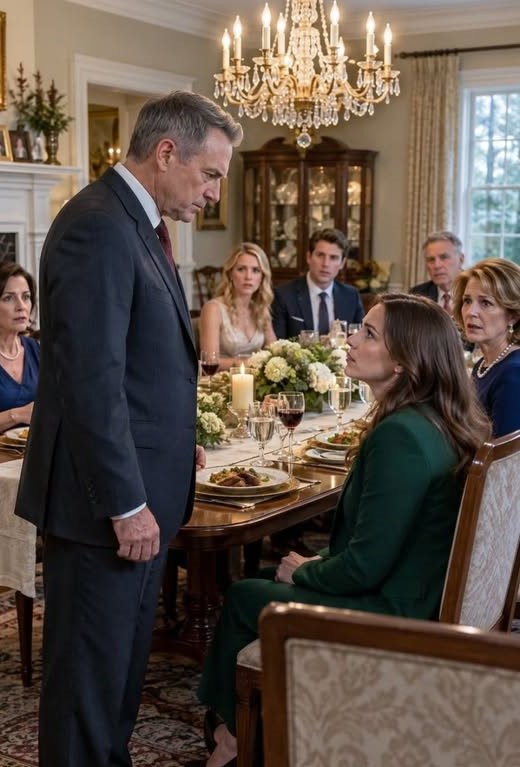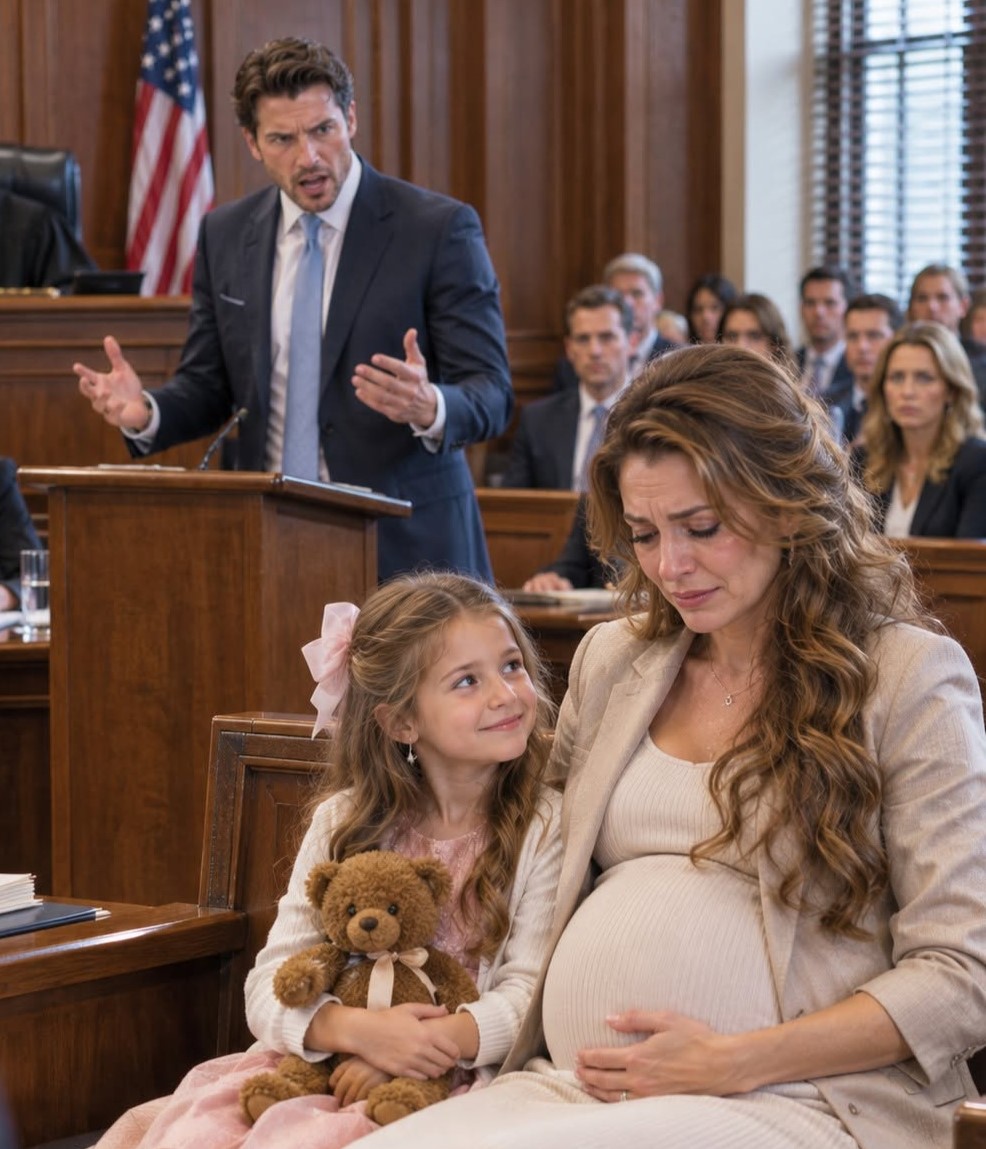
• I Showed Up at My Millionaire Ex-Husband’s Wedding With My 5-Year-Old Triplets… The Second His Family Saw the Three Children, Everyone Inside the Mansion Went Completely Silent.  

    I Showed Up at My Millionaire Ex-Husband’s Wedding With My 5-Year-Old Triplets… The Second His Family Saw the Three Children, Everyone Inside the Mansion Went Completely Silent.  

    PART 1

    They expected me to show up shattered.

    That was the real reason the Vance family invited me to the wedding.

    The Vances were Chicago old-money elites—wealthy, ruthless, obsessed with status, and convinced anyone outside their bloodline didn’t belong. Especially me.

    The invitation wasn’t kindness. It was humiliation carefully wrapped in gold paper.

    They wanted me hidden in the back row while my ex-husband, Jonathan Vance, married a younger woman from a “respectable” political family. They wanted their rich friends whispering about how easily I had been erased.

    And Eleanor Vance—Jonathan’s icy, manipulative mother—made sure every detail of my embarrassment was perfectly arranged.

    Including where I would sit.

    Table 27. Right beside the kitchen entrance of their massive Lake Geneva estate. Close enough to hear the staff yelling orders. Far enough to remind me I was no longer part of their world.

    But Eleanor made one fatal mistake. She had no idea I wouldn’t be arriving alone.

    The invitation smelled of luxury perfume and imported paper as I stood in my penthouse overlooking downtown Chicago, slowly turning the envelope in my hands. Gold lettering announced the marriage of Jonathan Vance and Victoria Cross, daughter of a powerful U.S. senator.

    I smiled coldly.

    Jonathan. The man who signed our divorce papers five years earlier without even lifting his eyes to look at me. The same man who stood there silently while his mother tore my life apart piece by piece.

    “Mama… who’s getting married?”

    I looked down to see Liam tugging at my sleeve. Across the room, Noah and Caleb were building a giant pillow fort while loudly arguing over dinosaurs.

    My triplets. Five years old.

    All three boys carried Jonathan’s sharp gray eyes and dark wavy hair. But their strength? Their fire? That came from me.

    I ran from the Vance mansion while pregnant, terrified Eleanor would discover the babies and destroy me in court. She would have taken my sons and raised them inside her cold empire as perfect little heirs.

    So I disappeared. And I survived.

    I worked eighteen-hour days while pregnant. I built a digital marketing company from nothing inside a tiny apartment while my babies slept beside my desk. Now my company was one of the fastest-growing agencies in America.

    And quietly… my fortune had grown to nearly triple what remained of the collapsing Vance empire.

    “Clear my Saturday schedule,” I told my assistant.

    “For what?”

    “I need three custom tuxedos made for my sons.”

    I glanced once more at the invitation. “If Eleanor Vance wants a family reunion… then it’s time she finally meets her grandsons.”

    Saturday arrived cold, bright, and perfect.

    The Vance estate looked like a billionaire’s fantasy. Thousands of white roses lined the gardens while a string quartet played beside enormous fountains. Politicians, CEOs, and old-money elites filled the grounds sipping champagne beneath crystal chandeliers.

    From an upstairs balcony, Eleanor Vance waited confidently for my arrival. She expected heartbreak.

    Instead, a convoy of black armored SUVs rolled slowly through the front gates. The first vehicle stopped directly beside the wedding aisle.

    The entire estate went silent. Hundreds of wealthy guests turned to stare.

    Then the back door opened, and I stepped out. I wore an emerald couture gown sparkling beneath the afternoon sun. Gasps swept instantly through the crowd.

    But the real shock came seconds later. I turned back toward the SUV and reached out my hand.

    One by one… Liam, Noah, and Caleb stepped out beside me wearing custom velvet tuxedos.

    The silence became unbearable. Because every single boy looked exactly like Jonathan Vance.

    Above us, Eleanor’s champagne glass slipped from her hand and exploded against the marble balcony floor. Slowly, I lifted my eyes toward her—and smiled.

    That was the exact moment everyone inside the estate realized the wedding of the year had just become the scandal of the decade.

    Part 2

    The sound of breaking crystal echoed across the estate like a gunshot.

    Jonathan stepped onto the balcony behind his mother just as the glass shattered. The second he saw my sons, the color drained from his face completely. His hands gripped the railing so tightly his knuckles turned white.

    He looked at the boys. Then at me. Then back at them again.

    Five years. The math hit him instantly.

    I didn’t react. I simply adjusted Caleb’s bow tie and took my sons’ hands before walking forward calmly through the crowd. Chicago’s elite parted around us like water.

    “Mama,” Noah asked loudly, pointing toward the altar, “is that the man getting married?”

    A few guests choked on their champagne. I smiled softly.

    “We’re only here to observe, sweetheart. Keep walking.”

    I completely ignored Table 27 near the kitchen entrance. Instead, I walked directly to the front row—the section reserved exclusively for immediate family.

    A trembling wedding coordinator rushed toward me. “Ma’am, I’m sorry, this area is reserved for close relatives only.”

    I glanced down at my sons, then back at her. “I promise you,” I said coldly, “you won’t find anyone here more closely related to the groom than his biological children.”

    And with that, I sat down gracefully between my boys while the wedding began collapsing before the music even started.

    Eleanor stormed downstairs moments later. Her face looked stretched tight with fury and panic.

    “What is the meaning of this?” she hissed at me. “Leave immediately before I have security drag you out!”

    “Try it,” I replied calmly. I nodded toward the guests. “The senator is watching. Reporters are filming. If one security guard touches my children, I’ll sue you publicly. And unlike five years ago, Eleanor… I now have far more money than you do.”

    Her expression cracked slightly. Then her eyes drifted helplessly toward the boys. The resemblance was undeniable.

    At that moment, Jonathan slowly approached us from the altar. He looked like a man walking toward his own execution.

    Caleb tilted his head at him in the exact same way Jonathan always used to when he was confused. Several guests gasped aloud.

    “Clara…” Jonathan whispered weakly. “What is this?”

    I looked him directly in the eyes. “These are the sons you never knew existed. The children you missed because you were too busy sleeping with your mistress before our divorce papers were even dry.”

    Whispers exploded everywhere. Because according to the Vance family’s public story, Jonathan met Victoria long after our marriage ended.

    “I didn’t know!” Jonathan said desperately. “You disappeared!”

    “I disappeared because your mother threatened me!” I snapped, my voice cutting across the estate like a blade. “She promised to destroy me. She told me I was trash. I knew if Eleanor discovered my pregnancy, she’d bury me in court and steal my children just to raise them into miniature versions of herself.”

    “That’s a lie!” Eleanor shouted frantically. “She hired child actors!”

    “No,” another voice interrupted firmly.

    Everyone turned. Dr. Richard Vance—Jonathan’s estranged uncle and one of the country’s leading geneticists—slowly stepped forward from the crowd. He studied my sons carefully, then nodded once.

    “The gold fleck in the left iris,” he said quietly. “The Vance genetic marker. Jonathan has it. His grandfather had it. All three boys inherited it.”

    Silence swallowed the entire estate.

    And then the wedding doors opened.

    Victoria Cross entered wearing a breathtaking designer gown, holding her senator father’s arm proudly. But instead of admiration… she found hundreds of guests staring at me and my children.

    Her smile vanished instantly. She looked at Jonathan. Then at the boys. Then back at Jonathan again.

    “You have children?” she whispered shakily.

    Her father exploded. “You humiliated my daughter!” the senator roared, grabbing Jonathan violently by the tuxedo collar. “You hid an entire family?!”

    “They are not illegitimate,” I interrupted sharply as I stood. “My sons were conceived during a legal marriage. They are Jonathan Vance’s lawful heirs.”

    Eleanor nearly collapsed into a chair clutching her chest. Nobody moved to help her.

    Victoria dropped her bouquet, turned, and fled the estate in tears while cameras flashed wildly around her. The wedding of the year was officially dead.

    I checked my diamond watch calmly. “Well,” I said lightly, “that ended faster than expected.” I turned toward my boys. “Say goodbye, kids.”

    I began walking toward the exit. Behind me, Jonathan suddenly ran after us.

    “Clara, wait!” he shouted desperately. “Please don’t take them away from me!”

    I helped the boys into the SUV before finally turning toward the man I once loved.

    “They’re my sons, Jonathan,” I said quietly. “I carried them. I raised them. I stayed awake through fevers and nightmares and every hard moment while you were gone. You were only the donor.”

    Days later, Eleanor filed for custody immediately. Fraud. Parental alienation. Full custody demands. She hired the most vicious attorneys in Chicago.

    But by then, I already knew something she didn’t. The Vance empire was drowning in debt.

    At a legal meeting downtown, Eleanor slid a check across the conference table. “Take ten million dollars,” she said coldly. “Sign over custody and disappear.”

    I stared at the check, then laughed—actually laughed.

    “Oh, Eleanor,” I whispered. “You still think I’m poor.”

    Her jaw tightened. “Don’t test me.”

    I stood slowly and walked around the table until I stood directly beside her chair. “My company made thirty million dollars last quarter alone,” I said softly. “And this morning?” I leaned closer. “I bought your bank debt.”

    Her face went white. “What?”

    “The estate mortgage belongs to me now,” I continued calmly. “Technically, Eleanor… you’re living in my property.”

    Silence filled the room. Jonathan looked physically sick.

    “You’re bankrupt?” he asked his mother quietly.

    Eleanor couldn’t answer. Her hands shook violently.

    I stepped back. “Drop the lawsuit today,” I said. “Or I remove your family from that mansion by tomorrow morning.”

    Then I looked at Jonathan. “You can see the boys. But under my rules. You’ll earn the right to be their father.”

    Jonathan nodded immediately, crying openly from humiliation and relief while Eleanor signed the withdrawal papers with trembling hands.

    Months later, rain poured softly across Chicago while Jonathan sat on the floor of my penthouse covered in paint and glitter beside our sons, learning how to become a real father.

    And as I watched them from my office while reviewing million-dollar contracts, I realized something important.

    The greatest revenge isn’t destruction. It’s building a life so successful, peaceful, and beautiful… that the people who tried to ruin you become nothing more than a forgotten footnote in your victory story.

    Part 3

    The months following the withdrawal of the lawsuit brought a strange, heavy quiet over the city.

    The social pages, which had spent weeks feasting on the ruins of the Vance-Cross scandal, gradually shifted their attention to new targets. But inside the high-rise offices of Chicago’s financial district, the seismic shift was permanent. The Vance empire hadn’t just faltered; it had been quietly, systematically absorbed.

    I sat behind the wide glass desk in my corporate headquarters on Wacker Drive, reviewing the quarterly earnings of my agency alongside the restructuring terms for the Lake Geneva estate.

    My phone buzzed. It was a message from Jonathan: We’re almost done with the dinosaur puzzle. Are you still taking them to the museum at four?

    I typed a quick reply: Yes. Have them washed up by three-thirty.

    Giving Jonathan supervised access to Liam, Noah, and Caleb hadn’t been an act of forgiveness. It was an act of clarity. I refused to let my sons grow up with an phantom father, feeding on bitter mysteries. If Jonathan wanted to be in their lives, he was going to do it on my terms, in my home, stripped of his family’s grand illusions.

    An hour later, my assistant knocked on the door. “Clara… Eleanor Vance is in the lobby. She doesn’t have an appointment, but she refuses to leave.”

    I didn’t look up from my tablet. “Send her in.”

    When Eleanor walked into my office, she looked nothing like the icy matriarch who had spent decades commanding Chicago’s elite. Her immaculate hair was slightly undone, her tailored designer suit seemed a size too large for her shrinking frame, and the imperious glare that used to make junior partners tremble was gone.

    She stood near the doorway, holding a small, faded velvet jewelry box in her trembling hands.

    “I didn’t come to argue, Clara,” she said, her voice raspy and devoid of its usual sharp edge.

    “Sit down, Eleanor,” I said, gesturing to the leather chair across from my desk.

    She didn’t sit. Instead, she walked forward with slow, hesitant steps and placed the velvet box on the corner of my desk.

    “What is this?” I asked.

    “It belonged to Jonathan’s grandmother,” Eleanor whispered, her eyes fixed on the desk. “The Vance family heirloom ring. It was meant to be passed down to the mother of the firstborn son.”

    I looked at the box, then back at her. “You kept this hidden five years ago when Jonathan and I got married. You told him it was lost.”

    “Because I thought you were unworthy,” she said, her chest heaving as a bitter tear escaped down her wrinkled cheek. “I thought if I protected the bloodline from… from people like you, I was saving our legacy. I thought money and pedigree were the only things keeping us from falling apart.”

    She looked up at me, her eyes filled with a hollow, crushing defeat.

    “I lost the estate, Clara. I lost our standing. Victoria’s father destroyed our remaining commercial contracts, and Jonathan barely speaks to me unless it’s about the boys. You took everything.”

    “I took nothing, Eleanor,” I corrected her softly, keeping my voice cold and steady. “You gambled your family’s future on arrogance and bad debt. I simply bought the chips when you ran out. And as for this ring…”

    I pushed the velvet box back across the polished wood toward her.

    “My sons don’t need a ring to know who they are. They have my name on their business trusts, and they have a mother who built an empire while you were busy hiding behind gold leaf.”

    Eleanor stared at the box, her fingers shaking as she slowly pulled it back. “What happens to me now?”

    “You keep your private apartment in Gold Coast,” I said. “I won’t enforce the eviction on your personal residence. But you will never set foot near my children without my explicit permission, and you will never again speak a word about status in their presence.”

    She closed her eyes, swallowed her remaining pride, and nodded once. “Thank you.”

    She turned and walked out of the office, her heels clicking softly against the marble, a broken woman leaving behind the wreckage of her own making.

    Final Part

    Spring arrived in Chicago with a crisp, clear sunshine that melted the last traces of winter ice along the lakefront.

    On a bright Saturday afternoon, the park beside my Lincoln Park penthouse was filled with the sound of laughing children and rustling oak leaves.

    I sat on a wooden park bench wearing a simple cashmere sweater and sunglasses, holding a warm cup of coffee. A few yards away on the grass, Jonathan was kneeling in the dirt, completely unbothered by the grass stains on his tailored trousers, helping Noah and Caleb build a makeshift launching pad for a toy rocket.

    A few feet beside them, Liam was standing tall, holding a clipboard and loudly counting down from ten with all the solemn authority of a NASA flight director.

    “Three… two… one… LAUNCH!” Liam yelled.

    Jonathan hit the foam launcher, and the rocket soared twenty feet into the air. All three boys erupted into wild, triumphant screams, chasing the toy as it drifted toward the trees.

    Jonathan stayed on his knees for a moment, catching his breath, watching them run. He looked up, met my gaze, and offered a small, quiet smile—a look of profound, humbled gratitude. He knew he was living on borrowed grace, earning his way into his sons’ hearts one Saturday at a time, completely free of the toxic expectations his mother had placed on him his entire life.

    My phone buzzed in my coat pocket. It was a notification from my Chief Financial Officer: Acquisition of Vance Logistics assets fully completed. Integration begins Monday.

    I closed the screen and slipped the phone away.

    Five years ago, I had walked out of the Vance estate in the dark, pregnant, terrified, and penniless, with nothing but three tiny heartbeats inside me and a refusal to be broken. They had treated me like an inconvenience to be erased, a footnote in their grand family story.

    Now, as I watched my three healthy, fearless sons laughing in the bright afternoon sun, I took a deep breath of the fresh spring air.

    I hadn’t just survived their cruelty. I had outgrown it, outspent it, and rewritten the narrative entirely. The Vance name was no longer a symbol of arrogant Chicago old-money; it was a chapter my sons would read about in financial records when they were old enough to understand how their mother built their kingdom.

    Liam ran over to the bench, breathless, his dark wavy hair stuck to his forehead with sweat, holding up a shiny yellow dandelion he had plucked from the lawn.

    “For you, Mama!” he said proudly, shoving the little flower into my hand.

    I smiled, pulling him into a tight hug and kissing the top of his head. “Thank you, sweetie. It’s beautiful.”

    Noah and Caleb came tackling into my side a second later, giggling wildly, while Jonathan walked over, wiping the dirt off his hands, standing at a respectful distance.

    The sky above Chicago was wide, blue, and endless.

    Standing there surrounded by my boys, supported by the unyielding life I had built with my own hands, I realized the ultimate truth of my journey:

    The ultimate victory wasn’t breaking the people who tried to destroy you. It was building a life so radiant, strong, and peaceful that their entire existence became nothing more than a faint shadow beneath your feet.
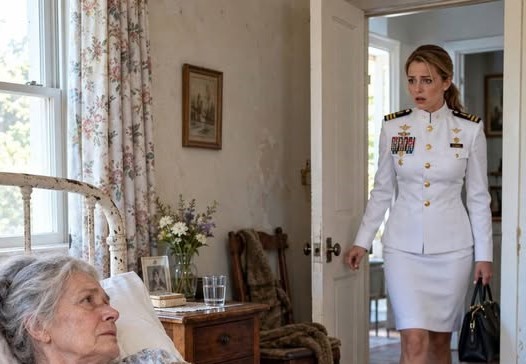
  • I came home from Qatar and found my mother locked in a room like a prisoner—starving, weak, and completely forgotten while my husband’s family spent every dollar i sent for her care.  

    I came home from Qatar and found my mother locked in a room like a prisoner—starving, weak, and completely forgotten while my husband’s family spent every dollar i sent for her care.  

    My husband looked me in the eyes and said, “Don’t turn this into a tragedy from 3,000 miles away.” I didn’t scream or argue. I secretly recorded everything and called the police. Then we lifted my mother’s mattress… and found an insurance policy in my name dated TWO DAYS IN THE FUTURE.

    PART 1

    When I pushed open the bedroom door at the far end of the hallway, my breath caught in my throat.

    My seventy-one-year-old mother, Rose, was lying on a stained mattress, her waist bound to the bedframe with makeshift cloth restraints. Her lips were cracked and bleeding, and two cockroaches crawled past a plastic plate of stale food left on a dusty nightstand.

    “Mom…” My voice was barely a whisper.

    Rose opened her eyes. Instead of smiling with relief at the sight of me, she shrank back against her thin pillow, her frame trembling.

    “Don’t untie me yet,” she rasped out, her voice raw. “Look under the mattress first.”

    I had landed in Miami just two hours earlier after spending nearly three years working double shifts as a housekeeping supervisor at a luxury hotel in Doha, Qatar. Nobody knew I was coming back. Not my husband, Mark. Not my mother-in-law, Brenda. Not my sister-in-law, Heather.

    I had taken the contract in Qatar after Mom suffered a complex hip surgery. Mark had sworn on his life that his family would care for her at their spacious family home in Fort Myers, Florida.

    “Don’t put her in a nursing home, Elena,” Mark had pleaded three years ago. “My mom and Heather will look after her. She’ll be treated like family.”

    I had wanted so desperately to believe him.

    For thirty-four months, I had wired increasingly large sums of money back to Florida every single payday: funds for specialized physical therapy, prescriptions, adult care supplies, a motorized hospital bed, and a private home health aide.

    In return, Mark sent periodic photos. Mom smiling weakly beside a window. Mom in a gray sweater beside that same window. Mom wrapped in a blue blanket, still sitting in that exact same spot.

    Whenever I asked for a live video call, an excuse conveniently popped up. Mom was sleeping. Mom was too tired. The Wi-Fi was down. Her phone battery was dead.

    Until eight days ago, when a three-second voice note arrived from Mom’s phone.

    In the audio, a loud thud echoed in the background, followed by a trembling, terrified whisper: “Don’t sign anything…”

    The message was deleted almost instantly.

    Mark called me at 3:00 AM Qatar time that very night. “Your mother’s getting confused and paranoid, Elena. Don’t make a tragedy out of this from 5,000 miles away.”

    I nodded into the phone, pretending to accept his explanation.

    The moment I hung up, I called Clara Benitez, a family law attorney in Miami recommended by a coworker, and booked the first flight back to the States.

    When I let myself into the Fort Myers house unannounced that morning, I found a renovated living room: a massive OLED TV, plush leather sofas, an expensive espresso machine, and a glass display cabinet filled with high-end decor. Around her neck, Brenda wore a solid gold pendant that had once belonged to my mother.

    Mark turned ghost-white the second he walked out of the kitchen and saw me standing in the foyer.

    “What… what are you doing here?” he stammered.

    “I came to get my mother.”

    Silence fell over the room.

    Then I heard a soft, scraping sound from the second floor. I didn’t wait. I bolted up the stairs.

    At the very end of the hall, a heavy wooden dresser had been pushed directly in front of a closed door.

    “Elena, wait!” Mark shouted, scrambling up the stairs behind me.

    I shoved the heavy dresser aside with all my strength, threw open the door, and found Mom.

    Without taking my eyes off her, I pulled out my phone, started a video recording, and dialed 911.

    “Mom, I’m here,” I sobbed, kneeling beside the bed.

    Mom weakly pointed a shaky finger toward the mattress.

    I lifted the corner. Tucked inside a sealed plastic bag was a folder containing bank receipts of all my wire transfers from Doha, photocopies of my driver’s license, forged medical releases, and a power-of-attorney authorization bearing a signature that looked almost identical to my own.

    Except I knew I had never signed it.

    Beneath those papers lay an official insurance policy folder. My eyes scanned the top line:

    Insured: Elena Morales

    Primary Beneficiary: Mark Vance

    Effective Date: In exactly two days.

    I slowly stood up and turned around. Mark was standing in the doorway, his hands trembling.

    “Elena, listen to me, I can explain—”

    From the bed, Mom shook her head weakly. “Elena… don’t drink anything they give you.”

    Downstairs, the sound of my luggage being unzipped echoed loudly up the stairwell. Heather’s voice shrieked from the foyer:

    “Mark! The money isn’t in her bag!”

    I didn’t move an inch. Because the money I had saved was safely tucked away in an offshore account Mark couldn’t touch.

    And none of them realized that, hidden in the front pocket of my carry-on, a tiny wireless camera had been recording every single word since I walked through the front door.

    Part 2

    Downstairs, Heather reached deep into the front pocket of my suitcase and pulled out the small, blinking recording device.

    “What the hell is this?!” she yelled.

    Mark backed down two steps on the staircase, paralyzed.

    I walked out to the top of the landing, holding the plastic-wrapped folder against my chest. “Put it back where you found it.”

    “You have no legal right to record us in our own house!” Heather spat, her face red with rage.

    “We’ll let the police decide that,” I replied, my voice eerily calm.

    My absolute composure terrified Mark far more than if I had started screaming.

    From the bedroom, Mom called out feebly, “The paperwork… he brought it to my room weeks ago…”

    I walked back to my mother’s bedside. “Mark made you sign something?”

    Mom nodded slowly. “He told me I had to sign to prove you authorized my care. When I refused… they took my phone away and moved the dresser.”

    I felt a cold, sharp rage ignite inside my chest. “Is that why you sent that voice note?”

    “It was the only chance I had. He left his phone on my nightstand for thirty seconds.”

    Downstairs, Brenda began weeping loudly. “Mark, you said you had everything under control! You said she wouldn’t come back until next year!”

    I stepped back out into the hallway, glaring down at my mother-in-law. “And leaving my mother tied to a bed like an animal seemed under control to you, Brenda?”

    Brenda looked away, unable to meet my eyes.

    Mark tried to take a step up the stairs, holding his hands out in a pleading gesture. “Elena, please. We’re family. We can figure this out without making a scene.”

    I held up the insurance policy document. “Does ‘family’ take out a multi-million-dollar life insurance policy on someone behind their back?”

    Before Mark could answer, the front doorbell rang sharply.

    It wasn’t the police yet.

    Standing at the front door was a man wearing a suit, carrying a blue leather notary folder, asking for Mark Vance. When he looked past Heather and saw me standing at the top of the stairs holding a phone, he paused.

    “Mr. Vance?” the man asked hesitantly. “I’m here for the final signature verification on Mrs. Morales’s policy documents.”

    Mark’s face lost every bit of color. He made a sudden, desperate dart toward the back kitchen exit.

    Part 3

    He didn’t make it three steps.

    I didn’t even have to touch him; I simply moved to the top of the stairs and called out the front door to the officers who were just pulling into the driveway with their sirens flashing.

    Two Fort Myers police officers and an emergency medical crew pushed through the front entrance, immediately taking control of the house.

    The man with the notary folder, identifying himself as an independent insurance broker, immediately raised his hands. “I’m just an agent! Mr. Vance submitted these authorization forms digitally. I came to get the physical signature verified!”

    “I never met this man, and I never authorized a policy,” I told the officers, handing over my passport, my Qatar work visa, and the folder recovered from under the mattress.

    The paramedics rushed upstairs to attend to Mom. When they carefully cut away the cloth bindings from her waist, they found deep, inflamed pressure marks on her skin. She was severely dehydrated, malnourished, and hadn’t received physical therapy or her prescribed heart medication in months.

    “Who was managing her daily care?” the paramedic asked sternly.

    Mom pointed a frail finger toward the doorway where Mark was being restrained by an officer. “He took my money. He took my phone. He locked me in.”

    Police officers searched the home, discovering boxes of expired medications, unopened medical supplies that I had paid for, and dozens of fraudulent receipts Mark had created to justify the thousands of dollars I had been wiring every month.

    While Mom was being placed on a stretcher, my attorney, Clara Benitez, arrived at the scene. Clara reviewed the forged power-of-attorney documents, the insurance policy, and the hidden camera footage from my bag.

    “This isn’t just elder abuse and fraud,” Clara informed the lead detective calmly. “This is a premeditated financial conspiracy, forged documentation, and attempted corporate fraud. The policy effective date was timed specifically around her scheduled return.”

    The police arrested Mark, Heather, and Brenda on the spot.

    As Mark was led out in handcuffs, he looked at me with hollow, desperate eyes. “Elena, please… I did it for us. The business was failing—”

    “Don’t ever say my name again,” I said, my voice steady and razor-sharp.

    Mom was transported to the hospital, where she spent two weeks receiving intensive care, hydration, and proper medical evaluation. The doctors confirmed that despite her physical weakness, her cognitive functions were completely intact; she knew exactly what had been done to her, and she gave a full, detailed statement to state investigators.

    I immediately filed for emergency divorce, revoked all shared account accesses, and secured a full protective order.

    Four weeks later, I moved my mother into a sunlit, fully accessible two-bedroom apartment in Tampa, far away from Fort Myers.

    On our first evening in the new apartment, I was putting away fresh linens when I heard Mom call me from the living room.

    “Elena?”

    I rushed into the room, terrified something was wrong.

    Mom was standing beside the front door, leaning comfortably on her walker.

    “Can you unlock the door for a second, sweetie?” she asked gently.

    I unlocked it and pulled the door open to the quiet, brightly lit hallway. Mom stood there for a long moment, looking out into the open space, breathing in the clean air.

    “Okay,” Mom smiled, looking up at me. “You can close it now.”

    I closed the door and locked it.

    “I just wanted to make sure I could ask to open it whenever I wanted,” Mom whispered, her eyes shining with tears.

    I sank down onto the couch beside my mother and finally wept—not out of sorrow or betrayal, but out of the overwhelming, beautiful relief that my mother was finally free.

    Mark, Brenda, and Heather faced extensive criminal indictments for elder abuse, grand theft, and insurance fraud. The house bought with my stolen money was liquidated under court order to pay full restitution to Mom.

    A year later, on a bright Florida afternoon, Mom sat on our new balcony, sipping tea beside a pot of blooming yellow hibiscus.

    She looked at me while I worked comfortably from my laptop on a freelance consulting project, and smiled.

    “You know, Elena,” Mom said softly, watching the sunlight bounce off the leaves. “For thirty-four months, I thought I was trapped in that room forever.”

    I walked over, kneeling beside her chair and taking her warm hand. “You were never trapped, Mom. You were just waiting for me to come home.”

    Mom squeezed my hand tightly. “And today, we’re right where we belong.”

  •   Melania Trump Showed a Rare Side of Herself at the State Dinner — Her Body Language Said It All — Photo  

      Melania Trump Showed a Rare Side of Herself at the State Dinner — Her Body Language Said It All — Photo  

    Melania Trump has never needed to say much for a photograph to start a conversation, and on September 24, the cameras caught something people were not used to seeing. At first, the change was easy to miss — until a moment outside the White House made it impossible to ignore.

    The timing made it even more curious. After months of carefully chosen appearances, Melania had suddenly spent several days moving from major event to major event. The woman who appeared at the end of that unusually busy stretch seemed noticeably different from the one Americans had been seeing earlier in the year.

    Melania’s public schedule has been unusually selective in 2026. An NBC News analysis found that she had made roughly half as many public appearances as she had by the same point in Donald Trump’s first term. | Source: Getty Images

    Melania’s public schedule has been unusually selective in 2026. An NBC News analysis found that she had made roughly half as many public appearances as she had by the same point in Donald Trump’s first term. | Source: Getty Images

    She Had Been Keeping a Low Profile

    Only a month earlier, Melania’s absence itself had become part of the story. When she returned to the White House Rose Garden following a 32-day stretch without a photographed public appearance, she walked to the podium and immediately joked, “Good afternoon. I heard you missed me?” before adding, “Here I am.”

    It was a playful line from someone who had been giving cameras relatively little to work with. Melania was not disappearing from her responsibilities entirely — she was simply choosing when much of that work became visible.

    Melania is also preparing to reveal more of her private life on camera. She said an upcoming 2-part docuseries will feature one-on-one conversations and answers to “private questions” she has never addressed publicly before. | Source: Getty Images

    Melania is also preparing to reveal more of her private life on camera. She said an upcoming 2-part docuseries will feature one-on-one conversations and answers to “private questions” she has never addressed publicly before. | Source: Getty Images

    That quieter public pattern made the week of September 22 particularly noticeable. Melania reconvened her Fostering the Future Together coalition during the U.N. General Assembly, where the initiative had grown to 57 participating countries and new partnerships involving Adobe, Amazon, Intel, Starlink, Google, and Zoom.

    Her message that day was strikingly simple: “The future of our world will be determined by what we do for our children today.” By then, the work had already expanded considerably from the summit she held earlier in the year with representatives from more than 40 countries.

    That earlier gathering brought first spouses together with technology-sector leaders to discuss children, education, digital literacy, and the rapidly changing online world. | Source: Getty Images

    That earlier gathering brought first spouses together with technology-sector leaders to discuss children, education, digital literacy, and the rapidly changing online world. | Source: Getty Images

    The next day, Melania rang the opening bell at the New York Stock Exchange while launching Imperia, her network for women in business. Then came September 24 — and instead of another podium or business appearance, the cameras were waiting for her at the White House.

    Then Came a Question She Rarely Answers

    Just as Melania was becoming unusually visible in public, she gave a rare glimpse at what that schedule looks like once the cameras are gone. During a recent television conversation that included her son Barron, she was asked whether the family still tries to come together for something as ordinary as Sunday dinner.

    Her answer probably sounded familiar to any mother whose children are grown and whose family calendar seems harder to coordinate every year. Melania said family time has to be scheduled because everyone is busy, adding that Donald can remain in the Oval Office as late as 9:30 p.m. and reminding the hosts, “I am busy too.”

    Melania has repeatedly made children and young people central to her public work, from education and technology initiatives to online-safety legislation. | Source: Getty Images

    Melania has repeatedly made children and young people central to her public work, from education and technology initiatives to online-safety legislation. | Source: Getty Images

    “We try to find time,” Melania said during her appearance on The Big Money Show. She also acknowledged that there is “less and less” family time now, a simple admission from a mother whose only son is 20 and building an adult life of his own.

    Those comments added a personal note to a week already filled with speeches, meetings, and public events. But by Thursday evening, the focus was about to move somewhere completely different — because another side of Melania was waiting at the White House.

    Xi Jinping and Peng Liyuan’s Washington visit placed Melania back in one of the most traditional first-lady roles: helping host an official state occasion at the White House. | Source: Getty Images

    Xi Jinping and Peng Liyuan’s Washington visit placed Melania back in one of the most traditional first-lady roles: helping host an official state occasion at the White House. | Source: Getty Images

    By Thursday Night, Everything Looked Different

    Donald and Melania Trump were waiting outside the White House to receive Chinese President Xi Jinping and First Lady Peng Liyuan. This time, Melania was not simply attending: the first lady had led preparations for the state dinner, from a menu built around American ingredients with subtle Chinese influences to the formal East Room setting.

    Then came the visual surprise. Instead of the sweeping evening gown many might expect for such an occasion, Melania stepped out in a sharp black-and-white, tuxedo-inspired look, with a crisp white blouse, an oversized bow at the neck, dark trousers, and black heels. Next to the Peng’s floor-length red look, the contrast was immediate.

    Melania’s role in the evening went beyond simply posing beside the president. Her office had been directly involved in shaping the dinner, giving her an unusually visible role in how the night came together. | Source: Getty Images

    Melania’s role in the evening went beyond simply posing beside the president. Her office had been directly involved in shaping the dinner, giving her an unusually visible role in how the night came together. | Source: Getty Images

    But according to body-language expert Dr. Lillian Glass, the clothes were not actually the biggest change in the photographs. Looking at Melania as she greeted the guests, Glass immediately focused on something happening above that dramatic white bow: her expression.

    “Look at that smile! We have rarely seen Melania smile this broadly in public, with her teeth fully showing and her entire face appearing animated,” Glass said. It was not the restrained, closed-mouth expression viewers have often seen in carefully posed photographs — this time, Melania appeared caught right in the middle of the moment.

    he White House setting had been carefully planned around the visit, with details chosen to blend traditional American state-dinner elements with references to the Chinese delegation. | Source: Getty images

    he White House setting had been carefully planned around the visit, with details chosen to blend traditional American state-dinner elements with references to the Chinese delegation. | Source: Getty images

    But One Detail Stole the Attention

    Glass also pointed to something beyond a single smile. “There appears to be a new confidence in Melania’s public presentation,” she said, connecting the dinner photographs with the first lady’s much more visible run of appearances during the same week.

    Only days earlier, Glass noted, Melania had flashed another unusually bright smile after her husband publicly acknowledged her work at the United Nations. At the state dinner, however, it was happening again and again: she smiled broadly during the greetings, appeared animated around the visiting couple, and looked notably relaxed in the formal setting.

    Donald Trump later presented Xi with a bald-eagle sculpture that he said had been designed “in personal collaboration with Melania and myself,” another detail pointing to her involvement in the visit. | Source: Getty Images

    Donald Trump later presented Xi with a bald-eagle sculpture that he said had been designed “in personal collaboration with Melania and myself,” another detail pointing to her involvement in the visit. | Source: Getty Images

    That contrast had become especially noticeable because the week had begun with a very different image of Melania. At the U.N., she had appeared serious and focused while speaking about children, leadership, and technology; by Thursday night, the cameras were catching her laughing and smiling through one of the White House’s biggest formal occasions.

    The interpretation remains just that — an expert’s reading of photographs cannot tell viewers exactly what another person is feeling. Still, the visual contrast was clear enough to become the central talking point of the night.

    The East Room featured red linens, dahlias, and ranunculus, with Melania’s office saying the color was chosen in part for red’s cultural significance in China. | Source: Getty Images

    The East Room featured red linens, dahlias, and ranunculus, with Melania’s office saying the color was chosen in part for red’s cultural significance in China. | Source: Getty Images

    Her Own Words Added Another Layer

    What made Glass’s observation even more timely was that Melania had already addressed the idea that her relatively low public profile meant she had been doing less. Asked about how rarely she was seen, she replied, “You don’t see me everywhere, but behind the scenes I’m working nonstop.”

    That week made some of that work much more visible than usual. The U.N. gathering, the NYSE appearance, and finally the state dinner all landed within days of each other, turning what had largely happened out of sight into an unusually concentrated stretch of public appearances.

    The September schedule also showed Melania stepping beyond her longtime focus on children. With Imperia, she began publicly speaking more about women, business leadership, and economic ownership. | Source: Getty Images

    The September schedule also showed Melania stepping beyond her longtime focus on children. With Imperia, she began publicly speaking more about women, business leadership, and economic ownership. | Source: Getty Images

    There was another clue in the way Melania spoke that week. Asked whether Donald Trump seeks her opinion after speeches and public appearances, she said she tells him what she thinks even when “he doesn’t want to hear it,” adding that she always tells him the truth.

    It was a rare public comment about conversations between the couple, and it sat neatly beside Glass’s description of a first lady showing a stronger public voice. Melania herself had also described that side of her personality years earlier, saying during Donald Trump’s first presidential campaign, “I’m not a yes person.”

    During that earlier campaign, Melania said she followed events “from A to Z” and told Donald Trump when she disagreed with him — a glimpse of the direct role she says she has long played privately. | Source: Getty Images

    During that earlier campaign, Melania said she followed events “from A to Z” and told Donald Trump when she disagreed with him — a glimpse of the direct role she says she has long played privately. | Source: Getty Images

    The Mother Behind the Public Role

    Melania’s comments about Barron gave the week another dimension that was easy to lose among the fashion, speeches, and formal photographs. While her public role appeared to be expanding, she was also admitting that the ordinary family moments she values are becoming harder to arrange.

    That concern is also closely connected to the work she has chosen to make public. Children, education, digital safety, and helping young people build independent lives have repeatedly appeared across her initiatives, even as the size and international reach of those projects have grown.

    Melania’s work on online safety also took her to Capitol Hill, where she personally advocated for legislation targeting nonconsensual intimate images and AI-generated deepfakes. | Source: Getty Images

    Melania’s work on online safety also took her to Capitol Hill, where she personally advocated for legislation targeting nonconsensual intimate images and AI-generated deepfakes. | Source: Getty Images

    One of those efforts became the Take It Down Act, which was signed into law in May 2025. Donald Trump even invited Melania to add her own symbolic signature after she had personally lobbied lawmakers for the measure.

    But the state-dinner photographs told a much simpler story than any policy announcement could. After months of appearing selectively, Melania had suddenly spent several days at the center of events she had helped shape — and the difference cameras picked up was written most clearly across her face.

    The state dinner capped several consecutive days in which Melania moved between international diplomacy, business, family conversations, and her own initiatives — an unusually concentrated stretch of public visibility. | Source: Getty Images

    The state dinner capped several consecutive days in which Melania moved between international diplomacy, business, family conversations, and her own initiatives — an unusually concentrated stretch of public visibility. | Source: Getty Images

    The Real Shift Had Been Building for Months

    The outfit attracted attention immediately, but Glass kept coming back to Melania’s expression. The unusually broad smile, she argued, looked different from the more controlled public image audiences had grown accustomed to seeing.

    And after a week in which Melania had repeatedly stepped forward on her own projects, spoken more openly about life at home, and taken a central role in the state dinner, Glass summed up the change in just a few words: “Now we are seeing another side of that woman. She is beaming.”

  • After my divorce, I bought a house and told no one. While I was out of state, my cameras showed a moving truck in my driveway. Then I saw my ex-husband and his new wife carrying their furniture inside. I didn’t call him. I called the police.  

    After my divorce, I bought a house and told no one. While I was out of state, my cameras showed a moving truck in my driveway. Then I saw my ex-husband and his new wife carrying their furniture inside. I didn’t call him. I called the police.  

    At 10:14 on a bright Saturday morning, I looked down at my phone and saw my ex-husband carrying a flat-screen television into a house he had absolutely no right to enter.

    Behind him was his new wife.

    She was carrying a brass floor lamp.

    My brass floor lamp.

    I was four hours away, standing barefoot in my sister Rachel’s kitchen in Louisville with a mug of coffee halfway to my mouth.

    For several seconds, my brain refused to understand what I was seeing.

    Maybe I had opened the wrong camera.

    Maybe the feed was delayed.

    Maybe I was somehow looking at someone else’s property.

    But I wasn’t.

    The house was mine.

    I had owned it for exactly eleven days.

    It was a modest three-bedroom brick home in Worthington, just north of Columbus.

    Nothing extravagant.

    An old maple tree in front.

    Oak cabinets straight out of the 1980s.

    Floors that needed refinishing.

    I had paid $327,500 for it.

    But the price wasn’t the important part.

    The important part was that I had bought it alone.

    After twenty-seven years of marriage, signing my own name on that deed had felt like learning to breathe again.

    Mark and I had finalized our divorce in January.

    By August, I was tired of the tiny apartment I had rented during our separation.

    So I bought the house.

    I didn’t tell Mark.

    I barely told anyone.

    Rachel knew.

    My twenty-eight-year-old daughter, Emily, knew I was house hunting but didn’t yet know I had closed.

    My realtor knew.

    The flooring crew knew.

    That was about it.

    I wasn’t trying to hide anything scandalous.

    I simply wanted one major decision in my adult life that didn’t immediately become family property.

    Then my phone buzzed.

    PERSON DETECTED IN DRIVEWAY.

    I opened the security-camera feed.

    A yellow moving truck was backing into my driveway.

    The driver’s door opened.

    Mark stepped out.

    Rachel leaned over the kitchen island.

    “You expecting the flooring guys?”

    “Maybe.”

    Then I saw him clearly.

    Rachel came around the counter.

    “Is that Mark?”

    “Yes.”

    “What is he doing at your house?”

    “I was hoping you knew.”

    Then the passenger door opened.

    Vanessa climbed out.

    Mark had married her five months after our divorce became official.

    I had met her twice.

    I had stopped asking questions about when their relationship had actually started.

    He was no longer my problem.

    At least, that was what I had been telling myself.

    Then Mark handed Vanessa a tall brass lamp.

    A lamp I recognized from his old apartment.

    He pulled a huge television from the back of the truck.

    More boxes followed.

    KITCHEN.

    BOOKS.

    Then one enormous carton labeled:

    MASTER BEDROOM.

    Rachel stared at the screen.

    “They’re moving in.”

    “I can see that.”

    The house wasn’t even ready for me to move into yet.

    The floors had just been sanded.

    Painters were coming Tuesday.

    Most of my possessions were still in storage.

    Apparently, Mark had decided to beat me to my own moving day.

    Then he walked toward the side entrance.

    I leaned closer to the screen.

    That door had a keypad lock so contractors could come and go.

    Mark didn’t knock.

    He didn’t search for a hidden key.

    He simply walked straight to the keypad.

    Pressed four numbers.

    The light flashed green.

    Click.

    Rachel turned toward me.

    “He knows your code.”

    I felt cold.

    I had never given it to him.

    Never.

    Mark opened the door and held it for Vanessa.

    She walked inside carrying the lamp as though she belonged there.

    That was the first moment I stopped feeling merely angry.

    I felt invaded.

    I had found that house myself.

    Signed for it myself.

    Stood alone in the empty kitchen after closing and eaten a sandwich over the sink because I didn’t own a chair yet.

    And now my ex-husband was walking through it like he owned the deed.

    Another clip loaded.

    Vanessa stood on my porch and said,

    “Once the sectional is in, I want to measure the windows for drapes.”

    Rachel looked at me.

    “Call him.”

    My thumb hovered over Mark’s name.

    For twenty-seven years, this had been my habit.

    Mark did something unreasonable.

    I called him.

    He explained.

    And somehow, by the end of the conversation, I would be questioning my own reaction.

    Mark wasn’t a screamer.

    He was much harder to fight than that.

    He was an explainer.

    He could turn broken promises, missing money, and obvious lies into misunderstandings with enough words.

    I closed his contact.

    Instead, I opened the digital copy of my deed.

    There it was.

    Clare Bennett.

    Sole owner.

    Then I called the police.

    “My ex-husband and his new wife are moving furniture into a house I legally own,” I told the dispatcher. “I’m four hours away. Neither of them has permission to be there.”

    She asked whether Mark lived at the address.

    “No.”

    Had he ever lived there?

    “No.”

    Was I the sole legal owner?

    “Yes.”

    Then she asked something that made my stomach tighten.

    “Do you know how he gained entry?”

    I looked again at the image of his hand pressing the keypad.

    “No,” I said.

    And suddenly the moving truck wasn’t the most disturbing part anymore.

    Police arrived within twenty minutes.

    I watched everything remotely.

    Mark and Vanessa were attempting to force a huge gray sectional through my front door when the first cruiser pulled up.

    An officer asked who owned the house.

    “My ex-wife,” Mark said immediately.

    At least we had established reality.

    Then he added,

    “She knows we’re staying here temporarily.”

    Vanessa turned toward him.

    “You told me she bought it as an investment property.”

    That was the first moment I realized she might not know the truth.

    Mark quickly insisted it was.

    The officer asked whether Mark had any ownership interest.

    “It’s complicated.”

    Whenever Mark said something was complicated, it usually meant the simple truth made him look bad.

    He launched into a long explanation.

    He claimed I bought the property using money from our former marital home.

    He said we had an understanding.

    He claimed he and Vanessa only needed temporary housing between leases.

    Then the officer called me.

    I emailed him the deed.

    Closing documents.

    The divorce decree.

    Everything.

    He asked if Mark had contributed money to the purchase.

    “No.”

    Did he have a lease?

    “No.”

    Had he ever entered the house before?

    “Not with my permission.”

    The officer put me on speaker.

    Mark immediately said,

    “Clare, stop turning this into something it isn’t.”

    I looked at the video feed.

    There was a moving truck in my driveway.

    “You are unloading bedroom furniture into my house, Mark. I know exactly what this is.”

    “We just need somewhere temporary.”

    “We never discussed that.”

    Vanessa suddenly interrupted.

    “Mark, you told me she agreed!”

    He snapped at her.

    “She did.”

    “No,” I said. “I did not.”

    The police couldn’t instantly sort out every legal claim while standing in the driveway.

    Mark had used a working entry code and was claiming some imaginary verbal agreement.

    But one thing was clear.

    I was the owner.

    I told the police he had no permission to remain.

    The move stopped.

    Mark tried to call it a private family dispute.

    The officer looked at him.

    “She is your ex-wife.”

    Rachel nearly spit out her coffee.

    Then Mark attempted another strategy.

    He told everyone I was bitter.

    Unstable.

    Overreacting.

    Vanessa stood several feet away.

    Finally she said,

    “Just stop. You told me she knew.”

    Mark looked at her and said something I had heard in different forms for years.

    “I warned you she gets like this.”

    That hurt more than I expected.

    He had already prepared Vanessa to distrust me.

    Any boundary I enforced would become proof that I was the hysterical ex-wife he had described.

    The police stayed until Mark and Vanessa loaded everything back into the truck.

    The lamp.

    The television.

    The boxes.

    The sectional.

    Then I drove home.

    When I reached Worthington that afternoon, the driveway was empty.

    For a moment, the house looked peaceful again.

    Then my neighbor Tom walked over.

    He was a retired engineer who spent most of his free time caring for his plants.

    “Quite a morning,” he said.

    “That’s one way to describe it.”

    Then he hesitated.

    “I assumed you knew he’d been here earlier this week.”

    My stomach dropped.

    “When?”

    “Wednesday.”

    “Was he alone?”

    Tom shook his head.

    “No. He had a locksmith.”

    I ran to the side door.

    Entered the contractor code.

    Red light.

    I tried again.

    Red.

    That was when I understood.

    Mark hadn’t accidentally learned an old password.

    He had brought someone to my house days earlier and changed the lock.

    This had been planned.

    I hired another locksmith immediately.

    When he removed the lock, he confirmed it was almost brand new.

    Inside, I found muddy footprints.

    A deep gouge across my newly refinished floor.

    A dent in the drywall.

    Then I reached the kitchen.

    There was a little wooden sign sitting on my counter.

    Home Sweet Home.

    Vanessa had already started decorating.

    I took pictures of everything.

    Then I paid to replace every lock and erase every code from the smart system.

    That evening, sitting alone on the floor of my empty living room, I started doing something I had done throughout my marriage.

    I searched for ways this could somehow be my fault.

    Had I accidentally told Emily?

    Had Mark misunderstood some passing conversation?

    Had I reused an old code?

    Living with him for twenty-seven years had trained me to examine my own behavior before questioning his intentions.

    The next morning, I started tracing exactly how he had found the house.

    The flooring contractor gave me the first answer.

    He mentioned the code was posted on the shared Google calendar.

    I froze.

    For years, Mark, Emily, and I had shared a family calendar.

    After the divorce, I thought I had removed Mark.

    I checked.

    He couldn’t edit anything.

    But his old Gmail account still had permission to view events.

    And there it was.

    Worthington Floor Crew — Side Door: 0427.

    That explained the code.

    But not the address.

    Then I remembered a photo.

    Eleven days earlier, Rachel had convinced me to take a picture on the front steps after closing.

    I had uploaded it to an old shared family photo album without thinking.

    I zoomed in.

    The closing folder in my hands had my new address clearly printed on the tab.

    No private investigator.

    No hacker.

    Just two pieces of old digital access I had forgotten to remove.

    I spent the next two hours changing passwords everywhere.

    Bank accounts.

    Cloud storage.

    Streaming accounts.

    Everything.

    I even removed Mark from our old grocery-rewards profile.

    If he was going to try to take my house, he certainly wasn’t keeping my fuel points.

    Then my former mother-in-law called.

    Diane and I had remained polite after the divorce.

    She sounded uncomfortable.

    “Clare, I need to ask you something awful.”

    “Go ahead.”

    “Did you hide money from Mark during the divorce?”

    I nearly dropped my phone.

    “No.”

    She sighed.

    Apparently, Mark had been telling the family that I bought my “secret house” using assets I had hidden from him.

    His commissions had dropped.

    He and Vanessa were struggling financially.

    Their lease was ending.

    And Mark had convinced himself that because I was doing well after the divorce, some of that success must rightfully belong to him.

    Then Diane sent me screenshots.

    The first message was from Mark to his sister.

    It said:

    Once we get inside, Clare won’t make a scene. She hates conflict. She’ll let us stay until we figure something out.

    I read it three times.

    That hurt worse than the scratched floor.

    He hadn’t simply gambled on getting into my house.

    He had gambled on me.

    On twenty-seven years of knowing exactly how much I hated conflict.

    He expected the woman I used to be to save him from the consequences.

    Then Diane sent another screenshot.

    If Clare gets difficult, I’ll threaten to reopen the divorce and make her explain where the money for the house came from.

    That was when my anger disappeared.

    Something colder replaced it.

    Focus.

    I called my divorce attorney.

    Susan Keller looked like someone’s elegant grandmother.

    She also happened to be terrifying.

    I brought her everything.

    The deed.

    Bank records.

    Screenshots.

    Closing documents.

    She checked every date.

    Every transfer.

    Then she leaned back.

    “Mark has no legitimate claim to the house.”

    I finally breathed.

    “But,” she added, “he can still file nonsense and force you to spend money responding to it.”

    I hated that sentence.

    So Susan sent him a formal cease-and-desist letter.

    We also documented every dollar of damage and expense.

    Locksmith.

    Floor repair.

    Drywall.

    Security changes.

    Total:

    $2,740.

    That evening, Vanessa called me.

    She sounded completely different.

    Quiet.

    Uncertain.

    “Did you really buy the house after the divorce?”

    “Yes.”

    “Mark told me the money was still jointly disputed.”

    “It wasn’t.”

    “He said you agreed we could stay there.”

    “I didn’t.”

    She became quiet.

    Then she admitted Mark had also been lying to her about his finances.

    For the first time, I felt sorry for her.

    Not enough to excuse carrying furniture into my house.

    But enough to recognize the situation.

    I had once been the woman trying to explain Mark’s behavior too.

    A few days later, my daughter Emily came over.

    “Dad shouldn’t have done it,” she said. “But why does everything have to become a war?”

    That hurt.

    “It became a war when he hired a locksmith to enter my house.”

    She looked exhausted.

    Then she said,

    “Sometimes I feel like I have to choose between having a relationship with Dad and knowing the truth.”

    I didn’t know how to answer that.

    Then she called two days later.

    Mark was planning to use Diane’s Labor Day cookout to tell the entire family that I had stolen money from him.

    My first instinct was not to go.

    Then I reread his message.

    Clare hates conflict.

    She’ll let us stay.

    He was still counting on the old version of me.

    So I baked a cherry pie.

    And went to the cookout.

    When I arrived, everyone was there.

    Mark.

    Vanessa.

    Emily.

    Diane.

    His sister.

    His brother-in-law.

    Family friends.

    A jury.

    Emily looked terrified when she saw me.

    Diane stared at the pie.

    “You brought dessert?”

    “I wasn’t raised by wolves.”

    Mark was less amused.

    “What are you doing here?”

    “Enjoying a cookout.”

    For twenty minutes, everyone pretended things were normal.

    Then someone finally asked Mark about the Worthington house.

    Mark began his speech.

    He said we had built everything together.

    That I left the marriage with a large amount of cash.

    That I secretly bought a house.

    That he and Vanessa only needed somewhere temporary.

    Then I interrupted.

    “What date was our divorce finalized?”

    He said nothing.

    Emily answered.

    “January seventeenth.”

    “And when did I close on the house?”

    Again, Mark said nothing.

    I pulled one document from my purse.

    My closing statement.

    “August third. Seven months later.”

    I explained that the down payment came from my legally awarded half of our former home equity plus my own income.

    Mark became angry.

    “But that money came from what we built together!”

    “Yes.”

    I looked at him.

    “My court-awarded half of what we built together.”

    Then Vanessa stepped forward.

    “You told me she offered the house to us.”

    Mark turned toward her.

    “I said she knew.”

    “No. You said she offered it.”

    That was new even to me.

    I told everyone about the locksmith.

    His sister gasped.

    Mark insisted it wasn’t a break-in because I was away.

    I answered,

    “That is not how home ownership works.”

    Then I played another piece of evidence.

    My neighbor Tom’s doorbell camera had captured Mark speaking to the locksmith.

    On the recording, his voice was perfectly clear.

    “Once we’re inside, she’ll complain, but she’ll let it go. She always does.”

    When the audio stopped, nobody spoke.

    Mark stared at my phone.

    Then Vanessa looked at him.

    “You knew she hadn’t agreed.”

    “We were desperate!”

    “You knew.”

    She reached into her purse.

    Removed the key to their apartment.

    Set it beside his beer.

    “I’m staying with my sister.”

    Mark looked horrified.

    “What are you doing?”

    “I need time.”

    Then, naturally, he pointed at me.

    “This is what she wanted!”

    Even then, it had to be my fault.

    Vanessa looked at me.

    Then back at him.

    “No, Mark. This is just what you didn’t think would happen.”

    And she left.

    Three weeks later, my attorney called.

    Mark had backed down.

    He reimbursed the $2,740.

    He dropped his threat to challenge the divorce settlement.

    No courtroom drama.

    No judge.

    Just paperwork.

    Dates had defeated the lies.

    Six weeks later, I finally moved into my house.

    I hired movers with a plain white truck because I had developed a completely irrational dislike of yellow moving vans.

    Rachel helped unpack.

    At one point, she heard me say,

    “My house.”

    Then she stopped.

    “Say that again.”

    I looked around.

    The floors were repaired.

    The walls were painted.

    The locks belonged only to me.

    Every shared digital account was gone.

    “My house.”

    And for the first time, it truly felt like it.

    The anxiety didn’t disappear immediately.

    Every camera notification made my heart jump.

    Every unfamiliar car slowed me down.

    Once, a yellow moving truck drove down my street and I stood at the window until it disappeared.

    That is one thing nobody tells you about finally standing up for yourself.

    Having boundaries doesn’t erase what happened before you created them.

    You can be stronger and still check the locks twice.

    Both can be true.

    Later, Emily came over to help paint.

    Eventually, she apologized for saying I had turned everything into a war.

    “I was overwhelmed,” she said.

    “I know.”

    Then I realized something.

    “You were asking me to be the reasonable one.”

    She looked at me.

    “Because you knew Dad wouldn’t be.”

    Silence.

    Then Emily said something I will never forget.

    “I think sometimes I was asking you to lose quietly so I wouldn’t have to deal with his anger.”

    That hurt.

    But it was honest.

    “And maybe,” I said, “I taught you that was normal by doing it for twenty-seven years.”

    We kept painting.

    Then she smiled.

    “Are you mad at me?”

    “I’ll put it on the calendar for Thursday.”

    She pointed her paint roller at me.

    “Not the shared calendar.”

    We both laughed.

    Weeks later, I found an envelope in the mailbox.

    From Vanessa.

    Inside was a short handwritten letter.

    She apologized for entering my house.

    She did not blame Mark for everything.

    She admitted she had personally carried furniture inside.

    She said that even if Mark lied to her, she still had responsibility for what she had done.

    There was also a cashier’s check.

    $350.

    Exactly the estimated drywall repair.

    I never became her friend.

    I didn’t call to comfort her.

    But I respected the apology.

    And eventually, I stopped wondering whether she stayed married to Mark.

    His marriage was no longer my responsibility.

    By Thanksgiving, the house finally felt lived in.

    Rachel came from Kentucky.

    Emily decorated the refrigerator with an awful glitter-covered turkey magnet.

    Diane came for dessert.

    Mark was not invited.

    Nobody debated it.

    Nobody whispered about him.

    We ate too much.

    Argued about the thermostat.

    Lost Diane’s glasses for fifteen minutes before discovering them on top of her head.

    It was wonderfully ordinary.

    Then Diane gave me a hostess gift.

    I opened it.

    A little wooden sign.

    Home Sweet Home.

    I stared at her.

    She whispered,

    “Too soon?”

    Then she started laughing.

    So did I.

    I hung it in the laundry room.

    Not because I suddenly loved decorative signs.

    Because the first time those words appeared in my house, somebody else had put them there without permission.

    This time, I chose where the nail went.

    That difference meant everything.

    For most of my life, I thought a boundary only worked if the other person understood it.

    If they agreed.

    If they acknowledged I was being reasonable.

    I know better now.

    They don’t have to understand your boundary.

    They don’t have to like it.

    They don’t have to approve of it.

    They simply have to stop crossing it.

    And if I’m completely honest, Mark wasn’t entirely wrong about who I used to be.

    There was once a version of me who would have seen that moving truck, called him in a panic, listened to his explanation, worried about where he and Vanessa would sleep, and somehow apologized for making their lives difficult.

    He built his entire plan around finding that woman.

    He was just eight months too late.

    I still believe in forgiveness.

    I still believe people can change.

    And I still prefer peace when the peace is worth preserving.

    But I no longer believe being a good person means leaving the door unlocked.

    And if I ever give someone another chance?

    They definitely won’t be getting the code to my house.

  • My Mother Told Me to Keep Quiet at Dinner. Then the Federal Judge Asked Who I Really Was.  

    My Mother Told Me to Keep Quiet at Dinner. Then the Federal Judge Asked Who I Really Was.  

    My father called me at 1:30 in the morning and told me not to tell the truth.

    For one terrifying second, seeing his name glowing on my nightstand, I thought someone had died.

    I sat upright in my Chicago apartment, heart pounding.

    “Dad?”

    His voice came softly through the darkness.

    “Emily, your brother and Megan are having her parents over Friday. Your mother says you can come.”

    I stared at the wall.

    That was a strange way to put it.

    Not we want you there.

    Not Ryan wants his sister at dinner.

    Your mother says you can come.

    Before I could respond, Dad added, “Megan’s father is a federal judge. It’s important to your brother.”

    Then Mom’s voice came from behind him.

    “Did you tell her?”

    Dad hesitated.

    The phone changed hands.

    “Emily,” my mother said, “you can come Friday, but I need you to do something for me.”

    I knew that tone instantly.

    “What?”

    “Keep your mouth shut about your job.”

    I nearly laughed.

    “Why?”

    “Because this dinner is about Ryan. Her father is a very important man, and I don’t want you getting started on police shootings and corruption and all those depressing things you write about.”

    “I wasn’t planning to.”

    “Good. If anyone asks, just say you work in an office.”

    I let the silence linger.

    Mom grew impatient.

    “Emily?”

    “Yeah?”

    “Please don’t embarrass us.”

    There it was.

    The same message I had heard in different forms my entire life.

    Don’t embarrass us.

    I was thirty-three, an investigative reporter at one of the Midwest’s largest newspapers, and eight months earlier I had led a team whose reporting triggered three internal investigations and a federal civil-rights review.

    But to my mother, I remained the child who somehow entered every room already guilty of ruining it.

    I looked across my dark bedroom.

    “You want me to tell a federal judge that I do office work?”

    “Yes.”

    I smiled.

    “Okay.”

    Relief entered her voice.

    “Thank you.”

    She had no idea the judge she was so desperate to impress already knew exactly who I was.

    When I was seven, I figured out where I ranked in my family without anyone saying it directly.

    Our fireplace mantel displayed framed photographs.

    Five were of Ryan.

    Ryan at preschool graduation.

    Ryan holding a baseball bat.

    Ryan without his two front teeth.

    Ryan in a tiny suit at our cousin’s wedding.

    Ryan riding on Dad’s shoulders at the state fair.

    There was one picture of me.

    It sat wedged behind a ceramic angel and plastic ivy.

    From the right angle, you could see half my forehead.

    One afternoon, I dragged a dining chair over, climbed up, and moved my picture into the center.

    I stepped back and smiled.

    For once, all three of us looked like a family.

    By the next morning, my photograph had been hidden again.

    I never asked why.

    Instead, I created what I secretly called the mantel test.

    Maybe straight A’s would move the picture.

    They didn’t.

    Maybe winning the eighth-grade writing competition.

    Nothing.

    Maybe becoming valedictorian.

    Still nothing.

    Maybe Northwestern.

    Maybe the scholarship.

    Maybe graduating near the top of my class.

    Maybe my first newspaper job.

    Maybe the first front-page investigation under my name.

    Maybe the journalism award.

    Maybe the national award after that.

    Surely someday I would achieve something impressive enough for my mother to look at me and say, Emily, I’m proud of you.

    That day never came.

    Ryan was four years younger, funny and effortlessly charming, the kind of person who made strangers feel like longtime friends.

    He sold cars outside Indianapolis.

    And he was good at it.

    I want to be clear about something.

    I never resented Ryan for being loved.

    I resented the idea that loving him somehow required erasing me.

    And Mom could never simply celebrate what Ryan actually did.

    Reality wasn’t impressive enough.

    To neighbors, he was a “regional executive.”

    To church friends, he “managed a major sales division.”

    To her book club, Ryan personally negotiated multimillion-dollar commercial deals.

    Once, I heard her claim he routinely flew across the country for corporate meetings.

    Ryan had flown twice as an adult.

    Both times on vacation.

    My accomplishments moved in the opposite direction.

    According to Mom, I had “struggled academically.”

    I had “never really found my path.”

    I had “some little writing job.”

    One Thanksgiving, I entered the kitchen and overheard our neighbor Carol quietly ask, “Is Emily still dealing with that depression problem?”

    I froze.

    I had never been diagnosed with depression.

    Mom lowered her voice.

    “She’s very private. We try not to talk about it.”

    I stood at the sink pretending to scrub away a coffee stain.

    My hands shook.

    For a moment, I considered turning around and confronting her.

    But I already knew the script.

    She would gasp.

    Claim I misunderstood.

    I would get angry.

    Then she would become wounded.

    And by dessert everyone would be whispering:

    See? Emily really is unstable.

    So I said nothing.

    I learned young that when someone controls the story, defending yourself can be turned into evidence against you.

    That lesson eventually made me an excellent reporter.

    Eight months before Ryan’s dinner, I began investigating a series of police shootings across three Indiana counties.

    Initially, the story focused on use-of-force policies.

    Then I found missing body-camera footage.

    Then altered evidence logs.

    Then procurement contracts awarded to companies that seemed to exist only on paper.

    Every document pointed toward another.

    I survived on vending-machine coffee and four hours of sleep.

    One shell company sold vehicle equipment to sheriff’s departments.

    Another handled “emergency fleet maintenance.”

    A third collected payments for equipment departments couldn’t prove they had received.

    Money moved through them in oddly precise amounts.

    My editors gave me more time.

    I kept digging.

    Then anonymous documents began appearing.

    No return address.

    No explanation.

    Only records.

    Invoices.

    Internal emails.

    Copies of checks.

    In my encrypted notes, I called the source R.

    R never requested money.

    Never asked for protection.

    Never told me to target anyone.

    The messages always repeated some version of the same instruction:

    Follow the invoices.

    So I did.

    Eventually, the reporting became a six-part investigation.

    It uncovered kickbacks, falsified contracts, and evidence suppression involving public officials, police administrators, private vendors, and politically connected businesses.

    One federal civil case involving those departments came before Judge William Harrison.

    Months before Ryan’s dinner, Judge Harrison spoke at a criminal-justice panel in Chicago.

    Afterward, he stopped me in a courthouse hallway.

    “Ms. Carter?”

    I turned.

    He extended his hand.

    “Your reporting was extraordinary.”

    I actually glanced behind me.

    He smiled faintly.

    “I’m speaking to you.”

    “Thank you, Your Honor.”

    “Your series was some of the most thorough work I’ve seen on this issue. You asked questions institutions should have asked years ago.”

    For one ridiculous second, I wanted to call Mom.

    I wanted to tell her:

    A federal judge just praised my work.

    Then I imagined the answer.

    That’s nice, Emily. Did I tell you Ryan might get a company car?

    I put my phone away.

    Friday evening, I drove three hours to Maple Grove.

    I left my press badge behind.

    But I wore my navy blazer.

    The one I had worn when I accepted my national journalism award.

    Maybe some childish part of me still needed proof that I existed outside my mother’s version of me.

    Their house hadn’t changed.

    White siding.

    Blue shutters.

    Porch light glowing.

    Through the window, I could see the chandelier over the dining table.

    Mom opened the door.

    Her eyes immediately traveled over me.

    “You look very… professional.”

    “Thanks.”

    “You’re not planning to talk about work, right?”

    “Hello to you too.”

    “Emily.”

    “I remember.”

    She relaxed slightly.

    Inside, the dining table looked magazine-ready.

    Crystal.

    Candles.

    Fresh flowers.

    The expensive china Mom reserved for people she considered important.

    There were handwritten place cards.

    Ryan sat near the center.

    Megan beside him.

    Her parents directly opposite.

    My seat was at the far end.

    I nearly laughed.

    The mantel test had become a seating chart.

    Ryan came in from the kitchen.

    “Em!”

    He hugged me.

    A genuine hug.

    “I’m glad you came.”

    That surprised me.

    “Mom made it sound like I’d won an appeals process.”

    His smile vanished for half a second.

    Then Megan appeared.

    She was warm, intelligent, and far less pretentious than Mom clearly wanted her to be.

    “You made it!” she said.

    She hugged me.

    “I’ve been asking Ryan about you.”

    Mom appeared immediately.

    “Emily drove down from Chicago.”

    Megan smiled.

    “Ryan said. What do you do there?”

    I opened my mouth.

    Mom answered first.

    “Administrative work. Little office downtown. Nothing exciting.”

    Megan blinked.

    Ryan looked at Mom.

    I looked at Ryan.

    Something crossed his face.

    Not embarrassment.

    Closer to anger.

    Then the doorbell rang.

    Judge Harrison had arrived.

    Mom practically rushed to the foyer.

    “Judge Harrison! Eleanor! Welcome!”

    I heard introductions.

    Then footsteps.

    Judge Harrison entered beside his wife.

    He saw me.

    Stopped.

    His eyes narrowed slightly.

    “Ms. Carter?”

    Mom laughed too quickly.

    “Oh, you don’t have to call her that. This is just Emily.”

    The judge looked at her.

    Then back at me.

    “We’ve met.”

    Mom’s smile froze.

    “Really?”

    “Yes.”

    I offered my hand.

    “Good to see you again, Judge.”

    He shook it.

    His wife, Eleanor, studied me with sudden interest.

    “You’re Emily Carter?”

    Mom stepped between us with impressive efficiency.

    “Dinner’s getting cold.”

    For the next hour, my mother worked harder than I had ever seen.

    Not at preparing food.

    At managing reality.

    Ryan sold cars.

    Mom turned him into the architect of a regional transportation empire.

    Ryan had trained two new salespeople.

    Mom said he “oversaw a growing team.”

    Ryan once sold six trucks to a landscaping company.

    Mom called it a “major commercial fleet acquisition.”

    Eventually Ryan interrupted.

    “Mom, I sell cars.”

    She laughed.

    “He’s modest.”

    Judge Harrison didn’t.

    Neither did Eleanor.

    Then Megan asked, “How long have you been in Chicago?”

    “Almost eleven—”

    “Emily, sweetheart, would you get more ice?”

    I got the ice.

    Later, Eleanor asked, “Do you enjoy journalism?”

    Mom dropped her fork.

    “Oh, Emily doesn’t—”

    Judge Harrison looked directly at her.

    “I believe Mrs. Harrison asked Emily.”

    Silence.

    Mom gave a tight smile.

    I answered.

    “Yes. Very much.”

    “What kind?”

    “Investigative.”

    Mom jumped in.

    “But nothing glamorous.”

    Judge Harrison slowly set down his wineglass.

    “I’m not sure anyone would describe investigative reporting as glamorous.”

    “No,” I said.

    “Dangerous sometimes,” Eleanor added.

    Mom laughed.

    “Oh, Emily exaggerates.”

    Something changed in that moment.

    Ryan’s hand tightened around his napkin.

    Judge Harrison noticed.

    So did Megan.

    Dad had barely spoken all evening.

    He sat hunched slightly forward, staring down at his plate.

    Then I realized he hadn’t looked directly at me once.

    After dessert, Judge Harrison stood and raised his glass.

    “To Ryan and Megan.”

    Everyone smiled.

    He spoke about marriage.

    Patience.

    Honesty.

    Choosing a person whose character you trust even when nobody is watching.

    Then he said:

    “A family is strongest when its members are allowed to be seen as they truly are.”

    Mom beamed.

    She thought he was complimenting her.

    Judge Harrison began moving slowly around the table.

    He stopped beside me.

    His expression stayed calm.

    But his voice changed.

    “I have to say, Ms. Carter, I’m surprised to see you here.”

    Mom’s smile flickered.

    I looked up.

    “Why?”

    He glanced around the table.

    Then at my mother.

    “Because I’ve spent the last hour listening to people describe you as if you were a stranger.”

    Nobody moved.

    He looked straight at me.

    “Who are you to them exactly?”

    The room went completely silent.

    Mom laughed.

    “What an odd question.”

    Judge Harrison kept his eyes on me.

    Before I could answer, Ryan did.

    “She’s my sister.”

    The judge turned.

    Ryan swallowed.

    “And she’s one of the best investigative reporters in the country.”

    My mother went pale.

    “Ryan.”

    “No.”

    He stood.

    For the first time in my life, my little brother looked at our mother without shrinking.

    “No, Mom. I’m done.”

    Megan reached for his hand.

    Judge Harrison stepped back.

    Mom stared at Ryan.

    “What are you doing?”

    “Something I should’ve done years ago.”

    Then he looked at me.

    His eyes were wet.

    “I’m sorry.”

    I felt suddenly cold.

    “For what?”

    “For letting her do this to you.”

    Mom shot to her feet.

    “That is enough.”

    Judge Harrison remained quiet.

    “Mrs. Carter, sit down.”

    Something in his tone froze everyone.

    She didn’t sit.

    But she stopped moving.

    He turned toward me.

    “Emily, your reporting was entered into evidence in a federal proceeding last month.”

    “I know.”

    “There’s something else.”

    Dad closed his eyes.

    And suddenly I knew whatever was happening had nothing to do with Ryan’s engagement.

    Dad whispered, “Don’t.”

    Ryan looked at him.

    “You’ve had thirty years to say something.”

    My pulse began pounding.

    “Say what?”

    Ryan reached inside his jacket.

    He pulled out a small flash drive.

    Placed it on the table.

    Mom stared at it as though it were a loaded weapon.

    Then she whispered:

    “You promised me.”

    Ryan’s expression broke.

    “No, Mom.”

    He looked at me.

    “I promised Emily.”

    I had no idea what he meant.

    He rolled the flash drive between his fingers.

    “Eight months ago, you started getting anonymous records.”

    The room seemed to shift.

    No.

    His eyes met mine.

    “I was R.”

    I stopped breathing.

    Every invoice.

    Every internal email.

    Every anonymous package.

    Every encrypted message.

    Follow the invoices.

    They had all come from Ryan.

    “You?”

    He nodded.

    “I found boxes in Dad’s workshop.”

    Dad spoke quietly.

    “Ryan…”

    “Bank statements. Vendor contracts. Copies of checks. I thought it was old dealership paperwork.”

    He looked at me.

    “It wasn’t.”

    Mom sank into her chair.

    Ryan kept going.

    “There were companies I’d never heard of. Payments routed through businesses connected to county contracts. And one company registered to an address I recognized.”

    He paused.

    “Our old house.”

    My hands went numb.

    “I started searching public records.”

    Mom whispered, “Please stop.”

    Ryan ignored her.

    “I found shell companies. Dozens of them.”

    Judge Harrison remained silent.

    So did Eleanor.

    Clearly, they already knew some of what was coming.

    Ryan turned toward Mom.

    “And then I found Emily’s name.”

    I stared.

    “My name?”

    He nodded.

    “One of the companies was registered using your Social Security number.”

    I laughed once because screaming felt like the only alternative.

    “That’s impossible.”

    “It was created when you were nineteen.”

    I looked at my parents.

    “I was at Northwestern.”

    Dad covered his face.

    Mom answered quickly.

    “It was for tax purposes.”

    Judge Harrison’s head snapped toward her.

    Eleanor whispered, “Oh my God.”

    Ryan’s voice hardened.

    “Mom opened companies in Emily’s name.”

    The room blurred around me.

    “She used her identity to move money.”

    My stomach twisted.

    “How much?”

    Nobody answered.

    “HOW MUCH?”

    Dad whispered:

    “More than two million.”

    I stood so abruptly that my chair fell over.

    Megan gasped.

    Mom reached for me.

    “Emily, listen—”

    “Don’t touch me.”

    She pulled back.

    Suddenly my whole childhood began rearranging itself.

    The lies.

    The whispers.

    The depression stories.

    The insistence that I was irresponsible.

    Unstable.

    Barely employed.

    A failure.

    Judge Harrison looked at my mother with something close to disgust.

    Then Ryan said the words that broke apart whatever remained of my old reality.

    “She wasn’t just trying to make you look smaller, Em. She was building a story about you in case anyone ever found the money.”

    I stared at Mom.

    She shook her head.

    No.

    Ryan continued.

    “If investigators traced those companies to Emily, Mom needed everyone to believe Emily was irresponsible. Emotional. Bad with money. Confused.”

    My mouth dried out.

    “You were preparing to blame me.”

    Mom began crying.

    “You don’t understand.”

    “Then explain.”

    “I did it for this family.”

    I laughed.

    “For this family?”

    “You had opportunities!”

    Her voice rose.

    “You got scholarships. You left. You built your own life.”

    “And that gave you the right to steal my identity?”

    “You didn’t need what Ryan needed.”

    Ryan flinched.

    “What does that mean?”

    She turned to him.

    “You were supposed to have the business. The house. Security.”

    Ryan stared.

    “I sell Hondas, Mom.”

    “You could have been more!”

    “And Emily had to disappear so I could be more?”

    “No!”

    But every person at the table heard the truth inside it.

    Then Dad finally spoke.

    “Linda.”

    Mom turned.

    He looked twenty years older than he had that morning.

    “Tell her everything.”

    Fear replaced the anger on her face.

    “I have.”

    Dad shook his head.

    No.

    My heartbeat slowed.

    There was more.

    Of course there was.

    Dad looked at me.

    “Emily, the money didn’t start when you were nineteen.”

    Mom whispered:

    “Tom.”

    He ignored her.

    “It started before Ryan was born.”

    Silence settled again.

    I stared.

    “What are you talking about?”

    He stood shakily.

    “When your grandfather died, he left you an inheritance.”

    I blinked.

    “My grandfather died when I was six.”

    Dad nodded.

    “He left money in trust for you.”

    “How much?”

    His eyes filled.

    “Originally?”

    “Yes.”

    “Seven hundred fifty thousand.”

    I couldn’t speak.

    Mom immediately interrupted.

    “It wasn’t like that much in cash—”

    “Stop.”

    My own voice frightened me.

    Dad continued.

    “Your grandfather believed you had… exceptional academic potential. He created a trust for education and adulthood.”

    I looked toward the fireplace.

    The mantel.

    The exact place where my photograph had spent years hidden behind a ceramic angel.

    Suddenly the cruelty seemed almost designed.

    “How much is left?”

    Dad lowered his eyes.

    “Nothing.”

    I closed mine.

    The Northwestern scholarship.

    The cheap apartment.

    Second jobs.

    Nights without dinner.

    Student loans.

    All while money had existed for me.

    Money my parents stole.

    Ryan looked sick.

    “I didn’t know.”

    I believed him immediately.

    Maybe it was his expression.

    Maybe because I finally understood that he had been used too.

    Mom had turned him into a weapon without ever telling him.

    Judge Harrison stepped toward the table.

    “Emily.”

    I looked at him.

    “There is something you should understand. The federal investigation that grew partly from your reporting did not initially identify you as a suspect.”

    Mom looked startled.

    He continued.

    “It identified you as a victim.”

    My mother became completely still.

    “The financial records made no sense,” he said. “Companies in your name were receiving money while your tax filings, employment records, address history, and banking activity showed no connection to those companies.”

    Even through the shock, my reporter brain activated.

    “So investigators realized someone was using my identity.”

    “Yes.”

    “Who?”

    He didn’t answer.

    He didn’t need to.

    I looked at my mother.

    She began sobbing.

    Not elegant tears.

    Not wounded tears.

    Panicked ones.

    Then Ryan spoke again.

    “There’s one last thing.”

    Mom screamed.

    “RYAN!”

    Everyone jumped.

    He looked at her.

    “You don’t get to stop this anymore.”

    Ryan inserted the flash drive into Megan’s laptop.

    Opened a folder.

    Dozens of files appeared.

    Scanned checks.

    Contracts.

    Bank statements.

    And audio recordings.

    I looked at him.

    “You recorded them?”

    “For six months.”

    Dad closed his eyes.

    Ryan opened one file.

    Mom’s voice filled the room.

    Clear.

    Cold.

    Nothing like the crying woman sitting beside us.

    “If Emily ever asks questions, you remind people she’s always been unstable.”

    Another voice followed.

    Dad.

    “I don’t like this.”

    Mom again.

    “You don’t have to like it. You just have to remember what happens if this comes out.”

    Ryan stopped the recording.

    I looked at Dad.

    “What happens?”

    He started crying.

    Mom snapped her gaze toward him.

    “Tom.”

    He turned to me.

    And then came the truth nobody had expected.

    Not Ryan.

    Not Megan.

    Not even Judge Harrison.

    Dad whispered:

    “The money wasn’t the reason your mother was afraid of your reporting.”

    The hairs on my arms rose.

    “What was?”

    He looked at Linda.

    She stared back with pure hatred.

    Then he said:

    “One of the police shootings in your series wasn’t the first death connected to those companies.”

    My chest tightened.

    “What death?”

    He looked directly at me.

    “Your grandfather’s.”

    For several seconds, no one seemed to understand.

    Then Mom stood.

    “This is insane.”

    Dad’s voice shook.

    “Your grandfather discovered the first contracts.”

    I couldn’t move.

    “He found out Linda was helping route payments through fake vendors. Not millions then. Thousands. But he confronted her.”

    Mom screamed, “HE WAS CONFUSED!”

    Dad kept going.

    “He threatened to report everything.”

    Judge Harrison moved closer.

    “What happened?”

    Dad swallowed.

    “He died three weeks later.”

    I knew that story.

    Heart attack.

    Alone in his garage.

    Sixty-two years old.

    No autopsy because everyone believed it was natural.

    Dad whispered:

    “I found his medication afterward.”

    Mom became motionless.

    “What medication?” I asked.

    “His heart pills.”

    Dad’s lips trembled.

    “They were in Linda’s dresser.”

    Silence.

    Mom looked around the table.

    “You cannot be serious.”

    Dad reached into his pocket.

    He pulled out an old envelope.

    “I kept this.”

    Inside was a folded, yellowed note.

    He handed it to me.

    My grandfather’s handwriting.

    I recognized it from old birthday cards.

    Tom — if anything happens to me, look at the county vehicle contracts. Linda knows more than she says. Protect Emily’s trust.

    My knees weakened.

    Mom lunged toward the letter.

    Judge Harrison caught her wrist.

    “Don’t.”

    She froze.

    His voice was completely different now.

    He was no longer a guest at dinner.

    No longer Megan’s father.

    He was a federal judge who knew exactly what evidence looked like.

    Mom stared at him.

    Then Ryan.

    Then me.

    Something in her finally collapsed.

    “You think you’re so smart,” she whispered.

    I felt nothing.

    No anger.

    No satisfaction.

    Only a huge, strange emptiness.

    She looked at me.

    “You always did.”

    I shook my head.

    “No, Mom.”

    My voice was soft.

    “I spent thirty-three years thinking I wasn’t enough.”

    Her face twitched.

    “I kept believing if I achieved one more thing, you’d finally love me.”

    Tears blurred the room.

    “I thought the problem was me.”

    She looked away.

    “And the entire time…”

    I raised my grandfather’s note.

    “You weren’t hiding my picture because I disappointed you.”

    She said nothing.

    “You were hiding me because you were afraid of me.”

    For the first time in my life, Linda Carter had no story prepared.

    Blue lights appeared outside twenty minutes later.

    Judge Harrison hadn’t called anyone.

    Ryan already had.

    He had coordinated with federal investigators before dinner.

    Megan knew.

    Her mother knew.

    Judge Harrison knew Ryan was cooperating, though he intentionally avoided details that might create ethical issues involving cases before his court.

    The dinner had never truly been about impressing Megan’s father.

    That was Mom’s assumption.

    Ryan had asked me there because investigators were preparing warrants, and he wanted me away from Chicago and surrounded by witnesses when they were executed.

    For months, he had been protecting me without being able to explain.

    Agents searched the house.

    They removed boxes.

    Computers.

    Files.

    A locked metal case from Dad’s workshop.

    Mom was taken away shortly before midnight.

    Dad went voluntarily for questioning.

    Before leaving, he stopped beside me.

    “I’m sorry.”

    I looked at him.

    Part of me wanted to hug him.

    Another part never wanted to see him again.

    “You knew.”

    He cried.

    “Yes.”

    “You let her tell people I was crazy.”

    “Yes.”

    “You let her steal from me.”

    His shoulders collapsed.

    “Yes.”

    I nodded.

    “Then being sorry doesn’t make you innocent.”

    He shut his eyes.

    “I know.”

    It was the first completely honest thing he said all night.

    Six months later, Linda Carter was indicted on federal charges involving wire fraud, identity theft, money laundering, conspiracy, obstruction, and misuse of public funds.

    The investigation into my grandfather’s death was reopened.

    The evidence was decades old.

    There was no miracle.

    No dramatic forensic discovery.

    But prosecutors found something almost as powerful.

    A former pharmacist remembered an unusual prescription request.

    Old banking records revealed payments.

    A retired county employee produced letters my grandfather had sent shortly before dying.

    And Ryan’s recordings captured Mom saying one sentence prosecutors replayed repeatedly:

    “Your grandfather should have known when to stop digging.”

    She eventually accepted a plea agreement on the financial charges while the death investigation remained open.

    Dad pleaded guilty to conspiracy and obstruction.

    He received a reduced sentence for cooperating.

    The stolen trust could never be fully recovered.

    Most of the money was gone.

    But investigators found assets.

    Property.

    Accounts.

    Investments.

    I received enough to eliminate my remaining student loans.

    The irony almost made me laugh.

    My grandfather had tried to pay for my education twice.

    First through the trust.

    Then, decades later, through the truth.

    Ryan and Megan postponed their wedding.

    Not because they doubted each other.

    Ryan said he needed to discover who he was when he wasn’t living inside the role Mom had written for him.

    He stopped telling everyone he was “fine.”

    He began therapy.

    Six months later, he called me.

    “I owe you something.”

    “You don’t owe me money.”

    “I know.”

    A week later, a package arrived.

    Inside was the old ceramic angel from our mantel.

    And my childhood photograph.

    The one that had spent years hidden behind it.

    There was a note.

    I’m sorry I never moved it.

    I cried harder over that note than I had during the indictments.

    I called him.

    “You were a kid too.”

    “I still saw it.”

    “So did Dad.”

    “So did everyone.”

    I looked down at the photograph.

    A seven-year-old girl smiling into the camera like she still believed love could be earned.

    “Ryan?”

    “Yeah?”

    “You didn’t put me back there.”

    He went quiet.

    Then whispered, “I love you, Em.”

    “I love you too.”

    A year after that dinner, Ryan married Megan in a small ceremony outside Bloomington.

    No grand ballroom.

    No status-driven guest list.

    No exaggerated introductions.

    During his toast, Judge Harrison said only:

    “Tell the truth about the people you love. Especially when the truth makes them shine brighter than you do.”

    Ryan looked at me.

    I smiled.

    Later, Judge Harrison found me near the garden.

    “There’s something I’ve wondered,” he said.

    “What?”

    “The first time we met in Chicago. Why didn’t you mention that we might soon be connected through family?”

    I laughed.

    “Because I had no idea Ryan was dating your daughter seriously.”

    “Fair.”

    He smiled.

    “Also, I was too busy trying not to faint because a federal judge knew my name.”

    He laughed.

    Then his expression softened.

    “You know your work did something extraordinary.”

    “The investigation?”

    “No.”

    He nodded toward Ryan across the lawn.

    “You gave someone the courage to tell the truth.”

    I watched my brother dance badly with his wife.

    “He gave me the evidence.”

    “Exactly.”

    I continued reporting.

    For a while, editors kept expecting me to write about my own family.

    I refused.

    Some truths belong in newspapers.

    Others belong in court.

    And some belong to the people who survived them.

    But I did write one thing.

    Not an article.

    A note.

    I framed it above the fireplace in my apartment.

    It reads:

    You do not have to earn your place in the picture.

    For years, I treated my life like the mantel test.

    Get better grades.

    Work harder.

    Win more awards.

    Become undeniable.

    I believed that if I became accomplished enough, impressive enough, useful enough, my mother would finally move my photograph into the center.

    What I eventually learned was much simpler.

    And much harder.

    Some people don’t make you small because you’re failing.

    They make you small because your existence threatens the story they need everyone else to believe.

    The night Judge Harrison stood beside me and asked, “Who are you to them exactly?” I thought he was asking about my family.

    He wasn’t.

    Not really.

    He was asking the question I had avoided my entire life.

    Who was I without my mother defining me?

    Without the lies?

    Without the comparisons?

    Without the hidden photograph?

    I was a reporter.

    A sister.

    A granddaughter whose grandfather had tried to protect her.

    A woman who unknowingly followed a corruption trail straight back into her own childhood.

    And most unexpectedly, I was the person who had finished the investigation my grandfather began before I was even old enough to understand what an investigation was.

    That became the final twist investigators uncovered months after the wedding.

    The county contracts he had examined before his death?

    They were connected to the same procurement network I exposed thirty years later.

    Different company names.

    Different officials.

    Different sums.

    But the same original structure.

    The same families.

    The same money trail.

    Inside my grandfather’s old notes was a sentence written in red ink:

    Follow the invoices.

    When the federal agent showed it to me, I stopped breathing.

    They were exactly the words Ryan had used in his anonymous messages.

    I called him immediately.

    “Did you know?”

    “Know what?”

    “Grandpa wrote it too.”

    Silence.

    Then Ryan said something that sent a chill through me.

    “Em… I never came up with that phrase.”

    “What?”

    “I found it written on the inside cover of one of the ledgers.”

    I closed my eyes.

    For thirty years, one sentence had survived.

    From my grandfather.

    Into a hidden box.

    To Ryan.

    To me.

    Follow the invoices.

    My mother had spent my entire life trying to erase my identity.

    She hid my photograph.

    Rewrote my accomplishments.

    Invented illnesses.

    Stole my name.

    Stole my inheritance.

    She built a future where, if the truth ever surfaced, nobody would trust me.

    And somehow, the thing she feared most still happened.

    I became someone who asked questions for a living.

    Someone who checked documents.

    Someone who followed the money.

    Someone she could never safely allow other people to see clearly.

    Not because I embarrassed her.

    Not because I was unstable.

    Not because I had failed some invisible family test.

    But because long before I knew there was a secret, I had grown into the one person capable of uncovering it.

    And in the end, the photograph my mother worked hardest to hide belonged to the woman who finally brought everything into the light.

  • My Sister Tested My Husband Until He Turned The Tables On Her  

    My Sister Tested My Husband Until He Turned The Tables On Her  

    One morning, after I had already asked my sister several times to stop walking through our kitchen wearing nothing but a bath towel, she casually asked my husband to grab the coffee filters from the top cabinet for her.

    Andrew looked at the cabinet.

    Then at Kayla.

    Then he picked up his coffee, stood, and silently walked out of the room.

    Kayla stared after him.

    “What is his problem?”

    I reached past her and closed the cabinet door she had left open.

    “You are.”

    She laughed.

    Not an embarrassed laugh.

    Not even an apologetic one.

    It was the kind of little disbelieving laugh that said she thought I was being ridiculous.

    And that was the moment something in me finally snapped.

    But to understand why, you need to know how my younger sister ended up living in our house.

    Two weeks earlier, Kayla had appeared on my doorstep with two suitcases, less than three hundred dollars in her bank account, and mascara streaked beneath both eyes.

    Her boyfriend, Eric, had ended their six-year relationship and told her to move out.

    That was basically all she would tell me.

    I didn’t ask whether she had enough money for a motel.

    I didn’t tell her to call friends and see who had a spare couch.

    I didn’t think through any of the practical questions a more cautious person probably would have asked.

    I just saw my baby sister standing there with everything she owned packed into two bags, looking completely shattered.

    So I took one suitcase.

    Andrew came outside and took the other.

    “You can stay with us until you get back on your feet,” I told her. “However long that takes.”

    Andrew agreed immediately.

    That was who he was.

    He didn’t pull me aside and ask how long she might stay.

    He didn’t start calculating expenses or complaining about losing the guest room.

    He simply carried her suitcase upstairs.

    For the first week, having Kayla around was honestly fine.

    She kept mostly to herself.

    Some nights I heard her crying through the wall.

    During the day, she helped with dishes, folded laundry, and sat at the kitchen table scrolling through job postings.

    I thought this was exactly what family was supposed to do.

    We would give her somewhere safe to land.

    She would heal.

    Then she would rebuild.

    Then came the towel.

    The first morning, I didn’t think much of it.

    Kayla came downstairs after a shower wearing only a bath towel, her hair still dripping wet.

    Andrew was at the kitchen table drinking coffee.

    She walked past him to the refrigerator like nothing unusual was happening.

    I figured she had forgotten he was there.

    Maybe she was still operating on habits from the apartment she had shared with Eric.

    So I ignored it.

    The next morning, she did it again.

    This time, after Andrew went upstairs to get dressed for work, I pulled her aside.

    “Hey,” I said lightly. “Could you put on a robe before coming downstairs in the morning? Andrew is usually in here having coffee.”

    Kayla stared at me.

    “He’s your husband, Amanda. He’s not some teenage boy who’s never seen a woman before.”

    “I know.”

    “So what exactly is the issue?”

    “The issue is that it makes me uncomfortable.”

    She gave me a puzzled look.

    “That’s it?”

    “That’s it. I’m asking you not to do it in my house because it makes me uncomfortable.”

    She studied my face like she expected some deeper explanation.

    Then she shrugged.

    “Fine.”

    I assumed the conversation was finished.

    The next morning, she appeared in the kitchen wearing the towel again.

    Bare feet.

    Wet hair.

    Completely unbothered.

    Then she asked Andrew whether there was more coffee.

    That was the morning Andrew picked up his mug and walked out.

    And when she asked what his problem was, I finally told her.

    “You.”

    She stirred sugar into her coffee as though nothing had happened.

    “I asked you to stop doing this,” I said.

    My voice came out sharper than I intended.

    Kayla leaned against the counter.

    “And I still don’t understand why you care this much.”

    “You don’t need to understand.”

    She raised an eyebrow.

    “You just need to respect what I’m asking. This is my house.”

    “So you’re actually threatened by me walking around in a towel?”

    “No.”

    “Because if you trusted Andrew—”

    “Kayla.”

    She slowly sipped her coffee.

    “I’m just saying this sounds more like a husband problem than a towel problem.”

    “No. This is a sister-who-refuses-to-respect-a-boundary problem.”

    That made her smile.

    Not kindly.

    It was a small, almost satisfied smile.

    Then she said something I still couldn’t believe came out of her mouth.

    “Think of it as a test.”

    I stared at her.

    “A what?”

    “A test.”

    She said it calmly, as though she were explaining something completely reasonable.

    “If Andrew can be tempted just because another woman walks through the kitchen in a towel, wouldn’t you rather find that out now?”

    I genuinely thought I must have misunderstood her.

    “You are deliberately trying to tempt my husband?”

    “No.”

    She rolled her eyes.

    “I’m not trying to tempt him. I’m testing whether he can be tempted. There’s a difference.”

    “Not as much of one as you seem to think.”

    “If he fails,” she continued, “that’s his fault. Not mine. I’m literally just existing. If your marriage can’t survive a towel, then maybe the marriage is the problem.”

    I stared at my sister.

    This was the girl whose scraped knees I had cleaned when we were children.

    The girl I had read bedtime stories to.

    “And what about me asking you to stop?” I said. “Does that matter anywhere in this little experiment?”

    She rolled her eyes again.

    “You’re making a huge deal out of nothing.”

    That evening, after Kayla went upstairs, I told Andrew everything.

    He was loading the dishwasher.

    When I told him she had actually called it a “test,” he stopped moving.

    “She used that word?”

    “Twice.”

    He pushed the dishwasher closed and wiped his hands.

    Then he said,

    “I think I’m going to stay out of it.”

    I frowned.

    “Stay out of it?”

    “She’s your sister. If I get involved, she’ll just make this more about me. She clearly wants a reaction. If I don’t give her one, there’s nothing for her to work with.”

    At first, that made sense.

    Don’t participate.

    Don’t feed the game.

    Let her get bored.

    It took three more days for us to realize that wasn’t actually solving anything.

    Kayla didn’t stop.

    She escalated.

    She seemed fascinated by the fact that Andrew left the room every time she appeared wearing the towel.

    Soon she started timing it.

    She would listen for him making coffee.

    Then she would come downstairs.

    Andrew would stand, take his mug, and go to the garage, the porch, upstairs—anywhere except the kitchen.

    And every time, Kayla watched him like she was recording results in an experiment.

    Meanwhile, I kept repeating myself.

    “Kayla, put on a robe.”

    “Kayla, I asked you not to.”

    “Kayla, please.”

    Every response was some version of:

    You’re overreacting.

    It’s only a towel.

    This is your insecurity.

    By Saturday night, I was exhausted.

    Not even angry anymore.

    Just tired of having to defend the simplest boundary imaginable inside my own home.

    Then Sunday morning came.

    I was buttering toast at the counter.

    Andrew sat at the kitchen table with coffee and the newspaper.

    I heard bare feet coming down the stairs.

    By then, I knew the sound.

    Kayla appeared in the doorway.

    Same towel.

    Same cheerful refusal to care.

    I put the knife down.

    “Kayla—”

    Andrew gently touched my wrist.

    “Wait.”

    I looked at him.

    “Let me handle this one.”

    That was new.

    For an entire week, he had simply left whenever Kayla entered.

    This time, he stood up.

    He carried his coffee to the counter, leaned against it, folded his arms, and faced her.

    Kayla practically lit up.

    She had clearly been waiting for this.

    “Finally,” she said.

    Andrew’s voice remained calm.

    “You’ve been calling this a test, right?”

    “Exactly.”

    She looked almost pleased.

    “Good.”

    Andrew pulled out his phone.

    “Then congratulations.”

    Kayla frowned.

    “For what?”

    “You passed.”

    Her smile faltered.

    “Passed what?”

    “My test.”

    She stared at him.

    “What are you talking about?”

    Andrew unlocked his phone, tapped the screen, then placed it on the counter in front of her.

    “The test of whether you’re ready to live with roommates.”

    Kayla looked down.

    Then she grabbed the phone.

    Within seconds, her entire face turned red.

    “What is this?”

    “Three rooms for rent,” Andrew said. “All within about twenty minutes of here.”

    She scrolled furiously.

    “You’ve been looking for apartments for me?”

    “Rooms,” he corrected. “Not apartments.”

    “You’re trying to throw me out?”

    “No.”

    She spun toward me.

    “Amanda, are you seriously going to let your husband kick me out while I’m broke and unemployed?”

    I calmly moved the toast away from the heat before it burned.

    “Andrew isn’t throwing you out.”

    “Then what is this?”

    “Temporary living arrangements need an end eventually, Kayla. That’s what makes them temporary.”

    Her mouth fell open.

    “You’re making me leave because I wore a towel?”

    “No.”

    I looked directly at her.

    “I asked you to stop doing something in my home. More than once. Instead of respecting that request, you decided I had to convince you that my boundary was reasonable enough before you would honor it.”

    She folded her arms.

    “This is punishment.”

    “No.”

    I paused.

    “If I wanted to punish you, I’d make you keep eating Andrew’s cereal. It tastes like sweetened cardboard.”

    Andrew pointed at me.

    “That was unnecessary.”

    Kayla didn’t laugh.

    Her eyes were starting to shine.

    “I’m heartbroken, Amanda. I have no job. I barely have any money. And you’re standing in your perfect kitchen telling me to get out.”

    “I know you’re heartbroken.”

    “Then how can you do this?”

    “I’m not giving you twenty-four hours to disappear.”

    I softened my voice.

    “I’m saying we need a plan.”

    “That sounds exactly like a deadline.”

    “It isn’t.”

    Kayla turned toward Andrew.

    “And you’ve treated me like I’m dangerous all week. You literally run away every time I walk into a room.”

    Andrew picked up his coffee.

    “No.”

    “You do.”

    “The first morning, yes, I left because the situation felt awkward. You walked into the kitchen in a towel and I didn’t know where to look, so I gave you some space.”

    He set his mug down again.

    “But after Amanda asked you to stop and you kept doing it, I started leaving for another reason.”

    “What reason?”

    “Because I wasn’t participating in your experiment.”

    Kayla said nothing.

    “You kept trying to turn me into evidence in an argument with my wife. You wanted my reaction to prove something.”

    His voice stayed level.

    “So I stopped giving you reactions.”

    He pointed toward the hallway.

    “Every time you created the situation, I removed myself from it. That wasn’t temptation. That was me refusing to be used as a prop.”

    For once, Kayla had nothing ready to say.

    Then she turned toward me.

    “You told him to say all this.”

    “No.”

    “You rehearsed this.”

    “I didn’t even know about the room listings until thirty seconds ago.”

    Andrew glanced at me.

    “She didn’t.”

    Then he looked slightly guilty.

    “And I probably should have told her.”

    “Yes,” I said. “You should have.”

    He nodded.

    “I told myself staying out of it meant letting you handle your sister.”

    His expression turned serious.

    “But really, I was leaving you to defend a boundary that affected both of us.”

    I looked at him.

    “It was our kitchen. Our marriage she kept trying to poke at. And every morning, I walked away while you had to deal with it.”

    He shook his head.

    “That wasn’t staying out of it. That was leaving you alone with the hard part.”

    Something in my chest loosened.

    Kayla threw one hand into the air.

    “Wonderful. Now you two are having a marriage breakthrough.”

    Then she turned toward the stairs.

    “Can I please go put on actual clothes?”

    “Please,” I said.

    She started walking away.

    “Kayla.”

    She stopped.

    “One of those rooms is available immediately.”

    She turned.

    “And the woman renting it can show it this afternoon.”

    Kayla stared at us.

    “You already made me an appointment?”

    “Andrew found the listing,” I said. “I just messaged her.”

    “I am not moving there.”

    “Then don’t.”

    I shrugged.

    “We’ll keep looking. But we’re going to see it.”

    “You can’t force me.”

    “You’re right.”

    I looked at her.

    “I can’t force you to do anything.”

    Then I said the thing I should probably have said earlier.

    “But if you’re staying here while you recover, I need to see that you’re moving toward something.”

    Her expression hardened.

    “I’m not asking you to have your life fixed tomorrow. I’m asking you to take steps.”

    She stared at me for several seconds.

    Then she went upstairs.

    The door closed hard enough to make the hallway shake, but not quite hard enough to count as a slam.

    Andrew took a drink of coffee.

    “I think that went pretty well.”

    I looked at him.

    “Not a word.”

    “Understood.”

    Twenty minutes later, Kayla came downstairs wearing jeans and a sweatshirt.

    She had also found the ugliest robe we owned.

    It was ancient, faded blue, decorated with cartoon ducks, and one sleeve had shrunk in the wash years earlier.

    She dropped it dramatically onto a chair.

    “There. Happy?”

    I looked at the ridiculous ducks.

    “Delighted.”

    That afternoon, we went to see the room.

    The owner was a woman named Renee, probably around Kayla’s age.

    She worked from home several days a week as a graphic designer.

    The house was small but clean.

    Not showroom clean.

    Actually-lived-in clean.

    Kayla inspected the bedroom twice.

    The first time, quickly, with her arms crossed and an expression that said she had already decided she hated it.

    The second time, more slowly.

    She opened the closet.

    Looked at the empty rail.

    The shelf.

    The space where her belongings could go.

    Renee showed us the kitchen.

    “I don’t care if you cook late,” she explained. “Just clean your own stuff afterward. I try to keep things quiet after eleven on weeknights because I have early meetings.”

    Kayla nodded.

    “That’s reasonable.”

    “And we split things like toilet paper and paper towels.”

    “Fine.”

    Renee closed the cabinet.

    “Anything you need from someone you live with? Anything that really bothers you?”

    Kayla looked surprised.

    “Me?”

    “Yeah. Better to talk about it now.”

    Kayla thought for a moment.

    “Don’t borrow my clothes without asking.”

    Renee nodded.

    “Okay.”

    Then she started walking toward the laundry room.

    Kayla remained standing there.

    “That’s it?”

    Renee turned.

    “What?”

    “You don’t want to know why?”

    Renee shrugged.

    “They’re your clothes. Why would I need a reason?”

    Then she walked away.

    Kayla stayed frozen in the hallway.

    And I watched realization move slowly across her face.

    For two weeks, she had insisted that my boundary needed an explanation before it deserved respect.

    Now she had stated one of her own.

    And another person had simply said okay.

    No debate.

    No challenge.

    No demand for justification.

    Your clothes.

    Your choice.

    That was all.

    I watched the lesson land.

    On the drive home, Kayla sat beside me with the rental listing open on her phone.

    The screen would dim.

    She would tap it awake.

    Then it would dim again.

    Andrew had stayed home.

    I wanted this conversation to belong to my sister and me.

    About halfway home, I finally asked the question I had been carrying for two weeks.

    “Why did you need Andrew to fail?”

    She continued staring through the windshield.

    “I didn’t.”

    “Then why wasn’t my asking you to stop enough?”

    She locked her phone.

    For several blocks, she said nothing.

    I let the silence remain.

    With Kayla, if you filled every silence, she would escape through whatever explanation you offered.

    But sometimes, if you left the silence open long enough, she would eventually walk into it herself.

    Finally, she spoke.

    “Eric didn’t cheat on me.”

    I glanced over.

    “What?”

    “He didn’t cheat.”

    Her thumb rubbed against the edge of her phone.

    “He didn’t hit me. He didn’t steal from me. There wasn’t another woman.”

    She swallowed.

    “Everybody keeps waiting for me to reveal the horrible thing he did.”

    I slowed at a red light.

    “But there isn’t one.”

    “Then what happened?”

    She stared through the window.

    “He just said he didn’t want our life anymore.”

    That was it.

    Six years together.

    And according to Kayla, Eric had simply sat her down one day and told her he no longer wanted the life they had built.

    No affair.

    No giant betrayal.

    No dramatic secret.

    “I kept waiting to find the real reason,” she said.

    “There had to be one.”

    I didn’t interrupt.

    “People don’t just leave after six years.”

    Her voice became quieter.

    “So I kept waiting for something else to come out.”

    “And nothing did?”

    “No.”

    She blinked hard.

    “I wanted there to be a reason so badly.”

    And suddenly, the entire week made sense.

    The towel.

    The testing.

    The way she had watched Andrew.

    It had never been about wanting my husband.

    She wanted Andrew to become proof.

    “If Andrew failed,” I said slowly, “then it would mean all men were capable of doing the same thing.”

    Kayla remained silent.

    “And then Eric leaving you wouldn’t feel random.”

    I continued.

    “You could tell yourself relationships were all fragile. Men were all unreliable. There would be a reason.”

    Kayla finally looked at me.

    Her eyes were wet.

    “Maybe.”

    “And if Andrew didn’t fail?”

    She looked back toward the window.

    For several seconds, she said nothing.

    Then, very quietly:

    “Then maybe good men really do stay.”

    My chest tightened.

    “And if good men stay…”

    She swallowed.

    “Then maybe it wasn’t the world that was broken.”

    Her voice cracked slightly.

    “Maybe it was just mine.”

    We pulled into the driveway.

    I turned off the engine.

    Neither of us moved.

    Finally, Kayla said,

    “I wasn’t trying to take Andrew from you.”

    “I believe you.”

    “I really wasn’t.”

    “I know.”

    I put my hand on the door handle but didn’t open it.

    “And now I understand why you were doing it.”

    She looked at me.

    “You were hurt. You desperately wanted an explanation.”

    I paused.

    “But that still doesn’t explain why my no stopped mattering.”

    Her face changed.

    “Being heartbroken explains why you wanted Andrew to fail.”

    I continued carefully.

    “It doesn’t excuse deciding that my boundary didn’t deserve respect until you personally agreed with it.”

    Kayla became very still.

    “Those are two separate things.”

    For once, she didn’t argue.

    We went inside.

    Kayla picked up the faded duck robe from the chair.

    Then she looked at me.

    “I’m sorry.”

    I waited.

    “Not for being heartbroken,” she added. “I plan to remain dramatically heartbroken for a while.”

    “That’s allowed.”

    She looked down at the cartoon ducks.

    “I’m sorry I decided you had to prove your boundary was reasonable before I respected it.”

    Her voice was quieter now.

    “It was your house. You said no. That should have been enough the first time.”

    Something inside me finally relaxed.

    “Thank you.”

    She nodded.

    “I’m still not moving out tomorrow.”

    “I’m not asking you to.”

    “Good.”

    So we sat at the kitchen table and finally gave the word temporary an actual meaning.

    Kayla would keep applying for jobs.

    We would look at listings together.

    Once she started earning again, she would contribute a little toward groceries.

    And eventually, we would choose a realistic move-out date.

    Not tomorrow.

    Not some impossible deadline.

    But an actual date.

    A direction.

    “And no more tests,” I said.

    “That one is non-negotiable.”

    Andrew walked through the door at that exact moment carrying groceries.

    “That should be a universal rule,” he said. “No tests. Ever.”

    Kayla pointed at him.

    “Nobody asked you.”

    “He’s allowed to speak in his own kitchen.”

    Andrew placed the bags on the counter.

    “Thank you, Amanda.”

    Kayla rolled her eyes.

    But this time there was no hostility behind it.

    Just old habit.

    Then Andrew looked at me.

    “And next time something affects both of us, I’m not going to hide behind ‘she’s your sister.’”

    He became serious.

    “I should have stood beside you from the beginning.”

    “Good.”

    I smiled.

    “I’d like that.”

    Kayla leaned her head dramatically backward.

    “Oh no. Are you two going to become emotionally healthy right in front of me?”

    “Probably,” Andrew said while unpacking eggs. “Feel free to move out early if it becomes unbearable.”

    Kayla threw a dish towel at him.

    He caught it and laughed.

    The next morning, I heard the shower running before seven.

    Andrew was already sitting at the table with his coffee.

    Then footsteps came down the stairs.

    We both looked up.

    Neither of us said anything.

    Kayla entered the kitchen wearing the ancient blue duck robe.

    It was tightly tied.

    One sleeve was shorter than the other.

    She looked ridiculous.

    And completely covered.

    She went to the coffee maker.

    No one commented.

    Then she reached toward the expensive coffee beans Andrew orders online and guards like treasure.

    Her hand stopped.

    She turned toward him.

    “Hey.”

    Andrew looked up.

    “Can I use some of these?”

    He studied her for a second.

    “Yeah.”

    “Thanks.”

    That was all.

    No speech.

    No dramatic apology.

    Just a question.

    Permission.

    Respect.

    Simple.

    Then Kayla opened the cabinet for the coffee filters.

    They were still on the highest shelf.

    The same shelf she had spent the previous week asking Andrew to reach.

    She stretched onto her toes.

    Missed.

    Andrew automatically started standing.

    Without turning around, Kayla pointed behind herself.

    “Sit.”

    He sat.

    She pulled one of the kitchen chairs across the floor, climbed onto it, and retrieved the filters herself.

    When she stepped down, she caught me smiling.

    “What?”

    “Nothing.”

    She looked down at herself.

    The ridiculous duck robe.

    The chair.

    The coffee filters in her hand.

    Then she finally smiled too.

    “See?”

    She pushed the chair back into place.

    “Back on my feet.”

    And this time, all three of us laughed.

  • My Son and I Secretly Boarded My Pilot Husband’s Flight to Surprise Him — Then His Announcement Over the Speakers Wiped the Smiles Off Both Our Faces  

    My Son and I Secretly Boarded My Pilot Husband’s Flight to Surprise Him — Then His Announcement Over the Speakers Wiped the Smiles Off Both Our Faces  

    PART 1

    My husband, Luca, had been flying commercial planes for nearly nine years, yet somehow our seven-year-old son, Leo, had never been a passenger on a flight his dad was piloting.

    Leo complained about it constantly. Whenever Luca packed his flight bag for work, Leo would follow him around the house firing off questions: “Are you flying one of the big planes today?” “Do the passengers know you’re my dad?” “Can kids ever visit the cockpit?”

    A few weeks ago, Luca casually mentioned that he had been assigned a short Saturday flight to Chicago. He’d fly there, have a few hours between assignments, and be home before dinner. The moment he told me, an idea popped into my head.

    I decided Leo and I would secretly book seats on Luca’s flight. We would stay out of sight at the airport, sit near the back of the plane, and surprise him only after we landed. I’m usually terrible at keeping secrets from my husband, but somehow, this time, I pulled it off.

    When I told Leo, he could barely contain himself. “We’re really flying with Dad?” “Yes.” “And he doesn’t know?” “Not a clue.”

    Leo treated the mission like he had been entrusted with a top-secret assignment. He packed his headphones, a bag of gummy bears, and his favorite little toy airplane. Then he added something that nearly made me cry: a drawing of Luca standing proudly beside a jet. Across the top, in huge crooked letters, Leo had written: BEST PILOT EVER.

    Getting through the airport without Luca spotting us turned out to be much harder than I expected. We were walking toward security when Leo suddenly grabbed my sleeve. “Mom. MOM.”

    I followed his stare. Luca was crossing the terminal less than thirty feet away in uniform, pulling his flight bag behind him. My heart nearly stopped. I grabbed Leo’s hand and practically dragged him into the nearest gift shop. We hid behind a rack of sweatshirts while I pretended to be deeply interested in refrigerator magnets.

    Leo was trying so hard not to laugh that his entire face turned bright red. “This is awesome,” he whispered. “You’re enjoying this way too much.”

    Once Luca disappeared around the corner, we continued toward the gate. Eventually, we boarded and slipped into our seats near the back of the cabin. Leo immediately leaned toward me. “Do you think Dad knows?” “No chance.” “Can I tell a flight attendant?” “No, sweetie.”

    He grinned and pretended to zip his lips shut.

    A few minutes later, the cabin door closed. Then the overhead speakers crackled. Luca’s voice filled the plane. Leo’s entire face lit up, and he grabbed my hand tightly. “That’s Dad!” “I know, buddy.”

    I quickly pulled out my phone and started recording, wanting to capture Leo’s reaction so we could show Luca afterward. Luca gave the usual welcome—he talked about the weather in Chicago, estimated our flight time, and made one of those painfully corny pilot jokes he loved. Leo was absolutely glowing.

    Then Luca suddenly stopped speaking.

    A few seconds of silence passed—not long, but long enough for me to notice. When Luca spoke again, his voice had changed completely.

    “Actually, folks, before we leave, I’d like to say something a little different today.”

    I slowly lowered my phone. There was something unusually serious, almost trembling, in his voice.

    “Before we take off, I want to do something I’ve never done on one of my flights before. There’s a very special person on this plane today.”

    Leo immediately turned toward me, his eyes wide. “Mom!”

    Luca continued. “Someone who means absolutely everything to me.”

    Leo’s mouth fell open in total wonder. “He knows!”

    For one beautiful second, I thought Leo was right. Maybe Luca had somehow spotted us in the terminal. Maybe one of the flight attendants had recognized Leo from photos on Luca’s phone. Maybe my husband was about to surprise us instead. My heart jumped with joy, and I even started lifting myself from my seat, expecting to hear Luca say my name over the PA system.

    Then he spoke into the microphone: “I’d like everyone to help me congratulate Chloe Ruiz, who is sitting in seat 3B. Chloe, from the moment you walked into my life, everything changed. I can’t wait to start our new life together in Chicago.”

    As those words echoed through the speakers, I slowly sank back into my seat.

    The smile evaporated from Leo’s face. Mine disappeared too.

    Because suddenly, I understood that Luca’s announcement had absolutely nothing to do with us.

    PART 2

    The cabin erupted into cheers and applause for the woman in 3B.

    I sat frozen, the blood roaring in my ears so loudly it drowned out the engine hum. Seat 3B. First class.

    My hands began to shake as I looked down at Leo. My seven-year-old boy was staring at the floor, clutching his toy airplane so tightly his knuckles were white. The crooked drawing—BEST PILOT EVER—sat sticking out of the front pocket of his backpack.

    “Mom?” Leo whispered, his voice cracking. “Who is Chloe?”

    I couldn’t answer him. My throat felt like it was filled with broken glass.

    I unbuckled my seatbelt, my instincts as a mother completely overriding the fear that had paralyzed me moments before. “Stay right here, Leo,” I said, trying to keep my voice flat and steady. “Keep your headphones on.”

    I stood up and began walking down the narrow aisle toward the front of the aircraft. Passengers were still turning toward first class, smiling and looking for the lucky woman. As I reached row three, I saw her: Chloe Ruiz, a strikingly attractive twenty-something woman wearing a sparkling diamond engagement ring, blushing as she accepted congratulations from a flight attendant.

    She wasn’t just a stranger. I recognized her face from the administrative office at Luca’s airline base—the woman he had claimed was just a “new flight operations coordinator.”

    I didn’t stop in first class. I walked straight to the front galley, right up to the armored cockpit door.

    A flight attendant stepped in front of me, raising a hand. “Ma’am, you need to return to your seat immediately, we’re preparing for departure—”

    “Tell Captain Luca Vance that his wife, Jessi Sterling, is standing outside this door,” I said. My voice wasn’t loud, but it carried a razor-sharp edge that made the attendant freeze in her tracks. “And tell him his seven-year-old son is sitting in seat 28E with a drawing he made for him.”

    The attendant’s face drained of color. She looked from my cold, stone-still expression to the cockpit door, then stepped to the interphone and pressed the chime button.

    “Captain,” she said, her voice trembling slightly into the handset. “There is an urgent matter in the forward galley. Your… your wife, Jessi, is here.”

    The silence that followed was suffocating.

    Ten seconds later, the heavy cockpit door unlocked and clicked open. Luca stepped out, his pilot cap in his hand, a confident smirk still lingering on his lips—until his eyes met mine.

    The smirk vanished instantly. His jaw dropped. His eyes darted past me toward first class, then back to my face, going as ash-white as his crisp uniform shirt.

    “Jessi…?” he stammered, his voice dropping to a panicked whisper. “What… what are you doing here? You’re supposed to be at home.”

    “We came to surprise you for your birthday, Luca,” I said softly, stepping closer so the surrounding crew couldn’t hear every word. “Leo saved his allowance to buy a ticket. He hid behind a magnet rack in the terminal so you wouldn’t see us. He drew a picture for you.”

    Luca looked like he was about to pass out. “Jessi, listen to me, I can explain—”

    “You just proposed to your mistress over the intercom of a commercial flight,” I interrupted, my voice dropping into a deadly, quiet register. “While your seven-year-old son was listening in row twenty-eight.”

    He reached out to grab my arm. “Jessi, please—”

    “Don’t touch me,” I warned, stepping back.

    At that moment, the first officer poked his head out of the cockpit, looking between us with immense tension. “Captain, ground control is requesting our pushback clearance. We’re losing our departure slot.”

    Luca looked utterly paralyzed, caught between the microphone proposal he had just made to first class, the wife standing in front of him with a fire in her eyes, and a plane full of passengers.

    “I’m taking our son off this plane,” I told him, turning my back on him. “And when you land in Chicago to start your ‘new life,’ you can explain to your chief pilot why your personal affairs just grounded a flight.”

    PART 3

    I walked back to row twenty-eight, took Leo by the hand, and gathered his backpack. The lead flight attendant—who looked sickened by what she had witnessed—immediately arranged for the gate bridge to be reconnected so we could deplane before pushback.

    As we walked past row three, Chloe Ruiz was staring at us in utter confusion, noticing the flight attendant quietly speaking to her. I didn’t glance at her once. My only focus was the little boy whose hand I was holding.

    We walked off the aircraft and back into the gate area. Through the large glass windows, I watched the aircraft sit idle on the tarmac for nearly forty minutes as the airline scrambled to handle the massive breach of protocol and the crew disruption caused by Luca’s stunt.

    When we got back to our car in the parking garage, I sat in the driver’s seat and finally let the tears stream down my face.

    Leo reached from the back seat, placing his small hand on my shoulder. “Mom? Is Dad not coming home for dinner?”

    I wiped my cheeks, turned around, and looked into my son’s gentle eyes.

    “No, sweetie,” I said softly, taking his drawing from his backpack and folding it carefully to preserve it. “Dad isn’t coming home. But you and I are going to build a wonderful life together. Just the two of us.”

    The fallout was swift and absolute.

    Because Luca had used official airline communications to conduct a personal proposal while failing to disclose a conflict of interest involving crew protocols—and because the flight was delayed due to the resulting disruption—the airline opened an immediate internal investigation. I provided the video recording I had taken from seat 28E.

    Within two weeks, Luca was formally suspended for conduct unbecoming of a captain and misuse of company equipment.

    When he finally called me from a cheap hotel room in Chicago, weeping and begging for a second chance after Chloe left him when his corporate status collapsed, I didn’t scream or yell.

    I simply handed the phone to my attorney, Rachel Vance.

    I filed for divorce, securing full custody of Leo and full possession of our family home. I used my background in corporate logistics to take a full-time position with an aviation firm, building a stable, independent life for my son and myself.

    Six months later, on a warm Saturday afternoon, Leo and I sat on the porch of our house, assembling a massive model rocket kit.

    Leo set down a tube of plastic cement, looked up at the blue sky, and watched a commercial jet trail white condensation high above the clouds.

    “Mom?” he asked.

    “Yes, Leo?”

    “Do you think that plane has a good pilot?”

    I smiled, reaching over to wipe a speck of glue from his cheek. “I don’t know who’s flying that plane, buddy. But I know who’s building the best rocket on the ground.”

    Leo grinned, picking up his paintbrush. “Yeah. Us.”

    And as we worked together in the quiet sunlight, I knew that the surprise we had planned on that flight hadn’t ruined our lives—it had simply freed us from a lie, leaving behind a real home where we would never have to hide again.

    EPILOGUE: HIGH ALTITUDE

    The autumn sun cast a long, amber glow across the concrete tarmac of the regional airfield. A quiet breeze rustled through the open hangar doors, carrying the faint, familiar scent of jet fuel, polished aluminum, and cut grass from the surrounding runway.

    Inside the well-lit hangar, a sleek, restored four-seater Cessna 172 sat on polished epoxy flooring.

    I stood by the workbench, wiping grease off my hands with a shop towel while reviewing a stack of flight-school scheduling rosters on my tablet. After leaving my corporate logistics role two years ago, I had partnered with a local veteran aviator to open Sterling Flight Academy. We didn’t train commercial airline captains bound for corporate corner-cutting; we taught private pilots, search-and-rescue volunteers, and young kids who genuinely loved the sky.

    The front glass doors of the flight office chimed.

    My corporate attorney and close friend, Rachel Vance, walked into the hangar holding a paper bag from the local bakery and two iced coffees.

    “Morning, Jessi,” Rachel smiled, setting a coffee down on my workbench. “I brought those cherry pastries you like.”

    “You’re a lifesaver, Rachel,” I said, tossing the towel into a bin and taking a sip. “How are the final trust filings looking?”

    Rachel pulled a single manila folder from her leather bag, laying it flat beside my tablet. “All clear. The child-support enforcement order is fully integrated with his wage garnishment. Luca’s pension drawdown is officially locked into Leo’s educational trust. He can’t touch a single dollar of it, even if he files for secondary bankruptcy.”

    I looked down at the documents. Three years had passed since that catastrophic flight to Chicago.

    In the immediate aftermath of the airline’s internal investigation, Luca had been permanently stripped of his captain’s license for gross professional misconduct and flight-deck security violations. The grand public proposal to Chloe Ruiz had unraveled in spectacular fashion: once Luca lost his senior pilot salary, his corporate prestige, and his four-bedroom suburban home, Chloe walked away within ninety days.

    Last I heard through mutual acquaintances in the aviation network, Luca was working as a regional ground-handling supervisor for a budget cargo feeder in Ohio—living in a rented one-bedroom apartment, pulling night shifts, and paying off a mountain of legal debt. He was granted limited, court-supervised video calls with Leo once a month, though he rarely used them. The fragile ego that had driven him to propose over a commercial PA system couldn’t bear the reality of looking his son in the eye from the bottom of the ladder.

    “Does he still try to challenge the garnishment?” I asked calmly.

    “His lawyer tried to file a hardship motion six months ago,” Rachel replied, taking a pastry from the bag. “The family court judge took one look at the transcript from the flight attendant’s deposition, denied the motion in three minutes, and ordered him to pay my legal fees for wasting the court’s time.”

    I let out a soft, genuine laugh. “Good.”

    “How is Leo holding up with his flight ground-school classes?” Rachel asked, gesturing toward the back classroom.

    “See for yourself,” I smiled, pointing toward the runway outside.

    Through the wide hangar doors, a small white-and-blue trainer plane was executing a smooth, picture-perfect touch-and-go landing on the main runway. The tires chirped softly against the asphalt before the aircraft lifted smoothly back into the clear afternoon sky, banking gracefully into the crosswind turn.

    Five minutes later, the trainer taxied up to our hangar, its propeller spinning down to a quiet stop.

    The door popped open, and ten-year-old Leo stepped out onto the wing step, wearing a small leather flight jacket, aviation headsets resting around his neck, and a pair of dark sunglasses. His dark hair was windblown, and his face held an expression of pure, unshakeable confidence.

    Behind him stepped out his instructor, Marcus—a retired Air Force veteran with thirty years of flight experience.

    “How was the pattern work, Chief?” Marcus called out to me, wiping down the windshield.

    “A little heavy on the rudder during the turn to final,” I teased, walking out onto the tarmac to meet them. “But the touchdown was butter.”

    Leo grinned, hopping off the wing and pulling off his headsets. “Marcus said I kept the centerline better than the college students he taught yesterday!”

    “He’s not lying,” Marcus laughed, patting Leo on the shoulder. “The kid has natural hands. Reads the air before the instruments even react.”

    Leo walked up to me, pulling a small, worn sketchbook from his jacket pocket. He flipped to a fresh page and handed it to me.

    Drawn in crisp, confident pencil lines was a detailed diagram of the airfield, complete with wind vector arrows, runway headings, and a small drawing of our hangar in the corner. Across the top, written in neat, clear block letters, were the words: STERLING FLIGHT ACADEMY — RUNWAY 18 LEFT.

    I looked at the drawing, then up at my son.

    The seven-year-old boy who had hidden behind a gift-shop rack in a crowded terminal—terrified, confused, and clutching a crooked drawing for a father who didn’t care—was completely gone. In his place stood a strong, bright ten-year-old boy who knew exactly who he was, where he belonged, and who held his sky steady.

    “It’s perfect, Leo,” I said softly, handing the book back to him.

    “Can we take the Cessna up for sunset pattern practice?” Leo asked, his eyes shining. “Marcus said if we check the weight and balance, we have time before twilight.”

    I looked over at Rachel, who offered a warm, supportive nod, then back at my son.

    “Pre-flight inspection first,” I told him, tossing him the fuel-testing cup. “Check the sump drains, inspect the pitot tube, and check the oil level.”

    “On it, Cap!” Leo cheered, running toward the open hangar with unbridled energy.

    I stood on the sun-warmed tarmac, watching him carefully inspect the wing rivets of our plane.

    When Luca had picked up that microphone three years ago, he thought he was humiliating me. He thought he was leaving behind an inconvenient wife and a quiet boy to chase a shiny, hollow fantasy. He had believed that taking away his presence would leave us grounded in the dark.

    He never understood that he hadn’t broken our wings. He had simply cleared our airspace.

    He had removed the weight of a selfish man from our lives, forcing me to build a foundation so strong, so honest, and so safe that my son would never have to doubt his place in the world again.

    I walked into the hangar, grabbed my flight headset from the hook, and stepped up beside my son.

    “Oil level is four quarts, clear and clean,” Leo reported proudly, holding up the dipstick.

    “Weight and balance calculated?” I asked.

    “Checked and double-checked.”

    “Then let’s fly, buddy.”

    We climbed into the cabin, buckled our harnesses, and closed the doors. As the engine roared to life, smooth and steady, we taxied out toward the runway, leaving the shadows of the past far below us on the ground where they belonged.

  • A Pregnant Wife Asked the Judge to Grant Her a Divorce and Handed Everything Over to Her Husband While His Mistress Laughed, but the Entire Courtroom Fell Silent When the Judge Summoned a Little Girl Who Had Exposed What Her Father and the “Mean Lady” Had Done  

    A Pregnant Wife Asked the Judge to Grant Her a Divorce and Handed Everything Over to Her Husband While His Mistress Laughed, but the Entire Courtroom Fell Silent When the Judge Summoned a Little Girl Who Had Exposed What Her Father and the “Mean Lady” Had Done  

    PART 1: THE SACRIFICE IN ROOM 302

    The courtroom in Marion County had gone so quiet that the fluorescent lights buzzing overhead sounded like insects trapped against glass.

    Penelope Albright stood beside her attorney with one hand resting on her swollen stomach while her tired eyes scanned the polished wooden floor. Eight months pregnant and pale from nights that had long stopped resembling sleep, she looked nothing like the woman who had walked into this same courthouse seven years earlier to obtain a marriage license with Gabriel Albright. That young woman had been wearing a yellow sundress and laughing at something Gabriel whispered in the elevator before they stepped inside. She had genuinely believed, as people so often do at the beginning of things, that she truly understood who she was marrying.

    Across the aisle, Gabriel sat with his jaw tight and his navy suit smooth while his wedding ring was already missing from his left finger. Beside him sat Bianca Shepherd, thirty-one, polished, her dark hair falling in perfect waves as she smiled the way people smile when they have already decided they have won. Every few seconds she leaned toward Gabriel and whispered something soft into his ear that made the corner of his mouth twitch with amusement.

    Judge Rosalind Barrett adjusted her glasses and looked down at Penelope over the high bench.

    “Mrs. Albright, your petition states you are requesting an immediate divorce and waiving your claim to the marital home, the savings account, both vehicles, and Mr. Albright’s business shares,” the judge said softly, her voice echoing off the paneled walls. “Is that correct?”

    A quiet murmur moved rapidly through the spectators sitting in the gallery rows.

    Penelope’s attorney, Samantha Croft, stiffened instantly beside her and raised a hand. “Your Honor, my client understands the total gravity of this decision, but we must clarify that she is under immense emotional distress.”

    “I asked Mrs. Albright,” Judge Barrett interrupted calmly, holding her gaze steady on the pregnant woman.

    Penelope lifted her chin and met the judge’s eyes with surprising firmness. “Yes, Your Honor, that is correct because I refuse to take any shared property, so he can keep all of it.”

    Bianca let out a quick laugh that was not a nervous sound, but rather a bright and clean display of cruelty.

    “Bianca, please,” Gabriel said quietly, nudging her arm gently under the oak desk.

    She covered her mouth slightly too late, her eyes still sparkling with malice as she stared across at Penelope.

    Judge Barrett’s gaze moved toward Bianca with the measured patience of a woman who had watched courtrooms for thirty years and recognized precisely what kind of person was sitting in front of her. “Ms. Shepherd, one more interruption like that and you will be removed from this courtroom by the bailiff.”

    Penelope kept her voice even, though speaking those painful truths cost her almost everything she had left inside. “I don’t want the house where he brought her while I was attending my prenatal appointments, nor do I want the money he used to buy her expensive jewelry. I don’t want anything he touched while lying to me every single day, so I only want my baby born completely away from him.”

    Gabriel instantly stood up from his chair in anger. “That is emotional manipulation, Your Honor! She is completely unstable and she is just trying to make me look like a monster in front of everyone!”

    “Sit down right now, Mr. Albright,” the judge commanded firmly.

    He sat back down immediately, but his face had quickly gone the color of old brick.

    Penelope looked directly into his eyes without flinching. “You already took what mattered most to me anyway.”

    Bianca’s smile returned slowly, becoming smaller now and far more private as she smoothed her silk blouse.

    Then Judge Barrett closed the heavy folder lying in front of her and folded her hands neatly.

    “Before I deliver any formal ruling on this waiver,” the judge said, “there is something critical this court must address.”

    She paused for a brief moment, and the entire room held its breath in complete silence.

    “Before today’s hearing began, I met a little girl in the hallway near the vending machines who was crying bitterly,” the judge explained with a flat voice that landed with tremendous weight. “She whispered in my ear what her father did together with the mean lady.”

    The color left Gabriel’s face almost instantly as he froze in his seat.

    The judge turned her head toward the bailiff standing near the heavy wooden doors. “I would like to ask that this young girl be brought into the courtroom right now.”

    Bianca’s subtle laughter had not just stopped, but had been entirely erased as if it had never existed in the first place.

    Gabriel’s hands gripped the edge of the wooden table until his knuckles turned completely white.

    PART 2: THE LITTLE WITNESS

    The back doors opened slowly, creaking against the heavy hinges.

    A small girl in a bright yellow cardigan appeared, holding a worn stuffed rabbit pressed tightly against her chest. She blinked several times in the harsh courtroom light while scanning the crowded rows, stopping in her tracks the exact moment her eyes found her father.

    Penelope gasped softly, covering her mouth with both hands.

    It was Daisy, Gabriel’s six-year-old daughter.

    Penelope had fully believed Daisy was safe at elementary school because Gabriel had insisted the girl was far too sensitive for anything connected to a court hearing. He had repeatedly argued that young children should never be anywhere near adult conflict and promised she was miles away. Yet here she stood, red-cheeked, tear-bright, and small enough to make the tall courtroom feel enormous around her as she looked at her father with the specific expression of a child who had been keeping a dangerous secret for too long and had finally decided to stop.

    Judge Barrett softened her voice in the delicate manner of someone who understood that the next several minutes would forever shape what this child believed about whether adults could ever be trusted. “Daisy, sweetheart, you are not in any trouble at all, do you understand me?”

    Daisy gave a small nod while her tiny fingers twisted nervously around the rabbit’s worn fabric ear.

    Gabriel stood up once again, his chair scraping loudly against the floorboards. “Your Honor, this is entirely inappropriate because my daughter is a minor who has absolutely no reason to be involved in a property dispute!”

    “This completely stopped being only a property dispute the exact moment your child approached a sitting judge in severe distress,” Judge Barrett replied coldly.

    Bianca sat rigid in her leather chair, her hands trembling slightly beneath the tabletop.

    Penelope looked back and forth from Daisy to Gabriel in utter shock. “What is she talking about, Gabriel?”

    Gabriel desperately found somewhere else to look, staring blankly at the wall molding.

    Judge Barrett directed the court officer to safely bring Daisy to the witness area, clarifying that while the child would not be sworn in as an adult witness, the court was obligated to hear what she had to say. The judge made it clear to both legal teams that when a child steps forward with troubling information, no official proceedings would move forward as if nothing had happened.

    Daisy walked forward taking small, careful steps across the carpet. When she reached Penelope, she stopped right beside her chair.

    “I’m so sorry,” the child whispered softly, her big eyes filling with fresh tears.

    Penelope’s face broke open with immediate emotion. “Sweetheart, what in the world are you sorry for?”

    “For not telling you sooner,” Daisy replied, her voice quivering.

    A deep chill settled over the entire courtroom as everyone strained to listen.

    Gabriel’s attorney immediately rose to his feet. “Your Honor, I strongly request a formal recess before any further statements are made by this minor!”

    “Request denied,” the judge snapped with a tone that was flat and final. “The child came to this court completely voluntarily.”

    Daisy turned her head slightly and looked directly at Bianca. “She told me that if I ever told anyone, Daddy would send me far away.”

    Bianca’s mouth opened wide in shock, but absolutely nothing came out.

    Gabriel called out the child’s name in that specific strained voice parents use when they are desperately trying to appear calm while failing miserably. “Daisy, stop this nonsense right now!”

    The judge struck her heavy wooden gavel once with a loud bang. “Mr. Albright, you will not speak to or intimidate that child!”

    Daisy flinched at the noise, but she continued speaking anyway. “Daddy and Bianca were inside Mommy’s bedroom while Mommy was away at the doctor’s office, and they were laughing together.”

    She wiped her tiny nose with her sleeve before continuing her painful confession. “Bianca said the new baby wasn’t supposed to get anything from the house because Mommy would be gone very soon anyway.”

    Penelope’s hand pressed hard against her stomach as a wave of horror washed over her.

    Samantha turned sharply toward the defense table. “Gone? What exactly did she mean by gone?”

    Gabriel shook his head frantically, looking at the gallery. “She is confused, Your Honor! Children misunderstand adult conversations all the time!”

    Daisy’s small voice dropped even lower, though it carried clearly through the silent room. “Daddy put papers inside Mommy’s tea box, and Bianca said Mommy would sign them right after the baby came because she would be way too tired to read them.”

    The entire courtroom erupted into frantic chatter and gasped in total disbelief.

    PART 3: UNCOVERING THE TRUTH

    Judge Barrett’s gavel came down twice with force before the room finally quieted down enough for her to speak.

    Penelope barely heard any of the surrounding noise because her mind was spinning uncontrollably.

    She was suddenly remembering Gabriel bringing her a warm cup of herbal tea every single evening, a simple gesture she had held onto when trying to convince herself that their failing marriage was still survivable. She was remembering him constantly telling her that she was becoming forgetful, paranoid, and far too emotional whenever she asked basic questions about their life. She remembered the missing bank statements she had inquired about twice before giving up, the sudden password changes he excused as routine corporate security, and the life insurance policy he insisted was just standard family planning.

    All of it had been deliberate, careful preparation designed to destroy her piece by piece. She understood that horrific reality now in the clear way you understand something that was always true once the thick fog finally clears away.

    Bianca stood up abruptly, knocking her purse off the table. “This is completely ridiculous, and I am certainly not going to sit here while a little brat tells lies about me!”

    “Bailiff, secure the room,” the judge ordered sharply.

    The bailiff moved forward instantly, forcing Bianca to sit back down in her chair.

    Judge Barrett turned her intense gaze back to Penelope. “Mrs. Albright, did you have any knowledge whatsoever about legal documents being hidden inside your home?”

    “No, Your Honor, none at all,” Penelope answered softly, her hand still trembling on her belly.

    Gabriel leaned toward his lawyer to conduct a rapid, frantic exchange of low whispers while unmistakable fear finally showed in his eyes.

    Judge Barrett’s voice went completely controlled and ice-cold. “Then this court will absolutely not approve any property waiver or settlement today.”

    She adjusted her paperwork and looked directly into the court record camera. “I am ordering an immediate temporary freeze on all marital assets pending a full forensic review, and I am also referring this matter directly to family protective services and the prosecutor’s office for a criminal investigation.”

    Gabriel looked as if the solid floor had completely dissolved right under his feet.

    Penelope reached down and tenderly took Daisy’s small, cold hand into her own.

    The little girl held on with all the strength she possessed.

    Two hours later, the wide courthouse hallway had transformed into a very different kind of place.

    Penelope sat quietly on a wooden bench outside Room 302 with one hand resting on her belly and her other hand wrapped securely around Daisy’s fingers while the stuffed rabbit lay between them. Samantha Croft stood a few feet away, talking in low, urgent tones with a family services investigator and a deputy prosecutor who had been summoned from another floor.

    What had started as a routine, uncontested divorce hearing had suddenly evolved into a major criminal inquiry that could not be easily contained.

    Samantha walked back over and crouched down gracefully to Penelope’s eye level. “They already found the tea box.”

    “They found it already?” Penelope asked, her voice filled with disbelief.

    “The judge signed an emergency search authorization for Gabriel’s personal vehicle parked in the structure, and he had a locked folder hidden in his trunk,” Samantha explained quietly. “It contained copies of documents clearly intended for you to sign right after delivery, including a quitclaim deed, a full financial release, and a custody agreement giving him sole decision-making authority if you were declared medically unfit.”

    The cold terror spread rapidly through Penelope’s chest as she processed those words. “Medically unfit?”

    Samantha’s expression remained careful and deeply professional. “There were also typed logs containing dates, times, and detailed false claims regarding your mental stability, representing months of manufactured documentation.”

    Penelope closed her eyes as tears slipped down her cheeks.

    She thought about all the subtle ways Gabriel had systematically built a fake case against her sanity over the past year. He was the one who had secretly moved her car keys only to ask why she kept losing things, the one who canceled her doctor appointments and then accused her of forgetting them, and the one who whispered to their neighbors that she was becoming increasingly unstable while playing the role of a patient husband.

    It had never been mere marital neglect or emotional coldness; it had been methodical architecture.

    Daisy leaned her small head against Penelope’s arm. “I really didn’t know what those paper words meant, Mommy Penelope.”

    Penelope pulled the child closer into a protective embrace. “You did the absolute right thing, my sweet girl.”

    Daisy’s tiny lips trembled as she looked up. “Daddy told me that you were trying to steal our house away from us.”

    “No, darling,” Penelope said softly. “I was just trying to leave peacefully without fighting him.”

    “Why didn’t you fight him?” Daisy asked innocently.

    Penelope looked through the tall courthouse windows at the gray sky hanging over the city of Columbus. “Because I was so tired, and I honestly thought that peace was worth more than material things.”

    Samantha’s voice was remarkably gentle as she chimed in. “Peace is important, Penelope, but letting him keep everything would have only helped him hide the terrible things he was attempting to do to you.”

    Penelope nodded slowly, knowing her attorney was completely right.

    PART 4: THE COLLAPSE

    Suddenly, the heavy courtroom doors swung open with a loud thud.

    Bianca emerged first, escorted closely by a uniform bailiff, with her bright confidence completely drained from her face. She still attempted to maintain an air of elegance in her stride, but pure fear had made her physical movements stiff and mechanical. Her personal defense attorney trailed right at her elbow as they moved rapidly toward the elevators while engaged in an urgent, hushed argument.

    Gabriel came walking out right behind them.

    Penelope saw him without his deceptive mask for the very first time since the day they had met.

    He no longer looked like the charming man who effortlessly won over business partners, remembered everyone’s birthday, and gently told neighbors that his wife was fragile but that he was taking good care of her. He looked cornered, furious, and underneath those harsh emotions, utterly terrified of the consequences rushing toward him.

    His dark eyes quickly scanned the hallway until they locked directly onto Daisy.

    “Daisy, come here to me right now,” Gabriel said, taking a sharp step forward.

    The little girl pressed herself tightly against Penelope’s side, hiding her face in her dress.

    Samantha instantly stepped directly between Gabriel and the child. “Do not approach her, Mr. Albright.”

    “Daisy, listen to me,” Gabriel demanded loudly, ignoring the attorney entirely. “You have no idea what you’ve done to your family!”

    Judge Barrett appeared in the doorway behind him, her arms crossed over her judicial robes. “Mr. Albright!”

    He froze in his tracks immediately.

    The judge’s authoritative voice echoed through the marble hallway. “Temporary emergency protective orders are now fully in effect, meaning you are strictly forbidden from contacting Mrs. Albright or your daughter outside of court-approved, supervised channels pending this criminal investigation.”

    “She is my biological child!” Gabriel yelled back defensively.

    “She is a human child, Mr. Albright, not a strategic tool for you to manipulate,” Judge Barrett replied with severe disdain.

    Bianca stared fixedly at the floor tiles, refusing to make eye contact with anyone near the elevator bank.

    Gabriel’s face twisted into an expression of intense rage. “This is all because of Emma! She poisoned my own daughter’s mind against me!”

    Daisy suddenly stood up straight from the bench, her small knees shaking visibly, though her voice rang out with surprising clarity. “Mommy Penelope didn’t even know I came here today!”

    The entire hallway fell completely silent as every bystander turned to listen.

    Penelope’s heart ached with profound love at the sound of that name. Daisy’s biological mother had tragically passed away when the girl was only two years old, and Penelope had raised her with total devotion since she turned three. She had lovingly packed her school lunches, braided her hair every morning, sat up through scary night fevers, attended every single school play, and comforted her through the terrifying middle-of-the-night nightmares that only haunt children who have already lost a parent.

    Gabriel had used that reality against Penelope whenever it suited his personal goals, but whenever it did not, he cold-heartedly reminded her that she was not the real mother.

    Daisy took one brave step forward toward her father. “I heard you and Bianca talking inside the garage last week, Daddy, and you said that after the new baby came, Penelope would have nothing left and nobody would ever believe her because she cries too much!”

    Gabriel’s lips moved silently, but he was completely unable to produce a single word of defense.

    Daisy then turned her gaze toward Bianca. “And you said I could go live with Grandma if I was being annoying!”

    “I never said such a horrible thing!” Bianca whispered defensively, her voice cracking.

    Daisy’s small face set into an expression far sturdier than fear. “Yes, you did say it, right by the car.”

    Judge Barrett turned her head toward the waiting investigator. “Make sure you document that official statement immediately.”

    PART 5: A NEW BEGINNING

    Over the following week, the elaborate and deceitful structure Gabriel had built over years began completely coming apart at its seams.

    The mandatory asset freeze quickly revealed massive unauthorized withdrawals from their joint bank account disguised as legitimate construction company expenses. Detailed financial records showed those funds were actually used to pay for Bianca’s luxury downtown apartment, her high-end sports car lease, and a costly diamond bracelet she had proudly posted on social media two months prior. Samantha subpoenaed the financial ledgers of Gabriel’s firm, uncovering hundreds of thousands of dollars in marital funds funnelled through shell vendor accounts managed by a close associate.

    The hidden documents recovered from his vehicle proved even more damaging to his defense. Forensic handwriting experts quickly confirmed that Gabriel had painstakingly practiced forging Penelope’s signature on blank legal sheets. His defense attorney attempted to dismiss the findings as harmless legal preparation, but that flimsy excuse evaporated the moment prosecutors uncovered incriminating text messages between the lovers.

    Bianca to Gabriel: “Right after delivery she will be completely exhausted, so get her to sign everything while she is still emotionally vulnerable.”

    Gabriel to Bianca: “She relies completely on her evening tea routine, so I will put all the final papers inside the box and tell her they are standard hospital release forms.”

    There was no sudden, dramatic courtroom confession, nor any unbelievable turn of events; there was simply undeniable evidence, methodically gathered by authorities until the false narrative Gabriel had constructed about his fragile, unreliable wife completely collapsed.

    Penelope stayed in a quiet temporary apartment arranged by her older sister, Valerie, while the formal police investigation proceeded. She slept poorly during those first few days, jumping at every noise outside her window, but she was no longer isolated or helpless. Samantha expertly handled all legal filings, Valerie drove her to every medical appointment, and Daisy remained safely in Penelope’s custody under an emergency court order recognizing her as the girl’s true primary caregiver.

    On a rainy Tuesday morning, Penelope went into labor.

    Valerie rushed her to the hospital while Daisy was attending school. Penelope was terrified that Gabriel would show up at the maternity ward to play the role of the distraught, loving husband in front of medical staff who did not know their history.

    However, Samantha had already delivered the signed protective order directly to hospital administration, and security officers had his photo posted at every entrance.

    Gabriel tried to enter anyway, arriving forty minutes after Penelope was admitted and demanding access at the front desk by shouting that he was her legal husband.

    “I am sorry, sir, but Mrs. Albright is not accepting any visitors today,” the nurse on duty stated firmly.

    A lead security guard stepped forward immediately, and when Gabriel tried to use his usual charm before turning to anger and lawsuit threats, he was promptly escorted off the premises before Penelope ever had to see his face.

    Six hours later, Penelope gave birth to a perfectly healthy baby boy, whom she named Oliver Thomas Albright.

    When Daisy arrived at the hospital room after school, she walked inside slowly, still wearing her favorite yellow cardigan. Penelope sat propped up against soft pillows, exhausted but smiling brightly, holding tiny Oliver wrapped in a soft blue blanket against her chest.

    Daisy stood near the edge of the bed with wide eyes. “Is my baby brother okay?”

    “He is completely perfect, sweetheart,” Penelope answered softly. “Do you want to come hold your brother?”

    Daisy climbed carefully onto the mattress, and Penelope gently shifted Oliver so the girl could see his face. The newborn opened his tiny mouth, let out a soft yawn, and drifted back to sleep.

    “He is so tiny,” Daisy whispered in awe.

    “You were just that tiny when I first held you,” Penelope reminded her with a warm smile.

    Daisy looked down at the sheets. “Did Daddy try to come here?”

    Penelope chose to answer with complete honesty. “Yes, he tried to come, but the security officers did not allow him inside.”

    Daisy gave a small nod, and the sheer relief that washed over her young face was so profound that Penelope had to wipe away a sudden tear.

    Three months later, the court convened for the final divorce and custody hearing.

    Penelope wore a simple, elegant black dress, while baby Oliver slept peacefully in his carrier beside her table. Daisy sat beside Valerie in the second row of the gallery, holding her stuffed rabbit on her lap as she watched the proceedings with deep attention.

    Gabriel looked drastically different than he had months ago; his suit was still expensive, but his signature arrogant posture was entirely gone. Bianca was nowhere to be found, as their alliance had completely shattered at the very first sign of criminal indictments, with Bianca claiming Gabriel had manipulated her and Gabriel insisting she had masterminded the entire scheme.

    Judge Barrett entered the courtroom, and everyone present stood up.

    The judge reviewed the official record without any rush, noting that Gabriel had systematically concealed marital assets, attempted to forge legal documents to strip his pregnant wife of her rights, exploited his young daughter’s fears to enforce silence, and put both children at severe risk for financial greed. She noted that while criminal charges were proceeding in a separate court, the family court had more than enough evidence to act decisively.

    “This court will absolutely not reward deception, greed, or emotional abuse,” Judge Barrett declared firmly.

    She then read her final ruling into the record.

    The marital home was awarded entirely to Penelope to ensure stability for the children, while Gabriel’s business holdings were ordered to be liquidated by a court-appointed receiver to give Penelope her full legal share. Substantial child support was mandated for Oliver, and Gabriel was granted only strictly supervised visitation rights at a county facility, contingent upon completing intensive psychological counseling and fulfilling all court mandates.

    Then, Judge Barrett looked warmly toward the second row where Daisy sat.

    “Furthermore, this court formally recognizes the deep, unbreakable maternal bond between Mrs. Albright and Daisy, and therefore orders that Daisy remain permanently in Mrs. Albright’s legal care, with full legal guardianship papers finalized today.”

    Penelope covered her mouth as tears of gratitude spilled over.

    Daisy burst into loud, messy tears of pure joy, the kind that only come when a long, terrible nightmare has finally come to an end. Valerie pulled the crying child into a tight hug, while Penelope reached back from her desk to hold Daisy’s hand tight.

    Gabriel turned to glare at Penelope with an expression filled with bitter resentment. “You took absolute everything away from me.”

    Penelope looked down at Oliver sleeping peacefully, then looked back at Daisy, who was holding her hand with total trust.

    “No, Gabriel,” Penelope said softly but firmly. “I simply stopped letting you take everything away from us.”

    Judge Barrett brought her heavy wooden gavel down with a clean, absolute strike.

    Outside the courthouse, bright afternoon sun broke through the gray clouds hovering over Columbus.

    Penelope carried Oliver’s car seat safely while Daisy walked right beside her, holding onto Penelope’s coat sleeve with one hand and her plush rabbit with the other.

    As they reached the parking lot, Daisy looked up into the clear sky. “Are we finally going back home now, Mommy?”

    Penelope thought briefly about the house, the nursery that was waiting to be finished, the kitchen that would no longer hold terrifying secrets, and the bright future ahead of them. She thought about painting the walls with warm colors, changing the door locks, making Saturday morning pancakes, and raising her two children in a home filled with genuine love and safety.

    “Yes, my sweet girl,” Penelope said, smiling down at her daughter. “We are finally going home.”

    Daisy smiled brightly, taking Penelope’s hand as they walked together toward the car, ready to start their new life.

    THE END.

  • “Tell your daughter to stop crying — she’s ruining Easter for the good kids,” sister screamed after her twins they dirtied my 6-year-old daughter’s dress with mud from head to toe.  

    “Tell your daughter to stop crying — she’s ruining Easter for the good kids,” sister screamed after her twins they dirtied my 6-year-old daughter’s dress with mud from head to toe.  

    “Tell your daughter to stop crying. She’s ruining Easter for the good kids.”

    My sister Tessa said those words while my six-year-old daughter stood three feet away, covered in mud and trying not to sob.

    Lucy’s yellow Easter dress was soaked with dirt. One shoe was missing. Mud clung to her tights and the ends of her blonde hair.

    Behind her stood Tessa’s eight-year-old twins, Noah and Nate.

    They were almost perfectly clean.

    My father, Frank, remained seated at the dining table as if nothing serious had happened. Mom stood near the sink, looking uncomfortable. Tessa’s husband, Greg, stared at the floor.

    I looked at Lucy.

    “What happened outside?”

    She struggled to speak through her tears.

    “They pushed me.”

    “Lucy!” Tessa snapped. “Enough.”

    I turned toward my sister.

    “Do not talk to my daughter like that.”

    Tessa rolled her eyes.

    “Oh, please, June. They were playing. She fell into some mud. Kids get dirty.”

    Lucy shook her head.

    “I told them to stop.”

    Noah immediately said, “We didn’t do anything.”

    Nate added, “She was chasing us.”

    “I wasn’t!” Lucy cried. “I told you to stop!”

    Tessa sighed dramatically.

    “This is what I mean. Everything becomes a huge tragedy with her.”

    Something inside me changed.

    The mud wasn’t the problem.

    I owned a commercial cleaning company. Mud was probably the easiest problem in the room.

    What bothered me was the way my sister looked at my crying child—as though Lucy’s feelings were an inconvenience everyone else should be protected from.

    I crouched beside her.

    “Sweetheart, did you tell them to stop?”

    She nodded.

    “How many times?”

    “A lot.”

    I stood and looked at the twins.

    “Did Lucy ask you to stop?”

    Neither boy answered.

    Tessa stepped in.

    “They’re eight-year-old boys. They play rough.”

    “That wasn’t my question.”

    Dad finally put down his fork.

    “June, nobody is hurt. Why do we have to turn Easter into another family argument?”

    Another family argument.

    That phrase had followed me my entire life.

    An insult was “just a joke.”

    A broken promise was “not worth fighting over.”

    Someone crossing a boundary became “one of those things” everyone should forget for the sake of peace.

    And somehow, I was always the person expected to forget.

    I looked at Tessa.

    “Tell your boys to apologize.”

    She stared at me.

    “For what?”

    “For continuing after Lucy told them to stop.”

    Tessa laughed.

    “Fine. Boys, apologize that your cousin got upset.”

    “No.”

    My voice was calm now.

    “That isn’t an apology.”

    Dad pushed back his chair.

    “June, enough.”

    And for the first time in my life, hearing my father say that didn’t make me retreat.

    I picked up Lucy’s muddy Easter basket and placed it on the counter.

    “Everyone needs to leave.”

    Dad stared at me.

    “What?”

    “You heard me.”

    “You’re throwing your own family out on Easter?”

    “Yes.”

    Tessa’s face reddened.

    “You’ve completely lost your mind.”

    “Your coats are by the door.”

    Mom looked wounded.

    “June…”

    “You and Dad too, Mom.”

    Dad stood.

    “This is ridiculous. Your mother spent hours helping with this meal. Your sister drove forty-five minutes to get here, and you’re throwing everyone out because children got muddy?”

    “No.”

    I walked to the drawer beneath the microwave and removed a white envelope.

    “I’m asking everyone to leave because this stopped being about mud a long time ago.”

    Dad stared at the envelope.

    “What is that?”

    “Something I had planned to give you privately.”

    He tore it open.

    Three pages from my attorney slid into his hands.

    As he read them, his face changed.

    Tessa noticed immediately.

    “What does it say?”

    Dad looked at me.

    “You hired a lawyer?”

    “Yes.”

    “Against your own family?”

    “No. To protect my property.”

    That was when Greg finally looked up.

    Tessa went still.

    The letter formally stated that my father, my sister, and anyone acting on their behalf had no authority to negotiate construction, leasing, financing, occupancy, or renovations involving my home at 47 Alden Road.

    Attached were copies of my property deed.

    And something else.

    A sixteen-year-old loan agreement.

    Dad lowered the papers.

    “Why is this old loan attached?”

    “Because I think it’s finally time we corrected the story everyone keeps telling about how I built my life.”

    To understand why that envelope existed, you have to go back three weeks.

    I was shopping for Easter dinner when an unfamiliar man called.

    “Ms. Huntington? This is Patrick Murphy with Murphy Residential Construction. I’m calling to confirm our site walk Thursday morning.”

    “What site walk?”

    “At 47 Alden Road.”

    I froze.

    “That’s my home.”

    A pause.

    “Yes, ma’am. We’re scheduled to inspect the detached garage for the residential conversion.”

    “My garage?”

    Patrick immediately became cautious.

    He explained that someone had contacted him about turning my detached garage into a one- or possibly two-bedroom apartment.

    “Who contacted you?”

    “Frank Huntington.”

    My father.

    Patrick said Dad had described himself as a “primary family stakeholder.”

    I nearly laughed.

    My father owned exactly zero percent of my house.

    I had purchased it five years earlier after my divorce.

    Only my name appeared on the deed.

    “What is this apartment supposed to be used for?”

    Patrick hesitated.

    “I was told your sister and her family are going through a housing transition.”

    Tessa.

    Of course.

    Then Patrick said something worse.

    Greg had already provided measurements and photographs of my garage.

    That evening, Patrick forwarded me the entire email thread.

    There were fourteen messages.

    Dad had started the conversation.

    Tessa joined soon afterward.

    Greg had photographed the inside and outside of my garage while visiting my home for brunch.

    One picture showed the electrical panel.

    Another showed the framing.

    Another measured the distance between the garage and my kitchen.

    They had taken those photos while I was upstairs helping Lucy find a library book.

    The emails were even worse.

    Dad wrote:

    “June has far more space than one single mother needs. The garage is barely used. Converting it gives Tessa’s family somewhere affordable to stay.”

    Tessa replied that I might “throw a fit initially” but would eventually understand.

    Then Dad wrote four words I will never forget.

    “Let me handle June.”

    I kept reading.

    Tessa and Greg were in serious financial trouble.

    Their townhouse had become too expensive.

    They had nearly $87,000 in home-equity and credit-card debt.

    Some of it came from renovations.

    Some from bills.

    And yes, some from an expensive Disney vacation they couldn’t really afford.

    Their plan was simple.

    Sell the townhouse.

    Use the proceeds to eliminate most of their debt.

    Move into a newly converted apartment inside my garage for eighteen months or two years.

    Dad had even suggested that I charge them a “family rent” of $900 a month.

    Nobody had asked me.

    They were already discussing contractors, permits and moving dates.

    Then I reached the email that explained why they believed I would eventually surrender.

    Tessa wrote:

    “If June gets stubborn, remind her how much this family sacrificed to help build her cleaning company.”

    There it was.

    The family mythology.

    When I was twenty-five and trying to expand my company, Dad loaned me $18,000.

    That part was true.

    What everyone conveniently forgot was that it was a formal loan.

    Dad insisted on paperwork.

    Four percent interest.

    Thirty-six months.

    I repaid every cent.

    Sometimes I skipped meals to make those payments.

    The balance was cleared in 2010.

    I still had the canceled final check.

    But over the years, Dad’s story changed.

    “I loaned June some money” became “I invested in June.”

    Eventually, it became, “Our family built June’s company.”

    Nobody mentioned the years I worked overnight cleaning offices because I couldn’t afford enough employees.

    Nobody mentioned sleeping in my old van between jobs.

    Nobody mentioned the interest I paid Dad.

    The $18,000 loan had somehow become a permanent family ownership certificate over everything I earned afterward.

    And Tessa had benefited from that idea repeatedly.

    When her car failed, I helped her get another one.

    She promised to make payments and stopped after seven months.

    Eventually, I signed the title over just to end the arguments.

    When Greg lost his job, I created work for him at my company.

    He lasted five weeks.

    I paid for more than a year of the twins’ after-school care.

    During the pandemic, I quietly covered two utility bills for them.

    Every time I hesitated, Dad said the same thing.

    “You can afford it, June.”

    And technically, I usually could.

    But being able to help someone doesn’t mean they own the right to be rescued by you forever.

    The next morning, I called my corporate attorney, Mara Ellis.

    She reviewed the contractor emails.

    Her first questions surprised me.

    “Do your parents have a key to your house?”

    “Yes.”

    “Your alarm code?”

    “Yes.”

    “Garage remote?”

    “Dad has one.”

    “Change the locks. Change the code. Disable the remote.”

    I immediately felt guilty.

    “Mara, they’re my family.”

    “I understand. But people who believe they already have authority often stop recognizing where permission begins.”

    That sentence stayed with me.

    Legally, the situation was simple.

    Dad had no ownership interest.

    Tessa had no tenant rights.

    Nobody could legally renovate the garage without my approval.

    Mara prepared cease-and-desist letters and attached my deed, the old loan agreement, and proof that the debt had been fully repaid.

    But I asked her not to send them yet.

    I still wanted to believe I could solve the problem by talking to my father.

    Two nights later, Dad came over with Chinese food.

    After Lucy went to bed, I opened my laptop.

    “Why is a contractor drawing plans for an apartment in my garage?”

    Dad froze.

    “Who told you?”

    “That isn’t the important question.”

    He insisted it was only preliminary.

    A theoretical idea.

    I showed him his emails.

    He finally admitted Tessa and Greg might have to sell their home.

    “They need somewhere to land,” he said.

    “Then help them.”

    “I am helping them.”

    “No. You’re helping them with my property.”

    He became irritated.

    “You barely use that garage.”

    “It belongs to me.”

    “You rent a commercial warehouse for your equipment.”

    “It still belongs to me.”

    Finally, he slapped his hand on the table.

    “You’re being selfish.”

    That word had controlled me for decades.

    Selfish for saying no.

    Selfish for having more money.

    Selfish for wanting limits.

    But this time, it didn’t work.

    “I’m not turning my garage into an apartment.”

    “They’re your family!”

    “So am I.”

    He grabbed his coat.

    “At least talk to Tessa before making some dramatic decision.”

    “What did you promise her?”

    He hesitated.

    Then he admitted it.

    “I told her you wouldn’t let your nephews become homeless.”

    “That isn’t the same as giving her my property.”

    “I told her that when the time came, you would do the right thing.”

    That was the real problem.

    Dad had already decided what the “right” answer was.

    My consent was merely the final paperwork.

    A week later, Tessa appeared at my office.

    She accused me of throwing a tantrum.

    I asked how much debt she and Greg actually had.

    Eventually, she admitted it.

    $87,000.

    “What did you spend it on?”

    “Life.”

    “That isn’t an answer.”

    Renovations.

    Credit cards.

    Bills.

    Disney.

    Then she told me I was cold because I reduced everything to numbers.

    “You don’t understand what it’s like to struggle,” she said.

    That nearly made me laugh.

    I understood struggle perfectly.

    I simply didn’t believe her financial mistakes gave her ownership of my garage.

    Still, even after that conversation, part of me hoped Easter might somehow remain normal.

    Then Lucy began telling me things.

    A week before Easter, she asked whether Noah and Nate actually liked her.

    She said they called her a baby when she refused to do things that frightened her.

    They had pressured her to jump from a high retaining wall at Grandma’s house.

    She refused.

    They mocked her.

    Other incidents followed.

    They grabbed things.

    Ignored her when she said stop.

    One time, they hid her stuffed rabbit in a garbage can.

    I called Tessa.

    She dismissed everything as ordinary behavior between children.

    I told her clearly:

    “If Lucy says stop, your boys need to stop.”

    Tessa accused me of making Lucy overly sensitive.

    Dad called shortly afterward.

    “Tessa is already under financial stress. Don’t push her right now.”

    That told me everything.

    Again, everyone wanted me—and now my daughter—to absorb discomfort so Tessa wouldn’t have to.

    Then Easter arrived.

    For the first hour, things were strangely peaceful.

    Mom brought potatoes and lemon cake.

    Dad arrived with tulips for Lucy.

    He loved his granddaughter. I never doubted that.

    And that was what made everything so complicated.

    People don’t have to be entirely bad to hurt you.

    After lunch, the children went outside for the Easter egg hunt.

    The rain from the previous night had left the yard muddy.

    At first, everything was fine.

    Then Lucy found a purple egg near the hydrangeas.

    Nate ran toward her.

    “Give it to me!”

    “No! I found it!”

    He chased her.

    I called from the deck.

    “Remember the rule. If someone says stop, you stop.”

    Tessa rolled her eyes.

    “June, stop micromanaging them.”

    Mom called me into the kitchen for help.

    I turned away for five minutes.

    Then I heard Lucy scream.

    She came through the back door covered in mud.

    And we returned to the moment where this story began.

    Lucy said the boys pushed her.

    Tessa blamed her for crying.

    Dad told me nobody was hurt.

    And Tessa said my daughter was ruining Easter for “the good kids.”

    That was when I demanded the apology.

    That was when they refused.

    And that was when I handed Dad the lawyer’s envelope.

    He was furious.

    “Why did you bring an old loan into an argument about children playing?”

    “Because you keep using that loan to justify why Tessa deserves access to my property.”

    “I gave you the money that started your life!”

    “And I paid you back—with interest.”

    Tessa jumped in.

    “I never said you owed me housing.”

    “You wrote that Dad should remind me what the family supposedly sacrificed to build my company.”

    Greg stared at her.

    “You actually wrote that?”

    She told him to stay out of it.

    Dad accused me of trying to humiliate him.

    “No,” I said. “I’m documenting what actually happened.”

    Then, for the first time, I listed everything I had quietly done for the family.

    Tessa’s car.

    The twins’ childcare.

    Their utility bills.

    Work for Greg.

    Mom’s dental expenses.

    Even property taxes Dad had once been short on.

    I didn’t want the money back.

    That wasn’t the point.

    The point was that every act of generosity had somehow become evidence that I was required to be generous again.

    I pointed toward the door.

    “Everyone out.”

    Greg collected the boys without arguing.

    Before leaving, he looked toward the stairs.

    “Lucy? Uncle Greg is sorry.”

    He was the only adult who apologized that afternoon.

    After the door closed, I found Lucy sitting on the bathroom floor beside her muddy dress.

    She looked at me.

    “Mommy, am I bad?”

    That hurt more than everything else.

    “No, sweetheart.”

    “But Aunt Tessa said the good kids.”

    “She was wrong.”

    “Did I ruin Easter?”

    “No.”

    “Is Grandpa bad?”

    I thought carefully.

    “No. Grandpa loves you very much. But people who love you can still do something wrong.”

    That evening, my phone filled with messages.

    Mom said Dad was devastated.

    Tessa said I had humiliated everyone.

    Nobody asked how Lucy was.

    Eventually, Dad called.

    His first question was finally:

    “Is Lucy okay?”

    “Yes.”

    He admitted he should not have dismissed her tears.

    Then immediately complained about the attorney’s letter.

    That was Dad.

    Remorse and defensiveness living comfortably in the same sentence.

    I told him the truth.

    “You treated my permission like a formality. If you believed I actually had the right to say no, you would have asked before calling a contractor.”

    He replied, “I’m your father. That has to count for something.”

    “It counts for a great deal. It doesn’t give you voting rights over my house.”

    He went silent.

    “What happens to Tessa now?”

    “She sells the townhouse. They rent somewhere they can afford.”

    “The boys may have to change schools.”

    “Then they change schools.”

    “That’s easy to say from your big house.”

    “No, Dad. Watching my sister struggle isn’t easy. It simply isn’t my problem to solve for her.”

    Two days after Easter, the contractor officially closed the garage project.

    The realtor did the same.

    I thought it was over.

    Then Greg called.

    Tessa had already paid an architect $3,000 to draw plans for my garage.

    Worse, she had told Greg that I had basically agreed to the project.

    According to him, she deliberately avoided asking me directly because she knew I might say no.

    Her plan was to make everything feel inevitable.

    Once drawings existed and money had been spent, she believed I would feel too guilty to stop the project.

    That was when I finally understood.

    They hadn’t forgotten to ask permission.

    They had avoided asking because they knew the answer.

    Greg also told me what had really happened on Easter.

    He had questioned the boys.

    They admitted they thought Lucy’s purple egg contained the prize money.

    They cornered her and tried to take her basket.

    Lucy repeatedly told them to stop.

    Nate bumped her hard enough that she fell into the mud.

    Even worse, Lucy later told me Nate had warned her not to tell anyone because Aunt Tessa would call her a liar.

    I called my sister.

    She still minimized it.

    That ended the conversation.

    “Lucy will not be around your sons for the foreseeable future.”

    “You’re punishing children!”

    “No. I’m protecting mine.”

    Then I left the family group chat.

    For two weeks, everyone was furious.

    And an extraordinary thing happened.

    My life continued.

    Lucy went to school.

    My company continued operating.

    The sun came up.

    Tessa and Greg sold their townhouse.

    After paying off their debts and fees, they still had about $46,000.

    They rented a smaller apartment in Weymouth.

    The twins changed schools.

    Greg found a stable management job.

    Nobody became homeless.

    Nobody needed my garage.

    For nineteen days, Dad refused to speak to me.

    Then Mom called.

    “What would it take to fix this?”

    Finally, someone asked the right question.

    “For Dad? I need him to admit he was wrong without adding an excuse.”

    Three days later, Dad appeared at my office carrying a children’s book for Lucy.

    He sat down.

    Then he said something I had rarely heard from him.

    “I was wrong.”

    He admitted he never should have contacted the contractor or realtor.

    He admitted he had assumed I would eventually surrender.

    And finally, he admitted something deeper.

    “I think because I helped you when you were twenty-five, part of me felt entitled to your success afterward.”

    I nodded.

    “Yes.”

    “I was wrong about that too.”

    “I’m grateful for what you did for me, Dad. But gratitude can’t become permanent debt. Otherwise love turns into a hostage situation.”

    He looked down.

    “I understand.”

    Then he asked permission to apologize to Lucy.

    Not demand.

    Ask.

    That mattered.

    Lucy agreed.

    When Dad came over, he knelt beside her.

    “I should have listened when you were crying. I should have asked what happened. And when Aunt Tessa said those mean things, I should have told her she was wrong.”

    Lucy studied him.

    “Am I a good kid?”

    Dad’s eyes filled with tears.

    “Yes. But you don’t have to be perfect to deserve someone listening when you’re hurt.”

    She accepted his apology.

    Tessa took longer.

    Months later, she came to my office looking exhausted.

    She and Greg had started marriage counseling.

    She admitted the therapist had pointed out how often she dragged Dad into our disagreements.

    Then she said something I didn’t expect.

    Growing up, Dad had always labeled me the capable daughter and Tessa the difficult one.

    I had hated being expected to need nothing.

    She had hated being expected to fail.

    Different cages.

    Same family.

    Then she talked about Easter.

    “What I said to Lucy was awful.”

    “Yes.”

    “I called my boys the good kids while she stood there crying.”

    “Yes.”

    “I’m sorry.”

    No excuse followed.

    Then she apologized for the garage.

    “I knew you would say no,” she admitted. “That’s why I let Dad try to wear you down. I treated your no as if it didn’t count until someone else approved it.”

    “Exactly.”

    She asked whether the twins could apologize to Lucy.

    “I’ll ask Lucy.”

    Tessa looked surprised.

    “You’re letting a six-year-old decide?”

    “Yes.”

    “What if she says no?”

    “Then the answer is no.”

    That was another lesson my sister needed.

    Someone else’s no doesn’t stop being valid because it disappoints you.

    Lucy eventually agreed.

    We met at a public playground.

    The twins apologized for pushing her.

    For calling her a baby.

    For hiding her stuffed rabbit.

    Lucy listened.

    Then she said:

    “I’ll play with you. But not tag. And no pushing.”

    They agreed.

    “And if I say stop?”

    “We stop.”

    Then they ran toward the swings.

    Our family didn’t magically become perfect.

    Dad still occasionally became controlling.

    Tessa still sometimes acted entitled.

    I still had to fight the urge to rescue everyone.

    But things changed.

    The following Easter, Tessa hosted.

    Her apartment was half the size of my house.

    Dinner was crowded.

    Greg burned the rolls.

    Dad complained about parking.

    The children argued.

    It was noisy, cramped and completely imperfect.

    But before the Easter egg hunt, Tessa gathered the children.

    “No pushing. No grabbing. And if someone says stop, you stop immediately.”

    Lucy looked at me.

    I smiled.

    Months later, Tessa and Greg saved enough money to buy a modest townhouse.

    Nobody gave them the down payment.

    Nobody rescued them.

    They did it themselves.

    When Tessa called to tell me their offer had been accepted, she sounded genuinely proud.

    “We got the house.”

    “You did.”

    “And we did it without Dad fixing everything.”

    “And without me bailing you out.”

    She laughed.

    “It feels strange.”

    “The good kind?”

    “I think so.”

    I sent them a hardware-store gift card as a housewarming present.

    Not a blank check.

    Not a car.

    Not a rescue mission.

    Just a gift.

    Dad changed too.

    One Saturday, he called.

    “The hinge on your back gate is loose.”

    “I know.”

    Then he hesitated.

    “Would you like me to come fix it?”

    I smiled.

    “Did you just ask permission?”

    “I’m learning.”

    He came over later.

    While repairing the gate, he glanced toward the detached garage.

    “Are you ever going to do anything useful with that huge thing?”

    I looked at him.

    He immediately raised both hands.

    “Your huge thing. Your property.”

    I laughed.

    “Maybe I’ll turn part of it into an art studio for Lucy someday.”

    Dad nodded.

    “That sounds like a good idea.”

    And that was it.

    No contractor.

    No secret plans.

    No lecture about selfishness.

    Just an opinion.

    Offered.

    Not imposed.

    Eventually, Lucy outgrew the yellow Easter dress.

    One autumn evening, I found it hanging at the back of her closet.

    I was about to put it in a donation bag when I noticed something.

    A faint brown mark remained along the inside hem.

    I owned a cleaning company.

    I probably could have removed it completely if I really tried.

    But I didn’t.

    Because I had learned something about stains.

    Not all of them need to disappear.

    Some are reminders.

    That small brown shadow reminded me of the Easter when my daughter stood crying in her own home while a room full of adults expected her to become quieter so they could remain comfortable.

    But more importantly, it reminded me of the moment I finally refused to teach her the lesson I had spent my whole life learning:

    Be easier.

    Need less.

    Give more.

    Stay quiet.

    Keep the peace.

    I used to believe being the strong person in a family meant needing less than everyone else.

    I thought having money meant I was responsible for rescuing people who didn’t.

    I thought gratitude toward my father required permanent obedience.

    I thought loving relatives meant keeping the door open regardless of how they behaved once they walked through it.

    I don’t believe any of that anymore.

    My house is mine.

    My business is mine.

    My money is mine to share when I choose.

    And my daughter’s feelings belong to her.

    Nobody—not her aunt, her cousins, her grandfather, or even me—gets to decide whether she has earned the right to say stop.

    Love can open a door.

    But love does not hand someone the deed.

    And sometimes, when the people you love forget the difference between being welcomed into your life and believing they own part of it, the healthiest thing you can say is also the simplest.

    The same words I finally said that Easter afternoon:

    “Everyone out.”

  • Jennifer Lopez Turns Heads in a Bold Brown Fur Coat and Ripped Jeans During a Festive Christmas Outing–Story1  

    Jennifer Lopez Turns Heads in a Bold Brown Fur Coat and Ripped Jeans During a Festive Christmas Outing–Story1  

    Jennifer Lopez’s Aspen holiday photos are drawing attention again, but the images are not from a new Christmas outing. They were taken on December 24, 2024, when Lopez was 55, during a family trip to Aspen, Colorado. Seen in that context, the photographs capture a specific moment from a year in which her public life included major music, film and personal developments.

    The look that generated much of the conversation paired a dramatic brown textured coat with loose, heavily distressed jeans, tinted sunglasses and platform footwear. The combination stood out because it mixed a substantial winter layer with relaxed denim rather than a more polished head-to-toe ski-town outfit.

    Jennifer Lopez walking beside Emme during their Christmas Eve 2024 outing in Aspen

    A Christmas Eve outing with family

    Lopez was photographed in Aspen with Emme, one of the twins she shares with former husband Marc Anthony. Contemporary holiday coverage also showed that her wider family celebration included snowy scenery, warm drinks and time together away from the cameras.

    The Christmas Eve street photographs focused on the group moving through Aspen’s shopping area. The setting may have been glamorous, but the basic scene was familiar: relatives spending part of the holiday together, going in and out of stores and walking through a busy winter town.

    That contrast helps explain why the pictures have remained memorable. Lopez is one of the most recognizable entertainers in the world, yet the photographs preserve a relatively ordinary family errand. The celebrity element came from the attention surrounding her outfit and the photographers following the group.

    Jennifer Lopez and Emme leaving a store in Aspen during the 2024 Christmas holiday

    Why the coat-and-jeans combination became the story

    The brown outerwear gave the outfit its strongest visual impact. Some reports described the piece as fur, while photographs alone do not establish the exact material. What is clear is that the oversized, plush texture made it the statement piece of the look.

    The jeans created a deliberate contrast. Their wide, distressed silhouette made the outfit feel casual despite the dramatic coat. Lopez has long mixed high-impact pieces with denim, sneakers or other everyday staples, so the Aspen look fit naturally within the range of styles she has worn throughout her career.

    The outfit also arrived at a time when wide-leg denim, platform footwear and oversized winter coats had returned to mainstream fashion. Rather than reading as a carefully matched set, the look worked through proportion and contrast: a large textured coat above loose jeans, with sunglasses and tan shoes tying everything together.

    That kind of styling is one reason celebrity street photos can keep circulating long after the original day has passed. A strong silhouette or unexpected combination can remain visually distinctive even when the exact date of the photograph is forgotten.

    Jennifer Lopez walking through Aspen with family and friends during the Christmas 2024 holiday

    The trip came during a major transition

    The Aspen holiday took place several months after Lopez filed for divorce from Ben Affleck in August 2024. The two had rekindled their relationship years after their first engagement, married in 2022 and later separated. Their divorce settlement was approved in January 2025, and the marriage became legally dissolved the following month.

    Because that timeline was already a major entertainment story, coverage of Lopez’s holiday naturally carried extra interest. Still, the Christmas Eve photographs themselves reveal very little about her private emotions. They show her walking with family, shopping and spending time in Aspen; anything beyond that would be speculation.

    Lopez’s professional schedule remained active during the same period. In February 2024 she released This Is Me… Now, a project that extended across music and visual storytelling, and later that year she starred in the Netflix science-fiction film Atlas. In early 2025, Kiss of the Spider Woman premiered at the Sundance Film Festival, continuing the blend of acting, singing and performance that has defined much of her career.

    Jennifer Lopez staying close to Emme while leaving an Aspen store on Christmas Eve 2024

    Why these photos still feel current

    There is a simple reason old celebrity photographs can suddenly feel new again: images often travel farther than their original captions. When a picture resurfaces on social platforms or in a new article, the date can disappear while the clothing and setting still look contemporary.

    That is especially true here. Nothing about a snowy Aspen street, oversized coat or loose jeans clearly identifies a single year. Without the original context, it is easy to assume the images were taken during a more recent holiday season.

    May you like

    Hollywood Legends Caught in a Rare Early Photo!: Can You Recognize Who They Are?

    The Dream Girl Who Captivated Hearts Everywhere!: Can You Guess Who This 80s Bombshell Is?

    The most useful detail, then, is the date. These are Christmas Eve 2024 photographs of Lopez at 55, not a fresh set from 2026. Once that is clear, the images become less about a supposed new appearance and more like a small time capsule: a famous performer in the middle of a changing year, taking part in a family holiday while cameras followed from the sidewalk.

    Fashion may have been the immediate hook, but the lasting appeal is broader. The photographs combine a recognizable celebrity, a distinctive winter outfit and a family scene that feels familiar. That mix is exactly what allows an ordinary afternoon to keep finding a new audience long after the shopping bags have been put away.