Category: Uncategorized

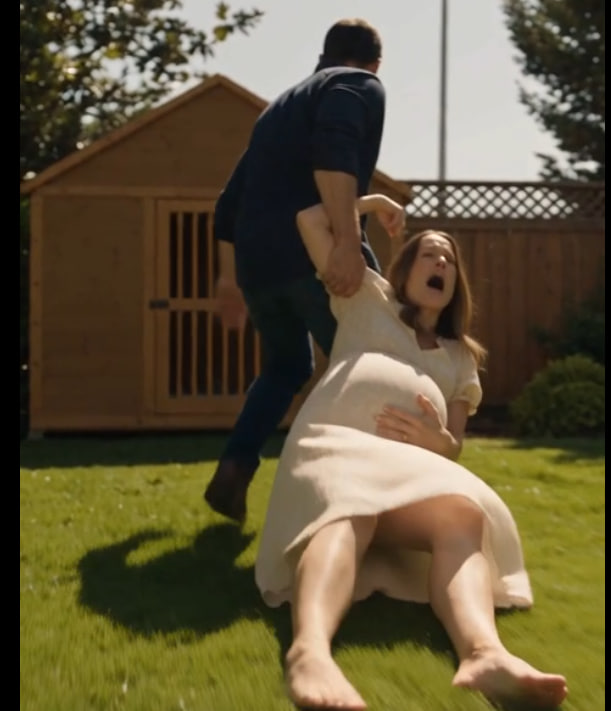
  • My husband had a vasectomy, and two months later, I got pregnant. He called me unfaithful, left me for another woman… but he didn’t know that the biggest shock was coming during the ultrasound.

    My husband had a vasectomy, and two months later, I got pregnant. He called me unfaithful, left me for another woman… but he didn’t know that the biggest shock was coming during the ultrasound.

    —”Pregnant?” Raul repeated, but his voice no longer sounded like fury; it sounded like fear.

    The doctor didn’t answer him. He stepped toward me, adjusted the sheet over my shoulders, and lowered his voice. —”Mrs. Lucia, I need you to listen to me carefully. Because of your injuries and the pregnancy, I am calling for social services. No one is going to force you to give a statement right now, but you and your daughters need protection.”

    Raul let out a dry laugh. —”Protection from what? She’s my wife.” —”Exactly,” the doctor said. “And in this hospital, a woman is no one’s property.”

    I had never heard a man speak to Raul like that. He always found a way to dominate: with money, with shouting, with his mother standing behind him crossing herself and saying that marriage was for life. But that afternoon, in that white room smelling of alcohol and IV fluid, Raul seemed smaller.

    Then Mrs. Eulalia appeared. She walked in with her black shawl clutched against her chest, walking fast, as if the hospital belonged to her, too. —”What did they do to my son?” she asked without looking at me. “Raul called me saying he’s being accused.”

    The doctor turned toward her. —”Your daughter-in-law has serious injuries. And she is pregnant.” Mrs. Eulalia went still. It wasn’t surprise I saw on her face. It was calculation. Her eyes went from my womb to the folded X-ray in Raul’s hand, then to the door, as if searching for an exit.

    —”That can’t be,” she murmured. My blood turned to ice. She didn’t say “how wonderful.” She didn’t say “God bless her.” She said: “That can’t be.”

    Raul heard her, too. He looked at her with a different kind of rage. —”Why can’t it be, Mom?” Mrs. Eulalia swallowed hard. —”Because… because this woman is devious. Who knows whose kid that is.”

    I tried to sit up, but the pain pierced through my ribs. Still, I spoke. —”I have never been with another man.” —”Shut up!” Raul yelled at me.

    The doctor took a step forward. —”Lower your voice or I’ll call security.” But Raul wasn’t looking at me anymore. He was looking at his mother. —”Why did you say that?” Mrs. Eulalia squeezed the rosary between her fingers. —”Because a mother knows things.”

    At that moment, a social worker named Mariana entered. She came with a blue folder and a serene gaze—the kind that doesn’t need to raise a voice to hold you up. —”Mrs. Lucia, your daughters are here. A neighbor brought them. They are scared, but they are fine.” My soul returned to my body. —”Camila? Renata?” —”They are with nursing. They ate some Jell-O and are asking for you.”

    I cried, unable to help it. Not for myself. For them. Because they had seen too much. Because I had confused silence with protection and obedience with love.

    Raul tried to leave. —”I’m going to get my daughters.” Mariana stepped in his way. —”No. The girls are not going with you.” —”They are my daughters.” —”For now, they are in protective custody while the situation is evaluated.”

    Raul raised his hand, and for the first time, he didn’t find my face in front of him, but two security guards who appeared at the door. Mrs. Eulalia put her hand to her chest. —”What a shame! Look what you caused, Lucia!” The shame, I thought, had been sleeping in my bed for years. It wasn’t mine anymore.

    The doctor asked for another ultrasound to check on the baby. They took me down a long hallway. The ceiling lights passed one after another like memories: my wedding in a borrowed dress, Raul promising to take care of me, Mrs. Eulalia touching my belly when Camila was born and saying “Oh well, maybe next time,” Renata crying in my arms while her grandmother refused to hold her because “another female in the family wasn’t needed.”

    When the doctor put the cold gel on my belly, I closed my eyes. I was afraid the blows had harmed the baby. Then I heard that sound—fast, small, stubborn. Thump-thump-thump-thump. —”There is your baby,” the doctor said. “The heartbeat is strong.” I covered my mouth with my hand. I don’t know if it was instinct or a miracle, but for the first time in a long time, I didn’t feel like my body was a battered house. I felt that it still held life.

    The doctor moved the device slowly. She frowned. —”Did you have another birth before your two girls?” I opened my eyes. —”No. Only Camila and Renata.” —”Are you sure?” I froze. —”Yes.”

    She looked at the screen, then at my charts. —”There are signs here of an old C-section. And it’s not from your daughters, because according to the file, both were natural births.” I felt the room tilt. —”That can’t be.”

    The doctor called the previous physician. They checked papers, talking in low voices. I barely understood scattered words: internal scar, previous procedure, old file, records. An hour later, the doctor returned with a yellowed folder. He wasn’t alone. Mariana was with him. —”Mrs. Lucia,” he said gently, “we found a record from seven years ago. You were admitted to this same hospital with a complicated labor.” —”Yes,” I whispered. “When Camila was born.” The doctor opened the folder. —”It says here that you had a twin pregnancy that day.”

    I ran out of air. —”No.” Mariana stepped closer to my bed. —”Lucia…” —”No,” I repeated, but my voice broke. “I had Camila. They told me it was only her. They told me I fainted because I lost blood.” The doctor turned a page. —”According to this record, two babies were born. A girl and a boy.”

    The world stopped making noise. I only heard my own heart. A boy. My son. The son Raul had demanded of me for years as if I had denied him one. —”Where is he?” I asked, though the answer terrified me. “Where is my baby?”

    Mariana took a deep breath. —”The file says the boy was declared deceased hours later. But there are irregularities. There is no death certificate. No record of the body being released. No signature from you.” —”Because I was asleep,” I said, trembling. “They drugged me. Mrs. Eulalia said it had been necessary. She signed everything.”

    The doctor looked at Mariana. —”There is an authorization signature. From Eulalia Mendoza.” I put my hands on my belly, but I wasn’t protecting the baby that was coming. I was searching for the one they had taken from me.

    The door burst open. Raul had been listening. —”What are you saying?” Mrs. Eulalia was behind him, white as a sheet. —”Don’t believe them, son. It’s all lies.” Raul snatched the folder from the doctor. He read one, two, three lines. His hands began to shake. —”It says ‘male’ here.” No one spoke. —”Mom,” he said, in a voice I had never heard from him. “I had a son?”

    Mrs. Eulalia pressed her lips together. —”That boy was born wrong.” —”What did you do to him?” —”I saved him from a miserable life!” she screamed, and her scream was a confession. “He was born weak. Small. He was going to bring misfortune.” —”Where is he?” Raul asked.

    She started to cry, but her tears gave me no pity. They were the tears of a cornered rat. —”Your cousin Maribel couldn’t have children. Her husband was going to leave her. I only did what was best for the family. The boy is alive. He is with her, in Charleston.”

    I felt something inside me break and ignite at the same time. —”She stole my son,” I said. Mrs. Eulalia looked at me with hate. —”You didn’t deserve him. You were poor, weak, a whiner. And then you brought another girl. What were people going to think?”

    Raul slumped into a chair. For years he had beaten me for not giving him a son, while his own mother had hidden the son I did give birth to. But I wasn’t looking at Raul anymore. I didn’t care about his surprise, his guilt, or his late tears. My pain had another name. —”I want to see him,” I said. “I want my son.”

    Mariana nodded. —”We are going to file a report. This is kidnapping, falsification of documents, and domestic abuse. But we have to do it the right way.”

    Raul stood up. —”I’m going with you.” I looked at him, and for the first time, he lowered his eyes. —”You aren’t going anywhere with me,” I told him. “You broke my ribs. You broke my years. You broke me in front of my daughters.” —”Lucia, I didn’t know…” —”But you did hit me.” He opened his mouth but found no defense. —”I’ll spend my whole life asking for your forgiveness.” —”I don’t want your life,” I replied. “I want mine back.”

    That night, I gave my statement. It hurt more to talk than to breathe. I recounted every blow I remembered. Every threat. Every time Mrs. Eulalia called me useless. Every time Raul locked me in. Every one of my daughters’ birthdays that ended in tears because they weren’t “the heir.”

    Camila came to see me the next day. She walked slowly, as if the hospital were a church. Renata followed behind with a teddy bear a nurse had given her. —”Mommy,” Camila said, “are we not going back to the house?” I hugged her carefully. —”No, my love.” —”Promise?” That question broke me more than any kick. —”Promise.”

    Renata touched my belly. —”Is a baby living in there?” I nodded. —”Yes.” —”Is Daddy going to yell at it?” I pulled her to my chest. —”No one is ever going to yell at a baby for being born again.”

    Three days later, with the support of the District Attorney’s office and a court order, we went to Charleston. I still walked slowly. I wore dark sunglasses to hide the bruises and a medical brace that held my ribs. Mariana was by my side. So were a prosecutor and two police officers.

    Maribel’s house was large, painted yellow, with pots of geraniums and a new truck outside. A pretty house to hide a horrible lie. Maribel opened the door. When she saw me, she dropped the cup she was holding. —”Lucia…” She didn’t ask what I was doing there. She knew. —”Where is my son?” She put her hands to her chest. —”Please, don’t do this.” —”Where is he?”

    A boy appeared at the end of the hallway. He was seven years old. Black hair, large eyes. My eyes. On his left cheek, he had a small mole, just like Camila’s. He looked at me with curiosity. —”Mom, who is she?”

    The word pierced through me. Mom. He was saying it to someone else. Maribel started to cry. —”I raised him. I love him.” —”You took him from me,” I said, unable to look away from him.

    The boy took a step back. —”What’s happening?” I knelt as best as I could, though the pain made me break into a cold sweat. —”Hi, sweetheart. My name is Lucia.” He watched me. —”I’m Matthew.”

    Matthew. My son had a name. Not the one I would have chosen, but it was his. He was alive. He was breathing. He was looking at me. And in that instant, I understood that recovering a son wasn’t about snatching him suddenly from the only arms he knew. It was about telling him the truth without destroying him.

    Maribel confessed a short time later. Mrs. Eulalia had handed the newborn to her with false papers and the promise that no one would know. They told her I had agreed because I couldn’t support two babies. They told her I was a bad mother. —”I wanted to believe it,” she sobbed. “Because I needed to believe it.”

    I didn’t forgive her that day. Maybe I never fully will. But I didn’t scream in front of Matthew either. There were already too many adults breaking children.

    The judge ordered tests, interviews, and psychological support. Matthew didn’t fall into my arms like in the movies, running and saying “Mom.” He arrived with fear, with doubts, with two drawings in his backpack and a life he didn’t know was borrowed.

    For weeks, I saw him at a family center. At first, he spoke to me formally. Camila gave him a blue marble. Renata asked him if he knew how to make paper airplanes. He barely smiled. The first time he called me “Lucia,” I felt sadness and hope at the same time. The first time he took my hand to cross the street, I cried silently. The first time he asked if I had looked for him, I told him the truth. —”I didn’t know you existed, my love. But from the moment I knew, I haven’t stopped looking for you for a single second.”

    He looked down. —”So you didn’t give me away?” —”Never.” Matthew hugged my waist tightly. I endured the pain in my ribs because that hug was putting my soul back in place.

    Raul was arrested for domestic violence. Mrs. Eulalia also faced charges for kidnapping and forgery. At first, in our small town, people said everything. That I had exaggerated. That a mother shouldn’t put the father of her children in jail. That family problems are settled at home.

    But one afternoon, while I was selling snacks outside a school to make rent, a neighbor who used to close her window when I walked by approached me with red eyes. —”Forgive me, Lucia,” she told me. “I used to hear it.” I didn’t know what to say.

    Then another came. And another. Some didn’t ask for forgiveness; they just bought extra snacks. Others gave me clothes for the kids. One offered me a job cleaning medical offices. Life didn’t get fixed all at once, but it stopped hitting me.

    My baby was born on a rainy dawn, healthy and strong. It was a girl. When the doctor put her on my chest, I laughed through my tears. Camila clapped when she saw her. Renata said she looked like a little bundle. Matthew, serious like a little old man, tucked her blanket in. —”What’s her name going to be?” he asked. I looked at my four children. —”Hope.”

    No one asked for a boy. No one sighed in disappointment. No one said “maybe next time.”

    Raul asked to see me months later from the detention center. I agreed only once, accompanied by my lawyer. I found him thinner, with hollow eyes. —”Lucia,” he said, “I lost everything.” I looked at him through the glass. —”No. You threw it away.” He cried. —”My mother made me believe…” —”Your mother lied. But your hands were your own.”

    He went silent. —”Does Matthew ask about me?” —”He asks about the truth. That’s different.” —”And what do you tell him?” —”That his father had the opportunity to love and chose to hurt.” Raul closed his eyes. —”Will you ever forgive me?”

    I thought of my daughters covering their ears. Of Matthew growing up far away from me. Of Hope moving inside my womb while he accused me. I thought of my body full of maps I hadn’t chosen. —”I don’t live to hate you,” I told him. “But I wasn’t born to forgive you either.” I stood up. —”Lucia…” I didn’t turn back.

    Outside, the sky was clear. I bought four popsicles before going home. Camila chose lime, Renata strawberry, Matthew coconut, and I took a small one for when Hope grew up, even if it melted on the way. That silliness made me laugh. Before, I didn’t allow myself silliness.

    That night we had noodle soup at a used table that wobbled on one leg. Matthew said they asked him to draw his family at school. He showed me the paper. We were all there: Camila with massive braids, Renata in a purple dress, Hope as a little pink ball in my arms, him by my side, and me—taller than a house. —”I drew you big,” he said. —”Why?” He shrugged. —”Because you’re really there.”

    I went to the bathroom to cry so he wouldn’t get scared. But Camila followed me. —”Are you sad, Mommy?” I wiped my face. —”No. I’m breathing.” She didn’t understand, but she hugged me.

    With time, my story stopped being gossip and became a warning. In the market, women who used to look down started speaking to me in low voices. One showed me a bruise. Another asked for Mariana’s number. Another told me her husband also blamed her for only having girls. I would repeat to them what a doctor told me when I was broken on a gurney: —”The sex of the baby is determined by the father. But the value of a woman is determined by no one.”

    Sometimes I still dream of the courtyard of that house. I dream I’m on the ground and I can’t get up. Then I wake up startled, looking for blows that no longer come. And the same thing always happens. I hear my children’s breathing in the small rooms. I hear Hope moving in her crib. I see the dawn over the city through the window—soft, clean, as if the world were giving me another chance.

    So I get up. I make coffee. I braid hair. And when my children wake up, I tell them the same thing every day, so they never forget: —”In this house, no one is worth less for being born a girl. No one is worth more for being born a boy. In this house, we were all born to be loved.”

    Matthew was the last one to leave for school that morning. He came running back from the door and hugged me hard. —”Mom,” he said. It was a small word. But it gave me back seven years. I hugged him with all the care in the world, the way you hug what was lost when it finally returns, and looking at the sun coming through the window, I understood that Raul hadn’t taken my life. He had only delayed the moment I could start living it.

  • My cousin used my laptop and forgot to log out of her WhatsApp. Two seconds later, a notification showed me that my own family had been having dinner without me for a long time. The worst part wasn’t seeing the secret group chat with my mom, my dad, and my brother… it was reading the sentence that finally pushed me out of that house forever.

    My cousin used my laptop and forgot to log out of her WhatsApp. Two seconds later, a notification showed me that my own family had been having dinner without me for a long time. The worst part wasn’t seeing the secret group chat with my mom, my dad, and my brother… it was reading the sentence that finally pushed me out of that house forever.

    This time, I didn’t hesitate. That night, I didn’t make a scene.

    I didn’t wait for them to get home to confront them. I didn’t write long, rambling paragraphs. I didn’t cry in front of anyone. I saved the money my mom had transferred me into a separate folder, as if it were evidence. Then I pulled a suitcase out of the closet, opened it on the folding cot on the porch, and started packing what truly belonged to me. It was strange to realize how little space my life actually occupied.

    Two pairs of jeans. Three t-shirts. My grey hoodie. The notebook where I scribbled my ideas. My charger. My headphones. The folder with my documents. A photo of my maternal grandmother—the only person who ever looked at me as if I didn’t have to earn my place in the house.

    I paused for a second with that photo in my hand. My grandmother had a very quiet way of saying things that hurt because they were true. “When a family makes you compete for affection, it’s no longer love. It’s the management of attention.” I didn’t understand her when I was a child. That night, I did.

    I went to the bathroom, washed my face, tied my hair back, and kept packing. From the living room, the usual sounds reached me: the TV buzzing, laughter from some mindless show, the neighbor’s blender, dogs barking in the street. Everything remained normal. Only I was different.

    Around ten-thirty, I heard the front door open. They arrived talking loudly, smelling of a restaurant and expensive dessert. I recognized Megan’s shrill voice before I saw her. I also heard my brother’s laugh—that laugh that, when directed at me, almost always sounded like a mockery.

    “Chloe, we’re home!” my mom shouted, as if they had just returned from church and not from a dinner they had hidden from me.

    I didn’t answer. My brother poked his head onto the porch and scowled when he saw the open suitcase. “What are you doing now?” I kept folding a shirt. “I’m leaving tomorrow.” “Oh, don’t start with your drama,” he said, walking away.

    My mom appeared a few seconds later, wiping her hands on a towel. “What is the meaning of this?” “I’m moving to Seattle.” “For what?” “The project I told you about weeks ago.” She looked at me as if I were suddenly speaking a foreign language. “I thought that was just an idea.” “No. It was an opportunity. It’s just that in this house, nobody listens until someone is already walking out the door.”

    My mom pursed her lips. Behind her, Megan stood in the doorway with that look of sweet concern that worked so well for her in front of others. “Chloe,” my mom said, lowering her voice, “don’t do something stupid over a misunderstanding.”

    I let out a soft laugh. “Misunderstanding? I saw the group chat. I saw the messages. I saw the photos.” Her face shifted slightly. Not to guilt, but to annoyance. “Oh, Chloe. It was so you wouldn’t feel bad.” “Not inviting me was so I wouldn’t feel bad?”

    She didn’t answer right away. And in that silence, I understood she wouldn’t even bother to pretend anymore. My dad walked up behind her, loosening his belt. “What’s going on now?” “Your daughter is being dramatic,” my mom said. “Because we went to dinner.” My dad looked at my suitcase and let out a sigh, as if I had inconvenienced his evening. “You’re not going to make a scene over this, are you?”

    I looked at him. It was the first time I had the crystal-clear realization that my pain was more of a burden to them than my absence would be. “No. You guys have been making the scene for years. I’m just tired of living in it.”

    Megan took a step forward. “Chloe, seriously, I never wanted you to feel left out. If I posted that, it was just because… I don’t know… it just happened. I love you so much.” I turned to her with a calmness I didn’t know I possessed. “You don’t love me. I made your bed, I lent you my clothes, I covered for your lies, I put up with you going through my things, and you still made me look crazy every time I tried to speak up. You don’t love me. It just suits you when I stay quiet.”

    Megan’s eyes welled up immediately. The tears always came so fast for her. “See?” my brother yelled from the living room. “You’re attacking her again!”

    Then it happened. The sentence. The one that finally pushed me out of that house forever. My mom crossed her arms, looked me up and down, and said with a coldness she no longer tried to mask: “Well, if you’re so uncomfortable, then leave. After all… you’ve always been the one who didn’t fit in here.”

    It wasn’t a scream. It wasn’t an insult. There were no curse words. And yet, nothing had ever hit me as hard as that. Because suddenly, all the pieces clicked. The cot on the porch. The laundry in my hands. The table set without me. The “forgotten” invitations. The chores that “no one else could do.” The way every conflict ended up being my fault. The ease with which I was sacrificed so everyone else could be comfortable.

    It wasn’t my imagination. It wasn’t “sensitivity.” I wasn’t “overthinking.” I didn’t fit in because I was the only one still expecting love where there was only habit.

    My dad didn’t contradict her. Neither did my brother. And Megan, after a second of faking surprise, looked down like someone hearing a truth she already knew. Something inside me went still. I no longer felt the need to convince them. Or remind them of things. Or ask why. I just zipped my suitcase.

    “Thank you,” I said. My mom blinked, confused. “Thank you for what?” “For finally saying it plainly.”

    I went into the room, grabbed my grandmother’s photo, my laptop, and my jacket. My brother laughed nervously. “Oh, come on. Don’t act like the victim.” I looked him straight in the eye. “The saddest part is that you truly believe the victim is anyone except me.” He stood up from the couch, challenging me, but my dad put a hand on his chest. Not to defend me, but out of exhaustion. “Enough, Leo.”

    My mom tried that reasonable tone again—the one she used when she wanted to look good without taking responsibility. “Look, if you need space, take it. But don’t leave angry.” “I’m not leaving angry,” I told her. “I’m leaving awake.”

    I slept in my clothes. Or rather, I pretended to sleep. I spent the night listening to the sounds of the house like someone hearing a place for the last time—a place that was never truly mine. The refrigerator door. Footsteps to the bathroom. My dad’s cough. My mom’s heels in the early morning. The short ding of a notification on Megan’s phone inside the room that used to be mine.

    At 5:30 AM, my alarm went off. By 6:00, I was showered. By 6:30, I called an Uber. Nobody came to say goodbye at first. I hauled the suitcase to the front door by myself. The fresh Chicago air hit my face, and I felt an absurd pang in my chest. Not of doubt, but of grief.

    I was putting the suitcase in the trunk when I heard someone call me. “Chloe.” It was my dad. His shirt was unbuttoned at the top and his eyes were puffy from sleep. He stood in the doorway, not coming all the way out. “Are you really leaving?” I thought about responding with irony, but it wasn’t worth it. “Yes.” “Your mom… she just expressed herself poorly.” “No. She expressed herself perfectly.” He looked down. “It wasn’t our intention for you to feel this way.” That sentence made me sadder than it made me angry. Because people who hurt you and then wash their hands with “intentions” always expect you to thank them for the effort. “Well, you succeeded anyway.”

    My dad took a deep breath. For a moment, he seemed to want to say something important. Something he perhaps hadn’t dared to put into words for years. But he chose the easy path again. “This will always be your home, anyway.” I looked at the door, at the porch where I had slept for so many months, at the window of the room where Megan now slept, at the yard where I had folded laundry so many times while they ate out or locked themselves away to watch movies without inviting me. “No,” I told him. “My home will be wherever I don’t have to ask permission to exist.”

    I got into the car. I didn’t cry as we pulled away. I cried three blocks later, when the driver turned on the radio and some random song filled the silence as if the world didn’t know a whole life was breaking apart inside me.

    Seattle welcomed me with grey skies, drizzle, traffic, and a strange sense of anonymity that did me good. My best friend, Dani, was waiting for me outside the station with an iced coffee and a bag of donuts. She didn’t ask “what happened” immediately. First, she hugged me. Then, she carried one of my bags. And only when we were in the car did she say: “You aren’t going to be an ‘extra’ here, okay?” It was a simple sentence, but I felt something inside me loosen for the first time in months.

    The project turned out to be more intense than I expected. Long days. Difficult clients. Impossible deadlines. But there was something deeply healing about being exhausted by something that gave me an identity in return. Nobody asked me to fold someone else’s clothes. Nobody made me feel guilty for taking up space. Nobody sent me to get water while everyone else made a toast.

    Dani and I rented a small apartment near the temporary office. She was a terrible cook, I made decent coffee, and between the two of us, we built a routine that looked nothing like the one in Chicago. At first, I kept apologizing for everything. Sorry for taking too long in the bathroom. Sorry for leaving a glass on the table. Sorry for being late. Sorry for being sad. Sorry for not wanting to talk.

    One day Dani threw a pillow at my face and said: “Listen to me: nobody here is ‘tolerating’ you. We love you.” I laughed so hard I ended up crying.

    Two weeks passed before my mom wrote to me. Not to ask how I was. Not to say she was sorry. She sent me a photo of the electric bill with a message underneath: “Can you transfer me your share? Even if you aren’t here, you’re still part of the house.” I stared at the phone for several seconds. Then I replied with only two words: “No more.”

    She called immediately. I didn’t answer. My brother wrote to me. I didn’t respond. Then Megan sent me a long voice note, crying, saying she felt guilty, that she never wanted to divide us, that she hoped I’d understand she had suffered a lot too. I deleted it without finishing it. Not because I didn’t believe she had suffered, but because for the first time, I understood that other people’s pain didn’t justify the place they put me in.

    Three months later, I got a permanent job in Seattle. It wasn’t perfect, but it was mine. I signed the contract on a Tuesday, and that night I bought a twin bed with my first real savings. When they delivered it to the apartment, I sat on the new mattress and stared at the ceiling like an idiot. It wasn’t a luxury bed. It didn’t have a headboard or fancy sheets yet. But it was inside. And it was mine. That night, I finally cried a long, good cry.

    Over time, my family kept trying to pull me back in strange ways. My dad sending me photos of the dog. My brother writing “grow up already.” My mom pretending everything was normal in birthday messages. Megan reacting to my stories as if we were still close. I answered less and less. Not out of punishment. For my health.

    Sometimes people think leaving is the moment you close the door. But it’s not. Truly leaving starts later, when you resist the temptation to return to where you already know they break you.

    Almost a year later, I went back to Chicago just for some paperwork. I didn’t tell them I’d be there for a few days. I stayed with a distant aunt who had always been kind to me. When I arrived, she said something that caught me off guard: “You look rested.” No one had ever used that word to describe me before.

    On the last day, before heading back to Seattle, I drove through the neighborhood where I grew up. I didn’t get out of the car. I just looked at the front of the house. The same peeling paint. The same cracked flowerpot. The same porch where I had slept, feeling grateful for crumbs. I no longer felt the urge to go inside. I didn’t feel hate, either. Just an immense clarity.

    My phone vibrated just then. It was a message from Dani: a photo of my plant on the apartment window, all crooked and alive, with the text: “Your home is waiting for you. And so is the coffee, even if I messed it up.”

    I smiled. I put my phone away. I looked at that house one last time. And I understood, finally, that leaving hadn’t been about abandoning my family. It had been about finally refusing to abandon myself.

  • Karoline Leavitt’s “heartless” comment after Biden canc3r diagnosis

    Karoline Leavitt’s “heartless” comment after Biden canc3r diagnosis

    At a news briefing, Fox News’ Peter Doocy questioned President Donald Trump if he was concerned about the quality of medical care provided to US presidents in light of Biden’s late-stage diagnosis.

    “White House doctors may have missed the early stages of his prostate cancer,” Doocy told reporters. “Is President Trump worried about the quality of care that presidents get here?”

    Leavitt, 27, promptly rejected the concerns. “Not as far as President Trump is concerned,” she explained.

    “The White House physician we have here is phenomenal,” she added. “And the team at Walter Reed Medical Center is excellent.”

    Leavitt went on to highlight Trump’s recent physical checkup results. “He achieved flawless outcomes. He’s in great form. I believe those of you who accompanied us to the Middle East last week can attest to the president’s endurance.”

    She also mentioned that Trump was back in the Oval Office working all day on Saturday, immediately after returning from his trip. “He doesn’t stop, he doesn’t quit, he’s in great health, and he trusts his physicians.”

    While her words may have been intended to reassure the public about Trump’s well-being, several viewers felt the tone inappropriate given Biden’s critical diagnosis.

    “She came off as heartless and vindictive,” one commenter stated. Another person noted that Trump looked to fall asleep several times during the trip Leavitt mentioned.

    The uproar erupted after Biden said that he had been diagnosed with a high-grade form of prostate cancer. According to a statement from his office, he had recently been evaluated after suffering urinary symptoms. Doctors identified a prostate nodule, and more tests revealed that the cancer had spread to his bones.

    “This represents a more aggressive form of the disease,” the statement said. However, the cancer is thought to be hormone-sensitive, which implies it could respond favorably to treatment.

    Biden’s canc3r has been assigned a Gleason score of 9 (Grade Group 5), which is one of the highest possible values, signifying aberrant, rapidly developing cells.

    While the cancer’s exact stage has not been revealed, metastasis suggests it is in an advanced stage.

    He and his family are presently considering treatment options, which may include hormone therapy. The former president is now at home in Wilmington, Delaware, and has not specified where he will receive treatment.

    Despite the severity of the diagnosis, some medical professionals have voiced optimism.

  • My mother slapped my son over a toy, and the whole family pretended not to see the blood. I didn’t say anything; I carried him to the hospital… and when I returned with the report in my hand, even the favorite grandson stopped smiling.

    My mother slapped my son over a toy, and the whole family pretended not to see the blood. I didn’t say anything; I carried him to the hospital… and when I returned with the report in my hand, even the favorite grandson stopped smiling.

    The notary opened the envelope with a calmness that was louder than any scream.

    Inside were three pages, a small key, and a photograph of Julian holding a newborn Matthew in front of the hair salon where I worked. Upon seeing it, Valerie brought her hand to her neck, as if the image had squeezed her throat from the inside. My mother tried to snatch the package, but the police officer took a step forward and blocked her path. “Mrs. Theresa, don’t touch anything,” he said, with a voice so calm it sounded worse than a threat.

    The notary adjusted his glasses and read that Julian, before his accident, had secretly bought the mortgage debt on that house and placed it in a trust under Matthew’s name. I felt the room spinning, because for six years I had swept, cooked, and paid bills believing they were doing me a favor by letting me sleep in the coldest bedroom. The notary continued, stating that Julian had allowed my mother to live on the property only if she protected the boy and did not dispose of his assets. As soon as he uttered the word “protected,” the social worker looked at my sleeping son’s swollen cheek.

    My mother pursed her lips, but for the first time, she couldn’t find a cruel phrase to hide behind. “That’s a lie,” Valerie said, though her voice trembled and her eyes darted to the USB drive I held in my hand. Then I remembered Julian’s note and asked for permission to plug the flash drive into the TV. No one moved, not even Damian, who was staring at the red toy car on the floor as if it were suddenly on fire.

    Julian appeared on the screen, skinny from his late nights at the auto shop, wearing his blue shirt and that smile that broke my heart. He said my name with a tenderness that made me feel his grease-stained hands caressing my belly back when Matthew was still kicking inside me. Then he explained that he had discovered my mother and Valerie visited a loan shark to figure out how to take any life insurance payout away from me if he passed away. My brother-in-law looked down, and in that gesture, I knew he had also heard something and chosen silence.

    Julian recounted that he decided to buy the house’s past-due debt because Theresa was going to lose it and because I wouldn’t bear to see her out on the street. But he also said he didn’t trust her, which is why he made everything ironclad so that, upon Matthew turning seven or in the event of any proven abuse, the administration of the estate would pass immediately to me. When the video showed my mother signing a receipt accepting those conditions in exchange for keeping a roof over her head, she let out a small, miserable sound, like a trapped animal.

    The room exploded without a sound; it was an explosion of faces falling, of truths force-swallowed, and of cake turning to dust in their mouths. Valerie tried to say she didn’t know anything, but in the folder were monthly wire transfers Julian had set aside for Matthew that never reached my hands. Each deposit showed as withdrawn the exact same day into a joint account held by my mother and sister.

    I felt like throwing up, not because of the money, but because of all the times Matthew asked me for chocolate milk and I told him we couldn’t afford it. I remembered his torn sneakers, his lunches split in half, and my nights sewing uniforms while Valerie showed off expensive new purses. “We were managing it,” my mother babbled, lifting her chin as if she could still command the air. “You were stealing it,” I replied, and my own voice surprised me because it came out clean, without fear, without asking for permission.

    The social worker took photos of Matthew’s cheek, the medical report, and the bruises described on the hospital intake sheet. The police officer asked everyone for ID, and the notary handed me the small key, explaining that it opened a safe deposit box holding original documents, deeds, and another recording.

    Damian stood up slowly and walked toward my sleeping son, but Valerie yanked him by the arm in desperation. “Don’t go near that boy,” she ordered, repeating without realizing it the same phrase she had spat her entire life. Damian pulled free and started to cry, not with a tantrum, but with a new kind of shame he didn’t know where to put. “I didn’t know it was from his dad,” he said looking at the red toy car, and his childish voice pierced the room deeper than any accusation.

    Valerie tried to silence him, but he kept talking, confessing that his mom used to tell him Matthew didn’t deserve nice things because we were just passing through. My sister turned pale, and my mother glared at her with fury because the favorite grandson had just broken their theater from the inside.

    I picked up the toy car, wiped a stain of gravy off the wheel with my sleeve, and placed it on Matthew’s chest. My son shifted in his sleep and hugged the toy with that sad trust of children who love even after being hit. It was right then, seeing his little closed hand, that I stopped feeling pity for my mother. Pity had been her favorite rope to tie me down, but that night it snapped like an old string.

    “I want it on the record that my son and I are leaving this house, but that no one will ever remove us from what belongs to us again,” I said, and the notary wrote down every word as if laying new bricks beneath my feet. My mother let out a broken laugh and said I wouldn’t last a week on my own, that a woman with a sick child and no husband always ended up coming back. Before, that sentence would have folded me, but now I had a medical report in my hand and Julian’s name on every paper like an invisible pillar.

    The social worker asked to speak with me privately, and in the kitchen where they had humiliated me so many times, she explained the temporary protective measures. She said Matthew shouldn’t stay under the same roof as his abusers and that the police report would allow us to request a restraining order while the investigation moved forward. I nodded, looking at the refrigerator covered in magnets from trips we were never invited to. In one corner, a drawing by Damian was still hung up, framed with gold tape, while Matthew’s had ended up in the trash because, according to my mother, they were in the way.

    I pulled out the only drawing I kept from my purse, folded into quarters, where my son had painted his dad as a sun over a red car. The social worker looked at it and her eyes welled up with tears, but she didn’t say anything, because some tender moments need silence so they don’t break.

    When we returned to the living room, my brother-in-law was no longer defending anyone. He was sitting with his hands clasped, sweating through his Sunday shirt, understanding that his comfort also had blood on its edges. Valerie begged him to do something, to call his lawyer, to not allow this embarrassment. He looked at her as if he finally recognized her and asked how many times she had seen Matthew locked in the laundry room. My sister opened her mouth, but no words came out, and that silence answered for her.

    The police officer announced that my mother had to accompany him to give a statement regarding the assault and that Valerie would also have to answer for the alleged embezzlement and the reported abuse. Theresa straightened up with the pride of women who confuse authority with cruelty. “I did what I could for you,” she said, looking at me as if I were an ingrate rather than the daughter she had left begging for love.

    Then, for the first time in my life, I didn’t argue her version of events. I just stepped close enough for her to hear me without the others breathing down our necks. “No, Mom. You did whatever you wanted, and starting today, you’re going to learn that a child is not disciplined with fear, and a daughter is not kept with chains.” Her eyes filled with tears, but her crying was no longer the key to unlocking my guilt.

    They led her to the patrol car without handcuffs, but with everyone’s eyes on her, which sometimes weighs more than metal. Neighbors peeked through their curtains, and I remembered how many times I had lowered my head so no one would ask why my mother was shouting my name like an insult.

    Valerie tried to follow her, but the social worker asked her to stay, and my sister collapsed onto the couch where Matthew had been sleeping minutes before. That couch, which had always been Damian’s throne, was left empty like a discarded crown.

    Damian gently picked up the red toy car from Matthew’s chest, kissed its plastic roof, and placed it back where it belonged. “I’m sorry,” he whispered, and even though I wasn’t ready to forgive anyone, I understood that he was also a child built on lies. I didn’t hug him, but I didn’t push him away either, because justice shouldn’t become the very same stone they had thrown at us.

    My brother-in-law offered to take us to a hotel, perhaps out of guilt or fear, but I rejected his help. I opened Julian’s box one more time and found, behind the papers, a set of keys to a small storefront in the Maplewood neighborhood. There was a note where he told me he dreamed of seeing me cut hair in my own salon, with a yellow sign and a blue chair for Matthew to do his homework. I cried until my throat hurt, but I cried standing up, not on my knees.

    That early morning, we left with two suitcases, my son’s backpack, and the red toy car safely tucked away like a relic. Matthew woke up in the cab, confused by the city lights and by my jacket draped over his shoulders. Matthew asked with a voice so small it pierced me like a needle if Grandma wasn’t going to hit him anymore. I squeezed him tight and promised him that no one would ever touch him again without the whole world finding out.

    I didn’t promise him that everything would be easy, because wounded children deserve gentle truths, not fake fairytales. I told him we were going to have a home where his drawings would be hung on the wall, where his toys wouldn’t be plunder, and where his name would be spoken in full. Matthew closed his eyes and, for the first time in months, fell asleep without clenching his fists.

    The next morning, when I opened the storefront in Maplewood, the dust sparkled in the sunlight as if Julian had been waiting there all this time. Before rolling up the metal gate, I called the District Attorney’s office, confirmed my appointment, and understood that justice didn’t begin with revenge, but with never disappearing again. I penciled the words “Claire and Matthew’s Salon” on the metal gate, and next to it, I drew a little red car.

    Over the following weeks, I gave statements, cried, signed papers, took Matthew to therapy, and learned that healing is also exhausting, but it isn’t humiliating. The judge upheld the protective order, and my mother, who always flaunted her last name like a shield, had to explain every blow in front of strangers. Valerie returned a portion of the money, and my brother-in-law handed over text messages where she and Theresa mocked my double shifts and Matthew’s torn shoes.

    Damian sent a letter with a new blue plastic toy car, and I put it away without opening the door to the past. I didn’t show it to Matthew to force him to forgive; I saved it for him for when his heart was bigger than his wound.

    On his first day of classes at his new school, Matthew asked to carry the red toy car in his backpack, not to show it off, but to feel like his dad was walking right next to him. That afternoon he drew three people under a yellow sign and wrote “my family” in crooked letters, and right then I understood that Julian hadn’t left us a house or money, but a way out.

  • After a month of not speaking to me, my boyfriend posted his new woman in the middle of the night…

    After a month of not speaking to me, my boyfriend posted his new woman in the middle of the night…

    After a month of not speaking to me, my boyfriend posted his new woman in the middle of the night… this time, I didn’t go back to beg him.

    At 1:17 in the morning, my phone lit up.

    I had just gotten out of the shower. My hair was still wet, the ends dripping onto the old t-shirt I wore to sleep.

    A red notification dot appeared on Instagram. It was a post from Adrian Shaw. My boyfriend. Or so I thought until that minute.

    The photo took a second to load. In it, a woman was lying on his bare chest. He had pale skin, a firm torso, his hand resting on her cheek. The girl was wearing a top that was way too revealing, her neck was covered in red marks, and Adrian’s lips were pressed against her ear.

    The caption was short. “For the rest of my life, as long as you’re here, I’m complete.”

    I stared at the screen. I didn’t blink.

    I knew the woman. Sophia Cross. His grad school classmate. The same one we had argued about dozens of times. The same one he always defended with a tired tone: “Don’t be insecure, Paula. She’s just a friend.”

    The same one who, at a get-together a month ago, laughed and accepted it when someone yelled: “Kiss her! You guys look like a couple anyway!”

    Adrian didn’t push her away. I got up and left.

    Since that night, we started a cold war. A whole month. He didn’t call me. I didn’t call him either. I thought we were still fighting. He was already starting a new life.

    I scrolled down to the comments. His friend Mark wrote: “Aren’t you afraid Paula’s going to cause drama again?”

    Adrian replied: “When does she not come back begging on her own?”

    Someone else asked: “How long have you guys not been talking?”

    He answered: “Almost a month. I bet the day after tomorrow, on my birthday, she’ll panic and come back crying.”

    I read the sentence again. Come back begging on her own.

    That’s how he talked about me. About me. The woman who for three years had called him in the middle of the night when we argued. The one who apologized even when she didn’t know what she had done wrong. The one who, during our last breakup, called him twenty-seven times and sent him forty-three text messages.

    I opened our chat history. The last message from that time was still there: “I messed up. Please, don’t ignore me.”

    Three hours later, he had replied with a single word: “Yeah.”

    Back then, I thought that “yeah” meant forgiveness. Now I understood it meant: I knew you’d come back.

    I looked at the photo again. That hand now touching Sophia’s face had touched mine. Those lips had kissed my neck. That tongue had traced my skin while he promised me I was his only home. And now all of that belonged to another woman.

    I didn’t cry. I took screenshots. Then I started deleting.

    First, I left Adrian’s family group chat, the one where his mother, just a month ago, had told me: “You guys should get married already.”

    Then I left his friends’ group chat. Then I deleted his Instagram and his number. I didn’t block him. I just deleted him. The way you delete an emergency contact that is no longer going to save you.

    After that, I deleted my Twitter, TikTok, and Reddit accounts, the ones I had used for seven years. Finally, I changed my phone number. Only my family and my boss would have the new one.

    When I finished, it was two in the morning. My hair was already dry. I went to bed. I closed my eyes. I didn’t cry.

    The next morning, I asked for the day off. Not out of pain. For logistics.

    I went to the company and handed in my resignation. My boss looked at me in surprise. “What happened?” “I want to move to another city.” “Which one?” “I don’t know yet.” “But your project…” “I left all the handover documents ready. They’re in your email.”

    He looked at me for a few seconds and didn’t ask anything else.

    I went back to the apartment. It was rented by Adrian. He paid the rent, I paid for food, electricity, water, and internet. For three years, I thought that was living together. That day I understood it was just living inside a room that could stop being mine the moment he wanted it to.

    I packed everything. Two suitcases. One backpack. That was all I had after three years.

    When the landlady came for the keys, she was surprised. “Aren’t you waiting for Mr. Shaw?” “No.” “Did you guys have a fight?” “We broke up.” She didn’t ask anything else.

    I chose the new city at random. I opened the map. I put my finger on a spot. I bought a ticket for a four-hour Amtrak train ride.

    I slept during the trip. The conductor woke me up when we arrived. I walked out of the station with my two suitcases, not knowing where I was going to sleep. The sky was blue. So clear it seemed to be mocking me.

    My new phone vibrated. It was a former coworker, Sarah. “Paula, did you really leave?” “Yes.” “Adrian called the office. He asked why your phone isn’t working.” “What did you tell him?” “That you resigned. He asked where you went. I told him I didn’t know.”

    I looked up at the sky. “Thank you.” “Are you okay?”

    I smiled. For the first time in a long time, the answer wasn’t a lie. “I’ve never been better.”

    That afternoon I rented an old apartment, no elevator, on the sixth floor. One bedroom, a small living room, white walls, wide windows.

    As I was carrying up the last suitcase, it got stuck on the landing. Then a male voice called out from above: “Do you need help?”

    I looked up. A man in a gray t-shirt was walking down with a trash bag in his hand. “No, thank you.”

    He was already coming down. He grabbed my suitcase with one hand and carried it up as if it weighed nothing. “What floor?” “Sixth. 601.” “What a coincidence. I live in 602.”

    He left the suitcase in front of my door. “I’m Matthew Gray.” “Paula Lane.” “Lane, like the street?” “Lane, like Lois Lane.”

    He nodded. He didn’t ask where I came from. He didn’t ask why I was moving in alone. He just said: “Welcome, neighbor.”

    That night I slept on the floor on a yoga mat, with no bed, no hot water, and stray cats crying under the window. But, for the first time in years, no one was waiting for me to come crawling back. And that was already a home.

    The first sunrise in my new apartment arrived without asking for permission.

    The light came through the bare window and fell directly on my face. I had no curtains. No bed. No table. No glasses. I had slept on a yoga mat, using a jacket as a blanket and a backpack as a pillow.

    My back hurt. My neck was stiff. The floor smelled of dust, old paint, and stale humidity.

    Even so, when I opened my eyes, the first thing I felt wasn’t sadness. It was silence. A simple silence. Clean.

    Without the sound of Adrian checking his phone next to me. Without the anxiety of checking if he was online. Without waiting for a message from him to pop up. Without wondering if that day he would punish me with indifference or reward me with a kind phrase.

    I stayed still, looking at the white ceiling. There was nothing in that apartment. And that was exactly what made it mine.

    I got up slowly, folded the mat, and checked my phone. No message from Adrian. Of course. He didn’t have my new number. He didn’t have my accounts. He didn’t have my groups. He didn’t have my addresses.

    For the first time in three years, if he wanted to find me, he would have to make an effort. And for the first time in three years, I wasn’t planning on helping him.

    I went down to the street to buy breakfast. The building was old, the kind with concrete stairs, rusted mailboxes, and cables hanging like black roots along the walls. At the entrance, there was a small convenience store that sold milk, bread, eggs, cheap umbrellas, and transit cards.

    The owner, a woman in her fifties with a perm and a raspy voice, looked me up and down. “New in the building?” “Yes.” “What floor?” “Sixth.” “Ah, poor thing.”

    She smiled, as if that were a welcome.

    I bought bread, yogurt, and bottled water. When I returned, I walked up slowly. By the fourth floor, my legs were burning. By the fifth, I thought maybe I had made a mistake choosing a walk-up apartment.

    On the sixth, the door to 602 opened. Matthew walked out with wet hair, a black t-shirt, and a toolbox in his hand. “Good morning, neighbor.” “Good morning.”

    He looked at the bag I was carrying. “Do you have gas yet?” “I don’t know.” “Hot water?” “Not that either.” “Electricity?” “There’s a bulb hanging, but no lamps.”

    He nodded with an almost technical seriousness. “So you have a cave with windows.”

    I couldn’t help but smile. “More or less.” “If you need someone to check the gas valve, let me know. Sometimes these old systems act up.” “Thank you.”

    I went into my apartment and closed the door. For a few minutes, I leaned against it. Matthew’s kindness didn’t excite me. It scared me a little.

    After Adrian, any kind gesture seemed to hide a future debt. Adrian was also kind at first. Very kind. Too kind. He would bring me food when I worked late. He would wait for me at the bus stop. He would touch my hair and say: “Paula, when you’re tired you look like a wet cat.”

    I would laugh. I thought I had found someone who truly saw me. But over time, that gaze turned into a cage.

    First, he knew what food I liked. Then, he decided what food I should order. First, he waited for me after work. Then, he asked why I was taking so long. First, he told me he missed me. Then, he got mad if I went out with friends.

    At first, when we fought, he would get desperate. Later, he got used to me coming back. And in the end, he turned me into a bet with his friends. “She comes back begging on her own.”

    I took my phone out of my backpack and opened the gallery. The screenshots were still there. The photo of Adrian with Sophia. The comments. The reply.

    I swiped my finger across the screen. I didn’t delete them. Not yet. The screenshots weren’t meant to torture me. They were evidence. Not for a trial. For my memory.

    Because I knew bad days would come. Days when I would remember Adrian laughing with me in bed. Days when a song, a smell, or a phrase would make me think maybe I overreacted. And then I would need to see his own words. Not the ones he whispered in my ear. The ones he said when I wasn’t there.

    That day I bought a cheap bed, a folding table, a pot, two plates, a lamp, and curtains. I carried it all however I could. Part of it arrived by delivery. The rest I carried myself.

    The bed came in pieces. The manual looked like it was written by someone who hated humanity. I spent three hours trying to put it together. I hurt my fingers. I put a screw where it didn’t belong. I had to take half the frame apart.

    At eight at night, sitting on the floor among boards and tools, I started to laugh. Not a happy laugh. An absurd laugh. Because for years I thought I couldn’t live without Adrian. And there I was, defeated by a pressed wood bed. Not by love. By screws.

    There was a knock on the door. I stayed still. “It’s Matthew,” he said from outside. “I don’t want to bother you, but I heard a really loud crash. Are you okay?”

    I looked at the board that had fallen on my foot. “Yes.” “Are you sure?” “More or less.”

    I opened the door. He looked at the disaster behind me. He didn’t smile mockingly. He just lifted the toolbox he had in his hand. “Do you want me not to ask and just help?”

    I liked that phrase. Don’t ask. Just help. “Yes,” I said.

    He came in, crouched next to the pieces, reviewed the manual for ten seconds, and said: “This is wrong starting from step two.” “Thanks for the humility.” “I didn’t mean you. The manual is bad.”

    He worked in silence. I handed him screws. He adjusted pieces. In less than forty minutes, the bed was ready.

    “Don’t jump on it,” he warned. “I don’t trust this brand.” “I wasn’t planning on celebrating like that.” “Good.”

    He stood up, gathered his tools, and walked toward the door. “Thank you,” I said. “You’re welcome.” “Do you want water? It’s the only thing I have.” “No need. Tomorrow they’re shutting off the water in the building from nine to three. Buy a bucket or some jugs.” “How do you know?” “They announced it in the neighborhood group chat.” “I’m not in the group.” “Do you want me to add you?”

    I hesitated. A neighborhood group meant more people. More noise. More ties. More chances of someone asking where I came from.

    Matthew seemed to understand my pause. “No need right now. I’ll let you know if there’s anything important.” “Thank you.” He left.

    That night I slept in my new bed, with poorly hung curtains and the smell of cheap wood. I slept badly. I dreamed of Adrian’s photo. In the dream, he was in a white room, holding Sophia’s face. But when she lifted her head, it was me.

    I woke up sweating. It was 3:18. My hand reached for the phone automatically. For years, when I woke up like that, I would text Adrian. “Are you awake?” If he was in a good mood, he would reply: “Another nightmare?” If he was annoyed, he’d leave me on read.

    That early morning I unlocked my phone. There was no Adrian. There was no conversation. There was no place to beg. I felt empty. And then, strangely, free.

    On the third day, they shut off the water. I went down to buy two large bottles. On the stairs, I ran into Matthew with a small cart loaded with water jugs. “I told you,” he commented. “Yes. I should have listened to you.” He looked at my two bottles. “That won’t even last you half a day.” “I live alone.” “People who live alone wash up too.”

    I didn’t know whether to laugh. He pointed to a jug on the cart. “Take one.” “No.” “I’m not giving it to you. You can pay me back later.” That difference made me accept. “Thank you.” “You’re welcome.”

    We walked up together. On the fifth-floor landing, an older neighbor opened her door and called out to him: “Matthew, can you check my sink when you have time?” “I’ll be there in ten minutes, Mrs. Eleanor.” “You’re an angel.”

    He seemed uncomfortable. “It’s nothing.”

    When we reached the sixth floor, I asked him: “Are you an electrician?” “No.” “A plumber?” “Nope.” “Then why does everyone ask you to fix things?” “Because I learned how to fix things.” “What do you do?” “I work at a logistics company. At night, sometimes I do repairs for neighbors.” “Do you sleep?” “Sometimes.”

    He said it with such seriousness that it almost made me laugh again.

    That afternoon, while I was organizing my clothes in the new closet, I received a call from my former coworker, Sarah. “Paula, he came by.” I didn’t ask who. “To the company?” “Yes. He was furious. He asked where you went. He said he needed to talk to you.”

    I sat on the floor. “What did you tell him?” “That I didn’t know.” “Did he believe you?” “No. But there was nothing he could do either. Then he asked the boss. The boss said he respected the privacy of a former employee.”

    I felt gratitude toward a boss with whom I had barely exchanged more than reports for years. “Thank you for letting me know.” “Paula…” “Tell me.” “He’s posting things.” I didn’t say anything. “Not directly about you. But he posted a story with Sophia. Something like ‘finally calm after the storm’.”

    Calm after the storm. I was the storm. Sophia, the calm.

    It hurt. Not like the first photo. The first blow breaks you. The following ones find the edges already cracked.

    “Don’t look at it,” Sarah said. “I’m telling you so you’re prepared, not so you go look at it.” “I’m not going to look.” “Good.” I hung up.

    I didn’t go look. But my body did react. I felt cold in my hands. A knot in my throat. An absurd urge to reclaim something. Not Adrian exactly. But my version of the story.

    I wanted someone to tell him: She wasn’t the storm. You provoked her.

    I wanted him to know I wasn’t crying. I wanted Sophia to understand that she hadn’t won a trophy, but a man who would one day turn her pain into a joke too.

    But I didn’t do anything. That was the first act of real resistance. Not responding. Not explaining. Not correcting his narrative. Because for three years I had spent too much of my life trying to make Adrian understand my feelings. This time, his understanding was no longer my problem.

    Adrian’s birthday arrived two days later. The date was etched in my memory. For years I had organized everything. Cake. Gift. Dinner. A long midnight text. Photos. A letter.

    The year before, I bought him a watch that cost more than half my salary. He looked at it and said: “You shouldn’t have spent so much.” But he wore it to every important meeting.

    That day I woke up before six. My first thought was: Today is his birthday. The second: I don’t care. The third, more honest: I do care, but I’m not going to do anything.

    I got up, made instant coffee, and sat at the folding table by the window. Outside, the new city was starting to move. Motorcycles. Breakfast vendors. A woman sweeping the sidewalk. A child crying because he didn’t want to go to school. Life went on. I had to as well.

    At eight, my old number, now canceled, would surely be receiving calls that would never go through. At nine, maybe Adrian would have checked Instagram. At ten, he would notice I hadn’t posted anything. By noon, he would probably say in front of Sophia: “She’s holding out. She’ll call.” By night, maybe he would start to doubt.

    That idea gave me a small satisfaction. Not enough to heal. But enough to get up.

    That day I looked for a job. I sent out resumes. I answered ads. I updated my portfolio. I was an editorial designer, with experience in cultural content and project management. It wasn’t an easy profession to start from scratch in another city, but it wasn’t impossible either.

    At five, I got an interview for a small publishing house. At seven, another for an online course company. At eight, I went down to buy rice and vegetables.

    When I returned, Matthew was sitting on the stairs of the sixth floor, fixing a lamp. “Hi, neighbor.” “Hi.” “Do you have water now?” “Yes.” “Stable bed?” “For now.” “Big progress.”

    I pulled a bag of oranges out of my grocery bag. “I owe you for the water jug.” “No need.” “You said I should pay you back.” “I said that so you would accept it.”

    I looked at him. “That was manipulation.” “Yes, but low risk.”

    For the first time in days, I laughed without feeling like I was betraying myself. I gave him three oranges. “Partial payment.” He accepted them. “Thank you.”

    I went into my apartment and closed the door. I stood leaning against the other side for a moment. It wasn’t love. Or interest. Or illusion. Just the relief of a human interaction without punishment.

    With Adrian, even jokes had an edge. If I said something clumsy, he corrected me. If I laughed loudly, he told me I was exaggerating. If I got upset, he shut down for days.

    Matthew made jokes that demanded nothing afterward. That, in my new life, was a rarity.

    A week passed. Then two. I started getting to know the city. I found a cheap bakery. A laundromat. A park where people ran at sunset. A public library with tables by the window.

    I also started getting to know myself in Adrian’s absence. I discovered that I didn’t hate eating alone. That I could sleep with the window open. That I liked walking without a destination. That I didn’t have to explain every expense. That I could buy a ridiculous yellow mug and use it without hearing: “What a childish taste.”

    The interview with the publishing house went well. The salary was lower than my previous job, but enough. The director, a forty-year-old woman named Irene, reviewed my portfolio and said: “You have a good eye for visual rhythm. Can you start on Monday?” “Yes.” “The team is small. Sometimes there’s chaos.” “I’m used to it.” “Everyone says that until they see our chaos.” “Believe me, I’ve seen chaos.” She didn’t ask. She hired me.

    On the first day, I arrived half an hour early. I bought coffee for the team. I sat at my new desk. The chair was uncomfortable. The computer was old. The software took a long time to open.

    But nobody knew who Adrian was. Nobody asked if we were still together. Nobody looked at me as “Shaw’s intense girlfriend.” I was Paula Lane. New designer. Period.

    Three weeks into my disappearance, Sarah called again. “Paula, don’t freak out.” I froze. “What happened?” “Adrian is seriously looking for you. He went to your old apartment. The landlady told him you turned in the keys. He went to the office again. He also messaged several people asking if anyone knew your new number.”

    I took a deep breath. “Is he with Sophia?” “I don’t know. But… he deleted the post.”

    That’s when I closed my eyes. My heart did something stupid. Not joy. Not hope. An old, automatic movement. Like a dog hearing the keys of someone who once fed it.

    “Why?” “I guess because he started to realize.” “No.” “No?” “He realized I didn’t come back. Not what he did.”

    Sarah stayed silent. “You’re right.” “If he asks, you don’t know anything.” “Of course.” I hung up.

    That night I dreamed about him. Not about the photo. About an old afternoon. It was raining. I was sick. Adrian arrived with hot soup and a scarf. He dried my hair with a towel, clumsy but tender. “If I’m not here, what do you do with yourself?” he told me then. I replied: “Wait for you.”

    In the dream, I woke up crying. In real life too. I sat up in bed, hugging my knees. That’s when I understood something cruel: Love doesn’t disappear just because a person humiliated you. Dignity can decide to leave before the heart understands. And that’s okay. You don’t have to wait to stop loving to save yourself.

    The next morning I went to work with puffy eyes. Irene looked at me and left a cup of tea on my desk. “I won’t ask.” “Thank you.” “I’ll just say something. The things that hurt at night are better worked through during the day.” “Is that editorial advice or life advice?” “Both.”

    I kept working.

    Time started to move differently. One month. Two. Three. Adrian stopped searching through acquaintances, or so it seemed. I didn’t look for news. At first, it was discipline. Then it became a habit.

    I heard something about Sophia by accident. An old friend posted a picture from a dinner where she and Adrian were. He was smiling, but not the same as before. Sophia looked beautiful, of course. White dress, red lips, hand on his arm. I closed the app. My hands didn’t shake. That was progress.

    In my building, my life filled with small routines. On Wednesdays, Matthew helped Mrs. Eleanor with impossible things: a stuck window, a leak, a light bulb. On Fridays, the store owner saved sweet bread for me. On Saturdays, I went to the farmer’s market.

    Sometimes Matthew coincided with me on the stairs and we ended up walking down together. We didn’t talk about deep things. We talked about pipes, the weather, vegetable prices, stray cats, and neighbors who left trash out past hours.

    One afternoon, returning from the market, it started raining heavily. I was carrying bags in both hands. Matthew appeared out of nowhere with a black umbrella. “You’re going to get soaked.” “I already am.” “Then you’ll get less soaked.”

    He covered me without touching me. We walked slowly. The rain hit the umbrella. I felt a pang of memory: Adrian in the rain, years ago, waiting for me. But this time it didn’t hurt as much. Maybe because Matthew didn’t say: “You can’t do this without me.” He just held the umbrella.

    When we reached the building, he handed me a bag that had slipped. “Your tomatoes survived.” “Thank you.” “They are strong tomatoes.” “Like me.” I said it without thinking. He looked at me for a second. “Yes.” He didn’t add anything else. That “yes” stayed with me all night.

    In the fourth month, Adrian found me. I don’t know how. Maybe through someone from the previous company. Maybe through a social security trail. Maybe because people with enough obsession and wounded pride end up finding doors.

    It was a Saturday afternoon. I was walking down in comfortable clothes to buy laundry detergent when I saw him in front of the building. Dark suit. Impeccable hair. Thinner. He was holding a bouquet of white flowers.

    For a second, my body reacted before my mind. My stomach tightened. My throat closed. My feet wanted to step back.

    He saw me. His eyes changed. “Paula.”

    His voice. Four months of silence and a single word was enough to open a locked room inside me.

    I didn’t step down the last stair. I stayed where I was. “What are you doing here?”

    He took a step forward. “I looked for you everywhere.” “I didn’t ask that.”

    He squeezed the bouquet. “I needed to see you.” “I didn’t.”

    The sentence hurt him. I saw it. Before, seeing pain on his face would have made me run to fix it. This time I watched him like someone watching the rain behind a glass window.

    “Paula, I’m sorry.”

    Four months ago, those words would have been an open door. Now they were just late words with expensive flowers. “For what?” He frowned. “What?” “You say you’re sorry. For what exactly?” He opened his mouth. He closed it. “For hurting you.” “More specific.” “For… posting that.” “That?” “The photo.” “And what else?”

    His jaw tensed. “For talking badly about you in the comments.” “What did you say?” He looked down. “Paula…” “Say it.” “I said you always came back.”

    I felt the phrase in my chest, but it didn’t pierce me the same way. “And did you believe it?” He didn’t answer. “You did believe it.” “I was angry.” “No. You were sure.”

    He looked up. His eyes were red. “Because you always came back before.”

    There it was. The truth. Not disguised. Not softened. He didn’t respect me because my love seemed guaranteed. Because I taught him, with every return, that he could break me a little more and still find me waiting.

    “You’re right,” I said. Adrian looked confused. “What?” “I used to come back.” I said every word slowly. “Not anymore.”

    His hand trembled. “Sophia and I broke up.” Her name appeared between us like a familiar shadow. “I don’t care.” “It wasn’t what I thought it was.” I almost smiled. “What a surprise.” “Paula, I was confused. She admired me, she understood me. With you, everything was a fight.” “Because I was the girlfriend. She was the break.” “That’s not fair.” “No. It wasn’t fair to me.”

    He squeezed the bouquet. “I love you.”

    The phrase arrived. The old key. The one that used to unlock everything. I waited. Nothing happened. It hurt, yes. But it didn’t unlock.

    “You don’t know how to love without feeling like an owner,” I said. His face hardened. “That’s not true.” “No? You posted another woman to punish me. You let your friends make fun of me. You bet I would come back begging. And now you’re here because I didn’t.” “I came because I miss you.” “You miss that I chose you even when you humiliated me.” “Paula.” “No.”

    My own voice surprised me. Clear. Without a tremor.

    “You didn’t come to apologize when you posted the photo. You didn’t come the next day. You didn’t come when I deleted my accounts. You came when you realized that this time there was no way back.”

    Adrian stood in silence.

    Behind me, on the stairs, I heard a door open. Matthew was walking down with a trash bag. He stopped when he saw us. Adrian looked at him. The shadow of jealousy was immediate. “Who is he?”

    There it was. He still thought he had the right to ask.

    Matthew, with perfect calm, said: “A neighbor.” Adrian looked him up and down. “I didn’t ask you.” Matthew didn’t change his expression.

    I stepped down the last stair and stood between them, not to protect Matthew, but to set the boundary. “Don’t talk to him like that.”

    Adrian let out a bitter laugh. “Of course. I get it now.” “No, you don’t get anything.” “Is that why you disappeared? Because of him?”

    The accusation filled me with a mix of exhaustion and disgust. “I disappeared for myself.” “I don’t believe you.” “I don’t need you to believe me.”

    He tried to step closer. Matthew took a step, not aggressive, just present. Adrian noticed.

    “Paula, let’s talk alone.” “No.” “Three years don’t end like this.” “You’re right. They ended at 1:17 in the morning, when you posted another woman and laughed at me.”

    His face turned pale. I pulled up the screenshots on my phone. Not for him. For me. I opened them and showed him his reply. “When does she not come back begging on her own?” “That night, I believed you.”

    His eyes filled with tears. “I didn’t…” “Yes.” I put the phone away. “And I listened to you. I stopped coming back.”

    I walked up the stairs. Adrian called out to me. “Paula, please.” I didn’t stop. Matthew didn’t say anything either. He just waited downstairs until Adrian left.

    That night, I found the bouquet of flowers in the building’s dumpster. I didn’t throw it away. Maybe he did. Maybe the wind. Maybe the store owner. It didn’t matter. The past can also end in a dumpster without a ceremony.

    After that visit, Adrian started sending letters. He couldn’t call me. He didn’t have my number. He couldn’t add me on social media. So he used physical mail.

    The first one arrived at the publishing house. I don’t know how he got the address. Irene left it on my desk. “I didn’t open it, obviously.”

    I looked at the envelope. My name written in his handwriting. My stomach flipped. “Do you want me to throw it away?” I thought about it. “No. I’ll read it.”

    I opened it in the bathroom.

    “Paula, I don’t know how to talk to you right now. I realize that I built our relationship on your fear of losing me. That makes me feel ashamed. Sophia wasn’t love. It was vanity. I liked seeing myself in her eyes because she didn’t know the worst parts of me. You did, and that made me feel judged. I know I don’t deserve another chance, but I can’t accept that our story ends like this.”

    I read the last sentence several times. I can’t accept. Even in an apology, he was still talking about what he could accept. I put the letter away. I didn’t reply.

    The second arrived a week later. More desperate. The third, more humble. The fourth, longer. In all of them, there was something resembling regret. In none of them was there a sentence that made me want to go back. Not because they were poorly written. Adrian wrote well. He always knew how to use words. That was part of the problem. I no longer wanted words that arrived after the actions.

    The last letter arrived two months later. It just said: “Today I understood that asking you to come back is still just thinking about myself. I hope you’re happy someday, even if it confirms you don’t need me anymore.”

    That one did make me cry. Not out of love. Out of mourning. Because maybe that was the first time Adrian loved me without trying to drag me back. Or maybe it was just the best-written letter. It didn’t matter. I didn’t reply to that one either.

    The first year in the new city was hard. I’m not going to lie. Freedom doesn’t pay the bills. Dignity doesn’t assemble furniture on its own. Starting from scratch is not a movie scene with inspiring music. It’s filling out forms, carrying heavy bags, getting sick with no one to bring you medicine, learning bus routes, going to the wrong supermarket, missing a voice that hurt you, and hating yourself for missing it.

    There were nights when I was on the verge of looking up his name online. There were mornings I woke up wanting to return to the old apartment, not because I wanted Adrian, but because I missed knowing where everything was. The unknown is exhausting.

    But little by little, the city started to recognize me. The baker saved sesame buns for me. My neighbor Mrs. Eleanor asked me to read her bank messages. Irene started trusting me with big projects. My designs improved. My body did too. I ate on time. I slept better. I started wearing dresses again that Adrian used to say “drew too much attention.” I cut my hair above my shoulders. The first day I showed up at the publishing house with the new cut, Irene said: “Now you look like a protagonist.” I didn’t know how much I needed to hear that.

    Matthew and I became friends. Not quickly. Not with fireworks. With small things. A fixed lamp. A bowl of soup when I had a fever. A picked-up package. A stray cat that we both started feeding and that decided to name himself, by Mrs. Eleanor’s decree, “General.”

    Matthew never asked me directly about Adrian. One day, while feeding the cat, I said: “My ex came by months ago.” “I know.” “You didn’t ask?” “It wasn’t my story to demand.” I looked at General, who was eating with arrogance. “He thought I left because of you.” Matthew let out a short laugh. “That says more about him than us.” “Yes.” “Did it bother you?” “It exhausted me.” “That’s different.” “Yes.”

    There was silence. Then he added: “I’m not good with other people’s drama.” “Me neither. And yet I lived in one for three years.” “So you’re an expert.” “Retired.” He smiled. “Good.”

    Another year passed before Matthew asked me out to dinner as something more than neighbors. It was a fall night. We had taken General to the vet because he was limping. Turned out he had just fought and lost to another cat. When we got back, Matthew said: “Do you want to have dinner with me?” “We have dinner together sometimes.” “No. I mean… have dinner with me. No cat, no pipes, no lamps.”

    I looked at him. My heart didn’t race. There was no vertigo. There wasn’t that intense anxiety I confused with passion when I was with Adrian. There was calm. That scared me.

    “I’m not sure if I’m ready.” “That’s okay.”

    He didn’t ask when. He didn’t play the victim. He didn’t pull away offended. He just said: “When you know, tell me. If the answer is no, we’ll just keep feeding General.”

    That night I thought a lot. With Adrian, love had been a rollercoaster: peaks of tenderness, drops of anxiety, intense reconciliations, cruel silences. With Matthew, everything was more like a well-set table. Not thrilling in the old sense. But stable. And after years of falling, stability can also cause vertigo.

    A week later, I knocked on his door. When he opened it, I said: “Yes.” He blinked. “Yes to what?” “To dinner. No cat.” He smiled. “Great.”

    We went to a small restaurant near the river. We ate fish, vegetables, and rice. We talked about our families, work, music, the time he shocked himself fixing a lamp because he thought he turned off the breaker but hadn’t. He didn’t touch me without permission. He didn’t try to define me. He didn’t say he would save me.

    On the way back, we walked under yellow trees. At the door of the building, he asked me: “Can I hold your hand?” That question almost made me cry. Not out of romance. Out of respect. “Yes.”

    His hand was warm. Large. Calloused. He didn’t squeeze it tightly. He didn’t hold me as if he feared I would escape. He just walked with me.

    Months later, Adrian wrote to me again. This time by email. I don’t know how he got my new work address, but the message was short. “Paula, I’m leaving the country for a while. Therapy, work, I don’t know. I wanted to tell you that I’m not going to look for you anymore. It took me too long to understand that your silence wasn’t a punishment, it was an answer. I’m sorry I forced it to be so final. Take care.”

    I read the email. Matthew was in my kitchen, trying to convince General not to climb on the table. I didn’t tell him right away. Not because it was a secret. Because it was no longer urgent.

    I finished chopping tomatoes. I washed the knife. I poured water. And then I understood that Adrian had become something I didn’t think was possible: News. Not an open wound. News.

    That night, after dinner, I told Matthew: “Adrian wrote.” He left the plates in the sink. “Are you okay?” “Yes.” “Do you want to talk about it?” “Not really.” “Okay.”

    I sat in the chair. “I think he’s finally gone.” Matthew looked at me. “And you?” I thought about it. “I left a long time ago.”

    He nodded. He didn’t say “good riddance.” He didn’t insult Adrian. He didn’t demand space. He just sat across from me. “Then let’s toast.” “With water?” “General didn’t let us buy wine.” The cat meowed from the floor, as if defending his decision. We toasted with water. To leaving. To staying. To not coming back.

    Three years after that early morning, I returned to my old city for work. The publishing house sent me to a book fair. I was no longer the new designer. I was the visual coordinator for an entire line of publications. I had a team, projects, professional bags under my eyes, and a much nicer suitcase than the two I had fled with.

    On the second day of the fair, I saw him. Adrian. He was at a university booth, talking to someone. His hair was a bit shorter. His face calmer. Sophia wasn’t there. No one was by his side.

    He saw me too. For a second, the world did that cruel thing where it shrinks. Then I took a breath. And the world returned to its normal size.

    Adrian walked toward me. “Paula.” “Adrian.” We stood face to face. No music. No rain. No drama.

    “You look good,” he said. “I am.” His eyes softened. “I’m glad.” And, for the first time, I believed him. Not because it mattered. But because he wasn’t trying to use the sentence as a bridge.

    “You?” I asked. “Better. Not perfect.” “No one is.” He smiled faintly. “Yeah.”

    There was a pause. “I read some things you designed,” he said. “They are very good.” “Thank you.” “You were always good.” I didn’t answer. Before, I would have waited years for that sentence. Now it arrived like a book I no longer needed to read.

    Adrian took a deep breath. “I’m not going to apologize again. I already did it too late and too many times. Just… thank you for not coming back.” I looked at him. I didn’t expect that one. “Thank you?” “If you had come back, I would have stayed the same. Maybe worse. Your absence forced me to see myself without an audience.” I felt a soft sadness. Not painful. Human. “It was really hard not to come back,” I said. He closed his eyes for a second. “I know that now.” “No. You don’t know.” He opened his eyes. He nodded. “You’re right.”

    That answer, simple and defenseless, showed me that maybe something had indeed changed. Not enough for me. But something. “Take care, Adrian.” “You too, Paula.”

    We parted ways. I didn’t look back right away. When I did, he was still there, watching me walk away. But this time I didn’t feel a tether. Just distance.

    When I got back to the hotel, I called Matthew. “I saw him.” “Him?” “Yes.” “How are you?” I looked at the city out the window. The city where I had loved, begged, waited, disappeared. “Good.” “Good for real or ‘don’t ask’ good?” I smiled. “Good for real.” “I’m glad.” “Matthew.” “Yes?” “Thank you for never asking me why I arrived with two suitcases.” There was silence. “I figured you’d tell me someday if you wanted to.” “I think I can now.” “Then I’m listening.”

    That night I told him everything. Not just everything that happened. He already knew that in parts. I told him how it felt. I told him about the twenty-seven calls. The forty-three messages. The word “yeah.” The photo. The phrase “she comes back on her own.” The train. The first night on the floor. The poorly assembled bed. The water jug. The umbrella.

    He listened without interrupting. At the end he said: “I’m glad you made it to 601.” “Me too.” “And to 602.” I laughed. “That was convenient.” “Very convenient. For me.”

    The following year, Matthew and I moved in together. Not to 601 or 602. To an apartment with an elevator, a balcony, and enough space for General, who accepted the move with feline disdain. We both signed the lease. We split expenses. We bought furniture together.

    The first night, sitting on the floor among boxes, Matthew handed me a key. “Your copy.” I took it. “Aren’t you going to say ‘our home’?” “I could, but it sounds cheesy.” “A little.” “Besides, a home isn’t the key. It’s what we do after we open the door.” I looked at him. Sometimes, life gives you back phrases you didn’t know you needed.

    We didn’t get married right away. There was no rush. I learned to distrust stories that run to close wounds with rings. First we lived. We argued about the trash. About the cat. About schedules. About the right way to hang a towel. But we argued differently. No disappearing. No silent treatments. No posting other people on social media. No turning love into a bet.

    One day, Matthew messed up and spoke to me in a harsh tone. I froze. Not because of what he said. Because of what my body remembered. He noticed immediately. “I’m sorry. That came out wrong.” “Yes.” “I’m going to rephrase that.” And he did. Just like that. So simple, yet so difficult for others. That’s when I understood that a healthy relationship isn’t one where no one fails. It’s one where a mistake isn’t turned into a weapon.

    Five years after that 1:17 am, I found the screenshots in an old cloud backup. The photo. The comments. “When does she not come back begging on her own?”

    I stared at them. Matthew was in the living room, putting together a new bookshelf. “Everything okay?” he asked. “Yes.” “What are you looking at?” “An old ghost.”

    He came to my side. He didn’t invade the screen. He just waited. I showed him. He read in silence. Then he said: “What a jerk.” It was so blunt that I laughed. “Yeah.” “Do you want to delete it?”

    I looked at the screen. For years I kept them as proof. As an antidote. As a reminder not to go back. But I no longer needed to look at them to believe myself. I no longer needed evidence of my pain to justify my decision.

    I tapped select. Delete. The phone asked if I wanted to permanently delete. I accepted. The screen was clear. I felt something small. Not an explosion. Not a cinematic closure. Just a deeper breath.

    “Done,” I said. Matthew went back to the bookshelf. “Good.” “Do you need help?” “Yes. But if the manual is wrong, I’m blaming the manufacturer.” “As always.” “Tradition matters.”

    I got up and went to help him. As I held up a board, I thought about the Paula who one night got out of the shower and saw a photo capable of breaking her life. I wanted to hug her. Tell her that not crying didn’t mean not feeling. That running away wasn’t cowardice. That two suitcases were enough to start over. That the sixth floor with no elevator would be hard, but it would also teach her how to climb. That a neighbor with a trash bag wasn’t a salvation, but a kind presence on the path she chose herself. That Adrian would one day be just a name. That the phrase “she comes back on her own” would stop being a prophecy and become the first lie she disobeyed.

    Life didn’t compensate me by giving back exactly what I lost. It doesn’t work that way. It gave me other things. A new city. A job that belongs to me. An arrogant cat. A table that wobbles a bit. A man who asks before holding my hand. And, above all, it gave me back to myself.

    Sometimes, when someone asks me why I left without saying anything, I answer: “Because I had already spent too much time talking to someone who didn’t want to listen to me.” And when they ask if I ever wanted to go back, I tell the truth: “Yes.” Many times. But I didn’t go back. That is the important part. I didn’t go back. Not for his birthday. Not when he deleted the post. Not when he came with flowers. Not when he wrote letters. Not when he said he loved me. Not when my heart still hurt.

    Because a woman doesn’t need to stop loving to choose her dignity. She only needs, just once, not to answer. Once, to close the door. Once, to get on the train. Once, to arrive in an unknown city with two suitcases and a broken heart. And discover, over time, that she wasn’t lost. She was finding her way out.

    The rest of the life Adrian promised with another woman doesn’t belong to me. Let him live it however he wants. The rest of my life started that early morning, when I saw his photo, saved the screenshots, erased my name from his world, and understood that the scene he expected—me coming back to beg him—was never going to happen again.


  • I was eight months pregnant when Ryan decided I had embarrassed his mother for the last time. All I did was say no. Diane stood in my kitchen with her hand out, waiting for my bank card like she owned my paycheck, my body, and the baby growing inside me. “She needs things for the nursery,” Ryan snapped. “No,” I said. “That money is for the baby.” Diane’s mouth twisted. ……..

    I was eight months pregnant when Ryan decided I had embarrassed his mother for the last time. All I did was say no. Diane stood in my kitchen with her hand out, waiting for my bank card like she owned my paycheck, my body, and the baby growing inside me. “She needs things for the nursery,” Ryan snapped. “No,” I said. “That money is for the baby.” Diane’s mouth twisted. ……..

    I was eight months pregnant when Ryan decided I had embarrassed his mother for the last time.
    All I did was say no.
    Diane stood in my kitchen with her hand out, waiting for my bank card like she owned my paycheck, my body, and the baby growing inside me.
    “She needs things for the nursery,” Ryan snapped.
    “No,” I said. “That money is for the baby.”
    Diane’s mouth twisted.
    “See how she talks to me?”
    Ryan changed instantly.
    His eyes went flat.
    “Emily, apologize.”
    “I’m not apologizing for protecting our child.”
    He grabbed my wrist.
    Hard.
    “Ryan, let go.”
    Instead, he dragged me through the back door.
    I stumbled, one hand wrapped around my stomach.
    “Stop! I’m pregnant!”
    Diane followed, calm as a queen.
    “She needs to learn who runs this family.”
    Ryan pulled me across the yard toward the old dog kennel we had not used in years.
    My knees buckled.
    “Please.”
    He shoved me inside.
    I landed on the padded floor, pain shooting through my hip.
    The gate slammed.
    I grabbed the bars.
    “Ryan!”
    He looked down at me.
    “When you’re ready to apologize to Mom, maybe I’ll let you out.”
    Diane smiled.
    “That attitude will break.”
    Then a voice came from behind them.
    “Open that cage.”
    Ryan froze.
    My heart stopped.
    “Dad?”
    My father, Michael, stood beside the garden gate with his travel bag still in his hand.
    He had driven from Nashville to surprise me before the baby came.
    Instead, he had just watched my husband lock his pregnant daughter in a kennel.
    Dad’s face was terrifyingly calm.
    “Open it. Now.”
    Diane stepped forward.
    “This is a private family matter.”
    Dad looked straight at her.
    “My daughter is my family.”
    Ryan fumbled with the latch.
    Dad helped me out and called 911 before anyone could speak.
    Then he saw the papers scattered on the patio table.
    “What are those?”
    Diane lunged.
    “Nothing.”
    Dad picked up the top page.
    His face changed.
    It was a guardianship agreement for my unborn baby.
    My name was signed at the bottom.
    But I had never seen it before.
    I stared at Ryan.
    “You forged my signature?”
    Dad kept reading.
    Then he went pale.
    “Emily,” he whispered. “This is worse.”
    He turned the last page toward me.
    The person listed to receive custody was not Ryan.
    It was Diane.
    And beside Diane’s name was another signature.
    A signature that belonged to the woman I had called Mom my entire life. >>>

    PART 2 

    I stared at the page until the letters blurred.

    My mother’s name sat beside Diane’s like a knife laid neatly on white paper.

    Carol Bennett.

    My mom.

    The woman who packed my lunches.

    The woman who held my hand when I got my first heartbreak.

    The woman who cried when I told her I was pregnant.

    “No,” I whispered.

    Dad’s jaw tightened.

    “She signed this.”

    Ryan stepped closer.

    “Emily, listen.”

    I backed away so fast Dad caught my arm.

    “Don’t touch her,” he said.

    Diane lifted her chin.

    “Carol understands what Emily refuses to accept. A young mother under stress can make dangerous choices.”

    I looked at her.

    “You put me in a kennel.”

    “You were hysterical.”

    “I became hysterical after your son dragged me across the yard.”

    Sirens sounded in the distance.

    Ryan’s face drained.

    Dad took off his jacket and wrapped it around my shoulders.

    “Are you hurting?”

    “My hip. My stomach feels tight.”

    His calm broke.

    “Sit down.”

    Diane snatched at the papers again.

    Dad moved faster and tucked them under his arm.

    “If you touch these, I will make sure the police add evidence tampering.”

    She glared at him.

    “You have no idea what is happening here.”

    “I know enough.”

    The ambulance arrived first.

    The paramedics checked my blood pressure, my pulse, the baby’s movement.

    When one asked if I felt safe at home, Ryan answered for me.

    “She’s fine.”

    Dad turned slowly.

    “She will answer.”

    I looked at the paramedic.

    “No,” I said. “I do not feel safe.”

    Ryan flinched like I had slapped him.

    Good.

    Police arrived while I was being helped onto a stretcher.

    Dad handed over the forged guardianship papers.

    Diane began crying.

    Ryan claimed it was a misunderstanding.

    I looked at the officer and said, “My husband locked me in a kennel while I’m eight months pregnant.”

    The officer’s face hardened.

    “And the papers?”

    “I never signed them.”

    As they loaded me into the ambulance, I saw Ryan handcuffed on our lawn.

    Diane screamed his name.

    But I was staring at the signature.

    My mother’s.

    And I realized the kennel was only the beginning.


    PART 3

    At the hospital, they strapped monitors around my belly.

    The baby’s heartbeat filled the room.

    Fast.

    Steady.

    Alive.

    I cried as soon as I heard it.

    Dad stood beside my bed, one hand over his mouth.

    The nurse asked questions gently.

    Had Ryan ever hurt me before?

    Had Diane threatened me?

    Had I signed any custody or guardianship documents?

    “No,” I said again and again.

    No.

    No.

    No.

    But every no opened another memory.

    Diane insisting I was too emotional.

    Ryan hiding mail.

    My mother asking strange questions about whether I felt “ready” for motherhood.

    I called Mom from the hospital bed.

    She answered on the second ring.

    “Emily?”

    My voice shook.

    “Did you sign papers with Diane?”

    Silence.

    That silence told me more than words.

    “Mom.”

    She exhaled.

    “Honey, don’t get upset.”

    I closed my eyes.

    “I’m in the hospital because Ryan locked me in a kennel.”

    Dad stepped closer.

    Mom whispered, “What?”

    “Answer me. Did you sign?”

    “I thought it was temporary.”

    The room tilted.

    “You thought giving Diane custody of my baby was temporary?”

    “She said you were overwhelmed. Ryan said you weren’t sleeping. Diane said the baby needed stability if something happened.”

    “If what happened?”

    Mom started crying.

    “I didn’t know he would hurt you.”

    Dad took the phone from my hand.

    “Carol,” he said, voice low. “You signed away our grandchild behind our daughter’s back.”

    “She said Emily might leave Ryan.”

    “And you helped them stop her.”

    “No. I thought I was protecting the baby.”

    Dad looked at me.

    His face was broken.

    “You protected everyone except your daughter.”

    He hung up.

    I turned away and sobbed.

    Not loudly.

    Not dramatically.

    The kind of crying that makes no sound because the betrayal is too deep for noise.

    The doctor came in later.

    The baby was safe.

    I needed observation overnight.

    Dad sat beside me until dawn.

    “I should have seen it,” he said.

    “No.”

    “I brought you into that family.”

    “I married Ryan.”

    “And Carol signed.”

    I looked at him.

    “Why would Mom side with Diane?”

    Dad’s eyes darkened.

    “I’m going to find out.”

      PART 4

    Dad did not sleep.

    By morning, he had already called a lawyer.

    Her name was Nora Fields.

    She arrived at the hospital in a navy suit with a folder, a tablet, and eyes that missed nothing.

    She listened to me explain everything.

    The bank card.

    The kennel.

    The forged signature.

    My mother’s signature.

    When I finished, Nora said, “We file for an emergency protective order today.”

    “What about the guardianship?”

    “Invalid if forged, coerced, or signed without your consent. We will challenge it immediately.”

    Dad handed her the papers.

    Nora studied them.

    Her expression shifted.

    She pointed to the notary stamp.

    “This notary has appeared in three elder coercion cases I handled.”

    My stomach tightened.

    “Elder?”

    Nora looked at Dad.

    “How old is Carol?”

    “Sixty-two.”

    “Financially dependent on anyone?”

    Dad’s face changed.

    “No. At least, I didn’t think so.”

    Nora kept reading.

    “There’s an attached medical affidavit.”

    I sat up too fast.

    Pain pulled across my belly.

    “What medical affidavit?”

    Nora hesitated.

    “It claims you are showing signs of prenatal psychosis.”

    I laughed.

    It came out cracked.

    “I’ve never been diagnosed with that.”

    “It is signed by Dr. Steven Vale.”

    Dad went still.

    I looked at him.

    “Do you know him?”

    Dad’s mouth tightened.

    “He’s Carol’s doctor.”

    A cold line ran down my spine.

    My mother had signed papers based on a doctor’s statement about my mind.

    A doctor who had never examined me.

    Nora closed the folder.

    “This was planned.”

    The baby kicked hard.

    I placed both hands over my stomach.

    Ryan had not lost control.

    Diane had not gotten carried away.

    They were building a cage long before the kennel.

    And my mother had helped them hold the door.

    PART 5

    The judge granted the protective order that afternoon.

    No contact from Ryan.

    No contact from Diane.

    They were barred from the hospital, my home, and any place I stayed.

    Nora also filed an emergency motion freezing any guardianship claim.

    Dad drove me to his hotel when I was discharged.

    I refused to go back home.

    My body hurt.

    My heart hurt worse.

    I kept seeing Mom’s signature.

    When my phone rang, I almost ignored it.

    But it was Mom.

    Dad said, “You don’t have to answer.”

    “I know.”

    I answered anyway.

    Her voice was small.

    “Emily, please let me explain.”

    “Explain why you signed away my baby.”

    “I didn’t think of it that way.”

    “How else could you think of it?”

    “Diane said you were talking about leaving Ryan. She said if you left, you’d cut all of us off. She said you were unstable.”

    “And you believed her?”

    Mom cried harder.

    “She had recordings.”

    My blood went cold.

    “What recordings?”

    “You yelling. Crying. Saying you couldn’t do this anymore.”

    I remembered those nights.

    Ryan would corner me until I broke.

    Diane would criticize me for hours.

    Then Ryan would pull out his phone after I finally screamed.

    “They made those happen,” I whispered.

    Dad closed his eyes.

    Mom said, “I didn’t know.”

    “You didn’t ask me.”

    “I was afraid.”

    “Of me?”

    “No,” she whispered. “Of Diane.”

    The room went still.

    Dad leaned closer.

    “What did Diane do to you, Carol?”

    Mom sobbed.

    “She knows something.”

    I gripped the phone.

    “What?”

    A long silence.

    Then Mom said, “About your birth.”

    My breath stopped.

    Dad’s face went white.

    “What about my birth?”

    Mom whispered, “Michael isn’t your biological father.”

    The phone slipped from my hand.

    Dad caught it before it hit the floor.

    I stared at him.

    He looked shattered.

    Not shocked.

    Shattered.

    👉Click Here to continue read next: PART6: I was eight months pregnant when Ryan decided I had embarrassed his mother for the last time. All I did was say no. Diane stood in my kitchen with her hand out, waiting for my bank card like she owned my paycheck, my body, and the baby growing inside me. “She needs things for the nursery,” Ryan snapped. “No,” I said. “That money is for the baby.” Diane’s mouth twisted. …….. 

  • PART6: I was eight months pregnant when Ryan decided I had embarrassed his mother for the last time. All I did was say no. Diane stood in my kitchen with her hand out, waiting for my bank card like she owned my paycheck, my body, and the baby growing inside me. “She needs things for the nursery,” Ryan snapped. “No,” I said. “That money is for the baby.” Diane’s mouth twisted. …….. 

    PART 6

    Dad sat down like his legs had disappeared.

    I could still hear Mom crying through the phone.

    Nora took it gently and ended the call.

    The hotel room felt too small.

    Too bright.

    Too full of lies.

    “Dad,” I said.

    He covered his face.

    “I found out when you were five.”

    My chest hurt.

    “Found out what?”

    He looked up.

    His eyes were wet.

    “Carol had an affair before you were born. I suspected. I did a test years later.”

    “And you never told me?”

    “You were my daughter.”

    “That’s not an answer.”

    “It was the only answer that mattered to me.”

    I started crying again.

    Pregnancy made every emotion feel too large for my skin.

    “Who is he?”

    Dad looked away.

    “I don’t know.”

    I did not believe him.

    Not fully.

    Before I could ask again, Nora spoke.

    “Diane used that secret to pressure Carol.”

    Dad nodded slowly.

    “Carol always feared losing Emily.”

    I almost laughed.

    “So she helped someone take my child?”

    The cruelty of it was unbearable.

    Mom had been so afraid I would stop being hers that she signed papers letting Diane take my baby from me.

    Nora said, “We need to know how Diane learned this.”

    Dad’s phone buzzed.

    A text from an unknown number.

    He read it and went pale again.

    He handed it to Nora.

    I saw only one sentence.

    Tell Emily to stop, or everyone learns who her real father is.

    Attached was a photo.

    My mother.

    Young.

    Standing beside a man I recognized.

    Dr. Steven Vale.

    The doctor who signed the fake affidavit.

    My mother’s doctor.

    The man who claimed I was unstable.

    Nora’s face hardened.

    “Well,” she said. “Now we know why he lied.”

    PART 7

    The next forty-eight hours moved like a storm.

    Nora subpoenaed medical records.

    Dad hired a private investigator.

    Police opened a broader investigation into forged documents and conspiracy.

    Ryan called from jail.

    I did not answer.

    Diane called from a blocked number.

    Nora answered for me.

    I wish I had seen Diane’s face when Nora said, “All future contact will be treated as witness intimidation.”

    Mom came to the hotel on the third day.

    Dad almost refused to let her in.

    I said yes.

    I needed to look at her.

    She entered with swollen eyes and shaking hands.

    She saw my belly first.

    Then my face.

    “Emily.”

    I did not move.

    She sat across from me.

    “I was nineteen,” she said. “Steven Vale was my professor. He was married. Powerful. I thought he loved me.”

    Dad stood by the window, silent.

    Mom continued.

    “When I found out I was pregnant, he told me to get rid of you.”

    The baby moved inside me.

    I pressed my hands there.

    “I couldn’t,” Mom whispered. “Michael married me anyway. He loved you before you were born.”

    I looked at Dad.

    He was crying quietly.

    “Diane found out last year,” Mom said. “She said Ryan deserved the truth about the family he married into. Then she said if I didn’t help, she would tell you I had lied your whole life.”

    “You did lie.”

    “Yes.”

    “But Diane hurt me. Ryan hurt me. And you helped.”

    Mom bowed her head.

    “I know.”

    “Did you know about the kennel?”

    “No.”

    “Did you know they planned to take the baby?”

    She sobbed.

    “I thought it was only if you had a breakdown.”

    I stared at her.

    “They were creating one.”

    Mom nodded.

    “I see that now.”

    “Too late,” I whispered.

    PART8

    Dr. Steven Vale denied everything.

    He claimed he had examined me privately.

    He claimed I had consented to evaluation.

    He claimed my mother misunderstood their conversations.

    Then Nora found the clinic logs.

    I had never been there.

    My signature on the intake form was forged.

    The nurse listed as witness had retired two years earlier.

    The affidavit was fake.

    The guardianship case collapsed before it ever stood.

    But the criminal case grew teeth.

    Ryan and Diane had conspired with Vale.

    Diane wanted the baby.

    Ryan wanted my money.

    And Vale wanted my mother silent about the affair, because his public reputation rested on being a respected family doctor, donor, and church elder.

    The irony was disgusting.

    A man who told my mother to erase me had signed papers to erase me from my own child’s life.

    When police searched Diane’s house, they found a nursery.

    Not a guest room.

    A nursery.

    A crib.

    A rocking chair.

    Clothes washed and folded.

    A name painted on the wall.

    Benjamin Ryan Hale.

    Not the name I had chosen.

    Not my last name.

    Not even my husband’s.

    Hale was Diane’s maiden name.

    I stared at the photos until my vision blurred.

    “She renamed him,” I said.

    Dad took the tablet from my hands.

    “She doesn’t get to name him.”

    I whispered, “His name is Caleb.”

    Dad knelt beside my chair.

    “Then Caleb is who he will be.”

    That night, contractions started.

    Too early.

    Too sharp.

    Dad drove me to the hospital with one hand on the wheel and one hand gripping mine.

    I cried, “I’m not ready.”

    He said, “You don’t have to be ready alone.”


    PART 9

    Caleb came three weeks early.

    Tiny.

    Furious.

    Perfect.

    The first time I heard him cry, every betrayal in my life went quiet.

    A nurse laid him on my chest.

    I touched his dark hair with one trembling finger.

    “Hi, baby,” I whispered. “I’m your mom.”

    Dad stood beside the bed, crying openly.

    Mom waited outside.

    I had not decided if she could come in.

    Ryan was in jail.

    Diane was barred by court order.

    Vale was under investigation.

    For the first time in months, no one in the room wanted my child except to love him.

    Later, when Caleb slept, Nora arrived with new paperwork.

    My custody protections.

    Hospital security restrictions.

    Birth certificate forms.

    I wrote his name slowly.

    Caleb Thomas Bennett.

    Thomas after my father’s father.

    Bennett after me.

    Not Ryan.

    The nurse asked if I wanted the father listed.

    I looked at Caleb.

    “No.”

    That one word felt like a door locking.

    Mom came in the next morning.

    I allowed five minutes.

    She stood by the door, hands clasped.

    “He’s beautiful,” she whispered.

    “Yes.”

    “I’m so sorry.”

    I looked at her.

    “Sorry does not make you safe.”

    She flinched.

    “I know.”

    “If you want to know Caleb, you will cooperate with police. Fully. No more secrets.”

    She nodded.

    “I already gave them everything.”

    Dad looked at her sharply.

    “What everything?”

    Mom’s face crumpled.

    “Diane recorded me admitting Steven was Emily’s father. But Steven recorded Diane too.”

    Nora leaned forward.

    “What did he record?”

    Mom swallowed.

    “Diane saying Ryan wasn’t Caleb’s father.”

    My whole body went cold.


    PART 10


    For a second, no one spoke.

    Then I laughed.

    It was not funny.

    It was impossible.

    “What does that mean?” I asked.

    Mom covered her mouth.

    Nora’s expression sharpened.

    “Emily, did Ryan ever accuse you of cheating?”

    “All the time.”

    “Did Diane?”

    “Constantly.”

    Nora looked at Mom.

    “Why would Diane say Ryan wasn’t Caleb’s father?”

    Mom whispered, “Because Ryan can’t have children.”

    The room tilted.

    I looked at Caleb.

    My baby.

    My son.

    Then back at Mom.

    “No.”

    Dad said my name softly.

    I shook my head.

    “No. Ryan is his father. I never—”

    “I know,” Mom said quickly. “You didn’t cheat.”

    Nora’s eyes narrowed.

    “Fertility treatment?”

    I froze.

    Ryan and I had struggled for a year.

    He told me it was stress.

    Then he brought home vitamins from Diane’s doctor.

    Dr. Vale.

    My stomach turned.

    “They gave me supplements,” I whispered.

    Nora went still.

    “What kind?”

    “I don’t know. Ryan said they were prenatal boosters.”

    Mom started crying again.

    “Steven helped Diane arrange it.”

    “Arrange what?”

    Nora answered carefully.

    “A conception without your informed consent.”

    I looked at Caleb.

    My son’s tiny fist opened and closed against the blanket.

    I thought I had known the bottom of this nightmare.

    I had not.

    A DNA test was ordered.

    Mine.

    Caleb’s.

    Ryan’s.

    Vale’s.

    Diane fought through her lawyer to block it.

    The judge refused.

    Ryan called me that night from jail.

    This time, I answered with Nora listening.

    His voice was broken.

    “Emily, don’t do the test.”

    My heart stopped.

    “Why?”

    He sobbed.

    “Because Mom said if I couldn’t give her a grandson, she would find someone who could.”


    👉Click Here to continue read next: PART 11: I was eight months pregnant when Ryan decided I had embarrassed his mother for the last time. All I did was say no. Diane stood in my kitchen with her hand out, waiting for my bank card like she owned my paycheck, my body, and the baby growing inside me. “She needs things for the nursery,” Ryan snapped. “No,” I said. “That money is for the baby.” Diane’s mouth twisted. …….. 

  • PART11: I was eight months pregnant when Ryan decided I had embarrassed his mother for the last time. All I did was say no. Diane stood in my kitchen with her hand out, waiting for my bank card like she owned my paycheck, my body, and the baby growing inside me. “She needs things for the nursery,” Ryan snapped. “No,” I said. “That money is for the baby.” Diane’s mouth twisted. …….. 

    PART11

    The DNA results came back in seven days.

    Seven days of feeding Caleb.

    Seven days of watching his chest rise.

    Seven days of loving him while terror circled the room.

    When Nora opened the envelope, her face gave nothing away.

    I held Caleb and tried not to shake.

    “Tell me.”

    She looked at me.

    “Ryan is not Caleb’s biological father.”

    I closed my eyes.

    I already knew.

    Still, hearing it cut deep.

    “And Vale?”

    Nora swallowed.

    “Dr. Steven Vale is Caleb’s biological father.”

    The room disappeared.

    My biological father was also my son’s biological father.

    Not through love.

    Not through choice.

    Through violation.

    Through Diane’s obsession.

    Through Ryan’s cowardice.

    Through Vale’s arrogance.

    I turned my face away and vomited into a hospital basin.

    Dad took Caleb before I dropped him.

    Mom began sobbing.

    “I’m sorry. I’m sorry.”

    I could not look at her.

    Nora’s voice was steady.

    “Emily, listen to me. Caleb is your son. Nothing about the crime changes that.”

    Crime.

    That word steadied me.

    Not shame.

    Crime.

    Caleb had not been born from my failure.

    He had been born into my love after their crime.

    I reached for him.

    Dad placed him back in my arms.

    He opened his eyes.

    Dark.

    Quiet.

    Mine.

    I whispered, “You are innocent.”

    Nora filed immediate charges.

    Vale was arrested that afternoon.

    The story hit the news by evening.

    Prominent doctor accused in reproductive assault conspiracy.

    Diane’s name followed.

    Ryan’s too.

    The whole family secret became public.

    But for once, the shame did not belong to me.


    PART12


    Ryan confessed first.

    Men like him fear prison more than truth.

    He told police Diane had learned about his infertility before our wedding.

    She hid it because she wanted access to my father’s money through marriage.

    When I became pregnant after Vale’s “supplements,” Ryan panicked.

    Diane celebrated.

    She said biology did not matter if papers could be controlled.

    Then my father announced he was visiting before the birth.

    Diane pushed Ryan to move fast.

    The kennel was punishment.

    The guardianship papers were preparation.

    My mother’s signature was leverage.

    Vale’s affidavit was cover.

    Every piece fit.

    Every piece made me sick.

    Diane denied everything until police found her messages.

    One to Vale read:

    Emily will be easier to remove once everyone sees her unstable.

    Vale replied:

    The affidavit is ready.

    Ryan wrote:

    After custody, we sell the Nashville property first.

    My hands shook when I read that.

    They wanted Caleb.

    They wanted money.

    They wanted me broken enough to disappear.

    At Ryan’s hearing, he looked at me from across the courtroom.

    I held Caleb close.

    He mouthed, I’m sorry.

    I looked away.

    Some apologies are only fear wearing tears.

    Diane sat beside him, rigid and furious.

    She looked at Caleb like he belonged to her.

    I covered his face with the blanket.

    The judge denied bail for Diane and Vale.

    Ryan’s bail was set high.

    Dad paid nothing.

    His family paid nothing.

    For the first time, Ryan learned what abandonment felt like.

    I hoped it educated him.

    The trial took months to begin.

    During that time, I lived with Dad.

    Mom lived elsewhere.

    That was my condition.

    She could visit only with supervision, only after therapy began, only if she gave full cooperation.

    She accepted.

    Not happily.

    But honestly.

    Maybe guilt finally taught her obedience to truth instead of fear.

    Caleb grew.

    He smiled at six weeks.

    He laughed at four months.

    He learned to grab Dad’s beard and refuse to let go.

    Dad melted every time.

    “You’re spoiling him,” I said.

    “He deserves reparations.”

    “He is a baby.”

    “Exactly.”

    Sometimes we laughed.

    Sometimes I cried in the shower where Caleb could not hear.

    Sometimes I looked at him and grief hit me so hard I had to sit down.

    Then he would curl his hand around my finger.

    And love would win again.

    A detective asked if I wanted to avoid details of the reproductive assault investigation.

    “No,” I said.

    I needed to know.

    Vale had given Ryan medication that made conception impossible.

    Then he gave me injections disguised as hormonal support after a fake “wellness consultation” Diane arranged.

    There was evidence he had done similar things before.

    Other women came forward.

    Some had been patients.

    Some had been daughters of patients.

    Vale had been hiding crimes behind white coats for decades.

    My case opened the door.

    I thought of my mother at nineteen.

    I thought of myself at thirty.


    PART14


    Diane’s trial began first.

    She wore gray and pearls.

    The pearls enraged me.

    Like she thought elegance could soften conspiracy.

    The prosecutor played the video from Dad’s phone.

    I had not known he recorded after entering the yard.

    Ryan unlocking the kennel.

    Me shaking.

    Diane saying, “This is private.”

    Then the papers.

    The forged signature.

    The custody transfer.

    Jurors watched in horror.

    Dad testified.

    His voice stayed calm until he described seeing me inside the kennel.

    Then it broke.

    “I have seen cruelty,” he said. “But I had never seen someone put my pregnant daughter in a cage and call it family discipline.”

    Mom testified too.

    She admitted Diane blackmailed her.

    She admitted she signed.

    She admitted she failed me.

    Diane’s lawyer tried to use the affair to shame her.

    Mom lifted her head.

    “Yes, I lied. Yes, I was afraid. But Diane used my shame to help steal Emily’s baby. My wrongdoing does not erase hers.”

    I cried quietly.

    Not forgiveness.

    Not yet.

    But truth.

    Ryan testified against Diane.

    He named every plan.

    Every message.

    Every threat.

    Diane stared at him like he was dead to her.

    Maybe he was.

    When asked why he helped, Ryan whispered, “Because I wanted my mother to choose me.”

    The prosecutor said, “Over your wife?”

    “Yes.”

    “Over the baby?”

    PART15


    Diane was convicted.

    Child endangerment.

    Assault.

    Forgery.

    Conspiracy.

    Attempted custodial interference.

    Reproductive assault conspiracy.

    Fraud.

    When the verdict was read, she gripped the table.

    For one second, she looked human.

    Then she turned toward me.

    “You should thank me,” she hissed. “Without me, you wouldn’t have him.”

    The courtroom froze.

    I stood with Caleb against my chest.

    “No,” I said. “Without you, he would still be loved. But I would not have had to survive a crime to hold him.”

    The judge ordered her silent.

    At sentencing, I spoke.

    “My son is not your prize,” I said. “My body was not your family project. My fear was not evidence. My pain was not discipline.”

    Diane looked away.

    “You wanted a baby so badly you forgot babies grow into people who deserve truth. You wanted control so badly you put a pregnant woman in a kennel. Today, I ask this court to make sure you never control another child.”

    She received a long sentence.

    No contact with me.

    No contact with Caleb.

    No contact through third parties.

    When deputies led her away, she screamed Ryan’s name.


    👉Click Here NEXT LAST PART 16

  • NEXT LAST PART 16

    PART16

    Ryan’s trial was shorter.

    He had confessed too much to fight well.

    Still, his lawyer tried.

    Ryan was weak.

    Ryan was manipulated.

    Ryan feared Diane.

    All true.

    None enough.

    I testified about the bank card.

    The yard.

    The kennel.

    The way he looked down and told me to apologize if I wanted out.

    Ryan cried through most of it.

    I did not.

    My tears had better places to be.

    The prosecutor asked, “Did you believe your wife was unstable?”

    Ryan whispered, “No.”

    “Did you intend to use the guardianship papers?”

    “Yes.”

    “Did you know Dr. Vale was involved in conception fraud?”

    He hesitated.

    Then nodded.

    “Yes.”

    “Did Emily consent?”

    “No.”

    The word filled the courtroom.

    No.

    The word everyone had ignored.

    Ryan was convicted.

    He received prison time, though less than Diane and Vale would face.

    Before sentencing, he read a statement.

    “I loved my mother more than I knew how to love safely,” he said. “That is not an excuse. Emily and Caleb deserved protection from me.”

    For once, he did not ask forgiveness.

    That was the only decent thing left in him.

    The judge terminated his parental rights later.

    Caleb would never be a custody prize.

    Never a bargaining chip.

    Never a tool in Ryan’s redemption story.

    Vale’s trial was the hardest.

    More women came.

    More files opened.

    More forged consent forms appeared.

    My mother testified about being nineteen and scared.

    I testified about being deceived.

    Other women testified about pills, injections, procedures, lies.

    Vale sat calm at first.

    Then the evidence piled higher than his reputation.

    His lawyer called the cases misunderstandings.

    The prosecutor called them violations.

    I called them theft of choice.

    When I took the stand, Vale finally looked at me.

    I felt nothing but cold disgust.

    “You signed my affidavit without examining me,” I said.

    His lawyer objected.

    The judge told me to answer only questions.

    The prosecutor asked, “Did you ever consent to Dr. Vale providing reproductive material?”

    “No.”

    “Did you ever consent to Diane receiving guardianship of your child?”

    “No.”

    “Did you ever consent to being described as mentally unstable?”

    “No.”

    Each no felt like reclaiming a piece of myself.

    Vale was convicted on multiple counts, including reproductive assault, fraud, forgery, and conspiracy.

    His medical license was permanently revoked.

    At sentencing, the judge called him “a predator in a position of trust.”

    He died in prison years later.

    But his power died the day the jury believed us.

    Life after court was quiet.

    Strangely quiet.

    Caleb learned to crawl in Dad’s living room.

    Then walk.

    Then shout “No!” with the passion of a child whose mother loved that word.

    Mom kept coming to therapy.

    She did not ask for quick forgiveness.

    She apologized in specific sentences.

    “I am sorry I believed Diane instead of asking you.”

    “I am sorry I let fear make me dangerous.”

    “I am sorry I helped them hurt you.”

    At first, I listened from a distance.

    Then from the same room.

    Then, one afternoon, Caleb toddled toward her and handed her a block.

    She looked at me first.

    Asking.

    I nodded.

    She took it and cried.

    Boundaries stayed.

    But love began to grow around them, careful and trimmed.

    Dad remained Dad.

    Biology had nothing to do with it.

    One night, I asked if he ever regretted raising me.

    He looked offended.

    “You were the best decision I never needed blood to make.”

    I cried into his shirt like I was five.

    Caleb patted my back.

    “Mommy sad?”

    Dad said, “Happy sad.”

    Five years passed.

    Caleb became a bright, wild child who loved dinosaurs, pancakes, and telling strangers that Grandpa Michael could fix anything.

    I moved into a small house two streets from Dad.

    My name on the deed.

    My locks.

    My money.

    My peace.

    I started working with Nora at a survivor advocacy center for women facing family coercion and reproductive abuse.

    The first time I sat across from a pregnant woman whose husband controlled her medical appointments, my hands shook under the table.

    Then I remembered the kennel.

    The papers.

    The courtroom.

    I said, “I believe you.”

    She started crying.

    Those three words can be a rescue.

    Mom earned more trust slowly.

    She never babysat alone until I was ready.

    She accepted that.

    On Caleb’s fifth birthday, she gave him a book, not a lecture, not a claim.

    He hugged her.

    She looked at me with tears in her eyes.

    “Thank you.”

    I said, “Keep earning it.”

    She nodded.

    “I will.”

    Ryan wrote once from prison.

    Nora read it first.

    He said he hoped Caleb never knew him.

    I agreed.

    Diane wrote often.

    Caleb turned eighteen on a warm Saturday in Nashville.

    Dad’s backyard was full of lights.

    Mom set flowers on the tables.

    Nora came with a stack of embarrassing baby photos.

    Friends from the advocacy center filled the lawn.

    Caleb stood taller than all of us, laughing with his whole body.

    He knew the truth.

    Not all at once.

    Never as a burden.

    Piece by piece, with love around every answer.

    He knew Ryan had failed us.

    He knew Diane and Vale had gone to prison.

    He knew Grandpa Michael was not my biological father and still the truest father I ever had.

    He knew he had never been shame.

    Only loved.

    Before cake, Caleb raised a glass of lemonade.

    “I want to say something,” he said.

    The yard quieted.

    He looked at me.

    “My life began inside a story other people tried to control. But my mom took it back before I even knew my own name.”

    My throat closed.

    He looked at Dad.

    “Grandpa taught me family is who opens the cage, not who builds it.”

    Dad wiped his eyes.

    Caleb looked at Mom.

    “And Grandma Carol taught me people can do wrong, face it, and spend years becoming safer.”

    Mom covered her mouth and cried.

    Then Caleb turned back to me.

    “Mom, you never let what happened define me. You made sure I grew up safe, loved, and free. I don’t feel like a secret. I feel like your son.”

    I could not speak.

    He crossed the yard and hugged me.

    My baby.

    My miracle.

    My proof that evil does not get the last word.

    Dad joined us.

    Then Mom.

    For a moment, we stood together, imperfect and healed where healing was possible.

    Justice had been served.

    The people who hurt us had lost every claim to our lives.

    The lies were gone.

    The fear was gone.

    And my son stood in the warm light, confident and whole.

    Later, after everyone left, Caleb sat beside me on the porch.

    “Are you happy, Mom?”

    I looked at him.

    At Dad laughing inside.

    At the life I had built from the worst day of mine.

    “Yes,” I whispered. “Completely.”

    Caleb rested his head briefly on my shoulder, just like he had as a child.

    The night was quiet.

    No locked gates.

    No forged papers.

    No one waiting to take him.

    Only home.

    Only love.

    Only freedom.

    And this time, nobody had the power to put us in a cage again.

  • PART2: My grandfather left $1 to each grandchild except June, the cousin who drove 29 miles every Wednesday to shave him and bring meatloaf in a Cool Whip tub.

    PART2: My grandfather left $1 to each grandchild except June, the cousin who drove 29 miles every Wednesday to shave him and bring meatloaf in a Cool Whip tub.

    She reached for the paper, but I instinctively pulled it closer to my chest.
    Not because I wanted to keep it from her.
    Because Aunt Carol’s Buick had stopped three feet behind us, and both rear doors were already opening.
    “Tell me the number,” June whispered.
    I looked at the balance again.
    “$3,217,408.61.”
    June stared at me as if I had spoken in another language.
    Then she laughed once.
    It was not a happy laugh.
    It was the sound people make when the truth is too large to fit inside their heads.
    “Grandpa didn’t have three million dollars.”
    “Apparently, he did.”
    Mark slammed his truck door.
    Dale came around the Jeep before the dust had even settled. Tommy and his wife climbed out behind him, while Aunt Carol marched toward us with one hand extended.
    “What was in the envelope?”
    June took the statement from me and folded it against her chest.
    “Something Grandpa wanted me to read privately.”
    Carol’s face tightened.
    “We are standing on family property. Nothing involving this family is private.”
    June looked past her toward the empty farmhouse.
    For two years, she had entered that house carrying food, clean laundry, and medicine while the same people now surrounding her always had excuses for staying away.
    “It’s funny,” June said quietly. “Nobody called it family property when the gutters needed cleaning.”
    Dale stepped closer.
    “Don’t start acting like you own the place.”
    June glanced at the statement.
    “I haven’t started acting like anything.”

    Aunt Carol moved suddenly.
    She grabbed the corner of the paper, but June held on.
    For one ugly second, the two women stood tugging on Grandpa’s final instructions like children fighting over wrapping paper.
    “Let go,” June said.
    “I have a right to see it.”
    “No, you have a dollar.”
    Carol released the page as though it had burned her.
    Her eyes changed.
    The laughter from the attorney’s office disappeared, and something colder took its place.
    “You think feeding an old man meatloaf makes you special?”
    “No,” June answered. “I thought it made him less hungry.”
    Nobody spoke after that.
    I reached into the envelope and removed the remaining papers.
    There was a letter, a small brass key taped to an index card, a copy of a recorded deed, and the business card Mr. Albright had mentioned.
    Miriam Hayes.
    Senior Vice President, Trust Services.
    Kansas Prairie Bank, Salina.
    On the back of the card, Grandpa had written four words:
    CALL BEFORE ENTERING THE HOUSE.
    I showed June.
    She frowned. “Why would he write that?”
    Dale tried to look over my shoulder.
    “What else is in there?”
    I unfolded the letter.
    Grandpa’s handwriting shook across the page, but every word was readable.
    June,
    If you are reading this, then Carol has probably laughed, Dale has probably demanded an explanation, and Mark is pretending he does not care while standing close enough to hear every word.
    Mark took two steps backward.


    Tommy’s wife covered her mouth, trying not to smile.
    I continued reading.
    Do not be angry with them for following you. Money makes people curious. A large amount of money makes them forget their manners. The statement shows the balance of the Parker Agricultural Trust. Upon my death, you become its sole successor trustee and beneficiary.
    Carol’s breath caught.
    Dale muttered, “That’s impossible.”
    June gripped my arm.
    “Keep reading.”
    The money came from the sale of the western acreage and the wind-energy agreement I signed eight years ago. I invested most of it. I told no one because I wanted to see who visited an old man when they believed there was nothing waiting at the end.
    The silence around us became so complete that I could hear the metal cattle gate ticking in the afternoon heat.
    Mark looked at the ground.
    Tommy turned away.
    I felt ashamed, too.
    I remembered the Sundays I had chosen football over calling Grandpa.
    I remembered the birthday card I had mailed three days late because I had forgotten until my mother reminded me.
    June had not known about the money.
    That was obvious from the way her knees seemed to weaken beneath her.
    I kept reading.
    Each grandchild received one dollar because each of you has already received something from me during my lifetime. The red ledger in the machine shed contains every loan, every check, and every debt I forgave. June asked for nothing. She gave me what none of you believed was valuable until today.
    Time.
    Aunt Carol snatched the letter from my hands.
    “This is emotional nonsense.”
    She scanned the next paragraph, and the color drained from her face.
    Dale noticed.
    “What does it say?”
    Carol folded the letter quickly.
    June reached for it.
    Carol pulled it away.
    “Your father wrote that for her,” I said. “Give it back.”
    “My father was confused. He could barely remember what day it was.”
    “He remembered Wednesdays,” June said.
    Carol stared at her.
    “He remembered because I came every Wednesday.”
    “Or because you coached him to remember.”
    June flinched as though Carol had slapped her.
    I stepped between them.
    “Give her the letter.”
    Carol shoved it into my chest.
    “Read the rest. Let everyone hear how cleverly she manipulated him.”
    My hands were shaking now.


    I found the place where I had stopped.
    June, they will say I was confused. Enclosed are statements from two doctors confirming that I was competent when I signed the trust and deed. They will say you pressured me. Mr. Albright has recordings of four private meetings you did not know occurred. They will say this is unfair. When they do, show them the ledger.
    The brass key opens the steel cabinet inside the machine shed.
    Do not open the farmhouse until you speak with Miriam Hayes at the bank.
    There is something else you need to know.
    The next sentence had been heavily underlined.
    Someone in this family has been taking money from me.
    My eyes rose from the page.
    Nobody moved.
    Even Aunt Carol seemed to stop breathing.
    June took the letter and read the sentence herself.
    “Taking money how?” Mark asked.
    Dale shoved both hands into his pockets.
    “This is ridiculous. If someone stole from him, why didn’t he call the police?”
    “Maybe he didn’t know who it was,” Tommy said.
    The letter answered him.
    I know who did it. I also know that person will try one last time after my death. Miriam has been instructed to wait, watch, and preserve everything.
    June immediately pulled out her phone.
    She dialed the number on Miriam Hayes’s card and put the call on speaker.
    A woman answered on the second ring.
    “Kansas Prairie Bank. Miriam Hayes speaking.”
    “My name is June Parker.”
    The woman went silent.
    Then we heard papers moving.
    “Ms. Parker, are you alone?”
    June looked at the six relatives surrounding her.
    “No.”
    “Are you at your grandfather’s property?”
    “At the cattle gate.”
    “Do not enter the farmhouse.”
    Dale scoffed. “Ask her why.”


    Miriam heard him.
    “Who is speaking?”
    “Dale Parker. Walter Parker’s grandson.”
    There was another pause.
    “Mr. Parker, I need you to step away from Ms. Parker’s phone.”
    He stared at the screen.
    “What?”
    “This call concerns an active fraud investigation.”
    Aunt Carol folded her arms.
    “Fraud committed by whom?”
    “I cannot discuss that with you.”
    Carol stepped toward June.
    “You see? I told you something was wrong. Three million dollars doesn’t appear out of nowhere.”
    “It didn’t,” I said. “He sold land.”
    “And who convinced him to hide it?”
    June’s face hardened.
    “Stop.”
    It was the first time she had raised her voice.
    Everyone did stop.
    June spoke into the phone.
    “Ms. Hayes, my grandfather’s letter says someone was taking money from him.”
    “That is correct.”
    “Did you find out who?”
    “We found seventeen unauthorized withdrawals made during the last fourteen months of his life. They totaled $286,000.”
    Mark swore under his breath.
    Tommy’s wife asked, “How could nobody notice that?”
    “Most were disguised as payments for medical care, property repairs, and farm expenses,” Miriam explained. “Your grandfather noticed when he received an invoice for a new irrigation pump. The farm has not used that irrigation system since 2009.”
    June glanced toward the machine shed.
    “Did Grandpa report it?”
    “He asked us not to stop the transfers immediately. He wanted to trace where the money was going.”
    “And did you?”
    “Yes.”
    Aunt Carol’s fingers began tapping against her arm.
    Dale would not look at anyone.
    For the first time, I wondered whether Grandpa’s letter had predicted their reactions because he knew their personalities—or because he already knew which one of them had betrayed him.
    June asked the question all of us were afraid to ask.
    “Whose account received the money?”
    Miriam hesitated.
    “I cannot disclose that over speakerphone. I need you to come to the bank with Mr. Albright tomorrow morning.”
    “Then why did Grandpa tell me to call before entering the house?”
    “Because someone entered it at 8:12 this morning.”


    June’s eyes moved toward the porch.
    The front door appeared closed, but from where we stood, I could see something I had missed before.
    A narrow black gap ran between the door and its frame.
    It was not completely latched.
    “Who entered?” I asked.
    “Our security company received an alert from the private safe installed in your grandfather’s study. The person used the correct door code but entered the wrong safe combination three times.”
    Dale turned toward his Jeep.
    “I’ve heard enough.”
    “Don’t leave,” June said.
    He stopped.
    It was not the order that stopped him.
    It was the distant wail of sirens approaching along County Road 18.
    Aunt Carol’s face twisted with fury.
    “You called the police?”
    “No,” June said.
    “I did,” Miriam answered through the phone. “Your grandfather instructed me to dispatch them if anyone opened that door before Ms. Parker contacted me.”
    Mark backed away from the farmhouse.
    Tommy’s wife hurried to their truck.
    Dale looked as though he might run, but a sheriff’s cruiser appeared at the end of the road before he could move.
    June stared at the brass key taped to the index card.
    “What is in the safe?”
    “We don’t know,” Miriam said. “Your grandfather never told us. But we know what the intruder was searching for.”
    “What?”
    “The original trust documents.”
    Carol pointed at June.
    “Search her truck. She got here first.”
    “We arrived less than ten minutes ago,” I said.
    “That doesn’t mean she wasn’t here earlier.”
    June looked wounded, but not surprised.
    She had spent her whole life being the easiest person in the family to blame.
    The sheriff’s cruiser stopped beside us.
    Deputy Harris stepped out, followed by a second officer. I had known Harris since high school. His expression told me this was not a friendly visit.
    “Nobody leaves,” he announced.
    He asked for our names, photographed the vehicles, and sent the second officer toward the house.
    Then he looked at June.
    “Ma’am, would you open the back of your truck?”
    Aunt Carol smiled.
    June handed him her keys.
    The tailgate came down.
    There was nothing inside except the blue cooler, a bag of groceries, jumper cables, and a cardboard box filled with Grandpa’s old clothes.
    Deputy Harris lifted the cooler lid.
    Three empty Cool Whip tubs sat inside it.
    Each one had a strip of masking tape across the top.
    WEDNESDAY—MEATLOAF.
    WEDNESDAY—POTATO SOUP.
    WEDNESDAY—CHICKEN AND RICE.
    Grandpa had washed and saved every container she brought him.
    June covered her mouth.
    “He kept them?”
    Before anyone could answer, the second officer shouted from the porch.
    “Harris, you need to see this.”
    We all turned.
    The officer was holding a torn piece of blue fabric.
    June looked down at her work shirt.
    The same blue fabric.
    The sleeve near her elbow was ripped.
    Aunt Carol pointed at it triumphantly.
    “There! She broke into the house!”
    June stared at the tear.
    “I caught it on Grandpa’s fence last Wednesday.”
    Deputy Harris took the fabric and placed it in an evidence bag.
    Then June’s phone rang.
    Miriam Hayes was calling back.
    June answered, but this time she did not use the speaker.
    She listened for several seconds.


    Her face slowly went white.
    “What do you mean, another account?”
    She looked at me.
    Not at Carol.
    Not at Dale.
    At me.
    June lowered the phone.
    “What did she say?” I asked.
    Her lips trembled.
    “The stolen money wasn’t sent to Carol, Dale, or Mark.”
    “Then who received it?”
    June’s eyes filled with tears.
    “The bank traced every transfer to an account opened fourteen months ago.”
    She turned the screen toward me.
    There, beneath seventeen deposits totaling $286,000, was the name of the account holder.
    My name.
    Rachel Elaine Mercer.
    Before I could speak, Deputy Harris reached for his handcuffs.
    And from inside Grandpa’s farmhouse, the other officer shouted, “We found the missing trust—and Rachel’s fingerprints are all over it.”…

    PART3: My grandfather left $1 to each grandchild except June, the cousin who drove 29 miles every Wednesday to shave him and bring meatloaf in a Cool Whip tub.

    PART 3: THE VOICE IN THE MACHINE SHED
    I stared at Deputy Harris’s handcuffs.
    For a second, nobody moved.
    Then June stepped directly between us.
    “You are not arresting her.”
    Harris kept his voice calm.
    “June, step aside.”
    “No.”
    “Those documents were found inside a locked house, and the bank says nearly three hundred thousand dollars was transferred into an account bearing Rachel’s name.”
    “I don’t care what the bank says. Rachel didn’t steal from Grandpa.”
    Aunt Carol gave a bitter laugh.
    “You’ve defended her for thirty seconds, but you have known me your entire life.”
    June turned toward her.
    “That is exactly why I’m defending her.”
    Carol’s mouth fell open.
    Deputy Harris reached for my wrist.
    I raised both hands.
    “Wait. How could your officer possibly recognize my fingerprints just by looking at them?”
    Harris glanced toward the porch.
    “He didn’t. The fingerprints on the trust are in purple ink. They were deliberately pressed beside your printed name on every page.”
    My stomach dropped.
    “Someone put my name on Grandpa’s trust?”
    “Not the original trust,” the second officer said as he came down the steps carrying a clear evidence bag. “This appears to be a replacement document dated fourteen months ago.”
    That was the same month the first stolen payment entered the account with my name on it.
    Aunt Carol stared at me.
    “What did Walter promise you?”
    “Nothing.”
    “Then why is your name on those papers?”
    “I have never seen them before.”
    Dale pointed at the evidence bag.
    “Her fingerprints are right there.”
    “They aren’t my fingerprints.”
    Harris looked at me carefully.
    “Are you willing to provide a comparison?”
    “Right now.”
    I held out my hands.
    Carol shook her head.
    “Of course she is. She probably wore gloves when she forged them.”
    “Then they wouldn’t be her fingerprints,” June said.
    Carol ignored her.
    Deputy Harris had me press each finger onto a small scanning device from his cruiser. He sent the results to the county office, but told us a proper comparison could take hours.
    While we waited, Miriam called June again.
    This time, June placed the phone on speaker without asking anyone.
    “Ms. Parker,” Miriam said, “I have reviewed the complete account-opening file.”
    June glanced at me.
    “What did you find?”
    “The account was opened using Rachel Elaine Mercer’s driver’s license, Social Security number, and birth certificate.”
    I stopped breathing.
    My birth certificate had been kept in a yellow envelope inside my bedroom desk for years.
    “That is impossible.”
    “Ms. Mercer, when did you last see those documents?”
    “My birth certificate is at home. My driver’s license is in my wallet.”
    “And your Social Security card?”
    I opened my wallet.

    The slot behind my insurance card was empty.
    Then I remembered.
    Fourteen months earlier, the family had gathered at Grandpa’s farm for Memorial Day.
    I had recently started a new job and brought my Social Security card because I needed to complete employment paperwork the next morning.
    During lunch, my purse disappeared.
    We searched the kitchen, the porch, and the trucks.
    Forty minutes later, Aunt Carol walked out of Grandpa’s pantry holding it by the strap.
    “You left it beside the canned peaches,” she had said.
    I had thanked her.
    I had never checked whether every card was still there.
    I slowly looked at Carol.
    Her arms remained folded, but the tapping of her fingers had stopped.
    “You found my purse at the Memorial Day picnic.”
    “So?”
    “My Social Security card was inside it.”
    “Are you accusing me?”
    “I am asking if anyone else touched it.”
    Carol stepped closer.
    “You should be very careful what you say next.”
    June placed herself between us again.
    “That sounded like a threat.”
    “It was advice.”
    Miriam’s voice came through the phone.
    “Ms. Mercer, the bank retained a photocopy of the identification used to open the account. Your driver’s license photograph and information appear on it, but there is something unusual.”
    “What?”
    “The license number is correct, but the expiration date was altered.”
    “Why would anyone change it?”
    “Because your real license expired two months before the account was opened. Whoever created the copy updated the date so the clerk would accept it.”
    Deputy Harris took out a notebook.
    “Was the account opened in person?”
    “Yes. Unfortunately, the regular branch manager was away. A temporary employee handled the application.”
    “Do you have security footage?”
    “We are searching the archives now.”
    Aunt Carol walked toward her Buick.
    Harris blocked her path.
    “Nobody leaves.”
    “I need my heart medication.”
    “Tell me where it is. My officer will retrieve it.”
    For the first time, Carol looked frightened.
    Not angry.
    Frightened.
    Dale noticed it, too.
    “Mom,” he said slowly, “what did you do?”
    Carol spun toward him.
    “Nothing. Do not turn on me because some bank woman found a photocopy.”
    June picked up the brass key.
    “The letter says the red ledger is in the machine shed.”
    Deputy Harris looked at the old building across the pasture.
    “We will go together.”
    The seven of us followed him through the cattle gate.
    June walked beside me.
    She did not say anything until we were far enough ahead that the others could not hear.
    “Did you take the money?”
    Her question hurt more than I expected.
    “No.”
    “Did Grandpa ever ask to use your name on an account?”
    “No.”
    “Did you ever sign anything for him?”
    “No.”
    June watched my face.
    I could see the battle happening behind her eyes.
    Three million dollars had appeared in her life less than an hour ago, and already every person she knew had become a possible enemy.
    “If you don’t believe me,” I whispered, “I understand.”
    June looked back at the relatives following us.
    Then she looked at my empty hands.
    “You sat beside me when everyone else acted like I was dirt.”
    “That doesn’t prove anything.”
    “No,” she said. “But you tried to stop me from opening the envelope because you saw them coming. If you already knew what was inside, you would have wanted me to open it immediately.”
    I felt tears sting my eyes.
    “So you believe me?”
    “I believe someone wants us to stop believing each other.”
    We reached the machine shed.
    The padlock was rusty, but June’s brass key slid into it perfectly.


    Inside, the air smelled of motor oil, dry soil, and mouse droppings. Grandpa’s workbench stood along the back wall beneath a row of coffee cans filled with nails.
    Deputy Harris switched on his flashlight.
    “Where is the steel cabinet?”
    June pointed toward a faded green cabinet behind the tractor tires.
    The key opened that lock, too.
    Inside sat a thick red ledger, three sealed envelopes, a digital voice recorder, and a handwritten note taped to the shelf.
    Harris read the note aloud.
    DEPUTY HARRIS,
    IF YOU ARE READING THIS, THE PERSON STEALING FROM ME HAS MADE A MISTAKE.
    DO NOT ARREST RACHEL MERCER.
    SHE DID NOT TAKE MY MONEY.
    Everyone turned toward me.
    My legs nearly gave out.
    June grabbed my hand.
    “I told you.”
    Harris removed his hand from his cuffs.
    Aunt Carol pushed forward.
    “That note proves nothing. Rachel could have written it.”
    Deputy Harris held the note beside Grandpa’s letter.
    “The handwriting appears identical.”
    “Appears,” Carol repeated. “That is not proof.”
    Harris opened the red ledger.


    Every page contained Grandpa’s careful handwriting.
    Dates.
    Names.
    Amounts.
    Reasons.
    Mark had received $91,800 after his bait shop failed.
    Dale had received $73,400 for legal fees and unpaid taxes.
    Tommy had received $55,000 toward his house.
    Aunt Carol had received $186,000 across twelve years, most of it marked NEVER REPAID.
    Then Harris reached my name.
    Rachel Mercer—$24,000 for college.
    Beside it, Grandpa had written:
    SHE TRIED TO PAY ME BACK. I REFUSED.
    My face burned.
    I had forgotten how much he had helped me.
    The next page contained only one name.
    June Marie Parker.
    Underneath it, Grandpa had recorded every Wednesday she visited him.
    One hundred and four trips.
    Six hundred and twelve hours.
    Two hundred and nine meals.
    Thirty-eight medical appointments.
    Beside the total, he had written:
    SHE NEVER ASKED WHAT SHE WOULD GET.
    SHE ONLY ASKED WHAT I NEEDED.
    June pressed her fingers to her lips.
    Mark stared at the floor.
    Tommy’s wife began to cry.
    Even Dale seemed unable to look at June.
    Carol remained unmoved.
    “Sentimental bookkeeping does not explain the account in Rachel’s name.”
    Harris turned to the final ledger page.
    Written in red ink were three sentences.
    THE ACCOUNT IS BAIT.
    THE MONEY HAS NEVER LEFT MY CONTROL.
    THE THIEF BELIEVES RACHEL WILL TAKE THE BLAME.
    PLAY THE RECORDER WITH THE POLICE PRESENT.
    Harris lifted the small digital recorder.
    A strip of masking tape covered the back.
    On it, Grandpa had written:
    RECORDED THREE WEEKS BEFORE MY DEATH.
    Deputy Harris pressed PLAY.
    For several seconds, we heard only static.
    Then Grandpa’s voice filled the shed.
    He sounded weak but completely alert.
    “I know about the invoices.”
    A woman’s voice answered.
    “You are confused again.”
    Carol’s head snapped toward the recorder.
    The voice was muffled, but it was familiar.
    Grandpa coughed.
    “I know where the money went.”
    “You signed the payments.”
    “I signed blank checks because I trusted you.”
    “You should have left everything alone.”
    There was a scraping sound, as though a chair had moved.
    Then a man’s voice spoke.
    “Arguing will not help us. Walter, sign the replacement trust, and this problem disappears.”


    I looked at June.
    The color had vanished from her face.
    Grandpa answered, “You put Rachel’s name on that account.”
    “Rachel is useful,” the man said. “She is close enough to June to gain her trust and distant enough from the rest of the family that everyone will believe she stole from you.”
    June tightened her grip on my hand.
    The woman on the recording whispered, “What happens when June receives the envelope?”
    “She will lead us to the ledger,” the man replied. “Then we destroy it, report Rachel, and challenge June’s inheritance. By the time the court learns the truth, the three million dollars will belong to us.”
    Mark stepped toward Carol.
    “Mom, that sounds like you.”
    “It is not me.”
    “Then why are you shaking?”
    “I am not.”
    But she was.
    The recording continued.
    Grandpa spoke one final time.
    “You have forgotten one thing.”
    “What is that?” the man asked.
    “Old men are easy to ignore. That makes it easy for us to listen.”
    A door slammed on the recording.
    Then we heard Grandpa breathing heavily.
    Before the file ended, he whispered into the hidden recorder.
    “June, if you hear this, trust Rachel. And do not trust the man who read my will.”
    Every person in the shed froze.
    I pictured the dusty plastic fern.
    The brown carpet.
    The cream envelope.
    The lawyer who had told us Grandpa’s final wishes with a perfectly calm face.
    June whispered the name first.
    “Mr. Albright.”
    At that exact moment, her phone rang.
    The screen displayed:
    MR. ALBRIGHT—ATTORNEY.
    June slowly answered.
    “Hello?”
    His voice was pleasant.
    Too pleasant.
    “June, I understand you reached the farm.”
    Nobody made a sound.
    Mr. Albright continued.
    “Whatever you found inside that machine shed, do not let Rachel or the police hear it.”
    June stared at Deputy Harris.
    “Why?”
    There was a long silence.
    Then Mr. Albright’s voice dropped to a whisper.
    “Because your grandfather is not the only person in this family who is about to die.”
    And somewhere directly behind the steel cabinet, we heard the unmistakable click of a gun being loaded….

    👉Click Here to continue read next: PART4: My grandfather left $1 to each grandchild except June, the cousin who drove 29 miles every Wednesday to shave him and bring meatloaf in a Cool Whip tub.