Category: Uncategorized

  • LAST PART – My daughter died nine years ago. Yesterday, a school principal said Chloe was waiting outside.

    PART 5 — THE GRAVE THAT FINALLY TOLD THE TRUTH

    “But Michael’s isn’t.”
    The video vanished.
    For several seconds, I stared at the black screen.
    Nobody spoke.
    Nobody moved.
    Then I said, “I’m going.”
    Detective Reed stepped directly in front of me.
    “No.”
    “My son is there.”

    “A seventeen-year-old we know almost nothing about just ordered you to come to a cemetery alone.”
    “He didn’t order me.”
    “He told you to come alone.”
    “And he has a five-year-old girl with him.”
    “Which makes it more dangerous.”
    Maya moved closer to me.
    “He asked for me too.”
    I turned toward her.

    “You’re not coming.”
    Her expression hardened.
    “He asked for Chloe.”
    My heart tightened.
    “Maya—”
    “No.”
    She shook her head.
    “For nine years, everyone decided what I could know because they said they were protecting me.”
    I knew those words.

    Because I had spent the entire night saying the same thing.
    “I’m fourteen.”
    She swallowed.
    “I’m scared. But I’m not five anymore.”
    Daniel stepped beside her.
    “She shouldn’t go.”
    Maya looked at him.
    “I know you’re my father.”
    Daniel froze.


    “But she’s my mom.”
    She squeezed my hand.
    “And if Gabriel is really her son, then he’s my brother.”
    A strange silence followed.
    Brother.
    Sister.
    Words that should have been simple.
    Words that had become evidence.
    Detective Reed rubbed both hands over his face.
    “Fine.”
    I blinked.
    “What?”
    “You’re going.”
    Daniel stared at him.
    “Are you insane?”
    “No.”
    Reed looked at me.
    “But you are not going alone.”
    “Gabriel specifically said—”
    “I don’t care.”
    “If he sees police—”
    “He won’t.”
    Reed pointed toward my phone.
    “We’ll track you remotely. Plainclothes units stay outside the cemetery perimeter. No lights. No sirens.”
    “And Maya?”
    “She stays beside you.”
    Daniel stepped forward.
    “I’m coming.”
    Reed shook his head.
    “Gabriel didn’t ask for you.”
    “That’s my daughter.”
    “And if this boy is emotionally unstable, showing up with the biological father Chloe never knew could make things worse.”
    Daniel’s jaw tightened.
    He hated it.
    But he understood.
    Rachel called weakly from the stretcher.
    “Claire.”
    I turned.
    She reached beneath the emergency blanket and removed the silver necklace around her neck.
    A small key hung from it.
    “What is that?”
    “Michael gave it to me.”
    My entire body went still.
    “When?”
    “Seventeen years ago.”
    I stared at her.
    “You knew Michael?”
    “Yes.”
    The world shifted again.
    “How?”
    “He came to the clinic.”
    “Before he died?”
    Rachel nodded.
    “He knew something was wrong.”
    “With my pregnancy?”
    “Yes.”
    My mouth went dry.
    “What did he know?”
    Rachel glanced at Maya.
    Then Lily.
    Then Anna.
    “Enough to get himself killed.”
    A cold silence fell.
    “What did you just say?”
    Rachel’s eyes filled with tears.
    “Michael’s car accident wasn’t an accident.”
    Daniel whispered, “Jesus Christ.”
    I stepped closer.
    “Who killed him?”
    “I never had proof.”
    “Who?”
    “Caldwell arranged it.”
    My hands began to shake.
    “And David?”
    Rachel closed her eyes.
    “He knew.”
    My knees almost gave out.
    Seventeen years.
    Every road led back to David.
    Every grave.
    Every lie.
    Every child.
    “What does the key open?”
    Rachel pressed it into my palm.
    “A box Michael hid before he died.”
    “Where?”
    “His grave.”
    I stared at her.
    “That’s why Gabriel said Michael’s grave isn’t empty.”
    Rachel nodded.
    “Michael is buried there.”
    A strange grief hit me.
    Some part of me had wondered whether even that death had been manufactured.
    But Michael was truly gone.
    “He left something with him?”
    “Not exactly.”
    “What then?”
    “Beneath the headstone.”
    I closed my fingers around the key.
    “What’s inside?”
    “I never knew.”
    “Why didn’t you retrieve it?”
    “Because Michael told me only one person should ever have it.”
    “Me.”
    Rachel nodded.
    “He said if the day ever came when you learned the truth, you would know what to do with it.”
    I looked at Reed.
    “We’re leaving.”
    Thirty-one minutes later, Maya and I were sitting in the back of an unmarked SUV approaching Saint Matthew’s Cemetery.
    The city had gone strangely quiet.
    It was after midnight.
    Smoke from the research facility still clung to my clothes.
    Blood that wasn’t mine had dried on my sleeve.
    Maya leaned against the window.
    I reached for her hand.
    She took mine without looking at me.
    “You okay?”
    “No.”
    “Me neither.”
    That made her smile faintly.
    “Mom?”
    “Yes?”
    “If Daniel is really my dad…”
    She hesitated.
    “You don’t have to decide anything tonight.”
    “That’s not what I was asking.”
    “What were you asking?”
    “Did you love him?”
    The question caught me completely off guard.
    “Daniel?”
    She nodded.
    “Not like that.”
    “Ever?”
    I thought about our childhood.
    Our teenage years.
    Daniel showing up when Michael died.
    Daniel standing beside me at my wedding.
    “No.”
    I squeezed her hand.
    “But I trusted him.”
    “Do you still?”
    I looked out into the darkness.
    “I don’t know yet.”
    Maya nodded.
    “That seems fair.”
    I smiled despite everything.
    “You’re very wise for fourteen.”
    “I had nine years to think.”
    The smile disappeared.
    I pulled her closer.
    “I’m sorry.”
    She immediately looked at me.
    “You told me I’m not supposed to apologize for surviving.”
    “I know.”
    “So you don’t apologize for not finding me when everyone lied to you.”
    That nearly destroyed me.
    I kissed her forehead.
    “Deal.”
    “Deal.”
    The SUV stopped two blocks from the cemetery.
    Reed leaned between the seats.
    “From here, you walk.”
    “Where are your people?”
    “Where you can’t see them.”
    “Will Gabriel?”
    “Hopefully not.”
    “Hopefully?”
    He ignored that.
    “Keep your phone open in your coat pocket.”
    I nodded.
    “If anything feels wrong, say the word ‘yellow.’”
    Maya frowned.
    “Yellow?”
    “Something Gabriel won’t recognize as a distress signal.”
    I looked down at her.
    Yellow sundress.
    Yellow had followed us from the grave that never held her.
    “Okay.”
    Reed opened the door.
    Then he caught my wrist.
    “Claire.”
    I looked back.
    “Do not try to be brave.”
    I almost laughed.
    “I stopped being brave hours ago.”
    “Good.”
    His expression remained serious.
    “Just stay alive.”
    Maya and I walked through the cemetery gates.
    The iron sign read:
    SAINT MATTHEW’S MEMORIAL GARDENS.
    Moonlight reflected off rows of headstones.
    I knew exactly where Michael was buried.
    I hadn’t visited in sixteen years.
    After I married David, he hated when I mentioned Michael.
    He said grief could become disloyalty.
    I had believed him.
    That seemed almost funny now.
    We followed the old stone path.
    Past an angel statue.
    Past a cedar tree.
    Then I saw it.
    MICHAEL JAMES HAYES
    1987–2009
    BELOVED SON, BROTHER, FRIEND
    I stopped.
    Maya stood beside me.
    “You knew him?”
    “I loved him.”
    Her eyes widened.
    “Before David?”
    “Yes.”
    “Was he Gabriel’s father?”
    “I think so.”
    A voice came from behind the headstone.
    “He was.”
    Maya jumped.
    I pulled her behind me.
    Gabriel stepped into view.
    He was wearing a black hoodie.
    Michael’s silver cross rested against his chest.
    Grace stood beside him holding the rag doll.
    No weapon.
    No visible threat.
    Just two children under the moonlight.
    Gabriel looked at me.
    For the first time, there was no phone screen between us.
    My son.
    Seventeen.
    The baby I had mourned alone.
    His face was a combination that made my heart ache.
    My eyes.
    Michael’s mouth.
    Michael’s dark hair.
    My mother’s cheekbones.
    He looked exactly like the child Michael and I might have made.
    Because we had.
    “You came.”
    “How could I not?”
    His eyes moved toward Maya.
    “Chloe.”
    She stiffened.
    “My name is Maya too.”
    Gabriel nodded.
    “I know.”
    “Then call me Maya.”
    Something almost like respect appeared in his expression.
    “Maya.”
    She stepped beside me instead of hiding behind me.
    “Who is Grace?”
    Gabriel looked down at the five-year-old.
    “She’s our sister.”
    I stared at him.
    “How?”
    He looked at me.
    “Not the way David wanted you to think.”
    My chest tightened.
    “Explain it.”
    Gabriel crouched beside Michael’s headstone.
    “There’s a loose stone behind it.”
    I remembered Rachel’s key.
    I moved slowly.
    Behind the grave marker was a rectangular piece of granite.
    Gabriel pulled it aside.
    Beneath it sat a small metal box.
    Old.
    Rusty.
    A tiny lock on the front.
    I held up the key.
    Gabriel’s expression changed.
    “Rachel gave you that.”
    “Yes.”
    “So she finally told you.”
    “Not enough.”
    “No one ever tells you enough.”
    I almost smiled bitterly.
    “You noticed.”
    I knelt.
    The key turned.
    Inside the box were three envelopes.
    A cassette tape.
    Several photographs.
    A medical folder.
    And a small velvet pouch.
    My hands trembled as I lifted the first envelope.
    CLAIRE.
    Michael’s handwriting.
    I knew it instantly.
    I opened it.
    Claire,
    If you are reading this, then either I finally found the courage to tell you everything, or something happened before I could.
    My throat closed.
    I kept reading.
    The doctor lied when he told you that you miscarried.
    I stared at the page.
    Maya moved closer.
    I could hear Gabriel breathing behind me.
    The pregnancy continued.
    I found out because your bloodwork was mixed into a research file sent to me by mistake.
    When I confronted the clinic, they admitted that they had transferred you to another facility while you were sedated.
    My vision blurred.
    I looked at Gabriel.
    He didn’t move.
    I continued.
    They told you the pregnancy ended because they wanted the baby.
    Our baby.
    My hand began trembling so violently that Maya took the paper from me.
    “Want me to read?”
    I nodded.
    She continued aloud.
    “They were running an illegal maternal-fetal study. They believed certain genetic pairings could produce unusual immune responses in children. You and I matched one of their profiles. They kept telling me the baby had died. I don’t believe them.”
    Gabriel looked toward Michael’s grave.
    Maya kept reading.
    “I believe our child is alive.”
    My tears fell onto the letter.
    “He knew.”
    Gabriel’s voice broke.
    “He knew I was alive before they killed him.”
    I looked at him.
    “Who raised you?”
    “Caldwell.”
    My stomach dropped.
    “What?”
    “Not as a son.”
    His mouth twisted bitterly.
    “As proof.”
    “Proof of what?”
    “That the program worked.”
    He touched his chest.
    “I almost never get sick.”
    Rachel’s words came back.
    Immune markers.
    Recovery responses.
    “Caldwell kept you all those years?”
    “Until I was eleven.”
    “Then what?”
    “I ran.”
    “Where did you go?”
    “Back.”
    I frowned.
    “Back where?”
    “To him.”
    “To Caldwell?”
    Gabriel nodded.
    “Because I wanted access to the records.”
    “You went back voluntarily?”
    “He thought I was scared enough to obey.”
    “Were you?”
    “Terrified.”
    He looked at Maya.
    “But scared people can still learn.”
    Maya gave him the smallest nod.
    I understood that look.
    They were siblings not because of DNA alone.
    They both knew what it meant to survive adults who used fear as a cage.
    “Did Caldwell tell you about me?”
    “Eventually.”
    “When?”
    “When I was thirteen.”
    “And David?”
    Gabriel laughed without humor.
    “David found me first.”
    “What?”
    “After Caldwell realized Rachel stole files, David started looking for every child connected to you.”
    “Why?”
    “Insurance.”
    “Against Caldwell?”
    “Against everyone.”
    Gabriel’s eyes hardened.
    “He kept DNA samples, photographs, medical files. He thought if Caldwell ever tried to expose him, he could expose the whole program.”
    “So you knew David for four years?”
    “Yes.”
    “Did he know you were my son?”
    “He knew before I did.”
    The thought made me sick.
    “Why didn’t you come to me?”
    Gabriel looked at me for a long time.
    “Because David showed me your psychiatric records.”
    I almost laughed.
    “Fabricated.”
    “I know that now.”
    “He convinced you I was dangerous.”
    “He showed me videos.”
    “What videos?”
    “You screaming.”
    My heart stopped.
    “At the hospital after Chloe died.”
    Of course.
    David had filmed me at my worst.
    My grief.
    My collapse.
    My desperation.
    “He said you tried to hurt yourself.”
    “No.”
    “I know.”
    “He said you couldn’t survive learning about another child.”
    Gabriel looked away.
    “I believed him.”
    I stepped toward him.
    “You were a child.”
    “So was Maya.”
    “Yes.”
    “And Lily.”
    “Yes.”
    “And Noah.”
    “Yes.”
    His face broke.
    “And Grace.”
    I looked at the little girl.
    She was silently brushing the doll’s yellow yarn hair.
    “Tell me about Grace.”
    Gabriel crouched beside her.
    “Grace wasn’t born to you.”
    I exhaled.
    “Then why did you say she was?”
    “Because I needed you to come.”
    Anger flashed through me.
    “You lied.”
    “Yes.”
    “Do you understand how many lies I’ve had tonight?”
    His face tightened.
    “I’m sorry.”
    “Don’t use David’s methods because you hate David.”
    That hit him.
    He lowered his eyes.
    “You’re right.”
    Maya stared at him.
    “You could have just asked her.”
    Gabriel looked at her.
    “I didn’t know if she’d come.”
    “She came to a school because someone said I might be there after thinking I was dead for nine years.”
    Gabriel considered that.
    Then almost smiled.
    “Fair point.”
    I knelt beside Grace.
    “Who are you, sweetheart?”
    Grace looked at Gabriel.
    He nodded.
    She whispered, “Grace Rachel Hayes.”
    My heart skipped.
    “Hayes?”
    Gabriel answered.
    “She’s Michael’s daughter.”
    I stood sharply.
    “What?”
    “Not biologically.”
    “What do you mean?”
    “Rachel adopted her using Michael’s surname.”
    “Rachel?”
    Gabriel nodded.
    “She found Grace three years ago.”
    “Where?”
    “At one of David’s houses.”
    My stomach tightened.
    “Why was David keeping her?”
    “Because of her mother.”
    “Who is her mother?”
    Gabriel stared at me.
    “Rachel.”
    I froze.
    Rachel’s son.
    Her missing son.
    The child whose disappearance had forced her into hiding.
    “How?”
    Gabriel looked toward Grace.
    “Rachel had another child years later.”
    “A daughter?”
    “Yes.”
    “With whom?”
    “That doesn’t matter.”
    “It matters if David took her.”
    “He did.”
    “Why?”
    “Because Rachel had the records.”
    I understood.
    Leverage.
    Always leverage.
    “He stole Grace to control Rachel.”
    “Yes.”
    “Then Rachel found her.”
    “Three years ago.”
    “Why didn’t Rachel keep her?”
    “She tried.”
    “What happened?”
    “David found them again.”
    Gabriel lifted Grace’s hospital bracelet.
    “Tonight I took her out before he could move her.”
    The yellow dress.
    The rag doll.
    “Why dress her like Chloe?”
    His face showed shame.
    “David did.”
    I felt nauseated.
    “He dressed Grace like my supposedly dead daughter?”
    “He had been planning something.”
    “What?”
    Gabriel looked at Maya.
    “To make Claire believe Maya was dead.”
    Maya went white.
    “What?”
    “He knew Eleanor was going to bring Maya to the school.”
    “How?”
    “He tracked Eleanor’s phone.”
    I remembered David’s fear that morning.
    Hang up.
    Don’t go.
    He already knew.
    Gabriel continued.
    “David’s backup plan was to kill Maya and replace her story with Grace.”
    My blood turned to ice.
    “He planned to kill my daughter?”
    “Yes.”
    “And dress Grace as Chloe?”
    “Not exactly.”
    “He wanted Grace found near the cemetery with a letter saying Maya had been a disturbed runaway pretending to be Chloe.”
    Maya stared at him.
    “That’s insane.”
    “It only had to create doubt.”
    I understood.
    That was David’s greatest skill.
    Not proving lies.
    Creating just enough doubt that truth looked unstable.
    Gabriel continued.
    “He had already forged Grace’s records.”
    I looked at her yellow dress.
    “And the doll?”
    “A copy.”
    Grace hugged it tighter.
    “I like her.”
    I softened.
    “You can keep her.”
    She smiled.
    A small smile.
    The first innocent thing I had seen all night.
    I looked back at Michael’s box.
    “Why bring us here?”
    Gabriel pointed toward the medical folder.
    “Because David was coming.”
    My pulse jumped.
    “What?”
    “He knows about the box.”
    “How?”
    “Caldwell told him before the fire.”
    “Is David alive?”
    Gabriel nodded.
    “He escaped the roof collapse.”
    Maya grabbed my arm.
    Reed’s hidden officers immediately came to mind.
    I said loudly:
    “Yellow.”
    Gabriel looked confused.
    “Yellow?”
    Then headlights appeared beyond the cemetery gates.
    A car.
    Fast.
    Gabriel’s face changed.
    “You brought police.”
    “I brought protection.”
    “You promised—”
    “I promised nothing.”
    The car smashed through the half-closed cemetery gate.
    Not police.
    David’s black SUV.
    “RUN!” Gabriel screamed.
    The vehicle roared down the narrow cemetery path.
    Maya grabbed Grace.
    Gabriel pulled me behind Michael’s headstone.
    The SUV stopped sideways between the graves.
    David stepped out.
    Blood covered one side of his shirt.
    His face was burned near the temple.
    But he was alive.
    And he had a gun.
    “Gabriel!”
    His voice echoed across the cemetery.
    Gabriel stood.
    I grabbed him.
    “No.”
    “He wants me.”
    “He wants the box.”
    David laughed.
    “I want both.”
    I stepped into view.
    “Then look at me.”
    David’s eyes found mine.
    For fourteen years, those eyes had been my home.
    Now they were just eyes.
    “Claire.”
    “You lost.”
    He smiled.
    “Did I?”
    “Caldwell’s operation is exposed.”
    “Caldwell is dead.”
    “The children are alive.”
    “Some.”
    “Rachel is alive.”
    His smile faded.
    “The police have the memory card.”
    That was a lie.
    Reed had the card.
    But David didn’t know where Reed was.
    His expression changed.
    “Where?”
    “Safe.”
    “Give it to me.”
    “No.”
    He aimed the gun at Gabriel.
    “Then your firstborn dies twice.”
    My stomach turned.
    Gabriel didn’t move.
    David continued.
    “Do you know how much trouble this boy caused?”
    “He’s seventeen.”
    “He’s a parasite.”
    “He’s my son.”
    Something ugly flashed in David’s face.
    “Michael’s son.”
    “Yes.”
    I said it clearly.
    “Michael’s son.”
    For years David had used that truth as poison.
    Now I refused to let it hurt me.
    “He was conceived before I ever knew you.”
    David’s jaw clenched.
    “He still ruined everything.”
    “No.”
    I stepped forward.
    “You ruined everything.”
    “You think this began with me?”
    “No.”
    “Caldwell created the program.”
    “And you joined him.”
    “To protect us.”
    I almost laughed.
    “Us?”
    “You think I wanted to discover my daughter wasn’t mine?”
    “She was your daughter.”
    “Biology said otherwise.”
    “She called you Dad.”
    David’s face tightened.
    For a fraction of a second, something human appeared.
    Then disappeared.
    “She was evidence.”
    Maya stepped out from behind the headstone.
    “No.”
    I reached for her.
    “Maya—”
    She looked directly at David.
    “I was your daughter.”
    David stared.
    “I remember you teaching me to ride a bike.”
    Silence.
    “I remember you carrying me when I scraped my knee.”
    His gun lowered half an inch.
    “I remember asking why the moon followed our car.”
    David’s mouth moved.
    No sound.
    Maya’s voice trembled.
    “I remember loving you.”
    That hit harder than any accusation.
    David looked away.
    “You don’t know what happened.”
    “I know you let them hurt me.”
    “I didn’t know Keller would—”
    “You knew enough.”
    David looked at her again.
    For once, he had no answer.
    Maya continued.
    “You didn’t steal me because I wasn’t yours.”
    She wiped her tears.
    “You stole me because you were scared.”
    David’s face hardened.
    “Go stand beside Claire.”
    “No.”
    “Chloe.”
    “My name is Maya.”
    His eyes narrowed.
    She stood taller.
    “And Chloe.”
    Then she said:
    “But neither name belongs to you.”
    The gun rose again.
    Daniel’s voice suddenly thundered from behind us.
    “Put it down, David.”
    I spun around.
    Daniel stood between two mausoleums.
    Detective Reed beside him.
    Weapons raised.
    David laughed.
    “Everyone came.”
    Reed shouted:
    “Drop the weapon!”
    David pulled Gabriel toward him before anyone could react.
    The barrel pressed against Gabriel’s neck.
    “No closer!”
    Reed stopped.
    Daniel went pale.
    Gabriel remained eerily calm.
    “Dad.”
    David froze.
    Gabriel smiled bitterly.
    “Not you.”
    A second figure emerged from behind the angel statue.
    Rachel.
    Bandaged.
    Weak.
    Supported by an officer.
    She held something in her hand.
    An old cassette recorder.
    “David.”
    His face changed.
    “What are you doing here?”
    “Finishing what Michael started.”
    She pressed play.
    Static filled the cemetery.
    Then Michael’s voice.
    Seventeen years younger.
    Alive.
    “If anything happens to me, Thomas Caldwell and David Bennett need to be investigated.”
    David’s face drained.
    I stopped breathing.
    Michael continued:
    “David approached me after I confronted the clinic. I don’t know how he learned Claire and I were expecting a child, but he offered money for me to disappear.”
    I stared at David.
    He whispered, “Turn that off.”
    Rachel kept playing.
    “I refused. Two days later, someone tampered with my brakes.”
    My heart shattered.
    Michael had recorded this before the crash.
    “He knew.”
    Rachel nodded.
    The tape continued.
    “If I die, Claire needs to know David was involved before he ever met her.”
    I stared at my husband.
    “Before you met me?”
    David’s face twisted.
    “That’s not true.”
    Gabriel laughed softly.
    “He’s dead, David. Why would he lie?”
    The tape continued:
    “David told Caldwell he could get close to Claire after I was gone.”
    The cemetery vanished around me.
    I remembered meeting David.
    Six months after Michael died.
    He had seemed patient.
    Gentle.
    Understanding.
    He knew I was grieving.
    I thought fate had brought me someone kind.
    It hadn’t been fate.
    It had been surveillance.
    “You married me because of the program.”
    David’s silence answered.
    “You targeted me.”
    “I fell in love with you.”
    “No.”
    I shook my head.
    “You studied me.”
    “I gave you a life.”
    “You built a cage.”
    His eyes filled with rage.
    “I stayed!”
    “Because I was useful.”
    “I raised you when you were broken.”
    “You helped break me.”
    Rachel pressed play again.
    Michael’s last words filled the night.
    “Claire, if you hear this, none of this was your fault. I tried to get our baby back. I’m sorry I failed. But if he’s alive, find him. And when you do, tell him his father loved him before he ever saw his face.”
    Gabriel made a sound like he had been struck.
    He covered his mouth.
    For the first time all night, the controlled seventeen-year-old disappeared.
    A boy remained.
    A boy hearing his father’s voice for the first time.
    “He knew me.”
    I went to him.
    David still held the gun, but he seemed almost forgotten.
    I took Gabriel’s face in my hands.
    “He loved you.”
    Gabriel’s tears fell.
    “He never saw me.”
    “He loved you anyway.”
    Behind us, Reed shouted:
    “David! It’s over!”
    David laughed.
    “No.”
    He backed toward Michael’s grave.
    “It ends when I say it ends.”
    He aimed at Gabriel again.
    I stepped in front of my son.
    David stared at me.
    “Move.”
    “No.”
    “Claire.”
    “No.”
    “You think because you found these children, you suddenly became strong?”
    I looked at Maya.
    Gabriel.
    Grace.
    Rachel.
    Daniel.
    Anna wasn’t here, but I pictured her in the ambulance.
    Lily.
    Noah.
    Every child rescued from that building.
    “I didn’t become strong tonight.”
    I looked back at him.
    “I remembered that I always was.”
    His finger tightened on the trigger.
    Reed shouted.
    Daniel moved.
    Maya screamed.
    A gunshot exploded.
    I waited for pain.
    None came.
    David looked surprised.
    Then the gun fell from his hand.
    Blood spread across his shoulder.
    Detective Reed had fired.
    David collapsed beside Michael’s grave.
    Officers rushed him.
    He tried to crawl.
    Reed kicked the weapon away.
    “David Bennett, you are under arrest.”
    David laughed weakly.
    “You think prison matters?”
    Reed cuffed him.
    “It’s a start.”
    David looked at me from the ground.
    “Claire.”
    I walked closer.
    “You need me.”
    “No.”
    “You don’t know which records are real.”
    “We’ll figure it out.”
    “You don’t know how many children there are.”
    “We’ll find them.”
    “You don’t know where they all went.”
    “Then start talking.”
    He smiled.
    “You’ll come visit.”
    “No.”
    His smile faltered.
    “You will.”
    I looked at him for the last time as my husband.
    “No, David.”
    My voice was calm.
    “The woman who would have visited you died nine years ago beside an empty grave.”
    He stared.
    “I’m the woman who survived her.”
    The officers lifted him.
    He screamed my name as they dragged him away.
    I never turned around.
    At dawn, I stood beside Michael’s grave with Gabriel.
    Maya sat nearby with Grace wrapped in her coat.
    Daniel had gone with police to give a full statement.
    Rachel was being taken back to the hospital.
    The cemetery had become quiet again.
    Gabriel held Michael’s letter.
    “You really didn’t know about me?”
    “No.”
    “You thought I died?”
    “I thought I miscarried.”
    He stared at the grave.
    “I thought you didn’t want me.”
    “I wanted you before I knew your name.”
    He looked at me.
    “I don’t know how to be your son.”
    I felt tears rise.
    “I don’t know how to be your mother.”
    His face fell slightly.
    I smiled.
    “So maybe we learn.”
    He stared at me for a second.
    Then nodded.
    “Okay.”
    Maya walked over.
    “Does that apply to sisters?”
    Gabriel looked at her.
    “Probably.”
    “I have rules.”
    He almost smiled.
    “Of course you do.”
    “Rule one: don’t call me Chloe unless I tell you it’s okay.”
    “Fine.”
    “Rule two: no kidnapping.”
    He laughed.
    A real laugh.
    “I think I can follow that.”
    Grace raised her hand.
    “I have a rule.”
    We all looked at her.
    “What?”
    “No more cemeteries.”
    For the first time in nine years, I laughed inside a cemetery.
    Not because anything was funny.
    Because something inside me had finally loosened.
    Six months later, the first trial began.
    David survived the gunshot.
    Thomas Caldwell did not survive the collapse at the research facility.
    Dr. Keller was arrested attempting to cross into Mexico under another name.
    Investigators uncovered financial records, falsified medical files, illegal fertility procedures, child identity fraud, kidnapping, conspiracy, and years of unauthorized genetic research.
    Mercy Valley Hospital closed permanently.
    Three physicians lost their licenses before criminal charges were filed.
    Four attorneys were indicted.
    More arrests followed.
    Rachel’s memory card became the key.
    Not because it contained every answer.
    It didn’t.
    But it contained enough names to begin finding them.
    Thirty-eight children were ultimately connected to Caldwell’s program.
    Some were still minors.
    Some were adults who had lived their entire lives never knowing their birth records were false.
    Not all of them wanted contact with biological relatives.
    That mattered.
    For once, adults listened to what the children wanted.
    Ethan Vale returned to his parents.
    He was not biologically connected to me, as Eleanor had believed, but his medical records proved his family had also been targeted by Caldwell’s program.
    Noah was C-22.
    He was biologically mine.
    He had been created from one of the eggs taken without my consent and carried by a woman who had been lied to about the embryo’s origin.
    Anna was also biologically mine.
    Her adoptive parents in Colorado had believed every document they received was legitimate.
    They had spent months searching for her after David’s people took her.
    When Anna woke in the hospital and saw them, she cried so hard she couldn’t speak.
    They loved her.
    That was enough for me.
    Being biologically related did not give me the right to tear apart another loving family.
    Anna wanted to know me.
    So we started slowly.
    Phone calls.
    Lunches.
    Then weekends.
    No demands.
    No secrets.
    Lily turned out not to be biologically mine after all.
    The birth certificate David gave her was completely fabricated.
    Her biological mother had died when she was two.
    Rachel became her legal guardian after the investigation.
    Lily still visited us constantly.
    She and Maya argued like sisters anyway.
    Sometimes family begins in blood.
    Sometimes in survival.
    Sometimes because two teenagers steal each other’s fries and decide the matter is settled.
    Grace returned to Rachel.
    She kept the yellow dress for exactly one day.
    Then she asked me if she could throw it away.
    We burned it instead.
    Maya chose the fire.
    Grace chose the match.
    I brought the rag doll copy.
    None of us cried.
    The original Daisy stayed with Maya.
    The flash drive was removed.
    The seam was repaired.
    She sleeps with it beside her bed.
    Daniel’s DNA test confirmed what the original report had said.
    He was Maya’s biological father.
    He never demanded she call him Dad.
    That saved him.
    He simply showed up.
    School meetings.
    Therapy appointments.
    Saturday breakfasts.
    When Maya finally called him Dad nine months later, Daniel cried into his pancakes.
    She pretended not to notice.
    Gabriel’s DNA confirmed Michael Hayes was his biological father.
    The cassette recording, letters, and preserved clinic records helped investigators reopen Michael’s death.
    Evidence showed Caldwell’s security contractor had tampered with Michael’s brakes.
    David had provided Michael’s travel schedule.
    Michael had not died in an accident.
    He had died trying to find our son.
    Gabriel visits his grave now.
    Not every Sunday.
    Only when he wants to.
    I go with him sometimes.
    Sometimes I don’t.
    Grief no longer controls the calendar.
    And David?
    David took a plea only after prosecutors made clear that the evidence would bury him more effectively than any coffin ever could.
    He was sentenced to decades in prison on kidnapping, fraud, conspiracy, child endangerment, evidence tampering, and other charges connected to the program.
    He wrote me seventeen letters during the first year.
    I opened none.
    Maya asked me once what I thought he wanted.
    “Forgiveness,” I said.
    “Are you going to give it to him?”
    I thought about that.
    Then I told her:
    “Forgiveness and access are not the same thing.”
    I did eventually forgive him.
    Not because he deserved it.
    Because I was tired of carrying him.
    But I never visited.
    Never answered.
    Never let him back into our lives.
    One year after the principal called me, I returned to Oak Creek Elementary.
    Mrs. Holloway had invited me.
    Not because Maya attended there.
    At fourteen, she was already in high school.
    But because the school was planting a tree in honor of the staff members who had refused to release a frightened girl to an adult without proper documents.
    One ordinary decision had cracked open seventeen years of lies.
    Mrs. Holloway hugged Maya first.
    Then me.
    “I think about that day all the time,” she said.
    “So do I.”
    Maya smiled.
    “I’m glad you called her.”
    Mrs. Holloway’s eyes filled.
    “So am I.”
    Afterward, Maya asked me something.
    “Can we go somewhere?”
    “Where?”
    She hesitated.
    “My grave.”
    I looked at her.
    “You’re sure?”
    “Yes.”
    So we went.
    The cemetery looked different in daylight.
    Maybe because I was different.
    Maybe because the girl whose name was carved into the stone walked beside me wearing ripped jeans and bright red sneakers.
    We stopped at the grave I had visited every Sunday for nine years.
    CHLOE ROSE BENNETT
    2012–2017
    OUR BEAUTIFUL ANGEL
    Maya stared at it.
    “That’s weird.”
    “A little.”
    “That’s my name.”
    “It was.”
    “It still is.”
    She looked at me.
    “I think I want to keep it.”
    My heart tightened.
    “Maya Chloe?”
    She nodded.
    “Maya Chloe Bennett-Mercer.”
    I smiled.
    “That is a very long name.”
    “I have a complicated life.”
    “That you do.”
    She crouched beside the grave.
    For a moment, neither of us spoke.
    Then Maya pulled something from her pocket.
    The old hospital wristband.
    CHLOE BENNETT.
    Date of admission: 08/12/2017.
    Mercy Valley Hospital.
    The object that had led her back to me.
    She placed it on the grave.
    I swallowed.
    “You sure?”
    She nodded.
    “I don’t need it anymore.”
    “What if you want to keep it someday?”
    She looked at me.
    “I don’t need proof that I’m your daughter.”
    That sentence healed something medicine never could.
    I knelt beside her.
    For nine years, I had come to that grave to speak to a child who could never answer.
    Now she sat beside me.
    Alive.
    Annoying.
    Funny.
    Stubborn.
    Complicated.
    Mine.
    Not mine because of genetics.
    Not mine because of paperwork.
    Mine because we had chosen each other after truth finally gave us the choice.
    Maya touched the stone.
    “Goodbye, Chloe.”
    I looked at her.
    She smiled.
    “Not me.”
    She tapped the grave.
    “The girl everyone told you died.”
    Tears filled my eyes.
    “Goodbye,” I whispered.
    We stood.
    As we walked toward the cemetery gates, Maya slipped her hand into mine.
    My phone buzzed.
    A family group message.
    Gabriel:
    ARE YOU TWO STILL COMING TO DINNER?
    Then Noah:
    MAYA SAID SHE WAS BRINGING CAKE.
    Then Anna:
    IF SHE FORGOT IT AGAIN I’M LEAVING.
    Then Lily:
    YOU SAY THAT EVERY TIME.
    Then Grace sent twelve cake emojis.
    Maya groaned.
    “I forgot the cake.”
    I laughed.
    “Of course you did.”
    “We can buy one.”
    “We can.”
    “Chocolate?”
    “With rainbow sprinkles.”
    She stopped walking.
    “Why rainbow sprinkles?”
    I thought of Daniel telling her about the ice cream cone she dropped on his shoes when she was four.
    I smiled.
    “Family tradition.”
    She rolled her eyes.
    “Everything is a family tradition now.”
    “Get used to it.”
    We reached the gate.
    Before stepping through, I turned around once.
    The grave was still there.
    The yellowed hospital band rested across the stone.
    For years, I had believed that grave held the worst thing that had ever happened to me.
    I had been wrong.
    The grave held nothing.
    That emptiness had once destroyed me.
    Now it meant something else.
    My daughter had never been there.
    She had been somewhere in the world breathing.
    Growing.
    Remembering my voice.
    Trying to find her way home.
    And she had.
    Not because destiny corrected itself.
    Not because evil magically received justice.
    But because one frightened girl kept a wristband.
    Because one principal made a phone call.
    Because a nurse stole records.
    Because a dead father left a letter.
    Because children who had been treated like numbers eventually spoke their names aloud.
    And because when the truth finally knocked on my door after seventeen years, I stopped letting anyone tell me not to open it.
    Maya called from ahead.
    “Mom!”
    I turned.
    She was waiting at the gate.
    Alive.
    Impatient.
    Smiling.
    “Coming?”
    For nine years, I had imagined hearing that voice one more time.
    I smiled through my tears.
    “Yes.”
    Then I walked toward my daughter.
    Not toward the past.
    Not toward the grave.
    Toward her.
    Toward Gabriel.
    Toward Noah and Anna.
    Toward Lily and Grace.
    Toward a family that had been scattered across lies and hospital files and false names, but had somehow begun finding its way back together.
    Behind me rested an empty grave.
    Ahead of me was a full table.
    And for the first time in seventeen years, I knew exactly which direction was home.
    THE END!!!
  • ‘Dawson’s Creek’ Star Dies at 48 — Fans Remember a Beloved Actor

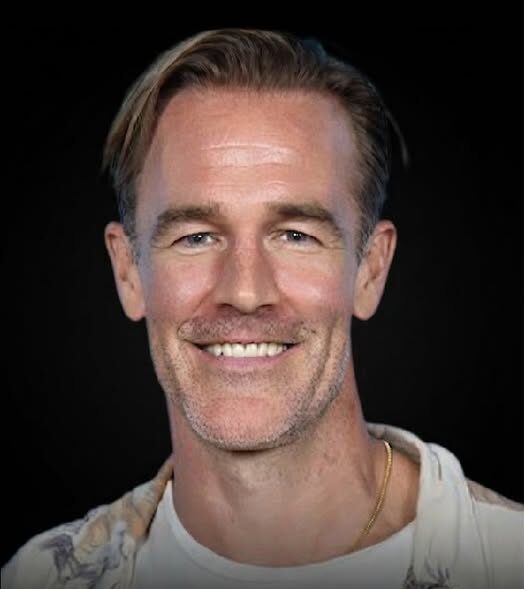
    James Van Der Beek, Beloved Star of Dawson’s Creek, Dies at 48
    Actor Remembered for a Career That Spanned Television and Film

    American actor James Van Der Beek, who became internationally recognized for his portrayal of Dawson Leery in the popular television drama Dawson’s Creek, has died at the age of 48 after living with stage III colorectal cancer.
    Van Der Beek died peacefully on February 11, 2026, with his wife, Kimberly, and their six children beside him. His death brought an outpouring of grief from viewers who had followed his work since the late 1990s, as well as from colleagues and admirers throughout the entertainment industry.

    For many television audiences, Van Der Beek remained closely connected to the character who first made him a household name. However, his professional life extended far beyond the series that introduced him to millions of viewers.

    Over the years, he moved between television dramas, comedies and feature films, building a varied body of work that allowed him to explore characters far removed from Dawson Leery. His performances demonstrated a willingness to take creative risks while continuing to embrace the role that had shaped the beginning of his public career.

    Early Life and the Beginning of a Prominent Career

    James Van Der Beek was born on March 8, 1977, in Cheshire, Connecticut. His rise to prominence began during the late 1990s, when he was selected to play the central character in Dawson’s Creek.

    The television series followed Dawson Leery and the people closest to him as they experienced friendship, love, disappointment and the uncertainty of growing up. Van Der Beek’s performance placed him at the center of the program and quickly made him one of the era’s most recognizable young television actors.

    His character became strongly associated with the emotional storytelling that defined the series. Through Dawson, Van Der Beek portrayed the ambitions, insecurities and complicated relationships of a young man attempting to understand his future.

    The success of Dawson’s Creek introduced Van Der Beek to audiences far beyond the United States. As the program gained international attention, his face became familiar to viewers who followed the lives of its young characters from week to week.

    That level of recognition arrived relatively early in his career. Rather than remaining limited to a single type of role, Van Der Beek gradually pursued opportunities that showed different sides of his abilities as a performer.

    Moving From Dawson’s Creek to the Big Screen

    While Dawson’s Creek established Van Der Beek as a television star, he also developed a film career. Among his most widely remembered movie appearances was Varsity Blues, in which he took on a role that further strengthened his profile with younger audiences.

    The film gave him an opportunity to step away from the sensitive and introspective image associated with Dawson Leery. It also demonstrated that his appeal could extend beyond the weekly television format that had first brought him widespread attention.

    Van Der Beek later appeared in The Rules of Attraction, another project that presented him in a markedly different way. His participation in films with contrasting tones reflected his interest in avoiding creative limitations and challenging the expectations that often follow early television fame.

    These movie roles became an important part of his professional development. Although many viewers continued to identify him with Dawson’s Creek, Van Der Beek repeatedly accepted parts that allowed him to build a broader career.

    His film work remained connected to the period in which he first became famous, but it also helped establish him as an actor capable of working across several genres. Each new project added another dimension to a public image initially defined by one enormously popular character.

    A Versatile Return to Television

    Television remained a significant part of Van Der Beek’s life after Dawson’s Creek. In later years, he appeared in programs including CSI: Cyber, Pose and Don’t Trust the B—- in Apartment 23.

    These projects allowed him to move between serious drama and comedy. The range of those performances helped introduce him to viewers who may not have experienced the original run of Dawson’s Creek.

    His work in CSI: Cyber placed him within a crime-focused television setting, giving him a role shaped by investigation and modern technology. The series represented another stage in a career that continued to evolve long after his earliest success.

    His appearance in Pose provided an opportunity to contribute to a drama with a distinctive ensemble and emotional tone. The role added further variety to a television résumé already associated with several different styles of storytelling.

    Don’t Trust the B—- in Apartment 23 gave Van Der Beek one of his most self-aware comedic opportunities. His willingness to approach his own celebrity image with humor showed audiences that he could acknowledge the lasting influence of his early fame without allowing it to define every later performance.

    That combination of seriousness and self-awareness became an important aspect of his later career. Van Der Beek appeared comfortable honoring the television history that made him famous while continuing to seek work that challenged familiar perceptions of him.

    A Private Health Struggle Becomes Public

    Van Der Beek publicly disclosed his colorectal cancer diagnosis in 2024. Before making the diagnosis known, he had been handling the illness privately with the support of his family.

    His announcement revealed that the actor was facing stage III colorectal cancer. Despite the demands created by his condition and treatment, he continued working and remaining involved in his professional life.

    His openness about the illness drew admiration from friends, colleagues and fans. Many people responded to the way he discussed the experience while continuing to focus on his family, his work and the life he had built away from the screen.

    The diagnosis became an intensely personal chapter for Van Der Beek and those closest to him. His wife and six children remained central to his life as he navigated the challenges associated with cancer and treatment.

    Throughout that period, he was frequently described by admirers in terms of resilience and determination. His decision to share his condition also gave longtime viewers a clearer understanding of the health battle he had been facing.

    Although his illness attracted public attention, Van Der Beek’s identity remained rooted in more than his diagnosis. He continued to be recognized as an actor, husband and father whose personal and professional life had touched audiences for decades.

    Family at the Center of His Final Chapter

    Van Der Beek’s family confirmed that he died surrounded by the people closest to him. Kimberly and their six children were with him when he passed away peacefully on February 11, 2026.

    His devotion to his family had become an important part of how the public understood him in his later years. Beyond the television roles, film appearances and professional achievements, he was remembered by those around him as a committed husband and loving father.

    The presence of his family during his final moments reflected the place they held throughout his illness. Their support accompanied him as he underwent treatment, continued working and publicly addressed his condition.

    For his admirers, the details of his family life added a deeply human dimension to the loss. The actor who had spent much of his youth in front of television audiences had grown into a father of six whose priorities extended well beyond Hollywood.

    Tributes Celebrate His Talent and Character

    News of Van Der Beek’s death prompted tributes from fellow performers, filmmakers and fans around the world. Many remembered the cultural influence of Dawson’s Creek, while others highlighted the range and humor he brought to his later projects.

    The responses reflected the different generations that encountered his work. Some had watched him become famous as Dawson Leery, while others knew him through his subsequent dramatic, comedic and film performances.

    For longtime fans, his death represented the loss of an actor closely tied to a formative period in television history. Dawson’s Creek had accompanied many viewers through their own experiences of adolescence and early adulthood, giving Van Der Beek a lasting place in their memories.

    Colleagues and admirers also celebrated the resilience he displayed after revealing his illness. His determination to continue working and his openness about the difficult circumstances facing his family became an important part of the tributes that followed.

    The worldwide reaction demonstrated that his influence was not limited to one program or one period of his career. Although Dawson’s Creek remained his defining television achievement, his later work helped sustain a connection with audiences over many years.

    A Lasting Place in Television History

    James Van Der Beek leaves behind a career shaped by early fame, professional reinvention and a wide range of performances. From Dawson’s Creek and Varsity Blues to The Rules of Attraction, CSI: Cyber, Pose and Don’t Trust the B—- in Apartment 23, his work reached audiences across television and film.

    His portrayal of Dawson Leery will remain one of the defining roles of his generation. The character introduced him to the world and secured his place within the history of popular television.

    At the same time, Van Der Beek’s career showed that he was willing to move beyond the expectations created by that success. Through drama, comedy and self-referential performances, he continued developing as an actor while maintaining a respectful connection to the role that transformed his life.

    His death at 48 brought an unexpectedly early conclusion to that journey. Yet the programs and films he left behind will continue to offer audiences a record of his versatility, emotional presence and ability to adapt across different stages of his career.

    Van Der Beek is remembered not only as a recognizable television star but also as a devoted family man who faced a serious illness with openness and perseverance. His wife, Kimberly, their six children and the many people who valued his work now carry forward the memory of his life.

    For audiences who grew up watching him, his performances remain connected to personal memories of another time. For newer viewers, his body of work provides an opportunity to discover an actor whose career extended well beyond the role that first made him famous.

    James Van Der Beek’s influence will continue through the characters he portrayed, the colleagues who worked beside him and the family who remained at the heart of his life. His contribution to television and film ensures that his work will remain familiar to viewers for generations to come.

  • I flew in to surprise my 18-year-old son at the $400,000 beach house I bought for him, but found my ex-husband’s family living there and my son missing. When I finally found him in a rundown apartment, he handed me a black notebook and whispered, “Mom, someone’s been following me.”

    I flew in to surprise my 18-year-old son at the $400,000 beach house I bought for him, but found my ex-husband’s family living there and my son missing. When I finally found him in a rundown apartment, he handed me a black notebook and whispered, “Mom, someone’s been following me.”

    Beside my name was $400,000.

    Liam handed me a copy of a recorded document.

    Eight months earlier, I had legally purchased the beach house in my name. The deed sent to me after closing was absolutely genuine.

    But five days later, someone had recorded a quitclaim deed transferring the property from me to a company called Atlantic Crest Holdings.

    The signature resembled mine.

    But it wasn’t.

    “Who owns the company?” I whispered.

    “Grandpa owns most of it. Dad and Aunt Chloe own the rest.”

    Six weeks after the fraudulent transfer, Atlantic Crest Holdings used my debt-free house as collateral for a $280,000 loan.

    Richard’s construction business had been failing. David had invested heavily in it, and Chloe had massive personal debts. They had borrowed against the house to save themselves.

    “How did you discover this?”

    “A foreclosure notice arrived last month because they stopped making the payments. Dad took it and said it was a clerical mistake, but I took a picture of it first.”

    Liam explained that Richard had asked to store business files in the downstairs bedroom while his company’s office was supposedly being renovated. Liam had agreed because he trusted his grandfather.

    Instead, Richard had turned the room into a private office.

    One evening, Liam overheard Richard and David arguing inside it.

    “Grandpa said the house had to be sold before you checked the county records,” Liam said. “Dad warned him that you’d discover the forged transfer. Grandpa said you trusted the family too much to investigate.”

    After they left, Liam searched the desk and found the notebook.

    A small safe was hidden inside the closet. Months earlier, he had watched Richard enter the combination—the date of Helen’s birthday.

    Inside were bank records, emails, copies of the forged deed, and text messages discussing the loan.

    Liam scanned the documents at the college library and saved them on a flash drive.

    Then he confronted his dad.

    “Dad told me Grandpa would fix everything,” he said. “The next day, Aunt Chloe arrived with suitcases. She claimed she needed somewhere to stay for a few days, but she and Grandpa searched my room whenever I left.”

    “So you moved out.”

    “I took the notebook and the drive first.”

    “Why didn’t you call me or the police?”

    “I was going to. But I didn’t know whether copying Grandpa’s files could get me in trouble. I made an appointment with a legal-aid attorney at school, but the first available meeting was next week.”

    His eyes dropped to the floor.

    “And I thought you might blame me. You spent your inheritance on that house so I could have a future.”

    I took his hands.

    “You did not lose the house. They stole it from us.”

    “There’s more,” he said. “A gray sedan has followed me from campus three times. Yesterday it followed me to work. It only left after I pulled into the police station parking lot.”

    Before I could respond, three slow knocks sounded at the door.

    Liam went pale.

    “Liam,” David called from the hallway. “Open the door.”

    I held the flash drive tightly in my fist.

    “How did you find this address?” I called out.

    David hesitated.

    “Chloe called after you left. My father admitted he had hired a private investigator to find Liam.”

    “The man in the gray car?”

    “I knew Dad had hired someone. I didn’t know the guy had been following Liam for days or scaring him.”

    “Why are you here?”

    “To explain before my father gets here.”

    I opened the door but left the security chain fastened.

    David looked terrified and exhausted.

    “I didn’t forge your signature,” he said.

    “But you knew about it.”

    “I found out after Dad recorded the transfer. He promised it was temporary. He said the business would bounce back, the loan would be repaid, and the property would be transferred back before you ever noticed.”

    “You let your father mortgage the house I bought for our son.”

    “I thought I could fix it.”

    “You helped hide it.”

    David lowered his eyes.

    “Yes.”

    Headlights swept across the window blinds.

    Richard’s SUV stopped outside. Chloe and Helen arrived in another car right behind him.

    David looked toward the stairs.

    “They know Liam took the records.”

    Richard’s heavy footsteps approached slowly.

    He stopped right outside the apartment door.

    “Sarah, we need to resolve this privately.”

    “You forged my signature.”

    “The company intended to repay every cent.”

    “It didn’t.”

    “Give me the notebook and the flash drive. Then we can discuss your options.”

    “My options?”

    “If those records reach the cops, this family will be destroyed.”

    I looked at Liam.

    “No. They’ll reveal who destroyed it.”

    Richard reached for the door, but David stepped between him and the handle.

    “Stop, Dad.”

    “You caused this,” Richard snapped. “You should have kept her away.”

    That sentence removed whatever sliver of doubt remained about David’s involvement.

    I called 911.

    While we waited, Chloe accused Liam of stealing private corporate documents. Liam began shaking, but I held his hand and reminded him that he had simply preserved evidence of a felony committed against us.

    The officers did not arrest anyone that night. They separated us, took statements, documented the suspected stalking, and ordered Richard and the others to leave the premises.

    The following morning, I hired a real estate attorney. On her advice, we preserved the notebook and flash drive and turned copies over to investigators through the proper legal channels.

    The criminal investigation lasted nine months. The civil court proceedings took much longer.

    The original deed proved that I had legally purchased the house. A forensics handwriting expert confirmed that my signature on the later transfer was forged. Electronic records showed that Richard’s attorney had notarized the document even though I had never set foot in his office.

    The flash drive exposed the rest of the rot.

    David had known about the fraudulent transfer and helped conceal the illegal loan. Chloe’s text messages showed that she had moved into the house specifically to find the notebook and destroy it before I visited. Richard had hired the unlicensed investigator to track Liam down and recover the stolen evidence.

    A judge eventually voided the fraudulent transfer, halted the foreclosure process, and restored the property records to my name.

    Richard and his attorney faced serious criminal charges. Chloe accepted a plea deal after investigators recovered the texts she had frantically tried to delete.

    David pleaded guilty to helping conceal the fraudulent transfer and providing false financial information to the bank. His cooperation with the prosecutors earned him a reduced sentence, but it did not earn our forgiveness.

    Liam remained in that cramped little apartment until the corrected deed was officially recorded with the county.

    When we finally returned to the beach house, every lock had been changed. Chloe’s furniture and her kids’ toys were entirely gone.

    Liam stood in the empty living room, staring out the windows toward the Atlantic Ocean.

    “You don’t have to live here,” I told him gently. “We can sell it.”

    After a long silence, he shook his head.

    “I think I want to try again.”

    For the next few months, I rented an Airbnb nearby. Not because Liam couldn’t take care of himself, but because neither of us was ready to pretend the nightmare hadn’t happened.

    One evening, I found him sitting on the back porch watching the sunset paint the sky over the water.

    I sat beside him and handed him a fresh box of cookies.

    He smiled. “What happened to the ones you brought that first day?”

    “They stayed in my rental car for a week. They turned harder than bricks.”

    “You should’ve saved them.”

    “I was afraid your grandfather might try to take out a loan against them.”

    Liam laughed out loud for the first time in months.

    Then he rested his head against my shoulder.

    “Mom?”

    “Yeah?”

    “Thank you for coming.”

    I looked back at the house where I had once stood frightened and confused while people who claimed to be family closed the door in my face.

    “I’ll always come.”

    That evening, Liam and I walked inside together.

    When the door closed behind us, it wasn’t shutting either of us out.

    The house was finally ours again—and for the very first time, it truly felt like home.

  • Grandma was informed by my folks that they would be taking her out to lunch. I received a call from a nursing home three hours later. My parents were nowhere to be located, and her bag was in their lobby. To bring her back with me, I traveled 190 miles. “Don’t call them,” she urged, looking directly at me after fastening her seatbelt. I’ll let you know exactly where we are heading.

    Grandma was informed by my folks that they would be taking her out to lunch. I received a call from a nursing home three hours later. My parents were nowhere to be located, and her bag was in their lobby. To bring her back with me, I traveled 190 miles. “Don’t call them,” she urged, looking directly at me after fastening her seatbelt. I’ll let you know exactly where we are heading.

    I drove 190 miles to bring her home. She fastened her seatbelt, looked directly at me, and said, “Don’t call them. I’ll tell you exactly where to drive.”
    My parents told Grandma Eleanor they were taking her out for lunch.
    Three hours later, I received a call from a nursing facility in Ohio.
    “Is this Daniel Mercer?” the woman asked. “Your grandmother listed you as her emergency contact. Her suitcase is sitting in our lobby, but the relatives who brought her here left before the admission process was finished.”
    I was standing in the kitchen of my Indianapolis apartment, holding a cup of coffee I suddenly had no interest in drinking.
    “What do you mean, they left?”
    The administrator paused. “They said they needed to retrieve some paperwork from their car. They never returned.”

    I called my father. Straight to voicemail.

    Then my mother. Same result.

    I drove 190 miles with both hands gripping the steering wheel.

    When I arrived, Grandma was seated beside one brown suitcase and a grocery bag filled with medications. She still wore her church coat despite the warm lobby. Her gray hair was neatly pinned, and her expression had that familiar calmness she always showed whenever she was deeply upset.

    I knelt beside her. “Grandma.”

    She studied me for several seconds. Then she rose.

    No tears. No questions.

    She walked toward my car, climbed inside, and fastened her seatbelt.

    “Don’t call them,” she said.

    I stared at her.

    “I’ll tell you where we’re going.”

    “Where?”

    “First, the county courthouse.”

    That immediately caught my attention.

    On the highway, she opened her purse and passed me a folded bank statement. Three withdrawals were circled in red. Twelve thousand dollars. Eighteen thousand. Twenty-five thousand.

    All made within six weeks.

    “Your father has power of attorney,” she said. “Temporary. I signed it after my surgery because I trusted him.”
    My stomach tightened.

    “He told me I was becoming forgetful. He said I needed assistance managing my bills.” She turned toward the window. “Then yesterday I discovered this.”

    “Did you confront him?”

    “I did.”

    “And?”

    “He claimed the money was being spent on my care.”

    I glanced toward the single suitcase sitting in the back seat.

    Grandma gave a humorless laugh.

    “At lunch today, your mother told me we were visiting somewhere with a garden. They walked me into that facility, completed nothing, and disappeared.”

    My phone buzzed. Dad.

    Grandma reached across and turned it face down.

    “Courthouse first,” she repeated. “Then the bank. Then one final place.”

    “What place?”

    She looked directly at me.

    “My house.”

    I swallowed. “Why?”

    “Because if they’ve done what I believe they’ve done, your parents didn’t simply leave me there today.”

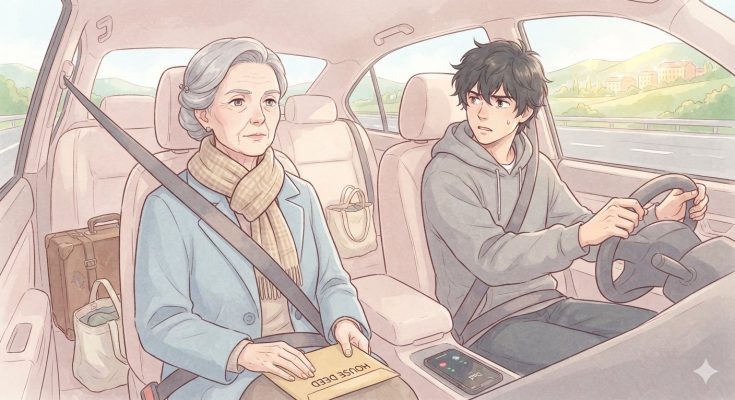
    She removed a small envelope from inside her coat. Written across the front, in my grandfather’s handwriting, were two words: HOUSE DEED.

    “I hid this before they came to get me,” she explained. “I wanted to see whether they would search for it.”

    Her voice became quieter.

    “They wanted me out of the way.”

    The county courthouse was only ten minutes from closing when we arrived.

    Grandma moved more quickly than I expected.

    At the clerk’s window, she requested copies of every document recorded against her property within the previous ninety days.

    The clerk searched using the address.

    Then her expression shifted.

    “There’s a quitclaim deed recorded twelve days ago.”
    Grandma tightened her grip on the counter.

    “To whom?”

    The clerk angled the monitor slightly toward us. My father’s name appeared there: Richard Mercer.

    I felt my face grow warm.

    Grandma showed no immediate reaction. She simply requested a certified copy.

    In the parking lot, she carefully read every line.

    Her signature appeared at the bottom.

    “That isn’t my signature,” she said.

    I examined it more closely. It looked similar to hers, but the final letters were different. Too smooth. Too deliberate.

    “Can Dad transfer your house using power of attorney?”

    “Not by signing my name without permission.”

    We headed to her bank next.

    A branch manager named Claire Benton brought us into a private office. Grandma presented identification, removed my father’s access, changed every account password, and requested complete transaction records.

    Claire appeared uneasy as the statements began printing.

    There were more transfers than Grandma had originally discovered.

    Not fifty-five thousand dollars.

    Eighty-three thousand.

    Most of the money had gone into an account belonging to Mercer Renovations LLC, my father’s struggling contracting business.

    Another twenty thousand had been wired to a title company.

    Grandma pointed at that transaction.

    “That’s connected to the house.”
    Claire nodded cautiously. “I can’t tell you what the title company ultimately used it for, but this transfer was initiated through online banking with authorized credentials.”

    “His credentials,” Grandma said.

    The manager remained silent.

    Outside, I finally called my father.

    Grandma made no attempt to stop me.

    He answered on the second ring.

    “Daniel, where is she?”

    The question caught me completely off guard.

    “You left her at a nursing facility.”

    “That wasn’t supposed to happen.”

    “Then what was supposed to happen, Dad?”

    Silence.

    Then I heard my mother’s voice faintly in the background. “Tell him she needs supervision.”

    Dad lowered his voice. “Your grandmother has been making questionable decisions. We were trying to place her somewhere safe.”

    “She passed a cognitive evaluation two months ago.”

    Another pause.

    I hadn’t known about the evaluation. Grandma had.

    Dad switched approaches.

    “You don’t understand what’s happening financially.”

    “I understand that eighty-three thousand dollars is unaccounted for.”

    He went silent for half a second.

    Grandma watched my expression and immediately understood.

    “Daniel,” Dad said, “do not bring her back to that house.”
    “Why?”

    “Because it doesn’t belong to her anymore.”

    Grandma reached toward the phone.

    I gave it to her.

    “Richard,” she said, “you signed my name without my permission.”

    His answer came immediately.

    “You signed documents.”

    “I signed a temporary power of attorney after my surgery. I never signed away my home.”

    “You said you wanted to support the family.”

    “I said I would help when I could. I never gave you permission to take what belonged to me.”

    My mother took the phone from him.

    “Eleanor, stop turning this into something bigger than it is. Richard was trying to protect the property. His business is struggling. We planned to repay everything.”

    Grandma’s expression hardened.

    “So you brought me to a nursing home?”

    “You need additional care.”

    “No. You needed me somewhere I couldn’t challenge what you were doing.”

    My mother said something I knew I would never forget.

    “You’re eighty-one years old. What exactly are you keeping that house for?”

    Grandma ended the call.

    For several seconds, neither of us said anything.
    Then she gave me the next destination.

    Her house.

    When we turned onto Maple Ridge Road, two pickup trucks were sitting in the driveway.

    The front door stood open.

    A man I had never seen before was carrying Grandma’s dining chairs onto the porch.

    I hit the brakes.

    Grandma stared through the windshield.

    A red-and-white sign had been planted in the yard.

    ESTATE LIQUIDATION — SATURDAY.

    Tomorrow.

    Her entire life had already been sorted and priced for sale.

    I parked behind both pickup trucks so neither could leave without getting past us.

    Grandma opened her door before I had a chance to ask her to remain in the car.

    The man holding the dining chairs stopped when he noticed her.

    He looked to be in his late forties, heavyset, wearing a gray sweatshirt bearing the logo of a local estate-sale company. He carefully lowered the chairs.

    “Mrs. Mercer?”

    “Yes.”

    His gaze moved toward me, then returned to her.

    “I was told you had relocated permanently.”

    “Who told you that?”

    “Your son.”

    Grandma walked straight past him toward the house.

    I followed behind her.

    Inside, I could barely recognize the living room. Blue stickers covered furniture, lamps, framed photographs, even the oak clock my grandfather had built with his own hands. Cardboard boxes filled the floor. Someone had emptied cabinets and organized Grandma’s possessions into inexpensive plastic bins.

    On the dining room table was a clipboard marked MERCER ESTATE SALE.
    Grandma lifted it.

    The contract carried my father’s signature.

    The estate-sale operator introduced himself as Kevin Doyle. He became increasingly uneasy as Grandma began questioning him.

    “My son hired you?”

    “Yes, ma’am.”

    “Did he tell you I had passed away?”

    Kevin swallowed. “No. He told me you had moved into long-term care and that ownership of the property had transferred to him. He showed us documentation.”

    “What documentation?”

    “A deed. And a power of attorney.”

    Grandma turned toward me.

    “Photograph everything.”

    I did.

    Every room. Every sticker. Every box. Every document Kevin had received.

    Kevin, apparently realizing he had become involved in something much more serious than a normal family disagreement, voluntarily emailed me copies of both the contract and deed.

    Then Grandma told him she wanted the sale stopped.

    He agreed immediately.

    “I don’t want to be involved if the ownership is being challenged,” he said.

    The second pickup belonged to a man hired to remove anything considered unsuitable for sale. He returned the few boxes already loaded into his truck and drove away.

    By then, my father had called eleven times.

    My mother had called six.

    Grandma answered neither.

    I expected her to fall apart after the strangers finally left.
    Instead, she made tea.

    That was Grandma’s way. Whenever life became overwhelming, she turned it into a list of things to do.

    At six-thirty, she contacted the county sheriff’s non-emergency line and reported suspected financial misuse, unauthorized signatures, and missing funds involving someone acting under power of attorney.

    A deputy arrived at the house, photographed the scene, copied the banking records, and listened while Grandma explained what had happened at the nursing facility.

    The deputy carefully avoided promising that anyone would be arrested.

    “These situations can become complicated when relatives and legal authority are involved,” he explained. “But disputed signatures and improper use of someone else’s funds go beyond an ordinary family disagreement.”

    Grandma nodded.

    “Good. Because I’m not reporting a disagreement.”

    After he left, I asked her what the envelope from my grandfather contained.

    She opened it at the kitchen table.

    Inside was the original deed from twenty-three years earlier, when Grandma and Grandpa had refinanced the property after paying off most of their mortgage. There was also a handwritten note from Grandpa, who had passed away seven years earlier.

    Keep the originals somewhere Richard cannot access if he ever begins asking about the house.

    I read the sentence twice.

    “You thought Dad might eventually do something like this?”

    “No,” Grandma replied. “Your grandfather was worried he might.”

    She looked at the note for a long moment.

    My father had always been the charming one in our family. He could persuade a mechanic to extend a payment deadline, convince customers to provide deposits early, and reassure relatives that his next business opportunity would fix the problems created by the previous one.

    As a child, I thought that talent made him impressive.

    Grandpa had apparently interpreted it differently.

    At eight-fifteen, headlights moved across the front windows.

    Dad’s SUV pulled into the driveway.

    My mother stepped out first.

    “Stay inside,” I told Grandma.

    The look she gave me immediately ended that conversation.
    We met them outside on the porch.

    Dad looked exhausted. His shirt was wrinkled, and stress had drained the color from his face. Mom looked furious.

    “What have you done?” she demanded.

    Grandma crossed her arms.

    “I came back to my home.”

    “You contacted the police,” Dad said.

    “Yes.”

    “You’re going to ruin my business.”

    “You used my money to keep it operating.”

    “I borrowed it.”

    “Without my permission.”

    “I had legal authority.”

    “You had authority to manage my bills while I recovered from surgery. You did not have permission to move my savings into your own accounts.”

    Dad dragged both hands across his face.

    “You don’t understand. Three projects went wrong at the same time. Suppliers were threatening liens. Payroll was coming due. I needed temporary funding.”

    “So you used mine.”

    “I intended to repay it.”

    Grandma pointed toward the front yard.

    “And what about the deed?”

    He turned his eyes away.

    Mom stepped forward.

    “The house was only being used as collateral.”
    My stomach tightened.

    Grandma’s voice became unusually quiet.

    “Collateral for what?”

    Neither of them responded.

    I remembered the twenty-thousand-dollar transfer to the title company.

    Dad finally answered.

    “A bridge loan.”

    “How much?”

    “Mom—”

    “How much?”

    He let out a long breath.

    “One hundred and sixty thousand.”

    Grandma placed one hand against the porch railing, not because she was weak, but as though she needed something solid beneath her fingers.

    “You used my house as security for a company loan?”

    Dad’s jaw tightened.

    “It was meant to cover a temporary financing gap. Once the commercial project paid out, I would have cleared everything.”

    “And when is that supposed to happen?”

    He stayed silent.

    Mom answered for him.

    “The client declared bankruptcy.”

    For several seconds, the distant traffic on the county road was the only sound we could hear.

    Then everything became clear to me.

    The nursing facility.

    The questionable deed.

    The estate sale.

    They had not merely been attempting to gain control of Grandma’s assets.
    They were working against a deadline.

    “What happens to the house now?” I asked.

    Dad stared angrily at me.

    Grandma answered before he could.

    “If the deed and loan were obtained improperly, an attorney can challenge them.”

    “Attorneys cost money,” Mom said sharply.

    Grandma nearly smiled.

    “You left me enough.”

    Mom’s expression shifted.

    That tiny reaction told Grandma something important.

    She looked directly at Dad.

    “How much debt exists that I haven’t been told about?”

    He remained silent.

    Grandma went inside and closed the door.

    Dad attempted to follow her.

    I stepped in front of him.

    “This is my mother’s house,” he said.

    “No,” I replied. “That seems to be the entire problem.”

    He looked at me in disbelief, as though disloyalty only existed when someone stopped cooperating with him.

    They drove away ten minutes later.

    The following morning, Grandma and I met with attorney Rebecca Sloan, a sixty-two-year-old lawyer specializing in elder law and property disputes. Grandma had previously worked with her for estate planning.

    Rebecca moved quickly.

    By noon, she had filed an emergency petition asking the court to invalidate the quitclaim deed, revoke the power of attorney, and temporarily block any sale, transfer, or foreclosure involving the property until legal ownership could be established.

    She also contacted the lender.

    That changed everything.

    The lender’s attorney provided the notarized deed used for the transaction.

    The notary was a man named Scott Vance.
    Grandma had never met him.

    Rebecca checked his commission records and located his office address.

    It belonged to an accounting service only two blocks from my father’s business.

    Then Kevin Doyle forwarded another document from the estate-sale records: an email Dad had written three days earlier.

    Need house emptied immediately. Owner has entered memory care and will not be coming back.

    Grandma read it in silence.

    Rebecca placed the document on her desk.

    “Eleanor, I need you to understand something. The circumstances are becoming much clearer. Your son represented to several third parties that you lacked capacity or had permanently relocated. If those statements were used to dispose of your property, they may support a broader financial exploitation claim.”

    Grandma asked only one question.

    “Can I keep my home?”

    Rebecca did not offer unrealistic reassurance.

    “If the lender received inaccurate information and the deed was signed without your authorization, you have a strong argument. But litigation may still be necessary. The lender could argue that it relied in good faith on officially recorded documents.”

    “How long?”

    “Months. Maybe longer.”

    Grandma nodded.

    “Then we begin.”

    The following week was exhausting.

    Investigators interviewed bank employees, nursing facility staff, Kevin, me, my parents, and eventually the notary.

    Security cameras at the nursing facility had recorded Dad and Mom walking Grandma into the lobby at 12:41 p.m.

    Dad carried her suitcase.

    Mom spoke with the receptionist.

    At 12:58, both of them exited through a side entrance.
    Neither returned.

    More importantly, the admissions coordinator had written a note after Mom stated that Grandma experienced “progressive confusion” and could no longer independently manage everyday life.

    Grandma’s recent cognitive evaluation directly contradicted that claim.

    The notary became the critical link.

    Scott Vance initially insisted Grandma had personally appeared before him.

    Then investigators showed him images establishing that Grandma had been attending a physical therapy appointment across town on the date the deed was supposedly notarized.

    His explanation changed.

    He acknowledged that my father had brought the document into his office already signed and explained that his mother was recovering from surgery and unable to travel.

    Scott had notarized the document as a personal favor.

    He maintained that he had no knowledge the signature was unauthorized.

    That decision placed his professional license at risk and created potential legal consequences.

    Two weeks later, he turned over his journal and emails.

    One message from Dad read:

    She won’t understand the paperwork anyway. Just need this completed by Friday.

    That sentence eliminated whatever possibility remained that I could view everything as desperate improvisation rather than deliberate planning.

    Dad understood exactly what he was doing.

    But the most painful discovery came from his company’s financial records.

    The eighty-three thousand dollars removed from Grandma’s accounts had not all been used for payroll.

    Almost twenty-seven thousand had gone toward personal credit-card balances.

    Nine thousand had covered payments on Mom’s SUV.

    Six thousand had paid toward a vacation deposit they later canceled.

    The remaining money had been distributed among supplier balances and overdue taxes.

    When Rebecca showed Grandma the breakdown, she remained silent for nearly a minute.
    Then she asked, “Did Daniel know?”

    “No,” Rebecca replied.

    Grandma nodded once.

    That question affected me more deeply than anything else.

    She could recover from losing money.

    What she struggled to accept was no longer knowing how far the betrayal extended.

    I stayed in her guest room for the following month. Not because she required supervision, but because unfamiliar cars occasionally slowed near the property and because my parents continued finding excuses to come by.

    Dad appeared twice asking to speak with her privately.

    Grandma declined.

    Mom sent me lengthy messages accusing me of turning Grandma against them.

    I kept every message.

    Then, six weeks after the nursing-facility incident, the lender agreed to release its claim on the house and instead pursue my father and his company directly.

    Their attorneys had examined the evidence and concluded that defending the mortgage would be more costly than reversing the transaction.

    Grandma’s title was restored.

    The legal investigation continued.

    Dad faced multiple charges connected to unauthorized documents, financial misuse, and alleged exploitation of an elderly person.

    Scott faced separate legal proceedings and professional disciplinary action.
    Mom was not charged in connection with signing the deed, but investigators alleged that she had participated in the effort to place Grandma in long-term care using inaccurate representations. Her attorney entered negotiations while prosecutors considered what the available evidence could establish.

    The family is divided exactly the way families often do when the consequences become real.

    One aunt told Grandma she should let the matter go because Dad was still her son.

    A cousin argued that legal consequences would not bring the missing money back.

    Another relative suggested that the entire family try counseling.

    Grandma listened patiently to every opinion.

    Then she asked each person the same question.

    “If someone outside this family had done this to me, would you still tell me to protect them?”

    Nobody had a convincing response.

    Dad eventually accepted responsibility for reduced charges rather than take the case to trial.

    The outcome included time in custody, supervised release, restitution, and a court order preventing him from handling Grandma’s finances or contacting her without approval.

    His contracting business eventually closed.

    The restitution did not somehow return everything she had lost.

    Some of the money was already gone.

    Legal expenses consumed more.

    Grandma recovered part of her losses through insurance and civil settlements, but she never recovered all of it.

    Life did not simply return to normal.

    That was the part people rarely talk about.

    After a family crisis, there is no perfect ending waiting at the finish line. There are passwords to update, documents to replace, credit reports to check, legal bills to handle, relatives to keep at a distance, and quiet mornings when someone remembers exactly who carried her suitcase into that building and walked away.

    About eight months later, Grandma sold her house.
    Not because anyone pressured her.

    Because it was her decision.

    She purchased a smaller single-story home thirty minutes from me, with two bedrooms, a broad front porch, and enough garden space to grow tomatoes.

    On moving day, I discovered the old red-and-white estate-sale sign folded behind a shelf in the garage.

    I held it up.

    “Do you want me to throw this out?”

    Grandma studied it for a moment.

    “No.”

    I assumed she wanted to preserve it as evidence.

    Instead, she picked up a black marker and wrote across the front:

    NOT YOURS TO SELL.

    Then she hung the sign inside her new garage.

    One year after that unexpected call from the nursing facility, we passed Maple Ridge Road while driving to lunch.

    The old house belonged to new owners now. A young couple had painted the shutters dark green. Two bicycles rested against the porch.

    Grandma watched until the house disappeared behind us.

    “Do you miss it?” I asked.

    “Sometimes.”

    I waited for her to continue.

    She adjusted her seatbelt.

    “But a home only has value when you’re free to live your own life inside it.”
    We stopped at a diner outside Columbus.

    She ordered chicken soup with half a turkey sandwich.

    After the waitress walked away, Grandma looked across the table at me.

    “You know what your parents misunderstood?”

    “What?”

    “They believed getting older made it easier to overlook.”

    She opened a packet of crackers.

    “It only made me less willing to stay quiet.”

    For the first time in months, I laughed hard enough that Grandma started laughing too.

    And when lunch was finished, nobody vanished.

    We walked back to the car side by side.

  • Part2-I Let My Husband Believe I Had Paid Off His $150,000 Debt — The Next Morning, I Came Downstairs to Find His Parents Boxing Up

    Part2-I Let My Husband Believe I Had Paid Off His $150,000 Debt — The Next Morning, I Came Downstairs to Find His Parents Boxing Up

    Julian’s laugh echoed through the kitchen, loud and arrogant, the kind of laugh people use when they believe they’ve already won.
    His father chuckled with him.
    Beatrice shook her head as if I were a child throwing one final tantrum.
    Even Elena smiled again, tugging my emerald silk robe tighter around her waist.
    “You hear that?” Julian laughed. “She thinks this is her house.”
    I looked around slowly.
    The morning sun poured through the floor-to-ceiling windows, illuminating every detail I had chosen myself—the white oak cabinets, the marble island, the antique chandelier my grandmother had left me.
    Every corner carried my fingerprints.
    My taste.
    My money.
    Not Julian’s.
    Mine.

    I reached calmly for my coffee machine.
    The four of them watched, confused, as I placed a pod inside and pressed the button.
    The machine hummed.
    Julian stopped laughing.
    “What are you doing?”
    “Making coffee.”
    His face tightened.
    “I can see that.”
    “Then why did you ask?”
    Elena rolled her eyes.
    “Oh my God, Julian. Just get her out.”
    I looked at her.
    She was still holding my favorite mug.
    The one my grandmother had given me ten years before she died.
    That irritated me more than the robe.
    “Put the mug down too.”
    Elena laughed.
    “No.”


    I took my coffee from the machine.
    “Fine.”
    I walked to the table, sat down, crossed one leg over the other, and took a sip.
    Julian stared at me.
    His confidence was beginning to crack.
    Not much.
    Just enough.
    “Vivian,” he said slowly, “you have ten minutes to pack whatever else you want.”
    I looked at my watch.
    “No.”
    His father stepped forward.
    “Now listen here—”
    “No, Harold. You listen.”
    The room went completely silent.
    Harold looked shocked.


    In eight years of marriage, I had never spoken to Julian’s father that way.
    Mostly because I had never needed to.
    Harold had always treated my politeness like submission.
    So had Beatrice.
    So had Julian.
    That morning, they were going to learn the difference.
    I placed my coffee on the table.
    “Yesterday,” I said, “Julian asked me whether the debt transaction had cleared.”
    Julian folded his arms.
    “It did.”
    “Yes.”
    “You showed me the confirmation.”
    “I did.”


    “So stop playing games.”
    I smiled.
    “I’m not playing anything.”
    Then I reached into the pocket of my cardigan and removed my phone.
    Julian’s eyes followed it.
    I unlocked the screen.
    Opened an email.
    And slid the phone across the table toward him.
    “Read the subject line.”
    He didn’t move.
    “Julian.”


    His jaw tightened.
    Finally, he picked up the phone.
    For the first two seconds, nothing changed.
    Then I watched the color disappear from his face.
    Elena noticed.
    “What?”
    Julian didn’t answer.
    Beatrice walked closer.
    “What does it say?”
    Julian swallowed.
    His eyes moved over the email again.
    Then again.
    As though rereading it might change the words.
    Harold snatched the phone from his hand.
    I watched his expression change too.
    “What is this?” Harold demanded.
    I picked up my coffee.
    “That is the confirmation you should have asked to see before packing my belongings.”
    Elena looked between them.
    “Confirmation of what?”
    Nobody answered her.
    So I did.
    “I didn’t pay Julian’s debt.”
    The kitchen became so quiet I could hear the refrigerator humming behind me.
    Julian looked at me.
    “What?”
    “I didn’t pay your debt.”
    “Yes, you did.”
    “No.”
    “You transferred one hundred fifty thousand dollars.”
    “Yes.”
    “To the lender.”
    “Yes.”
    “So you paid it.”
    I smiled.
    “No, Julian.”
    I leaned forward.
    “I bought it.”
    His face went blank.
    Elena lowered my mug.
    Beatrice frowned.
    “What does that even mean?”
    “It means,” I said, “the company that held Julian’s business note agreed to assign the debt to a company I control.”
    Harold stared at me.
    “You can’t do that.”
    “I already did.”
    “That’s impossible.”
    “It was actually surprisingly easy.”
    Julian stepped toward me.
    “No.”
    I looked up at him.
    “Yes.”
    “You told me it was gone.”
    “I told you the transaction had been completed.”
    “You said I wouldn’t have to worry about Westbridge Capital anymore.”
    “And you don’t.”
    For the first time that morning, my smile became genuine.
    “You have to worry about me.”
    Elena whispered something under her breath.
    Julian ignored her.
    His entire attention was on me now.
    “What exactly did you buy?”
    “The note.”
    His face hardened.
    “What else?”
    “The security agreement.”
    Silence.
    Harold’s eyes widened.
    He understood before Julian did.
    Beatrice looked at her husband.
    “What?”
    Harold didn’t answer.
    I continued.
    “The personal guarantee.”
    Julian’s mouth opened.
    “And,” I said, “the collateral rights attached to the original agreement.”
    Harold slammed my phone onto the table.
    “This is extortion.”
    “No. It’s paperwork.”
    “You manipulated him!”
    “I didn’t sign his loan documents.”
    “You knew he was vulnerable.”
    I actually laughed at that.
    “Vulnerable?”
    I looked at Julian.
    “My husband spent six months lying to me, hiding a mistress, planning a divorce, and waiting for me to rescue him financially so he could throw me out the next morning, and somehow he is the vulnerable one?”
    Beatrice pointed at me.
    “You set him up.”
    “No.”
    My voice stayed calm.
    “Julian set himself up.”
    Then I looked at the boxes scattered across my living room.
    “You all just arrived early enough to watch the consequences.”
    Elena finally stepped forward.
    “What collateral?”
    Julian shot her a look.
    “Stay out of this.”
    Her expression changed.
    “You told me the debt was just an old business loan.”
    “It is.”
    “What collateral, Julian?”
    He didn’t answer.
    That told her everything.
    “Julian.”
    “Stop.”
    Her voice rose.
    “What collateral?”
    I looked at her.
    “You really don’t know?”
    Julian turned sharply toward me.
    “Vivian.”
    I ignored him.
    “Elena, when Julian borrowed the money three years ago, his company was struggling.”
    She stared at me.
    “He told me the company was doing great.”
    “Now it is.”
    I tilted my head.
    “But it wasn’t then.”
    Julian slammed one hand against the island.
    “Enough.”
    I didn’t even flinch.
    “When the lender demanded security, Julian pledged his ownership interest in Ashford Development.”
    Elena’s expression collapsed.
    “All of it?”
    Julian looked away.
    I answered for him.
    “Sixty percent.”
    Elena stared.
    “That’s your controlling interest.”
    “Yes.”
    “And Vivian owns the debt?”
    Julian didn’t speak.
    “Yes,” I said.
    Elena slowly loosened her grip on my robe.
    For the first time that morning, she looked uncomfortable wearing it.
    Harold stepped closer to Julian.
    “Call the attorney.”
    Julian immediately reached for his phone.
    “That’s a good idea,” I said.
    He glared at me.
    I took another sip of coffee.
    “Ask him to read Section Nine.”
    Julian froze.
    Harold looked at him.
    “What’s Section Nine?”
    I answered.
    “Change of control upon default.”
    Julian’s breathing changed.
    I had been waiting for that.
    Because now he remembered.
    Three years earlier, Julian had been desperate.
    His construction company was two payroll cycles away from collapse.
    Banks had already rejected him.
    Investors wanted terms he hated.
    Westbridge Capital offered the money, but the loan agreement was brutal.
    Julian complained about it for weeks.
    I remembered him sitting at this same kitchen island, cursing the lender and signing each page anyway.
    And I remembered one sentence he had said afterward.
    “If I ever default on this thing, they could practically take my company.”
    At the time, I had believed we were partners.
    I had reassured him.
    I had even helped him restructure his operating expenses so he could make every payment.
    Then, six months ago, I discovered Elena.
    And suddenly I started reading old documents with very different eyes.
    Julian shook his head.
    “I’m not in default.”
    “Not yet.”
    He stared at me.
    A tiny pulse appeared near his temple.
    “You can’t accelerate the loan for no reason.”
    “You’re right.”
    That bothered him more than if I had argued.
    “What did you do?”
    “Nothing.”
    “Vivian.”
    “You keep assuming I need to do something to you.”
    I stood.
    “All I did was stop protecting you from yourself.”
    His phone began ringing.
    He looked at the screen.
    His attorney.
    Julian answered immediately.
    “Martin.”
    He walked toward the windows.
    “Tell me exactly what happened with Westbridge yesterday.”
    A pause.
    His shoulders stiffened.
    “No, I know the note was assigned. I want to know whether that changes—”
    Another pause.
    His face became darker.
    “What?”
    Elena watched him.
    Beatrice had stopped packing.
    Harold looked as if someone had just removed the floor from beneath him.
    Julian turned his back to us.
    “What do you mean the covenant review happens automatically?”
    I smiled into my coffee.
    There it was.
    The part Julian had forgotten.
    He had spent so much time planning how to get rid of me that he had neglected the one thing I had spent years helping him manage.
    His own company.
    “Martin, listen to me. The company is healthy.”
    Pause.
    “Yes.”
    Pause.
    “No.”
    Longer pause.
    Julian’s voice dropped.
    “How much?”
    I watched his hand tighten around the phone.
    “How much cash was required in reserve?”
    He closed his eyes.
    I already knew the answer.
    Nine months of debt service.
    His company had five.
    Because three weeks earlier, Julian had withdrawn a large amount of operating cash.
    He told his accountant it was for “strategic expansion.”
    It wasn’t.
    It was the deposit on a luxury apartment downtown.
    For Elena.
    He had planned to move her there temporarily after our divorce while he forced me out of the house.
    I knew because the apartment confirmation had been sent to the email account Julian thought I never checked.
    The same email account he had once asked me to create for him because he “wasn’t good with paperwork.”
    Funny how the things people dismiss often become the things that destroy them.
    Julian lowered the phone.
    His face was pale.
    “What did you do?”
    I placed my cup down.
    “Again, nothing.”
    “You knew the reserve requirement.”
    “Yes.”
    “You knew about the withdrawal.”
    “Yes.”
    Elena looked at him.
    “What withdrawal?”
    Julian snapped, “Not now.”
    I looked directly at Elena.
    “The eighty-thousand-dollar withdrawal.”
    Her face changed.
    Julian spun toward me.
    “Stop talking.”
    I kept going.
    “The one he used to secure your apartment.”
    Elena stared at him.
    “My apartment?”
    Beatrice whispered, “What apartment?”
    This was getting better than I had expected.
    Elena stepped away from Julian.
    “You told me the apartment was already paid for.”
    “It is.”
    “No. Vivian just said you used company money.”
    “It’s complicated.”
    “No, it isn’t.”
    Elena’s voice sharpened.
    “You told me you bought that place.”
    “I said I handled it.”
    “You said it was ours.”
    “Elena.”
    She looked at me.
    “Is the apartment in his name?”
    I shook my head.
    “No.”
    Her shoulders relaxed slightly.
    “It’s in yours.”
    “No.”
    She stared at me.
    Then looked at Julian.
    “Whose name is it in?”
    I almost felt sorry for her.
    Almost.
    “An LLC,” I said.
    Julian’s face twisted.
    “Vivian.”
    “Whose LLC?” Elena demanded.
    I folded my arms.
    “Julian’s company.”
    The silence that followed was spectacular.
    Elena slowly turned toward him.
    “You put our apartment under the company?”
    “It was temporary.”
    “You told me it was mine.”
    “I was going to transfer it.”
    “When?”
    “After the divorce.”
    “After she paid your debt.”
    Julian looked cornered.
    And cornered men like Julian rarely became honest.
    They became angry.
    He pointed at me.
    “This is exactly what she wants. She’s trying to turn us against each other.”
    I blinked.
    “I didn’t make you lie to your mistress.”
    Elena flinched at the word mistress.
    Good.
    Maybe she had forgotten what she was.
    Julian stepped toward me.
    “You’ve been spying on me.”
    “No.”
    “You read my emails.”
    “You used the shared administrative account I created for your company.”
    “That doesn’t give you permission—”
    “You made me an authorized administrator.”
    His mouth closed.
    “You signed the authorization yourself.”
    Harold cursed quietly.
    Beatrice sat down.
    The woman who had been throwing my belongings into garbage bags ten minutes earlier suddenly looked exhausted.
    I walked toward one of the boxes.
    My grandmother’s photograph was sitting at the top.
    I removed it.
    Unwrapped the newspaper.
    And set it carefully on the shelf where it belonged.
    Beatrice watched me.
    “You knew all this,” she whispered.
    “Yes.”
    “For how long?”
    “Enough.”
    “And you said nothing?”
    I looked at her.
    “What would you have preferred?”
    She had no answer.
    I picked up another framed photograph.
    Julian and me on our wedding day.
    I stared at it for a second.
    He looked so happy in that picture.
    So did I.
    There had been a time when I would have fought desperately to save the marriage.
    A time when discovering Elena would have destroyed me.
    But betrayal does strange things when you give it enough time.
    The first week, it breaks your heart.
    The second, it makes you question yourself.
    The third, it makes you angry.
    And then, eventually, if you’re lucky, something changes.
    You stop asking why they did it.
    And you start asking why you are still allowing them to decide what happens next.
    I placed the wedding photograph facedown inside the box.
    That was the only thing I intended to pack.
    Julian ended his call.
    Nobody spoke.
    I looked at him.
    “Well?”
    His eyes were cold.
    “Martin says the reserve issue can be cured.”
    “I know.”
    “I have thirty days.”
    “I know.”
    “And you can’t seize anything before then.”
    “I know.”
    Some confidence returned to his face.
    Not much.
    But enough for him to make another mistake.
    He smiled.
    “So your little performance means nothing.”
    Harold exhaled.
    Beatrice looked relieved.
    Elena still looked furious.
    Julian stepped closer.
    “You bought a debt. Congratulations.”
    He picked up the divorce envelope again.
    “But we’re still getting divorced.”
    “Absolutely.”
    “And you’re still leaving.”
    “No.”
    His smile disappeared.
    “You don’t understand.”
    “No, Julian.”
    I walked around the island until we were standing only a few feet apart.
    “You don’t understand.”
    I pointed toward the floor.
    “This house was purchased four years before our marriage.”
    He laughed.
    “We’ve been married eight years. I’ve lived here eight years.”
    “Yes.”
    “I paid for renovations.”
    “You contributed thirty-two thousand dollars toward renovations.”
    His eyes narrowed.
    I continued.
    “And the agreement you signed before our wedding clearly states that contributions toward improvements do not create ownership rights.”
    Beatrice stood again.
    “Agreement?”
    Julian looked at her.
    “Mom.”
    “What agreement?”
    “Our prenup.”
    Her mouth fell open.
    “You signed a prenup?”
    Julian looked furious.
    “It wasn’t a big deal.”
    I smiled.
    “It is today.”
    Harold rubbed his forehead.
    “Who owns the house?”
    “I do.”
    “Entirely?”
    “Yes.”
    “Julian’s name isn’t on the deed?”
    “No.”
    Beatrice turned toward her son.
    “You told us this was your house.”
    Julian’s face turned red.
    “I said it was our house.”
    “No,” Elena said quietly.
    Everyone looked at her.
    She pulled the silk robe tighter.
    “You told me you bought it.”
    Julian didn’t answer.
    Elena’s eyes hardened.
    “You said Vivian barely contributed anything.”
    I laughed before I could stop myself.
    Julian pointed toward the staircase.
    “Go get dressed.”
    Elena stared at him.
    “What?”
    “You heard me.”
    Her voice rose.
    “You bring me into this house, tell me she’s leaving, tell me everything is handled, and now suddenly I’m supposed to disappear upstairs because your lies are falling apart?”
    “Elena.”
    “No.”
    She untied the robe.
    For one wonderful second, I thought she was finally going to hand it back.
    Instead, she threw it onto the kitchen floor.
    “There.”
    I stared at it.
    Then at her.
    “That wasn’t difficult, was it?”
    “Go to hell.”
    “Get in line.”
    She stormed toward the staircase wearing the camisole and trousers underneath.
    Julian watched her go.
    Then he looked at me like I had personally destroyed his perfect morning.
    The doorbell rang.
    Everyone froze.
    I glanced at my watch.
    9:24.
    Right on time.
    Julian frowned.
    “Who is that?”
    “My second appointment.”
    “Second?”
    I walked toward the front door.
    Beatrice followed.
    “Vivian, who did you call?”
    I opened the door.
    Two men stood outside.
    One carried a black equipment case.
    The other held a clipboard.
    Behind them was a woman in a navy suit.
    Julian came into the foyer.
    The moment he saw the woman, he stopped.
    He knew her.
    “Ms. Shaw.”
    She smiled professionally.
    “Good morning, Mr. Ashford.”
    Julian’s jaw tightened.
    “What are you doing here?”
    She looked at me.
    “I’m here at Ms. Mercer’s request.”
    Julian laughed without humor.
    “Of course you are.”
    Caroline Shaw had handled property matters for me for almost eleven years.
    She had also reviewed my prenuptial agreement.
    And six weeks earlier, she had helped me prepare something else.
    Caroline opened her leather folder.
    “Mr. Ashford, this is formal notice that Ms. Mercer has revoked your permission to occupy the property.”
    Julian stared.
    “You can’t be serious.”
    “I am.”
    “This is my marital residence.”
    “Your marital residence does not automatically give you ownership of the property.”
    “My belongings are here.”
    “You’ll receive reasonable access to remove them.”
    Harold stepped forward.
    “This is outrageous.”
    Caroline turned toward him.
    “And you are?”
    “His father.”
    “Do you reside here?”
    “No.”
    “Then you have even less reason to remain.”
    Harold’s face turned crimson.
    The man with the equipment case coughed to hide a smile.
    Julian pointed toward the door.
    “Everybody out. Vivian and I need to talk.”
    I shook my head.
    “No private conversations.”
    His eyes flashed.
    “You’re my wife.”
    “For the moment.”
    “You owe me five minutes.”
    “I gave you eight years.”
    That shut him up.
    I turned toward the two men.
    “Gentlemen, whenever you’re ready.”
    The first man nodded.
    “We’ll start with the exterior locks.”
    Julian stared.
    “You brought locksmiths?”
    “Yes.”
    “You’re changing the locks while I’m standing here?”
    “Yes.”
    His expression was almost worth the eight years.
    Almost.
    Then Beatrice suddenly hurried toward the living room.
    “Well, if we’re leaving, we’ll finish packing Julian’s things.”
    “No,” I said.
    She stopped.
    “You will not touch anything else.”
    “They’re his belongings.”
    “Some are.”
    “What is that supposed to mean?”
    “It means the boxes you packed this morning contain my property.”
    I pointed toward three boxes beside the sofa.
    “My books. My photographs. My grandmother’s silver. My documents.”
    Beatrice looked embarrassed for exactly half a second.
    Then defensive.
    “We were helping.”
    “You were throwing my belongings into trash bags.”
    “You were supposed to leave.”
    “Based on what?”
    She had no answer.
    I walked toward the largest black bag.
    Opened it.
    And began taking my things back out.
    Julian followed.
    “Vivian.”
    I ignored him.
    “Vivian!”
    I turned.
    “What?”
    His voice dropped.
    “Stop humiliating my parents.”
    I stared at him.
    Then I actually smiled.
    “You brought your parents into my home to pack my belongings while your girlfriend wore my clothes.”
    His eyes shifted.
    “And you’re worried that I’m embarrassing them?”
    Beatrice looked away.
    Harold suddenly found the ceiling fascinating.
    Julian moved closer.
    “You’re enjoying this.”
    “No.”
    That was true.
    I wasn’t enjoying it.
    Not really.
    There was satisfaction in watching arrogance collapse, yes.
    But underneath that satisfaction was grief.
    This had been my marriage.
    This had been the man I once trusted with everything.
    Nobody dreams about winning a divorce when they are standing at the altar.
    You dream about never needing one.
    “I’m not enjoying any of this,” I said quietly.
    Julian’s anger flickered.
    For one second, I saw something almost human in his face.
    Then it disappeared.
    “You could have talked to me.”
    I stared at him in disbelief.
    “I could have talked to you?”
    “Yes.”
    “You were sleeping with another woman.”
    His parents went still.
    Julian lowered his voice.
    “That’s between us.”
    “No. Apparently it was between us, Elena, your parents, and half the neighborhood.”
    Beatrice said, “We didn’t know until recently.”
    I looked at her.
    “How recently?”
    She hesitated.
    That hesitation told me everything.
    Julian stepped between us.
    “Leave them out of it.”
    “How long?”
    Beatrice looked at the floor.
    “Vivian—”
    “How long have you known about Elena?”
    Harold muttered, “This isn’t helping.”
    I looked at him.
    “How long?”
    Beatrice finally spoke.
    “Three months.”
    Something inside me went completely still.
    I had suspected it.
    But hearing it was different.
    Three months.
    For three months, the woman who hugged me at Easter had known.
    The man who asked me to help Julian with his finances had known.
    The parents who sat at my dining table and told me how lucky they were to have me in the family had known.
    And yesterday, after believing I had sacrificed $150,000 to rescue their son, they apparently decided the appropriate reward was to arrive at my house and put my life into garbage bags.
    I nodded slowly.
    “Thank you.”
    Beatrice looked confused.
    “For what?”
    “For finally telling the truth about something.”
    She started crying.
    I felt nothing.
    Julian rubbed his forehead.
    “This is spiraling.”
    “No.”
    I looked at him.
    “This is becoming clear.”
    Heavy footsteps sounded on the stairs.
    Elena returned wearing a cream sweater and jeans.
    She carried an expensive handbag I had seen several times in Julian’s credit card statements.
    She stopped when she saw Caroline.
    “Who are these people?”
    “Vivian’s attorney,” Julian muttered.
    Elena’s eyes widened.
    “And locksmiths,” I added.
    Elena looked at Julian.
    “You told me she couldn’t throw us out.”
    I almost laughed at the word us.
    Julian grabbed her arm.
    “Can we not do this right now?”
    She pulled away.
    “No, actually, I think now is perfect.”
    “Elena.”
    “You lied about the house.”
    “I explained—”
    “You lied about the apartment.”
    “I explained that too.”
    “You lied about your company.”
    “I didn’t lie.”
    She turned to me.
    “Is he going to lose it?”
    Julian shouted, “Stop asking her questions!”
    Caroline looked at me.
    I gave her a tiny nod.
    She stepped forward.
    “Mr. Ashford, there is one additional matter.”
    Julian closed his eyes.
    “Of course there is.”
    Caroline removed another document from her folder.
    She handed it to him.
    His eyes moved over the first page.
    “What is this?”
    “Notice of preservation.”
    “For what?”
    “Company records.”
    Julian’s eyes snapped toward me.
    I said nothing.
    Elena stared.
    Harold stepped closer to read over his son’s shoulder.
    Then his expression changed.
    “What records?”
    Caroline answered.
    “Financial statements, bank transfers, expense reports, corporate credit cards, reimbursement claims, and any communications involving transfers of company assets.”
    Julian crumpled the edge of the paper in his hand.
    “You have no right to demand this.”
    “The holder of your secured note does.”
    “You’re not conducting an audit.”
    Caroline remained calm.
    “Not yet.”
    I watched Julian carefully.
    That was the first moment I saw real fear.
    Not anger.
    Not wounded pride.
    Fear.
    And it confirmed something I had suspected for weeks.
    There was more.
    The apartment was not the only thing.
    I had already seen withdrawals I couldn’t explain.
    Payments to companies I didn’t recognize.
    Transfers routed through accounts Julian had never mentioned.
    Enough strange activity to make me curious.
    Not enough to prove anything.
    Yet.
    Julian looked at me.
    “What are you looking for?”
    I held his gaze.
    “You tell me.”
    His face changed.
    Tiny.
    Almost invisible.
    But I saw it.
    So did Caroline.
    Harold saw it too.
    “What did you do?” Harold asked.
    Julian turned on him.
    “Nothing.”
    “Julian.”
    “I said nothing.”
    Elena took one step backward.
    And suddenly I realized she looked afraid too.
    Interesting.
    Very interesting.
    My attention shifted to her.
    She noticed.
    “What?”
    I didn’t answer.
    Her handbag.
    The expensive one.
    I had seen a charge matching its price on one of Julian’s corporate cards.
    But it wasn’t the bag that bothered me.
    It was the fact that when Caroline mentioned transfers of company assets, Elena’s hand immediately tightened around the strap.
    “Elena,” I said.
    Her face hardened.
    “What?”
    “Where did Julian tell you the money came from?”
    “What money?”
    “The money he’s been spending on you.”
    Julian moved quickly.
    “Don’t answer that.”
    Elena looked at him.
    That was mistake number one.
    People only tell you not to answer when the answer matters.
    I continued.
    “The trips.”
    Silence.
    “The jewelry.”
    Elena swallowed.
    “The apartment.”
    Julian stepped toward me.
    “Vivian, stop.”
    “The car.”
    Beatrice whispered, “What car?”
    I looked at her.
    Apparently Julian had kept some secrets from his parents too.
    “A Mercedes.”
    Elena’s face went pale.
    Harold looked at Julian.
    “You bought her a Mercedes?”
    “It’s leased.”
    “That’s your defense?”
    Julian rubbed his temples.
    I kept my eyes on Elena.
    “Did he tell you all of it came from his personal income?”
    She hesitated.
    Julian said her name like a warning.
    “Elena.”
    She stared at him.
    Then at me.
    “Yes.”
    I nodded.
    “Thank you.”
    “What?”
    “That’s what I needed to know.”
    Her eyes narrowed.
    “What does that mean?”
    Before I could answer, Julian’s phone rang again.
    He looked at the screen.
    And this time, he didn’t answer immediately.
    His expression changed.
    Caroline noticed.
    “Who is it?”
    “None of your business.”
    The phone continued ringing.
    Elena leaned slightly.
    I caught the name on the display.
    BENNETT & COLE ACCOUNTING.
    Julian rejected the call.
    Three seconds later, it rang again.
    He rejected it.
    Then a text notification appeared.
    I couldn’t read the entire message from where I stood.
    But I saw enough.
    URGENT.
    ACCOUNT REVIEW.
    CONTACT US IMMEDIATELY.
    Harold saw it too.
    “Answer the phone.”
    Julian shoved it into his pocket.
    “I’ll deal with it later.”
    Harold’s voice became harder.
    “Answer it.”
    Julian glared at his father.
    For the first time that morning, the two men looked less like allies and more like strangers.
    I quietly watched.
    Because there are moments when you don’t need to push.
    You simply need to let frightened people turn on one another.
    The phone rang a third time.
    Julian finally answered.
    “What?”
    A voice spoke on the other end.
    Julian listened.
    His expression drained.
    “What discrepancy?”
    Nobody moved.
    He turned away.
    “How much?”
    Pause.
    “No.”
    Another pause.
    “That’s impossible.”
    Harold stepped closer.
    Julian raised one hand to stop him.
    “No, do not freeze anything.”
    My heartbeat changed.
    Caroline looked at me.
    I could tell she had heard it too.
    Julian walked toward the study.
    “I said don’t freeze the account.”
    I followed.
    He turned.
    “Stay here.”
    “No.”
    “This is private business.”
    “Business securing a debt I own.”
    His jaw tightened.
    He walked into the study anyway.
    I followed.
    So did Caroline.
    Harold came behind us.
    Then Beatrice.
    Then Elena.
    Within seconds, every person who had been celebrating my removal from the house was crowded into the doorway of Julian’s study.
    Julian put the call on speaker accidentally while fumbling with the screen.
    A man’s voice filled the room.
    “Mr. Ashford, I need you to understand this isn’t optional.”
    Julian quickly tried to take it off speaker.
    Too late.
    “We identified a series of transfers during reconciliation this morning.”
    Harold’s face changed.
    Julian managed to remove the speaker.
    “What transfers?” he asked.
    He listened.
    Then looked directly at Elena.
    Her face went white.
    That was all I needed.
    Julian turned away.
    “No. Those were authorized expenses.”
    Pause.
    “Yes.”
    Pause.
    “No, I can provide documentation.”
    Elena suddenly walked toward the foyer.
    I stepped sideways.
    Not blocking her.
    Just making sure she knew I had noticed.
    “Leaving?”
    She glared at me.
    “I’m not staying for this.”
    Julian snapped, “Elena, wait.”
    She ignored him.
    She grabbed her coat from the chair.
    Harold looked between them.
    “What is going on?”
    Julian ended the call.
    “Nothing.”
    Harold slammed his palm against the desk.
    “Stop saying nothing!”
    Beatrice jumped.
    Harold pointed toward the phone.
    “Your accountant calls three times about unexplained transfers. Your lender’s rights have been assigned to Vivian. Your company is under reserve requirements you apparently violated, and this woman starts running for the door the second anyone mentions company money.”
    He pointed at Elena.
    “So I’ll ask you once.”
    His voice dropped.
    “What did you do?”
    Julian’s face twisted.
    “Dad, I have it under control.”
    “That’s what you told us last night.”
    My eyes narrowed.
    “Last night?”
    Harold froze.
    Julian stared at him.
    Beatrice closed her eyes.
    There it was.
    Another piece.
    “What happened last night?” I asked.
    “Nobody said anything happened,” Julian snapped.
    I looked at Harold.
    He wouldn’t meet my eyes.
    “Harold.”
    Beatrice whispered, “Don’t.”
    He looked at her.
    And that single word told me whatever had happened involved both of them.
    Suddenly the boxes made more sense.
    The speed.
    The urgency.
    The fact that Julian didn’t simply hand me divorce papers.
    He had brought reinforcements.
    He needed me gone.
    Not next week.
    Not after lawyers negotiated.
    This morning.
    I looked at Julian.
    “You weren’t just trying to replace me.”
    He said nothing.
    “You needed me out of this house before something happened.”
    “Vivian.”
    “What happened last night?”
    “Nothing.”
    I walked closer.
    “Then why did your parents arrive before eight o’clock to remove me?”
    Silence.
    “Why was Elena already here?”
    Silence.
    “Why did you have divorce papers ready before breakfast?”
    His eyes shifted.
    And then I remembered something.
    At 2:13 that morning, I had woken briefly because Julian was moving around.
    I assumed he had gone to the bathroom.
    But when I rolled over, I noticed light beneath the bedroom door.
    He was downstairs.
    For almost forty minutes.
    At the time, I didn’t care.
    I had already made my decision.
    Now I wondered what he had been doing.
    I looked toward the study desk.
    Julian saw where I was looking.
    His body stiffened.
    There.
    That was it.
    I walked toward the desk.
    He moved in front of me.
    “No.”
    Everyone went still.
    I stared at him.
    “Move.”
    “This is my office.”
    “In my house.”
    “Vivian.”
    I stepped to the left.
    He moved with me.
    Caroline said quietly, “Julian, I would strongly recommend that you do not destroy or conceal any records covered by the preservation notice.”
    His face snapped toward her.
    “I’m not concealing anything.”
    “Then move.”
    That came from Harold.
    Julian stared at his father.
    Harold’s face was gray now.
    “Move, son.”
    For several seconds, nobody breathed.
    Then Julian stepped aside.
    I walked behind the desk.
    The computer screen was dark.
    A shredder sat beside the filing cabinet.
    The bin underneath it was nearly full.
    My stomach tightened.
    Caroline saw it too.
    She immediately pulled out her phone.
    “Do not touch the shredder.”
    Julian snapped, “It’s trash.”
    Caroline looked at him.
    “Wonderful. Then you won’t mind preserving it.”
    I opened the desk drawer.
    Empty.
    Second drawer.
    Pens.
    Receipts.
    Third drawer.
    Locked.
    Julian stepped forward.
    “That is private.”
    I looked at him.
    “Key.”
    “No.”
    “Julian.”
    “No.”
    Caroline said, “We can address this through counsel.”
    I stared at the drawer.
    Then at Julian.
    His forehead was damp.
    He was scared of that drawer.
    Whatever was inside mattered.
    Before I could speak, Elena suddenly dropped her handbag.
    It hit the floor with a heavy thud.
    The clasp popped open.
    Something slid across the hardwood.
    A small black flash drive.
    Nobody moved.
    Elena stared at it.
    Julian stared at it.
    And then they looked at each other.
    Not the glance of two confused people.
    The glance of two people who shared a secret.
    Harold noticed.
    “What is that?”
    Elena bent down quickly.
    I got there first.
    I picked up the drive.
    Julian’s voice exploded.
    “Give me that!”
    He lunged forward.
    Harold grabbed his shoulder.
    “Julian!”
    I stepped backward.
    Caroline moved between us.
    Elena looked terrified.
    “That’s mine.”
    I held up the drive.
    “What’s on it?”
    “Personal files.”
    Julian shouted, “Then give it back to her!”
    I stared at him.
    A strange calm settled over me again.
    Because for the first time all morning, Julian wasn’t angry about the house.
    He wasn’t angry about the debt.
    He wasn’t angry about the divorce.
    He was afraid of a piece of plastic smaller than my thumb.
    And Elena was even more frightened than he was.
    I looked at Caroline.
    She looked at the drive.
    Then at me.
    “Don’t open it.”
    Julian exhaled with relief.
    Caroline continued.
    “Not yet.”
    His relief vanished.
    She reached into her folder and removed a small evidence envelope.
    “We preserve it first.”
    Elena stepped forward.
    “You can’t take my property!”
    Caroline looked at her calmly.
    “You are welcome to explain ownership through counsel.”
    Elena’s voice cracked.
    “I want it back.”
    “What’s on it?” Harold asked again.
    Nobody answered.
    Beatrice began crying quietly.
    Julian stared at Elena.
    “Elena, why did you bring that here?”
    She looked at him in disbelief.
    “You told me to.”
    The room went silent.
    Julian’s face went completely blank.
    Elena immediately realized what she had said.
    “What?” Harold whispered.
    Julian pointed at her.
    “Stop talking.”
    But panic had finally broken whatever loyalty existed between them.
    “No,” Elena snapped. “You don’t get to do that.”
    “Elena.”
    “You called me at two in the morning!”
    My pulse jumped.
    Two in the morning.
    Exactly when Julian had been downstairs.
    “You told me to bring everything over before Vivian woke up.”
    Julian’s mother covered her mouth.
    I held the flash drive tighter.
    “What is everything?” I asked.
    Elena shook her head.
    “I’m leaving.”
    Julian grabbed her wrist.
    She jerked away.
    “Don’t touch me.”
    “Elena, shut up.”
    “Why? So you can blame me?”
    “I’m not blaming you.”
    “You already are!”
    Harold stepped between them.
    “What is on that drive?”
    Elena looked at Julian.
    He looked at her.
    Then she said the sentence that changed everything.
    “It’s the backup.”
    Nobody spoke.
    Caroline’s expression sharpened.
    “Backup of what?”
    Elena looked toward the front door.
    Then toward Julian.
    Then at me.
    And suddenly she seemed to understand that the man who had promised her my house, my life, and some glamorous new beginning might not be able to protect her at all.
    Her eyes filled with tears.
    “I didn’t know what he was doing at first.”
    Julian shouted, “Stop!”
    She flinched.
    “I thought he was just moving money.”
    My stomach dropped.
    Harold whispered, “Moving money where?”
    Elena shook her head.
    Julian moved toward her again.
    Caroline stepped in front of him.
    “Do not approach her.”
    Julian laughed wildly.
    “This is insane. She’s lying.”
    Elena looked at him.
    “You said nobody would ever find out.”
    That sentence landed harder than anything else that morning.
    Even Julian seemed to understand it.
    Because his entire body went still.
    I looked down at the flash drive in my hand.
    Yesterday, Julian believed I had erased his $150,000 problem.
    This morning, he believed he had erased me.
    But now, standing inside the house he had never owned, surrounded by boxes packed with belongings that were never his to remove, facing a debt he still owed and financial records he clearly did not want anyone to examine, Julian finally understood something.
    I had never been the problem he needed to get rid of.
    I was the only person standing between him and the consequences of his own choices.
    And I had just stepped aside.
    The locksmith appeared in the study doorway.
    “Ms. Mercer?”
    I turned.
    “The exterior locks are finished.”
    I nodded.
    “Thank you.”
    Julian stared at me.
    Then the locksmith handed me a new set of keys.
    I closed my fingers around them.
    The symbolism wasn’t lost on anyone.
    Julian’s old key was still attached to the ring in his hand.
    It opened nothing now.
    His phone rang again.
    This time, he looked at the screen and went completely pale.
    “What?” Beatrice whispered.
    Julian didn’t answer.
    Harold looked over his shoulder.
    His expression changed.
    “Why is the bank calling you?”
    Julian rejected the call.
    It rang again.
    Then my phone buzzed.
    A new email.
    From Caroline’s office.
    I opened it.
    Read the first line.
    Then the second.
    My heartbeat stopped for half a second.
    Caroline saw my face.
    “What?”
    I handed her the phone.
    She read it.
    Her eyes widened.
    Julian stared at us.
    “What is it?”
    I looked at him.
    For the first time all morning, I wasn’t smiling.
    Because what I had just received was bigger than an affair.
    Bigger than a divorce.
    Bigger than the house.
    And possibly bigger than the $150,000 note.
    I held up Elena’s flash drive.
    “Julian.”
    His face tightened.
    “What?”
    I looked at Elena.
    Then Harold.
    Then Beatrice.
    Finally, I looked back at my husband.
    “The bank just flagged three transfers made from your company account last night.”
    His lips parted.
    I continued.
    “They total four hundred and eighty-seven thousand dollars.”
    Harold stumbled backward.
    Beatrice gasped.
    Elena started crying.
    And Julian?
    Julian said nothing.
    He just stared at the flash drive in my hand.
    That was when I knew.
    Whatever was on it wasn’t merely embarrassing.
    It was the reason he had needed me out of the house before sunrise.
    And judging by the way Elena was suddenly shaking, she knew exactly where the missing $487,000 had gone.

    TO BE CONTINUED PART 3 …..…👇👇

    👉Click Here to continue Read Part-3 -I Let My Husband Believe I Had Paid Off His $150,000 Debt — The Next Morning, I Came Downstairs to Find His Parents Boxing Up 

  • Read Part-3 -I Let My Husband Believe I Had Paid Off His $150,000 Debt — The Next Morning, I Came Downstairs to Find His Parents Boxing Up

    PART 3 — THE MONEY DIDN’T DISAPPEAR. JULIAN MOVED IT.
    For several seconds, nobody moved.
    The number hung in the room like smoke.
    Four hundred and eighty-seven thousand dollars.
    Harold was the first to speak.
    “Tell me she’s wrong.”
    Julian didn’t answer.
    His father took one step closer.
    “Julian.”
    Still nothing.
    Beatrice wiped tears from her cheeks.
    “Elena?”Elena looked down.That was the worst answer she could have given.
    Harold’s voice became louder.
    “What happened to the money?”
    Julian finally snapped.
    “Everybody needs to calm down.”
    I stared at him.
    “That’s interesting.”
    He looked at me.
    “What?”

    “You laughed when your parents were packing my belongings.”
    His jaw tightened.
    “You smiled when you handed me divorce papers.”
    I held up the flash drive.
    “But now that nearly half a million dollars is missing, suddenly everybody needs to calm down.”
    Julian pointed at me.
    “You don’t know that anything is missing.”
    “The bank disagrees.”
    “The transfers were legitimate.”
    “Then explain them.”
    “I don’t have to explain company business to you.”
    Caroline stepped forward.
    “Actually, considering the secured note Ms. Mercer now controls, that may no longer be true.”
    Julian glared at her.


    “You are enjoying this too much.”
    Caroline’s expression never changed.
    “I’m billing by the hour, Mr. Ashford. Emotion is unnecessary.”
    Despite everything, Harold almost laughed.
    Julian didn’t.
    I turned toward Elena.
    “Where did the money go?”
    She shook her head.
    “I don’t know.”
    Julian immediately said, “Exactly.”
    I watched Elena.
    “Did he tell you about the transfers?”
    “No.”


    Julian exhaled.
    But Elena continued.
    “He told me about an account.”
    Julian’s face changed.
    “Elena.”
    She looked at him.
    “You said I should tell the truth.”
    “I never said that.”
    “You said nobody would get hurt if I followed your instructions.”
    Beatrice whispered, “Oh my God.”
    Julian stepped toward Elena.
    “Stop talking.”
    Harold moved between them again.
    “No. Let her talk.”


    Julian’s eyes became cold.
    “Dad, stay out of this.”
    Harold stared at his son.
    “You brought me into it when you asked your mother and me to come here at seven thirty this morning and help throw your wife out.”
    That shut everyone up.
    I looked at Harold.
    “You were asked to come?”
    He nodded reluctantly.
    “Julian called last night.”
    “What time?”
    Harold glanced at Beatrice.
    “Around eleven.”
    Julian cursed.
    I folded my arms.
    “What did he tell you?”
    Beatrice answered before Harold could.
    “That you had agreed to the divorce.”
    I looked at her.
    “He said that?”
    She nodded.
    “He told us you wanted to leave quietly.”
    A bitter laugh escaped me.
    “And the trash bags?”
    Beatrice looked ashamed.
    “He said you didn’t want most of your things.”
    I stared at her.
    “That didn’t seem strange?”
    She said nothing.
    Harold did.
    “It did.”
    Beatrice turned toward him.
    He continued.
    “I asked Julian why Vivian would suddenly walk away from a house she owned before marriage.”
    Julian looked furious.
    My eyes narrowed.
    “You knew?”
    Harold rubbed the back of his neck.
    “I knew the house had been yours originally.”
    “Originally?”
    “He told us he was added to the deed later.”
    I looked at Julian.
    Another lie.
    He didn’t even try to deny it.
    Harold continued.
    “He said the marriage agreement had been updated.”
    “It wasn’t.”
    “I know that now.”
    Beatrice looked at her son.
    “Why would you lie about something like that?”
    Julian exploded.
    “Because none of you would have helped me otherwise!”
    Silence.
    Absolute silence.
    The second the words left his mouth, Julian realized his mistake.
    I watched him carefully.
    “Helped you do what?”
    He looked away.
    “Julian.”
    Nothing.
    “Helped you do what?”
    He paced toward the window.
    “Get through the divorce.”
    “No.”
    I shook my head.
    “You didn’t need four people to help you file paperwork.”
    His shoulders tightened.
    “You needed me out of the house.”
    He turned.
    “I wanted the separation clean.”
    “You needed me gone before someone came looking for something.”
    Julian laughed.
    “You’re becoming paranoid.”
    Caroline glanced at the shredder.
    “I would not use that particular defense.”
    I ignored him and looked at Elena again.
    “What account?”
    Julian shouted, “Vivian!”
    Elena flinched.
    “What account did he tell you about?”
    She pressed her lips together.
    Then she whispered, “An overseas one.”
    Harold’s face went blank.
    Beatrice sat down again.
    Julian stared at Elena with pure hatred.
    “What overseas account?”
    I asked.
    “I don’t know where.”
    “Elena.”
    “I swear.”
    She looked terrified.
    “He said it was temporary.”
    “What was temporary?”
    “The money.”
    Julian moved toward her.
    Caroline immediately raised one hand.
    “Do not touch her.”
    “I’m not touching anyone.”
    “You seem to need frequent reminders.”
    He glared at Caroline.
    Elena swallowed hard.
    “He said he was moving money because the company was about to be restructured.”
    Harold looked at Julian.
    “You told me the company was stable.”
    “It is stable.”
    “Then why move almost five hundred thousand dollars?”
    “I didn’t.”
    Elena looked at him.
    “You did.”
    He turned on her.
    “You don’t understand what you heard.”
    “You showed me the confirmation!”
    There it was.
    The room seemed to shrink.
    I held up the flash drive.
    “Is that confirmation on here?”
    Elena stared at it.
    Julian shouted, “No.”
    Too fast.
    Too loud.
    I looked at him.
    Then back at Elena.
    “Is it?”
    She nodded.
    Julian slammed his fist onto the desk.
    Beatrice screamed.
    Harold grabbed him by the shoulder.
    “What is wrong with you?”
    Julian pulled away.
    “This entire situation is being twisted.”
    I stared at him.
    “Then untwist it.”
    “I moved company funds between accounts.”
    “Why?”
    “Cash management.”
    “To an overseas account?”
    “It’s perfectly legal.”
    Caroline said, “That depends on the account.”
    Julian turned toward her.
    “Nothing illegal happened.”
    “Then preserving the records shouldn’t concern you.”
    “It concerns me because Vivian is weaponizing confidential business information in a divorce.”
    I almost smiled.
    “Julian.”
    “What?”
    “This isn’t about divorce anymore.”
    His expression shifted.
    And he knew I was right.
    The house.
    The mistress.
    The humiliation.
    Even the debt.
    All of those things had suddenly become smaller.
    There was now a much bigger question sitting between us.
    Where had $487,000 gone?
    And why had my husband apparently created a backup of whatever he had done?
    Elena slowly lowered herself into a chair.
    “I want a lawyer.”
    Julian stared at her.
    “What?”
    “I want a lawyer.”
    “You don’t need one.”
    She laughed nervously.
    “The accountant is calling.”
    “Elena.”
    “The bank is calling.”
    “Elena.”
    “Your wife’s attorney is standing here talking about preserving evidence.”
    “Elena.”
    “And you’re yelling every time I say something.”
    She looked directly at him.
    “So yes. I think I need a lawyer.”
    I noticed something in Julian’s face then.
    Not fear of losing Elena.
    Fear of what Elena might say when someone independent advised her.
    He softened his voice immediately.
    “Baby.”
    Elena looked disgusted.
    “Don’t.”
    “We can handle this.”
    “There is no we.”
    His mouth closed.
    That sentence seemed to hurt him more than anything I had said.
    Elena stood.
    “I’m leaving.”
    Julian moved after her.
    She turned sharply.
    “Do not follow me.”
    I looked at her handbag.
    “You may want to leave the flash drive.”
    Her eyes flashed.
    “It’s mine.”
    Caroline spoke.
    “The safest option is to preserve a copy through counsel and document custody.”
    Elena looked confused.
    Caroline continued.
    “If the device contains information relevant to a corporate investigation, destroying it or altering it could create additional problems.”
    Elena immediately took her hands away from the bag.
    “I’m not destroying anything.”
    Julian muttered, “Nobody said you were.”
    She looked at him.
    “You did last night.”
    Julian froze.
    Harold whispered, “What?”
    Elena closed her eyes.
    She had done it again.
    I stepped closer.
    “What did he tell you to destroy?”
    She didn’t answer.
    “Elena.”
    Her eyes filled with tears.
    “The originals.”
    Julian cursed loudly.
    Beatrice covered her mouth.
    Harold looked sick.
    Caroline became very still.
    “What originals?”
    Elena pointed toward the shredder.
    Nobody breathed.
    I looked at the bin.
    The shredded paper suddenly felt much more important.
    Caroline walked toward it.
    Julian blocked her.
    “You need a warrant.”
    She stopped.
    “I’m not law enforcement.”
    “Then get out.”
    “This is Vivian’s home.”
    “I’m telling you to get out of my office.”
    I stepped beside Caroline.
    “And I’m telling her to stay.”
    Julian stared at me.
    Then something changed in his face.
    He was losing control.
    Not just of the situation.
    Of himself.
    He grabbed the shredder bin.
    Harold shouted, “Julian!”
    Julian turned toward the fireplace.
    I moved before I even thought about it.
    “Don’t.”
    He stopped.
    Everyone stared at him.
    The bin was in his hands.
    Filled with shredded documents.
    He looked toward the fireplace.
    Then toward us.
    And in that one second, he understood exactly what he looked like.
    Guilty.
    He slowly set the bin down.
    Caroline took out her phone and photographed it.
    Julian laughed bitterly.
    “You people are unbelievable.”
    “No,” I said quietly.
    “You are.”
    He looked at me.
    “I gave you everything.”
    I stared at him in disbelief.
    “What?”
    “You heard me.”
    He pointed around the room.
    “I built a life with you.”
    “You moved another woman into my house.”
    “You stopped loving me years ago.”
    I almost laughed.
    “No.”
    “Yes.”
    “You want to rewrite the marriage now because you got caught.”
    “You were cold.”
    “You were cheating.”
    “You cared more about your money than me.”
    “And yet yesterday you were very happy to believe my money had erased your debt.”
    His lips pressed together.
    I stepped closer.
    “You don’t get to call me selfish after building your exit around my bank account.”
    Harold looked away.
    Beatrice quietly cried.
    Julian lowered his voice.
    “I made mistakes.”
    “A mistress is a mistake?”
    He didn’t answer.
    “Half a million dollars transferred overnight is a mistake?”
    Silence.
    “Shredded records are a mistake?”
    Silence.
    “Lying to your parents about ownership of my house?”
    Silence.
    “Bringing them here to throw me out?”
    Nothing.
    I shook my head.
    “That’s not one mistake, Julian.”
    I pointed toward him.
    “That’s a strategy.”
    His expression hardened.
    “And you think you’re innocent?”
    “No.”
    That answer surprised him.
    I continued.
    “I stayed too long.”
    He blinked.
    “I kept fixing problems you created.”
    His face changed.
    “I protected you from consequences so many times that eventually you started believing consequences didn’t exist.”
    He looked away.
    “That part is on me.”
    My voice became quieter.
    “But it ends today.”
    Elena suddenly whispered, “There’s another account.”
    Julian spun around.
    “Elena!”
    I looked at her.
    “What?”
    She stared at the floor.
    “There’s another account.”
    Harold sat down.
    Beatrice whispered, “Please stop.”
    But Elena was crying now.
    Once truth begins coming out, it rarely arrives politely.
    “The overseas account wasn’t the first one.”
    Julian moved toward her.
    Harold stood.
    “Stay where you are.”
    Julian glared at his father.
    Harold did not move.
    Elena looked at me.
    “He had me open an account.”
    My stomach tightened.
    “In your name?”
    She nodded.
    Julian shouted, “That is not what happened.”
    She ignored him.
    “He said it was for consulting payments.”
    “What consulting?”
    “I don’t know.”
    “You accepted money without knowing why?”
    She looked ashamed.
    “He told me it was tax planning.”
    Caroline asked, “How much?”
    Elena rubbed her arms.
    “I don’t know exactly.”
    “How much roughly?”
    “Maybe two hundred thousand.”
    Harold whispered a curse.
    My mind started calculating.
    Two hundred thousand.
    Plus four hundred eighty-seven thousand.
    Plus the apartment.
    Plus the car.
    Plus unexplained company expenses.
    This was no longer careless spending.
    It was movement.
    Layered movement.
    Money leaving one place.
    Appearing somewhere else.
    And Julian had believed that morning was the perfect moment to remove me from his home life.
    Why?
    Then I remembered the debt.
    The $150,000 debt.
    He hadn’t simply wanted it gone.
    He had needed it gone before something else happened.
    I looked at Caroline.
    She was thinking the same thing.
    “What was the original lender’s review schedule?”
    I asked.
    Julian stared at me.
    Caroline answered.
    “Quarterly.”
    “When was the next one?”
    “Monday.”
    Today was Thursday.
    I looked at Julian.
    There it was.
    Three days.
    He had three days before Westbridge would have examined his financials.
    Unless the debt disappeared first.
    My heart began pounding.
    “You didn’t ask me to pay the debt because you were drowning.”
    He said nothing.
    “You asked me because the lender review was coming.”
    His eyes shifted.
    Harold looked at him.
    “What is she saying?”
    I didn’t look away from Julian.
    “You needed Westbridge out before Monday.”
    Nothing.
    “You knew their audit would catch the transfers.”
    He shook his head.
    “No.”
    “You knew.”
    “No.”
    “You knew.”
    “I said no!”
    His voice shook the room.
    And that was answer enough.
    I looked at Caroline.
    “He thought paying off the loan would eliminate the review.”
    She nodded slowly.
    “Likely.”
    Julian pointed at her.
    “Do not speculate.”
    But the truth was already clear.
    My husband had not come to me as a desperate man asking his wife for help.
    He had come to me because I was supposed to become the final piece in a cleanup.
    My money would close the loan.
    The lender would stop asking questions.
    The financial review would vanish.
    And then, before I ever learned what had happened, Julian would divorce me and push me out.
    Except I hadn’t paid the loan.
    I bought it.
    Which meant the review had not disappeared.
    It now belonged to me.
    I looked at him.
    “You thought I was your exit.”
    His face was empty.
    I stepped closer.
    “You thought my $150,000 would erase the only creditor who could look inside your books.”
    Harold stared at his son.
    “Tell me that isn’t true.”
    Julian said nothing.
    Harold’s voice cracked.
    “Tell me.”
    Julian looked away.
    Beatrice started sobbing.
    Elena whispered, “He told me everything would be safe after yesterday.”
    I turned toward her.
    “What exactly did he say?”
    She took a shaky breath.
    “He said, ‘Once Vivian handles Westbridge, nobody can touch us.’”
    Julian closed his eyes.
    Caroline looked at me.
    That was the sentence.
    The one that changed the entire shape of the morning.
    I had spent months believing Julian’s affair was the betrayal.
    I had believed his plan was simple.
    Use me.
    Leave me.
    Replace me.
    But now I understood.
    The affair was only one layer.
    The divorce was another.
    And my money had never been the prize.
    My money was supposed to hide something.
    Something Julian had apparently been moving through multiple accounts for months.
    Caroline’s phone rang.
    She looked at the screen.
    “I need to take this.”
    She stepped into the hallway.
    Nobody spoke.
    Julian stood near the window.
    Elena sat with her head in her hands.
    Harold stared at the floor.
    Beatrice looked twenty years older than she had when she walked into my house that morning.
    And I stood beside the desk thinking about every night Julian came home late.
    Every weekend trip he called business.
    Every time he complained about cash flow.
    Every time I helped.
    Every time I believed him.
    Caroline returned less than two minutes later.
    Her expression had changed.
    “What?” I asked.
    She looked at Julian.
    Then at me.
    “The bank confirmed the destination of one of the transfers.”
    Julian went pale.
    “Caroline.”
    She ignored him.
    “The largest transfer was $310,000.”
    I felt my pulse in my throat.
    “To where?”
    She looked down at her notes.
    “To an entity called Meridian Advisory Holdings.”
    Julian immediately said, “That’s a vendor.”
    Elena looked up sharply.
    Caroline noticed.
    “So do you recognize the name?”
    Elena shook her head too quickly.
    I looked at her.
    “Elena.”
    “I don’t.”
    “Elena.”
    She squeezed her eyes closed.
    Julian stepped forward.
    “She said she doesn’t.”
    I ignored him.
    “Who owns Meridian Advisory Holdings?”
    Elena whispered, “My brother.”
    Nobody moved.
    Julian swore.
    Harold looked physically ill.
    I stared at Elena.
    “Your brother?”
    She nodded.
    “What does his company do?”
    Her voice became smaller.
    “He doesn’t have a company.”
    Julian shouted, “Stop!”
    Elena broke.
    “He’s a mechanic!”
    The room exploded.
    Harold screamed at Julian.
    Beatrice started crying louder.
    Julian began shouting that Elena didn’t understand the arrangements.
    Caroline demanded everyone stop talking at once.
    But all I heard was one sentence.
    Her brother is a mechanic.
    Meridian Advisory Holdings was not a vendor.
    It was a shell.
    Or at least it looked like one.
    And $310,000 had been sent there overnight.
    Caroline raised her voice.
    “Everyone stop.”
    Eventually, silence returned.
    She looked at Julian.
    “Do you have documentation showing legitimate services from Meridian Advisory Holdings?”
    “Yes.”
    “Then preserve it.”
    “I will.”
    “Do not create anything retroactively.”
    His face turned red.
    “How dare you?”
    “That was not an accusation. It was an instruction.”
    Elena suddenly stood.
    “I want to call my brother.”
    Julian said, “No.”
    She stared at him.
    “What?”
    “Do not call anyone.”
    Her face changed.
    “You don’t get to tell me what to do.”
    “Elena, if you call him and panic him—”
    “Panic him about what?”
    Julian stopped.
    Again.
    Another terrible answer.
    Elena took out her phone.
    Julian moved toward her.
    Harold stepped between them.
    “Let her call.”
    Julian looked at his father.
    “You have no idea what you’re doing.”
    Harold’s voice broke.
    “I have no idea what YOU’VE been doing.”
    Elena called.
    Speaker on.
    The phone rang once.
    Twice.
    Three times.
    A man answered.
    “Elena?”
    Her hands were shaking.
    “Marco.”
    “What’s wrong?”
    “Do you know anything about a company called Meridian Advisory Holdings?”
    Silence.
    The silence went on too long.
    “Marco?”
    He whispered, “Where are you?”
    Julian closed his eyes.
    Elena stared at the phone.
    “Why?”
    “Where are you?”
    “At Julian’s.”
    Marco cursed.
    “Leave.”
    Everyone looked at each other.
    Elena’s voice cracked.
    “Marco, what is going on?”
    “Leave the house.”
    “Why?”
    “Just leave.”
    “Did Julian send money to you?”
    Silence.
    “Marco!”
    His voice dropped.
    “He told me not to answer questions.”
    Julian reached for the phone.
    Harold blocked him.
    Elena began crying.
    “How much money?”
    Marco didn’t answer.
    “How much?”
    “I don’t know.”
    “You own Meridian?”
    “I signed something.”
    “What?”
    “Documents.”
    “What documents?”
    “I don’t know!”
    His voice rose.
    “Julian told me it was just for a consulting company.”
    Elena stared at Julian.
    Her face transformed.
    It wasn’t fear anymore.
    It was betrayal.
    “You used my brother.”
    Julian shook his head.
    “No.”
    Marco continued through the phone.
    “He paid me five thousand dollars.”
    Harold made a sound of disbelief.
    Elena whispered, “For what?”
    “For signing.”
    Caroline stepped closer.
    “What exactly did he sign?”
    Marco heard her.
    “Who is that?”
    Elena said, “A lawyer.”
    Marco immediately panicked.
    “I’m hanging up.”
    “No!”
    “Don’t call me again.”
    The line disconnected.
    Elena stared at her phone.
    Then at Julian.
    “You paid my brother to put his name on a company.”
    “It wasn’t like that.”
    “What was it like?”
    “Elena.”
    “Explain it.”
    He didn’t.
    She laughed.
    A broken, disbelieving laugh.
    “You told me Vivian was controlling.”
    Julian’s face hardened.
    “You told me she watched every dollar.”
    “Elena, don’t.”
    “You told me that’s why you needed separate accounts.”
    “Stop.”
    “You told me she was trying to destroy your company.”
    “Enough!”
    Elena took a step toward him.
    “No.”
    She pointed at me.
    “She wasn’t destroying anything.”
    Julian stared.
    “You were stealing.”
    His face changed completely.
    “I was not stealing.”
    “Then where did the money come from?”
    “It was my company.”
    Harold’s jaw dropped.
    I watched Julian.
    He had finally stopped denying the movement.
    Now he was defending ownership.
    Caroline caught it too.
    “Corporate assets are not automatically personal funds, Mr. Ashford.”
    “I own the company.”
    “You own an interest in the company.”
    “I control it.”
    “For now.”
    That landed hard.
    Because we all remembered the debt.
    The collateral.
    The sixty-percent ownership interest.
    And the reserve default.
    Julian’s face tightened.
    “You think Vivian can steal my company because she bought one note?”
    Caroline shook her head.
    “No.”
    I answered instead.
    “Your company was never what I wanted.”
    He looked at me.
    “I wanted my marriage.”
    Silence.
    “I wanted the man I thought I married.”
    My voice didn’t shake.
    “But he apparently never existed.”
    For the first time that morning, Julian had nothing to say.
    I looked around at the boxes.
    The robe on the floor.
    The divorce papers.
    The shredder.
    The flash drive.
    His parents.
    His mistress.
    All of it.
    “What happens now?” Beatrice whispered.
    Caroline answered carefully.
    “Julian needs independent legal counsel.”
    Harold looked at her.
    “He already has a lawyer.”
    “For the divorce.”
    Her expression was serious.
    “He may need a different kind of lawyer now.”
    Julian’s eyes flashed.
    “This is ridiculous.”
    Caroline ignored him.
    “Elena should also speak with counsel before answering more questions.”
    Elena nodded immediately.
    “And Vivian?”
    Beatrice asked.
    Caroline looked at me.
    “Vivian preserves everything.”
    Julian laughed bitterly.
    “Of course.”
    Caroline turned to me.
    “Do not access the flash drive yourself.”
    “Okay.”
    “We make forensic copies.”
    “Okay.”
    “We preserve the shredder contents.”
    Julian said, “No.”
    Caroline looked at him.
    “If you object, we document the objection.”
    He stared at her.
    “Anything else?”
    “Yes.”
    She glanced toward the front door.
    “You leave.”
    Julian laughed.
    “You’re still doing this?”
    I walked toward him.
    “Yes.”
    “You really expect me to walk out after all this?”
    “Yes.”
    He lowered his voice.
    “Vivian.”
    “No.”
    “We need to talk privately.”
    “No.”
    His expression softened.
    The anger disappeared.
    And suddenly I saw the man who used to apologize after forgetting an anniversary.
    The man who used to bring me coffee.
    The man who knew exactly what face to wear when he wanted forgiveness.
    “Please.”
    I hated that the word still affected me.
    Not because I wanted him back.
    Because once, long ago, that word would have been enough.
    He stepped closer.
    “We can fix this.”
    I stared at him.
    “What exactly?”
    “The marriage.”
    I almost felt sorry for him.
    Almost.
    “Twenty minutes ago, you handed me divorce papers.”
    “I was angry.”
    “You had a mistress wearing my robe.”
    “That was a mistake.”
    “Elena has apparently been your mistress for months.”
    “We can work through it.”
    Elena stared at him.
    “Excuse me?”
    He ignored her.
    “You and me, Vivian.”
    I laughed.
    It slipped out before I could stop it.
    “You’re serious.”
    “Yes.”
    “You’re trying to save our marriage now?”
    “I’m saying we shouldn’t make decisions emotionally.”
    I looked at Caroline.
    Then at Harold.
    Then back at Julian.
    “Yesterday you believed I had given you $150,000.”
    His face tightened.
    “This morning you told me I was useless.”
    He looked down.
    “You put divorce papers in front of me.”
    Nothing.
    “You moved Elena into my house.”
    Nothing.
    “You let your parents pack my grandmother’s photograph into a cardboard box.”
    He swallowed.
    “And now that your company accounts are being questioned, suddenly you want marriage counseling?”
    His face twisted.
    “It isn’t like that.”
    “It is exactly like that.”
    I stepped closer.
    “You don’t miss your wife.”
    I pointed toward the flash drive.
    “You miss your shield.”
    His eyes became cold again.
    There.
    That was the real Julian.
    The soft voice vanished.
    “You think you’re so smart.”
    “No.”
    “You think you’ve won.”
    “No.”
    “Then why are you smiling?”
    I hadn’t realized I was.
    I looked at him.
    “Because for the first time in eight years, your problems aren’t automatically becoming mine.”
    The locksmith appeared again.
    “Ms. Mercer, everything is finished.”
    I nodded.
    “Thank you.”
    Julian stared at the new keys in my hand.
    Then he removed his own house key.
    Held it up.
    And dropped it onto the desk.
    “Fine.”
    He walked toward the foyer.
    Beatrice whispered, “Julian.”
    He ignored her.
    Harold followed.
    “I’m coming with you.”
    “No.”
    “Son—”
    “I said no.”
    Elena grabbed her coat.
    Julian looked at her.
    “Where are you going?”
    She laughed.
    “You cannot possibly be asking me that.”
    “We need to talk.”
    “No.”
    “Elena.”
    “I’m calling my brother.”
    “Don’t.”
    She stared at him.
    “Why?”
    He didn’t answer.
    She shook her head.
    “You keep saying that.”
    “What?”
    “Don’t call anyone. Don’t answer anything. Don’t say anything.”
    Her voice rose.
    “But you never tell me why.”
    Julian glanced at Caroline.
    “I’ll explain outside.”
    Elena backed away.
    “No.”
    Something about the way she said it made everyone stop.
    “I’m not getting in a car with you.”
    Julian stared.
    “Elena.”
    “No.”
    She looked at me.
    “Can I stay here until my ride comes?”
    Of all the things I expected that morning, that wasn’t one of them.
    I looked at the woman who had stood in my kitchen wearing my robe.
    The woman who had knowingly slept with my husband.
    The woman who had believed she would replace me before breakfast.
    I could have thrown her out.
    Part of me wanted to.
    But another part of me saw something new.
    A witness.
    I looked at Caroline.
    She gave a tiny nod.
    “Ten minutes.”
    Elena exhaled.
    “Thank you.”
    Julian’s face became furious.
    “You’re staying with her?”
    “I’m waiting for a ride.”
    “You’re choosing her?”
    Elena looked at him.
    “No.”
    She picked up her phone.
    “I’m choosing myself.”
    His expression hardened.
    Then he walked out.
    Harold followed several steps behind.
    Beatrice remained by the door.
    She looked at me.
    “I’m sorry.”
    I said nothing.
    “I should have asked questions.”
    “Yes.”
    “I should never have touched your things.”
    “No.”
    She cried.
    “I thought I was helping my son.”
    I looked at her.
    “You were.”
    She blinked.
    “You were helping him betray his wife.”
    Her face collapsed.
    I didn’t say it cruelly.
    That was what made it worse.
    She walked out.
    The door closed.
    The house went quiet.
    For the first time that morning, Julian was gone.
    I stood in the foyer staring at the door.
    Eight years.
    And somehow the end of my marriage sounded like a deadbolt clicking into place.
    Caroline touched my arm.
    “You okay?”
    I nodded.
    Then shook my head.
    “I don’t know.”
    “That’s allowed.”
    I looked toward the study.
    “What happens with the drive?”
    “We document it, duplicate it properly, and let the appropriate professionals review it.”
    “And if there’s evidence of criminal activity?”
    “We don’t jump ahead.”
    I nodded.
    She was right.
    I had spent the morning discovering how much I didn’t know.
    Assumptions were dangerous.
    Elena sat silently on the sofa.
    Her phone buzzed.
    She looked at the screen.
    Then froze.
    “What?” I asked.
    She didn’t answer.
    “Elena.”
    She looked at me.
    “It’s Julian.”
    “What did he say?”
    She handed me the phone.
    A text message.
    DO NOT TALK TO ANYONE.
    DO NOT GIVE VIVIAN THE DRIVE.
    I ALREADY FIXED THE ACCOUNT.
    DELETE OUR MESSAGES NOW.
    Caroline read over my shoulder.
    Her expression changed.
    “Do not delete anything.”
    Elena shook her head quickly.
    “I won’t.”
    Another message appeared.
    PLEASE. THIS IS BIGGER THAN YOU THINK.
    Elena began trembling.
    I stared at the words.
    Bigger than you think.
    A strange feeling moved through me.
    Because I had believed the worst part of the morning was discovering my husband wanted to replace me.
    Then I thought the worst part was realizing he had manipulated me into dealing with his debt.
    Then came the company transfers.
    The shell company.
    The shredded documents.
    Now Julian himself was telling Elena that whatever had happened was bigger than she understood.
    My phone rang.
    Unknown number.
    I almost ignored it.
    Caroline said, “Answer.”
    I did.
    “Hello?”
    A man spoke.
    “Is this Vivian Mercer?”
    “Yes.”
    “My name is Daniel Reeves. I’m calling from Westbridge Capital.”
    My heartbeat quickened.
    The company that had held Julian’s debt.
    The company whose note I had purchased.
    “What can I do for you?”
    There was a pause.
    Then he said, “We need to discuss the Ashford account.”
    I glanced at Caroline.
    “What about it?”
    “I reviewed the assignment package this morning.”
    “And?”
    “There’s something you need to know.”
    I waited.
    “Mr. Ashford contacted our office three weeks ago.”
    My stomach tightened.
    “Why?”
    “He asked whether full repayment would terminate our right to review historical financial records.”
    I closed my eyes.
    There it was.
    Confirmation.
    “What did you tell him?”
    “That repayment would satisfy the note, but we could still retain records already collected.”
    “And then?”
    “He became very interested in the timing of our quarterly covenant review.”
    Caroline was listening now.
    “When exactly did he call?”
    “August fourteenth.”
    I remembered that date.
    Julian had taken me to dinner that night.
    Flowers.
    Wine.
    The restaurant where we celebrated our fifth anniversary.
    He had held my hand and told me he wanted us to “start fresh.”
    Two days later, he first mentioned the $150,000 debt.
    My chest tightened.
    Daniel continued.
    “There’s more.”
    “What?”
    “We received something anonymously yesterday.”
    “What kind of something?”
    “A file.”
    Caroline’s eyebrows rose.
    “What was in it?”
    “Internal Ashford Development records.”
    My eyes moved toward the flash drive.
    “Financial?”
    “Yes.”
    “What did they show?”
    Daniel hesitated.
    “I’m not comfortable discussing all of it by phone.”
    “Give me the short version.”
    Another pause.
    Then he said, “Someone appears to have been moving money out of Ashford Development for at least fourteen months.”
    I sat down.
    Fourteen months.
    Not weeks.
    Not since the affair was discovered.
    Fourteen months.
    “How much?”
    “We don’t know yet.”
    “How much have you identified?”
    He paused.
    “Just over two point three million dollars.”
    Everything inside me stopped.
    Caroline’s expression changed the second she heard the number.
    Elena stared at us.
    I whispered, “Say that again.”
    “Approximately $2.3 million in questionable transfers.”
    I looked at the flash drive on the table.
    The $487,000 from last night was not the theft.
    It was the final move.
    Or maybe just the latest one.
    “Who sent you the file?”
    “We don’t know.”
    “When?”
    “Yesterday afternoon.”
    Yesterday afternoon.
    Before Julian had handed me divorce papers.
    Before Elena appeared in my kitchen.
    Before his parents came to remove me.
    Someone had already started exposing him.
    “Was Julian told?”
    “No.”
    “Does he know you received it?”
    “He shouldn’t.”
    I looked toward Elena.
    “Then why did he panic last night?”
    Daniel went quiet.
    “I can’t answer that.”
    I could.
    Maybe Julian didn’t know exactly what had been sent.
    But he knew someone had discovered something.
    Maybe the accountant noticed discrepancies.
    Maybe one of his business partners started asking questions.
    Maybe Elena’s brother panicked.
    Maybe someone else was involved.
    I asked, “Why are you telling me?”
    “Because you acquired the note.”
    He paused.
    “And because there’s something else in the file.”
    My skin went cold.
    “What?”
    “Your name.”
    I stopped breathing.
    Caroline stared at me.
    “What about my name?”
    “Several of the transfers were recorded internally as payments authorized by you.”
    I stood so quickly the chair scraped backward.
    “What?”
    Elena looked terrified.
    Daniel continued.
    “We found approval entries under Vivian Mercer.”
    “I never approved anything.”
    “I understand.”
    “No, you don’t understand.”
    My voice shook for the first time all morning.
    “I have never authorized a transfer from Julian’s company.”
    “There are electronic approvals.”
    “Fake.”
    “Possibly.”
    “Not possibly.”
    I looked at Caroline.
    “They’re fake.”
    She nodded.
    “Keep him on the phone.”
    I spoke into the receiver.
    “What dates?”
    Daniel read the first one.
    My stomach dropped.
    I knew exactly where I had been.
    “Second?”
    He gave me another.
    Again, impossible.
    I had been visiting my mother.
    “Third?”
    The date hit differently.
    My birthday.
    Julian had taken me away for a weekend.
    A weekend he arranged.
    A weekend where I barely opened my laptop.
    I whispered, “He planned around me.”
    Caroline’s face tightened.
    Daniel said, “Excuse me?”
    “Nothing.”
    But it wasn’t nothing.
    I remembered Julian insisting I leave my laptop at home.
    “No work this weekend, Vivian.”
    He had been charming.
    Romantic.
    Persistent.
    I thought he wanted my attention.
    Now I wondered whether he simply needed me away from my computer while transactions were approved in my name.
    Caroline asked me to put Daniel on speaker.
    I did.
    She introduced herself.
    “Mr. Reeves, were the approvals digital signatures?”
    “Yes.”
    “Certificates?”
    “Some.”
    “IP logs?”
    “Yes.”
    “Preserve everything.”
    “We already are.”
    “Do not release copies to anyone claiming to represent Vivian without confirming through me.”
    “Understood.”
    I looked at Elena.
    She was pale.
    “Elena.”
    She looked at me.
    “Did Julian ever use my name?”
    Her mouth opened.
    Nothing came out.
    “Elena.”
    “He said…”
    “What?”
    “He said you were technically part of the company.”
    “I’m not.”
    “I know that now.”
    “What did he say?”
    She rubbed her forehead.
    “He said certain transactions needed spouse authorization because of the debt.”
    Caroline closed her eyes.
    Julian had been building a story.
    Not just moving money.
    Building blame.
    I asked the question I was suddenly afraid to ask.
    “Did you ever see him sign my name?”
    Elena began crying again.
    “Elena.”
    “Yes.”
    The answer destroyed something inside me.
    Not love.
    That was already gone.
    Something colder.
    The last possibility that Julian had simply become selfish and reckless.
    No.
    This was deliberate.
    “When?”
    “A few months ago.”
    “Where?”
    “At the apartment.”
    “What did he sign?”
    “I don’t know.”
    “Paper or computer?”
    “Both.”
    Caroline asked, “Did you see what name he used?”
    Elena nodded.
    “Vivian Mercer.”
    Daniel’s voice came through the phone.
    “Ms. Mercer?”
    “Yes?”
    “You should know one more thing.”
    I braced myself.
    “The anonymous file contained copies of emails.”
    “Between whom?”
    “Julian Ashford and someone identified only as R.”
    I looked at Caroline.
    “What were they discussing?”
    Daniel paused.
    Then he said something that made even Caroline lose her composure.
    “They were discussing how to make the missing money look like you had taken it.”
    I stared at the phone.
    Elena whispered, “Oh my God.”
    Daniel continued.
    “There are references to divorce proceedings.”
    My knees nearly gave out.
    “And timing.”
    “What timing?”
    “The emails suggest Julian intended to report financial misconduct immediately after your separation.”
    I understood.
    Suddenly.
    Completely.
    The debt.
    The affair.
    The rushed divorce.
    My belongings packed before breakfast.
    The need to get me out.
    The money transfers.
    The fake approvals.
    He wasn’t simply planning to leave me.
    He was preparing to blame me.
    If I had paid the $150,000 debt normally, Westbridge would have been satisfied.
    Julian would have pushed me out.
    Then, once the missing money was discovered, the records would show my name.
    My electronic approvals.
    My supposed access.
    My financial sophistication.
    And perhaps, from the outside, the story would look believable.
    We were divorcing.
    I was wealthy.
    Maybe bitter.
    Maybe I had taken company money before leaving.
    The perfect scapegoat.
    Except Julian had made one mistake.
    He underestimated me.
    Again.
    I hadn’t paid the creditor.
    I became the creditor.
    Which meant instead of burying the records…
    He had handed them to me.
    I disconnected the call only after Daniel promised to send everything through Caroline.
    The room stayed silent.
    Elena stared at me.
    “I didn’t know.”
    I looked at her.
    “I believe you didn’t know all of it.”
    She winced.
    That was as much forgiveness as I could offer.
    Caroline sat beside me.
    “Vivian.”
    I looked at her.
    “We need to change approach.”
    “What does that mean?”
    “This is not simply a marital dispute.”
    “I know.”
    “We need a forensic accountant.”
    “Okay.”
    “Digital forensics.”
    “Okay.”
    “And depending on what the records show, you may need to speak with law enforcement.”
    Elena covered her mouth.
    I stared toward the front window.
    Outside, Julian’s car was gone.
    For the first time, I wondered where he had gone.
    Then my phone buzzed.
    A message from him.
    YOU HAVE NO IDEA WHAT YOU’RE DOING.
    I stared at it.
    Another arrived.
    CALL ME BEFORE YOU DESTROY BOTH OF US.
    I showed Caroline.
    She photographed the screen.
    Then another message appeared.
    THERE ARE THINGS ABOUT YOUR SIGNATURES YOU DON’T UNDERSTAND.
    I felt cold.
    Another.
    IF YOU OPEN THAT DRIVE, YOU’LL REGRET IT.
    Elena stood.
    “That doesn’t sound like him.”
    I looked at her.
    “What do you mean?”
    “He threatens people when he’s angry.”
    “Wonderful.”
    “No.”
    She shook her head.
    “He says things like, ‘You’ll be sorry,’ or ‘You’re making a mistake.’”
    She pointed at the message.
    “This is different.”
    “How?”
    “He sounds scared.”
    I looked at the drive again.
    Then my phone rang.
    Julian.
    I let it ring.
    Again.
    Again.
    On the fourth call, Caroline said, “Answer on speaker.”
    I did.
    “What?”
    Julian’s breathing was heavy.
    “Vivian.”
    “What?”
    “Do not touch the flash drive.”
    “Why?”
    “Because you don’t understand what’s on it.”
    “Then explain.”
    Silence.
    “Julian.”
    “I can’t.”
    “Then I’m hanging up.”
    “No!”
    His voice cracked.
    Everyone froze.
    I had never heard him sound like that.
    Not once in eight years.
    “Vivian, listen to me.”
    “I’m listening.”
    “That drive is not mine.”
    I looked at Elena.
    She shook her head in confusion.
    “What?”
    “I said it isn’t mine.”
    “Elena said you told her to bring it.”
    “I did.”
    “Why?”
    “Because I was holding it for someone.”
    “Who?”
    He didn’t answer.
    “Who?”
    Silence.
    I looked at Caroline.
    She was writing notes.
    “Julian, who does the drive belong to?”
    His voice became barely audible.
    “Richard.”
    The name meant nothing to me.
    “Richard who?”
    Another pause.
    Then Julian said it.
    “Richard Mercer.”
    I stopped breathing.
    My last name.
    Mercer.
    I whispered, “I don’t know a Richard Mercer.”
    “Yes, you do.”
    “No.”
    “You just don’t remember him.”
    My stomach tightened.
    “What are you talking about?”
    Julian inhaled.
    “Ask your mother.”
    Every hair on my arms rose.
    “My mother?”
    “Yes.”
    “What does my mother have to do with this?”
    “Everything.”
    My voice sharpened.
    “Julian, stop playing games.”
    “I’m not playing.”
    “Who is Richard Mercer?”
    Julian was silent for several seconds.
    Then he said the sentence that changed the story again.
    “Your father.”
    I stood frozen.
    “My father is dead.”
    “That’s what you were told.”
    My hand started shaking.
    Caroline stared at me.
    Elena whispered, “Vivian?”
    I barely heard her.
    “My father died when I was six.”
    Julian’s voice became quieter.
    “No.”
    I couldn’t breathe.
    “No.”
    “He left.”
    “Stop.”
    “Vivian—”
    “Stop.”
    “He didn’t die.”
    “You’re lying.”
    “I wish I was.”
    My heartbeat became painful.
    I remembered a photograph.
    My mother holding my hand beside a grave.
    Rain.
    Black umbrellas.
    A childhood memory so old it existed only in pieces.
    I whispered, “There was a funeral.”
    “I know.”
    “There was a grave.”
    “I know.”
    “What do you mean, you know?”
    Julian exhaled.
    “Because Richard Mercer contacted me eighteen months ago.”
    The room tilted.
    Eighteen months.
    Before I discovered Elena.
    Before the strange transfers.
    Before the debt panic.
    “What did he want?”
    “The company.”
    I almost laughed.
    “What?”
    “He said Ashford Development had been built using money that belonged to him.”
    Harold wasn’t there to hear it.
    But Caroline’s face changed.
    “What money?”
    Julian said nothing.
    “What money?”
    “Your family’s.”
    My chest tightened.
    “My family has nothing to do with your company.”
    “That’s what I thought.”
    “What are you saying?”
    “Richard said your grandmother had hidden assets.”
    I looked toward the photograph Beatrice had packed earlier.
    My grandmother.
    The woman who left me the house.
    The woman who taught me never to sign something I hadn’t read.
    Julian continued.
    “He said some of that money ended up in my company through you.”
    “That’s impossible.”
    “Vivian.”
    “I never invested in Ashford Development.”
    “Not directly.”
    “What does that mean?”
    “I can’t explain over the phone.”
    “Then come back.”
    Caroline looked at me sharply.
    Julian immediately said, “No.”
    “Why?”
    “Because I’m not alone.”
    The room went still.
    “Who are you with?”
    Silence.
    “Julian.”
    A man’s voice sounded faintly in the background.
    I couldn’t make out the words.
    Julian suddenly spoke quickly.
    “Don’t trust anything on the drive until you talk to your mother.”
    “Julian—”
    “And don’t call the police yet.”
    Caroline wrote something down.
    “Why?”
    “Because if Richard knows you have it—”
    The line went silent.
    “Julian?”
    No answer.
    “Julian?”
    A noise.
    A door closing.
    Then another voice came through.
    Male.
    Older.
    Calm.
    “Vivian.”
    My blood went cold.
    “Who is this?”
    The man paused.
    Then said,
    “You have your grandmother’s eyes.”
    The call ended.
    I stared at the phone.
    Nobody moved.
    Elena whispered, “Who was that?”
    I couldn’t answer.
    Caroline took my phone gently.
    “We call your mother.”
    I nodded.
    But before I could dial, I noticed something.
    The photograph of my grandmother was still on the shelf.
    I walked toward it.
    Picked it up.
    There was something I had never paid much attention to before.
    A man standing in the background.
    Half hidden.
    Young.
    Dark hair.
    The same nose as mine.
    My hands began trembling.
    I turned the photograph over.
    There was handwriting on the back.
    Faded.
    Almost invisible.
    I had seen it a thousand times.
    But I had never really read it.
    Eleanor, Vivian, Richard — Summer 1995.
    Richard.
    I stared at the name.
    My father’s name.
    My supposedly dead father.
    And suddenly the $2.3 million, Julian’s affair, the fake signatures, the divorce papers, the shell companies, and the mysterious flash drive all seemed to be connected to something that had started long before I ever met my husband.
    Something buried inside my own family.
    Something my mother had apparently never told me.
    My phone buzzed again.
    Unknown number.
    One message.
    ASK YOUR MOTHER WHAT HAPPENED ON SEPTEMBER 17, 1996.
    Then another.
    SHE KNOWS WHY I HAD TO DISAPPEAR.
    And the third message made my knees go weak.
    JULIAN IS NOT THE PERSON WHO STOLE YOUR MONEY.

    TO BE CONTINUED PART 4 …..…👇👇

    👉Click Here to continue Read Part 4 -I Let My Husband Believe I Had Paid Off His $150,000 Debt — The Next Morning, I Came Downstairs to Find His Parents Boxing Up 

  • Part 4 -I Let My Husband Believe I Had Paid Off His $150,000 Debt — The Next Morning, I Came Downstairs to Find His Parents Boxing Up

    PART 4 — MY MOTHER HAD LIED TO ME FOR THIRTY YEARS
    I stared at the last message until the words blurred.
    JULIAN IS NOT THE PERSON WHO STOLE YOUR MONEY.
    For several seconds, I forgot how to breathe.
    Elena was watching me from the sofa.
    Caroline stood beside me with her phone already in her hand.
    “Vivian.”
    I didn’t answer.
    “Call your mother.”
    My eyes stayed on the screen.
    September 17, 1996.
    I was seven years old then.
    Old enough to remember pieces of things.
    Not enough to understand them.
    I searched my memory.
    Rain.

    A black dress.
    My grandmother holding my shoulders.
    My mother crying behind a closed bedroom door.
    A man’s voice raised somewhere downstairs.
    Then nothing.
    Just the funeral.
    The grave.
    The explanation every child accepts because children assume adults tell the truth.
    Your father died.
    I had believed it for almost thirty years.
    I looked at Caroline.
    “I’m calling her.”
    She nodded.
    “Speaker.”


    I dialed.
    My mother answered on the second ring.
    “Vivian?”
    Her voice sounded normal.
    That made it worse.
    “Mom.”
    “What’s wrong?”
    I swallowed.
    “Who is Richard Mercer?”
    Silence.
    Not confusion.
    Not surprise.
    Silence.
    My knees almost gave out.
    “Mom.”


    Her breathing changed.
    “Where did you hear that name?”
    My stomach dropped.
    “You know exactly who he is.”
    “Vivian—”
    “Is my father alive?”
    Elena covered her mouth.
    Caroline watched me carefully.
    My mother didn’t answer.
    “Mom.”
    “Where are you?”
    “At home.”
    “Are you alone?”
    “No.”
    “Who is there?”
    “My attorney.”
    Pause.
    “And someone else.”
    “Who?”


    I looked at Elena.
    “That doesn’t matter.”
    My mother’s voice became urgent.
    “Vivian, listen to me carefully. Do not go anywhere.”
    I closed my eyes.
    “So he is alive.”
    “Vivian.”
    “Answer me.”
    Another pause.
    Then, very quietly:
    “Yes.”
    The room disappeared.
    Everything.
    Elena.


    Caroline.
    The house.
    The wreckage of my marriage.
    All of it became distant.
    I sat down slowly.
    My voice came out smaller than I wanted.
    “You told me he was dead.”
    “I know.”
    “There was a funeral.”
    “I know.”
    “There’s a grave.”
    “I know.”
    I laughed once.
    A terrible sound.
    “So what exactly is buried there?”
    My mother started crying.
    “Vivian, please.”
    “No.”
    My hands were shaking.
    “You don’t get to cry first.”
    Silence.
    “You told a seven-year-old girl her father died.”
    “I was trying to protect you.”
    “From what?”
    She didn’t answer.
    “From what?”
    “From him.”
    I looked at the photograph in my hand.
    My father.
    Richard.
    Half hidden in the background.
    Young.
    Alive.
    Real.
    “What did he do?”
    My mother whispered, “It’s complicated.”
    I almost screamed.
    “Do not say that.”
    “Vivian.”
    “Do not tell me the disappearance of my father is complicated.”
    She cried harder.
    Caroline touched my shoulder.
    I forced myself to slow down.
    “Mom.”
    “Yes?”
    “What happened on September 17, 1996?”
    The crying stopped.
    Completely.
    That frightened me more than the tears.
    “How do you know that date?”
    “I received a message.”
    “What message?”
    “Someone told me to ask you.”
    Another silence.
    Then she said something I never expected.
    “Burn it.”
    I frowned.
    “What?”
    “Whatever they sent you. Delete it. Burn it. Do not respond.”
    My heartbeat accelerated.
    “Who are they?”
    “Vivian.”
    “Is it Dad?”
    She inhaled sharply.
    I had my answer.
    “He contacted me.”
    “What?”
    “Not directly.”
    “Vivian, you need to leave the house.”
    “Why?”
    “Because if Richard is contacting you, then something has gone very wrong.”
    I looked at Caroline.
    She immediately started typing.
    “Mom, stop avoiding the question.”
    “I’m not.”
    “You have avoided it for thirty years.”
    “That was different.”
    “Tell me what happened.”
    My mother whispered, “Not over the phone.”
    I laughed bitterly.
    “Of course.”
    “Vivian.”
    “Where are you?”
    “At home.”
    “I’m coming there.”
    “No.”
    “Why?”
    “Because you do not know who may be watching you.”
    Elena looked toward the windows.
    So did I.
    A chill moved through me.
    My mother continued.
    “Stay inside. Lock everything.”
    “The locks were changed this morning.”
    She went silent.
    “What happened?”
    I looked at the divorce papers on the table.
    “Julian happened.”
    “What did he do?”
    “I’ll explain later.”
    “No, explain now.”
    I almost laughed.
    “That’s rich.”
    She went quiet.
    I regretted it immediately.
    Not because it wasn’t deserved.
    Because I still loved her.
    That made betrayal complicated.
    My husband’s betrayal made me angry.
    My mother’s felt like gravity had changed.
    “Mom.”
    “Yes?”
    “Did you know Julian had been contacted by Dad?”
    “No.”
    “Are you sure?”
    “Yes.”
    “Eighteen months ago.”
    My mother whispered a curse.
    Caroline looked at me sharply.
    “You knew that mattered.”
    “I knew Richard might come back someday.”
    “Why?”
    She didn’t answer.
    “Why?”
    “Because of the trust.”
    My heart stopped.
    “What trust?”
    Another silence.
    “Mom.”
    “The Mercer Family Trust.”
    I closed my eyes.
    I had heard the name.
    Barely.
    My grandmother once mentioned it when I was in college.
    She said it was old family planning.
    Nothing relevant to me.
    Nothing I needed to worry about.
    Apparently that had been another lie.
    “What does the trust have to do with Julian?”
    “It shouldn’t have anything to do with him.”
    “He said Dad claimed Ashford Development was built using family money.”
    My mother inhaled sharply.
    “That’s impossible.”
    “That’s what he told me.”
    “Vivian, did you ever give Julian money from an account your grandmother left you?”
    I thought.
    “No.”
    Then stopped.
    Maybe.
    Years ago, when Julian’s business was starting, I had transferred money between accounts all the time.
    House repairs.
    Investments.
    Taxes.
    I had never invested directly in his company.
    But I had paid shared expenses.
    Covered trips.
    Covered home costs when he reinvested his income.
    And once…
    I froze.
    Caroline noticed.
    “What?”
    I whispered, “The bridge loan.”
    My mother said, “What bridge loan?”
    “Before Julian got Westbridge financing.”
    I closed my eyes.
    “He needed short-term cash.”
    “How much?”
    “Two hundred thousand.”
    Caroline’s face changed.
    My mother’s voice sharpened.
    “Where did the money come from?”
    “My investment account.”
    “Which one?”
    I didn’t know.
    I had too many back then.
    My grandmother died the year before.
    Her estate had been complicated.
    Caroline immediately said, “We need statements.”
    I nodded.
    My mother asked again.
    “Which account?”
    “I don’t remember.”
    “Vivian.”
    “I said I don’t remember.”
    “Was it the Mercer Legacy account?”
    That name hit something.
    “Yes.”
    My mother gasped.
    “Oh God.”
    I stood.
    “What?”
    “That money was restricted.”
    I stared at the phone.
    “Nobody told me that.”
    “You were never supposed to have direct access.”
    “Well, apparently I did.”
    My mother’s breathing became uneven.
    “Your grandmother must have changed something.”
    “What does this have to do with Dad?”
    “The money in that account came from the trust.”
    “So?”
    “Richard was a beneficiary.”
    My pulse thudded.
    “Was?”
    “He lost his rights.”
    “Why?”
    “Because of what happened in 1996.”
    There it was again.
    The date.
    I gripped the phone.
    “Tell me.”
    My mother whispered, “Your father stole from the trust.”
    I looked at Caroline.
    “How much?”
    My mother paused.
    “Almost six million dollars.”
    Elena whispered, “Jesus.”
    I sat down again.
    Six million.
    Everything was becoming numbers.
    $150,000.
    $487,000.
    $2.3 million.
    Now six million.
    “Where did it go?”
    “We never recovered all of it.”
    “Did Dad go to prison?”
    “No.”
    “Why not?”
    “He disappeared before charges were filed.”
    My stomach twisted.
    “And you told me he died.”
    “Yes.”
    “Why?”
    “Because people were looking for him.”
    “What people?”
    “Investigators.”
    “That doesn’t explain the funeral.”
    “Not just investigators.”
    I looked at Caroline.
    “What does that mean?”
    My mother’s voice dropped.
    “Richard owed money.”
    “To whom?”
    “I don’t know.”
    “Mom.”
    “I truly don’t know.”
    “Was he involved in something illegal?”
    “Yes.”
    “What?”
    “Your grandmother never told me everything.”
    I laughed without humor.
    “Apparently nobody in this family tells anyone everything.”
    She went quiet.
    Then:
    “That’s fair.”
    I rubbed my forehead.
    “So Dad stole from the trust, disappeared, and you staged his death?”
    My mother inhaled.
    “We didn’t stage his death.”
    “What would you call a funeral with no body?”
    “A cover.”
    I stared at the floor.
    “Who helped?”
    “Your grandmother.”
    Of course.
    My grandmother.
    The woman whose house I inherited.
    The woman whose photograph started this entire morning in a cardboard box.
    “What was buried?”
    “An empty casket.”
    I closed my eyes.
    My childhood rearranged itself.
    The funeral.
    The whispers.
    My mother refusing to let me touch the coffin.
    My grandmother telling me, “Remember him as he was.”
    I had thought that meant grief.
    It had meant concealment.
    “Did Dad know?”
    “Yes.”
    “You helped him escape?”
    My mother’s voice broke.
    “Yes.”
    I stood abruptly.
    “You helped him?”
    “Vivian, he was your father.”
    “He stole six million dollars.”
    “He said he was trying to return it.”
    “Did he?”
    “No.”
    “Then what exactly were you protecting me from?”
    My mother started crying again.
    “From becoming leverage.”
    I stopped.
    “What?”
    “People knew Richard had a daughter.”
    The room became cold.
    “People threatened me.”
    I couldn’t speak.
    “After Richard disappeared, men came to the house twice.”
    “What men?”
    “I don’t know.”
    “They threatened you?”
    “They asked where Richard was.”
    “And?”
    “One of them knew your school.”
    My stomach dropped.
    Caroline’s face hardened.
    My mother continued.
    “He knew what time I picked you up.”
    I gripped the edge of the table.
    “Why didn’t you call the police?”
    “We did.”
    “And?”
    “The threats stopped for a while.”
    “So you faked Dad’s death?”
    “Your grandmother arranged it.”
    “Why?”
    “To convince everyone Richard had died overseas and his remains had been returned.”
    I stared at the grave in my memory.
    It had all been theater.
    For me.
    For whoever was watching.
    My mother whispered, “After the funeral, nobody came again.”
    For the first time, I understood her.
    Not forgave.
    Understood.
    She had chosen a lie because she believed the lie kept me alive.
    That didn’t erase what it had done to me.
    But it changed the shape of the betrayal.
    “Where did Dad go?”
    “I don’t know.”
    “You just said you helped him.”
    “I helped him disappear. I never knew where he ended up.”
    “Did you ever hear from him?”
    Silence.
    “Mom.”
    “Twice.”
    My eyes closed.
    “When?”
    “Once when you were sixteen.”
    “What did he say?”
    “He wanted to see you.”
    “And you said no.”
    “Yes.”
    My throat tightened.
    “Second time?”
    “Seven years ago.”
    My eyes opened.
    Before I married Julian.
    Just before.
    “What did he want?”
    “He asked whether you had received your grandmother’s estate.”
    My skin went cold.
    “Money.”
    “Yes.”
    “Dad contacted you about money.”
    “Yes.”
    “What did you tell him?”
    “That he would never get near you.”
    “And then?”
    “He disappeared again.”
    I looked at Caroline.
    “Seven years ago.”
    She understood.
    Julian and I had been engaged then.
    Our prenup was being prepared.
    My assets were being cataloged.
    My grandmother’s trust accounts were being reorganized.
    Someone with access to public filings might have seen pieces.
    I asked, “Did Dad know I was marrying Julian?”
    “I don’t know.”
    “He contacted Julian eighteen months ago.”
    My mother whispered, “Then he found you.”
    I felt sick.
    Or Julian found him.
    Or someone introduced them.
    I looked at the flash drive.
    “Mom.”
    “Yes?”
    “Dad says Julian didn’t steal my money.”
    “What money?”
    “We found transfers.”
    I explained quickly.
    The fake authorizations.
    The accounts.
    Meridian.
    Elena’s brother.
    The $2.3 million in questionable transfers.
    My mother didn’t speak for almost a minute.
    Then she said:
    “That pattern sounds familiar.”
    Caroline leaned closer.
    “How?”
    My mother answered.
    “Richard did the same thing.”
    I froze.
    “What?”
    “Shell companies. Trusted names. False authorizations.”
    My heartbeat accelerated.
    “Are you saying Dad stole the $2.3 million?”
    “I’m saying it sounds like him.”
    I stared at the flash drive again.
    Julian’s words came back.
    That drive is not mine.
    I was holding it for someone.
    Richard.
    I had assumed Julian was lying.
    Maybe he wasn’t.
    Or maybe only partially.
    “Why would Dad target Julian’s company?”
    My mother said, “Because he may believe some of the money is his.”
    “What?”
    “If the bridge loan really came from the Mercer trust, Richard could convince himself the company was built with stolen trust assets.”
    “That doesn’t make it his.”
    “No.”
    “But he might believe it.”
    “Yes.”
    I closed my eyes.
    A man who had already stolen millions from a family trust had reappeared decades later.
    Found my husband.
    Made claims against his company.
    And somehow $2.3 million began moving.
    But that still didn’t explain Julian’s fake signatures.
    Or the mistress.
    Or the rushed divorce.
    Or why he needed me out.
    Julian was guilty of something.
    The question was what.
    Caroline said quietly, “There may be two separate schemes.”
    I looked at her.
    “Explain.”
    “Richard may be moving or demanding money.”
    She pointed at my phone.
    “And Julian may have decided to make you absorb the consequences.”
    That felt right.
    Terribly right.
    Maybe Julian hadn’t started the theft.
    Maybe he had found himself trapped by it.
    Then instead of telling me, he created a plan.
    Close the loan.
    Fake my approvals.
    Divorce me.
    Blame me.
    Save himself.
    My father may have lit the fire.
    My husband tried to push me into it.
    I asked my mother, “What happened September 17?”
    She went silent again.
    “Mom.”
    “That was the day Richard came home.”
    “From where?”
    “I never knew.”
    “And?”
    “He was bleeding.”
    My breath caught.
    “Shot?”
    “No.”
    “Then what?”
    “He had been beaten badly.”
    I sat down.
    “He told your grandmother he had lost the money.”
    “What money?”
    “The trust money.”
    “How do you lose six million dollars?”
    “He said someone took it from him.”
    “Who?”
    “He refused to say.”
    “Why?”
    “He was terrified.”
    I had difficulty imagining my father as terrified.
    I barely remembered him at all.
    “What happened next?”
    “He told us we needed to leave.”
    “Leave where?”
    “Everything.”
    My mother’s voice shook.
    “He said people were coming.”
    “Did they?”
    “Yes.”
    My stomach tightened.
    “Who?”
    “Two men.”
    I could hear the memory in her breathing.
    “They came after midnight.”
    “What happened?”
    “Your grandmother had already taken you upstairs.”
    “And Dad?”
    “He met them.”
    “Did they hurt him?”
    “I don’t know.”
    “What do you mean?”
    “They left together.”
    “You let him go?”
    “I couldn’t stop him.”
    “Did he come back?”
    “Three days later.”
    “What did he say?”
    “He said we needed to make him dead.”
    I closed my eyes.
    There it was.
    The origin.
    “He planned his own funeral.”
    “Yes.”
    “And then vanished.”
    “Yes.”
    “Did he take the remaining trust money?”
    My mother whispered, “Not all of it.”
    “What does that mean?”
    “He left something behind.”
    My pulse quickened.
    “What?”
    “A ledger.”
    Caroline straightened.
    “What kind?”
    “Handwritten.”
    “Where is it?”
    My mother hesitated.
    “I don’t know.”
    “Mom.”
    “Your grandmother hid it.”
    “Where?”
    “She never told me.”
    I looked around my grandmother’s house.
    My house.
    The walls.
    The cabinets.
    The study.
    The attic.
    The basement.
    This house.
    “What did the ledger contain?”
    “Names.”
    “What names?”
    “People Richard had paid.”
    My heart pounded.
    “Criminals?”
    “I don’t know.”
    “Banks?”
    “I don’t know.”
    “Companies?”
    “Some.”
    “Anything else?”
    “Account numbers.”
    Caroline said, “If the ledger still exists, it could explain the original missing funds.”
    I stared at my grandmother’s photograph.
    Maybe the house wasn’t just sentimental.
    Maybe my grandmother had left me more than property.
    Maybe she had left evidence.
    My mother suddenly said, “Vivian.”
    “Yes?”
    “Did Richard mention the house?”
    I thought.
    “No.”
    “Did Julian?”
    “All morning.”
    “No. I mean before today.”
    I froze.
    He had.
    Months ago.
    Julian suddenly became interested in renovating the basement.
    Then the attic.
    Then the old guest room.
    He suggested selling the house.
    Buying something “more modern.”
    I always refused.
    At the time, I thought he hated living in a property that was legally mine.
    Now…
    I remembered something else.
    Three weeks ago, I found Julian in my grandmother’s old study.
    He had told me he was looking for a stapler.
    There were five staplers in the office downstairs.
    My stomach twisted.
    “Mom.”
    “What?”
    “What did the ledger look like?”
    “I never saw it.”
    “Did Grandma ever give it a name?”
    Pause.
    “Yes.”
    “What?”
    “She called it the blue book.”
    I stopped breathing.
    Elena noticed.
    “What?”
    I looked toward the bookshelf in the study.
    My grandmother had dozens of journals.
    Most brown.
    Green.
    Black.
    And one blue.
    I had seen it years ago.
    A small blue leather notebook.
    I thought it contained recipes.
    I walked quickly toward the shelves.
    Caroline followed.
    “Vivian?”
    I pulled books out.
    One.
    Two.
    Five.
    Ten.
    Nothing.
    The space where I remembered the blue notebook was empty.
    My heartbeat increased.
    “It’s gone.”
    “What?”
    “The blue book.”
    My mother said through the phone, “You know where it was?”
    “I think I did.”
    “When did you last see it?”
    “Years ago.”
    Caroline looked around.
    “Could Julian have found it?”
    I thought about him in the study.
    The stapler excuse.
    “Yes.”
    Then Elena said something behind us.
    “I saw a blue notebook.”
    I turned.
    “What?”
    She stood in the doorway.
    “With Julian.”
    “When?”
    “Last night.”
    My skin went cold.
    “Where?”
    “Here.”
    “What was he doing with it?”
    “He put it in a bag.”
    “What bag?”
    “His black laptop bag.”
    I stared at Caroline.
    Julian had not only been shredding records.
    He had been removing something from my grandmother’s study.
    Something my father may have created thirty years ago.
    Something that could explain where six million dollars went.
    “Did he take the bag when he left?”
    Elena thought.
    “I don’t know.”
    I ran toward the foyer.
    No bag.
    Upstairs.
    Bedroom.
    Nothing.
    Guest room.
    Nothing.
    I returned downstairs.
    “He took it.”
    Caroline said, “Call him.”
    I did.
    No answer.
    Again.
    No answer.
    Third time.
    Voicemail.
    Then Elena’s phone rang.
    Julian.
    She looked at me.
    “Answer.”
    She put it on speaker.
    “Hello?”
    “Elena.”
    He sounded breathless.
    “Where are you?”
    “Still here.”
    He cursed.
    “Why?”
    “I told you.”
    “Listen to me. I need the drive.”
    Caroline motioned for silence.
    Elena said, “Why?”
    “Because Richard will kill me if I don’t get it back.”
    The room froze.
    My mother’s voice came faintly through my phone.
    “What did he say?”
    I raised one finger.
    Elena looked terrified.
    “Kill you?”
    Julian exhaled.
    “I don’t mean literally.”
    “Then what do you mean?”
    “I mean ruin me.”
    Elena looked at me.
    “Where are you?”
    Julian paused.
    “Driving.”
    “To where?”
    “I can’t tell you.”
    “Are you with Richard?”
    “No.”
    I heard something in the background.
    A turn signal.
    Then a voice.
    Male.
    Faint.
    “Take the next exit.”
    Julian wasn’t alone.
    Elena heard it too.
    “You said you were alone.”
    “I didn’t.”
    “You said you weren’t with Richard.”
    “I’m not.”
    “Then who is in the car?”
    Silence.
    “Julian?”
    The call disconnected.
    Caroline immediately wrote down the time.
    My phone beeped.
    My mother said, “Vivian, you need to leave.”
    I shook my head.
    “No.”
    “Yes.”
    “No.”
    “Richard knows the house.”
    “So?”
    “He knows the ledger was there.”
    My heart pounded.
    “You think he’ll come here.”
    “I think he already has.”
    I stopped.
    “What?”
    My mother’s voice dropped.
    “Look at the photograph.”
    I looked at Grandma’s picture.
    “What about it?”
    “The one with Richard.”
    “Yes.”
    “Look at the window behind him.”
    I stared.
    Old glass.
    A reflection.
    I moved toward the light.
    There was something in it.
    A faint shape.
    A symbol.
    Three intersecting lines.
    My mother continued.
    “Your grandmother marked hiding places.”
    “What?”
    “She used symbols.”
    “Why didn’t you tell me?”
    “I didn’t remember until you mentioned the blue book.”
    I looked around.
    “What symbol?”
    “A triangle crossed twice.”
    I searched the photo.
    There.
    Behind my father.
    On the wooden trim.
    Tiny.
    Almost invisible.
    I looked at the actual room.
    The study had been renovated, but some original trim remained.
    I walked toward the window.
    Ran my fingers along the wood.
    Nothing.
    Then I saw it.
    Scratched into the underside.
    Three lines.
    My pulse jumped.
    “Caroline.”
    She came beside me.
    We examined the panel.
    One section looked slightly different.
    I pressed.
    Nothing.
    Pulled.
    Nothing.
    Then Elena said, “Try the bottom.”
    I crouched.
    There was a small brass catch underneath.
    I pressed it.
    A narrow piece of paneling opened.
    Behind it was a cavity.
    Empty.
    Almost.
    There was a folded envelope.
    No ledger.
    No money.
    Just an envelope with my name on it.
    VIVIAN.
    My handwriting?
    No.
    My grandmother’s.
    My hands shook.
    Caroline said, “Photograph it before opening.”
    She did.
    Then I opened it.
    Inside was one sheet.
    Three lines.
    Vivian,
    If Richard ever comes back, do not believe the first story he tells you.
    The money was never stolen from him.
    He gave it away.
    My blood turned cold.
    There was one final sentence.
    And Julian’s family is connected to the people who received it.
    I stared at the page.
    Elena whispered, “What does it say?”
    I handed it to Caroline.
    Her face changed.
    “Julian’s family?”
    I thought of Harold.
    Beatrice.
    Their immediate willingness to help remove me.
    Their shock about the company accounts seemed genuine.
    But maybe shock came in layers too.
    Maybe they knew something older.
    Something Julian didn’t.
    My mother whispered, “Read it to me.”
    I did.
    She stopped breathing.
    “Mom?”
    Nothing.
    “Mom?”
    “Oh no.”
    “What?”
    “Vivian.”
    “What?”
    “Harold.”
    My stomach dropped.
    “What about Harold?”
    My mother’s voice became almost inaudible.
    “His last name wasn’t always Ashford.”
    I stared ahead.
    “What was it?”
    “Cole.”
    Caroline looked at me sharply.
    Bennett & Cole Accounting.
    The firm calling Julian all morning.
    I felt the room shift again.
    “Harold Cole?”
    “Yes.”
    “Why did he change it?”
    “I don’t know.”
    “Did Dad know him?”
    Another silence.
    “Mom.”
    “Yes.”
    “How?”
    “Harold worked for your grandfather.”
    I felt cold.
    “What did he do?”
    “Accounting.”
    I closed my eyes.
    Of course.
    The numbers.
    The trust.
    The missing six million.
    “He had access to the Mercer Family Trust?”
    “Yes.”
    “And then he changed his name.”
    “Yes.”
    “Before or after Dad disappeared?”
    My mother hesitated.
    “After.”
    I turned toward Caroline.
    “Harold may know what happened to the original money.”
    “Possibly.”
    “And Julian grew up with a father who had been connected to my family.”
    “Yes.”
    Elena whispered, “Does Julian know?”
    I didn’t know.
    Maybe.
    Maybe not.
    Then the front door handle moved.
    Once.
    Twice.
    Someone tried the old key.
    We all froze.
    The locksmith had changed the locks.
    The handle stopped.
    Then someone knocked.
    Three slow knocks.
    Caroline stepped toward me.
    “Do not open it.”
    My mother heard through the phone.
    “What was that?”
    “Someone’s at the door.”
    “Vivian, leave through the back.”
    I looked toward the security monitor.
    The camera showed a man standing on the porch.
    Older.
    Gray hair.
    Dark coat.
    I had never seen him before.
    But I knew his face.
    Because underneath thirty years of age, it was the face in my grandmother’s photograph.
    My face.
    My father.
    Richard Mercer.
    He looked directly into the camera.
    Then he raised one hand.
    He was holding a small blue leather notebook.
    The blue book.
    My grandmother’s ledger.
    My supposedly dead father smiled at the camera.
    And held up a handwritten sign.
    ASK HAROLD WHO REALLY TOOK THE SIX MILLION.

    TO BE CONTINUED LAST PART ……… 👇👇

    👉Click Here to continue Read LAST PART  -I Let My Husband Believe I Had Paid Off His $150,000 Debt — The Next Morning, I Came Downstairs to Find His Parents Boxing Up 

  • Last Part -I Let My Husband Believe I Had Paid Off His $150,000 Debt — The Next Morning, I Came Downstairs to Find His Parents Boxing Up

    PART 5 — THE MAN AT MY DOOR HAD BEEN DEAD FOR THIRTY YEARS
    My father stood on my front porch holding the blue leather notebook my grandmother had hidden for almost thirty years.
    ASK HAROLD WHO REALLY TOOK THE SIX MILLION.
    I stared at the security monitor.
    The man outside looked older than the photograph.
    Of course he did.
    Thirty years had passed.
    His hair was almost completely gray.
    Lines cut deeply around his eyes.
    His shoulders were slightly bent beneath his dark coat.
    But I knew that face.
    Because parts of it belonged to me.
    The nose.
    The eyes.

    The shape of his mouth.
    I had spent my entire life looking into mirrors without realizing I was looking at pieces of a man who was still alive.
    My mother’s voice exploded through my phone.
    “Vivian, do not open that door.”
    Richard looked directly into the camera.
    Almost as if he could hear her.
    Then he raised the notebook higher.
    Caroline stepped beside me.
    “We don’t let him in until we understand why he’s here.”
    Elena stood several feet behind us.
    For once, she had nothing to say.
    The doorbell rang.
    I looked at the monitor.
    My father waited calmly.
    No anger.
    No panic.


    Just patience.
    Thirty years of patience.
    I pressed the intercom.
    “Richard.”
    His face changed.
    Not dramatically.
    Just enough.
    He closed his eyes for half a second.
    When he opened them again, they were wet.
    “Hello, Vivian.”
    Two words.
    That was all.
    Hello, Vivian.


    I had imagined hearing my father’s voice thousands of times when I was a child.
    In dreams.
    In memories.
    At graduations.
    At birthdays.
    On my wedding day.
    I imagined some impossible miracle where he would walk through a door and tell me there had been a mistake.
    But miracles do not usually arrive carrying evidence of financial crimes.
    “Why are you here?”
    “Because Julian has the wrong people chasing the wrong story.”
    “Did you steal six million dollars?”
    Richard looked toward the street.
    Then back at the camera.
    “No.”


    “My mother says you did.”
    “Your mother believes what Eleanor told her.”
    “My grandmother?”
    “Yes.”
    I looked at the note Grandma had left me.
    Do not believe the first story Richard tells you.
    I almost laughed.
    Even dead, my grandmother was sitting between us.
    “What’s in the blue book?”
    “The truth.”
    “That’s convenient.”
    His mouth twitched.
    “You sound like Eleanor.”
    “Maybe that’s a compliment.”
    “It is.”
    I tightened my grip on the intercom.
    “Did you give Julian that notebook?”
    “No.”


    “Did he steal it?”
    “No.”
    “Then how did you get it?”
    Richard looked down at the book.
    “Julian brought it to me.”
    My heartbeat changed.
    “When?”
    “This morning.”
    Caroline leaned closer.
    “Ask whether Julian is with him.”
    “Where is Julian?”
    Richard looked toward the driveway.
    “Not here.”
    “Where?”
    “Somewhere learning that betraying everyone at once leaves you with very few places to go.”
    “That doesn’t answer me.”
    “No.”
    “Is he safe?”
    Richard hesitated.
    “Yes.”
    I didn’t like the hesitation.
    “Did you hurt him?”
    “No.”
    “Did anyone?”
    “No.”
    My mother’s voice came through the phone.
    “He lies.”
    Richard heard her.
    For the first time, his composure cracked.
    “Hello, Marianne.”
    My mother went silent.
    Thirty years disappeared in that silence.
    Richard looked into the camera.
    “I wondered whether you’d still hate me.”
    My mother’s voice shook.
    “I don’t hate you.”
    “No?”
    “I buried you.”
    Richard smiled sadly.
    “That might be worse.”
    I interrupted.
    “This isn’t a family reunion.”
    Both of them went quiet.
    “What does Harold have to do with the six million?”
    Richard’s expression changed.
    “Everything.”
    “Then explain it.”
    “I will.”
    “From outside.”
    Richard nodded.
    “Fair.”
    He opened the blue ledger.
    “I worked with your grandfather’s investment group in the early nineties.”
    I knew that much from my mother.
    “The Mercer Family Trust held several private investments,” he continued.
    “Your grandfather was conservative. Your grandmother was even more cautious.”
    “Get to Harold.”
    “I am.”
    He turned one page.
    “Harold Cole was junior controller for one of the management companies.”
    Caroline whispered, “That matches.”
    Richard continued.
    “Harold was smart. Quiet. Invisible.”
    I thought of Harold standing in my living room that morning, pretending not to know anything.
    “He learned how the family moved money.”
    “What happened?”
    “In 1994, small amounts started disappearing.”
    “How small?”
    “Twenty thousand. Thirty thousand. Sometimes fifty.”
    My stomach tightened.
    “Harold?”
    “I didn’t know at first.”
    “Then who did you suspect?”
    “Everyone.”
    Richard smiled bitterly.
    “Including myself.”
    “What?”
    “The transfers were being approved under my credentials.”
    I went still.
    Fake authorizations.
    Exactly what Julian had done to me.
    Richard saw my expression.
    “Yes.”
    He nodded slowly.
    “You understand now.”
    My blood turned cold.
    “They framed you.”
    “At first, yes.”
    “Then why did you run?”
    “Because I made everything worse.”
    “How?”
    Richard looked down.
    “I tried to recover the money myself.”
    My mother whispered, “Richard, don’t.”
    He ignored her.
    “I moved trust funds into temporary accounts so I could trace where the stolen money was going.”
    Caroline said quietly, “That’s why it appeared he took it.”
    Richard nodded toward the camera.
    “I broke every rule your grandmother had.”
    “You moved six million?”
    “Eventually.”
    “Without authorization?”
    “Yes.”
    “So you did take it.”
    “I moved it.”
    “Without permission.”
    “Yes.”
    “That sounds like taking it.”
    He accepted that.
    “You’re right.”
    I appreciated that more than excuses.
    “So where did the money go?”
    Richard raised the ledger.
    “Most of it was transferred through companies connected to Harold.”
    My heart pounded.
    “And the rest?”
    “Recovered.”
    “How much?”
    “About four million.”
    I froze.
    “Where is it?”
    “Your grandmother had it.”
    My mother gasped.
    “What?”
    Richard looked directly at the camera.
    “Eleanor knew.”
    My grandmother.
    “What did she do with it?”
    “Protected it.”
    “Where?”
    Richard gave a sad smile.
    “In plain sight.”
    I looked around the house.
    “No.”
    “Not the house.”
    “Then where?”
    “The Mercer Legacy account.”
    I remembered the account my mother had mentioned.
    The same account from which I had taken Julian’s $200,000 bridge loan.
    My stomach twisted.
    “That money was recovered trust money?”
    “Partly.”
    My mother said, “Eleanor told me it came from investment restructuring.”
    “She lied.”
    My mother laughed bitterly.
    “Apparently everybody did.”
    Richard nodded.
    “Yes.”
    That might have been the first thing all three of us agreed on.
    I asked, “If Grandma recovered four million, why did everyone believe six million was missing?”
    “Because admitting the recovery would have exposed how she recovered it.”
    “How?”
    Richard hesitated.
    “Through me.”
    I stared.
    “She helped you?”
    “Yes.”
    “But she told Mom you were dangerous.”
    “She believed both things.”
    That sounded exactly like my grandmother.
    Loyal and furious at the same time.
    “She helped me prove Harold had moved the money,” Richard said.
    “But before we could take everything to investigators, Harold discovered what we were doing.”
    “What happened?”
    “September 17.”
    My skin prickled.
    Richard’s voice became quieter.
    “Harold wasn’t working alone.”
    “Who?”
    “Your grandfather’s business partner.”
    “Name.”
    “Robert Vale.”
    The name meant nothing to me.
    Caroline was already writing.
    Richard continued.
    “Vale controlled several outside companies. Harold handled transfers. Vale moved the money.”
    “And you?”
    “I became the perfect explanation.”
    “The reckless son-in-law.”
    Richard nodded.
    “Exactly.”
    My mother whispered, “You never told me.”
    “I was trying to keep you out.”
    “You destroyed my life trying to keep me out!”
    Richard’s face tightened.
    “I know.”
    “No, you don’t.”
    “Marianne—”
    “You let me raise your daughter believing you were dead.”
    Richard looked down.
    “I know.”
    I interrupted before old pain swallowed the conversation.
    “What happened September 17?”
    Richard looked back at me.
    “I confronted Vale.”
    “And?”
    “He had me beaten.”
    My mother inhaled sharply.
    Richard continued.
    “I escaped. Came home. Told Eleanor everything.”
    “The two men that arrived that night?”
    “Vale’s people.”
    “And you left with them.”
    “I made them believe I would give them the ledger.”
    “But you didn’t.”
    “No.”
    “Where was it?”
    “With Eleanor.”
    I looked at the blue notebook.
    “So Grandma had it the entire time?”
    “Until recently.”
    “How recently?”
    “About eighteen months ago.”
    The timeline again.
    The same time Richard contacted Julian.
    “What changed?”
    “Eleanor died.”
    My grandmother had died years earlier, but Richard clearly meant something else.
    “I thought Grandma died before that.”
    “She did.”
    “Then?”
    “She left instructions.”
    My heart stopped.
    “For who?”
    “A private attorney.”
    “Caroline?”
    Caroline shook her head.
    Richard said, “No. Someone else.”
    “What instructions?”
    “If I ever returned, I was allowed to receive one sealed package.”
    “The ledger.”
    “Yes.”
    I stared at it.
    “Why wait?”
    “Because I had spent decades trying to stay away from you.”
    “Why?”
    “Because Harold was still alive.”
    My mouth went dry.
    “And Vale?”
    “Dead.”
    “When?”
    “Eight years ago.”
    That was around the time I married Julian.
    Richard continued.
    “When Vale died, I thought the danger had ended.”
    “So you came back.”
    “Slowly.”
    “Why contact Julian instead of me?”
    Richard’s face filled with regret.
    “That was my mistake.”
    “Why?”
    “I thought I needed to understand who your husband was before appearing in your life.”
    “That’s not your decision.”
    “No.”
    His voice softened.
    “I know that now.”
    “What did Julian say?”
    “Initially? Nothing.”
    “He knew who you were?”
    “Yes.”
    My stomach turned.
    Julian had known for eighteen months that my father was alive.
    And he had never told me.
    Richard continued.
    “I told him about Harold.”
    “How did he react?”
    “He didn’t believe me.”
    “That sounds reasonable.”
    Richard almost smiled.
    “I thought so too.”
    “So?”
    “I showed him evidence.”
    “The ledger?”
    “Copies.”
    “And then?”
    “He started investigating his father.”
    My anger shifted.
    Julian had known something.
    Maybe more than I realized.
    “He found evidence?”
    “Yes.”
    “What?”
    “Old accounts.”
    “Connected to Harold?”
    “And newer ones.”
    I froze.
    “Newer?”
    Richard nodded.
    “Harold never stopped.”
    The study became completely silent.
    “What do you mean?”
    “Not six million anymore.”
    Richard’s eyes hardened.
    “Smaller amounts. Business funds. Investments. Money moved through companies owned by friends and relatives.”
    I thought of Meridian Advisory Holdings.
    Elena’s brother.
    My heart began pounding.
    “Harold was behind the $2.3 million?”
    “Partly.”
    Elena whispered, “What?”
    I turned toward her.
    Richard continued.
    “Julian discovered his father had been using Ashford Development.”
    My head spun.
    “Using it how?”
    “As a channel.”
    “To move money?”
    “Yes.”
    “How?”
    “Fake vendors. Consulting fees. Temporary holding companies.”
    Meridian.
    Caroline asked through the intercom.
    “Did Harold control Meridian Advisory Holdings?”
    Richard looked at the camera.
    “No.”
    “Who did?”
    “Julian.”
    Elena stepped backward.
    My stomach dropped.
    There it was.
    The complication.
    Julian wasn’t innocent.
    Not even close.
    “Explain.”
    Richard’s voice became hard.
    “Julian discovered Harold’s scheme.”
    “And instead of reporting it?”
    “He joined it.”
    Elena whispered, “Oh my God.”
    I closed my eyes.
    Of course he did.
    My husband had found corruption and apparently seen an opportunity.
    Richard continued.
    “At first Julian told me he was collecting evidence against Harold.”
    “You believed him?”
    “For a while.”
    “Then?”
    “He started demanding money.”
    “What money?”
    “The recovered Mercer funds.”
    I stared.
    “He thought they belonged to him?”
    “He thought because your bridge loan helped Ashford Development survive, he could argue part of the company’s growth belonged to your family assets.”
    “That makes no sense.”
    “No.”
    “But greed rarely requires logic.”
    “What did Julian want from you?”
    “Access to old accounts.”
    “And you gave it to him?”
    “No.”
    “So he started moving company money.”
    “Yes.”
    “Why?”
    “To hide what he had already taken.”
    My voice dropped.
    “How much did Julian take?”
    Richard looked at the blue book.
    “We know about eight hundred thousand.”
    Elena sat down hard.
    “Eight hundred?”
    Richard continued.
    “Harold appears responsible for roughly another one point five million.”
    Together.
    $2.3 million.
    The entire number.
    I stared at the screen.
    Father and son.
    Not biologically.
    But almost poetically.
    Harold stole from my family decades ago.
    Then his son married me.
    And eventually repeated the pattern.
    My mother whispered, “Eleanor was right.”
    “About what?”
    “Patterns.”
    I remembered something Grandma used to tell me when I was young.
    People rarely become different people under pressure.
    They become more themselves.
    I had thought it was advice about character.
    Maybe it was a warning.
    I asked Richard, “Why fake my authorizations?”
    “That was Julian.”
    My jaw tightened.
    “He planned to blame me.”
    “Yes.”
    “How do you know?”
    “Because he told me.”
    I stopped breathing.
    “What?”
    “Last week.”
    “Why would he tell you?”
    “Because he wanted help.”
    “With what?”
    “Making it believable.”
    I felt sick.
    Richard continued.
    “He knew the Westbridge review was approaching.”
    “So he needed the debt gone.”
    “Yes.”
    “He thought if I paid it, the audit would disappear.”
    “Yes.”
    “And after the divorce, he would blame the missing money on me.”
    “Yes.”
    I closed my eyes.
    Everything aligned.
    My marriage had been reduced to a financial escape plan.
    Julian slept beside me while building records that could destroy me.
    I whispered, “Why didn’t you warn me?”
    Richard’s face broke.
    “I tried.”
    “When?”
    “The anonymous file.”
    I stared.
    “You sent it to Westbridge.”
    “Yes.”
    “Why not send it to me?”
    “Because I didn’t know whether Julian had access to your devices.”
    Caroline nodded slowly.
    “That was cautious.”
    I looked at her.
    “Don’t compliment him yet.”
    She accepted that.
    Richard said, “I was planning to contact you today.”
    “Convenient.”
    “I know how it sounds.”
    “No. I don’t think you do.”
    Thirty years.
    My father had been alive thirty years.
    He had watched from somewhere.
    Waited.
    Investigated my husband.
    Communicated with him.
    And apparently decided when I deserved the truth.
    Men making decisions for me seemed to be a family tradition.
    “What about the flash drive?”
    Richard’s face changed.
    “The drive contains Julian’s backup.”
    “Backup of what?”
    “Messages between Julian and Harold.”
    Caroline straightened.
    “Financial records?”
    “Yes.”
    “Fake approval templates?”
    “Yes.”
    My stomach turned.
    “Anything else?”
    Richard hesitated.
    “Recordings.”
    “Of whom?”
    “Julian.”
    “And?”
    “Harold.”
    I gripped the intercom.
    “What are they saying?”
    Richard looked at the blue ledger.
    “You should hear it yourself.”
    “Bring it inside.”
    My mother immediately shouted, “No!”
    I ignored her.
    Caroline looked at me.
    “We can control the entry.”
    I nodded.
    Then I looked into the camera.
    “You come in alone.”
    Richard raised both hands.
    “I am alone.”
    “Leave your coat outside.”
    He almost smiled.
    “Still Eleanor.”
    “Don’t test me.”
    The smile disappeared.
    I opened the door remotely but kept the chain engaged.
    Richard stepped forward.
    For the first time in almost thirty years, there was nothing between my father and me except six inches of wood and a brass chain.
    He removed his coat.
    Set it outside.
    Turned around.
    Empty pockets.
    Caroline opened the door.
    Richard stepped into my house.
    My father.
    Alive.
    He looked at me.
    I looked at him.
    Neither of us moved.
    Then he whispered:
    “You look like her.”
    “Grandma?”
    “Yes.”
    “Good.”
    His eyes filled.
    “I suppose I deserved that.”
    “Yes.”
    He nodded.
    Then handed Caroline the blue book.
    She photographed it.
    Placed it inside an evidence sleeve.
    Richard looked at Elena.
    His expression shifted.
    “You must be Elena.”
    She crossed her arms.
    “You know who I am?”
    “Julian talks too much when he’s afraid.”
    Her face hardened.
    “Where is he?”
    “Safe.”
    “You keep saying that.”
    “He’s at Harold’s office.”
    My head snapped toward him.
    “Why?”
    “Because Harold asked him to come.”
    “How do you know?”
    Richard took out his phone.
    “Julian called me from the car.”
    “The call where he claimed someone was with him.”
    “Yes.”
    “Who was?”
    “No one.”
    I frowned.
    “The voice?”
    “A recording.”
    My anger flared.
    “He staged it?”
    “To frighten you.”
    Of course.
    Even while cornered, Julian was manipulating.
    Richard continued.
    “He wanted you to believe there was someone more dangerous involved.”
    “So I’d hesitate to investigate.”
    “Yes.”
    Elena looked disgusted.
    “He really never stops.”
    “No,” I said.
    “He doesn’t.”
    Richard looked at the flash drive on the table.
    “May I?”
    Caroline shook her head.
    “You don’t touch it.”
    “Fair.”
    She connected the drive to an isolated laptop she had retrieved from her case.
    “I’m making a controlled copy.”
    Richard nodded.
    We waited.
    The progress bar moved slowly.
    Twenty percent.
    Thirty.
    Forty.
    Nobody spoke.
    At sixty-two percent, my phone rang.
    Harold.
    I stared at the name.
    Richard whispered, “Answer.”
    I did.
    Speaker.
    “Vivian.”
    Harold sounded exhausted.
    “Where are you?”
    “At my office.”
    “With Julian?”
    Silence.
    “Harold.”
    “Yes.”
    Richard’s expression hardened.
    I looked at the phone.
    “I have Richard here.”
    There was a sound on Harold’s end.
    Something hit a desk.
    Then:
    “You let him into your house?”
    My mother shouted through my other phone, “Harold?”
    Harold went silent.
    Apparently my entire childhood was now joining one conference call.
    I said, “We need to talk.”
    “No.”
    “Yes.”
    “Vivian, you don’t know what that man did.”
    Richard laughed bitterly.
    “Hello, Harold.”
    Silence.
    Then Harold whispered:
    “You should have stayed dead.”
    I felt cold.
    Richard didn’t move.
    “Maybe.”
    Harold’s breathing became heavy.
    “Give Vivian the ledger.”
    “I already did.”
    Harold cursed.
    Julian’s voice sounded in the background.
    “Dad, stop talking.”
    There he was.
    My husband.
    I stared at the phone.
    “Julian.”
    Silence.
    “Julian, I know you’re there.”
    He finally answered.
    “Vivian.”
    I almost laughed.
    Same voice.
    Same man.
    Yet completely different.
    “Did you fake my financial authorizations?”
    Silence.
    “Answer me.”
    His voice hardened.
    “You don’t understand what happened.”
    “Yes or no?”
    “Vivian—”
    “Yes or no?”
    “Yes.”
    Elena gasped.
    I had known.
    But hearing him admit it still hurt.
    “Did you plan to blame me for money missing from Ashford Development?”
    Long pause.
    “I was trying to protect the company.”
    “That isn’t an answer.”
    “Yes.”
    My hands trembled.
    Caroline touched my arm.
    I continued.
    “Did you intend to divorce me after I paid Westbridge?”
    Julian whispered, “Yes.”
    “Did you believe the lender review would disappear?”
    “Yes.”
    “Did you move Elena into my house because you believed I would be gone before anyone discovered the transfers?”
    “Yes.”
    Elena stared at the floor.
    I had no more illusions left.
    That was strangely freeing.
    I asked one final question.
    “Did you ever love me?”
    Silence.
    Harold muttered, “Julian.”
    I closed my eyes.
    “Answer.”
    His voice was softer.
    “Yes.”
    That hurt more.
    Because maybe it was true.
    Maybe Julian had loved me once.
    And then somewhere along the way, greed became stronger than love.
    I opened my eyes.
    “That makes what you did worse.”
    He didn’t answer.
    Richard said quietly, “Ask Harold.”
    I knew what he meant.
    I looked at the phone.
    “Harold.”
    Silence.
    “Did you steal from the Mercer trust?”
    His answer came quickly.
    “No.”
    Richard laughed.
    “You always were terrible at lying when you couldn’t prepare.”
    Harold snapped.
    “You moved the money!”
    “Yes.”
    “Under your credentials!”
    “Because you were hiding transfers inside mine.”
    “Prove it.”
    Caroline looked at the laptop.
    The flash drive copy finished.
    She opened the directory.
    Folders.
    BANK RECORDS.
    AUTHORIZATION TEMPLATES.
    EMAIL EXPORTS.
    AUDIO.
    She looked at me.
    I pointed to AUDIO.
    Caroline opened it.
    Dozens of recordings.
    Dates.
    Times.
    One from three weeks earlier.
    She clicked.
    Julian’s voice filled my kitchen.
    “Westbridge reviews everything Monday.”
    Then Harold.
    “So close the note.”
    “I need Vivian to do it.”
    “Will she?”
    “She always fixes things.”
    My stomach twisted.
    Julian continued.
    “Once she pays it off, they stop looking.”
    Harold said:
    “And the approvals?”
    “Already tied to her.”
    “You’re sure?”
    “Yes.”
    “What about Elena?”
    “She doesn’t know enough.”
    Elena covered her mouth.
    The recording continued.
    Harold’s voice:
    “And Richard?”
    Julian:
    “He wants the Mercer money.”
    Harold laughed.
    “He wanted it thirty years ago.”
    Richard’s face hardened.
    Then Julian said:
    “If this falls apart, we blame Vivian for the company transfers and Richard for the old money.”
    Harold answered:
    “Exactly.”
    No one breathed.
    My husband.
    My father-in-law.
    Planning where to place the bodies of their financial mistakes.
    Figuratively.
    Carefully.
    Professionally.
    Harold’s voice on the phone erupted.
    “That recording was taken illegally!”
    Caroline said calmly:
    “We’ll let the appropriate attorneys determine admissibility.”
    “You cannot use that!”
    Richard smiled coldly.
    “That isn’t the denial I expected.”
    Harold said nothing.
    Caroline opened another file.
    Older.
    Digitized cassette recording.
    1996.
    Richard stared.
    “You found it.”
    I looked at him.
    “What is it?”
    “Eleanor recorded everything.”
    Of course she did.
    My grandmother.
    Caroline played it.
    Harold’s younger voice came through.
    “I can move the remainder before Richard finds it.”
    Another man answered.
    Robert Vale.
    “How much?”
    “Two million.”
    “And the first four?”
    “Already outside.”
    My mother gasped.
    Richard closed his eyes.
    Then Vale said:
    “Make sure Richard’s credentials remain on the transfers.”
    Harold laughed.
    “He’ll go down for everything.”
    My skin went cold.
    There it was.
    Thirty years of lies collapsed in twenty seconds.
    Richard had moved trust money without authorization.
    That was true.
    But he had done it while trying to trace theft.
    Harold and Vale had used his credentials and turned him into the perfect suspect.
    My grandmother discovered it.
    Recovered part of the money.
    Then hid the proof until she believed it would be safe.
    Harold whispered through the phone:
    “That proves nothing.”
    Richard’s voice became hard.
    “It proves enough.”
    “No.”
    “And the ledger?”
    Silence.
    “The ledger records every shell company you used.”
    Harold’s breathing changed.
    Richard continued.
    “Vale’s companies.”
    Silence.
    “Your companies.”
    Silence.
    “The accounts in Zurich.”
    Harold cursed.
    “Singapore.”
    “Stop.”
    “Belize.”
    “STOP.”
    Richard’s voice rose.
    “And the account you opened under Beatrice’s maiden name.”
    The phone went completely silent.
    Beatrice.
    I hadn’t even thought about her.
    “Does she know?”
    I asked.
    Harold said nothing.
    “Harold.”
    “No.”
    For once, I believed him.
    Beatrice had looked genuinely devastated that morning.
    She had known about Elena.
    She had helped pack my belongings.
    That was unforgivable enough.
    But maybe she hadn’t known the financial truth.
    Julian suddenly spoke.
    “Dad told me Richard stole everything.”
    Richard looked at the phone.
    “You believed him?”
    “At first.”
    “And then?”
    Julian’s silence answered.
    I said, “Then you learned the truth and joined him.”
    Julian’s voice cracked.
    “I was already in too deep.”
    I almost laughed.
    “That is what every coward says after choosing the next bad decision.”
    “You don’t understand.”
    “I understand perfectly.”
    “No.”
    His voice rose.
    “I found out my father had been moving company money for years.”
    “So you reported him?”
    “No.”
    “You stopped him?”
    “I tried.”
    “You blackmailed him.”
    Silence.
    Richard had apparently told me enough.
    I continued.
    “You discovered your father’s scheme, demanded part of the money, then started taking your own.”
    Julian whispered, “I was trying to recover what he took.”
    “With a Mercedes for Elena?”
    Elena shut her eyes.
    “Luxury trips?”
    Silence.
    “An apartment?”
    Nothing.
    “Fake companies?”
    Nothing.
    “You weren’t recovering anything.”
    My voice became cold.
    “You were becoming him.”
    That landed.
    Even Harold stayed silent.
    Caroline closed the laptop.
    “We have enough to begin formal preservation and referral.”
    Harold snapped:
    “Referral to whom?”
    She looked at me.
    I answered.
    “Whoever needs to see it.”
    Julian panicked.
    “Vivian, wait.”
    “No.”
    “We can negotiate.”
    I laughed.
    He had finally reached negotiation.
    This morning I was useless.
    Now I was apparently important enough to bargain with.
    “What exactly are you offering?”
    “My shares.”
    “I already hold security over them.”
    “The house—”
    “My house.”
    “Money.”
    “Which money? Yours, Harold’s, Richard’s, mine, or one of the shell companies?”
    He said nothing.
    I continued.
    “There is nothing you can offer me.”
    “Yes, there is.”
    I waited.
    Julian’s voice dropped.
    “I won’t fight the divorce.”
    I almost felt embarrassed for him.
    “You thought fidelity was optional, financial fraud was negotiable, and now you believe an uncontested divorce is a gift?”
    Silence.
    “No, Julian.”
    My voice was calm.
    “You are finally going to learn something I should have let you learn years ago.”
    “What?”
    “Consequences do not need your permission.”
    I ended the call.
    The kitchen became quiet.
    Richard looked at me.
    My mother was still on the line.
    Elena stared at the floor.
    Caroline began organizing evidence.
    And me?
    I felt empty.
    Not destroyed.
    Empty.
    Like a room after movers leave.
    Painful.
    But suddenly full of possibility.
    My mother whispered:
    “Vivian.”
    “Yes?”
    “I’m sorry.”
    I closed my eyes.
    “I know.”
    “I should have told you.”
    “Yes.”
    “I was afraid.”
    “I know.”
    “I thought if you believed Richard was dead, you would never look for him.”
    “That worked.”
    Her voice broke.
    “I know.”
    I looked at my father.
    He lowered his eyes.
    “And you?”
    I asked him.
    Richard looked up.
    “What about me?”
    “Are you sorry?”
    “Yes.”
    “That was fast.”
    “I’ve had thirty years to prepare the answer.”
    I almost smiled.
    Almost.
    He continued.
    “I was reckless.”
    “Yes.”
    “I broke the law trying to prove someone else was breaking it.”
    “Yes.”
    “I disappeared instead of facing what I had done.”
    “Yes.”
    “I let your mother carry the lie.”
    “Yes.”
    His eyes filled.
    “And I let you grow up without me.”
    I couldn’t answer.
    He swallowed.
    “There is no explanation that makes that acceptable.”
    For the first time that day, someone apologized without trying to erase what they had done.
    That mattered.
    Not enough.
    But it mattered.
    “What happens now?” he asked.
    “I don’t know.”
    He nodded.
    “Fair.”
    “You don’t get to become my father again because you showed up with a notebook.”
    “I know.”
    “You don’t get birthdays back.”
    “I know.”
    “You don’t get graduations.”
    “I know.”
    “You don’t get my wedding.”
    He looked toward the divorce papers.
    “Maybe missing that one was a blessing.”
    A laugh escaped me.
    I hated that he got one.
    He smiled.
    Then the smile disappeared.
    “I don’t expect forgiveness.”
    “Good.”
    “I only want the truth to stop hurting you.”
    I looked at him.
    “The truth hurts too.”
    “Yes.”
    “But differently.”
    He nodded.
    “Yes.”
    Caroline looked up.
    “I’ve contacted a forensic accountant.”
    “Good.”
    “And someone specializing in corporate investigations.”
    “Good.”
    Elena stood.
    “My ride is here.”
    I looked at her.
    She picked up her handbag.
    Then stopped.
    “Vivian.”
    “Yes?”
    “I’m sorry.”
    I said nothing.
    She continued.
    “I knew he was married.”
    “Yes.”
    “I told myself your marriage was already over.”
    “It wasn’t.”
    “I know.”
    “You wore my robe.”
    Her face went red.
    “I know.”
    “That may take longer to forgive than the affair.”
    She actually laughed through her tears.
    Then she became serious.
    “I was cruel to you.”
    “Yes.”
    “I don’t have an excuse.”
    For the second time that morning, an apology without excuses.
    Interesting.
    “I hope you tell the truth when investigators speak with you.”
    “I will.”
    “That’s enough for now.”
    She nodded.
    Then turned toward the door.
    “Elena.”
    She stopped.
    “My mug.”
    Her face changed.
    Then she reached into her bag.
    My favorite ceramic mug.
    I stared at it.
    “You put my mug in your purse?”
    She looked mortified.
    “I forgot.”
    For the first time all day, I laughed properly.
    Not bitterly.
    Not angrily.
    I laughed until tears came.
    Caroline started laughing.
    Even Richard laughed.
    Elena stood there holding the mug like she wished the earth would swallow her.
    Finally she placed it on the table.
    “Goodbye, Vivian.”
    “Goodbye, Elena.”
    She left.
    Three hours later, the house was quiet.
    Richard had gone to meet an attorney.
    My mother was on her way to see me.
    Caroline had taken forensic copies of the drive and photographed the ledger.
    The boxes Beatrice packed were still in my living room.
    I unpacked them myself.
    One by one.
    Books returned to shelves.
    Photographs returned to tables.
    My grandmother’s silver returned to the cabinet.
    Every object felt like a declaration.
    Mine.
    Still here.
    Still mine.
    Then I found the divorce papers.
    I sat at the kitchen island.
    The same place Julian had dropped them that morning.
    “You’re no use to me anymore.”
    I remembered his smile.
    His confidence.
    Elena wearing my robe.
    His parents packing my belongings.
    He had believed the story ended there.
    Discard the wife.
    Keep the company.
    Keep the money.
    Keep the mistress.
    Keep the house if possible.
    Walk away clean.
    But people like Julian make one critical mistake.
    They believe kindness creates weakness.
    They mistake the person who solves problems for the person who cannot survive without them.
    For eight years, I had rescued him.
    Covered shortages.
    Handled documents.
    Remembered deadlines.
    Protected investments.
    Fixed mistakes.
    Made his chaos look like competence.
    And eventually he forgot which of us had actually been holding everything together.
    Six months later, our divorce was finalized.
    Julian did not contest it.
    He had larger problems.
    Ashford Development entered court-supervised restructuring after serious financial irregularities were uncovered.
    The secured interest I had acquired through the $150,000 debt mattered exactly as much as Caroline predicted it might.
    I did not “take” Julian’s company.
    I didn’t want it.
    Instead, my lawyers negotiated protection for legitimate employees, creditors, and projects while Julian’s ownership became entangled in litigation.
    Harold faced a much older reckoning.
    The blue ledger, historical recordings, bank records, and newer corporate transfers created a trail no one could dismiss as family gossip.
    Some claims were too old to pursue in the way my grandmother once hoped.
    Others were not.
    I learned something important during those months:
    Justice is rarely as clean as stories make it.
    Sometimes there is no dramatic courtroom confession.
    No single gavel.
    No perfect restoration.
    Money disappears.
    Records age.
    People die.
    Memories conflict.
    But truth has weight.
    And once enough people stop carrying the lie, eventually somebody has to carry the consequences.
    Beatrice wrote me a letter.
    Twelve pages.
    She apologized for helping Julian remove me.
    She admitted she had known about Elena for three months.
    She said Harold had spent their entire marriage controlling the finances and that she had never known about his connection to my family.
    I believed some of it.
    Not all.
    Forgiveness, I learned, does not require pretending everything is true.
    Elena cooperated fully.
    Her brother did too.
    Marco had signed corporate paperwork without understanding it and accepted $5,000 for doing so.
    He returned the money.
    Elena returned the Mercedes.
    The apartment disappeared into the corporate proceedings.
    And my emerald silk robe?
    I threw it away.
    Some things do not need to be reclaimed.
    My mother and I had the hardest conversations of our lives.
    There were days I could barely look at her.
    Days she cried.
    Days I shouted.
    Days we sat together without speaking.
    Eventually I understood why she had lied.
    I did not decide that lying was right.
    Those are different things.
    Understanding is not absolution.
    But sometimes understanding is the first bridge back.
    Richard was harder.
    He did not become “Dad.”
    Not immediately.
    Maybe not completely.
    He became Richard.
    A man I met for coffee.
    A man who told me stories about the father I remembered only in fragments.
    A man who brought photographs.
    A man who answered questions even when the answers made him look terrible.
    One afternoon, almost a year after he appeared at my door, he handed me a small envelope.
    “What’s this?”
    “Something I should have given you decades ago.”
    Inside was a birthday card.
    My eighth birthday.
    Never sent.
    Then another.
    Nine.
    Ten.
    Eleven.
    There were dozens.
    Every birthday.
    Every Christmas.
    Graduation.
    My engagement.
    Even my wedding.
    “You wrote these?”
    “Yes.”
    “Why didn’t you send them?”
    “Because every year I convinced myself staying invisible kept you safer.”
    My eyes filled.
    “And every year?”
    “Every year I hated myself for it.”
    I looked through the cards.
    Thirty years of words that arrived too late.
    I didn’t forgive him that afternoon.
    But when we left the café, I hugged him.
    Once.
    Briefly.
    He cried.
    So did I.
    It was enough.
    Julian wrote to me too.
    Many times.
    At first he apologized.
    Then blamed Harold.
    Then Richard.
    Then Elena.
    Then pressure.
    Then fear.
    Then me.
    Eventually the letters stopped.
    I never replied.
    There are people who deserve explanations.
    And there are people who already received more of your life than they deserved.
    Julian had eight years.
    He wasn’t getting another afternoon.
    On the first anniversary of the morning he handed me divorce papers, I woke before sunrise.
    I walked downstairs.
    The house was silent.
    My house.
    The boxes were gone.
    The locks were mine.
    My grandmother’s photograph stood where it belonged.
    I made coffee.
    Then I reached into the cabinet.
    My favorite ceramic mug.
    The one Elena had almost accidentally stolen while trying to steal my husband.
    I laughed every time I thought about that.
    I carried the coffee to the window.
    The sun rose slowly over the garden.
    For years, I had thought strength meant keeping things together.
    Marriage.
    Family.
    Money.
    Reputations.
    People.
    I had been wrong.
    Sometimes strength is knowing what must be allowed to fall apart.
    Sometimes the marriage should end.
    Sometimes the secret should come out.
    Sometimes the person you love should face consequences.
    Sometimes the family story needs to break before anybody can finally tell the truth.
    I thought about Julian’s words that morning.
    “You’re no use to me anymore.”
    He had meant them as an insult.
    A declaration that my value ended when he believed my money had served its purpose.
    But one year later, standing in my kitchen, I realized those words had accidentally given me the greatest gift he ever offered.
    Because he was right about one thing.
    I was no longer useful to him.
    I was no longer his accountant.
    His rescuer.
    His excuse.
    His shield.
    His emergency fund.
    His convenient wife.
    I was no longer useful to anyone who needed me smaller so they could remain comfortable.
    And that was the day I finally understood the difference between being needed and being valued.
    The first can drain your entire life.
    The second never asks you to disappear.
    I raised my mug toward my grandmother’s photograph.
    “Finally figured it out.”
    Then my phone buzzed.
    A message from Richard.
    COFFEE SUNDAY?
    I looked at it for a long moment.
    Then typed:
    YES.
    Not Dad.
    Not yet.
    Maybe someday.
    Maybe never.
    Healing did not need to follow anybody else’s schedule.
    I put the phone down.
    Opened the back door.
    And stepped into the morning.
    For the first time in years, there was no disaster waiting for me to fix.
    No husband to rescue.
    No family secret I was required to protect.
    No debt disguised as love.
    No lie wearing the clothes of loyalty.
    There was only my life.
    And this time, I wasn’t giving it away.
    THE END.!!

  • My brother ordered my eight-year-old son a dry hot dog while his own kids sliced into $120 steaks. Then my mother…………..

    My brother ordered my eight-year-old son a dry hot dog while his own kids sliced into $120 steaks. Then my mother…………..

    Marcus’s hand landed on Julia’s folder before she could pull out the document.
    “Don’t.”
    Julia immediately stepped backward.
    Marcus’s fingers hung in the air.
    Twenty-seven people watched him.
    Rachel was the first to speak.
    “Why don’t you want her to show us?”
    Marcus turned toward his wife.
    “Because this is getting ridiculous.”
    “No,” Rachel said quietly. “What’s ridiculous is finding out in front of your entire family that you upgraded a dinner to almost nine thousand dollars.”
    “It’s Dad’s retirement.”
    “You told me the restaurant gave you a package deal.”
    “They did.”
    “You told me the wine was included.”
    Marcus’s jaw tightened.
    Rachel pointed toward Julia’s folder.
    “And apparently you signed something else I don’t know about.”
    My mother leaned forward.
    “Rachel, sweetheart, I’m sure Marcus can explain.”
    Rachel looked at her.
    “Were you aware of this?”
    Mom froze.
    That tiny hesitation was enough.
    Rachel’s expression changed.
    “Oh my God.”
    “Helen?” Dad said.
    Mom looked toward him.
    “I knew Marcus wanted the evening to be special.”
    “That wasn’t the question.”
    Mom’s face hardened.
    “This is your retirement dinner, Robert. I didn’t think discussing every little expense was necessary.”
    “Eight thousand seven hundred and sixty-four dollars isn’t a little expense.”
    Nobody spoke.
    Dad rarely challenged Mom publicly.
    Marcus seized the opening.
    “Can everyone calm down? The bill is handled.”
    I almost admired his confidence.
    Almost.
    I folded my arms.
    “Great.”
    Marcus looked at me suspiciously.
    “If it’s handled, there shouldn’t be any problem showing Rachel the contract.”
    His eyes narrowed.
    “Stay out of my marriage.”
    “You brought my card into your marriage.”
    “Your card isn’t paying the difference.”
    “Exactly.”
    Rachel stared at him.
    “Then whose is?”
    Marcus looked around the room.
    Nobody volunteered.
    Julia still held the folder against her chest.
    I turned toward her.
    “Julia, may I see the addendum?”
    “Certainly.”
    Marcus stepped between us.
    “No.”
    Julia’s professional expression disappeared.
    “Mr. Whitaker, please step aside.”
    “I’m the event organizer.”
    “And Ms. Whitaker is the guarantor on the original reservation.”
    “I signed the upgrade.”
    “Yes.”
    The word hung in the room.
    Marcus seemed to realize that arguing with her was making things worse.
    He stepped back.
    Julia opened the folder.
    She removed two pages.
    I recognized them immediately.
    The first was the original event agreement.
    The second was the addendum Marcus had signed.
    Julia placed both on the table.
    Rachel reached for the second page before I did.
    Her eyes moved quickly across it.
    Then stopped.
    “Marcus.”
    He didn’t answer.
    She looked up.
    “This says you accept personal responsibility for all charges exceeding the original authorization.”
    Marcus shrugged.
    “That’s standard wording.”
    Julia shook her head.
    “No, sir.”
    He looked at her.
    She pointed to a paragraph near the bottom.
    “You specifically requested that Ms. Whitaker’s card remain capped at four thousand five hundred dollars.”
    My aunt Linda whispered, “Wow.”
    Julia continued.
    “You then provided a separate card authorization for all additional charges.”
    Rachel stared at Marcus.
    “A separate card?”
    Marcus’s face tightened.
    “Yes.”
    “Which card?”
    He said nothing.
    “Marcus.”
    “Our Visa.”
    Rachel went completely still.
    The color drained from her face.
    “Our Visa?”
    “Yes.”
    “The one we just paid down?”
    “We have plenty of available credit.”
    “That wasn’t my question.”
    Marcus lowered his voice.
    “Rachel, not here.”
    She laughed once.
    There was nothing amused about it.
    “Not here?”
    She gestured around the room.
    “You apparently made the decision here.”
    My mother interrupted.
    “This isn’t worth fighting over.”
    Rachel turned toward her.
    “With respect, Helen, it’s my credit card.”
    Mom pressed her lips together.
    I remained silent.
    I didn’t need to attack Marcus.
    He was doing a remarkably efficient job of destroying himself.
    Rachel looked back at the document.
    “How much is already charged to our card?”
    Julia answered carefully.
    “The final charge isn’t processed until the event closes, but based on the current total, the amount above Ms. Whitaker’s authorization is approximately four thousand two hundred and sixty-four dollars.”
    Rachel shut her eyes.
    Marcus exhaled.
    “That’s manageable.”
    Rachel’s eyes snapped open.
    “For you?”
    “For us.”
    “No. You don’t get to turn it into ‘us’ after making the decision by yourself.”
    Marcus rubbed the back of his neck.
    “Dad only retires once.”
    “And that required eleven bottles of premium wine?”
    A few relatives quietly moved their wineglasses away from themselves.
    Under different circumstances, I might have laughed.
    Marcus pointed at me.
    “This is exactly what Sarah wanted.”
    I blinked.
    “What?”
    “She wanted this.”
    He gestured toward everyone.
    “A scene.”
    I stared at him.
    “You changed my son’s steak into a dry hot dog.”
    “And now he’s getting steak.”
    “You spent thousands of dollars you didn’t tell your wife about.”
    “That’s none of your business.”
    “You planned to pressure me into paying for it.”
    His face changed.
    Only slightly.
    But Dad saw it.
    “So that’s true?” Dad asked.
    Marcus looked toward him.
    “What?”
    Dad pushed his chair back.
    “The email.”
    Marcus’s eyes flashed toward me.
    I didn’t say anything.
    Dad continued.
    “You told me you were paying for the upgrades.”
    “I am.”
    “You also wrote that you’d ‘handle Sarah at dinner.’”
    Silence.
    Rachel slowly turned toward Marcus.
    “You wrote what?”
    Marcus stared at Dad.
    “You showed her that email?”
    Dad’s face reddened.
    “I forwarded the confirmation. I didn’t realize the thread was attached.”
    Marcus gave a bitter laugh.
    “Unbelievable.”
    “No,” I said softly. “Actually, that email was very believable.”
    Marcus turned toward me.
    “You went through Dad’s private messages?”
    “He sent them to me.”
    “You knew about this before tonight?”
    “Yes.”
    That surprised him.
    He stared at me.
    “How long?”
    “Two days.”
    “And you still came?”
    “Yes.”
    “Why?”
    I looked down at Leo.
    He was sitting quietly beside me.
    Daniel had brought him bread while his steak was being prepared.
    Leo tore off a small piece and ate it slowly.
    I looked back at Marcus.
    “Because Dad deserved his retirement dinner.”
    Dad lowered his eyes.
    “And because Leo was supposed to be included.”
    Marcus scoffed.
    “He was included.”
    I pointed toward the hot dog that Daniel had carried away.
    “That was your definition of included.”
    My mother sighed.
    “Sarah, enough about the hot dog.”
    I looked at her.
    “No.”
    She blinked.
    “No?”
    “No, Mom. I’m not going to stop talking about it because it makes you uncomfortable.”
    “It was one meal.”
    “It was one child.”
    That silenced her.
    I continued.
    “Four grandchildren got exactly what was promised. One didn’t.”
    Mom looked away.
    “And somehow the one who didn’t was mine.”
    Marcus shook his head.
    “You’re making this personal.”
    “It became personal when you personally called the restaurant and changed his order.”
    He opened his mouth.
    I raised my hand.
    “I’m not finished.”
    That surprised even me.
    For years, Marcus had interrupted me whenever conversations became uncomfortable.
    Mom usually let him.
    Dad usually stayed quiet.
    And I usually decided finishing the argument wasn’t worth the exhaustion.
    Not tonight.
    “You changed Leo’s order yesterday,” I said. “After the restaurant had already confirmed with me that all five grandchildren were receiving steak.”
    Marcus stared at me.
    “So?”
    “So why yesterday?”
    He frowned.
    “What are you talking about?”
    “You had weeks to change it.”
    “I didn’t think about it until yesterday.”
    “Really?”
    “Yes.”
    I watched him carefully.
    Something didn’t fit.
    The money explanation was cruel, but it wasn’t enough.
    Marcus had just voluntarily added thousands of dollars in premium wine and menu upgrades.
    Saving $120 suddenly mattered?
    One steak?
    I remembered his email.
    I upgraded the menu and threw in the premium wine package.
    He had been perfectly comfortable spending thousands.
    Yet yesterday he’d taken the time to call the restaurant and remove one $120 meal.
    Leo’s.
    Why?
    I turned toward Julia.
    “Was anything else changed yesterday?”
    Marcus’s head snapped toward her.
    There.
    That reaction.
    I saw it.
    So did Rachel.
    Julia looked down at the paperwork.
    “I’d have to check.”
    “Please.”
    Marcus laughed nervously.
    “For God’s sake.”
    Julia walked toward the small service station and opened another binder.
    I watched Marcus.
    His foot was tapping.
    Fast.
    Rachel noticed.
    “What else did you change?”
    “Nothing.”
    “Then why are you nervous?”
    “I’m not nervous.”
    “You’re bouncing your leg like you’re trying to start a motorcycle.”
    My cousin covered a laugh with a cough.
    Marcus glared across the table.
    Then Daniel entered.
    He carried a large white plate.
    The smell reached us first.
    Butter.
    Garlic.
    Pepper.
    Then I saw the steak.
    He placed it in front of Leo.
    A beautiful filet with mashed potatoes, asparagus, and a small dish of sauce.
    Leo’s eyes widened.
    “For me?”
    Daniel smiled.
    “For you.”
    Leo looked at me.
    “Can I eat it?”
    The question nearly broke my heart.
    I touched his hair.
    “Of course you can.”
    He picked up his knife and fork.
    Daniel quietly offered to cut it for him, but Leo shook his head.
    “I know how.”
    He cut a small piece.
    Took a bite.
    And smiled.
    “Mom.”
    “What?”
    “This is really good.”
    A few people laughed softly.
    Even Dad smiled.
    For thirty seconds, the room felt human again.
    Then Julia returned.
    She wasn’t carrying the binder.
    She was carrying another piece of paper.
    Marcus saw it.
    His expression changed immediately.
    “What is that?”
    Julia looked at me.
    “You asked whether anything else was modified yesterday.”
    “Yes.”
    “There was one other request.”
    Marcus pushed his chair back.
    Rachel stared at him.
    “What did you do?”
    “Nothing.”
    Julia looked uncomfortable.
    I stood straighter.
    “What was changed?”
    She checked the page.
    “The seating arrangement.”
    I frowned.
    “The seating arrangement?”
    “Yes.”
    Marcus interrupted.
    “People changed seats. That’s normal.”
    Julia shook her head.
    “This wasn’t a casual adjustment.”
    She turned the paper so I could see it.
    It was the original seating chart.
    Twenty-seven names.
    Marcus and Rachel near Dad.
    Mom beside Dad.
    Marcus’s children surrounding them.
    My aunts, uncles and cousins filling the rest.
    Then I saw my name.
    Sarah Bennett.
    Table position fourteen.
    Beside Dad.
    Leo directly beside me.
    Someone had crossed both names out in red.
    Arrows moved us to the far end of the table.
    Exactly where we’d been seated when we arrived.
    I looked at Marcus.
    “You moved us.”
    He shrugged.
    “Dad wanted his grandkids near him.”
    “Leo is his grandson.”
    “I mean—”
    He stopped.
    Too late.
    Dad’s face hardened.
    “What exactly do you mean?”
    Marcus looked around.
    “I was trying to organize twenty-seven people.”
    Julia pointed to a handwritten note beside the change.
    “There was also an instruction attached to the seating request.”
    My stomach tightened.
    “What instruction?”
    Marcus suddenly reached for the paper.
    Rachel grabbed his wrist.
    “No.”
    He stared at her.
    “Let go.”
    “Let her read it.”
    “Rachel.”
    “Let. Her. Read. It.”
    Julia looked toward me.
    Then she read the handwritten note aloud.
    “Move Sarah and her son away from the immediate family section. Seat them at the end if possible.”
    Nobody breathed.
    I looked down the table.
    Immediate family section.
    My parents.
    Marcus.
    Rachel.
    Their four children.
    And then everyone else.
    Leo had stopped eating.
    His fork hovered above his plate.
    I slowly turned toward Marcus.
    He couldn’t meet my eyes.
    Dad stood.
    His napkin dropped onto the floor.
    “You wrote that?”
    Marcus looked at him.
    “Dad, it’s not what it sounds like.”
    “What exactly does ‘away from the immediate family’ sound like?”
    Marcus swallowed.
    Mom suddenly looked very interested in her plate.
    I noticed.
    So did Dad.
    He turned toward her.
    “Helen?”
    She didn’t answer.
    “Helen.”
    My mother finally looked up.
    Her face had gone pale.
    And suddenly I understood something.
    Marcus hadn’t made every decision alone.
    I looked at Mom.
    “Did you know?”
    She stared at me.
    I expected denial.
    Instead, she whispered four words that changed the entire night.
    “It was my idea.”
    Leo’s fork slowly touched his plate.
    Dad stared at his wife.
    Rachel stared at her.
    Marcus closed his eyes.
    And I realized the dry hot dog had never really been about saving $120.
    It had been a message.
    The seating chart had been another.
    My mother hadn’t simply watched my son being excluded.
    She had helped arrange it.
    And judging by the terrified look Marcus gave her, there was still something neither of them wanted me to know.

    PART 4 — THE REASON MY MOTHER WANTED US AT THE END

    “It was my idea.”
    My mother’s words seemed to hang over the table.
    Nobody moved.
    Dad stared at her as if he had misheard.
    Rachel’s hand was still around Marcus’s wrist.
    Leo looked from my mother to me with the confused expression of a child trying to understand an adult cruelty that should never have existed in the first place.
    I kept my voice steady.
    “What was your idea?”
    Mom pressed her lips together.
    “To adjust the seating.”
    “No.”
    I pointed toward the paper in Julia’s hand.
    “What was your idea?”
    She looked at Marcus.
    He looked away.
    That told me everything.
    I stepped closer.
    “Mom.”
    She finally looked at me.
    “To put Marcus’s family closer to your father.”
    “And move mine away.”
    “You’re making it sound worse than it was.”
    Dad’s face hardened.
    “Helen, it says ‘immediate family section.’”
    Mom sighed.
    “That was just wording.”
    “Whose wording?”
    She didn’t answer.
    I looked at Marcus.
    “Yours?”
    He shook his head quickly.
    “Mom said it.”
    Dad turned toward her.
    “You told him Sarah and Leo weren’t immediate family?”
    Mom’s voice sharpened.
    “I did not say that.”
    Julia carefully looked back at the handwritten note.
    “Ma’am, the exact instruction was to move Ms. Bennett and her son away from the immediate family section.”
    Mom’s face reddened.
    “I know what it says.”
    “Then explain it.”
    Dad’s voice was low now.
    Dangerously low.
    Mom looked around at the relatives.
    “This is humiliating.”
    I almost laughed.
    Humiliating.
    That was the word she chose.
    Not for Leo.
    For herself.
    I sat back down beside my son.
    He had stopped eating again.
    I leaned toward him.
    “You okay?”
    He nodded.
    Too quickly.
    “You can keep eating.”
    “I’m not hungry anymore.”
    There it was again.
    The same sentence.
    The same attempt to disappear.
    I looked at the steak he had been so excited about thirty seconds earlier.
    Then I turned back to my mother.
    “No.”
    She frowned.
    “No what?”
    “You don’t get to turn this into being embarrassed because people found out.”
    “Sarah—”
    “You helped move an eight-year-old boy away from his grandfather at a retirement dinner.”
    “That is not what happened.”
    “You changed his place at the table.”
    “I changed two places.”
    “Mine and his.”
    “Yes.”
    “Exactly.”
    Mom leaned back.
    “You’ve always done this.”
    I stared at her.
    “Done what?”
    “Made everything dramatic.”
    Aunt Linda quietly said, “Helen.”
    Mom ignored her.
    “You were difficult as a teenager. You were difficult when you got married. You were difficult when you divorced. And now every little thing becomes some statement about how the family treats you.”
    The room changed.
    I felt it.
    That wasn’t about dinner anymore.
    Dad looked at her.
    “What does her divorce have to do with where Leo sits?”
    Mom folded her napkin.
    “Nothing.”
    “Then why did you bring it up?”
    She didn’t answer.
    I did.
    “Because that’s what this is about.”
    Marcus shifted.
    “Sarah, don’t.”
    I looked at him.
    “Don’t what?”
    He said nothing.
    I turned back to Mom.
    “You never liked that I kept Leo’s last name after the divorce.”
    Her jaw tightened.
    There.
    The answer.
    Dad frowned.
    “What?”
    Mom waved a hand.
    “Oh, for heaven’s sake.”
    I looked at him.
    “She told me two years ago that Leo should have changed his name when I changed mine back.”
    Dad stared at her.
    “You said that?”
    Mom looked irritated.
    “I said it was confusing.”
    “Confusing to who?”
    “To people.”
    “Which people?”
    She didn’t answer.
    I looked around the table.
    Nobody seemed confused.
    Leo was Dad’s grandson.
    Everyone there knew it.
    His surname had nothing to do with that.
    Mom continued.
    “Marcus’s children are Whitakers.”
    My stomach dropped.
    Dad’s eyes narrowed.
    “So?”
    “They carry the family name.”
    Silence.
    Marcus stared at the table.
    Rachel’s expression changed from anger to disbelief.
    I said it slowly.
    “And Leo doesn’t.”
    Mom exhaled as if I had finally forced her to say something obvious.
    “Exactly.”
    Dad stood straighter.
    “No.”
    Mom looked at him.
    “What?”
    “No.”
    He pointed toward Leo.
    “That boy is my grandson.”
    “I know that.”
    “Then don’t talk about him like he belongs to some lesser category because his last name is Bennett.”
    “That’s not what I said.”
    “It’s exactly what you said.”
    Mom’s face tightened.
    “I’m talking about tradition.”
    Aunt Linda muttered, “Oh, please.”
    Mom snapped toward her.
    “Stay out of it.”
    Linda folded her arms.
    “You made it everyone’s business when you labeled half the table ‘immediate family.’”
    A cousin at the far end whispered, “She’s right.”
    Marcus rubbed both hands over his face.
    “Can we stop?”
    Rachel looked at him.
    “You knew this was the reason?”
    He didn’t answer.
    “Marcus.”
    He sighed.
    “I knew Mom cared about the name.”
    Rachel stared at him.
    “And you went along with it?”
    “I didn’t think it mattered.”
    I looked at Leo.
    He had heard all of it.
    That was the worst part.
    Adults always assumed children missed things.
    They didn’t.
    They understood tone long before they understood politics.
    Leo whispered, “Mom?”
    I bent toward him.
    “Yeah?”
    “Am I not a Whitaker?”
    My heart cracked.
    I reached for his hand.
    “You’re my son.”
    He looked confused.
    “But Grandpa’s a Whitaker.”
    “Yes.”
    “So I’m still his family?”
    Dad moved before I could answer.
    He came around the table and crouched beside Leo.
    “Yes.”
    His voice broke slightly.
    “You are my family.”
    Leo looked at him.
    “Even if my name is different?”
    Dad nodded.
    “Even if your name was completely different.”
    Leo looked toward my mother.
    She wouldn’t meet his eyes.
    Dad continued.
    “You are my grandson. Nothing changes that.”
    Leo nodded.
    Then quietly asked,
    “Then why did Grandma move me?”
    Nobody knew what to say.
    Dad looked destroyed.
    Mom suddenly stood.
    “I’m not going to be interrogated by an eight-year-old.”
    That did it.
    Rachel shot to her feet.
    “He asked you a fair question.”
    Mom glared at her.
    “Stay out of this.”
    “No.”
    Rachel’s voice was sharp now.
    “You involved my husband in it.”
    Marcus snapped, “Rachel.”
    She turned on him.
    “You changed the boy’s dinner because your mother wanted him treated differently?”
    “That’s not what happened.”
    “Then what happened?”
    Marcus opened his mouth.
    Nothing.
    Rachel looked toward Julia.
    “Was the meal change tied to the seating change?”
    Julia hesitated.
    “I only have the notes entered with the modification.”
    I stood.
    “What notes?”
    Marcus’s face changed again.
    “Julia, I think we’ve done enough.”
    I looked directly at him.
    “We haven’t.”
    Julia checked the paper.
    “There’s a staff note from the call.”
    Mom sat down slowly.
    “What does it say?”
    Julia read.
    “Client requested one children’s steak be removed for Leo Bennett. Replace with basic child meal. Client stated the child was not part of the premium family package.”
    The words hit harder than I expected.
    Premium family package.
    Leo stared at his plate.
    Dad closed his eyes.
    Rachel whispered, “Oh my God.”
    I looked at Marcus.
    “Did you say that?”
    “No.”
    Julia looked at him.
    “The note is attached to your call.”
    “I was repeating what Mom said.”
    Mom’s head snapped toward him.
    “Marcus.”
    He realized what he’d done.
    Too late.
    I looked at her.
    “You called him?”
    Mom said nothing.
    Marcus stared at the table.
    Rachel slowly shook her head.
    “You two actually discussed this.”
    “It wasn’t like that.”
    I laughed once.
    I couldn’t help it.
    It was almost absurd.
    “You discussed whether my son qualified as premium family.”
    Mom pushed her chair back.
    “I never used that phrase.”
    Marcus muttered, “You said there was no reason to pay steak prices for someone who wasn’t carrying the name.”
    Dad turned toward her.
    The room went completely still.
    Mom stared at Marcus.
    “You idiot.”
    That was the first completely honest thing she had said all night.
    I stood.
    “So that’s it.”
    Mom looked at me.
    “No.”
    “Yes.”
    I pointed toward Leo.
    “You decided he mattered less because his last name isn’t Whitaker.”
    “I never said he mattered less.”
    “You just decided he should sit farther away, eat cheaper food, and be excluded from whatever you called the premium family package.”
    Mom’s eyes flashed.
    “You have no idea what I’ve done for that boy.”
    I stared at her.
    “What have you done for him?”
    She opened her mouth.
    Stopped.
    Dad looked at her too.
    Good question.
    She knew it.
    I knew it.
    Everybody did.
    Mom changed direction.
    “You’re acting like you’ve never benefited from this family.”
    There it was.
    The pivot.
    I felt it coming.
    Marcus looked up.
    Dad’s face tightened.
    Mom continued.
    “We helped you after your divorce.”
    I almost smiled.
    “How?”
    “You stayed with us for six weeks.”
    “In the basement.”
    “You didn’t pay rent.”
    “I bought groceries, paid the electric bill, and covered your property taxes that quarter.”
    Mom’s face hardened.
    “That’s not the point.”
    “What is the point?”
    “The point is you always keep score.”
    That almost made me laugh again.
    I thought of the separate checking account.
    The medical bills.
    The rehab.
    The groceries.
    The patio furniture.
    The cruise.
    Nearly fifty thousand dollars.
    I thought of the bank statements sitting inside the folder beneath my chair.
    She had no idea how much score I had kept.
    Not because I wanted leverage.
    Because I had spent three years trying to understand where my money was going.
    I looked at her.
    “You’re right.”
    Mom blinked.
    “What?”
    “I do keep records.”
    Dad glanced at me.
    Marcus went still.
    I saw it.
    That tiny flash of fear.
    Mom folded her arms.
    “Of course you do.”
    I leaned down and picked up my handbag.
    Marcus watched every movement.
    I opened it.
    Pulled out the printed email thread.
    Nothing else.
    Not yet.
    The bank statements stayed inside.
    I placed the emails on the table.
    “Since we’re talking about who benefits from family, maybe we should talk about this.”
    Marcus stood.
    “What is that?”
    “You know.”
    Rachel reached for the pages.
    Marcus tried to grab them first.
    I pulled them back.
    “Sit down.”
    “Sarah.”
    “Sit.”
    Something in my voice made him do it.
    I slid the first page toward Rachel.
    She read silently.
    Her expression shifted with every line.
    Then she reached the part I had already memorized.
    I upgraded the menu and threw in the premium wine package.
    I signed for the add-ons and told them I’d put my own card down for the difference later.
    Don’t bring it up to Sarah yet.
    I’ll handle her at the dinner.
    She usually caves when Mom gets involved.
    Rachel looked up.
    “You wrote this?”
    Marcus said nothing.
    She looked at Mom.
    “And you were supposed to help pressure her?”
    Mom immediately said, “I never agreed to that.”
    I tilted my head.
    “Really?”
    “I didn’t.”
    Marcus laughed bitterly.
    “Mom.”
    She glared at him.
    “Don’t.”
    He looked at Rachel.
    “She knew.”
    Mom’s face went white.
    Rachel stared at her.
    “Knew what?”
    Marcus answered before Mom could stop him.
    “She knew Sarah was covering the base package.”
    Dad stepped forward.
    “Helen.”
    Mom looked trapped.
    “She also knew Sarah wouldn’t pay above the limit.”
    Marcus continued.
    “Which is why she said we should wait until everyone was here.”
    Dad’s face changed.
    My mother whispered,
    “Marcus, shut up.”
    He didn’t.
    Because now he was angry too.
    And angry people destroy alliances.
    He pointed toward her.
    “You said if Sarah saw Dad sitting there with everybody, she wouldn’t embarrass him by refusing.”
    I felt something cold settle over me.
    Not surprise.
    Confirmation.
    Dad slowly turned toward Mom.
    “You planned to use my retirement dinner to pressure Sarah into paying Marcus’s upgrades?”
    Mom stood again.
    “No.”
    Marcus snapped.
    “Yes, you did.”
    Dad stared at her.
    “You knew?”
    “Honey, I was trying to keep everyone happy.”
    “No.”
    He shook his head.
    “You were trying to keep Marcus happy.”
    Mom’s eyes filled with anger.
    “You always take her side when she makes a scene.”
    Dad actually laughed.
    A sad, disbelieving laugh.
    “I’ve spent years not taking her side.”
    That silenced everyone.
    Even me.
    Dad looked at me.
    “I should have.”
    My throat tightened.
    I didn’t answer.
    Not yet.
    He turned back toward Mom.
    “You told Marcus she would cave.”
    Mom’s voice softened.
    “I thought Sarah would understand.”
    I finally spoke.
    “Understand what?”
    She looked at me.
    “That this family has expenses.”
    I stared at her.
    There it was.
    Not Dad’s retirement.
    Not Leo.
    Not even Marcus.
    The family has expenses.
    Like my money had quietly become a utility.
    Something everyone expected to keep running.
    I sat back down.
    “Whose expenses?”
    Mom’s face changed.
    She had stepped too close to something.
    Marcus noticed too.
    Dad looked confused.
    Rachel looked between us.
    I glanced at my handbag.
    At the folder still inside.
    Three years of statements.
    Nearly fifty thousand dollars.
    I could have pulled them out.
    I could have ended the argument right there.
    But I didn’t.
    Not yet.
    Because I wanted one answer first.
    I looked at my mother.
    “When you said ‘family expenses,’ what exactly were you talking about?”
    Mom stared at me.
    Marcus stared at her.
    Dad slowly looked between them.
    Then Rachel whispered,
    “Helen?”
    My mother’s hand tightened around the edge of the table.
    And that was when I realized she wasn’t afraid I would expose Marcus.
    She was afraid I would expose her.

    PART 5 — THE CHARGE I WAS NEVER SUPPOSED TO SEE

    My mother’s hand stayed wrapped around the edge of the table.
    I watched her knuckles turn white.
    “When you said ‘family expenses,’” I repeated, “what exactly were you talking about?”
    Mom’s eyes flicked toward Marcus.
    That was all I needed to see.
    Dad noticed too.
    “Helen.”
    She looked at him.
    “What?”
    “Answer her.”
    Mom’s face tightened.
    “I don’t appreciate being spoken to like I’m on trial.”
    Rachel gave a humorless laugh.
    “You’ve said that three times now.”
    Marcus snapped, “Rachel.”
    She ignored him.
    Dad pulled out the chair beside Mom and sat down.
    His voice was quieter now.
    “What expenses?”
    Mom looked around the room.
    Every relative had stopped pretending not to listen.
    Even Leo’s cousins were quiet.
    The four of them were old enough to understand that something serious was happening, even if they didn’t know the details.
    Mom lowered her voice.
    “Medical things.”
    I stared at her.
    “What medical things?”
    “You know what I mean.”
    “No. I don’t.”
    “Your prescriptions?” Dad asked.
    Mom nodded quickly.
    “Yes.”
    That answer came too fast.
    I reached down toward my handbag.
    Marcus immediately leaned forward.
    “Sarah, come on.”
    I stopped.
    “What?”
    “Do we really need to drag Mom’s medical history into this?”
    I looked at him.
    “You’re the one who just spent thirty minutes arguing over a child’s steak.”
    “That’s different.”
    “Is it?”
    Dad turned to Marcus.
    “Why are you answering for her?”
    Marcus shut his mouth.
    I pulled the folder from my bag.
    Mom’s face changed instantly.
    There it was again.
    Fear.
    Not embarrassment.
    Fear.
    I placed the folder on the table.
    Thick.
    Organized.
    Three years of statements sorted by month.
    Dad stared at it.
    “What is that?”
    “Records from the account.”
    Mom sat straighter.
    “Why did you bring those?”
    I looked at her.
    “Because I planned to close it tomorrow.”
    Silence.
    Dad’s eyes widened.
    Marcus muttered, “You what?”
    I turned toward him.
    “You heard me.”
    Mom’s voice sharpened.
    “You can’t just close it.”
    I stared at her.
    “Actually, I can.”
    “That account pays for my prescriptions.”
    “Does it?”
    Her mouth closed.
    I opened the folder.
    I didn’t pull out everything.
    Just the first page from the most recent month.
    I placed it in front of me.
    “For the last three years, I’ve been putting money into this account because I was told it was needed for Mom’s recovery and ongoing medical costs.”
    Dad nodded slowly.
    “That was the original purpose.”
    “Right.”
    I traced one line with my finger.
    “March ninth. Pharmacy. Four hundred and twelve dollars.”
    Mom immediately nodded.
    “That was one of my medications.”
    “Fine.”
    Another line.
    “March twelfth. Cardiology clinic. Two hundred and eighty.”
    Dad said, “That was the follow-up.”
    I nodded.
    “Fine.”
    I moved down the page.
    “March fifteenth. Grocery store. One hundred and sixty-three.”
    Mom said, “Food is part of recovery.”
    I looked up.
    “I’m not arguing about groceries.”
    I continued.
    “March eighteenth. Furniture warehouse. One thousand eight hundred and ninety.”
    Dad frowned.
    “What furniture?”
    Mom looked away.
    “The recliner.”
    I stared at her.
    “The recliner was bought two years ago.”
    Dad’s head turned toward her.
    Mom’s face hardened.
    “This was the patio set.”
    The room went quiet.
    Dad blinked.
    “Patio set?”
    Mom exhaled.
    “Our old furniture was falling apart.”
    “You used the medical account for patio furniture?”
    “It was a family expense.”
    There were those words again.
    Family expense.
    I looked down.
    “March twenty-first. Resort deposit. Nine hundred dollars.”
    Dad sat very still.
    Marcus stopped moving entirely.
    Mom said nothing.
    I looked at her.
    “What resort?”
    She swallowed.
    “Wisconsin.”
    Dad turned.
    “What Wisconsin?”
    Mom closed her eyes briefly.
    I knew the answer.
    I had seen the transaction years ago and accepted her explanation that it was a restorative weekend recommended after a stressful stretch of appointments.
    At the time, I didn’t question it.
    Now I did.
    I looked at Marcus.
    He wouldn’t meet my eyes.
    Rachel noticed.
    “What resort?”
    I said the name.
    “Lake Arbor Lodge.”
    Rachel’s expression changed.
    “Wait.”
    Marcus glared at her.
    She looked at me.
    “That was the place we all went for Emma’s birthday.”
    My stomach dropped.
    I looked at Marcus.
    He said nothing.
    Rachel continued.
    “Two summers ago.”
    I stared at Mom.
    “You told me that was a recovery trip.”
    Mom snapped, “It was.”
    Rachel frowned.
    “No, it wasn’t.”
    Mom turned toward her.
    “You weren’t there for the planning.”
    “I was there for the trip.”
    She looked around the table.
    “Marcus, me, the kids, Helen, Robert, Linda and George.”
    Aunt Linda looked horrified.
    “I thought Robert paid for that.”
    Dad looked at her.
    “I thought Marcus did.”
    Every head slowly turned toward Marcus.
    He lifted both hands.
    “Why is everyone looking at me?”
    Rachel stared at him.
    “Because you told everyone you booked it.”
    “I booked it.”
    “With what money?”
    “I don’t remember.”
    I did.
    I remembered exactly.
    I flipped to the older statement.
    June.
    Two years earlier.
    Lake Arbor Lodge.
    Initial deposit.
    Then another charge two weeks later.
    Then a final balance.
    I added them in my head.
    “Two thousand six hundred and forty dollars.”
    Dad stared at the page.
    “That came out of the account?”
    “Yes.”
    Mom whispered, “Sarah.”
    I looked at her.
    “You told me Dad needed the trip.”
    “He did.”
    Dad’s voice was flat.
    “No, I didn’t.”
    Mom looked at him.
    “You were exhausted.”
    “That doesn’t mean Sarah should pay for a family birthday weekend.”
    Marcus leaned back.
    “It wasn’t that much money.”
    Rachel turned toward him.
    “That’s your answer?”
    “What do you want me to say?”
    “I want you to explain why Sarah paid for a vacation you took credit for.”
    Marcus scoffed.
    “I didn’t take credit.”
    Aunt Linda immediately said, “You absolutely did.”
    Marcus looked at her.
    “What?”
    “You stood on the dock with a beer and thanked everyone for coming because you ‘wanted to do something special for the family.’”
    Someone at the far end muttered, “I remember that.”
    Another voice said, “So do I.”
    Marcus looked irritated.
    “I organized it.”
    I almost smiled.
    There it was.
    The same defense as tonight.
    He organized.
    I paid.
    He hosted.
    I guaranteed.
    He upgraded.
    I was expected to cave.
    I looked at Mom.
    “Did you know I paid for that weekend?”
    She said nothing.
    Dad turned to her.
    “Helen.”
    She looked at him.
    “Yes.”
    The word was barely audible.
    Dad leaned back.
    His expression changed in a way I had never seen before.
    Not anger.
    Disappointment.
    Something deeper.
    “You knew.”
    Mom’s eyes filled.
    “I didn’t think it mattered.”
    I stared at her.
    “You didn’t think it mattered that you lied to me?”
    “I didn’t lie.”
    “You told me it was for recovery.”
    “It helped me recover.”
    Rachel muttered, “Oh my God.”
    Mom’s voice rose.
    “Why is everyone acting like I stole something?”
    I looked at her.
    “Because you used an account I funded for medical expenses to pay for vacations.”
    “It was still for family.”
    “That doesn’t make it yours.”
    Marcus pushed his chair back.
    “Can we stop pretending Sarah is some victim here?”
    I turned toward him.
    “Go ahead.”
    He looked surprised.
    “What?”
    “Say what you were going to say.”
    He folded his arms.
    “You make more money than Mom and Dad.”
    There it was.
    Not gratitude.
    Entitlement.
    I nodded.
    “So?”
    “So two thousand dollars means more to them than it means to you.”
    Rachel stared at him.
    Dad looked disgusted.
    I said, “And that makes it okay?”
    “I didn’t say that.”
    “You just did.”
    Marcus leaned forward.
    “You know what I mean.”
    “No. Explain it.”
    He shook his head.
    “This family has helped you plenty.”
    “How?”
    “You had a place to stay after the divorce.”
    “For six weeks.”
    “You act like that’s nothing.”
    “I paid their property taxes that quarter.”
    “That doesn’t mean—”
    “And their electric bill.”
    He stopped.
    “And groceries.”
    Silence.
    I looked around the room.
    “I didn’t bring this up because I wanted applause. I brought it up because I am tired of being told I owe people who have been quietly billing me for years.”
    Mom looked wounded.
    “Billing you?”
    “Yes.”
    “That is a horrible way to describe helping your parents.”
    “I helped willingly when I thought I was paying for medical care.”
    I tapped the statements.
    “I did not agree to finance family vacations.”
    Dad looked at me.
    “How much?”
    The question came quietly.
    I knew what he meant.
    I didn’t answer.
    Not yet.
    He looked at the folder.
    “How much have you put into that account?”
    Mom immediately said, “Robert.”
    He turned toward her.
    “No.”
    Then back to me.
    “Sarah.”
    I looked at him.
    He looked genuinely afraid of the answer.
    Before I could speak, Marcus stood.
    “This is stupid.”
    Rachel turned.
    “Sit down.”
    “No.”
    He reached for his jacket.
    “I’m not going to sit here while she plays accountant.”
    I watched him.
    “Where are you going?”
    “Outside.”
    “Why?”
    “Because I’m done.”
    “No, you’re not.”
    He laughed.
    “You don’t get to tell me when I’m done.”
    I nodded toward Julia.
    “Actually, the restaurant might.”
    Marcus stopped.
    Julia had quietly remained near the wall.
    The addendum was still on the table.
    The current bill was still climbing.
    And Marcus’s card was still responsible for everything above my cap.
    He looked toward her.
    “I’ll settle it later.”
    Julia’s expression stayed professional.
    “The event balance needs to be settled before the room is released.”
    Marcus’s face tightened.
    Rachel whispered, “How much room is left on the Visa?”
    He didn’t answer.
    She stood.
    “Marcus.”
    He stared at her.
    “How much?”
    “Enough.”
    “That’s not a number.”
    “Rachel.”
    “How much?”
    He rubbed his forehead.
    I watched him.
    Then something clicked.
    The way he had gone pale when Julia said $4,264 would already hit his card.
    The way he had tried to stop the addendum from coming out.
    The way he kept trying to leave.
    I looked at Rachel.
    “When was the last time you checked the balance?”
    She frowned.
    “This morning.”
    Marcus’s head snapped toward her.
    Rachel looked at him.
    “There was around five thousand available.”
    The room changed.
    I did the math.
    Current overage: $4,264.
    Dessert hadn’t been added.
    More wine had been ordered.
    Service adjustments might still come.
    Marcus was nearly maxed out.
    Rachel realized it too.
    Her face went white.
    “You knew.”
    Marcus said nothing.
    “You knew we were almost at the limit.”
    “I was going to pay some of it down next week.”
    “With what?”
    “My bonus.”
    Rachel stared at him.
    “You don’t get your bonus until next month.”
    Marcus’s mouth closed.
    Dad looked at him.
    “Then what was your plan tonight?”
    Nobody spoke.
    I already knew.
    We all did.
    Marcus looked at me.
    And finally, for the first time all evening, he stopped pretending.
    “You would have paid it.”
    There it was.
    No joke.
    No excuse.
    No denial.
    Just the truth.
    I stared at him.
    “You were counting on me.”
    He said nothing.
    Mom whispered, “Sarah, he thought—”
    I raised my hand.
    “No.”
    She stopped.
    I looked at Marcus.
    “You deliberately upgraded the dinner beyond your available credit.”
    He didn’t answer.
    “You deliberately changed my son’s meal.”
    Silence.
    “You deliberately moved us away from the family section.”
    Nothing.
    “And you planned to use Dad’s retirement dinner and Mom’s pressure to make me cover the rest.”
    His face hardened.
    “You always help.”
    The sentence hit me harder than I expected.
    Not because it was cruel.
    Because it was honest.
    I looked at the folder.
    Then at my parents.
    Then at my brother.
    “You’re right.”
    Marcus blinked.
    “I always help.”
    I pulled another statement from the folder.
    Then another.
    Then another.
    A stack.
    Three years.
    Mom’s breathing changed.
    Dad stared at the papers.
    I placed them in front of me.
    “But I think tonight is a good time for everyone to learn exactly how much.”
    Mom shot to her feet.
    “Sarah, don’t.”
    I looked at her.
    That was the loudest she had spoken all night.
    Dad stared at her.
    “Why?”
    She looked trapped.
    I held the first stack in my hand.
    And then I noticed something I had missed when I printed the statements.
    One transaction.
    Nine months ago.
    Large enough that it had its own line in bold.
    $7,500.
    The description wasn’t pharmacy.
    It wasn’t hospital.
    It wasn’t travel.
    It was a transfer.
    And the recipient name made my stomach drop.
    MARCUS WHITAKER.
    I slowly looked up.
    Marcus saw my face.
    His expression collapsed.
    Mom whispered,
    “Sarah.”
    I looked at my brother.
    “You took money directly from the account?”
    Nobody moved.
    Rachel’s mouth fell open.
    Dad stared at Marcus.
    And for once, my brother had absolutely nothing to say.

    PART 6 — THE $7,500 THEY HID FROM ME

    “You took money directly from the account?”
    Marcus stared at the statement in my hand.
    Nobody else moved.
    Rachel looked from him to me.
    Dad looked at Mom.
    Mom looked like she wanted the floor to open beneath her.
    I held up the page.
    “Nine months ago. Seven thousand five hundred dollars. Direct transfer to Marcus Whitaker.”
    Marcus finally spoke.
    “It wasn’t like that.”
    I almost laughed.
    “That sentence is getting a lot of use tonight.”
    Rachel stood.
    “What was it for?”
    Marcus looked at her.
    “Business.”
    Her face changed.
    “What business?”
    He rubbed his jaw.
    “Cash flow.”
    “You told me your business was fine.”
    “It is.”
    “Then why did you need seventy-five hundred dollars?”
    “I said cash flow.”
    “That is not an answer.”
    Dad looked at Mom.
    “You knew about this?”
    She didn’t respond.
    “Helen.”
    She closed her eyes.
    “Yes.”
    Dad leaned back as though somebody had hit him.
    I looked at her.
    “You authorized it?”
    Mom immediately said, “The card was in your father’s name.”
    “That wasn’t my question.”
    She stared at me.
    I lowered the statement.
    “Did you tell Marcus he could take $7,500?”
    Mom swallowed.
    “Yes.”
    Dad’s head snapped toward her.
    “You did what?”
    She turned to him.
    “He needed help.”
    “From Sarah’s medical account?”
    “It wasn’t Sarah’s medical account.”
    I stared at her.
    “What did you just say?”
    Mom’s face tightened.
    “I mean, it became a family account.”
    “No.”
    My voice came out calmer than I expected.
    “It did not.”
    She folded her arms.
    “You kept putting money into it.”
    “For your medical expenses.”
    “And we used it where it was needed.”
    Dad looked furious.
    “Helen, I never agreed to lend Marcus that money.”
    She snapped toward him.
    “You weren’t involved in every transaction.”
    “It was my card.”
    “You barely checked the statements.”
    That sentence landed hard.
    Dad went silent.
    I watched his expression.
    There was shame there.
    Not because he had stolen from me.
    Because he had trusted her.
    I turned toward Marcus.
    “What exactly did you need $7,500 for?”
    He looked at the table.
    “Equipment.”
    “What equipment?”
    “A commercial mower.”
    Rachel frowned.
    “You financed the mower.”
    Marcus’s jaw tightened.
    “That was another one.”
    Rachel stared at him.
    “You own two?”
    He didn’t answer.
    She stepped closer.
    “Marcus.”
    He rubbed the back of his neck.
    “Fine.”
    I waited.
    He looked at me.
    “It was payroll.”
    The room went silent again.
    I blinked.
    “Payroll?”
    “One of my commercial clients paid late.”
    “So you used my money to pay your employees.”
    “It was temporary.”
    “Did you repay it?”
    He didn’t answer.
    That told me everything.
    I looked down at the statement.
    No matching transfer back.
    No $7,500 deposit.
    Nothing.
    “You never repaid it.”
    Marcus shrugged.
    “I was going to.”
    “When?”
    “Eventually.”
    Rachel gave a bitter laugh.
    “Eventually?”
    Marcus glared at her.
    “Can you not pile on?”
    “No.”
    She pointed at the statement.
    “You secretly borrowed seventy-five hundred dollars and never told me.”
    “It wasn’t from you.”
    “That makes it worse.”
    Mom jumped in.
    “He has four children.”
    I looked at her.
    “So?”
    “He was trying to keep his employees paid.”
    “With my money.”
    “He was going through a difficult month.”
    I stared at her.
    “Did you ask me?”
    Mom said nothing.
    “Did you call me?”
    Nothing.
    “Text me?”
    She looked away.
    I nodded.
    “No.”
    Dad spoke quietly.
    “Why didn’t you ask Sarah?”
    Mom’s eyes flashed.
    “Because she would have said no.”
    There it was.
    I felt the room shift.
    Dad stared at her.
    Marcus looked down.
    Rachel crossed her arms.
    I said, “Exactly.”
    Mom immediately shook her head.
    “That doesn’t mean—”
    “It means you knew I wouldn’t agree, so you did it anyway.”
    “I was trying to help my son.”
    I looked at her.
    “And what am I?”
    She froze.
    Nobody breathed.
    I wasn’t shouting.
    That made it worse.
    “What am I, Mom?”
    Her expression softened slightly.
    “Sarah.”
    “No. Answer.”
    She looked uncomfortable.
    “You’re my daughter.”
    “Then why did helping your son mean stealing from your daughter?”
    Mom recoiled.
    “I did not steal.”
    “You took money I deposited for one purpose and gave it to someone else after deliberately deciding not to ask me because you knew I’d refuse.”
    She shook her head.
    “That is not stealing.”
    Aunt Linda quietly said, “Helen, it kind of is.”
    Mom glared at her.
    “Stay out of it.”
    Linda didn’t.
    “No.”
    She leaned forward.
    “If Sarah had done that with your money, what would you call it?”
    Mom had no answer.
    Marcus stood again.
    “I’ll pay her back.”
    I looked at him.
    “When?”
    “Soon.”
    “Give me a date.”
    He frowned.
    “What?”
    “A date.”
    “Sarah, come on.”
    “You’ve had nine months.”
    “I said I’ll pay you.”
    “And I’m asking when.”
    He spread his hands.
    “I don’t know.”
    “Then stop saying it.”
    His face reddened.
    Rachel whispered, “Do you even have it?”
    Marcus looked at her.
    “Have what?”
    “Seven thousand five hundred dollars.”
    He didn’t answer.
    Rachel stared at him.
    “How much do we have in savings?”
    Marcus’s face went blank.
    That scared her.
    I could see it.
    “Marcus.”
    He looked toward the door.
    Rachel stepped in front of him.
    “How much?”
    “Enough.”
    “You already used that word tonight.”
    “Rachel.”
    “How much is in savings?”
    He exhaled.
    “Maybe three.”
    Her eyes widened.
    “Three thousand?”
    “Something like that.”
    “You told me we had twelve.”
    A low murmur ran around the table.
    Marcus looked furious now.
    “This is exactly why finances should stay private.”
    Rachel stared at him.
    “Our finances are private from me?”
    He opened his mouth.
    Nothing.
    I almost felt sorry for her.
    Almost.
    Dad suddenly asked, “Was the $7,500 the only transfer?”
    That question stopped everyone.
    I looked at him.
    Then at the folder.
    I hadn’t checked.
    Not really.
    I had reviewed categories over the years.
    Restaurants.
    Hotels.
    Furniture.
    Medical.
    Groceries.
    But I hadn’t searched Marcus’s name specifically.
    I sat down.
    Pulled the statements closer.
    Started flipping.
    Month after month.
    Marcus watched me.
    Too closely.
    That was enough.
    I looked up.
    “How many were there?”
    He shook his head.
    “What?”
    “Transfers.”
    “Just that one.”
    Mom looked away.
    I saw it.
    I immediately went back to the statements.
    Seven months earlier.
    Nothing.
    Eleven months earlier.
    Nothing.
    Then fourteen months earlier.
    A transfer.
    $2,000.
    Recipient:
    M. WHITAKER.
    I held it up.
    “What’s this?”
    Marcus went pale.
    Rachel whispered,
    “Oh my God.”
    Mom closed her eyes.
    I looked at Marcus.
    “Two thousand dollars.”
    He said nothing.
    I flipped again.
    Sixteen months.
    Another one.
    $1,250.
    Same recipient.
    Then twenty months.
    $3,000.
    I stopped.
    My hands went cold.
    I stacked the pages.
    $7,500.
    $2,000.
    $1,250.
    $3,000.
    I did the math.
    “Thirteen thousand seven hundred and fifty dollars.”
    Dad stared at Marcus.
    Rachel sat down slowly.
    I looked at Mom.
    “You gave him almost fourteen thousand dollars.”
    She shook her head.
    “It wasn’t all gifts.”
    “Then show me the repayments.”
    Nothing.
    “Where are they?”
    Nothing.
    Marcus finally said, “Some of that was for Mom and Dad.”
    I looked at him.
    “What?”
    “The three thousand.”
    “For what?”
    “The cruise deposit.”
    Dad frowned.
    “What cruise deposit?”
    I stared at him.
    “The Caribbean cruise.”
    His face changed.
    “I thought Helen paid for that.”
    I turned toward Mom.
    She looked trapped again.
    I pulled the statement closer.
    Three thousand dollars had gone to Marcus.
    Two days later, the travel agency charged $3,040 to another card.
    I looked at Marcus.
    “You moved the money through your account?”
    He shrugged.
    “It was easier.”
    “Why?”
    No answer.
    Rachel said, “Because then Sarah wouldn’t see the cruise line name.”
    Marcus glared at her.
    She stared back.
    “That’s why, isn’t it?”
    Mom whispered,
    “Rachel.”
    Rachel shook her head.
    “No.”
    She looked at me.
    “They were hiding what they were buying.”
    My stomach turned.
    Not just using the money.
    Hiding it.
    Dad slowly stood.
    “Helen.”
    Mom looked at him.
    “You told me Marcus paid part of that cruise.”
    She said nothing.
    “You told me he wanted to treat us.”
    Marcus muttered, “I handled the booking.”
    Dad laughed once.
    The sound was ugly.
    “Again.”
    Marcus looked away.
    I stared at my mother.
    “You made him look generous with my money.”
    Mom’s eyes filled.
    “It was your father’s anniversary.”
    “You could have asked me.”
    “You were already doing so much.”
    “Then why take more?”
    She had no answer.
    Because there wasn’t one that didn’t sound terrible.
    Dad sat back down.
    He looked older than he had at the beginning of dinner.
    “I thanked you.”
    He was looking at Marcus.
    Marcus didn’t move.
    “I thanked you for that cruise.”
    “Dad.”
    “I told people my son paid for it.”
    Marcus rubbed his forehead.
    “I did the arrangements.”
    Dad’s voice rose.
    “Stop saying that.”
    The entire table went silent.
    Dad rarely shouted.
    Marcus stared at him.
    Dad pointed at me.
    “She paid.”
    Then at Marcus.
    “You took credit.”
    Then at Mom.
    “And you helped him.”
    Mom’s mouth trembled.
    “We were trying to keep the family together.”
    Dad stared at her.
    “By lying?”
    She looked down.
    I flipped through more statements.
    Something inside me had changed.
    I wasn’t searching randomly anymore.
    Now I knew what to look for.
    Transfers.
    Cash withdrawals.
    Large purchases immediately followed by family events.
    And once I started looking, patterns appeared.
    One thousand dollars before my niece’s orthodontic payment.
    Eight hundred before Marcus’s family trip.
    Five hundred before Christmas.
    I wrote numbers on the back of a menu.
    Rachel watched.
    “What are you doing?”
    “Adding.”
    Marcus said quickly, “Sarah, stop.”
    I kept writing.
    $13,750 in direct transfers.
    $2,640 Wisconsin.
    $3,000 cruise routing.
    $1,900 patio furniture.
    More.
    More.
    More.
    Dad watched the total grow.
    Mom looked sick.
    I stopped.
    Not because I was finished.
    Because I already had enough.
    I looked at the number.
    Then at them.
    “Twenty-two thousand four hundred and ninety dollars.”
    Nobody spoke.
    Marcus whispered, “That doesn’t mean all of it was for me.”
    I looked at him.
    “I know.”
    His expression changed.
    Because he understood what I meant.
    This was only what I had identified so far.
    I hadn’t even reached the medical charges.
    Or groceries.
    Or prescriptions.
    Or the total deposits.
    Dad looked at me.
    “Sarah.”
    His voice was quiet.
    “How much did you put in altogether?”
    Mom immediately said,
    “Robert, please.”
    He turned toward her.
    “Why are you afraid of the answer?”
    She stared at him.
    He looked back at me.
    “Tell me.”
    I reached into the folder.
    There was one sheet I had prepared at home.
    A summary.
    Deposits by year.
    Year one.
    Year two.
    Year three.
    Total.
    I had printed it because I planned to sit quietly with my parents after dinner and explain why the account was ending.
    I never imagined twenty-seven relatives would be watching when I pulled it out.
    I placed the page facedown on the table.
    Mom whispered,
    “Sarah.”
    I looked at her.
    “You spent years telling me you needed this account because you couldn’t afford your prescriptions.”
    Her eyes filled.
    “You knew I would keep funding it if I thought your health depended on it.”
    She said nothing.
    I put my fingers on the paper.
    Marcus stared at it.
    Dad stared at me.
    Rachel stared at Mom.
    Leo sat beside me, quiet, eating another small bite of steak.
    I turned the page over.
    Dad looked down.
    His face went white.
    At the bottom, in bold, was the total amount I had deposited since Mom’s surgery.
    $49,680.
    Dad whispered,
    “Nearly fifty thousand dollars.”
    Nobody moved.
    I looked at Marcus.
    Then Mom.
    Then Dad.
    “Yes.”
    And before anyone could respond, Rachel reached for one of the older statements.
    Her eyes narrowed.
    “Wait.”
    She pulled it closer.
    Then looked at Marcus.
    “What is ‘North Shore Luxury Auto’?”
    Marcus stopped breathing.
    I looked down.
    A charge.
    $4,800.
    Eighteen months earlier.
    Mom suddenly stood.
    “That has nothing to do with tonight.”
    Rachel looked at her.
    “Then why was it paid from Sarah’s account?”
    Marcus pushed his chair back.
    And in that moment, I knew we had just found something worse than the vacation.

  • PART 7 — THE CAR MY MONEY HELPED BUY

    Marcus pushed his chair back.
    The legs scraped hard against the floor.
    Rachel held the statement in both hands.
    “What is North Shore Luxury Auto?”
    Marcus looked toward the door.
    That was becoming his favorite direction whenever the truth got uncomfortable.
    I took the statement from Rachel.
    Eighteen months earlier.
    $4,800.
    North Shore Luxury Auto.
    I looked at Marcus.
    “Answer her.”
    “It was a deposit.”
    Rachel’s face tightened.
    “On what?”
    He didn’t respond.
    Then I remembered.
    Eighteen months ago.
    Marcus had arrived at Thanksgiving in a black BMW X5.
    He had parked it directly in front of my parents’ house.
    Everyone had gone outside to look at it.
    Mom had practically glowed.
    “My son finally bought himself something nice,” she had announced.
    Marcus had spent half the afternoon explaining the leather package, panoramic roof, upgraded sound system, and all-wheel drive.
    I had congratulated him.
    He had laughed and told me business was booming.
    My stomach turned.
    “The BMW.”
    Marcus looked at me.
    Nobody else needed an explanation.
    Rachel slowly lowered herself into her chair.
    “No.”
    Marcus rubbed his forehead.
    “Rachel.”
    “No.”
    She shook her head.
    “The BMW deposit was forty-eight hundred dollars.”
    “It was complicated.”
    “You told me that came from your business bonus.”
    “It basically did.”
    I stared at him.
    “How does money from my account basically become your business bonus?”
    He glared at me.
    “You got the money back.”
    I looked down at the statements.
    “No, I didn’t.”
    “I gave Mom money.”
    Mom suddenly looked at him.
    “Marcus.”
    He ignored her.
    “I gave her cash later.”
    “How much?”
    “I don’t remember.”
    “When?”
    “I don’t remember.”
    “Then how do you know I got it back?”
    Silence.
    Rachel closed her eyes.
    Dad stared at the $49,680 summary sheet.
    He hadn’t stopped looking at it.
    Nearly fifty thousand dollars.
    I wondered what he was calculating.
    Every prescription he remembered.
    Every appointment.
    Every time Mom had said the account was running low.
    Every time he had used the debit card believing I knew what was happening.
    Dad finally spoke.
    “Was the car deposit your idea too, Helen?”
    Mom folded her arms.
    “Marcus needed a reliable vehicle for work.”
    Rachel laughed bitterly.
    “He had a three-year-old Toyota.”
    “It had high mileage.”
    “It had forty-six thousand miles.”
    Mom looked away.
    Rachel stared at Marcus.
    “You told me you wanted the BMW because clients would take you more seriously.”
    Marcus said nothing.
    Rachel continued.
    “You said you earned it.”
    “I did earn it.”
    “With Sarah’s $4,800?”
    “I paid the rest.”
    “That is not the point.”
    Marcus slammed his palm against the table.
    “Can everyone stop acting like I robbed a bank?”
    Leo jumped.
    That was enough.
    I turned immediately.
    “Lower your voice.”
    Marcus looked at me.
    “This is my family too.”
    “And my son is sitting right there.”
    Marcus opened his mouth.
    I stood.
    “Lower your voice.”
    Something in my expression made him stop.
    I sat beside Leo.
    “You okay?”
    He nodded.
    “Do you want to go outside with Grandpa for a minute?”
    Dad looked up.
    Leo shook his head.
    “I want to stay with you.”
    I squeezed his hand.
    “Okay.”
    Then he whispered something that almost broke me.
    “Are they mad because I wanted steak?”
    My throat tightened.
    “No.”
    “But everybody was happy before.”
    I crouched beside him.
    “Listen to me.”
    He looked at me.
    “None of this is because you wanted steak.”
    “Promise?”
    “Promise.”
    I touched his cheek.
    “Adults made choices before we came here. Those choices are why people are upset.”
    He nodded slowly.
    Then looked at his plate.
    “I can save the rest for later.”
    I smiled despite everything.


    “We’ll take it home.”
    Daniel, still nearby, quietly said, “I’ll box it whenever you’re ready.”
    “Thank you.”
    I stood again.
    Marcus was looking away.
    Maybe even he felt ashamed.
    I hoped so.
    I returned to the statement.
    “Tell me exactly what happened with the $4,800.”
    Mom sighed.
    “Sarah, does it matter now?”
    “Yes.”
    “Why?”
    “Because I’m trying to figure out how much of the money I deposited for your health was actually used for your health.”
    She stared at me.
    That sentence landed.
    Dad finally looked up.
    “I want to know too.”
    Mom turned toward him.
    “Robert.”
    “No.”
    His voice was firm.
    “For three years, I thanked our daughter for helping us.”
    “You still can.”
    “I thought she was helping us.”
    Mom went silent.
    Dad pointed toward Marcus.
    “I didn’t know she was financing him.”
    Marcus muttered, “Not all of it.”
    Dad snapped,
    “That isn’t helping.”
    Marcus leaned back.
    Dad looked at Mom.
    “I want to know what happened.”
    She stared at the table.
    Then finally spoke.
    “Marcus called me.”
    “When?”
    “A few days before he bought the car.”
    “And?”
    “He was short on the deposit.”
    Rachel stared at him.
    “You told me you put eight thousand down.”
    Marcus said nothing.
    Mom continued.
    “He needed forty-eight hundred.”
    “So you gave it to him.”
    “He said he’d replace it.”
    I looked at Marcus.
    “You didn’t.”
    “I tried.”
    “How?”
    “I gave Mom cash sometimes.”
    Mom suddenly snapped,
    “Stop saying that.”
    Marcus looked at her.
    “Why?”
    “Because you’re making it sound like—”
    “Like what?”
    Mom stopped.
    Marcus’s eyes narrowed.
    Then something changed between them.
    Another secret.
    I saw it immediately.
    Rachel did too.
    “What cash?”
    Marcus stared at his mother.
    She shook her head once.
    A warning.
    He ignored it.
    “I gave her money when I could.”
    “How much?”
    “Couple hundred here and there.”
    “Where did it go?”
    Marcus shrugged.
    “Ask her.”
    We all looked at Mom.
    Her face drained.
    Dad spoke.
    “Helen?”
    She looked furious.
    “Why does every dollar suddenly need an explanation?”
    I stared at her.
    “Because they were my dollars.”
    She looked at me.
    “And I was sick.”
    “Yes.”
    I nodded.
    “You were.”
    My voice softened.
    “And if you had used every penny of that $49,680 on cardiologists, prescriptions, rehab, therapy, transportation, home nursing, or anything else you genuinely needed, I would never ask for a cent back.”
    Mom’s expression shifted.
    I continued.
    “I gave you that money because I love you.”
    Her eyes filled.
    “But you figured out that love made me easy to manipulate.”
    She looked away.
    Dad whispered,
    “Sarah.”
    I shook my head.
    “I’m not saying that to hurt her.”
    I looked at him.
    “I’m saying it because I finally understand it.”
    Mom’s voice cracked.
    “I never manipulated you.”
    “You told me you couldn’t afford prescriptions whenever I talked about closing the account.”
    “Sometimes I couldn’t.”
    “Because the account was paying for BMW deposits.”
    Silence.
    Mom wiped beneath one eye.
    “You don’t understand what it’s like to have children who need help.”
    I stared at her.
    “I have a child.”
    She looked toward Leo.
    I followed her gaze.
    He was eight years old.
    Sitting at the far end of a retirement dinner because she had decided he wasn’t part of the right family name.
    Eating the steak she’d helped remove from his meal.
    The irony was almost unbearable.
    I looked back at her.
    “You’re right. I do understand.”
    Mom said nothing.
    “I understand exactly what it’s like to see your child being treated as less important.”
    She flinched.
    I let the silence sit.
    Rachel looked back at the BMW charge.
    “You said Marcus gave you cash.”
    Mom looked tired.
    “Yes.”
    “Where is it?”
    “What?”
    “The repayment.”
    Mom frowned.
    “I used cash for things.”
    “What things?”
    “Groceries.”
    I immediately looked at the statements.
    “Groceries were still coming out of the account.”
    Mom said nothing.
    “Gas?”
    “Sometimes.”
    I scanned again.
    Gas charges.
    Regularly.
    Dad watched me.
    His expression darkened.
    “Helen.”
    She suddenly snapped.
    “I saved some of it.”
    The room went quiet.
    Dad frowned.
    “Saved it where?”
    Mom looked trapped.
    Marcus muttered,
    “Oh, come on.”
    Rachel turned toward him.
    “You know?”
    Marcus rubbed his face.
    Dad stood.
    “Where, Helen?”
    Mom said nothing.
    I felt something cold settle into my stomach.
    She hadn’t merely spent money.
    She had been moving it.
    “Did you open another account?”
    Mom’s eyes flicked toward me.
    That was enough.
    Dad whispered,
    “You did.”
    She immediately shook her head.
    “It isn’t what you’re thinking.”
    “What am I thinking?”
    “It was just savings.”
    “With whose money?”
    She didn’t answer.
    I asked the question.
    “Where did the money come from?”
    Mom looked at me.
    “Different places.”
    “What places?”
    “Cash gifts.”
    “What else?”
    She looked away.
    “Marcus repaying things.”
    “What else?”
    Nothing.
    Dad stepped closer.
    “Helen.”
    She whispered,
    “Sometimes I moved money out of the family account.”
    I stared at her.
    “How much?”
    “I don’t know.”
    “You don’t know?”
    “It wasn’t regular.”
    “How much?”
    “I said I don’t know.”
    Marcus muttered,
    “Maybe five or six.”
    Mom snapped,
    “Marcus!”
    Everyone turned toward him.
    Dad stared.
    “Five or six what?”
    Marcus realized what he had done.
    I answered for him.
    “Thousand.”
    Mom closed her eyes.
    Dad sat down again.
    I almost couldn’t process it.
    I had deposited money because my mother told me she couldn’t afford prescriptions.
    She had then transferred some of that money into another savings account.
    I looked at her.
    “You were saving my emergency money while asking me to keep replenishing it.”
    “It was still for the family.”
    “Stop saying that.”
    My voice finally rose.
    Leo looked at me.
    I immediately lowered it.
    I took a breath.
    Then looked back at her.
    “That phrase does not turn my money into communal property.”
    Mom stared at me.
    Dad asked,
    “How much is in the other account now?”
    She didn’t answer.
    “Helen.”
    “I don’t know exactly.”
    “Approximate.”
    “Maybe…”
    She stopped.
    Dad waited.
    We all waited.
    “Maybe eleven thousand.”
    The room exploded into murmurs.
    I didn’t move.
    Eleven thousand dollars.
    Rachel whispered,
    “You have eleven thousand dollars sitting somewhere?”
    Mom snapped,
    “It’s savings.”
    Dad stared at her.
    “In your name?”
    She nodded.
    “Only your name?”
    Another pause.
    Then:
    “Yes.”
    Dad looked devastated.
    I asked one question.
    “When did you open it?”
    Mom looked at me.
    “After my surgery.”
    “How long after?”
    She said nothing.
    “Mom.”
    “About seven months.”
    Seven months.
    I remembered that period perfectly.
    She had called me crying because one medication had gone up in price.
    I had deposited another $3,000 that week.
    I felt sick.
    Dad looked at her.
    “Did you tell Sarah you had savings?”
    “No.”
    “Did you tell me?”
    “No.”
    He leaned back.
    “Why?”
    Mom looked around the room.
    Her face hardened.
    “Because I needed something that was mine.”
    Dad stared at her.
    “Then you should have saved your money.”
    She flinched.
    Aunt Linda looked down.
    Marcus crossed his arms.
    I looked at the $49,680 summary.
    Then at the statements.
    Then at Mom.
    I suddenly didn’t care about calculating every restaurant receipt.
    I didn’t care whether the total misuse was $22,490 or $30,000.
    The exact number could wait.
    The principle couldn’t.
    I closed the folder.
    Mom watched me.
    “What are you doing?”
    “I’m done.”
    Marcus scoffed.
    “Finally.”
    I looked at him.
    “No, Marcus.”
    He stopped.
    “I don’t mean with the conversation.”
    I placed the folder inside my bag.
    “I mean with the account.”
    Mom went pale.
    “Sarah.”
    “Tomorrow morning, I’m closing it.”
    “You can’t.”
    “I can.”
    “My prescriptions—”
    I reached into my bag and pulled out one final sheet.
    A list I had already prepared.
    “Your actual recurring prescriptions average $386 a month after insurance.”
    Dad looked at me.
    I continued.
    “I’m willing to pay the pharmacy directly for the next six months while you and Dad reorganize your budget.”
    Mom stared at me.
    “But the debit card is finished.”
    “Sarah, don’t do this.”
    “The vacations are finished.”
    Her mouth tightened.
    “The furniture is finished.”
    Marcus looked away.
    “The transfers to Marcus are finished.”
    He glared at me.
    “The hidden savings are finished.”
    Mom whispered,
    “You’re punishing us.”
    “No.”
    I shook my head.
    “I’m stopping.”
    There was a difference.
    A huge one.
    Dad looked at me.
    Then at Mom.
    He didn’t ask me to reconsider.
    That told me everything.
    Marcus suddenly laughed.
    “Okay.”
    We all looked at him.
    He leaned back.
    “Close it.”
    Mom stared at him.
    “Marcus.”
    He shrugged.
    “We’ll survive.”
    His confidence returned slightly.
    Then he looked at me.
    “You’re not the only person in this family with money.”
    I studied him.
    Something about the way he said it bothered me.
    Rachel looked at him too.
    “What does that mean?”
    Marcus smiled.
    “Nothing.”
    “No. What does that mean?”
    He stood.
    “It means everyone is acting like Sarah is some billionaire keeping us alive.”
    “I never said that.”
    He ignored me.
    “We have other resources.”
    Dad frowned.
    “What resources?”
    Marcus picked up his jacket.
    “Dad’s retirement.”
    My father went still.
    I stared at Marcus.
    “What about Dad’s retirement?”
    Marcus stopped.
    Mom’s face changed.
    And suddenly the $11,000 hidden savings account didn’t seem like the biggest secret anymore.
    Dad slowly stood.
    “Marcus.”
    My brother looked toward Mom.
    She shook her head.
    But once again, he was too angry to listen.
    He looked at Dad and said,
    “You really think this dinner is the only thing Mom used your retirement paperwork for?”
    Dad’s face went white.
    Mom whispered,
    “Marcus, shut your mouth.”
    And that was when I realized my mother hadn’t only been hiding things from me.
    She had been hiding something from my father too.

    PART 8 — THE PAPERWORK MY FATHER NEVER SIGNED

    “You really think this dinner is the only thing Mom used your retirement paperwork for?”
    My father went completely still.
    Not angry.
    Not confused.
    Still.
    The kind of stillness that comes right before something breaks.
    Mom stood so quickly her chair hit the wall behind her.
    “Marcus, shut your mouth.”
    Marcus looked at her.
    “You dragged me into this.”
    “I did not.”
    “Yes, you did.”
    Rachel stared between them.
    Dad’s voice came out low.
    “What retirement paperwork?”
    Mom turned toward him.
    “Robert, he’s angry.”
    “That wasn’t my question.”
    Marcus crossed his arms.
    Mom pointed at him.
    “He doesn’t know what he’s talking about.”
    Marcus laughed.
    “Really?”
    “Yes.”
    “Then tell him.”
    She glared at him.
    “Tell me what?”
    Dad’s voice rose slightly.
    Everyone went silent again.
    Mom looked around the private room.
    “This is not the place.”
    Dad stared at her.
    “I am beginning to think this is exactly the place.”
    That surprised everyone.
    Especially Mom.
    She softened her voice.
    “Robert, tonight was supposed to be about your retirement.”
    He looked at her.
    “It still is.”
    Then he pointed at Marcus.
    “Apparently more than I knew.”
    Marcus looked almost pleased with himself now.
    Not because he wanted Dad hurt.
    Because he wanted someone else exposed badly enough to take the attention off him.
    I hated that about him.
    But I also knew better than to stop him.
    Sometimes terrible people tell useful truths when they’re angry.
    I looked at Mom.
    “What paperwork?”
    She ignored me.
    Dad didn’t.
    “Helen.”
    She looked at him.
    “You had forms from the company.”
    “Yes.”
    “For the pension.”
    “Yes.”
    “And the retirement account rollover.”
    “Yes.”
    Dad frowned.
    “I filled those out with Martin from HR.”
    Mom looked down.
    Marcus said quietly,
    “Not all of them.”
    Dad stared at him.
    “What does that mean?”
    Marcus glanced at Mom.
    She shook her head.
    He continued anyway.
    “She had you sign a few extra pages.”
    Dad’s face tightened.
    “No.”
    Mom immediately said,
    “You signed everything.”
    “I signed what Martin gave me.”
    “You signed forms at home too.”
    Dad looked at her.
    “What forms?”
    She didn’t answer.
    I felt my stomach tighten.
    This was different.
    My account was awful enough.
    But it was mine.
    I could close it.
    Dad’s retirement was his security.
    Forty years of work.
    The money he was supposed to live on.
    I stepped closer.
    “Mom.”
    She looked at me.
    “Did you move Dad’s retirement money?”
    “No.”
    The answer was immediate.
    Too immediate.
    Dad heard it too.
    He narrowed his eyes.
    “What did you do?”
    “Nothing.”
    Marcus snorted.
    Mom snapped toward him.
    “Stop.”
    He laughed.
    “Now you want me to stop?”
    Rachel whispered,
    “Marcus, if you know something, say it clearly.”
    He looked at her.
    Then at Dad.
    “Mom opened a line of credit.”
    Dad blinked.
    “What?”
    The room went dead silent.
    Mom closed her eyes.
    I stared at her.
    Dad didn’t seem to understand.
    “A line of credit against what?”
    Marcus didn’t answer this time.
    He didn’t need to.
    Dad slowly looked at Mom.
    “No.”
    She whispered,
    “Robert.”
    “No.”
    His voice cracked.
    “You didn’t.”
    “It was temporary.”
    Dad stepped backward.
    Aunt Linda covered her mouth.
    I felt cold.
    “What was used as collateral?”
    I asked.
    Mom said nothing.
    Marcus answered.
    “The retirement account.”
    Dad grabbed the back of his chair.
    “No.”
    His face had gone gray.
    “That account isn’t even fully accessible yet.”
    Marcus shrugged.
    “It didn’t need to be fully accessible.”
    Dad looked at him.
    “How do you know that?”
    Marcus stopped.
    Too late again.
    Rachel stared at him.
    “You were involved.”
    “No.”
    “You knew details.”
    “I helped Mom understand the paperwork.”
    Dad turned toward his son.
    “You helped her borrow against my retirement?”
    Marcus immediately shook his head.
    “I didn’t borrow anything.”
    “But you helped.”
    “I explained things.”
    Dad stared at him.
    “Things I didn’t know were happening.”
    Marcus said nothing.
    Mom stepped toward Dad.
    “Robert, please sit down.”
    He looked at her as if she were a stranger.
    “How much?”
    She looked away.
    “How much?”
    “Not that much.”
    Dad’s voice rose.
    “Helen.”
    Leo jumped again.
    Dad immediately lowered his voice.
    He looked toward my son.
    “I’m sorry, buddy.”
    Leo nodded.
    Dad turned back.
    “How much?”
    Mom swallowed.
    “Twenty.”
    Dad stared.
    “Twenty what?”
    She didn’t answer.
    I already knew.
    “Twenty thousand?”
    Mom closed her eyes.
    Dad sat down.
    Nobody spoke.
    Twenty thousand dollars.
    Against the retirement money he had worked forty years to build.
    Rachel whispered,
    “What was it for?”
    Mom snapped,
    “That is nobody’s business.”
    Dad looked up at her.
    “It is mine.”
    She froze.
    He leaned forward.
    “What did you need twenty thousand dollars for?”
    Mom looked at Marcus.
    He looked away.
    There it was again.
    I felt anger rise inside me.
    “Was it for Marcus?”
    “No.”
    Marcus immediately said,
    “Not all of it.”
    Mom turned on him.
    “You need to stop talking.”
    Dad slowly stood again.
    “Not all of it?”
    Marcus rubbed his forehead.
    I watched him.
    He was realizing he had gone too far.
    But now there was nowhere to go.
    Dad pointed toward him.
    “How much went to you?”
    Marcus didn’t answer.
    Rachel said,
    “Marcus.”
    He looked at her.
    “How much?”
    He exhaled.
    “Ten.”
    My mouth went dry.
    Dad stared at him.
    “Ten thousand dollars?”
    Marcus nodded once.
    “For what?”
    No answer.
    Dad laughed once.
    Not because anything was funny.
    “You took almost fourteen thousand from Sarah’s account.”
    Marcus looked down.
    “And another ten from my retirement credit line?”
    Marcus lifted his hands.
    “It wasn’t like that.”
    I actually laughed.
    The same sentence.
    Again.
    Dad didn’t.
    He looked broken.
    “What was it for?”
    Marcus rubbed his jaw.
    “My business.”
    Rachel’s face collapsed.
    “Again?”
    Marcus looked at her.
    “It was expansion.”
    “You told me the expansion was funded by the bank.”
    “It was partly.”
    I stared at him.
    “So the equipment, payroll, BMW deposit and expansion were all being subsidized by family money.”
    He glared at me.
    “Don’t make it sound like I never worked.”
    “I didn’t.”
    I folded my arms.
    “I’m saying you worked with everybody else’s money.”
    That landed.
    Marcus’s face reddened.
    Mom stepped between us.
    “He was building something.”
    Dad looked at her.
    “With my retirement?”
    “He was going to pay it back.”
    “When?”
    She said nothing.
    Dad asked Marcus.
    “When were you going to repay me?”
    Marcus looked uncomfortable.
    “I have a plan.”
    “What plan?”
    “The business is growing.”
    “That is not a repayment plan.”
    “I’m working on it.”
    Dad stared at him.
    “You didn’t even tell me there was a debt.”
    Silence.
    Then Dad turned toward Mom.
    “What happened to the other ten thousand?”
    She looked trapped.
    “It covered things.”
    “What things?”
    “House expenses.”
    I looked at her.
    “Your house is paid off.”
    “Taxes.”
    Dad shook his head.
    “I paid the property taxes.”
    “Repairs.”
    “What repairs?”
    “The furnace.”
    Dad stared at her.
    “The furnace was thirty-two hundred.”
    Mom said nothing.
    Aunt Linda quietly said,
    “Helen.”
    Mom snapped,
    “Please stop.”
    Dad’s voice was calmer now.
    That somehow made it worse.
    “Where is the rest?”
    She looked down.
    “Some is in savings.”
    My eyes narrowed.
    “The hidden eleven thousand?”
    Mom didn’t answer.
    Dad stared.
    “You borrowed against my retirement and put part of it into an account you never told me about?”
    “I wanted emergency reserves.”
    Dad looked stunned.
    “I had emergency reserves.”
    “You don’t understand.”
    “I apparently don’t understand anything.”
    His voice cracked slightly.
    The room went quiet.
    He looked around the table.
    At his children.
    His grandchildren.
    His relatives.
    The expensive wine.
    The plates.
    The retirement cake waiting untouched on a side table.
    Then back at Mom.
    “You let everyone celebrate me tonight like I had reached some secure finish line.”
    His voice was low.
    “All while you were borrowing against the money I was retiring on.”
    Mom’s eyes filled.
    “I was protecting us.”
    Dad shook his head.
    “From what?”
    She had no answer.
    I suddenly remembered something.
    A call from Dad three months earlier.
    He had mentioned being confused because one of his retirement statements showed an administrative hold.
    Mom had told him it was normal.
    I looked at him.
    “Dad.”
    He turned toward me.
    “Did you ever get an explanation for that hold?”
    He froze.
    Mom’s face changed.
    Dad slowly looked at her.
    “You told me payroll had delayed the rollover.”
    She said nothing.
    I felt sick.
    “That wasn’t true, was it?”
    Dad asked.
    Mom whispered,
    “Robert.”
    He stepped closer.
    “Was the hold because of the credit line?”
    She looked down.
    That was the answer.
    Dad closed his eyes.
    For several seconds, nobody spoke.
    Then he asked something I didn’t expect.
    “Where are the documents?”
    Mom looked up.
    “What?”
    “The loan paperwork.”
    “At home.”
    “Where?”
    “In the filing cabinet.”
    “Which drawer?”
    She hesitated.
    Dad’s expression hardened.
    “Helen.”
    “The bottom drawer.”
    He nodded.
    Then turned toward Marcus.
    “And your agreement?”
    Marcus frowned.
    “What agreement?”
    Dad stared at him.
    “The ten thousand dollars.”
    “There wasn’t a formal agreement.”
    Dad’s face went blank.
    “You borrowed ten thousand dollars from money secured against my retirement, and there’s no written repayment agreement?”
    Marcus spread his hands.
    “We’re family.”
    The irony hit everyone at once.
    Rachel looked away.
    Aunt Linda shook her head.
    I looked at Leo.
    Family.
    That word had been used all night to justify everything.
    Family meant Leo could be pushed away.
    Family meant my money could be taken.
    Family meant Dad’s retirement could be borrowed against.
    Family seemed to mean Marcus received privileges while the rest of us were expected to absorb the cost.
    Dad stared at him.
    “That word has been doing a lot of work tonight.”
    Marcus frowned.
    “What?”
    “Family.”
    Dad sat down.
    “You use it when you need money.”
    His eyes moved toward Mom.
    “You use it when you need secrecy.”
    Then toward me.
    “And Sarah gets told she isn’t loyal enough whenever she asks questions.”
    Nobody spoke.
    Dad looked at Leo.
    “And somehow my grandson gets told he isn’t family enough for steak.”
    Mom flinched.
    Marcus looked away.
    Dad reached for the original event contract.
    Then the addendum.
    Then Sarah’s summary sheet.
    He arranged all three in front of himself.
    I had never seen him look like that.
    Focused.
    Calm.
    Finished.
    He looked at Julia.
    “Can you bring me the current bill?”
    She nodded.
    “Of course.”
    Mom immediately said,
    “Robert, what are you doing?”
    He didn’t look at her.
    “Taking responsibility for the part that’s actually mine.”
    Marcus frowned.
    “What does that mean?”
    Dad looked at him.
    “This retirement dinner was supposed to be mine.”
    He pointed toward the original $4,500 package.
    “That is mine.”
    Then he tapped the premium addendum.
    “This is yours.”
    Marcus’s face tightened.
    “Dad.”
    “No.”
    Dad turned toward Mom.
    “And tomorrow morning, you and I are going to the bank.”
    She went pale.
    “Robert.”
    “We’re getting every document.”
    He looked at her.
    “Every account.”
    Her mouth tightened.
    “Every loan.”
    She stared.
    “Every transfer.”
    Dad’s voice lowered.
    “And if there is one more thing I don’t know about, I want to find it before somebody else does.”
    Mom’s face crumpled.
    For the first time all night, I thought she might finally understand how serious this was.
    Then Marcus’s phone buzzed.
    He glanced down.
    His face changed.
    Rachel noticed.
    “What?”
    He locked the screen.
    “Nothing.”
    She held out her hand.
    “Give me the phone.”
    “No.”
    “Marcus.”
    “It’s business.”
    She stared at him.
    “At nine-thirty at night?”
    He shoved the phone into his pocket.
    I watched him.
    Something wasn’t right.
    Then it buzzed again.
    This time, a preview flashed before he could hide it.
    I only caught part of the message.
    But Rachel caught all of it.
    Her face went white.
    She grabbed the phone from his hand.
    Marcus lunged.
    “Rachel.”
    She stepped back.
    “What is this?”
    He froze.
    Rachel read the message aloud.
    “Final notice. Payment required by midnight to avoid repossession proceedings.”
    Nobody moved.
    She looked up at Marcus.
    “Repossession of what?”
    Marcus’s face went completely blank.
    And suddenly I understood why he had been so certain I would pay tonight’s bill.
    He didn’t just want me to cover dinner.
    He needed the room on his credit card.
    Because whatever he had been hiding was about to come due before midnight.

    PART 9 — WHAT MARCUS WAS ABOUT TO LOSE

    “Repossession of what?”
    Rachel held Marcus’s phone so tightly her knuckles had gone white.
    Marcus stared at her.
    “Give me the phone.”
    “No.”
    “Rachel.”
    “What are they repossessing?”
    “It’s business equipment.”
    She looked down at the message again.
    “Then why does it say vehicle?”
    Marcus stopped.
    Nobody spoke.
    Rachel scrolled.
    Marcus moved toward her.
    “Stop reading my messages.”
    She stepped backward.
    “You’ve apparently been hiding our finances from me for months. I’m done asking permission.”
    “Rachel.”
    She ignored him.
    Her eyes moved across the screen.
    Then she froze.
    “The BMW.”
    Marcus looked away.
    Rachel stared at him.
    “They’re repossessing the BMW?”
    “It’s not that simple.”
    “It literally says repossession.”
    “I missed a payment.”
    Rachel scrolled again.
    Her face changed.
    “One?”
    Marcus said nothing.
    “How many payments did you miss?”
    Silence.
    “Marcus.”
    “Three.”
    Rachel closed her eyes.
    Dad looked at him.
    “You used $4,800 from Sarah’s account for the down payment, and now you aren’t even making the payments?”
    Marcus rubbed his forehead.
    “I had a rough quarter.”
    I stared at him.
    “The business expansion?”
    “Yes.”
    “The expansion you borrowed ten thousand dollars from Dad’s retirement to fund?”
    “Yes.”
    “And the business is still short on cash?”
    He glared at me.
    “Businesses have cycles.”
    I nodded toward his phone.
    “Apparently BMW Financial has cycles too.”
    A couple of relatives looked down to hide their reactions.
    Marcus’s face reddened.
    “This is funny to you?”
    “No.”
    I looked at Leo.
    “Nothing about tonight is funny.”
    Rachel was still reading.
    “Payment required by midnight.”
    Marcus reached for the phone.
    “Give it back.”
    She held it away.
    “How much?”
    “What?”
    “How much do you need?”
    “Rachel.”
    “How much to stop the repossession?”
    He stared at her.
    Then quietly said,
    “Thirty-eight hundred.”
    Rachel laughed.
    It sounded almost like a sob.
    “Of course.”
    She looked around the table.
    “Of course it’s thirty-eight hundred dollars.”
    Marcus lowered his voice.
    “I was handling it.”
    “With what?”
    “My card.”
    Her eyes narrowed.
    “The Visa.”
    He said nothing.
    The pieces clicked together.
    I could almost see Rachel doing the math.
    Around $5,000 available that morning.
    Marcus had already committed more than $4,000 of it to the restaurant overage.
    He needed another $3,800 before midnight.
    Impossible.
    Unless someone else paid the restaurant.
    Unless his Visa was freed up.
    Unless I caved.
    Rachel slowly turned toward me.
    “Oh my God.”
    I knew she had reached the same conclusion.
    She looked at Marcus.
    “That was your plan.”
    He shook his head.
    “No.”
    “You needed Sarah to pay the dinner bill.”
    “I expected her to help.”
    “You needed her to pay your portion so your card would still have enough room for the car.”
    Marcus’s face hardened.
    “That’s not what happened.”
    I pulled my phone from my bag.
    Marcus watched me.
    “What are you doing?”
    “Checking the time.”
    9:37 p.m.
    He had less than two and a half hours.
    I put the phone down.
    “So when you wrote that you’d ‘handle me at dinner,’ this wasn’t only about avoiding the restaurant bill.”
    He looked away.
    “You were already counting on my money for something else.”
    “I wasn’t counting on anything.”
    Rachel shoved the phone toward him.
    “Then why did you schedule the car payment for tonight?”
    He froze.
    I frowned.
    “What?”
    Rachel showed me the screen.
    There it was.
    A pending payment.
    $3,800.
    Scheduled for 11:45 p.m.
    From their Visa.
    Marcus had planned this.
    Not perfectly.
    But deliberately.
    He had calculated that if I paid the restaurant overage, his credit card would have enough available credit for the payment.
    I stared at him.
    “You knew.”
    He said nothing.
    “You knew before we arrived tonight that you couldn’t afford both.”
    Silence.
    Dad looked sick.
    Marcus finally snapped.
    “I knew Sarah wouldn’t let Dad’s retirement dinner turn into a disaster over a few thousand dollars.”
    There it was.
    Again.
    My generosity wasn’t something he appreciated.
    It was something he budgeted.
    I nodded slowly.
    “You were betting on me being embarrassed.”
    “No.”
    “Yes.”
    I pointed around the private room.
    “You invited twenty-seven people.”
    “It’s family.”
    “You upgraded the menu.”
    “Dad deserved it.”
    “You added premium wine.”
    “It was a celebration.”
    “You put the overage on a card you needed for another payment.”
    “I was going to figure it out.”
    “And then you made sure Mom knew the plan was to pressure me in front of everybody.”
    Mom whispered,
    “Sarah.”
    I turned toward her.
    “No.”
    She stopped.
    I looked back at Marcus.
    “You didn’t think I would agree beforehand.”
    His jaw tightened.
    “So you made sure refusing would be uncomfortable.”
    He said nothing.
    I smiled slightly.
    “And then you served my son a hot dog.”
    Marcus looked down.
    That was the part I couldn’t get past.
    The money was ugly.
    The manipulation was worse.
    But Leo had nothing to do with any of it.
    He was eight.
    Marcus had humiliated him while planning to use me.
    Rachel sank into her chair.
    “How bad is the business?”
    Marcus rubbed both hands over his face.
    “It’s fine.”
    She stared at him.
    “Stop lying.”
    “It is fine.”
    “You borrowed from Sarah.”
    Silence.
    “You borrowed against your father’s retirement.”
    Nothing.
    “You used our savings.”
    Marcus looked away.
    “You’re three payments behind on the BMW.”
    No answer.
    “You’re nearly maxing out our Visa tonight.”
    She leaned forward.
    “And you still keep saying the business is fine?”
    Marcus’s shoulders dropped.
    For the first time, he looked tired instead of arrogant.
    “It will be.”
    Rachel shook her head.
    “That isn’t what I asked.”
    Dad spoke quietly.
    “How much debt?”
    Marcus looked at him.
    “What?”
    “Business debt.”
    Marcus said nothing.
    Dad repeated it.
    “How much?”
    “Dad, this isn’t—”
    “How much?”
    Marcus looked toward Mom.
    She didn’t look back.
    Interesting.
    For the first time all night, she wasn’t rescuing him.
    Rachel held out the phone.
    “I can find out.”
    Marcus reached for it.
    “Don’t.”
    “Then tell me.”
    He swallowed.
    “About sixty.”
    Rachel went still.
    “Sixty thousand?”
    He nodded.
    I felt my stomach tighten.
    Rachel stared at him.
    “That’s after the ten thousand from your father?”
    Marcus said nothing.
    “After Sarah’s money?”
    Nothing.
    “After our savings?”
    Still nothing.
    She whispered,
    “How much altogether?”
    Marcus looked around the table.
    I could see him calculating whether another lie was worth trying.
    Then he gave up.
    “Ninety-three.”
    Rachel’s face emptied.
    “Ninety-three thousand dollars?”
    Marcus nodded.
    Aunt Linda covered her mouth.
    Dad sat back.
    Mom whispered,
    “Oh, Marcus.”
    I looked at her.
    That reaction bothered me.
    Not shock.
    Concern.
    She had known something.
    Maybe not the amount.
    But something.
    Rachel asked,
    “Does that include the BMW?”
    “No.”
    Her eyes widened.
    “Does it include our mortgage?”
    “No.”
    She laughed again.
    A hollow sound.
    “So we have ninety-three thousand dollars of business debt, a mortgage, a nearly maxed Visa, a car about to be repossessed, and three thousand dollars left in savings?”
    Marcus looked at the floor.
    “Yes.”
    Rachel closed her eyes.
    Nobody spoke for several seconds.
    Then Leo tugged gently at my sleeve.
    “Mom?”
    I bent toward him.
    “Yeah?”
    “Can we go home soon?”
    That question reset everything.
    I looked at his tired face.
    This was Dad’s retirement dinner.
    But it had stopped being a celebration a long time ago.
    Leo shouldn’t have to sit through another hour of adults dismantling each other.
    I kissed the top of his head.
    “Yes.”
    Then I stood.
    Marcus looked at me.
    “Where are you going?”
    “Home.”
    His face changed.
    “You can’t leave.”
    I almost smiled.
    “Watch me.”
    “The bill isn’t settled.”
    “Mine is.”
    I looked toward Julia.
    “My authorization remains $4,500, correct?”
    She nodded.
    “Correct.”
    “And nothing above that can be charged to my card?”
    “Correct.”
    Marcus stepped toward me.
    “Sarah.”
    I picked up my handbag.
    “No.”
    “Just listen.”
    “I’ve listened for three years.”
    “I’ll pay you back.”
    “This isn’t about repayment tonight.”
    He lowered his voice.
    “If you leave, my card is going to get hit with the restaurant balance.”
    “Yes.”
    “And then the car payment will decline.”
    “Probably.”
    His face reddened.
    “You know what happens if it declines.”
    “I do now.”
    “They’ll take the car.”
    I stared at him.
    “Then they take the car.”
    He looked stunned.
    “You’re serious?”
    “Yes.”
    “I use that vehicle for business.”
    “You should have made the payments.”
    “I have four kids.”
    “And I have one.”
    I looked down at Leo.
    “The one you decided wasn’t worth a steak.”
    Marcus flinched.
    Good.
    I wasn’t proud of enjoying that.
    But I didn’t regret saying it.
    Mom stood.
    “Sarah, please.”
    I turned toward her.
    “Please what?”
    “Help him.”
    There it was.
    Even now.
    After everything.
    I stared at her.
    “You have eleven thousand dollars in your hidden savings account.”
    Her face changed.
    “That’s emergency money.”
    I nodded toward Marcus.
    “He appears to be having an emergency.”
    Silence.
    Mom looked horrified.
    “I can’t use that.”
    “Why not?”
    “Because I need security.”
    I held her gaze.
    “So do I.”
    She said nothing.
    “So does Leo.”
    Nothing.
    “So does Dad.”
    Dad looked at her.
    That one landed.
    I put my coat over Leo’s shoulders.
    He slid down from his chair.
    Daniel approached with a paper bag.
    “Leo’s steak.”
    Leo smiled.
    “Thank you.”
    Daniel handed it to him.
    Then, almost as an afterthought, he handed him another small box.
    Leo looked inside.
    Chocolate cake.
    His eyes widened.
    “I didn’t order this.”
    Daniel smiled.
    “It’s on me.”
    For the first time in what felt like hours, Leo gave a real grin.
    “Thanks.”
    I looked at Daniel.
    “Thank you.”
    He nodded.
    We started toward the door.
    “Sarah.”
    Dad.
    I stopped.
    He came toward me.
    For a moment, I expected him to ask me to stay.
    To help Marcus.
    To calm Mom.
    To save the evening.
    Instead, he hugged me.
    Hard.
    “I’m sorry.”
    I closed my eyes.
    “Dad.”
    “I should have checked the account.”
    “You trusted your wife.”
    “I also ignored things because asking questions was uncomfortable.”
    He stepped back.
    Then crouched beside Leo.
    “I’m sorry about tonight, buddy.”
    Leo hugged him.
    “It’s okay, Grandpa.”
    Dad shook his head.
    “No. It wasn’t.”
    He kissed the top of Leo’s head.
    “We’ll have another retirement dinner.”
    Leo smiled.
    “Can we get burgers?”
    Dad laughed.
    A genuine laugh.
    “Absolutely.”
    Leo thought about it.
    “And maybe steak.”
    Dad smiled.
    “And maybe steak.”
    Then Dad stood.
    His expression changed as he looked at me.
    “Tomorrow morning, I’m going to the bank.”
    “I know.”
    “I want you there.”
    I hesitated.
    This wasn’t my marriage.
    But some of my money was tangled in whatever Mom had done.
    And Marcus’s transfers were tangled with Dad’s retirement.
    “I’ll come.”
    Dad nodded.
    “Ten?”
    “Ten.”
    Mom had heard.
    Her face went pale.
    She stepped toward us.
    “Robert, we don’t need to turn this into some investigation.”
    Dad looked at her.
    “Yes.”
    His voice was calm.
    “We do.”
    Marcus was staring at his phone again.
    9:43 p.m.
    I looked at him.
    He looked back.
    For the first time, there was no smirk.
    No confidence.
    Just fear.
    I took Leo’s hand.
    We reached the private dining room door.
    Then Rachel called my name.
    “Sarah.”
    I turned.
    She was holding Marcus’s phone.
    Her expression had changed again.
    “What?”
    She stared at the screen.
    “I think you need to see this before you leave.”
    Marcus lunged toward her.
    “Rachel, don’t.”
    She stepped away.
    “Why?”
    He froze.
    Rachel looked at me.
    “There’s a text thread between Marcus and your mother.”
    Mom went white.
    Dad turned slowly.
    Rachel swallowed.
    “It goes back almost two years.”
    I stared at her.
    “What does it say?”
    She looked toward Leo.
    Then at me.
    And lowered her voice.
    “They weren’t only talking about your account.”
    Marcus whispered,
    “Rachel.”
    She ignored him.
    Rachel looked directly at me.
    “They were talking about you.”
    I felt my stomach drop.
    “What about me?”
    She scrolled upward.
    Then stopped.
    Her face hardened.
    “One of the messages says, ‘As long as Sarah thinks the money is for my medication, she’ll keep depositing. Don’t tell her anything about the other account.’”
    Nobody moved.
    I looked at Mom.
    She couldn’t meet my eyes.
    Then Rachel read the date.
    Eighteen months earlier.
    The exact month I had received a tearful phone call from my mother telling me she was terrified she wouldn’t be able to afford her prescriptions.
    And suddenly, closing the account tomorrow no longer felt like enough.

    PART 10 — THE TEXTS THEY NEVER THOUGHT I WOULD READ

    The room went silent after Rachel read the message.
    “As long as Sarah thinks the money is for my medication, she’ll keep depositing. Don’t tell her anything about the other account.”
    I looked at my mother.
    She wouldn’t look back.
    For a few seconds, I couldn’t hear anything except the faint hum of the restaurant ventilation system and Leo shifting beside me.
    Dad spoke first.
    “Helen.”
    Mom closed her eyes.
    “Helen.”
    She finally looked at him.
    “It sounds worse than it was.”
    Rachel laughed once.
    “You wrote it.”
    Mom turned toward her.
    “You don’t understand the context.”
    I stared at her.
    “Then explain the context.”
    Mom opened her mouth.
    Nothing came out.
    Rachel looked down at Marcus’s phone.
    “There’s more.”
    Marcus stepped forward.
    “Give me the phone.”
    Rachel moved behind Dad.
    “No.”
    “This is private.”
    She stared at him.
    “You stopped having a reasonable expectation of privacy when you used your sister’s money, your father’s retirement, and our credit card while lying to everybody.”
    Marcus’s face darkened.
    “Rachel.”
    “Back up.”
    He stopped.
    Dad turned toward her.
    “Read it.”
    Mom immediately said,
    “Robert, please.”
    He looked at her.
    “No.”
    The word was quiet.
    Final.
    Rachel scrolled.
    “March seventeenth, last year.”
    She read:
    “Marcus: She asked again about the restaurant charges. I told her you were too stressed after the appointment to cook.”
    My stomach tightened.
    Rachel continued.
    “Mom: Good. Keep it simple. She asks fewer questions when Leo is around.”
    I stared at Mom.
    “What does Leo have to do with it?”
    She looked away.
    Rachel kept reading.
    “Marcus: Why?”
    “Mom: Because she doesn’t want him hearing us argue.”
    I almost couldn’t believe it.
    They had learned my boundaries.
    Then used them against me.
    I looked down at Leo.
    He was watching my face.
    I forced myself to soften my expression.
    “Hey, buddy.”
    “Yeah?”
    “Could you sit with Grandpa for a few minutes?”
    Leo looked at Dad.
    Dad immediately held out his hand.
    “Come here.”
    Leo hesitated.
    “I don’t want Mom to be alone.”
    That nearly broke me.
    I crouched.
    “I won’t be alone.”
    He studied me.
    “You promise?”
    “I promise.”
    He handed me the bag with his leftover steak.
    “Don’t forget this.”
    I smiled.
    “I won’t.”
    Then he went to Dad.
    Dad pulled a chair slightly away from the table and let Leo sit beside him.
    I turned back.
    “Keep reading.”
    Mom whispered,
    “Sarah.”
    I didn’t look at her.
    Rachel scrolled.
    “April second.”
    “Mom: She deposited another three thousand.”
    “Marcus: Told you.”
    “Mom: Don’t get excited. We still need to be careful.”
    “Marcus: I only need two for payroll.”
    “Mom: Take fifteen hundred. If she notices, I’ll tell her it was the cardiologist.”
    I stopped breathing.
    Dad slowly looked toward Mom.
    “You lied about a cardiology bill?”
    Mom shook her head.
    “No.”
    Rachel looked at the statement.
    “The transfer matches.”
    I pulled out the folder again.
    April.
    There it was.
    $1,500.
    Transfer.
    I remembered the phone call.
    Mom had told me one of her specialists required an upfront payment because of some insurance dispute.
    I had deposited money that afternoon.
    I looked at her.
    “You called me crying.”
    Her eyes filled.
    “I was scared.”
    “About what?”
    She couldn’t answer.
    “Your heart?”
    Nothing.
    “Insurance?”
    Nothing.
    “Or Marcus’s payroll?”
    Mom wiped her eyes.
    “I knew you’d say no if I told you.”
    “Yes.”
    I nodded.
    “I would have.”
    She looked hurt.
    I almost laughed.
    That expression.
    Like my refusal would have been the betrayal.
    Not her lie.
    Rachel continued.
    “June ninth.”
    “Marcus: She’s getting suspicious.”
    “Mom: Then stop using the card for restaurants for a while.”
    “Marcus: What about the Wisconsin trip?”
    “Mom: Route it through you.”
    Dad closed his eyes.
    Aunt Linda whispered,
    “Oh my God.”
    I stared at Marcus.
    “The resort.”
    He said nothing.
    Rachel looked at him.
    “You knew exactly what you were doing.”
    Marcus rubbed his forehead.
    “It wasn’t supposed to become this.”
    I laughed softly.
    “What was it supposed to become?”
    No answer.
    “A few thousand?”
    Silence.
    “A little lie here?”
    Nothing.
    “A fake medical expense there?”
    He looked at me.
    “Sarah, you were helping anyway.”
    That sentence did something to me.
    I stepped closer.
    “I was helping Mom stay alive.”
    The room went still.
    “That is what I thought I was doing.”
    Marcus’s expression changed.
    “You took that fear and turned it into an ATM.”
    He looked away.
    Mom started crying.
    Not quietly.
    Not dramatically either.
    Just tears.
    For years, that would have stopped me.
    I would have softened.
    Changed my tone.
    Started reassuring her.
    Not tonight.
    Dad looked at Rachel.
    “Is there more?”
    She nodded.
    “A lot more.”
    Mom sat down.
    Rachel scrolled.
    “September twenty-third.”
    “Mom: Sarah said she might close the account after Christmas.”
    “Marcus: She won’t.”
    “Mom: She sounded serious.”
    “Marcus: Tell her the prescriptions went up.”
    My stomach dropped.
    Rachel continued.
    “Mom: That worked last time.”
    I closed my eyes.
    Last time.
    There had been a last time.
    Then another.
    Then another.
    Dad’s voice shook.
    “Helen.”
    Mom whispered,
    “I was trying to keep something available.”
    “For who?”
    Dad asked.
    She didn’t answer.
    I did.
    “For Marcus.”
    Mom looked up.
    “Not only Marcus.”
    I stared at her.
    That was almost worse.
    “Who else?”
    Silence.
    Aunt Linda looked uncomfortable.
    Several relatives shifted.
    Rachel scrolled again.
    Then frowned.
    “What?”
    I asked.
    She looked at Mom.
    “There are names.”
    Mom went pale.
    “What names?”
    Rachel read.
    “Linda.”
    Aunt Linda straightened.
    “What?”
    “George.”
    Uncle George looked stunned.
    “Emma.”
    Marcus’s daughter.
    “Jason.”
    A cousin.
    “Rachel.”
    Rachel stopped.
    Her face changed.
    “My name?”
    Marcus immediately said,
    “That doesn’t mean anything.”
    Rachel looked at him.
    “What did you use Sarah’s money for involving me?”
    He looked away.
    Rachel scrolled.
    Then her face went cold.
    “No.”
    “What?”
    I asked.
    She stared at the screen.
    “The anniversary necklace.”
    Marcus closed his eyes.
    Rachel looked at me.
    “Two years ago, Marcus gave me a diamond necklace for our anniversary.”
    I remembered.
    Mom had shown me photos.
    Rachel had cried when she opened it.
    Marcus had posted online:
    Fifteen years. She deserves everything.
    Rachel whispered,
    “It was twelve hundred dollars.”
    I pulled the statements.
    There it was.
    Jewelry store.
    $1,247.
    I felt numb.
    Rachel looked at Marcus.
    “You bought my anniversary gift with your sister’s medical fund?”
    Marcus snapped,
    “It wasn’t a medical fund anymore.”
    I turned toward him.
    “Who decided that?”
    Silence.
    “You?”
    Nothing.
    “Mom?”
    Mom looked down.
    “Did either of you ever ask me?”
    No one answered.
    Rachel took off the necklace she was wearing.
    The same necklace.
    She placed it on the table.
    Marcus stared at it.
    “Rachel.”
    “No.”
    Her voice shook.
    “I don’t want it.”
    He looked humiliated.
    Good.
    I looked at Aunt Linda.
    She seemed terrified.
    “What about Linda?”
    Rachel scrolled.
    Linda immediately said,
    “I swear I didn’t know.”
    “I believe you.”
    I meant it.
    Rachel found the message.
    “Mom: Linda’s furnace repair is sixteen hundred. I’ll cover half from the account and tell Sarah it was transportation.”
    Aunt Linda’s face collapsed.
    “No.”
    She looked at me.
    “Sarah, I thought your mother paid me from her savings.”
    I nodded.
    “I know.”
    Mom whispered,
    “Linda needed help.”
    Linda turned toward her.
    “Then you should have told me whose money it was.”
    “I didn’t want you embarrassed.”
    Linda laughed bitterly.
    “You didn’t want Sarah informed.”
    That landed.
    George looked at Mom.
    “Did you do this with us too?”
    She didn’t answer.
    Rachel kept reading.
    By the time she finished the next ten minutes, we had a list.
    A niece’s orthodontics.
    A cousin’s overdue utility bill.
    A birthday weekend.
    Christmas gifts.
    A furnace repair.
    Marcus’s payroll.
    His BMW deposit.
    The cruise.
    The patio set.
    Restaurant dinners.
    And at least three transfers into Mom’s hidden savings.
    Some recipients knew they’d been helped.
    None knew where the money came from.
    Others didn’t even know I was involved at all.
    The pattern became obvious.
    My mother had turned my account into her personal source of generosity.
    She got to be the rescuer.
    Marcus got to be the successful son.
    And I got the bank withdrawals.
    Dad looked around the table.
    “How many of you thought Helen or Marcus paid for something Sarah actually funded?”
    Hands didn’t rise.
    Nobody wanted to answer.
    Then Aunt Linda slowly raised hers.
    Uncle George followed.
    A cousin.
    Another cousin.
    Rachel.
    Then one of Marcus’s older children quietly raised her hand.
    “Ava?”
    Marcus said.
    She looked embarrassed.
    “Dad said he paid for my braces.”
    Marcus stared at the table.
    Rachel covered her mouth.
    I remembered the orthodontic bill.
    $2,300.
    I had been told Mom wanted to help because Marcus’s insurance wouldn’t cover enough.
    I thought I was helping my niece.
    Apparently I was.
    I just hadn’t been told Marcus would take credit.
    Ava looked at me.
    “Did you pay for them?”
    I swallowed.
    “Part of them.”
    Her eyes filled.
    “Dad told me he worked extra jobs.”
    Marcus snapped,
    “I did work extra.”
    Rachel turned toward him.
    “Stop.”
    Ava looked hurt.
    I hated that.
    The children shouldn’t have been involved in this.
    None of them had done anything wrong.
    I walked toward her.
    “You don’t owe me anything.”
    She wiped her cheek.
    “But—”
    “No.”
    I shook my head.
    “You were a kid who needed braces.”
    She nodded.
    “That isn’t your burden.”
    Marcus looked at me.
    For one second, I saw shame.
    Real shame.
    Then it disappeared.
    Dad sat down heavily.
    “This is why everyone thought Marcus was doing so well.”
    Nobody answered.
    He looked at me.
    “And why everyone thought Helen was helping everybody.”
    I nodded.
    Dad whispered,
    “While Sarah was actually paying.”
    Mom stood.
    “I helped people too.”
    Dad looked at her.
    “With whose money?”
    She flinched.
    “I managed it.”
    I stared at her.
    “Managed?”
    “Yes.”
    Her defensiveness returned.
    “I knew where the needs were.”
    “And you knew where the money was.”
    “That money would have just sat there.”
    “It was supposed to.”
    She frowned.
    “It was an emergency account.”
    “That is exactly what emergency money does until there’s an emergency.”
    Marcus rubbed his forehead.
    “You had plenty.”
    I turned toward him.
    “There it is.”
    “What?”
    “The belief underneath all of this.”
    He frowned.
    “You had plenty.”
    I nodded.
    “So it didn’t matter if you took some.”
    “No.”
    “Mom had plenty.”
    “No.”
    “Dad had retirement.”
    “No.”
    “Rachel had credit.”
    He looked away.
    “Everybody else had something you decided you were entitled to use.”
    Silence.
    I picked up my folder.
    Then my phone.
    Mom watched.
    “What are you doing?”
    “Changing the account access.”
    Her face went white.
    “Now?”
    “Yes.”
    “I thought you said tomorrow.”
    “I changed my mind.”
    I opened the banking app.
    Marcus stepped closer.
    “Sarah.”
    I ignored him.
    The account had controls.
    Debit-card lock.
    Transfer permissions.
    External access.
    I tapped the card tied to Dad.
    Lock card.
    Confirm.
    Done.
    Mom stared.
    “What did you just do?”
    “Locked the debit card.”
    “Sarah.”
    “No new charges.”
    “My prescriptions.”
    “I already told you I’ll pay the pharmacy directly.”
    She shook her head.
    “You can’t do this in front of everyone.”
    “I can.”
    I opened transfer settings.
    Marcus’s name wasn’t an authorized user, but recurring transfers through Dad’s card and linked payment services had made it easy enough.
    I removed the external links.
    Done.
    Then I changed the online password.
    Done.
    Mom stared at me like she was watching a building burn.
    I felt strangely calm.
    “That’s it.”
    Dad looked at me.
    “It’s locked?”
    “Yes.”
    Marcus immediately grabbed his phone.
    I watched him.
    “What?”
    He looked at the screen.
    His face changed.
    “What did you try?”
    He said nothing.
    Rachel stared at him.
    “Oh my God.”
    I stepped closer.
    “You just tried to transfer money.”
    Marcus glared at me.
    “No.”
    His phone buzzed.
    He looked down.
    I saw the notification.
    TRANSFER FAILED.
    Mom closed her eyes.
    Rachel whispered,
    “You were going to take money right now?”
    Marcus snapped,
    “I was going to replace it tomorrow.”
    “How much?”
    He didn’t answer.
    I looked at his phone.
    “$3,800?”
    His expression gave him away.
    The BMW.
    He had tried to pull the exact amount needed to stop the repossession.
    From my account.
    Again.
    Even after everything.
    Dad stood.
    “Marcus.”
    Marcus looked trapped.
    “I was going to pay it back.”
    Dad’s voice turned cold.
    “Leave.”
    Everyone froze.
    Marcus blinked.
    “What?”
    “Leave.”
    “This is your retirement dinner.”
    “Yes.”
    Dad nodded.
    “And I’m telling you to leave it.”
    “Dad.”
    “You tried to take money from your sister while we were literally sitting here discussing how many times you’ve already done that.”
    Marcus’s face reddened.
    “I panicked.”
    Dad pointed toward the door.
    “Go panic somewhere else.”
    Rachel stood.
    Marcus looked at her.
    “You’re coming.”
    She shook her head.
    “No.”
    His face changed.
    “Rachel.”
    “I said no.”
    “You’re my wife.”
    “And apparently I’m the last person you tell anything.”
    He stared at her.
    “What are you saying?”
    She looked at his phone.
    Then at the necklace on the table.
    Then at their four children.
    “I’m saying I’m taking the kids home.”
    “Fine.”
    “With me.”
    Marcus frowned.
    “What does that mean?”
    “It means you find somewhere else to sleep tonight.”
    He stared at her.
    “Rachel.”
    “No.”
    She picked up her purse.
    Ava stood.
    Then Mason.
    Emma.
    Grace.
    Marcus looked around helplessly.
    For the first time, nobody moved to rescue him.
    Not Mom.
    Not Dad.
    Not me.
    Rachel took the children toward the door.
    As she passed me, she stopped.
    “I’m sorry.”
    “You didn’t know.”
    “I should have.”
    I shook my head.
    “That’s his responsibility.”
    She nodded.
    Then left.
    Marcus stood alone.
    His phone buzzed again.
    9:58 p.m.
    Two hours until the car deadline.
    He looked at Mom.
    She looked away.
    Then at Dad.
    Nothing.
    Finally at me.
    “You’re really going to let them take my car.”
    I held his gaze.
    “Yes.”
    He laughed bitterly.
    “After everything I’ve done for this family?”
    Aunt Linda actually said,
    “You might want to stop using that sentence.”
    Marcus stared around the table.
    Nobody disagreed.
    He grabbed his jacket.
    Then he pointed at me.
    “This isn’t over.”
    I nodded.
    “For once, I agree.”
    He left.
    The door slammed behind him.
    For several seconds, nobody spoke.
    Then Julia approached quietly.
    “Mr. Whitaker?”
    Dad looked at her.
    “Yes?”
    “I have the updated total.”
    Dad took the bill.
    I watched his eyes move down the page.
    $9,183.
    The premium wine, upgraded meals, dessert preparation, and other additions had pushed it even higher.
    Dad placed the bill on the table.
    “My daughter’s authorization is $4,500.”
    Julia nodded.
    “Yes.”
    “And Marcus is responsible for the difference.”
    “Yes.”
    Dad looked toward the door Marcus had just slammed.
    “Then charge the card he signed with.”
    Mom whispered,
    “Robert, it’ll decline.”
    Dad looked at her.
    “That is Marcus’s problem.”
    Her face fell.
    It was the first time I had ever heard him say that.
    Julia nodded.
    “We’ll attempt the authorization.”
    She walked out.
    Dad sat beside me.
    For a moment, neither of us spoke.
    Then he looked at the $49,680 summary.
    “I want to pay you back.”
    I shook my head.
    “Dad.”
    “I mean it.”
    “Not tonight.”
    “I didn’t know.”
    “I know.”
    “That doesn’t erase it.”
    “No.”
    “But we can sort out what was actually medical and what wasn’t.”
    He nodded.
    “I want every dollar accounted for.”
    Mom stared at him.
    “You’re choosing her over me.”
    Dad looked exhausted.
    “No, Helen.”
    He shook his head.
    “I’m choosing the truth over not knowing.”
    Mom’s eyes filled again.
    She grabbed her purse.
    “Fine.”
    She stood.
    “Go to the bank tomorrow.”
    “We will.”
    “Dig through every account.”
    “We will.”
    “Humiliate me.”
    Dad looked at her.
    “You did that yourself.”
    She flinched.
    Then she walked toward the door.
    Before leaving, she stopped beside me.
    I expected anger.
    Instead she whispered,
    “You have no idea what you’ve started.”
    I looked up at her.
    “No.”
    I held her gaze.
    “I think I’m finally finding out what you started.”
    She left.
    Dad watched the door close.
    Then his phone rang.
    He glanced at the screen.
    Unknown number.
    He almost ignored it.
    Then answered.
    “Hello?”
    His expression changed.
    “Yes, this is Robert Whitaker.”
    Pause.
    “What account?”
    I looked at him.
    He sat straighter.
    “No, I never authorized that.”
    My stomach tightened.
    Dad listened for another few seconds.
    Then his face drained completely.
    “How much?”
    Silence.
    I stood.
    “Dad?”
    He looked at me.
    The phone slowly lowered from his ear.
    “There’s another loan.”
    My chest tightened.
    “How much?”
    He swallowed.
    “Thirty-five thousand dollars.”
    Nobody moved.
    I stared at him.
    “Against what?”
    Dad looked toward the door my mother had just walked through.
    Then whispered,
    “The house.”

    👉Click Here to continuous Read​​​​ Full Ending Story PART 11 —  THE LOAN AGAINST MY FATHER’S HOUSE