Category: News

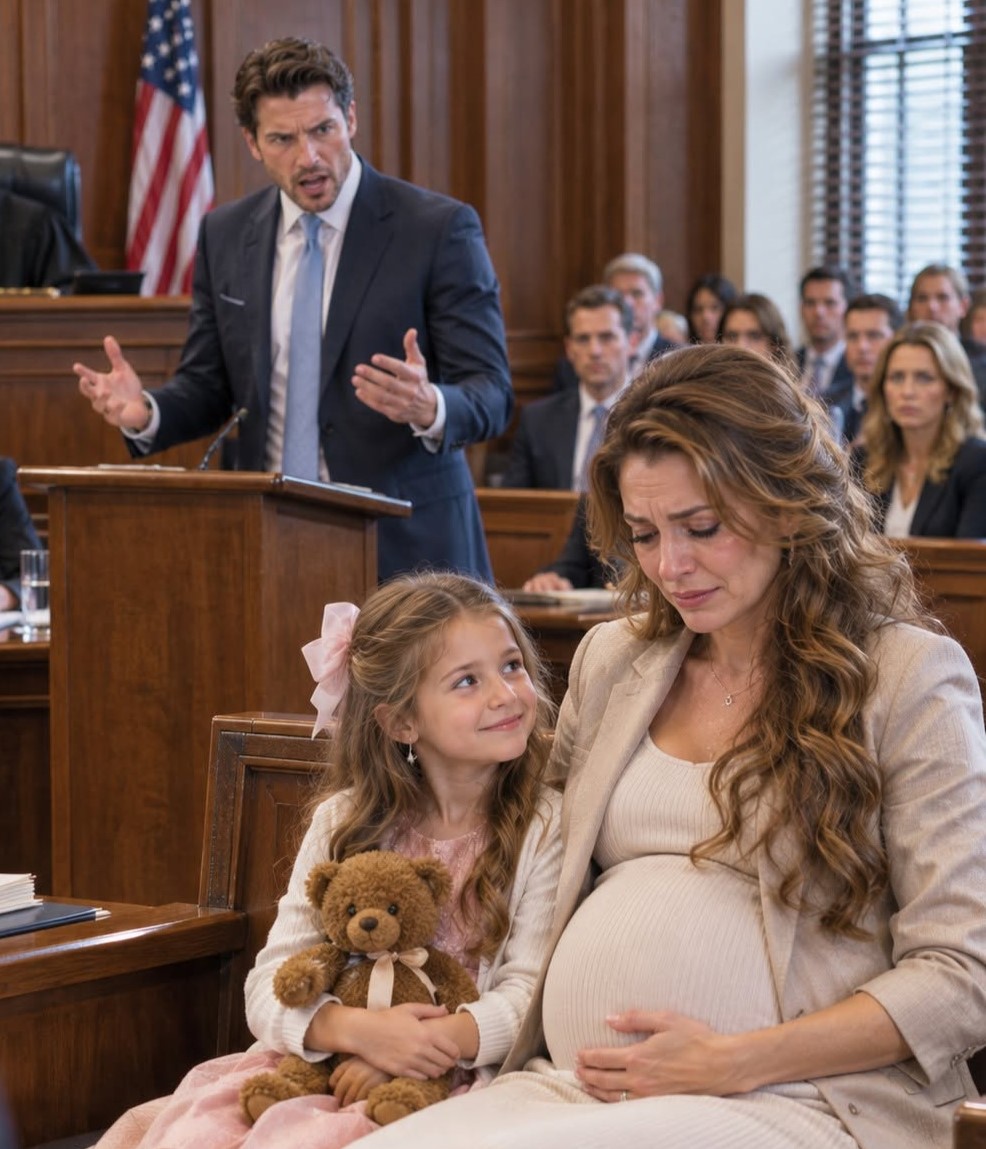
  • Five minutes after our divorce became final, my husband looked me in the eyes and said, “Take the girls. I have a son coming now.”  

    Five minutes after our divorce became final, my husband looked me in the eyes and said, “Take the girls. I have a son coming now.”  

    Part 1 of 3

    He thought he was leaving behind an ordinary wife and two daughters he no longer needed—but by that afternoon, he would discover I was a U.S. Army colonel, and the “heir” his entire family was celebrating might not even be his.

    PART 1

    At 10:16 that morning, I signed my name for the last time as Evelyn Vance.

    Eleven years of marriage ended with black ink and a mediator quietly gathering papers while Julian checked his phone.

    At 10:17, I became Evelyn Hartwell again.

    Then, at 10:21, he destroyed whatever tenderness I still had left.

    “Take the girls, Evelyn,” he said casually. “I have a son coming now.”

    I stared at him.

    Our daughters, Nora and Sophie, were nine and seven. Sophie had spent the previous week drawing him a card because she thought he must be sad about the divorce.

    Apparently, Julian had already replaced them in his mind.

    I closed my folder. “Understood.”

    He blinked, clearly expecting tears or an argument. For years, Julian had mistaken my restraint for weakness.

    His family knew I served in the Army, but that was about all they cared to know. His mother, Eleanor, called it my “government job.” His father had once joked that I probably organized paperwork for soldiers.

    I stopped correcting them years ago. There were things about my work I couldn’t discuss, and others I simply chose not to.

    Julian picked up his jacket. “Chloe’s ultrasound is at eleven. My whole family is already there.” His face actually brightened. “Mom’s calling him the Vance heir.”

    That almost made me laugh. Eleanor had spent years making comments about how I had “only given the family girls.” Now Chloe, Julian’s girlfriend of nearly a year, had apparently solved their great tragedy.

    A son. An heir. A replacement.

    “You’re taking the girls tonight?” Julian asked.

    “Yes.”

    “Good. Chloe needs peace right now.”

    “You don’t want to say goodbye?”

    He frowned. “I’ll call them later.”

    I stood. Our passports were already packed. Our luggage had been sent ahead, and at 4:40 that afternoon, my daughters and I were scheduled to board a military flight for my new assignment overseas.

    The relocation was completely legal. Julian had signed the custody agreement himself. He simply hadn’t bothered reading it.

    “Goodbye, Julian.”

    “You’re being dramatic.”

    I walked out without answering.

    Hours later, I was inside a secure military facility when my phone started ringing.

    Julian. Again. And again.

    On the fourth call, I answered.

    “Where are you?” he demanded.

    “Busy.”

    “I need to see you. The baby might not be mine.”

    I went still.

    Apparently, the ultrasound measurements showed Chloe was roughly four weeks further along than she had claimed. Four weeks earlier, Julian had been in Germany on a business trip—without her.

    Then a uniformed officer passed beside me. “Colonel.”

    I nodded.

    There was complete silence on Julian’s end. “Did someone just call you Colonel?”

    “Yes.”

    “You’re a colonel?”

    “You knew I was in the Army.”

    “I thought you were administrative.”

    “No, Julian. You decided that.”

    His breathing changed. “Where are you going?”

    “I’m not discussing my assignment over the phone.”

    “I’m your husband.”

    “No.” I looked at the clock. “You stopped being my husband four hours ago.”

    Then his voice cracked. “Evelyn… Chloe lied about the dates.”

    I looked through the glass at Nora and Sophie sitting together with their backpacks.

    And suddenly, the son Julian had chosen over them was surrounded by one devastating question: Was he even Julian’s child?

    PART 2

    Julian remained silent on the phone. Then he finally whispered, “Why didn’t you ever tell me?”

    “I did.” I watched Nora help Sophie zip her backpack through the glass. “You just never listened.”

    His breathing became uneven. “Evelyn, forget the Army for a second. The baby might not be mine.”

    “That sounds like something you should discuss with Chloe.”

    “She won’t answer me!”

    I almost laughed. Four hours earlier, he had discarded two daughters because he believed another woman was giving him the son he wanted. Now he sounded terrified.

    Then another voice came through his phone—his mother, Eleanor.

    “Julian, the doctor wants to speak with you.”

    He apparently forgot to mute the call. I heard hurried footsteps, then Chloe shouted somewhere in the background: “You had no right to check those dates!”

    Julian’s voice hardened. “Whose baby is it?!”

    Silence. Even through the phone, I could feel the answer.

    “Chloe?” he pressed.

    She started crying. “I didn’t know which one of you was the father!”

    Julian went completely quiet. Then I heard Eleanor gasp in horror. The celebrated Vance heir suddenly belonged to no one with certainty.

    “Evelyn,” Julian said desperately, returning to the phone. “Can you bring the girls back tonight?”

    My hand tightened around the phone. “No.”

    “They need their father!”

    “This morning you said you didn’t need them.”

    “I was angry!”

    “No, Julian.” I looked at my daughters again. “You were honest.”

    Before he could respond, a lieutenant colonel approached carrying a sealed folder. “Ma’am, transportation is ready.”

    Julian heard every word. “Transportation?”

    I ended the call.

    Twenty minutes later, Nora and Sophie stood beside me near the aircraft. Sophie looked toward the terminal doors. “Is Daddy coming?”

    I knelt in front of her. “No, sweetheart.”

    Her face fell. Then Nora quietly took her sister’s hand. “We still have Mom.”

    Those words nearly broke me.

    But before we boarded, my phone vibrated again. It wasn’t Julian. It was my uncle, Arthur Vance—a retired military judge and corporate attorney.

    His text message contained only one sentence:

    Colonel Hartwell, do not board that plane yet—my investigators just uncovered corporate embezzlement involving Julian’s firm and your classified overseas logistics assignment.

    I stared at the screen.

    Then a second message from Arthur appeared:

    Julian didn’t sign that divorce settlement out of indifference, Evelyn. He knew who you really were all along—and he used your security clearance to hide millions.

    PART 3

    My hand froze over the phone screen as Arthur’s warning echoed in my mind.

    I immediately turned to my transport officer. “Hold the departure. Clear a secure room in the terminal.”

    Five minutes later, Nora and Sophie were sitting comfortably with juice boxes in a guarded lounge while I sat across from Arthur Vance inside a secure briefing room. Arthur laid out a thick stack of audited financial statements, corporate registry filings, and intercepted wire transfers.

    “When Julian signed that custody and asset agreement this morning,” Arthur explained, his voice cold and precise, “he wasn’t just letting you go. He was using your high-level military diplomatic immunity to move capital out of the country.”

    I stared at the offshore transfer logs. “Julian used my pending overseas deployment to route Vance Logistics equipment contracts through my unit’s logistics manifest.”

    “Precisely,” Arthur confirmed. “He believed your ‘administrative government job’ meant you wouldn’t notice the manifests bearing your name. He channeled four million dollars in fraudulent DOD sub-contracts through shell accounts, framing you as the signing authority before the divorce decree finalized.”

    The sheer arrogance of it was staggering. Julian hadn’t just neglected our daughters and cheated with Chloe—he had actively set me up to take the fall for corporate fraud to cover his failing company.

    Suddenly, my private phone buzzed again. It was Julian calling from the hospital parking lot.

    I placed the call on speaker. “What is it, Julian?”

    “Evelyn, please!” Julian’s voice was frantic, sirens wailing faintly in his background. “Chloe ran off with her bags, Mom is hysterical, and the bank just froze my corporate operating account! They said there’s a federal hold on my overseas transfers!”

    “The federal hold was placed by my authority, Julian,” I said, my voice dead even.

    A long, suffocating silence fell over the line.

    “Your… authority?” Julian stammered. “Evelyn, what are you talking about? It’s just a shipping contract!”

    “I am the Senior Commanding Logistics Colonel for the European Task Force,” I replied, each word measured and lethal. “The manifests you forged with my name were flagged by military intelligence two hours ago. You didn’t hide your fraud behind a weak wife, Julian. You committed treason against a federal officer.”

    “Evelyn—no! Please!” Julian gasped, his voice cracking into sheer terror. “I didn’t know! I swear I didn’t know how high up you were! I was desperate! The company was going under, and Chloe told me—”

    “Save it for the federal tribunal,” Arthur interrupted firmly into the microphone. “This is Arthur Vance. Federal marshals and MP officers are pulling into your office parking lot right now.”

    Julian let out a choked shriek over the phone just as heavy car doors slammed and authoritative voices ordered him to step out of his vehicle. The line went dead.

    FINAL PART

    Six months later, the afternoon sun fell warm and bright over the garden courtyard of our new home near the military base in Stuttgart, Germany.

    Nora and Sophie were laughing in the yard, running through the grass with a golden retriever pup, their cheeks rosy, their eyes bright and completely free of the quiet anxiety that had shadowed their lives in Chicago.

    Arthur Vance sat at the patio table beside me, sipping a cup of black coffee as he reviewed the final legal decrees from the state department.

    “Julian entered a guilty plea on all counts of federal wire fraud, contract forgery, and grand larceny,” Arthur reported smoothly. “He was sentenced to twelve years in federal prison and ordered to surrender all remaining corporate shares.”

    “And Eleanor?” I asked softly.

    “Your former mother-in-law had to sell the family estate to pay off Julian’s civil restitution judgments,” Arthur replied with a quiet, dry smile. “She’s living in a modest apartment in Indiana. As for Chloe, the paternity test confirmed the child wasn’t Julian’s anyway. She fled the state before the indictment came down.”

    I looked out at my daughters playing in the sunlight.

    For eleven years, Julian and his family had looked at me and seen only what suited their narrative: a quiet, obedient wife with an unimpressive “government job” who gave them “only girls.” They had assumed my silence was weakness, my restraint was ignorance, and my love for my daughters was something to be exploited.

    They had never anticipated what happened when the quiet officer stepped out of the shadows.

    Nora ran up to the patio, holding a bright bouquet of freshly picked wildflowers, and handed them to me with a radiant smile. “Look, Mom! These are for your new office desk!”

    I pulled my daughter into a warm, tight hug, kissing her forehead. “They’re beautiful, sweetie. Thank you.”

    “Are we staying here forever, Mom?” Sophie asked, trotting up beside her sister.

    “We’re staying together,” I smiled, wrapping my arms around both of my daughters. “Wherever we go, we’re safe, we’re whole, and we’re home.”

    Arthur smiled warmly, taking a slow sip of his coffee as the gentle afternoon breeze rustled through the green trees overhead. The long night of deceit was over, and our future belonged entirely to us.

  • My Son Brought His New Boyfriend Home — The Moment I Saw Him, I Called The Police  

    My Son Brought His New Boyfriend Home — The Moment I Saw Him, I Called The Police  

    Part 1 of 3

    Part 1: The Unexpected Guest


    My name is Margaret, and my nineteen-year-old son, Zachary, had just returned home after finishing his freshman year at college. For weeks, he had been buzzing with excitement about someone special he had met on campus, someone he was finally ready to introduce to me.

    I put so much heart into preparing that Sunday evening dinner. I deep-cleaned the whole house, cooked a tender pot roast, and laid out the gold-rimmed china plates I usually reserved for Thanksgiving.

    Zachary had dated a few people in high school, but I had never seen him this head-over-heels before. For the past two weeks, he had dropped endless litanies of sweet details about Liam.

    “Liam hates mushrooms with a passion,” Zachary had laughed on the phone a few days prior. “He also plays the acoustic guitar awfully, but he does it with absolute confidence.”

    “He sounds like a lively character,” I had answered back then.

    “You have no idea, Mom,” Zachary replied warmly. “The other day, Liam literally walked twenty minutes across campus in the pouring rain just to drop off my forgotten laptop before class.”

    By Sunday afternoon, I genuinely felt as though I already knew the young man, and I was looking forward to welcoming him into our home.

    When the doorbell rang around four o’clock, Zachary practically leaped from the couch and sprinted to the entryway with a huge grin on his face. I heard cheerful whispers and laughter echoes coming down the hallway.

    A moment later, Zachary walked into the bright kitchen alongside a handsome young man, glowing with undeniable pride. “Mom, this is Liam,” Zachary announced excitedly.

    The exact second my eyes met his face, I froze entirely. The heavy stainless-steel serving spoon slipped slightly in my fingers, and a icy wave of shock washed over my entire body.

    Liam was tall and slender, featuring dark hair that curled softly around his ears. But what stopped my heart were his eyes, which were a distinct gray-blue shade identical to my brother Gabriel’s eyes.

    Then Liam turned his head slightly toward Zachary, and I caught sight of a distinct reddish birthmark right underneath his left ear lobe. My knuckles turned white as I gripped the spoon harder, denying the physical reality right before me.

    My gaze shifted down to his chest, where a small oval silver pendant rested against his dark shirt. It was noticeably scratched near the bottom edge.

    I had not seen that piece of jewelry in twenty-one long years, but I recognized it instantaneously. My father had worn that exact silver pendant every single day of my childhood, and when he passed away, my mother gave it to my younger brother, Gabriel.

    Gabriel was wearing that very pendant on the crisp October night he vanished off the face of the earth.

    “Margaret?” Liam asked softly, his brows furrowing slightly as he noticed my paralyzed stance.

    Zachary stepped closer to me with concern written on his forehead. “Mom, are you okay?”

    I forced my facial muscles into a stiff, polite smile and cleared my throat carefully. “I’m so sorry, sweetie, it has just been a long day.”

    Zachary blushed with slight embarrassment before trying again. “Mom, this is Liam.”

    “Of course, please forgive me,” I said, setting the metal spoon down on the counter before my trembling hand dropped it. “It is wonderful to finally meet you in person, Liam.”

    Liam offered a warm smile and replied, “It is so great to meet you too, Mrs. Margaret, because Zachary talks about you constantly.”

    “I hope he only shared the good things,” I replied softly.

    “Mostly the good things,” Liam joked teasingly, prompting Zachary to give him a playful nudge in the ribs as they both laughed.

    It should have been a normal, joyful family introduction. Instead, I could not tear my eyes away from the scratched silver pendant hanging around his neck.

    Gabriel was twenty-four years old when he disappeared without a trace, back when I was twenty-nine. My mother had called me on a gloomy Friday evening asking if I had heard from him, but I had not.

    By Sunday, our family was frantically calling every friend he had ever known, and by Monday morning, we were dialing regional emergency rooms. Months later, state police found his sedan parked in a desolate lot in Ohio, locked and completely empty.

    There were extensive search parties, missing flyers, endless phone calls, and agonizing false sightings over the years. My poor mother never stopped waiting for him, and she passed away seven years ago without ever learning what became of her beloved youngest child.

    Now, a total stranger had walked into my home wearing Gabriel’s heirloom. I knew I needed to figure out how he obtained it, but I refused to bring it up in front of Zachary just yet.

    I looked toward Liam and asked carefully, “Zachary mentioned to me earlier that you have an appreciation for old antique items?”

    Zachary frowned in confusion and interrupted, “Wait, I said that?”

    “I thought you did,” I replied quickly before turning back to our guest. “I actually have a few interesting vintage items stored downstairs in the basement if you would like to take a look.”

    Zachary opened the refrigerator door and grabbed two sodas. “Since when do you keep anything cool in the basement, Mom?”

    “Since before you were born,” I answered calmly while gesturing toward the open basement entrance. “Come along, Liam, it will only take a brief moment.”

    Part 2: The Confrontation

    Liam followed me down the steep steps, where each footfall felt heavier than the last. The basement was mostly filled with seasonal holiday boxes, old wooden furniture, and plastic tubs containing Gabriel’s remaining childhood belongings.

    The moment Liam stepped onto the cold concrete floor, I turned around and stared directly at his neck. “Where did you get that silver necklace?” I demanded directly.

    Liam touched the oval pendant with his fingertips and replied, “This piece right here?”

    “Yes, that exact one,” I said, my pulse racing wildly inside my chest.

    “My dad gave it to me a few years ago,” Liam answered simply.

    “What is your father’s full name?” I asked, stepping closer.

    Liam’s relaxed smile suddenly vanished into confusion. “His name is Gabriel.”

    Instantly, I stepped back, pulled the heavy basement door shut, and turned the iron key inside the lock.

    Liam immediately rattled the metal door handle from the inside and yelled, “Mrs. Margaret, what are you doing?”

    “I am calling the police right now, and I will explain everything in a minute,” I called out through the thick wood, trying to keep my voice steady.

    “What are you talking about?” Liam shouted in shock. “Why did you lock me in the basement?”

    Heavy footsteps echoed from the kitchen above, and Zachary appeared at the top of the stairwell holding two unopened soda cans. “Mom, what is going on down there?” he asked, staring at the locked door in disbelief.

    “Zachary, put those cans down immediately,” I ordered firmly.

    “Are you out of your mind?” Zachary yelled back as Liam pounded loudly against the wooden panels from below.

    “Zachary, please get me out of here!” Liam screamed from the dark basement.

    Zachary’s expression shifted to pure panic as he stepped closer to me. “Mom, unlock that door right now!”

    “I need you to step back and listen to me very carefully,” I replied, holding my trembling hands up.

    “Why on earth did you lock my boyfriend in the basement?” Zachary demanded angrily.

    “I have to make an emergency call right now,” I said while moving toward the wooden cabinet near the dining table.

    “Are you seriously calling the cops on him?” Zachary shouted, following my footsteps. “He hasn’t done anything wrong!”

    “I will unlock the door the moment the officers arrive here,” I stated firmly as I retrieved an old photo album from the bottom shelf.

    “The police?” Zachary gasped in total disbelief. “Mom, you have completely lost your mind!”

    Liam knocked heavily on the door once more and called out, “I swear I haven’t committed any crime!”

    “I know you haven’t,” I called back to him before opening the faded photo binder on the table.

    “Then why are you treating him like a criminal?” Zachary pleaded with tears welling up in his eyes.

    I flipped through the sticky plastic pages until I found a photograph taken twenty-three years ago, depicting my brother Gabriel standing beside my father at a summer cookout. I picked up the picture and handed it directly to my son. “Look at this photo, Zachary.”

    “What am I supposed to be looking at?” Zachary asked impatiently.

    “That is your uncle Gabriel,” I explained clearly. “Now look closely at his chest.”

    Zachary lowered his gaze and peered closely at the crisp image, where the distinct silver pendant was resting clearly against Gabriel’s shirt. He looked toward the locked basement door, then back down at the glossy print in his hand. “No way, that’s just a common necklace.”

    “Look at the bottom corner where the metal is scratched,” I insisted softly. “And look at the small birthmark right below his left ear.”

    Zachary went completely pale as his voice trembled. “Mom, this makes no sense.”

    “Liam just told me that his father’s name is Gabriel,” I whispered, holding my breath.

    Silence fell over the room for a few seconds before Liam yelled from behind the locked door, “Zachary, please tell me what is happening up there!”

    Zachary turned to me with wide eyes and said, “Mom, open the door right now because if your theory is correct, Liam hasn’t done anything wrong to deserve being trapped down there.”

    His words struck me deeply, and I realized he was entirely right. I walked over to the door, turned the key, and pulled it wide open.

    Liam rushed up the stairs immediately, looking terrified and furious as he walked straight toward Zachary. “What is wrong with your mother?” he demanded loudly.

    “I don’t even know yet,” Zachary replied, holding his hands up defensively.

    “I told her my dad’s name, and she literally locked me in the dark!” Liam yelled, shaking his head in anger.

    “I am so deeply sorry, Liam,” I said softly from the corner of the room.

    Liam turned to me and snapped, “You’re sorry? That is not an acceptable explanation for locking someone up!”

    “You’re right, but this photo is,” I said, pointing toward the old photograph Zachary was holding.

    Zachary held the photograph right beside Liam’s face and whispered, “Liam, just look at this picture for a second.”

    Liam glanced down at the image angrily, but his expression softened into sheer bewilderment as he stared at the face in the print. “Who is this guy, and why does he look exactly like my father?”

    Nobody in the kitchen answered his question.

    Part 3: The Shocking Revelation

    Two police officers arrived at our home a few minutes later, and by then, I was fully aware of how unhinged my actions appeared to outside eyes. I sat the officers down and explained the whole backstory, including Gabriel’s vanishing twenty-one years ago, the scratched pendant, the birthmark, and the matching name.

    One officer questioned Liam politely, quickly establishing that Liam had done nothing illegal, which left me feeling immensely guilty for locking him away in a moment of sheer panic.

    “Where is your father residing currently, son?” the older officer asked Liam gently.

    Liam looked utterly baffled by the line of questioning and answered, “He is at home right now, about two hours away in Vermont.”

    My stomach churned as I grabbed the edge of the dining chair for support. “Wait, your father is living in Vermont?”

    “Yes, my dad isn’t missing at all,” Liam insisted while looking at me like I was insane.

    Zachary whispered quietly beside me, “Mom, please calm down.”

    “Please call your father right now,” I begged Liam, my voice cracking under the emotional weight. “I need you to put him on speakerphone.”

    Liam hesitated for a long moment before pulling out his phone and dialing his father’s number. The line rang three times before an older man answered the call.

    “Hey, Liam, is everything alright with your visit?” a deep voice boomed through the phone speaker.

    Hearing that mature, slightly raspy voice instantly sent chills down my spine because, despite the passage of two decades, I recognized the distinct cadence of my brother’s voice.

    Liam glanced at me uncomfortably before asking into the microphone, “Dad, where did you originally get that silver necklace you gave me?”

    There was a brief silence on the other end before Gabriel replied, “Why are you asking me about that necklace all of a sudden?”

    “Because I am at Zachary’s house right now,” Liam explained nervously, “and his mother recognized the pendant.”

    The line went completely quiet for several seconds before Gabriel asked, “What is his mother’s name?”

    “Her name is Margaret,” Liam answered softly.

    The silence that followed was so heavy that I thought the call had been disconnected, but then a breathy voice came through the speaker. “Margaret?”

    I covered my mouth with both hands as tears filled my eyes. After twenty-one long years of agonizing silence, my missing brother had just spoken my name as if we had talked just last week.

    Liam held the vibrating phone out toward me with a completely pale face, and after a moment of hesitation, I took it with trembling fingers. “Gabriel?” I managed to whisper into the receiver.

    “Margaret, I am so sorry,” Gabriel replied from the other end, his voice breaking instantly.

    “You are actually alive,” I sobbed into the phone as the two police officers watched quietly from the hallway.

    “I know I don’t deserve your forgiveness,” Gabriel muttered weakly.

    I had rehearsed this potential moment thousands of times in my head over the years, sometimes imagining hugging him tightly and other times imagining screaming at him in anger, but I never imagined standing in my kitchen beside my son’s boyfriend while my pot roast grew cold on the counter.

    “Mom died seven years ago,” I blurted out, unable to hold back the painful truth.

    I heard Gabriel sob heavily over the speaker as he confessed, “I know she passed away because I found her online obituary a few years ago.”

    A wave of intense anger suddenly replaced my initial relief. “You knew she died, and you still didn’t reach out to us?”

    “Margaret, please let me explain the situation,” Gabriel pleaded desperately.

    “She waited for you every single day of her life!” I yelled into the phone, ignoring the officers standing nearby.

    “I know she did, and it breaks my heart,” Gabriel cried.

    “No, you don’t know!” I screamed back tears streaming down my face. “You need to get in your car and drive here right now!”

    Gabriel went silent for a moment before whispering, “I don’t know if I can face everyone after what I did.”

    I let out a bitter laugh and said, “You have had twenty-one years to build up the courage, Gabriel!”

    Suddenly, Liam snatched the phone out of my hand and placed it back on speakerphone. “Dad, you are going to get in your car and drive here right now,” Liam ordered firmly, his voice shaking with anger.

    “Liam, please understand it is complicated,” Gabriel tried to explain.

    “No, it is not complicated at all!” Liam snapped back. “You knew I had an extended family this whole time?”

    “Yes, I did,” Gabriel admitted quietly.

    “And you let me grow up believing I had no relatives on your side?” Liam asked in utter betrayal. “Did you know that Margaret was my aunt?”

    Gabriel did not answer, but his silence was an explicit confirmation.

    Liam looked over at Zachary, and his face suddenly drained of all color as the realization hit him like a freight train. “Wait a minute,” Liam gasped out loud.

    Zachary stared back at Liam with wide, horrified eyes as the horrific math connected in his head. “Oh my God,” Zachary whispered in absolute terror.

    Liam backed away from Zachary until his back hit the wall. “If your mom is my dad’s sister…”

    “Then Gabriel is my uncle,” Zachary finished the sentence in sheer shock.

    “Which means you two are first cousins,” I stated plainly into the heavy silence of the room.

    Neither of the young men spoke another word, and Liam sank slowly onto a wooden dining chair while Zachary sat at the far end of the long table, both staring blankly at the floor in complete disarray.

    Part 4: The Confrontation and Aftermath

    Gabriel arrived at our house two hours later, and when the doorbell rang, I stood frozen in the kitchen, completely unable to walk to the door. Zachary stepped up, walked down the hallway, and pulled the front door open.

    My brother stood on the porch, looking forty-five years old with gray hair at his temples, deep wrinkles around his eyes, and a heavier frame than the lean young man I remembered. Yet beneath it all, he was undeniably my brother Gabriel, alive and breathing.

    I did not move forward to hug him as he stepped into the warm entryway and whispered, “Margaret.”

    “Did Mom ever know you were alive?” I demanded immediately, skipping any polite pleasantries.

    Gabriel’s eyes welled with tears as he shook his head. “No, she never knew.”

    “Why did you do this to us?” I asked, my voice cracking under the immense pain.

    Gabriel sat down at the table, wiped his hands over his tired face, and began to confess everything. He explained that back when he vanished, he was drowning in severe gambling debt, had lost his high-paying job, and was consumed by immense shame.

    He convinced himself that disappearing into thin air would somehow spare our family from the financial disaster he had created, so he abandoned his car in Ohio and started a brand new life under an assumed routine.

    “I honestly intended to come back home once I got my life sorted out,” Gabriel claimed quietly.

    “And when was that supposed to be?” I pressed him bitterly. “One year later? Five years later?”

    Gabriel looked down at his hands in complete shame and whispered, “The longer I stayed away, the harder it became to return, because every missed birthday and holiday became another reason why you all would hate me.”

    “I did hate you sometimes,” I admitted candidly. “I hated you when I thought you were lying dead in a ditch somewhere, and I hated you for leaving me alone to carry the weight of Mom’s broken heart.”

    Gabriel wept silently, unable to offer any defense for his past cowardice.

    Liam stood up from his chair and stared directly at his father. “What about me, Dad? You raised me without ever mentioning I had an aunt or a cousin living just a few hours away!”

    “I was terrified of telling you the truth about my past,” Gabriel pleaded softly.

    Liam let out a cruel, bitter laugh and pointed toward Zachary. “I literally brought my college boyfriend home to meet his mother, only to discover she is my biological aunt and he is my first cousin! Do you have any idea how completely messed up that is?”

    “I am so sorry, Liam,” Gabriel repeated helplessly.

    “Stop saying you’re sorry because that changes nothing!” Liam yelled before grabbing his jacket off the rack. “I need to get out of here right now.”

    Zachary immediately stood up and grabbed his car keys from the counter. “I will drive you back to your dorm, Liam.”

    Before stepping out the door, Liam paused, turned toward me, and looked into my eyes. “Liam,” I said gently, “I owe you a sincere apology for locking you in the basement earlier.”

    Liam let out a small, tired breath and asked, “Which part of this crazy evening are you apologizing for?”

    “Locking you downstairs was wrong, and I panicked,” I said honestly. “You did nothing to deserve that.”

    “No, I didn’t,” Liam agreed quietly, “but I understand why you were terrified.” He gave me a single nod before walking out into the cool night air with Zachary.

    Gabriel stayed at my house that night, and we sat up talking until past midnight, airing out decades of buried trauma, grief, and confusion. I did not forgive him that night, nor did I forgive him in the weeks that followed.

    In the months after that chaotic Sunday, our relationship rebuilt itself at a agonizingly slow pace through short phone calls, occasional coffee meetings, and awkward family dinners.

    Liam and Zachary ended their romantic relationship immediately that night without any hesitation, as continuing to date was entirely out of the question once their genetic connection was revealed. They avoided each other for several weeks, struggling to process how their romance had collided with such an absurd family secret.

    However, as time passed, their shared trauma brought them back together as close friends. Six months later, I walked into my kitchen to find the two of them passionately arguing over a video game console on the couch.

    “There is no way you beat me fairly, Liam, you definitely cheated!” Zachary yelled, waving his controller around.

    “You’ve been losing to me at this game since the day we met,” Liam laughed back playfully.

    “Yeah, well, that was before I realized we shared the exact same family DNA,” Zachary joked back with a smirk.

    Liam glanced up at me coming into the room and said, “Mrs. Margaret, we are allowed to make exactly one cousin joke per day.”

    “I’ll allow just one,” I smiled back, feeling a sense of deep relief as their warm laughter filled the room.

    That autumn, Gabriel and I took a trip together to visit our mother’s grave at the cemetery. He stood silently before her dark granite tombstone for nearly an hour before whispering, “I always convinced myself she would completely hate me if I ever returned.”

    I placed my hand gently on his shoulder and replied, “She would have been furious with you, Gabriel, but she would have welcomed you back home with open arms regardless.”

    Gabriel broke down in tears, and for the first time in twenty-one years, I wrapped my arms around my younger brother and held him tightly. It wasn’t full forgiveness just yet, but it was a meaningful step toward healing.

    The following spring, I decided to host another Sunday family dinner, cooking the same pot roast recipe and laying out the same gold-rimmed china plates. Zachary was sitting at the table, Liam was sitting next to him, and Gabriel was seated directly across from me.

    As I looked around the warm table, I reflected on that chaotic afternoon a year prior when I had simply prepared dinner to meet my son’s new college boyfriend. I never could have imagined that a scratched silver pendant would unravel twenty-one years of missing person mysteries and bring my lost brother back into my life.

    THE END.


  • I was quietly cutting my daughter’s chicken when the manager stopped beside our table and sneered, “People like you don’t belong in this section.”  

    I was quietly cutting my daughter’s chicken when the manager stopped beside our table and sneered, “People like you don’t belong in this section.”  

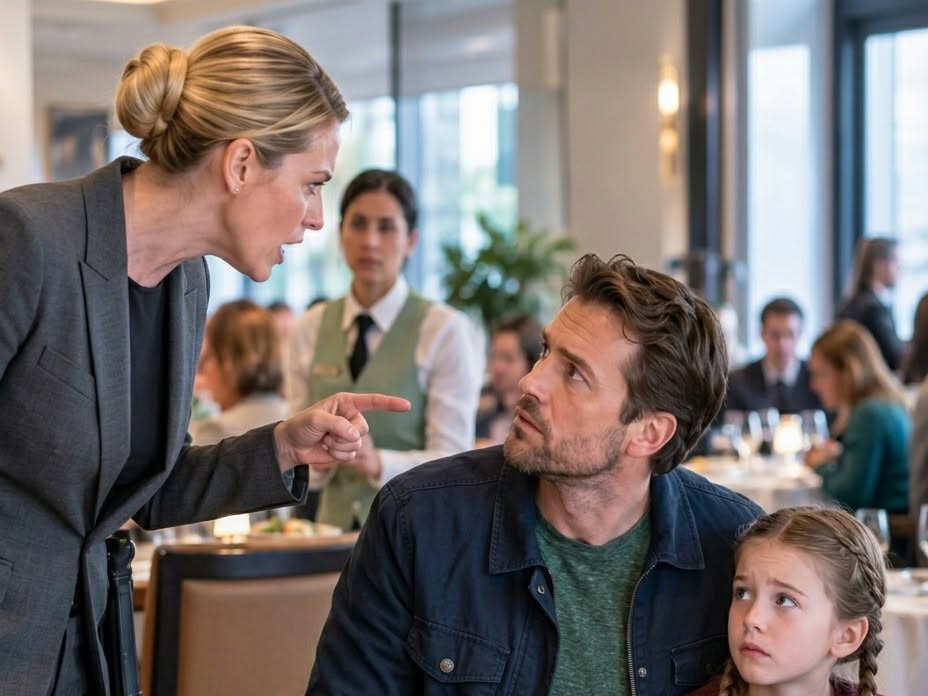
    I was quietly cutting my daughter’s chicken when the manager stopped beside our table and sneered, “People like you don’t belong in this section.” My little girl looked at me and whispered, “Daddy, did we do something wrong?” I stayed calm—even when she called security. Then I sent one text to corporate headquarters. She thought I had two minutes before being thrown out. She had no idea she had less than two minutes left as manager.

    The manager called security because a tired single father was taking too long over dinner. What she didn’t know was that the man calmly cutting his daughter’s chicken had the authority to fire her before security reached the dining room.

    Daniel Mercer noticed the manager watching him before he’d finished his first bite.

    He sat in a corner booth at Bellmont House, one of the city’s most expensive family restaurants, dressed in faded jeans, work boots, and a dark jacket still damp from the rain. Across from him, his eight-year-old daughter, Sophie, colored a paper menu.

    “Daddy, can I have another lemonade?”

    Daniel smiled. “After you finish your vegetables.”

    Sophie groaned dramatically.

    For ten peaceful seconds, Daniel almost forgot why he had come.

    Then Vanessa Cole approached.

    The restaurant manager wore a tailored black suit and the expression of someone who considered kindness a weakness.

    “Sir,” she said, looking Daniel up and down, “we need this table.”

    Daniel looked around.

    Seven tables sat empty.

    “We just ordered dessert.”

    Vanessa lowered her voice. “This section is intended for premium guests.”

    Daniel’s gaze sharpened.

    “I paid for dinner.”

    “That isn’t the issue.”

    “Then what is?”

    Vanessa glanced at his boots.

    Sophie stopped coloring.

    Daniel immediately understood.

    Two months earlier, anonymous complaints had reached Bellmont Hospitality’s corporate office: customers judged by their clothing, employees pressured to favor wealthy-looking guests, and servers punished for helping families who didn’t order expensive wine.

    Daniel had personally chosen to investigate.

    Vanessa had no idea the exhausted-looking man in booth seventeen was Daniel Mercer, majority owner of Bellmont Hospitality.

    After his wife died three years earlier, Daniel had withdrawn from public events, delegated daily operations, and focused on raising Sophie. Most newer employees knew his name but had never seen him.

    Vanessa smiled coldly.

    “I’m asking you to leave after dessert.”

    Sophie whispered, “Daddy, did we do something wrong?”

    Something shifted inside him.

    Daniel carefully set down his fork.

    “No, sweetheart.”

    Vanessa sighed. “Sir, don’t make this difficult.”

    Daniel glanced at her name badge.

    “Vanessa Cole. General manager?”

    Her smile returned.

    “That’s right.”

    “And you’re asking a paying customer to leave because you don’t like how he looks?”

    “I’m asking someone disrupting our standards to leave.”

    Daniel scanned the room again.

    Nobody was disturbed.

    Except Vanessa.

    He calmly reached for his phone.

    Vanessa mistook his silence for surrender.

    “Good. I’m glad we understand each other.”

    Daniel opened an encrypted company dashboard and typed a short message to corporate counsel.

    Come to Bellmont House. Bring tonight’s audit file.

    Then he locked his phone.

    Vanessa didn’t notice.

    She had already decided the poor single father had lost.

    She was about to learn he owned the battlefield.

    Dessert arrived five minutes later.

    A young waitress named Maria set Sophie’s chocolate cake on the table with trembling hands.

    “I’m sorry,” she whispered.

    Daniel looked at her.

    “For what?”

    Maria glanced toward Vanessa.

    “For tonight.”

    Before Daniel could respond, Vanessa’s voice cut across the dining room.

    “Maria!”

    The waitress flinched.

    Vanessa marched over.

    “Did I tell you to serve dessert?”

    “The order was already entered.”

    “I told you we needed the table.”

    Sophie stared at the manager.

    Daniel’s jaw tightened.

    Maria whispered, “They’ve paid. I thought—”

    “That’s your problem. You think.”

    Several diners turned toward them.

    Vanessa seemed to enjoy the attention.

    Daniel quietly asked, “Do you speak to all your employees like that?”

    Vanessa laughed.

    “You’re still here?”

    Maria’s face reddened.

    Daniel looked at her. “How long have you worked here?”

    “Four years.”

    Vanessa snapped, “Don’t answer him.”

    Daniel leaned back.

    Interesting.

    Four years meant Maria had worked under the previous manager, when Bellmont House had some of the company’s highest customer-service ratings.

    “Why shouldn’t she answer?”

    “Because this is my restaurant.”

    Daniel almost smiled.

    Vanessa leaned closer.

    “And frankly, people like you come in, order the cheapest entrées, occupy tables for hours, then complain when we protect the atmosphere.”

    Embarrassment filled Sophie’s eyes.

    Daniel’s calm turned colder.

    “People like me?”

    Vanessa realized she’d gone too far, but arrogance pushed her onward.

    “You know exactly what I mean.”

    Then she pulled out her phone.

    “Security? I need assistance removing a customer.”

    Maria went pale.

    “Ms. Cole, please—”

    “You’re finished for tonight,” Vanessa said. “Go clock out.”

    Maria stared at her. “You’re firing me?”

    “I’m considering it.”

    Daniel interrupted.

    “No, you aren’t.”

    Vanessa slowly turned.

    “Excuse me?”

    Daniel’s phone vibrated.

    A message appeared.

    Lobby. Corporate counsel and regional director present.

    Daniel slipped the phone away.

    Vanessa folded her arms.

    “You have exactly two minutes before security escorts you outside.”

    Daniel nodded.

    “Then two minutes should be enough.”

    He stood.

    At six foot two, he suddenly looked very different from the tired customer Vanessa had dismissed.

    “Maria,” he said, “when did she start forcing staff to remove customers based on appearance?”

    Maria froze.

    Vanessa’s confidence faltered.

    “Don’t answer.”

    Daniel continued.

    “Were employees ordered to exaggerate wait times for customers she considered ‘low value’?”

    Maria stared at him.

    “How did you know that?”

    Vanessa stepped forward.

    “That is confidential business information.”

    Daniel met her eyes.

    “Yes.”

    The single word landed strangely.

    Vanessa frowned.

    Daniel continued.

    “Were servers also told to transfer large-spending guests into Vanessa’s preferred section so she could manipulate performance bonuses?”

    Maria whispered, “Yes.”

    Color drained from Vanessa’s face.

    “How do you know about the bonuses?”

    Daniel looked toward the entrance.

    A woman in a gray suit and a man carrying a leather folder had just entered.

    Vanessa recognized the man first.

    “Mr. Harris?”

    Regional director Paul Harris didn’t smile.

    “Good evening, Vanessa.”

    Behind him stood corporate attorney Rachel Lin.

    Vanessa looked between them and Daniel. Her confusion turned to fear.

    Paul approached the table.

    “Mr. Mercer,” he said, “we brought everything you requested.”

    The restaurant fell silent.

    Vanessa’s lips parted.

    “Mr… Mercer?”

    Daniel turned toward her.

    “My full name is Daniel Mercer.”

    Maria covered her mouth.

    Vanessa whispered, “The owner?”

    Daniel’s voice remained quiet.

    “Now we understand each other.”

    Security arrived thirty seconds later.

    Two guards entered the restaurant and looked toward Vanessa.

    “Ma’am, you requested assistance?”

    Vanessa weakly pointed at Daniel, but couldn’t speak.

    Daniel answered for her.

    “The situation has changed.”

    Rachel Lin opened the leather folder.

    “Ms. Cole, corporate received fourteen documented complaints over the past nine weeks. Tonight was a scheduled undercover service review authorized by ownership.”

    Vanessa stared at Daniel.

    “You set me up.”

    “No,” Daniel said. “I ordered dinner with my daughter. Everything after that was your choice.”

    Vanessa swallowed.

    Paul laid several printed reports on the table.

    Customer complaints.

    Employee statements.

    Refund irregularities.

    Modified reservation records.

    Daniel had expected bad judgment.

    He hadn’t expected fraud.

    Rachel continued.

    “Our financial review also found that complimentary meals were repeatedly recorded for nonexistent customer complaints. Camera records show many of those meals were served to your personal guests.”

    Vanessa’s eyes widened.

    “That’s ridiculous.”

    “We have eighty-three transactions,” Rachel replied.

    Maria stared at Vanessa.

    Daniel’s voice hardened.

    “You humiliated customers. You threatened employees. You manipulated bonuses. And apparently, you used company funds to entertain friends.”

    Vanessa shook her head.

    “You can’t prove I authorized anything.”

    Rachel slid forward one final page.

    “Your employee login authorized every transaction.”

    Vanessa searched the room for support.

    Nobody moved.

    Then her expression shifted.

    She forced a smile.

    “Daniel, surely we can discuss this privately.”

    “You didn’t offer me privacy when you humiliated me in front of my daughter.”

    Sophie looked up at him.

    At that moment, Daniel stopped seeing Vanessa merely as a management problem.

    She had taught his daughter that money determined who deserved dignity.

    He intended to answer that lesson clearly.

    Daniel turned to Paul.

    “Terminate her employment immediately.”

    Vanessa’s smile vanished.

    “You can’t fire me like this.”

    Daniel never raised his voice.

    “I just did.”

    The security guards exchanged glances.

    Vanessa stepped toward him.

    “I built this restaurant!”

    Maria suddenly spoke.

    “No. We did.”

    Vanessa turned.

    For the first time, Maria showed no fear.

    “The cooks you insult. The servers you threaten. The hosts you blame. We built it.”

    Several employees quietly nodded.

    Vanessa grabbed her purse.

    “You’ll regret this.”

    Rachel responded calmly.

    “You should also know the financial irregularities are being referred for independent investigation. You’ll receive formal documentation tomorrow.”

    Vanessa went white.

    She headed toward the door.

    The same guards she’d summoned to remove Daniel now followed her outside to collect her management keys.

    Nobody applauded.

    Daniel didn’t want applause.

    He sat back beside Sophie.

    Her chocolate cake had started melting.

    “Daddy?”

    “Yes?”

    “Are you really the boss?”

    Daniel smiled.

    “Apparently.”

    She frowned thoughtfully.

    “Then Maria shouldn’t lose her job.”

    Daniel looked across the room.

    Maria was wiping tears from her cheeks.

    “No,” he said. “She shouldn’t.”

    Three weeks later, Bellmont House reopened after a complete management review.

    Employees received back pay for improperly altered bonuses. A confidential reporting system was introduced. Customer-treatment policies were rewritten. Promotions now required anonymous staff feedback.

    Maria became assistant manager.

    Paul recommended hiring an outside executive as general manager.

    Daniel refused.

    “Give Maria six months.”

    She earned the position in four.

    As for Vanessa, the investigation uncovered enough falsified reimbursements for Bellmont Hospitality to pursue repayment. Other restaurants requesting references received only verified employment information and the documented reason for her termination.

    Six months later, Daniel and Sophie returned to booth seventeen.

    The restaurant was full.

    A family in paint-stained work clothes entered nervously.

    The host smiled.

    “Welcome to Bellmont House.”

    No judgment.

    No hesitation.

    Just welcome.

    Sophie watched them take their seats.

    “Better now?”

    Daniel looked around at laughing servers, families enjoying dinner, and Maria confidently directing the evening rush.

    At last, he felt his anger fade.

    “Much better.”

    Sophie raised her lemonade.

    “To booth seventeen.”

    Daniel tapped his glass against hers.

    “To treating people right.”

    Outside, rain shimmered across the city lights.

    Inside, nobody needed expensive clothes to deserve a seat.

  • At 53, my mom decided to give love another chance, and I had never seen her this happy. But after finally meeting the man she had been dating, I waited until he was gone before telling her, “Mom, before you let things go any further with him, there’s something you need to know.”

    At 53, my mom decided to give love another chance, and I had never seen her this happy. But after finally meeting the man she had been dating, I waited until he was gone before telling her, “Mom, before you let things go any further with him, there’s something you need to know.”

    Part 1 of 3

    PART I: THE DINNER GUEST


    At fifty-three, my mother started dating again, and I had never seen her look quite so genuinely happy. After every single thing she had sacrificed throughout her entire life, I was deeply excited for her because she had spent decades putting everyone else first, especially me, so I wanted nothing more than to see her finally enjoy something for herself.

    Then she invited Benedict to dinner at her house.

    I opened the door when the chime rang, and the very second I saw his face, I recognized him instantly. I knew that man from eleven years earlier, remembering his distinct voice and the calm way he carried himself. More importantly, I knew something about his past that my mother had no idea about.

    I managed to smile politely through the whole dinner, waiting patiently until he finally left. Then I looked at my mother and said the words I never expected to have to say to her: “Mom, before you get any closer to him, there is something you need to know.”

    The whole evening had actually started with earrings. Mom had changed her pair three separate times before Benedict was even due to arrive.

    “The gold ones,” I called out from the kitchen while setting the table.

    “You said the silver ones earlier,” Mom said, coming into the hallway.

    “That was two pairs of earrings ago, Mom,” I chuckled.

    Mom appeared in the doorway holding another pair against her neck to check her reflection. “Do these look right to you?”

    “Mom, he is coming over for a home-cooked dinner, not conducting a high-end jewelry inspection,” I teased gently.

    “That is easy for you to say,” she murmured, looking down at her palms. “Is this too much?”

    “Which ones do you actually want to wear tonight?” I asked.

    She glanced toward the gold pair she had abandoned on the counter earlier. I picked them up and held them out to her with a warm smile. “Then wear those without second-guessing yourself.”

    At fifty-three years old, my mother was visibly nervous about a man, which alone was almost unbelievable to watch. My mother had spent most of her adult life being the absolute calmest person in any crowded room. Yet that night, her hands were trembling slightly.

    She rolled her eyes at my playful expression and said, “When exactly did you become my mother, Hannah?”

    “Right around your third outfit change this evening,” I replied instantly.

    She laughed out loud, and the soft sound was still hanging in the air when the front doorbell rang.

    “I will get it,” I said, stepping toward the foyer.

    “Wait a second,” Mom caught my arm firmly, looking at me with wide eyes. “Please be nice to him.”

    “I am always nice, Mom,” I insisted.

    “You once asked my dentist whether he possessed a personality outside of teeth,” she reminded me.

    “Well, he brought up dental plaque during a casual lunch, so it was a valid question,” I said defensive with a smirk.

    The bell rang a second time, and Mom shoved me gently toward the front entrance. “Just go open the door!”

    I was still smiling when I turned the handle and pulled the heavy wooden door open. Then I saw the man standing right there on the front porch. He was certainly older than I remembered from years ago, with hair that had gone mostly gray at the temples and deeper lines framing his eyes. Yet I knew that face immediately, and Benedict’s polite smile faltered the moment his eyes met mine.

    He looked at me, then glanced at Mom behind me, and then looked right back at my face. “Hannah?”

    His familiar voice made all those intervening years completely disappear in an instant. “You are Loretta’s daughter, Hannah?”

    My hand tightened around the brass doorknob until my knuckles turned pale. “Benedict.”

    Mom appeared right behind my shoulder and looked between the two of us in utter confusion. “Wait a minute, do you two actually know each other?”

    Benedict lifted the nice bottle of wine he had brought along. “Hannah actually worked for me many years ago.”

    Mom laughed in pure disbelief at the coincidence. “You have got to be kidding me.”

    “It really is a small world,” Benedict said softly as he stepped inside.

    As he walked past me into the foyer, a flooded memory came back that I had not thought about in years. I remembered a cozy bookstore, a woman I had never forgotten, and one specific sentence Benedict used to say that had quietly changed my life forever.

    PART II: SHADOWS OF THE PAST

    My mother had spent most of her adult life making sure I never noticed what she went without after my father left us when I was very little. After he walked out, Mom became absolutely everything to me, picking up extra shifts at work while still appearing at my school concerts with five minutes to spare. She remembered every single appointment, every school project, every birthday, and every tiny thing I thought was important.

    When I was thirteen years old, I accidentally found a brand new, unopened pair of winter boots hidden deep inside her bedroom closet.

    “Why have you not worn these yet, Mom?” I had asked her back then.

    “Oh, they turned out to be quite uncomfortable, my dear,” she had replied smoothly.

    Months later, I realized she had secretly returned them to get her money back, and that exact same week, I received the expensive art supplies I had been begging her for. That was simply how she loved me, giving things up quietly without ever announcing her sacrifices or reminding me what they had cost her.

    When I finally graduated from college and landed a solid job in the city, I started trying hard to push back against her frugality.

    “Take the vacation trip with your friends, Mom,” I would urge her.

    “That is a ridiculous amount of money to spend on myself, Hannah,” she would reply.

    “Then at least buy that nice dress in the window, Mom,” I would push.

    “I already have plenty of perfectly fine dresses, dear,” she insisted.

    “Mom, those dresses are practically archaeological artifacts at this point,” I joked.

    She laughed at that, and eventually, she did start traveling with her close friends, painting again, and joining a community volunteer group. Then, one evening, she casually mentioned a man named Benedict, and within weeks, his name began lighting up her phone screen almost as often as mine.

    One night, Mom admitted to me with a shy laugh, “He honestly makes me feel like I am twenty-five again.”

    I told her I could not wait to meet him, and I truly meant it with all my heart until I opened that door tonight.

    Throughout dinner, Benedict was exceptionally attentive without ever hovering over her. When Mom coughed after swallowing her drink too quickly, he quietly slid her water glass closer without interrupting her story. He remembered that she hated mushrooms and moved the serving dish away from her side of the table without making any big scene about it.

    “So,” Mom said, pointing her dinner fork at him playfully, “tell Hannah about the situation with the tomatoes.”

    Benedict groaned aloud. “Oh, absolutely not.”

    “You really should see them, Hannah,” Mom laughed.

    “They are recovering quite nicely, Loretta,” he corrected gently.

    “They are leaning completely sideways!” she countered.

    “They are merely leaning toward the sunlight,” he insisted with a grin.

    Mom shook her head fondly. “You are still planning to go check on them tonight, are you not?”

    Benedict shrugged lightly. “Well, they are unsupervised right now, and I finally got ours to stop collapsing last week.”

    My fork stopped halfway to my mouth as I caught that word. Ours.

    “My late wife used to grow tomatoes,” Benedict added softly to the table. “She always made it look insultingly easy.”

    I looked over at Mom, who simply smiled with genuine warmth. “Benedict definitely inherited her confidence.”

    “Unfortunately, not her actual competence,” Benedict self-deprecatingly added, and they both laughed together.

    I did not laugh because suddenly I was not just sitting at dinner with my mother’s new boyfriend, but across from someone who carried a heavy past. Back then, I worked part-time at a little bookstore downtown, where Benedict was my managing supervisor. At the time, I was dating a young man named Jeffrey, whom I thought was just protective when he picked restaurants because I took forever or chose movies because I picked weird ones.

    Jeffrey would correct my clothes before parties and call three times if I missed one call, but I failed to recognize controlling behavior for what it was back then, getting used to saying, “Whatever you want.”

    One afternoon at work, Benedict was rearranging the front book display and held up two novels. “Which one of these should go in the center, Hannah?”

    I had just shrugged my shoulders. “Whatever you think.”

    He did not move an inch. “Which one do you actually prefer, Hannah?”

    “Either one is fine,” I murmured.

    “I did not ask which one would avoid upsetting civilization,” he chuckled softly, holding the books up again. “What do you want?”

    I looked at them carefully for a moment. “The blue one.”

    “Great choice,” he said, placing it right in the display window.

    It should have meant nothing, except Benedict kept doing that exact same thing every day with coffee orders, work schedules, display signs, and background music. He would ask me what I thought and what I preferred, asking tiny questions that I slowly realized almost nobody else was asking me back then.

    One afternoon, Jeffrey came into the shop and openly criticized the sweater I was wearing, causing me to immediately apologize to him. Benedict was shelving books nearby, and without looking at Jeffrey, he looked straight at me and asked, “Do you like the sweater, Hannah?”

    Jeffrey had laughed mockingly. “Well, apparently somebody has to like it.”

    I looked down at myself and said firmly, “Yeah, I actually do like it.”

    Jeffrey and I broke up three months later, but there was another person from those years whom I remembered even more clearly than Jeffrey: Benedict’s wife. She used to draw ridiculous little cartoons on Benedict’s paper lunch bags, and he would carefully tape her favorites right beside the cash register.

    Every single Thursday, Benedict left work at exactly five o’clock sharp. When someone teased him about a regional manager meeting once, Benedict grabbed his coat and said, “I have dinner with my wife, and the meeting can survive without me.”

    Then one Thursday, he did not leave at five, sitting alone in his office staring silently at his phone. The next week, he barely spoke to anyone, and a month later, he left the bookstore completely because his wife was terribly sick and he was going home to care for her full-time.

    I never saw him again after that, though I eventually heard that she had passed away. Now, eleven years later, he was sitting right at my mother’s dinner table, and I could not stop wondering whether Mom truly understood what kind of complex ghost she was stepping into.

    PART III: THE GARDEN AT NIGHT

    Benedict stayed until just after nine o’clock in the evening. Mom stood at the open front door smiling brightly as his car slowly backed out of the driveway into the street. Then she closed the door and turned around to look at me.

    “Well?” she asked with anticipation.

    I kept looking through the window until Benedict’s red taillights completely disappeared into the dark. Mom’s happy smile faded the moment she saw the serious expression on my face.

    “Mom, before you get any closer to him, there is something you need to know,” I said quietly.

    She did not answer right away, so I told her everything about the bookstore years ago. I told her about Benedict, about his wife, and about how deeply that loving marriage had seemed woven into the very core of who he was as a person.

    Mom listened intently without interrupting me once, and finally, I said the thought that had been sitting heavily in my chest all evening: “You have spent your whole life coming second, Mom, to bills, to work, to Dad when he was around, and to me.”

    Her eyebrows drew together in concern as I swallowed hard. “I just do not want you spending the rest of your life competing with a memory of someone who is not even here anymore.”

    Mom did not offer a verbal answer to my concern. Instead, she walked straight into the hallway and pulled her heavy winter coat off the wall hook.

    “Put your shoes on right now, Hannah,” she instructed calmly.

    I stared at her in complete confusion. “What are you doing?”

    She grabbed her car keys off the table. “I could stand here and explain this to you, but you would still think I am just making excuses for him.”

    She looked me dead in the eye and added, “There is something specific you need to see for yourself.”

    Mom drove through the quiet streets for about fifteen minutes without explaining a single thing about our destination.

    “Are you kidnapping me right now, Mom?” I asked into the silence.

    “Yes, I am,” she replied without looking over.

    “Good to know,” I muttered.

    “You ask entirely too many questions, Hannah,” she noted gently.

    “Well, you raised me to be this way, Mom,” I reminded her.

    That comment finally earned a tiny smile from her, but she kept her eyes on the road until we turned into a quiet community garden tucked right behind a small local recreation center. Most of the garden plots were completely dark, but beautiful strings of warm yellow lights ran along the main walking path.

    Then I saw Benedict standing under the soft lights. He was kneeling down in the dirt beside a tall tomato plant, carefully tying one of its thick green stems to a wooden stake.

    Mom rolled down her driver’s side window and called out, “You are strangling that stem!”

    Benedict looked up from the soil. “I am supporting it, Loretta!”

    “It is clearly leaning away from you,” she teased back.

    “Ungrateful plant,” he said with a subtle shake of his head.

    I stared at Mom in utter shock. “You actually knew he would be here at this hour?”

    “I knew he would probably be here checking on them,” she corrected as she parked the car.

    Benedict brushed the dark dirt off his knees as the two of us walked up the path toward him, and his face softened the moment he saw me walking beside my mother. “Ah, hello again.”

    I folded my arms across my chest tightly. “That is certainly reassuring.”

    Mom touched my elbow gently. “Hannah, look around at these plots.”

    I looked closer and noticed several small wooden plaques placed carefully beside the various garden plots, some bearing names and others displaying dates.

    Benedict followed my gaze and explained softly, “This specific section of the grounds belongs to a local grief support group.”

    “A grief support group?” I asked, turning back to him.

    He nodded toward the tomato plants behind him. “My wife grew them every single summer without fail, and after she passed away, I could not even look at one without instantly thinking of her.”

    He took a deep breath before continuing. “When I joined the support group, they told us to plant something we would have to keep alive long enough to see another season turn.”

    “And you specifically chose tomatoes?” I asked.

    Mom snorted amusedly from beside me. “Pure arrogance on his part, Hannah, because he killed two whole batches first.”

    “It was one and a half batches, Loretta,” Benedict corrected defensively.

    “It was definitely two full batches,” Mom insisted.

    Benedict sighed dramatically. “Your mother is always so wonderfully supportive of my efforts.”

    I looked directly at Mom. “You already knew all about his wife?”

    “Of course I knew about her, Hannah,” Mom answered softly.

    “How much did you know?” I pressed.

    Mom slipped her hands into her coat pockets. “Enough to know that I would have really liked her as a person.”

    That statement stopped me completely in my tracks. All evening, I had assumed Mom was simply too infatuated to notice what I had seen years ago, but in reality, she had seen far more than I ever had.

    Benedict took a step closer to us, though he respectfully maintained a comfortable distance, and I looked him straight in the eye. “Do you still love her?”

    “Yes, I do,” his answer came without a single second of hesitation.

    Benedict glanced toward the crooked tomato plant behind him. “She passed away, Hannah, but she was not erased from my heart.”

    Then he looked directly at my mother with deep affection. “Loving your mother did not require me to stop loving the woman who taught me how to love in the first place.”

    I frowned, trying to process his words. “What does that even mean?”

    Benedict rubbed a speck of dry dirt off his thumb. “Do you remember how I used to constantly ask you what you wanted back at the bookstore?”

    I nodded slowly.

    He smiled faintly at the memory. “That was not originally my own wisdom, Hannah. My wife used to get furious with me because I insisted on planning every single detail of our lives, from restaurants to vacations and weekends.”

    He shook his head at his younger self. “I honestly thought taking care of somebody meant handling every single decision for them, until one night my wife finally said to me, ‘Benedict, stop loving me like I am a project and just ask me what I want.’”

    I felt something heavy shift deep inside my chest as he spoke those words.

    “Years later at the shop, I watched you say ‘whatever’ to every single question anyone asked you,” Benedict said softly. “I recognized that pattern instantly.”

    I stood there thinking about the blue book in the window, the sweater Jeffrey had criticized, and all those tiny questions Benedict had asked me every day. All those years ago, I had believed Benedict was simply teaching me how to express an opinion, but now I finally understood that he had learned that profound lesson from someone else, a woman who had mattered deeply to him, someone I had been so afraid my mother could never compete with.

    PART IV: PLANTING NEW SEEDS

    I turned toward my mother in the quiet garden. “Does it really not bother you at all?”

    Mom looked back at me calmly. “That he still carries love for his late wife?”

    I nodded silently.

    Mom thought for a brief moment before answering. “Hannah, I raised you completely by myself for most of my adult life.”

    She gave me a deep, knowing look. “Do you really think I would ever trust a man whose answer to loss was pretending that someone who shaped him never mattered?”

    I looked down at the gravel path, unable to hold her gaze.

    “I am not dating the man he was before she passed,” Mom stated clearly, her eyes drifting toward Benedict with tenderness. “I am dating the man he became because of everything he lived through.”

    Benedict cleared his throat playfully to break the emotional tension. “This conversation is becoming alarmingly positive about me.”

    I let out a sudden laugh before I could stop myself.

    Mom took my hand in hers and squeezed it gently. “I know exactly why you were so worried tonight, sweetie.”

    “I just thought I was protecting you from getting hurt, Mom,” I admitted softly.

    “I know you did, sweetheart,” she smiled warmly. “You have been trying to do a lot of that for me lately.”

    I frowned slightly. “What do you mean by that?”

    “The expensive vacation trips you keep trying to buy for me,” Mom explained. “The art classes, the fancy clothes, and constantly pushing me to put myself out there and date again.”

    “Mom, I just want you to finally have nice things after everything you gave up for me when I was growing up,” I insisted.

    “I know that,” she smiled softly. “But you do not owe me a happy ending, Hannah.”

    That single realization hit me harder than I ever expected. For years, I had been trying to balance an imaginary ledger that my mother had never actually opened or kept track of. I had kept count of every sacrifice, every extra work shift, every pair of winter boots she quietly returned so I could have art supplies, and every single time she told me she was completely fine when she was struggling.

    “You gave up so much of your own life for me, Mom,” I whispered.

    “And I would do every bit of it again in a heartbeat,” she replied instantly. “But my life is not your debt to pay back.”

    Her words completely dismantled the burden I had been carrying. Mom had sacrificed for me out of pure, unconditional love, not because she wanted to control or own the rest of my choices.

    I looked at her with tears in my eyes. “I am so sorry, Mom.”

    She squeezed my hand firmly. “You never have to apologize for loving me, Hannah.”

    Then she looked over at Benedict with a confident grin. “And just for the record, I am definitely not coming in second place.”

    Benedict raised an eyebrow teasingly. “Is that so?”

    “No, I am not,” she declared. “Benedict had a whole life before meeting me, and I had a whole life before meeting him. We are simply meeting in the very middle of our journeys, and that is all that matters.”

    Benedict’s face brightened as he remembered something. “Speaking of great accomplishments…”

    He carefully twisted a tiny, ripe tomato from the stem and held it out proudly to Mom on his palm. It was small, slightly crooked, and mostly orange rather than red.

    Mom stared down at it. “That is honestly pathetic, Benedict.”

    “I raised that from a tiny seed, Loretta!” he defended himself.

    “You interfered with nature until the plant finally surrendered out of exhaustion,” Mom teased.

    Benedict sighed. “I really do not need this kind of hostility during harvest time.”

    I laughed so hard at their banter that I had to wipe a tear from my eye. Benedict picked up a small metal hand shovel from the wooden supply box and tossed it gently toward me, and I barely caught it with both hands.

    “What am I supposed to do with this shovel?” I asked.

    He pointed toward an empty strip of dark soil located right beside Mom’s plot. “Plant something of your own right there.”

    “Plant what?” I asked.

    “Anything you would like to see grow later,” Benedict answered simply.

    I looked down at the empty patch of dark dirt. Mom was already kneeling down beside it on the ground.

    “Can it be anything at all?” I asked.

    “Within reasonable reason,” Benedict cautioned with a smile. “Your mother already vetoed my full-sized watermelon proposal earlier.”

    “You only had six square feet of dirt, Benedict,” Mom reminded him.

    “You are a total dream killer, Loretta,” he chuckled.

    Mom reached into her pocket and handed me a small packet of seeds from the garden box. I read the printed label carefully. “Will these seeds actually survive neglect?”

    “Plastic flowers survive neglect,” Benedict interjected wisely.

    Mom nudged him out of the way with her elbow. “Do not listen to a word he says, Hannah, because he literally murdered a pot of basic basil last month.”

    “That was merely an alleged murder!” Benedict protested.

    I crouched down beside my mother on the cool earth. For the first time in my adult life, I was not obsessing over what Mom had sacrificed twenty years ago, Benedict was not trapped staring at what he had lost eleven years ago, and Mom was not waiting for anyone’s permission to enjoy whatever years were coming next.

    I gently pressed one small seed into the soft, dark soil, and Mom carefully covered another seed right beside mine with dirt. Benedict immediately began explaining exactly how much water the seeds would need every day to thrive.

    “Are you actually sure about those watering instructions?” I asked him with a suspicious smile.

    “Not even a little bit,” he admitted freely.

    Mom laughed softly. “Well, at least he is honest and learning.”

    I looked back and forth between the two of them, and then I looked down at the small patch of dark earth beneath my hands. Nothing was growing there yet in the cool night air, but that did not mean the ground was empty or barren. It simply meant that something new could still grow there if given the chance.

    So I picked up another seed and planted it deep in the dirt. For the very first time that night, I realized something important about my mother that I had somehow completely missed before: she was not trying to replace anyone from her past, she was not trying to erase her history, she was not asking Benedict to forget his late wife, and she certainly was not asking me to forget everything she had sacrificed to raise me.

    She was simply allowing herself the freedom to have a future that belonged entirely to her. Maybe that was what I had been trying to protect all along, without understanding that sometimes truly protecting someone means trusting them enough to let them choose their own path forward.

    Mom looked down at the little patch of planted soil with a peaceful expression, and Benedict stood right beside her under the warm garden lights. I smiled warmly at both of them, no longer afraid of what might grow in that dark earth, but genuinely curious to see what would bloom next.

    THE END.

  • At Thanksgiving dinner, my son threw the turkey at me and shouted, “Go back to the nursing home, you useless old woman!”  

    At Thanksgiving dinner, my son threw the turkey at me and shouted, “Go back to the nursing home, you useless old woman!”  

    I stood frozen as gravy ran down my favorite blue blouse, the one I had carefully ironed that morning. Stuart’s words hung in the sudden silence.

    My hands shook as I tried wiping the mess with a napkin far too small for it.

    I’m Inz Morrison, 65, a retired elementary school teacher who spent 35 years shaping young minds, a widow for 5 years, and apparently a useless old woman according to my own son.

    Thanksgiving dinner had been perfect until then.

    I’d spent three days preparing everything—baking pumpkin and pecan pies from scratch, hand-rolling dough for my famous cranberry tarts, and roasting a 20 lb turkey until golden.

    The table gleamed with my late mother’s china and crystal glasses reserved for special occasions.

    Stuart had been drinking since arriving with Jennifer, his wife of 15 years. I noticed his slight sway and overly loud laugh but said nothing.

    I never commented on his drinking anymore. Not since Christmas 5 years ago, when he told me to stop nagging.

    “Mom, when are you going to sell this ridiculous house?” Stuart had asked suddenly halfway through the meal. “It’s way too big for just you.”

    “I’m not planning to sell,” I replied quietly, passing the mashed potatoes to my granddaughter, Lily. “This is my home.”

    “It’s impractical,” Jennifer chimed in, her voice sweet, but her eyes cold. “Think of the maintenance, the property taxes. At your age, you should be downsizing.”

    “At my age?” I repeated, feeling a familiar tightness in my chest. “I’m only 65, not 95.”

    Stuart snorted. “You can barely take care of yourself. Last week, you couldn’t even remember where you put your glasses.”

    “They were on my head,” I admitted with a small laugh, trying to lighten the mood. “That happens to everyone.”

    “Not to everyone,” Jennifer said. “Just people who should consider assisted living options.”

    I put down my fork, suddenly unable to eat.

    “I’m not going to any nursing home. I’m perfectly capable of living independently.”

    “For now,” Stuart muttered. “But let’s be realistic. Dad left you this house, but he didn’t leave you the means to maintain it forever. Your teacher’s pension isn’t going to cover everything indefinitely.”

    That wasn’t true.

    Robert had left me financially comfortable, with investments Stuart knew nothing about. I kept that to myself. I rarely discussed money with him because it seemed to be the only thing he genuinely valued.

    “I was thinking,” I said instead, trying to change the subject. “Maybe we could all go see the Christmas lights in the park next weekend. They’re doing a special display this year.”

    “Christmas lights?”

    Stuart laughed sharply.

    “Mom, are you even listening? We’re talking about your future here. Our future. This house is the only real asset you have.”

    “My future is not up for discussion at Thanksgiving dinner,” I said firmly. “Now, who wants more cranberry sauce?”

    That was when it happened.

    Stuart’s face turned alarmingly red. He shot up so fast his chair crashed backward, startling everyone.

    Before I could react, he grabbed the platter holding the remaining turkey and hurled it toward me.

    “Go back to the nursing home, you useless old woman!” he shouted, his voice slurring slightly. “You’re nothing but a burden to everyone.”

    The turkey struck my chest, leaving gravy, stuffing, and meat across my blouse and lap. The china platter clattered to the floor without breaking.

    The table went silent.

    My grandchildren, Lily and Max, stared wide-eyed, their forks frozen in midair.

    Jennifer didn’t look shocked.

    She looked amused, one corner of her mouth lifting.

    Nobody helped me.

    Nobody challenged Stuart.

    Gathering what dignity I had left, I slowly stood, clutching the napkin in my trembling hand.

    “Excuse me,” I whispered, my voice barely audible. “I need to change.”

    As I walked away, Jennifer said softly, “See, she can’t even handle a little family discussion without falling apart.”

    Inside my bedroom, I removed the ruined blouse and sat on the bed.

    I didn’t cry.

    The tears simply wouldn’t come.

    Instead, an eerie calm settled over me.

    I changed into a clean sweater, washed my face, and returned downstairs.

    They had resumed eating as though nothing had happened.

    Stuart had refilled his wine. Jennifer checked her phone beneath the table. Only my grandchildren seemed uncomfortable, refusing to meet my eyes.

    I sat down and picked up my fork.

    “Who wants dessert?” I asked with a smile that didn’t reach my eyes.

    That night, after everyone left, I stood in the kitchen among dirty dishes and leftovers.

    The house felt emptier than it had even during the 5 years since Robert died.

    I picked up a framed photograph of Stuart as a little boy, smiling gap-toothed in my arms.

    “What happened to you?” I whispered to the image of my son. “When did you start seeing me as nothing but a house and a bank account?”

    I didn’t have an answer.

    But I knew one thing.

    Something inside me had broken that day, something polite smiles and pretending could no longer repair.

    For the first time, a cold determination formed inside me.

    I would never let anyone humiliate me that way again.

    Not my son.

    Not anyone.

    A week after the Thanksgiving disaster, I was still moving through my days in disbelief.

    The image of gravy running down my blouse while Stuart’s words echoed around the dining room kept replaying in my head.

    I barely slept or ate.

    The betrayal hurt more deeply than I wanted to admit.

    That Tuesday afternoon, I was dusting the living-room shelves when the front door opened.

    I wasn’t expecting anyone, but Stuart still had the emergency key I’d given him years earlier.

    I tensed, not ready to see him.

    Instead of coming toward me, however, I heard him and Jennifer whispering in the foyer.

    “I don’t think she’s home,” Jennifer said. “Her car’s gone.”

    My car was only at the shop for routine maintenance. A neighbor had dropped me home after lunch.

    “Good,” Stuart replied. “I need to check something in Dad’s old office anyway.”

    I froze behind the wall separating the living room from the entryway.

    My heart pounded as they headed toward Robert’s study, a room I had kept largely unchanged since his death.

    It had become my sanctuary, filled with his books and the lingering scent of pipe tobacco.

    I quietly moved closer to the hallway, staying hidden.

    Their voices carried clearly from the study.

    “The sooner we get her into Cedar Grove, the better,” Jennifer was saying. “My cousin says they have an opening next month in their assisted living wing.”

    Cedar Grove.

    The expensive retirement community outside town.

    I had passed it many times but never imagined living there.

    “Mom won’t go willingly,” Stuart replied. “You saw how she reacted at Thanksgiving.”

    Jennifer laughed softly.

    “Well, your little turkey tantrum didn’t exactly help the cause, did it?”

    “I lost my temper,” Stuart said defensively. “But you have to admit she’s getting worse. The forgetfulness, the stubbornness.”

    “We just need to document the incidents,” Jennifer said in a practical tone that chilled me. “Dr. Campbell is on board to help evaluate her. Once we establish diminished capacity, the power of attorney kicks in.”

    I pressed a hand against the wall.

    Power of attorney.

    After Robert died, I had signed papers naming Stuart as my agent if I ever became incapacitated.

    But I was nowhere near incapacitated.

    “The house should sell quickly,” Stuart continued. “The market in this neighborhood is hot right now. We could easily get 700,000, maybe more.”

    “And once we pay for the Cedar Grove entrance fee and set aside enough to cover her monthly care, the rest is ours,” Jennifer added. “We could finally renovate our kitchen and take that European vacation.”

    My knees weakened.

    They weren’t worried about me.

    They wanted my home of 40 years to finance their kitchen and European vacation.

    “What about her pension?” Jennifer asked.

    “It’s decent for a teacher,” Stuart replied. “About 4,000 a month. Not enough to maintain this place, but more than enough for her basic needs at Cedar Grove. The excess can go toward Max’s college fund.”

    I bit my lip to remain silent.

    They had planned my entire future without me.

    A small room at Cedar Grove while they spent the money from my home.

    “We should start moving some of the valuable stuff out gradually,” Jennifer suggested. “The silver, the antiques. She probably won’t even notice.”

    “Next week,” Stuart agreed. “I’ll tell her I’m taking some things to be appraised for insurance purposes.”

    I had heard enough.

    Moving more quietly than I knew I could, I retreated to the kitchen.

    My hands shook as I filled the kettle and tried to process what I had overheard.

    Twenty minutes later, I heard them preparing to leave.

    I turned on the radio so they would know I was there.

    Stuart appeared in the doorway, startled.

    “Mom, I didn’t know you were home. Where’s your car?”

    “In the shop,” I said calmly, stirring my tea. “Jane dropped me off after lunch.”

    For a moment, he looked flustered.

    “We just stopped by to check if you needed anything.”

    “How thoughtful,” I replied, holding his gaze. “I’m fine, thank you.”

    After they left, I remained at the kitchen table until my tea went cold.

    The betrayal felt physical.

    My own son was planning to have me declared incompetent, sell my home, and place me in a retirement facility.

    That evening, I entered Robert’s study and opened his desk drawer.

    Behind several old folders sat the small fireproof box where we kept important papers.

    I unlocked it with trembling hands.

    Inside were documents Stuart knew nothing about.

    Robert had understood finances far better than our son realized.

    Beyond the house, there were investment accounts, stock certificates, and insurance policies.

    During our marriage, I had trusted Robert to handle those matters and simply maintained everything after his death.

    Now I spread the papers across his desk and started calculating.

    My teacher’s pension was indeed about $4,000 a month, but Robert’s investments had grown significantly.

    Altogether, I had nearly $1 million in assets, excluding the house.

    I wasn’t a helpless old woman relying on my son.

    I was financially independent.

    The next morning, I scheduled an appointment with my bank’s financial adviser.

    Then I called Martha Reynolds, a realtor I had known for years after teaching her children.

    “Inz, what a lovely surprise,” Martha exclaimed when I walked into her office. “What can I do for you today?”

    I inhaled.

    “I’d like to sell my house, Martha. Quietly and quickly.”

    Her eyebrows rose.

    “Your beautiful Victorian? But you’ve lived there forever.”

    “It’s time for a change,” I said firmly. “And Martha, I’d appreciate your discretion. I don’t want my son to know until it’s done.”

    Confused, she nevertheless nodded.

    “Of course, Inz. It’s your house. We can list it privately first. Minimize the publicity.”

    Leaving her office, I felt something I hadn’t felt in years.

    Power.

    For too long, I had let Stuart control our relationship and make me feel insignificant.

    I had tolerated his and Jennifer’s barely hidden contempt.

    No more.

    They believed I was a weak old woman they could manipulate.

    They were about to learn otherwise.

    For the next week, I lived two lives.

    Outwardly, nothing changed. I shopped for groceries, attended book club, and politely answered whenever Stuart called to check on me.

    Behind that facade, I was carrying out a plan that would change everything.

    Martha privately listed the house.

    Within 3 days, she called with remarkable news.

    “Inz, you won’t believe this. I have a couple, the Hendersons, who’ve been looking for a historic Victorian in this neighborhood for months. They saw your house and fell in love. They’re offering full asking price, all cash, with a flexible closing date.”

    I gripped the phone.

    “That’s… that’s wonderful, Martha.”

    “They’d like to see it again tomorrow if that works for you. And Inz, they don’t want to change a thing about it. They love the original woodwork, the stained glass, everything.”

    Tears filled my eyes.

    Robert had spent years restoring those Victorian details, stripping old paint from the banisters and repairing cracked stained glass.

    Knowing the new owners appreciated his work made leaving easier.

    “Tomorrow afternoon would be perfect,” I told her. “Stuart never visits on Wednesdays.”

    Afterward, I sat at the kitchen table with my tea, considering my next move.

    I needed somewhere Stuart wouldn’t immediately think to find me.

    I opened my address book to R.

    Rose Tillman, my college roommate, now lived in a retirement community in Florida.

    We stayed in touch through Christmas cards and occasional calls.

    I hadn’t seen her since Robert’s funeral, but a few months earlier she had mentioned having a spare bedroom whenever I wanted to visit.

    Before I could reconsider, I called.

    “Rose, it’s Inz Morrison.”

    “Inz, what a wonderful surprise. How are you, dear?”

    I hesitated over how much to reveal.

    “I’m… I need a change, Rose. I remember you mentioned having a spare room.”

    “Say no more,” Rose interrupted warmly. “The room is yours for as long as you want it. Sunshine Village is a lovely place. You’ll fit right in. When can I expect you?”

    “How about 3 weeks from now? I need to tie up some loose ends here first.”

    After our call, I listed everything left to do: arrange movers for what I wanted to keep, decide what to donate, forward my mail to a P.O. box, and move my banking to national institutions accessible from anywhere.

    I also needed to update my will.

    The house Stuart and Jennifer wanted so badly would soon be gone, and they wouldn’t receive the proceeds.

    The following day, the Hendersons returned.

    They were a pleasant couple in their 40s with two teenage children.

    Watching them admire the craftsmanship and ask thoughtful questions about the house’s history made me even more confident.

    “We can close in 2 weeks if that works for you,” Mr. Henderson said as they prepared to leave. “Our lease is up at the end of the month and we’re eager to move in.”

    “2 weeks would be perfect,” I replied, surprised by the steadiness in my voice.

    That evening, Stuart called.

    “Mom, Jennifer and I are coming over for dinner on Sunday. There’s something important we want to discuss with you.”

    I already knew what that discussion would be.

    Cedar Grove, undoubtedly, complete with brochures and gentle pressure.

    “That sounds lovely,” I said, adding warmth to my voice. “I’ll make your favorite pot roast.”

    “Great. And Mom, maybe don’t mention it to the kids yet. This is more of an adult conversation.”

    Of course.

    They didn’t want my grandchildren watching them convince me I was incapable of living independently.

    After the call, I scheduled the movers for the day after closing.

    Then I arranged to donate most of my furniture to a local women’s shelter.

    Finally, I booked an appointment to close my local bank accounts the day before leaving town.

    With every step, the plan became more real and irreversible.

    During quiet evenings, doubts sometimes surfaced.

    Was I overreacting?

    Was I treating Stuart unfairly?

    Then I remembered the turkey and gravy across my blouse, and everyone watching my humiliation in silence.

    I remembered Stuart and Jennifer calmly planning to take my house.

    No.

    I wasn’t overreacting.

    I was finally defending myself.

    Sunday came, bringing Stuart and Jennifer with a bottle of wine and forced smiles.

    I served the pot roast I’d promised, chatting casually about the weather and Jennifer’s garden club.

    After dessert—apple pie Stuart barely touched—he cleared his throat.

    “Mom, we’ve been concerned about you living in this big house all alone.”

    I slowly chewed another bite.

    “Oh, we’ve been looking into some options,” Jennifer chimed in, reaching into her purse. “There’s a wonderful community called Cedar Grove. It’s not a nursing home,” she added quickly. “It’s a luxury retirement village with different levels of care.”

    She pushed a glossy brochure toward me.

    Smiling seniors played golf and relaxed in an elegant lounge on the cover.

    “They have an opening next month,” Stuart said. “We’ve already put down a refundable deposit to hold it for you.”

    I picked up the brochure and pretended to study it.

    “That’s thoughtful of you.”

    “It makes financial sense, Mom,” Stuart continued, encouraged by my response. “This house is worth a lot of money, but it’s a money pit in terms of maintenance. At Cedar Grove, everything would be taken care of for you.”

    “And you’d have company,” Jennifer added. “Other people your age.”

    I nodded thoughtfully.

    “And what about the house? What would happen to it?”

    They exchanged a quick glance.

    “We’d help you sell it, of course,” Stuart said smoothly. “The proceeds would pay for Cedar Grove and give you a nice nest egg.”

    “I see,” I said quietly. “Well, I appreciate you thinking of me. Let me consider it.”

    They seemed surprised and delighted by my cooperation.

    As they left, Stuart squeezed my shoulder.

    “You’re making the right decision, Mom. You’ll be happier there. You’ll see.”

    I smiled from the porch as their car disappeared.

    They had no idea that in 10 days, the Hendersons would own this house and I would be heading toward a new life without Stuart, Jennifer, or Cedar Grove.

    The next two weeks became a blur of quiet preparation.

    Every day, I methodically prepared to leave while keeping everything outwardly normal.

    Each morning before dawn, I spent an hour sorting through 65 years of belongings.

    I was surprised by how little I truly needed.

    My wedding china, carefully preserved for decades, would eventually belong to Lily—not become part of Stuart and Jennifer’s kitchen renovation.

    I arranged storage with a trusted book-club friend.

    Closing was scheduled for Thursday.

    On Tuesday, I visited Benjamin Lewis, the attorney who had handled Robert’s estate.

    “This is quite a change, Inz,” Benjamin said after hearing everything. “Are you sure about this?”

    “More sure than I’ve been about anything in years,” I replied firmly.

    He nodded and took notes.

    “And you want to update your will to remove Stuart as a beneficiary?”

    “Not completely,” I clarified. “I’m setting up a trust for my grandchildren’s education. But Stuart and Jennifer will no longer be primary beneficiaries.”

    Benjamin looked up seriously.

    “You know they could contest this, claiming you’re not of sound mind.”

    I smiled thinly.

    “That’s why I’d like you to arrange for an independent psychological evaluation today, if possible.”

    By Wednesday evening, I had a notarized letter from a respected geriatric psychiatrist confirming my mental competence.

    My will was updated.

    Closing was the next morning, and nearly everything I owned had been packed for Florida, donated, or placed into storage.

    I walked through my home one final time, touching familiar wallpaper and remembering the life Robert and I had built.

    Christmas mornings with young Stuart opening presents by the fireplace.

    Dinner parties filled with laughter.

    Robert’s final days upstairs, holding my hand while we said goodbye.

    In the master bedroom, I opened my jewelry box and removed the locket Robert had given me on our first anniversary.

    Inside was a tiny photograph of us, young and smiling.

    I fastened it around my neck.

    Downstairs, I opened Robert’s desk and removed his small leather journal.

    I had found it after his death but never read it, believing it too private.

    Now I sat in his chair and opened a random page.

    October 15th, 1995.

    Stuart brought home another failing grade today. Inz spent hours helping him with his homework while I was at the office. She has infinite patience with him, more than I could ever muster. I worry about the boy. At 16, he shows little ambition beyond what benefits him immediately. Inz says he’ll grow out of it, but I see a selfishness in him that troubles me deeply.

    I turned ahead several years.

    June 3rd, 2005.

    Stuart and Jennifer announced they’re buying a house far beyond their means. He hinted, not subtly, that he expects us to help with the down payment. Inz wants to give them the money. It’s what parents do, she says. But I wonder if we’re enabling behavior that will only get worse. I agreed to the loan, but I’ve documented it properly, despite Inz thinking that unnecessary. Stuart needs to learn financial responsibility sometime.

    My throat tightened.

    Robert had recognized what I refused to see.

    Stuart’s entitlement.

    His expectation that we would always rescue him.

    I closed the journal and packed it.

    Some truths hurt, but still need to be faced.

    Thursday morning was bright and clear.

    I dressed carefully in an old blue suit I rarely wore.

    It felt appropriate for signing away the home where I had spent four decades.

    Closing was smooth.

    The Hendersons were excited and the lawyers efficient.

    When everything was finished, Mrs. Henderson handed me a sealed envelope.

    “We wanted you to have this,” she said warmly. “A small token of our appreciation for entrusting us with your beautiful home.”

    Inside was a handwritten note thanking me and promising to cherish the house, along with a gift certificate to a local nursery.

    “For your next garden, wherever it may be,” the note read.

    I returned to the house—no longer mine—to complete my preparations.

    The movers would arrive the next morning for the few pieces of furniture and boxes coming with me.

    A rental car sat in the driveway, ready for my trip to Florida.

    While checking the closets, my phone rang.

    Stuart.

    “Mom, I was thinking of stopping by tonight. Maybe we could discuss the Cedar Grove situation some more.”

    I kept my tone casual.

    “I’m afraid tonight’s not good, dear. My book club is meeting late. How about Sunday dinner instead?”

    “Perfect,” he said, sounding pleased. “Jennifer found some great resources about transitioning to retirement living. We’ll bring those along.”

    “That sounds lovely,” I replied. “I’ll see you Sunday at 5.”

    I ended the call and looked around the increasingly empty house.

    By Sunday at 5, I would be halfway to Florida while Stuart stood on the Hendersons’ porch, finally facing the consequences of his choices.

    That evening, I walked through every room one last time.

    The kitchen where I’d cooked thousands of family meals.

    The living room where we celebrated birthdays and Christmases.

    The bedroom where Robert and I shared our life.

    I wasn’t simply leaving a house.

    I was leaving decades of memories.

    But the best parts weren’t staying behind.

    I was carrying them with me.

    As darkness settled, I sat on the porch swing listening to its familiar creak and watching fireflies appear in the garden.

    Peace washed over me.

    Tomorrow would be a new beginning.

    My phone chimed with Rose’s message.

    All ready for your arrival. Weather is beautiful here. Can’t wait to see you.

    I smiled and replied.

    Looking forward to it. Will call when I’m on the road.

    Nobody else knew my plan—not my book-club friends, former colleagues, or neighbors.

    I would write after settling in.

    For now, I wanted my departure to be as quiet as Stuart and Jennifer’s plans for me had been.

    As the evening cooled, I went inside for one last cup of tea in the kitchen that would soon belong to another family.

    While the kettle whistled, I caught myself humming, something I hadn’t done in years.

    Tomorrow, for the first time in decades, I would answer only to myself.

    The idea was both frightening and exhilarating.

    But beneath the anxiety, something stronger grew with every passing hour.

    Hope.

    Friday morning brought soft sunlight through my bedroom windows—technically the Hendersons’ windows now.

    Despite it being my final night there, I had slept surprisingly well.

    Perhaps because, for the first time in years, my life truly felt like mine.

    The movers arrived promptly at 8.

    Two young men quickly loaded the few possessions I had kept.

    My reading chair, my grandmother’s small writing desk, three boxes of books, and five boxes of personal belongings.

    Everything else had been donated, given away, or stored.

    “Is that really all, ma’am?” one mover asked, puzzled by the small load.

    “That’s all,” I confirmed with a smile. “I’m downsizing quite dramatically.”

    By 10:00, they were gone, taking everything to a storage facility in another town until I requested delivery.

    I deliberately chose somewhere 2 hours away, a place Stuart was unlikely to search.

    I walked through the empty rooms one last time, checking for anything forgotten.

    In the kitchen, I left the Hendersons a bottle of wine and a note wishing them happiness.

    On the mantel, I placed a sealed envelope addressed to Stuart.

    Inside was a short message.

    Stuart, by the time you read this, I will be gone. I have sold the house and moved away. Please do not try to find me. When I am ready, I will contact you. I know about your plans for Cedar Grove. I know about your intentions to sell my home without my consent. I know everything. I raised you better than this. Mom.

    Brief and direct.

    No accusations or emotional outbursts.

    Only facts.

    He would understand exactly why I left.

    At noon, I looked around once more, locked the door, and left the key beneath the mat for the Hendersons as arranged.

    My rental car held only a suitcase, road snacks, and a small bag containing medications, important papers, and Robert’s journal.

    Backing out of the driveway brought a wave of emotion.

    40 years of memories lived inside that house.

    Raising Stuart.

    Loving Robert.

    Building our life.

    But the house was no longer my life.

    It was only a building, now belonging to another family who would fill it with their own memories.

    My first stop was the bank, where I closed my remaining local accounts and collected a cashier’s check for the house proceeds.

    Combined with my other assets, I now had more than enough secured beyond Stuart’s reach to live comfortably for the rest of my life.

    Then I went to the post office to forward my mail to a Florida P.O. box.

    The clerk smiled while processing the form.

    “Moving somewhere warm for retirement?” she asked conversationally.

    “Something like that,” I replied, not elaborating.

    My final stop was the cemetery.

    I hadn’t told Robert about leaving, which felt strange.

    For 5 years, I had regularly visited his grave, telling him about my days, worries, and small victories.

    He had been my confidant in life, and I continued talking to him after his death.

    I placed yellow roses—his favorite—beside the headstone.

    “I’m leaving, Robert,” I said softly. “Not just the house, but Stuart, too. I know you would understand.”

    I touched the cold stone.

    “You saw what he was becoming long before I did. I was too busy making excuses for him, enabling him.”

    A light breeze stirred the trees, and I chose to take it as Robert’s approval.

    “I’m not sure when I’ll be back, but I’ll always carry you with me.”

    My fingers touched the locket around my neck.

    “Wish me luck.”

    By 2:00, I was driving south on the interstate with Rose’s Florida address programmed into the GPS.

    Every mile away from my old life made me feel lighter.

    I had never been adventurous.

    Teaching elementary school in the same town for 35 years hardly made me a thrill-seeker.

    But at 65, I was beginning the boldest adventure of my life.

    I imagined Stuart arriving Sunday.

    He and Jennifer would pull into the driveway at 5, expecting me to be making dinner and ready for another Cedar Grove discussion.

    Instead, strangers would answer the door and hand him my letter.

    How would he react?

    Anger, certainly.

    Disbelief, probably.

    Maybe concern—though likely more for his lost inheritance than for me.

    I pushed those thoughts aside.

    Stuart’s feelings were no longer my responsibility.

    For decades, I had placed his needs, wants, and convenience before mine.

    I built my life around being available to him even as his respect for me disappeared.

    That chapter was finished.

    I spent the night at a modest Virginia hotel.

    After checking in, I called Rose.

    “I’m about halfway there,” I told her. “Should arrive sometime tomorrow evening if traffic cooperates.”

    “I can’t wait to see you,” Rose said warmly. “I’ve made up the guest room and there’s a welcome dinner planned with some neighbors. You’re going to love it here, Inz.”

    “I’m sure I will,” I replied, surprised by how sincerely I meant it.

    Afterward, I sat on the hotel bed, suddenly overwhelmed by what I had done.

    I had left my house, community, and entire familiar life.

    Ahead was an uncertain future in a place where I knew only one person.

    For a moment, doubt returned.

    Was this reckless?

    Should I have confronted Stuart instead?

    Was I running away instead of standing my ground?

    I pulled out Robert’s journal and found an entry I had discovered while packing.

    May 10th, 2010.

    Inz gives too much of herself. Always has. To her students, to the community, to Stuart. Everyone takes and takes, and she keeps giving. I worry what will happen to her when I’m gone. Who will look after her interests when she’s too busy looking after everyone else’s?

    I closed the journal.

    The doubt disappeared.

    I wasn’t running.

    After all these years, I was finally choosing myself.

    Robert would have understood.

    Sunday arrived.

    At precisely 5:00, I checked my watch and imagined what was happening hundreds of miles away.

    Stuart and Jennifer pulling into the driveway, perhaps noticing a strange car but ignoring it.

    Stuart trying his key and discovering the locks no longer matched.

    Their confusion when strangers opened the door.

    Their shock when they received my letter.

    By now, Stuart would be reading it and realizing his carefully designed plan had collapsed.

    The house he wanted was gone.

    The mother he considered useless and incompetent had completely outmaneuvered him.

    Driving the final stretch toward Florida, I felt no satisfaction in hurting my son.

    Mostly, I felt sadness over what our relationship had become.

    But beneath it was something stronger—a determination to reclaim whatever years remained and live them on my terms.

    Three weeks after Thanksgiving dinner, I had sold my house and disappeared.

    Stuart had thrown the turkey at me and called me useless.

    Now he would discover exactly how capable I was.

    One year later, I sat on my condominium balcony watching a Florida sunset turn the sky brilliant orange and pink.

    A glass of iced tea rested beside me while a gentle breeze carried jasmine from the garden below.

    It had become my favorite part of the day, a quiet pause before dinner with friends or an evening activity.

    Life at Sunshine Village had become more beautiful than I imagined.

    Within weeks of arriving, I made friends, joined the community chorus, and began volunteering at the local elementary school, helping children who struggled with reading.

    My teaching experience made it natural, and working with children again brought unexpected joy.

    My condo was smaller than the old Victorian, but it belonged entirely to me, purchased outright with part of the house proceeds.

    The remainder stayed carefully invested, protecting my financial independence for whatever years remained.

    Rose had been right.

    I loved it here.

    The community was lively, filled with active seniors who contradicted every stereotype Stuart and Jennifer had placed on me.

    We attended classes, visited museums and concerts, and gathered for weekly movie nights.

    I had even begun dating, something I never expected at 66.

    Arthur Williams, a retired history professor with kind eyes and quick wit, invited me to dinner 6 months after I arrived.

    Our relationship developed slowly and comfortably, grounded in mutual respect and shared interests.

    The previous week, he took me sailing on his small boat, and we stayed until sunset talking about books, travel, and second chances.

    My phone buzzed.

    Arthur.

    Still on for dinner at 7? Made reservations at that new Italian place.

    I smiled, replied yes, and set the phone aside as my thoughts returned to the past year.

    Stuart had tried to find me.

    The day after I left, my phone exploded with calls and messages shifting between anger, confusion, and artificial concern.

    Mom, what the hell? Where are you? You can’t just sell the house like that. That was my inheritance.

    Mom, we’re worried about you. This erratic behavior proves you need help.

    I answered none of them.

    Instead, I blocked both his and Jennifer’s numbers, changed my email, and asked Rose to screen calls to her house.

    I wasn’t exactly hiding.

    I had simply stepped away from a toxic relationship.

    Eventually, Stuart discovered where I lived through Martha, who innocently mentioned Florida when he confronted her about the sale.

    Within 2 months, he appeared at Sunshine Village demanding to see me.

    The community had a security gate, but somehow he persuaded the guard to let him through.

    I was returning from a walk when I found him in my building lobby, flushed with anger.

    “Do you have any idea what you’ve done?” he’d shouted when he spotted me. “You sold our family home without even telling me. You disappeared without a word.”

    Neighbors stopped to watch, including Arthur, who moved protectively beside me.

    “Is everything all right, Inz?” Arthur had asked quietly.

    I nodded and calmly faced Stuart.

    “Stuart, I left you a letter explaining my decision.”

    “A letter?” he’d sputtered. “A three-sentence letter after abandoning your family? After destroying our plans?”

    “Your plans?” I had corrected him gently. “Plans you made without consulting me. Plans to declare me incompetent and take control of my assets.”

    His face turned pale.

    “That’s not—”

    “Please don’t lie to me, Stuart. I overheard you and Jennifer discussing it in your father’s study. Cedar Grove, power of attorney, selling my house to renovate your kitchen.”

    Arthur raised his eyebrows but remained silent.

    Stuart glanced around, suddenly noticing the audience.

    “Can we talk somewhere private?” he’d asked, his voice lower.

    I considered refusing but decided closure might help us both.

    I led him to a small community garden where we could speak privately while remaining visible to others.

    “What you did was cruel,” Stuart had begun once we sat down. “Disappearing like that. Do you know how worried we were?”

    “Were you worried, Stuart? Or just angry that your plans fell apart?”

    He looked away.

    “You don’t understand. We were trying to help you.”

    “By declaring me incompetent? By taking my home? By putting me in a facility against my will?”

    “Cedar Grove is a nice place,” he’d protested weakly. “And you’re getting older. Living alone isn’t practical.”

    I studied his face, searching for the little boy I raised.

    The child who once brought me dandelions and handmade Mother’s Day cards.

    Somewhere along the way, that child had become a man who viewed me as an asset to manage rather than a person deserving respect.

    “Stuart,” I had said finally, “I’m not moving to Cedar Grove or anywhere else you choose for me. I’m living here among friends, building a life I enjoy. I’m financially secure and mentally competent, as verified by a geriatric psychiatrist whose evaluation is on file with my attorney.”

    His face hardened.

    “And what about us? Your family?”

    “My grandchildren are welcome to visit anytime. As for you and Jennifer…”

    I paused carefully.

    “That depends on whether you can accept me as I am. An independent woman capable of making her own decisions, not as the burden you’ve decided I’ve become.”

    He left soon afterward, vaguely promising to think and talk again.

    Six months passed before I heard from him.

    This time, he sent a stiff email apologizing for how he had approached my living situation and asking to reopen communication.

    I cautiously agreed, suggesting occasional phone calls.

    Our conversations remained awkward and strained, but they were a beginning.

    I made one condition clear.

    Any relationship between us would now depend on mutual respect, not obligation.

    Jennifer rarely joined the calls.

    I didn’t ask about her.

    Some bridges, once burned, can never be rebuilt in quite the same way.

    My phone buzzed again, bringing me back to the present.

    A video call from Lily, my 15-year-old granddaughter.

    I smiled and answered.

    “Grandma!”

    Her bright face filled the screen.

    “Guess what? I got the lead in the school play.”

    “That’s wonderful, sweetheart. Tell me all about it.”

    As Lily excitedly described rehearsals and costumes, a deep sense of contentment settled over me.

    At least this relationship had remained untouched by my conflict with Stuart.

    I made sure of that, maintaining regular contact with both grandchildren through calls, messages, and occasional visits when they came to Florida with their father.

    After saying goodbye to Lily, I went inside to prepare for dinner with Arthur.

    I changed into a new blue dress, more stylish than anything I would have chosen in my old life, and caught my reflection in the mirror.

    The woman staring back wasn’t the same one who had stood in her dining room a year earlier, covered in turkey gravy and humiliation.

    She stood straighter.

    Smiled more easily.

    Lived more fully.

    Stuart’s cruel Thanksgiving words were intended to make me smaller and reinforce my supposed helplessness.

    Instead, they became the catalyst for my freedom.

    I fastened Robert’s locket around my neck, the one piece of my former life I still wore every day.

    “You would be proud,” I whispered to his memory as I left to meet Arthur.

    Neighbors greeted me warmly as I passed.

    Here, I wasn’t merely Stuart’s mother or Robert’s widow.

    I was Aina’s friend, volunteer, chorus member, book club leader, and a woman who had found the courage to begin again at 65.

    The turkey incident was meant to become my lowest moment.

    Instead, it opened the best chapter of my life.

    Stuart called me useless.

    But by walking away, I found my power, my voice, and finally myself.

    Now, I’m curious about you who listen to my story. What would you do if you were in my place? Have you ever been through something similar? Comment below.

    And meanwhile, I’m leaving on the final screen two other stories that are channel favorites, and they will definitely surprise you. Thank you for watching until here.

  • Our Adopted Son Arrived with His Life in a Black Trash Bag – But When I Emptied It Onto His Bed, the Item Hidden at the Bottom Made Me Turn Pale  

    Our Adopted Son Arrived with His Life in a Black Trash Bag – But When I Emptied It Onto His Bed, the Item Hidden at the Bottom Made Me Turn Pale  

    I waited three long years to finally call Leo my son.

    But on the very first day he came home, one small discovery made me realize this eight-year-old boy might already know something about my family that I didn’t.

    After years of paperwork, interviews, background checks, and waiting, Leo finally stood on our front porch.

    His exhausted social worker handed me a black trash bag containing everything he owned, glanced at her phone, and left.

    Leo remained in the hallway, staring down at his worn sneakers.

    My husband, Ethan, crouched beside him.

    “We’re really happy you’re here, buddy,” he said gently. “This is your forever home.”

    Leo looked up.

    “Forever?”

    Ethan smiled.

    “Forever.”

    Leo nodded slowly, then looked toward the trash bag in my hands.

    “Okay,” he whispered. “Then I can finally unpack.”

    That sentence hit me harder than I expected.

    Ethan took him out to get sandwiches while I carried his belongings upstairs.

    I didn’t want his entire life sitting in a garbage bag.

    I wanted his clothes in drawers.

    His things on shelves.

    A room that actually felt like his.

    I emptied the bag onto his bed.

    Jeans.

    T-shirts.

    A worn stuffed bear.

    Then something heavy dropped onto the mattress.

    I froze.

    A shirt had fallen over it.

    When I pulled the fabric aside, my breath caught.

    It was a silver wristwatch.

    My father’s watch.

    Dad had been dead for nearly two years, but I knew that watch instantly.

    More importantly, I knew the tiny scratch beside the clasp.

    I had made that scratch myself when I was nine.

    My hands started trembling.

    Then Leo appeared in the doorway.

    “What are you doing?”

    I turned quickly.

    “Nothing. Just putting your things away.”

    His eyes moved straight to the watch in my hand.

    For one brief second, his expression changed.

    It wasn’t exactly fear.

    It was recognition.

    I kept my voice casual.

    “Leo?”

    “Yeah?”

    “Where did you get this?”

    He stared at the watch.

    “Someone gave it to me.”

    “Who?”

    His shoulders tightened.

    “Just someone.”

    That was when I knew this wasn’t a coincidence.

    And Leo clearly knew more than he wanted to tell me.

    “I’m not angry,” I said.

    “I know.”

    “You’re not in trouble.”

    “I know.”

    I looked down at the watch.

    “You can keep it.”

    That caught him off guard.

    “Really?”

    “Of course. It belongs to you.”

    He took it carefully from my hand, placed it inside his dresser, and closed the drawer.

    Conversation over.

    When Ethan came upstairs later, I shut the bedroom door.

    “You know what Dad used to say whenever I asked him anything uncomfortable?”

    Ethan frowned.

    “What?”

    “‘It’s complicated.’”

    I shook my head.

    “Why Grandma stopped calling. Why he vanished for entire weekends. Why he refused to explain certain things. Always the same answer.”

    “And you hated that.”

    “I hated secrets.”

    Then I pointed toward Leo’s dresser.

    “That watch belonged to my father.”

    Ethan stared at me.

    “What?”

    “Daniel’s watch.”

    “Are you sure?”

    “I’m absolutely sure.”

    “How?”

    “Because I scratched it when I was nine.”

    Ethan blinked.

    “You scratched your dad’s watch?”

    “That is not the important part.”

    “It’s slightly important.”

    “Ethan.”

    “Okay. Sorry.”

    I crossed my arms.

    “He wore that watch for years.”

    Ethan thought for a moment.

    “Maybe your mom donated it after he died.”

    That was the obvious explanation.

    For about fifteen minutes, I desperately wanted it to be true.

    But Mom had never been good at giving away Dad’s belongings.

    So after dinner, I called her.

    “Mom, weird question.”

    “That usually means an expensive question.”

    “Do you remember Dad’s silver watch?”

    Silence.

    “The one with the black face?”

    “Yes.”

    “Do you know what happened to it?”

    Another pause.

    “I thought you had it.”

    My stomach dropped.

    “I don’t.”

    “Well, I didn’t take it.”

    “Did you donate it with his clothes?”

    “No.”

    “Are you sure?”

    “Sophie, I donated six shirts, three jackets, and those awful brown shoes he refused to throw away. I wrote everything down.”

    Of course she did.

    “So where was the watch?”

    “I don’t know.”

    Her voice changed.

    “It disappeared before he died.”

    “How long before?”

    “A year, maybe longer.”

    “You never asked him?”

    “I did.”

    “And?”

    “He said he gave it away.”

    “To who?”

    “He wouldn’t tell me.”

    I closed my eyes.

    “Let me guess.”

    Mom sighed.

    “He said it was complicated.”

    I barely slept that night.

    The next morning, I decided I wasn’t going to interrogate Leo.

    He had already spent too much of his life answering questions from adults.

    So instead, I made pancakes.

    “Chocolate chips?” I asked.

    Leo looked suspicious.

    “In pancakes?”

    “Yes.”

    “Is that allowed?”

    “Barely.”

    Ethan pointed at me.

    “She’s been investigated twice.”

    Leo almost smiled.

    That felt like progress.

    By Sunday, though, I still couldn’t stop thinking about the watch.

    Leo and I were looking through old photo albums because he had asked whether my hair had always been curly.

    “No,” I said. “At your age, I looked like an electrocuted dandelion.”

    He laughed.

    Then I turned the page.

    There was a photograph of Dad standing beside me at a barbecue.

    He must have been around fifty.

    Leo immediately stopped laughing.

    He touched the photograph with one finger.

    “He looked younger there.”

    My body went completely still.

    I forced my voice to remain calm.

    “You’ve seen him older?”

    Leo pulled his hand back.

    “What?”

    “You said he looked younger there.”

    “I don’t know.”

    “Leo.”

    “I just meant he looks young.”

    I stared at him.

    “You knew him, didn’t you?”

    He looked down at the album.

    “I’m not angry,” I said softly.

    His jaw tightened.

    “Was Daniel the person who gave you the watch?”

    Finally, he nodded.

    My heart began pounding.

    “Did he visit you?”

    “Sometimes.”

    “What did you do together?”

    “He brought me books.”

    Leo hesitated.

    “Once he bought me sneakers. Sometimes we got burgers.”

    “Did he ever tell you who he was?”

    Leo shook his head.

    “What did you call him?”

    “Daniel.”

    Just Daniel.

    Not Grandpa.

    Not Uncle.

    Nothing.

    “He said the watch was important,” Leo added.

    “Why?”

    “He said I should keep it safe. And someday I might understand why.”

    At first, I thought Dad had been talking about the watch.

    I was wrong.

    That night, I told Ethan everything.

    “My father knew Leo.”

    Ethan rubbed his forehead.

    “Okay.”

    “Okay? That’s all you have?”

    “I’m processing.”

    “My dead father secretly visited the child we eventually adopted.”

    “I understand why that sounds insane.”

    “Sounds?”

    “Sophie.”

    Then Ethan thought for a moment.

    “What if your dad volunteered somewhere? Foster care, mentoring, something like that?”

    I stared at him.

    “Wait.”

    “What?”

    “Dad used to disappear on Saturdays.”

    “Where did he go?”

    “He never told Mom. He always said he was helping someone.”

    Ethan nodded.

    “So maybe he volunteered.”

    “And met Leo there.”

    “Exactly.”

    For the first time, the pieces seemed to fit.

    What I didn’t realize was that I had chosen the easiest explanation instead of the correct one.

    The next morning, I called one of the social workers who had known Leo before he came to us.

    “I think I figured something out,” I said. “Daniel volunteered with Leo, right?”

    “Daniel?”

    “Yes. Mentor, volunteer, something like that.”

    There was a pause.

    Then she said,

    “No.”

    One word destroyed the explanation I had spent all night building.

    “Then what was he?”

    Another pause.

    “I’m sorry. I can’t discuss Leo’s historical family records over the phone.”

    My stomach tightened.

    “Family records?”

    “I didn’t say that.”

    “You basically did.”

    “I really can’t tell you more.”

    “Did Daniel know Leo’s mother?”

    “I’m sorry.”

    “Was he related to Leo?”

    “I have to end this call.”

    Then she hung up.

    If Dad hadn’t been Leo’s volunteer, then he had been visiting him for some other reason.

    And nobody had ever told me what that reason was.

    That evening, I drove directly to Mom’s house.

    She opened the door holding a mug.

    “You look terrifying.”

    “Was Dad married before you?”

    Her mug stopped halfway to her mouth.

    That was all the answer I needed.

    “Oh my God.”

    “Sophie…”

    “Was he?”

    “Yes.”

    I actually laughed.

    Not because it was funny.

    Because apparently my father had taken the phrase “It’s complicated” and turned it into an entire lifestyle.

    “How did I never know?”

    “Your father made me promise not to tell you.”

    “And you agreed?”

    “He told me his daughter wanted nothing to do with him. Or with his new family. He said if you knew about her, you would go searching for someone who didn’t want to be found.”

    “So you believed him?”

    “For years.”

    Mom looked down.

    “I thought I was respecting her wishes.”

    “No. You knew she existed. I didn’t.”

    Her face tightened.

    “By the time I began wondering whether Daniel had told me the full truth, you were older. I was afraid telling you would destroy the way you saw him.”

    “So you protected him.”

    “I told myself I was protecting you.”

    “Were you?”

    She stared at her mug.

    “No.”

    “What was her name?”

    Mom hesitated.

    “I don’t remember.”

    “You don’t remember my sister’s name?”

    “I met Daniel years later. He almost never talked about his first family.”

    “Where are his old papers?”

    “Sophie…”

    “Mom. Where?”

    She sighed and pointed toward the hallway closet.

    We pulled out several old documents.

    There it was.

    Daniel M.—my father.

    Margaret M.—his first wife.

    And beneath their names:

    Rachel M.

    Their daughter.

    My sister.

    I stopped breathing.

    A sister had existed my entire life, and I had never known.

    Then an old photograph slipped from behind one of the documents.

    A teenage girl smiled at the camera, one eyebrow slightly raised.

    “Is that Rachel?”

    Mom nodded.

    I stared at the picture.

    Something about her expression felt strangely familiar.

    “Is she alive?”

    Mom’s face changed.

    “No.”

    The answer hit harder than I expected.

    “When did she die?”

    “Several years ago.”

    “How?”

    “I don’t know everything. Your father barely talked about it.”

    I stared at Rachel’s photograph.

    “Did she have a child?”

    Mom went very still.

    “Sophie…”

    “Did she?”

    “I don’t know.”

    But her expression told me enough.

    I was already reaching for my phone.

    The social worker answered on the fourth ring.

    “I need to ask you something about Leo’s mother.”

    A pause.

    “What?”

    “Did she die several years ago?”

    “Sophie, I really can’t discuss—”

    “Please.”

    My voice shook.

    “I just found out that I had a sister nobody ever told me about.”

    Silence.

    “Was Rachel Leo’s mother?”

    I heard a quiet breath.

    “Yes.”

    My knees weakened.

    “Then why was Leo in foster care? Did Rachel abandon him?”

    “No.”

    The response came quickly.

    “She did not abandon him.”

    “Then what happened?”

    “She died when Leo was very young. There was no parent available afterward who could care for him.”

    I sat down beside Dad’s boxes.

    “And Daniel?”

    “What about him?”

    “Why was he visiting Leo?”

    The silence answered before she did.

    Finally, she said,

    “Daniel was Rachel’s father.”

    My father had been secretly visiting Rachel’s son.

    His grandson.

    Which meant the eight-year-old downstairs arguing with Ethan over cereal wasn’t some unrelated child who had somehow ended up with Dad’s watch.

    Leo was my nephew.

    I ended the call and looked at Mom.

    “When did Dad reconnect with Rachel?”

    “Near the end of her life.”

    “And after she died?”

    “He kept visiting Leo.”

    “Without telling me.”

    “Yes.”

    I stared at her.

    “He knew Rachel had a son. He knew Leo needed a family. And he knew Ethan and I were trying to adopt.”

    “Yes.”

    “Then why didn’t he tell me?”

    Mom folded her hands together.

    “Because he was afraid you would say yes for the wrong reason.”

    “What does that mean?”

    “He thought that if you knew Leo was your nephew, you might adopt him because you felt guilty. Because you wanted to repair what Daniel had done to Rachel.”

    “So instead, he quietly pushed me toward Leo?”

    “He wanted you to choose Leo because you loved him.”

    Mom swallowed.

    “Not because he was Rachel’s child.”

    I shook my head.

    “That still doesn’t make what Dad did okay.”

    “No.”

    “He still made the decision for me. He just did it silently.”

    Mom’s eyes filled.

    “He was ashamed. I think he convinced himself that staying silent wasn’t the same as lying.”

    “It was.”

    “He always said things were complicated.”

    “They were.”

    I looked at her.

    “But complicated doesn’t give someone the right to decide which truths you’re allowed to know.”

    That night, Ethan found me standing outside Leo’s room.

    “You’re afraid to tell him.”

    “What if he hears ‘nephew’ and starts questioning ‘son’?”

    “He knows we love him.”

    “But we chose him before we knew he was family.”

    “Yes.”

    Then something occurred to me.

    I looked at Ethan.

    “How did Leo end up with us?”

    “What do you mean?”

    “My dad already knew him.”

    I frowned.

    “Out of all the children we met, how did we end up choosing Leo?”

    Ethan went quiet.

    Then his expression changed.

    “Sophie.”

    And suddenly I remembered.

    Three years earlier, Dad had unexpectedly asked to come with us during one of our first visits to the adoption center.

    “I’ll go with you,” he had said.

    At the center, Dad was unusually quiet.

    He barely paid attention to any of the children.

    Then he touched my arm.

    “What about that boy?”

    I followed his gaze.

    Leo.

    He was younger then.

    Smaller.

    Sitting alone on the floor stacking plastic blocks.

    “Have you talked to him?” Dad asked.

    “No.”

    “Maybe you should.”

    So I did.

    On the drive home, Dad asked another question.

    “Did you talk to that boy?”

    “Yes.”

    “And?”

    “I liked him.”

    Dad looked out the window.

    “Some kids just need someone to come back.”

    A week later, when I mentioned our next visit, he asked only one thing.

    “Will Leo be there?”

    After that, Dad never accompanied us again.

    Back in the hallway outside Leo’s room, I stared at Ethan.

    “Dad didn’t come that day to support us.”

    Ethan understood at the same moment.

    “He came because Leo was there.”

    “He put us in the same room.”

    “That’s all he did,” Ethan said.

    “He never forced anything.”

    “No.”

    “He never touched the paperwork.”

    “No.”

    “We asked to meet Leo again.”

    “And again.”

    Ethan took my hand.

    “Daniel opened the door, Sophie.”

    He squeezed my fingers.

    “We were the ones who walked through it.”

    “And we chose Leo.”

    “We did.”

    Now only one thing remained.

    Telling Leo the truth.

    That afternoon, he sat beside me on the couch.

    I found myself staring at the familiar way one of his eyebrows lifted when he was suspicious.

    “What?” he asked.

    “Nothing.”

    “That’s a lie.”

    I smiled.

    “You’re right.”

    Then I took his hand.

    “There’s something I need to tell you about Daniel.”

    His fingers tightened.

    “Am I in trouble?”

    “No.”

    “Are you taking the watch?”

    “Never.”

    I took a breath.

    “Daniel was my dad.”

    Leo’s eyes widened.

    “Your dad?”

    I nodded.

    “And your mom, Rachel…”

    I paused.

    “She was my sister.”

    Leo became completely still.

    “Why didn’t Daniel tell you?”

    “Because he thought the truth was complicated.”

    “Was it?”

    “Yes.”

    I squeezed his hand.

    “But complicated doesn’t mean you should hide the truth.”

    I wasn’t going to pass my father’s silence down to Leo.

    He thought for a moment.

    “So what does that make you?”

    “Your aunt.”

    Leo stared at me.

    Then came the question I had been afraid to hear.

    “But you’re still my mom too, right?”

    I pulled him into my arms.

    “Forever.”

    For years, I believed that whenever someone called something “complicated,” it was simply an excuse to hide the truth.

    Now I understood something different.

    Life really can be complicated.

    Families can be complicated.

    Love can be complicated.

    But loving someone means facing the truth with them instead of hiding it from them.

  • My Son and I Secretly Boarded My Pilot Husband’s Flight to Surprise Him — Then His Announcement Over the Speakers Wiped the Smiles Off Both Our Faces  

    My Son and I Secretly Boarded My Pilot Husband’s Flight to Surprise Him — Then His Announcement Over the Speakers Wiped the Smiles Off Both Our Faces  

    PART 1

    My husband, Luca, had been flying commercial planes for nearly nine years, yet somehow our seven-year-old son, Leo, had never been a passenger on a flight his dad was piloting.

    Leo complained about it constantly. Whenever Luca packed his flight bag for work, Leo would follow him around the house firing off questions: “Are you flying one of the big planes today?” “Do the passengers know you’re my dad?” “Can kids ever visit the cockpit?”

    A few weeks ago, Luca casually mentioned that he had been assigned a short Saturday flight to Chicago. He’d fly there, have a few hours between assignments, and be home before dinner. The moment he told me, an idea popped into my head.

    I decided Leo and I would secretly book seats on Luca’s flight. We would stay out of sight at the airport, sit near the back of the plane, and surprise him only after we landed. I’m usually terrible at keeping secrets from my husband, but somehow, this time, I pulled it off.

    When I told Leo, he could barely contain himself. “We’re really flying with Dad?” “Yes.” “And he doesn’t know?” “Not a clue.”

    Leo treated the mission like he had been entrusted with a top-secret assignment. He packed his headphones, a bag of gummy bears, and his favorite little toy airplane. Then he added something that nearly made me cry: a drawing of Luca standing proudly beside a jet. Across the top, in huge crooked letters, Leo had written: BEST PILOT EVER.

    Getting through the airport without Luca spotting us turned out to be much harder than I expected. We were walking toward security when Leo suddenly grabbed my sleeve. “Mom. MOM.”

    I followed his stare. Luca was crossing the terminal less than thirty feet away in uniform, pulling his flight bag behind him. My heart nearly stopped. I grabbed Leo’s hand and practically dragged him into the nearest gift shop. We hid behind a rack of sweatshirts while I pretended to be deeply interested in refrigerator magnets.

    Leo was trying so hard not to laugh that his entire face turned bright red. “This is awesome,” he whispered. “You’re enjoying this way too much.”

    Once Luca disappeared around the corner, we continued toward the gate. Eventually, we boarded and slipped into our seats near the back of the cabin. Leo immediately leaned toward me. “Do you think Dad knows?” “No chance.” “Can I tell a flight attendant?” “No, sweetie.”

    He grinned and pretended to zip his lips shut.

    A few minutes later, the cabin door closed. Then the overhead speakers crackled. Luca’s voice filled the plane. Leo’s entire face lit up, and he grabbed my hand tightly. “That’s Dad!” “I know, buddy.”

    I quickly pulled out my phone and started recording, wanting to capture Leo’s reaction so we could show Luca afterward. Luca gave the usual welcome—he talked about the weather in Chicago, estimated our flight time, and made one of those painfully corny pilot jokes he loved. Leo was absolutely glowing.

    Then Luca suddenly stopped speaking.

    A few seconds of silence passed—not long, but long enough for me to notice. When Luca spoke again, his voice had changed completely.

    “Actually, folks, before we leave, I’d like to say something a little different today.”

    I slowly lowered my phone. There was something unusually serious, almost trembling, in his voice.

    “Before we take off, I want to do something I’ve never done on one of my flights before. There’s a very special person on this plane today.”

    Leo immediately turned toward me, his eyes wide. “Mom!”

    Luca continued. “Someone who means absolutely everything to me.”

    Leo’s mouth fell open in total wonder. “He knows!”

    For one beautiful second, I thought Leo was right. Maybe Luca had somehow spotted us in the terminal. Maybe one of the flight attendants had recognized Leo from photos on Luca’s phone. Maybe my husband was about to surprise us instead. My heart jumped with joy, and I even started lifting myself from my seat, expecting to hear Luca say my name over the PA system.

    Then he spoke into the microphone: “I’d like everyone to help me congratulate Chloe Ruiz, who is sitting in seat 3B. Chloe, from the moment you walked into my life, everything changed. I can’t wait to start our new life together in Chicago.”

    As those words echoed through the speakers, I slowly sank back into my seat.

    The smile evaporated from Leo’s face. Mine disappeared too.

    Because suddenly, I understood that Luca’s announcement had absolutely nothing to do with us.

    PART 2

    The cabin erupted into cheers and applause for the woman in 3B.

    I sat frozen, the blood roaring in my ears so loudly it drowned out the engine hum. Seat 3B. First class.

    My hands began to shake as I looked down at Leo. My seven-year-old boy was staring at the floor, clutching his toy airplane so tightly his knuckles were white. The crooked drawing—BEST PILOT EVER—sat sticking out of the front pocket of his backpack.

    “Mom?” Leo whispered, his voice cracking. “Who is Chloe?”

    I couldn’t answer him. My throat felt like it was filled with broken glass.

    I unbuckled my seatbelt, my instincts as a mother completely overriding the fear that had paralyzed me moments before. “Stay right here, Leo,” I said, trying to keep my voice flat and steady. “Keep your headphones on.”

    I stood up and began walking down the narrow aisle toward the front of the aircraft. Passengers were still turning toward first class, smiling and looking for the lucky woman. As I reached row three, I saw her: Chloe Ruiz, a strikingly attractive twenty-something woman wearing a sparkling diamond engagement ring, blushing as she accepted congratulations from a flight attendant.

    She wasn’t just a stranger. I recognized her face from the administrative office at Luca’s airline base—the woman he had claimed was just a “new flight operations coordinator.”

    I didn’t stop in first class. I walked straight to the front galley, right up to the armored cockpit door.

    A flight attendant stepped in front of me, raising a hand. “Ma’am, you need to return to your seat immediately, we’re preparing for departure—”

    “Tell Captain Luca Vance that his wife, Jessi Sterling, is standing outside this door,” I said. My voice wasn’t loud, but it carried a razor-sharp edge that made the attendant freeze in her tracks. “And tell him his seven-year-old son is sitting in seat 28E with a drawing he made for him.”

    The attendant’s face drained of color. She looked from my cold, stone-still expression to the cockpit door, then stepped to the interphone and pressed the chime button.

    “Captain,” she said, her voice trembling slightly into the handset. “There is an urgent matter in the forward galley. Your… your wife, Jessi, is here.”

    The silence that followed was suffocating.

    Ten seconds later, the heavy cockpit door unlocked and clicked open. Luca stepped out, his pilot cap in his hand, a confident smirk still lingering on his lips—until his eyes met mine.

    The smirk vanished instantly. His jaw dropped. His eyes darted past me toward first class, then back to my face, going as ash-white as his crisp uniform shirt.

    “Jessi…?” he stammered, his voice dropping to a panicked whisper. “What… what are you doing here? You’re supposed to be at home.”

    “We came to surprise you for your birthday, Luca,” I said softly, stepping closer so the surrounding crew couldn’t hear every word. “Leo saved his allowance to buy a ticket. He hid behind a magnet rack in the terminal so you wouldn’t see us. He drew a picture for you.”

    Luca looked like he was about to pass out. “Jessi, listen to me, I can explain—”

    “You just proposed to your mistress over the intercom of a commercial flight,” I interrupted, my voice dropping into a deadly, quiet register. “While your seven-year-old son was listening in row twenty-eight.”

    He reached out to grab my arm. “Jessi, please—”

    “Don’t touch me,” I warned, stepping back.

    At that moment, the first officer poked his head out of the cockpit, looking between us with immense tension. “Captain, ground control is requesting our pushback clearance. We’re losing our departure slot.”

    Luca looked utterly paralyzed, caught between the microphone proposal he had just made to first class, the wife standing in front of him with a fire in her eyes, and a plane full of passengers.

    “I’m taking our son off this plane,” I told him, turning my back on him. “And when you land in Chicago to start your ‘new life,’ you can explain to your chief pilot why your personal affairs just grounded a flight.”

    PART 3

    I walked back to row twenty-eight, took Leo by the hand, and gathered his backpack. The lead flight attendant—who looked sickened by what she had witnessed—immediately arranged for the gate bridge to be reconnected so we could deplane before pushback.

    As we walked past row three, Chloe Ruiz was staring at us in utter confusion, noticing the flight attendant quietly speaking to her. I didn’t glance at her once. My only focus was the little boy whose hand I was holding.

    We walked off the aircraft and back into the gate area. Through the large glass windows, I watched the aircraft sit idle on the tarmac for nearly forty minutes as the airline scrambled to handle the massive breach of protocol and the crew disruption caused by Luca’s stunt.

    When we got back to our car in the parking garage, I sat in the driver’s seat and finally let the tears stream down my face.

    Leo reached from the back seat, placing his small hand on my shoulder. “Mom? Is Dad not coming home for dinner?”

    I wiped my cheeks, turned around, and looked into my son’s gentle eyes.

    “No, sweetie,” I said softly, taking his drawing from his backpack and folding it carefully to preserve it. “Dad isn’t coming home. But you and I are going to build a wonderful life together. Just the two of us.”

    The fallout was swift and absolute.

    Because Luca had used official airline communications to conduct a personal proposal while failing to disclose a conflict of interest involving crew protocols—and because the flight was delayed due to the resulting disruption—the airline opened an immediate internal investigation. I provided the video recording I had taken from seat 28E.

    Within two weeks, Luca was formally suspended for conduct unbecoming of a captain and misuse of company equipment.

    When he finally called me from a cheap hotel room in Chicago, weeping and begging for a second chance after Chloe left him when his corporate status collapsed, I didn’t scream or yell.

    I simply handed the phone to my attorney, Rachel Vance.

    I filed for divorce, securing full custody of Leo and full possession of our family home. I used my background in corporate logistics to take a full-time position with an aviation firm, building a stable, independent life for my son and myself.

    Six months later, on a warm Saturday afternoon, Leo and I sat on the porch of our house, assembling a massive model rocket kit.

    Leo set down a tube of plastic cement, looked up at the blue sky, and watched a commercial jet trail white condensation high above the clouds.

    “Mom?” he asked.

    “Yes, Leo?”

    “Do you think that plane has a good pilot?”

    I smiled, reaching over to wipe a speck of glue from his cheek. “I don’t know who’s flying that plane, buddy. But I know who’s building the best rocket on the ground.”

    Leo grinned, picking up his paintbrush. “Yeah. Us.”

    And as we worked together in the quiet sunlight, I knew that the surprise we had planned on that flight hadn’t ruined our lives—it had simply freed us from a lie, leaving behind a real home where we would never have to hide again.

    EPILOGUE: HIGH ALTITUDE

    The autumn sun cast a long, amber glow across the concrete tarmac of the regional airfield. A quiet breeze rustled through the open hangar doors, carrying the faint, familiar scent of jet fuel, polished aluminum, and cut grass from the surrounding runway.

    Inside the well-lit hangar, a sleek, restored four-seater Cessna 172 sat on polished epoxy flooring.

    I stood by the workbench, wiping grease off my hands with a shop towel while reviewing a stack of flight-school scheduling rosters on my tablet. After leaving my corporate logistics role two years ago, I had partnered with a local veteran aviator to open Sterling Flight Academy. We didn’t train commercial airline captains bound for corporate corner-cutting; we taught private pilots, search-and-rescue volunteers, and young kids who genuinely loved the sky.

    The front glass doors of the flight office chimed.

    My corporate attorney and close friend, Rachel Vance, walked into the hangar holding a paper bag from the local bakery and two iced coffees.

    “Morning, Jessi,” Rachel smiled, setting a coffee down on my workbench. “I brought those cherry pastries you like.”

    “You’re a lifesaver, Rachel,” I said, tossing the towel into a bin and taking a sip. “How are the final trust filings looking?”

    Rachel pulled a single manila folder from her leather bag, laying it flat beside my tablet. “All clear. The child-support enforcement order is fully integrated with his wage garnishment. Luca’s pension drawdown is officially locked into Leo’s educational trust. He can’t touch a single dollar of it, even if he files for secondary bankruptcy.”

    I looked down at the documents. Three years had passed since that catastrophic flight to Chicago.

    In the immediate aftermath of the airline’s internal investigation, Luca had been permanently stripped of his captain’s license for gross professional misconduct and flight-deck security violations. The grand public proposal to Chloe Ruiz had unraveled in spectacular fashion: once Luca lost his senior pilot salary, his corporate prestige, and his four-bedroom suburban home, Chloe walked away within ninety days.

    Last I heard through mutual acquaintances in the aviation network, Luca was working as a regional ground-handling supervisor for a budget cargo feeder in Ohio—living in a rented one-bedroom apartment, pulling night shifts, and paying off a mountain of legal debt. He was granted limited, court-supervised video calls with Leo once a month, though he rarely used them. The fragile ego that had driven him to propose over a commercial PA system couldn’t bear the reality of looking his son in the eye from the bottom of the ladder.

    “Does he still try to challenge the garnishment?” I asked calmly.

    “His lawyer tried to file a hardship motion six months ago,” Rachel replied, taking a pastry from the bag. “The family court judge took one look at the transcript from the flight attendant’s deposition, denied the motion in three minutes, and ordered him to pay my legal fees for wasting the court’s time.”

    I let out a soft, genuine laugh. “Good.”

    “How is Leo holding up with his flight ground-school classes?” Rachel asked, gesturing toward the back classroom.

    “See for yourself,” I smiled, pointing toward the runway outside.

    Through the wide hangar doors, a small white-and-blue trainer plane was executing a smooth, picture-perfect touch-and-go landing on the main runway. The tires chirped softly against the asphalt before the aircraft lifted smoothly back into the clear afternoon sky, banking gracefully into the crosswind turn.

    Five minutes later, the trainer taxied up to our hangar, its propeller spinning down to a quiet stop.

    The door popped open, and ten-year-old Leo stepped out onto the wing step, wearing a small leather flight jacket, aviation headsets resting around his neck, and a pair of dark sunglasses. His dark hair was windblown, and his face held an expression of pure, unshakeable confidence.

    Behind him stepped out his instructor, Marcus—a retired Air Force veteran with thirty years of flight experience.

    “How was the pattern work, Chief?” Marcus called out to me, wiping down the windshield.

    “A little heavy on the rudder during the turn to final,” I teased, walking out onto the tarmac to meet them. “But the touchdown was butter.”

    Leo grinned, hopping off the wing and pulling off his headsets. “Marcus said I kept the centerline better than the college students he taught yesterday!”

    “He’s not lying,” Marcus laughed, patting Leo on the shoulder. “The kid has natural hands. Reads the air before the instruments even react.”

    Leo walked up to me, pulling a small, worn sketchbook from his jacket pocket. He flipped to a fresh page and handed it to me.

    Drawn in crisp, confident pencil lines was a detailed diagram of the airfield, complete with wind vector arrows, runway headings, and a small drawing of our hangar in the corner. Across the top, written in neat, clear block letters, were the words: STERLING FLIGHT ACADEMY — RUNWAY 18 LEFT.

    I looked at the drawing, then up at my son.

    The seven-year-old boy who had hidden behind a gift-shop rack in a crowded terminal—terrified, confused, and clutching a crooked drawing for a father who didn’t care—was completely gone. In his place stood a strong, bright ten-year-old boy who knew exactly who he was, where he belonged, and who held his sky steady.

    “It’s perfect, Leo,” I said softly, handing the book back to him.

    “Can we take the Cessna up for sunset pattern practice?” Leo asked, his eyes shining. “Marcus said if we check the weight and balance, we have time before twilight.”

    I looked over at Rachel, who offered a warm, supportive nod, then back at my son.

    “Pre-flight inspection first,” I told him, tossing him the fuel-testing cup. “Check the sump drains, inspect the pitot tube, and check the oil level.”

    “On it, Cap!” Leo cheered, running toward the open hangar with unbridled energy.

    I stood on the sun-warmed tarmac, watching him carefully inspect the wing rivets of our plane.

    When Luca had picked up that microphone three years ago, he thought he was humiliating me. He thought he was leaving behind an inconvenient wife and a quiet boy to chase a shiny, hollow fantasy. He had believed that taking away his presence would leave us grounded in the dark.

    He never understood that he hadn’t broken our wings. He had simply cleared our airspace.

    He had removed the weight of a selfish man from our lives, forcing me to build a foundation so strong, so honest, and so safe that my son would never have to doubt his place in the world again.

    I walked into the hangar, grabbed my flight headset from the hook, and stepped up beside my son.

    “Oil level is four quarts, clear and clean,” Leo reported proudly, holding up the dipstick.

    “Weight and balance calculated?” I asked.

    “Checked and double-checked.”

    “Then let’s fly, buddy.”

    We climbed into the cabin, buckled our harnesses, and closed the doors. As the engine roared to life, smooth and steady, we taxied out toward the runway, leaving the shadows of the past far below us on the ground where they belonged.

  • A Pregnant Wife Asked the Judge to Grant Her a Divorce and Handed Everything Over to Her Husband While His Mistress Laughed, but the Entire Courtroom Fell Silent When the Judge Summoned a Little Girl Who Had Exposed What Her Father and the “Mean Lady” Had Done  

    A Pregnant Wife Asked the Judge to Grant Her a Divorce and Handed Everything Over to Her Husband While His Mistress Laughed, but the Entire Courtroom Fell Silent When the Judge Summoned a Little Girl Who Had Exposed What Her Father and the “Mean Lady” Had Done  

    PART 1: THE SACRIFICE IN ROOM 302

    The courtroom in Marion County had gone so quiet that the fluorescent lights buzzing overhead sounded like insects trapped against glass.

    Penelope Albright stood beside her attorney with one hand resting on her swollen stomach while her tired eyes scanned the polished wooden floor. Eight months pregnant and pale from nights that had long stopped resembling sleep, she looked nothing like the woman who had walked into this same courthouse seven years earlier to obtain a marriage license with Gabriel Albright. That young woman had been wearing a yellow sundress and laughing at something Gabriel whispered in the elevator before they stepped inside. She had genuinely believed, as people so often do at the beginning of things, that she truly understood who she was marrying.

    Across the aisle, Gabriel sat with his jaw tight and his navy suit smooth while his wedding ring was already missing from his left finger. Beside him sat Bianca Shepherd, thirty-one, polished, her dark hair falling in perfect waves as she smiled the way people smile when they have already decided they have won. Every few seconds she leaned toward Gabriel and whispered something soft into his ear that made the corner of his mouth twitch with amusement.

    Judge Rosalind Barrett adjusted her glasses and looked down at Penelope over the high bench.

    “Mrs. Albright, your petition states you are requesting an immediate divorce and waiving your claim to the marital home, the savings account, both vehicles, and Mr. Albright’s business shares,” the judge said softly, her voice echoing off the paneled walls. “Is that correct?”

    A quiet murmur moved rapidly through the spectators sitting in the gallery rows.

    Penelope’s attorney, Samantha Croft, stiffened instantly beside her and raised a hand. “Your Honor, my client understands the total gravity of this decision, but we must clarify that she is under immense emotional distress.”

    “I asked Mrs. Albright,” Judge Barrett interrupted calmly, holding her gaze steady on the pregnant woman.

    Penelope lifted her chin and met the judge’s eyes with surprising firmness. “Yes, Your Honor, that is correct because I refuse to take any shared property, so he can keep all of it.”

    Bianca let out a quick laugh that was not a nervous sound, but rather a bright and clean display of cruelty.

    “Bianca, please,” Gabriel said quietly, nudging her arm gently under the oak desk.

    She covered her mouth slightly too late, her eyes still sparkling with malice as she stared across at Penelope.

    Judge Barrett’s gaze moved toward Bianca with the measured patience of a woman who had watched courtrooms for thirty years and recognized precisely what kind of person was sitting in front of her. “Ms. Shepherd, one more interruption like that and you will be removed from this courtroom by the bailiff.”

    Penelope kept her voice even, though speaking those painful truths cost her almost everything she had left inside. “I don’t want the house where he brought her while I was attending my prenatal appointments, nor do I want the money he used to buy her expensive jewelry. I don’t want anything he touched while lying to me every single day, so I only want my baby born completely away from him.”

    Gabriel instantly stood up from his chair in anger. “That is emotional manipulation, Your Honor! She is completely unstable and she is just trying to make me look like a monster in front of everyone!”

    “Sit down right now, Mr. Albright,” the judge commanded firmly.

    He sat back down immediately, but his face had quickly gone the color of old brick.

    Penelope looked directly into his eyes without flinching. “You already took what mattered most to me anyway.”

    Bianca’s smile returned slowly, becoming smaller now and far more private as she smoothed her silk blouse.

    Then Judge Barrett closed the heavy folder lying in front of her and folded her hands neatly.

    “Before I deliver any formal ruling on this waiver,” the judge said, “there is something critical this court must address.”

    She paused for a brief moment, and the entire room held its breath in complete silence.

    “Before today’s hearing began, I met a little girl in the hallway near the vending machines who was crying bitterly,” the judge explained with a flat voice that landed with tremendous weight. “She whispered in my ear what her father did together with the mean lady.”

    The color left Gabriel’s face almost instantly as he froze in his seat.

    The judge turned her head toward the bailiff standing near the heavy wooden doors. “I would like to ask that this young girl be brought into the courtroom right now.”

    Bianca’s subtle laughter had not just stopped, but had been entirely erased as if it had never existed in the first place.

    Gabriel’s hands gripped the edge of the wooden table until his knuckles turned completely white.

    PART 2: THE LITTLE WITNESS

    The back doors opened slowly, creaking against the heavy hinges.

    A small girl in a bright yellow cardigan appeared, holding a worn stuffed rabbit pressed tightly against her chest. She blinked several times in the harsh courtroom light while scanning the crowded rows, stopping in her tracks the exact moment her eyes found her father.

    Penelope gasped softly, covering her mouth with both hands.

    It was Daisy, Gabriel’s six-year-old daughter.

    Penelope had fully believed Daisy was safe at elementary school because Gabriel had insisted the girl was far too sensitive for anything connected to a court hearing. He had repeatedly argued that young children should never be anywhere near adult conflict and promised she was miles away. Yet here she stood, red-cheeked, tear-bright, and small enough to make the tall courtroom feel enormous around her as she looked at her father with the specific expression of a child who had been keeping a dangerous secret for too long and had finally decided to stop.

    Judge Barrett softened her voice in the delicate manner of someone who understood that the next several minutes would forever shape what this child believed about whether adults could ever be trusted. “Daisy, sweetheart, you are not in any trouble at all, do you understand me?”

    Daisy gave a small nod while her tiny fingers twisted nervously around the rabbit’s worn fabric ear.

    Gabriel stood up once again, his chair scraping loudly against the floorboards. “Your Honor, this is entirely inappropriate because my daughter is a minor who has absolutely no reason to be involved in a property dispute!”

    “This completely stopped being only a property dispute the exact moment your child approached a sitting judge in severe distress,” Judge Barrett replied coldly.

    Bianca sat rigid in her leather chair, her hands trembling slightly beneath the tabletop.

    Penelope looked back and forth from Daisy to Gabriel in utter shock. “What is she talking about, Gabriel?”

    Gabriel desperately found somewhere else to look, staring blankly at the wall molding.

    Judge Barrett directed the court officer to safely bring Daisy to the witness area, clarifying that while the child would not be sworn in as an adult witness, the court was obligated to hear what she had to say. The judge made it clear to both legal teams that when a child steps forward with troubling information, no official proceedings would move forward as if nothing had happened.

    Daisy walked forward taking small, careful steps across the carpet. When she reached Penelope, she stopped right beside her chair.

    “I’m so sorry,” the child whispered softly, her big eyes filling with fresh tears.

    Penelope’s face broke open with immediate emotion. “Sweetheart, what in the world are you sorry for?”

    “For not telling you sooner,” Daisy replied, her voice quivering.

    A deep chill settled over the entire courtroom as everyone strained to listen.

    Gabriel’s attorney immediately rose to his feet. “Your Honor, I strongly request a formal recess before any further statements are made by this minor!”

    “Request denied,” the judge snapped with a tone that was flat and final. “The child came to this court completely voluntarily.”

    Daisy turned her head slightly and looked directly at Bianca. “She told me that if I ever told anyone, Daddy would send me far away.”

    Bianca’s mouth opened wide in shock, but absolutely nothing came out.

    Gabriel called out the child’s name in that specific strained voice parents use when they are desperately trying to appear calm while failing miserably. “Daisy, stop this nonsense right now!”

    The judge struck her heavy wooden gavel once with a loud bang. “Mr. Albright, you will not speak to or intimidate that child!”

    Daisy flinched at the noise, but she continued speaking anyway. “Daddy and Bianca were inside Mommy’s bedroom while Mommy was away at the doctor’s office, and they were laughing together.”

    She wiped her tiny nose with her sleeve before continuing her painful confession. “Bianca said the new baby wasn’t supposed to get anything from the house because Mommy would be gone very soon anyway.”

    Penelope’s hand pressed hard against her stomach as a wave of horror washed over her.

    Samantha turned sharply toward the defense table. “Gone? What exactly did she mean by gone?”

    Gabriel shook his head frantically, looking at the gallery. “She is confused, Your Honor! Children misunderstand adult conversations all the time!”

    Daisy’s small voice dropped even lower, though it carried clearly through the silent room. “Daddy put papers inside Mommy’s tea box, and Bianca said Mommy would sign them right after the baby came because she would be way too tired to read them.”

    The entire courtroom erupted into frantic chatter and gasped in total disbelief.

    PART 3: UNCOVERING THE TRUTH

    Judge Barrett’s gavel came down twice with force before the room finally quieted down enough for her to speak.

    Penelope barely heard any of the surrounding noise because her mind was spinning uncontrollably.

    She was suddenly remembering Gabriel bringing her a warm cup of herbal tea every single evening, a simple gesture she had held onto when trying to convince herself that their failing marriage was still survivable. She was remembering him constantly telling her that she was becoming forgetful, paranoid, and far too emotional whenever she asked basic questions about their life. She remembered the missing bank statements she had inquired about twice before giving up, the sudden password changes he excused as routine corporate security, and the life insurance policy he insisted was just standard family planning.

    All of it had been deliberate, careful preparation designed to destroy her piece by piece. She understood that horrific reality now in the clear way you understand something that was always true once the thick fog finally clears away.

    Bianca stood up abruptly, knocking her purse off the table. “This is completely ridiculous, and I am certainly not going to sit here while a little brat tells lies about me!”

    “Bailiff, secure the room,” the judge ordered sharply.

    The bailiff moved forward instantly, forcing Bianca to sit back down in her chair.

    Judge Barrett turned her intense gaze back to Penelope. “Mrs. Albright, did you have any knowledge whatsoever about legal documents being hidden inside your home?”

    “No, Your Honor, none at all,” Penelope answered softly, her hand still trembling on her belly.

    Gabriel leaned toward his lawyer to conduct a rapid, frantic exchange of low whispers while unmistakable fear finally showed in his eyes.

    Judge Barrett’s voice went completely controlled and ice-cold. “Then this court will absolutely not approve any property waiver or settlement today.”

    She adjusted her paperwork and looked directly into the court record camera. “I am ordering an immediate temporary freeze on all marital assets pending a full forensic review, and I am also referring this matter directly to family protective services and the prosecutor’s office for a criminal investigation.”

    Gabriel looked as if the solid floor had completely dissolved right under his feet.

    Penelope reached down and tenderly took Daisy’s small, cold hand into her own.

    The little girl held on with all the strength she possessed.

    Two hours later, the wide courthouse hallway had transformed into a very different kind of place.

    Penelope sat quietly on a wooden bench outside Room 302 with one hand resting on her belly and her other hand wrapped securely around Daisy’s fingers while the stuffed rabbit lay between them. Samantha Croft stood a few feet away, talking in low, urgent tones with a family services investigator and a deputy prosecutor who had been summoned from another floor.

    What had started as a routine, uncontested divorce hearing had suddenly evolved into a major criminal inquiry that could not be easily contained.

    Samantha walked back over and crouched down gracefully to Penelope’s eye level. “They already found the tea box.”

    “They found it already?” Penelope asked, her voice filled with disbelief.

    “The judge signed an emergency search authorization for Gabriel’s personal vehicle parked in the structure, and he had a locked folder hidden in his trunk,” Samantha explained quietly. “It contained copies of documents clearly intended for you to sign right after delivery, including a quitclaim deed, a full financial release, and a custody agreement giving him sole decision-making authority if you were declared medically unfit.”

    The cold terror spread rapidly through Penelope’s chest as she processed those words. “Medically unfit?”

    Samantha’s expression remained careful and deeply professional. “There were also typed logs containing dates, times, and detailed false claims regarding your mental stability, representing months of manufactured documentation.”

    Penelope closed her eyes as tears slipped down her cheeks.

    She thought about all the subtle ways Gabriel had systematically built a fake case against her sanity over the past year. He was the one who had secretly moved her car keys only to ask why she kept losing things, the one who canceled her doctor appointments and then accused her of forgetting them, and the one who whispered to their neighbors that she was becoming increasingly unstable while playing the role of a patient husband.

    It had never been mere marital neglect or emotional coldness; it had been methodical architecture.

    Daisy leaned her small head against Penelope’s arm. “I really didn’t know what those paper words meant, Mommy Penelope.”

    Penelope pulled the child closer into a protective embrace. “You did the absolute right thing, my sweet girl.”

    Daisy’s tiny lips trembled as she looked up. “Daddy told me that you were trying to steal our house away from us.”

    “No, darling,” Penelope said softly. “I was just trying to leave peacefully without fighting him.”

    “Why didn’t you fight him?” Daisy asked innocently.

    Penelope looked through the tall courthouse windows at the gray sky hanging over the city of Columbus. “Because I was so tired, and I honestly thought that peace was worth more than material things.”

    Samantha’s voice was remarkably gentle as she chimed in. “Peace is important, Penelope, but letting him keep everything would have only helped him hide the terrible things he was attempting to do to you.”

    Penelope nodded slowly, knowing her attorney was completely right.

    PART 4: THE COLLAPSE

    Suddenly, the heavy courtroom doors swung open with a loud thud.

    Bianca emerged first, escorted closely by a uniform bailiff, with her bright confidence completely drained from her face. She still attempted to maintain an air of elegance in her stride, but pure fear had made her physical movements stiff and mechanical. Her personal defense attorney trailed right at her elbow as they moved rapidly toward the elevators while engaged in an urgent, hushed argument.

    Gabriel came walking out right behind them.

    Penelope saw him without his deceptive mask for the very first time since the day they had met.

    He no longer looked like the charming man who effortlessly won over business partners, remembered everyone’s birthday, and gently told neighbors that his wife was fragile but that he was taking good care of her. He looked cornered, furious, and underneath those harsh emotions, utterly terrified of the consequences rushing toward him.

    His dark eyes quickly scanned the hallway until they locked directly onto Daisy.

    “Daisy, come here to me right now,” Gabriel said, taking a sharp step forward.

    The little girl pressed herself tightly against Penelope’s side, hiding her face in her dress.

    Samantha instantly stepped directly between Gabriel and the child. “Do not approach her, Mr. Albright.”

    “Daisy, listen to me,” Gabriel demanded loudly, ignoring the attorney entirely. “You have no idea what you’ve done to your family!”

    Judge Barrett appeared in the doorway behind him, her arms crossed over her judicial robes. “Mr. Albright!”

    He froze in his tracks immediately.

    The judge’s authoritative voice echoed through the marble hallway. “Temporary emergency protective orders are now fully in effect, meaning you are strictly forbidden from contacting Mrs. Albright or your daughter outside of court-approved, supervised channels pending this criminal investigation.”

    “She is my biological child!” Gabriel yelled back defensively.

    “She is a human child, Mr. Albright, not a strategic tool for you to manipulate,” Judge Barrett replied with severe disdain.

    Bianca stared fixedly at the floor tiles, refusing to make eye contact with anyone near the elevator bank.

    Gabriel’s face twisted into an expression of intense rage. “This is all because of Emma! She poisoned my own daughter’s mind against me!”

    Daisy suddenly stood up straight from the bench, her small knees shaking visibly, though her voice rang out with surprising clarity. “Mommy Penelope didn’t even know I came here today!”

    The entire hallway fell completely silent as every bystander turned to listen.

    Penelope’s heart ached with profound love at the sound of that name. Daisy’s biological mother had tragically passed away when the girl was only two years old, and Penelope had raised her with total devotion since she turned three. She had lovingly packed her school lunches, braided her hair every morning, sat up through scary night fevers, attended every single school play, and comforted her through the terrifying middle-of-the-night nightmares that only haunt children who have already lost a parent.

    Gabriel had used that reality against Penelope whenever it suited his personal goals, but whenever it did not, he cold-heartedly reminded her that she was not the real mother.

    Daisy took one brave step forward toward her father. “I heard you and Bianca talking inside the garage last week, Daddy, and you said that after the new baby came, Penelope would have nothing left and nobody would ever believe her because she cries too much!”

    Gabriel’s lips moved silently, but he was completely unable to produce a single word of defense.

    Daisy then turned her gaze toward Bianca. “And you said I could go live with Grandma if I was being annoying!”

    “I never said such a horrible thing!” Bianca whispered defensively, her voice cracking.

    Daisy’s small face set into an expression far sturdier than fear. “Yes, you did say it, right by the car.”

    Judge Barrett turned her head toward the waiting investigator. “Make sure you document that official statement immediately.”

    PART 5: A NEW BEGINNING

    Over the following week, the elaborate and deceitful structure Gabriel had built over years began completely coming apart at its seams.

    The mandatory asset freeze quickly revealed massive unauthorized withdrawals from their joint bank account disguised as legitimate construction company expenses. Detailed financial records showed those funds were actually used to pay for Bianca’s luxury downtown apartment, her high-end sports car lease, and a costly diamond bracelet she had proudly posted on social media two months prior. Samantha subpoenaed the financial ledgers of Gabriel’s firm, uncovering hundreds of thousands of dollars in marital funds funnelled through shell vendor accounts managed by a close associate.

    The hidden documents recovered from his vehicle proved even more damaging to his defense. Forensic handwriting experts quickly confirmed that Gabriel had painstakingly practiced forging Penelope’s signature on blank legal sheets. His defense attorney attempted to dismiss the findings as harmless legal preparation, but that flimsy excuse evaporated the moment prosecutors uncovered incriminating text messages between the lovers.

    Bianca to Gabriel: “Right after delivery she will be completely exhausted, so get her to sign everything while she is still emotionally vulnerable.”

    Gabriel to Bianca: “She relies completely on her evening tea routine, so I will put all the final papers inside the box and tell her they are standard hospital release forms.”

    There was no sudden, dramatic courtroom confession, nor any unbelievable turn of events; there was simply undeniable evidence, methodically gathered by authorities until the false narrative Gabriel had constructed about his fragile, unreliable wife completely collapsed.

    Penelope stayed in a quiet temporary apartment arranged by her older sister, Valerie, while the formal police investigation proceeded. She slept poorly during those first few days, jumping at every noise outside her window, but she was no longer isolated or helpless. Samantha expertly handled all legal filings, Valerie drove her to every medical appointment, and Daisy remained safely in Penelope’s custody under an emergency court order recognizing her as the girl’s true primary caregiver.

    On a rainy Tuesday morning, Penelope went into labor.

    Valerie rushed her to the hospital while Daisy was attending school. Penelope was terrified that Gabriel would show up at the maternity ward to play the role of the distraught, loving husband in front of medical staff who did not know their history.

    However, Samantha had already delivered the signed protective order directly to hospital administration, and security officers had his photo posted at every entrance.

    Gabriel tried to enter anyway, arriving forty minutes after Penelope was admitted and demanding access at the front desk by shouting that he was her legal husband.

    “I am sorry, sir, but Mrs. Albright is not accepting any visitors today,” the nurse on duty stated firmly.

    A lead security guard stepped forward immediately, and when Gabriel tried to use his usual charm before turning to anger and lawsuit threats, he was promptly escorted off the premises before Penelope ever had to see his face.

    Six hours later, Penelope gave birth to a perfectly healthy baby boy, whom she named Oliver Thomas Albright.

    When Daisy arrived at the hospital room after school, she walked inside slowly, still wearing her favorite yellow cardigan. Penelope sat propped up against soft pillows, exhausted but smiling brightly, holding tiny Oliver wrapped in a soft blue blanket against her chest.

    Daisy stood near the edge of the bed with wide eyes. “Is my baby brother okay?”

    “He is completely perfect, sweetheart,” Penelope answered softly. “Do you want to come hold your brother?”

    Daisy climbed carefully onto the mattress, and Penelope gently shifted Oliver so the girl could see his face. The newborn opened his tiny mouth, let out a soft yawn, and drifted back to sleep.

    “He is so tiny,” Daisy whispered in awe.

    “You were just that tiny when I first held you,” Penelope reminded her with a warm smile.

    Daisy looked down at the sheets. “Did Daddy try to come here?”

    Penelope chose to answer with complete honesty. “Yes, he tried to come, but the security officers did not allow him inside.”

    Daisy gave a small nod, and the sheer relief that washed over her young face was so profound that Penelope had to wipe away a sudden tear.

    Three months later, the court convened for the final divorce and custody hearing.

    Penelope wore a simple, elegant black dress, while baby Oliver slept peacefully in his carrier beside her table. Daisy sat beside Valerie in the second row of the gallery, holding her stuffed rabbit on her lap as she watched the proceedings with deep attention.

    Gabriel looked drastically different than he had months ago; his suit was still expensive, but his signature arrogant posture was entirely gone. Bianca was nowhere to be found, as their alliance had completely shattered at the very first sign of criminal indictments, with Bianca claiming Gabriel had manipulated her and Gabriel insisting she had masterminded the entire scheme.

    Judge Barrett entered the courtroom, and everyone present stood up.

    The judge reviewed the official record without any rush, noting that Gabriel had systematically concealed marital assets, attempted to forge legal documents to strip his pregnant wife of her rights, exploited his young daughter’s fears to enforce silence, and put both children at severe risk for financial greed. She noted that while criminal charges were proceeding in a separate court, the family court had more than enough evidence to act decisively.

    “This court will absolutely not reward deception, greed, or emotional abuse,” Judge Barrett declared firmly.

    She then read her final ruling into the record.

    The marital home was awarded entirely to Penelope to ensure stability for the children, while Gabriel’s business holdings were ordered to be liquidated by a court-appointed receiver to give Penelope her full legal share. Substantial child support was mandated for Oliver, and Gabriel was granted only strictly supervised visitation rights at a county facility, contingent upon completing intensive psychological counseling and fulfilling all court mandates.

    Then, Judge Barrett looked warmly toward the second row where Daisy sat.

    “Furthermore, this court formally recognizes the deep, unbreakable maternal bond between Mrs. Albright and Daisy, and therefore orders that Daisy remain permanently in Mrs. Albright’s legal care, with full legal guardianship papers finalized today.”

    Penelope covered her mouth as tears of gratitude spilled over.

    Daisy burst into loud, messy tears of pure joy, the kind that only come when a long, terrible nightmare has finally come to an end. Valerie pulled the crying child into a tight hug, while Penelope reached back from her desk to hold Daisy’s hand tight.

    Gabriel turned to glare at Penelope with an expression filled with bitter resentment. “You took absolute everything away from me.”

    Penelope looked down at Oliver sleeping peacefully, then looked back at Daisy, who was holding her hand with total trust.

    “No, Gabriel,” Penelope said softly but firmly. “I simply stopped letting you take everything away from us.”

    Judge Barrett brought her heavy wooden gavel down with a clean, absolute strike.

    Outside the courthouse, bright afternoon sun broke through the gray clouds hovering over Columbus.

    Penelope carried Oliver’s car seat safely while Daisy walked right beside her, holding onto Penelope’s coat sleeve with one hand and her plush rabbit with the other.

    As they reached the parking lot, Daisy looked up into the clear sky. “Are we finally going back home now, Mommy?”

    Penelope thought briefly about the house, the nursery that was waiting to be finished, the kitchen that would no longer hold terrifying secrets, and the bright future ahead of them. She thought about painting the walls with warm colors, changing the door locks, making Saturday morning pancakes, and raising her two children in a home filled with genuine love and safety.

    “Yes, my sweet girl,” Penelope said, smiling down at her daughter. “We are finally going home.”

    Daisy smiled brightly, taking Penelope’s hand as they walked together toward the car, ready to start their new life.

    THE END.

  • “Tell your daughter to stop crying — she’s ruining Easter for the good kids,” sister screamed after her twins they dirtied my 6-year-old daughter’s dress with mud from head to toe.  

    “Tell your daughter to stop crying — she’s ruining Easter for the good kids,” sister screamed after her twins they dirtied my 6-year-old daughter’s dress with mud from head to toe.  

    “Tell your daughter to stop crying. She’s ruining Easter for the good kids.”

    My sister Tessa said those words while my six-year-old daughter stood three feet away, covered in mud and trying not to sob.

    Lucy’s yellow Easter dress was soaked with dirt. One shoe was missing. Mud clung to her tights and the ends of her blonde hair.

    Behind her stood Tessa’s eight-year-old twins, Noah and Nate.

    They were almost perfectly clean.

    My father, Frank, remained seated at the dining table as if nothing serious had happened. Mom stood near the sink, looking uncomfortable. Tessa’s husband, Greg, stared at the floor.

    I looked at Lucy.

    “What happened outside?”

    She struggled to speak through her tears.

    “They pushed me.”

    “Lucy!” Tessa snapped. “Enough.”

    I turned toward my sister.

    “Do not talk to my daughter like that.”

    Tessa rolled her eyes.

    “Oh, please, June. They were playing. She fell into some mud. Kids get dirty.”

    Lucy shook her head.

    “I told them to stop.”

    Noah immediately said, “We didn’t do anything.”

    Nate added, “She was chasing us.”

    “I wasn’t!” Lucy cried. “I told you to stop!”

    Tessa sighed dramatically.

    “This is what I mean. Everything becomes a huge tragedy with her.”

    Something inside me changed.

    The mud wasn’t the problem.

    I owned a commercial cleaning company. Mud was probably the easiest problem in the room.

    What bothered me was the way my sister looked at my crying child—as though Lucy’s feelings were an inconvenience everyone else should be protected from.

    I crouched beside her.

    “Sweetheart, did you tell them to stop?”

    She nodded.

    “How many times?”

    “A lot.”

    I stood and looked at the twins.

    “Did Lucy ask you to stop?”

    Neither boy answered.

    Tessa stepped in.

    “They’re eight-year-old boys. They play rough.”

    “That wasn’t my question.”

    Dad finally put down his fork.

    “June, nobody is hurt. Why do we have to turn Easter into another family argument?”

    Another family argument.

    That phrase had followed me my entire life.

    An insult was “just a joke.”

    A broken promise was “not worth fighting over.”

    Someone crossing a boundary became “one of those things” everyone should forget for the sake of peace.

    And somehow, I was always the person expected to forget.

    I looked at Tessa.

    “Tell your boys to apologize.”

    She stared at me.

    “For what?”

    “For continuing after Lucy told them to stop.”

    Tessa laughed.

    “Fine. Boys, apologize that your cousin got upset.”

    “No.”

    My voice was calm now.

    “That isn’t an apology.”

    Dad pushed back his chair.

    “June, enough.”

    And for the first time in my life, hearing my father say that didn’t make me retreat.

    I picked up Lucy’s muddy Easter basket and placed it on the counter.

    “Everyone needs to leave.”

    Dad stared at me.

    “What?”

    “You heard me.”

    “You’re throwing your own family out on Easter?”

    “Yes.”

    Tessa’s face reddened.

    “You’ve completely lost your mind.”

    “Your coats are by the door.”

    Mom looked wounded.

    “June…”

    “You and Dad too, Mom.”

    Dad stood.

    “This is ridiculous. Your mother spent hours helping with this meal. Your sister drove forty-five minutes to get here, and you’re throwing everyone out because children got muddy?”

    “No.”

    I walked to the drawer beneath the microwave and removed a white envelope.

    “I’m asking everyone to leave because this stopped being about mud a long time ago.”

    Dad stared at the envelope.

    “What is that?”

    “Something I had planned to give you privately.”

    He tore it open.

    Three pages from my attorney slid into his hands.

    As he read them, his face changed.

    Tessa noticed immediately.

    “What does it say?”

    Dad looked at me.

    “You hired a lawyer?”

    “Yes.”

    “Against your own family?”

    “No. To protect my property.”

    That was when Greg finally looked up.

    Tessa went still.

    The letter formally stated that my father, my sister, and anyone acting on their behalf had no authority to negotiate construction, leasing, financing, occupancy, or renovations involving my home at 47 Alden Road.

    Attached were copies of my property deed.

    And something else.

    A sixteen-year-old loan agreement.

    Dad lowered the papers.

    “Why is this old loan attached?”

    “Because I think it’s finally time we corrected the story everyone keeps telling about how I built my life.”

    To understand why that envelope existed, you have to go back three weeks.

    I was shopping for Easter dinner when an unfamiliar man called.

    “Ms. Huntington? This is Patrick Murphy with Murphy Residential Construction. I’m calling to confirm our site walk Thursday morning.”

    “What site walk?”

    “At 47 Alden Road.”

    I froze.

    “That’s my home.”

    A pause.

    “Yes, ma’am. We’re scheduled to inspect the detached garage for the residential conversion.”

    “My garage?”

    Patrick immediately became cautious.

    He explained that someone had contacted him about turning my detached garage into a one- or possibly two-bedroom apartment.

    “Who contacted you?”

    “Frank Huntington.”

    My father.

    Patrick said Dad had described himself as a “primary family stakeholder.”

    I nearly laughed.

    My father owned exactly zero percent of my house.

    I had purchased it five years earlier after my divorce.

    Only my name appeared on the deed.

    “What is this apartment supposed to be used for?”

    Patrick hesitated.

    “I was told your sister and her family are going through a housing transition.”

    Tessa.

    Of course.

    Then Patrick said something worse.

    Greg had already provided measurements and photographs of my garage.

    That evening, Patrick forwarded me the entire email thread.

    There were fourteen messages.

    Dad had started the conversation.

    Tessa joined soon afterward.

    Greg had photographed the inside and outside of my garage while visiting my home for brunch.

    One picture showed the electrical panel.

    Another showed the framing.

    Another measured the distance between the garage and my kitchen.

    They had taken those photos while I was upstairs helping Lucy find a library book.

    The emails were even worse.

    Dad wrote:

    “June has far more space than one single mother needs. The garage is barely used. Converting it gives Tessa’s family somewhere affordable to stay.”

    Tessa replied that I might “throw a fit initially” but would eventually understand.

    Then Dad wrote four words I will never forget.

    “Let me handle June.”

    I kept reading.

    Tessa and Greg were in serious financial trouble.

    Their townhouse had become too expensive.

    They had nearly $87,000 in home-equity and credit-card debt.

    Some of it came from renovations.

    Some from bills.

    And yes, some from an expensive Disney vacation they couldn’t really afford.

    Their plan was simple.

    Sell the townhouse.

    Use the proceeds to eliminate most of their debt.

    Move into a newly converted apartment inside my garage for eighteen months or two years.

    Dad had even suggested that I charge them a “family rent” of $900 a month.

    Nobody had asked me.

    They were already discussing contractors, permits and moving dates.

    Then I reached the email that explained why they believed I would eventually surrender.

    Tessa wrote:

    “If June gets stubborn, remind her how much this family sacrificed to help build her cleaning company.”

    There it was.

    The family mythology.

    When I was twenty-five and trying to expand my company, Dad loaned me $18,000.

    That part was true.

    What everyone conveniently forgot was that it was a formal loan.

    Dad insisted on paperwork.

    Four percent interest.

    Thirty-six months.

    I repaid every cent.

    Sometimes I skipped meals to make those payments.

    The balance was cleared in 2010.

    I still had the canceled final check.

    But over the years, Dad’s story changed.

    “I loaned June some money” became “I invested in June.”

    Eventually, it became, “Our family built June’s company.”

    Nobody mentioned the years I worked overnight cleaning offices because I couldn’t afford enough employees.

    Nobody mentioned sleeping in my old van between jobs.

    Nobody mentioned the interest I paid Dad.

    The $18,000 loan had somehow become a permanent family ownership certificate over everything I earned afterward.

    And Tessa had benefited from that idea repeatedly.

    When her car failed, I helped her get another one.

    She promised to make payments and stopped after seven months.

    Eventually, I signed the title over just to end the arguments.

    When Greg lost his job, I created work for him at my company.

    He lasted five weeks.

    I paid for more than a year of the twins’ after-school care.

    During the pandemic, I quietly covered two utility bills for them.

    Every time I hesitated, Dad said the same thing.

    “You can afford it, June.”

    And technically, I usually could.

    But being able to help someone doesn’t mean they own the right to be rescued by you forever.

    The next morning, I called my corporate attorney, Mara Ellis.

    She reviewed the contractor emails.

    Her first questions surprised me.

    “Do your parents have a key to your house?”

    “Yes.”

    “Your alarm code?”

    “Yes.”

    “Garage remote?”

    “Dad has one.”

    “Change the locks. Change the code. Disable the remote.”

    I immediately felt guilty.

    “Mara, they’re my family.”

    “I understand. But people who believe they already have authority often stop recognizing where permission begins.”

    That sentence stayed with me.

    Legally, the situation was simple.

    Dad had no ownership interest.

    Tessa had no tenant rights.

    Nobody could legally renovate the garage without my approval.

    Mara prepared cease-and-desist letters and attached my deed, the old loan agreement, and proof that the debt had been fully repaid.

    But I asked her not to send them yet.

    I still wanted to believe I could solve the problem by talking to my father.

    Two nights later, Dad came over with Chinese food.

    After Lucy went to bed, I opened my laptop.

    “Why is a contractor drawing plans for an apartment in my garage?”

    Dad froze.

    “Who told you?”

    “That isn’t the important question.”

    He insisted it was only preliminary.

    A theoretical idea.

    I showed him his emails.

    He finally admitted Tessa and Greg might have to sell their home.

    “They need somewhere to land,” he said.

    “Then help them.”

    “I am helping them.”

    “No. You’re helping them with my property.”

    He became irritated.

    “You barely use that garage.”

    “It belongs to me.”

    “You rent a commercial warehouse for your equipment.”

    “It still belongs to me.”

    Finally, he slapped his hand on the table.

    “You’re being selfish.”

    That word had controlled me for decades.

    Selfish for saying no.

    Selfish for having more money.

    Selfish for wanting limits.

    But this time, it didn’t work.

    “I’m not turning my garage into an apartment.”

    “They’re your family!”

    “So am I.”

    He grabbed his coat.

    “At least talk to Tessa before making some dramatic decision.”

    “What did you promise her?”

    He hesitated.

    Then he admitted it.

    “I told her you wouldn’t let your nephews become homeless.”

    “That isn’t the same as giving her my property.”

    “I told her that when the time came, you would do the right thing.”

    That was the real problem.

    Dad had already decided what the “right” answer was.

    My consent was merely the final paperwork.

    A week later, Tessa appeared at my office.

    She accused me of throwing a tantrum.

    I asked how much debt she and Greg actually had.

    Eventually, she admitted it.

    $87,000.

    “What did you spend it on?”

    “Life.”

    “That isn’t an answer.”

    Renovations.

    Credit cards.

    Bills.

    Disney.

    Then she told me I was cold because I reduced everything to numbers.

    “You don’t understand what it’s like to struggle,” she said.

    That nearly made me laugh.

    I understood struggle perfectly.

    I simply didn’t believe her financial mistakes gave her ownership of my garage.

    Still, even after that conversation, part of me hoped Easter might somehow remain normal.

    Then Lucy began telling me things.

    A week before Easter, she asked whether Noah and Nate actually liked her.

    She said they called her a baby when she refused to do things that frightened her.

    They had pressured her to jump from a high retaining wall at Grandma’s house.

    She refused.

    They mocked her.

    Other incidents followed.

    They grabbed things.

    Ignored her when she said stop.

    One time, they hid her stuffed rabbit in a garbage can.

    I called Tessa.

    She dismissed everything as ordinary behavior between children.

    I told her clearly:

    “If Lucy says stop, your boys need to stop.”

    Tessa accused me of making Lucy overly sensitive.

    Dad called shortly afterward.

    “Tessa is already under financial stress. Don’t push her right now.”

    That told me everything.

    Again, everyone wanted me—and now my daughter—to absorb discomfort so Tessa wouldn’t have to.

    Then Easter arrived.

    For the first hour, things were strangely peaceful.

    Mom brought potatoes and lemon cake.

    Dad arrived with tulips for Lucy.

    He loved his granddaughter. I never doubted that.

    And that was what made everything so complicated.

    People don’t have to be entirely bad to hurt you.

    After lunch, the children went outside for the Easter egg hunt.

    The rain from the previous night had left the yard muddy.

    At first, everything was fine.

    Then Lucy found a purple egg near the hydrangeas.

    Nate ran toward her.

    “Give it to me!”

    “No! I found it!”

    He chased her.

    I called from the deck.

    “Remember the rule. If someone says stop, you stop.”

    Tessa rolled her eyes.

    “June, stop micromanaging them.”

    Mom called me into the kitchen for help.

    I turned away for five minutes.

    Then I heard Lucy scream.

    She came through the back door covered in mud.

    And we returned to the moment where this story began.

    Lucy said the boys pushed her.

    Tessa blamed her for crying.

    Dad told me nobody was hurt.

    And Tessa said my daughter was ruining Easter for “the good kids.”

    That was when I demanded the apology.

    That was when they refused.

    And that was when I handed Dad the lawyer’s envelope.

    He was furious.

    “Why did you bring an old loan into an argument about children playing?”

    “Because you keep using that loan to justify why Tessa deserves access to my property.”

    “I gave you the money that started your life!”

    “And I paid you back—with interest.”

    Tessa jumped in.

    “I never said you owed me housing.”

    “You wrote that Dad should remind me what the family supposedly sacrificed to build my company.”

    Greg stared at her.

    “You actually wrote that?”

    She told him to stay out of it.

    Dad accused me of trying to humiliate him.

    “No,” I said. “I’m documenting what actually happened.”

    Then, for the first time, I listed everything I had quietly done for the family.

    Tessa’s car.

    The twins’ childcare.

    Their utility bills.

    Work for Greg.

    Mom’s dental expenses.

    Even property taxes Dad had once been short on.

    I didn’t want the money back.

    That wasn’t the point.

    The point was that every act of generosity had somehow become evidence that I was required to be generous again.

    I pointed toward the door.

    “Everyone out.”

    Greg collected the boys without arguing.

    Before leaving, he looked toward the stairs.

    “Lucy? Uncle Greg is sorry.”

    He was the only adult who apologized that afternoon.

    After the door closed, I found Lucy sitting on the bathroom floor beside her muddy dress.

    She looked at me.

    “Mommy, am I bad?”

    That hurt more than everything else.

    “No, sweetheart.”

    “But Aunt Tessa said the good kids.”

    “She was wrong.”

    “Did I ruin Easter?”

    “No.”

    “Is Grandpa bad?”

    I thought carefully.

    “No. Grandpa loves you very much. But people who love you can still do something wrong.”

    That evening, my phone filled with messages.

    Mom said Dad was devastated.

    Tessa said I had humiliated everyone.

    Nobody asked how Lucy was.

    Eventually, Dad called.

    His first question was finally:

    “Is Lucy okay?”

    “Yes.”

    He admitted he should not have dismissed her tears.

    Then immediately complained about the attorney’s letter.

    That was Dad.

    Remorse and defensiveness living comfortably in the same sentence.

    I told him the truth.

    “You treated my permission like a formality. If you believed I actually had the right to say no, you would have asked before calling a contractor.”

    He replied, “I’m your father. That has to count for something.”

    “It counts for a great deal. It doesn’t give you voting rights over my house.”

    He went silent.

    “What happens to Tessa now?”

    “She sells the townhouse. They rent somewhere they can afford.”

    “The boys may have to change schools.”

    “Then they change schools.”

    “That’s easy to say from your big house.”

    “No, Dad. Watching my sister struggle isn’t easy. It simply isn’t my problem to solve for her.”

    Two days after Easter, the contractor officially closed the garage project.

    The realtor did the same.

    I thought it was over.

    Then Greg called.

    Tessa had already paid an architect $3,000 to draw plans for my garage.

    Worse, she had told Greg that I had basically agreed to the project.

    According to him, she deliberately avoided asking me directly because she knew I might say no.

    Her plan was to make everything feel inevitable.

    Once drawings existed and money had been spent, she believed I would feel too guilty to stop the project.

    That was when I finally understood.

    They hadn’t forgotten to ask permission.

    They had avoided asking because they knew the answer.

    Greg also told me what had really happened on Easter.

    He had questioned the boys.

    They admitted they thought Lucy’s purple egg contained the prize money.

    They cornered her and tried to take her basket.

    Lucy repeatedly told them to stop.

    Nate bumped her hard enough that she fell into the mud.

    Even worse, Lucy later told me Nate had warned her not to tell anyone because Aunt Tessa would call her a liar.

    I called my sister.

    She still minimized it.

    That ended the conversation.

    “Lucy will not be around your sons for the foreseeable future.”

    “You’re punishing children!”

    “No. I’m protecting mine.”

    Then I left the family group chat.

    For two weeks, everyone was furious.

    And an extraordinary thing happened.

    My life continued.

    Lucy went to school.

    My company continued operating.

    The sun came up.

    Tessa and Greg sold their townhouse.

    After paying off their debts and fees, they still had about $46,000.

    They rented a smaller apartment in Weymouth.

    The twins changed schools.

    Greg found a stable management job.

    Nobody became homeless.

    Nobody needed my garage.

    For nineteen days, Dad refused to speak to me.

    Then Mom called.

    “What would it take to fix this?”

    Finally, someone asked the right question.

    “For Dad? I need him to admit he was wrong without adding an excuse.”

    Three days later, Dad appeared at my office carrying a children’s book for Lucy.

    He sat down.

    Then he said something I had rarely heard from him.

    “I was wrong.”

    He admitted he never should have contacted the contractor or realtor.

    He admitted he had assumed I would eventually surrender.

    And finally, he admitted something deeper.

    “I think because I helped you when you were twenty-five, part of me felt entitled to your success afterward.”

    I nodded.

    “Yes.”

    “I was wrong about that too.”

    “I’m grateful for what you did for me, Dad. But gratitude can’t become permanent debt. Otherwise love turns into a hostage situation.”

    He looked down.

    “I understand.”

    Then he asked permission to apologize to Lucy.

    Not demand.

    Ask.

    That mattered.

    Lucy agreed.

    When Dad came over, he knelt beside her.

    “I should have listened when you were crying. I should have asked what happened. And when Aunt Tessa said those mean things, I should have told her she was wrong.”

    Lucy studied him.

    “Am I a good kid?”

    Dad’s eyes filled with tears.

    “Yes. But you don’t have to be perfect to deserve someone listening when you’re hurt.”

    She accepted his apology.

    Tessa took longer.

    Months later, she came to my office looking exhausted.

    She and Greg had started marriage counseling.

    She admitted the therapist had pointed out how often she dragged Dad into our disagreements.

    Then she said something I didn’t expect.

    Growing up, Dad had always labeled me the capable daughter and Tessa the difficult one.

    I had hated being expected to need nothing.

    She had hated being expected to fail.

    Different cages.

    Same family.

    Then she talked about Easter.

    “What I said to Lucy was awful.”

    “Yes.”

    “I called my boys the good kids while she stood there crying.”

    “Yes.”

    “I’m sorry.”

    No excuse followed.

    Then she apologized for the garage.

    “I knew you would say no,” she admitted. “That’s why I let Dad try to wear you down. I treated your no as if it didn’t count until someone else approved it.”

    “Exactly.”

    She asked whether the twins could apologize to Lucy.

    “I’ll ask Lucy.”

    Tessa looked surprised.

    “You’re letting a six-year-old decide?”

    “Yes.”

    “What if she says no?”

    “Then the answer is no.”

    That was another lesson my sister needed.

    Someone else’s no doesn’t stop being valid because it disappoints you.

    Lucy eventually agreed.

    We met at a public playground.

    The twins apologized for pushing her.

    For calling her a baby.

    For hiding her stuffed rabbit.

    Lucy listened.

    Then she said:

    “I’ll play with you. But not tag. And no pushing.”

    They agreed.

    “And if I say stop?”

    “We stop.”

    Then they ran toward the swings.

    Our family didn’t magically become perfect.

    Dad still occasionally became controlling.

    Tessa still sometimes acted entitled.

    I still had to fight the urge to rescue everyone.

    But things changed.

    The following Easter, Tessa hosted.

    Her apartment was half the size of my house.

    Dinner was crowded.

    Greg burned the rolls.

    Dad complained about parking.

    The children argued.

    It was noisy, cramped and completely imperfect.

    But before the Easter egg hunt, Tessa gathered the children.

    “No pushing. No grabbing. And if someone says stop, you stop immediately.”

    Lucy looked at me.

    I smiled.

    Months later, Tessa and Greg saved enough money to buy a modest townhouse.

    Nobody gave them the down payment.

    Nobody rescued them.

    They did it themselves.

    When Tessa called to tell me their offer had been accepted, she sounded genuinely proud.

    “We got the house.”

    “You did.”

    “And we did it without Dad fixing everything.”

    “And without me bailing you out.”

    She laughed.

    “It feels strange.”

    “The good kind?”

    “I think so.”

    I sent them a hardware-store gift card as a housewarming present.

    Not a blank check.

    Not a car.

    Not a rescue mission.

    Just a gift.

    Dad changed too.

    One Saturday, he called.

    “The hinge on your back gate is loose.”

    “I know.”

    Then he hesitated.

    “Would you like me to come fix it?”

    I smiled.

    “Did you just ask permission?”

    “I’m learning.”

    He came over later.

    While repairing the gate, he glanced toward the detached garage.

    “Are you ever going to do anything useful with that huge thing?”

    I looked at him.

    He immediately raised both hands.

    “Your huge thing. Your property.”

    I laughed.

    “Maybe I’ll turn part of it into an art studio for Lucy someday.”

    Dad nodded.

    “That sounds like a good idea.”

    And that was it.

    No contractor.

    No secret plans.

    No lecture about selfishness.

    Just an opinion.

    Offered.

    Not imposed.

    Eventually, Lucy outgrew the yellow Easter dress.

    One autumn evening, I found it hanging at the back of her closet.

    I was about to put it in a donation bag when I noticed something.

    A faint brown mark remained along the inside hem.

    I owned a cleaning company.

    I probably could have removed it completely if I really tried.

    But I didn’t.

    Because I had learned something about stains.

    Not all of them need to disappear.

    Some are reminders.

    That small brown shadow reminded me of the Easter when my daughter stood crying in her own home while a room full of adults expected her to become quieter so they could remain comfortable.

    But more importantly, it reminded me of the moment I finally refused to teach her the lesson I had spent my whole life learning:

    Be easier.

    Need less.

    Give more.

    Stay quiet.

    Keep the peace.

    I used to believe being the strong person in a family meant needing less than everyone else.

    I thought having money meant I was responsible for rescuing people who didn’t.

    I thought gratitude toward my father required permanent obedience.

    I thought loving relatives meant keeping the door open regardless of how they behaved once they walked through it.

    I don’t believe any of that anymore.

    My house is mine.

    My business is mine.

    My money is mine to share when I choose.

    And my daughter’s feelings belong to her.

    Nobody—not her aunt, her cousins, her grandfather, or even me—gets to decide whether she has earned the right to say stop.

    Love can open a door.

    But love does not hand someone the deed.

    And sometimes, when the people you love forget the difference between being welcomed into your life and believing they own part of it, the healthiest thing you can say is also the simplest.

    The same words I finally said that Easter afternoon:

    “Everyone out.”

  • My family finished dinner before I arrived at my son and daughter-in-law’s 10th anniversary. She handed me a $1,720 bill, laughed, “You’re our ATM!” I tore it up and left. Later, the bank called…  

    My family finished dinner before I arrived at my son and daughter-in-law’s 10th anniversary. She handed me a $1,720 bill, laughed, “You’re our ATM!” I tore it up and left. Later, the bank called…  

    My family had already finished dinner by the time I arrived at my son and daughter-in-law’s 10th anniversary. She handed me a $1,720 bill and laughed, “You’re our ATM!” I ripped it apart and walked out. Later, the bank called…

    I arrived right on time for my son and daughter-in-law’s tenth wedding anniversary celebration.

    But when I stepped into the restaurant, the meal was already finished.

    Fourteen empty plates covered the table. My daughter-in-law simply smirked, pushed a bill for more than $2,200 toward me, and said, “You handle this. You’re the family ATM anyway.”

    I didn’t argue.

    I tore the check into pieces, turned around, and left.

    And that same night, I began shutting down everything they had taken for granted for years.

    The heavy oak door of the Black Angus closed behind me as I entered. The air carried the scent of grilled steak and expensive Cabernet.

    I checked my watch.

    6:30 p.m. exactly.

    I was right on time for the dinner celebrating ten years of marriage between my son Logan and his wife, Chloe.

    But when I reached the long table in the back booth, I stopped.

    Fourteen empty plates were scattered across the white linen, covered in crumbs and leftovers from what had clearly been an extravagant meal.

    Only a few drops of wine remained in the glasses beneath the warm chandelier light.

    The celebration was obviously finished.

    Chloe spotted me first.

    She was wearing a flashy deep-red silk blouse and, instead of greeting me warmly, gave me a lazy wave as though I were an acquaintance she hadn’t expected to see.

    “Oh, Evelyn, you actually made it,” she called.

    The relatives around the table immediately stopped talking.

    An awkward silence settled over the room.

    I stood at the end of the table, gripping my purse.

    “I thought we were meeting at six,” I said calmly, looking around at everyone.

    Logan refused to meet my eyes. Suddenly, his cloth napkin seemed incredibly interesting.

    “We changed it to five,” he muttered. “Didn’t Chloe tell you?”

    Chloe shrugged casually.

    A new gold bracelet glittered around her wrist, presumably an anniversary gift from Logan.

    “I’m pretty sure I said the time might change,” she replied sweetly. “Besides, we figured you’d probably be busy.”

    Her words hurt, but I refused to show it.

    I had confirmed the time twice that day—once by text that morning and again when Chloe called me at noon.

    There had been no misunderstanding.

    Chloe reached into her purse and removed a folded piece of paper.

    She pushed it across the table toward me.

    It was the restaurant bill.

    $2,243.50.

    “We figured you could pick up the tab tonight,” she said with a wide smile. “Since you missed the actual dinner, it only seems fair. After all, you’re our cash cow.”

    Her sister Rachel giggled quietly.

    I stared directly at Chloe.

    Then, without saying a single word, I tore the bill into tiny pieces and dropped them across the table.

    I turned and walked out.

    I never looked back.

    But that was only the beginning.

    When I returned home, I locked the door to my first-floor apartment behind me.

    The duplex belonged entirely to me.

    Logan and Chloe occupied the whole upstairs unit without paying a cent in rent.

    My hands trembled slightly—not from fear, but from anger that had been building for far too long.

    I removed my shoes and went straight into my home office.

    Those fourteen faces at the restaurant stayed fixed in my mind.

    They hadn’t been waiting for me.

    They had been waiting for my wallet.

    I opened the bottom desk drawer and pulled out a thick gray binder marked “Family Support.”

    I had spent my career as a bank manager, and keeping detailed financial records was a habit I had never abandoned.

    I spread three years of statements across my desk.

    Yellow highlights covered page after page.

    There was the interest-free loan for Chloe’s new car.

    There were the utility bills for the entire duplex, all of which I had quietly paid myself.

    I picked up a notepad and began adding everything together.

    With every new figure, the knot in my stomach tightened.

    When I finally reached the total, I dropped my pen.

    $58,412.30.

    Almost sixty thousand dollars in only three years.

    I had convinced myself I was helping my son and his wife establish a secure life.

    Instead, I had been financing their luxuries.

    My phone buzzed.

    A message from Chloe appeared.

    “You embarrassed us tonight. Let us know when you’re ready to apologize.”

    Something inside me went cold.

    Her guilt trips no longer had any effect.

    I logged into my online banking account.

    My first decision was simple.

    I canceled the automatic monthly transfer into the household account I had been funding.

    Then I opened my credit card account.

    Chloe had been an authorized user for emergencies.

    A few clicks later, her card was permanently deactivated.

    Finally, I blocked Logan, Chloe, and every relative who had been sitting around that restaurant table.

    The house became completely quiet.

    But the real trouble hadn’t even started.

    For the next two weeks, my home felt like a fortress.

    I followed my normal routine, working in my garden and reading in peace.

    My phone was silent, but that didn’t mean Logan and Chloe had stopped trying to control the story.

    Three days after the restaurant incident, an old acquaintance named Martha approached me while I was working near the garden fence.

    We hadn’t spoken in years, yet she looked at me with obvious concern.

    “Evelyn, are you doing okay?” she asked. “Chloe mentioned at the grocery store that you’re going through a really rough patch. Nervous exhaustion, she said.”

    I tightened my grip on the hedge shears and calmly met her eyes.

    “I’m doing wonderful, Martha. Thank you for asking.”

    My steady response clearly surprised her.

    “Oh. Well, Chloe said you had a total emotional breakdown at the restaurant and desperately needed professional help.”

    I gave her a faint smile, said goodbye, and went inside.

    So that was Chloe’s strategy.

    She was telling the neighborhood I was unstable so she could explain away my refusal to keep financing them.

    Later that afternoon, heavy footsteps sounded in the shared foyer.

    Then someone knocked on my door.

    I checked the peephole.

    Chloe’s mother, Brenda, stood outside carrying chocolates and wearing a painfully forced smile.

    I didn’t answer.

    I remained silent until she eventually gave up and walked away.

    I had no intention of participating in their games anymore.

    Instead, I sat at my computer and created a detailed spreadsheet.

    I listed every expense I had covered for the upstairs apartment over the previous few years—roof repairs, landscaping, the new HVAC system, and everything else they had enjoyed while living there rent-free.

    I printed the ledger and placed it inside a folder.

    It was protection.

    Around eight that evening, I heard a key turning in the main lock of the shared foyer.

    Logan had come home.

    But instead of going upstairs, he stopped outside my apartment.

    He tried my doorknob.

    Locked.

    That was new for him.

    My door had always been open to my son.

    He had never learned to respect my privacy because I had never required him to.

    He knocked hard.

    “Mom, open up. We need to talk. This whole stunt with the bank accounts and credit card is ridiculous. Chloe couldn’t even put down the deposit for our new couch today.”

    His voice sounded increasingly desperate.

    I approached the door but left it closed.

    “Logan, I’ve already said everything I need to say. My financial support is officially over. You are both adults. You earn your own money.”

    “But you can’t just cut us off,” he shouted. “We counted on your share for the bills. Chloe already budgeted everything out.”

    Then I heard Chloe’s heels clicking rapidly down the stairs.

    “Let me handle this, Logan,” she snapped.

    She struck her palm against my door.

    “Evelyn, who do you think you are, blocking our numbers and freezing the cards? We live here together. We’re family.”

    I kept my voice calm.

    “Chloe, this property belongs to me. You live upstairs without paying rent. If you can’t afford your utilities, then find a smaller apartment. I’m no longer financing your lifestyle. Now please leave my hallway.”

    Silence.

    Then Chloe spoke through clenched teeth.

    “You’re going to regret this, Evelyn. We’ll see who holds all the cards.”

    Her footsteps disappeared upstairs.

    The next morning, a phone call from the bank changed everything.

    The following Tuesday, I had just sat down for breakfast when my landline rang.

    I answered.

    “Good morning, Ms. Beckett. This is Sarah Jenkins from Chase Bank Account Management.”

    Her voice was courteous but strictly professional.

    Immediately, I knew something was wrong.

    “Good morning, Ms. Jenkins. What can I do for you?”

    “I’m calling regarding a power-of-attorney and account-authorization form submitted for your primary checking and savings accounts,” she explained. “We received a signed document yesterday at our local branch. It bears your name and signature and grants full account access to your son, Logan Beckett. Since the signature differs slightly from the reference card we have on file, we wanted verbal confirmation.”

    A chill moved through me.

    Then everything became perfectly clear.

    “Ms. Jenkins, I did not submit that form, and I have not authorized anyone to access my accounts,” I said firmly. “That document is fraudulent. I revoke any alleged authorization and want an immediate security lock placed on my accounts. Nobody except me is to have access.”

    Her response became immediate and procedural.

    “Understood, Ms. Beckett. I’ll flag the paperwork and freeze any pending authorization.”

    “Please preserve the original document,” I added. “I’ll come to the branch tomorrow morning.”

    After ending the call, I sat staring at the phone.

    They had actually tried to gain control of my savings.

    Logan and Chloe had gone far beyond ordinary family entitlement.

    With their source of money suddenly gone, they were desperate.

    And my own son had apparently forged my signature.

    The realization hurt.

    But that pain quickly hardened into resolve.

    I gathered my financial documents.

    My visit to the bank went smoothly.

    Ms. Jenkins showed me the submitted paperwork.

    The signature was an awkward imitation of mine, and the handwriting was unmistakably Logan’s.

    I signed an official affidavit confirming that the document was fraudulent.

    I chose not to press charges. I wasn’t protecting what he had done—I simply intended to resolve the situation differently.

    The bank secured my accounts behind a PIN known only to me.

    When I returned to the duplex around noon, Logan was standing in the shared hallway with a stack of mail.

    He looked exhausted.

    The moment he saw me, he stepped closer.

    “Mom, we need to talk. The bank called me. Why did you block the authorization? We desperately need that money for car repairs. You have plenty sitting in savings.”

    He spoke as though he still didn’t understand what he had done.

    The upstairs door opened.

    Chloe leaned over the banister.

    “What’s going on down there?” she called.

    I looked at her, then back at my son.

    “Your attempt to gain access to my accounts failed. And starting now, there are new rules in this house.”

    I removed a formal letter from my bag and handed it to Logan.

    His hands trembled as he took it.

    “That contains the breakdown of this year’s property expenses. Because you occupy the entire upper floor, you’ll be responsible for 60% of utilities and maintenance beginning next month.”

    I continued before he could interrupt.

    “The payment must reach my new account by the first of every month. If it doesn’t, I will begin the formal process to have you move out and put the property on the market.”

    Chloe stormed down the stairs.

    “You can’t do that! Logan is your son!”

    I met her stare.

    “The deed is in my name. Pay your share or make plans to leave. You have four weeks.”

    I unlocked my apartment and stepped inside.

    The next three weeks passed beneath a layer of icy silence.

    Logan and Chloe barely made a sound when they passed my door.

    Their lifestyle, however, changed almost immediately.

    Chloe’s expensive SUV remained parked in the driveway for days at a time.

    Logan began taking the commuter bus to work each morning.

    Without my money supporting them, their financial reality was suddenly visible.

    One afternoon, someone tapped gently on my kitchen window overlooking the backyard.

    It was Logan.

    Alone.

    I opened the back door and allowed him inside.

    He sat at the same kitchen table where he had once done his homework as a child.

    “We don’t have any money, Mom,” he admitted, staring at his hands. “Chloe has been spending beyond our means for years. She opened lines of credit in my name without telling me. When you stopped the money, everything collapsed. The couch, the vacations—all of it was bought on credit. She always assumed you’d eventually pay everything off.”

    I watched him carefully.

    “Why did you forge my signature, Logan?”

    There was no softness in the question.

    He swallowed.

    “Chloe pressured me. She said if I didn’t get the money, she’d take the kids and leave. I didn’t know what else to do.”

    For a moment, I felt the familiar ache of being his mother.

    But it didn’t erase what he had done.

    “You’re an adult, Logan. You tried to take money from me without permission. And I’m still clearing out the upstairs apartment.”

    His head snapped up.

    “Why? I’m telling you we’ll pay now.”

    “Because as long as you live here rent-free, you’ll never learn to support yourself. And I need peace in my own home. I’m going to rent the upstairs unit to someone else. You and Chloe have three months to find another place.”

    Logan lowered his head.

    For the first time, he seemed to understand that I wasn’t changing my mind.

    He stood and left without another word.

    Then the packing began.

    For the next two months, the sounds of tape ripping and boxes sliding across the floor came through my ceiling.

    Whenever Chloe and I crossed paths outside, she refused to acknowledge me.

    She remained furious, but her control over the situation was gone.

    Logan, however, kept his promise.

    His first utility payment arrived in my account on the first day of the month.

    He was finally taking responsibility.

    Meanwhile, I advertised the upstairs apartment for rent.

    Because the duplex was in a desirable neighborhood, applications arrived quickly.

    I screened them carefully before choosing Clara, a retired schoolteacher who valued peace and quiet as much as I did.

    She signed a lease beginning the following month.

    For the first time in years, both the financial and emotional future of my home felt secure.

    On moving day, a U-Haul backed into the driveway.

    Chloe’s family came to help.

    Her sister Rachel and her mother Brenda glared at me while I sat on the porch.

    I ignored them.

    Logan carried most of the heavy furniture downstairs himself.

    He looked exhausted but determined.

    Chloe mostly stood nearby giving instructions.

    By late afternoon, the truck was loaded.

    Logan entered the hallway one final time and placed his keys on the foyer table.

    “Here they are, Mom,” he said quietly. “The apartment is clean. We found a small two-bedroom place on the edge of town.”

    I picked up the keys.

    “Thank you, Logan. I hope you use this as an opportunity for a fresh start.”

    He nodded silently.

    Then he climbed into the truck and drove away.

    I walked upstairs.

    The rooms were empty.

    And completely peaceful.

    A new chapter had started.

    Six months passed.

    Clara settled comfortably into the upstairs apartment and turned out to be an ideal tenant.

    Sometimes we drank coffee together on the back patio and talked.

    Her rent arrived on time every month, and my savings began recovering.

    The money I had once spent automatically solving Chloe’s problems now remained where it belonged.

    In my own account.

    My life was quieter.

    But it felt infinitely richer.

    I finally booked the Oregon coast trip I had postponed for years.

    I would be leaving for two weeks the following month.

    And when I looked at my phone, I no longer felt anxious.

    Most of my extended family remained blocked.

    Surprisingly, I didn’t miss them.

    Anyone who saw me primarily as a source of money didn’t deserve unlimited access to my life.

    Logan occasionally called from a new number.

    Our conversations remained brief but respectful.

    Eventually, he told me that he and Chloe had separated.

    Their marriage hadn’t survived the financial collapse that followed the end of my support.

    Once the subsidized lifestyle disappeared, their relationship began falling apart too.

    I felt sorry for my son.

    But I also knew he needed to learn how to stand on his own.

    One Saturday afternoon, I was outside pruning the roses.

    The sunlight warmed my face, and for once, I felt completely unburdened.

    My neighbor and good friend Julian came over carrying a box of pastries.

    We sat together on the porch enjoying the quiet afternoon.

    “You look great, Evelyn,” he said. “Much more relaxed than you were this time last year.”

    I took a sip of tea.

    “I got my life back, Julian. I didn’t realize how badly I needed boundaries until I finally set them.”

    Eventually, the morning of my Oregon trip arrived.

    My suitcase waited in the hallway, and Julian had offered to drive me to the train station.

    Before leaving, I walked through the house one last time to check the windows.

    Clara had agreed to collect my mail while I was gone.

    Just as I reached for the front door, my phone rang.

    Logan.

    I answered.

    “Hey, Mom. I just wanted to wish you a safe trip,” he said.

    His voice sounded calmer and more grounded than it had in years.

    “Thank you, Logan. I appreciate that.”

    “Also, I paid the rest of what I owed you for the utilities this month. The transfer should already be there.”

    I smiled.

    “Yes, I saw it. I’m proud of you for taking responsibility.”

    There was a brief silence.

    Then he said something I had waited a long time to hear.

    “It was necessary, Mom. I understand now why you did what you did. We took advantage of you. I’m sorry.”

    For once, there were no excuses.

    It wasn’t a complete reconciliation.

    But it was the beginning of a different relationship—one built on boundaries and mutual respect instead of money.

    “We’ll talk when I get back, Logan,” I said gently. “Take care of yourself.”

    I ended the call.

    A moment later, Julian honked from the driveway.

    I grabbed my suitcase, locked my apartment, and stepped into the crisp morning air.

    As we drove away, I watched the duplex slowly disappear behind us.

    It was no longer a place where I felt exploited.

    It was simply my home again—safe, peaceful, and protected by boundaries I should have established years earlier.

    I closed my eyes as the journey began and imagined the sound of the ocean waiting for me.

    I had finally found my peace.

    And this time, I wasn’t giving it up for anyone.