Not the uncomfortable silence people make when they don’t know what to say.
Not the polite silence of guests trying to avoid getting involved.
This was the kind of silence that settles over a room when everyone realizes they are watching a marriage split open right in front of them.
Mark stood at the head of the table, his face burning red, one hand wrapped tightly around the back of his chair.
Claire was still sitting beside him.
In the seat that had been mine.
Her wineglass hovered halfway between the table and her mouth.
Beside every dessert plate was a small ivory envelope.
One for every guest.
One for Mark.
And one for Claire.
I rested my palm against my stomach.
Our baby moved softly beneath my hand.
That tiny kick steadied me.
“I’m sorry,” I said evenly. “Which part exactly are you angry about?”
Mark stared at me.
“You know exactly what I mean.”
I glanced around the table.
Rachel, his sister, was staring down at the envelope in front of her.
Daniel had already opened his.
Elaine, Mark’s mother, had one hand pressed over her mouth.
Claire was the only person who still seemed amused.
Barely.
Because she hadn’t opened her envelope yet.
“Go ahead,” I said to her.
Her expression shifted.
“Open it.”
Mark brought his palm down against the table.
“No one opens another envelope.”
Daniel looked up.
“Little late for that.”
Mark turned sharply toward him.
Daniel lifted the photograph from inside his envelope.
Naturally, it was only a copy.
The originals were somewhere Mark would never find them.
The photograph showed Mark standing outside a hotel with Claire.
It wasn’t from years ago.
It wasn’t from when they had been married.
It had been taken three weeks earlier.
Claire’s hand rested against his chest.
Mark had both arms around her waist.
And they were kissing.
A timestamp appeared across the bottom of the image.
No one spoke.
Claire slowly lowered her glass.
Something changed in Mark’s face.
It wasn’t embarrassment.
It wasn’t remorse.
It was calculation.
And somehow that frightened me more than rage would have.
His eyes settled on me.
“Where did you get that?”
A short laugh escaped me.
Colder than I intended.
“That’s what you want to ask?”
“You’ve been spying on me?”
“Mark…” Rachel whispered.
He ignored her completely.
His eyes never left mine.
“Did you follow me?”
“No.”
“Then who took the picture?”
I pulled out the chair at the opposite end of the table and sat.
Apparently that was my place now.
“The hotel sent me a receipt.”
Claire glanced at Mark.
It lasted barely a second.
But I caught it.
And that was the first time I realized something important.
Claire didn’t know everything either.
Mark had been lying to both of us.
“The room was charged to our joint card,” I continued. “You told me you were meeting with a supplier.”
Mark shook his head immediately.
“That doesn’t prove anything.”
“I thought the same thing.”
He blinked.
Several guests shifted uncomfortably.
The tension in the room seemed to tighten by the second.
“So I called the hotel,” I continued. “They couldn’t tell me much because of privacy rules. Fair enough. But then I found something else.”
I reached into the folder beside me.
Claire had gone pale.
Mark’s voice dropped.
“Stop.”
For the first time that evening, he wasn’t shouting.
I met his gaze.
“No.”
I placed another document on the table.
“A parking charge.”
Daniel leaned forward.
“At the same hotel?”
“The same hotel. The same day.”
Mark let out a frustrated breath.
“Congratulations. You discovered that I met Claire for coffee.”
Claire turned toward him.
“Coffee?”
That one word shifted everything.
Mark looked at her.
Claire narrowed her eyes.
“You told me you booked the room because you wanted somewhere private for us to talk.”
Elaine whispered, “Oh my God.”
Mark snapped toward Claire.
“Could you not?”
I nearly smiled.
There it was.
The first fracture in the united front I had imagined for weeks.
Every time I pictured confronting them, I imagined Mark and Claire standing together.
Confident.
Calm.
Almost smug.
I imagined Claire defending him.
I imagined him defending her.
I imagined both of them making me question whether I had misunderstood everything.
But I had underestimated Mark.
His loyalty wasn’t to Claire.
It certainly wasn’t to me.
Mark was loyal only to Mark.
Claire looked at me.
“What exactly is all of this supposed to prove?”
“The answer to a question.”
“What question?”
“Whether I’m insecure.”
She stared at me.
I continued.
“Earlier tonight, you asked if I was really so insecure that I needed to sit beside my own husband at his birthday dinner.”
Her jaw tightened.
“So I decided I should stop being insecure and start getting informed.”
Mark laughed bitterly.
“This is insane.”
“No. Insane was spending seven months trying to become the perfect wife for a man who kept comparing me to his ex.”
“You’re twisting things.”
“Claire always warmed the plates.”
Mark froze.
“Claire never bought that brand.”
Rachel turned toward him.
“You actually said things like that?”
I kept going.
“Claire organized the pantry better.”
Mark dragged both hands over his face.
“For God’s sake.”
“Claire kept the bathroom cleaner.”
“Enough.”
“Claire knew exactly how you liked your shirts folded.”
“I said enough!”
“And tonight…”
I leaned toward him.
“You told your pregnant wife, in front of a house full of guests, that your ex-wife had managed the household better than she did.”
Mark looked around the table.
For the first time, he appeared to realize that nobody was supporting him.
So he did what people like Mark always seem to do when the truth stops being convenient.
He changed the subject.
“You humiliated me on my birthday.”
I stared at him.
And then I laughed.
I honestly couldn’t help myself.
The audacity was almost impressive.
“You invited your ex-wife into our home. You let her take my seat beside you. You let her insult me. You compared me to her the entire evening. And somehow the problem is that I ruined your birthday?”
Elaine lowered her gaze.
Rachel said quietly, “Mark, she’s right.”
“Stay out of it.”
“You made it everyone’s business.”
Mark shoved his chair backward and stood.
“This party is finished.”
No one protested.
Guests began collecting coats, handbags, and phones.
A few stopped to hug me before leaving.
Daniel placed a reassuring hand on my shoulder.
Rachel stayed a little longer.
“Call me,” she whispered.
Mark heard her.
His face hardened.
Rachel looked at him, then back at me.
The disappointment in her expression seemed to hurt him more than anger would have.
Eventually, the front door shut.
Only four of us remained.
Mark.
Claire.
Elaine.
And me.
Elaine stood near the doorway, twisting the strap of her handbag around her fingers.
“I think I should leave too.”
“Mom, stay.”
She shook her head.
“No.”
His expression softened.
“Please.”
But Elaine looked at me instead.
“I’m sorry.”
I hadn’t expected that.
I nodded.
Then she walked out.
The lock clicked behind her.
Three people were left.
The house suddenly seemed enormous.
Claire pushed herself away from the table.
“This whole thing is ridiculous.”
I studied her face.
“Which part?”
She glared at me.
“You enjoyed humiliating us.”
“No. I enjoyed learning that I hadn’t imagined any of it.”
“We kissed once.”
Mark turned toward her.
“Claire.”
“What?”
“Stop talking.”
She rose.
“No. You don’t get to tell me what to do anymore.”
For a moment, I almost disappeared from their awareness as they turned on each other.
Oddly enough, it helped.
People reveal extraordinary things when they forget someone else is listening.
Claire folded her arms.
“You told me your marriage was basically over.”
My stomach tightened.
Mark’s eyes widened.
“I never said that.”
“Yes, you did.”
“I said we were having problems.”
“You said you felt trapped.”
There are words that hurt.
And then there are words that pass straight through hurt and become something colder.
Something clearer.
A decision.
I looked at Mark.
“Trapped?”
He turned toward me.
“She’s exaggerating.”
Claire gave a sharp laugh.
“Oh, so now I’m exaggerating?”
Mark stepped toward her.
“Go home.”
“Don’t touch me.”
“I’m not touching you.”
“You used me.”
“That isn’t what happened.”
Claire pointed toward him.
“You told me she got pregnant and everything happened too quickly.”
My hand immediately moved to my stomach.
Mark looked at me.
His expression shifted.
For the first time that night, I saw real fear.
Not fear that he might lose me.
Fear that he might finally face consequences.
“I never said the pregnancy was a mistake,” he rushed out.
Claire’s expression hardened.
“You told me you weren’t even sure the baby had been planned.”
The room seemed to tilt.
I grabbed the edge of the table.
The baby had been planned.
We had talked about it.
We had hoped for it.
Mark had held me when the test came back positive.
He had cried.
He had kissed my stomach when there was still nothing there to see.
He had told me he was the luckiest man alive.
Now I couldn’t stop wondering which Mark had been real.
Maybe none of them.
“Get out,” I said.
Mark stepped toward me.
“Listen to me.”
“Both of you.”
Claire picked up her purse.
“Gladly.”
She walked toward the entrance.
Then stopped.
She turned to face me.
For the first time since she arrived, there was no smug smile.
Only anger.
And something strangely close to humiliation.
“I didn’t know.”
I remained silent.
“He told me you two hardly spoke anymore.”
Mark scoffed.
“Claire, don’t pretend you’re innocent.”
She spun toward him.
“You invited me tonight!”
“You showed up three hours early!”
“Because you told me to!”
I looked at Mark.
He looked away.
Claire laughed bitterly.
Then she turned back to me.
“He said he wanted you to see how well we still got along.”
That hurt differently.
Not because I felt jealous.
Because suddenly I understood why the evening had unfolded the way it had.
None of it had been accidental.
The blue vase.
The cupboards.
My chair.
Every comment.
Mark had wanted a comparison.
He had wanted me uncomfortable.
Maybe he wanted me competing with Claire.
Maybe he wanted Claire competing with me.
Perhaps some men don’t need love nearly as much as they need two women circling around them.
I walked to the door and opened it.
Claire left without another word.
Now Mark and I were alone.
For several seconds, neither of us spoke.
Finally, he said, “You completely overreacted.”
I closed my eyes.
Of course.
It was so predictable that it almost felt comforting.
When I opened them again, he was studying me carefully.
“You kissed her.”
“One mistake.”
“You booked a hotel.”
“We talked.”
“In a hotel room.”
“Yes.”
“You told her our marriage was collapsing.”
“I was venting.”
“You said you were trapped.”
“I was frustrated.”
“You told her our baby might not have been planned.”
“I phrased things badly.”
I nodded slowly.
Mark seemed to interpret that as progress.
For a second, I almost felt sorry for him.
Almost.
“I need you to leave.”
His face changed.
“What?”
“Tonight.”
“This is my house.”
I had been waiting for those exact words.
I walked toward the sideboard and picked up another envelope.
This one had no name written across the front.
I handed it to him.
“What is this now?” he muttered.
“Your second birthday surprise.”
He ripped the envelope open.
Then stopped.
Inside was a copy of the property deed.
His eyes darted across the document.
“What is this?”
“You know exactly what it is.”
His voice rose.
“This house belongs to you?”
“To me and my father’s trust.”
Mark stared at me.
Before we married, he knew the house had been in my family.
What he apparently never understood was that ownership had never been transferred into both our names.
He had simply assumed it had.
And I had never corrected him because I never imagined the distinction would matter.
“You always said this was our home.”
“It was.”
“Was?”
I looked around the dining room.
At the flowers Claire had rearranged.
At the chair she had taken.
At the table where my own husband had spent the evening making me feel like a guest in my own house.
“Now it’s my house.”
Mark actually laughed.
“You can’t just kick me out.”
“I’m asking you to leave voluntarily tonight.”
“And if I refuse?”
“My lawyer has already explained exactly what happens next.”
His expression froze.
“Your lawyer?”
That was the moment he finally understood.
Nothing about tonight had been spontaneous.
I hadn’t discovered the photograph the day before.
I had known for eleven days.
Eleven mornings eating breakfast across from him.
Eleven evenings listening while he talked about plans for his birthday.
Eleven days letting him kiss my cheek before leaving for work.
Eleven days pretending I hadn’t noticed how often he checked his phone.
And during those eleven days, I had been meeting with an attorney.
Copying financial records.
Changing passwords.
Photographing statements.
Moving family heirlooms to my sister’s home.
Protecting everything I still had the ability to protect.
Mark whispered, “You planned this.”
“Yes.”
“You set me up.”
“No.”
I shook my head.
“You did that yourself. I simply stopped protecting you from the consequences.”
He began pacing.
“This is unbelievable.”
I didn’t respond.
He picked up one of the photographs from the table.
“You printed copies? You gave these to my entire family?”
“Yes.”
“That’s vindictive.”
“Maybe.”
He blinked.
Apparently he hadn’t expected me to admit it.
I no longer cared about proving that I was morally superior.
For months, I had tried to be the reasonable wife.
The calm wife.
The understanding wife.
The confident wife.
And every version of me had still been measured against Claire.
I was finished performing.
Mark dropped heavily into a chair.
For the first time, he looked exhausted.
“You’re pregnant.”
“I’m aware.”
“You need me.”
The words came automatically.
With absolute confidence.
He genuinely believed them.
I stepped closer.
“No, Mark.”
My voice remained soft.
“That’s what you needed to believe.”
He looked up.
“We can fix this.”
I almost asked which part he meant.
The kiss?
The lies?
The hotel?
Claire?
The constant comparisons?
Or simply the fact that I had finally caught him?
Instead, I asked something else.
“Why did you marry me?”
His expression softened.
“Because I love you.”
“Try again.”
“I do love you.”
“Then tell me why you married me.”
He stared at the tabletop.
Several seconds passed.
Then he said something I knew I would remember for the rest of my life.
“You made everything easier.”
I waited.
Mark rubbed his forehead.
“With Claire, everything was complicated. We argued constantly. Every decision turned into a fight. You were different.”
Different.
The word hung between us.
“What does different mean?”
“You were warm.”
“Meaning?”
“You trusted me.”
There it was.
Mark hadn’t loved the fact that I trusted him.
He loved what my trust allowed him to get away with.
“You didn’t question every little thing,” he continued. “You didn’t turn every disagreement into some huge battle.”
“So you married me because I was convenient.”
“That isn’t what I said.”
“But Claire wasn’t convenient.”
“She challenged everything.”
“And you missed that.”
“No.”
“You missed her.”
“No.”
“You kissed her.”
Mark suddenly stood.
“I MADE ONE MISTAKE!”
I flinched.
Not because I was frightened of him.
Because of how loud he was.
He noticed.
His anger disappeared instantly.
“Please.”
He stepped closer.
“Please don’t make decisions while you’re emotional.”
Something inside me became perfectly still.
“While I’m emotional?”
“You’re pregnant. Everything feels more intense right now.”
I stared at him.
Then a voice came from behind us.
“That excuse didn’t work on me either.”
Mark went completely pale.
I turned around.
Claire was standing in the doorway.
I hadn’t heard her return.
Her phone was in her hand.
Mark’s expression tightened.
“What are you doing back here?”
“I forgot my coat.”
She raised the phone slightly.
“And then I remembered something else.”
Mark stared at the screen.
For the first time that entire night, I saw true panic on his face.
Not embarrassment.
Not anger.
Panic.
“Claire,” he warned.
She narrowed her eyes.
“You should tell her.”
“Get out.”
“Tell me what?” I asked.
Mark moved between us.
“Nothing.”
Claire laughed once.
“You are unbelievable.”
“What does she mean?”
Mark turned toward me.
“She’s only trying to make everything worse.”
Claire unlocked her phone.
“I still have the messages.”
Mark moved toward her quickly.
Not violently.
But quickly enough that she stepped backward.
“Don’t.”
I looked between them.
“What messages?”
Claire swallowed.
All the confidence she had displayed earlier had disappeared.
This wasn’t the woman who had walked into my kitchen and rearranged my table.
She looked genuinely shaken.
“He contacted me before your wedding.”
My mouth went dry.
“How long before?”
“Three days.”
“She’s lying!” Mark shouted.
Claire ignored him.
“He asked whether I thought divorcing each other had been a mistake.”
I stared at her.
“I told him it was too late.”
“Claire—”
“He said getting married didn’t necessarily mean forever.”
A cold sensation moved through my body.
I turned toward Mark.
He shook his head.
“She’s twisting old conversations.”
Claire held out the phone.
“I kept everything.”
Mark reached for her wrist.
“Give me the phone.”
“Mark!” I shouted.
He released her immediately.
Claire moved away from him.
Her hand was shaking.
Then she scrolled again.
“There’s more.”
I didn’t want there to be more.
I wanted the floor beneath me to disappear.
I wanted to return to that morning when I had been choosing flowers and believing the worst thing I would endure that day was my husband’s ex-wife making sarcastic comments in my kitchen.
But Claire continued scrolling.
“He contacted me again after your honeymoon.”
I looked at Mark.
“And after you announced the pregnancy.”
My stomach twisted.
Mark spoke quietly.
“Enough.”
Claire stopped scrolling.
Then looked at me.
The silence between us became almost unbearable.
“What?” I asked.
She hesitated.
And somehow that hesitation frightened me more than anything else she had revealed.
“What happened after we announced the pregnancy?”
Slowly, Claire turned the screen toward me.
There was a message from Mark.
It had been sent two days after we told his family we were expecting a baby.
I read the message once.
Then again.
My fingertips went numb.
It said:
*I need to know if you still have the paperwork from the clinic.*
For several seconds, the words meant nothing to me.
“What clinic?”
Claire looked at Mark.
He said nothing.
I looked back at her.
“What clinic?”
Her face became pale.
“You don’t know.”
It wasn’t even a question.
I could hear my own heartbeat pounding inside my ears.
“Know what?”
Mark stepped toward me.
“We are not doing this tonight.”
I backed away.
“Doing what?”
Claire lowered her voice.
“When Mark and I were married, we tried to have a baby.”
I already knew that.
Mark had told me.
He said it simply hadn’t worked.
He said life sometimes chose a different path for people.
Claire continued.
“We went to a fertility clinic.”
My eyes moved toward Mark.
He stared at the floor.
“Mark froze genetic material.”
The entire room seemed to contract around me.
“I don’t understand.”
Claire looked disturbed.
“Neither did I when he suddenly started asking me about those records again.”
I looked at Mark.
“Why were you asking for them?”
He didn’t answer.
“Mark.”
Nothing.
I moved closer.
“Why were you asking your ex-wife for fertility clinic records after I became pregnant?”
His face had gone gray.
Claire spoke again.
“I asked him the exact same thing.”
She scrolled through her messages.
“And he answered me.”
Mark stepped toward her.
“Claire, don’t.”
This time, there was no anger in his voice.
Only fear.
She looked directly at him.
“You used both of us.”
“Stop.”
“You lied to her.”
“Claire.”
“And you lied to me.”
“STOP!”
His voice echoed through the house.
The baby kicked again.
Harder.
I pressed both palms against my stomach.
Claire turned the phone toward me.
My eyes landed on the message.
I read the first sentence.
Then the next.
Suddenly, breathing became difficult.
I knew I needed to sit.
I knew I should call someone.
I knew there had to be some explanation for what I was seeing.
But sometimes your mind recognizes catastrophe before it fully understands why.
This was one of those moments.
The message said:
*If the dates match, there could be a legal problem. I need the old embryo records before she discovers anything.*
I slowly raised my eyes to Mark.
“Old embryo records?”
He remained silent.
Claire looked horrified too.
And that was when I realized something else.
Whatever secret Mark was hiding, Claire didn’t fully understand it either.
My voice came out barely above a whisper.
“What did you do?”
Mark moved toward me.
I stepped back immediately.
“Don’t touch me.”
“I can explain.”
“You’d better.”
His mouth opened.
Before he could speak, his phone began ringing.
All three of us froze.
Mark pulled it from his pocket.
The screen displayed:
**UNKNOWN NUMBER**
He declined the call.
Almost immediately, the phone rang again.
Claire stared at him.
“Who is calling you?”
“No one.”
It rang for a third time.
I don’t know exactly why I moved.
Instinct, perhaps.
Before Mark could reject the call again, I took the phone from his hand and answered.
“Hello?”
For a second, there was silence.
Then a woman spoke.
Her voice was professional.
Careful.
“May I speak with Mr. Mark Ellison?”
“Who is calling?”
A brief pause.
“This is Dr. Voss’s office.”
Mark snatched the phone from my hand.
But he was too late.
I had already seen his face.
And at the exact same moment, Claire whispered:
“Dr. Voss?”
Mark ended the call.
I turned toward her.
“You know that name?”
Claire nodded slowly.
“That was our fertility doctor.”
Everything around me seemed to disappear.
Mark took a step backward.
For the first time since I had known him, he looked like a man who had finally run out of places to hide.
I stared at the husband I thought I understood.
The man who kissed my forehead each morning.
The man who had assembled our baby’s crib with his own hands.
The man who cried the first time we heard the heartbeat.
And suddenly, one question drowned out every other thought.
“Mark…”
My voice trembled.
He closed his eyes.
I placed one hand over my stomach.
“What exactly did you do before I became pregnant?”
His eyes opened.
The fear inside them answered me before his mouth ever did.
But when he finally whispered the truth, it was worse than anything I had imagined.
Far worse.
Because the moment he said it, Claire’s phone slipped from her hand.
And I realized that whatever had happened between Mark and Claire might not have been the darkest secret in my marriage.
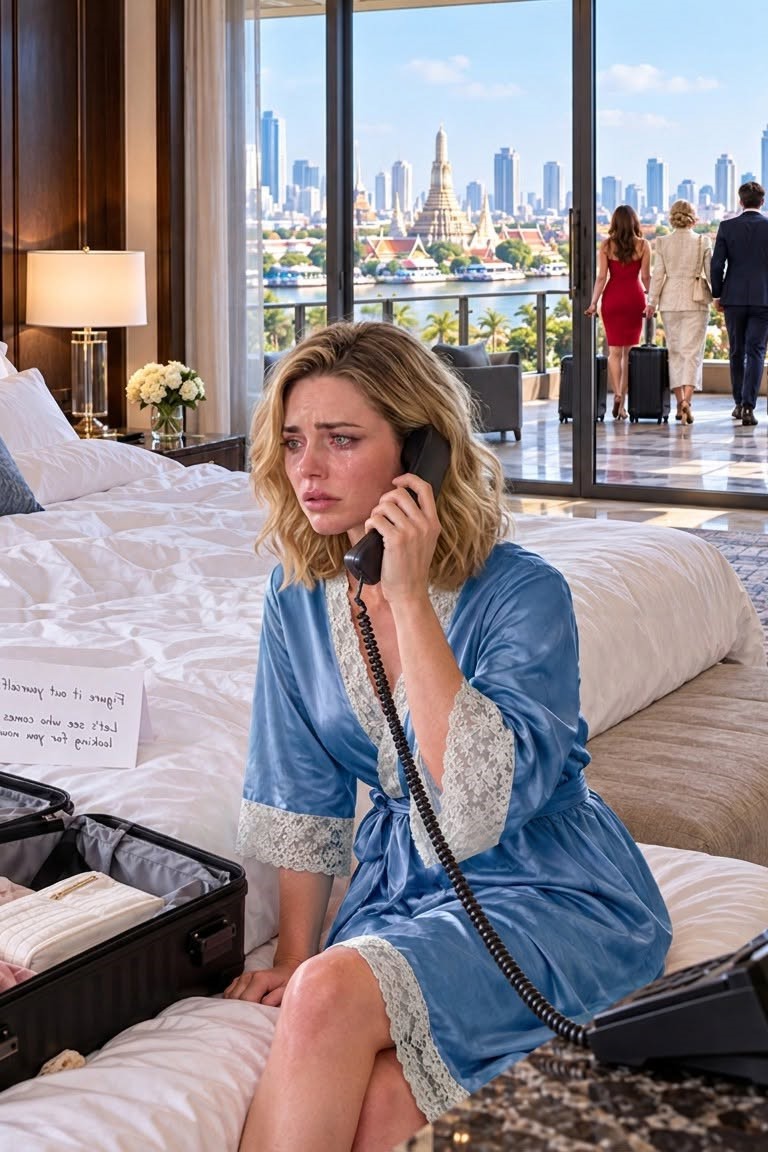
I woke up alone in our Bangkok hotel room. My husband, his mother, my phone, passport, and flight home were all gone. On the pillow, Ethan had left a note: “Figure it out yourself.” His mother added, “Let’s see who comes looking for you now.” I didn’t cry. I went to the hotel phone, dialed a number they never knew I had, and said, “Blue Lantern.” That was when their real trouble started.
I woke in our Bangkok hotel room to a silence so complete it felt deliberate. My husband, his mother, and his sister were gone—along with my phone, passport, wallet, and flight home.
A folded note sat on Ethan’s pillow.
Figure it out yourself.
Beneath it, in Susan’s sharp handwriting: Let’s see who comes looking for you now.
For several seconds, I couldn’t breathe.
The previous night, we’d had dinner overlooking the river. Susan spent half the meal calling me “too independent,” while Ethan complained that I embarrassed him by keeping my finances separate.
“You’re married,” he had said. “There shouldn’t be secrets.”
There weren’t. There were boundaries. Apparently, they found that distinction offensive.
I searched the room. My suitcase was still there, but the document pouch was empty. The hotel confirmed Ethan had checked out at 5:40 a.m. with two women. My return reservation had been canceled online shortly afterward.
The front-desk manager, Mali, noticed my expression and quietly asked, “Are you safe?”
“I don’t know yet.”
Her expression immediately changed. She moved me behind the desk, contacted hotel security, and offered me a landline.
Ethan expected me to panic. He expected tears, begging, maybe even a humiliating call to his mother asking for my passport.
Instead, I dialed a number I’d memorized six years earlier.
A calm voice answered. “Sterling Private Client Security.”
“My name is Claire Morgan.”
“Verification phrase?”
I looked through the glass doors at Bangkok traffic moving beneath the morning sun.
“Blue Lantern.”
The operator paused.
“Emergency protocol active. Are you under coercion?”
“Yes.”
“Are your identity documents compromised?”
“Yes.”
“Do you authorize full containment?”
“Yes.”
“Confirmed.”
What Ethan didn’t know was that Blue Lantern wasn’t simply a lost-card code. It froze my private accounts against outside transfers, suspended every secondary card, blocked trusted-device access, alerted my attorney, and triggered an enhanced review of any business exposed to my assets or guarantees.
That last part mattered.
Two years earlier, I had quietly guaranteed a $1.4 million credit facility that saved Ethan’s family import company from collapse.
Susan called it “their bank relationship.”
Ethan called it proof he was a brilliant businessman.
Neither knew I was the guarantor.
Mali returned with hotel security.
“Tourist police are coming.”
I nodded.
The fear hadn’t disappeared. But something colder had taken its place.
Ethan thought he had stranded me in Thailand.
Instead, he had stranded himself inside a financial system that had just begun asking questions.
By noon, the hotel had preserved hallway footage showing Ethan leaving with my handbag and document case. Tourist police took my statement, while the U.S. consular section explained how to replace my passport. Sterling arranged temporary funds, secure transportation, and a new phone after confirming my identity through backup records.
At 1:18 p.m., Ethan finally called.
“Having fun?”
I could hear the smirk in his voice.
“Where is my passport?”
“Safe.”
“That wasn’t the question.”
Susan grabbed the phone. “Maybe now you’ll learn gratitude. Ethan has carried you for years.”
I nearly laughed.
“Where are you?”
“None of your business.”
The call ended.
They were already at the airport.
I knew because my security team could see attempted transactions on Ethan’s supplemental card.
Duty-free purchase.
Declined.
Airport lounge.
Declined.
Restaurant.
Declined.
At 2:03 p.m., Ethan called again.
“What did you do to the cards?”
“I protected my accounts.”
“Your accounts? Those are household cards.”
“They’re supplemental cards on my credit line.”
Silence.
He had never bothered reading the paperwork.
“Claire, unlock them.”
“No.”
“We need to get home.”
“So did I.”
He swore. Susan yelled in the background, “Tell her to stop being childish!”
I ended the call.
That should have been enough.
It wasn’t.
At 3:40 p.m., my attorney, Rachel Kim, called.
“Blue Lantern triggered a linked-exposure review.”
“And?”
“Ethan’s family company breached two covenants last quarter. They moved funds to an affiliated company and failed to disclose it.”
I closed my eyes.
The loan wasn’t mine, but my guarantee had helped the bank extend favorable credit. The agreement also gave me notice rights when serious borrower violations occurred.
Rachel continued.
“There’s more. Someone attempted to reset access to your investment portal this morning from a device registered to Ethan.”
My stomach went cold.
“What did he try to access?”
“Your portfolio.”
That turned cruelty into evidence.
I authorized Sterling to preserve every login record and instructed Rachel to tell the bank my guarantee was under review because of suspected unauthorized access and borrower misconduct.
I didn’t demand repayment.
Not yet.
I wanted facts.
By evening, Ethan and his family had reached Singapore on tickets purchased by Susan.
They thought they’d escaped.
Then Ethan messaged me from a new number.
Stop overreacting. We’ll discuss this when you get home.
I forwarded it to Rachel.
Underneath, I typed:
Schedule the borrower review for Monday.
Five minutes later, she replied.
Done.
Ethan believed he had abandoned a helpless wife thousands of miles from home.
Instead, he had handed a compliance attorney, a bank, and a fraud team a perfectly documented timeline.
They had targeted the wrong woman.
And Monday morning, they were going to meet her professionally.
I returned home three days later with an emergency passport, police report, preserved hotel footage, and a new phone.
Ethan was waiting in our kitchen.
Susan sat beside him.
Neither apologized.
Ethan pointed toward a chair. “Sit down.”
I stayed standing.
“You’ve caused a financial disaster over a family disagreement,” he said.
“A family disagreement?”
Susan rolled her eyes. “We taught you a lesson.”
“You stole my passport.”
“We were going to return it.”
“You canceled my flight.”
“You’re capable,” she said. “You always say that.”
I placed the police report on the counter.
Then Rachel walked through the front door.
Ethan’s expression shifted.
“Why is she here?”
“Because this stopped being a marriage conversation when you tried accessing my investments.”
Rachel placed three folders on the island.
The first revoked Ethan’s supplemental cards and removed him from every account I controlled.
The second documented the attempted account reset.
The third contained the bank’s covenant-review notice for Morgan-Pierce Imports.
Susan grabbed it.
“What is this?”
Rachel answered calmly.
“The company’s credit facility is supported by Claire’s personal guarantee.”
Susan stared at me.
“No.”
“Yes.”
Ethan found the number.
“One point four million?”
“You told everyone the bank believed in you,” I said. “The bank believed in my balance sheet.”
His expression twisted.
“You deceived us.”
“I saved your company anonymously because you told me two hundred employees would lose their jobs.”
Rachel opened another page.
“The bank is requiring disclosure of related-party transfers and replacement collateral. Claire is also withdrawing her guarantee at the earliest contractual date.”
Ethan stepped toward me.
“You can’t do that.”
“I already did.”
His arrogance finally broke.
“If they reduce the facility, we’ll have to sell assets.”
“Then sell them.”
The later investigation uncovered improper transfers to a side company controlled by Ethan and his cousin. The bank tightened its terms and required additional collateral. To stabilize cash flow, the family sold a vacation property and part of its investment portfolio.
Ethan lost his executive position after the other shareholders discovered why the financing had come under review.
Then I filed for divorce.
The hotel footage, police report, attempted unauthorized account access, and Ethan’s messages didn’t automatically decide everything. But together, they made his actions impossible to dismiss as a misunderstanding.
Eight months later, I lived in a bright apartment with enormous windows and no one monitoring my money.
Morgan-Pierce survived under professional management.
Susan sold the lake house she once used as proof of her superiority.
Ethan took a sales job elsewhere.
One evening, Rachel asked if I regretted activating Blue Lantern.
I looked at my new passport beside a ticket to Chiang Mai.
“No.”
They had abandoned me in Thailand to prove nobody would come looking for me.
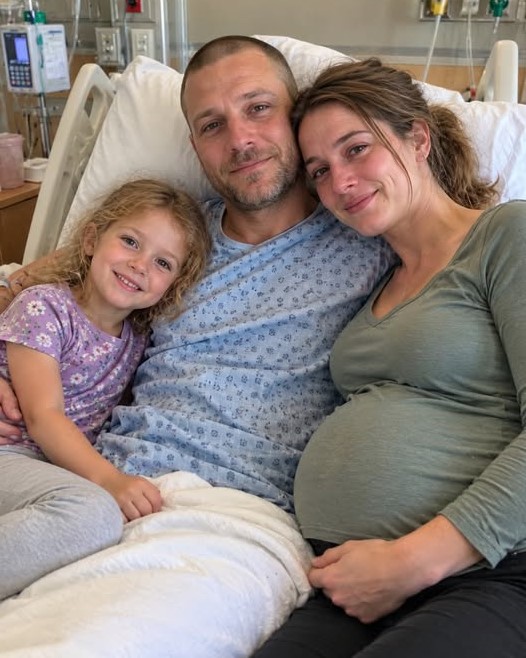
My name is Emily, and I was thirty-five when my husband, Nathan, was diagnosed with terminal cancer.
At the time, I was six months pregnant with our second daughter, while our four-year-old, Sophie, was still young enough to believe that every sick person eventually got better.
Nathan and I had been together since high school.
He wasn’t simply my husband.
He was the person around whom I’d built my entire adult life.
So when doctors told us his illness was terminal, accepting it wasn’t an option.
We fought.
We tried every treatment available to us.
We emptied our savings.
I sold nearly every valuable piece of jewelry I owned.
Eventually, I even borrowed against our house.
None of it mattered.
Nathan died before he ever got the chance to meet our second daughter.
Afterward, I felt as though my entire life had collapsed overnight.
I was pregnant.
I had Sophie to raise.
The medical bills were overwhelming.
Our savings were almost gone.
And the house now carried debt I’d taken on because I’d been desperate to buy Nathan more time.
For months, my life had revolved around schedules.
Medication.
Hospital appointments.
Insurance calls.
Bills.
Sophie’s preschool.
My prenatal appointments.
Nathan used to watch me organize everything at the kitchen table.
“You know,” he’d once said, “the world probably won’t end if you stop planning every second.”
I looked at him.
“I’m pregnant, Sophie is four, and my husband has cancer. Which part exactly would you like me to stop planning?”
He smiled weakly.
“Maybe me.”
“You’re the least reliable part.”
“We’ve known each other since high school.”
“Exactly. I have years of evidence.”
He laughed.
Then the laugh turned into a cough so violent he had to grip the edge of the table.
That was how we survived those months.
I organized.
Nathan joked.
And neither of us talked much about the possibility that he wouldn’t survive.
But toward the end, something about Nathan changed.
He started disappearing.
Not constantly.
Just enough for me to notice.
One afternoon, he returned after being gone for nearly three hours.
“Where were you?”
“Out.”
I stared at him.
“You can barely make it through the grocery store without getting exhausted.”
“I needed some air.”
Then I noticed several folded papers sticking from his jacket.
“What are those?”
“Nothing.”
“Nathan.”
“Emily.”
“You were also on your laptop at two in the morning yesterday.”
He leaned over and kissed my forehead.
“Please don’t interrogate the dying guy.”
“I hate when you say that.”
“I know.”
I looked directly at him.
“Whatever you’re doing, you can tell me.”
His expression changed.
For once, there was no joke.
“I wish I could.”
“Then tell me.”
He looked down at the papers.
“You already have enough to carry.”
“That isn’t your decision.”
“Sometimes it should be.”
I didn’t understand what he meant.
Then he said something that stayed with me.
“If someone needed help tomorrow, you’d say yes before asking whether you could actually afford to help them.”
“That sounds like a compliment.”
“It isn’t entirely.”
“Why?”
“Because you don’t know how to let somebody else’s problem stay somebody else’s problem.”
At the time, I thought he was simply worried about me.
So I stopped asking questions.
Nathan was dying.
If there was some small corner of his life he wanted to keep private, I decided he deserved it.
After his death, that decision haunted me.
Five weeks later, Nathan’s condition deteriorated rapidly.
I sat beside his hospital bed holding his hand.
“You look scared,” he whispered.
“So do you.”
“I’m allowed.”
“So am I.”
He almost smiled.
“You’re going to be okay.”
“Don’t say that.”
“You will.”
“No, Nathan.”
His fingers tightened weakly around mine.
“Promise me you’ll keep going.”
“I don’t know how.”
“You’ll figure it out.”
He closed his eyes.
“You always do.”
Those were the last clear words my husband ever said to me.
Three days after his funeral, I sat at our kitchen table staring at bills.
Funeral expenses.
Medical debt.
Two overdue notices.
And the loan against our home.
A woman from the bank explained what I already knew.
“There isn’t enough remaining to cover next month.”
“I know.”
“Do you have other savings?”
“We spent everything.”
“Anything valuable you could sell?”
“I already sold my jewelry.”
She hesitated.
“For his treatment?”
“Yes.”
“And you borrowed against the house?”
I nodded.
When someone offers you one more treatment that might save the person you love, you don’t stop to calculate whether hope fits into your budget.
But when hope disappears, the bills don’t disappear with it.
A week later, I returned to the hospital to collect Nathan’s belongings.
A nurse named Melissa met me.
“I’m so sorry, Emily.”
“Thank you.”
She handed me a bag.
Inside were Nathan’s watch, charger, toiletries, a paperback he’d never finished…
And a gray women’s cardigan.
I stared at it.
“This isn’t mine.”
Melissa frowned.
“I thought it belonged to the woman who visited him.”
I froze.
“What woman?”
Her face immediately changed.
“I assumed she was family.”
“Nathan didn’t have family.”
He’d grown up in foster care after losing his parents.
As far as either of us knew, there was nobody left.
Melissa looked uncomfortable.
“I’m sorry. I probably shouldn’t have assumed.”
“How often was she here?”
“Several times.”
“How many?”
“I don’t remember exactly. But during his last few weeks… fairly often.”
My stomach turned.
“What did she look like?”
“Dark hair. Maybe early forties.”
“What did they do?”
“Mostly talked.”
“That’s all?”
“There were usually documents around them.”
Documents.
Immediately, I remembered the papers hidden inside Nathan’s jacket.
My mind went somewhere I didn’t want it to go.
Another woman.
Secret meetings.
Late-night computer sessions.
Three-hour disappearances.
Had my husband been having an affair while I was pregnant?
I hated myself for even thinking it.
But once the thought appeared, I couldn’t make it disappear.
After speaking with hospital staff, I eventually saw footage that confirmed the woman existed.
There she was.
Walking into Nathan’s room carrying a folder.
Another clip showed her returning.
In one recording, she appeared to be crying.
I’d never seen her before in my life.
For the next three days, I barely slept.
Every unexplained absence Nathan had made suddenly seemed suspicious.
Every private phone call.
Every hidden document.
Every time he’d told me not to worry.
One night, lying awake at two in the morning, I whispered into the darkness:
“Were you cheating on me?”
There was something uniquely horrible about being angry at someone who could no longer answer you.
Then, three evenings later, someone knocked on my door.
Sophie was sitting at the kitchen table coloring.
“Mommy, who’s here?”
“I don’t know, sweetheart.”
I opened the door.
And my entire body went cold.
It was her.
The woman from the hospital footage.
She looked exhausted.
Her dark hair was pulled loosely behind her shoulders, and her eyes were red as though she’d been crying.
She held a sealed envelope against her chest.
“Are you Emily?”
“Who are you?”
“My name is Rebecca.”
“Why were you visiting my husband?”
She extended the envelope.
“Nathan asked me to give this to you.”
“That wasn’t my question.”
“I know.”
“Were you having an affair with him?”
Her eyes widened.
“No.”
“Then why were you secretly meeting him?”
She looked down at the envelope.
“He made me promise not to give you this until after he died.”
My hands began shaking.
“What is it?”
Rebecca studied my face.
Then she asked something that frightened me more than anything the nurse had told me.
“So… you really don’t know what he left you?”
I took the envelope.
Nathan’s handwriting covered the first page.
I recognized it instantly…
PART 2
Emily,
I’m sorry you’re finding out this way.
There’s a five-year-old boy named Caleb.
You don’t owe him anything. You don’t have to become involved. If you want to stop reading and walk away, you can.
But if you find him, you’ll understand why I couldn’t.
I’m sorry I never told you.
I read those words twice.
Then a third time.
I looked up.
“Who is Caleb?”
Rebecca said nothing.
My heart started pounding.
“Is he your son?”
“No.”
“Is he Nathan’s?”
She looked away.
“Oh my God.”
“Emily—”
“Were you sleeping with my husband?”
“No.”
“Then tell me who this child is!”
“I can’t.”
I actually laughed.
Not because anything was funny.
Because the situation was becoming absurd.
“You show up at the home of a pregnant widow with a secret letter from her dead husband telling her to find a five-year-old boy, and now you’re telling me you can’t explain who he is?”
“Nathan wanted you to choose whether you wanted the answer.”
“Why?”
“Because once you know, you can’t unknow it.”
I stared at her.
“Stop speaking in riddles.”
She flinched.
Then finally, she told me something useful.
“Nathan and I knew each other as children.”
“What?”
“We grew up in the same foster-care system.”
I stopped breathing for a second.
Nathan almost never discussed that part of his childhood.
“You knew him back then?”
“Yes.”
“And now?”
“I work with children and families connected to the system.”
“Is that why you were meeting him?”
Rebecca nodded.
“I was helping Nathan locate Caleb and understand what options were available.”
“Then tell me whose child Caleb is.”
“I promised Nathan I wouldn’t.”
“That makes no sense.”
“He didn’t want to put another responsibility on you immediately after his death.”
“Did Nathan have another family?”
Rebecca remained silent.
I felt sick.
“That’s a yes.”
“No. It means I promised not to answer that question.”
Then she left.
By the time the door closed, I was convinced of one thing.
My husband had another son.
The next morning, I opened Nathan’s laptop.
His password had changed.
I tried birthdays.
Anniversaries.
Nothing worked.
Then I typed the date Nathan and I first met.
The screen unlocked.
Despite everything, I muttered:
“Seriously, Nathan?”
I started searching.
Eventually, one name appeared repeatedly.
CALEB R.
Then I found payments.
Legal expenses.
Childcare costs.
And something labeled:
CALEB TRUST.
My stomach dropped.
“You created a trust for him?”
Then I found insurance documents.
Nathan had made arrangements for Sophie.
For our unborn daughter.
For me.
But Caleb had clearly mattered enough for Nathan to create separate financial arrangements too.
Then I found maps.
One address appeared repeatedly.
It was about forty minutes away.
I called Rebecca.
“I found the trust.”
Silence.
“Emily—”
“I’m going to the address.”
“Please don’t go there angry.”
“So Caleb IS Nathan’s son.”
“I didn’t say that.”
“You didn’t need to.”
“Whatever you believe Nathan did, Caleb didn’t do anything.”
“I would never blame a child.”
“I know.”
“Then why are you protecting this secret?”
“I’m not protecting Nathan. I’m protecting Caleb.”
I drove there convinced I was about to meet living proof that my marriage had been built on a lie.
The address belonged to a foster family.
A woman named Diane answered the door.
When I introduced myself, her expression changed immediately.
“Nathan’s wife?”
“You knew him?”
“He visited Caleb.”
My knees almost buckled.
“Can I see him?”
She hesitated before letting me inside.
A little boy was sitting on the floor building a wooden train track.
He looked up.
Dark eyes.
Brown hair.
A stubborn little cowlick.
I grabbed the back of a chair.
“Oh my God.”
Diane stepped toward me.
“Are you okay?”
“He looks like Nathan.”
She said nothing.
“He’s Nathan’s son, isn’t he?”
“I honestly don’t know.”
Then Caleb looked at me.
“I know you.”
My heart stopped.
“You know me?”
“Nathan showed me your picture.”
“He did?”
“And Sophie’s.”
“What did he tell you?”
“That Sophie likes dinosaurs.”
Despite everything, I smiled.
“She does.”
“And you make pancakes on Sundays.”
My smile disappeared.
Nathan had been talking about us.
Here.
To this child.
I asked Diane who else had visited with Nathan.
“Sometimes an older woman came with him. Mrs. Whitmore.”
That name appeared in Nathan’s records.
I called her immediately.
Two hours later, I was sitting in an eighty-year-old woman’s living room.
Mrs. Whitmore placed an old photograph on the table.
Two boys stood beside each other.
She pointed toward the taller one.
“That’s Nathan.”
I looked at the other boy.
“And him?”
“Samuel.”
“Who is Samuel?”
She looked directly at me.
“Nathan’s brother.”
I stared at her.
“Nathan didn’t have a brother.”
“Yes, he did.”
“No. Nathan believed he had no family.”
“Because he never knew.”
My hands tightened around the photograph.
Mrs. Whitmore explained that after their parents died, Nathan and Samuel had entered care.
They’d been separated.
Different placements.
Incomplete records.
Administrative mistakes.
Eventually, all connection between them disappeared.
Nathan grew up believing he was alone.
“He only discovered Samuel existed last year?” I asked.
“Yes.”
“Did he find him?”
Mrs. Whitmore lowered her eyes.
“He tried.”
Something in her expression told me the answer before she spoke.
“Samuel had already died.”
I immediately pictured Caleb.
“No…”
Mrs. Whitmore looked at me.
“Caleb is Samuel’s son.”
I couldn’t speak.
“Then Nathan wasn’t his father?”
“No.”
I looked again at the photograph.
Two brothers.
Separated as children.
One growing up never knowing the other existed.
“He spent his entire life believing he had nobody.”
Mrs. Whitmore nodded.
“And when he finally discovered his brother… Samuel was already gone.”
“Yes.”
“But Caleb wasn’t.”
Exactly.
Suddenly, every secret meeting looked different.
Every hidden document.
Every unexplained drive.
Every late night on the laptop.
Nathan hadn’t been hiding another family he’d created.
He’d been trying to save the only piece of the family he’d lost.
That evening, Rebecca came to my house again.
This time, I let her inside.
“Why didn’t he tell me?”
She looked at my pregnant stomach.
“You really don’t know?”
“I want to hear it.”
“He watched you sell your jewelry.”
“That was my choice.”
“You borrowed against your home.”
“My choice too.”
“You were pregnant, raising Sophie, taking Nathan to treatment, fighting with insurance companies, barely sleeping and drowning financially.”
“So?”
“So Nathan knew exactly what would happen if he told you about Caleb.”
“What?”
“You’d help.”
I stared at her.
“You would’ve said yes before asking whether you could handle another responsibility.”
Nathan’s words came rushing back.
You never know when to let someone else be the problem.
“He knew I’d want to take Caleb.”
Rebecca nodded.
“He was afraid you’d sacrifice even more.”
“Then why leave me the letter?”
“Because telling you Caleb existed was different from deciding Caleb’s future for you.”
I wiped my eyes.
“He still should’ve told me.”
“Yes.”
“I can understand why he did it without believing he was right.”
“Yes.”
“And the trust?”
“Some of that money came from Samuel’s estate. Nathan also made sure your benefits were protected.”
I laughed through my tears.
“He made spreadsheets, didn’t he?”
Rebecca smiled.
“So many spreadsheets.”
For the first time since Nathan died, I laughed without immediately feeling guilty afterward.
I wasn’t ready to promise Caleb anything.
But I was finally ready to ask what might be possible.
Over the following weeks, I spoke with his caseworker.
I met repeatedly with Diane.
I talked with an attorney.
One question kept coming up.
“Can you realistically afford another child?”
“Not right now.”
The attorney nodded.
“Good.”
I frowned.
“That’s a strange response.”
“It means you’re thinking before making promises.”
That stayed with me.
One evening, I visited Nathan’s grave.
I placed the old photograph of him and Samuel beside the headstone.
“You found your brother too late,” I whispered.
My hand rested against my stomach as our daughter kicked.
“But you found Caleb.”
I smiled through my tears.
“And now I found him too.”
Then I looked at Nathan’s name carved into the stone.
“But I’m doing this my way.”
Because that was what my husband had really left me.
Not a secret son.
Not another burden.
Not an obligation I had to accept because he was gone.
He’d left me a choice.
The guardianship process is still moving forward.
I don’t know exactly what our family will look like a year from now.
Caleb visits us regularly now.
Sophie adores him.
And for once in my life, I don’t have every step planned.
Strangely, I’m okay with that.
I couldn’t give Nathan back the brother he never got the chance to know.
But maybe I could make sure the family he’d spent his whole life searching for wasn’t lost a second time.
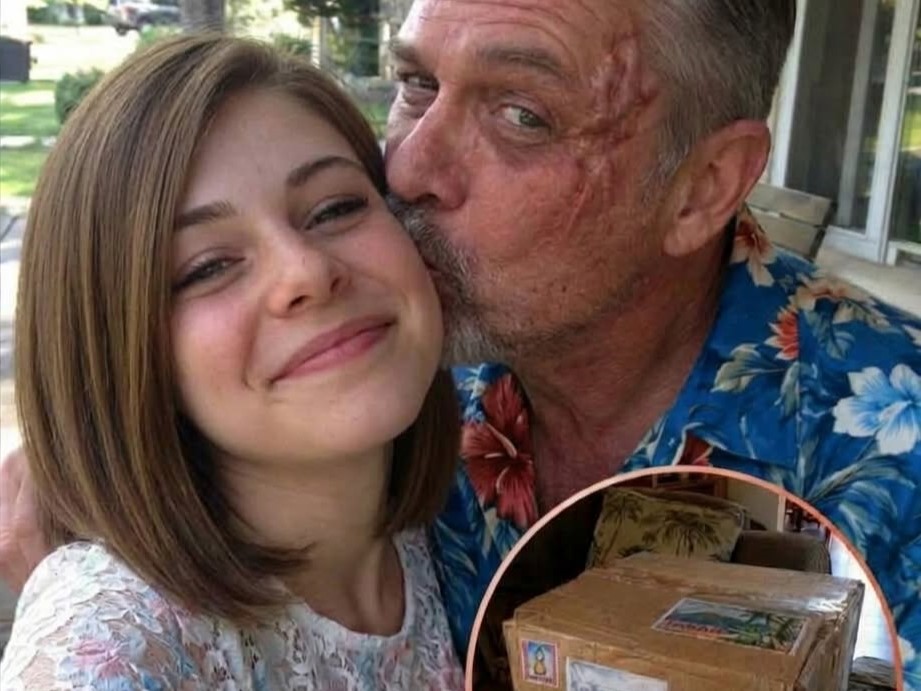
Dad’s faded beach photograph had spent years in our junk drawer, though his thumb had worn one group of people nearly smooth. Two weeks after his death, a big package arrived from Honolulu with no return address. Mom saw the label, grabbed my wrist, and begged me to throw it away without opening it.
I found Dad at the kitchen table with the photograph again.
He kept it in the bottom drawer beside old batteries, takeout menus, and pens that barely worked.
It showed a beach in Hawaii.
The colors had faded until the ocean looked gray. Palm trees leaned into one corner, while several tiny figures stood near a cooler on the left side.
Dad slowly turned the picture over in his hands.
“What’s it like there?” I asked.
He looked up.
“The rain is warm. You can smell the ocean before you see it.”
Mom stood at the counter buttering toast.
Her knife froze halfway across the bread.
Dad noticed.
“So,” he said, setting the photograph down, “how’s work?”
That was Hawaii in our family.
One moment it existed.
The next, someone changed the subject.
Dad had been born there and left at twenty. He moved to Oregon for work, met Mom, married her, and never returned.
Not once.
I never understood why.
When I was little, he talked openly about missing Hawaii—the rainstorms, fruit from roadside stands, and birds calling before sunrise.
As I got older, though, I started noticing Mom’s reaction whenever he mentioned it.
She’d go quiet.
Sometimes she’d leave the room.
Once, after Dad said he’d like to see the ocean there again, she put her plate in the sink so hard I thought it might crack.
Later, I confronted him.
“Why does Mom get angry every time you talk about Hawaii?”
Dad was folding a dish towel.
“She’s not angry.”
“She definitely is, Dad.”
He gave me a weary look.
“Try to understand your mother, Annie. If you knew the whole story, you wouldn’t be angry with her.”
I wish I’d asked him what he meant.
Two weeks ago, Dad was driving home when another car crossed into his lane.
He never made it back.
Some events remain impossible for your mind to accept even after your body has already begun living through them.
Dad’s shoes were still beside the garage door.
His coffee mug remained in the cabinet.
His jacket still hung from its hook.
But he was gone.
Mom and I were sorting through sympathy cards when the delivery arrived.
The box was enormous.
The driver left it on the porch and asked for my signature. At first, I almost told him he had the wrong house.
Then I saw the label.
GILBERT.
Our address.
Honolulu origin.
It had been shipped three days before Dad’s accident.
There was no return address I recognized.
I stared at it long enough for the driver to ask if everything was okay.
“Yeah.”
It wasn’t.
I dragged the package inside.
“Mom?”
She entered the kitchen carrying a stack of condolence cards.
Then she saw the box.
The cards shifted in her hands.
“Where did that come from?”
“Hawaii.”
Her eyes went straight to the shipping label.
“Leave it, Annie.”
“What?”
“Just leave it.”
“Mom, it’s addressed to Dad.”
“I can see that.”
“Someone sent this before the accident. They might be waiting to hear from him.”
She put the cards down.
“Throw it away.”
I stared at her.
“Are you serious?”
“Please.”
She crossed the kitchen and grabbed my wrist.
“Throw it away. Let’s pretend it never came.”
I pulled free.
Her reaction frightened me more than the package itself.
“What do you know about this?”
“Nothing that matters now.”
“It mattered to Dad.”
“Annie.”
“Somebody in Hawaii mailed him something the size of a washing machine three days before he died.”
“It’s not a washing machine.”
I stared at her.
“Then you do know.”
Mom closed her eyes.
I found a pair of scissors.
“Don’t.”
I cut through the tape.
“Annie, please.”
I opened the cardboard flaps and pulled away layers of packing paper.
Blue paint.
Wood.
For a second, I couldn’t understand what I was seeing.
Then I removed the remaining packing material.
It was a chair.
An old wooden kitchen chair painted blue.
The paint had worn away around the edges. One leg had been repaired with a darker piece of wood, and a black mark scarred the bottom rung as if something hot had once touched it.
I looked at Mom.
She lowered herself into one of our kitchen chairs.
Not the blue one.
“What is this?”
She said nothing.
I lifted the chair from the box and set it on the floor.
It wobbled.
Then I noticed scratches beneath the seat.
I tipped it sideways.
One word had been carved deeply into the wood in uneven letters.
GILBERT.
I covered my mouth.
Dad’s name.
It wasn’t recent. The grooves had darkened with age.
“Dad,” I whispered, staring at the chair, “what are we supposed to do with this?”
Mom began to cry.
She pressed her fingertips to her eyes while I waited.
Finally, she said, “That was his chair.”
“Where?”
“In Hawaii.”
“I figured that part out.”
She looked at me.
“Your father didn’t grow up the way you think he did.”
Dad’s childhood home had become unstable when he was a teenager.
Mom didn’t know every detail.
Dad hadn’t told her everything either.
But for several years, he lived with a foster family.
It was a crowded house, with kids constantly coming and going, too many shoes by the door, and too many plates drying beside the sink.
“And that chair?” I asked.
“Kitchen table.” Mom looked at it. “There weren’t enough matching chairs. Gilbert got that blue one.”
“Why keep it?”
“Because it was his.”
The simplicity of her answer stopped me.
Mom said Dad used to joke that the chair leaned as much as he did.
Nobody officially assigned it to him.
They simply began expecting him to sit there.
Dinner came, and Dad had a place.
Breakfast came, and he had a place.
I thought about the photograph.
I went to the drawer and pulled it out.
“Is this them?”
Mom nodded.
For years, I’d seen only a beach.
Now I noticed the people gathered along the left edge.
Teenagers.
A woman beside the cooler.
Someone crouched in the sand.
Dad’s thumb had worn the photograph smooth around those tiny figures.
Not over the ocean.
Over them.
“He wasn’t looking at the beach,” I said.
Mom shook her head.
“Not usually.”
Dad left Hawaii at twenty when an opportunity opened on the mainland.
Nobody forced him out.
His foster family encouraged him to go.
He expected to return.
But one year became several.
Oregon became a job.
The job became a life.
Then Mom.
Then me.
“So why didn’t he go back?”
Mom looked toward the window.
“At first, money.”
That made sense.
“Then?”
“Work.”
“And after that?”
She went quiet.
“He thought he’d waited too long.”
“Too long for what?”
“To show his face.”
I frowned.
“They were his family.”
“He didn’t use that word easily.” Mom picked at the corner of a condolence card. “The longer he stayed away, the more embarrassed he became about staying away.”
It sounded ridiculous.
It also sounded exactly like Dad.
“Where do you fit into this?”
Mom looked at me.
“What?”
“The whole story. Dad told me I’d understand you if I knew it.”
She pushed her chair back.
“When we were first married, he compared everything to Hawaii.”
“Everything?”
“Rain. Fish. Coffee. Sunsets.”
Despite myself, I smiled.
“That sounds like Dad.”
“It was exhausting.”
My smile faded.
Mom stared at her hands.
“I thought every time he called Hawaii home, he was telling me this wasn’t.”
There it was.
“What did you do?”
“One night I told him if Hawaii was so perfect, maybe he should’ve stayed there. That’s when he told me about the foster home.”
Mom looked toward the blue chair.
“I’d thought I was competing with beaches and palm trees.”
Her voice softened.
“I found out I was competing with the first place he’d ever been sure dinner would include him.”
“Mom.”
“I apologized,” she said.
“Did he forgive you?”
“Immediately.”
“So you stopped him from going back?”
Her head snapped toward me.
“No.”
The answer came so quickly that I believed her.
“I spent years trying to get him to go.”
She suggested it when I was ten.
Dad said they couldn’t afford it.
She suggested it after his promotion.
He said work was too busy.
She suggested Hawaii for their twenty-fifth anniversary.
Dad said the people he’d known were probably gone.
“They weren’t,” Mom said.
“How do you know?”
“Christmas cards.”
I stared at her.
“They sent cards?”
“For years.”
“Did Dad answer?”
“Sometimes.”
“Then why would he think they didn’t want him?”
Mom gave a sad little shrug.
“Because every card reminded him how long it had been.”
One summer, she finally told him she’d buy the ticket herself.
Dad said, “Next year.”
Next year became another decade.
I looked at the chair.
“Who sent this?”
Mom didn’t answer.
“Mom.”
Her eyes filled with tears.
“I know who sent it.”
“Who?”
She took a long time before answering.
Then she said, “I asked her to.”
I stared at her.
“You arranged this?”
“Months ago.”
“Why?”
“The house was being cleared. I called one of the women your father grew up with. We still had her address from the Christmas cards.”
“And she still had his chair?”
Mom nodded.
“She laughed when I asked.”
“What did she say?”
“‘We still have the silly thing.’”
I looked down at the worn blue paint.
Mom wiped her face.
“I thought if he saw it here, maybe he’d finally understand.”
“Understand what?”
“That he hadn’t disappeared from them just because he’d stayed away.”
Her plan had been to put the chair at our kitchen table.
Then ask Dad one more time.
Go home.
See them.
Stop waiting for some imaginary year when returning would finally become easier.
The chair had been shipped three days before the accident.
Dad never knew it was coming.
I looked at Mom.
“Then why did you tell me to throw it away?”
Her face crumpled.
“Because he was supposed to sit in it.”
Neither of us spoke.
The delivery label was still attached to the torn cardboard.
Below the shipping information was a contact number.
Hawaii.
I reached for my phone.
“Annie.”
“Someone there thinks Dad just got his chair back.”
Her eyes moved toward the number.
I dialed.
It rang four times before an older woman answered.
“Hello?”
I stared at Dad’s name carved beneath the blue seat.
“My name is Annie.” My voice nearly failed me. “I’m Gilbert’s daughter.”
There was a long silence.
Then the woman whispered, “Gilbert had a daughter?”
For a moment, I couldn’t answer.
“Yes,” I said. “He did.”
The woman gave a shaky laugh.
“He never told us.”
“He didn’t tell me about you either.”
That silenced both of us.
Her name was Ruth. She had been fifteen when Dad arrived at the foster home.
She began asking about him carefully.
“Did he still cheat at cards?”
“Yes.”
“Did he still hate papaya?”
Apparently, he’d lied to me about liking it.
“Did he whistle when he was nervous?”
I looked at Mom.
She nodded.
“Every time.”
Ruth laughed.
These weren’t stories about some secret version of my father.
They were simply Dad.
“Why did you keep his chair?” I asked.
“Because it was Gilbert’s.”
“For fifty years?”
“People used it.”
She sounded surprised by the question.
“Kids sat in it. Somebody broke its leg once. We fixed it. But whenever anyone wanted to throw it out, Mom said, ‘No. That’s Gilbert’s chair.’”
I touched the worn blue backrest.
“Dad thought he’d stayed away too long.”
“Too long for what?”
“To come back.”
Ruth went silent.
Then she said, “Nobody told him that.”
Mom covered her mouth.
She leaned closer to my phone.
“Ruth?”
“Yes?”
“Were you angry with him?”
“Sometimes.”
Mom closed her eyes.
Ruth continued.
“I still would’ve picked him up at the airport.”
***
After the call, Mom and I sat beside the blue chair for a long time.
A week later, I took it to my apartment.
Mom objected immediately.
“Annie, that’s your father’s chair.”
“I know, Mom.”
I placed it at my kitchen table.
The following Sunday, Mom came over for coffee.
She stopped when she saw me sitting in it.
For a moment, I thought she’d ask me to get up.
She didn’t.
Instead, she sat across from me.
Dad’s faded photograph lay between us.
Mom turned it around and pointed to the woman beside the cooler.
“That’s the woman who raised him.”
I studied the tiny figure.
The blue chair shifted beneath me, tapping unevenly against the floor.
The food was simple but good. Baked ziti, chicken parmesan, and garlic bread hot enough to steam when pulled apart.
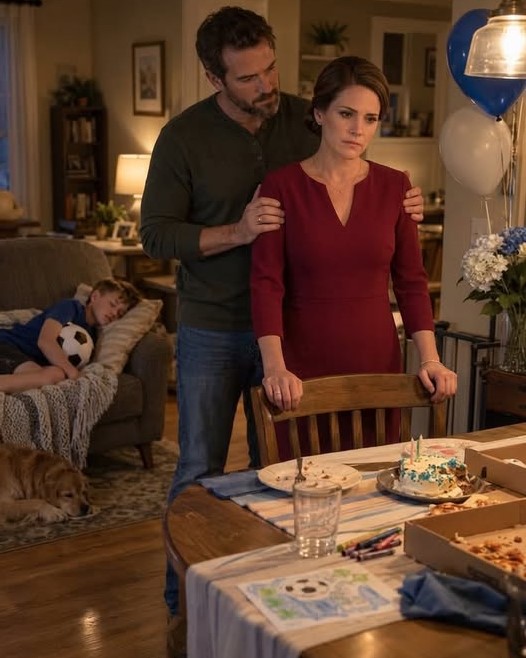
Owen loved Bellucci’s because Mr. Bellucci always brought him an extra scoop of vanilla ice cream and pretended it was an accounting mistake.
“Kitchen messed up again,” he would say.
Owen always grinned like he had somehow beaten the restaurant.
That Saturday, I woke before seven and made pancakes.
I stuck one candle into the tallest stack.
Grant wandered into the kitchen in sweatpants, singing “Happy Birthday” with Broadway confidence and the vocal accuracy of a broken car alarm.
Owen laughed until he hiccupped.
“Dad, stop.”
“You don’t interrupt art,” Grant told him.
“This isn’t art.”
“It’s experimental.”
Owen nearly dropped his fork.
It was that kind of morning.
Warm.
Easy.
The kind of ordinary family morning you don’t realize matters until something later gives it weight.
Dinner was scheduled for six.
My parents, Linda and Walter, were coming, along with my younger sister Whitney, her husband Paul, and their two children.
Owen had already planned the seating.
Grandpa beside him because Grandpa knew more about soccer than anyone.
Whitney’s son Mason across from him because the boys loved arguing about professional teams.
My mother at the other end because, according to Owen, “Grandma talks too long when she sits next to me.”
I laughed when he said it.
At 4:30 that afternoon, my phone buzzed while I folded laundry.
Mom.
Running behind. Let’s push it to next weekend. Okay? Love you both.
I stared at the message.
No explanation.
No emergency.
Just a casual cancellation ninety minutes before her grandson’s birthday dinner.
I called immediately.
No answer.
I tried Dad.
Voicemail.
Whitney didn’t answer either.
Grant came down the hallway carrying towels and saw my phone.
“What happened?”
“My mom wants to move dinner.”
“To when?”
“Next weekend.”
He frowned.
“Everybody?”
“I guess.”
“Did something happen?”
“She didn’t say.”
Grant glanced toward Owen’s room.
“That’s lousy.”
I knew.
But my old instinct immediately surfaced.
Smooth it over.
Make it smaller.
Protect everyone from discomfort except the person actually disappointed.
So I went upstairs.
Owen sat on the floor organizing soccer cards.
I leaned against his doorway.
“Hey, buddy.”
He looked up.
“Are we leaving early?”
My chest tightened.
“Actually, Grandma says everybody’s running behind. She wants to move the family dinner to next weekend.”
His expression changed for only a second.
If you didn’t know him, you might miss it.
“Oh.”
“We can still go. Just us.”
He looked back at his cards.
“It’s okay.”
“We could still do Bellucci’s.”
“Nah. It’ll be weird with that giant table.”
“We can get a smaller table.”
He shrugged.
“Pizza is fine.”
I sat beside him.
“You sure?”
“Yeah.”
Then, because he was ten and already learning to handle disappointment politely, he smiled.
“It’s not a big deal.”
I heard myself in his voice.
That bothered me more than I could explain.
Grant ordered pizza.
We watched an animated movie on the couch.
Owen chose every topping, including pineapple on half, which Grant treated as a personal betrayal.
Eventually Owen rested his head on my shoulder.
By the middle of the movie, he was asleep with his new soccer ball under one arm.
I told myself we had saved the night.
Not perfectly.
But enough.
At 9:15, I carried an empty plate into the kitchen and opened Instagram while waiting for the dishwasher.
Whitney’s story appeared first.
I nearly skipped it.
Then I recognized Dad.
A long table covered in white linen filled the screen. Heavy candles flickered beside polished wine glasses while a server carried a tower of seafood past the camera.
Dad sat there with a steak nearly covering his plate.
Mom was beside him, laughing.
Whitney had added gold lettering:
FAMILY NIGHT. BEST TABLE IN THE HOUSE.
I watched it three times.
They were at Harrison & Cole, a downtown steakhouse where several specialty items didn’t even list prices.
Grant and I had once considered it for our anniversary, checked the likely bill, and suddenly decided Bellucci’s was extremely romantic.
Dinner for six adults could easily pass four hundred dollars before drinks and tip.
I paused the video and counted chairs.
Six.
My parents.
Whitney.
Paul.
Their two children.
And a woman I didn’t recognize.
There had been no emergency.
No traffic issue.
No illness.
No family complication.
They had canceled Owen’s birthday dinner and gone somewhere else.
Together.
Grant entered for water and stopped when he saw me.
“What?”
I handed him the phone.
He watched.
His jaw tightened.
“That’s tonight?”
I nodded.
He replayed the story.
Then another image appeared.
Whitney’s daughter holding a dessert with a sparkler.
My mother beside her.
Grant returned the phone.
“Call her.”
Normally, I would have waited until tomorrow.
Normally, I would have convinced myself I needed time to calm down.
But seeing FAMILY NIGHT beneath a picture of my family without me—and especially without Owen—made waiting seem ridiculous.
I called Mom.
She answered on the fourth ring.
“Meredith? Hi, honey. Everything okay?”
The restaurant sounded loud behind her.
Silverware.
Glasses.
Laughter.
“Yes,” I said. “I just saw Whitney’s story.”
A pause.
“Oh.”
“You’re at Harrison & Cole.”
Another, longer pause.
Then she sighed.
Not guilty.
Annoyed.
As if I had discovered something inconvenient.
“Yes. We were going to tell you.”
“Today was Owen’s birthday.”
“I know what day it was, Meredith.”
I looked through the doorway.
Owen was still asleep.
Grant stood with his arms folded.
Mom continued.
“It was really more of a grown-up dinner. Your father wanted somewhere nice.”
“Bellucci’s is where Owen wanted to go.”
“And that was sweet, but Harrison & Cole isn’t really a children’s place.”
“Whitney’s children are there.”
Two seconds of silence.
Enough.
“Well,” my mother said, “they’re older.”
Mason was eleven.
One year older than Owen.
I almost laughed.
“Owen is ten.”
“I know.”
“You canceled his birthday because you wanted steak.”
“Meredith, please don’t turn this into something dramatic.”
That sentence landed because it was familiar.
Whenever I was hurt, my reaction somehow became the real problem.
She lowered her voice.
“Owen would have been restless. Your father wanted a nice evening. Honestly, he might have embarrassed us.”
I stared at the wall.
“What?”
“He’s energetic.”
“He sits through school every day.”
“That’s different.”
“He eats in restaurants.”
“I’m not going to argue with you.”
Behind her, Dad asked, “Who is it?”
Mom covered the phone badly.
“It’s just Meredith being sensitive.”
Something inside me went quiet.
For years, I had imagined that if my family ever crossed some final invisible line, I would explode.
I didn’t.
I didn’t shout.
I didn’t give a speech.
I looked toward the stairs leading to my son’s room.
Suddenly every excuse I had made for my parents rearranged itself into a pattern.
The school concerts they skipped because the drive was too long.
Whitney lived twenty minutes farther away, yet somehow they attended her children’s events.
Owen’s birthday cards arriving late.
Mom introducing Whitney’s children by name while sometimes calling Owen “Meredith’s boy.”
Holidays always arranged around Whitney.
The year they left Owen’s school fundraiser early because they were “exhausted,” then drove forty-five minutes to Whitney’s daughter’s community play.
One event could be explained.
Five might be coincidence.
Ten became a choice.
Mom returned to the line.
“Are you there?”
“Yes.”
“Good. We’ll do cake next weekend.”
I looked at the dark laptop on our table.
“Got it.”
“What?”
“I said I got it.”
“Got what?”
I hung up.
Grant stayed quiet until finally asking:
“Are you okay?”
“Yes.”
Strangely, I was.
Not happy.
Not calm.
Clear.
For the first time in years, I wasn’t confused about where I stood.
I opened my laptop.
Grant sat across from me.
“What are you doing?”
“Checking something.”
I logged into the bank.
Two years earlier, Dad’s hours at the manufacturing plant had been sharply reduced.
My parents came over one rainy Sunday.
Dad barely spoke.
Mom explained most of it.
Their mortgage was $2,380 a month.
Savings were shrinking.
Mom said they could lose the house.
Dad looked humiliated, staring at his hands.
Grant and I were financially stable then.
Not wealthy.
But comfortable.
I managed projects for a regional healthcare software company. Grant was an electrical contractor. We had savings, manageable debt, and a modest house bought before prices climbed.
We could help.
I offered to cover their mortgage temporarily.
Dad objected.
I told him it wasn’t a loan.
“It’s family,” I said.
Mom cried.
Then asked me not to tell Whitney.
“Your father has his pride.”
So I kept quiet.
On the first of every month, $2,380 automatically transferred from our account to theirs.
Twenty-four months.
Never missed.
I never asked for receipts.
Never questioned how they spent other money.
Never used it during arguments.
I treated the money exactly as promised.
Help.
I opened the transfer history.
$2,380.
$2,380.
$2,380.
Again.
Again.
Again.
More than fifty-seven thousand dollars.
Grant stood behind me.
The next payment was scheduled for Monday.
Two days away.
Beside it:
Cancel recurring transfer.
I stared at the button.
Grant rested a hand on my shoulder.
He didn’t tell me what to do.
“What are you thinking?” he asked.
“I’m thinking they had four hundred dollars for steak.”
He nodded.
“I’m thinking Mom told me Owen would embarrass them.”
Another nod.
“I’m thinking maybe I’ve been solving a problem they don’t actually have anymore.”
Grant looked at the screen.
“Then maybe it’s time to let them solve it.”
I clicked Cancel.
A confirmation appeared.
Are you sure you want to cancel this recurring transfer?
My finger hovered.
I expected guilt.
Instead, I pictured Owen upstairs pretending his birthday didn’t matter.
I clicked Yes.
Then shut the laptop.
“Done?” Grant asked.
“Done.”
I went upstairs.
Owen slept beside his soccer ball.
I pulled his blanket over his shoulder.
For two years, I had protected adults from the consequences of their finances.
That night, I decided my first responsibility was protecting my son from learning that love meant accepting whatever treatment people gave him.
I slept better than expected.
At 7:03 the next morning, an unknown number called.
I nearly ignored it.
It rang again.
“Hello?”
“Good morning. May I speak with Meredith Hollis?”
“This is Meredith.”
Dana from my mother’s bank explained that Mom had listed me as an authorized backup contact for specific account alerts after previously missing several notices.
She could only discuss that alert.
A recurring incoming transfer connected to the mortgage had been canceled.
Autopay was due Monday.
Without the expected deposit, payment would likely fail unless funds were moved.
I sat upright.
Grant opened his eyes.
“We’ve tried your mother twice this morning. Because your number is attached to the payment alert, we’re making the courtesy call.”
“I understand.”
“Are you aware the recurring transfer was canceled?”
“Yes.”
“Was that intentional?”
“Yes.”
A tiny pause.
“All right. Then we’ll continue attempting to reach Mrs. Hollis.”
“Please do.”
I ended the call.
Grant sat up.
“That was fast.”
“Apparently the mortgage account was relying on my transfer.”
“Are you going to call them?”
“No.”
He studied me.
“You sure?”
I nodded.
“I’m not trying to hurt them. But I’m done rescuing them before they even ask.”
At 7:41, Mom called.
I let it ring twice.
“What did you do?”
No hello.
No good morning.
No Owen.
“The bank called,” she continued. “They said your transfer was canceled.”
“Yes.”
“Why?”
“You know why.”
“Meredith, this is ridiculous. We have a mortgage payment due.”
“I know.”
“You cannot just cancel money we depend on.”
I looked toward Grant.
“Mom, listen to what you just said.”
“What?”
“You said I can’t cancel my money.”
“That isn’t what I meant.”
“It’s exactly what you said.”
“You promised to help us.”
“I did help you.”
“For two years.”
“And now you’re stopping because of one dinner?”
Her voice rose.
“One dinner?”
“Yes. One dinner. You’re punishing your parents because we had dinner without you.”
I walked into the hallway.
“Owen’s birthday.”
“We already discussed this.”
“No. You explained your decision. That isn’t the same thing.”
“Meredith—”
“You canceled your grandson’s birthday ninety minutes before dinner. Then you went to a steakhouse with everyone else and posted ‘Family night.’”
“Whitney posted that.”
“You were in the picture.”
“That is not the point.”
“It became the point when you told me Owen would embarrass you.”
Silence.
Then another approach.
“This is completely disproportionate.”
“Is it?”
“We’re your parents.”
“Yes.”
“We need that money.”
“Why?”
“What do you mean, why?”
“Dad’s hours were cut. That was two years ago. Are his hours still cut?”
Her silence changed.
“Mom?”
Nothing.
“Are Dad’s hours still reduced?”
“Things are complicated.”
I knew.
“What changed?”
“Meredith, this is not the time.”
“Actually, I think it is.”
“You’re being cruel.”
“No. I’m asking a basic question about fifty-seven thousand dollars.”
Her breath caught.
For years, I had deliberately kept numbers out of our conversations.
Saying the total changed everything.
“Please don’t talk like that.”
“Like what?”
“Like we stole something.”
“I didn’t say that.”
“You’re implying it.”
“I’m asking if you still needed help.”
I heard movement.
Then Dad.
“Linda.”
A moment later, he took the phone.
“Meredith?”
“Hi, Dad.”
He sounded defeated.
“Your mother and I need to talk to you.”
“Okay.”
He breathed.
“I went back to full hours last April.”
I leaned against the wall.
“What?”
“The plant brought the second shift back. I’ve been working forty hours most weeks since then.”
I closed my eyes.
Almost eleven months.
Eleven transfers.
More than twenty-six thousand dollars.
“You never told me.”
“I should have.”
“Why didn’t you?”
Then came the sentence that changed everything.
“Your mother thought we should let the money keep coming.”
I stayed silent.
“She said you were doing well. She said you wouldn’t miss it.”
My hand tightened around the phone.
“And you agreed?”
“At first I told her we should tell you.”
“At first?”
“She said we could finally rebuild savings.”
“That’s not what you used it for.”
He didn’t answer.
I pictured the steakhouse.
Wine.
Candles.
That enormous steak.
“What was the money used for?”
“Bills. Some house things.”
“What else?”
“Meredith—”
“What else, Dad?”
He exhaled.
“Your mother helped Whitney with some school costs for the kids.”
I struggled to process it.
“With my money?”
“Whitney didn’t know where it came from.”
“How much?”
“I don’t know exactly.”
“Dad.”
“A few thousand. Maybe more.”
I entered the spare bedroom and shut the door.
“So I was paying your mortgage because I thought you were struggling, and you were using your income to help Whitney?”
“That’s not exactly—”
“How is it different?”
No answer.
“And Saturday?”
Silence.
“Did my money pay for Saturday?”
“Not directly.”
“What does that mean?”
“It all went into the same household budget.”
I laughed once.
“So yes.”
“I’m sorry.”
I sat on the bed.
Being excluded from dinner was painful.
Learning I had helped finance the lifestyle that excluded us was something else.
Mom had decided Owen might embarrass them while enjoying spending flexibility partly created because I was paying their largest bill.
I felt foolish.
But beneath that came relief.
Finally, everything made sense.
The problem wasn’t that they didn’t understand how their choices affected me.
They understood.
They simply believed I would keep accepting them.
Dad spoke again.
“I’ll cover the mortgage.”
“Good.”
“I should have been covering it since last spring.”
“Yes.”
“I’m sorry.”
“I know.”
“Can we come over?”
“No.”
“Meredith.”
“Not today.”
“I want to apologize to Owen.”
I could hear Owen downstairs.
“You can call him tonight.”
“Okay.”
“And Dad?”
“Yes?”
“Tell him the truth.”
He hesitated.
“What do you mean?”
“Don’t tell him everybody was busy. Don’t say plans changed. Don’t blame the restaurant.”
My voice stayed even.
“Tell him you chose another dinner instead of his birthday.”
Dad was silent.
“That’s what happened,” I said.
“I know.”
“Then say it.”
That evening, Dad called at seven.
Owen sat at the kitchen table building with magnetic tiles when I handed him the phone.
“Grandpa wants to talk to you.”
“Hi.”
I stayed nearby.
“Owen, I owe you an apology.”
He looked at me.
I nodded.
“Yesterday was your birthday, and we told you we couldn’t come to dinner. But we went somewhere else instead.”
Owen stared at the table.
“We shouldn’t have done that.”
“Okay.”
“And it wasn’t because you did anything wrong.”
A pause.
“We made a selfish choice.”
Owen turned a magnetic piece in his fingers.
“Did Grandma think I would be annoying?”
I closed my eyes.
Kids hear everything.
Dad didn’t lie.
“She was worried you wouldn’t like the restaurant.”
“That isn’t what I asked.”
I looked at my ten-year-old.
Calm.
Direct.
Dad stayed silent.
“No,” he finally said. “That isn’t what you asked.”
Owen waited.
“Yes,” my father said quietly. “She said something unfair about you, and I didn’t stop her.”
Owen nodded.
“That wasn’t very nice.”
“No.”
“Okay.”
“I’m sorry.”
“Thanks for saying sorry.”
Then Owen looked thoughtful.
“Grandpa?”
“Yes?”
“Was the steak good?”
Dad made a sound between laughter and a sigh.
“Yes.”
“How good?”
“Owen.”
“I just want to know.”
“It was pretty good.”
Owen considered it.
“Better than Bellucci’s?”
Dad laughed softly.
“No.”
“Okay. Then you picked wrong anyway.”
Grant covered his mouth.
Dad’s voice softened.
“You’re right, buddy.”
Afterward, Owen returned to his magnetic tiles.
“You okay?” I asked.
He shrugged.
“I guess.”
“You can be upset.”
“I know.”
“You don’t have to pretend.”
“I know.”
He connected two blue pieces.
“Are we still doing Bellucci’s?”
“Absolutely.”
“Can Grandpa come?”
That surprised me.
“If you want him there.”
“What about Aunt Whitney?”
“If you want.”
He hesitated.
“Grandma?”
I let him decide.
“What do you want?”
He thought.
“Not yet.”
“Okay.”
At ten, my son understood something it had taken me thirty-five years to learn.
Forgiveness didn’t require immediate access.
Whitney called an hour later.
“What is going on?”
“Dad told you?”
“Mom called me practically hysterical. She said you canceled their mortgage money because of dinner.”
“That is one version.”
“What other version could there possibly be?”
I explained everything.
Dad’s reduced hours.
The transfers.
Fifty-seven thousand dollars.
His return to full-time work eleven months earlier.
The school expenses.
Whitney stopped interrupting.
“What school expenses?”
“I don’t know exactly.”
“My kids?”
“Yes.”
“That doesn’t make sense.”
“Mom told Dad not to tell me his hours were back because she wanted the money to keep coming.”
Silence.
“She used some of their freed-up income to help with your kids.”
“I thought Dad got a raise.”
“He didn’t.”
Another pause.
“I didn’t know.”
“I believe you.”
“I swear, Meredith.”
“I said I believe you.”
“But Saturday—”
“You knew it was Owen’s birthday.”
That was harder.
“Yes.”
“Why did you go?”
“Mom said you guys wanted to reschedule.”
Of course.
“What exactly did she say?”
“She said Owen would rather do Bellucci’s another weekend and you were fine with it.”
“I wasn’t.”
“I know that now.”
“You posted ‘Family night.’”
“I know.”
“Do you understand what that looked like?”
“Yes.”
Her anger was gone.
“I’m sorry.”
I let the silence sit.
Whitney and I had spent adulthood orbiting Mom differently.
I was the dependable daughter.
Whitney was the daughter Mom showed off.
Neither of us really questioned it because each assumed the other benefited more.
Maybe Mom encouraged that.
Maybe we helped.
“I’m not mad that you went to dinner,” I said finally. “I’m mad that nobody thought Owen deserved the truth.”
“You’re right.”
“And I’m done pretending things don’t hurt just because saying so makes Mom uncomfortable.”
“You’re right about that too.”
Three days later, Whitney texted.
Can I come by Saturday afternoon before dinner?
I showed Grant.
“What do you think?”
“Ask Owen.”
So I did.
He said yes.
Whitney arrived with Mason and Sophie.
No balloons.
No oversized guilt gift.
Just a rectangular package wrapped in blue.
She looked nervous.
“Owen,” she said, “I owe you an apology.”
He watched her.
“I knew Saturday was your birthday. Grandma told me the dinner had been moved, and I didn’t call you to check. I should have.”
He nodded.
“And posting that picture was thoughtless.”
“Mom said you didn’t know.”
“I didn’t know everything. But I knew enough to call.”
That mattered.
She handed him the gift.
A soccer jersey with OWEN across the back.
His face lit up.
“This is awesome.”
Then came the question only a child would ask.
“Did Grandma pay for this?”
Whitney froze.
I almost laughed.
“No,” she said quickly. “I bought this.”
“With your own money?”
“Yes.”
“Okay. Cool.”
Grant had to leave the room.
The following Saturday, we went to Bellucci’s.
Owen wore his jersey.
Mr. Bellucci opened his arms when we arrived.
“There he is! Birthday boy one week late.”
“Family scheduling problem,” Grant said.
Mr. Bellucci shook his head.
“Families. Biggest scheduling problem on earth.”
Owen immediately drew a soccer field on the white paper table covering.
Whitney’s children joined him.
Dad arrived with a gift and looked ten years older.
He hugged Owen.
Then me.
“I paid the mortgage,” he said quietly.
“I assumed you would.”
“I moved money out of savings.”
“Okay.”
“I canceled a few things too.”
“Dad, you don’t have to report your finances to me.”
He nodded.
“I know. I just wanted you to know I handled it.”
That was different.
I appreciated that.
Mom didn’t come.
I hadn’t invited her.
She hadn’t asked.
At first, her absence felt like another person at the table.
Then Owen started laughing with Mason.
Dad told Grant a story about his first job.
Whitney and I argued over whether we had once broken a basement window.
Garlic bread arrived.
Normal life filled the empty chair.
By dessert, no one was talking about Mom.
Not to punish her.
The evening simply didn’t need to revolve around her.
Mr. Bellucci brought Owen two scoops of ice cream.
“Again? The kitchen has made this terrible mistake.”
Owen grinned.
“Maybe you need a new kitchen.”
“Maybe I need a new accountant.”
Everyone laughed.
A candle sat in the top scoop.
We sang.
Grant deliberately sang badly.
Owen made a wish and blew out the candle.
“What’d you wish for?”
“I can’t tell you.”
“Correct.”
He lasted twelve seconds.
“I wished we do this every year.”
I looked around.
Dad.
Whitney.
Grant.
The children drawing.
Nobody pretending.
Nobody performing.
Nobody there simply because appearances required it.
“I think we can make that happen,” I said.
For a while, I thought the story ended there.
Then Mom appeared at my house the following Wednesday.
Just after six.
Grant was doing paperwork.
Owen was at soccer practice.
Mom stood on the porch holding a large manila envelope.
She looked tired.
Hair pulled back.
No jewelry.
No carefully chosen scarf.
For once, she wasn’t prepared for an audience.
“Can I come in?”
I considered refusing.
Then stepped aside.
She sat at the same kitchen table where I had canceled the transfer.
For nearly a minute, we said nothing.
Then she pushed the envelope toward me.
“What is this?”
“Numbers.”
Inside were bank statements, a handwritten list, dates, amounts, transfers.
She had reviewed almost a year of spending after Dad returned to full-time work.
Payments toward Whitney’s children’s school expenses.
A new dining set.
Restaurants.
Weekend trips.
Increased spending beginning almost immediately after Dad’s schedule returned to normal.
At the bottom:
$26,180.
Almost exactly eleven months of my transfers.
“I can’t repay it all at once,” Mom said.
“I didn’t ask you to.”
“I know.”
She folded her hands.
“But I need to say something without making you drag it out of me.”
That was new.
I waited.
“I was wrong.”
Three words.
Simple.
For her, nearly unimaginable.
“When your father went back to full-time work, I told myself we deserved some breathing room.”
I stayed silent.
“Then I told myself you had offered the money freely.”
“You’re right. I did.”
“That made it easier.”
She looked at me.
“I kept changing the reason in my head so I wouldn’t have to admit what I was doing.”
“What were you doing?”
She swallowed.
“Taking advantage of you.”
There it was.
No misunderstanding.
No complicated circumstances.
No “family helping family.”
Taking advantage.
Truth sounded almost gentle once she stopped fighting it.
“And Owen?” I asked.
Her expression changed.
“That was worse.”
“Yes.”
“I wanted a nice dinner.”
“You could have had one another night.”
“I know.”
“You canceled his birthday.”
“I know.”
“You said he would embarrass you.”
Her eyes dropped.
“I know.”
“Why?”
She breathed deeply.
“Because I had started thinking of Whitney’s family as the easy family.”
“What does that mean?”
“They dress up. They like the places I like. The children sit quietly.”
“Owen sits quietly.”
“I know.”
“So that isn’t true.”
“No.”
She rubbed the envelope.
“It was an excuse.”
“For what?”
“For treating you like the person who would always understand.”
That hurt more than expected.
“You always recover. You always make another plan. You always say it’s fine.”
“So you gave me the disappointment because I could handle it.”
“Yes.”
“And Owen too?”
She looked at me.
“I didn’t think about what I was teaching him.”
“I did.”
“I know that now.”
For years, I had wanted Mom to understand me.
What I really needed was simpler.
I needed her to stop pretending she didn’t understand her own choices.
“I’m not restarting the transfers,” I said.
“I know.”
“I’m not lending you the mortgage money next month either.”
“I know.”
“If Dad loses hours again, you can ask. We’ll discuss it like adults. There will be no secret arrangement.”
She nodded.
“And you don’t get to use Owen as the flexible grandchild anymore.”
Her eyes filled.
“I know.”
I looked at the number.
“What are you planning to do about this?”
“I’m going to repay some of it.”
“I don’t need you to.”
“I need to.”
She had canceled a planned vacation.
Returned an expensive piece of furniture still within the return window.
She and Dad would deposit a small amount monthly into savings for Owen.
Not because I demanded it.
Because they wanted repayment to mean more than transferring money back to me.
“I’m not promising twenty-six thousand dollars by Christmas,” she said. “I’m promising I’m going to stop acting like the amount didn’t matter.”
That felt more genuine than a dramatic check.
“Okay.”
She looked surprised.
“Okay?”
“Okay.”
“Does that mean we’re fine?”
“No.”
Her face fell.
“We’re talking. That’s different.”
She nodded.
For once, she didn’t negotiate.
At the door, she paused.
“Can I ask one thing?”
“Yes.”
“Does Owen hate me?”
“No.”
Her eyes closed briefly.
“He’s hurt.”
“I know.”
“And he gets to decide when he’s ready.”
“Yes.”
Two weeks later, she sent Owen a letter.
Not a card.
A letter.
She didn’t ask me to preview it.
Owen opened it at breakfast.
“What did she say?”
“She said she was wrong.”
“That’s good.”
“She said she wants to take me to Bellucci’s.”
“What do you think?”
He ate another bite of cereal.
“Maybe.”
A month later, he went.
Dad joined them.
I didn’t.
That mattered too.
I didn’t supervise their relationship.
Didn’t manage everyone’s feelings.
Didn’t coach Mom beforehand.
Didn’t demand a report afterward.
Owen returned with half a piece of chocolate cake.
“How was it?”
“Fine.”
“Just fine?”
He smiled.
“Grandma let me pick the restaurant.”
“Very generous of her.”
“She wanted Harrison & Cole.”
I stared.
He held his serious face for two seconds, then laughed.
“Kidding.”
I tossed a dish towel near him.
“You’re terrible.”
“I learned from Dad.”
“Unfortunately true.”
Life didn’t become a perfect family story afterward.
That wouldn’t have been honest.
Mom still had irritating habits.
Sometimes she began making excuses and caught herself.
Sometimes I reminded her that no was a complete answer.
Whitney and I had our first real argument about childhood three months later and discovered we remembered our family completely differently.
She thought I was Mom’s favorite because I was responsible.
I thought she was the favorite because Mom celebrated her more openly.
We had both resented versions of each other that weren’t entirely real.
Dad changed more quietly.
He stopped letting Mom answer questions directed at him.
I first noticed at Thanksgiving.
I asked whether he wanted more coffee.
Mom immediately said, “He shouldn’t. He won’t sleep.”
Dad looked at her.
Then me.
“Yes, please.”
A tiny thing.
Probably invisible to everyone else.
I noticed.
The mortgage was never mentioned again.
Dad paid it himself.
They reduced expenses.
Sold a second car they barely used.
Mom took part-time work scheduling at a dental office, something she once claimed she was “too busy” to do.
I didn’t congratulate them for paying their own bills.
Basic responsibility didn’t need applause.
I simply let them handle it.
The strangest change happened in our finances.
For two years, I had become accustomed to losing $2,380 every month.
Once it stopped, Grant and I suddenly had room we had forgotten existed.
The first month, we did nothing.
The second, we increased Owen’s college savings.
The third, we paid down Grant’s work truck.
Then we created a family travel account.
Not luxury.
Just money for memories we chose ourselves.
That summer, we rented a small lakeside cabin for five days.
Owen learned kayaking.
Grant burned pancakes on an outdoor griddle.
One morning, I sat on the dock drinking coffee as mist lifted from the water and realized something uncomfortable.
I had spent more than fifty-seven thousand dollars keeping my parents comfortable.
Yet I had hesitated to spend six hundred dollars taking my own family away for a long weekend because it felt irresponsible.
My thinking had become distorted.
Generosity wasn’t the problem.
The hierarchy was.
I had placed my parents’ comfort above my household’s freedom because somewhere in childhood I learned that being a good daughter meant being useful.
When I stopped being useful that way, I was terrified I might also stop being loved.
I didn’t.
Some relationships improved.
Some became more honest.
Some grew more distant.
But the people who truly loved me remained.
One late-summer evening, Grant and I sat on the patio after Owen went to bed.
“You know what’s strange?” I said.
“What?”
“I used to think canceling that transfer was the meanest thing I had ever done.”
“And now?”
“I think continuing it after I knew the truth would have been worse.”
He nodded.
“Probably.”
“I would have taught everybody that nothing had consequences.”
“Including Owen.”
I looked toward the stairs.
“Especially Owen.”
Grant leaned back.
“You didn’t cancel the money because of steak.”
I smiled.
“No.”
“The steak helped.”
“The steak definitely helped.”
After a moment:
“Fifty-seven grand.”
“Please don’t.”
“That was one expensive family lesson.”
“I said don’t.”
“You could’ve bought a very nice boat.”
“I don’t want a boat.”
“You could’ve bought me a boat.”
“That makes even less sense.”
He laughed.
That was when I knew I had stopped carrying the story like an injury.
It had become information.
A lesson.
A boundary with a price tag.
Owen turned eleven the following March.
We returned to Bellucci’s.
Nobody canceled.
My parents came.
Whitney and her family came.
Mr. Bellucci pretended to be shocked another year had passed.
The table was loud.
Crayons hit the floor.
Mason spilled water.
Sophie complained about mushrooms.
Mom laughed when Owen stole a garlic knot from her plate.
Nobody was elegant.
Nobody impressed anyone.
Nobody needed to.
Dessert arrived in an absurdly large bowl.
“Kitchen problem,” Mr. Bellucci said.
Owen looked at the table.
“No,” he said. “I think this one was planned.”
Mr. Bellucci pointed at him.
“This kid is getting suspicious.”
We sang.
Grant sounded awful.
Dad sounded worse.
Owen blew out eleven candles.
Mom leaned toward him.
“What did you wish for?”
He grinned.
“Can’t tell you.”
Everyone resumed eating.
A few minutes later, Owen leaned toward Grant and whispered much too loudly:
“I wished Grandpa never picks a steakhouse on my birthday again.”
Dad burst out laughing.
Even Mom laughed.
“So noted,” Dad said.
I looked around and understood what had changed.
My family wasn’t suddenly perfect.
One canceled transfer hadn’t repaired years of imbalance.
Apologies hadn’t erased everything.
What changed was that I no longer needed everyone to pretend things were fine for me to feel secure within the family.
If someone disappointed me, I could say so.
If someone treated my kindness carelessly, I could stop giving in that form.
If someone apologized, I could accept it without pretending the past vanished.
If someone became angry about a boundary, I could let them be angry.
Love didn’t require unlimited access to my money.
Love didn’t require Owen to accept being optional.
Love didn’t mean rearranging reality until everyone looked innocent.
For years, I thought holding a family together meant preventing discomfort.
Now I understood that sometimes discomfort is what finally makes honesty possible.
Mom needed to face the mortgage without my transfer.
Dad needed to admit he let money continue arriving after it was no longer needed.
Whitney needed to understand that being favored didn’t mean she had asked for it.
I needed to see my son disappointed because I had spent years minimizing similar disappointment in myself.
And Owen needed to watch adults correct their behavior instead of covering it with another cake.
I never restarted the mortgage transfer.
I never will.
If my parents genuinely need help someday, I’ll listen.
I might help.
But it will be discussed openly.
There will be numbers.
Questions.
An end date.
Nobody will call secrecy kindness.
Sometimes I remember the exact moment I saw Whitney’s Instagram story.
Mom laughing.
Dad’s steak.
Candles.
FAMILY NIGHT across the screen.
At the time, it felt like proof that my son and I were outside something important.
Now I see it differently.
We weren’t outside.
We were standing at the entrance to a family pattern I finally chose not to re-enter.
The best thing I did for my family that year wasn’t paying a mortgage.
It wasn’t canceling one either.
It was teaching my son—and finally myself—that kindness without boundaries eventually stops being kindness.
It becomes expectation.
And when generosity starts being treated like an obligation, sometimes the most loving answer is the simplest.
No.
Not angrily.
Not dramatically.
Clearly.
No, I won’t pay for this anymore.
No, my child will not be treated as less important and then told to be grateful.
No, I will not keep financing a story in which everyone else gets comfort while I get responsibility.
That little word changed more than fifty-seven thousand dollars ever could.
It changed how my family spoke.
How Whitney and I understood each other.
How Dad handled his choices.
Slowly, it changed Mom.
Most importantly, it changed what Owen saw when he looked at me.
Not a daughter endlessly trying to earn her place.
Not a mother telling him disappointment didn’t matter.
Just a woman who finally understood that being good to people doesn’t mean giving them permission to treat you carelessly.
Every March, when we gather around that paper-covered table at Bellucci’s and Mr. Bellucci mysteriously brings too much ice cream, I remember the birthday dinner that never happened.
For a long time, I thought that canceled dinner broke something in our family.
Maybe it did.
But some things need to break.
Old habits.
Unspoken rules.
The belief that the most dependable person should always sacrifice first.
What replaced them wasn’t perfect.
It was better.
It was honest.
And for the first time in my life, honest felt much more like family than pretending everything was fine ever had.
The morning my sister called me stupid in front of fourteen relatives, she had no idea she was sitting inside a hotel I was about to own.
Vanessa Whitmore lifted her mimosa as if she were making a toast.
“She’s too stupid to understand business,” she announced.
The ocean breeze moved gently through the open terrace of Seaside Springs Resort, carrying the scent of saltwater, expensive perfume, and hundreds of lilies arranged in crystal vases around us.
Nobody stopped her.
My mother covered her mouth with two fingers, but her eyes were smiling.
My father actually laughed.
Vanessa’s husband, Daniel Price, stared into his coffee as if the pattern in the foam had suddenly become fascinating.
And Vanessa?
She looked straight at me.
“That’s why she works retail.”
Another ripple of laughter moved around the table.
I sat at the far end, exactly where my family always placed me, and rested both hands around my coffee cup.
Years earlier, their laughter would have gutted me.
I would have explained.
Defended.
Protested.
I would have reminded them that I had graduated near the top of my class, that I had once been accepted into a prestigious corporate training program, that I read balance sheets for fun when other people read celebrity magazines.
I would have begged them, in a hundred small humiliating ways, to reconsider the version of me they had already decided was true.
But I was thirty-four now.
And I had learned something extremely valuable.
People who are determined to underestimate you will ignore any evidence that threatens the pleasure they get from feeling superior.
So I didn’t argue.
I glanced at my watch.
9:47 a.m.
Eight minutes.
Across from me, Vanessa leaned back in her chair, satisfied with herself.
She wore a cream designer dress that probably cost more than the monthly salary of the assistant position she had just generously offered to help me obtain. Her highlighted honey-blonde hair fell in glossy waves over one shoulder. A diamond bracelet flashed when she reached for another mimosa.
“I’m not trying to be cruel, Audrey,” she said.
“No?”
“No. I’m trying to wake you up.”
Mom nodded immediately.
“Your sister worries about you.”
I almost smiled.
“How thoughtful.”
Vanessa’s lips tightened.
“You always do that.”
“Do what?”
“Get sarcastic instead of listening.”
“I’m listening.”
“Then listen to this. Daniel’s company is hiring administrative assistants.”
Daniel’s eyes flicked toward her.
“Vanessa—”
“What? It’s true.”
She turned back to me.
“You could finally get into a professional environment. Start at the bottom, obviously, but maybe learn how real companies operate.”
My father lowered the financial section on his phone.
“Your sister is giving you good advice.”
“I’m sure she believes she is.”
His expression hardened.
“There. That tone.”
I said nothing.
Dad had always hated silence when he was trying to lecture me. Silence gave him nothing to fight.
He pointed his phone at me.
“You’re thirty-four, Audrey. At some point, you need to grow up.”
Aunt Rebecca busied herself with buttering a croissant.
Uncle Charles looked toward the beach.
I could feel the familiar choreography taking shape.
Dad criticized.
Mom sighed.
Vanessa offered fake rescue.
Everyone else pretended discomfort was the same thing as objection.
It had been that way since childhood.
Vanessa was the bright one because she spoke first.
The ambitious one because she demanded the most attention.
The successful one because she married a man who knew how to use the words leverage and liquidity at dinner parties.
I was the difficult one.
The quiet one.
The one who moved to Chicago after college, came home less often, and refused to explain why.
As far as they knew, I had spent the previous eight years working for StyleHub, a once-struggling clothing chain found mostly in suburban malls.
Technically, that was true.
I had folded sweaters.
Unloaded inventory.
Worked registers.
Handled furious customers.
Cleaned fitting rooms.
Opened stores at six in the morning and closed them after midnight.
I had done almost every job inside a StyleHub location.
What my family didn’t know was why.
Vanessa sighed dramatically.
“You know what your problem is?”
I glanced at my watch again.
9:49.
“Which one?”
“You have no hunger.”
That nearly made me laugh.
“No hunger?”
“You’re comfortable.”
She gestured vaguely toward me.
“With this.”
My blouse was navy blue and off the rack.
My trousers were tailored but unbranded.
My watch cost less than Vanessa’s bracelet.
I had learned a long time ago that wealthy people came in two types.
Those who needed everyone to know.
And those who needed almost nobody to know.
Vanessa continued.
“Daniel’s promotion didn’t happen because he sat around waiting for opportunities.”
Daniel gave the modest smile of a man who had practiced receiving compliments.
My phone vibrated against the table.
I looked down.
A message from Claire Reynolds, my executive assistant.
ARRIVING NOW. FINAL CONFIRMATION RECEIVED.
I turned my phone facedown.
Vanessa noticed.
“Someone from the store?”
“You could say that.”
“Audrey, seriously. Surely the sweaters can survive without you for one Easter brunch.”
Dad laughed.
Then Daniel stopped smiling.
It happened so quickly I might have missed it if I hadn’t been watching him.
His gaze had moved past my shoulder toward the glass doors leading from the hotel lobby.
A woman in a dark navy suit had stepped onto the terrace.
Claire.
Her black hair was twisted into its usual immaculate low bun. A leather portfolio rested beneath one arm, her phone in the other hand.
She scanned the terrace once.
Saw me.
And started walking.
Daniel’s face changed.
The muscles along his jaw tightened.
He set his coffee cup down very carefully.
Vanessa followed his gaze.
“Do you know her?”
Daniel didn’t answer.
Claire crossed the terrace with the calm efficiency that made half my executive team terrified of disappointing her.
She passed the hostess.
Passed two servers.
Passed a table where a famous television actor was having breakfast.
And came directly to me.
My father lowered his phone.
My mother slowly put down her champagne.
Claire stopped beside my chair.
“Ms. Bennett.”
Vanessa’s eyebrows pulled together.
Claire opened the portfolio.
“I have the final confirmation from Morgan Stanley.”
The table went silent.
Not politely silent.
Dead silent.
I could hear the surf breaking below the terrace.
I could hear a spoon strike china three tables away.
I could hear my sister stop breathing.
Claire placed several documents in front of me.
“The funding cleared at 9:42. Outside counsel has confirmed the transfer conditions. We only need your signature on the final authorization.”
My father frowned.
“What authorization?”
Claire looked at me.
Not him.
I picked up the pen.
Daniel leaned forward.
“Claire Reynolds?”
Her eyes shifted toward him.
“Mr. Price.”
Vanessa looked between them.
“You really do know her.”
Daniel’s voice had gone low.
“We’ve met.”
That was an understatement.
Three months earlier, Daniel had spent forty minutes trying to convince Claire that Westbridge Capital—his employer—should be included in a refinancing process for one of my companies.
Claire had declined.
Twice.
He had no idea she worked for me.
Until now.
I turned to the last page.
My father stared.
“Audrey, what exactly are you signing?”
I signed my name.
Audrey Bennett.
The letters looked almost ridiculously small beneath a transaction worth more than six hundred million dollars.
Claire collected the documents.
“Congratulations.”
Vanessa gave a short, nervous laugh.
“Congratulations for what?”
Claire hesitated.
I nodded once.
She answered.
“Ms. Bennett’s acquisition of Shoreline Crown Hospitality closed this morning.”
Nobody moved.
Uncle Charles blinked.
Mom stared at Claire as if she had spoken another language.
My father frowned deeper.
Vanessa looked irritated rather than shocked.
“What is Shoreline Crown Hospitality?”
Daniel knew.
That was obvious.
He had gone pale.
Claire answered calmly.
“The hospitality group that owns Seaside Springs and eleven other resort properties.”
The wind moved through the lilies.
Somewhere below us, a gull cried.
Vanessa looked around the terrace.
Then back at me.
“No.”
It came out almost as a whisper.
I folded my napkin.
Claire continued because, unlike my family, she had no emotional investment in pretending reality was negotiable.
“Operational control transfers at noon.”
Mom stared at me.
“You bought this hotel?”
“Technically, the group that owns it.”
Vanessa laughed again.
This time there was no humor in it.
“That’s not funny.”
“I’m not joking.”
“You work at StyleHub.”
“Yes.”
“As a sales associate.”
“Sometimes.”
Her eyes narrowed.
“What does that mean?”
Before I could answer, another man approached our table.
Thomas Keene, general manager of Seaside Springs.
He was sixty, silver-haired, always formal, and had spent the previous two days walking me through every department of the property.
He stopped a respectful distance away.
“Ms. Bennett, apologies for interrupting. The department heads are assembled in the Pacific conference room whenever you’re ready.”
Dad stared at him.
Thomas nodded toward me.
“And on behalf of the staff, congratulations on the acquisition. We’re looking forward to working with you.”
Then he walked away.
No one spoke for several seconds.
Finally, Vanessa whispered, “What the hell is happening?”
I looked at her.
“You said I needed to learn how real companies operate.”
Her face turned pink.
I took a sip of coffee.
“I’ve been working on it.”
My family did not follow me into the hotel.
Not immediately.
That surprised me.
I had expected questions, accusations, perhaps even a scene.
Instead, when I left the terrace with Claire, they remained sitting among the lilies with the expressions of people who had just discovered gravity worked differently than they had been told.
We entered the elevator.
The doors closed.
Claire looked at me.
“You’re smiling.”
“Am I?”
“Barely.”
“I’m trying not to.”
“How bad was brunch?”
“My sister offered to get me an interview as an administrative assistant.”
Claire’s face stayed perfectly professional for approximately two seconds.
Then she laughed.
I joined her.
It felt better than I expected.
The elevator carried us toward the third-floor conference level.
Claire handed me my phone.
“Thirty-two missed notifications.”
“Already?”
“Your mother has called twice.”
“That was fast.”
“Your sister has called seven times.”
“Of course she has.”
“Daniel sent a message asking for a private conversation.”
That erased my smile.
“What did he say?”
Claire showed me.
Audrey, I believe there may be information relevant to the Shoreline transaction that you need to know. Call me before speaking with anyone at Morgan Stanley. This is important.
I read it twice.
“Did he know anything confidential?”
“Not through us.”
“Could Westbridge have represented the seller indirectly?”
“We checked. No.”
“Then why does he sound like a man holding a fire extinguisher?”
Claire closed the portfolio.
“Maybe because he smells smoke.”
The elevator doors opened.
I stepped into the corridor.
“Let him wait.”
For the next four hours, my family ceased to exist.
That was something else they had never understood about me.
I could separate emotion from work.
I had learned because I’d had to.
The Pacific conference room overlooked the ocean through thirty-foot windows.
Waiting inside were the chief financial officer, legal counsel, operations directors, human resources leadership, property managers joining remotely from eleven locations, and my own acquisition team.
When I walked in, they stood.
I hated that.
“Please sit.”
They did.
I took the chair at the center of the table and looked around.
Some faces were nervous.
Acquisitions frightened people.
Employees heard new ownership and imagined layoffs, stripped benefits, new executives arriving with spreadsheets designed to prove human beings were expenses.
I understood.
Eight years earlier, I had been sitting on the other side.
Not in a boardroom.
In the break room of a StyleHub store outside Chicago.
At twenty-six, I had watched twelve employees cry after being told the company might not survive the year.
I had been there undercover, though undercover was too dramatic a word.
I simply hadn’t told anyone that the tiny investment vehicle I had created with two former classmates had quietly acquired a block of distressed StyleHub debt.
We were supposed to make a financial trade.
Buy cheap.
Restructure.
Exit.
That was the plan.
Then I spent six weeks in the stores.
And the numbers stopped being numbers.
They became Marisol, a single mother who could sell a winter coat to anyone because she remembered every customer’s name.
They became Jacob, a stockroom supervisor who had designed a more efficient inventory system on paper but had never been asked for his opinion.
They became tired store managers forced to follow corporate plans created by people who hadn’t visited a shopping mall in years.
StyleHub wasn’t dying because its employees were bad.
It was dying because its executives had stopped listening.
I went back to my partners.
I said, “We don’t liquidate.”
They thought I was crazy.
I said, “We buy.”
It took eighteen months.
Every cent I had.
Every favor I could ethically call.
Three banks turning me down.
Two investors walking away.
One winter where I slept on an air mattress because I had sold nearly everything I owned.
But we did it.
We acquired control.
I became chief operating officer quietly at first, then executive chair through a private holding company.
We closed unprofitable locations.
Opened smaller stores.
Modernized logistics.
Rebuilt online operations.
Stopped treating employees as disposable.
And I kept working in stores.
Not every day.
Not even every week.
But enough to know when reports lied.
Enough to know when executives told me something customers would immediately prove false.
Enough to remember that a company existed beyond a spreadsheet.
StyleHub went from near bankruptcy to 840 profitable locations.
My family never knew.
Not because I’d constructed some elaborate lie.
Because they never asked a second question.
“How’s the shop?”
“Busy.”
“That’s nice.”
Then they changed the subject.
For eight years, my greatest secret had been protected by their complete lack of curiosity about me.
By three that afternoon, the Shoreline transition meeting was finished.
I returned to the owner’s suite that had been assigned to me temporarily.
My phone showed thirteen calls from Vanessa.
Four from Mom.
Three from Dad.
One from Aunt Rebecca.
And another message from Daniel.
Please call me. You don’t understand what you’ve stepped into.
I stared at that one.
Then I called Claire.
“Find out what Westbridge Capital’s exposure is to Shoreline.”
“We already ran counterparty searches.”
“Run them again. Include side vehicles, advisory entities, Daniel personally, Vanessa, and anything registered to our parents.”
A pause.
“You think this is more than wounded pride.”
“I think Daniel looked scared before anyone knew what I’d bought.”
“I noticed that too.”
“Tell forensic accounting to treat it as priority.”
“Understood.”
I ended the call.
Then someone knocked.
Not room service.
I knew because three seconds later my mother’s voice came through the door.
“Audrey?”
I closed my eyes.
“Audrey, I know you’re in there.”
Of course she did.
I opened the door.
My mother stood beside my father.
Mom had changed out of her brunch dress into a pale cardigan. Dad still wore his navy blazer, though his collar had been loosened.
They looked older.
Not physically.
Uncertain.
I had almost never seen uncertainty on my father.
“Can we come in?” Mom asked.
I stepped aside.
They entered the living room and stopped when they saw the view.
The suite stretched nearly the width of the west wing, all pale stone, walnut panels, and glass overlooking the Pacific.
Mom turned slowly.
“You’re staying here?”
“For the week.”
Dad’s jaw tightened.
“Paid for by the company?”
“I own the company.”
He flinched.
That answer bothered him.
Good.
We sat.
Nobody spoke.
Finally Mom said, “Why didn’t you tell us?”
I almost laughed.
“Tell you what?”
“That you were…” She gestured helplessly around the room. “This.”
“I’m not a hotel room.”
“You know what I mean.”
Dad leaned forward.
“Do you own StyleHub?”
“Yes.”
“How much?”
“The company?”
“Of it.”
“My holding company controls seventy-two percent.”
Mom inhaled.
Dad stared at the floor.
“How much is it worth?”
There it was.
Not how did you do it?
Not how long?
Not were you scared?
Not are you proud?
How much?
“I’m not discussing my net worth.”
His head snapped up.
“I’m your father.”
“And?”
His expression changed.
I had never said that word to him that way before.
Not angrily.
Just accurately.
“And that means you can ask,” I continued. “It doesn’t mean I have to answer.”
Mom looked wounded.
“We’re not strangers.”
“No. Strangers are usually more polite.”
“Audrey.”
“Mom, Vanessa called me stupid in front of everyone, and you laughed.”
“I didn’t laugh.”
“You smiled.”
“I was uncomfortable.”
“You were entertained.”
She looked away.
Dad’s voice sharpened.
“We came here to understand why you’ve lied to us for years.”
I studied him.
“I never told you I was a sales associate.”
“You said you worked retail.”
“I do.”
“You deliberately let us believe—”
“What you wanted to believe.”
His face darkened.
“That is dishonest.”
“No.”
My voice stayed quiet.
“What’s dishonest is telling yourself you know someone after refusing to listen to them for eight years.”
Mom’s eyes filled.
I almost softened.
Then I remembered the laughter.
The way she had looked at Vanessa with delight.
I continued.
“When I first started turning StyleHub around, I tried to tell you.”
Dad frowned.
“When?”
“Thanksgiving. Eight years ago. I said I was working on a retail acquisition.”
“You said some investment project.”
“I started explaining.”
“You were twenty-six.”
There it was.
The excuse arrived so naturally he didn’t even hear himself.
I nodded.
“Yes. I was twenty-six. And Vanessa had just announced she was dating Daniel, so you interrupted me to ask him about bond markets.”
Mom closed her eyes.
I remembered the evening clearly.
I had arrived with my first real term sheet folded inside my handbag.
I had spent the train ride home imagining Dad reading it.
For once, I thought, he would see me.
Instead, Daniel had explained interest rates for thirty minutes while my term sheet stayed in my bag.
I never showed it to anyone.
Dad stood.
“So this is revenge?”
“What?”
“You waited until today. You let Vanessa embarrass herself, then staged that woman’s entrance.”
“I didn’t stage anything. Claire had closing documents.”
“At our brunch.”
“It was the scheduled closing.”
“You could have warned us.”
I looked at him.
“Why would I warn Vanessa not to humiliate me?”
He had no answer.
Mom touched his arm.
“Robert.”
“No. This family has problems, but this—” He pointed toward me. “This kind of secrecy is not healthy.”
I stood too.
“Then here’s something healthy. Go home. Think about why finding out your daughter succeeded made you angry instead of happy.”
Dad stared at me.
Mom whispered, “Audrey.”
I opened the door.
Neither moved at first.
Then my father walked past me.
Mom followed.
At the threshold she stopped.
“We are happy for you.”
I met her eyes.
“You should tell your face.”
The door closed behind them.
My hands started shaking only after they left.
Daniel arrived the next morning.
He did not ask permission.
At 8:15, security called from downstairs.
“Mr. Daniel Price says he has an urgent appointment.”
“He doesn’t.”
“He says it concerns the acquisition.”
That changed things.
“Send him to conference room four.”
Twenty minutes later I walked in.
Daniel stood beside the window wearing a dark suit and no tie.
He looked tired.
“Thank you for seeing me.”
“I didn’t realize I had a choice.”
He ignored that.
“I want to start by saying Vanessa was out of line yesterday.”
“Bold position.”
“I mean it.”
“Do you?”
“Yes.”
He sat.
I remained standing.
“Then say what you came to say.”
Daniel rubbed both hands together.
“Shoreline is more complicated than you realize.”
“So you wrote.”
“Did Morgan Stanley tell you about the debt syndication from eighteen months ago?”
“Yes.”
His eyes flickered.
“What about the preferred equity?”
“Yes.”
“The indemnity exposure from Pacific Vista?”
“Yes.”
He paused.
“You’ve done your homework.”
“I bought the company, Daniel. I didn’t find it in a cereal box.”
He looked annoyed.
Then he forced his expression neutral.
“Westbridge advised a minority investor in Shoreline.”
“You weren’t listed.”
“It wasn’t through Westbridge directly.”
My attention sharpened.
“Through whom?”
“A private advisory vehicle.”
“What vehicle?”
He hesitated.
“Halcyon Strategic Partners.”
I had never heard the name.
“Your company?”
“Not exactly.”
“That’s a fascinating phrase.”
He leaned forward.
“Audrey, Shoreline’s former management made certain arrangements that could become problematic under new ownership.”
“Problematic how?”
“I don’t know every detail.”
“Then why are you here?”
“Because I can help you navigate them.”
There it was.
Not warning.
Leverage.
“What do you want?”
He gave a practiced smile.
“Nothing.”
“Daniel.”
“All right.”
He exhaled.
“Westbridge wants to build a relationship with your group. Hospitality, retail, acquisition financing. You clearly have significant plans.”
“You came here the morning after discovering I own a company to pitch me business?”
“I came because families should help each other.”
I stared at him.
Twenty-four hours earlier, he had silently allowed my sister to explain how I might qualify to become his assistant.
Now we were family.
“How much did Halcyon get paid?”
His expression froze.
“What?”
“You heard me.”
“I’d have to check.”
“Who owns it?”
“A group of partners.”
“Names.”
“Audrey—”
“Names.”
He stood.
“You’re approaching this the wrong way.”
“No. I’m approaching it exactly the way I approach anyone who walks into my company, refuses to disclose ownership of an advisory entity, and then asks me for financial business.”
His jaw clenched.
“You don’t understand how these transactions work.”
I smiled.
There it was again.
The family religion.
Audrey doesn’t understand.
I walked to the door.
“We’re done.”
“Audrey.”
“Claire will contact you if we need information.”
“You should be careful.”
My hand stopped on the door handle.
“Is that advice?”
His gaze held mine.
“It’s reality.”
I opened the door.
“Then reality can send me an email.”
He left.
At 11:32, forensic accounting found Halcyon.
At 12:10, they found the first payment.
At 2:45, Claire entered my office and closed the door behind her.
That was how I knew things were bad.
Claire only closed doors when information could cause lawsuits.
She placed a folder on my desk.
“Halcyon Strategic Partners is a Delaware LLC.”
“Owners?”
“Daniel Price owns forty percent.”
I leaned back.
“The rest?”
“Forty percent belongs to a trust.”
“Whose?”
She paused.
“Vanessa’s.”
For several seconds I heard only the air conditioning.
“And the remaining twenty?”
Claire slid another page toward me.
“Robert Bennett.”
My father.
I stared at the name.
Read it again.
The letters did not change.
“What did Halcyon do for Shoreline?”
“According to invoices, strategic consulting.”
“Real work?”
“We haven’t found any.”
“How much?”
“Over three years, $4.8 million.”
My mouth went dry.
“Why?”
“We’re still tracing it.”
I looked toward the ocean.
Yesterday my father had called me dishonest.
Today I had a document showing he owned part of a company receiving millions from the business I had just purchased.
“Does he know?”
“We can’t determine that yet.”
“What about Mom?”
“No ownership link.”
“Any connection to StyleHub?”
Claire didn’t answer immediately.
That was worse than yes.
“Claire.”
“We found one.”
She handed me another document.
A payment.
Not from StyleHub directly.
From one of our logistics vendors.
$620,000 to Halcyon.
Fourteen months earlier.
My heartbeat changed.
“Why would one of my vendors pay Daniel?”
“We don’t know.”
I looked at the number again.
Then at Vanessa’s trust.
Then my father’s name.
And suddenly Easter brunch felt very far away.
My family hadn’t merely underestimated my business. Somehow, they had already been making money from it.
The next week changed everything.
We brought in outside counsel.
Not our usual attorneys.
Independent ones.
We hired forensic accountants who knew nothing about my family.
I gave explicit instructions.
“No assumptions. No protection. Follow the money.”
The results arrived slowly.
Halcyon had been created three years earlier.
Daniel managed it.
Vanessa’s trust supplied initial capital.
My father’s ownership interest had been granted twelve months after formation.
The company billed several businesses for “strategic introductions,” “market intelligence,” and “advisory access.”
At least six of those businesses had contracts with companies I controlled.
Not huge contracts.
That was what made the pattern difficult to see.
A trucking provider.
A textile importer.
A digital marketing agency.
Two commercial landlords.
A packaging supplier.
All had paid Halcyon.
Every one of them had either received or renewed work with StyleHub.
I felt sick.
Not because I thought anyone could have bought me.
They couldn’t.
Procurement decisions went through teams.
But somebody had been selling the illusion that they could.
And they had used my family name without my knowledge.
We found the first email on Thursday.
A supplier executive had written Daniel:
Robert assures us Audrey will be reasonable if the family supports the proposal.
I read it three times.
Claire sat across from me.
“What does that mean?”
“I don’t know.”
“Did your father ever ask you about this supplier?”
Then I remembered.
Christmas.
Two years earlier.
Dad had casually mentioned that American manufacturers deserved support.
He had asked why StyleHub sourced packaging overseas.
At the time I thought he was making conversation.
I had explained that we used multiple suppliers and were expanding domestic contracts.
Three weeks later, one of those domestic suppliers won a regional bid.
Not because of Dad.
Because its bid was competitive.
But Dad must have interpreted the coincidence differently.
I covered my mouth.
“Oh my God.”
Claire waited.
“He thought he influenced me.”
“And Daniel monetized it.”
I stood and walked to the window.
The city below our Chicago office looked gray and cold.
“What else?”
“One email references ‘the retail connection.’ Another calls your father ‘family channel.’”
“Does Vanessa know?”
“We have emails from her.”
I turned.
Claire’s expression told me I wasn’t going to like them.
She handed me a printed message.
From Vanessa to Daniel.
Dad says Audrey is impossible when she feels cornered. Don’t ask directly. Make it seem like her idea.
Another.
She always wants to prove she’s smarter than us. Use that.
Another.
If the deal closes, I want the Capri trip paid from Halcyon. I’m tired of pretending those boring supplier dinners aren’t work.
I sat down.
The words blurred.
Not because I was crying.
Not yet.
I had spent years believing Vanessa simply didn’t respect me.
This was worse.
She had studied me.
Cataloged my insecurities.
Then helped her husband build a business around manipulating them.
Without even knowing I owned StyleHub.
To her, I was just an employee who might whisper something useful.
A weak link.
A tool.
Claire’s voice softened.
“Audrey.”
“I’m fine.”
“You’re not.”
“No.”
I looked at the emails.
“No, I’m not.”
That night Vanessa called.
For the first time, I answered.
She launched immediately.
“Finally.”
I said nothing.
“Mom is a mess. Dad hasn’t slept. Do you have any idea what you’ve done to this family?”
“What I’ve done?”
“Yes. You humiliated everyone.”
“You did that yourself.”
“Oh, please. You arranged that whole performance.”
“I didn’t.”
“You could have told us.”
“So you would have treated me like a human being only if you knew I was rich?”
“That’s not what I’m saying.”
“It’s exactly what you’re saying.”
She exhaled sharply.
“I’m trying to fix this.”
“Why?”
“Because we’re sisters.”
I nearly laughed.
There it was again.
Family appeared whenever someone needed something.
“Vanessa, what is Halcyon Strategic Partners?”
Silence.
Not confusion.
Silence.
That told me everything.
Her voice came back carefully.
“I don’t know what you mean.”
“You heard me.”
“I’ve heard Daniel mention it.”
“You own forty percent.”
Another silence.
“How did you—”
She stopped.
I closed my eyes.
“Finish the sentence.”
“Audrey, this isn’t what you think.”
“That phrase has never once been followed by good news.”
“It’s an investment.”
“What kind?”
“Daniel manages it.”
“What does it sell?”
“Consulting.”
“To my vendors?”
She inhaled.
“Your vendors?”
“The ones who paid Halcyon.”
“I didn’t know they were yours.”
“But Daniel did.”
“I don’t know.”
“And Dad?”
“What about him?”
“He owns twenty percent.”
“That was Daniel’s idea.”
“Why?”
“Because Dad makes introductions.”
“To whom?”
“People.”
“Which people?”
“Audrey, stop interrogating me.”
My voice dropped.
“Did you sell access to me?”
“No.”
“Did you tell businesses your father could influence purchasing decisions at StyleHub?”
“No.”
“Vanessa.”
“I said no.”
I opened the email on my laptop.
“‘Dad says Audrey is impossible when she feels cornered. Don’t ask directly. Make it seem like her idea.’”
Vanessa stopped breathing.
I continued.
“Would you like me to read the Capri one?”
“Audrey.”
Her voice cracked.
“Listen to me.”
“I have been listening to you my entire life.”
“No, listen now.”
“I did. At brunch. Remember? I’m too stupid to understand business.”
“That was a joke.”
“No. That was the truth as you understood it.”
I heard her begin to cry.
For once it had no effect.
“Did Daniel tell you I owned StyleHub before Easter?”
“No.”
“Did Dad know?”
“No.”
“Did either of you ever ask what I actually did?”
Silence.
I nodded to myself.
“Goodbye, Vanessa.”
“Wait.”
I ended the call.
Then I cried.
Not dramatically.
Not beautifully.
I sat at my desk after midnight and cried like someone grieving a death that had occurred years earlier but had only just been confirmed.
Because I finally understood something.
I had spent years waiting for my family to discover my value. They had spent those same years looking for ways to use whatever value they thought I possessed.
Those were not the same thing.
My father came to Chicago three days later.
He did not call first.
Reception told him I was unavailable.
He waited in the lobby for two hours.
Eventually, I agreed to see him.
He entered my office carrying no coat despite the freezing March wind outside.
He looked exhausted.
“Audrey.”
“Sit.”
He did.
For the first time in my life, my father looked uncomfortable in front of me.
Not angry.
Not disappointed.
Afraid.
“Daniel has made mistakes,” he said.
I almost smiled.
“You came seven hundred miles to tell me that?”
“He got carried away.”
“Did you?”
Dad rubbed his forehead.
“I didn’t understand the full structure.”
“Did you own twenty percent of Halcyon?”
“Yes.”
“Did you accept distributions?”
“Yes.”
“How much?”
“I don’t know.”
“You do.”
His shoulders sagged.
“About four hundred thousand.”
I felt something cold settle inside me.
“For what work?”
“Introductions.”
“To companies connected with StyleHub.”
“I didn’t know you owned it.”
“That makes it better?”
His eyes snapped up.
“That matters.”
“Why?”
“Because I would never have compromised your company.”
“You thought it belonged to someone else, so compromise was fine?”
“That’s not what I mean.”
“Then explain it.”
He stood and started pacing.
“I spent thirty-five years in business.”
My father had owned Bennett Industrial Supply, a regional company that had collapsed during the recession.
We rarely discussed it.
“I knew executives,” he continued. “Vendors. Investors. Daniel said my network had value.”
“It did.”
“He said I should be compensated.”
“For implying you could influence me?”
“I never said that.”
“You let people believe it.”
“I mentioned that my daughter worked at StyleHub.”
“As what?”
He stopped.
The answer appeared on his face before he gave it.
“Management.”
I laughed once.
A broken little sound.
“You told them I was management?”
“I thought you were.”
“Interesting. At brunch I was apparently folding sweaters.”
“That was different.”
“How?”
He couldn’t answer.
I leaned forward.
“You know what I think happened?”
His face tightened.
“I think you knew I was more capable than you admitted.”
“That isn’t fair.”
“I think privately, when it made you money, you told people your daughter had influence. But at home, where giving me credit would change the family hierarchy, you treated me like a failure.”
His face went white.
“That is not true.”
“It is.”
“I was proud of you.”
“You didn’t know what I did.”
“I knew you were smart.”
“Then why did you laugh?”
He looked away.
There it was.
The question he couldn’t answer.
I waited.
Finally he whispered, “Because Vanessa was joking.”
“No.”
“Audrey—”
“You laughed because it was easy.”
He sat back down.
I had never seen my father shrink before.
“I lost my company,” he said quietly.
I said nothing.
“When Bennett Industrial failed, I felt like I had failed at everything. Your mother was terrified. We almost lost the house.”
“I know.”
“No. You don’t.”
His voice trembled.
“I needed one of my children to prove I hadn’t ruined the name.”
“And you chose Vanessa.”
“She looked successful.”
That sentence hurt more than I expected.
Not because it was cruel.
Because it was honest.
He had chosen the child whose success was visible.
Designer clothes.
Country club memberships.
A wealthy husband.
Photographs from galas.
I had looked ordinary.
So I had been ordinary.
“What did I look like?” I asked.
Dad closed his eyes.
“Lost.”
“I wasn’t.”
“I know that now.”
“That’s the problem.”
He leaned toward me.
“I was wrong.”
I stared at him.
For thirty-four years, I had imagined those words.
They did not feel as satisfying as I had expected.
“Did you know Daniel was charging vendors?”
“I knew Halcyon charged consulting fees. I didn’t know he was implying influence.”
“Vanessa did.”
Dad looked stricken.
“She says she didn’t understand.”
“She understood enough to ask for Capri.”
He covered his face.
For a long moment, neither of us spoke.
Then he said something I did not expect.
“Don’t protect me.”
I frowned.
He lowered his hands.
“If your lawyers find I broke the law, don’t protect me because I’m your father.”
I studied him.
“I wasn’t planning to.”
A sad smile appeared.
“I deserved that.”
He stood.
At the door he turned.
“I am proud of you.”
I almost told him it was too late.
But life was rarely that simple.
Instead I said, “I wish you’d been proud before you knew the price.”
He left.
The investigation widened.
Our attorneys found no evidence my father had directly bribed anyone.
He had been reckless, vain, and ethically compromised, but Daniel had handled the money and representations.
Vanessa’s role was uglier.
She attended dinners.
Repeated claims.
Helped identify which family anecdotes made her father sound influential.
And Daniel?
Daniel had done far more than we first realized.
Halcyon was not merely an opportunistic consulting firm.
It was a pipeline.
He used confidential information from his position at Westbridge to identify companies seeking contracts, financing, or acquisitions.
Then he privately offered “relationship strategy.”
Sometimes legal.
Sometimes not.
One file contained a spreadsheet.
I opened it in a conference room with Claire and outside counsel.
Columns.
Companies.
Contacts.
Expected fees.
Status.
One column was labeled LEVERAGE.
Beside several StyleHub vendors, the entry read:
BENNETT FAMILY ACCESS.
My skin crawled.
Then Claire pointed toward another row.
Shoreline Crown Hospitality.
Daniel had been advising one of Shoreline’s minority investors through Halcyon while simultaneously attempting to win business involving the same company for Westbridge.
Conflict of interest.
Possibly fraud.
The lawyers would determine which.
But there was something stranger.
A notation beside Shoreline.
AB / LEGACY FILE.
“What’s legacy file?” I asked.
No one knew.
We kept searching.
Three days later, Claire found an answer inside archived Shoreline records.
She entered my office carrying a thin folder.
Not thick.
That frightened me more.
Complex problems filled boxes.
Simple secrets fit into envelopes.
“What is it?”
“Something from twenty-seven years ago.”
I looked up.
“Shoreline?”
“Before Shoreline existed. One of the predecessor companies.”
She put the folder down.
Inside was a purchase agreement dated 1999.
Seaside Springs had once been a single privately owned resort.
The seller’s name meant nothing to me.
The buyer did.
Bennett Coastal Investments.
I stared.
“My father?”
“Partly.”
The entity had three owners.
Robert Bennett.
My mother, Elaine Bennett.
And a third name.
Rose Bennett.
My grandmother.
My father’s mother.
I looked at Claire.
“This family owned Seaside Springs?”
“For eleven months.”
“What happened?”
“It was sold to a development group in 2000.”
“Why have I never heard this?”
“There’s more.”
There always was.
Claire turned the page.
When Bennett Coastal Investments sold the resort, most proceeds had been distributed.
But Rose Bennett negotiated something unusual.
A retained participation right.
If the resort or any successor company was sold above a defined valuation threshold, a percentage of future proceeds would be payable to a trust she established.
I read the beneficiary name.
Then read it again.
Audrey Rose Bennett.
My grandmother had used my middle name.
I felt the room tilt.
“What?”
Claire sat across from me.
“The right was buried through multiple corporate restructurings, but it survived.”
“How much?”
“Potentially substantial.”
“How substantial?”
She slid a calculation toward me.
At Shoreline’s acquisition price, the participation right was worth approximately $41.6 million.
I laughed.
I couldn’t help it.
Not because it was funny.
Because the alternative was screaming.
“I bought a company that owes me forty-one million dollars?”
“Essentially.”
“Did anyone know?”
“Someone did.”
She pointed to a document.
The trust had been administered for years by a law firm.
Then, twelve years earlier, administration transferred.
To a private family office.
Whitmore Family Services.
Vanessa’s married name was Whitmore only socially; actually surname source says Whitmore. Wait Daniel Price. We’ll reinterpret Whitmore as middle? Hmm she is Vanessa Whitmore while husband Daniel Price, okay maybe she kept surname. But “Whitmore Family Services” could be maternal relative? Better avoid mismatch. Let’s change to Bennett Family Services. Need maintain coherence. Continue.
I froze.
“Who controls Bennett Family Services?”
Claire did not answer.
She didn’t need to.
My father.
I stood so quickly my chair rolled backward.
“No.”
“Audrey—”
“No.”
I walked to the window.
The Chicago skyline blurred.
My grandmother Rose had died six years earlier.
She had been the only person in my family who never seemed disappointed by my quietness.
When I was twelve, she taught me chess.
When I was sixteen, she gave me annual reports instead of fashion magazines.
When I was twenty-three, after my first corporate boss told me I lacked executive presence, Grandma Rose had laughed.
“People confuse volume with power,” she told me. “Let them.”
Before she died, she gave me a silver compass.
Nothing else.
Or so I thought.
“Did Dad know about the trust?”
“We have to assume the family office did.”
“Did he receive notices?”
“Yes.”
My throat tightened.
“After Grandma died?”
“Yes.”
“How many?”
“Seven.”
I turned.
“And he never told me?”
Claire’s eyes softened.
“No.”
The betrayal was different this time.
Daniel’s greed was easy to understand.
Vanessa’s insecurity was ugly but familiar.
My father?
This cut deeper.
Because three days earlier, he had sat in my office and admitted he was wrong.
He had told me not to protect him.
And he had still kept this hidden.
I picked up my phone.
“Get me every trust document.”
“We’re working on it.”
“And find out whether anyone tried to amend the beneficiary.”
Claire hesitated.
“We already found an attempt.”
My stomach dropped.
“Who?”
“The application was submitted eighteen months ago.”
“By whom?”
She turned the next page.
The signature was unmistakable.
Robert Bennett.
My father.
The requested change would have converted the trust from Audrey Rose Bennett as sole beneficiary to a broader “family benefit structure.”
The amendment had been rejected because Rose’s trust was irrevocable.
I sank into the chair.
The room went very quiet.
And then another detail caught my eye.
A witness signature.
Vanessa Whitmore.
My sister.
I stared at it until the ink seemed to burn.
Easter brunch had been ten days ago.
Ten days ago Vanessa had called me stupid.
Ten days ago Dad had laughed.
Ten days ago they had both known there was a trust in my name worth potentially tens of millions of dollars.
Maybe they hadn’t known its exact value.
But they had known it existed.
And they had tried to take it.
That was the moment the last fragile piece of my old family finally broke.
I called my mother first.
Not Dad.
Not Vanessa.
Mom answered on the second ring.
“Audrey?”
“Did you know about Grandma Rose’s trust?”
Silence.
My heart sank.
“You knew.”
“Audrey, please.”
“How long?”
“A long time.”
“How long?”
“Since before your grandmother died.”
I closed my eyes.
“Why didn’t you tell me?”
“Robert said Rose had made things unnecessarily complicated.”
“It was mine.”
“We didn’t know whether it would ever have value.”
“So?”
“You were young.”
“I was twenty-eight when she died.”
“I know.”
“No, Mom. Young is seventeen. Twenty-eight is an adult.”
She began crying.
“I wanted to tell you.”
“When?”
“I don’t know.”
“Before or after Dad tried to change the beneficiary?”
She gasped.
“He told me that was just estate planning.”
“Vanessa witnessed it.”
“I didn’t know that.”
“Did you know she knew about the trust?”
Another silence.
I stood in my office, staring down at traffic.
“Why her?”
“What?”
“Why did Vanessa get to know?”
“Daniel understood financial things.”
I laughed.
There it was.
Even now.
Daniel understood.
Vanessa understood.
Audrey needed things explained.
“Mom, do you know what Grandma’s trust is worth?”
“No.”
“Forty-one million dollars.”
She stopped crying.
Completely.
The silence that followed told me something painful.
Not shock.
Calculation.
I knew it because I had heard it in boardrooms.
A mind adjusting to a number.
Finally she whispered, “Forty-one?”
“Yes.”
“Oh my God.”
“Exactly.”
“Audrey, listen. We need to talk as a family.”
“No.”
“This affects everyone.”
“No. It affects me.”
“Rose would never have wanted money to tear us apart.”
The hypocrisy was so breathtaking I had to sit down.
“You hid the money from me for six years.”
“We were protecting the family.”
“From what?”
“You.”
She realized what she had said.
Too late.
I whispered, “From me.”
“No. That came out wrong.”
“It came out perfect.”
“Audrey—”
I ended the call.
Then I blocked her number.
For one hour.
That was all I could manage.
I unblocked it because some childish piece of me still feared an emergency.
But I did not call back.
That evening I opened the small safe in my apartment and removed Grandma Rose’s silver compass.
It fit in my palm.
The back was engraved with four words.
KNOW YOUR OWN NORTH.
I had carried it to every major meeting of my life.
When we acquired StyleHub, it had been in my pocket.
When we took on our first institutional investor, it had been in my handbag.
When I signed the Shoreline papers, it had been in my suitcase upstairs.
I turned it over.
There was a seam around the back plate I had never noticed.
I frowned.
Using my thumbnail, I tried to open it.
Nothing.
Then I pressed the tiny center point.
Click.
The back released.
Inside was a piece of paper.
Tiny.
Folded four times.
My hands began to shake.
I opened it carefully.
Grandma’s handwriting.
Only one sentence.
If Robert ever tells you I left you only a compass, ask why he is afraid of the coast.
I stopped breathing.
She had known.
Not just about the trust.
About Dad.
I called Claire.
“Cancel my morning.”
“What happened?”
“I’m going to Connecticut.”
My parents’ house looked exactly as it always had.
White clapboard.
Black shutters.
Hydrangeas along the front walk.
The house Vanessa called charmingly traditional when guests visited and outdated when they didn’t.
Dad opened the door.
He looked at my face and knew immediately.
“You found it.”
Not the trust.
The note.
I walked past him.
Mom stood in the living room.
Vanessa was there too.
Of course she was.
Her eyes were swollen from crying.
Daniel wasn’t.
Interesting.
I placed Grandma’s compass on the coffee table.
Dad stared at it.
“Explain.”
Mom sat down.
Vanessa crossed her arms.
Dad remained standing.
“Your grandmother never trusted me after Bennett Industrial failed.”
“That isn’t an explanation.”
“She blamed me for the Seaside sale.”
“What happened?”
He looked toward the window.
“We bought the resort in 1999. Your grandmother believed coastal property would become extraordinarily valuable. I believed we were overleveraged.”
“So you sold.”
“Yes.”
“Was she against it?”
“Furiously.”
“Then why did she agree?”
“Because I controlled enough votes.”
I felt anger rise.
“So she kept the participation right.”
“Yes.”
“And named me.”
“Yes.”
“Why?”
Dad looked at me.
“Because you were eight years old and obsessed with that hotel.”
I blinked.
“What?”
Mom spoke softly.
“You don’t remember?”
Images stirred.
A beach.
A blue bucket.
A woman holding my hand.
Grandma.
“We stayed there?”
“One summer,” Mom said.
“You spent three days following the hotel manager around asking questions.”
Despite everything, Dad almost smiled.
“You wanted to know why rooms cost different amounts. Why the restaurant closed between lunch and dinner. Why the gift shop sold sunscreen for twice the drugstore price.”
A memory arrived suddenly.
Grandma kneeling beside me near the lobby fountain.
Every building is a machine, Audrey. Most people only see the wallpaper.
My eyes filled.
Dad continued.
“Rose thought it was hilarious. She said you had a merchant’s brain.”
I looked at the compass.
“So she left the participation right to me.”
“Yes.”
“And you hid it.”
His face crumpled slightly.
“I thought it was worthless.”
“Then why try to change it?”
He sat.
“Because Daniel found it.”
I looked at Vanessa.
She stared at the carpet.
Dad continued.
“Eighteen months ago, he was reviewing Shoreline for a client. He discovered the old participation agreement.”
“And told you.”
“Yes.”
“Not me.”
“No.”
“Why?”
Vanessa finally spoke.
“Because we thought you’d waste it.”
The room went silent.
I turned toward her.
“Say that again.”
She lifted her chin, though her eyes were wet.
“We didn’t know who you were, Audrey.”
The words struck almost physically.
She hurried on.
“As far as we knew, you worked in a mall. You rented an apartment. You drove a six-year-old car. Forty million dollars would have changed everything.”
“For me.”
“For the family.”
“You keep using that word as if I’m not in it.”
“You never acted like you wanted to be.”
I stared.
“You mocked everything I did.”
“You judged us too.”
“For what?”
“For wanting things.”
“No, Vanessa. I judged you for hurting people to feel taller.”
She flinched.
Dad interrupted.
“Enough.”
I turned on him.
“No. You don’t get to moderate.”
He went quiet.
I looked back at Vanessa.
“You knew Grandma left me something.”
“Yes.”
“You tried to change the beneficiary.”
“We tried to make it fair.”
“Fair?”
My voice rose for the first time.
“You had Mom and Dad paying your graduate school loans. They gave you money for your wedding. They helped with your first house. Dad invested in Daniel’s side company. And the one thing Grandma left specifically to me had to become fair?”
Tears ran down Vanessa’s face.
“You were always her favorite.”
I froze.
There it was.
Not money.
Not business.
A wound.
Old and childish.
“She listened to you,” Vanessa said. “She asked what you thought. She gave you books. She took you to museums and stores and banks. She looked at you like you were special.”
“She loved you too.”
“Not like that.”
Her voice broke.
“You were quiet, so everyone thought you were sweet. But you had her. I had to be impressive.”
I almost pitied her.
Almost.
Then I remembered the amendment.
“You tried to steal from me because Grandma understood me?”
Vanessa wiped her face.
“I told myself it wasn’t stealing.”
“That must have been convenient.”
Dad whispered, “Audrey, I stopped the second application.”
I turned.
“What second application?”
His face changed.
Vanessa stared at him.
“Dad.”
Mom stood.
“Robert, what second application?”
He closed his eyes.
And I knew the nightmare had another floor beneath it.
Dad walked to a cabinet.
From the bottom drawer, he removed an envelope.
He handed it to me.
Inside was another attempted trust amendment.
More recent.
Six months ago.
This time the requested beneficiary wasn’t the family.
It was Vanessa Whitmore.
I stared at the signature.
Not Dad’s.
Daniel Price.
He had submitted documents under a power of attorney purportedly granted by my father.
Dad spoke.
“I never signed that power of attorney.”
Vanessa looked at him.
“What?”
“He forged it.”
Her face went blank.
“No.”
“I confronted him.”
“You’re lying.”
“I wish I were.”
Vanessa grabbed the papers.
Her eyes raced over the pages.
Dad continued.
“That’s why I tried to get out of Halcyon. Daniel refused. He said we were all exposed.”
Vanessa’s hands shook.
“No. He told me you wanted to restructure.”
“He lied.”
She looked at me.
For the first time in my life, my sister had no performance left.
No sarcasm.
No superiority.
Just fear.
“Where is Daniel?”
I asked.
She swallowed.
“New York.”
Dad shook his head.
“No.”
We all looked at him.
“He called this morning.”
“From where?”
Dad’s face was gray.
“California.”
My stomach tightened.
“Why?”
“He said he needed to ‘fix Shoreline before Audrey destroys everyone.’”
I already had my phone out.
I called Claire.
She answered immediately.
“Everything okay?”
“No. Lock Daniel Price out of every Shoreline system and property.”
A pause.
“What happened?”
“He may be trying to alter records.”
“We already froze seller-era archives.”
“Physical records too?”
Another pause.
“I’ll call Seaside now.”
Dad suddenly said, “There’s something else.”
I lowered the phone.
He looked directly at me.
“Daniel believes there’s an original side letter at the resort.”
“What side letter?”
“The one Rose negotiated.”
Claire heard him through the phone.
“The participation agreement?”
Dad shook his head.
“No. A separate letter.”
“What does it say?”
“I don’t know.”
“Then how does Daniel?”
“Because Rose told him.”
Vanessa stared.
“Grandma died six years ago.”
Dad’s eyes moved to her.
“I didn’t say she told him recently.”
Silence.
My skin turned cold.
“You knew Daniel before Vanessa did?”
Dad nodded.
“Briefly.”
Vanessa backed away.
“No.”
“Your grandmother met him in 2018.”
“That’s impossible,” she said. “I met Daniel in 2019.”
Dad looked at her with something like shame.
“He already knew who you were.”
And suddenly the room stopped being a family argument.
It became a crime scene.
Daniel had not accidentally married my sister.
That was the twist none of us saw coming.
Not Vanessa.
Not my parents.
Not me.
Grandma Rose had hired him.
In 2018, a year before he supposedly met Vanessa at a charity auction, Daniel was a mid-level associate at a boutique advisory firm.
Grandma had discovered irregularities in the administration of my trust.
Not theft.
Not yet.
But she no longer trusted my father to manage anything connected to it.
So she hired an outside financial analyst to trace the Seaside participation right.
That analyst was Daniel.
He learned about the trust.
About its beneficiary.
About the family.
About Vanessa.
Then Grandma died.
And Daniel quietly disappeared from the matter.
Eleven months later, he “randomly” met Vanessa.
By the time Dad finished explaining, my sister was sitting on the floor.
“No.”
She whispered it again.
“No.”
Mom knelt beside her.
Vanessa pushed her away.
“He knew me?”
Dad looked sick.
“Yes.”
“He knew who I was before we met?”
“Yes.”
Her hands flew to her mouth.
I had disliked Daniel for years.
I had considered him arrogant.
Opportunistic.
Cold.
But this was different.
He had inserted himself into my family because of a dormant asset.
Then waited.
Married Vanessa.
Built Halcyon.
Found the Shoreline sale process.
Tried to redirect the trust.
And when I unexpectedly emerged as Shoreline’s buyer, his entire plan collided with the one possibility he had never considered.
The “stupid retail sister” was the person on the other side of the transaction.
My phone rang.
Claire.
I answered.
“We have a problem.”
“What?”
“Daniel arrived at Seaside Springs forty minutes ago.”
My blood chilled.
“Where is he?”
“Security can’t locate him.”
“How did he get in?”
“He used an old consultant credential from Shoreline management.”
“Find him.”
“We are.”
I grabbed my bag.
Vanessa stood.
“I’m coming.”
“No.”
“He’s my husband.”
“He targeted you.”
Her face twisted.
“Exactly.”
I stared at her.
For once, I understood.
“Fine.”
Dad stepped forward.
“I’m coming too.”
“No.”
“Audrey—”
“You’ve done enough.”
He stopped.
I turned to Vanessa.
“Airport. Now.”
We landed in California shortly after midnight.
Claire met us at Seaside Springs.
Vanessa had barely spoken during the flight.
She sat beside me but felt a thousand miles away.
Security had found Daniel’s rental car.
Not Daniel.
His old access credential showed entry into the service corridor beneath the original west wing.
The oldest part of the resort.
Built in 1948.
Renovated so many times that portions of the original structure existed behind newer walls like architectural ghosts.
Thomas Keene, the general manager, met us in the lobby.
“We think we know where he went.”
He led us downstairs.
Past laundry operations.
Past storage.
Past a wine cellar.
Then into a narrow corridor lined with old framed photographs.
At the end stood a locked records room.
The lock had been broken.
Inside, filing cabinets were open.
Boxes had been pulled from shelves.
Papers covered the floor.
Vanessa whispered, “Daniel?”
No answer.
Security entered first.
Then Claire.
Then me.
The room was empty.
But one box sat open on the table.
A faded handwritten label read:
BENNETT / 1999–2000
My heart hammered.
Inside were copies of the sale agreement.
Letters from Grandma.
Original photographs.
And an envelope.
Empty.
“He found it,” I said.
Claire looked at security.
“Seal exits.”
Then a voice came from behind us.
“You always were smarter than they realized.”
Vanessa gasped.
Daniel stood in the doorway.
He looked nothing like the polished executive from Easter brunch.
His shirt sleeves were rolled up.
His hair was disordered.
A manila envelope was clutched in one hand.
Two security officers moved toward him.
He raised the other.
“I’m leaving.”
“No,” I said.
He smiled.
“Audrey, don’t become dramatic now.”
Vanessa stepped forward.
“You knew me.”
He looked at her.
Something flickered.
Regret, perhaps.
Or annoyance.
“You knew me before the gala.”
“Vanessa.”
“Answer me.”
“Yes.”
Her face collapsed.
“You married me because of this?”
Daniel looked toward me.
“That’s not fair.”
I almost laughed.
“Interesting night to discover fairness.”
“I cared about her.”
“You researched her family.”
“I researched an asset.”
“And then married the asset’s sister.”
His jaw tightened.
“It wasn’t planned that way.”
Vanessa slapped him.
The sound cracked through the room.
Security moved.
Daniel did not retaliate.
He just stared at her.
“You don’t get to do that.”
“I don’t get to?”
Her voice shook.
“You built our marriage on a file.”
“It became real.”
She laughed through tears.
“When?”
He had no answer.
I pointed toward the envelope.
“What’s in it?”
“Nothing that concerns you.”
“It literally has my grandmother’s name on it.”
Daniel looked at me.
For the first time, the confidence vanished.
“You don’t want this letter.”
“Why?”
“Because your grandmother lied to you too.”
That landed.
He knew it.
Vanessa whispered, “Give it to her.”
He ignored her.
“Audrey, if you read this, you will wish you hadn’t.”
I held out my hand.
“Try me.”
Security stepped closer.
Daniel looked around.
Then slowly handed me the envelope.
Inside was a letter.
Original.
Rose Bennett’s handwriting.
Dated August 18, 2018.
Six months before her death.
I began reading.
My legs nearly gave out before I reached the third paragraph.
Claire pulled out a chair.
I sat.
Vanessa watched me.
“What does it say?”
I couldn’t speak.
Daniel gave a bitter laugh.
“I warned you.”
I looked up at him.
“No.”
My voice barely worked.
“You didn’t understand it.”
His expression changed.
I read the final paragraph again.
Then I started laughing.
Not because it was funny.
Because Daniel had spent eight years building a scheme around a misunderstanding.
“What?” Vanessa demanded.
I looked at her.
“Grandma didn’t create the trust because she wanted to leave me forty million dollars.”
Daniel frowned.
“Yes, she did.”
“No.”
I held up the letter.
“She created it because she believed the participation right would eventually force whoever owned Seaside Springs to open the original transaction records.”
Claire leaned closer.
I continued reading.
Rose had discovered something during the 2000 resort sale.
Bennett Industrial Supply had been struggling years earlier than my father admitted.
Dad had borrowed money against company assets.
Seaside Springs had to be sold to cover those debts.
But Grandma suspected one lender had manipulated the valuation.
She retained the participation right as leverage.
A hook into the future.
Then came the sentence that changed everything.
The trust was never the inheritance. The records were.
Vanessa frowned.
“I don’t understand.”
Neither did Daniel.
But I was beginning to.
I searched the box.
Under the original sale documents was an appraisal.
Then another.
Two valuations.
Same date.
Same property.
Different numbers.
One valued Seaside Springs at $31 million.
The other at $18.4 million.
The resort had sold based on the lower number.
Who prepared it?
I turned to the signature page.
My breath stopped.
The appraisal firm was Price Valuation Associates.
Daniel stared.
Vanessa looked from the page to him.
“Price?”
He shook his head.
“No.”
I read the principal appraiser’s name.
Richard Price.
Daniel’s father.
The room went silent.
Daniel backed away.
“That has nothing to do with me.”
But his face said otherwise.
His father had undervalued the resort.
The buyer acquired it cheaply.
Bennett Coastal Investments lost millions.
Grandma retained a participation right because she suspected fraud but couldn’t prove it.
Years later, she hired Daniel—without initially knowing he was Richard Price’s son.
When she discovered the connection, she wrote the letter.
She had not fired him.
She had done something smarter.
She let him think the trust itself was the prize.
She let him chase it.
Why?
The final lines explained.
If Daniel Price returns to this family after my death, do not stop him immediately. A greedy man walking toward money will often carry the evidence of where he came from. Audrey will know when to look. She always does.
I stared at Grandma’s handwriting.
My eyes filled.
Daniel whispered, “She set me up.”
I looked at him.
“No.”
I folded the letter carefully.
“You set yourself up.”
Security took Daniel’s phone and laptop under counsel’s direction after he agreed to remain pending police arrival.
He had brought files.
Old ones.
His father’s records.
Correspondence with the original buyer.
Documents proving the low appraisal had been coordinated.
Daniel had found them after Grandma contacted him.
He kept them because he planned to use them as leverage if the trust fight became ugly.
He thought the records might invalidate the participation right.
Instead, they documented the fraud Grandma had spent decades trying to expose.
And because Shoreline’s acquisition triggered disclosure obligations, those records now mattered again.
Daniel had flown across the country to destroy the evidence.
Instead, he carried the missing pieces straight into a building filled with cameras, lawyers, and security staff.
For the first time in his career, Daniel had made the mistake of believing he was the smartest person in the room.
I knew the feeling.
My family had made the same mistake with Vanessa.
With Dad.
With me.
The next six months were brutal.
Westbridge terminated Daniel before criminal authorities finished their investigation.
Halcyon collapsed under subpoenas, lawsuits, and frozen accounts.
Several vendors admitted paying fees because Daniel had implied he possessed inside access.
My father cooperated fully.
It did not erase what he had done, but it mattered.
Vanessa filed for divorce.
That process became ugly almost immediately.
Daniel insisted their marriage had been genuine.
Maybe parts of it were.
That was the cruelty of deception.
A lie did not make every moment inside it fake.
It simply poisoned the victim’s ability to know which moments were real.
Vanessa moved in with our parents for three months.
We did not suddenly become close.
Life was not a movie.
She did not apologize once and transform into the sister I had always wanted.
Some days she blamed Daniel.
Some days herself.
Occasionally, me.
But gradually, something changed.
She stopped performing.
That was new.
One evening she came to my Chicago apartment carrying takeout.
No designer dress.
No makeup.
No speech prepared.
We ate noodles at my kitchen counter.
Halfway through, she said, “I was jealous of you.”
I looked at her.
“I know.”
“I don’t mean recently.”
“I know.”
She pushed food around her carton.
“Grandma saw you.”
I said nothing.
“I spent my entire life making sure everyone saw me.”
Her eyes filled.
“And I hated you because you never seemed to need it.”
“I needed it.”
She looked up.
“I just stopped expecting it.”
That hurt her.
Good.
Some truths were supposed to.
“I’m sorry,” she whispered.
I waited.
“For Easter?”
“For all of it.”
I looked toward the dark windows.
Chicago lights reflected in the glass.
“I don’t forgive you yet.”
She nodded.
“I know.”
That was the first sincere conversation we had ever had.
Not because it ended beautifully.
Because neither of us demanded an ending.
My relationship with my parents became smaller.
Strangely, smaller made it healthier.
No more compulsory Sunday calls.
No more pretending every holiday had to be spent together.
No more accepting insults because blood was supposed to make cruelty harmless.
Dad sold his interest in several investments and returned every Halcyon distribution he could trace.
Some went to legal settlements.
Some to charity.
He began volunteering with a small-business mentorship program, though he never told me until Uncle Charles mentioned it.
Mom started therapy.
She announced this like she was confessing to tax fraud.
I resisted the urge to laugh.
We were not healed.
But at least we were no longer pretending nothing was broken.
And the trust?
The participation right was valid.
Shoreline Crown Hospitality technically owed my trust $41.6 million.
My attorneys explained several complicated ways I could structure the payment.
I chose the simplest.
The trust received the money.
Then I gave most of it away.
That shocked my family more than discovering I was wealthy.
Vanessa stared at me when I told her.
“You gave away forty million dollars?”
“Thirty-six.”
“To what?”
I created the Rose Bennett Opportunity Fund.
Grants for hourly workers with ideas to improve the companies where they worked.
Tuition assistance.
Small-business seed capital.
Emergency support for retail and hospitality employees.
The kinds of people who were always told that the executives upstairs understood more than they did.
The first year, we received 8,000 applications.
One came from a StyleHub stockroom supervisor in Arizona.
She proposed a new inventory routing method.
It reduced regional freight costs by eleven percent.
We promoted her.
Another came from a housekeeper at Seaside Springs.
She had an idea for restructuring room turnover teams so employees could choose predictable school-friendly shifts.
Guest satisfaction rose.
Staff turnover dropped.
At the first annual fund meeting, I carried Grandma’s compass in my pocket.
Know your own north.
I finally understood what she had meant.
North wasn’t success.
Or money.
Or approval.
It was the point inside yourself that remained true when everyone else’s opinions spun around you.
One year after the Easter brunch, Seaside Springs hosted Easter again.
I almost didn’t go.
Then Thomas sent me the menu.
Lemon ricotta pancakes.
Rosemary potatoes.
Fresh pastries.
And lilies.
Hundreds of them.
I smiled.
So I invited my family.
Not because everything was fixed.
Because healing without testing it was just theory.
I arrived first.
No owner’s suite.
No executive entrance.
I walked through the lobby like any other guest.
The terrace looked almost exactly the same.
Ocean.
Crystal.
White linens.
Flowers.
A hostess led me toward the table.
Vanessa was already there.
She stood when she saw me.
Her outfit was simple.
Blue dress.
No obvious labels.
“Hi.”
“Hi.”
She looked nervous.
That was new too.
Mom and Dad arrived moments later.
Dad hugged me.
Briefly.
He had learned not to assume.
Mom asked permission before fixing a strand of my hair.
Progress arrived in tiny, strange forms.
Uncle Charles came.
Aunt Rebecca.
Several cousins.
No Daniel.
His criminal case was still moving through the courts, complicated and slow.
For once, nobody discussed it.
We ordered.
Coffee arrived.
The sunlight glittered across the water.
Then Vanessa tapped her glass.
My entire body tightened.
She noticed.
“Oh.”
She lowered it immediately.
“Sorry. Trauma response?”
A laugh escaped me.
A real one.
She smiled.
“I just wanted to say something.”
Everyone looked at her.
Vanessa took a breath.
“Last year, at this table, I said something cruel about Audrey.”
Mom looked down.
Dad did too.
Vanessa continued.
“I said she was too stupid to understand business.”
She turned toward me.
“I said it because I needed everyone to believe I was the successful sister.”
My chest tightened.
She looked around the table.
“But the truth is, I didn’t know anything about her work because I never cared enough to ask.”
Silence.
“And I confused expensive things with achievement.”
She glanced toward Dad.
“I learned that from this family.”
Dad winced.
Vanessa continued.
“And helped teach it back.”
She raised her water glass.
“So I’m not toasting Audrey because she’s rich.”
Her eyes found mine.
“I’m toasting her because she knew who she was when none of us bothered to find out.”
No one laughed.
No one made a joke.
I lifted my glass.
We drank.
I thought that would be the end.
It wasn’t.
Thomas Keene appeared beside the table.
For one surreal second, the entire family froze exactly as they had the previous year.
Vanessa looked horrified.
“Oh God. What now?”
Thomas laughed.
“Nothing alarming, I promise.”
He handed me a small package.
“This arrived from our archives team.”
I frowned.
“What is it?”
“They found it inside the base of an old display case during restoration.”
I opened the package.
Inside was a photograph.
Faded.
Taken on the terrace decades earlier.
Grandma Rose sat at a table overlooking the ocean.
Beside her was an eight-year-old girl with messy dark hair.
Me.
I was holding a notebook.
On the back, Grandma had written:
Audrey spent breakfast calculating how many rooms this hotel needs to sell to pay for the flowers. She is either going to run a company one day or become the most terrifying hotel guest alive.
I laughed so hard I cried.
Vanessa took the photo.
Then she started laughing too.
Dad covered his eyes.
Mom cried openly.
And for a moment, something happened that had not happened in years.
We were not performing a family.
We simply were one.
Imperfect.
Damaged.
Rebuilding.
Later, after brunch, I walked alone toward the terrace railing.
The Pacific stretched endlessly ahead.
I took Grandma’s compass from my purse.
The silver had become scratched with age.
I opened the hidden compartment again, though I knew the message by heart.
If Robert ever tells you I left you only a compass, ask why he is afraid of the coast.
I smiled.
Then I noticed something.
The tiny paper felt thicker than it should.
I unfolded it.
Held it against the sunlight.
Two sheets.
Not one.
My pulse quickened.
Carefully, I separated them.
There was another message.
Shorter.
Written in the same unmistakable handwriting.
My breath caught.
Audrey, if you are reading the second note, then you found the first truth. Now stop looking. Some secrets should belong to the dead.
I stared at it.
The ocean crashed against the shore below.
Every instinct I had ever developed screamed the same thing.
Grandma Rose had hidden something else.
Something she believed I might someday uncover.
I should have listened to her.
I almost did.
Then the photograph Thomas had given me slipped from under my arm and landed face-down beside the compass.
I reached for it.
And saw something I had missed.
In the background of the old photograph, standing just inside the terrace doors, was a man watching Grandma and me.
A man far younger than I remembered him.
But unmistakable.
Richard Price.
Daniel’s father.
And he wasn’t alone.
Standing beside him was my mother.
Not casually.
Not accidentally.
They were holding hands.
My entire body went cold.
The photograph had been taken in 1999.
One year before the fraudulent appraisal.
Twenty-five years before Easter brunch.
I turned the picture over again.
There, beneath Grandma’s joke about flowers, was a line so faint I had mistaken it for a scratch.
I angled it toward the light.
Three words appeared.
Elaine knows everything.
Behind me, chairs scraped.
I slowly turned.
My mother stood twenty feet away.
She was watching the photograph in my hand.
The color had vanished from her face.
Dad was beside her, confused.
Vanessa looked between us.
Mom whispered my name.
“Audrey.”
I looked at the woman who had spent the last year telling me she had known nothing.
The woman who had cried when I discovered the trust.
The woman who had claimed Robert handled all the finances.
The woman who had apparently known Richard Price before Daniel ever entered our lives.
I held up the photograph.
Her knees nearly buckled.
Dad caught her arm.
“What is that?”
She looked at him.
Then at me.
And in her eyes I saw something I had never seen before.
Not shame.
Not fear.
Recognition.
She knew this day could come.
Maybe she had always known.
“Audrey,” she whispered, “your grandmother misunderstood what she saw.”
I almost laughed.
Because suddenly I was eight years old again, asking why hotel rooms had different prices.
Only this time the machine behind the wallpaper was my own family.
“What did she see, Mom?”
Her lips trembled.
Dad stared at her.
“Elaine?”
The terrace seemed to disappear around us.
Mom closed her eyes.
And when she spoke, the words came so quietly I almost missed them.
“Richard Price wasn’t Daniel’s father.”
Dad frowned.
Vanessa went still.
I felt the compass slip inside my palm.
Mom opened her eyes.
“He was yours.”
No one breathed.
I stared at her.
The ocean roared below.
Dad released her arm as if he’d been burned.
Vanessa whispered, “What?”
Mom began crying.
But I couldn’t hear her anymore.
Because everything—Grandma’s obsession with the resort, the hidden trust, her distrust of Dad, Richard Price’s connection to Seaside Springs, Daniel’s strange fixation on our family—shifted into a completely different shape.
Dad sank into a chair.
“You told me Audrey was mine.”
Mom covered her face.
“She is your daughter.”
“That isn’t what I asked.”
I stood frozen.
Then another thought hit me.
If Richard Price was my biological father…
I looked at Vanessa.
Then toward the empty chair Daniel had once occupied.
And suddenly I understood why Grandma had written:
Some secrets should belong to the dead.
Because Daniel Price had spent years manipulating my family while believing Richard Price was his father.
But if Mom was telling the truth, Richard had another child.
Me.
And buried in the old corporate records was one final fact none of us had yet considered:
Richard Price’s estate had not passed to Daniel.
It had been placed in trust for his only biological child.
Daniel had spent eight years trying to steal my inheritance without realizing something almost absurdly cruel.
The fortune he thought he had been born to inherit had legally belonged to me all along.
Vanessa lowered herself into a chair.
Dad looked twenty years older.
Mom stood trembling beneath the California sun.
And I looked out at the ocean, Grandma’s compass pressed into my hand.
For most of my life, my family had treated me like the person in the room who understood the least.
They mocked my job.
Dismissed my ambition.
Used my silence as proof of weakness.
They believed money made them important, appearances made them successful, and confidence made them intelligent.
But standing there with the truth finally breaking open around us, I understood the lesson Grandma had been trying to teach me since I was eight years old.
The most dangerous person at any table is rarely the loudest one.
Sometimes it is the woman sitting quietly at the far end, listening while everyone else tells her exactly who they are.
And sometimes, if they underestimate her long enough, they hand her every piece she needs to uncover the truth.
I slipped the compass back into my pocket.
Then I looked at my mother.
“Start at the beginning.”
Her face crumpled.
Behind us, the lilies moved in the sea breeze.
The same flowers that had surrounded me one year earlier while my family laughed.
This time, nobody was laughing.
And this time, I wasn’t leaving the table until I understood everything.
I paid $6,000 for our family vacation, then Mom texted me: “Don’t come. Your sister’s kids don’t want you there.” I didn’t argue, plead, or even respond. But when they finally reached the vacation house and opened the door, everyone froze—because what waited inside was the last thing they expected.
My mother kicked me out of the family vacation I had paid for with one text: “Don’t come. Your sister’s kids don’t want you there.” I stared at my screen for ten seconds, then smiled—because the $6,000 they thought I’d spent on their vacation had actually bought me something much more valuable than a week at the beach.
For three years, I’d been the family wallet.
My older sister, Melissa, called it “helping out.” Mom called it “being generous.” Melissa’s husband, Kyle, called it “what successful single people are supposed to do.”
I called it exhausting.
I was thirty-four, single, and owned a small corporate relocation company that had quietly become very profitable. My family knew I “worked in housing.” What they didn’t know was that for seven years, I’d been buying distressed vacation properties through an LLC, renovating them, and renting them to executives between assignments.
When Mom announced she wanted “one beautiful family vacation before the grandkids got too old,” I agreed to arrange it.
Melissa immediately sent me her requirements.
Oceanfront.
Private pool.
Six bedrooms.
Game room.
Golf cart.
“Nothing cheap,” she added. “The kids have standards.”
I found a beautiful house on the Carolina coast.
Its listed weekly rental was $6,000.
I told my family it was handled.
What I didn’t mention was that I hadn’t rented the house.
I’d bought it six months earlier through my company after the previous owner went into foreclosure.
The $6,000 was simply what my family assumed I’d paid because that was its advertised weekly rental price.
Three days before the trip, Melissa called.
“Mom talked to you?”
“No.”
She sighed dramatically. “Okay, don’t make this weird.”
“What’s weird?”
“The kids don’t really want you there.”
I nearly laughed. “Why?”
“You’re… intense.”
“Intense?”
“You enforce rules. Bedtimes. No food near the pool. You told Tyler not to throw rocks at cars last Thanksgiving.”
“He threw a rock through a neighbor’s windshield.”
“He’s nine.”
“So?”
Melissa’s tone hardened.
“This vacation is supposed to be fun.”
An hour later, Mom’s text came through.
Don’t come. Your sister’s kids don’t want you there. Please don’t ruin this for everyone.
I read it twice.
Then another message appeared.
And don’t cancel the house. That would be petty.
That made me laugh.
I didn’t respond.
Instead, I opened my laptop.
The property’s electronic locks were linked to my management system. The reservation calendar was empty because I’d blocked the week for myself.
I changed one setting.
Then made three calls.
The next morning, Melissa posted a photo of packed suitcases online.
Her caption said:
Finally! Family vacation! No drama this year!
Kyle commented:
Paradise without the control freak.
Mom added a heart.
I simply put my phone away.
Because they’d forgotten one important detail.
You can exclude someone from a vacation.
But excluding the owner from her own house is much harder…
They arrived Saturday afternoon in two SUVs packed with luggage, coolers, inflatable flamingos, golf clubs, and enough groceries for an army.
I knew because the security cameras captured everything.
I was twenty miles away at a waterfront hotel, coffee in hand, when the first motion alert came through.
Melissa climbed out of the SUV wearing oversized sunglasses.
“There it is!” she shouted.
Mom stepped onto the driveway and admired the three-story coastal house like royalty inspecting a palace.
“Oh, this is gorgeous.”
Kyle whistled.
“Six grand well spent.”
Melissa laughed. “For once, Emily was useful.”
My fingers tightened around my coffee.
Then my nephew Tyler shouted, “Which room is mine?”
“The biggest one!” Melissa called. “Run!”
Everyone rushed toward the front door.
Melissa entered the access code I’d originally given Mom.
The keypad flashed red.
She tried again.
Red.
Kyle stepped forward.
“You’re doing it wrong.”
“I’m not doing it wrong.”
He entered the code himself.
Red.
Mom frowned. “Emily wouldn’t have changed it.”
Melissa pulled out her phone.
“She better not have.”
She called me.
I watched my phone ring.
I let it stop.
She called again.
Then Mom.
Then Kyle.
Finally, Melissa texted:
The code doesn’t work. Fix it NOW.
I didn’t answer.
Five minutes later, a black SUV entered the driveway.
My property manager, Denise, got out wearing a navy blazer and carrying a folder.
Kyle approached her.
“Thank God. Are you from the rental company?”
“In a way.”
“The door code is broken.”
Denise smiled politely.
“No, sir. It’s functioning correctly.”
Melissa marched toward her.
“We have this house for the week.”
Denise opened the folder.
“I don’t see a reservation.”
Mom looked confused.
“My daughter paid six thousand dollars.”
“Which daughter?”
“Emily.”
Denise nodded.
“Emily Carter?”
“Yes!”
“Ms. Carter owns this property.”
Silence.
Even through the camera microphone, I heard Melissa inhale sharply.
“What?”
Denise continued calmly.
“The house belongs to Carter Coastal Holdings LLC. Ms. Carter is the managing member.”
Kyle laughed.
“That’s ridiculous. Emily works in relocation.”
“She owns twelve furnished executive properties along this coast.”
Melissa’s expression changed.
That was when she realized she had never really known what I did.
Mom grabbed her phone.
A voicemail immediately appeared.
“Emily, honey, there’s some misunderstanding. Call me immediately.”
Honey.
Interesting.
Two minutes later, Melissa messaged me.
Very funny. Open the door.
Then:
You already agreed to let us stay.
That mattered.
Melissa had always assumed confidence and legal authority were the same thing.
Unfortunately for her, my work involved leases, occupancy agreements, insurance regulations, property liability, and contract disputes every day.
There was no signed rental agreement.
No reservation.
No payment from them.
Nothing legally granting them occupancy.
Denise handed Melissa a document.
“This property is unavailable.”
Melissa tore it in half.
“You can’t do this!”
Denise didn’t react.
“Actually, the owner can.”
Kyle moved closer.
“This is family.”
“That doesn’t create tenancy.”
Then Melissa made her biggest mistake.
She pointed at the house.
“We’re going inside whether Emily likes it or not.”
Denise glanced toward the security camera.
“Sir, ma’am, I strongly recommend against attempting forced entry.”
Melissa began pounding on the front door.
“You’re insane!”
From my hotel room, I watched Denise step back and call security.
Mom’s tone immediately changed.
“Emily, sweetheart, maybe everyone said things they didn’t mean.”
“You told me not to come.”
“Well…”
“Because Melissa’s children didn’t want me there.”
“They were uncomfortable.”
“With what?”
Mom hesitated.
Melissa yelled, “Because you’re miserable!”
I leaned closer to the intercom microphone.
“No, Melissa. Because I’m the only adult who tells you no.”
Kyle scoffed.
“You think owning a beach house makes you important?”
“No.”
I paused.
“Owning the beach house just means you can’t stay in it.”
Denise hid a smile.
Melissa’s face turned crimson.
Then she tossed the torn notice onto the driveway.
“Fine. Refund the six thousand.”
That was exactly what I’d been waiting for.
“Refund what?”
“The rental money!”
“You didn’t pay anything.”
“Mom said you spent six thousand!”
“I said the house normally rents for six thousand.”
Melissa stared into the camera.
“I never paid myself.”
For the first time all afternoon, everyone fell silent.
Then Kyle slowly turned toward Melissa.
“You told me Emily paid for everyone.”
“She did!”
“No,” I said. “I offered everyone a free week at a property I own.”
Mom lowered her voice.
“So there’s no money to refund?”
“Correct.”
Melissa looked furious.
“That doesn’t change anything.”
“Actually, it does.”
I opened another file on my laptop.
“Remember when you asked me to book the golf cart, boat rental, seafood dinner, and amusement park tickets?”
Her eyes narrowed.
“Yes.”
“You told me everyone would reimburse me.”
Mom suddenly looked uneasy.
Melissa crossed her arms.
“So?”
“So you never did.”
The extra charges came to $2,840.
I had invoices.
Texts.
Screenshots.
And repeated promises from Melissa that she would pay.
“I canceled everything yesterday,” I said.
Kyle spun toward her.
“You said all that was prepaid!”
Melissa ignored him.
Mom tried another tactic.
“We can talk about money later.”
“No. That’s exactly what we always do. We talk about it later, and later becomes never.”
I opened the third document.
“And one more thing.”
Melissa groaned.
“Oh my God.”
“Last year’s Christmas cabin.”
Her expression shifted.
I’d rented another property for the family that year.
Melissa’s children damaged a television, broke a sliding door, and spilled candle wax across a dining table.
Melissa blamed the property owner and insisted the security deposit would cover the damage.
Except I had owned that property too.
Repairs cost $4,700.
“I never charged you,” I said. “Because I thought helping family meant absorbing the occasional loss.”
Mom lowered her eyes.
“But apparently family means taking my money while asking me not to show up.”
A security vehicle pulled into the driveway.
Two uniformed officers approached.
Denise quietly spoke with them.
Melissa’s arrogance vanished.
She grabbed her suitcase.
“This is unbelievable.”
“No,” I said. “It’s overdue.”
Kyle began loading the luggage back into the SUV, muttering under his breath.
Mom lingered behind.
“Emily?”
“Yes?”
“Where are you?”
I looked through my hotel window at the ocean.
“With people who invited me.”
That wasn’t completely true.
I was alone.
And for the first time in years, being alone felt peaceful rather than lonely.
“Your kids wait in the car during dinner — the twins don’t like them,” my sister said at Mom’s birthday. Mom nodded. It was 30°F outside. I took my kids home. At 9 pm, Mom texted: “The heat stopped working. Call your guy.” I replied: “My guy doesn’t like you.” Then she remembered whose name was on the gas bill…
The Architecture of Boundaries
Chapter 1: The Frost at the Birthday Table
The decree was handed down in the foyer, surrounded by the scent of roasting garlic and the suffocating warmth of forced-air heating.
“Your kids can wait in the car during dinner. The twins just don’t feel comfortable around them,” my sister Brooke announced.
We were gathered for my mother’s sixty-eighth birthday. Both of them were clutching hastily wrapped, handmade birthday gifts.
I waited for the punchline. Instead, Mom nodded.
That subtle, singular dip of her chin was the catalyst. It wasn’t Brooke’s ridiculous demand that severed something deep inside my chest. Brooke had been broadcasting weaponized absurdity with unwavering confidence since the late nineties.
I looked at the front window. Beyond the frosted glass, the bare branches of an oak tree were whipping violently against the streetlamps.
I looked back at my younger sister. “Let me ensure I am translating this correctly. You want my children to sit in the cab of my truck while the rest of us carve the roast?”
Brooke offered me that serene, infinitely patient smile she typically deployed when explaining abstract concepts—like ‘personal branding’ or ‘synergy’—to people burdened by actual, labor-intensive employment.
“Rupert, please don’t frame it to sound malicious,” she murmured, adjusting the lapels of her silk blouse.
“I literally just repeated your exact sentence,” I replied, keeping my voice dangerously level.
“The truck has climate control,” Brooke countered, as if she were pointing out a luxury amenity at a five-star resort.
“So does this house.”
Mom released a heavy, theatrical sigh. “Rupert.”
It was that tone. Bun Bun. (For the historical record, she did).
Brooke defensively folded her arms across her chest. “My twins have established a very clear boundary. They simply do not feel emotionally secure when Owen and Lucy are in their immediate space.”
Her precious twins, Braxton and Brinley, were eight years old.
Owen looked up at me, his eyes wide and uncertain. “Dad, what did we do?”
Before I could form a reassuring syllable, Brooke interjected. “You can be a little… intense, Owen.”
My son blinked, bewildered. “I just said hi to them.”
Brooke nodded solemnly, validating his confession. “Exactly. Braxton felt pressured to respond. It was a lot of forced interaction.”
Then, small, quiet Lucy chimed in. “What did I do, Aunt Brooke?”
Brooke hesitated, her eyes darting away for a fraction of a second. “You ask an excessive amount of questions, sweetie.”
Lucy looked distressed, clutching her handmade card tighter against her chest. “I only asked why your dog is riding in a baby stroller.”
Brooke’s six-pound, shivering Pomeranian, Cartier, was perched imperiously inside a miniature gray luxury stroller. The animal was adorned in a cashmere ruby-red sweater and four meticulously laced, tiny waterproof boots.
I shifted my weight and looked my sister dead in the eye. “I am standing in absolute solidarity with Lucy on this matter.”
“Cartier suffers from severe hardwood-induced anxiety,” Brooke snapped. “He’s highly sensitive.”
“He is a canine, Brooke. He descended from wolves.”
“He is sensitive!”
“Apparently, so are my children,” I countered, my voice dropping an octave. “Yet, remarkably, only the dog has been provided with a private vehicular transport system inside the living room.”
Mom stepped forward, rubbing her temples as if warding off an impending migraine. “Please, it is my birthday. Can we just have one evening where we do not engage in combat?”
“I am not fighting,” I said. I reached down and hoisted Lucy’s floral backpack onto my shoulder. “I am simply departing.”
Mom’s eyes widened in genuine shock. “Rupert, be serious. You are overreacting.”
Brooke threw her hands up in a grand gesture of exasperation. “Oh my god, you perpetually do this. You have to turn every minor inconvenience into a massive moral crusade.”
I looked down at my children, whose faces were pale and drawn., I looked out at the freezing, asphalt driveway.
“No, Brooke,” I said, my hand wrapping around the cold brass of the doorknob. “Sometimes the moral crusade arrives with assembly already required.”
I took the foil pan and handed it back to him.
“Hold onto that, buddy. We are taking the pastry.”
Mom let out a gasp of profound offense. “The pie, too? Honestly, Rupert, the pie hasn’t committed any sins.”
“Happy birthday, Grandma.”
For a moment, a shadow of genuine shame flickered across my mother’s face. She looked down at the uneven, childlike handwriting.
Then Brooke ruined it. “You’re deliberately trying to upset her, Rupert. Just leave.”
I pulled the heavy oak door open. The biting wind rushed into the warm foyer. “It’s thirty degrees out there. I would absolutely loathe for anyone in this family to experience a moment of discomfort.”
We walked out into the biting chill, the heavy door clicking shut behind us.
We claimed a vinyl booth in the corner. Owen ordered a double bacon cheeseburger. Because, as far as I was concerned, being ostracized by your own bloodline legally qualified dessert as breakfast.
I didn’t order an entree.
At exactly 8:58 PM, we pulled into our driveway.
At 9:06 PM, my phone vibrated in my pocket. I pulled it out. A text message from Mom.
The heat just stopped working. Call your guy.
I stared at the glowing pixels on the screen. I didn’t chuckle. I didn’t merely smile. A deep, seismic wave of laughter erupted from my chest.
Owen wandered into the kitchen, a half-eaten burger in his hand. “Dad? What happened? Are you okay?”
I couldn’t speak. I just handed him the phone.
He read the message, his brow furrowing. “Who is your guy?”
“Usually,” I gasped, wiping a tear from my eye, “it’s me.”
But tonight, the rules of the universe had irrevocably shifted. And I was about to let them freeze.
Chapter 2: The Infrastructure of Enabling
To understand why my mother demanded I “call my guy” regarding a broken furnace, you have to understand the peculiar ecosystem of my profession.
I specialize in high-altitude structural maintenance. Essentially, if something breaks high enough above the concrete that a normal human looks up, feels dizzy, and says, “They need to hire a very specific, crazy person to fix that,” I am that specific person.
I do not repair residential basement furnaces. I am not an HVAC technician.
Because of this, an unspoken protocol had evolved within my family over the past decade. The protocol was simple: Call Rupert.
If the roof developed a slow leak? Call Rupert. If the garage door sprang a torsion coil? Call Rupert. Gutters detaching? Rupert. Water heater making a sinister hissing noise? Rupert. The internet router inexplicably slowing down during a Netflix binge? Inexplicably, also Rupert.
I had become the designated emergency response infrastructure for a family that refused to learn how the physical world operated.
The furnace was a sore subject. Two brutal winters ago, Mom’s heating system had required a catastrophic overhaul.
The gas service was a hurdle because Mom’s credit score had recently suffered a catastrophic implosion. That implosion possessed a name, a social security number, and a six-pound Pomeranian. It was Brooke.
A year prior, Mom had foolishly co-signed a massive, predatory business loan for Brooke’s inaugural entrepreneurial venture: Luxury Picnic Consulting.
To this day, I cannot formulate a coherent explanation of what Luxury Picnic Consulting actually entailed.
The business survived exactly three months before collapsing under the weight of its own pretension. The debt, however, proved more durable. Because Mom’s credit was temporarily radioactive, she couldn’t secure favorable utility terms.
“Just put the gas account in your name, Rupert,” she had begged me. “Temporarily. Just for a few months until Brooke gets back on her feet.”
That was three years ago.
The utility account was still registered under my name. The monthly invoice was automatically deducted from my checking account. In theory, Mom reimbursed me. In reality, her reimbursement schedule was a work of chaotic fiction. Some months she forgot. Some months she transferred precisely half the amount. Other months, she would call me, her voice dripping with sorrow, to explain that Brooke was “going through a profound emotional transition” and needed financial shielding.
Brooke had been going through a profound emotional transition since her sophomore year of college. The primary casualty of these transitions was always other people’s capital.
Standing in my quiet kitchen, I looked down at Mom’s text message again.
Call your guy.
My thumbs hovered over the glass screen. I didn’t overthink it. I didn’t draft a diplomatic response. I typed the truth.
My guy doesn’t like you.
I hit send.
“Dad, what? Did you just send that? That is unbelievably cold.”
“Apparently,” I replied, tossing the phone onto the granite counter, “so is your grandmother’s living room.”
The caller ID flashed Mom.
I let it ring three times, establishing a deliberate tempo, before picking up. “Hello, Robert,” I answered, using my formal business voice.
“This is not a humorous situation, Rupert,” Mom snapped, her voice tight with panic.
“I respectfully disagree. The comedic timing is actually flawless.”
“The furnace is entirely unresponsive. It is making a clicking sound and then dying.”
“Then you need to contact a licensed HVAC company. I am off the clock.”
“I don’t know who to call! I don’t have anyone’s contact information!”
“I forwarded you the digital contact cards for three highly rated, emergency 24-hour companies last winter, specifically for a scenario like this.”
“I don’t have them anymore!”
“They are in your phone, Mom.”
“Where in my phone?” she wailed.
“In our text message history. Just open the search bar and type the letters H-V-A-C.”
A heavy, static-laced silence hung on the line. Then, a muffled, agitated voice entered the audio feed. It was Brooke.
“Give me the phone,” I heard my sister hiss.
Mom, eternally compliant, apparently handed the device over.
“Rupert,” Brooke commanded, her tone devoid of any of the earlier dinner-party sweetness.
“Brooke.”
“You need to get in your truck and come over here right now.”
“No.”
“You haven’t even heard what I was preparing to say!” she shrieked.
“I am fairly certain your next sentence was going to be, ‘I demand you come over here right now.’”
Another tense silence. “That is entirely irrelevant. Listen to me. Declan Vale is arriving tomorrow.”
I closed my eyes and pinched the bridge of my nose. I knew the name. Everyone in our unfortunate genetic pool knew the name.
Declan Vale was an internet phantom—a “lifestyle and luxury curator” who boasted an audience of over two million devoted followers.
Through some dark magic of relentless networking and aggressive direct messaging, Brooke had somehow convinced his management team to allow him to stop by Mom’s house while he was passing through our city.
Brooke referred to this impending visit as her Breakthrough Meeting.
My sister was forty-one years old. She vehemently refused to submit applications for any corporate position offering a salary below one hundred thousand dollars.
This financial stubbornness was impressive when you considered that her highest documented annual income to date was thirty-four thousand dollars, earned during a brief stint as a yoga studio receptionist.
Whenever I possessed the audacity to point out this glaring mathematical discrepancy, she would accuse me of harboring a “toxic employee mindset.” Brooke operated under the ironclad delusion that she organically belonged in executive-level boardrooms., corporate human resources departments believed otherwise.
Her resume was a graveyard of fabricated titles: Wellness Consultant, Brand Strategist, Luxury Experience Curator, Synergistic Networking Specialist, Lifestyle Entrepreneur, and, for one confusing fortnight, a Creative Director.
I once made the mistake of asking what, exactly, she had creatively directed.
She had looked at me with deep pity and replied, “You simply lack the visual vocabulary to understand.”
Her pathological obsession with proximity to the elite had crystallized three years ago. Her long-suffering husband, Kyle, had a sister named Monica.
The first time Brooke recounted this tale, the narrative was factually accurate: “Kyle’s sister did Lady Gaga’s makeup once.”
Six months later, the story mutated: “Monica regularly works with Gaga’s team.”
A year later, the delusion expanded: “Our family has intimate relationships within Gaga’s inner circle.”
By the time last Christmas rolled around, I witnessed Brooke casually informing an exhausted Olive Garden waiter, “Our family is deeply connected to the Hollywood entertainment complex.”
Kyle managed inventory at a wholesale flooring warehouse. Mom was a retired municipal clerk. I hung off the sides of skyscrapers suspended by nylon ropes.
Now, this Declan Vale character was scheduled to cross the threshold of Mom’s modest suburban home. She had even purchased an expensive, structured cream-colored blazer specifically for the occasion.
“Rupert,” Brooke said, her voice dropping into a desperate, breathy whisper. “This man could alter the entire trajectory of my life.”
“I fail to see how the trajectory of your life intersects with a broken fan motor in a basement.”
“The house cannot feel like a meat locker when Declan arrives!”
“I agree completely. It makes for terrible ambiance. So, call a mechanic and pay them to fix it.”
“I am not an HVAC technician, Rupert! You know people in the trades!”
“And you are deeply connected to the entertainment complex,” I fired back. “Call Lady Gaga. See if she knows how to bypass a faulty flame sensor.”
Click. She hung up on me.
Exactly twelve seconds later, Mom called back.
“Rupert, I am begging you,” Mom pleaded.
“Mom, you need to call a twenty-four-hour emergency HVAC dispatch. Tonight.”
“Do you have any idea what they charge just to pull into the driveway at this hour?”
“Yes. It’s a standard two hundred and forty-nine dollar dispatch fee.”
“Before they even turn a wrench!” she cried, aghast.
“Yes. That is the fundamental economic principle of requesting emergency mechanical labor at ten o’clock at night.”
“This is completely ridiculous.”
I leaned back against the cool granite of my kitchen counter, staring at the ceiling. “Mom. Three hours ago, you sat at a dining table and decided that a heated pickup truck was perfectly acceptable, comfortable accommodation for your own grandchildren. Do not start complaining to me about ridiculous.”
“I have not started anything!”
“Your furnace did.”
She exhaled sharply, a sound of pure frustration. “This is my house, Rupert.”
“That is factually correct.”
“And as the homeowner, I should possess the fundamental right to have heat in my own home!”
“Also factually correct.”
“So get over here and help me!”
“No.”
Silence stretched across the cellular network. The kind of heavy, loaded silence that precedes an avalanche.
When Mom spoke, her voice was dripping with venom. “You do not possess the authority to punish me by deciding whether or not my house has heat.”
That specific sentence struck a nerve. It bothered me. She viewed me not as a son, but as a utility.
I measured my words. “Let me be abundantly clear. I am not deciding whether you have heat. A mechanical component in your basement failed of its own accord. I did not sabotage it. I am instructing you, as an adult, to hire a licensed professional.”
“But you always handle the logistics of these things!”
“I used to handle the logistics of these things.”
“Why are you acting so malicious?”
“Because the children I brought into this world were casually informed that their physical presence was repulsive to your household, and you nodded.”
“That has absolutely nothing to do with my heating system!”
“You are absolutely right,” I conceded smoothly. I let a beat pass. “And since you so eloquently reminded me that this is, in fact, your house… I just realized a glaring administrative error.”
“What error?”
“The municipal gas account.”
Silence. A much longer, heavier silence.
“What about the gas account?” Mom asked, her voice trembling.
“It is currently registered in my name.”
Mom didn’t formulate a response. Brooke did. I heard the scuffle of the phone changing hands again.
“What are you talking about?” Brooke demanded. I could hear Mom whimpering something unintelligible in the background. Then Brooke’s voice sharpened. “Why on earth is Mom’s heating gas tied to your identity?”
“Because thirty-six months ago, her credit profile was obliterated after she co-signed a predatory loan so you could charge people to eat sandwiches on damp grass.”
“Luxury Picnic Consulting possessed massive market potential!” Brooke shrieked defensively. “It was an avant-garde approach to experiential hospitality! We offered premium lumbar support cushions!”
Mom snatched the phone back, her voice desperate. “Rupert, listen to me. Are you explicitly threatening to call the city and shut off my gas supply?”
“No,” I replied. “Absolutely not. I am not a monster. I would never cut off a vital utility to an elderly woman in freezing temperatures.”
I heard a collective sigh of relief echo through the receiver.
“However,” I continued, my voice hardening into steel. “First thing Monday morning, I am contacting the utility provider. I am formally transferring legal responsibility for the meter back to your name and social security number. Furthermore, I am logging into my banking portal tonight and permanently deleting the automated payment authorization.”
Mom sounded as though I had just struck her with a blunt instrument. “You… you pay the bill automatically?”
“Yes. Every thirtieth of the month. Like clockwork.”
“But I reimburse you! Sometimes!”
“You reimbursed me in October,” I recited coldly. Silence. “Before that, it was June.” More silence. “And prior to that, February.”
I heard Brooke mutter in the background, “Why does he possess such a psychotic memory for calendar months?”
“Because the global banking system invented digital ledger statements, Brooke,” I said loudly enough for her to hear.
Mom’s voice took on a wounded, theatrical flutter. “So, I see. Now we are keeping a petty scorecard of our debts.”
“No, Mom,” I said softly, the anger draining out of me, leaving only a cold resolve. “I am not keeping score. I am simply stopping the game.”
That was the fundamental shift. I wasn’t demanding she wire me the thousands of dollars in arrears. I wasn’t marching over to sever the gas line. I wasn’t even blinded by rage anymore.
I was,, refusing to financially subsidize and maintain a fortress where my own children could be banished to the driveway.
“Call the emergency dispatch company tonight,” I instructed.
Then, I pressed the red button and ended the call.
Chapter 3: The VIP Delusion and the Propane Protocol
At precisely 8:12 AM the following morning, my phone chimed. It was Mom.
Her voice was hollow, defeated by the harsh realities of blue-collar economics. The emergency HVAC technician had arrived at dawn. After assessing the unit, he determined the main electronic control board had catastrophically shorted out. The replacement part was specific and had to be shipped from a regional warehouse.
It would not arrive until Monday morning.
The furnace had not been murdered; it had died of natural causes. No dramatic sabotage, no sinister foul play. Just an ancient, brittle circuit board giving up the ghost at the most socially inconvenient moment imaginable.
For my mother, this was a severe logistical annoyance. For Brooke, it signaled the impending collapse of Western civilization. Declan Vale, the golden ticket to her unearned corporate empire, was scheduled to cross the threshold at exactly 4:00 PM.
At 8:14 AM, Brooke sent me a frantic text message: Bring your commercial heating units over.
Through my business, I owned four heavy-duty, industrial electric space heaters. I occasionally deployed them to keep pipes from freezing on enclosed, high-altitude construction sites.
I typed a single-character response: No.
My phone rang. I answered.
“Why are you doing this to me?!” Brooke screamed, bypassing any form of greeting.
“Because they are my professional assets. And you are not utilizing them.”
“I am trying to salvage my future!”
“I am also not currently utilizing my forty-foot fiberglass extension ladder,” I replied mildly. “Would you like me to set that up in the middle of the dining room to enhance the aesthetic?”
“This is about my career, Rupert!”
“No, Brooke. This is about a mechanical failure in Mom’s basement. They are entirely separate issues.” I hung up again.
I went about my Saturday. I took Owen to the hardware store. I helped Lucy build a terrifyingly unstable fort out of couch cushions. I tried to push the looming disaster out of my mind.
But by noon, reports began filtering in from the front lines. She had successfully acquired six residential-grade electric space heaters.
At 1:30 PM, the situation escalated from ridiculous to legally actionable.
My brother-in-law, Kyle, called me. His voice was hushed, low, and laced with genuine terror. He sounded like a hostage whispering into a smuggled burner phone.
“Rupert,” he breathed. “You have to get over here. I don’t know what to do.”
“Kyle? What is happening? Did the house freeze solid?”
“Worse. She brought the outdoor propane patio heaters inside.”
I dropped the wrench I was holding. It clattered loudly against the garage floor. I stood up, my pulse spiking. “Tell me you are joking.”
“I wish I was.”
“Kyle, absolutely not. That is insane. You cannot burn liquid propane inside a sealed residential envelope.”
“I am acutely aware of the science, Rupert. I told her to turn them off.”
“And?”
“I turned them off physically. I went to the bathroom. When I came back, she had ignited them again.”
“Take the fuel cylinders out to the garage immediately!”
“I tried! She physically blocked me! She claims the stainless steel towers are crucial to the ‘industrial chic aesthetic’ she is trying to cultivate for the influencer!”
“Carbon monoxide poisoning possesses a terrible aesthetic, Kyle. It tends to leave the corpses looking flushed.”
“That is essentially verbatim what I told her! Please, Rupert. Just come.”
I didn’t go over to fix the furnace. I didn’t go over to salvage Brooke’s delusional career trajectory.
When I barged through Mom’s front door, the atmosphere was chaotic and surreal.
The ambient temperature in the living room hovered around a bleak fifty-two degrees. Mom was pacing the floor, wearing a heavy, fur-lined parka directly over her sequined birthday dress.
And then there was Brooke.
She was wearing her pristine, structured cream blazer. Underneath the blazer, however, she was wearing skin-tight, waffle-knit thermal underwear.
I stopped dead in the entryway, absorbing the visual assault.
Brooke spotted me. She pointed an acrylic fingernail in my direction. “Do not utter a single syllable.”
I raised my hands in surrender. “I am completely silent.”
“Your facial expression is screaming at me.”
I allowed my eyes to travel from the crisp lapels of the blazer, down the gray thermal leggings, resting on her open-toed designer high heels.
“You look,” I said, “like a corporate TED Talk being hosted during a rapid maritime evacuation.”
Kyle, abandoning his struggle with the propane tank, turned his back to us. His shoulders began to shake.
Brooke glared at the back of her husband’s head. “Do not laugh at me, Kyle! I am not laughing! I am physically vibrating from the cold!”
Mom rushed toward me, her breath faintly visible in the frigid air. “Rupert, thank the Lord you are here. Can you please, please just take one quick glance at the basement unit?”
“Mom, the licensed technician already diagnosed the issue. The board is dead.”
“But maybe he overlooked a loose wire! Maybe you can bypass something! You work with wires!”
“I am not going to independently investigate a two-hundred-volt electrical system just because Brooke invited a blogger over for charcuterie.”
Brooke materialized beside Mom, her teeth audibly chattering. “He is not a blogger, Rupert. He is a premier digital personality and a lifestyle visionary!”
“Does this visionary generate massive amounts of British Thermal Units?”
“No!”
“Then today, for all practical purposes, he is a blogger.”
At precisely 3:16 PM, the heavy brass doorbell chimed.
The entire room froze in a tableau of panic. Brooke whipped her head toward the grandfather clock. “He is forty-five minutes early!”
Total chaos erupted. Mom began wrestling herself out of her heavy winter parka, tossing it behind the sofa.
Kyle urgently whispered, “Mom, taking off the coat seems medically ill-advised at this juncture.”
“Do I look like I am freezing to death?” Mom demanded, shivering violently.
“Yes,” Kyle, Brooke, and I replied in perfect, bleak unison.
Brooke shushed us. “Nobody mentions the climate control issue! We pretend this is an intentional lifestyle choice!”
She took a deep, shuddering breath, pasted a terrifyingly wide, brilliant smile onto her face, and pulled open the heavy oak door.
Declan Vale stood on the porch. He was wearing faded denim jeans, scuffed leather boots, and a massively thick, black arctic puffer jacket.
“Declan,” Brooke purred. Her vocal register suddenly dropped an octave, adopting a sophisticated, breathy cadence that was foreign to me. “It is absolutely incredible to finally synergize with you in a physical space.”
Declan stepped over the threshold. He exhaled, watching his breath form a faint cloud in the air.
“Wow,” he said softly.
Brooke’s smile widened until I feared her facial muscles might snap. “You appreciate the vibe? We cultivate a very open, elemental atmosphere.”
Nobody moved. Nobody spoke. The silence was agonizing.
, Mom cracked. “We… we are passionate advocates for fresh air circulation.”
Declan looked at the frost-covered, tightly sealed windows. “You circulate it with the glass shut?”
Near the hallway, Kyle suddenly bent double, violently pretending to examine the laces on his loafers to hide his face.
He graciously accepted the glass. She then reached forward, her hands hovering near his shoulders.
“Allow me to take your jacket, Declan.”
He took a step back, clutching the thick nylon of his coat with a protective grip. “Oh, no thank you. I am absolutely going to keep this on. Forever, probably.”
Brooke maintained her manic smile, though her eyes betrayed a rising panic.
Sitting prominently next to a vase of imported orchids was the glittery, handmade birthday card Lucy had created the night before.
Declan leaned over and picked it up, smiling at the crooked crayon lettering. “This is incredibly cute. ‘Happy Birthday Grandma.’”
Mom’s face softened momentarily. “Thank you. My youngest granddaughter created that masterpiece.”
Declan looked around the room. “Is she hiding somewhere?”
“No,” Brooke answered, too fast.
“Not anymore,” I corrected, stepping fully into the light of the entryway.
Brooke looked at me, her eyes widening in a silent, desperate plea for mercy. Declan looked back and forth between the two of us, sensing the sudden drop in atmospheric pressure.
“Family drama?” Declan asked, taking a sip of his champagne.
“Absolutely not,” Brooke lied smoothly.
“Undeniably yes,” Kyle interjected from the floor.
Brooke shot her husband a look that could have melted steel. Kyle stood up, raising his own champagne glass in a mock toast. “Do not mind me. I am currently too hypothermic and malnourished to participate in the deception.”
Declan chuckled, amused by the dysfunction. He looked at Mom. “What exactly happened?”
“Oh, it was merely a trivial misunderstanding,” Mom stammered, wringing her hands.
That specific phrasing ignited a spark in my chest. “A misunderstanding,” I said loudly, commanding the room’s attention, “is when two parties arrive at the wrong Italian restaurant for a dinner reservation.”
Mom looked at me, her eyes pleading. “Rupert, please.”
I ignored her. I looked at the internet visionary. “My children were explicitly instructed to wait outside in the cab of my pickup truck during a family birthday dinner because Brooke’s twins found their presence emotionally taxing.”
The amusement vanished from Declan’s face. He lowered his champagne glass. “Are you serious?”
Brooke lunged forward, inserting herself between Declan and me. “It was a complex issue regarding interpersonal boundaries, Declan. You know how children’s energies can clash.”
“It was thirty degrees outside, Brooke,” I stated flatly.
Declan looked around the freezing, breath-fogged living room, then looked at Brooke’s thermal leggings, and settled his gaze on me.
“Well,” Declan mused, a dry smirk forming on his lips. “That climatic detail seems weirdly relevant to our current situation, doesn’t it?”
Kyle let out a sudden, bark-like laugh into his glass. Brooke shot him another death glare before attempting to wrench the conversation back onto its intended tracks.
“Anyway, Declan,” Brooke chirped, gesturing grandly toward me. “This is my older brother, Rupert. He works in… municipal maintenance.”
Declan extended a hand. I shook it. His grip was surprisingly firm. “What specific sector of maintenance?”
“High-altitude structural repair,” I answered.
Declan’s eyebrows knitted together. “I’m sorry, what does that actually entail?”
His eyes widened. “Wait. You physically hang off the sides of skyscrapers?”
Brooke waved her hand, attempting to literally brush the topic out of the air. “Oh, Rupert makes it sound drastically more cinematic than it actually is. It’s mostly just patching concrete.”
Declan ignored her, keeping his eyes locked on mine. “What is the highest elevation you’ve operated at?”
“The paramount job was a wind turbine inspection. A little over seven hundred feet above the deck.”
Declan looked at Brooke. “Brooke, I’m fairly certain that sounds exactly as cinematic and terrifying as it actually is.”
Kyle grinned, leaning against the doorframe.
For the next ten minutes, Declan Vale began to interrogate me.
I answered his questions directly, without embellishment.
Brooke stood rigidly beside us, her posture stiffening with every passing second.
, unable to endure being a secondary character in her own living room, she interrupted.
“Declan, I actually arranged this gathering because I wanted to pitch a highly synergistic concept to you.”
“I have been conducting a deep-dive analysis of your digital footprint,” Brooke began, her voice slipping back into that terrifying, breathy corporate cadence.
I watched Kyle close his eyes, bracing for impact.
“And I believe,” Brooke continued, pacing, “that you are currently leaving a tremendous amount of cultural capital on the table. You have a massive, untapped opportunity to pivot into elevated female luxury storytelling.”
Declan blinked. Once. Twice. “I do?”
“Absolutely.”
“What, exactly, is elevated female luxury storytelling?”
Brooke paused. She struck a thoughtful pose, tapping her chin with one finger.
I waited. Kyle waited. Mom held her breath.
Brooke unleashed a dazzling smile. “It is fundamentally about granting your audience exclusive access to premium culture.”
I looked at Kyle. I didn’t say a word.
Kyle whispered, his voice trembling with suppressed agony. “Do not ask her to define it, Rupert. I am begging you.”
Brooke, oblivious to the impending trainwreck, plowed forward. “I already organically operate within several highly adjacent, premium circles. I have the necessary network.”
Declan nodded, maintaining a mask of polite neutrality. “Interesting. What kind of circles? Can you give me an example?”
“Well,” Brooke said, puffing out her chest. “For instance, my sister-in-law, Monica, has an established, professional relationship with Lady Gaga.”
I violently coughed into my fist to cover a snort.
Brooke snapped her head toward me, her eyes flashing with homicidal intent.
Declan, however, seemed intrigued by the name-drop. “Oh, wow. Really? That’s legitimately cool. What does she do for Gaga’s team?”
“She is an elite celebrity makeup artist.”
“Impressive. How long was she contracted with her?”
Brooke hesitated. The structural integrity of the lie was beginning to groan under the weight of direct questioning. “The relationship was… primarily project-based.”
“Okay,” Declan pressed gently. “How many specific projects did they collaborate on?”
Silence descended upon the freezing room. It was thick, heavy, and devastating.
Kyle stared intensely into the remaining dregs of his champagne, refusing to make eye contact with anyone. Mom studied the intricate patterns of the frozen rug.
Declan waited patiently, his eyebrows raised.
, Brooke’s voice squeaked out of her throat. “One?”
Declan tilted his head. “One event?”
I stepped forward, unable to resist the gravity of the moment. “Yes, Declan. It was a singular, historically significant application of eyeliner.”
Kyle broke. The dam shattered. He spun around, buried his face into the heavy velvet window curtains, and began roaring with laughter. His shoulders heaved as he wheezed into the fabric.
He threw his head back and started laughing. Deep, booming, genuine laughter that echoed off the cold walls.
Brooke stood frozen in the center of the room. She rotated toward me, her face pale beneath her makeup.
“Do you,” she hissed, her voice vibrating with pure hatred, “find literally everything in the universe to be a joke?”
“No, Brooke,” I replied gently. “Only the things that are undeniably hilarious.”
Chapter 4: The Blackout and the Mirror
Everything died simultaneously.
The overhead chandelier went black. The low-fi ambient music piping from the smart speaker choked and cut off. The faux-electric fireplace flickered out. The hum of the six stolen space heaters fell silent.
We were plunged into sudden, absolute darkness.
Mom unleashed a piercing shriek. Cartier the Pomeranian began barking from within his stroller. Kyle yelled from his position behind the curtains, “I did not touch anything! I am innocent!”
I reached into my pocket, pulled out my phone, and activated the high-beam flashlight, cutting a harsh, white beam through the gloom.
I swept the light across the room.
“What just happened?” Brooke whispered, her voice devoid of its previous bravado.
“The main breaker just tripped,” I said, sighing. I pointed the beam at Mom. “How many electric space heaters were running concurrently on this floor?”
Mom flinched under the glare. “Six.”
“Six,” I repeated flatly. “And what about the electric warming trays on the buffet table?”
“Three.”
I panned the flashlight toward the hallway where the electrical panel was located. “Congratulations, Brooke. You have successfully escalated from a mechanical failure to a full-blown electrical hostage situation. You overloaded the entire phase.”
The lights flickered back on.
As I walked back into the living room, I unplugged four of the space heaters and two of the warming trays, throwing the thick cords onto the floor.
He was grinning from ear to ear.
“I have to be completely honest,” Declan announced to the room. “This is, without a doubt, the most entertaining networking visit I have experienced all year.”
Her face brightened. She practically skipped toward him. “Really? You mean that?”
“Absolutely. The chaos here is incredibly authentic.”
“I knew it!” Brooke beamed. “I knew you would feel the unique energy of this space.”
“Brooke,” Kyle muttered from the kitchen doorway, holding a block of expensive cheese. “The literal energy of this space just committed suicide.”
Ignoring her husband, Brooke expertly cornered Declan near the dimming charcuterie board. She leaned in, deploying her most conspiratorial tone.
“So, regarding my pitch… about us potentially synergizing and working together on future luxury campaigns?”
Declan stopped smiling. “Brooke, I really appreciate the hustle, but I’m not currently hiring.”
Brooke’s smile didn’t falter; it just hardened. “Oh, I wasn’t necessarily talking about a traditional hiring structure. I meant collaborating. As equal partners.”
“I’m pretty locked in right now. My schedule is entirely booked.”
“For how long?” Brooke pressed, an edge of desperation bleeding into her voice.
Declan paused.
“Professionally,” Declan said softly, “or emotionally?”
I had to look down at my boots. I bit the inside of my cheek so hard I tasted copper. I, tried not to laugh at the sheer brutality of the rejection.
I failed. A quiet, breathy chuckle escaped me.
Declan remained in the frigid house for another twenty minutes out of sheer politeness.
As he moved toward the front door to leave, he pulled a sleek, matte-black business card from his pocket and handed it to me.
“Hey, Rupert,” he said, shaking my hand warmly. “If I ever decide to produce a documentary series focusing on high-risk, invisible infrastructure jobs… can I give you a call?”
I slipped the card into my flannel pocket. “Sure thing, Declan. Safe travels.”
Behind him, I could see Brooke leaning against the wall.
Declan thanked my mother for her hospitality, offered a sympathetic nod to Kyle, and stepped out into the freezing evening.
The heavy oak door clicked shut.
The silence that followed was heavy and final.
Brooke pushed herself off the wall. She turned toward me, her eyes dead and vacant.
“You ruined my life today,” she whispered.
“From an objective standpoint, your life appears largely intact.”
“He came to this house specifically for me.”
“Yes, he did.”
“And he left this house desiring only to communicate with you.”
“I didn’t request his attention, Brooke. I answered his questions.”
“That is precisely what makes it so agonizing!” she yelled, her voice cracking.
I frowned, confused. “How?”
“Because you didn’t even care! You didn’t grovel! You didn’t try to impress him! You just stood there in your cheap boots and talked about concrete, and that made you endlessly fascinating to him!”
Kyle, who was gathering the discarded coats from the sofa, raised a single index finger. “She actually presents a highly valid psychological observation there, Rupert.”
Brooke whipped around, turning her fury on her husband. “Whose side are you currently occupying, Kyle?!”
“I am firmly on the side of whichever jurisdiction possesses functioning, central heating,” Kyle replied calmly, walking toward the kitchen.
Brooke watched him leave. Then, she collapsed onto the edge of the sofa.
And then, unexpectedly, she began to cry.
It wasn’t her usual, theatrical weeping. This was a ragged, ugly, silent weeping.
The atmosphere in the room shifted. The comedic absurdity evaporated.
“I just…” Brooke gasped, pressing the heels of her hands into her eyes. “I just wanted one grand thing to finally work out for me. Just once.”
Nobody joked. Not Kyle in the kitchen. Not Mom, who was wringing her hands near the hallway. Not even me.
Underneath the demand for a hundred-thousand-dollar starting salary, beneath the delusions of executive grandeur, and past the pathetic name-dropping of celebrity makeup artists… Brooke was terrified.
She was forty-one years old.
She attempted to skip directly to the finish line—the part of the journey where everyone respects your authority and admires your success—because she was paralyzed by the humiliation of having to spend the next five years being a clumsy, inadequate beginner.
I walked over and sat down on the sturdy coffee table directly across from her.
“Then you need to start building something tangible, Brooke,” I said softly. “And you have to actually stay with it when it gets boring.”
She lowered her hands, her mascara smeared beneath her eyes, ruining the pristine cream blazer. “You speak about it as if it is a simple equation. It isn’t.”
“I never said it was simple. It’s brutal.”
“You already possess an established career. You are respected in your field.”
“I didn’t start out respected, Brooke. I spent the first four years of my career fetching heavy equipment and sweeping up debris for foremen who couldn’t even be bothered to remember my first name. I was invisible.”
She looked at me, her eyes bloodshot. “I am forty-one years old, Rupert. I cannot psychologically handle starting at the bottom.”
“Then you need to stop conceptualizing it as the bottom.”
She frowned, sniffing loudly. “What else would you call it?”
“It’s the beginning.”
Chapter 5: The Thaw
When Monday morning arrived, the sun was shining, but the temperature remained bitterly cold.
At exactly 9:00 AM, I sat at my kitchen table, poured a black coffee, and dialed the municipal gas company.
I executed exactly the sequence of actions I had promised my mother I would. I did not act out of malice. I did not demand the customer service representative terminate the flow of fuel to her residence. I did not leave an elderly woman to freeze in the dark.
Instead, I calmly and transferred the legal responsibility for the utility meter directly back into her name and social security number.
It took less than fifteen minutes. The administrative weight of three years of enabling vanished with a few keystrokes.
Ten minutes after the transaction was finalized, Mom called me.
“Hello,” I answered.
“So,” Mom said, her voice quiet and strangely calm. “That is the reality of it, then.”
“That is it. The account is yours.”
“You are truly, permanently washing your hands of the payments?”
“Yes.”
She fell silent.
Instead, she said something that nearly caused me to drop my coffee mug.
“I suppose,” Mom murmured, her voice tight with an unfamiliar emotion, “that you shouldn’t have been burdened with paying for my heat in the first place.”
I sat perfectly still. “No, Mom. I shouldn’t have.”
Another long, heavy pause stretched between us. I could hear the faint sound of a new furnace blower kicking on in her background. The emergency part had obviously arrived.
“I am deeply, profoundly sorry regarding how the children were treated on Friday night,” she said.
It was a significant leap forward. It was better than the defensive posturing of the weekend. But it wasn’t the finish line.
“It’s a good start, Mom,” I replied gently. “But telling me isn’t enough. You need to tell them.”
And, to my everlasting shock, she did.
The following weekend, Mom drove to my house. She sat Owen and Lucy down at my dining room table and delivered a sincere, unqualified apology.
There were no caveats. There were no defensive prefaces like, “I’m sorry if your feelings were hurt,” or “I’m sorry you misunderstood the situation.” She looked my children in the eyes and told them that she had been wrong to agree with their Aunt Brooke, and that under no circumstances should they ever have been asked to leave their grandmother’s house.
Lucy, possessing the infinite grace of a nine-year-old, forgave her and demanded a hug.
Owen, my fiercely protective twelve-year-old, took significantly longer to warm back up. He kept his distance for several weeks.
I let him.
Three weeks after the Declan Vale disaster, she accepted an entry-level logistics coordinator position with a regional corporate event planning company.
Her starting salary was fifty-six thousand dollars a year.
She almost rejected the offer.
Mom, perhaps emboldened by paying her own utility bills, told Brooke to dry her tears, accept the position, and learn how to use spreadsheet software.
That single piece of maternal advice may have been the most staggering plot twist in the entire saga of our family.
Brooke took the job. She lasted six grueling months of arranging folding chairs and coordinating catering deliveries. Then, miraculously, she lasted twelve months. Then, she secured a modest promotion to an account manager.
The last time we briefly discussed her career trajectory, she was earning seventy-one thousand dollars a year. She still complains about the taxes. She still harbors intense, burning desires to break into the six-figure bracket.
Epilogue: The New Architecture
One year later, we gathered to celebrate Mom’s sixty-ninth birthday at the exact same house.
It was a brittle twenty-eight degrees outside. The wind was howling off the street, rattling the bare branches of the oak tree.
More importantly, the social climate had altered.
Brooke was in the dining room, meticulously arranging silverware on the table. She looked up as Owen walked in.
She stopped, placing a fork down with deliberate slowness. “Owen, buddy. I have some terrible news for you.”
Owen froze, his guard rising. “What is it?”
“The twins have formally requested separate, socially distanced seating arrangements for the evening.”
I stopped in the doorway, my muscles tensing out of pure instinct. I stared at my sister.
Brooke maintained a deadpan expression, pointing a manicured finger toward the frosty window facing the driveway. “So, unfortunately, I have informed Braxton and Brinley that they will be eating their dinner in the back of my Honda Odyssey tonight.”
From the living room, eight-year-old Brinley shrieked in absolute horror. “Mom! No!”
Brooke broke character and started laughing loudly. “I am just kidding, Brinley! Relax!”
The tension in the room evaporated. Even Owen cracked a genuine, relieved smile and shook his head.
Then, Lucy wandered into the living room. She spotted Cartier the Pomeranian.
Lucy stopped, crossed her arms, and looked at Brooke. “Aunt Brooke. Why on earth is your dog wearing rain boots inside the house?”
Brooke paused. She opened her mouth, ready to deploy a barrage of buzzwords about canine anxiety and tactile sensitivity.
“You know what, Lucy?” Brooke admitted, shaking her head. “It’s been a year, and I honestly still don’t have a logical answer for that.”
Watching her admit defeat to a ten-year-old might have been the most profound evidence of personal growth I had witnessed in my entire life.
I believed that if family called, you deployed. If a machine broke, you sacrificed your weekend to repair it. If someone lacked money, time, tools, or contacts, you absorbed the deficit and found a way to provide it.
I honestly thought that was the definition of love.
I think love, when devoid of boundaries, eventually mutates into something dark and resentful. It stops looking like affection and starts looking like unpaid, indentured servitude.
My refusal to fix Mom’s furnace that night wasn’t an act of calculated revenge. I didn’t sabotage the circuit board. I didn’t sever the gas line.
What changed was significantly simpler, yet more powerful.
And when my mother so reminded me that it was, undeniably, her house… she was correct.
It was her sanctuary. Which meant,, it possessed the right to become her utility bill, too.
Because if the children I love are not deemed worthy to sit at your dining table, you should probably not expect their father to continue subsidizing the climate control in the room.
I didn’t call my husband. I didn’t beg him to come back. I didn’t explain a thing. I simply froze every credit card he had. Within an hour, my phone exploded with calls. 99 missed calls. He finally realized something was terribly wrong.
PART 1
The metallic click of the mechanical ventilator was the only sound piercing the deathly silence of the Pediatric ICU at the hospital.
In front of me, the tiny hand of my twelve-year-old daughter, Chloe, lay lifeless beneath the harsh, cold fluorescent lights, trapped in a labyrinth of IV lines.
The second sight ripped my soul to shreds: the leather armchair beside her bed was completely empty.
“She suffered a fulminant anaphylactic shock; her airways closed off entirely,” the attending physician explained, his face grim. “Two more minutes and we wouldn’t have been able to save her. We tried locating your husband eleven consecutive times, but there was no response.”
I gripped the stainless-steel bed rail until my knuckles turned white. “Who brought her in? Where is my husband?”
“Her nanny. She arrived with the girl in her arms in a taxi.”
I immediately dialed Rosa.
The woman’s voice broke into stifled sobs on the other end:
“Mrs. Vance… Grant promised he would take Chloe out for lunch. But he left alone before eleven. Then Chloe called me from the kitchen floor… saying she couldn’t breathe. He left her completely alone in the house…”
I bent over the bed and pressed my little girl’s freezing hand against my cheek.
At that exact second, my phone vibrated in my coat pocket.
It was a screenshot urgently sent by my chief of staff. I opened it.
Grant was posing barefoot on the teak deck of The Sovereign—the 130-foot luxury yacht I had bought exclusively using my family inheritance. He was holding a crystal flute of French champagne, pressed against the body of a young blonde woman with a dazzling smile.
The caption at the bottom turned my blood to absolute ice:
“Best surprise getaway of my life! Thanks for spoiling me so much, G.”
My daughter was fighting for every single breath, hooked up to life support.
And my husband was sailing peacefully across the water, living a life of luxury funded entirely by my money.
I didn’t cry. My grief instantly crystallized into a lethal, surgical coldness.
I opened the banking app for my corporate holdings and wiped out every unlimited credit card linked to his name with a single tap. Then I placed a direct call to the marina captain.
“This is Evelyn Vance, sole owner of the yacht The Sovereign,” I instructed, my voice dripping with ice. “Immediately freeze all fuel deliveries, maintenance, and remote satellite support. Without my notarized authorization, not a single drop of diesel goes into that vessel.”
“Understood, Mrs. Vance. The shutdown order is immediate.”
Barely forty minutes passed before my phone began vibrating frantically on the side table.
Grant’s text messages flooded my screen in desperate, frantic bursts:
“Evelyn! Every single one of my cards is being declined! What the hell are you doing?! The captain says we’ve been cut off from fuel and we’re dead in the water! Fix this right now!”
I looked away from the screen and gently stroked Chloe’s forehead, brushing a strand of hair from her face.
Then I fixed my eyes on the incoming calls that kept ringing without pause.
Grant still believed this was a simple fit of jealousy or a marital spat.
He had no idea that being stranded in the middle of the ocean without a single dime… was merely the prologue to his absolute destruction.
PART 2
“Evelyn! What the hell is going on?!”
Grant’s voice exploded through the receiver. It was a frantic, muffled whisper loaded with agitation, accompanied by the heavy, thumping bass of club music and the clinking of fine glassware.
“Every single one of my cards is being declined!” Grant hissed, panic and deep narcissistic shame oozing through the line. “I’m sitting at Carbone in Miami with six people, and the waiter is staring at me like I’m a common criminal! They’re threatening to call the police over the bill! Did you mess with the accounts again? Is there a fraud alert?!”
He was furious. He wasn’t calling to check on me. He wasn’t calling to ask how his family was doing. He was entirely consumed by the public humiliation of his own fraudulent lifestyle collapsing.
“I blocked them, Grant,” I said simply, my voice barely above a whisper.
The blasting club music in the background seemed to instantly fade away, leaving a heavy, suffocating silence on the line.
“Have you lost your damn mind?!” Grant roared, instantly regaining his arrogance as he tried to aggressively intimidate me into submission. “Unblock them right now, Evelyn! I’m entertaining key potential clients for the firm down here! This is business! You’re making me look like a joke in front of investors! Stop acting like a controlling psychopath and reactivate those damn cards right now!”
He lied as naturally as he breathed. He lived on lies. He had built his entire reality upon them.
I looked down at the thick plastic tube running down my twelve-year-old daughter’s throat.
“Who’s the potential client, Grant?” I asked, my voice turned to pure, absolute, glacial ice. “Is it the blonde in the red bikini standing on the bow of my boat? Or did you buy that eighteen-thousand-dollar diamond bracelet at the jeweler’s this afternoon for yourself?”
The silence on the other end of the line became absolute, terrifying, and heavy with guilt. His facade as a powerful executive shattered into a million unfixable pieces.
“Evie…” Grant stammered, his voice cracking, rising into a pathetic, high-pitched whimper. “I… I can explain. It’s not what it looks like. We were just… it was a networking event…”
PART 3
“A networking event?” I asked softly. “Is that what you call leaving your twelve-year-old daughter on the floor of our house to choke to death while you took my yacht out to party?”
Silence. Total, suffocating silence.
“Evelyn… what are you talking about?” Grant’s voice trembled, a genuine edge of panic finally creeping in. “Chloe is fine. She was at home with Rosa—”
“Rosa was the one who found her,” I interrupted, my tone dead calm. “She found Chloe lying on the kitchen floor, suffocating because her airway completely closed up from an anaphylactic shock. You promised her you’d take her out for lunch. Instead, you walked out the door at eleven to catch a flight to Miami with your mistress, leaving a sick child completely alone.”
“I… I thought Rosa was coming early!” Grant stammered frantically. “Evelyn, I swear, I didn’t know—is she okay?! Where is she?!”
“She’s in the Pediatric ICU,” I said, looking at the heart monitor tracking her weak, steady pulse. “She survived. No thanks to you. The doctors said two more minutes without medical intervention and she would have suffered irreversible brain damage. Or died.”
“My God… Evie, I’m coming home right now. I’ll take the first flight back—”
“You’re not coming home, Grant.”
“Evelyn, please! Don’t do this! I made a mistake, I was stupid, but Chloe needs her father—”
“Chloe doesn’t have a father,” I cut him off, every word deliberate and heavy as lead. “She has a donor who abandoned her for champagne and a blonde in Miami. And as of twenty minutes ago, you no longer have a home, a career, or a dime to your name.”
“What… what do you mean?” he gasped, his breath hitching.
“The house in Greenwich is in my name. The firm’s startup capital was funded entirely by my trust. By the time you land in New York—if you can even afford a plane ticket after I froze every joint account and corporate card—my legal team will have filed for an emergency divorce, full custody, and a temporary restraining order.”
“Evelyn, you can’t do this to me!” Grant screamed into the phone, the sound of waiters shouting in the background as the restaurant manager demanded payment. “I built that firm! You can’t just strip me of everything!”
“I didn’t strip you of anything, Grant. I just stopped funding your lies.”
I didn’t wait for him to respond. I hung up the phone and muted it completely.
EPILOGUE: THE WEIGHT OF AIR
Six months after the sterile hum of the Pediatric ICU was replaced by the rustle of autumn leaves outside our Greenwich home, October brought a crisp, clean air that felt almost sacred.
Lucía was sitting at the wooden table on our glass-enclosed back porch, her dark hair pulled up into a high ponytail, sketching the changing colors of the oak trees in the yard. The pale blue ring around her neck—the fading ghost of the severe allergic reaction—was almost entirely gone. Her lungs were strong again. Her laughter no longer carried that brittle, guarded edge that had defined her childhood.
I set a warm cup of chamomile tea beside her drawing pad, wrapping my cashmere cardigan tighter around my shoulders as I looked out at the estate.
“Mom,” Lucía murmured, her eyes fixed on the bold orange stroke of her pastel pencil. “Is he ever coming back here?”
It was the first time she had brought up her father in over two months.
“No, sweetie,” I answered softly, kneeling down so I was at eye level with her. “He isn’t.”
Lucía held her pencil still for a second. “Good,” she whispered, taking a quiet, deep breath. “Because I can breathe better when he isn’t in the house.”
Her words hit me harder than any legal document or corporate betrayal ever could. For twelve years, I had convinced myself that keeping Grant around—maintaining the illusion of a wealthy, complete family—was a sacrifice I was making for my daughter’s benefit. I had turned a blind eye to his late nights, his arrogance, and his reckless spending because I thought a father’s presence was an essential pillar of a child’s life.
I hadn’t realized that his presence was actually suffocating her.
My chief of staff, Marcus, stepped quietly onto the porch, carrying a leather briefcase under his arm. He gave Lucía a warm nod before motioning toward my study.
“I’ll be right back, honey,” I kissed the top of my daughter’s head and walked inside.
Marcus opened the briefcase on my mahogany desk, pulling out three crisp white documents bearing the seal of the New York Supreme Court, along with a thick financial ledger.
“The final signatures came through from Grant’s appointed counsel this morning, Evelyn,” Marcus reported, his tone formal and efficient. “The divorce decree is absolute. Full legal and physical custody of Lucía remains exclusively yours. Grant waived all future claims to the Greenwich estate, the Mediterranean properties, and the family trust funds.”
“Did he try to push for an alimony settlement?” I asked, sitting down behind the desk.
“He tried,” Marcus said with a faint, grim smile. “His attorney filed a motion claiming ‘severe financial hardship and career displacement.’ But when our legal team presented the certified ICU admission logs, the toxicology report, Rosa’s sworn deposition, and the itemized credit card receipts from his weekend in Miami, the judge threatened his lawyer with sanctions for frivolous filing. Grant signed the unconditional waiver within forty-eight hours.”
I ran my fingers over the textured paper of the court order. “Where is he now?”
Marcus pulled out a short private intelligence summary.
“The Miami scandal broke wide open across the financial sector. When news hit the board of Vance Capital that Grant had abandoned his dying daughter to charter a luxury yacht on stolen company credit, every major investor pulled their funds overnight. The firm collapsed within three weeks. His name is radioactive in wealth management.”
He turned the page. “According to our trackers, he’s currently renting a basement studio in Hoboken, New Jersey. He took a commission-only job at a mid-level insurance firm. His luxury cars were repossessed by the lender last month, and The Sovereign has been officially transferred back to your personal maritime registry in Monaco.”
I closed the folder slowly.
For months, I had imagined how I would feel when the hammer finally fell—whether I would feel a sense of vindictive joy, a cold triumph, or the satisfaction of seeing a narcissist brought to his knees.
Instead, I felt a profound, absolute zero.
Grant Vance hadn’t been destroyed by me. I hadn’t plotted a complex revenge or set a trap. I had simply stopped holding him up. The moment I withdrew my money, my influence, and my silence, the hollow facade he had built simply folded under the weight of its own emptiness. He had spent his entire life mistaking my love for weakness, never realizing that the power he claimed as his own was merely an echo of mine.
“Are there any pending calls from his counsel?” I asked.
“One,” Marcus replied. “He sent a formal request asking if he could schedule a brief, supervised phone call with Lucía for her upcoming thirteenth birthday.”
I stood up from the desk and walked over to the French doors leading out to the porch, where my daughter was leaning over her sketchbook, humming a soft tune under her breath.
“Tell his lawyer no,” I said quietly. “A man who left his daughter on a kitchen floor to choke doesn’t get to wish her a happy birthday.”
“Understood, Evelyn.”
That evening, as the sun dipped behind the rolling hills of Connecticut, casting long golden shadows across the lawn, Lucía and I sat together on the front steps. Rosa brought us a tray of roasted chestnuts and hot chocolate, smiling warmly as she set it down between us.
Lucía took a sip from her mug, leaning her head gently against my shoulder.
“Mom?”
“Yes, sweetie?”
“Are we going to be okay? Just the two of us?”
I looked down at her—at her bright, clear eyes, her flushed cheeks, and the easy, unburdened way her chest rose and fell with every breath.
“We aren’t just going to be okay, Lucía,” I wrapped my arm tightly around her shoulders, pulling her close. “We’re finally free.”
And as the autumn wind swept through the trees, carrying away the last remnants of the past, my daughter took a long, deep breath of the fresh evening air—and smiled.
on my sobbing child. I immediately rerouted my private jet, radioed my old military unit, and 3 hours and 41 minutes later, absolute chaos arrived at their doorstep.
At 30,000 feet, my doorbell camera went off. I opened the live video to a nightmare: my mother-in-law pulling my daughter across the driveway by her hair while my wife casually filmed and laughed. Her sisters were dumping liquids on my sobbing child. I immediately rerouted my private jet, radioed my old military unit, and 3 hours and 41 minutes later, absolute chaos arrived at their doorstep.
1. The Camera Alarm
At thirty thousand feet, Colonel Elias Reed was reviewing classified deployment files when his personal phone flashed with a security alert from his home in Fairfield. At first, he assumed it was a delivery or a neighborhood animal. Then the second alert opened the live front-door camera.
His eight-year-old daughter, Lily, was on the driveway in her pajamas, terrified and trying to get away while her grandmother, Marlene, dragged her across the concrete. Marlene shouted for Lily to scream for her father and mocked the idea that he could come home to save her.
Elias’s wife, Claire, stood nearby filming with her phone and smiling. Around them, Claire’s sisters—Tessa, Brooke, and Natalie—circled Lily like they were performing some cruel joke. Brooke held a red fuel can and poured a strong-smelling liquid onto Lily’s clothes, making the child believe she was in terrible danger.
Elias ordered the pilot to divert immediately to the nearest military airfield. When the pilot hesitated, Elias displayed his command authorization and declared an emergency domestic threat involving his minor daughter.
Then he called Garrett Stone, his former special operations chief, and sent him the live feed, gate codes, floor plan, and custody documents. Next, Elias contacted local police, his family attorney, child protective services, and his neighbor, Mrs. Archer.
Mrs. Archer answered in tears. She had heard Lily screaming and said the women had just dragged her inside.
As the aircraft banked toward Connecticut, Elias understood that the war he thought he had left overseas had followed him home.
2. The House Under Siege
Three hours later, Elias landed at Bradley Air Force Base. Garrett met him on the tarmac beside two black SUVs and told him the women were still inside the house. Worse, parts of the video had already been posted online by Claire’s family.
With police clearing intersections, Elias reached Oak Ridge Lane in record time. The quiet neighborhood looked untouched, but his house was surrounded by police, crime-scene tape, and officers taking statements.
Lieutenant Harris stopped him at the walkway and warned him to remain calm. Elias asked only one question: where was Lily? Harris confirmed she was alive, conscious, and being checked by paramedics.
Then Lily’s voice called from inside.
Elias pushed past the officers and entered the house.
Lily sat on the living-room sofa wrapped in an emergency blanket, shaken and crying. When she saw him, she ran into his arms and told him she had screamed as loudly as she could. Elias held her and promised he had heard her.
Claire stood near the fireplace, still angry rather than sorry. Marlene was handcuffed in a dining chair, and the three sisters were lined against the wall as officers searched their bags.
When Lily whispered that her mother had laughed at her, the entire room went silent.
Elias ordered every phone, tablet, online account, and recording device seized as evidence. Claire tried to dismiss the event as a “practical joke.”
Elias looked at her and said he did not need to destroy her life. She had already done it on camera.
Then he carried Lily out of the house.
3. The Neighbor’s Refuge
Elias did not keep Lily in the house that night because she asked to leave. She said she did not want to stay anywhere that smelled like them.
He took her across the lawn to Mrs. Archer’s home. The elderly neighbor had prepared a blanket, cocoa, and an orange stuffed cat for Lily. The child curled against Elias, clutching the toy and his sleeve while police continued collecting evidence across the street.
Mrs. Archer had not stayed silent. She called emergency services twice, recorded the incident from her window, and shouted for the women to stop even after Marlene threatened her.
Detective Rowan Price interviewed Elias and documented the family history. There had been no previous incident that severe, but the house had grown toxic. Claire resented Elias’s military promotion. Marlene complained that Lily was too attached to her father. Claire’s sisters mocked Lily for being quiet, liking science, and playing chess with Elias.
A child services representative arrived that night with emergency paperwork. Claire was barred from contacting Lily until a judge reviewed the case.
When Lily asked whether her mother was coming back, Elias told her no one would be allowed near her unless a judge said it was safe. Lily then revealed that Claire had called her a liar and said no one would believe her.
Elias answered clearly: Mrs. Archer believed her, the police believed her, the doctors believed her, and he would always believe her.
4. The Messages They Deleted
By midnight, Claire, Marlene, Tessa, Brooke, and Natalie had all been taken to the police station. The first charges included child endangerment, assault, unlawful restraint, harassment, and evidence tampering.
Forensics later proved the liquid was not gasoline but a harsh-smelling mixture meant to terrify Lily. Legally, that changed the charges. Emotionally, it changed nothing for the child who had believed she was in danger.
Claire’s attorney tried to control the story. First, he called it family discipline gone wrong. Then he claimed Elias had altered the video with military technology. Finally, Claire insisted she had been forced to record by her mother.
That lie collapsed when Detective Price recovered a deleted group chat.
The messages showed the plan had begun two weeks earlier. Marlene said Lily needed to learn her father could not always protect her. Tessa said the scene should look dramatic because Elias checked the cameras. Brooke said Claire should record it to prove she was standing up to him.
Then came Claire’s own message: she was tired of coming second to a child.
That sentence became the center of the case.
5. The Family Court Order
At the emergency family court hearing, Elias sat in uniform beside his attorney, Mara Ellis. Across from him, Claire tried to appear like a heartbroken mother.
Her attorney argued that she had been overwhelmed by family pressure. Judge Irene Lowell rejected that framing immediately. A terrified child being mocked, filmed, and harmed by adults was not a household dispute.
After reviewing the unedited footage, the judge granted Elias temporary sole physical and legal custody. Claire was forbidden any direct or indirect contact with Lily. Marlene and the sisters were ordered to stay far away from Lily, her school, and the home. Claire had to surrender her keys, remove her belongings under police supervision, and preserve all digital accounts.
When Claire cried that Elias was taking her daughter away, he corrected her.
He was keeping Lily safe from her.
The public fallout was swift. Claire lost her job. Tessa lost clients. Brooke’s engagement ended. Natalie disappeared from social media. Marlene was removed from her community leadership role. Their own decision to share the videos had exposed them.
But Elias knew public disgrace would not heal Lily.
Healing meant hallway lights at night, careful footsteps before entering rooms, patient answers when Lily asked whether he would leave again, and the daily work of making home feel safe.
So he requested emergency leave, a local reassignment, and an end to his active command track.
His general warned him that he was walking away from a major career path.
Elias understood.
His daughter needed him more.
6. Rebuilding the House
After Claire removed her belongings, Elias changed the house itself.
He replaced the security system with one Lily could see and understand, not to make her fear danger, but to give her control. He repainted her room warm yellow. He removed photographs and objects tied to Claire, Marlene, and the sisters.
One rainy afternoon, Lily found an old wedding photo of Elias and Claire. Elias asked what she wanted to do with it. Lily decided they should put it in a box—not destroy it, but not display it anymore.
That became the rule of the house: Lily’s safety and voice mattered.
The criminal proceedings took eight months. Claire’s attorney argued that she had not personally struck Lily and had merely recorded the incident. The prosecutor responded by playing the video, showing the group chat, and calling Lily’s psychologist to explain the emotional damage.
At sentencing, Elias spoke directly to the court. He said the women had targeted Lily’s trust, tried to make her feel alone, and failed. Instead, Lily learned that when she called for help, the people who loved her would come.
Marlene received a substantial sentence for her direct role. Claire received probation, required counseling, restricted parental rights, and a permanent no-contact order. The sisters received probation, community service, and strict restrictions.
Their influence over Lily’s life ended.
7. The New Circle
One year later, Lily turned ten.
She did not want a huge party. She asked for chocolate pancakes, a white-frosted cake, and a small dinner with the people who had shown up for her: Mrs. Archer, Garrett, Detective Price, Attorney Mara Ellis, and her father.
Elias gave her a telescope. After dessert, Lily carried it to the patio and aimed it at the moon.
She asked whether cruel people could ever become good.
Elias told her some people can change, but regret does not automatically earn access back into someone’s life. Forgiveness can help a person stop carrying anger, but boundaries keep them safe.
Lily understood.
Then she admitted that on the night of the attack, she had feared Elias was too far away to help her.
He knelt beside her and told her he could not always be in the same room, but she would never face danger alone again. She had a circle now: neighbors, friends, investigators, teachers, lawyers, and a father who would answer when she called.
Lily hugged him and said she was glad he came home.
Elias knew he had not prevented the first moments of fear. He would always regret that. But he had returned in time to make her world safe again.
Inside the house, between Lily’s school certificates and new family photographs, sat the orange stuffed cat Mrs. Archer had given her that night.