PART 1

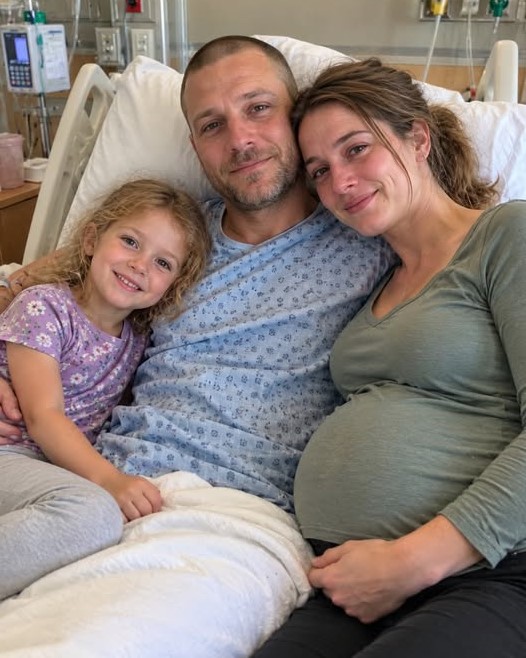
My name is Emily, and I was thirty-five when my husband, Nathan, was diagnosed with terminal cancer.
At the time, I was six months pregnant with our second daughter, while our four-year-old, Sophie, was still young enough to believe that every sick person eventually got better.
Nathan and I had been together since high school.
He wasn’t simply my husband.
He was the person around whom I’d built my entire adult life.
So when doctors told us his illness was terminal, accepting it wasn’t an option.
We fought.
We tried every treatment available to us.
We emptied our savings.
I sold nearly every valuable piece of jewelry I owned.
Eventually, I even borrowed against our house.
None of it mattered.
Nathan died before he ever got the chance to meet our second daughter.
Afterward, I felt as though my entire life had collapsed overnight.
I was pregnant.
I had Sophie to raise.
The medical bills were overwhelming.
Our savings were almost gone.
And the house now carried debt I’d taken on because I’d been desperate to buy Nathan more time.
For months, my life had revolved around schedules.
Medication.
Hospital appointments.
Insurance calls.
Bills.
Sophie’s preschool.
My prenatal appointments.
Nathan used to watch me organize everything at the kitchen table.
“You know,” he’d once said, “the world probably won’t end if you stop planning every second.”
I looked at him.
“I’m pregnant, Sophie is four, and my husband has cancer. Which part exactly would you like me to stop planning?”
He smiled weakly.
“Maybe me.”
“You’re the least reliable part.”
“We’ve known each other since high school.”
“Exactly. I have years of evidence.”
He laughed.
Then the laugh turned into a cough so violent he had to grip the edge of the table.
That was how we survived those months.
I organized.
Nathan joked.
And neither of us talked much about the possibility that he wouldn’t survive.
But toward the end, something about Nathan changed.
He started disappearing.
Not constantly.
Just enough for me to notice.
One afternoon, he returned after being gone for nearly three hours.
“Where were you?”
“Out.”
I stared at him.
“You can barely make it through the grocery store without getting exhausted.”
“I needed some air.”
Then I noticed several folded papers sticking from his jacket.
“What are those?”
“Nothing.”
“Nathan.”
“Emily.”
“You were also on your laptop at two in the morning yesterday.”
He leaned over and kissed my forehead.
“Please don’t interrogate the dying guy.”
“I hate when you say that.”
“I know.”
I looked directly at him.
“Whatever you’re doing, you can tell me.”
His expression changed.
For once, there was no joke.
“I wish I could.”
“Then tell me.”
He looked down at the papers.
“You already have enough to carry.”
“That isn’t your decision.”
“Sometimes it should be.”
I didn’t understand what he meant.
Then he said something that stayed with me.
“If someone needed help tomorrow, you’d say yes before asking whether you could actually afford to help them.”
“That sounds like a compliment.”
“It isn’t entirely.”
“Why?”
“Because you don’t know how to let somebody else’s problem stay somebody else’s problem.”
At the time, I thought he was simply worried about me.
So I stopped asking questions.
Nathan was dying.
If there was some small corner of his life he wanted to keep private, I decided he deserved it.
After his death, that decision haunted me.
Five weeks later, Nathan’s condition deteriorated rapidly.
I sat beside his hospital bed holding his hand.
“You look scared,” he whispered.
“So do you.”
“I’m allowed.”
“So am I.”
He almost smiled.
“You’re going to be okay.”
“Don’t say that.”
“You will.”
“No, Nathan.”
His fingers tightened weakly around mine.
“Promise me you’ll keep going.”
“I don’t know how.”
“You’ll figure it out.”
He closed his eyes.
“You always do.”
Those were the last clear words my husband ever said to me.
Three days after his funeral, I sat at our kitchen table staring at bills.
Funeral expenses.
Medical debt.
Two overdue notices.
And the loan against our home.
A woman from the bank explained what I already knew.
“There isn’t enough remaining to cover next month.”
“I know.”
“Do you have other savings?”
“We spent everything.”
“Anything valuable you could sell?”
“I already sold my jewelry.”
She hesitated.
“For his treatment?”
“Yes.”
“And you borrowed against the house?”
I nodded.
When someone offers you one more treatment that might save the person you love, you don’t stop to calculate whether hope fits into your budget.
But when hope disappears, the bills don’t disappear with it.
A week later, I returned to the hospital to collect Nathan’s belongings.
A nurse named Melissa met me.
“I’m so sorry, Emily.”
“Thank you.”
She handed me a bag.
Inside were Nathan’s watch, charger, toiletries, a paperback he’d never finished…
And a gray women’s cardigan.
I stared at it.
“This isn’t mine.”
Melissa frowned.
“I thought it belonged to the woman who visited him.”
I froze.
“What woman?”
Her face immediately changed.
“I assumed she was family.”
“Nathan didn’t have family.”
He’d grown up in foster care after losing his parents.
As far as either of us knew, there was nobody left.
Melissa looked uncomfortable.
“I’m sorry. I probably shouldn’t have assumed.”
“How often was she here?”
“Several times.”
“How many?”
“I don’t remember exactly. But during his last few weeks… fairly often.”
My stomach turned.
“What did she look like?”
“Dark hair. Maybe early forties.”
“What did they do?”
“Mostly talked.”
“That’s all?”
“There were usually documents around them.”
Documents.
Immediately, I remembered the papers hidden inside Nathan’s jacket.
My mind went somewhere I didn’t want it to go.
Another woman.
Secret meetings.
Late-night computer sessions.
Three-hour disappearances.
Had my husband been having an affair while I was pregnant?
I hated myself for even thinking it.
But once the thought appeared, I couldn’t make it disappear.
After speaking with hospital staff, I eventually saw footage that confirmed the woman existed.
There she was.
Walking into Nathan’s room carrying a folder.
Another clip showed her returning.
In one recording, she appeared to be crying.
I’d never seen her before in my life.
For the next three days, I barely slept.
Every unexplained absence Nathan had made suddenly seemed suspicious.
Every private phone call.
Every hidden document.
Every time he’d told me not to worry.
One night, lying awake at two in the morning, I whispered into the darkness:
“Were you cheating on me?”
There was something uniquely horrible about being angry at someone who could no longer answer you.
Then, three evenings later, someone knocked on my door.
Sophie was sitting at the kitchen table coloring.
“Mommy, who’s here?”
“I don’t know, sweetheart.”
I opened the door.
And my entire body went cold.
It was her.
The woman from the hospital footage.
She looked exhausted.
Her dark hair was pulled loosely behind her shoulders, and her eyes were red as though she’d been crying.
She held a sealed envelope against her chest.
“Are you Emily?”
“Who are you?”
“My name is Rebecca.”
“Why were you visiting my husband?”
She extended the envelope.
“Nathan asked me to give this to you.”
“That wasn’t my question.”
“I know.”
“Were you having an affair with him?”
Her eyes widened.
“No.”
“Then why were you secretly meeting him?”
She looked down at the envelope.
“He made me promise not to give you this until after he died.”
My hands began shaking.
“What is it?”
Rebecca studied my face.
Then she asked something that frightened me more than anything the nurse had told me.
“So… you really don’t know what he left you?”
I took the envelope.
Nathan’s handwriting covered the first page.
I recognized it instantly…
PART 2
Emily,
I’m sorry you’re finding out this way.
There’s a five-year-old boy named Caleb.
You don’t owe him anything. You don’t have to become involved. If you want to stop reading and walk away, you can.
But if you find him, you’ll understand why I couldn’t.
I’m sorry I never told you.
I read those words twice.
Then a third time.
I looked up.
“Who is Caleb?”
Rebecca said nothing.
My heart started pounding.
“Is he your son?”
“No.”
“Is he Nathan’s?”
She looked away.
“Oh my God.”
“Emily—”
“Were you sleeping with my husband?”
“No.”
“Then tell me who this child is!”
“I can’t.”
I actually laughed.
Not because anything was funny.
Because the situation was becoming absurd.
“You show up at the home of a pregnant widow with a secret letter from her dead husband telling her to find a five-year-old boy, and now you’re telling me you can’t explain who he is?”
“Nathan wanted you to choose whether you wanted the answer.”
“Why?”
“Because once you know, you can’t unknow it.”
I stared at her.
“Stop speaking in riddles.”
She flinched.
Then finally, she told me something useful.
“Nathan and I knew each other as children.”
“What?”
“We grew up in the same foster-care system.”
I stopped breathing for a second.
Nathan almost never discussed that part of his childhood.
“You knew him back then?”
“Yes.”
“And now?”
“I work with children and families connected to the system.”
“Is that why you were meeting him?”
Rebecca nodded.
“I was helping Nathan locate Caleb and understand what options were available.”
“Then tell me whose child Caleb is.”
“I promised Nathan I wouldn’t.”
“That makes no sense.”
“He didn’t want to put another responsibility on you immediately after his death.”
“Did Nathan have another family?”
Rebecca remained silent.
I felt sick.
“That’s a yes.”
“No. It means I promised not to answer that question.”
Then she left.
By the time the door closed, I was convinced of one thing.
My husband had another son.
The next morning, I opened Nathan’s laptop.
His password had changed.
I tried birthdays.
Anniversaries.
Nothing worked.
Then I typed the date Nathan and I first met.
The screen unlocked.
Despite everything, I muttered:
“Seriously, Nathan?”
I started searching.
Eventually, one name appeared repeatedly.
CALEB R.
Then I found payments.
Legal expenses.
Childcare costs.
And something labeled:
CALEB TRUST.
My stomach dropped.
“You created a trust for him?”
Then I found insurance documents.
Nathan had made arrangements for Sophie.
For our unborn daughter.
For me.
But Caleb had clearly mattered enough for Nathan to create separate financial arrangements too.
Then I found maps.
One address appeared repeatedly.
It was about forty minutes away.
I called Rebecca.
“I found the trust.”
Silence.
“Emily—”
“I’m going to the address.”
“Please don’t go there angry.”
“So Caleb IS Nathan’s son.”
“I didn’t say that.”
“You didn’t need to.”
“Whatever you believe Nathan did, Caleb didn’t do anything.”
“I would never blame a child.”
“I know.”
“Then why are you protecting this secret?”
“I’m not protecting Nathan. I’m protecting Caleb.”
I drove there convinced I was about to meet living proof that my marriage had been built on a lie.
The address belonged to a foster family.
A woman named Diane answered the door.
When I introduced myself, her expression changed immediately.
“Nathan’s wife?”
“You knew him?”
“He visited Caleb.”
My knees almost buckled.
“Can I see him?”
She hesitated before letting me inside.
A little boy was sitting on the floor building a wooden train track.
He looked up.
Dark eyes.
Brown hair.
A stubborn little cowlick.
I grabbed the back of a chair.
“Oh my God.”
Diane stepped toward me.
“Are you okay?”
“He looks like Nathan.”
She said nothing.
“He’s Nathan’s son, isn’t he?”
“I honestly don’t know.”
Then Caleb looked at me.
“I know you.”
My heart stopped.
“You know me?”
“Nathan showed me your picture.”
“He did?”
“And Sophie’s.”
“What did he tell you?”
“That Sophie likes dinosaurs.”
Despite everything, I smiled.
“She does.”
“And you make pancakes on Sundays.”
My smile disappeared.
Nathan had been talking about us.
Here.
To this child.
I asked Diane who else had visited with Nathan.
“Sometimes an older woman came with him. Mrs. Whitmore.”
That name appeared in Nathan’s records.
I called her immediately.
Two hours later, I was sitting in an eighty-year-old woman’s living room.
Mrs. Whitmore placed an old photograph on the table.
Two boys stood beside each other.
She pointed toward the taller one.
“That’s Nathan.”
I looked at the other boy.
“And him?”
“Samuel.”
“Who is Samuel?”
She looked directly at me.
“Nathan’s brother.”
I stared at her.
“Nathan didn’t have a brother.”
“Yes, he did.”
“No. Nathan believed he had no family.”
“Because he never knew.”
My hands tightened around the photograph.
Mrs. Whitmore explained that after their parents died, Nathan and Samuel had entered care.
They’d been separated.
Different placements.
Incomplete records.
Administrative mistakes.
Eventually, all connection between them disappeared.
Nathan grew up believing he was alone.
“He only discovered Samuel existed last year?” I asked.
“Yes.”
“Did he find him?”
Mrs. Whitmore lowered her eyes.
“He tried.”
Something in her expression told me the answer before she spoke.
“Samuel had already died.”
I immediately pictured Caleb.
“No…”
Mrs. Whitmore looked at me.
“Caleb is Samuel’s son.”
I couldn’t speak.
“Then Nathan wasn’t his father?”
“No.”
I looked again at the photograph.
Two brothers.
Separated as children.
One growing up never knowing the other existed.
“He spent his entire life believing he had nobody.”
Mrs. Whitmore nodded.
“And when he finally discovered his brother… Samuel was already gone.”
“Yes.”
“But Caleb wasn’t.”
Exactly.
Suddenly, every secret meeting looked different.
Every hidden document.
Every unexplained drive.
Every late night on the laptop.
Nathan hadn’t been hiding another family he’d created.
He’d been trying to save the only piece of the family he’d lost.
That evening, Rebecca came to my house again.
This time, I let her inside.
“Why didn’t he tell me?”
She looked at my pregnant stomach.
“You really don’t know?”
“I want to hear it.”
“He watched you sell your jewelry.”
“That was my choice.”
“You borrowed against your home.”
“My choice too.”
“You were pregnant, raising Sophie, taking Nathan to treatment, fighting with insurance companies, barely sleeping and drowning financially.”
“So?”
“So Nathan knew exactly what would happen if he told you about Caleb.”
“What?”
“You’d help.”
I stared at her.
“You would’ve said yes before asking whether you could handle another responsibility.”
Nathan’s words came rushing back.
You never know when to let someone else be the problem.
“He knew I’d want to take Caleb.”
Rebecca nodded.
“He was afraid you’d sacrifice even more.”
“Then why leave me the letter?”
“Because telling you Caleb existed was different from deciding Caleb’s future for you.”
I wiped my eyes.
“He still should’ve told me.”
“Yes.”
“I can understand why he did it without believing he was right.”
“Yes.”
“And the trust?”
“Some of that money came from Samuel’s estate. Nathan also made sure your benefits were protected.”
I laughed through my tears.
“He made spreadsheets, didn’t he?”
Rebecca smiled.
“So many spreadsheets.”
For the first time since Nathan died, I laughed without immediately feeling guilty afterward.
I wasn’t ready to promise Caleb anything.
But I was finally ready to ask what might be possible.
Over the following weeks, I spoke with his caseworker.
I met repeatedly with Diane.
I talked with an attorney.
One question kept coming up.
“Can you realistically afford another child?”
“Not right now.”
The attorney nodded.
“Good.”
I frowned.
“That’s a strange response.”
“It means you’re thinking before making promises.”
That stayed with me.
One evening, I visited Nathan’s grave.
I placed the old photograph of him and Samuel beside the headstone.
“You found your brother too late,” I whispered.
My hand rested against my stomach as our daughter kicked.
“But you found Caleb.”
I smiled through my tears.
“And now I found him too.”
Then I looked at Nathan’s name carved into the stone.
“But I’m doing this my way.”
Because that was what my husband had really left me.
Not a secret son.
Not another burden.
Not an obligation I had to accept because he was gone.
He’d left me a choice.
The guardianship process is still moving forward.
I don’t know exactly what our family will look like a year from now.
Caleb visits us regularly now.
Sophie adores him.
And for once in my life, I don’t have every step planned.
Strangely, I’m okay with that.
I couldn’t give Nathan back the brother he never got the chance to know.
But maybe I could make sure the family he’d spent his whole life searching for wasn’t lost a second time.
Leave a Reply