Category: Uncategorized

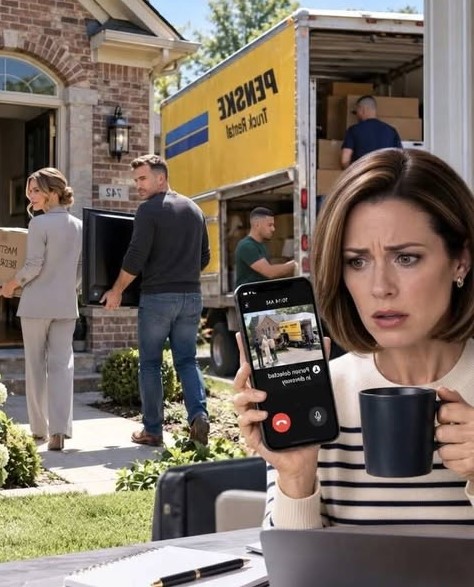
  • After my divorce, I bought a house and told no one. While I was out of state, my cameras showed a moving truck in my driveway. Then I saw my ex-husband and his new wife carrying their furniture inside. I didn’t call him. I called the police.  

    After my divorce, I bought a house and told no one. While I was out of state, my cameras showed a moving truck in my driveway. Then I saw my ex-husband and his new wife carrying their furniture inside. I didn’t call him. I called the police.  

    At 10:14 on a bright Saturday morning, I looked down at my phone and saw my ex-husband carrying a flat-screen television into a house he had absolutely no right to enter.

    Behind him was his new wife.

    She was carrying a brass floor lamp.

    My brass floor lamp.

    I was four hours away, standing barefoot in my sister Rachel’s kitchen in Louisville with a mug of coffee halfway to my mouth.

    For several seconds, my brain refused to understand what I was seeing.

    Maybe I had opened the wrong camera.

    Maybe the feed was delayed.

    Maybe I was somehow looking at someone else’s property.

    But I wasn’t.

    The house was mine.

    I had owned it for exactly eleven days.

    It was a modest three-bedroom brick home in Worthington, just north of Columbus.

    Nothing extravagant.

    An old maple tree in front.

    Oak cabinets straight out of the 1980s.

    Floors that needed refinishing.

    I had paid $327,500 for it.

    But the price wasn’t the important part.

    The important part was that I had bought it alone.

    After twenty-seven years of marriage, signing my own name on that deed had felt like learning to breathe again.

    Mark and I had finalized our divorce in January.

    By August, I was tired of the tiny apartment I had rented during our separation.

    So I bought the house.

    I didn’t tell Mark.

    I barely told anyone.

    Rachel knew.

    My twenty-eight-year-old daughter, Emily, knew I was house hunting but didn’t yet know I had closed.

    My realtor knew.

    The flooring crew knew.

    That was about it.

    I wasn’t trying to hide anything scandalous.

    I simply wanted one major decision in my adult life that didn’t immediately become family property.

    Then my phone buzzed.

    PERSON DETECTED IN DRIVEWAY.

    I opened the security-camera feed.

    A yellow moving truck was backing into my driveway.

    The driver’s door opened.

    Mark stepped out.

    Rachel leaned over the kitchen island.

    “You expecting the flooring guys?”

    “Maybe.”

    Then I saw him clearly.

    Rachel came around the counter.

    “Is that Mark?”

    “Yes.”

    “What is he doing at your house?”

    “I was hoping you knew.”

    Then the passenger door opened.

    Vanessa climbed out.

    Mark had married her five months after our divorce became official.

    I had met her twice.

    I had stopped asking questions about when their relationship had actually started.

    He was no longer my problem.

    At least, that was what I had been telling myself.

    Then Mark handed Vanessa a tall brass lamp.

    A lamp I recognized from his old apartment.

    He pulled a huge television from the back of the truck.

    More boxes followed.

    KITCHEN.

    BOOKS.

    Then one enormous carton labeled:

    MASTER BEDROOM.

    Rachel stared at the screen.

    “They’re moving in.”

    “I can see that.”

    The house wasn’t even ready for me to move into yet.

    The floors had just been sanded.

    Painters were coming Tuesday.

    Most of my possessions were still in storage.

    Apparently, Mark had decided to beat me to my own moving day.

    Then he walked toward the side entrance.

    I leaned closer to the screen.

    That door had a keypad lock so contractors could come and go.

    Mark didn’t knock.

    He didn’t search for a hidden key.

    He simply walked straight to the keypad.

    Pressed four numbers.

    The light flashed green.

    Click.

    Rachel turned toward me.

    “He knows your code.”

    I felt cold.

    I had never given it to him.

    Never.

    Mark opened the door and held it for Vanessa.

    She walked inside carrying the lamp as though she belonged there.

    That was the first moment I stopped feeling merely angry.

    I felt invaded.

    I had found that house myself.

    Signed for it myself.

    Stood alone in the empty kitchen after closing and eaten a sandwich over the sink because I didn’t own a chair yet.

    And now my ex-husband was walking through it like he owned the deed.

    Another clip loaded.

    Vanessa stood on my porch and said,

    “Once the sectional is in, I want to measure the windows for drapes.”

    Rachel looked at me.

    “Call him.”

    My thumb hovered over Mark’s name.

    For twenty-seven years, this had been my habit.

    Mark did something unreasonable.

    I called him.

    He explained.

    And somehow, by the end of the conversation, I would be questioning my own reaction.

    Mark wasn’t a screamer.

    He was much harder to fight than that.

    He was an explainer.

    He could turn broken promises, missing money, and obvious lies into misunderstandings with enough words.

    I closed his contact.

    Instead, I opened the digital copy of my deed.

    There it was.

    Clare Bennett.

    Sole owner.

    Then I called the police.

    “My ex-husband and his new wife are moving furniture into a house I legally own,” I told the dispatcher. “I’m four hours away. Neither of them has permission to be there.”

    She asked whether Mark lived at the address.

    “No.”

    Had he ever lived there?

    “No.”

    Was I the sole legal owner?

    “Yes.”

    Then she asked something that made my stomach tighten.

    “Do you know how he gained entry?”

    I looked again at the image of his hand pressing the keypad.

    “No,” I said.

    And suddenly the moving truck wasn’t the most disturbing part anymore.

    Police arrived within twenty minutes.

    I watched everything remotely.

    Mark and Vanessa were attempting to force a huge gray sectional through my front door when the first cruiser pulled up.

    An officer asked who owned the house.

    “My ex-wife,” Mark said immediately.

    At least we had established reality.

    Then he added,

    “She knows we’re staying here temporarily.”

    Vanessa turned toward him.

    “You told me she bought it as an investment property.”

    That was the first moment I realized she might not know the truth.

    Mark quickly insisted it was.

    The officer asked whether Mark had any ownership interest.

    “It’s complicated.”

    Whenever Mark said something was complicated, it usually meant the simple truth made him look bad.

    He launched into a long explanation.

    He claimed I bought the property using money from our former marital home.

    He said we had an understanding.

    He claimed he and Vanessa only needed temporary housing between leases.

    Then the officer called me.

    I emailed him the deed.

    Closing documents.

    The divorce decree.

    Everything.

    He asked if Mark had contributed money to the purchase.

    “No.”

    Did he have a lease?

    “No.”

    Had he ever entered the house before?

    “Not with my permission.”

    The officer put me on speaker.

    Mark immediately said,

    “Clare, stop turning this into something it isn’t.”

    I looked at the video feed.

    There was a moving truck in my driveway.

    “You are unloading bedroom furniture into my house, Mark. I know exactly what this is.”

    “We just need somewhere temporary.”

    “We never discussed that.”

    Vanessa suddenly interrupted.

    “Mark, you told me she agreed!”

    He snapped at her.

    “She did.”

    “No,” I said. “I did not.”

    The police couldn’t instantly sort out every legal claim while standing in the driveway.

    Mark had used a working entry code and was claiming some imaginary verbal agreement.

    But one thing was clear.

    I was the owner.

    I told the police he had no permission to remain.

    The move stopped.

    Mark tried to call it a private family dispute.

    The officer looked at him.

    “She is your ex-wife.”

    Rachel nearly spit out her coffee.

    Then Mark attempted another strategy.

    He told everyone I was bitter.

    Unstable.

    Overreacting.

    Vanessa stood several feet away.

    Finally she said,

    “Just stop. You told me she knew.”

    Mark looked at her and said something I had heard in different forms for years.

    “I warned you she gets like this.”

    That hurt more than I expected.

    He had already prepared Vanessa to distrust me.

    Any boundary I enforced would become proof that I was the hysterical ex-wife he had described.

    The police stayed until Mark and Vanessa loaded everything back into the truck.

    The lamp.

    The television.

    The boxes.

    The sectional.

    Then I drove home.

    When I reached Worthington that afternoon, the driveway was empty.

    For a moment, the house looked peaceful again.

    Then my neighbor Tom walked over.

    He was a retired engineer who spent most of his free time caring for his plants.

    “Quite a morning,” he said.

    “That’s one way to describe it.”

    Then he hesitated.

    “I assumed you knew he’d been here earlier this week.”

    My stomach dropped.

    “When?”

    “Wednesday.”

    “Was he alone?”

    Tom shook his head.

    “No. He had a locksmith.”

    I ran to the side door.

    Entered the contractor code.

    Red light.

    I tried again.

    Red.

    That was when I understood.

    Mark hadn’t accidentally learned an old password.

    He had brought someone to my house days earlier and changed the lock.

    This had been planned.

    I hired another locksmith immediately.

    When he removed the lock, he confirmed it was almost brand new.

    Inside, I found muddy footprints.

    A deep gouge across my newly refinished floor.

    A dent in the drywall.

    Then I reached the kitchen.

    There was a little wooden sign sitting on my counter.

    Home Sweet Home.

    Vanessa had already started decorating.

    I took pictures of everything.

    Then I paid to replace every lock and erase every code from the smart system.

    That evening, sitting alone on the floor of my empty living room, I started doing something I had done throughout my marriage.

    I searched for ways this could somehow be my fault.

    Had I accidentally told Emily?

    Had Mark misunderstood some passing conversation?

    Had I reused an old code?

    Living with him for twenty-seven years had trained me to examine my own behavior before questioning his intentions.

    The next morning, I started tracing exactly how he had found the house.

    The flooring contractor gave me the first answer.

    He mentioned the code was posted on the shared Google calendar.

    I froze.

    For years, Mark, Emily, and I had shared a family calendar.

    After the divorce, I thought I had removed Mark.

    I checked.

    He couldn’t edit anything.

    But his old Gmail account still had permission to view events.

    And there it was.

    Worthington Floor Crew — Side Door: 0427.

    That explained the code.

    But not the address.

    Then I remembered a photo.

    Eleven days earlier, Rachel had convinced me to take a picture on the front steps after closing.

    I had uploaded it to an old shared family photo album without thinking.

    I zoomed in.

    The closing folder in my hands had my new address clearly printed on the tab.

    No private investigator.

    No hacker.

    Just two pieces of old digital access I had forgotten to remove.

    I spent the next two hours changing passwords everywhere.

    Bank accounts.

    Cloud storage.

    Streaming accounts.

    Everything.

    I even removed Mark from our old grocery-rewards profile.

    If he was going to try to take my house, he certainly wasn’t keeping my fuel points.

    Then my former mother-in-law called.

    Diane and I had remained polite after the divorce.

    She sounded uncomfortable.

    “Clare, I need to ask you something awful.”

    “Go ahead.”

    “Did you hide money from Mark during the divorce?”

    I nearly dropped my phone.

    “No.”

    She sighed.

    Apparently, Mark had been telling the family that I bought my “secret house” using assets I had hidden from him.

    His commissions had dropped.

    He and Vanessa were struggling financially.

    Their lease was ending.

    And Mark had convinced himself that because I was doing well after the divorce, some of that success must rightfully belong to him.

    Then Diane sent me screenshots.

    The first message was from Mark to his sister.

    It said:

    Once we get inside, Clare won’t make a scene. She hates conflict. She’ll let us stay until we figure something out.

    I read it three times.

    That hurt worse than the scratched floor.

    He hadn’t simply gambled on getting into my house.

    He had gambled on me.

    On twenty-seven years of knowing exactly how much I hated conflict.

    He expected the woman I used to be to save him from the consequences.

    Then Diane sent another screenshot.

    If Clare gets difficult, I’ll threaten to reopen the divorce and make her explain where the money for the house came from.

    That was when my anger disappeared.

    Something colder replaced it.

    Focus.

    I called my divorce attorney.

    Susan Keller looked like someone’s elegant grandmother.

    She also happened to be terrifying.

    I brought her everything.

    The deed.

    Bank records.

    Screenshots.

    Closing documents.

    She checked every date.

    Every transfer.

    Then she leaned back.

    “Mark has no legitimate claim to the house.”

    I finally breathed.

    “But,” she added, “he can still file nonsense and force you to spend money responding to it.”

    I hated that sentence.

    So Susan sent him a formal cease-and-desist letter.

    We also documented every dollar of damage and expense.

    Locksmith.

    Floor repair.

    Drywall.

    Security changes.

    Total:

    $2,740.

    That evening, Vanessa called me.

    She sounded completely different.

    Quiet.

    Uncertain.

    “Did you really buy the house after the divorce?”

    “Yes.”

    “Mark told me the money was still jointly disputed.”

    “It wasn’t.”

    “He said you agreed we could stay there.”

    “I didn’t.”

    She became quiet.

    Then she admitted Mark had also been lying to her about his finances.

    For the first time, I felt sorry for her.

    Not enough to excuse carrying furniture into my house.

    But enough to recognize the situation.

    I had once been the woman trying to explain Mark’s behavior too.

    A few days later, my daughter Emily came over.

    “Dad shouldn’t have done it,” she said. “But why does everything have to become a war?”

    That hurt.

    “It became a war when he hired a locksmith to enter my house.”

    She looked exhausted.

    Then she said,

    “Sometimes I feel like I have to choose between having a relationship with Dad and knowing the truth.”

    I didn’t know how to answer that.

    Then she called two days later.

    Mark was planning to use Diane’s Labor Day cookout to tell the entire family that I had stolen money from him.

    My first instinct was not to go.

    Then I reread his message.

    Clare hates conflict.

    She’ll let us stay.

    He was still counting on the old version of me.

    So I baked a cherry pie.

    And went to the cookout.

    When I arrived, everyone was there.

    Mark.

    Vanessa.

    Emily.

    Diane.

    His sister.

    His brother-in-law.

    Family friends.

    A jury.

    Emily looked terrified when she saw me.

    Diane stared at the pie.

    “You brought dessert?”

    “I wasn’t raised by wolves.”

    Mark was less amused.

    “What are you doing here?”

    “Enjoying a cookout.”

    For twenty minutes, everyone pretended things were normal.

    Then someone finally asked Mark about the Worthington house.

    Mark began his speech.

    He said we had built everything together.

    That I left the marriage with a large amount of cash.

    That I secretly bought a house.

    That he and Vanessa only needed somewhere temporary.

    Then I interrupted.

    “What date was our divorce finalized?”

    He said nothing.

    Emily answered.

    “January seventeenth.”

    “And when did I close on the house?”

    Again, Mark said nothing.

    I pulled one document from my purse.

    My closing statement.

    “August third. Seven months later.”

    I explained that the down payment came from my legally awarded half of our former home equity plus my own income.

    Mark became angry.

    “But that money came from what we built together!”

    “Yes.”

    I looked at him.

    “My court-awarded half of what we built together.”

    Then Vanessa stepped forward.

    “You told me she offered the house to us.”

    Mark turned toward her.

    “I said she knew.”

    “No. You said she offered it.”

    That was new even to me.

    I told everyone about the locksmith.

    His sister gasped.

    Mark insisted it wasn’t a break-in because I was away.

    I answered,

    “That is not how home ownership works.”

    Then I played another piece of evidence.

    My neighbor Tom’s doorbell camera had captured Mark speaking to the locksmith.

    On the recording, his voice was perfectly clear.

    “Once we’re inside, she’ll complain, but she’ll let it go. She always does.”

    When the audio stopped, nobody spoke.

    Mark stared at my phone.

    Then Vanessa looked at him.

    “You knew she hadn’t agreed.”

    “We were desperate!”

    “You knew.”

    She reached into her purse.

    Removed the key to their apartment.

    Set it beside his beer.

    “I’m staying with my sister.”

    Mark looked horrified.

    “What are you doing?”

    “I need time.”

    Then, naturally, he pointed at me.

    “This is what she wanted!”

    Even then, it had to be my fault.

    Vanessa looked at me.

    Then back at him.

    “No, Mark. This is just what you didn’t think would happen.”

    And she left.

    Three weeks later, my attorney called.

    Mark had backed down.

    He reimbursed the $2,740.

    He dropped his threat to challenge the divorce settlement.

    No courtroom drama.

    No judge.

    Just paperwork.

    Dates had defeated the lies.

    Six weeks later, I finally moved into my house.

    I hired movers with a plain white truck because I had developed a completely irrational dislike of yellow moving vans.

    Rachel helped unpack.

    At one point, she heard me say,

    “My house.”

    Then she stopped.

    “Say that again.”

    I looked around.

    The floors were repaired.

    The walls were painted.

    The locks belonged only to me.

    Every shared digital account was gone.

    “My house.”

    And for the first time, it truly felt like it.

    The anxiety didn’t disappear immediately.

    Every camera notification made my heart jump.

    Every unfamiliar car slowed me down.

    Once, a yellow moving truck drove down my street and I stood at the window until it disappeared.

    That is one thing nobody tells you about finally standing up for yourself.

    Having boundaries doesn’t erase what happened before you created them.

    You can be stronger and still check the locks twice.

    Both can be true.

    Later, Emily came over to help paint.

    Eventually, she apologized for saying I had turned everything into a war.

    “I was overwhelmed,” she said.

    “I know.”

    Then I realized something.

    “You were asking me to be the reasonable one.”

    She looked at me.

    “Because you knew Dad wouldn’t be.”

    Silence.

    Then Emily said something I will never forget.

    “I think sometimes I was asking you to lose quietly so I wouldn’t have to deal with his anger.”

    That hurt.

    But it was honest.

    “And maybe,” I said, “I taught you that was normal by doing it for twenty-seven years.”

    We kept painting.

    Then she smiled.

    “Are you mad at me?”

    “I’ll put it on the calendar for Thursday.”

    She pointed her paint roller at me.

    “Not the shared calendar.”

    We both laughed.

    Weeks later, I found an envelope in the mailbox.

    From Vanessa.

    Inside was a short handwritten letter.

    She apologized for entering my house.

    She did not blame Mark for everything.

    She admitted she had personally carried furniture inside.

    She said that even if Mark lied to her, she still had responsibility for what she had done.

    There was also a cashier’s check.

    $350.

    Exactly the estimated drywall repair.

    I never became her friend.

    I didn’t call to comfort her.

    But I respected the apology.

    And eventually, I stopped wondering whether she stayed married to Mark.

    His marriage was no longer my responsibility.

    By Thanksgiving, the house finally felt lived in.

    Rachel came from Kentucky.

    Emily decorated the refrigerator with an awful glitter-covered turkey magnet.

    Diane came for dessert.

    Mark was not invited.

    Nobody debated it.

    Nobody whispered about him.

    We ate too much.

    Argued about the thermostat.

    Lost Diane’s glasses for fifteen minutes before discovering them on top of her head.

    It was wonderfully ordinary.

    Then Diane gave me a hostess gift.

    I opened it.

    A little wooden sign.

    Home Sweet Home.

    I stared at her.

    She whispered,

    “Too soon?”

    Then she started laughing.

    So did I.

    I hung it in the laundry room.

    Not because I suddenly loved decorative signs.

    Because the first time those words appeared in my house, somebody else had put them there without permission.

    This time, I chose where the nail went.

    That difference meant everything.

    For most of my life, I thought a boundary only worked if the other person understood it.

    If they agreed.

    If they acknowledged I was being reasonable.

    I know better now.

    They don’t have to understand your boundary.

    They don’t have to like it.

    They don’t have to approve of it.

    They simply have to stop crossing it.

    And if I’m completely honest, Mark wasn’t entirely wrong about who I used to be.

    There was once a version of me who would have seen that moving truck, called him in a panic, listened to his explanation, worried about where he and Vanessa would sleep, and somehow apologized for making their lives difficult.

    He built his entire plan around finding that woman.

    He was just eight months too late.

    I still believe in forgiveness.

    I still believe people can change.

    And I still prefer peace when the peace is worth preserving.

    But I no longer believe being a good person means leaving the door unlocked.

    And if I ever give someone another chance?

    They definitely won’t be getting the code to my house.

  • My Mother Told Me to Keep Quiet at Dinner. Then the Federal Judge Asked Who I Really Was.  

    My Mother Told Me to Keep Quiet at Dinner. Then the Federal Judge Asked Who I Really Was.  

    My father called me at 1:30 in the morning and told me not to tell the truth.

    For one terrifying second, seeing his name glowing on my nightstand, I thought someone had died.

    I sat upright in my Chicago apartment, heart pounding.

    “Dad?”

    His voice came softly through the darkness.

    “Emily, your brother and Megan are having her parents over Friday. Your mother says you can come.”

    I stared at the wall.

    That was a strange way to put it.

    Not we want you there.

    Not Ryan wants his sister at dinner.

    Your mother says you can come.

    Before I could respond, Dad added, “Megan’s father is a federal judge. It’s important to your brother.”

    Then Mom’s voice came from behind him.

    “Did you tell her?”

    Dad hesitated.

    The phone changed hands.

    “Emily,” my mother said, “you can come Friday, but I need you to do something for me.”

    I knew that tone instantly.

    “What?”

    “Keep your mouth shut about your job.”

    I nearly laughed.

    “Why?”

    “Because this dinner is about Ryan. Her father is a very important man, and I don’t want you getting started on police shootings and corruption and all those depressing things you write about.”

    “I wasn’t planning to.”

    “Good. If anyone asks, just say you work in an office.”

    I let the silence linger.

    Mom grew impatient.

    “Emily?”

    “Yeah?”

    “Please don’t embarrass us.”

    There it was.

    The same message I had heard in different forms my entire life.

    Don’t embarrass us.

    I was thirty-three, an investigative reporter at one of the Midwest’s largest newspapers, and eight months earlier I had led a team whose reporting triggered three internal investigations and a federal civil-rights review.

    But to my mother, I remained the child who somehow entered every room already guilty of ruining it.

    I looked across my dark bedroom.

    “You want me to tell a federal judge that I do office work?”

    “Yes.”

    I smiled.

    “Okay.”

    Relief entered her voice.

    “Thank you.”

    She had no idea the judge she was so desperate to impress already knew exactly who I was.

    When I was seven, I figured out where I ranked in my family without anyone saying it directly.

    Our fireplace mantel displayed framed photographs.

    Five were of Ryan.

    Ryan at preschool graduation.

    Ryan holding a baseball bat.

    Ryan without his two front teeth.

    Ryan in a tiny suit at our cousin’s wedding.

    Ryan riding on Dad’s shoulders at the state fair.

    There was one picture of me.

    It sat wedged behind a ceramic angel and plastic ivy.

    From the right angle, you could see half my forehead.

    One afternoon, I dragged a dining chair over, climbed up, and moved my picture into the center.

    I stepped back and smiled.

    For once, all three of us looked like a family.

    By the next morning, my photograph had been hidden again.

    I never asked why.

    Instead, I created what I secretly called the mantel test.

    Maybe straight A’s would move the picture.

    They didn’t.

    Maybe winning the eighth-grade writing competition.

    Nothing.

    Maybe becoming valedictorian.

    Still nothing.

    Maybe Northwestern.

    Maybe the scholarship.

    Maybe graduating near the top of my class.

    Maybe my first newspaper job.

    Maybe the first front-page investigation under my name.

    Maybe the journalism award.

    Maybe the national award after that.

    Surely someday I would achieve something impressive enough for my mother to look at me and say, Emily, I’m proud of you.

    That day never came.

    Ryan was four years younger, funny and effortlessly charming, the kind of person who made strangers feel like longtime friends.

    He sold cars outside Indianapolis.

    And he was good at it.

    I want to be clear about something.

    I never resented Ryan for being loved.

    I resented the idea that loving him somehow required erasing me.

    And Mom could never simply celebrate what Ryan actually did.

    Reality wasn’t impressive enough.

    To neighbors, he was a “regional executive.”

    To church friends, he “managed a major sales division.”

    To her book club, Ryan personally negotiated multimillion-dollar commercial deals.

    Once, I heard her claim he routinely flew across the country for corporate meetings.

    Ryan had flown twice as an adult.

    Both times on vacation.

    My accomplishments moved in the opposite direction.

    According to Mom, I had “struggled academically.”

    I had “never really found my path.”

    I had “some little writing job.”

    One Thanksgiving, I entered the kitchen and overheard our neighbor Carol quietly ask, “Is Emily still dealing with that depression problem?”

    I froze.

    I had never been diagnosed with depression.

    Mom lowered her voice.

    “She’s very private. We try not to talk about it.”

    I stood at the sink pretending to scrub away a coffee stain.

    My hands shook.

    For a moment, I considered turning around and confronting her.

    But I already knew the script.

    She would gasp.

    Claim I misunderstood.

    I would get angry.

    Then she would become wounded.

    And by dessert everyone would be whispering:

    See? Emily really is unstable.

    So I said nothing.

    I learned young that when someone controls the story, defending yourself can be turned into evidence against you.

    That lesson eventually made me an excellent reporter.

    Eight months before Ryan’s dinner, I began investigating a series of police shootings across three Indiana counties.

    Initially, the story focused on use-of-force policies.

    Then I found missing body-camera footage.

    Then altered evidence logs.

    Then procurement contracts awarded to companies that seemed to exist only on paper.

    Every document pointed toward another.

    I survived on vending-machine coffee and four hours of sleep.

    One shell company sold vehicle equipment to sheriff’s departments.

    Another handled “emergency fleet maintenance.”

    A third collected payments for equipment departments couldn’t prove they had received.

    Money moved through them in oddly precise amounts.

    My editors gave me more time.

    I kept digging.

    Then anonymous documents began appearing.

    No return address.

    No explanation.

    Only records.

    Invoices.

    Internal emails.

    Copies of checks.

    In my encrypted notes, I called the source R.

    R never requested money.

    Never asked for protection.

    Never told me to target anyone.

    The messages always repeated some version of the same instruction:

    Follow the invoices.

    So I did.

    Eventually, the reporting became a six-part investigation.

    It uncovered kickbacks, falsified contracts, and evidence suppression involving public officials, police administrators, private vendors, and politically connected businesses.

    One federal civil case involving those departments came before Judge William Harrison.

    Months before Ryan’s dinner, Judge Harrison spoke at a criminal-justice panel in Chicago.

    Afterward, he stopped me in a courthouse hallway.

    “Ms. Carter?”

    I turned.

    He extended his hand.

    “Your reporting was extraordinary.”

    I actually glanced behind me.

    He smiled faintly.

    “I’m speaking to you.”

    “Thank you, Your Honor.”

    “Your series was some of the most thorough work I’ve seen on this issue. You asked questions institutions should have asked years ago.”

    For one ridiculous second, I wanted to call Mom.

    I wanted to tell her:

    A federal judge just praised my work.

    Then I imagined the answer.

    That’s nice, Emily. Did I tell you Ryan might get a company car?

    I put my phone away.

    Friday evening, I drove three hours to Maple Grove.

    I left my press badge behind.

    But I wore my navy blazer.

    The one I had worn when I accepted my national journalism award.

    Maybe some childish part of me still needed proof that I existed outside my mother’s version of me.

    Their house hadn’t changed.

    White siding.

    Blue shutters.

    Porch light glowing.

    Through the window, I could see the chandelier over the dining table.

    Mom opened the door.

    Her eyes immediately traveled over me.

    “You look very… professional.”

    “Thanks.”

    “You’re not planning to talk about work, right?”

    “Hello to you too.”

    “Emily.”

    “I remember.”

    She relaxed slightly.

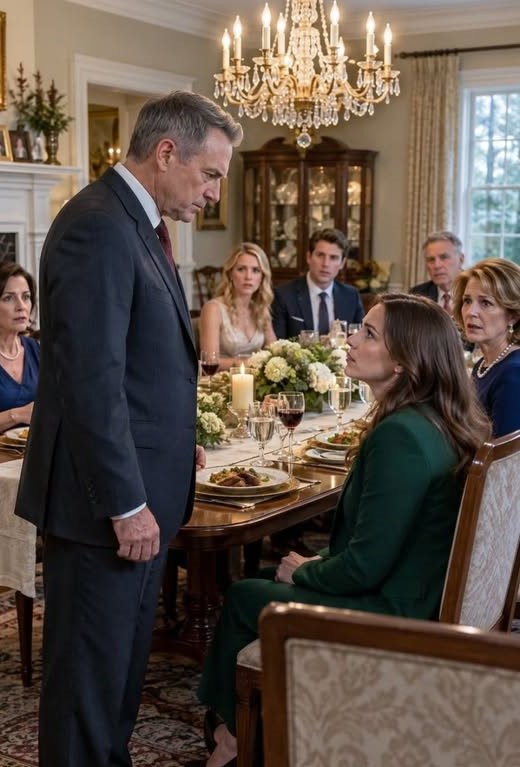
    Inside, the dining table looked magazine-ready.

    Crystal.

    Candles.

    Fresh flowers.

    The expensive china Mom reserved for people she considered important.

    There were handwritten place cards.

    Ryan sat near the center.

    Megan beside him.

    Her parents directly opposite.

    My seat was at the far end.

    I nearly laughed.

    The mantel test had become a seating chart.

    Ryan came in from the kitchen.

    “Em!”

    He hugged me.

    A genuine hug.

    “I’m glad you came.”

    That surprised me.

    “Mom made it sound like I’d won an appeals process.”

    His smile vanished for half a second.

    Then Megan appeared.

    She was warm, intelligent, and far less pretentious than Mom clearly wanted her to be.

    “You made it!” she said.

    She hugged me.

    “I’ve been asking Ryan about you.”

    Mom appeared immediately.

    “Emily drove down from Chicago.”

    Megan smiled.

    “Ryan said. What do you do there?”

    I opened my mouth.

    Mom answered first.

    “Administrative work. Little office downtown. Nothing exciting.”

    Megan blinked.

    Ryan looked at Mom.

    I looked at Ryan.

    Something crossed his face.

    Not embarrassment.

    Closer to anger.

    Then the doorbell rang.

    Judge Harrison had arrived.

    Mom practically rushed to the foyer.

    “Judge Harrison! Eleanor! Welcome!”

    I heard introductions.

    Then footsteps.

    Judge Harrison entered beside his wife.

    He saw me.

    Stopped.

    His eyes narrowed slightly.

    “Ms. Carter?”

    Mom laughed too quickly.

    “Oh, you don’t have to call her that. This is just Emily.”

    The judge looked at her.

    Then back at me.

    “We’ve met.”

    Mom’s smile froze.

    “Really?”

    “Yes.”

    I offered my hand.

    “Good to see you again, Judge.”

    He shook it.

    His wife, Eleanor, studied me with sudden interest.

    “You’re Emily Carter?”

    Mom stepped between us with impressive efficiency.

    “Dinner’s getting cold.”

    For the next hour, my mother worked harder than I had ever seen.

    Not at preparing food.

    At managing reality.

    Ryan sold cars.

    Mom turned him into the architect of a regional transportation empire.

    Ryan had trained two new salespeople.

    Mom said he “oversaw a growing team.”

    Ryan once sold six trucks to a landscaping company.

    Mom called it a “major commercial fleet acquisition.”

    Eventually Ryan interrupted.

    “Mom, I sell cars.”

    She laughed.

    “He’s modest.”

    Judge Harrison didn’t.

    Neither did Eleanor.

    Then Megan asked, “How long have you been in Chicago?”

    “Almost eleven—”

    “Emily, sweetheart, would you get more ice?”

    I got the ice.

    Later, Eleanor asked, “Do you enjoy journalism?”

    Mom dropped her fork.

    “Oh, Emily doesn’t—”

    Judge Harrison looked directly at her.

    “I believe Mrs. Harrison asked Emily.”

    Silence.

    Mom gave a tight smile.

    I answered.

    “Yes. Very much.”

    “What kind?”

    “Investigative.”

    Mom jumped in.

    “But nothing glamorous.”

    Judge Harrison slowly set down his wineglass.

    “I’m not sure anyone would describe investigative reporting as glamorous.”

    “No,” I said.

    “Dangerous sometimes,” Eleanor added.

    Mom laughed.

    “Oh, Emily exaggerates.”

    Something changed in that moment.

    Ryan’s hand tightened around his napkin.

    Judge Harrison noticed.

    So did Megan.

    Dad had barely spoken all evening.

    He sat hunched slightly forward, staring down at his plate.

    Then I realized he hadn’t looked directly at me once.

    After dessert, Judge Harrison stood and raised his glass.

    “To Ryan and Megan.”

    Everyone smiled.

    He spoke about marriage.

    Patience.

    Honesty.

    Choosing a person whose character you trust even when nobody is watching.

    Then he said:

    “A family is strongest when its members are allowed to be seen as they truly are.”

    Mom beamed.

    She thought he was complimenting her.

    Judge Harrison began moving slowly around the table.

    He stopped beside me.

    His expression stayed calm.

    But his voice changed.

    “I have to say, Ms. Carter, I’m surprised to see you here.”

    Mom’s smile flickered.

    I looked up.

    “Why?”

    He glanced around the table.

    Then at my mother.

    “Because I’ve spent the last hour listening to people describe you as if you were a stranger.”

    Nobody moved.

    He looked straight at me.

    “Who are you to them exactly?”

    The room went completely silent.

    Mom laughed.

    “What an odd question.”

    Judge Harrison kept his eyes on me.

    Before I could answer, Ryan did.

    “She’s my sister.”

    The judge turned.

    Ryan swallowed.

    “And she’s one of the best investigative reporters in the country.”

    My mother went pale.

    “Ryan.”

    “No.”

    He stood.

    For the first time in my life, my little brother looked at our mother without shrinking.

    “No, Mom. I’m done.”

    Megan reached for his hand.

    Judge Harrison stepped back.

    Mom stared at Ryan.

    “What are you doing?”

    “Something I should’ve done years ago.”

    Then he looked at me.

    His eyes were wet.

    “I’m sorry.”

    I felt suddenly cold.

    “For what?”

    “For letting her do this to you.”

    Mom shot to her feet.

    “That is enough.”

    Judge Harrison remained quiet.

    “Mrs. Carter, sit down.”

    Something in his tone froze everyone.

    She didn’t sit.

    But she stopped moving.

    He turned toward me.

    “Emily, your reporting was entered into evidence in a federal proceeding last month.”

    “I know.”

    “There’s something else.”

    Dad closed his eyes.

    And suddenly I knew whatever was happening had nothing to do with Ryan’s engagement.

    Dad whispered, “Don’t.”

    Ryan looked at him.

    “You’ve had thirty years to say something.”

    My pulse began pounding.

    “Say what?”

    Ryan reached inside his jacket.

    He pulled out a small flash drive.

    Placed it on the table.

    Mom stared at it as though it were a loaded weapon.

    Then she whispered:

    “You promised me.”

    Ryan’s expression broke.

    “No, Mom.”

    He looked at me.

    “I promised Emily.”

    I had no idea what he meant.

    He rolled the flash drive between his fingers.

    “Eight months ago, you started getting anonymous records.”

    The room seemed to shift.

    No.

    His eyes met mine.

    “I was R.”

    I stopped breathing.

    Every invoice.

    Every internal email.

    Every anonymous package.

    Every encrypted message.

    Follow the invoices.

    They had all come from Ryan.

    “You?”

    He nodded.

    “I found boxes in Dad’s workshop.”

    Dad spoke quietly.

    “Ryan…”

    “Bank statements. Vendor contracts. Copies of checks. I thought it was old dealership paperwork.”

    He looked at me.

    “It wasn’t.”

    Mom sank into her chair.

    Ryan kept going.

    “There were companies I’d never heard of. Payments routed through businesses connected to county contracts. And one company registered to an address I recognized.”

    He paused.

    “Our old house.”

    My hands went numb.

    “I started searching public records.”

    Mom whispered, “Please stop.”

    Ryan ignored her.

    “I found shell companies. Dozens of them.”

    Judge Harrison remained silent.

    So did Eleanor.

    Clearly, they already knew some of what was coming.

    Ryan turned toward Mom.

    “And then I found Emily’s name.”

    I stared.

    “My name?”

    He nodded.

    “One of the companies was registered using your Social Security number.”

    I laughed once because screaming felt like the only alternative.

    “That’s impossible.”

    “It was created when you were nineteen.”

    I looked at my parents.

    “I was at Northwestern.”

    Dad covered his face.

    Mom answered quickly.

    “It was for tax purposes.”

    Judge Harrison’s head snapped toward her.

    Eleanor whispered, “Oh my God.”

    Ryan’s voice hardened.

    “Mom opened companies in Emily’s name.”

    The room blurred around me.

    “She used her identity to move money.”

    My stomach twisted.

    “How much?”

    Nobody answered.

    “HOW MUCH?”

    Dad whispered:

    “More than two million.”

    I stood so abruptly that my chair fell over.

    Megan gasped.

    Mom reached for me.

    “Emily, listen—”

    “Don’t touch me.”

    She pulled back.

    Suddenly my whole childhood began rearranging itself.

    The lies.

    The whispers.

    The depression stories.

    The insistence that I was irresponsible.

    Unstable.

    Barely employed.

    A failure.

    Judge Harrison looked at my mother with something close to disgust.

    Then Ryan said the words that broke apart whatever remained of my old reality.

    “She wasn’t just trying to make you look smaller, Em. She was building a story about you in case anyone ever found the money.”

    I stared at Mom.

    She shook her head.

    No.

    Ryan continued.

    “If investigators traced those companies to Emily, Mom needed everyone to believe Emily was irresponsible. Emotional. Bad with money. Confused.”

    My mouth dried out.

    “You were preparing to blame me.”

    Mom began crying.

    “You don’t understand.”

    “Then explain.”

    “I did it for this family.”

    I laughed.

    “For this family?”

    “You had opportunities!”

    Her voice rose.

    “You got scholarships. You left. You built your own life.”

    “And that gave you the right to steal my identity?”

    “You didn’t need what Ryan needed.”

    Ryan flinched.

    “What does that mean?”

    She turned to him.

    “You were supposed to have the business. The house. Security.”

    Ryan stared.

    “I sell Hondas, Mom.”

    “You could have been more!”

    “And Emily had to disappear so I could be more?”

    “No!”

    But every person at the table heard the truth inside it.

    Then Dad finally spoke.

    “Linda.”

    Mom turned.

    He looked twenty years older than he had that morning.

    “Tell her everything.”

    Fear replaced the anger on her face.

    “I have.”

    Dad shook his head.

    No.

    My heartbeat slowed.

    There was more.

    Of course there was.

    Dad looked at me.

    “Emily, the money didn’t start when you were nineteen.”

    Mom whispered:

    “Tom.”

    He ignored her.

    “It started before Ryan was born.”

    Silence settled again.

    I stared.

    “What are you talking about?”

    He stood shakily.

    “When your grandfather died, he left you an inheritance.”

    I blinked.

    “My grandfather died when I was six.”

    Dad nodded.

    “He left money in trust for you.”

    “How much?”

    His eyes filled.

    “Originally?”

    “Yes.”

    “Seven hundred fifty thousand.”

    I couldn’t speak.

    Mom immediately interrupted.

    “It wasn’t like that much in cash—”

    “Stop.”

    My own voice frightened me.

    Dad continued.

    “Your grandfather believed you had… exceptional academic potential. He created a trust for education and adulthood.”

    I looked toward the fireplace.

    The mantel.

    The exact place where my photograph had spent years hidden behind a ceramic angel.

    Suddenly the cruelty seemed almost designed.

    “How much is left?”

    Dad lowered his eyes.

    “Nothing.”

    I closed mine.

    The Northwestern scholarship.

    The cheap apartment.

    Second jobs.

    Nights without dinner.

    Student loans.

    All while money had existed for me.

    Money my parents stole.

    Ryan looked sick.

    “I didn’t know.”

    I believed him immediately.

    Maybe it was his expression.

    Maybe because I finally understood that he had been used too.

    Mom had turned him into a weapon without ever telling him.

    Judge Harrison stepped toward the table.

    “Emily.”

    I looked at him.

    “There is something you should understand. The federal investigation that grew partly from your reporting did not initially identify you as a suspect.”

    Mom looked startled.

    He continued.

    “It identified you as a victim.”

    My mother became completely still.

    “The financial records made no sense,” he said. “Companies in your name were receiving money while your tax filings, employment records, address history, and banking activity showed no connection to those companies.”

    Even through the shock, my reporter brain activated.

    “So investigators realized someone was using my identity.”

    “Yes.”

    “Who?”

    He didn’t answer.

    He didn’t need to.

    I looked at my mother.

    She began sobbing.

    Not elegant tears.

    Not wounded tears.

    Panicked ones.

    Then Ryan spoke again.

    “There’s one last thing.”

    Mom screamed.

    “RYAN!”

    Everyone jumped.

    He looked at her.

    “You don’t get to stop this anymore.”

    Ryan inserted the flash drive into Megan’s laptop.

    Opened a folder.

    Dozens of files appeared.

    Scanned checks.

    Contracts.

    Bank statements.

    And audio recordings.

    I looked at him.

    “You recorded them?”

    “For six months.”

    Dad closed his eyes.

    Ryan opened one file.

    Mom’s voice filled the room.

    Clear.

    Cold.

    Nothing like the crying woman sitting beside us.

    “If Emily ever asks questions, you remind people she’s always been unstable.”

    Another voice followed.

    Dad.

    “I don’t like this.”

    Mom again.

    “You don’t have to like it. You just have to remember what happens if this comes out.”

    Ryan stopped the recording.

    I looked at Dad.

    “What happens?”

    He started crying.

    Mom snapped her gaze toward him.

    “Tom.”

    He turned to me.

    And then came the truth nobody had expected.

    Not Ryan.

    Not Megan.

    Not even Judge Harrison.

    Dad whispered:

    “The money wasn’t the reason your mother was afraid of your reporting.”

    The hairs on my arms rose.

    “What was?”

    He looked at Linda.

    She stared back with pure hatred.

    Then he said:

    “One of the police shootings in your series wasn’t the first death connected to those companies.”

    My chest tightened.

    “What death?”

    He looked directly at me.

    “Your grandfather’s.”

    For several seconds, no one seemed to understand.

    Then Mom stood.

    “This is insane.”

    Dad’s voice shook.

    “Your grandfather discovered the first contracts.”

    I couldn’t move.

    “He found out Linda was helping route payments through fake vendors. Not millions then. Thousands. But he confronted her.”

    Mom screamed, “HE WAS CONFUSED!”

    Dad kept going.

    “He threatened to report everything.”

    Judge Harrison moved closer.

    “What happened?”

    Dad swallowed.

    “He died three weeks later.”

    I knew that story.

    Heart attack.

    Alone in his garage.

    Sixty-two years old.

    No autopsy because everyone believed it was natural.

    Dad whispered:

    “I found his medication afterward.”

    Mom became motionless.

    “What medication?” I asked.

    “His heart pills.”

    Dad’s lips trembled.

    “They were in Linda’s dresser.”

    Silence.

    Mom looked around the table.

    “You cannot be serious.”

    Dad reached into his pocket.

    He pulled out an old envelope.

    “I kept this.”

    Inside was a folded, yellowed note.

    He handed it to me.

    My grandfather’s handwriting.

    I recognized it from old birthday cards.

    Tom — if anything happens to me, look at the county vehicle contracts. Linda knows more than she says. Protect Emily’s trust.

    My knees weakened.

    Mom lunged toward the letter.

    Judge Harrison caught her wrist.

    “Don’t.”

    She froze.

    His voice was completely different now.

    He was no longer a guest at dinner.

    No longer Megan’s father.

    He was a federal judge who knew exactly what evidence looked like.

    Mom stared at him.

    Then Ryan.

    Then me.

    Something in her finally collapsed.

    “You think you’re so smart,” she whispered.

    I felt nothing.

    No anger.

    No satisfaction.

    Only a huge, strange emptiness.

    She looked at me.

    “You always did.”

    I shook my head.

    “No, Mom.”

    My voice was soft.

    “I spent thirty-three years thinking I wasn’t enough.”

    Her face twitched.

    “I kept believing if I achieved one more thing, you’d finally love me.”

    Tears blurred the room.

    “I thought the problem was me.”

    She looked away.

    “And the entire time…”

    I raised my grandfather’s note.

    “You weren’t hiding my picture because I disappointed you.”

    She said nothing.

    “You were hiding me because you were afraid of me.”

    For the first time in my life, Linda Carter had no story prepared.

    Blue lights appeared outside twenty minutes later.

    Judge Harrison hadn’t called anyone.

    Ryan already had.

    He had coordinated with federal investigators before dinner.

    Megan knew.

    Her mother knew.

    Judge Harrison knew Ryan was cooperating, though he intentionally avoided details that might create ethical issues involving cases before his court.

    The dinner had never truly been about impressing Megan’s father.

    That was Mom’s assumption.

    Ryan had asked me there because investigators were preparing warrants, and he wanted me away from Chicago and surrounded by witnesses when they were executed.

    For months, he had been protecting me without being able to explain.

    Agents searched the house.

    They removed boxes.

    Computers.

    Files.

    A locked metal case from Dad’s workshop.

    Mom was taken away shortly before midnight.

    Dad went voluntarily for questioning.

    Before leaving, he stopped beside me.

    “I’m sorry.”

    I looked at him.

    Part of me wanted to hug him.

    Another part never wanted to see him again.

    “You knew.”

    He cried.

    “Yes.”

    “You let her tell people I was crazy.”

    “Yes.”

    “You let her steal from me.”

    His shoulders collapsed.

    “Yes.”

    I nodded.

    “Then being sorry doesn’t make you innocent.”

    He shut his eyes.

    “I know.”

    It was the first completely honest thing he said all night.

    Six months later, Linda Carter was indicted on federal charges involving wire fraud, identity theft, money laundering, conspiracy, obstruction, and misuse of public funds.

    The investigation into my grandfather’s death was reopened.

    The evidence was decades old.

    There was no miracle.

    No dramatic forensic discovery.

    But prosecutors found something almost as powerful.

    A former pharmacist remembered an unusual prescription request.

    Old banking records revealed payments.

    A retired county employee produced letters my grandfather had sent shortly before dying.

    And Ryan’s recordings captured Mom saying one sentence prosecutors replayed repeatedly:

    “Your grandfather should have known when to stop digging.”

    She eventually accepted a plea agreement on the financial charges while the death investigation remained open.

    Dad pleaded guilty to conspiracy and obstruction.

    He received a reduced sentence for cooperating.

    The stolen trust could never be fully recovered.

    Most of the money was gone.

    But investigators found assets.

    Property.

    Accounts.

    Investments.

    I received enough to eliminate my remaining student loans.

    The irony almost made me laugh.

    My grandfather had tried to pay for my education twice.

    First through the trust.

    Then, decades later, through the truth.

    Ryan and Megan postponed their wedding.

    Not because they doubted each other.

    Ryan said he needed to discover who he was when he wasn’t living inside the role Mom had written for him.

    He stopped telling everyone he was “fine.”

    He began therapy.

    Six months later, he called me.

    “I owe you something.”

    “You don’t owe me money.”

    “I know.”

    A week later, a package arrived.

    Inside was the old ceramic angel from our mantel.

    And my childhood photograph.

    The one that had spent years hidden behind it.

    There was a note.

    I’m sorry I never moved it.

    I cried harder over that note than I had during the indictments.

    I called him.

    “You were a kid too.”

    “I still saw it.”

    “So did Dad.”

    “So did everyone.”

    I looked down at the photograph.

    A seven-year-old girl smiling into the camera like she still believed love could be earned.

    “Ryan?”

    “Yeah?”

    “You didn’t put me back there.”

    He went quiet.

    Then whispered, “I love you, Em.”

    “I love you too.”

    A year after that dinner, Ryan married Megan in a small ceremony outside Bloomington.

    No grand ballroom.

    No status-driven guest list.

    No exaggerated introductions.

    During his toast, Judge Harrison said only:

    “Tell the truth about the people you love. Especially when the truth makes them shine brighter than you do.”

    Ryan looked at me.

    I smiled.

    Later, Judge Harrison found me near the garden.

    “There’s something I’ve wondered,” he said.

    “What?”

    “The first time we met in Chicago. Why didn’t you mention that we might soon be connected through family?”

    I laughed.

    “Because I had no idea Ryan was dating your daughter seriously.”

    “Fair.”

    He smiled.

    “Also, I was too busy trying not to faint because a federal judge knew my name.”

    He laughed.

    Then his expression softened.

    “You know your work did something extraordinary.”

    “The investigation?”

    “No.”

    He nodded toward Ryan across the lawn.

    “You gave someone the courage to tell the truth.”

    I watched my brother dance badly with his wife.

    “He gave me the evidence.”

    “Exactly.”

    I continued reporting.

    For a while, editors kept expecting me to write about my own family.

    I refused.

    Some truths belong in newspapers.

    Others belong in court.

    And some belong to the people who survived them.

    But I did write one thing.

    Not an article.

    A note.

    I framed it above the fireplace in my apartment.

    It reads:

    You do not have to earn your place in the picture.

    For years, I treated my life like the mantel test.

    Get better grades.

    Work harder.

    Win more awards.

    Become undeniable.

    I believed that if I became accomplished enough, impressive enough, useful enough, my mother would finally move my photograph into the center.

    What I eventually learned was much simpler.

    And much harder.

    Some people don’t make you small because you’re failing.

    They make you small because your existence threatens the story they need everyone else to believe.

    The night Judge Harrison stood beside me and asked, “Who are you to them exactly?” I thought he was asking about my family.

    He wasn’t.

    Not really.

    He was asking the question I had avoided my entire life.

    Who was I without my mother defining me?

    Without the lies?

    Without the comparisons?

    Without the hidden photograph?

    I was a reporter.

    A sister.

    A granddaughter whose grandfather had tried to protect her.

    A woman who unknowingly followed a corruption trail straight back into her own childhood.

    And most unexpectedly, I was the person who had finished the investigation my grandfather began before I was even old enough to understand what an investigation was.

    That became the final twist investigators uncovered months after the wedding.

    The county contracts he had examined before his death?

    They were connected to the same procurement network I exposed thirty years later.

    Different company names.

    Different officials.

    Different sums.

    But the same original structure.

    The same families.

    The same money trail.

    Inside my grandfather’s old notes was a sentence written in red ink:

    Follow the invoices.

    When the federal agent showed it to me, I stopped breathing.

    They were exactly the words Ryan had used in his anonymous messages.

    I called him immediately.

    “Did you know?”

    “Know what?”

    “Grandpa wrote it too.”

    Silence.

    Then Ryan said something that sent a chill through me.

    “Em… I never came up with that phrase.”

    “What?”

    “I found it written on the inside cover of one of the ledgers.”

    I closed my eyes.

    For thirty years, one sentence had survived.

    From my grandfather.

    Into a hidden box.

    To Ryan.

    To me.

    Follow the invoices.

    My mother had spent my entire life trying to erase my identity.

    She hid my photograph.

    Rewrote my accomplishments.

    Invented illnesses.

    Stole my name.

    Stole my inheritance.

    She built a future where, if the truth ever surfaced, nobody would trust me.

    And somehow, the thing she feared most still happened.

    I became someone who asked questions for a living.

    Someone who checked documents.

    Someone who followed the money.

    Someone she could never safely allow other people to see clearly.

    Not because I embarrassed her.

    Not because I was unstable.

    Not because I had failed some invisible family test.

    But because long before I knew there was a secret, I had grown into the one person capable of uncovering it.

    And in the end, the photograph my mother worked hardest to hide belonged to the woman who finally brought everything into the light.

  • My Sister Tested My Husband Until He Turned The Tables On Her  

    My Sister Tested My Husband Until He Turned The Tables On Her  

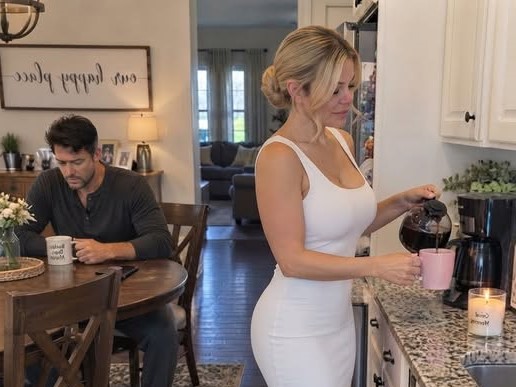
    One morning, after I had already asked my sister several times to stop walking through our kitchen wearing nothing but a bath towel, she casually asked my husband to grab the coffee filters from the top cabinet for her.

    Andrew looked at the cabinet.

    Then at Kayla.

    Then he picked up his coffee, stood, and silently walked out of the room.

    Kayla stared after him.

    “What is his problem?”

    I reached past her and closed the cabinet door she had left open.

    “You are.”

    She laughed.

    Not an embarrassed laugh.

    Not even an apologetic one.

    It was the kind of little disbelieving laugh that said she thought I was being ridiculous.

    And that was the moment something in me finally snapped.

    But to understand why, you need to know how my younger sister ended up living in our house.

    Two weeks earlier, Kayla had appeared on my doorstep with two suitcases, less than three hundred dollars in her bank account, and mascara streaked beneath both eyes.

    Her boyfriend, Eric, had ended their six-year relationship and told her to move out.

    That was basically all she would tell me.

    I didn’t ask whether she had enough money for a motel.

    I didn’t tell her to call friends and see who had a spare couch.

    I didn’t think through any of the practical questions a more cautious person probably would have asked.

    I just saw my baby sister standing there with everything she owned packed into two bags, looking completely shattered.

    So I took one suitcase.

    Andrew came outside and took the other.

    “You can stay with us until you get back on your feet,” I told her. “However long that takes.”

    Andrew agreed immediately.

    That was who he was.

    He didn’t pull me aside and ask how long she might stay.

    He didn’t start calculating expenses or complaining about losing the guest room.

    He simply carried her suitcase upstairs.

    For the first week, having Kayla around was honestly fine.

    She kept mostly to herself.

    Some nights I heard her crying through the wall.

    During the day, she helped with dishes, folded laundry, and sat at the kitchen table scrolling through job postings.

    I thought this was exactly what family was supposed to do.

    We would give her somewhere safe to land.

    She would heal.

    Then she would rebuild.

    Then came the towel.

    The first morning, I didn’t think much of it.

    Kayla came downstairs after a shower wearing only a bath towel, her hair still dripping wet.

    Andrew was at the kitchen table drinking coffee.

    She walked past him to the refrigerator like nothing unusual was happening.

    I figured she had forgotten he was there.

    Maybe she was still operating on habits from the apartment she had shared with Eric.

    So I ignored it.

    The next morning, she did it again.

    This time, after Andrew went upstairs to get dressed for work, I pulled her aside.

    “Hey,” I said lightly. “Could you put on a robe before coming downstairs in the morning? Andrew is usually in here having coffee.”

    Kayla stared at me.

    “He’s your husband, Amanda. He’s not some teenage boy who’s never seen a woman before.”

    “I know.”

    “So what exactly is the issue?”

    “The issue is that it makes me uncomfortable.”

    She gave me a puzzled look.

    “That’s it?”

    “That’s it. I’m asking you not to do it in my house because it makes me uncomfortable.”

    She studied my face like she expected some deeper explanation.

    Then she shrugged.

    “Fine.”

    I assumed the conversation was finished.

    The next morning, she appeared in the kitchen wearing the towel again.

    Bare feet.

    Wet hair.

    Completely unbothered.

    Then she asked Andrew whether there was more coffee.

    That was the morning Andrew picked up his mug and walked out.

    And when she asked what his problem was, I finally told her.

    “You.”

    She stirred sugar into her coffee as though nothing had happened.

    “I asked you to stop doing this,” I said.

    My voice came out sharper than I intended.

    Kayla leaned against the counter.

    “And I still don’t understand why you care this much.”

    “You don’t need to understand.”

    She raised an eyebrow.

    “You just need to respect what I’m asking. This is my house.”

    “So you’re actually threatened by me walking around in a towel?”

    “No.”

    “Because if you trusted Andrew—”

    “Kayla.”

    She slowly sipped her coffee.

    “I’m just saying this sounds more like a husband problem than a towel problem.”

    “No. This is a sister-who-refuses-to-respect-a-boundary problem.”

    That made her smile.

    Not kindly.

    It was a small, almost satisfied smile.

    Then she said something I still couldn’t believe came out of her mouth.

    “Think of it as a test.”

    I stared at her.

    “A what?”

    “A test.”

    She said it calmly, as though she were explaining something completely reasonable.

    “If Andrew can be tempted just because another woman walks through the kitchen in a towel, wouldn’t you rather find that out now?”

    I genuinely thought I must have misunderstood her.

    “You are deliberately trying to tempt my husband?”

    “No.”

    She rolled her eyes.

    “I’m not trying to tempt him. I’m testing whether he can be tempted. There’s a difference.”

    “Not as much of one as you seem to think.”

    “If he fails,” she continued, “that’s his fault. Not mine. I’m literally just existing. If your marriage can’t survive a towel, then maybe the marriage is the problem.”

    I stared at my sister.

    This was the girl whose scraped knees I had cleaned when we were children.

    The girl I had read bedtime stories to.

    “And what about me asking you to stop?” I said. “Does that matter anywhere in this little experiment?”

    She rolled her eyes again.

    “You’re making a huge deal out of nothing.”

    That evening, after Kayla went upstairs, I told Andrew everything.

    He was loading the dishwasher.

    When I told him she had actually called it a “test,” he stopped moving.

    “She used that word?”

    “Twice.”

    He pushed the dishwasher closed and wiped his hands.

    Then he said,

    “I think I’m going to stay out of it.”

    I frowned.

    “Stay out of it?”

    “She’s your sister. If I get involved, she’ll just make this more about me. She clearly wants a reaction. If I don’t give her one, there’s nothing for her to work with.”

    At first, that made sense.

    Don’t participate.

    Don’t feed the game.

    Let her get bored.

    It took three more days for us to realize that wasn’t actually solving anything.

    Kayla didn’t stop.

    She escalated.

    She seemed fascinated by the fact that Andrew left the room every time she appeared wearing the towel.

    Soon she started timing it.

    She would listen for him making coffee.

    Then she would come downstairs.

    Andrew would stand, take his mug, and go to the garage, the porch, upstairs—anywhere except the kitchen.

    And every time, Kayla watched him like she was recording results in an experiment.

    Meanwhile, I kept repeating myself.

    “Kayla, put on a robe.”

    “Kayla, I asked you not to.”

    “Kayla, please.”

    Every response was some version of:

    You’re overreacting.

    It’s only a towel.

    This is your insecurity.

    By Saturday night, I was exhausted.

    Not even angry anymore.

    Just tired of having to defend the simplest boundary imaginable inside my own home.

    Then Sunday morning came.

    I was buttering toast at the counter.

    Andrew sat at the kitchen table with coffee and the newspaper.

    I heard bare feet coming down the stairs.

    By then, I knew the sound.

    Kayla appeared in the doorway.

    Same towel.

    Same cheerful refusal to care.

    I put the knife down.

    “Kayla—”

    Andrew gently touched my wrist.

    “Wait.”

    I looked at him.

    “Let me handle this one.”

    That was new.

    For an entire week, he had simply left whenever Kayla entered.

    This time, he stood up.

    He carried his coffee to the counter, leaned against it, folded his arms, and faced her.

    Kayla practically lit up.

    She had clearly been waiting for this.

    “Finally,” she said.

    Andrew’s voice remained calm.

    “You’ve been calling this a test, right?”

    “Exactly.”

    She looked almost pleased.

    “Good.”

    Andrew pulled out his phone.

    “Then congratulations.”

    Kayla frowned.

    “For what?”

    “You passed.”

    Her smile faltered.

    “Passed what?”

    “My test.”

    She stared at him.

    “What are you talking about?”

    Andrew unlocked his phone, tapped the screen, then placed it on the counter in front of her.

    “The test of whether you’re ready to live with roommates.”

    Kayla looked down.

    Then she grabbed the phone.

    Within seconds, her entire face turned red.

    “What is this?”

    “Three rooms for rent,” Andrew said. “All within about twenty minutes of here.”

    She scrolled furiously.

    “You’ve been looking for apartments for me?”

    “Rooms,” he corrected. “Not apartments.”

    “You’re trying to throw me out?”

    “No.”

    She spun toward me.

    “Amanda, are you seriously going to let your husband kick me out while I’m broke and unemployed?”

    I calmly moved the toast away from the heat before it burned.

    “Andrew isn’t throwing you out.”

    “Then what is this?”

    “Temporary living arrangements need an end eventually, Kayla. That’s what makes them temporary.”

    Her mouth fell open.

    “You’re making me leave because I wore a towel?”

    “No.”

    I looked directly at her.

    “I asked you to stop doing something in my home. More than once. Instead of respecting that request, you decided I had to convince you that my boundary was reasonable enough before you would honor it.”

    She folded her arms.

    “This is punishment.”

    “No.”

    I paused.

    “If I wanted to punish you, I’d make you keep eating Andrew’s cereal. It tastes like sweetened cardboard.”

    Andrew pointed at me.

    “That was unnecessary.”

    Kayla didn’t laugh.

    Her eyes were starting to shine.

    “I’m heartbroken, Amanda. I have no job. I barely have any money. And you’re standing in your perfect kitchen telling me to get out.”

    “I know you’re heartbroken.”

    “Then how can you do this?”

    “I’m not giving you twenty-four hours to disappear.”

    I softened my voice.

    “I’m saying we need a plan.”

    “That sounds exactly like a deadline.”

    “It isn’t.”

    Kayla turned toward Andrew.

    “And you’ve treated me like I’m dangerous all week. You literally run away every time I walk into a room.”

    Andrew picked up his coffee.

    “No.”

    “You do.”

    “The first morning, yes, I left because the situation felt awkward. You walked into the kitchen in a towel and I didn’t know where to look, so I gave you some space.”

    He set his mug down again.

    “But after Amanda asked you to stop and you kept doing it, I started leaving for another reason.”

    “What reason?”

    “Because I wasn’t participating in your experiment.”

    Kayla said nothing.

    “You kept trying to turn me into evidence in an argument with my wife. You wanted my reaction to prove something.”

    His voice stayed level.

    “So I stopped giving you reactions.”

    He pointed toward the hallway.

    “Every time you created the situation, I removed myself from it. That wasn’t temptation. That was me refusing to be used as a prop.”

    For once, Kayla had nothing ready to say.

    Then she turned toward me.

    “You told him to say all this.”

    “No.”

    “You rehearsed this.”

    “I didn’t even know about the room listings until thirty seconds ago.”

    Andrew glanced at me.

    “She didn’t.”

    Then he looked slightly guilty.

    “And I probably should have told her.”

    “Yes,” I said. “You should have.”

    He nodded.

    “I told myself staying out of it meant letting you handle your sister.”

    His expression turned serious.

    “But really, I was leaving you to defend a boundary that affected both of us.”

    I looked at him.

    “It was our kitchen. Our marriage she kept trying to poke at. And every morning, I walked away while you had to deal with it.”

    He shook his head.

    “That wasn’t staying out of it. That was leaving you alone with the hard part.”

    Something in my chest loosened.

    Kayla threw one hand into the air.

    “Wonderful. Now you two are having a marriage breakthrough.”

    Then she turned toward the stairs.

    “Can I please go put on actual clothes?”

    “Please,” I said.

    She started walking away.

    “Kayla.”

    She stopped.

    “One of those rooms is available immediately.”

    She turned.

    “And the woman renting it can show it this afternoon.”

    Kayla stared at us.

    “You already made me an appointment?”

    “Andrew found the listing,” I said. “I just messaged her.”

    “I am not moving there.”

    “Then don’t.”

    I shrugged.

    “We’ll keep looking. But we’re going to see it.”

    “You can’t force me.”

    “You’re right.”

    I looked at her.

    “I can’t force you to do anything.”

    Then I said the thing I should probably have said earlier.

    “But if you’re staying here while you recover, I need to see that you’re moving toward something.”

    Her expression hardened.

    “I’m not asking you to have your life fixed tomorrow. I’m asking you to take steps.”

    She stared at me for several seconds.

    Then she went upstairs.

    The door closed hard enough to make the hallway shake, but not quite hard enough to count as a slam.

    Andrew took a drink of coffee.

    “I think that went pretty well.”

    I looked at him.

    “Not a word.”

    “Understood.”

    Twenty minutes later, Kayla came downstairs wearing jeans and a sweatshirt.

    She had also found the ugliest robe we owned.

    It was ancient, faded blue, decorated with cartoon ducks, and one sleeve had shrunk in the wash years earlier.

    She dropped it dramatically onto a chair.

    “There. Happy?”

    I looked at the ridiculous ducks.

    “Delighted.”

    That afternoon, we went to see the room.

    The owner was a woman named Renee, probably around Kayla’s age.

    She worked from home several days a week as a graphic designer.

    The house was small but clean.

    Not showroom clean.

    Actually-lived-in clean.

    Kayla inspected the bedroom twice.

    The first time, quickly, with her arms crossed and an expression that said she had already decided she hated it.

    The second time, more slowly.

    She opened the closet.

    Looked at the empty rail.

    The shelf.

    The space where her belongings could go.

    Renee showed us the kitchen.

    “I don’t care if you cook late,” she explained. “Just clean your own stuff afterward. I try to keep things quiet after eleven on weeknights because I have early meetings.”

    Kayla nodded.

    “That’s reasonable.”

    “And we split things like toilet paper and paper towels.”

    “Fine.”

    Renee closed the cabinet.

    “Anything you need from someone you live with? Anything that really bothers you?”

    Kayla looked surprised.

    “Me?”

    “Yeah. Better to talk about it now.”

    Kayla thought for a moment.

    “Don’t borrow my clothes without asking.”

    Renee nodded.

    “Okay.”

    Then she started walking toward the laundry room.

    Kayla remained standing there.

    “That’s it?”

    Renee turned.

    “What?”

    “You don’t want to know why?”

    Renee shrugged.

    “They’re your clothes. Why would I need a reason?”

    Then she walked away.

    Kayla stayed frozen in the hallway.

    And I watched realization move slowly across her face.

    For two weeks, she had insisted that my boundary needed an explanation before it deserved respect.

    Now she had stated one of her own.

    And another person had simply said okay.

    No debate.

    No challenge.

    No demand for justification.

    Your clothes.

    Your choice.

    That was all.

    I watched the lesson land.

    On the drive home, Kayla sat beside me with the rental listing open on her phone.

    The screen would dim.

    She would tap it awake.

    Then it would dim again.

    Andrew had stayed home.

    I wanted this conversation to belong to my sister and me.

    About halfway home, I finally asked the question I had been carrying for two weeks.

    “Why did you need Andrew to fail?”

    She continued staring through the windshield.

    “I didn’t.”

    “Then why wasn’t my asking you to stop enough?”

    She locked her phone.

    For several blocks, she said nothing.

    I let the silence remain.

    With Kayla, if you filled every silence, she would escape through whatever explanation you offered.

    But sometimes, if you left the silence open long enough, she would eventually walk into it herself.

    Finally, she spoke.

    “Eric didn’t cheat on me.”

    I glanced over.

    “What?”

    “He didn’t cheat.”

    Her thumb rubbed against the edge of her phone.

    “He didn’t hit me. He didn’t steal from me. There wasn’t another woman.”

    She swallowed.

    “Everybody keeps waiting for me to reveal the horrible thing he did.”

    I slowed at a red light.

    “But there isn’t one.”

    “Then what happened?”

    She stared through the window.

    “He just said he didn’t want our life anymore.”

    That was it.

    Six years together.

    And according to Kayla, Eric had simply sat her down one day and told her he no longer wanted the life they had built.

    No affair.

    No giant betrayal.

    No dramatic secret.

    “I kept waiting to find the real reason,” she said.

    “There had to be one.”

    I didn’t interrupt.

    “People don’t just leave after six years.”

    Her voice became quieter.

    “So I kept waiting for something else to come out.”

    “And nothing did?”

    “No.”

    She blinked hard.

    “I wanted there to be a reason so badly.”

    And suddenly, the entire week made sense.

    The towel.

    The testing.

    The way she had watched Andrew.

    It had never been about wanting my husband.

    She wanted Andrew to become proof.

    “If Andrew failed,” I said slowly, “then it would mean all men were capable of doing the same thing.”

    Kayla remained silent.

    “And then Eric leaving you wouldn’t feel random.”

    I continued.

    “You could tell yourself relationships were all fragile. Men were all unreliable. There would be a reason.”

    Kayla finally looked at me.

    Her eyes were wet.

    “Maybe.”

    “And if Andrew didn’t fail?”

    She looked back toward the window.

    For several seconds, she said nothing.

    Then, very quietly:

    “Then maybe good men really do stay.”

    My chest tightened.

    “And if good men stay…”

    She swallowed.

    “Then maybe it wasn’t the world that was broken.”

    Her voice cracked slightly.

    “Maybe it was just mine.”

    We pulled into the driveway.

    I turned off the engine.

    Neither of us moved.

    Finally, Kayla said,

    “I wasn’t trying to take Andrew from you.”

    “I believe you.”

    “I really wasn’t.”

    “I know.”

    I put my hand on the door handle but didn’t open it.

    “And now I understand why you were doing it.”

    She looked at me.

    “You were hurt. You desperately wanted an explanation.”

    I paused.

    “But that still doesn’t explain why my no stopped mattering.”

    Her face changed.

    “Being heartbroken explains why you wanted Andrew to fail.”

    I continued carefully.

    “It doesn’t excuse deciding that my boundary didn’t deserve respect until you personally agreed with it.”

    Kayla became very still.

    “Those are two separate things.”

    For once, she didn’t argue.

    We went inside.

    Kayla picked up the faded duck robe from the chair.

    Then she looked at me.

    “I’m sorry.”

    I waited.

    “Not for being heartbroken,” she added. “I plan to remain dramatically heartbroken for a while.”

    “That’s allowed.”

    She looked down at the cartoon ducks.

    “I’m sorry I decided you had to prove your boundary was reasonable before I respected it.”

    Her voice was quieter now.

    “It was your house. You said no. That should have been enough the first time.”

    Something inside me finally relaxed.

    “Thank you.”

    She nodded.

    “I’m still not moving out tomorrow.”

    “I’m not asking you to.”

    “Good.”

    So we sat at the kitchen table and finally gave the word temporary an actual meaning.

    Kayla would keep applying for jobs.

    We would look at listings together.

    Once she started earning again, she would contribute a little toward groceries.

    And eventually, we would choose a realistic move-out date.

    Not tomorrow.

    Not some impossible deadline.

    But an actual date.

    A direction.

    “And no more tests,” I said.

    “That one is non-negotiable.”

    Andrew walked through the door at that exact moment carrying groceries.

    “That should be a universal rule,” he said. “No tests. Ever.”

    Kayla pointed at him.

    “Nobody asked you.”

    “He’s allowed to speak in his own kitchen.”

    Andrew placed the bags on the counter.

    “Thank you, Amanda.”

    Kayla rolled her eyes.

    But this time there was no hostility behind it.

    Just old habit.

    Then Andrew looked at me.

    “And next time something affects both of us, I’m not going to hide behind ‘she’s your sister.’”

    He became serious.

    “I should have stood beside you from the beginning.”

    “Good.”

    I smiled.

    “I’d like that.”

    Kayla leaned her head dramatically backward.

    “Oh no. Are you two going to become emotionally healthy right in front of me?”

    “Probably,” Andrew said while unpacking eggs. “Feel free to move out early if it becomes unbearable.”

    Kayla threw a dish towel at him.

    He caught it and laughed.

    The next morning, I heard the shower running before seven.

    Andrew was already sitting at the table with his coffee.

    Then footsteps came down the stairs.

    We both looked up.

    Neither of us said anything.

    Kayla entered the kitchen wearing the ancient blue duck robe.

    It was tightly tied.

    One sleeve was shorter than the other.

    She looked ridiculous.

    And completely covered.

    She went to the coffee maker.

    No one commented.

    Then she reached toward the expensive coffee beans Andrew orders online and guards like treasure.

    Her hand stopped.

    She turned toward him.

    “Hey.”

    Andrew looked up.

    “Can I use some of these?”

    He studied her for a second.

    “Yeah.”

    “Thanks.”

    That was all.

    No speech.

    No dramatic apology.

    Just a question.

    Permission.

    Respect.

    Simple.

    Then Kayla opened the cabinet for the coffee filters.

    They were still on the highest shelf.

    The same shelf she had spent the previous week asking Andrew to reach.

    She stretched onto her toes.

    Missed.

    Andrew automatically started standing.

    Without turning around, Kayla pointed behind herself.

    “Sit.”

    He sat.

    She pulled one of the kitchen chairs across the floor, climbed onto it, and retrieved the filters herself.

    When she stepped down, she caught me smiling.

    “What?”

    “Nothing.”

    She looked down at herself.

    The ridiculous duck robe.

    The chair.

    The coffee filters in her hand.

    Then she finally smiled too.

    “See?”

    She pushed the chair back into place.

    “Back on my feet.”

    And this time, all three of us laughed.

  • For 7 hours, my 8-year-old daughter refused to leave her father’s coffin while our entire family begged her to step away.

    For 7 hours, my 8-year-old daughter refused to leave her father’s coffin while our entire family begged her to step away.

    Part 1 of 3

    Then she looked straight at me and whispered, “Mommy, Daddy isn’t dead.”

    I didn’t argue or dismiss her.

    I put my hand against his face and immediately called 911.

    But before the paramedics arrived, I glanced at her uncle’s phone…

    One message on that screen changed everything I thought I knew about my husband’s “death.”

    PART 1

    My eight-year-old daughter climbed right inside her father’s casket while our entire family screamed at her to get out. What she said next made even the doctor who had signed his death certificate turn ghost-white.

    “Mommy, Daddy isn’t dead.”

    I felt the strength drain completely from my legs.

    Up until that exact moment, Chloe had spent nearly seven hours sitting right beside Mark’s casket. She hadn’t cried. She hadn’t eaten. She had barely taken two sips of water.

    The wake was being held at my mother-in-law’s house in suburban Chicago. Mark, my husband, had died—or so we were told—after suffering a sudden cardiac arrest at a small private clinic on the outskirts of the city.

    He was thirty-nine years old.

    He was completely healthy.

    And just two days earlier, he had told me something that kept ringing continuously in my head: “If anything strange happens at the company tomorrow, don’t sign a single thing for Marcus.”

    Marcus was his older brother and business partner in a cold-chain logistics firm they had inherited from their father.

    When I asked Mark what was going on, he had just shaken his head. “I want to verify it first.” Then he changed the subject.

    On the afternoon of his alleged death, Marcus had called me in a panic, claiming Mark had collapsed during a routine inspection inside one of their refrigerated warehouses. By the time I arrived at the clinic, Mark was already covered with a white sheet.

    A Dr. Salgado explained that they had attempted resuscitation for nearly half an hour.

    “I am so sorry, Mrs. Vance,” he had said softly. “He didn’t respond.”

    I was too shattered by grief to ask intelligent questions. But that fog began to clear during the wake.

    Chloe had asked for a chair so she could sit close to her father’s face. My mother-in-law, Teresa, let her stay. Several aunts whispered among themselves that the poor girl was simply in severe shock.

    But I knew my daughter.

    When Chloe was frightened, she sobbed. When she didn’t understand something, she asked endless questions. That night, she was doing neither.

    She was observing.

    At 11:20 PM, I walked over to her. “Chloe, sweetheart, come with me for a minute.”

    “No.”

    “You need to rest.”

    She stared closely at Mark’s face. “Daddy isn’t resting either.”

    A cold shiver ran down my spine. “What do you mean?”

    She didn’t answer.

    Moments later, I noticed a detail that suddenly made me recall our final moments at the clinic. Mark hadn’t been prepared by a standard funeral home as would normally happen. Marcus had insisted on moving him quickly because, according to him, Mark had always stated he wanted zero invasive procedures post-mortem. Marcus had also personally chosen a tiny, independent funeral home owned by an acquaintance of his.

    Suddenly, that decision no longer felt like a thoughtful family gesture.

    I pulled out my phone and checked a photo I had taken at the clinic when they let me say goodbye. In the photo, Mark’s wrist watch read 4:13 PM.

    I looked at the watch still sitting on his wrist inside the casket. It read 11:37 PM.

    It was still ticking.

    It didn’t mean he was alive, of course. But it meant that nobody had properly prepped or stripped his body.

    “Chloe,” I whispered, leaning down. “What did you see?”

    My daughter brought her face inches from her father’s. “At first, I thought it was just my imagination.”

    “What was?”

    “His nose.”

    My chest tightened. “Explain it to me, sweetie.”

    “Sometimes it moves just a tiny bit right here.” She tapped beneath her nostrils.

    Before I could respond, Marcus stepped up behind me. “Claire, enough. The girl needs to go to sleep.”

    His tone sent a flare of irritation through me. It wasn’t grief. It was sharp, controlled impatience.

    Then Chloe stood up on her chair.

    Everything happened in a blur of seconds. She placed a knee onto the edge of the velvet-lined casket and climbed right inside.

    “Chloe!” several relatives shrieked.

    I rushed forward as my daughter curled up directly against Mark’s chest, pressing her ear flat against his suit jacket.

    Marcus reached out aggressively to grab her. “Get her out of there!”

    I shoved his arm away. “Don’t touch her!”

    Chloe looked up at me. She was pale, but her eyes were hyper-focused. “Mommy.”

    “Yes, sweetie?”

    “I felt two thumps.”

    The entire room fell dead silent.

    I leaned deep over the casket and pressed two fingers firmly against the side of Mark’s neck where I knew his carotid artery was. I felt nothing.

    Marcus let out a loud, relieved exhale. “See? This is insane. She’s hysterical.”

    Then Chloe grabbed her father’s right hand.

    And Mark’s index finger twitched. Once. Then again.

    My mother-in-law dropped her tea glass, shattering it on the hardwood floor.

    I bent down and pressed my cheek directly above my husband’s nose and mouth. I waited. Nothing. I waited again, holding my breath.

    And then I felt a tiny, warm, almost imperceptible puff of air against my skin.

    “Call 911!” I screamed.

    Marcus instantly grabbed my forearm in a tight grip. “Claire, think about what you’re doing!”

    I looked him dead in the eye. “That is exactly what I’m doing for the first time since you called me today.”

    While my sister-in-law dialed emergency services, I saw Marcus back slowly toward the hallway doors, his cell phone held tight in his hand.

    Chloe was still clutching her father. Suddenly, Mark let out a low, raspy, barely audible groan from deep in his throat.

    The room gasped, but I was no longer looking at Mark. I was staring at Marcus’s glowing phone screen.

    Over his shoulder, I caught sight of a text message he had just sent:

    “He’s breathing. We have a problem.”

    PART 2

    I snatched the phone right out of Marcus’s hand before he could lock the screen.

    “Who did you just send this to?” I demanded, stepping back.

    He lunged forward to grab it. “Give me the phone, Claire!”

    “Who is ‘we’?!”

    His face went completely pale, but he refused to answer. I jammed his phone deep into my purse just as the red emergency lights flashed through the front windows.

    The paramedics rushed through the door with a stretcher. One began checking Mark’s vitals while the other cleared the family out of the hallway.

    “We have an extremely faint cardiac rhythm!” the medic announced.

    My mother-in-law let out a horrified shriek. Marcus stood frozen near the door, whispering under his breath, “That’s impossible…”

    I heard him clearly.

    Mark was rushed to Northwestern Memorial Hospital. Chloe and I followed in an emergency vehicle alongside Teresa. Marcus tried to jump into the front seat.

    “You’re not coming with us,” I told him coldly, slamming the door.

    In the emergency department, the attending physician confirmed that Mark had a weak pulse, moderate hypothermia, and severe respiratory depression—symptoms completely inconsistent with a standard cardiac arrest.

    The attending doctor spoke carefully: “We don’t know the full cause yet, Mrs. Vance, but your husband should never have been pronounced dead without a full, verified absence of vital brain and heart activity.”

    I demanded a copy of everything: admittance time, toxicology panels, body temperature logs, and blood work. I was done taking vague verbal assurances.

    By 3:40 AM, Mark remained unconscious in the ICU, but his condition had stabilized.

    I pulled Marcus’s phone out of my purse. It was locked with a passcode.

    “Try Grandma’s birthday,” Chloe whispered from the hospital chair beside me.

    I entered the six digits. The phone unlocked instantly.

    I pulled up his messaging app and found the text I had seen earlier. The recipient was saved only under the letter “V”.

    There were previous messages from earlier that day:

    • “He’s out of the cold vault.”

    • “Bring him straight to the private drive.”

    • “Do not let him go through a major hospital.” And one sent that afternoon:

    • “We need the certificate signed today.”

    Using my own phone, I took high-resolution photos of every text thread, ensuring dates, times, and numbers were visible.

    At dawn, I called my sister, an forensic accountant. “I need you to meet me at Mark’s company headquarters right now.”

    “What are we looking for, Claire?”

    I remembered Mark’s warning. “Something he uncovered right before they tried to bury him alive.”

    By mid-morning, preliminary toxicology reports from the hospital came back. They found high concentrations of Zolpidem and an unusual level of Clonazepam in Mark’s bloodstream. Mark took zero prescription medications.

    The doctor explained that high doses of heavy sedatives combined with extreme environmental cold could slow a person’s respiration and metabolic rate to near-undetectable levels—creating a state of suspended animation that an unethical or incompetent doctor could easily misdiagnose as death.

    It didn’t prove who administered the drugs yet, but it proved his “cardiac arrest” was a calculated crime.

    At 9:15 AM, my sister and I arrived at Vance Cold Logistics. Marcus wasn’t there.

    I walked into the security office and demanded the electronic badge access logs for the refrigerated warehouse where Mark had collapsed. The head of security hesitated.

    “Mrs. Vance, I can only release internal security logs to company directors.”

    “I am acting on behalf of my husband, who holds fifty percent controlling equity and is currently in the ICU,” I replied sharply.

    “Well… Mr. Marcus assumed sole interim direction this morning.”

    That confirmed I had to move fast. I called Mark’s corporate attorney, who arrived forty-five minutes later with a copy of the partnership agreement. Marcus had no legal right to unilaterally block access to corporate records.

    With legal backing, we pulled the server logs directly.

    At 12:48 PM on the day of the incident, Mark had badged into Cold Room B. Marcus badged into the same room four minutes later. Marcus badged out at 1:11 PM. Mark’s badge didn’t record an exit until 2:37 PM—and the keycard had been swiped from the inside access panel.

    “That makes no sense,” my sister noted, looking at the data. “If Mark was unconscious, someone else used his keycard to swipe out.”

    We checked the climate control logs next. At 1:14 PM, someone had manually overridden the temperature in Cold Room B, dropping it from 38°F to -10°F.

    The authorized user ID on the override panel: M. Vance. Marcus.

    A wave of nausea hit me, but one piece was still missing.

    The security officer handed us the visitor log for the secondary loading dock. At 1:36 PM, a vehicle belonging to Dr. Salgado—the clinic doctor who declared Mark dead—had entered the facility through the private bay.

    It wasn’t a medical emergency response. It was a planned meeting.

    When I returned to the hospital ICU later that afternoon, Mark opened his eyes for the first time.

    I rushed to his bedside. “Mark, honey, it’s me.”

    His lips parted slightly. I leaned down close to his face to hear his weak rasp.

    He managed to utter four words: “It… wasn’t… just… Marcus.”

    PART 3

    For several seconds, I thought Mark was simply disoriented from the heavy sedatives.

    “What do you mean it wasn’t just Marcus, honey?”

    He tried to speak again, but the nurse stepped in gently. “Please don’t push him, Mrs. Vance. His neurological pathways are still recovering from the hypothermia.”

    I waited until evening. When Mark was able to stay alert for longer stretches, I pulled out a notepad. I didn’t want to prompt him or plant ideas.

    “Tell me only what you remember,” I said softly.

    Mark closed his eyes, taking a slow breath. “The coffee.”

    “What coffee?”

    “In the main office… before I went to the warehouse floor.”

    He swallowed hard. “Marcus came in arguing about the audit I ordered. He was furious about missing funds… but then he walked out. I stayed to review the ledgers.”

    “And then?”

    “I drank the coffee on my desk.” He touched his throat. “Within ten minutes… my hands went numb. My vision blurred. I tried to walk to the warehouse to find help…”

    “Who made that coffee, Mark?”

    He took a long time to answer. “Veronica.”

    The name hit me like a physical blow.

    Veronica Miller was the chief financial officer of Vance Logistics. She had worked alongside Mark and his family for fourteen years. She had attended our wedding. She had held Chloe as a baby. She was the one executive Mark trusted completely with company audits.

    My attorney and I immediately contacted state law enforcement and the Cook County State’s Attorney’s Office, turning over the digital logs, the temperature overrides, and the toxicology reports.

    The internal financial audit Mark had initiated was recovered from an encrypted folder on his laptop. Inside, investigators found months of fraudulent invoices issued to three shell vendor companies.

    Over $3.2 million had been siphoned out of Vance Logistics in under a year for fictitious “refrigeration maintenance.”

    State investigators traced the shell corporations directly to Veronica’s brother-in-law.

    That explained the money. But it still left Marcus’s role unclear.

    The answer emerged in an email thread Mark had archived. Three months prior, Marcus had signed off on several massive wire transfers without reviewing the attached invoices.

    When Mark confronted him, Marcus had emailed back: “Veronica says these are urgent equipment fees. I trust her judgment. Stop looking for problems where there aren’t any.”

    Marcus hadn’t been the mastermind. He was reckless, financially irresponsible, and deeply compromised. When he realized Veronica’s fraud would expose his gross negligence and ruin him financially, he allowed himself to be manipulated into covering up Mark’s “sudden collapse.”

    Three days before Mark’s poisoning, he had sent Veronica a final notice: “I am handing these invoices over to an external forensic team on Friday.”

    That was her trigger.

    The hospital’s medical evaluation confirmed that the lethal combination of Zolpidem and Clonazepam slip-fed into Mark’s coffee was meant to stop his cardiac functions. But the sub-zero temperatures inside the warehouse, combined with Mark’s strong cardiovascular health, triggered a rare metabolic slowdown—a severe state of deep hypothermia that suppressed his vital signs to a point where standard peripheral checks failed.

    Dr. Salgado, who had been receiving off-the-books payments from Veronica’s shell companies for years under the guise of “corporate wellness consulting,” willingly signed the death certificate at the warehouse bay without running an EKG or transporting Mark to a real emergency room.

    He had declared Mark dead to help Marcus avoid an autopsy and a police inquiry.

    They thought they had executed the perfect crime.

    They hadn’t accounted for an eight-year-old girl who refused to leave her father’s side.

    Chloe hadn’t relied on medical equipment or adult logic. She had simply stayed. She noticed the microscopic condensation beneath her father’s nose. She felt the tiny, rhythmic rise of his chest buttons against her ear.

    While every adult in the room was accepting a piece of paper signed by a doctor, Chloe was looking at her father.

    Six weeks later, federal and state law enforcement moved in.

    Veronica Miller was arrested and charged with attempted first-degree murder, corporate fraud, and grand larceny. Dr. Salgado was arrested for accomplice to attempted murder, falsifying medical documents, and medical malpractice, his license permanently revoked.

    Marcus Vance was arrested for his role in the conspiracy, corporate endangerment, and obstruction of justice.

    During the trial proceedings, state prosecutors presented the overwhelming chain of evidence: the digital climate overrides, the badge access logs, the toxicology reports, and the text messages recovered from Marcus’s phone. Facing decades in federal prison, Veronica entered a guilty plea, implicating both Salgado and Marcus in exchange for a structured sentence.

    Mark spent three weeks in intensive rehab recovering from minor neurological inflammation and nerve damage caused by the extreme cold.

    The day he finally walked through the front door of our home on his own two feet, Chloe didn’t run to tackle him. She stood in the entryway, looking at him with her big brown eyes.

    Mark dropped to his knees, opening his arms wide. “Can I get a real hug now, sweetie?”

    Chloe walked up slowly, put her little hands on his cheeks, and leaned in close to his nose.

    She took a breath, listened for a second, and then smiled.

    “Okay. Now you can.”

    Mark pulled her into his arms, tears streaming down his face as he held our daughter tight against his chest.

    In the months that followed, Mark initiated the legal process to restructure Vance Logistics, stripping his brother’s equity share and bringing in an independent board of directors to oversee operations.

    Our family went to counseling together to process the trauma. Recovery wasn’t instant, but the house slowly filled with warmth, music, and life again.

    Sometimes people ask me how an eight-year-old girl managed to see what a room full of adults completely missed.

    The answer is simple, though it haunts me to this day.

    The adults had already accepted a narrative. There was a signed document. There was a doctor. There was a casket. Everyone assumed the end had already been decided.

    Chloe was the only one who hadn’t stopped looking.

    She didn’t care about protocol or social expectations. She didn’t know she was supposed to give up. She just loved her father enough to stay close, listen closely, and refuse to say goodbye until she was certain.

    That night wasn’t saved by a miracle.

    It was saved by a little girl who refused to walk away.

  • A homeless man held up a cardboard sign that said, “Marry me. I only have one month left.” I said yes because I felt sorry for him. But after he died, a letter appeared in my mailbox.  

    A homeless man held up a cardboard sign that said, “Marry me. I only have one month left.” I said yes because I felt sorry for him. But after he died, a letter appeared in my mailbox.  

    PART 1


    The homeless man I married always drank his coffee black outside my subway station in downtown Minneapolis.

    Six days after his funeral, a letter arrived in his shaky handwriting inside a thick white envelope.

    The postmark was dated one day before he died, and the first sentence was an apology I did not understand at all.

    “Hannah, I need to apologize before I thank you,” I read aloud to the empty room, tracing the uneven letters I had watched him write on hospice intake forms.

    When I first held the envelope, I had actually smiled because I assumed he was leaving me a quiet goodbye.

    He was the kind of man who could never accept a paper cup of coffee without thanking me three times.

    Then I reached the second sentence, and my smile instantly disappeared.

    “Nobody was going to bury me as a John Doe,” he had written on the lined yellow paper.

    I sat down heavily in my armchair, staring at the page while my breath caught in my throat.

    Less than a month earlier, he had been sitting outside the Hennepin Avenue station with a piece of cardboard across his knees.

    Written across it in large black marker were the words: MARRY ME. I HAVE ONE MONTH LEFT TO LIVE.

    I had known him for nearly two years by then, stopping every weekday morning at the coffee cart beside the entrance.

    My cup always had sweet cream, while his was strictly black without any sugar.

    He never begged me for spare change or food.

    Some mornings we talked about the incoming Midwest blizzards, and other mornings he complained about the city pigeons.

    Once, he looked down at my office pumps and said, “Those look like they were designed by an engineer who genuinely hated human feet.”

    I usually stayed for five minutes before rushing to my job at the accounting firm downtown.

    That specific Tuesday morning was completely different because he looked terribly frail and pale.

    His skin had a sickly yellow tint, and his calloused hands shook violently when I handed him his morning cup.

    I pointed down at his cardboard sign and asked, “What is this supposed to mean?”

    He looked down at the rough cardboard and replied softly, “The free clinic doctors say I probably have about four weeks left.”

    For a moment, the roar of the morning traffic and the rush of commuters completely faded away.

    “What are you talking about?” I asked, kneeling beside him on the frozen pavement.

    “Liver failure,” he said simply, shifting his weight against the brick wall.

    “I am so sorry,” I whispered, reaching out to touch his shoulder.

    “Do not make that face, Hannah,” he said, forcing a tiny grin.

    “What face am I making?” I asked.

    “The face people make when they are already standing at your graveside,” he said gently.

    Even while facing his own death, he still managed to make me laugh out loud on a cold sidewalk.

    “Why are you asking someone to marry you?” I asked, pointing again at the cardboard sign.

    He looked down into his black coffee and said, “I just do not want to die belonging to nobody.”

    “You do not belong to nobody,” I told him firmly.

    “That is a very sweet thing to say,” he said, looking out toward the busy street. “But everything changes when there is legal paperwork involved.”

    He explained that without any surviving legal family, local public health workers would eventually dispose of his remains.

    “I just want one person in this world who can stand up and say, ‘He is mine, and I will take care of him,’” he whispered.

    I was thirty-two, single, and living alone in a small apartment nearby.

    He was dying on the street, and I had always been someone who preferred fixing problems over walking away.

    Two days later, we walked into the municipal court building in Saint Paul to get our marriage license.

    He wore a clean blue button-down shirt that a volunteer at the shelter had given him that morning.

    I wore my conservative navy work dress, holding a small folder with our identification documents.

    When the magistrate asked if we had brought rings, he dramatic searched his empty coat pockets with a gasp.

    “Well, it looks like I completely forgot the jewelry,” he joked with a quiet chuckle.

    I could not help but smile despite the solemn room.

    Eleven minutes later, after signing three official documents, I officially became his wife.

    Exactly three weeks after that ceremony, I sat beside his bed in a quiet hospice facility in Bloomington.

    I held his calloused hand while his breathing slowed down and eventually stopped forever.

    And now, holding his letter six days later, I was reading that his desperate story had been a complete lie.

    “The liver failure was real, and the four weeks were real,” the letter continued in his rough handwriting. “What I lied about was why I asked you to marry me in the first place.”

    I lowered the yellow paper to my desk, took a deep breath, and immediately picked it up again.

    “My final arrangements were already completely settled by municipal programs,” he wrote. “The shelter system and the county social services would have handled every single form. I was never going to disappear without a name.”

    PART 2

    I stood up so fast from my chair that the wooden legs scraped loudly against the floorboards.

    “What did you actually do?” I yelled at the empty apartment, feeling a surge of sudden anger.

    There was nowhere for my anger to go because he was already dead and buried in the earth.

    I could not call his phone, demand an explanation, or force him to look me in the eye.

    I forced myself to read the next paragraph on the page.

    “If I gave you a clear problem that you could solve, I knew you would step up and solve it,” he wrote.

    That sentence hurt more than anything else because it exposed my exact nature.

    For two long years, I had constantly offered him things he never directly asked to receive.

    I bought him hot coffee, warm socks, sandwiches, and list after list of shelter phone numbers.

    During a brutal winter cold snap, I spent my entire lunch break calling facilities until I secured him a bed.

    He always thanked me politely, but I never realized he was studying me the entire time.

    He had figured out the exact emotional mechanism required to make me say yes to him.

    Near the bottom of the first page, he had written a very specific set of instructions.

    “Before you decide what kind of terrible person I was, go back to the courthouse where we got married,” the letter read. “Ask for a woman named Teresa at the records desk, and tell her you are my wife.”

    For several minutes, I considered throwing the entire letter into the kitchen trash can.

    Instead, an hour later, I was standing inside the marble lobby of the Saint Paul courthouse.

    Dozens of nervous couples filled the plastic waiting chairs around the bright central hallway.

    A young woman in a white jumpsuit adjusted her makeup while her fiancé nervously held a red bouquet.

    A toddler crawled under the seats while his tired father tried to catch him by his coat.

    Three weeks earlier, he and I had sat in those exact same plastic chairs waiting for our turn.

    I remembered how he had repeatedly rubbed his trembling palms against his denim jeans.

    “You are shaking really badly,” I had remarked to him back then.

    “I am dying, so I think I am allowed to be a little nervous,” he had answered with a small smile.

    At the time, I accepted his simple explanation without asking any further questions.

    Now I wondered how many things I had believed simply because digging deeper seemed inconvenient.

    I walked up to the heavy wooden counter, where an administrator pointed me toward a desk in the back.

    An older woman wearing distinctive red reading glasses looked up from a stack of legal files.

    “Are you Teresa?” I asked, holding my handbag tightly against my coat.

    “Yes, I am,” she answered, pulling off her glasses to look at me.

    “My name is Hannah,” I said, feeling my voice quiver slightly in the quiet room. “I am his wife.”

    Her hands froze instantly above her computer keyboard as she stared at me.

    “Whose wife?” she asked softly, leaning forward across the desk.

    “His name was standard on the marriage certificate,” I explained, mentioning his name for the first time that day.

    Her rolling chair moved backward as she stood up quickly from her desk.

    “Oh, sweetheart,” she whispered, walking right around the heavy counter to wrap her arms around me.

    I stood stiffly in her warm embrace, completely surprised by her sudden emotional reaction.

    When she stepped back, I noticed that her eyes were filled with real tears.

    “When did he pass away?” she asked quietly, wiping her cheek with a tissue.

    “Just about a week ago,” I replied, watching her carefully.

    “I knew he was very sick, but I did not realize he was that close to the end,” she said.

    I stared at her in total confusion and asked, “Did you actually know him?”

    “Of course I knew him,” Teresa said, looking around the large historical office space.

    “How did you know him?” I pressed, trying to connect the pieces in my mind.

    “He worked right here in this building,” she explained with a gentle expression.

    “He worked here?” I repeated, my mouth dropping open in total disbelief.

    “He was an administrator here for twenty-eight years before his retirement,” she revealed.

    I leaned against the wooden counter and asked, “Then how on earth did he end up living on the street?”

    “His health started failing right after he retired, and medical bills completely drained his life savings,” she explained softly. “Then he lost his apartment, and he was simply too proud to ask any of his old colleagues for financial help.”

    “What specific job did he do here?” I asked.

    “He mostly processed marriage licenses and managed the civil ceremony schedules,” she answered.

    She took off her glasses again and asked, “Did he really never tell you any of this?”

    “No, he never mentioned a single word about his past,” I answered truthfully.

    “That sounds exactly like him,” she said with a faint, fond smile.

    “What does that mean?” I asked, taking a step closer to her desk.

    She paused for a moment, looked at the quiet hallway, and then gestured for me to follow her.

    “Come with me down the hall,” she said, leading me toward a set of heavy mahogany doors.

    PART 3

    She opened the doors into a small, elegant room designed specifically for civil wedding ceremonies.

    Against the far wall stood a polished wooden wedding arch decorated with simple silk flowers.

    I recognized the room instantly from our brief eleven-minute ceremony three weeks prior.

    “This is the exact room where we were married,” I said softly, looking at the carpet.

    “I know it is,” Teresa replied, stepping toward a large wooden storage cabinet in the corner.

    “Were you here that afternoon?” I asked, turning around to face her.

    “No, I was not here for the ceremony,” she said, unlocking the heavy cabinet drawer. “But he came in to see me the afternoon before you two got married.”

    I stared at her in surprise and asked, “Why did he come to see you?”

    “I asked him that exact same question,” Teresa said, pulling out a thick, leather-bound archive binder. “He came in and sat right in that chair by the window for almost an hour.”

    “What did he want from you?” I asked.

    “He did not want anything at all,” Teresa smiled, placing the heavy book on the central table. “He just told me he was feeling extremely nervous.”

    I let out a breathless laugh and said, “A man who processed weddings for nearly thirty years was nervous about a five-minute ceremony?”

    “That is precisely what I told him when he sat there,” Teresa agreed, opening the thick binder. “He stared at that wooden arch and told me, ‘Tomorrow afternoon, I am finally standing on the other side of the desk.’”

    Suddenly, I remembered his shaking hands on the morning of our wedding day.

    I had blamed his tremors on his failing liver and physical weakness.

    Now I realized I might have been witnessing pure human nervousness all along.

    Teresa turned the heavy paper pages of the old record book and pointed to a line near the bottom.

    “Take a look at these old official records,” she said gently.

    Inside was an official court record from over fifteen years ago featuring two names I did not recognize.

    Near the bottom of the page, in dark black ink, was his unmistakable handwriting.

    Next to his signature was a single printed word: Witness.

    Teresa turned to the next page, revealing another couple’s marriage certificate from a different year.

    There was his signature again, clearly written beside the word Witness.

    She flipped through page after page, showing me dozens of entries spanning over two decades.

    Every single document bore his distinct, shaky signature in the witness box.

    “What is all this?” I asked, looking up at Teresa in confusion.

    “Whenever couples came in completely alone without friends or family, he would leave his desk to sign as their official witness,” she explained. “He absolutely hated the idea of anyone getting married without at least one person standing beside them to validate the moment.”

    I ran my finger gently over his old signature from a decade prior.

    It was strange to see his writing from a time long before I ever met him outside the station.

    It had the exact same narrow letter forms and the same crooked tail on the last letter.

    “How many times did he sign these books?” I asked softly.

    “Hundreds of times over his career,” Teresa estimated with a warm smile. “He used to joke that he had attended more weddings than anyone else in Minnesota, but he never had an anniversary of his own to remember.”

    A small laugh escaped my lips before another question suddenly crossed my mind.

    “Was he ever married before he met me?” I asked, holding my breath.

    Teresa slowly closed the heavy leather binder and looked down at the table without speaking.

    “Teresa?” I asked again, my stomach tightening into a hard knot.

    “He was married once,” she answered very quietly.

    “To whom?” I asked, fearing the answer.

    She looked directly into my eyes and said, “To you, Hannah. Only to you.”

    I sat down heavily in the chair beside the wooden wedding arch, processing her words.

    For twenty-eight years, he had watched complete strangers walk into that building as individuals and leave legally connected.

    Whenever someone arrived completely alone, he had stepped forward to offer his name as a witness.

    His name was recorded hundreds of times in those thick county archives.

    Yet it was always recorded beside the word Witness, never Husband, and never Spouse.

    Not until he asked me to step onto that carpet with him.

    Teresa opened another drawer in the cabinet and pulled out a protective plastic sleeve.

    “There is one more thing he left here for you,” she said, handing the sleeve to me. “He asked me to keep this original filing after your marriage was recorded, just in case you came back.”

    Inside was an official copy of our registered marriage certificate.

    My name was printed clearly on the line designated for the first party.

    His name was printed on the second line, and beside it was the bold word: SPOUSE.

    I remembered how carefully he had folded his personal copy after our short ceremony.

    He had asked the clerk twice to clarify exactly where he needed to sign his name.

    I had teased him about his perfectionism back then, saying, “You are acting like this is a massive traditional wedding.”

    He had gone quiet for a second before looking up with a gentle smile.

    “It is my first marriage, so please let me be a little nervous,” he had replied.

    I had laughed at his response back then, but sitting in that quiet ceremony room, I could not laugh anymore.

    Teresa took the empty chair beside me and asked, “Did he give you a specific reason for wanting to marry you?”

    “He gave me a very convincing story about his burial arrangements,” I admitted.

    I explained the contents of his letter, his calculated lie about John Doe burials, and his confession about manipulating my need to fix problems.

    Teresa listened intently without interrupting a single sentence of my story.

    When I finally finished speaking, she did not try to defend his deceptive actions.

    “That really was not fair to you, Hannah,” she said honestly.

    “He knew you would automatically say yes if there was a crisis to solve,” she continued. “He was always much better at asking people for practical help than asking someone to simply choose him as a person.”

    I looked down at his signature on the certificate and asked, “What was I actually agreeing to do when I said yes?”

    Teresa looked at our certificate and said, “That part of the story belongs to him, not me.”

    For a moment, I wanted to press her for more information, but I remembered his letter was still in my coat pocket.

    He had specifically instructed me to visit the courthouse first to see these books.

    He wanted me to understand his entire history before I finished reading his final words.

    I thanked Teresa for her kindness, left the courthouse building, and walked down to the subway platform.

    PART 4

    When the train reached the downtown Minneapolis station, I stepped off onto the familiar cold platform.

    I walked up the concrete stairs to the street level, where the familiar coffee cart was still operating.

    The woman behind the counter recognized me immediately as I approached the window.

    “Are you taking two cups as usual today?” she asked kindly.

    For a second, I almost said no, but then I glanced over at his empty spot beside the brick pillar.

    “Yes, please,” I told her, reaching into my purse for my wallet.

    She handed me my usual cup with sweet cream, along with his plain black coffee.

    I carried both paper cups over to the concrete ledge where he used to sit every single morning.

    In two full years of knowing him, I had never stayed long enough to finish an entire cup of coffee by his side.

    I placed his hot black coffee down on the concrete ledge right beside me.

    Then I pulled the second page of his yellow letter out of my coat pocket and unfolded it.

    “I did not need a legal wife to make my life matter, Hannah,” he had written at the top of the page.

    Underneath that line was another simple sentence that made my heart ache.

    “I just wanted to know, just once in my life, what it felt like to have somebody choose that word with me,” the letter read.

    I stopped reading for a moment, watching the white steam rise from his untouched cup into the chilly Minnesota air.

    I wiped a tear from my cheek and forced myself to continue reading his shaky script.

    “I knew that if I had told you the plain truth, you might still have said yes out of pity,” he wrote.

    My eyes filled with tears, and I whispered to the cold wind, “Then why did you not just tell me?”

    His written answer was waiting for me directly on the very next line.

    “Because then I would have had to sit there and listen while you decided whether my loneliness was a good enough reason to marry me,” he explained.

    Suddenly, two years of quick morning interactions looked completely different through his perspective.

    “I made things much easier for you by turning my loneliness into a set of legal paperwork,” he continued. “I knew you were someone who understood how to handle paperwork and problems. You had every right to know the truth, and I am truly sorry for tricking you.”

    I stared at his written words and whispered, “You really should have just been honest with me.”

    A subway train rumbled deep beneath the street pavement, vibrating through the concrete ledge.

    “You were always trying so hard to fix every little thing for me,” his letter said. “I really liked that about you, even when you drove me completely crazy with your supply lists.”

    Despite the heavy tears falling down my face, I could not help but chuckle.

    During our three brief weeks of marriage, I had bought him thick woolen socks, hygiene kits, portable chargers, and insulated blankets.

    I had brought enough survival supplies to his hospice room to last a person for six months.

    Every single visit to his bedside had followed the exact same repetitive pattern.

    I would hurry into the room holding bags of supplies, and he would say, “Please just sit down, Hannah.”

    I would always answer, “I will sit down in a minute, but I need to talk to the charge nurse first.”

    There was always another form to complete, another sweater to organize, or another practical problem to manage.

    Then I reached his next line on the yellow page.

    “I did not need better woolen socks nearly as much as you thought I did,” he had written.

    I let out a wet laugh and murmured, “You are very welcome anyway, you old stubborn man.”

    Then I read the sentence written right beneath it.

    “I just needed you to sit down beside me,” his letter revealed.

    I looked over at the empty space on the cold concrete beside his black coffee cup.

    Our final Tuesday morning together at the hospice came rushing back into my memory.

    I had brought him his usual cup of black coffee from the local vendor.

    “Are you able to stay for a while today?” he had asked from his bed.

    “I can stay for about five minutes before work,” I had replied, looking at my wristwatch.

    “Well, look at you being a big spender with your time,” he had joked with a tired smile.

    I had ended up staying for twelve full minutes that morning instead of five.

    Now I realized those twelve quiet minutes had probably meant more to him than all the supplies I had purchased.

    The final paragraph of his letter began with a very direct instruction.

    “Please do not turn my death into another project you failed to fix,” he warned me.

    My fingers stopped moving on the paper because that was precisely what I had been doing since his funeral.

    I had spent six days wondering if I should have noticed his symptoms earlier or found better specialists.

    I had blamed myself for not finding him permanent housing before his liver completely failed.

    Then I read his final line.

    “You were not my failed rescue mission,” he wrote. “You were my legitimate wife for three weeks, and I thoroughly enjoyed it.”

    A genuine laugh escaped my lips as I wiped my eyes with my sleeve.

    “You absolute idiot,” I whispered fondly, folding his letter around our official marriage certificate.

    For nearly thirty years, his name had appeared in county records beside a single word: Witness.

    For three short weeks at the end of his life, it appeared beside another word: Spouse.

    A shadow fell across the concrete pavement as someone approached the bench.

    “Excuse me, miss, is anyone sitting on this ledge?” a voice asked.

    A man carrying a worn canvas backpack pointed toward the empty space beside my coat.

    Instinctively, my hand reached toward my purse to look for spare cash or resource cards.

    Then I paused, remembered his letter, and pulled my hand back.

    “No, nobody is sitting here,” I answered gently.

    The man sat down heavily on the cold concrete, setting his heavy backpack between his feet.

    My first impulse was to offer him the extra cup of coffee resting beside me.

    Then I remembered his final instruction written at the very bottom of the page.

    “The next time you start trying to fix somebody’s life, ask them what they actually want first,” he had advised.

    So I kept quiet, refrained from offering unprompted help, and simply sat beside the man.

    For several minutes, the two of us just sat together watching commuters rush into the subway station.

    Then I turned toward him and extended my hand in greeting.

    “My name is Hannah,” I said warmly.

    The man looked surprised for a second before taking my hand and giving it a firm shake.

    “I am Arthur,” he replied politely.

    “It is very nice to meet you, Arthur,” I said with a simple smile.

    I picked up the second cup of coffee from the ledge and took a small sip.

    It was completely bitter and black, without a single drop of cream or sugar.

    I immediately made a face at the strong, bitter taste.

    Arthur glanced over at me with a mild curiosity in his eyes.

    “Is the coffee that bad?” he asked.

    “No, it is not bad at all,” I answered, looking down at the paper cup.

    I looked over at the empty space where my husband used to sit every morning for two years.

    “It is just not my cup of coffee,” I added softly.

    I stood up from the cold concrete ledge and walked back toward the coffee cart.

    The woman behind the counter saw me coming back with the full cup.

    “Did you want me to pour you another black coffee?” she asked, reaching for a fresh cup.

    I shook my head and smiled at her.

    “Actually, could you please put a generous splash of sweet cream into this one?” I requested.

    When I returned to the concrete ledge, his yellow letter and our official marriage certificate rested safely in my coat pocket.

    For once in my life, I was not rushing off to my accounting job downtown.

    I was not making frantic phone calls to shelter coordinators or filling out medical forms.

    I was not attempting to rescue or fix anyone on the street.

    I simply sat down beside Arthur on the cold pavement under the morning sun.

    And for the very first time in my life, the coffee in my hands tasted like it truly belonged to me.

    THE END.

  • Congresswoman Simon Ceremonially Sworn in by Vice President Kamala Harris  

    Congresswoman Simon Ceremonially Sworn in by Vice President Kamala Harris  

    Washington, D.C. – Last week, on January 7, 2025, Congresswoman Lateefah Simon (D-CA-12) was ceremonially sworn in by her longtime mentor and friend, Vice President Kamala Harris. Vice President Harris and Congresswoman Simon have shared a decades-long friendship and professional relationship, grounded in their shared commitment to public service.

    Congresswoman Simon was joined by her friends and family in the Vice President’s ceremonial office in the United States Senate for the swearing-in ceremony

    “I am so honored to have my mentor and former boss, Vice President Kamala Harris. Since our time together in the District Attorney’s office in San Francisco, the Vice President has played an integral role in shaping my public service career, and I have learned so much from her. She has also paved the way for women across the nation like me who aspire to serve their country at the highest levels. It was a special moment to stand with her today, look her in the eye, and begin my journey as the Congresswoman for California’s 12th District.”

    Image
    Congresswoman Simon with Vice President Harris in her ceremonial swearing-in

    Vice President Harris and Congresswoman Simon first met in the late 1990s, when Vice President Harris served as an Assistant District Attorney in San Francisco and Congresswoman Simon worked for the Young Women’s Freedom Center. In 2005, then-District Attorney Harris recruited Congresswoman Simon to head the “Back on Track” program. “Back on Track” offered first-time, nonviolent offenders alternatives to incarceration – providing a second chance for participants. The program became a nationally recognized initiative and the basis for multiple programs across the nation.

    Congresswoman Simon represents California’s 12th Congressional District, which includes the following cities: Alameda, Albany, Berkeley, Emeryville, Oakland, Piedmont, and parts of San Leandro.

  • My Mom Let Herself Into My Apartment With My Sister’s Suitcases and Announced She Was the “New Owner.” They Ordered Me to Pack and Leave—But When I Showed Them the Folder I’d Signed the Night Before, Mom Stopped Smiling.  

    My Mom Let Herself Into My Apartment With My Sister’s Suitcases and Announced She Was the “New Owner.” They Ordered Me to Pack and Leave—But When I Showed Them the Folder I’d Signed the Night Before, Mom Stopped Smiling.  

    My mother didn’t bother knocking.

    She unlocked my apartment, walked through the door as though the place belonged to her, and smiled at me while my younger sister pulled two massive pink suitcases across the hardwood floor I had spent an entire summer refinishing.

    Then Mom opened her arms and said the six words that changed everything.

    “Sweetheart, meet the new owner of your apartment.”

    For a second, I forgot to breathe.

    Behind her, Chloe smiled.

    Not awkwardly. Not apologetically.

    She looked thrilled.

    Like I was some hotel guest who had ignored checkout time.

    My name is Grace Miller. I was twenty-eight years old, and Apartment 4B was the first thing in my life that had ever truly felt like mine.

    Fourth floor.

    Exposed brick.

    Tall windows overlooking a narrow downtown street.

    The coffee shop downstairs opened every morning at six-thirty, and each evening, city lights shimmered beyond my windows like little promises.

    The apartment wasn’t fancy. The elevator rattled. The radiator hissed throughout winter. The kitchen tiles probably remembered the Reagan administration.

    But I adored every inch of it.

    I covered the rent myself.

    Purchased the furniture myself.

    Refinished the floors myself until my hands were sore.

    I painted the yellow walls cream because after growing up surrounded by my family’s constant noise, I wanted somewhere peaceful enough to hear my own thoughts.

    For three years, 4B was my sanctuary.

    Then my family decided the sanctuary looked suspiciously like available property.

    That Tuesday evening, I had just returned home from work. I was curled up on the couch with coffee when I heard my lock turning.

    My stomach tightened.

    I hadn’t invited anybody.

    I had ignored my mother’s previous three texts.

    And the spare key she had was supposedly “for emergencies.”

    Apparently Chloe’s social-media career counted.

    The door swung open.

    Mom walked in wearing her favorite beige coat and that cheerful, determined smile she always wore right before reorganizing somebody else’s life.

    Chloe followed, dragging the suitcases.

    Thud.

    She stopped beneath my exposed-brick wall and glanced around.

    “Oh my God.”

    Her eyes widened.

    “The lighting is even better in person.”

    Mom practically beamed.

    “I told you.”

    I slowly lowered my coffee.

    “Told her what?”

    Chloe rolled her eyes.

    “Please don’t start, Grace.”

    “Start what?”

    Mom sighed.

    That sigh.

    The one suggesting I had already disappointed her simply by asking a question.

    “Your sister needs somewhere downtown.”

    I looked toward Chloe.

    She had already pulled out her phone and started filming the windows.

    “My brand is finally growing,” she said. “My audience engagement is up forty percent. I need an aesthetic space.”

    “And what does that have to do with my apartment?”

    Chloe looked at me as though the answer should have been obvious.

    “This apartment has exactly the look I need.”

    I nearly laughed.

    Mom moved closer.

    “Grace, you’ve been living by yourself too long anyway.”

    There it was.

    The opening argument.

    “You work all day, you come home, you sit around with your books. That’s not a life.”

    My eyes traveled around the room. My bookshelves. My plants.

    A framed street-market print from Boston.

    The cedar-and-vanilla candle glowing on my coffee table.

    The couch I had saved six months to purchase.

    The quiet life I had built with my own hands.

    In my family, peace had always been mistaken for emptiness.

    Mom continued.

    “You can move home for a while. You’ll save money. Eat properly. Spend time with family.”

    Family.

    That word had been used as leverage so many times that I barely remembered what it originally meant anymore.

    When Chloe damaged her car at twenty-two and needed $3,000 immediately: Family helps family.

    When Dad needed rides to physical therapy but Mom was unavailable: Family shows up.

    When Chloe needed college essays reviewed, job applications rewritten, emergency rent money, or someone to support her through another breakup?

    Grace handled it.

    Dependable Grace. Responsible Grace.

    The daughter who supposedly never needed anything.

    The daughter who could always rest later.

    For years, I believed being called responsible meant my parents respected me.

    Eventually, I understood.

    It meant I was the family tool kit.

    Whenever something went wrong, they opened the box and reached for Grace.

    Chloe was protected.

    I was useful.

    And now they had arrived for the only thing I had never shared.

    My home.

    Chloe opened one suitcase.

    Clothes tumbled onto my floor.

    Then makeup.

    A ring light.

    Three pairs of boots.

    A pale-pink blanket still sealed in plastic.

    She glanced down the hallway.

    “Which closet is bigger?”

    I stared at her.

    “You’ve stayed here before.”

    “Yeah, but I wasn’t paying attention.”

    Mom pointed toward my bedroom.

    “She’ll clear it tonight.”

    I stood.

    Very slowly.

    Mom’s smile wavered.

    “Grace.”

    That warning tone had worked on me since childhood.

    One word, and suddenly I was eight years old again, trying des.per.ate.ly not to become the difficult daughter.

    But this time something felt different.

    I didn’t sit back down.

    Mom crossed her arms.

    “You need to understand something. Your lease is expiring.”

    My stomach tightened.

    “I checked,” she added.

    I remembered the renewal notice I had left on my kitchen counter the previous week.

    “You looked through my mail?”

    “Don’t exaggerate. I was watering your plant.”

    “You have never watered my plants.”

    “That isn’t the point.”

    “It’s exactly the point.”

    Chloe groaned.

    “Can you two please not do this? I need to film my moving vlog tonight.”

    Moving vlog.

    She said it so casually.

    As though my apartment had already changed hands.

    Mom stepped closer.

    “Your sister needs this, Grace.”

    Then came the sentence that seemed to summarize my entire childhood.

    “You don’t.”

    I looked straight at her.

    “Who told you I wasn’t renewing?”

    Something almost triumphant appeared in her expression.

    “I spoke with the landlord.”

    My apartment suddenly felt completely silent.

    Even Chloe paused her unpacking.

    “You spoke to Mr. Henderson?”

    “I handled it.”

    “Handled what?”

    “The transition.”

    Mom smiled.

    “I explained that you were moving out and Chloe would take over. He seemed perfectly reasonable.”

    “You told my landlord I was leaving?”

    “Landlords mainly care that the rent gets paid.”

    She looked pleased.

    Actually pleased.

    As though speaking for me was simply part of being a helpful parent.

    Dad wasn’t there, but I could practically hear his voice in my mind.

    Keep the peace, Grace.

    Don’t upset your mother.

    Your sister is sensitive.

    Be the bigger person.

    I had spent twenty-eight years being the bigger person.

    Nobody tells you that if you do that long enough, everyone else eventually expects you to keep making yourself smaller.

    I set my coffee on the table.

    Then glanced toward the front door.

    A small security camera was mounted above the coat hooks.

    Its red light blinked.

    Once.

    Twice.

    Recording.

    Mom followed my eyes.

    Her expression shifted.

    “What’s that?”

    “A camera.”

    “Inside your own apartment?”

    “Yes.”

    “Why?”

    I smiled.

    And that was the first moment she looked uncertain.

    Not because of the camera.

    Because of me.

    I wasn’t crying, shouting or pleading.

    I was calm.

    Chloe returned from my bedroom carrying my denim jacket.

    “This closet is packed.”

    She tossed the jacket toward me.

    It struck my chest and dropped.

    “Where exactly am I supposed to put my coats?”

    Mom didn’t correct her.

    She rarely did.

    Instead, Mom gestured toward the jacket.

    “Pick that up and start packing. We don’t have all night.”

    I looked down at it.

    Then something unexpected happened.

    I remembered Sunday.

    Two days earlier.

    The day everything changed.

    I had arrived at my parents’ house early for dinner.

    Nobody heard me come inside.

    I was still standing in the hallway when I heard Mom speaking in the kitchen.

    “She won’t fight me.”

    Chloe laughed.

    “What if she does?”

    “Grace?”

    Mom sounded amused.

    “Grace will do what I tell her. She always does.”

    Dad’s voice came next.

    Quiet.

    “Linda, it’s her apartment.”

    “She’ll get over it.”

    I remained completely still.

    Chloe said, “That brick wall is going to look insane on camera.”

    Mom laughed.

    Then she said something else.

    Something they probably believed I would never hear.

    “Once Chloe is officially living there, we can use the address for the paperwork.”

    I frowned.

    “What paperwork?” Chloe asked.

    Mom lowered her voice.

    I couldn’t hear everything.

    Only pieces. Application. Income. Grace’s credit. Business.

    I left before dinner.

    I drove home without crying.

    That night, the good daughter inside me finally stopped volunteering to sacrifice everything for everyone else.

    I opened my filing cabinet.

    Read my lease from beginning to end.

    And discovered Clause 22.

    No tenant transfer could happen without my signed, notarized consent.

    At eight the following morning, I walked into Mr. Henderson’s rental office.

    He looked surprised.

    “Grace?”

    “Did my mother call you?”

    His expression shifted immediately.

    “Yes.”

    “What exactly did she tell you?”

    He paused.

    Then rotated his computer toward me.

    On the screen was a scanned document.

    My name appeared at the top. My apartment number beneath it.

    A notice claiming that I planned to leave at the end of the month and transfer the tenancy to Chloe Miller.

    At the bottom was a signature.

    My signature.

    Except I had never written it.

    For a moment, the room seemed unsteady.

    Mr. Henderson lowered his voice.

    “I thought something seemed unusual.”

    “You got this from my mother?”

    “Yesterday morning.”

    I stared at the copied signature.

    Then I remembered those fragments I’d overheard in the kitchen.

    Grace’s credit.

    Business. Paperwork.

    I called Marcus before leaving the building.

    Marcus Reed and I had been friends since college. He now worked for a small law firm focused on contracts and financial misconduct.

    When I showed him the document, his joking expression disappeared.

    “Grace,” he said, “this goes beyond a family disagreement.”

    “How far beyond?”

    He looked at me.

    “We’re going to find out.”

    By lunchtime, I had renewed my lease.

    Mr. Henderson agreed that nobody could change it without appearing personally and providing identification.

    By five, the security camera was installed. By Monday night, Marcus had discovered something else.

    Something that suddenly made the apartment seem like the smallest piece of the problem.

    But Mom and Chloe knew nothing about that.

    So when Chloe tossed my jacket toward me Tuesday night, I calmly picked it up.

    “Are you seriously going to act like you’re calm?” she asked.

    “Yes.”

    Mom’s jaw tightened.

    “Don’t speak to me in that tone.”

    “What tone?”

    “That cold little tone. I am your mother.”

    I nodded.

    “You are.”

    Relief crossed her expression.

    She believed the old button still worked.

    Then I continued.

    “And you’re inside my home without my permission.”

    The relief disappeared.

    “Enough.”

    Mom gestured toward my bedroom.

    “You’re packing a bag. You’re coming home with us. Tomorrow you’ll call Mr. Henderson and confirm that Chloe is taking over.”

    “No.”

    The word came quietly.

    Chloe blinked.

    Mom looked genuinely confused.

    “What?”

    “I said no.”

    For several seconds, nobody moved.

    Then I walked toward the side table.

    A sealed folder rested beneath a magazine.

    Mom spotted it.

    “What are you doing?”

    I picked it up.

    Chloe paused her unpacking.

    Mom narrowed her eyes.

    “Grace, what is that?”

    I set the folder on the coffee table.

    “This is why Chloe shouldn’t unpack.”

    I removed the first document.

    Mr. Henderson’s letterhead.

    Mom’s eyes traveled quickly across the page.

    The color faded from her face.

    “What is this?”

    “My renewed lease.”

    Chloe leaned closer.

    “But Mom said—”

    “I know what Mom said.”

    I pulled out the second paper.

    “This came from Marcus’s law firm.”

    Mom refused to touch it.

    “You involved a lawyer?”

    “You signed my name without my authorization.”

    Her head turned sharply toward me.

    “I did no such thing.”

    “Mr. Henderson has the document.”

    “That was only administrative.”

    “Signing someone else’s name isn’t administrative.”

    “Grace, stop making this into something ridiculous.”

    Then my phone buzzed.

    A message from Mr. Henderson.

    He’s downstairs.

    I stared at the screen.

    Mom noticed.

    “Who?”

    Before I could answer, someone knocked.

    Three times.

    Mom looked toward the door.

    I walked across the room and opened it.

    My father stood outside.

    And Marcus was beside him.

    Dad looked ten years older than he had on Sunday.

    He was carrying a cardboard file box.

    Mom turned pale.

    “Tom?”

    Dad stepped inside.

    Chloe frowned.

    “What’s happening?”

    Dad set the box on my dining table.

    Then he looked directly at Mom.

    “I told you not to do this.”

    Her voice became firm.

    “You stay out of it.”

    “I’ve stayed out of things for thirty-one years.”

    His hands were shaking.

    “Look where that brought us.”

    Mom gave a nervous laugh.

    “This is absurd. Grace is creating a scene over an apartment.”

    Marcus stepped forward.

    “No, Mrs. Miller.”

    He opened his briefcase.

    “The apartment is what led us to everything else.”

    Silence.

    Mom stared at him.

    “What everything else?”

    Marcus glanced toward me.

    I nodded.

    He placed three credit reports on the table.

    One was mine. One belonged to Chloe. One belonged to Dad.

    Chloe picked hers up.

    “What is this?”

    “Look at the second page,” Marcus said.

    Her expression shifted.

    “There’s a business line of credit.”

    “Yes.”

    “I never opened this.”

    “No.”

    Her voice sharpened.

    “It says eighty-four thousand dollars.”

    Mom reacted immediately.

    “Chloe, sweetheart, let me explain.”

    Chloe looked at her.

    It was the first time that evening I saw genuine worry on my sister’s face.

    “You used my name?”

    “I was trying to help your business.”

    “By borrowing eighty-four thousand dollars?”

    “You needed investment!”

    “I didn’t know anything about it!”

    Dad closed his eyes.

    Marcus tapped my report.

    “And there’s a forty-two-thousand-dollar application pending under Grace’s name.”

    I stared at Mom.

    Even though Marcus had already warned me, seeing the number printed on paper made something inside me shift.

    Chloe whispered, “Pending?”

    Marcus nodded.

    “The lender had requested verification of Grace’s downtown residence.”

    And suddenly everything connected.

    The apartment. The unauthorized transfer document. The strange remark about using the address.

    I looked directly at Mom.

    “You didn’t want Chloe living here because of her brand.”

    Mom remained silent.

    “You needed her living here because you were trying to link her business to my address.”

    Still no response.

    Marcus answered for her.

    “Grace has better credit and a steady salary. The application named her as a guarantor.”

    Chloe slowly turned toward Mom.

    “You were planning to put Grace’s name on my debt?”

    “I was going to make everything right!”

    Mom’s voice cracked.

    “It was only temporary.”

    Dad finally spoke.

    “How many times have you said that before?”

    Mom turned sharply toward him.

    “You have no right to judge me.”

    Dad opened the cardboard box.

    Inside were bank statements. Loan paperwork. Tax notices.

    Then he placed one last document on the table.

    I saw the heading.

    Petition for Dissolution of Marriage.

    Chloe gasped.

    “Dad?”

    Mom stared at him.

    “You wouldn’t.”

    “I already did.”

    For the first time that evening, my mother looked genuinely lost.

    Dad’s voice trembled.

    “When Marcus called me Monday, I reviewed our accounts.”

    He swallowed.

    “The house has been refinanced twice.”

    I stared at him.

    “What?”

    Mom whispered, “Tom—”

    “You borrowed one hundred and sixty thousand dollars.”

    Chloe stepped backward.

    “No.”

    Dad continued.

    “You transferred money into Chloe’s business. Paid her cards. Covered sponsorship expenses. Purchased followers. Hired consultants.”

    Chloe looked completely shaken.

    “Bought followers?”

    Mom hurried toward her.

    “Your career needed momentum.”

    “You told me brands were finding me naturally.”

    “They were going to!”

    “You lied to me.”

    Mom reached toward her arm.

    Chloe moved away.

    The movement surprised everyone.

    Chloe had never moved away from Mom before.

    “I thought you believed in me,” she whispered.

    “I do!”

    “No.”

    Tears filled Chloe’s eyes.

    “You believed you could create something through me.”

    That was the moment I saw my sister differently.

    Not blameless.

    She had still entered my apartment expecting me to give it up.

    She had still thrown my jacket.

    Still treated me unfairly.

    But suddenly I noticed something I had never understood before.

    Chloe wasn’t free.

    She had simply been managed inside a prettier cage.

    Mom had used guilt with me.

    She had used praise with Chloe.

    Different methods.

    Same purpose.

    Control.

    Mom turned toward me.

    “This is what you wanted?”

    Her voice shook with anger.

    “You wanted to tear this family apart?”

    Something inside me became completely still.

    “No.”

    I stepped closer.

    “I wanted to keep my apartment.”

    Marcus calmly said, “Mrs. Miller, you signed Grace’s name without authorization and attempted to use her identity on a loan application. The lender has already been informed.”

    Mom’s eyes widened.

    “The lender?”

    “Yes.”

    “You contacted them?”

    “I did.”

    She looked at me.

    “You would report your own mother?”

    I remembered every late-night phone call.

    Every emergency. Every sacrifice I had been expected to make because family helped family.

    Then I met her eyes.

    “Would you use your own daughter’s identity without permission?”

    She had no response.

    My phone rang.

    Mr. Henderson.

    I answered.

    “Grace? Is everything okay upstairs?”

    “Yes.”

    “Do you need me?”

    I looked around the room.

    Dad stood beside the divorce documents.

    Chloe was quietly crying.

    Marcus had positioned himself between Mom and me.

    “No,” I said. “Not yet.”

    Mom grabbed her purse.

    “This family has completely lost its mind.”

    She walked toward the door.

    Then she turned around.

    “And when all of this falls apart, don’t come crying to me.”

    It was such a familiar warning that under different circumstances it might have hurt.

    But that evening, it sounded strangely small.

    Dad spoke from behind her.

    “Linda.”

    She stopped.

    “There’s one more thing.”

    Mom slowly turned back.

    Dad looked toward me.

    “You should tell her.”

    My heart started pounding.

    Chloe wiped her eyes.

    “Tell her what?”

    I reached into the sealed folder again.

    Mom watched my hand.

    Until that moment, she believed she had already seen everything.

    She hadn’t.

    I removed one final document.

    Unlike the others, it didn’t have Marcus’s letterhead.

    It came from Henderson Property Group.

    Mom narrowed her eyes at it.

    “What now?”

    I placed it on the table.

    Across the top were the words:

    RESIDENT PURCHASE AGREEMENT.

    Chloe stopped crying.

    Dad smiled slightly.

    Mom stared at me.

    “I don’t understand.”

    “I know.”

    Three months earlier, Mr. Henderson had privately told me the building was being converted into individually owned condominiums.

    Long-term tenants would receive the first opportunity to purchase their units before outside buyers.

    I had spent three years saving.

    Quietly.

    No vacations. No expensive car. No designer clothing. No social-media lifestyle.

    I had created an emergency fund, invested consistently, and waited.

    I still couldn’t afford the entire market price.

    But Henderson offered existing tenants favorable financing.

    My credit was excellent. My income was steady.

    And because the unit required renovation, the price was lower than I had anticipated.

    When I visited his office Monday morning to stop Mom’s unauthorized transfer, he smiled and slid another folder toward me.

    “You know,” he said, “there’s one way to make sure nobody ever tries taking this apartment away from you again.”

    That was the document I signed without hesitation.

    The lease renewal provided temporary protection while the purchase was finalized.

    The second agreement was permanent.

    I looked at Mom.

    “Closing was originally scheduled for next month.”

    She swallowed.

    “But because someone attempted an unauthorized transfer, Henderson’s attorney accelerated the review.”

    Marcus smiled.

    “Everything was approved this afternoon.”

    My phone buzzed.

    Another message.

    This one included a photograph from Mr. Henderson.

    A recorded deed confirmation.

    I checked the timestamp.

    4:47 p.m.

    Mom had stepped into my apartment at 6:12.

    I turned the phone toward her.

    “You came through that door and announced that Chloe was the new owner.”

    Nobody moved.

    I could hear traffic outside.

    The radiator hissed.

    The small camera above the doorway blinked red.

    Once.

    Twice.

    I smiled.

    “You were almost correct about one thing.”

    Mom stared at me.

    “What?”

    “There actually is a new owner.”

    I lifted the deed.

    “Me.”

    Chloe’s mouth dropped open.

    Dad actually laughed.

    Not loudly.

    Just one quiet, relieved laugh from a man who seemed to have forgotten what relief felt like.

    Mom looked around the apartment.

    At the floors I had refinished.

    The walls I had painted.

    The shelves I had constructed.

    Everything she had considered available simply because it belonged to me.

    Her voice came out barely louder than a whisper.

    “You bought it?”

    “Yes.”

    “How?”

    “I saved.”

    “That much?”

    “I stopped spending my money solving everyone else’s emergencies.”

    That sentence landed harder than I anticipated.

    Mom flinched.

    Then Chloe looked toward me.

    For the first time all evening, there was no arrogance in her expression.

    Only regret.

    “Grace.”

    I waited.

    “I’m sorry.”

    Mom scoffed.

    “Oh, please.”

    Chloe turned toward her.

    “No.”

    Her voice grew stronger.

    “No, Mom. Don’t do that.”

    Mom looked shocked.

    Chloe closed her suitcase.

    She pushed the clothes back inside without folding them.

    Then she pulled the second suitcase upright.

    “I’m not staying here.”

    “I should hope not,” I said.

    She nodded.

    “I know.”

    It wasn’t forgiveness.

    Not yet.

    Maybe not for quite some time.

    But at least it was honest.

    Dad picked up his box.

    “I have a hotel room.”

    Chloe looked toward him.

    “Can I come?”

    Dad nodded.

    Mom stared at them both.

    “You’re leaving me?”

    Dad’s expression softened, but his decision remained unchanged.

    “No, Linda.”

    He opened the door.

    “We’re finally walking away from the situation you created.”

    Mom looked at me one final time.

    I expected anger.

    Instead, I saw something much sadder.

    She looked powerless.

    For my entire life, I had believed my mother was powerful because everybody obeyed her.

    That evening, I finally understood the truth.

    Control only resembles power while other people continue surrendering.

    She walked outside.

    Chloe followed, pulling her pink suitcases.

    Before leaving, she paused.

    “I really am sorry.”

    I nodded.

    “We’ll talk when sorry isn’t the only thing you can offer.”

    She accepted that.

    Dad hugged me.

    For once, he didn’t ask me to keep the peace.

    He whispered, “I should have protected you earlier.”

    I held him for a moment.

    “Then protect yourself now.”

    He nodded.

    Then he left.

    Marcus gathered his documents.

    “If your mother contacts you regarding the loan investigation, send everything to me.”

    “I will.”

    He glanced around.

    “Nice place.”

    I laughed.

    “It better be.”

    After everyone had gone, I locked the door.

    Then I stood alone in the center of Apartment 4B.

    My coffee had gone cold.

    Clothes were scattered over the floor.

    One chair had been pushed sideways.

    The room looked as though a storm had moved through it.

    Maybe one had.

    I walked toward the camera and turned it off.

    The red light vanished.

    Silence settled over the apartment.

    But this time, silence didn’t feel like loneliness.

    It felt like ownership.

    Six months later, Dad’s divorce was finalized.

    Mom avoided criminal prosecution in the identity-related case after agreeing to repay the disputed debts, give up financial control of Chloe’s company, and accept a formal fraud settlement negotiated through Marcus.

    Chloe closed down the artificial version of her brand.

    No purchased followers. No hidden financing. No manufactured success.

    She found a regular marketing job and began rebuilding her business on the side.

    Slowly.

    Honestly.

    Our relationship wasn’t magically repaired.

    Real life rarely works that way.

    But she began calling without asking for money.

    Sometimes we met for coffee. Sometimes we disagreed. Sometimes she apologized again.

    And eventually, I believed her.

    Mom and I didn’t speak for nearly a year.

    Then, one rainy Tuesday, exactly twelve months after she attempted to take Apartment 4B from me, someone knocked.

    Not unlocked. Not entered.

    Knocked.

    I checked the camera.

    Mom was standing outside.

    Alone.

    No suitcases. No instructions. No demands.

    I opened the door but didn’t move aside.

    She looked older.

    “I wanted to see you.”

    “You’re seeing me.”

    Her eyes moved toward the apartment.

    “May I come in?”

    For years, she had stepped into my life without asking.

    My money. My time. My choices. My home.

    Now she stood on the opposite side of the threshold and waited.

    It was such a simple thing.

    And somehow, it meant everything.

    I looked at her for a long moment.

    Then I said:

    “Not today.”

    Pa!n crossed her expression.

    But she nodded.

    “Okay.”

    She turned toward the elevator.

    “Mom.”

    She looked back.

    I held the doorframe.

    “Maybe someday.”

    Her eyes filled.

    She nodded once more.

    Then she walked away.

    I gently closed the door.

    Not angrily. Not triumphantly.

    Simply because I had the right to close my own door.

    That evening, I sat beside the large windows as the city lights flickered alive below.

    The radiator hissed.

    The elevator rattled somewhere down the hallway.

    Downstairs, someone laughed outside the coffee shop.

    Nothing about Apartment 4B was perfect.

    But it belonged to me.

    Completely. Legally. Finally.

    And sometimes I still remember the night Mom walked inside with Chloe’s pink suitcases and announced:

    “Sweetheart, meet the new owner of your apartment.”

    She believed she was introducing me to my replacement.

    She had no idea she was introducing me to the woman I was about to become.

    The woman who stopped mistaking sacrifice for love.

    The woman who learned that boundaries aren’t cruel.

    The woman who understood that being a good daughter never required surrendering her own choices.

    And most importantly, the woman who finally held the key to her own front door, and never again gave a copy to anyone who believed love automatically meant permission.

  • My husband filed for divorce, but during the hearing, our six-year-old son suddenly asked the judge, “Your Honor, may I show you something Mom knows nothing about?” The judge agreed—and the moment the video began playing, the entire courtroom fell into stunned silence.  

    My husband filed for divorce, but during the hearing, our six-year-old son suddenly asked the judge, “Your Honor, may I show you something Mom knows nothing about?” The judge agreed—and the moment the video began playing, the entire courtroom fell into stunned silence.  

    Part 1: The Camera Hidden Inside My Son’s Bear

    The morning my husband asked a judge to take my son away from me, he wore the same gray suit he had chosen for our wedding. Across the courtroom, Daniel Mercer smiled as though every piece of my life already belonged to him.

    He wanted our home, our savings, and sole custody of eight-year-old Oliver. His divorce petition described me as reckless, unstable, and incapable of caring for a child without supervision.

    I sat at the defendant’s table in a dark blue dress, hands folded tightly in my lap. It was strange to hear a room full of people discuss a version of me that existed only in Daniel’s carefully rehearsed story.

    Behind him, his mother, Margaret, wore a pale blazer and pressed a tissue to the corner of her eye. “My son only wants what’s best for that little boy,” she said loudly enough for the people nearby to hear.

    What was best for Oliver, according to them, was a home where his father had drained our shared savings two weeks earlier. It was a home where my credit cards had been canceled and where Margaret whispered to my son that his mother was “too confused” to make good decisions.

    Daniel’s executive assistant, Paige, sat beside him pretending to be a worried friend. On her wrist was the gold bracelet I had once found tucked beneath the passenger seat of Daniel’s car.

    Judge Marlowe, a composed woman with silver hair and a voice that carried easily through the room, reviewed the file in front of her. “Mrs. Mercer, I see you are appearing without counsel today.”

    “Yes, Your Honor,” I said. “I’ll be representing myself.”

    Daniel gave a quiet, disbelieving laugh. His attorney did not bother to hide his smile.

    They assumed I was alone because I was helpless. They assumed I had stayed quiet throughout our marriage because I lacked the courage to fight back.

    What Daniel did not understand was that before I became Oliver’s full-time mother, I had worked for eleven years as a forensic accountant. I knew how to follow money after someone had tried very hard to make it disappear.

    For months, I had traced payments from Daniel’s company through false vendor invoices and into accounts that did not appear in any of our financial disclosures. I had copies of the transfers, the tax filings, and the lease payments covering Paige’s luxury apartment.

    But the money was only part of what Daniel had taken. The worst thing he had done was teach our son that the truth was dangerous.

    When Oliver entered the courtroom with the child advocate, my chest tightened. His cardigan was buttoned unevenly, and he held his worn brown teddy bear so closely beneath his arm that I could see his small fingers pressing into its fur.

    He looked at me first. Then he looked toward his father.

    Daniel’s smile faded slightly. He leaned forward and shaped a sentence with his mouth.

    Remember what we practiced.

    Oliver’s hands tightened around the bear. I wanted to cross the room and pull him into my arms, but I stayed where I was so he would know that he did not have to choose between protecting me and making his father angry.

    Daniel’s attorney rose and began describing his client as a reliable provider with a stable home and a strong family network. He called me unemployed, volatile, and incapable of managing money responsibly.

    I listened until the judge turned toward me. “Mrs. Mercer, do you wish to respond?”

    I opened my folder and placed the first stack of certified records on the table. “Yes, Your Honor. I have evidence of forty-two transfers from my husband’s company to accounts he concealed from both this court and our marriage.”

    Daniel’s expression changed. It was only a flicker, but I saw it.

    Before his attorney could speak, a small voice rose from beside the child advocate.

    “Your Honor?”

    Every person in the courtroom turned. Oliver stood slowly, reached into the hidden pocket on the back of his teddy bear, and pulled out a tiny digital camera.

    “Can I show you something?” he asked, his voice trembling. “Something Dad told me to erase?”

    Part 2: What My Son Refused to Delete

    Daniel rose so quickly that his chair scraped across the courtroom floor. “Your Honor, he is eight years old. My wife has clearly coached him to create a scene.”

    Judge Marlowe did not look at Daniel. She looked at Oliver, who stood beside the child advocate with his teddy bear pressed to his chest and the small camera resting in his open palm.

    “Oliver,” she said gently, “did your mother tell you to record anything?”

    He shook his head. “No, ma’am. Dad said I had to delete it, but I didn’t want to.”

    Daniel’s attorney stepped forward. “Your Honor, this is not a proper method of introducing evidence. A child’s recording could be edited, misunderstood, or taken without consent.”

    “Then we will determine that by reviewing it,” Judge Marlowe replied. “Bailiff, please connect the device to the evidence monitor.”

    Daniel’s face lost its color. Paige stared at the table, and Margaret’s fingers clenched so tightly around her handbag that her knuckles turned white.

    While the bailiff worked, Judge Marlowe turned back to me. “Mrs. Mercer, you were about to present financial records.”

    “Yes, Your Honor.” I opened the folder I had prepared in the weeks before Daniel filed for divorce. “These documents trace forty-two transfers over eighteen months from Mercer Holdings to an account in the Caribbean held through two shell companies.”

    Daniel’s attorney tried to interrupt. “Those are unsupported accusations.”

    “They are certified account ledgers, corporate filings, and tax documents,” I said. “They also show marital funds paying for Paige Warren’s apartment, personal expenses, and travel.”

    The bailiff handed the first set of pages to the judge. For several long seconds, she reviewed them without speaking.

    Then she looked directly at Daniel. “Did you authorize these transfers?”

    Daniel swallowed. “They were business expenses.”

    “Your company paid $6,800 per month for Ms. Warren’s apartment,” the judge said. “Is that part of your business?”

    Paige’s head snapped up. Daniel did not answer.

    The large monitor above the judge’s bench flickered to life. A date appeared in the corner of the footage: three months earlier.

    The video was filmed from the upstairs landing of our house. The image shook slightly, but the kitchen below was clear enough for every person in the courtroom to see.

    Daniel stood near the counter, facing me. His shoulders were stiff, and one hand held a folder I recognized immediately—the trust documents from my grandmother’s estate.

    “Sign it,” Daniel’s voice boomed through the courtroom speakers. “Sign the waiver, or I’ll make sure you never see Oliver again.”

    My husband filed for divorce, but during the hearing, our six-year-old son suddenly asked the judge, “Your Honor, may I show you something Mom knows nothing about?” The judge agreed—and the moment the video began playing, the entire courtroom fell into stunned silence.

    Part 2 of 3

    In the recording, I stood several feet away with both hands raised, trying to keep my voice low. “I’m not signing away our son’s inheritance, Daniel.”

    Margaret appeared beside the refrigerator holding a pen. “Stop making this difficult,” she said on the video. “If you cared about Oliver, you would do what his father asks.”

    A sound escaped me before I could stop it. I had remembered that night in pieces—the locked bedroom door, Daniel’s rage, Oliver crying upstairs—but hearing it again in front of strangers made every detail return at once.

    Then Paige entered the kitchen carrying Daniel’s overnight bag. She glanced toward the stairs and laughed softly.

    “Just tell the court she threw something at you,” Paige said. “You already have the police report ready.”

    The courtroom went completely still.

    On the screen, Daniel’s hand reached for a stack of plates on the counter.

    Part 3: The Lie Played Before the Judge

    On the courtroom screen, Daniel swept the stack of dinner plates from the counter with one sharp movement. They shattered across the kitchen floor, and then he turned toward the stairs and raised his voice.

    “Oliver!” he shouted in the recording. “Look what your mother did again!”

    The video ended a few seconds later. No one in the courtroom moved.

    Paige slowly pulled her hand away from Daniel’s. Margaret stared at the floor, her face drained of every trace of the concern she had performed so carefully that morning.

    Daniel remained standing beside his chair, his mouth open but silent. The confident man who had entered the courtroom in his wedding suit looked as though he had suddenly forgotten how to breathe.

    Judge Marlowe removed her glasses and set them on the bench. “Mr. Mercer, you testified under oath that your wife destroyed those dishes during an episode of uncontrolled anger.”

    Daniel’s attorney rose halfway from his seat. “Your Honor, we should be allowed to review this footage before drawing conclusions.”

    “You will sit down,” Judge Marlowe said. Her voice was calm, but it cut through the room. “I have watched a child produce a recording that directly contradicts your client’s sworn statement.”

    Daniel’s attorney sat.

    The judge looked again at the monitor, then at the financial records spread across her bench. “Mrs. Mercer, was this recording made on the same day your husband demanded that you sign the trust waiver?”

    “Yes, Your Honor.” My throat tightened as I spoke. “He wanted me to waive Oliver’s interest in the education trust my grandmother established. When I refused, he told me he would make the court believe I was dangerous.”

    Margaret finally looked up. “Daniel was under terrible stress,” she said. “He was trying to protect his family.”

    “By threatening his wife in front of his son?” Judge Marlowe asked. “By helping create a false account of domestic behavior?”

    Margaret’s lips pressed together. She did not answer.

    The judge turned to Daniel. “And Ms. Warren’s statement on the recording suggests the false police report was planned in advance.”

    Paige’s eyes widened. “I didn’t write it,” she blurted out. “Daniel handled all of that.”

    Daniel spun toward her. “Don’t say another word.”

    But it was too late. The courtroom had already heard enough.

    Judge Marlowe nodded toward the bailiff. “Please take Oliver to the child advocate’s office. He has done more than any child should ever have been asked to do today.”

    Oliver looked at me before he left. I gave him a small smile, even though tears were burning behind my eyes.

    When the doors closed behind him, Judge Marlowe lifted her gavel. “The court finds immediate cause to question the credibility and safety of the petitioner, as well as the integrity of the financial disclosures before this court.”

    Daniel stepped forward. “Your Honor, Evelyn set me up. She used Oliver—”

    “No,” I said before I could stop myself. “Oliver protected himself because you taught him he had to.”

    Judge Marlowe held up one hand, silencing us both. “Mr. Mercer, no further contact with the child will occur outside court-supervised channels until this matter has been fully investigated.”

    Daniel’s face twisted. “You can’t do that.”

    “I can,” the judge replied. “And I am.”

    She reviewed the transfers one final time, then addressed the clerk. “Issue an emergency freeze on all personal and business accounts connected to Daniel Mercer and Mercer Holdings. Refer the financial evidence and the apparent false report to the appropriate investigative authorities.”

    The color disappeared from Daniel’s face. “You’re freezing my company?”

    “I am preserving assets that may belong to your wife and child,” Judge Marlowe said. “And I am preventing further harm while the facts are examined.”

    Then she looked directly at me.

    “Mrs. Mercer, this court will now consider where Oliver will be safe tonight.”

    Part 4: The Orders He Never Expected

    Judge Marlowe asked the child advocate to summarize Oliver’s immediate safety needs. The advocate explained that he had shown clear anxiety around his father, that he had been coached to repeat false statements, and that he had hidden the camera because he was afraid Daniel would find it.

    Daniel’s attorney tried one last time to recover control of the hearing. “Your Honor, these are serious conclusions based on a single incident and a child who may be influenced by his mother.”

    Judge Marlowe’s expression did not change. “A single incident does not create forty-two unexplained transfers, a false police report, a recorded threat, and an eight-year-old child who believes he must hide evidence in a toy.”

    Daniel looked toward me as if he expected me to rescue him from the moment he had created. For years, I had softened difficult conversations, protected his reputation, and accepted blame just to keep the peace.

    Not anymore.

    The judge issued temporary orders from the bench. Oliver would remain in my sole physical care, Daniel’s contact with him would be suspended pending a full evaluation, and Margaret would not be permitted unsupervised access to him.

    Daniel stood again. “You can’t take my son away because of one mistake.”

    Judge Marlowe looked directly at him. “This is not punishment, Mr. Mercer. It is protection.”

    She also ordered a forensic review of Mercer Holdings and every related account. The home would remain available to Oliver and me, and none of the marital assets could be sold, moved, or borrowed against while the court examined the evidence.

    Paige began to cry quietly beside Daniel. The bracelet on her wrist suddenly looked less like a prize and more like proof.

    Daniel’s voice broke as he turned toward me. “Please. Tell her I’m a good father.”

    I held his gaze. “A good father does not make his child afraid to tell the truth.”

    For a long moment, the courtroom was silent. Then Judge Marlowe struck her gavel and announced that the hearing was adjourned pending emergency investigation.

    When I reached the hallway outside the courtroom, Oliver ran toward me with his teddy bear tucked under one arm. I knelt and held him so tightly that I could feel his heartbeat racing against mine.

    “Am I in trouble?” he asked.

    “No, sweetheart,” I whispered. “You were brave.”

    His face crumpled against my shoulder. “Dad said nobody would believe me.”

    I brushed his hair back from his forehead. “He was wrong. The truth matters, even when someone powerful tells you it doesn’t.”

    We left the courthouse through the side entrance, avoiding the reporters gathering near the front steps. I thought the hardest part of the day was over until we reached the curb and I heard Daniel call my name.

    He was standing several yards away with his tie loosened and his perfect gray suit rumpled. Margaret hovered behind him, suddenly quiet without a courtroom audience to perform for.

    “Please don’t send those records anywhere else,” Daniel said. “You can have the house. You can have the money. Just don’t ruin my life.”

    I looked at the man who had threatened to destroy mine. “I didn’t ruin your life, Daniel.”

    Then I opened the car door for Oliver and helped him climb inside.

    “You spent years creating the evidence,” I said. “My son only made sure it could be seen.”

    Daniel’s face changed as the words settled in. Before I could get into the car, Judge Marlowe’s clerk hurried out of the building and called after me.

    “Mrs. Mercer,” she said, holding a sealed envelope. “The judge asked that this be delivered to you immediately.”

    Inside was a notice from the financial investigator.

    It listed one account Daniel had never mentioned—and the name attached to it was not his.

    Part 5: The Truth My Son Set Free

    The account named in the investigator’s notice belonged to Margaret. For nearly two years, Daniel had routed money through a company in her name before moving it offshore, using parts of Oliver’s education trust as temporary cover whenever he needed cash.

    That was the final piece the investigators needed. It also explained why Margaret had been so determined to make me sign the waiver Daniel shoved across the kitchen counter.

    The next six months were filled with interviews, document requests, and meetings with lawyers. I no longer faced any of it alone; the court appointed counsel for Oliver, and I hired an attorney who understood both divorce law and financial fraud.

    Daniel eventually agreed to a settlement that gave me full custody, the family home, and control of Oliver’s trust. His company was audited, Paige returned the gifts and money she had accepted, and Margaret sold her lake cottage to help repay what had been taken.

    Daniel did not go to prison for the rest of his life, and I did not need him to. He faced criminal consequences for the fraud, lost control of his business, and was ordered to repay the money he had hidden.

    More importantly, he no longer had the power to frighten our son into silence. Any future contact with Oliver had to happen under conditions set by the court, and only after Daniel completed the counseling and accountability requirements he had once mocked.

    The divorce became final on a clear spring morning. I walked out of the courthouse holding Oliver’s hand, while he carried the same brown teddy bear that had held the camera.

    “Are we going home now?” he asked.

    I looked at him and smiled. “Yes, sweetheart. We’re going home.”

    We stayed in the house for another year while I rebuilt my forensic accounting practice. I worked from the small office Daniel had once used to hide his paperwork, and every time I opened a new client file, I remembered that numbers could tell the truth when people refused to.

    Oliver started sleeping through the night again. He joined a science club, learned to ride his bike without training wheels, and slowly stopped looking over his shoulder whenever an adult raised their voice.

    One afternoon, I found him sitting at the kitchen table with his teddy bear beside him. The tiny camera had been removed from its hidden pocket and placed in a wooden box on the bookshelf.

    “Do you miss it in there?” I asked.

    Oliver shook his head. “No. I don’t need it anymore.”

    I sat beside him, trying not to cry. “Why not?”

    He looked up at me with the quiet certainty that had carried him through the courtroom. “Because now I can just tell you things.”

    For years, I had believed that keeping quiet was the only way to keep our family together. But peace built on fear is not peace at all.

    My son did not save me because he had a camera. He saved us because, when he was afraid, he still chose the truth.

    And once the truth was seen, we were finally free to build a home where neither of us had to hide it again.


  • My Husband Ignored My First 30 Calls While His Mother Was Dying. On Call #31, His Mistress Answered: “We’re in Maui. Stop harassing us.”. My Mother-in-Law Heard Every Word.  

    My Husband Ignored My First 30 Calls While His Mother Was Dying. On Call #31, His Mistress Answered: “We’re in Maui. Stop harassing us.”. My Mother-in-Law Heard Every Word.  

    Before She Died, She Pressed a Silver Key Into My Hand. The Next Morning, Her Lawyer Saw the Key, Locked the Door, and Pulled Out a Box He’d Been Waiting Years to Open.

    PART 1

    On my thirty-first call from the hospice room, a young woman’s voice answered my husband’s phone.

    “Julian is in the shower,” she purred, her tone dripping with annoyance over the sound of ocean waves. “We’re in Maui. Stop harassing us.”

    Then she let out a soft, mocking laugh and hung up.

    I set the phone on the bedside table and looked down at Nora, my mother-in-law, lying in the hospital bed with an oxygen cannula fitted beneath her nose.

    She had heard every single word.

    Julian had told me two days ago that he was in Dallas closing a high-stakes commercial deal for his family’s transportation firm. His mother had been emergency-admitted to the medical center in downtown Chicago two days ago.

    And my husband was in Hawaii with another woman.

    For twenty years, I had been the person who accompanied Nora to every specialist appointment, organized her daily medications, cooked her meals, and slept on her sofa whenever her heart condition flared up.

    Julian always had an ironclad excuse.

    Meetings.

    Business trips.

    Client dinners.

    Exhaustion.

    Earlier that evening, the attending physician had quietly pulled me into the hallway and told me Nora likely wouldn’t survive until morning. That was why I had called thirty-one times. I was naive enough to believe that any son, knowing his mother was breathing her last, would race across the country to say goodbye.

    I was dead wrong.

    I leaned over the bed rails, swallowing the lump in my throat. “I’m so sorry, Nora. He isn’t coming.”

    Nora didn’t cry. She didn’t even look surprised.

    With painful slowness, she shifted her hand under her pillow and pulled out a small, vintage silver key. She pressed it into my palm and folded my fingers around it with a desperate, surprising burst of strength.

    “Don’t… give it… to Julian,” she rasped.

    Those were nearly her final words. Twenty minutes later, the cardiac monitor flatlined into a continuous tone. Nora passed away holding tightly to my wrist.

    I sat in the dim room until a nurse gently asked if she should notify the next of kin.

    I looked at my phone screen. 31 Missed Calls. 0 Answers.

    “No,” I whispered. “He already knows where we are.”

    At nine o’clock the following morning, I walked directly into the law offices of Arthur Vance—the senior estate attorney who had managed Nora’s legal and personal affairs for over twenty-five years.

    The second Arthur saw the silver key resting on my palm, his face went stone-cold. He stepped over to his office door, locked it, and pulled the blinds.

    “Then the time has finally come,” Arthur said softly.

    He brought out a dark mahogany box from a floor safe. The silver key slid smoothly into the lock and clicked.

    Inside lay certified bank statements, property deeds, tax filings, insurance policies, and a heavy manila folder with my name printed on the front in bold block letters: EVELYN.

    A cold shiver ran down my spine. Arthur opened a handwritten letter from Nora resting on top.

    Evelyn,

    If you are reading this, it means my son was not by my side when I needed him most, and that you were. Do not allow him to use your loyalty as a weapon against you ever again.

    Beneath the letter were dozens of corporate loan guarantees, refinance agreements, and personal indemnity bonds bearing signatures identical to mine.

    There was only one problem: I had never signed a single one of those documents.

    Over three million dollars in corporate liabilities, lines of credit, and defaulted commercial debts had been fraudulently forged into my name.

    I looked up at Arthur, my hands shaking. “What is this?”

    Arthur leaned his palms against the desk. “Your husband’s exit strategy. He built a paper wall of debt to crush you financially the moment he walked away.”

    My phone vibrated violently against the wood. 37 Missed Calls from Julian.

    Now he wanted to talk.

    Arthur slid a secondary file toward me. “Evelyn, that isn’t even the worst of it.”

    Inside were wire transfer ledgers spanning the past five years, directing millions from the family firm into an offshore holding entity named Pacific Crest Investments.

    The registered owner of the shell company was Chloe Sinclair—the exact same woman who had answered my husband’s phone from a luxury resort in Maui.

    Among the assets listed under Chloe’s name was a four-million-dollar oceanfront estate in Kapalua.

    For the past six months, Julian had sworn to me that Vance Freight Systems didn’t have enough liquid capital to hire a night nurse for his dying mother. I had paid for her hospice care out of my own modest personal savings. Meanwhile, he had quietly funneled millions to his mistress.

    Something inside me severed completely. It wasn’t my heart breaking; it was the very last excuse I was ever willing to invent for him.

    Arthur looked into my eyes. “How far are you willing to take this, Evelyn?”

    I stared at the silver key lying on the desk. “All the way to the end.”

    Arthur unlocked his desk drawer and produced a second, larger brass key stamped with a three-digit number: 317.

    “Nora instructed me to hand this to you only if you chose to uncover the truth about Julian,” Arthur said quietly. “And Evelyn… Nora wasn’t just investigating the money.”

    PART 2

    Key 317 opened a private safety deposit box at a commercial bank in downtown Chicago.

    Inside, we found high-resolution surveillance photographs of Julian entering luxury hotels with Chloe, handing thick envelopes to unknown men, and meeting privately with Dr. Maurice Salgado—the cardiologist who had managed Nora’s care until six months ago, when Julian had suddenly fired him, claiming the doctor was “incompetent.”

    Beneath the photos lay a notarized letter written by Nora:

    If my health declines unexpectedly, do not allow my body to be released or cremated without an independent forensic autopsy.

    My blood ran cold.

    Three days before Julian’s flight to Hawaii, Nora was still sitting up in her armchair, talking about returning home. Then she suffered a sudden, catastrophic neurological and cardiac decline.

    Arthur pulled out his phone and immediately placed a call to the county coroner’s office.

    While he spoke, my phone rang again. It was Julian.

    I answered and put it on speaker.

    “Where the hell have you been?!” Julian yelled, his voice laced with frantic panic. “Why didn’t you tell me my mother died?!”

    I waited two full seconds before responding. “I called you thirty-one times.”

    “I was working!”

    “In Maui?”

    Silence hung over the line.

    “Chloe answered your phone,” I added flatly.

    I could hear his heavy, ragged breathing through the speaker. “Evelyn… listen to me, I can explain—”

    “His mother heard her, too, Julian.”

    The tone of the silence shifted instantly. He no longer sounded defensive or ashamed. He sounded terrified.

    “What did my mother give you before she died?” he demanded.

    I looked over at Arthur. “A key.”

    Julian took far too long to reply. “Listen to me carefully, Evelyn. Do not open anything. My mother was senile. She was out of her mind on morphine.”

    “Funny,” I replied. “That’s the exact same line you used every time I asked to look at the corporate accounts.”

    “You have no idea what you’re messing with!” he hissed.

    “Then you’d better hurry back.” I hung up.

    Ten minutes later, Arthur received a frantic call from an accounting clerk at Vance Freight Systems named Sarah. Julian had just remoted into the corporate server from the airport and ordered the immediate deletion of six years of financial ledgers.

    What Julian didn’t know was that Sarah had already archived a complete mirror drive. Nora had quietly paid her months ago to backup every file.

    We met Sarah in an underground parking garage downtown. She handed Arthur a encrypted red flash drive.

    “Here are the offshore wires, the pension fund diversions, and the off-the-books payments,” Sarah whispered nervously.

    “Payments to whom?” I asked.

    Sarah looked at me with deep sympathy. “To Dr. Salgado.”

    The ground felt like it was shifting beneath my feet.

    Before I could ask another question, a black SUV pulled into the parking deck, its high beams cutting through the gloom. Two men in suits stepped out.

    Sarah went pale. “Those are Julian’s private security guys.”

    Arthur grabbed my arm, guiding us quickly up the emergency exit stairwell and back to his office building.

    We loaded the flash drive onto an air-gapped laptop. The drive contained payroll records, foreign accounts, and wire confirmations to Chloe.

    And a hidden directory titled PROJECT EMBER.

    Inside was a single wire confirmation for $250,000 sent to Dr. Salgado’s offshore account just four days before Nora’s sudden physical collapse.

    While it didn’t prove medical murder on its own, the next file made Arthur stop breathing entirely.

    It was a strategic exit plan dated six months prior:

    Asset Liquidation. Pension Fund Transfer. Foreign Residency in St. Kitts. Divorce.

    All defaulted debts and fraudulent personal guarantees were structured to fall onto my name. Julian would walk away completely clean with Chloe.

    At the very bottom of the document was a single typed sentence:

    Resolve Issue N prior to final departure.

    My phone buzzed with an incoming text from Julian, showing a photo of a flight departure board:

    Landing in Chicago at 9:00 PM. Don’t do anything you’re going to regret.

    A second text followed immediately after:

    Before you trust Arthur Vance, ask him what really happened to my father.

    I looked up at the estate attorney. Arthur’s face had drained of all color.

    “What does that mean, Arthur?” I asked softly.

    Arthur slowly removed his glasses, rubbing his eyes. “It means Nora left one final ghost in the closet.”

    For twenty years, Julian had told everyone that his father, Richard Vance, had stolen millions from the family firm and abandoned them when Julian was a teenager. Nora had never publicly denied the story.

    Until she hired Arthur to find him.

    “His father didn’t abandon them, Evelyn,” Arthur whispered, pulling an old black-and-white photograph from a locked desk drawer.

    The photo showed a young Nora, an eighteen-year-old Julian, and a tall, dignified man whose face had been aggressively scribbled over with black ink.

    “Richard Vance is alive,” Arthur said. “And he’s living less than an hour from here.”

    PART 3

    His real name was Richard Vance, and he lived in a modest home near Elgin, Illinois.

    For thirty years, Julian had built his public reputation on the tragic narrative of a devoted son rebuilding a business destroyed by a runaway father. Nora had stayed silent to protect the company’s standing—until her final months, when she uncovered the truth.

    Arthur drove us out to Elgin while Sarah remained secured in a safe house, turning over duplicate financial drives to federal prosecutors and the State Attorney General’s office.

    Richard Vance opened his front door. He was seventy-two years old, with tired eyes and hands worn by years of physical labor.

    The moment I introduced myself as Julian’s wife, he closed his eyes and let out a long, heavy sigh. “So Nora finally gave you the key.”

    He set an old metal document box on his kitchen table.

    Thirty years ago, when Julian was nineteen, he began forging purchase orders within the family transportation business. It started small, then spiraled into hundreds of thousands of dollars. When his father discovered the embezzlement and threatened to turn Julian over to the police, Julian retaliated by framing his father. He had spent months planting forged records in his father’s office.

    “Why didn’t you fight him in court?” I asked, stunned.

    Richard pulled a faded letter from the box. “Because he threatened his mother. He told me that if I went to the authorities, he would burn the firm to the ground, expose our family to public ruin, and leave Nora penniless. Nora begged me to step away until we could fix it quietly. But the lie took on a life of its own.”

    Richard had spent thirty years living under an assumed name, working as a shop mechanic, while his son built an empire on his destroyed reputation.

    In her final years, Nora had gathered the financial evidence proving her husband’s innocence. She had systematically restructured her estate, established independent trusts, and placed legal roadblocks across Julian’s corporate holdings so he could never seize total control upon her death.

    My phone vibrated again. Julian’s plane had landed at O’Hare.

    Arthur stood up. “We need to get back downtown.”

    When we arrived at Arthur’s law office at 10:00 PM, Julian was waiting in the lobby.

    He was still wearing the linen shirt from his flight, his eyes bloodshot, his jaw tight with rage. He marched toward me the second the elevator doors opened.

    “Evelyn, come with me right now,” Julian demanded. “We can fix this.”

    “Like you fixed Maui?” I asked coldly.

    His jaw flexed. “Chloe was a mistake!”

    “Was transferring three million dollars to her shell company a mistake, too?”

    He went dead silent.

    “You have no idea how corporate finance works, Evelyn!”

    I pulled a certified copy of a fraudulent debt agreement from my tote bag and held it up. “I know how forgery works. And this signature isn’t mine.”

    Real, unadulterated fear flashed in his eyes for the very first time.

    Then, the elevator doors opened behind us, and Richard Vance stepped into the lobby alongside Arthur.

    Julian turned around and froze. The color completely evaporated from his face.

    “No…” Julian whispered, taking a step backward. “No…”

    Richard looked at his son with quiet, tragic dignity. “Hello, Julian.”

    “You’re dead,” Julian stammered, his voice cracking. “You’ve been dead for thirty years!”

    “You certainly found that narrative convenient,” Richard replied softly.

    Julian whirled back toward me, looking frantic. “Evelyn, listen to me! My mother was manipulating you! He’s manipulating you! They’re trying to steal everything I built!”

    “Everything you built?” I asked, looking at the man I had spent twenty years loving. “You said the exact same thing to your father when you were nineteen.”

    Julian pulled out his phone, his hands shaking so violently he dropped it onto the carpet. “I’m leaving. This is absurd.”

    Arthur stepped forward. “You can leave, Julian. But the forensic financial files, the forged indemnity bonds, and the emergency toxicology reports regarding your mother have already been delivered to the U.S. Attorney’s Office and the Cook County State’s Attorney.”

    Julian turned back to me, his eyes wide with desperate rage. “What did you do, Evelyn?!”

    “I did what your mother was too afraid to do for thirty years,” I said, my voice steady and deadly calm. “I stopped protecting you.”

    There was no cinematic confrontation. Life rarely offers clean, dramatic movie climaxes.

    What followed was a swift, crushing wave of legal reality.

    Federal agents executed search warrants at Vance Freight Systems the following morning, freezing accounts tied to Pacific Crest Investments. Chloe Sinclair was detained at O’Hare Airport attempting to board a flight to Switzerland; she immediately hired a criminal defense lawyer and offered full testimony against Julian in exchange for a plea deal.

    Dr. Maurice Salgado was stripped of his medical license pending a formal criminal investigation into illegal prescription distribution and corporate bribes.

    The state court officially invalidated every single forged personal guarantee bearing my name, stripping Julian of his ability to dump his corporate liabilities onto me.

    Three weeks later, I walked into Nora’s empty suburban home for the last time.

    The house was quiet, filled with the soft scent of lavender and old paper. I sat on the edge of her bed, pulling the small silver key from my purse.

    For days, I had assumed Nora had given me the key to hand me money or real estate. I was wrong.

    Her greatest legacy wasn’t an inheritance or a corporate portfolio. It was the truth—and the absolute freedom to decide what to do with it.

    Arthur finalized the probate proceedings two months later. Nora’s remaining assets were placed into a protected trust, with a significant portion allocated to reimburse employees whose pension funds Julian had compromised.

    I received voting control over the remaining family shares—just enough to ensure Julian could never unilaterally control the firm again.

    Julian called me from a federal detention facility while awaiting trial on charges of corporate fraud, grand larceny, and forgery.

    I picked up on the first ring.

    “Give me back my company, Evelyn,” he demanded, his voice hollow and broken.

    “It was never yours, Julian.”

    “My mother would never have done this to me!”

    I looked down at the silver key resting in my palm. “Your mother spent five years preparing for this exact day.”

    Silence stretched over the line.

    “Julian,” I added softly, “your mother died waiting for you to answer her calls while you were lying on a beach in Hawaii.”

    I hung up the phone and blocked the number permanently.

    A month later, I accompanied Richard Vance as he visited Nora’s grave for the first time in thirty years. He laid a fresh bouquet of white hydrangeas beside her headstone, resting his hand on the cold granite.

    “We took too long,” Richard whispered.

    I understood what he meant. Nora had spent decades trying to silently fix the monster she felt responsible for creating, while I had spent twenty years mistaking patience for love, silence for peace, and sacrifice for loyalty.

    I had protected Julian from the consequences of his own cruelty because I wanted desperately to preserve our marriage. Every excuse I made for him had simply become another shadow for him to hide in.

    My husband needed thirty-one unanswered calls to show me who he truly was.

    His mother needed a single silver key to show me who I needed to become.

    I slipped the key into my coat pocket, took a deep breath of the crisp autumn air, and looked out over the quiet horizon.

    I was no longer the woman who waited by the phone. I was no longer the woman who asked for permission to live. I was finally, unassailably free.

  • For 4 years my parents told everyone I “disappeared” after I stopped sending money home. Then they sent my brother to track me down.  

    For 4 years my parents told everyone I “disappeared” after I stopped sending money home. Then they sent my brother to track me down.  

    For 4 years my parents told everyone I “disappeared” after I stopped sending money home. Then they sent my brother to track me down. He knocked, looked past me, and went pale. He backed down the steps, phone at his ear: “Mom, you need to see this. She never told us…”

    There’s a house in Asheville, North Carolina, with a robin’s-egg blue front door. I painted it myself the week we moved in—three coats with a cheap brush in good light. The final coat went on the day I stopped apologizing.

    Inside lives my three-and-a-half-year-old daughter, Marin, who believes pancakes are a food group. I work twelve-hour shifts in the intensive care unit downtown, sometimes sixteen. I can recite eight patients’ medication schedules from memory and still forget to eat lunch.

    I’ve watched people pass quietly.

    My family taught me how.

    That’s a joke I only make while driving home alone, where nobody has to decide whether to laugh.

    Our life is small and intentional.

    Daycare. Work. Pancakes. The library on Saturdays.

    First there was rent. Then somehow a mortgage.

    I painted every wall myself, but the front door was the only color I agonized over. Blue like the sky at the end of a night shift, when the world is quiet and briefly feels like it belongs to you.

    For four years, nobody from Dayton, Ohio, had crossed that threshold.

    That was deliberate.

    It was also not the story my family told.

    They said I disappeared.

    Here’s the problem with that word.

    Disappeared is passive.

    Fog disappears.

    Keys disappear.

    The word erases whoever did the erasing.

    What actually happened was simpler.

    I stopped sending money home.

    My family stopped being able to see me.

    The money is where this story begins.

    It isn’t where it ends.

    If I’m being exact—and nurses are trained to be exact—it started ten years earlier with an envelope at my nursing-school graduation dinner.

    I was twenty-four, the first Ives to finish college. I had paid for my degree with loans and double shifts at a diner.

    My mother, Carol, held dinner at our house in Dayton.

    Pot roast. A folding table pushed against the kitchen table. A sheet cake with my name spelled correctly. My diploma propped beside the gravy boat like an honored guest.

    My father, Ray, said grace.

    Danny, nineteen at the time, ate most of the cake.

    For about two hours, I was the pride of that kitchen.

    I would have done almost anything to stay that way.

    Remember that.

    My mother did.

    After dinner, she slid a cream-colored envelope across the table. My name was written on it in the tidy handwriting she used for church bulletins.

    I assumed it was a card.

    It was empty.

    “For the house,” she said, patting my hand. “You’re the one who made it out.”

    She said it warmly, almost casually, like passing down a family recipe.

    Nobody at the table reacted.

    Dad stared into his coffee.

    Danny looked at the cake.

    I laughed because I thought I understood.

    One envelope.

    One favor.

    The least I could do.

    New nurses made decent money. Their furnace was old. I had made it out.

    So I filled the envelope from my first paycheck and mailed it back.

    The following month, another envelope arrived at the apartment I shared with two other nurses.

    Same handwriting.

    Same expectation.

    Then another.

    Nobody asked aloud again.

    The asking had already happened once at a celebration in front of witnesses, wrapped in pride.

    That envelope had never been intended as a one-time favor.

    It was a subscription.

    I simply hadn’t read the terms because I’d been taught to call those terms love.

    By my second year, I switched us to Zelle because mailing envelopes had become ridiculous.

    On the first of every month, money left my account before sunrise.

    Usually $1,400.

    Sometimes $2,000.

    There was always another emergency.

    A furnace.

    Dad’s truck transmission.

    A roof after a hailstorm.

    I paid for that roof and felt proud.

    A daughter keeping rain off her father’s head from three states away.

    Then Danny needed a used Honda because his job required a car.

    Christmas money came on top.

    So did birthdays and Easter.

    On my side of the ledger, the money looked like night differential and holiday pay.

    Six straight Christmases at work because Christmas paid double.

    I became the nurse who never refused overtime.

    My coworkers assumed I was saving for something.

    I was.

    I just couldn’t have told them what.

    I kept the total in a notebook down to the dollar.

    Not because I expected repayment.

    Because numbers were the only thing in my family that stayed still.

    Words like borrow, help, and just this once changed shape depending on who was speaking.

    Numbers didn’t.

    By year six, the total had reached six figures.

    I’ll tell you the exact number later.

    I have spoken it aloud exactly once.

    When you hear where, you’ll understand why once was enough.

    And about that roof.

    A year after the hailstorm, Danny sent a Thanksgiving photo. In one corner, I could still see a blue tarp covering part of the house.

    I told myself contractors were slow in Ohio.

    I told myself many things then.

    It was cheaper than asking my mother questions.

    Back then, I believed I couldn’t afford the answers.

    Around that time, the east entrance of my hospital needed rebuilding.

    The man doing the work was Caleb Brand.

    Twenty-eight.

    A builder.

    Always with sawdust somewhere in his hair.

    One morning after my shift, he stopped me outside and asked:

    “What railing height worked best for patients who’d just relearned to walk?”

    Half asleep, I gave him the rehab unit measurements from memory.

    He wrote them down as though they mattered.

    Then he rebuilt the entrance better than the blueprints required.

    Afterward, he asked me to breakfast because dinner, as he pointed out, happened in the middle of my night.

    For three years, he packed my lunches and labeled them by shift.

    When he proposed, there was no diamond.

    He tied a brass key to a ribbon.

    It belonged to a sagging little fixer-upper he’d made an offer on, with a porch where he said he planned to drink coffee until he was ninety.

    A house key instead of a ring.

    I said yes to the key.

    I took Caleb to Dayton once.

    My mother asked his hourly wage before she asked his middle name.

    Then whether builders received benefits.

    Then who carried his health insurance.

    He answered everything with his usual patience.

    On the drive home, he said:

    “Your mom sure loves numbers.”

    He had no idea how right he was.

    I didn’t tell him because I still hadn’t let myself count what those numbers meant.

    That night, while he slept, my phone lit up.

    My mother.

    “He seemed steady, honey. Also, a small loan this month. Don’t tell your father.”

    I stared at the message for a long time.

    Apparently even my engagement had a price of admission.

    I paid it.

    I need to be honest about that.

    For six years, I always paid.

    That fall, flu season hit early and hard.

    Half my unit was gone, and those of us left worked brutal hours.

    After one sixteen-hour shift, I slept through an alarm for the first time in my adult life.

    I woke on the fourth of the month.

    The transfer went out three days late.

    Three days.

    I remember pressing send and thinking nobody would even notice.

    My phone rang at seven the next morning.

    My mother didn’t yell.

    I almost wish she had.

    Her voice was flat and efficient, like a bill.

    The mortgage had been due.

    She’d had to move money around in front of my father.

    It had been humiliating.

    Then she said the sentence I carried for the next five years.

    “You don’t get to be tired. You’re the one who made it.”

    I stood in my kitchen wearing scrubs I’d had on so long the fabric felt soft.

    I looked down at my hands.

    And apologized twice.

    She accepted once.

    I promised to set up an automatic transfer so it would never happen again.

    She said that would be best.

    Then we hung up like a bank and its customer.

    What embarrasses me now isn’t that she said it.

    People reveal themselves all the time.

    That part costs nothing.

    What shames me is that I spent the drive to work agreeing with her.

    Planning better alarms.

    Better systems.

    Ways to make sure my exhaustion never inconvenienced anyone again.

    I was twenty-nine, apologizing for sleeping after spending the night keeping strangers alive.

    It would take something catastrophic to make me finally put the phone down.

    Life had one ready.

    It was a Tuesday in November.

    I was midshift when the charge nurse came looking for me.

    I knew before she spoke.

    I’ve been the person who goes looking for families.

    A scaffold had failed on a commercial job downtown.

    A cable that inspection paperwork said was fine.

    Caleb Brand, thirty-one years old, was gone before the ambulance reached the second light.

    I’ve watched critically ill strangers receive more ceremony than the universe gave the man who used to label my lunches.

    Eight builders from his crew carried him at the funeral in borrowed ties, crying openly.

    My family didn’t come.

    Seven hours, they said, was too far.

    They sent carnations with a card signed to the Ives family in my aunt Sharon’s handwriting.

    Meaning my mother had delegated the flowers.

    Four days after the funeral, she texted:

    “So sorry about everything, honey. Will this month’s transfer be late with all this going on?”

    I was standing inside Caleb’s closet holding one of his flannel shirts.

    It still smelled like cut lumber.

    I sent the money on time.

    I’m not proud of that.

    Grief makes you obedient before it makes you anything else.

    Two weeks later, I fainted at work.

    My friend Dena marched me to the drugstore.

    In a fluorescent bathroom, two pink lines appeared.

    Night shifts had wrecked my cycles for years.

    I had assumed stress explained the rest.

    The ultrasound said sixteen weeks.

    I did the math alone in a dark room with cold gel on my stomach.

    Five months from becoming somebody’s mother.

    One phone call from becoming nobody’s daughter.

    I didn’t know that second part yet.

    I found out on a Sunday.

    I planned the call carefully.

    Like medication administration.

    Sequence. Dose. No surprises.

    In the shower, I rehearsed.

    Mom, Caleb passed away.

    Mom, I’m pregnant.

    Mom, the doctor says my blood pressure is dangerous and I have to stop sending money and keep every dollar and every heartbeat calm.

    Three facts.

    Simple.

    True.

    But in what order do you give your mother a death, a grandchild, and a boundary?

    I chose wrong.

    I led with the boundary.

    She answered on the second ring.

    “Mom, I have to stop sending money.”

    That was all I got out.

    The line erupted.

    Ungrateful.

    After everything they had done.

    The mortgage.

    My father’s heart.

    Who did I think had paid for my ambition?

    Then the call ended.

    I dialed again.

    Voicemail.

    Again.

    Voicemail.

    I sat on the bathroom floor with everything I had never been allowed to say—Caleb, the baby—lodged inside me like swallowed glass.

    That week, my blood pressure earned me a specialist.

    The specialist talked about preterm risk and treated stress like a controlled substance.

    Reduce it or spend the pregnancy in bed.

    So I tried one last door.

    My father.

    I could hear his radio in the garage when he answered.

    “Dad, please. Something’s happened.”

    Ray Ives, the man who once drove four hours for one of my choir concerts, answered quietly:

    “Don’t upset your mother.”

    Not:

    What happened?

    Not:

    “Are you okay?”

    Every road into that family ran through Carol.

    Carol had closed the road.

    I set my phone face down on the counter.

    I stopped picking it up.

    They could have asked one question.

    Any question.

    They never did.

    Seven hours north, my mother started telling a different story.

    It just wasn’t mine.

    If you’ve ever been the family ATM, the person they remember on the first of the month and forget on your birthday, tell me in the comments where you’re watching from. I read everyone. It reminds me none of us were ever as alone as they made us feel.

    You need to understand how the word disappeared was created.

    Nobody in my family told the kind of lie you could quote cleanly.

    It began with my aunt Sharon, my mother’s sister and unofficial broadcasting department.

    Two months after that phone call, Sharon posted on Facebook:

    “Praying for my sister through a heartbreaking season. Some children forget the people who raised them.”

    No name.

    None was needed.

    Then came coffee hour at First Grace, the small Dayton church where my mother had run the women’s committee since before I could walk.

    Someone asked where I had been because I’d missed the harvest dinner.

    According to what Danny later told me, my mother stared down at her shoes.

    She let the silence sit long enough to spoil.

    Then she touched her eyes with a tissue and said:

    “We don’t really know anymore.”

    Technically true.

    She didn’t know because she had hung up before knowing was possible.

    That was the genius of it.

    By the next coffee hour, someone in the choir was saying I had disappeared.

    My mother never corrected her.

    And in a small church, something left uncorrected becomes scripture by Christmas.

    My mother never had to lie.

    She simply declined to provide the truth, cried at the right moments, and allowed two hundred well-meaning people to write the rest.

    In the only court that mattered to her—the one meeting every Sunday—her grief became evidence.

    The absent daughter was tried without ever being called.

    I knew none of this then.

    I was seven hours south, watching my ankles swell and counting down toward delivery.

    Danny told me the details years later at my own kitchen table, ashamed.

    But keep this with you through the next part.

    While I was learning to become a mother, my mother was teaching an entire congregation that I had vanished.

    So let me answer the question I opened with.

    Why did I really stop sending money?

    Not spite.

    Not revenge.

    The explanation fits in one sentence.

    I had one salary, one dangerous blood-pressure reading, one baby coming, and nobody left to split the world with.

    That was it.

    That was the scandal.

    During the final months of pregnancy, I built a quiet life.

    I assembled a crib alone while watching an instructional video propped on a paint bucket.

    Dena covered my worst shifts and told the unit manager I needed light duty before I had the nerve to ask.

    The money that used to leave my account on the first stayed.

    It became a car seat.

    A cushion for maternity leave.

    And the final piece of a down payment on a little brick house in West Asheville.

    At first, seeing my own money stay in my own account felt obscene.

    Almost selfish.

    That’s what six years of envelopes will do to your arithmetic.

    I moved into the house eight months pregnant, with Dena carrying anything heavier than a lamp.

    Before unpacking the kitchen, I painted the front door blue.

    That same month, I wrote one letter by hand to my grandmother June—my father’s mother, and the only person in that family I still believed might prefer a hard truth to a comfortable story.

    I wrote everything.

    Caleb.

    The scaffold.

    The pregnancy.

    The transfers.

    The phone call.

    I told her my mother had ended the conversation before it even began.

    I gave June my new Asheville address.

    She was the only person in Ohio who got it.

    I asked for nothing.

    Just that she know.

    Then I watched the mailbox.

    Two weeks.

    Six.

    My ankles swelled.

    The baby dropped.

    Nothing came.

    I told myself the letter had been lost.

    The alternative—that even June now believed them—was too heavy.

    So I left it alone.

    I had other things to carry.

    Marin Brand Ives arrived on an April morning three weeks early and completely unimpressed by the drama surrounding her.

    My blood pressure held.

    Barely.

    The delivery was fast.

    My daughter has never waited politely for anything.

    I hope she never learns.

    Dena stood where family should stand.

    She held my hand through the hardest hour and narrated the whole thing like a golf announcer until I laughed.

    When it was over, she cut the cord because someone who loved us should.

    Then they placed six pounds of furious black-haired girl on my chest.

    I want to tell you something about myself.

    At work, I was famous for not crying.

    Six years of codes, final breaths, and families folding in half in hospital corridors.

    I stayed calm because somebody in the room always had to.

    That nurse cried.

    Not delicately.

    The kind of crying that startles medical staff.

    Because she was here.

    Because she was safe.

    Because the two people who should have been pacing the waiting room with terrible gas-station coffee had no idea she existed.

    One because he was gone.

    The other because she had hung up before I could tell her.

    We named her Marin.

    Years earlier, Caleb had tried the name aloud on the porch of the fixer-upper he never got to buy.

    When he reached that one, he grinned and said:

    “Her, someday.”

    So the name had always belonged to her.

    It took a lawyer and a patient stack of documents, but Caleb’s name is on the birth certificate of the daughter he never met.

    And the brass key he gave me instead of an engagement ring now hangs in a little frame beside our blue door.

    I came home with Marin four days later.

    Then I did the thing my family would eventually call disappearing.

    I lived.

    Here is four years of peace compressed into a night-shift handoff.

    You breathe surprisingly well once you stop financing another household.

    The mortgage became easier each year.

    The dogwood in the yard grew taller.

    My daughter learned to walk on a sloping West Asheville street.

    The door stayed blue.

    Touched up every spring.

    Never changed.

    When Marin started preschool, I moved to day shifts.

    I learned how to make pancakes shaped like mildly terrifying dinosaurs.

    Dena became Marin’s godmother and then something simpler.

    Family.

    The kind you choose awake.

    Every December, I sent exactly one thing north.

    A Christmas card to June.

    Marin’s school photo inside.

    My return address clearly printed.

    No phone number.

    No request.

    One card every year into the silence because some part of me refused to let the road disappear entirely.

    I never knew whether June read them.

    I didn’t know if she believed my mother’s version.

    I would eventually get that answer.

    It would be hiding inside a sewing box.

    But I’m getting ahead of myself.

    What matters about those peaceful years is quieter.

    At some point, I stopped flinching when my phone rang on the first of the month.

    I stopped mentally drafting apologies.

    Being needed is not the same as being loved.

    It took me thirty years to learn the difference and four more to believe it.

    Marin will learn it for free.

    I thought that chapter was finished.

    I thought peace was something you got to keep.

    Then, one Tuesday in September, somebody knocked on my blue door.

    To understand that knock, you need to know what had been happening back in Dayton.

    Over four years, the word disappeared had gathered entire stories around itself.

    One version said I had gotten involved with substances.

    Whispered, never confirmed.

    Another suggested some controlling boyfriend had isolated me from everyone.

    That one would almost be funny if it weren’t so ugly.

    My mother presided over every theory in the same way.

    Never confirming.

    Never denying.

    Maintaining the soft glow of martyrdom.

    The sorrowful queen of every church casserole line.

    That story cost her nothing.

    It paid her weekly.

    It might have continued forever except June developed pneumonia.

    She was eighty-two now.

    Twice hospitalized.

    Home on oxygen.

    Suddenly aware that time was a finite thing.

    And June, after four years of staying mostly quiet, finally stopped cooperating.

    At a Sunday dinner, in front of the family, she said:

    “Bring me Tori or bring me a phone. But I am not dying politely in a house full of liars.”

    Danny swears someone’s fork stopped halfway to their mouth.

    Now notice what my mother needed.

    Not her daughter.

    She had had four years to want me.

    What she needed was to produce me publicly.

    A rescue.

    The lost lamb returned.

    The mother vindicated.

    Her original story preserved.

    Within a week, Danny—twenty-nine, working delivery routes and still living in our parents’ basement—was handed an Asheville address written in my mother’s familiar handwriting.

    He didn’t ask where she got it.

    He admitted that later at my kitchen table.

    “I didn’t ask, Tori. I should have.”

    Remember that.

    It mattered.

    He drove seven hours with the radio off.

    And on a Tuesday afternoon in September, he knocked on my door.

    Which brings us back to the apple slices.

    The knock was soft.

    Almost uncertain.

    I wasn’t expecting anyone.

    Through the front window, I saw part of a tall man in a delivery-company polo shifting his weight on my porch.

    It took a second to recognize him.

    Then another to breathe.

    Danny.

    Four years older around the eyes.

    My little brother standing on the far side of my blue door with my past in his pocket.

    My hand stayed on the latch for three seconds.

    In medical emergencies, I’ve timed worse choices.

    Three seconds can be long.

    In the first, I considered remaining silent until he left and then shaking alone inside my own house.

    In the second, I imagined opening the door six inches, giving him nothing, sending him home, then spending every Tuesday expecting another knock.

    In the third, something became very clear.

    I had done nothing wrong.

    I had built this house, this life, and this child from honest work and grief.

    I was finished conducting my life through cracks in doors.

    Hiding was the last part of my mother’s story I was still performing.

    So I opened the door completely.

    “Hi, Danny,” I said.

    And watched four years hit my brother’s face.

    His mouth opened.

    Then came the sound from behind me.

    Bare feet racing over hardwood.

    My entire hidden life arriving in the hallway.

    “Mommy, who is it?”

    Here’s what Danny saw.

    A three-and-a-half-year-old girl skidding into the hall in dinosaur socks.

    Black hair.

    Deep-set eyes.

    The Ives chin.

    My grandmother June’s face from every old Dayton family photograph, suddenly three feet tall and asking who was at the door.

    Danny made a sound like the air had been knocked out of him.

    Then his eyes moved past her.

    Down the hallway.

    Toward the wall I barely noticed anymore.

    Caleb’s photograph, funeral ribbon still folded over one corner.

    The ultrasound framed beside it.

    A photo Dena had taken of me eight months pregnant, standing alone in front of a half-painted blue door with a roller in my hand.

    I watched my brother solve the puzzle nobody had ever let him see.

    Four years of family mythology collapsed in four seconds.

    His face went white.

    He stepped backward off the porch.

    His phone was already against his ear.

    Then I heard the sentence from the beginning.

    “Mom, you need to see this. She never told us…”

    He stopped.

    Because there was no way to finish it without accusing someone.

    And he was only beginning to understand who deserved the accusation.

    Danny lowered the phone.

    Then my little brother sat on my porch steps and cried into his hands.

    I brought him inside.

    What else was there to do?

    He stayed at my kitchen table for two hours.

    Then he asked the question nobody in the Ives family had ever asked.

    “How did he die, Tori?”

    And he listened to the entire answer.

    When he left, he placed a cream-colored envelope carefully on the porch railing.

    My name.

    My mother’s handwriting.

    Inside was a printed invitation.

    Homecoming Sunday.

    October 12.

    First Grace Church.

    All are welcome home.

    “She wants you there,” Danny said. “She’s going to fix this, Tori.”

    “Fix it? How?”

    He stared down at his shoes.

    He didn’t know.

    I did.

    Danny had barely left my street when the family found my number.

    That evening, a cousin added me to the family group chat as though I’d merely been away for a weekend.

    By two in the morning, forty-one messages filled the thread.

    I lay in bed with the screen lighting the ceiling and watched my mother’s story change shape.

    The earliest messages almost sounded human.

    She’s alive.

    Oh my gosh.

    Is that really her house?

    Then around midnight, a new version arrived fully formed.

    My mother didn’t have to type it herself.

    You could recognize her authorship anyway.

    She hid a child from us.

    Four years.

    Her own mother.

    Then Sharon appeared in all caps.

    “We deserve answers.”

    Someone posted hearts under a description of the niece nobody had met.

    Overnight, I had transformed from the daughter who disappeared into the daughter who deceived.

    Same jury.

    Different charge.

    The family story could survive anything except becoming mine.

    Here’s the detail I still keep.

    Forty-one messages.

    I read every one twice while Marin slept upstairs.

    Not one asked about the man in the funeral photograph.

    Not one asked his name.

    How he died.

    How I had carried his child alone through the worst year of my life.

    Grief had no place on the family ledger.

    It had no monetary value.

    I put the phone in a junk drawer and went to sleep.

    The next evening, my mother called.

    Almost four years since the dial tone.

    I answered.

    I’m still not sure whether I regret it.

    She was crying before I finished saying hello.

    To be fair, my mother’s tears are real.

    Like stage rain is real.

    Actual water.

    Carefully timed.

    “My baby,” she kept saying. “My baby had a baby.”

    I stood at the kitchen window watching Marin collect acorns and waited.

    Finally, I said the only thing that mattered.

    “You could have known her since the day she was born, Mom. All you had to do was let me finish one sentence.”

    Silence.

    Then I could almost hear the recalculation.

    Her grief switched tracks.

    And my mother, suddenly composed, made an offer.

    “Come to homecoming, sweetheart. Stand with me. I’ll tell everyone you were sick. You were, weren’t you? With your blood pressure. A sick girl who couldn’t reach out isn’t a scandal, honey. It’s a testimony. No one ever has to know about the money.”

    For a few seconds, I said nothing.

    I was almost impressed.

    Notice what that proposal accomplished.

    It turned my disappearance into illness.

    Transformed four years of erasure into a redemption story starring her.

    And permanently buried the money, the six years, the actual reason for everything, beneath a church carpet—with my cooperation.

    She wasn’t apologizing.

    She was offering me a better-produced lie and a supporting role.

    She didn’t want her daughter back.

    She wanted control of the story.

    “I’ll think about it,” I said.

    After hanging up, I stood shaking in my kitchen.

    Not with fear.

    With recognition.

    Two nights later, an unfamiliar Ohio number called.

    Then a voice I hadn’t heard in four years said my name as if it had never doubted me.

    My grandmother June.

    Danny had given her my number.

    For once, that address slip had done something useful.

    I sat down on the kitchen floor.

    June filled the silence.

    She had received my letter four years earlier.

    All of it.

    She had read every Christmas card.

    Every school photo.

    And she had kept them somewhere safe.

    I would soon learn where.

    “Why didn’t you write back?” I asked.

    I hated how small my voice sounded.

    Thirty-four suddenly becoming eight.

    “Look at my hands, child,” she said, dry as toast. “They shake like a paint mixer. And a letter leaving this family gets read at more checkpoints than a prisoner of war’s.”

    Then her voice changed.

    Quiet.

    Level.

    Like testimony.

    “I want you to hear this from me while I can still say it plain. I never believed the word disappeared. Not for one day. People don’t disappear, Tori. They get erased. And I have sat at that woman’s table the better part of 40 years watching who holds the eraser.”

    I covered my mouth.

    For four years, I had insisted I didn’t need anyone in Ohio to believe me.

    You can survive believing that.

    You simply don’t know how heavy it was until somebody finally lifts it off you.

    Then June returned to her usual briskness.

    “Now,” she said, “I’m told there is a girl at your house with my face on her. Bring her to me while these eyes still work. Not for a show. For a Saturday.”

    That decided it.

    Almost.

    Because you already know it didn’t stay only a Saturday.

    Before I tell you what happened inside that church, ask yourself this.

    If the people who erased you invited you into a room where everyone believed their version, would you walk inside?

    Type yes or no in the comments.

    By the end, you’ll know exactly what I chose.

    At first, I chose not to attend homecoming.

    I wanted nothing to do with my mother’s stage, her lost-lamb performance, or two hundred people who had already served as jurors.

    I wanted something much smaller.

    June’s porch.

    Marin on it.

    The two of them sharing one October afternoon before my grandmother’s eyesight or lungs failed.

    So I planned the visit the way I plan a night shift.

    Tight.

    Timed.

    Minimal exposure.

    Drive north Friday after work.

    Seven hours without a child.

    Closer to nine with a three-year-old.

    Motel on the far side of Dayton.

    Two beds.

    Free waffles.

    Paid in advance.

    Saturday entirely at June’s house.

    Phones down.

    Sunday morning, gone before First Grace began its first hymn.

    By the time the fellowship hall coffee started, we would already be on the interstate.

    Thirty-six hours.

    In and out.

    My mother could perform homecoming without its main character.

    Let her improvise.

    She was good at that.

    The night before we left, Dena watched me pack.

    “And when your mother finds out you’re in town?” she said. “Dayton’s a small pond, Tori. Casserole travels faster than light there.”

    “Then I’ll be on the interstate before it cools,” I said.

    We laughed.

    I almost believed it.

    I strapped Marin into the car and tucked the cream church invitation into my bag.

    Not because I planned to use it.

    I simply wanted to know where it was.

    It was a good plan.

    It lasted one afternoon.

    June’s house stood three blocks off the state route.

    It looked smaller than I remembered, the way childhood houses always do.

    She was on the porch before I switched off the engine.

    Eighty-two.

    Oxygen line over her ears.

    Standing even though standing clearly cost her something.

    I lifted Marin from the car.

    My daughter, normally suspicious of mail carriers, marched directly up the porch steps.

    June put both shaking hands around Marin’s face and stared.

    “There you are,” she said.

    To Marin.

    To me.

    Maybe to several generations at once.

    Inside, we had exactly the Saturday I wanted.

    Soup beans.

    Cornbread.

    A soap opera June narrated like a horse race.

    Later, she asked Marin to bring her sewing box.

    A battered old tin I remembered from childhood.

    She told her to look underneath the thread.

    There they were.

    Every Christmas card I had mailed.

    Rubber-banded together.

    The edges softened from being read.

    My daughter’s whole life held together under buttons and thread.

    Hidden.

    That was the word doing all the work.

    “Why under the thread, Grandma?” I asked.

    I already knew something bad was coming.

    June looked straight at me.

    “Because your mother found them last Christmas at my kitchen table looking for a scissors. She read every one. She put them back where they were, and she never said a word of it to me or anybody.”

    Last Christmas.

    Ten months earlier.

    My mother had known my Asheville address for ten months while her church continued praying for its missing daughter.

    She hadn’t needed to find me.

    She needed me to remain lost.

    I was worth more to her missing.

    That was when the small-town machinery started moving.

    Around four, a Buick pulled up outside.

    Aunt Sharon stepped out carrying a casserole dish she claimed she was returning.

    June muttered that Sharon had been holding the dish since Easter.

    She had heard June had company.

    She came to inspect what kind.

    What kind was three and a half years old, sitting on the porch teaching a doll to count acorns.

    I watched Sharon’s face.

    First calculation.

    Then appetite.

    She stayed less than ten minutes.

    On the way out, she hugged me with the intensity of someone gathering information and said:

    “You look wonderful. She’s just precious. Your mama must be over the moon.”

    Then the Buick disappeared with purpose.

    By dinner, Danny texted.

    The church knew.

    The child.

    The visit.

    June’s porch.

    And that evening, at the homecoming-eve potluck, my mother stood before the fellowship hall and made an announcement.

    Danny was there.

    He later repeated it nearly word for word.

    “God has brought my lost lamb home to Ohio. My daughter is here with my grandbaby, and this Sunday she will stand before this congregation, and this family will be made whole in the sight of the Lord.”

    They applauded.

    Actual applause.

    Two women cried.

    I read Danny’s message sitting on a motel bed while Marin slept eight feet away.

    What I felt first wasn’t anger.

    It was vertigo.

    In one afternoon, my mother had written me into a performance I had explicitly declined.

    She had promised an audience a lead actor who had never agreed to appear.

    Curtain in fifteen hours.

    Then somebody knocked on the motel door.

    Danny.

    Still dressed from the potluck.

    Holding a spiral notebook as if it were dangerous.

    Our mother’s household ledger.

    Decades of tidy columns.

    The same books I watched her total at the kitchen table as a child.

    Danny had found it months earlier while searching for June’s Medicare paperwork.

    He’d been carrying what he discovered ever since.

    He opened it to the years I had funded.

    “You should see where it went,” he said.

    So I looked.

    The roof first.

    The famous hailstorm roof.

    One entry.

    Patch materials: $340.

    Labor: Ray and Danny.

    My father and brother had repaired it themselves while I continued sending $1,400 month after month.

    Then came the real destinations.

    First Grace Building Fund.

    Carol Ives.

    Benevolence committee.

    Carol Ives.

    Women’s retreat sponsorship.

    Fellowship hall ovens.

    Youth van repairs.

    Carol Ives.

    Again.

    Again.

    Again.

    Then loans to Sharon’s son for a transmission.

    A cousin’s security deposit.

    Money never repaid, but always recorded.

    Every person remaining in debt to my mother.

    My money had not been keeping my parents afloat.

    It had been buying my mother status in a very small kingdom.

    I leaned back.

    For the first time in years, the anger I should have felt stood up inside me.

    Then Danny opened older pages.

    1989.

    Wedding ring pawned.

    Mama’s back rent.

    A tiny amount by today’s standards.

    A heartbreaking one.

    My mother had been twenty-four, eight months married.

    She had sold her own wedding ring to pay her parents’ debts.

    Nobody had repaid her either.

    “She’s not spending your money, Tori,” Danny said quietly. “She’s paying a debt she thinks every daughter owes.”

    It excused nothing.

    It made the whole thing sadder.

    Understanding someone does not mean volunteering to remain their currency.

    But it took revenge out of the equation.

    Whatever came next, I didn’t want to beat my mother.

    “The Honda was your money,” Danny added at the door, wincing. “I’m paying it back.”

    “The car was a gift,” I said.

    Gifts had never been what hurt.

    I didn’t sleep.

    A water stain on the motel ceiling looked exactly like Ohio.

    I stared at it and ran through every possibility.

    Leave at dawn.

    Skip church.

    Let my mother explain my absence however she wanted.

    She would.

    I could already imagine the sermon about a prodigal too ashamed to face the light.

    Or I could sit quietly in a back pew.

    Smile.

    Become an exhibit.

    Purchase peace at the same old exchange rate.

    Then, from Marin’s bed, half asleep:

    “Mommy, do I have a grandma?”

    She had met June.

    Great-grandma made sense.

    But children listen even when adults assume words are sailing over their heads.

    Somewhere in her little mind, she had noticed a blank space.

    I lay there in the dark and didn’t answer.

    The silence sounded enormous.

    And suddenly I understood.

    If I stayed silent, the silence wouldn’t remain mine.

    My mother would fill it exactly as she had filled the previous four years.

    Someday Marin might sit in another kitchen hearing that her mother had disappeared.

    Had hidden.

    Had been too ashamed to face decent people.

    Silence had protected me.

    Now it would become my mother’s raw material.

    I got up.

    Went into the bathroom.

    Under the thin motel light, I took out the cream envelope.

    Homecoming Sunday.

    All are welcome home.

    That word.

    Welcome.

    Behind me, Marin shifted in bed.

    And quietly, to nobody in particular, I said it.

    I decided to go to church.

    Let me tell you how I prepared because it matters.

    I did not print bank statements.

    Six years of transfers were sitting in a file cabinet seven hours away in Asheville.

    I left them there.

    I wasn’t going into a church waving evidence like a process server.

    Paper was my mother’s language.

    Ledgers.

    Envelopes.

    Receipts against the soul.

    I was done speaking it.

    I didn’t write a speech.

    When I read from notes, I sound like a discharge summary.

    Besides, I had been carrying the truth word for word for four years.

    Every night shift had been rehearsal.

    Every first of the month.

    Every Christmas card.

    Instead, I did ordinary things.

    Ironed my navy dress with a motel iron that barely worked.

    Braided Marin’s hair.

    Let her pick the ribbon.

    Orange.

    She was right.

    Light lipstick.

    Then I took Caleb’s brass key from my bag and slipped it into my dress pocket.

    Nobody would see it.

    It was ballast.

    I texted Danny.

    “Front pew for Grandma. Aisle end near the fans. She overheats. Marin and me right behind her.”

    He replied quickly.

    “Done. And Tori. I’m glad.”

    Before leaving, I sat on the motel bed and checked my pulse against my watch because I’m a nurse and habit survives everything.

    Steady.

    That might be the strangest detail from the whole morning.

    I wasn’t bringing evidence.

    I was bringing myself.

    That was the one thing none of them had planned for.

    First Grace seats around two hundred.

    That Sunday, every seat was filled.

    Extra folding chairs.

    Cars on the lawn.

    A paper banner over the doors.

    Welcome home.

    Hand-cut letters.

    Ceiling fans moving two hundred bulletins like slow applause.

    We entered during the second hymn.

    June sat on the aisle in the front pew, oxygen line and Sunday pearls.

    Marin and I sat directly behind her.

    My daughter carried a doll and wore her orange ribbon.

    Half the sanctuary turned around.

    Faces I had known since childhood.

    The looking had a temperature.

    My father stood against the rear wall holding his cap in both hands like he always did at funerals.

    Then there was my mother.

    Lavender dress.

    Handkerchief she didn’t need.

    Microphone.

    After the offering, she stepped to the pulpit.

    The microphone squealed.

    She waited calmly.

    She was good.

    I want that recorded.

    She thanked God for seasons of sorrow that become joy.

    At carefully measured intervals, the handkerchief touched dry eyes.

    “My lost lamb,” she said, “has come home.”

    Then she turned.

    Found me in the second row.

    Extended the microphone like a communion plate.

    And delivered the line she had written for both of us.

    “Tori, baby, come up here and give thanks with me.”

    Two hundred faces turned.

    Fans spun overhead.

    A pew creaked behind me.

    And there it was.

    The choice.

    Stay seated.

    Smile.

    Wave.

    Drive home.

    Allow her story to harden over my life and eventually over my daughter.

    Or stand.

    And destroy the last bridge still carrying my name.

    The one labeled daughter who might someday come home.

    There would be no third option after this.

    I looked at June.

    My grandmother gave the smallest nod.

    I released the pew.

    I stood.

    I did not take the microphone.

    First Grace was built in 1921.

    Back then, rooms were built to carry voices.

    A calm voice carries well.

    I stood at the front with my hands empty.

    And somehow, I wasn’t afraid.

    Ten years in intensive care teaches you what an actual emergency feels like.

    This wasn’t one.

    This was only the truth.

    At last, in a room with good acoustics.

    “I didn’t disappear,” I said. “I stopped paying. For 6 years in my family, those were the same thing.”

    The fans became the loudest sound in the building.

    Somewhere, a bulletin slipped to the floor.

    “$100,000. That’s not a figure of speech. I kept the total. You may check my math with anyone here who ever borrowed from it.”

    I watched the number arrive in two hundred faces.

    Several people in the middle rows froze.

    Transmissions.

    Deposits.

    Old loans.

    I didn’t linger on them.

    I hadn’t come for them.

    “The year I quote-unquote disappeared, I buried the man I loved and delivered our daughter alone. Nobody asked. One question would have found me.”

    Then I turned toward my mother.

    The last sentence belonged to her.

    I gave back what she had given me five years earlier.

    “I was allowed to be tired, Mom. Just never here.”

    The handkerchief dropped.

    My mother, who had maintained perfect sorrow for four years, lost the rhythm.

    “How dare you?” she said.

    The word broke halfway through.

    The microphone amplified it.

    Harsh.

    Electric.

    Too loud.

    She was shaking.

    I wasn’t.

    That isn’t bragging.

    I had been practicing calm since nursing school.

    She had been practicing audiences.

    Only one skill works after the script ends.

    I never raised my voice.

    In a room designed for echoes, quiet can be the loudest thing you bring.

    Here is what the truth cost.

    The congregation divided almost visibly.

    Some faces softened.

    Others hardened.

    And some of the hard ones belonged to people I once loved.

    Mrs. Hartwell, who taught me music in third grade, stared at her hands.

    A deacon who used to give us butterscotch candies slowly shook his head.

    In his version, I would remain the shame.

    Nothing I could show him would change that.

    That is the tax nobody warns you about.

    Truth doesn’t convince everybody.

    It only stops the lie from being unanimous.

    And something else ended in that room.

    The daughter who might someday come home.

    The girl who still imagined being forgiven back into holidays, restored through some future miracle of her mother’s generosity.

    That Tori ended when I stood.

    I ended her myself.

    I knew I would grieve her later.

    I stood anyway.

    She had cost too much and paid nothing back that could be spent.

    Then I did the only thing I had truly come to do.

    I returned to the pew.

    Took Marin’s hand.

    Led her to June in full view of two hundred people who had spent four years praying for a missing woman who had never been missing.

    “Marin,” I said, “this is your great-grandmother, June. She’s the reason I still believe in family.”

    June placed both shaking hands around Marin’s small face.

    Her own face, made new.

    The entire church watched a great-grandmother finally meet the child they had been told was hidden from them.

    Even some hard faces softened.

    Some things outrank a narrative.

    Not many.

    That did.

    Then I lifted Marin into my arms.

    Nodded to Danny to help June.

    And walked down the center aisle of First Grace for the last time.

    Past Sharon, staring at the number I had spoken as though it still hovered in the air.

    She knew which pieces of it had her family’s name attached.

    Past rows of people deciding which version of the story they would keep forever.

    My mother stepped away from the pulpit as I reached her.

    And here is the strangest mercy of that day.

    She lowered the microphone.

    What she said next was only for me.

    No audience.

    For perhaps the first time in forty years, my mother said something unscripted.

    “Everything I did, I did for this family.”

    She believed it.

    That is what makes it sad.

    I could see all the way back through the sentence to a twenty-four-year-old woman in a pawn shop placing her own wedding ring beneath the glass to pay her parents’ rent.

    Learning what she thought daughters were for.

    I stopped.

    One arm holding the granddaughter she had traded for a story.

    Then I answered quietly.

    “Being needed is not the same as being loved, Mom. I hope one day somebody loves you for free.”

    Her face changed in a way I had never seen.

    I didn’t stay to identify it.

    I kept walking.

    The ushers opened the double doors.

    October air rushed inside.

    Cold.

    Clean.

    Indifferent.

    Gold.

    Marin squinted at me from my hip.

    “Is church over?” she asked.

    “Ours is,” I said.

    And we walked into the sun.

    We were nearly at the car when I heard someone running across gravel.

    Danny.

    Tie loose.

    Breathless.

    He had left June by the car with the heater running.

    He stopped in front of me with his hands open.

    He did not defend our mother.

    That deserves to be recorded.

    He did not say she meant well.

    He did not say you know how she is.

    He didn’t use any of the sentences that had upholstered my childhood.

    He had stopped carrying her messages the day he sat crying on my porch.

    He looked at Marin, already falling asleep against my shoulder.

    Then he asked something nobody else in my family ever had.

    “Can I come see her? No envelopes. Just an uncle.”

    Just an uncle.

    Twenty-nine years old.

    The bravest sentence an Ives had spoken in years.

    “Sundays,” I said. “Bring nothing.”

    He nodded like I had handed him something valuable and breakable.

    Because I had.

    We reached the interstate before the church potluck casseroles were uncovered.

    Nobody followed us.

    Nobody had to.

    That part was finished.

    Six weeks later, on a warm Saturday in November, June sat on my Asheville porch.

    Danny had driven her seven hours and she spent most of the trip informing him that his taste in radio was criminal.

    Her sewing box rested on her lap.

    She was teaching Marin to thread a needle.

    Four hands shaking for different reasons.

    When they finally got the thread through, both of them cheered like a stadium.

    My mother’s letter had arrived the Tuesday before.

    Three handwritten pages.

    Her version.

    A season of trials.

    A daughter confused by grief.

    Scripture about honoring your parents.

    And the word sorry appearing exactly zero times in any sentence that carried weight.

    I read it once.

    Put it in a drawer.

    Went back to cooking dinner.

    It hurt less than I had expected.

    That was the real miracle.

    Not that it stopped hurting.

    That the wound was no longer load-bearing.

    News from Dayton came through Danny now.

    He calls every Sunday by video so Marin can show him whatever frightening dinosaur pancake I made.

    Our mother stepped away from the church treasurer position, officially for health reasons.

    A few relatives who had borrowed money started quietly slipping small bills to June.

    She takes them without comment and spends them on yarn.

    Sharon still calls cousins on the first of every month.

    The machine continues.

    It just operates without me inside it.

    My father sent one card.

    Inside, written in pencil:

    “I’m sorry I looked away.”

    I kept it.

    I haven’t answered yet.

    Some doors need more than one coat.

    I’m allowed to take my time now.

    That is part of the point.

    Yesterday, Marin and I touched up the blue door again.

    She had her own tiny brush.

    By the time we finished, paint was on her nose, the dogwood, and somehow the cat.

    The color is called Curis House Sky.

    Marin calls it ours.

    If you have to pay to stay in someone’s story, walk out and write your own.

    The people who love you will read every page for free.

    That’s my story.

    Four years of silence.

    One knock on a blue door.

    And ninety seconds inside a church that finally heard the truth.

    If this reminded you of an envelope you keep filling for people who never ask how you are, take that as your sign.

    And if someone you love needs to hear this, share it with them.