Everyone in town thought my husband was an incredible father. I knew the truth was more complicated, but I never expected our seven-year-old daughter to be the one who exposed how carefully he had built that image.
My husband Richard was famous in our town for two things: being successful and being an incredible father.
At home, the picture looked different. After our third child was born, Richard convinced me to leave the career I had spent years building.
“The kids need you,” he said. “I’ll provide for everyone.”
He would grin while the children opened something.
I believed him because marriage was supposed to mean trusting the person beside you most.
Soon I was packing six lunches, scheduling dentist appointments, washing uniforms, checking homework, signing permission slips, treating fevers, finding missing shoes, and memorizing every tiny fact six growing children could generate.
Richard handled presents.
Expensive sneakers. Tablets. Bikes.
It was easier than explaining why the man who bought the bike had no idea what size shoes its rider actually wore that year.
He would grin while the children opened something and say, “Make sure you tell Mrs. Carter Dad got you that.”
Everyone laughed.
I usually laughed too.
It was easier than explaining why the man who bought the bike had no idea what size shoes its rider actually wore that year.
Richard was rarely home unless somebody important might notice. He appeared at school galas, neighborhood cookouts, and charity dinners with perfect timing.
He missed stomach bugs, reading practice, and parent portals.
He missed ordinary Tuesdays.
He missed stomach bugs, reading practice, and parent portals.
The children stopped asking when he would arrive.
I noticed before he did.
I also knew about the other women.
He sat at our kitchen island, checked his watch, and spoke calmly.
I found messages first, then hotel receipts, then a second phone he insisted belonged to an employee. When I finally confronted him, Richard did not apologize.
He sat at our kitchen island, checked his watch, and spoke calmly.
“I’m not attracted to you anymore, Megan.”
I stared at him.
He continued, “But divorce would be terrible for my reputation. People trust a family man.”
After that, I knew that what I knew as happiness had a darker edge to it.
That sentence stayed with me.
Not because it was cruel. Richard had said cruel things before.
It stayed because he finally explained the marriage in language he actually understood:
Appearances mattered.
After that, I knew that what I knew as happiness had a darker edge to it.
Then the school announced its annual Parent of the Year award.
I started quietly updating my résumé at night, after the kids slept. I saved copies of financial records. I researched certifications I would need to return to work.
Richard noticed none of it.
He was busy being admired by everyone else.
Then the school announced its annual Parent of the Year award.
“Do teachers ever talk to the kids about parents?”
Richard reacted differently.
He started asking strange questions.
“Do teachers ever talk to the kids about parents?” he asked one night.
I looked up from folding towels. “Sometimes, I guess. Why?”
He shrugged. “Just curious.”
He would ask Lily about school while glancing at his phone.
A week later, he began showing up for dinner more often.
Not helping, exactly.
Showing up.
He would ask Lily about school while glancing at his phone, then tell Sam, “Remember our lake trip last summer? Great weekend.”
Sam usually said yes, confused.
Richard opened it before I got home.
Then an envelope arrived from the school.
Richard opened it before I got home. He left it on the counter, turned face down beneath his keys.
I saw only the gold border.
When I asked what it was, he smiled.
“Nothing important. Just school stuff.”
He changed the subject immediately afterward.
Richard told me Thursday night that attendance mattered.
The ceremony was Friday evening.
Richard told me Thursday night that attendance mattered.
“The principal invited us,” he said.
I asked why.
“You’ll see.”
He sounded pleased with himself.
That was the first moment I felt something underneath his sudden interest in the school.
Lily started bouncing in her chair. “Daddy says there’s a surprise.”
Richard shot her a look.
She stopped talking instantly.
That was the first moment I felt something underneath his sudden interest in the school.
Still, I dressed the kids, found matching socks, fixed Grace’s hair, and drove separately because Richard left earlier for what he called photographs.
Richard stood near the stage in an expensive suit, laughing with the superintendent.
The auditorium was packed. Teachers, parents, local business owners, and a local reporter filled the seats.
I sat near the side with an empty chair beside me.
Richard stood near the stage in an expensive suit, laughing with the superintendent. People kept turning toward him and smiling warmly.
Then Mrs. Carter approached the microphone.
“Our Parent of the Year,” she announced, “is Richard Bennett, a remarkable father who somehow balances a demanding career with raising six wonderful children.”
He wiped his eyes as phones rose around the auditorium.
The room erupted.
My husband walked onstage smiling broadly.
He wiped his eyes as phones rose around the auditorium.
“People always ask how I manage it all,” he began. “Honestly, there are nights I barely sleep. Raising six children is the hardest job I’ve ever done, but they’re worth every sacrifice.”
I wondered whether anyone remembered those six children had a mother sitting ten rows away alone.
My stomach turned.
I wondered whether anyone remembered those six children had a mother sitting ten rows away alone.
Then Richard smiled toward the wings.
“Come up here, kids.”
All six walked onto the stage.
He hugged them one by one while phones lifted across the auditorium. Lily looked thrilled. Grace looked uncomfortable.
“Of course, sweetheart. Tell everyone how much you love Daddy.”
Claire, our oldest, looked at me instead of him.
Her expression stopped me cold.
Before I could understand why, seven-year-old Lily tugged Richard’s sleeve.
“Daddy, can I have the microphone? There’s one little detail.”
Richard laughed into his own mic.
“Of course, sweetheart. Tell everyone how much you love Daddy.”
She searched the room until she found me.
Lily took it carefully with both small hands and turned toward the audience.
She searched the room until she found me.
Then her smile faded.
“Daddy, do I still get the bike now?”
The auditorium went silent.
Richard crouched beside her.
Someone in the front row gasped.
“What bike, sweetheart?”
Lily frowned.
“The pink one. You said if we told Mrs. Carter you always help us, you’d get it.”
Someone in the front row gasped.
Richard straightened.
Before anyone could respond, ten-year-old Sam spoke from behind Grace.
“She misunderstood,” he said quickly.
Mrs. Carter stared at him.
Before anyone could respond, ten-year-old Sam spoke from behind Grace.
“You told me I’d get the game too.”
Richard turned sharply.
“Sam.”
The older children exchanged looks.
My son stepped backward.
The older children exchanged looks.
I knew then.
Claire looked furious.
I stood.
“Kids, come with me.”
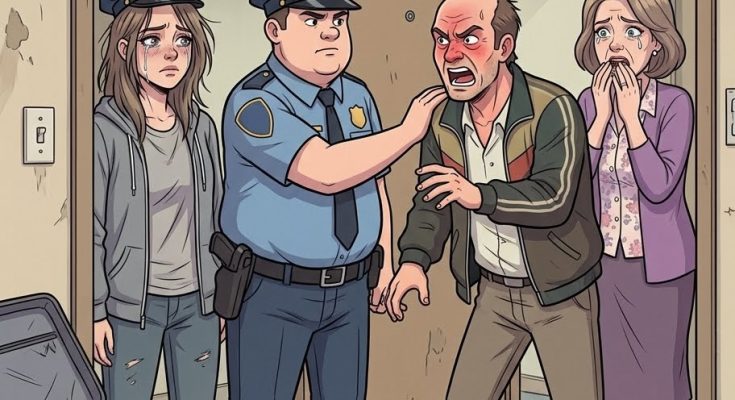
Dozens of people watched us cross the hallway into an empty classroom.
Richard started down the steps.
“Megan, let’s not overreact.”
I looked straight at him.
“Stay here for five minutes.”
For once, he listened.
Dozens of people watched us cross the hallway into an empty classroom.
“Several weeks ago, Dad said he might be nominated for this award.”
I shut the door, faced my children, and kept my voice steady.
“Nobody is in trouble. I need the truth. What did Dad tell you?”
Lily looked at Sam.
Sam looked at Claire.
Claire closed her eyes.
“Several weeks ago, Dad said he might be nominated for this award,” Claire began. “He said teachers sometimes ask us questions.”
“He said we shouldn’t forget all the things he did for us.”
Sam interrupted. “He didn’t tell us exactly what to say.”
Grace nodded.
“He just kept reminding us about things he bought or trips he paid for.”
Claire looked furious now.
“He said if anyone at school asked what kind of dad he was, we shouldn’t forget all the things he did for us.”
Lily said, “He promised my bike.”
“He called me ungrateful. He said after everything he pays for, I could do one thing for him.”
Sam said, “And my game.”
Grace admitted concert tickets had been offered if she “helped people remember Dad does stuff.”
“I told him no,” Claire said. “He called me ungrateful. He said after everything he pays for, I could do one thing for him.”
Her voice cracked.
“I didn’t tell you because I thought you’d be embarrassed.”
I sat beside her.
“None of you did anything wrong. He was the adult here.”
“You never need to protect me from your father’s choices.”
Claire looked down. “I know.”
I shook my head.
“No. I should have made that clear sooner.”
Then I looked at all six children.
“None of you did anything wrong. He was the adult here.”
In the office, she explained everything herself.
On Monday morning, I requested a meeting with Mrs. Carter.
Claire asked to come.
In the office, she explained everything herself.
Mrs. Carter looked sick.
“During the nomination process, teachers asked several of the children informal questions about their parents,” she said. “Some of their answers were included in the nomination file. Richard also submitted a statement describing his involvement with school events, fundraisers, and homework at home.”
“Several community members supported the nomination.”
She paused.
“I found some of those claims odd.”
“Because you’ve never seen him,” I said.
She sighed. “Rarely. But Richard is well known. Several community members supported the nomination, and having six children made his involvement sound credible.”
“I’m not asking you to give the award to me.”
I asked how much the school had verified.
Her expression answered for her.
“Not enough,” she said quietly.
“I’m not asking you to give the award to me,” I said. “I don’t want another ceremony or another public spectacle. I just don’t want the school knowingly leaving a false award in place.”
The school had compared Richard’s claims with attendance records.
Mrs. Carter nodded.
“We’ll investigate this immediately. I’ll speak with the teachers who contributed to the nomination and review what Richard submitted.”
Two days later, Mrs. Carter called.
The school had compared Richard’s claims with attendance records, volunteer lists, and statements from the teachers who actually worked with our children. Several things he had presented as regular involvement could not be verified. Combined with what the children had described, the decision was unanimous.
His name and speech were removed from the website.
Then she said the words Richard would have hated most.
“We’re withdrawing the award.”
His name and speech were removed from the website, and the school began reviewing the entire nomination process.
By the end of the week, a brief correction had been posted explaining that the award had been withdrawn and that future nominees would require teacher input and documented participation.
For years, Richard had cared about being known as a family man.
That Wednesday evening, Richard came into the kitchen furious.
Now there was no award, no speech, and no school page telling everyone he was one.
That Wednesday evening, Richard came into the kitchen furious.
“You ruined something that mattered to me.”
“Why did it matter so much?”
For once, Richard did not have a polished answer ready.
He sat down.
“That became more important than actually being one.”
“My father barely noticed me,” he said. “I promised myself my kids would think I was different.”
His shoulders dropped.
“Somewhere along the way, people thinking I’m a good father became enough for me.”
“Yeah,” I said. “That became more important than actually being one.”
Richard looked at the floor.
I did not comfort him.
“Becoming a better father doesn’t erase what you’ve done to me.”
“The kids don’t need another bike. They need you to know them.”
He nodded once.
“What do I do?”
“Start showing up when nobody is watching.”
Then I put the knife down.
“But understand something. Becoming a better father doesn’t erase what you’ve done to me, and it doesn’t guarantee that we’re staying married.”
Over the following weeks, I stopped carrying every part of his relationship with the children for him.
He looked up.
“This isn’t a bargain, Richard. You don’t earn me by taking the kids to school. They’re your children. You should know them whether I stay or leave.”
For once, he didn’t argue.
Over the following weeks, I stopped carrying every part of his relationship with the children for him.
I watched what he did when nobody applauded.
Tuesday and Thursday school runs became his. So did Sam’s music lesson, Lily’s reading homework, two dinners each week, and some of the appointments he had spent years assuming I would handle.
I didn’t know whether Richard was changing or simply learning a new way to look convincing.
So I stopped judging him by speeches.
I watched what he did when nobody applauded.
Worse, he drove Sam to piano and learned our son had switched to trumpet months earlier.
Reality arrived quickly.
The first grocery trip included foods nobody ate and three jars of pasta sauce but no pasta.
He forgot Lily hated tomatoes.
Worse, he drove Sam to piano and learned our son had switched to trumpet months earlier.
I could have enjoyed humiliating him.
Richard stared at me afterward.
“I told everyone he played piano.”
“Exactly,” I said.
I could have enjoyed humiliating him.
Mostly, I felt tired.
But something useful had happened:
For the first time, Richard could no longer mistake paying for his children’s lives for knowing them.
Then Richard stopped himself.
One evening, I passed Lily’s room and heard her stumble over the same word during reading practice.
Richard snapped, “Focus.”
Lily went quiet.
Then Richard stopped himself.
There was a pause.
Nobody was taking pictures.
His voice came back softer.
“Sorry. Let’s try it again.”
She did.
He stayed.
Nobody was taking pictures.
I kept walking.
A month later, I completed the first certification I needed to return to my field.
That moment did not fix our marriage.
It wasn’t supposed to.
I kept working on my own future too.
A month later, I completed the first certification I needed to return to my field.
I printed the confirmation email after the kids went to bed and stared at my name across the top longer than I expected.
It was a small thing compared with everything I had once built.
My future would not depend on Richard.
But it was mine.
I updated my résumé again, opened a bank account in my name, and made one fact clear:
My future would not depend on Richard.
Months later, the Parent of the Year award had become something we almost never mentioned.
I didn’t know where Richard had put the plaque.
I never asked.
Richard came through the door carrying groceries.
What mattered more was what happened one ordinary Tuesday evening.
Richard came through the door carrying groceries while Lily followed him, talking so quickly I could barely understand her.
“Tell Mom,” she said.
Richard put the bags down.
“She got full marks on her spelling test.”
Lily beamed.
“And what’s my favorite color?”
Then she narrowed her eyes at him.
“And what’s my favorite color?”
He sighed.
“Pink.”
“My best friend’s name?”
“Evie.”
I watched from the kitchen.
“What book are we reading?”
He answered that too.
Lily seemed satisfied.
I watched from the kitchen.
There was no auditorium.
For once, nobody in town was watching.
No microphone.
No reporter.
No award.
For once, nobody in town was watching.
Just six children who knew whether he was telling the truth.
I thought honoring my husband’s final wish would be the hardest thing I ever had to do until I learned he had prepared for something I never saw coming, and the secret he left behind forced me to question my grief, my loyalty, and how much of his memory I was willing to protect.
Part 1
“Callie, wait!”
I kept walking down the brightly lit corridor of Mercy General Hospital.
If I stopped moving right now, somebody would say Liam’s name again, or someone would touch my arm and give me that careful, pitying look people used when they did not know what to say to a woman eight months pregnant whose husband had just passed away.
“Callie, please stop for a second.”
I turned around reluctantly on the polished tile floor.
Dr. Barrett was hurrying toward me while holding a plain white envelope firmly in his right hand.
“Liam gave me this three weeks ago before his condition worsened,” the doctor explained while trying to catch his breath.
I stared blankly at the paper in his hand. “What is it?”
“There is something he made me promise not to give you until today,” Dr. Barrett said softly.
My stomach tightened with a sudden surge of anxiety. “Why would he do that?”
Dr. Barrett looked exhausted after the long shift. “He said you would understand when you needed it most.”
It was an infuriatingly vague answer, which was completely typical of Liam.
I took the envelope from his fingers. “Why didn’t he just tell me himself?”
My name was written across the front in his messy, familiar handwriting that I knew so well.
“Liam thought it was better this way,” Dr. Barrett whispered.
“That was very generous of him,” I said with a bitter edge in my voice.
He gave me a sad, sympathetic smile before stepping back into the clinic.
Then I walked away into the chilly evening carrying the last secret my husband had kept from me.
Two months earlier, secrets had never been part of our marriage.
Baby names were our main topic of conversation back then.
“I still think we should consider it,” Liam had said while we sat on our back porch in Sacramento.
“Absolutely not,” I had told him firmly.
“You rejected that suggestion far too fast,” he complained with a grin.
“You literally suggested Clementine,” I reminded him.
We were sitting on our porch watching the sunset, his warm hand resting gently on my six-month belly.
“It is a strong and memorable name,” he argued.
“For a piece of fruit, maybe,” I replied.
Liam laughed out loud at my response.
Even then, the cheerful sound caught slightly in his chest, revealing the quiet strain of his illness.
“Fine, how about Cecily?” he asked gently.
I looked at his pale face in the fading evening light. “Cecily?”
“My grandmother used to sing that old song with that name in it all the time,” he explained.
“You always said she sang everything terribly off key,” I pointed out.
“It still counts as a fond memory,” he insisted with a grin.
“That is hardly a valid reason to name a human being,” I teased.
“Well, it made you smile, didn’t it?” he asked.
“Cecily,” I said quietly, testing the soft syllables on my tongue.
Right at that moment, the baby kicked forcefully against the pressure of his palm.
Liam’s eyebrows lifted in pleasant surprise. “See that? She just voted for it.”
“She kicked you because you were talking too loud,” I laughed.
“I am taking that as strong approval,” he said softly.
I covered his large hand with mine and held it tightly against my skin. “Cecily it is.”
This time, the name sounded like it truly belonged to our unborn daughter.
We had wanted her for so many long, agonizing years.
Then, six months into my pregnancy, Liam got terribly sick with an aggressive illness.
The specialists in California gave him no more than three months to live, meaning he would probably never hold our daughter.
One evening, we sat on the porch again while Cecily kicked hard enough to make my cotton shirt shift.
Liam watched the tiny movement for a few seconds before resting his thin hand over the spot.
“If the medical team can use anything when the time comes, I want to donate my organs,” he said quietly.
I turned toward him, my chest aching. “Please do not talk about dying while she is actively kicking inside me.”
“That is exactly why I have to bring it up right now, sweetheart,” he insisted gently.
“Liam, please don’t,” I whispered.
His thumb moved slowly across my swollen stomach in a rhythmic circle. “If I cannot stay here to watch her grow up, maybe somebody else gets more precious time with their own family.”
“Don’t try to make dying sound noble when I am already so angry at the universe,” I said, fighting back tears.
“I am scared too, Callie,” he confessed, his voice cracking slightly.
“I really don’t know how I am going to do any of this without you,” I admitted.
“You don’t have to know how to do it just yet,” he assured me.
“What if I never figure it out?” I asked, staring at the floorboards.
He was quiet for a long moment while the wind rustled through the trees. “Then you will just make it up as you go along.”
I looked away from his gentle gaze. “That sounds like a terrible plan.”
“It is the only honest one I have right now,” he whispered.
I hated that answer because I knew he was right.
By my eighth month of pregnancy, Liam had gotten weaker much faster than any of us had expected.
One chilly morning, I walked into our room and found him standing in front of the full-length bedroom mirror, struggling hopelessly with the buttons on his dress shirt.
“Give me that,” I said, stepping over to help him.
“I’ve got it, Callie,” he insisted quietly, though his fingers were trembling visible.
“You have put the third button straight into the fourth hole,” I pointed out gently.
He looked down at his chest and let out a sigh. “It’s the new fashion trend.”
“You look like a confused accordion,” I joked, trying to keep the mood light.
That silly remark pulled a tired, genuine laugh out of his dry lips.
I stepped closer and carefully unbuttoned the misaligned fabric to fix it for him.
His hands had started shaking much more often over the past few weeks as his strength ebbed away.
“Don’t look at me like that,” he said, catching my eyes in the reflection.
“Like what?” I asked.
“Like you are actively memorizing every detail of my face,” he replied softly.
I froze for a second before shaking my head. “I wasn’t doing that.”
“Yes, you were,” he insisted with a soft smile.
I finished fastening the last button and carefully smoothed down his wrinkled collar. “I just want to remember everything clearly so I can tell our daughter who you really were.”
His expression changed instantly, softening into something deeply poignant, but before either of us could say anything more, he caught my wrist gently.
“My mother asked me about the organ donation plan again yesterday,” he mentioned quietly.
His mother, Brenda, had always been incredibly warm and supportive toward me since the wedding.
When morning sickness had flattened me during the first trimester, she had shown up with groceries and tiny yellow socks because she insisted the baby was going to drown in pink clothes.
“I will talk to her about it,” I offered, looking at my husband.
“No, please don’t,” he said quickly.
“Why not?” I asked, surprised by his sudden pushback.
“Because she will actually listen to you,” he explained.
I frowned at his logic. “That is usually considered a good thing between family members.”
“Not in this particular situation,” he replied.
“What happened when she called?” I inquired.
Liam sat down heavily on the edge of our unmade bed. “She strongly thinks I shouldn’t go through with the donation.”
“She actually told you that directly?” I asked in disbelief.
“She has brought it up more than once now,” he admitted.
“Did she give you a specific reason why she feels that way?” I pressed.
He looked down at his trembling hands resting on his knees. “She simply cannot handle the psychological idea that something belonging to me might end up inside a stranger.”
I walked over and sat down right beside him. “She is losing her only son, Liam. I cannot exactly bring myself to be angry at her emotional words.”
“I know that,” he murmured.
“Then maybe she just needs a little more time to digest everything,” I suggested softly.
“She needs something tangible to be angry at right now,” he said quietly.
His bright blue eyes lifted to meet mine. “And I refuse to let that target be you.”
I squeezed his cold hand with all the strength I had. “You are asking me to completely stay out of this family conflict.”
“I am asking you not to make her overwhelming grief your personal burden to carry,” he corrected gently.
A few weeks after that conversation, Liam began asking the medical staff to speak to Dr. Barrett entirely alone.
The first time it happened, I teased him about having secret male bonding sessions.
The second time he asked me to leave the room, I stayed right by the closed door in the hallway.
“What exactly are you arranging in there?” I asked him later that afternoon when the doctor left.
Liam leaned back against his propped-up pillows in the hospital bed. “Just something I need to handle on my own.”
“Without including me?” I pressed, hurt by the exclusion.
“Yes, but I promise you it is ultimately for your benefit,” he said softly.
I stared at him with concern. “That answer is somehow so much worse.”
A faint, tired smile touched the corners of his pale mouth. “Please just trust me on this.”
“You know I trust you,” I replied softly.
“Then let me do this one small thing by myself,” he pleaded quietly.
I nodded slowly, yielding to his request despite my nagging anxiety.
When Dr. Barrett closed the bedroom door behind him during his next visit, I stayed in the dark hallway much longer than I meant to.
I genuinely hated not knowing what was happening behind those wooden panels.
Still, because I loved him, I let him keep his mysterious secret.
Liam passed away on a dreary, rainy Tuesday morning in Sacramento with my hand wrapped tightly around his cold fingers.
Afterward, the formal donation team gently explained the necessary procedural steps that depended entirely on medical suitability.
I sat in the quiet office, answered their compassionate questions, and signed every legal document that needed signing.
Whenever a relative or a friend asked about Liam’s final wishes during those exhausting days, I gave them the exact same steady answer every single time.
“Yes, this is precisely what he wanted us to do,” I told them.
Then Dr. Barrett stopped me in the sterile hospital hallway and handed me that white envelope.
At home late that night, after the house had gone completely still, I finally sat down at the kitchen table and opened the envelope.
Inside, I found a black USB flash drive and a neatly folded handwritten note from Liam.
“Please do not watch this file just because you miss my voice,” the note read. “Watch it if somebody makes you doubt my choices, Callie, or more importantly, if someone makes you doubt your own strength.”
I read those short sentences twice through the blur of my tears.
“You are dead,” I whispered aloud to the empty room. “You don’t get to give me complicated instructions anymore.”
Cecily kicked hard right under my ribs as if reacting to my voice.
I looked down at my round stomach with a faint, sorrowful smile. “Your father is annoying me from beyond the grave, sweetie. He honestly deserved that kick.”
Instead of plugging it into my computer, I put the flash drive away in my desk drawer.
Two days later, Brenda came over to the house without calling first.
I found her upstairs standing in Cecily’s half-finished nursery, meticulously refolding a soft pink baby blanket.
“Brenda,” I said softly, standing in the doorway.
She did not turn around immediately. “Did they end up taking everything?”
I froze in the doorway, feeling a sudden chill. “What do you mean?”
“From Liam,” she clarified, her voice strained.
“The surgical team will only take tissue that can actually be donated to save lives,” I explained carefully.
She gripped the edges of the pink blanket until her knuckles turned white. “And you are completely fine with that decision?”
“It was what Liam explicitly wanted,” I replied, trying to keep my voice steady.
“I asked about how you feel about it,” she said, finally turning her head toward me.
“I am obviously not fine with losing my husband,” I said quietly.
“Well, you are certainly acting like you are fine,” she snapped defensively.
“What exact emotional display would you prefer to see from me right now?” I asked, hurt.
She looked at me with red-rimmed eyes. “His heart, his skin, his eyes, all of those precious parts are going to complete strangers.”
“They don’t transplant a person’s whole eyes, Brenda,” I corrected gently.
“You know exactly what I mean!” she shouted, her composure snapping.
“Corneal tissue can be donated to give someone sight,” I said evenly.
She laughed bitterly and threw the blanket onto the crib mattress. “Does using nicer, clinical phrases make the horror easier for you to swallow?”
“No, it does not,” I answered honestly.
Her trembling mouth betrayed her intense emotional pain. “How am I supposed to be okay knowing that something that belonged to my boy is walking around the world with strangers?”
“Because Liam was okay with it, and it was his own choice,” I asserted firmly.
“You agreed to push this forward,” she accused, stepping closer.
“Yes, I supported him, but that does not mean making that choice was easy for me,” I said.
She stared intensely at my huge stomach. “At least you still get to keep a physical part of him.”
My hand instinctively moved over Cecily through my dress. “Please don’t do that.”
“What?” she asked sharply.
“Don’t bring our unborn child into this argument,” I warned her softly.
Brenda walked out of the room without saying another single word.
At Liam’s formal memorial service the following weekend, she took her resentment even further.
An elderly uncle had wrapped his arms around me near the floral displays in the reception hall.
“Liam was dedicated to helping other people right until the very end,” the uncle remarked warmly.
A nearby aunt nodded in agreement. “You must be so immensely proud of him, Callie.”
“Proud?” Brenda’s cold voice suddenly interjected from right behind us.
I turned around slowly to face her in front of our extended family. “Brenda, please.”
“She doesn’t get to stand there and be proud of this outcome,” Brenda announced loudly.
The gentle murmur of conversation in the room completely died down as everyone went quiet.
“Liam could barely walk across a small room at the end,” Brenda continued bitterly. “But somehow we are all expected to believe he calmly chose to give away his body?”
“He did choose it, Brenda,” I asserted firmly.
“You pushed him to agree to it!” she insisted, her voice rising in the quiet room.
“Yes, Brenda, I honored my husband’s dying wish,” I replied, keeping my posture straight.
Her eyes filled with furious tears. “At least you are finally being honest about something!”
I could have easily escalated the argument right there in front of fifty relatives.
Instead, I took a deep breath and said, “We are not going to do this here today.”
“Because you know you can’t defend it?” she challenged.
“Because we are gathered here solely to honor Liam,” I said firmly.
I walked away toward the quiet safety of the outdoor patio.
I truly thought keeping my mouth shut was an act of kindness toward a grieving mother.
By that evening, however, my silence had morphed into something far more dangerous.
Liam’s aunt stopped me near the front door as guests were slowly leaving the venue.
“Was Liam taking any heavy medication at the end that might have severely affected his clear judgment?” she asked in a lowered whisper.
I stared at her in utter shock. “What are you asking me?”
“Brenda mentioned to several people that maybe he wasn’t thinking clearly during his final weeks,” the aunt murmured awkwardly.
“Liam knew exactly what he wanted until his very last breath,” I stated, my chest burning.
“I am only asking a simple question, Callie,” she said defensively.
“No, you are not just asking,” I countered sharply. “You are actively asking whether I coerced my dying husband into a medical procedure he didn’t want.”
She looked away awkwardly without answering me, which gave me all the confirmation I needed.
That exact night, after returning to our empty house, I went straight into Cecily’s nursery.
I sat down at the small desk, opened my laptop, and plugged in the black flash drive.
Liam’s face instantly appeared on the bright screen.
He looked so much thinner than I remembered from those early summer months, his chest hollowed under his sweater.
“If you are watching this video right now simply because you miss me, please turn it off immediately,” his recorded voice echoed in the room.
I covered my trembling mouth with both hands as tears welled in my eyes. “You don’t get to boss me around anymore,” I whispered to the monitor.
On screen, Liam shifted uncomfortably in his wooden chair. “I am completely serious, Callie.”
He took a deep breath before continuing. “My mom explicitly asked me not to donate my organs.”
I leaned closer to the laptop screen, listening intently.
“She asked me more than once,” recorded Liam explained patiently. “Then she asked me directly whether the whole decision was really mine or if you were forcing it on me.”
My stomach dropped with a sickening sensation as his words confirmed my worst fears.
“I told her directly that it was entirely my decision,” Liam said into the camera, rubbing both hands over his tired face. “She cannot stand the idea that strangers might get something from me after I am gone.”
He paused, looking straight into the camera lens with his striking eyes. “I truly understand why she feels that way, but her heavy grief does not give her the right to turn you into the villain of this story.”
My breath caught in my throat as tears spilled down my cheeks.
“Don’t protect my memory by letting her constantly hurt you,” Liam said forcefully on the video. “And don’t ever let Cecily grow up thinking her father was too weak to make his own choices.”
I immediately hit the spacebar to pause the video, locking his face on the screen.
“You knew,” I whispered to the quiet room. “You knew she was going to do this to me, and you didn’t tell me while you were here.”
I stood up from the desk chair and pressed both hands firmly against my round stomach.
“I was your wife, Liam,” I yelled at the paused image on the laptop. “You didn’t have to protect me from everything!”
That was the very first time I had been truly furious with him since he had died.
It felt absolutely terrible to harbor that rage inside my chest.
Yet, amidst the overwhelming grief, it also felt remarkably real and honest.
Two days later, Brenda arrived at my front door carrying a small, beautifully embroidered baby blanket.
“I have been thinking deeply, and I feel Cecily should definitely carry Liam’s full name somehow as a middle title,” she declared as she walked into the foyer.
I stared at her in disbelief, refusing to take the blanket from her hands. “We already carefully chose her full name months ago, Brenda.”
“She deserves to have a permanent marker from her father,” Brenda insisted, stepping past me into the living room.
“She doesn’t need his name tacked onto hers to be his legitimate daughter,” I said, following her.
Brenda’s sharp eyes flicked down toward my stomach. “Liam told me right near the end that he had changed his mind about several things.”
“No, he didn’t,” I said coldly.
“You were certainly not part of every single conversation we had together,” she retorted smoothly.
“Neither were you,” I countered immediately.
Her expression hardened. “He kept significant things hidden from you, Callie.”
That low blow landed with brutal precision, piercing straight through my composure.
However, it still did not make her malicious claims right.
“Liam and I sat on that porch and chose Cecily’s name together,” I stated clearly.
“Sally, please listen to reason,” she began condescendingly.
“Go home, Brenda,” I interrupted, pointing firmly toward the front door.
She blinked in sudden shock, taken aback by my sudden authority. “What did you just say to me?”
“You have repeatedly questioned Liam’s mental judgment, you have allowed our family to question my integrity, and now you are actively trying to rewrite what he explicitly wanted for our daughter,” I said.
Her mouth trembled as defensiveness cracked into visible pain. “I just lost my only son!”
“I know you did,” I replied softly.
“You have no idea what this crippling pain feels like!” she yelled.
“No, I don’t,” I admitted, taking a slow step toward her. “And you have no idea what it feels like to lose your life partner while carrying the child he will never get to hold.”
Brenda went completely quiet, her shoulders drooping under the weight of my words.
“We can hurt deeply in completely different ways without actively destroying each other in the process,” I told her quietly.
Without uttering another single word, Brenda turned around and left the house.
Part 2
Cecily was born two weeks later in a quiet, remarkably uncomplicated delivery at Sacramento General Hospital.
When the warm nurses finally placed her small, slippery body against my bare chest, she instinctively tucked her right thumb inside her tiny fist.
Liam had slept in that exact same distinctive position every single night of our marriage.
“Of course you sleep just like your dad,” I whispered through overwhelming tears of joy and sorrow.
When Brenda came to the hospital room the next morning to meet her granddaughter, she stood hesitantly near the door and asked, “Can I please hold her for a moment?”
That simple, respectful question mattered more to me than any apology could have.
I carefully picked up Cecily and handed the swaddled bundle over into her waiting arms.
Brenda looked down at the tiny face, her entire demeanor softening instantly. “Hi, sweetheart.”
Cecily let out a tiny yawn and stretched her arms.
Brenda smiled softly through a thick haze of tears. “I knew your daddy back when he didn’t have any teeth either.”
For one beautiful, fragile minute, our shared grief stopped warring against us.
However, a few weeks later, old habits resurfaced when I heard Brenda talking to Liam’s aunt in my living room while I was making tea.
“Liam was simply not himself during those final two weeks,” Brenda was telling her in a confident whisper. “Callie handled all of those extreme medical decisions entirely on her own, and he never would have chosen donation if he had been thinking clearly.”
I set my teacup down hard on the counter and walked directly into the room.
Brenda was sitting on the sofa carefully holding Cecily in her arms.
“Give her to me right now,” I said calmly.
Brenda’s face changed instantly from casual confidence to pale surprise. “Callie, I was just explaining…”
“Give me my daughter,” I repeated, extending my hands without faltering.
She hesitantly handed the baby over to me.
I settled Cecily securely against my chest, feeling her warm heartbeat against mine.
“You will never say those poisonous lies in front of her ever again,” I warned Brenda.
“She is a tiny baby, Callie, she doesn’t understand anything,” Brenda argued defensively.
“She will not always be a baby,” I fired back.
Brenda’s eyes quickly filled with fresh tears of frustration. “You still get to wake up and see him every single day!”
I stared at her, stunned by the sheer envy in her voice.
She looked bitterly at Cecily’s sleeping face. “You look at her and see his reflection, but what do I get left with?”
“You had me,” I said plainly.
Brenda froze completely, her lips parting in shock.
“You had me this entire time,” I repeated, my voice thick with emotion. “I loved you too, Brenda.”
She immediately covered her face with both hands as a quiet sob escaped her throat.
“You have spent the last several weeks making me into your bitter enemy simply because it was easier than admitting Liam made a conscious choice you couldn’t stop,” I told her honestly.
She shook her head stubbornly in denial. “He wasn’t in his right mind.”
“He knew you were going to say that exact sentence,” I replied quietly.
Brenda looked up from her hands, her bloodshot eyes filled with confusion. “What do you mean?”
I walked over to the side table and opened my laptop screen. “Liam left a video recording for us.”
Her pale face went completely ghostly white. “If he had something important to say, he should have said it directly to me while he was still alive.”
“He tried to, but you wouldn’t listen,” I said softly, reaching down to press play.
Liam’s clear voice immediately filled the living room. “Organ donation was entirely my choice, mom.”
Brenda closed her eyes tightly, tears streaming down her cheeks.
“Mom, if you are hearing this video right now, you are probably furious with the world,” recorded Liam said gently on the speakers. “You loved me before anybody else did, but loving me does not mean you get to decide which major choices were mine to make.”
Nobody in the living room dared to make a sound as his recorded words lingered in the air.
“Don’t force Callie to constantly prove she loved me by forcing her to agree with your hurt,” Liam continued firmly. “And please do not put Cecily in the middle of your anger. She isn’t just something physical I left behind; she is Callie’s daughter and mine, and she deserves to grow up becoming entirely herself.”
“Turn it off, please,” Brenda whispered brokenly.
I reached over and paused the video, letting the room fall into complete silence.
Then I looked directly at her trembling form. “I genuinely want Cecily to know you and love you as her grandmother.”
Brenda started crying openly, her shoulders shaking with heavy, unrestrained sobs.
“But you will never tell her that I coerced her father into this decision,” I stated with absolute finality. “And you will never make her responsible for carrying the immense burden of how much you miss him.”
“I just don’t know who I am supposed to be without him in my life,” Brenda confessed, her voice breaking completely.
“Neither do I, Brenda,” I admitted softly, walking over to sit beside her on the couch. “This is harder than anything I have ever had to face in my entire life.”
I looked down at Cecily sleeping peacefully in my lap. “But our daughter does not need us to have everything figured out just yet.”
Six months later, on a bright Saturday afternoon, Brenda sat comfortably on my living-room rug in Sacramento while Cecily fought stubbornly with a wooden toy block.
Our complex relationship was certainly not magically fixed.
However, it was steadily healing day by day through intentional effort.
Brenda always called to ask before coming over to visit now.
She politely asked before picking Cecily up out of her crib.
And whenever she deeply missed Liam, she simply stated openly that she missed her son instead of projecting her pain onto my actions.
That afternoon, Cecily grabbed the heavy wooden block so tightly that her tiny baby knuckles went completely white.
Brenda smiled warmly at the sight. “Look at that stubborn grip she has.”
I laughed softly from the armchair. “She gets that directly from Liam.”
Brenda looked up at me for a brief second before looking back down at Cecily.
For a brief, fleeting moment, I saw the old, desperate instinct flicker across her face, the overwhelming need to search for her lost son in every single movement the baby made.
Then, to my immense relief, she slowly shook her head.
“No,” Brenda said softly, gently touching Cecily’s tiny fingers. “That strength is entirely hers.”
Cecily suddenly squealed with joy and tossed the wooden block directly into Brenda’s lap.
Brenda burst into genuine laughter.
So did I.
And for the very first time since Liam had passed away, neither of us needed Cecily to act as living proof that he was still with us.
We could miss him deeply.
We could love his memory forever.
And our daughter could finally grow up becoming entirely herself.
I had spent 15 years raising my daughters, saving every unanswered invitation and returned photo their mother ignored. When she arrived at our daughter’s wedding with the man she chose over us, I thought I was ready to stay quiet again. Then my daughter asked for the one box I never wanted opened.
Fifteen years after my wife left me with our six daughters and ran off with her rich boss, she texted me like she was asking about the weather.
I was in my kitchen, checking the final wedding payments for my eldest daughter, Adele, when my phone chimed.
I hadn’t heard from Maya in years. Not on the kids’ birthdays, not at graduations, and not when Shannon, our youngest, asked me at eight years old if her mother would know her voice if she called.
I hadn’t heard from Maya in years.
But there she was.
“I’ll be at our daughter’s wedding, Robert. How would I look in front of my new family if I skipped an event like that, right? I expect no drama from you.”
“Dad?”
Adele stood in the doorway with a folder of wedding invoices against her chest. She was 28 and beautiful in a way that still caught me off guard.
“What happened?” she asked.
“I’ll be at our daughter’s wedding.”
“It’s your mother.”
“What did she want?”
I handed her the phone.
She read the message. “She said ‘my new family.’”
“I saw.”
“Not ‘I miss you.’ Not ‘I’m sorry.’ Not even ‘Can I come?’ She’s bringing Harry.”
“What did she want?”
“I’d bet on it.”
Harry was the man Maya left with. Her boss. The man with the car, the trips, the money, and the life she said she deserved.
***
I’d been standing in the hallway with nine-month-old Shannon in my arms.
Adele was 13, barefoot on the stairs. Piper was eight. The triplets, Penelope, Mia, and Lucille, were five and crying in the living room because they didn’t understand why their mother was packing suitcases.
Harry was the man Maya left with.
“Maya, slow down,” I had begged. “We can talk after the girls are asleep.”
“That’s all we ever do, Robert,” she snapped. “Talk. Count bills. Stretch groceries. And pretend this is enough.”
I shifted Shannon higher against my chest. “They are enough.”
Maya looked at our baby, then at me.
“For you, maybe.”
“You can’t just walk out on six children.”
“They are enough.”
Her eyes flashed. “You can’t give me the life I want. But Harry can. He bought me a brand-new car and even took me to the Maldives, Robert. Do you understand the kind of life he gives me? The kind of life I deserve?”
“Maya,” I whispered. “Our daughter can hear you.”
She glanced at Adele. “Then maybe she’ll learn not to settle.”
Then she slammed the door: no kiss for Shannon, no promise to call, just the door closing and six girls becoming my whole world at once.
“Our daughter can hear you.”
***
Back in the kitchen, Adele sat across from me.
“I can tell her no,” I said. “This is your wedding.”
“Tell her she’s welcome.”
My stomach dropped. “Adele.”
“I mean it.”
“She’s not coming for you. She’s coming to perform.”
“I know.”
“This is your wedding.”
“Then why let her?”
Adele looked at me for a long second. “Because you spent 15 years protecting us from the truth. I think it’s time the truth protected you.”
I went still.
“No.”
“You know what I’m asking for.”
“The box stays where it is.”
“I think it’s time the truth protected you.”
“The box, Dad.”
Inside were 15 years of things I’d sent to Maya, all returned.
Birthday invitations. School pictures. Recital programs. Graduation notices. Copies of emails. Returned envelopes. Cards the girls had made before they stopped asking if Mom might come next time.
I hadn’t kept it for revenge.
I’d kept it because one day my daughters might ask if I had tried.
And I wanted to say yes.
“The box, Dad.”
“That box is ugly,” I said.
“What she did was ugly,” Adele said. “The box is just proof.”
“This is your wedding. Not a courtroom.”
“She’s the one putting you on trial.”
I stood and gripped the back of a chair. “Let people think what they want, hon.”
“No, Dad. You’re exhausted from being both parents to all of us. You don’t need this extra pressure.”
“The box is just proof.”
Adele opened her folder and pulled out a printed message.
“She wrote me two weeks ago.”
I took the paper.
Maya had told Adele I was bitter. That I’d made things hard. That I’d kept the girls close because I wanted to punish her.
“Why didn’t you tell me?”
“Because I wanted to know what she was doing first.”
“She wrote me two weeks ago.”
“And now?”
“Now I know.”
Jerome, Adele’s fiancé, stepped into the kitchen with seating cards in his hand and stopped when he saw our faces.
“Bad time?”
Adele looked at him. “My mother texted Dad.”
Jerome set the cards down. “She’s coming?”
“My mother texted Dad.”
“With Harry,” Adele said. “And I need the box.”
I looked at him. “Don’t get dragged into this.”
“I’m marrying into this family in three days,” he said. “I think the dragging already happened.”
Adele touched my arm. “Please, Dad. Let me handle it.”
“You don’t know what that box will do.”
“I know what her lie is already doing.”
“Please, Dad. Let me handle it.”
I looked at my daughter. I still saw the girl on the stairs, but she wasn’t little anymore.
“What are you going to do with it?”
“Use it only if she lies.”
“And if she doesn’t?”
“Then it stays closed.”
That seemed fair.
“Use it only if she lies.”
***
The box was where it had always been, behind old papers and a blanket nobody used. I pulled it down with both hands and carried it back.
“There,” I said, setting it on the table. “Fifteen years.”
***
On the wedding day, I woke before sunrise.
I was in a small room, fighting with my tie, when Jerome came in.
“Need help?”
I woke before sunrise.
“I raised six girls,” I said. “You’d think I could handle fabric by now.”
He fixed the knot. “You handled the hard part. Today is about Adele. But I know what it took to get her here.”
I had to blink.
“Take care of her.”
“I will.”
The door opened, and Lucille walked in like she was entering a fight.
“I raised six girls.”
“If Maya makes a scene,” she said, “I’m walking outside before I say something I can’t take back.”
Behind her, Shannon appeared in a soft blue dress, twisting her bracelet around her wrist.
“Dad?”
“Yeah, baby?”
“Do I have to hug her?”
The room went quiet.
I put both hands on her shoulders. “No. Nobody gets a hug just because they share blood.”
“Do I have to hug her?”
Her shoulders dropped. “Okay.”
Piper kept asking if everyone had eaten, which meant she hadn’t eaten.
Then the doors opened.
I knew Maya had arrived before I saw her.
The room shifted.
Voices lowered.
Maya walked in wearing a sparkling dress that looked more suited for a gala than her daughter’s wedding. Diamonds flashed at her throat. Harry walked beside her, neat and expensive, with his family close behind.
Then the doors opened.
Maya saw Adele and opened her arms.
“My beautiful girl!”
Her voice carried across the room.
“I dreamed of this day,” Maya said, loud enough for Harry’s family to hear. “You have no idea how long I’ve dreamed of seeing you like this.”
Adele smiled, but I knew that smile. It was polite, not warm.
“I’m glad you made it,” she said.
“My beautiful girl!”
Maya touched Adele’s cheek.
Then she turned to me. “Robert.”
“Maya.”
Her eyes moved over my suit. “You look tired.”
“Fifteen years of parenting will do that.”
Harry shifted behind her.
Maya’s smile tightened. “Don’t start today.”
Maya touched Adele’s cheek.
“I wasn’t planning to.”
“This is Adele’s wedding.”
“I know. That’s why I’m here.”
Her eyes sharpened. “You always were good at making yourself look noble.”
My jaw tightened.
Adele looked at me over Maya’s shoulder.
Not yet.
So I swallowed the answer I wanted to give.
“This is Adele’s wedding.”
***
The ceremony started soon after. Adele looped her arm through mine, and for a second, I saw the girl from the stairs again.
“You’re squeezing my hand, Dad,” she whispered.
The doors opened, and everyone stood.
When we reached Jerome, he looked at Adele like he understood what she’d survived without making her explain it.
The officiant asked who presented her.
“You’re squeezing my hand, Dad.”
I opened my mouth.
Adele squeezed my arm. “The man who raised me does.”
The room murmured.
I kissed her cheek and stepped back.
Maya wasn’t smiling anymore.
Adele squeezed my arm.
***
For an hour, I let the wedding be beautiful. Jerome cried before Adele did. Mia cried with both of them. Lucille passed her a tissue without looking away from Maya.
Then I heard Maya near Harry’s family.
“I wanted to be there,” she said. “Of course I did. But Robert made things difficult.”
Harry nodded. “Maya tried for years. He kept the girls isolated.”
A woman beside him stared at me.
Maya sighed. “You don’t know what it does to a mother to be kept from her babies.”
I set down my water glass.
“He kept the girls isolated.”
Penelope appeared beside me. “Dad.”
Mia’s eyes were wet. “Please tell me you heard that.”
“I heard.”
Lucille’s voice was low. “Say the word.”
Piper whispered, “Not here. Please.”
Shannon just stared at Maya.
I took one step forward.
“Please tell me you heard that.”
Adele touched my arm.
“Not yet, Dad.”
“She’s lying about all of us.”
“I know.”
“Then why wait?”
Adele looked toward the white box near the gift table.
“Because this time, we’re not answering a lie with anger. We’re answering it with proof.”
Across the room, Maya laughed like she was winning.
“She’s lying about all of us.”
***
Before the planned speeches ended, Maya stood and reached for the microphone.
“If I may,” she said, smiling at Harry. “A mother should say a few words on her daughter’s wedding day.”
My chair scraped back.
Adele stood first.
Maya lifted the microphone. “Adele, my beautiful girl, from the day you were born, I dreamed of seeing you in white.”
Adele’s face stayed calm.
“I dreamed of seeing you in white.”
“A mother’s love never leaves,” Maya continued. “Even when life, pain, and other people pull her away from her children.”
The room went quiet.
“There are things children can’t understand. Sometimes a mother is kept from her children.”
Adele stepped forward. “Actually, Mom, before you finish, I have something for you.”
Penelope and Lucille brought out the white box tied with satin ribbon.
Maya blinked, then smiled wider. “For me?”
“I have something for you.”
“For you,” Adele said. “Open it.”
Maya pulled the ribbon loose and lifted the lid.
At first, she only stared.
Inside were 15 envelopes, each labeled with a year. Beneath them were photos, invitations, programs, returned letters, printed emails, and my old notebook with the cracked spine.
Maya’s face drained of color. “What’s this?”
Inside were 15 envelopes.
Adele stepped closer. “Fifteen years of things Dad sent you and you sent back.”
Maya picked up an envelope. “This is fake.”
“No,” I said.
Maya’s eyes flashed. “Robert, don’t.”
Adele lifted a small pink card. “Piper made this when she was nine. It says, ‘Please come to my birthday, Mom.’“
Piper covered her mouth.
“Fifteen years of things Dad sent you and you sent back.”
Adele picked up a school photo. “This was Shannon’s first day of school.”
Shannon stared at it. “I’ve never seen that.”
“I sent it,” I said. “It came back.”
Maya snapped, “You had no right to do this at a family event.”
Adele looked at her. “My wedding.”
That correction landed hard.
Adele picked up a school photo.
Maya’s voice shook. “Your father poisoned you.”
Adele didn’t raise her voice. “No. He protected your name long after you stopped earning it.”
Then Adele reached for my notebook.
My chest tightened. “Adele.”
She looked at me, asking without words.
I wanted to say no.
But Maya had just called me the man who kept six daughters from their mother.
“Your father poisoned you.”
So I gave the smallest nod.
Adele opened it. “Year two. Adele asked why Maya didn’t come to her school play. I told her she was loved. I hope one day that is enough.”
My eyes burned.
Adele turned a page. “Year six. Shannon called her teacher ‘Mom’ by accident and cried in the car. I told her families come in different shapes. I waited until she fell asleep before I cried.”
“I told her she was loved.”
At the very bottom of the box sat an empty frame with a small card inside.
“The mother-daughter photo we never got.”
“Oh my God. How dare you?” Maya screamed.
Adele stayed calm. “You came here worried about how you’d look in front of your new family. So I wanted them to see the family you left behind.”
Maya turned on me. “Say something, Robert. Tell her this isn’t the whole story.”
“Oh my God.”
I stood.
“It isn’t,” I said.
Maya’s face shifted, like she thought I might save her.
“The whole story is worse. I begged you to call. I begged you to send cards. I begged you to remember they were little girls, not furniture you left in a house you outgrew.”
Harry stared at her. “You told me he changed his number.”
“The whole story is worse.”
“I kept the same number,” I said. “Same email. Same house. You just preferred the story where I was the villain.”
Maya whispered, “You’re humiliating me.”
“No,” I said. “You built this lie. We’re just standing where it collapsed.”
Maya looked at Harry.
He stepped back.
Nobody followed.
Then Jerome lifted the microphone carefully. “I think it’s time for the father-daughter dance.”
“You’re humiliating me.”
Adele took my hand. “You can stop carrying it now.”
“I don’t know how.”
“Then let us help,” Shannon said.
That’s when I broke.
For 15 years, I thought strength meant standing alone.
That night, my daughters showed me strength could have six sets of hands.
I stopped for a woman dying on the roadside and lost my job for being late, but when I came back for my desk, my whole life changed.
“What the hell do you mean you were helping somebody?”
My boss’s voice cracked across the office so hard that even the interns by the copy room went silent.
I was still standing there with my laptop bag over one shoulder, my tie half crooked, my chest heaving from running in from the parking lot.
The conference room behind him was empty.
The clients were gone.
On the table sat the pitch deck I had stayed up half the night polishing, still glowing on the wall monitor like a joke nobody wanted to laugh at.
“I had an emergency,” I said, trying to catch my breath. “A woman collapsed on the side of the road. She grabbed her chest and went down. I couldn’t just leave her there.”
Nick stared at me like I’d spoken a foreign language.
His jaw tightened.
He took two slow steps toward me and lowered his voice, which somehow made it worse.
“Was it your wife?”
“No.”
“Your mother?”
“No.”
He let out a short, angry laugh and looked around at the others, like he needed witnesses for what he was about to say.
“So let me get this straight,” he said. “You blew off an eight-thirty presentation with our biggest potential account because some random woman on the roadside looked sick.”
“She didn’t look sick,” I said. “She collapsed in my arms.”
He threw one hand up.
“And because of that, we lost the account.”
My mouth went dry.
I looked toward the conference room again, as if maybe the clients would magically still be there, sitting patiently with coffee, waiting for me to explain myself.
They weren’t.
All that was left was the smell of burnt office coffee, printer toner, and the slow death of the best opportunity our little agency had seen in months.
“Nick, I’m sorry,” I said. “I am. But what was I supposed to do? Drive past her?”
“Yes,” he snapped.
The room went even quieter.
For a second, I honestly thought I’d heard him wrong.
He stepped closer.
“Yes, Sebastian. You were supposed to keep driving. You had a responsibility here. You had a team depending on you. You had clients waiting. We are not a charity. We are a business.”
My ears started ringing.
I’d worked at that agency for almost three years.
I had taken late calls, skipped lunches, stayed weekends, saved bad campaigns, soothed angry customers, trained new hires, pulled numbers out of thin air when nobody else could.
I’d been the first one in and the last one out so many times that the cleaning crew knew my daughters’ names.
And now I was being told I should have left a stranger on the side of the road because a pitch mattered more.
“Nick,” I said, and I heard my own voice shake. “I have given everything to this place.”
He didn’t even blink.
“I don’t care,” he said. “Clean out your things. You’re done here.”
I just stood there.
My brain refused to catch up.
A few people looked away.
A few looked at me with something like pity.
One of the account managers shifted in her seat and stared down at her keyboard as if the letters suddenly fascinated her.
Nobody said a word.
Nick nodded toward the hallway.
“That’s the end of it.”
I wish I could say I walked out with dignity.
I wish I could say I gave him some speech about loyalty and humanity and how one day he’d regret it.
What actually happened was uglier than that.
My face got hot.
My throat closed.
And before I could stop it, tears stung my eyes.
I turned away so fast I nearly dropped my bag.
I heard a chair scrape behind me, then nothing but the pounding of my own footsteps as I left the office I had poured myself into and walked straight into the bright morning sun like a man getting shoved out of his own life.
The second I got inside my car, I locked the doors.
Then I gripped the steering wheel and screamed.
Not words.
Just sound.
Raw, broken sound that ripped up from somewhere deep in my chest.
I slammed the heel of my hand against the wheel once, then again.
I could still hear Nick saying it.
Yes. You were supposed to keep driving.
I bowed my head and cried so hard my whole body shook.
I was thirty-eight years old.
Husband. Father of two girls. Mortgage. Bills. School lunches. Dance recital fees. Car insurance. Grocery lists taped to the fridge.
And I had just been fired for not leaving a woman to die by the road.
I stayed in that parking lot until my breathing slowed enough for me to see straight.
Then I wiped my face with the back of my hand, started the engine, and drove home.
The drive should have taken ten minutes.
It felt like I was crossing a continent.
Every red light made me angrier.
Every stop sign made me replay the morning.
Her face.
That was what kept coming back.
A woman in a navy cardigan and sensible flats, one hand pressed hard against her chest, the other reaching out into empty air like she was trying to grab hold of the world before it tipped away from her.
If I had driven by, I would have seen that face in my sleep for the rest of my life.
I knew that.
So why did losing my job still feel like I had done something wrong?
By the time I pulled into the driveway, my hands were trembling again.
Our house was small, two bedrooms upstairs, one tiny office downstairs that doubled as a laundry room when life got messy.
The porch railing needed repainting.
One shutter hung a little crooked.
There was a pink scooter on the grass and a half-deflated rubber ball under the hydrangea bush.
Regular life.
Normal life.
The kind you work like hell to protect.
My wife, Emily, opened the front door before I even made it to the steps.
She had one of our daughters’ socks in her hand and a worried look already rising in her eyes.
“You’re home,” she said. “What happened?”
That was all it took.
I broke all over again.
Emily didn’t ask me to explain right away.
She just pulled me inside, shut the door, and wrapped both arms around me while I stood there in the hallway with my work bag still hanging from my shoulder like I was some fool who had shown up at the wrong address.
Our girls were in the living room building a blanket fort.
Six-year-old Maddie looked up first.
“Daddy?”
Nine-year-old Claire saw my face and stood very still.
Kids know.
They always know.
Emily sent them gently upstairs with a promise of cartoons and apple slices.
Then she led me into the kitchen, sat me down, and waited.
So I told her.
I told her everything.
About the woman.
About the hospital.
About the missed calls.
About Nick’s face.
About the sentence I couldn’t get out of my head.
Yes. You were supposed to keep driving.
Emily listened without interrupting, one hand over her mouth.
When I finished, she sat down across from me and stared at the table for a moment.
Then she looked up.
“You did the right thing.”
I laughed, but there was no humor in it.
“The right thing got me fired.”
“No,” she said quietly. “A cruel man fired you. That’s not the same thing.”
I wanted to believe her.
I really did.
But there’s a special kind of fear that settles into a man when he has children and suddenly sees how thin the line is between being okay and not okay.
I had some savings.
Not a fortune, but enough.
An emergency fund Emily and I had built a little at a time by skipping vacations, driving older cars, saying no to things we wanted so we could say yes to the things we needed.
It would carry us for a while.
Still, that fear sat down in my chest and refused to leave.
I looked around the kitchen at the cereal bowls in the sink, the school art on the fridge, the grocery coupons clipped in a little stack by the fruit basket.
Everything ordinary suddenly looked fragile.
Emily reached across the table and covered my hand with hers.
“We will be okay.”
I nodded because she needed me to.
But inside, I felt like the floor had fallen out.
To understand why getting fired hit me the way it did, you have to understand something about me.
I wasn’t one of those guys who stumbled into a job because it was available.
I loved marketing.
Not in the fake, shiny, buzzword way people say they love things when they really mean they tolerate them.
I mean I genuinely loved it.
The puzzle of people.
The psychology of why one message gets ignored and another makes someone stop.
The chase.
The timing.
The feeling of pulling a client back from the edge with the right pitch, the right tone, the right story.
I loved all of it.
Some boys grow up wanting to be ballplayers or firefighters.
I grew up wanting to be like my Uncle Todd.
Todd was my mom’s older brother, all handshake and confidence, the kind of man who could sell ice in a blizzard and make you thank him for the favor.
He wore polished shoes, drove nice cars, and always smelled like aftershave and leather seats.
When I was ten, he took me with him one Saturday to a local fair where he was helping a small business owner promote a new booth.
He let me hand out flyers.
He taught me how to smile first and talk second.
He told me, “People don’t buy what you’re selling until they believe you see them.”
That line lived inside me for years.
By high school, I was making posters for fundraisers, writing slogans for student events, helping friends sell raffle tickets.
By college, I was studying business and communications while waiting tables at night.
After graduation, I started at the bottom.
Cold calls.
Lead lists.
Follow-ups.
Tiny accounts nobody wanted.
Rejection piled on rejection.
But even then, I believed one good opportunity could change a life.
Maybe not overnight.
But eventually.
That belief carried me through five hard years in two different agencies, both smaller than they pretended to be, both always promising that the next quarter would be the breakthrough.
Money never came as easily as I had imagined when I was a kid staring at Uncle Todd’s shiny watch.
But I never lost the faith that my turn would come.
And I worked like a man trying to earn it.
Emily used to tease me that I had two speeds.
All in, and asleep.
She wasn’t wrong.
I was the first one at the office most mornings.
The last one to leave most evenings.
If they asked me to make one hundred calls, I made one hundred and twenty.
If a client needed revisions at nine at night, I did them.
If a coworker dropped the ball, I picked it up.
Not because I was trying to be a hero.
Because I thought that was how you built a future.
And honestly, a big piece of that drive had nothing to do with me.
It was Emily.
It was Maddie and Claire.
My girls had this way of making even the ugliest day worth pushing through.
Claire had my dark hair and Emily’s eyes, serious and thoughtful, the kind of kid who asked questions that made you stop chewing.
Maddie was sunshine with missing front teeth, loud feet, and a laugh that could crack a bad mood open from across the house.
I wanted to give them stability.
I wanted to be the dad who said yes to field trips, dance shoes, birthday cakes shaped like dragons, and all the little things that make a child feel safe in the world.
So I worked.
And worked.
And worked.
That Monday was supposed to matter.
That was the bitter part.
It wasn’t just any workday.
It was the day.
The presentation with the regional home services account.
Big budget.
Long-term contract.
The kind of account that could put our little agency on firmer ground and maybe, just maybe, put me on the radar for the promotion Nick had been dangling in front of me for months.
I had prepared for that meeting like my future depended on it.
Because in some ways, it did.
The night before, after the girls were asleep, I sat at the dining room table with my laptop open and revised my slides until nearly midnight.
Emily came down once in her robe and asked if I was ever coming to bed.
“Soon,” I told her.
She smiled in that tired, loving way wives do when they know you’re chasing something bigger than the moment.
“Don’t miss your own funeral,” she said.
I laughed.
Then I kept working.
I remember standing on the back porch around eleven-thirty, practicing the opening lines quietly to myself while the neighborhood sat dark and still.
I wanted it perfect.
Not polished-perfect.
Human-perfect.
Strong.
Clear.
Confident.
The kind of pitch that made people feel, not just think.
By six the next morning, I was up again.
I showered.
I printed backup copies.
I rechecked the numbers.
Emily was already in the kitchen packing lunches, and I helped make eggs while Claire searched for her library book and Maddie insisted she could wear sandals even though the morning was cold.
It was all so normal.
That’s what kills me.
Disaster almost never announces itself.
It walks right into ordinary life and sits down at your table like it belongs there.
At around seven-thirty, I kissed Emily, kissed both girls, grabbed my travel mug, and headed out.
My office was barely ten minutes away.
Even if traffic caught one light wrong, I’d still make it by eight.
I’d made the same drive half asleep, half sick, half buried under stress and still gotten there on time.
I remember feeling calm.
Ready.
Focused.
I had that good kind of nerves in my stomach, the kind that usually means you care.
Then I saw her.
At first, she was just another figure on the side of the road near the stretch by the old strip mall.
A woman walking alone.
Navy slacks.
Pale blouse.
Low heels.
Maybe late fifties, early sixties.
Something about the way she moved caught my eye.
Not because she was dramatic.
Because she was wrong.
Her steps were short and uneven.
One hand was pressed to her chest.
The other hung stiff at her side.
I drove past her.
Maybe twenty yards.
Maybe less.
And in my rearview mirror, I saw her face.
I still can’t describe it without feeling a chill.
It wasn’t just pain.
It was fear.
Pure, naked fear.
The kind that strips every polite layer off a person and leaves only the truth.
She looked like someone whose body had suddenly become a stranger.
I hit my brakes so hard the coffee in my cup splashed onto the console.
I pulled over to the shoulder, threw the car in park, and ran back.
“Ma’am?”
She turned toward me, but her eyes didn’t really focus.
“Are you okay?”
She tried to answer.
Nothing came out.
Her mouth moved, then she winced and pressed harder against her chest.
“Can you hear me?”
She nodded once.
Barely.
I was close enough then to see sweat on her upper lip.
Close enough to see that her skin had gone that awful gray color people get when something inside them is going terribly wrong.
“Do you need an ambulance?” I asked.
She tried again to speak.
Then her knees buckled.
I lunged forward and caught her under the arms before she hit the ground.
“Hey. Hey. Stay with me.”
Her body felt heavier than I expected.
Not heavy like weight.
Heavy like helplessness.
I eased her down onto the grass beside the sidewalk and pulled out my phone so fast I nearly dropped it.
The dispatcher answered.
I gave the location.
Told them she had chest pain, trouble breathing, possible heart attack.
The dispatcher asked if she was conscious.
Barely.
Was she bleeding?
No.
Was she speaking?
Not really.
Was I alone?
At that exact moment, a compact gray sedan pulled over a few yards behind my car.
A woman in blue scrubs jumped out and ran toward us.
“I’m a nurse,” she said before she even reached us. “What happened?”
I could have cried from relief.
“She was walking,” I said. “Holding her chest. Then she collapsed.”
The nurse knelt immediately and checked her pulse, her breathing, the color in her face.
She looked up at me, sharp and steady.
“How long since you called?”
“Maybe two minutes.”
The nurse glanced toward the road, then back at the woman.
“What hospital’s closest?”
“County Medical,” I said.
“Four minutes if traffic’s light.”
The nurse bit the inside of her cheek and looked at the woman again.
The dispatcher was still talking through my phone.
The nurse leaned toward it and identified herself.
There had been some kind of traffic backup from a wreck a few roads over.
The ambulance was coming, but not fast enough for her liking.
The nurse made the call.
“We take her ourselves.”
Everything after that happened in a blur.
The nurse and I helped lift the woman.
She moaned once, very faintly.
Her head rolled against my shoulder.
I remember the smell of perfume and cold air and fear.
We laid her carefully across the backseat of my car.
The nurse climbed in beside her and kept talking to her in a calm, low voice the entire drive.
“You’re okay. Stay with me. Breathe for me. That’s it. Stay with me.”
I drove faster than I’ve ever driven in my life.
My hands clamped so hard on the wheel my knuckles ached.
Every red light felt like a personal insult from God.
By the time we screeched into the emergency drop-off lane, nurses were already wheeling a gurney out.
The woman in scrubs turned out to work at that hospital.
She knew exactly where to go, who to yell for, how to move people aside.
Within seconds the woman was gone through automatic doors and swallowed by bright lights and urgency.
And then, just like that, I was standing still.
Alone.
My heart pounded so hard I thought I might pass out myself.
A receptionist asked for my name in case the doctors needed details.
I gave it.
The nurse squeezed my arm once before hurrying after the gurney.
“You did good,” she said.
I sat down in the waiting area for what felt like a minute and what was probably ten.
That was when I finally checked my phone.
Eight missed calls.
Three from Nick.
Two from the front desk.
Three from coworkers.
Time on the screen: 8:57 a.m.
My stomach dropped so fast it hurt.
I jumped up, looked once toward the emergency doors, then back at my phone.
Part of me wanted to stay.
Part of me knew I should at least explain.
But another part, the trained, obedient, terrified employee part, told me maybe I could still fix it.
Maybe if I got there fast enough, maybe if the clients were delayed, maybe if the world wasn’t as cruel as it often turned out to be.
I left.
And by the time I reached the office, you already know what was waiting for me.
Not understanding.
Not even anger mixed with concern.
Just punishment.
At home that afternoon, after Emily told me I had done the right thing, I tried to settle down.
I failed.
I paced the kitchen.
I checked our savings account twice.
I stared out the window at nothing.
Then I made the dumb decision men sometimes make when pain feels too big and we don’t know where to put it.
I started drinking before noon.
Not because I’m a heavy drinker.
I’m not.
Usually I’m the guy who has one beer at a cookout and then switches to iced tea because I’m driving the kids home.
But that day, I wanted the noise in my head gone.
The first glass took the edge off.
The second made me feel less humiliated.
The third made me sleepy enough that my anger turned soft and blurry around the edges.
I fell asleep on the couch in my work pants with the television muttering to itself and woke up later with a splitting headache and the taste of regret in my mouth.
Emily draped a blanket over me sometime while I slept.
A glass of water sat on the coffee table.
She didn’t lecture me.
Didn’t say a word.
That somehow made me feel worse.
That evening I told the girls Daddy was going to be home a little more for a while.
Maddie cheered.
Claire looked at me for a long second and asked, “Did something bad happen?”
Kids know.
I swallowed and said, “A rough day happened.”
She nodded slowly like she understood more than I wanted her to.
Emily made spaghetti.
I barely tasted it.
That night, long after everyone went to bed, I sat alone at the dining room table in the dark.
No laptop.
No pitch deck.
No client notes.
Just me and the hollow feeling of being cut loose.
I kept replaying the morning like maybe there was a version where I could have saved the woman and kept my job too.
Maybe if I had called sooner.
Maybe if I had left sooner.
Maybe if I had texted from the hospital.
Maybe if I had chosen differently.
But each time the same wall rose in front of me.
She had collapsed.
I had helped.
A man is made up of moments like that.
The choice is often simple.
The consequences aren’t.
The next morning, I woke up with a headache, a stiff neck, and the grim little mission of going back to my office to clear out my desk.
There is something uniquely humiliating about returning to a place that has already decided it doesn’t need you.
I shaved anyway.
Ironed a clean shirt.
Drove there just before eight because I wanted to get in and out before the office got busy.
The parking lot looked the same as it always had.
Same cracked asphalt.
Same sad landscaping rock around the sign.
Same dented sedan from accounting.
Same delivery truck idling near the back.
I sat in my car for a minute with the engine off and stared at the front doors.
Then I grabbed an empty cardboard file box from the backseat and went in.
I barely made it through the lobby before the receptionist stood up.
Her eyes widened.
“Sebastian.”
I gave her a tired little nod.
“Morning.”
She opened her mouth like she wasn’t sure whether to offer sympathy or not.
Then someone behind me said, “You must be Sebastian.”
I turned.
And there she was.
The woman from the roadside.
Only now she wasn’t gray-faced and folded in pain.
She stood straight, smiling, one hand resting lightly on the back of a lobby chair.
She looked a little tired still, but alive.
Decidedly alive.
For a second I just stared at her.
Then I laughed out loud from pure relief.
“It’s you.”
“It is,” she said warmly. “And I have been waiting for you.”
She stepped closer and took both my hands in hers.
Her grip was soft but steady.
“I owe you my life.”
I shook my head fast.
“No. Don’t say that.”
“Why not? The doctors did.”
I didn’t know what to do with that.
So I asked the first dumb thing that came to mind.
“How are you feeling?”
She smiled.
“Like someone who got a second chance yesterday morning.”
I let out a breath I didn’t realize I’d been holding since the day before.
“That’s good. That’s really good.”
She glanced around the lobby.
“So you do work here.”
I hesitated.
Then I held up the empty box.
“Actually, I used to.”
Her brow furrowed.
“What do you mean?”
I could have lied.
Could have shrugged it off.
Could have said something vague and polite.
But there was something about her face that made honesty feel easier than pride.
“I got fired yesterday,” I said. “For showing up late.”
The smile faded from her mouth.
“Late because of me.”
I gave a helpless little half-shrug.
“Because of everything, I guess.”
Her eyes sharpened.
“No,” she said quietly. “Because of me.”
“It’s not your fault.”
“Tell me exactly what happened.”
So there in the lobby of the place that had just thrown me away, I told her.
Not every detail.
Just enough.
The presentation.
The missed calls.
The client leaving.
Nick firing me.
Her expression changed as I spoke.
The softness in it hardened into disbelief, then anger.
By the time I finished, she looked like she was holding herself back from marching deeper into the office and setting the building on fire with her eyes.
“That man fired you for helping me live long enough to see my grandchildren again?”
I gave a tired smile.
“When you put it like that, it sounds bad.”
“It is bad.”
I rubbed the back of my neck.
“Well, what’s done is done.”
She studied me for a moment.
Then her face gentled.
“What is your name in full?”
“Sebastian Carter.”
“Sebastian Carter,” she repeated, like she was committing it to memory. “My name is Evelyn Parker.”
“Nice to meet you properly.”
She squeezed my arm.
“No, it isn’t. It’s awful to meet you under these circumstances.”
I laughed again, weakly.
She nodded toward my box.
“Before you go upstairs and pack your things, would you have a few minutes to talk?”
I looked toward the stairs.
Looked back at her.
“I guess I’ve got plenty of time now.”
That got a sad smile out of her.
We sat in the little lobby waiting area beneath a framed print of a city skyline that had always looked depressing to me.
Evelyn told me she had experienced what doctors called a serious cardiac event.
Not a full heart attack, but close enough that minutes had mattered.
Very much.
She said the emergency team told her that if she had kept walking alone much longer, or if help had come later, the outcome might have been very different.
“I remember your face,” she said. “Not clearly. But enough. I remember you asking if I was okay. I remember you catching me.”
I looked down at my hands.
“I’m just glad you’re here.”
She tilted her head.
“What do you do exactly?”
“Client outreach. Campaign strategy. A little of everything. Small agency life.”
“Do you like it?”
The question hit me harder than I expected.
Liked.
Past tense, maybe.
Present tense, still.
I swallowed.
“I love it.”
Her eyes held mine.
“Even after what happened?”
“That wasn’t the work,” I said. “That was one man.”
She sat back slowly.
I could almost see her filing that answer away somewhere important.
Then she asked about my family.
I told her about Emily.
The girls.
The emergency fund.
The fear.
Not all of it in those exact words, but enough for her to understand the shape of my life.
When I finished, she was quiet for a long moment.
Then she reached into her purse and pulled out a small leather-bound appointment book.
“Yes,” she murmured, almost to herself. “I thought so.”
“Thought what?”
She looked up.
“My son runs a much larger firm in the city. Community campaigns, regional outreach, growth strategy, brand development, the whole thing. He’s been looking for someone with heart and backbone for months.”
I blinked.
I honestly thought I had misunderstood her.
“I’m sorry?”
She closed the book.
“I told him about you last night.”
That startled me.
“You did?”
“Of course I did. The woman whose life you saved is allowed to brag on you a little.”
I smiled despite myself.
“That’s kind, but—”
“It isn’t kindness,” she said. “It’s accuracy.”
I shifted in my chair.
“With respect, ma’am, people say things after a crisis. I appreciate it. Really. But I know how this goes. ‘Let me know if there’s anything I can do.’ Then life moves on.”
She held my gaze.
“I am not people in general, Sebastian. I am Evelyn Parker. And when I tell you I’m going to talk to my son, I mean I already have.”
I didn’t know whether to laugh or apologize.
“I don’t even know what to say.”
“Say you’ll meet him.”
There it was.
Simple as that.
I stared at her.
“What?”
“My son wants to meet you.”
“When?”
She glanced at her watch.
“This afternoon, if you can get there.”
My heart gave one hard, stupid thump.
The firm she was talking about wasn’t some random little operation.
Everybody in our line of work knew who her son was.
Not because he was flashy.
Because he was successful.
His company had grown from a three-person shop into one of the biggest regional strategy firms in the state.
They handled the kind of accounts guys like me studied from afar.
The kind with real budgets, real reach, real room to build a career.
It was, without exaggeration, my dream place to work.
I had once applied there and never even gotten an interview.
I looked at Evelyn like she had just casually announced the moon might be up for sale.
“Your son is Daniel Parker?”
She smiled.
“Yes.”
I sat back in stunned silence.
Daniel Parker.
Every marketer within a hundred miles knew that name.
Not because it belonged to some celebrity type.
Because he had a reputation for building smart campaigns, treating people decently, and turning raw talent into serious careers.
I had read interviews with him.
Watched clips from conference panels online late at night after the girls were asleep.
Used one of his old talks as inspiration when I trained a new hire last year.
And now his mother was sitting in my old office lobby telling me he wanted to meet me.
I rubbed both hands over my face.
“This doesn’t feel real.”
Evelyn’s expression softened.
“Sometimes reality changes faster than our hearts can catch up.”
I laughed under my breath.
“That sounds like something my wife would say.”
“Then I suspect your wife is a sensible woman.”
“She is.”
“Good. Sensible women have a way of saving men from themselves.”
That made me smile wider than I had in almost twenty-four hours.
She tore a page from her appointment book, wrote an address on it, and handed it to me.
“Two o’clock. Tell the front desk I sent you.”
I took the page carefully, like it might vanish.
“Why would he do this?”
She didn’t answer right away.
Instead, she leaned in a little.
“Because I raised him to understand that skill matters, yes. But character matters too. A man who sacrifices his own comfort to help a stranger in pain tells me something no resume ever could.”
I looked down at the address again.
My throat tightened.
“I don’t know what to say.”
“Try thank you,” she said gently.
So I did.
Then she stood.
“I’ll let you clear your desk. I’ll expect you at two.”
I rose too.
“Evelyn.”
“Yes?”
“I’m glad you’re okay.”
Something flickered across her face then.
Something tender and sad and grateful all at once.
“So am I,” she said.
She touched my arm once more and walked out.
I stood in that lobby long after the doors closed behind her.
Then I looked down at the cardboard box in my hands and almost laughed at the absurdity of it.
One day earlier I had left this place feeling like my life had collapsed.
Now I was carrying an empty box upstairs while a tiny, wild ember of hope sparked where the wreckage had been.
My desk looked sadder than I expected.
Maybe because I had expected it to feel like mine forever.
There were framed photos of Emily and the girls.
A coffee mug Claire painted for me with one handle thicker than the other because kids are honest with clay.
A legal pad with half-finished notes for the presentation that never happened.
Pens.
Headphones.
A stress ball shaped like a football.
Three client folders.
A spare tie in the drawer.
I packed slowly.
Every item felt strangely intimate, like evidence from a version of my life already ending.
A couple coworkers stopped by.
One said she was sorry.
Another whispered that what Nick did was messed up.
A third just stood there awkwardly and said, “Good luck, man,” like I was headed off to war.
Nick didn’t come near me.
I saw him once through the glass wall of his office, talking on the phone, pacing, not looking my way.
Good.
I wasn’t sure I trusted myself to be graceful.
By nine, I was back in my car with the box in the passenger seat.
I drove home.
Emily met me at the door again.
This time, when she saw my face, she paused.
“Why do you look confused?”
I set the box down on the hall table.
Then I held out the slip of paper with the address.
“What would you say if I told you the woman from yesterday was waiting for me at the office this morning?”
Emily stared.
Then blinked.
“What?”
So I told her that story too.
Evelyn.
Her son.
The meeting.
Daniel Parker.
By the time I finished, Emily had one hand on her chest.
“Oh my God.”
“That was pretty much my reaction.”
“Do you think it’s real?”
“I have no idea.”
“Do you think it’s pity?”
“Maybe.”
She took the slip of paper from me and read the address.
Then she looked up.
“Even if it is, you still go.”
I nodded.
“Yeah.”
“You shave again.”
I laughed.
“I already shaved.”
“Then wear the blue shirt. The one that makes you look like you actually sleep.”
I laughed harder that time.
And just like that, the air in the house changed.
Not completely.
Fear was still there.
But hope had joined it.
Hope doesn’t always arrive like fireworks.
Sometimes it just cracks a window in a room that’s been airless too long.
I spent the next few hours getting ready as if the meeting might actually matter.
Because maybe it did.
I showered again to clear my head.
Put on the blue shirt.
The good tie.
Polished shoes I hadn’t worn in months because my current job never felt worth the extra effort.
Then I sat at the dining room table and pulled together whatever I could on short notice.
Resume.
Work samples.
Campaign notes.
A few case studies from projects I was actually proud of.
I knew Evelyn’s recommendation might get me in the room.
But if I stayed in that room, it would have to be because I deserved to.
That mattered to me more than I can explain.
I didn’t want charity.
I didn’t want gratitude dressed up as opportunity.
I wanted a fair look.
A real shot.
At one-thirty, Emily walked me to the door.
She straightened my tie like she used to when we were younger and broke and convinced love could outwork anything.
“You are good at what you do,” she said.
“I know.”
“You are a decent man.”
“I’m trying.”
She smiled.
“That’s usually what decent men say.”
I kissed her.
Then I knelt and hugged both girls, who were already arguing over crayons at the coffee table.
“Where are you going, Daddy?” Maddie asked.
“To a meeting.”
“Is it a good meeting?”
I thought about that.
Then I said, “I think it might be.”
Claire looked up from her coloring page and gave me a serious nod like she was sending me into battle.
“Be brave.”
That one almost undid me.
I kissed the tops of both their heads and left.
Daniel Parker’s office sat downtown in a brick building with huge windows and the kind of clean, calm lobby that tells you somebody in charge actually understands first impressions.
No gaudy logo wall.
No fake energy.
Just quiet confidence.
The receptionist looked up when I approached.
“I’m here to see Mr. Parker. Evelyn Parker sent me.”
Her face changed immediately.
“Of course. He’s expecting you.”
Of course.
Those two words nearly made my knees weak.
I was led to a conference room with a long wood table and a view of the city that made my old office look like a storage closet.
I laid out my folder and tried not to fidget.
At 2:03, the door opened.
Daniel Parker walked in.
He was taller than I expected, early forties maybe, with the kind of composed presence some people wear without trying.
Not slick.
Not arrogant.
Just steady.
He shook my hand firmly and sat down across from me.
“Sebastian. I’ve heard a lot about you in the last eighteen hours.”
I managed a smile.
“I hope not all of it was bad timing.”
A corner of his mouth lifted.
“Not all.”
He didn’t waste time.
Neither did I.
That was one of the first things I liked about him.
He asked about my work history.
My approach to client relationships.
How I handled failed campaigns.
What I thought made a message land.
How I measured trust.
Trust.
Nobody had ever used that word in an interview with me before.
At least not like it mattered.
So I answered honestly.
I told him I believed people could smell desperation in a pitch.
That attention might get you a click, but trust gets you a commitment.
That too many campaigns shouted when they should listen.
That the best outreach wasn’t manipulation.
It was recognition.
You show people you understand the problem they’re already living with.
Then you earn the right to offer a solution.
He listened closely.
Sometimes he nodded.
Sometimes he wrote something down.
Once, when I was describing a local campaign I’d salvaged by changing the language from polished corporate speak to plainspoken neighborhood language, he leaned back and smiled properly for the first time.
“My mother was right,” he said.
“About what?”
“That you see people.”
I felt heat creep up my neck.
“I try to.”
He folded his hands.
“She also told me you lost your job for helping her.”
I exhaled once through my nose.
“Yeah.”
“Do you resent her for that?”
The question surprised me enough that I answered without polishing it.
“No.”
“Why not?”
“Because she didn’t fire me. And because I’d do it again.”
He held my eyes.
“Even knowing what it cost?”
I thought of Nick.
Of the parking lot.
Of crying in my car.
Of Emily at the kitchen table.
Of Claire telling me to be brave.
Then I thought of Evelyn on the roadside, folding in on herself.
“Yes,” I said. “Even knowing.”
He nodded once, almost to himself.
Then he asked to see my portfolio.
That was where the room changed.
Recommendation got me there.
The work kept me there.
I walked him through campaigns I had led, accounts I had grown, clients I had retained, mistakes I had made and learned from.
I showed him the presentation from the previous day too.
The one Nick never let me give.
Daniel went through it page by page.
He asked smart questions.
Pushed where the numbers needed backing.
Challenged assumptions.
When he finished, he set the papers down and looked at me with an expression I still remember clearly.
It wasn’t pity.
It was assessment.
Real assessment.
The kind I had wanted all along.
Finally he said, “Your old boss was a fool.”
I didn’t know whether to laugh.
So I just said, “I’m starting to be open to that possibility.”
That got a brief laugh from him.
Then he became serious again.
“We do things differently here.”
He said it simply, not boastfully.
“We work hard. We expect a lot. But we don’t punish people for being human.”
Something in my chest loosened.
He continued.
“My mother’s story made me interested. Your work makes me confident. I have an opening for a senior outreach strategist. Better pay than what you were making. Full benefits. Performance path. But I only want to offer it if you want a place where your values won’t be treated like a liability.”
For one surreal second, I just stared at him.
I had imagined maybe another interview.
Maybe a referral.
Maybe advice.
Not this.
Not a job offer sitting right there in the middle of the table like a door being kicked open.
“I don’t know what to say,” I whispered.
He leaned back.
“That seems to be a running theme.”
I laughed then.
Actually laughed.
It came out shaky and disbelieving and more emotional than I meant it to.
I looked down, swallowed hard, and blinked fast.
The last twenty-four hours had ripped me up so thoroughly that kindness hit like a blow.
“I want it,” I said finally. “If you mean it, I want it.”
“I mean it.”
“When would you need me to start?”
“How soon can you?”
I almost said immediately.
Then I thought of Emily.
The girls.
The fact that my whole life had already whiplashed once in a single day.
“Tomorrow?”
That made him smile.
“Tomorrow works.”
He stood and extended his hand again.
I rose so fast my chair nearly scraped backward.
When our hands met, it felt less like a greeting and more like a bridge being built in real time.
“Welcome aboard, Sebastian.”
I shook his hand.
And for the first time since the morning before, I felt something stronger than fear.
I felt possibility.
When I got back to the car, I sat there with both hands on the wheel and the official offer papers on the passenger seat.
Then I called Emily.
She answered on the second ring.
“How did it go?”
I couldn’t help it.
I started crying.
Not the broken, humiliated kind from the day before.
The stunned kind.
The relieved kind.
The kind that comes when pressure leaves a body too fast.
“Sebastian?”
“I got it,” I said, laughing and crying at the same time. “Em, I got it.”
There was silence for half a heartbeat.
Then she made this sound that was half gasp, half sob.
Cheap burgers and fries and milkshakes for the girls because even though we had spent years being careful with money, celebration still mattered.
Claire wanted to know if “senior strategist” meant I got to tell other adults what to do.
Maddie asked if my new office had candy.
Emily kept looking at me like she still couldn’t quite believe I was sitting there.
Honestly, neither could I.
Before bed, when the dishes were done and the girls were asleep, Emily and I sat on the porch swing wrapped in one blanket.
The neighborhood was quiet.
A dog barked somewhere far off.
The porch light cast that soft yellow glow that makes modest things feel rich.
Emily tucked her feet under her and looked at me.
“Can I tell you something awful?”
“Sure.”
“When you came home yesterday, part of me wanted to hate that woman.”
I turned to her.
“She didn’t do anything wrong.”
“I know. That’s why it was awful. It wasn’t logical. It was fear.”
I nodded slowly.
“Yeah.”
She leaned her head against my shoulder.
“But now I keep thinking how strange life is. One person can break something in you. Another can hand you something back.”
We sat there for a while in silence.
Then she said, “You know, Claire was right.”
“About what?”
“Be brave.”
I kissed the top of her head.
The next morning, I drove to the new office with a different feeling in my body.
Still nervous.
Still wired.
But not heavy.
Not ashamed.
It’s amazing how much lighter a man can stand when he isn’t walking into a place that asks him to amputate pieces of himself to belong there.
My first week at Daniel’s firm felt like stepping from a cramped room into open air.
The expectations were high.
Very high.
But they were clear.
The people were sharp.
The systems actually worked.
Meetings started on time.
Ideas got tested, not just praised.
And maybe most shocking of all, people listened to each other.
Daniel introduced me personally to the team.
Not with some canned corporate speech.
He said, “Sebastian sees people, and that matters here.”
I carried that line around for months.
Probably always will.
The work itself was everything I had hoped for when I first got into the field.
Real accounts.
Regional campaigns.
Community partnerships.
Bigger strategy.
Better tools.
Real mentorship.
I wasn’t just keeping the lights on anymore.
I was building.
And once the adrenaline of the strange way I got there wore off, the truth became obvious.
I belonged there.
That was the part I hadn’t dared expect.
I thought maybe I’d be grateful and overmatched.
Instead, I was challenged and alive.
Within the first month, Daniel asked me to rework a struggling campaign aimed at older homeowners who had ignored three previous versions.
The earlier attempts were glossy and empty.
I stripped out the slogans, rewrote the copy in plain language, reoriented the visuals around trust instead of urgency, and grounded the whole thing in the rhythms of real family life.
It performed better in six weeks than the previous versions had in six months.
Daniel didn’t gush.
He wasn’t that kind of leader.
He just stood by my office door one evening after most people had left and said, “That was excellent work.”
I can still tell you exactly how that felt.
Because when a decent person sees your effort clearly, praise lands differently.
Not like flattery.
Like oxygen.
The money helped too.
I won’t pretend otherwise.
A better salary changes the temperature of a house.
Not because it buys luxury right away.
Because it loosens fear.
Emily and I paid off one lingering medical bill.
Then a credit card balance we had carried too long.
Then we started adding to the girls’ college savings instead of just talking about someday.
Claire got the better violin rental she needed for school orchestra.
Maddie got to join dance without us doing that quiet math in the kitchen first.
Emily replaced the washing machine that had sounded like a helicopter landing every spin cycle.
Little things.
Not little at all.
A few months in, Daniel invited me to lunch.
Just the two of us.
At a diner downtown with cracked red booths and pie behind glass.
I figured he wanted to discuss a client.
Instead, he asked me how my family was adjusting.
I told him well.
Then I asked him the question that had been sitting in the back of my mind for weeks.
“Why did you really hire me?”
He smiled over his coffee.
“That answer has more than one part.”
“I figured.”
“The first part is simple. Your work is strong.”
I nodded.
“The second?”
“My mother is not an easy woman to impress. She has spent sixty years reading people better than most executives I’ve met. When she told me a stranger stopped his car, carried her to safety, and then tried to downplay it the next morning, I paid attention.”
“And the third part?”
He stirred his coffee once, though he hadn’t put anything in it.
“The third part is personal,” he said. “My father died when I was sixteen.”
I hadn’t known that.
Daniel went on.
“He had chest pain one afternoon at work and was embarrassed to make a scene. Told himself it was probably nothing. Decided to drive home instead of asking for help. He never made it.”
I sat very still.
Daniel looked out the diner window for a moment before continuing.
“So yes, when my mother said a stranger saw her in distress and refused to leave her alone, that mattered to me in a way I can’t pretend is strictly professional.”
I didn’t know what to say.
He looked back at me.
“But don’t mistake meaning for pity. Pity doesn’t survive the first quarter around here. Competence does.”
I nodded once.
“Understood.”
He smiled slightly.
“I thought it might.”
That conversation stayed with me.
Because it reminded me that what looks like luck from the outside is often tied to wounds you can’t see.
You stop for one woman on a roadside.
You think you’re choosing a single act.
But lives are braided tighter than that.
Months passed.
Then more.
I worked harder than ever, but it no longer felt like pushing a boulder uphill for people who’d throw me away the minute I slowed down.
It felt like building a life with room to breathe inside it.
There’s a difference.
A huge one.
By spring, I had taken over two major accounts and helped launch a community-centered campaign that brought in more business than anyone predicted.
By summer, Daniel pulled me into higher-level strategy meetings.
By fall, he made me team lead.
The title mattered less to me than the trust behind it.
At home, the changes were quieter but deeper.
I still worked long days sometimes.
But I wasn’t dragging home bitterness anymore.
I laughed more.
Slept better.
Listened better.
Emily noticed first.
One evening while we loaded the dishwasher, she nudged my hip and said, “You don’t flinch every time your phone buzzes anymore.”
I looked at her.
She was right.
At my old job, every call after hours felt like a demand.
A threat.
Proof that I was never fully off the clock and never fully enough.
Now, when the phone buzzed, it might be work.
But it wasn’t dread.
The girls noticed too.
Claire told me one night that I “looked more here.”
It was such a Claire thing to say.
Precise.
Tender.
Unbearably honest.
She was right too.
I had been physically present before, sure.
On the couch. At the table. In the stands at school events.
But part of me had always still been somewhere else.
In my inbox.
In my numbers.
In my boss’s approval.
In the next chance to prove I deserved the seat I’d already earned.
After everything that happened, some of that loosened.
Not because I became less ambitious.
Because I became less hungry for the wrong people’s permission.
About eight months after I started the new job, Daniel asked if Emily and I would join him and his mother for dinner.
I almost said no out of nerves.
Emily said yes before I could overthink it.
So one Friday evening, we drove to Evelyn’s home on the edge of the city.
Not the gaudy mansion of childhood fantasies.
Not flashy at all.
Beautiful, yes.
Large, yes.
But warm.
Books everywhere.
Family photos.
A kitchen that smelled like roasted chicken and rosemary.
A piano in the sitting room with sheet music still open.
The kind of house built by people who valued memory as much as success.
Evelyn hugged Emily like they’d known each other for years.
Then she crouched down and introduced herself to Claire and Maddie, who had come because Evelyn insisted “the whole family responsible for saving mine” should be included.
Maddie asked within ten minutes if the piano was real.
Evelyn laughed so hard she had to sit down.
During dinner, I watched my daughters eat at this long wooden table beneath soft lights while Daniel talked to Claire about orchestra and Emily traded recipes with Evelyn and Maddie dropped a green bean in her water glass by accident and burst into helpless giggles.
And I had this overwhelming feeling that I was sitting inside a life I never would have reached if I had chosen convenience over compassion on one ordinary Monday morning.
Not because kindness is a vending machine where you put in goodness and receive rewards.
Life doesn’t work like that.
Sometimes you do the right thing and lose anyway.
Sometimes there is no beautiful turn.
Sometimes helping hurts and nothing comes back.
I know that.
But sitting there in that room, I also knew this:
Even when kindness costs you, it keeps you from becoming someone you’d be ashamed to live with.
That matters.
After dinner, while the kids chased each other in the yard under strings of patio lights, Evelyn and I stood near the back porch with coffee cups in our hands.
She looked stronger now than she had in the office lobby months earlier.
Healthier.
Still elegant, but softer somehow.
Life after a close call does that to people.
“I think about that morning a lot,” she said.
“So do I.”
She looked at me sideways.
“Do you ever wish you had kept driving?”
The answer came so fast it surprised even me.
“No.”
She nodded once, eyes on the yard where my girls were running.
“Good.”
I sipped my coffee.
Then I asked, “Do you?”
She turned to me.
“Do I wish you had?”
“Yeah.”
Her eyes widened.
“Absolutely not.”
“I don’t mean because of what happened after. I mean just… in that moment.”
She took a long breath.
Then she said quietly, “Sebastian, when your body starts to fail in public, something humiliating happens before the fear even sets in. You realize how easily people can choose not to see you.”
That landed hard.
She went on.
“I was dressed for work. I had a schedule. Calls to make. People waiting on me. And none of that mattered once I became inconvenient. Vulnerable. Alone. If you had kept driving, I think I would have felt that before I felt anything else.”
I looked down into my cup.
She touched my arm.
“But you didn’t.”
“No.”
“No. You didn’t.”
A year after I joined Daniel’s firm, he called me into his office late on a Thursday afternoon.
I closed the door behind me and sat down, half expecting a problem, half expecting a new project.
He slid a folder across the desk.
Inside was a promotion offer.
Director of regional outreach.
I read the title twice before looking up.
“Are you serious?”
He leaned back in his chair.
“Usually.”
I laughed.
Then I looked down again at the salary figure and nearly stopped breathing.
It wasn’t obscene.
Not fantasy money.
But it was life-changing for us.
The kind of raise that meant not just breathing easier, but actually planning ahead with confidence.
“We think you’re ready,” Daniel said.
“We?”
He smiled.
“I own the company, but I’m not stupid enough to make every decision alone.”
I sat there holding the papers and thought about the version of me who had screamed into a steering wheel in a parking lot one day after being told I was disposable.
That man would never have believed this moment.
Would never have trusted it.
Would have thought it belonged to somebody luckier, smoother, more connected.
I signed the offer with a hand that trembled just a little.
That weekend, Emily and I stayed up after the girls were asleep and made plans.
Real plans.
Not survival plans.
Not emergency spreadsheets.
We talked about replacing my ancient car before it died on the freeway.
We talked about taking the girls to the beach next summer.
We talked about maybe, finally, moving to a slightly bigger house with one more bedroom and a yard where Maddie could practice cartwheels without landing in flowerbeds.
Emily cried a little.
So did I.
Not because money is everything.
Because relief has a sound.
Because security has weight.
Because after years of fighting to stay afloat, even the thought of steadier water can break your heart open.
In the end, the biggest changes weren’t the flashy ones.
Yes, my career moved faster than I’d ever imagined once I got into the right room.
Yes, we bought a better house eighteen months later with a maple tree in the front yard and enough space for both girls to stop arguing over closet shelves.
Yes, Emily cut back her weekend shifts and started taking a pottery class she had talked about for years.
Yes, I finally became the kind of provider I had dreamed of being since I was a boy staring at Uncle Todd’s polished shoes.
But those weren’t the deepest changes.
The deepest one was this:
I stopped measuring my worth by the approval of people who had none to give.
That old job taught me what fear can make a workplace worship.
Speed over mercy.
Optics over humanity.
Results at any cost.
And for a long time I thought surviving in that kind of place proved strength.
Now I know it mostly proves endurance.
Real strength is different.
Real strength is pulling over.
Real strength is risking inconvenience.
Real strength is refusing to let the world flatten your instincts into something smaller and colder just because coldness looks efficient from behind a desk.
About two years after that morning, I was driving to work again along that same road by the old strip mall.
The city had widened part of it.
New paint on the shoulder.
Fresh paving.
A coffee stand where an empty lot used to be.
Life always hurries to cover the places where something important happened.
But I knew.
I knew exactly where I had stopped.
I slowed a little as I passed.
Not out of superstition.
Out of respect.
Then my phone rang through the car speakers.
It was Claire, calling from Emily’s phone before school.
I answered.
“Hey, bug.”
“Dad?”
“Yeah?”
“I forgot my permission slip on the counter.”
I laughed.
“Classic.”
“Can you bring it later?”
“Absolutely.”
There was a pause.
Then she said, “Mom said to tell you not to speed.”
“Your mother is wise.”
“I know.”
Another pause.
Then, in that older, steadier voice she had grown into, she asked, “Dad?”
“Yeah?”
“Would you still stop?”
I gripped the wheel a little tighter.
She had never asked me that before.
Maybe she was old enough now to understand the story better.
Maybe she had been thinking about it in the quiet way thoughtful kids do.
“Yes,” I said.
No hesitation.
No speech.
Just yes.
She breathed out softly.
“Okay.”
“Why’d you ask?”
“Just wanted to know.”
And that was that.
I brought the permission slip to school later that morning.
Then I went into a strategy meeting.
Then I came home to Emily making tacos and Maddie singing nonsense at the top of her lungs.
Ordinary life again.
Still ordinary.
Still precious.
Only now I knew with painful clarity how quickly it could shift, and how much of a life can hang on one choice made in a few impossible seconds.
Sometimes people hear my story and want to turn it into a clean lesson.
As if life rewarded me because I was good.
As if the universe keeps neat books.
I don’t believe that.
I’ve lived too long.
I’ve seen too much.
Good people get crushed every day.
Cruel people get promoted.
Kindness goes unnoticed.
Pain arrives without reason.
No, that isn’t the lesson.
The lesson, if there is one, is simpler and harder.
You do the right thing because you have to live with yourself afterward.
You stop because a human being is in pain and you are close enough to help.
You choose not to become the kind of person who keeps driving just because it’s inconvenient to be decent.
Everything that came after for me was grace.
Unexpected grace.
But grace, by its nature, can’t be demanded.
Only received.
What I can claim is smaller than that and more important.
On the worst day of my professional life, when doing the right thing cost me the job I had worked years to keep, I did not lose the part of myself my daughters deserve to know.
And in the long run, that turned out to be worth more than the desk, the title, the terrified obedience, or the approval of a man like Nick ever could have been.
I don’t know what happened to Nick after that.
People asked me later.
Some former coworkers reached out after hearing I had landed somewhere better.
One mentioned the agency lost more clients.
Another said turnover got worse.
Someone else said Nick blamed everybody but himself.
Maybe all true.
Maybe not.
I stopped caring.
That surprised me too.
For a while, I thought revenge would be part of healing.
That I’d need him to fail in order to feel whole again.
But success, real success, has a strange way of making old bitterness look small.
Not harmless.
Just small.
A year or so after my promotion, I saw him once across a hotel conference lobby during a regional business event.
He saw me too.
There was a flicker of recognition.
A pause.
Then a kind of embarrassed stiffness in the way he straightened his jacket.
I was with Daniel at the time, on our way to a panel discussion.
Nick looked from me to Daniel, then back to me.
And in that instant, I knew he had heard.
Not every detail.
But enough.
Enough to understand that the man he fired in contempt had landed somewhere far beyond what he had imagined.
He gave me a tight nod.
I returned it.
Then I kept walking.
No speech.
No smug smile.
No grand moment.
Just movement.
Forward.
That was all I wanted.
Forward.
And maybe that is the final shape of the thing.
Not triumph.
Not karma.
Forward.
A man leaves home expecting a normal Monday.
A woman collapses on the side of the road.
He stops.
He loses something.
He gains something else.
He becomes, in the process, a little more himself.
That’s the whole story.
Messy.
Painful.
Unlikely.
Human.
And every now and then, when I’m leaving the office after a long day and the building is mostly empty, I pass the glass wall near the lobby and catch my own reflection.
Older now than I was then.
A little grayer at the temples.
A little thicker around the middle.
Still carrying too much responsibility on some days.
Still worrying more than Emily says is healthy.
Still trying.
But when I look at that reflection, I don’t see the man who got fired.
The carrot peelings on the cutting board looked like orange ribbons, but my mind was on the three hours Emma had slept that afternoon. A child of four does not suddenly start sleeping like a stone unless something is wrong, and Emma had never been a heavy sleeper. I stood at the counter with the paring knife in my hand, watching the shadows stretch across the yellow linoleum. The autumn afternoon was dying early, casting a gray chill through the kitchen window.
I wiped the blade of the knife on a damp dishcloth and laid it flat on the wood. The metal felt cold against my palm, a stark contrast to the warmth of the stove where a pot of chicken broth was beginning to simmer.
A small, steady tug at the pocket of my linen apron made me look down. Emma was standing there in her bright yellow socks, the ones with the tiny white daisies knitted around the ankles. She was holding Barnaby, her gray stuffed bunny with the single black button eye, by his long left ear. Her face looked pale under the harsh fluorescent light of the ceiling fixture, and her eyes were heavy.
“Mommy,” Emma whispered, her voice carrying the dry, raspy tone she always had when she was too tired.
“Yes, sweetie? Are you hungry for dinner?”
She twisted the long, velvet-lined ear of the bunny around her thumb, wrapping it tight until her knuckle turned white. “My tongue feels like paper.”
I knelt on the floor so we were eye to eye, checking the dry skin at the corners of her mouth. “Did you drink your juice from lunch, Emma?”
“Grandma gave me the other cup,” Emma said. She looked past my shoulder toward the dark hallway that led to the bedrooms. “The one with the warm water.”
I reached out to brush a stray curl of brown hair from her forehead, finding her skin cool and slightly damp. “We can get you some cold water right now. Why did Grandma give you warm water?”
“To help the little candy go down,” Emma said.
I kept my hand very still on her forehead. The hum of the refrigerator seemed to grow louder in the quiet room.
“What candy, Emma?”
“Mommy, why does Grandma give me the little candy that makes me quiet at nap time?”
The kitchen grew very quiet, save for the hum of the old appliance in the corner. I did not move my hand from her hair, but my fingers went stiff.
“The little blue one,” she said, her voice dropping even lower. “It tastes like the bottom of a penny. She tells me to swallow it quick so the sleep-fairy can find me.”
I stood up slowly, my hand automatically finding my left wrist. I rubbed the dry skin beneath my leather watch strap, feeling the steady, rhythmic pulse beneath my thumb. My marriage to Andrew had been built on the quiet understanding that his mother was simply a lonely woman who wanted to be useful, but a cold weight was settling into my chest.
“Come with me,” I said, keeping my voice as light as I could manage.
We walked down the narrow carpeted hallway toward her bedroom. The house felt too empty with Andrew still at his desk at the local bank and his mother, Diane, out at her weekly bridge game in town. The framed crayon drawing Emma had made of us last month hung slightly crooked on the wall, the edges of the construction paper curling in the dry autumn air.
Emma dragged her yellow socks along the carpet, her small hand warm and slightly limp inside mine. She kept her head down, her eyes fixed on her yellow feet as they moved across the patterned rug.
“Where is the candy, Emma? Did you eat it all?”
“I didn’t like the penny taste today,” she said, stopping beside the wooden toy chest under her bedroom window. The brass latch was chipped, showing a dull gray metal beneath the fake gold plating.
She dropped her stuffed bunny onto the floor and lifted the heavy pine lid of the chest. Inside, her wooden blocks and plastic tea cups were piled in a disorganized heap. She reached past her coloring books, her small arm disappearing into the very back corner of the chest, right behind the plastic dollhouse.
When she pulled her hand out, she was not holding a toy.
It was a translucent orange plastic prescription bottle with a white child-resistant cap. The label was partially torn, but the bright red warning sticker on the side was perfectly clear: May cause drowsiness.
My hand shook slightly as I took it from her. I turned the bottle in my palm, reading the name printed on the white paper label.
It was Diane’s name.
The dosage was fifteen milligrams, and the date on the front was from only two weeks ago, yet the bottle was nearly empty.
I sat down directly on the hallway floor, the cold wood of the baseboard pressing against my spine. I gripped the orange bottle in my right hand, the plastic warm from Emma’s fingers.
“Emma, go into the kitchen and sit at the table,” I said, trying to keep my voice even. “I need to make a quick phone call.”
She picked up her bunny by its ears and padded down the hallway, her yellow socks silent against the wood.
I pulled my phone from my pocket and dialed the number for the Oak Creek Pediatric Clinic. My thumb hovered over the screen for a second before I pressed call.
“Oak Creek Pediatrics, this is Nurse Helen,” a voice answered on the second ring.
“This is Sarah Vance,” I said, my voice sounding thin and distant to my own ears. “My daughter, Emma. She is four. I just found her with an adult prescription bottle. She says her grandmother has been giving her… she calls them little blue candies.”
There was a sharp silence on the other end of the line, followed by the rapid clicking of a computer keyboard.
“Sarah, is Emma awake right now?” Helen asked.
“Yes, but she is very lethargic. She slept for three hours this afternoon, and she has been having these long naps for nearly three weeks.”
“Do you have the bottle in your hand? What is the medication name on the label?”
I looked down at the torn white paper, my thumb rubbing my watch strap again. “It says Temazepam. Fifteen milligrams. It is prescribed to Diane Vance.”
“I need you to bring Emma into the clinic immediately,” Helen said, her tone shifting into a firm, professional command. “Do not wait for your husband. Bring the bottle with you.”
“Will they be able to tell if she took it?” I asked, my voice cracking. “Will Dr. Harris find physical evidence of medication in Emma’s system from just a blood test?”
“The doctor will run a full screen,” Helen said. “Just get her here safely.”
I hung up the phone and stared at the empty space on the carpet where Emma had been standing. The realization that my marriage had been built on a lie, that I had allowed this woman into our home under the guise of family support, felt like a cold stone in my throat.
I did not stop to grab Emma’s coat, only her stuffed bunny from the hallway floor. I scooped her up in my arms, her small body feeling heavy and limp against my shoulder as I carried her out the front door.
On the porch, Diane’s green wicker chair sat empty. A basket of her knitting was perched on the cushion, a pair of wooden needles stuck through a half-finished gray wool sleeve like two arrows.
I hurried down the concrete steps toward our used silver Buick sedan parked in the driveway. The autumn air was crisp, carrying the scent of dry leaves from the neighbor’s yard, but the cold felt distant.
I buckled Emma into her car seat in the back, her eyes already half-closed as her head rested against the padded side.
“Keep Barnaby close,” I whispered, tucking the stuffed bunny under her arm.
She didn’t answer, only gave the bunny’s ear a faint, weak twist.
I climbed into the driver’s seat and turned the key, the engine of the Buick turning over with a familiar, heavy rumble. My hands were wet against the steering wheel as I backed out of the driveway, my eyes catching the porch one last time in the rearview mirror.
I set the empty orange bottle on the gray vinyl passenger seat beside me.
I carried Emma through the heavy glass doors of the pediatric clinic, her small body limp against my shoulder.
The waiting room was empty except for a young father sorting through magazines, the pages turning with a sharp, dry sound.
The receptionist did not make us wait, buzzing us straight through to the second exam room on the left.
The room was cool, the air smelling of rubbing alcohol and paper rolls.
I set Emma down on the butcher paper covering the examination table.
Her small knees tucked toward her chest immediately, her yellow socks bright against the sterile white paper.
She clutched Barnaby, her gray stuffed bunny with the half-missing satin tail.
Her small fingers twisted one of his long ears around her index finger, pulling the fabric until it was tight.
She did not look at the colorful decals of cartoon animals on the wall, nor did she reach for the plastic tub of tongue depressors on the counter.
Dr. Harris came in without his usual pocketful of stickers.
He was a tall man, fifty-five years old, who always seemed to move with a quiet deliberation.
He nodded once, his face unusually grave, and went straight to the small sink in the corner to wash his hands.
The water ran hot, filling the small room with a faint steam that smelled of liquid soap.
“Let us see if we can get those eyes to follow my light, Emma,” Dr. Harris said, his voice carrying its familiar, slow cadence.
He leaned down, clicking a small silver penlight.
Emma blinked sluggishly, her head dropping to the side before she could track the beam across the room.
She did not giggle or try to grab the light like she normally did when we came for checkups.
“Sarah,” Dr. Harris said, turning to look at me as he folded his spectacles and tapped them twice against his yellow notepad. “How long has she been this lethargic?”
I rubbed my left wrist where my leather watch strap sat, the leather warm against my skin.
I paused, counting the beats of my own heart before I answered. My watch showed ten minutes to six.
“She has been sleeping through her afternoon playdates for about three weeks,” I said.
“But today was different. I could barely wake her for dinner. She just lay on the rug.”
Dr. Harris did not look up from his notepad, his pen scratching a short note in the margin.
He adjusted his stool, the metal casters scraping against the linoleum with a harsh, metallic screech.
“And you found this bottle in her toy box?” he asked, pointing to the orange prescription container I had placed on the small counter.
“The label is partially torn,” I added, looking at the ragged white paper on the plastic cylinder. “But the name is clear. It is Diane’s.”
“And the date?” he asked.
“Last month,” I said. “The refill was from October twelfth.”
“Emma told me it was her special drawer,” I said, my voice barely carrying across the small space. “She thought it was a game her grandmother wanted to play.”
“We need to discuss what was in that orange bottle,” Dr. Harris said.
He stood up, his white coat rustling as he walked toward the door.
He gestured for me to follow him, leaving the exam room door cracked so we could hear Emma if she called out.
His private office across the hall smelled of old paper and lukewarm coffee.
On his desk sat a green shaded lamp that cast a low, quiet glow over three thick medical textbooks.
He pulled a heavy folder from a drawer and laid it between us, then carefully placed the orange bottle on top of the cream-colored cardboard.
“The prescription on that bottle is for Temazepam,” Dr. Harris said, sitting down in his high-backed leather chair.
“It is a potent benzodiazepine used for adult insomnia. In a four-year-old child, even a quarter of a standard dose can suppress the central nervous system.”
“She told me her grandmother gave her quiet candy,” I said, my voice barely louder than a whisper.
My chest felt tight, the words dry in my mouth.
I pictured Diane sitting in our kitchen, her hand-carved wooden cane resting against the counter while she offered Emma a tiny pastel pill from her purse.
It seemed impossible, yet the orange bottle with Diane’s name on the label sat right there on the desk.
“This is not a matter of a child finding a dropped pill on the carpet,” Dr. Harris said, his eyes meeting mine with a steady, clinical focus.
“The level of lethargy you are describing suggests regular administration over several weeks. It risks respiratory depression. It is highly dangerous, Sarah.”
I looked at the framed diplomas on his wall, then down at my own hands.
The three weeks of long, quiet afternoons when Diane insisted on putting Emma down for her naps suddenly fell into a cold, logical pattern.
I had thought she was being helpful, letting me catch up on my medical billing work in the den.
“Diane told me Emma was just growing,” I said, pausing to swallow the knot in my throat.
“She said I was oversensitive. Every time I asked about the long naps, she told me I was looking for trouble where there was none.”
“We need a full toxicology screen to know the exact levels,” Dr. Harris said, his hand reaching for the black desk phone.
“But based on what you have shown me, I cannot send her home with you tonight without knowing she is out of danger.”
“Is there a long-term risk?” I asked, my fingers tightening on the edge of the wooden desk.
“We need to clear her system first,” he said. “The immediate danger is her breathing. If her heart rate drops too low during these deep sleeps, she might not wake up.”
He began dialing a number on the desk phone, his eyes remaining on me as the line began to ring.
I stood up, needing to hear my husband’s voice, needing him to tell me this was some horrible misunderstanding.
I walked out to the hallway where the reception desk was empty for the evening.
The air was cool, and the quiet of the empty clinic felt heavy.
I pulled my phone from my pocket and dialed Andrew’s direct line at the bank.
He answered on the second ring, his voice sounding thin and hurried over the speaker.
“Sarah? I am right in the middle of reviewing the third-quarter commercial loan files,” Andrew said. “Is everything all right at home? I thought you and Emma were making dinner.”
“I am at the clinic with Emma,” I said, rubbing my wrist again. “Dr. Harris says she has adult sedatives in her system. Andrew, it is Diane’s medicine.”
There was a long silence on the other end, followed by the distinct sound of Andrew adjusting his glasses, a quick plastic click against his desk phone.
“Small children get tired, Sarah, you are making something out of nothing,” Andrew said, his voice rising in that defensive, rapid tone he used whenever his mother’s name came up.
“She has been drugged, Andrew,” I said, my hand tightening on the plastic receiver. “Dr. Harris is looking at the bottle right now. He says it is Temazepam.”
“My mother is sixty-eight years old and barely mobile,” Andrew said, his words coming even faster now.
“She has been giving up her own afternoons to help us. She would never hurt her granddaughter. You must have misplaced something.”
“I did not misplace an entire prescription bottle in Emma’s toy chest,” I said, trying to keep my voice steady. “The bottle has your mother’s name printed on it.”
“This is ridiculous,” Andrew said, the sound of paper rustling on his desk.
“My mother can barely walk across the living room without her cane. You are letting your anxiety run away with you again.”
“I am standing in a pediatric exam room, Andrew,” I said, my voice dropping. “The doctor is not guessing. He has the bottle.”
“We cannot just accuse my mother of this,” Andrew said, his breath hot against the phone. “Think about what people in town will say if you start making these kinds of allegations.”
“I do not care about what people in town say,” I said. “I care about Emma.”
“I am leaving the bank now,” he said. “Do not do anything until I get there.”
“I will call her,” Andrew said, and the line went dead before I could tell him not to.
I stood in the quiet hallway for a moment, the dial tone buzzing in my ear.
The fluorescent lights overhead hummed a low, steady note that made my head ache.
The thought of Diane’s sweet, high-pitched voice explaining this away to Andrew made my stomach turn.
I walked back into the exam room.
Emma had curled onto her side on the paper table, her head resting on her arm.
Barnaby the bunny was tucked under her chin, one of his plush ears pressed against her cheek.
Her breathing was slow, too slow, her small chest rising and falling like a clock running down.
Her pink fleece jacket had fallen open.
I reached down to pull it straight, and my fingers brushed against a small slip of paper sticking out of her side pocket.
I pulled it out. It was a printed receipt from the Oak Creek Pharmacy, dated four days ago.
At the bottom, next to a charge of forty-eight dollars, was a line for a blue velvet purse, item number eighty-two.
The receipt was signed with Diane’s distinctive, loopy handwriting, but the name on the account was Andrew’s. It was his credit card number printed at the bottom.
“Mommy,” Emma whispered, her eyelids fluttering open for a second before closing again. “Is Grandma coming to give me the quiet candy?”
I did not answer her.
I folded the receipt and slipped it deep into my own pocket, my hand lingering on the paper.
Dr. Harris came back into the room, his face set in a hard, professional line that made the room feel suddenly smaller.
He did not look at Emma; he went straight to the wall phone by the medical supply cabinet.
“I have the state health department on the line,” Dr. Harris said, his spectacles swinging from his hand.
The small red light on the clinic desk phone began to blink in a slow, silent rhythm.
The lab door clicked open before the phone on the desk could stop blinking.
A young woman with a quiet smile pushed a silver cart into the room, her badge identifying her as Clara.
She had a butterfly needle ready on a paper tray, next to a small roll of paper tape.
Emma sat on my lap, her small fingers twisting the soft ears of her stuffed bunny.
The clinic room felt cold, the air smelling of vinegar and cheap hand soap.
I rubbed my left wrist where my watch strap sat, the metal cold against my skin.
Emma looked at the silver cart and then up at me, her eyes wide.
“Is it because I did something wrong, Mommy?” Emma whispered.
“No, sweetie, you did absolutely nothing wrong,” I said.
“I promises I did not eat the quiet candy,” Emma said.
“I know, baby,” I said, kissing her forehead.
“We just need to make sure your blood is healthy,” Clara said.
“It will feel like a tiny pinch from a ladybug.”
Clara looked up at me, her eyes lingering on the tiny yellow socks Emma wore.
She reached for Emma’s left arm, her fingers gentle as she tied a blue rubber band above the elbow.
I held Emma against my chest, shielding her eyes with my palm as the needle went in.
The plastic vial filled with dark red fluid, three quick tubes in a row.
Emma did not cry, but she squeezed the stuffed bunny until her knuckles turned white.
“All done,” Clara said, pressing a round bandage with blue stars onto the tiny crook of Emma’s arm.
She labeled the vials with black ink and placed them in a plastic bag.
“I will take these straight to the rapid processor,” Clara said.
She pushed her cart through the swinging double doors, leaving the room completely silent.
I looked at the blue stars on Emma’s bandage.
Her breathing was already slowing down again, her head drooping against my collarbone.
She felt heavier than she had an hour ago, her body relaxing into that terrifying, unnatural sleep.
The plastic chairs in the waiting area were a dull orange, bolted to the floor in a row of four.
I carried her out there, my arms aching from the weight.
We waited in the narrow hallway outside the lab where two plastic chairs faced a bulletin board of safety posters.
Emma fell asleep against my shoulder, her breathing heavy and uneven.
A woman in a yellow coat walked past, carrying a crying toddler.
The toddler was kicking his legs, screaming for a juice box.
I envied her, even with the screaming.
A screaming child was a healthy child, a child with the energy to fight back.
Emma was just a quiet weight in my lap, her fingers still loosely hooked around her bunny.
The maintenance man was changing a light bulb at the far end of the hall, his ladder creaking every time he shifted his weight.
I held Emma’s hand, feeling the small warmth of her fingers.
I thought of the chamomile tea I had made her yesterday, and how she had complained about the taste.
I had thought she was just being picky about the honey.
The guilt felt like a physical weight in my throat.
A nurse walked past carrying a tray of small plastic cups, their tiny paper lids rattling.
She gave us a brief, sympathetic look before disappearing into an office.
Dr. Harris walked toward us ten minutes later, holding a single sheet of white copy paper.
He stopped under the fluorescent light, folding his spectacles and tapping them against his notepad.
“The preliminary screen is back,” Dr. Harris said.
“What did they find?” I asked.
“Emma has elevated levels of an adult prescription sedative in her blood,” he said.
“It is a specific benzodiazepine, the exact chemical compound used in Diane’s medication.”
My hand went back to my wrist, my fingers rubbing the skin raw.
“Is she going to be alright?” I asked.
“The levels are high for a four-year-old child,” Dr. Harris said.
“We need to monitor her hydration and heart rate for the next twelve hours.”
He looked down at his clipboard, his slow cadence returning.
“Is there any chance she found a pill on the floor?” I asked, though I already knew the answer.
“Benzodiazepines are highly bitter,” Dr. Harris said, tapping his glasses against his pad.
“A child Emma’s age would not voluntarily swallow one, let alone multiple times.”
“It would have to be masked in something sweet, like applesauce or juice.”
I thought of the small bowls of pudding Diane made for her every afternoon.
Diane always insisted on feeding Emma herself in the kitchen while I was upstairs in my office.
She would lock the door to the basement where the extra pantry was.
“The county social worker is on her way to the clinic now,” Dr. Harris said.
“Her name is Rachel, and she will need to speak with you before you can take Emma home.”
The heavy glass doors at the end of the corridor hissed open.
Andrew walked through the entrance, his tie undone and his leather briefcase clutched under his arm.
He was still wearing his blue bank manager jacket, his glasses sliding down his nose as he hurried toward us.
“Sarah, what is going on here?” Andrew asked.
“I got a voicemail from the nurse saying you brought Emma in.”
“Dr. Harris ran a blood test,” I said.
Andrew adjusted his glasses, his fingers tapping against the wire frames.
“A blood test for what?” he asked, his voice hurried and defensive.
“She had a nap, Sarah.”
“My mother said she was just tired from playing in the yard.”
“Diane gave her something to make her sleep, Andrew,” I said.
He looked around the lobby, his face flushing red under the bright lights.
A man in a green flannel shirt was reading a magazine near the water cooler, and Andrew lowered his voice.
“We cannot just accuse my mother of this, think about what people in town will say,” Andrew said.
“She is sixty-eight years old, Sarah.”
“She is helping us.”
“The doctor has the lab report,” I said.
“I do not care about reports,” Andrew said, stepping closer to me.
“My mother would never hurt our daughter.”
“She has been giving her pills,” I said, keeping my voice low so the receptionist would not look up.
“Emma called them quiet candy.”
“You always do this,” Andrew said, adjusting his glasses again.
“You take one small thing and turn it into a federal case.”
“This is not a small thing, Andrew,” I said, keeping my voice down.
“Our daughter has adult sedatives in her system.”
“My mother is a good woman,” he said.
“She has been taking care of children since before we were born.”
“Then why does Emma have her pills in her blood?” I asked.
“Maybe she dropped a pill, Sarah.”
“Maybe Emma found it on the kitchen rug.”
“The doctor says that is impossible,” I said.
“The levels are too high for a single dropped pill.”
“He does not know my mother,” Andrew said, his voice tightening.
“He is just looking at numbers on a screen.”
“Those numbers are real, Andrew,” I said.
“Your mother has been drugging our child so she can have some peace and quiet during the day.”
“That is a lie,” he said, his face twisting in anger.
Andrew shook his head, his hands clenching into fists at his sides.
“You are overreacting because you have been stressed with work,” Andrew said.
“We are taking Emma home right now, and we will talk about this like a family.”
He reached out to take Emma’s stuffed bunny from her lap, but I blocked his hand.
“Do not touch her right now,” I said.
“Sarah, you are behaving like a crazy person,” Andrew said.
“My mother has been crying in her room since you ran out of the house.”
When my parents discovered that I had been laid off, they paid my landlord one thousand dollars to force me out before sunset and joked that sleeping outdoors would teach me a lesson.
One phone call later, they were the ones in a panic.
They did not offer help. They did not ask whether I had savings. They paid to have me removed.
I learned the truth when Mr. Alvarez stood at my apartment door holding an envelope stuffed with cash, shame written across his face.
“Your parents said it would be better if you hit rock bottom,” he stammered, unable to meet my eyes.
Behind me, an open suitcase lay across the bed. My laptop sat on the kitchen table, displaying three unfinished job applications. That morning, my company had eliminated half of my department. By noon, my mother had heard the news. By two, she had contacted my landlord. By four, she had purchased the opportunity to watch me fall apart.
My hands trembled as I called her. She answered while laughing.
“You have to fall before you can change,” Mom said.
From somewhere behind her, Dad added, “Sleeping outside will teach you a real lesson.”
For several seconds, I could not find my voice.
These were the same parents whose mortgage I had rescued two years earlier after Dad’s business collapsed. The same mother whose medical bills I quietly paid because she claimed insurance paperwork was too difficult. The same father who complained to relatives that I was “too independent” after I refused to continue covering my adult brother’s rent.
Now, a single terrible day at work had transformed me into an example they wanted to punish.
“Are you listening?” Mom asked. “We’re doing this because we love you.”
“No,” I replied quietly. “You’re doing this because you finally think I’m weak.”
Dad took the phone from her. “Pack your things. Maybe a night on a park bench will humble you.”
Something inside me turned dead cold. Not furious. Not theatrical. Final.
I ended the call and made another one.
Less than a minute later, Mom called back. There was no laughter in her voice now.
“Why did the bank just text me?”
I remained silent.
Three minutes later, Dad called, shouting so loudly that the speaker crackled. “What the hell did you do?!”
They had no idea whom I had contacted. It was not a friend, a shelter, or my former employer.
I had called my attorney, Elise Chen.
Because the apartment my parents had paid to remove me from was more than my home. It belonged to a property portfolio controlled by the family trust I managed after my grandfather’s death. Mr. Alvarez was not technically my landlord; he was the building manager. And the cash my parents had handed him was now evidence.
By 5:15, Elise had suspended their access to the family trust account.
At 5:30, my parents were pounding on my apartment door. Only this time, two police officers stood beside me.
Part 2: The Audit
Mom saw the officers and stopped dead in her tracks. Dad tried to push past them, but one officer raised a firm hand.
“Sir, stay where you are.”
Mr. Alvarez stood behind them holding the cash envelope inside a clear plastic evidence bag. He looked deeply uncomfortable, but he had chosen to tell the truth.
Mom pointed a frantic finger at him. “We were helping our daughter!”
“No,” I said. “You paid someone to make me homeless.”
Dad snapped, “You’re being dramatic! We gave him money for responsibility!”
At that moment, Elise stepped into the hallway, the sharp sound of her heels echoing against the floor. A folder was tucked beneath her arm.
“Mr. and Mrs. Carter,” she said calmly. “Your daughter’s housing is protected under the Whitmore Family Trust. Any attempt to interfere with trust property, tenant access, or management operations will be formally documented and prosecuted.”
Mom stared at her. “Trust property?”
Dad understood first. The fear appeared on his face before anyone said another word.
My grandfather had appointed me as controlling trustee because, as he once explained, I was the only family member who understood that money was meant to provide protection, not display status. For years, my parents told relatives that I was selfish for “keeping Grandpa’s assets locked away.” What they never mentioned was that they survived partly on monthly trust distributions that required my personal approval.
Dad swallowed hard. “Claire, don’t mix family with legal nonsense.”
“You mixed family with an illegal eviction.”
Elise opened the folder. “Furthermore, the trust audit found irregular withdrawals linked to inflated medical reimbursements, home repairs, and your son’s personal business expenses.”
Mom’s voice dropped to a whisper. “Audit?”
I met her eyes. “I started it last month.”
Losing my job had never made me powerless. It had merely convinced my parents that I was finally vulnerable enough to control. They revealed themselves before the audit was complete.
Elise placed a document against the apartment door. The bold heading read: Notice of Immediate Suspension of Beneficiary Distributions Pending Fraud Review.
Mom grabbed Dad’s arm, her hands shaking.
Dad stared at me in disbelief. “You can’t do this.”
“I didn’t,” I answered. “The trust terms did.”
Right on cue, my brother Tyler came running up the stairs out of breath, clutching his phone. “Why did my card just decline at the dealership?!” he yelled.
Elise calmly turned to the next page in her file. “And that,” she said, “is what we’re addressing next.”
Part 3: The Repercussions
Tyler looked between Elise and me, panic mounting. “What next issue?”
Elise raised the audit summary. “Your business card was funded through trust medical reimbursements submitted by your mother.”
Mom’s expression completely crumpled. Dad turned toward her, stunned. “Diane?”
Her voice was barely audible. “It was temporary…”
That word had always served as a disguise in my family. Temporary loans. Temporary pressure. Temporary cruelty. Temporary lies that somehow stretched on for years.
Tyler took a step backward. “Mom said Grandpa wanted me supported!”
“No,” I said firmly. “Grandpa wanted everyone safe. Not everyone spoiled.”
The officers collected official statements regarding the attempted eviction. Mr. Alvarez formally admitted my parents had paid him to frighten me. They had not acted because I owed rent; they had done it because they believed losing my job made me easier to break. He apologized twice and handed over a signed statement before leaving.
My parents attempted every manipulation strategy they knew: first anger, then tears, then desperate appeals to family loyalty.
Mom sobbed, “We were just scared you’d become lazy!”
I looked at the designer bracelet on her wrist, purchased with money she had claimed was urgently needed for medical treatment. “You were scared I’d stop being useful.”
Elise formally submitted the suspension that same evening. All trust distributions were frozen until the audit concluded. Tyler’s card stopped functioning, Dad’s country club payment was rejected, and every single one of Mom’s “medical reimbursement” requests was examined line by line.
Two weeks later, my family had not been destroyed; they had simply been exposed. There was a vital difference.
They were legally required to repay the misused funds, which forced them to sell Dad’s second vehicle and the equipment from Tyler’s failing business venture. My brother eventually found a real job after his friends discovered that the lavish lifestyle he bragged about had been financed by the sister he regularly mocked.
Extended relatives quickly stopped calling me cruel after Elise shared a basic, undeniable summary of the financial accounts.
I remained in my apartment, protected and secure. Eventually, I landed a new job that was far better than the one I had lost. But that was not the real victory.
The true victory came a month later when Mom left me a sobbing voicemail.
“We didn’t think you had anyone to call.”
I deleted the message without replying.
They had been wrong. I had myself. I had evidence. And I had finally understood that anyone who treats your suffering as a lesson should never be given the opportunity to teach you again.
My mother’s voice drifted through the half-open living-room door with the exact same calm precision she used when discussing seating charts, florist invoices, and which distant relatives should be relegated to the back corner.
I froze in the hallway of my sister’s condo, still wearing my rain-soaked coat.
A small velvet box rested heavy in my palm. Inside was a custom bracelet I had commissioned for Sydney to wear as my maid of honor less than twelve hours later.
Beyond the door, someone slid a glass across the coffee table.
Then Dad spoke. “Meline won’t question him. She wants this wedding too badly.”
A quiet laugh followed.
Sydney’s. My younger sister. The person I had trusted with my dress fittings, my guest list, and every nervous thought I had shared over two years of wedding planning.
I stood completely motionless. Rain tapped against the tall windows overlooking the quiet suburban street. The foyer smelled faintly of damp wool and the expensive lavender candle Sydney always lit when company came over.
I had used my spare key because I wanted the bracelet to be a surprise.
Instead, I heard my fiancé’s voice carry from the living room. “Are you sure Terrence doesn’t suspect anything?”
My fingers tightened around the velvet box.
Terrence was Sydney’s husband. A respected surgeon who worked grueling hours yet still remembered to send my mother flowers on her birthday. He had always shown me more genuine kindness than the people who had known me my entire life.
Sydney laughed again. “He thinks the baby is his.”
The hallway seemed to tilt beneath me.
For three months, my family had celebrated Sydney’s pregnancy like a miracle. Mom had started knitting a white baby blanket. Dad had opened a college savings fund. Terrence carried an ultrasound picture in his wallet everywhere he went.
I pressed one hand flat against the wall to steady myself.
Jason lowered his voice. “What happens after the wedding?”
“We keep everything normal for a few months,” Sydney replied softly. “You deal with your debt. Dad stabilizes the firm. Then we figure out what we want.”
Mom interrupted. “The important thing is getting through tomorrow. Meline’s credit is flawless, and she’s always saved more than she spends. Once Jason is legally tied to her, she can guarantee the business line William needs.”
Dad let out an impatient sigh. “She doesn’t need to understand every document. She works in tech support. Numbers make her nervous.”
I almost laughed out loud.
They genuinely believed I answered customer support calls for a regional software company. I had allowed them to think that because explaining my real work always produced the same reaction: Dad would change the subject, Sydney would look bored, and Mom would ask if I could fix her wireless printer.
They didn’t know I had spent eight years building data-security systems for financial institutions. They didn’t know the small consulting firm I founded had quietly become indispensable to several national corporations.
And most importantly, they had no idea that three months ago, I sold a proprietary encryption platform to a global tech conglomerate for twelve million dollars.
The money wasn’t sitting in a joint checking account Jason could touch after saying “I do.” It was locked down through a carefully structured trust and corporate entity managed by my attorney and financial adviser, Elias Ward.
I had paid for the entire wedding myself. Every flower. Every plate. Every musician. Every chair.
For two years, my parents had bragged to their friends that they were financing the whole event. I had let them. Preserving their pride had seemed easier than exposing the theater of it all.
Now I realized it was never about pride. It was about control.
They believed paying for the wedding gave them the right to run my life. The fact that they had contributed nothing made their absolute certainty almost surreal.
Inside the room, Jason spoke up again. “What about Terrence? He’s going to ask for a paternity test eventually.”
Sydney answered without missing a beat. “Then I’ll tell him the marriage became unbearable. Mom’s been helping me document every little argument.”
Mom chimed in. “A few written accounts, carefully worded, will make him eager to settle privately. Men in his position always protect their reputation.”
A sudden cold spread through me, completely unrelated to the rain. They weren’t just planning to bleed me dry. They were preparing to trap Terrence with a pre-manufactured lie.
I pulled my phone from my pocket. My hands had stopped shaking.
I opened the camera app and hit record.
The screen caught the dim hallway, the narrow sliver of warm light spilling beneath the door, and every word that followed.
Dad laid out the true condition of his real-estate company. It was far closer to bankruptcy than he had ever admitted. Two developments had stalled, and his lender refused to extend another line of credit without a financially ironclad guarantor.
Jason had his own disaster. He owed nearly four hundred thousand dollars from private gambling debts and reckless investments hidden from his firm. He needed cash fast, and he believed marrying me was his golden ticket.
Sydney had been seeing him for nearly a year. The baby was his.
Mom knew. Dad knew. All four of them had collectively decided the simplest solution was to let me walk down the aisle with Jason anyway.
I heard the soft clink of their glasses touching in a quiet toast.
I pushed the door open.
The room went dead silent.
Sydney sat on a cream sofa in a silk robe, one hand resting over her stomach. Jason stood by the mantle with his tie loosened and a glass in hand. Mom occupied an armchair nearby, while Dad stood at the wet bar holding a bottle of whiskey.
For several long seconds, nobody moved. Rainwater dripped from my coat onto Sydney’s pale rug.
Jason recovered first. “Meline.”
I held up my phone. The red recording dot glowed clearly.
His expression instantly crumbled. “How long have you been standing there?”
“Long enough.”
Sydney stood up too fast, catching her balance against the arm of the couch. “You used my key?”
“You gave it to me.”
“That doesn’t mean you can just barge into my home and record private conversations!”
I looked at my younger sister—the woman whose maid-of-honor toast I had written just a week ago. “I came to drop off your gift.”
I placed the velvet box on the glass coffee table. It landed with a soft, final thud.
Mom stood up hurriedly. “Meline, this isn’t what it looks like.”
I turned my eyes to her. “That phrase must be exhausting to repeat right after people hear exactly what it is.”
Jason set his glass down on the mantelpiece. “Let me explain.”
“You’re having a child with my sister.”
His mouth opened, then snapped shut. “That part is… complicated.”
“No. That part is remarkably simple.”
Dad stepped away from the bar, putting on the authoritative posture he used during tough business negotiations. “You’re emotional. Go home, get some sleep, and we will talk through this rationally in the morning.”
“The wedding is in the morning.”
“Exactly. Three hundred people are coming. Vendors have been paid. Family has traveled from out of town. You need to think very carefully before creating a public disaster over a conversation you clearly misunderstood.”
I stared at him.
All throughout my childhood, he had drummed the same rules into my head: Don’t embarrass the family. Don’t upset Sydney. Don’t correct your mother in front of guests. Don’t ask about the money. Don’t question why the rules change whenever one daughter needs cover.
For thirty years, I had mistaken my silence for love.
Tonight, the silence ended.
“I understood every single word,” I said evenly.
Sydney’s eyes narrowed into a glare. “So what are you going to do?”
It wasn’t an apology. It was a tactical question.
I slid the phone back into my coat pocket. “I’m going to finish delivering the wedding gifts.”
Mom took a step toward me. “What is that supposed to mean?”
I turned to Jason. “Be at the venue on time.”
His face flickered wildly between utter confusion and sudden hope. “You’re still going through with it?”
“I said be there.”
Dad exhaled a heavy sigh, convinced he had regained control of the room. “Good. We can settle all of this privately.”
“No,” I said. “We can’t.”
I turned on my heel and walked out.
Jason rushed into the foyer after me. “Meline, wait!”
I pulled open the heavy front door, feeling the cold rain splash against my face.
He lowered his voice desperately. “I made mistakes—”
“You made plans.”
“Sydney came after me when you and I were going through a rough patch!”
“We weren’t in a rough patch.”
“You were always working!”
“So your solution was to start a second family?”
His eyes darted nervously back toward the living room. “I love you, Meline.”
“No,” I corrected him calmly. “You just miscalculated who I am.”
I stepped out into the downpour. Behind him, Mom called my name from the doorway. I didn’t look back.
I drove toward the city with both hands steady on the steering wheel.
My wedding dress was currently hanging in my parents’ guest room. My overnight bag was packed. My vows were printed on heavy ivory stock and tied with a silk ribbon matching the flowers. Until an hour ago, every single detail had felt monumental. Now they were just props on a stage where the play had already been canceled.
At the first red light, I called Terrence.
He picked up on the second ring. “Meline?” His voice was weary, with the faint hum of hospital announcements echoing in the background.
“I need to see you right now.”
“Are you okay?”
“No.”
He didn’t pry. “Where are you?”
I named the lounge of a quiet downtown hotel near the river—a place that stayed open late with tucked-away booths far from anyone my parents knew.
Terrence walked in forty minutes later, still wearing his surgical scrubs under a dark winter coat. He spotted me in the corner and rushed over. “You look like you’ve been out in the rain.”
“I was.”
He slid into the booth across from me. “Is this about Sydney?”
I placed my phone face up on the table between us. “It’s about all of them.”
Concern settled deep into the lines of his face.
I pressed play.
He sat motionless as the recording played out. He listened to Jason asking if he suspected anything. He listened to Sydney admitting the baby was Jason’s. He listened to my parents mapping out their financial scheme, and then detailing their plan to falsify records against him so he would agree to a quiet settlement.
Finally came the soft, faint clink of their glasses.
When the audio ended, Terrence kept staring at the black screen. A server approached, took one look at our faces, and silently backed away.
Terrence slowly clasped his hands together. “How long?”
“I don’t know.”
“The baby?”
“They said it’s Jason’s.”
He closed his eyes.
For three months, I had watched this man prepare to become a father. He had gone to every ultrasound. He had built the crib himself because Sydney insisted delivery workers would scuff the hardwood floors. He had painted the nursery pale green and sent me a picture of the finished room.
“She let me hear the heartbeat,” he whispered, his voice trembling slightly before he forced it back under control.
“That doesn’t change the kind of man or father you were ready to be,” I said softly.
“It changes everything else.”
“Yes.”
He looked up at me. “What about the wedding?”
“It’s not going to end in a marriage.”
“Then call it off now.”
“I thought about that.”
“And?”
“If I cancel tonight, my parents will spend tomorrow telling three hundred people that I panicked, had a breakdown, or was jealous of Sydney’s pregnancy. Jason will deny his debts. Sydney will deny the affair. They will spin my recording as a bitter family dispute.”
“Let them spin it.”
“They also planned to destroy your career with a false narrative,” I added firmly. “I want that killed before it takes root.”
Terrence leaned back against the booth. “What are you proposing?”
“We let everyone arrive. No screaming, no drama for entertainment. Just a clear, undeniable statement in front of every single person whose opinion they care about.”
“You want to expose them at the altar.”
“I want to take away their power to rewrite history.”
He turned his head toward the window, watching the rain streak through the city lights along the river. “What do you need from me?”
“Your lawyer.”
A faint, humorless smile touched his lips. “My father has three on retainer.”
“One will do fine.”
We spent the next hour making calls.
Terrence contacted a top family-law attorney, who immediately began drafting formal evidence preservation notices covering Sydney’s text logs, bank accounts, and medical records, while initiating a formal legal process for paternity testing.
I called Elias Ward. He answered on the first ring despite the late hour.
“What’s wrong?” Elias asked instantly.
“I need to make changes for tomorrow.”
I walked him through the recording and Jason’s attempt to manipulate my credit and assets.
“Your wealth is completely insulated,” Elias assured me calmly. “The trust structure was finalized three months ago. Marriage wouldn’t have given him access to your corporate accounts anyway.”
“I know. But what about the venue contracts?”
“Everything is signed under Mercer Data Systems—except the add-ons your father demanded.”
Elias began typing on his end.
Months ago, my father had insisted on adding his real-estate firm as a co-host on the venue agreement, claiming it would look better for his high-profile clients. To do that, the venue had required him to sign a secondary personal guarantee covering all the luxury upgrades he personally requested: the imported floral arches, the top-shelf liquor package, and the extra guest tables.
I smiled in the quiet booth.
My family had planned a quiet ambush in the shadows of a hallway. They had no idea that by four o’clock tomorrow afternoon, the spotlight would be entirely on them.
I had agreed to a private brunch the next morning because I never imagined the guarantee would actually matter.
Now it did.
“If you cancel before the ceremony,” Elias explained over the phone, “your company will owe the agreed nonrefundable portion. However, your father remains personally responsible for the upgrades he requested and guaranteed. We cannot transfer your financial obligations to him, but we can make certain he pays his own.”
“How much is my portion?”
“Approximately thirty-eight thousand after accounting for refunds and cancellation insurance.”
“And his?”
“Just over ninety thousand, assuming the venue enforces the full add-on agreement.”
I remembered my father bragging to friends that he had spent one hundred fifty thousand dollars on his daughter’s wedding. For the first time, part of that statement was about to become true.
“Cancel the reception for after the ceremony time,” I said.
“Meline, are you completely certain?”
“Yes.”
“What will happen at the venue?”
“The truth.”
Elias paused for a beat. “Do not improvise anything that creates legal exposure for yourself.”
“I won’t.”
“I’ll have the necessary documents ready by morning.”
After the call ended, Terrence watched me from across the booth. “Your family genuinely thinks you earn sixty thousand dollars.”
“Closer to fifty-eight, according to my mother.”
“And you sold a technology platform for twelve million.”
“Three months ago.”
“Does Jason know?”
“No.”
A tired, disbelieving breath escaped him. “They planned this entire scheme without understanding the person they were attempting to use.”
“They never tried to understand me.”
Terrence lowered his gaze. “Neither did Sydney.”
Before ten the following morning, the bridal suite at Oakbrook Lakes Country Club was packed with soft music, curling irons, garment bags, and women sipping champagne. I sat before a gold-framed mirror while a makeup artist worked under my eyes. No one could tell I had slept for less than two hours.
My mother entered carrying a clipboard and stopped when she saw me. “You look beautiful.”
“Thank you.”
Her eyes searched my face nervously. “The flowers arrived. There was a small issue with the orchid wall, but I handled it.”
“I’m sure you did.”
She waited for an outburst or an accusation, but I offered none. My complete calmness made her uneasy.
“We should talk about last night,” she whispered.
“Not now.”
“Meline, your father and I only want what is best for everyone.”
“Then today should be educational.”
Her fingers tightened around the clipboard. “What have you done?”
I offered a slight smile to her reflection in the glass. “The photographer is already downstairs. You should go check on the family portraits.”
My lack of anger reassured her more effectively than any lie could have. I watched her convince herself that my fear of public embarrassment had won out.
She kissed my cheek softly. “You are making the right choice.”
After she left, Sydney walked into the room. Her silver bridesmaid gown caught every point of light around her—it was far more dramatic than the simple design we had chosen together, but that was typical for her. Sydney never simply entered a room; she made an arrival.
The other bridesmaids immediately gushed over her dress. Sydney rested one hand over her stomach and met my eyes through the mirror. “Ready?”
“I’ve never been more ready.”
She offered a guarded smile. “You seemed really upset last night.”
“I learned a lot.”
“Meline—”
“Your bracelet is on the vanity.”
Her eyes moved toward the velvet box. For one brief second, raw shame flickered across her face before vanishing completely. She opened the box and lifted the silver band.
“It’s beautiful.”
“I chose the inscription carefully.”
Sydney turned the clasp, reading the tiny letters engraved inside: May you live with what you choose.
Her eyes snapped up to mine. “What is that supposed to mean?”
“Exactly what it says.”
The ceremony began at four o’clock sharp. Three hundred guests filled the ballroom beneath crystal chandeliers and elaborate arrangements of white orchids. My parents sat in the front row. Jason waited at the altar in a tailored tuxedo, wearing the calm expression of a man who believed the danger had passed. Terrence sat beside his parents in the second row. Near the rear doors, Elias stood with two other attorneys and the event director.
I entered alone.
Dad had expected to escort me down the aisle, but at noon I had officially scratched him from the schedule. Murmurs rippled through the room when the double doors swung open and no one appeared beside me. I walked forward slowly, the hem of my gown sweeping across the white runner as guests held up their phones. My mother’s smile remained rigidly fixed, though her eyes narrowed. Jason watched me approach with obvious relief.
When I reached the altar, he extended his hand. I stopped several feet away, leaving his arm suspended between us.
“Meline,” he whispered.
The officiant glanced nervously between us.
I turned toward the audience. The entire ballroom fell dead silent.
“Thank you for coming,” I said, my voice carrying clearly through the lapel microphone hidden among the flowers. “This ceremony will not continue.”
Jason dropped his hand. Someone in the front row drew in a sharp breath.
My mother stood up. “Meline!”
I gestured toward the sound booth, and the large presentation screen behind the altar flashed to life. It displayed no private videos or sensational photos—only three formal legal documents:
Jason’s signed financial disclosure from our prenuptial review, swearing he had no undisclosed personal debt.
A lender default notice connected to the hidden accounts he had concealed.
An email in which he asked my father how quickly a new spouse could be added as a guarantor for a commercial credit line.
Elias had obtained every document legally through records Jason had submitted during our financial planning.
Jason stared at the screen, pale. “What is this?”
“The reason there will be no marriage.”
He stepped toward me. “You’re misunderstanding those!”
“Then explain the four hundred thousand dollars in gambling debt.”
A wave of shocked whispers flooded the room. Jason’s parents sat rigid near the aisle.
My father stood up beside my mother. “This is entirely inappropriate!”
“No,” I answered firmly. “Plotting to use my marriage as leverage for your corporate debt was inappropriate.”
The color completely drained from my mother’s face. Sydney glanced frantically toward the nearest exit.
I continued into the microphone. “Last night, I went to my sister’s home to deliver a gift. I overheard a conversation involving Jason, Sydney, and my parents.”
The ballroom was entirely breathless now. I didn’t play the whole recording—only twenty-eight seconds.
Long enough for Jason to ask if Terrence believed the baby was his.
Long enough for Sydney to confirm that he did.
Long enough for my father to declare that I would sign any business document because I desperately wanted their approval.
Then I cut the audio off.
No one screamed or fainted. The room simply became unbearably quiet as three hundred people registered the voices.
Terrence stood up from his seat. Sydney turned toward him, her hands trembling. “Terrence, please—”
He walked forward holding a sealed white envelope. His movements carried no anger. He handed it directly to Sydney’s attorney, whom she had invited under the impression that he would review a routine trust document after the reception.
“These are formal notices concerning legal separation, preservation of evidence, and independent parentage testing,” Terrence stated calmly. “All future communication goes through my counsel.”
Sydney stared at the envelope. “You can’t do this here!”
“You planned it here.”
Jason took another step toward me. “I made a mistake, Meline.”
“You made a financial strategy.”
“I never would have taken your money!”
“You literally asked my father how fast you could leverage my credit score.”
“I was trying to help your family!”
“My family was helping you cover up fraud.”
Jason’s father stood up in the aisle. “Is that debt disclosure on the screen authentic?”
Jason turned to him, panicked. “Dad, we can talk about this privately—”
“Answer my question.”
Jason had no answer.
My father stepped onto the runner. “You are humiliating this entire family because your feelings got hurt!”
I faced him directly. “No. I am stopping a fraudulent marriage.”
“You think you’re better than us because you saved a few dollars?”
Even now, he had no idea who I actually was.
My mother tugged at his jacket sleeve, silently pleading for him to stop, but he shoved her hand off. “You have no concept of what it takes to run a company, manage a household, or maintain a family’s reputation!”
Elias walked down the aisle and handed my father a black leather folder.
“What is this?” Dad demanded.
“The cancellation accounting,” I said.
He flipped to the first page. My company’s legal obligations had already been settled through our initial deposit and cancellation insurance. His real-estate firm, however, remained fully liable for every luxury upgrade he had personally guaranteed: the imported bar, the orchid wall, the extra guest tables, and the private corporate brunch.
The total balance came out to just over ninety thousand dollars.
“You cannot pin this on me!” he yelled.
“You signed the guarantee.”
“You paid for the wedding!”
“I paid for my agreement. You guaranteed yours.”
He flipped through the pages frantically. My mother leaned over his shoulder, reading the numbers.
“You said there was only one bill,” she whispered.
“There were separate legal schedules,” I replied evenly. “Elias advised both of you to read them.”
Dad looked up, his eyes bulging. “Where would someone like you even get the money to pay for the rest of this?”
Even with three hundred people watching him unravel, the old, dismissive hierarchy remained in his voice.
“Someone like me?”
“You work in tech support!”
I unclasped the engagement ring from my finger and set it on the officiant’s table. “I own a data-security enterprise.”
“That tiny consulting firm?”
“Three months ago, I sold one of its proprietary platforms.”
My mother stared at me, her mouth slightly open. “For how much?”
Her question exposed everything. Not whether I was alright, nor why I had kept it from them—only the dollar amount.
“That is none of your business.”
Elias stepped forward and closed the folder. “The reception is officially canceled,” he announced clearly to the room. “The venue staff will assist with transportation and the return of gifts. Dinner service will not proceed.”
Guests slowly began rising from their seats. Some offered me quiet nods of respect; others left without making eye contact.
I didn’t feel victorious. I felt like someone who had stepped out of a burning building right before the roof collapsed.
Terrence met me near the side exit. “Are you okay?”
“No.”
“Me neither.”
His quiet honesty was a comfort. We walked out into the afternoon air together—not as a couple, and not out of vengeance, but as two people who had just buried different versions of their future in the exact same room.
The weeks that followed were far quieter than the ceremony itself. Public humiliation causes immediate noise, but real consequences arrive through scheduled depositions, legal notices, and certified mail.
Jason’s firm launched an internal compliance audit after discovering he had concealed massive private debts and solicited clients for personal financial relief. He resigned before the investigation concluded—his promotion, his license, and his professional reputation erased in one fell swoop.
He called me repeatedly. I answered once.
“I love you, Meline,” he pleaded.
“You loved what you thought I could provide.”
“That’s not fair!”
“Neither was building a marriage around my credit score.”
“Sydney manipulated me!”
“You weren’t confused when you signed that false financial disclosure.”
Silence fell over the line. “Can you at least help me with the debt?” he asked quietly. “You have the money.”
That sentence eliminated any lingering shadow of doubt. I hung up and blocked his number forever.
Terrence’s paternity testing confirmed that Jason was indeed the biological father of Sydney’s child. Their divorce proceeded through private mediation. Terrence retained his condo because he had purchased it prior to the marriage and kept the title separate. Even so, he granted Sydney a generous timeline to find new housing—showing far more grace than my family ever deserved.
Sydney sent me a single text message: You ruined my child’s life before it even started.
I read it, thought about it, and replied: Your child deserves parents who tell the truth.
She never responded.
My parents tried a different tactic. For ten days, they told mutual acquaintances that I had suffered a “mental breakdown from wedding stress” and misconstrued a lighthearted family joke. But when people asked why the documents displayed on the screen bore Jason’s signature, their story fell apart.
They pivoted, claiming I had become paranoid and obsessed with money. That lie failed too, because too many guests had heard my father ask how “someone like me” could afford the venue.
Eventually, they retained an attorney named Arthur Vance, who sent a formal letter alleging that my parents had suffered severe financial and emotional damages from the canceled event. He demanded reimbursement for the ninety-thousand-dollar vendor balance and hinted that a financial settlement would prevent the “unnecessary leak” of private family records.
Elias read the letter in his office and laughed softly. “What private records?”
“I have no idea. My parents kept every medical file, report card, and childhood document in a locked cabinet.”
Elias set his glasses on his desk. “Do you want to settle?”
“No.”
“Good.” He opened a thick manila folder. “There’s something else you need to review.”
Eight months prior, while finalizing the sale of my software platform, Elias’s team had conducted a full audit of my financial history to clear any potential ownership disputes. One red flag had led to another.
My paternal grandfather had established a trust fund for me when I was a toddler. When I turned eighteen, it was supposed to pay out enough to cover my college tuition and basic living expenses. At the time, my parents told me the investments had been wiped out in a market crash. I believed them. I took out student loans, worked night shifts in the university computer lab, and stocked grocery shelves on weekends.
Meanwhile, Sydney attended an elite private university completely debt-free, studied abroad twice, and received a brand-new red sports car for her twenty-first birthday.
According to Elias’s audit, my trust had never crashed—it had grown substantially. My parents had systematically drained nearly four hundred thousand dollars from the fund using authorization forms featuring forged signatures. The money had been funneled directly into their personal accounts to cover Sydney’s lifestyle, her tuition, and the initial capital for my father’s first real estate venture.
I stared at the bank records. A copy of the sports car invoice was attached directly behind a trust withdrawal slip carrying my forged signature. The dates were four days apart.
“They stole it,” I whispered.
“Yes.”
“Why didn’t you show me this before?”
“We were verifying signatures and obtaining certified records from the original institution. The final verification arrived yesterday.”
I looked out the window at the city below. For decades, my parents had insisted that Sydney received extra help because she was “more social, more ambitious, and better suited for opportunity.” She hadn’t received more because she was special; she had received what they systematically stole from me.
“What are our options?”
“You have an ironclad civil claim for fraud and conversion,” Elias said. “We can pursue this aggressively.”
Arthur Vance requested a sit-down at a quiet coffee shop. Elias advised me not to go alone, so a private investigator from his firm sat two tables away as a legal witness.
My parents arrived wearing the same polished, pristine expressions they used for high-society dinners. My mother sat across from me, while my father remained standing for a moment to assert his physical presence. It didn’t work anymore.
“We want to resolve this quietly, without further embarrassment,” Dad began.
“So do I.”
Mom laid her leather gloves beside her cup. “You have damaged this family beyond repair, Meline.”
“You tried to sell my marriage off as a corporate bailout.”
“That is a monstrous interpretation!”
“It’s on the audio recording.”
“Recordings can be taken out of context!”
“Forged signatures can’t.”
Dad finally sat down, his posture stiffening. “We know about the tech sale.”
“How?”
“Our attorney reviewed your corporate filings.”
I didn’t bother arguing the legality of how they obtained that information. I just watched them.
Mom leaned in, her voice dropping to a harsh whisper. “Twelve million dollars, Meline. Twelve million. And you let your own father struggle while sitting on a fortune.”
“You thought I answered phones in a call center.”
“You let us believe that!”
“You never asked a single meaningful question about my life.”
Dad leaned over the table. “We raised you! We fed you, clothed you, and gave you an education!”
“No,” I said calmly, reaching into my bag. “I paid for my education.”
“Not entirely—”
I slid a thick folder across the marble tabletop.
Mom stared at it. “What is this?”
“The accounting you forgot about.”
Dad opened the file. On the first page was the original trust agreement. On the second was the balance on my eighteenth birthday. The following pages listed every unauthorized withdrawal, matched line-by-line with Sydney’s college tuition receipts, her European travel itineraries, and her vehicle title.
The color slowly drained from my father’s face. Mom snatched the pages from his hands.
“Where did you get these?” she breathed.
“From the bank that managed the trust.”
“These records are twenty years old!”
“Fraud doesn’t have an expiration date when signatures are forged.”
Dad’s jaw tightened. “We made executive decisions for the benefit of the family!”
“You committed forgery.”
“We are your parents!”
“You were fiduciary trustees.”
“Sydney needed the support!”
“So you stole my future to give her a head start.”
Mom slammed the folder shut. “You survived just fine!”
Those three words revealed everything. Not an apology. Not regret. Just the cold realization that because I hadn’t broken, they felt entitled to what they took.
Elias walked over from his table and set a formal settlement agreement in front of them.
The terms were non-negotiable:
They would sign a total retraction of all public statements regarding my character or mental health.
They would execute a strict non-disclosure agreement regarding my personal and financial life.
They would surrender the deed to a three-story commercial property they owned and liquidate non-essential assets to repay the trust.
In exchange, I would decline to file criminal fraud charges or litigate the civil claim in open court.
Dad scanned the terms. “You’re taking our property?”
“I’m taking back the capital you stole.”
“That building is our entire safety net!”
“You used my trust as the down payment to buy it.”
Mom looked genuinely terrified for the first time in her life. “You would strip your own parents of their retirement?”
“You stripped your eighteen-year-old daughter of her safety net before she even knew what one was.”
Dad shoved the papers back. “We won’t sign.”
Elias spoke up smoothly. “Then we file the lawsuit at nine o’clock tomorrow morning, seeking full recovery, accrued interest, statutory penalties, and legal fees. It will all be a matter of public record.”
The defiance vanished from my father’s eyes as he stared down at the red sports car invoice. All his life, he had controlled every narrative by deciding which facts mattered. Now, the facts were stamped on legal paper that no amount of spin could erase.
They signed three days later in Elias’s conference room. Mom wept quietly as she wrote her name; Dad signed without ever making eye contact with me.
The property they surrendered was an aging, three-story brick building near a commuter transit hub. My parents had bought it years ago intending to turn it into high-end offices, but the project had stalled.
I could have sold it for immediate cash. Instead, I renovated it.
The top two floors were converted into fully furnished transitional apartments for women escaping financially abusive homes. The ground floor became a community tech-training center complete with childcare services and evening career classes. Terrence connected me with a local shelter network to help staff the facility.
Fourteen months after the failed wedding, we officially opened Harbor House.
On opening day, a woman in her late thirties stood in one of the bright apartments holding a brass key. Her young daughter ran over to the window, shouting that she could see the trains below.
The woman turned to me, her voice trembling. “How long can we stay here?”
“As long as you need to build a real plan.”
Her hands tightened around the key. “No one has ever given me that kind of time before.”
That single moment brought me more genuine fulfillment than selling my encryption company for twelve million dollars ever had.
Jason eventually moved out of state after filing for personal bankruptcy. He took a low-level job outside of finance and quietly drifted out of our social circle.
Sydney raised her son in a small rental apartment near my parents. She and Jason established court-ordered child support, but they never built the lavish life they had envisioned in her living room.
Terrence finalized his divorce and threw himself into his surgical work. A year later, he began dating Elena Ruiz, an architect who volunteered at Harbor House. They moved slowly, built on mutual respect and absolute transparency. Watching them together didn’t make me feel bitter—it reminded me that genuine love thrives in the light, not in secrets.
My parents eventually sold their suburban home and moved into a modest two-bedroom rental. I didn’t force the sale—their own debts did. For decades, maintaining the illusion of wealth had consumed more money than they actually made. Without my trust, my wedding funding, or the credit guarantee they had tried to steal through Jason, the numbers finally caught up with them.
Mom began writing me letters.
The first accused me of being heartless.
The second complained about her health and isolation.
The third contained a single sentence I had waited my whole life to hear: We were wrong to treat you as if your only value was what you could provide for us.
I kept the letter, but I didn’t reply right away. Forgiveness, I realized, doesn’t require handing someone the keys back to your life.
Dad never apologized directly. Six months after Harbor House opened, he mailed me the spare key to Sydney’s old condo. Wrapped around the key was a brief, handwritten note: You were always better at building things than we understood.
It wasn’t enough to heal the past, but it was the closest he would ever come to admitting the truth. I placed the key in a drawer right beside the engraved bracelet Sydney had never worn.
One year after the ceremony, I hosted a dinner party at my apartment. There were no photographers or grand speeches—just twelve people gathered around one long wooden table.
Terrence and Elena arrived early to help cook. Elias brought fresh bread from a bakery near his firm. Clara, my very first employee, brought wine and teased me about arranging the place settings too meticulously.
The windows were open to the cool evening air, and music drifted softly from the kitchen. No one talked about status or net worth. No one was performing.
Halfway through the meal, Elena stood and raised her glass. “To Harbor House. And to Meline, who taught us that security is never the same thing as secrecy.”
Everyone clinked their glasses together.
I looked around the table and remembered that rainy night outside Sydney’s condo—my damp coat, the velvet box, and the voices plotting my life as if I were a pawn on their board.
For years, I had assumed my family sidelined me because I hadn’t explained my worth clearly enough. But the truth was far simpler: understanding my true value would have forced them to give up the version of me that was convenient for them. They needed me quiet, compliant, and useful.
The wedding didn’t end because I was unloved. It ended because I finally realized that love without respect is just manipulation wearing a familiar face.
I raised my glass to the table. “To honest rooms.”
Terrence smiled warmly, and Elena touched her glass to mine.
Later, after the guests had said their goodbyes, I stepped out onto the balcony. Thousands of city lights stretched out toward the horizon. Somewhere out there was the country club where three hundred people had once waited for me to say “I do.”
I hadn’t made that promise. And standing there in the quiet night, I knew it wasn’t the greatest failure of my life—it was the very first promise I had ever kept to myself.
Inside, empty glasses and used plates sat on the table—proof of an evening spent with people who wanted nothing from me except my company.
I stepped back inside, picked up the brass key to Harbor House resting on the counter, and slipped it into my pocket. It was small, light, and unpretentious, yet it opened a sanctuary where no one ever had to trade their dignity for shelter.
My family had tried to march me down an aisle into a cage of their own design. They never realized I had already built my own way out.
I switched off the lights, letting the quiet settle over the apartment. For the first time in my life, the silence didn’t feel like a secret being kept—it felt like peace.
I visited the hospital where my husband worked as chief surgeon and calmly told the receptionist I was his wife. She gave me an uneasy smile and said that couldn’t be true—because his wife had signed in only minutes earlier.
I had dropped by St. Catherine’s Medical Center in Boston shortly after lunch, carrying a paper bag with his favorite turkey club from Delaney’s and the blue tie he had forgotten draped over our bedroom chair that morning. My husband, Dr. Nathaniel Pierce, was chief surgeon. People moved differently around his name. Nurses stood straighter, residents lowered their voices, and donors smiled brighter. Having been married to him for eleven years, I knew the rhythm of his professional world and the polished persona he maintained within it.
A sign near the entrance read: “Visitors must check in first.”
So I approached the desk.
The receptionist looked about twenty-five, with glossy brown hair, a polite smile, and a badge reading Emily Warren.
“Name of patient or staff member you’re visiting?” she asked.
“Dr. Nathaniel Pierce,” I replied. “I’m his wife.”
Her fingers froze above the keyboard. Then she smiled—not rudely, but like someone correcting a minor, amusing mistake.
“That can’t be right,” she said. “His wife was just here.”
For a moment, all hospital noise blurred into the background. The rolling carts, the elevator chimes, the intercom—all replaced by the thud of my own heartbeat. I kept my composure, smiled, and let her continue.
“She left maybe ten minutes ago,” Emily explained, nodding toward the private elevator. “Tall, blonde, cream coat. She said Dr. Pierce asked her to pick up some documents from his office.”
I slowly set the paper bag on the counter. “Did she sign in?”
“Of course.” Emily turned the visitor log slightly, then hesitated. “I probably shouldn’t—”
“It’s fine,” I reassured her smoothly. “Nathan’s always telling me the hospital has tightened security.”
The subtle compliment relaxed her. “She signed as Mrs. Pierce. First name… Vanessa.”
Vanessa. Not a patient. Not a colleague. Not a name Nathan had ever uttered in eleven years.
I lowered my gaze, pretending to rummage through my handbag, but I was actually watching Emily’s reflection in the glass behind her. She was starting to replay the conversation, looking visibly nervous.
“Did she have clearance?” I asked softly.
“She had his badge,” Emily whispered. “Not on a lanyard—just in her hand.”
My smile stayed fixed. Three days ago, Nathan had told me he lost his badge.
I thanked Emily, took the elevator up to the surgical administration floor, and headed straight for Nathan’s office. His executive assistant, Marjorie, was away at lunch, and his door was locked. But marriage teaches you things: birthdays, weaknesses, passwords… and where a man hides his spare key.
Inside, the top drawer of his desk sat slightly open. A single file was missing. The label beside the empty space read: Patient Incident Review — L. Monroe.
Suddenly, my phone vibrated with a message from Nathan:
Where are you?
I looked at the empty file slot and typed back:
At the hospital.
Three typing dots appeared.
Disappeared.
Returned.
Finally, his response flashed across the screen:
Don’t move.
Part 2: Fear in the Hallway
I moved. Not because I was unafraid—I was terrified. A quiet, instinctual part of me wanted nothing more than to leave, drive home, bolt every lock, and pretend the name Vanessa had never entered my life.
I moved precisely because Nathan had ordered me not to. After eleven years of marriage, I knew the difference between his anger and his fear. That message had come from pure fear.
I shut the drawer exactly as I’d found it, wiped the brass handle with a tissue, and stepped back into the corridor.
The floor looked entirely ordinary: white walls, framed awards, and photos of Nathan shaking hands with governors, donors, and board members. A public figure beloved by everyone always needs walls lined with witnesses.
At the nurses’ station, an older woman in navy scrubs was organizing chart folders. Her badge read: Denise Carter, RN.
“Excuse me,” I said. “I’m looking for Vanessa.”
Her face shifted instantly. It was subtle—a slight tightening around her mouth and a quick glance toward the elevators—but I caught it.
“Vanessa who?” she asked.
“That’s what I’m trying to find out.”
Denise studied my wedding ring, my coat, and my face. “You’re Mrs. Pierce.”
“The real one, apparently.”
Her eyes dropped. Before she could answer, a door opened farther down the hall.
Nathan stepped out of Conference Room B wearing his lab coat, his silver hair perfectly neat, his expression rigidly controlled. Hospital counsel, Gregory Hale, walked beside him, accompanied by two board members I recognized from charity galas.
Nathan saw me. For the first time in memory, my husband looked completely caught.
“Claire,” he said, rushing toward me. “You shouldn’t be up here.”
“I brought lunch.”
“This is not a good time.”
“No,” I replied. “I imagine it isn’t.”
Gregory Hale’s eyes darted between us. “Dr. Pierce, we need to continue.”
Nathan kept his focus locked on me. “Go home. I’ll explain tonight.”
“You can explain right now.”
His jaw flexed.
That was when I spotted her. At the far end of the corridor near the stairwell, a tall blonde woman in a cream coat stood partially hidden inside a vending-machine alcove. Beautiful, unfamiliar, yet strangely recognizable in the way strangers become once they have invaded your reality.
Our eyes met. She turned and ran.
I sprinted after her. Nathan yelled my name behind me, but I was already through the stairwell door, my heels clattering against the metal steps as the smell of concrete and disinfectant filled the air.
“Vanessa!” I called down.
She reached the landing below, slipped, and grabbed the railing to steady herself. I caught up before she could push open the door to the lower floor.
“Who are you?” I demanded.
She looked panicked, but there was no shame in her eyes. “My name is Vanessa Monroe.”
Monroe. The name on the missing file drawer. Cold spread through me.
“L. Monroe,” I said. “The incident review.”
Her eyes filled with tears. “Lily Monroe was my sister.”
The stairwell door opened above us, and Nathan’s voice echoed down the concrete shaft: “Claire.”
Vanessa stepped closer and pressed a small flash drive firmly into my palm. “He killed her career,” she whispered urgently. “Then he let her die.”
Nathan appeared on the landing above us, breathing heavily, his flawless medical mask entirely gone.
“Claire,” he said, his tone dropping to a soft, cautious murmur. “Give that to me.”
I looked up at my husband. Then I closed my hand into a tight fist around the drive.
Part 3: The Truth Unravels
For several seconds, no one moved beneath the humming fluorescent lights. Beyond the concrete walls, hospital life churned on as usual—a stark contrast to the confrontation in the stairwell.
“Claire,” Nathan said carefully, “you don’t understand what she’s doing.”
Vanessa let out a bitter laugh. “Of course. Start there.”
Nathan kept his eyes on me. “That drive contains confidential hospital records. If you walk out with it, you could be charged. She’s using you.”
“What’s on it?” I asked.
“Nothing you’re qualified to interpret.”
Even cornered, Nathan instinctively reached for superiority.
I turned to Vanessa. “What’s on it?”
“My sister’s operative timeline,” she replied. “Internal emails, an audio recording, and a copy of the formal complaint she filed before she died.”
Nathan’s jaw set. “Lily Monroe died from a post-operative complication. It was tragic, but it was fully reviewed.”
“She wasn’t even supposed to be in that operating room!” Vanessa snapped. “You made sure she was assigned to your case after she reported you!”
I turned back to Nathan. For once, he had no immediate answer.
Vanessa’s voice trembled. “Lily was a surgical fellow here. She discovered Dr. Pierce was allowing an unapproved medical-device rep into operations—not just to observe, but to advise on device placement during spinal procedures because his company was funding Nathan’s research.”
“That is false,” Nathan claimed.
“It’s true,” Vanessa shot back. “Lily reported it. Immediately after, her performance evaluations changed. She was labeled ‘unstable’ and ‘difficult.’ Then she was scheduled for a marathon emergency shift and assigned to a procedure she had already objected to.”
The name suddenly clicked in my memory. Two years ago, Nathan had come home quiet for three straight nights. He had told me a young physician died from post-op complications following an appendectomy, calling it a tragic, unavoidable loss. I had made him tea and comforted him on the couch.
The memory made me physically sick.
“What happened to her?” I asked softly.
Vanessa swallowed. “She developed sepsis. There were delays and ignored warning signs. The attending physician documented that Nathan was notified twice.”
Nathan took a step down toward us. “Enough.”
I backed away from him. That simple step away shook him more than any words could have.
“Claire,” he coaxed, switching to an act of deep hurt. “You know me.”
“I thought I did.”
Gregory Hale entered the stairwell behind Nathan, flanked by a broad security officer with kind, hesitant eyes.
“Mrs. Pierce,” Gregory said, “please hand over the device. It may contain protected health information.”
“Then you should be deeply concerned that a stranger entered this hospital with my husband’s badge and pulled documents from his office,” I retorted.
Nathan extended a hand toward me. “Claire, give me the drive. We’ll go home and discuss this privately. Whatever she told you, I can explain.”
He emphasized the word home. Once, that would have worked. But I saw through it all now: the “lost” badge, the false wife, the hidden report, the legal counsel waiting nearby. His text hadn’t asked if I was alright. It had ordered me not to move. He wasn’t worried about me—he was terrified of what I’d found.
I slipped the flash drive into my coat pocket. Nathan’s eyes locked onto it.
“Claire,” he said in a low, threatening whisper, “think carefully. Everything you have—the house, the foundation, your status—comes from my name.”
There he was. Not the grieving surgeon or the charming husband, but the owner.
I smiled at him with the same polite mask I had shown the receptionist downstairs. “You should have remembered something, Nathan. I had a name before yours.”
I turned to the guard. “Please escort me to the public lobby. I don’t want to be alone with my husband.”
Part 4: Reckoning and Renewal
When we reached the lobby, Emily looked up from reception, her eyes widening as she saw Nathan following at a distance, his white coat unbuttoned, his warmth entirely gone.
“Mrs. Pierce?” she asked softly.
“Yes,” I replied. “The real one.”
I walked out into the crisp Boston air and immediately called my older brother, Daniel Whitaker. Daniel was a federal prosecutor who had no patience for tuxedos, charity galas, or men like Nathan who hid threats behind calm voices.
“Claire?” he answered.
“I need you. I’m at St. Catherine’s with a flash drive involving medical fraud, retaliation, and a patient death.”
“Do not give it to anyone, and do not go home,” Daniel instructed. “I’m sending someone right now.”
Forty minutes later, I sat in the back room of a nearby coffee shop with Daniel, Vanessa, and an investigator named Mara Singh. Without her disguise, Vanessa looked young and exhausted, her anger fueled by grief.
Mara inserted the drive into an offline laptop. Files filled the screen: meeting minutes, altered reports, audio logs. Nathan’s calm voice echoed through the speakers, framing Dr. Monroe as “emotionally compromised.”
A draft report proved Lily had reported unsafe practices six weeks before her death, but final edits had wiped the warning entirely. Another email showed Nathan blocking her transfer to another hospital under the guise of “concerning instability.”
Then came the operative timeline from the night she died: multiple calls, delays, missed escalations, and Nathan’s name listed twice as the administrator notified while her condition spiraled. He had lied to me while holding the tea I made for him.
“This is more than enough to open a federal case,” Daniel said grimly.
That evening, investigator Mara obtained a sworn statement from Denise Carter, the nurse from the administration floor. Denise confessed she had preserved staffing logs because Lily’s death never sat right with her, and she had tipped off Vanessa after hearing hospital counsel mention “document cleanup.”
By midnight, Nathan had called me seventeen times. I answered none.
At 1:12 AM, a text arrived: You are making a terrible mistake.
I read it from Daniel’s guest room, my wedding ring sitting on the nightstand. For years, I had mistaken Nathan’s arrogant confidence for strength. But real strength didn’t require locked drawers, erased files, or silent, terrified nurses.
By the next morning, federal subpoenas landed at St. Catherine’s. By noon, headlines read: Chief Surgeon Placed on Administrative Leave Amid Federal Inquiry.
When I returned to our house with Daniel and two officers to pack my things, Nathan was waiting under our Italian chandelier, dressed in an immaculate suit.
“You brought police into my house?” he asked.
“Our house,” I corrected, eyeing his posture.
His gaze fell to my bare hand. “You took off your ring.”
“You noticed that faster than you noticed your lies catching up to you.”
“You have no idea what you’ve done,” he spat defensively. “Hospitals are complicated. People die, Claire. Careers get ruined because outsiders need simple villains.”
“Lily Monroe wasn’t an outsider.”
“She was unstable.”
I looked at him, realizing how effortlessly he weaponized words like unstable, emotional, and difficult to destroy women who challenged him.
“I’m filing for divorce,” I said.
For the first time, raw fear crossed his face. “Claire, I can protect you from this.”
“You are the thing I need protection from.”
The federal investigation lasted nine months. While prosecutors couldn’t prove criminal intent regarding Lily’s death, they proved massive medical-device fraud, illegal retaliation, and obstruction of justice.
Nathan lost his medical license. St. Catherine’s paid a major public settlement to Lily’s parents and Vanessa. Gregory Hale resigned, several board members stepped down, and Denise Carter kept her position. Vanessa used part of the settlement to create a scholarship in Lily’s name for surgical fellows who report safety violations.
I sold the house and the chandelier. The divorce was bitter—Nathan fought over every dollar, piece of furniture, and heirloom—but he lost far more than he expected.
The last time I saw him outside the courthouse, he looked older, diminished, and bitter.
“You destroyed my life,” he said.
I adjusted my coat and met his eyes. “No. I just checked in at reception.”
Six months later, I attended a ceremony at St. Catherine’s where a lecture hall was dedicated as The Lily Monroe Patient Safety Forum.
Vanessa stood beside me, wearing a sharp black suit. Emily Warren was there too, offering a timid, apologetic smile.
“You were so calm that day,” Emily recalled.
“I wasn’t calm,” I told her. “I was furious. Calm just photographs better.”
As young doctors filled the hall, Denise and Vanessa took the podium. Vanessa spoke of her sister’s love for medicine, ending her speech by looking directly at me: “And sometimes, the truth survives because one person refuses to hand it back.”
I didn’t save Lily Monroe—none of us could. But we stopped Nathan Pierce from writing the ending. And that made all the difference.
Core Lessons from Claire’s Journey
Composure Is Power: True strength isn’t about raised voices; maintaining composure under pressure allows you to observe, act, and let the truth speak for itself.
Recognize Gaslighting: Manipulative people often label whistleblowers or victims as “unstable” or “emotional” to invalidate legitimate concerns and hide accountability.
Confidence Is Not Character: A polished public image and professional status can easily mask deep ethical rot and cowardice.
Reclaim Your Identity: Standing up for what is right often requires shedding toxic ties and stepping out from the shadow of someone else’s legacy.
PART 3 David swallowed. Sylvia stepped closer. “David, hang up. This is ridiculous.” The voice came through again. “I said put Anna on the phone.” David stared at the speaker. Something about that voice had changed the entire atmosphere in the kitchen. The guests in the dining room had stopped laughing. One of David’s colleagues, a senior associate named Mark, had appeared in the doorway. He looked from me on the floor to David holding the phone. “What’s going on?” Mark asked. David ignored him. He crouched down beside me. “You’ve made your point,” he whispered. “Now stop this.” I reached for the phone. This time, he didn’t stop me. My fingers trembled as I picked it up. “Dad?” The moment I said that word, the voice on the other end changed. “Anna.” I closed my eyes. I had not heard that particular softness in months. “Are you hurt?” I looked at David. At Sylvia. At the broken phone lying against the wall. “Yes.” My father’s voice became very quiet. “How badly?” “I don’t know.” “Are you bleeding?” I looked down. There was blood on the side of my dress. A small amount. But enough. “Yes.” My father’s breathing changed. “Anna, listen carefully.
Are you having abdominal pain?” “Yes.” “Can you feel the baby moving?” I placed my shaking hand against my stomach. Nothing. My heart stopped. “Dad…” “Anna?” “I can’t feel her.” The kitchen suddenly seemed too small. My father said only four words. “Call an ambulance. Now.” David immediately shook his head. “No.” I looked at him. My father heard him. “Who was that?” “My husband.” There was a pause. Then my father asked: “David, is it?” David straightened. “Yes.” “My daughter is seven months pregnant and bleeding. Why has an ambulance not been called?” David’s face tightened. “She fell.” I said nothing. My father asked, “Did she?” David looked at me. “Yes.” My father’s voice remained calm. “Then why did you destroy her phone?” David froze. Mark, still standing in the doorway, slowly turned his head toward him. “What?” David stared at me. “How did—” I answered quietly. “I told him.” My father continued. “David, you are a lawyer.
You understand the seriousness of interfering with someone’s ability to obtain emergency medical assistance.” “I didn’t interfere with anything.” “You destroyed her phone.” “It was an accident.” I almost laughed. An accident. Everything in that house was always an accident when David was responsible. My father spoke again. “Where are you?” David hesitated. “Home.” “Give me the address.” “No.” That one word changed everything. My father’s voice became colder. “Then I will obtain it another way.” David laughed nervously. “You don’t understand who you’re talking to.” “No,” my father replied. “You don’t understand who you’re talking to.” David looked at me. “Who exactly is your father?” I wiped the tears from my face. “My father is the Chief Justice of the Supreme Court.”
The room went silent.
Sylvia’s mouth opened.
Mark took a step backward.
One of the guests whispered:
“Oh my God.”
David simply stared.
For the first time since I had met him, he looked genuinely afraid.
“You’re lying,” he whispered.
I shook my head.
“No.”
“You told me your father was retired.”
“I said he was a judge.”
“You said he wanted privacy.”
“He does.”
David’s eyes moved toward the phone.
My father said:
“And now I understand why.”
David suddenly stood.
“You knew?”
I looked at him.
“Knew what?”
“That I was a lawyer.”
“Yes.”
“That my firm handles major federal cases?”
“Yes.”
“That I had connections?”
“Yes.”
He stared at me.
“Then why didn’t you tell me who your father was?”
My answer came easily.
“Because I wanted to know whether you loved me without knowing what my family could do for you.”
His face twisted.
“You lied to me.”
“No, David.”
I looked directly at him.
“I simply didn’t tell you everything.”
My father’s voice came through the phone.
“Anna, don’t argue with him.”
His tone softened.
“Stay where you are. Help is coming.”
David suddenly reached toward the phone.
I pulled it away.
“Don’t touch her,” Mark said.
David looked at him.
“You’re my employee.”
Mark shook his head.
“Not anymore.”
David stared at him.
“What?”
Mark took out his phone.
“I just called emergency services.”
Sylvia rushed toward him.
“You had no right!”
Mark stepped away.
“I absolutely had the right.”
Then sirens appeared in the distance.
For the first time that night, I felt something other than fear.
Relief.
The front door opened.
Paramedics rushed through the house.
One of them knelt beside me.
“Ma’am, seven months pregnant?”
“Yes.”
“Fall?”
I nodded.
“Possible abdominal trauma and bleeding.”
“Yes.”
“Any loss of consciousness?”
“No.”
“Baby movement?”
I shook my head.
“No.”
They immediately began examining me.
David tried to follow.
One paramedic blocked him.
“Family only.”
“I’m her husband.”
The paramedic looked at him.
“Then you can wait outside.”
David looked furious.
“This is my house.”
The paramedic didn’t blink.
“Not anymore.”
They lifted me onto the stretcher.
As they carried me through the dining room, I saw the Christmas table.
The turkey.
The candles.
The expensive wine.
The beautiful plates Sylvia had spent hours arranging.
And all around them stood the people who had watched me work until my body couldn’t take it anymore.
No one said anything.
I was wheeled outside.
Cold air hit my face.
The ambulance doors opened.
Before they closed them, I heard David shouting from the porch.
“Anna!”
I looked back.
He stood there barefoot now, his expensive Christmas sweater stained with gravy.
For once, he didn’t look powerful.
He looked like a frightened little boy.
“Please,” he called.
I said nothing.
The doors shut.
And the ambulance pulled away.
At the hospital, everything became bright lights and rushing footsteps.
A nurse cut away my dress.
Another attached monitors to my stomach.
A doctor examined me while asking questions.
“How far along?”
“Twenty-eight weeks.”
“Any previous complications?”
“No.”
“Do you know your blood type?”
“Yes.”
“Any allergies?”
“No.”
Then the monitor suddenly made a sound.
Beep.
Beep.
Beep.
The doctor looked at the screen.
“There.”
I turned my head.
“What?”
“Your baby’s heartbeat.”
I began crying.
I hadn’t realized I was holding my breath.
The doctor placed a hand on my shoulder.
“It’s weak, but it’s there.”
I closed my eyes.
“Is she going to be okay?”
“We don’t know yet.”
Those words terrified me.
But they also gave me something I had almost lost.
Hope.
Hours later, the doctor told me that the bleeding had slowed.
The baby was stable.
But I would need monitoring.
I was exhausted.
I finally allowed myself to sleep.
When I woke, sunlight was coming through the hospital window.
My father was sitting beside my bed.
He wasn’t wearing his judicial robes.
He wore a simple dark suit.
His hands were folded over his cane.
He looked older than he had the last time I’d seen him.
“Hi, Dad.”
He stood immediately.
“How are you?”
“Better.”
He leaned down and kissed my forehead.
Then he looked at my stomach.
“Your mother would have been terrified.”
I smiled sadly.
“I know.”
He sat again.
For a moment, neither of us spoke.
Then he asked:
“Do you want me to handle this?”
I knew what he meant.
“Not because you’re Chief Justice.”
“I wouldn’t.”
“Dad…”
He looked at me.
“I am your father before I am anything else.”
That broke me.
I started crying.
He took my hand.
“You don’t have to protect him.”
“I wasn’t trying to.”
“Yes, you were.”
I looked away.
My father sighed.
“You’ve been protecting everyone for years.”
I didn’t answer.
Because he was right.
Then he reached into his briefcase.
He placed a folder on the bed.
“What is that?”
“Everything I have so far.”
I stared at him.
“What do you mean?”
“Your medical history. Your marriage documents. Financial records. Messages you sent your mother. Several photographs you sent me over the past year.”
I frowned.
“Dad, why were you collecting all that?”
“Because I knew something was wrong.”
My heart sank.
“How long?”
He looked at me.
“Eight months.”
I whispered:
“You knew?”
“I knew you were afraid.”
I remembered all the times he had asked me if I was happy.
All the times I had said yes.
All the times he had looked at me like he knew I was lying.




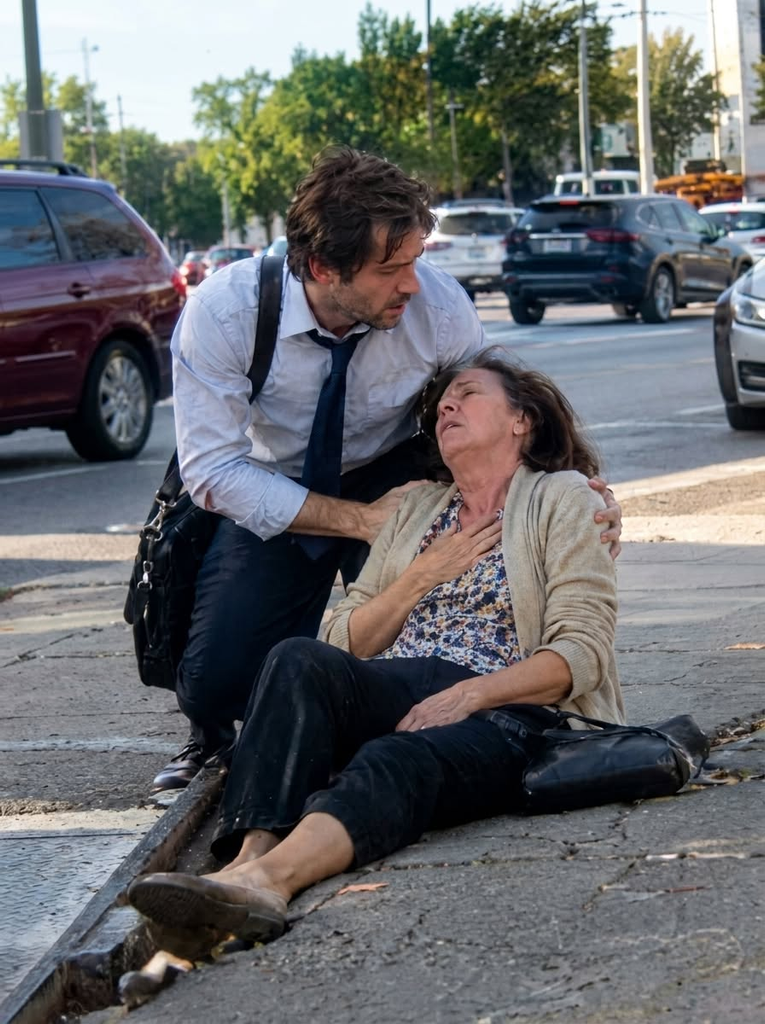
 Click Here: Looking for another story with plenty of drama and a satisfying twist? You might enjoy this one: For months, I suspected my neighbor was behind every strange thing happening around my home. Then I woke to a ruined car, no evidence, and a furious knock that changed the fight.