
What started as a joke has now turned into something far more serious—and a lot more complicated. When a viral parody begins flirting with legal consequences, it forces everyone to ask the same uncomfortable question: where exactly is the line between comedy and crossing the line?
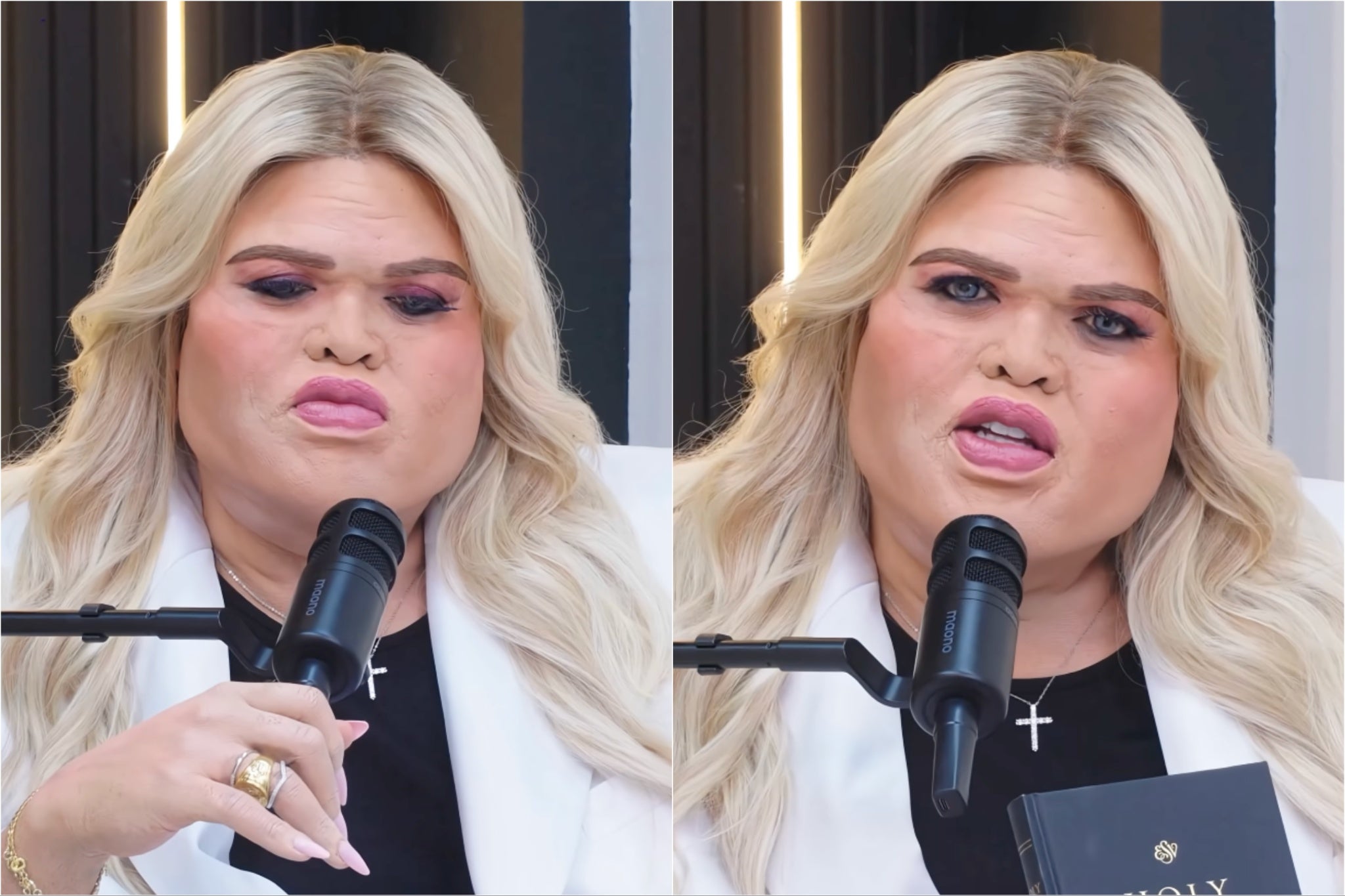
At first glance, Druski’s impersonation of Erica Kirk looked like just another skit designed to get a few laughs. But the details were almost unsettling in how precise they were. The all-white outfit, the dramatic entrance, the subtle yet exaggerated facial expressions—half on the verge of tears, half oddly composed—the signature pauses, the slightly awkward cadence. It wasn’t just inspired by her. It felt like a near-perfect mirror. And that’s exactly what caught people’s attention.
Online reactions came fast. Some viewers laughed. Others paused. A common sentiment started circulating: this might be a little too accurate. Not just a parody—but a replication. And that distinction? It’s where things started to get messy.
Because Erica Kirk didn’t see humor—she saw a problem.
In her response, she made it clear that she believes the video crossed a boundary. According to her, this wasn’t harmless entertainment anymore. It was, in her words, an exploitation of her personal image, with potential legal implications tied to defamation. That statement alone shifted the entire conversation. Suddenly, what felt like internet comedy became something much heavier.
But here’s where it gets complicated.
Many people pushed back almost immediately. They argued that parody, by definition, exaggerates real traits. That’s the entire point. Comedians don’t invent personalities—they amplify what’s already visible. From that perspective, Druski wasn’t attacking her. He was reflecting her.
Still, others pointed out something more nuanced. When an imitation becomes so precise that it reinforces a widely shared perception—or even a stereotype—it can start to feel less like a joke and more like a statement. And that’s where opinions begin to split.
Because some viewers believe Erica Kirk isn’t being misrepresented at all.
They argue that the behaviors seen in the parody—the gestures, the emotional shifts, the delivery style—are things she has already displayed publicly. In that sense, the skit didn’t create an image. It simply amplified one that already existed. And if that’s true, then the real question becomes even more uncomfortable: is the parody the issue, or is it the original behavior?
That question becomes harder to ignore when you look at the reactions from audiences who’ve seen Erica Kirk speak in real life.
Clips from her public appearances have circulated widely, especially moments where her speeches didn’t land the way they were intended. In some cases, students can be heard reacting—laughing, confused, or openly questioning what she’s saying. Online comments echo the same sentiment, with viewers describing her delivery as disjointed or hard to follow. Whether fair or not, these reactions have contributed to a growing public image that’s already under scrutiny.
And once an image like that takes hold, it spreads quickly.
There’s also been ongoing online discussion—some of it speculative—about her broader role in politics and public influence. Reports have claimed that she holds positions tied to influential organizations and advisory boards, which only increases the attention on everything she says and does. At the same time, rumors and controversies surrounding her personal life continue to circulate, though many of these claims remain unverified.
Still, perception matters.
Because in the world of internet culture, perception often becomes reality. And once someone becomes a recognizable figure associated with controversy, they also become a target for commentary, criticism… and comedy.
What makes this situation even more interesting is how it compares to other controversial public figures.
There are individuals who face heavy criticism—sometimes for serious reasons—but still maintain a level of support. Why? Because they’re undeniably good at something. Maybe they’re compelling speakers. Maybe they deliver powerful messages. Maybe they connect with audiences in a way that feels authentic.
That single strength often changes everything.
It gives people a reason to overlook flaws—or at least tolerate them. But when that clear strength isn’t visible, public perception can shift in a very different direction. Criticism becomes louder. Mockery becomes more frequent. And parody starts to stick.
Which brings us back to Druski’s video.
The reason it spread so quickly isn’t just because it was funny—it’s because it felt familiar. Viewers recognized the mannerisms instantly. The exaggerated pauses. The emotional swings. The oddly specific gestures. It tapped into something people had already seen before, which made the humor hit even harder.
And that’s what makes this situation so difficult to untangle.
Because if the parody is built entirely on recognizable traits, then it raises a deeper question: can you claim harm from a reflection of your own public image?
At the same time, Erica Kirk’s reaction highlights a growing tension in today’s digital world. Public figures are more exposed than ever. Every gesture, every speech, every moment can be clipped, shared, and transformed into content. And once that happens, control over that image becomes almost impossible.
So when does it stop being fair game?
That’s the part no one seems to agree on.
Some believe she has every right to push back, especially if she feels her image is being used in a damaging way. Others see this as an overreaction—an attempt to silence criticism through legal pressure. And then there are those who think the entire situation could have been avoided altogether.
Because sometimes, the internet doesn’t create narratives.
It amplifies them.
And as this situation continues to unfold, one thing is clear: this isn’t just about a parody video anymore. It’s about perception, accountability, and the blurred lines between public identity and public entertainment.
So who’s actually in the wrong here?
That depends on where you draw the line.
But one thing’s for sure—the conversation isn’t over.
Leave a Reply