CHAPTER 1: THE DAY MY WEDDING FELL APART
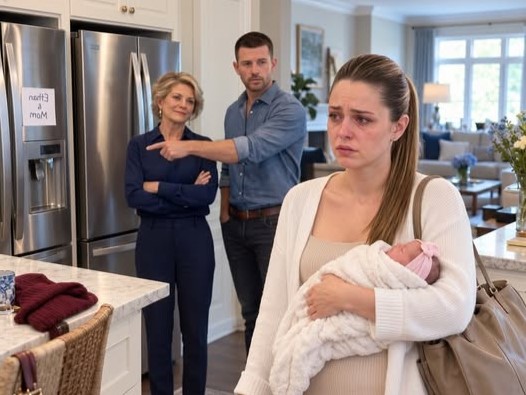
The first time I saw my mother crying over her reflection, she held a hat in trembling hands, desperately trying to conceal what my fiancé had allowed to happen to her.
Two hours later, my wedding would be canceled.
By midnight, I would learn that the man I’d loved for three years had been hiding plans that could ruin my future long before he proposed.
But his betrayal wasn’t the most frightening discovery.
It was realizing our relationship had started with a lie—and that my grandmother had left me something capable of bringing his family’s carefully built empire crashing down.
My name is Naomi Parker.
I’m twenty-eight and live in San Jose, California.
Until that Saturday morning, I believed I was incredibly fortunate.
I was about to marry Brandon Prescott, a successful real estate consultant with a handsome face, charming personality, expensive preferences, and an effortless ability to make others feel important.
We’d met three years earlier at a charity fundraiser.
He approached while I studied architectural drawings displayed near the entrance.
“Most guests come here for champagne,” he’d remarked.
“You’re the only one who’s spent twenty minutes studying a building.”
I laughed.
“I’m an architectural designer. Buildings have always been my weakness.”
“Wonderful,” he replied, offering his hand.
“Then perhaps you’ll appreciate someone who believes in creating things that last.”
Those words stayed with me.
For three years, I trusted them.
Our wedding was scheduled at Rosemont Estate, an elegant property surrounded by carefully maintained gardens and beautiful fountains.
Almost two hundred guests were expected.
My ivory satin wedding gown featured delicate lace and intricate details, all lovingly sewn by my mother.
She’d worked on it for three months.
Every flower, pearl, and carefully placed stitch reflected her devotion.
She’d insisted on making my dress instead of buying one.
“Someday,” she told me while measuring my waist, “you’ll see your wedding photographs and remember that your mother was with you in every stitch.”
I hugged her until she laughed.
Standing inside the bridal suite, surrounded by white roses and sparkling chandeliers, I couldn’t imagine anything spoiling our celebration.
Then the door opened.
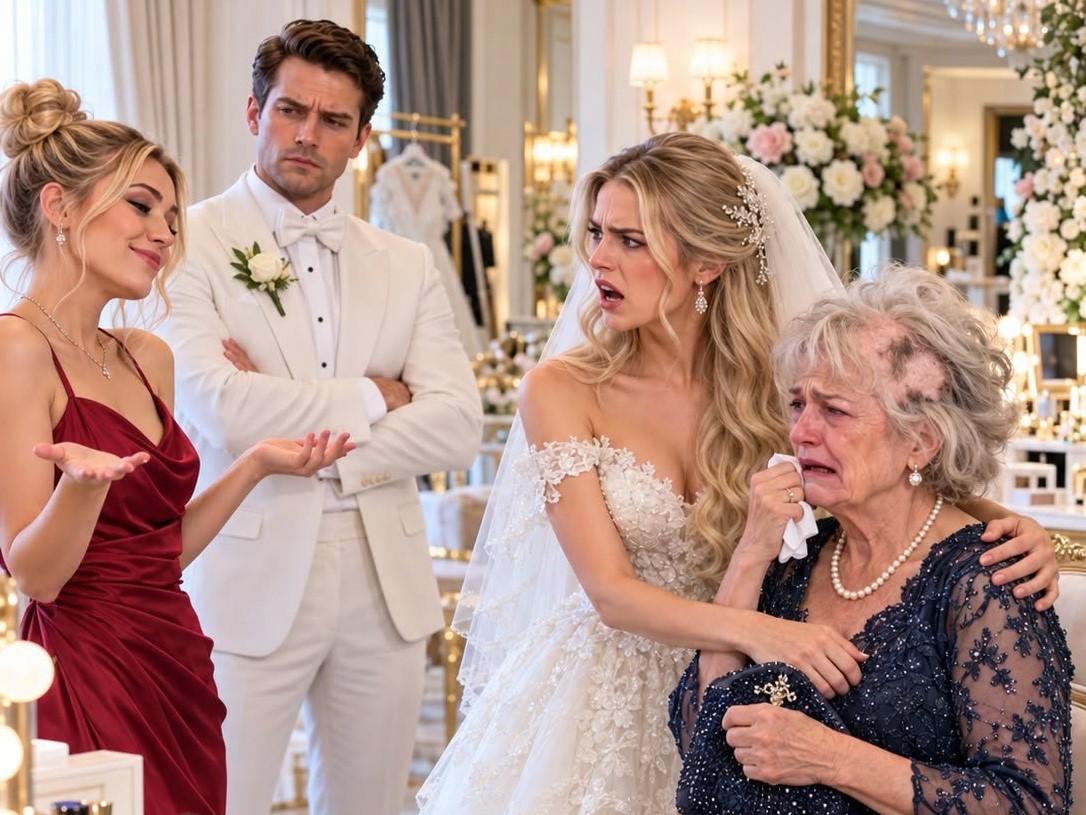
My mother walked in wearing an oversized beige hat.
Mom never wore hats, even during California’s hottest summers.
Her eyes were swollen, and her complexion looked unusually pale.
Brandon stood behind her alongside Brianna Collins, his twenty-five-year-old childhood friend.
Brianna operated a fashionable downtown salon.
She was also one of my bridesmaids.
“Mom?” I asked.
“What happened?”
My mother, Miriam Parker, looked down.
“Nothing, sweetheart.”
Yet her voice shook.
Brandon exhaled impatiently.
“Naomi, please don’t create a scene. There was a little mishap at the salon.”
Brianna folded her arms.
“It’s hardly a disaster.”
I looked between them.
“What kind of mishap?”
Mom gently took my hand.
“Please, darling. Just continue getting ready.”
I carefully lifted her hat.
And froze.
For over thirty years, Mom had worn her gorgeous dark hair in a thick, waist-length braid.
My grandmother Evelyn had taught her to braid it during childhood.
For Mom, that braid symbolized family, cherished memories, and generations of women who’d guided her.
She often said, “As long as I can braid my hair, I’ll always remember my roots.”
Now the braid had disappeared.
Some strands measured barely two inches.
Others fell unevenly around her ears.
Several areas had been trimmed extremely short.
Her once-beautiful hairstyle had been left almost unrecognizable.
For several seconds, I couldn’t speak.
Then I whispered, “Who did this?”
Brianna shrugged.
“I was testing a different technique. Brandon said your mother wouldn’t object to trying something new.”
I faced him.
“You authorized this?”
He sighed dramatically.
“She’s still gaining experience, Naomi. People make mistakes.”
“She’s twenty-five!”
“Keep your voice down.”
“Look at my mother!”
Brianna looked offended.
“Seriously? I didn’t expect such an overreaction.”
Then Brandon revealed something about himself I should have recognized much earlier.
He moved beside Brianna.
Not my devastated mother. Not his bride.
Brianna.
“You’re hum!liating her,” he snapped.
Something inside me changed.
My gaze fell on silver scissors resting on the dressing table.
I picked them up.
“Naomi,” Brandon cautioned.
I approached Brianna.
In a moment of anger I would later regret, I reached for her carefully styled ponytail and cut away a thick section.
The blonde hair fell into my hand.
Brianna cried out in disbelief.
“ARE YOU CRAZY?”
I held up the loose hair.
“What’s wrong?”
Her eyes filled with angry tears.
I repeated her earlier attitude.
“Hair grows back, doesn’t it?”
Brandon caught my arm firmly.
“What is wrong with you?”
His grip was uncomfortable.
“Brianna has to appear before everyone looking like that!”
I met his eyes.
“Interesting. A few minutes ago, you didn’t seem concerned about my mother’s appearance.”
Before he answered, the door opened again.
Brandon’s parents entered with Waylon, Brianna’s older brother.
The confrontation escalated immediately.
Brianna started crying.
Waylon rushed toward me and forcefully caught my shoulder, making me lose my balance.
Mom hurried between us.
“Leave my daughter alone!”
Waylon pushed past her.
She stumbled backward and struck the wall.
“SECURITY!” I shouted.
Brandon made no effort to help.
Instead, he remained beside Brianna, shielding her.
His father, Charles Prescott, pointed toward me.
“Apologize immediately.”
I stared in disbelief.
“Your friend just hurt my mother!”
Charles remained expressionless.
“Your actions created this situation.”
Brandon held my shoulders.
“Apologize, Naomi. Now.”
He attempted to make me lower my head.
Behind him, Brianna smiled.
Then she subtly moved a nearby cleaning bucket with her foot.
Murky water spilled over my wedding gown.
Dark stains spread across the delicate lace Mom had spent months creating.
Everyone fell silent.
I stared at the fabric.
My beautiful dress was ruined.
I looked at Brandon, hoping he’d finally understand.
Instead, he shrugged.
“We’ll buy another one.”
Four words.
Four dismissive words that erased three years of trust.
I slowly slipped off my engagement ring.
I placed it on the dressing table.
Then I made my decision.
“The wedding is canceled, Brandon.”
His expression changed instantly.
“What?”
“I’m not marrying you.”
His mother gasped.
“You cannot cancel a wedding two hours before the ceremony!”
I took Mom’s hand.
“Watch me.”
Brandon moved closer.
“Naomi, stop being ridiculous!”
But I was already leaving.
Behind us, they accused me of selfishness, instability, and ingratitude.
I never looked back.
There was something none of them knew.
I was ten weeks pregnant with Brandon’s baby.
I’d intended to surprise him after our wedding reception.
Instead, I believed I was walking away permanently.
But that evening, an unfamiliar person would send me a video.
And everything would become far more complicated.
CHAPTER 2: THE MESSAGE THAT CHANGED EVERYTHING
By seven that evening, my wedding dress rested inside a plastic garment bag beside my bedroom closet.
Mom sat on the sofa, holding an ice pack against her back.
The urgent-care physician had identified a painful bruise and recommended rest.
Fortunately, nothing was broken.
I prepared some tea.
She barely drank it.
“I’m sorry,” she murmured.
I turned toward her.
“Sorry for what?”
“For destroying your wedding.”
I put down my cup.
“Mom, please don’t say that.”
“If I hadn’t visited the salon—”
“Stop.”
My response sounded harsher than intended.
I knelt beside her.
“You didn’t destroy anything. Brandon did. Brianna did. And I should’ve recognized their true characters long before today.”
Mom gently touched my face.
“I believed he loved you.”
“I believed that too.”
That realization hurt more than anything.
I could endure the embarrassment.
I could accept losing everything we’d paid toward the wedding.
But I couldn’t understand how the man I’d trusted with my future could watch my mother suffer and choose to protect those responsible.
My phone hadn’t stopped ringing.
Brandon.
His mother.
His father.
Brianna.
Even distant relatives I’d barely contacted suddenly wanted to speak.
One message from Brandon said:
YOU’VE EMBARRASSED MY ENTIRE FAMILY.
MAKE THIS RIGHT BEFORE THINGS GET WORSE.
Five minutes later, another appeared.
WE MUST DISCUSS THE PROPERTY.
CALL ME.
I frowned.
The property?
Eighteen months earlier, my grandmother had passed away, leaving me an aging commercial building in San Jose.
Years ago, it had accommodated a sewing workshop and several independent businesses.
Brandon knew about my inheritance.
But why was he bringing it up now?
While I considered his message, another notification appeared.
Unknown number.
Naomi, please don’t delete this.
We’ve never met, but there are things about your wedding that you deserve to know.
My heartbeat quickened.
Another message followed.
Watch this video.
Then read your email.
Don’t let Brandon know you’ve received either.
A video attachment appeared.
I hesitated briefly.
Then tapped play.
The recording showed Brianna’s salon.
Its timestamp displayed Friday, 8:41 p.m.
The evening before my wedding.
Brandon leaned casually against the counter.
Brianna stood beside him, laughing.
At first, I couldn’t make sense of their conversation.
Then Brianna asked:
“Are you certain Naomi won’t suspect anything?”
Brandon smiled confidently.
“She trusts me completely.”
Brianna rested a hand against his chest.
“And once you’re married?”
He chuckled.
“Everything her grandmother left her will be within our reach.”
I froze.
Brianna tilted her head.
“What if Miriam interferes?”
Brandon’s response sent a chill through me.
“Then make sure she doesn’t.”
Brianna laughed.
“I know how to handle her.”
Then she leaned closer.
And kissed him.
It wasn’t an innocent kiss.
Nor an impulsive mistake.
It was the comfortable, intimate kiss of two people who’d shared countless moments together.
I watched Brandon slip his arm around her waist.
My hands trembled so badly I nearly dropped my phone.
Then Brianna asked:
“What happens after tomorrow?”
Brandon smiled.
“After tomorrow, Miriam won’t be our concern anymore.”
The recording ended.
I stared at the dark screen.
For several moments, my heartbeat was the only sound I noticed.
Mom saw my expression.
“Naomi?”
I couldn’t respond.
Another message arrived.
Check your email immediately.
Search for Prescott Transaction Services.
I opened my inbox.
An unfamiliar sender had emailed me.
Attached was a fourteen-page document titled:
IRREVOCABLE PROPERTY AUTHORIZATION AND ASSIGNMENT OF BENEFICIAL INTEREST.
I opened the attachment.
Page one identified me as beneficiary of the Evelyn Parker Family Trust.
Page two authorized Brandon Prescott to represent me in negotiations involving the trust’s property and assets.
Page three assigned certain beneficial interests to a company named Briar Development Partners.
I’d never heard of it.
Then I reached the final page.
A signature appeared.
My signature.
An almost perfect imitation.
Below it was a notary acknowledgment dated that morning.
9:12 a.m.
At that precise moment, I’d been in the bridal suite while Leah, my maid of honor, helped secure my earrings.
I’d signed nothing.
I’d met no notary.
Someone had apparently falsified my signature on documents concerning Grandma’s inheritance.
Mom approached and stood beside me.
She examined the screen.
Suddenly, her expression shifted.
It wasn’t confusion.
Or surprise.
It was recognition.
“Naomi,” she whispered, “where did you find this?”
“Someone sent it.”
Her hand tightened around my shoulder.
“Call June Alvarez.”
“Who?”
“Your grandmother’s lawyer.”
“Why, Mom?”
She swallowed nervously.
“Because your grandmother made me promise something before she passed.”
“What promise?”
Mom studied the signature again.
Then she spoke words I’d never forget.
“She told me that if anyone named Prescott ever tried to make you surrender your inheritance, I should contact June immediately.”
CHAPTER 3: THE WOMAN WHO SAW IT COMING
My grandmother Evelyn Parker passed away at eighty-four.
She was petite, stubborn, outspoken, and remarkably fearless.
She favored comfortable shoes, distrusted wealthy charmers, and always carried peppermints, even without children nearby.
Most people knew her as an elderly widow who’d spent decades sewing clothes.
But Grandma was extraordinary.
During the 1980s, she owned a small manufacturing company that employed women needing flexible schedules, dependable incomes, or fresh opportunities.
Some raised children alone.
Others had escaped difficult marriages.
Several spoke limited English when they arrived.
Grandma offered employment, helped them develop skills, and remembered their birthdays.
Mercer House, her aging commercial building, had been the center of her business.
After retiring, she leased its rooms to local entrepreneurs.
When she passed away, I inherited the property through her family trust.
I’d always planned to renovate it.
Although the building needed extensive repairs, I adored its brick walls, tall windows, and faded blue lettering above the entrance.
Grandma often said:
“Buildings remember the people who were loved inside them.”
Her words partly inspired my architectural career.
But now someone had used her inheritance in documents I’d never authorized.
And Mom was revealing that Grandma had warned her about Brandon’s family.
“Why didn’t you tell me?”
Mom carefully sat on the couch.
“Because I never understood what she meant.”
“She actually mentioned the Prescotts?”
“Charles Prescott. Brandon’s father.”
I stared.
“How did Grandma know him?”
Mom sighed.
“Years ago, Charles worked with your grandmother on business investments. I never knew the full story. She stopped trusting him long before Brandon entered your life.”
“Then why didn’t you warn me when we began dating?”
“I tried.”
Suddenly, I remembered.
Early in our relationship, Mom had asked whether Brandon was connected to Charles Prescott’s former investment business.
I’d explained that his father was a respected businessman.
She’d seemed concerned but hadn’t continued.
“I asked your grandmother about him,” Mom explained.
“She said Charles had changed company names repeatedly. She didn’t want accusations made without evidence.”
I pressed my fingers against my temples.
Nothing seemed real.
“Why would Brandon want Mercer House?”
“I honestly don’t know.”
“But Grandma warned you?”
“Yes.”
Mom paused.
“She said something unusual shortly before passing away.”
“What?”
“She told me, ‘If Naomi ever discovers what I truly left her, make sure Charles Prescott isn’t the one explaining it.’”
A cold feeling settled in my stomach.
I checked my phone.
Seventeen missed calls from Brandon.
I hadn’t answered any.
Finally, I searched my contacts for June Alvarez.
Grandma had introduced us at a family dinner years earlier.
June was a well-regarded estate attorney in her late fifties.
She’d known Grandma for almost twenty years.
It was nearly ten that evening.
I expected her voicemail.
Instead, she answered immediately.
“Naomi?”
Her voice sounded attentive.
“June, I’m sorry for calling this late.”
“What’s happened?”
I explained everything.
The canceled wedding.
The salon incident.
The confrontation.
The recording.
And the suspicious paperwork.
When I mentioned the imitation signature, she interrupted.
“Don’t sign anything. Don’t respond to Brandon or anyone representing him. And please don’t admit unexpected visitors tonight.”
My stomach tightened.
“Is it really that serious?”
“Forward the document to me.”
I sent it.
For several moments, only her keyboard could be heard.
Then she whispered:
“Oh, Evelyn.”
The sadness in her voice frightened me.
“What is it?”
“Naomi, this property authorization is only one piece.”
“What do you mean?”
“Whoever created these papers wasn’t simply attempting to control Mercer House.”
I gripped my phone.
“Then what were they doing?”
June answered softly.
“They were attempting to gain authority over the entire trust.”
My mouth went dry.
“But Mercer House is all Grandma left me.”
Silence followed.
Then June asked:
“That’s what you’ve always believed, isn’t it?”
I glanced at Mom.
She looked equally bewildered.
“June?”
“Come to my office tomorrow morning. Bring Miriam and every document Evelyn gave you.”
“Why?”
“Because you need to understand something important about her estate.”
She paused.
“And Naomi?”
“Yes?”
“I believe someone has intentionally prevented you from learning the full extent of your inheritance.”
CHAPTER 4: THE HOUSE OF SECRETS
I hardly slept that night.
Whenever I closed my eyes, I pictured Brandon kissing Brianna.
Then his words returned.
“Everything her grandmother left her will be within our reach.”
By morning, I felt ten years older.
My phone rang at seven.
Brandon.
I ignored it.
Then another message appeared.
IF YOU REFUSE TO SPEAK WITH ME, MY FATHER WILL GET INVOLVED.
I studied the message.
Only two days earlier, those words might have intimidated me.
Now they strengthened my determination.
I sent one response.
All further communication must go through my attorney.
Then I blocked him.
At nine, Mom and I reached June Alvarez’s office.
It was on the second floor of an older downtown brick building.
June welcomed us herself.
She embraced Mom first.
Then she turned toward me, visibly concerned.
“I wish we were meeting under better circumstances.”
“So do I.”
She guided us into a conference room.
A thick folder sat on the table.
Beside it rested a small wooden box.
I recognized it instantly.
Grandma had kept that box on her bedroom dresser.
“Why is that here?”
June rested her hand on its lid.
“Evelyn entrusted it to me six months before she passed.”
I stared.
“For me?”
“Eventually.”
“Why didn’t I receive it when she died?”
“Certain business matters were still under review. She wanted specific records protected until everything was completed.”
June opened the folder.
The first page contained a photograph of Mercer House.
The next showed property valuations.
I blinked in disbelief.
“Those numbers can’t be correct.”
June nodded.
“An investment group recently offered approximately fourteen million dollars for the building and its surrounding land.”
Fourteen million.
I knew the property had value.
But I’d estimated two or three million at most.
“The city approved a major transit project nearby,” June explained.
“That development has made the location extremely attractive.”
Mom covered her mouth.
I stared at the figures.
Fourteen million dollars.
Brandon had never told me about any offer.
But June had more to reveal.
“There’s another concern.”
She placed another document before me.
A purchase agreement.
The proposed buyer was Briar Development Partners.
The listed price was $2.8 million.
I looked up.
“But you said the property is worth fourteen million.”
“Exactly.”
“Who owns Briar Development?”
June opened another folder.
“That’s what we’re currently investigating.”
I recognized the company from the unauthorized paperwork.
“Brandon?”
“Possibly.”
“But whoever controls it is attempting to purchase Mercer House far below its actual market value.”
My stomach tightened.
They were planning to deprive me of more than eleven million dollars in property equity.
“Could they succeed using that forged signature?”
“Not legally,” June replied.
“However, fraudulent authorization can create serious complications if financial institutions accept it before anyone discovers the deception.”
She explained that the paperwork had already reached a transaction service involved in the proposed sale.
Her office had contacted the company and formally challenged its authenticity.
“We’re preparing emergency legal documents to prevent anyone from using it.”
I stared at the table.
“Why would Brandon marry me if he could simply falsify my signature?”
June studied me carefully.
“Because marriage would’ve made you more trusting of documents he asked you to sign. It also could’ve given him additional influence if you later questioned the transaction.”
I remembered the prenuptial agreement Brandon had repeatedly suggested.
I’d refused to sign it.
He’d proposed discussing it after our honeymoon.
At the time, I’d considered that thoughtful.
Now I suspected he’d discovered another approach.
June turned toward Mom.
“Miriam, do you remember Evelyn mentioning a blue ledger?”
Mom’s expression shifted.
“She kept one in her sewing room.”
“Do you still have it?”
“I believe so.”
June nodded.
“We need that ledger.”
“What exactly is it?” I asked.
“An old collection of business records.”
“Concerning Mercer House?”
“Among other matters.”
She opened the wooden box.
Inside were Grandma’s silver thimble, an aging photograph, and a sealed envelope.
Six words appeared across it in her familiar handwriting.
FOR NAOMI, WHEN THE MASKS COME OFF.
Tears filled my eyes.
June passed me the envelope.
I opened it carefully.
Inside was a handwritten letter.
My dearest Naomi,
If you’re reading this, someone has finally revealed the person they were hiding.
I’m sorry I couldn’t shield you from every disappointment.
But I can still help you avoid one terrible mistake.
Never mistake an expensive suit for an honorable character.
And never allow anyone to convince you that the women who raised you have nothing meaningful to contribute.
There are parts of my business I never managed to explain.
June knows where to start.
Trust her.
Trust your mother.
Above everything, trust your instincts when something feels wrong.
Love, Grandma.
I held the letter against my chest.
For the first time since the canceled wedding, I allowed myself to cry openly.
Mom embraced me.
June gave us a moment.
Then she spoke gently.
“Naomi, Evelyn didn’t leave that warning because she distrusted every wealthy family.”
I wiped my tears.
“Then why did she?”
“Because Charles Prescott owed her something.”
“What was it?”
June glanced toward the closed office door.
“A debt he’d spent almost thirty years attempting to erase.”
CHAPTER 5: THE GIRL WHO SENT THE VIDEO
The unfamiliar number messaged me again that afternoon.
I know you visited the attorney.
Please don’t meet Brandon alone.
I stared at the screen.
Then replied:
Who are you?
Three typing dots appeared.
Vanished.
Then returned.
Finally, a response arrived.
My name is Eden Harris.
I work at Brianna’s salon.
I was there Friday evening.
I called immediately.
She answered on the first ring.
“Naomi?”
“Yes.”
“I’m sorry. I’m truly sorry about your mother.”
“How did you obtain that recording?”
“I was helping Brianna create promotional content for the salon. She wanted behind-the-scenes footage of the wedding preparations.”
“So they knew you were recording?”
“Initially. Then they forgot I was nearby.”
I closed my eyes.
“Why did you send it?”
Eden hesitated.
“Because I overheard what they intended to do.”
“What exactly?”
Silence followed.
Then she whispered:
“Brianna didn’t accidentally ruin your mother’s hairstyle.”
My heartbeat quickened.
“Explain.”
“Brandon called her Friday afternoon. He complained that your mother was making you difficult to influence.”
I tightened my grip on the phone.
“What?”
“He said Miriam constantly encouraged you to question things. He wanted her distracted and upset during the wedding.”
I felt nauseated.
“Brianna promised to handle it,” Eden continued.
“She believed ruining your mother’s hair would embarrass her enough to keep her away from the ceremony.”
I stared blankly ahead.
Mom had been deliberately humiliated.
Not because Brianna lacked experience.
Not because of an unfortunate mistake.
But because Brandon wanted her removed from the situation.
“Why?” I whispered.
Eden’s voice trembled.
“I believe they wanted you signing documents after the ceremony. Brianna repeatedly mentioned keeping ‘the old woman’ away from you.”
My hands felt cold.
“And the recording?”
“Brianna wanted promotional clips for social media. I was reviewing the footage before uploading it when I noticed their conversation. I saved a copy before she removed it from our shared folder.”
“Did you tell anyone?”
“No.”
“Why didn’t you warn me sooner?”
Eden began crying.
“Because Brianna threatened my job. I desperately need that income. My mother is ill, and I help cover our rent.”
My anger softened.
“Eden, listen carefully. You made the right decision.”
“No, I didn’t. I should’ve intervened.”
“You weren’t responsible for cutting my mother’s hair.”
“But I knew something was wrong.”
I remembered Brandon defending Brianna.
Waylon pushing Mom aside.
Charles demanding that I apologize.
Every one of them had behaved as though Brianna’s reputation mattered more than our well-being.
“There’s something else,” Eden whispered.
“What is it?”
“I noticed documents inside Brianna’s office.”
“What documents?”
“I’m not entirely sure. But both Brandon’s name and hers appeared on them.”
“Business records?”
“Possibly. But I noticed something unusual.”
I waited.
“She keeps a photograph of a little girl in her office. The child looks about two years old. Brianna tells everyone she’s her niece.”
I frowned.
“And?”
Eden lowered her voice.
“During a video call, I heard that little girl call Brandon ‘Daddy.’”
My breath caught.
“You’re absolutely certain?”
“Yes.”
I closed my eyes.
For several seconds, I couldn’t react.
Brandon had repeatedly told me how desperately he wanted children.
He’d become emotional whenever we discussed raising a family.
Once, he’d told me:
“I can’t wait to become a father.”
Now I was expecting his baby.
And he might already have another child.
“Eden,” I said carefully, “please forward everything you have to my attorney.”
“I promise.”
“And take care of yourself.”
“I will.”
Before ending the call, she hesitated.
“Naomi?”
“Yes?”
“There’s a reason Brianna seems so comfortable around Brandon’s parents.”
My stomach tightened.
“What reason?”
“I don’t know everything. But last Christmas, I overheard Mrs. Prescott say something unusual to Brianna.”
“What did she say?”
Eden paused.
Then whispered:
“She called Brianna the daughter she’d always wanted.”
CHAPTER 6: THE SECRET GROWING INSIDE ME
I hadn’t told June about my pregnancy.
I hadn’t even told Mom.
I’d imagined announcing it completely differently.
A tiny pair of baby shoes wrapped in silver paper.
A card reading:
Our greatest adventure begins now.
I’d pictured Brandon opening the gift after our reception, perhaps beside the fountain where we’d taken our engagement pictures.
He would laugh.
Then become emotional.
Then embrace me tightly.
That was the future I’d envisioned.
Instead, I was sitting in an attorney’s office, discovering evidence of another woman—and possibly another child.
The following morning, I woke feeling nauseated.
Mom discovered me sitting on the bathroom floor.
“Naomi?”
I wiped my face.
“I’m alright.”
She knelt beside me.
“Sweetheart, you’ve hardly eaten in two days.”
I wanted to tell her everything.
But when I tried speaking, the words wouldn’t come.
She watched me quietly.
Then her expression softened.
“Are you expecting a baby?”
I burst into tears.
She understood immediately.
Mom wrapped her arms around me.
“Oh, sweetheart.”
“I’m ten weeks pregnant.”
She embraced me more tightly.
“Does Brandon know?”
I shook my head.
“No.”
We remained together on the bathroom floor for several moments.
Then I whispered:
“I’m frightened, Mom.”
“I understand.”
“What if he tries to take my baby away?”
Mom gently raised my chin.
“Then we’ll seek proper legal guidance and make sure you’re both protected.”
“What if my child grows up resenting me for leaving their father?”
“Then someday, you’ll explain your decision in a way your child can understand.”
I wiped away my tears.
“What would I say?”
Mom offered a sad smile.
“That loving someone never means accepting a relationship that causes you harm.”
I rested against her shoulder.
She gently stroked my hair.
That small gesture nearly overwhelmed me.
Her own cherished hair had been left uneven and damaged.
Yet she was still comforting me.
“Mom?”
“Yes?”
“Do you ever regret having me?”
She immediately pulled away.
“Never.”
“But you sacrificed so much.”
Mom shook her head.
“I gave up certain things. That doesn’t mean I regret you.”
I knew how difficult life had become after my father passed away when I was young.
Mom had worked endless hours sewing wedding gowns, school uniforms, and clothing alterations.
We’d never had much money.
But our home had always felt welcoming.
There were always fresh sheets, homemade soup, and someone waiting when I returned from school.
“You were the greatest blessing of my life,” Mom said.
“Nothing could ever compare.”
My tears fell faster.
Then she said something I’d always remember.
“You don’t need to figure out your entire future today. Just decide what will keep you safe right now.”
That afternoon, I attended my prenatal appointment.
My doctor examined the ultrasound.
The baby’s heartbeat was strong.
Everything appeared to be developing normally.
Watching that tiny movement on the monitor, I felt something change within me.
My baby was real.
Not merely an idea.
Not some distant dream.
A tiny developing life that depended entirely on me.
When the nurse gave me the ultrasound picture, I held it with extraordinary care.
Outside the clinic, I remained in my car for twenty minutes.
Then I called June.
“There’s something important I need to tell you.”
She listened without interrupting.
When I finished, she replied:
“Naomi, being pregnant doesn’t give Brandon control over your life or your inheritance. We’ll review your legal options separately from the property fraud investigation.”
I exhaled slowly.
“What should I do?”
“Keep records of any threats. Don’t meet him privately. And never let his family’s intimidation determine your choices.”
“Alright.”
June paused.
“There’s another development.”
My stomach tightened.
“What happened?”
“We’ve identified the registered agent for Briar Development Partners.”
“And?”
“The business was established through several entities connected to Charles Prescott.”
I closed my eyes.
“That figures.”
“But another individual appears in the ownership records.”
“Who?”
June’s voice grew serious.
“Brianna Collins.”
CHAPTER 7: THE PRICE OF A LIE
Three days after our canceled wedding, Brandon appeared outside my apartment.
I hadn’t asked him to come.
Mom and I were sitting at the kitchen table when someone knocked.
Then I heard him.
“Naomi! Open the door!”
Mom went still.
I approached the entrance but kept it locked.
“Go home, Brandon.”
“We need to talk.”
“Contact my lawyer.”
“This isn’t something attorneys should be involved in!”
I nearly laughed.
He’d apparently falsified legal paperwork concerning my inheritance.
Yet now he wanted lawyers excluded.
“Please leave.”
His voice softened.
“Baby, please.”
That familiar word hurt more than I’d anticipated.
“Don’t call me that.”
“I love you.”
I leaned against the door.
For one painful moment, I remembered the Brandon who brought coffee during rainy mornings.
The man who memorized my favorite books.
The man who comforted me through the night after Grandma died.
Then the recording returned to my mind.
“Do you love Brianna too?” I asked.
Silence followed.
Then:
“What?”
“I watched the recording.”
Another pause.
This one lasted longer.
Finally, he answered:
“Naomi, whatever you believe you saw—”
“I watched you kiss her.”
“You’re misunderstanding the situation.”
I closed my eyes.
“What possible explanation makes that acceptable?”
“She’s been part of my life since childhood. You know that.”
“Did you deliberately ask her to ruin my mother’s hair?”
No response.
“Brandon?”
“You’re exaggerating everything.”
I clenched my hands.
“You caused my mother pain.”
“I never laid a hand on her!”
“No. You arranged for someone else to humiliate her.”
His voice changed.
“Be careful, Naomi.”
An uncomfortable chill passed through me.
“Are you threatening me?”
“I’m offering advice.”
Then he added:
“You have no idea how my father responds when someone publicly embarrasses our family.”
I stood motionless.
“Do you realize what you’re saying?”
“Open the door.”
“No.”
“Naomi—”
“Leave, or I’ll contact the police.”
His voice became cold.
“Fine. But you’ll regret treating me this way.”
I heard him walking away.
Then a vehicle door closed.
Mom stepped out of the kitchen.
She’d recorded part of our conversation on her phone.
I stared in surprise.
“When did you learn to do that?”
She offered a weary smile.
“Your grandmother always taught me to document threatening behavior.”
I hugged her.
An hour later, June called.
She’d discovered another concerning document.
The proposed property sale wasn’t simply priced far below market value.
It included a clause requiring the seller to indemnify Briar Development against certain undisclosed liabilities.
In other words, I could’ve surrendered valuable property for a fraction of its worth while potentially accepting substantial financial obligations.
“They intended to acquire the property while leaving you financially vulnerable,” June explained.
I pressed my hand against my forehead.
“How much could I have lost?”
“The land alone may be worth millions more than their proposed price. But I’m especially concerned about other assets mentioned in the assignment.”
“What other assets?”
June hesitated.
“The blue ledger might help us understand.”
I glanced toward Mom’s sewing room.
Grandma’s belongings were stored inside.
Boxes of sewing patterns.
Spools of thread.
Old photographs.
Fabric samples.
And somewhere among those memories, a book that might reveal everything.
“Mom,” I called, “we need to locate Grandma’s ledger.”
CHAPTER 8: THE BLUE LEDGER
We spent almost four hours searching.
Mom’s sewing room occupied our apartment’s smallest bedroom.
Shelves covered every wall.
Glass jars held buttons, labeled containers organized thread, and neatly folded fabrics filled the remaining space.
Grandma’s sewing machine stood beside the window.
I’d learned to sew using that machine at nine.
Mom searched drawers while I examined storage boxes.
Eventually, I discovered a dusty metal trunk beneath a table.
Inside were photographs and bundles of aging business documents.
At the very bottom rested a navy-blue leather ledger.
My heart raced.
“Mom!”
She hurried toward me.
I held up the book.
“Is this the one?”
She nodded.
“Yes.”
We opened it together.
Its pages contained handwritten records dating back to the early 1990s.
Names.
Payments.
Loans.
Investments.
Grandma’s handwriting remained beautifully organized.
I recognized several former employees.
Then one name caught my attention.
Charles Prescott.
An entry dated April 17, 1997, recorded a payment of $425,000.
Beside the amount, Grandma had written:
Initial capital contribution—Prescott Commercial Ventures.
Another entry documented transferred business equipment.
A third listed an additional investment.
“What does this mean?” I whispered.
Mom looked astonished.
“I remember your grandmother helping someone establish a business, but I never realized how much she’d invested.”
I turned another page.
A handwritten note appeared.
Charles insists the investment will be temporary.
He believes I don’t understand ownership.
I will let the documents explain it to him.
Despite everything, I nearly smiled.
That sounded exactly like Grandma.
The following page referenced stock certificates.
Another mentioned a shareholders’ agreement.
I immediately called June.
She answered quickly.
“Did you locate it?”
“Yes.”
“Read the entries aloud.”
I began reading.
When I mentioned the stock certificates, June fell unusually quiet.
Then she asked:
“Naomi, does Evelyn mention an ownership percentage?”
I turned another page.
There it was.
Written in Grandma’s precise handwriting.
Fifty-one percent ownership interest.
My mouth went dry.
“June?”
“What does the entry say?”
“Fifty-one percent.”
Silence followed.
Then June whispered:
“Oh my goodness.”
I stared at the number.
“Fifty-one percent of what?”
June inhaled slowly.
“Originally, Prescott Commercial Ventures.”
“Does that company still exist?”
“It underwent restructuring years ago.”
“What did it become?”
A long pause followed.
Then she answered:
“Prescott Commercial Ventures eventually became part of Prescott Holdings Group.”
I recognized that company immediately.
Nearly everyone working in Northern California commercial real estate knew its name.
Prescott Holdings controlled hotels, office complexes, upscale residential developments, and event venues.
Charles Prescott had built his public reputation around that empire.
His photographs regularly appeared at charity events and construction ceremonies.
Business publications celebrated him as a self-made entrepreneur.
I looked down at Grandma’s handwriting.
“Are you saying she owned part of that company?”
“She certainly held an ownership interest at one point. We’re still investigating what happened to those shares.”
“How valuable could they be?”
June hesitated.
“Potentially worth a considerable amount.”
My heartbeat quickened.
“But Grandma lived modestly. She drove an old Toyota.”
“Having valuable assets on paper doesn’t necessarily mean having access to their financial benefits.”
I turned toward Mom.
Her face had grown pale.
June continued.
“It’s possible dividends were withheld, ownership information concealed, or transfers made without proper authorization. We need to examine the original agreements.”
I turned another page.
There was one final handwritten note.
The entry was dated six months before Grandma passed away.
I have confirmed enough to know Charles has been dishonest.
The original documents are secure.
He believes time has erased the evidence.
But time has only increased its value.
Beneath those words, Grandma had written another sentence, underlined twice.
THEY CANNOT SELL WHAT NEVER BELONGED TO THEM.
I read it aloud.
Mom began crying.
“She knew,” she whispered.
I turned toward her.
“Knew what?”
Mom gently touched Grandma’s handwriting.
“That Charles would eventually come after you.”
CHAPTER 9: THE OTHER WOMAN WAS NEVER THE OTHER WOMAN
Two days later, another shocking discovery changed everything I believed about my relationship.
June summoned me to her office Thursday morning.
She looked exhausted.
Several folders lay open across her desk.
“Naomi, please sit down.”
I obeyed.
Mom settled beside me.
June folded her hands.
“We’ve been investigating Brianna Collins.”
I swallowed.
“Alright.”
“Her current legal name is no longer simply Brianna Collins.”
I stared.
“What?”
June placed a certified record before me.
Across the top were the words:
CERTIFICATE OF MARRIAGE.
The document had been issued in Clark County, Nevada.
The date was March 14, 2023.
The groom was Brandon Michael Prescott.
The bride was Brianna Elise Collins.
My vision blurred.
I read the certificate.
Then read it again.
“That can’t be correct.”
June remained silent.
I shook my head.
“Brandon and I began dating in 2023.”
“I know.”
“He proposed last year.”
“I know.”
I pointed toward the certificate.
“But this says—”
My voice trembled.
“It says he’s married to her.”
June nodded.
“Yes.”
I couldn’t move.
Brianna wasn’t merely Brandon’s secret girlfriend.
She wasn’t a childhood friend who’d unexpectedly captured his affection.
She wasn’t simply someone he’d been seeing behind my back.
She was his legal wife.
Our planned wedding couldn’t have created a valid marriage while his existing marriage remained legally intact.
The elaborate ceremony.
The vows.
The promises.
The guests.
Everything had been an elaborate performance.
I covered my mouth.
“Oh my God.”
Mom reached for my hand.
June continued gently.
“We’ve also confirmed they have a daughter.”
A photograph appeared on her computer.
A little girl with blonde curls and beautiful blue eyes smiled toward the camera.
Her name was Poppy.
She was two years old.
Her birth certificate identified Brandon Prescott as her father.
I felt as though the ground had vanished beneath me.
Brandon had comforted me after Grandma’s funeral.
He’d met my closest friends.
He’d celebrated my birthdays.
He’d helped arrange our wedding.
And throughout those years, he’d already had a wife.
And a daughter.
My hands began trembling.
“Does his family know?”
June examined the documents.
“We can’t establish precisely what each family member knew, but the marriage wasn’t difficult to confirm. His parents attended several events with Brianna after the wedding date.”
I remembered Diane Prescott affectionately calling Brianna her little girl.
I remembered Charles demanding my apology.
I remembered Brandon protecting Brianna when Waylon pushed my mother.
Suddenly, their behavior made sense.
They hadn’t simply been defending an old family friend.
They’d been protecting the woman they already regarded as their daughter-in-law.
I stood abruptly, scraping my chair against the floor.
“I need some fresh air.”
Mom followed me outside.
I leaned against the building, struggling to steady my breathing.
Pedestrians passed carrying coffee and shopping bags.
Cars traveled through the intersection.
Somewhere nearby, a dog barked.
The world continued normally, completely unaware of what I’d just discovered.
But my world had changed.
“Three years,” I whispered.
Mom wrapped an arm around me.
“He deceived me for three years.”
“I know.”
“He promised we’d spend our lives together.”
Mom remained quiet.
“He already had a life.”
My voice cracked.
“He already had a family.”
Then I remembered the tiny heartbeat from my ultrasound.
I lowered myself onto a bench.
“Mom, I’m expecting his baby.”
She sat beside me.
“I know.”
“What am I supposed to tell my child?”
She held my hand.
“The truth. When they’re old enough to understand.”
I shook my head.
“How could someone be so dishonest?”
Tears filled Mom’s eyes.
“I wish I knew, sweetheart.”
We sat quietly for a long time.
Then she said something that helped me regain my composure.
“His dishonesty doesn’t make your child a mistake.”
I looked at her.
She squeezed my hand.
“Your baby has done nothing wrong. Neither have you.”
I rested against her shoulder.
For the first time, I understood I wasn’t mourning a lost marriage.
I was grieving the person I’d believed Brandon to be.
CHAPTER 10: THE FAMILY BUSINESS
By Friday, June had uncovered enough information to understand the apparent scheme.
Brandon and Brianna had secretly married in Nevada.
They’d concealed their marriage while Brandon pursued me romantically.
Business associates connected to Charles Prescott had prepared documents intended to transfer control of Grandma’s trust assets.
Briar Development Partners was linked to companies controlled by Brandon and Brianna.
And the proposed Mercer House transaction would’ve transferred valuable property far below its estimated market value.
But one question remained unanswered.
Why had Charles Prescott gone to such lengths to arrange his son’s marriage to me?
Falsifying documents seemed easier than organizing an entire wedding.
June suspected the answer involved the original shareholders’ agreement.
“We’ve confirmed your grandmother’s trust held a substantial interest in the original business,” she explained.
“But Charles has been acting as though he owns everything.”
“Precisely.”
“How is that possible?”
“Through complicated corporate restructurings, incomplete financial disclosures, and disputed ownership records.”
I frowned.
“Could he have taken Grandma’s shares without permission?”
“That’s among the issues we’re examining.”
She showed me a timeline.
In 1997, Grandma invested in Prescott Commercial Ventures.
In 2004, the business purchased two small hotels.
In 2011, it merged with another company.
In 2017, the organization restructured under Prescott Holdings.
Throughout those transactions, Grandma’s ownership should’ve been properly documented.
Instead, multiple records contained inconsistent share allocations.
Some identified her as an investor.
Others excluded her entirely.
One document even appeared to contain a signature she couldn’t possibly have provided.
It was dated three months after her de:ath.
I stared at the page.
“That’s impossible.”
“Yes.”
“Someone copied her signature too?”
June nodded seriously.
“It certainly appears that way.”
I remembered Grandma’s letter.
They cannot sell what was never theirs.
Charles hadn’t merely attempted to take my inheritance.
He’d apparently spent years trying to eliminate Grandma’s ownership rights.
And her passing had created another opportunity.
A young granddaughter.
A grieving mother.
An inheritance neither fully understood.
And a charming son who knew how to win my trust.
Then I remembered something important.
“June, Brandon insisted we marry before October.”
She looked up.
“Did he explain why?”
“He claimed he wanted an autumn wedding. But whenever I suggested waiting until spring, he became irritated.”
June’s expression sharpened.
“Do you remember his exact explanation?”
I considered carefully.
“He said, ‘October is important. My family has a business transition happening, and I’d rather have everything settled before then.’”
June leaned back.
“Interesting.”
“Why?”
“Prescott Holdings has its annual shareholders’ meeting next week.”
My stomach tightened.
“And?”
“There’s a scheduled vote involving changes to the company’s ownership structure.”
I stared at her.
“You think they needed my signature before that meeting?”
“That’s possible.”
“And they expected the wedding to make me sign without questioning anything.”
June nodded.
“Or make you reluctant to dispute documents submitted under your name.”
I felt nauseated.
“All those months of wedding preparations…”
“May have contributed to the pressure.”
I remembered Brandon insisting on selecting the venue.
His father volunteering to manage the vendors.
Brianna insisting she style Mom’s hair.
The prenuptial agreement.
The sudden demand to sign additional documents before our honeymoon.
Those events no longer seemed like unrelated coincidences.
They appeared coordinated.
Then June spoke.
“Naomi, we may be able to prevent the restructuring.”
I looked at her.
“How?”
“By formally challenging the unauthorized transfer and requesting a complete accounting of your grandmother’s ownership.”
“Will Charles cooperate?”
June gave a faint smile.
“I wouldn’t expect him to.”
“What if he refuses?”
She closed the folder.
“Then we’ll ask the court to require it.”
CHAPTER 11: THE MAN BEHIND THE SMILE
Charles Prescott called me personally that evening.
I considered ignoring him.
Then I remembered June’s advice.
Any threatening statements needed to be documented.
I answered with Mom beside me.
“Naomi,” he said smoothly.
“I’m pleased you’ve finally decided to behave like an adult.”
I remained silent.
“I understand you’ve been consulting attorneys.”
“Yes.”
“How unfortunate.”
“Why?”
“Because lawyers have a habit of turning ordinary family disagreements into unnecessarily expensive disputes.”
I glanced at Mom.
She nodded toward the recording indicator on my phone.
“Your son is already married to Brianna,” I said.
Silence followed.
For the first time, Charles sounded genuinely caught off guard.
Then he chuckled softly.
“I see you’ve been investigating.”
“Did you know?”
“Naomi, don’t be childish.”
“Did you know Brandon was already married when he proposed to me?”
Charles sighed.
“Brandon’s personal circumstances are complicated.”
“He’s legally married.”
“Marriage is merely a technical detail.”
I almost laughed.
“A technical detail?”
“People make arrangements all the time. You’ve benefited from your connection to our family.”
Anger rose inside me.
“How exactly have I benefited?”
“We introduced you to influential people. Created opportunities. Improved your social position.”
“My social position?”
“You’re a lovely young woman, Naomi, but be realistic. Before Brandon, you were an architectural designer sharing a modest apartment with your mother.”
I glanced at Mom.
She remained remarkably composed.
Charles continued.
“Our family introduced you to a world you never would’ve entered alone.”
I stared at the wall.
There it was.
The truth beneath their sophisticated appearances.
They considered me inferior.
They looked down on my mother.
They regarded Grandma’s sewing business as something embarrassing.
Yet they desperately wanted the assets she’d left behind.
“Charles,” I said calmly, “what did my grandmother provide for you in 1997?”
His breathing shifted.
“What?”
“Four hundred and twenty-five thousand dollars. An initial capital investment.”
Silence followed.
“Does that sound familiar?”
His voice became sharper.
“Where did you find that information?”
“Among her business records.”
“Those documents are decades old.”
“Apparently, they’re still relevant.”
“Listen carefully, Naomi.”
I leaned forward.
“I’m listening.”
“You’re involving yourself in business matters you don’t understand.”
“Then help me understand.”
He remained silent.
I continued.
“Why were documents submitted using a signature I never authorized?”
“Be careful with your accusations.”
“Why did Brandon secretly marry Brianna before pretending he could marry me?”
“Naomi—”
“And why did your associates attempt to purchase Mercer House for under three million when its actual value was substantially higher?”
Nearly ten seconds passed without an answer.
Then his entire tone changed.
His polished charm vanished.
“You should’ve proceeded with the wedding.”
I felt a chill.
“Why?”
“Because things would’ve been easier for you.”
“Easier how?”
“You wouldn’t have created problems with people who have considerable influence.”
My heartbeat quickened.
“Are you trying to intimidate me?”
“I’m explaining how business works.”
I glanced at Mom.
Her expression had turned pale.
Then Charles said something unforgettable.
“Your grandmother was a stubborn woman who never knew when to stop challenging people.”
My voice grew quiet.
“Don’t speak about her that way.”
“She could’ve accepted a generous settlement years ago.”
“But she refused.”
“Exactly. And what did that accomplish?”
Something inside me became perfectly still.
“Charles?”
“What?”
“Did you just acknowledge that she had a legitimate claim involving your company?”
He stopped speaking.
Then the call disconnected.
I looked toward Mom.
She returned my gaze.
Neither of us spoke for several moments.
Finally, she whispered:
“Your grandmother would’ve enjoyed that conversation.”
CHAPTER 12: THE WOMAN WHO REFUSED TO DISAPPEAR
The following morning, another incident tested my composure more than anything before it.
Mom had gone to the pharmacy to collect medication.
She’d been away less than twenty minutes when an unfamiliar number called.
“Am I speaking with Naomi Parker?”
“Yes.”
“I’m outside Westbrook Pharmacy. Your mother asked me to contact you.”
My stomach tightened.
“What happened?”
“A man confronted her. He’s left now, but she’s extremely upset.”
I immediately grabbed my keys.
When I arrived, Mom was sitting inside the pharmacy.
Her hands were trembling.
An elderly woman beside her introduced herself as Mrs. Chen.
She explained that a large man had approached Mom near her vehicle.
He’d demanded to know my whereabouts.
When she refused to answer, he’d taken her shopping bag and scattered its contents across the parking lot.
Mrs. Chen called for assistance.
The man quickly left.
Mom looked at me.
“It was Waylon.”
My heart sank.
Brianna’s brother.
The same man who’d pushed her during the wedding confrontation.
“What did he want?”
Mom swallowed.
“He told me to convince you to stop investigating.”
I felt uneasy.
“What else?”
“He said Charles could make our lives difficult if we refused to cooperate.”
I knelt beside her.
“Mom, I’m terribly sorry.”
She shook her head.
“No.”
“This is happening because of me.”
“No, Naomi.”
Her voice became firmer.
“This is happening because that family believes intimidating women will make them remain silent.”
We filed a police report.
Mrs. Chen agreed to give a statement.
The pharmacy’s surveillance cameras had recorded the encounter.
June helped us pursue a protective order and provide the available evidence to authorities.
But that evening, Mom surprised me.
She entered her sewing room.
Moved a chair in front of the mirror.
And picked up a pair of scissors.
I watched from the doorway.
“Mom?”
She examined her reflection.
The damaged portions of her hair remained uneven.
She’d been concealing them beneath scarves and hats.
For days, she’d avoided looking in mirrors.
Now she studied herself calmly.
Then she began carefully trimming the longer sections.
“Mom, what are you doing?”
She offered a sad smile.
“Taking control of it again.”
I approached her.
“Let me help.”
She handed me the scissors.
We worked patiently.
I evened out the remaining sections while she guided me.
When we finished, her hair was very short.
It wasn’t the treasured braid she’d worn for thirty years.
Nor the hairstyle she’d originally chosen.
But it looked neat.
And she’d made the decision herself.
Mom touched the back of her head.
Her eyes briefly filled with tears.
Then she smiled.
“It’s actually not terrible.”
I embraced her.
“I think you look beautiful.”
She laughed through her tears.
“You’re required to say that. You’re my daughter.”
“No.”
I looked at our reflections.
“I’m saying it because nobody else gets to determine your value based on what you’ve lost.”
Mom turned toward me.
Then she spoke.
“Your grandmother had a favorite saying about people like Charles.”
“What was it?”
She smiled.
“Never confuse a quiet woman with a powerless one.”
CHAPTER 13: THE BOARDROOM
Prescott Holdings held its annual shareholders’ meeting the following Tuesday.
The gathering took place at the Grand Meridian Hotel.
Ironically, Prescott Holdings owned the property.
June had spent four days organizing a legal team.
They’d secured temporary court orders protecting the disputed assets and preventing the challenged documents from being used to finalize transfers while proceedings continued.
The title company had suspended the proposed Mercer House sale.
An independent forensic accountant had started examining corporate records.
And June had obtained the original shareholders’ agreement.
It had been signed in 1997.
The agreement confirmed that Grandma received fifty-one percent of the founding company’s equity in exchange for her financial investment and other contributions.
Later mergers and restructurings still required legal and accounting examination, but the available evidence strongly supported her continuing substantial ownership interest.
The discovery had surprised everyone involved.
June explained our position carefully.
“We can’t simply attend the meeting and announce that you own the company. Those ownership rights must first be formally verified and enforced.”
I nodded.
“But we can officially challenge their position?”
“Absolutely.”
I looked at the folder before me.
“Then that’s what we’ll do.”
Mom insisted on accompanying us.
She chose a simple navy-blue dress and pearl earrings Grandma had given her.
Her short hair was styled neatly.
She looked elegant.
Beautiful.
Confident.
When we entered the hotel, several guests turned toward us.
Someone whispered my name.
News of the canceled wedding had circulated throughout local social circles.
Charles had apparently claimed I’d experienced an emotional crisis.
According to one acquaintance, his version suggested I’d confronted Brianna out of jealousy before canceling the wedding over a damaged hairstyle.
I didn’t waste time correcting strangers.
I’d brought documentation instead.
Inside the conference room, Charles stood near the front.
Brandon stood beside him.
Brianna was there too.
She wore an elegant cream-colored dress.
Her blonde hair had been styled into a polished bob.
For one ridiculous moment, I wondered how much she’d spent repairing her hairstyle.
Then I glanced at Mom.
The thought immediately disappeared.
Charles noticed us.
His expression hardened.
“What is she doing here?”
June stepped forward.
“Ms. Parker has a documented interest in the matters scheduled for discussion.”
“This is a private shareholders’ meeting.”
“Precisely.”
Charles studied her.
Then the folder she carried.
Brandon approached me.
“Naomi, please. Don’t do this.”
I looked at him.
For the first time, I saw him without the affection that had clouded my judgment.
He was no longer the charming man I’d believed I loved.
He was someone who’d carefully learned about my loneliness, my dreams, and my devotion to family—and apparently used that knowledge for his own purposes.
“Do what?” I asked.
“Embarrass my family.”
I almost laughed.
“You mean reveal the truth?”
His eyes moved nervously toward June.
“Whatever those attorneys have promised you, it won’t happen.”
I glanced toward Brianna.
She watched us with a tense expression.
“How is your daughter?” I asked.
Brandon froze.
For a moment, genuine fear crossed his face.
“What?”
“Poppy.”
Brianna immediately approached.
“Don’t you dare involve my child in this.”
I met her eyes.
“Your daughter isn’t responsible for your decisions.”
Then I faced Brandon again.
“But I wish you’d told me she existed before proposing marriage.”
Several people nearby turned toward us.
Brandon’s face reddened.
“Keep your voice down.”
I shook my head.
“No.”
Charles approached.
“That’s enough.”
June calmly stepped between us.
“Mr. Prescott, we’re here to discuss the disputed ownership records.”
His jaw tightened.
“Then contact my lawyers.”
“We already have.”
She raised the folder.
“And now the appropriate parties must be informed.”
The meeting began.
Following the opening business, June requested that company counsel formally acknowledge the ownership dispute.
Charles attempted to interrupt.
However, the company’s outside attorney, who’d already received the court documents, insisted the matter be recorded.
June presented copies of the original investment agreement, Grandma’s ledger, and the surviving stock certificates.
The conference room grew silent.
An elderly shareholder leaned forward.
“Charles, I thought Evelyn Parker sold her shares years ago.”
Charles offered no response.
June continued.
“We haven’t located any properly executed agreement supporting that claim. Instead, the available records suggest Ms. Parker’s ownership continued through the earlier restructurings before being omitted without sufficient authorization.”
Another shareholder spoke.
“Are you suggesting our ownership records are inaccurate?”
“We’re saying substantial evidence indicates that possibility.”
Charles suddenly stood.
“This is completely outrageous!”
June remained composed.
“Then an independent accounting should clarify the facts.”
Charles pointed toward me.
“That woman knows nothing about our business!”
I stood.
Everyone fell silent.
“You’re correct about one thing, Charles.”
He stared at me.
“I didn’t understand your business.”
I looked around the table.
“But my grandmother understood it very well.”
I raised her letter.
“She invested in this company when it was little more than an idea. She contributed money, equipment, and valuable business connections. And she preserved detailed records because she understood how easily people forget those who helped them succeed.”
Charles’s expression darkened.
I continued.
“She dedicated her life to supporting women who were repeatedly told their contributions didn’t matter.”
My voice grew steadier.
“And somehow, the man whose business benefited from her investment convinced himself she was merely an elderly seamstress.”
Nobody spoke.
Then I added:
“You didn’t create everything alone, Charles. Your success was built partly on what my grandmother helped establish.”
For the first time since meeting him, Charles Prescott had nothing to say.
But I wasn’t finished.
“There’s also a document containing a signature I never authorized.”
His expression shifted.
“And a proposed purchase of my grandmother’s property by a company connected to your family, at a fraction of its estimated market value.”
Company counsel stood.
“Those allegations are currently being examined.”
“Good,” I replied.
“Because I intend to follow this matter until the facts are established.”
Brianna suddenly interrupted.
“You’re only doing this because Brandon doesn’t want you!”
I turned toward her.
The room became silent.
I looked at the woman who’d deliberately ruined my mother’s treasured hairstyle.
The woman who’d smiled while my wedding gown was damaged.
The woman who’d secretly been Brandon’s wife throughout our relationship.
Then I smiled.
“No, Brianna.”
I took a breath.
“I’m doing this because your husband attempted to take assets belonging to my grandmother’s family.”
Someone gasped.
A shareholder looked toward Brandon.
“Your husband?”
Brianna turned pale.
Brandon stared at the floor.
Charles closed his eyes.
Nobody moved for several seconds.
Then company counsel quietly requested a recess.
The meeting was suspended.
Charles Prescott left without acknowledging anyone.
CHAPTER 14: THE SECOND SET OF PAPERS
I believed that meeting would be the turning point.
But it wasn’t.
Three days later, June called.
Her voice sounded unusually excited.
Almost astonished.
“Naomi, you need to come to my office.”
“What happened?”
“We discovered something.”
“What is it?”
“The independent forensic accountant located documents Charles’s attorneys hadn’t previously disclosed.”
My heartbeat quickened.
“What documents?”
“An amended financing agreement from 2004.”
I frowned.
“Why is that important?”
June paused.
“Because it significantly changes our understanding of the case.”
When Mom and I arrived, another attorney was waiting with June.
His name was Daniel Brooks.
He specialized in corporate fraud investigations and shareholder disputes.
Numerous documents covered the conference table.
June invited us to sit.
Then she explained everything.
In 2004, Prescott Commercial Ventures had nearly failed.
The company had borrowed substantial amounts to purchase two hotels.
A downturn in the local property market created severe financial difficulties.
Charles was desperate.
Banks declined further financing.
Investors considered withdrawing.
And the business faced possible insolvency.
Grandma had intervened.
But she hadn’t simply contributed additional money.
She’d organized a rescue financing arrangement through her own investment company.
In exchange, Charles signed an agreement reaffirming her majority ownership interest and establishing additional protections.
I stared at the paperwork.
“Why didn’t Grandma tell us?”
June’s expression softened.
“She didn’t want her family drawn into a prolonged corporate dispute.”
Mom shook her head.
“She always believed business and family should remain separate.”
Daniel nodded.
“She was extremely cautious.”
He pointed toward a section of the agreement.
“The company agreed to issue annual ownership statements and preserve specific financial records. Unauthorized transfers involving the protected shares would also trigger legal remedies.”
“Did Charles violate those terms?”
Daniel exchanged a glance with June.
Then he looked at me.
“The evidence we’ve examined raises serious concerns that he did.”
“How serious?”
“Potentially extremely serious.”
I leaned forward.
“What happens next?”
June explained that her team was preparing civil proceedings seeking a formal ownership determination, appropriate damages, financial accounting, and remedies for any unauthorized share transfers.
The suspicious documents had already been referred to investigators.
Additional evidence of possible financial misconduct remained under examination.
I leaned back.
My thoughts were racing.
“So Grandma genuinely owned the majority of the original business?”
“Yes,” June confirmed.
“And there’s no evidence she legally surrendered that interest?”
“The available records strongly suggest she never did.”
I stared at her.
“Then Charles has been behaving as though he exclusively owned assets that weren’t entirely his.”
Daniel nodded.
“That’s essentially the central dispute.”
I turned toward Mom.
Tears filled her eyes.
For years, she’d worried about paying the electricity bill.
She’d repaired clothing late into the evening.
She’d sacrificed vacations and personal comforts.
Meanwhile, Grandma had been quietly defending an extraordinary business interest.
“Why didn’t she simply accept the money?” I whispered.
June opened Grandma’s wooden box.
Another envelope rested inside.
Across the front were the words:
THE REASON I NEVER SOLD.
My hands trembled as I opened it.
Inside was another handwritten letter.
Naomi,
There was a time when I could have accepted a settlement and moved on.
Charles offered me money several times.
But every offer included conditions.
He wanted me to surrender my ownership, remain silent about the company’s original financing, and abandon the promises we’d made to the women who helped establish our business.
I could have accepted his money.
I could have purchased a beautiful home and spent my remaining years traveling.
But I understood something about people like Charles.
Once you allow someone to erase your contribution, they may eventually try to erase your place in the story entirely.
So I preserved the documents.
Not because I wanted revenge.
But because I wanted the truth to outlive me.
And because I wanted you to have choices I never enjoyed.
You don’t have to continue this fight.
You may sell your interest if doing so brings you peace.
Or keep it if that gives your life purpose.
Whatever you choose, never allow someone else to make that decision through intimidation.
Love always, Grandma.
Tears blurred the words.
Mom gently took the letter.
She read it.
Then held it against her chest.
“She was looking after us,” she whispered.
June nodded.
“She was.”
I wiped my eyes.
“What happens now?”
June folded her hands.
“We continue following the evidence.”
I looked once more at Grandma’s handwriting.
Then I answered:
“I want to know the truth. Every single part of it.”
CHAPTER 15: THE CONFESSION
The investigation continued for several months.
There was no immediate courtroom victory.
There were legal motions.
Depositions.
Financial disclosures.
Disagreements over company valuations.
Arguments concerning decades-old contracts.
And moments when I feared Grandma’s unfinished battle might consume my entire future.
But June constantly reminded me that we didn’t have to resolve everything immediately.
We needed to establish the facts.
One at a time.
The disputed property documents had already been prevented from completing the unauthorized transaction.
The title company confirmed Mercer House hadn’t been legally transferred.
The questionable trust assignment was formally challenged.
Additional records were requested through legal proceedings.
Then, in February, a former employee of Charles contacted June.
Her name was Nora Finch.
She’d worked as an administrative assistant for a legal-services company used by Prescott Holdings.
She was forty-six, divorced, and raising two teenage sons.
Through her attorney, she requested discussions concerning potential immunity before providing investigators with a complete statement.
What she eventually disclosed left me deeply unsettled.
Nora said she’d been instructed to prepare paperwork using copies of my signature obtained from previous documents.
She described pressure to process the authorization before the wedding.
She also identified individuals allegedly involved in arranging the questionable notary acknowledgment.
But the most troubling revelation involved Brandon.
According to Nora, Charles had initially proposed finding a way to persuade me to sell Mercer House.
Brandon had suggested a different approach.
A romantic relationship.
He could become close to me.
Earn my complete trust.
Then persuade me to cooperate with whatever documents his father required.
Initially, Charles had dismissed the suggestion as a joke.
But Brandon eventually met me at the fundraiser.
The same fundraiser where he’d approached me while I examined architectural drawings.
The evening I’d always believed had changed my life through pure coincidence.
It hadn’t been accidental.
Brandon had deliberately attended to meet me.
When June revealed this, I felt nauseated.
“Are you certain?”
She examined the sworn statement.
“That’s what Nora testified. Other communications appear to support her account.”
I stared blankly ahead.
I remembered every anniversary.
Every birthday celebration.
Every late-night conversation about our future.
Had any of those moments been genuine?
Or had he been pretending from the beginning?
I couldn’t decide which possibility hurt more.
That he’d never truly loved me.
Or that he’d developed feelings but ultimately valued money above our relationship.
Then June showed me an email recovered during the investigation.
Brandon had sent it to his father.
The subject line read:
PARKER PROJECT.
It was dated two weeks before his proposal.
The message contained only three sentences.
She’s ready.
The engagement will make the next step easier.
I can get her to sign whatever we need.
I stared at the message.
My hands felt numb.
Then, unexpectedly, I laughed.
A quiet, broken laugh.
June looked concerned.
“Naomi?”
I shook my head.
“Three years.”
My voice trembled.
“After three years together, I was nothing more than a project to him.”
Mom gently covered my hand with hers.
I looked toward my growing belly.
I was nearly six months pregnant.
My baby moved beneath my palm.
And suddenly, my thoughts became clearer.
I couldn’t rewrite the past.
I couldn’t make Brandon love me sincerely.
I couldn’t recover the person I’d believed him to be.
But I could choose my future.
I turned toward June.
“Make sure my grandmother’s name appears on every document that establishes the truth.”
CHAPTER 16: THE NIGHT EVERYTHING COLLAPSED
The most significant developments arrived in late spring.
After months of legal examination, the court issued rulings on several important matters in the civil dispute.
The disputed assignment of my trust interests was declared invalid.
Evidence supporting Grandma’s ownership was accepted as grounds for additional relief and financial accounting.
The company was ordered to correct its ownership records according to the final findings.
Meanwhile, the investigation involving the falsified documents continued separately.
Forensic accountants uncovered years of questionable transactions, disputed distributions, and records that hadn’t properly reflected Grandma’s ownership.
Charles’s reputation deteriorated rapidly.
His company faced lawsuits, regulatory investigations, and substantial financial consequences.
Several senior executives resigned.
Major lenders demanded explanations.
Business partners who’d previously praised Charles publicly suddenly avoided his calls.
Eventually, the board removed him from his leadership position.
Brandon lost his consulting position.
Brianna’s salon lost several important commercial relationships after details of the wedding incident and her alleged involvement became public.
Waylon also faced legal consequences concerning his encounters with Mom.
But none of those developments brought me as much satisfaction as one quiet moment.
It happened on a Thursday afternoon.
June invited me to her office.
She handed me an official document.
It confirmed that the company’s ownership register had been formally corrected following the court rulings and subsequent corporate proceedings.
The ownership interest Grandma had spent years protecting was now properly recognized through the Evelyn Parker Family Trust.
I stared at the document.
Then I saw her name.
EVELYN PARKER.
Not Charles Prescott.
Not an unfamiliar company created to conceal a transaction.
Not an unauthorized signature.
My grandmother.
Tears filled my eyes.
June smiled.
“She was right.”
I nodded.
“About what?”
“Time never erased the truth.”
I held the document against my chest.
Then I returned home.
Mom was preparing chicken soup in the kitchen.
She looked up when I entered.
“How did everything go?”
I placed the document before her.
She read it carefully.
Her eyes filled with tears.
Then she sat down.
For a long moment, neither of us spoke.
Finally, she whispered:
“She accomplished it.”
I shook my head.
“No, Mom.”
I held her hands.
“We accomplished it together.”
She began crying.
I wrapped my arms around her.
And in that moment, surrounded by homemade soup and the familiar comfort of our small kitchen, I felt wealthier than any financial report could ever describe.
CHAPTER 17: THE LAST SECRET IN MY WEDDING DRESS
I was eight months pregnant when Leah returned my wedding gown.
She’d collected it from the venue after the canceled ceremony and arranged professional cleaning.
Most of the brown stains had disappeared.
The delicate lace remained intact.
But I couldn’t imagine wearing it again.
“I thought you might want to keep it,” Leah explained.
I touched the fabric.
Mom had carefully sewn every part.
Despite everything, I couldn’t bear to discard it.
That evening, I carried the gown into our sewing room.
Mom was sorting thread.
“I honestly don’t know what to do with this,” I admitted.
She examined the dress.
Sadness briefly crossed her face.
Then she smiled.
“We could create something different.”
“Using my wedding dress?”
“Why not?”
I ran my fingers across the lace.
“What could we make?”
“A christening outfit. Perhaps a baby blanket. Or something your child could wear someday.”
I smiled through unexpected tears.
“Maybe.”
Mom lifted the dress and examined its seams.
Then she frowned.
“That’s unusual.”
“What is?”
She turned the gown inside out.
“There used to be a tiny hand-sewn pocket here.”
I leaned closer.
“A pocket?”
“Your grandmother asked me to include one.”
I stared.
“What?”
Mom looked puzzled.
“Before she passed away, she helped me choose the pattern for your wedding gown. She suggested adding a concealed pocket near the inner hem.”
I blinked.
“Grandma helped design my dress?”
“Yes. She knew you and Brandon were serious, even before your engagement. She wanted to help create something meaningful for you.”
Mom carefully examined the lining.
Then her expression shifted.
“There’s something inside.”
My heartbeat quickened.
She retrieved a seam ripper.
Very gently, she loosened several stitches.
A small folded envelope slipped into her palm.
It was covered in protective paper.
Three words appeared across the front.
FOR MY GIRLS.
Grandma’s handwriting.
Mom gasped.
We exchanged astonished looks.
Then I opened it.
Inside was a photograph.
It showed Grandma standing outside Mercer House many years earlier.
Six women stood beside her.
One was my mother, considerably younger, her long braid resting over one shoulder.
All seven women were smiling.
Behind them, painted above the entrance, were the words:
THE PARKER WOMEN’S WORKSHOP.
I turned the photograph over.
Grandma had written:
The first people who believed in this place were the women who worked here.
Another folded sheet lay inside.
I opened it.
It was a letter.
My girls,
If you’re reading this, my little hiding place has survived.
I wanted Naomi to have something from her wedding dress that wasn’t connected to the man she married.
I wanted her to remember the women who helped shape her life.
This building was never merely an investment.
It was a place where women who’d been told they had little value discovered they could create better futures.
Whatever happens to the property, please remember that.
If I could wish one thing for our family, it would be this:
May the next generation inherit greater freedom than those who came before.
Love, Evelyn.
Mom began crying.
So did I.
For a long time, we sat on the sewing room floor, holding Grandma’s photograph.
Then I looked toward the wedding dress.
The gown that had been damaged during a painful confrontation.
The gown that symbolized a marriage built on deception.
And suddenly, I knew exactly what I wanted.
“Mom,” I whispered, “I have an idea.”
She wiped her eyes.
“What is it?”
I smiled.
“Let’s transform Mercer House into something Grandma would’ve been proud to see.”
CHAPTER 18: THE RETURN TO MERCER HOUSE
One year after my canceled wedding, I stood outside Mercer House holding my daughter.
Her name was Evelyn Miriam Parker.
Everyone called her Evie.
She had my dark eyes.
And, unfortunately, Brandon’s stubborn little chin.
At four months old, she was curious about everything.
Especially Grandma’s pearl earrings.
Mom stood beside me.
Her once-short hair had grown into a soft, flattering hairstyle.
She no longer needed hats to conceal it.
She wore her hair confidently.
Behind us, Mercer House had been beautifully restored.
Its historic brick walls had been repaired.
Damaged windows had been replaced.
The faded blue lettering had been refreshed.
And above the entrance hung a beautiful new sign:
THE EVELYN PARKER CENTER FOR WOMEN.
The center offered affordable workspaces, business education, sewing lessons, mentorship, and practical support for women rebuilding their lives.
Several former employees from Grandma’s workshop had returned as volunteers.
Young mothers attended classes to develop new skills.
Women launching businesses rented studios at affordable rates.
Local designers volunteered as instructors.
And part of the recovered trust distributions helped finance the center’s programs.
I’d decided to preserve Mercer House rather than sell it.
Not because the money was unimportant.
It certainly mattered.
But Grandma had taught me that wealth was most meaningful when it created opportunities for others.
June arrived carrying flowers.
Leah brought her camera.
Eden attended too.
She’d left Brianna’s salon and enrolled in a cosmetology program with assistance from a scholarship established through the center.
She embraced Mom.
“I’m sorry for everything that happened to you.”
Mom smiled warmly.
“You helped us uncover the truth. That’s what matters now.”
Then Eden glanced at Mom’s hair.
“I really love your new hairstyle.”
Mom laughed.
“Thank you. I’m still adjusting to it.”
The opening ceremony began.
I stood before the microphone, holding Evie in my arms.
Dozens of guests gathered outside the building.
I studied their faces.
Some belonged to people I knew.
Others were unfamiliar.
But everyone had come to celebrate a place founded on one woman’s belief that everyone deserved respect and dignity.
I took a breath.
“My grandmother always told me that buildings remember the people who were loved inside them.”
My voice trembled slightly.
“She believed buildings could represent more than walls and windows. They could offer safety, opportunities to learn, fresh beginnings, and the freedom to choose a different future.”
I glanced at Mom.
Tears streamed down her cheeks.
I smiled.
“Last year, I nearly married someone who believed wealth and social status made him superior to the people who’d loved and supported me throughout my life.”
The audience became quiet.
“He underestimated my mother.”
I paused.
“He underestimated my grandmother.”
Then I looked at Evie.
“And for some time, I underestimated myself.”
I swallowed.
“But I discovered something important.”
“The greatest inheritance Grandma left me wasn’t property or ownership in a corporation.”
I looked around.
“It was the courage to leave people who wanted to control my future.”
The audience applauded.
Mom covered her face.
I stepped away from the microphone and embraced her.
For a moment, I almost felt Grandma standing beside us.
And perhaps, in some meaningful way, she was.
CHAPTER 19: THE MAN AT THE GATE
I hadn’t seen Brandon for several months.
Our lawyers managed all necessary communication.
Legal proceedings involving his father and the disputed documents were still underway.
I’d arranged for questions about paternity and future parenting responsibilities to be addressed through appropriate legal channels.
I’d also established that I wouldn’t privately discuss our former relationship.
So I was surprised when I noticed him outside the center after the ceremony.
He looked different.
His expensive suits were gone.
He wore an ordinary gray jacket.
His hair had grown longer.
He appeared exhausted.
He stood near the gate, watching guests depart.
I handed Evie to Mom.
Then I approached him.
I stopped several feet away.
“Brandon.”
He looked up.
“Naomi.”
Neither of us spoke initially.
Then he glanced toward the baby.
“Is that her?”
I nodded.
“Yes.”
He swallowed.
“She’s beautiful.”
“She is.”
He lowered his gaze.
“I heard about the center.”
I remained silent.
“Your grandmother would’ve appreciated it.”
I felt irritation rising.
“You didn’t know my grandmother well enough to make that judgment.”
He lowered his head.
“You’re right.”
An uncomfortable silence followed.
Then he whispered:
“I’m sorry.”
I studied him.
For three years, I’d imagined those words could repair everything.
Now they seemed painfully inadequate.
“For what?” I asked.
He looked up.
“Everything.”
“That’s quite a long list.”
“I know.”
He swallowed.
“My father convinced me we were protecting the business.”
I gave a bitter laugh.
“By taking what belonged to me?”
“He claimed your grandmother’s ownership wasn’t legitimate.”
“And you believed him?”
Brandon looked away.
“I wanted to believe him.”
I examined his face.
Something about him seemed different.
Not innocence.
Not proof he’d changed.
Only exhaustion.
“I genuinely cared about you,” he said.
My chest tightened.
“Please don’t.”
“It’s true.”
“No, Brandon.”
I shook my head.
“You can’t use affection to justify the choices you made.”
He closed his eyes.
“I understand.”
I glanced toward Mom, waiting near the entrance with Evie.
Then I spoke.
“Do you know what hurt me most?”
He shook his head.
“It wasn’t discovering Brianna.”
His expression shifted.
“It wasn’t even learning you were already married.”
I took a breath.
“It was seeing my mother crying in front of you and realizing you considered her feelings less important than your plans.”
Tears filled his eyes.
I continued.
“She spent my entire childhood teaching me how to recognize genuine kindness. And I ignored those lessons because I desperately wanted to believe you were different.”
“Naomi—”
“No.”
My voice remained calm.
“I’m no longer trying to understand your reasons.”
He looked helpless.
“What happens now?”
I stepped backward.
“Now you respect the boundaries we’ve established. Anything involving Evie must go through our attorneys and the appropriate legal process.”
He nodded slowly.
I turned away.
Then he called after me.
“Naomi?”
I stopped.
“Do you think you’ll ever forgive me?”
I considered his question.
Then faced him.
“Perhaps someday I’ll no longer feel angry. But forgiveness doesn’t mean I’ll trust you again.”
I walked away.
And this time, I never looked back.
CHAPTER 20: THE FINAL REVELATION
That evening, after everyone returned home, Mom and I sat together in the living room.
Evie slept peacefully in her crib.
The house was quiet.
Grandma’s photograph stood on the mantel.
Mom had framed the picture we’d discovered inside my wedding gown.
The photograph of seven women outside Mercer House.
I was studying it when Mom suddenly spoke.
“Naomi, there’s something I haven’t mentioned.”
I turned toward her.
“What is it?”
She looked nervous.
Almost frightened.
I placed my teacup down.
“Mom?”
She inhaled deeply.
“Your grandmother left one more instruction.”
I frowned.
“Another letter?”
“Not exactly.”
She opened a drawer and removed a small envelope.
Inside was an old brass key.
A blue ribbon was tied around it.
I stared.
“What’s that for?”
“A bank safe-deposit box.”
My heartbeat quickened.
“Grandma’s box?”
Mom nodded.
“She gave me the key before passing away.”
“Why didn’t you tell me sooner?”
“Because she specifically asked me not to open it until the legal issues involving Charles were settled.”
I studied her face.
“Do you know what’s inside?”
Mom shook her head.
“No.”
The following morning, we visited the bank with June.
The box had remained unopened for years.
A bank employee escorted us into a private viewing room.
Mom inserted the key.
The box opened.
Inside were several folders.
A small velvet pouch.
And a sealed letter bearing my name.
I opened the letter first.
Grandma’s familiar handwriting covered the page.
My darling Naomi,
If you’ve reached this moment, then the truth concerning Charles has finally been revealed.
I hope you’ve found some peace.
But there’s one last thing I want you to understand.
The money Charles used to establish his business didn’t belong entirely to me.
It came from a group of women who trusted me to invest their savings.
Women who spent years sewing uniforms, wedding gowns, school clothing, and countless other garments.
Some contributed twenty dollars.
Others gave hundreds.
A few invested thousands.
Together, they helped create something remarkable.
I promised their contributions would never be forgotten.
That’s why I protected their rights through a separate agreement.
You’ve inherited my ownership interest, Naomi.
But you’re not the only person entitled to benefit from what we created.
I stopped reading.
My hands trembled.
June leaned forward.
“What does it say?”
I continued.
The original women’s investment cooperative retained an economic participation interest in the proceeds from my business investments.
You’ll find the records and membership lists inside this box.
I kept this arrangement separate because Charles spent years trying to persuade me to surrender it.
He believed I was fighting only for myself.
He never understood I was fighting for all of us.
I stared at the letter.
Then I opened the first folder.
Inside was a list of forty-three women.
Forty-three original contributors.
Every woman had signed a participation agreement.
Some were still living.
Others had passed away, leaving their interests to children or grandchildren.
Additional records documented decades of contributions and the rights Grandma had preserved.
June carefully examined the documents.
Her expression became serious.
“Naomi, these records require thorough legal examination.”
I nodded.
But I couldn’t stop reading the names.
Several were familiar.
Mrs. Alvarez, who’d taught me to prepare tortillas when I was six.
Mrs. Chen, whose daughter had attended my elementary school.
And near the bottom of the first page—
Miriam Parker.
I turned toward Mom.
She stared at the document.
Her face had become unusually pale.
“Mom?”
She shook her head.
“I gave your grandmother some money many years ago.”
“How much?”
“Two thousand dollars. Nearly everything I’d managed to save.”
I blinked.
“You never mentioned that.”
“I didn’t believe it was important.”
I looked at the agreement.
“It was important.”
Mom began to cry.
“I thought I was simply helping the workshop survive.”
June continued studying the documents.
Then she raised her head.
“Evelyn appears to have protected the cooperative’s right to receive a portion of certain investment proceeds. We’ll need to authenticate the agreement and calculate any amounts owed.”
I stared at her.
“Are you saying these women could receive money recovered from the Prescott company?”
“Potentially, yes. First, we must establish exactly what these agreements provide and whether those rights remained in effect.”
I looked down again.
Forty-three names.
Forty-three hardworking women who’d saved their money and trusted my grandmother.
Suddenly, I understood why she’d rejected every settlement Charles offered.
It wasn’t simply about protecting her fortune.
It wasn’t merely about pride.
She’d been defending forty-three families whose contributions Charles had apparently tried to erase.
Tears filled my eyes.
Then I turned the page.
One final handwritten message appeared.
Naomi,
If you ever find yourself in a position to make things right, please remember the women whose hands helped build everything.
They were never invisible to me.
Please make sure the world doesn’t overlook them.
I held the paper against my chest.
For a long moment, nobody spoke.
Then Mom whispered:
“She remembered every one of them.”
I nodded.
“Every single woman.”
June carefully closed the folder.
“We’ll preserve these documents and make sure they’re properly examined.”
I looked toward her.
“And if their claims are legally valid?”
She smiled.
“Then we’ll do everything possible to ensure the rightful beneficiaries receive what they’re owed.”
I studied the list again.
And something remarkable happened.
For the first time since Brandon had shattered my confidence in the future, I felt genuine hope and excitement.
Not because I might inherit additional money.
But because Grandma’s modest investment cooperative had endured.
And because her final secret could transform lives far beyond our own family.
EPILOGUE: THE WOMEN WHO BUILT AN EMPIRE
Two years later, we organized a reunion at the Evelyn Parker Center for Women.
The gathering wasn’t publicly advertised.
There were no television crews.
No influential businessmen delivering speeches.
Only families.
Women.
Children.
Grandchildren.
And longtime friends reconnecting after decades apart.
Following extensive legal proceedings, the cooperative’s surviving rights were formally recognized, and a settlement provided substantial distributions to eligible members and their heirs.
Some families received enough to settle outstanding debts.
Others established educational savings accounts.
Several invested in their own businesses.
One woman purchased the bakery where she’d worked for twenty years.
Another was finally able to retire.
Mrs. Chen’s granddaughter used her family’s distribution to establish a community art studio.
And Mom?
She used part of her settlement to create a scholarship supporting young women studying fashion design, tailoring, and entrepreneurship.
She called it the Evelyn Parker Legacy Scholarship.
During the reunion, I watched Mom stand before the gathering.
Her hair had grown into an elegant silver bob.
She wore a pale blue dress she’d sewn herself.
Evie, now an energetic toddler, sat on my lap.
Mom looked around at the assembled families.
Then she smiled.
“My mother-in-law always said people admire a beautiful dress but rarely consider the hands that created it.”
The room became quiet.
“She believed those hands deserved recognition and respect.”
Mom glanced toward me.
“And she believed that regardless of someone’s wealth or influence, they should always remember the people who helped them succeed.”
Applause filled the room.
I held Evie closer.
She looked up.
“Mommy?”
“Yes, sweetheart?”
“Why is Grandma crying?”
I smiled.
“Because she’s happy.”
Evie considered my answer.
Then she climbed down and hurried toward Mom.
Mom lifted her into her arms.
Warm laughter spread throughout the room.
I watched them together.
My mother.
My daughter.
Two generations of women who would never truly know the grandmother whose determination had transformed their futures.
Yet Grandma’s presence surrounded us.
In the beautifully restored building.
In the scholarship program.
In families reunited after so many years.
In children whose opportunities had expanded.
And in the precious little girl Mom held close to her heart.
Later that afternoon, I entered the sewing room alone.
My old wedding gown hung inside a glass-fronted cabinet.
Mom had carefully transformed some of its lace into a beautiful little dress for Evie.
The remaining fabric had been preserved.
Not to remind me of my canceled wedding.
But to remind me of everything I’d overcome.
I gently touched the material.
Once, I’d believed that gown represented the beginning of my happily ever after.
I’d been mistaken.
My happier future hadn’t begun with a wedding ceremony.
It had begun when I found the courage to walk away.
I looked at Grandma’s photograph hanging on the wall.
Then at the handwritten words displayed beneath it.
THEY CANNOT SELL WHAT WAS NEVER THEIRS.
I smiled.
Because I finally understood something I’d once overlooked.
Charles Prescott had spent decades believing he was creating an empire.
Brandon had believed marrying me would give him access to extraordinary wealth.
Brianna had believed embarrassing my mother would leave us powerless.
They’d all misunderstood the same thing.
They assumed the women who made their clothes, raised their families, and helped establish their businesses were too ordinary to deserve recognition.
But those women had formed the foundation of everything.
And when the truth finally emerged, the legacy didn’t belong exclusively to one wealthy businessman.
It belonged to the families of women whose contributions he’d failed to acknowledge.
I switched off the sewing room light.
Outside, Evie was laughing with Mom.
The comforting aroma of freshly baked bread drifted through the hallway.
Our home felt welcoming and peaceful.
And for the first time in years, I felt completely content.
I hadn’t experienced the wedding I’d dreamed about.
I hadn’t married the man I’d believed I loved.
Mom would never recover the thirty-year braid she’d treasured.
And Grandma would never witness the future she’d worked so hard to protect.
But we’d gained something more meaningful than the life Brandon had promised.
We had our independence.
We had our dignity.
We had the truth.
And above everything else—
We still had one another.
As I followed the sound of my daughter’s laughter, I remembered the final wish Grandma had written in her letter.
Let the next generation inherit greater freedom than the one before.
I looked toward Evie.
She ran toward me with her arms stretched wide.
“Mommy!”
I lifted her into the air.
She squealed happily.
And I whispered the promise I intended to keep for the rest of my life.
“You will, sweetheart.
You absolutely will.”

 move out?”