• FINAL PART5: My daughter went hungry at school for an entire week. When I told my mom, she brushed it off and said, “She can take crackers.”

    PART 5: NO CHILD SHOULD EAT CRACKERS ALONE

    I stared at the guardianship petition until the words blurred.
    NEGLECT.
    FINANCIAL INSTABILITY.
    FAILURE TO PROVIDE ADEQUATE FOOD.
    My mother had stolen Sophie’s lunch money, disabled my notifications, and then used the hunger she created as evidence that I was an unfit parent.
    She hadn’t just planned to take my house and my money.
    She had planned to take my daughter.
    Nathan arrived at my home less than an hour later.
    Detective Ramirez came with him.
    I placed the petition, Michael’s recordings, and the school’s technology report across my dining room table.
    Nathan read every page.
    Then he looked at me.
    “This petition was prepared before Sophie’s cafeteria account became empty.”
    “How can you tell?”
    “The document metadata shows it was created Saturday night.”
    The automatic payment had been removed Sunday.
    Mom wrote the accusation before committing the act she intended to accuse me of.
    Nathan pointed to another page.
    “She claims Sophie confided that you regularly denied her food.”
    “That never happened.”
    “I know. The principal and school counselor will provide sworn statements. We also have the account records showing your regular deposits for the past three years.”
    “What happens now?”
    “I’m requesting an emergency hearing first thing tomorrow morning. We’ll ask the judge to dismiss the petition and issue a protective order preventing your mother from contacting Sophie.”
    Detective Ramirez picked up the old phone Michael had provided.
    “And this recording establishes motive.”
    Mom’s voice played again.
    “Then we prove she cannot take care of Sophie.”
    Hearing those words a second time didn’t hurt less.
    “What was she going to do if she got temporary guardianship?” I asked.
    Nathan’s expression darkened.
    “She could have tried to control Sophie’s finances, restrict your access to her, and use custody as leverage to make you withdraw the criminal complaint.”
    “But she had already emptied Sophie’s college account.”
    “She may have believed that having Sophie in her home would make the withdrawal appear legitimate.”
    Detective Ramirez shook her head.
    “Or she wanted a frightened mother willing to trade everything for her child.”
    That was exactly what Mom expected.
    She believed I would surrender the house.
    Drop the fraud report.
    Restore her allowance.
    And remain silent about the stolen money if she placed Sophie between us.
    She was right about one thing.
    I would do anything to protect my daughter.
    But she was wrong about what protection looked like.
    Protection didn’t mean surrendering.
    It meant making sure Mom could never hurt Sophie again.
    That night, I sat on the edge of Sophie’s bed.
    “Grandma asked a judge to let her take care of you temporarily,” I said.
    Her eyes widened.
    “Do I have to go with her?”
    “No.”
    “You promise?”
    “I promise.”
    “What if the judge believes her?”
    “The judge will see the truth.”
    Sophie pulled the blanket to her chin.
    “Grandma made my lunch account empty, didn’t she?”
    “Yes.”
    “Did she want me to be hungry?”

    The question was almost too painful to answer.
    “She wanted to create proof that I wasn’t taking care of you.”
    “So I was just evidence?”
    I took her hand.
    “To Grandma, maybe. But never to me.”
    A tear slid down her cheek.
    “I thought she loved me.”
    “She may love you in the only way she understands. But love without kindness, honesty, or safety is not enough.”
    “Will I have to speak in court?”
    “Only if you want to. Nathan is asking the judge to speak with you privately so Grandma won’t be in the room.”
    Sophie thought for a moment.
    “I want the judge to know I didn’t tell Grandma you starved me.”
    “Then you can tell the truth.”
    The following morning, Mom entered the courtroom wearing the same black dress she had worn to the property hearing.
    She carried a photograph of Sophie in a silver frame.
    Another performance.
    Another costume.
    Another attempt to appear like the loving grandmother she had never chosen to be when Sophie actually needed her.
    Her attorney began by describing Mom as a concerned widow who had noticed signs of neglect.
    He presented the cafeteria records.
    Five days without purchased lunches.
    A negative account balance.
    He argued that immediate intervention was necessary.
    Then Nathan stood.
    “The petitioner did not discover the food deprivation,” he said. “She manufactured it.”
    He presented three years of cafeteria payments showing that I had consistently funded Sophie’s account.
    Next came the district audit.
    The login from Mom’s tablet.
    The removed payment method.
    The disabled notifications.
    The recovery number changed to Mom’s phone.
    Then Nathan showed the court the date the guardianship petition was created.
    Saturday.
    One day before Mom entered the account.
    Two days before Sophie missed her first lunch.
    The judge looked directly at my mother.
    “Mrs. Bennett, did you access this child’s cafeteria account?”
    “No.”
    Nathan played Michael’s recording.
    Mom’s own voice filled the courtroom.
    “Then we prove she cannot take care of Sophie.”
    Her attorney closed his eyes.
    The judge asked again.
    “Did you access the account?”
    Mom pointed at me.
    “My daughter is vindictive. She twisted everything because I asked for financial security.”
    “You are not being asked about financial security.”
    “I devoted my life to my children.”
    “Did you deliberately remove the payment method from your granddaughter’s lunch account?”
    Mom’s expression changed.
    The trembling widow disappeared.
    “She could have taken food from home.”
    The courtroom became completely silent.
    The judge leaned forward.
    “That is not an answer.”
    “She was never in danger.”
    “She was an eleven-year-old child who went five school days without lunch.”
    “Children survive discomfort.”
    Nathan placed the box of crackers Mom had brought to the school on the evidence table.
    “Is this what you believed she deserved?”
    Mom looked at the box but said nothing.
    The judge reviewed the forged power of attorney, the emptied college account, and the pending criminal investigation.
    Then she dismissed the guardianship petition with prejudice.
    She issued a protective order forbidding Mom from contacting Sophie, visiting her school, approaching our home, or communicating through another relative.
    Before leaving the bench, the judge looked at Mom.
    “You created a child’s suffering and then asked this court to reward you for discovering it. This court will not be used as a weapon against that child or her mother.”

    Mom stood as the bailiff approached.
    She looked at me.
    “You did this.”
    “No,” I said. “You did.”
    Detective Ramirez waited outside the courtroom.
    Mom was arrested for identity theft, forgery, grand theft, and attempting to fraudulently transfer property.
    She didn’t cry when the handcuffs closed around her wrists.
    She didn’t apologize.
    She turned toward me and shouted:
    “After everything I gave you!”
    I looked at the woman I had supported for six years.
    The woman who had received a free house, paid utilities, expensive food, wine, flowers, and more than $320,000 of my money.
    “You gave Sophie five days of hunger,” I said. “And you gave me the truth.”
    The elevator doors closed between us.
    Michael surrendered later that afternoon.
    He provided every message, recording, bank form, and document he possessed.
    His cooperation didn’t erase what he had done.
    But it prevented Mom from claiming she had acted alone without witnesses.
    Linda Carver lost her notary commission and was charged for notarizing documents without my presence.
    Her messages proved she knew the transaction was improper.
    She had risked my house, my daughter’s future, and her own freedom for grocery gift cards and the promise of $10,000.
    Within two weeks, the Florida condominium deposit was returned.
    The bank released the $5,812 it had frozen.
    Holloway Capital initially refused to return the $80,000 used to pay Michael’s debt, but investigators proved the lender had received notice that the funds were disputed before completing the transaction.
    A court ordered the money returned.
    The remaining cash became part of the restitution order.
    After reviewing the fraudulent power of attorney and the proof that I was never present for its signing, the bank restored every dollar to Sophie’s college account and my emergency savings.
    The forged deed was formally declared void.
    The house belonged to me again.
    Mom’s version of events collapsed as quickly as she had created it.
    Relatives who accused me of starving an elderly widow began deleting their comments.
    My aunt called.
    “I didn’t know the whole story.”
    “You didn’t ask.”
    “Margaret sounded convincing.”
    “She showed you an empty refrigerator in her garage.”
    My aunt became quiet.
    “We’re family, Laura.”
    “Then you should have treated me like family before publicly calling me cruel.”
    I didn’t need apologies from people who had condemned me without one question.
    I needed peace.
    Seven months later, the criminal cases ended.
    Linda pleaded guilty, received probation, paid restitution, and was permanently prohibited from serving as a notary again.
    Michael pleaded guilty to conspiracy and receiving stolen funds.
    Because he cooperated and helped recover the money, he avoided prison.
    He received five years of probation, community service, and a monthly restitution obligation for the grocery money he knowingly accepted.
    He lost his business.
    He moved into a small apartment.
    For the first time in his adult life, Mom wasn’t available to rescue him.
    A week after sentencing, he asked to meet me.
    “I know saying sorry isn’t enough,” he said.
    “It isn’t.”
    “I should have called you the moment Mom mentioned the house.”
    “Yes.”
    “I kept telling myself I believed her because I needed the money.”
    “You believed what benefited you.”
    He nodded.
    “Can you ever forgive me?”
    “Maybe.”
    His eyes lifted.
    “But forgiveness doesn’t mean trusting you again.”
    “I understand.”
    “No, Michael. Understanding means accepting that Sophie may never want you in her life. It means repaying what you took without expecting access to us as a reward.”

    He wiped his eyes.
    “I’ll do it.”
    Over time, he did.
    He never missed a restitution payment.
    He stopped sending emotional messages through relatives.
    He wrote Sophie one apology and allowed her to decide whether to answer.
    She didn’t.
    Not then.
    Mom refused every plea agreement requiring her to admit she had intentionally harmed Sophie.
    She continued insisting that the house should have belonged to her.
    She claimed the college money was a temporary loan.
    She said the lunch account had been part of a necessary lesson.
    At trial, the jury heard the recordings.
    They saw the forged documents.
    They saw the bank transfers.
    They saw the guardianship petition created before Sophie’s first missed lunch.
    It took them less than three hours to find her guilty.
    At sentencing, I stood before the judge.
    Mom stared straight ahead as I read my statement.
    “For six years, I believed supporting my mother was an expression of love. I paid for her home, food, comfort, and every emergency she placed in front of me. When my daughter experienced one real emergency, Mom called her hunger insignificant. Then I learned it wasn’t indifference. It was a plan. She made an eleven-year-old child go without food so she could manufacture evidence, steal property, and control our family.”
    My voice shook, but I continued.
    “My daughter asked if she was only evidence to her grandmother. No child should ever have to ask that question.”
    For the first time, Mom looked at me.
    “I am not asking the court for revenge,” I said. “I am asking for consequences strong enough to make sure she can never use love, money, or hunger as a weapon again.”
    Mom received a prison sentence followed by supervised probation.
    The protective order remained in place.
    As deputies led her away, she finally spoke to me.
    “I was afraid you would stop taking care of me.”
    I looked at her.
    “So you tried to destroy the person I had to take care of first.”
    “You chose Sophie over your own mother.”
    “No. You forced me to choose between protecting my daughter and enabling you.”
    I stepped closer.
    “And I will choose Sophie every time.”
    That was the last conversation we had for nearly two years.
    After the trial, I returned to the four-bedroom house where Mom had lived.
    The refrigerator I bought was still full.
    Steaks.
    Salmon.
    Imported cheese.
    Fresh berries.
    Wine.
    More food than Sophie could have eaten in a month.
    On the counter was the box of crackers Mom had replaced after I threw the first one away.
    Beside it sat a handwritten list of everything she believed I owed her.
    I turned the paper over and wrote one sentence:
    “Love is not a debt you collect from your children.”
    Then I left it on the counter.
    I sold the house three months later.
    I didn’t want Sophie’s future tied to a building that had become a symbol of manipulation.
    After taxes and legal expenses, I placed part of the money into a protected trust for Sophie.
    No power of attorney could access it.
    No relative could borrow from it.
    The rest went toward something Sophie helped me create.
    It began with one question.
    “How many other kids sit at lunch pretending they aren’t hungry?”
    The principal told us that dozens of students carried unpaid cafeteria balances.
    Some skipped meals because they were embarrassed.
    Others avoided the lunch line because they didn’t want classmates to see their accounts declined.
    I remembered Sophie eating cold pasta over the kitchen counter.
    I remembered how quickly she ate.
    I remembered the shame in her voice when she said:
    “My account was empty.”
    The first month after I canceled Mom’s allowance, I donated exactly $2,800 to clear student lunch debts.
    The same amount Mom once spent on wine, flowers, and premium steaks paid for hundreds of hot meals.
    Then Sophie and I created the Full Plate Promise.
    Part of the house-sale money funded it.
    Local businesses joined.
    Parents donated.
    The school district changed its policy so no child would be denied a standard lunch because of an unpaid balance.
    One year later, the Full Plate Promise had provided more than eleven thousand meals.
    Sophie designed the logo herself.
    A simple blue plate surrounded by the words:
    “No Empty Trays. No Ashamed Children.”
    Two years after Mom’s conviction, I received a letter from her.
    For the first time, it didn’t contain blame.
    “I spent my life measuring love by what people gave me,” she wrote. “When you stopped giving, I believed you had stopped loving me. I understand now that I had confused comfort with love and control with family. I cannot return the week I stole from Sophie, but I am sorry she ever believed she deserved so little.”
    I didn’t show Sophie the letter immediately.
    The apology belonged to her, but so did the choice to read it.
    When I finally told her, she asked:
    “Do I have to forgive Grandma?”
    “No.”
    “Do you?”
    “Not yet.”
    Sophie nodded.
    “Maybe someday.”
    “Maybe.”
    Forgiveness would come on our timetable.
    Not Mom’s.
    Consequences did not disappear because someone finally found the right words.
    Years passed.
    On the morning Sophie left for college, I found her standing at the kitchen counter.
    For one terrifying second, the memory of that Friday afternoon returned.
    Then she turned around holding a piece of toast.
    Her college fund had covered her tuition.
    She planned to study public policy and expand the Full Plate Promise statewide.
    As we carried boxes into her dorm room, Sophie placed a package of crackers inside her desk.
    She saw me looking at it and smiled.
    “They’re a snack, Mom.”
    “I know.”
    “Not a meal.”
    “Never again.”

    Before I left, she hugged me.
    “Thank you for choosing me.”
    I held her tighter.
    “There was never a choice.”
    My mother once said children survive.
    She was right.
    Sophie survived hunger.
    She survived betrayal.
    She survived being treated like evidence in someone else’s scheme.
    But survival was never the most a child deserved.
    A child deserved a full plate.
    A safe home.
    A future no one could steal.
    And at least one person willing to stand between her and anyone who tried.
    My mother lost a house because she believed she was entitled to everything inside it.
    I nearly lost myself because I mistook endless sacrifice for love.
    But Sophie taught me the difference.
    Love doesn’t tell a hungry child to take crackers.
    Love notices the empty tray.
    Love fills it.
    And love never asks a child to earn her place at the table.

    THE END

  • PART2- My sister called at 6:30 a.m. and said, “Dad died last night.

    “Exactly what I said.”
    Dad reached for his coffee as casually as if Vanessa had asked him about the weather.
    Through the speaker, I heard Grant whisper something.
    Then Vanessa said, “Dad… where are you?”
    “Having breakfast.”
    “Where?”
    Dad looked at me.
    “With Natalie.”
    Another silence.
    This one lasted longer.
    Then Grant exploded.

    “What the hell are you doing at her house?”
    Dad’s face changed.
    Not dramatically.
    Just enough.
    His jaw tightened.
    His eyes hardened.
    “Interesting question, Grant.”
    “I didn’t mean—”
    “No, I heard exactly what you meant.”
    Vanessa jumped in quickly.

    “Dad, there’s obviously been some kind of misunderstanding.”
    “A misunderstanding?”
    Dad glanced at the phone.
    “You called my daughter at six-thirty in the morning and told her I was dead.”
    Vanessa said nothing.
    “You told her Harold found my body.”
    Still nothing.
    “You told her you’d found my papers, that you owned my house, my truck, and my bank accounts.”
    “Dad, listen—”
    “And then your husband said Natalie was finally out of the family.”
    Grant muttered something I couldn’t understand.
    Dad leaned closer to the phone.

    “So I’m curious, Vanessa. Which part was the misunderstanding?”
    Her answer came quietly.
    “We thought you were dead.”
    Dad actually laughed.
    It wasn’t a happy laugh.
    It was the kind of laugh people make when a lie is so insulting that anger temporarily becomes disbelief.
    “You thought I was dead?”
    “Harold told us—”
    “Careful.”
    Dad’s voice became sharper.

    “Harold is sitting exactly twelve minutes away from you, and I can call him right now.”
    Vanessa stopped.
    Dad waited.
    “So,” he continued, “would you like another chance at that answer?”
    Nothing.
    Then Grant said, “This is ridiculous.”
    Dad ignored him.
    Vanessa finally whispered, “We went to the house last night.”
    My father stopped moving.
    That sentence mattered.
    I could tell immediately.
    “What time?”
    “Around eleven.”
    “And why were you in my house at eleven o’clock?”
    Vanessa hesitated.
    “We were worried about you.”
    Dad looked at me.
    I nearly laughed.
    Vanessa hadn’t visited him in almost three weeks.
    Dad knew it.
    I knew it.
    And judging by the silence coming from Grant, he knew it too.
    “Worried about me,” Dad repeated.
    “Yes.”
    “So worried that you went through my office?”
    “We didn’t go through—”
    “You just told Natalie you found my papers.”
    Vanessa inhaled sharply.
    Dad leaned back.
    “You’re not very good at this.”
    Grant suddenly grabbed the phone.
    “Okay, enough.”
    His voice had lost every trace of amusement.
    “You want the truth?”
    Dad smiled faintly.
    “That would be refreshing.”
    “We went there because Vanessa couldn’t reach you.”
    “She called twice.”
    “Exactly.”
    “At eleven-thirty at night.”
    “Exactly.”
    “I was asleep.”
    “Well, we didn’t know that!”
    Dad stared at the speaker.
    Grant continued.
    “We drove over. Your truck wasn’t there. Nobody answered. We got worried.”
    “Then how did you get inside?”
    That stopped him.
    Dad’s front door required a key.
    There was no keypad.
    No hidden spare beneath a flowerpot.
    Dad had always said hiding a key outside was “just giving burglars a participation trophy.”
    Vanessa answered this time.
    “You gave me a key.”
    “No, I didn’t.”
    “Years ago.”
    “I changed the locks eighteen months ago.”
    Silence.
    Dad looked at me.
    Something cold moved through my stomach.
    Because suddenly this wasn’t funny anymore.
    “Vanessa,” Dad said slowly, “how did you get into my house?”
    She didn’t answer.
    Dad repeated the question.
    “How did you get into my house?”
    Grant muttered, “We should hang up.”
    Dad heard him.
    “No. You absolutely should not.”
    “Dad—”
    “Tell me how you got inside.”
    Another long pause.
    Then Vanessa said, “The back door was unlocked.”
    Dad’s eyes met mine.
    I knew that wasn’t true.
    He knew that wasn’t true.
    Because two nights earlier, Dad had called me from a motel outside Knoxville.
    He had been frightened.
    Not dramatically frightened.
    Dad wasn’t that kind of man.
    But frightened enough to drive through the night.
    Frightened enough to show up at my house shortly after midnight.
    Frightened enough to bring a metal lockbox containing documents he’d never shown anyone.
    And frightened enough to say:
    “Natalie, I think somebody has been inside my house.”
    That was the part Vanessa didn’t know.
    Forty-eight hours earlier, Dad had noticed tiny things out of place.
    His desk drawer wasn’t fully closed.
    A folder containing property records had been moved.
    His spare truck key was missing.
    Someone had tried opening the small fireproof safe beneath his desk.
    And most importantly, an envelope containing an old copy of his will had disappeared.
    Dad hadn’t called Vanessa.
    He called me.
    I bought him a plane ticket.
    But halfway to the airport, he changed his mind.
    Instead, he drove.
    He didn’t tell Vanessa where he was going.
    He didn’t tell Grant.
    He told only Harold.
    Which meant Vanessa’s claim that Harold had found Dad dead was more than a random lie.
    She had deliberately used the name of the only other person who knew Dad had left town.
    Dad looked at me now.
    I knew exactly what he was thinking.
    So did he.
    “Vanessa,” he said, “did you speak to Harold yesterday?”
    “No.”
    “This morning?”
    “No.”
    “Then why did you tell Natalie that Harold found me dead?”
    Vanessa went silent.
    Grant whispered, “Hang up.”
    This time Dad heard him clearly.
    “If either of you disconnects this call, I’m calling the sheriff.”
    Vanessa gasped.
    “Dad!”
    “You broke into my house.”
    “We did not!”
    “You apparently entered my locked home without permission, searched my office, removed documents, and then told my daughter I was dead.”
    “We didn’t remove anything!”
    Dad’s expression changed.
    That was the wrong answer.
    Because he hadn’t accused them of removing anything specific.
    Not yet.
    He slowly placed his coffee cup down.
    “What didn’t you remove?”
    Vanessa realized her mistake.
    “N-nothing.”
    “What didn’t you remove, Vanessa?”
    “I meant—”
    “The will?”
    Silence.
    “The deed?”
    Silence.
    “The bank statements?”
    “Dad, stop.”
    “The spare truck key?”
    Vanessa said nothing.
    Dad looked at me.
    There it was.
    Confirmation.
    At least some of the missing items had ended up exactly where he’d suspected.
    But then Grant said something that surprised both of us.
    “None of this matters anyway.”
    Dad’s eyebrows lifted.
    “Excuse me?”
    “You already signed everything.”
    Vanessa hissed, “Grant!”
    But it was too late.
    Dad went perfectly still.
    “What did I sign?”
    Grant didn’t answer.
    Dad stood.
    “What did I sign, Grant?”
    Vanessa started talking quickly.
    “He’s upset. He doesn’t know what he’s saying.”
    Grant shouted over her.
    “I’m saying we’re protected!”
    “Protected from what?” I finally asked.
    Grant apparently forgot I was listening.
    “Natalie, stay out of this!”
    “It’s my phone.”
    “This has nothing to do with you!”
    Dad cut in.
    “It has everything to do with her.”
    Then he said something I hadn’t expected.
    “Because as of yesterday afternoon, Natalie owns the house.”
    I turned toward him.
    “What?”
    Apparently Vanessa said the same thing because her voice came through the speaker almost simultaneously.
    “WHAT?”
    Dad calmly picked up another piece of bacon.
    “I transferred it.”
    My mouth fell open.
    “Dad—”
    He raised one finger toward me.
    “Let me finish.”
    Vanessa sounded breathless.
    “You can’t do that.”
    “I can.”
    “No, you can’t!”
    “I already did.”
    “That house is supposed to come to me!”
    There it was.
    Not grief.
    Not confusion.
    Not concern.
    Ownership.
    Dad’s expression became almost sad.
    “Supposed to?”
    “You promised!”
    “No. Your mother and I once discussed leaving the property equally between you and Natalie.”
    “Exactly!”
    “Equally.”
    Vanessa didn’t answer.
    Dad continued.
    “Then your mother died. Natalie moved away. You stayed nearby. And somewhere along the way, you apparently decided proximity meant ownership.”
    “I took care of you!”
    Dad’s voice hardened.
    “You brought groceries twice last winter.”
    “I did more than that!”
    “You sent me invoices.”
    I nearly choked on my coffee.
    Dad glanced at me.
    “Yes. Actual invoices.”
    “For expenses!”
    “You charged me seventy-five dollars for driving me to an eye appointment.”
    “Gas costs money!”
    “It was six miles.”
    Grant interrupted.
    “This is getting petty.”
    Dad laughed.
    “You announced my death before breakfast, Grant. I think we’ve already passed petty.”
    I covered my mouth.
    Even furious, my father remained my father.
    Vanessa wasn’t amused.
    “You transferred the house to Natalie?”
    “Yesterday.”
    “Why?”
    Dad didn’t answer immediately.
    Then he looked at me.
    “Because two days ago, someone tried to file paperwork against it.”
    The kitchen suddenly felt colder.
    “What paperwork?” I asked.
    “A home equity loan.”
    I stared at him.
    Vanessa made a strange sound through the phone.
    Dad heard it too.
    “Interesting,” he said.
    “Dad, I don’t know anything about that.”
    “I didn’t say you did.”
    “But you’re implying—”
    “I didn’t imply anything.”
    Dad walked toward the counter where his leather folder sat.
    He opened it.
    Inside were photocopies, notes, and several envelopes.
    He removed one sheet.
    “Three days ago, my bank called because someone requested verification of ownership.”
    Grant stopped talking.
    Dad continued.
    “Yesterday morning, my attorney discovered someone had submitted preliminary loan documents using my name.”
    “Dad, that’s insane.”
    “Yes.”
    “You think we did it?”
    “I didn’t say that.”
    “You obviously do!”
    Dad’s voice lowered.
    “What I think is that somebody believed I was an elderly widower who wouldn’t notice paperwork disappearing from his desk.”
    My stomach tightened.
    “How much was the loan?”
    Dad looked at the paper.
    “Two hundred and eighty thousand dollars.”
    I stared at him.
    Vanessa said nothing.
    Grant said nothing.
    Dad continued.
    “And here’s the strange part.”
    He turned the paper around even though nobody on the phone could see it.
    “The application included information from documents that were kept in my locked office.”
    Vanessa finally whispered, “Dad…”
    “Yesterday, my attorney stopped the application.”
    Dad tapped the folder.
    “Then I transferred the house into the family trust we’ve been preparing for months.”
    I blinked.
    “Wait. You said I own it.”
    “You control the trust.”
    I stared at him.
    Dad gave me a small smile.
    “Effective yesterday.”
    Vanessa erupted.
    “You made HER trustee?”
    “Yes.”
    “Why?”
    “Because she didn’t try to steal my house.”
    That ended the conversation for several seconds.
    Then Grant shouted:
    “You can’t prove anything!”
    Dad’s face changed instantly.
    I felt my pulse jump.
    He hadn’t accused Grant.
    Not directly.
    Yet Grant had defended himself.
    Dad noticed too.
    “Prove what?”
    Grant didn’t answer.
    “Grant?”
    Nothing.
    Then the call disconnected.
    Dad stared at my phone.
    I stared at Dad.
    Neither of us spoke.
    Finally I whispered, “Should we call the police?”
    Dad looked toward the window.
    “Not yet.”
    “Dad, they broke into your house.”
    “I know.”
    “They might have your documents.”
    “I know.”
    “And somebody tried borrowing almost three hundred thousand dollars against your property.”
    “I know.”
    “Then why are we waiting?”
    Dad slowly closed the leather folder.
    “Because there’s something I haven’t told you.”
    My stomach dropped.
    “What?”
    He walked toward the guest room.
    A minute later, he returned carrying the small metal lockbox he’d brought with him.
    He placed it on my kitchen table.
    Then he unlocked it.
    Inside were old photographs, insurance documents, bank statements, property records, and a sealed yellow envelope.
    Dad removed the envelope.
    My name was written across the front.
    NATALIE.
    “What is that?”
    “Something your mother left.”
    My chest tightened.
    Mom had been dead six years.
    “Why haven’t I seen it?”
    “Because she asked me not to give it to you unless something happened.”
    “What kind of something?”
    Dad stared at the envelope.
    “Something involving Vanessa.”
    I couldn’t speak.
    Dad slid the envelope across the table.
    My fingers trembled as I picked it up.
    The seal had never been broken.
    I looked at him.
    “What did Mom know?”
    Dad sat down.
    “More than I did.”
    I tore open the envelope.
    Inside was a handwritten letter and a small brass key taped to the bottom.
    The letter began:
    My darling Natalie,
    If your father has given you this letter, then something I spent years hoping would never happen has finally happened.
    I stopped breathing for a second.
    Dad watched me silently.
    I continued.
    Vanessa believes the house belongs to her.
    She has believed that for longer than you know.
    But the house is only the beginning.
    I looked up.
    “Dad…”
    “Keep reading.”
    My hands shook.
    There is something hidden in Harold Pike’s old funeral home that your sister must never find before you do.
    My eyes moved to the brass key.
    Below it, Mom had written one final sentence.
    If Vanessa ever tells you your father is dead before you have seen his body yourself, go to Harold immediately.
    Do not confront her.
    Do not warn her.
    And whatever you do, do not let Grant get there first.
    I stared at those words until they blurred.
    Then Dad’s phone rang.
    We both jumped.
    The caller was Harold.
    Dad answered immediately.
    “Harold?”
    I couldn’t hear what Harold said.
    But I watched the color drain from my father’s face.
    “When?”
    Dad listened.
    Then he stood so quickly his chair scraped across the floor.
    “I’m coming.”
    He ended the call.
    “What happened?”
    Dad grabbed his keys.
    “Someone broke into Harold’s old funeral home twenty minutes ago.”
    My fingers closed around Mom’s brass key.
    “Did they take anything?”
    Dad looked at the open letter in my hands.
    “Harold doesn’t know.”
    Then his phone buzzed again.
    This time it was a text.
    Dad opened it.
    His expression went completely blank.
    “What?”
    He handed me the phone.
    It was a photograph from Harold.
    A security camera image.
    The timestamp read 6:47 A.M.
    A man in a dark jacket was standing beside the rear entrance of the old funeral home.
    His face was turned toward the camera.
    I knew him immediately.
    Grant.
    But he wasn’t alone.
    A woman stood beside him.
    At first, I assumed it was Vanessa.
    Then I enlarged the photograph.
    And my stomach dropped.
    It wasn’t my sister.
    It was someone I hadn’t seen since my mother’s funeral six years earlier.
    Someone Vanessa had repeatedly told us had moved overseas.
    Someone Dad believed had disappeared from our lives forever.
    Dad looked at me.
    “Recognize her?”
    I nodded.
    Because suddenly my sister lying about Dad’s death wasn’t the strangest thing that had happened that morning.
    Not even close.
    I turned Mom’s letter over.
    There, written faintly along the bottom of the final page, was a name.
    The same woman’s name.
    And beneath it, my mother had written five words that made Dad grab the table for support when I read them aloud:
    “She knows Vanessa isn’t yours.”
    TO BE CONTINUED………………….

  • Pamela Anderson Was Told She Had Just 10 Years to Live — But She Beat Hepatitis C

    Pamela Anderson Was Told She Had Just 10 Years to Live — But She Beat Hepatitis C

    Pamela Anderson’s Hepatitis C Battle Took a Life-Changing Turn After Treatment

    A Diagnosis That Changed Her Outlook

    In 2001, Pamela Anderson received news that dramatically changed the way she viewed her health and her future. She had been diagnosed with Hepatitis C, a condition that would remain a major concern in her life for years.

    The diagnosis carried an especially frightening possibility. Anderson was reportedly told that she might have only 10 years to live, leaving her to face an uncertain future at a relatively young age.

    For someone already living a highly public life, the health crisis introduced a deeply personal struggle that could not simply be managed through professional success or public appearances.

    The possibility that her life could be shortened became a shadow over the years that followed. Even while continuing with her life and career, Anderson knew she was carrying a diagnosis that had once been described to her in devastating terms.

    Questions About How She Contracted the Virus

    Anderson later spoke about how she believed she had contracted Hepatitis C. She said the infection occurred during her marriage to Tommy Lee.

    That claim became part of the public discussion surrounding her diagnosis. Lee denied Anderson’s account, leaving disagreement between the former couple over how the virus had been transmitted.

    The differing accounts did not change the central reality Anderson was facing. She had Hepatitis C, and for years the condition remained an important part of her health story.

    Rather than being a short-lived medical concern, the diagnosis became something that followed her through a significant period of her adult life.

    Years of Living With Uncertainty

    Receiving a serious diagnosis can reshape the way a person thinks about time, and Anderson’s experience was particularly difficult because of the prognosis she had been given.

    Being told that she might have only a decade left to live created an understandably dark outlook. The possibility of a shortened future remained attached to her diagnosis for years.

    The passage of time also meant that the condition was not something she could simply forget. Each year represented another reminder of the medical uncertainty she had been carrying since 2001.

    Anderson continued moving forward, but the diagnosis remained a significant concern in the background of her life.

    Her experience illustrates how a medical condition can affect far more than a person’s physical health. A frightening prognosis can influence how someone thinks about the future, aging, relationships, and the amount of time they believe they may have left.

    A Major Change Arrived in 2015

    Fourteen years after her diagnosis, Anderson’s health story changed dramatically.

    In 2015, she announced that she had completed a 12-week treatment for Hepatitis C. The treatment had successfully cured her of the virus.

    The announcement represented an extraordinary reversal from the fear that had surrounded her diagnosis years earlier.

    Instead of continuing to live under the expectation that Hepatitis C might determine the course of her future, Anderson could now move forward without the virus that had caused so much concern.

    The length of the treatment was also striking when compared with the amount of time she had spent living with the diagnosis. Anderson had carried the condition for years, yet the treatment that ultimately changed her situation lasted just 12 weeks.

    Feeling Like Years Had Been Returned

    Anderson later described the emotional impact of being cured in especially personal terms. She said the experience felt as though she had “got back 20 years” of her life.

    The statement captured more than the medical success of the treatment. It reflected the psychological relief of no longer living with the same fear that had accompanied her for years.

    After being told in 2001 that her future could be severely limited, reaching 2015 and receiving successful treatment gave Anderson an entirely different perspective.

    The change was not simply about removing a diagnosis from her medical history. It meant being able to imagine the years ahead without the same sense of a countdown hanging over her.

    Her words also highlighted how deeply a serious health diagnosis can affect a person’s perception of time. When someone believes their future may be shorter than expected, every passing year can carry additional emotional weight.

    From Fear to a Different Future

    Anderson’s experience unfolded over many years, beginning with frightening news and eventually ending with a successful treatment.

    In 2001, the possibility of having only 10 years to live could have made the future appear extremely limited. By 2015, that outlook had been transformed.

    The contrast between those two moments is significant. One represented uncertainty and fear, while the other represented relief and the possibility of looking ahead differently.

    For Anderson, the successful treatment meant that a diagnosis once associated with an alarming prognosis no longer controlled the way she had to think about her future.

    Her story also shows how dramatically the meaning of a medical diagnosis can change over time. What once appeared overwhelming can become manageable when effective treatment becomes available.

    The Importance of Medical Progress

    One of the most powerful elements of Anderson’s experience is the role that treatment played in changing the outcome she once feared.

    Her diagnosis had remained with her for years, yet by 2015 a 12-week course of treatment was able to cure the Hepatitis C she had been living with.

    That development transformed a condition that had once represented uncertainty into something she could finally leave behind.

    Her journey therefore became an example of how medical advances can significantly alter a person’s future.

    A diagnosis made at one point in time does not necessarily define what will be possible years later. New treatment options can change both medical outcomes and the emotional burden associated with illness.

    Anderson’s experience demonstrated that reality in a particularly personal way. The woman who had once been told she might have only a decade to live was eventually able to announce that she had been cured.

    Access to Treatment Can Change Everything

    The outcome also highlights the importance of being able to receive effective treatment when it becomes available.

    For years, Anderson lived with Hepatitis C as a serious health concern. Once she underwent the 12-week treatment in 2015, her situation changed completely.

    The difference between living with a long-term diagnosis and being cured can affect every aspect of how a person sees the future.

    In Anderson’s case, the treatment meant freedom from a health issue that had followed her for more than a decade.

    It also gave her the opportunity to speak about her experience from a very different position. Rather than describing only fear and uncertainty, she could talk about recovery and the sense that important years of her life had effectively been returned to her.

    A Story With a Very Different Ending

    Pamela Anderson’s Hepatitis C journey began with devastating news in 2001.

    She was diagnosed with the virus and faced the frightening possibility that she might have only 10 years to live. The diagnosis remained a dark cloud over her life for years.

    She later said she believed she contracted the virus during her marriage to Tommy Lee, although Lee denied that claim.

    The central turning point came in 2015, when Anderson completed a 12-week treatment and announced that she had been cured of Hepatitis C.

    After years of uncertainty, the successful treatment gave her a dramatically different outlook on the future.

    Her description of feeling as though she had “got back 20 years” reflected the magnitude of that change.

    A Reminder That a Diagnosis Is Not Always the Final Chapter

    Anderson’s experience became a powerful reminder that even a frightening diagnosis does not always determine how a person’s story will end.

    When she first learned she had Hepatitis C, the information she received about her future was devastating. Years later, treatment changed that future completely.

    The circumstances surrounding her diagnosis remained part of her personal history, but they no longer defined what came next.

    Her recovery demonstrated how advances in treatment can replace years of uncertainty with renewed hope.

    It also showed why access to medical care can have such profound consequences. A treatment lasting only weeks ultimately changed the course of a health struggle that had affected Anderson for years.

    For Anderson, being cured was more than a medical milestone. It represented the return of possibilities she had once feared might be taken away.

    Her journey from a devastating diagnosis in 2001 to successful treatment in 2015 stands as an example of how quickly expectations can change when medicine provides a new path forward.

    The health crisis that once made Anderson question how much time she had left eventually became a story of recovery, treatment, and a future that looked very different from the one she had originally been told to expect.

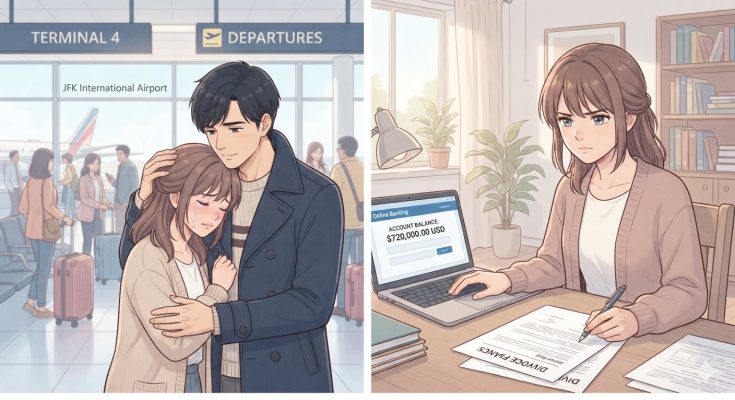
  • When my husband told me he was going to “work in Canada for two years,” I sobbed as I drove him to the airport. However, as soon as I got home, I moved the $720,000 into my account and filed for divorce.

    When my husband told me he was going to “work in Canada for two years,” I sobbed as I drove him to the airport. However, as soon as I got home, I moved the $720,000 into my account and filed for divorce.


    We were there, standing in front of the security checkpoint, and he was about to walk away. He was about to disappear from my life for two whole years.
    “Hey,” Daniel said softly, pulling me into his arms. His embrace was warm, steady, like a promise I never wanted to hear. He was tall, broad-shouldered, and the kind of man who always seemed to have everything under control. At least, that’s what I believed.
    “Everything’s going to be fine,” he murmured, his breath tickling my ear. “I promise, Emma. Two years. Just two years, and then we’ll be able to live the way we’ve always dreamed of. You’ll see. This promotion, it’s a huge step for us. I’ll make everything work. And when I come back, we’ll finally have it all.”
    His words sounded so reassuring, so confident, like they were carved from stone. I could feel his heartbeat against my cheek, steady and strong, and for a moment, I almost believed him. But there was a tight knot in my chest—one I couldn’t quite explain.
    “I’m going to miss you,” I whispered, my voice quivering slightly, betraying the emotions I didn’t want to show.
    “I know, baby. I’ll miss you too. But we’ve talked about this. This is for us. For our future.” His lips brushed my forehead in a tender kiss, and I closed my eyes, willing myself to hold on to this moment, to the feeling of being loved, of being wanted.
    “Promise me you’ll take care of yourself,” I said, my voice trembling as I pulled back slightly to look at him, needing him to understand the weight of my words. “Promise me you won’t forget about me over there. Call me every day.”

    Daniel gave me a soft smile, his hands gently cradling my face. “Never. You’re my home, Emma. I’ll think about you every single day. Just hold things together here, okay? We’ll be fine.”

    The words felt like a balm on my wounded heart. I nodded, though the lump in my throat made it hard to swallow. He turned to walk toward the security line, his figure tall and assured against the sea of strangers. Before he disappeared into the crowd, he turned back and waved one last time.

    I waved back, my heart breaking just a little more as the gap between us widened. Tears blurred my vision as I watched him walk away, disappearing into the crowd, like a man walking toward a future I was no longer a part of.

    But as soon as he vanished from sight, something changed.

    I stopped crying.

    Completely.

    I stood there for a moment, surrounded by the hum of the airport, feeling nothing but a strange sense of clarity. It wasn’t heartbreak I felt. It wasn’t sorrow. It was something cold, something steady, something more dangerous than the ache of a broken heart.

    I turned slowly and made my way out of the terminal, my footsteps echoing in the vast space. I wasn’t sure when it had happened, but I knew it was over. There was no more room for tears. There was only room for action.

    Three nights before his flight, when the idea of Daniel going to London for a promotion had seemed so real, I had stumbled upon something that would change everything. I had been walking into the study to grab my phone charger when I noticed his laptop open on the desk. I wasn’t one to snoop—at least, not openly—but something about that night, something about the way he had been acting so secretive, made me pause.

    I walked closer, and the faint glow of his laptop screen caught my eye.

    A notification. An unread email.

    Out of curiosity, I hovered over the mouse and clicked it open.

    What I found made my stomach churn.

    There was no mention of London. No international contract, no company relocation paperwork. Instead, there was a lease agreement—one for a luxury penthouse in Miami Beach.

    It was signed by two names: Daniel Carter and Olivia Bennett.

    Olivia.

    The name sent a jolt through me. But it wasn’t just the name. It was the attached ultrasound image, dated just a few weeks ago.

    My hand trembled as I read the email thread. Daniel’s words were a punch to the gut.

    “I’ll be free soon. We’ll finally live together without her in the way.”

    Her. Me.

    He was planning to leave me. To disappear into a new life with his mistress, with Olivia. And all the while, I had believed his lies. I had believed he was moving to London for a promotion.

    But that wasn’t what was happening.

    And as if that weren’t enough, he had been siphoning money from our joint account, preparing for his new life.

    $720,000.

    It was the money from my parents’ estate, money I had worked for, money I had grown through smart investments. It wasn’t just our money. It was mine. I had put every cent into our future, believing he was doing the same.

    But I was wrong. So wrong.

    I got into my car and drove home, the sound of the engine a low hum in the background. The knot in my chest was gone. My hands were steady on the steering wheel. There was no panic. No fear. Only the quiet rush of revenge.

    When I got home, I didn’t hesitate. I walked straight to the home office. My fingers moved with purpose as I logged into our joint bank account.

    The balance was there. $720,000.

    It was the last piece of his plan. But it wouldn’t be his anymore. Not now. Not after everything he had done.

    I hesitated for only a moment, just long enough to collect my thoughts.

    And then I transferred the money into an account under my name—one he didn’t know about. One I had opened years ago, on the advice of my financial advisor. He would never find it.

    The transfer was complete.

    I looked at the remaining balance: $0.00.

    I exhaled slowly, a sense of calm sweeping over me. It was done.

    I pulled out my phone and dialed my attorney, my voice steady as I gave the instructions.

    “Mr. Thompson, he’s already left. I need you to file for divorce immediately. And send the papers to the Miami Beach address. Not London.”

    There was a brief pause on the other end of the line before he responded, “Understood, Mrs. Carter. I’ll take care of everything.”

    The next two hours felt like a lifetime.

    Then, my phone rang.

    Daniel.

    Right on schedule.

    I answered it, sweetly, as though nothing had changed.

    “Hi, love. Did you land in London safely?” I asked, my tone light and casual, as if I had no idea what was really happening.

    His voice was sharp with panic. “Emma! What happened to our account? My card was declined! It says there’s no money!”

    I leaned back in my chair, a small smile tugging at my lips. “Oh. That. I transferred it.”

    “You did WHAT?” His voice rose in outrage. “Where is it?! Emma, that’s our money!”

    “No,” I corrected him, my voice cold and calm. “It’s my inheritance. And I’ve decided to keep it.”

    Silence.

    Then, his breathing—heavy, uneven.

    “I—I don’t understand.”

    I almost laughed. Almost. But I kept my composure.

    “I know you’re not in London,” I said, my voice even. “I know about the penthouse in Miami. And I know about Olivia. Congratulations, by the way.”

    There was a long pause. He didn’t say anything for a moment, as though the weight of my words had crushed him.

    “Emma, I can explain—”

    “There’s nothing left to explain,” I interrupted, my voice icy. “The man I married would never have done this. The tears you saw at the airport were real. They were for the version of you I thought existed.”

    I heard his voice crack. “Please…”

    But I didn’t listen. “Get a job,” I said. “You’re good at creating stories. Maybe try writing fiction.”

    “Emma—”

    “Good luck in London,” I said softly. Then I added, “Or should I say… Miami?”

    And with that, I ended the call.

    For a long moment, I stared at my phone, the finality of it all sinking in. I pulled the SIM card from the phone and snapped it in two.

    The sound was small. Final.

    I walked through the house—the house that would never again be home to him. The sunlight streamed through the windows, warm and golden, filling the empty spaces he would never walk through again. I had never felt so alone in my life, but in that loneliness, I found a peace I hadn’t known existed.

    I wasn’t broken.

    The cheater was gone.

    And for the first time in months, I felt free.

    It had been three days since the phone call. Three days since the last time I heard Daniel’s voice—the same voice that once soothed me with promises of love, now reduced to a desperate, pleading cry.

    I had given myself time to breathe, time to think, but there was no relief from the storm inside me. What I had learned about him, about the lies, about the betrayal, it all simmered within me like a pressure cooker. It was one thing to be deceived, to be left behind, but it was another to have everything you once believed to be true shatter in an instant.

    The penthouse in Miami Beach wasn’t just a symbol of Daniel’s infidelity. It was the physical manifestation of his complete disregard for me, for everything we had built together. He didn’t even have the decency to tell me the truth before leaving. No, instead, he had planned everything with Olivia—his new life, his new family, paid for by the money I had worked tirelessly to grow. The same money he was now scrambling to find.

    But that wasn’t the worst part. The worst part was how I had fallen for his lies. How I had cried at the airport, watched him walk away, believing he was doing it all for us. I had let him break my heart only to find that it had all been a farce, a game of manipulation. The part of me that had trusted him so completely was now gone. But I had also discovered something much stronger in its place: my power.

    The money was safe, and so was my future. But what about him? What about Daniel?

    I wasn’t sure how long it had been, but the silence in my house was deafening. I had once found comfort in it. The quiet hours when Daniel would come home after a long day, when we would sit together and share our thoughts, our plans. Now, the silence felt suffocating. It wasn’t just his absence that weighed on me, it was the life I had thought I was living. Everything about it had been a lie.

    I had called my lawyer, Mr. Thompson, and made it clear that I was moving forward with the divorce. There was no going back. But as the days passed, I realized that the next step wasn’t just about severing ties with Daniel. It was about reclaiming my life, about taking back the control that had been so easily taken from me.

    I stared out the window, watching as the golden light of early evening cast long shadows over the city. The world outside seemed unaffected by the upheaval I was experiencing. Life moved on, indifferent to the wreckage Daniel had left in his wake.

    I was trying to gather the strength to meet with my lawyer again, to discuss the next steps in the divorce proceedings, when the phone rang.

    I didn’t need to look at the caller ID to know who it was. The number had been burned into my memory.

    “Emma,” Daniel’s voice crackled through the line. “Please, you need to listen to me. We need to talk.”

    My pulse quickened, but I didn’t let him see my reaction. I took a deep breath, steadying myself. I had to stay in control, even now.

    “I’m listening,” I said coldly, my voice devoid of emotion.

    “I—” He paused, as if gathering his thoughts. “I’ve been trying to fix this. I know I made a terrible mistake. But we can work through this, Emma. I love you, I always have.”

    The words were the same. They were empty, meaningless. I had heard them all before, and they no longer had the power to sway me. But I couldn’t help myself. I couldn’t resist the pull of his voice, the remnants of the man I had once trusted. So I let him speak, knowing it would only solidify my resolve.

    “I’m sorry for everything, okay? I’ve made mistakes, but we can start fresh. We can go to therapy. We can work it out.”

    I laughed softly, the sound bitter in my throat. “You think a few apologies are going to fix this? You think a few sessions with a therapist will make up for the fact that you’ve been living with her in Miami while I was left here, believing you were working in London?”

    “Emma, I was confused. I didn’t know how to leave you. I thought I could do it without hurting you. But I was wrong. I know I was wrong.”

    I pressed the phone tighter to my ear, my mind racing. I could feel the old emotions beginning to stir—the love I once had for him, the memories of us, the good times we shared. But I crushed those feelings down. They had no place here, not anymore.

    “You don’t get to decide how this ends, Daniel,” I said firmly. “You made your choice. You’ve already shown me who you are. And now, you’ll deal with the consequences.”

    There was a long silence on the other end of the line. I could hear him breathing heavily, the weight of my words sinking in.

    “Emma, please. I’m begging you. Don’t do this.”

    “You already did it,” I replied coldly. “You already decided. Now it’s my turn.”

    I hung up the phone before he could say anything else. The finality of the action felt good, like a weight being lifted from my shoulders. But as I stood there, holding the phone in my hand, I realized that the real work was just beginning.

    Two days later, I sat in my lawyer’s office, the papers spread out in front of me like the final puzzle pieces of a life I was no longer interested in. My mind was clear, my heart steady.

    “Everything’s in order,” Mr. Thompson said, adjusting his glasses. “We’ve prepared the divorce papers, and I’ve already filed for the separation. The next step is simply serving them to Daniel, and that should be the final nail in the coffin.”

    I nodded. I didn’t need to say anything. The legal process was just a formality now. What mattered was that I had reclaimed my life. I was no longer the victim of his lies. I was stronger than that.

    “Thank you,” I said, my voice soft but firm.

    It wasn’t until a week later that the real consequences of Daniel’s betrayal hit him. The divorce papers arrived at his new address in Miami Beach—his luxury penthouse, the one he had set up with Olivia. The same one I had once believed was a symbol of his new life in London.

    It was a cruel twist of fate that the moment he thought he had escaped, he was faced with the cold reality of what he had done.

    And as the weeks passed, I heard nothing from him. Not a single call. Not a single word. He had learned the hard way that I was not a woman to be taken lightly. I wasn’t just a victim of his deceit. I was his reckoning.

    But it didn’t matter anymore. I had my peace.

    It had been three weeks since I signed the divorce papers. Three weeks since the last remnants of Daniel and I had been legally severed, cut through by the sharp edge of paperwork and finality. The days since had passed in a blur—slow, almost dreamlike, yet with an undercurrent of urgency that seemed to propel me forward.

    The house, once shared with him, now felt like a fortress. His absence lingered, not as a ghost, but as a stark contrast to the life we had once built together. The silence was my companion, but it no longer felt oppressive. It felt like freedom. Every room, every corner of the house felt different now—less suffocating, more alive.

    I had made it through the worst of it. The phone calls from him, the pleading, the occasional messages that would show up in my inbox, all asking for forgiveness, all begging me to reconsider. But none of them reached me. It was as though the wall I had built around myself had become impenetrable. I had no room for the man he had become—only for the woman I was now forced to be.

    Olivia had been a silent specter in all of this. I had seen her name in the lease agreement, heard it in Daniel’s phone conversations. She was his future, the one he had left me for. The thought of her made my stomach twist, but I knew I had no use for her in my life anymore.

    I could have easily sought revenge—found a way to make her life just as miserable as mine had been. But that wasn’t the kind of person I wanted to be. Daniel had already made his choice. Olivia was a casualty of that choice. I was beyond the drama now. What mattered was reclaiming myself. Moving forward.

    A few days after the divorce was finalized, I received a package at my doorstep. The sender’s name was unfamiliar—only a simple return address with a name I didn’t recognize. I hesitated for a moment, curiosity warring with caution, before I tore open the package.

    Inside, I found a manila envelope, thick with papers, and a note on top.

    Emma,

    I’m sorry. You’re the one who deserves all of this. You’ve always been the one who’s earned it. Here’s the final paperwork, confirming your financial security. I’ve also included your inheritance—everything that was meant for you. It’s all there. Take it. It’s yours. I don’t expect forgiveness. I don’t deserve it. But I hope you can at least find peace.

    Daniel

    I stared at the note for a long time. His words were hollow, empty. But there was one part of it that caught my attention: Take it. It’s yours. The papers inside were legal documents—proof that the money he had stolen from me was mine once again. But it wasn’t the money that mattered. It was the fact that Daniel had finally acknowledged something.

    He had acknowledged that I was the one who had built my own future. I had worked hard for everything I had. And even if it had taken betrayal to see it, I knew now that I was strong enough to keep it.

    I had no use for him anymore. His apologies were too late. But I understood what he was trying to say. It wasn’t about the money. It was about him letting go of the past, accepting his failure. And now, it was my turn to do the same.

    A week later, I found myself at a coffee shop downtown. It was a small, cozy place—quiet, with an old-school charm that seemed to welcome you in. I had always liked it here, the anonymity of it, the way you could blend into the background and just exist without any expectations.

    I sat at the back, nursing a cappuccino, my mind still reeling from everything that had happened. But it was different now. I wasn’t consumed by anger or betrayal anymore. Instead, I found myself sitting with the quiet realization that I was free.

    That was when I saw her.

    Olivia.

    👉NEXT PART

  • NEXT PART 

    She walked in, her high heels clicking against the tile floor, a confident smile on her lips as she greeted the barista. Her presence was undeniable—elegant, poised, the picture of the life Daniel had chosen. She didn’t see me at first, but when she did, our eyes met. For a moment, time seemed to stop, and I saw everything I needed to know in her eyes. There was no shame. No guilt. Just a sense of self-assuredness.

    But what struck me the most was how… empty she seemed. There was no joy in her smile, no real warmth in her gaze. She wasn’t the glamorous figure I had once imagined her to be. Instead, she was just another person, tangled in the same web of deceit that had ensnared me.

    She hesitated for a moment, and then, to my surprise, she walked over to my table. Her heels clicked loudly on the floor as she approached, and she stopped a few feet away, almost as if waiting for permission to join me.

    “Emma,” she said, her voice cool but measured. “I wasn’t sure if you’d want to speak with me. But I thought… maybe we could talk.”

    I raised an eyebrow, surprised at her boldness. The last thing I expected was for Olivia to approach me, but here she was, standing in front of me, ready to engage.

    “Talk?” I repeated, my voice steady. “What do we have to talk about?”

    She sat down across from me without waiting for an invitation. There was something unnervingly calm about her demeanor, as if she had already made peace with what was happening between us. But I couldn’t bring myself to give her the same courtesy.

    “I know this isn’t easy for you,” she began, her eyes softening slightly. “I don’t want to make things worse, but I think there are some things we both need to acknowledge. I’m not here to beg for forgiveness, Emma. But I think we both deserve some closure.”


    I stared at her, feeling the anger that had once burned in me begin to simmer down. What did I owe her? Nothing. She was the one who had betrayed me, not the other way around. But I realized, perhaps for the first time, that I didn’t need to carry this anger anymore. It was exhausting.

    “Closure?” I asked, leaning back in my chair. “I’m not sure I need it. What about you, Olivia? Are you seeking it from me? Because if that’s the case, you’ve come to the wrong place.”

    She looked down at her hands for a moment, then met my eyes again. “I’m not asking for anything, Emma. But I’ve been where you are. I know how it feels to lose everything, to feel like you’ve been left behind without a choice. I guess… I just wanted to say that I’m sorry. I didn’t want any of this to happen. It was never supposed to be like this.”

    I was silent for a moment, taking in her words. And in that silence, I realized something. Olivia wasn’t my enemy. She was a victim of the same lie I had been. She was just another person trapped in Daniel’s web.

    “I think it’s too late for apologies,” I finally said. “But I’m not angry anymore. I’m done with him, with you, with all of it. So, if this is your way of seeking some kind of redemption, you’ve already lost. I’ve moved on.”

    For a brief moment, Olivia’s mask slipped. Her shoulders sagged slightly, and she looked away. But then, just as quickly, she composed herself.

    “Good for you,” she said softly, standing up. “Maybe one day, we’ll both get the closure we deserve.”

    I didn’t respond. She turned and walked out of the coffee shop, her heels clicking sharply as she disappeared into the crowd.

    The days blurred into one another after Olivia’s visit. Her words, though sincere, hadn’t moved me. They didn’t change anything. I wasn’t angry anymore, but that didn’t mean I wanted to reopen the door to the past. It had been a clean break. She had her own journey, and I had mine. And for the first time in months, I truly felt free.

    But there was still so much I hadn’t allowed myself to face. The deeper, quieter fears I had pushed away since Daniel left—the ones that whispered at the edges of my mind when I allowed myself to be still.

    Who was I now?

    What was left of me after everything I had been through? Was there a version of me that could live outside of the shadows of betrayal, one that could finally find peace, joy, and maybe even love again?

    I had spent so many years defining myself by my relationship with Daniel. Our life together. Our shared dreams, and then our crumbled reality. But who was Emma without him? Without the house we built together, without the wealth we shared, without the promises that once felt so certain?

    I needed to rediscover myself. And this time, I wouldn’t allow anyone else to define me.

    A week later, I found myself standing at the edge of the city, watching the horizon stretch out in front of me. It was a Saturday morning, and the sky was clear, a soft blue that seemed to call to me. There was something about the city, the endless buildings and people, that had always felt suffocating. But today, for the first time in a long time, I didn’t feel trapped by it. Instead, I felt a kind of excitement, an almost childlike wonder at the possibility of everything ahead of me.

    I had decided to take control. I had made an appointment with my financial advisor, and I was going to invest in my future—my real future. No more playing it safe with Daniel’s money, no more hiding behind the safety net of the life we had built together. It was time for me to start something new, something of my own.

    I had been reading up on new business ventures—small-scale startups that focused on sustainability and innovation. It wasn’t the tech world Daniel had dominated, but it felt right for me. I didn’t want to just make money anymore. I wanted to make a difference. I wanted to leave my own mark on the world.

    A few days later, I was back in my lawyer’s office. This time, the papers on the desk weren’t about my divorce. They were about a new business venture I had decided to embark on. My financial advisor had helped me set up an investment plan for my new company, and I was ready to make my first major step.

    “Emma,” Mr. Thompson said, glancing at me over his glasses. “I can see you’re making the right move here. This is your future, and you have the resources to make it happen. Are you sure you’re ready for this? It’s going to take everything you’ve got.”

    I nodded, feeling a surge of determination course through me. “I’m ready. I’m done waiting for someone else to give me permission to live my life. I’m going to build something that’s mine—something I can be proud of.”

    The legal documents I signed that day were the first steps in securing my future. The thrill of it was addicting. For the first time in so long, I was thinking about myself. Not about Daniel. Not about the lies. Just about what I wanted to create.

    Over the following weeks, I threw myself into my new venture with everything I had. I met with potential investors, attended networking events, and worked long hours to get the business off the ground. Each step felt empowering, and every day was another chance to prove to myself that I was capable of more than I had ever imagined.


    But even amidst this newfound purpose, there were still moments of quiet that tested me. Moments when my thoughts drifted back to Daniel—the life we had shared, the man I had loved so completely, and the way he had betrayed me.

    One of those moments came late one evening when I found myself sitting in the quiet of my home, a glass of wine in my hand, staring at the empty space where Daniel’s things used to be. It wasn’t the house that hurt; it wasn’t even the betrayal anymore. It was the absence of the version of myself I used to be. The woman who had blindly believed in love, in marriage, in forever.

    But she was gone. And in her place was a stronger, wiser version of me—a version that didn’t need anyone’s validation to stand tall. I could do this on my own. I was doing it on my own.

    One afternoon, I found myself at the same coffee shop where I had met Olivia. I was there to meet a potential investor—a woman who had built her own startup empire and had a reputation for being a tough, no-nonsense businesswoman. I wasn’t sure what to expect from our meeting, but I knew I had to make a good impression.

    When I walked in, the barista greeted me with a warm smile, but I barely noticed. I was too focused on my meeting. But as I turned toward the back, I saw a familiar face.

    It was Daniel.

    He was sitting at a table in the corner, his back to me. He was with someone—an older man in a suit, a conversation in full swing. I froze for a moment, my heart skipping a beat. It had been weeks since I last saw him, and seeing him here, so casual, so out of place in this moment of my life, made me realize how much had changed.

    I could feel the pull of the old emotions, the ones that once had me chasing after him, the ones that had me doubting myself. But I shook it off. That version of me was gone.

    He didn’t see me, and I had no intention of confronting him. I wasn’t interested in what he had to say.

    But then, just as I turned to leave, something caught my eye. It was a woman sitting beside him.

    Olivia.

    I paused for a moment, watching them, seeing the easy way they interacted. I felt a fleeting pang of something—resentment, perhaps, or maybe jealousy—but it passed as quickly as it came. What was the point? They had each other. They were living the life he had chosen. And I was living the life I had chosen.

    I smiled to myself and walked out of the coffee shop without a second glance. There was nothing left to say to either of them.

    As the weeks wore on, I found myself navigating a new life, one where the echoes of the past grew quieter with each passing day. It wasn’t that I had erased the memories of Daniel or Olivia. Those memories were part of who I was, part of the lessons that had shaped me. But they no longer had the power to define me. They no longer had the power to steal my peace.

    The business was growing—slowly but steadily. I had managed to secure a few investors who believed in my vision, and with each new step, I found myself more and more confident in my decisions. It wasn’t always easy. There were days when the weight of the work seemed too much, and I wondered if I was really cut out for this. But those doubts were fleeting. Every challenge was just another opportunity to prove to myself that I could do this on my own.

    And for the first time in a long while, I was truly living for myself.

    One evening, after a long day of meetings and paperwork, I decided to take a break from the grind. I had been working nonstop for weeks, and I knew that pushing myself too hard could lead to burnout. So, I slipped into something comfortable, grabbed my keys, and headed out the door.

    I didn’t have a destination in mind—just a need to get out of the house, to clear my head. I ended up walking through a park near my apartment, the cool evening air filling my lungs as I took in the sights and sounds of the city around me. It was quiet here, a rare reprieve from the bustling energy of New York. The sound of birds chirping and the rustle of leaves in the trees provided a soothing backdrop to my thoughts.

    I found a bench by a small pond and sat down, letting the tranquility of the park settle over me. It wasn’t the same as the peace I had once felt in my marriage, but it was something more authentic, more lasting. This peace was mine. I had earned it.

    As I sat there, I noticed a figure walking toward me from across the park. I didn’t recognize him at first, but as he drew closer, my heart skipped a beat.

    It was David, a man I had met a few weeks ago at one of the networking events I’d attended for my business. He was confident, successful, with a kind smile that had put me at ease the moment we’d shaken hands. We’d exchanged numbers, but our conversations had been few and far between. He had been busy with his own work, and so had I. But now, here he was, walking toward me as if by chance.

    He smiled when he saw me. “Emma,” he said, his voice warm and easy. “I didn’t expect to see you here. Mind if I join you?”

    I smiled back. “Not at all,” I replied, motioning to the empty space beside me. “It’s nice to see a familiar face.”

    David sat down next to me, and we fell into easy conversation. We talked about our businesses, about life, about the challenges we both faced. There was something refreshing about him—he was intelligent and driven, but without the arrogance that I had grown so used to with men like Daniel. He listened. He asked thoughtful questions. He didn’t rush anything.

    The more we talked, the more I realized that I wasn’t just enjoying his company. I was experiencing it. For the first time in months, I wasn’t weighed down by the shadows of my past. I was simply present.

    And for the first time in a long time, I felt a flutter of something new, something exciting.

    Over the next few weeks, David and I spent more time together. At first, it was just casual—coffee dates, lunches, walks in the park. But as we continued to spend time together, I realized that there was something more to what was blossoming between us. It wasn’t just chemistry or attraction; it was a connection. One that felt natural, not forced.

    He never pressured me, never made me feel like I had to move faster than I was comfortable with. He was patient, understanding, and respectful of my boundaries. It felt… safe.

    Safe in a way that I had forgotten existed.

    One night, as we walked through the streets of the city, the lights of New York casting a soft glow over everything, David stopped and turned to face me.

    “Emma,” he said, his voice low but steady. “I know you’ve been through a lot. And I know you’re not looking for anything serious right now, and that’s okay. But I just want you to know that I’m here. I admire your strength, your ambition. And I’d like to see where this could go—if you’re open to it.”

    I looked at him, taking in his words. He wasn’t asking for anything. He was simply offering his support, his presence. And for the first time in a long time, I realized that I was ready to let someone in again.

    I had been so focused on rebuilding my life after Daniel that I hadn’t allowed myself to consider the possibility of something new. But maybe it was time. Maybe I didn’t have to carry the weight of my past forever.

    “I’m open to it,” I said softly, my heart beating a little faster at the thought. “Let’s see where this goes.”

    That night, as I lay in bed, I thought about everything that had happened—about Daniel, about the betrayal, about the pain that had almost destroyed me. But now, looking back, I realized that those experiences had shaped me, yes, but they had not defeated me.

    I had learned that I didn’t need anyone to define me. I didn’t need Daniel’s approval, or Olivia’s. I didn’t need anyone to validate my worth. I had already done that for myself.

    And now, for the first time in a long time, I was excited about the future. I didn’t know where it would take me, but I knew one thing for sure: it would be mine.

    The past had been painful, yes. But it had led me here, to a place of strength, of independence. To a place where I could finally see the possibilities that lay ahead. And whatever they were, I would face them head-on.

  • “I Hired A Man To Mow My Daughter’s Lawn — He Heard Crying From Beneath The House And Called Me In A Panic”

    “I Hired A Man To Mow My Daughter’s Lawn — He Heard Crying From Beneath The House And Called Me In A Panic”

    The Basement
    I was standing on a ladder, scooping wet leaves out of my gutters when my phone buzzed in my pocket. The morning was cool but not cold, that peculiar kind of early autumn day where everything still feels like summer but smells like change.
    “Morning, Dad.”
    “You sound exhausted.”
    Clara laughed softly.
    “I’ve had a long week.”
    There was a brief announcement over a loudspeaker in the background, followed by the distant rumble of rolling suitcases. I could picture her moving through the terminal with that careful deliberation she had developed over the past six months. Nothing rushed. Nothing casual. Everything controlled.
    “I’m at the airport,” she said. “They have started boarding the earlier flight, so it is noisy.”
    I smiled, making my way down the ladder carefully. At seventy-two, I was not as quick as I used to be.
    “You always get there too early.”
    “I know. It makes me less anxious.”
    She paused for a moment before speaking again.
    “I wanted to thank you for checking on the house while I am gone.”
    “It is not any trouble.”
    “And thanks for finding someone to mow the lawn.”
    “I told him to be there around one.”
    “Perfect.”
    Another silence followed. This one felt different. Almost hesitant.
    “If you stop by today,” she began, “do not worry if you do not see much inside. I packed everything up before I left.”
    “You planning to move while you are gone?”

  • PART 2: – “My Son Got Into A Fight At School Because Another Boy Wouldn’t Stop Bullying His Little Sister — And I Have Never Been Prouder Of Him”

    PART 2: – “My Son Got Into A Fight At School Because Another Boy Wouldn’t Stop Bullying His Little Sister — And I Have Never Been Prouder Of Him”

    “Mr. Carter?” he said. “You know Mrs. Carter?”
    Mark swallowed.
    “She’s my wife.”
    The room became completely silent.
    I stared at him.
    Then I looked at Stefan.
    Then back at Mark.
    My mind struggled to make sense of what I was seeing.
    The woman stepped into the room.
    She looked at Mark.
    Then she looked at me.
    And something changed in her expression.
    Her eyes widened.
    She whispered, “Oh my God.”
    I could barely hear myself speak.
    “Mark… what are you doing here?”
    He didn’t answer.
    Instead, he looked toward Stefan.
    The boy was sitting perfectly still in the chair.
    He wasn’t frightened anymore.
    He was watching his father.
    His father.
    The words echoed inside my head.
    I turned toward Stefan.
    “Is that your father?”

    Finally, together….

    👉Click Here to continuous Read​​​​ Full Ending StoryPART(3): – “My Son Got Into A Fight At School Because Another Boy Wouldn’t Stop Bullying His Little Sister — And I Have Never Been Prouder Of Him”

  • PART 3: – “My Son Got Into A Fight At School Because Another Boy Wouldn’t Stop Bullying His Little Sister — And I Have Never Been Prouder Of Him”

    PART 3 — THE WOMAN WHO KNEW EVERYTHING

    The name left Laura’s lips like a whisper.
    “Rebecca.”
    I stopped breathing.
    Rebecca.
    My younger sister.
    For eight years, I had believed Rebecca was one of the few people who had truly stood beside me during the darkest moment of my life.
    She had visited me in the hospital.
    She had held my hand when I was too weak to sit up.
    She had brought flowers.
    She had cried with me when Mark told me that one of my babies had died.
    And when I came home with Cole, she had been there almost every day.
    She had helped me learn how to be a mother.
    She had told me not to blame myself.
    She had told me that I needed to be grateful for the son I still had.
    And now Laura was telling me that Rebecca knew the truth.
    I stared at Mark.
    “Rebecca?”
    He couldn’t look at me.
    That was all the confirmation I needed.
    My voice became barely audible.
    “Tell me she didn’t know.”
    Mark remained silent.
    “Tell me.”

    His shoulders dropped.

    “She knew.”

    My heart cracked.

    “My own sister?”

    “I’m sorry.”

    “Don’t say you’re sorry.”

    I stepped closer.

    “Tell me what she did.”

    Mark looked toward the boys.

    Cole and Stefan were standing together near the wall.

    Neither of them understood the entire story.

    But both could feel that something terrible had happened.

    Mark swallowed.

    “Rebecca was at the hospital that night.”

    “I know.”

    “No, Emma. You don’t.”

    He took a shaky breath.

    “She wasn’t just visiting you.”

    My stomach tightened.

    “What was she doing?”

    Mark closed his eyes.

    “She was talking to the doctors.”

    “About what?”

    “About Stefan.”

    I felt dizzy.

    “Why?”

    “Because Stefan was sick.”

    The room seemed to tilt.

    “What do you mean, sick?”

    Mark’s voice broke.

    “He had a heart condition.”

    I stared at him.

    For eight years, I had believed my baby had died because of complications during delivery.

    But now I was hearing something I had never been told.

    My son had been alive.

    And he had been sick.

    “How sick?”

    Mark looked at Laura.

    Laura answered instead.

    “The doctors weren’t sure he would survive.”

    I covered my mouth.

    “How long?”

    “They said the first few weeks would be critical.”

    I looked at Stefan.

    He was staring at us.

    He was old enough to understand some of the words now.

    His face had become pale.

    “You were sick?” I whispered.

    He nodded slowly.

    “My mom told me I was born with a heart problem.”

    I looked at Laura.

    “You knew?”

    “Yes.”

    “And you knew who he was?”

    “No.”

    Her tears began falling again.

    “I swear I didn’t know he was your son.”

    “Then what did you know?”

    Laura took a breath.

    “I knew Mark was Stefan’s father.”

    My eyes moved toward my husband.

    “And you knew he had another family?”

    Laura nodded.

    “But Rebecca told me you had agreed to give Stefan away.”

    I almost laughed.

    Not because anything was funny.

    Because the lie was so enormous that my mind didn’t know how else to react.

    “I agreed?”

    Laura nodded.

    “She told me you were too weak after the delivery. She said you wanted to keep Cole, but you knew you couldn’t care for a sick baby.”

    My chest tightened.

    “I would never have said that.”

    “I know that now.”

    Laura wiped her face.

    “But back then, I believed her.”

    I turned to Mark.

    “You let her tell people I gave away my own child?”

    He looked down.

    “I was scared.”

    “You were scared?”

    My voice rose.

    “You watched me wake up and ask where my baby was.”

    He said nothing.

    “You watched me cry.”

    Nothing.

    “You watched me search for answers.”

    Still nothing.

    “And you knew he was alive.”

    Mark’s eyes filled with tears.

    “Yes.”

    The word was almost too quiet to hear.

    I slapped him.

    The sound echoed through the office.

    Nobody moved.

    Mark slowly turned his face back toward me.

    I was shaking.

    “You let me mourn him.”

    “I know.”

    “You let me believe he was dead.”

    “I know.”

    “You let me think I had failed him.”

    “I know.”

    “And you watched me visit his grave.”

    Mark began crying.

    “There was no grave.”

    “I know that now!”

    My voice broke.

    “But I didn’t know then!”

    I turned away.

    I couldn’t look at him.

    Behind me, I heard Stefan whisper:

    “Why didn’t he tell you?”

    I froze.

    That question wasn’t directed at me.

    It was directed at Mark.

    Mark looked at his son.

    “I thought I was protecting everyone.”

    Stefan shook his head.

    “You weren’t.”

    Mark had no answer.

    Stefan looked at me.

    “I’m sorry.”

    Those words destroyed whatever strength I had left.

    I walked toward him.

    He looked frightened.

    Perhaps he thought I was angry at him.

    I knelt in front of him.

    “You have nothing to apologize for.”

    He stared at me.

    “Nothing.”

    Then I reached out.

    My hand touched his cheek.

    The same cheek I had imagined touching for eight years.

    The same face I had seen only in my memories.

    He leaned into my hand.

    And suddenly I knew.

    No matter what had happened.

    No matter who had lied.

    No matter how many years had been stolen.

    He was my son.

    “My baby,” I whispered.

    Stefan’s eyes filled with tears.

    “Am I really?”

    I couldn’t speak.

    I pulled him into my arms.

    He hesitated.

    Then he hugged me.

    Hard.

    Like a child who had been waiting his entire life for someone to finally claim him.

    “I’ve always been your mother,” I whispered.

    He began crying.

    “I didn’t know where you were.”

    “I know.”

    “I thought you didn’t want me.”

    “No.”

    I held him tighter.

    “I wanted you every single day.”

    Across the room, Cole was crying too.

    He walked toward us.

    “Can I hug him?”

    Stefan looked up.

    Then nodded.

    Cole wrapped his arms around both of us.

    For several seconds, nobody spoke.

    Three people holding onto a family that had somehow survived eight years of lies.

    Then Mark spoke.

    “There is more.”

    I slowly lifted my head.

    I didn’t want to hear it.

    But I knew I had to.

    “What more could there possibly be?”

    Mark looked at me.

    His face had changed.

    He looked terrified.

    “Rebecca wasn’t acting alone.”

    My blood went cold.

    “Who else?”

    He hesitated.

    “Someone at the hospital.”

    “Who?”

    “I don’t know her name.”

    Laura suddenly shook her head.

    “You do.”

    Mark looked at her.

    Laura’s voice became firm.

    “You met her.”

    “When?”

    “The night the babies were born.”

    I stared at them.

    “Who?”

    Laura opened her handbag.

    She pulled out another document.

    She unfolded it carefully.

    “This was given to me by Rebecca.”

    She handed it to me.

    I looked down.

    It was an old hospital record.

    The paper was faded.

    The ink was almost disappearing.

    But one line was still readable.

    TRANSFER AUTHORIZATION — INFANT MALE — CARTER

    My hands began trembling.

    Below it was a signature.

    I knew that signature.

    I had seen it before.

    Hundreds of times.

    My breath caught.

    “No.”

    Mark looked at me.

    “What?”

    I pointed to the signature.

    “It can’t be.”

    He stepped closer.

    “What is it?”

    I looked at him.

    “The nurse who signed this…”

    My voice cracked.

    “She was the nurse assigned to my room.”

    Mark’s face went pale.

    “Who?”

    I whispered the name.

    “Mrs. Evelyn Grant.”

    Laura nodded.

    “That was the woman Rebecca was working with.”

    I couldn’t move.

    Evelyn Grant.

    I remembered her.

    She had been there when I woke up.

    She had adjusted my IV.

    She had told me to rest.

    She had told me my husband had handled everything.

    She had been the person who brought me the paperwork.

    And she had been the one who told me:

    “Your baby didn’t make it.”

    I felt sick.

    “She lied to me.”

    Mark nodded.

    “Yes.”

    “Why?”

    “I don’t know.”

    Laura looked at him.

    “You know more than you’re saying.”

    Mark’s eyes widened.

    “Laura—”

    “You promised her.”

    He looked furious.

    “Stop.”

    “What promise?”

    I stepped between them.

    “What promise?”

    Neither answered.

    I grabbed Mark’s arm.

    “What promise?”

    He stared at me.

    Then finally said:

    “I promised Rebecca I would never tell you.”

    “Tell me what?”

    His eyes filled with tears.

    “That Stefan wasn’t the only baby we lost that night.”

    The room went silent.

    I stared at him.

    “What?”

    Mark’s voice was barely audible.

    “There was another baby.”

    I felt the blood drain from my face.

    “No.”

    “Yes.”

    “That’s impossible.”

    He shook his head.

    “It happened.”

    I looked at Cole.

    Then Stefan.

    Then back at Mark.

    “You told me I had twins.”

    “You did.”

    “Two babies.”

    “Yes.”

    “So what are you talking about?”

    Mark looked toward Laura.

    Laura was crying.

    “Emma…”

    She whispered.

    “There were actually three babies.”

    I couldn’t understand the words.

    Three.

    My mind rejected them.

    “No.”

    Mark nodded.

    “The doctors discovered it late in the pregnancy.”

    I stepped backward.

    “You’re saying…”

    My voice trembled.

    “I wasn’t pregnant with twins?”

    “You were carrying triplets.”

    The room spun.

    I grabbed the edge of the desk.

    “I don’t remember that.”

    “You weren’t told.”

    “Why?”

    Mark looked down.

    “Because Rebecca convinced the doctors not to tell you.”

    My entire body went numb.

    “Why would she do that?”

    Mark didn’t answer.

    “Why?”

    Still nothing.

    “MARK!”

    He finally looked at me.

    “Because one of the babies wasn’t ours.”

    I stared at him.

    The words made no sense.

    “What?”

    “The third baby…”

    He swallowed.

    “Wasn’t biologically yours and mine.”

    I felt my heart pounding.

    “Then whose was it?”

    Mark looked at Laura.

    Laura whispered:

    “We don’t know.”

    Silence.

    Then Stefan spoke.

    “What does that mean?”

    Nobody answered him.

    Cole looked at me.

    “Mom?”

    I couldn’t respond.

    Because suddenly, memories were returning.

    Things I had dismissed.

    A strange ultrasound appointment.

    Rebecca insisting on coming with me.

    Mark arguing with a doctor in the hallway.

    A nurse telling me not to worry.

    A missing page from my medical records.

    A photograph I had once found in Rebecca’s room.

    A photograph of three newborn footprints.

    Three.

    Not two.

    At the time, I had assumed it belonged to another family.

    But now…

    I remembered something else.

    The photograph had been dated the exact day my sons were born.

    I looked at Mark.

    “Where is Rebecca?”

    “I told you. I don’t know.”

    “She knows about the third baby.”

    “Yes.”

    “Then find her.”

    “Emma—”

    “Find her!”

    The door suddenly opened.

    Everyone turned.

    A hospital administrator stood there.

    He looked nervous.

    He held a brown folder against his chest.

    “Mrs. Carter?”

    “Yes?”

    He looked at Mark.

    Then at Laura.

    Then at the boys.

    “I think you need to see this.”

    He handed me the folder.

    My fingers shook as I opened it.

    Inside was an old photograph.

    Three newborn babies.

    Three.

    Two boys.

    And one tiny baby girl.

    Underneath the photograph was a handwritten note.

    I read it once.

    Then again.

    My vision blurred.

    The note said:

    “One of these children was never supposed to leave the hospital.”

    I looked up.

    “Who wrote this?”

    The administrator didn’t answer.

    “Who?”

    He pointed to the bottom of the page.

    There was another signature.

    Not Rebecca’s.

    Not Mark’s.

    Not the nurse’s.

    A name I had never seen before.

    But beneath it were four words that made my blood turn cold.

    Mother: Emma Carter.

    I dropped the photograph.

    And before anyone could speak, my phone began ringing.

    Unknown number.

    I stared at the screen.

    Nobody moved.

    The phone kept ringing.

    Once.

    Twice.

    Three times.

    I answered.

    “Hello?”

    For several seconds, there was only silence.

    Then a woman’s voice whispered:

    “Emma…”

    I froze.

    I knew that voice.

    I hadn’t heard it in eight years.

    But I would have recognized it anywhere.

    “Rebecca?”

    A quiet sob came through the phone.

    Then she said something that made my heart stop.

    “I’m sorry.”

    “Where are you?”

    Silence.

    “Rebecca, where are you?”

    Her breathing became faster.

    Then she whispered:

    “Don’t trust Mark.”

    I looked across the room.

    Mark was staring at me.

    “What do you mean?”

    Rebecca began crying.

    “Because he doesn’t know the whole truth.”

    My stomach dropped.

    “What truth?”

    She didn’t answer.

    “Rebecca!”

    The line went silent.

    Then, just before the call ended, I heard her whisper:

    “Your third baby is alive.”

    The call disconnected.

    I stared at the phone.

    Nobody spoke.

    Then Mark said:

    “Emma…”

    I slowly looked at him.

    His face had gone completely white.

    “You knew.”

    He shook his head.

    “No.”

    I stepped toward him.

    “You knew there was a third baby.”

    “I swear I didn’t.”

    “Then why are you scared?”

    He couldn’t answer.

    And that was when I understood.

    Whatever happened eight years ago…

    Whatever Rebecca had done…

    Whatever the hospital had hidden…

    The truth was much bigger than Stefan.

    Much bigger than the twins.

    There was another child somewhere in the world.

    A child who had been born on the same day as my sons.

    A child whose name had been erased.

    A child someone had spent eight years trying to hide.

    And according to Rebecca…

    That child was alive.

    I looked at Cole.

    Then Stefan.

    Then Mark.

    Finally, I looked at the photograph lying on the floor.

    Three babies.

    Three tiny faces.

    Three lives.

    Only two had been allowed to grow up knowing who they were.

    I picked up the photograph.

    On the back was one final sentence.

    “If Emma ever discovers the truth, the third child will be in danger.”

    My hands went cold.

    Because somewhere out there…

    Someone knew I had finally discovered the truth.

    And they were no longer hiding from me.

    They were coming for me.

    TO BE CONTINUED…


    👉Click Here to continuous Read​​​​ Full Ending StoryPART(4): – “My Son Got Into A Fight At School Because Another Boy Wouldn’t Stop Bullying His Little Sister — And I Have Never Been Prouder Of Him”

  • PART 4: – “My Son Got Into A Fight At School Because Another Boy Wouldn’t Stop Bullying His Little Sister — And I Have Never Been Prouder Of Him”

    PART 4 — THE SECRET BEHIND THE HOSPITAL DOOR

    That night, I thought I would finally sleep.
    I was wrong.
    For the first time in eight years, both of my sons were under the same roof.
    Cole was asleep in his room.
    Stefan was sleeping in the guest room.
    At least, that was what I had thought.
    I stood in the hallway for several minutes, listening to the silence.
    Two bedrooms.
    Two boys.
    My two sons.
    The thought still felt impossible.
    Sometimes I wondered if I would wake up and discover that the entire day had been a dream.
    A terrible dream.
    A beautiful dream.
    A dream I had waited eight years to have.
    I quietly opened Cole’s door.
    He was asleep, holding the tiny blue hat he had given Stefan earlier.
    I smiled.
    Then I walked to the guest room.
    Stefan was asleep too.
    His face looked peaceful.
    I stood in the doorway.

    I wanted to memorize everything.

    The way his hair fell across his forehead.

    The way he slept with one hand underneath his pillow.

    The tiny scar near his chin.

    All those little details I had missed.

    Eight years.

    Eight birthdays.

    Eight Christmas mornings.

    Eight first days of school.

    Eight years of photographs I wasn’t in.

    The guilt came rushing back.

    I pressed my hand against my mouth.

    I didn’t want to wake him.

    So I quietly closed the door.

    When I returned downstairs, Mark was still sitting at the kitchen table.

    He hadn’t moved.

    His elbows rested on the table.

    His hands covered his face.

    I stopped.

    For a moment, I almost walked away.

    Then I remembered what I had told him.

    Tell the truth.

    All of it.

    No more secrets.

    I pulled out the chair opposite him.

    “Start talking.”

    He lifted his head.

    His eyes were red.

    “Emma…”

    “Everything.”

    He stared at me.

    “I already told you what happened.”

    “No.”

    I shook my head.

    “You told me what you wanted me to know.”

    He looked away.

    I leaned forward.

    “I want the truth about the night our sons were born.”

    Mark took a long breath.

    Then he began.

    “You went into labor at three seventeen in the morning.”

    I remembered.

    “I remember.”

    “The doctors were worried about both babies.”

    “My twins.”

    “Yes.”

    He swallowed.

    “But there was a problem.”

    “What problem?”

    “The second baby wasn’t breathing properly.”

    My chest tightened.

    “Stefan.”

    “Yes.”

    “What happened?”

    “They rushed him away.”

    “And you?”

    “I followed.”

    I stared at him.

    “You told me you stayed with me.”

    “I lied.”

    “Why?”

    “Because I was terrified.”

    He rubbed his face.

    “I had never seen doctors move that quickly. They took Stefan into another room. I could hear machines beeping. Nurses running.”

    I listened.

    “What happened next?”

    Mark hesitated.

    “A nurse came out.”

    “Which nurse?”

    “Evelyn Grant.”

    My stomach tightened.

    “What did she say?”

    “She told me Stefan probably wouldn’t survive the night.”

    I closed my eyes.

    “Then what?”

    “She said there was another option.”

    “What option?”

    Mark looked at me.

    “She knew someone who could take him.”

    I stared at him.

    “Take him where?”

    “She wouldn’t tell me.”

    “Why would you even consider it?”

    “Because she told me you were dying.”

    My eyes widened.

    “What?”

    “She said you had lost too much blood.”

    I shook my head.

    “I survived.”

    “I know.”

    “But you believed her?”

    “At the time, I didn’t know what was true.”

    His voice cracked.

    “She told me that if you survived, you might never be able to have another child. She said Cole was healthy, but Stefan was extremely sick.”

    I stared at him.

    “And Rebecca?”

    “She arrived shortly after.”

    “Did she know?”

    “Yes.”

    “What did she say?”

    Mark’s expression changed.

    “She told me something I will never forget.”

    “What?”

    “She said, ‘If you love Emma, let this child go.’”

    I felt tears fill my eyes.

    “She said that?”

    “Yes.”

    “And you believed her?”

    “I was twenty-nine years old, terrified, watching one baby fight for his life while believing my wife might die.”

    He looked at me.

    “I made the worst decision of my life.”

    I whispered:

    “You gave away our son.”

    “Yes.”

    “And then you came back to my hospital room.”

    “Yes.”

    “And told me he died.”

    “Yes.”

    I looked away.

    For several seconds, neither of us spoke.

    Then I asked the question that had been haunting me.

    “Where was Stefan taken?”

    Mark’s eyes moved toward the stairs.

    “I don’t know.”

    I looked back at him.

    “You don’t know?”

    “I was told he would be placed with someone who could take care of him.”

    “Laura.”

    “Yes.”

    “How did you find Laura?”

    “Rebecca found her.”

    “And you never saw Stefan again?”

    Mark hesitated.

    I noticed.

    “You hesitated.”

    He looked down.

    “Mark.”

    “I saw him once.”

    My heart stopped.

    “When?”

    “When he was three.”

    I couldn’t speak.

    “You saw him?”

    “Yes.”

    “Where?”

    “At a hospital.”

    “What hospital?”

    “I don’t remember.”

    “You don’t remember?”

    “It was another city.”

    I stood up.

    “You saw our son when he was three years old and didn’t tell me?”

    “I was ashamed.”

    “You should have been!”

    My voice echoed through the kitchen.

    Mark lowered his head.

    “I know.”

    “What did he look like?”

    Mark started crying.

    “He looked like you.”

    That answer hurt more than I expected.

    I turned away.

    “Did you touch him?”

    “No.”

    “Did he know who you were?”

    “No.”

    “You were standing three feet away from your own child.”

    “Yes.”

    “And you walked away.”

    “Yes.”

    I wiped my tears.

    “Why didn’t you take him?”

    Mark looked at me.

    “Because Laura loved him.”

    I froze.

    “And I knew that taking him away would destroy him.”

    I turned around.

    “So you decided destroying me was easier.”

    Mark had no answer.

    That was the answer.

    I walked upstairs.

    I didn’t want to see him anymore.

    But when I reached the hallway, I noticed Stefan’s bedroom door was open.

    I looked inside.

    The bed was empty.

    My heart jumped.

    “Stefan?”

    No answer.

    I checked the bathroom.

    Empty.

    The hallway.

    Empty.

    “Stefan?”

    I ran downstairs.

    “Mark!”

    He stood up immediately.

    “What happened?”

    “Where is Stefan?”

    “What?”

    “He’s gone.”

    Mark’s face changed.

    We rushed outside.

    The front door was unlocked.

    I stepped onto the porch.

    The street was dark.

    Empty.

    My heart began pounding.

    “Stefan!”

    No answer.

    I ran down the driveway.

    Then I saw something.

    A figure standing across the street.

    A boy.

    Stefan.

    He was holding something in his hand.

    “Stefan!”

    He turned.

    His face was pale.

    “Mom…”

    I stopped.

    “Why did you leave the house?”

    He looked at me.

    “I heard Dad talking.”

    My stomach tightened.

    “What did you hear?”

    He looked at Mark.

    “You saw me before.”

    Mark froze.

    Stefan’s voice trembled.

    “When I was three.”

    Mark said nothing.

    “I remember.”

    I looked at my husband.

    “What?”

    Stefan stepped closer.

    “I remember a man standing outside the hospital room.”

    Mark’s face went white.

    “You remember me?”

    Stefan nodded.

    “You had a scar on your hand.”

    Mark instinctively looked at his palm.

    A long scar ran across it.

    I had seen it hundreds of times.

    But I had never asked how he got it.

    Stefan continued.

    “You gave me something.”

    Mark stared at him.

    “What did I give you?”

    Stefan opened his hand.

    A small silver object rested in his palm.

    I recognized it immediately.

    It was an old key.

    Mark took one step backward.

    “Where did you get that?”

    Stefan looked confused.

    “You gave it to me.”

    “When?”

    “When I was three.”

    Mark’s breathing became heavy.

    I looked between them.

    “What does the key open?”

    Neither answered.

    “Mark?”

    He shook his head.

    “I don’t know.”

    Stefan frowned.

    “You do.”

    “I don’t.”

    “You told me to keep it safe.”

    Mark suddenly grabbed the edge of the porch railing.

    I stepped toward him.

    “What is going on?”

    He looked at Stefan.

    Then at me.

    “I thought he forgot.”

    Stefan’s voice became quiet.

    “I didn’t.”

    The silence was unbearable.

    I looked at the key.

    It was old.

    Small.

    Brass.

    There was a number engraved on it.

    317.

    My heart began pounding.

    “Three seventeen.”

    Mark looked at me.

    “What?”

    “That was the time I went into labor.”

    Mark’s face changed.

    I held up the key.

    “Where does this go?”

    He shook his head.

    “I don’t know.”

    I stared at him.

    “You’re lying again.”

    “No.”

    “Then why are you afraid?”

    He didn’t answer.

    Stefan suddenly spoke.

    “There was a box.”

    I turned toward him.

    “What box?”

    “The man who gave me the key told me there was a box.”

    “What man?”

    Stefan frowned.

    “I don’t know.”

    “Where?”

    “He said it was somewhere at the old hospital.”

    Mark’s eyes widened.

    “What hospital?”

    Stefan looked at him.

    “The hospital where I was born.”

    Nobody spoke.

    Then Mark whispered:

    “They demolished that hospital years ago.”

    Stefan shook his head.

    “No.”

    “How do you know?”

    “Because I went there.”

    My blood turned cold.

    “You went there?”

    “With who?”

    Stefan looked down.

    “Rebecca.”

    The world seemed to stop.

    “Rebecca?”

    He nodded.

    “When?”

    “A few months ago.”

    I stared at him.

    “Why didn’t you tell me?”

    “I didn’t know who she was.”

    “What did she tell you?”

    “She said she knew my real mother.”

    My heart shattered.

    “Did she tell you my name?”

    “No.”

    “Then what did she say?”

    Stefan looked at me.

    “She said my mother had been searching for me for years.”

    I could barely breathe.

    “Where is she now?”

    “I don’t know.”

    “Where did Rebecca take you?”

    Stefan pointed down the street.

    “To an old building.”

    “What building?”

    “I don’t remember the name.”

    Mark suddenly interrupted.

    “Was it a hospital?”

    Stefan nodded.

    “Yes.”

    Mark’s face became terrified.

    “That’s impossible.”

    “Why?”

    He looked at me.

    “Because that building burned down.”

    I felt a chill move through my body.

    “When?”

    “Eight years ago.”

    I stared at him.

    “Eight years ago?”

    He nodded.

    “The week after Stefan was supposedly declared dead.”

    My stomach turned.

    “You’re saying the hospital burned down after our son disappeared?”

    “Yes.”

    “Accident?”

    Mark didn’t answer.

    I looked at him.

    “Was it?”

    He lowered his eyes.

    “No.”

    The word came out quietly.

    “What do you mean?”

    “The fire was investigated.”

    “And?”

    “The investigation found evidence that someone deliberately started it.”

    I stared at him.

    “Who?”

    “Nobody was charged.”

    “Why?”

    “Because all the records were destroyed.”

    I looked at the key.

    Then at Stefan.

    Then at Mark.

    Suddenly, everything connected.

    The missing records.

    The secret transfer.

    Rebecca.

    The nurse.

    The hospital fire.

    The key.

    And Stefan remembering something he wasn’t supposed to remember.

    I whispered:

    “Someone was trying to erase the evidence.”

    Mark nodded.

    “Yes.”

    I looked at him.

    “And you knew.”

    “I suspected.”

    “For eight years?”

    “Yes.”

    My anger returned.

    “Why didn’t you investigate?”

    “I was afraid.”

    “Again?”

    He looked at me.

    “I received a letter.”

    “What letter?”

    He hesitated.

    “Three days after the fire.”

    “From who?”

    “I don’t know.”

    “What did it say?”

    Mark looked at Stefan.

    Then at me.

    “It said…”

    He stopped.

    “What?”

    “It said, ‘If you want your wife and son to remain safe, stop looking.’”

    My blood turned cold.

    “Your wife and son?”

    Mark nodded.

    “Those exact words.”

    I looked at Stefan.

    “So someone knew we existed.”

    “Yes.”

    “And they were watching us.”

    “Yes.”

    “Then why did they let Stefan go to school with Cole?”

    “I don’t know.”

    “Why did they let them meet?”

    “I don’t know.”

    I stared at the darkness outside.

    Then something occurred to me.

    “Maybe they didn’t.”

    Mark looked at me.

    “What?”

    “Maybe Stefan meeting Cole wasn’t an accident.”

    Neither of us spoke.

    I continued.

    “Maybe someone wanted us to find out.”

    Mark’s face changed.

    “Emma…”

    “What if the fight at school wasn’t random?”

    Stefan looked at us.

    “I don’t understand.”

    I knelt beside him.

    “Who told you and Cole that you were brothers?”

    Stefan frowned.

    “I don’t remember.”

    “Think.”

    He closed his eyes.

    “A girl.”

    “What girl?”

    “She was older than us.”

    “Do you know her name?”

    He shook his head.

    “She gave me a note.”

    My heart stopped.

    “What note?”

    Stefan reached into his pocket.

    He pulled out a folded piece of paper.

    I took it.

    My hands trembled as I opened it.

    There was only one sentence.

    “Ask your father why he lied about the night you were born.”

    I looked at Mark.

    He was staring at the paper.

    “You’ve seen this before,” I whispered.

    He shook his head.

    “No.”

    “Then why do you look terrified?”

    Mark stepped backward.

    “I don’t know.”

    I turned the paper over.

    Nothing.

    Then I noticed something in the corner.

    A symbol.

    Three small circles connected by a line.

    I had seen it before.

    I searched my memory.

    Where?

    Then I remembered.

    Rebecca’s old necklace.

    She had worn the same symbol.

    My heart began racing.

    “Rebecca.”

    Mark looked at me.

    “What?”

    “She had this symbol.”

    He stared at the paper.

    Then his expression changed.

    “I’ve seen it too.”

    “Where?”

    “At the hospital.”

    “When?”

    “The night the twins were born.”

    Silence.

    I felt the room closing around me.

    “What did it mean?”

    “I don’t know.”

    “You’re lying.”

    “No.”

    “Then find out.”

    He stared at me.

    “How?”

    I looked at the clock.

    3:17 in the morning.

    Exactly the same time I had gone into labor eight years ago.

    The same number on the key.

    The same number that appeared on the hospital document.

    I suddenly understood.

    The key wasn’t random.

    Someone had left it for us.

    Someone wanted us to open something.

    And if that box still existed…

    It might contain the truth about everything.

    I turned toward Stefan.

    “Where is the key?”

    He looked down.

    “I gave it to you.”

    I held it tightly.

    “Then tomorrow, we’re going back.”

    Mark immediately shook his head.

    “No.”

    I stared at him.

    “Yes.”

    “You don’t understand what you’re getting into.”

    “I’ve spent eight years believing my son was dead.”

    I stepped closer.

    “I’m done being afraid.”

    Mark looked at me.

    “Emma, please.”

    “No.”

    I pointed toward Stefan.

    “He deserves the truth.”

    Then toward Cole’s bedroom.

    “And so does Cole.”

    Mark closed his eyes.

    I could see the fear in his face.

    Not fear for himself.

    Fear of something else.

    Something he had never told me.

    I stepped closer.

    “One last question.”

    He opened his eyes.

    “What?”

    “Who was the person who gave you that letter?”

    Mark said nothing.

    “Mark.”

    His lips began trembling.

    “I don’t know.”

    “You’re lying again.”

    He shook his head.

    “I swear.”

    “Then why do you look like you know exactly who it was?”

    He looked at the front door.

    Then at the dark street.

    His voice dropped to a whisper.

    “Because the handwriting…”

    He swallowed.

    “…was Rebecca’s.”

    I froze.

    “Rebecca wrote the letter?”

    “I thought she did.”

    “But she was supposedly missing.”

    “Yes.”

    “When did you last see her?”

    Mark looked at me.

    “The night before she disappeared.”

    “When?”

    “Eight years ago.”

    My heart stopped.

    “That’s impossible.”

    “No.”

    He shook his head.

    “Rebecca disappeared the same night the hospital burned.”

    I stared at him.

    For eight years, I had believed my sister simply walked away.

    But now I understood.

    She hadn’t disappeared because she wanted a new life.

    She disappeared because she knew something.

    Something powerful enough to destroy our family.

    Something connected to the hospital.

    Something connected to Stefan.

    And perhaps…

    Something connected to the woman who had taken my son.

    I looked at the key again.

    317.

    Then I heard a sound outside.

    A car door closing.

    Mark turned toward the window.

    I stepped beside him.

    A black car was parked across the street.

    Its headlights were off.

    Someone was sitting inside.

    Watching our house.

    Then the car slowly started moving.

    It passed our house.

    For one second, the driver turned his head toward us.

    I couldn’t see his face.

    But I saw one thing clearly.

    A small silver symbol hanging from the rearview mirror.

    Three circles connected by a line.

    The same symbol.

    My blood ran cold.

    The car disappeared into the darkness.

    I turned to Mark.

    “Who was that?”

    He didn’t answer.

    “Mark?”

    His face was completely pale.

    Then he whispered:

    “I’ve seen that car before.”

    “Where?”

    He looked at me.

    “Outside the hospital.”

    My heart stopped.

    “When?”

    “The night our sons were born.”

    I looked toward the street.

    The car was gone.

    But whoever had been inside it now knew one thing.

    We had found the key.

    And they knew exactly what we were planning to do next.

    We were going back to the hospital.

    And this time…

    We weren’t going there to remember the past.

    We were going there to uncover it.

    TO BE CONTINUED…

  • When I was nine, my stepfather slammed my hand in a drawer because I took a cookie before dinner

    When I was nine, my stepfather slammed my hand in a drawer because I took a cookie before dinner

    The metal bolt slid into place before my mother could open the back door. My stepfather had moved just fast enough to cut off our exit, trapping all three of us in the kitchen where he had crushed my fingers moments earlier.

    I was nine years old, standing with one sneaker half on. My injured hand was pressed tightly to my chest to dull the throbbing, and my mother stood between us, her fist wrapped tightly around the car keys.

    The deadbolt wasn’t the first sound I remembered from that night; it was the drawer.

    I had taken a cookie before dinner. It was a minor thing, yet my stepfather decided it required “discipline” and slammed my hand in the drawer. The swelling turned my fingers deep purple while he stood over me, ranting about rules. The cookie fell near my bare feet, looking entirely unchanged, while my hand throbbed in agony.

    He treated my injury like a consequence I had brought on myself. Knowing that arguing with a harsh adult only yields more punishment, I waited until his back was turned and kicked the cookie beneath the refrigerator, right where the blood was. I knew he wouldn’t bother cleaning under there, but my mother would eventually find it.

    For the next twenty minutes, I sat at the table with my hand wedged between my knees, staring down to avoid giving him another excuse to yell. He told me twice to stop sulking. My silence became his proof of my “defiance.”

    When Mom arrived, he intercepted her first, framing me as an exhausting, throw-a-tantrum child who had caught his hand in a drawer. As he built his narrative, Mom crouched near the fridge and picked up the cookie, noticing the dark smear beside it. Her eyes moved from my feet to the hand I was hiding.

    “Show me,” she said.

    Ignoring his claims that it looked worse than it was, Mom examined my purple, swollen fingers. When he tried to claim I yanked the drawer shut on myself, Mom asked me directly what happened.

    “Did he close the drawer on your hand by accident?”

    “No.”

    “Did he know your hand was there?”

    “Yes.”

    When he tried to talk over me, Mom raised a single hand without turning, instantly cutting him off. The dominant voice in the house was abruptly silenced.

    Instead of arguing with him, Mom told me to grab my shoes and jacket. When he tried to block her path and demand where she was taking me, she simply held out her open palm and took the car keys right out of his hand.

    He shifted tactics, using a quiet, controlled tone to argue that leaving over a cookie was overly dramatic. Mom zipped my jacket and then did something unprecedented: she crouched to my eye level and asked where I wanted to wait.

    “By the door,” I whispered.

    She placed me there immediately, giving me agency in a room where adults had made every decision for me. As my stepfather approached us in that measured, manipulative voice, Mom stood firmly between us and reached for the back door handle.

    That was when he stepped past her and threw the deadbolt shut.

    The mask slipped entirely. It was no longer about a cookie, my “attitude,” or whether an injury was exaggerated. In a single motion, he proved what he was.

    Mom’s hand stayed near the handle. My stepfather stood by the door, making his control explicit. But standing where I had chosen to stand, I knew the truth was no longer hidden under the fridge or tucked between my knees—it was happening right in front of my mother.