• My brother gave my son a hotdog while his kids ate $120 steaks,…

    My brother gave my son a hotdog while his kids ate $120 steaks,…

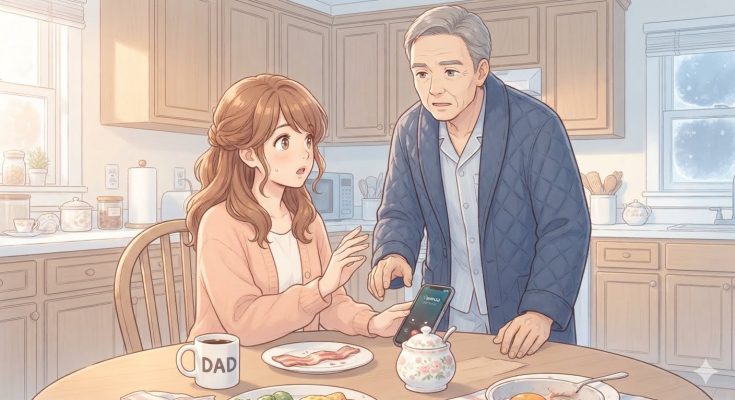
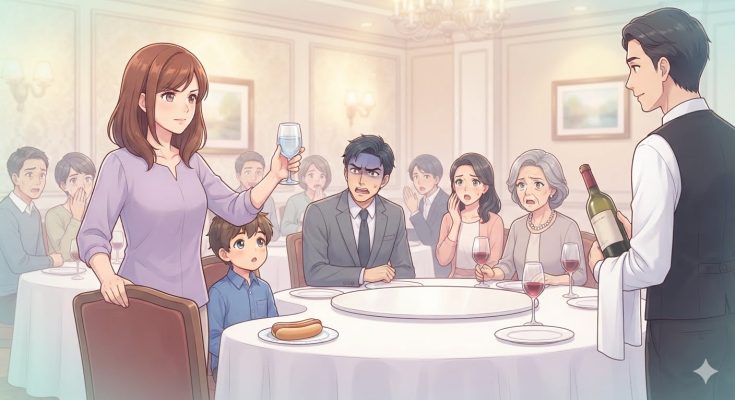
    My brother served my son a hotdog while his own children ate $120 steaks, and Mom told me I should have brought food for him. So when the waiter came back, I stood and made one announcement that left the entire room silent…

    My brother placed a hotdog in front of my eight-year-old son while his children sliced into $120 steaks.

    It was not a children’s meal. It was not even a smaller serving.

    Just a dry hotdog on a paper plate, brought in from the bar menu as though Noah had been forgotten.

    “There,” Eric said, setting it down. “We didn’t order for your son.”

    Noah stared at the spotless tablecloth, then at the steaming steaks in front of his cousins, before looking up at me.

    Without hesitation, my mother added, “You should’ve packed him something.”

    The private dining room fell silent for a brief moment.

    Then Eric’s wife laughed.

    Dad cleared his throat and buried his attention in the wine list. My nieces and nephews continued eating. Eric settled back in his chair, wearing the smug expression he always used when he believed he had reminded me of my place.

    I smiled and said, “Noted.”

    Because I had learned one important lesson years earlier.

    When people humiliate you in front of others, they usually assume you are too embarrassed to reveal who is actually paying.

    The dinner was meant to honor Dad’s retirement. Eric had selected the restaurant, invited twenty-two relatives, reserved the private room, chosen the premium menu, and assured everyone that “the family account” would handle the expense.

    The family account.

    That was their name for the emergency fund I had created after Mom’s surgery three years earlier. I contributed to it every month. Eric never deposited anything. Neither did Dad. Mom occasionally withdrew money and described it as “reimbursement for stress.”

    Yet whenever the family wanted something expensive, my money somehow belonged to everyone.

    Whenever my son needed basic consideration, I was told I should have prepared better.

    Noah lowered his voice. “Mom, I’m not that hungry.”

    That wounded me more than anything Eric had said.

    He was hungry.

    He had looked forward to the dinner all day. He had worn his blue button-down shirt because Grandpa liked “nice shirts.” He had even made a card by hand that read Happy Retirement, Grandpa. I’m proud of you.

    Now he was shrinking into himself at a table surrounded by adults who should have defended him.

    I rested my hand on his shoulder. “You don’t have to eat that.”

    Eric gave an irritated laugh. “Don’t start drama, Claire. Kids eat hotdogs. He’ll survive.”

    My mother forced a smile. “Honestly, your brother already spent enough tonight.”

    I noticed the waiter approaching with another bottle of wine, the same bottle Eric had bragged cost more than my first car.

    Then I rose from my seat.

    Every face turned toward me.

    I raised my glass and said, “Before dessert comes out, I’d like to announce something.”

    Eric’s grin grew wider, clearly expecting me to offer a toast.

    Instead, I faced the waiter and said, “Please separate the checks. Everything ordered for my son and me goes on my card. Everything else goes to the person who ordered it.”

    The waiter gave a polite nod.

    Eric’s smile disappeared.

    Then I continued, “And please remove my card from the family account on file.”

    No one spoke.

    Part 2:

    Eric reacted first.

    “What are you talking about?” he asked.

    I opened my purse and took out the black folder my attorney had advised me to keep nearby.

    “The family account is in my name,” I said. “My card is the one this restaurant has been charging for three years.”

    Mom dropped her fork against the plate.

    Dad’s head snapped up. “Claire, this is not the time.”

    “It became the time when my child was handed scraps at a dinner I was expected to fund.”

    Eric laughed, although his voice trembled. “You’re lying. Dad handles the family account.”

    “No,” I replied. “Dad receives the statements. I pay them.”

    The waiter remained motionless beside us, still holding the wine bottle as though it were evidence in a trial.

    I spoke to him calmly. “Please bring my son the steak he wanted, the potatoes, and the chocolate cake. Put only that on my bill.”

    Noah’s eyes grew wide.

    Eric’s wife glared at me. “So now you’re trying to embarrass us?”

    “No,” I said. “I’m letting you pay for yourselves.”

    My mother leaned across the table. “After everything we did for you?”

    I opened the folder.

    It contained copies of bank transfers, restaurant bills, vacation deposits, medical expenses, and one email Eric had mistakenly sent to me instead of Dad.

    Claire is too guilty to say no. Use her card for Dad’s dinner and make sure she thinks it was already arranged.

    All the color left Dad’s face.

    Eric reached across the table. “Give me that.”

    I pulled the folder out of reach. “No.”

    At that moment, the waiter returned with the manager.

    “Ms. Bennett,” the manager said carefully, “we removed your card from the master tab. The remaining balance needs a new form of payment.”

    Dad swallowed. “How much?”

    The manager stated the amount.

    Eric’s wife stared at him. “We can’t cover that tonight.”

    Eric looked at me, his arrogance finally replaced by fear.

    “Claire,” he said quietly, “don’t do this over a hotdog.”

    I glanced at Noah, who was now sitting straighter in his chair.

    “It was never about the hotdog,” I said. “It was about you thinking my money had a seat at this table, but my son didn’t.”

    Part 3:

    Dad attempted to regain control by using the same commanding tone he always relied on.

    “Claire, sit down,” he said.

    “No.”

    Mom’s expression hardened. “You are ruining your father’s retirement dinner.”

    I looked at the man who had remained silent while his grandson was openly humiliated.

    “No,” I said. “You let it ruin itself.”

    The manager handed the bill folder to Eric. He opened it, read the total, and immediately turned pale. The steaks, bottles of wine, private-room fee, desserts, and retirement cake had all been placed under his name because he had arranged the order.

    His first card was declined.

    Then the second.

    His wife’s card failed too.

    The same relatives who had laughed when Noah received the hotdog suddenly began reaching for their purses.

    One cousin quietly paid for their portion and left. Another followed. Then my aunt leaned toward Mom and murmured, “You told us Claire offered.”

    Mom had no response.

    For once, her silence was the most honest thing she had given me.

    Ten minutes later, Noah’s steak arrived. The waiter placed it before him with potatoes and sauce.

    Noah looked up at me. “Can I really eat it?”

    I smiled at him. “Yes, honey. You were always invited to dinner. They just forgot manners.”

    Eric heard every word.

    Good.

    By the end of the evening, Dad had been forced to arrange a payment plan for the remaining balance. Eric lost the deposit for the anniversary party he had planned at the same restaurant. Mom stopped answering calls after relatives discovered that I had secretly funded years of supposed “family generosity.”

    The family group chat erupted the following morning.

    Eric wrote, You humiliated me in front of everyone.

    I answered, You handed a child a hotdog beside a $120 steak and called it family.

    Then I left the group.

    Two weeks later, Dad came to my house carrying an apology card.

    It was not addressed to me.

    It was for Noah.

    I allowed Noah to decide whether he wanted to read it. He did, placed it inside a drawer, and returned to building with his Legos.

    That was answer enough.

    From that point forward, I refused to pay for meals where respect was not served before the food.

    Noah and I created a Friday-night tradition of our own: a small restaurant, an oversized dessert, and no affection with conditions attached.

    Whenever the waiter asked, “One check or two?” I smiled.

    “One,” I said. “Only for the people I came with.”
  • Dogrupara News Tom Selleck Reveals ‘Blue Bloods’ Cast Took a 25% Pay Cut — But CBS Canceled It Anyway

    Dogrupara News Tom Selleck Reveals ‘Blue Bloods’ Cast Took a 25% Pay Cut — But CBS Canceled It Anyway

    Tom Selleck Says Blue Bloods Cast Took Major Pay Cut Before CBS Canceled the Series

    The Cast Made Major Sacrifices to Keep the Long-Running Drama Alive

    Tom Selleck has revealed that the cast of “Blue Bloods” agreed to significant sacrifices in an effort to keep the popular television drama on the air.

    Among those sacrifices was a 25% pay cut accepted before the series was ultimately canceled.

    Selleck, who portrayed Frank Reagan throughout the show’s 14-season run, said the actors and crew wanted to continue working together and were disappointed when the CBS drama came to an end.

    For the veteran actor, the conclusion was particularly difficult because “Blue Bloods” had developed into much more than another television job.

    Tom Selleck Played Frank Reagan for 14 Seasons

    Selleck appeared as Frank Reagan from 2010 through 2024, becoming one of the central figures in the long-running series.

    Fourteen seasons gave the cast an unusually long period to work together, allowing relationships between the performers to develop alongside the relationships portrayed on screen.

    Selleck emphasized how unusual it was for a television production to maintain the same group of actors for so many years.

    In an industry where casts can change and shows can disappear quickly, “Blue Bloods” managed to preserve a remarkable level of continuity.

    The Cast Was Willing to Earn Less to Continue

    One of the clearest indications of how strongly the cast wanted the series to survive was the decision to accept a substantial reduction in salary.

    Selleck said the performers agreed to take a 25% pay cut as part of an effort to keep production moving.

    For a series that had already been on television for many years, the decision represented a meaningful compromise.

    The cast was not simply asking for the show to continue under exactly the same circumstances.

    They were willing to give something up in order to preserve the production and continue working together.

    The Crew Was Also Invested in the Show’s Future

    Selleck’s comments were not limited to the actors.

    He also emphasized that the crew wanted the series to continue.

    After spending so many seasons working on the same production, the people behind the cameras had also become an important part of the show’s identity.

    The shared desire to continue reflected how strongly the production team valued the workplace they had built over more than a decade.

    For Selleck, that long-term connection was one of the reasons the cancellation remained disappointing.

    The Ending Was Difficult for a Cast That Wanted to Stay Together

    Many television shows reach a natural conclusion because performers want to leave, storylines have been exhausted, or audiences have moved on.

    Selleck’s description of “Blue Bloods” suggested a different situation.

    The cast still wanted to work together.

    The crew wanted to continue.

    The performers had even accepted lower compensation in an attempt to make another continuation possible.

    Despite that willingness, the drama still reached its end.

    Selleck Described the Cast’s Bond as Something Rare

    One of the aspects Selleck valued most was the relationship among the longtime cast members.

    Keeping a group of actors together for 14 seasons is not common, and Selleck regarded that stability as an important accomplishment.

    Over such a long period, actors become deeply familiar with one another’s rhythms, timing, and approach to scenes.

    That familiarity can help create the sense of history audiences expect from characters who are supposed to have known one another for years.

    For “Blue Bloods,” the consistency of the cast became one of the qualities that helped define the series.

    Fourteen Seasons Created a Unique Working Relationship

    Working together from 2010 until 2024 meant the cast shared a professional relationship lasting well over a decade.

    That kind of continuity is especially significant in television, where production schedules require actors and crews to spend long periods together year after year.

    By the later seasons, the people involved were not entering a new production and learning how to work together.

    They had already developed an established system built over years of shared experience.

    Selleck’s comments suggest that losing that environment was part of what made the ending so difficult.

    The Series Was Still Performing Strongly

    Selleck also pointed to the continued success of “Blue Bloods” when discussing the cancellation.

    The show remained among the highest-ranking broadcast programs even during its final season.

    That performance made the decision to end the series particularly frustrating for people who believed its audience remained strong.

    From Selleck’s perspective, the show was not ending after viewers had abandoned it.

    It still had a significant place among broadcast television programs.

    Its Final Season Still Drew Significant Attention

    After 14 seasons, simply remaining competitive among other broadcast programs was an achievement in itself.

    Long-running series often face the challenge of maintaining audience interest as television habits change and new productions arrive.

    According to Selleck’s comments, “Blue Bloods” continued to perform at a high level until the end.

    That continued popularity reinforced his belief that there was still an audience interested in spending more time with the Reagan family and the wider world of the series.

    The Cancellation Came Despite the Cast’s Efforts

    The 25% pay reduction showed that the actors understood there were practical considerations involved in extending a long-running television production.

    Rather than refusing to compromise, they agreed to a significant adjustment.

    Even that decision was not enough to prevent the series from ending.

    For Selleck, the disappointment therefore involved more than simply losing a role.

    The people involved had actively tried to create conditions that would allow the show to continue.

    Frank Reagan Became One of Selleck’s Longest-Running Roles

    Playing the same character for 14 seasons gave Selleck an unusually extended opportunity to develop Frank Reagan.

    Television allows actors to spend far more time with a character than is normally possible in a single film.

    Over the years, Selleck became closely identified with the role and with the larger Reagan family at the center of the series.

    That long association made the conclusion of “Blue Bloods” a major transition after so many years of regular production.

    The Workplace Itself Became Special to Selleck

    Despite his disappointment about the cancellation, Selleck has emphasized his gratitude for the years he spent making the show.

    He described “Blue Bloods” as a special and enjoyable place to work.

    That positive experience was closely connected with the professionalism of the people around him.

    Selleck praised the cast for the way they approached their work throughout the series.

    After so many years together, the production had developed a level of consistency that he clearly valued.

    Professionalism Helped Sustain the Series for More Than a Decade

    A television drama that remains on the air for 14 seasons requires more than audience interest.

    It also requires the people involved to repeatedly return and maintain the quality and reliability necessary to produce new episodes.

    Selleck’s praise for his colleagues reflected that long-term commitment.

    The actors had to continue performing familiar roles while maintaining the relationships and tone audiences had come to expect.

    The crew likewise had to keep the production operating season after season.

    The Same Cast Became Part of the Show’s Identity

    Selleck viewed the long-term stability of the cast as one of the great strengths of “Blue Bloods.”

    Audiences were able to return to familiar characters year after year without constant changes disrupting the ensemble.

    That continuity helped reinforce the family-centered nature of the drama.

    For a show built around recurring relationships, retaining the same performers could create an additional sense of authenticity.

    The years the actors spent working together mirrored the long history their characters shared on screen.

    The Cast’s Sacrifice Showed Their Commitment

    Agreeing to a 25% reduction in pay was not a symbolic gesture.

    It represented a real sacrifice by performers who had already spent years making the series successful.

    The decision showed that keeping the production together mattered enough for the cast to accept less compensation.

    That willingness makes the cancellation more notable because it demonstrates that the show did not end simply because the principal actors had lost interest.

    They were actively trying to remain.

    Selleck Believed There Was More Life Left in the Series

    His comments about the ratings also suggest that he believed “Blue Bloods” remained viable as a television program.

    The show continued ranking among leading broadcast programs in its final season.

    Combined with the cast’s willingness to accept financial concessions, that success gave Selleck reasons to believe the production could have continued.

    The cancellation therefore remained a source of disappointment even as he expressed appreciation for everything the series had already achieved.

    Success Did Not Guarantee Another Season

    The ending illustrates one of the realities of long-running television.

    A series can maintain a loyal audience and a committed cast while still reaching a point where the network decides not to continue.

    For the people who spend years working on such a show, that decision can be difficult to accept.

    Selleck’s comments make clear that there was still enthusiasm within the production itself.

    The cast had not emotionally moved on before the decision was made for them.

    The Final Season Carried Extra Emotional Weight

    Once it became clear that the series was ending, the final episodes represented more than the conclusion of fictional storylines.

    They also marked the end of a working relationship that had lasted since 2010.

    For actors who had portrayed the same family for years, finishing production meant saying goodbye to routines and colleagues that had become part of their professional lives.

    Selleck’s appreciation for the cast and crew reflects the personal significance of that transition.

    Few Television Ensembles Remain Together for 14 Seasons

    Selleck repeatedly returned to the rarity of maintaining such a stable ensemble.

    Fourteen seasons represents a substantial portion of any actor’s career.

    During that period, cast members could develop a level of understanding that cannot easily be recreated on a new production.

    That shared history was one of the qualities Selleck believed made “Blue Bloods” special.

    It also explains why the cast was willing to make financial concessions rather than simply accept the end of the series.

    The Reagan Family Became Familiar to Viewers

    For audiences who followed “Blue Bloods” over the years, the continuing cast helped create a sense of familiarity.

    Viewers watched the same performers return season after season, allowing the fictional relationships to develop over an unusually long period.

    Selleck’s Frank Reagan remained at the center of that world throughout the show’s run.

    His presence from 2010 through 2024 gave the series a consistent central figure.

    Selleck Remains Grateful Despite His Disappointment

    Although he disagreed with the ending and wanted the show to continue, Selleck has not allowed the cancellation to erase his appreciation for the experience.

    He remained grateful for the opportunity to spend 14 seasons portraying Frank Reagan.

    He also praised the people who worked beside him during those years.

    That combination of disappointment and gratitude reflects the complicated emotions surrounding the conclusion of a successful long-running production.

    Blue Bloods Was More Than Another Acting Job

    For Selleck, the series became a place where a stable group of professionals repeatedly returned to work together.

    That environment was enjoyable enough that the people involved wanted to preserve it.

    The cast’s willingness to accept a pay reduction supports Selleck’s description of the production as something unusually meaningful.

    After 14 seasons, continuing was not simply about extending individual employment.

    It was about maintaining a creative group that had spent years building something together.

    The Show’s Longevity Remains a Major Achievement

    Even though Selleck would have preferred another outcome, 14 seasons represents an extraordinary television run.

    From 2010 until 2024, “Blue Bloods” remained part of the broadcast landscape and maintained enough popularity to rank among leading programs even near the end.

    That longevity gave the cast an opportunity to create an unusually deep professional bond.

    It also gave viewers years of stories centered on familiar characters.

    The 25% Pay Cut Has Become a Symbol of Their Determination

    Of all the details Selleck has shared about the effort to preserve the series, the 25% pay cut stands out.

    It demonstrates that the cast did more than simply express a desire for another season.

    They agreed to meaningful financial changes in an effort to make continuation possible.

    The decision did not ultimately save “Blue Bloods,” but it revealed just how strongly the actors wanted to remain together.

    The Ending Did Not Diminish What the Cast Built

    Cancellations can easily become the final story surrounding a television series, especially when the cast believes the show still has an audience.

    Selleck’s comments, however, also emphasize everything that had already been accomplished.

    The same group of performers remained together for years.

    The program stayed competitive among broadcast shows.

    The workplace remained enjoyable enough that its leading actors were willing to make sacrifices to preserve it.

    Tom Selleck Continues to Value the Blue Bloods Years

    Selleck’s reflections reveal how important his time on “Blue Bloods” became to him.

    He spent 14 seasons portraying Frank Reagan and working alongside a cast he considered unusually close and professional.

    The fact that the drama ended despite strong ratings and a major pay concession remains disappointing to him.

    At the same time, his gratitude for the experience has remained clear.

    The show gave him more than a decade of work with a stable ensemble and a production environment he considered special.

    A Rare Television Family Reached the End of Its Run

    The conclusion of “Blue Bloods” closed a chapter that began in 2010 and continued through 2024.

    For Selleck, the most remarkable part of that journey may have been the ability to keep the cast together for so long.

    The actors wanted to continue.

    The crew wanted to continue.

    The cast accepted a 25% reduction in pay in an attempt to make that possible.

    Even in its final season, the series continued to rank among the strongest broadcast programs.

    None of those factors ultimately prevented the cancellation.

    But they help explain why Selleck continues to speak so warmly about the series and so openly about his disappointment that it ended.

    For him, “Blue Bloods” remained something rare: a successful long-running television drama where the people involved still enjoyed working together even after 14 seasons.

  • PART2- My sister called at 6:30 a.m. and said, “Dad died last night.

    PART2- My sister called at 6:30 a.m. and said, “Dad died last night.

    “Exactly what I said.”
    Dad reached for his coffee as casually as if Vanessa had asked him about the weather.
    Through the speaker, I heard Grant whisper something.
    Then Vanessa said, “Dad… where are you?”
    “Having breakfast.”
    “Where?”
    Dad looked at me.
    “With Natalie.”
    Another silence.
    This one lasted longer.
    Then Grant exploded.

    “What the hell are you doing at her house?”
    Dad’s face changed.
    Not dramatically.
    Just enough.
    His jaw tightened.
    His eyes hardened.
    “Interesting question, Grant.”
    “I didn’t mean—”
    “No, I heard exactly what you meant.”
    Vanessa jumped in quickly.

    “Dad, there’s obviously been some kind of misunderstanding.”
    “A misunderstanding?”
    Dad glanced at the phone.
    “You called my daughter at six-thirty in the morning and told her I was dead.”
    Vanessa said nothing.
    “You told her Harold found my body.”
    Still nothing.
    “You told her you’d found my papers, that you owned my house, my truck, and my bank accounts.”
    “Dad, listen—”
    “And then your husband said Natalie was finally out of the family.”
    Grant muttered something I couldn’t understand.
    Dad leaned closer to the phone.

    “So I’m curious, Vanessa. Which part was the misunderstanding?”
    Her answer came quietly.
    “We thought you were dead.”
    Dad actually laughed.
    It wasn’t a happy laugh.
    It was the kind of laugh people make when a lie is so insulting that anger temporarily becomes disbelief.
    “You thought I was dead?”
    “Harold told us—”
    “Careful.”
    Dad’s voice became sharper.

    “Harold is sitting exactly twelve minutes away from you, and I can call him right now.”
    Vanessa stopped.
    Dad waited.
    “So,” he continued, “would you like another chance at that answer?”
    Nothing.
    Then Grant said, “This is ridiculous.”
    Dad ignored him.
    Vanessa finally whispered, “We went to the house last night.”
    My father stopped moving.
    That sentence mattered.
    I could tell immediately.
    “What time?”
    “Around eleven.”
    “And why were you in my house at eleven o’clock?”
    Vanessa hesitated.
    “We were worried about you.”
    Dad looked at me.
    I nearly laughed.
    Vanessa hadn’t visited him in almost three weeks.
    Dad knew it.
    I knew it.
    And judging by the silence coming from Grant, he knew it too.
    “Worried about me,” Dad repeated.
    “Yes.”
    “So worried that you went through my office?”
    “We didn’t go through—”
    “You just told Natalie you found my papers.”
    Vanessa inhaled sharply.
    Dad leaned back.
    “You’re not very good at this.”
    Grant suddenly grabbed the phone.
    “Okay, enough.”
    His voice had lost every trace of amusement.
    “You want the truth?”
    Dad smiled faintly.
    “That would be refreshing.”
    “We went there because Vanessa couldn’t reach you.”
    “She called twice.”
    “Exactly.”
    “At eleven-thirty at night.”
    “Exactly.”
    “I was asleep.”
    “Well, we didn’t know that!”
    Dad stared at the speaker.
    Grant continued.
    “We drove over. Your truck wasn’t there. Nobody answered. We got worried.”
    “Then how did you get inside?”
    That stopped him.
    Dad’s front door required a key.
    There was no keypad.
    No hidden spare beneath a flowerpot.
    Dad had always said hiding a key outside was “just giving burglars a participation trophy.”
    Vanessa answered this time.
    “You gave me a key.”
    “No, I didn’t.”
    “Years ago.”
    “I changed the locks eighteen months ago.”
    Silence.
    Dad looked at me.
    Something cold moved through my stomach.
    Because suddenly this wasn’t funny anymore.
    “Vanessa,” Dad said slowly, “how did you get into my house?”
    She didn’t answer.
    Dad repeated the question.
    “How did you get into my house?”
    Grant muttered, “We should hang up.”
    Dad heard him.
    “No. You absolutely should not.”
    “Dad—”
    “Tell me how you got inside.”
    Another long pause.
    Then Vanessa said, “The back door was unlocked.”
    Dad’s eyes met mine.
    I knew that wasn’t true.
    He knew that wasn’t true.
    Because two nights earlier, Dad had called me from a motel outside Knoxville.
    He had been frightened.
    Not dramatically frightened.
    Dad wasn’t that kind of man.
    But frightened enough to drive through the night.
    Frightened enough to show up at my house shortly after midnight.
    Frightened enough to bring a metal lockbox containing documents he’d never shown anyone.
    And frightened enough to say:
    “Natalie, I think somebody has been inside my house.”
    That was the part Vanessa didn’t know.
    Forty-eight hours earlier, Dad had noticed tiny things out of place.
    His desk drawer wasn’t fully closed.
    A folder containing property records had been moved.
    His spare truck key was missing.
    Someone had tried opening the small fireproof safe beneath his desk.
    And most importantly, an envelope containing an old copy of his will had disappeared.
    Dad hadn’t called Vanessa.
    He called me.
    I bought him a plane ticket.
    But halfway to the airport, he changed his mind.
    Instead, he drove.
    He didn’t tell Vanessa where he was going.
    He didn’t tell Grant.
    He told only Harold.
    Which meant Vanessa’s claim that Harold had found Dad dead was more than a random lie.
    She had deliberately used the name of the only other person who knew Dad had left town.
    Dad looked at me now.
    I knew exactly what he was thinking.
    So did he.
    “Vanessa,” he said, “did you speak to Harold yesterday?”
    “No.”
    “This morning?”
    “No.”
    “Then why did you tell Natalie that Harold found me dead?”
    Vanessa went silent.
    Grant whispered, “Hang up.”
    This time Dad heard him clearly.
    “If either of you disconnects this call, I’m calling the sheriff.”
    Vanessa gasped.
    “Dad!”
    “You broke into my house.”
    “We did not!”
    “You apparently entered my locked home without permission, searched my office, removed documents, and then told my daughter I was dead.”
    “We didn’t remove anything!”
    Dad’s expression changed.
    That was the wrong answer.
    Because he hadn’t accused them of removing anything specific.
    Not yet.
    He slowly placed his coffee cup down.
    “What didn’t you remove?”
    Vanessa realized her mistake.
    “N-nothing.”
    “What didn’t you remove, Vanessa?”
    “I meant—”
    “The will?”
    Silence.
    “The deed?”
    Silence.
    “The bank statements?”
    “Dad, stop.”
    “The spare truck key?”
    Vanessa said nothing.
    Dad looked at me.
    There it was.
    Confirmation.
    At least some of the missing items had ended up exactly where he’d suspected.
    But then Grant said something that surprised both of us.
    “None of this matters anyway.”
    Dad’s eyebrows lifted.
    “Excuse me?”
    “You already signed everything.”
    Vanessa hissed, “Grant!”
    But it was too late.
    Dad went perfectly still.
    “What did I sign?”
    Grant didn’t answer.
    Dad stood.
    “What did I sign, Grant?”
    Vanessa started talking quickly.
    “He’s upset. He doesn’t know what he’s saying.”
    Grant shouted over her.
    “I’m saying we’re protected!”
    “Protected from what?” I finally asked.
    Grant apparently forgot I was listening.
    “Natalie, stay out of this!”
    “It’s my phone.”
    “This has nothing to do with you!”
    Dad cut in.
    “It has everything to do with her.”
    Then he said something I hadn’t expected.
    “Because as of yesterday afternoon, Natalie owns the house.”
    I turned toward him.
    “What?”
    Apparently Vanessa said the same thing because her voice came through the speaker almost simultaneously.
    “WHAT?”
    Dad calmly picked up another piece of bacon.
    “I transferred it.”
    My mouth fell open.
    “Dad—”
    He raised one finger toward me.
    “Let me finish.”
    Vanessa sounded breathless.
    “You can’t do that.”
    “I can.”
    “No, you can’t!”
    “I already did.”
    “That house is supposed to come to me!”
    There it was.
    Not grief.
    Not confusion.
    Not concern.
    Ownership.
    Dad’s expression became almost sad.
    “Supposed to?”
    “You promised!”
    “No. Your mother and I once discussed leaving the property equally between you and Natalie.”
    “Exactly!”
    “Equally.”
    Vanessa didn’t answer.
    Dad continued.
    “Then your mother died. Natalie moved away. You stayed nearby. And somewhere along the way, you apparently decided proximity meant ownership.”
    “I took care of you!”
    Dad’s voice hardened.
    “You brought groceries twice last winter.”
    “I did more than that!”
    “You sent me invoices.”
    I nearly choked on my coffee.
    Dad glanced at me.
    “Yes. Actual invoices.”
    “For expenses!”
    “You charged me seventy-five dollars for driving me to an eye appointment.”
    “Gas costs money!”
    “It was six miles.”
    Grant interrupted.
    “This is getting petty.”
    Dad laughed.
    “You announced my death before breakfast, Grant. I think we’ve already passed petty.”
    I covered my mouth.
    Even furious, my father remained my father.
    Vanessa wasn’t amused.
    “You transferred the house to Natalie?”
    “Yesterday.”
    “Why?”
    Dad didn’t answer immediately.
    Then he looked at me.
    “Because two days ago, someone tried to file paperwork against it.”
    The kitchen suddenly felt colder.
    “What paperwork?” I asked.
    “A home equity loan.”
    I stared at him.
    Vanessa made a strange sound through the phone.
    Dad heard it too.
    “Interesting,” he said.
    “Dad, I don’t know anything about that.”
    “I didn’t say you did.”
    “But you’re implying—”
    “I didn’t imply anything.”
    Dad walked toward the counter where his leather folder sat.
    He opened it.
    Inside were photocopies, notes, and several envelopes.
    He removed one sheet.
    “Three days ago, my bank called because someone requested verification of ownership.”
    Grant stopped talking.
    Dad continued.
    “Yesterday morning, my attorney discovered someone had submitted preliminary loan documents using my name.”
    “Dad, that’s insane.”
    “Yes.”
    “You think we did it?”
    “I didn’t say that.”
    “You obviously do!”
    Dad’s voice lowered.
    “What I think is that somebody believed I was an elderly widower who wouldn’t notice paperwork disappearing from his desk.”
    My stomach tightened.
    “How much was the loan?”
    Dad looked at the paper.
    “Two hundred and eighty thousand dollars.”
    I stared at him.
    Vanessa said nothing.
    Grant said nothing.
    Dad continued.
    “And here’s the strange part.”
    He turned the paper around even though nobody on the phone could see it.
    “The application included information from documents that were kept in my locked office.”
    Vanessa finally whispered, “Dad…”
    “Yesterday, my attorney stopped the application.”
    Dad tapped the folder.
    “Then I transferred the house into the family trust we’ve been preparing for months.”
    I blinked.
    “Wait. You said I own it.”
    “You control the trust.”
    I stared at him.
    Dad gave me a small smile.
    “Effective yesterday.”
    Vanessa erupted.
    “You made HER trustee?”
    “Yes.”
    “Why?”
    “Because she didn’t try to steal my house.”
    That ended the conversation for several seconds.
    Then Grant shouted:
    “You can’t prove anything!”
    Dad’s face changed instantly.
    I felt my pulse jump.
    He hadn’t accused Grant.
    Not directly.
    Yet Grant had defended himself.
    Dad noticed too.
    “Prove what?”
    Grant didn’t answer.
    “Grant?”
    Nothing.
    Then the call disconnected.
    Dad stared at my phone.
    I stared at Dad.
    Neither of us spoke.
    Finally I whispered, “Should we call the police?”
    Dad looked toward the window.
    “Not yet.”
    “Dad, they broke into your house.”
    “I know.”
    “They might have your documents.”
    “I know.”
    “And somebody tried borrowing almost three hundred thousand dollars against your property.”
    “I know.”
    “Then why are we waiting?”
    Dad slowly closed the leather folder.
    “Because there’s something I haven’t told you.”
    My stomach dropped.
    “What?”
    He walked toward the guest room.
    A minute later, he returned carrying the small metal lockbox he’d brought with him.
    He placed it on my kitchen table.
    Then he unlocked it.
    Inside were old photographs, insurance documents, bank statements, property records, and a sealed yellow envelope.
    Dad removed the envelope.
    My name was written across the front.
    NATALIE.
    “What is that?”
    “Something your mother left.”
    My chest tightened.
    Mom had been dead six years.
    “Why haven’t I seen it?”
    “Because she asked me not to give it to you unless something happened.”
    “What kind of something?”
    Dad stared at the envelope.
    “Something involving Vanessa.”
    I couldn’t speak.
    Dad slid the envelope across the table.
    My fingers trembled as I picked it up.
    The seal had never been broken.
    I looked at him.
    “What did Mom know?”
    Dad sat down.
    “More than I did.”
    I tore open the envelope.
    Inside was a handwritten letter and a small brass key taped to the bottom.
    The letter began:
    My darling Natalie,
    If your father has given you this letter, then something I spent years hoping would never happen has finally happened.
    I stopped breathing for a second.
    Dad watched me silently.
    I continued.
    Vanessa believes the house belongs to her.
    She has believed that for longer than you know.
    But the house is only the beginning.
    I looked up.
    “Dad…”
    “Keep reading.”
    My hands shook.
    There is something hidden in Harold Pike’s old funeral home that your sister must never find before you do.
    My eyes moved to the brass key.
    Below it, Mom had written one final sentence.
    If Vanessa ever tells you your father is dead before you have seen his body yourself, go to Harold immediately.
    Do not confront her.
    Do not warn her.
    And whatever you do, do not let Grant get there first.
    I stared at those words until they blurred.
    Then Dad’s phone rang.
    We both jumped.
    The caller was Harold.
    Dad answered immediately.
    “Harold?”
    I couldn’t hear what Harold said.
    But I watched the color drain from my father’s face.
    “When?”
    Dad listened.
    Then he stood so quickly his chair scraped across the floor.
    “I’m coming.”
    He ended the call.
    “What happened?”
    Dad grabbed his keys.
    “Someone broke into Harold’s old funeral home twenty minutes ago.”
    My fingers closed around Mom’s brass key.
    “Did they take anything?”
    Dad looked at the open letter in my hands.
    “Harold doesn’t know.”
    Then his phone buzzed again.
    This time it was a text.
    Dad opened it.
    His expression went completely blank.
    “What?”
    He handed me the phone.
    It was a photograph from Harold.
    A security camera image.
    The timestamp read 6:47 A.M.
    A man in a dark jacket was standing beside the rear entrance of the old funeral home.
    His face was turned toward the camera.
    I knew him immediately.
    Grant.
    But he wasn’t alone.
    A woman stood beside him.
    At first, I assumed it was Vanessa.
    Then I enlarged the photograph.
    And my stomach dropped.
    It wasn’t my sister.
    It was someone I hadn’t seen since my mother’s funeral six years earlier.
    Someone Vanessa had repeatedly told us had moved overseas.
    Someone Dad believed had disappeared from our lives forever.
    Dad looked at me.
    “Recognize her?”
    I nodded.
    Because suddenly my sister lying about Dad’s death wasn’t the strangest thing that had happened that morning.
    Not even close.
    I turned Mom’s letter over.
    There, written faintly along the bottom of the final page, was a name.
    The same woman’s name.
    And beneath it, my mother had written five words that made Dad grab the table for support when I read them aloud:
    “She knows Vanessa isn’t yours.”
    TO BE CONTINUED PART3………………….👇👇

    👉Click Here to continuous Read​​​​Full Ending Story>>  :PART3- My sister called at 6:30 a.m. and said, “Dad died last night.

  • PART3- My sister called at 6:30 a.m. and said, “Dad died last night.

    PART 3 — THE SECRET MY MOTHER TOOK TO HER GRAVE
    “She knows Vanessa isn’t yours.”
    The words hung in the kitchen like smoke.
    Dad stared at me.
    Then at Mom’s letter.
    Then back at me.
    “What did you just say?”
    I swallowed.
    I didn’t want to repeat it.
    But I did.
    “Mom wrote, ‘She knows Vanessa isn’t yours.’”
    Dad’s face emptied.

    Not anger.
    Not confusion.
    Something worse.
    Recognition.
    I noticed immediately.
    “Dad?”
    He didn’t answer.
    “Dad, who is she?”
    His eyes moved toward the photograph on his phone.
    The woman standing beside Grant.
    Older now.
    Thinner.


    Gray threaded through her dark hair.
    But unmistakable.
    Her name was Evelyn Shaw.
    And the last time I had seen her, she had stood near the back of the church at Mom’s funeral.
    She hadn’t spoken to me.
    She hadn’t spoken to Dad.
    But she had spoken to Vanessa.
    I remembered because I’d seen them arguing beside the parking lot.
    At the time, Vanessa told me Evelyn was an old friend of Mom’s who had become “unstable.”
    Three weeks later, Vanessa claimed Evelyn had moved to Portugal.
    Nobody questioned it.
    Why would we?


    Now Dad lowered himself slowly into the chair.
    “Evelyn.”
    “You know what Mom meant, don’t you?”
    He rubbed both hands over his face.
    “I know what she might have meant.”
    “That’s not the same answer.”
    “Natalie—”
    “Please.”
    My voice cracked.
    “For once, don’t protect me from whatever this family has been hiding.”
    Dad looked older suddenly.
    Not seventy-one.
    Ninety.


    Then he said, “Evelyn was your mother’s best friend.”
    “I know.”
    “No.”
    He shook his head.
    “You know the version we told you.”
    My stomach tightened.
    “What version?”
    “They grew up together. Same street. Same school. Same nursing program. They were practically sisters.”
    “Okay.”
    “But six months before Vanessa was born, they stopped speaking.”
    I stared at him.
    “Why?”
    Dad’s jaw tightened.
    “Your mother wouldn’t tell me.”
    “You never asked?”
    “I asked for thirty-five years.”
    “And?”
    “She always said it was something she’d promised never to discuss.”
    I looked down at the letter.
    “Until now.”
    Dad nodded.
    Then his phone rang again.
    Harold.
    Dad answered.
    “Tell me.”
    Harold’s voice was loud enough that I could hear pieces of it.
    “…back room…”
    “…lock damaged…”
    “…police…”
    “…Grant…”
    Dad stood.
    “Don’t touch anything. We’re coming.”
    He disconnected.
    “We need to go.”
    I grabbed Mom’s letter and the brass key.
    Dad stopped me.
    “Bring the whole box.”
    “Why?”
    “Because if Grant knows about Harold’s building, then whatever your mother hid there isn’t secret anymore.”
    Ten minutes later, we were in Dad’s truck.
    The old funeral home was nearly three hours away.
    Dad drove.
    I sat beside him with the lockbox on my lap.
    For the first thirty minutes, neither of us spoke.
    Then I asked the question that had been eating through me.
    “Do you think Vanessa knows?”
    Dad kept his eyes on the highway.
    “About what?”
    “That you might not be her biological father.”
    His hands tightened around the steering wheel.
    “I don’t know.”
    “But Mom knew.”
    “Apparently.”
    “And Evelyn knew.”
    “Apparently.”
    “And Grant is with Evelyn.”
    Dad nodded.
    “So somebody knows.”
    He didn’t answer.
    I looked out the window.
    Bare trees blurred past us.
    Then something occurred to me.
    “Dad.”
    “Hmm?”
    “Why would Vanessa lie about you being dead?”
    “I’ve been wondering that.”
    “She didn’t just say you disappeared. She specifically said you died.”
    “I know.”
    “And she used Harold’s name.”
    “I know.”
    “Mom specifically wrote that if Vanessa ever told me you were dead before I’d seen your body, I should go to Harold.”
    Dad glanced at me.
    “So your mother expected this.”
    “Exactly.”
    That was the terrifying part.
    Mom hadn’t written:
    If something happens to your father.
    She had written:
    If Vanessa ever tells you your father is dead.
    That wasn’t a warning about an accident.
    It was a warning about a lie.
    Mom had predicted the exact lie Vanessa told six years after her death.
    “How?” I whispered.
    Dad didn’t answer.
    An hour later, my phone rang.
    Vanessa.
    Dad glanced at the screen.
    “Answer it.”
    I put it on speaker.
    “Hello?”
    “Natalie.”
    She sounded different.
    No arrogance.
    No laughter.
    She sounded scared.
    “Where’s Dad?”
    “Why?”
    “Just tell me where he is.”
    Dad shook his head.
    “I don’t know.”
    “Don’t lie to me.”
    I almost laughed at the hypocrisy.
    “What do you want?”
    Vanessa lowered her voice.
    “Grant is missing.”
    Dad and I looked at each other.
    “Missing?”
    “He left about an hour ago.”
    “Maybe he’s busy renovating Dad’s kitchen.”
    “Natalie, I’m serious.”
    “So am I.”
    “I can’t reach him.”
    “That’s unfortunate.”
    “His phone is off.”
    Dad pointed at the road ahead, silently telling me not to reveal where we were going.
    Then Vanessa said something unexpected.
    “I think he’s been lying to me.”
    I sat straighter.
    “About what?”
    “Everything.”
    “What does that mean?”
    “I don’t know.”
    “You called me this morning and told me Dad was dead.”
    “I know.”
    “You told me you inherited everything.”
    “I know.”
    “You said you found his papers.”
    “I KNOW!”
    Her voice broke.
    Then silence.
    I waited.
    When she spoke again, she was crying.
    Actually crying this time.
    “Grant told me Dad was dead.”
    Dad’s eyes snapped toward the phone.
    “What?”
    “He told me Harold called him around five this morning.”
    “Why would Harold call Grant?”
    “I don’t know.”
    “He didn’t.”
    “I know that now!”
    She sounded almost hysterical.
    “Grant woke me up and said Dad had died. He said Harold found him and that we needed to get to the house before anyone else did.”
    Dad’s expression darkened.
    “Before anyone else did what?”
    “I don’t know.”
    “Vanessa.”
    “I DON’T KNOW!”
    She breathed heavily.
    Then whispered, “He said we needed to secure the documents.”
    There it was.
    Dad mouthed one word.
    Documents.
    “What documents?”
    “I thought he meant the will.”
    “You thought?”
    “Grant told me Dad had changed it.”
    “How would Grant know?”
    Silence.
    “Vanessa?”
    “He said he found something.”
    “Where?”
    “In Dad’s office.”
    Dad’s jaw clenched.
    “When?”
    “Last week.”
    “So Grant was inside Dad’s house before last night.”
    Vanessa stopped breathing for a second.
    “I…”
    “Was he?”
    “I didn’t know.”
    “You told Dad you both entered last night because you were worried.”
    “That’s what Grant told me to say.”
    Dad shook his head.
    I continued.
    “Did Grant take Dad’s old will?”
    “I don’t know.”
    “His truck key?”
    “I don’t know.”
    “Bank documents?”
    “I DON’T KNOW!”
    Then Vanessa began sobbing.
    And for the first time that morning, I wondered whether my sister was less involved than we’d assumed.
    Not innocent.
    She had still happily told me I was excluded.
    She had still planned to take Dad’s property.
    But maybe she wasn’t the person driving the scheme.
    Maybe she was being used.
    Then Dad mouthed:
    Evelyn.
    I understood.
    “Vanessa, do you remember Evelyn Shaw?”
    The crying stopped instantly.
    Not gradually.
    Instantly.
    That told me everything.
    “Why?”
    “Answer me.”
    “Where did you hear that name?”
    “Do you remember her?”
    “Natalie.”
    “Yes or no?”
    Vanessa whispered, “Yes.”
    “When did you last see her?”
    “Mom’s funeral.”
    Lie.
    I knew it before she’d even finished the sentence.
    “Are you sure?”
    “Yes.”
    Dad looked at me.
    I looked at the security photograph.
    Evelyn and Grant.
    6:47 that morning.
    “Has Grant ever met her?”
    Another pause.
    “No.”
    Another lie.
    “Vanessa.”
    “What?”
    “I want you to listen carefully.”
    My voice was shaking now.
    “Grant was with Evelyn this morning.”
    Silence.
    “What?”
    “We have a photograph.”
    “No.”
    “Yes.”
    “That’s impossible.”
    “It isn’t.”
    “Where?”
    I nearly answered.
    Dad grabbed my wrist.
    I stopped.
    “Where, Natalie?”
    “Why does that matter?”
    “WHERE?”
    Her panic sounded real.
    Dad whispered, “Don’t tell her.”
    So I didn’t.
    Instead I asked, “Why are you afraid?”
    Vanessa’s answer came so quietly I almost missed it.
    “Because Evelyn is supposed to be dead.”
    My blood went cold.
    Dad hit the brakes.
    The truck jerked toward the shoulder.
    “What?”
    Vanessa was breathing rapidly.
    “Six years ago.”
    “After Mom’s funeral?”
    “Yes.”
    “You told us she moved overseas.”
    “I lied.”
    Dad pulled completely off the highway.
    “Why?”
    Vanessa whispered, “Because Mom made me promise.”
    That didn’t make sense.
    “Mom was dead.”
    “No.”
    “What?”
    “She made me promise before she died.”
    Dad leaned toward the phone.
    I could see his hands trembling.
    “What did she make you promise?”
    Vanessa didn’t know Dad was listening.
    “That if Evelyn ever contacted me after the funeral, I was supposed to tell everyone she’d moved away.”
    “Why?”
    “Mom said Evelyn was dangerous.”
    Dad’s eyes widened.
    “Did she contact you?”
    “Yes.”
    “When?”
    “The night after the funeral.”
    “What did she want?”
    Vanessa hesitated.
    Then she said, “She wanted money.”
    “Why?”
    “She said Mom owed her.”
    “How much?”
    “Fifty thousand dollars.”
    Dad stared at me.
    “What did you do?”
    “I told her no.”
    “And then?”
    “She threatened me.”
    “With what?”
    Vanessa started crying again.
    “She said she’d tell Dad the truth.”
    Dad closed his eyes.
    “What truth?”
    “I didn’t know!”
    “You expect me to believe that?”
    “I swear!”
    “Then what happened?”
    “I called Grant.”
    Of course.
    Even six years ago, Grant was there.
    “He met Evelyn.”
    Dad opened his eyes.
    “Where?”
    “At a motel outside town.”
    “And?”
    “Grant came home three hours later.”
    “What did he say?”
    “He said Evelyn wouldn’t bother us anymore.”
    My stomach turned.
    “What does that mean?”
    “I asked him. He wouldn’t tell me.”
    “And you never saw her again?”
    “No.”
    “Until now,” I said.
    Vanessa went silent.
    Then she whispered, “What is Grant doing with her?”
    I didn’t know.
    But suddenly I had a much worse question.
    What had Grant been doing with Evelyn for six years?
    Dad pointed at my phone.
    “Ask about the loan.”
    “Vanessa, did you know about the home equity application?”
    “What home equity application?”
    “Someone tried to borrow two hundred and eighty thousand dollars against Dad’s house.”
    “What?”
    Her surprise sounded genuine.
    “Did Grant ever ask you to sign anything involving Dad’s property?”
    “No.”
    “Did you give him Dad’s Social Security number?”
    “No.”
    “Bank information?”
    “No.”
    Then she stopped.
    “What?”
    I heard her moving.
    Drawers opening.
    Something falling.
    “Vanessa?”
    “Wait.”
    More movement.
    Then she gasped.
    “Oh my God.”
    “What?”
    “Our safe is open.”
    Dad and I looked at each other.
    “What was inside?”
    “Documents.”
    “What documents?”
    “Copies of Dad’s tax records. Mom’s death certificate. Some old insurance papers.”
    Dad’s face hardened.
    “Why did you have those?”
    “Dad gave me copies after Mom died.”
    “And?”
    “They’re gone.”
    “What else?”
    Vanessa stopped.
    Then whispered, “My passport.”
    “What about it?”
    “Gone.”
    I didn’t understand.
    Then Dad did.
    “Ask about her birth certificate.”
    “Your birth certificate?”
    Vanessa ran somewhere.
    Thirty seconds later, she returned.
    “That’s gone too.”
    Dad leaned back.
    His face was pale.
    “Grant took them,” Vanessa whispered.
    Then the line went dead.
    “Vanessa?”
    Nothing.
    I called back.
    Straight to voicemail.
    Again.
    Voicemail.
    Dad pulled onto the highway.
    “Call Harold.”
    I did.
    No answer.
    Again.
    Nothing.
    “Dad…”
    “Keep trying.”
    For the next forty minutes, nobody answered.
    Not Vanessa.
    Not Harold.
    Then, twelve miles outside our hometown, Harold finally called.
    I answered.
    “Harold?”
    “Where are you?”
    “Almost there.”
    “Don’t come to the front.”
    “Why?”
    “The police are here.”
    “Did they find Grant?”
    “No.”
    “Evelyn?”
    “No.”
    “What did they take?”
    Harold went quiet.
    “Harold?”
    “They didn’t take anything.”
    I looked at Dad.
    “What?”
    “They were looking for something.”
    “The thing Mom hid?”
    “I think so.”
    “Did they find it?”
    “No.”
    My hand closed around the brass key.
    “How do you know?”
    “Because I moved it.”
    Dad nearly shouted.
    “You WHAT?”
    Harold heard him.
    “Arthur?”
    Dad grabbed the phone.
    “Where did you move it?”
    “Three years ago.”
    “Where?”
    “Not over the phone.”
    Dad accelerated.
    Twenty minutes later, we turned onto Willow Street.
    Harold’s old funeral home sat at the end of the block.
    Three police cars were parked outside.
    Harold waited beside the neighboring hardware store.
    He was seventy-three, tall, silver-haired, and looked as though he hadn’t slept.
    He climbed into the back seat.
    “Drive.”
    Dad didn’t argue.
    “Where?”
    “The cemetery.”
    I turned around.
    “What?”
    Harold looked at the lockbox on my lap.
    “Did Arthur give you Helen’s letter?”
    “Yes.”
    “Then you have the key.”
    I held it up.
    Harold nodded.
    “Good.”
    Dad looked at him in the mirror.
    “Harold, what the hell is going on?”
    Harold stared out the window.
    “Your wife made me promise.”
    “I’m getting tired of hearing that sentence.”
    “I know.”
    “Promise what?”
    “That I’d protect something.”
    “What?”
    Harold looked at me.
    “The truth about Vanessa.”
    Nobody spoke for the rest of the drive.
    The cemetery sat on a hill outside town.
    Mom was buried near the eastern fence beneath a maple tree.
    Dad parked.
    Harold led us past Mom’s grave.
    That surprised me.
    He continued another hundred feet toward an old stone maintenance building.
    He unlocked the door.
    Inside were gardening tools, folding chairs, and rusted equipment.
    Harold moved an old cabinet aside.
    Behind it was a small metal door built into the wall.
    A brass keyhole sat in its center.
    He looked at me.
    “Your key.”
    My hands trembled.
    I inserted Mom’s key.
    Turned it.
    Click.
    The door opened.
    Inside was a narrow compartment.
    There was one box.
    Not large.
    Not expensive.
    Just an old wooden box with my mother’s initials carved into the lid.
    H.C.
    Helen Cole.
    Dad touched the initials.
    His eyes filled.
    “She made this.”
    Harold nodded.
    Dad opened the box.
    Inside were four things.
    A photograph.
    A cassette tape.
    A sealed laboratory envelope.
    And a second letter.
    Dad picked up the photograph first.
    Three young women stood outside a hospital.
    Mom.
    Evelyn.
    And a third woman none of us recognized.
    On the back, Mom had written:
    June 1982.
    Three mothers.
    Two babies.
    One lie.
    Dad stared at it.
    “What does that mean?”
    Harold said nothing.
    Dad opened the laboratory envelope.
    Inside was an old DNA report.
    He read it.
    His knees nearly buckled.
    I caught his arm.
    “Dad?”
    He handed me the paper.
    I read the conclusion twice.
    Then a third time.
    Probability of biological paternity: 0.00%.
    Vanessa wasn’t Dad’s biological daughter.
    Mom had known.
    But that wasn’t the strangest part.
    There was another test beneath it.
    Maternity analysis.
    My heart began pounding.
    I read the names.
    Tested child:
    Vanessa Cole.
    Tested mother:
    Helen Cole.
    Probability of biological maternity:
    0.00%.
    I stared at Dad.
    Then at Harold.
    “Mom wasn’t Vanessa’s mother either.”
    Harold closed his eyes.
    “No.”
    The room seemed to tilt.
    “Then whose daughter is she?”
    Harold looked at the photograph.
    At Evelyn.
    At the unidentified woman.
    Then he said:
    “That’s what Helen spent thirty-seven years trying to prove.”
    Dad sat on an old folding chair.
    “Thirty-seven years?”
    Harold nodded.
    “Vanessa wasn’t the baby Helen brought home from the hospital.”
    I stopped breathing.
    “What?”
    “There was a switch.”
    Dad stared at him.
    “No.”
    “Arthur—”
    “No.”
    “Listen.”
    “My wife would have known.”
    “She suspected.”
    “When?”
    “Vanessa was six.”
    Dad covered his face.
    Harold continued.
    “Helen discovered her blood type was impossible based on yours and hers.”
    “So she tested her?”
    “Eventually.”
    “And never told me?”
    “She was terrified.”
    “Of what?”
    “Evelyn.”
    Dad looked up.
    “Why Evelyn?”
    Harold pointed at the photograph.
    “Because Evelyn worked in the maternity ward the night Vanessa was born.”
    My skin prickled.
    “Was Vanessa Evelyn’s baby?”
    Harold shook his head.
    “No.”
    “Then who is her mother?”
    “That’s where the third woman comes in.”
    He pointed to the photograph.
    “Her name was Margaret Shaw.”
    “Evelyn’s sister?”
    “Twin sister.”
    Dad stared at him.
    “What happened to her?”
    “She disappeared three days after Vanessa was born.”
    A chill crawled down my spine.
    Harold picked up Mom’s second letter.
    “Read it.”
    I opened it.
    Natalie,
    If you have reached this box, then Evelyn has returned, and I am no longer there to stop what comes next.
    Do not blame Vanessa for how she came into our family.
    She was an innocent baby.
    Whatever else she has become, remember that.
    Dad turned away.
    I continued.
    The child I gave birth to did not come home with me.
    Vanessa did.
    My throat closed.
    Dad whispered, “Oh, Helen.”
    I kept reading.
    I spent years searching for my biological daughter.
    I found evidence that she survived.
    And I eventually discovered who raised her.
    My hands began trembling violently.
    Below that sentence was a name.
    A woman’s name.
    I had never heard it before.
    Claire Bennett.
    Underneath was an address.
    Dad stood.
    “Where is that?”
    Harold looked at it.
    “About forty miles north.”
    I continued reading.
    Claire does not know the truth.
    Neither does Vanessa.
    Evelyn knows.
    And Evelyn has spent her entire life making sure nobody discovers what happened in that hospital.
    Dad looked at Harold.
    “Why?”
    Harold shook his head.
    “Helen never proved it.”
    The cassette tape remained inside the box.
    Dad picked it up.
    “What is this?”
    Harold’s face changed.
    “Helen recorded Evelyn.”
    “When?”
    “Six weeks before she died.”
    Dad stared at him.
    “You had this for six years?”
    “I promised her.”
    “You let me bury my wife while knowing all of this?”
    “I promised her, Arthur.”
    Dad stepped toward him.
    “And I was her husband!”
    “I KNOW!”
    Harold’s shout echoed through the building.
    Then he lowered his voice.
    “But Helen believed someone was trying to kill her.”
    Silence.
    Dad stopped moving.
    My stomach dropped.
    Mom had died after falling down our basement stairs.
    Everyone called it a terrible accident.
    Including Vanessa.
    Including Grant.
    Dad whispered, “What did you say?”
    Harold looked directly at him.
    “Helen didn’t believe her fall was an accident.”
    Dad’s face went white.
    “She was alive for two days afterward.”
    “I know.”
    “She called me from the hospital the night before she died.”
    Dad looked like he’d been punched.
    “What did she say?”
    Harold’s voice trembled.
    “She said someone pushed her.”
    The room became completely silent.
    “Who?”
    “She didn’t know.”
    “Why didn’t you tell the police?”
    “I did.”
    Dad stared.
    “They said she was medicated, confused, and there was no evidence anyone else had been in the house.”
    “Why didn’t you tell me?”
    “Because Helen begged me not to.”
    Dad’s eyes filled with fury.
    “Why?”
    “Because she thought whoever pushed her would come after Natalie next.”
    My blood went cold.
    “Me?”
    Harold nodded.
    “Why me?”
    He pointed toward the wooden box.
    “Because Helen had already decided that if anything happened to her, you were the person she trusted to finish what she’d started.”
    Suddenly we heard tires on gravel outside.
    Harold froze.
    Dad turned toward the door.
    A car had pulled up.
    Then another.
    Harold whispered, “Police?”
    Dad looked through the dirty window.
    “No.”
    I saw his expression.
    “Who?”
    He didn’t answer.
    I moved beside him.
    A black SUV had stopped beside Dad’s truck.
    Grant stepped out.
    Then Evelyn.
    My heart slammed against my ribs.
    “How did they know we were here?”
    Harold whispered.
    “They shouldn’t.”
    Grant looked directly toward the maintenance building.
    He knew.
    Dad reached for his phone.
    “No signal.”
    Harold checked his.
    “Mine either.”
    Grant started walking toward us.
    Evelyn remained beside the SUV.
    Then another door opened.
    Someone stepped out of the back seat.
    A woman.
    Dad squinted.
    “Who’s that?”
    I didn’t know.
    Not until she moved into the sunlight.
    Then I looked down at the old photograph.
    At Mom’s face when she was young.
    Then back through the window.
    The woman outside looked almost exactly like her.
    Same eyes.
    Same chin.
    Same way of holding her shoulders.
    Dad saw it too.
    His hand went to the wall.
    “No…”
    Harold whispered something.
    “What?”
    He pointed at the address in Mom’s letter.
    “Claire Bennett.”
    The woman standing beside Grant was Claire.
    Mom’s biological daughter.
    The baby who had disappeared from our family more than forty years earlier.
    My sister.
    My real sister.
    But before I could process that, Claire turned toward Grant.
    And Grant put his arm around her waist.
    Not like strangers.
    Not like friends.
    Like husband and wife.
    I stared through the glass.
    “Why is Grant touching her like that?”
    Nobody answered.
    Then Evelyn smiled toward our window.
    She knew we were watching.
    She reached into her coat and removed something.
    Not a weapon.
    A folder.
    She held it up.
    Across the front were two words printed in black letters:
    MARRIAGE CERTIFICATE.
    Grant looked directly at the building.
    Then he smiled.
    My phone suddenly found one bar of service.
    A message arrived.
    From Vanessa.
    It contained only six words.
    NATALIE, GRANT IS NOT MY HUSBAND.
    Then a second message appeared.
    I opened it.
    And everything I thought I understood about my family shattered again.
    Vanessa had sent me a photograph of the marriage certificate from the courthouse records.
    Grant’s name was there.
    But Vanessa’s wasn’t.
    The bride listed beside him was:
    CLAIRE BENNETT.
    And they had been married for nineteen years.
    Four years before Grant supposedly married Vanessa.
    I slowly raised my eyes toward the man standing outside.
    Grant hadn’t married into our family.
    He had entered it under a lie.
    And somehow, nineteen years earlier, he had already found the daughter my mother spent decades searching for.
    Dad whispered, “Natalie…”
    I looked at him.
    Grant began walking toward the door.
    Then my phone buzzed one final time.
    Vanessa.
    This message was longer.
    I read the first sentence.
    And my blood turned to ice.
    NATALIE, DON’T LET DAD OPEN MOM’S CASSETTE TAPE.
    I stared at the old cassette in his hand.
    Then I read Vanessa’s second sentence.
    GRANT DIDN’T PUSH MOM DOWN THOSE STAIRS.
    I DID.
    TO BE CONTINUED PART 4………………..👇👇

    👉Click Here to continuous Read​​​​ Full Ending Story>> :PART4- My sister called at 6:30 a.m. and said, “Dad died last night.

  • PART4- My sister called at 6:30 a.m. and said, “Dad died last night.

    PART 4 — THE NIGHT MY MOTHER FELL
    GRANT DIDN’T PUSH MOM DOWN THOSE STAIRS.
    I DID.
    For several seconds, I couldn’t breathe.
    The words on my phone seemed to move.
    I read them again.
    Then again.
    Dad noticed my face.
    “What?”
    I didn’t answer.
    “Natalie.”
    His voice was sharper now.

    “What did she say?”
    Outside, Grant was walking toward the maintenance building.
    Evelyn remained beside the SUV.
    Claire stood motionless beside her.
    Inside, I stared at Dad.
    How was I supposed to tell him?
    How was I supposed to look at the man who had spent six years believing his wife died in an accident and say:
    Your daughter says she did it.
    Dad reached for my phone.
    I pulled it away.
    “Not yet.”
    His expression changed instantly.
    “What do you mean, not yet?”
    “There’s more.”


    “More than what?”
    The doorknob rattled.
    Grant.
    Harold moved toward it and shoved an old metal cabinet in front of the door.
    “That won’t hold long.”
    Dad ignored him.
    “Natalie, tell me.”
    My phone buzzed again.
    Vanessa.
    Another message.
    I opened it.
    I DIDN’T MEAN TO KILL HER.
    Then another.
    SHE WASN’T SUPPOSED TO FALL.
    Then:


    PLEASE DON’T LET DAD HEAR THE TAPE UNTIL I GET THERE.
    Dad saw enough of my expression to understand.
    “Vanessa?”
    I nodded.
    “What did she say?”
    I swallowed.
    “Dad…”
    He stepped closer.
    “What did she say?”
    Outside, Grant pounded against the door.
    “Arthur!”
    Dad didn’t even look toward him.
    “Natalie.”
    I whispered:
    “Vanessa says she pushed Mom.”
    Dad stopped moving.
    No expression.
    No breath.
    Nothing.
    Then he said, “No.”
    I handed him the phone.
    He read the messages.


    His knees seemed to weaken.
    Harold caught his arm.
    Dad jerked away.
    “No.”
    He read them again.
    Then he looked at Harold.
    “No.”
    Harold didn’t speak.
    Dad’s voice cracked.
    “She was her mother.”
    I didn’t know what to say.
    Dad whispered, “She raised her.”
    His eyes filled.
    “She loved her.”
    Another violent bang struck the door.
    Grant shouted:
    “Open the damn door!”
    Dad suddenly turned.
    “You knew?”
    Grant went silent.
    Dad stepped toward the blocked entrance.
    “You knew Vanessa pushed Helen?”
    Nothing.
    Dad shouted:
    “ANSWER ME!”
    Grant’s voice came through the wood.
    “You don’t know what happened.”
    Dad laughed once.
    A broken sound.
    “Apparently everyone knows what happened except me.”
    Evelyn’s voice called from outside.
    “Arthur, you need to calm down.”
    Dad’s face hardened.
    “Don’t say my name.”
    “You’re misunderstanding—”
    “I said don’t say my name!”
    For the first time in my life, I heard true hatred in my father’s voice.
    Harold placed a hand on his shoulder.
    “We need to hear Helen’s tape.”
    Dad looked down.
    The cassette was still in his hand.
    Vanessa’s message flashed on my phone:
    PLEASE WAIT.
    I stared at it.
    Then at Dad.
    “She asked us not to play it.”
    Dad looked at me.
    “And you think I’m going to listen?”
    “No.”
    He walked toward a dusty shelf.
    Harold opened a storage cabinet and pulled out an old portable cassette player.
    “You kept one?”
    “I knew this day might come.”
    Dad looked at him.
    “Apparently you’re the only one who did.”
    Harold didn’t answer.
    He inserted batteries from a drawer.
    Then Dad placed Mom’s cassette inside.
    My heart started pounding.
    Outside, Grant stopped hitting the door.
    That scared me more than the pounding.
    Dad pressed PLAY.
    Static filled the room.
    Then Mom’s voice.
    Six years dead.
    Alive again.
    “Harold, if you’re listening to this with Arthur or Natalie, then everything has gone wrong.”
    Dad closed his eyes.
    Mom continued.
    “My name is Helen Cole, and I’m recording this on March seventeenth.”
    Six weeks before she died.
    “I need to say things I should have said years ago.”
    Static.
    Then Mom took a long breath.
    “When Vanessa was six years old, she cut her hand badly on a broken glass. At the hospital, a nurse mentioned her blood type. I knew immediately something was impossible.”
    Dad sat slowly.
    “I told myself the records were wrong.”
    Mom’s voice trembled.
    “I told myself I had misunderstood.”
    “But I hadn’t.”
    “Vanessa could not biologically be mine and Arthur’s daughter.”
    My eyes filled.
    Dad stared at the cassette player.
    “I did not tell Arthur because I was terrified.”
    He whispered, “Helen…”
    “I thought perhaps the hospital made a mistake.”
    “Years later, I confirmed it.”
    A pause.
    “Vanessa was not the baby I gave birth to.”
    Dad wiped his face.
    “I spent decades searching quietly.”
    “I discovered that Evelyn Shaw had been working in the maternity ward the night Vanessa was born.”
    Harold looked toward the door.
    Mom continued.
    “Evelyn had access to the nursery.”
    “She also had a twin sister, Margaret.”
    “Margaret gave birth that same night.”
    My stomach tightened.
    “I eventually learned Margaret’s baby was Vanessa.”
    Dad looked at me.
    “And the baby I delivered was given to another woman.”
    Claire.
    Outside.
    Forty feet away.
    Mom continued.
    “Margaret disappeared shortly afterward.”
    “I do not believe she left voluntarily.”
    Harold’s face changed.
    Dad looked at him.
    “What does that mean?”
    Harold shook his head.
    “Keep listening.”
    Mom’s voice continued.
    “Years later, I found my biological daughter.”
    “Her name was Claire Bennett.”
    Dad covered his mouth.
    “I watched her from a distance.”
    “I wanted to tell her.”
    “I wanted to bring her home.”
    “But by then, she had a husband.”
    Dad’s eyes narrowed.
    Mom said:
    “Grant Mercer.”
    My stomach dropped.
    Dad stood.
    “What?”
    Outside, Grant shouted:
    “TURN THAT OFF!”
    Harold and I looked at each other.
    He could hear it.
    Dad turned the volume higher.
    Mom continued.
    “I first saw Grant with Claire nineteen years ago.”
    “At the time, Vanessa had not yet met him.”
    Dad stared toward the door.
    “Then four years later, Vanessa brought Grant home and introduced him as the man she intended to marry.”
    “I nearly fainted.”
    My skin went cold.
    “I confronted Grant privately.”
    “He told me Claire believed their marriage had ended.”
    “He told me Vanessa did not know Claire existed.”
    “He begged me not to tell anyone.”
    Dad whispered, “Why would Helen protect him?”
    Mom answered him from six years ago.
    “I did not protect Grant.”
    “I began investigating him.”
    Outside, Grant kicked the door.
    “OPEN IT!”
    Mom continued.
    “I learned Grant had spent years moving between Claire and Vanessa.”
    “He had two homes.”
    “Two lives.”
    “Two women.”
    “And neither knew the other existed.”
    Claire’s voice came from outside.
    “That’s a lie!”
    Grant shouted over her.
    “Claire, don’t listen!”
    Mom continued.
    “I believe Grant discovered the truth about the hospital switch before Vanessa did.”
    “He knew Vanessa had been raised by Arthur and me.”
    “He knew Claire was my biological daughter.”
    “And he understood something I did not understand until much later.”
    Dad whispered, “What?”
    Mom said:
    “If my search ever became public, both women could potentially have claims involving family assets, inheritance, and the medical settlement that was never filed.”
    I stared at Dad.
    “What settlement?”
    He shook his head.
    “I don’t know.”
    Mom continued.
    “Grant saw money.”
    There it was.
    “He did not enter our family because he loved Vanessa.”
    “He entered because he knew who she was.”
    Dad’s face twisted.
    “And he remained married to Claire because he knew who she was too.”
    Outside, Claire screamed:
    “GRANT!”
    Silence.
    Then:
    “Tell me she’s lying!”
    Grant didn’t answer.
    Mom continued.
    “Grant has spent years manipulating both women.”
    “He convinced Vanessa that Natalie had abandoned the family.”
    “He convinced Claire that her adoptive family had hidden assets from her.”
    “He repeatedly encouraged conflict because divided families are easier to control.”
    Dad whispered, “That bastard.”
    Then Mom’s voice changed.
    Softer.
    More frightened.
    “But Grant is not the person I fear most.”
    We all froze.
    Outside, Evelyn said:
    “Turn it off, Arthur.”
    Dad walked closer to the speaker.
    Mom continued.
    “I fear Evelyn.”
    Evelyn shouted:
    “HELEN WAS SICK!”
    Mom’s recorded voice continued.
    “Evelyn knows exactly what happened in the hospital.”
    “She knows why the babies were switched.”
    “She knows what happened to Margaret.”
    “And she knows where the original birth records were hidden.”
    Harold looked at me.
    Mom continued.
    “Three months ago, Evelyn contacted me.”
    “She offered me the truth for fifty thousand dollars.”
    Vanessa had said the same amount.
    Dad whispered, “So that’s where Vanessa got that number.”
    Mom continued.
    “I refused.”
    “Then she threatened Natalie.”
    My stomach tightened.
    “She said if I continued investigating, my younger daughter would suffer.”
    Dad grabbed my hand.
    Mom’s voice cracked.
    “So I stopped.”
    “But only publicly.”
    “I continued privately.”
    The tape crackled.
    Then we heard another voice.
    Evelyn.
    Recorded secretly.
    “You should have left this alone, Helen.”
    Mom:
    “You stole my baby.”
    Evelyn:
    “You don’t know what happened.”
    Mom:
    “I know enough.”
    Evelyn laughed.
    “Then you know Margaret was desperate.”
    Mom:
    “What did she do?”
    Evelyn:
    “She wanted a different life.”
    Mom:
    “She abandoned Vanessa?”
    Evelyn:
    “No.”
    Long pause.
    Then Evelyn said:
    “Margaret wanted Claire.”
    My breath caught.
    Dad looked at me.
    Mom:
    “What?”
    Evelyn:
    “Your baby.”
    Mom’s voice became faint.
    “Why?”
    Evelyn:
    “Because Claire’s father had money.”
    Dad went still.
    My eyes moved toward him.
    Mom:
    “Arthur?”
    Evelyn laughed.
    “No.”
    Dad looked like the floor vanished beneath him.
    Mom:
    “What are you saying?”
    Evelyn:
    “I’m saying Claire wasn’t Arthur’s biological daughter either.”
    Nobody in the room moved.
    Outside, even Grant had gone silent.
    Mom’s voice shook.
    “That’s impossible.”
    Evelyn:
    “You were married, Helen. You made one mistake.”
    Dad’s face emptied.
    I looked at him.
    He stared at the cassette player.
    Mom whispered:
    “Stop.”
    Evelyn continued.
    “You remember Daniel Bennett.”
    Dad’s breath caught.
    I knew that name.
    Daniel Bennett had been Mom’s college boyfriend.
    She had mentioned him once.
    Only once.
    Long before she married Dad.
    Mom:
    “That was before Arthur and I married.”
    Evelyn:
    “Count the months.”
    Silence.
    A terrible, endless silence.
    Then Mom began crying.
    Dad sat down hard.
    I grabbed his shoulder.
    “Dad.”
    He didn’t respond.
    The recording continued.
    Evelyn:
    “Margaret knew Daniel’s family had money.”
    “She believed your daughter would inherit it.”
    “So she wanted your baby.”
    Mom:
    “What did you do?”
    Evelyn:
    “I helped my sister.”
    Mom:
    “You switched them.”
    Evelyn:
    “Yes.”
    Dad closed his eyes.
    There it was.
    A confession.
    Mom:
    “Where did Margaret take my daughter?”
    Evelyn:
    “She didn’t.”
    Mom:
    “What?”
    Evelyn:
    “Margaret panicked.”
    “She left Claire with another family.”
    “The Bennetts.”
    “Then she ran.”
    Mom:
    “And Vanessa?”
    Evelyn:
    “You took her home.”
    Mom began sobbing.
    Then she whispered:
    “You destroyed four lives.”
    Evelyn replied:
    “No, Helen.”
    “I rearranged them.”
    Outside, something shattered.
    Claire.
    Maybe she had thrown something.
    Mom continued.
    “I have this recording.”
    Evelyn laughed.
    “You think anyone will believe it?”
    Mom:
    “Arthur will.”
    Evelyn:
    “Then tell him.”
    Mom:
    “I will.”
    Evelyn’s voice changed.
    Cold.
    “You won’t.”
    The recording ended.
    Click.
    Silence.
    Dad stared at the cassette player.
    I stared at the floor.
    Harold wiped his eyes.
    Then Dad whispered:
    “Claire isn’t mine.”
    Nobody answered.
    “Vanessa isn’t mine.”
    His voice cracked.
    “Only Natalie.”
    I squeezed his hand.
    “Dad—”
    He pulled his hand away.
    “No.”
    He stood.
    “Biology doesn’t change forty years.”
    I stared at him.
    He looked toward the door.
    “Vanessa is my daughter.”
    Then toward the window where Claire stood.
    “And if Helen raised Vanessa while searching for Claire, then Claire is part of this family too.”
    His voice hardened.
    “But Grant…”
    He walked toward the door.
    “Grant made both of them into weapons.”
    Harold blocked him.
    “Arthur.”
    “Move.”
    “Not yet.”
    Dad looked ready to push past him.
    Then tires screamed outside.
    Another vehicle.
    A sedan raced into the cemetery and stopped crooked beside the SUV.
    The driver’s door flew open.
    Vanessa.
    She ran toward us.
    Grant turned.
    “What are you doing here?”
    Vanessa slapped him so hard I heard it through the wall.
    Claire stepped backward.
    Grant grabbed Vanessa’s wrist.
    She screamed.
    Dad shoved Harold aside.
    “OPEN THE DOOR.”
    We moved the cabinet.
    Dad threw the door open.
    Grant released Vanessa.
    Everything happened at once.
    Vanessa saw Dad.
    “Dad—”
    He walked straight past her.
    Straight toward Grant.
    Grant backed up.
    “Arthur, listen—”
    Dad punched him.
    Once.
    Hard.
    Grant hit the gravel.
    Dad stood over him.
    “That’s for Helen.”
    Grant touched his bleeding mouth.
    “You don’t understand.”
    Dad pointed at Vanessa.
    “You lied to her.”
    Then at Claire.
    “You lied to her.”
    Then toward the building.
    “You used my wife’s search to steal from this family.”
    Grant stood.
    “I didn’t steal anything.”
    Vanessa laughed bitterly.
    “Really?”
    She opened the folder she’d carried from her car.
    “You mean these?”
    She threw papers onto the hood of the SUV.
    Loan documents.
    Dad’s property information.
    Bank statements.
    Copies of signatures.
    Grant’s face changed.
    Vanessa looked at us.
    “I found them hidden in his workshop.”
    Dad picked up one page.
    “That’s not my signature.”
    Vanessa nodded.
    “I know.”
    Grant pointed at her.
    “You don’t know what you’re doing.”
    “I know exactly what I’m doing.”
    “You’ll lose everything.”
    Vanessa laughed through tears.
    “What exactly do I have left to lose?”
    Then she looked at Dad.
    Her face collapsed.
    “Dad…”
    Dad stared at her.
    She could barely speak.
    “I pushed Mom.”
    Silence.
    Claire looked between them.
    Grant slowly moved toward the SUV.
    Harold noticed.
    “Don’t.”
    Grant stopped.
    Vanessa continued.
    “Six years ago, Mom called me.”
    Dad didn’t move.
    “She told me she needed to talk about Grant.”
    Dad’s jaw tightened.
    “I went to the house.”
    “She showed me photographs of Grant with Claire.”
    Claire covered her mouth.
    Vanessa looked at her for the first time.
    “I’m sorry.”
    Claire stared at her.
    Vanessa continued.
    “I thought Mom was lying.”
    “Grant had spent years telling me Mom preferred Natalie.”
    I felt something break inside me.
    “He told me Mom wanted to destroy my marriage.”
    Dad whispered, “So you confronted her.”
    Vanessa nodded.
    “We argued.”
    “What happened?”
    “Mom said Grant was already married.”
    “I told her she was jealous.”
    Dad’s face twisted.
    “Jealous?”
    “I know.”
    Vanessa sobbed.
    “I know how stupid it sounds now.”
    “But I believed him.”
    “What happened at the stairs?”
    Vanessa looked down.
    “Mom tried walking away.”
    “I grabbed her arm.”
    “She pulled free.”
    “I shoved her.”
    Dad closed his eyes.
    “Once.”
    Vanessa raised one trembling hand.
    “I swear to God, Dad. Once.”
    “She stumbled.”
    “Then she fell.”
    Nobody spoke.
    “I ran downstairs.”
    “She was awake.”
    “She looked at me.”
    Dad whispered:
    “And you left her?”
    Vanessa shook her head violently.
    “No.”
    “I called 911.”
    “I stayed until the ambulance came.”
    “Then why did everyone call it an accident?”
    “Because Mom told me to.”
    Dad stared.
    “What?”
    Vanessa wiped her face.
    “In the ambulance, before they closed the doors, she grabbed my hand.”
    “She said, ‘Tell them I slipped.’”
    I stared at her.
    “Why?”
    “She said Grant would destroy me if Dad learned the truth before she had proof.”
    Dad looked toward Harold.
    Harold nodded slowly.
    “That fits what Helen told me.”
    Vanessa continued.
    “I went to the hospital that night.”
    “Mom was awake.”
    “She forgave me.”
    Dad’s eyes filled.
    “And you never told me.”
    “She begged me not to.”
    Vanessa looked at the ground.
    “She said she was going to fix everything.”
    “Then she died the next day.”
    Dad whispered:
    “You let me believe she slipped.”
    “I’m sorry.”
    He turned away.
    “Dad.”
    “Don’t.”
    She stopped.
    He whispered:
    “I need a minute.”
    Vanessa nodded, crying silently.
    Then Claire spoke.
    “Did Grant know?”
    Vanessa looked at her.
    “Know what?”
    “That you pushed Helen.”
    Vanessa shook her head.
    “No.”
    Grant laughed.
    Everyone turned.
    “What?”
    He wiped blood from his mouth.
    “She told me that night.”
    Vanessa stared.
    “No, I didn’t.”
    “You called me.”
    “I told you Mom fell.”
    “You told me you pushed her.”
    Vanessa’s face went blank.
    Grant smiled.
    “And I’ve had that recording for six years.”
    Dad turned.
    “What recording?”
    Grant reached into his pocket.
    Nothing.
    Then smiled.
    “You think I didn’t protect myself?”
    Claire stared at him.
    “You recorded her confession?”
    “I record everything important.”
    Vanessa looked sick.
    Grant continued.
    “Which is why everyone here needs to stop pretending I’m the only person with leverage.”
    Harold stepped forward.
    “Leverage?”
    Grant pointed toward the wooden box.
    “You have one cassette.”
    “I have nineteen years.”
    Dad’s face hardened.
    “Of what?”
    Grant smiled.
    “Conversations.”
    “Bank records.”
    “Medical files.”
    “Letters.”
    “Secrets.”
    Then he looked at Evelyn.
    She suddenly looked nervous.
    Grant continued.
    “Everybody used me.”
    Evelyn snapped:
    “Don’t.”
    He ignored her.
    “Claire wanted answers.”
    “Vanessa wanted money.”
    “Evelyn wanted silence.”
    “Helen wanted the truth.”
    “And I wanted compensation.”
    Dad stared.
    “For what?”
    Grant’s smile disappeared.
    “For cleaning up a mess your wife started.”
    Claire stepped toward him.
    “You married me.”
    “Yes.”
    “Then you married Vanessa.”
    Grant sighed.
    “Technically, that ceremony wasn’t valid.”
    Vanessa slapped him again.
    Claire didn’t move.
    “You told me we were divorced.”
    Grant looked at her.
    “I needed access to both sides.”
    “Both sides of what?”
    Grant stared at Dad.
    Then said:
    “The Bennett estate.”
    Dad frowned.
    “What Bennett estate?”
    Grant laughed.
    “You really don’t know.”
    Claire whispered:
    “Grant…”
    But he continued.
    “Daniel Bennett died twenty-two years ago.”
    Dad’s expression changed.
    “He left no legal children.”
    I understood before Dad did.
    Claire.
    Mom’s biological daughter.
    Possibly Daniel Bennett’s biological daughter.
    Grant continued.
    “His estate was placed in a trust.”
    “Forty-three million dollars.”
    Nobody moved.
    Vanessa whispered:
    “What?”
    Grant looked at Claire.
    “If a biological descendant came forward before the trust dissolved, that person could claim it.”
    Claire stared at him.
    “You married me because of money?”
    Grant didn’t answer.
    Her voice rose.
    “DID YOU?”
    Grant finally said:
    “At first.”
    Claire stepped back as if he’d struck her.
    Dad looked disgusted.
    “And Vanessa?”
    Grant looked at her.
    “Vanessa had access to Helen’s records.”
    Vanessa’s face changed.
    “You used me to find proof.”
    “Yes.”
    “And the house?”
    “Collateral.”
    Dad stepped toward him.
    “You tried to mortgage my house to pay lawyers for Claire’s claim?”
    Grant smiled.
    “Among other things.”
    Vanessa whispered:
    “You told me we’d inherit it.”
    “I needed your cooperation.”
    Her face crumpled.
    Then Evelyn suddenly said:
    “Enough.”
    Everyone looked at her.
    She had been silent too long.
    She walked toward Grant.
    “You talk too much.”
    Grant laughed.
    “You taught me.”
    Evelyn’s expression changed.
    “What does that mean?”
    Grant reached inside his jacket.
    Dad moved in front of me.
    But Grant didn’t pull a weapon.
    He pulled a small flash drive.
    Evelyn’s face went white.
    Grant held it up.
    “This is why she came back.”
    Dad looked at Evelyn.
    “What’s on it?”
    Grant answered:
    “Proof of what happened to Margaret Shaw.”
    Evelyn whispered:
    “Give it to me.”
    “No.”
    Claire looked at Evelyn.
    “My biological mother?”
    Grant nodded.
    “Vanessa’s biological mother.”
    Vanessa’s hands shook.
    “Where is she?”
    Nobody answered.
    “WHERE IS SHE?”
    Grant looked at Evelyn.
    “Ask her.”
    Vanessa stepped toward Evelyn.
    “What happened to my mother?”
    Evelyn’s face became unreadable.
    Grant smiled.
    “Tell her.”
    Evelyn said nothing.
    Grant turned toward Vanessa.
    “Margaret didn’t disappear.”
    Dad’s face hardened.
    “What happened?”
    Grant spoke slowly.
    “She tried to tell Helen about the baby switch.”
    Evelyn closed her eyes.
    “And Evelyn stopped her.”
    Vanessa stared at her.
    “How?”
    Grant looked toward the far side of the cemetery.
    Toward a row of old graves.
    Then he said:
    “Margaret has been here the entire time.”
    Nobody breathed.
    Harold whispered:
    “No.”
    Grant pointed toward an unmarked section near the eastern fence.
    “Ask Evelyn who was buried there in 1982 without a name.”
    Harold’s face drained.
    Dad looked at him.
    “What is he talking about?”
    Harold whispered:
    “My father owned the funeral home then.”
    Grant smiled.
    “And kept very detailed records.”
    Harold suddenly understood.
    “Oh God.”
    He ran toward the maintenance building.
    We followed.
    Grant stayed outside.
    Harold tore open an old filing cabinet.
    He pulled drawer after drawer.
    Then stopped.
    One file.
    1982 — UNIDENTIFIED FEMALE.
    He opened it.
    Inside was a burial record.
    Young woman.
    Approximate age twenty-five.
    Found near the river.
    No identification.
    Buried July 3, 1982.
    Vanessa looked at the date.
    Six days after she was born.
    Her knees buckled.
    Dad caught her.
    She didn’t resist.
    For the first time all day, she leaned against him like his little girl.
    Harold turned the page.
    There was an old photograph.
    Vanessa looked at it.
    Then at the photograph from Mom’s box.
    Margaret Shaw.
    Same face.
    Evelyn’s twin.
    Vanessa whispered:
    “That’s her.”
    Dad looked outside toward Evelyn.
    “You knew.”
    Evelyn didn’t deny it.
    Claire stepped forward.
    “What did you do?”
    Evelyn looked at all of us.
    Then said:
    “I didn’t kill her.”
    Grant laughed.
    “You expect them to believe that?”
    “I didn’t.”
    “Then who did?”
    Evelyn looked at him.
    “You already know.”
    Grant stopped smiling.
    For the first time, he looked afraid.
    Dad noticed.
    “So tell us.”
    Evelyn shook her head.
    “No.”
    Police sirens sounded in the distance.
    Grant looked toward the road.
    Then toward the SUV.
    Harold must have triggered something earlier.
    Or Vanessa had called someone.
    Grant moved.
    Fast.
    He grabbed the flash drive tighter and ran toward the SUV.
    Claire screamed:
    “STOP!”
    Dad chased him.
    I followed.
    Grant reached the driver’s door.
    Then Vanessa stepped directly in front of him.
    “Move.”
    “No.”
    “Vanessa.”
    “No.”
    He grabbed her shoulders.
    She shoved him away.
    Grant raised his hand.
    Dad slammed into him before he could strike her.
    Both men hit the ground.
    The flash drive flew from Grant’s hand.
    It landed in the gravel.
    Evelyn lunged for it.
    So did I.
    I reached it first.
    Evelyn grabbed my wrist.
    “Give it to me.”
    “No.”
    “Natalie.”
    Her nails dug into my skin.
    “You have no idea what you’re holding.”
    “Then tell me.”
    Her eyes filled with something I hadn’t expected.
    Fear.
    “Your mother misunderstood everything.”
    “Then explain it.”
    “I can’t.”
    “Why?”
    “Because if that drive becomes public, it doesn’t just destroy Grant.”
    “Who else?”
    She looked at Dad.
    Then at me.
    Then she whispered:
    “Your mother.”
    My stomach dropped.
    “What did Mom do?”
    Evelyn loosened her grip.
    Police cars turned onto the cemetery road.
    She looked toward them.
    Then back at me.
    “Helen didn’t just discover the baby switch.”
    “She helped cover up what happened afterward.”
    Dad heard her.
    “That’s a lie.”
    Evelyn looked at him sadly.
    “No, Arthur.”
    “Your wife knew Margaret was dead.”
    Dad shook his head.
    “She spent decades searching.”
    “Not for Margaret.”
    Evelyn pointed at the flash drive in my hand.
    “That contains copies of Helen’s letters.”
    “What letters?”
    “Letters she wrote to my father after Margaret died.”
    Harold stepped closer.
    “Your father?”
    Evelyn nodded.
    “He was the hospital administrator.”
    Dad stared.
    Evelyn continued.
    “Helen knew there had been a switch within months.”
    Dad’s face changed.
    “No.”
    “She knew.”
    “Then why would she keep Vanessa?”
    Evelyn looked at her.
    “Because by the time Helen found out, she loved her.”
    Vanessa began crying.
    “And because Helen couldn’t find Claire.”
    Dad whispered:
    “That isn’t a crime.”
    “No.”
    Evelyn’s voice dropped.
    “But falsifying medical records is.”
    Harold stared.
    “Helen falsified records?”
    “She helped my father bury the mistake.”
    Dad stepped toward her.
    “Why?”
    “To protect Vanessa.”
    Dad stopped.
    Evelyn continued.
    “If the hospital exposed what happened, Vanessa would have been removed from your home while the courts determined custody.”
    “Helen couldn’t bear it.”
    “So she agreed to silence.”
    Vanessa covered her mouth.
    Dad whispered:
    “She chose Vanessa.”
    Evelyn nodded.
    “Yes.”
    That changed something.
    Not the lie.
    Not the pain.
    But something.
    Mom hadn’t kept Vanessa because she didn’t care about Claire.
    She kept her because Vanessa had already become her daughter.
    Then I looked down at the flash drive.
    “What happened to Margaret?”
    Evelyn stared at it.
    “That is the part Helen never knew.”
    Grant shouted from the ground:
    “DON’T BELIEVE HER!”
    Two officers were running toward us.
    Dad released Grant.
    Grant tried to stand.
    One officer tackled him.
    Another ordered everyone back.
    Everything became noise.
    Questions.
    Commands.
    Hands.
    Police.
    Vanessa crying.
    Claire shouting.
    Harold trying to explain.
    And through all of it, Evelyn kept staring at the flash drive in my hand.
    Then she said one thing that I barely heard.
    “Natalie.”
    I looked at her.
    “If you open that drive, look for a folder called JULY 2.”
    “Why?”
    Her face went pale.
    “Because that’s the night Margaret died.”
    Police separated us.
    Grant was handcuffed.
    Vanessa was taken aside.
    Claire refused to speak to him.
    Dad stood beside me.
    His face looked exhausted.
    I put the flash drive in my pocket.
    “Dad.”
    He looked at me.
    “Are you okay?”
    He stared toward Vanessa.
    Then toward Claire.
    “No.”
    A sad smile crossed his face.
    “But I’ll survive.”
    An officer approached and asked us to come to the station.
    Before we left, Vanessa walked toward Dad.
    She stopped several feet away.
    “I understand if you never want to see me again.”
    Dad looked at her for a long time.
    Then said:
    “You lied to me.”
    She nodded.
    “You let me believe your mother slipped.”
    “I know.”
    “You tried to take my house.”
    “I know.”
    “You told Natalie I was dead.”
    Vanessa cried harder.
    “I know.”
    Dad’s eyes filled.
    “I don’t know how long it will take me to forgive any of that.”
    She nodded.
    “I understand.”
    Then Dad said:
    “But you are still my daughter.”
    Vanessa broke.
    Her knees buckled.
    Dad caught her.
    She buried her face in his chest.
    He didn’t tell her everything was okay.
    Because it wasn’t.
    He simply held her.
    And somehow that was more powerful.
    Across the cemetery, Claire watched them.
    Dad noticed.
    He slowly opened one arm.
    Claire stared.
    She looked confused.
    Almost frightened.
    Dad said:
    “I don’t know you yet.”
    Claire’s eyes filled.
    “But Helen spent half her life looking for you.”
    Claire covered her mouth.
    Dad continued.
    “So if you’re willing…”
    He swallowed.
    “…I’d like to.”
    Claire walked toward him.
    Slowly.
    Then she stepped into his other arm.
    And there they stood.
    My father.
    His daughter by love.
    My mother’s daughter by blood.
    Two women connected by one stolen night forty-four years earlier.
    I thought maybe that was the end of the worst of it.
    I was wrong.
    At the police station, officers took statements for nearly four hours.
    Grant requested a lawyer.
    Evelyn refused to answer questions.
    The loan documents were collected.
    The cassette was entered as evidence.
    The old burial file was taken from Harold.
    And the flash drive remained with me only because Grant claimed it belonged to him while Evelyn claimed it belonged to her, and neither could immediately prove ownership.
    Dad and I returned to Harold’s house after dark.
    Vanessa stayed with Claire at a motel.
    That surprised me.
    But after everything they’d learned, maybe nobody else could understand what they were feeling.
    At 11:17 p.m., Dad fell asleep in Harold’s guest room.
    Harold went upstairs.
    I remained at the dining table.
    The flash drive sat in front of me.
    I remembered Evelyn’s words.
    Look for a folder called JULY 2.
    I opened my laptop.
    Inserted the drive.
    There were hundreds of files.
    Photographs.
    Scanned letters.
    Bank records.
    Audio files.
    Legal documents.
    Folders with names.
    HELEN.
    CLAIRE.
    VANESSA.
    BENNETT TRUST.
    MARGARET.
    Then:
    JULY 2.
    My finger hovered over the trackpad.
    I clicked.
    Inside were seven files.
    Six scanned documents.
    And one audio recording.
    The recording was dated July 2, 1982.
    I pressed play.
    Static.
    Then a man’s voice.
    I didn’t recognize it.
    “I’m not signing anything.”
    A woman answered.
    Margaret.
    I knew because someone said her name.
    “Please. I just want my baby back.”
    Then another voice.
    Evelyn.
    “You can’t undo this.”
    Margaret began crying.
    “I made a mistake.”
    The man said:
    “You agreed.”
    Margaret shouted:
    “I WAS SCARED!”
    Then Helen.
    My mother.
    Young.
    Terrified.
    “Where is my daughter?”
    My blood froze.
    Mom had been there.
    Evelyn hadn’t lied.
    Then another man’s voice entered.
    Calm.
    Older.
    “We can resolve this without destroying everyone.”
    Helen:
    “Give me my baby.”
    Margaret:
    “Give me Vanessa.”
    Silence.
    Then the older man:
    “That is no longer possible.”
    Margaret:
    “Why?”
    A sound.
    A door.
    Footsteps.
    Then shouting.
    The recording became chaotic.
    Margaret screamed:
    “LET GO OF ME!”
    Helen:
    “STOP!”
    A crash.
    Then silence.
    Long.
    Terrible silence.
    Someone whispered:
    “Oh my God.”
    Evelyn began sobbing.
    Then the older man’s voice said:
    “Nobody calls the police.”
    My hands went cold.
    Helen whispered:
    “She’s dead.”
    Then the older man:
    “If this leaves this room, all of you lose everything.”
    I paused the recording.
    My heart was pounding.
    Mom had witnessed Margaret’s death.
    I kept listening.
    Helen cried:
    “We have to tell Arthur.”
    The older man snapped:
    “No.”
    Then something happened that made every hair on my arms rise.
    A fifth voice entered the room.
    A man’s voice.
    Younger.
    Familiar.
    Too familiar.
    “I’ll take care of the body.”
    I stopped breathing.
    I rewound it.
    Played the voice again.
    “I’ll take care of the body.”
    No.
    Impossible.
    I played it a third time.
    Then a fourth.
    I knew that voice.
    Not because I’d heard it in 1982.
    Because I’d heard it that morning.
    At breakfast.
    On the phone.
    Laughing.
    Grant.
    But Grant would have been a child in 1982.
    It couldn’t be him.
    Unless…
    I opened the document beside the recording.
    A scanned hospital personnel file.
    The photograph loaded slowly.
    A young man.
    Same jaw.
    Same eyes.
    Same smile.
    Name:
    GREGORY MERCER.
    Grant’s father.
    Occupation:
    Hospital Security Supervisor.
    I stared.
    Then I understood.
    Grant’s connection to this family hadn’t begun nineteen years ago.
    It began before he was born.
    His father had helped cover up Margaret’s death.
    His father had helped bury her under no name.
    His father had known about the switched babies.
    Which meant Grant hadn’t “discovered” our family secret by accident.
    He had inherited it.
    Then I opened the final document.
    A letter.
    Written by Gregory Mercer.
    Addressed to his son.
    Grant.
    Dated twenty years earlier.
    Grant,
    If you’re reading this, then I’ve decided you’re old enough to understand why the Cole family matters.
    My chest tightened.
    I kept reading.
    Helen Cole has spent years looking for the daughter she lost.
    If she ever proves who Claire Bennett really is, the Bennett trust becomes vulnerable.
    But that can work to our advantage.
    Find Claire.
    Stay close to her.
    And if necessary, find Vanessa too.
    My hands started shaking.
    The final paragraph was worse.
    Arthur Cole doesn’t know any of this.
    Keep it that way.
    Helen is emotional but manageable.
    Evelyn can be bought.
    Harold knows less than he thinks.
    And Natalie is irrelevant.
    I stopped.
    Natalie is irrelevant.
    I almost laughed.
    Then I read the last line.
    Do not underestimate Helen.
    If she ever tells Arthur what happened on July 2, everything our family built disappears.
    I sat back.
    Grant’s entire adult life had been planned.
    Claire.
    Vanessa.
    The inheritance.
    The house.
    Everything.
    Then my phone buzzed.
    Unknown number.
    I almost ignored it.
    A photograph arrived.
    Dad asleep upstairs.
    Taken through the guest room window.
    My entire body went cold.
    Then a message:
    YOU SHOULD HAVE LEFT THE DRIVE CLOSED.
    I stood so quickly the chair fell backward.
    Another message appeared.
    GRANT IS IN POLICE CUSTODY.
    EVELYN IS STILL AT THE STATION.
    SO WHO DO YOU THINK IS OUTSIDE?
    I looked toward the dark window.
    Nothing.
    Then the porch light clicked off.
    Not flickered.
    Clicked off.
    Someone had cut it.
    I grabbed my phone.
    Started dialing 911.
    Then I heard Harold upstairs.
    “Natalie?”
    “Stay up there!”
    “What happened?”
    A floorboard creaked behind me.
    Inside the house.
    I turned.
    Nobody.
    Then a shadow moved near the hallway.
    I backed toward the kitchen.
    “Who’s there?”
    No answer.
    I grabbed the nearest thing I could find.
    A heavy wooden rolling pin.
    The shadow moved again.
    Then someone stepped into the light.
    I raised the rolling pin.
    And froze.
    It wasn’t Grant.
    It wasn’t Evelyn.
    It wasn’t Claire.
    It wasn’t Vanessa.
    It was an elderly man.
    Late seventies.
    Thin.
    Gray hair.
    A scar beside his left eye.
    He raised both hands.
    “Don’t scream.”
    “Who are you?”
    He looked at the laptop.
    At the open Gregory Mercer file.
    Then at me.
    “My name is Daniel Bennett.”
    The rolling pin nearly slipped from my hand.
    That was impossible.
    Daniel Bennett had been declared dead twenty-two years ago.
    Mom’s old boyfriend.
    Claire’s suspected biological father.
    The man whose forty-three-million-dollar trust had started Grant’s entire scheme.
    I stared at him.
    “Daniel Bennett is dead.”
    The old man gave me a tired smile.
    “That’s what Grant was supposed to believe.”
    My skin prickled.
    Upstairs, Dad called:
    “Natalie?”
    Daniel looked toward the staircase.
    Then back at me.
    “Your father cannot see me yet.”
    “Why?”
    “Because he spent forty-four years raising one man’s daughter.”
    He looked at me.
    “And he still doesn’t know whose daughter you are.”
    My stomach dropped.
    “What?”
    Daniel reached into his coat and removed a sealed envelope.
    My name was written across the front.
    NATALIE COLE.
    He placed it on the table.
    “Your mother gave this to me thirty years ago.”
    I couldn’t move.
    “Why does it have my name on it?”
    Daniel’s eyes filled.
    “Because Claire wasn’t the only child Helen lied to Arthur about.”
    Everything inside me went silent.
    I stared at him.
    Then at the envelope.
    Then toward the stairs where Dad was coming down.
    Daniel whispered:
    “If Arthur opens that letter, your family changes forever.”
    Dad reached the bottom step.
    “Natalie?”
    I turned.
    He saw Daniel.
    And every bit of color disappeared from his face.
    Dad whispered one name.
    “Daniel.”
    The old man closed his eyes.
    Dad grabbed the railing.
    “You died.”
    Daniel shook his head.
    “No.”
    Dad stared at the envelope on the table.
    Then at me.
    “What is that?”
    Neither of us answered.
    Dad stepped closer.
    “What is in that envelope?”
    Daniel looked at me.
    I looked at Dad.
    And then Dad reached for it.
    TO BE CONTINUED LAST PART……………👇👇

    👉Click Here to continuous Read​​​​ Full Ending Story:LAST PART- My sister called at 6:30 a.m. and said, “Dad died last night.

  • LAST PART- My sister called at 6:30 a.m. and said, “Dad died last night.

    PART 5 — THE DAUGHTER HE CHOSE
    Dad reached for the envelope.
    Daniel caught his wrist.
    “Arthur, don’t.”
    Dad looked down at Daniel’s hand.
    Then slowly raised his eyes.
    “Take your hand off me.”
    Daniel released him.
    Nobody spoke.
    The house seemed impossibly quiet.
    Harold stood halfway down the stairs.
    I stood beside the dining table.


    Daniel stood three feet from the man who had believed him dead for twenty-two years.
    And between them sat an envelope with my name on it.
    Dad picked it up.
    “Who sent that photograph?”
    I asked suddenly.
    Daniel looked at me.
    “What photograph?”
    “The one of Dad sleeping.”
    His expression changed.
    “I didn’t.”
    My stomach tightened.
    “Then who did?”
    Dad turned toward the window.
    Daniel moved quickly.
    “Kill the lights.”


    Harold switched off the hallway lamp.
    The room went dark except for the glow of my laptop.
    Dad whispered:
    “Is someone outside?”
    Daniel nodded.
    “Possibly.”
    “Who?”
    “I came here because someone followed me from the highway.”
    Dad looked toward the front door.
    “Grant?”
    “He’s in custody.”
    “Evelyn?”
    “At the station.”
    “Then who?”


    Daniel looked at the Gregory Mercer file open on my laptop.
    “Grant’s father didn’t work alone.”
    A cold feeling moved through me.
    “Gregory is dead.”
    “Yes.”
    Daniel’s voice dropped.
    “But the money he protected wasn’t his.”
    Dad stepped closer.
    “What money?”
    Daniel looked at him.
    “The Bennett trust was never just an inheritance.”
    “What was it?”
    “A settlement fund.”
    Dad frowned.


    Daniel continued.
    “My father owned half the hospital where Helen gave birth.”
    Harold whispered:
    “Oh.”
    Daniel nodded.
    “When the baby switch happened, the hospital’s executives learned about it within months.”
    Dad stared at him.
    “And covered it up.”
    “Yes.”
    “Why?”
    “Liability.”
    Daniel looked ashamed.
    “The hospital had already been investigated for falsified records, illegal adoptions, and payments to staff.”
    My stomach turned.
    “Evelyn?”
    “One piece of it.”
    “And your father?”
    Daniel nodded.
    “He paid people to keep quiet.”
    Dad’s face hardened.
    “Helen too?”
    “No.”
    Daniel glanced toward the envelope.
    “Helen never took money.”
    “Then why did Evelyn say she helped falsify records?”
    “Because she did.”
    Dad flinched.
    Daniel continued.
    “But not for money.”
    “For Vanessa.”
    He looked toward Dad.
    “By the time Helen learned enough to understand what happened, Vanessa was almost one.”
    “She loved her.”
    “Yes.”
    “The hospital wanted to quietly remove Vanessa, return her to Margaret if Margaret could be located, and make the entire thing disappear.”
    “Return a baby after a year?”
    Dad’s voice rose.
    “Like she was misplaced luggage?”
    Daniel nodded sadly.
    “Helen refused.”
    “So she signed false records.”
    “She signed documents saying no switch had occurred.”
    Dad closed his eyes.
    “For Vanessa.”
    “For Vanessa.”
    I thought of Mom.
    Of all those years.
    All that guilt.
    All that searching.
    She had lived with two impossible truths.
    The daughter she lost.
    And the daughter she couldn’t bear to lose.
    Dad looked at the envelope again.
    “Now tell me why my daughter’s name is on this.”
    Daniel didn’t answer.
    Dad ripped it open.
    “No!”
    Daniel stepped forward.
    Too late.
    Dad pulled out three pages.
    The first was a letter.
    The second was an old laboratory report.
    The third was a photograph.
    Dad stared at the photograph first.
    Mom.
    Young.
    Maybe twenty-five.
    Holding a baby.
    Me.
    Beside her stood Daniel.
    My legs weakened.
    “No.”
    Daniel closed his eyes.
    Dad read the letter.
    His face became unreadable.
    Then he handed it to me.
    I didn’t want it.
    But I took it.
    Natalie,
    If you ever read this, it means a secret I kept out of fear has finally reached you.
    You deserve the truth, but you also deserve to understand why I did not tell you sooner.
    My hands began shaking.
    Arthur is your father in every way that matters.
    Nothing written below changes that.
    I looked at Dad.
    He stared at the floor.
    I kept reading.
    Before Arthur and I married, Daniel Bennett and I were together.
    I believed that relationship had ended before I became pregnant with Claire.
    Years later, when Natalie was born, Daniel returned briefly to town.
    I made a terrible mistake.
    My breath stopped.
    There was only one night.
    I regretted it before morning.
    I never saw him romantically again.
    Months later, when Natalie was born, I did not know with certainty who her biological father was.
    Dad’s eyes closed.
    I kept reading through tears.
    Arthur loved you from the moment he heard your heartbeat.
    He painted your nursery.
    He chose your middle name.
    He held you for six hours when you had pneumonia at eight months old because you screamed whenever anyone else touched you.
    I could not destroy that bond over a possibility.
    Daniel insisted on a private test when you were three.
    My eyes moved to the laboratory report.
    Probability of biological paternity:
    Daniel Bennett: 99.98%.
    The page blurred.
    I put it down.
    Nobody spoke.
    I couldn’t hear anything except my own breathing.
    Then Dad said:
    “So he’s your biological father.”
    I turned.
    “Dad…”
    He looked at Daniel.
    Not me.
    Daniel whispered:
    “Arthur—”
    Dad lunged.
    He hit Daniel so hard Daniel crashed into the dining table.
    “Dad!”
    Harold grabbed him.
    Dad tried to pull free.
    “You slept with my wife!”
    Daniel held one hand to his mouth.
    “Yes.”
    “You knew she was pregnant?”
    “No.”
    “You tested Natalie?”
    “Years later.”
    “And you never told me?”
    “Helen begged me not to.”
    Dad laughed bitterly.
    “Everyone begged everyone not to tell Arthur.”
    Nobody had an answer for that.
    He pushed Harold away.
    “I was the idiot in the middle.”
    “No.”
    I said it loudly.
    Dad looked at me.
    “You were the only person who wasn’t lying.”
    His face broke.
    I walked toward him.
    “I don’t care what that paper says.”
    He looked away.
    “Dad.”
    “Natalie—”
    “No.”
    I grabbed his hand.
    “You taught me to ride a bike.”
    His jaw tightened.
    “You sat outside my bedroom door when I was fourteen because I wouldn’t talk to anyone after my first heartbreak.”
    His eyes filled.
    “You drove six hours to fix my furnace because I mentioned it made a weird sound.”
    “Natalie…”
    “You called me every Sunday for twelve years.”
    I started crying.
    “You are my father.”
    He finally looked at me.
    “Do you understand?”
    His mouth trembled.
    I squeezed his hand.
    “DNA can explain where I came from.”
    Then I pressed his hand against my heart.
    “It doesn’t get to rewrite who raised me.”
    Dad broke.
    He pulled me into him.
    I had never heard my father cry like that.
    Not when Mom died.
    Not at her funeral.
    Not even when we packed away her clothes.
    He held the back of my head the way he had when I was little.
    “I love you.”
    I closed my eyes.
    “I love you too, Dad.”
    Across the room, Daniel looked away.
    And for a moment, everything stopped.
    Then glass shattered.
    The front window exploded inward.
    Harold dropped.
    Dad pulled me to the floor.
    Daniel shouted:
    “DOWN!”
    Something struck the wall.
    Not a bullet.
    A rock.
    Wrapped around it was a note.
    Harold crawled toward it.
    Dad grabbed him.
    “Leave it.”
    Daniel looked outside.
    “I saw movement.”
    I grabbed my phone.
    “Calling 911.”
    This time the signal worked.
    As I spoke to the dispatcher, Dad used a broom handle to pull the note closer.
    Daniel unfolded it.
    His face went white.
    “What?”
    Dad asked.
    Daniel handed it to him.
    One sentence.
    THE DRIVE OR ARTHUR GETS THE REST.
    Dad looked at me.
    “What rest?”
    Daniel whispered:
    “They know.”
    “Know what?”
    Daniel looked toward the road.
    “That Grant’s scheme failed.”
    I finished the 911 call.
    “Police are coming.”
    Harold asked:
    “Who is ‘they’?”
    Daniel rubbed his face.
    “My father’s old attorney.”
    Dad stared.
    “He’s still alive?”
    “Yes.”
    “Name.”
    “Samuel Price.”
    Harold froze.
    I noticed.
    “What?”
    Harold sat back.
    “Samuel Price handled Helen’s estate.”
    Everything inside me tightened.
    Dad stared at him.
    “Why?”
    “He had represented half the hospital board.”
    Daniel nodded.
    “He helped create the Bennett trust.”
    Dad looked at me.
    “Can he access it?”
    Daniel said:
    “Not anymore.”
    “Then what does he want?”
    “The drive.”
    “Why?”
    Daniel pointed at the laptop.
    “Because it proves the trust money came partly from fraudulent settlements and concealed hospital liabilities.”
    “So if that becomes public…”
    “The trust could be frozen.”
    “And Samuel?”
    “He was one of the lawyers who moved the money.”
    Harold whispered:
    “Grant wasn’t trying to inherit forty-three million.”
    Daniel shook his head.
    “He was trying to get control of it before the fraud surfaced.”
    Dad looked toward the window.
    “And Samuel was helping him.”
    “Yes.”
    Sirens sounded in the distance.
    Then headlights appeared.
    One car.
    Not police.
    Daniel shouted:
    “Back!”
    A sedan stopped outside.
    The driver’s door opened.
    An elderly man stepped out.
    White hair.
    Dark overcoat.
    Walking cane.
    He looked harmless.
    That made him terrifying.
    Daniel whispered:
    “Samuel.”
    Samuel Price walked directly toward the porch.
    Dad opened the door before anyone could stop him.
    “Arthur!”
    I grabbed his arm.
    He shook me off.
    “I’m done hiding inside rooms while other people decide what I get to know.”
    He stepped onto the porch.
    Samuel stopped.
    “Mr. Cole.”
    Dad folded his arms.
    “You broke my window.”
    Samuel smiled.
    “A dramatic necessity.”
    “Police are coming.”
    “I know.”
    Daniel stepped outside beside Dad.
    Samuel’s smile vanished.
    “You.”
    Daniel said nothing.
    Samuel stared.
    “You were supposed to stay dead.”
    Daniel laughed quietly.
    “That arrangement stopped benefiting me.”
    Samuel looked at me.
    “The drive.”
    “No.”
    “Natalie, you have no understanding of what you’re holding.”
    “I’m beginning to hear that sentence a lot.”
    His expression hardened.
    “The contents could ruin hundreds of innocent people’s pensions, accounts, and estates.”
    Dad answered:
    “Then maybe the men who created that mess should have thought of innocent people before stealing babies and burying women.”
    Samuel’s face changed.
    Not much.
    Enough.
    Daniel saw it.
    “Tell him.”
    Samuel looked at Daniel.
    “Tell him what?”
    “Margaret.”
    Vanessa’s biological mother.
    Dad stepped forward.
    “Were you there?”
    Samuel didn’t answer.
    Daniel did.
    “Yes.”
    Harold came onto the porch.
    “You were the older man on the recording.”
    Samuel stared at him.
    Harold continued.
    “‘Nobody calls the police.’”
    Samuel’s jaw tightened.
    Dad whispered:
    “You watched a young woman die.”
    “It was an accident.”
    The words escaped too quickly.
    Everyone froze.
    Daniel smiled without humor.
    “There.”
    Samuel realized.
    Dad stepped toward him.
    “How did she die?”
    Samuel looked toward the road.
    Sirens were louder now.
    “Arthur—”
    “HOW?”
    Samuel’s calm finally cracked.
    “She fell.”
    Vanessa had used the same word.
    Mom had fallen.
    Margaret had fallen.
    Dad’s eyes hardened.
    “After who touched her?”
    Samuel said nothing.
    Daniel answered.
    “Gregory Mercer.”
    Grant’s father.
    I looked at him.
    Daniel continued.
    “Gregory tried to stop Margaret from leaving.”
    Samuel snapped:
    “You weren’t there.”
    “No.”
    Daniel held up his phone.
    “But Gregory told me before he died.”
    Samuel stopped.
    Daniel smiled sadly.
    “I’ve had his confession for twenty-four years.”
    Even Dad looked shocked.
    “Then why didn’t you go to police?”
    Daniel’s face filled with shame.
    “Because I was a coward.”
    No excuses.
    No justification.
    Just that.
    “I knew exposing everything would also expose what my father had done.”
    He looked at Claire’s photograph on my laptop through the broken window.
    “And I thought protecting the trust would protect Claire.”
    Dad shook his head.
    “So every man in this story decided secrecy was protection.”
    Daniel looked at him.
    “Yes.”
    “And all it did was give Grant twenty years to weaponize it.”
    “Yes.”
    Samuel suddenly moved toward his car.
    Harold shouted:
    “He’s leaving!”
    But two police cruisers turned onto the street.
    Samuel stopped.
    Officers surrounded him.
    He didn’t resist.
    He simply looked at me as they approached.
    “Once that drive becomes evidence, you don’t control what happens next.”
    I stared at him.
    “Good.”
    The police took him.
    And for the first time since Vanessa called me at 6:30 that morning, the people who had spent decades controlling our family’s secrets had finally lost control.
    The investigation lasted months.
    Not days.
    Not weeks.
    Months.
    Grant was charged with fraud, attempted financial exploitation, identity-related offenses, forgery, and other crimes tied to the loan application and records he had stolen.
    His earlier marriage to Claire triggered a separate investigation into the ceremony he’d later staged with Vanessa.
    Vanessa wasn’t legally his wife.
    That destroyed her.
    Then liberated her.
    Sometimes both things happen at once.
    Samuel Price’s files opened an investigation that reached far beyond our family.
    Hospital records from the early eighties were reexamined.
    Former employees were interviewed.
    Financial transactions were traced.
    Margaret Shaw’s grave was legally reopened.
    DNA confirmed what we’d already suspected.
    She was Vanessa’s biological mother.
    There was no evidence Evelyn killed her.
    But there was evidence Evelyn had helped hide the truth.
    She eventually accepted responsibility for falsifying records and obstructing the original investigation.
    She also gave police what they needed to confirm Gregory Mercer’s role.
    Gregory had died years earlier.
    He would never stand trial.
    But his name finally stopped hiding behind everyone else’s silence.
    Harold had to live with his father’s role too.
    His father had accepted Margaret’s body under an unidentified burial order signed by Samuel Price.
    Harold cried when he learned that.
    Then he did something his father had never done.
    He told everything.
    Every record.
    Every rumor.
    Every document.
    No protection.
    No excuses.
    Claire underwent DNA testing.
    Mom’s letter had been right.
    She was Helen’s biological daughter.
    Daniel was her biological father too.
    Which made Claire and me full biological sisters.
    That was the strangest part.
    After everything.
    Vanessa and I had grown up as sisters without sharing blood.
    Claire and I shared both parents but had grown up as strangers.
    And somehow none of those facts alone explained what family meant.
    Claire didn’t pursue the Bennett trust immediately.
    Instead, she hired an independent attorney.
    Months later, after the fraud investigations separated legitimate assets from concealed settlements, she received a lawful portion of what Daniel’s father had intended for his descendants.
    She didn’t keep all of it.
    She established a fund for families affected by the hospital’s illegal record practices.
    When I asked why, she said:
    “Because somebody should finally use that money to repair something.”
    Daniel didn’t ask me to call him Dad.
    That mattered.
    He wrote me a letter.
    Not an excuse.
    Not a request.
    A letter.
    He said:
    I knew about you and chose silence because I told myself Arthur was a better father than I could ever be.
    That may have been true, but it was also cowardice.
    You owe me nothing.
    If someday you want to know me, I will be here.
    I read it twice.
    Then put it in a drawer.
    I didn’t throw it away.
    But I didn’t call him either.
    Some relationships don’t need immediate endings.
    Sometimes they need distance.
    Vanessa faced consequences too.
    Dad insisted on that.
    Being manipulated by Grant explained some of what she’d done.
    It did not erase it.
    She admitted entering Dad’s house.
    She admitted lying to me about his death.
    She admitted hiding what happened with Mom.
    She cooperated completely with investigators.
    The attempted property scheme ultimately landed mostly on Grant because his records showed he had forged documents without Vanessa’s full knowledge.
    But Dad still changed everything.
    He sold the house.
    Vanessa cried when she heard.
    Not because she wanted the money.
    At least not anymore.
    Because it was the home where we’d grown up.
    Dad told her:
    “Too many people started believing a building mattered more than the people inside it.”
    Then he sold it anyway.
    The money went into his trust.
    And yes, I remained trustee.
    Vanessa never complained.
    That may have been the first sign she was really changing.
    The second came six months later.
    Mom’s new memorial.
    We had Margaret’s remains moved from the unmarked section of the cemetery and buried beneath a proper stone.
    Vanessa chose the inscription.
    MARGARET SHAW
    1957–1982
    A MOTHER WHO DESERVED HER NAME.
    Beside it, Claire placed flowers.
    Then Vanessa did something I never expected.
    She walked to Mom’s grave.
    Helen’s grave.
    She knelt.
    And whispered:
    “I know you weren’t my biological mother.”
    Her voice broke.
    “But you were my mom.”
    Dad stood beside me.
    Vanessa continued.
    “I’m sorry I spent so many years measuring your love by what I thought you’d leave me.”
    Dad closed his eyes.
    She touched the stone.
    “You already left me everything that mattered.”
    Nobody spoke.
    Claire began crying.
    So did I.
    Vanessa stood and walked toward me.
    For months, we’d barely hugged.
    There was too much between us.
    Too much anger.
    Too much history.
    She stopped in front of me.
    “Natalie.”
    “Yeah?”
    “I don’t expect you to forgive me.”
    “I know.”
    “I told you Dad was dead because Grant convinced me we had one chance to secure the house before you challenged everything.”
    “I know.”
    “I wanted to hurt you.”
    That was harder.
    She continued.
    “I wanted you to believe Dad chose me.”
    I stared at her.
    “Why?”
    Her eyes filled.
    “Because I spent my whole life thinking Mom chose you.”
    That broke something open.
    “Vanessa…”
    “Every time you came home, she lit up.”
    “She lit up because I lived three states away.”
    “I know that now.”
    “She loved you.”
    Vanessa looked toward Mom’s grave.
    “I know that now too.”
    Then she looked at me.
    “And Dad?”
    “What about him?”
    “I thought staying nearby meant I deserved more.”
    I shook my head.
    “Love isn’t a mileage program.”
    She laughed through tears.
    That was the first time we’d laughed together in almost a year.
    Then she whispered:
    “I’m sorry.”
    I believed her.
    Forgiveness didn’t happen that afternoon.
    But it started.
    And sometimes starting is enough.
    Dad moved closer to me a year after everything happened.
    Not into my house.
    He said my coffee was terrible.
    He bought a small place twelve minutes away.
    He visited nearly every morning.
    Usually around seven.
    Usually without warning.
    Usually hungry.
    One winter morning, almost exactly a year after Vanessa’s phone call, I walked into my kitchen and found Dad sitting at my table.
    My coffee in his hand.
    My bacon on his plate.
    Exactly where the whole nightmare had begun.
    “You know,” I said, “most people ask before stealing breakfast.”
    Dad took another bite.
    “Most daughters don’t make enough.”
    I laughed.
    Then my phone rang.
    Vanessa.
    Dad raised one eyebrow.
    “Bit early for her.”
    The clock said 6:31 a.m.
    For one ridiculous second, my entire body remembered.
    Dad noticed.
    His expression softened.
    “Answer it.”
    I did.
    “Vanessa?”
    She was crying.
    I stood immediately.
    “What happened?”
    Then she laughed.
    Actually laughed.
    “Natalie, I’m okay.”
    I exhaled.
    “Don’t ever call me crying at six-thirty in the morning again.”
    Dad mouthed:
    Agreed.
    Vanessa continued:
    “I wanted you both to know before I tell anyone else.”
    “Know what?”
    “I’m pregnant.”
    I stared at Dad.
    His mouth fell open.
    Vanessa laughed again.
    “Seven months.”
    “What?”
    “I was scared to tell anyone.”
    “Vanessa!”
    “I know.”
    “Who waits seven months?”
    “Someone with our family history!”
    Dad grabbed the phone.
    “I’m alive, by the way.”
    Vanessa laughed so hard she started crying again.
    “I know, Dad.”
    He smiled.
    A real smile.
    “What are you having?”
    “A girl.”
    Dad’s eyes filled.
    “And…”
    Vanessa hesitated.
    “If it’s okay with you both, I want to name her Helen Margaret.”
    The kitchen went completely quiet.
    Dad looked down.
    I covered my mouth.
    Vanessa whispered:
    “Not because one was my real mother and one wasn’t.”
    Dad wiped his eyes.
    “But because both were.”
    That was the moment everything finally settled.
    Not perfectly.
    Not neatly.
    There were scars that would never disappear.
    Mom had lied.
    Daniel had hidden.
    Evelyn had covered up.
    Grant had manipulated.
    Vanessa had betrayed us.
    Dad had been deceived more deeply than any of us.
    And I had spent a year learning that biology could reveal truth without defining love.
    Seven weeks later, Helen Margaret was born.
    Dad held her first.
    Vanessa insisted.
    He looked down at that tiny sleeping baby and cried.
    Then he whispered:
    “Your family is complicated, kid.”
    I laughed.
    “You think?”
    Dad looked at me.
    Then at Vanessa.
    Then at Claire, who stood beside the hospital window.
    Three daughters.
    None connected to him in exactly the same way.
    One he had raised from birth but wasn’t biologically his.
    One his wife had lost before he ever knew her.
    One he had raised believing she was biologically his, only to learn decades later she wasn’t.
    And still…
    Dad looked around the room.
    “My girls.”
    That was all he said.
    My girls.
    Nobody corrected him.
    Because there was nothing to correct.
    Later that afternoon, when everyone had gone downstairs for coffee, Dad and I remained beside the nursery window.
    He held the baby.
    I stood next to him.
    “Can I ask you something?”
    He nodded.
    “When you found out about Daniel…”
    He looked at me.
    “Did you ever feel like I wasn’t yours?”
    Dad didn’t hesitate.
    “Yes.”
    My heart stopped.
    Then he continued.
    “For about three seconds.”
    I blinked.
    “What changed?”
    He smiled.
    “I remembered you crashed my truck when you were seventeen.”
    I laughed.
    “That made me your daughter?”
    “Only my daughter could destroy a transmission backing out of a driveway.”
    “I hit a landscaping rock.”
    “You hit the only landscaping rock in forty acres.”
    I laughed harder.
    Then Dad became serious.
    “Natalie.”
    “Yeah?”
    “Fatherhood isn’t a blood test.”
    He looked down at Helen Margaret.
    “It’s showing up enough times that somebody eventually stops wondering whether you will.”
    My eyes filled.
    He continued.
    “Daniel gave you DNA.”
    He looked at me.
    “I got the privilege of getting you.”
    I couldn’t answer.
    So I hugged him.
    And standing there, I finally understood something my entire family had spent forty-four years learning the hardest possible way.
    Inheritance isn’t a house.
    It isn’t a truck.
    It isn’t money.
    It isn’t a trust.
    It isn’t even blood.
    The things we truly inherit are the choices people make around us.
    Their courage.
    Their fear.
    Their mistakes.
    Their love.
    And sometimes the most important inheritance isn’t what someone leaves you when they die.
    It’s what they gave you while they were still alive.
    One year earlier, my sister had called and said:
    “Dad died last night.”
    She was wrong.
    Dad hadn’t died.
    But something had.
    The lies.
    The secrets.
    The idea that blood determined who belonged.
    And strangely, once all of that was finally buried, our family began living for the first time.
    Dad stayed with me until eighty-nine.
    On his final morning, I sat beside his bed holding his hand.
    Vanessa sat on the other side.
    Claire stood behind us.
    Helen Margaret, now seventeen, waited near the window.
    Dad opened his eyes.
    Weak.
    Tired.
    Still Dad.
    He looked at me.
    “Natalie.”
    “I’m here.”
    “Coffee?”
    I laughed through tears.
    “You’ve had enough.”
    “Bacon?”
    “No.”
    He frowned.
    “Terrible nursing.”
    Vanessa laughed.
    Dad turned toward her.
    “Vanessa.”
    “I’m here, Dad.”
    Then Claire.
    “Claire.”
    She took his hand.
    “I’m here.”
    His eyes moved across all three of us.
    “My girls.”
    Vanessa started crying.
    Dad looked at Helen Margaret.
    “And you.”
    She came closer.
    “Yes, Grandpa?”
    “Don’t let them fight over my truck.”
    She laughed.
    “I won’t.”
    Dad smiled.
    Then he looked at me one final time.
    “You remember that morning?”
    I knew exactly which one.
    “Six-thirty.”
    His smile widened.
    “She killed me early.”
    Vanessa laughed through her tears.
    “Sorry.”
    Dad whispered:
    “I got twenty-one extra years.”
    I squeezed his hand.
    “No.”
    He looked at me.
    “You gave us twenty-one more.”
    His breathing slowed.
    Then he said the last words I ever heard from him.
    “Family is who stays.”
    And Dad did die that night.
    For real this time.
    No schemes.
    No fake wills.
    No laughter over a phone.
    Just three daughters beside him.
    Three daughters who had spent half a lifetime learning why they belonged.
    At his funeral, Vanessa stood beside me.
    She slipped her hand into mine.
    Claire took the other.
    Harold had died years earlier, but his son attended.
    Daniel came too.
    He stood quietly at the back.
    He never tried to take Dad’s place.
    I respected him for that.
    When the service ended, the minister asked whether anyone wanted to say one last thing.
    I hadn’t planned to speak.
    But I stood.
    I walked to the front.
    And I looked at everyone who had ever believed our family could be explained by documents.
    I said:
    “My father’s life taught me one thing.”
    I looked at Vanessa.
    Then Claire.
    Then Helen Margaret.
    Then Daniel.
    “Truth tells us where we came from.”
    I placed my hand on Dad’s coffin.
    “But love tells us where we belong.”
    Then I smiled through my tears.
    “And Arthur Cole was my father.”
    No qualifier.
    No explanation.
    No biology lesson.
    My father.
    I walked back to my sisters.
    And this time, nobody was left outside the family.

    THE END

  • PART2: Three days after my father passed away, my husband quit his job and said, “Why keep working? Your inheritance should be enough for both of us.” Then he told his mother,

    PART2: Three days after my father passed away, my husband quit his job and said, “Why keep working? Your inheritance should be enough for both of us.” Then he told his mother,

    Samuel’s words followed me through the rest of the day.
    “Your father was very specific. He asked that you come alone.”
    I stood in Dad’s bedroom for several minutes after the call ended, still holding my phone against my ear.
    Why would Dad insist on that?
    More importantly, why had Samuel sounded relieved when I agreed?
    That evening, I told Mark I had an appointment with the estate attorney the next morning.
    He immediately looked up from his laptop.
    “What time should we leave?”
    “Samuel wants me to come alone.”
    Mark’s expression changed.
    It lasted less than a second, but I saw it.
    “Why?”

    “I don’t know.”
    “That’s strange.”
    “He said Dad left private instructions.”
    Mark closed his laptop.
    “We’re married, Clare. There shouldn’t be anything about your finances that I’m not allowed to hear.”
    “They aren’t my finances yet. They’re Dad’s estate.”
    “Same difference.”
    “No, it isn’t.”
    He studied me as if trying to decide whether I was becoming difficult or merely confused from grief.
    Then his voice softened.
    “Fine. Go alone. Just call me as soon as you know the number.”
    The number.
    Not when I understood Dad’s wishes.
    Not when I learned what responsibilities he had left me.
    The number.
    At nine the next morning, I entered Samuel Green’s office carrying the folder of death certificates he had requested.
    His receptionist led me into a conference room where Samuel was waiting beside two sealed envelopes and a thick binder.
    He stood and shook my hand.
    “I’m sorry we have to discuss this so soon.”
    “I’m beginning to think Mark has already discussed enough for everyone.”
    Samuel’s eyes rested on mine.
    “Before I show you the estate documents, I need to ask you one question.”
    I sat down slowly.
    “What question?”
    He opened the binder and removed three printed emails.
    “Did you authorize your husband to contact my office last November and request an estimated value of your father’s estate?”
    For a moment, I couldn’t speak.
    “Last November?”

    “Yes.”
    “My father was still alive last November.”
    “I’m aware of that.”
    “No. I never authorized Mark to contact you.”
    Samuel slid the emails across the table.
    The first had been sent from Mark’s personal account.
    Samuel,
    I’m helping Clare organize her long-term financial plans. Could you give me a conservative estimate of Walter’s estate after taxes?
    It would also be helpful to know how quickly assets would transfer following his death.
    Please keep this between us for now. Clare is emotional about these matters.
    —Mark
    My stomach tightened when I read the word conservative.
    It was the same word Mark had used at our kitchen table.
    “Well, conservatively, it has to be a few million.”
    The second email asked whether Dad’s house was held in a trust.
    The third asked if a spouse would automatically gain control of inherited assets.
    I read all three twice.
    “What did you tell him?”
    “Nothing. I informed him that Walter was my client and that I could not discuss his affairs.”
    “Did Dad know?”
    “Yes.”
    Samuel pushed the first sealed envelope toward me.
    “Your father asked me to print the emails and show them to him. After he read them, he changed several provisions in his estate plan.”
    My fingers trembled as I opened the envelope.
    Inside was a handwritten letter in Dad’s familiar blocky handwriting.
    Clare,
    If you are reading this, then I am gone, and I am sorry you have to handle paperwork while your heart is still hurting.
    You have always looked for the best in people. That is one of the things I love most about you.
    But kindness becomes dangerous when other people mistake it for permission.
    Mark contacted Samuel to ask how much he would receive when I died.

    Not how much you would receive.
    How much he would receive.
    Do not confront him until you know exactly what he has planned.
    Money does not change people, sweetheart. It gives them enough room to reveal who they already are.
    Trust Samuel.
    Trust the facts.
    Then trust yourself.
    Love,
    Dad
    By the time I reached the final line, tears had blurred the page.
    Samuel quietly placed a box of tissues beside me.
    “Dad knew,” I whispered.
    “He suspected.”
    “How long?”
    “Since November. But there is something else you should understand. Walter didn’t amend his estate plan to punish your husband. He amended it to protect you from making permanent decisions while you were grieving.”
    Samuel opened the binder.
    Dad’s estate was worth more than Mark had guessed.
    After taxes, expenses, and charitable gifts, approximately eight million dollars would remain.
    The house, two commercial properties, and most of the investments had been placed inside the Walter Hail Family Trust.
    I was the sole beneficiary.
    However, for the first six months after Dad’s death, Samuel would serve as co-trustee.
    I could receive money for my normal living expenses, medical needs, or emergencies, but no large transfers, gifts, loans, or changes in ownership could be made without both signatures.
    After six months, I would gain full control.
    “Your father called it a breathing period,” Samuel explained.
    “Six months?”
    “He said grief makes people vulnerable to pressure. He wanted you to have time to think before anyone placed documents in front of you.”
    I looked again at Mark’s emails.
    “Did Dad believe Mark would try to take it?”
    Samuel hesitated.
    “Walter believed your husband had already begun planning around money that didn’t belong to him.”

    The second envelope contained another short note.
    Clare,
    Six months is not forever.
    But it is long enough to discover who is willing to wait beside you—and who becomes angry when the money does not arrive.
    When I left Samuel’s office, I sat in my car without starting the engine.
    There were twenty-two years of marriage behind me.
    Birthday dinners.
    School concerts.
    Mortgage payments.
    Christmas mornings.
    Long drives where Mark held my hand across the center console.
    I wanted those memories to mean more than three emails.
    But Dad had been dead for four days, and Mark had already quit his job, promised Diane a house, and offered Melissa two hundred thousand dollars.
    Those were facts too.
    When I arrived home, a silver SUV was parked in our driveway.
    Diane and Melissa were inside.
    They had spread real-estate listings across my kitchen table.
    “This one has two bedrooms and a sunroom,” Diane said, tapping a photograph. “It’s only four hundred and twenty thousand.”

    Melissa turned her laptop toward Mark.
    “And if I pay off my suppliers first, I can relaunch by spring. I might not need the entire two hundred thousand immediately.”
    Nobody noticed me until I placed my purse on the counter.
    Mark stood.
    “How did it go?”
    Diane gathered the house listings into a neat pile, but she did not put them away.
    “What did the attorney say?” Mark asked.
    I remembered Dad’s warning.
    Do not confront him until you know exactly what he has planned.
    “The estate is complicated.”
    “How complicated?”
    “Most of it is in a trust.”
    His shoulders relaxed.
    “That’s normal. How much?”
    “I don’t have a final number.”
    That was the first lie I had told my husband in twenty-two years.
    “When will you know?”
    “Samuel said there won’t be any large distributions for six months.”
    The room became completely silent.
    Melissa was the first to speak.
    “Six months?”
    Diane frowned.
    “But houses could be more expensive by then.”
    I looked at her.
    “My father’s funeral is tomorrow.”
    Her face turned red.
    “I didn’t mean—”
    Mark cut her off.
    “Why is Samuel holding the money?”

    “It’s part of the trust.”
    “You’re the beneficiary. Tell him you want it released.”
    “I can’t.”
    “Of course you can. It’s your inheritance.”
    “No, Mark. Dad created the rules. I can’t change them.”
    His hands flattened against the table.
    “What are we supposed to do for six months?”
    I stared at him.
    “We?”
    “I quit my job, Clare.”
    “That was your choice.”
    “I made that choice based on our future.”
    “You made it without speaking to me.”
    Melissa closed her laptop.
    “Maybe we should leave.”
    “No,” Mark said sharply. “We’re family. We can discuss this together.”
    I looked at the listings, the business proposal, and the yellow legal pad where Mark had written several numbers.
    At the top of the page were three words.
    HOUSE — $450,000
    MELISSA — $200,000
    RETIREMENT — $3,000,000
    My name appeared nowhere.
    I picked up the legal pad.
    “What is this?”
    “Estimates.”
    “You’ve assigned more than three million dollars, and you still don’t know what Dad left me.”
    “Left us,” Mark corrected.
    Diane touched my arm.
    “Clare, no one is trying to take anything from you.”

    I stepped away from her hand.
    “Then everyone should stop spending it.”
    Melissa’s eyes filled with offended tears.
    “I never asked Mark for money.”
    “You accepted it before my father was buried.”
    She looked down.
    Mark followed me upstairs.
    The moment our bedroom door closed, his calm expression vanished.
    “You made my mother feel like a thief.”
    “I didn’t call her one.”
    “You didn’t have to.”
    “Then tell her to stop shopping for a house with my father’s money.”
    “Our money.”
    He said it more forcefully this time.
    I looked at the man I had slept beside for twenty-two years and wondered when he had begun rehearsing those two words.
    The next morning, before Dad’s funeral, Mark placed a document beside my coffee.
    “I spoke to a financial adviser.”
    “When?”
    “A few weeks ago.”
    A few weeks ago.
    Before Dad died.
    Mark continued before I could question him.
    “He created a family investment company for us. If you sign this, we can transfer part of the inheritance into it once the trust releases the funds.”
    I did not touch the paper.
    “Why do we need a company?”
    “For tax protection.”
    “What is it called?”
    “MDC Family Holdings.”
    “What does MDC mean?”
    He paused.
    “Our family initials.”
    “My name starts with C.”

    “Clare, don’t turn this into an interrogation.”
    I looked through the document.
    The language was dense, but one sentence stood out.
    The undersigned hereby irrevocably assigns fifty percent of all inherited assets, present or future, to MDC Family Holdings, LLC.
    “Why would I assign half of my inheritance to a company?”
    “You wouldn’t be giving it away. We would own the company.”
    “Where are the ownership documents?”
    “They’re being prepared.”
    “Then I’ll wait until they’re finished.”
    Mark pushed a pen toward me.
    “This needs to be signed before Monday.”
    “Why?”
    “The tax structure expires.”
    “What tax structure?”
    His face hardened.
    “You always say you trust me.”
    “I do trust you.”
    Even as I said it, I knew it was no longer true.
    “Then sign it.”
    I picked up the document.
    For one hopeful second, Mark smiled.
    Then I folded it, placed it inside my purse, and closed the zipper.
    “I’ll ask Samuel to review it.”
    Mark’s smile disappeared.
    “That isn’t necessary.”
    “If it protects me, he’ll say so.”
    “Samuel works for the estate. He doesn’t understand our marriage.”
    “He understands the document.”
    Mark stepped between me and the door.
    “Give it back.”
    “Why?”
    “Because I’m tired of your father controlling our life.”
    “My father is dead.”
    The words struck both of us.
    Mark moved aside.
    I drove to the church with the document inside my purse.
    I buried my father that afternoon beneath an oak tree beside my mother.
    Mark held my hand through the entire service.
    Diane cried against his shoulder.

    Melissa placed white roses on Dad’s casket and whispered that she would miss him.
    Anyone watching us would have seen a grieving family standing together.
    No one would have guessed that Mark had spent the morning trying to make me sign away half of Dad’s estate.
    After the burial, I told Mark I needed an hour alone.
    Then I drove directly to Samuel’s office.
    He read the document once.
    Then he read it again more slowly.
    “Did you sign this?”
    “No.”
    “Did Mark explain who owns MDC Family Holdings?”
    “He said we would.”
    Samuel turned to his computer.
    Within minutes, he found the company’s registration.
    MDC Family Holdings had been created eleven days before Dad died.
    Mark owned fifty percent.
    Diane owned twenty-five percent.
    Melissa owned twenty-five percent.
    I owned nothing.

    If I had signed the document, half of my inheritance would have been transferred into a company controlled entirely by Mark and his family.
    Samuel removed his glasses.
    “Clare, your father’s six-month restriction may have just saved you four million dollars.”
    His receptionist knocked and entered carrying several printed pages.
    “I’m sorry to interrupt, but this just arrived by email. It’s from Mrs. Hail’s husband. He says it is urgent.”
    She handed the pages to Samuel.
    It was the same agreement.
    But this copy had a signature on the final page.
    My signature.
    Samuel turned the paper toward me.
    “Clare, did you sign another copy?”
    I stared at the imitation of my name.
    The shape was nearly perfect.The final letter even curved upward the way mine always did.
    But Mark had made one small mistake.
    A mistake only I would notice.
    I looked at Samuel.
    “That signature isn’t mine.”
    His expression became cold.
    “Then your husband didn’t just plan to take your inheritance.”
    Samuel reached for his phone and locked the conference-room door.
    “He forged your name to take it without your permission.”…

  • PART3: Three days after my father passed away, my husband quit his job and said, “Why keep working? Your inheritance should be enough for both of us.” Then he told his mother,

    PART 3: THE SECOND SIGNATURE

    Samuel kept his hand on the locked conference-room door.
    “Before we do anything, I need you to think carefully,” he said. “Who had access to your signature?”
    “My husband.”
    “Bank documents?”
    “Yes.”
    “Tax returns?”
    “Yes.”
    “Your passport?”
    “It’s in the safe at home.”
    “Does Mark know the combination?”
    I stared at him.
    “We chose the combination together.”
    Samuel immediately called Nora Ellis, an attorney in his firm who handled estate fraud.

    She entered the room ten minutes later carrying a yellow legal pad and wearing the calm expression of someone who had seen families destroy themselves over money before.
    Nora examined both copies of the agreement.
    The first was the unsigned document Mark had given me.
    The second was the copy he had emailed to Samuel with my forged signature.
    “Did Mark see you place the unsigned copy in your purse?” she asked.
    “Yes.”
    “Did you leave your purse unattended at any point?”
    “During the funeral. It was in a small room at the church with our coats.”
    “Who knew it was there?”
    “Mark, Diane, and Melissa.”
    Nora wrote down all three names.
    “Did the email include a message?”
    Samuel turned his computer toward us.
    The email had been sent sixteen minutes earlier.
    Samuel,
    Clare signed the agreement this morning before the funeral. She is overwhelmed, so I will handle the remaining details.
    Please begin preparing the transfer immediately.
    Half of the trust assets should be assigned to MDC Family Holdings as soon as possible.
    Do not trouble Clare with additional calls. She needs time to grieve.
    —Mark
    I read the final sentence twice.
    Do not trouble Clare with additional calls.
    Mark was not only trying to steal from me.
    He was trying to stop Samuel from speaking to me while he did it.
    Nora leaned back.
    “He wants us to believe you signed the agreement but are too emotionally unstable to confirm it.”
    “Can we call the police?”
    “We can report the forgery, but I would rather preserve the evidence first. Right now, we have an emailed copy. We need him to produce the original.”
    Samuel looked at her.
    “You want him to bring it here.”
    “Yes.”

    Nora dictated a short reply.
    Mark,
    Thank you. Because this assignment affects trust assets, the original document must be presented at our office for verification. All members of MDC Family Holdings should attend with identification and the company’s complete formation records.
    We can meet Monday at ten.
    Samuel sent it.
    Mark replied less than two minutes later.
    We’ll be there.
    “He didn’t even ask Clare,” Samuel said.
    “No,” Nora answered. “Because he believes he no longer needs her.”
    I drove home with a copy of the forged document hidden beneath the spare tire in my trunk.
    Nora had warned me not to confront Mark yet.
    “Behave normally,” she said. “Do not tell him we know the signature is false.”
    Nothing about my home felt normal when I walked through the front door.
    Dad’s funeral flowers covered the dining-room table.
    His photograph still stood beside the guest book.
    Mark had removed his black tie and was sitting on the couch watching television.
    He looked like a tired husband waiting for his grieving wife.
    For the first time, I understood how easily appearances could lie.
    “There you are,” he said. “Where did you go?”
    “I needed to drive.”
    “Samuel emailed me.”
    My heart began pounding, but I kept my face still.
    “He did?”
    “He said we need to bring the company records to his office on Monday.”
    “That was quick.”
    Mark smiled.
    “I told you the document would solve everything.”

    I sat in the chair across from him.
    “What exactly does the company solve?”
    “It protects the money from taxes.”
    “And you created it this week?”
    “Yes.”
    That was his first lie.
    The company had been created eleven days before Dad died.
    “Who owns it?”
    “You and me.”
    “Fifty-fifty?”
    “Of course.”
    That was his second lie.
    I owned nothing.
    “And Diane and Melissa?”
    “They aren’t owners. I might give them small shares later for tax reasons.”
    His third lie arrived so easily that I almost admired it.
    Almost.
    “Where is the document I gave you this morning?” he asked.
    “Samuel has it.”
    His eyes narrowed.
    “You gave it to him?”
    “Yes.”
    “Did you sign it?”
    I looked directly at him.
    “You were there, Mark. Don’t you remember?”
    For the first time, he looked uncertain.
    Only for a second.
    Then he smiled.
    “Of course I remember. I’m exhausted.”
    He leaned forward and took my hand.
    “You know I would never do anything to hurt you.”
    His thumb moved gently across my wedding ring.
    The same hand that had forged my name was now holding it.
    That night, Mark fell asleep quickly.
    I remained awake beside him until his breathing became slow and heavy.

    Then I went downstairs and opened our filing cabinet.
    The folder containing our tax returns was missing.
    So were the copies of my driver’s license and passport.
    I checked the safe.
    My passport was still there, but it had been moved.
    Instead of lying beneath our property deed, it was resting on top of everything else.
    Someone had recently taken it out.
    On the shelf beside the safe was Mark’s old leather briefcase.
    I had not seen him use it in years.
    Inside, I found three house listings for Diane.
    A business proposal from Melissa.
    A brochure for a luxury retirement community in Florida.
    And a printed document titled DISTRIBUTION PLAN.
    The first page divided Dad’s estate into percentages.
    Thirty-seven percent for Mark’s retirement.
    Twenty-five percent for investments controlled by MDC Family Holdings.
    Six percent for Diane’s house.
    Three percent for Melissa’s business.
    The remaining money was labeled Clare—Personal Allowance.
    My allowance was two thousand five hundred dollars a month.
    According to Mark’s plan, I would need his written approval to withdraw anything more.
    I took photographs of every page.
    At the bottom of the briefcase was an envelope from Mark’s former employer.
    The letter inside was dated seven weeks earlier.

    Dear Mr. Dalton,
    Following our internal investigation into unauthorized expense reimbursements and falsified vendor invoices, your employment is terminated effective immediately.
    Terminated.
    Mark had not quit his job three days after Dad died.
    He had been fired more than a month before Dad’s death.
    For seven weeks, he had dressed for work every morning, kissed me goodbye, and driven away as though nothing had changed.
    Then Dad died, and Mark used my inheritance to explain why he was suddenly staying home.
    I photographed the termination letter too.
    As I returned everything to the briefcase, a floorboard creaked behind me.
    I froze.
    Mark stood at the bottom of the stairs.
    “What are you doing?”
    I closed the briefcase.
    “I couldn’t sleep.”
    “So you decided to search through my things?”
    “I was looking for the funeral-home receipt.”
    “In my briefcase?”
    His voice was quiet, but the anger beneath it was unmistakable.
    “I thought you might have put it there.”
    He walked toward me.
    For one terrifying moment, I wondered whether he knew exactly what I had found.
    Then his phone rang from the bedroom.
    He looked toward the stairs.
    “I need to answer that.”
    “At two in the morning?”
    “It might be my mother.”
    He went upstairs.
    I waited until I heard the bedroom door close.
    Then I texted every photograph to Nora.
    Her response came almost immediately.
    Leave the house now.
    I packed one small bag.

    When Mark returned downstairs, I was standing beside the front door.
    “Where are you going?”
    “To a hotel.”
    “Why?”
    “Because I need to be alone.”
    “You shouldn’t be alone right now.”
    “I’ll be fine.”
    He reached for my suitcase.
    I pulled it away.
    His eyes dropped to my purse.
    “Give me your passport.”
    The request was so unexpected that I stopped breathing.
    “What?”
    “We may need it for the company verification on Monday.”
    “Samuel asked for identification, not my passport.”
    “A driver’s license might not be enough.”
    “Then Samuel can tell me that himself.”
    Mark stepped closer.
    “You’re behaving irrationally.”
    “I buried my father today.”
    “I know. That’s why I’m trying to help.”
    “Move away from the door.”
    He did not move.
    We stood inches apart.
    Then headlights swept across the living-room wall.
    A car pulled into our driveway.
    Mark glanced through the window.
    It was Melissa.
    She hurried to the front door before Mark could stop her.
    Her face was pale, and she was still wearing the black dress from Dad’s funeral.
    “I need to speak to Clare,” she said.
    “Not tonight,” Mark replied.
    “Yes, tonight.”
    “What happened?” I asked.
    Melissa looked at her brother.
    “I know what you did.”

    Mark’s face went completely still.
    “Go home, Melissa.”
    “You told me Clare had agreed to the company.”
    “She did.”
    “No, she didn’t.”
    “How would you know?”
    “Because Samuel called me to confirm the ownership documents.”
    Mark’s jaw tightened.
    Melissa turned to me.
    “Mark made me sign papers at the hospital the day your father died. He said they were temporary business documents and that you already knew about them.”
    “I told you not to discuss this,” Mark said.
    “You lied to me.”
    “Melissa, leave.”
    She ignored him and held out her phone.
    “There’s something else you need to see, Clare.”
    On the screen was a family group conversation between Mark, Diane, and Melissa.
    I was not included.
    The messages began twelve days before Dad died.
    Mark: We need to form the company immediately.
    Diane: Why the rush?
    Mark: Walter won’t last much longer.
    Melissa: Does Clare know?
    Mark: She will agree once it’s done. She always does.
    Diane: What if the attorney causes problems?
    Mark: I’ll handle Samuel. I know how Clare signs her name.
    I looked up from the phone.
    “You planned to forge my signature before Dad died?”
    Mark’s face changed.
    The gentle husband disappeared.
    In his place stood a man I barely recognized.
    “You have no idea what I’ve sacrificed for this family.”
    “My father’s money is not payment for your sacrifices.”
    “Your father looked down on me for twenty-two years.”
    “Maybe he saw something I refused to see.”
    Mark reached for Melissa’s phone.
    She stepped behind me.
    “Don’t,” she warned.

    “What are you going to do?” he asked. “Call the police on your own brother?”
    “If I have to.”
    Mark laughed, but there was no humor in it.
    Then he looked at me.
    “You think Samuel can protect you? You think that trust makes the money untouchable?”
    “It makes it mine.”
    “No, Clare. It makes it temporary.”
    “What does that mean?”
    He smiled.
    “You’ll understand on Monday.”
    I left with Melissa.
    For the next two days, Mark called me forty-three times.
    I answered none of them.
    On Monday morning, Nora arranged for me and Melissa to wait in a small room beside Samuel’s conference room.
    A security officer stood in the hallway.
    At exactly ten, Mark arrived with Diane.
    He carried a leather folder.
    Diane carried the formation records for MDC Family Holdings.
    They did not know Melissa and I were already inside.
    Through the speaker on Samuel’s desk, I heard Mark place the original agreement on the table.
    “There,” he said. “Clare’s signature. Everything is legal.”
    Samuel examined it.
    “And Mrs. Dalton signed this in your presence?”
    “Yes.”
    “On Friday morning?”
    “Yes.”
    “Who witnessed it?”
    “My mother.”
    Diane spoke next.
    “I watched Clare sign it.”
    Beside me, Melissa covered her mouth.
    Even after everything, hearing her mother lie so confidently seemed to break something inside her.
    Samuel’s voice remained calm.
    “Before we proceed, I need clarification regarding the ownership of MDC Family Holdings.”
    “I own fifty percent,” Mark said. “My mother and sister each own twenty-five percent.”
    “And Clare?”
    “She will become an owner after the transfer.”
    “That is not what you told her.”
    Silence filled the conference room.

    Then Mark said, “I don’t know what you mean.”
    I opened the side door and stepped inside.
    “You told me we owned it together.”
    Mark turned toward me.
    For the first time in twenty-two years, I watched him lose control of his expression.
    Shock.
    Fear.
    Then anger.
    “Clare, you shouldn’t be here.”
    “I’m the only person who should be here.”
    Diane stood.
    “Sweetheart, this is all a misunderstanding.”
    “No, Diane. A misunderstanding is buying the wrong house. You lied about watching me sign a document.”
    “I did watch you.”
    “Then tell Samuel which pen I used.”
    Her lips parted.
    No answer came.
    I placed the unsigned copy of the agreement beside the forged one.
    “I never signed this.”
    Mark looked at Samuel.
    “She’s confused. Her father just died.”
    Melissa entered behind me.
    “She isn’t confused.”
    Diane spun around.
    “Melissa?”
    “You lied to me too, Mom.”
    Mark pointed toward the door.
    “Get out.”
    Nora stepped into the room.
    “No one is leaving yet.”
    She explained that the forged assignment, the email, and the original document would be preserved as evidence.
    Mark listened without interrupting.
    When she finished, he leaned back in his chair.
    Then, to my surprise, he smiled.
    “Fine. Forget the company.”
    Samuel frowned.

    “What?”
    “We don’t need the assignment.”
    Mark opened his leather folder and removed another document.
    “Walter owed me money.”
    He placed the paper on the table.
    It was a promissory note for one million eight hundred thousand dollars.
    At the bottom was Dad’s signature.
    Beneath it were two witness signatures.
    Diane Dalton.
    Melissa Dalton.
    Melissa rushed forward.
    “I never signed that.”
    Mark ignored her.
    “The debt is legally enforceable against the estate.”
    Samuel studied the date beside Dad’s signature.
    Then all the color drained from his face.
    “What is it?” I asked.
    Samuel looked at me.
    “This document claims Walter signed the note at eight forty-five on the night he died.”
    “Yes,” Mark said. “I visited him at the hospital.”

    Samuel slowly lifted his eyes.
    “Walter was placed on a ventilator at six fifteen. His hands were restrained for his protection, and he never regained consciousness.”
    Nobody moved.
    Samuel held up the document.
    “Clare’s signature is not the only one your husband forged.”
    Then Nora turned over the final page and found something none of us expected.
    A fourth signature.
    The signature of the hospital nurse who had been alone with Dad during his final hour.
    Nora looked at Mark.
    “If this nurse says she signed it, your claim may survive.”
    “She will,” Mark replied confidently.
    Before I could ask why, the conference-room door opened.
    A woman in blue medical scrubs stepped inside.
    I recognized her immediately.
    She was the nurse who had held my father’s hand as he died.
    But when she saw Mark, she didn’t look surprised.
    She looked terrified.
    Then she turned to me and whispered six words that changed everything.
    “Clare, your father did not die naturally.”…

    👉Click Here to continue read next: PART4: Three days after my father passed away, my husband quit his job and said, “Why keep working? Your inheritance should be enough for both of us.” Then he told his mother,

  • PART4: Three days after my father passed away, my husband quit his job and said, “Why keep working? Your inheritance should be enough for both of us.” Then he told his mother,

    PART 4: WHAT REALLY HAPPENED THE NIGHT MY FATHER DIED
    “Clare, your father did not die naturally.”
    The nurse’s words seemed to remove all the air from the room.
    Mark stood so quickly that his chair struck the wall.
    “She’s lying.”
    The nurse flinched.
    Samuel stepped between them.
    “Sit down, Mark.”
    “Who invited her here?”
    “I did,” Nora said. “Her signature appears on the document you just submitted. We contacted her to verify it.”
    Mark pointed at the nurse.
    “She signed it. She was in Walter’s room.”
    “No,” the nurse whispered. “I never signed that paper.”
    Diane grabbed the edge of the table.
    “This is ridiculous. Walter was already dying.”

    The nurse looked at her.
    “Mr. Hail was critically ill, but he was stable when his ventilator was disconnected.”
    The room went silent.
    I heard the words, but my mind refused to understand them.
    “Disconnected?”
    The nurse nodded.
    “My name is Rachel Morgan. I cared for your father during his final twelve hours.”
    “I remember you.”
    Rachel had been the last person beside Dad when I returned to the hospital.
    She had pulled a chair close to his bed and told me I could stay as long as I needed.
    She had helped me wash his face after he passed.
    “You told me his heart stopped,” I said.
    “It did.”
    “You said his body was too weak.”
    “That was what I was instructed to tell you.”
    “By whom?”
    Rachel looked at Mark.
    “By the hospital administrator after your husband threatened to blame me for the disconnected ventilator.”
    “That never happened,” Mark said.
    Rachel reached inside her bag and removed a folded document.
    “This is the incident report I completed that night.”
    Nora took it from her.
    The report was dated the night Dad died.
    At 8:38 p.m., Rachel had discovered that the ventilator tube connected to Dad’s airway had been separated from the machine.
    The alarm had also been manually silenced.
    By the time she reconnected it, Dad’s oxygen level had fallen dangerously low.
    His heart stopped six minutes later.
    Doctors revived him once.
    He died during the second cardiac arrest.
    My knees weakened.
    I sat down.
    “Why didn’t anyone tell me?”
    Rachel’s eyes filled with tears.
    “I tried.”
    She explained that she had submitted the report before the end of her shift.
    The next morning, the hospital’s director of nursing called her into an office.
    A risk-management attorney was waiting.
    They told her the machine had malfunctioned.

    They warned her that accusing a visitor without proof could cost her job and her nursing license.
    “Did you see who disconnected it?” Nora asked.
    “No.”
    Mark laughed.
    “There. She saw nothing.”
    Rachel turned toward him.
    “But I saw you standing beside the machine less than two minutes before the alarm sounded.”
    Every head turned toward Mark.
    “I was saying goodbye.”
    “You weren’t supposed to be in the room.”
    “I was family.”
    “You had already been asked to leave.”
    Mark looked at me.
    “Clare, your father wanted to speak to me privately.”
    “Dad was unconscious.”
    “Not when I first arrived.”
    Rachel nodded slowly.
    “He was awake at five forty.”
    Mark smiled as though that proved everything.
    “Exactly.”
    Rachel continued.
    “And I heard Mr. Hail tell you that he would never sign your document.”
    The smile disappeared from Mark’s face.
    “What document?” I asked.
    Rachel looked toward the promissory note.
    “That document.”
    Mark shook his head.
    “She couldn’t have heard us.”
    “I was checking the medication pump outside the curtain.”
    “What did Dad say?” I whispered.
    Rachel closed her eyes for a moment, remembering.
    “He said, ‘You will not use my daughter’s grief to steal from her.’”
    Tears burned behind my eyes.
    “Then what happened?”
    “Your husband told him that you would sign whatever he placed in front of you.”
    The words struck me harder than I expected.
    She always does.
    Mark had written the same thing in the family conversation.
    Rachel continued.
    “Your father reached for the call button. Mr. Dalton took the paper and left.”
    Mark folded his arms.
    “So I left. That proves I didn’t hurt anyone.”

    “You returned three hours later.”
    Rachel pulled out another page.
    It was a printout from the hospital’s visitor system.
    Mark’s badge had been scanned at 8:21 p.m.
    Dad’s ventilator was disconnected seventeen minutes later.
    “Why were you there?” I asked.
    Mark looked directly at me.
    “To support your father.”
    “You hated my father.”
    “I respected him.”
    “You tried to make him sign a false debt while he was dying.”
    “It wasn’t false.”
    Melissa stared at her brother.
    “You forged my signature as a witness.”
    Mark turned on her.
    “You signed business papers for me all the time.”
    “Not that one.”
    “You never read anything before signing it.”
    “This isn’t my signature!”
    Rachel placed her nursing identification beside the fourth signature.
    “My signature was forged too.”
    Nora compared them.
    The name was similar, but several letters were noticeably different.
    “Where could Mark have obtained an example of your signature?” Nora asked.
    Rachel hesitated.
    “Visitors sign a patient-information form before entering intensive care. The nurse on duty signs beneath it.”
    “Who kept those forms?”
    “They were placed inside the patient’s medical folder.”

    “Was Walter’s folder ever missing?”
    Rachel’s face went pale.
    “Yes.”
    “When?”
    “The night he died.”
    I looked at Mark.
    He showed no emotion.
    Rachel explained that Dad’s blue medical folder disappeared shortly after his second cardiac arrest.
    Staff searched the nurses’ station, the supply room, and Dad’s room.
    It reappeared the following morning inside a locked records cabinet.
    The visitor form was missing.
    “That is where he found your signature,” Samuel said.
    Rachel nodded.
    “It would also contain the exact time Mr. Hail was placed on the ventilator.”
    That explained how Mark had constructed the promissory note.
    He knew Dad had been conscious at five forty.
    He knew Rachel was on duty.
    He copied their signatures.
    Then he changed the signing time to eight forty-five, believing no one would question a dying man’s final act.
    But he had made one mistake.
    At eight forty-five, Dad had already been unconscious for more than two hours.
    Nora pressed a button beneath the conference table.
    The door opened, and two police detectives entered.
    Mark stepped backward.
    “What is this?”
    “Detective Lena Ortiz,” the older officer said. “This is Detective Harris. We were asked to attend because of the suspected forged assignment.”
    “You can’t hold me here.”
    “You are free to leave,” Detective Ortiz said. “But we would like to ask you several questions about Walter Hail’s death.”
    “I’m not answering anything without an attorney.”
    “That is your right.”

    Mark grabbed his leather folder.
    Nora placed her hand on it.
    “The documents remain here.”
    “They belong to me.”
    “They were submitted as claims against an estate. They are evidence now.”
    Mark pulled the folder away from her.
    The security officer moved closer.
    For several seconds, no one spoke.
    Then Mark released it.
    “This family has turned against me because of money.”
    I stood.
    “No, Mark. You turned against us because of money.”
    He walked toward the door.
    Detective Ortiz stopped him.
    “One more question, Mr. Dalton. Where were you between eight thirty-eight and eight forty-four on the night Walter died?”
    “I was in the hospital parking garage.”
    “Can anyone confirm that?”
    “My mother.”
    All of us looked at Diane.
    She gripped her purse with both hands.
    “Yes,” she said. “Mark was with me.”
    Detective Ortiz’s expression did not change.
    “You were at the hospital too?”
    Diane hesitated.
    “I waited in the car.”
    “That isn’t what the visitor log says.”
    Rachel unfolded another page.
    A temporary badge had been issued to Diane at 8:06 p.m.
    Diane stared at it.
    “There must be some mistake.”
    “Did you enter the intensive-care unit?” Detective Ortiz asked.
    “No.”

    “Did you enter Walter Hail’s room?”
    “Absolutely not.”
    Melissa moved away from her mother.
    “You told me you were home that night.”
    “I didn’t want you worrying.”
    “You said you were asleep.”
    “Melissa, this has nothing to do with you.”
    “You used my name on a forged document. It has everything to do with me.”
    Diane reached for her daughter.
    Melissa stepped back.
    Mark opened the conference-room door.
    “Come on, Mom.”
    Detective Ortiz allowed them to leave.
    I watched them walk down the hallway together.
    “You’re letting them go?” I asked.
    “I don’t have enough to arrest either of them,” she said. “Not yet.”
    “He was beside Dad’s ventilator.”
    “The nurse did not see him disconnect it.”
    “He forged the note.”
    “We still need an examiner to confirm that.”
    “And Diane lied about being at the hospital.”
    “Lying is suspicious. It isn’t proof of murder.”
    The word murder made the room spin.
    Samuel guided me back into my chair.
    Detective Ortiz sat across from me.
    “Clare, we need your permission to obtain your father’s complete medical records.”
    “You have it.”
    “We may also need to request an examination of his body.”
    “You mean an autopsy?”
    “Yes.”

    “He’s already buried.”
    “I know.”
    The thought of disturbing Dad’s grave hurt almost as much as losing him.
    But then I remembered his letter.
    Trust the facts.
    Then trust yourself.
    “Do whatever you need to do.”
    Rachel gave the detectives the original incident report.
    Then she removed a small padded envelope from her bag.
    “Three days after Mr. Hail died, I found this inside my mailbox.”
    Nora opened it carefully.
    Inside was a bank wrapper that had once held twenty-five thousand dollars in cash.
    The money was still inside.
    There was also a typed note.
    Forget what you saw.
    The machine failed.
    Your license depends on your silence.
    Rachel’s hands shook.
    “I was afraid to report it. I placed it inside a safe-deposit box. I haven’t touched a single bill.”
    Detective Harris examined the bank wrapper.
    A withdrawal receipt was still attached beneath the band.
    The account number had been torn away, but the branch location and transaction time remained.
    The cash had been withdrawn at 7:32 on the night Dad died.
    Less than one hour before Diane entered the hospital.
    Detective Ortiz sealed the envelope inside an evidence bag.
    “If we can trace these bills, we may know who paid you.”
    “It was Mark,” I said.
    “Maybe,” she replied. “Or someone who wanted us to believe it was Mark.”

    That answer stayed with me for the rest of the day.
    Samuel obtained an emergency order freezing MDC Family Holdings.
    The trust was already protected, but Nora also warned every bank connected to Dad’s estate that the promissory note was disputed.
    I returned to my hotel shortly after six.
    Melissa came with me.
    She sat on the edge of the second bed, staring at the family messages on her phone.
    “Mom knew,” she whispered.
    “We don’t know how much she knew.”
    “She lied about being at the hospital.”
    “Yes.”
    “She lied about watching you sign the agreement.”
    “Yes.”
    “She lied about my signature.”
    I sat beside her.
    “Melissa, did Mark ever mention Dad’s medical condition before he died?”
    She scrolled through older messages.
    “He asked me about life-support machines once.”
    “When?”
    “About a month ago.”
    “What did he ask?”
    “Whether someone could survive if a ventilator stopped.”
    My skin turned cold.
    “Why would he ask you that?”
    “He said he saw something on television.”
    Her phone rang.
    Diane’s name appeared on the screen.
    Melissa rejected the call.
    A voicemail arrived seconds later.
    She played it on speaker.
    “Melissa, don’t believe anything Clare or that nurse tells you. Your brother was trying to protect this family. Call me before you make a terrible mistake.”
    Melissa deleted it.
    At eight thirty, Detective Ortiz called.
    “The bank has identified the cash.”
    My hand tightened around the phone.
    “Whose account?”
    “The withdrawal came from a joint savings account.”
    “Mark and Diane?”
    “No.”
    Her answer surprised me.
    “Then whose?”
    “The account belongs to someone named Richard Bell.”
    I had never heard the name.

    “Who is he?”
    “We’re still determining that.”
    The following morning, Samuel called and asked me to come to his office.
    Detective Ortiz was already there.
    On the conference table sat Dad’s old cell phone.
    “We found it inside his safe-deposit box,” Samuel said. “Walter gave me instructions to retrieve the box if anything unusual happened after his death.”
    “Why didn’t we open it before?”
    “The bank required additional documentation. It became available this morning.”
    The phone contained one saved audio recording.
    It was created at 8:29 p.m. on the night Dad died.
    Nine minutes before his ventilator was disconnected.
    Samuel pressed play.
    At first, all we heard was the mechanical rhythm of Dad’s breathing machine.
    Then Mark spoke.
    “You should have signed when I asked.”
    Dad could not answer.
    Another voice whispered, “Stop talking and get the folder.”
    It was a woman’s voice.
    Melissa leaned closer to the speaker.
    “That’s Mom.”
    Diane had been inside Dad’s room.
    The recording continued.
    A drawer opened.
    Papers moved.
    Then Mark said, “Clare will never give us the money willingly.”
    Diane answered, “She won’t have a choice after tonight.”
    A machine began beeping.
    Someone cursed.
    Then the recording stopped.
    Detective Ortiz immediately called for officers to locate Mark and Diane.

    They were no longer at their homes.
    Their phones had been switched off.
    Mark’s car was found abandoned near the airport.
    Diane’s SUV was discovered behind a bus station.
    Both of them had disappeared.
    But the police found something inside Diane’s vehicle.
    A plane ticket purchased under another name.
    Richard Bell.
    The same name on the account that had supplied Rachel’s twenty-five thousand dollars.
    The ticket was for a flight leaving that evening.
    Samuel looked at the destination.
    Then he looked at me.
    “Clare, Richard Bell isn’t a stranger.”
    He turned his laptop around and showed me an old corporate photograph from Hail Mechanical.
    A younger version of my father stood beside a man I recognized from childhood.
    The man had been Dad’s business partner until he vanished with company money twenty-six years earlier.
    Samuel pointed to his name beneath the photograph.
    Richard Bell.
    Then Detective Ortiz enlarged the passenger information attached to the plane ticket.
    The emergency contact was Diane Dalton.
    Relationship: Wife.
    Melissa stopped breathing.
    I stared at the screen as the truth finally appeared.
    For thirty-three years, Diane had told everyone she was a widow.
    But she had another husband.
    A living husband.
    A man who hated my father.
    And while we were searching for Mark and Diane, airport security sent Detective Ortiz one final image.
    It showed three people boarding the flight together.
    Mark.
    Diane.
    And the man who had been declared dead twenty-seven years ago.
    My husband’s father…


    👉Click Here to continue read next: FINAL PART5: Three days after my father passed away, my husband quit his job and said, “Why keep working? Your inheritance should be enough for both of us.” Then he told his mother,

  • FINAL PART5: Three days after my father passed away, my husband quit his job and said, “Why keep working? Your inheritance should be enough for both of us.” Then he told his mother,

    PART 5: THE INHERITANCE THEY COULD NEVER TAKE
    The plane carrying Mark, Diane, and Richard Bell had not yet taken off.
    A mechanical warning had delayed it at the gate.
    Detective Ortiz contacted airport police while the three of us watched from Samuel’s conference room.
    Within minutes, officers surrounded the aircraft.
    Passengers were ordered to remain seated.
    Mark was arrested in the aisle.
    Diane surrendered without resisting.
    Richard Bell locked himself inside the airplane bathroom and tried to flush several documents down the toilet.
    Among them were copies of Dad’s trust, the forged promissory note, and three passports bearing three different names.
    Police found eighty thousand dollars hidden inside his carry-on bag.
    They also found a photograph.
    It showed Mark and Richard standing together outside a Florida restaurant six months earlier.
    On the back, Mark had written:
    Soon, we take back everything Walter stole from us.
    Melissa stared at the photograph.
    “You knew Dad was alive?”
    She was speaking about Richard, but she could barely call him her father.
    According to everything Mark and Melissa had been told as children, Richard Bell had died in a boating accident twenty-seven years earlier.
    His boat had been found drifting two miles from shore.

    His jacket was floating nearby.
    No body was ever recovered.
    Diane collected his life-insurance payment, moved her children to another state, and told everyone she was a widow.
    One year later, Dad discovered that more than one million dollars had disappeared from Hail Mechanical through false vendor accounts created by Richard.
    Dad had believed his former partner died before the theft was uncovered.
    He had been wrong.
    Richard staged his death, took the money, and began living under another name.
    Diane knew the truth.
    So did Mark.
    Melissa had been only a child.
    “She never told me,” Melissa whispered. “All those years, Mom never told me.”
    But Diane had told Mark when he turned twenty-one.
    For years, Mark secretly visited his father.
    Richard paid some of Mark’s college expenses, helped him purchase his first car, and later encouraged him to apply for a job near Hail Mechanical.
    That was where Mark met me.
    At first, I refused to believe our marriage could have begun as part of a plan.
    Then the police searched Richard’s storage unit in Florida.
    Inside were boxes containing photographs of me.
    My college graduation.
    My first apartment.
    My wedding.
    My father’s house.
    There were copies of newspaper articles about Hail Mechanical, estimates of Dad’s wealth, and handwritten notes tracking the value of his properties.
    One folder was labeled CLARE.
    The first page was dated three months before Mark asked me on our first date.
    Richard had written:
    Walter has one child.
    If Mark becomes family, we will eventually recover our share.
    I read that sentence until the letters stopped looking like words.
    Twenty-two years of marriage had begun with a calculation.
    Every anniversary.
    Every vacation.
    Every time Mark had held my hand beside a hospital bed.
    Some part of him had always been waiting for Dad to die.
    The investigation lasted nine months.

    Dad’s body was exhumed.
    I stood at the cemetery while workers opened the grave I had watched them close only days earlier.
    Melissa stayed beside me.
    Neither of us spoke.
    The medical examiner confirmed that Dad’s final cardiac arrest had been caused by a sudden lack of oxygen after his ventilator was disconnected.
    His illness had made him weak.
    But without the interruption, doctors believed he could have survived several more days.
    Maybe longer.
    The investigators recovered hidden system logs from the ventilator.
    The alarm had not failed.
    Someone had pressed the silence button for one hundred and twenty seconds.
    Security footage showed Mark entering Dad’s room at 8:34.
    Diane followed him three minutes later.
    At 8:42, they both left.
    Dad’s oxygen level had begun falling at 8:39.
    Richard remained at a nearby hotel, speaking to Diane on the phone.
    The call lasted six minutes.
    After her arrest, Diane denied everything for forty-eight hours.
    Then Detective Ortiz played Dad’s recording.
    “You should have signed when I asked,” Mark’s voice said.
    “Stop talking and get the folder,” Diane answered.
    When the machine began beeping, Diane could be heard whispering, “Do it now.”
    That was when she stopped protecting her son.
    Diane accepted a plea agreement and told investigators what happened.
    Mark had gone to the hospital intending to frighten Dad into signing the promissory note.
    The note was Richard’s idea.
    It would make the estate appear to owe him the money he claimed Dad had stolen when Hail Mechanical continued operating without him.
    Dad refused.
    Mark became furious.
    When he returned that evening, Dad was unconscious.
    Diane stole the medical folder while Mark copied signatures from the visitor form.
    Then Mark disconnected the ventilator.
    Diane silenced the alarm.
    They expected a critically ill man’s death to attract no suspicion.

    After Dad’s heart stopped, Mark used the stolen signatures to complete the promissory note.
    Richard later withdrew the twenty-five thousand dollars and left it for Rachel.
    They believed money would keep her quiet.
    They misunderstood her the same way they misunderstood me.
    Rachel had been afraid.
    But fear had not made her dishonest.
    She testified before a grand jury and surrendered every dollar.
    The hospital’s missing incident report was eventually recovered from an archived email server.
    It proved Rachel had reported the disconnected ventilator before anyone offered her money.
    The administrator who buried the report was fired and charged with destroying evidence.
    Rachel’s nursing record was cleared.
    She returned to work at a different hospital, where no one asked her to trade the truth for her career.
    Mark continued insisting that Dad’s death had been an accident.
    He claimed he disconnected the tube while trying to move the machine.
    Then prosecutors showed the jury the distribution plan from his briefcase.
    It revealed what he planned to do with the estate.
    They showed the company he created before Dad died.
    They showed my forged signature.
    They showed the false debt.
    They showed his messages to Diane and Melissa.
    Walter won’t last much longer.
    I know how Clare signs her name.
    Finally, they showed the photograph of Mark and Richard.
    Soon, we take back everything Walter stole from us.
    The jury deliberated for less than four hours.
    Mark was found guilty of murder, conspiracy, forgery, attempted financial exploitation, and obstruction of justice.
    He received a sentence that ensured he would be an old man before he could ask for freedom.
    Richard was convicted of conspiracy, fraud, money laundering, and helping plan Dad’s death.
    Investigators recovered millions hidden beneath false names.
    Much of it could be traced back to the money stolen from Hail Mechanical decades earlier.
    Diane pleaded guilty to conspiracy, evidence tampering, attempted fraud, and her role in Dad’s death.
    She received eighteen years.
    During sentencing, she turned toward Melissa.
    “I did everything for my children.”
    Melissa shook her head.
    “No, Mom. You did it for money.”
    Diane began to cry.
    Melissa did not.
    My divorce was finalized three weeks after Mark’s trial.
    He attempted to claim part of Dad’s estate as marital property.
    The judge rejected the claim.

    The trust had never been placed into a joint account.
    Dad’s six-month protection had kept every dollar separate.
    Mark received nothing from it.
    I agreed to one final conversation with him before the divorce order was signed.
    We spoke through a thick glass wall at the county jail.
    For several seconds, he simply stared at me.
    Then he picked up the phone.
    “You look different.”
    “I am.”
    “Samuel turned you against me.”
    “No. Your emails did that.”
    “Your father hated me.”
    “My father protected me.”
    “He stole everything from my dad.”
    “Your father stole from him.”
    “That company belonged to both of them.”
    “Then Richard should have gone to court. He chose to steal, disappear, and wait for revenge.”
    Mark pressed his hand against the glass.
    “I loved you, Clare.”
    “Did you?”
    “For twenty-two years.”
    “You had a folder with my name on it before our first date.”
    “That was Richard’s plan. Not mine.”
    “But you followed it.”
    “I stayed because I loved you.”
    “No. You stayed because Dad hadn’t died yet.”
    He looked away.
    For the first time since his arrest, he seemed ashamed.
    Then he whispered, “I never meant for Walter to die that night.”
    “You disconnected his ventilator.”
    “He was already dying.”
    “That doesn’t mean his life belonged to you.”
    “I was angry.”
    “You were impatient.”
    His eyes returned to mine.
    “You have everything now. Eight million dollars. The houses. The investments. You won.”
    I thought about Dad’s empty chair.
    His final voicemail.
    The navy suit I had chosen for his funeral.
    The grave that had been opened because the man I trusted murdered him for money.
    “No, Mark. There were no winners.”
    I removed my wedding ring and placed it on the ledge beneath the glass.
    “You cost me my father. You cost me twenty-two years of truth. But you did not take everything.”
    “What do you have left?”
    “My name.”
    I stood.
    “My choices.”
    He lifted his hand as if asking me to stay.
    “And the rest of my life.”
    I walked away without looking back.
    Melissa surrendered her ownership in MDC Family Holdings and cooperated fully with prosecutors.
    She was not charged.
    She had signed formation papers without reading them, but investigators found no evidence that she knew about the murder, the forged assignment, or Richard’s plan.
    That did not erase everything.
    For years, she had accepted Mark’s promises and Diane’s excuses without asking where the money would come from.

    She had joined them at my kitchen table while Dad’s funeral arrangements were still sitting beside the toaster.
    One afternoon, she came to Dad’s house carrying the two-hundred-thousand-dollar business proposal Mark had promised to fund.
    She placed it inside the fireplace.
    “I was already spending your inheritance in my head,” she said.
    “Yes.”
    “I’m ashamed.”
    “You should be.”
    She nodded.
    “I don’t expect you to forgive me.”
    “I might someday.”
    “What happens until then?”
    “You rebuild your life without money that belongs to someone else.”
    She burned the proposal.
    Then she found a second job and began paying her business debts herself.
    We did not become close overnight.
    Trust should never be repaired faster than it was broken.
    But once a month, we met for coffee.
    She answered every question honestly.
    For the first time in our relationship, neither of us pretended that silence was the same as peace.
    Six months after Dad’s death, Samuel placed the final trust documents in front of me.
    “You now have full control,” he said.
    I thought the moment would feel powerful.
    Instead, it felt quiet.
    “What will you do first?” he asked.
    “Keep you as co-trustee for another year.”
    He looked surprised.
    “You don’t need my permission anymore.”
    “I know. I’m choosing your protection.”
    Dad had not taught me to distrust everyone.
    He had taught me that accepting help was different from surrendering control.
    I sold one of the commercial properties.
    With part of the proceeds, I created the Walter Hail Patient Courage Fund.
    It paid legal expenses for nurses and hospital employees who reported dangerous conduct.

    Rachel became its first adviser.
    I also established a program that helped widows and grieving families recognize financial pressure, forged documents, and inheritance fraud.
    I did not buy a mansion.
    I did not move to Florida.
    I did not spend three million dollars retiring a healthy man who believed my father’s death was his reward.
    I stayed in Dad’s house while mine was being sold.
    I kept his reading glasses on the dresser.
    I framed the letter he had left me.
    And on the first anniversary of his death, I returned to the oak tree where he was buried.
    Rachel came.
    Samuel came.
    Melissa stood a few steps behind me with white roses.
    When everyone left, I remained beside Dad’s grave.
    “I’m sorry I didn’t see it,” I whispered.
    The wind moved through the branches above me.
    I thought about something Dad had said years earlier.
    “The hardest part of growing older isn’t losing money. It’s learning who people become when money appears.”
    He had been right.
    Money had revealed Mark’s greed.
    It revealed Diane’s lies.
    It revealed Richard’s hatred.
    But it also revealed Rachel’s courage.
    Samuel’s loyalty.
    Melissa’s willingness to face the truth.
    And finally, it revealed something in me.
    For twenty-two years, I had called surrender compromise.
    I had called silence patience.
    I had called Mark’s control love because admitting otherwise would have forced me to change my life.
    Dad understood that before I did.
    His greatest gift was not the trust.
    It was the time he built into it.

    Six months.
    Long enough for Mark to reveal himself.
    Long enough for me to stop apologizing whenever I protected what was mine.
    Long enough for the truth to arrive.
    I placed Dad’s blue tie across the headstone.
    Then I took out my phone and played his final voicemail.
    “Hi, sweetheart. It’s Dad. No reason. Just wanted to hear your voice. Call me when you can.”
    This time, I did not cry because he was gone.
    I smiled because his love had remained.
    Mark believed Dad left me eight million dollars.
    He was wrong.
    Dad left me evidence.
    He left me protection.
    He left me the courage to walk away.
    Most importantly, he taught me one word I should have learned years earlier.
    A word no forged signature could erase.
    A word no husband, inheritance, or family promise could ever take from me again.
    No.
    THE END