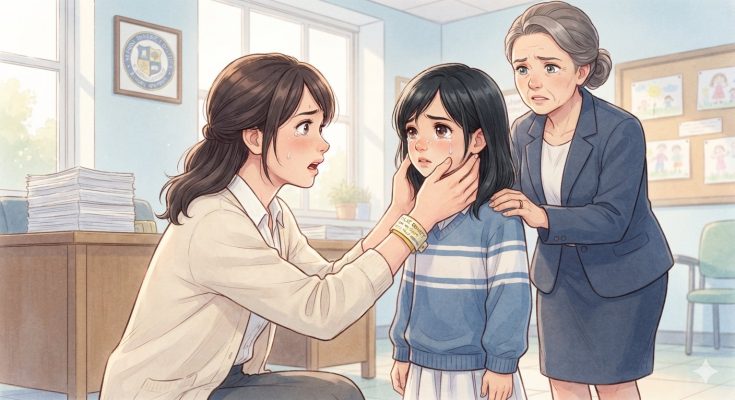
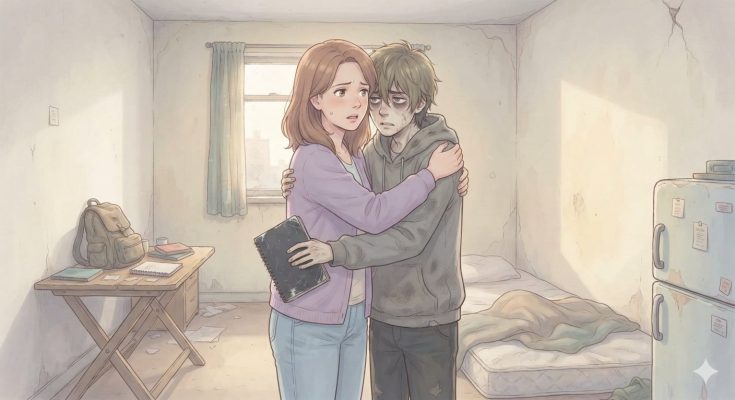
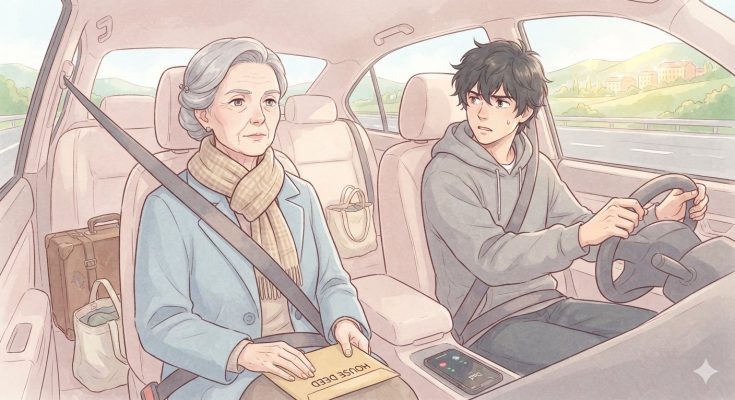
• When I was twelve, I saw my mom kissing her boss in the parking lot. I ran home and told my dad. The next morning, she packed a suitcase, looked at me as if I were the one who had betrayed her, and said: “This is your fault.” She didn’t hug me. She didn’t cry. She just walked out, leaving my two sisters and me with those words buried deep in our chests.

    When I was twelve, I saw my mom kissing her boss in the parking lot. I ran home and told my dad. The next morning, she packed a suitcase, looked at me as if I were the one who had betrayed her, and said: “This is your fault.” She didn’t hug me. She didn’t cry. She just walked out, leaving my two sisters and me with those words buried deep in our chests.

    “Mom did come back, Val.”

    I felt the bag slip through my fingers. “What did you say?”

    Sophie pressed her lips together as if the words had cost her years to find. Then she pulled out a stack of crumpled papers: money order receipts, yellowed envelopes, an address written over and over, and a photo. In the picture, my mom looked older, standing in front of a small salon with a pink awning.

    The sign read: “Patty’s – Cut, Color & Nails.” At the bottom, in blue marker, someone had written: Chicago, Lower West Side.

    I stared at the word “Chicago” as if it were a lie. Chicago wasn’t another planet. It wasn’t an impossible distance. It was two hours away—three with traffic—from the house where we grew up believing our mother had simply evaporated.

    “Dad knew,” I whispered. Sophie looked down. “I think so.”

    I opened the note with my name on it. The paper smelled like a basement—old cardboard and things kept hidden too long. My mom’s handwriting trembled in some lines, but it was still the same hand that wrote grocery lists and lunchbox notes when I was a kid.

    Valerie:

    I don’t know if your father will ever give you this. I don’t know if I deserve for you to even read it. But I need you to know something, even if you hate me for the rest of your life.

    It wasn’t your fault.

    I had already broken our home long before you opened your mouth. You only told the truth. I was the coward.

    I sat on the edge of the bed because my legs wouldn’t hold me. For twelve years, I had repeated that sentence in my head: This is your fault. I carried it on my back, in my chest, under my tongue. And now, on a folded piece of paper, my mother was saying the opposite, as if ink were enough to unbury a child.

    “When did this arrive?” I asked. Sophie showed me the postmark. It was from nine years ago.

    Nine.

    When I was fifteen and still crying in the school bathroom. When Mary was pretending to be tough and Sophie was asking why everyone else’s mom showed up for the school plays. When my dad told us Patricia had chosen to forget us.


    The Confrontation

    I walked out of the room with the bag in my hand. My dad was in the kitchen washing dishes. The same kitchen. The same sound of running water. The same tired back I had defended my entire life.

    “Why did you hide them?”

    He didn’t turn around immediately. That was my answer. He turned off the faucet and dried his hands on a rag. When he saw the bag, his face crumbled like an old wall.

    “Val…” “Don’t call me that.” My voice was hard, a stranger’s voice.

    Mary, who was clearing glasses in the living room, froze. Sophie appeared behind me, pale but standing her ground. This time, none of us were going to hide in the hallway.

    “You said she never came back,” I challenged him. “You said she didn’t call, didn’t ask, didn’t care.”

    My dad put a hand to his forehead. “She came back once.” I felt something snap inside me. “When?” “Six months after she left.”

    Mary dropped a glass. It didn’t break—it hit the rug—but the thud was enough to shatter the room. “You saw her?” Sophie asked, her voice sounding like a little girl again. My dad closed his eyes. “Yes.” “And what did you do?” I asked.

    He took too long to answer. “I didn’t let her in.” No one breathed. “You girls were destroyed,” he continued. “You weren’t eating, Mary was wetting the bed, Sophie was getting sick every two weeks. She showed up like she could just knock and ask for forgiveness. I… I couldn’t.”

    “You couldn’t, or you wouldn’t?” My dad looked at me. I had never seen him look so old. “I wouldn’t.”

    The confession fell without a scream, but it hit like a blow. I loved him. I still loved him. That was the problem. Because sometimes the people who save you also hide your wounds just so they don’t have to look at them.

    “You let me believe I was the one who drove her away.” “I thought if you hated her, it would hurt less.” “I hated myself, Dad.”

    That’s when he broke. He grabbed the table as if the floor had tilted. Mary covered her mouth. Sophie started crying silently.

    “Forgive me,” my dad said. But that night, his forgiveness had nowhere to sit.


    The Salon in Pilsen

    The next morning, I took a bus to Chicago. Sophie insisted on coming. Mary couldn’t; she said if she went, she’d scream until her throat gave out. My dad wanted to come, but I told him no. For the first time in my life, he didn’t get to decide how my truth was going to hurt.

    We left early, the sky still a dull gray. On the way, the suburbs gave way to the industrial outskirts of the city. When the Chicago skyline appeared in the distance, Sophie pressed her forehead against the glass.

    “Do you think she’ll see us?” I gripped the letter in my fingers. “I don’t know if I’m ready to see her.”

    We arrived at Union Station around noon and took a cab to Pilsen. The neighborhood greeted us with the smell of grilled corn, diesel, and sweet bread. We passed murals of vibrant colors and brick buildings with iron fire escapes that seemed to hold a century of secrets.

    The address led us to a small shop. Pink awning. Fading letters. A potted plant by the door. I felt nauseous. Sophie squeezed my hand. “You don’t have to do this alone.”

    I pushed the door open. A bell chimed above our heads. Inside, it smelled like hair dye, acetone, and cheap shampoo. There were two chairs, a large mirror with stained edges, and a small radio playing an old ballad.

    A woman was bent over, putting away towels. “I’ll be right with you, hun.” She looked up. My mother dropped the towels.

    She didn’t scream. She didn’t run to hug me. She just stared at me as if she’d seen a ghost walking in wearing a middle school uniform. “Valerie.” Her voice was the same. Raspier. Tired. But the same.

    I had imagined this moment a thousand times. In some versions, I screamed at her. In others, she begged for mercy on her knees. In the worst ones, I ran into her arms like nothing had happened. I did none of those things. I just took out the letter and put it on a table covered in old magazines.

    “I read it. Twelve years too late.”

    My mom closed her eyes. “Arthur.” “Don’t start with him,” I said. “You first.”

    She nodded slowly. She took off her apron. Her nails were stained with black dye. These weren’t the hands of the impeccable woman who left with a red suitcase, but they were the hands that once braided my hair for a spring recital. It made me angry. The body remembers even when you don’t want it to.

    “I didn’t leave because of you,” she said. I laughed, but there was no joy in it. “How generous of you, Mom. It only took you twelve years to clarify that.”

    She took the hit. “I had been with Ray for months. Your father and I were in a bad place, but that doesn’t justify anything. I lied. I cheated. I was the adult.” “And you blamed me.” Her chin trembled. “Yes.”

    That word did more than any excuse could. Sophie cried behind me. My mother looked at her with a tenderness that arrived a decade late. “Sophie…” “No,” my sister said. “Don’t try to be sweet to me yet.”

    In that moment, a boy walked in wearing a school uniform, carrying a blue backpack and a bag of takeout. He looked about eleven. He stopped when he saw us, confused. He had my mother’s eyes. The rumor was true. My chest tightened in a new, uglier way.

    “Who are they?” he asked. My mom wiped her hands on her apron. “Nico, go over to Mrs. Miller’s for a bit.” “Are they customers?” No one answered. The boy looked at Sophie, then at me. He understood something—maybe through the blood, maybe through the silence. He left the bag on a chair and walked out.

    I felt like I was twelve again. “You raised him.” My mother put a hand to her chest. “Yes.” “You made him lunch, checked his homework, went to his games.” “Yes.” “You left us.” “Yes.”

    Every “yes” was a stone. But at least she wasn’t building a lie with them anymore.

    “Ray left me when Nico was two,” she said. “He moved on with someone else from work. I stayed here, cutting hair, doing nails, selling makeup door-to-door. I’m not telling you this so you’ll feel sorry for me. What I did to you happened to me.”

    “And that’s why you didn’t come back?” “I didn’t come back because I was a coward again. Your father closed the door in my face once, and I accepted it as justice. But a mother who wants to see her daughters shouldn’t be stopped by a door.”

    My eyes stung. That was what I needed to hear. Not that she had suffered. Not that she missed us. I needed her to say that she should have fought for us.

    “I should have waited outside your school,” she continued. “I should have sat on your porch until you screamed at my face. I should have told you, with my own voice, that you didn’t break anything. But I was ashamed for you to see me like this.”

    “I was a child.” “I know.” “Not your judge.” “I know.” “Not your enemy.”

    My mom covered her mouth and finally wept. But her tears didn’t control me anymore.


    The Altar

    The bell chimed again. My dad walked in. Behind him was Mary. I don’t know who called them. Maybe Sophie. Maybe the pain itself, which always finds a way to bring the guilty into the same room.

    My mom and dad looked at each other for the first time in over a decade. There was no love. No clean hate either. Just ruins.

    “Arthur,” she said. “Patricia.”

    Mary pushed past them and stood in front of my mother. “Do you remember me?” My mom cried harder. “Every day.” Mary shook her head. “No. I’m not giving you that. If you had remembered every day, you would have come for one.”

    It was a perfect strike. My mother accepted it. My dad looked at me. “I failed you too.” Mary turned on him. “Don’t even start.” “I have to say it.”

    The salon went silent. Outside, people were walking by, laughing under the Chicago sun. The world kept moving, as always, while our family laid itself bare between a stained mirror and a row of red nail polishes.

    “I took the letters,” my dad said. “I took away your choice. I thought I was protecting you, but I was also punishing her. And in that punishment, I left you without answers.”

    Sophie hugged herself. “I used to pray for Mom to come back.” My dad broke down. “Forgive me, my girl.” “I’m not a girl,” Sophie said. “And I don’t know if I can.”

    We left that afternoon. There was no movie-style hug. No instant forgiveness. Just the truth, told in full, which was more than we had ever had.

    Months later, for Día de Muertos, I set up a small altar in my apartment. It wasn’t for Patricia, because she was still alive. It wasn’t for Arthur, because he was still there, learning how to apologize without expecting an answer.

    I made it for the girl I used to be.

    I put up a photo of myself from middle school, a candle, purple marigolds, and some pan de muerto. Mary brought chocolate. Sophie brought a teddy bear like the one she carried the day Mom left. In the center, I placed the letter. The first one. The one that arrived too late, but arrived nonetheless.

    That night, my phone buzzed. It was a text from a Chicago area code.

    Val, I don’t expect you to answer. I just wanted to say what I should have said that day: I’m sorry. It wasn’t your fault. It was never your fault. —Mom.

    I stared at the screen for a long time. I didn’t reply. Not yet.

    But I no longer felt a hand tightening around my throat. I no longer heard the red suitcase closing like a death sentence. I no longer saw my mother looking at me as if I had betrayed her.

    I saw a twelve-year-old girl telling the truth. And for the first time in twelve years, I was able to give her a hug.

  • My husband gave me money every week to pay the cleaning lady. What he didn’t know was that the cleaning lady was me. At first, I thought I was finally going to get a break. I imagined myself drinking coffee in peace, watching a show, and feeling like a real lady of the house for the first time in years. But when I opened the envelope, I realized my husband didn’t want to help me. He wanted to test me.

    My husband gave me money every week to pay the cleaning lady. What he didn’t know was that the cleaning lady was me. At first, I thought I was finally going to get a break. I imagined myself drinking coffee in peace, watching a show, and feeling like a real lady of the house for the first time in years. But when I opened the envelope, I realized my husband didn’t want to help me. He wanted to test me.

    Bruno let out a little chuckle.

    “The transfer papers. My wife will think they’re for refinancing the mortgage. She signs everything without reading when I tell her it’s urgent.”

    I felt the floor slip from under me. I leaned against the hallway wall, my hands wet with bleach water and my heart pounding as if it wanted to leap out of my mouth.

    “What if she suspects something?” she asked.

    “Suspect?” Bruno lowered his voice. “Please, Sarah. If I give her an envelope and tell her it’s for the cleaning lady, she doesn’t even ask questions. That woman lives on crumbs and gratitude.”

    That’s when I heard his true tone. Not the tired husband. Not the man coming home asking for dinner. It was the tone of a master talking about a clumsy servant.

    I gripped the mop so hard my fingers hurt. Sarah laughed on the other end.

    “But the cleaning lady did see the papers, right?”

    “Yeah. And if my wife asks, I’ll just say the girl probably moved them. Besides, she doesn’t even know her name. I handle everything.”

    I almost laughed. Of course he knew my name. My name was Me. The girl was me. The fool was me. The one who supposedly couldn’t read was me, too.

    Bruno stepped out of the bathroom and found me standing in the hallway. He had his phone in his hand, and his face faltered for a second. Just a second. Then he smiled as usual—a clean curtain over a rotten window.

    “Honey, everything okay?”

    I looked at the mop on the floor. “Yes. I dropped it.”

    “Be careful. You’ll scratch the floor.”

    The floor. Not my pale face. Not my trembling hands. The floor.

    “Of course,” I said. “I’ll take care of it.”

    He gave me a quick kiss on the forehead—not out of affection, but habit—and went to the bedroom. I heard him opening drawers, humming softly, and then closing the closet door.

    That night, I cooked noodle soup, roasted chicken, and red rice. Bruno ate while staring at his phone. I watched him from across the table, wondering how many years I had slept next to a stranger. How many times he had touched my back with the same hand he used to sign plans to kick me out of my own home.

    “I need you to come with me to a notary’s office tomorrow,” he said without looking up.

    There it was. The trap finally had a date.

    “What for?”

    “Some house paperwork. Nothing complicated.”

    “What kind of paperwork?”

    He sighed. That sigh he used whenever I dared to ask for an explanation. “Honey, I told you. It’s to improve the loan terms. Don’t worry, I handle that stuff.”

    “Sure.”

    “Just sign and that’s it.”

    I looked him straight in the eye. “And then?”

    He finally looked up. “Then what?”

    “After I sign.”

    He smiled slowly. “Then we can rest.”

    He didn’t say we. He said “rest” like someone talking about an exit door.

    That night, I waited for him to fall asleep. Bruno snored lightly, one hand on his chest and his phone under his pillow. Before, I would see that and think: Poor guy, he’s exhausted. Tonight I thought: Even in his sleep, he hides the evidence.

    I got up without making a sound. I pulled the shoebox from under the bed. Inside were all the envelopes. Twelve weeks. Twelve payments. Twelve humiliations folded into bills.

    I counted them on the kitchen table. There was enough to pay for a legal consultation, change the locks, have documents copied, and still buy myself a coffee without asking for permission.

    I put on a hoodie, grabbed the car keys, and left. New York City in the middle of the night has a strange silence. It’s not complete silence. It’s a murmur of refrigerators, distant dogs, garbage trucks, and people who start working before others finish lying.

    I went to a 24-hour print shop near Union Square. I made copies of everything I had found in Bruno’s study that afternoon. Because yes, the cleaning lady had seen the papers. And she hadn’t just seen them; she had photographed them.

    There was a supposed authorization to sell the house. A transfer of rights. A power of attorney with my name misspelled. A preliminary contract with a buyer named Sarah Villalobos.

    And a separate sheet, printed in fine print, where I “accepted” that Bruno could dispose of the property due to “voluntary abandonment of the marital home.”

    I froze when I read that. Abandonment. The plan wasn’t just to take the house. It was to make it look like I had left. That I had walked out on my marriage. That I had quit. As if a woman could spend years cleaning a house only to be accused of abandoning it.

    The next morning, while Bruno was showering, I put the originals back exactly where they were. Then I put on my yellow gloves. I cleaned. But no longer as a wife. As a detective.

    Under a pile of receipts, I found deposits made to Sarah. In a notebook, I found a list written by Bruno:

    1. Notary signature.

    2. Move clothes out little by little.

    3. Talk to Mom.

    4. Change the locks.

    5. Sarah moves in in June.

    June. Three weeks away. I was cleaning up my own eviction.

    I saved photos of everything. Then I made coffee and served it to Bruno in his favorite mug, the black one that said “The Boss.” I set it in front of him.

    “I can’t go to the notary today,” I said.

    His face tensed. “Why not?”

    “I don’t feel well.”

    “It’s not optional, Laura.”

    There was my name, spoken like a scolding. Laura, hurry up. Laura, don’t exaggerate. Laura, sign. Laura, clean. Laura, shut up.

    “Then you go,” I replied. “If it’s just a routine thing, ask if I can sign later.”

    Bruno slammed the mug onto the table. “Don’t be difficult.”

    “I’m not being difficult. I’m sick.”

    He examined me as if looking for a crack. “Sick with what?”

    I gave a faint smile. “Exhaustion.”

    He stood up, annoyed. “Always the same with you. That’s why I hired someone, so you wouldn’t spend your life complaining.”

    “Yes. The lady works very hard.”

    “Well, tell her to come today. The house is full of dust.”

    “Sure. I’ll tell her.”

    Bruno left, slamming the door. I waited ten minutes. Then I made three calls. The first was to my cousin Sandra, who worked at a law firm in Brooklyn. The second was to the bank. The third was to a locksmith.

    Sandra arrived at two in the afternoon wearing dark sunglasses and carrying a red folder. “Show me everything,” she said.

    I showed her the copies, the photos, the deposits, and the list. As she read, her mouth tightened.

    “Laura, this isn’t just an affair. This is attempted fraud.”

    “Can he sell the house?”

    “Whose name is it in?”

    “Both. But I paid the down payment with my father’s inheritance.”

    Sandra looked up. “Do you have the receipts?”

    I went to the closet and pulled out a blue folder. That folder was my secret pride. Bruno always said I didn’t know how to manage money. But I had kept every receipt. Every transfer. Every property tax payment. Every monthly payment I made when he was “between projects” for six months and I sold desserts and did door-to-door manicures to keep the house.

    Sandra reviewed it all. Then she smiled. Not a happy smile. The smile of a lawyer who smells blood.

    “Your husband is stupider than he thinks.”

    “Why?”

    “Because he tried to move your assets without checking that you have half the Public Registry’s archives in your closet.”

    I sat down. Suddenly my legs were shaking. “Sandra, he wants to move that woman in here.”

    “He’s not moving anyone in.”

    “His mother knows, too.”

    “Good. More witnesses to his garbage.”

    At six in the evening, the locksmith changed the locks on the front door and the gate. I paid him with the money meant for the “cleaning lady.” When I finished, I looked at the new keys in my palm. They felt light, but I felt like I was carrying my entire life.

    Bruno arrived at eight. He put the key in. It didn’t turn. He tried again. Nothing. He knocked.

    “Laura!”

    I was sitting in the dining room. The table was clean, shining, impeccable. On top, I placed three things: the blue folder, the shoebox with the envelopes, and his fake papers.

    I opened the door with the chain still on. “Yes?”

    Bruno looked at the chain. “What are you doing? Let me in.”

    “First tell me who Sarah is.”

    His face shifted. It went from anger to fear. From fear to calculation. “I don’t know what you’re talking about.”

    I held up a copy of the contract. “How strange. She wants to buy my house.”

    He went quiet. Then he lowered his voice. “Laura, don’t make a scene.”

    “That’s funny. That’s what I thought when you gave me money to pay a woman you never actually hired.”

    His eyes drifted to the box. He understood. Finally, he understood. The cleaning lady wasn’t invisible. The cleaning lady had a memory.

    “You saved the money?”

    “Every cent.”

    “That was for the house.”

    “No. It was for you to mock me with your mother.”

    Bruno clenched his jaw. “You were spying on me.”

    “No. I was cleaning. You were the one who left the filth in plain sight.”

    He tried to push the door. The chain held.

    “Open up, Laura.”

    “No.”

    “This is my house, too.”

    “And tomorrow a judge is going to hear how you tried to kick me out of it with forged documents.”

    His confidence shattered. “What did you do?”

    “What you didn’t expect. I read.”

    Bruno looked toward the hallway, as if afraid someone was watching. “We can talk.”

    “You talked enough from the bathroom.”

    He turned pale. “You didn’t hear everything.”

    “I heard enough.”

    Then his mother appeared behind him. Mrs. Mireya came with her massive purse, her hair done up, and that look of a woman who believes age gives her the right to spit venom.

    “Laura, open the door and stop the drama.”

    I almost laughed. She always arrived at the exact moment her son needed an audience.

    “Good evening, Mrs. Mireya.”

    “Don’t give me that fake politeness. Bruno told me you’re acting out.”

    “He told you fast.”

    “A decent wife doesn’t change the locks.”

    “A decent wife doesn’t sign her own dispossession, either.”

    The woman pursed her lips. “Oh, honey, this is why men get tired. They offer an improvement and you see it as an attack.”

    I opened the door a bit further, as far as the chain allowed. “Did you know about Sarah?”

    Mrs. Mireya blinked. Too late. “Who?”

    “The woman your son plans to live here with in June.”

    Bruno turned to her. “Mom.”

    “I didn’t say anything!” she snapped.

    I laughed. “Thank you. That was a yes.”

    Mrs. Mireya straightened up. “Look, little girl, my son deserves peace. You’ve always been cold, lazy, and difficult. This house only looks good because Bruno pays for help.”

    I looked her dead in the eye. “I am the help.”

    Her mouth fell open. Bruno closed his eyes. For the first time, his mother had no immediate comeback.

    “What?” she whispered.

    I picked up one of the envelopes and held it up. “Every week your son gave me money to pay a cleaning lady. I did the cleaning. I saved the money. I heard his calls. I found the papers. I gathered the evidence.”

    Bruno pounded on the door. “That’s enough!”

    “No, Bruno. I’m just getting started with the sweeping.”

    The elevator door opened. Sandra stepped out with a man in a suit and a police officer. Bruno froze.

    “Laura, what is this?”

    Sandra stepped to my side. “Good evening. I am Sandra Aguilar, attorney at law. We are here to notify you that Mrs. Laura is initiating proceedings for forgery, attempted asset fraud, and economic abuse. Furthermore, a protection order has been requested to prevent you from disposing of the property or removing common assets.”

    Mrs. Mireya clutched her chest. “What an exaggeration! This is just a couple’s quarrel!”

    Sandra looked at her calmly. “Ma’am, forging a signature is not a couple’s quarrel.”

    The officer told Bruno to stay calm. Bruno started to sweat. “I didn’t forge anything.”

    Sandra raised an eyebrow. “Perfect. Then you won’t have any problem explaining why there is a power of attorney with Laura’s name misspelled and a signature that doesn’t match her official ID.”

    “It was a draft.”

    “And the deposits to Sarah—were those drafts, too?”

    Mrs. Mireya looked at her son. The Queen Mother was starting to crumble. “Deposits?”

    Bruno didn’t answer. I did. “He was paying for his new life before he finished stealing mine.”

    Mrs. Mireya turned bright red. Not out of shame for me, but out of rage because her son had made her look bad.

    “Bruno, tell me this isn’t true.”

    He ran a hand through his hair. “Mom, it’s not that simple.”

    “You were going to give the house to someone else?”

    “I was going to fix it!”

    “And what did you tell me?” she screamed. “That Laura had you tied down? That you were the one making sacrifices?”

    I stood still. Interesting. The lies had branches.

    Bruno turned to me, desperate. “Laura, please. I swear Sarah doesn’t mean anything.”

    “That’s ugly. She meant enough to move her into my house.”

    “It was a mistake.”

    “No. A mistake is forgetting to buy milk. You made a list.”

    Sandra let out a tiny snicker. I pointed to the folder. “There’s your plan, point by point. You even wrote ‘change the locks.’ I beat you by a week.”

    Bruno lowered his voice. “What do you want?”

    That question made me sick. He didn’t ask how I felt. He didn’t ask how to make amends. He asked for a price. As if my dignity were on clearance, too.

    “I want you to take your things under supervision. I want you to never come near me again. I want your forged signature to cost you. And I want a divorce.”

    Mrs. Mireya let out a shriek. “No divorce! You’ll destroy the family!”

    I looked at her. “No, ma’am. The family was already destroyed. I just found the dust under the rug.”

    Bruno tried to cry. I knew him. First came the arrogance. Then the offense. Then the tears. Always in that order.

    “Laura, think of everything we’ve been through.”

    I thought. I thought of the Christmases spent cooking for his family while he played cards. The times he hid expenses from me. My forgotten birthday. His shirts ironed for meetings where he told people I “didn’t work.” His mother’s laugh saying I’d probably spend the cleaning lady’s money.

    I had thought enough. “That’s exactly what I’m doing,” I said. “And that’s why I don’t want to live it anymore.”

    The officer explained that he could enter to get his clothes and personal documents, but he couldn’t remove furniture or unrecorded papers. Bruno looked insulted by the idea of being watched in his own trap.

    I took off the chain. He walked in slowly. He looked at the impeccable house. The shining kitchen. The windows without a smudge. The waxed floor. Everything he used to measure me. Everything he never thanked me for.

    “You really do clean well,” he murmured, perhaps without thinking.

    I felt a cold calm. “No, Bruno. I hold things together well. Cleaning was the least of it.”

    He went to the bedroom. I followed him with Sandra. Mrs. Mireya tried to enter, too, but the officer stopped her.

    “Only the gentleman.”

    “I’m his mother!”

    “Precisely,” Sandra said.

    Bruno stuffed clothes into a suitcase. He took colognes, belts, papers from his drawer. When he tried to grab the house folder, I put my hand on it.

    “That stays.”

    “I need documents.”

    “You’ll get copies through legal channels.”

    He looked at me with pure hate. There was the real Bruno. Not the repentant one. Not the confused one. The man who hated that the maid had learned how to lock the door.

    “Sarah was right,” he said through gritted teeth. “You are impossible.”

    “Then I did her a favor by sending you to her.”

    His face fell because my response held no pain. That was what frustrated him most. That I was no longer pleading.

    He left with two suitcases. At the door, Mrs. Mireya tried to hug him. He pulled away.

    “You put ideas in my head, too,” he barked at her.

    The woman went stiff. “Me?”

    “Always telling me Laura wasn’t enough!”

    I felt like laughing. Now the guilt was looking for a new house to sleep in.

    “How nice,” I said. “The mop isn’t even dry and you’re already throwing dirt at each other.”

    Bruno looked at me one last time. “You’re going to regret this.”

    “No. I was regretful when I thought I had to ask your permission to rest.”

    He left. Mrs. Mireya followed him, but before entering the elevator, she turned back. “No decent woman leaves her husband on the street.”

    I closed the door. I could still hear her saying something on the other side, but I didn’t understand it anymore. Maybe because the new door sealed better. Or maybe because my fear had finally stopped translating insults.

    That night, I didn’t clean. For the first time in years, I left a dirty glass in the sink. I looked at it as if it were a flag. I made myself coffee, sat on the sofa, and turned on the TV. I didn’t put on a show. I didn’t need the noise. The house had a strange, massive silence, like when a party ends where you didn’t like anyone.

    I cried a little. Not for Bruno. For me. For the woman who thought an envelope of cash was “help.” For the one who put on yellow gloves thinking she was buying time. For the one who had to become a cleaning lady to discover her husband saw her as trash.

    The next morning, I went with Sandra to the bank, the District Attorney’s office, and then the Public Registry. Everything was slow. Stamps, copies, tokens, windows, people eating snacks at desks, jammed printers. Justice didn’t smell like triumph. It smelled like ink, sweat, and reheated coffee.

    But it moved forward. The notary Bruno planned to take me to received a notification. The operation was suspended. The signature would be reviewed. The supposed sale could not proceed.

    Sarah appeared three days later. Not at my house. On my phone. “Laura, we need to talk,” she said in a soft voice.

    “We have nothing.”

    “Bruno lied to me, too.”

    I almost admired the audacity. “That’s curious. He lied to you with a house that wasn’t his.”

    “He told me you were separated.”

    “And that’s why you agreed to move in in June?”

    Silence. “I didn’t know you were like this,” she finally said.

    “Like what?”

    “Resentful.”

    I looked at my reflection in the window. I had dark circles, my hair was up, and there was a new peace in my eyes. “I’m not resentful, Sarah. I’m the owner.”

    I hung up. Then I blocked her number.

    Weeks passed. Bruno sent apologies through messages from different numbers. Then he threatened. Then he cried again. Then he said he was sick. Then that his mother had pressured him. Then that Sarah had manipulated him. He gave everyone a piece of the blame. Except himself.

    I continued with the process. The cleaning envelopes paid for expert reports, certified copies, and the first consultations. Every bill he gave me to humiliate me ended up serving to defend me. That was the most beautiful part of all.

    A month later, Mrs. Mireya came looking for me. I was coming back from the market, carrying vegetables and a bouquet of cheap flowers for myself. I found her sitting on the curb. She looked older. No makeup, no fancy purse, none of that neighborhood-empress tone.

    “I need to talk to you,” she said.

    “Talk to Sandra.”

    “Bruno is doing badly.”

    I kept walking toward the door. “Buy him some tea.”

    “Laura, please.”

    I stopped. Not for her. Out of curiosity. “What do you want?”

    Mrs. Mireya took a deep breath. “Sarah left him.”

    “What a surprise.”

    “And he can’t come back to my house. His father found out everything and kicked him out.”

    “What a traditional family. Everyone kicking someone out.”

    The lady looked down. “I was unfair to you.”

    That sentence sounded strange in her mouth. Like a new shoe on a crooked foot.

    “Yes.”

    She expected me to say “don’t worry about it.” I didn’t.

    “I treated you badly.”

    “Yes.”

    “I thought a wife should just endure.”

    “No. You thought I should endure so your son wouldn’t have to face consequences.”

    Her eyes filled with tears. “Is there no way to fix it?”

    I opened the gate. “Yes. Everyone cleans up the mess they made.”

    I went inside and left her outside. I didn’t shout. I didn’t insult her. I didn’t forgive her. I didn’t have to. Sometimes the most elegant punishment is not allowing someone back into your living room to mess it up again.

    The divorce took time. Bruno fought for the house until the documents spoke louder than his tantrums. The expert report confirmed irregularities. The bank acknowledged the alerts. The notary distanced himself. Sarah testified that Bruno had promised her she could live there “when Laura was gone.”

    That phrase was written into a record. When Laura was gone. As if I were dampness. As if I were an old piece of furniture. As if a woman who pays, cares, cooks, cleans, and supports could be scraped off with a putty knife.

    At the hearing, Bruno avoided looking at me. He no longer looked like the boss of anything. He sat with a wrinkled shirt, a messy beard, and the expression of a man discovering too late that losing servitude is not the same as losing love.

    The judge asked if there was a possibility of reconciliation. I answered first. “No.”

    Bruno lifted his face. Maybe he expected doubt. Maybe a crack. He found none.

    “I don’t want to go back to a man who paid me to clean his conscience while he planned to steal my home,” I said.

    Sandra touched my arm under the table. Bruno closed his eyes.

    Months later, the house was secured within the settlement. He had to acknowledge my contributions, take on the debts he had hidden, and withdraw any attempt at a sale. The criminal complaint followed its path, slow but alive. I’m not going to lie: it wasn’t all prison cells and dramatic music. Real life is more stubborn.

    But my name was protected. My door remained closed. My bed was whole. And my house stopped smelling like bleach mixed with sadness.

    One Saturday, I opened the shoebox. There was one last envelope left. The first one Bruno had given me. I had kept it separate, as a reminder of the day I thought I was finally going to get a rest.

    I opened it. I took out the bills. With that, I paid a lady named Lupita to come on Tuesdays. A real lady. With a name. With a schedule. With coffee before she starts.

    When she arrived, I wanted to help her move a table. She stopped me. “No, Mrs. Laura. You sit for a bit.”

    the word Mrs. sounded different to me. Not like a title. Like permission.

    I sat on the balcony with a cup of coffee. The house smelled of soap, toast, and wet bougainvillea. Lupita sang softly as she swept. I looked at my hands. They still had detergent marks. But they weren’t shaking anymore.

    By mid-morning, Sandra sent me a message: “How is the new life going?”

    I looked at the clean floor. The new door. The curtains moving in the breeze. The dirty glass I could now leave in the sink without feeling guilty.

    I replied: “Impeccable.”

    And I smiled. Because Bruno was right about one thing. The cleaning lady worked very well.

    It’s just that he never understood what she was cleaning. It wasn’t windows. It wasn’t floors. It wasn’t bathrooms.

    I was cleaning my name. My home. My future. And when I finished, I took out the trash.

    Including him.

  • Before I got married, my mom forced

    Before I got married, my mom forced

    Before I got married, my mom forced me to put my $5 million Manhattan condo in her name. She said, “Don’t say a word to Mark or his family.” I thought she was losing her mind. Until my mother-in-law took the microphone in front of 200 guests and announced that my place in Tribeca would be her retirement home.

    “That condo will not be anyone’s retirement home,” my mom said, “because it doesn’t belong to Sophie.”

    The entire ballroom went deathly silent.

    Even the string quartet stopped mid-note. Diane blinked, still holding her champagne flute, as if my mother had spoken in an ancient, forgotten language. Mark dropped my waist so fast that the phantom chill of his hand stayed burned into my skin.

    “What did you say?” he asked.

    My mom didn’t look at him. She looked at me. And in her eyes, I saw the answer to three months of silence.

    “Sophie signed over the deed before the wedding,” she said, her voice clear, strong, and unwavering. “The condo is in my name, legally recorded and filed. So, no one is moving in. No one is staying there. No one is touching it.”

    A murmur rippled through the tables.

    I felt the blood rush back to my body, so hot I nearly fainted. Mark stepped up to the microphone with a twisted, nervous smile, as if he could still turn this disaster into a funny family anecdote.

    “That’s a lie.”

    My mom gave a razor-thin smile. “I wish it were, Mark. Then I wouldn’t have to say this in front of two hundred people at my daughter’s wedding.”.

    “Sophie,” he said, turning to me. “Tell me you didn’t do that.”

    The way he said it pierced me. He didn’t sound hurt. He sounded robbed. As if I had taken something he had already marked as his own.

    “I did,” I answered. My voice was weaker than my mother’s, but it was there.

    Diane lowered her glass slowly. Her perfect, made-up, golden-hued face began to crack at the edges. “This is incredibly disrespectful,” she said. “That is not how family treats one another.”

    My mom handed the microphone back to her. “Exactly.”

    An awkward silence descended—the kind where guests aren’t sure whether to stare at the wedding cake, the floor, or pull out their phones to record the drama. My dad stood up from our table. He didn’t say a word. He just moved behind my mom, standing like a stone wall.

    Mark gritted his teeth. “Sophie, we are going to talk about this outside.”

    “No.”

    I surprised myself. And him.

    “What do you mean, ‘no’?”

    “I’m not going anywhere with you after your mother just announced my home will be her retirement suite like it’s a raffle prize at a church fair.”

    Diane let out a shrill, fake laugh. “Oh, please. It was a family joke. Everyone misunderstood.”

    One of Mark’s aunts, wearing a string of pearls and holding a stiff drink, muttered, “Well, I understood it perfectly.”

    Someone chuckled—a small sound, but it was enough to make Diane whirl around in fury.

    Mark grabbed my arm. “You’re making a scene.”

    There, I recognized his eyes. The same ones as his mother’s. Cold. Calculating. The eyes of a man who wasn’t losing a wife, but an investment.

    “No,” I said. “The scene was made by you, when you asked me to start our life together in my condo while your family planned to move in without asking.”

    “My mother is alone.”

    “Your mother has a house.”

    “Not like yours.”

    It slipped out before he could catch it. The whole room heard it. My mom closed her eyes for a second, as if confirming something she had known all along.

    I felt the wedding dress turn into dead weight. The lace, the veil, the white lilies—it all became a costume. I was standing in the middle of my own reception, newly married, realizing that the man who cried when he saw me walk down the aisle wasn’t overwhelmed by love. He was celebrating what he thought he had just won.

    “How long have you known?” I asked.

    Mark looked around. “This isn’t the place.”

    “Yes, it is. Your mother chose the microphone. Now you use it.”

    The DJ cut the music entirely. The head waiter froze by the coffee station. Outside the floor-to-ceiling windows of the Hamptons venue, the corporate lights of the city glowed, reflecting a world where deals were made, and love was often just an afterthought.

    “Sophie, calm down,” Mark said.

    “Don’t tell me to calm down.”

    “My mother misspoke.”

    “Your mother laid out a plan.”

    He didn’t answer. Once again, his silence was crueler than a confession…

    My mom took my hand. “Let’s go, honey.”

    Mark snapped back. “You can’t leave. We just got married.”

    I looked at him. My husband. Less than two hours ago, I had said “I do” in front of an altar full of white roses. Less than two hours ago, I thought this man was my home. Now, his face looked like a stranger’s—a mask someone had dropped too early.

    “I signed a marriage certificate,” I said. “Not a property deed transfer.”

    Diane marched toward us, her eyes blazing with rage. “Your mother is manipulating you. A married woman should trust her husband.”

    My mom stepped in front of me. “A married woman should be able to sleep without her mother-in-law counting her bedrooms.”

    “You are an intrusive, meddling woman!”

    “I am a mother who smelled the greed before you even opened your mouth.”

    That word moved something deep inside me. Greed. That was it. Not affection. Not family. Greed for a Tribeca address, a private elevator, marble floors—the right to walk through the city saying “my house” even if they hadn’t paid for a single throw pillow.

    My dad stepped toward Mark. “Don’t make this any bigger.”

    Mark let out a bitter laugh. “Bigger? Your wife just humiliated us.”

    My dad looked at him with a terrifying, icy calm. “No. Your mother tried to do that first.”

    The wedding coordinator appeared, pale, asking if we were going to continue with the first dance. I almost laughed. My life was shattering next to a three-tier cake, and someone wanted to know about a dance.

    “There is no dance,” I said.

    And then, I took off my veil. It wasn’t dramatic. I didn’t throw it. I just unpinned it and laid it on the cake table. The pearls caught in my hair and pulled. I liked the pain. It reminded me that I was still there; that I wasn’t dreaming.

    Mark whispered, “Sophie, if you walk out that door, don’t come back.”

    I looked at him. “To where? Your house? Or the one you wanted to gift to your mother?”

    He didn’t have an answer.

    My mom put her arm around me, and we walked toward the exit. The guests parted like water. Some looked at me with pity, others with pure morbid curiosity. My friends were crying at a table; one of them, Renee, gave me a subtle nod, a closed fist—stay strong.

    As I passed the gift table, I saw gold-foiled envelopes, boxes with silk bows, a set of expensive china Diane had insisted on because “in Tribeca, one must entertain properly.”

    I stopped. I picked up a gift tag. It read: For your new home.

    I felt a hollow ache. There would be no new home. Not with Mark.

    Outside, the air was crisp and smelled of rain and pavement. The black SUVs were still lined up. The valet looked at me, unsure if he should open the door or congratulate me. My mom called for our car. I was trembling.

    “Why didn’t you tell me?” I asked.

    She didn’t defend herself, which hurt even more. “Because if I had, you would have denied it. You would have protected him.”

    “He was my fiancé.”

    “Exactly.”

    I leaned against a pillar. From inside, the murmur of the broken party still drifted out.

    “How did you know?” I asked.

    My mom clutched her purse. “I heard her. At the menu tasting.”

    I remembered that day. A private room, white tablecloths, Diane complaining that the sauce would stain her teeth. I had gone to the bathroom. My mom stayed behind.

    “She thought I had left, too,” my mom said. “She was on the phone with a friend. She said you were a blessing because Mark would finally ‘get into Tribeca without paying rent.’ She said you’d start by living together, then she’d move in ‘for health reasons,’ and eventually, they’d convince you to sell to buy something bigger ‘under the family name.’”

    The air left my lungs. “No.”

    “Yes.”

    “Mark didn’t…” My voice broke.

    My mom took my face in her hands, like when I was a child and scraped my knee. “Honey, he was sitting right next to her when she said it afterward in the parking lot. He didn’t contradict her. He only said, ‘First, we have to get married.’”

    First, we have to get married.

    Not first, we have to build. Not first, we have to talk to Sophie. First, we get married. Like I was just a legal key.

    The car arrived. My dad drove. I sat in the back with my mom, still in my wedding dress, shoes in my hand, makeup running down my face. As we drove over the bridge, the city lights below looked vast and indifferent. I thought of my Tribeca condo, the morning walks to get coffee, the quiet of the hardwood floors—a place that was mine. And tonight, I’d discovered I almost gave it away for “love.”

    I didn’t sleep that night. I sat on my old childhood bed, the dress spread out like a white corpse on the floor. At 3 a.m., my mom brought me tea.

    “Tomorrow, we go to the lawyer,” she said.

    “To annul the marriage?”

    “To review all our options.”

    “Mom.”

    “Yes?”

    “Thank you.”

    She sat beside me. For the first time all night, she cried—not loud, not like in a soap opera, but with the exhaustion of a woman who has spent years seeing dangers before her daughter ever could.

    “I didn’t want to be right,” she whispered.

    I hugged her, realizing her toughness wasn’t about control. It was about scars.

    The following weeks were a blur of shame and liberation. I canceled the honeymoon. Returned the gifts. Cried over napkins embroidered with our initials. Cried over the dress sealed in a garment bag. I cried for the version of Mark I thought I loved, knowing now that version was incomplete.

    I went back to the condo. The first time, I went alone.

    The lobby smelled of fresh lilies and polished wood. The doorman greeted me as always. The elevator rose in silence, and when the door opened, I saw the empty living room, the city light pouring through the windows, the trees swaying outside as if nothing had happened.

    I sat on the floor. I wept. Not for Mark, but for the woman who almost handed over her keys just to be called a “good wife.”

    Two months later, the divorce went through faster than I expected—there were no assets to argue over. Mark’s lawyer tried to push for absurd compensations, citing “emotional damage” from the public humiliation. My attorney, a woman with a sharp bob and a dry voice, simply placed the video of Diane announcing my condo as her retirement home on the conference table.

    “The humiliation was initiated by your client,” she said.

    Mark didn’t mention it again.

    I thought it was over. But one afternoon, the doorman handed me a cream-colored envelope. “Diane left this,” he said, looking uncomfortable.

    I opened it in my kitchen with cold hands. Inside was a “private agreement” stating I granted Mark and his mother use of the condo for ten years. My signature was at the bottom.

    A forgery. A bad, crooked, stolen signature.

    I didn’t scream. I wasn’t the “bride” anymore. I sent a photo to my lawyer and my mom. My mom arrived in forty minutes with pastries and that look of quiet war I knew so well. “Alright then,” she said. “Let’s teach them that a signature cannot be faked with impunity.”

    The next day, we went to the public records office. We filed a report for forgery and the attempted use of fraudulent documents. It wasn’t glamorous—it was uncomfortable chairs, paperwork, stale coffee, and a clerk yawning while my lawyer spoke. But walking out, I had something I didn’t have on my wedding day: a case number. And a sense of rage with a specific target.

    A family that loves you doesn’t treat your home like a prize. A man who loves you doesn’t stay silent while you’re being carved up. And a mother who seems to “overreact” might just be standing years ahead of you, seeing the blow coming, willing to be hated for a little while if it means you still have a place to come home to…….

  • PART 2 – My daughter died nine years ago. Yesterday, a school principal said Chloe was waiting outside.

    PART 2 – My daughter died nine years ago. Yesterday, a school principal said Chloe was waiting outside.

    “Sometimes I heard them call me Chloe when they thought I was asleep.”
    The room went completely still.
    I lowered my hands from my face.
    “What did you say?”
    Maya stared at me with frightened eyes.
    “The woman who taught me at the house. Her name was Mrs. Alvarez. Once she argued with Mrs. Eleanor in the hallway. I heard her say, ‘You can’t keep Chloe hidden forever.’”
    My heart slammed against my ribs.
    “And what did Eleanor say?”

    Maya hesitated.
    “She told her never to use that name again.”
    The principal, Mrs. Holloway, slowly pulled a chair closer to the girl.
    “Maya,” she said carefully, “I know this is frightening, but we need to understand exactly what happened before you arrived here today.”
    Maya wrapped both hands around her wristband.
    “They told me my name was Maya Caldwell.”
    “Who is they?” I asked.
    “Grandma Eleanor. And David.”
    I stopped breathing.

    She didn’t say Dad.
    She said David.
    My husband.
    I could hear the clock ticking on the wall.
    One second.
    Two.
    Three.
    “What did you just call him?”
    Maya looked confused.
    “David.”
    “You know David?”
    Her eyebrows pulled together.


    “He came to the house sometimes.”
    The floor seemed to move underneath me.
    “How often?”
    “I don’t know. More when I was little. Less after I got older.”
    I leaned forward so quickly Mrs. Holloway reached for my arm.
    “What did he do when he came?”
    “Mostly talked to Grandma Eleanor.”
    “Did he ever talk to you?”
    “Sometimes.”
    “What did he call you?”


    Maya looked down.
    “Maya.”
    I swallowed.
    “Never Chloe?”
    She shook her head.
    Then she stopped.
    “Actually… once.”
    My fingers curled around the edge of the desk.
    “When?”
    “I was maybe eight. I fell down the stairs.”
    My stomach twisted.
    “He picked me up and carried me to the sofa. I was crying, and he said, ‘Chloe, stop moving.’ Then Grandma Eleanor came running into the room and slapped him.”
    Mrs. Holloway gasped softly.
    Maya continued as if she had told herself this story many times.
    “After that, they argued in the kitchen.”
    “Do you remember what they said?”
    “I remember Grandma Eleanor saying, ‘You wanted this. Don’t start feeling guilty now.’”
    Something inside me went cold.
    Not broken.
    Cold.
    For nine years, I had wondered whether I had failed Chloe.
    Whether I should have demanded another doctor.
    Whether I should have stayed beside her every second.
    Whether I should have ripped open that white casket myself.
    But for the first time, another possibility entered my mind.
    Maybe my daughter had never been inside it.
    My phone began ringing.
    David.
    The screen lit up with his name.
    Maya saw it.
    Her entire body stiffened.
    “No.”
    I looked at her.
    Her face had drained of color.
    “Don’t answer him.”
    That was enough.
    I declined the call.
    Three seconds later, he called again.
    I declined it again.
    Then a text appeared.
    CLAIRE, COME HOME NOW.
    Another followed immediately.
    DO NOT INVOLVE THE POLICE.
    I stared at the message.
    David had no idea what the principal had told me.
    He supposedly believed this entire thing was a cruel misunderstanding.
    So why would he tell me not to involve the police?
    Mrs. Holloway read my expression.
    “What is it?”
    I turned the phone toward her.
    Her face changed.
    “I think we need to call them.”
    Maya grabbed my hand so fast I nearly dropped the phone.
    “No.”
    I looked down at her fingers wrapped around mine.
    They were trembling.
    “Sweetheart—”
    The word came out naturally.
    I almost cried when I heard myself say it.
    Maya’s eyes filled.
    “If the police come, Grandma Eleanor will know.”
    “She already left you here.”
    “No.”
    The girl shook her head violently.
    “You don’t understand. She didn’t abandon me.”
    “What do you mean?”
    “She told me to wait.”
    A chill crawled over my skin.
    “Wait for what?”
    Maya leaned closer.
    “For you.”
    Mrs. Holloway and I exchanged a look.
    “Eleanor wanted me to find you?” I asked.
    “I think so.”
    “Then why disappear?”
    Maya swallowed.
    “Because she said she had to fix something before David found out.”
    My phone rang again.
    This time it was a number I didn’t recognize.
    I stared at it.
    Then answered.
    “Hello?”
    Nothing.
    Only breathing.
    “Who is this?”
    A woman whispered, “Claire?”
    My entire body tightened.
    “Yes.”
    “You need to get your daughter out of that school.”
    “Who is this?”
    “You don’t have much time.”
    The voice sounded old.
    Familiar.
    But distorted, as if she were speaking through fabric.
    “Eleanor?”
    The line went silent.
    Then:
    “I’m sorry.”
    My chair scraped backward.
    “You’re sorry?”
    Maya stared at me.
    I pressed the phone tighter against my ear.
    “Where have you been keeping her?”
    “Claire, listen to me.”
    “Nine years.”
    My voice began shaking.
    “Nine years I went to a cemetery every Sunday. Nine years I sat beside a grave and talked to my child because you told me she was dead.”
    “I know.”
    “You KNOW?”
    Mrs. Holloway moved toward the door.
    I raised a hand, stopping her.
    “Why?” I demanded.
    Eleanor began crying.
    Not loudly.
    Quietly.
    The kind of crying that made me hate her even more.
    “Because your husband said it was the only way.”
    I looked at Maya.
    She was watching me with huge eyes.
    “What way?”
    Eleanor inhaled sharply.
    “The only way to keep everything from coming out.”
    “What everything?”
    “You need to leave the school.”
    “Tell me.”
    “Claire—”
    “TELL ME.”
    The words exploded out of me.
    Mrs. Holloway flinched.
    Maya didn’t.
    She just squeezed my hand harder.
    Eleanor whispered, “Chloe was never dying.”
    My knees nearly gave out.
    I grabbed the desk.
    “What?”
    “She was sick, yes. But she wasn’t dying.”
    I couldn’t feel my hands.
    “Then what happened in that hospital?”
    There was a long silence.
    Too long.
    Finally Eleanor spoke.
    “David had been using the clinic.”
    “For what?”
    “Money.”
    The word landed strangely.
    “What money?”
    “Insurance claims. Fake billing. Medical procedures that never happened. His friend Dr. Keller helped him.”
    I remembered the doctor.
    Tall.
    Gray hair.
    A calm voice.
    The man who put his hand on my shoulder and told me my daughter was gone.
    My stomach turned.
    Eleanor continued.
    “When Chloe was admitted, something happened. A nurse noticed records that didn’t match. She started asking questions.”
    “The nurse who told me not to leave Chloe alone?”
    Eleanor went silent.
    “You know who she was.”
    “Yes.”
    “What happened to her?”
    “I don’t know.”
    “You’re lying.”
    “I don’t know everything.”
    “Then tell me what you DO know.”
    “David panicked.”
    I closed my eyes.
    The hospital corridor returned to me.
    The cold lighting.
    The smell of disinfectant.
    David telling me to go home and sleep.
    David promising he would stay.
    David calling me at 4:12 in the morning.
    David saying, “She’s gone.”
    My eyes opened.
    “He told me Chloe died at 3:40.”
    “She didn’t.”
    I pressed a fist to my mouth.
    Maya watched me.
    Her face.
    My daughter’s face.
    Fourteen years old.
    Alive.
    “He moved her,” Eleanor said.
    “Where?”
    “To a private recovery facility outside the city. He said it would only be temporary.”
    I laughed.
    It came out like a broken sound.
    “Temporary?”
    “I believed him.”
    “Nine years is temporary?”
    “I made mistakes.”
    “Mistakes?”
    My voice cracked.
    “You stole my child.”
    “I kept her alive.”
    The words hit me so hard I couldn’t speak.
    Eleanor continued quickly.
    “David wanted to send her away permanently. He was afraid she would remember too much when she got older. I told him I would take responsibility for her.”
    “You let me bury an empty coffin.”
    “I know.”
    “You stood beside me.”
    “I know.”
    “You watched me kiss that coffin.”
    “I KNOW!”
    Eleanor screamed so suddenly Maya jumped.
    Then the old woman’s voice broke.
    “I know what I did, Claire.”
    Tears finally filled my eyes.
    I didn’t wipe them away.
    “Why today?”
    Silence.
    “Why bring her to the school today?”
    “Because David knows.”
    “Knows what?”
    “That Chloe remembers.”
    Maya’s fingers tightened around mine.
    I looked at her.
    “What does she remember?”
    “You need to ask her.”
    “Eleanor—”
    “Get her somewhere safe.”
    “Where are you?”
    There was a noise on Eleanor’s end of the call.
    A door closing.
    Then footsteps.
    Her breathing changed.
    “Eleanor?”
    Nothing.
    “Eleanor?”
    She whispered, “He found me.”
    The call disconnected.
    I stared at the phone.
    “Mrs. Bennett?” the principal said.
    I was already dialing 911.
    This time Maya didn’t stop me.
    The next twenty minutes became a blur.
    Two patrol officers arrived first.
    Then a detective.
    Then another woman from child protective services.
    Everyone had questions.
    Who was Maya?
    Who was Eleanor?
    Why did the girl have a hospital wristband?
    Why did I believe she might be my daughter?
    I answered everything.
    Every horrible piece.
    The detective introduced himself as Samuel Reed.
    He looked around forty, tired, serious, the kind of man who listened without interrupting.
    When I finished, he asked one question.
    “Mrs. Bennett, do you have a photograph of your daughter?”
    I pulled out my wallet.
    I had carried the same photo for nine years.
    Chloe at four years old, sitting on a swing in Zilker Park, her hair in two crooked braids.
    Detective Reed took the picture.
    Then he looked at Maya.
    Then back at the photograph.
    His expression didn’t change much.
    But his eyes did.
    “We’ll need DNA confirmation,” he said.
    “I know.”
    Maya looked frightened.
    “Does that hurt?”
    I turned toward her.
    “No, sweetheart.”
    That word again.
    Sweetheart.
    This time she smiled.
    Barely.
    But she smiled.
    And I almost fell apart.
    The child protection worker asked if Maya had any belongings.
    “A backpack,” Mrs. Holloway said.
    She retrieved it from beneath the front desk.
    It was old, dark blue, with one broken zipper.
    Maya took it and held it against her chest.
    “What’s inside?” Detective Reed asked.
    “Clothes.”
    “Anything else?”
    Maya looked at me.
    Then at the detective.
    “There’s something Grandma gave me.”
    She opened the backpack.
    Under two folded shirts and a pair of jeans was a brown envelope.
    My name was written across the front.
    CLAIRE.
    I recognized the handwriting immediately.
    Eleanor’s.
    Detective Reed put on gloves before opening it.
    Inside were photocopies.
    Hospital forms.
    Bank statements.
    A birth certificate.
    And a photograph.
    Reed lifted it.
    My stomach dropped.
    It showed Chloe lying in a hospital bed.
    Her eyes were open.
    Alive.
    The date printed on the bottom corner was August 16, 2017.
    Four days after the date on the wristband.
    Three days after I had supposedly buried her.
    I covered my mouth.
    “Oh, God.”
    Behind Chloe in the photograph stood David.
    He was smiling.
    Not happily.
    Nervously.
    But smiling.
    And beside him was Dr. Keller.
    Detective Reed stared at the picture.
    “This changes things.”
    I laughed bitterly.
    “You think?”
    He ignored the tone.
    He picked up the birth certificate.
    Name:
    Maya Eleanor Caldwell.
    Date of birth:
    August 12, 2012.
    I froze.
    “That’s not Chloe’s birthday.”
    “No,” Reed said.
    “Chloe was born March 3, 2012.”
    Maya looked confused.
    “Grandma always celebrated my birthday in August.”
    I stared at the document.
    Same year.
    Different date.
    Same date as Chloe’s hospital admission.
    August 12.
    They hadn’t chosen the date randomly.
    They had built an entirely new identity beginning the day she entered the hospital.
    Detective Reed turned the certificate over.
    “There’s no official seal.”
    “It’s fake?”
    “Looks like it.”
    Another document fell out.
    A handwritten page.
    Reed read the first line, then looked at me.
    “What?”
    He hesitated.
    “Mrs. Bennett, I think you should read this yourself.”
    He handed it to me.
    Claire,
    If Chloe has reached you, then I have finally done one decent thing in nine years.
    My vision blurred.
    I continued.
    I told myself I was protecting her.
    That was a lie.
    I was protecting David.
    And I was protecting myself.
    I helped him remove Chloe from the hospital.
    I helped create Maya.
    I helped bury the empty casket.
    I helped convince you that grief had made you unstable whenever you questioned what happened.
    My hands began shaking.
    The letter continued.
    But David did not do this only because of the clinic.
    There is something about Chloe he has spent fourteen years hiding.
    Something about her birth.
    I looked up sharply.
    “What does that mean?”
    Detective Reed shook his head.
    “Keep reading.”
    I forced myself.
    You believe David is Chloe’s father.
    He is not.
    The room disappeared.
    I stared at the sentence.
    Read it again.
    Then again.
    David is not Chloe’s father.
    “No.”
    My voice sounded far away.
    “No, that’s impossible.”
    Maya stood beside me.
    “What does it say?”
    I folded the letter instinctively.
    Not because I wanted to hide the truth from her.
    Because I didn’t understand it myself.
    Detective Reed spoke carefully.
    “Mrs. Bennett, were you married to David when Chloe was born?”
    “Yes.”
    “Were there any circumstances—”
    “No.”
    I stood.
    “Absolutely not.”
    He raised both hands.
    “I’m not accusing you of anything.”
    “David is her father.”
    But even as I said it, something came back to me.
    Something I hadn’t thought about in fourteen years.
    My pregnancy.
    David’s strange reaction when I told him.
    Not happiness.
    Shock.
    Then days of silence.
    I had assumed he was terrified of becoming a father.
    A month later, Eleanor had suddenly become deeply involved in everything.
    Doctor appointments.
    Blood tests.
    Private specialists.
    She said she wanted the best for her first grandchild.
    Then Chloe was born.
    David refused to hold her for almost an hour.
    I had forgotten that.
    Or maybe I had forced myself to forget.
    I opened the letter again.
    If you want to know who Chloe’s father is, find the file marked C-17 in David’s office safe.
    The combination is Chloe’s real birthday.
    03-03-12.
    Do not confront David alone.
    He knows what I’ve done.
    He knows I chose Chloe over him.
    And Claire—
    There is one more thing you need to know.
    The sentence stopped.
    The bottom half of the page had been torn away.
    I stared at it.
    “Where’s the rest?”
    Maya’s eyes widened.
    “Grandma had another piece.”
    “Where?”
    “I don’t know.”
    “She didn’t give it to you?”
    “No.”
    Detective Reed gathered the documents.
    “We need to find Eleanor.”
    I reached for my purse.
    “I’m going home.”
    “No,” he said immediately.
    “My husband has a safe.”
    “We’ll obtain what we need legally.”
    “By the time you do that, he’ll destroy everything.”
    “Mrs. Bennett—”
    “He already knows I went to the school.”
    Reed’s jaw tightened.
    “He told you not to involve the police. That suggests he’s aware something could be discovered.”
    “Exactly.”
    “That’s also why you shouldn’t go near him.”
    I wanted to argue.
    Then Maya whispered:
    “Mom?”
    I turned.
    She was staring through the office window.
    I followed her gaze.
    Across the street, beyond the school fence, a black SUV was parked beneath a tree.
    The windows were dark.
    Maya’s face went white.
    “That’s his car.”
    Detective Reed turned immediately.
    “David’s?”
    She nodded.
    “No.”
    Her voice became tiny.
    “Not David’s.”
    “Whose?”
    Maya stepped backward.
    “The doctor.”
    My blood froze.
    “Dr. Keller?”
    She nodded.
    Detective Reed grabbed his radio and moved toward the hallway.
    The SUV started moving.
    Fast.
    By the time the officers reached the street, it had disappeared into traffic.
    But Reed had the license plate.
    And now he believed me.
    Not completely.
    But enough.
    An hour later, I was escorted to a temporary family services facility with Maya while investigators began searching for Eleanor and Keller.
    David kept calling.
    Seventeen times.
    Then the calls stopped.
    At 6:42 p.m., he sent one final message.
    YOU HAVE NO IDEA WHAT YOU JUST DID.
    I showed Reed.
    He photographed the screen.
    “Don’t respond.”
    I didn’t.
    Maya and I were given a quiet room with two beds.
    She sat on one.
    I sat on the other.
    For the first time all day, no police officer was asking questions.
    No principal was watching us.
    No phone was ringing.
    It was just me and the girl who might be my daughter.
    No.
    Not might.
    My heart already knew.
    I studied her face.
    “So… Maya.”
    She looked down.
    “You can call me Chloe if you want.”
    I stopped.
    “What do you want me to call you?”
    She thought for a long moment.
    “I don’t know.”
    “That’s okay.”
    “Grandma called me Maya most of the time.”
    “Then Maya is okay.”
    “But when I was sick sometimes…”
    She looked at me.
    “She called me Chloe.”
    I felt my throat tighten.
    “What do you remember about me?”
    “Pieces.”
    “What kind of pieces?”
    “A red blanket.”
    I gasped.
    Her bedroom blanket.
    Red with tiny white stars.
    “A song.”
    “What song?”
    “I don’t know the words.”
    She hummed.
    Four notes.
    That was all it took.
    I covered my mouth.
    I used to sing the same lullaby every night.
    My mother had sung it to me.
    I had never recorded it.
    Never posted it online.
    Never written it down.
    Only Chloe could know.
    Maya stopped humming.
    “Was that you?”
    I nodded through tears.
    “Yes.”
    She began crying too.
    “I remember your voice.”
    That destroyed whatever strength I had left.
    I crossed the space between us and wrapped my arms around her.
    For one second, she stayed stiff.
    Then she collapsed against me.
    I held her.
    Nine years.
    Nine birthdays.
    Nine Christmas mornings.
    Nine first days of school that never happened.
    Nine years of photographs I would never have.
    Nine years stolen by people who had sat across from me at dinner and watched me grieve.
    “I’m sorry,” Maya cried.
    I pulled back.
    “For what?”
    “For forgetting you.”
    I took her face in my hands.
    “No.”
    My voice was firm.
    “You don’t apologize for surviving.”
    Her lips trembled.
    “Did you look for me?”
    I couldn’t answer immediately.
    Because the truth hurt.
    “I thought you were dead.”
    Her eyes filled again.
    “I went to your grave every Sunday.”
    She whispered, “I have a grave?”
    “Yes.”
    “Can I see it?”
    The question nearly broke me.
    “One day.”
    I brushed her hair away from her face.
    “But not tonight.”
    She nodded.
    Then she reached into her backpack.
    “There’s something else.”
    My heart tightened.
    “What?”
    She pulled out a small rag doll.
    The fabric was faded.
    One button eye was missing.
    Yellow yarn hair.
    I stared at it.
    “No.”
    “I’ve had her forever.”
    I reached for the doll with shaking hands.
    I knew every stitch.
    I had sewn it myself when Chloe was three.
    Her name was Daisy.
    The same doll everyone told me had been buried inside the casket with my daughter.
    “They said this was in the coffin,” I whispered.
    Maya frowned.
    “What coffin?”
    I looked at the doll.
    At the worn fabric.
    At the seam I had repaired beneath its arm.
    Then I saw something.
    A new stitch.
    Not mine.
    Black thread along the back.
    I turned the doll over.
    “What is it?” Maya asked.
    I carefully pulled at the thread.
    The seam opened.
    Something small and hard slipped into my palm.
    A flash drive.
    Maya stared.
    “I didn’t know that was there.”
    Neither did I.
    Detective Reed returned twenty minutes later.
    When I showed him the flash drive, his expression changed immediately.
    “We’ll have digital forensics examine it.”
    “How long?”
    “Mrs. Bennett—”
    “There might be something on there that tells us where Eleanor is.”
    He considered that.
    Then left with it.
    The waiting was unbearable.
    Maya finally fell asleep around nine.
    I sat beside her, watching her breathe.
    Every few minutes I had to resist touching her cheek just to prove she was real.
    At 10:17, Reed returned.
    He closed the door behind him.
    His face was different.
    “What did you find?”
    He didn’t answer immediately.
    “Detective?”
    “There are video files.”
    I stood.
    “What kind of videos?”
    “Security footage.”
    “From where?”
    “Mercy Valley Hospital.”
    My heart pounded.
    “From 2017?”
    “Yes.”
    He placed a laptop on the small table.
    “We recovered several clips.”
    “Show me.”
    “I need to warn you—”
    “Show me.”
    He opened the first file.
    The date was August 13, 2017.
    2:11 a.m.
    Hospital corridor.
    Grainy black-and-white footage.
    I recognized the hallway immediately.
    Chloe’s floor.
    A nurse walked past.
    Then Dr. Keller.
    Then David.
    My husband stopped beneath the camera.
    He looked around.
    Two minutes later, Eleanor appeared pushing a wheelchair.
    A little girl sat in it.
    Her face partially covered by a blanket.
    But one small hand was visible.
    And around that wrist…
    The hospital band.
    CHLOE BENNETT.
    My breath caught.
    They pushed her toward an elevator.
    The doors closed.
    The video ended.
    I stared at the black screen.
    “That was the night before the funeral.”
    Reed nodded.
    “Play the next one.”
    The next video came from the hospital loading dock.
    3:02 a.m.
    David emerged through a side door carrying Chloe in his arms.
    Alive.
    My daughter’s head rested against his shoulder.
    Eleanor opened the back door of a dark sedan.
    David placed Chloe inside.
    Then Dr. Keller handed him an envelope.
    David counted the money inside.
    My stomach turned.
    “He was paid?”
    “Possibly.”
    “By Keller?”
    “That’s what it looks like.”
    The video kept playing.
    Before David entered the car, he turned toward Keller.
    There was no audio.
    But his mouth moved clearly enough that even I could read the words.
    She can never come back.
    My hand flew to my mouth.
    Then the screen flickered.
    A third clip opened automatically.
    Different date.
    August 20, 2017.
    Different location.
    A private medical room.
    Chloe was sitting on a bed.
    Eleanor stood beside her.
    Dr. Keller was preparing a syringe.
    And David was arguing with someone off camera.
    A woman stepped into view.
    The young nurse.
    The one who had warned me.
    “Don’t leave the little girl alone.”
    She pointed at Chloe.
    She was furious.
    David grabbed her arm.
    She pulled away.
    The video had no sound.
    But the nurse looked directly at the security camera.
    Then held up a piece of paper.
    A name was written across it in large black letters.
    CLAIRE BENNETT.
    My name.
    The nurse pointed at the paper.
    Then at Chloe.
    Then at the camera.
    She knew somebody might watch later.
    She was leaving a message.
    David ripped the paper from her hand.
    Dr. Keller moved toward the camera.
    The recording ended.
    I stared at Reed.
    “Who was she?”
    “We’re trying to identify her.”
    “I can.”
    He looked surprised.
    “What?”
    “I remember her badge.”
    “You remember her name from nine years ago?”
    “Not all of it.”
    I closed my eyes.
    That hospital room.
    The nurse leaning over Chloe.
    Her whisper.
    Don’t leave the little girl alone.
    Her badge had swung forward.
    First name:
    Rachel.
    “I think her name was Rachel.”
    Reed typed something into his phone.
    “Anything else?”
    I shook my head.
    Then Maya moved in her sleep.
    She whispered something.
    At first, I thought it was nonsense.
    Then she said it again.
    “Rachel.”
    Reed and I both froze.
    I moved closer to her.
    “Maya?”
    Her eyes opened.
    “What?”
    “You said Rachel.”
    She sat up slowly.
    “I was dreaming.”
    “Who is Rachel?”
    Her face changed.
    “I thought Grandma said she was imaginary.”
    My pulse jumped.
    “What do you mean?”
    “When I was little, there was a lady who visited the house at night.”
    “What lady?”
    “She told me not to be scared.”
    “What did she look like?”
    “Brown hair. A little scar on her chin.”
    Reed was already taking notes.
    “What was her name?”
    Maya rubbed her eyes.
    “Rachel.”
    I felt every hair on my arms rise.
    “What happened to her?”
    Maya looked toward the door.
    “Grandma caught her once.”
    “And?”
    “They had a big fight.”
    “What happened after that?”
    “I never saw Rachel again.”
    Detective Reed’s phone rang.
    He answered.
    “Reed.”
    He listened.
    His face hardened.
    “Where?”
    More silence.
    “When?”
    He turned away from us.
    “All right. Don’t touch anything. I’m coming.”
    He ended the call.
    “What happened?” I asked.
    He hesitated.
    “Eleanor’s car has been found.”
    “Where?”
    “About twenty miles west of Austin.”
    “Is she there?”
    “No.”
    I felt relief for half a second.
    Then he continued.
    “There’s blood inside the vehicle.”
    Maya whimpered.
    I put my arm around her.
    “How much blood?”
    “Enough that we need to treat the scene seriously.”
    “Was there anything else?”
    Reed looked directly at me.
    “Yes.”
    “What?”
    “A phone.”
    “Eleanor’s?”
    “We think so.”
    “And?”
    “There was a recorded message saved on it.”
    My chest tightened.
    “For me?”
    “Yes.”
    “Let me hear it.”
    “I don’t think—”
    “Let me hear it.”
    Reed exhaled and played the recording.
    Eleanor’s voice filled the room.
    She was crying.
    “Claire, if you’re hearing this, then I didn’t make it.”
    Maya grabbed my hand.
    “I’m sorry for what I helped them do. I thought I was protecting Chloe, but I was a coward. David told me he would kill you if I brought her back. He told me no one would believe you because he had already convinced everyone that grief had made you unstable.”
    My eyes burned.
    “But there’s something you still don’t understand. David didn’t steal Chloe because she saw something in the hospital.”
    A pause.
    “He stole her because of what a blood test revealed.”
    I stared at Reed.
    Eleanor continued.
    “The test proved that David was not Chloe’s biological father.”
    My pulse thundered.
    “And once he learned who the real father was, he realized Chloe could destroy everything.”
    I whispered, “Who?”
    On the recording, Eleanor began sobbing.
    “Claire, you never cheated on David.”
    The room tilted.
    I gripped the table.
    Of course I hadn’t.
    “So how—”
    The recording continued.
    “You were lied to long before Chloe was born.”
    My mouth went dry.
    “Fourteen years ago, when you and David were trying to have a baby, the fertility clinic told you the procedure had failed.”
    My legs weakened.
    Memories rushed back.
    Three years of trying.
    Tests.
    Needles.
    Appointments.
    One fertility procedure.
    Then being told it hadn’t worked.
    Two months later, discovering I was pregnant naturally.
    Or so I had believed.
    Eleanor said:
    “It didn’t fail.”
    I stopped breathing.
    “The clinic used the wrong sample.”
    Reed stared at the phone.
    Maya stared at me.
    “The biological father was another patient.”
    My entire world cracked open again.
    “David discovered the mistake years later after Chloe got sick. He threatened the clinic. They paid him to stay quiet.”
    My hands were numb.
    “That is where the money came from. That is why Keller helped him. That is why they created Maya.”
    Eleanor inhaled shakily.
    “But the man whose sample was used eventually found out.”
    My heart pounded.
    “He has spent years looking for his biological child.”
    Another pause.
    “And David knows he is close.”
    The recording crackled.
    Then Eleanor’s voice dropped to a whisper.
    “You need to find the C-17 file before David does. Inside is the man’s name.”
    The message stopped.
    For three seconds, nobody moved.
    Then Maya whispered, “Mom?”
    I looked at her.
    She held my hand tightly.
    “Who is my dad?”
    I opened my mouth.
    Nothing came out.
    Detective Reed’s phone buzzed.
    He looked down.
    A text message.
    His eyes narrowed.
    “What?” I asked.
    He didn’t answer.
    “What is it?”
    Reed turned the phone around.
    A patrol unit had reached my house.
    The front door was open.
    David was gone.
    His closet had been emptied.
    His passport was missing.
    And the office safe had been ripped out of the wall.
    The C-17 file was gone.
    My stomach dropped.
    “He took it.”
    Reed nodded.
    “Looks that way.”
    Then another message appeared.
    Reed read it.
    His face changed completely.
    “What now?”
    He looked at Maya.
    Then at me.
    “The officers found something else in your husband’s office.”
    “What?”
    “A photograph.”
    “Of who?”
    He swallowed.
    “Of Chloe’s biological father.”
    I stood so fast the chair fell backward.
    “Who is he?”
    Reed stared at me.
    “Mrs. Bennett… according to the writing on the back, you already know him.”
    My skin went cold.
    “What are you talking about?”
    He handed me the image that had just been sent to his phone.
    I looked at the man in the photograph.
    And every sound in the room disappeared.
    Because I knew his face.
    I had known it for most of my life.
    The man David had spent fourteen years hiding from me wasn’t a stranger.
    He was someone I had trusted.
    Someone who had stood beside Chloe’s grave.
    Someone who had held me while I cried.
    And beneath the photograph, written in David’s handwriting, were five words that made my blood run cold:
    HE CAN NEVER KNOW SHE LIVED.
    I looked up at Detective Reed.
    “Oh my God.”
    Before I could say the man’s name, the lights in the building went out.
    Maya screamed.
    Somewhere in the hallway, a door slammed.
    Then footsteps began moving toward our room.
    Slowly.
    Deliberately.
    And from the darkness outside, a man’s voice called my name.
    “Claire?”
    I knew that voice too………..

    👉CLICK HERE CONTINUE TO READ PART 3 – My daughter died nine years ago. Yesterday, a school principal said Chloe was waiting outside.

  • PART 3 – My daughter died nine years ago. Yesterday, a school principal said Chloe was waiting outside.

    PART 3 — THE MAN IN THE PHOTOGRAPH

    “Claire?”
    Every muscle in my body locked.
    I knew that voice.
    But it made no sense.
    It couldn’t be him.
    Not here.
    Not after all these years.
    Maya grabbed my arm in the darkness.
    “Mom?”
    “Stay behind me.”
    Detective Reed had already drawn his weapon.

    “Police!” he shouted toward the hallway. “Identify yourself!”
    Silence.
    Then the voice came again.
    “Claire, please. Don’t let them shoot me.”
    My heart stopped.
    “Daniel?”
    The name escaped my mouth before I could stop it.
    Detective Reed glanced at me.
    “You know him?”
    I couldn’t answer.
    Footsteps approached slowly.


    Reed moved toward the doorway.
    “Hands where I can see them!”
    A beam from Reed’s flashlight cut through the darkness.
    A man stood at the far end of the hallway with both hands raised.
    He was older than the version I remembered.
    Gray threaded through his dark hair.
    Deep lines framed his mouth.
    But I knew those eyes immediately.
    Daniel Mercer.
    My childhood best friend.


    The boy who lived three houses down from me.
    The man who had stood beside me at my wedding.
    The man who had carried Chloe on his shoulders at her fourth birthday party.
    The man who had held my hand beside her grave while David stood ten feet away speaking to relatives.
    And now, according to the photograph hidden in David’s office, he was Chloe’s biological father.
    “Daniel,” I whispered again.
    He looked past me.


    His eyes found Maya.
    And his entire face changed.
    He stopped breathing.
    “Oh my God.”
    Maya stepped farther behind me.
    Daniel’s eyes filled with tears.
    “Is that her?”
    Detective Reed raised his weapon slightly.
    “Don’t move.”
    Daniel froze.
    “I’m not armed.”
    “How did you get into this building?”
    “The front entrance.”
    “It was secured.”
    “No, it wasn’t.”
    Reed glanced toward the hallway.
    “What happened to the power?”
    “I don’t know.”
    Daniel looked at me again.
    “I came because Eleanor called me.”
    I felt cold.
    “When?”
    “About three hours ago.”
    “Eleanor called you?”
    “Yes.”
    “She told me Chloe was alive.”
    Maya flinched at the name.
    Daniel noticed.
    His face crumpled.
    “She really is alive.”
    I stepped toward him.
    Reed blocked me with one arm.
    “Stay back.”
    I barely heard him.
    “What did Eleanor tell you?”
    Daniel swallowed.
    “That David was running.”
    “That he had taken the file.”
    “And?”
    “That if I wanted answers, I had to come here before David reached you.”
    My stomach tightened.
    “You knew about the fertility clinic?”
    Daniel’s face went pale.
    “Yes.”
    The word hit me like a slap.
    “You knew?”
    “Claire—”
    “How long?”
    He lowered his eyes.
    “Seven years.”
    My mouth fell open.
    “Seven years?”
    Maya stared between us.
    Detective Reed said nothing.
    He didn’t need to.
    The betrayal was already filling the room.
    “You knew there was a chance Chloe was your daughter for seven years?”
    Daniel shook his head.
    “Not a chance.”
    My stomach dropped.
    “What?”
    “I knew.”
    I stepped back.
    “You knew for certain?”
    “Yes.”
    The answer came quietly.
    Almost shamefully.
    I laughed once.
    It sounded ugly.
    “You stood at her grave.”
    “I know.”
    “You stood beside me while I cried.”
    “I know.”
    “You knew the child I thought I had buried might actually have been yours?”
    “No.”
    His voice broke.
    “That part I didn’t know.”
    “Then explain it.”
    Daniel looked toward Maya again.
    Reed stepped between them.
    “Eyes on me.”
    Daniel obeyed.
    “Seven years ago, I received a letter from a law firm.”
    “What kind of letter?”
    “They represented the fertility clinic you and David used.”
    My chest tightened.
    “They said there had been a possible sample handling error.”
    I stared at him.
    “And they contacted you?”
    “Yes.”
    “Why?”
    Daniel hesitated.
    “Because I had been a patient there too.”
    The room seemed to shrink.
    I remembered.
    Daniel and his wife, Rebecca, had struggled to have children around the same time David and I did.
    We had talked about treatments casually.
    Different clinics.
    Different doctors.
    Or so I had thought.
    “You were treated at the same clinic?”
    “For one procedure.”
    “Why didn’t you ever tell me?”
    “I didn’t know you were using the same place.”
    I rubbed both hands across my face.
    “What happened after the letter?”
    “They asked me to provide DNA.”
    “And?”
    “I did.”
    His eyes moved to Maya again.
    “The result said there was a ninety-nine-point-nine percent probability that a child born through one of the affected procedures was biologically mine.”
    “Chloe.”
    “Yes.”
    My knees weakened.
    “But they told me the child had died.”
    I looked at him sharply.
    “They told you she died?”
    “Yes.”
    “When?”
    “Seven years ago.”
    “Who told you?”
    “The clinic attorney.”
    “What was his name?”
    Daniel paused.
    “Thomas Caldwell.”
    Maya made a strange sound.
    We all looked at her.
    “What?” I asked.
    She whispered, “Caldwell?”
    Daniel nodded.
    Maya touched her own chest.
    “They said my last name was Caldwell.”
    Nobody moved.
    My heartbeat became painfully loud.
    Maya Eleanor Caldwell.
    A fake identity.
    Built using the surname of the lawyer who had supposedly handled the fertility clinic scandal.
    Detective Reed’s expression hardened.
    “That is not a coincidence.”
    Daniel looked confused.
    “What are you talking about?”
    I told him.
    The fake birth certificate.
    The name Maya Eleanor Caldwell.
    The fake birthday matching Chloe’s hospital admission.
    The house where Eleanor had kept her hidden.
    Daniel’s face drained of color.
    “Thomas.”
    “You know him?”
    “He was the man who made me sign the confidentiality agreement.”
    “What agreement?”
    Daniel rubbed a hand over his mouth.
    “They offered compensation.”
    My anger flared.
    “You took money?”
    “No.”
    He answered immediately.
    “I refused.”
    “Then why stay quiet?”
    “Because they told me Chloe was dead.”
    I stared at him.
    Daniel’s voice shook.
    “They showed me a death certificate.”
    My breath caught.
    “They showed me photographs from the funeral.”
    I felt sick.
    “What photographs?”
    “You. David. Eleanor. The casket.”
    I closed my eyes.
    They hadn’t only buried an empty coffin.
    They had used my grief as evidence.
    Daniel continued.
    “They told me revealing the mistake would destroy you emotionally and expose families who wanted privacy.”
    “So you did nothing?”
    “What was I supposed to do, Claire? Show up at your door and tell you the child you just buried might not have belonged biologically to your husband?”
    “You could have told me the truth.”
    “You had already lost her.”
    “I HADN’T LOST HER!”
    My voice echoed down the dark hallway.
    Maya jumped.
    I immediately turned toward her.
    “I’m sorry.”
    She nodded, but her eyes were huge.
    I lowered my voice.
    “I hadn’t lost her.”
    Daniel’s eyes filled.
    “I know that now.”
    “No. You don’t know.”
    I pointed toward Maya.
    “She spent nine years locked inside a house while every adult around her decided what truth she was allowed to have.”
    Daniel looked devastated.
    “You think I don’t understand what they stole?”
    “No.”
    I moved closer.
    “They stole nine years from me.”
    Then I pointed at Maya.
    “And they stole her childhood from her.”
    Daniel whispered, “They stole fourteen years from me.”
    I froze.
    For a moment, anger fought with something else.
    Because that was also true.
    He had a daughter he never knew existed.
    Maya looked at him carefully.
    “Are you really my father?”
    Daniel’s face broke.
    He looked at Detective Reed instead of answering her.
    “Can I speak to her?”
    “No.”
    Maya stepped around me.
    “Why not?”
    Reed softened slightly.
    “Because right now we don’t have confirmed DNA.”
    Daniel reached into his coat.
    Reed instantly raised his weapon.
    “Hands!”
    Daniel froze.
    “My wallet.”
    “Slowly.”
    Daniel pulled out his wallet and handed it over.
    “There’s a folded paper inside.”
    Reed opened it.
    He read.
    Then looked at Daniel.
    “What is this?”
    “My copy of the DNA report.”
    “You carry it?”
    “For seven years.”
    Daniel’s voice cracked.
    “Every day.”
    I stared at him.
    He had believed his daughter was dead.
    And he carried proof that she had once existed.
    Maybe grief had trapped all of us in different ways.
    Reed gave the document to another officer who had arrived with emergency lights.
    The building’s backup power flickered on.
    Maya stared at Daniel.
    He stared back.
    Neither knew what to say.
    Finally Maya asked, “Did you ever see me when I was little?”
    Daniel smiled through tears.
    “Yes.”
    “Before I disappeared?”
    He nodded.
    “You loved chocolate ice cream but only if it had rainbow sprinkles.”
    Maya blinked.
    “You remember that?”
    “You once dropped an entire cone on my shoes and cried because you thought I was going to be angry.”
    A tiny smile appeared on her face.
    “What did you do?”
    “I bought you another one.”
    “Did I drop that one too?”
    Daniel almost laughed.
    “No.”
    Then Maya’s expression changed.
    “Were you at my funeral?”
    His smile vanished.
    “Yes.”
    “Did you cry?”
    “Yes.”
    Maya looked down.
    “I’m sorry.”
    Daniel stepped forward instinctively.
    Reed stopped him.
    “Don’t apologize,” Daniel said quickly.
    “You didn’t do anything.”
    For the first time, I heard my own words reflected back at me.
    You don’t apologize for surviving.
    Then the lights came back fully.
    A security alarm began shrieking.
    Reed grabbed his radio.
    “What’s happening?”
    Static answered.
    Then someone shouted:
    “Rear entrance breached!”
    Reed immediately turned.
    “Lock this room.”
    Another officer ran toward the hallway.
    I grabbed Maya.
    “Who breached it?”
    Reed didn’t answer.
    Gunshots cracked somewhere downstairs.
    One.
    Two.
    Three.
    Maya screamed.
    Daniel lunged toward us.
    Reed pointed his gun.
    “Back!”
    “I’m trying to protect them!”
    “Then stay where you are!”
    Another shot.
    Then silence.
    The overhead lights flickered.
    A voice came through Reed’s radio.
    “Suspect fled through the east parking lot!”
    “Description?”
    “Male, dark jacket, approximately six feet. Couldn’t see his face.”
    “Vehicle?”
    “Silver sedan.”
    Daniel went white.
    “What?”
    I looked at him.
    “What is it?”
    He swallowed.
    “David drives a black car.”
    “I know.”
    “So whoever that was…”
    “Wasn’t David.”
    The thought chilled me.
    Reed turned toward Daniel.
    “Who else knew you were coming?”
    “Eleanor.”
    “Anyone else?”
    “No.”
    “Think.”
    Daniel’s expression changed.
    “One person.”
    “Who?”
    “The attorney.”
    “Thomas Caldwell?”
    “Yes.”
    My stomach tightened.
    “Why would he know?”
    Daniel looked at me.
    “Because Eleanor told me something else on the phone.”
    “What?”
    “She said Caldwell wasn’t just the clinic’s lawyer.”
    “Then what was he?”
    Daniel hesitated.
    “He owned part of the clinic.”
    Detective Reed stared at him.
    “That information wasn’t in the public records.”
    “I know.”
    Daniel continued.
    “Eleanor said the fertility error wasn’t actually an accident.”
    I felt the blood leave my face.
    “What?”
    “She said they were using patient samples without permission.”
    “Why?”
    “Research.”
    The word hung in the air.
    Daniel shook his head.
    “I don’t know all the details.”
    “Research on what?”
    “I don’t know.”
    Reed looked deeply uneasy.
    Then Maya whispered, “I heard that word.”
    We all turned.
    “When?”
    “At the house.”
    “Who said it?”
    “Grandma Eleanor and the doctor.”
    “Keller?”
    “Yes.”
    “What did they say?”
    Maya thought.
    “They were arguing.”
    “About what?”
    “Me.”
    My skin prickled.
    Maya continued.
    “Dr. Keller said, ‘She was supposed to be one of the successful ones.’”
    Nobody spoke.
    Reed crouched down.
    “Maya, I need you to think carefully. Did he say anything else?”
    She squeezed her wristband.
    “I remember Grandma saying, ‘She’s a child, not a result.’”
    Daniel looked sick.
    I grabbed Maya’s shoulders.
    “What else?”
    “There was something about a number.”
    “What number?”
    “I don’t know.”
    “Try.”
    “Seventeen.”
    My eyes flew to Reed.
    C-17.
    The missing file.
    “C-17,” I whispered.
    Maya nodded slowly.
    “I think so.”
    Detective Reed stood.
    “The file may not stand for Chloe.”
    “What do you mean?”
    “It may be a subject number.”
    A wave of nausea hit me.
    “No.”
    I looked at Maya.
    “They treated my daughter like an experiment?”
    “We don’t know that.”
    “You heard her.”
    “We need evidence.”
    Daniel suddenly said, “I have some.”
    All eyes turned toward him.
    “What?”
    He reached toward his coat again, then stopped himself.
    “It’s not on me.”
    “Where?”
    “My house.”
    Reed’s jaw tightened.
    “What evidence?”
    “After the clinic contacted me seven years ago, I didn’t completely accept their explanation.”
    I stared at him.
    “You investigated?”
    “A little.”
    “What did you find?”
    “Patient names.”
    “Whose?”
    “Couples who used the clinic between 2010 and 2013.”
    “Why?”
    “Because something bothered me.”
    Daniel looked toward Maya.
    “The clinic claimed only one sample was mishandled.”
    “Yours.”
    “Yes.”
    “But?”
    “I found at least eleven families who received settlement offers.”
    The room fell silent.
    “Eleven?” Reed repeated.
    “At least.”
    My stomach turned.
    “So Chloe wasn’t the only child?”
    “I don’t think so.”
    Maya whispered, “There were other kids.”
    My head snapped toward her.
    “What?”
    “At the house?”
    “No.”
    She shook her head.
    “At another place.”
    Every adult froze.
    “What other place?”
    “They took me there sometimes when I was little.”
    “Who?”
    “Grandma and Dr. Keller.”
    “Where?”
    “I don’t know.”
    “What did it look like?”
    “White walls.”
    She squeezed her eyes shut.
    “Lots of rooms.”
    “What kind of rooms?”
    “Bedrooms.”
    “How many children?”
    “I don’t know.”
    “Maya, think.”
    “Maybe five.”
    Daniel covered his mouth.
    I felt like vomiting.
    “Did you talk to them?”
    “Sometimes.”
    “Do you remember their names?”
    “A boy named Luke.”
    Reed started writing.
    “A girl named Sophie.”
    She paused.
    “And another girl everyone called C-12.”
    My blood turned cold.
    Not a name.
    A code.
    Reed stared at her.
    “Did they call you C-17?”
    Maya went silent.
    Then she nodded.
    My knees weakened.
    “Yes.”
    The entire room seemed to tilt.
    C-17 wasn’t a file about Chloe.
    C-17 was Chloe.
    My daughter had been reduced to a number.
    Daniel whispered, “Jesus.”
    Reed was already on the radio.
    “I need state investigators and federal contact initiated immediately.”
    I stared at him.
    “Federal?”
    “If children were being moved under false identities across facilities and records were manipulated, this could be much larger than one family.”
    Maya grabbed me.
    I wrapped both arms around her.
    “No one is taking her anywhere.”
    “No one said that.”
    “She stays with me.”
    Reed looked at me carefully.
    “We’ll make sure she is protected.”
    “Protected?”
    I laughed bitterly.
    “People have been saying that word for nine years.”
    Before Reed could respond, an officer entered.
    “Detective.”
    “What?”
    “We identified the man who breached the building.”
    Reed straightened.
    “Who?”
    The officer handed him a tablet.
    Reed looked at the security image.
    His expression changed.
    “Daniel?”
    Daniel stepped closer.
    “What?”
    Reed turned the screen toward him.
    “Do you know this man?”
    Daniel stared at the grainy photograph.
    All the color drained from his face.
    “Yes.”
    “Who is he?”
    Daniel looked at me.
    Then Maya.
    “His name is Thomas Caldwell.”
    The fake surname.
    The lawyer.
    The clinic owner.
    The man connected to everything.
    I stared at the screen.
    Caldwell looked older than I expected.
    Silver hair.
    Thin face.
    Dark coat.
    But what caught my attention was his left hand.
    A distinctive black ring.
    Maya made a frightened sound.
    “That’s him.”
    I turned.
    “You’ve seen him?”
    She nodded violently.
    “He came to the house.”
    “How often?”
    “Not much.”
    “What did Eleanor call him?”
    Maya’s mouth trembled.
    “Mr. Thomas.”
    Reed crouched beside her.
    “What did he do when he visited?”
    “He asked me questions.”
    “What questions?”
    “If I remembered the hospital.”
    “If I remembered my mom.”
    My chest tightened.
    “If I remembered the other children.”
    Daniel’s face hardened.
    “Why would he care what she remembers?”
    Because he wasn’t checking on her.
    He was checking how dangerous she had become.
    Maya continued.
    “The last time he came, Grandma yelled at him.”
    “What did she say?”
    “She said, ‘You promised nobody would touch her.’”
    I felt sick.
    “What did he say?”
    Maya’s eyes filled with fear.
    “He said, ‘That promise ended when she started remembering.’”
    No one spoke.
    Then Maya grabbed my hand.
    “There’s something I never told Grandma.”
    “What?”
    “I remembered more than they knew.”
    I crouched in front of her.
    “What do you remember?”
    Her breathing became uneven.
    “The night they took me from the hospital.”
    My heart stopped.
    “You remember that?”
    “Pieces.”
    “What pieces?”
    “Dad—”
    She stopped.
    Her eyes moved toward Daniel.
    Then she corrected herself.
    “David was carrying me.”
    Daniel flinched.
    “There was a woman yelling.”
    “Rachel?”
    Maya nodded.
    “She grabbed the car door.”
    My throat tightened.
    “What happened?”
    “Dr. Keller pulled her away.”
    “And then?”
    Maya closed her eyes.
    “David got into the back seat with me.”
    Her fingers trembled.
    “He thought I was asleep.”
    “What did he say?”
    “He called someone.”
    “Who?”
    “I don’t know.”
    “What did he say?”
    Maya opened her eyes.
    “He said, ‘It’s done. Claire thinks she’s dead.’”
    My vision blurred.
    “And then?”
    “He listened.”
    Her face twisted.
    “Then he said, ‘No. I won’t kill her. Eleanor can keep her.’”
    The room went completely silent.
    Daniel swore under his breath.
    I couldn’t breathe.
    My husband had discussed killing our five-year-old daughter as casually as canceling an appointment.
    Maya started crying.
    “I thought maybe I dreamed it.”
    I pulled her against me.
    “No.”
    My voice broke.
    “You don’t have to remember anything else tonight.”
    But she pulled away.
    “There is more.”
    “Maya—”
    “I need to tell you.”
    I nodded.
    She swallowed.
    “He said another thing.”
    “What?”
    “He said, ‘The other father will never know.’”
    Daniel went still.
    Every eye turned toward him.
    Maya looked at Daniel.
    “I think he meant you.”
    Daniel’s face crumpled.
    Before anyone could speak, Reed’s radio crackled.
    “We have a location on Caldwell’s sedan.”
    “Where?”
    “Abandoned two miles south.”
    “Any sign of him?”
    “Negative.”
    “Search it.”
    “Already started.”
    A pause.
    Then:
    “Detective, there’s something in the trunk.”
    My stomach dropped.
    “What?”
    The officer’s voice became quieter.
    “A woman.”
    Maya squeezed my hand painfully.
    “Alive?”
    Another pause.
    “Yes.”
    I almost collapsed.
    “Is it Eleanor?”
    “We don’t know yet.”
    Reed was already moving.
    “I’m coming.”
    I grabbed his arm.
    “You’re not leaving without telling me.”
    He looked down at my hand.
    “If it’s Eleanor, I’ll notify you.”
    “I’m coming.”
    “No.”
    “She may know where David went.”
    “No.”
    “She may know where the children are.”
    “No.”
    I stared at him.
    “You’re wasting your breath.”
    He studied me.
    Then looked at Maya.
    Finally he sighed.
    “You and Maya stay with officers. You do not approach the vehicle.”
    Daniel stepped forward.
    “I’m going too.”
    Reed shook his head.
    “You’re still part of an active investigation.”
    “So is Claire.”
    “That’s different.”
    “How?”
    “Because the woman in that trunk may be her mother-in-law.”
    Daniel’s face darkened.
    “She may also know where my daughter was kept.”
    Maya looked at him.
    The word daughter hung between them.
    Daniel looked almost ashamed to have used it.
    I understood why.
    But Maya surprised us.
    She whispered, “It’s okay.”
    Daniel’s eyes filled.
    “What?”
    “You can call me that.”
    He looked away quickly, struggling not to cry.
    Twenty-five minutes later, we arrived at an abandoned gas station off an old county road.
    Police lights washed the pavement red and blue.
    Caldwell’s silver sedan sat near the rear fence.
    Its trunk was open.
    Paramedics surrounded someone on a stretcher.
    I jumped out before the officer could stop me.
    “Claire!”
    Reed shouted after me.
    I ran toward the ambulance.
    White hair.
    Blood on a cream-colored blouse.
    Eleanor.
    Her eyes opened when she heard my footsteps.
    “Claire.”
    I stopped beside the stretcher.
    For nine years I had hated this woman for telling me to move on.
    For telling me grief had damaged my judgment.
    For organizing my daughter’s fake funeral.
    Now she looked small.
    Old.
    Terrified.
    “Where is David?”
    Her lips trembled.
    “I don’t know.”
    “Where is the C-17 file?”
    “He took it.”
    “Where?”
    “I don’t know.”
    I grabbed the rail of the stretcher.
    “Then tell me where the other children are.”
    Her eyes widened.
    Maya stood several feet behind me with an officer.
    Eleanor saw her.
    Tears immediately rolled down her cheeks.
    “You remembered.”
    Maya said nothing.
    “Eleanor.”
    I leaned closer.
    “What was that facility?”
    She closed her eyes.
    “It was shut down years ago.”
    “Where?”
    “Outside San Marcos.”
    “What was it called?”
    “There was no public name.”
    “What was inside?”
    “Claire—”
    “What was inside?”
    “Children.”
    “How many?”
    “I don’t know.”
    “You were there.”
    “Not all the time.”
    “How many?”
    Her breathing quickened.
    “Seventeen.”
    I felt the ground move.
    Seventeen.
    C-17.
    Chloe hadn’t been just one among several.
    She had been the seventeenth.
    “What happened to them?”
    Eleanor began crying.
    “Some went home.”
    “Home?”
    “The families never knew.”
    “What does that mean?”
    “They were born to parents who believed they had conceived through normal treatments.”
    Daniel approached despite Reed trying to hold him back.
    “So there are other men like me?”
    Eleanor looked at him.
    “Yes.”
    “How many?”
    “I don’t know.”
    “Were the samples switched?”
    “Sometimes.”
    “Sometimes?”
    Eleanor’s voice became tiny.
    “Sometimes embryos.”
    My stomach twisted.
    “Why?”
    “Caldwell believed certain genetic combinations produced children with unusually strong recovery responses.”
    I stared at her.
    “What does that even mean?”
    “His company was researching inherited immune markers.”
    “On children?”
    “They weren’t supposed to be experimenting on them.”
    “But they did.”
    She looked away.
    “They monitored them.”
    “For what?”
    “Disease resistance. Recovery rates. Neurological development.”
    I thought about Chloe’s illness.
    The fever.
    The strange hospital transfer.
    The secret floor.
    “You said Chloe wasn’t dying.”
    “She wasn’t.”
    “Then why was she so sick?”
    Eleanor began shaking.
    “They made her sick.”
    Daniel lunged forward.
    Reed grabbed him.
    “What did you say?”
    Eleanor sobbed.
    “Not David. Keller.”
    I could barely hear.
    “He administered something to trigger an immune response.”
    My body went cold.
    “They intentionally infected my five-year-old daughter?”
    “I don’t know what he gave her.”
    “Did David know?”
    “Yes.”
    There it was.
    The final piece of whatever love had once existed between me and my husband.
    Gone.
    He knew.
    He allowed it.
    And then he stole her to protect himself.
    Maya stood completely still.
    I wished she hadn’t heard.
    But secrets were what had destroyed her childhood.
    I would never lie to her again.
    Eleanor suddenly grabbed my wrist.
    “Claire.”
    “What?”
    “Listen carefully.”
    Her grip was surprisingly strong.
    “Caldwell did not attack me because of Chloe.”
    “Then why?”
    “Because I told him Rachel was alive.”
    My heart jumped.
    “The nurse?”
    Eleanor nodded.
    “You said you didn’t know what happened to her.”
    “I lied.”
    Of course she had.
    “Where is she?”
    “I helped her disappear.”
    “What?”
    “After she tried to expose them, Keller blamed her for stealing medical records.”
    “Did she steal them?”
    “Yes.”
    “Where is she?”
    Eleanor’s eyes moved toward the paramedics.
    “She changed her name.”
    “To what?”
    “I don’t know.”
    “You helped her disappear but don’t know her name?”
    “I arranged documents through someone else.”
    “Where did she go?”
    “New Mexico.”
    “When did you last speak to her?”
    “Three years ago.”
    “Did David know?”
    “No.”
    “What did Rachel take?”
    “Patient lists.”
    “Anything else?”
    Eleanor swallowed.
    “Original DNA records.”
    Daniel stopped struggling.
    “Records for all the children?”
    “Yes.”
    Detective Reed stepped closer.
    “Where are they?”
    “Rachel has them.”
    “Then Caldwell is looking for Rachel.”
    Eleanor shook her head.
    “No.”
    “He already found her.”
    My blood turned cold.
    “How do you know?”
    “Because he showed me a photograph.”
    “What photograph?”
    “Rachel outside a grocery store two weeks ago.”
    “Where?”
    “Santa Fe.”
    Reed immediately grabbed his radio.
    I stared at Eleanor.
    “Why would he show you?”
    “To make me cooperate.”
    “With what?”
    Her eyes moved toward Maya.
    “To bring Chloe back.”
    Maya stepped behind the officer.
    My voice became ice.
    “Back where?”
    “To Caldwell.”
    “Why?”
    “He needs her medical records completed.”
    I felt rage explode through me.
    “She is fourteen years old.”
    “I know.”
    “She isn’t his experiment.”
    “I KNOW.”
    Eleanor began coughing.
    The paramedic tried to intervene.
    “We need to transport her.”
    “Wait.”
    I leaned closer.
    “What is David doing?”
    Eleanor stared at me.
    “I don’t know exactly.”
    “You always know.”
    “Not this time.”
    “Try.”
    She closed her eyes.
    “David found out Caldwell planned to expose him.”
    “For what?”
    “For taking money from the clinic and hiding Chloe instead of turning her over.”
    Something didn’t fit.
    “Turning her over?”
    Eleanor nodded.
    “David was supposed to make Chloe disappear permanently after the hospital.”
    Maya inhaled sharply.
    Daniel’s face became murderous.
    “Eleanor convinced him not to?”
    “Yes.”
    “Why would David agree?”
    “Money.”
    I almost laughed.
    Of course.
    Always money.
    “How much?”
    “Two million dollars.”
    Daniel cursed.
    I stared at Eleanor.
    “David sold our daughter for two million dollars?”
    “He was supposed to.”
    “But instead?”
    “He took Caldwell’s money and gave Chloe to me.”
    “So Caldwell thought Chloe was dead too?”
    “For a while.”
    “Until when?”
    “Until three years ago.”
    “What happened three years ago?”
    Eleanor’s face changed.
    “Maya found a phone.”
    Maya stepped forward.
    “I remember.”
    I looked at her.
    “You called someone?”
    “I tried to call 911.”
    Eleanor nodded.
    “The phone was traced.”
    “And Caldwell discovered she was alive.”
    “Yes.”
    “Why didn’t he take her then?”
    “Because I threatened him.”
    “With what?”
    “Rachel’s records.”
    I stared at her.
    “You didn’t even have them.”
    “He didn’t know that.”
    For once, Eleanor had used a lie to protect Chloe instead of imprisoning her.
    Too late to absolve her.
    But not meaningless.
    The paramedic moved again.
    “We have to go.”
    I nodded.
    Then Eleanor grabbed my hand one last time.
    “Claire.”
    “What?”
    “David is going to the old facility.”
    “How do you know?”
    “Because that is where the original research archive was stored.”
    “The C-17 file?”
    “Part of it.”
    “What is he looking for?”
    Her eyes filled with fear.
    “Something that proves Chloe was not the only Bennett child.”
    I froze.
    “What?”
    Daniel looked confused.
    Maya stared at Eleanor.
    I leaned closer.
    “What did you just say?”
    Eleanor’s lips trembled.
    “Claire… there was another embryo.”
    The world went silent.
    “No.”
    “Your procedure produced two viable embryos.”
    I couldn’t breathe.
    “They told me only one was transferred.”
    “One was.”
    “And the other?”
    Eleanor started crying.
    “The clinic kept it.”
    My stomach twisted violently.
    “No.”
    “Claire—”
    “NO.”
    Maya stared at me in shock.
    Daniel stepped closer.
    “What happened to the embryo?”
    Eleanor looked at him.
    “It was transferred to another patient.”
    Daniel went pale.
    “When?”
    “The following year.”
    My legs nearly collapsed.
    “Are you saying Chloe has a sibling?”
    Eleanor closed her eyes.
    “Yes.”
    “Who?”
    “I don’t know the current name.”
    “Boy or girl?”
    “A boy.”
    “How old?”
    “Thirteen.”
    I stared at her.
    “Where is he?”
    “I don’t know.”
    “Who raised him?”
    Eleanor whispered two names.
    And for the second time that night, the world stopped.
    Because I knew them.
    Not personally.
    But everyone in Austin knew them.
    A wealthy family.
    A family whose thirteen-year-old son had disappeared six months earlier.
    His face had been on television.
    Missing-person posters.
    Billboards.
    News reports.
    I whispered his name.
    “Ethan Vale.”
    Eleanor nodded.
    Maya looked at me.
    “Who is Ethan?”
    I could barely speak.
    “Your brother.”
    Daniel staggered backward.
    Reed’s face hardened.
    “The Vale disappearance?”
    Eleanor nodded.
    “Caldwell took him.”
    “Why?”
    “Because Ethan started having the same memories.”
    I frowned.
    “What memories?”
    “Not memories exactly.”
    She coughed painfully.
    “Symptoms.”
    “What symptoms?”
    “The same immune markers Chloe has.”
    Reed leaned in.
    “Where is Ethan now?”
    Eleanor opened her mouth.
    Then stopped.
    Her eyes suddenly widened past my shoulder.
    “Claire.”
    “What?”
    She looked terrified.
    “Get down.”
    A gunshot shattered the ambulance window.
    Everyone screamed.
    Reed tackled me to the pavement.
    Officers drew their weapons.
    Daniel grabbed Maya and pulled her behind the ambulance.
    More shots cracked from the darkness beyond the gas station.
    “Shooter!” someone yelled.
    “North tree line!”
    Police returned fire.
    I crawled toward Maya.
    “Mom!”
    “I’m here!”
    Daniel covered her body with his own.
    For one horrifying second, I understood something.
    He didn’t hesitate.
    He didn’t ask whether the DNA report was enough.
    He simply protected her.
    Another shot hit the ambulance.
    The paramedic shouted.
    “Patient’s hit!”
    My blood froze.
    “Eleanor!”
    I crawled toward the stretcher.
    Blood spread across Eleanor’s shoulder.
    Her eyes were still open.
    “Claire.”
    “I’m here.”
    Her breathing became shallow.
    “Don’t talk.”
    “The facility.”
    “What?”
    “David…”
    She coughed.
    “He isn’t going there to find records.”
    “Then why?”
    Her hand closed around mine.
    “He’s going to destroy it.”
    “With what?”
    Her eyes filled with terror.
    “Everything.”
    Detective Reed shouted for us to move.
    But I leaned closer.
    “What does that mean?”
    Eleanor whispered:
    “The children aren’t all gone.”
    My heart stopped.
    “What?”
    “There are still children there.”
    “No.”
    “Caldwell never shut it down.”
    I stared at her.
    “How many?”
    “I don’t know.”
    Another gunshot cracked.
    Officers dragged us behind the ambulance.
    Eleanor’s hand slipped from mine.
    “Eleanor!”
    Paramedics rushed her inside.
    Reed grabbed my shoulders.
    “We’re leaving!”
    “No! We need to go to that facility!”
    “Not until the shooter is contained.”
    “If David is going there—”
    “I know!”
    Reed shouted into his radio.
    “Get tactical units moving toward the old Caldwell research property outside San Marcos!”
    The gunfire suddenly stopped.
    Silence settled over the gas station.
    Too much silence.
    Then an officer shouted from the tree line.
    “Suspect vehicle leaving east!”
    Reed ran toward his cruiser.
    I stood.
    “I’m coming.”
    “No.”
    “Yes.”
    “You and Maya are going somewhere secure.”
    “There is no secure place.”
    “Claire.”
    “My husband knows every address connected to me.”
    Reed paused.
    He knew I was right.
    Daniel stepped beside Maya.
    “I have a place.”
    I looked at him.
    “Where?”
    “My family owns a cabin outside Dripping Springs.”
    Reed shook his head.
    “Too isolated.”
    Daniel said, “No one knows I still have it.”
    “You told Eleanor where you live?”
    “Not that property.”
    Maya interrupted.
    “I don’t want to hide.”
    We all turned.
    She was trembling.
    But her voice was steady.
    “I hid for nine years.”
    My heart cracked.
    “I don’t want to hide again.”
    I knelt in front of her.
    “You’re not hiding.”
    “It feels like hiding.”
    “I’m trying to keep you alive.”
    She looked toward the road.
    “What about the kids at that place?”
    I had no answer.
    Maya whispered, “If I was still there, would you leave me?”
    “No.”
    The answer came instantly.
    “Then we can’t leave them.”
    Detective Reed closed his eyes briefly.
    Then his radio crackled.
    “Detective, we located the property.”
    “Status?”
    “County records show it abandoned since 2019.”
    “Any vehicles?”
    “Thermal drone shows multiple heat signatures inside.”
    Everyone froze.
    “How many?”
    The officer hesitated.
    “At least twenty-three.”
    My stomach dropped.
    Twenty-three people inside an abandoned facility.
    Reed grabbed the radio.
    “Children?”
    “Unknown.”
    Then another voice interrupted.
    “Detective, we have movement at the south entrance.”
    “Describe.”
    “A black SUV just arrived.”
    I stopped breathing.
    David.
    Reed looked at me.
    The radio continued.
    “One male exited.”
    “Identify?”
    “Working on it.”
    Seconds passed.
    Then:
    “Confirmed plate belongs to David Bennett.”
    My husband was there.
    Reed’s expression became stone.
    “Maintain surveillance. Do not engage until tactical teams arrive.”
    Then another officer spoke.
    “Detective… there’s a second vehicle.”
    “What vehicle?”
    “White van.”
    “Who exited?”
    A pause.
    Then:
    “Male approximately sixty. Silver hair.”
    Thomas Caldwell.
    My blood froze.
    Both men.
    Same place.
    Reed stared at the radio.
    “Are they together?”
    “No.”
    “What are they doing?”
    “Bennett entered the west side.”
    “And Caldwell?”
    “He’s moving toward the lower entrance.”
    Two enemies.
    Two entrances.
    One facility.
    And at least twenty-three people inside.
    Daniel whispered, “They’re both looking for something.”
    “No,” Maya said.
    We looked at her.
    She was staring at nothing.
    Her face had gone pale.
    “I remember that place.”
    My heartbeat stopped.
    “You do?”
    She nodded.
    “There was a basement.”
    “What was down there?”
    “I wasn’t allowed inside.”
    “Why?”
    “Grandma said the children down there were different.”
    Reed crouched beside her.
    “Different how?”
    Maya swallowed.
    “They never got to leave.”
    A cold wave moved through me.
    “What else do you remember?”
    “One door.”
    “What door?”
    “Red.”
    “Anything written on it?”
    She closed her eyes.
    Then whispered:
    “B-01.”
    Daniel looked at me.
    “B?”
    If C meant Chloe…
    Then B could mean another child.
    Or another group.
    Reed’s radio exploded with static.
    Then shouting.
    “Shots fired at the facility!”
    My heart jumped.
    “Who’s shooting?”
    “Unknown! Multiple shots from inside!”
    Then:
    “Fire!”
    “What?”
    “West wing is on fire!”
    I screamed.
    “David.”
    Reed grabbed his radio.
    “Evacuate whoever you can!”
    Another voice cut in.
    “Detective, we have children exiting the south side!”
    “How many?”
    “Three… four… wait, more!”
    I grabbed Reed.
    “We need to go.”
    He stared at me.
    “You are not entering that building.”
    “I don’t care.”
    “You will if I arrest you.”
    “Then arrest me after we get my daughter’s brother out.”
    His jaw tightened.
    “I’m serious.”
    “So am I.”
    Maya suddenly screamed.
    We all turned.
    She was looking at Reed’s tablet.
    The drone footage was still streaming.
    A group of children had emerged near the fence.
    One boy stood separate from the others.
    Tall.
    Thin.
    Thirteen.
    Dark hair.
    A familiar face from every missing-person report in Texas.
    Ethan Vale.
    Alive.
    “Oh my God,” I whispered.
    But Maya wasn’t pointing at Ethan.
    She was pointing behind him.
    At another child emerging from the smoke.
    A girl.
    About twelve years old.
    Long brown hair.
    Hospital gown.
    Bare feet.
    She turned toward the drone camera.
    And my heart stopped.
    Because the girl had my eyes.
    My nose.
    My mother’s chin.
    She looked so much like Chloe that for one impossible second I thought I was looking at Maya years younger.
    Daniel stared at the screen.
    “What the hell?”
    Maya whispered:
    “I know her.”
    I turned.
    “Who is she?”
    Maya’s lips trembled.
    “She was at the house before me.”
    “What?”
    “When I was little.”
    “Who is she?”
    Maya looked terrified.
    “They told me never to talk to her.”
    “Why?”
    “Because she kept saying she had the same mom as me.”
    The entire world disappeared beneath my feet.
    I stared at the girl on the screen.
    “No.”
    Daniel whispered, “Claire…”
    I couldn’t answer.
    Reed’s radio crackled again.
    “Detective, we have an unidentified female juvenile outside. She’s asking for someone.”
    Reed picked up the radio.
    “Who?”
    The officer answered.
    “She keeps asking for Claire Bennett.”
    My knees nearly gave out.
    Maya grabbed my hand.
    The officer continued:
    “And she says David Bennett is her father.”
    I stopped breathing.
    Daniel looked at me.
    “What?”
    The radio crackled.
    “She says her name is Lily.”
    I stared at the smoke-filled footage.
    Another daughter.
    Another child.
    Another secret.
    And somewhere inside that burning building was the husband who had spent fourteen years constructing my entire life out of lies.
    Then Lily looked directly toward the drone camera, as if she somehow knew I was watching.
    She lifted one hand.
    Clutched in her fingers was a photograph.
    The image was too small to see clearly.
    But there were three people in it.
    David.
    A woman I didn’t recognize.
    And me.
    Pregnant.
    My blood turned to ice.
    Because I suddenly understood one terrifying thing.
    The fertility clinic wasn’t where this story had begun.
    It had started before I ever walked through those doors.
    And whatever David had done to me fourteen years ago had created more than one stolen child………..

    TO BE CONTINUED IN PART 4…

    👉CLICK HERE CONTINUE TO READ PART 4 – My daughter died nine years ago. Yesterday, a school principal said Chloe was waiting outside.

  • PART 4 – My daughter died nine years ago. Yesterday, a school principal said Chloe was waiting outside.

    PART 4 — THE CHILD DAVID NEVER MEANT ME TO FIND

    The girl on the drone screen was holding a photograph of me while I was pregnant.
    Not a photograph I remembered taking.
    Not one I had ever seen.
    And beside me stood David.
    Younger.
    Smiling.
    His hand resting on my stomach.
    Behind us was a woman in a white coat.
    Maya tightened her grip on my fingers.
    “Mom, who is she?”

    “I don’t know.”
    But something about the woman bothered me.
    The way she stood.
    The shape of her face.
    The dark hair pulled into a low ponytail.
    A memory flickered and disappeared before I could catch it.
    Detective Reed grabbed his radio.
    “Get that girl away from the structure immediately.”
    Static.
    Then an officer answered.
    “She won’t move.”


    “What?”
    “She says she won’t go anywhere until Claire Bennett comes.”
    My heart pounded.
    “I’m going.”
    Reed turned instantly.
    “No.”
    “I’m done listening to that word.”
    “There’s an active fire, armed suspects, and an unstable structure.”
    “And there’s a child standing outside asking for me.”
    “She’ll be brought here.”
    “What if David reaches her first?”


    “He won’t.”
    “You said that about this facility ten minutes ago.”
    Reed’s jaw tightened.
    I stepped closer.
    “I buried one daughter because everyone told me to trust them.”
    Maya looked up at me.
    “I’m not trusting anyone with another child.”
    Daniel stepped forward.
    “I’m going with her.”
    Reed looked ready to explode.


    “No civilians are approaching that property.”
    Then his radio crackled again.
    “Detective, we have a problem.”
    “What now?”
    “Girl is running back toward the building.”
    My blood froze.
    “Stop her!”
    “She slipped past us.”
    I grabbed Reed’s arm.
    “Take me there.”
    He hesitated.
    Then the officer shouted through the radio:
    “She’s screaming someone is still inside.”
    “Who?”
    A pause.
    Then:
    “She says her mother.”
    I stared at the tablet.
    The burning west wing filled the screen.
    Lily had disappeared into smoke.
    Reed swore.
    “Move.”
    We piled into two vehicles.
    Maya stayed beside me.
    Daniel sat across from us.
    No one spoke.
    Sirens tore through the darkness.
    My mind kept circling the same impossible words.
    Her mother.
    Lily said her mother was inside.
    If Lily truly had some connection to me, who was the woman she called mother?
    And why was Lily carrying a photograph of me while I was pregnant?
    The research facility appeared beyond the trees like something from a nightmare.
    Long concrete buildings.
    Broken windows.
    Fences.
    Smoke pouring into the night.
    Firefighters were already attacking the western section.
    Children wrapped in emergency blankets sat beside ambulances.
    Some were crying.
    Some stared blankly ahead.
    Too quietly.
    That frightened me more.
    Reed stopped me before I crossed the command line.
    “You stay here.”
    “Where is Lily?”
    “They’re looking.”
    “Where is David?”
    “Unknown.”
    “Caldwell?”
    “Unknown.”
    “Ethan?”
    “Safe.”
    I turned.
    A paramedic was leading a boy toward an ambulance.
    Ethan Vale.
    The missing thirteen-year-old.
    His face looked thinner than the television pictures.
    But it was him.
    A woman ran from another emergency vehicle.
    Elegant clothes.
    Bare feet.
    Crying.
    “Ethan!”
    The boy froze.
    “Mom?”
    She collapsed around him.
    The sound that came out of her was not a word.
    It was the sound of six months of grief breaking open.
    I couldn’t look away.
    Because nine years of my life were standing beside me holding my hand.
    Maya followed my gaze.
    “That could have been us.”
    I squeezed her fingers.
    “It is us.”
    Then someone shouted:
    “We found the girl!”
    I spun around.
    Two firefighters emerged through smoke.
    Between them was Lily.
    She was coughing violently.
    Still holding the photograph.
    Behind her, another stretcher was being rushed toward the medical area.
    A woman lay on it.
    Her face was covered with an oxygen mask.
    Lily tried to follow.
    “Mom!”
    The paramedics stopped her.
    “You need oxygen too.”
    “I’m not leaving her!”
    I ran forward.
    “Lily!”
    She turned.
    The second she saw me, she stopped fighting.
    Everything in her face changed.
    Recognition.
    Relief.
    Fear.
    Then she said the strangest thing.
    “You look exactly like she said you would.”
    My skin went cold.
    “Who?”
    Lily pointed toward the stretcher.
    “My mom.”
    I looked at the unconscious woman.
    “Who is she?”
    Lily stared at me.
    “Rachel.”
    My breath stopped.
    The nurse.
    The woman who warned me in Chloe’s hospital room.
    The woman who stole the original DNA records.
    The woman Eleanor had supposedly helped disappear.
    Alive.
    Here.
    I looked at Reed.
    “She’s Rachel?”
    Lily nodded.
    “She found me three months ago.”
    “Found you where?”
    “At David’s house.”
    My stomach dropped.
    “What?”
    Maya stepped closer.
    “What house?”
    “Not your grandma’s.”
    Lily looked at her.
    “The other one.”
    Maya went pale.
    “There was another house?”
    “Yes.”
    “How many kids?”
    Lily swallowed.
    “Usually four.”
    Reed moved closer.
    “Lily, what is your full name?”
    She looked at him suspiciously.
    “Lily Hart.”
    “Is Rachel Hart your mother?”
    “Yes.”
    “Biological mother?”
    Lily hesitated.
    “I don’t know.”
    That answer chilled me.
    I crouched in front of her.
    “Why were you at David’s house?”
    She looked directly at me.
    “Because he took me.”
    My throat tightened.
    “When?”
    “Last year.”
    “From where?”
    “A foster home in Dallas.”
    “Why would David take you?”
    “He said I belonged to him.”
    My heart pounded.
    “Did he say he was your father?”
    “Yes.”
    I felt Daniel move closer behind me.
    “What did Rachel say?”
    “She said David was lying.”
    “About being your father?”
    Lily nodded.
    “Then why did you tell the police David was your father?”
    “Because that’s what my papers say.”
    “What papers?”
    She reached beneath her shirt and pulled out a plastic pouch tied around her neck.
    Inside was a folded birth certificate.
    Reed took it carefully.
    He read the name.
    Then looked at me.
    “What?”
    He handed it over.
    Lily Grace Bennett.
    Father:
    David Michael Bennett.
    Mother:
    Claire Marie Bennett.
    I stopped breathing.
    “That’s impossible.”
    Maya stared over my shoulder.
    “She has your name as her mom.”
    “I didn’t give birth to her.”
    Lily’s voice became small.
    “Rachel told me that too.”
    “When were you born?”
    “April 9, 2014.”
    I calculated instantly.
    Two years after Chloe.
    I had never been pregnant in 2014.
    I looked at Reed.
    “This is fake.”
    “Likely.”
    Daniel took a step closer.
    “Or created from clinic records.”
    I turned toward Lily.
    “Where did you get this?”
    “David gave it to me.”
    “Why?”
    “He said when everything was fixed, I was going to live with you.”
    My stomach turned.
    “Did he talk about me?”
    “All the time.”
    “What did he say?”
    “That you were lonely.”
    Maya’s hand tightened around mine.
    “That you needed another daughter.”
    I felt sick.
    “He wanted to bring you to me?”
    Lily shook her head.
    “No.”
    “Then what?”
    Her eyes filled with tears.
    “He said I had to learn how to act like Chloe first.”
    Maya recoiled.
    “What?”
    Lily looked at her.
    “He had pictures.”
    “What pictures?”
    “Of you when you were little.”
    My skin went cold.
    “He taught me your favorite foods.”
    Maya stared at her.
    “Why?”
    “He said if I learned enough, Claire would believe I was Chloe.”
    No one spoke.
    For one terrible moment, I couldn’t understand.
    Then the truth became visible.
    David had known Chloe might eventually be discovered.
    Maybe he knew Eleanor was losing control.
    Maybe he knew Rachel was getting closer.
    So he created another solution.
    A replacement.
    A second false Chloe.
    A girl he could manipulate.
    A child he could put in front of me if the truth ever threatened him.
    I whispered, “He was going to replace Maya with you.”
    Lily nodded.
    “He told me Chloe was dead.”
    Maya’s face hardened.
    “He told everyone that.”
    Lily looked at her.
    “I didn’t know you were real.”
    Maya studied her for a long moment.
    Then said quietly:
    “It’s okay.”
    Lily started crying.
    “I’m sorry.”
    “You didn’t do it.”
    That was becoming the sentence every child in this nightmare needed to hear.
    You didn’t do it.
    Reed crouched beside Lily.
    “How did Rachel find you?”
    “She came to David’s house pretending to be a nurse.”
    “What did she tell you?”
    “That David had been watching children connected to the clinic.”
    “Why?”
    “Because he wanted leverage.”
    “Leverage against whom?”
    “Caldwell.”
    Reed’s expression sharpened.
    “What did David know?”
    Lily shook her head.
    “I don’t know everything.”
    “Anything you remember could matter.”
    “He said Caldwell was scared of three children.”
    “Which three?”
    Lily looked at Maya.
    “C-17.”
    Then toward the ambulance where Ethan sat.
    “B-01.”
    Then she touched her own chest.
    “And L-09.”
    I stared.
    “You had a code too?”
    She nodded.
    “Rachel said it wasn’t my name.”
    “What did it mean?”
    “She didn’t know.”
    Daniel whispered, “Three different letter groups.”
    Reed’s eyes narrowed.
    “Maybe different trial categories.”
    I looked toward Rachel’s stretcher.
    “We need her awake.”
    The paramedic approached.
    “She’s conscious.”
    I moved before Reed could stop me.
    Rachel lay beneath a thermal blanket.
    Her face had changed over nine years.
    Older.
    Thinner.
    A faint scar ran along her chin.
    Exactly as Maya remembered.
    Her eyes opened.
    The second she saw me, tears filled them.
    “Claire.”
    I stood beside the stretcher.
    “You knew.”
    Her lips trembled.
    “Yes.”
    “You knew my daughter was alive.”
    “Yes.”
    “And you disappeared.”
    “I tried to come back.”
    “Nine years.”
    “I know.”
    “You don’t get to say that.”
    She closed her eyes.
    “I deserve that.”
    “Why didn’t you tell me?”
    “Because David threatened my son.”
    I stopped.
    “You have a son?”
    “I had one.”
    The word had weight.
    “What happened?”
    “He disappeared.”
    “When?”
    “Eight years ago.”
    “After you tried to expose the clinic?”
    Rachel nodded.
    “They sent me a photograph.”
    “Of him?”
    “Yes.”
    “Alive?”
    “At first.”
    Her face broke.
    “Then another one.”
    I didn’t ask what was in the second photograph.
    I knew.
    “I thought if I stayed hidden, they would leave you and Chloe alone.”
    “They didn’t.”
    “No.”
    Rachel turned her head toward Maya.
    Tears rolled into her hair.
    “Oh, sweetheart.”
    Maya stayed beside me.
    “You remember me?”
    Rachel smiled through tears.
    “You used to hide crackers under your pillow.”
    Maya’s mouth opened.
    “How do you know that?”
    “Because you hated the soup they gave you.”
    Maya almost laughed.
    Then stopped.
    “Were you the lady who came at night?”
    “Yes.”
    “Why?”
    “To make sure Keller wasn’t giving you anything.”
    “Did Grandma know?”
    “Eventually.”
    Rachel looked at me.
    “Eleanor and I were enemies at first.”
    “That changed?”
    “She realized David was worse than she thought.”
    “That didn’t stop her from keeping Chloe.”
    “No.”
    Rachel’s voice was quiet.
    “She loved her in the most selfish way possible.”
    I couldn’t argue with that.
    “Tell me about Lily.”
    Rachel looked toward the girl.
    “She isn’t David’s biological daughter.”
    “Then why does her birth certificate list us?”
    “Because David created her file.”
    “Why?”
    “To hide another clinic child.”
    My stomach tightened.
    “Whose?”
    Rachel swallowed.
    “Yours.”
    “No.”
    “Claire—”
    “I was never pregnant with Lily.”
    “I didn’t say you were.”
    A chill moved through me.
    Daniel stepped closer.
    “The second embryo?”
    Rachel shook her head.
    “No.”
    “Then what?”
    She looked at me.
    “Lily came from an egg retrieved during your fertility treatment.”
    I felt the world tilt.
    “They told me they collected six.”
    “They collected twelve.”
    My mouth went dry.
    “No.”
    “They falsified the number.”
    “For what?”
    “Research.”
    I laughed bitterly.
    “That word again.”
    Rachel reached for my hand.
    I almost pulled away.
    Then didn’t.
    “They categorized embryos by genetic markers.”
    “C, B, L?”
    “No.”
    “Then what do the letters mean?”
    She inhaled carefully.
    “Maternal source.”
    My stomach dropped.
    “What?”
    “Each woman whose eggs were used without full consent was given a letter.”
    Daniel stared at her.
    “C for Claire?”
    Rachel nodded.
    “Then Chloe was C-17 because she was the seventeenth embryo or child created from Claire’s eggs?”
    “Not exactly.”
    “What exactly?”
    Rachel looked at me.
    “C meant source group C.”
    “How many children came from my eggs?”
    She didn’t answer.
    My chest tightened.
    “Rachel.”
    Her eyes filled.
    “How many?”
    “Six were viable.”
    I stopped breathing.
    Daniel whispered, “Six?”
    “What happened to them?”
    “Two were transferred.”
    “Chloe and Ethan?”
    “No.”
    I stared at her.
    “Then who?”
    Rachel shook her head.
    “Ethan isn’t genetically yours.”
    “But Eleanor said—”
    “Eleanor didn’t know the whole program.”
    My anger exploded.
    “Then tell me the whole program!”
    Paramedics looked over.
    I didn’t care.
    Rachel lowered her voice.
    “Caldwell deliberately kept information separated. Nobody except him and Keller had the complete records.”
    “Then how do you know?”
    “I stole them.”
    “The original DNA records.”
    “Yes.”
    “Where are they?”
    Rachel looked at Lily.
    “She has them.”
    Every eye turned.
    Lily froze.
    “What?”
    Rachel whispered, “The photograph.”
    Lily looked down at the picture she was still holding.
    “The photograph?”
    “Open the backing.”
    Lily peeled apart the laminated edge.
    A thin memory card slid into her palm.
    Detective Reed took it.
    Rachel continued.
    “That card contains everything I could copy.”
    “Names?”
    “Yes.”
    “Children?”
    “Yes.”
    “Parents?”
    “Yes.”
    “Who Chloe’s biological father is?”
    Rachel looked toward Daniel.
    “Yes.”
    Daniel swallowed.
    “And me?”
    Rachel nodded.
    “You are her father.”
    He closed his eyes.
    Relief and pain hit him at the same time.
    “What about Lily?”
    I asked.
    Rachel looked at me.
    “She is genetically related to you.”
    “How?”
    “Your egg.”
    “And whose sperm?”
    Rachel’s expression changed.
    “David’s.”
    The words punched through me.
    Daniel stepped back.
    Maya looked from Lily to me.
    “So she is your daughter?”
    Rachel nodded.
    “Biologically, yes.”
    I stared at Lily.
    David’s biological daughter.
    My biological daughter.
    But carried by another woman.
    Raised in foster care.
    Then kidnapped by David.
    A child made from us without my consent.
    I couldn’t process it.
    Lily whispered:
    “So… you really are my mom?”
    My throat closed.
    I knelt in front of her.
    “I don’t know what that word should mean to you yet.”
    Her face fell.
    I touched her cheek.
    “But none of this is your fault.”
    She nodded through tears.
    “And I’m not leaving you here.”
    Her shoulders shook.
    She leaned into me.
    I held her.
    Maya moved closer.
    After one hesitant second, she put her arm around Lily too.
    Two daughters.
    One stolen from me.
    One created from me.
    Both used by men who saw children as evidence, leverage, experiments, or replacements.
    Something inside me hardened permanently.
    No more.
    I looked at Rachel.
    “How many?”
    She knew what I meant.
    “How many children came from my eggs?”
    “Four survived infancy.”
    My knees weakened.
    “Chloe.”
    “Lily.”
    “And two others.”
    Daniel whispered, “Who?”
    Rachel looked toward the burning facility.
    “One is inside.”
    My heart stopped.
    “Who?”
    “A boy.”
    “How old?”
    “Eleven.”
    “What is his name?”
    “Caldwell called him Noah.”
    “C-code?”
    “C-22.”
    “And the fourth?”
    Rachel’s face became haunted.
    “Missing.”
    “Name?”
    “Anna.”
    “How old?”
    “Fifteen.”
    “Where is she?”
    “I don’t know.”
    “Who raised her?”
    “A couple in Colorado.”
    “Do they know?”
    “No.”
    “Why is she missing?”
    Rachel stared at me.
    “Because David found out about her.”
    My blood froze.
    “When?”
    “Four months ago.”
    “What happened?”
    “She disappeared three weeks later.”
    I could barely breathe.
    “David took her?”
    “I don’t know.”
    Reed’s voice was sharp.
    “Why would Bennett care about children genetically tied to Claire?”
    Rachel turned toward him.
    “Because Caldwell was planning to reveal the program.”
    “So Bennett gathered children as leverage?”
    “Some.”
    “Why?”
    “Because if investigators found them, DNA would prove everything.”
    I stared toward the burning building.
    “He isn’t destroying records.”
    Rachel shook her head.
    “He’s destroying witnesses.”
    My stomach dropped.
    The radio crackled.
    “Detective Reed, tactical team entering east corridor.”
    Reed grabbed it.
    “Any sign of Bennett?”
    “Negative.”
    “Caldwell?”
    “Negative.”
    “Children?”
    “Several rooms cleared.”
    A pause.
    Then:
    “We found a locked lower level.”
    Maya whispered, “The red door.”
    Reed pressed the radio.
    “Do not breach until explosives unit checks it.”
    Another officer interrupted.
    “Detective, we have movement on the roof.”
    Everyone looked toward the building.
    Through smoke and emergency lights, a figure appeared.
    A man.
    Dark clothes.
    Dragging someone by the arm.
    The hostage was small.
    A child.
    My breath stopped.
    Firefighters shouted.
    Officers raised weapons.
    Reed lifted binoculars.
    “Who is it?”
    His face hardened.
    “Bennett.”
    David.
    My husband.
    And the boy beside him was around eleven.
    Noah.
    C-22.
    My son.
    I knew before anyone said it.
    Maybe biology was invisible.
    But grief recognized its own shape.
    David dragged Noah toward the roof edge.
    Police loudspeakers erupted.
    “DAVID BENNETT! RELEASE THE CHILD AND SHOW YOUR HANDS!”
    David pulled the boy closer.
    He had a gun.
    My entire body went cold.
    “David!”
    I screamed.
    Reed grabbed me.
    “Stay back!”
    David looked down.
    Even at that distance, I knew when he saw me.
    His posture changed.
    Then the loudspeaker crackled.
    David had found an emergency intercom microphone on the roof.
    His voice echoed through the night.
    “CLAIRE!”
    Every head turned toward me.
    “YOU SHOULD HAVE STAYED HOME!”
    My hands shook.
    I stepped forward.
    Reed tried to stop me.
    “No.”
    “He wants me.”
    “That’s exactly why you don’t move.”
    David’s voice thundered again.
    “YOU WANTED THE TRUTH?”
    He laughed.
    “LOOK AROUND YOU!”
    Children.
    Ambulances.
    Fire.
    Maya.
    Lily.
    Noah.
    Everything he had helped create.
    “THIS IS THE TRUTH!”
    I screamed back.
    “You stole my daughter!”
    “You think this is about Chloe?”
    His voice was full of rage.
    “She was one file!”
    Maya flinched.
    Daniel put an arm around her.
    I felt fury burn through me.
    “She was your child!”
    “NO!”
    The word echoed.
    “She was HIS!”
    David pointed toward Daniel.
    Daniel went still.
    David laughed.
    “You want to know what it feels like, Mercer?”
    Daniel’s jaw tightened.
    “What?”
    “To raise another man’s child?”
    He pressed the gun against Noah’s shoulder.
    “I did it for five years.”
    “You didn’t raise her,” I shouted.
    “You controlled her!”
    “I paid for her!”
    My stomach turned.
    “You paid?”
    “The clinic.”
    His voice became manic.
    “They offered me money to keep quiet. Then Keller offered more if I cooperated.”
    “And you let them experiment on Chloe.”
    Silence.
    Just long enough.
    “Yes.”
    Maya began crying.
    Daniel moved in front of her so she wouldn’t have to see David.
    I stared up.
    “You watched me bury an empty coffin.”
    “You were easier to manage grieving.”
    A sound came from me I didn’t recognize.
    Rage.
    Pain.
    Disgust.
    “You made everyone think I was unstable.”
    “You were.”
    “Because you made me that way.”
    David laughed again.
    “No. You were weak long before Chloe.”
    Something inside me went calm.
    Completely calm.
    I realized I didn’t love him.
    I didn’t even hate him anymore.
    He was simply a man standing on a roof with a gun against a child.
    And I wanted that child alive.
    “David.”
    My voice was steady.
    “Let Noah go.”
    He froze.
    “How do you know his name?”
    “Rachel.”
    His face changed.
    He looked toward the ambulances.
    He saw her.
    “Rachel.”
    The word came through the speaker like poison.
    “You should have stayed dead.”
    Rachel shouted from the stretcher:
    “Tell Claire what you did!”
    David aimed his gun downward.
    Officers reacted instantly.
    Reed shouted:
    “DON’T!”
    David lowered the weapon again.
    “What did you do?” I called.
    He stared at me.
    “You think Caldwell was the monster?”
    “He was.”
    “Yes.”
    David smiled.
    “But I learned from him.”
    My blood turned cold.
    “What does that mean?”
    “When Caldwell started losing control of the program, I started my own.”
    Daniel whispered, “Jesus.”
    I stared up at David.
    “Your own what?”
    “Records.”
    “Children?”
    Silence.
    “DAVID.”
    He laughed.
    “You always needed everything explained.”
    My stomach dropped.
    Rachel suddenly grabbed the paramedic.
    “Claire.”
    “What?”
    Her face had gone white.
    “What did he say?”
    “He started his own program.”
    Rachel shook her head violently.
    “No.”
    “What?”
    “No, no, no.”
    “What is it?”
    “Ask him when.”
    I looked up.
    “When did you start?”
    David smiled.
    “The year Chloe disappeared.”
    Rachel covered her mouth.
    I turned.
    “What does that mean?”
    She whispered:
    “The clinic shut most unauthorized procedures down after 2017.”
    “So?”
    “So if David continued…”
    Her eyes filled with horror.
    “He needed another source.”
    My skin crawled.
    “What source?”
    Rachel stared at me.
    “Eggs.”
    I stopped breathing.
    “No.”
    “Claire… did David ever take you to doctors after Chloe died?”
    Memories hit instantly.
    Depression.
    Medication.
    Blood tests.
    A minor procedure for what David called “hormonal complications.”
    I had barely remembered any of it.
    I had been sedated constantly.
    My knees weakened.
    “No.”
    Rachel looked sick.
    “He could have retrieved more.”
    I stared up at my husband.
    “You used me?”
    David said nothing.
    That was answer enough.
    “How many?”
    He smiled.
    “Enough.”
    I nearly lunged forward.
    Reed held me.
    “How many children?”
    David leaned toward the microphone.
    “You really want to meet all of them?”
    My heart stopped.
    Behind him, a door opened.
    Another child stepped onto the roof.
    Then another.
    Then another.
    Four children.
    Six.
    Nine.
    Some toddlers.
    Some older.
    All terrified.
    Officers shouted.
    Reed went pale.
    David raised his arms.
    “Here’s your family, Claire!”
    I couldn’t move.
    Maya screamed, “Mom!”
    One little girl looked down from the roof.
    She had my eyes.
    Another boy had my hair.
    A toddler was crying in the arms of an older child.
    Rachel whispered:
    “Oh my God.”
    Daniel looked like he might collapse.
    “These are all…?”
    Rachel stared.
    “I don’t know.”
    David laughed.
    “Some are hers.”
    My vision blurred.
    “Some?”
    “Some are other women.”
    The nightmare became larger than me again.
    This wasn’t one family.
    It was dozens.
    Maybe more.
    “Let them go.”
    “Why?”
    “They’re children.”
    “They’re evidence.”
    There it was.
    The way he had always seen them.
    Evidence.
    Problems.
    Assets.
    I looked at Reed.
    “Can they take the shot?”
    He shook his head.
    “Too many children around him.”
    David shouted:
    “Where’s the card?”
    Rachel froze.
    He knew.
    “What card?” I shouted.
    “Don’t play stupid.”
    He pointed the gun at Noah.
    “Rachel’s archive.”
    Reed’s hand closed around the memory card in his pocket.
    David couldn’t see it.
    “Give it to me and I let them walk.”
    Nobody believed him.
    I called back:
    “You’ll kill them anyway.”
    David laughed.
    “You finally know me.”
    That sentence hurt more than it should have.
    Because yes.
    Finally.
    After fourteen years.
    I finally knew my husband.
    Then another voice came through the rooftop intercom.
    “David.”
    Not mine.
    Not Reed’s.
    A man’s.
    David turned.
    Thomas Caldwell stepped out of the smoke behind him.
    Gun raised.
    Every officer below reacted.
    Two monsters.
    One roof.
    Children trapped between them.
    Caldwell smiled.
    “You stole my research.”
    David aimed at him.
    “You were going to sacrifice me.”
    “You were always expendable.”
    “What about the children?”
    Caldwell shrugged.
    “Replaceable.”
    My blood ran cold.
    Maya heard him.
    Her face changed.
    Lily squeezed her hand.
    David laughed.
    “See, Claire? You married the better man.”
    I shouted:
    “You’re both the same.”
    For the first time, David looked offended.
    Caldwell looked amused.
    Then Noah did something none of us expected.
    He bit David’s hand.
    David shouted.
    The gun jerked upward.
    Noah ran.
    “NOW!” Reed screamed.
    Gunfire exploded.
    Officers fired toward the roof.
    Caldwell shot David.
    David shot Caldwell.
    Children screamed.
    Smoke swallowed everything.
    I watched Noah sprint toward the stairwell.
    One of the older children grabbed two younger ones and followed.
    David staggered.
    Blood spread across his shirt.
    Caldwell fell to one knee.
    Then the roof beneath them cracked.
    Fire had eaten through the western structure.
    “MOVE!” firefighters shouted.
    A section collapsed.
    David disappeared in smoke.
    Caldwell vanished with him.
    The children ran.
    We counted.
    One.
    Two.
    Three.
    Five.
    Seven.
    Nine.
    Noah emerged from the building first.
    I didn’t think.
    I ran.
    Reed shouted behind me.
    I ignored him.
    Noah stumbled across the pavement.
    Smoke blackened his face.
    He looked at me.
    Stopped.
    His eyes.
    My eyes.
    I reached him.
    “Are you Noah?”
    He nodded.
    “Do you know who I am?”
    He stared at me.
    Then whispered:
    “Claire.”
    My throat closed.
    “How do you know my name?”
    “David talked about you.”
    I pulled him away from the building.
    “Come with me.”
    He resisted.
    “No.”
    “What?”
    “There’s someone else.”
    My heart stopped.
    “Who?”
    “A girl.”
    “What girl?”
    “She couldn’t walk.”
    “Where?”
    “Basement.”
    I looked at Reed.
    “Someone is still inside!”
    Tactical officers moved immediately.
    Noah grabbed my sleeve.
    “She said her name was Anna.”
    My blood froze.
    Rachel’s missing fourth child.
    Anna.
    My biological daughter.
    Inside the burning facility.
    I turned toward the entrance.
    Reed grabbed me.
    “No.”
    “Anna is in there.”
    “My team will get her.”
    “She’s my daughter.”
    “And you have two daughters standing behind you who need you alive.”
    The words stopped me.
    I turned.
    Maya.
    Lily.
    Both crying.
    Both watching.
    He was right.
    And I hated him for being right.
    Minutes stretched into hours.
    Firefighters disappeared into smoke.
    Officers carried children out.
    One.
    Then another.
    An unconscious boy.
    A teenage girl.
    A small child clinging to a stuffed rabbit.
    But no Anna.
    Then the roof collapsed.
    The entire west wing groaned.
    Flames rose higher.
    I covered my mouth.
    “No.”
    Maya wrapped her arms around me.
    “She’s coming out.”
    I nodded even though I didn’t believe it.
    “She’s coming.”
    Then through the smoke, two firefighters appeared.
    Between them was a teenage girl.
    Barely conscious.
    Dark hair.
    Blood on her forehead.
    One leg dragging behind.
    Rachel screamed:
    “Anna!”
    The girl lifted her head.
    Her eyes found Rachel.
    Then me.
    She stopped.
    Even from fifty feet away, I knew.
    My face.
    My mother’s face.
    The same left eyebrow as Chloe.
    The same freckle near the ear.
    Not identical.
    But family.
    Mine.
    She collapsed before reaching us.
    Paramedics rushed forward.
    I ran beside them.
    “Anna?”
    Her eyes fluttered.
    “Claire?”
    Tears filled mine.
    “Yes.”
    She reached weakly toward me.
    “I knew you were real.”
    I took her hand.
    “I’m real.”
    Her lips trembled.
    “David said you didn’t want us.”
    My heart shattered.
    “No.”
    I leaned close.
    “He lied.”
    She started crying.
    “He said you gave us away.”
    “I didn’t know you existed.”
    Her fingers tightened around mine.
    Then she whispered:
    “There’s one more.”
    I froze.
    “What?”
    “Another child.”
    Rachel turned sharply.
    “No.”
    Anna looked at her.
    “You don’t know about him.”
    “Who?”
    Anna struggled to breathe.
    “David’s favorite.”
    My blood went cold.
    “Favorite?”
    “He kept him somewhere else.”
    “Who is he?”
    Anna looked at me.
    “He called him Zero.”
    Reed stepped closer.
    “Zero?”
    She nodded.
    “Not C-zero.”
    “Then what?”
    “Just Zero.”
    Rachel’s face went completely white.
    “Impossible.”
    I looked at her.
    “What?”
    “Zero was a theory.”
    “What theory?”
    “The first successful embryo.”
    My stomach dropped.
    “The first?”
    Rachel stared at me.
    “The program existed before your treatment.”
    Daniel moved closer.
    “How long before?”
    “Years.”
    Anna whispered:
    “Zero is older.”
    “How old?”
    “Seventeen.”
    I stopped.
    “That doesn’t make sense.”
    Chloe was fourteen.
    Lily twelve.
    Noah eleven.
    Anna fifteen.
    Seventeen meant the child was created before I ever met David.
    “So he’s not mine.”
    Rachel shook her head slowly.
    “I don’t know.”
    Anna looked at me.
    “He says he is.”
    My skin crawled.
    “Who says?”
    “Zero.”
    “Where is he?”
    Anna began crying.
    “He left.”
    “When?”
    “Tonight.”
    “Before the fire?”
    “Yes.”
    “Where did he go?”
    She looked terrified.
    “To your house.”
    My blood froze.
    “My house?”
    “He said he had to find something before David came back.”
    “What?”
    “I don’t know.”
    Reed was already radioing units.
    Then Anna grabbed my wrist.
    “There’s something else.”
    “What?”
    “Zero knows you.”
    “How?”
    “He had pictures.”
    “David had pictures of me everywhere.”
    “No.”
    Anna shook her head.
    “Older pictures.”
    My heartbeat slowed.
    “What do you mean older?”
    “Before David.”
    I stared at her.
    “How old?”
    “High school.”
    My mouth went dry.
    I looked at Daniel.
    His face changed too.
    Because Daniel had known me in high school.
    Anna continued.
    “Zero had a picture of you and another boy.”
    Daniel whispered:
    “Me?”
    Anna looked at him.
    Then shook her head.
    “No.”
    I felt cold all over.
    “Who?”
    “I don’t know his name.”
    “What did he look like?”
    “Dark hair.”
    “Anything else?”
    “He wore a necklace.”
    “What kind?”
    “A silver cross.”
    My body went rigid.
    A memory finally surfaced.
    Seventeen years earlier.
    Before David.
    Before Daniel’s marriage.
    Before the fertility clinic.
    A summer.
    A boy.
    A name I had buried for reasons completely different from grief.
    Michael.
    My first love.
    He had died in a car accident when I was nineteen.
    Or at least that was what I had been told.
    My hand went to my mouth.
    “No.”
    Daniel stared at me.
    “Claire?”
    I could barely speak.
    “Michael.”
    “Who?”
    “Michael Hayes.”
    Daniel’s face drained of color.
    “You dated him senior year.”
    “Yes.”
    “He died.”
    “I know.”
    Anna whispered:
    “Maybe he didn’t.”
    My heartbeat thundered.
    Reed’s phone rang.
    He answered.
    “Reed.”
    His expression changed instantly.
    “What?”
    He turned away.
    “When?”
    Silence.
    Then:
    “Do not enter.”
    He ended the call.
    I stared at him.
    “What happened?”
    He looked at me.
    “Officers reached your house.”
    “And?”
    “The front door is open.”
    My stomach dropped.
    “Zero?”
    “They found signs someone searched the office.”
    “Anything missing?”
    “Yes.”
    “What?”
    Reed hesitated.
    “The safe is gone.”
    My pulse jumped.
    “David already took it.”
    “No.”
    “What?”
    “The safe David removed was a decoy.”
    I stared.
    “There was another one.”
    “Where?”
    “Behind the wall in your bedroom closet.”
    I felt dizzy.
    “I didn’t know.”
    “Someone did.”
    “What was inside?”
    “Mostly empty.”
    “Mostly?”
    Reed looked at me.
    “One envelope.”
    “What envelope?”
    “Addressed to you.”
    “From who?”
    He swallowed.
    “Michael Hayes.”
    The world stopped.
    My dead first love.
    A secret safe.
    A seventeen-year-old boy known as Zero.
    And a letter waiting in my house.
    “Read it.”
    “I don’t have it.”
    “What?”
    “The envelope is gone.”
    “Zero took it?”
    “Looks that way.”
    Then Reed’s radio crackled.
    “Detective.”
    He answered.
    “Go.”
    “We have a vehicle leaving the Bennett residence.”
    “Description?”
    “Dark pickup.”
    “Driver?”
    “Male juvenile.”
    “Direction?”
    “Northbound.”
    Reed looked at me.
    “Can you intercept?”
    “Units are moving.”
    A pause.
    Then the officer added:
    “There’s a passenger.”
    My heart tightened.
    “Who?”
    “We’re trying to identify.”
    “Adult?”
    “No.”
    “Child?”
    “Yes.”
    “How old?”
    “Female. Approximately five.”
    Everything inside me went cold.
    Five years old.
    Maya had been five when she disappeared.
    The same age.
    Again.
    “What does she look like?” I whispered.
    Reed repeated the question into the radio.
    Static.
    Then the answer came.
    “Blonde hair.”
    I exhaled shakily.
    Not enough.
    “Anything else?”
    The officer said:
    “She’s wearing a yellow sundress.”
    I stopped breathing.
    Maya heard it.
    Her face went white.
    The yellow sundress.
    The dress everyone told me Chloe had been buried in.
    The dress my sister-in-law claimed she bought for the coffin.
    The dress I had imagined beneath the ground for nine years.
    Reed stared at me.
    The radio continued:
    “And she’s holding a rag doll.”
    My knees buckled.
    Daniel caught me.
    “No.”
    Maya whispered:
    “Mom…”
    My mind screamed that it was impossible.
    Daisy was here.
    Maya had Daisy.
    But then I remembered the doll had been opened.
    The flash drive had been hidden inside.
    Could there have been another?
    A copy?
    A symbol?
    A deliberate message?
    Reed’s radio crackled again.
    “Detective, we got a partial plate.”
    “Run it.”
    Silence.
    Seconds later:
    “Vehicle registered to Michael Hayes.”
    The dead man.
    My first love.
    Alive enough to own a truck.
    Or someone had kept his identity alive.
    I stared into the darkness.
    “What is happening?”
    Rachel whispered:
    “Claire.”
    I turned.
    She looked terrified.
    “I think I finally understand what Zero means.”
    “What?”
    “He isn’t Subject Zero.”
    “Then what?”
    “He’s Generation Zero.”
    I stared at her.
    “What does that mean?”
    “The program didn’t begin with embryos.”
    My stomach twisted.
    “Then how did it begin?”
    Rachel’s eyes filled.
    “With pregnancies.”
    No one spoke.
    She looked at me.
    “Natural pregnancies.”
    My heartbeat slowed.
    “You said Michael died when you were nineteen.”
    “Yes.”
    “Were you ever pregnant before Chloe?”
    The world disappeared.
    Because there was one thing I had never told anyone.
    Not David.
    Not Daniel.
    Not my parents.
    Nobody.
    At nineteen, three weeks before Michael supposedly died, I had taken a pregnancy test.
    Positive.
    Two days later, I started bleeding.
    A doctor told me I had miscarried.
    I never questioned it.
    Not once.
    Until now.
    I stared at Rachel.
    “I was.”
    Daniel whispered:
    “What?”
    Rachel closed her eyes.
    “Oh God.”
    I couldn’t breathe.
    “I was pregnant.”
    Maya stared at me.
    “What happened?”
    “I thought I lost the baby.”
    Rachel shook her head slowly.
    “Where were you treated?”
    I named the clinic.
    Her face collapsed.
    It had been the predecessor to Caldwell’s fertility center.
    The same company.
    Different name.
    The nightmare hadn’t started fourteen years ago.
    It had started seventeen years ago.
    With me.
    With Michael.
    With a pregnancy I believed ended.
    I looked at Reed.
    “Zero is my son.”
    Nobody answered.
    They didn’t have to.
    My body knew.
    The seventeen-year-old boy driving away from my house was the baby I had mourned silently before I ever knew what motherhood truly meant.
    And the five-year-old girl beside him?
    I had no idea.
    Then Reed’s radio screamed with a new voice.
    “PURSUIT UNIT TO REED!”
    He grabbed it.
    “Go!”
    “We have visual on the pickup!”
    “Where?”
    “Highway 290 eastbound!”
    “Can you stop it?”
    “Negative!”
    “Why?”
    “Juvenile driver is holding something out the window.”
    “What?”
    A pause.
    Then:
    “A phone.”
    Reed frowned.
    “So?”
    The officer’s voice changed.
    “He’s livestreaming.”
    “Livestreaming what?”
    Another pause.
    Then:
    “He says Claire Bennett needs to watch.”
    Reed looked at me.
    My phone vibrated.
    Unknown number.
    A video link.
    My hands shook.
    I opened it.
    The screen filled with the inside of the truck.
    A teenage boy driving.
    Dark hair.
    Sharp jaw.
    A silver cross around his neck.
    Michael’s cross.
    I recognized it instantly.
    He looked into the camera.
    His eyes were mine.
    Then the five-year-old girl leaned into frame.
    Yellow dress.
    Rag doll.
    She smiled.
    The boy spoke.
    “Hi, Mom.”
    My heart stopped.
    He continued:
    “My name is Gabriel.”
    Not Zero.
    Gabriel.
    My first child.
    Alive.
    Seventeen years old.
    He glanced toward the little girl.
    “And this is Grace.”
    My mouth went dry.
    “Who is she?” I whispered.
    As if he could hear me, Gabriel smiled sadly.
    “She’s the reason Dad lied to everyone.”
    Dad.
    Which dad?
    Michael?
    David?
    Caldwell?
    Gabriel continued:
    “You’ve spent all night learning how many children they stole from you.”
    He looked back at the road.
    “But nobody has told you the worst part.”
    Maya gripped my arm.
    Gabriel looked into the camera again.
    “Grace wasn’t stolen from you.”
    My breath stopped.
    “She was born to you.”
    I shook my head violently.
    “No.”
    Five years old.
    Impossible.
    “I was never pregnant five years ago.”
    Gabriel smiled.
    “That’s what David made sure you believed.”
    Every sound disappeared.
    He lifted something toward the camera.
    A hospital bracelet.
    My name.
    CLAIRE BENNETT.
    Date:
    Five years earlier.
    Patient.
    Not mother.
    Patient.
    Gabriel’s voice became quiet.
    “You were unconscious for eleven days after what David told everyone was a nervous breakdown.”
    Memory struck me.
    Five years earlier.
    A hospitalization.
    David said I had collapsed from grief.
    He told friends I had been heavily sedated.
    I remembered almost nothing.
    I stared at Grace.
    Five years old.
    The right age.
    The yellow dress.
    The doll.
    My daughter.
    Another daughter.
    Born while I was unconscious?
    No.
    Impossible.
    And yet nothing was impossible anymore.
    Gabriel leaned closer to the phone.
    “If you want to know how Grace was born, come to Saint Matthew’s Cemetery.”
    My blood froze.
    That was where Michael Hayes was buried.
    Or supposedly buried.
    Gabriel continued:
    “Come alone.”
    Reed shook his head instantly.
    “No.”
    Gabriel smiled through the screen.
    “And Mom?”
    I stared.
    “Bring Maya.”
    Maya stiffened.
    My voice came out as a whisper.
    “Why?”
    Gabriel answered through the phone as if he had heard me.
    “Because Chloe’s grave is empty.”
    My heartbeat stopped.
    I already knew that.
    Then he finished:
    “But Michael’s isn’t.”
    The video cut to black…………..

    TO BE CONTINUED IN LAST PART…

    👉CLICK HERE CONTINUE TO READ LAST PART – My daughter died nine years ago. Yesterday, a school principal said Chloe was waiting outside.

  • LAST PART – My daughter died nine years ago. Yesterday, a school principal said Chloe was waiting outside.

    PART 5 — THE GRAVE THAT FINALLY TOLD THE TRUTH

    “But Michael’s isn’t.”
    The video vanished.
    For several seconds, I stared at the black screen.
    Nobody spoke.
    Nobody moved.
    Then I said, “I’m going.”
    Detective Reed stepped directly in front of me.
    “No.”
    “My son is there.”

    “A seventeen-year-old we know almost nothing about just ordered you to come to a cemetery alone.”
    “He didn’t order me.”
    “He told you to come alone.”
    “And he has a five-year-old girl with him.”
    “Which makes it more dangerous.”
    Maya moved closer to me.
    “He asked for me too.”
    I turned toward her.

    “You’re not coming.”
    Her expression hardened.
    “He asked for Chloe.”
    My heart tightened.
    “Maya—”
    “No.”
    She shook her head.
    “For nine years, everyone decided what I could know because they said they were protecting me.”
    I knew those words.

    Because I had spent the entire night saying the same thing.
    “I’m fourteen.”
    She swallowed.
    “I’m scared. But I’m not five anymore.”
    Daniel stepped beside her.
    “She shouldn’t go.”
    Maya looked at him.
    “I know you’re my father.”
    Daniel froze.


    “But she’s my mom.”
    She squeezed my hand.
    “And if Gabriel is really her son, then he’s my brother.”
    A strange silence followed.
    Brother.
    Sister.
    Words that should have been simple.
    Words that had become evidence.
    Detective Reed rubbed both hands over his face.
    “Fine.”
    I blinked.
    “What?”
    “You’re going.”
    Daniel stared at him.
    “Are you insane?”
    “No.”
    Reed looked at me.
    “But you are not going alone.”
    “Gabriel specifically said—”
    “I don’t care.”
    “If he sees police—”
    “He won’t.”
    Reed pointed toward my phone.
    “We’ll track you remotely. Plainclothes units stay outside the cemetery perimeter. No lights. No sirens.”
    “And Maya?”
    “She stays beside you.”
    Daniel stepped forward.
    “I’m coming.”
    Reed shook his head.
    “Gabriel didn’t ask for you.”
    “That’s my daughter.”
    “And if this boy is emotionally unstable, showing up with the biological father Chloe never knew could make things worse.”
    Daniel’s jaw tightened.
    He hated it.
    But he understood.
    Rachel called weakly from the stretcher.
    “Claire.”
    I turned.
    She reached beneath the emergency blanket and removed the silver necklace around her neck.
    A small key hung from it.
    “What is that?”
    “Michael gave it to me.”
    My entire body went still.
    “When?”
    “Seventeen years ago.”
    I stared at her.
    “You knew Michael?”
    “Yes.”
    The world shifted again.
    “How?”
    “He came to the clinic.”
    “Before he died?”
    Rachel nodded.
    “He knew something was wrong.”
    “With my pregnancy?”
    “Yes.”
    My mouth went dry.
    “What did he know?”
    Rachel glanced at Maya.
    Then Lily.
    Then Anna.
    “Enough to get himself killed.”
    A cold silence fell.
    “What did you just say?”
    Rachel’s eyes filled with tears.
    “Michael’s car accident wasn’t an accident.”
    Daniel whispered, “Jesus Christ.”
    I stepped closer.
    “Who killed him?”
    “I never had proof.”
    “Who?”
    “Caldwell arranged it.”
    My hands began to shake.
    “And David?”
    Rachel closed her eyes.
    “He knew.”
    My knees almost gave out.
    Seventeen years.
    Every road led back to David.
    Every grave.
    Every lie.
    Every child.
    “What does the key open?”
    Rachel pressed it into my palm.
    “A box Michael hid before he died.”
    “Where?”
    “His grave.”
    I stared at her.
    “That’s why Gabriel said Michael’s grave isn’t empty.”
    Rachel nodded.
    “Michael is buried there.”
    A strange grief hit me.
    Some part of me had wondered whether even that death had been manufactured.
    But Michael was truly gone.
    “He left something with him?”
    “Not exactly.”
    “What then?”
    “Beneath the headstone.”
    I closed my fingers around the key.
    “What’s inside?”
    “I never knew.”
    “Why didn’t you retrieve it?”
    “Because Michael told me only one person should ever have it.”
    “Me.”
    Rachel nodded.
    “He said if the day ever came when you learned the truth, you would know what to do with it.”
    I looked at Reed.
    “We’re leaving.”
    Thirty-one minutes later, Maya and I were sitting in the back of an unmarked SUV approaching Saint Matthew’s Cemetery.
    The city had gone strangely quiet.
    It was after midnight.
    Smoke from the research facility still clung to my clothes.
    Blood that wasn’t mine had dried on my sleeve.
    Maya leaned against the window.
    I reached for her hand.
    She took mine without looking at me.
    “You okay?”
    “No.”
    “Me neither.”
    That made her smile faintly.
    “Mom?”
    “Yes?”
    “If Daniel is really my dad…”
    She hesitated.
    “You don’t have to decide anything tonight.”
    “That’s not what I was asking.”
    “What were you asking?”
    “Did you love him?”
    The question caught me completely off guard.
    “Daniel?”
    She nodded.
    “Not like that.”
    “Ever?”
    I thought about our childhood.
    Our teenage years.
    Daniel showing up when Michael died.
    Daniel standing beside me at my wedding.
    “No.”
    I squeezed her hand.
    “But I trusted him.”
    “Do you still?”
    I looked out into the darkness.
    “I don’t know yet.”
    Maya nodded.
    “That seems fair.”
    I smiled despite everything.
    “You’re very wise for fourteen.”
    “I had nine years to think.”
    The smile disappeared.
    I pulled her closer.
    “I’m sorry.”
    She immediately looked at me.
    “You told me I’m not supposed to apologize for surviving.”
    “I know.”
    “So you don’t apologize for not finding me when everyone lied to you.”
    That nearly destroyed me.
    I kissed her forehead.
    “Deal.”
    “Deal.”
    The SUV stopped two blocks from the cemetery.
    Reed leaned between the seats.
    “From here, you walk.”
    “Where are your people?”
    “Where you can’t see them.”
    “Will Gabriel?”
    “Hopefully not.”
    “Hopefully?”
    He ignored that.
    “Keep your phone open in your coat pocket.”
    I nodded.
    “If anything feels wrong, say the word ‘yellow.’”
    Maya frowned.
    “Yellow?”
    “Something Gabriel won’t recognize as a distress signal.”
    I looked down at her.
    Yellow sundress.
    Yellow had followed us from the grave that never held her.
    “Okay.”
    Reed opened the door.
    Then he caught my wrist.
    “Claire.”
    I looked back.
    “Do not try to be brave.”
    I almost laughed.
    “I stopped being brave hours ago.”
    “Good.”
    His expression remained serious.
    “Just stay alive.”
    Maya and I walked through the cemetery gates.
    The iron sign read:
    SAINT MATTHEW’S MEMORIAL GARDENS.
    Moonlight reflected off rows of headstones.
    I knew exactly where Michael was buried.
    I hadn’t visited in sixteen years.
    After I married David, he hated when I mentioned Michael.
    He said grief could become disloyalty.
    I had believed him.
    That seemed almost funny now.
    We followed the old stone path.
    Past an angel statue.
    Past a cedar tree.
    Then I saw it.
    MICHAEL JAMES HAYES
    1987–2009
    BELOVED SON, BROTHER, FRIEND
    I stopped.
    Maya stood beside me.
    “You knew him?”
    “I loved him.”
    Her eyes widened.
    “Before David?”
    “Yes.”
    “Was he Gabriel’s father?”
    “I think so.”
    A voice came from behind the headstone.
    “He was.”
    Maya jumped.
    I pulled her behind me.
    Gabriel stepped into view.
    He was wearing a black hoodie.
    Michael’s silver cross rested against his chest.
    Grace stood beside him holding the rag doll.
    No weapon.
    No visible threat.
    Just two children under the moonlight.
    Gabriel looked at me.
    For the first time, there was no phone screen between us.
    My son.
    Seventeen.
    The baby I had mourned alone.
    His face was a combination that made my heart ache.
    My eyes.
    Michael’s mouth.
    Michael’s dark hair.
    My mother’s cheekbones.
    He looked exactly like the child Michael and I might have made.
    Because we had.
    “You came.”
    “How could I not?”
    His eyes moved toward Maya.
    “Chloe.”
    She stiffened.
    “My name is Maya too.”
    Gabriel nodded.
    “I know.”
    “Then call me Maya.”
    Something almost like respect appeared in his expression.
    “Maya.”
    She stepped beside me instead of hiding behind me.
    “Who is Grace?”
    Gabriel looked down at the five-year-old.
    “She’s our sister.”
    I stared at him.
    “How?”
    He looked at me.
    “Not the way David wanted you to think.”
    My chest tightened.
    “Explain it.”
    Gabriel crouched beside Michael’s headstone.
    “There’s a loose stone behind it.”
    I remembered Rachel’s key.
    I moved slowly.
    Behind the grave marker was a rectangular piece of granite.
    Gabriel pulled it aside.
    Beneath it sat a small metal box.
    Old.
    Rusty.
    A tiny lock on the front.
    I held up the key.
    Gabriel’s expression changed.
    “Rachel gave you that.”
    “Yes.”
    “So she finally told you.”
    “Not enough.”
    “No one ever tells you enough.”
    I almost smiled bitterly.
    “You noticed.”
    I knelt.
    The key turned.
    Inside the box were three envelopes.
    A cassette tape.
    Several photographs.
    A medical folder.
    And a small velvet pouch.
    My hands trembled as I lifted the first envelope.
    CLAIRE.
    Michael’s handwriting.
    I knew it instantly.
    I opened it.
    Claire,
    If you are reading this, then either I finally found the courage to tell you everything, or something happened before I could.
    My throat closed.
    I kept reading.
    The doctor lied when he told you that you miscarried.
    I stared at the page.
    Maya moved closer.
    I could hear Gabriel breathing behind me.
    The pregnancy continued.
    I found out because your bloodwork was mixed into a research file sent to me by mistake.
    When I confronted the clinic, they admitted that they had transferred you to another facility while you were sedated.
    My vision blurred.
    I looked at Gabriel.
    He didn’t move.
    I continued.
    They told you the pregnancy ended because they wanted the baby.
    Our baby.
    My hand began trembling so violently that Maya took the paper from me.
    “Want me to read?”
    I nodded.
    She continued aloud.
    “They were running an illegal maternal-fetal study. They believed certain genetic pairings could produce unusual immune responses in children. You and I matched one of their profiles. They kept telling me the baby had died. I don’t believe them.”
    Gabriel looked toward Michael’s grave.
    Maya kept reading.
    “I believe our child is alive.”
    My tears fell onto the letter.
    “He knew.”
    Gabriel’s voice broke.
    “He knew I was alive before they killed him.”
    I looked at him.
    “Who raised you?”
    “Caldwell.”
    My stomach dropped.
    “What?”
    “Not as a son.”
    His mouth twisted bitterly.
    “As proof.”
    “Proof of what?”
    “That the program worked.”
    He touched his chest.
    “I almost never get sick.”
    Rachel’s words came back.
    Immune markers.
    Recovery responses.
    “Caldwell kept you all those years?”
    “Until I was eleven.”
    “Then what?”
    “I ran.”
    “Where did you go?”
    “Back.”
    I frowned.
    “Back where?”
    “To him.”
    “To Caldwell?”
    Gabriel nodded.
    “Because I wanted access to the records.”
    “You went back voluntarily?”
    “He thought I was scared enough to obey.”
    “Were you?”
    “Terrified.”
    He looked at Maya.
    “But scared people can still learn.”
    Maya gave him the smallest nod.
    I understood that look.
    They were siblings not because of DNA alone.
    They both knew what it meant to survive adults who used fear as a cage.
    “Did Caldwell tell you about me?”
    “Eventually.”
    “When?”
    “When I was thirteen.”
    “And David?”
    Gabriel laughed without humor.
    “David found me first.”
    “What?”
    “After Caldwell realized Rachel stole files, David started looking for every child connected to you.”
    “Why?”
    “Insurance.”
    “Against Caldwell?”
    “Against everyone.”
    Gabriel’s eyes hardened.
    “He kept DNA samples, photographs, medical files. He thought if Caldwell ever tried to expose him, he could expose the whole program.”
    “So you knew David for four years?”
    “Yes.”
    “Did he know you were my son?”
    “He knew before I did.”
    The thought made me sick.
    “Why didn’t you come to me?”
    Gabriel looked at me for a long time.
    “Because David showed me your psychiatric records.”
    I almost laughed.
    “Fabricated.”
    “I know that now.”
    “He convinced you I was dangerous.”
    “He showed me videos.”
    “What videos?”
    “You screaming.”
    My heart stopped.
    “At the hospital after Chloe died.”
    Of course.
    David had filmed me at my worst.
    My grief.
    My collapse.
    My desperation.
    “He said you tried to hurt yourself.”
    “No.”
    “I know.”
    “He said you couldn’t survive learning about another child.”
    Gabriel looked away.
    “I believed him.”
    I stepped toward him.
    “You were a child.”
    “So was Maya.”
    “Yes.”
    “And Lily.”
    “Yes.”
    “And Noah.”
    “Yes.”
    His face broke.
    “And Grace.”
    I looked at the little girl.
    She was silently brushing the doll’s yellow yarn hair.
    “Tell me about Grace.”
    Gabriel crouched beside her.
    “Grace wasn’t born to you.”
    I exhaled.
    “Then why did you say she was?”
    “Because I needed you to come.”
    Anger flashed through me.
    “You lied.”
    “Yes.”
    “Do you understand how many lies I’ve had tonight?”
    His face tightened.
    “I’m sorry.”
    “Don’t use David’s methods because you hate David.”
    That hit him.
    He lowered his eyes.
    “You’re right.”
    Maya stared at him.
    “You could have just asked her.”
    Gabriel looked at her.
    “I didn’t know if she’d come.”
    “She came to a school because someone said I might be there after thinking I was dead for nine years.”
    Gabriel considered that.
    Then almost smiled.
    “Fair point.”
    I knelt beside Grace.
    “Who are you, sweetheart?”
    Grace looked at Gabriel.
    He nodded.
    She whispered, “Grace Rachel Hayes.”
    My heart skipped.
    “Hayes?”
    Gabriel answered.
    “She’s Michael’s daughter.”
    I stood sharply.
    “What?”
    “Not biologically.”
    “What do you mean?”
    “Rachel adopted her using Michael’s surname.”
    “Rachel?”
    Gabriel nodded.
    “She found Grace three years ago.”
    “Where?”
    “At one of David’s houses.”
    My stomach tightened.
    “Why was David keeping her?”
    “Because of her mother.”
    “Who is her mother?”
    Gabriel stared at me.
    “Rachel.”
    I froze.
    Rachel’s son.
    Her missing son.
    The child whose disappearance had forced her into hiding.
    “How?”
    Gabriel looked toward Grace.
    “Rachel had another child years later.”
    “A daughter?”
    “Yes.”
    “With whom?”
    “That doesn’t matter.”
    “It matters if David took her.”
    “He did.”
    “Why?”
    “Because Rachel had the records.”
    I understood.
    Leverage.
    Always leverage.
    “He stole Grace to control Rachel.”
    “Yes.”
    “Then Rachel found her.”
    “Three years ago.”
    “Why didn’t Rachel keep her?”
    “She tried.”
    “What happened?”
    “David found them again.”
    Gabriel lifted Grace’s hospital bracelet.
    “Tonight I took her out before he could move her.”
    The yellow dress.
    The rag doll.
    “Why dress her like Chloe?”
    His face showed shame.
    “David did.”
    I felt nauseated.
    “He dressed Grace like my supposedly dead daughter?”
    “He had been planning something.”
    “What?”
    Gabriel looked at Maya.
    “To make Claire believe Maya was dead.”
    Maya went white.
    “What?”
    “He knew Eleanor was going to bring Maya to the school.”
    “How?”
    “He tracked Eleanor’s phone.”
    I remembered David’s fear that morning.
    Hang up.
    Don’t go.
    He already knew.
    Gabriel continued.
    “David’s backup plan was to kill Maya and replace her story with Grace.”
    My blood turned to ice.
    “He planned to kill my daughter?”
    “Yes.”
    “And dress Grace as Chloe?”
    “Not exactly.”
    “He wanted Grace found near the cemetery with a letter saying Maya had been a disturbed runaway pretending to be Chloe.”
    Maya stared at him.
    “That’s insane.”
    “It only had to create doubt.”
    I understood.
    That was David’s greatest skill.
    Not proving lies.
    Creating just enough doubt that truth looked unstable.
    Gabriel continued.
    “He had already forged Grace’s records.”
    I looked at her yellow dress.
    “And the doll?”
    “A copy.”
    Grace hugged it tighter.
    “I like her.”
    I softened.
    “You can keep her.”
    She smiled.
    A small smile.
    The first innocent thing I had seen all night.
    I looked back at Michael’s box.
    “Why bring us here?”
    Gabriel pointed toward the medical folder.
    “Because David was coming.”
    My pulse jumped.
    “What?”
    “He knows about the box.”
    “How?”
    “Caldwell told him before the fire.”
    “Is David alive?”
    Gabriel nodded.
    “He escaped the roof collapse.”
    Maya grabbed my arm.
    Reed’s hidden officers immediately came to mind.
    I said loudly:
    “Yellow.”
    Gabriel looked confused.
    “Yellow?”
    Then headlights appeared beyond the cemetery gates.
    A car.
    Fast.
    Gabriel’s face changed.
    “You brought police.”
    “I brought protection.”
    “You promised—”
    “I promised nothing.”
    The car smashed through the half-closed cemetery gate.
    Not police.
    David’s black SUV.
    “RUN!” Gabriel screamed.
    The vehicle roared down the narrow cemetery path.
    Maya grabbed Grace.
    Gabriel pulled me behind Michael’s headstone.
    The SUV stopped sideways between the graves.
    David stepped out.
    Blood covered one side of his shirt.
    His face was burned near the temple.
    But he was alive.
    And he had a gun.
    “Gabriel!”
    His voice echoed across the cemetery.
    Gabriel stood.
    I grabbed him.
    “No.”
    “He wants me.”
    “He wants the box.”
    David laughed.
    “I want both.”
    I stepped into view.
    “Then look at me.”
    David’s eyes found mine.
    For fourteen years, those eyes had been my home.
    Now they were just eyes.
    “Claire.”
    “You lost.”
    He smiled.
    “Did I?”
    “Caldwell’s operation is exposed.”
    “Caldwell is dead.”
    “The children are alive.”
    “Some.”
    “Rachel is alive.”
    His smile faded.
    “The police have the memory card.”
    That was a lie.
    Reed had the card.
    But David didn’t know where Reed was.
    His expression changed.
    “Where?”
    “Safe.”
    “Give it to me.”
    “No.”
    He aimed the gun at Gabriel.
    “Then your firstborn dies twice.”
    My stomach turned.
    Gabriel didn’t move.
    David continued.
    “Do you know how much trouble this boy caused?”
    “He’s seventeen.”
    “He’s a parasite.”
    “He’s my son.”
    Something ugly flashed in David’s face.
    “Michael’s son.”
    “Yes.”
    I said it clearly.
    “Michael’s son.”
    For years David had used that truth as poison.
    Now I refused to let it hurt me.
    “He was conceived before I ever knew you.”
    David’s jaw clenched.
    “He still ruined everything.”
    “No.”
    I stepped forward.
    “You ruined everything.”
    “You think this began with me?”
    “No.”
    “Caldwell created the program.”
    “And you joined him.”
    “To protect us.”
    I almost laughed.
    “Us?”
    “You think I wanted to discover my daughter wasn’t mine?”
    “She was your daughter.”
    “Biology said otherwise.”
    “She called you Dad.”
    David’s face tightened.
    For a fraction of a second, something human appeared.
    Then disappeared.
    “She was evidence.”
    Maya stepped out from behind the headstone.
    “No.”
    I reached for her.
    “Maya—”
    She looked directly at David.
    “I was your daughter.”
    David stared.
    “I remember you teaching me to ride a bike.”
    Silence.
    “I remember you carrying me when I scraped my knee.”
    His gun lowered half an inch.
    “I remember asking why the moon followed our car.”
    David’s mouth moved.
    No sound.
    Maya’s voice trembled.
    “I remember loving you.”
    That hit harder than any accusation.
    David looked away.
    “You don’t know what happened.”
    “I know you let them hurt me.”
    “I didn’t know Keller would—”
    “You knew enough.”
    David looked at her again.
    For once, he had no answer.
    Maya continued.
    “You didn’t steal me because I wasn’t yours.”
    She wiped her tears.
    “You stole me because you were scared.”
    David’s face hardened.
    “Go stand beside Claire.”
    “No.”
    “Chloe.”
    “My name is Maya.”
    His eyes narrowed.
    She stood taller.
    “And Chloe.”
    Then she said:
    “But neither name belongs to you.”
    The gun rose again.
    Daniel’s voice suddenly thundered from behind us.
    “Put it down, David.”
    I spun around.
    Daniel stood between two mausoleums.
    Detective Reed beside him.
    Weapons raised.
    David laughed.
    “Everyone came.”
    Reed shouted:
    “Drop the weapon!”
    David pulled Gabriel toward him before anyone could react.
    The barrel pressed against Gabriel’s neck.
    “No closer!”
    Reed stopped.
    Daniel went pale.
    Gabriel remained eerily calm.
    “Dad.”
    David froze.
    Gabriel smiled bitterly.
    “Not you.”
    A second figure emerged from behind the angel statue.
    Rachel.
    Bandaged.
    Weak.
    Supported by an officer.
    She held something in her hand.
    An old cassette recorder.
    “David.”
    His face changed.
    “What are you doing here?”
    “Finishing what Michael started.”
    She pressed play.
    Static filled the cemetery.
    Then Michael’s voice.
    Seventeen years younger.
    Alive.
    “If anything happens to me, Thomas Caldwell and David Bennett need to be investigated.”
    David’s face drained.
    I stopped breathing.
    Michael continued:
    “David approached me after I confronted the clinic. I don’t know how he learned Claire and I were expecting a child, but he offered money for me to disappear.”
    I stared at David.
    He whispered, “Turn that off.”
    Rachel kept playing.
    “I refused. Two days later, someone tampered with my brakes.”
    My heart shattered.
    Michael had recorded this before the crash.
    “He knew.”
    Rachel nodded.
    The tape continued.
    “If I die, Claire needs to know David was involved before he ever met her.”
    I stared at my husband.
    “Before you met me?”
    David’s face twisted.
    “That’s not true.”
    Gabriel laughed softly.
    “He’s dead, David. Why would he lie?”
    The tape continued:
    “David told Caldwell he could get close to Claire after I was gone.”
    The cemetery vanished around me.
    I remembered meeting David.
    Six months after Michael died.
    He had seemed patient.
    Gentle.
    Understanding.
    He knew I was grieving.
    I thought fate had brought me someone kind.
    It hadn’t been fate.
    It had been surveillance.
    “You married me because of the program.”
    David’s silence answered.
    “You targeted me.”
    “I fell in love with you.”
    “No.”
    I shook my head.
    “You studied me.”
    “I gave you a life.”
    “You built a cage.”
    His eyes filled with rage.
    “I stayed!”
    “Because I was useful.”
    “I raised you when you were broken.”
    “You helped break me.”
    Rachel pressed play again.
    Michael’s last words filled the night.
    “Claire, if you hear this, none of this was your fault. I tried to get our baby back. I’m sorry I failed. But if he’s alive, find him. And when you do, tell him his father loved him before he ever saw his face.”
    Gabriel made a sound like he had been struck.
    He covered his mouth.
    For the first time all night, the controlled seventeen-year-old disappeared.
    A boy remained.
    A boy hearing his father’s voice for the first time.
    “He knew me.”
    I went to him.
    David still held the gun, but he seemed almost forgotten.
    I took Gabriel’s face in my hands.
    “He loved you.”
    Gabriel’s tears fell.
    “He never saw me.”
    “He loved you anyway.”
    Behind us, Reed shouted:
    “David! It’s over!”
    David laughed.
    “No.”
    He backed toward Michael’s grave.
    “It ends when I say it ends.”
    He aimed at Gabriel again.
    I stepped in front of my son.
    David stared at me.
    “Move.”
    “No.”
    “Claire.”
    “No.”
    “You think because you found these children, you suddenly became strong?”
    I looked at Maya.
    Gabriel.
    Grace.
    Rachel.
    Daniel.
    Anna wasn’t here, but I pictured her in the ambulance.
    Lily.
    Noah.
    Every child rescued from that building.
    “I didn’t become strong tonight.”
    I looked back at him.
    “I remembered that I always was.”
    His finger tightened on the trigger.
    Reed shouted.
    Daniel moved.
    Maya screamed.
    A gunshot exploded.
    I waited for pain.
    None came.
    David looked surprised.
    Then the gun fell from his hand.
    Blood spread across his shoulder.
    Detective Reed had fired.
    David collapsed beside Michael’s grave.
    Officers rushed him.
    He tried to crawl.
    Reed kicked the weapon away.
    “David Bennett, you are under arrest.”
    David laughed weakly.
    “You think prison matters?”
    Reed cuffed him.
    “It’s a start.”
    David looked at me from the ground.
    “Claire.”
    I walked closer.
    “You need me.”
    “No.”
    “You don’t know which records are real.”
    “We’ll figure it out.”
    “You don’t know how many children there are.”
    “We’ll find them.”
    “You don’t know where they all went.”
    “Then start talking.”
    He smiled.
    “You’ll come visit.”
    “No.”
    His smile faltered.
    “You will.”
    I looked at him for the last time as my husband.
    “No, David.”
    My voice was calm.
    “The woman who would have visited you died nine years ago beside an empty grave.”
    He stared.
    “I’m the woman who survived her.”
    The officers lifted him.
    He screamed my name as they dragged him away.
    I never turned around.
    At dawn, I stood beside Michael’s grave with Gabriel.
    Maya sat nearby with Grace wrapped in her coat.
    Daniel had gone with police to give a full statement.
    Rachel was being taken back to the hospital.
    The cemetery had become quiet again.
    Gabriel held Michael’s letter.
    “You really didn’t know about me?”
    “No.”
    “You thought I died?”
    “I thought I miscarried.”
    He stared at the grave.
    “I thought you didn’t want me.”
    “I wanted you before I knew your name.”
    He looked at me.
    “I don’t know how to be your son.”
    I felt tears rise.
    “I don’t know how to be your mother.”
    His face fell slightly.
    I smiled.
    “So maybe we learn.”
    He stared at me for a second.
    Then nodded.
    “Okay.”
    Maya walked over.
    “Does that apply to sisters?”
    Gabriel looked at her.
    “Probably.”
    “I have rules.”
    He almost smiled.
    “Of course you do.”
    “Rule one: don’t call me Chloe unless I tell you it’s okay.”
    “Fine.”
    “Rule two: no kidnapping.”
    He laughed.
    A real laugh.
    “I think I can follow that.”
    Grace raised her hand.
    “I have a rule.”
    We all looked at her.
    “What?”
    “No more cemeteries.”
    For the first time in nine years, I laughed inside a cemetery.
    Not because anything was funny.
    Because something inside me had finally loosened.
    Six months later, the first trial began.
    David survived the gunshot.
    Thomas Caldwell did not survive the collapse at the research facility.
    Dr. Keller was arrested attempting to cross into Mexico under another name.
    Investigators uncovered financial records, falsified medical files, illegal fertility procedures, child identity fraud, kidnapping, conspiracy, and years of unauthorized genetic research.
    Mercy Valley Hospital closed permanently.
    Three physicians lost their licenses before criminal charges were filed.
    Four attorneys were indicted.
    More arrests followed.
    Rachel’s memory card became the key.
    Not because it contained every answer.
    It didn’t.
    But it contained enough names to begin finding them.
    Thirty-eight children were ultimately connected to Caldwell’s program.
    Some were still minors.
    Some were adults who had lived their entire lives never knowing their birth records were false.
    Not all of them wanted contact with biological relatives.
    That mattered.
    For once, adults listened to what the children wanted.
    Ethan Vale returned to his parents.
    He was not biologically connected to me, as Eleanor had believed, but his medical records proved his family had also been targeted by Caldwell’s program.
    Noah was C-22.
    He was biologically mine.
    He had been created from one of the eggs taken without my consent and carried by a woman who had been lied to about the embryo’s origin.
    Anna was also biologically mine.
    Her adoptive parents in Colorado had believed every document they received was legitimate.
    They had spent months searching for her after David’s people took her.
    When Anna woke in the hospital and saw them, she cried so hard she couldn’t speak.
    They loved her.
    That was enough for me.
    Being biologically related did not give me the right to tear apart another loving family.
    Anna wanted to know me.
    So we started slowly.
    Phone calls.
    Lunches.
    Then weekends.
    No demands.
    No secrets.
    Lily turned out not to be biologically mine after all.
    The birth certificate David gave her was completely fabricated.
    Her biological mother had died when she was two.
    Rachel became her legal guardian after the investigation.
    Lily still visited us constantly.
    She and Maya argued like sisters anyway.
    Sometimes family begins in blood.
    Sometimes in survival.
    Sometimes because two teenagers steal each other’s fries and decide the matter is settled.
    Grace returned to Rachel.
    She kept the yellow dress for exactly one day.
    Then she asked me if she could throw it away.
    We burned it instead.
    Maya chose the fire.
    Grace chose the match.
    I brought the rag doll copy.
    None of us cried.
    The original Daisy stayed with Maya.
    The flash drive was removed.
    The seam was repaired.
    She sleeps with it beside her bed.
    Daniel’s DNA test confirmed what the original report had said.
    He was Maya’s biological father.
    He never demanded she call him Dad.
    That saved him.
    He simply showed up.
    School meetings.
    Therapy appointments.
    Saturday breakfasts.
    When Maya finally called him Dad nine months later, Daniel cried into his pancakes.
    She pretended not to notice.
    Gabriel’s DNA confirmed Michael Hayes was his biological father.
    The cassette recording, letters, and preserved clinic records helped investigators reopen Michael’s death.
    Evidence showed Caldwell’s security contractor had tampered with Michael’s brakes.
    David had provided Michael’s travel schedule.
    Michael had not died in an accident.
    He had died trying to find our son.
    Gabriel visits his grave now.
    Not every Sunday.
    Only when he wants to.
    I go with him sometimes.
    Sometimes I don’t.
    Grief no longer controls the calendar.
    And David?
    David took a plea only after prosecutors made clear that the evidence would bury him more effectively than any coffin ever could.
    He was sentenced to decades in prison on kidnapping, fraud, conspiracy, child endangerment, evidence tampering, and other charges connected to the program.
    He wrote me seventeen letters during the first year.
    I opened none.
    Maya asked me once what I thought he wanted.
    “Forgiveness,” I said.
    “Are you going to give it to him?”
    I thought about that.
    Then I told her:
    “Forgiveness and access are not the same thing.”
    I did eventually forgive him.
    Not because he deserved it.
    Because I was tired of carrying him.
    But I never visited.
    Never answered.
    Never let him back into our lives.
    One year after the principal called me, I returned to Oak Creek Elementary.
    Mrs. Holloway had invited me.
    Not because Maya attended there.
    At fourteen, she was already in high school.
    But because the school was planting a tree in honor of the staff members who had refused to release a frightened girl to an adult without proper documents.
    One ordinary decision had cracked open seventeen years of lies.
    Mrs. Holloway hugged Maya first.
    Then me.
    “I think about that day all the time,” she said.
    “So do I.”
    Maya smiled.
    “I’m glad you called her.”
    Mrs. Holloway’s eyes filled.
    “So am I.”
    Afterward, Maya asked me something.
    “Can we go somewhere?”
    “Where?”
    She hesitated.
    “My grave.”
    I looked at her.
    “You’re sure?”
    “Yes.”
    So we went.
    The cemetery looked different in daylight.
    Maybe because I was different.
    Maybe because the girl whose name was carved into the stone walked beside me wearing ripped jeans and bright red sneakers.
    We stopped at the grave I had visited every Sunday for nine years.
    CHLOE ROSE BENNETT
    2012–2017
    OUR BEAUTIFUL ANGEL
    Maya stared at it.
    “That’s weird.”
    “A little.”
    “That’s my name.”
    “It was.”
    “It still is.”
    She looked at me.
    “I think I want to keep it.”
    My heart tightened.
    “Maya Chloe?”
    She nodded.
    “Maya Chloe Bennett-Mercer.”
    I smiled.
    “That is a very long name.”
    “I have a complicated life.”
    “That you do.”
    She crouched beside the grave.
    For a moment, neither of us spoke.
    Then Maya pulled something from her pocket.
    The old hospital wristband.
    CHLOE BENNETT.
    Date of admission: 08/12/2017.
    Mercy Valley Hospital.
    The object that had led her back to me.
    She placed it on the grave.
    I swallowed.
    “You sure?”
    She nodded.
    “I don’t need it anymore.”
    “What if you want to keep it someday?”
    She looked at me.
    “I don’t need proof that I’m your daughter.”
    That sentence healed something medicine never could.
    I knelt beside her.
    For nine years, I had come to that grave to speak to a child who could never answer.
    Now she sat beside me.
    Alive.
    Annoying.
    Funny.
    Stubborn.
    Complicated.
    Mine.
    Not mine because of genetics.
    Not mine because of paperwork.
    Mine because we had chosen each other after truth finally gave us the choice.
    Maya touched the stone.
    “Goodbye, Chloe.”
    I looked at her.
    She smiled.
    “Not me.”
    She tapped the grave.
    “The girl everyone told you died.”
    Tears filled my eyes.
    “Goodbye,” I whispered.
    We stood.
    As we walked toward the cemetery gates, Maya slipped her hand into mine.
    My phone buzzed.
    A family group message.
    Gabriel:
    ARE YOU TWO STILL COMING TO DINNER?
    Then Noah:
    MAYA SAID SHE WAS BRINGING CAKE.
    Then Anna:
    IF SHE FORGOT IT AGAIN I’M LEAVING.
    Then Lily:
    YOU SAY THAT EVERY TIME.
    Then Grace sent twelve cake emojis.
    Maya groaned.
    “I forgot the cake.”
    I laughed.
    “Of course you did.”
    “We can buy one.”
    “We can.”
    “Chocolate?”
    “With rainbow sprinkles.”
    She stopped walking.
    “Why rainbow sprinkles?”
    I thought of Daniel telling her about the ice cream cone she dropped on his shoes when she was four.
    I smiled.
    “Family tradition.”
    She rolled her eyes.
    “Everything is a family tradition now.”
    “Get used to it.”
    We reached the gate.
    Before stepping through, I turned around once.
    The grave was still there.
    The yellowed hospital band rested across the stone.
    For years, I had believed that grave held the worst thing that had ever happened to me.
    I had been wrong.
    The grave held nothing.
    That emptiness had once destroyed me.
    Now it meant something else.
    My daughter had never been there.
    She had been somewhere in the world breathing.
    Growing.
    Remembering my voice.
    Trying to find her way home.
    And she had.
    Not because destiny corrected itself.
    Not because evil magically received justice.
    But because one frightened girl kept a wristband.
    Because one principal made a phone call.
    Because a nurse stole records.
    Because a dead father left a letter.
    Because children who had been treated like numbers eventually spoke their names aloud.
    And because when the truth finally knocked on my door after seventeen years, I stopped letting anyone tell me not to open it.
    Maya called from ahead.
    “Mom!”
    I turned.
    She was waiting at the gate.
    Alive.
    Impatient.
    Smiling.
    “Coming?”
    For nine years, I had imagined hearing that voice one more time.
    I smiled through my tears.
    “Yes.”
    Then I walked toward my daughter.
    Not toward the past.
    Not toward the grave.
    Toward her.
    Toward Gabriel.
    Toward Noah and Anna.
    Toward Lily and Grace.
    Toward a family that had been scattered across lies and hospital files and false names, but had somehow begun finding its way back together.
    Behind me rested an empty grave.
    Ahead of me was a full table.
    And for the first time in seventeen years, I knew exactly which direction was home.
    THE END!!!

  • ‘Dawson’s Creek’ Star Dies at 48 — Fans Remember a Beloved Actor

    James Van Der Beek, Beloved Star of Dawson’s Creek, Dies at 48
    Actor Remembered for a Career That Spanned Television and Film

    American actor James Van Der Beek, who became internationally recognized for his portrayal of Dawson Leery in the popular television drama Dawson’s Creek, has died at the age of 48 after living with stage III colorectal cancer.
    Van Der Beek died peacefully on February 11, 2026, with his wife, Kimberly, and their six children beside him. His death brought an outpouring of grief from viewers who had followed his work since the late 1990s, as well as from colleagues and admirers throughout the entertainment industry.

    For many television audiences, Van Der Beek remained closely connected to the character who first made him a household name. However, his professional life extended far beyond the series that introduced him to millions of viewers.

    Over the years, he moved between television dramas, comedies and feature films, building a varied body of work that allowed him to explore characters far removed from Dawson Leery. His performances demonstrated a willingness to take creative risks while continuing to embrace the role that had shaped the beginning of his public career.

    Early Life and the Beginning of a Prominent Career

    James Van Der Beek was born on March 8, 1977, in Cheshire, Connecticut. His rise to prominence began during the late 1990s, when he was selected to play the central character in Dawson’s Creek.

    The television series followed Dawson Leery and the people closest to him as they experienced friendship, love, disappointment and the uncertainty of growing up. Van Der Beek’s performance placed him at the center of the program and quickly made him one of the era’s most recognizable young television actors.

    His character became strongly associated with the emotional storytelling that defined the series. Through Dawson, Van Der Beek portrayed the ambitions, insecurities and complicated relationships of a young man attempting to understand his future.

    The success of Dawson’s Creek introduced Van Der Beek to audiences far beyond the United States. As the program gained international attention, his face became familiar to viewers who followed the lives of its young characters from week to week.

    That level of recognition arrived relatively early in his career. Rather than remaining limited to a single type of role, Van Der Beek gradually pursued opportunities that showed different sides of his abilities as a performer.

    Moving From Dawson’s Creek to the Big Screen

    While Dawson’s Creek established Van Der Beek as a television star, he also developed a film career. Among his most widely remembered movie appearances was Varsity Blues, in which he took on a role that further strengthened his profile with younger audiences.

    The film gave him an opportunity to step away from the sensitive and introspective image associated with Dawson Leery. It also demonstrated that his appeal could extend beyond the weekly television format that had first brought him widespread attention.

    Van Der Beek later appeared in The Rules of Attraction, another project that presented him in a markedly different way. His participation in films with contrasting tones reflected his interest in avoiding creative limitations and challenging the expectations that often follow early television fame.

    These movie roles became an important part of his professional development. Although many viewers continued to identify him with Dawson’s Creek, Van Der Beek repeatedly accepted parts that allowed him to build a broader career.

    His film work remained connected to the period in which he first became famous, but it also helped establish him as an actor capable of working across several genres. Each new project added another dimension to a public image initially defined by one enormously popular character.

    A Versatile Return to Television

    Television remained a significant part of Van Der Beek’s life after Dawson’s Creek. In later years, he appeared in programs including CSI: Cyber, Pose and Don’t Trust the B—- in Apartment 23.

    These projects allowed him to move between serious drama and comedy. The range of those performances helped introduce him to viewers who may not have experienced the original run of Dawson’s Creek.

    His work in CSI: Cyber placed him within a crime-focused television setting, giving him a role shaped by investigation and modern technology. The series represented another stage in a career that continued to evolve long after his earliest success.

    His appearance in Pose provided an opportunity to contribute to a drama with a distinctive ensemble and emotional tone. The role added further variety to a television résumé already associated with several different styles of storytelling.

    Don’t Trust the B—- in Apartment 23 gave Van Der Beek one of his most self-aware comedic opportunities. His willingness to approach his own celebrity image with humor showed audiences that he could acknowledge the lasting influence of his early fame without allowing it to define every later performance.

    That combination of seriousness and self-awareness became an important aspect of his later career. Van Der Beek appeared comfortable honoring the television history that made him famous while continuing to seek work that challenged familiar perceptions of him.

    A Private Health Struggle Becomes Public

    Van Der Beek publicly disclosed his colorectal cancer diagnosis in 2024. Before making the diagnosis known, he had been handling the illness privately with the support of his family.

    His announcement revealed that the actor was facing stage III colorectal cancer. Despite the demands created by his condition and treatment, he continued working and remaining involved in his professional life.

    His openness about the illness drew admiration from friends, colleagues and fans. Many people responded to the way he discussed the experience while continuing to focus on his family, his work and the life he had built away from the screen.

    The diagnosis became an intensely personal chapter for Van Der Beek and those closest to him. His wife and six children remained central to his life as he navigated the challenges associated with cancer and treatment.

    Throughout that period, he was frequently described by admirers in terms of resilience and determination. His decision to share his condition also gave longtime viewers a clearer understanding of the health battle he had been facing.

    Although his illness attracted public attention, Van Der Beek’s identity remained rooted in more than his diagnosis. He continued to be recognized as an actor, husband and father whose personal and professional life had touched audiences for decades.

    Family at the Center of His Final Chapter

    Van Der Beek’s family confirmed that he died surrounded by the people closest to him. Kimberly and their six children were with him when he passed away peacefully on February 11, 2026.

    His devotion to his family had become an important part of how the public understood him in his later years. Beyond the television roles, film appearances and professional achievements, he was remembered by those around him as a committed husband and loving father.

    The presence of his family during his final moments reflected the place they held throughout his illness. Their support accompanied him as he underwent treatment, continued working and publicly addressed his condition.

    For his admirers, the details of his family life added a deeply human dimension to the loss. The actor who had spent much of his youth in front of television audiences had grown into a father of six whose priorities extended well beyond Hollywood.

    Tributes Celebrate His Talent and Character

    News of Van Der Beek’s death prompted tributes from fellow performers, filmmakers and fans around the world. Many remembered the cultural influence of Dawson’s Creek, while others highlighted the range and humor he brought to his later projects.

    The responses reflected the different generations that encountered his work. Some had watched him become famous as Dawson Leery, while others knew him through his subsequent dramatic, comedic and film performances.

    For longtime fans, his death represented the loss of an actor closely tied to a formative period in television history. Dawson’s Creek had accompanied many viewers through their own experiences of adolescence and early adulthood, giving Van Der Beek a lasting place in their memories.

    Colleagues and admirers also celebrated the resilience he displayed after revealing his illness. His determination to continue working and his openness about the difficult circumstances facing his family became an important part of the tributes that followed.

    The worldwide reaction demonstrated that his influence was not limited to one program or one period of his career. Although Dawson’s Creek remained his defining television achievement, his later work helped sustain a connection with audiences over many years.

    A Lasting Place in Television History

    James Van Der Beek leaves behind a career shaped by early fame, professional reinvention and a wide range of performances. From Dawson’s Creek and Varsity Blues to The Rules of Attraction, CSI: Cyber, Pose and Don’t Trust the B—- in Apartment 23, his work reached audiences across television and film.

    His portrayal of Dawson Leery will remain one of the defining roles of his generation. The character introduced him to the world and secured his place within the history of popular television.

    At the same time, Van Der Beek’s career showed that he was willing to move beyond the expectations created by that success. Through drama, comedy and self-referential performances, he continued developing as an actor while maintaining a respectful connection to the role that transformed his life.

    His death at 48 brought an unexpectedly early conclusion to that journey. Yet the programs and films he left behind will continue to offer audiences a record of his versatility, emotional presence and ability to adapt across different stages of his career.

    Van Der Beek is remembered not only as a recognizable television star but also as a devoted family man who faced a serious illness with openness and perseverance. His wife, Kimberly, their six children and the many people who valued his work now carry forward the memory of his life.

    For audiences who grew up watching him, his performances remain connected to personal memories of another time. For newer viewers, his body of work provides an opportunity to discover an actor whose career extended well beyond the role that first made him famous.

    James Van Der Beek’s influence will continue through the characters he portrayed, the colleagues who worked beside him and the family who remained at the heart of his life. His contribution to television and film ensures that his work will remain familiar to viewers for generations to come.

  • I flew in to surprise my 18-year-old son at the $400,000 beach house I bought for him, but found my ex-husband’s family living there and my son missing. When I finally found him in a rundown apartment, he handed me a black notebook and whispered, “Mom, someone’s been following me.”

    I flew in to surprise my 18-year-old son at the $400,000 beach house I bought for him, but found my ex-husband’s family living there and my son missing. When I finally found him in a rundown apartment, he handed me a black notebook and whispered, “Mom, someone’s been following me.”

    Beside my name was $400,000.

    Liam handed me a copy of a recorded document.

    Eight months earlier, I had legally purchased the beach house in my name. The deed sent to me after closing was absolutely genuine.

    But five days later, someone had recorded a quitclaim deed transferring the property from me to a company called Atlantic Crest Holdings.

    The signature resembled mine.

    But it wasn’t.

    “Who owns the company?” I whispered.

    “Grandpa owns most of it. Dad and Aunt Chloe own the rest.”

    Six weeks after the fraudulent transfer, Atlantic Crest Holdings used my debt-free house as collateral for a $280,000 loan.

    Richard’s construction business had been failing. David had invested heavily in it, and Chloe had massive personal debts. They had borrowed against the house to save themselves.

    “How did you discover this?”

    “A foreclosure notice arrived last month because they stopped making the payments. Dad took it and said it was a clerical mistake, but I took a picture of it first.”

    Liam explained that Richard had asked to store business files in the downstairs bedroom while his company’s office was supposedly being renovated. Liam had agreed because he trusted his grandfather.

    Instead, Richard had turned the room into a private office.

    One evening, Liam overheard Richard and David arguing inside it.

    “Grandpa said the house had to be sold before you checked the county records,” Liam said. “Dad warned him that you’d discover the forged transfer. Grandpa said you trusted the family too much to investigate.”

    After they left, Liam searched the desk and found the notebook.

    A small safe was hidden inside the closet. Months earlier, he had watched Richard enter the combination—the date of Helen’s birthday.

    Inside were bank records, emails, copies of the forged deed, and text messages discussing the loan.

    Liam scanned the documents at the college library and saved them on a flash drive.

    Then he confronted his dad.

    “Dad told me Grandpa would fix everything,” he said. “The next day, Aunt Chloe arrived with suitcases. She claimed she needed somewhere to stay for a few days, but she and Grandpa searched my room whenever I left.”

    “So you moved out.”

    “I took the notebook and the drive first.”

    “Why didn’t you call me or the police?”

    “I was going to. But I didn’t know whether copying Grandpa’s files could get me in trouble. I made an appointment with a legal-aid attorney at school, but the first available meeting was next week.”

    His eyes dropped to the floor.

    “And I thought you might blame me. You spent your inheritance on that house so I could have a future.”

    I took his hands.

    “You did not lose the house. They stole it from us.”

    “There’s more,” he said. “A gray sedan has followed me from campus three times. Yesterday it followed me to work. It only left after I pulled into the police station parking lot.”

    Before I could respond, three slow knocks sounded at the door.

    Liam went pale.

    “Liam,” David called from the hallway. “Open the door.”

    I held the flash drive tightly in my fist.

    “How did you find this address?” I called out.

    David hesitated.

    “Chloe called after you left. My father admitted he had hired a private investigator to find Liam.”

    “The man in the gray car?”

    “I knew Dad had hired someone. I didn’t know the guy had been following Liam for days or scaring him.”

    “Why are you here?”

    “To explain before my father gets here.”

    I opened the door but left the security chain fastened.

    David looked terrified and exhausted.

    “I didn’t forge your signature,” he said.

    “But you knew about it.”

    “I found out after Dad recorded the transfer. He promised it was temporary. He said the business would bounce back, the loan would be repaid, and the property would be transferred back before you ever noticed.”

    “You let your father mortgage the house I bought for our son.”

    “I thought I could fix it.”

    “You helped hide it.”

    David lowered his eyes.

    “Yes.”

    Headlights swept across the window blinds.

    Richard’s SUV stopped outside. Chloe and Helen arrived in another car right behind him.

    David looked toward the stairs.

    “They know Liam took the records.”

    Richard’s heavy footsteps approached slowly.

    He stopped right outside the apartment door.

    “Sarah, we need to resolve this privately.”

    “You forged my signature.”

    “The company intended to repay every cent.”

    “It didn’t.”

    “Give me the notebook and the flash drive. Then we can discuss your options.”

    “My options?”

    “If those records reach the cops, this family will be destroyed.”

    I looked at Liam.

    “No. They’ll reveal who destroyed it.”

    Richard reached for the door, but David stepped between him and the handle.

    “Stop, Dad.”

    “You caused this,” Richard snapped. “You should have kept her away.”

    That sentence removed whatever sliver of doubt remained about David’s involvement.

    I called 911.

    While we waited, Chloe accused Liam of stealing private corporate documents. Liam began shaking, but I held his hand and reminded him that he had simply preserved evidence of a felony committed against us.

    The officers did not arrest anyone that night. They separated us, took statements, documented the suspected stalking, and ordered Richard and the others to leave the premises.

    The following morning, I hired a real estate attorney. On her advice, we preserved the notebook and flash drive and turned copies over to investigators through the proper legal channels.

    The criminal investigation lasted nine months. The civil court proceedings took much longer.

    The original deed proved that I had legally purchased the house. A forensics handwriting expert confirmed that my signature on the later transfer was forged. Electronic records showed that Richard’s attorney had notarized the document even though I had never set foot in his office.

    The flash drive exposed the rest of the rot.

    David had known about the fraudulent transfer and helped conceal the illegal loan. Chloe’s text messages showed that she had moved into the house specifically to find the notebook and destroy it before I visited. Richard had hired the unlicensed investigator to track Liam down and recover the stolen evidence.

    A judge eventually voided the fraudulent transfer, halted the foreclosure process, and restored the property records to my name.

    Richard and his attorney faced serious criminal charges. Chloe accepted a plea deal after investigators recovered the texts she had frantically tried to delete.

    David pleaded guilty to helping conceal the fraudulent transfer and providing false financial information to the bank. His cooperation with the prosecutors earned him a reduced sentence, but it did not earn our forgiveness.

    Liam remained in that cramped little apartment until the corrected deed was officially recorded with the county.

    When we finally returned to the beach house, every lock had been changed. Chloe’s furniture and her kids’ toys were entirely gone.

    Liam stood in the empty living room, staring out the windows toward the Atlantic Ocean.

    “You don’t have to live here,” I told him gently. “We can sell it.”

    After a long silence, he shook his head.

    “I think I want to try again.”

    For the next few months, I rented an Airbnb nearby. Not because Liam couldn’t take care of himself, but because neither of us was ready to pretend the nightmare hadn’t happened.

    One evening, I found him sitting on the back porch watching the sunset paint the sky over the water.

    I sat beside him and handed him a fresh box of cookies.

    He smiled. “What happened to the ones you brought that first day?”

    “They stayed in my rental car for a week. They turned harder than bricks.”

    “You should’ve saved them.”

    “I was afraid your grandfather might try to take out a loan against them.”

    Liam laughed out loud for the first time in months.

    Then he rested his head against my shoulder.

    “Mom?”

    “Yeah?”

    “Thank you for coming.”

    I looked back at the house where I had once stood frightened and confused while people who claimed to be family closed the door in my face.

    “I’ll always come.”

    That evening, Liam and I walked inside together.

    When the door closed behind us, it wasn’t shutting either of us out.

    The house was finally ours again—and for the very first time, it truly felt like home.

  • Grandma was informed by my folks that they would be taking her out to lunch. I received a call from a nursing home three hours later. My parents were nowhere to be located, and her bag was in their lobby. To bring her back with me, I traveled 190 miles. “Don’t call them,” she urged, looking directly at me after fastening her seatbelt. I’ll let you know exactly where we are heading.

    Grandma was informed by my folks that they would be taking her out to lunch. I received a call from a nursing home three hours later. My parents were nowhere to be located, and her bag was in their lobby. To bring her back with me, I traveled 190 miles. “Don’t call them,” she urged, looking directly at me after fastening her seatbelt. I’ll let you know exactly where we are heading.

    I drove 190 miles to bring her home. She fastened her seatbelt, looked directly at me, and said, “Don’t call them. I’ll tell you exactly where to drive.”
    My parents told Grandma Eleanor they were taking her out for lunch.
    Three hours later, I received a call from a nursing facility in Ohio.
    “Is this Daniel Mercer?” the woman asked. “Your grandmother listed you as her emergency contact. Her suitcase is sitting in our lobby, but the relatives who brought her here left before the admission process was finished.”
    I was standing in the kitchen of my Indianapolis apartment, holding a cup of coffee I suddenly had no interest in drinking.
    “What do you mean, they left?”
    The administrator paused. “They said they needed to retrieve some paperwork from their car. They never returned.”

    I called my father. Straight to voicemail.

    Then my mother. Same result.

    I drove 190 miles with both hands gripping the steering wheel.

    When I arrived, Grandma was seated beside one brown suitcase and a grocery bag filled with medications. She still wore her church coat despite the warm lobby. Her gray hair was neatly pinned, and her expression had that familiar calmness she always showed whenever she was deeply upset.

    I knelt beside her. “Grandma.”

    She studied me for several seconds. Then she rose.

    No tears. No questions.

    She walked toward my car, climbed inside, and fastened her seatbelt.

    “Don’t call them,” she said.

    I stared at her.

    “I’ll tell you where we’re going.”

    “Where?”

    “First, the county courthouse.”

    That immediately caught my attention.

    On the highway, she opened her purse and passed me a folded bank statement. Three withdrawals were circled in red. Twelve thousand dollars. Eighteen thousand. Twenty-five thousand.

    All made within six weeks.

    “Your father has power of attorney,” she said. “Temporary. I signed it after my surgery because I trusted him.”
    My stomach tightened.

    “He told me I was becoming forgetful. He said I needed assistance managing my bills.” She turned toward the window. “Then yesterday I discovered this.”

    “Did you confront him?”

    “I did.”

    “And?”

    “He claimed the money was being spent on my care.”

    I glanced toward the single suitcase sitting in the back seat.

    Grandma gave a humorless laugh.

    “At lunch today, your mother told me we were visiting somewhere with a garden. They walked me into that facility, completed nothing, and disappeared.”

    My phone buzzed. Dad.

    Grandma reached across and turned it face down.

    “Courthouse first,” she repeated. “Then the bank. Then one final place.”

    “What place?”

    She looked directly at me.

    “My house.”

    I swallowed. “Why?”

    “Because if they’ve done what I believe they’ve done, your parents didn’t simply leave me there today.”

    She removed a small envelope from inside her coat. Written across the front, in my grandfather’s handwriting, were two words: HOUSE DEED.

    “I hid this before they came to get me,” she explained. “I wanted to see whether they would search for it.”

    Her voice became quieter.

    “They wanted me out of the way.”

    The county courthouse was only ten minutes from closing when we arrived.

    Grandma moved more quickly than I expected.

    At the clerk’s window, she requested copies of every document recorded against her property within the previous ninety days.

    The clerk searched using the address.

    Then her expression shifted.

    “There’s a quitclaim deed recorded twelve days ago.”
    Grandma tightened her grip on the counter.

    “To whom?”

    The clerk angled the monitor slightly toward us. My father’s name appeared there: Richard Mercer.

    I felt my face grow warm.

    Grandma showed no immediate reaction. She simply requested a certified copy.

    In the parking lot, she carefully read every line.

    Her signature appeared at the bottom.

    “That isn’t my signature,” she said.

    I examined it more closely. It looked similar to hers, but the final letters were different. Too smooth. Too deliberate.

    “Can Dad transfer your house using power of attorney?”

    “Not by signing my name without permission.”

    We headed to her bank next.

    A branch manager named Claire Benton brought us into a private office. Grandma presented identification, removed my father’s access, changed every account password, and requested complete transaction records.

    Claire appeared uneasy as the statements began printing.

    There were more transfers than Grandma had originally discovered.

    Not fifty-five thousand dollars.

    Eighty-three thousand.

    Most of the money had gone into an account belonging to Mercer Renovations LLC, my father’s struggling contracting business.

    Another twenty thousand had been wired to a title company.

    Grandma pointed at that transaction.

    “That’s connected to the house.”
    Claire nodded cautiously. “I can’t tell you what the title company ultimately used it for, but this transfer was initiated through online banking with authorized credentials.”

    “His credentials,” Grandma said.

    The manager remained silent.

    Outside, I finally called my father.

    Grandma made no attempt to stop me.

    He answered on the second ring.

    “Daniel, where is she?”

    The question caught me completely off guard.

    “You left her at a nursing facility.”

    “That wasn’t supposed to happen.”

    “Then what was supposed to happen, Dad?”

    Silence.

    Then I heard my mother’s voice faintly in the background. “Tell him she needs supervision.”

    Dad lowered his voice. “Your grandmother has been making questionable decisions. We were trying to place her somewhere safe.”

    “She passed a cognitive evaluation two months ago.”

    Another pause.

    I hadn’t known about the evaluation. Grandma had.

    Dad switched approaches.

    “You don’t understand what’s happening financially.”

    “I understand that eighty-three thousand dollars is unaccounted for.”

    He went silent for half a second.

    Grandma watched my expression and immediately understood.

    “Daniel,” Dad said, “do not bring her back to that house.”
    “Why?”

    “Because it doesn’t belong to her anymore.”

    Grandma reached toward the phone.

    I gave it to her.

    “Richard,” she said, “you signed my name without my permission.”

    His answer came immediately.

    “You signed documents.”

    “I signed a temporary power of attorney after my surgery. I never signed away my home.”

    “You said you wanted to support the family.”

    “I said I would help when I could. I never gave you permission to take what belonged to me.”

    My mother took the phone from him.

    “Eleanor, stop turning this into something bigger than it is. Richard was trying to protect the property. His business is struggling. We planned to repay everything.”

    Grandma’s expression hardened.

    “So you brought me to a nursing home?”

    “You need additional care.”

    “No. You needed me somewhere I couldn’t challenge what you were doing.”

    My mother said something I knew I would never forget.

    “You’re eighty-one years old. What exactly are you keeping that house for?”

    Grandma ended the call.

    For several seconds, neither of us said anything.
    Then she gave me the next destination.

    Her house.

    When we turned onto Maple Ridge Road, two pickup trucks were sitting in the driveway.

    The front door stood open.

    A man I had never seen before was carrying Grandma’s dining chairs onto the porch.

    I hit the brakes.

    Grandma stared through the windshield.

    A red-and-white sign had been planted in the yard.

    ESTATE LIQUIDATION — SATURDAY.

    Tomorrow.

    Her entire life had already been sorted and priced for sale.

    I parked behind both pickup trucks so neither could leave without getting past us.

    Grandma opened her door before I had a chance to ask her to remain in the car.

    The man holding the dining chairs stopped when he noticed her.

    He looked to be in his late forties, heavyset, wearing a gray sweatshirt bearing the logo of a local estate-sale company. He carefully lowered the chairs.

    “Mrs. Mercer?”

    “Yes.”

    His gaze moved toward me, then returned to her.

    “I was told you had relocated permanently.”

    “Who told you that?”

    “Your son.”

    Grandma walked straight past him toward the house.

    I followed behind her.

    Inside, I could barely recognize the living room. Blue stickers covered furniture, lamps, framed photographs, even the oak clock my grandfather had built with his own hands. Cardboard boxes filled the floor. Someone had emptied cabinets and organized Grandma’s possessions into inexpensive plastic bins.

    On the dining room table was a clipboard marked MERCER ESTATE SALE.
    Grandma lifted it.

    The contract carried my father’s signature.

    The estate-sale operator introduced himself as Kevin Doyle. He became increasingly uneasy as Grandma began questioning him.

    “My son hired you?”

    “Yes, ma’am.”

    “Did he tell you I had passed away?”

    Kevin swallowed. “No. He told me you had moved into long-term care and that ownership of the property had transferred to him. He showed us documentation.”

    “What documentation?”

    “A deed. And a power of attorney.”

    Grandma turned toward me.

    “Photograph everything.”

    I did.

    Every room. Every sticker. Every box. Every document Kevin had received.

    Kevin, apparently realizing he had become involved in something much more serious than a normal family disagreement, voluntarily emailed me copies of both the contract and deed.

    Then Grandma told him she wanted the sale stopped.

    He agreed immediately.

    “I don’t want to be involved if the ownership is being challenged,” he said.

    The second pickup belonged to a man hired to remove anything considered unsuitable for sale. He returned the few boxes already loaded into his truck and drove away.

    By then, my father had called eleven times.

    My mother had called six.

    Grandma answered neither.

    I expected her to fall apart after the strangers finally left.
    Instead, she made tea.

    That was Grandma’s way. Whenever life became overwhelming, she turned it into a list of things to do.

    At six-thirty, she contacted the county sheriff’s non-emergency line and reported suspected financial misuse, unauthorized signatures, and missing funds involving someone acting under power of attorney.

    A deputy arrived at the house, photographed the scene, copied the banking records, and listened while Grandma explained what had happened at the nursing facility.

    The deputy carefully avoided promising that anyone would be arrested.

    “These situations can become complicated when relatives and legal authority are involved,” he explained. “But disputed signatures and improper use of someone else’s funds go beyond an ordinary family disagreement.”

    Grandma nodded.

    “Good. Because I’m not reporting a disagreement.”

    After he left, I asked her what the envelope from my grandfather contained.

    She opened it at the kitchen table.

    Inside was the original deed from twenty-three years earlier, when Grandma and Grandpa had refinanced the property after paying off most of their mortgage. There was also a handwritten note from Grandpa, who had passed away seven years earlier.

    Keep the originals somewhere Richard cannot access if he ever begins asking about the house.

    I read the sentence twice.

    “You thought Dad might eventually do something like this?”

    “No,” Grandma replied. “Your grandfather was worried he might.”

    She looked at the note for a long moment.

    My father had always been the charming one in our family. He could persuade a mechanic to extend a payment deadline, convince customers to provide deposits early, and reassure relatives that his next business opportunity would fix the problems created by the previous one.

    As a child, I thought that talent made him impressive.

    Grandpa had apparently interpreted it differently.

    At eight-fifteen, headlights moved across the front windows.

    Dad’s SUV pulled into the driveway.

    My mother stepped out first.

    “Stay inside,” I told Grandma.

    The look she gave me immediately ended that conversation.
    We met them outside on the porch.

    Dad looked exhausted. His shirt was wrinkled, and stress had drained the color from his face. Mom looked furious.

    “What have you done?” she demanded.

    Grandma crossed her arms.

    “I came back to my home.”

    “You contacted the police,” Dad said.

    “Yes.”

    “You’re going to ruin my business.”

    “You used my money to keep it operating.”

    “I borrowed it.”

    “Without my permission.”

    “I had legal authority.”

    “You had authority to manage my bills while I recovered from surgery. You did not have permission to move my savings into your own accounts.”

    Dad dragged both hands across his face.

    “You don’t understand. Three projects went wrong at the same time. Suppliers were threatening liens. Payroll was coming due. I needed temporary funding.”

    “So you used mine.”

    “I intended to repay it.”

    Grandma pointed toward the front yard.

    “And what about the deed?”

    He turned his eyes away.

    Mom stepped forward.

    “The house was only being used as collateral.”
    My stomach tightened.

    Grandma’s voice became unusually quiet.

    “Collateral for what?”

    Neither of them responded.

    I remembered the twenty-thousand-dollar transfer to the title company.

    Dad finally answered.

    “A bridge loan.”

    “How much?”

    “Mom—”

    “How much?”

    He let out a long breath.

    “One hundred and sixty thousand.”

    Grandma placed one hand against the porch railing, not because she was weak, but as though she needed something solid beneath her fingers.

    “You used my house as security for a company loan?”

    Dad’s jaw tightened.

    “It was meant to cover a temporary financing gap. Once the commercial project paid out, I would have cleared everything.”

    “And when is that supposed to happen?”

    He stayed silent.

    Mom answered for him.

    “The client declared bankruptcy.”

    For several seconds, the distant traffic on the county road was the only sound we could hear.

    Then everything became clear to me.

    The nursing facility.

    The questionable deed.

    The estate sale.

    They had not merely been attempting to gain control of Grandma’s assets.
    They were working against a deadline.

    “What happens to the house now?” I asked.

    Dad stared angrily at me.

    Grandma answered before he could.

    “If the deed and loan were obtained improperly, an attorney can challenge them.”

    “Attorneys cost money,” Mom said sharply.

    Grandma nearly smiled.

    “You left me enough.”

    Mom’s expression shifted.

    That tiny reaction told Grandma something important.

    She looked directly at Dad.

    “How much debt exists that I haven’t been told about?”

    He remained silent.

    Grandma went inside and closed the door.

    Dad attempted to follow her.

    I stepped in front of him.

    “This is my mother’s house,” he said.

    “No,” I replied. “That seems to be the entire problem.”

    He looked at me in disbelief, as though disloyalty only existed when someone stopped cooperating with him.

    They drove away ten minutes later.

    The following morning, Grandma and I met with attorney Rebecca Sloan, a sixty-two-year-old lawyer specializing in elder law and property disputes. Grandma had previously worked with her for estate planning.

    Rebecca moved quickly.

    By noon, she had filed an emergency petition asking the court to invalidate the quitclaim deed, revoke the power of attorney, and temporarily block any sale, transfer, or foreclosure involving the property until legal ownership could be established.

    She also contacted the lender.

    That changed everything.

    The lender’s attorney provided the notarized deed used for the transaction.

    The notary was a man named Scott Vance.
    Grandma had never met him.

    Rebecca checked his commission records and located his office address.

    It belonged to an accounting service only two blocks from my father’s business.

    Then Kevin Doyle forwarded another document from the estate-sale records: an email Dad had written three days earlier.

    Need house emptied immediately. Owner has entered memory care and will not be coming back.

    Grandma read it in silence.

    Rebecca placed the document on her desk.

    “Eleanor, I need you to understand something. The circumstances are becoming much clearer. Your son represented to several third parties that you lacked capacity or had permanently relocated. If those statements were used to dispose of your property, they may support a broader financial exploitation claim.”

    Grandma asked only one question.

    “Can I keep my home?”

    Rebecca did not offer unrealistic reassurance.

    “If the lender received inaccurate information and the deed was signed without your authorization, you have a strong argument. But litigation may still be necessary. The lender could argue that it relied in good faith on officially recorded documents.”

    “How long?”

    “Months. Maybe longer.”

    Grandma nodded.

    “Then we begin.”

    The following week was exhausting.

    Investigators interviewed bank employees, nursing facility staff, Kevin, me, my parents, and eventually the notary.

    Security cameras at the nursing facility had recorded Dad and Mom walking Grandma into the lobby at 12:41 p.m.

    Dad carried her suitcase.

    Mom spoke with the receptionist.

    At 12:58, both of them exited through a side entrance.
    Neither returned.

    More importantly, the admissions coordinator had written a note after Mom stated that Grandma experienced “progressive confusion” and could no longer independently manage everyday life.

    Grandma’s recent cognitive evaluation directly contradicted that claim.

    The notary became the critical link.

    Scott Vance initially insisted Grandma had personally appeared before him.

    Then investigators showed him images establishing that Grandma had been attending a physical therapy appointment across town on the date the deed was supposedly notarized.

    His explanation changed.

    He acknowledged that my father had brought the document into his office already signed and explained that his mother was recovering from surgery and unable to travel.

    Scott had notarized the document as a personal favor.

    He maintained that he had no knowledge the signature was unauthorized.

    That decision placed his professional license at risk and created potential legal consequences.

    Two weeks later, he turned over his journal and emails.

    One message from Dad read:

    She won’t understand the paperwork anyway. Just need this completed by Friday.

    That sentence eliminated whatever possibility remained that I could view everything as desperate improvisation rather than deliberate planning.

    Dad understood exactly what he was doing.

    But the most painful discovery came from his company’s financial records.

    The eighty-three thousand dollars removed from Grandma’s accounts had not all been used for payroll.

    Almost twenty-seven thousand had gone toward personal credit-card balances.

    Nine thousand had covered payments on Mom’s SUV.

    Six thousand had paid toward a vacation deposit they later canceled.

    The remaining money had been distributed among supplier balances and overdue taxes.

    When Rebecca showed Grandma the breakdown, she remained silent for nearly a minute.
    Then she asked, “Did Daniel know?”

    “No,” Rebecca replied.

    Grandma nodded once.

    That question affected me more deeply than anything else.

    She could recover from losing money.

    What she struggled to accept was no longer knowing how far the betrayal extended.

    I stayed in her guest room for the following month. Not because she required supervision, but because unfamiliar cars occasionally slowed near the property and because my parents continued finding excuses to come by.

    Dad appeared twice asking to speak with her privately.

    Grandma declined.

    Mom sent me lengthy messages accusing me of turning Grandma against them.

    I kept every message.

    Then, six weeks after the nursing-facility incident, the lender agreed to release its claim on the house and instead pursue my father and his company directly.

    Their attorneys had examined the evidence and concluded that defending the mortgage would be more costly than reversing the transaction.

    Grandma’s title was restored.

    The legal investigation continued.

    Dad faced multiple charges connected to unauthorized documents, financial misuse, and alleged exploitation of an elderly person.

    Scott faced separate legal proceedings and professional disciplinary action.
    Mom was not charged in connection with signing the deed, but investigators alleged that she had participated in the effort to place Grandma in long-term care using inaccurate representations. Her attorney entered negotiations while prosecutors considered what the available evidence could establish.

    The family is divided exactly the way families often do when the consequences become real.

    One aunt told Grandma she should let the matter go because Dad was still her son.

    A cousin argued that legal consequences would not bring the missing money back.

    Another relative suggested that the entire family try counseling.

    Grandma listened patiently to every opinion.

    Then she asked each person the same question.

    “If someone outside this family had done this to me, would you still tell me to protect them?”

    Nobody had a convincing response.

    Dad eventually accepted responsibility for reduced charges rather than take the case to trial.

    The outcome included time in custody, supervised release, restitution, and a court order preventing him from handling Grandma’s finances or contacting her without approval.

    His contracting business eventually closed.

    The restitution did not somehow return everything she had lost.

    Some of the money was already gone.

    Legal expenses consumed more.

    Grandma recovered part of her losses through insurance and civil settlements, but she never recovered all of it.

    Life did not simply return to normal.

    That was the part people rarely talk about.

    After a family crisis, there is no perfect ending waiting at the finish line. There are passwords to update, documents to replace, credit reports to check, legal bills to handle, relatives to keep at a distance, and quiet mornings when someone remembers exactly who carried her suitcase into that building and walked away.

    About eight months later, Grandma sold her house.
    Not because anyone pressured her.

    Because it was her decision.

    She purchased a smaller single-story home thirty minutes from me, with two bedrooms, a broad front porch, and enough garden space to grow tomatoes.

    On moving day, I discovered the old red-and-white estate-sale sign folded behind a shelf in the garage.

    I held it up.

    “Do you want me to throw this out?”

    Grandma studied it for a moment.

    “No.”

    I assumed she wanted to preserve it as evidence.

    Instead, she picked up a black marker and wrote across the front:

    NOT YOURS TO SELL.

    Then she hung the sign inside her new garage.

    One year after that unexpected call from the nursing facility, we passed Maple Ridge Road while driving to lunch.

    The old house belonged to new owners now. A young couple had painted the shutters dark green. Two bicycles rested against the porch.

    Grandma watched until the house disappeared behind us.

    “Do you miss it?” I asked.

    “Sometimes.”

    I waited for her to continue.

    She adjusted her seatbelt.

    “But a home only has value when you’re free to live your own life inside it.”
    We stopped at a diner outside Columbus.

    She ordered chicken soup with half a turkey sandwich.

    After the waitress walked away, Grandma looked across the table at me.

    “You know what your parents misunderstood?”

    “What?”

    “They believed getting older made it easier to overlook.”

    She opened a packet of crackers.

    “It only made me less willing to stay quiet.”

    For the first time in months, I laughed hard enough that Grandma started laughing too.

    And when lunch was finished, nobody vanished.

    We walked back to the car side by side.