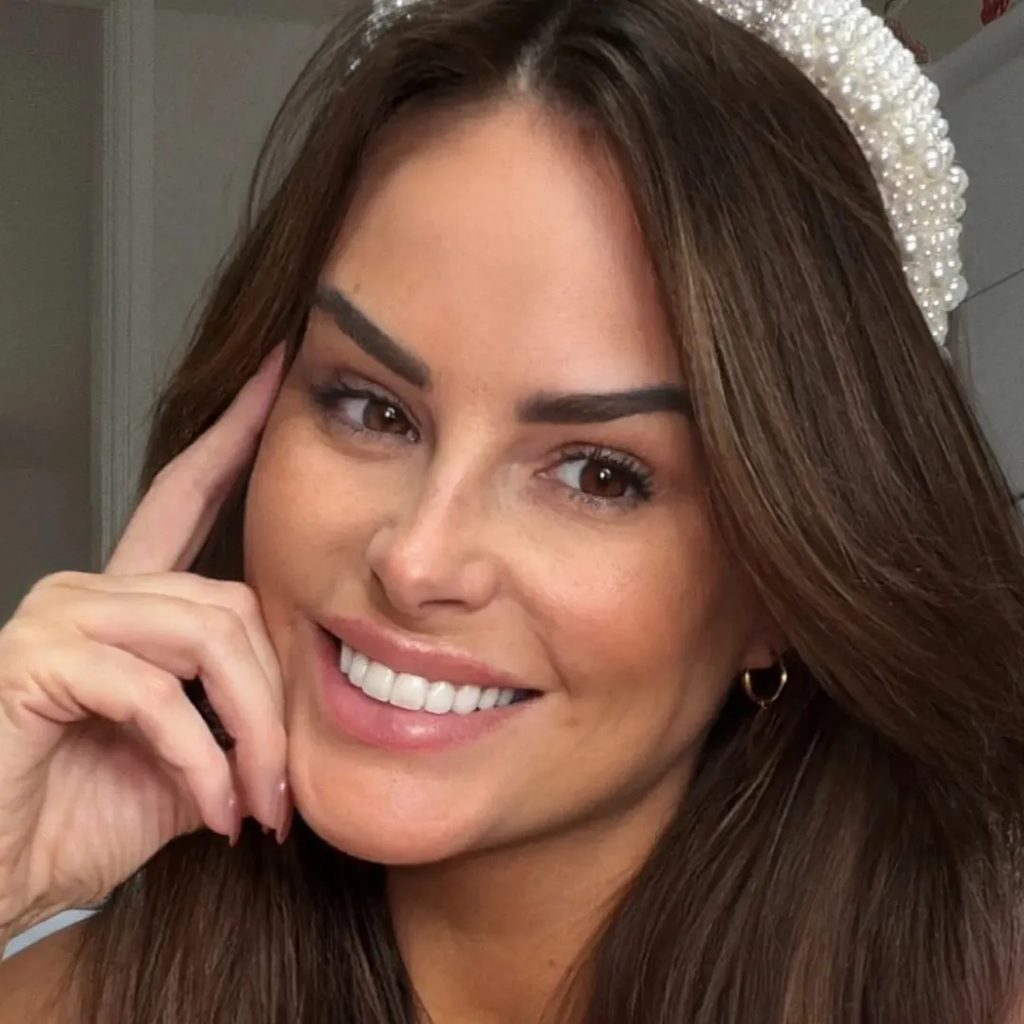
• Famous British Model Enjoys a Romantic Ibiza Escape With Her Fiancé — Can You Recognize Her?

    Famous British Model Enjoys a Romantic Ibiza Escape With Her Fiancé — Can You Recognize Her?

    Rhian Sugden brought a burst of color and glamour to the shores of Ibiza as she celebrated an important birthday with her fiancé, Oliver Mellor. The British model stepped onto the sand wearing a plunging scarlet bikini that highlighted her toned figure and sun-kissed complexion.

    Yet this was more than another stylish beach appearance. The couple’s affectionate moments, relaxed body language, and playful afternoon on the water offered a glimpse into their romantic celebration away from the noise of everyday life.

    Surrounded by clear water, warm sunshine, and Ibiza’s famous coastal scenery, Rhian appeared completely at ease. It was a simple day at the beach, but her striking swimwear and natural confidence made it memorable.

    Rhian Sugden Makes a Bold Entrance in Ibiza

    Rhian has long been recognized for her glamorous modeling career, so it was hardly surprising that she attracted attention during her Spanish island escape. The Manchester-born star chose a vibrant red bikini that stood out beautifully against the pale sand and blue Mediterranean water.

    The two-piece featured a plunging neckline and flattering halter straps. Its clean scarlet design created a classic silhouette, while carefully placed gold chain details added an elegant finishing touch.

    Red swimwear already makes a powerful statement, but the metallic accents elevated Rhian’s outfit beyond a basic beach look. They brought just enough sparkle without overwhelming the minimalist design.

    As she walked along the shore, Rhian carried herself with confidence. Her toned waist and athletic shape were clearly visible, while a small star tattoo on her stomach added a distinctive personal detail.

    A Scarlet Bikini With Timeless Holiday Appeal

    Why does a red bikini remain such a reliable vacation favorite? Much like a classic red dress, it commands attention without needing complicated patterns or excessive accessories.

    Rhian’s choice worked particularly well because of its simplicity. The rich color complemented her golden hair and glowing complexion, creating a polished appearance that still felt appropriate for a relaxed afternoon beside the sea.

    The gold chain embellishments around the hips also gave the bikini a luxurious edge. Rather than choosing several pieces of jewelry, Rhian allowed those built-in details to provide the sparkle.

    Simple Accessories Completed the Beach Look

    Rhian kept the rest of her styling refreshingly uncomplicated. She wore her long golden hair loose, allowing it to fall naturally around her shoulders. The soft hairstyle suited the carefree island atmosphere and moved effortlessly in the coastal breeze.

    A pair of retro-inspired round sunglasses completed her look. Their vintage shape added personality while providing a practical shield from the bright Ibiza sunshine.

    She also appeared to embrace a makeup-free approach. Her natural complexion looked radiant in the daylight, proving that confidence can often be the most effective beauty accessory.

    There was no elaborate styling or dramatic fashion production here. Rhian simply allowed the bold bikini, her relaxed mood, and the beautiful setting to speak for themselves.

    A Special Birthday Celebration by the Sea

    The Ibiza trip held personal meaning for Rhian because it marked her upcoming 30th birthday. Rather than celebrating only with a crowded event, she enjoyed a peaceful seaside escape with Oliver.

    Ibiza is famous for energetic nightlife, but the island also offers quiet beaches, scenic coves, and calm stretches of water. Rhian and Oliver appeared to embrace this gentler side of the popular destination.

    Their beach outing seemed unhurried. They walked along the sand, talked together, and enjoyed the sunshine before heading onto the water. It looked like the kind of holiday afternoon many couples dream about—warm, easygoing, and free from strict schedules.

    A major birthday can feel like standing at the doorway to a new chapter. For Rhian, celebrating beside her fiancé made the occasion appear even more meaningful.

    Rhian and Oliver Mellor Share Affectionate Moments

    Rhian was joined by actor Oliver Mellor, who stayed close to her throughout the outing. The couple had been engaged since 2014, and their connection was clear as they relaxed together on the beach.

    They exchanged affectionate kisses while chatting by the water, appearing comfortable and completely focused on each other. Their natural chemistry gave the photographs a warm, romantic quality.

    Celebrity vacations can sometimes look carefully arranged, but this outing felt more spontaneous. Rhian and Oliver laughed, talked, and moved around the beach like any other couple enjoying a sunny holiday.

    Their closeness became even more apparent when they decided to rent a pedalo for the afternoon.

    The Couple Takes Their Celebration Onto the Water

    A pedalo may not be the most glamorous vessel in Ibiza, but that was part of its charm. It offered Rhian and Oliver a chance to leave the busy shoreline behind and spend time together on the calm water.

    Sitting side by side, they pedaled across the sea while continuing their conversation. The activity introduced a lighthearted element to their romantic day and showed that their getaway was about having fun as much as looking stylish.

    They also paused to share more affectionate moments. With the Ibiza coastline behind them and the sun reflecting across the water, the scene looked like a postcard brought to life.

    It was an easy activity, but sometimes the simplest experiences create the strongest holiday memories. A private yacht might sound impressive, yet a leisurely pedalo ride can feel far more personal.

    Natural Confidence Becomes the Real Style Statement

    Although Rhian’s bright bikini immediately caught the eye, her confidence ultimately defined the appearance. She seemed comfortable walking along the beach, relaxing beside Oliver, and enjoying the water without appearing overly concerned about the cameras.

    That sense of ease made the entire look more appealing. Fashion is not only about the garment itself; it is also about how someone wears it. Even an expensive outfit can fall flat without confidence, while a simple piece can shine when the wearer feels comfortable.

    Rhian’s makeup-free complexion reinforced that message. She did not need a heavily prepared red-carpet look to appear glamorous. Her loose hair, round sunglasses, and radiant skin created an effortless vacation style that felt both polished and natural.

    Why the Ibiza Look Remains Memorable

    Several details helped turn this beach outing into a standout fashion moment. The scarlet color was bold, the gold chains added sophistication, and the retro sunglasses offered a playful touch.

    The romantic setting also mattered. Rhian’s look was not photographed against an artificial backdrop. It appeared amid real sunshine, moving water, and a relaxed birthday celebration with someone close to her.

    Together, those elements created a balanced scene: glamorous but not overly formal, romantic without feeling staged, and eye-catching while remaining simple.

    Conclusion

    Rhian Sugden made a striking impression during her Ibiza birthday getaway in a plunging scarlet bikini decorated with elegant gold chain details. Loose golden hair, vintage-style sunglasses, and a fresh complexion completed her effortless beach appearance.

    However, the most memorable part of the outing was the warmth she shared with fiancé Oliver Mellor. From strolling along the sand to pedaling together across the water, the couple appeared relaxed, affectionate, and genuinely happy.

    Against Ibiza’s beautiful coastal backdrop, Rhian showed that a standout holiday moment does not require excessive styling. A bold color, thoughtful details, natural confidence, and good company can create a look—and a memory—that feels timeless.

  • An eight-year-old girl was on her knees in the middle of a crowded store, begging for a can of baby formula while people laughed and filmed her.

    An eight-year-old girl was on her knees in the middle of a crowded store, begging for a can of baby formula while people laughed and filmed her.

    Part 1 of 2

    “Please, sir… my baby brother hasn’t eaten all day.” Then one man walked over, quietly paid for everything she needed, and followed her home. What he found inside that house left him completely stunned.

    Part 1

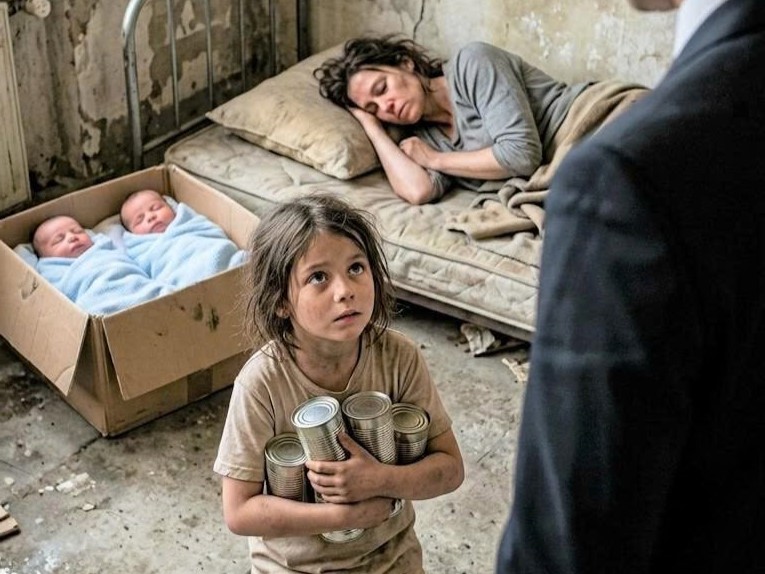
    Eight-year-old Ivy Sterling stood at the checkout counter, her small body shaking as rainwater dripped from the hem of her thin dress onto the shiny floor.

    She had no shoes. She was freezing. Mud covered her legs.

    And she looked painfully out of place in a store filled with polished marble and luxury goods she had never known.

    In her hands, she held two cans of baby formula as if they were everything.

    Because to her—they were.

    She placed a few wet coins on the counter. Nowhere near enough.

    “Please,” she whispered, her voice trembling. “My baby brothers are hungry… Can I take these? I’ll pay you back when I’m older. I promise.”

    The cashier didn’t respond. Instead, she called the manager.

    Within moments, people began to notice. Heads turned. Eyes lingered. Judgments formed.

    The manager walked over, already annoyed. “This isn’t a charity,” he said coldly. “If you can’t pay, you don’t take it.”

    Ivy clutched the cans tighter. “Please,” she begged again, more desperate now. “My mom… she hasn’t gotten up in two days. They’re crying. I don’t know what to do.”

    A ripple went through the store. Not kindness. Not concern. But mockery.

    “She’s probably lying.” “They all do.” “Someone call security.”

    Then came the laughter. And that was the cruelest part. Because ignoring a child is one thing. Laughing at her pain is another.

    Ivy’s face crumpled. Slowly, like something inside her breaking, she sank to her knees. “I’ll do anything,” she pleaded. “Please… just this once…”

    No one stepped forward. Not one.

    Until—

    “Leave her alone.”

    The voice cut through the noise instantly. Silence followed.

    A man stepped out from the back of the line. His name was Arthur Pendelton. Tall. Well-dressed. Calm in a way that made people move aside without even thinking.

    He didn’t look at the crowd. Only at Ivy. Then the formula. Then the manager.

    “How much?” he asked. No anger. No lecture. Just a simple question.

    Moments later, he paid—far more than needed—then crouched down and gently handed the cans back to Ivy.

    “Go home,” he said softly.

    She stared at him, wide-eyed, unsure if it was real. “Thank you,” she whispered.

    Then she ran.

    Everyone thought that was the end. It wasn’t.

    Ten minutes later, under heavy rain, Arthur followed her. Not too close. Just enough to make sure she was safe.

    Ivy moved quickly through streets that grew darker and more run-down with every turn. The bright lights of the wealthy area faded behind her, replaced by flickering lamps and broken pavement. She nearly slipped twice, but she kept going.

    Finally, she turned into a narrow alley and disappeared into a crumbling house.

    Arthur paused only briefly—then stepped inside.

    The smell hit him first. Damp air. Illness. Neglect. The room was dimly lit. Two babies were crying—weak, exhausted sounds. On a torn couch, twin infants lay wrapped in thin cloth, barely moving.

    And on a narrow bed nearby—a woman lay completely still…

    Part 2

    Ivy rushed to her.

    “Mom,” she whispered urgently. “I got it. I brought milk. Please wake up…”

    No response.

    Arthur stepped forward, the floor creaking beneath him. Ivy spun around in fear, clutching the formula protectively against her chest.

    “Please don’t take it,” she said immediately, her eyes wide with terror. “I told the truth. I wasn’t lying.”

    “I’m not here to take anything,” Arthur said, raising his hands slightly to show he meant no harm. “What’s your name?”

    “…Ivy.”

    “How long has your mom been like this, Ivy?”

    “Two days… maybe more,” she said, her voice breaking. “She tried to get up, then she just… stopped.”

    Arthur moved closer to the bed. The woman, Evelyn Sterling, was burning with a severe fever. Her skin was dry and ash-gray, her breathing shallow and raspy. He reached down and gently pressed two fingers to her neck. Her pulse was thready, barely fluttering.

    He looked over at the couch. The two twin boys were dangerously lethargic, their cries turning into thin, faint gasps.

    Without hesitation, Arthur pulled out his phone and dialed emergency services.

    “I need an ambulance at 1442 Miller’s Alley immediately,” Arthur said, his voice dropping into a tone of quiet, unyielding authority that left no room for delay. “Critical adult female, unresponsive with hyperpyrexia, and two malnourished infants. Send a pediatric unit as well.”

    Ivy watched him, stunned. “Are they going to arrest us?”

    Arthur knelt down so he was at eye level with her. “No, Ivy. Nobody is arresting anyone. We’re going to get your mom and your brothers help.”

    He took the cans of formula from her shaking hands, walked over to the makeshift kitchen, and found a clean bottle. With calm, practiced hands, he prepared the warm formula and handed one bottle to Ivy while he carefully lifted the second twin to feed him.

    Within fifteen minutes, the alley echoed with sirens.

    Paramedics burst into the room, their boots heavy on the rotting floorboards. As they loaded Evelyn onto a stretcher and wrapped the babies in heated blankets, a police officer approached Arthur, recognizing him instantly.

    “Mr. Pendelton?” the officer asked, surprised to find one of the city’s most prominent defense attorneys in a dilapidated slum. “What happened here?”

    “This family was abandoned,” Arthur said, his eyes hard as stone. “I want a full medical team assigned to Mrs. Sterling at St. Jude’s, and I want a social worker assigned who reports directly to me. I’m taking temporary personal guardianship of this girl until her mother recovers.”

    The officer nodded quickly, taking notes. “Yes, sir.”

    Arthur turned to Ivy and wrapped his heavy wool coat around her tiny, shivering shoulders. “Come on, Ivy. Let’s go make sure your family gets well.”

    Part 3

    For three days, Evelyn Sterling lay in a medically induced coma at St. Jude’s Hospital, battling a severe, untreated kidney infection that had gone septic.

    The twin boys, Noah and Liam, were placed in the pediatric ICU for acute dehydration, but under round-the-clock care, their condition stabilized rapidly.

    Ivy stayed in a private room adjacent to her mother’s ward. Arthur made sure she had warm clothes, soft shoes, proper meals, and a quiet place to sleep. But every morning, she woke up early and sat beside her mother’s bed, holding Evelyn’s pale hand.

    While Evelyn recovered, Arthur did what he did best: he investigated.

    He hired a private investigator to look into Evelyn Sterling’s history. What he discovered made his blood boil.

    Evelyn was a widow whose husband had died in a workplace construction accident eighteen months earlier. The construction firm’s insurance company had systematically denied her claims through legal loopholes, dragging the case out until her savings were completely depleted. Evicted from their apartment, she had moved into the cheapest rental she could find, working twelve-hour shifts at a laundry facility until her body simply gave out.

    When Arthur reviewed the legal filings from the insurance company that had ruined her, his jaw tightened.

    The legal firm representing the corrupt construction company was the exact same firm whose partners had been standing behind him in the luxury grocery store three days ago—the ones who had laughed at Ivy when she begged for formula.

    On the fourth morning, Evelyn’s eyes fluttered open.

    The room was quiet, bathed in soft morning light. Ivy was fast asleep in an armchair nearby, wrapped in a plush blanket.

    Evelyn turned her head weakly and saw Arthur sitting in the visitor’s chair, reviewing a legal brief.

    “Where… where am I?” she rasped out, her voice barely a whisper. “My babies…”

    Arthur set his papers down immediately and poured a glass of water, holding the straw to her lips.

    “Your boys are two doors down in the pediatric ward, Mrs. Sterling,” Arthur said softly. “They are safe, fully fed, and gaining weight. Ivy is right there.”

    Evelyn looked over at her daughter, tears overflowing her eyes. “Who… who are you?”

    “My name is Arthur Pendelton,” he said gently. “Ivy saved your life, Mrs. Sterling. She stood up for you when no one else would. I just happened to be there to make sure she was heard.”

    Evelyn wept silently, her thin shoulders shaking. “I tried so hard… I tried to work, but I got so sick… I didn’t have anywhere left to turn.”

    “You don’t have to fight alone anymore,” Arthur said, pulling a signed document from his briefcase. “I am a senior trial attorney. Yesterday afternoon, I filed a multi-million-dollar wrongful death and bad-faith insurance lawsuit against your late husband’s employer. I’ve already frozen their assets.”

    Evelyn stared at him, bewildered. “I can’t afford a lawyer like you…”

    “You’re not paying me a cent,” Arthur replied firmly. “Consider it a debt paid by the people who tried to ignore you.”

    Final Part

    Six months later, the sun shone brightly over a quiet, tree-lined neighborhood on the outskirts of the city.

    A neat, two-story craftsman house stood behind a manicured lawn, painted a warm cream color with white trim.

    In the backyard, two healthy, chubby eight-month-old twin boys sat on a soft picnic blanket, babbling happily as they played with wooden blocks.

    Evelyn Sterling stood on the back porch, holding a tray of fresh lemonade. She looked transformed—her skin was healthy and radiant, her hair styled, her eyes full of life and peace. The legal settlement Arthur secured had not only held the construction firm accountable but had provided her family with financial security for the rest of their lives.

    The back gate clicked open, and Ivy ran into the yard, wearing bright blue sneakers, a floral dress, and a wide, radiant smile.

    Right behind her walked Arthur, carrying a brand-new wooden easel and a set of oil paints—a gift for Ivy, who had shown a remarkable talent for drawing during her months of recovery.

    “Arthur!” Ivy called out, running over and wrapping her arms around his waist.

    Arthur smiled down at her, placing a gentle hand on her head. “Happy birthday, Ivy.”

    Evelyn walked down the porch steps, setting the tray on the outdoor table. She looked at Arthur—the man who had walked out of a grocery store six months ago and completely rewritten the destiny of her family.

    “You didn’t have to bring her another gift, Arthur,” Evelyn said, her voice filled with deep warmth. “You’ve already given us everything.”

    “I didn’t give you anything, Evelyn,” Arthur said softly, watching Ivy happily unwrap the easel. “Ivy gave you a second chance because she refused to give up. I just made sure the world paid attention.”

    That evening, as the sun set over the yard, casting long golden light across the grass, Arthur stood near the porch, watching the three children play together while Evelyn sang a quiet lullaby to the twins.

    Six months ago, an eight-year-old girl had knelt on a cold marble floor, surrounded by a room full of people who saw her as invisible.

    Now, she was standing tall in the sunlight, safe, loved, and home.

    And Arthur knew that of all the cases he had argued, all the courtrooms he had commanded, and all the victories he had won in his long career, the greatest thing he had ever done was simply stepping out of line to buy two cans of baby formula.

  • Three Minutes Before My Wedding, I Found My Nine-Year-Old Daughter Sitting Behind A Locked Laundry-Room Door. My Fiancée Had Told Her To Stay Hidden Because “Today Was For My New Family.” I Took My Daughter’s Hand, Walked Toward The Guests Waiting Outside, And Announced, “There Will Be No Ceremony.”

    Three Minutes Before My Wedding, I Found My Nine-Year-Old Daughter Sitting Behind A Locked Laundry-Room Door. My Fiancée Had Told Her To Stay Hidden Because “Today Was For My New Family.” I Took My Daughter’s Hand, Walked Toward The Guests Waiting Outside, And Announced, “There Will Be No Ceremony.”

    Part 1 of 3

    PART 1: THREE MINUTES BEFORE THE CEREMONY

    Three minutes before I was supposed to marry the woman I thought I loved, I found my nine-year-old daughter sitting behind a locked laundry room door with her flower basket resting on the floor beside her. My name is Commander Christopher “Chris” Miller, a thirty-six-year-old officer in the United States Navy who had spent eighteen years learning how to stay calm when missions fell apart. Nothing in my military career had prepared me for the quiet terror in my daughter’s voice that afternoon.

    My first wife, Rebecca, had passed away five years earlier after a sudden illness changed our lives within a few devastating months. Since then, my daughter Hannah and I had become a small team navigating school calendars, military schedules, quick breakfasts, and the constant possibility that duty would interrupt our plans. Hannah was always observant enough to notice when an late-night call meant something serious, recognizing my exhaustion after long deployments and knowing when to wait before asking heavy questions. She rarely complained about the uncertainty that came with my career.

    When Brenda Lawson entered my life two years ago, she seemed to understand everything our small family needed to survive. She accepted interrupted dinners, rescheduled trips, weekend duties, and the emotional reality that Rebecca’s memory would always have a place in our home. Brenda appeared deeply affectionate toward Hannah, helping her with science projects, attending school recitals when I was held up at the base, and remembering that Hannah hated white frosting but loved strawberry filling.

    “I only want Hannah to realize that loving me does not mean loving her mother any less,” Brenda once told me during a quiet dinner. That single sentence had helped convince me that she was the right person to build a future with.

    We planned a simple wedding at Pine Crest Resort outside Colorado Springs, where a terrace overlooked rolling hills near Fort Carson. White chairs lined the green lawn, strings of soft lights stretched between wooden beams, and colorful wildflowers decorated an arbor overlooking the valley. Hannah had spent several weeks picking out her pale-blue dress, practicing her steps in the living room because she worried her excitement would make her drop the flower petals before reaching the altar.

    On the morning of the wedding, Brenda complimented the dress and kissed the top of Hannah’s head. At least, that was what I saw with my own eyes.

    Shortly before the ceremony was scheduled to begin, my sister Patricia entered the dressing room and asked whether Hannah had already gone out to join the bridal party. I assumed she was taking photos with the photographer, but her assigned seat on the front row remained completely empty. I searched the garden, the catering kitchen, the guest rooms, and the upstairs hallway, but nobody remembered seeing her walk by.

    Then I heard a faint, rustling sound coming from behind the laundry room door near the lodge’s service entrance. I reached for the handle, but the brass knob would not turn.

    “Hannah, sweetie, are you inside this room?” I called out while tapping on the wood.

    A heavy silence followed before her small, frightened voice finally floated through the bottom crack of the door. “Dad, I am in here, but she told me I cannot come out until everyone leaves.”

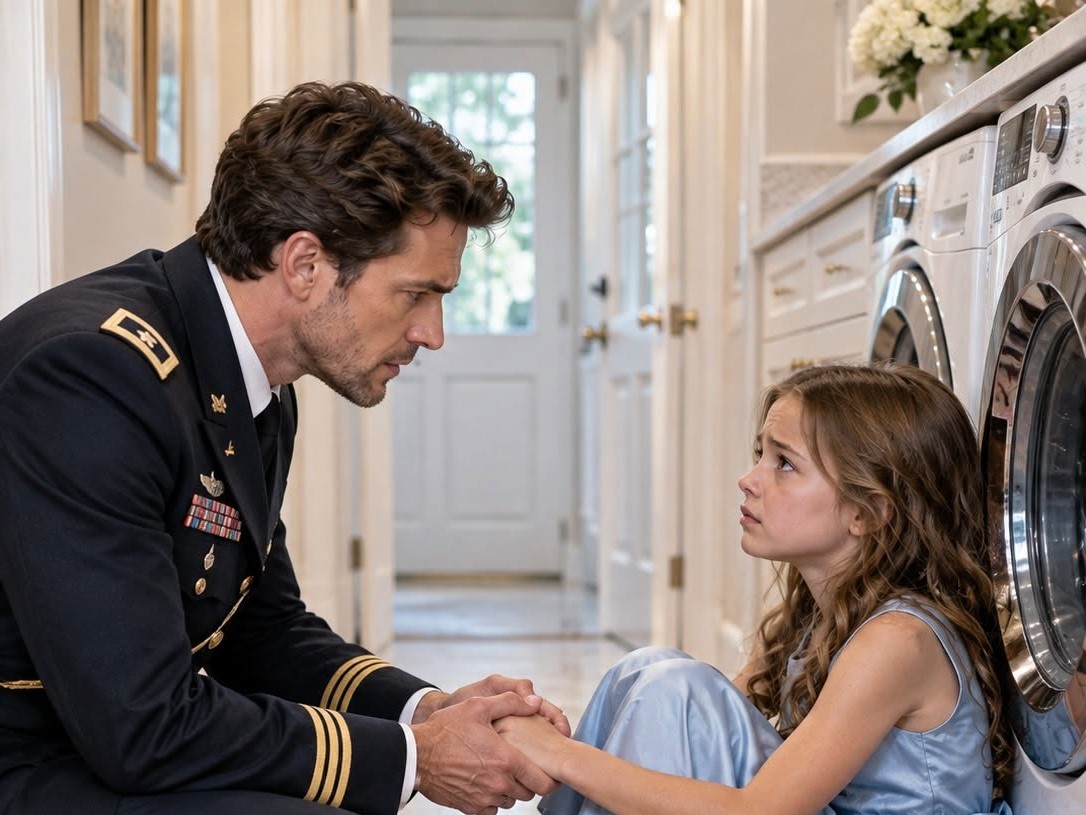
    I reached up to find the spare key resting above the doorframe and quickly unlocked the deadbolt. Hannah was sitting on the cold floor beside a noisy washing machine with her knees pulled tightly against her chest. Her wicker flower basket was knocked over on its side, and several crushed rose petals were stuck to her blue skirt.

    I dropped to my knees immediately and pulled her hands away from her face. “Why are you sitting in the dark, and who told you to stay inside this room?”

    She twisted the satin ribbon around her waist until her knuckles turned pale under the fluorescent light. “Brenda said I had to stay hidden in here until the whole ceremony was finished.”

    Every noise inside the busy lodge seemed to fade away into total silence. “Why would Brenda ever say something like that to you on today of all days?”

    Hannah looked toward the open hallway as if she expected Brenda to walk in at any second. “She said today needed to belong to your new real family, and the guests would feel awkward if your first wife’s daughter stood up there beside you.”

    I felt my heart rate slow down into the steady rhythm I relied on during high-stress situations. “Did she say anything else to you before she turned off the light?”

    Hannah nodded slowly without meeting my gaze. “She said everything was going to change after you married her today, and I needed to stop acting like I was the most important girl in your life.”

    Then she asked the single question that shattered whatever future remained between Brenda and me. “Dad, am I doing something bad by reminding you about Mom?”

    I wrapped my hands around her trembling fingers and looked straight into her tear-filled eyes. “You have done absolutely nothing wrong, sweetie, and nobody in this world will ever punish you for being Rebecca’s daughter.”

    Her lower lip trembled as she wiped her cheek with the back of her sleeve. “Brenda said you would agree with her after the wedding was over because husbands are always supposed to choose their wives first.”

    I stood up straight and picked the fallen flower basket up from the floor. “You are coming outside with me right now, and no one is ever going to hide you from your own family again.”

    PART 2: THE WORDS SHE COULD NOT TAKE BACK

    Brenda was standing near the entrance of the garden while the photographer adjusted the edge of her long veil. She wore a bright ivory gown, held a tight bundle of white roses, and smiled warmly at the guests who were taking their seats on the lawn. That polished smile vanished the moment she noticed Hannah walking beside me and holding my hand tightly.

    “Chris, why did you bring her back out here right now?” Brenda asked, taking a step toward us with her eyebrows raised in annoyance.

    The tone of her question revealed far more than any lengthy explanation ever could. I stopped walking several feet away from her and let go of Hannah’s hand so my sister Patricia could step closer to us.

    “Why was my nine-year-old daughter locked inside a dark service room while you were getting your pictures taken?” I asked directly.

    Brenda glanced nervously toward the photographer and her two bridesmaids before lowering her voice to a harsh whisper. “She was not locked inside at all, Chris, because I simply asked her to sit somewhere quiet until we got through the main parts of the service.”

    “You instructed my child to hide in a laundry room during her own father’s wedding,” I said, keeping my voice steady despite the rage building inside me.

    “Please stop making it sound so awful when I was only trying to prevent unnecessary emotional confusion for everyone involved,” Brenda replied, adjusting her grip on her flowers.

    Hannah moved closer to my side and tucked herself slightly behind my jacket. “What kind of emotional confusion could my daughter’s presence possibly create on my wedding day?”

    Brenda looked past me at the rows of seated guests before answering with a cold edge in her voice. “Everyone here knows she represents your first marriage, Chris, and constantly pushing her to the front makes it look like Rebecca is still a third partner in this relationship.”

    I stared at the woman I had planned to spend the rest of my life with, barely recognizing her face. “Rebecca will always be part of Hannah’s life, which means her memory will never be erased from mine or forgotten in my home.”

    Brenda’s soft expression hardened completely. “That is the core issue here, Chris, because you keep treating your past as if it deserves the exact same amount of space as our future together.”

    “Hannah is not my past, Brenda, she is my present and my future,” I said.

    “I never said she was just the past, but she constantly drags Rebecca’s name into every single thing we do,” Brenda snapped back.

    My sister Patricia had walked up quietly from the terrace and now stood directly behind Hannah with a hand on her shoulder. Brenda folded her arms across her white bouquet and shook her head in frustration.

    “She talks about her mother on every holiday, insists on keeping photos in every room, and gets upset whenever we discuss updating the house,” Brenda said, stepping closer to me. “I have tried my best to be patient over the last two years, but our marriage needs clear boundaries if it is going to work.”

    “Those photographs belong in my house because Rebecca was her mother, and this family started long before you met me,” I replied.

    Brenda shook her head again, her eyes narrowing as she spoke. “Once we have our own children together, I refuse to raise them inside a museum dedicated to the woman you married first.”

    The photographer slowly lowered his camera to his chest, sensing the shift in the air. Several guests sitting nearby had stopped talking entirely, turning their heads toward our conversation. Brenda seemed to realize people were listening, so she smoothed her dress and tried to soften her voice again.

    “We can discuss all of these details privately after we finish the ceremony, Chris, but Hannah needs to understand that your new wife cannot spend her life competing with a dead woman’s daughter.”

    Hannah flinched as if she had been hit, pulling back against Patricia’s dress. I immediately shifted my weight and stepped directly between Brenda and my daughter.

    “My daughter is not competing with anyone, and you have no right to speak to her like that,” I said.

    “She competes with me every single day whether you are willing to admit it or not,” Brenda countered, her voice rising again. “She watches every move I make and tries to make you feel guilty whenever you spend time or money on me.”

    “She is a nine-year-old girl who lost her mother, Brenda,” I reminded her.

    “Nine years old is plenty old enough to realize that families change and adults have to move on,” Brenda declared.

    I looked at Brenda for a long moment before asking a question that had been forming in my mind. “Have you been telling Hannah to hide pictures, stop talking about Rebecca, or stay away when we talk about the house?”

    Brenda remained silent, looking off toward the mountains instead of answering me. Hannah spoke up from behind me, her voice trembling slightly but clear enough for everyone nearby to hear.

    “She put Mom’s favorite picture in the back of a kitchen drawer last month, Dad, and she told me not to mention it to you because you were too stressed with work.”

    A memory clicked into place immediately as I remembered searching for that exact photo on our refrigerator a few weeks ago, only for Brenda to claim it must have slipped behind the counter during cleaning.

    “What else did she tell you not to mention to me, Hannah?” I asked softly over my shoulder.

    Tears began to spill over Hannah’s eyelashes as she squeezed Patricia’s hand. “She said my bedroom was going to be turned into the new baby nursery because it gets the best morning light, and she told me I would have to move all my stuff into the small back room after you two got married.”

    Brenda’s face flushed red with anger as she glared at my daughter. “Those were just preliminary ideas I was thinking about, and she completely misunderstood a mature conversation.”

    “You were planning to push my daughter out of her own bedroom without ever bringing it up to me?” I asked, feeling a cold certainty settle over me.

    “I was planning for our future family, Chris, which is something someone in this house actually needs to start doing,” Brenda shot back.

    Looking at her face, I finally understood that Brenda’s affection toward my daughter had never been real. It had been a performance designed to last just long enough to get through the wedding, assuming that once she became my wife, she would have the authority to push Hannah into the background.

    PART 3: THE CEREMONY THAT NEVER BEGAN

    The classical string music began playing from the speakers near the lawn because the wedding coordinator had no idea what was happening near the entrance. Guests stood up and turned toward the aisle in anticipation, while Brenda tried desperately to fix her veil and regain control of the room.

    She reached out to grab my arm with a desperate smile on her face. “Chris, we are both just tired and stressed right now, so let us just walk down this aisle, finish the ceremony, and handle these minor family issues privately like mature adults.”

    I took a large step backward, pulling my arm completely out of her reach. “There is not going to be a ceremony today, Brenda.”

    Her face went pale, and the fake smile vanished entirely. “You cannot seriously be telling me that you are canceling our entire wedding just because a child misunderstood a simple conversation.”

    “I am canceling this wedding because you deliberately locked my child in a room, treated her like a burden, and planned to reshape her life the second you got a ring on your finger,” I said firmly.

    Brenda looked around frantically at my commanding officer, my Navy friends, my family, and her own relatives sitting in the front rows. “Chris, please do not humiliate me in front of all these people over something we can easily fix at home tomorrow.”

    Her plea almost sounded persuasive for a brief second because I had always hated public scenes. My career in the military depended on discipline, quiet handling of problems, and avoiding public drama at all costs. But I realized that protecting Brenda from embarrassment today would mean forcing Hannah to carry the shame for the rest of her childhood.

    I took Hannah’s hand and walked past Brenda toward the small microphone set up under the arbor. The music cut off abruptly as the wedding coordinator finally noticed the tense atmosphere and flagged down the technician.

    “Thank you all for coming out here today, but I need to inform you that the wedding will not be taking place,” I said into the microphone, my voice echoing across the lawn.

    A confused murmur spread through the rows of guests as people looked at one another in shock. Brenda hurried up the wooden steps of the terrace, trying to reach the microphone herself.

    “Chris, stop this right now and do not blurt out private accusations without giving people the proper context,” she pleaded quietly.

    I turned slightly toward the crowd, keeping my arm around Hannah’s shoulders. “A few minutes ago, I found my daughter sitting alone on the floor of a locked laundry room near the back corridor. Brenda told her to stay hidden until the entire wedding was over because my daughter’s presence was supposedly ruining the new family we were trying to build.”

    Brenda grabbed the side of the wooden arbor, her voice amplification rising as she spoke into the air. “That is an entirely twisted narrative of a very complicated family dynamic!”

    I looked her dead in the eye in front of everyone. “Did you or did you not tell my daughter she could not walk down the aisle today?”

    She shuffled her feet, refusing to look directly at the audience. “I told her that emotions were running high today and that everyone needed a little bit of personal space.”

    “Did you tell her she was no longer going to be the most important girl in my life once we got married?” I asked again.

    Brenda raised her chin defensively. “No husband can be expected to put his own wife in second place forever, Chris!”

    A heavy silence fell over the lawn, and several of Brenda’s own family members lowered their heads in discomfort. I reached into my coat pocket, pulled out the gold band meant for Brenda, and placed it down on the table beside the microphone.

    “I will never marry a woman who views my daughter as a competitor that needs to be removed from my life,” I said clearly.

    Brenda stared down at the shiny metal ring on the tablecloth, her eyes welling with tears of frustration. “You are throwing away two entire years of our life together because of a single conversation with a confused nine-year-old child.”

    Hannah squeezed my hand tighter, looking up at me with wide eyes. “I am protecting my future and my daughter’s sanity because she finally felt safe enough to tell me the truth,” I replied.

    Brenda’s mother hurried up the stairs, attempting to mediate the situation before it fell apart completely. “Chris, please, everyone is just overwhelmed by the stress of planning a large wedding, and blended families always go through a few rough bumps at the start.”

    “Wedding stress makes people forget flowers or arrive late, ma’am, it does not drive a person to lock a child behind a door,” my sister Patricia called out from the grass.

    Brenda turned on Patricia furiously. “You have been trying to sabotage my relationship with Chris from the very first day we met!”

    The argument was meaningless now because the truth was out in the open. The wedding coordinator quietly stepped in to dismiss the catering staff, while guests began standing up and gathering their belongings in silent groups. A few close friends walked up to give Hannah gentle pats on the shoulder, though Patricia politely stepped in to keep people from asking her intrusive questions.

    Brenda followed me inside the lodge as I went to collect our bags from the dressing room. “If you walk out that door right now, Chris, I swear to you that I will never forgive you for this humiliation.”

    “Your forgiveness is not something I am concerned with today, Brenda,” I said, zipping up my canvas duffel bag.

    “I reshaped my entire life for you over the last two years!” Brenda shouted, tears streaming down her face. “I tolerated every military deployment, every sudden schedule change, every picture of Rebecca on the walls, and every single mood swing your daughter brought into our house!”

    The word “tolerated” made everything crystal clear. Hannah and I were never people Brenda had actually loved; we were simply obligations she endured while waiting for the day she could take control of my household.

    “You never accepted my daughter, Brenda, you just tolerated her while waiting for the right moment to push her out,” I told her plainly.

    Brenda pulled her engagement ring off her finger and slammed it hard onto the wooden reception desk. “Someday Hannah is going to grow up, move away, and leave you, and you will realize you sacrificed your entire happiness for someone who was never meant to stay the center of your world forever!”

    “A child does not need to stay in my house forever to deserve my protection today,” I said quietly.

    I left both rings sitting on the desk, took Hannah by the hand, and walked out to my truck without looking back.

    PART 4: WHAT MY DAUGHTER HAD BEEN HIDING

    When we got back home, Hannah immediately stripped off her pale-blue bridesmaid dress, throwing on a pair of comfortable gray sweatpants and one of my oversized Navy T-shirts. Patricia stayed at the house with us, helping me make phone calls to the venue, the caterers, and my lawyer to handle the financial cancellations and property returns.

    The busywork kept my mind occupied, delaying the heavy emotional crash until Hannah finally fell fast asleep on the living room couch later that evening. Patricia handed me a hot mug of dark coffee and sat down across from me.

    “Chris, how long do you think Brenda was treating Hannah like that when you were away on duty?” Patricia asked softly.

    The complete answer to that question did not come out in a single night, but slowly spilled out over the next several weeks. Brenda had started carefully removing Rebecca’s photographs from the main living spaces about six months ago, convincing Hannah that seeing her mother’s face all the time made me feel sad and depressed. She told the little girl that keeping quiet about her mother was the greatest act of kindness she could do for me.

    She frequently framed my military deployments and long training missions as proof that adult responsibilities were far more important than childhood feelings. Whenever Hannah questioned any of the upcoming wedding arrangements, Brenda accused her of being selfish and demanding too much attention.

    Worst of all, Brenda repeatedly warned Hannah that if she complained to me about these issues, it would cause me so much stress that I would cancel the wedding and spend the rest of my life lonely and miserable. Hannah honestly believed that enduring Brenda’s cruel comments was the only way to safeguard my happiness.

    Discovering that truth made me confront my own failure as a father. I had taken Brenda’s willingness to help with homework and drive Hannah to soccer practice as undeniable proof of genuine love. I had completely overlooked the subtle moments when Hannah grew unusually quiet whenever Brenda entered a room, and I had dismissed her sudden opposition to redecorating as basic childhood stubbornness.

    During a counseling session a few weeks later, Hannah finally described the exact words Brenda used in the laundry room that morning. “Brenda said you deserved to have a normal, fresh family with new babies, Dad, and that I was making everything harder for you just because my real mom died.”

    My hands clenched into tight fists in my lap, but the family counselor caught my eye and silently reminded me to stay calm so Hannah would not feel like she was causing another burst of anger.

    I leaned over and looked directly into my daughter’s eyes. “Your mother’s passing was never your fault, Hannah, and you are never, ever an obstacle preventing me from having a full and happy life.”

    Hannah looked down at her hands, her voice barely audible. “What if you want to get married to someone else later on?”

    “If that ever happens, that person will have to understand that loving me means completely respecting you, honoring your mother’s memory, and cherishing the life we built together long before they arrived,” I promised her.

    She processed my words carefully for a moment before looking up. “Would you cancel another wedding for me if you had to?”

    “I am going to pay much closer attention from now on so that neither of us ever ends up in a situation like that again,” I replied honestly.

    A faint smile appeared on her face, bringing a look of genuine relief to her eyes that I had not seen in months.

    Brenda tried to reach out to me multiple times through text messages, mutual acquaintances, and long emails. Her story kept shifting over time, moving from total denial to making excuses for her behavior. She claimed Hannah was exaggerating small comments, then argued that asking her to stay in the room was only meant to be temporary, and finally insisted that any good husband ought to prioritize his wife above everything else.

    I sent one final message through my attorney to end the contact for good. “No real partnership requires the emotional mistreatment of a child or the erasing of her mother’s memory.”

    After that letter was delivered, all communication stopped entirely.

    PART 5: THE UNIFORM COULD NOT MAKE THE DECISION FOR ME

    A few of my fellow officers at the base eventually learned about the canceled wedding, though nobody asked intrusive personal questions while I was in uniform. The Navy had taught me how to gather facts, calculate risks, and protect the people under my command, yet in my own personal life, I had let my desire for comfort blind me to what was happening right under my roof.

    That contradiction was a bitter pill to swallow. A week after the incident, my commanding officer, Captain James Miller, called me into his office for a private chat.

    “Commander, you do not owe me any personal details about your private life, but I need to know if your daughter is safe and whether this situation is going to impact your operational readiness,” Captain Miller said, leaning back in his leather chair.

    “Hannah is safe, sir,” I replied, standing at attention. “Though I failed to notice an emotional threat developing right inside my own home.”

    He looked at me thoughtfully for a moment before speaking. “Command responsibility means taking decisive action to fix a bad situation the moment solid information reaches you, Chris. It does not require you to be psychic and know things that were deliberately hidden from you.”

    His words helped ease my guilt slightly, but the responsibility still rested entirely on my shoulders. I took a short leave of absence from extra duties to stabilize things at home and arranged for my sister Patricia to stay with Hannah during my mandatory night shifts. Hannah continued her weekly therapy sessions, and bit by bit, she stopped apologizing whenever she brought up her mother’s name.

    Together, we brought all of Rebecca’s framed photographs back out from the back closet and hung them on the living room walls. We also built a special wooden display cabinet in the hallway to store Rebecca’s old journals, family photo albums, favorite recipes, and small keepsakes that Hannah wanted to keep safe.

    Our goal was not to remain trapped in endless grief over the past, but to ensure we carried our family’s history forward without letting anyone force us to hide it.

    One evening, while we were making dinner together, Hannah looked up at me from the cutting board. “Dad, do you still miss Brenda sometimes?”

    “Part of me misses the person I thought she was, sweetie, but that ideal version of her was not real,” I answered truthfully.

    “Does loving someone mean you have to forgive them for everything they do wrong?” she asked.

    “Loving someone does not mean you throw away your boundaries, Hannah, and forgiving someone never means you have to let an unsafe person back into your life,” I told her.

    She nodded quietly and went back to chopping vegetables, her willingness to ask deep questions showing me that the fear she had carried for months was finally beginning to fade away.

    PART 6: THE AISLE WE WALKED TOGETHER

    Three months after the wedding was called off, the manager at Pine Crest Resort contacted me to return a few personal items that had been left behind during the chaotic cleanup. Among those belongings was Hannah’s small wicker flower basket.

    Hannah and I drove up to the lodge together on a clear, sunny Saturday morning. The outdoor terrace was completely empty now, with no white folding chairs, fancy lights, or wedding decorations anywhere in sight. Tall pine trees swayed gently in the breeze beyond the wooden arbor, and bright sunlight streamed across the distant mountain peaks.

    Hannah held the flower basket tightly as she walked over to the edge of the stone patio. “I spent weeks practicing how to walk down this path, Dad, but I never actually got to finish it.”

    I walked over and stood beside her on the stone steps. “Would you like to finish the walk right now, just the two of us?”

    She looked up at me in surprise, then smiled and pulled a handful of preserved silk rose petals out from the bottom of her basket. We walked side by side down the stone pathway toward the wooden arbor, taking slow, deliberate steps while she scattered the colorful petals onto the ground. There were no guests watching us, no photographers snapping pictures, and no background music playing, just the quiet sound of the wind through the trees.

    When we reached the end of the terrace, Hannah looked up at the mountains and took a deep breath. “What are we supposed to do now that we finished the path, Dad?”

    “Now we get to decide where we want to walk next,” I told her, wrapping my arm around her shoulder.

    That simple moment marked the start of a brand new tradition for us. Every year on Rebecca’s birthday, Hannah and I picked a new place in the state that neither of us had ever visited before. Some years we went hiking up scenic mountain trails or explored local museums, while other years we simply tried out a new restaurant in town and ordered dessert before the main meal.

    The tradition allowed Rebecca’s memory to be associated with fresh experiences and happy moments, rather than just sadness and loss.

    Eventually, Brenda sent a long written apology to Hannah through my attorney’s office. In the letter, she admitted that her intense jealousy over Rebecca’s place in my heart had turned into bitter resentment toward a child who could not defend herself.

    Hannah’s counselor reviewed the letter first before letting Hannah decide whether she wanted to read it. Hannah chose to keep the envelope sealed and placed it inside the bottom drawer of her desk.

    “Maybe I will open it and read it when I am much older, Dad, but I really do not need her excuses right now,” Hannah said calmly.

    I supported her choice completely because the power to control the story belonged entirely to the child who had once been forced to stay silent.

    PART 7: THE FAMILY THAT WAS ALREADY COMPLETE

    A full year after the canceled wedding, Hannah participated in a special school presentation about family heritage and traditions. On her display board, she pinned three main photographs: one of her mother Rebecca laughing on a beach, one of me standing in my military dress uniform, and a recent picture of herself standing happily between my sister Patricia and me during a summer picnic.

    During the question portion of the presentation, a classmate raised his hand and asked if she ever wished she belonged to a more traditional family with a mom and dad at home.

    Hannah looked over at me sitting in the back row of the auditorium before speaking firmly into her microphone. “My family is already complete, because even when people pass away and plans change, the people who are still here keep choosing to love and protect each other every day.”

    Her words brought back the memory of the frightened little girl sitting on the laundry room floor, twisting her ribbon and wondering if her very existence was something to be ashamed of.

    After the school presentation ended, we drove home and spent the afternoon preparing Rebecca’s signature chicken dinner recipe using the handwritten card from our display cabinet. Hannah poked fun at my lack of culinary skills, while I reminded her that Navy officers were trained for tactical leadership rather than gourmet cooking.

    “Well, maybe the Navy needs to update its training programs then,” she teased back, throwing a handful of chopped parsley into the pot.

    Our house no longer felt like a place waiting for a new person to come in and make it a real family. It was already filled with school projects, framed pictures, everyday chores, late-night military calls, and more than enough real love to stand on its own.

    I had once believed that marrying Brenda would bring stability to my home and give Hannah a complete life after our tragedy. That desire had made me blind to the reality that someone could pretend to be kind while secretly viewing my daughter as a temporary rival.

    Canceling that wedding had not felt grand or heroic at the time. It was embarrassing, painful, expensive, and deeply uncomfortable, but it was absolutely necessary.

    True protection rarely looks like a dramatic heroic gesture. Most of the time, it simply means listening to a frightened child and believing her, even when doing so tears apart the comfortable future you had spent years planning.

    Three minutes before the ceremony was supposed to start, I thought my primary duty was to walk down the aisle and make a lifetime commitment to Brenda. Instead, I found my daughter hiding behind a locked door and remembered the solemn promise that truly mattered.

    Five years earlier, right after Rebecca died, I had held my daughter in my arms and sworn that she would never have to face this world alone as long as I was alive. At the lodge that afternoon, I had come dangerously close to breaking that oath by trusting the wrong person.

    But Hannah had the courage to tell me the truth, and I made the choice to listen before those three minutes turned into a ruined childhood.

    There was no wedding at the resort that afternoon.

    Yet, a real family walked away together, stronger than ever.

    THE END

  • Two Days Before My Wedding I Discovered My Fiancés Secret Plan  

    Two Days Before My Wedding I Discovered My Fiancés Secret Plan  


    Two days before my wedding, I accidentally overheard a conversation that changed everything I believed about the man I was about to marry.

    It was late.

    The children were asleep.

    My wedding dress was hanging in the closet.

    Relatives were already traveling from several states away.

    The venue was booked.

    The flowers were arranged.

    Everything was ready.

    My fiancé, Oliver, called me on FaceTime from his parents’ house because we still had one last question about the wedding decorations.

    “Blush or red?” he asked while walking through the hallway.

    “Blush,” I said. “Definitely blush. It’ll look better with the flowers.”

    He smiled.

    “You’re always right about this stuff.”

    Then he said his mother was calling him from the kitchen.

    “One second.”

    The screen went dark.

    I assumed the call had ended.

    It hadn’t.

    Oliver had simply put the phone down or slipped it into his pocket.

    The connection stayed open.

    At first, I heard only muffled sounds.

    Footsteps.

    Dishes.

    Voices in another room.

    I was about to hang up when I heard his mother, Sarah.

    “Well?” she asked quietly. “Did you get her to sign it yet?”

    My hand froze over the screen.

    Sign what?

    Oliver laughed.

    “Almost. She keeps hesitating about the paperwork. But after the wedding, she’ll do it. Once everything is official, she’ll trust me.”

    My entire body went still.

    Then Sarah said something I couldn’t quite hear.

    Oliver answered more clearly.

    “With three kids, stability means everything to her. She’s exhausted. She wants someone helping carry the load. If I tell her something is better for the children, she’ll probably agree.”

    I tightened my grip on the phone.

    For three years, Oliver had told me he loved my children.

    I had believed him.

    I was forty-three years old and raising three kids.

    My son Harry was eight.

    My twin nieces, Selena and Mika, were seven.

    They had come to live with me three years earlier after my younger sister died.

    Before she passed, I promised her that her daughters would always be safe.

    Always cared for.

    Always protected.

    I had taken that promise seriously.

    I built my entire life around it.

    I kept my house.

    Built savings slowly.

    Created trusts for the children.

    Updated insurance.

    Worked full-time while managing school pickups, appointments, homework, bills, and everything else that came with raising three children.

    It wasn’t glamorous.

    But it was ours.

    Then Oliver came along.

    I met him at a hardware store during one of the hardest periods of my life.

    I was trying to figure out how to repair a leaking pipe.

    He helped without asking for anything.

    Two weeks later, we met again.

    That time he asked for my number.

    I said yes.

    From the beginning, I told him exactly what my life looked like.

    One son.

    Two nieces.

    Very little free time.

    A lot of responsibility.

    Most men became hesitant when they heard that.

    Oliver didn’t.

    He asked about the children.

    Their names.

    Their ages.

    What they liked.

    He seemed genuinely interested.

    And over the next three years, he became part of our routine.

    He played dinosaurs with Harry.

    Helped with homework.

    Attended school performances.

    Went to soccer games.

    Learned allergies and bedtime habits.

    Sat with Harry during thunderstorms.

    He once told me he hoped the children might someday think of him as a father figure, but he would never pressure them.

    I believed him.

    Why wouldn’t I?

    He had spent three years proving it.

    Or at least, I thought he had.

    Then, through that accidental open call, I heard a version of Oliver I had never known existed.

    He began talking about what would happen after the wedding.

    The house.

    My savings.

    Combining accounts.

    Getting his name added to things.

    He spoke as though access to my finances were simply part of marrying me.

    Then he said something that made my stomach drop.

    Once everything was combined, he didn’t plan to stay.

    He spoke about my children like they were responsibilities he had merely tolerated.

    And Sarah laughed.

    That was the moment the life I thought I was about to begin disappeared.

    Twenty feet away, my wedding dress was hanging in the closet.

    The invitations had already gone out.

    Family members were driving toward us.

    And the man I thought wanted to build a family with me was discussing how quickly he could gain financial control and walk away afterward.

    I ended the call.

    Then I sat on the edge of my bed.

    I wanted to call him back immediately.

    I wanted to demand an explanation.

    But I stopped myself.

    Oliver was good with words.

    I had watched him talk his way through arguments for years.

    Whenever someone challenged him, he somehow made the other person question themselves.

    I had once thought that was confidence.

    Now I saw it differently.

    So I decided not to confront him until I understood exactly what was legally and financially at risk.

    First, I checked the children.

    Harry was asleep on the couch.

    Selena and Mika were curled together in the armchair.

    They looked peaceful.

    Safe.

    I stood there for a long moment.

    Whatever shock I was feeling turned into something much clearer.

    Resolve.

    These children had already been through enough.

    Whatever happened next, I was going to protect their future.

    The following morning, I began making calls.

    I contacted my bank.

    I reviewed every account.

    I checked whose names appeared where.

    I changed passwords.

    Added security alerts.

    Then I met with a family-law attorney.

    I explained what I had heard.

    She walked me through the facts carefully.

    My house had been purchased before I ever met Oliver.

    It remained in my name.

    Marriage would not automatically place him on the deed.

    My savings remained mine unless I voluntarily added him.

    I hadn’t.

    The life-insurance policy named the children as beneficiaries.

    The trusts I had created for Harry, Selena, and Mika were legally separate and protected.

    Oliver did not have the access he apparently believed he was about to receive.

    Then something else became clear.

    For months, Oliver had been encouraging me to combine accounts and put both names on financial documents.

    Always using the same explanation:

    “It’ll be better for the kids.”

    That was what Sarah had been referring to.

    The paperwork.

    Fortunately, I had never completed it.

    My attorney advised me not to sign anything and to keep all financial arrangements separate.

    She also asked whether I felt physically safe.

    Oliver had never been violent.

    His strength was persuasion.

    Still, she encouraged me to end things in a setting where other people were nearby rather than confronting him privately.

    I also confirmed the status of our marriage paperwork.

    We had obtained a marriage license.

    But it had not yet been signed or filed.

    Without the completed ceremony and proper filing, there would be no legal marriage.

    That part was simple.

    There would be no signature.

    No filing.

    No marriage.

    Meanwhile, Oliver continued acting completely normal.

    He called the following morning.

    “Everything okay?” he asked cheerfully.

    “Just wedding nerves,” I told him.

    “Two more days,” he said.

    “Two more days,” I replied.

    He had no idea anything had changed.

    I decided I would still go to the venue.

    But there would be no vows.

    No legal ceremony.

    Before anything could become binding, I wanted the truth addressed in a controlled setting with people around me.

    The wedding day arrived bright and clear.

    I got dressed.

    My aunt adjusted my veil.

    Relatives hugged me.

    Guests filled the venue.

    I smiled for photographs.

    Inside, I kept reviewing the same checklist.

    The children were safe.

    My accounts were protected.

    The trusts were untouched.

    The marriage license would remain unsigned.

    My attorney knew what was happening.

    Oliver arrived looking exactly like the devoted groom everyone expected.

    He greeted guests.

    Shook hands.

    Smiled.

    Sarah sat near the front looking completely confident.

    For three years, I had trusted that image.

    Now I could finally see how carefully constructed it was.

    Before the ceremony began, everyone gathered in the reception space for drinks and conversation.

    That was when I asked for everyone’s attention.

    I stood near the microphone.

    Oliver looked confused.

    “Is this some kind of surprise?” he asked.

    “In a way,” I said.

    I did not need a dramatic confrontation.

    I simply explained that two nights earlier, Oliver had accidentally left our FaceTime call connected.

    I told the room what I had heard.

    His conversations about my house.

    My savings.

    The paperwork.

    And the way he had spoken about the children.

    Oliver immediately tried to explain.

    He said I had misunderstood.

    That comments had been taken out of context.

    That nothing had been decided.

    But I had spent the previous two days confirming the things that mattered.

    So I stayed calm.

    “I checked everything,” I told him.

    “The house remains mine.”

    “The children’s trusts are protected.”

    “My savings are not joint.”

    “And the marriage license will not be signed.”

    His expression changed.

    For the first time since I had known him, Oliver seemed to have no immediate answer.

    Sarah stood up.

    She accused me of humiliating him.

    I looked at her.

    “I’m not doing this to humiliate anyone. I’m doing it because I’m not entering a marriage when I no longer trust the intentions behind it.”

    Then I turned back to Oliver.

    “You were planning around what you believed marriage would give you access to.”

    I paused.

    “But you misunderstood something important.”

    “My children and I were never looking for someone to control our future.”

    “We were looking for someone to share it with.”

    “And those are not the same thing.”

    There was no ceremony.

    No vows.

    No signed license.

    No marriage.

    I walked across the room to where my children were sitting.

    Harry took my hand.

    Then Selena.

    Then Mika.

    And the four of us left together.

    Outside, Harry looked up at me.

    He knew something serious had happened, but not all the details.

    “Mom?”

    “Yes?”

    “Can we still get the pancakes you promised?”

    For the first time that day, I laughed.

    A real laugh.

    “Absolutely.”

    Selena brightened.

    “Even in our fancy clothes?”

    “Especially in our fancy clothes.”

    So we went to our favorite diner.

    Harry ordered pancakes with chocolate sauce and extra sprinkles.

    The girls split blueberry pancakes.

    I ordered coffee.

    We sat in formal clothes in a vinyl booth on what should have been my wedding day.

    And strangely, I felt relieved.

    The waitress seemed to understand that something unusual had happened.

    She didn’t ask questions.

    She simply kept the children’s hot chocolate filled.

    At the end, when I quietly told her it had been a difficult day, she smiled and told me the pancakes were on the house.

    That small kindness finally made me cry.

    Harry patted my arm with a sticky hand.

    “It’s okay, Mom,” he said. “The pancakes are really good.”

    I laughed through the tears.

    For months, I had imagined that day as the moment I finally stopped carrying everything alone.

    Instead, it became the day I realized I had already been strong enough to protect the life I had built.

    The house remained ours.

    The savings remained secure.

    The children’s trusts remained untouched.

    And most importantly, my children remained surrounded by people who genuinely loved them.

    Two days earlier, I had thought I was preparing for a wedding.

    What I actually received was clarity.

    Sometimes learning the truth hurts.

    Sometimes it arrives at the worst possible moment.

    But sometimes it arrives just early enough to keep you from making a decision that would be much harder to undo.

    That night, after the children were asleep, I sat alone in the living room.

    Still wearing part of my wedding outfit.

    And I thought about the promise I had made to my sister years earlier.

    Her girls would always be safe with me.

    I had imagined keeping that promise would mean food, shelter, education, and savings.

    I never imagined it might also mean walking away from someone I loved.

    But protecting them meant protecting the life around them too.

    And that was what I had done.

    Not perfectly.

    Not painlessly.

    But in time.

  • When my parents left me their $1.2M ranch, I secretly transferred everything into my own LLC — just to be safe. Last month, my sister walked in with her lawyer, smirking, “The deed is in my name now — pack your bags.”  

    When my parents left me their $1.2M ranch, I secretly transferred everything into my own LLC — just to be safe. Last month, my sister walked in with her lawyer, smirking, “The deed is in my name now — pack your bags.”  

    My name is Jacob. I’m twenty-nine, and last year my life changed completely when my parents passed away and left me the family ranch.

    Eighty acres of rolling hills.

    A farmhouse that had been in our family for three generations.

    Stables.

    Pastures.

    Fences my father had repaired more times than I could count.

    To anyone else, it was property worth roughly $1.2 million.

    To me, it was the last physical piece of my parents I still had.

    I had grown up there.

    I learned to ride a horse before I learned to ride a bicycle.

    I could still hear my father’s boots crossing the wooden porch early in the morning.

    I could still picture my mother standing at the kitchen window, looking over the pasture as though she could somehow see years into the future.

    What I wasn’t prepared for was how quickly grief would turn into a family dispute.

    My older sister, Clare, was three years ahead of me and had always been very different.

    She was a lawyer.

    Confident.

    Ambitious.

    Accustomed to getting what she wanted.

    She had moved to the city years earlier and rarely visited the ranch except for holidays or the occasional weekend.

    I had stayed.

    I worked alongside Dad.

    I fixed fences.

    Fed horses.

    Handled repairs.

    Helped keep the property running when his health began slowing him down.

    When the will was read and the ranch was left entirely to me, Clare congratulated me.

    But her smile was tight.

    At first, I blamed grief.

    Then the comments started.

    “You certainly got the golden ticket.”

    “Must be nice getting the property worth more than everything else.”

    At dinner one evening, she laughed and said,

    “Well, Jacob needs somewhere to live.”

    Everyone laughed.

    I didn’t.

    Still, I tried not to make something out of it.

    Then Clare began appearing at the ranch more often.

    At first, she said she was checking on me.

    Soon she was rearranging furniture.

    Talking about which rooms should be renovated.

    Suggesting I rent parts of the property.

    One afternoon she brought her fiancé and casually mentioned where they might put a nursery “if we ever lived here.”

    I laughed.

    But something about the way she said it bothered me.

    The ranch suddenly felt less like my home and more like a board game where someone else had already started moving the pieces.

    Two weeks later, Clare arrived holding a stack of papers.

    “Routine estate paperwork,” she said.

    She placed them on my kitchen table.

    I started reading.

    Transfer agreements.

    Title changes.

    Language that seemed far more serious than she wanted me to believe.

    I didn’t sign anything.

    That night, I called a friend who worked in real-estate law.

    By the end of the week, I had taken formal steps to place the ranch into an LLC under my control.

    I didn’t want to believe I needed legal protection from my own sister.

    But something told me I would be thankful later.

    I was.

    About a month later, Clare returned.

    This time she brought an attorney.

    She barely said hello.

    “The deed is in my name now,” she announced. “You should start packing.”

    I was sitting in Dad’s old chair.

    I leaned back and looked at her.

    “Good luck with that.”

    Her eyes narrowed.

    Two days later, she returned with movers.

    But the moment they reached the gate, they were met with legal paperwork showing that the situation was not remotely as simple as Clare had claimed.

    Her smile disappeared.

    She turned around, told the movers to leave, and drove away.

    I knew immediately that the conflict wasn’t finished.

    If anything, I had only made her more determined.

    For the next week, she went silent.

    No calls.

    No texts.

    No surprise visits.

    The quiet made me more nervous than her arguments.

    Then one morning, I found a letter in my mailbox addressed to “Tenant.”

    It claimed the owner of the property was increasing my rent by sixty percent.

    There was one obvious problem.

    I didn’t pay rent.

    I owned the ranch.

    I called the number listed on the notice.

    Clare answered.

    “Just a misunderstanding,” she said lightly.

    Then she added,

    “You really should start thinking about your options, Jake. Managing that place by yourself isn’t sustainable.”

    I hung up.

    After that, she began arriving with her fiancé.

    They wandered around taking photographs.

    Once, I found them measuring my kitchen counters.

    “What are you doing?”

    Clare rolled her eyes.

    “Relax. We’re just curious.”

    I wanted to throw them off the property.

    Instead, I took my lawyer friend’s advice.

    Document everything.

    Dates.

    Times.

    Messages.

    Visits.

    Every strange letter.

    Every conversation I could remember.

    “You don’t win property disputes by shouting louder,” he told me. “You win with records.”

    So I started a journal.

    Then one Saturday, while repairing fencing near the back pasture, I heard voices near the barn.

    Clare was there with two men in suits.

    I stayed out of sight long enough to hear her say,

    “Once we get control of the property, we could sell it for several times what it’s worth now.”

    That sentence told me everything.

    To Clare, the ranch was real estate.

    To me, it was home.

    Every post my father had planted.

    Every tree my mother had chosen.

    Every morning I had spent working beside them.

    She saw numbers.

    I saw my family.

    Things became worse at Thanksgiving.

    At Aunt Linda’s house, Clare announced that she would soon be making “major changes” to the ranch.

    Some relatives congratulated her.

    My uncle even raised his glass.

    I sat there wondering how many people had already decided the property belonged to her.

    After dinner, Clare cornered me in the hallway.

    “You’re making this much harder than necessary,” she said.

    “You could sign it over. We’d even let you stay for a while.”

    I laughed.

    Not because anything was funny.

    “You don’t get to let me stay in my own home.”

    Her smile disappeared for half a second.

    Then she leaned closer.

    “You really think that LLC makes you untouchable? Lawyers challenge structures like that every day.”

    She walked away.

    That night I barely slept.

    For the first time, I wondered whether she could actually overwhelm me simply by making the legal process too expensive and exhausting.

    My attorney friend gave me an uncomfortable answer.

    “She may not have a strong case,” he said, “but someone can still make your life miserable by forcing you to respond to one thing after another.”

    That was exactly what Clare did.

    Complaints about the property.

    County inspections.

    A noise complaint because I had been mowing during the morning.

    Letters.

    Notices.

    Constant pressure.

    Then one stormy night, headlights appeared in my driveway.

    Clare’s fiancé walked to the porch carrying documents.

    “We’re serving notice,” he said.

    He handed me the papers and left.

    Inside, I read everything carefully.

    It wasn’t quite an eviction.

    It was an attempt to challenge my ownership.

    I sat at the kitchen table staring at those documents for a long time.

    And something inside me changed.

    I wasn’t going to keep waiting for Clare to stop.

    I wasn’t going to hope she suddenly remembered we were family.

    I needed to protect myself properly.

    Over the following days, my lawyer and I gathered everything.

    The will.

    The deed.

    The LLC records.

    Property-tax payments.

    Maintenance receipts.

    Evidence showing that I had been operating and caring for the ranch long before my parents died.

    The more documents we collected, the calmer I became.

    Then Clare made her biggest move.

    It was a gray Tuesday afternoon.

    I was feeding the horses when several engines came up the drive.

    Two moving trucks.

    Three cars.

    Clare stepped out of the first vehicle in a black coat, carrying an umbrella.

    Her fiancé followed.

    “We’re here to get started,” she called.

    “Started with what?”

    She pointed toward the moving trucks.

    “Packing. Renovations begin next week. You should have your things out by then.”

    I stared at her.

    “You cannot be serious.”

    “I’m completely serious. You’ve delayed this long enough.”

    The movers began unloading equipment.

    “Get them off my property.”

    Her fiancé laughed.

    “You don’t control this anymore.”

    I stayed calm.

    “Nobody moves anything until my lawyer sees whatever paperwork you’re relying on.”

    Clare pulled out a folder.

    “The transfer has already been approved.”

    She handed me the documents.

    There was a court stamp.

    There were also statements from relatives supporting her claim that I had received an unfair share of the estate.

    My uncle.

    Two cousins.

    People who had hugged me at my parents’ funeral.

    People who had told me Dad would be proud that I was keeping the ranch alive.

    Now they had signed letters supporting Clare.

    That hurt almost as much as anything she had done.

    “You brought the whole family into this?”

    “Someone had to be reasonable,” she replied.

    She gave me until Friday to leave.

    Then she played a recording from her phone.

    My voice.

    A private conversation from months earlier.

    I had been exhausted and told a friend,

    “Some days it would be easier to sell everything and walk away.”

    Clare smiled.

    “See? Even you admitted you don’t want the place.”

    I stared at her.

    “You recorded me?”

    “You never prepare for anything, Jacob. Someone has to.”

    That was the moment I realized this conflict had stopped being simply about inheritance.

    It was about trust.

    I didn’t argue anymore.

    I went inside.

    Closed the door.

    And let the movers eventually leave without touching anything.

    That evening, I sat on the porch holding Dad’s old hat.

    I thought about every year I had worked beside him.

    The day he told me the ranch would one day be mine.

    The pride in his voice whenever we finished a major repair.

    And I made a decision.

    I wasn’t leaving.

    But I also wasn’t going to respond recklessly.

    No shouting.

    No dramatic threats.

    No trying to beat Clare at her own style of confrontation.

    I would do what Dad always did when something went wrong.

    Slow down.

    Look at the facts.

    Fix one thing at a time.

    For several days, I struggled.

    I barely ate.

    I worked because the horses and property still needed attention, but emotionally I felt hollow.

    A few relatives visited.

    Most seemed more interested in the drama than in how I was doing.

    My cousin Lydia actually said,

    “You’ll probably be happier without all this responsibility.”

    I didn’t answer.

    That night, I finally allowed myself to feel angry.

    Then I opened one of Dad’s old accounting ledgers.

    Twenty years of repairs.

    Feed purchases.

    Taxes.

    Equipment.

    His handwriting covered every page.

    Looking at those records reminded me of something important.

    This ranch had never been a free gift.

    I had spent years helping build and maintain it.

    The next morning, I met with my attorney again.

    He studied Clare’s filing carefully.

    “Yes,” he said. “She managed to get a transfer approved. But it’s far from untouchable.”

    He believed we could challenge it.

    Possibly reverse it.

    “She is expecting you to panic,” he told me. “Don’t.”

    When I returned home, I walked the full property line.

    Dad used to do that whenever he faced a major decision.

    He called it “walking the land.”

    By sunset, my head was clearer.

    I went through every document in the house.

    The will.

    Trust records.

    LLC papers.

    Tax receipts.

    I created a binder.

    Then another.

    I contacted people who had known how much work I had put into the ranch.

    Neighbors.

    Suppliers.

    Former ranch hands.

    Slowly, the story became harder for Clare to rewrite.

    At one point, I considered leaving.

    I even loaded a few boxes into my truck.

    Then I sat behind the steering wheel and couldn’t start the engine.

    I unloaded everything.

    Clare had already damaged my trust.

    I wasn’t going to let her take the home that still connected me to Mom and Dad.

    From then on, I treated the ranch like both a home and a business.

    I repaired fences properly.

    Fixed the barn roof.

    Cleaned out storage rooms.

    Applied for agricultural programs that I had previously ignored.

    Neighbors began offering help.

    One of Dad’s old friends brought his tractor over after a storm.

    “Your father would’ve done the same for me,” he said.

    Even Aunt Linda came by.

    She carried a pie and looked embarrassed.

    “I didn’t understand what Clare was really trying to do,” she admitted.

    Then she looked around.

    “This was always supposed to be yours, Jacob.”

    Her apology didn’t erase what happened.

    But it mattered.

    By the end of the month, the ranch looked better than it had in years.

    And I felt better too.

    I started managing the finances through a dedicated business account.

    Every purchase was documented.

    Every repair.

    Every payment.

    Every dollar of income.

    Then the ranch began generating new opportunities.

    A riding school rented pasture space on weekends.

    A local photographer asked to use parts of the property for sessions.

    The amounts were modest.

    But they proved something important.

    The ranch could sustain itself.

    I wasn’t merely holding onto the past.

    I could build something new there.

    Meanwhile, Clare kept sending messages about deadlines and moving dates.

    I stopped responding.

    I had learned something.

    Silence could be useful when it was chosen rather than forced.

    Then I went to the county records office.

    I spent hours searching through estate documents.

    And that was where I found something I had overlooked.

    An addendum my father had signed shortly before his death.

    It stated clearly that the ranch was intended solely for me because of my long-term contribution to maintaining and operating it.

    My lawyer read it twice.

    Then he looked up.

    “This changes things considerably.”

    I made certified copies immediately.

    I also collected statements from former workers and neighbors.

    Some had photographs of me repairing roofs with Dad.

    Baling hay.

    Working with livestock.

    Years of proof.

    My folders grew thicker.

    Then I learned something else.

    An old family friend named Mr. Collins approached me at the local diner.

    “I heard Clare has been speaking with developers.”

    “What kind?”

    “Golf and resort people.”

    My stomach tightened.

    Then he added something even more important.

    Apparently, Clare and her fiancé had financial problems of their own.

    A development investment had gone badly.

    They needed money.

    Suddenly, everything made sense.

    Clare didn’t want the ranch because she loved it.

    She needed a valuable asset she could sell.

    That information changed how I approached the situation.

    I spoke with professionals about legal ways to preserve the agricultural character of the property.

    I explored conservation protections and agricultural preservation programs.

    Eventually, I received confirmation that the ranch qualified for preservation status.

    It gave the property tax benefits and made major redevelopment much more complicated.

    The ranch could remain what my parents intended it to be.

    Land.

    Pasture.

    Home.

    Not a quick development project.

    I didn’t immediately tell Clare.

    Instead, I waited until my attorney was ready.

    Late in January, her SUV came up the driveway again.

    This time she brought only her fiancé.

    She handed me another move-out notice.

    I read it.

    Folded it.

    Placed it on the porch railing.

    “Thanks.”

    She frowned.

    “For what?”

    “It’ll be useful in court.”

    Her expression changed.

    “What court?”

    “The one where we’re asking to reverse your transfer.”

    Her fiancé laughed.

    “You can try.”

    “I intend to.”

    I went inside and returned carrying one of my binders.

    I opened it.

    The amended estate documents.

    Tax records.

    Business records.

    Photographs.

    Witness statements.

    Proof of years of work.

    Clare’s confidence began to fade.

    Then I handed her the preservation paperwork.

    She read it.

    Her expression changed completely.

    “You did this?”

    “I protected the property.”

    “You’re ruining everything.”

    “No. I’m making sure the ranch remains what Mom and Dad wanted.”

    I told her that my attorney was also seeking legal fees and an order preventing further unauthorized entry while the dispute was being resolved.

    Her fiancé quietly told her they should leave.

    This time, she listened.

    The following Monday, my lawyer filed the challenge.

    A temporary order limiting unauthorized access was approved while the case was pending.

    A few days later, Clare returned with two men carrying clipboards.

    She was stopped before reaching the house and shown the order.

    I watched from the porch.

    There was no celebration.

    No victory speech.

    I simply felt relieved that for once, the rules were clear.

    Then came the court hearing.

    I wore Dad’s old watch.

    My attorney presented the estate documents.

    The LLC records.

    My maintenance history.

    Witness statements.

    Photographs.

    The addendum Dad had signed.

    Even Aunt Linda testified that I had been the person consistently operating the ranch.

    Clare’s attorney argued that the inheritance should have been distributed more evenly.

    But the judge focused on the written instructions my parents had actually left.

    The prior transfer was reversed.

    The deed was restored to me.

    The court also awarded certain legal costs connected to the dispute.

    When I walked outside afterward, the winter sun seemed unusually bright.

    My attorney smiled.

    “That should settle the ownership question.”

    The family reaction was mixed.

    Some relatives apologized.

    Others avoided the subject.

    A few thought I had been too aggressive.

    I didn’t argue with them.

    I knew what the documents said.

    More importantly, I knew what my parents had wanted.

    Clare’s financial problems continued.

    I heard that she and her fiancé eventually sold their condo after their other investment struggled.

    I never celebrated that.

    I didn’t want her life ruined.

    I simply wanted her to stop trying to build her future by taking mine.

    I poured my energy back into the ranch.

    The riding partnership expanded.

    We hosted small community events.

    And using part of the money recovered through the legal process, I established a modest scholarship in my parents’ names.

    Turning something painful into something useful felt better than revenge ever could.

    Months passed.

    Then one evening, Clare’s SUV appeared again.

    For a moment, every old instinct returned.

    But she remained in the car for several minutes.

    When she finally walked toward the porch, she looked tired.

    Different.

    “I came to apologize,” she said.

    I didn’t answer immediately.

    “I shouldn’t have done any of it,” she continued. “I convinced myself that getting the money would fix everything. It didn’t.”

    She stared at the porch floor.

    “I don’t expect you to forgive me.”

    For a long time, neither of us spoke.

    The sun was setting behind the hills.

    Finally, I said,

    “I can’t pretend none of this happened.”

    She nodded.

    “But I hope you figure out what you actually want from your life. Because this ranch isn’t just an asset to me. It’s home.”

    Her eyes filled with tears.

    “I know.”

    Then she left.

    I remained on the porch until the light disappeared.

    The horses grazed quietly in the distance.

    Crickets filled the evening air.

    And for the first time since the fight began, the ranch felt peaceful again.

    I looked across the pasture and thought of my father.

    For months, I had believed protecting the ranch meant defeating Clare.

    I was wrong.

    It meant refusing to let fear, anger, or family pressure decide what happened to something my parents had spent their lives building.

    It meant keeping records.

    Asking for help.

    Learning what I didn’t know.

    Standing firm without becoming cruel.

    The ranch was still there.

    So was I.

    I rested my hands against the porch railing and whispered into the quiet,

    “It’s safe now, Dad.”

    And finally, I believed it.

  • My husband worked as a doctor in the same hospital where I spent an entire month fighting to survive—and he never came to see me. Not once.

    My husband worked as a doctor in the same hospital where I spent an entire month fighting to survive—and he never came to see me. Not once.

    Part 1 of 3

    When I was finally discharged, he looked at me and coldly said, “I was too busy.” I didn’t argue. I simply took off my wedding ring, placed it on top of my medical report, called a lawyer, and filed for divorce. He still had no idea what I had found in that hospital document.

    Part 1

    “I spent thirty days in the hospital hovering between life and death, and my husband—a surgeon in the very same building—didn’t come up to see me even once.”

    On the day I was discharged, I carefully folded my hospital gown and laid it on the edge of the bed. I had lost thirteen pounds following a ruptured appendix that had spiraled into severe peritonitis. From the seventeen-floor window of Metropolitan General Hospital in Chicago, I watched the gray autumn rain slick the pavement while a nurse reviewed my discharge instructions.

    “Are you sure no one is coming to drive you home, Clara?” she asked softly, glancing at my chart. “Dr. Marcus Hayes works here, doesn’t he?”

    I forced a polite smile and nodded. “He’s in a procedure.”

    Marcus was one of the most celebrated cardiovascular surgeons at the hospital. He worked five floors below my room. For the first twenty days of my stay, he had been participating in a high-profile, international organ transplant initiative that required strict quarantine protocols. I had spent those three weeks defending him to everyone—my mother, my friends, the nursing staff. “He can’t leave the unit,” I had repeated like a script. “He’s saving lives.”

    Then came the final ten days.

    During those last ten days, the isolation protocol ended. I saw photos of Marcus posted on the hospital’s internal network, smiling at a gala dinner with visiting foreign specialists. Then I saw him in a local news interview. Then on a stage receiving a clinical excellence award.

    Yet, across those ten full days, my hospital room phone never rang. Not once.

    My work as a senior healthcare quality auditor had taught me one fundamental rule: before you react, verify the data.

    I opened my tablet, logged into the hospital’s administrative portal, and pulled up the official protocol guidelines for the transplant project. In less than five minutes, I found Section 4, Paragraph B:

    Personnel in isolation may request a temporary dispensation of up to two hours for immediate family medical emergencies, life-threatening illnesses, or surgical procedures, subject to standard re-sanitizations.

    I then queried the system logs for all dispensation requests filed under Dr. Marcus Hayes.

    Zero.

    Not a single request had ever been submitted.

    He had possessed the explicit right to see me. He had possessed the means. He simply chose not to. And when the quarantine lifted completely, he had ten full days to walk to an elevator, press the button for the seventeenth floor, and walk down the hall.

    He chose not to do that, either.

    I saved a PDF copy of the protocol, his shift logs, and the public event registries to a cloud drive. Then I called an Uber.

    I didn’t go back to our brownstone in Lincoln Park. I drove straight to the law offices of my university friend, Sarah, a family law attorney.

    When Sarah saw how frail and gaunt I looked, she stood up so fast her chair scraped against the hardwood. “Clara! My God, what happened to you?”

    “I need you to draft divorce papers,” I said evenly.

    She thought I was speaking out of the raw bitterness of illness. So I placed my tablet on her desk and showed her the timeline, the logs, and the protocol documents.

    I didn’t want revenge. I didn’t want to strip him of his assets. We had no children. I proposed an even 50/50 split on the equity of the home we had purchased during our marriage, with each of us retaining our respective bank accounts, vehicles, and personal property.

    That afternoon, I went back to the brownstone, packed my clothes, my degrees, and my books into two suitcases, and left my wedding ring sitting squarely on top of my hospital discharge summary on the dining table.

    I moved into a furnished, short-term apartment in Gold Coast, changed my phone number, and routed all communication through Sarah.

    Two weeks later, while Marcus was enjoying a catered reception in the hospital’s twelfth-floor conference center celebrating the conclusion of his project, a court process server walked into the room holding a manila envelope.

    “Dr. Marcus Hayes? Personal service.”

    Marcus opened the envelope in front of his colleagues and residents. Within three seconds, the triumphant smile drained from his face.

    It was a petition for dissolution of marriage.

    And Marcus had no idea that losing his wife was only the beginning of what was about to unfold.

    Part 2

    Marcus folded the legal notice so fast the paper tore at the seam.

    “Administrative error,” he muttered to his colleagues, shoving the document into his coat pocket.

    But when he arrived at the Lincoln Park house that evening and found empty closets, bare dresser drawers, and his wife’s wedding band resting atop an emergency room discharge form, the illusion shattered.

    He couldn’t call me because I had blocked his number. He called my mother. He called our mutual friends.

    To everyone who answered, he delivered the exact same narrative: that I was emotionally unstable following my illness, that I was failing to grasp the crushing demands of a surgeon’s career, and that I was throwing away seven years of marriage over “a missed hospital visit.”

    Our friend David called me, trying to mediate. “Clara, surgeons operate under insane pressure. Sometimes spouses have to show grace.”

    “I understand grace during an emergency midnight bypass,” I told him calmly. “What I don’t accept are ten days of galas, television interviews, and award ceremonies without thirty seconds to check if your wife survived peritonitis.”

    David went quiet and never brought it up again.

    A few days later, I accepted an assignment to lead an independent external quality audit at Metropolitan General—the very hospital where Marcus worked. To eliminate any conflict of interest, I explicitly recused myself from auditing the cardiology department, assigning a colleague to that division while I took charge of administrative compliance, patient safety protocols, and institutional governance.

    When Marcus found out I was in the building auditing management, he was furious.

    Through Sarah, he demanded a meeting. We agreed to meet at a quiet coffee shop near the medical campus.

    He arrived looking immaculate—tailored suit, expensive watch, crisp white shirt. He sat down across from me with the supreme confidence of a man who believed he was still in total control of the room.

    “I assume you’ve finished making your point,” Marcus said, leaning back. “Instruct your lawyer to withdraw the petition, and let’s go home.”

    I slid the separation agreement across the table. “Read page three.”

    His face hardened as he saw the 50/50 equity split on the house. “Fifty percent? I paid for that property with eighty-hour workweeks and weekend surgeries! You review spreadsheets for a living!”

    I pulled out my tablet. “Fine. Let’s talk about spreadsheets.”

    I opened the file displaying the transplant quarantine protocol, highlighting Section 4, Paragraph B—the clause permitting two-hour emergency leaves for family illnesses.

    Then I brought up the hospital server logs showing zero requests filed under his name, followed by the timestamped photos of his public appearances during the final ten days of my stay.

    “No one held you hostage downstairs, Marcus,” I said, keeping my voice steady and cold. “You chose not to come up to the seventeenth floor because you were up for the Associate Chief of Surgery position, and you didn’t want a personal distraction blurring your image as the dedicated, unencumbered surgeon.”

    For the first time since I had met him, Marcus lowered his eyes.

    “It was one mistake, Clara,” he stammered.

    A cold ache settled behind my ribs. “One mistake?”

    I reminded him of a night six years earlier—a night I had spent six years trying to forget.

    During our first year of marriage, I suffered a miscarriage at ten weeks. I was bleeding, terrified, and could barely stand. Marcus had promised to take me to the emergency room, but then his department head called, asking him to attend an unscheduled clinical panel with visiting board members.

    It wasn’t an emergency surgery. There was no dying patient on the table.

    Yet, he put me in a cab alone.

    I spent that night sitting on a cold hospital gurney, signing consent forms with shaking hands, watching other women hold their husbands’ hands. Marcus didn’t show up until 8:00 AM the following morning.

    I had forgiven him then.

    “Six years ago, you abandoned your wife for a administrative meeting,” I told him. “This month, you left her in isolation with peritonitis for a promotion. These aren’t accidents, Marcus. This is who you are.”

    His face turned gray. Yet his pride refused to yield; he pushed the pen away and refused to sign.

    Sarah closed her briefcase, and I delivered my final boundary.

    “You have three business days to execute the agreement, Marcus. If you don’t, we proceed with a contested divorce, and I will submit a formal administrative inquiry requesting the medical board review how isolation protocols were applied during your project.”

    The anger drained from Marcus’s face, replaced by genuine fear.

    Because he realized that the next person reading those logs wouldn’t be his forgiving wife. It would be the hospital’s board of trustees.

    Part 3

    Marcus’s immediate instinct was to find an ally to pressure me into backing down.

    He didn’t call to ask about my health or my recovery. Instead, he went to see Dr. Arthur Vance, his former mentor and the retired Chief of Staff at Metropolitan General—a man respected by the entire medical community who firmly believed that medical families should endure any hardship to stay intact.

    That evening, Dr. Vance called my cell phone.

    “Clara, Marcus came to see me,” the old doctor said gently. “He’s deeply distressed. He explained the intensity of the transplant initiative, the quarantine, the sheer exhaustion. Is it possible you’re making a permanent decision during an emotionally vulnerable recovery?”

    I listened respectfully without interrupting.

    When he finished, I asked one question: “Dr. Vance, did Marcus show you Section 4, Paragraph B of the project’s administrative protocol?”

    A pause. “No. What is that?”

    “It’s the clause that explicitly permits project personnel up to two hours of leave for an immediate family medical emergency.”

    Silence.

    “Did he also mention that for the last ten days of my thirty-day stay, his quarantine had already ended, and he was attending celebratory dinners and TV interviews while I was five floors above him?”

    Another long silence.

    I emailed him the PDF file. A few minutes passed while Dr. Vance reviewed the records on his computer.

    When he spoke again, his tone had completely changed. “He didn’t tell me the truth, Clara.”

    “No, Dr. Vance. He didn’t.”

    “I won’t interfere any further,” the doctor said softly. “Your decision is entirely justified.”

    Marcus had lost his primary advocate.

    When the three days expired without his signature, I utilized the one professional tool I knew better than anyone: institutional auditing.

    As a contributor to a national healthcare management journal, I authored a case study on institutional ethics. The article examined an anonymous scenario: a lead surgeon participating in a high-priority clinical project who, despite having clear protocol mechanisms to attend to a family medical emergency, chose not to utilize them out of concern for his professional advancement.

    I didn’t name Marcus. I didn’t name Metropolitan General. I didn’t mention our marriage.

    The paper analyzed a systemic issue: how high-performing medical institutions often claim to value human life while fostering an internal culture that excuses profound dehumanization under the guise of ‘dedication.’

    The journal published the article online. Within forty-eight hours, it was circulating across medical administrative networks, hospital boards, and compliance groups.

    The problem for Marcus was that the operational details aligned perfectly with the widely publicized transplant project that had just been featured in the press.

    Whispers began echoing through the corridors of Metropolitan General.

    The following morning, the Chief Executive Officer called Marcus into his office. A copy of the printed article was resting on the desk.

    When Marcus tried to brush it off as a “personal marital dispute,” the CEO’s response was swift and merciless.

    “I don’t care about your divorce, Dr. Hayes,” the CEO said coldly. “I care that our institution is being used as a shield to justify personal neglect. If the medical community believes we force our staff to abandon dying family members to maintain project metrics, that ceases to be a private matter.”

    Marcus’s candidacy for Associate Chief of Surgery was immediately suspended pending an internal review of departmental culture and protocol compliance.

    Three nights later, someone knocked on the door of my apartment.

    I checked the security camera. It was Marcus.

    Gone was the pristine, invincible surgeon. His tie was loosened, his hair unkempt, his eyes rimmed with dark circles.

    I opened the door, standing firmly in the doorway. “Why are you here, Marcus?”

    “Please, Clara,” he rasped out. “Can I come in?”

    I stepped aside, allowing him into the living room.

    “I made a mistake,” Marcus stammered, stepping toward me. “The board suspended my nomination. Everyone at the hospital is talking. I know I failed you. I know I was an idiot. Just give me one more chance. I’ll change.”

    I looked at him in silence.

    I had waited years to hear those words. I would have welcomed them six years ago after the miscarriage. I would have welcomed them during my first week in the hospital. I might have even accepted them on day twenty when his quarantine lifted.

    But those words were only being spoken now because his promotion had evaporated.

    “Answer me honestly,” I said softly. “If your nomination were still on track, if no one had read that article, and if your colleagues were still treating you like a hero, would you be standing in my living room right now?”

    Marcus opened his mouth to speak.

    No sound came out.

    “That’s what I thought,” I said.

    He sat down on the edge of the sofa and buried his face in his hands. “I don’t want to lose you.”

    “You lost me the moment you decided five floors was too far to travel for your wife.”

    I retrieved the finalized divorce agreement from my desk and set it beside him with a pen.

    “I’m not looking to destroy your career, Marcus. But I am moving on. Sign the agreement, let’s end this with dignity, and we can both live with the consequences of our choices.”

    Marcus picked up the pen with trembling fingers. He looked up at me one last time.

    “Take the whole brownstone,” he whispered. “I don’t want the equity. Consider it… an apology.”

    I shook my head. “No. I will take exactly the fifty percent that is legally mine. I don’t need your guilt to fund my life.”

    He signed the documents—page after page.

    When he stood up to leave, he lingered at the door. “Did you ever really love me, Clara?”

    The question hurt, but I looked him straight in the eyes. “That’s the only reason I stayed for seven years.”

    I closed the door behind him. And for the first time since my surgery, I slept through the entire night.

    Two weeks later, we met in family court with our respective attorneys. The property settlement was executed without incident, and neither party requested a reconciliation delay.

    As we walked down the courthouse steps into the cool Chicago air, Marcus paused. “I hope you find peace, Clara.”

    “I hope you find perspective, Marcus.”

    We walked in opposite directions. No drama. No scenes.

    Some marriages end in explosive screaming matches. Ours ended with two people walking away because one of them realized, far too late, that love cannot survive where respect is absent.

    Shortly after the divorce was finalized, I was approached by a major private hospital network based in Seattle. They were looking for a Regional Director of Healthcare Quality and Patient Safety—a role that involved restructuring institutional ethics and patient care protocols across six facilities.

    My profile had been submitted months earlier by a former colleague who knew I was looking for a fresh start.

    I accepted the position, sold my share of the Lincoln Park brownstone, and bought a sunlit condo overlooking Puget Sound. It didn’t have marble countertops or a formal dining room designed to entertain hospital board members. It had large windows, space for my books, and a quiet kitchen where I could eat breakfast without listening to anyone tell me their career mattered more than my dignity.

    My health returned. I began running along the waterfront in the mornings. I gained my weight back. I built a life that was entirely my own.

    A year later, Dr. Vance sent me an email letting me know that Marcus was still practicing as a lead cardiovascular surgeon. His clinical skills remained undisputed, but the board had permanently passed him over for the executive leadership track, concluding that he lacked the human empathy required to lead people.

    I didn’t celebrate the news. Nor did I feel pity. Consequences aren’t always punishments inflicted by others; often, they are simply the natural result of treating people as optional until they decide to leave.

    One afternoon, my mother visited me in Seattle. As we sat on the balcony watching the ferry boats cross the water, she looked at me softly.

    “Do you ever regret not giving him one last chance, Clara?”

    I smiled, taking a sip of my tea. “Mom, I gave him chances for seven years. I just didn’t call them that back then.”

    She reached over and squeezed my hand. “Then I’m glad you finally chose to save yourself.”

    Her words stayed with me.

    For a long time, I had confused being a supportive wife with being a woman who endured endless neglect. I had believed that loving someone meant perpetual understanding, perpetual waiting, and perpetual forgiveness.

    I was wrong. Love requires boundaries.

    A surgeon can save hundreds of lives in an operating room and still fail miserably at holding the hand of the person sitting right beside him.

    A woman can admire her husband’s talent and still decide that she refuses to live on the crumbs of his spare time.

    During those thirty days, Marcus was five floors away from me. For years, I thought that gap could be bridged with patience.

    It wasn’t five floors. It was a fundamental difference in how we viewed humanity. He believed everything could be sacrificed for professional ambition and repaired later with a quick apology.

    I finally learned that some things, when abandoned too many times, simply stop waiting.

  • My Wife Did Not Invite My Father to Thanksgiving Because of His Job  

    My Wife Did Not Invite My Father to Thanksgiving Because of His Job  

    My name is Rick Dalton. I’m fifty-two years old, and I supervise a small HVAC crew in Fort Wayne, Indiana.

    Most of my days are spent around ladders, furnaces, crawl spaces, and the kind of work people rarely notice unless something stops working.

    I’ve never minded that.

    My father taught me a long time ago that useful work has its own dignity, whether anyone applauds it or not.

    Dad’s name is Jack Dalton.

    He’s seventy-four now, and he spent fifty years working at the GM plant in Anderson.

    He is the kind of man who shows love by showing up.

    If your water heater fails at ten o’clock on a Sunday night, Dad appears with a toolbox before you have time to decide who to call.

    If you try to thank him, he waves it away like gratitude makes him uncomfortable.

    His garage has always smelled like motor oil, cold concrete, and old tools.

    To me, that smell has never meant dirt.

    It meant reliability.

    When I was a kid and something broke, nobody panicked.

    We waited for Dad.

    Because Dad could usually make things work again.

    My wife Karen’s family came from a very different world.

    Her parents, Don and Margaret Whitfield, made their money in commercial real estate.

    They valued polished manners, expensive clothes, careful presentation, and the kind of social rules nobody ever stated aloud.

    They were never openly cruel to my father.

    In some ways, that would have been easier.

    Instead, they treated him with a kind of exaggerated politeness that always seemed to remind him he was being tolerated.

    For twelve years, I let it happen.

    Not because I agreed with them.

    Not because I thought fifty years of factory work made my father less worthy of sitting at a holiday table.

    I stayed quiet because I told myself keeping the peace mattered.

    I convinced myself I could stand between both families and absorb whatever discomfort came with it.

    That was my mistake.

    I didn’t understand just how big a mistake it was until Thanksgiving morning.

    It was around eleven.

    The turkey had already been roasting for two hours, and the house smelled like every Thanksgiving house somehow does.

    Warm.

    Familiar.

    Comforting.

    I called Dad to tell him I was getting ready to pick him up.

    Normally, he would make some joke about whether my truck had enough room for a man who had already eaten breakfast twice.

    Instead, his voice sounded careful.

    “Rick, I don’t think I’m coming this year.”

    I stopped.

    “What?”

    “Karen called last night. She said it was going to be a small dinner and she didn’t want me feeling crowded.”

    For a moment, I didn’t say anything.

    “She called you?”

    “Yeah. She was nice about it.”

    He paused.

    “She’s probably right anyway. You know me. I’m not much for crowds.”

    That wasn’t true.

    My father had spent five decades working beside hundreds of people.

    He could start a conversation with almost anyone.

    He wasn’t making an excuse for himself.

    He was making one for Karen.

    That was exactly the kind of man he was.

    He took someone else’s unkindness and reshaped it into something easier for everyone else to live with.

    “I’ll call you back, Dad.”

    I walked into the dining room.

    Karen was arranging silverware.

    The good set.

    The one she only used for holidays or special guests.

    “Why did you tell my father not to come?”

    She placed a fork beside a plate and turned toward me.

    She didn’t look surprised.

    “Rick, you know how my parents are.”

    “What does that have to do with Dad?”

    She sighed.

    “Your father smells like an old garage. My mother notices things like that, and I don’t want to spend Thanksgiving managing the situation.”

    I stared at her.

    “He’s not coming,” she added.

    She said it calmly.

    As though she had solved a logistical problem.

    For several seconds, I didn’t respond.

    I’m better with problems that have physical solutions.

    A broken furnace.

    A leaking line.

    Something you can take apart, examine, and put back together correctly.

    This wasn’t that kind of problem.

    But eventually, I understood exactly what I was looking at.

    This wasn’t really about a smell.

    My father had smelled faintly of his work for as long as Karen had known him.

    She had eaten at his table.

    Accepted his help.

    Let him drive forty minutes one February morning to repair our furnace when it stopped working.

    Nobody had complained about his garage smell then.

    This was about who Karen believed belonged in the room.

    And who did not.

    For twelve years, she had assumed I would continue smoothing things over.

    That morning, I stopped.

    “Fine,” I said.

    “Fine?”

    “If Dad isn’t welcome, then we’re not having Thanksgiving here.”

    Karen blinked.

    “What are you talking about?”

    “Exactly what I said.”

    “My parents will be here in an hour.”

    “I know.”

    “You can’t be serious.”

    “I am.”

    I didn’t yell.

    I didn’t slam a door.

    I didn’t throw anything.

    I walked into the kitchen and looked at the meal.

    The turkey was beautifully browned.

    Sweet potatoes were warming in the oven.

    Green bean casserole sat on the counter.

    Fresh rolls.

    Pumpkin pie cooling nearby.

    Everything Karen had prepared for the people she believed deserved a seat at the table.

    I opened the cabinet above the refrigerator and pulled out several foil trays.

    Karen appeared in the doorway.

    “What are you doing?”

    “Packing dinner.”

    “Rick.”

    I kept working.

    “I heard you tell my father he wasn’t welcome in his son’s home on Thanksgiving because he smells like the work he spent fifty years doing.”

    She stared at me.

    “I’m not sitting down to dinner after that.”

    “So you’re ruining Thanksgiving?”

    “No.”

    I covered the sweet potatoes with foil.

    “I’m having Thanksgiving with my father.”

    Karen told me I was being childish.

    She said her parents would be embarrassed.

    She said I couldn’t simply take the food and leave.

    She said I was making a mistake.

    I listened while packing everything into my truck.

    But I didn’t argue.

    There was nothing left to debate.

    I drove to Dad’s house.

    The trip usually took twenty-two minutes.

    That morning, with most people already where they planned to spend the holiday, it took seventeen.

    Dad lived in a small 1960s ranch house on a corner lot.

    His detached garage had never had an empty bay for as long as I could remember.

    There was always something inside being repaired.

    A neighbor’s lawn mower.

    An old pickup.

    A friend’s snowblower.

    Something.

    The porch light was on.

    It almost always was.

    I knocked.

    Dad opened the door, looked at me, then at the foil trays in my arms.

    Then back at me.

    “Rick?”

    “Happy Thanksgiving, Dad.”

    He stared another second.

    “You planning on standing out there all day?”

    He stepped aside.

    His house smelled like coffee, pine cleaner, and the faint trace of motor oil that seemed permanently woven into everything he owned.

    I had always found it comforting.

    I put the food on his kitchen table.

    Dad watched me uncover the trays.

    “Karen know you’re here?”

    “She knows.”

    He was quiet.

    “Everything all right?”

    I looked at him.

    At the man who had worked half a century.

    The man who fixed our furnace without being asked.

    The man who had tried to protect me from conflict by pretending being excluded didn’t bother him.

    “No,” I said.

    “But it will be.”

    Dad nodded once.

    Then he went to the cabinet and took out two plates.

    We ate Thanksgiving at the kitchen table he had built himself in 1987.

    The turkey was excellent.

    The sweet potatoes had gotten a little soft during the drive.

    Dad took two servings anyway.

    We watched the end of the parade.

    Then a football game neither of us cared much about.

    Mostly we talked.

    About my work crew.

    About the old Silverado carburetor he was rebuilding for a neighbor.

    About winter.

    About whether I needed to replace the weatherstripping around his garage doors.

    He never asked again what had happened.

    He understood.

    Later, over coffee and pie, Dad said quietly,

    “You didn’t have to do this.”

    “Yes, I did.”

    “She’s your wife, Rick.”

    “I know.”

    I looked at him.

    “And you’re my father. I should have said something years ago.”

    Dad stared into his coffee.

    “I really didn’t mind staying here.”

    I knew what he was doing.

    Trying to make it easier for me.

    “You should have been there,” I said. “You’ve always deserved to be there.”

    He didn’t answer.

    After a while, he looked at his plate.

    “Good pie.”

    I smiled.

    “Karen made it.”

    Dad nodded.

    “She’s a good baker.”

    That was my father.

    Seventy-four years old.

    Excluded from Thanksgiving by his daughter-in-law.

    Still complimenting her pie.

    My phone had been buzzing most of the afternoon.

    Karen called several times.

    Don called twice, which was unusual because he had never called me directly in twelve years.

    By late afternoon, Karen’s messages had changed from anger to worry.

    I stayed with Dad until evening.

    When I left, I hugged him and promised to return Saturday to check the garage.

    He told me to bring a decent lunch because he was tired of sandwiches.

    When I arrived home, Karen was sitting in the living room.

    Her parents were gone.

    The dining table was still set.

    Six untouched places.

    The good silverware.

    Crystal glasses.

    Everything arranged beautifully for a meal that had been eaten twelve miles away on a table my father built with his own hands.

    Karen had clearly been crying.

    “Sit down,” I said.

    We sat across from each other.

    And I finally said what I should have said years earlier.

    “My father is not something you manage around.”

    Karen looked at me.

    “He is the reason I know how to work. He taught me to show up when people need help. He taught me how to fix things instead of throwing them away.”

    I pointed toward the untouched table.

    “When you called him and told him there wasn’t room for him, you weren’t protecting your parents’ comfort. You were telling him that their preferences mattered more than everything he has meant to me.”

    Karen didn’t interrupt.

    I continued.

    “Your parents have spent years looking down on him because he worked with his hands.”

    “That isn’t what I—”

    “I know you probably didn’t think of it that way.”

    She stopped.

    “And that’s part of the problem.”

    We talked for a long time.

    It wasn’t easy.

    Karen wasn’t an inherently cruel person.

    That was important.

    But she had absorbed her parents’ view of status so completely that she no longer realized when she was repeating it.

    She believed she had simply been managing an uncomfortable situation.

    I saw it differently.

    “My father built the table we ate on today,” I told her.

    “He built it almost forty years ago and refinished it twice. He has never asked anyone for something he couldn’t repair, build, or earn himself.”

    Karen looked toward our dining table.

    I continued.

    “Your parents have never done anything for us without making sure we understood exactly what it cost.”

    She didn’t argue.

    Two days later, I called Dad before heading over.

    He answered immediately.

    “Bring lunch worth eating.”

    “I’ll stop at the deli.”

    “Get turkey.”

    I laughed.

    “You just ate turkey.”

    “I’ve been thinking about turkey.”

    When I hung up, Karen stood in the doorway.

    “Can I come?”

    I looked at her.

    “That’s your decision.”

    She nodded.

    “But if you come, don’t come because you’re trying to manage anything.”

    “I understand.”

    “And we’ll probably spend most of the afternoon in the garage.”

    “That’s fine.”

    “You know what the garage smells like.”

    She looked at me for a moment.

    “I know.”

    So Karen came.

    She sat on an old stool while Dad showed me the carburetor he was rebuilding.

    To my surprise, she started asking questions.

    Real questions.

    Why was that part worn?

    How did the fuel mixture work?

    Was restoring the truck worth the time?

    Dad answered every question patiently.

    He didn’t punish her.

    He didn’t embarrass her.

    He simply treated her the way he treated almost everyone.

    By the time we went inside for lunch, something felt different.

    Not fixed.

    Different.

    Twelve years of quiet disrespect do not disappear after two hours in a garage.

    Karen and I had many more conversations over the following months.

    Some were uncomfortable.

    Some forced both of us to admit things we would rather not have admitted.

    But something changed that Thanksgiving.

    For the first time, I stopped accepting responsibility for everyone else’s discomfort.

    In December, Don Whitfield called me.

    He spoke formally, as always.

    He said he understood there had been “some difficulty” at Thanksgiving.

    I told him directly:

    “My father will be invited to every holiday dinner in this house from now on. If his presence bothers anyone, that is their problem to solve.”

    Don was silent.

    Then he said,

    “Your father worked at GM for a long time.”

    “Fifty years.”

    “That’s a long time.”

    “Yes.”

    Don didn’t apologize.

    I wasn’t expecting him to.

    But at Easter, he sat beside Dad.

    Karen and I had set the table for eight.

    Dad was there.

    Same as everyone else.

    Don asked him about the vintage Silverado.

    Dad answered.

    Then somehow they started talking about the Chicago Cubs.

    For twelve years, those two men had apparently shared an interest neither knew existed because nobody had ever created the space for them to discover it.

    Dad wore a clean flannel shirt.

    He always wore clean clothes to family gatherings.

    He smelled like soap.

    And underneath it, very faintly, like the garage.

    Like work.

    Like himself.

    If Don noticed, he said nothing.

    After dinner, Karen told me her mother had asked on the drive over whether Dad was coming.

    “What did you say?”

    “I told her he was bringing pie.”

    He had.

    Cherry pie.

    Months earlier, he had asked our niece Natalie which kind she liked best.

    She told him cherry.

    He remembered.

    Dad always remembered things like that.

    He always showed up.

    That evening, after everyone left, I stood at the kitchen sink looking into the backyard.

    The good silverware was drying beside me.

    The pie plate was empty.

    And I thought about Thanksgiving morning.

    About foil trays.

    A gray Indiana sky.

    A seventeen-minute drive.

    And my father’s porch light glowing in the distance.

    He had left it on.

    He always did.

    Just in case someone needed to find their way home.

    Some things take fifty years to build.

    Respect.

    Trust.

    A reputation for showing up.

    And sometimes it takes only one afternoon to realize how badly you have failed to protect those things.

    My father had spent his entire life being the man who came when people needed him.

    The least I could do was make sure there was always a place waiting for him when he arrived.

    That Easter night, Dad drove home knowing exactly one thing.

    He was welcome.

    And in the end, that was everything.

  • Four years after my aunt left my children out of the family vacation because of the “budget,” she showed up at a rented beach house and uncovered a truth she never saw coming…  

    Four years after my aunt left my children out of the family vacation because of the “budget,” she showed up at a rented beach house and uncovered a truth she never saw coming…  

    Four years after my aunt left my kids out of the family vacation because of the “budget,” she arrived at a beach house rental and uncovered a truth she never expected…

    I knew something was wrong when Dad called from a motel and said, “Don’t come home yet.”

    Home.

    He meant the seaside house I had bought for my parents’ fortieth anniversary.

    Six hundred and fifty thousand dollars.

    White siding. Blue shutters. A wraparound deck overlooking the water.

    Mom cried when I gave them the keys.

    Dad stood silently in the driveway for ten minutes.

    For once, I thought I had given them something no one in the family could turn into an argument.

    I was wrong.

    Eight months later, my sister’s husband, Travis, changed the locks.

    He listed the house online as a luxury vacation rental.

    Then he kicked my father out.

    Dad told me quietly, almost as if he were embarrassed.

    “Travis told me the property belongs to family now, and family has to make smart business decisions.”

    My grip tightened around the phone.

    “Where’s Mom?”

    “At Laura’s.”

    My sister.

    Of course.

    Dad continued. “They said renting the house will help everyone. I objected. Travis said if I didn’t like it, I could leave.”

    “So he locked you out?”

    “Yes.”

    I closed my eyes.

    Three years earlier, Laura and Travis had lost money on a failed short-term rental business. Ever since, every family gathering included the same complaint: if only they had the right property, they could make it work.

    Apparently, my parents’ anniversary gift had become that property.

    “What did Mom say?”

    Dad hesitated.

    “She said not to make trouble.”

    That hurt worse than the locks.

    I hadn’t bought the house for Laura.

    I hadn’t bought it for Travis.

    I bought it so my parents could wake up by the ocean after forty years of working, raising children, surviving layoffs, surgeries, and everything else life had thrown at them.

    I told Dad to spend one more night at the motel.

    Then I called my attorney.

    By noon, I had the rental listing.

    By two, screenshots of fourteen bookings.

    By four, the property records.

    And by six, I knew exactly what Travis had done.

    He hadn’t stolen the house.

    He had made a far more expensive mistake.

    The next morning, I drove to the coast.

    Travis answered the door wearing sunglasses and holding a mug that said HOST.

    “You can’t just show up,” he said.

    I smiled.

    “Actually, I can.”

    Laura appeared behind him.

    “This house isn’t yours anymore.”

    That was when I handed Travis an envelope.

    Inside was the deed.

    He read the first page.

    The color drained from his face.

    Travis studied the deed again.

    “This has to be old.”

    “It was recorded eight months ago.”

    Laura snatched it from him.

    The house had never been transferred entirely into my parents’ names.

    Dad and Mom had lifetime occupancy rights.

    I retained legal title through a family property trust.

    It wasn’t a trick.

    It was protection.

    When I bought the house, my attorney recommended that structure because Dad had health issues and Mom worried about estate complications. My parents could live there for life, but they couldn’t sell, mortgage, or commercially lease it without trustee approval.

    Neither could Laura.

    Neither could Travis.

    He stared at me.

    “You told everyone it was their house.”

    “It is their home.”

    “That’s not the same thing.”

    “Exactly.”

    Laura’s voice sharpened. “You set us up.”

    “No. You broke an agreement you never read.”

    Then my attorney arrived.

    She handed Travis a notice ordering all rental activity to stop immediately.

    He laughed.

    “You can’t cancel paid bookings. We already spent the deposits.”

    My attorney remained expressionless.

    “That is your problem.”

    The rental platform had already been notified that the listing was unauthorized.

    Future bookings were suspended.

    Guests would receive refunds through the platform, which would then pursue recovery from the account holder.

    Travis’s expression changed.

    “How much?”

    Nearly thirty-eight thousand dollars in deposits.

    Most of it already gone.

    Laura sat down.

    Mom came through the back door ten minutes later.

    The moment she saw Dad standing beside me, she began to cry.

    “I just wanted everyone to stop fighting.”

    Dad looked at her.

    “So you let him throw me out of my own home?”

    She couldn’t answer.

    Then my attorney opened another folder.

    “There is another issue.”

    To verify the rental account, Travis had uploaded a management authorization.

    Bearing Dad’s signature.

    Dad looked at it once.

    “That isn’t mine.”

    Travis went completely still.

    And for the first time, Laura stopped defending him.

    The forged authorization didn’t lead to a dramatic arrest.

    For Travis, it did something worse.

    It destroyed his leverage.

    The rental platform froze the account while reviewing the document. My attorney demanded the deposits, access to the property, and records of every booking.

    Eventually, Travis admitted what he had done.

    He created the authorization because the platform required proof that he had permission to manage the property.

    Laura stared at him.

    “You told me Dad signed it.”

    Travis said nothing.

    That silence ended their united front.

    Dad changed the locks again that afternoon.

    This time, legally.

    A property manager documented the damage. Two doors, a patio railing, and the unauthorized smart locks needed repair or replacement.

    The bill was just over eleven thousand dollars.

    Travis was responsible.

    The deposits were an even bigger problem.

    He and Laura had spent most of the money on personal credit cards and their failed business.

    Laura agreed to repay her share.

    At first, Travis refused.

    Then the platform’s recovery team and his own attorney convinced him that fighting would only cost more.

    Mom apologized to Dad.

    Then to me.

    “I thought keeping peace meant saying yes.”

    “No,” I said. “Sometimes it means stopping the person causing the problem.”

    Dad moved back into the house.

    Mom followed a week later.

    But now there were rules.

    No relatives got keys.

    No businesses could operate from the property.

    No “family opportunity” could override the trust.

    Laura didn’t speak to me for three months.

    When she finally called, she said, “I should have protected Dad.”

    “Yes.”

    “I’m sorry.”

    I accepted that.

    Later that year, she and Travis separated for reasons that went far beyond the house.

    The seaside property remained exactly what it had always been meant to be.

    A home.

    On my parents’ forty-first anniversary, Dad sent me a photo from the deck.

    Two coffee cups.

    One sunrise.

    Beneath it, he wrote:

    Best gift we ever got.

    I smiled.

    Travis thought he had discovered a $650,000 asset.

    What he actually found was a home protected by paperwork stronger than his entitlement.

  • When our adopted son finally came home, the social worker handed me a black garbage bag containing everything he owned. But when I emptied it onto his new bed, something hidden beneath the last pile of clothes hit the mattress—and the moment I recognized it, my entire body went cold.

    When our adopted son finally came home, the social worker handed me a black garbage bag containing everything he owned. But when I emptied it onto his new bed, something hidden beneath the last pile of clothes hit the mattress—and the moment I recognized it, my entire body went cold.

    PART 1

    After nearly three years of applications, home inspections, interviews, paperwork, and endless waiting, eight-year-old Oliver was finally standing inside our house.

    His social worker looked exhausted. She placed a tied black trash bag in my hands and explained that it contained all of Oliver’s belongings.

    That was it. Eight years of a child’s life packed into one plastic bag.

    She checked something on her phone, gave us a few final instructions, and left.

    Oliver stayed near the entrance, staring at his worn sneakers. My husband, Julian, knelt so they were at eye level.

    “We’ve been waiting a long time for you, buddy,” he said gently. “This is your home now.”

    Oliver looked up. There was no excitement on his face, but there wasn’t exactly fear either. He simply had the guarded expression of someone much older than eight.

    “For how long?” he asked.

    My heart tightened. “For good,” Julian answered.

    Oliver studied his face. “Forever?”

    I stepped closer. “Forever,” I promised.

    Something in his expression changed. Not quite a smile, but some of the tension seemed to leave his shoulders. Then he glanced at the garbage bag in my hands.

    “Okay,” he murmured. “I guess I can unpack now.”

    Those words stayed with me. Julian took Oliver into the kitchen to make him something to eat while I carried his belongings upstairs.

    We had spent weeks preparing his bedroom: fresh sheets, a new comforter, books on the shelf, a small desk near the window, empty dresser drawers waiting for clothes that belonged to him. I wanted everything put away before Oliver came upstairs. Maybe opening a drawer and seeing his clothes neatly folded inside would help him understand that he wasn’t simply visiting—he belonged here.

    I placed the black bag on the center of his new bed, untied the knot, and carefully tipped it over. Two faded pairs of jeans fell out first, followed by a handful of oversized T-shirts, several mismatched socks, an old sweatshirt, and a worn stuffed bear whose fur had been rubbed almost flat.

    I picked up the bear gently, setting it beside Oliver’s pillow. Then I reached for the remaining clothes. I thought the bag was empty, but when I lifted the final shirt, something heavy slid from underneath it.

    Thud.

    The object landed directly in the middle of the mattress. I froze.

    Whatever it was, it definitely wasn’t a toy. I slowly moved the shirt aside, and all the warmth seemed to leave my body. My hands began trembling.

    “No…” I whispered.

    I knew that object. I had seen it before—years earlier, long before Oliver’s name had ever appeared in our adoption paperwork. I reached toward it, then stopped myself. There was no possibility I was mistaken. A tiny detail along one side confirmed it: the same hand-carved initials, the same silver compass inlay, the exact same leather casing.

    It was my brother David’s pocket watch—the one he was wearing the night he disappeared twelve years ago.

    Suddenly, I could hear Oliver and Julian laughing softly downstairs. I stared toward the bedroom doorway, then back at the object lying among Oliver’s few belongings.

    How did an eight-year-old boy in foster care come to possess a timepiece that belonged to a man who vanished over a decade ago?

    Footsteps sounded on the stairs, and Oliver appeared in the doorway holding a glass of juice. The moment he saw what I was holding, his small smile disappeared.

    “Where did you get this?” I asked softly, my voice barely audible.

    Oliver didn’t answer right away. He looked down at the floor, clutching his glass with both hands.

    “My real dad gave it to me before he died,” Oliver whispered. “He told me if I ever felt lost, to find the woman whose name was etched on the inside of the latch.”

    My breath hitched. With shaking fingers, I pressed the small release button on the side of the watch. The brass lid sprang open, revealing the delicate cursive engraving hidden beneath the cover:

    To Evelyn — Always keep finding your way home. Love, David.

    I dropped to my knees on the hardwood floor, tears spilling down my cheeks as the truth crashed over me. Oliver wasn’t just a child assigned to us through an anonymous system; he was my nephew. David had spent his final months making sure his son would eventually find his way to me.

    Oliver walked slowly across the room, setting his juice down on the nightstand, and wrapped his small arms around my neck.

    “Are you Evelyn?” he asked softly.

    “Yes, Oliver,” I sobbed, pulling him into a tight, desperate embrace. “I’m your Aunt Evelyn. And you’re finally home.”

    Part 2

    Julian ran upstairs after hearing me sob, stopping dead in the doorway as he saw us on the floor.

    “Evelyn? What happened? What’s wrong?”

    Through my tears, I held up the watch. Julian’s eyes widened in instant recognition. He knew the story of David’s disappearance—how my older brother had walked out of his apartment twelve years ago and vanished without a trace, leaving a cold case file that the police had eventually shelved.

    “David…” Julian breathed, dropping to his knees beside us. “How… how is this possible?”

    Oliver looked between the two of us, his young face solemn. He reached into the pocket of his faded jeans and pulled out a folded, yellowed envelope.

    “My dad left this in the watch case,” Oliver said softly. “He told the social worker to put it in my bag, but he said I could only read it when I met the person with the watch.”

    My hands shook as I unfolded the paper. The handwriting was unmistakably David’s—messy, fast, but filled with absolute clarity.

    Evelyn,

    If you’re reading this, it means I’m gone, but Oliver found his way to you. I knew I couldn’t trust the family courts or the state to bring him to you directly—there were people from my past who wanted to make sure my child was erased.

    After I left, I lived under a new name in rural Oregon, trying to start over. I met a wonderful woman, and we had Oliver. But when sickness caught up with us both, I spent my last months making sure my son’s legal profile would quietly trigger your adoption agency preferences. I planted the watch in his bag as my final proof.

    I never stopped loving you, Evie. Protect my boy. Give him the life we always talked about.

    Your brother, David.

    I pressed the letter to my heart, weeping openly as years of grief, confusion, and unresolved pain gave way to an overwhelming sense of closure and purpose. David hadn’t abandoned me. He had spent his final days orchestrating a miracle to save his son.

    Julian wrapped his arms around both of us, resting his forehead against mine. “We have him now, Evelyn. We’re going to protect him.”

    Part 3

    The following months were a quiet, powerful journey of healing and discovery.

    Through our adoption attorney, we petitioned the state to officially amend Oliver’s records, connecting him to his true family heritage. When the judge reviewed David’s letter, the watch, and the DNA verification results, she wept openly from the bench before granting full, permanent legal adoption and restoring Oliver’s birth surname.

    We told Oliver everything about his father—how brave David was, how much he loved music, how he used to build wooden treehouses in our backyard when we were kids, and how fiercely he had fought to make sure his son would land in safe hands.

    Oliver’s guarded, quiet demeanor slowly began to melt away.

    The bedroom we had prepared for him became a sanctuary filled with laughter, art supplies, and framed photographs of David alongside new memories of our daily life. The small stuffed bear with the uneven stitching remained on his pillow every night, sitting beside the brass pocket watch resting safely on his nightstand.

    One evening, as autumn settled over our neighborhood, Julian and I sat on the back patio watching Oliver kick a soccer ball across the grass. He was laughing—a bright, ringing sound that filled every corner of our yard.

    Julian turned to me, wrapping his arm around my shoulders. “Do you ever think about the odds? Three years of waiting, hundreds of agency files… and he ended up right here.”

    I smiled, looking up at the clear twilight sky. “David always said that no matter how far someone strays, love always acts like a compass. He built the map; Oliver just followed it.”

    Oliver ran over to the patio, out of breath, his cheeks flushed red from the cool evening air. He collapsed onto the wooden bench between us and rested his head against my arm.

    “Aunt Evelyn?” he asked softly.

    “Yes, Oliver?”

    “Do you think my dad can see us right now?”

    I smoothed back his dark curls, looking into eyes that were the exact replica of my brother’s.

    “I know he can, Oliver,” I whispered, kissing his forehead. “And I know he’s finally resting, knowing his boy is safe.”

    Oliver smiled, closing his eyes as he held my hand tightly.

    We had spent three long years waiting for a child to complete our family, completely unaware that the boy we were waiting for was the piece of my heart I thought I had lost forever twelve years ago.

    The black trash bag that had carried his belongings into our home was long gone, replaced by closets full of clothes, shelves full of books, and a future filled with unconditional love.

    Oliver wasn’t a guest in our home. He was the living promise of a brother’s eternal love—and he was finally, permanently home.

    Epilogue: The Compass Pointing Home

    Ten years after a tied black garbage bag was set onto a fresh comforter, the morning sun rose over the Puget Sound, flooding our living room with warm amber light.

    At eighteen, Oliver stood in the center of the room wearing a crisp dark suit, adjusting his tie in the reflection of the glass patio doors. He had grown so tall—taller than Julian, taller than David had been—with the broad shoulders and steady, thoughtful posture of a young man who knew exactly who he was and where he belonged.

    On the dining table behind him sat two leather suitcases, neatly packed and tagged for his afternoon flight to Boston. He had received a full academic scholarship to study architecture at MIT, fulfilling a dream he had quietly nurtured since he was a young boy sketching floor plans at his bedroom desk.

    Julian walked out of the kitchen carrying three mugs of hot coffee, setting them on the table before wrapping an arm around Oliver’s shoulders.

    “You look sharp, son,” Julian said, his voice thick with pride.

    “Thanks, Dad,” Oliver smiled, his voice deep and grounded. “I still can’t believe we’re loading the car today.”

    I stepped forward, smoothing the lapel of his jacket. Tears welled in my eyes, but they were tears of pure, unadulterated joy.

    Ten years ago, Oliver had walked into our home carrying the heavy, guarded silence of a child who believed every safety net was temporary. He had asked if he was staying for good, expecting the answer to be a lie.

    Now, standing before us as a confident, brilliant young man, the phantom shadows of foster care and uncertainty were long gone, replaced by a decade of unconditional love, stability, and belonging.

    “Before we head to the airport,” I said softly, taking his hand, “there’s something I want to give you.”

    I walked over to the wooden display cabinet near the fireplace. Resting on a velvet cushion was David’s brass pocket watch. Over the past decade, it had stayed on Oliver’s nightstand as he grew up, serving as a quiet anchor through middle school achievements, high school graduations, and late-night heart-to-heart conversations about the father he had lost too soon.

    Alongside the watch sat a small, leather-bound journal—a collection of letters, photos, and stories about David that Julian and I had compiled over the years so Oliver would always know the man whose blood ran in his veins.

    I picked up the watch and set it gently into Oliver’s open palm.

    The brass surface was polished smooth, gleam catching the morning light.

    Oliver ran his thumb over the hand-carved initials and the silver compass inlay along the casing. With a soft click, he pressed the release button, opening the lid to read the familiar inscription engraved inside:

    To Evelyn — Always keep finding your way home. Love, David.

    Oliver looked up at me, his dark eyes brimming with emotion. “Aunt Evelyn… are you sure?”

    “Your dad left that watch so you would find your way to us,” I whispered, pressing my hand over his fist. “Now it’s meant to guide you wherever you go next. No matter how far away Boston is, Oliver, this home—and our hearts—will always be your anchor.”

    Oliver swallowed hard, pulling me into a tight, fierce embrace. “I’m going to miss you both so much.”

    “We’re only a phone call and a plane ride away, buddy,” Julian said, joining the hug, his arm wrapping around both of us. “And we expect full architectural tours of the campus every time we visit.”

    Later that afternoon, after we loaded his bags into the trunk, we drove down the coastal highway toward Seattle-Tacoma International Airport.

    The autumn trees lined the road in brilliant arches of red, gold, and deep orange. Oliver sat in the passenger seat, gazing out at the familiar pine ridges and water that had framed his childhood. In his coat pocket, his hand rested over the weight of his father’s watch.

    At the departure terminal, as crowds of travelers bustled around us, Oliver pulled a small, folded envelope from his inner jacket pocket and handed it to me.

    “I wrote this last night,” he said with a shy, gentle smile. “Don’t open it until you get back home.”

    We held him tightly one last time, watching as he walked through the security line. Just before stepping out of sight, Oliver turned back, gave us a crisp wave, and flashed that bright, effortless smile that looked so much like my brother’s.

    When Julian and I returned to our quiet house that evening, the living room felt strangely still. The sun had dipped below the horizon, painting the sky in deep purples and soft twilight pinks.

    We sat together on the sofa, and I carefully unfolded the letter Oliver had left behind.

    His handwriting was neat, confident, and filled with deep warmth:

    Dear Mom and Dad,

    (I know I’ve called you Aunt Evelyn and Uncle Julian for years, but in every way that truly matters, you have been my Mom and my Dad.)

    When I stood on your porch ten years ago holding a black garbage bag, I was terrified that I was just another stop on a long, lonely road. I didn’t know if anyone would ever truly want me, or if I would ever belong anywhere.

    You didn’t just open your door that day; you opened your lives. You gave me a home, a family, and my father’s memory back. You showed me that I was never unwanted, never forgotten, and never alone.

    Dad left me a watch with a compass on it, but you were the ones who taught me how to navigate the world. Everything I am today, everything I achieve at MIT and beyond, belongs to the love you gave me.

    Thank you for keeping your promise. Thank you for making it forever.

    Love always,

    Oliver

    I pressed the letter to my chest, tears falling freely onto the paper as Julian wrapped his arms tightly around me, resting his chin on my shoulder.

    The black trash bag that had once contained an eight-year-old boy’s whole world had faded into a distant memory. In its place remained a legacy of courage, healing, and unbreakable family ties.

    David had carved a compass on a brass watch to save his son. And ten years later, that compass had led us all to the greatest gift of our lives: a young man soaring into a brilliant future, knowing he would always know the way back home.

  • My mother called crying and begged me to cover my younger brother’s $46,000 debt, so I promised to send the money by noon.     

    My mother called crying and begged me to cover my younger brother’s $46,000 debt, so I promised to send the money by noon.    


    My mother called in tears, begging me to cover my younger brother’s $46,000 debt, so I promised to send the money by noon. Then she forgot to hang up, and I heard my father say, “I told you she’d cave,” while my brother joked that I needed to feel necessary. When Mom called my million-dollar house a “consolation prize,” I finally answered from the other end of the line—and everything changed…

    My mother forgot to disconnect the call, and within a minute, I heard how my family described me when they thought I wasn’t listening.

    It began with yet another emergency involving my younger brother, Darius.

    Mom had called crying, saying he was terrified and might lose everything. Dad apparently hadn’t slept properly in days. Then came the line I’d heard my entire life whenever Darius created another disaster: “I don’t know what this family would do if we didn’t have you.”

    For years, I mistook that for love.

    So I agreed.

    Forty-six thousand dollars.

    I told Mom I’d authorize the transfer before noon the next day. Darius didn’t need to call because I understood. Everything would be fine.

    “You’re a blessing, sweetheart,” she whispered.

    I thought the conversation had ended.

    I carried my coffee toward the sink when Mom’s voice came through the speaker beneath my kitchen cabinets again.

    Except the crying had vanished.

    “So,” she said.

    Dad answered, “I told you she’d cave.”

    Then Darius laughed.

    Not nervously or guiltily.

    He laughed like someone watching his prediction come true.

    “Camille can’t help herself,” he said. “She needs to be the hero.”

    My grip tightened around the mug.

    Mom said I acted independent but was actually desperate to feel necessary.

    Then Dad added, “At least all that loneliness finally serves a purpose.”

    The mug struck the sink hard enough to chip its handle.

    I stared at my reflection in the dark patio doors while they continued talking.

    Darius said I lived alone in my “giant house” anyway and suggested someone should get something useful from all that money.

    Then Mom said the words that permanently changed something in me.

    “That million-and-a-half-dollar house is basically her consolation prize.”

    She said I’d built a beautiful life because I couldn’t build a real one.

    For several seconds, I couldn’t breathe.

    This was the same woman who posted pictures of my garden and told everyone how proud she was of her successful daughter. The same woman who kept dresses in my guest room because she liked staying over. The same woman who hosted nearly every holiday under my roof while I paid the bills and made room for everyone.

    Suddenly, every room felt different.

    The six bedrooms.

    The dining table Mom insisted had to fit the entire family.

    Dad’s favorite chair in the theater room.

    Darius’s boxes filling my garage.

    The family photographs along the hallway.

    The house hadn’t felt like home in years. I’d simply been too busy proving my generosity to admit it.

    Then Mom said she would call the next morning and tell me Darius had broken down crying when he learned the $46,000 was coming.

    That would keep me from changing my mind.

    Something inside me became completely still.

    I walked to the counter, picked up the phone, and said, “You don’t need to call tomorrow.”

    Every voice disappeared.

    Mom whispered my name.

    “Camille… how long have you been listening?”

    “Long enough.”

    She immediately tried explaining. She said I’d misunderstood. Darius told me not to turn it into something huge.

    I nearly laughed.

    Even after being caught, he still expected to control what everyone else was allowed to feel.

    “Darius,” I said, “you’re not getting the money.”

    “What?”

    “The $46,000. It’s not happening.”

    Mom gasped and said I couldn’t punish my brother because I’d overheard a private conversation.

    “A private conversation?” I asked.

    Dad finally stepped in, telling everyone to calm down.

    “I’ve been calm for most of my life, Dad,” I said. “That’s how we got here.”

    Mom began crying again.

    But for the first time, I heard the mechanics behind it. The timing. The pressure. How the tears always appeared right before she asked me to abandon myself.

    “You called my life a consolation prize,” I said.

    “I was upset,” she whispered.

    “No. You were relaxed. You thought I couldn’t hear you.”

    Dad tried redirecting the conversation toward my own flaws, saying everyone sometimes says unkind things.

    Maybe that was true.

    But there’s a difference between an imperfect sentence and a pattern.

    “You’re right,” I told him. “I’m not perfect. I’m also not financing Darius anymore.”

    My brother snapped that I thought I was better than everyone because I’d bought a mansion.

    That was when I finally explained why I’d bought it.

    “I bought it because I hoped all of you would finally look at me and see something worth celebrating.”

    Silence.

    “Tonight, I learned you only saw an address and a bank balance.”

    I ended the call.

    Standing alone in that enormous kitchen, surrounded by everything I’d spent years building, I realized I didn’t feel successful.

    I felt awake.

    The next morning, I called my closest friend, Tasha.

    She listened silently while I told her everything.

    When I finished, there was a long pause.

    Then she said four words I never expected to hear.

    “Then build an exit.”

    IF FACEBOOK BROUGHT YOU HERE, HERE’S THE CONTINUATION YOU’VE BEEN WAITING FOR. ENJOY!

    Tasha arrived about 50 minutes later with two coffees, a legal pad, and the expression she usually wore before a difficult business negotiation.

    She hugged me first.

    So tightly my knees nearly gave out.

    Then she stepped back and studied me. “Okay,” she said. “Now tell me what you actually want.”

    I looked toward the dining room.

    “I want to leave this house.”

    She waited.

    “I didn’t buy it because I loved having six bedrooms. I bought it because I thought if I built something impressive enough, they would finally respect me.”

    Tasha nodded.

    “They don’t,” I said.

    “No.”

    “They see the money. The space. The access. The place where everyone can gather. They don’t see me.”

    Tasha slowly sipped her coffee. “Then sell it.”

    The suggestion hit harder than expected.

    Sell the house.

    Darius had casually suggested the same thing, except he wanted the difference turned into something useful for the family.

    I wanted my life returned to me.

    At 9 that morning, I called my attorney, Celeste Rowan. She’d repeatedly warned that the way I handled family money and property left me vulnerable. After hearing about the call, she went silent for several seconds.

    Finally she said, “I would like the record to show that I have been waiting for this day.”

    We made a list.

    Stop the $46,000 transfer.

    Change every exterior access code.

    Disable relatives’ garage remotes.

    Inventory belongings.

    Suspend automatic payments.

    Review past transfers.

    Move important family communication into writing.

    And most importantly, stop making spontaneous loans.

    Celeste called it basic asset and boundary management.

    Tasha called it removing squatters from my nervous system.

    That afternoon, I also contacted a realtor, Marisol Vega.

    She toured the house two days later.

    We walked through the kitchen, study, dining room, and sunroom. Marisol said little until we reached the windows overlooking the garden.

    “This is a gorgeous property,” she said.

    Then she looked at me.

    “You don’t like living here.”

    I blinked. “What makes you say that?”

    “People who love their homes touch them,” she said. “They stop to look at a favorite window. They straighten something without thinking. You’ve walked through every room like we’re inspecting evidence.”

    I swallowed.

    “That might be the most accurate thing anyone has said to me all week.”

    We agreed to market the house privately at first.

    No family announcement.

    No dramatic explanation.

    Verified buyers only.

    That evening, I sent Mom one message.

    I heard the conversation after you thought the call ended.

    I will not be sending Darius any money.

    I am not discussing this tonight.

    Her replies arrived almost instantly.

    First an explanation.

    Then a claim that she’d been emotional.

    Then she said I’d misunderstood.

    Then she asked Dad to speak with me.

    Finally came the familiar plea not to destroy my brother over something she’d said.

    Not one message began with, “I’m sorry.”

    Dad called twice.

    I ignored him.

    Darius kept calling until I blocked his number.

    Around seven that evening, the gate intercom buzzed.

    Mom stood outside.

    She tried the old code twice before calling.

    “Camille, the gate isn’t opening.”

    “I changed the code.”

    She stared into the camera.

    “Why?”

    “Because I changed it.”

    “Sweetheart, I’m standing outside my daughter’s house.”

    “Exactly,” I said. “My house.”

    Dad stepped into view.

    “Open the gate,” he said. “We need to discuss this like adults.”

    “No.”

    Mom started crying.

    “Can we please just come inside?”

    “No.”

    They had their own home thirty minutes away.

    When Mom asked, “Then where are we supposed to go?” I realized how completely everyone had come to believe my house belonged to the family.

    “Go home,” I said.

    Then I ended the intercom.

    They remained outside nearly half an hour before leaving.

    Once their car disappeared, I sat beside the sofa and cried.

    Not because I regretted changing the code.

    Because I finally understood how long I’d waited for permission to have boundaries.

    Tasha stayed that night.

    The next week brought calls from relatives.

    My aunt Relle called first.

    She said Mom was barely eating and there had been some misunderstanding.

    After Celeste explained that the communication system had automatically archived the call and verified the relevant metadata, I sent Aunt Relle a short recording.

    She went quiet.

    Then she said, “Baby, I’m sorry. Thank you.”

    She’d heard enough.

    The family divided.

    Some said I was being emotional.

    Some called Mom’s words a single mistake.

    Others admitted they’d always been uncomfortable with how often I was expected to fix Darius’s problems.

    Then someone discovered I planned to sell the house.

    Mom called in a panic.

    “You’re selling?”

    “Yes.”

    “Why would you do that?”

    “Because I don’t want it anymore.”

    She cried and said I was destroying everything over one conversation.

    “This is where the family gathers,” she said.

    I looked around my kitchen.

    “No,” I told her. “This is where everyone gathers while I disappear into whatever role makes the gathering possible.”

    She fell silent.

    Then she whispered, “Don’t sell your home just to hurt us.”

    “I’m not selling it to hurt you,” I said. “I’m selling it so it stops hurting me.”

    Dad later emailed, accusing me of choosing ego over blood and behaving emotionally.

    Celeste helped me respond with facts.

    I wasn’t responsible for Darius’s business obligations.

    I wasn’t responsible for maintaining property other adults had grown dependent on.

    Personal belongings could be collected by appointment.

    Future financial requests had to be made in writing and could not be assumed approved.

    Dad replied, “This is not the daughter we raised.”

    I stared at the sentence for nearly a minute.

    Then I answered:

    “You’re right.”

    And muted the thread.

    Three weeks later, Marisol called.

    A couple relocating from Colorado had made a full-price cash offer.

    Since changing the codes, the house had become strangely peaceful.

    No jackets thrown over chairs.

    No relatives opening the refrigerator without asking.

    No mother rearranging decorations.

    No father claiming the biggest chair.

    Only quiet.

    “Accept it,” I told her.

    “Are you sure you don’t want until tomorrow?”

    “I’ve been thinking about this house for years,” I said. “I just didn’t know that’s what I was doing.”

    We accepted.

    Closing was set for 32 days later.

    Ten days after that, Darius arrived with a rental truck.

    He wasn’t there for his storage boxes.

    He wanted my furniture.

    Security called from the gate.

    Through the camera, I saw him beside the truck with his arms crossed.

    He called from an unfamiliar number.

    “Camille, stop acting ridiculous.”

    “Why are you here?”

    “Mom said some things in the house should stay with family.”

    “Which things?”

    “The dining table. The theater seats. One of the guest bedroom sets. The entry mirror. Dad wants the smoker.”

    I almost laughed.

    “You came with a truck to take furniture from my house.”

    “You’re selling everything anyway.”

    “I’m selling my property. That doesn’t make it yours.”

    He called me selfish, then irrational.

    Finally he said, “You think selling this place makes you powerful? You’re still alone.”

    Once, that sentence would have destroyed me.

    It didn’t.

    “Maybe I am alone sometimes,” I said. “But I’d rather eat dinner alone than feed people who laugh at me afterward.”

    I hung up.

    Security escorted him away.

    That evening, he posted online about selfish successful people leaving others behind.

    Tasha sent me a screenshot.

    I replied with one word.

    “Predictable.”

    The final confrontation with my parents came eight days before closing.

    Mom had asked three times to meet.

    I finally agreed on three conditions: Celeste would attend, Tasha would be there, and Darius wouldn’t be invited.

    My parents arrived looking older than they had five weeks earlier.

    Mom’s eyes were swollen.

    Dad’s anger had faded into something heavier.

    They sat opposite me at Celeste’s conference table.

    Mom spoke first.

    “I’m sorry.”

    Then she continued.

    She apologized for calling me a failure.

    For mocking my life because I wasn’t married.

    For saying I needed to feel necessary.

    For laughing after accepting everything I’d given them.

    For using the thing she knew hurt me most as entertainment.

    It was her first apology without the word “but.”

    I told her I appreciated hearing it.

    Then she surprised me.

    “I was jealous,” she said.

    I hadn’t expected that.

    “Of your house. Your career. The way people listened when you spoke. How independent you became. I love benefiting from what you built, but privately I resented that you created a life bigger than anything I ever imagined for myself.”

    She lowered her eyes.

    “So I reduced it. I told myself you were lonely. I told myself the house was your consolation prize. I made what you built smaller because otherwise I had to face how much of my own life I had spent believing women shouldn’t want too much.”

    The honesty was brutal.

    But genuine.

    Dad closed his eyes.

    Then spoke.

    “I’m sorry too. For sitting there while Darius mocked you. For treating your house like it belonged to the whole family. For expecting more from you because Darius could handle less.”

    That hit harder than anything else.

    “Why?” I asked.

    He looked at me.

    “Every time I rescued him, I could pretend I hadn’t failed him as a father. Every time I asked you to carry some of it, it felt safe because you always survived.”

    I slowly leaned back.

    “My ability to survive wasn’t permission,” I said.

    “No,” he answered. “I know that now.”

    Mom reached toward my hand, then stopped halfway.

    “Can I?”

    I shook my head.

    “Not today.”

    She immediately withdrew her hand.

    That mattered.

    Then came the question I expected.

    “Are you still selling the house?”

    “Yes.”

    “Where will you live?”

    “I already bought another place.”

    It had three bedrooms, a garden, a studio, and one guest room.

    Mom noticed immediately.

    “Only one?”

    “Only one.”

    Neither of them tried negotiating after that.

    Closing day arrived on a gray Friday morning.

    I walked through the house alone.

    Most furniture had been sold, donated, or moved to storage. The family photos were gone. Mom’s dresses were gone. Darius’s boxes were gone. Dad’s blanket was gone.

    The dining room no longer had a seat of honor.

    Only open floor remained, with pale rectangles where pictures once hung.

    I stood in the kitchen where the forgotten call had changed everything.

    Then whispered, “Thank you.”

    Not to the house.

    To the accident.

    To the open line.

    To the truth arriving without permission.

    When I signed the final documents, strangers officially owned the house.

    I expected grief.

    Instead, I felt light.

    My new home was comfortable, but completely different.

    Three bedrooms.

    A garden behind the kitchen.

    A small dining area.

    A studio I actually used.

    No theater room.

    No enormous guest wing.

    No six-car driveway.

    No rooms designed for people who confused hospitality with permanent access.

    I withheld my address from my family for seven months.

    Eventually, Mom stopped seeing that as punishment and understood it as protection.

    Darius’s company failed about ten weeks after I refused the rescue money.

    Initially, he blamed me.

    Then creditors finished what denial had delayed.

    The business closed.

    Equipment was sold.

    Contracts ended.

    Without my money cushioning every impact, the company finally had to survive on its own numbers.

    My parents didn’t rescue him.

    They couldn’t.

    Eventually, Darius took a regional sales job with a building supply company.

    He hated it at first.

    Then he discovered his paycheck appeared only when he worked.

    Slowly, necessity accomplished what family indulgence never had.

    It made him less theatrical.

    A year after the phone call, he asked to meet.

    I declined.

    Another year passed.

    Then another message arrived.

    “I’m not asking for money. I want to apologize for what I said when I thought you weren’t listening.”

    I agreed to meet at Celeste’s office.

    He looked different.

    The expensive watch was gone. His clothes were simpler. He seemed tired, but somehow more real.

    He sat down.

    “I’m sorry.”

    I waited.

    “For laughing about your loneliness. For taking your help while acting like your generosity made you weak. For talking about your house like it belonged to everybody. For bringing that truck to your gate.”

    Then he admitted something else.

    “I was jealous of you.”

    “Not the house?”

    “Not really. I told myself it was the house. But you built something real. You could stand without Mom and Dad protecting you. Almost everything I tried to build depended on somebody covering the holes.”

    I listened.

    “Losing the company was humiliating,” he said. “But eventually I had to admit you didn’t make me fail.”

    “No,” I said. “I helped you postpone failing.”

    He winced.

    Then nodded.

    “I think I needed to fail earlier.”

    “I think so too.”

    He asked whether we could ever be a family again.

    “We never stopped being related,” I told him. “The question is whether being around each other can become safe.”

    He nodded.

    So I gave him the rules.

    No more money.

    No comments about my marriage, loneliness, wealth, or house.

    No sending Mom to negotiate.

    No treating invitations like access rights.

    “Okay,” he said.

    That meeting wasn’t reconciliation.

    It was a doorway with rules beside it.

    My parents changed more slowly.

    Mom eventually started therapy. Months later, she asked me to meet at a café and deliberately said, “I’m not asking where you live.”

    That detail showed me she was learning.

    We ordered tea.

    After several minutes, she said, “I’m learning something embarrassing.”

    “What?”

    “I used crying to escape accountability.”

    I nearly dropped my cup.

    She gave me a sad smile.

    “My therapist is extremely expensive.”

    This time, she cried without turning the tears into leverage.

    Then she said something that hurt more than the original insult yet somehow healed more too.

    “I don’t think I ever learned how to love you without needing something from you.”

    I looked at her.

    “Then practice today,” I said.

    So we discussed soup, weather, television, gardening, and ordinary things.

    Nothing about money.

    Nothing about Darius’s latest crisis.

    Nothing about my address.

    When we got up to leave, she thanked me for spending time with her.

    I said, “Now you understand why being seen matters.”

    Dad changed mostly through actions.

    He stopped automatically taking the most important chair at family dinners.

    When someone once said I’d become too sensitive about money, he corrected them.

    “No,” he said. “We became too comfortable expecting things from her.”

    I cried in my car after hearing that.

    Months later, he asked whether he might someday visit my home.

    “Not yet,” I told him.

    “I understand.”

    And he didn’t ask again.

    Nearly three years after the forgotten call, I invited my parents to dinner.

    Not Christmas.

    Not Thanksgiving.

    Not a birthday.

    Just an ordinary Saturday.

    Mom arrived holding flowers.

    Before entering, she asked, “May we come in?”

    That question nearly broke me.

    “Yes.”

    They stepped inside slowly.

    They didn’t open doors.

    They didn’t wander upstairs.

    They didn’t ask what anything cost.

    My dining table was round now, so nobody sat at the head.

    We ate chicken stew, herb rice, roasted carrots, and bread from a neighborhood bakery.

    After dinner, Dad collected the plates.

    Mom washed the cups.

    For once, I didn’t stop her by insisting she was a guest.

    I allowed care to move both ways.

    Later, Mom stood at the kitchen window overlooking the garden.

    “I think I finally understand why you sold the other house,” she said.

    “Do you?”

    She nodded.

    “It was crowded even when you were there alone. Too much of us lived there. Our expectations. Our things. Our entitlement.”

    I started crying.

    So did she.

    But neither of us made those tears responsible for repairing everything.

    We simply stood there.

    For once, nothing needed pretending.

    The proceeds from the large house went several directions.

    I invested a significant portion.

    Some went into my company.

    Some went to nonprofits I’d quietly supported.

    And some funded something I named the Deep Well Initiative, inspired by Grandma Evelyn’s warning that a well eventually runs dry when people only take from it.

    The project supported women who had become their families’ invisible financial infrastructure.

    Women paying debts.

    Housing relatives.

    Financing siblings.

    Covering emergencies.

    Hosting everyone.

    And still being called selfish when they finally said no.

    Tasha helped develop the financial tools.

    Celeste volunteered legal clinics.

    Eventually, Mom asked if she could help.

    My first answer was no.

    Months later, after she completed the required training, I reconsidered.

    Her first job was simply arranging chairs and preparing information folders.

    She did it quietly.

    That mattered.

    Years later, when I finally spoke publicly about the forgotten call, I changed identifying details and kept my family private.

    I told an audience that one night Mom forgot to end a call, and I heard my family describe me as lonely, desperate, and useful while discussing money I’d just promised them.

    Then I explained that I sold the house I once bought hoping it would finally make them proud.

    People assumed selling it meant I’d lost something.

    It didn’t.

    It was the first property transaction of my life that gave something back to me.

    Afterward, women approached me with their own versions of that house.

    A car everyone borrowed.

    An apartment treated like a free hotel.

    A monthly payment to a parent who criticized their career.

    A brother’s rent.

    A sister’s credit card.

    A holiday table where they paid for everything yet still felt like staff.

    I told them what I had finally learned.

    You can love people without financing every consequence of their choices.

    You can have a generous heart without leaving the door unlocked.

    And you can be lonely without allowing loneliness to become the price of belonging.

    Mom no longer has a code to my house.

    She receives invitations.

    Dad no longer assumes the most important chair belongs to him.

    Darius no longer gets emergency transfers.

    He gets birthday messages, occasional dinners, and conversations that end when disrespect begins.

    Tasha remains the person I call whenever I’m tempted to confuse guilt with obligation.

    Celeste remains the attorney whose rules helped stop our family from destroying itself.

    And me?

    I no longer live inside architecture built to impress people whose approval always came with an invoice.

    My mother forgot to disconnect a call.

    I heard her describe me as a woman who had everything except what supposedly mattered.

    So yes, I sold the house.

    But the most important things I sold were invisible.

    I sold the belief that achievement could buy tenderness from people who measured my worth by what I provided.

    I sold the stage where my family performed pride publicly while practicing contempt privately.

    I sold the idea that being necessary meant being loved.

    And with what remained, I bought quiet.

    I bought locked doors.

    I bought a round table.

    I bought mornings when my phone can ring without tightening my stomach.

    I bought a home where every room belongs first to the person who lives there.

    Today, my house has fewer bedrooms.

    Less furniture.

    Fewer people coming and going.

    But every room feels larger because I’m finally allowed to exist inside my own life.

    My name is Camille Hail.

    I once owned an enormous home filled with people who needed things from me.

    Today I live in a quieter house where people knock before entering.

    And I finally learned that peace does not need six bedrooms to feel abundant.