• My Parents Tried to Take Over My Lake House for 20 Guests—So I Changed the Locks Before They Arrived  

    My Parents Tried to Take Over My Lake House for 20 Guests—So I Changed the Locks Before They Arrived  

    “No.”

    That was the entire message I sent.

    My mother replied in less than thirty seconds.

    “You really think you can stop us? Arden, we’re your parents.”

    Then Dad followed.

    “Don’t start drama at your age.”

    I stared at the messages for a few seconds.

    Then I turned my phone facedown.

    I was in the middle of a night shift.

    For the next four hours, I did what I had been trained to do.

    I checked vital signs.

    Changed an IV bag.

    Comforted a frightened husband whose wife was being rushed into an emergency procedure.

    Held the hand of an eighty-year-old man while we waited for cardiology.

    Documented medications.

    Answered call buttons.

    Kept moving.

    Sometimes the only way to survive something personal is to become extremely professional.

    At 7:12 that morning, my shift finally ended.

    I changed clothes in the staff locker room, drove through early Charlotte traffic, and reached my apartment feeling like my body was filled with concrete.

    I should have gone straight to bed.

    Instead, I opened my laptop.

    The family group chat had exploded.

    The original twenty guests had somehow become twenty-three.

    Someone was bringing two dogs.

    A cousin wanted to park an RV in my driveway.

    Aunt Liora wanted the upstairs bedroom because of her knees.

    Hollis planned to bring a jet ski.

    And Mom had written:

    “Arden is being difficult because she’s exhausted. Ignore her.”

    A few messages later:

    “She’ll get over it.”

    Dad added:

    “She knows family comes first.”

    Then my brother Keaton wrote:

    “She barely uses the place anyway.”

    That was the message that made me laugh.

    Just once.

    Coldly.

    Because that had always been their argument.

    If I didn’t use something constantly, they believed they were entitled to it.

    I didn’t have children, so apparently I had extra money.

    I worked holidays, so everyone else’s holidays mattered more.

    I was single, so my schedule was supposedly flexible.

    I owned a house with extra bedrooms, so relatives should automatically be allowed to sleep in them.

    Every sacrifice I made somehow became evidence that I owed them even more.

    I opened a new browser window.

    Then I searched for a locksmith near Lake Norman.

    “Can you change exterior locks today?” I asked when someone answered.

    “Yes.”

    “All of them?”

    “Yes.”

    “I want every old key to stop working.”

    “No problem.”

    I booked the appointment.

    Then I called the company that had installed my security system when I first bought the house.

    I already had cameras near the dock and rear entrance.

    I never thought I would need cameras facing the front door to protect my home from my own family.

    That changed that morning.

    I added coverage.

    Front door.

    Driveway.

    Side gate.

    Motion alerts.

    Door sensors.

    Remote access.

    Then I called Mr. Bennett.

    He was seventy-two, retired, and lived beside the lake year-round.

    “Arden?”

    “Morning. Sorry to call so early.”

    “You sound exhausted.”

    “Night shift.”

    “That explains it.”

    I hesitated.

    “Did you happen to see my family at the lake house over Memorial Day?”

    There was silence.

    Not guilty silence.

    Uncomfortable silence.

    “Yes.”

    My stomach tightened.

    “How many times have they been there?”

    Another pause.

    “Arden…”

    “How many?”

    “I’ve seen your parents there three times since spring.”

    Three.

    I sat down.

    “I thought you knew,” he continued. “Your father said you gave them full access.”

    “Did anyone stay overnight?”

    “Yes.”

    My stomach twisted.

    “Was anything damaged?”

    “Well…”

    One word.

    That was enough.

    “What happened?”

    “The ladder on your dock was bent after Memorial Day. And somebody backed into the wooden post beside your driveway.”

    I closed my eyes.

    I had noticed both.

    Dad told me storm debris had damaged the dock ladder.

    Mom suggested a delivery truck might have hit the post.

    They had not simply entered my property without asking.

    They had damaged it.

    Then lied about it.

    “Thank you,” I said.

    “Do you want me to watch the house?”

    “Yes.”

    “I can do that.”

    I drove to Lake Norman that afternoon without sleeping.

    Every mile made me angrier.

    Not reckless anger.

    Not the kind that makes you scream.

    Something colder.

    More useful.

    The kind that makes you think clearly.

    When I arrived, I inspected the house room by room.

    At first, everything seemed normal.

    Then I started noticing details.

    A wineglass from a set of six was missing.

    One guest towel had a stain.

    There were scratches along the hallway wall.

    A patio chair had been badly repaired with tape.

    The mattress protector from the loft was gone.

    Two expensive kitchen knives were missing.

    And at the back of a closet, I found a bag filled with children’s pool toys.

    They had left supplies there.

    Because they expected to return.

    I photographed everything.

    The scratches.

    The broken items.

    The empty spaces where missing things had been.

    Then the locksmith arrived.

    By four that afternoon, every exterior lock was new.

    By five, the security upgrade was finished.

    By six, the old garage code no longer worked.

    I changed the Wi-Fi password.

    Disabled the guest network.

    Removed valuable documents from the house.

    Then I opened the refrigerator.

    Mom had ordered me to stock it for everyone.

    So I unplugged it.

    I removed anything that might spoil.

    Turned off the ice maker.

    Covered the furniture.

    Not because I thought they would successfully get inside.

    Because I was finished preparing my home for people who believed my refusal didn’t count.

    Before leaving, I taped one notice to the inside of the front window.

    PRIVATE PROPERTY.

    ENTRY BY OWNER’S PERMISSION ONLY.

    NO FAMILY ACCESS WITHOUT EXPRESS CONSENT.

    Then I drove back to Charlotte.

    I slept for ten hours.

    When I woke up, I had twenty-seven notifications.

    Mom:

    “What are you doing?”

    Dad:

    “Answer me.”

    Keaton:

    “Mom says you changed something at the house.”

    Hollis:

    “You seriously need therapy.”

    Mom again:

    “Do not embarrass your father in front of everyone.”

    I answered none of them.

    Thursday passed.

    Then Friday morning arrived.

    At 8:03, my phone rang.

    Dad.

    I ignored it.

    Thirty seconds later, he called again.

    Then Mom.

    Then Dad again.

    Finally, I answered.

    “What?”

    His voice exploded.

    “What did you do to the house?”

    I leaned against my kitchen counter.

    “What do you mean?”

    “You know exactly what I mean! My key doesn’t work!”

    “Correct.”

    “You changed the locks?”

    “Yes.”

    “You changed the locks on us?”

    That wording almost impressed me.

    Not:

    You changed the locks on your house.

    The locks on us.

    “I changed the locks on my property.”

    Behind him, I heard car doors.

    Children.

    People talking.

    They were already there.

    All of them.

    “You have twenty people standing outside!” Dad shouted.

    “You said twenty-three in the chat.”

    For half a second, he said nothing.

    Then:

    “Open the door.”

    “No.”

    “Arden.”

    “No.”

    “This is family.”

    “I know.”

    “People drove for hours!”

    “I told you not to come.”

    “You knew we were coming!”

    “Yes.”

    “And you let everyone drive here anyway?”

    That was the moment I understood how deeply the entitlement ran.

    In his mind, I was responsible for preventing grown adults from ignoring the word no.

    Not them.

    Me.

    “I refused the first time,” I said. “Your decision to ignore that belongs to you.”

    Then I heard Mom in the background.

    “Give me the phone!”

    A second later, her voice came through.

    “Arden, that’s enough. Unlock the house remotely.”

    “No.”

    “Aunt Liora has been sitting in a car for three hours.”

    “Then Aunt Liora should get a hotel.”

    “You’re humiliating us.”

    “No. You brought twenty-three people to property you were explicitly told you could not use.”

    “You have two bedrooms you barely use!”

    “They are still mine.”

    “You’re alone!”

    There it was.

    The sentence underneath everything.

    You’re alone.

    Meaning my space mattered less.

    My money mattered less.

    My boundaries mattered less.

    I lowered my voice.

    “Being single does not turn my house into a community center.”

    Mom laughed.

    Not because anything was funny.

    Because she thought disbelief would overpower me.

    “You’re really leaving your own parents outside?”

    “Yes.”

    “We have food in the cars!”

    “Take it home.”

    “There are children here!”

    “That was your decision.”

    “Your father paid half your college!”

    “No. Dad paid for one semester. I paid the rest through work, loans, and scholarships.”

    “That’s not the point.”

    “It becomes the point every time you use an old favor as a mortgage on the rest of my life.”

    Silence.

    Then Dad took the phone again.

    “Listen carefully. Open this door.”

    “No.”

    “If you don’t, I’ll open it myself.”

    I opened the security app.

    There he was.

    Standing on my porch with the copied key in his hand.

    Behind him were coolers, bags, inflatable floats, folding chairs, and enough luggage for a cruise.

    Keaton was already walking toward the side of the house.

    “Dad,” I said, “there are cameras recording you.”

    He looked directly toward the new doorbell camera.

    His expression changed.

    “What cameras?”

    “The ones on my property.”

    “You’re spying on your family?”

    “No. I’m monitoring my house.”

    A motion alert appeared.

    Keaton had reached the side gate.

    I spoke clearly.

    “Keaton, don’t try the side entrance.”

    He froze.

    Apparently, Dad had put me on speaker.

    Hollis shouted from near the driveway,

    “This is insane!”

    “Then leave.”

    Everyone started talking at once.

    I ended the call.

    A few minutes later, another alert appeared.

    SIDE DOOR MOTION DETECTED.

    I opened the feed.

    Keaton was testing a window.

    My stomach dropped.

    I called him.

    “What?” he answered.

    “Step away from the window.”

    “It was open last time.”

    “Step away.”

    “We just need to get inside.”

    “No.”

    “You’re being ridiculous.”

    “You are trying to enter my house after being told not to.”

    “It’s not like we’re strangers.”

    “The law doesn’t have a family exemption for entering someone’s home without permission.”

    He scoffed.

    “You’d call the police on your own brother?”

    “If you continue, yes.”

    That finally stopped him.

    But only because Mr. Bennett appeared.

    He walked over from next door wearing khaki shorts and a baseball cap.

    Dad immediately approached him.

    “Tell Arden this is ridiculous.”

    Mr. Bennett answered calmly.

    “It’s her house.”

    “She’s our daughter.”

    “It’s still her house.”

    “We have permission.”

    “No, you don’t.”

    Dad stiffened.

    “How would you know?”

    “Because she called me.”

    Mom stepped forward.

    “This is private family business.”

    Mr. Bennett looked at the twenty-three people filling my driveway.

    “Doesn’t look very private.”

    For the first time that morning, I smiled.

    Then Hollis said,

    “If she wants to be this selfish, maybe we should just go through the back.”

    Several people laughed.

    Mr. Bennett didn’t.

    “Don’t.”

    One word.

    Everyone went quiet.

    He pointed toward the cameras.

    “She told you not to enter. Force your way inside and you’ll have a much bigger problem than a ruined weekend.”

    That ended their attempts to get inside.

    But it didn’t end the fight.

    Mom immediately started rewriting the story in the family chat.

    “Arden has locked her elderly parents outside in the heat.”

    It was seventy-four degrees.

    Then:

    “She invited us and changed her mind at the last minute.”

    A lie.

    “She’s become obsessed with money.”

    Another lie.

    “She obviously hates this family.”

    Manipulation.

    Then relatives started messaging me privately.

    “You could at least let your parents inside.”

    “This is extreme.”

    “They raised you.”

    “Family matters more than property.”

    “You’ve really changed.”

    That one almost made me smile.

    Yes.

    I had.

    I had finally become inconvenient.

    So I returned to the family group chat.

    For the first time since saying no, I wrote more than one word.

    “I did not invite anyone. Dad announced he was using my house. I refused. Mom told everyone to ignore me. Anyone who came anyway did so knowing they did not have permission.”

    Then I attached screenshots.

    Dad announcing the trip.

    My refusal.

    Mom replying:

    “You really think you can stop us?”

    Then I added something else.

    A screenshot from Memorial Day.

    “We are at Arden’s lake place. She doesn’t know, so don’t post yet.”

    The chat went completely silent.

    For almost two minutes, nobody responded.

    Finally Aunt Liora typed:

    “What is that?”

    “The Memorial Day message.”

    “You knew they were there Memorial Day?”

    “No.”

    Another silence.

    Then Hollis wrote:

    “Come on, everyone knew.”

    Exactly.

    Everyone knew.

    I typed:

    “Thank you for confirming that.”

    Hollis deleted the message.

    Too late.

    I had already taken a screenshot.

    Dad called again.

    This time his voice was lower.

    More controlled.

    “Why are you posting private messages?”

    “They were already in the family chat.”

    “You’re trying to make your mother look bad.”

    “She wrote them.”

    “We used your house one weekend.”

    “Mr. Bennett says at least three.”

    Silence.

    “Who?”

    “You heard me.”

    “That old man watches too much.”

    “So it was three?”

    “That isn’t the point.”

    “It’s exactly the point.”

    Dad exhaled sharply.

    “We’re your parents. We shouldn’t have to ask permission every time.”

    And there it was.

    The truth.

    This wasn’t confusion.

    It wasn’t a misunderstanding.

    They genuinely believed being my parents gave them permanent access to anything I owned.

    “You copied my key without asking.”

    “We needed a spare.”

    “You lied about the dock.”

    “I didn’t lie.”

    “You told me it was storm damage.”

    “It could have been.”

    “I have photographs from Memorial Day showing people jumping from that side.”

    “Arden—”

    “You knew about the damaged driveway post too.”

    “That was probably Hollis.”

    “So you knew.”

    Silence.

    That silence answered me.

    “You’re done using the house.”

    Dad laughed once.

    “You don’t mean that.”

    “I do.”

    “You’re destroying this family over a cabin?”

    “No. I’m changing who has access to property I own because you repeatedly entered it without permission.”

    “That’s the same thing.”

    “No, Dad. You’re just used to my boundaries being optional.”

    He hung up.

    By noon, everyone had left.

    The camera showed the convoy disappearing one car at a time.

    Coolers went back into trunks.

    Children climbed into SUVs.

    Mom stood in the driveway for several minutes before finally getting into Dad’s car.

    She stared at the house like it had betrayed her.

    Not me.

    The house.

    As if the building itself had failed to recognize her authority.

    I thought that would be the end.

    I was wrong.

    The following morning, Mom posted a long message in the family chat.

    She called herself and Dad “heartbroken parents.”

    Said they had sacrificed everything for me.

    Said I had chosen property over people.

    Then announced I would no longer be invited to family gatherings until I apologized.

    Keaton reacted with a heart.

    Hollis wrote:

    “Boundaries work both ways.”

    I read the message while eating toast.

    Then replied:

    “I understand.”

    Mom called ten seconds later.

    I declined.

    Then she texted:

    “That’s all you have to say?”

    “You told me I’m no longer invited. I said I understand.”

    “You’re supposed to care.”

    I stared at those words.

    You’re supposed to care.

    What she meant was:

    You’re supposed to panic.

    You’re supposed to chase us.

    You’re supposed to apologize so we can restore everything to the way it was.

    But something had changed.

    I did care.

    I cared enough to stop confusing disrespect with love.

    I cared enough to stop rewarding people who ignored me.

    And I cared enough about myself to disappoint them.

    That Monday, I met with an attorney.

    Not because I wanted to sue anybody.

    I simply wanted to know exactly where I stood.

    I showed him the messages.

    The copied key.

    The photographs.

    Security footage.

    He advised me to document everything and send written notice that nobody in the family had permission to use the property without my explicit consent.

    So I did.

    Every adult involved received the same message.

    Short.

    Professional.

    No emotion.

    The lake house was private property.

    Past access did not create future permission.

    Unauthorized entry would be treated as trespassing.

    Dad called it legal intimidation.

    Mom said I was treating family like criminals.

    I didn’t bother pointing out that ordinary relatives usually don’t need written warnings against secretly entering someone else’s house.

    Three weeks passed.

    Then one Thursday afternoon, Mr. Bennett called.

    “Arden?”

    “Yes?”

    “Your parents are here.”

    I stood immediately.

    “At the house?”

    “Yes.”

    “Are they trying to get inside?”

    “No.”

    That surprised me.

    “What are they doing?”

    “Your mother has an envelope. Your father looks like he swallowed a nail.”

    I almost laughed.

    “I’m coming.”

    When I arrived, Dad’s SUV was parked near the road.

    Not in my driveway.

    That mattered.

    Mom and Dad were sitting on the porch steps.

    They hadn’t tried the door.

    They had waited.

    For perhaps the first time in years.

    Mom held out an envelope.

    “What’s that?”

    “Money.”

    “For what?”

    She glanced at Dad.

    He stared toward the lake.

    “For the things we damaged.”

    Inside was a check.

    Enough to cover the dock ladder.

    The driveway post.

    The chair.

    Missing kitchen items.

    Maybe slightly more.

    I didn’t take it immediately.

    Dad finally looked at me.

    “We were wrong.”

    I said nothing.

    “We should have asked.”

    Mom’s eyes filled with tears.

    Normally, her tears would have ended everything.

    Someone cried.

    I surrendered.

    That had been our family pattern since I was a child.

    But this time, I stayed where I was.

    Mom whispered,

    “I didn’t think you’d actually lock us out.”

    I looked at her.

    “That was the problem.”

    Her face changed.

    Not anger.

    Recognition.

    “You didn’t think my no actually meant no.”

    She looked down.

    Dad rubbed his hands together.

    “We got used to you saying yes.”

    “I got used to saying yes because every no became a fight.”

    Nobody answered.

    Eventually Dad said,

    “Aunt Liora was furious with us.”

    “Why?”

    “She said we told everyone you had approved the weekend.”

    “You did.”

    “She didn’t know.”

    That was when I realized something.

    At least some of those twenty-three people genuinely believed they had permission.

    My parents hadn’t just ignored my refusal.

    They had turned my silence into fake consent.

    Mom wiped her eye.

    “She said she never would’ve come if she knew.”

    “That doesn’t change Memorial Day.”

    “No.”

    One important word.

    No excuse.

    Then Dad looked toward the front door.

    “So what happens now?”

    I knew what he meant.

    Could we go inside?

    Could everything return to normal?

    Could we erase the cameras, screenshots, copied key, and shouting?

    I answered carefully.

    “You call before visiting.”

    He nodded.

    “You ask before using the lake house.”

    Another nod.

    “And if I say no?”

    He hesitated.

    That hesitation nearly destroyed the moment.

    Then he said,

    “Then no means no.”

    I took the check.

    I did not give them another key.

    That mattered too.

    We spent twenty minutes together.

    On the porch.

    Not inside.

    Neutral ground.

    Mom apologized for copying my key.

    Dad admitted he had told Keaton not to mention Memorial Day.

    Then they told me the truth.

    There hadn’t been three unauthorized visits.

    There had been four.

    I didn’t yell.

    I simply said,

    “Then you understand why trust will take time.”

    Mom started:

    “But we’re your—”

    Then stopped herself.

    For once, she heard the sentence before using it.

    She nodded.

    “Yes.”

    Three months later, Dad had a birthday gathering.

    I was invited.

    Not summoned.

    Invited.

    I went.

    Keaton was awkward.

    Hollis barely spoke.

    Aunt Liora hugged me.

    “For what it’s worth, I’m sorry. I truly thought they had permission.”

    I believed her.

    That evening, Mom did something so small most people wouldn’t notice.

    She asked if I wanted leftovers before packing some for me.

    Asked.

    Dad walked me to my car.

    Before I left, he said,

    “Your mother wants to know whether she can visit the lake sometime.”

    “Did she ask you to ask me?”

    “Yes.”

    “Tell her she can call me herself.”

    He nodded.

    No argument.

    Two days later, Mom called.

    “Could your father and I come to the lake Sunday afternoon?”

    I paused.

    Not to punish her.

    Just because I wanted to feel the difference.

    “What time?”

    “Two?”

    “How long?”

    “Maybe until dinner.”

    “No guests?”

    “No guests.”

    “No copying keys?”

    She sighed.

    “No copying keys.”

    I smiled.

    “Okay.”

    Sunday afternoon, they arrived carrying sandwiches.

    Mom brought flowers.

    For me.

    They knocked.

    Even though they knew I was inside.

    I walked to the door and looked through the glass.

    Dad raised one hand.

    Mom waited beside him.

    Neither touched the handle.

    Neither acted insulted that they had to knock.

    I unlocked the door.

    They entered only after I stepped aside.

    To other people, that might sound insignificant.

    But when you’ve spent your whole life being taught that love equals unlimited access, being asked can feel revolutionary.

    We ate sandwiches on the screened porch.

    Dad inspected the repaired dock.

    Mom complimented the security cameras without making a sarcastic remark.

    For nearly three hours, nobody demanded anything.

    Nobody assigned bedrooms.

    Nobody opened closets.

    Nobody invited anyone else.

    Nobody told me what I should buy.

    When they left, Mom stopped at the door.

    “Thank you for having us.”

    Having us.

    Not:

    letting us use the place.

    Not:

    finally behaving normally.

    Having us.

    After they left, I locked the door.

    The lake glowed orange through the windows.

    For years, I thought peace meant keeping everyone else comfortable.

    I thought being a good daughter meant giving before anyone asked.

    Making room.

    Buying food.

    Working holidays.

    Driving farther.

    Sleeping on the couch.

    Saying yes because no caused problems.

    But there is a difference between generosity and surrender.

    Generosity is something you choose.

    Surrender happens when people punish you until saying no feels impossible.

    My family had confused the two.

    So had I.

    Until that Friday morning.

    Until Dad stood outside my house with twenty-three people and a copied key that no longer worked.

    Until Mom discovered that laughing at a boundary didn’t make it disappear.

    Until Keaton learned that sharing DNA with me did not turn a locked window into an invitation.

    The lake house never needed “family energy.”

    It needed respect.

    The following Memorial Day, exactly one year after the secret gathering, I woke at the lake just after sunrise.

    No alarm.

    No hospital lights.

    No family group chat exploding.

    I made coffee and stepped onto the porch barefoot.

    The water was completely still.

    My phone buzzed.

    Dad.

    “Happy Memorial Day. Your mom wants me to ask whether you have plans today.”

    Then another message arrived.

    “Actually, she says she’ll ask you herself.”

    I laughed.

    A minute later, Mom called.

    “Good morning, sweetheart.”

    “Morning.”

    There was a pause.

    “Your father and I were wondering whether you’d like company for lunch. If not, that’s completely fine.”

    I looked across the lake.

    One year earlier, that sentence would have been impossible.

    If not, that’s completely fine.

    I smiled.

    “You can come.”

    “Really?”

    “Yes. Just the two of you.”

    “Just us.”

    “And bring your own towels.”

    She laughed.

    This time, so did I.

    They arrived at noon.

    They knocked.

    And I opened the door.

    Because I wanted to.

    That was the difference.

    The lake house was still mine.

    But more importantly—

    so was the choice.

  • Why Acne on the Nose Is So Common — and What It Really Means

    Why Acne on the Nose Is So Common — and What It Really Means

    87

    Acne on the nose is one of those skin problems almost everyone experiences at least once — yet it often feels more frustrating than breakouts elsewhere. The nose sits at the center of the face, making even a small pimple feel impossible to hide. But there’s a reason this area is so prone to breakouts, and it has more to do with biology than bad luck.

    The nose is part of what dermatologists call the T-zone, an area of the face that naturally produces more oil. Inside the skin are sebaceous glands that release sebum, an oily substance meant to protect and hydrate. On the nose, these glands are larger and more active, which means pores clog more easily.

    When oil mixes with dead skin cells and bacteria, acne forms — sometimes overnight. Not all bumps on the nose are the same. Many people confuse sebaceous filaments — tiny gray or yellow dots that refill quickly — with blackheads.

    Filaments are normal and harmless, while blackheads are clogged pores that have oxidized at the surface. Inflamed red pimples, on the other hand, often signal bacteria trapped deeper in the skin, sometimes worsened by touching or squeezing the area. Lifestyle habits also play a quiet but powerful role.

    Constantly touching the nose, resting it on your hand, or frequently adjusting glasses can transfer bacteria and oils onto the skin. Harsh cleansers, over-scrubbing, or using heavy skincare products can backfire by irritating the skin and triggering even more oil production. Contrary to popular belief, acne on the nose is rarely caused by poor hygiene.

    In fact, washing too often can strip the skin’s natural barrier, making breakouts worse. Gentle cleansing, non-comedogenic products, and patience are usually far more effective than aggressive treatments. Dermatologists agree on one thing: never squeeze pimples on the nose.

    This area has a dense network of blood vessels, and improper popping can lead to infections, scarring, or prolonged redness. What looks like a quick fix can turn into a long-term mark. Acne on the nose may be common, but it isn’t permanent.

    With consistent care, awareness of triggers, and a gentle routine, the skin can rebalance itself. Sometimes, the most effective solution is simply understanding what your skin is trying to tell you — and giving it time to heal.

    What happened next changed everything… FULL STORY on the next page.
    TAP ” READ MORE ” 👇

  • I Woke up from a Coma and Found My 9-Year-Old Grandson Sleeping Beside My Hospital Bed – He Hugged Me and Whispered, ‘Granny, Next Time Aunt Comes, Pretend You’re Still Asleep. Then You’ll Understand Why I Haven’t Left You’   

    I Woke up from a Coma and Found My 9-Year-Old Grandson Sleeping Beside My Hospital Bed – He Hugged Me and Whispered, ‘Granny, Next Time Aunt Comes, Pretend You’re Still Asleep. Then You’ll Understand Why I Haven’t Left You’   

    I woke from a coma expecting the worst to be behind me. But something my daughter said made me question years of excuses – and start looking for what I’d missed. When I opened my eyes, I had no idea where I was.

    Tubes ran into my arm, and a monitor blinked beside the bed.

    Later, I learned I had been unconscious for eleven days after a car accident.

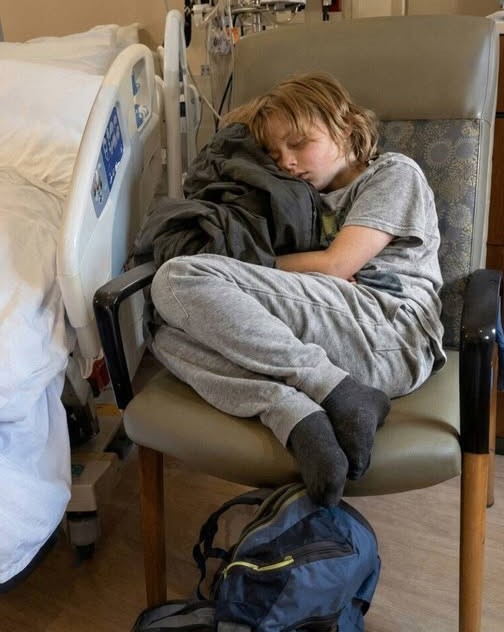
    Then I noticed my nine-year-old grandson, Walter, curled beside me, one hand clutching my blanket.

    He had lived with me since my son died four years earlier. I packed his lunches, walked him to school, and knew exactly which night-light he needed when he couldn’t sleep.

    “Walter?”

    His eyes snapped open.

    For a second, he simply stared.

    Then he threw himself against my chest. “Granny!”

    He was crying so hard I could barely understand him.

    A nurse hurried in, smiling. “He’s been waiting for this. That boy has hardly wanted to leave your side.”

    I stroked his hair. “Sweetheart, you’ve been sleeping here?”

    He nodded.

    “Why aren’t you at home with Aunt Lisa?”

    At my daughter’s name, his entire body went rigid.

    Instead of answering, Walter glanced toward the door. His expression changed.

    He moved closer and whispered into my ear. “Granny, next time Aunt comes, pretend you’re still asleep.”

    I stared at him. “Why?”

    He squeezed my hand painfully tight. “Please. Then you’ll understand why I haven’t left you. You need to hear what she says when she thinks you’re asleep.”

    Before I could ask anything else, footsteps stopped outside.

    Walter’s eyes widened. “Granny. She’s coming.”

    I barely managed to close my eyes before the door opened.

    Lisa walked in. “Still waiting for her to wake up? That’s pathetic, Walter. You really don’t know when to give up, do you?”

    Walter stayed silent.

    Lisa came closer to the bed. “Fine. Since you’re so determined to sit here, let me tell you a little secret about your grandma.”

    I kept my eyes shut, forcing myself not to react.

    “She already had her chance with you,” Lisa said. “That accident proved she can’t keep you safe.”

    “What does that mean?” Walter asked.

    “It means you won’t be staying with her much longer.”

    My fingers twitched beneath the blanket.

    Walter’s voice shrank. “I’m going home with Granny.”

    “No, you’re not.”

    “Yes, I am.”

    Lisa sighed. “Walter, she’s getting older. She can barely see. She shouldn’t even have been driving.”

    “She has glasses.”

    “Clearly they didn’t help much, did they?”

    My pulse jumped.

    Lisa lowered her voice. “Soon everything will be where it should’ve been years ago.”

    “What does that mean?”

    “You’ll understand later.”

    “Why can’t you just tell me?”

    “Because you’re nine.”

    “So?”

    “So stop asking questions.”

    I heard her handbag zip shut.

    Her footsteps headed toward the door.

    Before leaving, she added, “You should start getting used to the idea of living with me.”

    The door closed.

    I waited until Walter touched my arm.

    “She’s gone.”

    My eyes opened. “What the hell was that?”

    “That wasn’t the first time she said it.”

    “How many times?”

    “I don’t know. A lot.”

    “Walter.”

    “Maybe four? Five?”

    “While I was unconscious?”

    He nodded.

    “What exactly did she say?”

    “That you might not wake up. And even if you did, I probably couldn’t live with you anymore.”

    “Why?”

    “She said because you’re old.”

    “I’m sixty-one!”

    “I told her that.”

    Despite everything, I almost laughed.

    Walter continued, “She said your eyes were bad, too. And that the accident proved you couldn’t take care of me.”

    His words brought back a memory from four years earlier.

    Three days after my son’s funeral, Lisa cornered me.

    “I need Walter to live with me.”

    “You needed money last week.”

    “This isn’t about money.”

    “Then what is it about?”

    “He’s my brother’s son.”

    “And I’m his grandmother.”

    “You’re not exactly young, Mom.”

    “And you are. You go out, chase your business, worry about money. Since when do you want to raise a nine-year-old?”

    “Maybe I’m ready for something more than that.”

    “You barely call him, Lisa.”

    “That doesn’t mean I don’t care.”

    “You didn’t care enough to show up. So why do you suddenly want him living with you?”

    Lisa’s expression hardened. “I’m going to fight for my nephew.”

    “Lisa…”

    “I’ll see you in court.”

    She grabbed her purse and left.

    In the end, guardianship went to me.

    Back in the hospital, I looked at Walter.

    “Why did she want me back then?” Walter asked.

    “I thought she was grieving.”

    “And now?”

    I glanced toward the door. “Now I’m not so sure.”

    Maybe because admitting otherwise meant acknowledging things about my daughter I had spent years refusing to see.

    Lying in that hospital bed, I began wondering whether I had misunderstood that old argument completely.

    “Walter,” I whispered, “did Aunt Lisa say anything else?”

    He hesitated.

    “What?”

    “There was something weird.”

    My stomach tightened. “Tell me.”

    “She asked me about your glasses.”

    “My glasses?”

    “Before the accident.”

    “When?”

    “The morning when it happened.”

    Another memory surfaced.

    Lisa had been standing in my kitchen.

    “Mom, what are you doing?”

    “I’m late, and I can’t find my driving glasses.”

    “Use the old pair.”

    “They’re too weak.”

    She’d rolled her eyes. “Just wear your old pair. You can see fine in those.”

    I remembered hesitating.

    Then taking them.

    After that came only fragments—a blurry road sign, a horn, then metal.

    For the first time, I wondered whether the biggest mistake that morning had really been mine.

    I returned to the hospital room.

    “Walter, what did she ask you?”

    He frowned, trying to remember. “She said, ‘Does your grandma always drive in those old glasses?’”

    “When?”

    “A few days before the accident.”

    “Why didn’t you tell me?”

    He shrugged. “I didn’t know it mattered.”

    Neither had I.

    Until now.

    The following day, I asked the hospital social worker, “Has Lisa tried to get custody of Walter?”

    “She’s asked about temporary guardianship.”

    “Already?”

    “Yes.”

    “She has consulted about it,” the woman explained carefully. “Your medical condition raised questions about Walter’s immediate care.”

    “What questions?”

    “Whether you would be physically capable of resuming full responsibility.”

    “Because of the crash?”

    “Among other things.”

    “My eyesight.”

    She paused. “That was mentioned.”

    Of course it had been.

    When Walter came back that afternoon, I asked, “Did you see Aunt Lisa near my glasses that morning?”

    He frowned. “Maybe.”

    “Maybe?”

    “She was near your purse. I think she had something in her hand.”

    “What?”

    He shrugged. “I don’t know. I wasn’t really watching.”

    It wasn’t proof.

    But it was enough to keep the suspicion alive.

    So I waited until I was discharged.

    Lisa offered to drive me home.

    I declined and took a cab.

    Once home, Walter helped me search again.

    “You once put your phone in the freezer.”

    “Once.”

    “Twice.”

    “Traitor.”

    Then I remembered the security camera near the front door.

    My purse had been directly in its view that morning.

    We pulled up the recording from the day of the crash.

    Walter leaned toward the screen. “Oh, there she comes.”

    “Shh.”

    He moved even closer. “She’s opening your purse.”

    “I see it.”

    “Granny… that’s your glasses case.”

    On the screen, Lisa removed the case and slipped it into her handbag.

    My stomach turned.

    For years, I had confused refusing to believe the worst about Lisa with loving her.

    I couldn’t do that anymore.

    Walter whispered, “Why would she do that?”

    “I don’t know.”

    “Because she wants me?”

    I looked at him. “She’s wanted you for four years.”

    “Why?”

    That was exactly what I needed to understand.

    Before confronting Lisa, I went through Daniel’s papers.

    Insurance.

    Taxes.

    Medical bills.

    Then I found what I had been looking for.

    I read the first page three times.

    “Granny?”

    I turned the papers facedown.

    “You okay?”

    “I think I just figured something out.”

    “About Aunt Lisa?”

    “Yes.”

    “What?”

    “Something I should’ve seen years ago.”

    “What is that?”

    “I’ll explain when you’re older.”

    He narrowed his eyes. “That’s exactly what Aunt Lisa says when she doesn’t want to answer me.”

    “Please don’t compare me to your aunt today.”

    After Walter left, four years of Lisa’s behavior began fitting together.

    I had been asking the wrong question.

    Her interest in Walter suddenly looked very different.

    I needed to hear the explanation directly from her.

    So I called.

    “Could you come over?”

    She sounded surprised. “Are you okay?”

    “I need help with some paperwork.”

    “What paperwork?”

    “For Walter.”

    “Of course. I’ll be there tonight.”

    Her immediate reaction told me almost as much as the documents did.

    She had practically made my next move for me.

    Lisa arrived at seven.

    Walter was upstairs.

    I sat at the kitchen table wearing my new glasses.

    She noticed them immediately. “New pair?”

    “Yes.”

    “Good. Maybe no driving for a while, though.”

    I smiled. “Funny you should mention driving.”

    She stopped taking off her coat. “What?”

    “Why did you take my glasses?”

    Her face went blank. “I didn’t.”

    “I have a video.”

    The color disappeared from her face. “Video of what?”

    “You opening my purse and putting my glasses case into your bag.”

    Lisa stared at me.

    Then she sat.

    “Mom…”

    “Why?”

    “It wasn’t what you think.”

    “Then tell me what it was.”

    I thought I already understood where the conversation was heading.

    I didn’t.

    “I was worried about you.”

    “So you stole the glasses I needed to drive?”

    “You shouldn’t have been driving anyway!”

    “Then why did you tell me to use the old pair?”

    Silence.

    I leaned toward her. “Why were you preparing guardianship papers while I was unconscious?”

    “Because somebody had to think about Walter!”

    “I was alive.”

    “You were in a coma.”

    “For eleven days, Lisa. Not eleven years.”

    Her jaw tightened.

    “And why did you want him four years ago?”

    “He’s my nephew.”

    “Try again.”

    “What do you want me to say?”

    “The truth.”

    “I loved my brother.”

    “So did I.”

    “He trusted me.”

    That sentence caught my attention. “Did he?”

    Lisa looked away.

    I put the folder on the table.

    She saw the attorney’s letterhead, and her expression shifted.

    “Recognize it?”

    She said nothing.

    “You knew what Daniel had arranged, didn’t you?”

    Her eyes fell to the folder.

    That was enough.

    I opened it.

    “When your brother died, he left a trust for Walter.”

    Lisa closed her eyes.

    Finally, the missing piece from the last four years fell into place.

    “Daniel told you about the trust.”

    She looked away.

    “Didn’t he?”

    “Shortly before he died.”

    “But he never told me.”

    “Apparently not.”

    “And you knew whoever cared for Walter could request money for his expenses.”

    “With oversight.”

    “And that’s why you wanted guardianship.”

    “It’s not that simple.”

    “Then make it complicated.”

    “I needed money, Mom.”

    She began crying.

    “For what?”

    “My business was falling apart.” She wiped her face. “Before Daniel died, he told me about Walter’s trust. I’d already asked you for help, and you said no.”

    “So?”

    Her voice cracked. “So I thought the trust could save my business.”

    I stared at her.

    “And all you needed was Walter.”

    She sobbed harder. “I was desperate. I wasn’t going to steal it!”

    “What were you going to do?”

    “Manage it.”

    “For yourself?”

    “I would’ve put it back.”

    I gave a short laugh because I couldn’t believe what I was hearing.

    “Of course.”

    “He’s nine! What does a nine-year-old need that kind of money for?” she snapped. “It was just sitting there!”

    “It’s his.”

    “I know that!”

    “Apparently you don’t.”

    Lisa fell silent.

    I let the words sit between us.

    But her confession still wasn’t finished.

    “And now?”

    She said nothing.

    That silence was enough.

    “You saw my accident as another chance.”

    “Mom…”

    “Another chance to get Walter. And another chance to get near his money.”

    Her eyes filled with tears. “I never thought you’d actually drive that far.”

    “You told me to use the old pair.”

    “I thought you’d get behind the wheel and realize you couldn’t see properly. That you’d turn around, call me, miss the appointment – anything.”

    “And then what?”

    “I’d have proof.”

    “Proof of what?”

    “That you weren’t safe anymore.” Her voice cracked. “That your eyesight was getting worse. That you couldn’t keep taking care of Walter alone.”

    “So you took my glasses to make me look incapable.”

    “I needed something people couldn’t dismiss.”

    “And instead, I nearly died.”

    “I didn’t know you’d crash.”

    “But you knew I couldn’t see.”

    She had no answer.

    “So this was never about keeping me safe.”

    “It was about Walter.”

    “And the trust,” I said.

    “I would’ve taken care of him.”

    “That isn’t the same as wanting him.”

    “Mom…”

    “Leave.”

    “Please.”

    “Leave.”

    “What about Walter?”

    “For once, don’t put his name next to something you want.”

    What neither of us knew was that Walter had been listening from behind the wall.

    The moment Lisa left, he ran toward me.

    “Is she coming back?”

    “Not tonight.”

    He hesitated. “So… am I still going to live with you?”

    My chest tightened.

    “You’re not getting rid of me that easily.”

    He wrapped his arms around me.

    A few days later, my attorney made the situation clear.

    “Lisa’s guardianship attempt is over.”

    “And the trust?”

    “Independent management. She can’t control it.”

    “Good.”

    Lisa would never again have control over Walter’s safety or his money.

    Weeks later, Walter caught me searching the kitchen.

    “You’re doing it again.”

    He held up my glasses.

    “Beside the toaster.”

    “I knew that.”

    “You checked the refrigerator.”

    “I was looking for milk.”

    “We don’t need milk.”

    I took the glasses from him. “Go get your backpack.”

    He grinned. “One day you’ll lose me like you lose your glasses.”

    I put them on and pulled him closer.

    “No chance.”

    His face sharpened into perfect focus.

    My eyesight had been poor for years.

    But the thing I had truly failed to see had never been blurry.

    I had spent years making excuses for Lisa because she was my daughter.

    I wouldn’t make those excuses at Walter’s expense anymore.

  • My Husband Left Me And Our Seven Sons For My Sister Until Our Oldest Son Sent Him A Wedding Gift He Would Never Forget  

    My Husband Left Me And Our Seven Sons For My Sister Until Our Oldest Son Sent Him A Wedding Gift He Would Never Forget  

    My husband ended our eighteen-year marriage somewhere between dinner and bath time.

    I was standing at the kitchen counter cutting apples into little half-moons for Ben, our two-year-old, because apparently apples only taste acceptable to him when they’re shaped correctly.

    Daniel walked into the kitchen after work.

    He loosened his tie.

    Dropped his briefcase near the back door.

    Then, in the same calm tone someone might use to mention the weather, he said,

    “Let’s not turn this into a scene. I’m leaving. I’m with Claire now.”

    For a second, I honestly thought I had misunderstood him.

    Maybe he said he was calling Claire.

    Maybe he was leaving early tomorrow.

    Something normal.

    Then the knife slipped from my hand and hit the cutting board.

    “Claire?”

    Daniel looked tired.

    Not ashamed.

    Not frightened.

    Not even especially guilty.

    Just tired.

    “My sister Claire?”

    “Yes.”

    I stared at him.

    He sighed.

    “Please don’t start screaming.”

    “I haven’t said anything.”

    “I know how this is going to go, Jenna.”

    “Then explain it to me.”

    My voice sounded strangely calm.

    “Explain how my husband of eighteen years ended up sleeping with my younger sister.”

    He rubbed his forehead.

    “A little over six months.”

    “Six months?”

    “I didn’t plan it.”

    “People always say that after making dozens of decisions that somehow lead to the same hotel room.”

    His face tightened.

    “It wasn’t like that.”

    “Then what was it like?”

    He glanced toward the hallway.

    The house was loud.

    Two of the older boys were arguing over the bathroom.

    Ben had woken up upstairs and was crying.

    Sam and Leo were fighting over the television remote.

    Our dog, Biscuit, was barking at absolutely nothing.

    Daniel listened to all of it.

    Then he said,

    “I’m tired.”

    “Tired of what?”

    “This.”

    He gestured toward the noise.

    “The diapers. The crying. The bills. Someone needing something every minute. I can’t breathe anymore.”

    I stared at him.

    “We planned these children.”

    “I know.”

    “We wanted them.”

    “I know.”

    Then he looked directly at me.

    “I want to live for myself now.”

    A pause.

    “Claire doesn’t have children. Everything with her is easier.”

    Easy.

    That word hurt more than I expected.

    For eighteen years, chaos had been our life.

    Backpacks everywhere.

    Half-finished cups on counters.

    Shoes in impossible places.

    Somebody always shouting for Mom or Dad from another room.

    Daniel used to joke that silence meant trouble.

    “If this house gets quiet, somebody’s drawing on a wall.”

    He used to walk through the back door exhausted from work and immediately pick Ben up.

    Scoop.

    Throw.

    Shriek.

    Every day.

    Now that same man stood in front of me saying he wanted peace.

    Before I could answer, Elliot appeared in the doorway.

    Our oldest.

    Sixteen.

    Tall.

    Quiet.

    Far too observant for his own good.

    “What’s going on?”

    Daniel instantly changed expression.

    The tired husband disappeared.

    Dad appeared.

    “Nothing you need to worry about.”

    Elliot looked past him.

    There was a suitcase at the bottom of the stairs.

    Blue.

    Packed.

    Ready.

    I hadn’t even noticed it.

    “Are you leaving?”

    “We’ll talk later.”

    “Then why are you packed?”

    Daniel walked into the hallway and picked up the suitcase.

    “Elliot, later.”

    “Are you leaving?”

    Daniel didn’t answer.

    Then Elliot said something that froze both of us.

    “Is this about Aunt Claire?”

    Daniel stopped moving.

    He didn’t deny it.

    Didn’t laugh.

    Didn’t ask why Elliot would think such a thing.

    He simply stood there.

    I looked at my son.

    “Why would you ask that?”

    Elliot looked at the floor.

    And that was when I realized I wasn’t the only person who had noticed something was wrong.

    Daniel left anyway.

    He walked out with the suitcase.

    No goodbye to the younger boys.

    No trip upstairs to Ben.

    The front door slammed hard enough to shake the pictures on the wall.

    And for one terrible second, I almost laughed.

    Diapers.

    Crying.

    Bills.

    Apparently those were now reasons to abandon a family.

    I barely remember the next few hours.

    I got Ben out of his crib.

    Made boxed macaroni and cheese.

    Answered questions I didn’t know how to answer.

    “Where’s Dad?”

    “Somewhere.”

    “When is he coming home?”

    I had nothing.

    Then came bath time.

    Seven boys.

    Seven bedtime routines.

    Seven goodnight kisses.

    Seven versions of,

    “I love you.”

    One of the boys stopped me in the hallway.

    “Mom, is Dad okay?”

    “He’s fine.”

    “Are you okay?”

    “I’m fine.”

    Nobody believed me.

    After everyone was in bed, I called Claire.

    My younger sister.

    Seven years younger than me.

    Growing up, I was the responsible one.

    Good grades.

    Marriage.

    House.

    Children.

    Claire was always the fun one.

    The beautiful one.

    Parties.

    Musicians.

    City life.

    No children.

    She had joked before that kids were a trap.

    Then during the last year, she started coming over constantly.

    Sunday dinner.

    Soccer games.

    Random Tuesday nights.

    She said she was lonely.

    I was happy.

    I thought maybe we were finally becoming close in the way sisters were supposed to be.

    She and Daniel often sat together on the back deck talking while I cleaned the kitchen and bathed the boys.

    Once I even told her,

    “I’m glad you two get along.”

    She smiled.

    “You’re lucky, Jen. He’s great.”

    She answered my call on the second ring.

    Bright.

    Cheerful.

    “Hey, Jen!”

    “How long?”

    Silence.

    Then:

    “Oh.”

    “How long, Claire?”

    “Daniel told you.”

    “He says six months.”

    She exhaled.

    “I was going to tell you.”

    “When?”

    No answer.

    “At Christmas? Mom’s birthday? When exactly were you planning to mention you were sleeping with my husband?”

    “Don’t be dramatic.”

    I gripped the phone.

    “You sat at my table. Ate my food. Went to my sons’ soccer games. You sat outside drinking wine with Daniel while I gave your nephews baths.”

    “Love is love.”

    I couldn’t believe what I was hearing.

    Then Claire told me they were meant to be together.

    She said Daniel had chosen her.

    And finally, she admitted something deeper.

    She had spent her whole life resenting me.

    The grades.

    The marriage.

    The house.

    The boys.

    The way our parents constantly compared her to me.

    “I was always the one who didn’t have what you had.”

    “So you took my husband?”

    “I didn’t take him.”

    Her voice hardened.

    “He chose me.”

    I could have said a hundred cruel things.

    I didn’t.

    I hung up.

    That night, sitting in the dark beside Daniel’s empty side of the bed, I realized something.

    He had physically left that evening.

    But emotionally, he had already been gone for months.

    The divorce took four months.

    The days became paperwork.

    Custody forms.

    Financial documents.

    College funds.

    Mortgage information.

    Seven lunches every morning.

    Seven names written on seven paper bags.

    And endless questions.

    “Where’s Dad?”

    “Is he coming to my game?”

    “Did we do something wrong?”

    That last question came from six-year-old Leo.

    “No, sweetheart.”

    I said it immediately.

    “You didn’t do anything wrong.”

    Someone had.

    But it wasn’t him.

    I had to learn everything Daniel had always handled.

    Utilities.

    Insurance.

    Mortgage.

    Banking.

    Sometimes I lay awake furious.

    Other nights I was simply numb.

    Ben still asked for Daddy at bedtime.

    “Daddy throw?”

    He wanted that old routine.

    Scoop.

    Throw.

    Shriek.

    I tried once.

    Nearly dropped him.

    He cried.

    What kept me moving was knowing seven boys were watching.

    They were learning from me how someone survives something like this.

    So I survived it.

    The same day our divorce became final, Daniel texted me.

    Claire and I are getting married next month. We hope the boys can come.

    I read it three times.

    Then put the phone away and unloaded groceries.

    A few days later, Mom called.

    She and Dad were planning to attend the wedding.

    “We’re not taking sides,” she said.

    “We don’t want to lose a daughter.”

    “You’re busy losing me.”

    She went silent.

    Then she said,

    “Claire deserves happiness too.”

    I hung up.

    Two days later, the wedding invitation arrived.

    Fancy paper.

    Gold lettering.

    Claire Elizabeth Morrow and Daniel James Harper.

    Garden ceremony.

    Reception at the Willow Room.

    Adults only.

    I was about to tear the invitation in half when Elliot stopped me.

    “Can I see it?”

    He read every word carefully.

    Then handed it back.

    “Are we going?”

    “No.”

    “Did Dad ask us to?”

    “Yes.”

    Elliot just nodded.

    “Okay.”

    For weeks after Daniel left, Elliot became even quieter.

    I found him looking through old photo albums.

    He asked where I kept old birthday cards.

    School drawings.

    Report cards.

    Hospital bracelets.

    I thought he was grieving.

    Only later did I understand.

    He had been gathering something.

    On the morning of Daniel and Claire’s wedding, I made chocolate-chip pancakes.

    I wanted an ordinary Saturday.

    The younger boys built a blanket fort.

    We picked movies.

    Made popcorn.

    Biscuit fell asleep beside Ben.

    I put my phone on silent.

    Then around noon, Elliot came downstairs carrying a taped-up banana box.

    “What’s that?”

    “A wedding present.”

    “For your dad?”

    “Yeah.”

    “What’s inside?”

    “Nothing dangerous.”

    “That is not reassuring.”

    “It’s not gross either.”

    “Also not reassuring.”

    For the first time in weeks, Elliot smiled.

    “I just want Dad to have it.”

    I hesitated.

    Daniel was still his father.

    No matter what he had done to me, I didn’t want to control my sons’ relationship with him.

    So I agreed.

    Elliot already had a delivery app open.

    The destination was the Willow Room.

    He had planned everything.

    The driver came fifteen minutes later.

    The banana box left.

    Then Elliot called Daniel.

    Daniel answered from the reception.

    Music and laughter echoed in the background.

    “Hey, buddy!”

    “Sorry we’re not there.”

    “I understand.”

    “I sent you something.”

    Daniel’s voice softened.

    “You didn’t have to.”

    “I wanted to.”

    “I hope you like it.”

    Then Elliot hung up.

    About an hour later, my phone started vibrating on the counter.

    Daniel.

    I answered.

    “What the hell did you do?”

    His voice was furious.

    “The box!”

    “I didn’t pack it.”

    I looked at Elliot.

    “He did.”

    Daniel demanded that I somehow get it back.

    I didn’t understand.

    Then I heard Claire’s voice in the background.

    Curious.

    Almost amused.

    “What does this one say?”

    And suddenly I realized they had opened the box at the reception.

    Right there.

    In front of everyone.

    I muted the phone.

    Turned toward Elliot.

    “What did you send?”

    He shrugged.

    “Stuff.”

    “What stuff?”

    He kept looking at the television.

    “Things Dad said he was tired of.”

    I unmuted the call.

    “Daniel. Tell me what’s inside.”

    Silence.

    Then:

    “A pacifier.”

    “What?”

    “A blue pacifier with a duck.”

    He started listing the contents.

    A yellow toy truck.

    Grocery receipts.

    Soccer schedules.

    School forms.

    Permission slips.

    A child’s drawing of our family at the lake.

    One of Ben’s tiny socks.

    And notes.

    Small handwritten notes attached to everything.

    Then I heard Claire reading one aloud.

    “Diapers. The first time Dad changed Ben alone and it went everywhere, and he laughed so hard he cried.”

    Daniel told her to stop.

    Someone else asked about another note.

    Claire read:

    “Bills. The summer Dad worked every weekend so we could afford the lake trip. He was exhausted, but still taught us how to build a fire.”

    I covered my mouth.

    Across the room, Elliot finally looked at me.

    His eyes were wet.

    “Keep listening,” he whispered.

    The box continued.

    Crying.

    A note about Daniel surprising Noah at school with birthday cupcakes.

    Soccer.

    A note about Daniel screaming louder than everyone when Elliot scored his first goal.

    Everything Daniel had complained about the night he left had been placed inside that box.

    But attached to every burden was a memory of love.

    Then Elliot told me something.

    He had noticed Claire’s name appearing on Daniel’s phone late at night.

    He’d watched his father smile at those messages.

    Then flip the phone over when someone came near.

    “I didn’t know what it meant.”

    He looked down.

    “I just knew he didn’t smile at you like that anymore.”

    “Why didn’t you tell me?”

    “Because I didn’t want it to be true.”

    Then the restaurant became strangely quiet.

    I heard paper unfolding.

    Daniel said one word.

    “No.”

    And suddenly I knew.

    Elliot had found one of Daniel’s old anniversary letters.

    For the first ten years of our marriage, Daniel wrote me one every anniversary.

    Yellow legal paper.

    Folded in thirds.

    Messy handwriting.

    Claire started reading.

    “This house is chaos.”

    Daniel tried to stop her.

    She continued.

    “There are four children under five, a dog that eats socks, and I haven’t slept more than four hours since the twins were born.”

    Then:

    “But I wouldn’t trade any of it.”

    The room went silent.

    Claire kept reading.

    “Someday we’ll miss the noise. We’ll miss the toys on the stairs and the crying at two in the morning. Someday this house will be quiet, and we’ll wish we had it back.”

    I closed my eyes.

    I remembered that letter.

    Our fifth anniversary.

    We were exhausted.

    Broke.

    Running on almost no sleep.

    But happy.

    Claire’s voice changed.

    “You wrote this?”

    Daniel didn’t answer.

    “When?”

    Still nothing.

    Then Claire began questioning everything he had told her.

    Daniel had apparently said he never wanted that life.

    That the children had been my dream.

    That he had only gone along with it.

    That he had felt trapped.

    Then she asked him something.

    “If I had seven children tomorrow, would you still believe we were meant to be together?”

    Daniel paused.

    Too long.

    That silence answered everything.

    Claire gave a hollow laugh.

    “Wow.”

    Daniel tried to explain.

    Claire cut him off.

    “You married me because I’m easier.”

    “I love you.”

    “That wasn’t my question.”

    I ended the call.

    The superhero movie continued in the background.

    Something exploded on screen.

    The little boys cheered.

    Ben slept in the blanket fort.

    Elliot stared into his popcorn.

    “I wasn’t trying to ruin their wedding.”

    I sat next to him.

    “Then what were you trying to do?”

    He wiped his eyes angrily.

    “I wanted Dad to remember us.”

    I pulled him into my arms.

    “You should never have had to make that box.”

    “He made it sound like we ruined his life.”

    His voice broke.

    “The diapers. The crying. The bills. Like we were the problem.”

    “You weren’t.”

    “He used to love being our dad.”

    “I know.”

    “He taught me how to ride a bike. Built the tree house. Took us camping. Went to every game. Threw Ben in the air.”

    He looked at me.

    “So what happened?”

    I chose my words carefully.

    “Your father became unhappy.”

    Elliot listened.

    “I don’t know why. Maybe he doesn’t fully know either.”

    I paused.

    “But instead of saying he needed help, he blamed the life around him. The noise. The responsibility. Us.”

    “That doesn’t make it okay.”

    “No.”

    I shook my head.

    “It doesn’t.”

    Daniel called again later that night.

    Claire had postponed their honeymoon.

    She needed space.

    He asked whether I had helped Elliot make the box.

    I hadn’t.

    Then Daniel became quiet.

    “I did love that life.”

    “I know.”

    “I still love the boys.”

    “Then act like it.”

    His voice broke.

    He admitted he didn’t know when everything changed.

    Claire had felt quiet.

    Simple.

    An escape from a home where somebody always needed him.

    I told him to figure out what was happening inside himself.

    Therapy.

    Counseling.

    Whatever it took.

    But he was not allowed to make his sons responsible for his unhappiness.

    After that night, I stopped trying to understand Daniel for him.

    That was no longer my job.

    Daniel eventually began seeing the boys regularly.

    Every other weekend.

    Wednesday dinners.

    At first, the younger boys waited at the window for him.

    Elliot was different.

    He never refused to see his father.

    But he stopped making things easy.

    If Daniel arrived late, Elliot told him exactly how late.

    If Daniel canceled, Elliot didn’t invent excuses for the younger boys.

    If Daniel checked his phone during dinner, Elliot stared at it until he put it away.

    “He’s making me earn everything,” Daniel told me once.

    “Good.”

    And slowly, Daniel began showing up.

    On time.

    Every Wednesday.

    Every other Friday.

    Soccer games.

    School events.

    He became loud on the sidelines again.

    The referee told him to calm down again.

    He started throwing Ben into the air again.

    Scoop.

    Throw.

    Shriek.

    Whatever happened between Daniel and Claire became their problem.

    I stopped asking.

    Months later, Claire came to my house.

    She stood on my porch.

    “I’m not asking you to forgive me.”

    “Good.”

    I wasn’t ready.

    She told me she had read every note in the box after the reception ended.

    Every memory.

    Every piece of Daniel’s old life.

    “I thought I knew him.”

    Her eyes dropped.

    “I didn’t.”

    Then she admitted that she had spent years envying me.

    My marriage.

    My children.

    My family.

    “I thought if I had what you had, I’d finally be happy.”

    “And?”

    She looked at me.

    “It turns out what you had wasn’t Daniel.”

    Then she left.

    I didn’t forgive her.

    I still haven’t.

    Months later, on a cold Saturday morning, I found a box on my porch.

    The same banana box.

    The tape had been cut and resealed.

    I carried it inside.

    Daniel had kept everything.

    The pacifier.

    Toy truck.

    Receipts.

    Schedules.

    School forms.

    Drawing.

    Tiny sock.

    Every note Elliot had written.

    And on top was something new.

    A piece of yellow legal paper.

    Folded in thirds.

    I opened it.

    You were right, Elliot.

    I remembered the burden and forgot the love.

    I’m sorry.

    Dad.

    I called Elliot downstairs.

    Handed him the note.

    He read it twice.

    Then asked,

    “Do you forgive him?”

    “Not yet.”

    “Will you?”

    “Maybe someday.”

    Then I asked him the same question.

    He looked down at the box.

    “I’m working on it.”

    Then he reached inside and pulled out the old anniversary letter.

    The one Claire had read aloud.

    “Can I keep this?”

    I looked at Daniel’s old handwriting.

    This house is chaos, but I wouldn’t trade it for anything.

    Someday we’re going to miss the noise.

    “Yeah.”

    Elliot folded it carefully.

    Then slipped it into the pocket of his hoodie.

    I’ve thought about that letter often.

    Daniel wasn’t lying when he wrote it.

    He meant every word.

    I know because I was there.

    I watched him teach Elliot to ride a bicycle.

    Jump into a lake fully dressed when the canoe tipped.

    Build the tree house.

    Cheer at soccer games.

    Throw Ben into the air every afternoon.

    He loved the noise.

    He genuinely did.

    That’s what made everything harder.

    If he had never loved us, hating him would have been simple.

    But he had.

    Somewhere along the way, he simply forgot.

    The noise is still here.

    Seven boys.

    One dog that eats socks.

    Backpacks under chairs.

    Somebody shouting “Mom!” from another room.

    Some days I’m so tired I cry.

    But on Wednesday evenings, when Daniel’s car arrives exactly on time and the younger boys race outside yelling,

    “Daddy!”

    I stand at the kitchen window and watch.

    Ben raises his arms.

    Daniel picks him up.

    Scoop.

    Throw.

    Shriek.

    And I think about my sixteen-year-old son sitting on the living-room floor surrounded by old family albums.

    Gathering grocery receipts.

    A pacifier.

    A tiny sock.

    Writing memories on scraps of paper.

    He wasn’t trying to destroy his father’s wedding.

    He was trying to remind his father of something he had forgotten.

    He had loved the noise once.

    And somehow, it took an old cardboard box filled with ordinary pieces of family life to make him remember.

  • On Mother’s Day, my mother lifted her glass with a smile. “To the mistake I could never fix.”  

    On Mother’s Day, my mother lifted her glass with a smile. “To the mistake I could never fix.”  

    On Mother’s Day, my mother lifted her glass with a smile. “To the mistake I could never fix.” My father laughed, my brother clapped, and my sister nearly choked from laughing so hard. I placed my fork down and said, “Dad, you’re going to regret that.” They only laughed louder. One week later, 68 missed calls filled my phone. My brother’s voicemail started with, “Little sister… this isn’t funny anymore.” He still had no idea what I controlled.

    On Mother’s Day, my mother raised her champagne glass and made a toast to the one mistake she claimed she had never been able to correct. Then she stared directly at me as the rest of my family laughed.

    “To the mistake I could never correct,” she said.

    My father smiled.

    My older brother, Daniel, applauded as though she had just delivered the funniest line of the year. My younger sister, Chloe, nearly spilled her wine from laughing.

    I slowly lowered my fork.

    We were gathered inside the private dining room at Bellamy House, the upscale restaurant my parents chose whenever they wanted outsiders to see us as a happy, successful family.

    Everyone sitting there knew exactly who Mom was talking about.

    Me.

    Rachel Carter.

    Thirty-two years old.

    Single.

    The daughter who had supposedly “wasted” her life working in corporate restructuring rather than finding a wealthy husband, as Chloe intended to do.

    Dad raised his glass.

    “To second chances,” he joked. “Although some investments never recover.”

    Daniel laughed even harder.

    I looked across at him.

    For six years, Daniel had supposedly been running Carter Home Systems, the manufacturing business our grandfather had founded.

    In reality, he had mostly been pretending to run it.

    Dad handed him the title.

    Mom supplied the excuses.

    I repaired the damage.

    Whenever Daniel paid suppliers too much, I renegotiated their agreements.

    Whenever he violated loan covenants, I handled the conversations with the banks.

    Whenever he spent company funds on luxury vacations disguised as “client development,” I quietly reorganized the numbers within legal limits to keep the auditors from shutting everything down.

    Nobody ever thanked me.

    Instead, they called me difficult.

    Cold.

    Jealous.

    The family failure.

    I picked up my glass of water.

    “Dad,” I said calmly, “you’re going to regret saying that.”

    For a single second, silence fell over the table.

    Then everyone burst out laughing.

    Daniel leaned back in his chair.

    “Listen to the loser threatening us.”

    Chloe smirked. “What are you going to do, Rachel? Send us a spreadsheet?”

    Mom shook her head.

    “This is why nobody can relax around you.”

    I got to my feet.

    Dad pointed toward my chair.

    “Sit down. Don’t ruin your mother’s day.”

    I looked around at each of them.

    Then I smiled.

    “I think Mother’s Day is already perfect.”

    I walked out without even touching dessert.

    Behind me, Daniel called out, “Don’t forget to pay your share!”

    Another round of laughter followed.

    Outside, I stood beneath the restaurant awning while rain fell across the street.

    My phone vibrated.

    An email had arrived from our outside counsel.

    Final voting trust documents executed. Effective Monday.

    I stared down at the message.

    Grandfather had passed away eight months earlier.

    Everyone believed Daniel had inherited control of the company.

    Everyone except me.

    Grandpa had actually placed forty-two percent of Carter Home Systems into a voting trust.

    And three weeks before Mother’s Day, after years of company financial records had been reviewed, the trust’s independent administrator appointed me as its sole voting representative.

    My family had just spent an entire dinner mocking the one person capable of removing every one of them.

    I slipped my phone back into my coat.

    Suddenly, Monday felt much too far away.

    PART 2

    For the next two days, I did absolutely nothing.

    That frightened them far less than open anger would have.

    Monday morning, Daniel sent me a picture from the office.

    He was sitting behind Grandpa’s old desk with his feet resting on top of it.

    Still waiting for your big revenge.

    I gave him no response.

    At 9:15 a.m., I sat down with the trust attorney, the company’s primary lender, and our independent board member.

    At 10:40, I signed three resolutions.

    By noon, the real work had started.

    For the previous year, Daniel had been negotiating a $12 million expansion loan to construct a second factory.

    The financing had never actually closed.

    He had told everyone otherwise.

    What Daniel failed to understand was that the bank still required final confirmation of the board’s governance structure before releasing the funds.

    That confirmation now depended on me.

    And I had information the bank needed to review.

    For eighteen months, I had preserved copies of every document Daniel instructed me to “fix.”

    Personal hotel expenses.

    A $74,000 sports car recorded as equipment transportation.

    Payments made to a consulting business owned by Chloe’s fiancé.

    Hundreds of thousands of dollars transferred into a property venture controlled by Dad.

    The most damaging document involved Mom.

    She had approved false marketing invoices used to conceal cash withdrawals.

    None of them believed I had kept records.

    They had confused my silence with loyalty.

    On Tuesday afternoon, Daniel walked into my office carrying a cup of coffee.

    “You done sulking?”

    I closed my laptop.

    “Almost.”

    Without asking, he sat down.

    “Mom feels bad.”

    “No, she doesn’t.”

    He laughed.

    “You really need to stop taking everything personally.”

    “Did you use company funds to pay Westbrook Consulting?”

    His smile faded slightly.

    “That’s Chloe’s fiancé’s firm.”

    “I know.”

    “They provide services.”

    “What services?”

    He stared at me.

    Then shrugged.

    “Networking.”

    “For $318,000?”

    His expression hardened.

    “You work for me.”

    “No.”

    That one word changed the atmosphere instantly.

    Daniel leaned toward me.

    “What?”

    “I’ve never worked for you. I work for the company.”

    “Same difference.”

    “Not anymore.”

    He stood up.

    “What exactly are you implying?”

    I opened a drawer in my desk and pushed a document toward him.

    He read the first page.

    Then the second.

    The color disappeared from his face.

    Carter Family Voting Trust — Appointment of Voting Representative: Rachel Carter.

    He looked back at me.

    “You can’t control Grandpa’s shares.”

    “I already do.”

    “That’s impossible.”

    “Forty-two percent.”

    His mouth opened.

    I continued.

    “I own eleven percent personally.”

    Then he understood the math.

    Fifty-three percent.

    Absolute voting control.

    He shoved the papers away.

    “Dad will fight this.”

    “He signed the original trust agreement.”

    “Mom will—”

    “Mom has no voting shares.”

    Daniel stared at me.

    For the first time in my life, my brother wasn’t looking at me with contempt.

    He was looking at me with fear.

    Even then, his arrogance returned.

    “You wouldn’t destroy your own family.”

    PART 3

    Friday morning, my entire family was already waiting when I entered the boardroom.

    Mom looked worn out.

    Dad was visibly furious.

    Daniel appeared as though he hadn’t slept for several nights.

    Chloe sat beside her fiancé, Mark, whose consulting firm had received the unexplained $318,000.

    Dad slammed his hand against the table.

    “End this now.”

    I took my seat.

    “Good morning.”

    “Don’t play games with me.”

    “I’m not.”

    Mom leaned toward me.

    “Rachel, please fix what you’ve done.”

    I looked directly at her.

    Only five days earlier, she had raised her glass to the mistake she wished she could erase.

    Now that same mistake was apparently expected to rescue the family again.

    “What exactly should I fix?”

    “The bank,” Daniel snapped. “The board investigation. Everything.”

    I opened a folder.

    “The investigation found $1.7 million in unauthorized related-party transactions over three years.”

    Nobody spoke.

    Mark stood up.

    “That accusation is defamatory.”

    The independent director seated beside me slid another file toward him.

    “We have invoices, transfers and email records.”

    Mark lowered himself back into his chair.

    Dad pointed at me.

    “You collected private family communications?”

    “I collected company records.”

    Mom’s voice began to crack.

    “We made mistakes.”

    “No,” I said. “You made choices.”

    I turned toward Daniel.

    “You used corporate funds for personal expenses.”

    Then I faced Dad.

    “You approved transfers into your real-estate venture.”

    Next came Chloe.

    “Your fiancé billed the company for work that cannot be documented.”

    Finally, I looked at Mom.

    “And you signed false invoices.”

    Her eyes filled with tears.

    “Rachel—”

    “Don’t.”

    For once, she actually stopped.

    The resolutions themselves were simple.

    Daniel was removed from his position as CEO.

    Dad lost his seat on the board.

    Mom’s consulting arrangement with the company was terminated.

    Every related-party contract involving Chloe and Mark was canceled.

    The company’s lawyers referred the questionable transactions to independent forensic accountants and, when legally required, to regulators and law enforcement.

    Daniel jumped to his feet.

    “You’re firing me?”

    “The board is.”

    “You control the board!”

    “I control enough votes to stop you from using Grandpa’s company like an ATM.”

    Dad’s face turned red.

    “You ungrateful little—”

    I stared straight at him.

    “Say it.”

    He stopped himself.

    “Call me the bad investment again.”

    Nobody moved.

    The boardroom suddenly seemed enormous.

    I leaned back in my chair.

    “That’s what I thought.”

    They still assumed that removing Daniel would destroy the company along with him.

    That became their final mistake.

    I placed another document on the table.

    “Before freezing the expansion, I negotiated a smaller credit facility with Harrison Commercial Bank. No new factory. No reckless expansion. Existing jobs remain protected.”

    The independent director nodded.

    “We also have an interim CEO ready.”

    Daniel stared at me in disbelief.

    “You planned all this?”

    “For months.”

    Mom whispered, “You wanted us to fail.”

    “No.”

    I shook my head.

    “I wanted the company to survive you.”

    The forensic audit continued for four months.

    Daniel was required to repay substantial personal expenses that had been improperly documented and later faced civil claims brought by the company.

    Dad had to sell one of his investment properties to meet obligations connected to the transfers he had approved.

    Mark’s consulting business collapsed after Carter Home Systems sought repayment and other clients started questioning his dealings.

    Three months later, Chloe left him.

    Mom sold the vacation property she loved to help pay the mounting legal expenses.

    None of them went to prison because much of their conduct occupied the complicated territory between reckless self-dealing, civil misconduct, and transactions that attorneys could legally unwind.

    But they lost something that mattered almost as much to them.

    Access.

  • 6 Alarming Effects of Sleeping Less Than 7 Hours a Night, According to Recent Studies

    6 Alarming Effects of Sleeping Less Than 7 Hours a Night, According to Recent Studies

    58

    We are constantly reminded of the importance of getting at least 7 hours of sleep each night. However, factors like stress-induced insomnia or various external disturbances often prevent many from achieving this recommended amount. The sleep technology company Simba recently used artificial intelligence to uncover the physical consequences of sleep deprivation, and experts now caution that this lack of sleep may be taking a serious toll on our bodies.

    Hormonal Fluctuations

    Simba conducted a survey of 2,175 UK adults, gathering insights on their sleep patterns, physical health, and appearance.

    The collected data was then processed through an AI bot, which visually demonstrated the effects of sleeping more or less than seven hours per night. “A lack of sleep doesn’t just leave you tired — it shows up all over your body,” said Lisa Artis, Deputy CEO of Simba’s charity partner, The Sleep Charity.

    “When you’re sleep-deprived, cortisol levels — the stress hormone — rise, exacerbating inflammatory skin conditions, worsening conditions like eczema and psoriasis, leading to irritation, redness, and itching,” explained Artis.

    Various Skin Problems

    The experiment reveals that the skin is one of the first areas to display signs of sleep deprivation.

    “When sleep is compromised, reduced blood flow causes the skin to appear sallow and lack vibrancy, stripping it of its natural glow and vitality,” explained Artis.

    Among those who reported insufficient sleep, 24% noted increased skin sensitivity. Other frequently reported skin issues included eczema (16%), psoriasis (7%), and a dull complexion (10%). “At night, the skin works overtime to regenerate and repair itself,” Ms.

    What happened next changed everything… FULL STORY on the next page.
    TAP ” READ MORE ” 👇

    Artis explained.

    “During rest, blood flow increases, supporting its natural repair processes and promoting a healthy, radiant complexion,” she added.

    Brittle Nails

    Furthermore, 15% of individuals with inadequate sleep reported experiencing brittle nails, underscoring a potential link between chronic sleep deprivation and weakened nail health.

    This association may stem from disruptions in the body’s natural repair mechanisms, which are essential for maintaining nail strength.

    Weight Gain

    Additionally, lack of sleep can contribute to weight gain.

    The survey revealed that 26% of those who didn’t get enough sleep were overweight, while 32% experienced bloating.

    “During sleep, the body balances hormones like ghrelin and leptin, which control hunger and satiety,” Ms. Artis explained. Without adequate rest, ghrelin levels spike, making people feel hungrier, while leptin levels decrease, reducing the feeling of fullness.

    “This hormonal imbalance triggers overeating, especially cravings for high-calorie sugary foods.”

    According to Ms.

    Artis, sleep deprivation may also play a role in the different ways men and women gain weight. “Women are more likely to see increased fat in the hips and thighs due to hormonal changes, while men may notice more abdominal fat due to decreased testosterone levels,” she said.

    Imbalance in the body’s internal temperature

    Another unexpected effect of insufficient sleep is having cold hands and feet. “Body temperature is also under circadian control…

    Sleep loss can impair the body’s ability to manage and adjust its internal temperature, causing fluctuations and discomfort in the hands and other extremities,” Ms.

    Artis explained.

    Constipation

    Another study investigated the potential relationship between sleep disturbances and various types of constipation in patients. The findings suggested that people with a history of insufficient sleep had a significantly higher risk of developing constipation, highlighting the importance of sleep quality in gastrointestinal health.

    The amount of sleep a person needs varies based on multiple factors.

    “A healthy adult usually needs around 7 to 9 hours of sleep,” the NHS advises. However, individual requirements differ depending on factors such as age, health, and personal circumstances.

    Some people naturally require more sleep than others. Teenagers, children, and babies need additional rest to support their growth, with newborns sleeping anywhere from 8 to 16 hours a day.

  • My Son Asked Me Not to Come to His Graduation – Then His Girlfriend Called and Said, ‘Please Come. He Doesn’t Know I Found Out’

    My Son Asked Me Not to Come to His Graduation – Then His Girlfriend Called and Said, ‘Please Come. He Doesn’t Know I Found Out’

    My son asked me not to attend the graduation I had waited years to see. The night before, his girlfriend called and quietly told me to come anyway.

    Sophie pulled several folded pages from her purse.

    At first, I didn’t take them.

    We were standing outside the restaurant restroom while my son sat twenty feet away with the father I hadn’t seen in almost eleven years.

    And Sophie had just told me she was pregnant.

    “Found what?”

    She glanced toward the dining room.

    “Daniel printed them at my apartment.”

    “What are they?”

    “I think you should read them.”

    I took the pages.

    The first was an email from Richard to Daniel, dated six weeks earlier.

    I barely made it through the opening lines before my stomach tightened.

    “I know your mother told you I walked away. I understand why she did. But before you decide whether you want me in your child’s life, you deserve to know what happened after I left.”

    I looked at Sophie.

    “What does he mean, ‘your mother told you I walked away’?”

    She went pale.

    “Amanda—”

    “What has Richard been telling my son?”

    She lowered her voice.

    “I don’t think Daniel knows what to believe.”

    Just then, the restroom door opened and a woman stepped out.

    Sophie gently touched my arm.

    “Not here.”

    She was right.

    Unfortunately, I’d already spent the past week asking myself the wrong question:

    Why didn’t my son want me at his graduation?

    My name is Amanda. I’m 56, and Daniel is my only child.

    I’d been waiting for his college graduation for four years—probably longer.

    Daniel hadn’t followed the usual path. After high school, he worked for two years and saved money before starting college at twenty.

    Some semesters, he worked thirty hours a week while taking classes.

    There were nights he’d call me exhausted and say, “I don’t think I can do this.”

    And I’d tell him, “You don’t have to finish today. You just have to finish today.”

    He always hated that sentence.

    He always laughed too.

    So when he called a week before graduation, I assumed he wanted to discuss parking or dinner.

    Instead, he said, “Mom, I don’t think you should come.”

    I laughed.

    He didn’t.

    “I’m serious.”

    I sat down. “Why?”

    “It’s complicated.”

    “Daniel, I’ve already booked the hotel.”

    “I’ll pay you back.”

    “I don’t care about the hotel.”

    Silence.

    “Are you embarrassed by me?”

    “God, no.”

    “Then give me one reason.”

    “I can’t.”

    “Can’t or won’t?”

    Another pause.

    Then, “Just trust me.”

    That hurt more than I let him hear.

    Daniel’s father, Richard, had been absent for most of his life.

    When Daniel was nine, Richard left. That was how I’d always explained it.

    I didn’t give him every ugly detail.

    I simply said, “Your father had problems he needed to deal with, and he chose to do that somewhere else.”

    As Daniel got older, my explanation became shorter.

    “He left us.”

    By thirteen, Daniel had stopped asking about him.

    As far as I knew, they hadn’t spoken in years.

    So during the week before graduation, I kept telling myself Daniel must have some reasonable explanation for excluding me.

    Then Sophie called the night before the ceremony.

    “Please come tomorrow.”

    I was sitting in my kitchen.

    “Daniel specifically asked me not to.”

    “I know.”

    “Then why are you asking?”

    She hesitated.

    “He doesn’t know I found out.”

    My hand tightened around the phone.

    “Found out what?”

    “Just come. Please.”

    So I went.

    I sat near the back, planning to watch Daniel cross the stage and leave before he noticed me.

    Then I saw the man sitting three rows ahead.

    Richard.

    His hair was grayer and his face thinner, but he still rubbed his thumb against his wedding finger whenever he was nervous, even though the ring had been gone for decades.

    I hadn’t seen him in eleven years.

    I froze.

    Then Daniel crossed the stage and looked into the audience.

    Not at me.

    At Richard.

    After the ceremony, he walked straight to him.

    And hugged him.

    I stood there clutching the program, feeling ridiculous.

    Richard noticed me first.

    “Well,” he said. “Didn’t expect to see you.”

    “Apparently I could say the same.”

    Daniel turned.

    Shock crossed his face.

    “Mom?”

    I looked at him.

    “So this is why.”

    “No.”

    Richard stayed silent. Daniel looked furious—but not at him.

    At Sophie.

    She moved between us.

    “Please. Not here.”

    Then she pulled me aside.

    She admitted she’d seen a message from Richard on Daniel’s phone the night before and thought I deserved to know he would be there.

    “But there’s something else,” she said.

    “What?”

    “Not here.”

    Daniel already had dinner reservations.

    Apparently, they were for him, Sophie, Richard, and two friends.

    Not me.

    That hurt too.

    But when Sophie quietly told Daniel she’d invited me, he stared at her for several seconds.

    Then said, “Fine.”

    Dinner was brutal.

    At one point, Richard asked me to pass the bread.

    I almost laughed at the absurdity.

    My ex-husband had secretly returned to my son’s life, and somehow we were sitting together passing bread.

    Then Sophie hurried to the restroom.

    When she got up a second time, I followed.

    “How far along are you?”

    She froze.

    “What?”

    “You haven’t touched your champagne. You’ve been sick twice. Daniel is watching you like you’re made of glass.”

    Her expression softened.

    “Eight weeks.”

    I stared at her.

    “Does he know?”

    “Yes.”

    Suddenly, the last few weeks made more sense.

    The secret calls.

    Richard.

    The graduation.

    “You got pregnant, and Daniel decided he wanted his father back.”

    “Sort of.”

    “What does that mean?”

    “The baby is why he contacted Richard.”

    “Why?”

    Sophie reached into her purse and gave me the emails.

    There were four.

    Richard told Daniel he’d entered treatment when Daniel was ten. He claimed he’d been sober for nearly two years before trying to see his son again.

    Then I reached the sentence that made my hands shake.

    “Your mother said contact would only confuse you and asked me to stay away.”

    It was true.

    I hated seeing it written down.

    I turned to the next page.

    Richard had written, “I sent letters for years. Some came back. Some didn’t. I eventually stopped because your mother made it clear she believed you were better off without me.”

    Sophie watched me carefully.

    “Is that true?”

    I folded the papers.

    “It’s complicated.”

    Her expression was almost apologetic.

    “That’s what Daniel keeps saying.”

    That one hurt.

    We returned to the table.

    Daniel looked at me, then at the papers.

    His face changed.

    “Sophie.”

    She said, “I’m sorry.”

    He pushed back his chair.

    “You went through my things?”

    “I found them beside the printer.”

    “You had no right.”

    “No,” I said. “She probably didn’t.”

    He turned toward me.

    I put the papers on the table.

    “But neither did you.”

    Richard leaned back.

    “Amanda—”

    “Don’t.”

    Daniel said, “Mom, I was going to tell you.”

    “When?”

    “After graduation.”

    “Why after?”

    “Because I wanted one day that wasn’t about this.”

    “Then why invite him?”

    His jaw tightened.

    “Because I wanted my father at my graduation.”

    That hurt.

    I nodded.

    “Okay.”

    He looked surprised.

    “But you didn’t need to exclude me to do that.”

    “You would’ve made a scene.”

    “Would I?”

    He glanced at Richard, then back at me.

    “Wouldn’t you?”

    I hesitated too long.

    Daniel gave a bitter laugh.

    “Exactly.”

    Richard spoke quietly.

    “He contacted me because of the baby.”

    I looked at him.

    Daniel’s expression hardened.

    “Dad.”

    “No. We’re already here.”

    Dad.

    I hadn’t heard Daniel call him that since he was a child.

    Richard continued.

    “Daniel wanted family medical history.”

    That was how everything had started.

    After learning Sophie was pregnant, they decided to do carrier screening. One questionnaire asked about family medical conditions, and Daniel realized he knew almost nothing about Richard’s side.

    So he found him online.

    Daniel sent one message.

    Richard responded within an hour.

    A conversation meant to cover diabetes, heart disease, and cancer became something much bigger.

    Daniel asked where Richard had been.

    Richard told him enough.

    Alcohol.

    Gambling.

    Debt.

    Rehab.

    Relapse.

    Then sobriety.

    Finally, I said, “Tell him why you left.”

    Richard looked at me.

    Daniel frowned.

    “He told me.”

    “No. He told you he had problems.”

    I kept my eyes on Richard.

    “Tell him what happened the night before I made you leave.”

    Richard lowered his gaze.

    After a long silence, he said, “I drove with you in the car.”

    Daniel went still.

    “What?”

    “You were nine.”

    Richard’s voice barely rose above a whisper.

    “I’d been drinking.”

    I remembered that night perfectly.

    I had been working late, and Richard was supposed to collect Daniel from soccer practice.

    Instead, another parent called because she’d seen Richard stumble while getting out of his car.

    By the time I arrived, Richard had already driven Daniel home.

    Daniel remembered the argument afterward.

    He didn’t remember why it happened.

    “He was so drunk he clipped our mailbox pulling into the driveway.”

    Daniel stared at his father.

    “You never told me that.”

    Richard nodded.

    “I should have.”

    “Mom told me you left after you two kept fighting.”

    “We did,” I said. “But that was the last night.”

    I made Richard leave.

    Two months later, he went to rehab.

    Then he relapsed.

    Then he disappeared for almost a year.

    He missed Daniel’s tenth birthday.

    Christmas.

    And the school play Daniel had practiced for months.

    I explained all of it.

    Then I reached the part I was ashamed of.

    “When you were 12, he contacted me.”

    Daniel looked at me.

    “He had been sober for almost two years.”

    Richard stayed quiet.

    “He wanted supervised visits.”

    “And you said no.”

    “Yes.”

    “Why?”

    “Because you’d finally stopped waiting for him.”

    Something changed in Daniel’s expression.

    I kept going.

    “You used to sit by the front window every birthday because you thought he’d show up. Every time the phone rang, you asked if it was Dad. Then eventually you stopped.”

    “So you decided for me.”

    “Yes.”

    That was the truth.

    Not the flattering version where I’d only been protecting my child.

    I had been protecting Daniel.

    But I’d also been protecting myself.

    Richard had hurt us badly, and when he returned claiming to be sober, I didn’t trust that it would last.

    I couldn’t bear the thought of watching Daniel hope again only to be disappointed.

    So when Richard asked to see him, I refused.

    When letters came, I returned some.

    I kept others.

    Daniel stared at me.

    “You kept them?”

    I nodded.

    “Where?”

    “In a box at home.”

    “Why?”

    I had no good answer.

    “Because I couldn’t throw them away.”

    His eyes filled.

    “But you couldn’t give them to me either.”

    “No.”

    Richard rubbed his face.

    “I should’ve fought harder.”

    Daniel and I both looked at him.

    Richard continued.

    “Your mother didn’t have some magic power over me. I could’ve gone back to court. I could’ve kept writing. I could’ve proved I was stable.”

    “Why didn’t you?”

    Richard swallowed.

    “Because part of me was relieved.”

    That surprised everyone.

    He looked at Daniel.

    “I was sober, but I was ashamed. Your mother told me you were doing well. I told myself staying away was sacrifice.”

    His eyes filled.

    “It was also cowardice.”

    For a while, nobody spoke.

    That was when the story stopped having one obvious villain.

    I had withheld letters.

    Richard had abandoned his responsibilities long before I ever did that.

    Daniel had hidden the graduation reunion because he feared my reaction.

    And Sophie had invaded his privacy because she thought I deserved to know the truth.

    Everyone had reasons.

    None of us had handled everything well.

    Daniel looked at me.

    “Why did you always say he left?”

    “Because when you were nine, he did.”

    “But later?”

    I nodded.

    “Later, the truth changed.”

    “And you never changed the story.”

    “No.”

    That was mine to own.

    Dinner ended with almost no one touching dessert.

    Richard left first.

    Before going, he hugged Daniel.

    Then he looked at me.

    “I am sorry.”

    “I know.”

    It wasn’t forgiveness.

    But it wasn’t nothing.

    Daniel and I didn’t speak for three days.

    Then he came to my house.

    By then, I’d already placed the box on the kitchen table.

    Twenty-three letters.

    Birthday cards.

    Christmas cards.

    Two postcards.

    One envelope still contained a small comic book because Richard remembered Daniel liked Spider-Man.

    Daniel sat down.

    “You read them?”

    “Some.”

    He nodded.

    Then said, “I’m angry with you.”

    “I know.”

    “I’m angry with him too.”

    “Good.”

    Despite himself, he laughed.

    He opened the first letter.

    I started to leave.

    “Mom?”

    I turned.

    “Stay.”

    So I did.

    We read some together.

    Not all of them.

    Some belonged only to him.

    Over the next few months, Daniel and Richard slowly rebuilt something.

    Not the kind of father-son relationship that pretended eleven missing years had never happened.

    Nothing could erase that.

    They started with coffee.

    Then phone calls.

    Eventually, Richard helped Daniel assemble a crib and apparently installed one side backward.

    Daniel sent me a picture.

    I replied, “Some things are hereditary.”

    He sent back, “Very funny.”

    Seven months after graduation, Sophie gave birth to a little girl.

    Her name is Nora.

    I was in the waiting room.

    So was Richard.

    A year earlier, I couldn’t have imagined that.

    But when Daniel finally came out, exhausted and crying, and said, “She’s here.”

    Richard grabbed my shoulder.

    I grabbed his.

    For about ten seconds, we weren’t ex-spouses carrying years of resentment.

    We were simply two grandparents losing our minds.

    Later, Daniel apologized for asking me not to attend his graduation.

    I apologized for giving him a childhood story that stayed frozen long after reality had become more complicated.

    He said, “I understand why you did it.”

    I told him, “Understanding isn’t the same as saying it was right.”

    For years, I’d used that distinction when thinking about Richard.

    Eventually, I had to apply it to myself too.

    The strangest part is that I once believed the worst thing that could happen at Daniel’s graduation would be seeing my ex-husband again.

    It wasn’t.

    The hardest part was confronting the version of our family history my son had never been allowed to know.

    Richard did leave us.

    I did protect Daniel.

    Both things were true.

    But so was this:

    Richard eventually came back.

    And I decided my son was safer not knowing.

    For years, I believed keeping that door closed had protected Daniel from being hurt twice.

    Maybe it did.

    But when Daniel became a father himself, he opened it anyway.

    This time, I didn’t stand in front of it.

    Who do you think made the biggest mistake: Amanda for withholding the truth, Richard for not fighting harder, or Daniel for keeping the reunion secret?

  • I landed three hours early from Boston for Thanksgiving and found my 68-year-old mother on her knees scrubbing my mother-in-law’s toilet. Her hands were swollen from arthritis. My twins were clinging to her legs crying. In the living room, my husband and his mother were watching football on my sofa. I was ready to leave quietly. Then I saw the finger-shaped bruises on my mother’s wrist.  

    I landed three hours early from Boston for Thanksgiving and found my 68-year-old mother on her knees scrubbing my mother-in-law’s toilet. Her hands were swollen from arthritis. My twins were clinging to her legs crying. In the living room, my husband and his mother were watching football on my sofa. I was ready to leave quietly. Then I saw the finger-shaped bruises on my mother’s wrist.  

    I landed three hours early from Boston for Thanksgiving and found my 68-year-old mother on her knees scrubbing my mother-in-law’s toilet. Her hands were swollen from arthritis. My twins were clinging to her legs crying. In the living room, my husband and his mother were watching football on my sofa. I was ready to leave quietly. Then I saw the finger-shaped bruises on my mother’s wrist.

    PART 1: THE THREAT + THE LAST CALL

    My flight from Boston landed three hours early the day before Thanksgiving, so I decided to surprise my twins and my mother.

    I didn’t call. I wanted to see Oliver and Emma run to the door.

    Instead, I walked into a nightmare and my mother was on her knees.

    My mother, Helen Miller, is 68. She has severe rheumatoid arthritis. Some mornings she can’t hold a coffee mug without both hands. Her fingers swell to twice their size.

    She was on the bathroom floor in my own house in Des Moines, scrubbing my mother-in-law’s toilet. Oliver, 2, was clinging to her leg, crying. Emma was clinging to the other, exhausted.

    In the living room, my mother-in-law Vivian was stretched across my sofa, watching the Macy’s Thanksgiving parade rehearsal.

    “Your mother came here to work, not to rest,” Vivian shouted without even looking at me. “She can sit after dinner is done. She still hasn’t done the baseboards.”

    My husband Ryan sat beside her, beer in hand, phone in the other, watching football.

    “Hey, you’re early,” he said.

    I ran to my mother.

    “Mom, what are you doing?”

    She looked down. “Vivian wanted the house perfect for Thanksgiving. She asked me to change the sheets, wash Ryan’s trousers, and iron his shirts. And scrub the guest bath.”

    Her blouse was soaked with sweat. Her face was gray.

    Then I saw it. A yellow-purple bruise on her cheekbone.

    “Mom, who did this?”

    “I fell,” she whispered. She wouldn’t meet my eyes.

    From the living room, Vivian yelled, “Tell her not to use too much bleach again!”

    Ryan laughed. “And she still hasn’t finished my laundry from last week.”

    Something inside me went cold.

    For seven years, I had paid the mortgage on this duplex. I bought both cars. I funded their Vegas trips and covered Vivian’s dental implants. Ryan lived like a wealthy man because I allowed him to.

    My mother sold her farmland to put me through college at Iowa State. She wore the same winter coat for nine years because tuition was due.

    I lifted Oliver into my arms and took Emma from her.

    “We’re leaving.”

    Vivian stormed in. “She isn’t finished. The toilet isn’t done.”

    Ryan blocked the doorway. He was six inches taller than me.

    “Apologize to my mother and get back in there and finish the job, Jess. Don’t be dramatic.”

    He leaned in close and whispered so only I could hear, “If you make a scene right now, I will make sure you never see the kids alone again. You know Mom will back me.”

    Two weeks earlier, my father had called me from the nursing home. He could barely speak after his stroke.

    He said, “Jessie… if Helen is ever hurt… open your mother’s sewing machine drawer. The false bottom.”

    I thought he was confused.

    Now I knew he wasn’t.

    PART 2: THE HOUSE THAT WAS SUPPOSED TO BE VACANT

    I didn’t argue. I didn’t scream.

    I opened my phone and opened the app for our duplex.

    We live in a duplex. Two sides that look like one big house. We own the left side. The right side has been “vacant” since 2021. At least, that’s what Ryan and Vivian thought.

    I pressed three buttons.

    ELECTRICITY: DISABLED.
    WATER WELL PUMP: LOCKED.
    JOINT CARDS: REVOKED.

    The TV died. The lights went out. The furnace stopped humming. Ryan’s phone buzzed with three fraud alerts in a row.

    “What did you do?” he shouted.

    “I gave you back the life you can afford,” I said.

    I picked up my mother’s small suitcase – she had been living out of it in our laundry room – lifted Oliver, took Emma’s hand, and walked out the front door.

    I didn’t cross the street. I walked ten steps to the right. To the other half of our duplex. The half with the overgrown grass and the “NO TRESPASSING” sign Vivian herself had put up.

    I pressed my thumb to the smart lock. It glowed green.

    The door opened. Warm air poured out. Lights turned on automatically. The fireplace lit itself.

    Ryan ran after us barefoot through the light snow.

    “How do you have access to that house? The bank locked it! The owner lives in Florida!”

    I turned as the door started to close between us.

    “I am the owner in Florida, Ryan. I bought it three years ago through my father’s private trust. It’s fully paid off. Your name isn’t on one document. And the trust was created before we got married.”

    The lock clicked.

    Inside, it was silent. No TV. No shouting. Just the hum of the heater.

    Oliver looked up. “Mommy, are we staying here?”

    “Yes, baby,” I whispered. “For as long as we need.”

    PART 3: THE BRUISES

    I put the twins down for a nap with Bluey on the big TV. Then I knelt in front of my mother in the new kitchen.

    “Mom, I need the truth.”

    She tried to protect my marriage.

    “Ryan is their father,” she whispered. “And you are my mother.”

    “And you are my mother,” I said. “Look at me.”

    Finally, she rolled up her sleeve.

    Finger-shaped bruises circled her wrist, purple and fresh. Above them, older yellow-green marks.

    “Vivian grabbed me after Emma spilled apple juice on her white pants,” she said, crying now. “She said I was useless. Ryan saw it.”

    “What did he do?”

    “He told me not to tell you. He said if I upset you during your business trip, he would make sure I never saw the twins again. That you would believe him over me because I’m old and confused.”

    Then I asked quietly, “Did Ryan ever touch you himself?”

    She answered too quickly: “No.”

    “Mom. Look at me.”

    She touched her cheek where the bruise was.

    “Two nights ago. After Vivian complained dinner was late. I told Ryan I was not his servant. He told me to stop disrespecting his mother. He grabbed my shoulder hard and I stumbled into the kitchen cabinet.”

    My husband had put his hands on my mother.

    My phone started ringing. Ryan. I declined.

    Messages followed, one after another on the camera feed:

    *Open the door.*
    *We need to talk.*
    *You can’t take my kids.*
    *Stop being dramatic.*
    Then the one that made my hand shake: *You’ll regret this.*

    On the camera, Vivian was screaming at the locked door, “That house is ours! Your father promised it to Ryan!”

    I pressed intercom: “No. It was bought through a private trust created before my marriage. You have no claim.”

    Ryan’s expression changed instantly from anger to calculation.

    “You never told me you had a trust. How much money is in it?”

    Not: Are the kids okay? Not: Is Helen hurt?

    Only money.

    I shut off the intercom.

    PART 4: THE ASSETS THAT WEREN’T MONEY

    An hour later, the alarm chirped.

    *FRONT DOOR: AUTHORIZED ACCESS – THOMAS HALE*

    Only three people had private access to this side: me, the property manager, and my father’s attorney.

    Thomas Hale, my father’s lawyer for 25 years, stood in the doorway with a briefcase. He was 72.

    The moment he saw Helen’s bruises, his face changed.

    “Oh, Helen.”

    “You knew this day might come?” Helen whispered.

    “I knew your husband would make sure of it,” he said.

    He opened his briefcase and pulled out a sealed envelope. My father’s handwriting was on it.

    *JESSICA – IF HELEN IS EVER HURT, OPEN THIS.*

    Inside was a property deed transfer dated 28 years earlier.

    The name at the top was Vivian Bennett. My mother-in-law.

    A faded photograph was attached. It showed my father, my mother, a much younger Vivian, and a man named Samuel Bennett – Vivian’s first husband.

    On the back, my father had written: *Margaret must never be left alone with them again. – Frank*

    Thomas explained: Vivian had been a bookkeeper for my father’s construction company in 1995. $40,000 vanished. Samuel, her husband and my father’s foreman, was blamed and disappeared. Everyone thought he stole it and ran.

    But my father never believed it.

    He had quietly investigated and found that Vivian had forged authorizations and created hidden transfers. She framed her own husband.

    When Samuel found out and threatened to expose her, he vanished for real.

    “Your father didn’t just create the trust to protect your inheritance,” Thomas said. “He created it to protect your mother. He also quietly repurchased the farmland Helen sold for your college tuition.”

    He slid another deed across the table.

    40 acres in Boone County. Now leased to a wind energy company. Worth over $400,000. Deeded solely to Helen Miller.

    My mother cried. “I thought I lost this forever.”

    Then Thomas pointed to the floor.

    “There’s something about this duplex your father never told you. The two sides are connected by an old coal tunnel from the 1930s. And under this side, there’s a root cellar vault. No one knows about it except Frank. And apparently… Vivian.”

    At that moment, my phone buzzed.

    Ryan sent a photo. He was inside my old study in the other half, next to my safe where I once kept financial documents.

    *You should have told me what your father left you. Mom says it belongs to us.*

    A second message:

    *Vivian says she knows where Samuel hid the original papers.*

    The security screen in the duplex beeped.

    *BASEMENT VAULT: ACCESS ATTEMPT. CODE ACCEPTED.*

    Someone had opened the vault from the other side.

    PART 5: THE LOUD WORDS + THE MANTRA THAT HEALED

    We ran downstairs. The old root cellar door stood open. Cold air poured out from the tunnel that connected to the other half.

    Someone had escaped through it. On the floor were muddy footprints and a dropped black tin box, pried open.

    Inside the vault was a wooden box. Inside that, a VHS tape labeled:

    *VIVIAN – NIGHT SAMUEL DISAPPEARED – 1995*

    And a photograph of Samuel with my father.

    On the back: *Samuel knows where Vivian put it.*

    We found an old VCR in the laundry room. My father’s voice filled the room, then Samuel’s younger voice.

    Samuel was telling my father to protect Helen and baby Jessica – I was three years old at the time.

    Then Vivian’s younger voice erupted, screaming. She accused Samuel of trying to take documents that belonged to Ryan’s future.

    Then I heard my mother’s younger voice. She had been there that night.

    Then Vivian said something that made the room stop:

    “If you walk out with those papers, I’ll tell everyone who Ryan’s real father is.”

    The tape cut to static. The rest had been erased.

    Helen finally confessed, shaking: Years before I was born, during a brief separation, my father had made one terrible mistake with Vivian. Vivian later claimed Ryan was my father’s son and insisted my father owed Ryan part of the company. But later, a quiet DNA test proved Ryan was Samuel’s biological son. Vivian had lied for 28 years to try to get a claim on my father’s company.

    When Samuel tried to expose her fraud, she threatened to ruin my father’s marriage. So Samuel disappeared on purpose, abandoning his truck, changing his name, starting over in Minnesota because his signatures were on transactions Vivian had manipulated.

    Then my phone buzzed with a location pin from Ryan.

    *Come alone if you want the truth about Samuel. Old Whitmore Lumber warehouse. Please.*

    It was probably a trap. But I had to know if Ryan was part of his mother’s scheme, or another person she had manipulated.

    Security followed at a distance as I drove there. Ryan was inside, alone, exhausted, sitting next to a black metal case.

    He pushed it toward me. Inside were the original 1995 ledger and Samuel’s signed statement.

    “I just learned the truth,” Ryan whispered. “My mom told me your dad abandoned me. That Samuel wasn’t my dad. She built my whole childhood on a lie.”

    Then a voice came from the dark.

    “I am.”

    An older man with a silver beard and gray eyes identical to Ryan’s stepped into the light.

    Ryan whispered, “Dad?”

    Samuel. Alive. He had built another life with a wife and two daughters in Minnesota. Vivian had found him six months earlier and wanted the original statement back. When he refused, she went after Helen because she believed Helen knew where my father stored copies.

    Samuel handed me a flash drive with copies of everything.

    Investigators arrived. Vivian eventually entered a plea deal for financial fraud from 1995 and for elder abuse for what she did to Helen. The harm to Helen was documented separately.

    Ryan cooperated. He did not protect his mother.

    That mattered. But it did not erase what he had done.

    —

    One year later, we gathered at the farmhouse that had been rebuilt at the end of the road – the farmland my mother thought she lost forever.

    The living room where Vivian once ordered my mother around now had warm white walls, children’s drawings, and lower counters and easy-grip handles that my father had designed for Helen’s arthritis before he died.

    Helen was cooking because she wanted to. Not because anyone demanded it.

    I had signed the divorce papers. The old marriage needed to end before anything new could begin.

    Six months later, Ryan and I started dating slowly. Coffee. Walks with the twins. Separate homes. Clear boundaries. He never asked when I would take him back.

    That was part of why I kept choosing to see him.

    On Helen’s birthday, Samuel came. Thomas came without any envelopes, which I appreciated.

    Later, Thomas gave me one final letter from my father that had been in the false bottom of my mother’s sewing machine drawer all along.

    It said:

    *Jessica, Family is not defined by who owns you, who gave birth to you, or whose name is beside yours. Family is whoever protects your heart without demanding possession of it. I bought the other half of the duplex not because I had extra money, but because I knew one day my daughter would need ten steps to get her mother to safety. I hope you never needed it. Since you are reading this, you did. I’m sorry I wasn’t there to walk with you. – Dad*

    I looked across the field.

    My mother was laughing, teaching Emma to knead dough with her swollen but happy hands. Oliver was napping against her shoulder. Ryan stood nearby, not asking for anything he had not earned.

    The duplex was only property. The farmland was only money.

    The real inheritance was this:

    Nobody is entitled to another person’s love, labor, silence, forgiveness, or future.

    Love must be chosen.

    Respect must be practiced.

    And home must be a place where nobody is afraid of the people inside it.

  • I came home from military training and the first thing I saw was the bruises around my mother’s neck. “Please… don’t ask,” she whispered after two years of hiding the truth from me.  

    I came home from military training and the first thing I saw was the bruises around my mother’s neck. “Please… don’t ask,” she whispered after two years of hiding the truth from me.  

    I simply nodded, pulled out my phone, and started documenting everything. That night, I discovered a deadbolt installed on the outside of her bedroom door—and from that moment on, nothing would ever be the same.

    Part 1

    “If you ask me about that bruise again, I swear to God you’re going to regret it,” Mark sneered from the kitchen doorway, glaring first at my mother, then at me, as if he owned the very air in the house.

    I had just arrived back home in San Antonio after nearly three months away for an advanced Army leadership course at Fort Sam Houston. I hadn’t called ahead because I wanted to surprise my mom, Sarah. The whole drive over, I had pictured her laugh, her warm hug, the smell of her cooking.

    Instead, the first thing I noticed when I stepped into the hallway was the padlock.

    It was installed on the outside of her bedroom door.

    Then I noticed the silk scarf wrapped tightly around her neck on a ninety-degree Texas afternoon. Beneath her collarbone was the faded yellowing shadow of an old impact, a purple ring around her left wrist, and a small split on her bottom lip covered in thick concealer.

    “I tripped on the porch steps,” she said before I could even ask. “I was being clumsy.”

    My mother had never been able to lie to me. That afternoon, she lied with terrifying, practiced perfection.

    My name is Major Valeria Mendoza. I’ve served ten years in the U.S. Army. My military training had taught me one fundamental rule before entering any hostile zone: observe, assess, and gather intelligence before you react. So I didn’t push. I sat at the kitchen table, drank coffee with her, and let my eyes quietly map the house I grew up in.

    There was a patch of dry-wall paste poorly covering a fist-sized dent near the hallway. The framed portrait of my late father was gone from the mantelpiece. The keys to my mother’s sedan were clipped to Mark’s belt loop. And every time a truck rumbled down the street outside, her shoulders winced.

    Mark Salgado had entered her life two years after my dad passed away. At first, he seemed harmless—the kind of neighbor who brought over fresh pastries and fixed a leaky faucet. I rarely saw him because I was stationed away.

    My father had built this house brick by brick through thirty years of hard work. The wooden porch swing was the same one he had built when I was in middle school, and my mother still tended a bougainvillea bush he had planted after his diagnosis because she said something of him needed to keep growing. Hearing Mark refer to it as “my house” stirred a cold, fierce rage in my chest that required every ounce of my military discipline to suppress.

    That night, after Mark fell asleep, my mother crept into my old childhood bedroom.

    “Please don’t do anything reckless, Val,” she whispered, her voice trembling in the dark.

    Then she told me everything: the complete control of her bank accounts, the relentless verbal threats, the physical shoves, the days he confiscated her phone, the hidden car keys, and the exterior padlock on her door “so she could learn to calm down.” Mark had spent months repeating that the house was legally his now, and that if she ever called the police, she would wind up on the street.

    I pulled her into a tight, protective embrace.

    “Mom, pack a small duffel bag,” I whispered into her hair. “Tonight, you’re sleeping at a hotel across town. Tomorrow morning, I’m coming back here alone.”

    “Why?”

    “So he thinks he won.”

    I returned to the house the following morning. I casually told Mark that my mother had gone to stay with a church friend for a few days because she was being “overly sensitive.”

    He smirked. That smirk was his fatal mistake.

    He immediately began boasting about how “a woman needs to learn her place” and how Sarah made a mountain out of every molehill. While he talked, I left my personal cell phone sitting face-down on the granite counter, silently recording every word.

    When he stepped out to the backyard, I went straight to the hall closet where my mother kept old holiday decorations. Tucked beneath a stack of dusty boxes at the very back, I found an old iPhone everyone assumed had been lost a year ago.

    I plugged it into a portable charger. It powered on.

    Inside the photo gallery were timestamped pictures of severe contusions spanning eighteen months, frantic text messages containing explicit threats, and a twenty-two-second voice memo. In the audio recording, a heavy thud was followed by my mother’s pleading voice: “Please, Mark. Not again.”

    I stood motionless in the closet, my jaw set, feeling the cold certainty of what had to be done.

    When Mark walked back inside, I picked up my phone and gave him a calm, pleasant smile. “See you tomorrow, Mark.”

    He let out a dismissive laugh. He had no idea he had just handed me his own recorded admissions, his violent threats, and eighteen months of irrefutable evidence.

    And he had even less of an idea of what was about to hit him.

    Part 2

    I didn’t report back to base that afternoon. I checked my mother into a quiet hotel off the highway near New Braunfels, then spent four hours organizing duplicate copies of every photo, text log, audio file, and medical timestamp into a master file.

    I wasn’t planning a confrontation; I was building an airtight case that would hold up in court when Mark inevitably tried to paint my mother as unstable.

    I started with the neighbors.

    Mr. Henderson, a retired mechanic who lived three doors down, lowered his eyes when I asked if he had ever heard shouting coming from the house.

    “More times than I care to admit, Major,” he confessed quietly. “Twice I picked up the phone to call 911. Mark always came over later and said your mom suffered from panic attacks. God forgive me for believing him.”

    Next, I uncovered something far worse. Mark had two formal long-term relationships before meeting my mother.

    His first ex-partner, Gabriela, had filed a temporary restraining order five years ago before suddenly dropping the court proceedings. I tracked her down, and she agreed to meet me at a diner in San Marcos.

    When I slid a picture of Mark across the laminate table, her face hardened. “Is he hurting her too?”

    I told her what I had found.

    “He’ll never stop,” Gabriela said softly, her eyes filled with old pain. “He just rotates victims.”

    Gabriela explained that she had dropped her restraining order because Mark spent weeks alternating between tearful apologies and terrifying threats. One day he swore he’d go to counseling; the next he reminded her he could ruin her financially. For years, she had carried the shame of walking away. When I told her that the blame rested entirely on the man who chose to abuse women, she sat in silence for a long moment, then offered to submit a formal affidavit to prosecutors if my mother proceeded.

    His second ex-girlfriend, Lorena, had moved out of state and cut ties entirely.

    This wasn’t a sudden domestic dispute. It was a documented, repeating pattern of abuse.

    I retained a veteran family law attorney, Mariana Rios, who specialized in high-conflict domestic violence cases. I handed her the master file, making it explicitly clear that I had not used military databases, government resources, or my rank to gather the information.

    Mariana reviewed the evidence, her expression growing darker with every page.

    “We have more than enough to go to the District Attorney and obtain an emergency protective order,” Mariana told us. “But prepare yourselves: once Mark realizes Sarah isn’t coming back quietly, he will escalate.”

    We filed the petition, and a specialized victim protection unit was assigned to the case. A detective named Lucía Ortega coordinated a law-enforcement escort for my mother to return to the house solely to retrieve her legal documents, medications, and clothes.

    Over the next three days, Mark bombarded my mother’s phone with over a hundred messages.

    First came the faux concern. Then the insults. Then explicit text threats stating that if she stepped foot “on his property,” she would regret it. He threatened to throw all her belongings into the driveway and put her dog down.

    Every single message was saved and uploaded to our legal cloud server.

    At night, my mother would flinch every time her phone buzzed, setting it face-down on the nightstand. I didn’t tell her not to be afraid; the fear was real. I simply reminded her that she wasn’t alone anymore, and that every threat Mark sent was another nail in his legal coffin.

    On Friday afternoon, my mother pulled up to the driveway. An advocate from the victim services unit rode in the passenger seat. I was parked half a block away in an unmarked vehicle. Two local police cruisers waited around the corner.

    Mark stormed out of the front door before my mother had even turned off the ignition.

    He immediately began screaming obscenities at her.

    My mother rolled down her window slightly. “I’m only here to get my clothes and my papers, Mark.”

    He marched up to the driver’s side, grabbed her by the forearm through the open window, and when she tried to pull back, he yanked the door open and shoved her violently against the frame.

    The police cruisers pulled into the driveway within three seconds, sirens blaring.

    Mark’s face transformed from rage to complete bewilderment.

    “Officers! Thank God you’re here!” Mark shouted, holding his hands up defensively. “This woman came onto my property causing a massive scene!”

    Detective Ortega stepped out of her vehicle, looking at my mother first. “Ma’am, do you need medical assistance?”

    Mark interrupted loudly, “I didn’t even push her that hard!”

    An icy silence fell over the driveway.

    Detective Ortega turned her head slowly to stare at him. “Sir, you just confessed on my body camera to physically pushing her.”

    For the first time since I had met him, the arrogant smirk vanished from Mark’s face completely.

    The officers placed him in handcuffs as neighbors gathered on their porches to watch.

    As he was being led to the back of the squad car, his eyes found mine standing on the sidewalk. “I’ll be out by tonight!” he sneered through the window. “And then you’ll find out who you’re dealing with!”

    I didn’t say a word. The detective’s body camera captured every syllable of his threat.

    That evening, my attorney called my cell phone.

    “Valeria, we found Lorena,” Mariana said. “And she wants to testify.”

    I stood by the window, watching the sun set over Texas, realizing that Mark’s carefully constructed world was about to be completely dismantled.

    Part 3

    Mark posted bail the following afternoon, subject to strict release conditions and a temporary protective order forbidding him from coming within five hundred feet of my mother. When Sarah heard he was out, the color drained from her face.

    “So nothing has changed,” she whispered, staring at her hands.

    “Everything has changed, Mom,” I told her firmly. “It’s no longer your word against his.”

    Lorena, Mark’s second ex-partner, had remarried and spent years trying to forget he existed. But when my attorney explained that another woman was trapped in the exact same nightmare, she agreed to submit a sworn statement. She detailed the exact same cycle: jealousy disguised as protectiveness, financial control, phone monitoring, social isolation, and eventual physical violence.

    Gabriela submitted her affidavit the same day.

    The first time all three women spoke on a group call, I stepped out onto the balcony. That conversation didn’t belong to me.

    An hour later, I walked back inside to find my mother wiping tears from her eyes.

    “For two years, I convinced myself that I was pushing his buttons,” Sarah choked out. “I thought if I spoke less, stayed home, cooked what he liked, he’d calm down.”

    I sat beside her. “And now?”

    “Now I know he was doing this long before he ever met me.”

    She didn’t sound relieved. She sounded furious. It was the first time in two years I had seen her direct her anger at him instead of blaming herself.

    The District Attorney’s office assembled a comprehensive felony indictment: medical records, photos, audio files, text logs, neighbor statements, and prior domestic violence affidavits. They also documented the exterior padlock on the bedroom door and the old cell phone containing the recorded assault.

    One of the most critical pieces of evidence was the recording I had made on my phone during my first morning back. Mark’s own voice echoed clearly, stating that “a woman needs discipline,” that Sarah was “overly emotional,” and that no court was ever going to remove him from a house that he claimed was already his.

    When my attorney pulled the county property records, another massive lie unravelled.

    The house had never been legally transferred to Mark.

    It remained entirely in my mother’s name under the estate deed left after my father’s death. Mark had taken copies of property tax receipts, forged basic administrative forms, and repeated a lie so many times that my mother had simply surrendered and believed him.

    “He showed me papers and told me I had signed over the deed,” Sarah whispered, shaking her head in disbelief.

    “Paying a utility bill or holding a copy of a deed doesn’t make someone an owner, Sarah,” Mariana explained gently.

    My mother covered her face with her hands.

    Sometimes, abuse doesn’t require iron bars. It just requires convincing someone that the door can’t be opened.

    With the protective order enforced, we returned to the house with a police escort to officially reclaim her property. My mother stopped in front of the fireplace mantel where my dad’s photo used to sit.

    We found the framed portrait wrapped in a dirty towel inside a cardboard box in the garage.

    “He told me it was time I stopped living with dead men,” she whispered, hugging the frame to her chest.

    Over the next few weeks, Mark tried to regain control using third parties. He called distant relatives, claiming it was a “family misunderstanding,” and tried to pressure a neighbor to intervene. Then he made another massive

    Mark subtly hinted that it would be a “shame” if Mr. Henderson’s auto shop faced local zoning issues for getting involved in private matters.

    Mr. Henderson recorded the call and handed it straight to Detective Ortega.

    Attempting to intimidate a state witness escalated Mark’s charges significantly.

    The legal process was slow and grueling—pre-trial hearings, depositions, protective order renewals, and endless paperwork. But my mother was changing day by day.

    During one of those weeks, she confessed that for over a year, she had slept fully clothed in case she had to run out into the night. She had hidden two hundred dollars inside a pillowcase and kept a spare copy of her driver’s license buried in a potted plant on the back porch. Hearing that broke my heart, but it also made me realize something vital: she had been trying to survive and escape long before I ever walked through that door.

    She began attending a support group at a local women’s shelter. She changed her phone number. She reconnected with two lifelong friends whom Mark had forbidden her from seeing. One evening, they came over to her hotel suite with a hot casserole and stayed past midnight talking and laughing.

    Hearing my mother laugh again—really laugh—was a sound I hadn’t heard in years.

    By the time the trial date arrived, Sarah was no longer the broken woman I had found hiding bruises under a silk scarf. She was still anxious, but she knew her fear was no longer a sentence she had to accept.

    Mark arrived at the courthouse wearing a gray suit, his hair neatly combed, putting on the performance of a respectable businessman. His defense team tried to paint my mother as bitter and bitter, and portrayed me as an overbearing military officer who had orchestrated a personal vendetta.

    When I took the witness stand, I laid out the facts with military precision.

    I didn’t use military assets. I didn’t pull favors. I didn’t threaten Mark. I didn’t touch him. I observed a crime, recovered an old phone, interviewed witnesses, saved recorded communications, hired legal counsel, and turned everything over to civil authorities.

    “Major Mendoza, why didn’t you confront Mr. Salgado immediately on the day you arrived?” the defense attorney asked.

    “Because for two years, my mother was told that no one would ever believe her,” I testified calmly, looking directly at the jury. “I wanted to ensure that when she finally spoke, the physical evidence was so overwhelming that no one could ever call her a liar again.”

    Then Mr. Henderson testified. Then Gabriela took the stand.

    When Lorena appeared via video link from out of state, I saw Mark fidget nervously in his chair, his composure cracking.

    But the definitive blow came when the prosecutor played the audio recordings in open court.

    Not the polished man sitting at the defense table, but the man in the kitchen—the arrogant voice declaring that Sarah was too sensitive, that women needed discipline, that his past relationships had all ended because the women were “crazy.”

    Mark dropped his head, staring at the floor.

    Then came the audio file from the old iPhone. The sound of a heavy blow. The silence. And my mother’s small, trembling voice: “Please, Mark. Not again.”

    My mother closed her eyes. Gabriela, sitting behind her in the gallery, reached forward and took her hand. Sarah squeezed it tightly.

    That single gesture captured everything. Mark had spent years isolating women, making them feel entirely alone. Now, three of them stood united by the truth he had tried so desperately to bury.

    The jury returned a unanimous guilty verdict on charges of felony domestic assault, witness intimidation, and unlawful restraint. The judge sentenced Mark to a significant prison term, ordered full financial restitution, and issued a permanent, lifetime protective order.

    The house was never his. He was escorted from the courtroom in handcuffs, his arrogance completely shattered.

    The day we finally moved my mother back into her home permanently, she stood in the hallway staring at the metal padlock still bolted to her bedroom door frame.

    “Take it off, Val,” she said.

    I grabbed a screwdriver from my toolbox. “I’ll handle it.”

    “No,” Sarah said firmly, taking the tool from my hand. “I want to do it.”

    She knelt down and began unfastening the screws. One was rusted, requiring several minutes of effort, but she didn’t stop until the metal hardware clattered onto the hardwood floor. She picked up the lock, holding it in her hand.

    “He told me this was for my own protection when I got hysterical,” she murmured.

    “And what do you say now, Mom?”

    She looked up at me, her eyes clear and sharp. “I say a door that only someone else can unlock isn’t a door. It’s a cage.”

    She threw the padlock directly into the trash can.

    A few months later, she decided to sell the house. Not because Mark had taken it from her, but because she didn’t want her future framed by the walls of her past. She purchased a sunlit, single-story bungalow in a quiet neighborhood near a local park and a bakery.

    My father’s picture was placed prominently on the mantle in her new living room—not as a monument to grief, but alongside recent photos of our family at the beach.

    The night before my leave ended and I had to report back to my unit, my mother stood on her new back patio, looking up at the stars.

    “You know, Val,” she said softly, turning to me. “You think you saved me.”

    I smiled. “Maybe a little bit.”

    “You helped me,” she corrected gently, taking my hands into hers. “But I was the one who walked out of that house. I was the one who stood on that witness stand. I was the one who took that lock off the door.”

    She was entirely right.

    For months, I had viewed the situation as a military operation: secure the target, gather intelligence, execute the plan. But my mother wasn’t a mission to be completed. She was a survivor reclaiming the strength that had been stolen from her piece by piece.

    Mark had assumed she was completely alone. That was his greatest mistake.

    He didn’t account for a daughter who knew how to observe before striking, a neighbor who refused to look the other way any longer, an attorney who fought for justice, and two women from his past who refused to let another victim suffer in silence.

    Real strength isn’t about matching violence with violence. Sometimes, the most devastating thing you can do to a bully is to stop letting his lies work.

    Mark spent years convincing the women in his life that they were helpless, that no one would believe them, and that he held all the power.

    He was wrong. My mother held the power all along.

    And the last time I watched her close the front door of her new home, there was no lock on the outside.

    Just a simple deadbolt—and the key was in her hand.

  • My flight attendant wife had to work on our anniversary, so I secretly booked a seat on the same flight to surprise her, but then the pilot made an announcement that left me completely frozen.  

    My flight attendant wife had to work on our anniversary, so I secretly booked a seat on the same flight to surprise her, but then the pilot made an announcement that left me completely frozen.  

    PART 1: THE FAREWELL FLIGHT


    Patrick boarded his flight expecting to surprise his wife on their anniversary, never imagining that before the plane even reached its destination, a pilot’s announcement would expose a secret that would tear their marriage apart.

    For twelve years, my wife, Penelope, and I had built our marriage around departures from plans we swore we would keep, only to change them because the weather over Atlanta had turned dangerous, or because her crew had been reassigned, or because a connection in Phoenix had fallen apart.

    When you marry a flight attendant, you learn very quickly that time together is rarely simple, so you take whatever moments you can get and eventually stop treating calendars like promises.

    “Our marriage definitely has more layovers than most flight plans,” Penelope used to joke whenever we had to reschedule a date night.

    “That just means we get extra destinations,” I would reply, wrapping my arms around her waist as she packed her luggage.

    The truth was, our relationship had plenty of romance, but we just had to work harder than most couples to keep it alive. We celebrated birthdays over spotty video calls interrupted by terrible airport Wi-Fi, and we ate anniversary dinners at ten o’clock at night because her flight had been delayed for hours. Once, we even celebrated Christmas morning with Penelope still in uniform, kissing me at the front door before rushing back to the airport terminal.

    “I promise I will make it up to you next year, Patrick,” she whispered that morning while adjusting her blue scarf.

    “You don’t have to apologize,” I said softly, kissing her forehead before she stepped out. “Just fly safe and come back to me.”

    None of those constant delays ever made me love her less, and if anything, it made me admire her dedication even more. But there was one heavy thing that the endless miles and unpredictable schedules could never make easier.

    We desperately wanted a child, and that desire had quietly lived inside our marriage for years. At first, it was simple hope that felt bright, innocent, and deeply exciting.

    Then it gradually turned into tracking calendars stuck to the refrigerator, ovulation kits cluttering the bathroom drawer, specialist appointments, blood tests, invasive procedures, hormone injections, and long, silent drives home from fertility clinics.

    Eventually, our struggle became a kind of quiet grief that was difficult to explain because no one had actually died, yet something vital inside us seemed to die over and over again with every single negative test result. We tried IVF twice with high hopes. The first time, Penelope bought a tiny pair of white baby socks right before the embryo transfer took place.

    “Look at these, Patrick,” she said, holding them up with a bright, hopeful smile. “I just want to believe early this time.”

    “They look perfect,” I replied, squeezing her hand tightly. “This is going to work out for us.”

    The second time, however, she didn’t buy anything at all. Both attempts failed completely, leaving us spiritually exhausted and financially drained. After that came even more tests, more specialists, and expensive consultations where doctors spoke about percentages and probabilities as though numbers could make heartbreak feel less personal.

    “Conceiving naturally is highly unlikely for you two,” the fertility doctor explained calmly during our final consultation. “The probability is almost zero at this point.”

    I watched Penelope absorb that news like someone standing completely motionless under a blast of freezing rain. She didn’t break down in the office, but instead politely thanked the doctors before walking out beside me in absolute silence. A few months before our tenth anniversary, she finally sat me down and confessed that she was ready to stop trying.

    “I am so tired, Patrick,” she whispered one night while lying beside me and staring at the ceiling. “I am tired of building my whole future around what never happens.”

    “Then we stop,” I replied softly, reaching for her trembling hand. “We don’t have to fight this battle anymore.”

    And just like that, we stopped trying to become parents. Two years later, Penelope surprised me with another unexpected confession while we were making coffee in the morning.

    “I think I want to leave the airline,” she announced, watching my expression carefully.

    My wife had spent so many years in the air that I could barely picture her life on the ground full time.

    “Are you completely sure?” I asked, setting my mug down on the counter. “You have dedicated your whole youth to flying.”

    “I want a quieter life with you,” she said with a small smile. “Maybe that is enough now, and I will figure out the rest later.”

    Her retirement paperwork went through faster than either of us expected, leaving her with just one final rotation and one final flight. Then she would be completely finished with jump seats, jet lag, and schedules printed weeks in advance. She would be finished with missing birthdays and postponed anniversaries, which was fitting because her final flight was scheduled to land on our anniversary.

    “I am so sorry, Patrick,” she said the night before her flight, hanging up her uniform for the last time. “Twelve years married, and somehow I still managed to spend our anniversary in the air.”

    “You are coming home the very next day,” I kissed the back of her neck reassuringly. “We can celebrate then, so do not worry about it.”

    “Okay,” she smiled softly. “We will do a proper dinner tomorrow night.”

    I agreed, but secretly I had already decided that tomorrow was not going to be an ordinary day. This was her last flight, it was our anniversary, and it marked the end of an entire chapter of our lives, so I wanted to make it deeply memorable. Penelope had spent years surprising other people by arranging birthday treats for nervous children, remembering passengers’ names, and upgrading honeymoons whenever she could. For once, I wanted her to be the person receiving the surprise instead of giving it. I secretly booked a seat on the exact flight she was working, imagining her spotting me halfway through boarding and laughing.

    “She will probably call me an idiot,” I murmured to myself while checking in at the gate, feeling a wave of excitement.

    When I boarded the plane, I spotted her almost immediately near the front of the cabin. She was helping a senior passenger wrestle an oversized carry-on bag into the overhead compartment. Her hair was neatly pinned up, her lipstick was understated, and her posture was perfect in that unmistakable way flight attendants learn after years of moving through crowded cabins. Even after twelve years, seeing Penelope in her sharp uniform still made my heart skip a beat. She was beautiful, capable, confident, and completely herself, and she had not noticed me yet. I kept my head down and walked toward my seat with a private grin that made me feel like a teenager. After everyone had boarded and the cabin doors closed, I finally looked up directly at her. Penelope turned, and our eyes met across the aisle. For one second, she looked completely stunned, and then her entire face lit up with joyful shock.

    “You idiot,” she mouthed silently, shaking her head.

    I grinned back like a complete fool, enjoying every second of her reaction. One of the other flight attendants looked between us, realized what was happening, and tried to hide a warm smile.

    “Is that your husband?” the colleague whispered playfully to Penelope.

    “Yes, he is completely out of his mind,” Penelope replied with a huge laugh.

    A few minutes later, the aircraft pushed away from the gate as the engines came alive and the safety demonstration began. The captain welcomed everyone aboard in the usual calm voice that passengers usually half-hear and half-ignore, but I barely listened because I could not stop watching Penelope move through the cabin one last time. She was doing all the ordinary tasks she had performed thousands of times before, but suddenly every little movement seemed touched by the emotional knowledge that this was the end of her career.

    “Before we depart today,” the captain’s voice suddenly echoed through the intercom system.

    Several passengers looked up from their phones in curiosity.

    “I would like to recognize someone very special who is working on today’s flight,” the captain continued smoothly.

    Penelope stopped walking in the aisle and slowly turned toward the cockpit door with a surprised look.

    “I assume her team organized a surprise farewell announcement,” I thought to myself, leaning back in my seat with a smile.

    “Today marks the final flight of a crew member who has spent years keeping passengers safe while quietly carrying a burden almost no one on this aircraft knows about,” the captain said warmly.

    Penelope went completely pale, clearly uncomfortable with being singled out in front of a full flight. Something tightened uncomfortably in my stomach as I watched her facial expression change.

    “But today, we are celebrating more than just her retirement,” the captain announced, his voice filled with genuine excitement. “Earlier today, our medical department received the results of routine health tests Penelope completed before the flight, and I am delighted to share that our wonderful Penelope is expecting a baby!”

    PART 2: THE CRUMBLING FAITH

    The cabin immediately erupted into loud applause, enthusiastic gasps, and joyous cheers from strangers.

    “Oh my God, that is so wonderful for her!” a woman sitting across the aisle exclaimed, clapping her hands together.

    For ten shining seconds, an entire cabin full of passengers celebrated what they believed was the happiest news imaginable. Penelope stood motionless in the aisle, crying softly with her hand covering her mouth as she looked completely overwhelmed. But I was not celebrating at all, and instead sat completely rigid in my seat as a terrible memory flooded my mind.

    “You cannot father a biological child,” a doctor had told me years earlier during one of our solo fertility checks.

    It was not technically impossible, the specialist had explained back then, but it was so extremely unlikely that we should never treat it as a realistic hope. I had gone through that extra testing quietly because I thought that if there was devastating news, I would rather absorb it myself first before hurting my wife. By the time I received those results, Penelope was already drowning in her own deep pain from another failed cycle, so I could not bring myself to add my bad news to her heavy burden.

    “I will just take this secret to my grave,” I had reasoned cowardly back then, convincing myself that protecting her meant staying silent.

    Now, sitting on that plane while strangers applauded her pregnancy, the horror of the situation hit me like a physical blow. If I was effectively infertile, then the baby she was carrying could not possibly be mine. Penelope came down the aisle after takeoff, her eyes still wet with emotional tears as her trembling smile reached toward me.

    “Can you even believe this news, Patrick?” she whispered softly, squeezing my shoulder gently.

    I stared down at her hand touching me, feeling a cold sensation of horror creeping through my entire body.

    “Who are you really?” I thought in utter anguish, unable to process the betrayal taking root in my mind.

    When the plane finally landed, the ground crew had prepared a small celebration at the gate with beautiful flowers and warm hugs. Penelope looked radiant, while I must have looked like a ghost standing silently in the background.

    “Patrick, what on earth is wrong with you?” Penelope asked sharply once we finally reached the quiet privacy of the parking garage.

    “Are you not happy about this?” she continued, looking deeply hurt by my silence. “We have been trying for more than ten years for a child.”

    “Who is the father, Penelope?” I demanded, the toxic suspicion finally bursting out of me.

    I watched the joy instantly drain from her face so quickly that it felt almost violent.

    “What did you just ask me?” she gasped, stepping back as if I had physically struck her.

    “I asked you who the father is,” I repeated coldly, completely trapped inside my own worst nightmare. “The child cannot be mine.”

    “Are you serious right now?” she whispered, her voice trembling with disbelief and rising anger. “How could you say something so horrible to me?”

    “Because I know for a fact it is impossible!” I shouted, completely consumed by humiliation and grief. “Just tell me the truth!”

    “I am not lying to you, Patrick!” she cried out, tears spilling down her pale cheeks. “I have never been with anyone else!”

    “Then explain how this happened!” I yelled back, refusing to listen to her desperation.

    “I do not even know how to answer that because I have been faithful to you for twelve years!” she sobbed, holding her stomach defensively.

    We drove home in complete, agonizing silence, and the days that followed were even worse than that initial drive. I asked horrible questions that should never be asked of someone you love, tearing down every piece of trust we had built.

    “Was it someone from the airline staff?” I asked bitter questions while she sat at the kitchen table. “Is that why you were so eager to retire all of a sudden?”

    “There was no one else, Patrick,” she repeated quietly every single day, her eyes hollow with deep exhaustion. “I have never betrayed you.”

    On the third day of our living nightmare, Penelope stood in the kitchen with both hands braced against the marble counter, clearly exhausted by the early stages of pregnancy.

    “You either believe me, or you don’t,” she said in a hollow voice, looking directly into my eyes. “And if you don’t, I cannot force you anymore.”

    Because I was so utterly convinced by my old secret medical test, I never even asked for a DNA test, which remains one of my greatest regrets. Instead of searching for the logical truth, I jumped straight from fear to accusation, letting my foolish pride dictate my actions. A week later, I packed a bag and moved out of our house, and Penelope was too broken to fight to keep me there. I relocated to my old hometown near Columbus, renting a small room above a local hardware store from a quiet landlord.

    “Staying for long?” the landlord asked as I carried my single suitcase upstairs.

    “I don’t know,” I replied quietly, staring at the floor. “As long as it takes.”

    Some nights I drank far too much alcohol, and every night I slept terribly, constantly replaying the pilot’s announcement until the words felt carved into my brain. Months passed in a miserable haze, and around her seventh month of pregnancy, I found myself aimlessly driving past the fertility clinic where I had taken my original test years ago. A sudden, restless urge pushed me to park the car and step inside the familiar lobby.

    “I want to retake the full fertility panel,” I told the receptionist at the front desk, handing over my identification.

    “We can get your bloodwork and sample processed today,” she replied politely, scheduling the appointment immediately.

    A few days later, I returned to pick up the official results, fully expecting them to confirm my permanent infertility. But when the doctor handed me the folder, my eyes scanned the numbers in complete shock.

    “These metrics are completely normal,” the doctor stated casually, pointing at the chart. “You have excellent fertility levels.”

    “That is impossible!” I shouted, my hands shaking uncontrollably with sudden rage. “Your clinic told me years ago that I was virtually sterile!”

    I demanded to speak with the management, causing a scene until a senior administrator escorted me into a private conference room to review the archived files. Nearly an hour passed before the administrator walked back into the room with a grave expression on his face.

    “Mr. Patrick, we have discovered a catastrophic administrative error from six years ago,” the administrator explained in a trembling voice. “Your lab results were accidentally swapped with another patient who has an almost identical name and was tested on the exact same morning.”

    “Are you telling me that my original results were completely wrong?” I asked, my voice dropping to a terrified whisper.

    “Yes, sir,” the doctor confirmed softly. “You were completely healthy all along. It is entirely possible for you to father a biological child.”

    PART 3: THE LONG ROAD HOME

    That single sentence completely shattered my entire world, leaving me gasping for air in that cold office.

    “My wife never cheated on me,” I realized with a horror so profound it threatened to crush my chest. “She got our miracle, and I called her a liar and abandoned her.”

    I stormed out of the clinic with all the corrected medical documents in my hand, sitting in my car for nearly an hour while weeping uncontrollably over my own monstrous foolishness. I tried calling Penelope three times, but she didn’t answer her phone, so I drove to her obstetrician’s office in Minneapolis, knowing she had a routine checkup scheduled that afternoon. When she finally walked out of the medical building holding a yellow folder over her swollen bump, she froze upon seeing me waiting by her car.

    “What are you doing here, Patrick?” she asked, her voice cold and guarded.

    “Please, Penelope, just hear me out for five minutes,” I begged, taking a step forward.

    “No, you don’t get to show up after seven months of absolute silence,” she said angrily, reaching for her car door handle.

    “I have proof that I was wrong about everything!” I shouted desperately, holding out the white envelope containing the clinic’s admission of error.

    “I already knew I was innocent from day one,” she replied coldly. “I don’t need a piece of paper to prove my honesty.”

    “Please, just let me explain what happened,” I pleaded, tears streaming down my face. “I am begging you.”

    She looked at my desperate state, let out a heavy sigh, and unlocked the passenger door without saying another word. We sat inside her quiet car, and I laid out the entire devastating truth, confessing about the secret test I took years ago, the swapped paperwork, the recent retest, and the clinic’s horrific mistake.

    “So let me get this straight,” Penelope said quietly after I finished talking. “You assumed I was an adulterer because of a secret medical result you hid from me for years?”

    “Yes,” I admitted, unable to look her in the eye.

    “And even though I swore on my life that I was faithful, you chose to believe a piece of paper over my word?” she asked, her voice trembling with intense emotional pain.

    “I was a complete coward, Penelope,” I wept openly. “I didn’t trust you, and I ruined everything.”

    “You abandoned me when I was terrified, sick, and carrying the baby we prayed for,” she said softly, wiping tears from her face. “The clinic made a mistake, but you chose to leave me.”

    “I am so deeply sorry,” I sobbed, feeling the full, unbearable weight of my betrayal.

    “I believe your story about the lab mix-up,” she continued after a long, heavy silence. “But forgiveness is not something I can just hand to you overnight.”

    “I understand,” I replied softly.

    “You are not moving back into our house,” she stated firmly, looking out the windshield. “However, this is your biological daughter, and I will not rob her of a father because of your terrible mistake. You can be involved in her life as much as you want.”

    The next day, I rented a small apartment ten minutes away from her house and dedicated every single waking hour to being useful to her. I showed up every day to build the crib, babyproof the cabinets, paint the nursery in light yellow and navy blue, carry heavy groceries, and assemble baby bottles at her kitchen table.

    “Do you need me to rub your feet today?” I asked gently one evening while she sat exhausted on the sofa.

    “Yes, please,” she replied softly, placing her swollen feet on my lap.

    Some days she spoke to me with gentle kindness, while other days she barely acknowledged my presence at all, but I accepted both without a single complaint because I knew I had to earn back every fraction of her trust. Late one night at 2:14 in the morning, my phone rang on the nightstand, and I snatched it up instantly.

    “Patrick, my water just broke,” Penelope said calmly over the line.

    “I am on my way right now!” I shouted, throwing on my clothes and driving over in under ten minutes.

    At the hospital in Minneapolis, Penelope was incredibly brave, holding my hand tightly and crushing my fingers through every agonizing contraction. At 5:30 in the morning, our beautiful baby girl was finally delivered into the world, crying loudly as the nurses wrapped her in a warm blanket.

    “She is perfect, Penelope,” I whispered, tears blurring my vision as I placed our baby gently into her arms.

    “Welcome to the world, Amanda,” Penelope murmured softly, kissing the baby’s tiny forehead while I stood beside them, overwhelmed with gratitude.

    Before we were discharged from the hospital, Penelope watched Amanda sleeping peacefully in her bassinet and turned to look at me directly.

    “You disappointed me in a way I don’t think I’ll ever completely forget,” she said in a quiet, serious tone.

    “I know, and I will spend my whole life making it up to you,” I promised earnestly.

    “I have decided to forgive you, Patrick,” she said gently, reaching out to touch my arm. “You can move back home, but we have a long way to go to rebuild our marriage.”

    Over the following months, we filed a major lawsuit against the fertility clinic to ensure their horrific record-keeping error would never destroy another family’s life. The financial settlement was substantial, allowing Penelope to finally fulfill her lifelong dream of opening a small pastry shop called Sweet Horizons Bakery.

    “Look at mommy making the fruit tarts,” I whispered to Amanda as I held her behind the counter, watching Penelope interact happily with customers in her sunlit shop.

    On our thirteenth anniversary, we celebrated quietly at home while Amanda slept peacefully in her nursery upstairs. Penelope lit a single candle on a small cake she had baked herself, setting it on the table between us.

    “Thirteen years together,” Penelope said with a warm, genuine smile, taking my hand across the table.

    “And I am never letting you go again,” I replied softly, squeezing her hand tightly.

    Our love was no longer the simple, untouched romance we started with years ago, but something scarred, resilient, and carefully rebuilt piece by piece, making it feel immeasurably more precious than ever before.

    THE END.