Category: Uncategorized

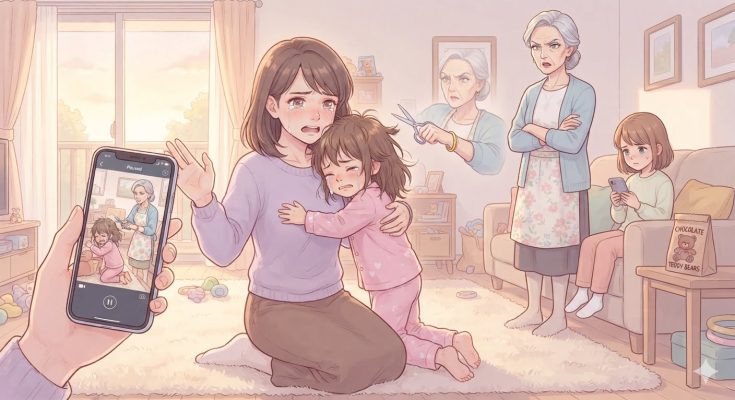
  • My mother-in-law looked at my 38-week belly and told my husband, “Lock both deadbolts and let her give birth alone.” Seven days later, they returned from Miami, tanned and smiling, but my front door left them breathless. I was barefoot, having contractions every five minutes. My cell phone had no signal. And my mother-in-law’s plane ticket had been paid for with my credit card.

    My mother-in-law looked at my 38-week belly and told my husband, “Lock both deadbolts and let her give birth alone.” Seven days later, they returned from Miami, tanned and smiling, but my front door left them breathless. I was barefoot, having contractions every five minutes. My cell phone had no signal. And my mother-in-law’s plane ticket had been paid for with my credit card.

    It wasn’t me who came out to greet them.

    It was a woman in a navy blue vest, her hair pulled back, and a badge hanging from her neck. Behind her stood two police detectives, a locksmith, and an attorney from the Family Justice Center. Aaron stood with his mouth open, still bearing the tan lines from the Miami sun on his face.

    “What are you doing in my house?” he stammered.

    The woman didn’t move. “Mr. Aaron Vance, this property is secured by order of the District Attorney.”

    Barbara took a step back. “This is an abuse of power. My son lives here.”

    “The victim lived here too,” the detective replied. “And according to the report, you left her locked inside while she was in labor.”

    Aaron looked toward the window of the house across the street. There I was. Sitting in a borrowed rocking chair, wearing a hospital gown, my swollen feet resting on a stool, and my daughter asleep against my chest. Mrs. Higgins, my neighbor, stood next to me with her arms crossed, wearing a look that in Texas says more than a scream ever could.

    Aaron dropped his duty-free bag. “Fiona…”

    I didn’t answer. For seven days, I had dreamed of that moment. I thought I was going to scream at him, that I was going to tear his face apart with words, that I was going to ask him why. But when I saw him there, tanned, rested, smelling like an expensive hotel and lies, I only felt an icy calm.

    My daughter barely moved. I pulled her closer to my chest. “Her name is Victoria,” I said from the window.

    “Mine,” I cut him off. “You were in Miami.”

    Barbara tried to compose herself. She adjusted her new hat and smiled as if she could still turn the whole thing into a simple family misunderstanding. “Sweetie, it’s so good to see you’re okay. You see, you exaggerated. First-time moms always put on such a show.”

    Mrs. Higgins took a step forward. “A show? I found her lying on the kitchen floor, bleeding, with the door locked from the outside and no way to call for help.”

    Aaron’s face changed. Not out of remorse. Out of fear. Because he realized someone had seen.

    That early morning, when the contraction left me breathless next to the refrigerator, I didn’t call from my cell phone. I couldn’t. But inside the safe, I found more than just papers: an old garage door remote and a security key for the utility room. Between one wave of pain and the next, dragging myself across the floor, I managed to open the back door that led to the maintenance alley.

    I didn’t get far. I screamed once, that was all. Mrs. Higgins, who usually gets up at five to brew coffee and make breakfast for her trucker husband, heard my scream before the hot early morning wind could swallow it. She was the one who jumped the fence with her son. She was the one who called 911—the number that handles medical emergencies, including labor, even though I didn’t have the strength to say my name.

    By the time the ambulance arrived, I was already losing consciousness. I remember red lights on the ceiling. I remember the siren bouncing through the avenues of Dallas, past BBQ billboards, open 7-Elevens, and the dark skyline against the dawn. I remember the paramedic telling me: “Don’t close your eyes, ma’am, your baby is coming.”

    Victoria was born before we reached the hospital. She was born in the ambulance, on a thermal blanket, with the traffic of I-35 roaring alongside us and the sun rising behind the downtown buildings. She didn’t cry at first. That silence split me in two. Then she let out a small, furious, lively cry. That’s when I understood her name. Victoria.

    While I was under observation, attorney Rachel Montgomery introduced herself to me. She spoke slowly, the way you speak to someone who just walked out of a fire. She came from the Family Justice Center, where they provide confidential, free legal advice, psychological support, welfare assistance, and social work to women experiencing domestic violence.

    I didn’t want to press charges. I was ashamed. How absurd, right? They locked me in while I was pregnant, used my credit card, forged my signature, and I felt ashamed. Rachel took my hand and said something that held me up more than the IV fluid. “The shame is not yours, Fiona.”

    So I spoke. I spoke about the card. The keys. The safe. My forged signature. About how Aaron let his mother decide when I could give birth. I spoke about Barbara’s smile when she said: “Lock both deadbolts and let her give birth alone.”

    The detective asked to review the neighborhood security cameras. And it was all there. The SUV pulling out in the early morning hours. Aaron locking the door. Barbara walking back two steps to check the deadbolt. My hand banging on the living room window. The door that wouldn’t open.

    They also found an indoor camera, one of those Aaron installed “for security” and that I hated because I felt like it was watching my every breath. He had forgotten to unplug it. The camera recorded the entire sentence. It recorded my crying. It recorded my husband saying: “Mom says that if I let you out, you’re going to make a scene.”

    That is what was waiting for them upon their return. Not a repentant wife. A criminal case file.

    Aaron crossed the street toward me, but one of the officers stopped him. “You can’t approach her.” “She’s my wife.”

    Rachel stepped out behind the detective with a folder in her hands. “There is an active restraining order in place.”

    Barbara let out a dry laugh. “Protection from what? My son didn’t even touch her.”

    Rachel looked at her without blinking. “Locking up a pregnant woman, denying her access to money, using her credit cards, and leaving her without a way to communicate is also domestic violence.”

    I saw Barbara clench her jaw. She had always believed that violence had to leave bruises to count. That’s why she felt clean. That’s why she called me “dramatic” when she took my card, “ungrateful” when she scrutinized my spending, “crazy” when I asked Aaron to make decisions without her.

    But the law had other words for it. In Texas, domestic violence includes psychological, physical, financial, and economic harm; it also covers controlling or hiding income, and when committed against a pregnant woman, the penalties can be enhanced.

    Aaron heard that and finally looked at me as if I were no longer his wife, but rather an indictment. “Fiona, we can talk.” “You talked when you locked the door.” “My mom pressured me.”

    Barbara turned toward him. “Aaron!”

    That was when they broke. Not with shouting. Not with tears. They broke with that cowardly sentence, in front of everyone. My husband, the man who claimed to love me, tried to use his mother as a shield, just like always.

    The detective opened another folder. “We also have evidence of signature forgery, credit card fraud, and a life insurance document with modifiable beneficiaries.”

    Barbara recovered her venom. “That was to protect the little girl.” “No,” I said.

    Everyone turned to look at me. I stood up slowly. The emergency C-section pulled at my insides like fire, because in the end, there were complications. Mrs. Higgins tried to stop me, but I needed to be on my feet. I needed Victoria to know someday that her mother didn’t speak from the floor.

    “It wasn’t to protect her. It was so you could keep her if I didn’t make it out alive.”

    Aaron went pale. “That’s not true.” “In the safe, there was a request for temporary incapacitation signed by me. Only I never signed it. There was also the insurance paper where your mom was listed as the trustee if I died during childbirth.”

    Barbara put her hand to her chest. “What a sick imagination.”

    “Your signature appears on two pages,” Rachel said. “And the handwriting expert has already detected inconsistencies in Fiona’s signature.”

    Barbara stopped breathing for a second. That second gave me the truth. Aaron looked at his mother. For the first time in years, he looked at her with fear of her, not for her. “Mom… what did you do?”

    She didn’t answer him. Because queens don’t explain themselves when their crown falls. They just look for someone to blame. “This is all your fault,” she told me. “You came here to take my son from me. You got pregnant to tie him down. I just tried to save him.”

    Victoria opened her eyes when she heard her voice. It was a tiny gesture, but it pierced right through me. My baby, only seven days old, already recognized the tone of danger. I hugged her tighter. “You didn’t save him. You taught him to be miserable.”

    Aaron lowered his head. “Fiona, I didn’t want it to happen like this.” “How did you want it to happen? Did you want me to give birth in silence? To bleed out without making a sound? For you to come back with souvenirs and a motherless daughter?”

    He couldn’t answer. The police detective asked him to put his hands behind his back. Aaron backed away. “No, no. This is a mistake. I was going to come back.”

    The detective spoke with a calmness that stung. “Unlawful restraint, when it exposes the victim to a substantial risk of serious bodily injury, is punished under the Texas Penal Code as a felony. You were gone for seven days.” “But it’s my house!” “And she wasn’t a piece of furniture.”

    That last sentence was said by Mrs. Higgins. Quietly. But we all heard it.

    Barbara tried to walk toward the SUV. Two steps. That was all. The second officer blocked her path. “Mrs. Barbara, you are also being detained for questioning by the District Attorney’s Office.” “I am a senior citizen! You can’t treat me like this!” “You are also a prime suspect.”

    Her hat tilted sideways. Her red nails trembled. The woman who had stroked my cheek before locking me in could now barely hold her own purse. Aaron started to cry. Not the way someone repents. The way someone who has been caught cries. “Fiona, please. Tell them I’m the dad. Tell them I have the right to see her.”

    I looked at Victoria. Maybe she had his mouth. Or maybe I just didn’t want to recognize any part of him in her anymore. She was so small she still seemed made of milk, sleep, and miracles. “Rights are something you earn by caring,” I told him. “You don’t get to demand them after you abandon someone.”

    Neighbors were peeking out from their garages. Some pretended to be watering their plants. Others didn’t even pretend. In that subdivision where everyone knew exactly who drove what car, no one had ever wanted to meddle in “marital issues.” Now, everyone was watching. And I wanted them to get a good look. I wanted them to see that pretty houses can also be prisons. That a fine wooden door can also lock in terror. That a pregnant woman doesn’t need to be hit to be in danger.

    When they took Aaron away, he turned around one last time. “Are you going to destroy me?” The question filled me with an old sadness. Because he still thought the consequences were my revenge. He still didn’t understand that he had built his own ruin with every silence, every act of cowardice, every “my mom says.” “No, Aaron,” I replied. “I’m surviving.”

    Barbara didn’t cry. She just shot me a look that promised war. “You won’t be able to do this alone.” I smiled for the first time in seven days. “I was never as alone as I was with you.”

    Then they left. The street felt strange, like the aftermath of a heavy storm. Suitcases lay abandoned, a ripped Miami duty-free bag sat on the sidewalk, and the official police notice fluttered in the hot afternoon air. In the distance, you could hear an ice cream truck, a delivery motorcycle, and the endless noise of Dallas swallowing its own secrets.

    Mrs. Higgins helped me sit down. “Should I warm up some chicken soup?” I laughed and cried at the same time. “Yes.” “No lemon or hot sauce though, since you just had a baby.” “Whatever you say.”

    She crossed herself looking at Victoria. “This little girl was born with Texas grit. Not even being locked up could stop her.”

    That night we slept at Mrs. Higgins’ house. Her living room smelled of Pine-Sol, freshly brewed coffee, and warm biscuits. Her granddaughter lent me a pink baby blanket. Her husband wedged a chair against the door—not because it was necessary, but because he understood that my fear still needed to see something protecting us.

    At midnight I woke up, thinking I heard the deadbolts. Click. Click. I sat up, my chest burning. Victoria was sleeping next to me, peaceful, with her tiny fists clenched. Mrs. Higgins appeared from the kitchen without making a sound, as if she already knew. “They’re not here, sweetie.” “But I can hear them.” “It’ll take a while for them to leave your head,” she said, touching her chest. “But they will leave.”

    The following days were filled with signatures, hearings, breastfeeding, pain, and paperwork. I learned to carry a diaper bag with one hand and a legal binder with the other. I learned that a restraining order can also feel like a warm blanket. I learned that I wasn’t weak for needing help.

    My mom arrived from Fort Worth, crying all the way from the bus station. She hugged me carefully, as if I were made of glass, and then asked to see her granddaughter. When she held her in her arms, she said the only thing I needed to hear: “You are never going back to that house alone.”

    I didn’t. I went in weeks later with Rachel, Mrs. Higgins, and two police officers to pack my things. The house looked the same, but at the same time, it was completely different. My mug was still in the sink. The hospital bag was still by the door. On the kitchen floor, there was still a faint scuff mark where my body had doubled over in pain.

    I stood there looking at it. Rachel asked if I wanted to step outside. I shook my head. I walked to the front door. I touched the two deadbolts. The very ones Aaron locked, believing a lock could make me obedient.

    Then I took out my new keys. I unlocked it. I locked it. I unlocked it again. Not out of necessity. For memory. For my daughter. For the Fiona who pounded on that door that night until she lost her voice.

    Months later, the house was sold by court order as part of the divorce settlement. With that money, I paid off debts, paid for therapy, and rented a small apartment near White Rock Lake, where in the afternoons you can hear the laughter of families strolling and the echo of the city against the old park pavilions. Dallas was still harsh, hot, expensive, and proud. But for the first time, it didn’t feel like a cage.

    Aaron kept saying it was “a mistake.” Barbara kept saying I was exaggerating. I stopped responding. Some women lose years trying to convince their executioners that they bled. I didn’t want to waste my milk, my sleep, or my life on that.

    Victoria turned one on a rainy afternoon. I baked a vanilla cake, poorly sliced and a little too sweet. Mrs. Higgins brought a casserole. My mom brought a yellow dress. When everyone sang “Happy Birthday,” Victoria clapped with frosting-covered hands.

    I looked at her and thought of the night with the deadbolts. Click. Click. Then I looked at my new door. It didn’t have a double deadbolt. It had a peephole, a chain, and a little bell that Mrs. Higgins gave me “to scare away bad vibes.” But the most important thing wasn’t on the wood. It was in me.

    Because that door no longer locked in a terrified woman. It guarded a mother who learned to carve her own path, even when the world tried to padlock her in. And every time Victoria took a wobbly little step toward me, I knew she hadn’t been born in an ambulance by accident. She was born escaping. She was born fighting. She was born to remind me, every single day, that life doesn’t always knock before entering. Sometimes, it breaks the door down.

  • Last night, my son hit me, and I didn’t cry. This morning, I laid out the nice tablecloth, served buttermilk pancakes and crispy bacon, and waited for him to come downstairs, believing he had finally broken me. Tyler smiled when he saw me in the kitchen and said, “So you learned your lesson.” But his smile died the moment he saw his father sitting at my table. And he hadn’t even seen the brown folder yet.

    Last night, my son hit me, and I didn’t cry. This morning, I laid out the nice tablecloth, served buttermilk pancakes and crispy bacon, and waited for him to come downstairs, believing he had finally broken me. Tyler smiled when he saw me in the kitchen and said, “So you learned your lesson.” But his smile died the moment he saw his father sitting at my table. And he hadn’t even seen the brown folder yet.

    The smile died on his face so fast that, for a split second, he looked like a child again. But only for a second. Then his jaw tightened, he glared at everyone as if they were trespassing in his kingdom, and he let out a dry, harsh laugh.

    “What is this? An intervention?” Tyler said, pointing at Richard. “And what are you even doing here? Did you finally remember you have a son?”

    Richard didn’t stand up. That was the first thing that surprised me. The old Richard would have yelled, slammed his fist on the table, and tried to win by pure intimidation. This Richard just set his coffee mug down on its saucer and looked at him with a sadness that weighed heavier than any insult. “I’m here because your mother called me,” he answered. “And because last night you hit her.”

    Tyler whipped his head toward me. His eyes locked onto my cheek. There was no guilt. Only anger at being caught. “Oh, I see,” he sneered. “You played the victim.”

    Ms. Harrison calmly opened the brown folder. Her perfectly manicured hands separated the pages as if she were straightening out napkins. “Tyler Richard Collins,” she said, “my name is Sarah Harrison. I am the legal counsel for Ms. Margaret Collins. Right here is a formal domestic violence police report, a petition for a protection order, and an inventory of your belongings that you will be permitted to retrieve under police supervision.”

    Tyler blinked. “What?”

    One of the officers stepped forward. “Son, we need you to keep your cool.”

    Tyler let out a laugh, but this time, it trembled. “Are you kicking me out of my house?”

    That phrase pierced right through me. My house. He didn’t say our house. He didn’t say my mom’s house. He said my house.

    Right then, I understood that the blow from last night hadn’t started with his hand. It had started much earlier—every single time I handed him cash to avoid a tantrum, every time I lowered my voice so he wouldn’t get upset, every time I picked up his dirty dishes, his empty beer bottles, his lies, and his shame.

    “It’s not your house, Tyler,” I said. My voice came out steady. So steady that it surprised even me.

    He stared at me as if he didn’t recognize me. “You can’t do this to me.”

    “No,” I replied. “You did this to me. I am just stopping you from continuing to do it.”

    His face hardened. “And what are you going to do? Shove me out onto the street? Just like that? Your own son?”

    The social worker, a petite woman with kind but tired eyes, stepped closer, clutching the blue folder against her chest. “Tyler, we are going to provide you with referrals for psychological counseling, assistance finding temporary shelter if you need it, and job placement services. Nobody is trying to destroy you. But Margaret has the right to live without violence.”

    He didn’t even look at her. “Shut up. You don’t know anything.”

    The officer spoke up again. “Son.”

    Tyler slammed his open palm onto the table. The silverware rattled. Richard’s coffee spilled all over my mother’s embroidered tablecloth, a dark stain spreading fast across the stitched flowers.

    Before, I would have rushed to grab a kitchen towel. Before, I would have said, “It’s okay, no big deal.” Before, I would have cared more about the fabric than my own dignity.

    This time, I didn’t move an inch. Tyler was breathing heavily. He stared at the spilled coffee, then at me, expecting me to bow down to clean up his mess. I didn’t do it. And that seemed to terrify him more than the police officers.

    “Mom,” he said, shifting his tone. The word came out soft, almost sweet. The exact same word he used as a little boy when he asked for water in the middle of the night. The same one he used when he clung to me when he had a fever.

    For a single heartbeat, my heart wanted to swing the door wide open and forgive him. But my cheek was still burning.

    “Mom, don’t be like this,” he continued. “I messed up. I was drinking. But you provoked me too. You said things you knew would make me mad.”

    Ms. Harrison looked up. “Do not justify an assault.”

    Tyler ignored her. “Mom, please. What am I going to do? I don’t have money. I have nowhere to go.” His eyes welled up with tears.

    And there lay the trap. Because a mother doesn’t just hear what her grown son says. She also hears the newborn who cried on her chest, the little boy who fell off his bicycle, the teenager who came home with a broken heart. I heard all of those versions of Tyler inside him. But I also heard my own voice—the one from last night, telling me in the dark kitchen: you are no longer safe.

    I stood up slowly. Everyone watched me. I walked over to the hutch and pulled out a clear plastic bag. Inside was his ID, two folded shirts, a few pairs of socks, his phone charger, the keys to his suitcase, and five hundred dollars. I laid it right in front of him.

    “This is for you to get food today and get around. The rest of your things are packed in boxes. You will retrieve them with an escort. You are not going upstairs alone.”

    Tyler stared at the bag as if I had just handed him a death warrant. “Five hundred bucks? Is that all I’m worth to you?”

    “No,” I said. “That is the very last thing I am ever giving you while you insult me and raise your hand against me.”

    His eyes filled with pure rage again. “This is all because of him, isn’t it?” He pointed at Richard. “You always preferred him. Always crying over the old man who walked out on you.”

    Richard closed his eyes, as if every word hit him exactly where it was meant to. Then he spoke. “Don’t blame your mother for my faults. I failed. I left when I should have stayed closer. I thought sending alimony and child support was enough. I thought that if you hated me, at least you wouldn’t hate her. I was wrong.”

    Tyler went quiet.

    Richard continued, “But me being a bad father does not give you the right to become your mother’s tormentor.”

    The word dropped heavy onto the table. Tyler looked down. For the first time that morning, he looked exhausted. Not tough. Not arrogant. Exhausted. “You don’t know anything,” he muttered. “Nobody knows anything. You think I wanted to be like this?”

    I felt something shift deep inside me. “Then go get help,” I told him. “But get it far away from me while you find it.”

    He raised his eyes. “What if I change?” “I hope you do.” “What if I go to therapy?” “I hope you go.” “What if I stop drinking?” I swallowed hard. “I hope you do, son.”

    His mouth trembled when I said son. “Then let me stay.”

    That was the final test. Not his blow. Not his scream. Not his threat. The true test was watching him cry and still refusing to save him from the consequences.

    I sat back down, picked up my coffee mug, and said, “No.”

    Tyler stood frozen. The entire house seemed to hold its breath. Then, he took a step back. “You’re going to regret this.”

    The officer stepped up. “Son, do not make threats.”

    Tyler raised his hands. “I’m not threatening. I’m just telling the truth.”

    Ms. Harrison pulled out another document. “The protection order includes a strict stay-away mandate, a prohibition on any intimidating communication, and an immediate eviction from the premises. Any violation will result in immediate arrest.”

    Tyler looked at me as if I were a stranger. “You signed that?” “Yes.” “With your own hand?”

    I lifted my right hand. The same one that had gripped the granite counter last night to keep from falling. “With this one.”

    He let out a sharp breath through his nose. Then he looked toward the stairs. “I’m going to get my stuff.”

    “No,” the officer said. “We’re going up with you.” “I’m not a criminal!”

    Nobody answered. Because sometimes the worst shame is listening to the total silence of everyone else.

    They went upstairs with him. From below, I heard drawers opening, heavy footsteps, a closet door banging against the drywall. Every single sound dug up years of memories. I remembered when I painted that bedroom blue because Tyler loved the sky. I remembered the glow-in-the-dark stars on the ceiling. I remembered the time he asked me not to turn off the light because he dreamed Richard left and never came back.

    And it hurt all over again. Not like last night. Deeper. Because I was burying a version of my son that perhaps no longer existed.

    Richard walked over to me. “Forgive me, Margaret.” I didn’t look at him. “I don’t have any room for your apologies today.” He nodded. “I understand.”

    Ms. Harrison touched my shoulder. “You’re doing the right thing.”

    I almost laughed. What did doing the right thing even mean when a woman had to call the cops to throw her own son out of the house where she taught him to walk? What did doing the right thing mean when love felt exactly like an amputation?

    Tyler came down carrying a black backpack and an old duffel bag. The same bag we used when we went to the Outer Banks when he was eight years old. It had a broken zipper and a faded airline tag still tied to the handle. He looked at me. He wasn’t crying anymore. “When something happens to me, it’s going to be your fault.”

    I felt the invisible blow of those words. But it didn’t knock me down this time. “No, Tyler. Your choices are yours. My guilt ends today.”

    He let out a low chuckle. “How convenient.”

    Then Richard stood up. “I’ll drive you.” Tyler looked at him with pure disdain. “I don’t need a thing from you.” “I’m not asking you. I’m putting you up in a motel for a week. It’s already paid for. After that, you decide if you want to work, if you want to get help, or if you want to keep sinking. But you aren’t sleeping on the street tonight.”

    Tyler turned to me, searching for any sign of betrayal on my face. “Did you know about that too?” “Yes.” “So you guys planned everything.” “Yes,” I answered. “Just like you planned to break me down little by little so I would never dare to say no to you.”

    That sentence completely stole his breath. It stole mine too, just saying it.

    The social worker handed him a sheet of paper. “Here are addresses and phone numbers. There are support groups for addiction and anger management. If you choose to go, you won’t be alone.”

    Tyler crumpled the paper in his fist. “Shove your numbers where the sun don’t shine.”

    The officer opened the front door. The morning light flooded in all at once. Outside, our neighbor Susan was sweeping her driveway with much more focus than necessary. When she saw me, she looked away. She had surely heard the screaming many times before. Surely everyone had heard. Nobody had ever knocked on my door.

    Tyler walked out first. Richard paused before crossing the threshold. “I’ll call you when I drop him off.” “No,” I said. He looked confused. “I don’t want a play-by-play. If he wants to talk to me someday, it will be through my attorney. And only when I am ready.” Richard swallowed hard. “Alright.”

    Tyler managed to hear me from the sidewalk. He spun around with an expression I couldn’t quite decipher. Maybe rage. Maybe fear. Maybe, finally, reality.

    “Goodbye, Mom,” he said.

    For years, I thought that word obligated me to open the door. That day, I learned it could also close it.

    “Goodbye, Tyler.”

    When the patrol car pulled away behind Richard’s SUV, I stood in the doorway until they rounded the corner. The house suddenly felt immense. Too quiet. Completely mine.

    I closed the door. Ms. Harrison packed up her paperwork. The social worker talked to me about follow-ups, dates, and phone calls. I nodded, but I barely heard a word. My eyes were fixed entirely on the coffee stain on the tablecloth.

    When everyone left, I cleared the table one dish at a time. The food had gone cold. The grease from the bacon had hardened. The sweet aroma of the coffee was gone.

    I washed the dishes slowly, as if each plate were a layer of fear being rinsed from my hands. When I finished, I walked up to Tyler’s room. The door was wide open. The bed unmade. A stray sock lay under the nightstand. On the doorframe, you could still see—almost faded away—the pencil lines where I marked his height on every birthday. Five years old: “Ty.” Eight years old: “Champ.” Twelve years old: “Almost catching me.” Sixteen years old: he didn’t want me to measure him anymore.

    I sat on the edge of the bed. And then I cried. I cried for the little boy I missed. For the man who hit me. For the mother I used to be. For the woman who almost disappeared trying to save someone who also needed to hit rock bottom.

    I cried until the mark on my cheek stopped burning and something else began to ache: my freedom.

    At noon, my cell phone rang. It was an unknown number. I answered with a tight throat. “Hello?” Silence. Then Tyler’s voice, low, broken. “I’m here.” I didn’t say anything. “It’s ugly here.”

    I closed my eyes. “I’m sorry.” “No, you’re not.” I took a breath. “Yes, I am. But I am not changing my mind.” On the other end, I heard a shaky breath. “Do you hate me?”

    That question truly broke my heart. “No, Tyler. I love you so much that I finally stopped helping you destroy yourself.” He went silent. “I’m scared,” he whispered.

    I covered my mouth with my hand. My entire body wanted to run out and find him. But I stayed seated. “I was scared last night too,” I said. “In my own kitchen. Of my own son.” He didn’t reply.

    After a few seconds, he spoke with a voice completely stripped of rage. “I don’t know how to come back from this.” I looked at the pencil lines on the doorframe. “Start by not coming back to this house. Start by accepting the help. Start by telling the truth without blaming me.”

    I heard a soft thud, as if he had sat down on the edge of the bed in that motel room. “I hit you,” he said. It was the first time he actually said the words. Not “you provoked me.” Not “I was drinking.” Not “things got out of hand.” I hit you.

    My tears came back, but this time they weren’t born from fear. “Yes.” “I’m sorry.”

    I squeezed my eyes shut. I wanted to tell him everything was fine. But it wasn’t fine. And for the first time, I didn’t lie just to comfort him. “I can’t accept your apology yet, Tyler. First, you have to turn it into actions.”

    He cried softly. So did I. But neither of us hung up. We just stayed like that, breathing from two completely different places, as if an invisible bridge were starting to form across a distance that ached, but saved us.

    Three months passed. The brown folder stayed in my nightstand drawer. My mother’s tablecloth was never the same; the coffee stain never fully came out. At first, it made me angry. Later, I just left it there. I stopped seeing it as a ruin and began seeing it as proof: something spilled, yes, but it didn’t destroy the table.

    Tyler never moved back in with me. At first, he would call to scream at me. Then to cry. Then he stopped calling for two weeks and I feared the worst. One night, I received a text from the social worker: “Your son showed up voluntarily to the support group today.” I cried again. But I didn’t run to him.

    Richard started accompanying him to some of the sessions. They didn’t turn into a movie father and son. There was no hug in the rain or beautiful background music. There were awkward silences, cheap coffees, and clumsy conversations on a bench outside the community center. But that was something.

    One Sunday, Tyler asked to see me. I agreed to meet at a diner, with Ms. Harrison informed and Richard sitting two tables away—not to watch Tyler, but to remind me that I didn’t have to face anything alone anymore.

    Tyler arrived thinner. The alcohol bags under his eyes were gone. He wore a clean shirt and had his hands stuffed into his jeans pockets. When he saw me, he didn’t try to hug me. That was the first thing I was grateful for.

    “Hi, Mom.” “Hi, Tyler.”

    He sat across from me. He ordered water. Not coffee. Not beer. Water. He pulled out a folded piece of notebook paper. “I wrote it down because if I just try to say it, I’ll get all tongue-tied.” His hands were shaking.

    He read slowly. He asked for my forgiveness without asking for a place to live. He told me he had found a job unloading inventory at a warehouse. He told me he was still in therapy. He told me he finally understood that the fear he felt as a child didn’t give him permission to plant it inside of me.

    When he finished, he looked up. “I’m not here to ask you to let me come back.” I felt clean air enter my lungs fully. “Thank you.” “I’m here to tell you that that day… when you closed the door… I thought you were abandoning me. But now I think it was the first time anyone ever set a real boundary with me.”

    I didn’t know what to say. So I did the only thing I could do. I placed my hand on the diner table, halfway across. Not on top of his. Not yet. Just halfway.

    Tyler looked at my hand. Then he placed his close by. Without touching me. Respecting the space.

    And in that tiny gap between his fingers and mine, I understood that love isn’t always about holding on. Sometimes love is stopping the hand before it strikes again. Sometimes it’s closing a door so that someone learns how to knock. Sometimes it’s serving breakfast on the nice china, not to celebrate that a family is whole, but to say goodbye to the lie that was killing it.

    Today, I still live in my house in Columbus, Ohio. The house I paid for with double shifts. The house where I no longer walk on eggshells. The house where the silence no longer threatens me.

    Tyler is still far away. But he is alive. And so am I. That, for now, is enough.

  • My husband called me a freeloader in front of his mother. I believed him so little that I even smiled…….

    My husband called me a freeloader in front of his mother. I believed him so little that I even smiled…….

    “Where is the food?” Mrs. Brenda asked.
    Her smile lingered for a second, as though she expected Natalie to laugh and point toward the kitchen.
    Natalie simply closed the apartment door behind Aunt Carol.
    “There isn’t any.”
    The living room fell silent.
    Even the three children, who had rushed inside asking whether there would be brownies this week, stopped talking.
    Mrs. Brenda frowned.
    “I’m sorry… what do you mean there isn’t any?”
    Natalie walked toward the dining room.
    The polished oak table looked exactly as it always did.
    Except this time there were no serving dishes.
    No barbecue ribs.
    No steaming macaroni.
    No basket of warm rolls wrapped in a towel.
    Not even a pitcher of iced tea.
    Only a small vase holding fresh white flowers.
    Leo forced a laugh.
    “Okay, very funny.”
    Natalie looked at him.
    “I wasn’t trying to be funny.”
    Melissa glanced toward the kitchen.
    “Maybe it’s still in the oven?”

    “It isn’t.”

    Evan rubbed the back of his neck.

    “So… are we ordering pizza?”

    Leo looked at Natalie.

    “You heard him.”

    She nodded.

    “I did.”

    “So…”

    “So if you’d like pizza, you should order some.”

    Mrs. Brenda let out a sharp little laugh.

    “Natalie, enough with the attitude.”

    “There isn’t any attitude.”

    “Then why are you acting like this?”

    Natalie folded her hands calmly in front of her.

    “I’m following Leo’s new household policy.”

    Nobody spoke.

    She continued.

    “Everyone pays their own way.”

    Leo’s ears turned pink.

    “That conversation wasn’t about today.”

    Natalie tilted her head.

    “I don’t remember hearing any exceptions.”

    Mrs. Brenda crossed her arms.

    “You really expect guests to arrive and find nothing?”

    Natalie smiled politely.

    “I expected family to bring something if they planned to eat.”

    Silence.

    The sentence landed harder than anyone expected.

    For five years they had never questioned why lunch magically appeared every Saturday.

    Today was the first time someone had asked what everyone else contributed.

    The answer was…

    Nothing.

    One of Evan’s boys tugged on his father’s sleeve.

    “Dad… I’m hungry.”

    Evan cleared his throat.

    “We drove forty-five minutes.”

    Natalie nodded sympathetically.

    “Then I’m sure stopping at a restaurant on the way home won’t be a problem.”

    Mrs. Brenda stared as though Natalie had started speaking another language.

    “You’ve changed.”

    “No.”

    Natalie answered softly.

    “I’ve stopped pretending.”

    Leo stepped closer.

    “Can I talk to you in the bedroom?”

    “You can.”

    He closed the bedroom door behind them.

    The smile disappeared from his face.

    “What are you doing?”

    “What you asked.”

    “You know that’s not what I meant.”

    “I know exactly what you meant.”

    “My mother is sitting out there.”

    “I noticed.”

    “You’re humiliating me.”

    Natalie looked directly into his eyes.

    “No.”

    She spoke so quietly he almost missed it.

    “I’m just not protecting your image anymore.”

    Leo inhaled sharply.

    “You could have warned me.”

    “I did.”

    “When?”

    “The night you called me a freeloader.”

    His jaw tightened.

    “You always take things too literally.”

    “And you never expected me to.”

    Outside the bedroom, Mrs. Brenda had already walked into the kitchen.

    She opened the refrigerator.

    Then she froze.

    A thick strip of bright yellow tape divided every shelf perfectly down the middle.

    On the left side sat neatly arranged containers of fresh fruit, vegetables, homemade soups, cheeses, yogurt, coffee cream, sparkling water, and prepared meals.

    Everything was labeled with one name.

    Natalie.

    The right side looked almost abandoned.

    A bottle of mustard.

    Three cans of beer.

    An empty carton of eggs.

    Half a lemon.

    And a package of ham whose expiration date had passed two days earlier.

    A second label sat on that shelf.

    Leo.

    Mrs. Brenda blinked twice.

    “What on earth…”

    She opened the freezer.

    The same yellow line.

    One side full.

    The other nearly empty.

    Melissa slowly walked beside her.

    “Brenda…”

    Neither woman spoke.

    For the first time since arriving, they noticed something else.

    The pantry.

    Another strip of yellow tape.

    The coffee shelf.

    Another strip.

    Even the cabinet under the sink had been divided.

    Dish soap.

    Paper towels.

    Trash bags.

    Everything labeled.

    Everything separated.

    Aunt Carol whispered,

    “She actually did it…”

    The bedroom door opened.

    Leo stepped out first.

    His face was tense.

    Natalie followed at her usual pace.

    Mrs. Brenda pointed toward the refrigerator.

    “What is this supposed to mean?”

    Natalie answered without hesitation.

    “It means exactly what Leo wanted.”

    Leo closed his eyes for one painful second.

    His mother turned toward him.

    “What is she talking about?”

    Before he could answer, one of the children opened the pantry.

    “There aren’t any cookies.”

    Another opened the freezer.

    “There isn’t any ice cream either.”

    The youngest looked up at Natalie with innocent confusion.

    “Aunt Natalie…”

    Her voice was tiny.

    “Did you forget today was Saturday?”

    Natalie’s heart squeezed.

    She crouched until they were eye level.

    “No, sweetheart.”

    “Then… why didn’t you cook?”

    Natalie smiled gently.

    “Because sometimes grown-ups have to learn something before lunch.”

    The apartment became so quiet that the ticking clock above the stove sounded impossibly loud.

    And for the very first time…

    Mrs. Brenda began to wonder whether she actually knew what happened inside her son’s marriage.

    PART 3: THE FIRST PERSON TO BREAK WASN’T NATALIE

    The silence stretched until Mrs. Brenda finally clapped her hands once.

    “Well,” she declared, forcing a smile, “this little performance has gone on long enough.”

    Nobody laughed.

    She looked directly at Natalie.

    “You’ve made your point. Now let’s eat.”

    Natalie remained exactly where she was.

    “There isn’t any food.”

    Mrs. Brenda’s smile faltered.

    “I’m not asking if there is. I’m telling you to bring it out.”

    “There isn’t anything to bring out.”

    Leo rubbed both temples.

    “Natalie…”

    She looked at him.

    “You said everyone pays their own way.”

    “I know what I said.”

    “I’m following it.”

    “You know that’s not what I meant.”

    “I only know what you actually said.”

    Mrs. Brenda let out a dramatic sigh.

    “I’ve been married for forty-three years. Every couple argues.”

    She waved a dismissive hand.

    “You don’t punish the whole family.”

    Natalie answered calmly.

    “I’m not punishing anyone.”

    “It certainly feels like it.”

    “No.”

    Natalie glanced around the room.

    “I’m simply no longer feeding eight adults every Saturday by myself.”

    Mrs. Brenda frowned.

    “Eight?”

    “You, Leo, Evan, Melissa, Aunt Carol, and me.”

    She smiled gently at the children.

    “The kids don’t count.”

    Melissa shifted uncomfortably.

    It was the first time anyone had separated the adults from the children.

    Natalie continued.

    “The children aren’t responsible for this.”

    The youngest grandson looked hopefully toward his father.

    “Dad…”

    “I’m hungry.”

    Evan forced a smile.

    “We’ll figure something out, buddy.”

    Mrs. Brenda turned back toward Natalie.

    “You’ve always loved cooking.”

    “I still do.”

    “So cook.”

    “I cook when it’s my choice.”

    Her answer came without anger.

    “Not when it’s expected.”

    Leo’s patience snapped.

    “For heaven’s sake, Natalie!”

    Every eye turned toward him.

    “You’re embarrassing everyone.”

    She looked at him quietly.

    “No.”

    “I’m embarrassing myself?”

    “I didn’t say that.”

    “You don’t have to.”

    He laughed bitterly.

    “You’re making me look like I can’t provide one meal.”

    Natalie’s expression didn’t change.

    “Can you?”

    The question hung in the room.

    Leo opened his mouth.

    Closed it.

    Opened it again.

    No answer came.

    Mrs. Brenda rushed to rescue him.

    “Of course he can.”

    Natalie nodded politely.

    “Wonderful.”

    She stepped aside and gestured toward the kitchen.

    “Everything you need is right there.”

    Everyone looked toward the spotless counters.

    No meat had been thawed.

    No vegetables had been chopped.

    No spices sat waiting.

    No slow cooker hummed in the corner.

    The refrigerator held only the food on Natalie’s side…

    and the almost-empty shelf on Leo’s.

    Mrs. Brenda walked to the refrigerator again.

    She stared at Leo’s side.

    Three beers.

    Expired ham.

    Half a lemon.

    Mustard.

    She blinked.

    “Leo…”

    He refused to meet her eyes.

    “I thought you went grocery shopping.”

    “I was going to.”

    “When?”

    “I’ve been busy.”

    Natalie quietly poured herself a glass of sparkling water.

    Mrs. Brenda looked from the refrigerator…

    to her son…

    back to the refrigerator.

    “When was the last time you bought groceries?”

    Leo hesitated.

    Natalie stayed silent.

    “So?”

    Mrs. Brenda pressed.

    Leo scratched the back of his neck.

    “I don’t know.”

    “You don’t know?”

    “I mean…”

    He searched desperately for an answer.

    “Maybe… a couple of weeks ago.”

    Natalie took a slow sip of water.

    Nobody missed it.

    Melissa quietly looked inside one of the kitchen cabinets.

    There were rows of spices.

    Flour.

    Rice.

    Pasta.

    Cooking oil.

    Everything neatly organized.

    Then she noticed another yellow label.

    Natalie.

    Every bag.

    Every bottle.

    Every container.

    She slowly closed the cabinet.

    “Brenda…”

    Mrs. Brenda looked over.

    “I think…”

    Melissa lowered her voice.

    “I don’t think any of this belongs to Leo.”

    Before Brenda could answer, Aunt Carol wandered toward the coffee station.

    “Oh, at least I’ll make myself some coffee.”

    She reached for the expensive bag of whole beans.

    Natalie spoke before she touched it.

    “I’m sorry.”

    Aunt Carol froze.

    “That’s mine.”

    The older woman blinked.

    “What?”

    “The coffee.”

    Natalie smiled politely.

    “It’s on my side.”

    For a second, nobody moved.

    Then Evan opened another cabinet.

    Disposable plates.

    Yellow label.

    Natalie.

    Paper towels.

    Natalie.

    Trash bags.

    Natalie.

    Dishwashing tablets.

    Natalie.

    Cleaning spray.

    Natalie.

    He slowly closed the cabinet.

    His expression had changed.

    Not angry.

    Confused.

    Very confused.

    He turned toward his brother.

    “Leo…”

    “Yeah?”

    “What exactly do you buy?”

    Leo stared at the floor.

    No one noticed the children anymore.

    Even they had stopped asking about lunch.

    Because for the first time…

    Every adult in the apartment had become far more interested in something else.

    If Leo wasn’t buying the groceries…

    Then who had been feeding them every Saturday for the past five years?

    PART 4: SOMEONE HAD TO PAY… BUT NOBODY KNEW WHO

    Nobody spoke for nearly a full minute.

    The apartment that usually echoed with laughter, clattering plates, and children running between the living room and kitchen now felt strangely unfamiliar.

    It was too quiet.

    The only sound came from the refrigerator as its compressor hummed softly.

    Mrs. Brenda looked from cabinet to cabinet.

    Everywhere she looked, another yellow label greeted her.

    Natalie.

    Natalie.

    Natalie.

    She finally turned to her son.

    “Leo.”

    He swallowed.

    “Yes, Mom?”

    “Where are your groceries?”

    He hesitated.

    “I… haven’t had time to shop.”

    Mrs. Brenda frowned.

    “You’ve been busy for one week?”

    “No.”

    “So where are they?”

    Leo opened his mouth.

    Nothing came out.

    Evan leaned against the kitchen counter.

    “I never really thought about it.”

    Melissa nodded slowly.

    “Neither did I.”

    Every Saturday they had walked into a house filled with food.

    They had never asked where it came from.

    It had simply… appeared.

    Like magic.

    Natalie quietly poured herself another glass of sparkling water.

    She offered one to Melissa.

    Melissa accepted with a shy smile.

    “Thank you.”

    Mrs. Brenda noticed.

    “Natalie.”

    “Yes?”

    “You aren’t even embarrassed?”

    Natalie looked genuinely puzzled.

    “What would I be embarrassed about?”

    “For refusing to feed your guests.”

    “I wasn’t expecting guests.”

    Brenda blinked.

    “We come every Saturday.”

    “I know.”

    “Then how can you say you weren’t expecting us?”

    Natalie smiled politely.

    “I expected family.”

    She let the words settle.

    “Guests are invited.”

    The sentence landed harder than anyone expected.

    Aunt Carol cleared her throat.

    “Well…”

    She tried to laugh.

    “Maybe we should all chip in next time.”

    Natalie nodded.

    “I think that’s a wonderful idea.”

    Brenda shot Aunt Carol a look.

    “What are you talking about?”

    Carol shrugged.

    “Food costs money.”

    Brenda answered almost automatically.

    “Natalie likes cooking.”

    “I do.”

    Natalie agreed.

    “But liking something doesn’t make it my responsibility.”

    Nobody argued.

    Because they all knew she was right.

    The youngest child tugged gently on Melissa’s sleeve.

    “Mom…”

    “When are we eating?”

    Melissa looked toward Evan.

    Evan looked toward Leo.

    Leo looked toward Natalie.

    Natalie looked at no one.

    She simply sat in her chair and continued reading a book she had left on the coffee table earlier that morning.

    Mrs. Brenda stared at her in disbelief.

    “You’re seriously reading?”

    Natalie marked her page with a bookmark before answering.

    “I finally have time.”

    “What does that mean?”

    “For five years…”

    Natalie closed the book gently.

    “I usually spent Saturday mornings cooking.”

    She smiled.

    “Today I finished an entire novel instead.”

    The words weren’t cruel.

    They were peaceful.

    And somehow…

    That made them hurt even more.

    Leo rubbed both hands over his face.

    “This is getting ridiculous.”

    Natalie looked at him.

    “Is it?”

    “You know my family depends on these lunches.”

    She raised an eyebrow.

    “They do?”

    “Yes.”

    “They’re all adults, Leo.”

    “They expect them.”

    “I expected respect.”

    Silence.

    Brenda crossed her arms tighter.

    “You’ve changed since you got that fancy job.”

    Natalie almost laughed.

    “I had this job before Leo and I got married.”

    Brenda frowned.

    “What?”

    “For almost seven years.”

    “I thought…”

    She stopped herself.

    Natalie waited.

    “I thought Leo was the one with the successful career.”

    Natalie didn’t answer.

    She simply looked at Leo.

    Every eye in the apartment followed hers.

    Leo suddenly found the floor incredibly interesting.

    Evan noticed first.

    “Wait…”

    He looked between them.

    “Didn’t you tell us Natalie worked from home doing paperwork?”

    Natalie blinked once.

    “Paperwork?”

    Leo shifted awkwardly.

    “I simplified it.”

    Melissa looked confused.

    “You travel all the time.”

    “I do.”

    “I’ve seen your passport.”

    Natalie smiled.

    “I was in Singapore last month.”

    “And Germany before that.”

    “And Brazil in February.”

    Melissa slowly turned toward Leo.

    “You never told us that.”

    Leo shrugged weakly.

    “It never came up.”

    Natalie quietly added,

    “I usually scheduled my flights so I wouldn’t miss Saturday lunch.”

    The room fell silent again.

    Mrs. Brenda’s confident expression began to crack.

    For the first time…

    She realized there might be years of her son’s life she had never bothered to ask about.

    Meanwhile, one of the children wandered into the hallway.

    “Grandma…”

    he called innocently.

    “Can we go eat somewhere?”

    Mrs. Brenda opened her purse.

    She reached for her wallet.

    Then stopped.

    She looked at Leo.

    “Since you’re the provider…”

    She smiled awkwardly.

    “You’ll pay, won’t you?”

    Leo froze.

    It wasn’t the question.

    It was the expectation.

    Because for the first time in years…

    His mother expected him to do exactly what she believed he’d been doing all along.

    PART 5: THE CHECK ARRIVED… AND SO DID THE FIRST CRACK

    Leo forced a smile.

    “Sure.”

    His answer came too quickly.

    Too confidently.

    Mrs. Brenda beamed.

    “I knew my son would take care of everyone.”

    Natalie lowered her eyes, hiding the smallest hint of a smile.

    Ten minutes later, the entire family sat inside their usual neighborhood restaurant.

    Ironically, it was the place Natalie had suggested countless times over the years.

    Every Saturday, Leo had refused.

    “Why spend money eating out when my wife cooks better?” he would always say.

    Today, no one mentioned that.

    The waiter handed out menus.

    The children immediately pointed at pictures.

    “I want the barbecue platter!”

    “I want the cheeseburger!”

    “I want the chocolate shake!”

    Melissa smiled.

    “Order whatever you like.”

    Mrs. Brenda closed her menu.

    “I’ll have the prime rib.”

    Aunt Carol laughed.

    “If we’re celebrating, I might as well get the salmon.”

    Evan shrugged.

    “Steak for me.”

    Leo nodded absentmindedly.

    “Sounds good.”

    Natalie quietly ordered a bowl of tomato soup and a small garden salad.

    The waiter looked surprised.

    “That’s all?”

    “Yes, thank you.”

    After he walked away, Brenda frowned.

    “You’re barely eating.”

    “I’m not very hungry.”

    “You should have ordered something better.”

    Natalie smiled politely.

    “I wasn’t planning for someone else to pay.”

    Melissa glanced at Leo.

    He pretended not to hear.

    The meals arrived twenty minutes later.

    The children laughed.

    Everyone complimented the food.

    Mrs. Brenda cut into her steak.

    “This is wonderful.”

    Then she looked at Natalie.

    “See?”

    “It wasn’t so difficult after all.”

    Natalie stirred her soup.

    “No.”

    “It wasn’t.”

    The conversation drifted to vacations…

    School…

    Work…

    Everything except what had happened in the apartment.

    Everyone seemed determined to pretend the afternoon had started normally.

    Then the waiter returned.

    He placed a black leather folder beside Leo.

    “Whenever you’re ready, sir.”

    Leo smiled confidently.

    “Thank you.”

    He opened it.

    His smile disappeared.

    Nine meals.

    Three desserts.

    Four milkshakes.

    Soft drinks.

    Coffee.

    Taxes.

    The total came to $412.68.

    He blinked.

    Once.

    Twice.

    He hadn’t expected it to be that much.

    Mrs. Brenda noticed.

    “Everything okay?”

    “Yeah.”

    He reached for his wallet.

    Inside were two credit cards.

    He chose the first.

    The waiter returned.

    Leo handed it over.

    The machine beeped.

    The waiter frowned politely.

    “I’m sorry, sir.”

    He tried again.

    Another beep.

    “I’m afraid this card was declined.”

    The table became unusually quiet.

    Leo laughed nervously.

    “Oh…”

    “Wrong card.”

    He handed over the second.

    Another beep.

    Another apology.

    “I’m sorry.”

    “This one was declined as well.”

    No one moved.

    Leo felt every pair of eyes on him.

    He forced another laugh.

    “There must be a problem with the bank.”

    Natalie quietly sipped her water.

    She said nothing.

    Brenda looked confused.

    “I thought you got paid yesterday.”

    “I did.”

    “So?”

    “I…”

    He couldn’t explain it.

    Because he had already spent most of his paycheck.

    Takeout.

    Online shopping.

    Car accessories.

    A new smartwatch.

    And the monthly payment on the pickup truck he insisted he “deserved.”

    The restaurant grew painfully silent.

    Finally…

    Evan reached into his pocket.

    “I’ll cover it.”

    Leo looked up immediately.

    “No.”

    “I’ve got it.”

    Evan gave him a tired smile.

    “You don’t.”

    Without another word, he handed his own card to the waiter.

    Approved.

    The receipt printed instantly.

    The tension at the table didn’t disappear.

    It simply changed direction.

    As everyone stood to leave, the youngest child slipped his small hand into Natalie’s.

    “Aunt Natalie?”

    “Yes, sweetheart?”

    “I liked your lunches better.”

    She smiled warmly.

    “So did I.”

    He tilted his head.

    “Then why don’t you make them anymore?”

    Natalie knelt beside him.

    “Because sometimes…”

    She gently brushed a curl away from his forehead.

    “…people stop noticing the person who keeps giving.”

    The little boy frowned.

    “I noticed.”

    Natalie’s smile softened.

    “I know you did.”

    He hugged her without another word.

    Across the restaurant, Melissa watched the exchange.

    Then she looked at Leo.

    Then at Brenda.

    Something didn’t sit right anymore.

    The story she had believed for five years…

    Was beginning to fall apart.

    And for the first time…

    Melissa started wondering whether the wrong person had been saying “thank you” all along.

    PART 6: THE QUESTION NOBODY HAD EVER ASKED

    The drive home was unusually quiet.

    Normally, after Saturday lunch, the children laughed in the back seats while the adults argued over football scores or planned the following weekend.

    Today…

    No one had much to say.

    Melissa kept replaying one sentence in her mind.

    “People stop noticing the person who keeps giving.”

    It refused to leave her alone.


    Back at the apartment, Mrs. Brenda placed her empty plastic containers on the kitchen counter.

    She looked at them for a long moment.

    Every Saturday for five years.

    Every single Saturday.

    She slowly zipped the bag shut again.

    “We should probably head home,” she said.

    Nobody argued.

    As everyone gathered their jackets, the youngest grandson ran back into the living room.

    “Aunt Natalie!”

    She looked up from the book she had started reading again.

    “Yes?”

    He held out one of the empty plastic containers.

    “You forgot to fill this.”

    The room froze.

    The boy wasn’t trying to be rude.

    He genuinely believed that was how Saturdays ended.

    Natalie smiled gently.

    “I didn’t forget.”

    He frowned.

    “Oh.”

    He looked inside the empty container.

    “So… it’s supposed to stay empty?”

    “For today.”

    He nodded, accepting the answer much more easily than the adults had.

    “Okay.”

    He placed it back inside his grandmother’s bag.

    Melissa watched the exchange.

    Children accepted change much faster than grown-ups.


    When the front door finally closed behind the last guest, the apartment became wonderfully quiet.

    Leo stood with his back against the door.

    “What was that?”

    Natalie looked at him.

    “Saturday.”

    “You know exactly what I mean.”

    “I do.”

    “You embarrassed me.”

    “No.”

    She shook her head.

    “I stopped protecting you from embarrassment.”

    “There you go again.”

    “You wanted everyone to believe you were the provider.”

    “I never said that.”

    “You never corrected them either.”

    Leo opened his mouth.

    Then closed it.

    Because that part…

    Was true.


    Sunday morning arrived.

    For the first time in years, Natalie slept until nearly nine.

    She woke naturally.

    No alarm.

    No shopping list.

    No six-hour cooking marathon waiting for her.

    She stretched, smiled, and made herself pancakes with fresh strawberries.

    Only enough for one.

    Leo wandered into the kitchen twenty minutes later.

    He stopped when he saw the plate.

    “You made breakfast.”

    “I did.”

    “You didn’t ask if I wanted any.”

    “You didn’t ask me yesterday if I wanted to cook.”

    He stared at her.

    “You’re seriously counting everything now?”

    “No.”

    She cut another piece of pancake.

    “I’m simply no longer giving automatically.”

    Leo opened the refrigerator.

    His side looked exactly as empty as the day before.

    He sighed.

    “Can I have two eggs?”

    “They’re on my shelf.”

    “I’ll replace them.”

    “When?”

    He didn’t answer.

    Natalie closed the refrigerator door gently.

    “When you replace things after using them…”

    she said,

    “…they’re shared.”

    “When only one person keeps replacing them…”

    “They aren’t.”

    Leo grabbed his car keys.

    “Fine.”

    “I’ll go shopping.”

    “Good.”

    “I’ll prove I can.”

    “I hope you do.”


    Nearly two hours later, Leo returned carrying four grocery bags.

    He set them proudly on the counter.

    “There.”

    Natalie glanced over.

    Milk.

    Bread.

    Frozen pizza.

    Cereal.

    Chicken breasts.

    Pasta.

    Coffee.

    Paper towels.

    Dish soap.

    Laundry detergent.

    For the first time since their marriage…

    Leo had purchased groceries for the apartment.

    Natalie smiled.

    “That’s a good start.”

    He frowned.

    “A good start?”

    “It is.”

    “I spent almost three hundred dollars.”

    Natalie nodded.

    “Groceries are expensive.”

    Leo laughed once.

    Without humor.

    “I had no idea.”

    “I know.”

    He began putting everything away.

    Halfway through, he stopped.

    The refrigerator wasn’t very big.

    His side couldn’t hold everything.

    He looked at Natalie’s neatly organized shelves.

    “Can I use a little space?”

    She thought for a second.

    “Sure.”

    Relief crossed his face.

    Then she added,

    “You can rent one shelf.”

    He stared at her.

    “What?”

    “Storage isn’t free.”

    “Natalie…”

    “I’m joking.”

    She smiled.

    “For now.”

    He couldn’t tell whether she actually was.


    That evening, Melissa called Evan after the children had gone to bed.

    “Can I ask you something?”

    “Of course.”

    “Have you ever seen Leo buy groceries before today?”

    Evan thought about it.

    Longer than he expected.

    Finally…

    “No.”

    “What about birthday presents for your kids?”

    “I always thought Leo bought them.”

    Melissa looked toward the hallway where the presents from previous birthdays were still carefully stored in a closet.

    Every gift tag had said:

    Love, Leo and Natalie.

    She suddenly realized something.

    She had never once seen Leo shopping for any of them.

    Not once.

    A strange feeling settled in her stomach.

    Not guilt.

    Not yet.

    Something quieter.

    A question.

    One she had somehow never asked in five years.

    If Leo wasn’t paying…

    And Leo wasn’t shopping…

    Then who had been carrying the weight of this family all along?

    PART 7: THE PERSON WHO WAS NEVER SUPPOSED TO SPEAK

    Monday morning arrived with rain.

    The kind that painted the streets silver and made Chicago traffic crawl.

    Natalie left before seven.

    By eight, she was already leading a video conference with managers in Rotterdam, São Paulo, Singapore, and Los Angeles.

    Shipping delays.

    Customs inspections.

    Port congestion.

    Three screens glowed in front of her as she calmly solved one problem after another.

    Meanwhile…

    Leo sat in his office staring at his banking app.

    Three hundred dollars for groceries.

    Four hundred twelve dollars for Saturday’s restaurant bill—thankfully paid by Evan.

    Rent due next week.

    Electricity.

    Gas.

    Internet.

    For the first time in years…

    He actually looked at the household expenses.

    He frowned.

    “How does everything cost this much?”


    That afternoon, someone knocked on the apartment door.

    Leo had taken the day off, claiming he wasn’t feeling well.

    When he opened it, he found Rosa, the cleaning lady.

    She smiled warmly.

    “Good afternoon, Mr. Leo.”

    “Oh… hi, Rosa.”

    She held up her phone.

    “I didn’t receive my payment this morning.”

    Leo blinked.

    “My payment?”

    “Yes.”

    “It usually arrives before nine.”

    He frowned.

    “I thought Natalie paid you.”

    Rosa smiled politely.

    “She always has.”

    Leo cleared his throat.

    “Right…”

    “So…”

    She waited patiently.

    “Would you like me to clean today?”

    Leo hesitated.

    “Actually…”

    “I’ll send the money later.”

    Rosa nodded kindly.

    “No problem.”

    She had worked for the couple for nearly four years.

    She trusted Natalie completely.

    Leo, however…

    She barely knew.

    As she turned to leave, she stopped.

    “Oh.”

    “I almost forgot.”

    She handed Leo a small envelope.

    “Natalie asked me to give you this if you were home.”

    After she left, Leo opened it.

    Inside was a single sheet of paper.

    Nothing dramatic.

    Nothing emotional.

    Just a typed list.

    Household Services

    Cleaning Service

    Due: Every Monday

    Responsible: Leo

    Status: Unpaid

    At the bottom, Natalie had added one handwritten sentence.

    “Since everyone pays their own way, I assumed we’d each manage the services assigned to us.”

    Leo crumpled the paper.

    Then smoothed it out again.


    Across town, Melissa stopped by Mrs. Brenda’s house after dropping the children at school.

    She found Brenda watering flowers.

    “You look tired,” Brenda said.

    “I didn’t sleep much.”

    “Still upset with Natalie?”

    Melissa didn’t answer immediately.

    Instead, she asked,

    “Can I ask you something?”

    “Of course.”

    “Did Leo really pay for your refrigerator repair two years ago?”

    Brenda smiled proudly.

    “He did.”

    “How do you know?”

    “What do you mean?”

    “Did he tell you?”

    “Well…”

    Brenda thought back.

    “He showed me the receipt.”

    Melissa frowned.

    “You saw the receipt?”

    “I saw him holding it.”

    “And the payment?”

    “No.”

    Melissa looked down.

    A memory surfaced.

    Two Christmases ago.

    Natalie had quietly excused herself from the dinner table.

    She’d returned a few minutes later, smiling after checking something on her phone.

    Melissa hadn’t thought much of it then.

    Now…

    She wondered what Natalie had been doing.


    That evening, Leo heard another knock.

    This time it was the internet technician.

    “Good evening.”

    “I’m here about the account update.”

    Leo frowned.

    “What update?”

    “The billing contact was changed.”

    “Oh.”

    The technician handed him a form.

    “We just need the new account holder’s signature.”

    Leo scanned the document.

    His stomach tightened.

    Account Holder:

    Leo Walker

    Previous Account Holder:

    Natalie Walker

    Monthly Charge:

    $96.40

    Installation Protection Plan:

    Included.

    Equipment Insurance:

    Included.

    Late Payment Protection:

    Included.

    He looked up.

    “I have to pay this now?”

    The technician smiled.

    “The next invoice will be in your name.”

    Leo signed without another word.

    As the technician packed his tablet away, he said casually,

    “You know…”

    “What?”

    “I’ve worked with your wife for years.”

    Leo looked up.

    “What do you mean?”

    “Whenever there was a service issue, she handled everything.”

    He chuckled.

    “She was probably the most organized customer I’ve ever had.”

    Then he added with a smile,

    “You married a good one.”

    The door closed.

    Leo remained standing in the hallway.

    For some reason…

    That simple sentence bothered him more than any argument Natalie had made.


    That night, Natalie arrived home carrying her laptop bag.

    She looked exhausted.

    Long day.

    Leo watched as she removed her shoes and headed toward the kitchen.

    Without saying a word, she opened her side of the refrigerator.

    Took out a container of homemade soup.

    Heated it.

    Sat quietly.

    No complaints.

    No lectures.

    No sarcasm.

    Just dinner.

    Leo looked at the grocery bags he had proudly bought the day before.

    Then at the internet bill on the counter.

    Then at Rosa’s unpaid invoice.

    For the first time…

    He realized buying groceries once didn’t make him the provider.

    It merely showed him how much he had never noticed.

    And upstairs, in another part of the city…

    Melissa opened an old family photo album.

    Every birthday.

    Every Christmas.

    Every Thanksgiving.

    There was Leo…

    Standing proudly beside every gift.

    But somehow…

    In every single picture…

    Natalie was the one carrying the bags.

    PART 8: THE RECEIPT THAT WASN’T SUPPOSED TO MATTER

    Tuesday evening arrived with an unexpected phone call.

    Leo glanced at the screen.

    Mom.

    He answered with forced confidence.

    “Hey, Mom.”

    “Are you busy?”

    “Not really.”

    “I was wondering…”

    She hesitated.

    “Are Natalie and you doing better?”

    Leo rubbed his forehead.

    “We’re fine.”

    There was a pause.

    Then Brenda asked quietly,

    “Can I ask you something honestly?”

    “Sure.”

    “When Natalie said she paid for almost everything…”

    “She never said that.”

    “No.”

    Brenda admitted.

    “She didn’t.”

    “Then what?”

    “I’ve just been… thinking.”

    Leo forced a laugh.

    “Mom, don’t overthink this.”

    “I keep remembering little things.”

    “What things?”

    “Every time I called to thank you for helping me…”

    She stopped.

    “I always talked to you.”

    “Right.”

    “But somehow…”

    “I always heard Natalie in the background asking if everything had been fixed.”

    Leo said nothing.

    Brenda continued.

    “I never thought that was strange before.”


    Across town, Melissa stood in her laundry room searching for stain remover.

    She reached for the top shelf.

    A small gift bag slid off and landed at her feet.

    Inside was a birthday card from the year before.

    It was addressed to her youngest daughter.

    She smiled.

    Her little girl had insisted on keeping every birthday card she’d ever received.

    Melissa opened it absentmindedly.

    Inside was the familiar message.

    Love,
    Uncle Leo & Aunt Natalie

    A folded store receipt slipped onto the floor.

    Melissa picked it up.

    It was faded.

    Almost a year old.

    She wasn’t trying to investigate anyone.

    She simply wanted to put it back inside.

    Then she noticed something.

    Payment Method:

    Visa •••• 4418

    Customer Name:

    Natalie Walker

    Melissa stared at it.

    The gift had been the expensive science telescope.

    Nearly three hundred dollars.

    Leo had proudly presented it to the family.

    He had even joked,

    “Your uncle spoils you.”

    Nobody had corrected him.

    Melissa slowly sat down.

    One receipt.

    It could mean anything.

    Maybe Natalie had simply used her card.

    Maybe Leo had paid her back.

    Maybe…

    She folded the receipt carefully and slipped it into her pocket.


    That night, Leo was making spaghetti.

    Or at least trying to.

    Smoke drifted from the frying pan.

    The sauce had burned.

    The noodles stuck together in one giant clump.

    Natalie walked into the kitchen after another twelve-hour workday.

    She stopped.

    Looked at the stove.

    Then at Leo.

    “You forgot to lower the heat.”

    “I know.”

    “You also forgot the water was boiling.”

    “I noticed.”

    She nodded once.

    “I’m going to order dinner.”

    Leo looked hopeful.

    “For both of us?”

    She smiled kindly.

    “For me.”

    She picked up her phone.

    Twenty minutes later, the delivery driver arrived.

    One neatly packed meal.

    Leo watched as Natalie thanked the driver and carried the food inside.

    The smell filled the apartment.

    Grilled salmon.

    Roasted vegetables.

    Fresh bread.

    Leo looked down at his burned spaghetti.

    He sighed.

    “You really won’t share?”

    Natalie looked surprised.

    “I thought we agreed.”

    He already knew the answer.

    “Everyone pays their own way.”

    She smiled softly.

    “Exactly.”

    There wasn’t a trace of anger in her voice anymore.

    That somehow made it harder to argue.


    Wednesday morning, Brenda drove to the appliance repair company that had fixed her refrigerator two years earlier.

    She wasn’t trying to prove Natalie wrong.

    She only wanted peace of mind.

    The young receptionist greeted her warmly.

    “Can I help you?”

    “I hope so.”

    Brenda smiled awkwardly.

    “You repaired my refrigerator a couple of years ago.”

    “We repair a lot of refrigerators.”

    “I know.”

    She laughed nervously.

    “My last name is Dawson.”

    The receptionist searched the computer.

    “There it is.”

    Brenda leaned closer.

    “I just wanted to know…”

    She felt silly asking.

    “…who paid?”

    The receptionist clicked once.

    Then twice.

    “Oh.”

    “What?”

    “It says the invoice was paid online before our technician even arrived.”

    Brenda nodded.

    “Yes.”

    She swallowed.

    “And whose account was it?”

    “I’m sorry, ma’am.”

    The receptionist smiled apologetically.

    “I can’t give out private financial information.”

    “Of course.”

    Brenda immediately regretted asking.

    She thanked the young woman and turned to leave.

    Just as she reached the door…

    The technician who had done the repair walked in carrying his toolbox.

    He looked at Brenda for a second.

    Then smiled.

    “Mrs. Dawson!”

    She turned around.

    “You remember me?”

    “Sure.”

    He laughed.

    “You kept trying to pay me cash after the job was finished.”

    Brenda smiled.

    “I did.”

    “You didn’t have to.”

    He adjusted the toolbox on his shoulder.

    “Your daughter took care of everything before I even got there.”

    Brenda frowned.

    “My daughter?”

    “The brunette.”

    He smiled.

    “Very polite.”

    “She offered us coffee while we worked.”

    Brenda felt the room tilt slightly.

    “Natalie?”

    “That’s her name.”

    He nodded.

    “She handled the payment.”

    He waved goodbye and disappeared through the service door.

    Brenda remained standing in the lobby.

    She remembered hugging Leo that evening.

    She remembered telling everyone…

    “My son never lets me struggle.”

    She remembered Natalie quietly washing dishes while everyone praised Leo.

    For the first time…

    Brenda wondered whether Natalie had stayed silent…

    Or whether no one had ever bothered to ask.

    And hundreds of miles away, in an office overlooking the Chicago River…

    Natalie closed another successful international deal.

    Her phone buzzed once.

    A calendar reminder appeared.

    Saturday Family Lunch

    She looked at it for a long moment.

    Then, without hesitation…

    She deleted the reminder forever.

    PART 9: THE QUESTION HIS MOTHER COULDN’T IGNORE ANYMORE

    Mrs. Brenda didn’t drive home right away.

    She sat in her car outside the appliance repair shop with both hands resting on the steering wheel.

    The engine was off.

    The radio was silent.

    Only one sentence echoed in her mind.

    “Your daughter took care of everything before I even got there.”

    Not your son.

    Not Leo.

    Natalie.

    She remembered that evening perfectly.

    She had hugged Leo in front of everyone.

    “My boy,” she’d said proudly. “I knew I could count on you.”

    Leo had smiled.

    Natalie had been standing only a few feet away, scraping mashed potatoes into leftover containers.

    She hadn’t corrected anyone.

    Brenda had never noticed.

    Until now.


    That evening, she called Leo.

    “I’d like to stop by.”

    “Tonight?”

    “Yes.”

    There was a brief pause.

    “…Okay.”

    An hour later, she was sitting in the apartment living room.

    Natalie wasn’t home yet.

    She was still at work.

    Leo placed a cup of coffee in front of his mother.

    “So…”

    “What did you want to talk about?”

    Brenda wrapped both hands around the mug.

    “I went to the appliance repair company today.”

    Leo’s smile faded.

    “…Why?”

    “I wanted to thank them.”

    He nodded slowly.

    “That was nice.”

    “They remembered Natalie.”

    Leo looked down.

    “They said she paid before the technician even arrived.”

    Silence.

    “They also said she offered everyone coffee.”

    Still silence.

    Finally, Brenda asked the question she had never imagined asking.

    “Leo…”

    “Did you pay for my refrigerator?”

    He stared at the coffee table.

    “I…”

    She waited.

    “I helped.”

    “That’s not what I asked.”

    Another long silence.

    Finally, Leo spoke so quietly she almost didn’t hear him.

    “No.”

    Brenda blinked.

    “What?”

    “I didn’t pay for it.”

    The words seemed to drain all the air from the room.

    “Then…”

    She swallowed.

    “Why did you let me thank you?”

    Leo rubbed his face with both hands.

    “I never asked you to.”

    “But you accepted it.”

    “I…”

    He had no answer.

    Because she was right.

    Every hug.

    Every compliment.

    Every proud smile.

    He had accepted them all.


    The front door opened.

    Natalie stepped inside carrying her laptop bag.

    She looked exhausted.

    “Oh.”

    She smiled politely.

    “Good evening, Brenda.”

    Brenda stood immediately.

    “Natalie…”

    “Yes?”

    “I didn’t know you were working this late.”

    Natalie nodded.

    “A shipment was delayed in Europe.”

    “I’m sorry.”

    “No need.”

    Natalie set her bag down.

    “It happens.”

    Brenda looked at her for a long moment.

    Then asked softly,

    “Did you really pay for my refrigerator?”

    Natalie didn’t answer immediately.

    Instead, she looked at Leo.

    Their eyes met.

    He gave the smallest nod.

    Natalie turned back to Brenda.

    “Yes.”

    Brenda’s shoulders dropped.

    “Why didn’t you tell me?”

    Natalie smiled gently.

    “Because I wasn’t buying gratitude.”

    “I thanked Leo.”

    “I know.”

    “And you let me.”

    Natalie thought carefully before answering.

    “I never wanted you to feel embarrassed.”

    Brenda felt tears prick the corners of her eyes.

    “Embarrassed?”

    “You needed a working refrigerator.”

    Natalie shrugged lightly.

    “That was the important part.”

    Brenda looked down at her hands.

    For years…

    She had called Natalie a freeloader.

    For years…

    Natalie had quietly solved problems she never even knew existed.


    Leo cleared his throat.

    “Mom…”

    She raised her hand.

    “Not yet.”

    He fell silent.

    She looked around the apartment.

    The yellow tape still divided the refrigerator.

    The pantry.

    The cabinets.

    Only now…

    It no longer looked childish.

    It looked like a mirror.

    Every line marked a responsibility she had assumed belonged to her son.

    Responsibilities he had quietly allowed someone else to carry.


    Before leaving, Brenda stopped at the front door.

    “Natalie?”

    “Yes?”

    “I owe you an apology.”

    Natalie smiled kindly.

    “You don’t owe me one today.”

    Brenda looked confused.

    “I don’t?”

    “No.”

    Natalie opened the door for her.

    “The apology that matters…”

    She glanced briefly toward Leo.

    “…isn’t yours to give.”

    Brenda slowly nodded.

    She walked into the hallway carrying her purse.

    For the first time in years…

    She wasn’t disappointed in her daughter-in-law.

    She was disappointed in the son she thought she had raised.

    And inside the apartment…

    Leo remained standing in complete silence.

    Because for the first time…

    His mother had looked at him…

    Not with pride.

    But with doubt.

    PART 10: FOR THE FIRST TIME, HE HAD NO ONE ELSE TO BLAME

    Leo barely slept.

    Every time he closed his eyes, he saw the expression on his mother’s face.

    Not anger.

    Not disappointment.

    Something worse.

    Disillusionment.

    She had looked at him as though she were meeting him for the first time.

    When dawn finally broke, he was already sitting at the kitchen table with a cup of coffee.

    Instant coffee.

    He had bought the cheapest jar at the grocery store.

    He took one sip and grimaced.

    Natalie walked into the kitchen twenty minutes later, dressed in a navy suit with her laptop bag over one shoulder.

    She reached for the coffee grinder on her side of the counter.

    The rich aroma of freshly ground beans quickly filled the room.

    Leo watched silently.

    “You really have different coffee?”

    Natalie looked at him.

    “I’ve always had different coffee.”

    “I never noticed.”

    She gave a small smile.

    “I know.”

    She poured hot water into her French press.

    The kitchen filled with the smell he had enjoyed every morning for years.

    Only now did he realize he had never asked where it came from.

    Or who bought it.

    Natalie filled her travel mug.

    “Have a good day.”

    “You too.”

    She left.

    The apartment felt strangely empty.


    That afternoon, Leo’s phone rang.

    It was his younger brother.

    “Hey.”

    “Hey.”

    Evan sounded unusually serious.

    “You busy?”

    “Not really.”

    “I wanted to ask you something.”

    Leo closed his office door.

    “Go ahead.”

    “Did Natalie really pay for Mom’s refrigerator?”

    He closed his eyes.

    “…Yes.”

    “And you knew?”

    “Yes.”

    Evan was quiet for several seconds.

    “I’ve been thinking.”

    “About what?”

    “The school supplies.”

    Leo frowned.

    “What school supplies?”

    “The year I lost my job.”

    “You remember?”

    “Of course I remember.”

    Evan laughed bitterly.

    “I cried when I opened that envelope.”

    Leo remembered.

    He had handed Evan an envelope with two thousand dollars inside.

    Evan had hugged him so hard his ribs hurt.

    “I thought my brother had saved us.”

    Leo said nothing.

    “So…”

    Evan asked carefully.

    “Who actually put the money in that envelope?”

    Silence.

    Leo looked out the window.

    Cars moved through the afternoon traffic below.

    People hurried along the sidewalks.

    Life continued.

    But inside his office…

    Everything had stopped.

    “It was Natalie.”

    The words barely escaped his mouth.

    On the other end of the line, Evan didn’t speak.

    Finally, he whispered,

    “My kids still have the thank-you letter they made for you.”

    Leo remembered that too.

    Three little handprints in bright paint.

    A card that read:

    You’re the best uncle ever.

    He had hung it in his office.

    Natalie had smiled when she saw it.

    She had never once said,

    “Actually, I paid for those supplies.”

    Evan cleared his throat.

    “I have to go.”

    “Okay.”

    “Leo…”

    “Yeah?”

    “You should have told us.”

    The call ended.


    That evening, Leo stood in the hallway outside the spare bedroom.

    The closet door was open.

    Inside sat dozens of neatly labeled storage boxes.

    Winter Decorations.

    Tax Records.

    Travel Documents.

    Family Gifts.

    One box caught his attention.

    Birthday Gifts

    He hesitated before opening it.

    Inside were small gift bags.

    Wrapping paper.

    Ribbon.

    Blank birthday cards.

    And a notebook.

    He wasn’t snooping.

    The notebook sat right on top.

    Curious, he opened it.

    The first page read:

    Gift Ideas

    Brenda – Electric blanket (likes blue)

    Evan – Tool set (wait for Father’s Day sale)

    Melissa – Baking stand mixer

    Lily – Science kit

    Noah – Dinosaur books

    Emma – Art supplies

    Each name had notes beside it.

    Favorite colors.

    Hobbies.

    Sizes.

    Things they had casually mentioned months earlier.

    Leo slowly turned another page.

    There were dates.

    Shopping reminders.

    Coupons clipped from flyers.

    Ideas stretching back years.

    He realized something that made his chest tighten.

    Natalie hadn’t just bought presents.

    She had listened.

    She remembered what everyone loved.

    She planned months in advance so each gift felt personal.

    He couldn’t remember the last birthday without checking Facebook.

    Yet somehow…

    His family had always believed he was the thoughtful one.

    He closed the notebook carefully.

    For the first time, he understood that generosity wasn’t only measured in dollars.

    It was measured in attention.

    In effort.

    In remembering.


    The front door opened.

    Natalie stepped inside, looking tired but content.

    She noticed the notebook in Leo’s hands.

    “You found it.”

    “I’m sorry.”

    “You don’t have to apologize.”

    “I wasn’t looking for it.”

    “I know.”

    She placed her keys on the counter.

    “I’ve been keeping that notebook since our first Christmas together.”

    Leo looked down at it again.

    “Why?”

    “So no one would ever feel forgotten.”

    Her answer was simple.

    Matter-of-fact.

    As if it were the most ordinary thing in the world.

    Leo looked around the apartment.

    For years, he had believed the house somehow ran itself.

    Now he was discovering that behind every holiday…

    Every birthday…

    Every Saturday lunch…

    Every thoughtful surprise…

    There had been one quiet person making sure everyone else felt loved.

    And he had called her…

    A freeloader.

    PART 11: MEMORIES HAVE A STRANGE WAY OF CHANGING

    Wednesday night, Melissa couldn’t sleep.

    She lay awake staring at the ceiling while Evan snored softly beside her.

    Every time she closed her eyes…

    Another memory surfaced.

    At first, they seemed ordinary.

    Then they didn’t.

    She remembered Lily’s eighth birthday.

    The science telescope.

    Leo had walked through the front door carrying the huge gift box.

    Everyone had cheered.

    “Only Uncle Leo would think of something this amazing!”

    He had laughed.

    “I know my niece.”

    Now…

    Melissa remembered something else.

    Natalie had quietly disappeared into the kitchen just before the presents were opened.

    She had come back carrying birthday candles.

    While everyone crowded around Leo…

    Natalie had been setting the table.

    No one had even looked at her.


    Melissa quietly slipped out of bed.

    She walked into the hallway closet.

    The family kept every birthday card the children received.

    She found Lily’s memory box.

    Then Noah’s.

    Then Emma’s.

    Inside each one…

    The same signature.

    Love,
    Uncle Leo & Aunt Natalie.

    She frowned.

    Until now…

    She had only noticed Leo’s name.


    The next morning, Evan found Melissa sitting at the dining table.

    Photo albums surrounded her.

    “What are you doing?”

    “I don’t know.”

    She smiled sadly.

    “I think I’m apologizing to someone who isn’t here.”

    He sat beside her.

    She handed him a photograph.

    It showed Christmas morning three years earlier.

    The children were tearing open presents.

    Brenda was laughing.

    Leo stood in the middle of the room smiling proudly.

    Natalie was almost hidden in the background.

    Carrying a trash bag filled with wrapping paper.

    Evan stared at the picture.

    “I’ve seen this photo a hundred times.”

    “So have I.”

    “I never noticed Natalie.”

    “Neither did I.”


    At that same moment, Natalie was thousands of feet above the ground.

    Her company had sent her to Detroit for an emergency meeting with a major client.

    She answered emails before the plane had even reached cruising altitude.

    One message appeared from her assistant.

    Reminder:
    Saturday afternoon is still blocked on your calendar.

    Natalie smiled.

    She opened her schedule.

    For years…

    Every Saturday had been reserved from 7:00 a.m. until nearly 7:00 p.m.

    Shopping.

    Cooking.

    Cleaning.

    Hosting.

    Washing dishes.

    Preparing leftovers.

    She clicked once.

    The entire block disappeared.

    Then she replaced it with three simple words.

    Personal Time.

    She stared at them for a moment.

    They looked unfamiliar.

    Almost guilty.

    Then she smiled.

    No.

    Not guilty.

    Earned.


    Back in Chicago, Brenda stood in her own kitchen preparing lunch.

    She opened her refrigerator.

    Half-empty.

    She frowned.

    Then she laughed quietly to herself.

    “I’ve got groceries…”

    She whispered.

    “But I still don’t know what to cook.”

    For years she had assumed cooking for eight people every weekend was easy.

    Now, trying to prepare lunch for just herself…

    She already felt tired.

    She reached for her phone.

    Her finger hovered over Natalie’s contact.

    She wanted to ask…

    “How did you make it look so effortless?”

    Instead…

    She put the phone down.

    Some questions were better answered by experience.


    That afternoon, Leo arrived home carrying two heavy grocery bags.

    This time…

    He had bought fresh vegetables.

    Chicken.

    Potatoes.

    Butter.

    Garlic.

    Fresh herbs.

    He set everything on the counter.

    Then opened his phone.

    “How to roast a whole chicken.”

    Twenty-three million results.

    He sighed.

    Two hours later…

    The smoke detector began screaming.

    Natalie walked through the front door just as Leo stood beneath it waving a dish towel.

    She looked at the blackened roasting pan.

    The burned potatoes.

    The kitchen covered in flour.

    And the chicken…

    Which somehow looked both raw and burnt at the same time.

    Leo looked embarrassed.

    “I followed the recipe.”

    Natalie bit the inside of her cheek.

    “Cooking is harder than it looks.”

    He laughed weakly.

    “Apparently.”

    She walked over to the oven.

    Turned one knob.

    Adjusted another.

    Opened a window.

    Then looked at the chicken.

    “It can still be saved.”

    “You can fix it?”

    “I can.”

    Leo looked relieved.

    Then she stepped back.

    “But I’m not going to.”

    His shoulders dropped.

    “You really won’t?”

    Natalie smiled gently.

    “You need to learn the same way I did.”

    She picked up her laptop bag.

    “When I ruined my first roast…”

    She started walking toward the bedroom.

    “…I ordered pizza.”

    She disappeared down the hallway.

    A few minutes later…

    Leo heard the familiar sound of a food delivery notification from her phone.

    One meal.

    For one person.

    He looked back at the smoking kitchen.

    Then at the recipe on his phone.

    For years…

    He had believed dinner simply appeared at six o’clock.

    Now he was discovering the truth.

    Dinner wasn’t a meal.

    It was hours of invisible work.

    And for the first time in his life…

    He had to decide whether he was willing to do it himself.

    PART 12: THE SATURDAY THAT NEVER CAME

    Saturday arrived.

    For the first time in five years…

    Natalie didn’t wake up before sunrise.

    No grocery list waited on the kitchen counter.

    No meat needed to be marinated.

    No beans had to soak overnight.

    No cornbread batter sat in the refrigerator.

    She opened her eyes at eight-thirty.

    The apartment was quiet.

    Sunlight spilled across the bedroom floor.

    She stretched, smiled, and whispered to herself,

    “So this is what a weekend feels like.”

    For a few moments, she simply lay there.

    No rushing.

    No planning.

    No pressure.

    She couldn’t remember the last Saturday morning that belonged entirely to her.


    Leo was already awake.

    He stood in the kitchen staring at the calendar on his phone.

    Every Saturday for years had carried the same reminder.

    Family Lunch – 1:00 p.m.

    He noticed something strange.

    The reminder had disappeared.

    He looked toward the bedroom.

    “Natalie?”

    She stepped into the hallway wearing jeans, sneakers, and a light blue sweater.

    She wasn’t dressed for cooking.

    She looked… relaxed.

    “You deleted it.”

    “I did.”

    “You always kept that reminder.”

    “I don’t need it anymore.”

    Leo hesitated.

    “So…”

    “What are you doing today?”

    She smiled.

    “I’m meeting someone.”

    His eyebrows lifted.

    “Someone?”

    “My college roommate.”

    “You never have time for that.”

    “I do now.”

    She picked up a small overnight bag.

    Leo frowned.

    “Overnight?”

    “We’re spending the weekend at a spa in Lake Geneva.”

    He stared.

    “The whole weekend?”

    “Yes.”

    “You never told me.”

    “You never asked.”

    The words weren’t meant to hurt.

    But they did.

    “When are you leaving?”

    “In about fifteen minutes.”

    “And what about lunch?”

    Natalie looked genuinely confused.

    “What lunch?”

    He realized how ridiculous the question sounded.


    At exactly nine o’clock, the doorbell rang.

    Natalie opened it with a bright smile.

    A woman with curly brown hair and oversized sunglasses threw her arms around her.

    “Natalie!”

    “Hannah!”

    They hugged like sisters who had been separated too long.

    Leo watched from the hallway.

    “I can’t believe you actually took a weekend off,” Hannah laughed.

    “I almost canceled.”

    “I’m glad you didn’t.”

    Hannah picked up Natalie’s bag.

    “You deserve this.”

    As they walked toward the elevator, Hannah glanced back.

    “You must be Leo.”

    He nodded.

    She smiled politely.

    “I’ve heard a lot about you.”

    Leo forced a smile.

    “I hope good things.”

    Hannah answered with careful honesty.

    “I’ve mostly heard how much Natalie loves taking care of people.”

    Then she added,

    “I’ve always wished someone took care of her.”

    The elevator doors closed.

    Leo stood motionless.


    An hour later, Mrs. Brenda called.

    “We’re leaving now.”

    Leo blinked.

    “Leaving?”

    “For lunch.”

    He closed his eyes.

    “Mom…”

    “What?”

    “There isn’t any lunch.”

    “What do you mean?”

    “Natalie’s gone.”

    “Gone where?”

    “Lake Geneva.”

    Silence.

    “For work?”

    “No.”

    “Then why?”

    “To rest.”

    Another silence.

    Finally, Brenda asked,

    “And what are you making?”

    Leo looked at the untouched groceries in the refrigerator.

    He had spent all week practicing.

    Burning.

    Starting over.

    Watching cooking videos.

    But he still wasn’t ready.

    “I…”

    He couldn’t finish the sentence.

    Brenda understood before he said another word.

    “We’re not coming.”

    “You aren’t?”

    “No.”

    She sighed softly.

    “I think we’ve interrupted enough Saturdays.”

    The call ended.

    Leo lowered the phone.

    He slowly looked around the apartment.

    No laughter.

    No children.

    No overflowing dining table.

    No smell of smoked ribs.

    No stack of dirty dishes waiting afterward.

    The silence felt enormous.


    Meanwhile, at a quiet lakeside café, Natalie and Hannah sat beneath a striped umbrella overlooking the water.

    A server placed two cups of coffee in front of them.

    Hannah smiled.

    “So…”

    “How long has it been since you had a Saturday like this?”

    Natalie thought for a moment.

    Then laughed.

    “I honestly can’t remember.”

    “You know what I noticed?”

    “What?”

    “You haven’t checked your phone once.”

    Natalie looked down at the device resting beside her coffee.

    Hannah was right.

    No grocery reminders.

    No recipes.

    No messages asking where the barbecue sauce was.

    No one requesting extra dessert.

    No emergency shopping trips.

    She switched the phone completely off.

    Hannah raised an eyebrow.

    “That’s new.”

    Natalie smiled.

    “I think…”

    She looked across the lake, where the morning breeze rippled the water into tiny waves.

    “…I’m finally remembering what peace feels like.”

    Back in Chicago, Leo opened the refrigerator.

    He looked at the groceries he had bought with good intentions.

    Then he closed the door again.

    For years…

    He had believed Saturdays were simply family traditions.

    Only now did he understand the truth.

    They had never been traditions.

    They had been gifts.

    And the person giving them…

    Had quietly decided she was finished giving them away for free.

    PART 13: THE EMPTY CHAIR EVERYONE FINALLY NOTICED

    Saturday afternoon passed without a single family lunch.

    It felt wrong.

    Not because there wasn’t enough food.

    Because there wasn’t enough warmth.

    Mrs. Brenda sat in her own kitchen staring at a bowl of potato salad she had bought from the grocery store.

    It tasted fine.

    Still…

    It wasn’t the same.

    She glanced toward the empty chair where Natalie usually sat after everyone had finished eating.

    Funny.

    Natalie rarely joined the conversation.

    She was usually getting up to refill drinks.

    Bringing out another tray of rolls.

    Clearing empty plates before anyone asked.

    Brenda suddenly realized something.

    She couldn’t remember the last Saturday she’d actually told Natalie to sit down and eat.

    The thought left an uncomfortable weight in her chest.


    Across town, Evan stood in front of the grill in his backyard.

    “How hard can burgers be?” he muttered.

    Twenty minutes later, one batch was burned.

    Another was still pink in the middle.

    Melissa quietly rescued the hot dog buns before they caught fire.

    Their oldest daughter, Lily, laughed.

    “Dad…”

    “I think the grill is winning.”

    Evan laughed too.

    “I think you’re right.”

    Melissa carried the food inside.

    The kitchen looked like a tornado had visited.

    Bowls everywhere.

    Cutting boards stacked in the sink.

    Grease splattered across the stove.

    She sighed.

    “We’ve only cooked one meal.”

    Evan looked around.

    “And Natalie did this every Saturday?”

    Melissa nodded.

    “For years.”

    Neither of them said another word.


    Late that afternoon, Leo wandered into the laundry room.

    A basket of clean clothes sat on top of the dryer.

    His clothes.

    Natalie’s clothes.

    He automatically reached for one of his shirts.

    Then stopped.

    Nothing was folded.

    Nothing had been sorted.

    No socks matched.

    No dress shirts hung neatly on hangers.

    He smiled to himself.

    “I’ll do it later.”

    An hour passed.

    Then another.

    The basket remained exactly where it was.

    For the first time, he understood something embarrassingly simple.

    Laundry didn’t finish when the dryer stopped.

    Someone had always finished it.


    Meanwhile, Natalie and Hannah spent the afternoon walking along the shore of Lake Geneva.

    They talked about college.

    Bad apartments.

    Terrible first jobs.

    Old dreams.

    New ones.

    Hannah looked sideways at her friend.

    “You’ve laughed more today than I’ve heard in years.”

    Natalie smiled.

    “I forgot I could.”

    “You used to.”

    “I know.”

    They stopped beside a small bookstore.

    Natalie wandered inside.

    The smell of paper and coffee wrapped around her like a blanket.

    She bought three novels.

    A leather journal.

    And a fountain pen she’d admired for nearly ten minutes.

    When they reached the register, Hannah grinned.

    “No cookbooks?”

    Natalie laughed.

    “Not a single one.”


    Back in Chicago, Mrs. Brenda couldn’t stop thinking.

    Finally, she picked up her phone and dialed Aunt Carol.

    “I’ve been wondering something.”

    “What about?”

    “Have you ever seen Natalie sit down before everyone else finished eating?”

    Carol frowned.

    “I don’t think so.”

    “Me neither.”

    “What brought this on?”

    Brenda looked out her kitchen window.

    “I keep remembering all the things I never noticed.”

    Carol was quiet.

    Then she admitted,

    “I always assumed she liked washing dishes.”

    Brenda closed her eyes.

    “So did I.”

    The silence that followed felt painfully honest.


    Sunday morning, Natalie returned home carrying her overnight bag.

    She unlocked the apartment door.

    The first thing she noticed…

    Was the smell.

    Burned garlic.

    Overcooked pasta.

    And something suspiciously sweet.

    She stepped into the kitchen.

    Flour dusted the countertops.

    A saucepan soaked in the sink.

    Three recipe books lay open.

    Leo stood at the stove wearing an apron she had bought him as a joke during their second Christmas together.

    He looked up nervously.

    “Oh…”

    “You’re home.”

    “I am.”

    She looked around.

    “You’ve been busy.”

    “I tried.”

    He rubbed the back of his neck.

    “I’m making breakfast.”

    Natalie walked closer.

    On the counter sat a plate of pancakes.

    Some were too dark.

    Others were too pale.

    None of them matched.

    She looked at Leo.

    “You made these?”

    He nodded.

    “They’re not very good.”

    She picked up the smallest pancake.

    Took one bite.

    It was uneven.

    Slightly salty.

    A little undercooked in the center.

    She swallowed.

    Then smiled.

    “They’re better than your chicken.”

    Leo laughed.

    For the first time in days…

    It wasn’t forced.

    “I guess that’s progress.”

    “It is.”

    She set the plate down.

    “I’m proud of you for trying.”

    The words caught him off guard.

    He had expected criticism.

    Instead…

    She had noticed the effort.

    Leo looked around the messy kitchen.

    Then quietly asked,

    “Was it always this much work?”

    Natalie looked at the sink overflowing with bowls…

    The sticky countertops…

    The measuring cups…

    The flour on the floor…

    And the tired look on his face.

    She answered with complete honesty.

    “No.”

    Leo frowned.

    “No?”

    She shook her head gently.

    “This is only breakfast.”

    For the first time…

    Leo didn’t know whether to laugh…

    Or apologize.


    👉Click Here to continuous Read​​​​ Full Ending StoryPART 14: THE LIST HE NEVER KNEW EXISTED

  • PART 14: THE LIST HE NEVER KNEW EXISTED

    Leo stood in the kitchen long after breakfast was over.
    Natalie had washed her own plate.
    Only her own.
    She smiled politely, picked up her coffee, and settled into the armchair near the window with one of the novels she had bought in Lake Geneva.
    The sink, however…
    Still held everything Leo had used.
    Mixing bowls.
    Measuring cups.
    A frying pan.
    Three spatulas.
    A whisk.
    He stared at them.
    “Did I really use all of this?”
    Natalie looked up from her book.
    “You actually used one less bowl than I usually do.”
    Leo laughed weakly.
    “How is that possible?”
    “I make the batter the night before.”
    “You do?”
    She nodded.
    “It saves time.”
    He looked at the clutter again.
    “So… you planned breakfast the night before?”

    “Usually.”

    He slowly turned back to the sink.

    Breakfast had never simply appeared.

    Someone had been preparing for it while everyone else slept.


    After cleaning the kitchen, Leo wandered into the hallway closet.

    He wanted to put the apron away.

    As he reached for the top shelf, a slim blue binder slipped onto the floor.

    Its cover read:

    Saturday Planning

    He frowned.

    Curiosity got the better of him.

    He opened it.

    The first page wasn’t filled with recipes.

    It was a schedule.

    Monday

    • Check grocery sales.
    • Compare meat prices.

    Tuesday

    • Plan dessert.
    • Defrost ribs if needed.

    Wednesday

    • Buy nonperishable items.

    Thursday

    • Marinate meat.
    • Bake cake layers.

    Friday

    • Chop vegetables.
    • Prepare sauces.
    • Set serving dishes aside.

    Saturday
    5:30 a.m. – Start smoker.

    6:15 a.m. – Prepare side dishes.

    8:00 a.m. – Bake rolls.

    9:30 a.m. – Set table.

    11:00 a.m. – Finish desserts.

    12:45 p.m. – Heat everything.

    1:00 p.m. – Family arrives.

    Leo turned another page.

    Every weekend had its own checklist.

    Different menus.

    Shopping notes.

    Special requests.

    Evan – Extra barbecue sauce.

    Melissa – No walnuts.

    Lily – Loves peach cobbler.

    Noah – Doesn’t eat onions.

    Emma – Strawberry lemonade.

    Even Aunt Carol had a note.

    Less pepper.

    Leo stared at the pages.

    Every preference.

    Every allergy.

    Every favorite.

    Natalie had remembered all of them.


    That afternoon, the apartment buzzer rang.

    Natalie answered.

    “Hello?”

    “Delivery for Mrs. Walker.”

    “I’ll be right down.”

    A few minutes later she returned carrying a small package.

    Leo noticed the shipping label.

    “What did you order?”

    “A journal.”

    “You already bought one.”

    “This one is for work.”

    He nodded.

    Then noticed something else.

    She smiled.

    Not because of the package.

    Because she was relaxed.

    No rushing.

    No checking the clock.

    No worrying about next Saturday.

    She looked… lighter.


    Across town, Melissa was organizing a shelf in the garage.

    She found an old cooler they used every summer.

    Inside were folded paper napkins from previous family lunches.

    She laughed.

    “Why are these in here?”

    She carried the cooler into the kitchen.

    As she emptied it, a folded piece of notebook paper fell onto the table.

    It was written in Natalie’s handwriting.

    Saturday Lunch

    • Ice – Pick up Friday.
    • Extra ketchup for Noah.
    • Lemonade for Emma.
    • Brown sugar for baked beans.
    • Remember Brenda likes the corner piece of cornbread.

    Melissa stared at the last line.

    She whispered it again.

    “Remember Brenda likes the corner piece…”

    A lump formed in her throat.

    Natalie hadn’t only cooked.

    She had paid attention.

    To everyone.

    Even the smallest preferences.

    Melissa suddenly remembered something.

    Not once…

    Not once had anyone ever asked Natalie what her favorite dessert was.


    That evening, Brenda stopped by Evan and Melissa’s house.

    The grandchildren ran outside to hug her.

    While the children played, Melissa quietly handed Brenda the folded note.

    “What is this?”

    “I found it in the old cooler.”

    Brenda unfolded it.

    Her eyes moved slowly across the page.

    Then stopped.

    Remember Brenda likes the corner piece of cornbread.

    She read the sentence again.

    And again.

    Tears blurred the words.

    “I never told her that.”

    Melissa smiled sadly.

    “You didn’t have to.”

    Brenda covered her mouth.

    “She noticed.”

    “Yes.”

    Brenda sank into a chair.

    “I criticized that poor girl over salt…”

    Her voice cracked.

    “…while she was remembering which piece of cornbread I loved.”

    Neither woman spoke for a long time.

    Because both of them had reached the same painful conclusion.

    Natalie hadn’t just been feeding the family.

    She had been caring for them.

    In hundreds of tiny ways…

    That no one had ever stopped to see.

    PART 15: THE FIRST THANK YOU

    Monday morning arrived with clear skies.

    Natalie was already answering emails before sunrise.

    A shipment from South Korea had been delayed overnight.

    By seven-thirty, she had solved the customs issue, reassigned two delivery routes, and approved a revised shipping schedule.

    She closed her laptop just long enough to pour herself another cup of coffee.

    Leo watched from across the kitchen.

    “You’ve already been working for two hours?”

    She glanced at the clock.

    “Almost three.”

    “What time did you start?”

    “A little after five.”

    He stared.

    “I didn’t even hear you get up.”

    “You were asleep.”

    She smiled.

    “I try not to wake you.”

    For years, he had believed they both started work around the same time.

    He had never asked.


    That afternoon, Mrs. Brenda stood in the produce section of a grocery store.

    She picked up a bundle of fresh parsley.

    Then put it back.

    She reached for rosemary.

    Changed her mind again.

    A young employee walked over.

    “Can I help you find something?”

    Brenda laughed awkwardly.

    “I’m trying to make a nice dinner.”

    “What are you making?”

    “I honestly don’t know.”

    She smiled to herself.

    “I used to think cooking for my family every weekend wasn’t a big deal.”

    The employee chuckled.

    “It depends how many people.”

    Brenda answered quietly,

    “Eight.”

    The young man blinked.

    “Every weekend?”

    She nodded.

    “For five years.”

    He let out a low whistle.

    “That’s practically a second job.”

    Brenda stood completely still.

    A second job.

    She had never thought of it that way.

    But he was right.


    That evening, Leo came home carrying flowers.

    Not expensive ones.

    Just a simple bouquet of white daisies.

    He placed them carefully on the kitchen counter.

    Natalie looked up from her laptop.

    “They’re beautiful.”

    “I… wasn’t sure if you still liked daisies.”

    She smiled.

    “I do.”

    There was an awkward silence.

    Then he pushed the bouquet a little closer.

    “They’re for you.”

    She looked at him for a long moment.

    Then accepted them.

    “Thank you.”

    She found a glass vase, filled it with water, and arranged the flowers with practiced hands.

    Leo waited.

    He wasn’t expecting forgiveness.

    He wasn’t even expecting a smile.

    He simply wanted to do one thoughtful thing.

    After placing the vase on the windowsill, Natalie turned toward him.

    “They’re lovely.”

    He nodded.

    “I’m glad.”

    Neither of them mentioned that it was the first bouquet he had bought her in almost four years.


    Later that night, the doorbell rang.

    Leo opened it.

    Mrs. Brenda stood outside holding a foil-covered baking dish.

    “Mom?”

    “I won’t stay.”

    She looked nervous.

    “I made too much chicken casserole.”

    Leo took the dish.

    “Thanks.”

    Brenda looked past him.

    “Is Natalie home?”

    “Yes.”

    “May I… speak to her?”

    Natalie stepped into the hallway.

    “Good evening, Brenda.”

    Brenda held the empty casserole carrier tightly with both hands.

    “I brought dinner.”

    Natalie smiled politely.

    “That was thoughtful.”

    Brenda nodded once.

    Then, after several seconds of gathering courage, she quietly said,

    “Thank you.”

    Natalie looked surprised.

    “For what?”

    “For all those Saturdays.”

    The hallway fell silent.

    Brenda’s voice trembled.

    “I don’t think I ever thanked you.”

    Natalie didn’t answer immediately.

    She looked at the older woman with gentle eyes.

    Finally she said,

    “You don’t have to thank me.”

    “Yes.”

    Brenda swallowed hard.

    “I do.”

    She took a shaky breath.

    “I thanked the wrong person.”

    Natalie glanced briefly at Leo.

    Then back at Brenda.

    “I appreciated that you enjoyed the meals.”

    Brenda shook her head.

    “No.”

    “I enjoyed being served.”

    The honesty in her own words startled her.

    “I confused the two.”

    Tears filled her eyes.

    “I kept finding things to criticize…”

    She laughed bitterly.

    “…without ever asking how long you’d been standing in the kitchen.”

    Natalie stepped forward.

    She placed one hand lightly on Brenda’s arm.

    “I know.”

    Those two words carried no anger.

    No accusation.

    Only understanding.

    That somehow made Brenda cry even harder.

    “I was unfair to you.”

    “You were.”

    Natalie said it gently.

    “But people can be unfair without meaning to be cruel.”

    Brenda wiped her eyes.

    “I’d like to do better.”

    Natalie gave a small nod.

    “So would I.”

    Brenda looked at her for another moment.

    Then quietly left.

    The apartment door closed.

    Leo stood in silence.

    He had expected shouting.

    Blame.

    Old arguments.

    Instead…

    He had just witnessed something far more difficult.

    Grace.

    Natalie returned to the kitchen, uncovered the casserole, and smiled.

    “It smells wonderful.”

    Leo looked at her.

    “You’re really going to eat it?”

    She nodded.

    “Of course.”

    “After everything?”

    Natalie picked up two plates.

    “An apology doesn’t erase the past.”

    She handed one plate to Leo.

    “But when it’s sincere…”

    She smiled softly.

    “…it deserves a seat at the table.”

    For the first time in weeks…

    They shared a meal.

    Not because tradition demanded it.

    But because one person had finally learned the difference between being fed…

    And being grateful.

    PART 16: THE STORY EVERYONE HAD BEEN TELLING WAS WRONG

    By Thursday afternoon, something unusual happened.

    Mrs. Brenda made a phone call.

    Not to Leo.

    To Aunt Carol.

    “Can you come over for coffee?”

    An hour later, Aunt Carol arrived carrying a small box of pastries.

    As they sat at the kitchen table, Brenda finally spoke.

    “I owe you something.”

    Carol looked confused.

    “You don’t owe me anything.”

    “I owe you the truth.”

    Brenda took a slow breath.

    “I’ve been praising Leo for years.”

    Carol smiled.

    “Well, he’s your son.”

    “I know.”

    Brenda looked down at her coffee.

    “But I’ve been thanking the wrong person.”

    Carol’s smile faded.

    “What do you mean?”

    Brenda told her everything.

    The refrigerator repair.

    The empty Saturday.

    The divided kitchen.

    The technician.

    The notebook.

    The casserole.

    She left nothing out.

    When she finished…

    Carol leaned back in complete silence.

    Finally she whispered,

    “So… Natalie really paid for all of that?”

    Brenda nodded.

    “And we never knew.”

    “No.”

    Carol closed her eyes.

    “I remember complaining about her peach cobbler.”

    Brenda managed a sad smile.

    “You said it was too sweet.”

    “I asked if she had forgotten how to bake.”

    Brenda stared into her coffee.

    “The next Saturday…”

    Carol continued quietly,

    “…she made another one.”

    “And it wasn’t as sweet.”

    The realization hit both women at the same time.

    Natalie hadn’t argued.

    She had simply remembered.


    That evening, Melissa called Natalie.

    Natalie almost didn’t answer.

    She assumed it was another work call.

    “Hi, Melissa.”

    “Hi.”

    There was an awkward silence.

    “I hope I’m not bothering you.”

    “Not at all.”

    Melissa hesitated.

    “I just wanted to ask you something.”

    “Okay.”

    “What was your favorite dessert?”

    Natalie blinked.

    “My favorite?”

    “Yes.”

    She smiled.

    “I’ve never really thought about it.”

    “No…”

    Melissa laughed softly.

    “I mean…”

    “What dessert do you love the most?”

    Natalie leaned back in her chair.

    “My grandmother used to make lemon meringue pie.”

    “I’ve loved it ever since.”

    Melissa wrote it down.

    Natalie noticed.

    “Why are you writing?”

    “No reason.”

    Melissa smiled.

    “I just realized…”

    “I know everyone’s favorite dessert except yours.”

    Natalie was quiet for a moment.

    Then she laughed.

    “I guess no one ever asked.”

    After hanging up, Melissa remained seated with the notebook in front of her.

    She turned to a blank page.

    At the top she wrote:

    Natalie

    Favorite dessert:

    Lemon meringue pie.

    Favorite flowers:

    White daisies.

    Favorite coffee:

    Dark roast.

    She stared at the page.

    It felt strange.

    For years, Natalie had remembered everyone else.

    No one had remembered her.


    Meanwhile, Leo sat alone in his office.

    His computer chimed with a calendar notification.

    Mom’s Birthday
    18 days remaining.

    Normally…

    He would have ignored it.

    Because he knew someone else would take care of it.

    This time…

    He opened a blank document.

    He typed:

    Gift ideas.

    Nothing came.

    He didn’t know her favorite perfume.

    He didn’t know her sweater size.

    He couldn’t remember which bakery she liked.

    He sat back in his chair.

    Then another thought struck him.

    He didn’t know Natalie’s favorite color either.

    He had spent years accepting credit for being thoughtful.

    Without ever learning how to be.


    That night, Natalie walked into the living room carrying a stack of clean towels.

    Leo looked up.

    “Can I ask you something?”

    “You just did.”

    He smiled faintly.

    “What are you reading?”

    She held up the novel.

    “It’s about a woman who opens a bookstore by the sea.”

    “Is it good?”

    “I can’t put it down.”

    He nodded.

    Then quietly asked,

    “I don’t think I’ve ever asked what kind of books you like.”

    Natalie smiled.

    “You haven’t.”

    “I’m asking now.”

    She sat across from him.

    “I like stories where ordinary people finally realize their own worth.”

    Leo looked at her for a long moment.

    “I think…”

    He spoke carefully.

    “…I’m starting to understand why.”

    Natalie closed her book.

    “So am I.”

    Neither of them said another word.

    Outside, the evening settled peacefully over Chicago.

    Inside the apartment…

    Something had begun to change.

    Not because Natalie was speaking louder.

    But because everyone else…

    Was finally starting to listen.

    PART 17: THE FIRST TIME SOMEONE CORRECTED THE STORY

    Sunday afternoon arrived with an unexpected invitation.

    Mrs. Brenda had asked everyone to come to her house.

    “No big lunch,” she’d said over the phone.

    “Just coffee.”

    That alone surprised everyone.

    For years, “coffee” at Brenda’s house had somehow turned into expecting Natalie to cook something.

    Today…

    The dining table held only a coffee pot, a plate of bakery cookies, and fresh fruit.

    Nothing homemade.

    Nothing elaborate.

    Brenda looked at the simple spread and sighed.

    “I used to think this was enough.”

    She whispered to herself,

    “It is.”


    The family gathered one by one.

    Evan and Melissa arrived with the children.

    Aunt Carol came carrying a small bouquet of flowers.

    Even Leo showed up ten minutes early.

    Only one person wasn’t there.

    Natalie.

    Brenda had invited her.

    Natalie had politely declined.

    “I’m meeting an old coworker for lunch.”

    Brenda hadn’t argued.

    For the first time…

    She respected that Natalie already had plans.


    The children carried their cookies into the backyard.

    The adults remained around the dining table.

    No one seemed to know how to begin.

    Finally, Aunt Carol broke the silence.

    “I miss Natalie’s macaroni.”

    Melissa smiled.

    “So do I.”

    Brenda nodded slowly.

    “I miss Natalie.”

    The room became quiet.

    Leo stared into his coffee.


    Evan leaned forward.

    “I’ve been thinking all week.”

    “About what?” Brenda asked.

    “Do you remember when my transmission failed?”

    Brenda nodded.

    “Of course.”

    “You drove over with five hundred dollars.”

    Leo shifted uncomfortably.

    “I remember.”

    Evan looked directly at him.

    “I thanked you.”

    Leo looked down.

    “I know.”

    “I shouldn’t have.”

    Nobody spoke.

    Evan continued.

    “I didn’t know.”

    “I know.”

    “If I’d known Natalie was the one helping us…”

    His voice cracked.

    “…I’d have thanked her every single day.”

    Leo didn’t defend himself.

    He couldn’t.


    Brenda stood and walked toward an old cabinet.

    She returned holding a framed photograph.

    It had been taken three Christmases earlier.

    Everyone crowded around.

    The grandchildren smiled beside the tree.

    Carol laughed with wrapping paper in her hair.

    Leo stood in the center holding a large gift box.

    Brenda pointed toward the corner.

    “I never noticed this before.”

    Hidden behind everyone…

    Natalie was kneeling on the floor.

    She was helping the youngest child open a toy that was tied together with impossible plastic straps.

    She wasn’t looking at the camera.

    She wasn’t posing.

    She was making sure someone else could enjoy Christmas.

    Melissa smiled sadly.

    “That’s exactly who she is.”


    The front door suddenly opened.

    “Dad!”

    The children rushed inside from the backyard.

    Noah held something in his hands.

    “I found this!”

    It was an old cardboard box from the hall closet.

    Inside were dozens of handmade thank-you cards.

    The children spread them across the dining table.

    One read:

    Thank you, Uncle Leo, for my bicycle!

    Another:

    You’re the best ever!

    Another:

    Thanks for helping us start school!

    Brenda picked one up.

    Then another.

    Finally she whispered,

    “None of these were written to Natalie.”

    Melissa looked at the children.

    “You thought Uncle Leo bought everything?”

    Lily frowned.

    “Didn’t he?”

    The adults looked at one another.

    No one wanted to answer.

    Not because they wanted to lie.

    Because they realized…

    They had helped create that misunderstanding.


    Brenda slowly gathered the cards into a neat stack.

    Then she looked at Leo.

    “I need to ask you something.”

    He nodded.

    “If Natalie had accepted all the praise…”

    She paused.

    “…would it have bothered you?”

    Leo answered honestly.

    “Yes.”

    “Why?”

    “Because it wouldn’t have been true.”

    Brenda held his gaze.

    “And yet…”

    She gently placed the stack of thank-you cards in front of him.

    “…you let the opposite happen.”

    Leo felt as though the weight of every card rested on his shoulders.

    He reached out and picked up the oldest one.

    The handwriting belonged to Lily.

    She had been six years old.

    At the bottom she’d drawn a smiling stick figure.

    Above it she’d written:

    My hero.

    His vision blurred.

    Not because of the words.

    Because they had never belonged to him.


    Later that evening, Leo returned to the apartment.

    Natalie was sitting on the balcony with a blanket over her knees and a book in her lap.

    The city lights shimmered below.

    He walked outside quietly.

    Without saying a word…

    He placed the stack of children’s thank-you cards on the small table beside her.

    Natalie looked at them.

    Then at him.

    “I found these today.”

    She recognized them immediately.

    “I remember every one.”

    Leo nodded.

    “I believe you do.”

    He took a slow breath.

    “They should have had your name on them too.”

    Natalie gently touched the top card.

    For a long moment, she said nothing.

    Then she looked up at the Chicago skyline.

    “I never needed my name on the cards.”

    Leo frowned.

    “What did you need?”

    She answered so softly that he almost missed it.

    “I just needed the people I loved…”

    She smiled with quiet sadness.

    “…to see me.”

    For the first time since their marriage began to unravel…

    Leo realized that the deepest wound had never been about money.

    It had been about being invisible.

    PART 18: YOU CAN’T REPAY YEARS IN A WEEK

    Monday morning arrived with an unusual sound.

    The vacuum cleaner.

    Natalie paused in the hallway.

    For five years, Monday mornings had always been the cleaning service’s day.

    She looked toward the living room.

    Leo was pushing the vacuum back and forth with determined concentration.

    He noticed her.

    “Good morning.”

    She smiled.

    “Good morning.”

    “I figured I’d clean before work.”

    “That’s thoughtful.”

    He looked relieved.

    Then the vacuum sucked up the corner of a rug.

    He spent the next three minutes trying to untangle it.

    Natalie quietly stepped over the cord, picked up her coffee, and left for work.

    She didn’t laugh.

    She simply said,

    “The release button is on the handle.”

    Leo found it.

    “Oh.”

    “Thanks.”


    That afternoon, Melissa knocked on Brenda’s front door.

    She wasn’t empty-handed.

    She carried a pie.

    “Lemon meringue?”

    Brenda asked.

    Melissa nodded.

    “Natalie’s favorite.”

    Brenda smiled sadly.

    “I didn’t even know.”

    “Neither did I.”

    Melissa placed the pie on the kitchen table.

    “I’ve been thinking.”

    “So have I.”

    “We all knew what everyone liked.”

    She looked at the pie.

    “Except the woman who remembered everyone else’s favorites.”

    Brenda nodded slowly.

    “We spent years receiving.”

    “And almost no time noticing.”


    Back at the apartment, Leo stood in the grocery store after work.

    This time he wasn’t shopping for himself.

    He stopped in front of the flower section.

    White daisies.

    He smiled.

    Then kept walking.

    He remembered the bouquet from the week before.

    Buying flowers every Monday wouldn’t erase anything.

    He continued through the aisles.

    Coffee.

    Dark roast.

    He smiled again.

    Then paused.

    He remembered something else.

    Natalie never drank flavored creamer.

    She liked whole coffee beans.

    Freshly ground.

    He walked back and exchanged the bag.

    Small detail.

    But this time…

    He wanted to get it right.


    When he arrived home, Natalie was sitting at the dining table reviewing documents.

    He quietly placed the coffee beans beside her.

    She looked up.

    “You remembered.”

    “I almost didn’t.”

    She smiled.

    “But you did.”

    He nodded.

    “I’ve started writing things down.”

    She raised an eyebrow.

    “What kind of things?”

    He reached into his jacket pocket and handed her a small notebook.

    Inside were pages of handwritten notes.

    Natalie.

    Favorite flowers:

    White daisies.

    Favorite dessert:

    Lemon meringue pie.

    Coffee:

    Whole bean. Dark roast.

    Books:

    Historical fiction.

    Tea:

    Chamomile after long flights.

    She turned another page.

    Favorite season:

    Autumn.

    Favorite color:

    Forest green.

    Favorite vacation:

    Anywhere with bookstores.

    Natalie closed the notebook.

    She looked at him quietly.

    “You’ve been asking people.”

    “I have.”

    “Why?”

    “Because…”

    He struggled for the right words.

    “I realized I knew less about my own wife than everyone assumed I did.”

    She studied his face.

    For the first time…

    She believed he wasn’t trying to impress her.

    He was trying to understand her.


    That evening, Leo started making dinner.

    Again.

    This time there was no smoke.

    The chicken browned evenly.

    The vegetables roasted instead of burned.

    The rice wasn’t perfect.

    But it was edible.

    Natalie walked into the kitchen.

    “It smells good.”

    “I hope it tastes good.”

    She smiled.

    “I hope so too.”

    He placed two plates on the table.

    Then stopped.

    “You don’t have to eat it.”

    “I know.”

    “If you’d rather order something…”

    She interrupted gently.

    “I’d like to try it.”

    They sat down.

    The first few bites were quiet.

    Finally, Natalie nodded.

    “The seasoning is much better.”

    Leo smiled.

    “I used fresh garlic.”

    “I noticed.”

    He laughed.

    “I finally understand why you always said fresh matters.”

    She took another bite.

    “It’s still a little dry.”

    He sighed dramatically.

    “I knew it.”

    “But…”

    She smiled.

    “…it’s the best meal you’ve ever made.”

    He laughed.

    This time, so did she.

    The sound surprised both of them.


    After dinner, Leo reached for both plates.

    Natalie stopped him.

    “I’ll wash mine.”

    “I know.”

    He smiled.

    “But I’d like to wash both.”

    She looked at him.

    “You don’t have to.”

    “I know.”

    He carried the dishes to the sink.

    As warm water filled it, he quietly said,

    “I used to think washing dishes was the end of dinner.”

    Natalie leaned against the doorway.

    “And now?”

    He looked around the kitchen.

    The leftovers.

    The counters.

    The stove.

    The table.

    The trash.

    “The dishes are only the part everyone sees.”

    Natalie smiled softly.

    “Exactly.”

    For the first time…

    He wasn’t learning how to cook.

    He was learning how much of love had always been invisible.

    PART 19: THE SATURDAY EVERYONE BROUGHT SOMETHING

    By Friday evening, Mrs. Brenda had made a decision.

    She picked up the phone and called everyone.

    “This Saturday,” she said, “we’re getting together at my house.”

    Evan smiled.

    “Great. What should we bring?”

    Brenda blinked.

    For years…

    No one had ever asked that question.

    “You… want to bring something?”

    “Of course.”

    Melissa spoke up in the background.

    “I’m making a salad.”

    “I’ll bring drinks,” Evan added.

    Aunt Carol laughed over the speaker.

    “I’ll pick up dessert.”

    Brenda looked down at the notepad in front of her.

    For the first time in years…

    Every item on the menu had someone else’s name beside it.

    She whispered after hanging up,

    “So this is what sharing feels like.”


    Saturday morning, Natalie woke to complete silence.

    No shopping.

    No rushing.

    No giant roasting pans waiting on the counter.

    She brewed fresh coffee and carried it onto the balcony.

    Chicago was bright beneath a cloudless sky.

    Her phone buzzed.

    It was a message from Melissa.

    We’re having lunch at Brenda’s today.

    Natalie smiled and typed back.

    I hope you all have a wonderful time.

    A few seconds later another message appeared.

    You should come.

    Natalie looked at the screen for a long moment.

    Then she replied.

    Thank you. Maybe another time. Enjoy each other today.

    She set her phone aside.

    There was no anger in her heart.

    She simply wasn’t ready.


    At Brenda’s house, the doorbell rang every few minutes.

    Melissa arrived carrying a large bowl of salad.

    Evan followed with bags of ice and drinks.

    Aunt Carol carried two homemade peach pies.

    The grandchildren proudly walked in with baskets of dinner rolls they’d helped choose at the bakery.

    Brenda looked around her kitchen.

    Nobody’s hands were empty.

    She felt something tighten in her throat.

    For years…

    Only one person had walked through the door carrying everything.


    Leo arrived last.

    He carried a large roasting pan covered with foil.

    Brenda smiled.

    “What did you make?”

    He looked embarrassed.

    “Herb-roasted chicken.”

    “You made it?”

    “I did.”

    “By yourself?”

    He hesitated.

    “Mostly.”

    Brenda laughed.

    “I’ll accept mostly.”


    The family gathered around the table.

    No one waited to be served.

    Melissa handed out plates.

    Evan poured drinks.

    The older children carried bowls to the table.

    Even Noah proudly announced,

    “I set the napkins!”

    Brenda watched quietly.

    The work felt lighter.

    Not because there was less of it.

    Because it belonged to everyone.


    Halfway through lunch, Aunt Carol tasted the chicken.

    She looked at Leo.

    “This is actually very good.”

    He smiled.

    “Thank you.”

    Then, after a brief pause, he quietly added,

    “It took me three tries to learn.”

    Melissa grinned.

    “I believe it.”

    “So do I.”

    Everyone laughed.

    Then Leo’s smile faded.

    “I used to think Natalie spent a couple of hours cooking.”

    He shook his head.

    “I had no idea.”

    Brenda looked around the table.

    “I don’t think any of us did.”

    Silence settled over the room.

    Not awkward.

    Reflective.


    The youngest grandson suddenly asked,

    “Grandma?”

    “Yes?”

    “Why isn’t Aunt Natalie here?”

    Brenda answered honestly.

    “Because she already gave us more Saturdays than we deserved.”

    The little boy frowned.

    “Did we hurt her feelings?”

    No one rushed to answer.

    Finally, Melissa spoke.

    “I think…”

    She chose her words carefully.

    “…we forgot to notice how much she loved us.”

    The child nodded slowly.

    “I don’t want her to feel forgotten.”

    Neither did anyone else.


    After lunch, something unexpected happened.

    Without anyone asking…

    Evan picked up the serving bowls.

    Melissa started washing dishes.

    Aunt Carol dried them.

    The children wiped the table.

    Brenda stood in the middle of the kitchen watching everyone work together.

    She smiled through damp eyes.

    Five years.

    Five years it had taken them to realize that one person had been carrying all of this alone.


    That evening, Leo returned home.

    Natalie was sitting on the couch, curled beneath a blanket with another novel.

    She looked up.

    “How was lunch?”

    He smiled softly.

    “Different.”

    “In a good way?”

    “The best way.”

    He sat across from her.

    “Everyone brought something.”

    She looked pleasantly surprised.

    “Really?”

    “They argued over who got to wash the dishes.”

    Natalie laughed.

    “They argued?”

    “They practically raced to the sink.”

    She shook her head, smiling.

    “I never thought I’d hear that.”

    Leo looked at her for a long moment.

    “They missed you.”

    Natalie’s smile grew quieter.

    “I know.”

    “You do?”

    She nodded.

    “They don’t miss my cooking.”

    Leo frowned.

    “They do.”

    She gently shook her head.

    “No.”

    She closed her book and rested it on her lap.

    “They miss what happened around the table.”

    Leo understood immediately.

    For years, he’d believed Natalie created meals.

    Now he knew the truth.

    She had created a place where people felt cared for.

    The food had only been the beginning.

    PART 20: SOME THINGS CAN’T BE RETURNED IN A GIFT BAG

    Tuesday evening, Mrs. Brenda called a family meeting.

    Not because there was another crisis.

    Because she couldn’t shake the feeling that “thank you” wasn’t enough.

    Everyone gathered in her living room.

    Leo.

    Evan.

    Melissa.

    Aunt Carol.

    Even the children sat quietly, sensing the adults were discussing something important.

    Brenda folded her hands.

    “I’ve been thinking.”

    Melissa smiled gently.

    “We know.”

    Brenda laughed.

    “I want us to do something for Natalie.”

    “What did you have in mind?” Evan asked.

    “I don’t know yet.”

    “A gift?”

    “A vacation?”

    “A spa certificate?”

    The suggestions came one after another.

    Leo listened without speaking.

    Finally, he looked up.

    “She’d appreciate the thought.”

    “But?”

    Brenda noticed the hesitation.

    “But none of those things fix what happened.”

    The room fell silent.


    Aunt Carol sighed.

    “Then what do we do?”

    Leo answered honestly.

    “We change.”

    No one argued.

    Because everyone knew he was right.


    The following Saturday, something happened that had never happened before.

    At exactly one o’clock…

    No one rang Natalie’s doorbell.

    No one expected lunch.

    No one expected leftovers.

    No one expected to be served.

    Instead…

    Everyone was busy living their own lives.

    Melissa took the children to the park.

    Evan grilled hamburgers in his own backyard.

    Brenda invited two widowed neighbors over for tea.

    Aunt Carol attended her church’s charity bake sale.

    The tradition had ended.

    Not with an argument.

    But with understanding.


    That afternoon, Natalie wandered through a small independent bookstore near the Chicago River.

    She spent nearly an hour browsing.

    No clock.

    No shopping list.

    No pressure.

    She chose another novel and sat in the café upstairs.

    As she stirred her coffee, someone approached her table.

    “Natalie?”

    She looked up.

    It was Rosa.

    The cleaning lady.

    “Rosa!”

    They hugged warmly.

    “I haven’t seen you in weeks.”

    “I’ve been cleaning fewer houses.”

    Rosa smiled.

    “My knees finally convinced me to slow down.”

    Natalie laughed.

    “They’ve earned the right.”

    Rosa sat down for a moment.

    “I wanted to thank you.”

    Natalie looked surprised.

    “For what?”

    “You always treated me like a person.”

    She smiled softly.

    “Most people only noticed whether the floor was clean.”

    “You always asked how my grandchildren were.”

    Natalie’s eyes warmed.

    “How are they?”

    “They’re wonderful.”

    Rosa reached across the table and squeezed Natalie’s hand.

    “You know…”

    She smiled.

    “Kindness has a funny way of coming back.”

    Natalie watched Rosa leave.

    The words lingered long after the café door closed.


    That evening, Leo arrived home carrying a small paper bag.

    He placed it on the kitchen counter.

    Natalie looked up from her book.

    “What’s this?”

    “I stopped by the bookstore.”

    She opened the bag.

    Inside was a beautiful leather bookmark embossed with tiny oak leaves.

    She smiled immediately.

    “You remembered.”

    “I remembered you always lose bookmarks.”

    She laughed.

    “I do.”

    “It wasn’t expensive.”

    “I know.”

    She ran her fingers over the leather.

    “It’s thoughtful.”

    Leo leaned against the counter.

    “I’m starting to understand the difference.”

    “Between what?”

    “Buying something…”

    He paused.

    “…and paying attention.”

    Natalie looked at the bookmark again.

    Then back at him.

    “That’s a much harder lesson.”

    “I know.”


    Sunday afternoon, the family gathered again at Brenda’s house.

    Not for lunch.

    Just to talk.

    The children played outside while the adults sat on the porch.

    Brenda looked around at everyone.

    “I realized something.”

    “What?” Melissa asked.

    “For years…”

    She smiled sadly.

    “…we measured love by what appeared on the table.”

    She shook her head.

    “We should have measured it by the person who kept showing up.”

    No one disagreed.


    That night, Leo found Natalie standing on the balcony watching the lights of Chicago.

    He walked beside her.

    Neither spoke for a while.

    Finally, he asked,

    “If I had thanked you more…”

    She looked at him.

    “…would things have been different?”

    Natalie thought carefully.

    Then she answered with complete honesty.

    “It wouldn’t have been the thank-yous.”

    “What would it have been?”

    She smiled sadly.

    “It would’ve been noticing before I became invisible.”

    The city hummed below them.

    Leo looked out across the skyline.

    He couldn’t change the years behind them.

    But for the first time…

    He understood that love isn’t proven in one grand apology.

    It’s proven in the small things people choose to notice…

    Every single day.

    PART 21: THE WORDS THAT STOPPED THE ROOM

    Monday morning began like every other workday.

    Natalie arrived at the office just before seven.

    Her assistant, Mia, looked up from the reception desk.

    “Good morning!”

    “Morning.”

    “You’ve got a client call at eight, the Rotterdam report at nine, and…”

    Mia smiled.

    “…someone sent flowers.”

    Natalie looked surprised.

    “They’re not from Leo.”

    She walked over to the reception desk.

    The arrangement was simple.

    White daisies.

    No card.

    Only a small envelope.

    Inside was a handwritten note.

    Thank you for always taking care of us.
    We’re learning to take care of ourselves now.
    —Brenda

    Natalie read it twice.

    Then carefully folded it and slipped it into her notebook.

    She didn’t cry.

    But for the first time…

    Someone had thanked her without expecting anything in return.


    Across town, Leo sat through his weekly department meeting.

    His manager finished reviewing the quarterly numbers.

    “Before we wrap up,” he said, “does anyone have anything they’d like to share?”

    Normally, Leo would have packed his laptop and left.

    Instead…

    He raised his hand.

    “I do.”

    The room grew quiet.

    “I learned something this week.”

    His coworkers looked at him curiously.

    “My wife has always handled almost everything at home.”

    A few people nodded politely.

    Leo continued.

    “I used to think meals appeared because dinner time came.”

    A couple of people chuckled.

    “I thought clean clothes simply showed up in the closet.”

    More smiles.

    “I thought birthdays somehow organized themselves.”

    Now no one was laughing.

    “I’ve spent the last few weeks trying to do everything she used to do.”

    He smiled at himself.

    “I’ve burned dinners.”

    “Ruined laundry.”

    “Forgotten groceries.”

    “And nearly flooded the kitchen.”

    The room laughed softly.

    Then Leo’s expression turned serious.

    “I also realized something I should have understood years ago.”

    He took a slow breath.

    “I kept accepting credit for work that wasn’t mine.”

    Silence settled over the conference room.

    One of the senior managers quietly said,

    “That’s not an easy thing to admit.”

    Leo nodded.

    “No.”

    “It isn’t.”

    “But pretending otherwise nearly cost me my marriage.”

    No one spoke for several seconds.

    Finally…

    A man from accounting raised his coffee cup.

    “Here’s to learning before it’s too late.”

    Others quietly lifted theirs too.


    That evening, Melissa stopped by Natalie’s apartment.

    She wasn’t carrying food.

    Or flowers.

    Or gifts.

    Only a small photo album.

    Natalie invited her inside.

    “I found something.”

    Melissa placed the album on the coffee table.

    “I thought you should have it.”

    Natalie opened the first page.

    Family Christmas.

    Birthday parties.

    Summer cookouts.

    Every photograph she’d forgotten existed.

    She smiled.

    “I remember these.”

    Melissa nodded.

    “I know.”

    She turned to another page.

    “This one…”

    It showed Natalie kneeling beside Emma, helping her tie her shoes before a family picnic.

    Another showed Natalie teaching Noah how to flip pancakes.

    Another…

    Helping Lily build the telescope everyone believed Leo had bought.

    Melissa’s eyes filled with tears.

    “You were in every important memory.”

    Natalie looked at the photographs quietly.

    “I guess I was.”

    “But somehow…”

    Melissa swallowed.

    “…none of us were looking at you.”

    Natalie reached across the table and gently squeezed her hand.

    “You are now.”

    Melissa smiled through her tears.

    “Yes.”

    “We are.”


    Later that night, Leo returned home.

    Natalie was carefully placing the photo album onto a bookshelf.

    “You got it.”

    She smiled.

    “Melissa brought it.”

    Leo looked through the first few pages.

    Then stopped at one photograph.

    It had been taken during one of the old Saturday lunches.

    Everyone sat around the table laughing.

    Natalie wasn’t seated.

    She stood behind everyone carrying another tray of food.

    He looked closer.

    She was smiling.

    But her plate…

    Was still empty.

    He slowly lowered the album.

    “I never even noticed.”

    Natalie stood beside him.

    “No.”

    “You didn’t.”

    He looked at the photograph again.

    Then quietly asked,

    “Did you ever actually sit down and enjoy those lunches?”

    Natalie thought for a moment.

    Then answered honestly.

    “Sometimes.”

    He smiled hopefully.

    “Really?”

    She nodded.

    “The last ten minutes.”

    “The last ten?”

    “After everyone finished eating.”

    She looked at the old photograph one more time.

    “By then…”

    She smiled with quiet acceptance.

    “…the food was usually cold.”

    Leo closed the album.

    For the first time…

    A single photograph had shown him more truth than years of memories ever had.

    Because what everyone else remembered as a wonderful family tradition…

    Natalie remembered as years of quietly serving everyone she loved.

    And no one had ever noticed she was the last person to sit at the table.

    PART 22: THE CREDIT FINALLY WENT TO THE RIGHT PERSON

    On Wednesday afternoon, Leo’s phone buzzed.

    It was a message from his mother.

    Can you come by after work?

    He replied with one word.

    Sure.


    When he arrived, Brenda was in the garage.

    Cardboard boxes surrounded her.

    Old holiday decorations.

    Family photo albums.

    Stacks of children’s artwork.

    “I need your help,” she said.

    “Looking for something?”

    She nodded.

    “The old Thanksgiving albums.”

    Leo climbed the ladder to the highest shelf.

    “There are three boxes.”

    “The one marked ‘Holidays.’”

    He lowered it carefully.

    Together, they carried it into the living room.

    Brenda opened the first album.

    Thanksgiving.

    Christmas.

    Birthdays.

    Picnics.

    Years of family memories.

    She stopped at a Thanksgiving photo from four years earlier.

    The table overflowed with food.

    Turkey.

    Ham.

    Sweet potatoes.

    Pies.

    Everyone smiled at the camera.

    Except…

    Natalie wasn’t sitting down.

    She was walking toward the table carrying a bowl of gravy.

    Brenda touched the picture with trembling fingers.

    “I remember this day.”

    “So do I.”

    Leo answered quietly.

    “I thanked you.”

    Brenda whispered.

    “I told everyone my son had hosted the best Thanksgiving we’d ever had.”

    Leo lowered his eyes.

    “I remember.”

    Brenda slowly closed the album.

    “I’m tired of remembering things the wrong way.”


    That evening, the family gathered at Brenda’s house again.

    Nothing formal.

    Just coffee.

    The grandchildren played in the backyard.

    The adults sat around the dining room table.

    Brenda carried the old photo album into the room.

    “I want to show you something.”

    Everyone leaned closer.

    She opened to the Thanksgiving photograph.

    “What do you see?”

    “The turkey,” Noah shouted from the hallway.

    Everyone laughed.

    Melissa smiled.

    “I see Dad carving it.”

    “I see the pumpkin pie,” Aunt Carol added.

    Brenda nodded.

    “Anything else?”

    Silence.

    Then Lily, now old enough to notice details the adults had missed, pointed toward the edge of the picture.

    “Aunt Natalie.”

    Everyone looked.

    There she was.

    Almost outside the frame.

    Still serving.

    Still standing.

    Still smiling.

    Brenda looked around the table.

    “Do you know what I realized?”

    No one answered.

    “We have hundreds of family photographs.”

    She turned another page.

    “And in almost every one…”

    Another page.

    “…Natalie is carrying something.”

    Another.

    “…serving someone.”

    Another.

    “…cleaning.”

    Another.

    “…helping one of the children.”

    Brenda closed the album.

    “I don’t think we ever took a picture…”

    Her voice cracked.

    “…where she was simply allowed to sit.”

    The room became painfully quiet.


    Leo reached for the album.

    “I want to keep this one.”

    Brenda nodded.

    “You should.”


    That night, he carried the photograph home.

    Natalie was reading in the living room.

    He placed the framed picture on the coffee table.

    She smiled when she saw it.

    “I haven’t seen this in years.”

    Leo looked at the image.

    “I don’t like it anymore.”

    She looked surprised.

    “It was a happy day.”

    “It should have been.”

    He pointed gently toward her.

    “You weren’t eating.”

    “I got around to it.”

    “You weren’t talking.”

    “I was busy.”

    “You weren’t in the family.”

    Natalie looked at him.

    “I was behind it.”

    The sentence hit him harder than he expected.

    For years…

    She hadn’t felt like someone sharing the tradition.

    She had felt like the person making it possible.


    The next morning, Leo stopped by a print shop before work.

    He handed the employee a flash drive.

    “I’d like to order something.”

    “Sure.”

    “What size?”

    “The biggest one you’ve got.”


    Saturday afternoon, Brenda invited the family over once again.

    This time, when everyone walked into the living room…

    They stopped.

    A huge framed photograph hung above the fireplace.

    Not the old Thanksgiving picture.

    A different one.

    It showed Natalie sitting on the back porch one autumn afternoon.

    She was laughing.

    A mug of coffee in her hands.

    A book resting on her lap.

    No trays.

    No dishes.

    No apron.

    No serving bowl.

    Just Natalie.

    At peace.

    Below the frame was a small brass plaque.

    It read:

    The heart of our family deserved to be seen.

    No one spoke.

    Brenda slowly wiped away a tear.

    Melissa smiled through watery eyes.

    Even the children stood quietly.

    Leo looked at the photograph for a long moment.

    Then he said the words he should have spoken years ago.

    “This…”

    He swallowed.

    “…is how I want us to remember her.”

    Natalie looked around the room.

    Then back at the photograph.

    For the first time in a very long time…

    She wasn’t the person standing just outside the frame.

    She was finally at the center of it.

    PART 23: “IT WAS NEVER ABOUT THE FOOD.”

    No one moved.

    The photograph above Mrs. Brenda’s fireplace seemed to quiet the entire room.

    Natalie stood with one hand resting lightly on the back of a chair.

    She had never expected to see herself hanging on that wall.

    Especially not like this.

    Relaxed.

    Happy.

    Simply existing.

    Mrs. Brenda walked over and took her hand.

    “I hope this wasn’t too much.”

    Natalie looked at the photograph again.

    Then back at Brenda.

    “No.”

    Her voice was barely above a whisper.

    “It was unexpected.”

    Brenda smiled nervously.

    “I wanted you to know…”

    She looked around at everyone gathered in the room.

    “…that we finally see you.”

    Natalie nodded politely.

    “Thank you.”

    The words were sincere.

    But Leo noticed something.

    They weren’t enough.

    Not because Natalie was ungrateful.

    Because something inside her was still carefully guarded.


    After the children went into the backyard to play, the adults remained in the living room.

    A quiet settled over the house.

    Brenda finally asked the question everyone had been avoiding.

    “Natalie…”

    “Yes?”

    “Can I ask you something?”

    “You can.”

    “Were you… happy?”

    The room became completely still.

    Leo held his breath.

    Natalie didn’t answer immediately.

    She thought carefully.

    “I was.”

    Everyone looked relieved.

    Then she continued.

    “Sometimes.”

    The relief disappeared.

    Melissa lowered her eyes.

    “What changed?”

    Natalie smiled sadly.

    “I stopped being Natalie.”

    Nobody understood.

    She looked around the room.

    “I became…”

    She searched for the right word.

    “…useful.”

    Silence.

    “I was the one who remembered birthdays.”

    “The one who bought groceries.”

    “The one who packed leftovers.”

    “The one who stayed in the kitchen.”

    “The one who washed dishes.”

    “The one who booked appointments.”

    “The one who noticed when someone was struggling.”

    She paused.

    “And after a while…”

    She looked down at her hands.

    “…being useful became more important than being known.”


    Aunt Carol quietly wiped a tear from her cheek.

    “I never thought of it that way.”

    Natalie smiled gently.

    “I know.”

    “No one wakes up planning to make someone invisible.”

    Brenda whispered,

    “But we did.”

    Natalie nodded.

    “Little by little.”


    Leo finally spoke.

    “When did you realize it?”

    Natalie looked at him.

    “The exact moment?”

    He nodded.

    She smiled faintly.

    “It wasn’t when you called me a freeloader.”

    Everyone looked surprised.

    “It wasn’t?”

    She shook her head.

    “No.”

    “It happened two months earlier.”

    “What happened?”

    She laughed softly.

    “It was my birthday.”

    Leo frowned.

    “I remember your birthday.”

    “I know.”

    “You had flowers.”

    “I bought those.”

    The room fell silent.

    Leo stared at her.

    “What?”

    She nodded.

    “You were traveling for work.”

    “You called and said we’d celebrate when you got back.”

    He remembered.

    “I did.”

    “You forgot.”

    His face lost its color.

    “I…”

    “So I stopped on the way home.”

    She smiled without bitterness.

    “I bought myself flowers.”

    “Picked up my favorite Thai food.”

    “And watched an old movie.”

    Melissa covered her mouth.

    “Oh, Natalie…”

    She shook her head.

    “It wasn’t a terrible evening.”

    “It was actually peaceful.”

    She looked at Leo.

    “What hurt…”

    Her voice remained calm.

    “…was realizing I knew every birthday in this family.”

    She smiled sadly.

    “And my own husband didn’t remember mine.”


    Leo sat perfectly still.

    Then, almost in a whisper, he asked,

    “Why didn’t you tell me?”

    Natalie answered with complete honesty.

    “Because I didn’t want you to celebrate me…”

    “…only because I reminded you.”


    Brenda looked at her son.

    “Is that true?”

    Leo slowly nodded.

    Tears blurred his vision.

    “I remembered the meeting I had that day.”

    He swallowed.

    “I remembered to send an email.”

    His voice cracked.

    “I remembered to renew my parking pass.”

    He buried his face in his hands.

    “But I forgot my wife.”

    No one tried to comfort him.

    Some truths needed to be felt.


    The youngest granddaughter wandered back into the room carrying a drawing.

    “Aunt Natalie?”

    Natalie looked up immediately.

    “Yes, sweetheart?”

    “I made this for you.”

    She unfolded the paper.

    It showed a woman standing in the middle of a kitchen.

    Only this time…

    The woman wasn’t carrying plates.

    She was sitting in a chair.

    Reading a book.

    Everyone else was bringing food to her.

    Across the top, in large uneven letters, the little girl had written:

    TODAY WE TAKE CARE OF YOU.

    Natalie’s eyes filled for the first time in weeks.

    Not because of the drawing.

    Because a seven-year-old child…

    Had understood the lesson the adults had taken years to learn.

    She knelt and hugged her tightly.

    “Thank you.”

    The little girl smiled.

    “Grandma said heroes get tired too.”

    Natalie looked toward Brenda.

    The older woman nodded through tears.

    And in that quiet living room…

    For the first time…

    Natalie didn’t feel like the woman who held the family together.

    She simply felt like someone the family was finally learning to love back.


    👉Click Here to continuous Read​​​​ Full Ending StoryPART 24: THE WOMAN EVERYONE ELSE ALREADY KNEW 

  • PART 24: (END) THE WOMAN EVERYONE ELSE ALREADY KNEW………..My husband called me a freeloader in front of his mother. I believed him so little that I even smiled

    Tuesday evening arrived with steady rain.
    Leo had just finished loading the dishwasher when his phone buzzed.
    Natalie stepped into the hallway, slipping on a light jacket.
    “I’ll be back around nine.”
    “Work dinner?”
    She nodded.
    “A client from Germany is in town.”
    He smiled.
    “I hope it goes well.”
    “It should.”
    She grabbed her umbrella.
    “Oh, one more thing.”
    “Yeah?”
    “The restaurant is only a few blocks from your office.”
    “It is?”
    “If you need the spare apartment key, it’s in the bowl by the door.”
    He looked surprised.
    “You trust me with it?”
    Natalie smiled gently.
    “I always did.”
    The door closed behind her.
    Leo stood there for a long moment.
    For some reason…

    That answer hurt more than anger ever could.


    The restaurant overlooked the Chicago River.

    Floor-to-ceiling windows reflected the city lights onto polished wooden floors.

    Natalie was already seated when her clients arrived.

    “Ms. Walker!”

    A gray-haired man with a German accent shook her hand warmly.

    “It’s wonderful to see you again.”

    “You too, Martin.”

    Another woman hugged Natalie instead of shaking hands.

    “We still talk about how you saved our shipment in Hamburg.”

    Natalie laughed.

    “I only did my job.”

    Martin smiled.

    “No.”

    “You did much more than that.”


    An hour later, Leo stepped inside the same restaurant.

    He wasn’t there to interrupt.

    He had arranged to meet an old college friend who worked nearby.

    The hostess led him toward the back.

    As he passed a private dining room…

    He froze.

    Natalie was inside.

    She was laughing.

    Really laughing.

    The kind of laugh he hadn’t heard in years.

    She looked relaxed.

    Confident.

    Alive.

    One of the executives raised his glass.

    “I’d like to make a toast.”

    Everyone around the table smiled.

    “To Natalie.”

    She immediately shook her head.

    “Oh, please don’t.”

    Martin ignored her.

    “Five years ago, when a strike shut down the port, every consultant told us to prepare for disaster.”

    He smiled.

    “Except one.”

    He pointed toward Natalie.

    “She worked for thirty-six straight hours.”

    “She never raised her voice.”

    “Never blamed anyone.”

    “And before she finally went home…”

    He laughed softly.

    “…she made sure every junior employee had eaten dinner.”

    The room chuckled.

    Another executive nodded.

    “She ordered food for the entire office.”

    “I remember.”

    “So do I.”

    Martin looked at Natalie.

    “You always take care of people.”

    Natalie smiled awkwardly.

    “I had help.”

    Martin laughed.

    “You always say that.”


    Leo remained just outside the doorway.

    Hidden from view.

    Listening.

    One of the younger managers spoke next.

    “Can I tell a story?”

    Martin nodded.

    “When I joined the company, I was terrified.”

    He smiled toward Natalie.

    “I made a mistake that almost cost us a million-dollar contract.”

    Leo’s eyes widened.

    The young man continued.

    “I expected to be fired.”

    Instead…

    Natalie stayed late.”

    “She fixed my mistake.”

    “And the next morning she told everyone…”

    He swallowed.

    “…that the solution had been a team effort.”

    He laughed quietly.

    “I found out years later she’d done almost all the work herself.”

    The table smiled knowingly.

    Martin lifted his coffee cup.

    “That’s Natalie.”

    “She never keeps the credit.”


    Leo slowly leaned against the hallway wall.

    The words echoed in his mind.

    She never keeps the credit.

    Not at work.

    Not at home.

    Now he understood something that had never occurred to him.

    This wasn’t just how Natalie treated family.

    This was who she was.


    Later that evening, Natalie returned home.

    She found Leo sitting quietly on the balcony.

    He looked up.

    “How was dinner?”

    She smiled.

    “It was nice.”

    “Successful?”

    “I think so.”

    He nodded.

    “I was there.”

    Her expression changed.

    “You were?”

    “I had dinner downstairs.”

    She waited.

    “I heard the toast.”

    Natalie looked away.

    “They exaggerate.”

    “No.”

    He shook his head.

    “They admire you.”

    She didn’t answer.

    He continued softly,

    “I spent years wondering why everyone at work respected you so much.”

    He smiled sadly.

    “Tonight I realized something.”

    “What?”

    “They weren’t impressed because you’re successful.”

    “They were grateful because you made them feel seen.”

    Natalie looked at him for a long time.

    Then asked quietly,

    “Do you know what’s strange?”

    “What?”

    “I never had to teach them to notice.”

    The words settled gently between them.

    Leo lowered his eyes.

    At work…

    People thanked her.

    They listened to her.

    They gave her credit.

    Only at home…

    The place where she should have felt safest…

    She had become invisible.

    For the first time…

    Leo understood that the family hadn’t just failed to appreciate Natalie.

    They had become the only people in her life who didn’t.

    PART 25: “I DON’T KNOW IF I CAN COME BACK.”

    The apartment had never been quieter.

    Not because Leo and Natalie were avoiding each other.

    Because neither of them wanted to fill the silence with words that meant nothing.

    For the first time in years…

    They were both listening.


    Wednesday evening, Leo came home carrying two grocery bags.

    He unpacked them carefully.

    Fresh vegetables.

    Chicken.

    Rice.

    Coffee beans.

    Yogurt.

    Fruit.

    As he reached for the refrigerator, he stopped.

    The yellow tape was still there.

    He looked at it for a long moment.

    Then quietly asked,

    “Natalie?”

    She looked up from the sofa.

    “Yes?”

    “Can I ask you something?”

    “You can.”

    “If…”

    He searched for the right words.

    “If we ever get through this…”

    He pointed toward the refrigerator.

    “…does the tape come off?”

    Natalie looked at the bright yellow line dividing the shelves.

    She stood and walked into the kitchen.

    Her fingertips rested lightly against it.

    “It isn’t really about the tape.”

    “I know.”

    She looked at him.

    “It’s about why I needed it.”

    Leo nodded.

    “I understand that now.”

    She gave him a small, sad smile.

    “I believe you do.”

    “But?”

    “But understanding something…”

    She paused.

    “…and changing because of it are different things.”


    That Saturday, Brenda invited Natalie to lunch again.

    This time there was no expectation.

    No pressure.

    Only an invitation.

    Natalie accepted.

    When she arrived, she stopped in the doorway.

    The dining room looked familiar.

    But also completely different.

    The children were setting the table.

    Evan was carrying drinks.

    Melissa was taking bread out of the oven.

    Aunt Carol was slicing tomatoes.

    Leo stood at the stove.

    Brenda noticed Natalie hesitating.

    “You don’t have to do anything.”

    Natalie smiled politely.

    “I wasn’t planning to.”

    Brenda laughed.

    “Good.”

    “Because today…”

    She gently guided Natalie toward a chair.

    “…your job is to sit.”

    Natalie instinctively stood again.

    “I can at least help with—”

    Five voices answered at once.

    “No.”

    The room filled with laughter.

    Even Natalie laughed.

    Slowly…

    She sat back down.


    It felt strange.

    She watched everyone moving around the kitchen.

    The children carried bowls back and forth.

    Leo asked Melissa whether the potatoes needed more butter.

    Brenda searched three different cabinets before finding the serving spoons.

    Someone forgot the napkins.

    Someone overcooked the rolls.

    Someone spilled iced tea.

    The meal wasn’t perfect.

    Not even close.

    But nobody complained.

    Because everyone finally understood how much work perfection had always required.


    Halfway through lunch, Noah looked across the table.

    “Aunt Natalie?”

    “Yes?”

    “You haven’t eaten much.”

    She smiled.

    “I’m enjoying watching.”

    “What?”

    “Everyone.”

    He grinned.

    “We’re kind of messy.”

    “You are.”

    She laughed.

    “But you’re together.”


    After dessert, the children ran outside.

    The adults remained at the table.

    Brenda quietly poured another cup of coffee.

    Then she looked at Natalie.

    “I want to ask you something.”

    Natalie nodded.

    “Go ahead.”

    “Can this family earn your trust again?”

    The room became completely silent.

    Nobody interrupted.

    Nobody rushed her.

    Natalie wrapped both hands around her coffee mug.

    She looked out the window for a long time before answering.

    “I don’t know.”

    No one reacted.

    She continued.

    “I know you’ve all changed.”

    “I see the effort.”

    “I believe the apologies.”

    She looked around the table.

    “They matter.”

    Then she looked at Leo.

    “But trust…”

    Her voice remained calm.

    “…doesn’t come back the day people decide to deserve it.”

    Leo lowered his eyes.

    She wasn’t rejecting him.

    She was telling the truth.


    Brenda reached across the table and gently squeezed Natalie’s hand.

    “We’ll wait.”

    Natalie looked at her.

    “You don’t have to.”

    Brenda smiled.

    “We do.”

    “No.”

    She shook her head kindly.

    “You have to become those people…”

    She glanced around the room.

    “…whether I stay or not.”

    The words settled heavily over the table.

    Because everyone suddenly realized something.

    Natalie wasn’t asking them to change to win her back.

    She was asking them to change because it was the right thing to do.


    That evening, Leo and Natalie walked home together.

    The Chicago skyline glowed against the darkening sky.

    For several blocks…

    Neither of them spoke.

    Finally, Leo broke the silence.

    “Can I ask you one last question?”

    She smiled faintly.

    “You’ve asked a lot lately.”

    “I know.”

    He took a slow breath.

    “If you had never divided the refrigerator…”

    He looked at her.

    “…would you have eventually left?”

    Natalie stopped walking.

    She thought about the question longer than he expected.

    Then she answered with heartbreaking honesty.

    “I already had.”

    Leo frowned.

    “What do you mean?”

    She looked at the lights reflected in the river.

    “My body was still living in our apartment.”

    She met his eyes.

    “But my heart…”

    She smiled with quiet sadness.

    “…had been packing its bags for months.”

    For the first time…

    Leo realized the refrigerator had never been the beginning of the end.

    It had simply been the first sign…

    That Natalie had finally stopped leaving pieces of herself behind.

    PART 26: THE FIRST TIME HE STOPPED ASKING HER TO STAY

    The walk home ended at the apartment building.

    Leo reached for the front door.

    As always.

    Then he stopped.

    He stepped aside.

    “After you.”

    Natalie smiled politely.

    “Thank you.”

    It was a tiny gesture.

    One that would have gone unnoticed a month earlier.

    Now…

    It meant something.

    Because it wasn’t about opening a door.

    It was about finally seeing the person walking beside him.


    Sunday morning arrived quietly.

    Natalie sat on the balcony with her journal open.

    The pages were still mostly blank.

    She had bought it weeks ago in Lake Geneva.

    Today, she finally began to write.

    Not about Leo.

    Not about Brenda.

    Not about the refrigerator.

    At the top of the first page she wrote one sentence.

    What kind of life do I want now?

    She stared at the words for a long time.

    For years…

    Every plan she made had included everyone else’s needs first.

    This question felt unfamiliar.

    Almost selfish.

    Then she crossed out the word selfish.

    Above it she wrote another.

    Healthy.


    Inside the apartment, Leo folded laundry.

    Not perfectly.

    But neatly.

    He carried Natalie’s sweaters to the bedroom.

    He paused.

    For years…

    He had opened this closet every morning.

    He had never noticed how carefully everything was organized.

    Winter clothes.

    Work clothes.

    Travel clothes.

    Small cedar blocks tucked between sweaters.

    Lavender sachets hanging from the rod.

    The closet hadn’t stayed this way by accident.

    Someone had quietly cared enough to keep it peaceful.

    He placed the sweaters back exactly where he had found them.


    Later that afternoon, someone knocked on the apartment door.

    It was Brenda.

    She wasn’t carrying food.

    Or flowers.

    Only a small cardboard box.

    “I found something in the attic.”

    Natalie opened the box.

    Inside were dozens of recipe cards.

    Some handwritten.

    Some stained with flour.

    Others splattered with sauce.

    Brenda smiled sadly.

    “I almost threw them away.”

    Natalie picked up the first card.

    Her grandmother’s handwriting.

    Sunday Cornbread

    Another.

    Apple Butter Cake

    Another.

    Chicken and Dumplings

    She laughed softly.

    “I thought these were lost.”

    Brenda looked at her.

    “I’m beginning to understand.”

    “Understand what?”

    “Those recipes weren’t just food.”

    Natalie gently traced the faded handwriting with her fingertip.

    “No.”

    “They were memories.”

    Brenda nodded.

    “And every Saturday…”

    She looked around the apartment.

    “…you shared those memories with us.”

    Natalie closed the recipe box carefully.

    “I did.”

    “And we treated them like leftovers.”

    Neither woman spoke.

    Some apologies didn’t need more words.


    That evening, Leo found Natalie copying one of the old recipes into her new journal.

    He watched quietly.

    “You don’t trust the old cards?”

    She smiled.

    “I do.”

    “But paper gets fragile.”

    He nodded.

    “So you’re preserving them.”

    “I am.”

    Leo hesitated.

    Then asked,

    “Can I ask you something?”

    She looked up.

    “You may.”

    “If we had children…”

    His voice was barely above a whisper.

    “…would you have taught them these recipes?”

    Natalie’s smile softened immediately.

    “Every one of them.”

    “What would you have told them?”

    She thought for a moment.

    “That recipes aren’t really about ingredients.”

    “No?”

    She shook her head.

    “They’re little ways families tell each other…”

    She looked down at the worn recipe card in her hand.

    “…’I remembered what makes you smile.’”

    Leo lowered his eyes.

    For years…

    Natalie had remembered everyone’s smiles.

    He hadn’t even remembered her birthday.


    That night, after Natalie had gone to bed, Leo sat alone in the living room.

    He picked up his phone.

    Opened the notes app.

    And deleted a list he had been writing.

    Ways to Convince Natalie to Stay

    He stared at the screen.

    Then created a new note.

    Its title was much shorter.

    Ways to Become Better

    There were no deadlines.

    No promises.

    No dramatic speeches.

    Only a simple list.

    • Listen before speaking.
    • Share every responsibility.
    • Never accept credit that belongs to someone else.
    • Learn birthdays without reminders.
    • Cook one family meal every week.
    • Say thank you while it still matters.

    He read the list once.

    Then locked the phone.

    For the first time…

    He wasn’t trying to earn forgiveness.

    He was trying to become the kind of man who should have existed long before an apology became necessary.

    And in the bedroom…

    Natalie closed her journal.

    She had written only one more sentence beneath the first.

    I don’t know what my future looks like yet.

    She smiled to herself.

    For the first time in years…

    Not knowing no longer felt frightening.

    It felt like freedom.

    PART 27: THE WOMAN SHE USED TO BE

    Monday morning began with an email.

    Natalie opened her inbox while sipping coffee.

    The subject line read:

    Leadership Summit – Seattle

    She clicked it open.

    Her company wanted her to lead the keynote session at its annual international conference.

    Three days.

    Flights and hotel included.

    She smiled.

    Years ago, she would have accepted immediately.

    Lately…

    She had learned not to answer important questions too quickly.

    She flagged the email and returned to work.


    That evening, Leo came home carrying groceries.

    He unpacked everything without thinking.

    Fresh vegetables.

    Chicken.

    Milk.

    Coffee beans.

    Paper towels.

    Dish soap.

    As he reached for the refrigerator, he stopped.

    The yellow tape was still there.

    He smiled to himself.

    Not because he liked it.

    Because he no longer hated it.

    It reminded him why things had changed.

    And why they couldn’t go back.


    “Natalie?”

    She looked up from her laptop.

    “Yes?”

    “I bought your yogurt.”

    She walked into the kitchen.

    “You did.”

    “I wasn’t sure if I got the right kind.”

    She looked at the container.

    The exact brand she liked.

    The exact flavor.

    She smiled.

    “You remembered.”

    “I wrote it down.”

    She laughed softly.

    “That’s still remembering.”


    On Wednesday afternoon, Natalie received another message.

    Not from work.

    From Hannah.

    I’m signing up for a photography class.
    Come with me.

    Natalie stared at the screen.

    Photography.

    She hadn’t touched a camera in nearly eight years.

    Not because she’d stopped loving it.

    Because every Saturday had belonged to someone else.

    She opened a closet.

    Behind an old travel bag sat a black camera case.

    A thin layer of dust covered it.

    She brushed it away carefully.

    Inside…

    Everything was exactly where she’d left it.

    Her favorite camera.

    Two lenses.

    An old memory card.

    Leo walked into the room.

    “I forgot you had that.”

    Natalie smiled sadly.

    “So did I.”


    Saturday morning arrived.

    For the first time in years…

    Natalie wasn’t reading.

    She wasn’t cooking.

    She wasn’t working.

    She stood in Lincoln Park with a camera hanging from her neck.

    Sunlight filtered through the trees.

    Children chased pigeons.

    A violinist played near the fountain.

    She raised the camera to her eye.

    Click.

    A little girl laughing.

    Click.

    An elderly couple holding hands.

    Click.

    Sunlight reflecting off the pond.

    Hannah grinned.

    “There she is.”

    Natalie lowered the camera.

    “What?”

    “The woman I met in college.”

    Natalie laughed.

    “I don’t know about that.”

    “I do.”

    Hannah gently nudged her shoulder.

    “You used to stop every five minutes because something beautiful caught your eye.”

    She pointed toward the camera.

    “You just did it three times.”

    Natalie looked around the park.

    She hadn’t realized.

    For the first time in years…

    She wasn’t noticing what needed to be done.

    She was noticing what deserved to be remembered.


    Back at the apartment, Leo spent the afternoon cleaning.

    No visitors.

    No praise.

    No one would know if he vacuumed or not.

    He cleaned anyway.

    When he finished, he noticed a loose hinge on one of the kitchen cabinets.

    Normally…

    He would have ignored it.

    Instead, he found a screwdriver.

    Half an hour later, the hinge was repaired.

    As he put the tools away, he smiled.

    Not because someone would thank him.

    Because the home mattered.

    He finally understood that caring for a home wasn’t a performance.

    It was a quiet promise repeated in ordinary moments.


    That evening, Natalie returned carrying her camera.

    She looked lighter than she had in months.

    Leo noticed immediately.

    “How was the class?”

    She held up the camera.

    “I remembered something.”

    “What?”

    “I still love taking photographs.”

    He smiled.

    “I’m glad.”

    She sat beside him on the couch and began scrolling through the pictures.

    There was one of a father tying his son’s shoelace.

    One of an old woman feeding birds.

    One of a young couple laughing in the rain.

    Leo watched each image appear on the screen.

    “You’re really good.”

    Natalie smiled.

    “I used to dream about opening a little gallery one day.”

    He looked at her.

    “You never told me that.”

    “I tried.”

    She said it gently.

    “You were answering emails.”

    His smile faded.

    “I don’t remember.”

    “I know.”

    She wasn’t accusing him.

    She was simply remembering.

    Leo looked at the photographs once more.

    For years…

    He had thought Natalie had lost her hobbies because she had become too busy.

    Now he understood the truth.

    She hadn’t lost herself.

    She had simply spent so long making everyone else’s lives fuller…

    That there hadn’t been enough room left for her own.

    And for the first time…

    She was beginning to take that space back.

    PART 28: THE LIFE SHE STOPPED PUTTING OFF

    On Tuesday morning, Natalie finally replied to the email.

    I’d be honored to speak at the Leadership Summit.

    She clicked Send.

    A second later, another message arrived.

    Wonderful. We’ll also be hosting an awards dinner. We’d like you to accept this year’s Global Leadership Award.

    Natalie blinked.

    She hadn’t expected that.

    She leaned back in her chair and smiled.

    Not because of the award.

    Because years of quiet work had been seen.


    That evening, she mentioned it over dinner.

    “My company wants me in Seattle next month.”

    Leo looked up from his plate.

    “For the conference?”

    She nodded.

    “They’re giving me an award.”

    For a moment, he simply stared at her.

    Then a genuine smile spread across his face.

    “Natalie…”

    He stood without thinking.

    “Congratulations.”

    She laughed.

    “Thank you.”

    “You deserve it.”

    “I appreciate that.”

    There was no jealousy in his voice.

    No insecurity.

    Only pride.

    And somehow…

    That made the compliment feel real.


    The next day, Leo received a call from his manager.

    “We’d like someone to mentor the new hires.”

    Leo smiled.

    “I’d be happy to.”

    His manager chuckled.

    “I had a feeling you’d say yes.”

    After the call ended, Leo thought about the younger employee who had almost lost the million-dollar contract.

    He remembered the story from Natalie’s dinner.

    She had protected him.

    Not because anyone was watching.

    Because that was the kind of leader she chose to be.

    Leo opened a blank notebook.

    At the top of the page he wrote:

    Things I Wish Someone Had Taught Me Earlier

    The first sentence came easily.

    Real leadership means making sure someone else succeeds—even if nobody knows you helped.


    Friday afternoon, Melissa called Natalie.

    “Do you have a minute?”

    “Of course.”

    “I need advice.”

    Natalie smiled.

    “About what?”

    “Lily wants to learn how to bake.”

    “That’s wonderful.”

    “I was wondering…”

    Melissa hesitated.

    “Would you teach her?”

    Natalie was quiet for a moment.

    Then she smiled.

    “I’d love to.”

    “But only if she wants to learn.”

    “Oh, she does.”

    Melissa laughed.

    “She said she wants to make cinnamon rolls exactly like yours.”

    Natalie laughed too.

    “They’re actually my grandmother’s recipe.”

    “Even better.”


    Saturday morning, Lily arrived carrying a little notebook and a pink apron.

    Natalie tied the apron strings behind her.

    “Ready?”

    Lily nodded enthusiastically.

    “I’m ready.”

    They measured flour together.

    Mixed butter into the dough.

    Waited patiently while it rose.

    Halfway through, Lily looked up.

    “Aunt Natalie?”

    “Yes?”

    “Can I ask you something?”

    “You can ask me anything.”

    “Were you sad when you stopped making Saturday lunches?”

    Natalie smiled gently.

    “I was.”

    “Because you missed cooking?”

    She shook her head.

    “No.”

    “Then why?”

    Natalie brushed a little flour from Lily’s cheek.

    “Because I thought everyone only loved what I did…”

    She paused.

    “…not who I was.”

    Lily frowned.

    “I love both.”

    Natalie’s eyes softened.

    “I know you do.”


    The cinnamon rolls came out of the oven golden brown.

    The apartment filled with the sweet smell of butter, cinnamon, and warm sugar.

    Lily took one bite.

    Her eyes grew wide.

    “These are amazing!”

    Natalie laughed.

    “They’re even better when you share them.”

    Lily carefully packed six rolls into a small box.

    “These are for Grandma.”

    “And the others?”

    “For Uncle Leo.”

    Natalie smiled.

    “That’s very thoughtful.”

    Lily grinned.

    “I remembered he likes extra icing.”

    Natalie stopped for just a second.

    Then she smiled even wider.

    “You were paying attention.”

    Lily nodded proudly.

    “You taught me.”


    That afternoon, Lily proudly handed the box to Leo.

    “I made these.”

    He opened the lid.

    The smell instantly reminded him of years of Saturday afternoons.

    He looked at Lily.

    “They’re beautiful.”

    “I had help.”

    She pointed toward Natalie, who was wiping flour off the counter.

    Leo looked at his wife.

    Then back at Lily.

    “You know…”

    He smiled.

    “The best things usually happen because someone quietly helps.”

    Lily nodded as though that made perfect sense.

    Because now…

    In this family…

    It finally did.

    As Leo watched Natalie laughing with Lily in the kitchen, he realized something.

    For weeks, he had been asking himself whether Natalie would ever trust him again.

    But he was finally asking a better question.

    Whether she stayed…

    Or whether she chose a completely different future…

    Could he become the kind of man who never again allowed the people he loved to become invisible?

    For the first time…

    He believed that answer mattered more than the outcome.

    PART 29: THE MOMENT NO ONE WAS SUPPOSED TO SEE

    Monday morning arrived with unexpected news.

    Leo’s department manager stepped into his office.

    “We’ve got a problem.”

    Leo looked up from his computer.

    “What happened?”

    “The Henderson account.”

    “The logistics proposal?”

    His manager nodded.

    “They’re convinced your process saved the contract.”

    Leo frowned.

    “It didn’t.”

    “They’re asking to recognize you at Friday’s company meeting.”

    For a long moment, Leo didn’t answer.

    A month ago…

    He would have accepted without hesitation.

    Now…

    He slowly shook his head.

    “It shouldn’t be me.”

    His manager looked confused.

    “What do you mean?”

    “The reporting system they liked…”

    Leo smiled faintly.

    “…was actually Natalie.”

    “Your wife?”

    “She showed me a better workflow months ago.”

    “You adapted it?”

    “I copied it.”

    His manager leaned back.

    “So you’re saying the recognition belongs somewhere else.”

    Leo nodded.

    “Yes.”

    “And I’d appreciate it if that’s exactly how you announced it.”


    Friday arrived.

    The conference room filled with employees.

    Department heads lined the front row.

    The regional director stepped to the podium.

    “I’d like to recognize someone whose work helped retain one of our largest clients.”

    Leo sat quietly.

    The director smiled toward him.

    “Leo Walker.”

    Polite applause filled the room.

    Leo stood.

    Walked to the front.

    Accepted the certificate.

    Then stepped to the microphone.

    “Thank you.”

    The room grew quiet.

    “I appreciate the recognition.”

    He looked around the room.

    “But I can’t accept credit that isn’t completely mine.”

    A few people exchanged puzzled glances.

    Leo continued.

    “The process you’re recognizing…”

    “…came from someone who has been solving these problems for years.”

    He smiled.

    “My wife.”

    The room became completely silent.

    “I adapted what she taught me.”

    “I benefited from her experience.”

    “So if you’re applauding me today…”

    He carefully placed the certificate back on the podium.

    “…you’re really applauding the person who inspired it.”

    No one moved.

    Then…

    The regional director smiled.

    “I’ve never seen anyone return recognition like that.”

    Leo laughed softly.

    “I’ve spent too many years accepting recognition I didn’t earn.”

    The director nodded once.

    “Then perhaps we’ve honored the wrong person.”


    That evening, Leo told Natalie what had happened.

    She listened quietly.

    When he finished, she looked at him for a long moment.

    “You really gave it back?”

    “I did.”

    “You didn’t have to.”

    “I know.”

    She smiled.

    “You also didn’t tell me beforehand.”

    “I wasn’t doing it for your approval.”

    Her smile grew just a little.

    “I noticed.”


    The following afternoon, Brenda stopped by the apartment with fresh strawberries from the farmers’ market.

    She found Natalie sitting on the balcony editing photographs from the park.

    “Oh…”

    Brenda smiled.

    “They’re beautiful.”

    Natalie turned the laptop slightly.

    One photograph showed an elderly man helping his wife step over a puddle.

    Another showed two little brothers sharing an ice cream cone.

    Then Brenda stopped at the next image.

    It was a simple photograph of sunlight falling across an empty wooden chair.

    She frowned.

    “What made you take this?”

    Natalie looked at the picture.

    “Most people see an empty chair.”

    Brenda nodded.

    “I see a place where someone belongs.”

    Natalie smiled.

    “Exactly.”

    Brenda looked at the photograph again.

    “I think…”

    She laughed softly.

    “…I’m finally learning to notice the quiet things.”


    That evening, the whole family gathered for dessert at Brenda’s house.

    No celebration.

    No special occasion.

    Just coffee and pie.

    Halfway through the evening, Noah climbed onto his chair.

    “I made something.”

    He held up a folded piece of construction paper.

    “I learned at school that heroes don’t always wear capes.”

    He opened it.

    Inside was a drawing.

    The whole family stood around a dinner table.

    This time…

    Everyone carried something.

    Grandma held the salad.

    Dad carried drinks.

    Mom brought dessert.

    Uncle Leo washed dishes.

    Aunt Carol held bread.

    Even the children carried napkins.

    In the middle of the picture…

    Aunt Natalie sat in a chair.

    Smiling.

    Doing absolutely nothing.

    Across the top, Noah had written in large blue letters:

    EVERYBODY HELPS.

    The adults stared at the drawing.

    Then Brenda quietly whispered,

    “I think…”

    She looked at Natalie with tears in her eyes.

    “…this is the family we should have been all along.”

    Natalie smiled.

    Not the careful smile she had worn for years.

    A real one.

    Warm.

    Peaceful.

    Hopeful.

    And for the first time since the refrigerator had been divided…

    She caught herself imagining something she hadn’t allowed herself to imagine before.

    Not the past.

    Not forgiveness.

    But the possibility…

    That the future didn’t have to look like either one.

    PART 30: THE CHOICE SHE HADN’T BEEN ALLOWED TO MAKE

    The invitation arrived on Thursday.

    A thick cream-colored envelope rested on the kitchen counter.

    Natalie opened it while stirring her morning coffee.

    Inside was the official itinerary for the Seattle Leadership Summit.

    Three days.

    One keynote speech.

    One awards ceremony.

    One optional weekend retreat for senior executives.

    At the bottom of the page was a handwritten note from the company’s CEO.

    Take the extra weekend. You’ve earned the rest.

    Natalie smiled.

    For years, she would have declined without thinking.

    There was always something waiting at home.

    Someone needed groceries.

    Someone needed a birthday gift.

    Someone needed a Saturday lunch.

    This time…

    Nothing was waiting except her own decision.


    Leo noticed the envelope that evening.

    “When do you leave?”

    “Next Wednesday.”

    “And you’ll be back…”

    She looked at the itinerary.

    “Monday.”

    He nodded.

    Then he smiled.

    “I hope you stay the extra two days.”

    Natalie looked at him in surprise.

    “You do?”

    “I really do.”

    She waited.

    “I don’t want you rushing home because you think you have responsibilities here.”

    He glanced around the apartment.

    “I’ve got them.”

    Natalie searched his face.

    There was no hidden resentment.

    No guilt.

    No disappointment.

    Only quiet encouragement.

    She smiled.

    “Thank you.”


    Saturday morning, Brenda invited everyone to her house again.

    Not for lunch.

    For gardening.

    “I’ve ignored the backyard for years,” she admitted.

    “It could use all the help it can get.”

    Everyone arrived wearing old clothes.

    Melissa brought gloves.

    Evan carried shovels.

    The children proudly held tiny watering cans.

    Leo unloaded bags of mulch from his truck.

    Natalie arrived last.

    She expected someone to hand her a list.

    No one did.

    Brenda walked over.

    “I’m glad you’re here.”

    Natalie smiled.

    “What would you like me to do?”

    Brenda gently shook her head.

    “Whatever you want.”

    Natalie looked around.

    Everyone already had a job.

    No one was waiting for instructions from her.

    No one was asking what came next.

    She wandered toward the flower beds.

    There, Lily was struggling to plant a row of daisies.

    “Need a hand?”

    Lily grinned.

    “Only if you want to.”

    Natalie knelt beside her.

    “I do.”

    Together they pressed fresh soil around each little plant.

    No schedule.

    No pressure.

    Just two people enjoying a quiet afternoon.


    Across the yard, Leo loaded another wheelbarrow.

    Evan nudged him with an elbow.

    “You look different.”

    Leo laughed.

    “I feel different.”

    “In a good way?”

    “I think so.”

    Evan watched Natalie and Lily working together.

    “You know…”

    He spoke thoughtfully.

    “I used to think she kept this family together.”

    Leo nodded.

    “So did I.”

    Evan smiled.

    “I don’t think that’s true anymore.”

    Leo frowned.

    “What do you mean?”

    “Families shouldn’t depend on one person.”

    He looked around the yard.

    “Now we’re all carrying something.”

    Leo followed his brother’s gaze.

    Brenda trimmed bushes.

    Melissa spread fresh soil.

    Carol planted herbs.

    The children watered flowers.

    Nobody was standing around waiting to be served.

    For the first time…

    Their family looked balanced.


    Late that afternoon, everyone gathered on the back porch for lemonade.

    The children admired the newly planted flower beds.

    Lily pointed excitedly.

    “The daisies are my favorite.”

    Brenda smiled.

    “They’re mine too.”

    Natalie laughed softly.

    “I know.”

    Brenda looked surprised.

    “You remembered?”

    “I remember lots of things.”

    Brenda reached across the table and squeezed her hand.

    “This time…”

    She smiled warmly.

    “…we’re going to remember yours too.”


    That evening, Leo and Natalie walked back to their apartment.

    The sidewalks glowed beneath the orange light of sunset.

    Halfway home, Natalie stopped outside a travel bookstore.

    She looked through the window.

    Maps.

    Travel journals.

    Photography guides.

    Leo stood quietly beside her.

    “You want to go in?”

    She smiled.

    “I do.”

    “Then let’s go.”

    They spent nearly an hour browsing.

    Natalie found a photography guide for the Pacific Northwest.

    She carried it to the register.

    Leo reached for his wallet.

    She gently touched his hand.

    “I’ve got this.”

    He smiled.

    “I know.”

    He put his wallet away without arguing.

    When they stepped back onto the sidewalk, Natalie held the book against her chest.

    “You know what’s strange?”

    “What?”

    “This is the first trip I’ve ever planned…”

    She looked up at the evening sky.

    “…without wondering what everyone else will eat while I’m gone.”

    Leo smiled.

    “And how does that feel?”

    She thought for a long moment.

    Then she laughed.

    “It feels…”

    The breeze lifted a strand of hair across her face.

    “…like I’m finally meeting myself again.”

    Leo looked at her quietly.

    For the first time…

    He didn’t wonder whether she would choose him.

    He hoped she would choose herself first.

    Because only then…

    Would any choice she made truly mean something.

    PART 31: THE SEAT THEY NEVER SAVED

    Wednesday morning arrived sooner than either of them expected.

    Natalie’s suitcase stood beside the front door.

    Not because she was leaving the marriage.

    Because she was leaving for Seattle.

    For herself.

    Leo carried her camera bag to the car.

    “You’ve got everything?”

    Natalie smiled.

    “I’ve checked three times.”

    “You always do.”

    She laughed.

    “Occupational hazard.”

    He nodded toward the elevator.

    “I’ll drive you to the airport.”

    “Thank you.”


    The drive was easy.

    Rush-hour traffic hadn’t started yet.

    They talked about ordinary things.

    The weather.

    The construction near the airport.

    A new bakery that had opened around the corner.

    It was strangely comforting.

    For the first time in years…

    Their conversation wasn’t about responsibilities.

    It was simply two people talking.

    When they reached the departure lane, Leo lifted her suitcase onto the curb.

    Natalie reached for the handle.

    Before she did, he spoke.

    “I won’t tell you to hurry home.”

    She looked at him.

    “I know.”

    “I’ll just tell you…”

    He smiled.

    “…to enjoy every minute.”

    She stepped forward and hugged him.

    It wasn’t a long embrace.

    But it was real.

    When she pulled away, she said quietly,

    “Thank you.”

    Then she walked toward the terminal.

    Leo didn’t call after her.

    He didn’t ask her to text every hour.

    He didn’t ask what this trip meant for them.

    He simply watched until she disappeared through the sliding doors.

    Then he smiled to himself.

    Because for the first time…

    He loved her enough to let her walk toward something that belonged only to her.


    Two days later, Mrs. Brenda invited the family over.

    Natalie was still in Seattle.

    The grandchildren immediately asked the usual question.

    “Where’s Aunt Natalie?”

    Brenda smiled.

    “Receiving an award.”

    Noah grinned.

    “Can we clap when she gets back?”

    “I think she’d like that.”

    The children nodded seriously, as though they had just been given an important mission.


    Lunch was simple.

    Homemade soup.

    Fresh bread.

    Fruit.

    Nothing extravagant.

    When everyone sat down, Lily looked around the table.

    Then frowned.

    “Wait.”

    “What is it?” Melissa asked.

    “There aren’t enough chairs.”

    Brenda counted.

    She had forgotten to bring one in from the patio.

    “We’re one short.”

    Without hesitation, Leo stood up.

    “I’ll grab another.”

    Brenda shook her head gently.

    “No.”

    She looked at the empty place beside her.

    “That chair stays.”

    Everyone looked confused.

    Brenda smiled.

    “That’s Natalie’s seat.”

    Silence settled over the room.

    For years…

    Natalie had rarely been sitting when meals began.

    Now…

    Before anyone lifted a spoon…

    There was already a place waiting for her.

    No one questioned it.

    No one suggested using the chair.

    It simply remained empty.

    Not because she was absent.

    Because she belonged.


    Thousands of miles away, Natalie stood behind a podium overlooking a ballroom filled with hundreds of people.

    The applause slowly faded.

    She adjusted the microphone.

    “I’ve been asked many times what leadership means.”

    She smiled.

    “I used to think it meant solving problems.”

    A few people nodded.

    “Now…”

    She looked across the audience.

    “…I think leadership begins when people stop asking who gets the credit…”

    She paused.

    “…and start asking whether everyone feels seen.”

    The room grew completely still.

    She wasn’t talking about logistics anymore.

    Or shipping.

    Or international operations.

    She was talking about life.


    Back in Chicago, lunch had ended.

    The dishes were washed.

    The table was clean.

    The children were playing in the backyard.

    Brenda noticed the untouched place setting.

    She smiled softly.

    “No one moved her chair.”

    Leo looked toward it.

    “No.”

    “And no one will.”

    He picked up the folded napkin that had been waiting beside the empty plate.

    “We spent years making her stand.”

    He carefully laid the napkin back where it belonged.

    “We can at least make sure she always has a seat.”

    For the first time…

    No one around that table thought of Natalie as the woman who served the family.

    They thought of her…

    As family.

    And that realization…

    Had finally come before she walked through the door again.

    PART 32: HOME WAS NEVER A PLACE

    Monday evening, Natalie walked through the apartment door with a small suitcase in one hand and her camera bag in the other.

    The apartment smelled like fresh bread.

    Leo stepped out of the kitchen.

    “Welcome home.”

    She smiled.

    “Thank you.”

    He didn’t rush to hug her.

    He didn’t ask what decision she had made.

    Instead, he pointed toward the oven.

    “Dinner’s almost ready.”

    Natalie laughed softly.

    “I leave for five days, and you start baking bread?”

    He rubbed the back of his neck.

    “The first loaf looked like a brick.”

    “The second one wasn’t much better.”

    She smiled.

    “And this one?”

    “We’ll find out together.”


    After dinner, Leo cleared the plates.

    Natalie instinctively stood.

    He looked at her and smiled.

    “Sit.”

    “I can help.”

    “I know.”

    He gently took her plate.

    “But tonight…”

    “…I’d like you to finish your tea while it’s still hot.”

    She looked at him for a long moment.

    Then she sat back down.

    For the first time she could remember…

    She finished an entire cup of tea without getting up once.


    The following Saturday, the family gathered again.

    This time, not at Leo and Natalie’s apartment.

    Not at Brenda’s house.

    They met in Lincoln Park.

    Everyone brought something.

    Evan carried sandwiches.

    Melissa packed fruit.

    Aunt Carol baked cookies.

    Brenda brought lemonade.

    Leo arrived with homemade pasta salad.

    The children spread blankets across the grass.

    Natalie came carrying only one thing.

    Her camera.

    No one asked why she hadn’t brought food.

    No one expected her to.

    Instead, Lily ran over.

    “Aunt Natalie!”

    “Yes?”

    “Can you take our picture?”

    Natalie smiled.

    “I’d love to.”

    She stepped back and lifted the camera.

    Behind the lens she saw something she had never seen before.

    Brenda wasn’t directing anyone.

    Leo wasn’t sitting while someone else worked.

    Melissa and Evan were unpacking food together.

    The children were helping each other.

    Everyone was carrying something.

    Everyone was laughing.

    Click.

    She lowered the camera.

    “One more!”

    Noah shouted.

    “This time you have to be in it!”

    Natalie laughed.

    “I can’t.”

    “Why not?”

    “Because I’m holding the camera.”

    Leo walked over.

    He reached for it.

    “I’ve been practicing.”

    She hesitated.

    “You have?”

    “I watched three hours of photography videos.”

    She raised an eyebrow.

    “Only three?”

    “Four.”

    She laughed and handed him the camera.

    He adjusted the settings carefully.

    “Everyone together.”

    Natalie walked toward the blanket.

    For a second she stopped.

    There was nowhere to stand.

    Because someone had already thought of her.

    In the middle of the blanket…

    Between Leo and Brenda…

    A space had been left open.

    Waiting.

    Not by accident.

    For her.

    She sat down.

    Lily slipped one small hand into hers.

    Noah leaned against her shoulder.

    Brenda smiled through happy tears.

    Leo looked through the viewfinder.

    “Ready?”

    Everyone nodded.

    He pressed the shutter.

    Click.


    A week later, the framed photograph arrived.

    It hung in the apartment hallway.

    Not in the living room.

    Not where visitors would admire it.

    But where Leo and Natalie would pass it every day.

    Whenever they left home.

    Whenever they came back.

    It showed everyone smiling.

    No one standing.

    No one serving.

    No one forgotten.

    At the center of the picture sat Natalie.

    Laughing.

    Not because she had finally been thanked.

    Not because she had been praised.

    But because she no longer carried the weight of an entire family alone.


    One evening, as they stood looking at the photograph, Leo quietly asked,

    “Can I ask you one last question?”

    Natalie smiled.

    “You’ve asked that before.”

    “I know.”

    He looked at the picture.

    “When you divided the refrigerator…”

    “…did you think we’d end up here?”

    Natalie studied the photograph for a long moment.

    Then she gently reached out and touched the frame.

    “No.”

    “What did you think?”

    She smiled.

    “I honestly thought I might lose my marriage.”

    Leo looked at her.

    “And now?”

    She slipped her hand into his.

    “Now I know something I didn’t know then.”

    “What?”

    She squeezed his hand gently.

    “A marriage doesn’t survive because one person keeps giving.”

    She looked at the photograph one last time.

    “It survives…”

    “…when everyone finally learns to carry the table together.”

    Outside, Chicago settled into another quiet evening.

    Inside, the yellow tape was gone.

    Not because someone had peeled it away.

    But because the reason it had existed…

    No longer lived there.

    THE END

  • My mother-in-law accused my 3-year-old daughter of stealing her bracelet, cut off her hair while she cried, and then told me, “Someone had to punish her.” Chloe held onto me and whispered, “I didn’t take it, Mommy.”, STORY BY DRAMAVERDICT.

    My mother-in-law accused my 3-year-old daughter of stealing her bracelet, cut off her hair while she cried, and then told me, “Someone had to punish her.” Chloe held onto me and whispered, “I didn’t take it, Mommy.”, STORY BY DRAMAVERDICT.

    I promised I would bring them home if I found them. On the final afternoon of the trip, I did. I carried the small paper bag through the airport like it was something precious. I pictured Chloe running down the hallway in her pink pajamas, throwing her arms around my legs, and asking to open the candy before dinner. That picture stayed in my mind all the way from the airport to our apartment in Chicago. It was 6:18 on Monday evening when I unlocked the door. The television was too loud. The kitchen smelled like burned oil and onions. My suitcase rolled across the floor behind me, and the little bag of chocolate bears rested in my hand. Brenda, my mother-in-law, stepped out of the kitchen wearing my apron. She looked surprised to see me. “Oh,” she said. “You’re back.” Not hello. Not how was the trip. Not Chloe has been waiting for you. Just those three flat words.

    Brenda had offered to stay with us while I was away because Marcus had been working late. At the time, she had made it sound like a gift. “You shouldn’t have to worry about home while you’re working,” she had said. “I’ll take care of everything.” I wanted to believe her. Brenda was not openly cruel. She was too careful for that. When Marcus was in the room, she smiled and asked polite questions. When he stepped away, she made small remarks about my job, my cooking, and the way I raised Chloe. “Children need mothers who are present.” “Three is old enough to stop crying for attention.” “You let her make too many choices.” Each comment was small enough to deny later. I had learned to ignore most of them. But trusting her alone with Chloe had still felt wrong. Marcus told me I worried too much. “She loves Chloe,” he said. “You know how Mom is. She talks, but she means well.”

    So I gave Brenda the spare key, the building code, Chloe’s doctor’s number, and a full page of notes about meals, baths, medicine, and bedtime.

    I had handed over everything she needed to care for my child.

    I did not understand then that trust could be used like a weapon.

    Sarah, Marcus’s younger sister, was stretched across our couch with her phone in one hand.

    She glanced at me and gave a thin smile.

    “Hey.”

    I set the chocolate bears on the table.

    “Where’s Chloe?”

    Brenda dried her hands slowly on the apron.

    “She’s thinking about what she did.”

    My body went cold.

    “What did she do?”

    Brenda pointed toward the balcony.

    “Ask her.”

    I left my suitcase where it was and crossed the living room.

    Chloe stood near the glass door with her back to me.

    The late sun filled the room, turning the window gold. Her little shoulders moved up and down.

    At first, I thought her hair had come loose.

    I had tied it into two small ponytails before leaving for the airport six days earlier. It was soft and brown and reached past her shoulders.

    Then she turned.

    One side had been cut above her ear.

    The other side hung in rough pieces along her cheek.

    Small locks of hair were stuck to the collar of her pink pajamas. More lay in the metal track of the balcony door.

    Her eyes were swollen.

    Her cheeks were wet.

    “Mommy,” she said.

    I dropped to my knees.

    She ran into my arms so hard that I nearly fell backward.

    When I touched her head, I felt the rough ends where her hair had been cut.

    She was shaking.

    Not crying loudly.

    Not throwing a fit.

    Just shaking as if she had already used up every sound she had.

    I held her tighter.

    Behind me, Brenda sighed.

    “If she is old enough to take things that don’t belong to her, she is old enough to face the result.”

    I turned around without letting go of Chloe.

    “What are you talking about?”

    “My bracelet is missing.”

    “What bracelet?”

    “The gold one that belonged to Marcus’s grandmother.”

    Sarah sat up straighter on the couch.

    Brenda folded her arms.

    “I found Chloe in my room. A few minutes later, the bracelet was gone. I asked her where she put it, and she lied to my face.”

    Chloe pressed her face against my shoulder.

    “I didn’t take it, Mommy.”

    Her voice was so quiet I almost missed it.

    I looked past Brenda toward the kitchen.

    A pair of silver scissors lay beside the sink.

    Several small brown hairs clung to one blade.

    For a moment, I could hear everything.

    The game show on television.

    The refrigerator.

    A horn from the street.

    My own breathing.

    I wanted to scream.

    I wanted to pick up those scissors and throw them through the window.

    But Chloe’s hands were locked around my jacket.

    She needed one calm person in that room.

    So I stood slowly and moved her behind me.

    “You cut my daughter’s hair because you thought she took a bracelet?”

    Brenda lifted her chin.

    “I corrected her.”

    “She is three years old.”

    “She is old enough to understand stealing.”

    “You did not call me.”

    “You were working.”

    “You did not call Marcus.”

    Sarah looked down at her phone.

    Brenda’s mouth tightened.

    “Marcus knows she has been having problems.”

    That sentence stopped me.

    “What problems?”

    Brenda looked at Sarah, then back at me.

    “She has been touching things. Not listening. Crying when she does not get her way. I told Marcus she needed stronger rules.”

    I remembered the last few weeks.

    Marcus asking if Chloe was becoming spoiled.

    Marcus suggesting that I picked her up too quickly when she cried.

    Marcus saying his mother believed Chloe needed more discipline.

    At the time, I thought he was tired.

    Now I understood where every word had come from.

    I took out my phone.

    At 5:04, Marcus had texted me that he was stuck at work.

    At 5:16, I had sent him a picture of the chocolate bears.

    He had answered with a thumbs-up.

    Nothing about the bracelet.

    Nothing about Chloe.

    Nothing about his mother cutting our child’s hair.

    Then I remembered the camera.

    Eight months earlier, a building worker had entered our apartment on the wrong day. He had used a key from the front desk and walked in while I was home sick.

    The building apologized.

    I still felt unsafe.

    Marcus said a camera was probably too much, but I bought one anyway.

    It sat high on a shelf near the television.

    From there, it could see most of the living room, the balcony door, part of the kitchen entrance, and the small table where everyone placed their bags and keys.

    The camera only saved short clips when it noticed movement.

    I opened the app.

    Four recordings had been saved that afternoon.

    4:37.

    5:11.

    5:42.

    5:49.

    Brenda noticed the screen.

    “What are you doing?”

    “Checking the living-room camera.”

    Sarah’s phone slipped from her hand and landed on the couch.

    Brenda took one step toward me.

    “You record people in your home?”

    “I record my home.”

    I opened the clip marked 5:42.

    “Don’t play that in front of Chloe,” Brenda said.

    Her sudden concern for Chloe almost made me laugh.

    Instead, I picked my daughter up, carried her to the hallway, and set her down near her bedroom.

    “Stay here for one minute, sweetheart.”

    She grabbed my hand.

    “Don’t leave.”

    “I’m right here.”

    I turned the phone away from her and pressed play.

    Brenda’s voice came through first.

    “Chloe, stand still.”

    On the screen, my daughter stood beside the coffee table, rubbing one eye.

    Brenda held the scissors.

    Sarah sat on the couch, watching.

    “Grandma, no,” Chloe said in the recording.

    Brenda caught a handful of her hair.

    Chloe tried to pull away.

    The scissors closed.

    A thick lock fell to the floor.

    My hand began to shake.

    I stopped the video before Chloe could hear more.

    Brenda spoke quickly.

    “You are seeing one moment without seeing what happened before.”

    “One moment?” I asked. “She was begging you to stop.”

    “She needed to learn.”

    Sarah finally found her voice.

    “Maybe we should wait for Marcus.”

    “No,” I said. “We are not waiting for anyone.”

    The front door opened.

    Marcus stepped inside with his work bag over one shoulder.

    He stopped when he saw us.

    His eyes moved from my face to Chloe’s hair, then to his mother, then to the phone in my hand.

    “What happened?”

    Brenda reached him first.

    “Chloe stole my bracelet. I had to discipline her, and your wife is turning it into something ugly.”

    I watched Marcus’s face.

    Not because I expected him to agree.

    Because I needed to see whether this surprised him.

    He looked confused, but not completely shocked.

    That hurt more than I expected.

    I held out the phone.

    “Watch.”

    He took it.

    The room went still as the video played again.

    When Chloe’s small voice said, “Grandma, no,” Marcus flinched.

    Brenda reached for the phone.

    “That’s enough.”

    I stepped between them.

    “No. It isn’t.”

    Marcus watched until the first piece of hair fell.

    Then he paused the video.

    His face had turned pale.

    “Mom, what did you do?”

    “I told you she was getting out of control.”

    “You cut her hair.”

    “It grows back.”

    “She is three.”

    “And old enough to lie.”

    Chloe came from the hallway and held onto my leg.

    “I didn’t take it, Daddy.”

    Marcus looked down at her.

    For one second, he seemed unable to speak.

    Then Brenda said, “Of course she says that now. You always teach her that tears will save her.”

    I did not answer.

    I opened the last recording.

    5:49.

    The video showed Brenda standing near the small table by the couch. Her purse was open.

    Sarah stood beside her.

    Brenda reached inside her own purse and took out the missing bracelet.

    No one moved.

    On the screen, she glanced toward the balcony, where Chloe was still crying.

    Then she slipped the bracelet into Sarah’s tote bag.

    Sarah whispered something.

    The camera had audio.

    “She’s going to lose her mind when she sees the hair,” Sarah said.

    Brenda gave a cold little laugh.

    “Marcus will believe me. He always does.”

    The recording ended.

    No one in the room spoke.

    Marcus stared at the dark screen as if it might change if he waited long enough.

    Sarah covered her mouth.

    Brenda looked at the floor.

    Chloe held tighter to my leg.

    Marcus played the clip again.

    Then again.

    Each time, the truth became harder to escape.

    His mother had not made a mistake.

    She had not found the bracelet later.

    She had not been confused.

    She had hidden it.

    She had accused a three-year-old child of stealing.

    She had cut that child’s hair while she cried.

    Then she had trusted that her son would protect her.

    Brenda finally spoke.

    “That video does not show everything.”

    “It shows you taking the bracelet from your purse,” Marcus said.

    “I put it there after I found it.”

    “Then why did you put it in Sarah’s bag?”

    Brenda looked at Sarah.

    Sarah quickly shook her head.

    “I didn’t know she was going to do that.”

    The recording had already shown them whispering together.

    Brenda turned back to Marcus.

    “I was trying to prove a point.”

    “What point?”

    “That your wife has turned your daughter against this family.”

    Marcus looked at her as if she were a stranger.

    “You hurt my child to prove something about my wife?”

    Brenda’s face hardened.

    “You are being dramatic. It was hair.”

    “No,” I said. “It was trust.”

    Everyone looked at me.

    I picked up Chloe’s small backpack from the hook.

    Marcus took a step forward.

    “Where are you going?”

    “Somewhere she can sleep without being afraid.”

    “I’ll make them leave.”

    “They should already be gone.”

    “I didn’t know she would do this.”

    I walked into Chloe’s room and opened her dresser.

    Two pairs of pajamas.

    Socks.

    Her toothbrush.

    Her favorite blanket.

    The stuffed rabbit she had slept with since she was a baby.

    The little pink comb I used every morning.

    I placed the comb in the bag even though there was almost nothing left to brush.

    Brenda stood in the doorway.

    “You are taking a child away from her father over a haircut?”

    I looked at her.

    “No. I am taking my daughter away from people who hurt her and call it love.”

    Her face changed.

    For the first time that evening, she looked uncertain.

    Marcus came into the hallway.

    His eyes were wet.

    “I’m sorry.”

    I kept packing.

    “I’m so sorry.”

    “You are sorry because you saw the video.”

    “I didn’t know.”

    “You didn’t want to know.”

    He went still.

    For weeks, his mother had been feeding him small lies about Chloe.

    He had repeated them.

    He had questioned my parenting.

    He had told me not to overreact.

    He had made room for Brenda’s voice inside our home, and then he had walked away while she used that space against our daughter.

    He did not cut Chloe’s hair.

    But he had taught his mother that she could cross our boundaries and he would ask us to stay calm.

    That mattered.

    Chloe stood near the bed, holding the bag of chocolate bears against her chest.

    She had not opened them.

    The gift I had pictured her laughing over now looked small and sad in her hands.

    I knelt and put on her shoes.

    Marcus lowered himself in front of her.

    “Chloe, baby, I’m sorry.”

    She looked at him.

    “Why did Grandma cut my hair?”

    He opened his mouth.

    Nothing came out.

    Chloe looked away.

    That silence was an answer of its own.

    Before leaving, I took pictures of the scissors, the hair on the floor, the hair in the balcony track, Brenda’s purse, and Sarah’s tote.

    I saved both camera clips to my phone.

    Then I emailed copies to myself and to a new account Marcus did not have access to.

    At the front desk, I asked security to note that Chloe and I were leaving after a family incident.

    The man behind the desk looked at Chloe’s hair and stopped asking questions.

    We spent the night in a small hotel two blocks away.

    The heater made a low noise all night.

    A vending machine took my dollar and gave me nothing.

    Chloe lay under the white blanket with the unopened chocolate bears beside her pillow.

    She did not want me to turn off the light.

    So I left it on.

    Every time she moved, I woke up.

    Around midnight, she touched the side of her head.

    “Will it grow back?”

    “Yes.”

    “Will Grandma cut it again?”

    “No.”

    “Promise?”

    “I promise.”

    She studied my face, as if she needed to decide whether promises could still be trusted.

    Then she moved closer and fell asleep with one hand around my wrist.

    I sat beside her until morning.

    The next day, I called her doctor.

    The nurse found an open appointment.

    The doctor examined Chloe’s scalp, checked for cuts, and asked gentle questions about what had happened.

    Chloe answered only one.

    “Did Grandma ask before she cut your hair?”

    “No.”

    The doctor wrote everything down.

    Afterward, I went to the police station.

    The officer at the desk did not make a speech. He did not promise a perfect ending.

    He watched the videos.

    He recorded the times.

    He photographed Chloe’s hair.

    He asked whether Brenda had permission to cut it.

    “She did not.”

    He gave me a report number.

    The whole process felt too quiet for something that had shaken my child so deeply.

    But I understood why every detail mattered.

    People like Brenda depended on confusion.

    They called harm a misunderstanding.

    They called fear discipline.

    They called cruelty love.

    A written report gave those things their proper names.

    Marcus called seventeen times before noon.

    I answered once.

    “I told Mom and Sarah to leave,” he said.

    “Good.”

    “I changed the building code.”

    “Good.”

    “I want to see Chloe.”

    I looked across the hotel room.

    She was coloring a picture of a girl with very long hair.

    “Not today.”

    He began to cry.

    I had heard Marcus cry only twice before.

    Once when his father died.

    Once when Chloe was born.

    This time, I did not comfort him.

    His pain was real.

    So was his failure.

    Both could be true.

    During the next week, everything came apart.

    Brenda denied hiding the bracelet until Marcus sent her a picture from the camera.

    Then she said she had only moved it.

    When that failed, she said she was testing Chloe.

    Sarah claimed she did not know what Brenda planned.

    Then Marcus listened again to the part where Sarah laughed.

    After that, Sarah stopped answering his calls.

    Marcus moved into a small hotel near his office.

    I stayed with Chloe.

    He asked to meet us at a child therapist’s office one week later.

    Chloe stood close to me in the waiting room.

    When Marcus walked in, he did not rush toward her.

    He did not try to hug her.

    He crouched several feet away and kept his hands where she could see them.

    “Hi, sweetheart.”

    Chloe stared at him.

    “Is Grandma here?”

    “No.”

    “Does she know where I am?”

    “No.”

    “Did you watch the video?”

    “Yes.”

    “It was real.”

    Marcus swallowed.

    “I know.”

    “I didn’t take the bracelet.”

    His face broke.

    “I know you didn’t. I should have believed you before I saw the video.”

    Chloe looked down at her shoes.

    It was not a perfect answer.

    Nothing could undo what had happened.

    But it was honest.

    That became the only thing I accepted from Marcus after that.

    No excuses about work.

    No stories about how hard his mother had been to stand up to.

    No requests for quick forgiveness.

    He could explain himself to the therapist.

    With me, he had to show change.

    The police case moved slowly.

    There were calls, forms, and delays.

    Brenda’s lawyer tried to describe the haircut as a family matter.

    The video ended that argument.

    The doctor’s notes mattered.

    The photos mattered.

    The security report mattered.

    Most of all, Chloe’s small voice on the recording mattered.

    “Grandma, no.”

    No one could turn those words into permission.

    Brenda faced charges connected to the unwanted haircut and the false claim about the bracelet. The final result was not as dramatic as movies make court cases look. There was no crowded room waiting for a speech.

    There were plain walls.

    Plastic chairs.

    A judge reading facts in a tired voice.

    But the truth stayed the truth.

    Brenda was ordered to stay away from Chloe.

    Sarah was included in the no-contact order for a period of time because she had watched, helped hide the bracelet, and laughed afterward.

    Marcus did not ask me to change it.

    That was one of the first signs that he understood what protection looked like.

    He moved into a smaller apartment six blocks from us.

    He began counseling.

    He stopped speaking to Brenda.

    When she sent birthday cards for Chloe, he returned them unopened.

    When relatives called to say we were tearing the family apart, he answered them himself.

    “My mother hurt my daughter,” he said. “We are not discussing whether Chloe should forgive her.”

    For months, Marcus saw Chloe only in supervised visits.

    He never complained in front of her.

    He arrived early.

    He brought no gifts unless the therapist approved them.

    He learned to wait for Chloe to come closer.

    One afternoon, she handed him a doll with messy hair.

    “Can you fix it?”

    Marcus looked at me before touching the doll.

    I nodded.

    He spent twenty minutes trying to make one small ponytail.

    It leaned to the side.

    Chloe laughed for the first time during a visit.

    Marcus laughed too, then quietly wiped his eyes.

    I did not forgive him that day.

    Forgiveness was not a door that opened because someone knocked once.

    Some days, I was not sure I would ever fully forgive him.

    But I watched what he did.

    He stopped asking us to make life easier for him.

    He stopped saying his mother meant well.

    He stopped treating peace as more important than safety.

    Chloe’s hair grew slowly.

    At first, it came in uneven patches.

    Then it reached her ears.

    Then her chin.

    One side always turned outward no matter how carefully I brushed it.

    She began choosing her own clips.

    Yellow on Mondays.

    Purple on days she felt brave.

    Pink when she wanted to match her shoes.

    The little comb stayed in my purse.

    Not because she needed it.

    Because she liked knowing it was there.

    Nearly a year after that night, I stood behind Chloe in the bathroom before preschool.

    Her hair was finally long enough for two short ponytails.

    They were not even.

    She did not care.

    She smiled at herself in the mirror and touched one.

    “Mommy?”

    “Yes, sweetheart?”

    “You came home.”

    My hand stopped.

    She was not asking a question.

    She was remembering the evening she had stood alone by the balcony, believing no one would protect her.

    I bent down and kissed the top of her head.

    “I will always come home to you.”

    She turned and wrapped her arms around my neck.

    That night had taught me something I wished I had never needed to learn.

    A child should not have to prove she is innocent before an adult keeps her safe.

    Chloe had been accused, punished, and frightened before anyone even looked for the bracelet.

    An entire room had watched her cry.

    One woman called it discipline.

    Another laughed.

    Her father had allowed too many small lies to enter our home.

    So when the truth finally appeared on a screen, I did not use it to win an argument.

    I used it to draw a line.

    No more silence.

    No more excuses.

    No more asking a child to carry the cost of an adult’s anger.

    Chloe never stole that bracelet.

    She never deserved what happened to her.

    And from the moment I came through that door, she never had to face it alone again.

    💬THE END! THANK YOU FOR READING!

  • PART 2 – THE DOCTOR SAID WE WERE MINUTES TOO LATE

    PART 2 – THE DOCTOR SAID WE WERE MINUTES TOO LATE

    The ambulance arrived in less than six minutes.
    To me, it felt like six years.
    Two paramedics rushed through the front door carrying equipment while I sat on the living room floor with Emma wrapped in every blanket I could find. Her tiny body trembled against my chest, but the shivering had slowed.
    One of the paramedics knelt beside us.
    “Sir, what’s her name?”
    “Emma.”
    “Emma, sweetheart, can you hear me?”
    Her eyelids fluttered.
    She didn’t answer.
    The paramedic looked at his partner, and I caught the expression they tried to hide.
    It wasn’t good.
    They carefully laid Emma onto the stretcher while attaching heart monitors and checking her temperature.
    The younger paramedic frowned.
    “Ninety-one point four.”
    The older one looked at me.
    “How long has she been wet?”
    “I… I don’t know.”
    The words caught in my throat.
    “I was in a conference all afternoon.”
    He nodded once.
    “We have to move.”
    They covered Emma with heated blankets connected to a portable warming unit before rushing her toward the ambulance.
    I climbed in beside her.
    Just before the doors closed, I looked back.
    Victoria stood in the driveway wearing a cashmere robe, her arms folded across her chest.
    She didn’t look worried.
    She looked irritated.
    As though the flashing lights outside our home were inconveniencing her evening.
    “You are embarrassing this family, Ethan!” she shouted.
    I stared at her for several seconds.
    Then I quietly answered,
    “No.”
    The ambulance doors slammed shut.
    For the first time since I met Victoria…

    I felt absolutely nothing when I looked at her.

    Not love.

    Not anger.

    Not even disappointment.

    Only emptiness.

    …

    Chicago Memorial Hospital.

    The emergency room doors burst open before the ambulance even stopped.

    Doctors and nurses surrounded Emma immediately.

    Someone gently stopped me before I could follow.

    “Sir, we’ll take it from here.”

    “I need to stay with my daughter.”

    “You will.”

    “When?”

    “As soon as we stabilize her.”

    The doors closed.

    I stood there staring through the small glass window until I couldn’t see her anymore.

    My hands were still shaking.

    I looked down.

    Emma’s tiny pink mitten was still clutched in my fist.

    She must have dropped it while they moved her.

    It was soaked with rainwater.

    I held it against my forehead.

    “I’m sorry,” I whispered.

    “I’m so sorry, baby.”

    Every warning came rushing back.

    Three months ago…

    Emma had asked if she could spend more time at my sister Hannah’s house.

    I thought she simply enjoyed playing with her cousins.

    Two months ago…

    She begged me not to leave for another business trip.

    I promised I’d be home before bedtime.

    Instead, I landed after midnight.

    One month ago…

    She asked whether children could choose which parent they lived with.

    I laughed.

    I thought it was just curiosity.

    Now every memory felt like another knife.

    How many times had she tried to tell me?

    How many times had I failed to listen?

    …

    “Ethan?”

    I looked up.

    My younger sister Hannah hurried into the waiting room, still wearing jeans and an oversized sweatshirt.

    Behind her came my assistant David.

    “I drove her,” David explained quietly.

    “I called everyone in your contacts after you left.”

    Hannah wrapped both arms around me.

    “What happened?”

    For several seconds…

    I couldn’t speak.

    Then I handed her my phone.

    “Listen.”

    She pressed play.

    Emma’s first voice message echoed through the silent waiting room.

    By the second recording…

    Hannah was crying.

    By the fifth…

    She covered her mouth to stop herself from screaming.

    “Oh my God…”

    She looked at me with tears streaming down her face.

    “Ethan… she knew she might die.”

    I nodded once.

    “I wasn’t here.”

    “No.”

    “I wasn’t.”

    David placed a hand on my shoulder.

    “This isn’t your fault.”

    I slowly shook my head.

    “Maybe not today.”

    “But I should have seen this months ago.”

    …

    Nearly an hour later, the emergency room doors finally opened.

    A gray-haired physician removed his gloves before walking toward us.

    “Mr. Carter?”

    I stood so quickly my chair tipped over.

    “I’m Dr. Michael Lawson.”

    “How is my daughter?”

    The doctor took a slow breath.

    “She is alive.”

    My knees almost gave out.

    “But…”

    My heart stopped again.

    “She was suffering from moderate to severe hypothermia.”

    He glanced down at his chart.

    “Her body temperature had dropped dangerously low.”

    “Is she going to be okay?”

    “We believe so.”

    The word believe terrified me.

    Dr. Lawson continued.

    “We’ve started active rewarming.”

    “She’s responding.”

    “Her heartbeat is becoming more stable.”

    I closed my eyes in relief.

    Then the doctor said something I will never forget.

    “Mr. Carter…”

    “If your daughter had remained in those wet clothes for another thirty to forty minutes…”

    He didn’t finish the sentence.

    He didn’t have to.

    I understood.

    She would have died.

    Because someone wanted to teach an eight-year-old a lesson.

    I covered my face with both hands.

    For the first time since Emma was born…

    I broke down completely.

    …

    A gentle voice interrupted us.

    “Mr. Carter?”

    I looked up.

    A police detective stood beside a woman wearing a navy-blue coat with a Child Protective Services badge clipped to her pocket.

    “My name is Detective Sarah Morales.”

    She held up a notebook.

    “The paramedics informed us this may not have been an accident.”

    I nodded.

    “It wasn’t.”

    “Can you tell us exactly what happened?”

    Instead of answering…

    I unlocked my phone.

    Opened the security recording.

    And pressed play.

    Neither of them spoke while watching Victoria force my freezing daughter to remain on the couch.

    The detective’s expression hardened.

    The CPS investigator quietly wiped a tear from her cheek.

    Then the video reached the moment Victoria leaned close to Emma and whispered,

    “If you tell your father about the girl in the basement…”

    The recording stopped.

    Silence filled the room.

    Detective Morales slowly looked up at me.

    “Mr. Carter…”

    “Does your house have a basement?”

    “Yes.”

    “When was the last time you were inside it?”

    I searched my memory.

    Then a terrible realization hit me.

    I couldn’t remember.

    Not once.

    Not since Victoria moved into our home two years ago.

    PART 3 – THE BASEMENT DOOR HAD A LOCK I HAD NEVER SEEN BEFORE

    “I need officers at the residence immediately.”

    Detective Sarah Morales spoke calmly into her radio, but there was an urgency beneath every word.

    “Possible child abuse.”

    She paused.

    “And possible unlawful confinement.”

    The waiting room fell silent.

    I stared at the detective.

    “What do you mean by unlawful confinement?”

    She looked at me carefully.

    “I mean we don’t ignore statements like the one your daughter recorded.”

    “The girl in the basement?”

    She nodded once.

    “We verify every possibility.”

    My stomach twisted.

    For two years, I had lived in that house.

    I knew every room.

    Every hallway.

    Every window.

    Or at least…

    I thought I did.

    …

    Two uniformed officers arrived at the hospital twenty minutes later to collect my formal statement.

    I told them everything.

    The conference.

    The voice messages.

    Finding Emma frozen on the sofa.

    Victoria sleeping comfortably beneath thick blankets.

    The security footage.

    When I finished, one officer quietly asked,

    “Does your wife have access to the security system?”

    “Complete access.”

    “Can she delete recordings?”

    “Only from the main cameras.”

    “The playroom camera stores backups on a separate server.”

    The detective nodded.

    “That’s fortunate.”

    I almost laughed.

    Fortunate.

    Nothing about tonight felt fortunate.

    Except that my daughter was still breathing.

    …

    A nurse appeared in the waiting room.

    “Mr. Carter?”

    I jumped to my feet.

    “You can see Emma now.”

    The room was dimly lit.

    Machines hummed softly.

    Emma looked impossibly small in the hospital bed.

    Warm air flowed through a special blanket covering her body.

    Her cheeks had regained a little color.

    An IV rested in her tiny hand.

    I walked to her bedside.

    She opened her eyes.

    “Daddy?”

    “I’m here.”

    “I never left.”

    Her fingers found mine.

    “I thought…”

    Her voice cracked.

    “I thought you wouldn’t make it.”

    A lump formed in my throat.

    “I’ll always come.”

    She studied my face for several seconds.

    Then she whispered something that shattered me.

    “I tried to be brave.”

    “You were.”

    “No.”

    Tears rolled down her cheeks.

    “I cried after the third voice message.”

    I bent down and kissed her forehead.

    “You never had to be brave alone.”

    “I’m sorry.”

    “For what?”

    “For making Victoria angry.”

    I closed my eyes.

    “No, sweetheart.”

    “You did nothing wrong.”

    “Nothing.”

    She stared at the ceiling.

    “She said accidents cost people.”

    “And that good girls accept punishment.”

    My hands began shaking again.

    Who says those words…

    To an eight-year-old?

    …

    Dr. Lawson returned a few minutes later.

    “Mr. Carter.”

    “We’re optimistic.”

    “Emma should recover physically.”

    Relief washed over me.

    “But emotionally…”

    He hesitated.

    “I strongly recommend a child trauma specialist.”

    I nodded immediately.

    “Anything she needs.”

    “Good.”

    The doctor looked toward Emma.

    “Children often hide abuse because they’re afraid of making things worse.”

    His words echoed inside my head.

    How many times had Emma hidden her fear…

    Just to protect me?

    …

    Outside the room, Detective Morales was waiting.

    “The search warrant has been approved.”

    “So quickly?”

    “The video helped.”

    She folded her notebook shut.

    “Our officers are already at your home.”

    I looked toward the elevator.

    “I want to come.”

    “I’m afraid you can’t.”

    “Why not?”

    “Because if there is another child…”

    She paused.

    “…what officers find may not be something a parent should see first.”

    …

    Nearly an hour passed.

    Every minute felt endless.

    Finally, Detective Morales’s phone rang.

    She answered immediately.

    “Morales.”

    Her expression changed.

    “What did you find?”

    She listened without speaking.

    Then…

    “What?”

    She slowly lowered the phone.

    I stood up.

    “What is it?”

    She looked directly at me.

    “The basement door wasn’t locked.”

    I frowned.

    “Then why couldn’t anyone get in?”

    “It wasn’t the door.”

    “It was the staircase.”

    “What do you mean?”

    She took a slow breath.

    “Someone installed an entire false storage wall.”

    “A floor-to-ceiling shelving unit.”

    “It completely hid the stairs leading down.”

    I felt the blood drain from my face.

    “There are stairs?”

    “Yes.”

    “They’re real.”

    I grabbed the back of a chair to steady myself.

    “I’ve lived there for two years.”

    “I never saw any stairs.”

    Detective Morales nodded grimly.

    “That’s because whoever built that wall…”

    “…never wanted anyone to know the basement existed.”

    Before I could ask another question…

    Her phone rang again.

    She answered instantly.

    This time, I watched every trace of color disappear from her face.

    “What did you say?”

    She turned away, listening carefully.

    When she finally ended the call…

    Her voice was barely above a whisper.

    “The officers reached the basement.”

    My heart pounded so hard I thought it would burst.

    “What did they find?”

    She looked me straight in the eyes.

    “They found a child’s bedroom.”

    She swallowed.

    “It looks like someone had been living there…”

    “…until very recently.”

    PART 4 – THE LITTLE BED WAS STILL WARM

    Nobody spoke.

    Not me.

    Not Detective Morales.

    Not my sister Hannah.

    The words hung in the air.

    “They found a child’s bedroom.”

    It felt impossible.

    There was no child’s bedroom in my house.

    There had never been one besides Emma’s.

    I opened my mouth twice before any sound came out.

    “Is… is the child still there?”

    Detective Morales slowly shook her head.

    “No.”

    A tiny piece of relief entered my chest.

    Then she added,

    “But someone was there recently.”

    “How recently?”

    “The officers aren’t certain yet.”

    “They’re waiting for the crime scene unit.”

    She glanced at her phone.

    “They said something that concerns me.”

    “What?”

    “The bed was still warm.”

    A chill spread through my entire body.

    Someone had been in that room.

    Not days ago.

    Not yesterday.

    Tonight.

    …

    At the house…

    Officer Daniel Ruiz stood at the bottom of the hidden staircase with his flashlight raised.

    The basement was unlike anything he expected.

    It wasn’t unfinished concrete.

    It wasn’t storage.

    Someone had spent years making it look… comfortable.

    Soft yellow walls.

    A white bookshelf.

    A pink rug.

    Stuffed animals arranged neatly on a small bed.

    Colored pencils.

    Children’s storybooks.

    A dresser no taller than his waist.

    Everything looked clean.

    Too clean.

    As though someone had expected company.

    Only one thing disturbed the illusion.

    There were no windows.

    Not one.

    …

    Crime Scene Investigator Karen Mills slowly walked through the room wearing blue gloves.

    “Photograph everything.”

    Flash.

    Flash.

    Flash.

    She opened the dresser.

    Tiny shirts.

    Jeans.

    Pajamas.

    Underwear.

    All neatly folded.

    Officer Ruiz frowned.

    “How old?”

    Karen looked over the clothing.

    “Maybe ten.”

    “Could fit an eight-year-old too.”

    She gently picked up a stuffed rabbit sitting on the pillow.

    Its ears were worn from years of being hugged.

    She turned it over.

    Someone had stitched a name into one foot.

    LILY.

    Officer Ruiz wrote it down.

    “No last name?”

    Karen shook her head.

    “Just Lily.”

    …

    Upstairs…

    Another officer examined the hidden entrance.

    The shelving unit wasn’t ordinary furniture.

    It moved on heavy steel tracks.

    Hidden inside one shelf was an electronic lock.

    No keypad.

    No handle.

    Only a fingerprint scanner.

    The technician stared at it.

    “This wasn’t homemade.”

    “No.”

    “It was professionally installed.”

    …

    Back at the hospital…

    Detective Morales finally looked at me.

    “Mr. Carter…”

    “I need to ask you something.”

    “Anything.”

    “Did you ever notice large deliveries coming to your home?”

    I searched my memory.

    Then…

    “There was one.”

    “When?”

    “About eighteen months ago.”

    “What was delivered?”

    “I don’t know.”

    “Victoria told me it was custom wine storage.”

    I laughed bitterly.

    “I don’t even drink wine.”

    The detective made another note.

    “Did she supervise the installation herself?”

    “Yes.”

    “She insisted I stay at work because the workers were taking too long.”

    “How long?”

    “Almost two full days.”

    She looked down.

    “I think we know what they were really building.”

    …

    Emma stirred in her hospital bed.

    “Daddy?”

    I immediately walked over.

    “I’m here.”

    She looked exhausted.

    Her lips were no longer purple, but her face remained pale.

    She studied me for a moment before whispering,

    “Is she mad?”

    “No.”

    “She can’t hurt you anymore.”

    Emma didn’t seem convinced.

    She reached beneath her blanket with trembling hands.

    “I hid something.”

    My heartbeat quickened.

    “What did you hide?”

    She looked toward the doorway to make sure nobody else was listening.

    “Not here.”

    “At home.”

    “Where?”

    “In my dollhouse.”

    I frowned.

    “The blue one Grandpa built?”

    She nodded.

    “I thought she’d find it.”

    “But she never plays with my toys.”

    “What is it?”

    Emma swallowed hard.

    “I drew her.”

    Silence.

    “The girl?”

    A tiny nod.

    “I drew her because I thought…”

    Emma’s eyes filled with tears.

    “…if I forgot her face…”

    “…then nobody would ever know she was real.”

    Before I could ask another question, Detective Morales’s phone vibrated.

    She answered immediately.

    “Morales.”

    She listened.

    Her expression turned grim.

    “Are you certain?”

    A pause.

    “No…”

    Another pause.

    “Don’t touch it.”

    She ended the call and looked directly at me.

    “The crime scene team searched beneath the little girl’s bed.”

    “What did they find?”

    “They found a metal lockbox.”

    I held my breath.

    “The key wasn’t inside.”

    She slowly closed her notebook.

    “But they found something even more important.”

    “What?”

    “A stack of drawings.”

    She hesitated.

    “Every single one was signed by the same child.”

    I waited.

    The detective’s voice became almost a whisper.

    “And in the corner of every drawing…”

    “…was today’s date.”

    PART 5 – THE DRAWINGS WERE MADE TODAY

    “Today’s date?”

    I stared at Detective Morales, convinced I had misunderstood her.

    “That’s impossible.”

    “I wish it were,” she replied quietly.

    “The crayons are still lying open on the floor.”

    “The paper is fresh.”

    “The officers believe those drawings were made only hours ago.”

    My heart pounded.

    “Then she was there today.”

    “Yes.”

    “And she’s gone now.”

    Detective Morales didn’t answer.

    She didn’t have to.

    …

    At our house, the forensic team worked in complete silence.

    Crime Scene Investigator Karen Mills carefully lifted the stack of drawings from beneath the little bed.

    She laid them one by one across a folding table.

    There were twelve.

    Every page showed the same things.

    A little girl.

    A small bedroom.

    A rabbit with long ears.

    A staircase.

    And a man.

    The man was always standing at the top of the stairs.

    Always wearing a blue necktie.

    Always smiling.

    Officer Ruiz leaned closer.

    “Who’s the man?”

    Karen slowly turned to the final drawing.

    Unlike the others…

    This one had words.

    Written in uneven block letters.

    HE NEVER CAME DOWNSTAIRS.

    The room fell silent.

    …

    Back at the hospital, Detective Morales showed me a photograph of the drawing on her phone.

    My hands began to shake.

    The blue necktie.

    I owned one exactly like it.

    It had been a birthday gift from Emma two years earlier.

    I wore it every Monday.

    “Oh, God…”

    I whispered.

    “She saw me.”

    The detective nodded.

    “It appears she did.”

    “But she believed you never came downstairs.”

    I couldn’t breathe.

    All this time…

    Someone had been beneath my own house.

    Close enough to hear my footsteps.

    Close enough to know what tie I wore.

    And I had never known.

    …

    Emma was awake again when I returned to her room.

    She looked exhausted, but she managed a tiny smile.

    “You came back.”

    “I promised I would.”

    I sat beside her and gently brushed a strand of hair away from her face.

    “Sweetheart…”

    “I need to ask you something.”

    She became very still.

    “Only if you want to answer.”

    She nodded.

    “The girl you told Victoria about…”

    “Did you ever talk to her?”

    Emma hesitated.

    Then she whispered,

    “Only once.”

    “What happened?”

    “I heard someone crying.”

    “So I whispered through the vent.”

    My pulse quickened.

    “What did you say?”

    “I asked if she was okay.”

    “And?”

    Emma looked down at the blanket.

    “She said…”

    Her tiny voice nearly disappeared.

    “‘Please don’t tell the lady.’”

    A lump formed in my throat.

    “Did she tell you her name?”

    Emma nodded.

    “Lily.”

    The same name stitched onto the rabbit.

    …

    A gentle knock interrupted us.

    Dr. Lawson stepped inside.

    “I hate to interrupt.”

    He looked at Emma before turning to me.

    “She’s improving.”

    “Her temperature is almost back to normal.”

    Relief flooded through me.

    “But she’ll remain here for observation tonight.”

    “Of course.”

    The doctor paused.

    “One more thing.”

    He lowered his voice.

    “Our social worker spoke with Emma.”

    I tensed.

    “She admitted this wasn’t the first punishment.”

    My stomach dropped.

    “How many?”

    Dr. Lawson looked at his chart.

    “Emma described seven separate incidents over the past year.”

    Seven.

    Seven times my daughter had suffered while I believed everything was fine.

    I closed my eyes.

    “I failed her.”

    “No,” the doctor said gently.

    “The person responsible is the one who hurt her.”

    “But now your daughter knows you’re protecting her.”

    “That matters.”

    …

    Detective Morales appeared in the doorway again.

    “We’ve identified one fingerprint on the hidden scanner.”

    I stood immediately.

    “Victoria’s?”

    “Yes.”

    “And another.”

    “Whose?”

    “We don’t know yet.”

    She looked directly into my eyes.

    “But whoever it belongs to…”

    “They helped build this secret.”

    Before I could respond, her phone rang again.

    She listened for several seconds.

    Then her expression hardened.

    “The neighborhood security cameras just gave us something.”

    “What?”

    “They captured a white cargo van leaving your street.”

    “When?”

    “Eight minutes before patrol officers arrived.”

    She slowly locked eyes with me.

    “And according to the timestamp…”

    “It left your house less than ten minutes after you called 911.”

    PART 6 – THE WHITE VAN HAD NO LICENSE PLATES

    “Can you enhance the video?”

    I leaned across the detective’s desk before Detective Morales could even answer her phone.

    She nodded.

    “The Crime Lab is already working on it.”

    “But you said it had no license plates.”

    “It didn’t.”

    “Not front or rear.”

    She slid a still image across the table.

    The white cargo van was grainy, captured through sheets of rain.

    It had no company logo.

    No decals.

    No identifying marks.

    Just plain white paint.

    Like someone wanted it to disappear into traffic.

    “What time did it leave?”

    “7:18 p.m.”

    I closed my eyes.

    I had called 911 at 7:09.

    The officers had been dispatched almost immediately.

    Someone…

    Someone had known they were coming.

    …

    Detective Morales pointed at another photograph.

    “This camera belongs to your neighbor across the street.”

    The image showed the van stopping briefly outside my house.

    The side door opened.

    A tall man climbed into the driver’s seat.

    His face was hidden beneath a dark baseball cap.

    Then…

    Another figure.

    Smaller.

    Wrapped completely in a gray blanket.

    My heart stopped.

    “The girl…”

    “We don’t know.”

    “It could be.”

    “It could also be blankets or supplies.”

    She refused to make assumptions.

    “But we’re treating it as a possible child.”

    …

    Across town…

    The forensic team continued searching every inch of the hidden basement.

    Officer Ruiz walked slowly around the tiny bedroom.

    Everything had a place.

    The bed.

    The bookshelf.

    The toys.

    The little wooden desk.

    Nothing appeared random.

    Karen Mills crouched beside the bookshelf.

    “Daniel.”

    He looked over.

    “What is it?”

    She pointed toward the bottom shelf.

    “There are dust outlines.”

    He frowned.

    “Meaning?”

    “There used to be more books.”

    “Recently removed.”

    She stood.

    “Someone cleaned this room.”

    “But they missed a few things.”

    She carefully removed one remaining book.

    A faded copy of Charlotte’s Web.

    When she opened the cover…

    Something slipped onto the floor.

    A photograph.

    Officer Ruiz picked it up carefully.

    It showed two little girls.

    One was smiling at the camera.

    The other looked frightened.

    The smiling girl was Emma.

    The frightened girl…

    Neither officer recognized.

    “What the…”

    Karen whispered.

    The picture had clearly been taken inside our backyard.

    …

    At the hospital…

    Emma had finally fallen asleep.

    A stuffed teddy bear from the pediatric ward rested beneath her arm.

    I sat beside her bed, unable to look away.

    Every few minutes she twitched.

    Sometimes she whimpered.

    Once…

    She whispered,

    “I’m sorry…”

    Even asleep.

    She was apologizing.

    I couldn’t take it anymore.

    I stepped into the hallway.

    Hannah was waiting with two cups of coffee.

    “You haven’t eaten.”

    “I’m not hungry.”

    “You haven’t stopped blaming yourself.”

    I looked at the floor.

    “I brought that woman into our lives.”

    “You didn’t know.”

    “I should have.”

    Hannah gently placed a hand on my shoulder.

    “Ethan…”

    “Monsters don’t introduce themselves as monsters.”

    “They introduce themselves as kind people.”

    Her words stayed with me.

    Because she was right.

    Victoria had never seemed cruel.

    She volunteered at charity events.

    Remembered birthdays.

    Baked cookies for Emma’s school.

    She had built the perfect mask.

    …

    A nurse hurried toward us.

    “Mr. Carter?”

    “Yes?”

    “Your daughter is asking for you.”

    I rushed back into the room.

    Emma was awake.

    She looked frightened.

    “Bad dream?”

    She nodded.

    Then she reached beneath her pillow.

    “I remembered something.”

    “What is it, sweetheart?”

    She took a shaky breath.

    “The girl…”

    “Lily?”

    Emma nodded.

    “She gave me something.”

    My pulse quickened.

    “When?”

    “The day before yesterday.”

    “How?”

    “Through the air vent.”

    She slowly opened her tiny hand.

    Inside lay a small silver key.

    “I hid it because Victoria said…”

    Emma began crying.

    “…if anyone ever found the key…”

    “…the girl would never get to go home.”

    Before I could speak, Detective Morales entered the room.

    I held up the key.

    Her eyes widened.

    Without saying a word, she slipped on an evidence glove and examined it carefully.

    Stamped into the metal were three tiny letters.

    L.B.X.

    The detective stared at them for several seconds.

    Then she whispered,

    “I think we just found the key…”

    “…to the lockbox from beneath Lily’s bed.”

    PART 7 – THE LOCKBOX HELD A LETTER NOBODY EXPECTED

    Detective Morales didn’t waste a second.

    She placed the silver key into a sealed evidence bag, signed across the tape, and handed it to Officer Ruiz through a secure video call.

    “Do not force the lock,” she instructed.

    “We’re opening it exactly as we found it.”

    Officer Ruiz nodded.

    “Understood.”

    The video feed switched to the crime scene.

    Every person in the basement stepped back while Karen Mills carefully placed the small metal lockbox onto a folding table beneath bright forensic lights.

    The room became so quiet that the clicking of her gloves echoed through the hidden bedroom.

    She picked up the key.

    Turned it once.

    A soft metallic click filled the room.

    “It opened,” she whispered.

    She slowly lifted the lid.

    Everyone leaned forward.

    Then…

    Silence.

    Officer Ruiz frowned.

    “That’s all?”

    Karen reached inside.

    “There isn’t any money.”

    “No jewelry.”

    “No electronic devices.”

    Only three things rested inside.

    A folded letter.

    A tiny friendship bracelet woven from blue and yellow thread.

    And a disposable camera.

    Officer Ruiz looked surprised.

    “A film camera?”

    Karen nodded.

    “Someone wanted these memories to exist without being stored online.”

    She carefully photographed everything before touching a single item.

    The folded paper was addressed in uneven handwriting.

    For Emma’s Daddy.

    …

    Detective Morales looked at me through the phone screen.

    “Mr. Carter…”

    “I need your permission.”

    “Permission for what?”

    “To read this letter aloud.”

    My throat tightened.

    I nodded.

    “Please.”

    Karen unfolded the paper with extreme care.

    The handwriting belonged to a child.

    Some letters were backward.

    Some words were misspelled.

    She began reading.

    Dear Emma’s Daddy,

    My name is Lily.

    Emma said you are nice.

    She said you fix broken toys.

    She said you always hug her before school.

    Karen stopped for a moment.

    Nobody moved.

    She continued.

    I wanted to say hello but the lady said I wasn’t allowed.

    Emma talks to me through the little vent.

    She says when you come home the house sounds happy.

    I like hearing your footsteps because then Emma laughs.

    Tears filled my eyes.

    All this time…

    A little girl I had never met had known my routine.

    Known my voice.

    Known that I loved my daughter.

    And I had never known she existed.

    Karen swallowed before reading the next lines.

    If you are reading this…

    maybe Emma was brave.

    I was too scared.

    Please don’t be mad at her.

    She only wanted someone to know I was here.

    The detective quietly removed her glasses.

    Even Officer Ruiz looked away.

    Karen reached the final paragraph.

    Then her voice faltered.

    I don’t know if I have another daddy.

    I don’t remember.

    But Emma says dads look for their little girls.

    If that’s true…

    maybe someone is looking for me too.

    Nobody spoke.

    Not for a long time.

    …

    Back at the hospital, I covered my face with both hands.

    Emma watched me from her bed.

    “Daddy?”

    I walked over immediately.

    “You didn’t do anything wrong, sweetheart.”

    “I told.”

    “I know.”

    “I broke the promise.”

    I knelt beside her bed.

    “No.”

    “You kept someone else’s hope alive.”

    Emma looked confused.

    “I did?”

    I nodded.

    “Lily believed someone would come because of you.”

    Emma’s eyes filled with tears.

    “Is she safe now?”

    I wanted to tell her yes.

    I wanted to promise everything would be alright.

    But I couldn’t lie to my daughter.

    “I don’t know yet.”

    She reached for my hand.

    “Can they still find her?”

    I squeezed her tiny fingers.

    “They’re going to do everything they can.”

    “And so am I.”

    …

    Across the city…

    The forensic photographer examined the disposable camera.

    “There are twenty-three exposures left.”

    Karen looked over.

    “So someone only used a few.”

    “Looks that way.”

    The technician carefully removed the film.

    “We’ll rush this to the lab.”

    Officer Ruiz glanced toward the hidden bedroom.

    “If those pictures were taken down here…”

    Karen finished his sentence.

    “…they may tell us who Lily really is.”

    Just then another officer hurried down the staircase.

    “Detective Morales needs to hear this immediately.”

    Karen accepted the phone.

    “What happened?”

    She listened for several seconds.

    Her expression changed completely.

    “You’re absolutely certain?”

    She looked slowly around the hidden room.

    Then she whispered,

    “The FBI just called.”

    “They’ve matched the name ‘Lily’ to a missing-child investigation…”

    “…that has been open for almost nine years.”

    PART 8 – “LILY” WASN’T HER REAL NAME

    The room fell completely silent.

    Detective Morales pressed the speaker button.

    “Repeat that.”

    The voice on the other end belonged to an FBI liaison.

    “We’re not saying the child is definitely the missing victim.”

    “We’re saying the details are consistent enough that we’re opening a joint investigation.”

    “What details?”

    “The approximate age.”

    “The hidden bedroom.”

    “The child’s nickname.”

    “And one more thing.”

    Detective Morales glanced at me.

    “What?”

    “The stuffed rabbit.”

    Officer Ruiz immediately looked toward the evidence table.

    “The rabbit?”

    “Yes.”

    The FBI agent continued.

    “Nine years ago, a six-year-old girl disappeared from a playground in Naperville.”

    “The only item witnesses remembered clearly…”

    “…was the white rabbit she carried everywhere.”

    …

    I felt my legs weaken.

    Emma reached for my hand.

    “Daddy?”

    I forced myself to smile.

    “I’m okay.”

    But I wasn’t.

    If the FBI was involved…

    This was much bigger than anyone had imagined.

    …

    Two hours later…

    Special Agent Rebecca Collins arrived at Chicago Memorial Hospital.

    She carried a thick gray case file.

    The edges of the folders were worn from years of being opened and closed.

    She introduced herself quietly.

    “I’m sorry we’re meeting under these circumstances.”

    Detective Morales nodded toward the file.

    “You’ve had this case a long time.”

    “Eight years, eleven months.”

    Agent Collins sat across from us.

    “The missing child’s real name wasn’t Lily.”

    “What was it?” I asked.

    “Olivia Harper.”

    She opened the folder.

    A school photograph stared back at us.

    A little girl with freckles.

    Dark brown hair tied into two ponytails.

    A gap where one front tooth had been.

    She couldn’t have been older than six.

    Emma leaned closer.

    Her eyes suddenly grew wide.

    “No…”

    We all looked at her.

    Emma pointed at the photograph with a trembling finger.

    “That’s her.”

    The room froze.

    “You recognize her?” Agent Collins asked gently.

    Emma nodded.

    “But…”

    She frowned.

    “She told me everyone called her Lily.”

    …

    Agent Collins carefully closed the folder.

    “Children sometimes use different names.”

    “Especially if someone tells them to.”

    Detective Morales looked thoughtful.

    “So Victoria may have changed her name.”

    “That’s one possibility.”

    “But there’s something that doesn’t fit.”

    “What?”

    Agent Collins tapped the file.

    “Olivia disappeared almost nine years ago.”

    I frowned.

    “The clothes in the basement…”

    “They were for someone around Emma’s age.”

    “Exactly.”

    She looked around the room.

    “If Olivia is the girl Emma met…”

    “She should be nearly fifteen years old.”

    Silence.

    The hidden bedroom contained clothes for an eight- or nine-year-old.

    Storybooks.

    Tiny pajamas.

    A child’s desk.

    Nothing fit a teenager.

    Detective Morales slowly said what everyone was thinking.

    “Either someone deliberately kept that room looking younger…”

    “…or there was another child living there.”

    …

    An uncomfortable silence settled over us.

    Then Emma spoke.

    “There wasn’t just Lily.”

    Every adult in the room turned toward her.

    “What did you say, sweetheart?” I asked.

    Emma swallowed.

    “The vent goes to two rooms.”

    My heart stopped.

    “Two rooms?”

    She nodded.

    “I heard another voice once.”

    “A little boy.”

    Detective Morales knelt beside the bed.

    “What did he say?”

    Emma squeezed the blanket tightly.

    “He asked Lily if today was school.”

    Agent Collins’ expression hardened.

    “And what did Lily say?”

    Emma’s eyes filled with tears.

    “She said…”

    “‘We don’t go outside anymore.’”

    …

    At that exact moment…

    Officer Ruiz called from the house.

    “We’ve found another hidden door.”

    Detective Morales put him on speaker.

    “Where?”

    “It wasn’t in the basement.”

    “It was behind the furnace.”

    My pulse quickened.

    “Does it lead outside?”

    “No.”

    A pause.

    “It leads farther underground.”

    No one breathed.

    Officer Ruiz’s voice became almost a whisper.

    “And whatever is down there…”

    “…it’s much bigger than the bedroom we already found.”

    PART 9 – THE TUNNEL ENDED AT A RED STEEL DOOR

    Officer Ruiz’s breathing echoed through the speaker.

    “No one has gone inside yet.”

    Detective Morales stood immediately.

    “Good.”

    “Wait for the tactical unit.”

    “We don’t know what’s behind that door.”

    She ended the call and looked at Agent Collins.

    “We’re going.”

    The FBI agent nodded.

    “I’ll notify the U.S. Attorney’s Office. If this expands into a long-term unlawful confinement case, every piece of evidence has to be preserved.”

    Then Detective Morales turned to me.

    “I need you to stay here with Emma.”

    “I can’t.”

    “You can.”

    “My daughter almost died because I wasn’t there.”

    “I’m not leaving another child behind.”

    For a long moment, neither of us spoke.

    Finally, Agent Collins placed a hand on my shoulder.

    “If there’s another child in that house, we’ll find them.”

    “And if there’s someone dangerous waiting behind that door…”

    “…you being there only makes our job harder.”

    I knew she was right.

    It didn’t make staying behind any easier.

    …

    Less than twenty minutes later…

    Five police cruisers.

    An FBI SUV.

    And a tactical response vehicle rolled quietly onto my street.

    The flashing lights stayed off.

    The neighborhood remained asleep, unaware that beneath one ordinary suburban home, investigators were preparing to enter a hidden passage.

    Officer Ruiz led the team back into the basement.

    The hidden bedroom had already been sealed with crime scene tape.

    Behind the furnace, another section of concrete wall had been removed.

    It revealed a narrow tunnel.

    Bare concrete.

    Exposed pipes.

    Electrical wiring running along the ceiling.

    Someone had spent a great deal of money creating it.

    The passage stretched nearly forty feet before ending at a heavy red steel door.

    “No handle,” one officer observed.

    “Only a keypad.”

    Karen Mills knelt beside it.

    “No signs of forced entry.”

    “No rust.”

    She ran a gloved finger along the hinges.

    “They’ve been used recently.”

    …

    Back at the hospital…

    Emma had finally fallen into a peaceful sleep.

    For the first time all night, she wasn’t trembling.

    I sat beside her bed, watching the steady rise and fall of her chest.

    Hannah quietly entered with two sandwiches.

    “You have to eat.”

    “I’m not hungry.”

    “You haven’t eaten since breakfast.”

    She unwrapped one anyway and placed it beside me.

    “You can’t protect Emma if you collapse.”

    I looked at my little girl.

    “You know what hurts the most?”

    “What?”

    “I taught her to call me whenever she was scared.”

    “You did.”

    “And she did exactly that.”

    My voice cracked.

    “She called.”

    “Five times.”

    “And I wasn’t there.”

    Hannah squeezed my hand.

    “You came.”

    “I came too late.”

    “No.”

    She looked toward Emma.

    “You came before she gave up.”

    …

    Across town…

    The tactical team finished scanning the steel door.

    “No heat signatures.”

    “No movement.”

    “No sounds.”

    Detective Morales looked at Agent Collins.

    “Ready?”

    The FBI agent nodded once.

    “Let’s do it.”

    A hydraulic spreader pressed against the frame.

    The metal groaned.

    Once.

    Twice.

    Then—

    CRACK.

    The locking bolts snapped free.

    Every flashlight pointed into the darkness beyond.

    Nobody moved.

    Officer Ruiz took the first step.

    The room on the other side wasn’t another bedroom.

    It looked like an office.

    Shelves lined every wall.

    Filing cabinets stood neatly labeled with years.

    A desk sat in the center beneath a green banker lamp.

    Everything was perfectly organized.

    Too perfectly.

    Karen slowly opened the nearest cabinet.

    Inside were dozens of folders.

    Each folder had a child’s first name written neatly across the tab.

    Officer Ruiz read them aloud.

    “Ella.”

    “Mason.”

    “Noah.”

    “Sophie.”

    “Ava.”

    “Lily.”

    There were far more names than anyone expected.

    Agent Collins counted silently.

    Then stopped.

    “There are thirty-two folders.”

    The room fell silent.

    Thirty-two.

    Detective Morales carefully removed the folder labeled Lily.

    Inside were school worksheets.

    Medical records.

    Height and weight charts.

    Lists of foods.

    Pages of handwritten observations.

    Someone had documented nearly every day of a child’s life.

    Then Karen noticed something on the desk.

    A leather appointment book.

    She opened it to today’s date.

    There was only one entry.

    7:00 P.M.

    Move Lily.

    Below it, in different handwriting, someone had written three words.

    Too late. Police.

    Detective Morales slowly looked around the hidden office.

    “They knew we were coming.”

    Agent Collins nodded grimly.

    “And someone warned them.”

    Every officer instinctively looked toward the ceiling.

    Toward the house above.

    Toward the place where Victoria had been sleeping peacefully…

    Just minutes before Ethan came home.

    But one question now terrified them more than any other.

    If someone had enough warning to move Lily…

    Who had been helping Victoria all along?

    PART 10 – SOMEONE INSIDE THE HOUSE HAD WARNED THEM

    Nobody spoke for several seconds.

    The words in the appointment book seemed to echo through the hidden office.

    Move Lily.

    Too late. Police.

    Agent Rebecca Collins slowly closed the leather planner.

    “Bag it.”

    A forensic technician photographed every page before sealing it inside an evidence envelope.

    Detective Morales folded her arms.

    “They didn’t leave because Ethan came home.”

    Officer Ruiz looked up.

    “They left because they knew the police were coming.”

    “Exactly.”

    She glanced around the room.

    “Which means someone made a phone call.”

    …

    Within minutes, technicians seized every electronic device inside the house.

    Victoria’s laptop.

    Her tablet.

    Three cell phones.

    Even the smart home hub connected to the security system.

    A cybercrime analyst plugged the equipment into a portable workstation.

    “Let’s start with the security logs.”

    Lines of data filled the monitor.

    Every door.

    Every camera.

    Every alarm.

    Every motion sensor.

    The analyst suddenly stopped typing.

    “Detective.”

    “What is it?”

    “The security system was accessed remotely.”

    “When?”

    He enlarged the timestamp.

    “Seven twelve p.m.”

    I was still racing home.

    Emma was barely conscious.

    Victoria hadn’t called anyone in front of me.

    “So someone logged in from outside the house?” Morales asked.

    The analyst nodded.

    “And they disabled the exterior cameras.”

    “For how long?”

    “Twenty-three minutes.”

    Long enough for a white cargo van to arrive…

    And leave.

    …

    At the hospital…

    Emma woke to the sound of rain tapping gently against the window.

    She looked around the room until her eyes found me.

    “Daddy?”

    “I’m right here.”

    She smiled weakly.

    “You stayed.”

    “I always will.”

    She reached for my hand.

    “I had another dream.”

    “About Lily?”

    She nodded.

    “I remembered something.”

    I leaned closer.

    “What did you remember?”

    Emma closed her eyes.

    “When we talked through the vent…”

    “Lily wasn’t alone.”

    “What do you mean?”

    “There was a lady.”

    “A different lady.”

    Not Victoria.

    Emma shook her head.

    “No.”

    “She sounded old.”

    “She used to sing.”

    My heart skipped.

    “Did you ever see her?”

    “Only her shoes.”

    “What kind?”

    “Brown.”

    “They made a clicking sound.”

    Detective Morales, who had been quietly taking notes, looked up immediately.

    “High heels?”

    Emma frowned.

    “No.”

    “Like…”

    She searched for the word.

    “…teacher shoes.”

    …

    Back at the house…

    Crime Scene Investigator Karen Mills examined the office desk more carefully.

    One drawer refused to open.

    “It’s locked.”

    Officer Ruiz handed her a small pry tool.

    The lock snapped after only a few seconds.

    Inside…

    There was only one object.

    A leather-bound address book.

    Every page contained names.

    Addresses.

    Birthdates.

    Some pages had photographs clipped to them.

    Others contained handwritten notes.

    Agent Collins flipped through the pages.

    Halfway through, she froze.

    “What?”

    Officer Ruiz asked.

    She slowly turned the book around.

    One page had my family photograph stapled to it.

    The picture had been taken two summers earlier during Emma’s birthday party.

    Someone had circled Emma’s face with red ink.

    Below the photograph, a note had been written in careful handwriting.

    Father travels frequently.

    Child isolated after school.

    Easy to control.

    Officer Ruiz looked sick.

    “They were studying them.”

    Agent Collins nodded.

    “For a long time.”

    She continued turning the pages.

    Every few sheets…

    Another family.

    Another child.

    Another set of notes.

    It wasn’t random.

    It was organized.

    Methodical.

    Professional.

    Then she reached the final page.

    Unlike all the others…

    This page contained only one sentence.

    Written in bold black ink.

    Phase Two begins August 14.

    The room fell silent.

    Officer Ruiz looked at the calendar on the wall.

    Today’s date was August 6.

    Detective Morales immediately picked up her radio.

    “We’re no longer investigating one missing child.”

    She looked around the hidden office.

    “I think we just uncovered an entire network.”

    Before anyone could respond, a uniformed officer came running down the hidden staircase, breathing hard.

    “Detective!”

    “What is it?”

    “The lab rushed the fingerprints.”

    “Were they Victoria’s?”

    “One was.”

    “And the second?”

    The officer swallowed.

    “The second fingerprint doesn’t belong to anyone with a criminal record.”

    “So whose is it?”

    He looked directly at Detective Morales.

    “It belongs to someone employed by Chicago Public Schools.”

    Emma’s words echoed in everyone’s mind.

    “She sounded like a teacher.”

    PART 11 – THE TEACHER WASN’T WHO WE THOUGHT

    “The fingerprint belongs to a Chicago Public Schools employee.”

    The room went completely silent.

    Detective Morales took the report from the officer.

    “Who is it?”

    The officer hesitated.

    “We’re still verifying the identity.”

    “Why?”

    “Because the fingerprint wasn’t found in an employment database.”

    “It was found on a concealed-carry background check from twelve years ago.”

    Agent Collins frowned.

    “So this person legally submitted fingerprints years ago.”

    “Yes.”

    “And later became a school employee.”

    The officer nodded.

    “Current employment status?”

    “Still active.”

    A cold knot formed in every stomach.

    Somewhere…

    A person trusted with children had just been connected to the hidden basement beneath my home.

    …

    At Chicago Memorial Hospital…

    A gentle knock came at Emma’s door.

    A woman carrying a stuffed teddy bear smiled warmly.

    “Good morning, Emma.”

    She wore hospital scrubs.

    A badge around her neck identified her as:

    Emily Ross
    Child Life Specialist

    Emma smiled for the first time since arriving.

    “Is that bear for me?”

    “It is.”

    Emily sat beside the bed without rushing.

    “My job is to help brave kids feel a little less scared.”

    Emma hugged the teddy bear tightly.

    “What should I name him?”

    Emily smiled.

    “You get to choose.”

    Emma thought for a moment.

    “Scout.”

    “I like that.”

    I watched quietly from across the room.

    Emma hadn’t looked this relaxed in days.

    Emily eventually stood.

    Before leaving, she looked at me.

    “Mr. Carter.”

    “Yes?”

    “She trusts you.”

    “Don’t leave her wondering where you are.”

    I nodded.

    “I won’t.”

    After Emily left, Detective Morales quietly stepped into the hallway beside me.

    “Your daughter likes her.”

    “I noticed.”

    “Good.”

    “Why?”

    “Because children sometimes remember details while they’re playing.”

    She lowered her voice.

    “And specialists like Emily know how to help them remember safely.”

    …

    Meanwhile…

    Back at the house…

    Forensic technicians had finished processing the hidden office.

    Karen Mills stood before one final locked filing cabinet.

    “This one’s different.”

    Officer Ruiz looked closer.

    “No label.”

    “No keyhole.”

    “Combination lock.”

    A technician carefully examined the dial.

    “It hasn’t been opened recently.”

    “Can you crack it?”

    He smiled slightly.

    “Give me five minutes.”

    Three minutes later…

    Click.

    The cabinet unlocked.

    Karen slowly pulled open the heavy drawer.

    Inside were dozens of sealed envelopes.

    Each one contained a photograph of a different child.

    Every envelope had three words written across the front.

    DO NOT CONTACT

    Officer Ruiz carefully opened the first envelope.

    Inside was a smiling boy holding a soccer trophy.

    Attached to the photo was a typed report.

    Removed from observation after family relocated.

    The second envelope…

    A little girl on a bicycle.

    Mother changed employment.

    Third envelope…

    Twin brothers.

    Security risk.

    Karen looked at Ruiz.

    “This isn’t a collection.”

    “It’s surveillance.”

    Agent Collins stepped beside them.

    “Someone has been studying children.”

    “For years.”

    …

    At the hospital…

    Emma quietly colored in a picture while Scout sat beside her pillow.

    Without looking up, she suddenly asked,

    “Daddy?”

    “Yes?”

    “Can I tell you something?”

    “You can tell me anything.”

    She continued coloring.

    “Lily didn’t like the singing.”

    My heart skipped.

    “The lady sang every night.”

    “What kind of songs?”

    “I don’t know.”

    “They were old.”

    Emma switched to a blue crayon.

    “When Lily cried…”

    “The singing got louder.”

    Detective Morales immediately wrote that down.

    “Did the lady ever come into Lily’s room?”

    Emma nodded.

    “Sometimes.”

    “What did she do?”

    “She brushed Lily’s hair.”

    The detective frowned.

    “Did she hurt her?”

    Emma looked confused.

    “No.”

    “She said hurting children leaves marks.”

    “She didn’t like marks.”

    Every adult in the room looked at one another.

    That sentence was far more disturbing than anyone expected.

    Someone had cared enough to avoid visible injuries…

    Not out of kindness—

    But to avoid suspicion.

    …

    Just after noon…

    Agent Collins received another call from the FBI laboratory.

    She answered immediately.

    “Collins.”

    She listened for almost a minute.

    Then slowly closed her eyes.

    “What is it?” Detective Morales asked.

    “The disposable camera.”

    “The film’s been developed already.”

    My heart raced.

    “Were there pictures of Lily?”

    Agent Collins nodded.

    “There are twenty-four photographs.”

    “Most show the hidden bedroom.”

    “And?”

    Her voice became almost a whisper.

    “The last photograph wasn’t taken in the basement.”

    “Where was it taken?”

    She turned the printed image toward us.

    It showed the front entrance of my house.

    The timestamp was from three days earlier.

    Standing beside the mailbox…

    Smiling directly at the camera…

    Was Victoria.

    Beside her stood an older woman wearing a long gray coat and sensible brown shoes.

    The same brown shoes Emma had described.

    But what froze every person in the room wasn’t the woman.

    It was who she was holding by the hand.

    A frightened little girl.

    And around the child’s wrist…

    Was the exact same blue-and-yellow friendship bracelet that had been hidden inside the lockbox.

    PART 12 – THE PHOTOGRAPH WAS TAKEN THREE DAYS BEFORE EMMA CALLED ME

    Nobody in the room spoke.

    Agent Collins laid the developed photograph on the conference table.

    Every pair of eyes was drawn to the little girl.

    She couldn’t have been more than nine years old.

    Her dark hair was braided neatly.

    Her shoulders were tense.

    She wasn’t smiling.

    She wasn’t crying.

    She simply stared at the camera with the blank expression of a child who had learned that showing emotion only caused more problems.

    Detective Morales pointed to the bracelet around the girl’s wrist.

    “The friendship bracelet.”

    Karen Mills nodded.

    “It matches the one from the lockbox.”

    “Exactly.”

    Agent Collins looked toward me.

    “Mr. Carter…”

    “Have you ever seen this child before?”

    I studied the photograph until my eyes burned.

    “I don’t think so.”

    Then I hesitated.

    “Wait…”

    Everyone looked at me.

    “I’ve seen that coat.”

    “The gray one?”

    I nodded slowly.

    “I couldn’t remember where.”

    “But now I do.”

    …

    Two months earlier…

    Emma had begged me to come to her school’s spring carnival.

    I arrived late because a client meeting ran over.

    Parents filled the playground.

    Children laughed as they ran between the booths.

    Emma had been waiting near the face-painting table.

    She hugged me so tightly I almost dropped the stuffed panda I’d won for her.

    As we walked toward the parking lot, she suddenly waved.

    “Bye, Lily!”

    I looked over my shoulder.

    I remembered seeing an older woman in a gray coat leading a little girl toward a white van parked across the street.

    At the time…

    I assumed she was a grandmother.

    I never saw the girl’s face.

    I never imagined…

    She might have been asking my daughter for help.

    …

    The realization hit me like a freight train.

    “Oh, God…”

    I whispered.

    “I walked right past them.”

    No one tried to comfort me.

    There was nothing anyone could say.

    …

    Back at the house…

    Crime scene technicians continued searching the hidden office.

    Officer Ruiz examined a large wall map of Illinois.

    Dozens of colored pins covered it.

    Blue.

    Yellow.

    Red.

    Each pin had a handwritten date beside it.

    Agent Collins stepped closer.

    “What do the colors mean?”

    Karen studied the legend taped to the corner.

    Blue — Observation.

    Yellow — Contact.

    Red — Relocation.

    A cold silence settled over the room.

    Officer Ruiz counted quietly.

    “There are twenty-three blue pins.”

    “Eleven yellow.”

    He stopped when he reached the red ones.

    “…and six red.”

    Agent Collins looked grim.

    “Those aren’t decorations.”

    “They’re records.”

    She pointed toward one yellow pin.

    “Lincoln Park.”

    Karen checked the address written beside it.

    Everyone froze.

    “That’s Ethan’s house.”

    Someone had marked my home long before Emma was ever locked outside in the rain.

    …

    At the hospital…

    Emma had finished most of her lunch.

    It wasn’t much.

    Half a bowl of soup.

    A few crackers.

    But it was more than she’d eaten in days.

    Dr. Lawson smiled.

    “That’s progress.”

    He examined her chart.

    “Her temperature is completely normal now.”

    “When can she come home?” I asked.

    The doctor didn’t answer immediately.

    “Physically?”

    “Tomorrow, if everything continues like this.”

    “And emotionally?”

    His expression softened.

    “That will take much longer.”

    He looked toward Emma.

    “She’ll need to know she’s safe every single day.”

    “I’ll make sure she does.”

    “I believe you.”

    …

    A soft knock interrupted us.

    Emily Ross, the Child Life Specialist, stepped inside carrying paper and colored pencils.

    “I thought Emma might like to draw.”

    Emma smiled shyly.

    “Can Daddy draw too?”

    Emily laughed.

    “Only if he’s brave enough.”

    For the first time since this nightmare began…

    Emma giggled.

    It lasted only a second.

    But it was enough to remind me of the little girl I’d almost lost.

    As Emma began drawing, Emily quietly asked,

    “Would you like to draw your house?”

    Emma nodded.

    She carefully sketched the front door.

    The living room.

    Her bedroom.

    Then she drew the basement.

    Everyone in the room exchanged confused glances.

    “There wasn’t just one room,” Emma whispered without looking up.

    She added another small square beside the first.

    Then another.

    Then another.

    Finally she put down the crayon.

    “There were four.”

    Detective Morales leaned forward.

    “Four rooms?”

    Emma nodded.

    “I counted the voices.”

    Every adult in the room fell silent.

    Before anyone could ask another question, Agent Collins’ phone rang.

    She answered immediately.

    “Collins.”

    She listened for several moments before speaking.

    “Are you absolutely certain?”

    She ended the call and looked directly at Detective Morales.

    “The lab identified the older woman in the photograph.”

    “Who is she?”

    Agent Collins took a slow breath.

    “She isn’t Victoria’s mother.”

    “She isn’t a teacher.”

    “She isn’t related to Victoria at all.”

    “Then who is she?” I asked.

    Agent Collins met my eyes.

    “She’s the licensed contractor who signed the renovation permit for your basement…”

    “…using a name that belonged to a woman who died eleven years ago.”

    PART 13 – THE WOMAN WHO BUILT MY BASEMENT HAD BEEN DEAD FOR ELEVEN YEARS

    “A dead woman signed the permit?”

    I stared at Agent Collins.

    “That’s impossible.”

    “It should be,” she replied.

    “But that’s exactly what happened.”

    She opened another folder and slid a certified death certificate across the table.

    Margaret Evelyn Doyle.

    Date of Death:

    Eleven years ago.

    Cause of death:

    Ovarian cancer.

    I looked back at the renovation permit.

    The signatures matched.

    The same looping handwriting.

    The same initials.

    The same contractor’s license number.

    Someone had stolen a dead woman’s identity.

    And no one had questioned it.

    …

    Detective Morales immediately called the city’s Department of Buildings.

    “This is Detective Sarah Morales with the Chicago Police Department.”

    “I need every permit ever issued under contractor license C-44178.”

    She listened.

    Her expression darkened.

    “How many?”

    Another pause.

    “I don’t care how long it takes. Email everything.”

    She hung up.

    “There were fourteen.”

    “Fourteen what?” I asked.

    “Fourteen residential renovation permits.”

    Agent Collins finished the sentence.

    “All issued under Margaret Doyle’s identity.”

    Officer Ruiz looked around the hidden office.

    “Fourteen houses.”

    Karen Mills nodded.

    “If this isn’t an isolated crime…”

    “…those homes need to be searched.”

    …

    Across the city…

    FBI analysts worked through the night.

    Every permit was placed onto a digital map.

    One by one, addresses appeared.

    Naperville.

    Evanston.

    Oak Park.

    Skokie.

    Lincoln Park.

    The dots formed a rough circle around Chicago.

    Agent Collins stared at the screen.

    “This wasn’t random.”

    “No.”

    “It was organized.”

    One analyst zoomed in.

    “Agent…”

    She walked over.

    “What?”

    “The permits weren’t filed every year.”

    “When were they filed?”

    The analyst highlighted the dates.

    There was always a gap.

    Almost exactly…

    Twenty-one months.

    Twenty-one months between every renovation.

    “As if…” the analyst whispered.

    “…someone only needed a new house every couple of years.”

    …

    At the hospital…

    Emma had finished her drawing.

    She quietly folded it in half.

    “Daddy?”

    “Yes, sweetheart?”

    “I forgot something.”

    “What did you forget?”

    She unfolded the paper again.

    Using a black crayon, she drew a tiny square near the tunnel.

    “What is that?”

    “The bell.”

    Detective Morales looked up.

    “What bell?”

    Emma pointed to the square.

    “Lily wasn’t allowed to come upstairs.”

    “But sometimes…”

    “…someone rang the bell.”

    “What happened then?”

    “Lily had to hide under the bed.”

    My pulse quickened.

    “Who rang it?”

    Emma shrugged.

    “I never saw.”

    “But after the bell…”

    “…the scary people always left.”

    Detective Morales immediately wrote that down.

    “A warning system,” she murmured.

    …

    Back at the house…

    Crime Scene Investigator Karen Mills examined the office one final time before leaving.

    She almost missed it.

    A tiny brass button hidden beneath the desk.

    She pressed it.

    Nothing happened.

    Then…

    A faint metallic sound echoed somewhere beneath the floor.

    Officer Ruiz looked around.

    “Did you hear that?”

    Karen nodded.

    “It wasn’t here.”

    “It came from underneath us.”

    They pulled back the rug beneath the desk.

    There was another steel hatch.

    Smaller than the first.

    Completely hidden beneath the hardwood flooring.

    Officer Ruiz slowly exhaled.

    “There’s another level.”

    The tactical team carefully lifted the hatch.

    A narrow metal ladder disappeared into darkness.

    Cold air drifted upward.

    Karen aimed her flashlight down.

    The beam traveled nearly twenty feet before reaching the bottom.

    She could only make out concrete walls.

    And…

    Rows of shelves.

    “Storage?” Officer Ruiz asked.

    Karen slowly shook her head.

    “I don’t think so.”

    The tactical team descended first.

    One step.

    Then another.

    The silence below felt unnatural.

    When the lead officer reached the bottom, his flashlight swept across the room.

    Metal cabinets.

    Industrial freezers.

    Stacks of sealed plastic bins.

    Everything labeled with dates.

    Then the beam stopped.

    Against the far wall stood a large whiteboard.

    Covered with photographs of children.

    Some had green checkmarks.

    Others had red X’s.

    And several…

    Had the word ACTIVE written beneath them in thick black marker.

    Officer Ruiz swallowed hard.

    “Detective…”

    His voice cracked over the radio.

    “You need to see this.”

    Detective Morales answered immediately.

    “What did you find?”

    He stared at one photograph in particular.

    His face slowly lost all color.

    “It isn’t just Emma’s picture down here.”

    A long pause followed.

    Then he whispered,

    “There are three more photographs…”

    “…taken at her elementary school less than two weeks ago.”


    👉Click Here to continuous Read​​​​ Full Ending StoryPART 14 – MY DAUGHTER’S SCHOOL HAD ALREADY BEEN WATCHED


  • PART 14 – MY DAUGHTER’S SCHOOL HAD ALREADY BEEN WATCHED

    The photograph shook in Officer Ruiz’s hand.
    He looked at the names written beneath the four pictures.
    Emma Carter.
    Sophie Nguyen.
    Caleb Martinez.
    Noah Bennett.
    Four second-grade students.
    All from the same classroom.
    All photographed during morning drop-off.
    Detective Morales’s voice came through the radio.
    “When were the pictures taken?”
    Karen Mills zoomed in on the printed timestamp.
    “August fourth.”
    Officer Ruiz closed his eyes.
    “That’s only two days ago.”
    The room fell silent.
    Someone had been standing outside an elementary school…
    Taking photographs of children….
    Agent Collins arrived at the hidden room less than fifteen minutes later.
    She studied the whiteboard without saying a word.
    Every photograph had handwritten notes beneath it.
    Parents divorced.
    Walks home on Tuesdays.
    Grandmother picks up Fridays.
    Father travels often.
    Every detail had been collected with frightening precision.
    Then she reached Emma’s photograph.

    Unlike the others…

    Someone had written an additional sentence beneath it.

    Stepmother cooperative.

    My stomach turned.

    Victoria hadn’t simply abused my daughter.

    She had been feeding information to someone else.

    …

    Back at the hospital…

    Emma was sitting up in bed, quietly brushing Scout the teddy bear with a tiny plastic comb the nurses had found in the playroom.

    “Daddy?”

    “Yes?”

    “Can I ask you something?”

    “Anything.”

    “Am I going home with you?”

    I immediately moved my chair closer.

    “You’ll never have to wonder that again.”

    “You’ll always come home with me.”

    She searched my face.

    “Even if Victoria says no?”

    My heart broke all over again.

    “Victoria doesn’t get to make decisions about you anymore.”

    Emma let out a slow breath she seemed to have been holding for months.

    Then she whispered,

    “I was hoping you’d say that.”

    For the first time since she had arrived at the hospital…

    She leaned against me and closed her eyes peacefully.

    Not from fear.

    From relief.

    …

    Outside the room…

    Detective Morales waited quietly.

    “I didn’t want to ask in front of Emma.”

    “What is it?”

    “We spoke to her teacher this morning.”

    I frowned.

    “Mrs. Harper?”

    The detective nodded.

    “She told us Victoria insisted on handling every parent conference.”

    “She said you only attended one school event all year.”

    The guilt hit me like a wave.

    “I was always traveling.”

    “She also told us something else.”

    “What?”

    “Emma’s teacher reported concerns last spring.”

    I stared at her.

    “What kind of concerns?”

    “Emma came to school wearing the same wet sneakers twice.”

    “She seemed exhausted.”

    “She flinched whenever adults raised their voices.”

    I closed my eyes.

    “Why wasn’t I told?”

    “We’re trying to answer that.”

    …

    Across town…

    Digital forensic analysts finally unlocked Victoria’s primary phone.

    Thousands of ordinary messages filled the screen.

    Shopping lists.

    Recipes.

    Photos.

    Then an encrypted messaging app appeared.

    Every conversation had been deleted.

    Except one.

    The analyst recovered part of a single exchange from the phone’s memory.

    Unknown Contact:
    Is the father home?

    Victoria:
    Conference until tonight.

    Unknown Contact:
    Good. Move before 7:30.

    The final message had never been answered.

    Instead…

    It showed as unsent.

    Timestamp:

    7:11 p.m.

    Exactly one minute before the home’s security cameras were disabled.

    Agent Collins looked at Detective Morales.

    “She didn’t have time to reply.”

    Morales nodded.

    “Which means someone else warned them.”

    Before either woman could speak again, another analyst hurried into the room carrying a laptop.

    “We recovered something from the smart home system.”

    “What is it?”

    “The voice assistant recorded audio automatically when it detected shouting.”

    Everyone froze.

    “How long?”

    “About forty-seven seconds.”

    “Play it.”

    The room filled with muffled sounds.

    Victoria’s voice.

    Emma crying.

    Then…

    A man’s voice.

    Deep.

    Calm.

    Completely unfamiliar.

    He said only one sentence.

    “The van is here. We have two minutes.”

    Every investigator looked at one another.

    I felt the blood drain from my face.

    Victoria hadn’t been alone in my house.

    Someone else had been there…

    Just minutes before I walked through the front door.

    PART 15 – THE MAN HAD BEEN INSIDE MY HOUSE

    Nobody in the forensic lab moved.

    The audio recording ended with a soft click.

    Then silence.

    Detective Morales replayed the final ten seconds.

    Victoria’s angry voice.

    Emma crying.

    Then the unfamiliar man.

    “The van is here. We have two minutes.”

    Agent Collins looked at the waveform on the computer screen.

    “Enhance the background.”

    The audio technician isolated every layer of sound.

    Emma’s sobbing faded.

    Victoria’s voice became quieter.

    Then another sound emerged.

    A metallic jingle.

    Officer Ruiz frowned.

    “Keys?”

    The technician shook his head.

    “No.”

    He replayed it.

    Jingle.

    Jingle.

    Jingle.

    “It isn’t keys.”

    He amplified the frequency again.

    Everyone listened.

    Tiny bells.

    Like small metal tags striking one another.

    Agent Collins looked at Detective Morales.

    “A custodian.”

    Morales nodded slowly.

    “Or maintenance.”

    People who carried dozens of keys usually didn’t wear bells.

    Maintenance workers often did.

    …

    At Chicago Memorial Hospital…

    Emma was sitting up in bed when a nurse entered carrying breakfast.

    Pancakes.

    Scrambled eggs.

    Fresh strawberries.

    Emma smiled.

    “They made pancakes.”

    The nurse laughed.

    “I heard they’re your favorite.”

    Emma looked at me.

    “Can we share?”

    I smiled for the first time in what felt like forever.

    “I’d like that.”

    She carefully cut one pancake in half.

    “This one’s yours.”

    I took the plate.

    “Thank you.”

    For several quiet minutes…

    We simply ate together.

    No detectives.

    No lawyers.

    No questions.

    Just father and daughter.

    It was the most peaceful moment we’d had since this nightmare began.

    Then Emma quietly asked,

    “Daddy…”

    “Yes?”

    “When we go home…”

    “Can we move?”

    The fork stopped in my hand.

    “You don’t want to go back?”

    She slowly shook her head.

    “The house knows bad secrets.”

    I reached across the tray and squeezed her hand.

    “We’ll go wherever you feel safe.”

    She nodded.

    “Okay.”

    …

    Outside the room…

    Dr. Lawson met with Detective Morales.

    “How is she?”

    “Much stronger.”

    “She’s asking for normal things again.”

    “That’s encouraging.”

    The doctor hesitated.

    “But she startles every time someone closes a door.”

    Morales looked toward Emma’s room.

    “Trauma.”

    “Yes.”

    “And recovery won’t happen in weeks.”

    “It’ll take time.”

    …

    Across town…

    Digital analysts finally accessed Victoria’s cloud storage.

    Thousands of photographs appeared.

    Most were ordinary.

    Vacations.

    Holiday dinners.

    Family birthdays.

    Then…

    An encrypted folder unlocked.

    Its title was only one word.

    Projects.

    Officer Ruiz opened it.

    Inside were subfolders named by year.

    Each folder contained surveillance photographs.

    Children walking home.

    Parents leaving for work.

    School pickup lines.

    Neighborhood parks.

    Karen Mills stared at the screen.

    “This wasn’t obsession.”

    “It was planning.”

    Agent Collins opened the newest folder.

    One image filled the monitor.

    Emma.

    Standing outside her elementary school.

    She was laughing with three classmates.

    The photograph had been taken from across the street with a telephoto lens.

    Someone had typed notes beneath it.

    Subject remains trusting.

    Best opportunity: Thursdays.

    Officer Ruiz felt sick.

    “She wasn’t chosen at random.”

    “No.”

    Agent Collins quietly closed the laptop.

    “She was studied.”

    …

    A detective hurried into the room carrying a printed report.

    “We identified the voice.”

    Everyone looked up.

    “So it was the maintenance worker?”

    The detective shook his head.

    “No.”

    “The bells weren’t from his belt.”

    “They were attached to something else.”

    “What?”

    “A dog collar.”

    Silence.

    “A dog?”

    The detective nodded.

    “We checked veterinary clinics near Ethan’s neighborhood.”

    “One client regularly requests replacement brass tags.”

    He placed a photograph on the table.

    It showed a large golden retriever standing beside its owner.

    The owner wore a baseball cap.

    Even with half his face hidden…

    I recognized him instantly.

    My stomach dropped.

    “No…”

    Everyone turned toward me.

    “You know him?”

    I could barely get the words out.

    “His name is Brian Keller.”

    “He’s been coming to my house every Wednesday for almost a year.”

    Officer Ruiz frowned.

    “Who is he?”

    I closed my eyes.

    “He isn’t a stranger.”

    “He’s the man who serviced our heating and air-conditioning system.”

    The room went completely silent.

    Brian had been inside my home.

    He knew every room.

    Every vent.

    Every hidden corner.

    And suddenly…

    Emma’s whispered words came rushing back into my mind.

    “I talked to Lily through the vent.”

    My blood ran cold.

    If Brian had installed or repaired those vents…

    Then he hadn’t just known about the basement.

    He may have been the one who designed the entire system.

    PART 16 – THE BLUEPRINTS WERE MISSING ONE ENTIRE FLOOR

    Brian Keller.

    The name echoed through the command center.

    Detective Morales immediately picked up her phone.

    “Find him.”

    Within seconds, officers were checking every database they had access to.

    Driver’s license.

    Vehicle registration.

    Employment records.

    Tax filings.

    Nothing.

    Officer Ruiz looked up from his laptop.

    “His address?”

    “Vacant.”

    “The house was sold six months ago.”

    “Employer?”

    “The HVAC company says he quit eight months ago.”

    Agent Collins frowned.

    “But Ethan said Brian serviced the house last month.”

    I nodded.

    “He replaced an air filter.”

    “He spent almost three hours in the basement.”

    My stomach tightened.

    “I thought he was fixing the furnace.”

    Karen Mills slowly turned toward me.

    “Mr. Carter…”

    “Did you actually see him working?”

    I searched my memory.

    “No.”

    “He asked me to stay upstairs because he was ‘testing carbon monoxide levels.’”

    The room fell silent.

    No one had questioned a man carrying a toolbox.

    No one had questioned someone who claimed to be making the house safer.

    …

    At Chicago Memorial Hospital…

    Emma had fallen asleep with Scout tucked beneath her arm.

    I quietly stepped into the hallway.

    Detective Morales was waiting.

    “We found the original construction blueprints for your house.”

    “Good.”

    “They don’t match.”

    “What do you mean?”

    She unfolded two large sets of plans across a conference table.

    “The first set is from when the home was built in 1998.”

    She pointed.

    “Foundation.”

    “Basement.”

    “Utility room.”

    “Storage.”

    Everything looked normal.

    Then she opened the second set.

    “This is the version submitted after your renovation.”

    At first glance…

    They looked identical.

    Until Karen Mills placed one sheet over the other.

    My breath caught.

    “There…”

    She pointed to the center of the page.

    “The measurements don’t line up.”

    The hallway outside the basement wall should have been twelve feet long.

    On the approved plans…

    It measured only seven.

    “Five feet are missing,” I whispered.

    Karen nodded.

    “They literally erased part of your house on paper.”

    Detective Morales looked at me.

    “Anyone checking the permits would believe this wall ended here.”

    She tapped the blueprint.

    “But in reality…”

    “…there was enough hidden space to build an entire passage.”

    …

    Across town…

    A tactical team returned to the hidden office.

    Every filing cabinet had been emptied.

    Every drawer photographed.

    Officer Ruiz was preparing to leave when his flashlight caught something unusual.

    A thin scratch across the hardwood floor.

    He knelt.

    The scratch curved in a perfect semicircle.

    “Karen.”

    She walked over.

    “What is it?”

    “This desk.”

    Together they pushed.

    It didn’t move.

    Officer Ruiz frowned.

    “Help me.”

    Two more officers joined them.

    With a heavy groan…

    The massive oak desk rotated slowly on a concealed pivot.

    Behind it…

    A narrow wall safe appeared.

    Karen exhaled softly.

    “They really planned for everything.”

    The safe wasn’t large.

    Only about the size of a microwave.

    The door had been left slightly open.

    Inside…

    There was no cash.

    No jewelry.

    Only a thick binder.

    Its black cover carried a silver label.

    HOUSE 7

    Officer Ruiz carefully lifted it out.

    “What does that mean?”

    Karen flipped to the first page.

    Every sheet contained photographs of my home.

    Construction diagrams.

    Ventilation layouts.

    Electrical wiring.

    Schedules.

    Receipts.

    Even invoices signed by Brian Keller.

    My heart sank as Detective Morales held up one page over the video call.

    In Brian’s own handwriting were the words:

    Vent communication tested successfully.

    Child in lower room can hear upper floor clearly.

    I felt sick.

    Emma hadn’t discovered Lily by accident.

    The vent had been designed for sound to travel.

    Someone wanted the children to hear life above them…

    Without ever being part of it.

    …

    Just then, Agent Collins received another call.

    She answered immediately.

    “Collins.”

    She listened in complete silence.

    Then asked only one question.

    “Are you absolutely certain?”

    When she ended the call, every eye turned toward her.

    “What happened?” Detective Morales asked.

    Agent Collins looked directly at me.

    “We found Brian Keller.”

    Relief flooded through me.

    “Where is he?”

    She slowly shook her head.

    “He isn’t hiding.”

    “He was found less than an hour ago.”

    My relief vanished.

    “Found where?”

    Agent Collins took a slow breath.

    “In an abandoned warehouse on the South Side.”

    She paused.

    “He’d been dead for at least three days.”

    Then she added the sentence that froze everyone in the room.

    “Which means the man who was inside your house the night Emma nearly died…”

    “…wasn’t Brian Keller.”

    PART 17 – IF BRIAN WAS DEAD, WHO CAME TO MY HOUSE?

    The room fell into stunned silence.

    I stared at Agent Collins.

    “That’s impossible.”

    “I spoke to him.”

    “I watched him carry his toolbox through my front door.”

    “He knew my name.”

    “He knew Emma.”

    Agent Collins nodded.

    “I believe you.”

    “But the medical examiner is certain.”

    She opened the preliminary report.

    “Time of death: approximately seventy-two to ninety-six hours ago.”

    I grabbed the edge of the table.

    “Three days…”

    Brian had supposedly serviced my heating system…

    Four days ago.

    A horrible realization crept into my mind.

    “I never checked his identification.”

    Detective Morales looked at me.

    “Did he arrive in a company vehicle?”

    I closed my eyes, trying to remember.

    “No.”

    “He said the service van had broken down.”

    “So he came in a white pickup truck.”

    “Did it have a company logo?”

    I shook my head.

    “I don’t think it did.”

    The detective quietly wrote one sentence in her notebook.

    Someone impersonated Brian Keller.

    …

    Across the city…

    The medical examiner stood beside the body recovered from the abandoned warehouse.

    Brian Keller had been found lying behind a stack of wooden pallets.

    There were no signs of a struggle.

    No obvious injuries.

    Only a tiny puncture mark behind his left ear.

    Dr. Anita Brooks looked up from her examination.

    “Natural causes didn’t kill him.”

    An FBI evidence technician asked quietly,

    “Poison?”

    “Possibly.”

    “But we’ll need toxicology.”

    She carefully removed Brian’s wedding ring and sealed it into an evidence bag.

    As she lifted his left hand…

    She noticed something written across his palm in black marker.

    Three letters.

    E.C.7

    “What does that mean?” the technician asked.

    Dr. Brooks slowly photographed the writing.

    “I don’t know.”

    “But someone wanted us to see it.”

    …

    At Chicago Memorial Hospital…

    Emma was awake again.

    She was coloring a picture of Scout sleeping beneath a rainbow.

    I sat beside her bed.

    She looked happier than yesterday.

    Not healed.

    But safer.

    “Daddy?”

    “Yes?”

    “When can we see Grandpa?”

    The question caught me by surprise.

    “You miss him?”

    She nodded.

    “He always makes hot chocolate.”

    I smiled.

    “He does.”

    “Can we stay with him?”

    My smile faded.

    “You don’t want to stay anywhere else?”

    Emma looked down at her crayons.

    “I don’t want bad people to know where I sleep.”

    I reached over and gently tucked a loose strand of hair behind her ear.

    “They won’t.”

    “I promise.”

    She studied my face carefully.

    “You promise for real?”

    “For real.”

    She held out her pinky finger.

    I wrapped mine around hers.

    “Pinky promise.”

    Only then did she smile.

    …

    Outside the room…

    Detective Morales received another update.

    “The neighborhood canvass is complete.”

    “Anything useful?”

    Officer Ruiz handed her a tablet.

    “One witness remembered the white cargo van.”

    “Who?”

    “Mrs. Eleanor Jenkins.”

    “The retired librarian on the corner.”

    “What did she see?”

    Ruiz played the recorded interview.

    The elderly woman’s voice filled the hallway.

    “I couldn’t sleep because of the storm.”

    “Around seven-fifteen, I looked out my front window.”

    “A white van was parked outside Ethan’s house.”

    “I saw a little girl climb inside.”

    My heart pounded.

    “Lily?”

    “We don’t know.”

    Mrs. Jenkins continued.

    “Then another person got into the van.”

    “A man?”

    The detective on the recording asked.

    “No.”

    “A woman.”

    Detective Morales looked up.

    “Victoria?”

    Officer Ruiz slowly shook his head.

    “Listen.”

    The recording resumed.

    “It wasn’t the wife.”

    “This woman was much older.”

    “Gray hair.”

    “Long gray coat.”

    “And she walked with a cane.”

    Emma’s description.

    The woman with the sensible brown shoes.

    The one who sang.

    …

    Just then Agent Collins’ phone vibrated.

    She answered immediately.

    “Collins.”

    Her expression changed.

    “The toxicology lab already has a preliminary result?”

    She listened for several seconds.

    Then quietly thanked the caller.

    Detective Morales stepped closer.

    “What killed Brian?”

    Agent Collins looked around the room before answering.

    “He wasn’t poisoned.”

    “What, then?”

    She swallowed.

    “He died from an overdose of a powerful surgical anesthetic.”

    “Enough to stop his breathing.”

    The detective frowned.

    “That’s not something people usually have access to.”

    “No.”

    Agent Collins slowly closed the report.

    “It’s something hospitals have access to.”

    Every person in the hallway went silent.

    Then she added one final sentence.

    “And the first shipment matching that drug…”

    “…was delivered to Chicago Memorial Hospital six days ago.”

    PART 18 – THE HOSPITAL WASN’T THE ENEMY… BUT SOMEONE INSIDE MIGHT BE

    “No.”

    Detective Morales spoke before anyone else could.

    “We are not assuming anyone at this hospital is involved.”

    Agent Collins nodded.

    “The anesthetic shipment only tells us where the medication originated.”

    “It doesn’t tell us who took it.”

    Dr. Lawson, who had been walking toward Emma’s room with her latest test results, stopped when he heard the conversation.

    “Excuse me.”

    Every eye turned toward him.

    “If you’re referring to Sevoflurane and Propofol shipments…”

    He folded his arms.

    “…hundreds of people can access records showing deliveries.”

    “But only a limited number of people can access the medication itself.”

    Detective Morales immediately asked,

    “Can those records be audited?”

    “Every vial is logged.”

    “Every dose.”

    “Every waste report.”

    “And every employee badge used to remove medication.”

    Agent Collins looked relieved.

    “Good.”

    “Because we’re going to need all of it.”

    …

    An hour later…

    The hospital’s Director of Pharmacy unlocked a secure cabinet for investigators.

    Rows of medications lined the shelves.

    Every movement required an employee badge.

    Karen Mills watched as the director demonstrated the system.

    “If I remove one vial…”

    A scanner beeped.

    “…the computer records my name.”

    “My badge number.”

    “The exact time.”

    “And even this cabinet door opening.”

    Officer Ruiz frowned.

    “So stealing medication without leaving a record would be difficult.”

    “Very.”

    “But not impossible.”

    “How?”

    The director sighed.

    “If someone used another employee’s badge.”

    …

    Meanwhile…

    Emma had fallen asleep after lunch.

    Scout rested beneath her chin.

    For the first time since the nightmare began…

    She looked peaceful.

    I quietly brushed her hair away from her face.

    “I’m going to fix this,” I whispered.

    “No matter how long it takes.”

    “You already are.”

    I turned.

    Emily Ross stood quietly in the doorway.

    She smiled gently.

    “She asked for you three times before she fell asleep.”

    “I wasn’t leaving.”

    “I know.”

    Emily stepped closer.

    “You should know something.”

    “What?”

    “When frightened children finally feel safe…”

    “They often begin remembering details they couldn’t process before.”

    I looked back at Emma.

    “So there may be more.”

    Emily nodded.

    “But don’t rush her.”

    “The memories will come when she’s ready.”

    …

    Across town…

    Crime Scene Investigator Karen Mills continued examining the binder labeled HOUSE 7.

    Most of the pages documented construction.

    Measurements.

    Vent locations.

    Electrical wiring.

    Then she reached a section separated by a red divider.

    The tab read:

    Maintenance.

    Inside were invoices spanning almost two years.

    Air filter replacement.

    Furnace inspection.

    Vent cleaning.

    Humidity testing.

    Every visit carried Brian Keller’s signature.

    Karen looked closer.

    Something wasn’t right.

    The signatures looked…

    Too perfect.

    Officer Ruiz leaned over.

    “What?”

    She placed the pages side by side.

    “Look carefully.”

    Every signature was identical.

    Same angle.

    Same pressure.

    Same spacing.

    Nobody signs their name exactly the same way dozens of times.

    Karen quietly said,

    “These weren’t handwritten.”

    “They were copied.”

    …

    Detective Morales immediately requested Brian Keller’s employment records.

    Within thirty minutes, the HVAC company owner arrived carrying old personnel files.

    He looked confused.

    “I’ve already told officers…”

    “Brian quit months ago.”

    Karen showed him the invoices.

    “Did your company issue these?”

    He looked once…

    Then laughed bitterly.

    “Absolutely not.”

    “Why are you laughing?”

    “Because that’s our old logo.”

    He pointed toward the corner of the invoice.

    “We stopped using that logo three years ago.”

    Silence.

    Someone had printed fake service invoices…

    Using an outdated company template.

    The owner looked at me.

    “Mr. Carter…”

    “I hate to tell you this…”

    “But nobody from my company has entered your home in over eight months.”

    A chill ran through my body.

    Every maintenance visit since then…

    Every excuse to inspect the vents…

    Every hour spent in my basement…

    Had been arranged by someone pretending to be a repair technician.

    …

    Just then, Emma’s hospital room monitor chimed softly.

    A nurse called into the hallway.

    “Mr. Carter?”

    I hurried inside.

    Emma was awake.

    She looked toward the television mounted high on the wall.

    “Daddy…”

    “What is it?”

    She pointed weakly toward the local evening news.

    The screen showed police vehicles outside my neighborhood.

    A reporter stood in front of my house.

    Behind her…

    For just a fraction of a second…

    The camera captured someone watching from across the street.

    A man wearing a dark baseball cap.

    Standing perfectly still.

    The reporter never noticed him.

    The cameraman never noticed him.

    But Emma did.

    Her face turned white.

    She grabbed my wrist with surprising strength.

    “Daddy…”

    Her voice trembled.

    “That’s him.”

    “The man who came into our house pretending to fix the heater.”

    She wasn’t looking at the reporter.

    She was looking at the man…

    Who disappeared from the live broadcast…

    Just as the camera turned away.

    PART 19 – THE MAN WAS WATCHING THE INVESTIGATION

    “Freeze the image!”

    Detective Morales was already reaching for the television remote.

    The live broadcast paused.

    The grainy frame filled the screen.

    Across the street from my house…

    Half-hidden beneath the branches of a maple tree…

    Stood the man in the dark baseball cap.

    His hands were buried in the pockets of a black rain jacket.

    His face was lowered just enough for the brim of the cap to hide his eyes.

    But Emma had recognized him instantly.

    She clung to my arm.

    “Daddy…”

    “That’s him.”

    I knelt beside her bed.

    “Are you sure, sweetheart?”

    She nodded without hesitation.

    “He smiled at me.”

    “When?”

    “The day he fixed the heater.”

    “What happened?”

    Emma swallowed hard.

    “I came home from school.”

    “He was carrying a toolbox.”

    “Victoria told me to say hello.”

    “And?”

    “He smiled…”

    Her little hands began trembling.

    “…but his eyes didn’t.”

    The room went silent.

    Emily Ross quietly sat beside Emma.

    “You’re doing wonderfully.”

    “Take your time.”

    Emma looked at Emily before continuing.

    “He asked me where my bedroom was.”

    My blood ran cold.

    “What did you tell him?”

    “I pointed upstairs.”

    “Then Victoria said…”

    Emma lowered her head.

    “‘You don’t need to know that anymore.’”

    I felt sick.

    The visit had never been about the furnace.

    He had been studying my daughter.

    …

    Detective Morales immediately called the command center.

    “I need every frame from Channel Seven’s live broadcast.”

    “The entire raw recording.”

    She paused.

    “And notify every patrol unit.”

    She emailed the frozen image to dispatch.

    Within minutes…

    The man’s photograph appeared on police computers across Chicago.

    PERSON OF INTEREST

    DO NOT APPROACH ALONE

    …

    At the television station…

    The cameraman replayed the original footage.

    Frame by frame.

    The man appeared for only four seconds.

    Then…

    Something unexpected happened.

    “Stop.”

    The producer leaned closer.

    “Go back two frames.”

    The cameraman did.

    The man wasn’t simply standing there.

    He was looking directly into the camera.

    Then…

    He slowly lifted one hand.

    Not to wave.

    Not to hide his face.

    He tapped the brim of his cap twice.

    Deliberately.

    The producer frowned.

    “That wasn’t an accident.”

    “No.”

    The cameraman whispered.

    “It’s like…”

    “…he wanted us to see him.”

    …

    Back at my house…

    Officer Ruiz searched the sidewalk where the man had been standing.

    Fresh rain had washed away most footprints.

    But not all of them.

    Near the curb…

    Crime Scene Investigator Karen Mills found something trapped beneath wet leaves.

    A coffee cup.

    Still half full.

    She carefully sealed it into an evidence bag.

    Officer Ruiz looked at the label.

    “It’s from the café three blocks away.”

    Karen nodded.

    “The drink’s still warm.”

    “He couldn’t have left long before the news crew arrived.”

    She looked toward the street.

    “He stayed close enough to watch everything.”

    …

    At the hospital…

    Emma slowly relaxed against my shoulder.

    “Daddy?”

    “Yes?”

    “I remembered something else.”

    Detective Morales quietly reopened her notebook.

    “What is it, sweetheart?”

    “The man didn’t come alone.”

    My heartbeat quickened.

    “There was another person?”

    Emma nodded.

    “I never saw her face.”

    “How do you know it was a woman?”

    “She wore perfume.”

    Emily smiled gently.

    “What did it smell like?”

    Emma closed her eyes.

    “Flowers.”

    “And oranges.”

    Detective Morales wrote every word down.

    Emma continued.

    “She called the man…”

    Emma stopped.

    “It’s okay,” I whispered.

    “You don’t have to rush.”

    She took a deep breath.

    “I think she called him…”

    “…Uncle Ray.”

    Every detective in the room exchanged a glance.

    It wasn’t much.

    But it was the first name connected to the man in the baseball cap.

    …

    An hour later…

    Karen Mills received an urgent call from the state crime laboratory.

    “The DNA from the coffee cup is ready.”

    “So quickly?”

    “The sample was excellent.”

    Karen grabbed a pen.

    “Who is he?”

    The lab technician hesitated.

    “That’s the strange part.”

    “What?”

    “We know exactly who the DNA belongs to.”

    Karen’s pulse quickened.

    “Tell me.”

    The technician took a slow breath.

    “The man isn’t in any criminal database.”

    “He isn’t a police officer.”

    “He isn’t military.”

    “But his DNA is on file because he voluntarily submitted it…”

    Karen frowned.

    “For what reason?”

    The answer made everyone in the command center go silent.

    “He submitted it four years ago…”

    “…while applying to become a licensed foster parent.”

    PART 20 – THE FOSTER PARENT APPLICATION WAS NEVER APPROVED

    “A foster parent?”

    Detective Morales stared at the lab report.

    “There has to be a mistake.”

    The technician shook his head.

    “There isn’t.”

    “The DNA match is ninety-nine point nine nine percent.”

    He slid another file across the table.

    “The applicant’s legal name is Raymond Cole.”

    “Date of birth?”

    “Fifty-one.”

    “Current address?”

    The technician hesitated.

    “Unknown.”

    Agent Collins frowned.

    “What do you mean, unknown?”

    “He disappeared from the system three years ago.”

    “No driver’s license renewal.”

    “No tax filings.”

    “No utility accounts.”

    “No registered vehicle.”

    “It was as if…”

    “…he intentionally stopped existing.”

    …

    The foster parent application was thick.

    Nearly sixty pages.

    Psychological evaluations.

    Financial statements.

    Character references.

    Training certificates.

    Everything appeared normal.

    Until Detective Morales reached the final page.

    APPLICATION STATUS:

    DENIED

    Reason:

    Applicant failed final home inspection.

    Officer Ruiz looked up.

    “Why?”

    The inspector’s report was only one paragraph long.

    Property inaccessible.

    Applicant repeatedly rescheduled.

    Final inspection canceled after applicant could not provide proof of residence.

    Agent Collins slowly closed the file.

    “He wanted the background checks.”

    “But he never wanted children placed with him legally.”

    …

    At Chicago Memorial Hospital…

    Emma was sitting cross-legged on her bed, coloring quietly while Scout rested beside her.

    She looked up as I entered with a cup of hot chocolate from the cafeteria.

    Her eyes lit up.

    “For me?”

    I smiled.

    “The nurses said it’s warm enough now.”

    She carefully wrapped both hands around the mug.

    “It smells like Grandpa’s.”

    I pulled my chair closer.

    “When you’re discharged…”

    “We’re going to Grandpa’s house.”

    She smiled.

    “No more bad house?”

    “No more bad house.”

    “No more Victoria?”

    “Never again.”

    She looked down into the cup.

    Then asked the question I’d been dreading.

    “Did she ever love me?”

    The room felt impossibly still.

    I took a slow breath.

    “I don’t know what was in Victoria’s heart.”

    “But I know this.”

    I gently lifted Emma’s chin until she looked at me.

    “Nothing she did…”

    “Was because there was something wrong with you.”

    “You are kind.”

    “You are brave.”

    “And you are the best thing that ever happened to me.”

    Tears rolled silently down her cheeks.

    “I love you, Daddy.”

    “I love you more than anything.”

    …

    Across town…

    The crime scene team finished processing the hidden office.

    Karen Mills was about to seal the last evidence box when Officer Ruiz noticed something tucked beneath the desk blotter.

    A folded receipt.

    Barely visible.

    He carefully unfolded it.

    It was from a hardware store.

    Purchased just five days earlier.

    Items included:

    • Industrial padlocks.
    • Concrete anchors.
    • Vent covers.
    • Children’s paint.
    • Four teddy bears.

    Karen looked at the date.

    “Five days ago.”

    “They were still preparing this place.”

    She turned the receipt over.

    On the back was a handwritten note.

    R.C. – Don’t forget Thursday.

    Agent Collins frowned.

    “R.C.”

    “Raymond Cole.”

    Officer Ruiz nodded.

    “That can’t be a coincidence.”

    …

    Just then, Detective Morales received another call from the FBI.

    She answered immediately.

    “Morales.”

    She listened without interrupting.

    Then she asked,

    “Where?”

    Another pause.

    “Don’t touch anything until we arrive.”

    She ended the call and looked around the room.

    “We finally found Raymond Cole’s property.”

    “Is he there?” I asked.

    “We don’t know.”

    “But the house is abandoned.”

    She picked up her jacket.

    “And there’s something else.”

    “What?”

    “The neighbors say nobody has lived there for years.”

    She paused.

    “But every Thursday evening…”

    “…someone still comes to collect the mail.”

    PART 21 – SOMEONE WAS STILL CHECKING THE MAIL

    Thursday.

    It couldn’t be a coincidence.

    Emma had been locked outside on a Thursday.

    The fake repairman had visited on a Thursday.

    And now…

    Someone still collected mail from a house that was supposed to be abandoned.

    Detective Morales looked at her watch.

    6:42 p.m.

    “If the neighbors are right…”

    “…we have less than twenty minutes.”

    Agent Collins nodded.

    “We don’t move in with lights and sirens.”

    “If someone is watching that house, we let them believe it’s another ordinary Thursday.”

    Within minutes, three unmarked SUVs rolled quietly through the streets of a quiet neighborhood on Chicago’s northwest side.

    No flashing lights.

    No uniforms in sight.

    Only detectives dressed like ordinary commuters.

    …

    The house stood at the end of a dead-end street.

    Its paint peeled from the siding.

    Weeds reached nearly to the front porch.

    Newspapers were piled against the garage.

    Every window was coated with dust.

    To anyone driving past…

    It looked forgotten.

    Officer Ruiz lowered a pair of binoculars.

    “It looks empty.”

    Karen Mills quietly replied,

    “That’s exactly what worries me.”

    Across the street, an elderly man watering his flowers noticed the investigators.

    Detective Morales approached him.

    “Mr. Harold Benson?”

    The old man nodded.

    “You the police?”

    “We are.”

    He sighed.

    “Took you long enough.”

    “What do you mean?”

    “I’ve been calling the city for two years.”

    “About what?”

    “The mail.”

    Detective Morales frowned.

    “You called because someone collects it?”

    “No.”

    “Because someone only collects certain letters.”

    …

    “What do you mean, certain letters?”

    Mr. Benson pointed toward the mailbox.

    “They never empty it.”

    “They just reach inside…”

    “…and pull out one or two envelopes.”

    “Then they leave.”

    “Every Thursday.”

    “Always after dark.”

    Agent Collins asked,

    “Have you ever seen their face?”

    Mr. Benson shook his head.

    “Never.”

    “They wear gloves.”

    “And they park around the corner.”

    “But…”

    He hesitated.

    “I did hear them talking once.”

    “What did they say?”

    The old man looked toward the abandoned house.

    “One of them said…”

    ‘House Seven stays active until the list is complete.’

    Every detective exchanged a glance.

    House Seven.

    The same words printed on the black binder hidden beneath my basement.

    …

    Back at the hospital…

    Emma was sitting by the window watching the rain.

    She held Scout tightly against her chest.

    “Daddy?”

    “Yes?”

    “Can I ask something?”

    “Of course.”

    “If Lily comes back…”

    “Can she stay with us?”

    The question caught me completely off guard.

    I sat beside her.

    “Why do you want that?”

    Emma looked out the window.

    “Because she doesn’t have anyone.”

    “And nobody should sleep alone when they’re scared.”

    I wrapped my arm gently around her shoulders.

    “If we find Lily…”

    “The first thing we’ll do is make sure she’s safe.”

    Emma nodded.

    “I just don’t want her to think everybody forgot her.”

    My throat tightened.

    “Neither do I.”

    …

    6:58 p.m.

    The surveillance teams took their positions.

    Officer Ruiz watched the mailbox through binoculars.

    Karen Mills monitored the back alley.

    Agent Collins remained inside an unmarked SUV with Detective Morales.

    Every radio stayed silent.

    7:06 p.m.

    Nothing.

    7:11 p.m.

    Still nothing.

    Then…

    Officer Ruiz whispered into his radio.

    “Movement.”

    A dark blue sedan turned slowly onto the street.

    It didn’t stop in front of the abandoned house.

    Instead…

    It parked exactly where Mr. Benson had described.

    Around the corner.

    The driver’s door opened.

    A person wearing a gray hooded sweatshirt stepped out.

    Gloves.

    Baseball cap.

    Head lowered.

    The figure walked calmly toward the mailbox.

    Not hurried.

    Not nervous.

    As if this had become routine.

    Detective Morales whispered,

    “Everyone hold.”

    The figure reached into the mailbox.

    Ignored the stack of advertisements.

    Ignored the newspapers.

    Instead…

    They removed a single white envelope.

    Nothing else.

    Then they turned to leave.

    “Now,” Morales ordered.

    Officers moved from every direction.

    “Police! Don’t move!”

    The figure froze.

    For one split second…

    It looked as though they might surrender.

    Instead…

    They dropped the envelope.

    Reached into a jacket pocket.

    And threw something small into the storm drain before sprinting toward the alley.

    Officer Ruiz tackled the suspect before they reached the corner.

    The baseball cap rolled across the pavement.

    The hood fell back.

    Detective Morales arrived seconds later.

    She stopped so suddenly that even Agent Collins nearly collided with her.

    “That’s impossible…”

    I had just arrived with another detective after refusing to stay at the hospital.

    When I saw the suspect’s face…

    Every ounce of strength left my body.

    Because kneeling on the wet pavement in handcuffs…

    Wasn’t Raymond Cole.

    Wasn’t the fake repairman.

    Wasn’t Brian Keller.

    It was David.

    My executive assistant.

    The same man who had driven my sister to the hospital…

    And who had been standing beside me…

    From the very beginning.

    PART 22 – “YOU HAVE THE WRONG MAN,” DAVID SAID

    Rain poured over the flashing police lights.

    David lay face-down on the wet pavement, his hands cuffed behind his back.

    He didn’t struggle.

    He didn’t shout.

    He simply looked at me.

    “Ethan…”

    His voice was calm.

    “This isn’t what it looks like.”

    I stared at the man who had worked beside me for almost six years.

    The man who knew my schedule better than anyone.

    The man who reminded me about Emma’s birthday every year.

    The man who had driven my sister to the hospital.

    The man I had trusted.

    “What are you doing here?”

    He swallowed.

    “I can explain.”

    Officer Ruiz tightened the cuffs.

    “You’ll explain downtown.”

    David slowly shook his head.

    “If you arrest me now…”

    “…you’re going to lose them.”

    The words stopped everyone.

    Detective Morales stepped closer.

    “Who?”

    David looked directly at her.

    “The people you’re actually looking for.”

    …

    The white envelope lay in the middle of the street.

    Karen Mills carefully picked it up with gloved hands.

    The front was blank.

    No address.

    No stamp.

    No return label.

    Only one handwritten number.

    7

    She photographed it before opening the flap.

    Inside was a single sheet of paper.

    Nothing more.

    Officer Ruiz frowned.

    “Is it a letter?”

    Karen unfolded it.

    “No.”

    “It looks like…”

    Her voice trailed off.

    “A schedule.”

    The page contained a table.

    Dates.

    Times.

    Locations.

    Every Thursday for nearly six months.

    Most entries had already been crossed out.

    Only two remained.

    August 14

    August 21

    Agent Collins looked up.

    “Phase Two.”

    Everyone remembered the words written inside the hidden office.

    Phase Two begins August 14.

    …

    Detective Morales turned back to David.

    “What happens on August fourteenth?”

    David didn’t answer.

    Instead, he looked at me.

    “Ethan…”

    “I tried to stop this.”

    My anger exploded.

    “You expect me to believe that?”

    “I do.”

    “You lied to me.”

    “I know.”

    “You stood beside me while Emma almost died.”

    His face crumpled.

    “I never knew they would hurt her.”

    The sincerity in his voice was unsettling.

    Not because I believed him.

    Because a small part of me wanted to.

    …

    Back at the hospital…

    Emma was asleep.

    Emily Ross sat quietly outside her room completing paperwork.

    She looked up as Dr. Lawson approached.

    “How’s our patient?”

    Emily smiled.

    “She laughed today.”

    “For almost ten seconds.”

    The doctor smiled back.

    “That’s a good sign.”

    “It is.”

    Emily closed the file.

    “But she’s terrified someone will find her.”

    Dr. Lawson nodded sadly.

    “Trauma teaches children that nowhere feels safe.”

    “We’ll help her unlearn that.”

    …

    Meanwhile…

    Officer Ruiz searched David’s pockets.

    Wallet.

    Car keys.

    A small notebook.

    And a second cell phone.

    Unlike his personal phone…

    This one had no contacts.

    No photographs.

    No apps.

    Only a secure messaging program.

    The cybercrime analyst powered it on.

    “It’s encrypted.”

    “Can you get in?”

    “Maybe.”

    He connected the phone to a forensic workstation.

    Within minutes…

    One message appeared on the screen.

    It had arrived only twelve minutes earlier.

    Collect. Burn. Leave no names.

    Officer Ruiz looked toward David.

    “What were you supposed to burn?”

    David closed his eyes.

    “I was too late.”

    …

    Detective Morales looked around the abandoned property.

    “If he came for the envelope…”

    “…then whatever needed burning is still inside.”

    She turned to the tactical team.

    “Search the house.”

    Every room was empty.

    Dust covered the furniture.

    The refrigerator had been unplugged for years.

    The bedrooms contained nothing but broken blinds and faded wallpaper.

    Then Karen Mills stopped in the dining room.

    The fireplace.

    Something wasn’t right.

    She knelt beside the hearth.

    Fresh ashes.

    Still warm.

    She carefully sifted through them.

    Most of the paper had turned to black flakes.

    But one corner had survived.

    Just enough to read a few typed words.

    House 3

    Below it…

    A partial list of children’s names.

    One name remained almost completely intact.

    Officer Ruiz read it aloud.

    “Sophie Nguyen.”

    The same little girl whose photograph had been pinned beside Emma’s in the hidden room beneath my house.

    Detective Morales immediately reached for her radio.

    “Dispatch.”

    “Send officers to Sophie Nguyen’s residence immediately.”

    “Treat it as an emergency child welfare check.”

    Before dispatch could answer…

    The radio crackled with another officer’s frantic voice.

    “Detective!”

    “We’ve got a problem.”

    “What happened?”

    “It’s not just Sophie.”

    There was a long pause.

    Then the officer spoke the sentence that made every detective freeze.

    “We’ve found two more houses…”

    “…and both of them have hidden basements.”

    PART 23 – THE OTHER HOUSES WERE ALREADY BEING SEARCHED

    “Repeat that.”

    Detective Morales pressed the radio closer to her ear.

    The officer’s voice crackled through the storm.

    “We’ve located two additional properties connected to the renovation permits.”

    “Both have concealed underground rooms.”

    “Are there children inside?” Agent Collins asked.

    “We don’t know yet.”

    “The tactical teams are making entry now.”

    A heavy silence settled over everyone.

    No one celebrated.

    No one assumed they were in time.

    After everything we had uncovered, hope had become something fragile.

    …

    Detective Morales turned to Officer Ruiz.

    “Get Child Protective Services on standby.”

    “Medical teams too.”

    “If we find children, I don’t want them waiting one extra minute.”

    Ruiz nodded and immediately began making calls.

    Within minutes, ambulances from three nearby hospitals were dispatched.

    Trauma counselors.

    Pediatric nurses.

    Social workers.

    No one knew exactly what they were about to find.

    But everyone prepared for the worst.

    …

    David remained seated on the curb, handcuffed.

    Rain soaked through his clothes.

    He hadn’t spoken for several minutes.

    Finally, he looked at me.

    “Ethan…”

    I didn’t answer.

    “I know you hate me.”

    I stared at him.

    “Hate isn’t a strong enough word.”

    His eyes dropped to the pavement.

    “I deserve that.”

    “Then tell me the truth.”

    He hesitated.

    “I can’t.”

    My temper snapped.

    “You can’t?”

    “My daughter almost died!”

    “You stood beside me while I searched for her!”

    His voice broke.

    “I know.”

    “You knew my meetings.”

    “You knew when I traveled.”

    “You knew exactly when Emma would be alone.”

    David closed his eyes.

    “I never gave them your schedule.”

    “Then how did they know?”

    “They already knew.”

    “What does that mean?”

    “They had someone closer.”

    Every detective in earshot looked at him.

    Closer?

    Closer than my own executive assistant?

    …

    At Chicago Memorial Hospital…

    Emma woke to find Hannah sitting beside her bed with a small photo album.

    “Your dad asked me to bring this.”

    Emma smiled faintly.

    “Our camping pictures.”

    Hannah nodded.

    “Remember this one?”

    She pointed to a photograph of Emma covered in marshmallow after trying to roast two at once.

    Emma giggled.

    “I dropped them.”

    “You did.”

    “And your dad ate them anyway.”

    Emma laughed again.

    It wasn’t a loud laugh.

    But it was real.

    Hannah quietly wiped a tear from her own eye.

    She hadn’t heard that sound in months.

    …

    Across town…

    The first tactical team entered House Three.

    The hidden staircase looked almost identical to the one beneath my home.

    Concrete walls.

    Fresh electrical wiring.

    A reinforced steel door.

    Officer Lewis slowly pushed it open.

    The room beyond…

    Was empty.

    A small bed.

    Children’s books.

    Blankets.

    Half-finished puzzles.

    Whoever had been there was gone.

    But not long ago.

    A bowl of oatmeal still sat on the desk.

    The milk hadn’t even curdled.

    “They left in a hurry,” Officer Lewis whispered.

    Karen Mills noticed something hanging from a hook beside the bed.

    A pink backpack.

    Inside…

    A first-grade spelling workbook.

    The name written across the cover read:

    Sophie Nguyen

    Karen immediately radioed Detective Morales.

    “We’ve confirmed Sophie was here.”

    A lump formed in everyone’s throat.

    Not because they had found her.

    Because they hadn’t.

    …

    At the second property…

    The tactical team had better luck.

    Officer Daniels forced open another concealed door.

    A frightened little boy sat curled beneath a blanket in the corner.

    He couldn’t have been older than seven.

    He covered his face the moment the officers entered.

    “It’s okay,” Officer Daniels said softly, kneeling down.

    “We’re the police.”

    The little boy shook violently.

    “They said…”

    His voice trembled.

    “They said nobody good would ever come.”

    Officer Daniels carefully removed his helmet.

    “My name is Ben.”

    “I’m here to take you somewhere safe.”

    The boy slowly lowered his hands.

    “Really?”

    “Really.”

    Tears rolled down the officer’s face before he even realized they were there.

    After all the empty rooms…

    One child was finally going home.

    …

    Detective Morales received both updates almost simultaneously.

    She closed her eyes for a brief moment.

    “One child rescued.”

    “One still missing.”

    Then she looked toward David.

    He had heard every word.

    His shoulders slumped.

    “They’re moving faster than I thought.”

    Agent Collins stepped in front of him.

    “What does that mean?”

    David looked directly at her.

    “It means…”

    “…if Raymond Cole realizes you’ve found House Three…”

    “…he’ll never go back to House Seven.”

    The detectives exchanged uneasy glances.

    “You keep talking as if Raymond is still alive,” Morales said.

    David frowned.

    “What are you talking about?”

    She held up the medical examiner’s report.

    “Raymond Cole doesn’t exist anymore.”

    David stared at the report.

    Then, for the first time since his arrest…

    He looked genuinely confused.

    “No…”

    He whispered.

    “That’s impossible.”

    He slowly shook his head.

    “I spoke to Raymond…”

    “…yesterday morning.”


    👉Click Here to continuous Read​​​​ Full Ending StoryPART 24 –  “THEN WHO WAS IN THE MORGUE?” 

  • PART 24 – (END) “THEN WHO WAS IN THE MORGUE?”……….My eight-year-old daughter sent me five voice notes, crying: “Daddy, I am so cold

    Nobody spoke.
    Rain drummed against the windshield of the unmarked SUV.
    David stared at Detective Morales as though she had spoken another language.
    “No…”
    he whispered again.
    “Raymond can’t be dead.”
    Agent Collins folded her arms.
    “The body has been identified.”
    “Fingerprints.”
    “Dental records.”
    “DNA.”
    David shook his head harder.
    “I met him.”
    “Yesterday.”
    “He gave me the envelope.”
    Detective Morales leaned closer.
    “Where?”
    David closed his eyes, forcing himself to remember.
    “An old train depot.”
    “West of the river.”
    “What time?”
    “About eight-thirty in the morning.”
    “Was anyone with him?”
    “No.”
    “Did he say anything?”
    David hesitated.
    “He told me…”
    “‘If anything goes wrong, House Seven disappears first.’”

    Every detective in the room remembered the warm ashes inside the abandoned fireplace.

    Someone had already begun destroying evidence.

    …

    Agent Collins opened a map.

    “Show me exactly where you met him.”

    David pointed to an abandoned freight yard near the old rail line.

    Officer Ruiz immediately dispatched officers.

    Within minutes…

    The area was surrounded.

    Police searched every warehouse.

    Every loading dock.

    Every rusted freight container.

    Nothing.

    No Raymond.

    No vehicle.

    No fingerprints fresh enough to identify.

    Only one security camera overlooking the entrance road.

    The detectives hurried to review the footage.

    At exactly 8:27 a.m…

    David’s car entered the property.

    Three minutes later…

    Another vehicle arrived.

    A dark gray SUV.

    Its windows were completely blacked out.

    The driver never stepped fully into view.

    Instead…

    The camera captured only a hand extending an envelope through the driver’s window.

    David approached.

    Accepted it.

    Said a few words.

    Then both vehicles drove away.

    Detective Morales paused the video.

    “Zoom in.”

    The technician enlarged the driver’s hand.

    A large silver ring rested on the middle finger.

    Engraved into it…

    Was a single letter.

    R.

    “Could be Raymond,” Officer Ruiz said.

    Agent Collins shook her head.

    “Or someone who wanted David to believe it was Raymond.”

    …

    At Chicago Memorial Hospital…

    Emma was finishing a puzzle with Emily Ross.

    Only six pieces remained.

    Emily smiled.

    “You’ve gotten much faster.”

    Emma carefully placed another piece.

    “My daddy always says puzzles make your brain stronger.”

    “I think he’s right.”

    Emma looked toward the doorway.

    “Is he talking to the police again?”

    Emily nodded gently.

    “He’s helping keep everyone safe.”

    Emma became quiet.

    Then she whispered,

    “I remembered something about the man.”

    Emily didn’t rush her.

    “What did you remember?”

    “He wasn’t wearing the same ring.”

    Emily frowned.

    “What ring?”

    “The fake repairman.”

    “He had a shiny ring.”

    “But…”

    Emma squeezed the puzzle piece tightly.

    “When he came back the second time…”

    “It was gone.”

    Emily’s smile disappeared.

    “You’re sure?”

    Emma nodded.

    “I noticed because Lily said…”

    She stopped.

    “What did Lily say?”

    Emma looked down.

    “Lily said…”

    “‘The real one always wears the silver R.’”

    Emily’s heart skipped.

    She quietly excused herself and hurried into the hallway.

    Detective Morales listened without interrupting.

    When Emily finished…

    The detective immediately radioed Agent Collins.

    “Do not assume the man in the baseball cap is one person.”

    “What?”

    “The child just gave us a critical detail.”

    “There may be two men pretending to be the same person.”

    …

    At the freight yard…

    Crime Scene Investigator Karen Mills continued searching the cracked pavement.

    Her flashlight caught something wedged beneath a rusted railroad tie.

    A tiny black memory card.

    No larger than a fingernail.

    She carefully slipped it into an evidence bag.

    “Found something.”

    Within twenty minutes…

    The digital forensics team inserted the card into a secure reader.

    Only one video file appeared.

    Timestamp:

    Yesterday – 8:31 a.m.

    The recording began with David walking toward the gray SUV.

    The driver’s window lowered.

    The man’s face remained hidden.

    But his voice was perfectly clear.

    “You’ve done well.”

    David answered nervously.

    “Ethan’s asking questions.”

    “I know.”

    “What about the girl?”

    There was a long pause.

    Then the unseen man replied with five words that chilled everyone in the room.

    “Emma was never the target.”

    The video ended.

    Silence filled the command center.

    Detective Morales slowly looked at Agent Collins.

    “If Emma wasn’t the target…”

    She turned toward the whiteboard filled with photographs of children.

    “…then which child was?”

    PART 25 – THE TARGET WAS SITTING IN EMMA’S CLASSROOM

    Nobody moved.

    The command center fell into complete silence as the video ended.

    Emma was never the target.

    Detective Morales replayed the sentence.

    Once.

    Twice.

    Three times.

    The voice never changed.

    The words remained exactly the same.

    “Emma was never the target.”

    Agent Collins slowly walked toward the whiteboard recovered from the hidden room.

    Four children’s photographs stared back at her.

    Emma Carter.

    Sophie Nguyen.

    Caleb Martinez.

    Noah Bennett.

    “If Emma wasn’t the target…”

    She looked at Detective Morales.

    “…then one of these children was.”

    Officer Ruiz immediately began comparing every file recovered from House Seven.

    Attendance records.

    School schedules.

    Parents’ work hours.

    Bus routes.

    Nothing obvious appeared.

    Then Karen Mills noticed something everyone else had overlooked.

    “Look at the dates.”

    She pointed to the surveillance photographs.

    Emma’s picture had been taken on Monday.

    Caleb’s on Tuesday.

    Noah’s on Wednesday.

    Sophie’s on Thursday.

    Detective Morales frowned.

    “They weren’t watching them at the same time.”

    Karen nodded.

    “They were watching them one by one.”

    Agent Collins stepped closer.

    “Meaning?”

    “Emma’s emergency interrupted the schedule.”

    Silence settled over the room.

    If Emma hadn’t called me…

    If I hadn’t raced home…

    Whoever was running the operation would have continued exactly as planned.

    …

    At Chicago Memorial Hospital…

    Emma had finished another puzzle.

    She yawned and rested her head against my shoulder.

    “Daddy?”

    “Yes, sweetheart?”

    “Will I have to go back to my old school?”

    I looked at Detective Morales before answering.

    “We’ll decide that together.”

    Emma nodded.

    “I don’t want Sophie to be scared.”

    My heart skipped.

    “You’ve been thinking about Sophie?”

    Emma looked down.

    “Sophie always waits for her grandma after school.”

    “She waits by herself.”

    The detectives looked at one another.

    Agent Collins immediately opened Sophie’s file.

    It confirmed exactly what Emma had said.

    Every Thursday…

    Sophie’s grandmother picked her up fifteen minutes after dismissal because of dialysis appointments.

    For those fifteen minutes…

    Sophie stood alone near the east playground gate.

    Karen whispered,

    “She’s exposed.”

    Officer Ruiz checked today’s date.

    “Tomorrow is Thursday.”

    Every person in the room understood the implication.

    …

    Detective Morales grabbed her radio.

    “I want uniformed officers at Lincoln Elementary before sunrise.”

    “Plainclothes officers too.”

    “No marked vehicles.”

    “If this network realizes we’re protecting Sophie…”

    “They’ll simply move to another child.”

    Agent Collins nodded.

    “We don’t stop them by scaring them.”

    “We stop them by catching them.”

    …

    Across the city…

    The digital forensics team continued searching the files recovered from House Seven.

    One analyst suddenly froze.

    “Detective…”

    “What?”

    “I found another calendar.”

    He enlarged the screen.

    Unlike the first planner…

    This one listed names instead of dates.

    Most had a single word beside them.

    Closed.

    Moved.

    Complete.

    Then came the final four entries.

    Emma Carter — Delayed.

    Caleb Martinez — Pending.

    Noah Bennett — Pending.

    Sophie Nguyen…

    The analyst’s face turned pale.

    There was no note.

    Only one word.

    Tomorrow.

    …

    Back at the hospital…

    Emily Ross quietly tucked Emma’s blanket around her.

    “You should get some sleep.”

    Emma smiled.

    “I will.”

    She closed her eyes.

    Then opened them again.

    “Daddy?”

    “I’m here.”

    “I remembered one more thing.”

    I leaned closer.

    “What is it?”

    Emma’s voice dropped to a whisper.

    “The fake repairman…”

    “Ray?”

    “I don’t know if that was his name.”

    “What about him?”

    “He wasn’t afraid of Victoria.”

    Detective Morales looked up immediately.

    “What do you mean?”

    Emma stared at the ceiling, trying to remember.

    “I heard them arguing.”

    “What did they say?”

    Emma spoke slowly.

    “Victoria said…”

    “You don’t give me orders.”

    “And then he laughed.”

    Emma’s tiny fingers tightened around Scout.

    “He said…”

    She swallowed hard.

    “You work for the teacher now.”

    The room went completely silent.

    Agent Collins slowly lowered her notebook.

    “The teacher…”

    Until now…

    Everyone had assumed the teacher was another accomplice.

    But Emma’s words suggested something far more terrifying.

    The teacher wasn’t following orders.

    The teacher…

    Was giving them.

    PART 26 – THE TEACHER HAD NEVER BEEN INSIDE A CLASSROOM

    “The teacher…”

    Nobody spoke for several seconds.

    Emma’s words echoed through the hospital room.

    “You work for the teacher now.”

    Agent Collins slowly closed her notebook.

    “We’ve been making the wrong assumption.”

    Detective Morales nodded.

    “We heard the word ‘teacher’ and immediately thought of a school.”

    Officer Ruiz looked at the evidence board.

    “But what if ‘teacher’ isn’t an occupation?”

    Karen Mills finished the thought.

    “What if it’s a title?”

    Silence settled over the room.

    A code name.

    Not a profession.

    …

    The FBI command center immediately began reviewing every recovered document.

    Thousands of pages.

    Financial records.

    Construction invoices.

    Maintenance schedules.

    Children’s drawings.

    Then an intelligence analyst stopped scrolling.

    “I found something.”

    Agent Collins hurried over.

    “What is it?”

    The analyst enlarged a scanned notebook recovered from the hidden office.

    Several pages contained short handwritten instructions.

    Most were signed with only one letter.

    T.

    One page stood out.

    It read:

    Lesson 4

    Never frighten neighbors.

    Never leave visible injuries.

    Never keep children in the same house longer than necessary.

    At the bottom…

    The author had signed only one word.

    Teacher

    …

    Back at the hospital…

    Emma was beginning to look tired again.

    Dr. Lawson checked her chart and smiled.

    “She’s healing.”

    Her heartbeat was steady.

    Her temperature had remained normal all day.

    He looked at me.

    “If everything continues like this…”

    “I think she’ll be able to leave tomorrow.”

    Emma smiled.

    “Really?”

    The doctor nodded.

    “But only if you promise to keep listening to your nurses.”

    Emma giggled.

    “I promise.”

    As Dr. Lawson left the room, he quietly touched my shoulder.

    “Your daughter is stronger than she realizes.”

    I looked at Emma coloring beside the window.

    “I know.”

    …

    Across town…

    The FBI searched Raymond Cole’s abandoned property from top to bottom.

    Nothing.

    No fingerprints newer than three months.

    No recent food.

    No bedding.

    No clothing.

    The house truly had been abandoned.

    Officer Ruiz frowned.

    “So why collect the mail?”

    Karen Mills opened the mailbox again.

    This time she noticed something unusual.

    The back panel felt loose.

    She removed two tiny screws.

    The entire rear wall slid away.

    Hidden inside…

    Was a narrow waterproof compartment.

    Not for letters.

    For memory cards.

    Agent Collins smiled grimly.

    “A dead drop.”

    Every Thursday…

    Someone wasn’t collecting mail.

    They were exchanging information.

    …

    The forensic technician carefully removed three microSD cards.

    Each one was labeled with a date.

    August 7.

    August 14.

    August 21.

    Today’s card…

    Was missing.

    Officer Ruiz looked toward the patrol car where David sat handcuffed.

    “He already picked it up.”

    Agent Collins shook her head.

    “No.”

    “He was arrested before he reached the mailbox.”

    She held up the empty compartment.

    “The August 7 card…”

    “…was never collected.”

    …

    The memory cards were rushed to the FBI laboratory.

    Only minutes later…

    One of the analysts called.

    “Agent Collins…”

    “You need to see this.”

    The first card contained security footage.

    Not from my house.

    From Lincoln Elementary School.

    Children poured through the front entrance at morning drop-off.

    Parents waved goodbye.

    Teachers greeted students.

    The camera zoomed in.

    Not on Emma.

    Not on Sophie.

    But on a woman wearing sunglasses, sitting in a silver SUV across the street.

    The analyst paused the video.

    “Enhance.”

    The image sharpened.

    The woman looked to be in her late sixties.

    Gray hair tucked beneath a scarf.

    Calm expression.

    She never got out of the vehicle.

    She simply watched.

    Then, at exactly 8:03 a.m., another person entered the passenger seat.

    The driver handed her a folder.

    The older woman opened it.

    Smiled.

    And wrote something with a red pen.

    Agent Collins leaned closer.

    “Can you zoom in on the folder?”

    The analyst enlarged the frame as far as possible.

    The image blurred…

    Then slowly became readable.

    Across the front were four student photographs.

    Emma.

    Caleb.

    Noah.

    Sophie.

    Stamped across the top in bold red letters…

    CLASS ROSTER

    Every investigator in the room felt the same sinking realization.

    Someone hadn’t just been watching children.

    Someone had obtained confidential school records.

    Which meant…

    The network didn’t just have people outside the school.

    It had someone trusted enough…

    To access information from inside it.

    PART 27 – SOMEONE INSIDE THE SCHOOL HAD OPENED THE FILES

    The command center erupted into motion.

    Agent Collins pointed at the frozen image on the monitor.

    “I want to know exactly how that class roster left the school.”

    Detective Morales nodded.

    “If someone printed it legally, there’s a record.”

    “If someone photographed it…”

    “We’ll find that too.”

    Officer Ruiz was already dialing.

    “Get the principal.”

    “And the district’s technology director.”

    “Right now.”

    …

    Less than an hour later…

    Lincoln Elementary’s principal, Linda Chavez, unlocked her office for investigators.

    She looked exhausted.

    “I’ve answered every question you’ve asked.”

    “I’ll answer a hundred more if it helps those children.”

    Detective Morales placed the enlarged photograph on her desk.

    “Have you ever seen this document?”

    Mrs. Chavez adjusted her glasses.

    Her face lost its color.

    “That’s one of ours.”

    “You’re certain?”

    She nodded.

    “Absolutely.”

    “The formatting.”

    “The student ID numbers.”

    “The emergency contact column.”

    “This was generated directly from our student information system.”

    Agent Collins leaned forward.

    “How many employees can print this report?”

    The principal thought for a moment.

    “Teachers.”

    “Office staff.”

    “Myself.”

    “The assistant principal.”

    “And the registrar.”

    “So fewer than twenty people?”

    “Yes.”

    …

    The district’s IT director arrived carrying a secured laptop.

    “I pulled every access log.”

    He connected it to the conference room monitor.

    Rows of timestamps appeared.

    Usernames.

    Printer activity.

    Login records.

    Everything.

    Officer Ruiz pointed to one entry.

    “There.”

    The IT director enlarged it.

    CLASS ROSTER – SECOND GRADE – PRINTED

    Date: August 3

    Time: 8:02 a.m.

    User Account: Registrar

    Mrs. Chavez frowned immediately.

    “That can’t be right.”

    “Why not?”

    “Our registrar was on vacation.”

    Silence.

    Agent Collins folded her arms.

    “So someone used her account.”

    …

    At the hospital…

    Emma was sitting in a wheelchair while a physical therapist helped her walk a short distance down the pediatric hallway.

    One careful step.

    Then another.

    I walked beside her the entire time.

    “You’ve got this.”

    Emma smiled.

    “My legs feel funny.”

    “They’ve been through a lot.”

    She managed another few steps before stopping.

    “Can we rest?”

    “Of course.”

    She leaned against me.

    “Daddy…”

    “Yes?”

    “When I get scared…”

    “I think about your truck.”

    I blinked.

    “My truck?”

    She nodded.

    “When I heard it come into the driveway…”

    “I knew you came.”

    My throat tightened.

    “I’ll always come.”

    She smiled softly.

    “I know now.”

    …

    Back at Lincoln Elementary…

    The IT director continued tracing the login.

    “The registrar’s password wasn’t guessed.”

    “It was entered correctly on the first attempt.”

    Detective Morales frowned.

    “So whoever logged in knew her password.”

    “Or…”

    The IT director paused.

    “…they already had access to her computer.”

    He pulled up another report.

    “Security cameras.”

    The office hallway appeared on screen.

    At 7:54 a.m., the registrar’s office door opened.

    But the registrar wasn’t there.

    Instead…

    A maintenance worker entered carrying a mop bucket.

    Officer Ruiz leaned closer.

    “Freeze.”

    The image sharpened.

    The worker wore a baseball cap.

    A surgical mask.

    And a gray maintenance uniform.

    His face was hidden.

    But clipped to his belt…

    Hung a ring of brass tags.

    Tiny brass tags.

    The same sound the audio technician had isolated from the recording in my house.

    Agent Collins quietly said,

    “It’s him.”

    …

    The investigators watched the video continue.

    The man remained inside the registrar’s office for four minutes.

    When he emerged…

    He wasn’t carrying the mop anymore.

    He was carrying a manila folder.

    He walked calmly out of the building.

    No one stopped him.

    No one questioned him.

    Because everyone believed he belonged there.

    …

    Just then…

    Officer Ruiz received an urgent call from the forensic laboratory.

    He answered immediately.

    “Ruiz.”

    His expression changed.

    “What?”

    He grabbed a pen.

    “Say that again.”

    The room fell silent.

    When he ended the call…

    He looked directly at Agent Collins.

    “The fingerprints on the class roster…”

    “Were recovered?”

    Ruiz nodded slowly.

    “Yes.”

    “And they don’t belong to the fake maintenance worker.”

    “Then whose are they?”

    He took a slow breath.

    “They belong to someone who has never been inside Lincoln Elementary.”

    Detective Morales frowned.

    “How is that possible?”

    Ruiz placed the report on the table.

    “The fingerprints match…”

    “…the older woman in the gray coat.”

    The same woman Emma had described.

    The woman with the sensible brown shoes.

    The woman who sang through the vents.

    The woman everyone knew only by one name.

    Teacher.


    PART 28 – THE WOMAN CALLED “TEACHER” HAD NO LEGAL IDENTITY

    “The fingerprints are a match.”

    The forensic examiner repeated the sentence slowly.

    “We checked every federal and state database.”

    “Driver’s licenses.”

    “Employment records.”

    “Immigration files.”

    “Military records.”

    “Professional licenses.”

    “There is no legal identity attached to these fingerprints.”

    Detective Morales frowned.

    “That’s impossible.”

    “It should be.”

    “But every time these fingerprints appear…”

    “They’re connected to an alias.”

    Agent Collins leaned forward.

    “How many aliases?”

    The examiner opened a folder.

    “Seven.”

    The names appeared one beneath another.

    Margaret Doyle.

    Helen Brooks.

    Carol Winters.

    Susan Hall.

    Ruth Spencer.

    Elaine Morris.

    Judith Clark.

    Officer Ruiz looked up.

    “Different names.”

    The examiner nodded.

    “Same fingerprints.”

    Karen Mills quietly added,

    “And every identity belongs to someone who died years before it was used.”

    Silence settled over the command center.

    The older woman hadn’t been changing her name.

    She had been stealing the identities of dead women for decades.

    …

    At Chicago Memorial Hospital…

    Emma was finally discharged.

    A nurse carefully removed the last monitor from her finger.

    “There.”

    She smiled warmly.

    “You’re officially free.”

    Emma looked at me.

    “Can we really leave?”

    I nodded.

    “We’re going straight to Grandpa’s house.”

    “No stops.”

    “No old house.”

    She reached for my hand.

    “I don’t ever want to see Victoria again.”

    “You won’t.”

    I signed the discharge papers.

    As we walked through the pediatric ward, every nurse who had cared for Emma waved goodbye.

    Emily Ross knelt beside her.

    “I have something for you.”

    She handed Emma a small notebook with a blue cover.

    “Whenever something scares you…”

    “…or makes you happy…”

    “…you can draw it.”

    Emma hugged her tightly.

    “Thank you.”

    Emily smiled.

    “I think you’re one of the bravest little girls I’ve ever met.”

    Emma shook her head.

    “I was scared the whole time.”

    Emily gently touched her shoulder.

    “Being brave doesn’t mean you aren’t scared.”

    “It means you keep going anyway.”

    Emma thought about those words all the way to the elevator.

    …

    Across town…

    The FBI Behavioral Analysis Unit joined the investigation.

    Special Agent Marcus Hale studied every recovered document.

    Every surveillance photograph.

    Every handwritten note.

    Finally, he looked up.

    “You’re treating this as a kidnapping ring.”

    Agent Collins frowned.

    “Isn’t it?”

    He slowly shook his head.

    “No.”

    “What do you see?”

    Marcus spread dozens of children’s photographs across the table.

    “They aren’t choosing children randomly.”

    Karen crossed her arms.

    “We already know that.”

    “No.”

    “You know they’re selecting children.”

    “I’m telling you why.”

    He grouped the photographs into smaller piles.

    One pile contained children from divorced families.

    Another contained children with a deceased parent.

    Another…

    Children whose parents traveled frequently.

    Officer Ruiz stared at the pattern.

    “They’re targeting vulnerable families.”

    Marcus nodded.

    “Children who might not be believed.”

    “Children whose routines are predictable.”

    “Children whose absence could be explained.”

    The room became painfully quiet.

    Emma belonged in more than one group.

    Her mother had died when she was five.

    I traveled constantly for work.

    Victoria had become her legal stepmother.

    She had been the perfect target.

    My stomach twisted.

    I hadn’t simply failed to protect Emma.

    I had unknowingly given someone every opportunity they needed.

    …

    Just then…

    A digital analyst rushed into the room carrying a laptop.

    “Agent Collins!”

    “What is it?”

    “We recovered deleted GPS history from Victoria’s phone.”

    Everyone gathered around the screen.

    Colored dots appeared across a map of Chicago.

    Most were ordinary.

    Grocery stores.

    Restaurants.

    Shopping centers.

    Then one location appeared again…

    And again…

    And again.

    Twenty-three separate visits.

    Always on Wednesday evenings.

    Never for more than twelve minutes.

    Detective Morales zoomed in.

    The building wasn’t a house.

    It wasn’t a school.

    It wasn’t an office.

    It was a small cemetery on the edge of the city.

    Officer Ruiz looked confused.

    “Why would she keep going there?”

    The analyst clicked on the exact coordinates.

    The GPS marker wasn’t centered on the cemetery entrance.

    It stopped beside one specific grave.

    Agent Collins slowly read the name engraved on the headstone from the cemetery records.

    Her expression changed instantly.

    “No…”

    Detective Morales looked at her.

    “What is it?”

    Agent Collins turned the monitor so everyone could see.

    The grave belonged to a woman who had supposedly died fifteen years earlier.

    The name carved into the stone was…

    Margaret Evelyn Doyle.

    The same dead woman whose identity had been used to obtain the renovation permit for my basement.

    PART 29 – THE COFFIN WAS EMPTY

    Detective Morales stared at the cemetery records.

    “There has to be another explanation.”

    Agent Collins was already on the phone.

    “I need an emergency court order.”

    “For what?” Officer Ruiz asked.

    “To exhume the grave.”

    The room fell silent.

    No one liked the idea.

    But after everything they had uncovered…

    No one objected.

    …

    The following morning, just after sunrise…

    The cemetery gates opened to a line of unmarked police vehicles.

    Rain clouds still hung low over Chicago.

    Yellow crime-scene tape surrounded a quiet corner of the cemetery where a simple granite headstone stood.

    Margaret Evelyn Doyle

    1954–2011

    Beloved Mother.

    Beloved Friend.

    Beloved Daughter.

    A groundskeeper removed his cap as investigators approached.

    “I’ve worked here twenty-two years.”

    “I never thought I’d see this.”

    Neither had Detective Morales.

    …

    A county medical examiner supervised every step.

    The grave was opened carefully.

    Foot by foot.

    The wooden coffin slowly emerged from the earth.

    Officer Ruiz swallowed.

    “This is it.”

    The lid was photographed.

    The official seal remained intact.

    No obvious signs of tampering.

    The medical examiner carefully loosened the final screws.

    “Ready?”

    Nobody answered.

    The lid was lifted.

    Silence.

    Then…

    “What…”

    Officer Ruiz whispered.

    The coffin was empty.

    Not completely.

    There was no body.

    Only a single bouquet of dried white lilies.

    And resting on top of them…

    A sealed envelope.

    Agent Collins carefully removed it.

    Across the front, written in elegant blue ink, were five words.

    For whoever found me.

    …

    Back at Grandpa Thomas’s farmhouse…

    Emma sat on the porch swing wrapped in a warm blanket.

    Scout rested in her lap.

    For the first time in weeks…

    She watched birds instead of constantly looking over her shoulder.

    Grandpa carried two mugs of hot chocolate onto the porch.

    “One for my favorite granddaughter.”

    Emma smiled.

    “I’m your only granddaughter.”

    He laughed.

    “That makes my job easier.”

    She leaned against him.

    “Can we stay here forever?”

    Grandpa looked at me before answering.

    “You can stay as long as you need.”

    Emma closed her eyes.

    “It feels quiet here.”

    I realized what she meant.

    No hidden vents.

    No shouting.

    No footsteps that made her flinch.

    Just wind moving through the trees.

    …

    At the cemetery…

    The envelope was opened on a clean evidence table.

    Inside was a handwritten letter.

    Not old.

    The ink was still dark.

    Agent Collins began reading aloud.

    If you’re reading this, you’ve already discovered House Seven.

    Everyone exchanged uneasy glances.

    She continued.

    That means you’ve also discovered the basement.

    Which means you’ve arrived years later than you should have.

    Detective Morales clenched her jaw.

    The next lines were even worse.

    Margaret Doyle is buried exactly where she belongs.

    Just not here.

    Officer Ruiz looked up sharply.

    “What does that mean?”

    Agent Collins kept reading.

    The woman whose name is on this stone died.

    The woman you have been chasing simply borrowed her name.

    A long silence followed.

    The older woman hadn’t faked her death.

    She had stolen the identity of someone who truly had died.

    The grave itself…

    Had been created as another layer of deception.

    Then Agent Collins reached the final paragraph.

    Her voice slowed.

    Stop looking for the Teacher.

    You’ll never recognize her by her face.

    Every child who survived knew her by a different name.

    Find the first child.

    She remembers my real name.

    The letter ended with only a single initial.

    T.

    …

    At that exact moment…

    Detective Morales’ phone rang.

    She answered immediately.

    “Morales.”

    She listened for several seconds.

    Her expression changed completely.

    “What did you say?”

    Officer Ruiz stepped closer.

    “What happened?”

    She slowly lowered the phone.

    “The FBI just finished comparing every missing-child report from the last fifteen years.”

    “And?”

    “They found one survivor.”

    My heartbeat quickened.

    “A survivor?”

    Agent Collins nodded grimly.

    “One child escaped this network alive…”

    “…twelve years ago.”

    “And until this morning…”

    “…she had never told anyone about the woman she called ‘Teacher.’”

    PART 30 – THE ONLY SURVIVOR HAD NEVER SPOKEN UNTIL TODAY

    The room went silent.

    “One survivor?”

    Detective Morales stared at Agent Collins.

    “You’re telling me a child escaped…”

    “…and nobody knew?”

    Agent Collins nodded.

    “She escaped.”

    “But no one connected her disappearance to this network.”

    Officer Ruiz frowned.

    “How is that possible?”

    “Because she was found.”

    “Alive.”

    “Three counties away.”

    “Wandering along a highway.”

    “She knew her own first name.”

    “Nothing else.”

    …

    The FBI file was nearly two inches thick.

    Across the front, in faded black marker, someone had written:

    CASE REOPENED

    Agent Collins opened the first page.

    A photograph stared back at us.

    A little girl wrapped in a hospital blanket.

    Her knees were scraped.

    Her hair had been cut unevenly.

    She looked directly into the camera…

    Without a single expression.

    “Her name was Grace.”

    “At least…”

    “That’s the only name she remembered.”

    “How old?”

    “About eight.”

    Officer Ruiz turned another page.

    “What happened after she was found?”

    Agent Collins sighed.

    “No parents were ever located.”

    “No relatives.”

    “No birth certificate.”

    “No DNA match.”

    “Nothing.”

    “So she entered foster care.”

    “And eventually…”

    “She was adopted.”

    …

    I leaned forward.

    “Does she know we’re looking for her?”

    Agent Collins nodded slowly.

    “We contacted her yesterday.”

    “And?”

    “She refused to speak.”

    A heavy silence settled over the room.

    “Until this morning.”

    …

    Grandpa Thomas’s farmhouse…

    Emma sat at the kitchen table coloring in the blue notebook Emily had given her.

    Scout rested beside a plate of freshly baked cookies.

    Grandpa pretended to read the newspaper.

    In reality…

    He hadn’t taken his eyes off Emma all morning.

    Every time she smiled…

    His shoulders relaxed a little more.

    I walked into the kitchen carrying groceries.

    Emma looked up.

    “Daddy?”

    “Yes?”

    “I slept all night.”

    I froze.

    She smiled proudly.

    “No bad dreams.”

    I knelt beside her.

    “I’m so happy.”

    She wrapped her arms around my neck.

    “I think the house knows we’re safe.”

    Grandpa quietly wiped his eyes before pretending to read the sports section again.

    …

    Back at FBI Headquarters…

    A conference room door slowly opened.

    A young woman stepped inside.

    She looked to be about twenty years old.

    Dark hair.

    Gray sweater.

    No jewelry.

    She held a paper cup with both hands.

    As though she needed something steady to keep from shaking.

    Agent Collins stood.

    “Grace?”

    The young woman nodded.

    “Thank you for coming.”

    “I almost didn’t.”

    Her voice was barely above a whisper.

    “I know.”

    Grace sat carefully.

    For several minutes…

    Nobody pressured her.

    Nobody asked questions.

    Finally…

    She looked at the photograph recovered from House Seven.

    The rabbit.

    The hidden bedroom.

    The little blue-and-yellow bracelet.

    Tears filled her eyes.

    “I remember the rabbit.”

    Every investigator leaned forward.

    “You do?”

    She nodded.

    “It wasn’t mine.”

    “It belonged to another little girl.”

    “Lily?”

    Grace slowly shook her head.

    “No.”

    “Before Lily.”

    The room became perfectly still.

    “There was another child?”

    Grace closed her eyes.

    “There were always other children.”

    Agent Collins spoke gently.

    “Do you remember the woman?”

    Grace’s breathing became uneven.

    “I remember her perfume.”

    Emma had said the same thing.

    Flowers.

    And oranges.

    Grace whispered,

    “She never let us call her by her name.”

    “What did she make you call her?”

    Grace’s lips trembled.

    “Teacher.”

    …

    Detective Morales slid a blank sheet of paper across the table.

    “Can you remember anything else?”

    Grace stared at it for almost a full minute.

    Then…

    Without saying a word…

    She picked up a pencil.

    Slowly…

    Carefully…

    She began to draw.

    Not a face.

    Not a house.

    Not a basement.

    She drew a symbol.

    A circle.

    Inside it…

    Three simple letters.

    E.C.7.

    The same three letters that had been written on Brian Keller’s hand before he died.

    Agent Collins looked up sharply.

    “Grace…”

    “What does E.C.7 mean?”

    Grace’s face turned white.

    She dropped the pencil.

    And whispered the words that made every investigator’s blood run cold.

    “It isn’t a code.”

    “It was the name of the place…”

    “…where Teacher chose the children.”

    PART 31 – E.C.7 WASN’T A PERSON. IT WAS A PLACE.

    Nobody in the room spoke.

    Grace’s hands trembled so violently that the paper slipped onto the floor.

    Agent Collins slowly picked it up.

    “E.C.7…”

    She looked back at Grace.

    “You said it was a place.”

    Grace nodded once.

    “It wasn’t the whole name.”

    “I was too little to read all the letters.”

    “What do you remember?”

    Grace closed her eyes.

    “The sign was very old.”

    “The paint was peeling.”

    “I remember…”

    She swallowed.

    “…the letters E and C.”

    “And the number seven.”

    Officer Ruiz leaned forward.

    “Was it a house?”

    “No.”

    “A school?”

    Grace shook her head.

    “It was bigger.”

    “A hospital?”

    “No.”

    She looked around the room, struggling to find the right words.

    “It felt like…”

    “…a place people had forgotten.”

    …

    The FBI immediately assembled a search team.

    Maps of Illinois covered an entire wall.

    Every abandoned school.

    Every closed hospital.

    Every former orphanage.

    Every church camp.

    Every warehouse with the initials E.C.

    Thousands of possibilities.

    An analyst sighed.

    “This could take weeks.”

    Grace quietly interrupted him.

    “It had a bell.”

    Everyone turned toward her.

    “A bell?”

    She nodded.

    “A really big one.”

    “It rang every evening.”

    Karen Mills looked thoughtfully at Agent Collins.

    “A church?”

    Grace hesitated.

    “No.”

    “The bell wasn’t in a tower.”

    “It hung by itself.”

    …

    Meanwhile…

    At Grandpa Thomas’s farmhouse…

    Emma and Grandpa were planting tomato seedlings in the garden.

    Grandpa handed her a tiny shovel.

    “You think you can handle this important job?”

    Emma smiled.

    “I’ve been practicing.”

    She carefully covered the roots with fresh soil.

    Grandpa smiled.

    “Perfect.”

    For the first time since leaving the hospital…

    Emma looked like an ordinary eight-year-old again.

    I watched from the porch.

    My phone buzzed.

    Detective Morales.

    “Ethan…”

    “We need to ask Emma one question.”

    My heart tightened.

    “Is she in danger?”

    “No.”

    “But Grace remembered something.”

    “What?”

    “She said every child who stayed at E.C.7 received a handmade bracelet.”

    I looked toward Emma.

    The blue-and-yellow bracelet.

    The one Lily had hidden inside the lockbox.

    “I’ll ask her gently.”

    …

    I walked into the garden.

    Emma looked up.

    “Daddy?”

    “Can I ask you something?”

    She nodded.

    “Do you remember the friendship bracelet Lily gave you?”

    Emma’s smile faded.

    “I hid it.”

    “I know.”

    “Did Lily ever tell you where she got it?”

    Emma became very quiet.

    After nearly a minute, she whispered,

    “Teacher made them.”

    “Teacher?”

    Emma nodded.

    “Every child had to learn the same pattern.”

    “Blue.”

    “Yellow.”

    “Blue.”

    “Yellow.”

    She traced the weaving motion with her fingers.

    “Lily said…”

    “…if someone ever escaped…”

    “…another child would recognize the bracelet.”

    My pulse quickened.

    “It was a signal?”

    Emma nodded.

    “So they would know…”

    “…they weren’t alone.”

    …

    Back at FBI Headquarters…

    A young intelligence analyst suddenly stood up.

    “I found something.”

    Every investigator hurried toward his desk.

    “What is it?”

    He enlarged a scanned newspaper from nineteen years earlier.

    The headline read:

    ELM CREEK CHILDREN’S HOME CLOSES AFTER FIRE

    Agent Collins felt her heart race.

    “Elm Creek…”

    The analyst highlighted the faded logo printed beneath the photograph.

    A circle.

    Inside it…

    The letters E.C.

    And directly below…

    Building 7

    No one spoke.

    Grace slowly walked toward the monitor.

    The moment she saw the photograph…

    She burst into tears.

    “That’s it…”

    She whispered.

    “That’s where they took us.”

    Detective Morales immediately turned to Officer Ruiz.

    “Where is Elm Creek Children’s Home?”

    Ruiz typed rapidly.

    His face lost all color.

    “It isn’t abandoned anymore.”

    “What?”

    “It was demolished twelve years ago.”

    The room fell silent.

    “If it was demolished,” Agent Collins asked, “then what’s standing there now?”

    Ruiz slowly turned the monitor toward everyone.

    Satellite images filled the screen.

    The land wasn’t empty.

    A brand-new private boarding school had been built over the entire property.

    Its name appeared across the entrance in large gold letters.

    St. Catherine Academy for Girls.

    Grace stared at the screen.

    Then whispered the sentence that made every investigator’s blood run cold.

    “Teacher never left…”

    “She just built a new classroom.”

    PART 32 – THE SCHOOL WAS STILL OPEN

    The room became deathly quiet.

    No one looked away from the satellite image.

    St. Catherine Academy for Girls.

    A beautiful stone entrance.

    Perfectly trimmed gardens.

    A white chapel.

    Dormitories.

    Classrooms.

    A place parents trusted.

    Grace slowly stepped backward.

    Her breathing became uneven.

    “That’s not what it looked like.”

    Agent Collins spoke softly.

    “No.”

    “It was rebuilt.”

    Grace nodded.

    “But the hill is the same.”

    She pointed toward the satellite image.

    “The trees.”

    “The pond.”

    “The road.”

    Her finger began to shake.

    “The old tunnels were underneath.”

    Every investigator looked at the map again.

    The buildings had changed.

    The land had not.

    …

    Detective Morales immediately called the state police commander.

    “I need everything you have on St. Catherine Academy.”

    “Ownership.”

    “Construction permits.”

    “Financial records.”

    “Board members.”

    She listened.

    Then frowned.

    “What do you mean they’re exempt?”

    A pause.

    “It’s a private institution?”

    Another pause.

    “I don’t care.”

    “If children are in danger, we’re getting a warrant.”

    She ended the call.

    “They’ve been operating for eleven years.”

    “Nearly three hundred students.”

    Officer Ruiz looked uneasy.

    “If Grace is right…”

    “…we can’t storm that campus.”

    “There are too many innocent children.”

    Agent Collins nodded.

    “We’re going to do this carefully.”

    “No mistakes.”

    …

    At Grandpa Thomas’s farmhouse…

    Emma sat on the porch feeding crumbs to a pair of sparrows.

    I walked outside with my phone.

    “Sweetheart?”

    She looked up.

    “The detectives need to ask one more question.”

    She became nervous.

    “Am I in trouble?”

    I immediately knelt beside her.

    “No.”

    “Never.”

    “They just think you might remember something important.”

    She nodded slowly.

    “Okay.”

    Detective Morales appeared on the video call.

    “Hi, Emma.”

    Emma gave a tiny wave.

    The detective smiled.

    “I have a picture to show you.”

    She held up an aerial photograph of St. Catherine Academy.

    Emma looked at it for several seconds.

    At first…

    Nothing.

    Then her eyes widened.

    “I know that pond.”

    Every adult froze.

    “You’ve been there?” I asked.

    Emma shook her head.

    “No.”

    “Lily drew it.”

    “What?”

    Emma closed her eyes, trying to remember.

    “She said…”

    “‘When the leaves turn orange, you can see the water through the little window.’”

    Detective Morales immediately wrote every word down.

    “A little window?”

    Emma nodded.

    “The room didn’t have a real window.”

    “It had a tiny one.”

    “You could only see the pond.”

    Grace, who was listening from FBI Headquarters through the secure call, suddenly covered her mouth.

    “There was a window…”

    Everyone turned toward her.

    “You remember it?”

    Grace nodded.

    “It wasn’t for us.”

    “It was for Teacher.”

    “What do you mean?”

    Grace whispered,

    “She used to stand there…”

    “…and watch the children playing outside.”

    …

    Two hours later…

    The FBI obtained historical construction plans for the academy.

    Karen Mills spread them across the conference table.

    “Here’s the current basement.”

    Officer Ruiz compared it to the original Elm Creek blueprints.

    His eyes narrowed.

    “Wait.”

    “What?”

    “The measurements don’t match.”

    Karen grabbed a ruler.

    “The west dormitory should end here.”

    She traced the wall.

    “But there’s another forty feet…”

    “…that isn’t accounted for.”

    Agent Collins looked up.

    “Another hidden space.”

    Just like my house.

    Only much larger.

    …

    An analyst rushed into the room carrying a newly decrypted file from Victoria’s laptop.

    “We finally broke the last encrypted folder.”

    Everyone gathered around.

    Inside were only five photographs.

    Each one showed the same place.

    A stone archway.

    An iron gate.

    A narrow underground corridor.

    The final image showed a heavy wooden door.

    Burned into the center of the wood was a symbol.

    A circle.

    Inside the circle…

    The letters E.C.7.

    Beneath the photograph was a single caption written by Victoria.

    “Never enter without Teacher.”

    Before anyone could react, Agent Collins’ secure phone rang.

    She answered immediately.

    “Collins.”

    She listened without speaking.

    Then her face went completely pale.

    “What happened?” Detective Morales asked.

    Agent Collins lowered the phone slowly.

    “A federal judge just signed the search warrant.”

    Relief spread through the room.

    But it vanished when she finished her sentence.

    “We were too late.”

    Everyone stared at her.

    “The academy was evacuated…”

    “…less than thirty minutes ago.”

    PART 33 – SOMEONE HAD WARNED THEM AGAIN

    “Evacuated?”

    Detective Morales shot to her feet.

    “What do you mean evacuated?”

    Agent Collins looked down at the report in her trembling hand.

    “The official statement says there was a gas leak.”

    Officer Ruiz swore under his breath.

    “That’s a lie.”

    Karen Mills was already opening satellite maps.

    “When did the evacuation begin?”

    Agent Collins checked the timestamp.

    “Fourteen minutes after the federal warrant was approved.”

    Silence.

    No one had announced the warrant publicly.

    Only a handful of people knew it existed.

    Someone had warned them.

    Again.

    …

    A convoy of FBI vehicles and state police cruisers sped toward St. Catherine Academy.

    No sirens.

    No lights.

    There was no point.

    Whoever had orchestrated the evacuation was already ahead of them.

    When they reached the front gates, dozens of yellow school buses were gone.

    Parents were arriving, confused by frantic phone calls telling them to collect their daughters.

    Teachers gathered students near the football field.

    Everyone looked frightened.

    Everyone…

    Except the headmistress.

    She stood calmly on the front steps, hands folded in front of her.

    “My name is Sister Eleanor.”

    She smiled politely.

    “How may I help you?”

    Agent Collins held up the warrant.

    “We’re executing a federal search.”

    The smile never left the woman’s face.

    “Of course.”

    “We have nothing to hide.”

    Detective Morales watched her carefully.

    People who had nothing to hide usually looked confused.

    Or frightened.

    Sister Eleanor looked…

    Prepared.

    …

    Inside the academy…

    Classrooms were spotless.

    Dormitories perfectly organized.

    The cafeteria smelled of fresh bread.

    Nothing appeared unusual.

    Officer Ruiz searched the west dormitory basement.

    The official blueprints showed a storage area.

    The measurements still didn’t match.

    Karen Mills tapped gently along the concrete wall.

    Solid.

    Solid.

    Solid.

    Then—

    Thunk.

    She stopped.

    Officer Ruiz looked over.

    “What?”

    She tapped again.

    The sound echoed.

    “Hollow.”

    The tactical team immediately rolled in ground-penetrating radar.

    Within minutes, the monitor displayed a large rectangular void behind the wall.

    Nearly sixty feet long.

    Detective Morales took a slow breath.

    “There it is.”

    …

    At Grandpa Thomas’s farmhouse…

    Emma was sitting beneath the old oak tree with Scout in her lap.

    She looked peaceful.

    Then, without warning…

    She froze.

    Her coloring pencil slipped from her fingers.

    I hurried over.

    “Emma?”

    She didn’t answer.

    Her eyes remained fixed on the horizon.

    “Daddy…”

    “What is it?”

    “I heard the bell.”

    A chill ran through me.

    “What bell?”

    “The one Grace talked about.”

    I listened.

    Nothing.

    Only wind moving through the trees.

    But Emma slowly covered her ears.

    “It’s ringing again.”

    Grandpa Thomas hurried outside.

    “What happened?”

    Emma looked terrified.

    “I don’t know.”

    “It just… came back.”

    I held her tightly.

    “You’re safe.”

    “There isn’t any bell here.”

    She buried her face against my chest.

    “I know.”

    “But someone else hears it.”

    …

    Back at St. Catherine Academy…

    Ground-penetrating radar confirmed the hidden chamber.

    Engineers carefully cut through the reinforced concrete wall.

    Dust filled the corridor.

    The final section collapsed inward with a heavy crash.

    Flashlights swept across the darkness.

    Rows of empty beds.

    Tiny wooden desks.

    Shelves of children’s books.

    A faded mural of blue skies painted across one wall.

    The room had been abandoned in a hurry.

    Officer Ruiz stepped inside.

    There were no children.

    No teachers.

    No luggage.

    Only silence.

    Then Karen Mills noticed something lying neatly in the center of the floor.

    A single blue-and-yellow friendship bracelet.

    Beneath it…

    A folded note.

    Agent Collins carefully opened it.

    Only one sentence had been written.

    You finally found the classroom.

    She turned the page over.

    On the back was another message.

    Now find the students.

    At the bottom…

    For the first time in the entire investigation…

    There wasn’t a single initial.

    There was a full signature.

    — Teacher

    PART 34 – THE LAST LESSON TEACHER NEVER FINISHED

    Nobody spoke.

    Agent Collins stared at the note for a long time.

    Then she carefully folded it and placed it into an evidence bag.

    “She’s making one mistake.”

    Detective Morales looked at her.

    “What?”

    “She’s starting to believe she’s untouchable.”

    …

    The FBI immediately searched every inch of the hidden underground classrooms.

    Unlike the basement beneath my house…

    This place held decades of history.

    Hundreds of children’s drawings.

    Old schoolbooks.

    Boxes filled with handmade friendship bracelets.

    Attendance charts.

    Lesson plans.

    Everything had been cataloged with disturbing precision.

    But one discovery changed the investigation forever.

    Behind a loose brick, Karen Mills found a locked metal case.

    Inside were hundreds of handwritten journals.

    Each journal belonged to a different child.

    Most began the same way.

    My name is…

    Many ended the same way.

    Daddy came.

    Mommy found me.

    Today I finally went home.

    But some…

    Simply stopped.

    Agent Collins quietly closed one notebook.

    “These journals don’t tell us where Teacher went.”

    “They tell us something much more important.”

    “What?” Officer Ruiz asked.

    “They tell us every child she ever tried to erase.”

    …

    Meanwhile…

    Using the information recovered from David’s phone, the memory cards, the journals, and financial records hidden beneath House Seven, investigators arrested accomplices across three states over the next several weeks.

    The fake maintenance worker.

    The woman who had stolen school records.

    The driver of the white cargo van.

    The accountant who laundered money through shell companies.

    One by one…

    The network collapsed.

    Only one person remained missing.

    Teacher.

    Despite thousands of tips…

    No confirmed photograph.

    No confirmed legal name.

    No confirmed identity.

    She had spent decades living as someone else.

    And she disappeared the same way.

    …

    Three months later…

    The courtroom was completely full.

    Victoria sat at the defense table.

    She no longer wore expensive dresses.

    Her confident smile had disappeared.

    When the prosecutor played Emma’s five voice messages for the jury…

    No one looked away.

    Several jurors wiped away tears.

    Then came the security footage.

    Victoria forcing Emma to remain in soaked clothes.

    Turning off the heat.

    Ignoring her cries.

    The courtroom remained silent until the video ended.

    The verdict took less than two hours.

    Guilty.

    On every count.

    As deputies led Victoria away in handcuffs, she turned toward me.

    “This is your fault.”

    Before I could answer…

    Emma quietly squeezed my hand.

    I looked at my daughter.

    Then back at Victoria.

    “No.”

    “It’s yours.”

    Victoria lowered her eyes for the first time.

    She never looked at us again.

    …

    Six months later…

    Emma had a new bedroom.

    Not in the old house.

    I had sold it.

    Every brick.

    Every piece of furniture.

    Every memory.

    We bought a small home near Grandpa Thomas.

    A place with large windows.

    No basement.

    No hidden rooms.

    No locked doors.

    Emma helped choose every paint color herself.

    One afternoon she ran into the backyard carrying Scout.

    “Daddy!”

    “What is it?”

    “Come look!”

    I walked outside.

    A little girl from next door stood by the fence holding a jump rope.

    “Can Emma come play?” she asked shyly.

    I looked at Emma.

    She looked back at me.

    Not with fear.

    Not asking permission because she was afraid.

    Just with excitement.

    “Can I?”

    I smiled.

    “Of course.”

    She raced across the yard laughing.

    The sound filled the afternoon air.

    Grandpa Thomas stood beside me on the porch.

    “That’s the first time…”

    He paused.

    “…she’s laughed like that since before all this happened.”

    I nodded.

    “It sounds different.”

    “It sounds free.”

    …

    A year later…

    Emily Ross invited Emma to speak at a small hospital event for families recovering from trauma.

    Emma was nervous.

    She held a folded piece of paper in her hands.

    When it was her turn, she stepped to the microphone.

    She looked out at the audience.

    Then quietly said,

    “My daddy told me brave people are scared sometimes.”

    She smiled toward me.

    “I think he was right.”

    She reached into her pocket.

    Pulled out the blue-and-yellow friendship bracelet.

    “I keep this because someone wanted another child to know she wasn’t alone.”

    She looked around the room.

    “If you’re scared today…”

    “I want you to know something.”

    “You aren’t alone either.”

    The audience stood.

    Not because she had given a perfect speech.

    But because an eight-year-old girl who had survived something unimaginable had reminded every adult in the room what hope looked like.

    …

    Teacher was never found.

    Maybe she changed her name again.

    Maybe she disappeared into another city.

    Maybe she died before anyone realized who she really was.

    No one knows.

    But one thing is certain.

    She spent years trying to teach children that no one would come for them.

    She was wrong.

    Because one rainy evening…

    An eight-year-old girl pressed “Send” on five desperate voice messages.

    And her father came home.

    THE END

  • PART 2 — THE NIGHT OF OCTOBER SEVENTEENTH

    PART 2 — THE NIGHT OF OCTOBER SEVENTEENTH

    “…October seventeenth.”
    Arthur’s recorded voice finished the sentence.
    Nobody moved.
    For several seconds, the only sound in Mr. Katz’s office was the faint hum of the copier behind my stool.
    Roy’s face changed first.
    It was small.
    So small that someone who had not spent nine years watching patients hide pain might have missed it.
    His jaw tightened.
    His right thumb rubbed against the side of his index finger.
    Sandra looked at him.
    Not at me.
    Not at Mr. Katz.
    At Roy.
    That told me enough.
    Arthur’s voice continued from the little black machine.
    “October seventeenth. Eleven forty-three at night. St. Matthew’s Hospice. Room 214.”
    Roy pushed himself forward in his chair.
    “I don’t know what he’s talking about.”
    Mr. Katz reached toward the recorder.
    Click.
    Arthur’s voice stopped.
    The silence afterward felt even louder.
    Mr. Katz folded his hands.
    “I haven’t asked you a question, Mr. Mercer.”
    Roy stared at him.
    “I’m telling you right now, whatever Helen told Dad—”
    “Careful.”

    It was the first time Mr. Katz’s voice changed.

    He didn’t raise it.

    He simply removed the warmth from it.

    Roy stopped.

    Mr. Katz looked toward me.

    “Helen.”

    I had been holding the shoebox on my lap.

    I untied the string completely.

    Sandra leaned forward despite herself.

    Her daughter, Melissa, who had come because Sandra apparently thought a will reading was some kind of family theater, stopped scrolling on her phone.

    Inside the shoebox were twenty-two brown envelopes.

    One for every month.

    Each had a date written across the front.

    I found the one I wanted.

    OCTOBER 18.

    I pulled it out.

    Roy watched my hands.

    “What is that?”

    I opened the envelope.

    Inside was a small white pharmacy bag.

    I placed it on Mr. Katz’s desk.

    Arthur Mercer.

    Prescription number.

    Medication name.

    Quantity.

    Date.

    October 18.

    Sandra frowned.

    “So?”

    I looked at her.

    “You don’t remember?”

    “Remember what?”

    “Your father nearly died the night before.”

    Melissa slowly lowered her phone.

    Sandra’s expression hardened.

    “He was already dying.”

    “No,” I said quietly. “He was sick.”

    “There is a difference.”

    Roy stood.

    Mr. Katz didn’t.

    “Sit down, Roy.”

    “I’m not sitting here while she turns Dad’s cancer into some accusation.”

    Mr. Katz glanced at the office door.

    “You may leave whenever you wish.”

    Roy looked surprised.

    “Then unlock the door.”

    “It isn’t locked.”

    Roy stared at him.

    Mr. Katz’s mouth almost smiled.

    “Arthur had a strange sense of humor. The part about locking the parking lot door was his.”

    For the first time since entering the office, Sandra looked embarrassed.

    I almost smiled.

    Almost.

    Roy sat down again.

    Mr. Katz slid the pharmacy bag toward him.

    “Would you like to change your answer before I play the second recording?”

    Roy looked at the bag.

    Then at Sandra.

    Sandra shook her head once.

    Very slightly.

    But I saw it.

    So did Mr. Katz.

    “No,” Roy said.

    Mr. Katz pressed another button.

    This recording sounded different.

    There was background noise.

    A television.

    A cart rolling down a hallway.

    Then Arthur’s voice.

    Weak.

    Much weaker than the first recording.

    “Helen?”

    My chest tightened.

    I knew this recording.

    I had heard it only once.

    I had hoped never to hear it again.

    Then came my own voice.

    “I’m here.”

    “Something’s wrong.”

    “What?”

    “My chest.”

    There was rustling.

    Then my voice became sharper.

    Professional.

    The nurse in me replacing the wife.

    “Arthur, where are your pills?”

    “I don’t know.”

    “You had them.”

    “I know.”

    “Arthur, look at me. Did you take them?”

    “No.”

    A pause.

    Then his voice.

    “They’re gone.”

    Melissa looked at her mother.

    Sandra stared straight ahead.

    The recording continued.

    I could hear myself opening drawers.

    The bedside cabinet.

    The bathroom.

    The little plastic container where Arthur kept his personal medications.

    Then my voice again.

    “Who was here?”

    Arthur didn’t answer immediately.

    “Arthur.”

    “Roy.”

    Roy shot out of his chair.

    “Turn that off.”

    Mr. Katz did.

    Nobody spoke.

    Roy pointed at me.

    “That proves nothing.”

    I looked at his finger.

    Then at him.

    “I didn’t say it proved anything.”

    “You are accusing me of stealing medication from a dying man.”

    “No.”

    Mr. Katz picked up a yellow legal pad.

    “Your father is.”

    Roy turned toward him.

    “Dad was taking morphine.”

    “Not at that time.”

    That came from me.

    Sandra finally spoke.

    “How would you know?”

    I looked at her.

    “Because I was his nurse before I was his wife.”

    The room went quiet again.

    For nine years, they had used those words to make me smaller.

    The nurse.

    As if caring for someone was shameful.

    As if knowing how to read a medication chart made me less worthy of sitting beside their father.

    For the first time, those words belonged to me.

    “I knew every medication Arthur took,” I continued. “I knew the dosage, the schedule, the prescribing physician, and what was kept in his room.”

    Roy crossed his arms.

    “Then maybe you misplaced it.”

    “I thought I had.”

    That surprised him.

    I reached into the envelope again.

    This time I removed a folded piece of paper.

    “I blamed myself.”

    I unfolded it.

    “That night, I searched his room three times. I searched my purse. I searched the car. I asked the night nurse to check the medication cart.”

    Sandra rolled her eyes.

    “This is ridiculous.”

    “I agreed.”

    She stopped.

    “For almost six months, I agreed with you.”

    Mr. Katz looked at me.

    I hadn’t told him that part.

    Not exactly.

    I continued.

    “I thought Arthur was confused. Then I thought maybe I had moved the pills without remembering. I was exhausted. I was sleeping three hours a night.”

    My fingers tightened around the paper.

    “Your father saw me crying in the hospice bathroom because I thought I had failed him.”

    Roy looked away.

    That hurt more than if he had laughed.

    I remembered Arthur sitting in that hospital bed afterward.

    Oxygen beneath his nose.

    His hand shaking as he reached for mine.

    You didn’t fail me, Helen.

    I didn’t understand what he meant then.

    I did now.

    “The next morning,” I said, “I went to the pharmacy and replaced what could be replaced.”

    I tapped the bag.

    “That’s why this receipt exists.”

    Roy exhaled.

    “Great. So medication went missing. End of mystery.”

    Mr. Katz looked at him.

    “Unfortunately, no.”

    He opened Arthur’s folder.

    “Six months later, Arthur discovered what happened.”

    Sandra’s head snapped toward him.

    “How?”

    Mr. Katz didn’t answer.

    Instead, he turned toward me.

    “Helen. The photograph.”

    I knew which one.

    I reached into the shoebox again.

    Another envelope.

    APRIL 6.

    Inside was a photograph.

    I held it by the edges.

    I didn’t hand it to Roy.

    I handed it to Mr. Katz.

    He placed it flat on the desk.

    Roy leaned forward.

    Sandra didn’t.

    That interested me.

    The photograph showed the inside of a kitchen drawer.

    Not my kitchen.

    Roy’s.

    I recognized the dark walnut cabinets because Arthur and I had paid to replace them after Roy complained his old kitchen was “embarrassing.”

    Inside the drawer were batteries.

    A flashlight.

    Two screwdrivers.

    A roll of electrical tape.

    And beneath them—

    a prescription bottle.

    Arthur’s name was printed across the label.

    Roy stared at it.

    “Where did you get that?”

    There it was.

    Not:

    That’s not mine.

    Not:

    I’ve never seen that.

    Where did you get that?

    Mr. Katz noticed too.

    He leaned back.

    “Interesting question.”

    Roy’s face reddened.

    “I mean, somebody could have put that there.”

    Sandra suddenly stood.

    “This meeting is over.”

    Mr. Katz looked at her.

    “For you?”

    “For all of us.”

    “I’m afraid you don’t have authority to make that decision.”

    “My father is dead.”

    “Yes.”

    “Then stop playing his recordings like he’s sitting here.”

    Mr. Katz’s expression changed.

    Not much.

    But enough.

    “Your father spent twenty-two months making certain he would be sitting here.”

    Sandra’s mouth closed.

    Mr. Katz touched the folder.

    “Every first Tuesday, Arthur came into this office voluntarily.”

    Roy laughed bitterly.

    “Voluntarily? Helen drove him.”

    “I drove him to the building,” I said.

    “And waited outside,” Mr. Katz added.

    Roy looked at me.

    I nodded.

    “I never attended one meeting.”

    “Not one?”

    “Not one.”

    Mr. Katz opened another section of the folder.

    “Arthur was concerned that after his death, someone might claim Helen influenced his decisions.”

    Sandra’s face changed.

    Mr. Katz saw it.

    “So we documented every meeting.”

    He lifted a stack of papers.

    “Dates.”

    Another stack.

    “Medical capacity evaluations.”

    Another.

    “Independent witness statements.”

    Another.

    “Video recordings.”

    Roy’s confidence flickered.

    Just once.

    But I saw it.

    “Twenty-two months,” Mr. Katz said. “Twenty-two separate confirmations that Arthur knew his property, understood his family relationships, understood his medical condition, and understood exactly what he wanted.”

    Sandra sat down slowly.

    I looked at the shoebox.

    Suddenly I understood why Arthur always looked stronger after leaving this office.

    He hadn’t been doing housekeeping.

    He had been building walls.

    Walls around me.

    Walls he knew I would need when he was gone.

    Roy pointed at the photograph.

    “Who took that?”

    Mr. Katz looked at me.

    I shook my head.

    “Not me.”

    “Then who?”

    Mr. Katz turned the photograph over.

    There was handwriting on the back.

    Arthur’s handwriting.

    Roy reached for it.

    Mr. Katz pulled it away.

    “Don’t.”

    “I’m his son.”

    “And that is evidence.”

    The word landed heavily.

    Evidence.

    Sandra’s daughter finally spoke.

    “Mom?”

    Sandra turned.

    “What?”

    “What is he talking about?”

    “Nothing.”

    “But Grandpa’s medicine was in Uncle Roy’s house.”

    “I said it’s nothing.”

    Melissa looked at Roy.

    Roy wouldn’t meet her eyes.

    Mr. Katz pressed the recorder again.

    Arthur returned.

    His voice was stronger in this recording.

    This must have been months later.

    “Roy, I’m guessing you’re asking who took the photograph.”

    Roy went pale.

    Arthur continued.

    “You always were predictable.”

    I closed my eyes for one second.

    I could see him.

    That little smile.

    The one he used whenever he knew something you didn’t.

    “The answer is me.”

    Roy whispered something under his breath.

    Arthur’s recording continued.

    “You invited me to your house for Easter. First invitation in eleven months. I should have been touched.”

    A pause.

    “I wasn’t.”

    Melissa stared at her uncle.

    “I went looking for batteries for the camera you gave me. I opened the drawer beside your refrigerator.”

    Another pause.

    “And there they were.”

    Arthur’s voice became quieter.

    “My pills.”

    Nobody moved.

    “Six months after they disappeared from my hospice room.”

    Roy rubbed both hands over his face.

    Sandra stared at the floor.

    Arthur continued.

    “I didn’t confront you.”

    Roy looked toward the recorder.

    “I wanted to.”

    The voice softened.

    “God, I wanted to.”

    Then came a long silence.

    When Arthur spoke again, there was something in his voice I had almost never heard.

    Pain.

    Not physical pain.

    Something worse.

    “But a father spends his whole life making excuses for his children.”

    Roy’s eyes lowered.

    “I told myself there had to be an explanation.”

    Arthur took a breath.

    “So I took the photograph.”

    Another pause.

    “And then I went home and asked Helen a question.”

    I remembered.

    April sixth.

    Arthur had been unusually quiet after Easter dinner.

    He sat at our kitchen table until midnight.

    Then he asked me:

    If somebody hurts you because they want something from you, how many times do you forgive them?

    I thought he was talking about an old friend.

    I had answered:

    As many times as you need to forgive them.

    But you don’t have to keep giving them the chance.

    Arthur had kissed my hand.

    I never knew why.

    Until now.

    His voice continued from the recorder.

    “Then I started looking.”

    Roy looked up.

    Mr. Katz watched him carefully.

    “I looked at bank statements.”

    Sandra stopped breathing.

    “I looked at checks.”

    Her face went white.

    “I looked at the insurance policy.”

    Roy turned toward his sister.

    “Sandra?”

    She didn’t answer.

    “I looked at the papers you brought to hospice.”

    Roy stared at her.

    “What insurance policy?”

    Sandra’s eyes stayed on the recorder.

    Arthur continued.

    “And once I started looking, I realized the missing pills were not the beginning.”

    Mr. Katz looked toward me.

    I felt cold.

    I hadn’t known this part.

    “The pills,” Arthur said, “were the mistake that made me look backward.”

    Sandra stood again.

    This time she grabbed her purse.

    “I am leaving.”

    Mr. Katz didn’t stop her.

    She reached the door.

    Her hand touched the knob.

    Then Arthur said:

    “Sandra.”

    She froze.

    Even dead, her father could stop her with her name.

    “If you’re walking toward the door right now, sit back down.”

    Melissa covered her mouth.

    Roy stared at his sister.

    Sandra slowly turned around.

    Arthur’s voice continued.

    “Because Roy’s pills are only half of the story.”

    Roy’s head snapped toward her.

    “What does that mean?”

    Sandra didn’t answer.

    She returned to her chair.

    But she didn’t sit.

    Arthur answered for her.

    “The other half begins with a check.”

    Mr. Katz reached into the folder.

    Sandra whispered:

    “No.”

    He removed a photocopy.

    Arthur continued.

    “A check for forty-eight thousand dollars.”

    Roy stared at his sister.

    “What check?”

    Sandra finally sat.

    Her face had lost all color.

    Mr. Katz placed the photocopy on the desk.

    I could see Arthur’s name.

    I could see the amount.

    $48,000.

    And I could see the signature.

    Arthur Mercer.

    Except I had watched Arthur sign his name thousands of times.

    Birthday cards.

    Tax forms.

    Restaurant receipts.

    Our marriage certificate.

    That wasn’t his signature.

    Roy leaned closer.

    Then he looked at Sandra.

    “Sandra…”

    She shook her head.

    “Don’t.”

    “Why is your name on this?”

    Melissa stood.

    “Mom?”

    Sandra grabbed the photocopy.

    Mr. Katz caught her wrist before she could tear it.

    “Don’t do that.”

    “Give it to me.”

    “It’s a copy.”

    She stopped.

    Mr. Katz gently removed it from her fingers.

    “The original is somewhere considerably safer.”

    Roy looked between them.

    “What did she do?”

    Mr. Katz returned the document to the desk.

    “I think your father wanted Sandra to answer that.”

    Sandra’s eyes filled with something I had never seen before.

    Fear.

    Real fear.

    Then I noticed something else.

    Her right hand had slipped inside her purse.

    She was holding something.

    Metal.

    Small.

    Shining.

    My house key.

    The one she had stolen from the hook beside my kitchen door on the morning of Arthur’s funeral.

    Mr. Katz hadn’t noticed.

    Roy hadn’t noticed.

    Melissa hadn’t noticed.

    But I had.

    Sandra caught me looking.

    Our eyes met.

    Her fingers closed around the key.

    And suddenly I understood.

    She hadn’t stolen it because she thought the house already belonged to her.

    She had stolen it because there was something inside my house she desperately needed to find before I did.

    I looked down at the shoebox on my lap.

    Twenty-two envelopes.

    Twenty-two months.

    And for the first time since Arthur died, I wondered whether my husband had left something behind that even I didn’t know about.

    Arthur’s recording clicked softly.

    Then his voice returned.

    “Helen, if Sandra still has your house key, don’t ask for it back.”

    Sandra’s hand jerked out of her purse.

    My heart stopped.

    Arthur continued.

    “Let her keep it.”

    Mr. Katz slowly turned toward me.

    And then my dead husband said the words that made Sandra drop the key onto the office floor.

    “Because what she’s looking for isn’t in the house anymore.”

    A pause.

    “I moved it twenty-two months ago.”

    Roy whispered:

    “Moved what?”

    Arthur answered.

    “The original.”

    And Mr. Katz reached beneath his desk.

    PART 3 — THE ORIGINAL

    Mr. Katz reached beneath his desk.

    Sandra stopped breathing.

    Roy leaned forward.

    Melissa remained standing beside her mother’s chair, staring at the house key lying on the carpet as if it had suddenly become something dangerous.

    I didn’t move.

    Mr. Katz brought up a small gray metal box.

    It wasn’t much bigger than a hardcover book.

    There was a lock on the front.

    He placed it carefully in the center of his desk.

    Sandra whispered, “What is that?”

    Mr. Katz looked at her.

    “You already know.”

    “No, I don’t.”

    “Then why are you frightened?”

    “I’m not frightened.”

    “You dropped a stolen house key when your dead father mentioned an original document.”

    Sandra’s face tightened.

    “I didn’t steal anything.”

    I looked down at the key.

    “That came from the hook beside my kitchen door.”

    “You gave me a key years ago.”

    “No.”

    “Yes, you did.”

    “I gave Arthur’s sister a key when we went to Vermont.”

    Roy rubbed his forehead.

    “What does any of this have to do with Dad’s estate?”

    Mr. Katz ignored him.

    Sandra pointed at me.

    “She’s lying.”

    I almost laughed.

    Not because it was funny.

    Because Sandra had spent so many years believing that if she said something loudly enough, reality would become embarrassed and leave the room.

    Mr. Katz bent down.

    He picked up the key.

    Then he placed it beside the metal box.

    “Would you like me to document that you surrendered this voluntarily?”

    Sandra stared at him.

    “No.”

    “Then I’ll document that it fell from your possession during this meeting.”

    “You can’t prove where it came from.”

    “I can.”

    That came from me.

    Sandra looked at me.

    “The lock was changed three years ago,” I said. “Arthur insisted on having the keys stamped.”

    Her eyes dropped.

    There, beside the teeth of the key, were two tiny letters.

    HM.

    Helen Mercer.

    Arthur had laughed when the locksmith suggested initials.

    Who’s going to steal your house key? he’d asked.

    I looked at Sandra.

    Apparently, Arthur had eventually answered his own question.

    Mr. Katz slid the key into a clear evidence envelope.

    Roy stared at him.

    “Are we reading a will or building a criminal case?”

    Mr. Katz looked at him for a long moment.

    “That depends considerably on what your father discovered.”

    Roy sat back.

    Mr. Katz opened a drawer and removed another key.

    A much smaller one.

    He unlocked the gray box.

    Click.

    Sandra flinched.

    Inside was a thick cream-colored envelope.

    Across the front, Arthur had written three words.

    THE FIRST LIE.

    My throat tightened.

    I knew his handwriting immediately.

    Mr. Katz lifted the envelope.

    “Arthur deposited this with me twenty-two months ago.”

    “The first Tuesday?” I asked.

    “Yes.”

    I stared at it.

    That had been our first fake physical therapy appointment.

    I remembered the day perfectly.

    Arthur had still been walking without the cane then.

    He wore his brown jacket.

    He complained about downtown parking.

    He bought me a cinnamon roll afterward and ate half of it even though his doctor had told him to watch his sugar.

    I remembered asking what he had done inside Mr. Katz’s office.

    Housekeeping.

    That was the first time he’d said it.

    Mr. Katz opened the envelope.

    Inside were three documents.

    He placed the first on his desk.

    The $48,000 check.

    The original.

    Not the photocopy.

    Sandra’s chair scraped backward.

    “No.”

    Roy looked at her.

    “What?”

    “That’s not possible.”

    Mr. Katz raised his eyebrows.

    “Which part?”

    “That document.”

    “What about it?”

    Sandra stared at the check.

    “You said the original was somewhere safer.”

    “It is.”

    She looked confused.

    Then Mr. Katz smiled slightly.

    “This is not the original.”

    Sandra blinked.

    Neither did I understand.

    Mr. Katz turned the document over.

    Across the back, in Arthur’s handwriting, were the words:

    COLOR COPY — ORIGINAL STORED SEPARATELY.

    Roy laughed once.

    A hard, humorless sound.

    “Dad was playing games.”

    “No,” Mr. Katz said. “Arthur was being careful.”

    “Where’s the original?”

    “That information is not relevant yet.”

    Sandra stood.

    “You don’t have it.”

    Mr. Katz looked at her.

    “Would you like to gamble on that?”

    She said nothing.

    He placed the copy back on the desk.

    “The check was deposited seventeen months before Arthur discovered it.”

    Roy frowned.

    “How does someone not notice forty-eight thousand dollars missing?”

    Sandra answered before Mr. Katz could.

    “Dad had money.”

    Everybody looked at her.

    Sandra realized her mistake.

    Mr. Katz tilted his head.

    “Interesting.”

    “I mean obviously he had money. We all know that.”

    “Do we?”

    Sandra crossed her arms.

    “This is ridiculous.”

    Mr. Katz pulled the second document from the envelope.

    A bank statement.

    One line had been highlighted.

    $48,000.

    The check number matched.

    Roy looked at it.

    “Who received it?”

    Mr. Katz rotated the statement.

    The payee was visible.

    MERCER FAMILY CONSULTING LLC.

    Roy frowned.

    “What the hell is Mercer Family Consulting?”

    Sandra said nothing.

    Melissa whispered, “Mom?”

    Her mother’s eyes closed.

    Only for a second.

    But I saw it.

    Roy saw it too.

    He turned toward his sister.

    “Is that yours?”

    “No.”

    Mr. Katz reached for the third document.

    It was a corporate registration.

    He placed it beside the bank statement.

    Owner:

    Sandra Mercer Caldwell.

    Roy stood so quickly his chair struck the wall.

    “You took forty-eight thousand dollars from Dad?”

    “I didn’t take anything.”

    “Your company cashed the check!”

    “It wasn’t like that.”

    “What was it like?”

    Sandra looked at me.

    That surprised me.

    Not at Roy.

    At me.

    “This is what she wanted.”

    I almost felt sorry for her.

    Almost.

    “What did I want?”

    “You wanted us fighting.”

    “No.”

    “You’ve been waiting for this for years.”

    “I didn’t know your company existed until ten seconds ago.”

    “You’re lying.”

    Mr. Katz interrupted.

    “Helen genuinely did not know.”

    Sandra looked at him.

    “How would you know?”

    “Because Arthur specifically instructed me not to tell her.”

    That silenced everyone.

    Including me.

    I stared at him.

    “What else didn’t he tell me?”

    Mr. Katz’s expression softened.

    “A great deal.”

    Something inside my chest twisted.

    For one terrible second, that hurt.

    Arthur and I had shared almost everything.

    Breakfast.

    Bills.

    Passwords.

    Bad television.

    Doctors.

    Fear.

    The shape of each other’s hands in the dark.

    And yet for twenty-two months, he’d been sitting in this office building something without me.

    Mr. Katz seemed to understand what I was thinking.

    “He wasn’t hiding things from you because he didn’t trust you, Helen.”

    I looked at him.

    “He was hiding them because he did.”

    I said nothing.

    “Arthur knew exactly what Roy and Sandra would claim after he died.”

    Sandra rolled her eyes.

    “Oh, please.”

    Mr. Katz ignored her.

    “They would claim that his younger wife, who had previously been his nurse, isolated him, influenced him, controlled his medications, controlled his finances, and persuaded him to change his estate plan.”

    Roy’s mouth opened.

    Then closed.

    Because that was exactly what he had been preparing to say.

    I could see it.

    Mr. Katz continued.

    “So Arthur made a decision.”

    He tapped the folder.

    “Helen would know nothing.”

    I felt cold.

    “Nothing?”

    “Not about his legal strategy.”

    “Why?”

    “Because you cannot influence decisions you don’t know exist.”

    The room became very quiet.

    Suddenly the waiting room made sense.

    Twenty-two Tuesdays.

    Twenty-two stacks of old magazines.

    Twenty-two times Arthur had disappeared behind that door while I waited outside.

    I had complained about the terrible coffee.

    I had done crossword puzzles.

    Once I had fallen asleep.

    Arthur had covered me with his jacket when he came out.

    All that time, he had been protecting me by keeping me ignorant.

    Sandra laughed nervously.

    “That’s convenient.”

    “No,” Mr. Katz said.

    He opened another folder.

    “This is convenient.”

    He pulled out a document.

    At the top:

    INDEPENDENT CAPACITY ASSESSMENT.

    Then another.

    And another.

    And another.

    Dates spanning nearly two years.

    “Arthur met separately with two physicians, a forensic accountant, an independent estate attorney, and on three occasions a licensed clinical psychologist.”

    Roy stared at the stack.

    “Why?”

    “Because he knew you.”

    The words landed harder than anything else Mr. Katz had said.

    Roy looked away.

    Mr. Katz continued.

    “Arthur’s concern was not whether his wishes were legal.”

    He tapped the documents.

    “His concern was whether you would respect them.”

    Sandra scoffed.

    “So Dad spent two years building some revenge fantasy?”

    “No.”

    Mr. Katz looked toward me.

    “He spent two years making sure Helen wouldn’t spend the next ten defending herself.”

    I swallowed.

    Arthur.

    You stubborn old man.

    I looked at the recorder.

    For the first time, I wanted to turn it off.

    Not because I feared what came next.

    Because I wanted him back.

    I wanted one more Tuesday.

    One more drive downtown.

    I wanted to tell him I understood.

    Mr. Katz must have noticed my face.

    He waited.

    Then he pressed play.

    Arthur’s voice returned.

    “Helen.”

    My eyes filled immediately.

    “Damn you,” I whispered.

    Roy looked at me.

    I didn’t care.

    Arthur continued.

    “If Katz has reached this part, you’re probably angry with me.”

    A tiny laugh came through the speaker.

    “You always get that line between your eyebrows when you’re angry.”

    I touched my forehead without thinking.

    Melissa looked away.

    “I didn’t tell you because I knew you.”

    Arthur paused.

    “You would have tried to fix it.”

    He was right.

    “You would have told me Roy was scared.”

    He was right.

    “You would have told me Sandra had been through a difficult divorce.”

    Right again.

    “You would have reminded me they lost their mother young.”

    My tears finally came.

    Not many.

    Just enough.

    “You would have found reasons for me to forgive things I wasn’t ready to forgive.”

    His voice softened.

    “That’s one of the reasons I loved you.”

    Sandra looked down.

    “So I needed to do this without you.”

    Arthur took a breath.

    “I needed to see my children clearly.”

    Then his voice hardened.

    “And I needed them to know that every decision that follows was mine.”

    Mr. Katz stopped the recording.

    Roy looked exhausted.

    “We get it.”

    “No,” Mr. Katz said.

    “You don’t.”

    He reached for the bank statement again.

    “The $48,000 wasn’t the important part.”

    Roy frowned.

    “What?”

    “The money was returned.”

    Sandra looked sharply at him.

    Roy turned toward her.

    “You paid it back?”

    Sandra remained silent.

    Mr. Katz shook his head.

    “She didn’t.”

    Roy stared at him.

    “Then who did?”

    “Arthur.”

    That made no sense.

    Even I frowned.

    Mr. Katz explained.

    “Arthur transferred $48,000 from another account into the account the money had been taken from.”

    Roy stared.

    “Why would he replace his own stolen money?”

    “Because he wanted to see what happened next.”

    Sandra whispered, “Stop.”

    Mr. Katz continued.

    “He didn’t confront anyone.”

    “Stop.”

    “He didn’t close the account.”

    “Mr. Katz.”

    “He didn’t even tell Helen.”

    Sandra slammed her hand on the desk.

    “I said stop!”

    The sound cracked through the office.

    Melissa jumped.

    Mr. Katz looked calmly at Sandra.

    “Why?”

    Sandra’s breathing was fast.

    “Because this has nothing to do with the will.”

    “It has everything to do with it.”

    “No, it doesn’t.”

    Mr. Katz leaned back.

    “Arthur replaced the money and waited.”

    Roy stared at his sister.

    “For what?”

    Mr. Katz didn’t answer.

    Instead, he looked at Sandra.

    She knew.

    I could see that she knew.

    Roy saw it too.

    “For what, Sandra?”

    “Nothing.”

    “Sandra.”

    “Shut up, Roy.”

    “What happened next?”

    “Nothing!”

    Mr. Katz opened another envelope.

    This one was labeled:

    SECOND WITHDRAWAL.

    Sandra closed her eyes.

    Roy sat down.

    Mr. Katz removed a check.

    $72,500.

    Same account.

    Same company.

    Mercer Family Consulting LLC.

    Roy stared at it.

    “Seventy-two thousand five hundred?”

    Nobody answered.

    He looked at the first check.

    Then the second.

    “That’s one hundred twenty thousand five hundred dollars.”

    Sandra whispered, “I know how much it is.”

    “You stole one hundred twenty thousand dollars from Dad?”

    “I DID NOT STEAL IT!”

    Her scream filled the office.

    Mr. Katz waited.

    Sandra’s chest rose and fell.

    Melissa had tears in her eyes now.

    “Mom, what did you do?”

    Sandra looked at her daughter.

    And something changed.

    For a moment, the anger disappeared.

    What replaced it looked like shame.

    “I borrowed it.”

    Roy laughed.

    “You borrowed money by forging Dad’s signature?”

    “He knew.”

    “Then why forge it?”

    Sandra said nothing.

    Roy stepped closer.

    “Why?”

    “I needed it.”

    “For what?”

    “That’s none of your business.”

    “It became my business when Dad put it in his death recording!”

    Sandra grabbed her purse.

    “I am done.”

    Mr. Katz didn’t stop her.

    This time she reached the door.

    Opened it.

    Then Arthur’s voice came from the recorder again.

    Mr. Katz hadn’t touched it.

    The recording had simply continued after the pause.

    “Sandra, before you leave…”

    She froze in the doorway.

    I almost smiled.

    Arthur really had known his daughter.

    “…you should probably tell Roy why you needed the money.”

    Sandra’s shoulders stiffened.

    Roy stared at her back.

    “What is he talking about?”

    Arthur continued.

    “Because if you don’t tell him, I will.”

    Sandra turned around.

    “No.”

    The recording continued.

    “And Roy…”

    Roy looked at the machine.

    “…before you get too comfortable judging your sister…”

    Roy’s face changed.

    “…remember that I found my pills in your kitchen.”

    Sandra slowly smiled.

    Not kindly.

    It was the first time she had looked relieved all afternoon.

    Arthur continued.

    “The two of you made different mistakes.”

    A pause.

    “But they started for the same reason.”

    Roy whispered, “What reason?”

    The recorder clicked.

    Silence.

    Mr. Katz looked at his watch.

    Then at both of them.

    “Arthur instructed me to stop here for ten minutes.”

    Roy stared at him.

    “You’re joking.”

    “No.”

    “We’re taking a break?”

    “Arthur believed you might need one.”

    Sandra laughed bitterly.

    “Of course he did.”

    Mr. Katz stood.

    “Coffee is outside.”

    Nobody moved.

    I looked at the shoebox.

    Something bothered me.

    The pills.

    The checks.

    The hospice papers.

    They looked like separate betrayals.

    Arthur said they weren’t.

    Same reason.

    What reason could make Roy take his father’s medication and Sandra forge his signature for more than a hundred thousand dollars?

    I began returning the envelopes to the shoebox.

    Then I noticed one I didn’t remember putting there.

    I stopped.

    It was beneath the others.

    A white envelope.

    Not brown.

    No date.

    My name was written across the front.

    HELEN.

    I stared at it.

    I knew Arthur’s handwriting.

    But I hadn’t put this envelope in the shoebox.

    I looked at Mr. Katz.

    “Did you put this here?”

    He frowned.

    “No.”

    My fingers went cold.

    The shoebox had been in the trunk of my car.

    Under the jack.

    For almost two years.

    Arthur knew about it.

    Apparently, he had opened it.

    I lifted the envelope.

    Something small and hard was inside.

    Roy and Sandra were arguing near the door.

    Neither noticed.

    I opened it.

    A brass key fell into my palm.

    Not a house key.

    Not a car key.

    A safety-deposit-box key.

    There was a folded note beside it.

    Four words.

    I unfolded it.

    Arthur had written:

    HELEN — NOT UNTIL FRIDAY.

    I looked at Mr. Katz.

    “What day is today?”

    His expression changed.

    “Friday.”

    Before I could ask another question, the office telephone rang.

    Mr. Katz stared at it.

    Once.

    Twice.

    Three times.

    He picked it up.

    “Katz.”

    He listened.

    Then his eyes moved slowly toward me.

    “Yes,” he said.

    Another pause.

    “No. Don’t let them open it.”

    My stomach tightened.

    Mr. Katz stood.

    “Call the police.”

    Roy stopped arguing.

    Sandra turned.

    I rose from the stool.

    “What happened?”

    Mr. Katz hung up.

    For the first time since I had known him, the old lawyer with the white eyebrows looked genuinely alarmed.

    He looked at the brass key in my hand.

    Then at me.

    “Helen…”

    “What?”

    “Someone is at the bank.”

    My fingers closed around the key.

    Mr. Katz’s next words made Sandra go completely still.

    “Someone is trying to access Arthur’s safety-deposit box.”

    And when I looked at Sandra, I knew immediately from her face that she knew exactly what was inside.

    PART 4 — SOMEONE WAS ALREADY AT THE BANK

    Sandra knew.

    I didn’t know how I knew she knew.

    Maybe it was because I had spent most of my adult life watching faces before people found the words to lie.

    Patients did it.

    Families did it.

    Doctors sometimes did it.

    There was always a fraction of a second when the truth appeared before the mind covered it.

    Sandra’s truth appeared when Mr. Katz said:

    “Someone is trying to access Arthur’s safety-deposit box.”

    Her eyes didn’t widen.

    She didn’t ask:

    What safety-deposit box?

    She looked at the brass key in my hand.

    Then she looked at Roy.

    That was enough.

    Mr. Katz saw it too.

    “Sandra.”

    She grabbed her purse.

    “I have no idea what you’re talking about.”

    “Sit down.”

    “You don’t order me around.”

    “No.”

    Mr. Katz reached for his jacket.

    “But the police might.”

    Sandra froze.

    Roy stepped between her and the door.

    “What box?”

    “Move.”

    “What box, Sandra?”

    “I don’t know.”

    “You knew exactly what Katz meant.”

    “No, I didn’t.”

    “You looked at me.”

    “Because you’re standing there.”

    “You looked at me before I said anything.”

    “Roy, get out of my way.”

    Melissa was still beside the desk.

    “Mom.”

    Sandra ignored her.

    “Mom.”

    “What?”

    Melissa’s voice shook.

    “Who is at the bank?”

    Sandra looked at her daughter.

    “I don’t know.”

    Melissa stared at her.

    Then something in her expression broke.

    Not loudly.

    Not dramatically.

    She simply stopped believing her mother.

    I recognized the moment because I had seen it happen between Arthur and his children long before either of them realized it.

    Trust rarely dies all at once.

    Usually it loses blood slowly.

    Mr. Katz picked up the phone again.

    He pressed a number.

    “Margaret, cancel my eleven-thirty.”

    He listened.

    “Yes. And call First County Trust. Tell Mrs. Donnelly I’m coming personally.”

    He looked toward me.

    “With Mrs. Mercer.”

    My stomach tightened.

    I hated hearing myself called Mrs. Mercer now.

    Not because I wasn’t.

    Because every time someone said it, I expected Arthur to answer too.

    Mr. Katz continued.

    “Tell her nobody accesses box 317 until we arrive.”

    Sandra turned sharply.

    Box 317.

    There.

    Again.

    That tiny reaction.

    Mr. Katz hung up.

    Roy saw it this time.

    “How do you know that number?”

    “I don’t.”

    “You just reacted.”

    “You’re imagining things.”

    “Three-seventeen.”

    “Stop.”

    “Three-seventeen.”

    “I SAID STOP.”

    Melissa stepped backward.

    Roy stared at his sister.

    “What did you do?”

    Sandra’s voice dropped.

    “Nothing.”

    “Then who is at the bank?”

    “I don’t know.”

    Mr. Katz looked at me.

    “We should go.”

    I picked up the shoebox.

    Roy moved toward us.

    “I’m coming.”

    “No,” Mr. Katz said.

    Roy laughed.

    “He’s my father.”

    “Was.”

    Roy’s face hardened.

    Mr. Katz didn’t apologize.

    “The box is not part of the estate inventory currently before us.”

    “What does that mean?”

    “It means you have no authority to access it.”

    “Neither does Helen.”

    Mr. Katz looked at the brass key in my hand.

    “Arthur appears to have disagreed.”

    Sandra whispered, “She can’t open it.”

    Everyone looked at her.

    Sandra closed her eyes.

    Too late.

    Mr. Katz spoke carefully.

    “Why not?”

    “I mean…”

    She swallowed.

    “Obviously one key isn’t enough.”

    Mr. Katz stared at her.

    “How do you know that?”

    “I’ve had safety-deposit boxes.”

    “No, you haven’t.”

    That came from Roy.

    Sandra looked at him.

    “What?”

    “You hate banks.”

    “Shut up.”

    “You keep jewelry in that ridiculous safe in your closet because you don’t trust banks.”

    “Roy.”

    “So how do you know what she needs?”

    Sandra’s mouth opened.

    Nothing came out.

    Mr. Katz picked up the gray metal box.

    Then Arthur’s folder.

    “Helen.”

    I followed him.

    Behind me, Roy said, “I’m coming whether you like it or not.”

    Mr. Katz stopped at the doorway.

    “You’re free to drive wherever you want.”

    Roy grabbed his coat.

    Sandra didn’t move.

    That bothered me.

    If she truly knew nothing, she would have followed.

    Instead, she remained beside the desk.

    Thinking.

    Planning.

    I knew that look too.

    “Sandra.”

    She looked at me.

    I held out my hand.

    “What?”

    “My key.”

    Mr. Katz had already sealed the stolen house key in the evidence envelope.

    Sandra glanced at it.

    “You have it.”

    “I know.”

    “So what do you want?”

    “I wanted to see whether you’d reach into your purse again.”

    Her hand stopped halfway toward it.

    Roy stared.

    “What else is in there?”

    “Nothing.”

    Sandra zipped the purse.

    I looked at Mr. Katz.

    He understood.

    “Let’s go.”

    We left.

    Roy followed.

    Melissa stayed with her mother.

    At least for the moment.

    The bank was six blocks away.

    I rode with Mr. Katz.

    Roy followed in his SUV.

    For the first two blocks, neither Mr. Katz nor I spoke.

    Downtown moved past the window.

    A florist.

    A barber shop.

    The little diner where Arthur always ordered pancakes after his appointments.

    I stared at it as we passed.

    Mr. Katz noticed.

    “He liked that place.”

    “He lied about the pancakes.”

    Mr. Katz smiled.

    “He told you he ordered oatmeal?”

    “Every month.”

    “He ordered pancakes every month.”

    “I know.”

    “You knew?”

    “I could smell the syrup.”

    Mr. Katz laughed.

    It was the first normal sound I’d heard all day.

    Then it disappeared.

    I looked at the brass key in my palm.

    “What is in the box?”

    “I don’t know.”

    I turned toward him.

    “You expect me to believe that?”

    “Yes.”

    “Arthur was your client.”

    “Exactly.”

    “You prepared all this.”

    “Most of it.”

    “Most?”

    Mr. Katz looked at the road.

    “Arthur began doing things independently near the end.”

    That frightened me more than anything else.

    “What things?”

    “He didn’t always tell me.”

    “Why?”

    “Same reason he didn’t tell you.”

    “To protect you?”

    “No.”

    Mr. Katz’s hands tightened slightly on the steering wheel.

    “To protect the plan.”

    I stared at him.

    “What plan?”

    “I don’t know all of it.”

    That was the first moment I understood something important.

    Mr. Katz wasn’t controlling Arthur’s final moves.

    Arthur was.

    Even his lawyer only had pieces.

    Arthur had divided information.

    A little with Mr. Katz.

    A little with me.

    Maybe a little somewhere else.

    No single person knew everything.

    Except Arthur.

    And Arthur was dead.

    “What if we can’t put the pieces together?”

    Mr. Katz glanced at me.

    “He believed you could.”

    I looked out the window.

    “That’s a lot of faith to leave somebody.”

    “He had a lot of faith in you.”

    I didn’t answer.

    We reached First County Trust at 11:07.

    A police cruiser was already outside.

    Roy parked badly behind us.

    He nearly left his driver’s door open as he hurried across the sidewalk.

    Inside, a security guard stood beside the lobby entrance.

    A woman in a navy suit came toward us.

    “Mr. Katz?”

    “Mrs. Donnelly.”

    Her face was tense.

    “I’m glad you’re here.”

    “Where is he?”

    “Conference room.”

    “Who?”

    She looked at me.

    Then Roy.

    “I think we should speak privately.”

    Roy stepped forward.

    “I’m Arthur Mercer’s son.”

    Mrs. Donnelly’s expression changed.

    Not recognition exactly.

    Something close.

    “Roy Mercer?”

    “Yes.”

    She looked at Mr. Katz.

    That look told me everything.

    Mr. Katz noticed.

    “What?”

    Mrs. Donnelly lowered her voice.

    “The man gave us his name.”

    Roy frowned.

    “What man?”

    She looked at him.

    “He said he was you.”

    The lobby seemed to tilt.

    Roy laughed.

    “What?”

    “He presented identification in the name Roy Mercer.”

    “That’s impossible.”

    “He had a driver’s license.”

    “My driver’s license is in my wallet.”

    Mrs. Donnelly continued.

    “He had supporting documents.”

    “What documents?”

    “Power of attorney.”

    Roy went still.

    Mr. Katz’s face hardened.

    “Let me see it.”

    “Police have it.”

    “Who drafted it?”

    Mrs. Donnelly hesitated.

    “It appears to have Arthur Mercer’s signature.”

    Roy looked at me.

    I looked at Mr. Katz.

    The hospice papers.

    The pen placed in Arthur’s hand.

    The night he let it fall onto the blanket.

    Mr. Katz said quietly, “When is it dated?”

    “October seventeenth.”

    My blood went cold.

    The pills.

    October seventeenth.

    Roy stopped breathing.

    “No.”

    Mr. Katz looked at him.

    “That’s the same night.”

    “I didn’t sign anything.”

    “Nobody said you did.”

    Roy’s voice rose.

    “That power of attorney isn’t mine.”

    Mrs. Donnelly took one step backward.

    “I didn’t say it was.”

    “Then who is pretending to be me?”

    That was the question.

    Before anyone answered, a police officer came through a door behind the teller stations.

    “Mr. Katz?”

    “Yes.”

    The officer approached.

    “I’m Officer Bennett.”

    They shook hands.

    “We’ve detained the individual.”

    “Who is he?”

    “We’re establishing that.”

    Roy stepped closer.

    “He stole my identity.”

    Officer Bennett looked at him.

    “You are?”

    “Roy Mercer.”

    The officer’s eyebrows rose.

    He looked toward the conference room.

    Then back at Roy.

    “Interesting.”

    “Can I see him?”

    “No.”

    “Why not?”

    “Because right now I have two men claiming to be Roy Mercer.”

    Roy pulled out his wallet.

    “Here.”

    Officer Bennett didn’t take it.

    “We’ll handle identification properly.”

    Roy looked furious.

    Mr. Katz remained calm.

    “What did the man attempt to access?”

    “Box 317.”

    “Did he succeed?”

    “No.”

    I exhaled.

    Officer Bennett looked at me.

    “You Mrs. Mercer?”

    “Yes.”

    “He mentioned you.”

    I felt something cold move through me.

    “What did he say?”

    Officer Bennett looked toward the conference room.

    “He said you were dead.”

    Nobody spoke.

    “What?”

    “He told the bank Arthur Mercer and his wife Helen were both deceased.”

    Roy whispered, “Jesus.”

    Officer Bennett continued.

    “He presented what appears to be a death certificate.”

    “For me?”

    “Yes.”

    I almost laughed.

    It came out as a breath.

    “I’ve had better Fridays.”

    Mr. Katz didn’t smile.

    “May I see it?”

    Officer Bennett nodded.

    A bank employee brought a clear plastic sleeve.

    Inside was a document.

    CERTIFICATE OF DEATH.

    Name:

    Helen Louise Mercer.

    Date of death:

    Three weeks earlier.

    I stared at it.

    Cause of death:

    Cardiac arrest.

    “At least they made it quick,” I murmured.

    Mr. Katz looked at me.

    “Sorry.”

    “No. Arthur would’ve laughed.”

    Then I saw the informant name.

    My humor disappeared.

    Roy Mercer.

    Roy saw it too.

    “What the hell?”

    Officer Bennett watched him carefully.

    “Your name appears on the filing.”

    “I didn’t file this.”

    “Do you know anyone who would?”

    Roy looked toward the conference room.

    Then toward the front doors.

    “Sandra.”

    I turned.

    “What?”

    Roy’s face had changed.

    “Where is Sandra?”

    Back at Mr. Katz’s office.

    With Melissa.

    I pulled out my phone.

    No messages.

    I called Sandra.

    Straight to voicemail.

    Roy called.

    Same.

    Mr. Katz called his office.

    He put it on speaker.

    His secretary answered.

    “Mr. Katz?”

    “Margaret, is Sandra Mercer still there?”

    A pause.

    “No.”

    “When did she leave?”

    “Maybe five minutes after you.”

    “Was her daughter with her?”

    “No. The daughter is still here.”

    Roy swore.

    Mr. Katz asked, “Where did Sandra say she was going?”

    “She didn’t.”

    I looked at Roy.

    He looked at me.

    Then Mr. Katz asked another question.

    “Margaret, is my desk locked?”

    Silence.

    “Mr. Katz…”

    His face changed.

    “What happened?”

    “I went to make coffee.”

    “What happened?”

    “When I came back, your office door was open.”

    My stomach dropped.

    “The gray box?”

    “Still there.”

    “The folders?”

    A pause.

    “I don’t know.”

    Mr. Katz closed his eyes.

    Then Margaret said:

    “But there is something else.”

    “What?”

    “Mrs. Mercer’s shoebox.”

    I looked down.

    It was in my hands.

    “What about it?”

    Margaret sounded confused.

    “There’s another one.”

    Nobody spoke.

    Mr. Katz looked at my shoebox.

    Then at the phone.

    “Explain.”

    “There’s a shoebox sitting on Helen’s stool.”

    My skin prickled.

    “Was it there when we left?”

    “No.”

    “What does it look like?”

    “Brown cardboard. Tied with string.”

    Exactly like mine.

    Roy whispered, “What the hell is going on?”

    Mr. Katz asked, “Is there anything written on it?”

    Margaret went quiet.

    Then:

    “Yes.”

    “What?”

    “Your name, Helen.”

    I gripped the phone.

    “What does it say?”

    Margaret read it.

    “FOR HELEN — IF THEY TRY THE BANK.”

    Nobody moved.

    Arthur.

    My knees suddenly felt weak.

    Mr. Katz steadied my elbow.

    Officer Bennett frowned.

    “Who wrote that?”

    I knew before Margaret answered.

    She sent us a photograph.

    Arthur’s handwriting.

    Perfectly unmistakable.

    Mr. Katz stared at the screen.

    “He knew.”

    Roy looked at him.

    “Knew what?”

    “He knew someone would eventually try to access the box.”

    “How?”

    Mr. Katz didn’t answer.

    I looked at Arthur’s message again.

    FOR HELEN — IF THEY TRY THE BANK.

    Twenty-two months.

    He had planned for this twenty-two months ago.

    But something didn’t fit.

    “If Arthur left that box,” I said, “how did it get into your office today?”

    Mr. Katz slowly looked at me.

    Exactly.

    Arthur couldn’t have put it there.

    I hadn’t.

    Mr. Katz hadn’t.

    Sandra had been alone in the office for several minutes after we left.

    Roy whispered:

    “Sandra.”

    But that didn’t make sense either.

    Why would Sandra deliver something Arthur had prepared against her?

    Unless she didn’t know what it was.

    Officer Bennett’s radio crackled.

    He stepped away.

    I barely heard him.

    I was staring at the fake death certificate.

    Then something occurred to me.

    “Officer.”

    He turned.

    “The man pretending to be Roy.”

    “Yes?”

    “Did he have a key?”

    Officer Bennett looked toward Mrs. Donnelly.

    She nodded.

    “He did.”

    My hand opened.

    Arthur’s brass key rested in my palm.

    I held it up.

    “Then there are two.”

    Mr. Katz stared at it.

    Mrs. Donnelly went pale.

    “No.”

    “What?”

    She stepped closer.

    “That isn’t the key for box 317.”

    I stared at her.

    “What do you mean?”

    She pointed to the number engraved near the base.

    I hadn’t noticed it before.

    The numbers were tiny.

    Not 317.

    Roy leaned closer.

    “Seven-three-one.”

    Mrs. Donnelly nodded.

    “Box 731 is on another floor.”

    Mr. Katz looked at me.

    “Who owns it?”

    Mrs. Donnelly went to a terminal.

    She typed.

    Then stopped.

    Her face changed.

    “What?”

    She looked at me.

    “Box 731 isn’t registered to Arthur Mercer.”

    “Then why did he give me the key?”

    She read the screen again.

    “It was opened twenty-one months ago.”

    “By whom?”

    Mrs. Donnelly hesitated.

    Mr. Katz said, “Mrs. Donnelly.”

    She looked directly at me.

    “The registered owner is Helen Mercer.”

    I stared at her.

    “I don’t have a safety-deposit box.”

    “According to our records, you do.”

    “I’ve never opened one.”

    “It was opened with identification and all required documentation.”

    “When?”

    She gave me the date.

    The second Tuesday.

    The month after Arthur’s first meeting with Mr. Katz.

    My heart began pounding.

    “Who opened it?”

    Mrs. Donnelly looked at the screen.

    Then at me.

    “You did.”

    I almost laughed again.

    “No.”

    “The signature is yours.”

    “I wasn’t here.”

    “Where were you?”

    I knew exactly where I’d been.

    “Across the street.”

    Mr. Katz looked at me.

    “At the diner?”

    I nodded.

    “Arthur told me his appointment would run long. He gave me twenty dollars and told me to get lunch.”

    Mr. Katz’s expression changed.

    Arthur had sent me away deliberately.

    Roy stared at the key.

    “So Dad opened a box in Helen’s name?”

    “Apparently.”

    “What’s inside?”

    Mrs. Donnelly shook her head.

    “We don’t inventory contents.”

    Mr. Katz looked at me.

    “Arthur told you not to use the key until Friday.”

    I nodded.

    Today was Friday.

    The bank manager looked between us.

    “Would you like to access box 731?”

    Every instinct in me said yes.

    But then my phone rang.

    Unknown number.

    I answered.

    “Hello?”

    Nothing.

    Then breathing.

    “Hello?”

    A man’s voice.

    Low.

    Nervous.

    “Mrs. Mercer?”

    “Yes.”

    “You don’t know me.”

    I looked at Officer Bennett.

    He noticed immediately.

    “Who is this?”

    “My name is Daniel Price.”

    Roy frowned.

    I put the call on speaker.

    The man continued.

    “I worked for your husband.”

    “I’ve never heard your name.”

    “I know.”

    “What did you do for Arthur?”

    Silence.

    Then:

    “I drove him.”

    I frowned.

    “No, you didn’t. I drove Arthur everywhere.”

    “Not everywhere.”

    My stomach tightened.

    “What are you talking about?”

    “Sometimes after you dropped him at the lawyer’s office, Mr. Mercer left through the rear entrance.”

    I looked at Mr. Katz.

    His face told me this was new to him too.

    Daniel continued.

    “I picked him up.”

    “Where did you take him?”

    “Different places.”

    “What places?”

    “The bank.”

    Roy stared at me.

    “His accountant.”

    Mr. Katz moved closer.

    “A storage facility.”

    My grip tightened on the phone.

    “And twice…”

    Daniel stopped.

    “Twice where?”

    He sounded frightened now.

    “To see his daughter.”

    Everyone looked toward the bank entrance as though Sandra might suddenly walk through it.

    I asked:

    “Why are you calling me now?”

    “Because Mr. Mercer paid me in advance.”

    “For what?”

    “To call you today.”

    My eyes closed.

    Of course he did.

    Friday.

    Arthur had planned even this.

    Daniel continued.

    “He gave me instructions.”

    “What instructions?”

    “He said if anyone tried to open box 317, I was supposed to tell you something.”

    I looked at Mr. Katz.

    “What?”

    The man’s next words made the room disappear around me.

    “Don’t open 731.”

    I stared at the brass key.

    “But Arthur gave me the key.”

    “I know.”

    “Then why shouldn’t I open it?”

    “Not yet.”

    “When?”

    Daniel took a breath.

    “After you find out who Roy gave the pills to.”

    Roy’s face drained of color.

    I slowly turned toward him.

    He backed away.

    “No.”

    Officer Bennett looked at him.

    Roy shook his head.

    “No. That’s not what happened.”

    I said nothing.

    His eyes found mine.

    “Helen, listen to me.”

    I waited.

    For the first time since Arthur’s funeral, Roy didn’t look arrogant.

    He looked terrified.

    “I didn’t take Dad’s pills for myself.”

    I already knew that.

    Arthur had said the pills and Sandra’s money had started for the same reason.

    “Then who did you take them for?”

    Roy looked at Officer Bennett.

    Then Mr. Katz.

    Then me.

    And finally he whispered:

    “Sandra.”

    Nobody moved.

    I felt the brass key digging into my palm.

    “Why?”

    Roy swallowed.

    “Because she told me Dad had found out.”

    “Found out what?”

    Roy closed his eyes.

    When he opened them again, there were tears in them.

    Not grief.

    Fear.

    “That Mom didn’t die the way he thought she did.”

    And suddenly the inheritance stopped being the biggest secret Arthur had left behind.

    PART 5 — THE THING ARTHUR FOUND ABOUT HIS FIRST WIFE

    “That Mom didn’t die the way he thought she did.”

    Nobody spoke.

    Not Mr. Katz.

    Not Officer Bennett.

    Not Mrs. Donnelly.

    Not me.

    Even the bank seemed quieter.

    I looked at Roy.

    Arthur had told me very little about his first wife’s death.

    Her name was Margaret.

    She died eleven years before I met him.

    I knew she had been fifty-eight.

    I knew she’d been sick for several months.

    I knew Arthur had cared for her at home until she was admitted to St. Vincent’s Hospital.

    And I knew that whenever I asked him about those final weeks, he became quiet.

    Not secretive.

    Sad.

    There is a difference.

    “What do you mean?” I asked.

    Roy looked toward the bank doors.

    “I shouldn’t have said that.”

    “But you did.”

    “I was upset.”

    “Roy.”

    “It has nothing to do with Dad.”

    “Your mother’s death has nothing to do with your father?”

    “That’s not what I meant.”

    Mr. Katz stepped closer.

    “What did Arthur discover?”

    Roy shook his head.

    “You were his lawyer. You tell me.”

    “I don’t know.”

    Roy actually laughed.

    For the first time, he understood that Mr. Katz didn’t have all the answers either.

    “That’s funny.”

    “What is?”

    “Dad didn’t trust you either.”

    Mr. Katz didn’t react.

    “He trusted me with what I needed to know.”

    “That’s what everybody says when they realize Dad played them.”

    I looked at Roy.

    “Arthur wasn’t playing anyone.”

    Roy turned toward me.

    “You really believe that?”

    “Yes.”

    “He lied to you for almost two years.”

    “He protected me.”

    “Same thing.”

    “No.”

    Roy’s face twisted.

    “You don’t get to decide what Dad was.”

    I stepped closer.

    “And you don’t get to decide what he was to me.”

    He looked away.

    Officer Bennett cleared his throat.

    “I need everybody to understand something.”

    We turned toward him.

    “A man attempted to access a safety-deposit box using apparently fraudulent identification, a questionable power of attorney, and a death certificate for a woman who is standing approximately six feet from me.”

    He pointed gently toward me.

    “Whatever family discussion is happening here may now overlap with a criminal investigation.”

    Roy rubbed his forehead.

    “I didn’t send that man.”

    “I didn’t say you did.”

    “My name is on everything.”

    “Yes.”

    “Someone is setting me up.”

    Officer Bennett watched him.

    “Maybe.”

    Roy looked surprised.

    The officer continued.

    “Which is why you should think carefully before withholding information.”

    Roy glanced at me.

    Then at Mr. Katz.

    Then at the brass key in my hand.

    “Can we go somewhere private?”

    Mrs. Donnelly immediately offered a conference room.

    Ten minutes later, we were sitting around a polished wooden table.

    The bank manager remained outside.

    Officer Bennett stood near the door.

    Mr. Katz sat beside me.

    Roy sat across from us.

    He looked older than he had at Arthur’s funeral.

    Not older by years.

    Older by truth.

    I placed the key to box 731 on the table.

    Roy stared at it.

    “Where did Dad get that?”

    “I don’t know.”

    “He gave it to you?”

    “He hid it in my shoebox.”

    Roy shook his head.

    “Dad and his damn boxes.”

    “What does that mean?”

    “Nothing.”

    “Roy.”

    He sighed.

    “Mom had one.”

    “A safety-deposit box?”

    “No.”

    He rubbed his hands together.

    “A box at home.”

    “What kind?”

    “Blue.”

    Something about the word made him uncomfortable.

    “Wooden. About this big.”

    He held his hands apart.

    “Mom kept it in the bedroom closet.”

    “What was inside?”

    “I don’t know.”

    “You never opened it?”

    “I tried.”

    Despite everything, that sounded exactly like Roy.

    “It was locked.”

    “What happened to it?”

    “After Mom died, Dad couldn’t find it.”

    Mr. Katz leaned forward.

    “Did Arthur believe someone had taken it?”

    “Eventually.”

    “Who?”

    Roy looked at the table.

    “Sandra.”

    There it was again.

    Sandra.

    Everything seemed to bend toward her.

    The checks.

    The stolen key.

    The missing medication.

    Now Margaret’s box.

    “Why?” I asked.

    “Because Sandra was with Mom more than anybody near the end.”

    I knew that.

    Arthur had always given Sandra credit for it.

    When Margaret became ill, Sandra moved back home for almost four months.

    Arthur once told me:

    Whatever problems Sandra and I have, I’ll always remember what she did for her mother.

    I wondered if that memory had changed.

    Roy continued.

    “Mom was sick.”

    “With what?”

    He hesitated.

    “That’s complicated.”

    “Illness usually isn’t.”

    “This one is.”

    “Try me.”

    Roy stared at me.

    Maybe he remembered again that I was the nurse.

    “Mom started forgetting things.”

    “Dementia?”

    “That’s what everyone thought.”

    “Everyone?”

    “Dad. Doctors. Us.”

    “What symptoms?”

    Roy frowned.

    “Why does that matter?”

    “Because you’re telling me Arthur discovered she didn’t die the way he thought.”

    Roy looked toward Officer Bennett.

    Then back at me.

    “She was confused. She fell twice. Sometimes she couldn’t recognize people. Her hands shook.”

    “How quickly did that develop?”

    “A few months.”

    “Any hallucinations?”

    Roy’s face changed.

    “How did you know?”

    I didn’t answer immediately.

    “What kind?”

    “She said people were in the house.”

    “When nobody was?”

    “Yes.”

    “Anything else?”

    “She complained that food tasted strange.”

    My stomach tightened.

    Mr. Katz noticed.

    “Helen?”

    I looked at Roy.

    “Did she have heart problems?”

    “Yes.”

    “Blood pressure?”

    “Yes.”

    “Was she taking medication?”

    “Of course.”

    “Who organized it?”

    Roy didn’t answer.

    I already knew.

    “Sandra.”

    He nodded.

    Officer Bennett moved closer.

    “Are you suggesting poisoning?”

    “No,” I said immediately.

    Roy stared at me.

    “I’m suggesting nothing.”

    I meant it.

    Symptoms are not proof.

    I had spent too many years in medicine to turn coincidence into diagnosis.

    But something had made Arthur start looking backward.

    And whatever he found had frightened his children enough that Roy removed medication from his father’s hospice room.

    “What did Arthur discover?” I asked again.

    Roy closed his eyes.

    “A letter.”

    Mr. Katz leaned forward.

    “What letter?”

    “Mom wrote it.”

    “When?”

    “A week before she died.”

    “To whom?”

    “Dad.”

    My chest tightened.

    “Did Arthur receive it?”

    “No.”

    “Why?”

    “Because Sandra took it.”

    Silence.

    “How do you know?”

    “Because I saw her.”

    Mr. Katz stared at him.

    “You witnessed Sandra remove a letter written by your dying mother to your father?”

    Roy nodded.

    “And you said nothing?”

    “I was twenty-seven.”

    Mr. Katz didn’t blink.

    “Twenty-seven is an adult.”

    “I know.”

    “Why did you stay quiet?”

    Roy looked toward the window.

    “Because Sandra told me Mom was confused.”

    “Did you believe her?”

    “At the time.”

    “Do you believe her now?”

    Roy didn’t answer.

    That was an answer.

    I asked, “What did the letter say?”

    “I never read it.”

    “But Arthur eventually did?”

    “A copy.”

    “Where did he find it?”

    Roy looked at me.

    “In the blue box.”

    I felt a chill.

    “I thought you said the box disappeared.”

    “It did.”

    “Then how did Arthur find it?”

    “He didn’t.”

    “Then who did?”

    Roy’s eyes moved toward the brass key.

    “A man named Daniel Price.”

    The driver.

    The man who had just called me.

    Mr. Katz sat straighter.

    “How?”

    “I don’t know everything.”

    “Tell us what you do know.”

    Roy rubbed his face.

    “About seven months ago, Dad called me.”

    I froze.

    Seven months ago.

    Arthur had been weak by then.

    Very weak.

    “He asked me to come over.”

    “To our house?”

    “No.”

    Roy looked at Mr. Katz.

    “Here.”

    “The bank?”

    “Yes.”

    “What happened?”

    “I met him in the parking lot.”

    “Was Helen with him?”

    “No.”

    “Daniel drove him.”

    I thought about all the first Tuesdays.

    All those times Arthur came out of Mr. Katz’s office looking tired but strangely satisfied.

    How many places had he gone while I sat reading old magazines?

    “What did Arthur say?” I asked.

    Roy swallowed.

    “He asked me if I remembered Mom’s blue box.”

    “And?”

    “I said yes.”

    “He asked if I remembered Sandra taking the letter.”

    My voice became quieter.

    “What did you say?”

    “I lied.”

    Of course.

    “I told him I didn’t know what he meant.”

    “What did Arthur do?”

    “Nothing.”

    Roy’s eyes became wet.

    “That’s what made it worse.”

    “What do you mean?”

    “He didn’t yell.”

    Arthur rarely yelled.

    “He just looked at me.”

    Roy’s voice broke slightly.

    “And said, ‘Son, I’ve already seen it.’”

    The room became still.

    “What had he seen?”

    “The letter.”

    “Where?”

    “Daniel had found the blue box.”

    “Where?”

    Roy looked at me.

    “Storage.”

    The storage facility Daniel had mentioned.

    “Whose storage unit?”

    Roy shook his head.

    “I don’t know.”

    “Who paid for it?”

    “I don’t know.”

    “How did Daniel know where to look?”

    “I don’t know!”

    Officer Bennett lifted one hand.

    “Keep your voice down.”

    Roy breathed deeply.

    Then continued.

    “Dad had the letter copied.”

    “What did it say?”

    “I told you, I never read it.”

    “But Sandra did.”

    “Yes.”

    “Arthur?”

    “Yes.”

    “And whatever was in that letter caused Arthur to start investigating Margaret’s death.”

    Roy nodded.

    Mr. Katz looked at me.

    The timeline was beginning to form.

    Twenty-two months ago:

    Arthur discovered the missing pills in Roy’s kitchen.

    Then he started looking backward.

    He found financial irregularities involving Sandra.

    Then somehow he recovered Margaret’s blue box.

    Inside was a letter.

    And suddenly his children’s greed wasn’t merely about inheritance.

    Something much older was underneath it.

    “What happened after Arthur confronted you?” I asked.

    Roy looked at the table.

    “He asked one question.”

    “What?”

    Roy whispered:

    “‘Why did you help her?’”

    I felt cold.

    “Help Sandra do what?”

    “He wouldn’t say.”

    “What did you answer?”

    “I told him I didn’t.”

    “Was that true?”

    Roy didn’t answer.

    “Roy.”

    “No.”

    Mr. Katz’s expression hardened.

    “No, it wasn’t true?”

    Roy shook his head.

    “I helped Sandra.”

    “With what?”

    He looked toward Officer Bennett.

    Then he started crying.

    Quietly.

    I hadn’t expected that.

    Roy Mercer was fifty-two years old.

    Six feet two.

    Loud.

    Proud.

    The kind of man who thought apologizing was something other people did.

    But now his shoulders dropped.

    “I thought I was protecting her.”

    “From what?”

    “Debt.”

    Sandra’s checks.

    Finally.

    “What debt?”

    “I didn’t know at first.”

    He wiped his face angrily.

    “Sandra’s husband had left. She was drowning financially. Mom knew.”

    “Margaret gave her money?”

    “Yes.”

    “How much?”

    “I don’t know. A lot.”

    “Arthur knew?”

    “No.”

    “Why not?”

    “Mom didn’t want him to know.”

    “Why?”

    “Dad had already bailed Sandra out twice.”

    That sounded like Arthur.

    He complained, but he rescued.

    Always.

    “What did you do?”

    “Sandra asked me to help move money.”

    “From Margaret’s accounts?”

    Roy nodded.

    “How?”

    “Checks. Transfers.”

    “With Margaret’s permission?”

    “At first.”

    The words hung there.

    At first.

    Mr. Katz spoke.

    “And later?”

    Roy looked sick.

    “Later Mom was too confused.”

    Officer Bennett asked, “So the transfers continued?”

    “Yes.”

    “Who authorized them?”

    “Sandra said Mom had already agreed.”

    “Did you witness that agreement?”

    “No.”

    “Did Arthur know?”

    “No.”

    I stared at Roy.

    “How much money?”

    “I don’t know.”

    “Guess.”

    “Maybe eighty thousand.”

    Mr. Katz’s eyebrows rose.

    “Maybe?”

    “Could’ve been more.”

    “How much more?”

    Roy didn’t answer.

    Then my phone vibrated.

    A message.

    Unknown number.

    One photograph.

    I opened it.

    A blue wooden box.

    Old.

    Scratched.

    A small brass lock on the front.

    Under the photograph was a message.

    DANIEL PRICE:

    Mrs. Mercer, I think it’s time you saw this.

    My heart began pounding.

    Another message arrived.

    I FOUND THIS FOR ARTHUR 8 MONTHS AGO.

    Then another.

    HE TOLD ME NOT TO GIVE IT TO HIS LAWYER.

    Mr. Katz read over my shoulder.

    His expression tightened.

    “Why not me?”

    Another message arrived as though Daniel had heard him.

    ARTHUR SAID MR. KATZ MUST BE ABLE TO SWEAR HE NEVER SAW WHAT WAS INSIDE.

    Mr. Katz sat back.

    Arthur again.

    Separating evidence.

    Separating knowledge.

    Building walls.

    Then Daniel sent another photograph.

    The blue box was open.

    Inside were letters.

    Bank statements.

    A small notebook.

    And something else.

    A prescription bottle.

    I enlarged the photograph.

    The label was faded.

    Margaret Mercer.

    I looked at Roy.

    “Was this your mother’s?”

    He leaned across the table.

    His face changed.

    “Yes.”

    “What medication?”

    “I don’t know.”

    I zoomed closer.

    The label was difficult to read.

    But I could make out the drug name.

    And the date.

    My stomach dropped.

    “What?” Mr. Katz asked.

    I didn’t answer.

    I zoomed again.

    The prescription had been filled nine days before Margaret died.

    The bottle should have contained thirty tablets.

    The photograph showed fourteen still inside.

    That meant nothing by itself.

    Absolutely nothing.

    But beneath the bottle was a handwritten note.

    Margaret’s handwriting.

    I had seen it on old Christmas cards Arthur kept.

    Daniel had unfolded it for the photograph.

    Only part was visible.

    ARTHUR,

    IF SOMETHING HAPPENS TO ME, PLEASE DON’T BELIEVE…

    The rest was covered by the prescription bottle.

    I stared at the photograph.

    “Daniel needs to bring that box to the police.”

    Officer Bennett nodded.

    “Immediately.”

    I typed:

    WHERE ARE YOU?

    No answer.

    I called.

    Straight to voicemail.

    Again.

    Nothing.

    Then another photograph arrived.

    This one wasn’t of the blue box.

    It was a photograph of Arthur.

    Taken eight months earlier.

    He was sitting in the back seat of a car.

    The blue box was on his lap.

    His face looked devastated.

    On the back of the photograph, Arthur had apparently written something.

    Daniel photographed that too.

    HELEN MUST NEVER CARRY THE BLAME FOR WHAT I DO NEXT.

    I read it twice.

    “What did he do next?” I whispered.

    Roy’s chair creaked.

    I looked at him.

    His face had gone white.

    “You know.”

    “No.”

    “You know something.”

    “I don’t.”

    “Roy.”

    He stood.

    “I need to call Sandra.”

    Officer Bennett moved in front of the door.

    “Sit.”

    “You can’t keep me here.”

    “You’re not under arrest.”

    “Then move.”

    “After you answer one question.”

    Roy stared at him.

    Officer Bennett pointed toward my phone.

    “What did Arthur do after he found that box?”

    Roy shook his head.

    “I don’t know.”

    But he did.

    I could see it.

    I stood.

    “What happened seven months ago?”

    Roy looked at me.

    “Nothing.”

    “Arthur confronted you seven months ago.”

    “Yes.”

    “He had Margaret’s letter.”

    “Yes.”

    “He knew you had helped Sandra move money.”

    “Yes.”

    “And then what?”

    Roy closed his eyes.

    “He changed.”

    “How?”

    “He stopped asking questions.”

    “What did he start doing?”

    Roy didn’t answer.

    Mr. Katz did.

    “Documenting.”

    I turned.

    He opened Arthur’s folder.

    Seven months ago.

    The monthly meetings changed.

    Before that date, most of Arthur’s documents concerned his estate.

    Afterward, there were different headings.

    FINANCIAL REVIEW.

    MEDICAL RECORD AUTHORIZATION.

    HOSPITAL RECORD REQUEST.

    PHARMACY HISTORY.

    Mr. Katz stared at them.

    “I didn’t understand.”

    He turned another page.

    “Arthur asked me to obtain old records.”

    “Margaret’s?”

    “Yes.”

    “Did you?”

    “Some.”

    “What did they show?”

    Mr. Katz hesitated.

    “I never reviewed them.”

    “Why?”

    “Arthur instructed me to place them in sealed envelopes.”

    “Where?”

    He looked at me.

    “Box 731.”

    The brass key sat between us.

    Suddenly I understood.

    Box 731 didn’t hold Arthur’s money.

    It held Margaret’s history.

    The records Arthur had gathered after discovering her letter.

    The records he didn’t want anyone—not even his lawyer—to review until after his death.

    I reached for the key.

    Daniel had said:

    Don’t open 731.

    Not until you find out who Roy gave the pills to.

    We knew now.

    Sandra.

    I looked at Mr. Katz.

    “Does that mean we can open it?”

    Before he answered, Officer Bennett’s radio sounded.

    He listened.

    His expression changed.

    “What?”

    He stepped into the hallway.

    We heard only pieces.

    “…vehicle?”

    “…female?”

    “…description?”

    Then:

    “Don’t approach alone.”

    He returned.

    “What’s happening?” I asked.

    Officer Bennett looked at Roy.

    “Your sister’s vehicle was just located.”

    Roy stood.

    “Where?”

    “St. Matthew’s Hospice.”

    The same hospice where Arthur had spent his final months.

    The same hospice where his medication disappeared.

    “What is Sandra doing there?”

    Officer Bennett didn’t answer immediately.

    Then his radio crackled again.

    A voice came through.

    “We have visual. Female matching description entering east wing.”

    Officer Bennett grabbed his coat.

    Roy followed.

    “Where is she going?”

    The radio answered before anyone else could.

    “Records department.”

    I stared at Roy.

    Sandra wasn’t running.

    She wasn’t hiding.

    She was destroying the trail.

    Officer Bennett headed for the door.

    Then another transmission came.

    “Stand by.”

    Static.

    “She’s not alone.”

    Officer Bennett stopped.

    “Identify second individual.”

    We waited.

    Five seconds.

    Ten.

    Then the radio answered.

    “Male. Approximately late sixties.”

    Roy frowned.

    “Who?”

    Another burst of static.

    Then:

    “Hospice administrator identifies him as Dr. Samuel Pierce.”

    I didn’t recognize the name.

    Mr. Katz did.

    His face changed instantly.

    “What?”

    I grabbed his arm.

    “Who is Samuel Pierce?”

    Mr. Katz stared at me.

    When he answered, his voice was barely above a whisper.

    “The doctor who signed Margaret Mercer’s death certificate.”

    Roy sat down hard.

    And suddenly I understood why Arthur had waited twenty-two months before allowing anyone to open box 731.

    He hadn’t been preparing only for his children.

    He had been preparing for someone else.

    TO BE CONTINUED IN PART 6…….👇👇

    👉CLICK HERE CONTINUE TO READ PART 6— THE DOCTOR WHO SIGNED THE CERTIFICATE