
Category: Uncategorized

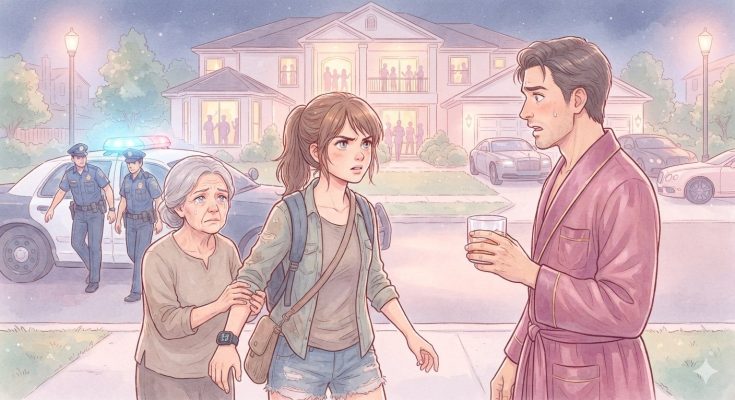
  • I mocked my ex-wife when I saw her lining up for free food: “Did the millionaire you left me for already abandon you?” She didn’t defend herself, she didn’t insult me, and she didn’t even look up; she just said “thank you” and took the plate. I followed her because something about her silence made me uneasy… and at the end of the street, I found a four-year-old girl with the same strange eyes as all the men in my family. When the little girl saw me, she pulled a photo of me out of her backpack and asked: “Mom… is he Nolan?”

    I mocked my ex-wife when I saw her lining up for free food: “Did the millionaire you left me for already abandon you?” She didn’t defend herself, she didn’t insult me, and she didn’t even look up; she just said “thank you” and took the plate. I followed her because something about her silence made me uneasy… and at the end of the street, I found a four-year-old girl with the same strange eyes as all the men in my family. When the little girl saw me, she pulled a photo of me out of her backpack and asked: “Mom… is he Nolan?”

    “Your mother never wanted me to be with you.”

    “That’s not true.”

    “Then ask her why she paid an investigator to follow me. Ask her who took those photographs. Ask her who faked the messages you found.”

    I felt something break beneath my feet.

    “Faked?”

    “Lawrence was my lawyer.”

    I blinked.

    “Your lawyer?”

    “Yes.”

    “Why did you need a lawyer behind my back?”

    Madeline looked at Ava and then at me.

    “Because I was pregnant.”

    The world lost its sound. I didn’t hear the cars. Nor the rain. Nor the voices. Only that word.

    “Pregnant?”

    Madeline nodded slowly. “I found out three weeks before you threw me out of the house.”

    I looked at the little girl. Ava was still hugging her backpack.

    “No…” “Yes.” “Is she…?”

    My voice cracked. Madeline took a deep breath.

    “Ava is your daughter.”

    I had to lean against the wall. For four years, I had imagined hundreds of ways of running into Madeline again. I never imagined this one.

    “Why didn’t you tell me?” “I tried to.” “No!”

    I put my hands to my head. “You can’t tell me that. You can’t show up four years later and say I have a daughter.”

    “I didn’t show up, Nolan. You found me.”

    That shut me up.

    “I called you,” she continued. “I went looking for you. I sent letters. I even sent the ultrasound.” “I never saw anything.” “Because Ophelia intercepted everything.”

    I shook my head. “My mother wouldn’t do that.”

    “Your mother came to see me when I was almost four months pregnant.” Madeline’s expression grew distant. “She offered me money.”

    “Money?” “A lot. To disappear.” “You’re lying.” “I wish I were.”

    Ava gently tugged on her mother’s jacket. “I’m cold.”

    Madeline crouched down. “We’re leaving now, sweetie.”

    She looked at me. “We can’t talk about this here.” “Then tell me where.”

    She hesitated. “We’re staying at a motel near the South Side.”

    Shame pierced through me. Less than an hour ago, I had mocked her for asking for food.

    “My car is nearby.” “No.” “It’s raining.” “We can go by ourselves.” “Madeline, please.”

    I don’t know what she saw in my face. She finally accepted.

    During the ride, Ava sat in the back with her mother. I watched them through the rearview mirror. Every time I saw her eyes, I felt like someone was squeezing my chest.

    The motel was worse than I imagined. An old building with damp walls. A small room. A full-size bed. One chair. Two suitcases. A box of toys. That was it.

    Madeline set the plate on a table. “Eat, Ava.”

    The little girl obeyed. I remained standing.

    “How did you end up like this?” Madeline let out a dry laugh. “Is that what’s important?” “That too.” “Lawrence died two years ago.”

    I felt another blow. “I didn’t know.”

    “Hardly anyone knew we were still in touch.” She sat down. “He was a friend of my father’s. When I found out I was pregnant, I wanted to legally protect the baby because your mother had already threatened me.”

    “Threatened you with what?” “With destroying you.”

    I frowned. Madeline opened one of the suitcases and pulled out a folder. She placed it in front of me. There were copies of wire transfers. Emails. Photographs. A private report. And a letter signed by Lawrence Bates.

    My hands started to shake.

    “Ophelia knew your company was about to go bankrupt,” Madeline said. “You never told me, but she knew. She had used family properties as collateral without telling you. If it came to light, you could lose everything and she could end up indicted.”

    I remembered that time. The debts. The arguments with banks. My mother suddenly showing up with investors.

    “Lawrence discovered the irregularities,” she continued. “I contacted him because I wanted to find a way to help you without you knowing your mother was involved.”

    “Why hide it?” “Because she was your mother. And because I was a coward.” Madeline looked down. “I thought I could solve it without destroying your relationship with her.”

    I picked up one of the papers. I recognized signatures. Numbers. Dates. Everything matched.

    “When Ophelia found out I was investigating,” she said, “she had us followed. Then she fabricated the messages.” “But you didn’t deny it.” “I tried to.” She looked right at me. “I told you I needed to talk to you.”

    I remembered my own voice. Get out. I felt nauseous.

    “And then…” “Then your mother came to see me.” Madeline pointed to the folder. “She showed me documents where it looked like you had participated in the fraud. She said that if I insisted on reaching out, she would hand everything over to the authorities and you would take the blame.”

    “I didn’t sign anything.” “I know that now.” “So you left to protect me?” “At first.” “And the years after that?”

    Her gaze changed. “After that, I stayed away because I was furious with you.” That hurt more because I understood it. “I hoped you would listen to me, Nolan. Just once. But you preferred to believe some photographs.”

    I had no defense.

    Ava came over with her spoon. “Mommy, I don’t want anymore.”

    Madeline looked at the plate. Less than half was left. “Eat three more spoonfuls.” “Two.” “Three.” “Two and a half.”

    Despite everything, I almost smiled. Madeline accepted. The little girl sat down again.

    “Why does she keep a picture of me?” I asked quietly. Madeline closed her eyes. “Because she asked about her dad.” “What did you tell her?” “The truth she could understand.” “Which is?” “That her dad’s name was Nolan. That he didn’t know she existed.”

    My eyes stung. “You never told her I abandoned her?” “You didn’t abandon someone whose existence you were unaware of.”

    I looked at Ava. “Can I talk to her?” Madeline hesitated. Then she called out: “Sweetie.”

    The little girl came over. I crouched down to her eye level. “Hi.” “Hi.” “My name is Nolan.” “I know.”

    She pulled the photo out of her backpack. It was old. Madeline and me in Lincoln Park. I was laughing.

    “Why do you have this?” “Mommy says you tell bad jokes.”

    Madeline covered her mouth. I let out a laugh that turned into a sob. “That’s true.”

    Ava tilted her head. “Are you my dad?”

    I looked at Madeline. She didn’t intervene.

    “Yes,” I answered. “I think so.” “Mommy says yes.” The childlike certainty destroyed me. “Then yes.”

    Ava watched me for a few seconds. “Where were you?”

    There is no preparation for that question. I swallowed hard. “I didn’t know where to look for you.” “And now you do?” “Now I do.” “Are you going to get lost again?”

    Madeline closed her eyes. I shook my head. “I don’t want to.”

    The little girl seemed to consider my answer. Then she held out her hand. “Look.”

    She showed me a drawing. Three figures. A woman. A little girl. And a man separated by a huge line.

    “That’s you.” “Why am I so far away?” “Because you hadn’t arrived yet.”

    I couldn’t hold back. I cried. In front of my daughter. In front of the woman I had destroyed for not listening to her.

    Ava touched my cheek. “Grown-ups cry too.” “A lot.” “My mommy cries when she thinks I’m asleep.”

    Madeline stood up. “Ava.” “What?” “Go put your things away.”

    When the girl walked away, I looked at Madeline. “Why are you here? What happened to the money Lawrence helped you recover?” “There was never any money.” “But you were working.” “Yes. Until six months ago.”

    She explained that the company where she worked had closed. Then Ava got sick with pneumonia. Hospital. Medicine. Debts. Months without finding a job. She sold the car. Then her furniture. Finally, she left the apartment.

    “Why didn’t you look for me?” Madeline let out a breath. “Because I didn’t want you to think I was showing up just because I needed money.”

    I felt ashamed. That is exactly what I would have thought. Until that morning.

    “And because I was afraid of Ophelia.”

    I stood up. “My mother has to answer for this.” “I don’t want a war.” “I want the truth.” “The truth doesn’t give us back four years.” “No.” I looked at her. “But it can prevent us from losing another four.”

    Madeline stayed quiet.

    “I’m not asking you to get back together with me,” I said. “I don’t even have the right to ask for your forgiveness and expect you to accept it.” I took a breath. “But I want to know my daughter. If you’ll let me.”

    “First, a DNA test.” “Today.” “Then, therapy.” “That too.” “And lawyers.” “Whichever ones you want.” “And you don’t take her alone until she feels safe.” “Agreed.”

    Madeline looked surprised. “I’m not going to fight you on anything,” I added. “I’ve already lost too much by fighting before listening.”

    Three days later, we got the results. Probability of paternity: 99.9998%.

    I stared at that number for several minutes. Then I cried again.

    My mother arrived at my office that same afternoon. I placed the folder on the desk. “Tell me it’s a lie.”

    Ophelia saw the documents. She didn’t ask where they came from. That was enough.

    “Nolan…” “Tell me.”

    She sat down slowly. “I did it for you.” That sentence completely destroyed something inside me.

    “You stole a daughter from me.” “That woman was going to ruin you.” “Madeline was trying to save me.” “You don’t know what you’re talking about.” “I know you faked messages.” Silence. “I know you intercepted letters.” Ophelia pressed her lips together. “I know you knew she was pregnant.”

    My mother looked down. I felt the little boy who had blindly trusted her disappear forever.

    “How could you?” “You were thirty years old, had a bankrupt company, and a pregnant wife. You needed to focus.” “I needed my family.” “I am your family.” “No.”

    My voice came out calm. “My daughter is my family. Madeline was my family. And you decided for me who deserved to stay.”

    Ophelia started to cry. For the first time, I didn’t go to comfort her.

    “There will be lawyers,” I said. “And if what you did constitutes a crime, you will face the consequences.” “Are you going to destroy your mother over that woman?” I looked at her. “No. You did this all by yourself.”

    I walked away.

    It wasn’t a perfect ending. True endings rarely are. Madeline didn’t get back together with me. Not immediately.

    For months, I was simply Ava’s dad. I took her to preschool. I learned she hated broccoli. That she needed to sleep hugging a blue bunny. That she pronounced “spaghetti” as “pasghetti”. That she was afraid of popping balloons. And that, when she was concentrating, she slightly bit her tongue exactly like I did.

    I got Madeline an apartment, but she insisted on paying a symbolic rent. She also found a job. She never let me support her financially.

    “Help your daughter,” she would tell me. “I can help myself.”

    I obeyed. For the first time, I learned that loving someone doesn’t always mean fixing their life. Sometimes it means respecting the way they choose to rebuild it.

    A year later, we went back to downtown Chicago. There was another food drive. This time, I was serving plates and Ava was handing out napkins wearing a huge vest that reached her knees.

    Madeline appeared behind her. Her hair was tied up. A simple dress. And that confidence I remembered. She looked at me.

    “Could you serve me, please?”

    I froze. Then I understood. I smiled. “Of course, ma’am.”

    I filled her plate. “Here you go.” Madeline took it. “Thank you.”

    Ava looked at us, confused. “Why are you talking weird?”

    Madeline let out a laugh. I did too. Then she leaned toward me.

    “By the way, Nolan.” “Yes?” “I’ve made a decision.” My heart started racing. “About what?” “We can try having dinner together.” “The three of us?”

    Madeline smiled. “First, the three of us.” She leaned in a little closer. “And then we’ll see.”

    I didn’t ask for more. I had finally learned not to demand answers from the future ahead of time.

    Ava took our hands. One on each side. “Come on, you two.”

    We walked under the same rain in which, a year earlier, I had followed a woman thinking I was going to uncover her failure. In reality, I had uncovered my own.

    I thought Madeline had lost everything. But it was me who had lived for four years without knowing what I was missing. A daughter. The truth. And the opportunity to listen before judging.

    That morning, I mocked my ex-wife because she was lined up for a free plate of food. I never imagined that, at the end of that line, life was about to give me back something that no money could buy.

    My daughter looked up. Her hazel eyes sparkled. In the left one appeared that small green brushstroke of the Sinclairs.

    “Dad.” My heart still stopped every time she called me that. “What’s up?” “Are you really coming back today?”

    I looked at Madeline. Then I gently squeezed Ava’s hand. “Yes.” This time I didn’t have to think about it. “Yes, today.”

    Ava smiled. And I understood that some people receive a second chance like a miracle. Mine came to me holding a plate of food, hiding under a jacket that was too thin, and holding the hand of a little girl who carried my photograph in her backpack.

    And ever since then, every time I feel tempted to judge someone for what they seem to be going through, I remember that morning. I remember Madeline looking down. I remember my cruelty. I remember her “thank you.”
  • My boyfriend texted me: “I’m sleeping with her tonight. Don’t wait up.” I replied: “Thanks for letting me know.” Then I packed up his entire life and left it at that door… but at 3:00 in the morning, my phone rang.

    My boyfriend texted me: “I’m sleeping with her tonight. Don’t wait up.” I replied: “Thanks for letting me know.” Then I packed up his entire life and left it at that door… but at 3:00 in the morning, my phone rang.

    The blue shirt was the first thing I folded.

    Ethan loved that shirt. He wore it on our first date—sleeves rolled up, that easy smile, the kind that made you believe you’d found something real. As I placed it into the box, I realized memories can feel weightless… once you stop believing in them.

    I didn’t cry.

    That surprised me more than anything.

    One by one, his things disappeared from my apartment: his watch, his shoes, the books he never read but liked to display, the toothbrush beside mine that once felt like a promise. With every box I sealed, I felt lighter, like I was removing something I had mistaken for love.

    When I reached his laptop, I paused.

    Not because I was curious.

    Because I no longer needed the truth.

    I already knew it.

    By 11 p.m., my apartment—my apartment—was half empty. No trace of Ethan, just the faint scent of cedar and coffee, the way it used to be before he entered my life.

    I stood there and took a deep breath.

    Silence.

    And for the first time in months, it didn’t scare me.

    I called a taxi.

    The driver didn’t ask questions as I loaded three large boxes into the trunk. I gave him the address, my voice steady in a way that felt unfamiliar, even to me.

    When we stopped in front of Lara’s place, my heart picked up— not from pain, but because endings always carry a certain finality.

    The lights were still on.

    I smiled.

    One by one, I placed the boxes neatly at her door. No banging, no note. No need.

    Silence can be the clearest message of all.

    I turned, walked down the steps, and left before the door could open.


    3:00 a.m.

    My phone buzzed relentlessly.

    Ethan calling.

    I stared at the screen for a moment before answering.

    “Vivian? What the hell are you doing?!” His voice was frantic, stripped of all composure.

    I leaned back against the headboard, staring at the ceiling.

    “You got your things?” I asked calmly.

    “Are you crazy? You brought all my stuff here? In the middle of the night?!”

    I smiled—a smile he couldn’t see.

    “You said you’d be staying there,” I replied. “I just helped you move in.”

    “This isn’t what you think—”

    “It doesn’t matter.” I cut him off, my voice calm but cold. “You don’t need to explain. I don’t need to hear it.”

    Silence hung on the line.

    Then, softer: “Vivian… you’re overreacting.”

    I closed my eyes.

    That was Ethan—always turning everything into my fault.

    But not this time.

    “No,” I said. “This time, I’m just cleaning up.”

    I hung up.


    The next morning, I woke up earlier than usual.

    Sunlight streamed through the window, filling a space that felt strangely new. No trace of him, no lingering doubt, no half-presence that made me question everything.

    I made coffee.

    Sat at the table.

    And for the first time in a long while, I felt… light.

    Not because I got revenge.

    But because I chose myself.

    My phone lit up—a message from Ethan:

    Can we talk?

    I looked at it for a moment.

    Then turned my phone face down.

    No reply.

    Because sometimes, the strongest answer… is silence.

    And I had already said enough.

  • My husband had spent 17 years saying in front of everyone that he would trade me for my best friend. The day our daughter asked me if I was a bad mom, I stopped laughing.

    My husband had spent 17 years saying in front of everyone that he would trade me for my best friend. The day our daughter asked me if I was a bad mom, I stopped laughing.

    David’s message lay glowing on the table like a touchscreen bomb.

    No one breathed. Not the country music on the speaker, not the cousins with their bourbon, not Mike’s mom with her hand over her mouth. Even the burgers seemed to have gone cold all at once.

    Mike was the first to react. He lunged for the phone, but I got there first. I grabbed it. He froze, with the suitcase in one hand and his dignity dragging on the floor.

    “Give me that,” he said.

    He didn’t yell. That scared me more. Because Mike yelled when he felt strong. When he spoke softly, it was because he was calculating.

    I looked at David. He was pale. Pale as if he had seen a dead man and the dead man had said hello.

    “What is done, David?” I asked.

    David swallowed hard. “It’s not what it looks like.”

    Oh, that phrase. The favorite phrase of the unimaginative guilty.

    Mike dropped the suitcase and took a step toward me. “Honey, don’t make a scene.”

    I laughed. A dry, broken laugh—the kind that comes out when the body has no more tears and starts manufacturing sarcasm.

    “A scene? Mike, you rented out the circus for seventeen years and now you’re annoyed that I’m turning on the lights.”

    Madison hugged Sarah tighter. Sarah, my best friend, looked devastated. Not from guilt. From fear. And that confirmed something for me: she didn’t know either.

    I unlocked the phone. Mike tried to snatch it from me. David stepped in the way.

    “Don’t touch her.”

    The phrase sounded loud. Too loud. Mike looked at him with pure hatred.

    “Shut up, traitor.”

    The word fell like a stone. Traitor. Not “meddler.” Not “friend.” Traitor.

    My fingers trembled as I unlocked the screen. Mike, foolish as only men who think they’re invincible can be, never changed his passcode: Madison’s birthday. The very daughter he had just humiliated.

    I opened the chat with David. There were messages from that week.

    Mike: “I need you to sign as a witness. I don’t want Laura looking into anything.”

    David: “This isn’t right.”

    Mike: “Don’t be a boy scout. It’s just to temporarily move the house into my mom’s name.”

    David: “Laura doesn’t know.”

    Mike: “And she doesn’t need to. If she gets intense about the Sarah thing, I’ll leave her without a house before she even thinks about leaving me.”

    I felt the noise of the world fade away. I read it again. “If she gets intense…” Intense. That’s what they call a woman when she stops being a doormat.

    I leaned against the table. Sarah approached. “What’s going on?”

    I couldn’t answer. I kept scrolling down.

    Mike: “David, did you convince the notary?”

    David: “He only agreed to review it because I told him it was urgent.”

    Mike: “Laura signed power of attorney forms years ago. She doesn’t remember.”

    David: “You told me she was on board.”

    Mike: “Well, she’s on board with keeping her nice lifestyle, right?”

    That’s when I looked up. I looked at David.

    “You knew he wanted to take my house?”

    David opened his mouth, but nothing came out.

    “You knew?” I repeated.

    “Not like that,” he finally said. “Mike told me you guys were restructuring assets for taxes. I… I started getting suspicious a few days ago.”

    Mike let out a loud laugh. “Don’t play the saint. You helped out just fine.”

    David clenched his fists. “Because you lied to me.”

    “Because you have a thing for my wife.”

    Silence fell again. But this time it wasn’t uncomfortable. It was brutal. David looked down. I felt like someone was scooping the air out of my lungs.

    Mike smiled, dirty, triumphant, as if he had finally found a way to drag everyone down into the mud with him.

    “See?” he said, looking at the family. “The poor humiliated wife had her little secret on the side too. David the hero. The polite man.”

    “Shut up,” Sarah said.

    Mike pointed a finger at her. “And don’t you even speak. Seventeen years playing the dignified friend, but you loved it when I flattered you.”

    Sarah walked up to him slowly. For a moment I thought she was going to cry. But no. She slapped him so hard it echoed all the way to the kitchen. Just one. Perfect. With years of accumulated disgust.

    “Never,” she said, her voice trembling. “I never liked it. I pitied you. And if I kept coming around, it was for her and Madison, not for you.”

    Mike touched his cheek. “You’re all crazy.”

    Madison took a step forward. “I’m not crazy, Dad.” Her voice was tiny, but it pierced through the whole house. “I did hear you when you said Mom was less than Aunt Sarah. I did hear when you said that if she were my mom, I’d be better. I heard everything.”

    Mike’s face changed. Not from guilt. From public shame. Because hurting people didn’t bother Mike. People seeing him hurt people bothered him. He crouched down a bit, faking tenderness.

    “My little girl, come here. You don’t understand adult things.”

    Madison stepped back. “Don’t call me your little girl right now.”

    I felt my heart break and put itself back together at the same time. My seven-year-old daughter had just set a boundary that took me seventeen years to learn.

    Mike looked at his mom, looking for support. “Mom, tell them something.”

    Martha, who always used to say, “that’s just how your husband is, sweetie, but he loves you,” stood up from her chair. She walked toward him. I thought she was going to defend him.

    She took the beer out of his hand. “I raised you poorly,” she said.

    Mike blinked. “What?”

    “I laughed at your rudeness. I applauded your jokes. I let you believe that a woman puts up with it because she loves you. And look what you’ve become.” Her voice broke. “But I’m not going to applaud you today.”

    Mike was left standing alone in the middle of all his people. And still, he didn’t apologize. Men like Mike don’t ask for forgiveness when they lose. They look for someone to blame.

    “Perfect,” he spat. “Everyone against me. Is this what you wanted, Laura? To humiliate me on my birthday?”

    I looked at him. Seventeen years. Seventeen years of laughing so no one would feel uncomfortable. Seventeen years of swallowing sentences like rocks. Seventeen years of thinking that maybe I was overreacting, that maybe I was too sensitive, that maybe marriage was just like this: a table full of people laughing while you bleed inside.

    “No, Mike,” I said. “I didn’t want to humiliate you. I wanted you to be decent. But clearly, that was asking too much.”

    He picked up his suitcase. “I’m leaving. But you’ll come begging for me.”

    “No.”

    “When you can’t pay for the house.”

    “Still no.”

    “When Madison asks for me.”

    That’s when I stepped closer. “Madison is going to ask for her dad. Not for the man who made her feel inadequate. I hope someday you can manage to become the former.”

    Mike opened the door. Before leaving, he turned to David. “And you, Judas, don’t even think you’re going to get to keep her.”

    David didn’t answer. I did.

    “I’m not a piece of furniture, Mike. No one gets to ‘keep’ me. I decide where I am.”

    And I closed the door.


    For the first time in years, the house was silent. Not at peace. Not yet. But silent. And sometimes silence is the first brick of a new life.

    The guests trickled out. Some apologized to me for not saying anything sooner. Others looked down because they knew they had laughed. No one took any cake.

    Sarah stayed. David did too, standing near the patio, as if awaiting sentencing.

    I sent Madison to put her pajamas on. She didn’t want to let go of me, but Sarah convinced her by promising to sleep with her in the guest room. When my daughter went upstairs, I sat across from David.

    “Explain.”

    He rubbed his hands over his face. “Mike asked me for help two months ago. He said you guys were having issues with the IRS, that he wanted to protect the house in case something went wrong with his business. He asked me to recommend a notary. I introduced him to one.”

    David: “It’s done. The notary won’t move anything without Laura. She still doesn’t know anything.”

    I closed my eyes. I felt relief. Then anger. Because the relief didn’t erase the fact that David had taken too long.

    “Why didn’t you tell me from the beginning?”

    David looked down. “Because I’m a coward.” The honesty disarmed me more than any excuse. “Because Mike has been my friend since college. Because I thought I was overreacting. Because I didn’t want to get in the middle of a marriage. Because…” he took a deep breath, “because I do care about you, and I was afraid you’d think I was doing it for that reason.”

    Sarah spoke from the stairs: “Well, you made it worse.”

    David nodded. “Yeah.”

    I didn’t have the strength to forgive anyone that night. Not Mike. Not David. Not myself for letting my daughter learn to read my wounds before her schoolbooks.

    “Leave, David,” I said.

    He looked up. He didn’t protest. He didn’t play the victim. He just nodded. “I’ll send you all the documents tomorrow. And the contact info for a lawyer. She’s the best I know.”

    “Send them to Sarah.”

    “Okay.” He walked to the door. Before leaving, he stopped. “Laura… I’m sorry.”

    I didn’t answer. Because that night the words “I’m sorry” fell short. Like a band-aid on a broken bone.


    When the house was finally empty, I went up to Madison’s room. She was awake. Sarah was by her side, stroking her hair. My daughter looked at me.

    “Is Dad gone?”

    “Yes.”

    “Is he coming back?”

    I lay down next to her. “Not to live here.”

    Madison swallowed hard. “Is it my fault?”

    It hurt so much I had to take a breath before answering. “No, my love. Never. Your dad left because mom decided that in this house, we aren’t going to hurt people with jokes anymore.”

    She thought about it. “So jokes can be mean too?”

    “Yes. When they make someone cry and the other person keeps laughing, they aren’t jokes anymore.”

    Madison snuggled into my chest. “I don’t want a dad who makes my mom cry.”

    I hugged her. “And I don’t want a life where you think that’s normal.”

    Sarah covered us with a blanket. And that night the three of us slept in the same bed, like survivors of a hurricane that had finally stopped knocking on the door.


    The next day the war began.

    Mike sent thirty-seven texts before 9 AM. “You’re overreacting.” “Madison needs her father.” “This is all David’s fault.” “I never wanted to take anything from you.” “Answer me, you’re acting immature.” Then voice memos. I didn’t listen to them. Sarah saved them.

    The lawyer David recommended was named Emily Robbins. She arrived at my house in a gray suit, black glasses, and the face of a woman who ate abusive men for breakfast with a side of pastries. She reviewed documents, deeds, POAs, messages.

    “Your husband tried to move the property using an old power of attorney,” she said. “He didn’t manage to do it, but the intent is documented.”

    “Can I legally kick him out?”

    “Yes. And we’re also going to request a restraining order so he can’t come near the house while the separation is resolved.”

    I stayed quiet. Separation. The word sounded massive. Like a heavy door.

    Emily looked at me. “Laura, what you experienced wasn’t humor. It was emotional abuse. And what he tried to do with the house was financial abuse.”

    Abuse. Another massive word. I always thought abuse was a hit, a black eye, a broken door. I never imagined it could also be a table full of relatives laughing while your husband belittled you.

    “And Madison?” I asked.

    “We’re going to protect her.”

    That was the only thing I needed to hear.

    The following days were strange. The house smelled of absence. But not of sadness. Of cleanliness. Like when you move an old piece of furniture and find the wall is marked, but can still be painted over.

    Madison started therapy. So did I. The first time the therapist asked me what I felt, I said “exhaustion” and cried for forty minutes. Not for Mike. For me. For the version of me that learned to smile with a mouth full of humiliation.

    Sarah came over every day. She cooked, took Madison to school, scolded me when I wanted to check Mike’s social media “just to see.”

    “Don’t stick your hand in the trash can just to confirm it stinks,” she’d tell me.

    David sent the documents and then disappeared. He didn’t call me. He didn’t look for me. He didn’t try to play the hero. That, even though I hated to admit it, spoke better of him than any speech.

    Mike, on the other hand, did what he did best: perform for an audience. He started telling the family that I was having an affair with David. That that’s why I kicked him out. That he was only joking around because “that’s how we joked.” That I was manipulating Madison.

    But this time something had changed. People weren’t laughing anymore.

    His own mother testified in my favor. His cousins handed over videos of parties where you could hear his “jokes.” Sarah wrote a letter detailing every time he made her uncomfortable, every uninvited hug, every comment disguised as a compliment, every time she tried to stop him and he put her on the spot even more.

    And Madison, my brave little girl, told the therapist: “My dad made jokes that made the house sad.” That sentence ended up in the case file.

    Mike lost the right to enter the house. Supervised visits were established. And when the lawyer managed to block any movement on the property, I felt like I could finally breathe without asking for permission.


    A month later, Mike asked to see me. I agreed to meet at a coffee shop, with Emily at the next table and Sarah waiting outside in the car. He arrived with an ironed shirt and the face of a professional penitent.

    “I miss you,” he said. He didn’t even order a coffee.

    “You miss your house,” I replied.

    “Don’t be cruel.”

    “Cruel was telling a little girl that another woman would have been a better mom.”

    His jaw trembled. “I didn’t think Madison would take it like that.”

    “You didn’t think of Madison at all.”

    He looked down. “I’m going to therapy.”

    “That’s great.”

    “I want my family back.”

    I looked at him for a long time. There was a time when that phrase would have broken me. It would have made me imagine Sundays, forgiveness, promises, new photos to cover the old ones. But now I only saw a man who confused a family with an audience.

    “Your family wasn’t a given, Mike. It was something you had to take care of.”

    “And David?”

    I laughed softly. There it was. His repentance had lasted exactly seven minutes.

    “David has nothing to do with my decision.”

    “Yes he does. He was always hovering.”

    “Yes. And even so, you’re the one who lost me.”

    He fell silent. “Did you ever love me?” he asked.

    The question surprised me. Not because it was deep. But because it never occurred to him to ask it when it still mattered.

    “Yes,” I said. “Very much. So much that I confused love with endurance.”

    Mike cried. A tear rolled down his cheek. In the past, I would have reached across to wipe it away. Now, I just pushed a napkin toward him.

    “I have to go pick up Madison,” I said.

    “Can I see her today?”

    “When it’s your day and as the lawyer ordered.”

    “Laura…”

    “Don’t say ‘Laura‘ in a funeral voice. I didn’t die.”

    I stood up. And for the first time, Mike stayed in his seat watching me leave. Not as a wife. Not as a victim. As someone he could no longer reach.

    Six months passed. Life didn’t become perfect. It became ours.

    Madison started laughing out loud again. Sarah remained my sister for life, although there were hard days where we also had to talk about the damage her silence caused. She cried, apologized, and told me something I never forgot: “I thought defending you meant telling him to stop. Now I understand I also should have asked you why you were still there.” I hugged her. Because we women also learn things too late.

    David returned to my life in the simplest way: he knocked on the door one Saturday with a box of missing documents and a bag of cookies for Madison.

    “I’m not coming in to stay,” he said before I could speak. “I just brought this.”

    Madison came running out. “Uncle David!”

    He smiled, but looked at me for permission. I nodded. He sat in the living room, at a distance, respectfully. Madison told him about school. He listened as if every word was important. And that, after Mike, was almost revolutionary.

    When he left, he left me a note.

    “I don’t want to be your escape. If you ever let me be close, let it be because your life is already complete, not because you need someone to pick up the pieces.”

    I kept the note. I didn’t reply. Not yet. Because I was busy doing something more urgent: getting to know myself.

    I took a part-time job at a bakery. Then I started selling custom desserts. Mike’s birthday cake—the one no one ate—became a private inside joke and a signature recipe: dark chocolate with berry filling. I named it “I’m Not Laughing Anymore.” It sold out constantly. A customer asked me why the name. I told her: “Because there are flavors that wake you up.”

    A year later, I signed the divorce papers.

    Mike arrived at the courthouse looking older, even though only twelve months had passed. He didn’t make jokes anymore. He didn’t mention Sarah. He didn’t look at David, who was waiting outside with me, without coming in, without intruding.

    When I signed, my hand didn’t shake. Mike held the pen longer than necessary.

    “I hope someday you forgive me,” he said.

    I looked at him. “I hope someday you understand what you did.”

    He signed. And that’s how seventeen years ended. Not with shouting. Not with dramatic music. With black ink on white paper.

    When I walked out, Madison was waiting for me with Sarah and David. She had a drawing in her hand: a house, three women holding hands, and a huge sun. David was drawn off to the side, next to a tree.

    “And why is he over there?” I asked with a smile.

    Madison shrugged. “Because he doesn’t push the door open. He knocks.”

    David turned red. Sarah burst out laughing. I hugged my daughter and realized that kids don’t need perfect fairytales. They need safe truths.


    That night we had dinner at the house. Not a party. A dinner. Hot chili, an “I’m Not Laughing Anymore” cake, and soft music.

    Sarah raised her glass of sweet tea. “To Laura,” she said. “Who stopped laughing when it hurt.”

    Madison raised hers. “To my mom, who really is a good mom.”

    I felt my eyes fill with tears. David raised his glass too. “To homes where cruelty disguised as a joke is no longer allowed.”

    I looked around. My table. My daughter. My friend. My life. It wasn’t the life I imagined when I married Mike. It was better, because it was no longer built on fear.

    I raised my glass. “To us,” I said. “Because it took us a while, but we made it.”

    Madison hugged me around the waist. “Mommy, are we happy now?”

    I thought of all the times I pretended to be. I thought of every laugh I swallowed like a thorn. I thought of the black suitcase by the door, David’s text message, Sarah’s slap, the voice of my daughter saying “it’s your fault.” And I smiled. This time for real.

    “Yes, my love,” I said. “But the best part is that now we know why.”


    Outside, the world was exactly the same. Neighbors kept gossiping. Mike kept saying I left him for someone else, because some men prefer a lie that makes them a victim over a truth that holds them accountable.

    But inside my house, there were no more cutting jokes. No more forced laughter. No more little girl wondering if her mom was less than. There was peace. An imperfect peace, with therapy on Tuesdays, bills to pay, desserts that sometimes burned, and a woman learning to look in the mirror without apologizing.

    And if anyone asked me what was the hardest part of leaving, I wouldn’t say “leaving Mike.” The hardest part was leaving the Laura who believed that enduring was loving.

    But the day my daughter asked me if I was a bad mom, that Laura died. And in her place, another was born. One who no longer laughs when she’s hurting. One who no longer confuses silence with patience. One who finally learned that when a man needs to humiliate you to feel big, he isn’t a husband, he isn’t a partner, he isn’t family.

    He’s just noise. And I, after seventeen years, chose to turn it off.

  • After 6 years working abroad, I came home to surprise my mom in the $600k house I bought………..

    After 6 years working abroad, I came home to surprise my mom in the $600k house I bought………..

    Julian’s smile disappeared the moment the first black SUV stopped behind my car.
    The second pulled in beside it.
    The third parked directly across the street.
    None of them had flashing lights.
    None of them needed them.
    The doors opened almost in perfect sequence.
    A tall woman in a navy suit stepped out first, carrying a leather portfolio. Behind her came Harrison Vance, the attorney who had managed my affairs for six years. Two uniformed Travis County deputy sheriffs followed, along with a locksmith pushing a rolling toolbox.
    The music inside the house was still playing.
    Laughter drifted through the open doorway.
    Julian suddenly wasn’t smiling anymore.

    He looked from Harrison to the deputies and finally to me.
    “What… what is this?”
    Harrison answered before I could.
    “Good evening. I’m Harrison Vance, legal representative for the property owner.”
    Julian tightened his grip around his glass.
    “I know who owns the property.”
    “Do you?” Harrison asked.
    Khloe appeared behind Julian.
    The moment she saw the deputies, all the color left her face.
    “Natalie, what did you do?”
    I stepped out of my car.
    “What I should have done two years ago.”
    Several guests had gathered behind them now.
    People who had probably spent the evening drinking my wine, sitting on furniture I had purchased, inside the home I had bought so my mother could finally live without worrying about money.
    Julian lowered his voice.
    “You are embarrassing us.”
    I almost laughed.
    “Embarrassing you?”

    I walked toward him.
    “You made my sixty-two-year-old mother scrub your outdoor kitchen on her knees.”
    His guests went silent.
    Khloe immediately shook her head.
    “That’s not what happened.”
    “Then tell them what happened.”
    “Natalie—”
    “Tell everyone why Mom sleeps in the little room near the garage while you sleep in the master bedroom.”
    One woman inside slowly lowered her wineglass.
    Julian’s jaw tightened.
    “This is a private family matter.”
    “No,” Harrison said calmly. “It became a legal matter several hours ago.”
    He opened the leather portfolio.

    Julian stared at it.
    Harrison pulled out several documents.
    “The property at this address is owned solely by Natalie Mercer. There is no lease agreement between Ms. Mercer and either of you. There is no rental agreement. There is no record of rent being paid.”
    Julian gave a sharp laugh.
    “I already explained this. We’ve established residency.”
    “And that issue will be handled according to the law,” Harrison replied. “But residency doesn’t magically transfer ownership.”
    Julian looked at me.
    “You brought sheriffs here to scare us?”
    One deputy stepped forward.
    “We’re here to keep the peace, sir.”
    “Then tell her she can’t throw us onto the street!”
    The deputy’s expression didn’t change.
    “I’m not your attorney.”
    That answer destroyed some of Julian’s confidence.
    Khloe pushed past him.
    “Natalie, please.”
    It was the first time she had said please.
    “We’re sisters.”
    I stared at her.
    “You remembered that quickly.”

    Her eyes filled with tears.
    “Mom told us we could stay.”
    “For two weeks.”
    “We had nowhere else to go.”
    “That was two years ago.”
    “We were struggling.”
    “So you took her bedroom?”
    Khloe looked away.
    “So you took control of the money I sent her?”
    Her face changed.
    Julian immediately interrupted.
    “That money paid household expenses.”
    I turned toward him.
    “Three thousand dollars every month.”
    He said nothing.
    “Thirty-six thousand dollars a year.”
    Still nothing.
    “Seventy-two thousand dollars over two years.”
    One of their guests quietly picked up her purse.
    Then another did the same.

    Khloe noticed.
    “Please don’t leave,” she said.
    Nobody listened.
    Within seconds, people were moving toward the door.
    Julian’s humiliation was unfolding right in front of him, and I could see he hated that more than anything else.
    “You planned this,” he hissed.
    “No. You planned it. I just came home early.”
    That silenced him.
    Harrison handed me a document.
    “There’s something else you need to know.”
    I looked down.
    It was a bank authorization form.
    My mother’s name was printed at the top.
    Underneath it was another name.
    Khloe Mercer.
    My sister.
    I looked at Harrison.
    “What is this?”
    “When you told me they had access to your mother’s cards, I contacted the financial institution using the authorization Martha signed years ago allowing your office to assist with suspected exploitation.”
    Khloe’s breathing changed.
    “That’s private.”
    Harrison ignored her.
    “There have been transfers.”
    My stomach tightened.
    “What transfers?”

    He turned to the second page.
    The first amount was $4,800.
    Then $7,200.
    Then $12,500.
    Then another $9,000.
    My eyes moved down the page.
    Payment after payment.
    Transfers I had never authorized.
    “Where did this money come from?”
    Harrison looked directly at me.
    “The account you funded for your mother.”
    I slowly raised my eyes toward Khloe.
    She stepped backward.
    “Natalie, I can explain.”
    “How much?”
    “Please—”
    “HOW MUCH?”
    The entire street seemed to go silent.
    Harrison answered.
    “Based on what we’ve confirmed so far, just over fifty-one thousand dollars.”
    I felt something inside me go cold.
    Not because of the money.
    I could earn money again.
    But my mothe

    Khloe began crying.
    Julian stepped in front of her.
    “We used it.”
    “For what?”
    “Living expenses.”
    I looked toward the driveway.
    A black Mercedes sat beside Khloe’s SUV.
    Then I looked at Julian’s watch.
    His clothes.
    The party.
    The bottles visible through the windows.
    “Living expenses.”
    Julian’s face hardened.
    “You don’t understand what it’s like when you’re trying to maintain a certain standard.”
    I actually stared at him for several seconds.
    Then I smiled.
    It wasn’t a happy smile.
    “A standard?”
    “Natalie,” Khloe whispered.
    “Our mother was scrubbing grease off a counter while you maintained a standard?”
    Khloe covered her face.
    Harrison touched my arm.
    “There’s more.”
    Julian snapped his head toward him.
    “What else?”
    Harrison didn’t answer him.
    He handed me another sheet.
    I read the first line.
    Then the second.
    Then I stopped.
    My mother’s signature appeared at the bottom.
    Except something was wrong.
    I knew her handwriting.
    I had seen it on birthday cards my entire life.
    This signature looked almost right.
    Almost.
    “What is this?”
    “A property-related document submitted approximately eight months ago.”
    My heart started pounding.
    “What property?”
    “This one.”
    I looked up.
    Julian went completely still.
    Khloe whispered his name.
    “Julian…”
    Harrison continued.
    “It appears someone attempted to create documentation suggesting Martha possessed an ownership interest in the house.”
    “But she doesn’t.”
    “Correct.”
    “I bought it. My name is on the deed.”
    “Correct.”
    “Then why would anyone do this?”
    Harrison looked toward Julian.
    “That’s what we’re going to find out.”
    Julian finally lost control.
    “This is ridiculous!”
    He threw his glass onto the lawn.
    It shattered.
    One deputy immediately moved forward.
    “Sir, keep your hands where we can see them.”
    Julian froze.
    Khloe started sobbing.
    “Stop! Everybody just stop!”
    I barely heard her.
    I was staring at the document.
    “Mom didn’t sign this.”
    Harrison’s voice was quiet.
    “We don’t believe she did.”
    My sister sank onto the front step.
    That told me everything.
    I walked toward her.
    “Khloe.”
    She wouldn’t look up.
    “Did you know?”
    Silence.
    “Look at me.”
    Slowly, she raised her face.
    I had never seen my sister look that frightened.
    “I didn’t know at first.”
    My stomach dropped.
    “At first?”
    Julian shouted from behind me.
    “Shut your mouth, Khloe.”
    The deputy immediately stepped between us.
    Khloe looked at her husband.
    Then at me.
    And something broke inside her.
    “He said you weren’t coming back.”
    Julian’s face turned white.
    “Khloe.”
    “He said after enough time passed, we could make the house ours.”
    I couldn’t breathe for a second.
    “He told me Mom would eventually sign whatever we needed.”
    “That’s a lie!” Julian shouted.
    Khloe stood.
    “You told me Natalie had enough money!”
    “Stop talking!”
    “You said she wouldn’t care about one house!”
    “KHLOE!”
    The deputy put a hand out.
    “Sir.”
    Julian stopped.
    Harrison was already taking notes.
    I stared at my sister.
    “Did Mom sign anything?”
    Khloe shook her head violently.
    “No.”
    “Then whose signature is this?”
    Her eyes moved toward Julian.
    That was enough.
    Julian turned toward the house.

    The deputy blocked him.
    “Where are you going, sir?”
    “Inside.”
    “Stay here.”
    “It’s my house!”
    I stepped closer.
    “No.”
    For the first time that evening, I raised the deed in my hand.
    “It never was.”
    Julian looked like he wanted to tear it out of my fingers.
    Instead, Harrison moved between us.
    “From this moment forward, all communication regarding the property goes through me.”
    The locksmith opened his toolbox.
    Julian stared at him.
    “What is he doing?”
    Harrison answered.
    “Securing areas of the property the owner is legally entitled to secure tonight while the remaining occupancy issues are handled through proper procedure.”
    Julian laughed bitterly.
    “So this little show doesn’t actually get us out tonight.”
    Harrison didn’t react.
    “Nobody said we’re ignoring legal procedure.”
    Julian’s smile slowly returned.
    He thought he had found his victory.
    “Exactly.”
    Then he looked at me.
    “I’ll be sleeping in that master bedroom tonight.”
    I said nothing.
    “And tomorrow.”
    Still nothing.
    “And probably for weeks while your lawyer plays paperwork games.”
    He stepped closer.
    “You should have stayed in Dubai.”
    I looked at him.
    Then at Harrison.
    Harrison gave me the smallest nod.
    Because Julian still didn’t understand.
    This wasn’t only about the house anymore.
    I pulled out my phone.
    At 9:17 p.m., I called the bank.
    At 9:23, every card connected to the account I funded for my mother was frozen pending investigation.
    At 9:31, I removed Khloe and Julian from every emergency contact, household service authorization, and account they had somehow inserted themselves into.
    At 9:46, Harrison submitted preservation requests for the financial records connected to the missing money.
    And at 10:08, my mother called me from the hotel.
    “Natalie?”
    Her voice sounded nervous.
    “I’m here, Mom.”
    “Are you safe?”
    I closed my eyes.
    She was worried about me.
    After everything they had done to her, she was worried about me.
    “I’m safe.”
    There was silence.
    Then she whispered something I wasn’t expecting.
    “There’s something I didn’t tell you.”
    I opened my eyes.
    “What?”
    “About Julian.”
    My gaze moved across the street.
    He was standing inside the front window, watching me.
    “What about him?”
    My mother began crying.
    “Three months ago, he made me go to a lawyer’s office.”
    Every muscle in my body tightened.
    “Why?”
    “He said you had asked him to help update the house papers.”
    My heart stopped.
    “I never asked him that.”
    “I know that now.”
    “Mom, what did you sign?”
    She didn’t answer.
    “Mom?”
    “I don’t know.”
    Across the street, Julian suddenly stepped away from the window.
    Then I heard my mother whisper:
    “But Natalie… before we left that office, I heard the lawyer congratulate Julian.”
    “Congratulate him for what?”
    She took a shaking breath.
    “For becoming the beneficiary of something worth more than the house.”
    I stared at the dark window where Julian had been standing.
    The house was worth six hundred thousand dollars.
    So whatever he had tried to take from my mother…
    was bigger.
    Much bigger.
    And suddenly I understood why Julian had looked so confident when I arrived.
    He hadn’t simply been living in my mother’s house.
    He had been waiting for something.
    And I was beginning to suspect that my surprise return from Dubai hadn’t interrupted a family arrangement.
    It had interrupted a plan.
    A plan that was almost finished.

    PART 3 — THE DOCUMENT MY MOTHER NEVER MEANT TO SIGN

    “Something worth more than the house.”
    My mother’s words stayed in my head.
    Across the street, the curtains moved.
    Julian was watching me again.
    Only this time, I wasn’t looking at an arrogant man refusing to leave my property.
    I was looking at a man who might have spent months preparing for something I didn’t yet understand.
    “Mom,” I said carefully, “do you remember the name of the lawyer?”
    She was quiet.
    “No. But I remember the building.”
    “Where?”
    “Downtown. Near the courthouse. It had a big brass number beside the elevator.”
    “Anything else?”
    “I think the lawyer’s first name was Stephen.”
    That wasn’t much.
    But it was enough to start.
    “Did they give you copies of anything you signed?”
    “No.”
    “Did Julian?”
    “No.”
    “Did Khloe go with you?”
    Another pause.
    “No.”
    That surprised me.
    “It was just you and Julian?”
    “Yes.”
    I looked toward the house.
    “Why didn’t you tell Khloe?”
    “Julian told me she already knew.”
    Of course he did.
    I closed my eyes.
    “What exactly did he tell you before you signed?”
    “He said you were reorganizing things because you were overseas. He said if anything happened to you, there needed to be someone in America who could manage the property.”
    My stomach turned.
    “He used my name?”
    “Yes.”
    “He said I requested it?”
    “Yes.”
    “Mom, did he show you anything from me? An email? A letter?”
    “No.”
    She started crying again.
    “I should have called you.”
    “Mom.”
    “I should have known.”
    “Listen to me. We’re going to figure out exactly what happened.”
    I didn’t want her carrying another ounce of fear tonight.
    “Get some sleep. Lock the hotel door. Don’t answer it for anyone except the nurse or me.”
    “Okay.”
    “And Mom?”
    “Yes?”
    “Don’t tell Khloe or Julian anything else.”
    Her voice became very small.
    “Is Khloe in trouble?”
    I looked at my sister through the front window.
    “I don’t know yet.”
    I ended the call and immediately walked toward Harrison.
    He was speaking with the woman in the navy suit.
    “I need you.”
    Something in my face made him stop mid-sentence.
    “What happened?”
    I told him.
    Every word.
    The lawyer.
    The documents.
    Julian claiming I had requested them.
    The congratulations.
    And the mysterious beneficiary designation.
    Harrison didn’t interrupt once.
    When I finished, his expression had completely changed.
    “Did Martha remember the attorney’s name?”
    “Stephen. Maybe.”
    “Location?”
    “Downtown near the courthouse.”
    He turned to the woman beside him.
    “Rachel.”
    She was already opening her laptop.
    “I’ll start checking.”
    “Checking what?” I asked.
    “Recorded instruments, probate-related filings, trust documents, corporate records, anything attached to Martha’s name.”
    Julian suddenly opened the front door.
    “You people planning to camp out there all night?”
    I turned.
    Harrison quietly said, “Don’t engage.”
    But Julian wanted me to.
    He stepped onto the porch.
    “You made your point, Natalie. Go back to your hotel.”
    “My hotel?”
    “Wherever you’re staying.”
    He smiled.
    “We’ll deal with this tomorrow.”
    Something about his confidence bothered me.
    He had just learned his financial access was being frozen.
    He knew Harrison was investigating the questionable signature.
    He knew deputies had witnessed Khloe admitting he had talked about taking the house.
    Yet he was still smiling.
    Why?
    Then I noticed something.
    He was holding his phone.
    And the screen kept lighting up.
    Someone was calling him repeatedly.
    Julian rejected the call.
    Five seconds later, it rang again.
    He rejected it.
    Again.
    The smile vanished for half a second.
    Harrison noticed too.
    “Expecting someone?” I asked.
    “None of your business.”
    His phone rang again.
    This time he walked inside.
    Rachel looked up from her laptop.
    “I found something.”
    Harrison and I moved toward her.
    “What?”
    “Your mother’s full legal name is Martha Elaine Mercer?”
    “Yes.”
    “And her date of birth?”
    I confirmed it.
    Rachel typed.
    Then her expression tightened.
    “Interesting.”
    I hated that word already.
    “What?”
    “There’s a limited liability company registered eighteen months ago.”
    “So?”
    “Your mother is listed as a member.”
    I stared at her.
    “My mother has never owned a company.”
    “Apparently, on paper, she does.”
    Harrison leaned closer.
    “Name?”
    Rachel turned the laptop toward us.
    MJM Residential Holdings LLC.
    I read it twice.
    “What does MJM stand for?”
    Rachel didn’t answer.
    She didn’t need to.
    Martha.
    Julian.
    Mercer.
    My mother’s first initial.
    Julian’s first initial.
    And our family name.
    “Who registered it?”
    Rachel clicked.
    Then stopped.
    “Julian Cross.”
    I felt my pulse in my throat.
    “What does this company own?”
    “I’m checking.”
    She searched another database.
    Ten seconds.
    Twenty.
    Then she inhaled sharply.
    “Harrison.”
    He leaned closer.
    “What?”
    “There are property-related filings connected to it.”
    My stomach dropped.
    “My house?”
    “Not exactly.”
    “What does that mean?”
    Rachel looked at me.
    “It means we need to see the underlying documents before drawing conclusions.”
    “Rachel.”
    She hesitated.
    “There appears to have been an attempt to use Martha’s supposed interest in this property as collateral.”
    I stared at her.
    “Collateral for what?”
    “A business loan.”
    “How much?”
    She scrolled.
    Then she said the number.
    “$410,000.”
    For several seconds, nobody spoke.
    I looked at my house.
    My mother’s house.
    The place I had purchased outright.
    No mortgage.
    No debt.
    No bank had any claim to it.
    Or at least no legitimate claim.
    “Did they get the money?”
    “We don’t know yet.”
    “Can someone borrow against a property they don’t own?”
    “Not legally,” Harrison said.
    “Then how?”
    “Fraudulent documents. Misrepresentations. Forged signatures. Sometimes a lender fails to catch something. Sometimes someone inside the process helps.”
    I immediately remembered what Mom had said.
    The lawyer congratulated Julian.
    “Stephen.”
    Harrison looked at me.
    “What?”
    “The lawyer.”
    Rachel was typing again.
    “Searching attorneys named Stephen associated with the filing.”
    Julian’s phone rang again inside.
    Then the front door opened.
    But it wasn’t Julian.
    It was Khloe.
    She stepped outside alone.
    Her makeup had streaked down her face.
    “Natalie.”
    I didn’t move.
    She walked toward me.
    “I need to tell you something.”
    Harrison quietly closed his folder.
    “Anything you say may become relevant to a legal proceeding.”
    Khloe looked terrified.
    “I don’t care anymore.”
    She looked back toward the house.
    Then whispered:
    “Julian lied to me too.”
    “About what?”
    “The money.”
    “Which money?”
    Her eyes moved toward Rachel’s laptop.
    So she knew.
    “The loan,” she whispered.
    My stomach tightened.
    “You knew about the $410,000?”
    “I knew he borrowed money.”
    “Against my house?”
    “No! He told me Mom was investing with him.”
    “Investing in what?”
    Khloe rubbed her arms.
    “A development.”
    “Where?”
    “I don’t know.”
    “You expect me to believe that?”
    “I’m telling you the truth.”
    “After two years of letting Mom live like a servant?”
    She flinched.
    “I know.”
    “No. I don’t think you do.”
    “Natalie, please.”
    “Did you take her money?”
    Khloe started crying.
    “I used the cards.”
    “That’s not what I asked.”
    She couldn’t answer.
    “Did you transfer money from her account?”
    “Sometimes.”
    “Fifty-one thousand dollars worth of sometimes?”
    Her face collapsed.
    “I didn’t realize it had gotten that high.”
    I almost laughed.
    “You don’t accidentally spend fifty-one thousand dollars.”
    “Julian kept saying we’d put everything back.”
    “With what?”
    “The development money.”
    There it was again.
    “What development?”
    “I don’t know!”
    “Then what were you expecting to make money from?”
    Khloe looked toward the house.
    “I wasn’t allowed to ask questions.”
    That sentence changed something.
    “Allowed?”
    She lowered her voice.
    “Julian handles everything.”
    “Khloe, what has he gotten himself into?”
    “I don’t know.”
    “Then why are you scared?”
    She looked at me.
    Really looked at me.
    “Because two months ago, I found a second phone.”
    Harrison stepped closer.
    “What was on it?”
    “I couldn’t unlock it.”
    “Then how do you know it matters?”
    “Because Julian caught me holding it.”
    Her voice trembled.
    “I’ve never seen him that angry.”
    “What did he do?”
    “He grabbed it from me and told me if I ever touched it again, I’d regret it.”
    My anger toward Khloe didn’t disappear.
    But for the first time, I saw something else underneath her arrogance.
    Fear.
    Real fear.
    “Where is the phone?”
    “I don’t know.”
    “Think.”
    “He keeps a locked case in the office.”
    “The office in my house?”
    She nodded.
    “I’ve never had the combination.”
    I looked at Harrison.
    He immediately understood.
    “We do not touch anything without determining what you’re legally entitled to access and whether evidence preservation is involved.”
    Then Rachel spoke.
    “I found Stephen.”
    We turned.
    She rotated the laptop.
    An attorney’s profile appeared.
    Stephen Caldwell.
    Caldwell Property & Estate Law.
    Downtown Austin.
    I showed Khloe.
    “Do you know him?”
    Her face changed instantly.
    “Oh my God.”
    “You know him?”
    “He’s been here.”
    “When?”
    “Several times.”
    “For parties?”
    “No.”
    She shook her head.
    “He always came late.”
    “How late?”
    “Ten. Eleven. Sometimes after midnight.”
    Harrison’s expression hardened.
    “Why?”
    “Julian said they were working on investments.”
    Then headlights appeared at the end of the street.
    A dark sedan turned toward the house.
    Khloe looked at it.
    And froze.
    “What?” I asked.
    She grabbed my arm.
    “Natalie.”
    “What?”
    “That’s his car.”
    “Whose?”
    She stared at the sedan as it slowed beside the curb.
    “Stephen Caldwell’s.”
    The car stopped.
    The driver’s door opened.
    A gray-haired man in an expensive suit stepped out carrying a briefcase.
    He took three steps toward the house.
    Then he saw Harrison.
    Then Rachel.
    Then the deputies.
    Then me.
    He stopped.
    For one brief second, pure panic crossed his face.
    He turned around.
    “Mr. Caldwell?” Harrison called.
    Stephen kept walking.
    Faster.
    “Stephen!” Julian shouted from the doorway.
    That was the worst possible thing he could have done.
    Stephen stopped.
    Everyone heard it.
    Everyone saw Julian standing there.
    Julian realized his mistake immediately.
    Stephen looked at him with absolute fury.
    Then one deputy said, “Sir, we’d like you to remain here for a moment.”
    Stephen turned.
    “I’m under no obligation to speak with you.”
    “That’s correct.”
    “Then I’m leaving.”
    He reached his car.
    But before he could open the door, Harrison spoke.
    “Mr. Caldwell, tomorrow morning we’ll be seeking records concerning documents allegedly executed by Martha Mercer.”
    Stephen’s hand stopped on the handle.
    “Who?”
    That single word made Khloe gasp.
    Because Stephen had been inside this house multiple times.
    He knew exactly who Martha was.
    Harrison smiled slightly.
    “Interesting.”
    Stephen opened the car door.
    Then I stepped forward.
    “My mother remembers you.”
    He looked at me.
    “And she remembers signing documents in your office.”
    Nothing.
    “She also remembers you congratulating Julian.”
    Stephen’s face tightened.
    I took another step.
    “What did you congratulate him for?”
    He got into the car.
    The engine started.
    Seconds later, he disappeared down the street.
    Nobody spoke.
    Then Harrison’s phone rang.
    He answered.
    “Harrison Vance.”
    His expression changed almost immediately.
    “Repeat that.”
    I watched him.
    “What is it?”
    He held up one finger.
    “Send it to me now.”
    He ended the call.
    “What happened?”
    Harrison looked at me.
    “That was an investigator I use for asset tracing.”
    My stomach tightened.
    “And?”
    “He found where part of the loan proceeds went.”
    “Where?”
    “Not to a development.”
    Khloe covered her mouth.
    “Then where?”
    Harrison’s phone buzzed.
    He opened the document.
    Then looked directly at my sister.
    “Approximately $180,000 was transferred into an account associated with Julian.”
    Khloe whispered, “I knew it.”
    But Harrison wasn’t finished.
    “Forty thousand went toward vehicle purchases.”
    I looked at the Mercedes.
    “Another sixty-two thousand appears to have paid personal debt.”
    “And the rest?”
    Harrison stared at the screen.
    “That’s the problem.”
    “What problem?”
    “The remaining funds moved through several accounts.”
    “Where did they end up?”
    “We’re still tracing them.”
    Julian was no longer standing at the door.
    I looked toward the house.
    The living room was empty.
    “Where’s Julian?”
    Khloe turned.
    “Julian?”
    Nothing.
    She rushed toward the doorway.
    “Julian!”
    One deputy followed.
    Then we heard an engine.
    Not from the driveway.
    From behind the house.
    Khloe stopped dead.
    “The garage.”
    A vehicle accelerated somewhere beyond the rear fence.
    Julian had left.
    Harrison immediately pulled out his phone.
    But I wasn’t looking at the street anymore.
    I was looking through the open front door.
    Something was lying on the living-room floor.
    A white envelope.
    Khloe walked toward it.
    “Don’t touch it,” Harrison warned.
    We approached carefully.
    My name was written across the front.
    NATALIE.
    My blood ran cold.
    “Was that there before?” I asked.
    Khloe shook her head.
    “No.”
    Harrison photographed it before carefully opening it.
    Inside was one sheet of paper.
    Only one sentence had been typed across the middle.
    I read it.
    Then read it again.
    IF NATALIE COMES HOME BEFORE OCTOBER 14, EVERYTHING CHANGES.
    I looked at Harrison.
    “What happens October fourteenth?”
    He didn’t answer.
    Because Khloe had suddenly gone pale.
    I turned toward her.
    “You know.”
    She backed away.
    “Khloe.”
    “I wasn’t supposed to tell you.”
    “Tell me what?”
    Her lips trembled.
    “Julian kept talking about October fourteenth.”
    “Why?”
    “He called it the day we would finally be free.”
    “Free from what?”
    She stared at me.
    Then whispered:
    “From Mom.”
    And suddenly the missing money wasn’t the thing frightening me anymore.
    Neither was the forged paperwork.
    Neither was the house.
    Because October 14 was only five weeks away.
    And whatever Julian had planned for that date involved my mother.

    👉Click Here to continuous Read​​​​ Full Ending StoryPART 4 — WHAT WAS SUPPOSED TO HAPPEN ON OCTOBER 14

  • PART 4 — WHAT WAS SUPPOSED TO HAPPEN ON OCTOBER 14

    “From Mom.”
    Khloe’s words seemed to drain every sound from the street.
    I stared at her.
    “What does that mean?”
    “I don’t know exactly.”
    “Don’t do that.”
    “Natalie—”
    “Don’t tell me you don’t know after saying something like that.”
    Khloe’s hands were trembling.
    “Julian never explained everything.”
    “Then tell me what he did explain.”

    She looked toward the road where her husband’s car had disappeared.
    “He kept saying October fourteenth would solve our problems.”
    “What problems?”
    “The debt. The house. Everything.”
    Harrison stepped closer.
    “Did he ever mention Martha’s estate?”
    Khloe hesitated.
    “Once.”
    My stomach tightened.
    “What did he say?”
    “We were arguing about money. I told him we couldn’t keep living like this.”
    “And?”
    “He said, ‘It won’t matter after October fourteenth because Martha’s estate will take care of everything.’”
    I felt sick.
    “My mother is alive.”
    “I know.”
    “Then why was he talking about her estate?”
    “I asked him the same thing.”
    “What did he say?”

    Khloe swallowed.
    “He said I worried too much.”
    Harrison immediately called someone.
    I turned away and called the hotel.
    The front desk answered.
    “This is Natalie Mercer. My mother Martha Mercer is staying in one of your suites. I need you to confirm she’s safe.”
    “One moment, ma’am.”
    The wait lasted maybe fifteen seconds.
    It felt like fifteen minutes.
    “Ms. Mercer?”
    “Yes?”
    “Your mother is in her suite. The nurse is still with her.”
    My knees nearly weakened.
    “Nobody gets access to that room unless I personally authorize it.”
    “Understood.”
    “And please send hotel security to her floor.”
    “Immediately.”
    I ended the call.
    Harrison was already walking toward me.
    “We’re moving her.”
    “Tonight?”
    “Tonight.”
    “Where?”
    “Somewhere Julian doesn’t know.”
    Khloe looked devastated.
    “You think he’d hurt Mom?”
    I turned toward her.
    “You tell me.”

    She couldn’t.
    That answer frightened me more than a denial would have.
    Within thirty minutes, Harrison arranged a different hotel under increased privacy restrictions.
    I called Mom and told her we were changing locations.
    I didn’t tell her why.
    Not yet.
    At 11:34 p.m., I watched her enter the new suite.
    The nurse helped her onto the sofa.
    Mom looked exhausted.
    “What happened to the house?” she asked.
    “We’re handling it.”
    “And Khloe?”
    “She’s safe.”
    Mom nodded.
    Then she looked at me.
    “Julian?”
    I sat beside her.
    “Mom, I need you to tell me everything you remember about October fourteenth.”
    Her forehead creased.
    “October fourteenth?”
    “Has Julian ever mentioned that date?”

    She thought.
    Then her face changed.
    “What?”
    “I have an appointment.”
    My heart started pounding.
    “What appointment?”
    “Julian scheduled it.”
    “For what?”
    “A medical evaluation.”
    Nobody moved.
    “What kind of medical evaluation?”
    “He said it was required for some insurance paperwork.”
    Harrison and I exchanged a look.
    “When did he schedule it?”
    “A few weeks ago.”
    “Where?”
    “I don’t remember the doctor’s name.”
    “Do you have the appointment information?”
    “My phone.”

    She reached into her purse.
    I opened her calendar.
    October 14.
    10:30 a.m.
    DR. BENJAMIN HARROW — COGNITIVE ASSESSMENT.
    I felt cold.
    “Mom, did Julian tell you it was a cognitive assessment?”
    “No.”
    “What did he call it?”
    “A routine insurance exam.”
    Harrison took a photograph of the appointment.
    Then he asked, “Martha, has anyone recently suggested you’re having memory problems?”
    She stared at him.
    “No.”
    “Has Julian?”
    She thought for several seconds.

    “Sometimes.”
    “What does he say?”
    “Little things.”
    “Like?”
    “He’ll tell me I forgot conversations.”
    “Did you?”
    “I don’t think so.”
    She rubbed her forehead.
    “He’d move things and tell me I misplaced them. Sometimes he’d say I had agreed to something when I didn’t remember agreeing.”
    Khloe started crying.
    I turned.
    She was standing near the doorway.
    “I saw him do that.”
    Mom looked at her.
    “What?”
    Khloe covered her mouth.
    “I saw him take your keys once.”
    Mom stared at her.
    “He put them in the pantry.”
    Khloe’s voice broke.
    “Then when you couldn’t find them, he told me your memory was getting worse.”

    My mother looked shattered.
    “Why didn’t you tell me?”
    “I don’t know.”
    “Khloe.”
    “I was scared of him!”
    Mom’s eyes filled with tears.
    “You let me think I was losing my mind.”
    Khloe sank into a chair.
    “I’m sorry.”
    Mom turned away.
    That hurt her more than the money.
    I could see it.

    For months, Julian hadn’t merely been controlling her.
    He had been making her question herself.
    And Khloe had watched.
    Harrison spoke carefully.
    “A cognitive assessment could potentially be used in proceedings concerning someone’s ability to manage financial or legal affairs. We don’t know that’s what Julian intended, but given everything else, we need the records before reaching conclusions.”
    “Then get them,” I said.
    “I will.”
    Mom suddenly whispered, “There’s another appointment.”
    I turned.
    “What?”
    She took the phone from me and scrolled.
    October 14.
    2:00 p.m.
    CALDWELL PROPERTY & ESTATE LAW.
    Stephen Caldwell.

    The same attorney.
    My skin prickled.
    Morning: cognitive assessment.
    Afternoon: estate attorney.
    Same day.
    “What was supposed to happen there?”
    Mom shook her head.
    “Julian said we’d finish the insurance paperwork.”
    Harrison stared at the calendar.
    “This doesn’t look accidental.”
    Then Mom said something that made all of us freeze.
    “Julian asked me a strange question last week.”
    “What question?”
    “He asked whether you would inherit everything if something happened to me.”
    My mouth went dry.
    “What did you tell him?”
    “The truth.”
    “What truth?”
    “That you and Khloe are both in my will.”
    Khloe looked up.
    “But Mom, you don’t have enough money for all this.”

    Mom frowned.
    “What do you mean?”
    “The loan. Julian kept saying your estate would cover everything.”
    My mother looked confused.
    “I don’t have four hundred thousand dollars.”
    Harrison slowly turned toward me.
    “Maybe Julian believed she did.”
    I remembered what Mom had told me earlier.
    The lawyer had congratulated Julian for becoming beneficiary of something worth more than the house.
    “Harrison.”
    “I remember.”
    “Find every insurance policy connected to Mom.”
    He nodded.
    It took until nearly two in the morning.
    Nobody slept.
    Rachel worked from her laptop at the dining table while Harrison made calls.
    Khloe sat alone near the window.
    Mom finally fell asleep in the bedroom.
    At 2:17 a.m., Rachel stopped typing.
    “I found one.”
    I stood.
    “How much?”

    She looked at Harrison before answering.
    “Two million dollars.”
    Khloe shot to her feet.
    “What?”
    I couldn’t speak.
    “Beneficiary?”
    Rachel kept reading.
    “Originally Natalie Mercer and Khloe Mercer, fifty percent each.”
    “Originally?”
    My voice sounded strange.
    Rachel nodded.
    “The beneficiary designation was changed four months ago.”
    My heartbeat thundered.
    “To whom?”
    She rotated the screen.
    A company name appeared.
    MJM RESIDENTIAL HOLDINGS LLC.
    The company Julian had created using my mother’s name.
    For several seconds, nobody moved.
    Then Harrison said quietly, “If this documentation is authentic, Julian positioned an entity he controlled to receive the proceeds.”
    Khloe shook her head.
    “No. No, he couldn’t.”
    Rachel continued.
    “The company lists Martha as a member, but the management authority appears to belong to Julian.”
    Khloe stumbled backward.
    “He told me MJM was for the development.”
    “It may have been used for several purposes,” Harrison said.
    I stared at the number.
    $2,000,000.
    Suddenly everything connected.
    The strange documents.
    The lawyer.
    The cognitive assessment.
    The estate appointment.
    The fake concerns about Mom’s memory.
    The loan.
    October 14.
    But one piece was still missing.
    “Why October fourteenth?”
    Nobody answered.
    Then Khloe’s phone buzzed.
    She looked at the screen.
    Her entire face changed.
    “It’s Julian.”
    “Don’t answer,” Harrison said.
    But it wasn’t a call.
    It was a message.
    Khloe read it.
    Then another arrived.
    Then another.
    “What does it say?”
    She wouldn’t answer.
    I took one step toward her.
    “Khloe.”
    She handed me the phone.
    The first message read:
    YOU SHOULD HAVE KEPT YOUR MOUTH SHUT.
    The second:
    NOW NATALIE IS GOING TO RUIN EVERYTHING.
    The third made my blood run cold.
    YOU HAVE UNTIL MORNING TO FIX THIS.
    I looked at Harrison.
    “What does he expect her to fix?”
    Khloe shook her head.
    “I don’t know.”
    Her phone buzzed again.
    A photograph appeared.
    It had been taken from outside the hotel.
    Our previous hotel.
    The one where Mom had been staying less than two hours earlier.
    Someone had photographed the entrance.
    Underneath it, Julian had written:
    WHERE DID YOU MOVE HER?
    Khloe dropped the phone.
    “Oh my God.”
    Harrison was already calling hotel security.
    I walked toward Mom’s bedroom.
    The door was closed.
    I opened it.
    She was sleeping peacefully.
    I stood there watching her breathe.
    My mother had spent two years believing she was a burden.
    Two years surrendering her bedroom.
    Two years handing over money.
    Two years being told she was forgetful.
    And now I knew someone had placed two million dollars between her life and Julian’s financial problems.
    I closed the door quietly.
    When I returned, Harrison was waiting.
    “We need to treat every document as potentially important evidence. And until we know exactly what Julian intended, Martha should not be alone.”
    “She won’t be.”
    Khloe wiped her face.
    “What happens now?”
    I looked at her.
    “Now you decide.”
    “Decide what?”
    “Whether you’re going to keep protecting your husband or help protect our mother.”
    “I already told you everything.”
    “No.”
    I pointed toward her phone.
    “You’re still scared of something.”
    Khloe froze.
    “I can see it.”
    She looked down.
    “Tell me.”
    “I can’t.”
    “Then leave.”
    Her head snapped up.
    “What?”
    “If you’re still protecting him, you don’t stay near Mom.”
    “I’m not protecting him.”
    “Then tell me what you’re hiding.”
    She began trembling.
    Harrison said nothing.
    Finally, Khloe whispered:
    “There’s a storage unit.”
    I stared at her.
    “What storage unit?”
    “Julian rented it about six months ago.”
    “What’s inside?”
    “I don’t know everything.”
    “What do you know?”
    “I followed him there once.”
    “Where?”
    “South Austin.”
    “Why?”
    “Because I thought he was having an affair.”
    “Was he?”
    “I don’t know.”
    “What did you see?”
    She closed her eyes.
    “Boxes.”
    “What kind of boxes?”
    “Mom’s things.”
    The room went silent.
    “What things?”
    “Old financial records. Medical files. Copies of IDs.”
    My hands curled into fists.
    “Anything else?”
    Khloe looked at me.
    “A suitcase.”
    “What was in it?”
    “I only saw it open for a few seconds.”
    “Khloe.”
    “Cash.”
    “How much?”
    “I don’t know.”
    “Thousands?”
    She shook her head.
    “More.”
    “Tens of thousands?”
    Her voice dropped.
    “Probably.”
    Harrison grabbed his coat.
    “Do you know the unit number?”
    “No.”
    “Facility?”
    “Yes.”
    She gave him the name.
    Then she said, “There’s something else.”
    I almost didn’t want to hear it.
    “What?”
    “Inside the suitcase was a passport.”
    “Whose?”
    “Julian’s?”
    “No.”
    “Yours?”
    She shook her head.
    “Then whose?”
    Khloe looked toward the bedroom where our mother slept.
    “Mom’s.”
    I frowned.
    “Why would Julian hide Mom’s passport?”
    “That’s what scared me.”
    Then she whispered:
    “Because beside it were two airline tickets.”
    My stomach dropped.
    “For where?”
    “I couldn’t see the destination.”
    “When were they for?”
    Khloe looked straight at me.
    “October fourteenth.”
    And just like that, the date stopped looking like an appointment.
    It started looking like an escape plan.

    PART 5 — THE STORAGE UNIT

    “October fourteenth.”
    I stared at Khloe.
    “The airline tickets were for October fourteenth?”
    She nodded.
    “Both of them?”
    “Yes.”
    “Whose names were on them?”
    “I couldn’t see.”
    “But Mom’s passport was beside them.”
    “Yes.”
    Harrison was already reaching for his phone.
    “We need to be careful here. A passport beside airline tickets doesn’t prove what Julian intended.”
    “I know.”
    But my instincts were screaming.
    Everything pointed toward the same date.
    Mom’s cognitive assessment at 10:30.
    Stephen Caldwell’s office at 2:00.
    Two airline tickets.
    Her passport hidden in a storage unit.
    A two-million-dollar insurance policy redirected toward an LLC controlled by Julian.
    And Julian had told Khloe that October fourteenth was the day they would finally be “free.”
    Harrison stepped into the hallway to make calls.
    I turned back to Khloe.
    “Take me to the storage facility.”
    Her eyes widened.
    “Now?”
    “Now.”
    “Natalie, it’s almost three in the morning.”
    “I don’t care.”
    “We can’t just break into his unit.”
    “We won’t.”
    “But—”
    “We’re going to identify it.”
    Khloe looked toward Mom’s bedroom.
    Then she nodded.
    Twenty minutes later, Mom had additional security arrangements in place and Rachel remained with her.
    Harrison came with Khloe and me.
    The streets of Austin were nearly empty.
    Nobody spoke much during the drive.
    Khloe sat in the back seat staring through the window.
    Finally, she whispered, “You hate me.”
    I kept my eyes on the road.
    “I don’t know what I feel about you yet.”
    “I deserve that.”
    “You let Mom sleep beside the garage.”
    “I know.”
    “You spent her money.”
    “I know.”
    “You watched Julian make her question her memory.”
    Khloe started crying quietly.
    “I know.”
    I tightened my hands around the steering wheel.
    “What I don’t understand is why.”
    She didn’t answer immediately.
    Then she said, “Because it happened slowly.”
    I glanced in the mirror.
    “What did?”
    “Everything.”
    She wiped her cheek.
    “When we first moved in, Julian was wonderful to Mom. He cooked for her. Took her shopping. Fixed things around the house.”
    “And then?”
    “He started saying Mom needed help managing money.”
    “Why?”
    “Because she forgot to pay one electricity bill.”
    My jaw tightened.
    “One?”
    “One.”
    “And you handed over her finances?”
    “Not immediately.”
    Khloe looked ashamed.
    “Julian said he’d handle the bills temporarily. Then he convinced Mom to give him one card. Then another.”
    “Then the master bedroom?”
    She nodded.
    “He said his back hurt in the guest bed.”
    I almost laughed at the absurdity.
    “And Mom?”
    “She offered the master bedroom for a week.”
    “Which became two years.”
    “Yes.”
    “What about her room near the garage?”
    Khloe looked down.
    “Julian said she liked privacy.”
    “And you believed that?”
    “No.”
    That answer hurt worse.
    She hadn’t believed it.
    She had simply accepted it.
    At 3:18 a.m., we reached the storage facility.
    Khloe pointed through the windshield.
    “That’s it.”
    Rows of metal doors stretched beneath harsh security lights.
    The gate was closed.
    Harrison looked at the posted information.
    “We’re not entering tonight.”
    I nodded.
    “I want the unit identified and preserved through proper legal channels.”
    Khloe pointed toward the far side.
    “I think it was somewhere in Building C.”
    “Think?”
    “I only came once.”
    Harrison photographed the facility information.
    Then he said, “We’ll contact management as soon as possible.”
    We returned to the hotel.
    I didn’t sleep.
    At 6:42 a.m., Harrison was already working.
    At 7:15, he had contacted the storage facility.
    At 8:03, he confirmed Julian rented a unit there.
    C-117.
    At 9:20, Harrison told me he was pursuing the appropriate legal process to preserve access records and relevant evidence.
    By noon, we had another problem.
    Julian had disappeared.
    His Mercedes was found in a parking garage downtown.
    His phone went directly to voicemail.
    Nobody knew where he was.
    Not Khloe.
    Not Stephen Caldwell.
    At least Stephen claimed he didn’t.
    But Julian wasn’t the only person I wanted answers from.
    At 1:10 p.m., Harrison and I walked into Caldwell Property & Estate Law.
    Stephen’s receptionist looked uncomfortable the moment she heard Martha Mercer’s name.
    “Mr. Caldwell isn’t available.”
    “He was available at my house after midnight,” I said.
    Her eyes widened.
    Harrison placed his business card on the desk.
    “We’re requesting preservation of all records relating to Martha Mercer, Natalie Mercer, Julian Cross, Khloe Mercer, and MJM Residential Holdings.”
    The receptionist didn’t touch the card.
    “I’ll give this to Mr. Caldwell.”
    A door opened behind her.
    Stephen appeared.
    He stopped when he saw us.
    “Natalie.”
    I smiled without warmth.
    “So you do know who I am.”
    He glanced at Harrison.
    “This is inappropriate.”
    “What was inappropriate was pretending you didn’t know my mother last night.”
    “I was surprised.”
    “You visited my house multiple times.”
    “I visited Julian.”
    “For what?”
    “Attorney-client matters.”
    “Did you prepare documents for my mother?”
    His expression tightened.
    “I won’t discuss confidential matters in a lobby.”
    “Then invite us into your office.”
    “No.”
    Harrison stepped forward.
    “You understand preservation obligations.”
    “I understand my obligations perfectly.”
    “Good.”
    Stephen looked at me.
    “If you’re suggesting I participated in wrongdoing, you should be very careful.”
    “I’m suggesting my mother says you let her sign documents she didn’t understand after Julian falsely told her I requested them.”
    “That’s not what happened.”
    Finally.
    A crack.
    “Then what happened?”
    Stephen realized what he’d said.
    He looked furious with himself.
    I stepped closer.
    “What did my mother sign?”
    “I think this meeting is over.”
    “Was it related to the insurance policy?”
    His eyes flickered.
    Tiny.
    Almost invisible.
    But I saw it.
    So did Harrison.
    “Interesting,” Harrison said.
    Stephen pointed toward the exit.
    “Leave.”
    We did.
    Because we had gotten what we needed.
    He was scared of the insurance question.
    At 4:36 p.m., another piece arrived.
    Rachel had obtained additional information about MJM Residential Holdings.
    She spread several pages across the hotel dining table.
    “Julian didn’t create this company alone.”
    I looked down.
    “What do you mean?”
    “There was another organizer involved.”
    “Who?”
    She tapped the page.
    Stephen Caldwell.
    Khloe whispered, “Oh my God.”
    Rachel continued.
    “And there’s another name.”
    I looked.
    Dr. Benjamin Harrow.
    The doctor scheduled to perform Mom’s cognitive assessment.
    My entire body went cold.
    “The doctor?”
    “His name appears in connection with a consulting entity that received payments tied to MJM.”
    Harrison raised a hand.
    “We don’t yet know what those payments were for.”
    “How much?”
    Rachel answered.
    “$18,500 over seven months.”
    I stared at the paper.
    The attorney.
    The doctor.
    Julian.
    The same people circling my mother.
    “Cancel Mom’s October appointment.”
    “Already done,” Harrison said.
    “Good.”
    Then Rachel handed me another document.
    “We also traced one more payment.”
    “To whom?”
    “Not a person.”
    “What?”
    “A travel company.”
    Khloe stood.
    “The tickets.”
    “Possibly.”
    Rachel had obtained the booking information.
    Two passengers.
    Departure date: October 14.
    Austin to Miami.
    Miami to Nassau.
    One passenger was Julian Cross.
    The second was Martha Mercer.
    My mother.
    “One-way?”
    I asked.
    Rachel nodded.
    “One-way.”
    Khloe covered her mouth.
    “He was taking her out of the country?”
    “We don’t know that he actually would have,” Harrison cautioned.
    “But he bought the ticket.”
    “Yes.”
    “Without telling her.”
    “Apparently.”
    “Why Nassau?”
    Nobody knew.
    Then Rachel slid another page toward me.
    “But there was a third booking.”
    I stared at her.
    “What third booking?”
    “Different airline. Same date.”
    “Whose?”
    “Khloe.”
    My sister went completely still.
    “What?”
    Rachel looked at her.
    “Your name.”
    “Where?”
    “New York.”
    “One-way?”
    “Yes.”
    Khloe stared at the page.
    “I didn’t book that.”
    “Julian had access to your identification?”
    “Yes.”
    “Your passport?”
    “Yes.”
    “When did you last see it?”
    She opened her mouth.
    Then stopped.
    She ran toward her suitcase.
    Seconds later, clothes were flying across the bed.
    She searched every pocket.
    Every compartment.
    Then she slowly turned toward us.
    “My passport isn’t here.”
    The room went silent.
    Julian had purchased one-way tickets for October fourteenth.
    Himself and Mom to Nassau.
    Khloe to New York.
    Different flights.
    Different destinations.
    “What was he planning?” Khloe whispered.
    Nobody answered.
    At 5:52 p.m., Harrison’s phone rang.
    He listened for less than a minute.
    Then looked at me.
    “We have movement on the storage unit.”
    My heart jumped.
    “What kind of movement?”
    “Facility records show Julian accessed C-117 yesterday.”
    “When?”
    “At 6:12 p.m.”
    I remembered the timeline.
    Yesterday at 6:12, I had been at the hotel with Mom.
    Julian already knew I had returned.
    He had gone to the storage unit before the confrontation at nine.
    “What did he take?”
    “We don’t know.”
    “But surveillance footage exists?”
    “Yes.”
    Harrison made another call.
    By evening, relevant footage had been preserved.
    When we were finally permitted to review the available security video, the image was grainy but clear enough.
    6:12 p.m.
    Julian entered Building C empty-handed.
    6:19 p.m.
    He emerged carrying a large black duffel bag.
    6:21 p.m.
    He returned inside.
    6:26 p.m.
    He came out carrying a cardboard document box.
    Then something happened that made Harrison lean closer to the screen.
    Julian stopped.
    Someone else entered the frame.
    Stephen Caldwell.
    The attorney.
    Stephen helped Julian load the box into the Mercedes.
    Then the two men stood beside the car talking for nearly four minutes.
    At one point, Stephen handed Julian something.
    A small envelope.
    Then Julian drove away.
    Khloe stared at the screen.
    “They were moving evidence.”
    “Possibly,” Harrison said.
    “Can we get into the unit?”
    “We’re working through the proper process.”
    It took longer than I wanted.
    Every hour felt dangerous.
    But eventually, lawful access was arranged.
    When the metal door of C-117 finally rolled upward, nobody spoke.
    The unit smelled like cardboard and dust.
    There were approximately twenty boxes.
    A filing cabinet.
    Two suitcases.
    A locked metal case.
    And an old wooden desk.
    Khloe pointed.
    “That’s the suitcase.”
    It was open.
    Empty.
    “The cash is gone.”
    Harrison documented everything before anything was examined.
    The first box contained Mom’s tax records.
    The second contained copies of her bank statements.
    The third held medical documents.
    Then I opened a folder bearing my name.
    My stomach dropped.
    Copies of my passport.
    Copies of my overseas employment contract.
    Old signatures.
    Bank information.
    Property records.
    Photographs.
    Dozens of photographs.
    Me leaving airports.
    Me entering offices.
    Me outside my apartment in Dubai.
    Some were years old.
    “What the hell is this?”
    Khloe whispered.
    I couldn’t answer.
    Someone had been tracking me.
    Not casually.
    Systematically.
    Then Harrison found a calendar.
    Several dates were circled.
    My previous planned return dates.
    Business trips.
    Contract milestones.
    And October 14.
    Beside October 14, Julian had written two words:
    FINAL WINDOW.
    My skin prickled.
    “Final window for what?”
    Harrison turned another page.
    Then stopped.
    There was a handwritten checklist.
    Cognitive report.
    Caldwell signatures.
    MJM transfer.
    Policy confirmation.
    Flights.
    Natalie overseas.
    Khloe separated.
    Martha moved.
    At the bottom was one final line.
    72 HOURS.
    I stared at it.
    “What happens in seventy-two hours?”
    Nobody knew.
    Then Khloe called from the back of the unit.
    “Natalie.”
    Something in her voice made me run.
    She was standing beside the old desk.
    One drawer was open.
    Inside were several photographs of Mom.
    But these weren’t ordinary photographs.
    Mom walking to the grocery store.
    Mom sitting at a café.
    Mom entering her doctor’s office.
    Mom asleep in the passenger seat of Julian’s car.
    Someone had been photographing her too.
    Khloe picked up another envelope.
    “There’s something inside.”
    Harrison stopped her.
    He documented it first.
    Then we opened it.
    A copy of Mom’s insurance policy.
    Two million dollars.
    Attached to it was a handwritten note.
    The handwriting looked like Julian’s.
    Three lines.
    OCT 14 — HARROW.
    OCT 14 — CALDWELL.
    OCT 14 — DEPART.
    And beneath those lines:
    DO NOT LET NATALIE RETURN BEFORE COMPLETION.
    My chest tightened.
    This wasn’t something Julian had invented after I arrived.
    My return had been anticipated.
    Feared.
    Planned around.
    Then Harrison noticed a small digital recorder taped beneath the desk.
    He carefully documented its position.
    Later, once the recording could be handled appropriately, we listened.
    At first there was only static.
    Then Julian’s voice.
    “…once she’s declared incapable, Caldwell handles the rest.”
    Another man’s voice answered.
    I recognized Stephen.
    “And Natalie?”
    “Still overseas.”
    “You’re certain?”
    “Her contract keeps her there until November.”
    Then another voice.
    A third man.
    “You’re taking an enormous risk.”
    Julian laughed.
    “No.”
    There was a pause.
    Then he said:
    “The risk disappears on October fourteenth.”
    Khloe grabbed my arm.
    The recording continued.
    Stephen asked, “And Martha?”
    Julian answered:
    “By the time Natalie realizes what’s happened, Martha won’t even be in the country.”
    My blood went cold.
    Then the third voice spoke again.
    “What if Martha refuses to travel?”
    Silence.
    Five seconds.
    Six.
    Then Julian answered.
    “She won’t have a choice.”
    The recording ended.
    Nobody moved.
    Nobody breathed normally.
    I looked at Harrison.
    “Who was the third man?”
    “I don’t know.”
    Then my phone rang.
    Unknown number.
    Harrison motioned for me to put it on speaker.
    I answered.
    “Hello?”
    Silence.
    Then Julian’s voice.
    “Natalie.”
    Khloe gasped.
    “Where are you?”
    He laughed quietly.
    “You really should stop looking through things that don’t belong to you.”
    I stared around the storage unit.
    “You mean my mother’s stolen records?”
    Silence.
    “You mean copies of my passport?”
    His voice changed.
    “You have no idea what you’re interfering with.”
    “I know enough.”
    “No. You don’t.”
    “Then explain it.”
    He laughed again.
    “You always thought being the successful sister made you smarter than everyone.”
    “This isn’t about me.”
    “It was always about you.”
    That stopped me.
    “What does that mean?”
    “You bought the house.”
    “You sent the money.”
    “You controlled everything from six thousand miles away.”
    “I gave Mom security.”
    “You gave her dependence.”
    “Where are you, Julian?”
    He ignored me.
    “You should have stayed in Dubai five more weeks.”
    “Why?”
    “Because then none of this would matter.”
    “What was supposed to happen October fourteenth?”
    Silence.
    Then he said something I wasn’t expecting.
    “Ask your mother about Robert Mercer.”
    My heart stopped.
    Robert Mercer.
    My father.
    The man who had died when I was sixteen.
    “What does my father have to do with this?”
    Julian whispered:
    “Everything.”
    Then the call disconnected.
    I stood completely still.
    Khloe stared at me.
    Harrison said, “Natalie?”
    But I was already remembering something.
    My father hadn’t left us much when he died.
    At least that’s what Mom had always told us.
    A small retirement account.
    Some personal belongings.
    Nothing else.
    But suddenly I remembered a locked metal box Mom had kept for years.
    A box she refused to discuss.
    She once told me it contained “old papers from your father.”
    I looked at Khloe.
    “Do you remember Dad’s metal box?”
    She frowned.
    “The gray one?”
    “Yes.”
    Her face slowly changed.
    “Mom kept it in her bedroom closet.”
    “Exactly.”
    We searched every box in the storage unit.
    Every drawer.
    Every suitcase.
    It wasn’t there.
    I called Mom.
    She answered sleepily.
    “Natalie?”
    “Mom, I need to ask you something.”
    “What?”
    “Dad’s metal box.”
    Silence.
    “Where is it?”
    She didn’t answer.
    “Mom?”
    Her voice became nervous.
    “Why are you asking about that?”
    “Because Julian just told me to ask you about Dad.”
    Another silence.
    Longer this time.
    “Mom, what’s in the box?”
    She whispered:
    “Something I promised your father I would never touch unless you came home permanently.”
    My heart pounded.
    “What?”
    She began crying.
    “Your father didn’t die with nothing, Natalie.”
    I closed my eyes.
    “How much?”
    “It’s not money.”
    “Then what is it?”
    Mom took a shaking breath.
    “Ownership.”
    “Ownership of what?”
    Her answer changed everything.
    “Land.”
    “Where?”
    “Outside Austin.”
    “How much land?”
    “Your father bought it before the area developed.”
    “Mom, how much is it worth?”
    “I don’t know now.”
    Harrison was already opening his laptop.
    “Whose name is it in?”
    Mom whispered:
    “Mine, until both my daughters met the conditions your father put in his trust.”
    “What conditions?”
    “You both had to turn thirty.”
    Khloe and I looked at each other.
    She had turned thirty four months ago.
    “Then what?”
    Mom started crying harder.
    “Then the land passes equally to you and Khloe.”
    Harrison typed faster.
    “Mom, why didn’t you tell us?”
    “Your father wanted you to build your own lives without waiting for an inheritance.”
    “Where are the trust documents?”
    “In the metal box.”
    “Where is the box?”
    Silence.
    “Mom.”
    “Julian took it.”
    My stomach dropped.
    “When?”
    “Three months ago.”
    “Why didn’t you tell me?”
    “He said you asked him to bring it to Stephen Caldwell.”
    The same lie.
    Again.
    Harrison suddenly stopped typing.
    His face had changed.
    “What?”
    He rotated his laptop toward me.
    He had found the parcel records.
    The land wasn’t a forgotten little property outside Austin anymore.
    Development had surrounded it.
    Commercial projects.
    Housing.
    New infrastructure.
    I looked at the estimated valuation range.
    Then I stopped breathing.
    Khloe leaned closer.
    “Oh my God.”
    The house was worth six hundred thousand.
    The insurance policy was worth two million.
    But my father’s land?
    Potentially more than twenty-seven million dollars.
    And Julian had known.
    Now October fourteenth finally had a number attached to it.
    Twenty-seven million reasons to make my mother look incompetent.
    Twenty-seven million reasons to control her documents.
    Twenty-seven million reasons to keep me overseas.
    And somewhere out there, Julian had the original trust papers.
    But Harrison was staring at something else.
    “What?”
    He pointed toward a property filing.
    A submission had been made eleven days earlier.
    Someone had already attempted to initiate a transfer involving part of the land.
    The listed authorization came from Martha Mercer.
    My mother.
    The signature looked familiar.
    Almost right.
    But not right enough.
    And the receiving entity was the name I was beginning to hate.
    MJM Residential Holdings LLC.
    Julian hadn’t been waiting for October fourteenth to start stealing my father’s legacy.
    He had already started.

    👉Click Here to continuous Read​​​​ Full Ending StoryPART 6 — MY FATHER’S FINAL SAFEGUARD

  • PART 6 — MY FATHER’S FINAL SAFEGUARD

    Twenty-seven million dollars.
    I stared at the number until it stopped looking real.
    Khloe stood beside me with one hand pressed against her mouth.
    “My half would be…”
    “Don’t,” I said.
    She looked at me.
    “Don’t think about the money yet.”
    “I’m not.”
    “Julian did.”
    That silenced her.

    Harrison enlarged the property filing on his laptop.
    “Someone attempted to initiate a transfer involving approximately forty acres.”
    “How much land is there altogether?”
    “Just over one hundred and thirteen acres.”
    “And forty acres were being transferred to MJM?”
    “That’s what the filing indicates.”
    “Using Mom’s signature?”
    “Yes.”
    “Which she didn’t sign.”
    “We’ll need proper verification, but based on everything we’ve seen, there are serious questions.”
    I looked around the storage unit.
    The photographs.
    The copied IDs.
    The financial records.
    The insurance policy.
    The calendar.
    The recorder.
    This wasn’t greed that had exploded overnight.
    It was organized.

    Julian had spent months building a structure around my mother.
    And we had walked into it without seeing the walls.
    “Why only forty acres?”
    Khloe asked.
    Harrison studied the document.
    “Possibly because transferring everything at once would attract more attention.”
    My phone rang.
    Mom.
    I answered immediately.
    “Are you okay?”
    “Yes.”
    Her voice was shaking.
    “But there’s something else I need to tell you.”
    “What?”
    “About your father’s trust.”
    I closed my eyes.
    “What else?”
    “Your father didn’t trust easily.”
    “Meaning?”
    “He knew land could make people behave differently.”
    Harrison stopped what he was doing.
    Mom continued.
    “He told me that if the land ever became valuable, someone might try to pressure me.”
    “Did Dad know this could happen?”
    “Not Julian specifically.”
    “Then what did he do?”
    “He created safeguards.”
    “What safeguards?”
    “I don’t remember everything.”
    “Try.”
    “The trust couldn’t be changed by me alone.”

    My eyes opened.
    “What?”
    “Your father insisted.”
    Harrison moved closer to the phone.
    “Martha, this is Harrison. Do you remember whether the trust required an independent trustee?”
    “Yes.”
    “Who?”
    “I don’t remember.”
    “Was it an attorney?”
    “No.”
    “A bank?”
    “I think so.”
    Harrison immediately started searching.
    My heart began pounding.
    If Dad had created an independent safeguard, Julian might not have control at all.
    “Mom, did Stephen Caldwell know about this?”
    “I don’t know.”
    “Did Julian?”
    “He had the box.”
    That was the problem.
    If the original trust documents were inside, Julian had been months ahead of us.
    Then Mom said, “There was a letter.”
    “What letter?”
    “Your father wrote one for you and Khloe.”
    Khloe stepped closer.
    “For us?”
    “He said you weren’t supposed to receive it until the trust transferred.”
    “Where is it?”
    “In the box.”
    Of course.

    Everything important was in that missing metal box.
    “Mom, what did Dad say before he died?”
    She began crying softly.
    “He said, ‘If the girls ever have to fight for this land, then somebody has already failed them.’”
    I looked at Khloe.
    She lowered her eyes.
    Mom continued.
    “He wanted the land to protect both of you.”
    “Then that’s exactly what we’re going to make sure happens.”
    I ended the call.
    Harrison had found something.
    “Possible trustee.”
    “Who?”
    “Texas Heritage Trust.”
    “Are they still operating?”
    “Yes.”
    “Call them.”
    It took almost forty minutes to reach the right department.
    Harrison explained enough to trigger a records review.
    Then we waited.
    At 7:06 p.m., his phone rang.
    He put it on speaker.
    A woman introduced herself as Evelyn Price, senior trust administrator.
    “I’ve located a Mercer family trust established by Robert Daniel Mercer.”
    My heart jumped.
    “That’s my father.”
    “There are restrictions on what I can disclose until identities are verified.”
    “We understand,” Harrison said.
    “But I need to inform you of something important.”
    “What?”
    “Someone contacted us regarding this trust approximately four months ago.”
    Khloe and I looked at each other.
    “Who?”
    “A man identifying himself as an authorized representative of Martha Mercer.”
    “Julian Cross?”
    “I cannot confirm details until verification is complete.”
    “Did he try to access the trust?”
    “There was an inquiry regarding beneficiary modification and trustee replacement.”
    Harrison’s face changed.
    “Could those changes be made?”
    “No.”
    That single word felt like air entering a room that had been sealed shut.
    “Why not?”
    “The trust is irrevocable.”

    I almost laughed from relief.
    Julian couldn’t rewrite Dad’s trust.
    But Evelyn wasn’t finished.
    “The trust also contains a provision specifically prohibiting Martha Mercer from removing the independent trustee.”
    Harrison smiled for the first time all day.
    My father had anticipated pressure.
    Decades earlier, he had locked the door Julian was now trying to open.
    “Then Julian can’t take the land?”
    I asked.
    “I can’t comment on specific attempted transactions until our review is complete. But any transfer of trust-owned property would have to comply with the trust instrument.”
    “Has any legitimate transfer been approved?”

    A pause.
    “No.”
    I closed my eyes.
    The forty-acre filing might exist.
    But the actual trust had not approved it.
    Khloe began crying.
    “We’re safe.”
    Harrison raised a hand.
    “Not yet.”
    I looked at him.
    “Why?”
    “Because Julian apparently believed October fourteenth still mattered.”

    Evelyn heard him.
    “What happens October fourteenth?”
    I told her about the appointments.
    The flights.
    The cognitive assessment.
    The attempted land transfer.
    There was a long silence.
    Then Evelyn said, “Mr. Vance, I believe we need to escalate this internally.”
    “Please do.”
    Before ending the call, I asked one last question.
    “Why did Dad choose October?”
    “I don’t know.”
    “Does the trust mention October fourteenth?”
    More typing.
    Then she stopped.
    “Yes.”
    My heart dropped.
    “How?”
    “It’s the date of the scheduled final beneficiary certification.”
    Khloe whispered, “What does that mean?”
    Evelyn explained.
    Because both daughters had now passed the required age, the trustee was scheduled to complete the administrative process confirming us as beneficiaries.
    October fourteenth.
    The same day Julian had built his entire plan around.
    “He knew,” I whispered.
    Khloe shook her head.
    “How?”
    “The metal box.”

    Julian had read Dad’s documents.
    He knew the deadline.
    He knew exactly how much time he had.
    Harrison asked Evelyn to place heightened scrutiny on any requests related to the trust.
    She agreed to take appropriate internal steps.
    Then we ended the call.
    “Julian couldn’t change the trust,” Khloe said.
    “No,” Harrison replied. “So perhaps he was trying to change the circumstances around the beneficiaries.”
    I looked at him.
    “Meaning?”
    “If he couldn’t control the trust directly, maybe he believed he could control the people entitled to receive it.”
    My stomach turned.
    Mom declared cognitively impaired.
    Khloe sent to New York.
    Me kept overseas.
    Julian taking Mom to Nassau.
    Everything separated.
    Everyone isolated.
    “Why Nassau?”
    I asked.

    Harrison shook his head.
    “We still don’t know.”
    My phone buzzed.
    Unknown number.
    A photograph arrived.
    No message.
    Just a photograph.
    I opened it.
    My heart stopped.
    The gray metal box.
    Dad’s box.
    It was sitting on a wooden table.
    Beside it was today’s newspaper.
    Proof that whoever had it still possessed it.
    Then a message appeared.
    YOU WANT THE BOX?
    COME ALONE.
    Khloe grabbed my arm.
    “No.”
    Another message.
    MIDNIGHT.
    Then an address.
    An abandoned-looking industrial property outside Austin.
    Harrison immediately took my phone.
    “You’re not going.”
    “He has Dad’s documents.”
    “We can recover documents through lawful means. You are not walking alone into an unknown location at midnight.”
    Another message appeared.
    NO LAWYER.
    NO POLICE.
    NO KHLOE.
    I stared at the screen.
    Then:
    JUST YOU.
    Khloe whispered, “It’s Julian.”
    “Probably.”
    Harrison was already documenting the messages.
    “Do not respond yet.”
    Then another photograph arrived.
    This one wasn’t of the box.
    It was of my mother.
    Sleeping.
    My blood froze.
    The photograph had clearly been taken inside the new hotel suite.
    I couldn’t breathe.
    “Mom.”
    I called her.
    No answer.
    Again.
    No answer.
    Khloe started panicking.
    “Call security!”
    Harrison already was.
    We raced out of the storage facility.
    My phone rang while I was driving.
    Hotel security.
    “Ms. Mercer, we’re at your mother’s suite.”
    “And?”
    “The nurse is here.”
    “Mom?”
    “She’s safe.”
    I almost pulled over from relief.
    “Then how did someone photograph her?”
    There was confusion on the other end.
    “What photograph?”

    I sent it.
    Thirty seconds later, security called back.
    “Ms. Mercer, this wasn’t taken tonight.”
    “What?”
    “The bedding is different.”
    I looked closer.
    He was right.
    Different sheets.
    Different lamp.
    Different room.
    Khloe leaned toward the screen.
    “I know that room.”
    “Where?”
    “Our house.”

    My house.
    The photograph was old.
    Julian had taken it while Mom slept.
    He was using it to frighten me.
    And it had worked.
    I felt my fear turn into something colder.
    “He’s desperate.”
    Harrison nodded.
    “Desperate people make mistakes.”
    At 11:58 p.m., I wasn’t at the industrial property.
    Neither was Harrison.
    Neither was Khloe.
    But the location wasn’t ignored.
    We followed legal and safety advice rather than walking blindly into Julian’s trap.
    At 12:14 a.m., my phone buzzed.
    YOU THINK YOU’RE SMART.
    I didn’t answer.
    12:19.
    LAST CHANCE.
    Nothing.
    12:27.
    Then a photograph.
    The metal box again.
    But now something was burning beside it.
    A document.
    My father’s signature was visible at the bottom.
    Khloe gasped.
    “He’s destroying them.”
    Harrison remained calm.
    “The trustee has records.”
    “But Dad’s letter?”
    That was different.
    A personal letter might exist nowhere else.
    Another photograph came.
    This time the box was open.
    Inside were several folders.
    And an envelope.
    Across the front, in handwriting I recognized instantly:
    FOR NATALIE AND KHLOE.
    My father’s handwriting.
    I hadn’t seen it in sixteen years.
    My throat closed.
    Julian sent one final message.
    YOU HAVE 10 MINUTES.
    Khloe was crying.
    “Natalie, don’t go.”
    I stared at Dad’s envelope.
    Then at Harrison.
    “Is there another way?”
    “We don’t exchange your safety for a letter.”
    He was right.
    I hated that he was right.
    At 12:40, nothing happened.
    At 12:52, still nothing.
    At 1:11 a.m., my phone rang.
    Unknown number.
    I answered.
    Nobody spoke.
    Then I heard breathing.
    “Julian?”
    A whisper answered.
    But it wasn’t Julian.
    “Ms. Mercer?”
    A man’s voice.
    Terrified.
    “Who is this?”
    “My name is Eric.”
    “Eric who?”
    “I work nights near the property where that man told you to come.”
    My pulse jumped.
    “How did you get my number?”
    “I found a phone.”
    “What phone?”
    “The man dropped it when he ran.”
    “Where is he?”
    “I don’t know.”
    “What happened?”
    “I saw him carrying a metal box behind the building. Then another car arrived.”
    “What car?”
    “Black pickup.”
    “What happened next?”
    “They started arguing.”
    “Who?”
    “The man with the box and another guy.”
    “Can you describe the other man?”
    “Older. Gray hair. Suit.”
    Stephen Caldwell.
    “Then what?”
    “They started yelling.”
    “What were they saying?”
    Eric hesitated.
    “Something about twenty-seven million dollars.”
    My skin went cold.
    “And?”
    “The older guy said, ‘You were supposed to wait until the certification.’”
    I looked at Harrison.
    “What else?”
    “Then the first guy yelled, ‘Natalie ruined everything.’”
    Khloe covered her mouth.
    “And the box?”
    “I have it.”
    Everything stopped.
    “What?”
    “The metal box.”
    “He left it?”
    “They drove off when they heard another vehicle. The box was behind a dumpster.”
    Harrison immediately took over.
    He arranged for the situation to be handled safely and appropriately.
    By 3:06 a.m., after what felt like the longest hours of my life, the metal box was recovered and secured.
    I didn’t open it immediately.
    Harrison insisted everything be documented first.
    Finally, in a secure room, the lid lifted.
    Dad’s trust documents were inside.
    Property records.
    Old photographs.
    A journal.
    And the envelope.
    FOR NATALIE AND KHLOE.
    Khloe stood beside me.
    “Open it.”
    My hands shook as I broke the seal.
    Inside were four handwritten pages.
    I started reading.
    My father’s first sentence destroyed me.
    My beautiful girls,
    If you are reading this together, then I got what I wanted most: somehow, despite everything life may have done to you, you found your way back to the same table.
    Khloe started sobbing.
    I continued.
    Dad explained why he had hidden the land.
    He didn’t want money deciding who we became.
    He wanted us to build lives first.
    Make mistakes.
    Work.
    Love.
    Fail.
    Stand again.
    Then came the paragraph that made me stop.
    Natalie, you will always try to protect everyone.
    Khloe, you will always want someone else to tell you everything will be okay.
    Neither instinct makes you weak.
    But both can be used against you.
    Khloe broke down.
    I reached for her hand without thinking.
    For the first time since coming home, she held mine.
    Then I reached the final page.
    There was something strange.
    Dad had written:
    There is one final protection I have not explained in the trust itself.
    I looked at Harrison.
    “What protection?”
    I kept reading.
    If anyone ever attempts to obtain this land through coercion, fraud, incapacity manipulation, or interference with either of my daughters, the ordinary distribution provision changes.
    My heart started pounding.
    Khloe leaned closer.
    I read the next line twice.
    Then a third time.
    Dad had anticipated exactly what Julian was trying to do.
    And he had created a consequence.
    A devastating one.
    If fraud surrounding the beneficiaries or trustee was formally established, the land would not simply transfer according to the ordinary schedule.
    A special protective mechanism would be triggered under the trust terms, subject to verification by the trustee.
    Julian had spent months trying to steal twenty-seven million dollars.
    But if the evidence proved what we thought it proved, his scheme may have triggered the very safeguard designed to stop someone like him.
    Khloe whispered, “What happens now?”
    Before I could answer, Harrison’s phone rang.
    He listened.
    Then his expression changed.
    “What?”
    He ended the call.
    “Stephen Caldwell has been located.”
    “Where?”
    “At his office.”
    “And Julian?”
    Harrison shook his head.
    “Still missing.”
    Then he looked at the documents in my hands.
    “But Stephen apparently wants to talk.”
    “Why?”
    “He says he’ll explain everything.”
    “Everything?”
    Harrison nodded.
    “In exchange for protecting himself.”
    I looked at Khloe.
    Then at Dad’s letter.
    Stephen was ready to betray Julian.
    And if he told the truth, we might finally learn what was really supposed to happen on October fourteenth.

    PART 7 — THE MAN WHO HELPED JULIAN BUILD THE LIE

    Stephen Caldwell was waiting when Harrison and I arrived.
    Not in his polished downtown office.
    Not behind the expensive walnut desk where my mother had apparently signed papers she didn’t understand.
    He was sitting in a conference room with another attorney beside him.
    That told me everything.
    Stephen wasn’t meeting us as Julian’s lawyer anymore.
    He was meeting us as a man trying to save himself.
    Khloe had stayed with Mom.
    Before I left, she grabbed my hand.
    “Make him tell you everything.”
    “I will.”
    “And Natalie?”
    “What?”
    “If I was part of anything illegal…”
    She struggled to finish.
    “Don’t protect me.”
    I stared at her.
    “I’m not protecting anyone who helped hurt Mom.”
    She nodded.
    “I know.”
    At 8:42 a.m., Harrison and I entered the conference room.
    Stephen looked like he hadn’t slept.
    His tie was loose.
    His eyes were red.
    The confident attorney who had threatened me yesterday was gone.
    His lawyer stood.
    “My client is prepared to provide information, subject to appropriate legal protections and through the proper channels.”
    Harrison pulled out a chair.
    “Then he should start telling the truth.”
    Stephen looked at me.
    “I never intended for Martha to be harmed.”
    I sat across from him.
    “That’s your opening sentence?”
    “It’s the truth.”
    “You helped Julian create MJM.”
    “Yes.”
    “You accepted money connected to it.”
    “Yes.”
    “You prepared documents involving my mother.”
    “Yes.”
    “You visited my house after midnight.”
    “Yes.”
    “And now you want me to believe you were worried about her?”
    Stephen lowered his eyes.
    “I made decisions I regret.”
    “That’s a beautiful way to describe it.”
    His attorney interrupted.
    “Natalie—”
    “No.”
    I looked directly at Stephen.
    “My mother spent months believing she was losing her mind while you helped her son-in-law build paperwork around her.”
    Stephen said nothing.
    “So don’t give me regret.”
    I leaned forward.
    “Give me October fourteenth.”
    His face changed.
    Harrison noticed.
    “So that date matters,” Harrison said.
    Stephen exhaled.
    “Yes.”
    “What was supposed to happen?”
    Stephen looked at his attorney.
    His attorney nodded slightly.
    Then Stephen began.
    “Julian contacted me almost eighteen months ago.”
    “About the land?”
    “Not initially.”
    “About what?”
    “Estate planning.”
    “For himself?”
    “For Martha.”
    “Without Martha asking?”
    “Correct.”
    My jaw tightened.
    “He told me Martha was beginning to show signs of cognitive decline.”
    Harrison asked, “Did you independently verify that?”
    “No.”
    “Did you speak with Martha?”
    “Eventually.”
    “And did she appear cognitively impaired?”
    Stephen hesitated.
    “No.”
    My anger sharpened.
    “Then why did you continue?”
    “Because Julian changed the story.”
    “To what?”
    “He claimed Martha’s condition fluctuated.”
    “Convenient.”
    Stephen looked ashamed.
    “He said Natalie was overseas permanently and Khloe wasn’t financially responsible enough to manage the family assets.”
    I almost laughed.
    “So Julian volunteered?”
    “Yes.”
    “He said Martha trusted him.”
    “Did she?”
    “I believed she did.”
    “No. You believed what was profitable.”
    Stephen looked away.
    His attorney shifted uncomfortably.
    Harrison continued.
    “When did you learn about Robert Mercer’s trust?”
    “Approximately nine months ago.”
    “How?”
    “Julian brought me copies.”
    “From the metal box.”
    “I assume so.”
    “What did you tell him?”
    “That the trust was effectively protected from the kind of changes he initially wanted.”
    “What changes?”
    Stephen looked at me.
    “He wanted Khloe named sole beneficiary.”
    I froze.
    “What?”
    “He initially told me Natalie had abandoned the family.”
    I stared at him.
    “I bought Mom’s house.”
    “I know that now.”
    “I sent her three thousand dollars every month.”
    “I know.”
    “I called every week.”
    Stephen lowered his eyes.
    “Julian showed me messages that appeared to suggest otherwise.”
    “Fake messages?”
    “I believe so.”
    Harrison wrote something down.
    “What happened when you told Julian he couldn’t change the trust?”
    “He became obsessed with the beneficiary certification.”
    “October fourteenth.”
    “Yes.”
    “Why?”
    “Because once both daughters had satisfied the age condition and the trustee completed certification, Julian believed his opportunity to influence the situation would disappear.”
    “Influence how?”
    Stephen rubbed his forehead.
    “He started asking hypothetical questions.”
    “What questions?”
    “What would happen if one beneficiary voluntarily disclaimed her interest.”
    Khloe.
    The New York ticket.
    My stomach tightened.
    “And the other beneficiary?”
    “He asked what would happen if she couldn’t be located.”
    Me.
    Overseas.
    “And Martha?”
    Stephen’s voice dropped.
    “He asked whether Martha could act on behalf of either daughter if one or both were unavailable.”
    Harrison shook his head.
    “And you told him?”
    “I told him the trust language didn’t make that simple.”
    “So he needed another route.”
    “Yes.”
    “What route?”
    Stephen looked at me.
    “Control.”
    That word landed heavily.
    “He couldn’t rewrite Robert’s trust. So he began trying to control everyone surrounding it.”
    Suddenly the whole structure became clearer.
    Mom’s money.
    Mom’s house.
    Khloe’s dependence.
    My distance.
    Every piece had a purpose.
    “Why send Khloe to New York?”
    Stephen hesitated.
    “I wasn’t involved in that.”
    “Guess.”
    “I don’t want to speculate.”
    “Then tell me what you know.”
    “Julian had been preparing documents for Khloe.”
    “What documents?”
    “A disclaimer.”
    My heart dropped.
    “A disclaimer of her inheritance?”
    “Yes.”
    “Did she sign it?”
    “Not in my presence.”
    “Was she supposed to?”
    “Julian said she would.”
    I thought about my sister.
    Scared.
    Financially dependent.
    Conditioned for years to let Julian handle everything.
    “What did he plan to tell her?”
    “I don’t know.”
    “Stephen.”
    “I genuinely don’t know.”
    Harrison asked, “Why New York?”
    Stephen finally answered.
    “Julian had another attorney there.”
    “Name?”
    “I’ll provide it.”
    “And Natalie?”
    Stephen looked at me.
    “You were the harder problem.”
    “Because I wasn’t under his control.”
    “Yes.”
    “So what was he going to do?”
    “Keep you overseas.”
    “How?”
    “I don’t know all of it.”
    “Stop saying that.”
    Stephen flinched.
    “Julian told me your employment contract could be extended.”
    “Not without my agreement.”
    “He seemed to believe otherwise.”
    My stomach tightened.
    “How?”
    “He mentioned someone at your company.”
    Everything inside me stopped.
    “My company?”
    “Yes.”
    “Who?”
    “He never gave me the full name.”
    “What did he say?”
    “Only that he had someone who could create enough complications to delay your return.”
    I remembered my contract.
    The unexpected extension proposal I’d received three weeks earlier.
    A lucrative offer.
    Six additional months.
    At the time, I had been flattered.
    Now I felt sick.
    I had declined it.
    And then I’d decided to surprise Mom by coming home early.
    Julian hadn’t known.
    That’s why my arrival destroyed his timeline.
    “What about Mom’s cognitive assessment?”
    Stephen looked worse.
    “Julian wanted documentation.”
    “Documentation saying she was incompetent?”
    “He wanted documentation showing impairment.”
    “Was Dr. Harrow supposed to fake it?”
    “I can’t speak for Dr. Harrow.”
    “You’re avoiding the question.”
    Stephen’s attorney interrupted.
    “My client can only testify to his own knowledge.”
    Harrison nodded.
    “Then tell us what Julian told you.”
    Stephen swallowed.
    “He said Harrow would give him what he needed.”
    There it was.
    “What did he need?”
    “A report raising sufficient concerns about Martha’s capacity to justify additional control over her affairs.”
    “And then your appointment at two?”
    “Julian planned to bring Martha to my office.”
    “To sign what?”
    Stephen didn’t answer.
    “WHAT?”
    His attorney touched his arm.
    Stephen whispered:
    “A power of attorney.”
    My blood went cold.
    “Giving Julian control?”
    “Yes.”
    “Over everything?”
    “Financial matters.”
    “While she had just been told by a doctor that she was cognitively impaired?”
    Stephen looked down.
    “You knew how that would look.”
    “Yes.”
    “You knew she might not understand.”
    “Yes.”
    “And you were going to do it anyway.”
    Silence.
    I stood.
    Harrison touched my arm.
    “Natalie.”
    I wanted to scream.
    Instead, I sat back down.
    “Then Nassau.”
    Stephen’s face changed again.
    “What was in Nassau?”
    He looked toward his attorney.
    That was the question he truly didn’t want to answer.
    “Stephen.”
    He closed his eyes.
    “An account.”
    “What kind of account?”
    “An offshore corporate account.”
    “Connected to whom?”
    “MJM.”
    Harrison leaned forward.
    “Julian planned to move funds?”
    “Yes.”
    “How much?”
    “I don’t know.”
    “Twenty-seven million?”
    “No.”
    That answer came quickly.
    “Then how much?”
    “Whatever he could access initially.”
    “From the land?”
    “Potentially.”
    “Insurance?”
    “Potentially.”
    “Mom’s accounts?”
    “Yes.”
    I stared at him.
    “Why take Mom physically to Nassau?”
    Stephen didn’t answer.
    Then Harrison understood.
    “Bank verification.”
    Stephen nodded.
    “Some transactions and corporate changes required identity verification and signatures.”
    My stomach turned.
    Julian needed Mom alive.
    Present.
    Confused.
    Dependent.
    And outside the country.
    “What happened after Nassau?”
    “I don’t know.”
    “Was Mom coming home?”
    Stephen looked at me.
    “I don’t know.”
    It was the first time I believed him.
    Because he looked terrified.
    “Did Julian ever threaten her?”
    “Not in front of me.”
    “Did he talk about killing her?”
    “No.”
    “Did he ever imply it?”
    Stephen was silent too long.
    “Answer.”
    “Once.”
    My entire body went rigid.
    “What did he say?”
    “We were arguing.”
    “About?”
    “I told him I wanted out.”
    “When?”
    “Three weeks ago.”
    “And?”
    “He said everyone was overreacting because Martha would be perfectly safe.”
    “That doesn’t sound like a threat.”
    Stephen stared at the table.
    “Then he said…”
    “What?”
    “‘At least until the money clears.’”
    Nobody moved.
    My hands went cold.
    “What did you think he meant?”
    “I told myself he was joking.”
    “You knew he wasn’t.”
    Stephen began crying.
    A grown man in a thousand-dollar suit sitting across from me crying because his own choices had finally cornered him.
    “I should have stopped.”
    “Yes.”
    “I should have reported him.”
    “Yes.”
    “I was scared.”
    “So was my mother.”
    That ended his excuses.
    Harrison asked, “Who was the third voice on the storage-unit recording?”
    Stephen immediately looked up.
    “You heard that?”
    “Who was he?”
    Stephen went pale.
    “I need stronger protections before answering.”
    “Then this conversation is over.”
    Harrison started gathering his papers.
    “Wait.”
    Stephen’s lawyer whispered something to him.
    Stephen shook his head.
    Then finally said:
    “Daniel Rourke.”
    I had never heard the name.
    “Who is he?”
    “A financial intermediary.”
    “What does that mean?”
    “He structures transactions.”
    “Legal ones?”
    Stephen didn’t answer.
    Harrison asked, “Where is Rourke now?”
    “I don’t know.”
    “How did Julian meet him?”
    “Through me.”
    There it was.
    Stephen hadn’t simply watched.
    He had introduced Julian to the machinery.
    “What was Rourke supposed to do?”
    “Move the money after October fourteenth.”
    “To Nassau?”
    “Initially.”
    “And after?”
    “Multiple jurisdictions.”
    “Why?”
    Stephen stared at me.
    “So it would become difficult to recover.”
    Khloe and I could have inherited twenty-seven million dollars and discovered that huge pieces had already vanished through layers of companies.
    “And Rourke knew all of this?”
    “Most of it.”
    “Where do we find him?”
    Stephen hesitated.
    Then gave Harrison an address.
    A private office outside Austin.
    Harrison wrote it down.
    “Anything else?”
    Stephen looked at me.
    “Yes.”
    “Tell me.”
    “Julian had a backup plan.”
    Of course he did.
    “What?”
    “If October fourteenth failed.”
    My heartbeat changed.
    “What backup plan?”
    “He called it Plan B.”
    “How original.”
    “What was it?”
    “I never saw the entire thing.”
    “Stephen.”
    “But I saw one document.”
    “What document?”
    “A petition.”
    “For what?”
    Stephen’s voice dropped.
    “To challenge the trust.”
    Harrison frowned.
    “On what basis?”
    “That Robert Mercer lacked capacity when he created it.”
    My mouth fell open.
    “My father?”
    “Yes.”
    “He died sixteen years ago.”
    “I know.”
    “How could Julian prove that?”
    Stephen looked directly at me.
    “He had medical records.”
    “From where?”
    “I don’t know.”
    “Real?”
    “I don’t know.”
    “Forged?”
    “I don’t know.”
    Harrison asked, “Who was prepared to support the challenge?”
    Stephen hesitated.
    “A family witness.”
    Khloe wasn’t there.
    Mom would never do it.
    I stared at him.
    “What family witness?”
    “I was never given the full identity.”
    “Then what do you know?”
    “Julian said the witness could testify that Robert was confused during the final months of his life.”
    My father had been sick before he died.
    But confused?
    I didn’t remember that.
    “He also said the witness could testify that Robert never intended Natalie to inherit.”
    I laughed once.
    “That’s ridiculous.”
    Stephen looked uncomfortable.
    “Julian had a sworn statement.”
    “Signed by whom?”
    “I only saw the signature page briefly.”
    “Name.”
    “I couldn’t read the first name.”
    “Last name?”
    He looked at me.
    “Mercer.”
    My chest tightened.
    Someone in my father’s family.
    Someone willing to help Julian attack a dead man’s wishes.
    Harrison’s phone buzzed.
    He looked down.
    Then stood.
    “We need to leave.”
    “What happened?”
    He turned the screen toward me.
    A message from Rachel.
    JULIAN’S PHONE JUST CAME BACK ONLINE.
    “Where?”
    Harrison answered.
    “At your house.”
    My house.
    We left immediately.
    By the time we arrived, authorities were already nearby.
    The front door was open.
    Julian’s Mercedes wasn’t there.
    But someone had been inside.
    The living room had been torn apart.
    Drawers open.
    Cushions overturned.
    The office ransacked.
    Khloe arrived twenty minutes later after security remained with Mom.
    She stepped inside and gasped.
    “What was he looking for?”
    I knew.
    “Something Dad left.”
    We searched carefully.
    Nothing obvious was missing.
    Then Khloe stopped outside Mom’s old room near the garage.
    “Natalie.”
    I joined her.
    The mattress had been pulled away from the wall.
    Behind it was a small opening in the drywall.
    Something had been hidden inside.
    But whatever it was…
    was gone.
    “Did you know about this?”
    “No.”
    Neither did I.
    Then Mom called.
    I told her what we’d found.
    She went silent.
    “Mom?”
    “Oh, no.”
    “What was inside the wall?”
    She started crying.
    “Martha?” Harrison said gently. “We need you to tell us.”
    Mom whispered:
    “Robert’s ledger.”
    “What ledger?”
    “Your father kept records.”
    “Of the land?”
    “Of everything.”
    “What does everything mean?”
    “People who invested with him. Agreements. Loans. Names.”
    “Why would Julian want that?”
    “I don’t know.”
    Then Mom said something that changed Harrison’s expression.
    “Your father once told me that if anything ever happened to him, the ledger proved who really owned what.”
    I looked at Harrison.
    “The land?”
    “Possibly.”
    Then Khloe noticed something on the floor.
    A photograph.
    It must have fallen from whatever Julian removed.
    She picked it up.
    It showed Dad standing beside three other men on the undeveloped land decades earlier.
    Dad was smiling.
    One man was Stephen Caldwell, much younger.
    Another I didn’t recognize.
    But the fourth man…
    Khloe did.
    She dropped the photograph.
    “No.”
    “What?”
    She backed away.
    “Natalie, that’s impossible.”
    “Who is he?”
    She pointed at the fourth man.
    “I’ve seen him.”
    “Where?”
    “With Julian.”
    My stomach dropped.
    “When?”
    “Last Christmas.”
    “Who is he?”
    “I don’t know his name.”
    Then Harrison took the photograph.
    His eyes narrowed.
    “I do.”
    I looked at him.
    “Who?”
    He turned the photograph over.
    Someone had written four names on the back.
    ROBERT MERCER.
    STEPHEN CALDWELL.
    DANIEL ROURKE.
    THOMAS MERCER.
    I stared at the final name.
    Thomas Mercer.
    My father’s younger brother.
    The uncle Khloe and I had been told died almost twenty years ago.
    Except apparently…
    he hadn’t.
    And if Khloe was right, Uncle Thomas wasn’t only alive.
    He had been meeting secretly with Julian.

    👉Click Here to continuous Read​​​​ Full Ending Story PART 8 —THE UNCLE WHO WAS SUPPOSED TO BE DEAD

  • PART 8 — (END) THE UNCLE WHO WAS SUPPOSED TO BE DEAD…………After 6 years working abroad, I came home to surprise my mom in the $600k house I bought

    Thomas Mercer.
    I stared at the name written on the back of the photograph until the letters blurred.
    My father’s younger brother.
    The uncle I had been told was dead.
    The man Khloe claimed she had seen with Julian last Christmas.
    “Mom needs to explain this.”
    I called immediately.
    She answered on the second ring.
    “Natalie?”
    “Mom, is Uncle Thomas alive?”
    Silence.
    That was my answer.
    “Mom.”
    “Where did you hear that name?”
    “We found a photograph.”
    Her breathing changed.
    “Dad. Stephen Caldwell. Daniel Rourke. And Thomas.”
    “Oh, God.”
    “He’s alive, isn’t he?”
    “Yes.”
    Khloe turned away as if she’d been slapped.
    “Why did you tell us he died?”
    “I didn’t.”
    I stopped.
    “What?”
    “Your father did.”
    “Why?”

    Mom began crying.
    “Because Thomas tried to take the land.”
    The room went completely still.
    Harrison moved closer.
    “Start at the beginning.”
    Mom took a shaky breath.
    “Your father and Thomas originally bought some of the property together.”
    My stomach tightened.
    “But Dad’s trust owns it.”
    “Because Thomas sold his interest to your father.”
    “When?”
    “Years before Robert died.”
    “Why?”
    “Thomas had gambling debts. Serious ones. Your father paid them and bought Thomas out.”
    “And Thomas regretted it when the land became valuable.”
    “Yes.”
    “Is that what the ledger proves?”
    “Yes.”
    Everything suddenly made sense.
    Thomas wasn’t a mysterious witness Julian had discovered.
    He had a motive.
    A twenty-seven-million-dollar motive.
    “After your father became ill,” Mom continued, “Thomas came back demanding half.”
    “What did Dad do?”
    “Refused.”
    “And then?”
    “Thomas threatened us.”
    “How?”
    “He said if Robert died, he’d drag me and you girls through court until we had nothing left.”

    My hands tightened.
    “So Dad told us Thomas died?”
    “He wanted you to stop asking about him. He wanted Thomas gone from our lives.”
    “Did Thomas actually leave?”
    “For years.”
    “Until Julian found him.”
    Mom began crying harder.
    “Apparently.”
    Khloe whispered, “I saw him in our kitchen.”
    “When?”
    “Christmas night.”
    “Why didn’t you tell me?”
    “I didn’t know who he was! Julian said he was an investor.”
    Harrison was already connecting the pieces.
    “Thomas becomes the family witness challenging Robert’s capacity.”
    “Exactly.”
    “And if the trust collapses…”
    “Thomas claims the original ownership arrangement was never legitimately terminated.”
    I looked at Dad’s photograph.
    Julian hadn’t built this scheme alone.
    He had found the one man who had spent decades believing my father’s fortune should have been his.
    My phone buzzed.
    Harrison checked his.
    Then another call came.
    Rachel.
    Harrison answered.
    He listened.
    His face changed.
    “Where?”
    He ended the call.

    “Julian’s Mercedes was located.”
    “Where?”
    “Outside a motel north of Austin.”
    “Is he there?”
    “Unknown.”
    “And Thomas?”
    “We may know where he is too.”
    “Where?”
    “Same motel.”
    Khloe went pale.
    Authorities handled what came next.
    We didn’t chase Julian.
    We didn’t confront anyone.
    We waited.
    And for once, waiting worked.
    At 6:13 p.m., Harrison received confirmation.
    Thomas Mercer had been located.
    Alive.
    Julian wasn’t with him.
    But Thomas had something Julian desperately needed.
    The ledger.

    My father’s ledger.
    Thomas initially refused to cooperate.
    Then he learned Stephen Caldwell was talking.
    Everything changed.
    By 9:40 that night, Thomas had retained counsel of his own.
    By midnight, conversations had begun through proper channels.
    And shortly after one in the morning, I learned what Julian had promised him.
    Seven million dollars.
    Seven million in exchange for helping destroy Dad’s trust.
    Thomas would testify that my father had been mentally confused when the trust was finalized.
    He would claim Dad never legitimately bought out Thomas’s share.
    And most importantly…
    he would produce an alternative version of their original business agreement.
    “Forged?” I asked Harrison.
    “That remains to be established.”
    “But Dad’s ledger proves the real transaction?”
    “It may provide powerful evidence.”
    “Then why did Thomas take it?”
    “Because the ledger contains entries showing payments your father made to him.”
    Payments.
    Dates.
    Amounts.
    Witnesses.

    The exact evidence Thomas couldn’t afford to let anyone see.
    Khloe sat beside Mom.
    “How did Julian find him?”
    Mom whispered, “Stephen.”
    Of course.
    Stephen had known Dad decades earlier.
    He knew Thomas existed.
    He knew the history.
    And eventually, Julian had discovered the opening.
    At 8:20 the next morning, Harrison received copies of relevant ledger pages.
    One entry changed everything.
    THOMAS — FINAL PURCHASE PAYMENT RECEIVED.
    Below it was an amount.

    A date.
    And Thomas’s signature.
    But underneath Thomas’s signature was another signature.
    A witness.
    Stephen Caldwell.
    I almost laughed.
    “The man helping them attack Dad’s trust witnessed the original buyout?”
    Harrison nodded.
    “Which may explain why Stephen became so frightened.”
    Stephen hadn’t merely known the truth.
    His own signature was attached to it.
    The conspiracy was collapsing under the weight of its own records.
    But Julian was still missing.
    For two days, we heard nothing.
    The house remained secured according to the legal process Harrison had arranged.
    Mom stayed somewhere Julian didn’t know.
    Khloe remained with her.
    And I began reviewing six years of my financial records.
    That’s when I discovered Julian’s biggest mistake.
    Every dollar I had sent Mom could be traced.
    Every transfer.
    Every month.
    Every account.
    I had records.
    Julian had stories.
    On the third morning, my phone rang.
    Unknown number.
    I answered.
    “Natalie.”
    Julian.
    Harrison immediately began documenting the call.
    “Where are you?”
    “You destroyed my life.”
    “No, Julian. I came home.”
    “You turned Khloe against me.”
    “You did that yourself.”
    “She owes me.”
    “She owes you nothing.”
    “You don’t understand your sister.”
    “I understand her better now.”
    He laughed bitterly.
    “She’s weak.”
    Khloe was standing across the room.
    She heard him.
    Something changed in her face.
    I put the phone on speaker.
    Julian continued.
    “She couldn’t survive without me.”
    Khloe walked toward the phone.
    “Try me.”
    Silence.
    Then:
    “Khloe?”
    “I’m here.”
    “Baby, listen—”
    “Don’t call me that.”
    “You’re confused.”
    For the first time, Khloe laughed at him.
    “No, Julian. That’s what you did to Mom.”
    Silence.
    “You made her think she was confused.”
    “Khloe—”
    “You made me think I couldn’t manage money.”
    “Because you can’t.”
    “You made me think nobody else would tolerate me.”
    “That’s not what I—”
    “You told me Natalie didn’t care about us.”
    His voice hardened.
    “She didn’t.”
    I watched my sister.
    A few days ago, those words might have worked.
    Not anymore.
    Khloe said:
    “She came home.”
    Three words.
    That’s all.
    She came home.
    Julian had spent years convincing everyone I was too far away to matter.
    But I had come home.
    And his entire empire had collapsed in less than a week.
    “Where are you?” Khloe asked.
    “I need to see you.”
    “No.”
    “Khloe.”
    “No.”
    “I can explain everything.”
    “You had two years.”
    “I’m your husband.”
    “Not for much longer.”
    Silence.
    Then Julian said something ugly enough that even Harrison looked up.
    “If I go down, you’re coming with me.”
    Khloe went pale.
    “I have records.”
    “What records?”
    “Transfers. Purchases. Your signatures.”
    Khloe looked at Harrison.
    Julian laughed.
    “You think Natalie will protect you?”
    Khloe stared at me.
    I didn’t lie.
    I said quietly:
    “No.”
    Julian stopped laughing.
    I continued.
    “If Khloe broke the law, she’ll answer for what she did.”
    Khloe closed her eyes.
    “But unlike you, Julian, she’s finally telling the truth.”
    He hung up.
    Khloe cried afterward.
    Not because I refused to protect her.
    Because I hadn’t lied to her.
    “I’ll give everything back,” she whispered.
    “Whatever I can.”
    “Start with the truth.”
    “I will.”
    That afternoon, she gave Harrison access to years of messages, emails, account records, and devices through the appropriate process.
    Buried inside an old cloud backup was the message that shattered Julian’s final defense.
    It was from Julian to Khloe, fourteen months earlier.
    DON’T MENTION NATALIE’S MONEY TO MARTHA. SHE DOESN’T NEED TO KNOW HOW MUCH IS COMING IN.
    Another:
    I MOVED MARTHA’S CARD. IF SHE ASKS, TELL HER SHE LOST IT AGAIN.
    And another:
    STEPHEN SAYS ONCE WE HAVE THE CAPACITY PAPERWORK, EVERYTHING GETS EASIER.
    Khloe had replied:
    WHAT CAPACITY PAPERWORK?
    Julian:
    NOTHING YOU NEED TO WORRY ABOUT.
    Then came the message Harrison read three times.
    It was dated four months earlier.
    OCTOBER 14 IS THE END OF THIS. AFTER THAT, WE NEVER HAVE TO ASK ANYONE FOR ANYTHING AGAIN.
    The evidence was no longer one person’s word against another.
    Julian had written the plan himself.
    That evening, Mom asked to return to the house.
    “Are you sure?”
    “It’s my home.”
    I smiled.
    “Yes.”
    “It is.”
    When we arrived, Mom stood on the porch for almost a minute.
    Then she walked inside.
    Slowly.
    The master bedroom had been cleared of Julian’s personal belongings according to the legal process underway.
    Mom stood in the doorway.
    “I haven’t slept in here in two years.”
    Khloe started crying.
    “Mom…”
    Martha turned.
    Khloe couldn’t even finish.
    “I’m sorry.”
    Mom looked at her daughter for a long time.
    “I love you.”
    Khloe sobbed.
    “But loving you doesn’t erase what you did.”
    Khloe nodded.
    “I know.”
    “You watched.”
    “I know.”
    “You spent money Natalie sent for me.”
    “I know.”
    “You let me believe I was losing my mind.”
    Khloe could barely breathe.
    “I know.”
    Mom’s voice shook.
    “I forgive you because I don’t want to spend whatever years I have left carrying hatred.”
    Khloe looked up.
    “But trust?”
    Mom continued.
    “You earn that back.”
    Khloe nodded.
    “I will.”
    Mom opened her arms.
    My sister collapsed into them.
    I turned away because suddenly I was crying too.
    Then my phone rang.
    Harrison.
    “Natalie.”
    “What happened?”
    “They found Julian.”
    My body went still.
    “Where?”
    “Airport.”
    “Trying to leave?”
    “Apparently.”
    “Destination?”
    “Nassau.”
    Of course.
    But then Harrison added:
    “He wasn’t alone.”
    “Thomas?”
    “No.”
    “Rourke?”
    “No.”
    “Then who?”
    There was a pause.
    “Dr. Benjamin Harrow.”
    The doctor.
    The man scheduled to declare Mom cognitively impaired.
    The last major piece of Julian’s plan.
    And apparently, he had been trying to disappear with Julian before either of them had to explain what October fourteenth was really supposed to accomplish.

    PART 9 — FINAL PART: I CAME HOME FIVE WEEKS EARLY

    Five weeks.
    That was all that separated my mother from October fourteenth.
    Five weeks between the life she knew and the future Julian had been quietly constructing around her.
    Five weeks between me working in Dubai and me standing unexpectedly on that porch.
    For months afterward, I would think about that.
    What if I had accepted the contract extension?
    What if I’d returned when everyone expected me to?
    What if Julian had opened the door one month later instead?
    I can’t tell you exactly what would have happened.
    And I learned not to pretend every terrifying possibility was a certainty.
    But I knew what the records showed.
    A cognitive assessment had been scheduled.
    An estate-law appointment had been scheduled.
    One-way airline tickets had been purchased.
    Mom’s passport had been hidden.
    A two-million-dollar policy had been redirected toward an entity Julian controlled.
    A transfer involving trust land had been attempted.
    Khloe’s inheritance disclaimer had been prepared.
    And money had already disappeared.
    That was enough.
    Julian and Dr. Harrow were stopped before boarding their flight.
    What followed wasn’t a dramatic television ending where everyone confessed in one room and handcuffs magically solved everything.
    It was slower.
    Documents.
    Interviews.
    Lawyers.
    Investigations.
    Financial tracing.
    Forensic examination of signatures and records.
    The kind of process Julian had counted on being too complicated for us to unravel.
    But complicated didn’t mean impossible.
    Especially when everybody involved began trying to save themselves.
    Stephen talked.
    Thomas talked.
    Rourke’s records were examined.
    Khloe turned over everything she had.
    And Dr. Harrow suddenly became far less interested in protecting Julian when investigators started asking about the payments connected to MJM and the planned assessment of my mother.
    The most important thing happened quietly.
    Texas Heritage Trust completed its review.
    Dad’s trust remained protected.
    The attempted land transaction did not become the theft Julian wanted.
    And October fourteenth arrived without Julian controlling anything.
    That morning, I woke at 6:11.
    I walked downstairs.
    Mom was already in the kitchen.
    Not scrubbing.
    Not serving anyone.
    Not asking permission.
    She was making coffee in her robe.
    Her robe.
    In her kitchen.
    In her home.
    “Couldn’t sleep?” I asked.
    She smiled.
    “Didn’t want to.”
    “Why?”
    “Today is October fourteenth.”
    I looked at the clock.
    For weeks, that date had felt like a threat.
    Now it was simply Tuesday.
    Mom handed me a cup.
    “I thought we should watch the sunrise.”
    So we did.
    Khloe joined us fifteen minutes later.
    She was living in a small apartment by then.
    Not my house.
    Not Mom’s house.
    Her own place.
    She had found work.
    Nothing glamorous.
    Nothing that maintained Julian’s precious “standard.”
    And that was exactly what she needed.
    She was repaying Mom.
    Slowly.
    Every dollar she could.
    More importantly, she had stopped asking anyone else to manage her life.
    At 10:30—the exact time Mom had once been scheduled to sit across from Dr. Harrow—we were sitting in the backyard.
    Mom looked at her hands.
    The redness was gone.
    Her knees were healing.
    Then she smiled at me.
    “Do you remember what you said when you found me out here?”
    “What?”
    “You threw that brush and said I’d never kneel here again.”
    I smiled.
    “I meant it.”
    “I know.”
    At 2:00—the time she had been scheduled to enter Stephen Caldwell’s office—Harrison arrived.
    He carried a folder.
    Mom’s face tightened.
    “What now?”
    “Something good for once.”
    He sat with us.
    “The beneficiary certification has been completed according to the trust terms.”
    Khloe looked at me.
    Neither of us spoke.
    Harrison smiled.
    “Robert Mercer’s daughters have been formally recognized under the trust.”
    Mom began crying.
    Not because of twenty-seven million dollars.
    Because Dad had won.
    Sixteen years after his death, the protection he had built around his daughters had survived the very kind of pressure he feared.
    Khloe reached for my hand.
    “Half and half?”
    I looked at her.
    Months earlier, I might have wondered whether she deserved it.
    But it wasn’t my decision.
    Dad had already made it.
    “Half and half.”
    She cried.
    “I don’t deserve Dad’s faith in me.”
    “Then become someone who does.”
    She looked at me.
    That became our agreement.
    Not punishment.
    Not pretending nothing happened.
    Responsibility.
    The land wasn’t immediately sold.
    We didn’t rush.
    For the first time in years, nobody was rushing us into anything.
    We obtained independent advice.
    We reviewed development proposals.
    We protected Mom’s future.
    And we created clear boundaries around every account.
    The $600,000 house remained exactly where Dad’s legacy should have remained all along:
    a home.
    Mom’s home.
    Not collateral.
    Not leverage.
    Not a prize.
    A home.
    Julian’s expensive Mercedes disappeared from the driveway.
    The parties stopped.
    The bar was cleared.
    The room near the garage became a reading room because Mom said she never wanted anyone sleeping there again.
    And the master bedroom?
    Mom reclaimed every inch.
    She replaced the curtains.
    Changed the bedding.
    Moved the furniture.
    Then she placed one photograph on the nightstand.
    Dad.
    The same photograph she’d kept hidden for years.
    One evening, I found her talking to it.
    “You stubborn man,” she whispered.
    I leaned against the doorway.
    “Talking about Dad?”
    She smiled.
    “He always had to be right.”
    “Apparently he was right about protecting the trust.”
    “Don’t tell him that.”
    We laughed.
    It was the first time I’d heard Mom truly laugh since coming home.
    My relationship with Khloe took longer.
    It needed to.
    Forgiveness without accountability would only have taught her that tears could erase consequences.
    They couldn’t.
    She had to face the financial decisions she’d made and cooperate with the investigations.
    She had to sit across from Mom and answer uncomfortable questions.
    She had to admit something she’d spent years avoiding.
    Julian hadn’t forced every bad choice.
    Some were hers.
    She liked the house.
    She liked the money.
    She liked pretending everything was fine because admitting otherwise would have required courage.
    One night she told me:
    “I kept waiting for you to rescue us.”
    I stared at her.
    “You never told me you needed rescuing.”
    “I know.”
    “Neither did Mom.”
    “I know.”
    “I was six thousand miles away, Khloe. I wasn’t psychic.”
    She smiled through tears.
    “I know that too.”
    Then I told her the thing all three of us needed to learn.
    “Love doesn’t work if everyone is lying to protect everyone else.”
    Mom heard me from the kitchen.
    “That’s going on a pillow.”
    We laughed.
    Months passed.
    The legal matters surrounding Julian and the others continued through the proper channels.
    I won’t pretend every question was answered overnight.
    Some weren’t.
    But one thing became clear:
    Julian had believed our family had one fatal weakness.
    Distance.
    Natalie was overseas.
    Martha was isolated.
    Khloe was dependent.
    Robert was dead.
    He thought separation made us easy to control.
    He was almost right.
    Almost.
    Then one afternoon, Harrison brought me something recovered among the records.
    The original scrubbed-out draft of Julian’s October plan.
    Most of it was familiar.
    HARROW — 10:30.
    CALDWELL — 2:00.
    FLIGHT — EVENING.
    MJM.
    TRUST.
    NASSAU.
    But at the bottom was a handwritten sentence I hadn’t seen before.
    NATALIE DOESN’T COME HOME UNTIL NOVEMBER.
    I stared at it for a long time.
    That was the foundation of everything.
    Not the forged documents.
    Not Stephen.
    Not Harrow.
    Not Thomas.
    Me.
    Julian needed me absent.
    My success overseas hadn’t made him afraid of my money.
    It made him confident in my distance.
    He thought the daughter who bought the house wouldn’t come home.
    He thought the sister sending money wouldn’t ask where it went.
    He thought the woman building a career six thousand miles away wouldn’t notice until the paperwork was finished.
    He was wrong by five weeks.
    I folded the paper.
    Then I walked into the backyard.
    Mom was gardening.
    She wore a huge sunhat and gloves.
    “Need help?”
    She looked suspicious.
    “Can you tell basil from weeds?”
    “No.”
    “Then absolutely not.”
    I laughed.
    She pointed toward a chair.
    “Sit.”
    So I sat.
    A few minutes later, Khloe arrived carrying groceries.
    She had driven an old used Honda.
    No Mercedes.
    No designer bag.
    No performance.
    Just my sister.
    “Mom, I bought those peaches you wanted.”
    “Put them inside.”
    Khloe looked at me.
    “Coffee?”
    “Please.”
    She disappeared into the house.
    Mom kept gardening.
    And I realized this was what Dad had actually been trying to leave us.
    Not land.
    Not millions.
    Choice.
    The ability to live without fear.
    Money could protect that.
    But money could also destroy it if we forgot why it existed.
    Later that year, we made our first major decision regarding part of the property.
    We didn’t build a mansion.
    We didn’t buy luxury cars.
    We didn’t throw a party.
    We set aside a portion of future proceeds to create something in Dad’s name.
    The Robert Mercer Family Independence Fund.
    Part of its purpose was simple:
    help older people obtain independent financial and legal advice when they feared someone close to them was taking control of their lives.
    Mom chose the first sentence of its mission statement.
    “No one should become a guest in the life they built.”
    I couldn’t improve it.
    On the first anniversary of my return, I stood on the same porch where Julian had once looked me up and down and told me:
    “The maid is out back.”
    I remembered every second.
    The scotch.
    The robe.
    The smirk.
    The door closing in my face.
    Then I remembered walking around the house.
    Seeing Mom on her knees.
    Seeing that bucket.
    Those red hands.
    That scrub brush.
    Sometimes your life changes because you make a brilliant decision.
    Sometimes it changes because somebody makes the mistake of showing you exactly who they are.
    Julian’s mistake wasn’t calling my mother a maid.
    His mistake was believing I would see her that way too.
    As someone small.
    Someone powerless.
    Someone whose comfort could be stolen quietly.
    He had forgotten something.
    That house had never been my gift to wealth.
    It had been my gift to her.
    Mom opened the front door behind me.
    “Natalie?”
    I turned.
    “Dinner.”
    “I’m coming.”
    She smiled.
    “And your sister made dessert.”
    “Should I be worried?”
    “Extremely.”
    I laughed and followed her inside.
    Before closing the door, I looked once more toward the backyard.
    The patio was glowing beneath the evening sun.
    No bucket.
    No scrub brush.
    No woman kneeling.
    Just Mom’s flowers along the stone.
    Then I closed the door.
    One year earlier, I had come home expecting to surprise my mother.
    Instead, I discovered that while I was building a life overseas, someone had been quietly dismantling hers.
    I couldn’t give her those two years back.
    I couldn’t undo Khloe’s choices.
    I couldn’t bring Dad back.
    But I could make sure the story didn’t end where Julian intended.
    He had planned October fourteenth as the day our family lost control.
    Instead, it became the day we took it back.
    Dad’s land remained protected.
    Khloe got another chance—but not without consequences.
    Mom got her bedroom, her money, her confidence, and her voice back.
    And me?
    I finally understood why holding the deed had never been the most powerful thing in my hands.
    The most powerful thing was the front-door key.
    Because after six years away, I learned that coming home isn’t just about opening a door.
    Sometimes it’s about deciding who never gets to control what happens behind that door again.
    And that night, when Mom locked it from the inside, she didn’t ask anyone’s permission.
    She smiled.
    Turned the key.
    And finally—
    the house belonged to her again.

    THE END

  • My Neighbor Repainted My Car Pink, but I Had No Proof – Karma Struck Her the Very Next Day

    For almost a year, my feud with the woman next door kept getting uglier. Then one morning, she appeared at my door, shaking with rage, and suddenly I wasn’t the only one demanding answers.

    My name is Christine, and my neighbor Denise and I have been feuding for almost a year now, ever since I complained to the HOA about her dog digging up my flower beds three separate times.

    Before that, we had never been friends, but we had been civil.

    We waved when we collected the mail.

    We exchanged polite comments about the weather.

    Once, when a delivery driver left one of her packages on my porch by mistake, I carried it over and handed it to her.

    Then her dog discovered my flower beds.

    The first time, I assumed it was an accident.

    I came home from work and found several petunias ripped from the soil.

    Dirt covered the walkway. There were paw prints across the mulch.

    I knocked on Denise’s door.

    “Hey, I think your dog got into my flower bed.”

    She glanced toward my yard and shrugged.

    “He’s a dog, Christine. Dogs dig.”

    I expected an apology.

    Instead, she closed the conversation as if I had complained about the wind.

    I cleaned up the mess myself.

    The second time, I was less patient.

    The third time, I found nearly an entire section of flowers destroyed.

    I had spent several weekends working on that garden.

    It was one of the few things around the house that I genuinely enjoyed fussing over.

    So I contacted the HOA.

    I did not demand that Denise be fined.

    I did not ask for some dramatic punishment.

    I only wanted someone to remind her that her dog needed to stay out of other people’s yards.

    Apparently, that was enough to turn me into her enemy.

    A few days later, Denise caught me outside.

    “You complained about me?”

    “I complained about your dog destroying my flowers.”

    “You could’ve talked to me.”

    “I did. Twice.”

    Her mouth tightened.

    “You didn’t have to involve the HOA.”

    “I wouldn’t have if the problem had stopped.”

    She stared at me for several seconds before walking back into her house.

    After that, things changed.

    She never admitted to anything, but small things kept happening after that.

    My trash cans “accidentally” tipped over every collection day.

    My garden hose disappeared for a week and then reappeared, cut in half.

    Nothing I could ever actually prove.

    The trash cans were especially irritating.

    Every Thursday morning, I would drag them to the curb before leaving for work. By the time I returned, at least one would be on its side.

    Sometimes garbage spilled into the street.

    Sometimes the lid disappeared under a parked car.

    Once, I found coffee grounds scattered across my driveway.

    I started securing the bags more carefully.

    It made no difference.

    Then my garden hose vanished.

    I searched the garage twice because I thought I had misplaced it. I checked behind the shed. I even wondered whether I had loaned it to someone and forgotten.

    A week later, it appeared beside my outdoor faucet.

    It had been cut cleanly in half.

    I stood there holding both pieces and staring at Denise’s house.

    Her blinds were closed.

    I wanted to march over there.

    I didn’t.

    That became the pattern.

    Something happened.

    I suspected Denise.

    I had no proof.

    She seemed to understand that better than anyone.

    Whenever we crossed paths, she smiled.

    Not warmly.

    It was the kind of smile that made me feel as if we were sharing a joke I hadn’t agreed to participate in.

    I considered installing cameras.

    I kept putting it off.

    Part of me thought I was becoming paranoid. Another part hated the idea of spending money because of a petty feud with a neighbor.

    Then, two weeks ago, I woke up to find my car completely repainted.

    For several seconds, my brain refused to understand what I was looking at.

    I stood in my doorway holding my keys.

    My car was pink.

    Not a tasteful pink.

    Not some professional metallic finish.

    Bright pink paint covered practically everything.

    Not keyed, not egged, fully repainted, hood to trunk, in pink paint, including the windows, the mirrors, even the headlights, like someone had spent hours out there with rollers in the middle of the night.

    I walked down the driveway in disbelief.

    There were streaks where the paint had dried unevenly.

    Thick drops had hardened along the doors.

    The windshield was almost completely covered.

    I touched one corner of the hood and pulled my hand back.

    “What the hell?”

    I said it quietly because I still couldn’t process it.

    Then I looked toward Denise’s house.

    Her curtains were shut.

    My stomach twisted.

    The hose had been annoying.

    The trash cans had been childish.

    This was different.

    Someone had deliberately ruined my car.

    I called the police, filed a report, and told them exactly who I suspected.

    Without a witness or camera footage, there was nothing they could actually do.

    One of the officers walked around the car and photographed the damage.

    “Any cameras nearby?” he asked.

    “No.”

    “Did anyone see anything?”

    “Not that I know of.”

    “Do you have evidence connecting your neighbor to this?”

    I looked toward Denise’s house.

    “No. That’s the problem.”

    He nodded in the sympathetic way people do when they already know they cannot help much.

    I felt ridiculous.

    Someone had stood in my driveway long enough to cover an entire car in paint, and I couldn’t prove who had done it.

    Later that afternoon, I saw Denise near the fence.

    I almost kept walking.

    Instead, I stopped.

    “Someone painted my car last night.”

    Her eyes widened.

    “No.”

    “Yes.”

    “The whole thing?”

    “The whole thing.”

    Denise, of course, acted completely shocked and sympathetic when I mentioned it to her over the fence, which somehow made it worse.

    “That’s horrible,” she said.

    Her voice sounded almost concerned.

    Almost.

    “I called the police.”

    “Good. You absolutely should.”

    I watched her face.

    Nothing.

    No nervousness.

    No slip.

    No sign that I could use.

    “Hopefully they figure out who did it,” she added.

    “Hopefully.”

    She smiled before going inside.

    For the next several days, every time I looked at that ruined car, I felt the same combination of anger and helplessness.

    I finally ordered security cameras.

    Too late, obviously.

    Still, I wasn’t letting anyone walk onto my property unseen again.

    Yesterday morning, I was still nursing my coffee when I heard frantic pounding on my front door.

    Not knocking.

    Pounding.

    I nearly spilled coffee down my shirt.

    I set the mug on the counter and walked toward the entryway.

    The pounding came again.

    “Christine!”

    I recognized Denise’s voice.

    I opened it to find Denise standing there, hair a mess, still in her bathrobe, practically shaking with rage.

    Her face was red.

    One slipper was half off her heel.

    For once, there was no smug little smile.

    “Did you do this?!” she screamed, jabbing a finger toward her own driveway. “I will destroy you!”

    I stared at her.

    “Do what?”

    “You know exactly what!”

    “I really don’t.”

    She pointed again.

    Her hand was trembling.

    “Look!”

    I stepped past her onto the porch to see what she was pointing at, and I nearly burst out laughing right there in my slippers.

    The reason I almost laughed was sitting in the middle of Denise’s driveway.

    Her car was completely covered in white paint.

    Not splashed.

    Not streaked.

    Covered.

    The hood, roof, doors, windows, mirrors, and headlights were all coated in thick white paint.

    Whoever had done it had been just as thorough as the person who ruined my car.

    For a second, I simply stood there.

    Then I covered my mouth.

    Denise spun toward me.

    “You think this is funny?”

    “No,” I said, although my face was betraying me. “I think it’s familiar.”

    Her eyes narrowed.

    “You did this.”

    “I was asleep.”

    “That’s exactly what you’d say.”

    I looked at her car again.

    There were paint trays near the front tires. Two rollers had been left on the pavement. A half-empty bucket sat near the passenger door.

    Something about that bothered me.

    The person who had painted my car had taken everything with them.

    No rollers.

    No buckets.

    Nothing.

    I glanced toward my front door.

    Then I remembered the security cameras.

    My amusement disappeared.

    “Wait.”

    Denise crossed her arms.

    “What?”

    “I installed cameras after my car was painted.”

    Her expression changed.

    Only slightly.

    But I saw it.

    I turned and walked back inside.

    She followed me without being invited.

    “Pull it up,” she demanded.

    “I am.”

    My hands shook as I opened the security app on my phone.

    For days, those cameras had shown me nothing more exciting than delivery drivers, squirrels, and one neighborhood cat that seemed determined to inspect my porch every morning.

    Now I scrolled backward through the previous night.

    Denise stood so close that I could hear her breathing.

    “Go faster.”

    “I’m trying.”

    At 2:14 a.m., movement appeared near the edge of the screen.

    I stopped.

    A pickup truck rolled slowly into view.

    Denise leaned closer.

    “Who is that?”

    “I don’t know.”

    The truck stopped in front of her house.

    A man climbed out.

    Then another.

    They opened the truck bed and started unloading buckets.

    Denise went completely still.

    One of the men walked directly toward her driveway.

    The other followed with two rollers.

    I looked at Denise.

    Her face had gone pale.

    “You know them.”

    “No.”

    “You do.”

    “I said I don’t.”

    The men began painting her car.

    They worked fast.

    Not carefully, but efficiently.

    One took the driver’s side while the other handled the passenger side. They coated the windows first, then the doors, hood, and trunk.

    Denise stared at my phone.

    “This is insane.”

    I almost agreed.

    Then something happened that neither of us expected.

    A third person stepped out of the truck.

    It was a woman.

    She stood under a streetlight for several seconds before walking toward the driveway.

    Denise made a strange choking sound.

    “Oh my God.”

    I looked at her.

    “Who is she?”

    Denise did not answer.

    On the screen, the woman held up her phone and recorded the two men painting the car.

    Then she walked directly toward my house.

    My stomach tightened.

    “Why is she coming over here?”

    Denise backed away from me.

    I kept watching.

    The woman stopped at the edge of my driveway.

    Then she pointed toward my damaged car.

    One of the men came over and examined it.

    They spoke for a moment.

    There was no sound on the footage, but their body language was clear.

    The woman looked furious.

    Then she pointed toward Denise’s house.

    I paused the video.

    “Denise.”

    She said nothing.

    “Who is she?”

    Denise swallowed.

    “My sister.”

    I stared at her.

    “Your sister?”

    She sank into one of my kitchen chairs.

    Her anger was gone.

    So was the smugness I had grown used to.

    For the first time in almost a year, Denise looked scared.

    “Her name is Sabrina,” she muttered.

    “What does your sister have to do with my car?”

    Denise rubbed both hands over her face.

    “Nothing.”

    “That doesn’t make sense.”

    She looked toward the window.

    I waited.

    Finally, she spoke.

    “I borrowed her truck.”

    My stomach dropped.

    “When?”

    She didn’t answer immediately.

    I already knew.

    “Two weeks ago?”

    Denise shut her eyes.

    That was enough.

    I felt something inside me settle.

    For months, I had been second-guessing myself.

    Every overturned trash can had made me wonder whether I was being ridiculous.

    Every missing item had left me questioning my own memory.

    Even after the car, I had wondered if accusing Denise made me look obsessed.

    Now she was sitting in my kitchen, and I finally knew.

    “You painted my car.”

    Denise opened her eyes.

    “I was angry.”

    I laughed once.

    There was no humor in it.

    “You painted my entire car because I complained about your dog?”

    “It wasn’t just that.”

    “Then what was it?”

    “You kept acting like you were better than me.”

    My mouth fell open.

    “I asked you to keep your dog out of my flowers.”

    “You embarrassed me with the HOA.”

    “Your dog destroyed my yard three times.”

    “I know.”

    “No, Denise. You clearly didn’t.”

    She stood abruptly.

    “I didn’t think it would cost that much to fix.”

    I stared at her.

    “That’s your defense?”

    “I’m not defending it.”

    “You threatened to destroy me five minutes ago because someone did the exact same thing to you.”

    She looked away.

    That seemed to hit harder than anything else I had said.

    I picked up my phone.

    “I’m calling the police.”

    Her head snapped toward me.

    “Christine, wait.”

    “No.”

    “Please.”

    That word stopped me for half a second.

    I had never heard Denise say it to me.

    She stepped closer.

    “I’ll pay for the car.”

    “You should have offered that two weeks ago.”

    “I was stupid.”

    “You were cruel.”

    Her face crumpled.

    Not dramatically.

    It happened slowly.

    Like all the anger had finally run out.

    “Sabrina found the pink paint on my clothes,” she admitted. “She kept asking questions. I told her it was nothing.”

    I glanced back at the frozen security footage.

    “She figured it out.”

    Denise nodded.

    “She saw your car yesterday afternoon. Then she called me last night.”

    “What did she say?”

    Denise gave a miserable laugh.

    “She said if I wanted to behave like a child, she’d make sure I understood what it felt like.”

    I looked toward the driveway.

    Suddenly the white car made sense.

    It was not random vandalism.

    It was a message.

    I still called the police.

    Denise did not try to stop me again.

    When the officer arrived, I showed him the footage.

    Sabrina later admitted what she had done and accepted responsibility for damaging Denise’s car.

    More importantly, Denise admitted what she had done to mine.

    The officers took statements from both of us.

    The situation became expensive and embarrassing very quickly.

    I did not enjoy that part as much as I thought I would.

    For almost a year, I had imagined how satisfying it would feel to finally prove Denise was behind everything.

    Instead, I mostly felt tired.

    A few days later, Denise knocked on my door again.

    This time, she was dressed.

    She was also calm.

    “I brought you something.”

    She handed me an envelope.

    Inside was a check covering the first estimate for repairing my car.

    “I’ll pay anything else insurance doesn’t cover,” she said.

    I studied her face.

    “Why?”

    “Because I owe you.”

    I nodded.

    “Yes, you do.”

    She winced, but she didn’t argue.

    Before leaving, she stopped near the steps.

    “For what it’s worth, I’m sorry.”

    I believed she meant it.

    That did not erase what she had done.

    It did not make us friends.

    But it was the first honest thing I had heard from her in a long time.

    Her dog hasn’t been in my yard since.

    My trash cans stay upright.

    Nothing disappears from my porch.

    And both of us now have security cameras.

    Sometimes I see Denise outside while I’m tending the flower beds.

    We don’t wave.

    We don’t smile.

    We simply leave each other alone.

    After everything that happened, I consider that progress.

    And whenever I remember her standing on my porch in that bathrobe, screaming that she would destroy me over her freshly painted car, I still have to fight a smile.

    Because I spent almost a year believing Denise could keep hurting me as long as she left no proof behind.

    In the end, I didn’t catch her.

    Her own sister did.

    So here is the real question: When someone spends months making you doubt yourself and finally gets exposed by their own actions, do you take satisfaction in watching karma catch up to them, or is peace worth more than revenge?

    👉Click Here: Enjoyed this story? Here’s another one you might like: A pregnant woman grew tired of waiting for her husband to build their baby’s crib and finally did it without him. But his reaction made her quietly change an important decision, and three days later, he discovered exactly what his words had cost him.

  • My Husband Put off Building Our Baby’s Crib for Three Weeks – When He Saw I’d Built It Without Him, He Said Something I Couldn’t Forget

    A pregnant woman grew tired of waiting for her husband to build their baby’s crib and finally did it without him. But his reaction made her quietly change an important decision, and three days later, he discovered exactly what his words had cost him.

    I was 37 weeks pregnant, and the crib was still in a box.

    It had been sitting against the nursery wall since my mom bought it for us.

    Every few days, I asked my husband, Matt, the same thing.

    “Can we please put the crib together tonight?”

    And every time, he had a reason.

    He was tired. He had work early. His back hurt. He wanted to wait until the weekend.

    Then the weekend would come, and somehow he’d have enough energy to spend four hours helping his friend install speakers in his truck.

    That Sunday morning, I woke up and saw Matt getting dressed.

    “Where are you going?”

    “Jake needs help moving a couch.”

    I just stared at him.

    “The crib, Matt.”

    He sighed like I was asking him to remodel the house.

    “Can we not do this right now?”

    That was it.

    After he left, I opened the box myself.

    I wasn’t stupid about it.

    I didn’t lift anything heavy. I slid the pieces across the carpet, sat on the floor with the instruction booklet, and called my neighbor Diane when I needed someone to hold one side steady.

    Diane lived two houses down and was in her early 60s. She had three grown children and enough opinions about pregnancy to fill a medical textbook.

    When I called, I expected her to tell me I was crazy.

    Instead, she said, “Give me five minutes.”

    She arrived in four.

    “You are not lifting anything,” she announced as soon as she walked into the nursery.

    “I know.”

    “And if you start having contractions, I’m calling your husband.”

    “Deal.”

    She looked at the pieces spread across the carpet.

    “Where is your husband, anyway?”

    “Moving a couch.”

    Diane stared at me.

    I stared back.

    Finally, she picked up the instruction booklet.

    “All right. Let’s build a crib.”

    It took us almost three hours.

    There were several moments when I regretted starting.

    At one point, we installed one side backward and had to undo half an hour of work.

    Diane blamed the instructions.

    I blamed Matt.

    Neither explanation helped.

    Eventually, though, we tightened the last screw.

    I put the mattress inside while Diane gathered the packaging.

    Then I stood in the doorway.

    The crib was beautiful.

    White wood. Fresh sheets. The little mobile my sister had bought us hanging above it.

    I started crying.

    Diane immediately came over.

    “Hey. What’s wrong?”

    “Nothing.”

    “You’re crying pretty hard for nothing.”

    I wiped my face.

    “I just thought Matt and I would do this together.”

    She didn’t say anything.

    That somehow made it worse.

    I looked at the crib again.

    “I’m going to have a baby in three weeks, Diane.”

    “Maybe sooner.”

    “That’s very comforting.”

    “Sorry.”

    I laughed through my tears.

    Then I admitted what was actually hurting.

    “I asked him for three weeks.”

    Diane squeezed my shoulder.

    “I know.”

    A woman from two houses down had shown up faster for my baby than my husband had.

    That realization stayed with me long after Diane went home.

    Matt came home around five.

    I was folding baby clothes in the nursery when I heard him walk down the hall.

    He stopped in the doorway.

    Then he looked at the crib.

    “You actually did it?”

    “Diane helped.”

    He walked over and pressed one hand against the railing.

    “Looks good.”

    “Thanks.”

    He nodded, tossed his keys onto the dresser, and said:

    “See? You keep acting as if you need me for everything, but you obviously don’t.”

    I looked at him.

    He was already checking his phone.

    I don’t think he even realized what he’d said.

    But I did.

    Because two days earlier, we’d filled out my hospital paperwork together.

    Under “support person,” I had written Matt’s name.

    That night, after he fell asleep, I took the folder out of my hospital bag.

    I sat at the kitchen table for several minutes.

    Then I crossed his name out.

    I replaced it with someone else’s.

    Afterward, I picked up my phone.

    It was almost 11, so I hesitated before calling.

    She answered on the third ring.

    “Hello?”

    “Susan? Sorry. Did I wake you?”

    Matt’s mother immediately sounded alert.

    “Is the baby coming?”

    “No. Nothing like that.”

    “Oh, thank God. What’s wrong?”

    I stared at the hospital paperwork.

    “I need to ask you something.”

    “Anything.”

    “If I go into labor and I call you, would you take me to the hospital?”

    There was a pause.

    “Of course, I would.”

    “I mean instead of Matt.”

    Another pause.

    Longer this time.

    “What happened?”

    So I told her.

    Not just about the crib.

    I told her about the previous three weeks.

    How I’d asked Matt repeatedly to help finish things before the baby arrived.

    How there was always something else.

    Jake’s truck.

    A football game.

    A couch.

    An afternoon when he’d promised we’d organize the changing table but disappeared for three hours because a friend needed help picking up lumber.

    Then I told her what he’d said after seeing the crib.

    Susan was quiet.

    Finally, she asked, “Does Matt know you’re asking me?”

    “No.”

    “Are you planning to tell him?”

    “I don’t know.”

    She didn’t defend him.

    That surprised me.

    Instead, she asked:

    “What do you need from me?”

    I nearly cried again.

    “I just need to know that if I call, you’ll come.”

    “I’ll come.”

    “Even if it’s two in the morning?”

    “Especially if it’s two in the morning.”

    “I don’t know when it’ll happen.”

    “Babies are inconsiderate like that.”

    I laughed.

    Then Susan said, “My phone stays on.”

    The next morning, Matt went to work.

    I didn’t tell him about the call.

    Part of me felt guilty.

    Another part kept hearing his voice.

    “You obviously don’t.”

    Over the next few days, Susan checked on me without making it obvious.

    She sent one text asking whether my hospital bag was packed.

    Another asking if I needed anything from the store.

    She filled her gas tank.

    She moved an appointment she had scheduled across town.

    She put an overnight bag in her car.

    I hadn’t asked her to do any of that.

    That was the point.

    Three days later, at 1:38 a.m., I woke with a pain so intense that I grabbed the edge of the mattress.

    At first, I thought it was another false alarm.

    Then it happened again.

    And again.

    I reached for my phone and started timing them.

    Matt woke up.

    “What are you doing?”

    “I think it’s happening.”

    He sat straight up.

    “What?”

    “The baby.”

    Suddenly, the man who couldn’t find the energy to assemble a crib moved faster than I’d seen him move in months.

    He jumped out of bed.

    “Okay. Okay. Hospital bag.”

    “It’s by the door.”

    “Car seat?”

    “Already installed.”

    “I’ll get dressed.”

    He pulled on his jeans.

    I sent one text.

    “It’s time.”

    The reply came almost immediately.

    “On my way.”

    Matt was halfway across the bedroom when he noticed.

    “Who are you texting?”

    “Susan.”

    He stopped.

    “My mom?”

    “Yes.”

    “Why?”

    “She’s coming to get me.”

    For several seconds, he didn’t move.

    Then he gave a short laugh.

    “You’re kidding, right?”

    I looked at him.

    “No.”

    The doorbell rang.

    Matt stared toward the hallway.

    “Why is my mother taking you to the hospital?”

    “Because I asked her to.”

    “I’m taking you.”

    “No, Matt.”

    His expression changed.

    “What do you mean, no?”

    Another contraction started.

    I closed my eyes and breathed through it.

    When it passed, I grabbed my sweater.

    Matt followed me downstairs.

    “Are you seriously doing this right now?”

    “I don’t want to argue.”

    “Neither do I. I’m trying to take my wife to the hospital.”

    Susan was waiting outside the front door when we reached it.

    She had her purse over one shoulder and an overnight bag in her hand.

    Matt stared at her.

    “Mom? What are you doing here?”

    She looked at me first.

    “Taking your wife to the hospital.”

    Matt turned toward me.

    “This is ridiculous.”

    “Matt.”

    “I’m the baby’s father.”

    “I know.”

    “Then why are you acting like I’m some stranger?”

    I felt another contraction building.

    I gripped the back of a chair.

    Susan stepped toward me immediately.

    “Do you need to sit down?”

    I shook my head.

    Matt stood there watching us.

    When the pain eased, I looked at him.

    “I’m not trying to punish you.”

    “It sure feels like it.”

    “I’m scared.”

    His face softened slightly.

    I continued.

    “And right now, I need someone I know will show up.”

    That silenced him.

    Susan took my bag.

    “Are you ready, honey?”

    I nodded.

    Matt grabbed his jacket.

    “Fine. I’ll drive separately.”

    I didn’t stop him.

    At the hospital, everything moved faster than I expected.

    A nurse took me upstairs while Susan handled the bag and paperwork.

    Matt arrived a few minutes later.

    He came into the room just as the nurse was checking my forms.

    She looked at the support-person section.

    “Susan?”

    “That’s me,” Susan said.

    The nurse looked at me.

    “Is Susan still the person you want supporting you?”

    Matt was standing less than six feet away.

    I swallowed.

    “Yes.”

    His face fell.

    The nurse wasn’t interested in our marital problems.

    She simply nodded and continued.

    Matt was allowed to stay, but Susan was the person I wanted beside me.

    And over the next several hours, she showed me exactly why I’d made the right choice.

    She brought me ice.

    Found my charger.

    Helped me breathe when the contractions became unbearable.

    When I became convinced I couldn’t do it anymore, she squeezed my hand.

    “You’re doing it right now.”

    At one point, I realized I’d been crushing her fingers.

    “I’m sorry.”

    “For what?”

    “Your hand.”

    Susan flexed her fingers.

    “You worry about having that baby. I’ll worry about my fingers.”

    Even I laughed.

    Matt stayed nearby.

    He tried to help.

    I could see that.

    But something had changed.

    For months, he’d acted as if showing up only mattered when something became urgent.

    Now he was watching someone else do all the small things he’d dismissed.

    Our daughter, Chloe, was born later that morning.

    She was healthy.

    Tiny.

    Loud.

    Perfect.

    When the nurse placed her against me, everything else disappeared for a while.

    Matt cried.

    I’d only seen him cry twice before.

    When I handed Chloe to him, his hands shook.

    “Hi,” he whispered to her.

    He kissed the top of her head.

    Watching him hold our daughter, I knew I loved him.

    I also knew love hadn’t erased what happened.

    Several hours later, Susan went downstairs to get coffee.

    Matt and I were alone.

    Chloe was sleeping beside me.

    He stared at her for a long time.

    Then he asked, “Did you really think I wouldn’t show up?”

    I looked at him.

    “I didn’t know.”

    He flinched.

    “Of course I would’ve been here.”

    “Maybe.”

    “Maybe?”

    “Matt, I couldn’t go into labor hoping this would finally be the thing important enough for you to show up.”

    He looked away.

    “I was always going to be here for the birth.”

    “That’s what you don’t understand.”

    “What don’t I understand?”

    “This didn’t start tonight.”

    His jaw tightened.

    “You’re talking about the crib.”

    “No. The crib was just when I finally understood.”

    He was silent.

    “I asked you for three weeks.”

    “I know.”

    “You had time for Jake’s truck.”

    He rubbed his face.

    “I know.”

    “You had time to move his couch.”

    “I said I know.”

    “And then when I finally did it without you, you told me I obviously didn’t need you.”

    “I didn’t mean it like that.”

    “I know.”

    He looked at me.

    “Then why are you holding onto it?”

    “Because you didn’t mean it.”

    He frowned.

    I felt tears filling my eyes.

    “You weren’t angry. You weren’t trying to hurt me. You just said it because that’s genuinely how you saw things. If I could physically manage without you, then you thought I didn’t need you.”

    Matt didn’t answer.

    “I don’t need you because I can’t assemble furniture, Matt.”

    “I know that.”

    “Do you?”

    He stared down at his hands.

    “I wanted to build our daughter’s crib with my husband.”

    That was when his expression changed.

    Not dramatically.

    He just looked ashamed.

    “I’m sorry.”

    I believed he meant it.

    But an apology wasn’t going to instantly fix everything.

    Later that afternoon, I woke from a short nap and heard voices outside the room.

    Matt and Susan.

    I couldn’t hear everything at first.

    Then Matt said, “You should’ve told me.”

    Susan answered, “She asked me not to.”

    “I’m your son.”

    “And she’s my daughter-in-law.”

    “You could’ve warned me.”

    Susan’s voice stayed calm.

    “She called me because she was scared.”

    “You could’ve called me.”

    Then Susan said something I never forgot.

    “She already had, Matt. For three weeks.”

    Silence.

    Susan continued.

    “She didn’t need you to build that crib because she was incapable of doing it. She wanted to build it with her husband.”

    I closed my eyes.

    Matt didn’t argue.

    When we brought Chloe home two days later, the first place Matt went was the nursery.

    He stood beside the crib.

    The same crib he’d laughed about.

    He ran his hand along the railing.

    “Diane did a good job.”

    “So did I.”

    He looked at me.

    “Yeah. You did.”

    The first few weeks were exhausting.

    Matt didn’t magically become a different person.

    But he started paying attention.

    If Chloe woke and needed changing, he got up before I asked. When bottles piled up, he washed them. When we needed to install a monitor above the crib, he opened the box that evening.

    I didn’t congratulate him for any of it.

    He was her father.

    These were normal things.

    But I noticed.

    More importantly, he stopped waiting to be asked.

    One night, about a month after Chloe was born, I came downstairs and checked whether he’d sterilized the bottles.

    He had.

    Then I checked the diaper bag.

    Packed.

    He watched me.

    “You don’t have to keep checking whether I did everything.”

    I immediately felt defensive.

    Then he added, “But I understand why you do.”

    I looked at him.

    “It’ll take me a while to stop.”

    He nodded.

    “Okay.”

    That mattered more than another apology.

    A couple of weeks later, Diane came over to meet Chloe properly.

    Matt answered the door holding the baby.

    Diane walked in with a casserole.

    She peeked into the nursery.

    “Crib still standing?”

    Matt laughed awkwardly.

    “Thanks to you.”

    “Mostly your wife.”

    “I know.”

    Then he became serious.

    “Thank you for helping her.”

    Diane looked at him.

    “She shouldn’t have needed me.”

    I froze.

    Old Matt would’ve gotten defensive.

    He would’ve explained that he’d been busy or that we’d had plenty of time before the baby arrived.

    Instead, he nodded.

    “I know.”

    Diane smiled.

    “Good.”

    Months passed.

    The marriage didn’t suddenly become perfect.

    Sometimes Matt still forgot things.

    Sometimes I asked him to do something and had to remind him.

    And sometimes I caught myself assuming he wouldn’t follow through before he’d even had the chance.

    We had to work on both.

    Then, when Chloe was about six months old, my mom bought her a small bookshelf for the nursery.

    It arrived flat-packed in a cardboard box.

    Matt carried it upstairs.

    I saw it sitting against the wall and almost laughed.

    Another box.

    Another piece of nursery furniture.

    For one second, I wondered how long it would sit there.

    I didn’t say anything.

    That evening, I heard a strange scraping noise from Chloe’s room.

    I walked down the hall.

    Matt was sitting cross-legged on the carpet.

    Wooden panels surrounded him.

    Screws were scattered beside his knee.

    The instruction booklet was open.

    Chloe sat in her bouncer, watching him as if she were supervising the project.

    He looked up when he saw me.

    “Before you say anything, yes, I know this piece is backward.”

    I laughed.

    “How long have you been working on it?”

    “Forty minutes.”

    “And you already put something backward?”

    “The instructions are terrible.”

    “That’s exactly what Diane said.”

    He groaned.

    “Please don’t tell her that.”

    I walked farther into the room.

    Matt turned one of the panels around.

    Then he looked at me.

    “Can you hold this side for me?”

    I sat down beside him.

    “Sure.”

    It was such a small thing.

    Six months earlier, I had sat on that same carpet building a crib with my neighbor because my husband had found every excuse not to be there.

    Back then, I thought the lesson was that I didn’t need him.

    I was wrong.

    I already knew I could do things without Matt.

    I could build furniture.

    I could pack hospital bags.

    I could arrange rides.

    I could take care of myself when I had to.

    That had never been the question.

    The question was whether I should have to feel alone while married.

    Matt’s careless sentence hurt because it revealed how differently we’d understood the word “need.”

    I never needed him because I was incapable of doing things myself.

    I needed him because we’d promised to do the hard parts together.

    It took a crib, a hospital form, and his own mother showing up at our door for him to finally understand the difference.

    So, here’s the real question: If your partner repeatedly failed to show up when you asked for help, would you keep depending on their promises, or choose the person who had already proven you could depend on them?

    👉Click Here If you enjoyed reading this story, here’s another one you might like: My 16-year-old wore long sleeves through a brutal August heat wave. I thought she was hiding a reckless choice until one tense evening showed me how completely I’d been shut out.

  • My Daughter Hid Her New Tattoo from Me for Days – When I Finally Saw It, She Said, ‘Dad’s Girlfriend Gets Me. You’re Just Old’

    When my teenage daughter started hiding her arm in 91-degree heat, I knew something was wrong. I just didn’t realize how many people had helped keep me in the dark.

    My daughter has been wearing long sleeves in August.

    At first, I tried not to make anything of it.

    Teenagers go through phases.

    Nina is 16, and lately almost everything she does seems designed to make me wonder whether I should ask questions or keep my mouth shut.

    I have learned that asking too quickly can make her disappear behind a wall.

    Waiting too long can make me feel like I have missed something important.

    So I noticed the sleeves and said nothing.

    It was August.

    Hot, sticky, miserable August.

    The kind of month when the air inside the house feels heavy even with the air conditioner running.

    Nina still came downstairs in sweatshirts.

    I told myself it was a style thing.

    She had been at her father’s every other weekend since the divorce.

    That arrangement had been in place long enough that we all knew the rhythm.

    Friday afternoon, Mason picked her up.

    Sunday evening, he brought her home.

    Since February, those weekends had included Kayla.

    Kayla is 26 and does something with skincare online.

    That is the most accurate description I can give.

    She posts videos, recommends products, talks about ingredients, and apparently gets packages sent to Mason’s house several times a week.

    Nina once told me Kayla had “a platform.”

    I did not ask how big the platform was.

    I had learned to choose my battles.

    Still, I knew Nina liked her.

    That part had been obvious almost immediately.

    Kayla was younger than me by enough years to feel more like an older cousin than a parental figure.

    She wore clothes Nina liked.

    She knew the music Nina listened to.

    She understood social media in a way I never pretended to.

    I tried not to resent that.

    Mostly, I succeeded.

    Tuesday night, I walked past the bathroom, and the door wasn’t shut all the way.

    She was at the mirror with her arm out, putting some kind of cream on the inside of her forearm.

    I stopped without meaning to.

    Nina’s head snapped toward me.

    She saw me and pulled the sleeve down.

    The movement was so quick that it immediately felt suspicious.

    “Do you knock?”

    Her tone was sharper than the situation called for.

    I leaned against the doorframe.

    I said the door was open.

    She stepped toward me and pushed it shut farther.

    “Well, it’s not now.”

    The door closed between us.

    I stood there for another second.

    Part of me wanted to open it again.

    Instead, I walked away.

    That night, I replayed the moment while folding laundry.

    There had been something on her arm. I was sure of that much.

    Maybe a rash.

    Maybe a burn.

    Maybe some kind of skincare treatment Kayla had suggested.

    That thought annoyed me more than it should have.

    Then I felt ridiculous for being annoyed.

    I was her mother. I did not need to compete with a 26-year-old woman over moisturizer.

    Wednesday, she wore a hoodie to a cookout at my sister’s. It was 91 degrees.

    My sister, Dana, was standing at the grill when we arrived.

    Within five minutes, she was wiping sweat from her forehead with the back of her wrist.

    Nina kept the hoodie on.

    I watched her from across the yard.

    She tugged the sleeves over her hands.

    Dana noticed too.

    My sister asked her if she was feeling okay. Nina said she was fine and went and sat in the car.

    That was when the irritation I had been trying to dismiss turned into concern.

    I followed her a few minutes later.

    She was sitting in the passenger seat with the air conditioner running and her phone in her hand.

    I opened the driver’s door.

    “You’re going to sit out here the whole time?”

    She did not look up.

    “It’s hot.”

    “So take off the hoodie.”

    “I’m fine.”

    There was that phrase again.

    I’m fine.

    Teenagers can fit entire locked rooms inside those two words.

    I studied her face.

    She looked irritated, not sick.

    “Okay,” I said.

    I closed the door.

    I did not push.

    For the rest of the cookout, I kept glancing toward the driveway.

    By the time we got home, I knew I was done pretending I had not noticed.

    Thursday, I asked her straight out.

    She was in the kitchen, leaning against the counter and scrolling through her phone.

    I was putting groceries away.

    I closed the refrigerator and faced her.

    “Nina. Show me your arm.”

    She looked up.

    For one second, neither of us moved.

    Her expression changed.

    Not dramatically.

    Just enough.

    It was the look of someone realizing that whatever they were hiding had reached its expiration date.

    She stood in the kitchen doorway for a second.

    Then she pushed the sleeve up.

    I forgot what I had been about to say.

    It went from her wrist most of the way to her elbow.

    Black, some kind of script, still red and shiny at the edges.

    A tattoo.

    Not something tiny near her wrist.

    Not a little symbol she could cover with a bracelet.

    It took up most of the inside of her forearm.

    My stomach dropped.

    I stepped closer.

    Nina watched my face instead of looking at the tattoo.

    I asked her who did it.

    She lifted her chin.

    “Kayla’s friend. He’s licensed, Mom; it’s not a garage.”

    The defensiveness in her voice told me she had practiced that answer.

    Maybe someone had even helped her practice it.

    I stared at her.

    Then the next question came out.

    I asked her if her father knew.

    “He was there.”

    That hurt more than I expected.

    For a second, I forgot about the tattoo completely.

    Mason had been there.

    Her father had stood there and watched it happen.

    Kayla had apparently known too.

    Three people had shared a moment involving my 16-year-old daughter, and somehow I, her mother, was the only parent who did not know.

    I want to be honest about what I felt, because I’ve thought about it all week.

    It wasn’t the tattoo.

    She’s 16 — I know how that goes. I know it’s permanent. I know I can’t undo it.

    I had been 16 once.

    I remembered thinking every decision belonged only to me.

    I remembered believing adults were mostly obstacles standing between me and whatever I had already decided to do.

    But this felt different.

    It was that three people stood in a room and decided together that I didn’t need to be told.

    I said, “You’re 16. I’m your mother. Somebody should have called me.”

    Nina’s mouth tightened.

    “Why? So you could say no?”

    I told her yes. Possibly. That’s what mothers are for.

    The words sounded harsher once they were out.

    But I meant them.

    Sometimes being a parent means saying yes.

    Sometimes it means being unpopular.

    Sometimes it means saying no even when you know your child will hate you for a while.

    She was already picking up her phone off the counter.

    “Dad’s girlfriend gets me,” she said. “You’re just old.”

    Then she went upstairs and shut her door.

    I stood in my kitchen for a while.

    The house went quiet.

    I could hear the refrigerator humming.

    A lawn mower started somewhere down the street.

    My groceries were still half-unpacked on the counter.

    I put the milk away.

    Then the eggs.

    Then I stopped.

    I kept hearing those words.

    “Dad’s girlfriend gets me.”

    It was not the insult that bothered me.

    Being called old by a 16-year-old was almost a parental milestone.

    What bothered me was everything underneath it.

    Somewhere along the way, Nina had decided some people understood her and some people needed to be managed.

    Apparently, I was in the second group.

    I did not want to punish her out of anger.

    I did not want to call Mason while I was furious and turn the conversation into another fight about the divorce.

    I wanted facts.

    So I sat down at the kitchen table.

    Then I got my phone out and looked up the state law on tattooing a minor because I wanted to know exactly what it said.

    I read it twice.

    Then I called my ex-husband, and when he picked up, I said, “Don’t say anything yet. Just listen.”

    There was a pause on the other end.

    Then Mason sighed.

    “Sharon, if this is about Nina’s tattoo, I already know.”

    “I know you know.”

    Another pause.

    I pictured him in his kitchen, rubbing his forehead the way he always did when he thought a conversation was about to become difficult.

    “Okay,” he said. “Then what is this?”

    I looked at the tattoo shop’s website on my phone.

    “I need you to tell me exactly what happened.”

    “Nothing happened. Nina wanted a tattoo. We talked about it.”

    “We?”

    “Me, Nina, and Kayla.”

    There it was again.

    That little group of three.

    I gripped the edge of the kitchen table.

    “And nobody thought her mother should be part of that conversation?”

    Mason’s voice changed.

    It became careful.

    “You would’ve said no.”

    “That’s what Nina said.”

    “Because it’s true.”

    I closed my eyes.

    This was the part of being divorced that nobody had prepared me for.

    You stop being married, but you do not stop making decisions about the same child.

    At least, you are not supposed to.

    “What does the tattoo say?” I asked.

    He hesitated.

    “You didn’t ask her?”

    “I was a little distracted by the fact that my 16-year-old came home with half her forearm tattooed.”

    “It’s not half her forearm.”

    “Mason.”

    “Fine.”

    His voice softened.

    “It says, ‘Become who you needed.’”

    I stared at the wall.

    For a moment, my anger slipped.

    That sounded painfully like Nina.

    She had struggled after the divorce more than either of us wanted to admit.

    She became quieter. She stopped inviting friends over as much. She started drawing in notebooks and keeping headphones on at dinner.

    I had spent two years trying to give her stability.

    Maybe I had been so focused on stability that I forgot she might need something else.

    “Why that phrase?” I asked.

    Mason exhaled.

    “You need to ask her.”

    “Did you?”

    “Yeah.”

    “And?”

    “Ask her, Sharon.”

    I hated when he did that.

    He could sound reasonable while refusing to answer the actual question.

    I looked back at the state health department page.

    “There’s a consent requirement for minors.”

    “I know.”

    “Written parental consent.”

    “I know.”

    Something in his voice made me sit straighter.

    “So what did you sign?”

    Mason went quiet.

    I waited.

    “Mason?”

    “I signed the form.”

    “Then why are you acting weird?”

    “I’m not.”

    “You are.”

    “Sharon, I have to go.”

    “No, you don’t.”

    “I’ll talk to you later.”

    He hung up.

    I stared at my phone.

    That was when irritation became something colder.

    I called the tattoo shop.

    A man answered after three rings.

    I gave him Nina’s name and said I was her mother.

    His tone changed immediately.

    “I’m sorry, ma’am. I can’t discuss client paperwork over the phone.”

    “She’s 16.”

    “I understand.”

    “Was she tattooed there last weekend?”

    Another pause.

    “I’m going to need you to come in with identification.”

    So I did.

    The next afternoon, I drove across town.

    The shop was cleaner than I expected. Bright floors. Framed artwork. Glass cases. No dark basement. No garage.

    That should have made me feel better.

    It didn’t.

    A man named Theo met me at the counter. He looked to be in his 30s.

    “I’m the owner,” he said.

    I handed him my driver’s license.

    He checked it, then disappeared into the back.

    When he returned, he carried a folder.

    “Your daughter came in with her father,” he explained. “We require a parent or legal guardian to consent.”

    “Then why did you need me here?”

    His expression tightened.

    “Because your name is on the consent form.”

    I stopped breathing for a second.

    “What?”

    Theo turned the paper toward me.

    There it was.

    Nina’s full name.

    Her birth date.

    My address.

    And underneath the section labeled Parent or Legal Guardian was my name.

    Sharon.

    Below it was a signature.

    My signature.

    Except it wasn’t mine.

    I stared at it so long that Theo finally spoke.

    “Ma’am?”

    “I didn’t sign this.”

    His face lost color.

    I pointed at the page.

    “I have never been inside this shop before today.”

    He looked down at the form.

    Then back at me.

    “Your daughter came in with a man who identified himself as her father.”

    “He is her father.”

    “And a woman.”

    “Kayla.”

    He nodded.

    “The paperwork was already completed when they arrived.”

    My stomach turned.

    “Who handed it to you?”

    Theo’s jaw tightened.

    “The woman.”

    I did not yell.

    I did not need to.

    I took a picture of the form and walked out.

    My hands shook so badly that I sat in my car for five minutes before driving.

    When I reached Mason’s house, Nina was there.

    So was Kayla.

    Mason opened the door and froze when he saw me.

    “We need to talk.”

    Nina appeared behind him.

    “Mom?”

    I held up my phone.

    “Did you know about this?”

    Mason looked at the screen.

    His face changed.

    Nina stepped closer.

    “What is that?”

    “The consent form.”

    She frowned.

    “So?”

    “It has my name on it.”

    The room went silent.

    I looked at Nina.

    “Did you sign my name?”

    Her eyes widened.

    “No.”

    I believed her immediately.

    Not because I wanted to.

    Because she looked genuinely scared.

    Mason rubbed both hands over his face.

    “Sharon, let’s talk outside.”

    “No.”

    Kayla stood near the hallway.

    She had not said a word.

    I turned toward her.

    “Did you fill this out?”

    Her face went pale.

    Mason spoke quickly.

    “Kayla was trying to help.”

    I looked at him.

    “That wasn’t my question.”

    Kayla swallowed.

    “Nina wanted it really badly.”

    “Did you sign my name?”

    She glanced at Mason.

    That glance told me everything.

    “Kayla.”

    “Yes.”

    Nina’s mouth fell open.

    Even she had not known.

    “Are you serious?” she whispered.

    Kayla looked at her.

    “I thought your dad had permission.”

    “I never said Mom gave permission.”

    Mason stepped in.

    “Enough. I told Kayla we’d handle it.”

    I turned on him.

    “You told her to forge my signature?”

    “I told her you weren’t going to agree.”

    “That is not the same thing.”

    Nina backed away from all of us.

    Her eyes filled.

    “Dad, you said Mom knew.”

    Mason looked at her.

    “I said we’d deal with your mom.”

    “No.”

    Nina’s voice cracked.

    “You said she knew.”

    For the first time since Thursday, my anger shifted.

    It was no longer pointed at my daughter.

    Nina had hidden the tattoo from me.

    She had lied by omission.

    But she had also been lied to.

    She sat down on the stairs.

    “I thought you were just mad because you didn’t like tattoos.”

    I crouched in front of her.

    “I’m mad because people made a decision about you and used my name to make it happen.”

    Her eyes dropped.

    “I really wanted it.”

    “I know.”

    “You would’ve said no.”

    “Maybe.”

    She wiped her cheek.

    “That’s why I didn’t tell you.”

    That hurt.

    But I understood it better now.

    I sat beside her.

    “You don’t have to agree with me to be honest with me.”

    She nodded.

    Behind us, Mason started to speak.

    I raised a hand.

    “Not now.”

    For once, he listened.

    Later, Nina came home with me.

    We talked about the tattoo.

    She told me the words came from something her school counselor had said about growing into the kind of person you once needed around you.

    That changed how I saw it.

    Not completely.

    But enough.

    The tattoo stayed.

    Obviously.

    So did the consequences.

    Mason and I dealt with the forged consent separately. The shop documented everything. Kayla stopped coming around Nina for a while.

    As for Nina, we were not magically fixed.

    She was still 16.

    I was still apparently old.

    But two nights later, she came into my room without knocking.

    She sat on the edge of my bed and rolled up her sleeve.

    “Does it look infected?”

    I examined the red skin around the lettering.

    “No. But we’re calling a doctor if that gets worse.”

    She smiled faintly.

    “Okay.”

    Then she rested her arm beside mine.

    It was not an apology.

    It was better.

    It was trust coming back in inches.

    And after that week, I understood something I wish I had learned sooner.

    Being the parent your child needs does not always mean being the one they like most.

    Sometimes it means being the one who stays when everyone else has made things easier by leaving you out.

    So here is the real question: When someone you trusted makes a decision about your child behind your back, do you focus on the mistake itself, or on the betrayal that made it possible?

    👉Click Here Liked this story? Here’s another All for you.